Geek Punditry #117: The Unexpected Virtue of Ignorance

If you teach for a while, you start to learn certain things that students like and dislike. For example, they usually like stickers. Even fully-grown high school seniors have a nigh-childlike reaction if you offer them a sticker for something. On the converse, they dislike when you use certain phrases, such as “please take your earbuds out before class” or “hey, remember when I told you to take out your earbuds?” or “I know you still have your earbuds in, nobody sits casually with their ear pressed against their shoulder at a 60-degree angle.”

I don’t know who invented wireless earbuds, but I guarantee they were not a classroom teacher.

Anyway, something else students tend to not like are unanswered questions. This isn’t a bad quality, in and of itself. Education is the pursuit of knowledge, and asking questions is the best way to gain knowledge. However, some kids take it to an extreme, with an almost pathological hatred for any question that doesn’t have a clear-cut, inarguable answer. This can be difficult when you’re teaching literature, because a lot of great works of literature deliberately leave unanswered questions. For example, I’ve seen kids walk away from the short story “The Lady or the Tiger?” with a harsh, bitter hatred of Frank Stockton. You probably read it in school yourself – it’s the story about a kingdom where an accused criminal’s guilt or innocence is determined by a random test. He chooses between two doors: behind one is a beautiful woman, behind the other a ravenous tiger. If he chooses the one with the woman, he is declared innocent and is allowed to take her for his wife. If he chooses the tiger, he is declared guilty and the tiger is rewarded with a very fresh meal. Of course, the accused has no way of knowing which fate lies behind each door. The story ends before the door is opened, and the reader is left wondering whether the character they’ve been following is going to be devoured or be sent off on his honeymoon.

The kids HATE this.

His editor rejected the original title of “The Babe or the Big, Thicc Chonky Boi?”

“That’s not an ending!” they will shout, and to be fair, they’re right. It’s a story that is famous for its lack of an ending. In fact, Stockton even wrote a far less-known SEQUEL to the story, “The Discourager of Hesitancy,” which is about people trying to find out the ending of the first story. Not only do they NOT learn the answer, though, but they are left with ANOTHER unanswered question at the end of THAT story.

If you’re the type of person who demands closure, this sort of thing will drive you up the wall.

The questions don’t have to be quite that dramatic to draw their ire, either. In act IV of Hamlet – and here I apologize for spoiling a 400 year-old-play – Ophelia drowns. However, her off-stage death is framed in such a way that it’s not entirely clear whether it is accidental or whether she – stricken with grief over the murder of her father by the man she loved – intentionally allowed herself to die. The play does not offer an easy answer to this question. Even the characters IN the play have a debate over it. And when a student asks me to clarify it for them, begs me to tell them if Ophelia’s death was an accident or not, they get really mad when I reply, “Well, what do YOU think?”
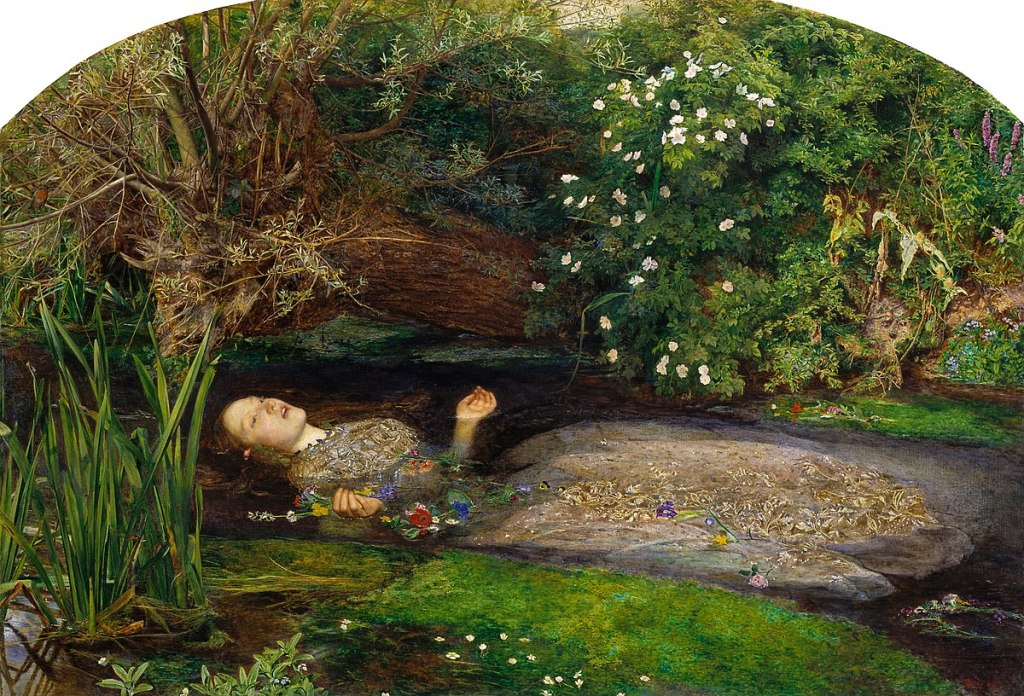
She watched a six-hour Marvel Studios feed of empty director chairs and was reduced to this.

The thing is, there are cases (especially in fiction) where the act of ASKING a question is more important than the answer itself. There is more value, I believe, in debating the nature of Ophelia’s character than there would be had Shakespeare given her a soliloquy before her death explaining her intentions to the audience. And had Stockton told us what came out of that door in “The Lady or the Tiger?”, the story would have been reduced to a rather unremarkable fairy tale, one that would no doubt be mostly forgotten today. 

This isn’t to say that solid endings aren’t important. You’ve no doubt read my diatribe against spoiler culture and why I hate so, so much the way social media devalues the ability of the audience to be surprised. When I say that sometimes it’s okay if a story doesn’t have an ending, that sometimes it’s the journey that matters, it may seem contradictory to that earlier rant. But the truth is, they both come from the same place: a desire to allow a storyteller to tell the story that they intend. If the story is structured in such a way that it builds up to some sort of powerful twist ending, then the polite thing to do is shut up about that ending and let them tell it. However, if a story is NOT intended to build towards a specific ending and, instead, is about exploring the ideas and questions that the story presents, it’s okay if some questions – even MOST of the questions – are left unanswered.

The reason I’m thinking about all this today is because I recently finished re-reading a novel that demonstrates this idea wonderfully, Stephen King’s 2005 book The Colorado Kid. It’s a fantastic book that so, SO many of my students would despise. Published by the Hard Case Crime imprint, The Colorado Kid has none of the trappings of horror or the supernatural that people often associate with King’s work. It is, as the name of the imprint implies, a crime drama, a mystery, but it is a mystery that is left unsolved at the end. If you pick up that book hoping to unravel the clues and decipher the ending, you’re going to be left disappointed. Despite that, I love this little book.

To be fair, though, in terms of misleading covers, it’s up there with the original The Princess Bride.

The story, such as it is, focuses on a young woman with an internship at a small-town newspaper, and an afternoon she spends with two much older gentlemen, the paper’s editor and owner, during which they tell her all about the greatest unsolved mystery they ever came across. Back in 1980, a dead body was found on the beach, propped up against a barrel, its previous occupant having choked to death on a piece of steak. His identity was a mystery, why he was on the beach was a mystery, even the piece of steak turned out to be a mystery. 

The entire book is a conversation between these three people, the two old men telling the girl about their investigation, the girl asking questions, and the discovery of one clue after another that led only to more questions. There are theories, but nothing definitive or convincing, and when you finish the book you’re no more certain about what really happened to the “Colorado Kid” than the old newspapermen are.

What, then, is the point of the book? It’s the obvious question to ask – why would you read a mystery novel with no solution?

Because in this case – and it’s an exceptionally rare case, for a mystery novel – finding the answer is not the point. The death of the Colorado Kid is not the point. The question of how and why he crossed the country in only a matter of hours, abandoning his life on the west coast for what turned out to be his death on the east, is not the point. The point of the story, and the lesson that the young reporter has to learn, is that even when life doesn’t supply us with answers, there’s still a virtue in just ASKING  the questions and seeking the truth. You might not always find the answer – and even if you do, the answer you find may not be the one you wanted – but there’s still satisfaction inherent in searching for them. 

Not everybody appreciates that. Many of my students wouldn’t. Even die-hard Stephen King fans I know found the book disappointing because of its lack of ending, even though no effort is made to hide the fact that it is left unresolved. The old men tell us at the very beginning of the book that the mystery is unsolved, we know that going in, but STILL people got angry. And I suppose I understand why – we’re so used to genre conventions that it’s hard to accept a book that subverts them this way. I’m sure a great many people picked up this book expecting some sort of brilliant insight at the end. Maybe the young reporter would suddenly ask a question that the two old men had never considered, maybe her perspective of time and distance would shed light that would reveal a clue that had gone unnoticed in a quarter of a century, and suddenly we would spiral headlong to the resolution of the mystery, finally tying things up in a neat little bow like we expect from a mystery novel.

But that doesn’t happen. That isn’t this novel. 

Like I said, it’s a book about an IDEA, not a book about a plot, and it’s an idea that I happen to really like.

If you’ve never read this one, give it a try. It’s one of the shortest books King ever wrote – the paperback printing comes in at a brisk 184 pages, and I know a lot of dedicated readers who could get through it almost in real time, spending the afternoon with the newspaper trio. And even if Stephen King isn’t the kind of writer you usually read, this one is so atypical of his usual output that I think a whole different audience can tap into it and enjoy it. 

Provided you go into it looking for the right things, of course.

Blake M. Petit is a writer, teacher, and dad from Ama, Louisiana. His most recent writing project is the superhero adventure series Other People’s Heroes: Little Stars, volume one of which is now available on Amazon. You can subscribe to his newsletter by clicking right here. He’s also started putting his LitReel videos on TikTok. He knows that some people can’t handle leaving something unfinished, but the thing to remember is
Geek Punditry #81: Whatever the Era

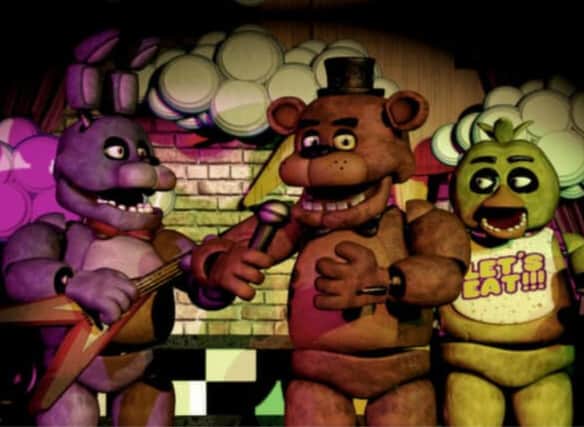
During the school year, I spend most of my time around teenagers. I teach high school English, and as such I am constantly exposed to the youth of today, with their thoughts and their ideas and their imaginations and occasionally their aromas, because some of these kids pay as much attention to the personal hygiene lessons in health class as they do when I’m trying to get them to understand 1984. But it’s July and school is not currently in session, and the only teenager in my usual orbit is my 13-year-old niece, Maggie, so the only teen ideas I am exposed to are mostly about something called Five Nights at Freddy’s.

“Thank you for bein’ a frieeeeeend…”

When I AM surrounded by the kids, though, one of the battles I fight a lot is attempting to convince them that just because something is old doesn’t mean it has no value. Shakespeare is the most frequently-cited example of this: yes, the language is old-fashioned and frequently archaic, but once you get past that the stories are pretty darn timeless. Romeo and Juliet is about a couple of kids YOUR AGE (or often younger, as I teach 11th and 12th graders) who want to date but their parents hate each other. Othello is the story of a man driven to homicidal envy because the girl he likes married someone of a different ethnicity. Hamlet is about a college kid whose father is murdered and then his mom marries his uncle, which everybody can agree is pretty messed up and will make Thanksgiving very awkward. When you boil it down, the greatest works of the past are just as relevant today, except that they’re too deep to discuss in-depth in a 15-second TikTok video.

Helping kids to see this, to understand the value in works of the past, is part of my job. In fact, in many ways, it’s my favorite part of my job. Don’t get me wrong, reading a well-written essay from a kid who struggled to put a sentence together at the beginning of the year is a badge of honor, but if that essay is explaining what they think the whole Green Light thing from The Great Gatsby is about in a way that makes sense…well, that’s like winning an Olympic medal. And most kids, I find, are pretty open to this, once you can find the right path in. It may take some trial and error, but I sincerely believe that any young scholar can find the value in the classics if you try hard enough.

I wish the opposite was true of their grandparents.

Tag someone you know in this picture.

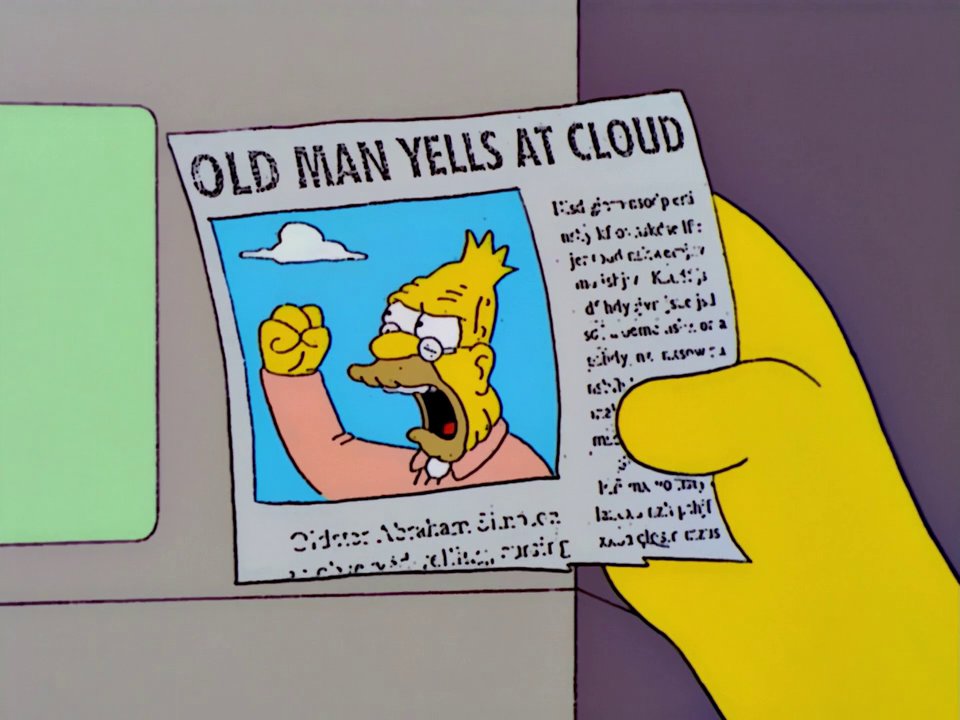
A few weeks ago, I wrote about the creation of a new over-the-air broadcast network, MeTV Toons, dedicated to showcasing classic animation 24 hours a day. It’s a great idea and one that I truly hope to be able to watch if the New Orleans affiliate – which finally launched just TODAY – would boost their damn signal a little bit so I could pick it up from my house. But that’s not the point. In that previous column, I also talked about a few online communities that have sprung up around this new network. The communities are thriving now. The largest of them, which was at 17,000 members when I wrote the previous column a month ago, has ballooned up to almost 65,000 people. And as is expected, there’s a lot of talk about the cartoons and what people’s favorites are and how much they’re enjoying the network, which I love. There are also a minimum of 750 posts a day from somebody who doesn’t understand how to watch the network, because apparently many of these people, who I would estimate are largely in their 50s and 60s, have completely forgotten how antenna television works. But the worst part of this community are the entirely-too-frequent posts that exist not to talk about the classic cartoons, but to complain about modern ones.

“I hope they don’t start making NEW shows. That’s what ruined Cartoon Network.”

“They shouldn’t show anything from later than the 70s. All of that stuff sucks.”

“You know who’s a fan of Powerpuff Girls? Hitler.”

And so forth.

I find it incredibly frustrating to read through this stuff, for a few reasons. First of all, and most importantly, is the sheer negativity of it. The world has enough negativity in it, and I hate the fact that Social Media – an invention that SHOULD have been used to bring all the people in the world together – has instead merely given us different ways to tribalize ourselves and spit venom at anybody who’s not part of Our Group. And second, it’s just not true. I can’t fathom the mindset of somebody who can turn on an episode of Help!… It’s the Hair Bear Bunch! and then claim with a straight face that this is the apex of animated entertainment.

Where the culture of Western Civilization apparently reached its climax.

The thing is, guys, both my Bard-averse teens and their Cartoon Network-hating parents and grandparents are suffering from the same problem, and it’s a problem that most of us have to overcome in some form or another. We are exposed to certain media when we grow up, and that media fundamentally contributes to the structure of our preferences in our brains. In other words, the stuff that we like when we’re young is the blueprint for the kind of stuff we like throughout our entire lives. If one of my 11th grade students tells me how much their mom hates the music she listens to, I suggest she ask her mom what HER parents thought of New Kids on the Block, and what THEIR parents thought of the Beatles, and so forth. Every generation firmly, steadfastly, believes that music reached its absolute pinnacle during their own formative years, even though it’s obvious that the best decade for music was the 1980s.

The same is true for everything: movies, TV shows, books, fashions, food, sports, and of course, cartoons. The big difference between my kids and their parents is that by and large, I find the kids FAR more likely to expand their horizons and look at work from another time. My students were in diapers when The Office was popular or not even born when Friends was a hit, but they’ll binge those shows and come to school talking about them. But trying to get one of these Toon-haters to give a chance to a modern cartoon like Bob’s Burgers, Star Trek: Lower Decks, Gravity Falls, or the finest cartoon of them all, Bluey, is a challenge that would make Sisyphus ask if he can just go back to pushing that rock up the hill.

Sorry, guys. I’m being told by the Facebook group that none of you are as good as… *checks notes* ‘Yakky Doodle.’

I know I’m generalizing here, and that’s not really fair. There are most certainly older people willing to give more recent works a chance. I know, I’m one of ‘em. And there are a lot of people like that. My uncle Wally, who happens to be an animator, would frequently talk to me about Animaniacs in the heyday of that particular cartoon – which was after his time, obviously, but one of the favorites of my time. He obviously PREFERRED the classics of his youth like the Looney Tunes and the Hanna-Barbera all-stars, but he was (and still is) always willing to give the new stuff a CHANCE.

The problem with the MeTV Toons group – like any other group – is that the most obnoxious people also tend to be the loudest. They’re the ones that complain, the ones that whine, the ones that come in with a sense of entitlement because the network has the TEMERITY to show Captain Planet instead of a 23rd rerun of The Flintstones for half an hour. 

Is it true that there are a lot of bad cartoons these days? Sure. But that’s true of ANY field of creative endeavor in ANY era. As sci-fi author Theodore Sturgeon once observed, “Ninety percent of everything is crap.” For every Scooby-Doo that was turned out, there are a dozen Hanna-Barbera cartoons that died after one season. Looney Tunes gave us the work of Bugs Bunny, Daffy Duck, and the Road Runner and Coyote…but it also gave us Merlin Mouse and Cool Cat.

I swear, these were actual, official Looney Tunes. Google it.

Hell, even my beloved Willie Shakes is considered the greatest writer in the history of the world…but name five other writers from the late 16th century. Unless you’ve got an English degree, chances are you can’t. There’s just as much good stuff being produced now as there ever was. The reason the past seems “better” is because it’s only the good stuff that gets REMEMBERED. If you lock yourself in to the work of your own formative years, you will miss out on a wealth of great storytelling, great music, great ART. And if you’re okay with that, I can’t change your mind, but at the very least you need to RECOGNIZE that bias and not make blanket statements about everything that’s from outside of your time period, because that’s not fair to anybody. 

I have a challenge for you, my friends. Right now, I want you to identify your formative decade. Are you an 80s kid? 90s? What was the time period in which you did the majority of your growing, say from first grade through twelfth? For most of us, that is the period where these preferences and feelings are most firmly established.

Okay, have you got your decade identified? GREAT. Here’s the challenge then: this week, I want you to go out and find something from OUTSIDE that decade that you think is worth watching, reading, or listening to. I don’t care if it’s from before your time or after, but I want you to find something from a different time period that you think is worthwhile, something that you can get excited about, something you want to tell people to check out. And then I want you to come back here – or hit me on Facebook, Twitter, or Threads – and tell me WHAT you read or watched and WHY you like it. 

There’s plenty of great stuff out there, guys – from any era. The trick is just to figure out where to look.

Blake M. Petit is a writer, teacher, and dad from Ama, Louisiana. His most recent writing project is the superhero adventure series Other People’s Heroes: Little Stars, volume one of which is now available on Amazon. You can subscribe to his newsletter by clicking right here. He considers himself an 80s kid, but he has just as much love for The Honeymooners and The Good Place as he does for Mama’s Family. Wow, that’s a weird list.

Geek Punditry #67: What Is Literature?

When you’re a high school teacher and spend most of your day around teenagers, you will overhear their conversations whether you like it or not. You hear about the TikToking, and you know who is dating who, and on frequent occasions you learn more about the way these kids spend their weekends than you ever want to know and you contemplate duct-taping your own children to a pool table from the time they’re 13 until they turn 27 or so. And on rare, extremely rare occasions, you’ll hear them discuss things that are actually relevant to your class. Earlier this week, for instance, I overheard a few girls talking about why so many people are using The Great Gatsby as themes for parties and dances these days. 

As always happens when there’s a conversation worth joining, I jumped in. “There are three reasons,” I said. “First of all, it’s the 20s again, so people are playing with that. Second, the book went into public domain a few years ago, so nobody has to pay to use these things. And third, there are a lot of people who think the movie is fun and didn’t actually pay attention when they were supposed to be reading the book.”

“Ain’t no party like a Gatsby party, ’cause a Gatsby party ends with three people dead and a complete loss of faith in the American dream!”

The Great Gatsby is, of course, a seminal work of American literature. It’s one of the best books ever written in this country, and it paints a complex and gripping narrative in a relatively short number of pages, but the book is about the unsatisfying nature of a decadent lifestyle and how pursuit of material things is shallow and destructive. Anybody who comes away from that book thinking that these characters are something to aspire towards is – and I’m going to be kind here – an utter moron.

I talked about this conversation with some of my English teacher friends (of course I have English teacher friends – we sit around and conjugate each other’s verbs and talk about which infinitives we’re crushing on) and discussed the fact that there aren’t a lot of books that we teach that provide role models or, for that matter, happy endings. Let’s face it, most books that are complicated enough for a really deep literary analysis tend towards tragic – or at best, bittersweet – endings. The least-depressing book I’ve ever used in my classroom is The Hitchhiker’s Guide to the Galaxy, and that book BEGINS with the complete destruction of the planet Earth. And one of my friends in this chat commented that this is why she sticks to reading lighthearted stuff on her own time – “literature” is too depressing.

Whaddaya gonna do? You’ve got to build bypasses.

I’ve always thought it was odd to use the word “literature” as a genre, the way I would “science fiction” or “horror.” What, exactly, qualifies something as a work of literature? Every time I walk into a bookstore with a “literature” section, I want to ask somebody who decides which books go on those shelves and which ones do not? Isn’t the very existence of a “literature” section sort of a low-key insult to all of the other books in the store that got shelved somewhere else? Ernest Hemingway’s The Old Man and the Sea goes on the literature shelves whereas William Goldman’s The Princess Bride doesn’t, but I could write you a whole dissertation on which one is a better book, and it ain’t the Hemingway.

One of these is one of the most incredible stories ever conceived by the human mind and the other one is what happens when Ernest Hemingway doesn’t go to therapy.

Is it just the age of the work? Everyone would agree that Lord of the Flies from 1954 is a great work of literature. But what about Robert Heinlein’s Rocket Ship Galileo, published in 1947? It’s not only a book that doesn’t enter the “great literature” discussion, it’s not even usually part of the conversation when you talk specifically about the work of Robert Heinlein. We got George Orwell’s 1984 in 1948, nearly twenty years after the first Nancy Drew novel, The Secret of the Old Clock, but nobody is citing the works of Carolyn Keene in the conversation of great writers. And that’s not just because she didn’t actually exist.

Is it just about the complexity of the work? Must a work deal with heavy ideas and deep themes to qualify? The Adventures of Huckleberry Finn gets my personal vote for the greatest American novel ever written (sorry, F. Scott Fitzgerald). Set 20 years before the Civil War but written about 20 years afterwards, the novel is a deep and fascinating analogy about the changes the country went through during that time period. Whereas Mark Twain’s earlier book with these characters (The Adventures of Tom Sawyer) was a simple boy’s adventure story, Huckleberry Finn is about a child struggling with the ethical quandary of whether it is morally right to help his friend Jim escape from slavery. Jim’s owner, Miss Watson, has taken care of Huck, and in the eyes of the law he is betraying her by helping in Jim’s escape. But eventually, he comes to the conclusion that he’s going to be loyal to his friend, even if it goes against the law, even if it goes against what he has been taught is morally right. The book deals with the destructive nature of bigotry, ignorance, and hypocrisy, and Huck himself becomes symbolic of the moral transmogrification that the United States was beginning to undergo. In other words, literature.

The thing is, though, a lot of these same ideas and themes can also be found in random episodes of Star Trek. If I pull out Oliver Crawford’s script for “Let That Be Your Last Battlefield,” I can get into a deep conversation about the folly of racism as we watch two aliens whose species has hunted itself to extinction because some of them are black and white whereas others are white and black. It’s a legendary episode, but could I justifiably call the script for it literature the same way I would Huck Finn or – to use the other best-known example of anti-racist literature – To Kill a Mockingbird? Most people would say no. 

“I dunno, Frank, are you sure the analogy isn’t too subtle?”

I posed this question, this “what is literature” question, to my English pals, and one of them said she once looked it up herself and read one of the characteristics that makes something literature is a focus on character and their development rather than plot. Does that really work, though? Gatsby is a very deep examination of the characters, but none of them actually CHANGE. By the end of the book, they (the ones that survive, anyway) are all the same shallow, soulless people they were when the story began and only the narrator – the criminally bland Nick Carroway – has shown any development at all, that development being disgust at the people around him. It’s like you’re left feeling when you watch the final episode of Seinfeld. 

On the other hand, my friend pointed out, the male lead in Fifty Shades of Grey seems to change by the end of that series, becoming actually devoted to the narrator. I’ll let you draw your own conclusion as to whether this qualifies as development or not, I haven’t read Fifty Shades. But if there’s one thing everyone in our English chat can agree on, it’s that Fifty Shades of Grey does NOT qualify as literature.

I want to be clear here: I haven’t seen the movies, nor read most of the books. I’ve read exactly one page, the first one, in a bookstore. I was curious as to what the big deal was, and after reading one page I said – out loud – “Oh good LORD,” and put it down. It’s not that the book is smut. If you want to read smut, go right ahead, I don’t judge you for it at all. I will, however, judge you for reading such POORLY WRITTEN smut when there is smut of much better quality readily available. I’m not telling you not to read Fifty Shades because it’s explicit, I’m telling you not to read it because you deserve better smut.

Not pictured: Literature.
Or believable characters, genuine titillation, or a functional understanding of the culture it purports to depict.

Is it the fact that something is “highbrow” what makes it literature? Well that comes with the same problem as designating something literature in the first place: who decides? To pull the Shakespeare card again, my students are ALWAYS intimidated when we start reading Hamlet because they think of Shakespeare as something for “thinky” people. Sure, that may be the way he’s considered today, but in his own time, Shakespeare was a popular writer. He was turning out play after play for the masses, and because he knew exactly what the people wanted, he loaded them with sex and violence. He was the J.J. Abrams of the 16th century. The kids don’t get that, though. If you understand what he’s actually saying, Hamlet’s line “Do you think I meant country matters?” is just as raunchy (and way more clever) than anything E.L. James wrote, but in all my years of teaching the play I’ve never had a student pick up on the subtext. Only a few of them get the later, more obvious line when Claudius is seeking Polonius’s corpse and Hamlet tells him Polonius is, “in heaven…if your messenger find him not there, seek him i’th’other place yourself.” Every so often I have a kid who asks, “Did he just tell the king to go to Hell?” and that student automatically becomes my favorite.

“I don’t look thoughtful enough. Give me 20 percent more confetti.”

The bar can’t be whether something makes you think. Last week I finished reading Liu Cixin’s novel The Three Body Problem, and that’s one of the thinkiest dang books I’ve ever read. The book follows a large cast of characters who discover a secret organization attempting to prepare Earth to be conquered by extraterrestrial invaders. This is, I must stress, an extremely barebones description of the plot, and deliberately so. This story is far deeper and more complicated than my pitiable attempt to summarize it. In fact, if someone tried to argue that it’s the best science fiction novel of the 21st century so far, I will have absolutely no ammunition with which to disagree with them. This Chinese novel was originally serialized in 2006, published as a novel in 2008, and first published in English in 2014, so no matter which edition you’ve read, it’s less than 18 years old. As such, it’s not something that I hear come into the conversation when people discuss “literature.” Not YET, anyway. Come back in 20 or 30 years and that may well change. But is it only the relative youth of the book that keeps it off the table?

Not pictured: Literature, but ask me again in 2056.

Maybe it’s a combination of all of these things. Maybe “literature” has to be deep AND intelligent AND kind of old. Maybe all these things that we now call “literature” are only in that category because they’re the best examples of their time period and we’ve forgotten 90 percent of the utter crap that was written around the same time. That’s not only possible, I think the further back in the history of storytelling you go it becomes almost undeniable. The poet W.H. Auden once said,“Some books are undeservedly forgotten; none are undeservedly remembered,” and by this I think he was trying to tell us that people will hopefully still be reading The Three Body Problem in the year 2100, whereas by then hopefully the only people who remember 50 Shades of Gray will be literary historians who cannot figure out why readers were so temporarily obsessed with a piece of mediocre Twilight fan fiction.

Increasingly, when it comes to the question of literature, I find myself using the late Supreme Court Justice Potter Stewart’s description of “obscenity.” Unable to actually define the term, he simply said, “I know it when I see it.” That’s how I feel about literature, too. But my opinion, of course, doesn’t count for more or less than anybody else’s.

Except for that guy shelving the “literature” section at Barnes and Noble. He apparently holds a little more sway than the rest of us.

Blake M. Petit is a writer, teacher, and dad from Ama, Louisiana. His most recent writing project is the superhero adventure series Other People’s Heroes: Little Stars, now complete on Amazon’s Kindle Vella platform. He doesn’t know if anyone would ever call the new trilogy version of that series, beginning with Little Stars Book One: Twinkle Twinkle, “literature,” but he DOES know it will be available in both paperback and ebook beginning on May 4, and he is CRAZY excited about it.

Geek Punditry #53: How Not to Use the Public Domain

January brings a lot of things with it: New Year’s Resolutions, a deluge of commercials from companies offering to do your taxes, another chance for the Cowboys to choke in the playoffs, and – most importantly – new items moving into the public domain. A quick explanation for those of you who don’t know: when a creative work (like a book, painting, movie, song, etc.) moves into the “public domain,” that means that the copyright has expired and anyone is free to use that work in certain ways – remake it, create derivative works, write their own sequels, and so forth. It’s the reason that anybody can make their own version of a Shakespeare play or a Dickens novel, or why it’s okay to sing certain songs on TV without worrying about paying for the rights. The full explanation is as complicated as anything else related to the law, but currently, copyrights in the United States last for 95 years, with the work in question rolling into public domain on the first of January the next year. Over the last few years, this has taken on an almost party-like atmosphere, with people champing at the bit as they wait to see what new toys they’ll have to play with. In recent years we saw The Great Gatsby enter public domain, bringing forth a wealth of unauthorized sequels, “reimaginings,” and crappy party supplies bought by people who didn’t read or understand the book. Two years ago, the earliest Winnie-the-Pooh books joined the club, bringing with them the inevitable horror movie Winnie-the-Pooh: Blood and Honey. And a few days ago, on January 1, 2024, we got the big enchilada. “Steamboat Willie” and “Plane Crazy” entered the public domain, the first two shorts starring a little guy the world would come to know as Mickey Mouse.

I can finally post this picture without making a Disney lawyer’s Litigation Sense start to tingle.

I need you all to understand something. I am a firm adherent to protecting copyright. The person who creates a work of art is entitled to exploit that art to the fullest. Sometimes, of course, they “exploit” that right by selling the copyright to someone else or, in the case of a lot of things, they created it as a work-for-hire and a company owned the copyright from the beginning. (There are a lot of people who have been screwed by work-for-hire agreements, historically, but the principle is valid.) But I also believe that this protection should expire and that works should eventually become free to use by all, and that’s for the good of art itself. Allowing future generations to create their own twists and spins on a classic piece of art or storytelling helps to keep those works fresh and alive. But it’s also important that those works be respected in the process. So while I’m not terribly surprised that mere hours after “Steamboat Willie” became free to use we were deluged with announcements of Mickey Mouse as the star of horror movies and violent video games, I am substantially disappointed that people can’t find a better way to use this newfound freedom.

Walt Disney is rolling over in his cryogenic suspension unit right now.

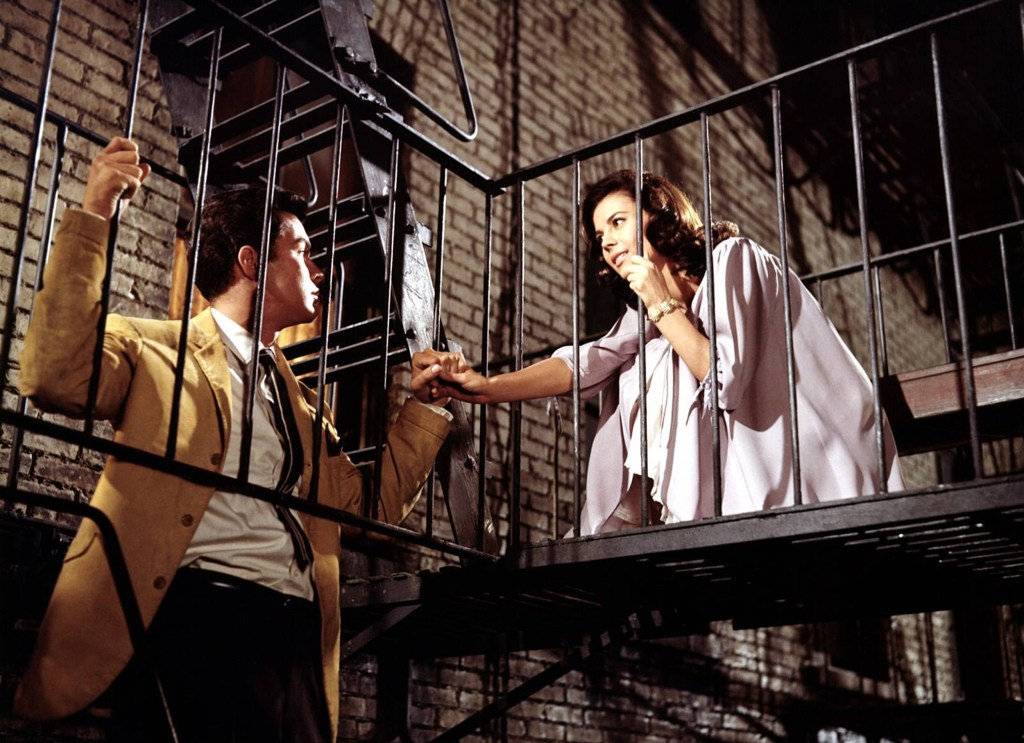
There have been great works created based on things that are in the public domain. Universal Studios built their brand on it in the 1930s with their versions of Dracula and Frankenstein, neither of which were particularly faithful to the respective novels (Dracula was actually based on the stage play), but they still defined the characters for subsequent generations. Without those two films, who’s to say anybody would remember Bram Stoker or Mary Shelley today? There are a thousand and twelve versions of A Christmas Carol, and although plenty of them are trash, there are also some excellent ones. A Muppet Christmas Carol is a fantastic rendition of the story, quite faithful to the book, with one of Michael Caine’s most legendary performances. Scrooged is a great update of the story to the 1980s, with Bill Murray giving us a different but perfectly valid take on the character, making it into something new while still, clearly, owing its own existence to the Charles Dickens novel. And what about West Side Story, the 1950’s musical about street gangs that lifts cleanly from Romeo and Juliet? In fact, I would argue that West Side Story actually IMPROVES upon Romeo and Juliet. In West Side Story, the two young lovers are destined for a tragic ending because of the arbitrary labels of race and class that divide them, making a statement about those things that was not only poignant to the era and place where the musical is set, but is equally applicable to all times and all places. In the original Romeo and Juliet, though, the two young lovers are destined for a tragic ending because everybody in that play is dumber than a sack of hammers. 

(Note to any ninth grade students who are scheduled to study Romeo and Juliet in this upcoming spring semester: I am TOTALLY kidding about this. Romeo and Juliet is the bomb. The bomb dot com. Listen to your teacher and stay in school.)

“The bad news is you’re still gonna die. The good news is that, thanks to public domain, you don’t have to die like a moron this time.”

Anyway, the point I’m getting at is that the folks behind Mickey’s Mouse Trap and other, similar works are taking the easy way out. They also display a pretty specious understanding of how copyright actually works, because what’s in public domain are specifically the versions of Mickey and Minnie that originally appeared in “Steamboat Willy” and “Plane Crazy,” nothing else. They also don’t seem entirely aware that copyright and trademark aren’t quite the same thing, and the trademark behind Mickey is still nice, strong, and supported by enough lawyers employed by the Walt Disney Entertainment Global Megaplex and Shadow Government to invade Portugal. They may be able to get away with showing a guy in a black-and-white Mickey Mouse costume holding a knife, but calling the movie Mickey’s Mouse Trap? I am sitting nearby with a bucket of popcorn waiting for the lawsuits to start.

“M…I…C…”
“See you in court!”

But even if that weren’t the case, that doesn’t change the fact that a Mickey Mouse slasher movie is the cheap and easy way out. The freedom we get when something joins public domain is important, but far too many people waste that freedom with lazy works churned out for shock value without any real reason to create something other than to say, “Heh heh, that’s messed up.” And while I know some would disagree with me here, that’s not a good enough reason. Blood and Honey thought it would be funny to take a beloved icon of childhood and make it a bloodthirsty killer. I didn’t see the movie because, frankly, the idea itself is distasteful to me (and you’re talking to someone who’s excited about the Toxic Avenger remake, for heaven’s sake). But at least they did it first. The filmmakers behind Mickey’s Mouse Trap don’t even have THAT in their favor. They’re pulling the same joke somebody else did. It’s lazy, and it’s boring. Telling a bad joke once is unfunny. Stealing a bad joke from somebody else is the sign of a hack.

I usually have a pretty firm rule not to try to analyze a movie I haven’t seen, so I’m going to base my critique purely on the trailer, which not only looks lazy and boring, but straight-up steals one of the most famous jokes from the first Scream movie. In and of itself, the fact that they chose to showcase this joke in the trailer quashes any hopes I may have had for this movie’s transcendence, I’m sure the filmmakers, if confronted with this, would claim it’s an “homage,” but if this were an essay turned in by one of my 12th-grade students, this is where I would stop reading and simply give them an “F” for plagiarism. (Unless, of course, they gave proper citations to Kevin Williamson and Wes Craven.) 

Do you have the right, legally speaking, to make a movie whose only real purpose seems to be to show cartoon characters committing brutal acts of violence? Sure. But as George Lucas tried to demonstrate to us when he had Greedo shoot first, just because you have the right to do something doesn’t always make it a good idea. The best argument for letting works into the public domain is so that new, innovative works can be built upon those things that have helped build our culture. Things like Mickey’s Mouse Trap fails on both of these counts. 

“Wait, people thought we were serious about this?”

The 1920s and 30s were a pretty rich time, culturally speaking, and there are a lot of characters and works that will soon be free to use. Next year the first Marx Bros movie, The Cocoanuts, will be in the public domain, along with Ernest Hemingway’s novel A Farewell to Arms. In 2027, the aforementioned Universal Frankenstein and Dracula movies will no longer be copyrighted. And looking ahead a decade, the first appearances of Superman will be public domain in 2034, followed the next year by Batman and, the year after, Wonder Woman. And I’m sure there’s some hack filmmaker already planning to do his Superman slasher that year (hint: there already is one, it’s called Brightburn, and it was pretty good), followed by the other two, and then bringing them together as an evil Justice Society once All-Star Comics #3 joins the PDA (Public Domain Association). 

“Been there, done that, murdered innocents with my heat vision.”

I’m putting you on notice now, guys: if you’re planning to exploit these works when the time comes, that’s fine. That’s your prerogative. But if your idea of doing so is nothing more than “Ha ha, what if Superman murdered people?” keep it to yourself. We all deserve better. 

Blake M. Petit is a writer, teacher, and dad from Ama, Louisiana. His current writing project is the superhero adventure series Other People’s Heroes: Little Stars, a new episode of which is available every Wednesday on Amazon’s Kindle Vella platform. He feels ways about things sometimes. 

Geek Punditry #12: Nothing New Under the Sun

One of the most common criticisms of modern movies is that there aren’t any new ideas. People point to the nearly endless stream of sequels, prequels, remakes, and franchises as evidence that Hollywood has run out of creative juice, as if there’s somehow nothing original in seventeen movies about a robot that can turn into a jet ski. There are two problems with this, though. First, it’s not really true. There are thousands of scripts circulating in the movie industry at any given time – each year a “Blacklist” is released of the best unproduced scripts currently making the rounds, and some of them eventually find a studio or a director to take them on. The problem isn’t that original stories aren’t out there, it’s that the people holding the strings of the purses are afraid to spend money on them. You can take a chance on that period drama about a coal miner who discovers a secret that will topple a kingdom, or you can make the ninth installment of an action franchise that you know is going to make at least $200 million even if it’s terrible. I’m not saying I agree with this decision, mind you, but I certainly understand it.

Nothing original my shiny hiney.

The other problem with this complaint is the assumption that this is a recent phenomenon, that it’s only in the last few years that this mythical well of creativity has run dry. What happened to those great epic films of the past based on totally original ideas? Things like Jaws or The Wizard of Oz or The Ten Commandments? You know, things that were made from whole cloth. It’s nonsense, of course. People have been borrowing stories since the first story was told. And you know what? That’s okay.

I took a quick glance at IMDB’s top 100 narrative films and counted at least 40 movies that I know are based on books, plays, real life, or are sequels – and those are just the ones I’m aware of. I’m sure that there are more, but I don’t have time to read the trivia on all of them. This also doesn’t count those films that aren’t “official” adaptations, but borrow liberally from earlier stories (such as Star Wars taking elements from Buck Rogers and Hidden Fortress). A large chunk of our most acclaimed cinema is taken from other sources. And there’s nothing wrong with that. William Shakespeare himself “borrowed” from everybody. The histories, obviously, aren’t original ideas, but beyond that we have Romeo and Juliet based on an Italian poem, Othello was lifted from a collection of short stories, and Hamlet was a straight-up ripoff of The Lion King

Rosencrantz and Guildenstern are fed.

No, seriously, it’s based on an old Danish myth about a young man who has to seek revenge after his father is murdered by his uncle. There were, in fact, several versions of this story going back hundreds of years before Shakespeare cherry-picked his favorite parts of each of them, added a ghost, wrote the song “Hakuna Matata,” and BAM! made it the most famous play in the English language. 

Something else to consider is that as vast as the well of human creativity is, we’ve been exploring it for a really long time, and there aren’t a whole lot of corners left to excavate. Back in 1895, Georges Polti published his list of “The Thirty-Six Dramatic Situations,” in which he outlined what he believed was every possible plot that any writer can use. Granted, these 36 plots are incredibly simplistic (abduction, revolt, enmity of kin, Godzilla Vs. Mechagodzilla, etc.), but I first read about these plots in a writing book nearly 20 years ago and since then I’ve never come across a story that didn’t fit at least one of them, not even Space Jam. The point, then, is not to come up with an entirely original idea, because that seems to be virtually impossible. The point is to find the story you want to tell, and then tell your version in an entertaining and satisfying way. 

Too many writers get hung up on being original and freeze. A long time ago I had a friend read a story I wrote only to panic when she asked me when was the last time I read The Chronicles of Narnia. It had been years, but upon reflection I realized I used a device remarkably similar to an element from the Narnia novel The Magician’s Nephew. I hadn’t done it intentionally – I hadn’t read the book since elementary school and I had very little memory of it – but the device was so similar I have to concede that I was drawing on it subconsciously. Another time a friend of mine asked me if I’d heard of Rick Riordan’s Percy Jackson series, and because I trusted his recommendation, I picked up the first book. I loved it and I also got sick to my stomach, because the conceit of the Greek Gods in modern times was something I had been working on in a novel of my own that pretty much died on the vine. I obviously wasn’t stealing that idea, because at the time I had never read Percy before, but the knowledge that there was such a popular book out there that used some of the same ideas slaughtered my enthusiasm for the project. In retrospect, that was a mistake. The take I was planning really wasn’t at all similar to Camp Half-Blood, the only real similarity was that it was contemporary mythological characters, but I was so shaken that I lost the thread of that story and was never able to find it again. 

“Hello, literature police? I’d like to report a murder…of my hopes and dreams.”

Rather than abandoning a story with old roots, a writer should cultivate those roots and find a new way to grow. Stan Lee famously combined Frankenstein and Dr. Jekyll and Mr. Hyde to create the Incredible Hulk, after all. Kevin Williamson and Wes Craven bought stock in decades of slasher movies to give birth to the Scream franchise. George Lucas drew on Uncle Scrooge comics by Carl Barks when he conceived of Raiders of the Lost Ark. (I know that sounds like the kind of thing I would make a joke about, but it’s not. That one’s a straight-up fact.)

Let’s go back to Shakespeare. Everyone knows Disney borrowed from Hamlet when they made The Lion King, but that’s only the tip of the iceberg. Romeo and Juliet inspired West Side Story, MacBeth became Kurasowa’s Throne of Blood, The Taming of the Shrew became Ten Things I Hate About You. As of this writing, William Shakespeare is credited as a writer for 1746 projects on IMDB. That’s nearly 2000 movies and TV shows, stories told in mediums that were not invented until he had been dead for almost three centuries. (He’s also credited once under “music department” and a baffling SIX times as “additional crew.” I could click on those links for clarification, but I kind of prefer my headcanon, in which he was involved in craft services on the set of The Human Centipede.) 

What’s more, those 1746 credits are only the films that specifically list him as a writer, not those that borrow from him without applying the credit, nor does it account for the thousands of stories that use his work outside of the realms of film and television. I did college and community theater for many years and one the best shows I was ever in was The Complete Works of William Shakespeare [Abridged], a gut-busting comedy featuring three actors trying to perform parts of all 36 of Shakespeare’s plays in one evening. Then just yesterday I got Ryan North’s book To Be Nor Not to Be, in which he retells Hamlet as a Choose-Your-Own-Adventure story. I’ve read it through once so far, choosing the “original” path of the play before I branch out and test the wackier versions, but even the “original” is really funny. (North also seems to have a much greater fondness for Rosencrantz and Guildenstern than most people, treating them in a way that’s very much at odds with Tom Stoppard, who himself used Shakespeare for the basis of his play Rosencrantz and Guildenstern Are Dead, which in turn inspired the epic drama Bubble Guppies.)

“To suffer the slings of outrageous fortune, turn to page 32. To suffer the arrows, turn to page 19.”

A lot of writers wear their influences on their sleeves. Stephen King – who you should realize by now is a perennial favorite of mine – used Robert Browning’s poem “Childe Roland to the Dark Tower Came” as the launching pad for his own The Dark Tower, the series he calls his “magnum opus.” The series has feelers and roots in dozens of his own novels and short stories, but also in the works of other creators. Along the way he sprinkled in a visit to Oz, a riddle game that feels like Twisted Tolkien Theatre, robots stolen from Marvel Comics, and nuggets of Harry Potter to fill in the gaps. King, in turn, has inspired many other writers, among them his own sons Joe Hill and Owen King and the entire writing staff of the TV show Lost.

Mythology is another popular source to “borrow” stories from, which is why I tried to do it myself before Rick Riordan inadvertently kicked my teeth in. The Odyssey, for example, has been retold multiple times: the Coen brothers transplanted it into turn-of-the 20th Century Mississippi for their film O Brother, Where Art Thou?, DC Comics used it as the basis of the Adam Strange/Starfire/Animal Man section of their year-long experimental series 52, and a few years ago some schmuck from Louisiana replaced Odysseus with Santa Claus and tried telling his own version of the story

“My name? Nobody-El.”

DC is actually returning to the Homeric well beginning this week with a series called Superman: Lost. In the first issue of this 10-issue series by writer Christopher Priest and artist Carlo Pagulayan, Clark Kent and Lois Lane are hanging out at home one evening when he’s summoned away by the Justice League to deal with an emergency. He comes back only minutes later, but now he seems to be in a state of shock. After a few panels of Lois trying to figure out what’s happened, Clark drops the bomb that – from his perspective – he’s actually been gone for 20 years. The first issue is excellent, and I’m very much looking forward to the rest of the story to see why he’s been gone so long, what timey-wimey ball of phlebotinum is going to be applied to bring him back to the present, and how much is borrowed directly from The Odyssey. Priest is a writer whose work I’ve enjoyed for a long time, so I’ve got plenty of faith going in.

The point is, originality is not the be-all and end-all of storytelling. True, it’s always great to be genuinely surprised, but that doesn’t mean that there’s not room for good movies, TV shows, or books that have a familiar flavor. If you don’t like something, fine, that’s your prerogative, but if the only thing wrong with it is that you feel like you’ve seen it before, try to decide if it has other merits before you dismiss it entirely. You may find something worth experiencing after all. 

And if not, just go watch something original and brand-new. Like The Last of Us. Or Wednesday. Or that new show Night Court. Or…

Blake M. Petit is a writer, teacher, and dad from Ama, Louisiana. His current writing project is the superhero adventure series Other People’s Heroes: Little Stars, a new episode of which is available every Wednesday on Amazon’s Kindle Vella platform. Please do not mistake this “originality isn’t everything” position as an endorsement of plagiarism or, even worse, using AI to write a story. Both of these are crimes for which you should receive, at minimum, a toilet that won’t stop running all night long even after you take off the top of the tank and stick your hand in the water to try to adjust it. That’s what you’ve got coming to you. Jerk.