Item #295 on the list of “what are people on the internet in an uproar about THIS week?” is East of Eden, the new Netflix miniseries adapting the classic John Steinbeck novel, which is coming under fire for following along with a rather sizable trend in modern fiction: making the villain less…y’know…villain-y.
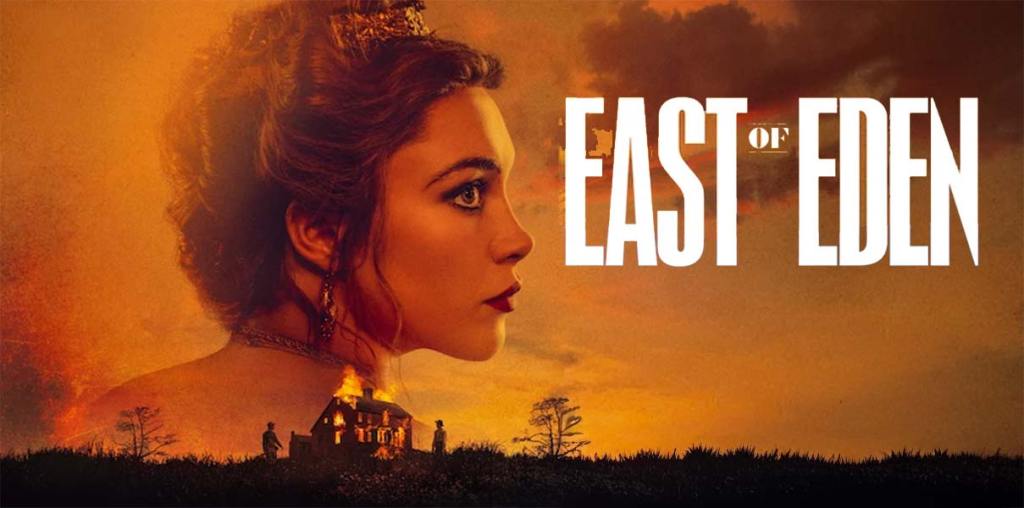
Now I am not a Steinbeck scholar, I should concede. I don’t have strict reverence for the novel or the original film version, adapted in 1955 by director Elia Kazan. I do, however, recognize trends, and some of the buzz around this miniseries concerns me. The series was produced by Zoe Kazan, granddaughter of the aforementioned Elia, and some of the things that are being done with the new version actually sound pretty good. East of Eden, the novel, is a complex generational saga tracking the history of two intertwined families in the decades between the American Civil War and World War I. Elia, in making his movie, trimmed out all but a single generation and made a film focusing on only about a third of the novel’s content. Expanding it into a miniseries to make it more faithful to the book is a logical idea, one that makes much more sense than a lot of remakes that seem to be fueled by the promise of “Well, we own the IP, so let’s do it again.”
The problem, though, comes in the character of Cathy Ames. In Zoe Kazan’s version of the film, Ames is played by Florence Pugh, which is an inspired choice. Pugh is a phenomenal actress, and I’ve got no doubt that she can nail the bitter rage of the character, who is very much the villain of the novel. The issue is that I’m not entirely certain Pugh IS going to be playing Steinbeck’s villain, at least not from the way Kazan keeps describing her. In a recent interview on Good Morning Washington, Kazan said, “What if we think about her not as the embodiment of evil, but as a person who does really bad things?…I think we can learn more about ourselves if we don’t think about evil people as being that different from us.”
This is a statement about Cathy Ames. This is a character who, as written by Steinbeck, is unabashedly violent, selfish, sadistic, and cruel. A character he referred to as representing “Satan himself.” A woman who – over the course of the novel — abandons her infant sons, burns her own parents to death in a fire, frames innocent boys for sexual assault, drives a man to suicide, and manipulates a woman (whom she then murders) into leaving her a brothel in her will, then turns the brothel into a den of sadism and torture.
Ms. Kazan, respectfully, I very much WANT to think about people like Cathy Ames as being different from us.
I obviously have not seen the Netflix series yet (it doesn’t drop until Oct. 1), and I have enjoyed a lot of Kazan’s work in the past, both as a writer and actor, in movies like Ruby Sparks and The Big Sick. I’m just a bit concerned that this may push East of Eden into the trending area of “Villain Justification.”
To be fair to Kazan, in an interview with Time magazine she said, of Ames, “I don’t think anything in her background excuses her behavior,” but then she comes right back around and says “there’s something really compelling about her insistence on her autonomy and selfishness, especially as a woman.” I can accept an evil person as being compelling. But that doesn’t mean I think a character like Cathy Ames should necessarily be RELATABLE.
I’m not against a morally complicated villain. The BEST villains are morally complicated. But at the same time, sometimes evil is just evil. You can understand a villain without thinking that they’re “like us.” To go to comic books (because they’ve got the most dramatic examples of villains out there), let’s look at characters like Dr. Doom or Lex Luthor.
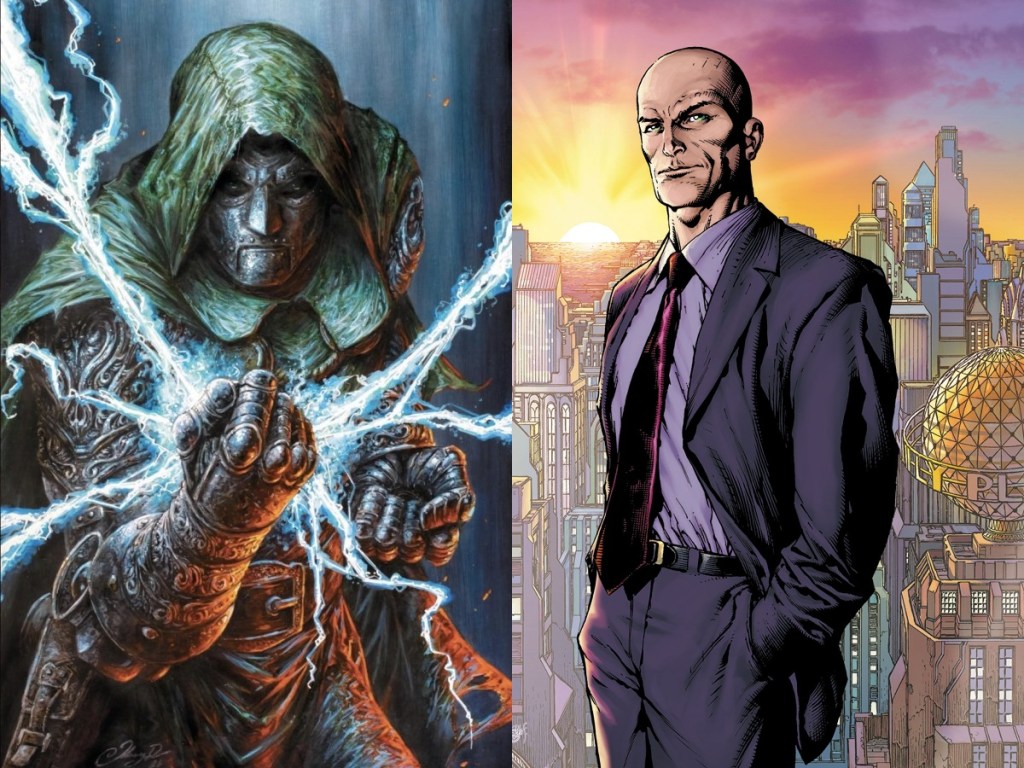
These two villains – arguably the two greatest villains in comics – are similar in many ways. Their true danger comes from just how brilliant they are. Both of them have the intelligence to change the world and make it a better place, were they to choose to use their gifts in that way. But they don’t, and for very petty, very human reasons. In the case of Doom, he believes that his genius makes him the most suitable to rule the world and is willing to crush anybody who stands in his way. Luthor (modern Luthor, anyway) isn’t concerned with ruling the world per se, but he cannot overcome the unbearably obstinate jealousy he feels because the people of Earth love an alien more than they love him, so rather than channel his intelligence in a positive way he is intent on destroying Superman and “proving” he’s “better” than the Kryptonian. Both of these villains are fascinating, intriguing, and wonderfully complex…but that doesn’t mean I see myself in either of them, nor do I want to.
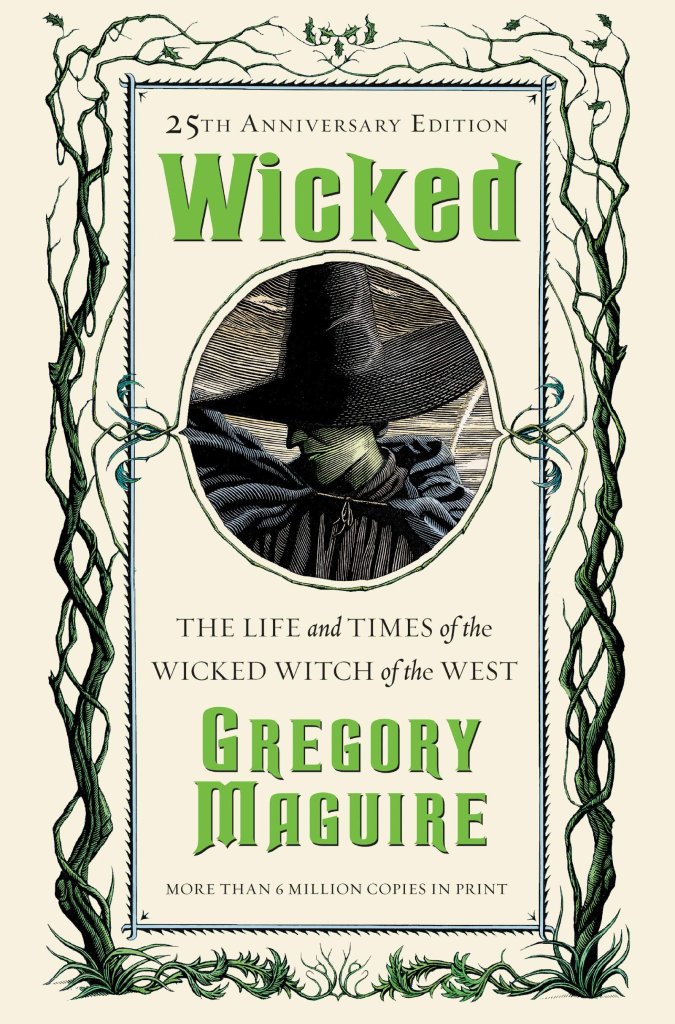
This has been a trend in fiction for many years now, the de-villainizing of villains. Gregory Maguire didn’t invent the concept when he wrote Wicked, retelling The Wizard of Oz from the perspective of the Wicked Witch of the West, but I think the smash hit Broadway musical is directly responsible for how pervasive that trend has become. Maleficent and Cruella are both movies built around showing how some of Disney’s most colorful villains ain’t all that bad. The ABC series Once Upon a Time made Snow White’s Evil Queen (eventually) one of the heroes, and did major rehabilitation work on characters like Rumplestiltskin and Captain Hook as well. Joaquin Phoenix’s Joker movie takes the sadistic, serial-killing clown of our dreams and shows us how he’s beaten down by society. Like many patterns, once you’re aware of it, it’s hard NOT to see it.
None of this should be construed as a CRITICISM of these movies, books, or TV shows. I’m not saying that they’re poorly-written, poorly-acted, or in any way invalid projects. I’m just saying that as a TREND, the sheer number of stories that seem to try to excuse evil behavior as opposed to explaining it kind of bothers me.
Another part of the issue, as many people have noticed online, is a severe lack of critical thinking from modern audiences. People seem to think that liking a fictional character is somehow an endorsement of their behavior, and that makes people try very, very hard to avoid making characters who are purely evil. The whole thing is preposterous. If I say Freddy Krueger from A Nightmare on Elm Street is my favorite 80s slasher, I’m not saying that I approve of murdering teenagers in their sleep, I’m saying that Robert Englund is entertaining to watch. Somehow people have started to view what fiction a person consumes as an entire component of their personality, and I think that’s dangerous. It comes back to something I wrote about a few weeks ago (in Geek Punditry #191), about how some people allow their fandoms to completely consume who they are. This is a side-effect of that – my fandom consumes who I am, and therefore I assume that yours does the same, and when you tell me you like Friday the 13th I’m worried you’re going to put on a hockey mask and terrorize a camp. Q.E.D.
Poppycock.
And finally, there are the moral relativists out there, the ones who have the opinion that there IS no good or evil, which is a mindset I fully reject. Some things are simply evil, like murdering innocent people or using Chat GPT to answer a math problem when you’ve got a calculator app on the same damned phone. And it’s possible to explore that darkness in fiction without trying to rationalize it. I’ll use the Joker as an example again, specifically Alan Moore and Brian Bolland’s Batman: The Killing Joke.
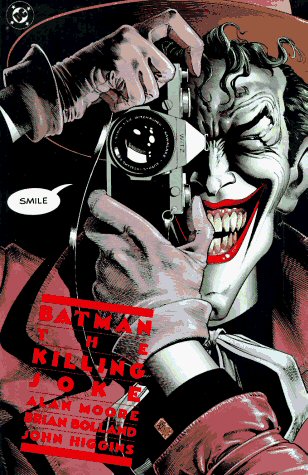
In this story, the Joker takes the position of that moral relativism – everybody out there is really just “one bad day” away from becoming a sadistic sociopath just like him. He sets out to prove this by hurting Batman and the people closest to him – specifically by shooting Barbara Gordon in the spine and torturing her father. His hypothesis is that even good men like James Gordon can be pushed over the edge. But the story rejects this notion; even after everything that has been done, Gordon insists that Batman takes in the Joker by the book, and that he not cross the line the Joker wants him to cross by killing him. Admittedly, the ending of the book is deliberately vague as to whether Batman chooses to cross that line or not (and if you accept it as an out-of-canon story as Moore intended, it remains vague), but the message here is that evil, ultimately, is a choice.
I’m not saying that I don’t want villains to be fully-developed characters or have rich, intriguing backstories. I’m not even saying that I don’t want them to be sympathetic, because it can be pretty powerful to understand why somebody is doing something bad, even if you still condemn the action. But I’m kind of over seeing sympathy being confused with empathy – you can feel bad for somebody without feeling like you’re the SAME as them.
We’ve lost clarity in the name of complexity, and it doesn’t have to be an either/or proposition. Yes, I want interesting, intriguing villains. But that doesn’t always mean that they’ve got to be one step removed from the guy who lives next door. Good and evil are real things, and we’ve lost something by losing fiction that recognizes that fact. Sometimes good is just good. Sometimes bad is just bad. And if we can’t even concede that point in our fiction, how is that going to twist the way we think in life?
Blake M. Petit is a writer, teacher, and dad from Ama, Louisiana. His most recent writing project is the superhero adventure series Other People’s Heroes: Little Stars, volume one of which is now available on Amazon. You can view his LitReel videos on TikTok and read his writerly yammerings on his free Substack.

