Geek Punditry #73: Playing Favorites With Summer Part One

We are, my friends, on the cusp of one of the most storied times of the year: summer! Time to hit the beach, go out on vacation, pull the kids out of school and spend a lot of time with a good book in your hand, longing for the days when such an activity would reward you with a personal pan pizza. And with the new season before us, we here at Geek Punditry Global Headquarters and Corrugated Cardboard Museum have decided to spend a couple of weeks PLAYING FAVORITES with summertime. For newcomers, Playing Favorites is that occasional feature in which I throw out a topic and ask you, the hive mind of social media, to suggest categories related to that topic so that we can discuss some of the best of the best. Let’s take a look at what you guys suggested in part one of this feature.

Beach Movies

Lew Beitz cut right to the chase and asked me for some of my favorite summer beach movies. This is the kind of thing we all think about when summer rolls around, isn’t it? Not just going to the beach, but entertainment regarding the beach. In the 60s it was an entire subgenre all of its own, with approximately 17,000 such films made during this decade starring Frankie Avalon and Annette Funicello alone, sporting subtle titles such as Beach Blanket Bingo or How to Stuff a Wild Bikini. To be honest, I don’t really have a great affinity for those movies – they were well before my time and I didn’t really grow up with them. On the other hand, I do have a great deal of affection for Back to the Beach, the 1987 vehicle starring those two as a pair of midwestern parents who wind up returning to the beach of their youth. I think part of my appreciation for this bizarre little movie can be attributed to my mother, who was a fan of the original films and saw to it that this movie was on rotation in our house when I was young. But beyond that, there’s an inexplicably entertaining element to this movie. It was meta before meta was cool, acting not only as a sequel to the ol’ Frankie and Annette films, but as a parody of them as well. On the other hand, the humor IS pretty dated, with a lot of it requiring an awareness of old pop culture that modern audiences just won’t have. There are a lot of cameos from TV and movie stars of the 60s, for instance, and the joke about Annette’s obsession with peanut butter will just be baffling to anybody too young to remember that she did a series of commercials for Skippy back in the day. On the other hand, the scene of Pee-Wee Herman performing “Surfin’ Bird” is pretty timeless. 

If you don’t necessarily want your beach movies to be full of comedy, it’s hard to go wrong with Jaws. It seems sort of pointless to recap this movie – if you’ve seen it, you know that it’s great, and if you haven’t, no amount of pontificating from me is likely to change your mind. But the movie that made Steven Spielberg is practically a flawless film: tense, thrilling, and full of great characters and wonderful character moments. Even the things that may be technically flawed, such as the artificial nature of the shark, work to the movie’s advantage, as Spielberg was forced to minimize Bruce’s screen time and thereby making it far more effective than it possibly could have been if they put him on screen at every opportunity. It’s the film that made everybody afraid of the water! What better movie to get yourself into the mood for the beach?

These two movies should be all it takes to yet you to September.

Summer Reading

Rachel Ricks wants to know what I think are the best “summer reading books” for elementary, junior high, and high school. This is actually a tougher question than you would think, considering that I’m both a writer and a teacher, but the truth is I’m not 100 percent sure what it is the kids are reading these days. Not elementary or middle school, anyway. For my high schoolers, I see waves happen. There was a time where every kid was carrying a copy of Twilight, which gave way to The Fault in Our Stars, which in turn passed the torch to 13 Reasons Why. These days, the name I’m most likely to see from a kid who digs reading is Colleen Hoover. And the thing is, guys, while I am still a voracious reader (that streak I mentioned last week currently stands at 358 days) I haven’t made a huge effort to check out these particular books because…well…they just aren’t my type.

Anyway, the way Rachel phrased the question makes me think she’s speaking specifically about the sort of summer reading that is often required by schools: when a kid leaves at the beginning of summer with a list of books that they’re going to pretend to have read by the time they come back in the fall. Assigning a book to read is tough. You always know that a substantial portion of the class will do anything they possibly can to avoid actually having to crack the book open. And we’ve all heard those stories of people so discouraged by some required book that they give up on reading altogether. I can promise you, folks, that no teacher wants to assign a book that makes you never want to pick one up again.

I’m going to bow out of elementary school recommendations, as I have none. As far as middle school goes, you can’t go wrong with classics like The Giver or The Outsiders. And if you’re looking for a gateway drug to get a young reader into the world of Stephen King, I think that middle school is an appropriate age to introduce them to his fantasy (yes, fantasy) novel Eyes of the Dragon. I’m also a fan of a few more recent works for this age group, such as Rick Riordan’s Percy Jackson and the Olympians series or the other assorted spin-off series set in that same universe. 

If you haven’t read at least ONE of these books, then either you didn’t go to school in the United States, or you’re the reason Cliff Notes is a thing.

For your high schoolers, you shouldn’t be surprised to see The Great Gatsby, To Kill a Mockingbird or Grapes of Wrath show up in their reading lists. And these are all good books, fundamental pieces of American literature and well worth reading. That said, these are books for people who are deeply into books already, and aren’t exactly casual reads. Try to hook a modern reader with things like The Hunger Games, The Maze Runner, or Twinkle Twinkle, book one of the Other People’s Heroes: Little Stars trilogy, now available both in print and as an eBook from Amazon.com

(You had to know I was going to work that in somewhere.)

Road Trip Movies

Tim Stevens wants to know what I think are some of the best summer road trip movies. The road trip is a classic subgenre, usually in comedy, although there are some great road trip dramas or dramadies (Little Miss Sunshine for example) as well. When you think of a summer road trip, though, the thing that comes to mind is vacation movies, and the king of them all is National Lampoon’s Vacation. While this 1983 Chevy Chase film has become heavily overshadowed by its Christmas-themed threequel, I think people forget how much fun the original is. Clark Griswold (Chase, of course) and his wife Ellen (the grossly underrated Beverly D’Angelo) load the family into a station wagon to take a road trip out to the legendary Wallyworld Theme Park, and all hell breaks loose along the way. It’s not the first road trip movie, of course, but I think it is the platonic ideal of the road trip as a slapstick comedy. A lot of the jokes are very 80s and may not land that well with modern audiences, but I still enjoy the movie. Honorable mention goes to the sequel, European Vacation, in which Clark and Ellen take two entirely different children with the same names as the previous pair to tour the continent on another wacky road trip. 

Not as well known but highly entertaining is the 2014 movie Chef, which was written by, directed by, and starred Jon Favreau. Favruea plays Carl Casper, a famous chef (duh) who boils over at a food critic and loses his restaurant job. With his zest for life gone, Carl and his son Percy (Emjay Anthony) buy a food truck and set off across the country to try to infuse themselves with the savory parts of existence. Just thinking about movies for this list makes me realize it’s been way too long since I devoured Chef – it’s such a great movie. It has some of the same flavor as City Slickers and Hot Tub Time Machine, films about men who have been diced and minced by the world and inexplicably discover ways to relish life again. But the added ingredient of Casper’s relationship with his son helps to separate from those other films, baking up not only a road trip movie, but also a film about a family learning to love one another again. 

To be honest, though, I don’t know that John Leguizamo was the best choice to take over the Beverly D’Angelo role.

Summer Glau Movies

Duane Hower asked me what my favorite Summer Glau movie is. I see what you did there, Duane, very funny. I bet you thought I wouldn’t entertain your joke suggestion, didn’t you? Well, the joke is on you, my friend, because we all know the right answer to this question. The best movie ever starring Summer Glau? Clearly.

Project ALF.
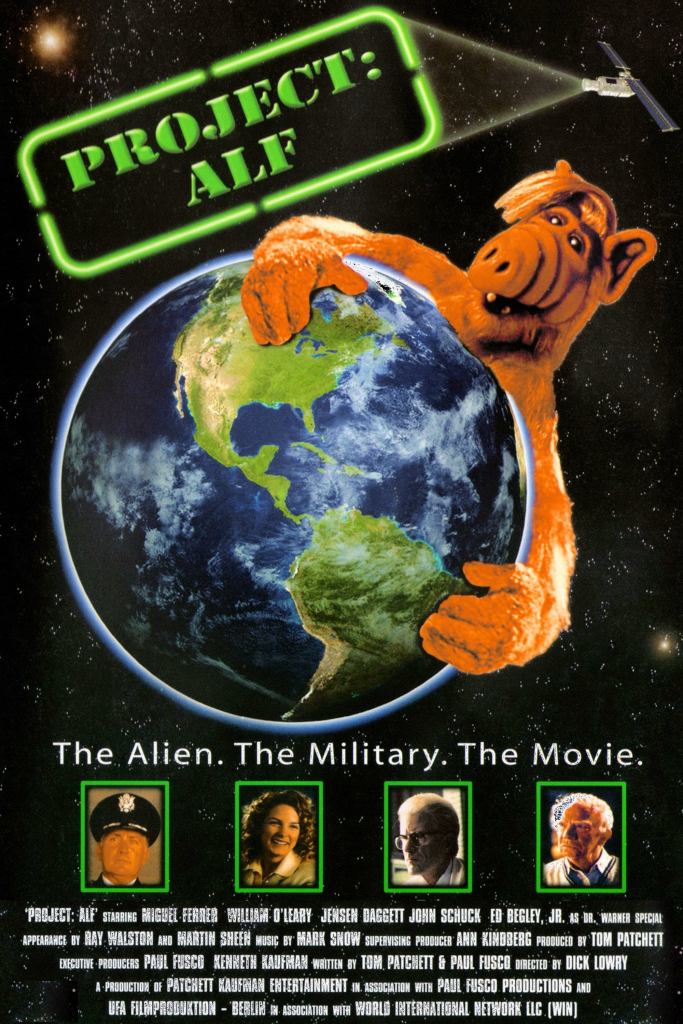
Can you imagine what Melmacian tanlines look like?

Summer Coming-Of-Age Movies

Duane also asked what the best summer coming-of-age movies are. (Jeffrey Lee, I should note, asked for summer “life lesson” movies, and I think that’s pretty much the same thing, so I’m going to combine those two suggestions.) Coming-of-age, like road trips, is kind of a subgenre all of its own, one that often (but not always) crosses over with summer movies in that ol’ venn diagram in our heads. And once again, I think the best example is also the obvious one. Stand By Me, the 1986 movie directed by Rob Reiner and based on the novella “The Body” by Stephen King, is one of those films that sort of codifies the trope for all films that come afterwards. Four young boys (River Phoenix, Jerry O’Connell, Corey Feldman, and Wil Wheaton) discover that a missing boy from a nearby town has been found dead near a railroad track, but the discoverers don’t want to report the body because they found it while in a stolen car. The boys decide to set out on a hike to find the body on their own, and along the way, face the treacherous precipice between staying a kid and becoming an adult. This is the second time I’ve mentioned Stephen King in this week’s column, and in neither case was I talking about horror, have you noticed that? I mean yeah, the macguffin in this movie is a dead body, but that’s as close to being a scary movie as it gets. Instead, it’s a deep, meaningful, and powerful character study about these four boys that gives us glimpses of the men they will grow up to be. Reportedly, after Stephen King watched this movie he broke down in tears and told Reiner it was the best movie that had ever been made based on his work. (Admittedly, this was before Misery, The Shawshank Redemption, or The Green Mile, but that doesn’t change the fact that Stand By Me is an incredible film.)

The other great summer-specific coming of age movie, which again is a film that will probably say more about my age and the era of movies that was fundamental to me than anything else, is the 1993 movie The Sandlot. New kid in town Scotty Smalls (Tom Guiry) befriends a group of young boys that play a perpetual baseball game in a nearby sandlot. Smalls joins the game and becomes a member of the group during a summer that really feels authentic. While not nearly as serious or deep as Stand By Me, The Sandlot is a fun movie that feeds the sort of nostalgia that summer triggers in a lot of us, reminding us of bygone days without real responsibilities or anxieties that seem to be the fundamental building blocks of adult life.

One of these movies features a ghastly, bloodthirsty dog that terrorizes the boys of a small town. The other is based on a Stephen King story.

Okay, friends, I think that’s about enough for part one. I’ve got a few suggestions banked for part two of this segment next week but there’s room for more! If you’ve got an idea for a summertime topic from the worlds of comic books, movies, television, or books, I would LOVE to hear it! Post it in the comments, on the socials where you found the link to this column, or you can email it to me at info@blakempetit.com. See you next week, where we continue playing favorites!

Blake M. Petit is a writer, teacher, and dad from Ama, Louisiana. His most recent writing project is the superhero adventure series Other People’s Heroes: Little Stars, volume one of which is now available on Amazon. You can subscribe to his newsletter by clicking right here. His REAL favorite Summer Glau movie, of course, is Knights of Badassdom. He knows you all expected him to say Serenity, but Joe Lynch’s horror/comedy deserves more love. 

Geek Punditry #67: What Is Literature?

When you’re a high school teacher and spend most of your day around teenagers, you will overhear their conversations whether you like it or not. You hear about the TikToking, and you know who is dating who, and on frequent occasions you learn more about the way these kids spend their weekends than you ever want to know and you contemplate duct-taping your own children to a pool table from the time they’re 13 until they turn 27 or so. And on rare, extremely rare occasions, you’ll hear them discuss things that are actually relevant to your class. Earlier this week, for instance, I overheard a few girls talking about why so many people are using The Great Gatsby as themes for parties and dances these days. 

As always happens when there’s a conversation worth joining, I jumped in. “There are three reasons,” I said. “First of all, it’s the 20s again, so people are playing with that. Second, the book went into public domain a few years ago, so nobody has to pay to use these things. And third, there are a lot of people who think the movie is fun and didn’t actually pay attention when they were supposed to be reading the book.”

“Ain’t no party like a Gatsby party, ’cause a Gatsby party ends with three people dead and a complete loss of faith in the American dream!”

The Great Gatsby is, of course, a seminal work of American literature. It’s one of the best books ever written in this country, and it paints a complex and gripping narrative in a relatively short number of pages, but the book is about the unsatisfying nature of a decadent lifestyle and how pursuit of material things is shallow and destructive. Anybody who comes away from that book thinking that these characters are something to aspire towards is – and I’m going to be kind here – an utter moron.

I talked about this conversation with some of my English teacher friends (of course I have English teacher friends – we sit around and conjugate each other’s verbs and talk about which infinitives we’re crushing on) and discussed the fact that there aren’t a lot of books that we teach that provide role models or, for that matter, happy endings. Let’s face it, most books that are complicated enough for a really deep literary analysis tend towards tragic – or at best, bittersweet – endings. The least-depressing book I’ve ever used in my classroom is The Hitchhiker’s Guide to the Galaxy, and that book BEGINS with the complete destruction of the planet Earth. And one of my friends in this chat commented that this is why she sticks to reading lighthearted stuff on her own time – “literature” is too depressing.

Whaddaya gonna do? You’ve got to build bypasses.

I’ve always thought it was odd to use the word “literature” as a genre, the way I would “science fiction” or “horror.” What, exactly, qualifies something as a work of literature? Every time I walk into a bookstore with a “literature” section, I want to ask somebody who decides which books go on those shelves and which ones do not? Isn’t the very existence of a “literature” section sort of a low-key insult to all of the other books in the store that got shelved somewhere else? Ernest Hemingway’s The Old Man and the Sea goes on the literature shelves whereas William Goldman’s The Princess Bride doesn’t, but I could write you a whole dissertation on which one is a better book, and it ain’t the Hemingway.

One of these is one of the most incredible stories ever conceived by the human mind and the other one is what happens when Ernest Hemingway doesn’t go to therapy.

Is it just the age of the work? Everyone would agree that Lord of the Flies from 1954 is a great work of literature. But what about Robert Heinlein’s Rocket Ship Galileo, published in 1947? It’s not only a book that doesn’t enter the “great literature” discussion, it’s not even usually part of the conversation when you talk specifically about the work of Robert Heinlein. We got George Orwell’s 1984 in 1948, nearly twenty years after the first Nancy Drew novel, The Secret of the Old Clock, but nobody is citing the works of Carolyn Keene in the conversation of great writers. And that’s not just because she didn’t actually exist.

Is it just about the complexity of the work? Must a work deal with heavy ideas and deep themes to qualify? The Adventures of Huckleberry Finn gets my personal vote for the greatest American novel ever written (sorry, F. Scott Fitzgerald). Set 20 years before the Civil War but written about 20 years afterwards, the novel is a deep and fascinating analogy about the changes the country went through during that time period. Whereas Mark Twain’s earlier book with these characters (The Adventures of Tom Sawyer) was a simple boy’s adventure story, Huckleberry Finn is about a child struggling with the ethical quandary of whether it is morally right to help his friend Jim escape from slavery. Jim’s owner, Miss Watson, has taken care of Huck, and in the eyes of the law he is betraying her by helping in Jim’s escape. But eventually, he comes to the conclusion that he’s going to be loyal to his friend, even if it goes against the law, even if it goes against what he has been taught is morally right. The book deals with the destructive nature of bigotry, ignorance, and hypocrisy, and Huck himself becomes symbolic of the moral transmogrification that the United States was beginning to undergo. In other words, literature.

The thing is, though, a lot of these same ideas and themes can also be found in random episodes of Star Trek. If I pull out Oliver Crawford’s script for “Let That Be Your Last Battlefield,” I can get into a deep conversation about the folly of racism as we watch two aliens whose species has hunted itself to extinction because some of them are black and white whereas others are white and black. It’s a legendary episode, but could I justifiably call the script for it literature the same way I would Huck Finn or – to use the other best-known example of anti-racist literature – To Kill a Mockingbird? Most people would say no. 

“I dunno, Frank, are you sure the analogy isn’t too subtle?”

I posed this question, this “what is literature” question, to my English pals, and one of them said she once looked it up herself and read one of the characteristics that makes something literature is a focus on character and their development rather than plot. Does that really work, though? Gatsby is a very deep examination of the characters, but none of them actually CHANGE. By the end of the book, they (the ones that survive, anyway) are all the same shallow, soulless people they were when the story began and only the narrator – the criminally bland Nick Carroway – has shown any development at all, that development being disgust at the people around him. It’s like you’re left feeling when you watch the final episode of Seinfeld. 

On the other hand, my friend pointed out, the male lead in Fifty Shades of Grey seems to change by the end of that series, becoming actually devoted to the narrator. I’ll let you draw your own conclusion as to whether this qualifies as development or not, I haven’t read Fifty Shades. But if there’s one thing everyone in our English chat can agree on, it’s that Fifty Shades of Grey does NOT qualify as literature.

I want to be clear here: I haven’t seen the movies, nor read most of the books. I’ve read exactly one page, the first one, in a bookstore. I was curious as to what the big deal was, and after reading one page I said – out loud – “Oh good LORD,” and put it down. It’s not that the book is smut. If you want to read smut, go right ahead, I don’t judge you for it at all. I will, however, judge you for reading such POORLY WRITTEN smut when there is smut of much better quality readily available. I’m not telling you not to read Fifty Shades because it’s explicit, I’m telling you not to read it because you deserve better smut.

Not pictured: Literature.
Or believable characters, genuine titillation, or a functional understanding of the culture it purports to depict.

Is it the fact that something is “highbrow” what makes it literature? Well that comes with the same problem as designating something literature in the first place: who decides? To pull the Shakespeare card again, my students are ALWAYS intimidated when we start reading Hamlet because they think of Shakespeare as something for “thinky” people. Sure, that may be the way he’s considered today, but in his own time, Shakespeare was a popular writer. He was turning out play after play for the masses, and because he knew exactly what the people wanted, he loaded them with sex and violence. He was the J.J. Abrams of the 16th century. The kids don’t get that, though. If you understand what he’s actually saying, Hamlet’s line “Do you think I meant country matters?” is just as raunchy (and way more clever) than anything E.L. James wrote, but in all my years of teaching the play I’ve never had a student pick up on the subtext. Only a few of them get the later, more obvious line when Claudius is seeking Polonius’s corpse and Hamlet tells him Polonius is, “in heaven…if your messenger find him not there, seek him i’th’other place yourself.” Every so often I have a kid who asks, “Did he just tell the king to go to Hell?” and that student automatically becomes my favorite.

“I don’t look thoughtful enough. Give me 20 percent more confetti.”

The bar can’t be whether something makes you think. Last week I finished reading Liu Cixin’s novel The Three Body Problem, and that’s one of the thinkiest dang books I’ve ever read. The book follows a large cast of characters who discover a secret organization attempting to prepare Earth to be conquered by extraterrestrial invaders. This is, I must stress, an extremely barebones description of the plot, and deliberately so. This story is far deeper and more complicated than my pitiable attempt to summarize it. In fact, if someone tried to argue that it’s the best science fiction novel of the 21st century so far, I will have absolutely no ammunition with which to disagree with them. This Chinese novel was originally serialized in 2006, published as a novel in 2008, and first published in English in 2014, so no matter which edition you’ve read, it’s less than 18 years old. As such, it’s not something that I hear come into the conversation when people discuss “literature.” Not YET, anyway. Come back in 20 or 30 years and that may well change. But is it only the relative youth of the book that keeps it off the table?

Not pictured: Literature, but ask me again in 2056.

Maybe it’s a combination of all of these things. Maybe “literature” has to be deep AND intelligent AND kind of old. Maybe all these things that we now call “literature” are only in that category because they’re the best examples of their time period and we’ve forgotten 90 percent of the utter crap that was written around the same time. That’s not only possible, I think the further back in the history of storytelling you go it becomes almost undeniable. The poet W.H. Auden once said,“Some books are undeservedly forgotten; none are undeservedly remembered,” and by this I think he was trying to tell us that people will hopefully still be reading The Three Body Problem in the year 2100, whereas by then hopefully the only people who remember 50 Shades of Gray will be literary historians who cannot figure out why readers were so temporarily obsessed with a piece of mediocre Twilight fan fiction.

Increasingly, when it comes to the question of literature, I find myself using the late Supreme Court Justice Potter Stewart’s description of “obscenity.” Unable to actually define the term, he simply said, “I know it when I see it.” That’s how I feel about literature, too. But my opinion, of course, doesn’t count for more or less than anybody else’s.

Except for that guy shelving the “literature” section at Barnes and Noble. He apparently holds a little more sway than the rest of us.

Blake M. Petit is a writer, teacher, and dad from Ama, Louisiana. His most recent writing project is the superhero adventure series Other People’s Heroes: Little Stars, now complete on Amazon’s Kindle Vella platform. He doesn’t know if anyone would ever call the new trilogy version of that series, beginning with Little Stars Book One: Twinkle Twinkle, “literature,” but he DOES know it will be available in both paperback and ebook beginning on May 4, and he is CRAZY excited about it.