I pulled into the parking lot at my son’s school Thursday afternoon, ready to pick him up. I was a bit early, and as I usually do when that happens, I was prepared to listen to a little more of my podcast or scroll through Facebook until it was time to get him. But when I picked up my phone I saw a message from my brother that just said “RIP Captain Picard” and a link.
My stomach lurched before I clicked it. Oh, I know, I myself remind people that “2026” isn’t actually out to get us, and that the reason these kinds of things seem to be happening so much is because we – nerds like us – are of an age where those we grew up with are leaving us. But it’s been a hell of a year already: Dolly Parton, Tim Curry, Catherine O’Hara, Chuck Norris, Nicholas Brendan, Anthony Head, and just earlier this week we’d lost Eric Bauza and Walter Koening. At this point you wouldn’t think that it would matter so much any more.
But when I saw the picture and the legend: “RIP, Sir Patrick Stewart: July 13, 1940-October 28, 2026,” I was broken.
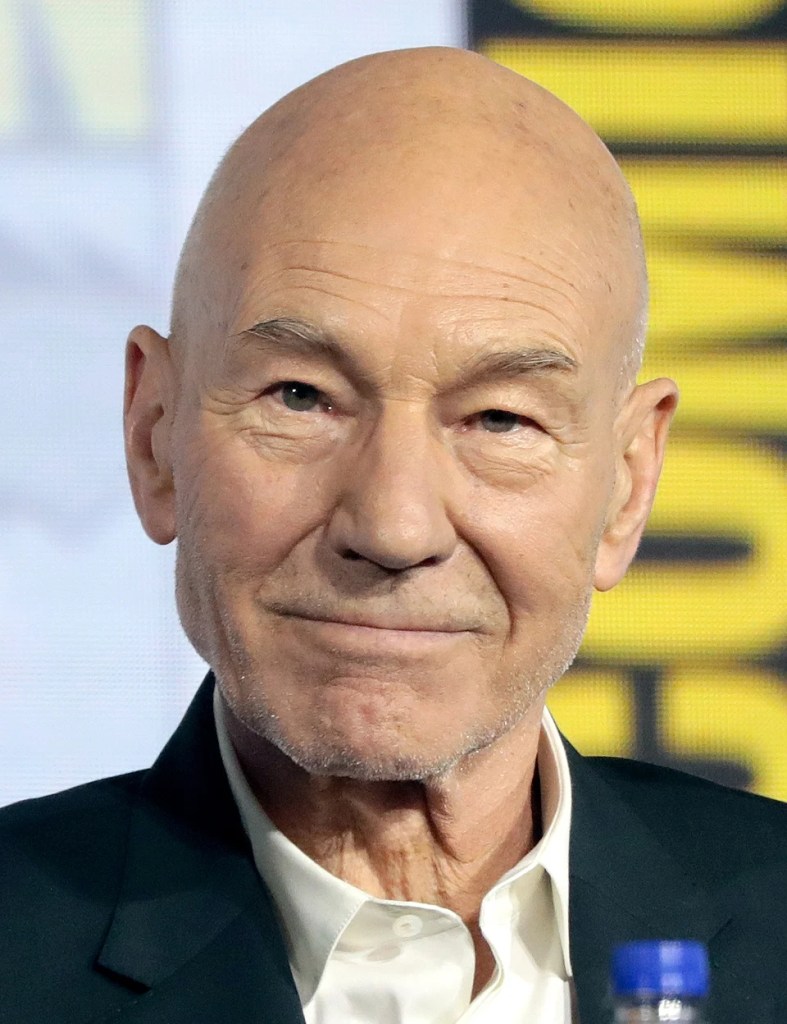
It was a few minutes before I could get out of my car.
It’s always at least a little sad when a celebrity whose work you admire passes away, that’s nothing new, but this one cut me like a knife. I don’t remember feeling it this harshly since the death of Stan Lee, and before him Leonard Nimoy. There are some people whose work is so fundamental to us that their loss is like losing a loved one. I didn’t know Patrick Stewart. But I knew Jean-Luc Picard.
Stories matter, my friends. Stories have always mattered very deeply, and they’re entwined in every aspect of our lives. Religion, history, sports – all of these things that enrich our who we are are communicated through story. We use story to teach all of these things, as well as ethics and morality before our children have a concept of what those words mean. “The Boy Who Cried Wolf” is there to teach us not to tell lies, “Little Red Riding Hood” teaches us not to talk to strangers, and so forth.
Sometimes that instruction is more direct. TV shows like Sesame Street taught a great many of us about letters and numbers, but also music and friendship. And the people on those shows, the people telling us those stories, earn a place in our hearts like any other great teacher, a place they occupy for the rest of our lives. It’s why – as a grown man – I shed tears for the loss of Bob McGrath, Emilio Delgado, and Carroll Spinney. And when I got older and outgrew Sesame Street, there was Star Trek: The Next Generation, because learning doesn’t stop. It’s just that the topics grow more complicated.
Star Trek, especially the original series and Next Generation eras, are classic science fiction in the sense that they told great stories that sometimes disguised powerful lessons. It’s a technique that I feel like contemporary storytellers have forgotten. If you watch one of the modern-day Trek series they’re still trying to teach a lesson, but they beat you in the face and have six characters stand up and make a speech about it. In the early days, the lesson was woven into a story instead of having a story draped over the lesson like a flimsy raincoat. And while there were still speeches back then, there’s not an actor on Earth who can deliver them and make them feel real the way that Patrick Stewart did.
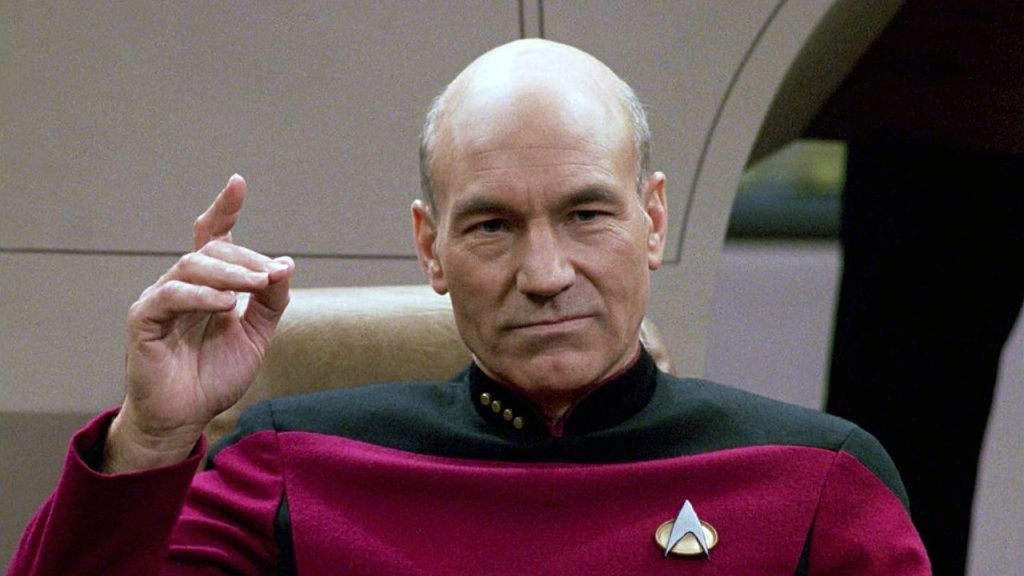
Jean-Luc Picard wasn’t just a captain – he taught us what true leadership looks like. He taught us how to extend the hand of peace whenever possible. And he taught us to stand our ground when talking fails and the time comes to protect those things you hold dear. He taught us understanding. He taught us kindness. He taught us resolve. He taught us the love of exploration and a passion for knowledge. He stood on the bridge of a starship every day but had the (mechanical) heart of an archaeologist, an actor’s passion for William Shakespeare, and a penchant for the flute that is its own story entirely.
I’m not here to eulogize Patrick Stewart. As I said, I didn’t know him personally, and I know little about his personal life. But I know his work, and I know what the characters he brought to life mean to me. I know that he was the ONLY choice to play Charles Xavier when the first X-Men movie was made. I know that, although I will never ignore Michael Caine and the Muppets, when the time comes to break out my Christmas movies this year I’m going to make especially sure that the 1999 version of A Christmas Carol adapted from Stewart’s long-running one-man stage show is part of the rotation. And I know that the lessons I learned from Captain Jean-Luc Picard are going to be with me for the rest of my life.
So as tribute to my Captain, I’m just going to share with you what I consider to be the six greatest Picard episodes of Star Trek: The Next Generation (because when I shared my top five list with some friends one of them pointed out another episode that I simply cannot leave off this list, nor could I decide which one to bounce), and what makes them so damned good. The bottom five I may rotate in or out, as I often do when I’m ranking things, but the top spot is as steadfast as the firmament in which we see the stars.
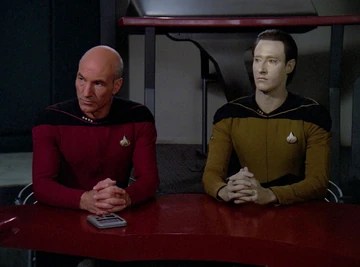
Measure of a Man (S2E9): Data is ordered to be transferred off the Enterprise for study and disassembly, and Picard is called upon to be Data’s advocate in a hearing to determine if the android is indeed a sentient being with his own rights. Most people would probably put this on their list of great Data episodes, and it belongs there too, but the thing that stands out to me so much is how fiercely Picard fights for the rights of his crew member. This was decades before the question of sentient Artificial Intelligence became part of real-world discourse, but as was so often the case back then, Star Trek was well ahead of the curve. Picard’s defense of Data is passionate and steadfast, and it reminds us that a being need not be like us to be deserving of existence. To see Picard go to bat for the most unusual member of his crew resonates in the mind of a kid from the 80s who never quite fit in. As a season two episode, it’s the earliest episode to make my list and, frankly, probably the first truly great episode of the series. It would have many more.
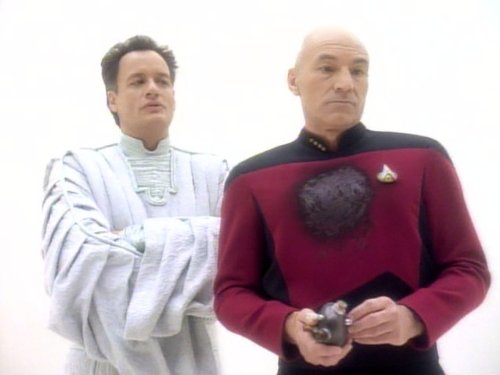
Tapestry (S6E15): While on an away mission, Picard is killed by an injury that destroys his artificial heart. But he awakens to find himself in the presence of the godlike Q, who offers to send him back in time to change the events of his youth that led to him needing the artificial heart in the first place. The story is more than a little evocative of It’s a Wonderful Life, in that Picard changes his past only to find that without the mistakes of his youth, he’s no longer the man he once was. I love this episode for a few reasons. First, it’s great to see that Picard – the captain, the mentor, the father figure, was once a young man as capable of making poor choices as anyone else. I don’t want to say it “humanizes” the character, because he was always eminently human, but it allows us to see him in a new light. The other reason I love it is because of the message: we are, all of us, the product of our choices, and that includes the mistakes. You can’t take a brick from the wall without making it crumble, and it’s foolish to want to.
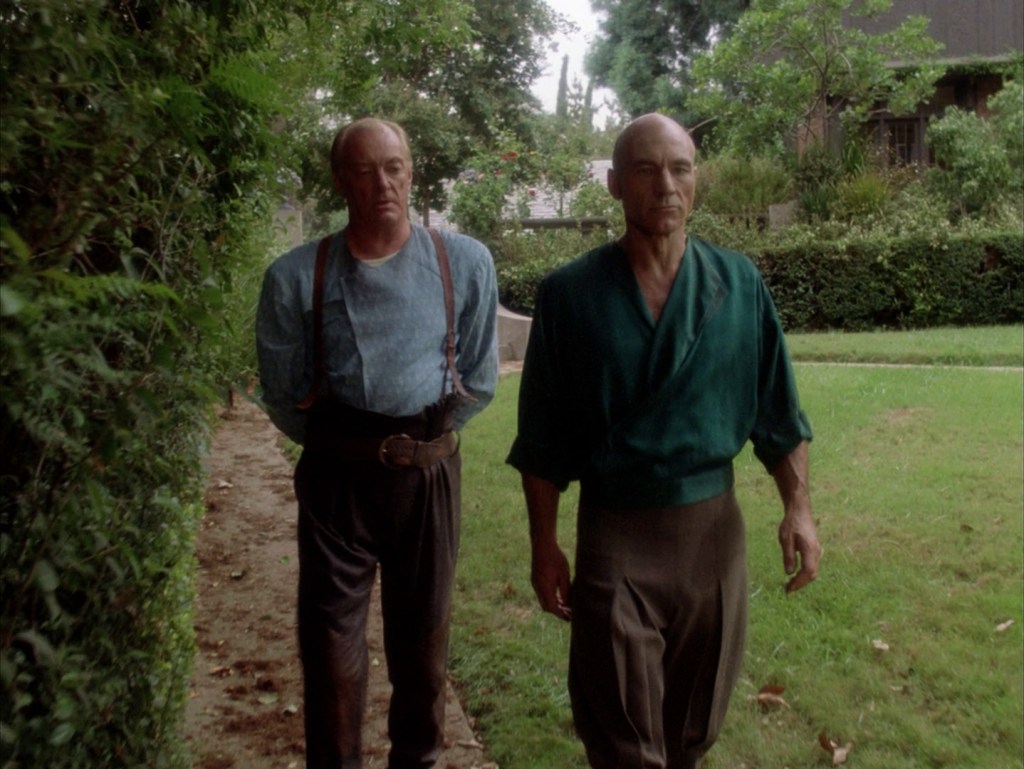
Family (S4E2): After his ordeal at the hands of the Borg, Picard takes leave on Earth and visits with his brother’s family in France. I considered putting the two-part “Best of Both Worlds” – the story of Picard’s struggle with the Borg – on this list, but I decided that this one was more appropriate. Although “Best of Both Worlds” is probably the greatest two-part episode in Star Trek history, it is very much an ensemble piece, and for much of it Picard literally isn’t himself. But in “Family” we see a more honest Picard than ever before. He’s with his brother and nephew, trying to pretend that everything is fine even though he’s dealing with deep trauma and inwardly spiraling. This is the episode that tells us it’s okay to not be okay. That it’s okay to need help. I hate to keep dunking on NuTrek, but this is the kind of story that a modern series would give to a character we met five minutes ago and then have the entire crew grind to a halt to deal with their trauma for half a season. The Next Generation gave the trauma to their CAPTAIN, a character who had won our respect and admiration. And although he carried the scars from his time with the Borg for the rest of his existence, the show wisely didn’t dwell on it. It’s true, in real life trauma can’t be processed in 45 minutes plus commercials, but you’ve also got to remember that Star Trek is a TV show FIRST. Watching people seek treatment for their mental health isn’t really a recipe for long-term entertainment unless you’re watching The Sopranos or Frasier (which also had a brilliant Patrick Stewart episode in that show’s final season).
Darmok (S5E2): Picard finds himself stranded on the surface of a planet with the captain of an alien ship, and Picard soon learns that his companion speaks only in allusion and allegory. The difference in their cultures makes communication impossible at first, but Picard and the alien Danthon (played by another late Trek great, Paul Winfield) find ways to make inroads and learn not only to understand one another, but to trust each other as well. Communication is such a powerful thing, and the ability to make yourself understood is one of the most valuable skills a person can have (if any of my students happen to be reading this, take note). This episode not only reminds us of that, but also showcases the fact that it doesn’t matter how different two people are: if they can find that one key that unlocks the doors between them, miraculous things can happen. And of course, this episode has been elevated to meme status – if you’ve ever heard someone reference “Darmok and Jalad at Tanagra,” this is where that comes from. And amusingly enough, if you’ve ever heard that saying and felt confused, this episode is EXACTLY about how that feels.
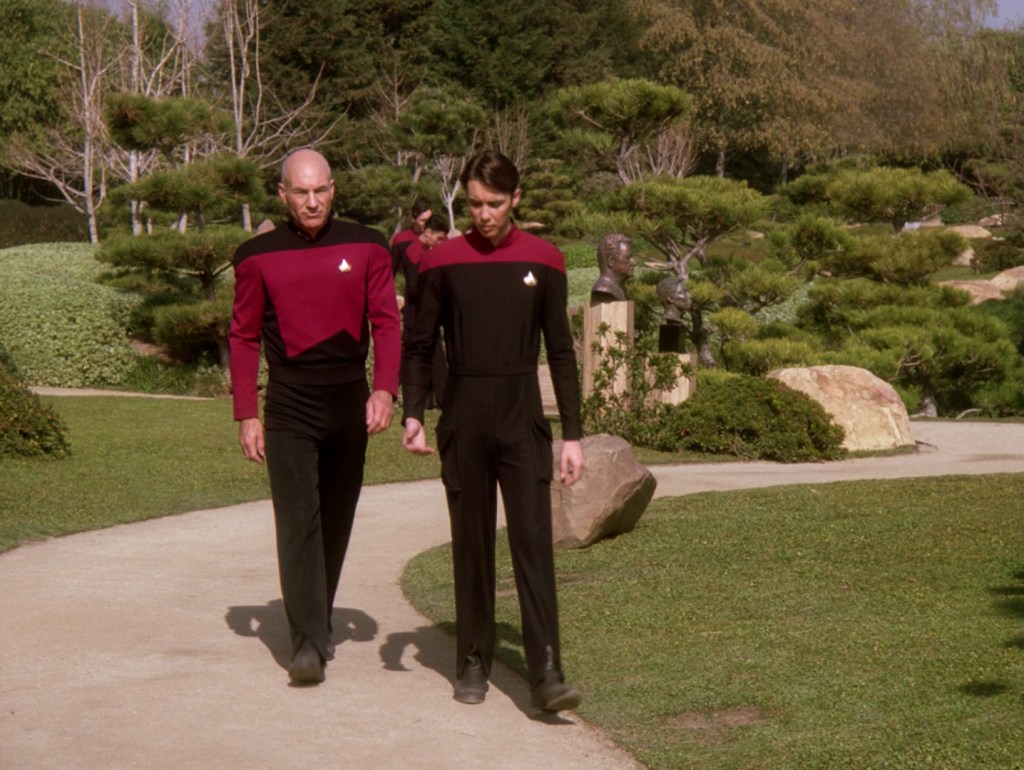
The First Duty (S5E19): The Enterprise is visiting Earth and checks in on Wesley Crusher at Starfleet Academy when an accident costs one of Wesley’s classmates his life. The investigation into the incident leads Picard to teach Wesley a lesson far more important than any he’ll learn in school. Like “Measure of a Man,” most people wouldn’t think of this as being a Picard-centric episode, and it is mostly Wesley’s story. But in this episode we see Picard run the gamut from proud surrogate father to concerned mentor to a superior officer that is barely containing unbridled fury, and he does it all so, so well. As far as those “Picard Speeches” I mentioned before, this episode arguably has the most epic example of all time.
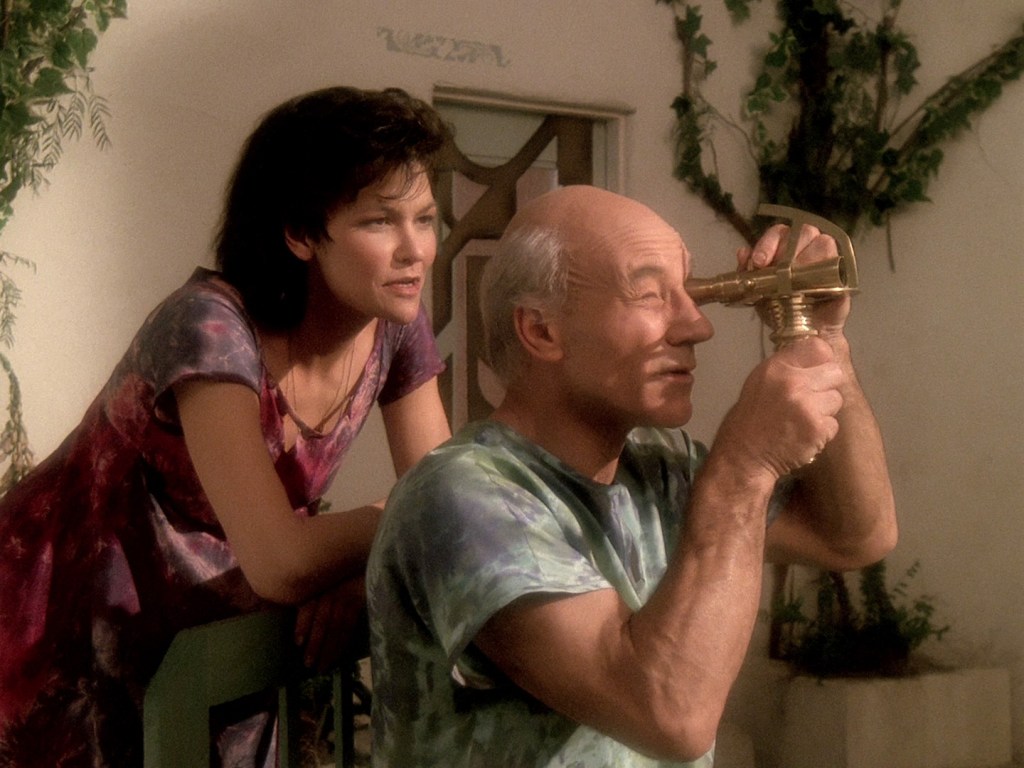
Inner Light (S5E25): The Enterprise encounters a probe in space that takes control of Captain Picard, who wakes up on an ancient alien world where everyone calls him “Kamin.” As the crew of the ship try to free him, Picard lives an entire lifetime belonging to a member of the long-dead planet that sent the probe into space. It’s hard to summarize this episode in any way that explains what makes it so great. Neither the ship nor Picard are ever in any actual danger. The only threat that exists happened to the natives of Kataan countless years ago. But the way the probe gives Picard a snapshot of a dying world is unbearably moving, inexplicably powerful, and something that touches the depths of your soul. It’s sad and sweet and beautiful in a way that television rarely is. It’s an episode that reminds us that even once something is gone, that doesn’t mean it never mattered. It is, without hyperbole, one of the finest hours of television ever produced. It’s not only Picard’s best episode, it is perhaps the single greatest episode of any Star Trek series, ever.
And it’s the one where Picard learns to play that flute.
Rest in peace, Captain. Your place now is among the rest of the stars.
Blake M. Petit is a writer, teacher, and dad from Ama, Louisiana. His most recent writing project is the superhero adventure series Other People’s Heroes: Little Stars, volume one of which is now available on Amazon. You can view his LitReel videos on TikTok and read his writerly yammerings on his free Substack.

