Geek Punditry #160: The Difficulty of a Kingamatic Universe

“Hey,” one of my students whispers to the kid sitting next to him. “He’s reading It.”

And I smile.

On the wall in my classroom is a small whiteboard. At the top of the board is written “What is Mr. Petit reading?” Underneath, I regularly update the board with the title and author of whatever book has most recently been removed from my To-Be-Read pile and is actually in the process of being read. Currently, that book is Stephen King’s It. I’ve had that board up for a few years now, and I update it whenever I begin a new book, and having it visible has led to lots of really great questions such as “Are you still reading that one?” and “How many books do you read, anyway?”

“Not to put too fine a point on it, but I read more books yesterday than some people in here will read in their entire lives. Please don’t take that as a challenge.”

Occasionally, though, the board can lead to an actual conversation if a student happens to have read the book, is curious about it, or didn’t know that a book even existed (for properties they’re only familiar with as movies, such as Ready Player One). It is the book currently on the board, and it’ll probably stay there for a little while, because even for Stephen King, it’s kinda long. Some students are horrified when I tell them that I’m reading a book that’s in the ballpark of 1100 pages. They are even more baffled when I tell them that this is not the first time I’ve read it. I don’t recall, honestly, if this is the third or fourth time I’ve taken this particular trip to Derry, Maine, but I know exactly when the LAST time I read it was – it was late August and early September of 2017, and I remember it because it happened to be the book I was reading the week my son was born. I recall sitting there, scrolling through the pages on my tablet as Erin and Eddie slept, each of them rather exhausted after recently undergoing the most dramatic moving day in the history of a human being. 

Don’t worry, I didn’t whip out my book and start reading as soon as the kid popped out – this was some time later, as we had to stay in the hospital a little while as they treated him for some blessedly minor things that prevented us from going home for about five days. If you’ve ever spent time in the hospital, no matter how serious the condition may be, you’ll know that after a few days you start crawling up the walls if you don’t have something to do. My something was to visit with my friends in the Losers Club.
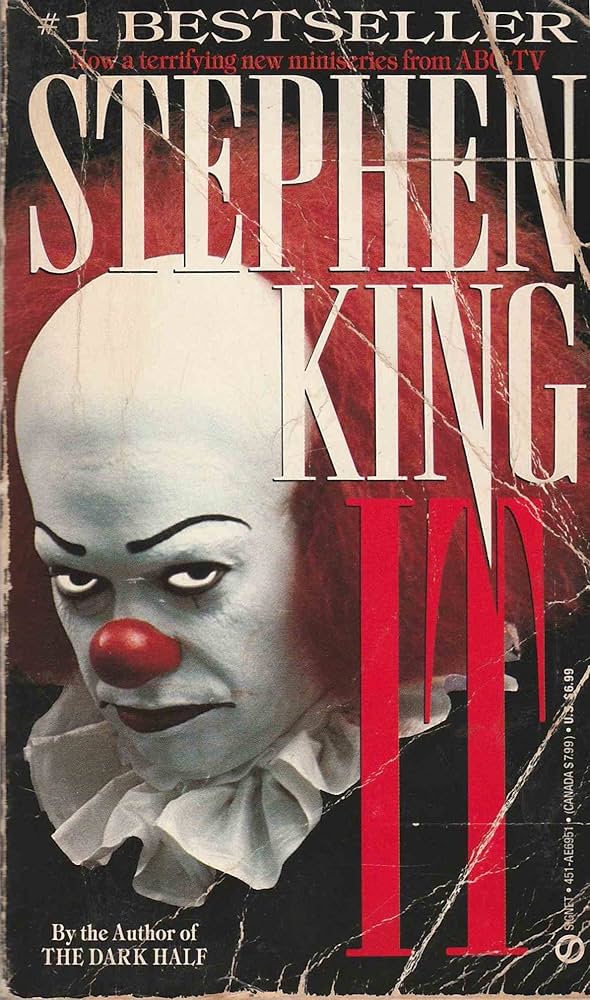
In retrospect, this may not have been the best choice for a new father’s reading material.

The specific reason I started reading It again this week, though, is because I finished the first season of HBO’s TV series Welcome to Derry, a prequel to the film adaptations of the novel from 2017 and 2019. The series is produced by Andy Muschietti, who directed the films and half the episodes of the show as well.  I thoroughly enjoyed the series, and it made me thirst to go back and revisit the source material again. As I’m reading it, I’m noticing the little bits and pieces, the tidbits the writers and showrunners planted in the show that help build out the world with water from the original font. 

To be clear, this TV series is a prequel to the MOVIES, not the book. There are some important differences that prevent it from working as an adaptation of the novel, chiefly the time period. The original novel is set in two eras: 1958 (when the protagonists are children) and 1985 (when they return to Derry as adults to finish what they started). The creature they do battle with has a cycle of about 27 years in hibernation, after which it returns to wreak havoc on Derry once again. 1985 was contemporary when the book was written, but Muschietti decided to keep the story set in the “present” when the films were released, meaning the events were shifted to 1989 (for the kid portions) and 2016 (for the adult portions). Welcome to Derry details the previous cycle of It in 1962. The point is that the movie universe cannot fit the timeline of the book universe, and that’s honestly not a bad thing.
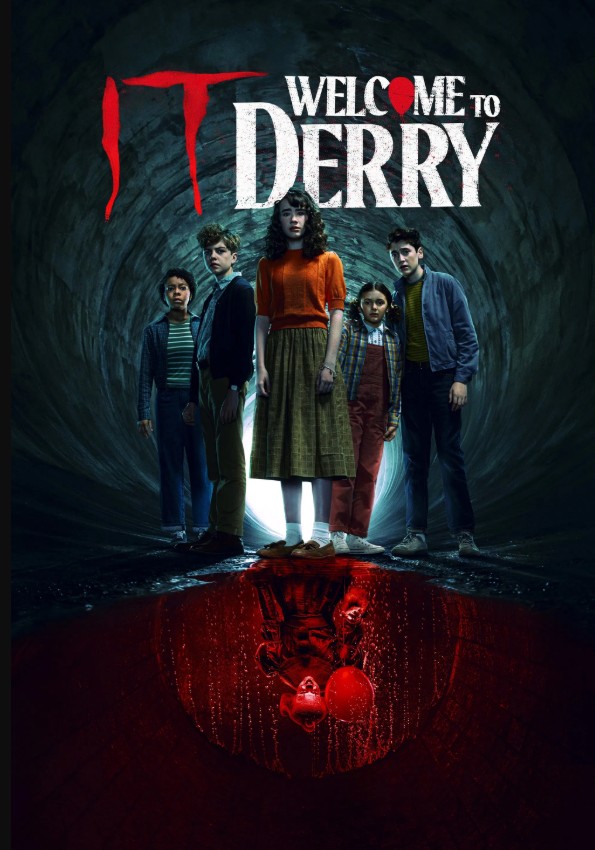
People who saw the show know just what a dirty trick this poster is.

Since the show, from the outset, cannot be a direct prequel to the novel, Muschietti and the writers are playing a little more fast and loose with the story, while still paying respect to it. For example, in the original novel Veronica Grogan is the name of one of the countless victims of Pennywise during the monster’s 1958 cycle. The TV show elevates her to one of the main characters fighting against the clown in the generation BEFORE the Losers’ first encounter with the monster. The names of many other characters from the book are peppered throughout the show, some of them characters mentioned in the novel, others with names that imply (and in a few cases, make abundantly clear) that they are relatives or ancestors of characters from the original in this version of the story. 

But the connections to the works of Stephen King don’t end with elements strictly from It. At one point, a character is sent to Shawshank Prison, the setting of King’s classic novella (and its classic movie adaptation) The Shawshank Redemption. Shawshank is frequently referenced in King’s Maine-centric stories, which is to say a little more than half of them, so it’s not a surprise when it turns up here. An even bigger link, though, is the character Dick Halloran. Halloran is one of the principal characters in his novel The Shining, which was written before It, and the original novel reveals that he was somehow involved in the tragically violent events that concluded a previous cycle of It. Welcome to Derry expands upon that, showing those events in full and giving Halloran a much more significant role. What’s more, they don’t even stop there, referencing elements of Halloran’s character that come neither from It OR The Shining, but rather from the latter’s sequel, Doctor Sleep. 

“Honestly, we’re just glad somebody remembered we were here.”

What I’m getting at here is that Welcome to Derry feels like it’s inching closer and closer to something that Stephen King fans have wanted to see for a very long time: a true cinematic universe.

Yeah, we’re going to that well again. Marvel has its cinematic universe. DC is on take two. We’ve got one for Star Wars and John Wick and even horror franchises like The Conjuring. But the thing you need to remember is that none of these franchises INVENTED the idea of a shared universe. It’s been around for a very long time. William Faulkner linked several of his novels and short stories together via the inhabitants of the fictional Yoknapatawpha County, Mississippi. James Joyce’s Dublin serves as the backdrop for several of his stories and, inasmuch as it’s possible to understand anything Joyce wrote, several of them link together. And King, much like many other contemporary writers, delights in dropping in Easter Eggs, hints, clues, and references that tie his various stories to one another. 

Now not ALL of his stories can be said to definitively take place in the same universe. The Stand, for example, is a novel about a virus that kills most of the population of the world, which clearly precludes most of his later works from being set in the same universe. Cell isn’t exactly a zombie story, but it’s close enough that this world is incompatible with most of King’s other work. And it’s hard to reconcile the bleak, horrific vision of the afterlife from Revival with several of his other stories which feature good, even friendly ghosts on occasion, such as Bag of Bones. Then there are the Stephen King books that explicitly reference other King books – or their movie adaptations – as fiction. That’s a bit of a roadblock.

On the other hand, King himself has provided us with a handy device that can explain away any discrepancy via his Dark Tower series: a multiverse. The Tower itself is a sort of central hub around which all reality converges, and that includes many different worlds and dimensions that are similar to, but distinct from, one another. The Dark Tower provides links not only to It and The Stand, but to multiple other books and short stories. And lots of the other stories he’s written drop in casual references that remind us that yes, their universe is one of the countless that are connected to the Tower. 

If ever there was a scene that MUST be committed to film, it’s this.

So all that said, why HAVEN’T we gotten a proper Stephen King cinematic universe before? The biggest obstacle, frankly, is licensing. King’s first novel, Carrie, was published in 1974, and he’s been turning out book after book and story after story since then. The most recent count I can find credits him with 67 novels and novellas and over 200 short stories over his 52-year career, and he’s been selling off the rights to them to different players all along. I don’t begrudge the man this – Lord knows I wish I could get that kind of payday – but the result is that the film and television rights to his works are all over the place. Dozens of studios and even individual filmmakers own bits and pieces of him, and getting all of them together to play nice and collaborate seems like a pretty impossible prospect. It’s the same reason that Marvel characters didn’t start meeting each other on screen until Marvel Comics stopped selling the rights to anybody who offered them twelve dollars and half a Fruit Roll-Up and started making the movies themselves. 

It’s not like King isn’t still a significant player in the entertainment game. People who don’t follow him may think of his work primarily as the grist for a huge slate of horror movies from the 1980s, but they’ve been coming out regularly since then – and they’re not all horror. 2025 brought us no less than four big-screen adaptations of his work: The Monkey (which turned a straight horror short story into kind of a bizarre black comedy), The Life of Chuck (a beautiful and faithful adaptation of a semi-fantasy by director Mike Flanagan), and two adaptations of books he wrote under his Richard Bachman alias, The Long Walk and The Running Man. These last two are both dystopian science fiction rather than horror, but they’re radically different from one another, despite the fact that they both have the same hook of characters competing in a lethal game in the hopes of a life-changing prize. But while The Long Walk is a dark, nihilistic societal commentary, The Running Man is a slam-bang action film. 

There have been attempts in the past to create a sort of King universe. Most notably, in 2018 Hulu produced Castle Rock, a series “inspired” by elements from a great number of King’s various works and set in that OTHER town in Maine that seems like it must be a nightmare to actually live in. The show was okay and it lasted two seasons, but I don’t think it actually gave fans what they wanted: a world in which the stories they love (or at least versions of those stories) could coexist. In Castle Rock, it was more like they took chunks of King’s books – characters, names, places – and pieced them together into something different. That’s a legitimate storytelling technique, of course. Mike Flanagan did it with Edgar Allan Poe for his exquisite miniseries version of Fall of the House of Usher. But it wasn’t quite what we were looking for.

In Welcome to Derry, the events of the two It movies are canonical, and the things we’ve seen so far make it quite easy to link that world with The Shawshank Redemption and the Shining/Doctor Sleep duet – if not exactly the movies we’re familiar with, then at least some version of those events. All of those movies, it should be pointed out, were released by Warner Bros., which is no doubt why they could play with those toys so easily. The show has not officially been renewed for a second season, but it has achieved real critical acclaim (although, typical for a streaming service, we have no idea what its numbers are), and Muschietti has been quite vocal about his plans for the next two seasons of the show. Future seasons would tell stories of two earlier iterations of the It cycle, in 1935 and 1908. This, I think, would be the perfect opportunity to build out the universe and add more parts of the Stephen King world. In fact, I think in some ways it would be almost REQUIRED to do that.

I loved season one of Welcome to Derry. The story was tense and compelling, the performances were great, and even though King wasn’t directly involved, the new characters all felt like the sort of characters that we get attached to in his books – ordinary people who get swept up in something far beyond their comprehension. If there is one legitimate complaint about the show, though, it’s probably that about half of the plot (the half that focuses on the child protagonists rather than the adults) is a bit TOO similar to the original It: a bunch of outcast children band together to stand against the evil of Pennywise the Clown. If we’re going to do another two seasons, they can’t just be two still-earlier stories about kids teaming up and fighting the monster. They need to bring something else to the table.

Andy Muschietti, I think, has proven himself an able enough storyteller that he is no doubt aware of this fact. The way he’s talking, it seems like he already knows what the story will be in 1935 and 1908. What I’m hoping is that he finds ways to tie in to other King stories. Could there potentially be references to John Coffey or the other characters from The Green Mile (set in 1932 in the novel, but it wouldn’t be outlandish of them to drag it forward in the timeline a few years)? Could we see the immortal vampires of ‘Salem’s Lot or the origins of the mysterious government project called “The Shop” from books like Firestarter? All of these, of course, would depend on rights issues in various ways, but I don’t think any of them are impossible either. 

Then there’s The Dark Tower itself, the rights to which currently reside with the previously mentioned Mike Flanagan. There was an earlier attempt to put the story of Roland of Gilead to film, a 2017 movie that foolishly tried to condense seven novels (all but one of which fall into doorstopper territory) into a 90-minute feature, and fans were not pleased. Flanagan, who already has several well-received King adaptations under his belt, has expressed the desire to use The Dark Tower for a television series of about five seasons, with a pair of movies to conclude the story. This is a much smarter approach to the material, and Flanagan has proven himself time and again to be someone perfectly suited to bringing Stephen King’s stories to life. 
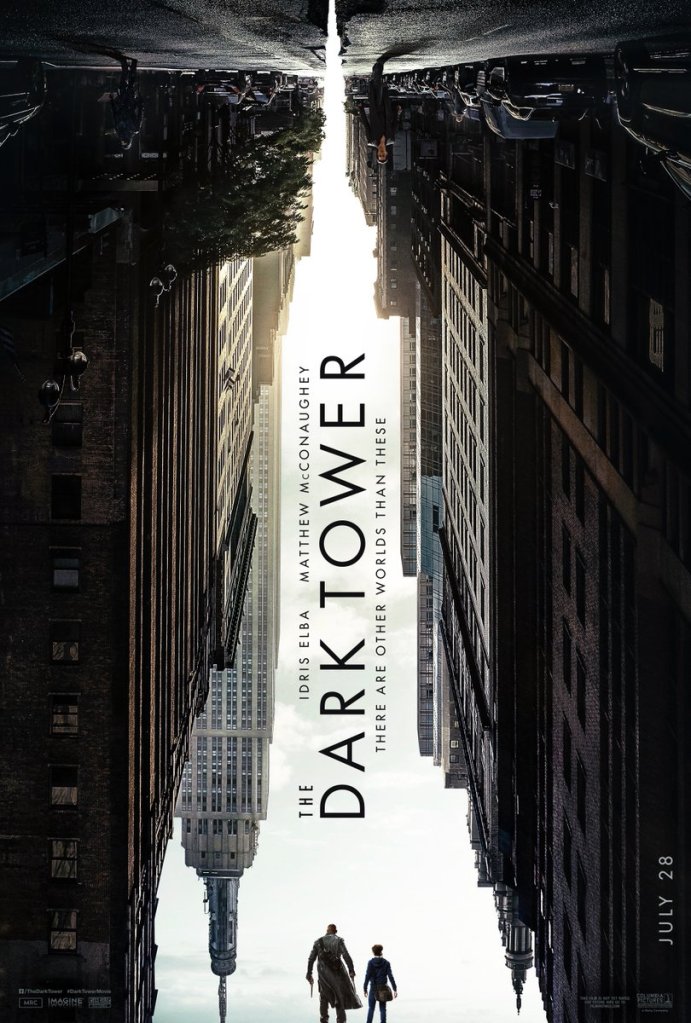
This…was NOT perfectly suited.

The optimal version of this, for me at least, would be for Flanagan’s Dark Tower to share fabric with Muschietti’s series. Characters common to both projects could be played by the same actors, the stories could be woven in concert with one another – separate, but linked. Could it happen? Well, Warner Bros. owns the rights to It and Welcome to Derry, so for this to happen, Flanagan would have to produce his series in cooperation with Warner Bros. It’s not out of the question. His previous development deal with Netflix is over, and his current deal with Amazon does not include The Dark Tower. He could take the story anywhere he wants. And he’s got a relationship with Warner Bros. as well – he directed their adaptation of Doctor Sleep and wrote the upcoming Clayface movie from DC Studios, which coincidentally, is ALSO in the Andy Muschietti business, as he’s been signed to direct their upcoming Batman movie, Brave and the Bold.

I’m not saying that this will happen. I’m not saying that Flanagan and Muschietti and Stephen King and Warner Bros. will join forces and finally begin to create the Kingamatic Universe that Constant Readers have been craving for the better part of five decades.

I’m not saying it’s going to happen.

I’m just saying it would be pretty damn cool.

Blake M. Petit is a writer, teacher, and dad from Ama, Louisiana. His most recent writing project is the superhero adventure series Other People’s Heroes: Little Stars, volume one of which is now available on Amazon. You can subscribe to his newsletter by clicking right here. He’s also started putting his LitReel videos on TikTok. He also hopes that somewhere in there they find a way to tell us what happened to the Girl Who Loved Tom Gordon…specifically, does she still love Tom Gordon, or has she moved on to – say – Shohei Ohtani?
Geek Punditry #158: No More Hidden Tracks

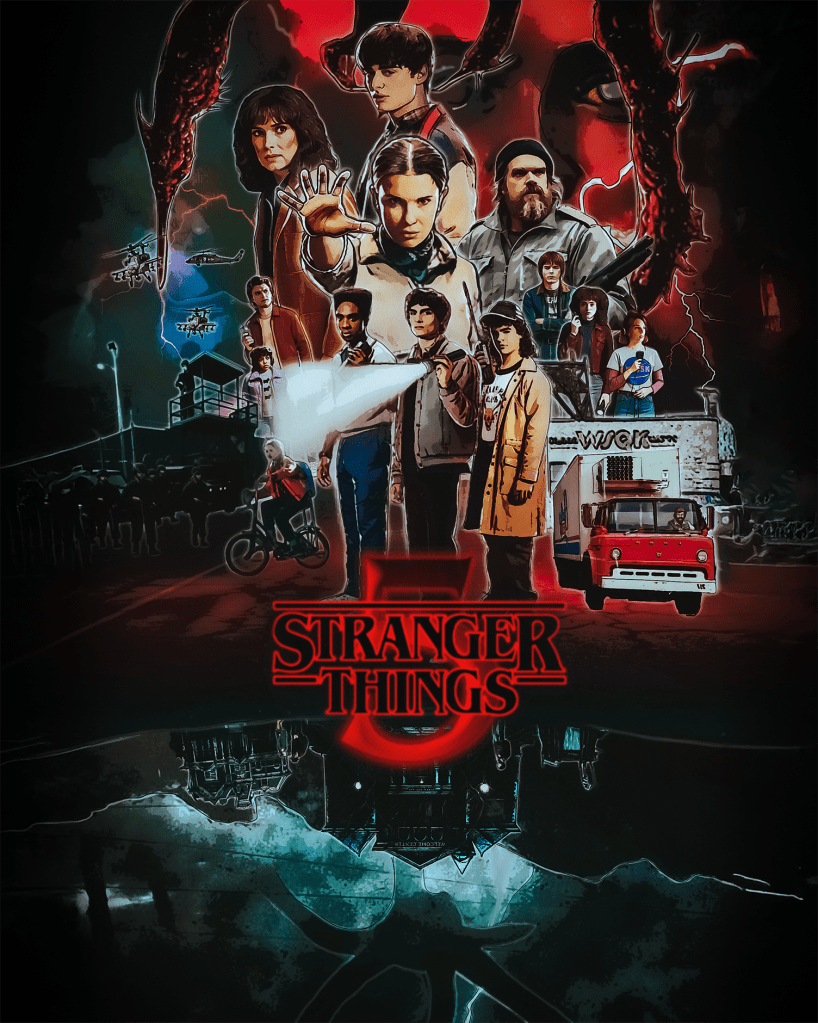
Before we start, I want to assure you that this column will NOT spoil the final season of Stranger Things. I do my best to avoid spoilers in general, but it will be particularly easy in this case because I have not yet watched the final season of Stranger Things. A lot of people around me have, though, and a lot of people have opinions about it. This week, as my students filtered back into my class after their Christmas break, I heard them discussing the series finale and I had to kindly request that they refrain from speaking about specifics in my presence. (I believe my exact words were “If you spoil anything for me I’m going to make it my mission to see to it that you never graduate.” It’s good to teach seniors sometimes.) 

“These kids were in high school for ten years, don’t think I won’t do that to you, too.”

One of the non-spoiler things I heard them discussing, though, was something people were calling “Conformity Gate.” I don’t know exactly what this is a reference to or where the term comes from, other than the generic tendency ever since Nixon to append the -gate suffix to any sort of scandal or conspiracy because people are too lazy to come up with something original. From what I gathered, the “Conformity Gate” discussion centered around an internet theory that there was a SECRET NINTH EPISODE of the final season, that the episode that dropped on New Year’s Eve was NOT the actual series finale, and that on the evening of January 7th, Netflix would surprise us all by dropping the TRUE series finale of the epic and long-awaited sci-fi/horror series Stranger Things.

And I gotta tell ya, when I heard this theory, I lauuuuuuuuuuuuuuuuughed…

This isn’t the first time I’ve heard such a thing. Last fall, there was supposedly a secret episode of Peacemaker season two. At one point I recall hearing such a theory about Game of Thrones. I’m pretty sure I’ve heard it for certain series of Doctor Who. And just like with those other series, Jan. 7 came and went and there was nothing except an announcement for the (previously-announced) Stranger Things animated spin-off series. 

These theories are simply never true. And honestly, the way that TV and movie production is handled in this day and age, such a thing would be virtually inconceivable.

Not impossible. In fact, it would be relatively easy to do. It’s just that the studios would never let ’em do it.

Now I’m going to preface this by saying that these theories are almost always spread by people who are upset about the final episode and unable to accept that what they just saw was the “real” ending. It’s a stubborn, childish insistence, and even in those cases where I happen to agree that the final episode was disappointing, it’s kind of an insult to the people who actually made the show. (I can only imagine what would have happened had this sort of speculation been common when How I Met Your Mother wrapped.) I’m not saying that it’s unfair to be disappointed in how a show ends – that is of course a matter of personal taste and nobody has the right to tell you that you’re right or wrong for your tastes. But it IS pretty darn childish to have the attitude that what you watched was somehow SO bad that it MUST have been an intentional misdirect. 

Think about it just for a second: is anyone who works on TV – writers, directors, actors, showrunners – ever going to DELIBERATELY make a bad episode? Would they take such a risk? That’s not anyone’s goal. They want to build interest and anticipation with each installment, and having people trash your work doesn’t do that. There’s an old adage that the only “bad press” is “no press,” and I’m here to tell you, that’s a straight-up lie. Just ask the people who made the Spider-Man quasi-spinoff Morbius.

If you didn’t share 19 “It’s Morbin’ Time!” memes were you even ON the internet in 2022?

That movie was the talk of the town. Everybody was discussing it, making memes about it, and pushing it to the forefront of the conversation…but the buzz, deserved or not, was all BAD. And then the movie came out and completely bombed. Then when people kept talking about it, Sony took a shot at re-releasing it, and it bombed AGAIN. I’m not saying that without the bad buzz the movie would have been a hit, but it’s undeniable that heavy internet chatter surrounding the film did NOTHING to help its numbers.

Then there’s the other reason that such a thing would be virtually inconceivable today: the studios who make movies and television shows are utterly adverse to surprise. Everything – and I mean EVERYTHING – has to be dumped out onto the public far ahead of time. Casting news, romantic subplots, climatic battles, full songs are all spilled out onto the internet weeks, months, even years before the movie or TV show actually makes it to your screen. Movie trailers have become particularly bad about this. I love a good trailer. Making a good trailer – essentially a short film intended to get an audience interested in watching the FULL movie – is an art form in and of itself. But the studios seem to have forgotten that, and rather than doing something artful to engage the audience and make people want to head to the movie theater, their strategy seems to be to just give away every surprise and plot point in the hopes that it will accomplish the same thing. 

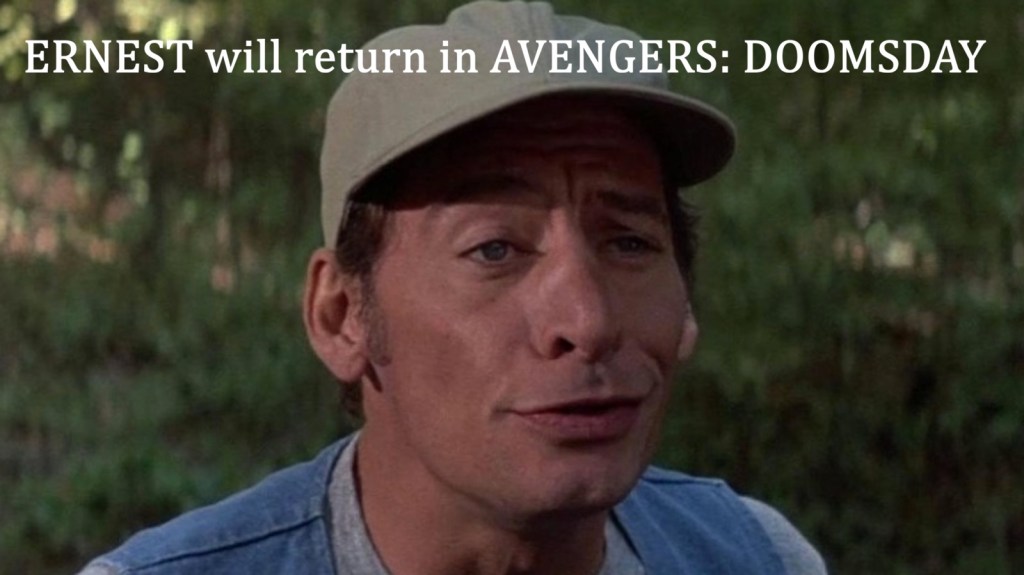
I get why they do this, of course. Whether you’re talking about a theatrical release or a streaming show, in the 21st century it seems like the only numbers that matter are those that we get in the first few days of a release. Let’s use the recent slate of Avengers: Doomsday trailers as an example. In the last few weeks, we’ve started to get teaser trailers that show a glimpse of a character or two, followed by the announcement that “Steve Rogers will return in Avengers: Doomsday.” Or Thor. Or the X-Men. And by the time you read this, there will probably be teasers with everyone from the Fantastic Four to Spider-Ham to Millie the Model.

This is the one that broke the Internet.

None of these (except Millie) would be much of a shock. Last year Marvel had a huge streaming event which amounted to showing us – one at a time – director’s chairs with the names of assorted cast members, their way of telling us who was going to be in the movie. Some of them were a surprise at the time, and that was (I admit) kind of cool. But wouldn’t it have been cooler if we had NO IDEA that Patrick Stewart and Kelsey Grammar were going to be back as Professor X and the Beast until we were in the theater, watching it, and then they showed up out of the blue?

I think so, anyway.

Would in-theater surprises get people excited? Would it make them engaged? Absolutely. If an audience is excited and energized about a movie, they’ll walk out talking about it, they’ll tell their friends they have to see it, and the movie can grow legs. But the problem is that the studios no longer CARE about legs. This strategy – keep it a surprise and build word of mouth – is the way to get people excited about a movie in the long-term. That’s not how movies are evaluated anymore, unfortunately. All that matters is that opening weekend in a theater or the first 48 hours of streaming. If you don’t get massive numbers up front, a movie is declared a failure. There was a time when a movie might not have had an enormous opening weekend, but positive word of mouth would allow it to stay in a theater for weeks or even months until it became what they called a “sleeper” hit. 

The studios don’t care about that anymore. An ad that says “the number one movie in America!” is way sexier than one that says “we made back our budget in the fifth week of release!” So they do everything they possibly can do to frontload the audience and get everyone to see the movie right away. This, by the way, is one of the approximately 3,972 reasons that I’m very nervous about the prospect of Netflix buying Warner Bros. Netflix is a streaming platform, and the head of the company has frequently expressed outright disdain for the theatrical release model that I personally hold so dear. I’m very much afraid that if this deal is eventually allowed to happen, it will be the final chokehold on the already-dying movie theater experience.

But that’s a whole different topic. What does this have to do with “Conformity Gate” and the potential for another episode of Stranger Things? It’s simply this: Netflix (any studio, really, but we’re talking about Netflix specifically at the moment) would simply never take the risk of hiding such a thing. They are ADDICTED to telling you EVERYTHING. Remember, this is the studio that tells its writers that the characters have to ANNOUNCE WHAT THEY ARE DOING OUT LOUD because they assume that most of the audience will be scrolling on their phones instead of really paying attention when they’re watching a show. Do you honestly think they’ve got a high enough opinion of you to drop a surprise like that?

The tragedy of it is that I actually think it WOULD be a great thing to attempt, kind of like a hidden track on a CD. (Those don’t really exist anymore either, so kids, ask your parents.) It would be amazing if Netflix, or anybody for that matter, was capable of keeping a secret of this magnitude and then executing it. Now they obviously couldn’t do it all the time. It would need to be used sparingly, and only for exactly the right project, a story for which that kind of surprise ending would be both structurally and tonally appropriate. And let’s be honest here: they would not hide the existence of the episode right up until the moment it drops. It’s far more likely that the episode we EXPECT to be the finale to end with a “To be continued” card or something to that effect. But if executed properly, it could be a really thrilling moment.

The funny part is that Netflix actually did do something like this once. Anybody remember the Super Bowl in 2018? Like most Super Bowls, the biggest draw was the commercials. I was there to see what Doritos was up to, or Pepsi, or something dot com that probably doesn’t exist anymore. And most of all, I’m there for the movie trailers. As far as I’m concerned, every Super Bowl commercial should either be really funny, or a kick-ass movie trailer. In 2018, one of those trailers hit us with the Netflix logo, then scrolled into scenes from some sort of outer space thriller that we hadn’t heard of before. It wasn’t like getting a Marvel or Star Wars trailer, where we knew that the movie was in production and we were just hoping for our first glimpse. This was something totally new.

And at the end of the trailer, we got the title: The Cloverfield Paradox. Holy crap. It was the new Cloverfield movie, the one that had been rumored ever since 10 Cloverfield Lane. And it wasn’t going to theaters, it was gonna be a Netflix movie.

Then came the biggest shock: the announcement that the movie was NOW STREAMING. It wasn’t telling us that the movie was dropping in a year or a month. It was ON NETFLIX AND WE COULD WATCH IT RIGHT NOW.

“If it’s HALF as good as the first two Cloverfield movies, this is gonna change everything!”

I thought then – and still think now – that it was one of the most brilliant marketing moves Netflix could ever have done. It was an incredible surprise and it got me more enthusiastic about watching that movie that I think would even have been possible otherwise. And it’s a shame, really, that as a movie The Cloverfield Paradox turned out to be…well…not great. Because if it had been, that would have been checkmate. This could have been an annual thing. We could sit down for the Super Bowl every year, wondering what movie Netflix was going to announce during the game that we would have the option to watch as soon as the game was over (as opposed to the random episode of Matlock that they usually show for some reason). 

But it didn’t pan out that way, and now Netflix is more risk-averse than anybody. Remember, this is the studio that cancels entire series if they aren’t a smash hit in the week after the first episode drops. Do you really think they’d take a chance at a whole surprise episode?

It would be cool, don’t get me wrong.

I just don’t see it happening.

So the next time you’re unhappy with the finale of a Netflix show and someone floats the idea that there’s a special “hidden” episode waiting for you, ask yourself if the streamer that killed The Santa Clarita Diet would actually do such a thing before you pass that rumor along.

Blake M. Petit is a writer, teacher, and dad from Ama, Louisiana. His most recent writing project is the superhero adventure series Other People’s Heroes: Little Stars, volume one of which is now available on Amazon. You can subscribe to his newsletter by clicking right here. He’s also started putting his LitReel videos on TikTok. He’s planning to start his own Stranger Things conspiracy theory. Now that Netflix has Sesame Street, they’re doing a miniseries that will reveal the hidden connection between Eleven and all her siblings to the terrifying and legendary Count Von Count. You heard it here first.

Geek Punditry #157: One Year Later-What Is Superman?

Yesterday, January 1st, was the first day since 2024 that I didn’t read, watch, or listen to anything related to Superman.

And I missed doing it.

Unless you’ve been living under a Kryptonite rock, you know that at the end of 2024, enthused for the then-upcoming James Gunn movie, I declared that 2025 would be my Year of Superman, and for the next 365 days I adhered to that. Every day for a solid year I read comics, watched movies and TV shows, listened to podcasts, and otherwise spent time with stories featuring my favorite superhero and his extended family. 52 blog posts later (all of which are archived right here, by the way) it’s time for me to look back and think about what it all means to me.

Nailed it.

To begin with, I don’t do this very often, but I’ve got to congratulate myself for actually accomplishing the goal. In that original column when I announced the project, I said that I would give myself grace, fully expecting that at some point in the year I would slip up and miss a day. And let me tell you, there were days in 2025 in which I didn’t want to read or watch anything. Bad days came and I didn’t want to do much more than retreat to my own Fortress of Solitude. But I didn’t. I made it without missing a single day. Let’s talk about what that means by the numbers. Over the course of 2025, the media I consumed included:

That’s – and keep in mind that I’m referring to myself here – batshit insane. I don’t know if David Corenswet spent as much time in 2025 thinking about Superman as I did. So after all that…what does it mean? What have I learned about him? 

The truth is, I find that the things I already believed were mostly affirmed. Superman has been around for nearly 90 years now, and in that time there have been many stories told about him and many different interpretations of the character. And that’s all fine. But let me tell you about MY Superman, what I get from the character, why he matters so damned much to ME.

In Man of Steel, Henry Cavill popularized to the mainstream something that had been part of the comics for a few years at that point, that the S-shield Superman wears, the emblem of the House of El (at least going back to the 1978 Christopher Reeve movie) was a Kryptonian symbol for hope. But what exactly does that mean? Is it just because Superman is so powerful? Is it because when you see that symbol, you know that the danger you’re in is only temporary, that somebody will be there to save you? Is that “S” just for “Superman,” or does it also mean “Savior?”

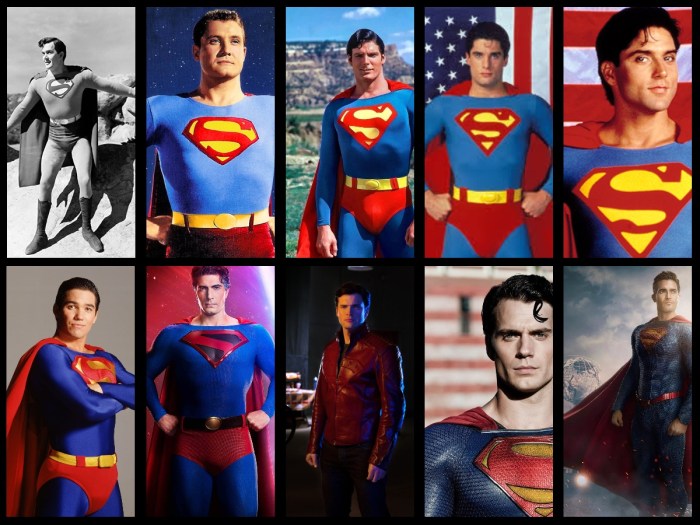
Yeah. That guy. Any of him.

Superman’s story has a lot of allusions to Christianity, with Marlon Brando’s Jor-El even referring to Kal-El as “my only son,” but Jerry Siegel and Joe Shuster were Jewish and the story perhaps fits the concept of Moses even better. If you’ll forgive a brief moment of spirituality, Jesus was sent as the Savior of the human race in a direct way, and we get that whenever Superman saves someone falling from a burning building, leaps in front of a speeding bullet, or stops a locomotive to save the kid stuck on the tracks. Moses, on the other hand, was a less direct kind of savior, a leader, someone who GUIDES his people to a better world. And it is in this capacity that the parallels to Superman are stronger. Sure, Superman will save you from a flood, but more importantly, he’s there to show you that there’s a better way.

Let’s say it one more time: It’s not subtle.

It’s almost a cliche to say it at this point, but Superman’s greatest power is not his strength, his speed, his ability to fly or see through walls. His greatest power is his compassion, his unflinching belief in the goodness of people, and his ability to help others see things that way as well. Superman is the man who will never give up on you: no matter who you are or what you’ve done, he will always have faith in your ability to be better. 

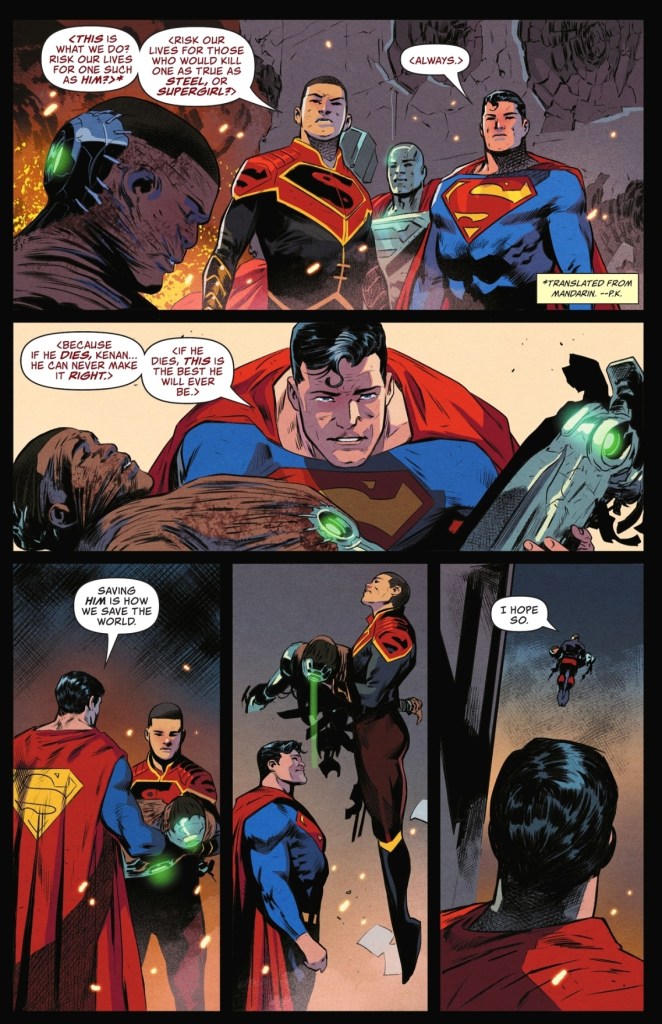
If you’re going to wear that shield, Kenan, you need to remember this.

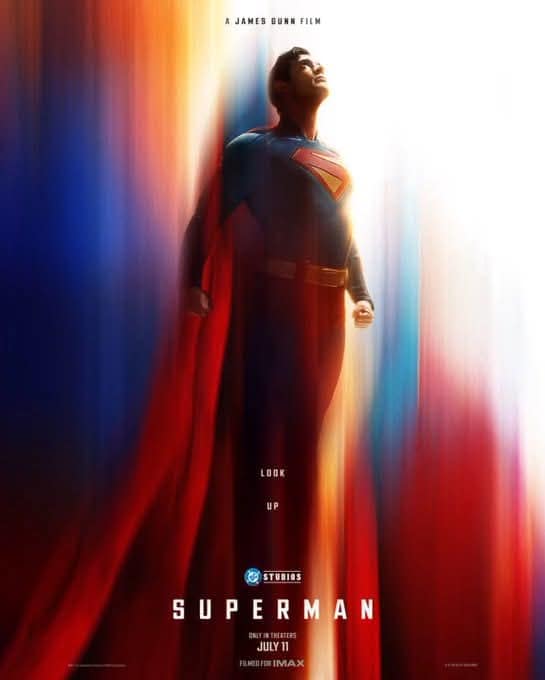
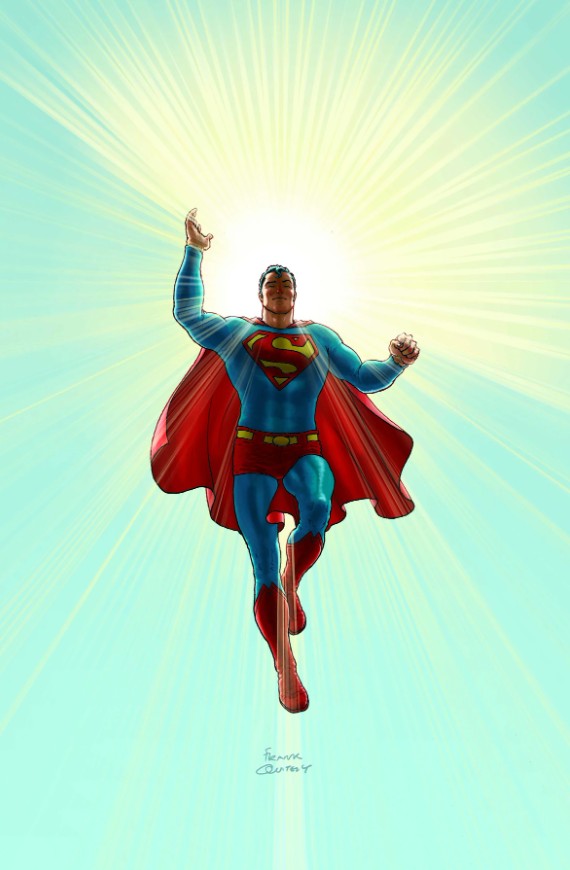
In the climax of the new movie, David Corenswet tells Nicholas Hoult’s Lex Luthor that his greatest strength is his humanity, and that he hopes for the good of the world that some day Luthor will realize the same thing about himself. From anybody else, that line would sound trite, pat, and cloying. From Superman, you believe it. The tragedy of Lex Luthor is not that he’s a criminal or a killer or anything else. That makes him a villain. What makes him a tragic figure, what Superman laments every time he faces him, is that he has a mind that could make the world a better place, but chooses to use it selfishly. And every time he faces Luthor, Superman hopes that this will be the time that Luthor sees the light. It’s even happened in the comics a few times, where Lex has turned good. It’s always been temporary, of course, except for in self-contained continuities like All-Star Superman, but we’ve seen time and again that even Lex Luthor has within him a seed of redemption. We’ve seen time and again that Superman is right. And if he’s right – if even LEX LUTHOR has the potential to be a better person tomorrow than he is today – then what does that mean for the rest of us?

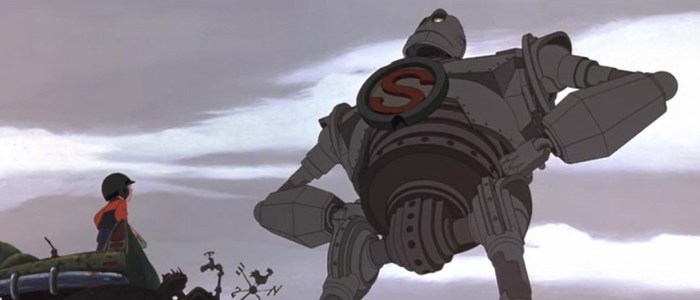
Superman believes the best of you. And he inspires you to believe the best in others. In the final episode of Superman and Lois we see him in flight with his extended family of heroes, and we learn that he and Lois manage to change their world for the better. In Final Night, we are reminded that half the superheroes in the world look to him as inspiration (the other half, naturally, look to Batman). The whole point of The Iron Giant is that the Giant himself – an alien weapon – looks to the example of Superman and sees that he can make himself better.

The Giant gets it better than anybody on BlueSky.

We cannot bend steel in our bare hands. We cannot leap tall buildings in a single bound. We cannot change the course of mighty rivers, or freeze those rivers with our breath. We cannot fly through space unaided, travel through time, or crush a lump of coal into a diamond. Those things are beyond us.

But we can believe in the best of each other. And maybe, if we do enough of that, those others will actually begin to earn that trust. And maybe, if we do enough of that, we can learn to believe in the best of ourselves.

We should believe the best of ourselves.

Because Superman would.

Remind yourself, in those times where you’re dangling off the edge of that cliff and you think you’ll never make it, that Superman would believe in you

And who are you to tell Superman that he’s wrong?

And don’t you forget it.

So now what?

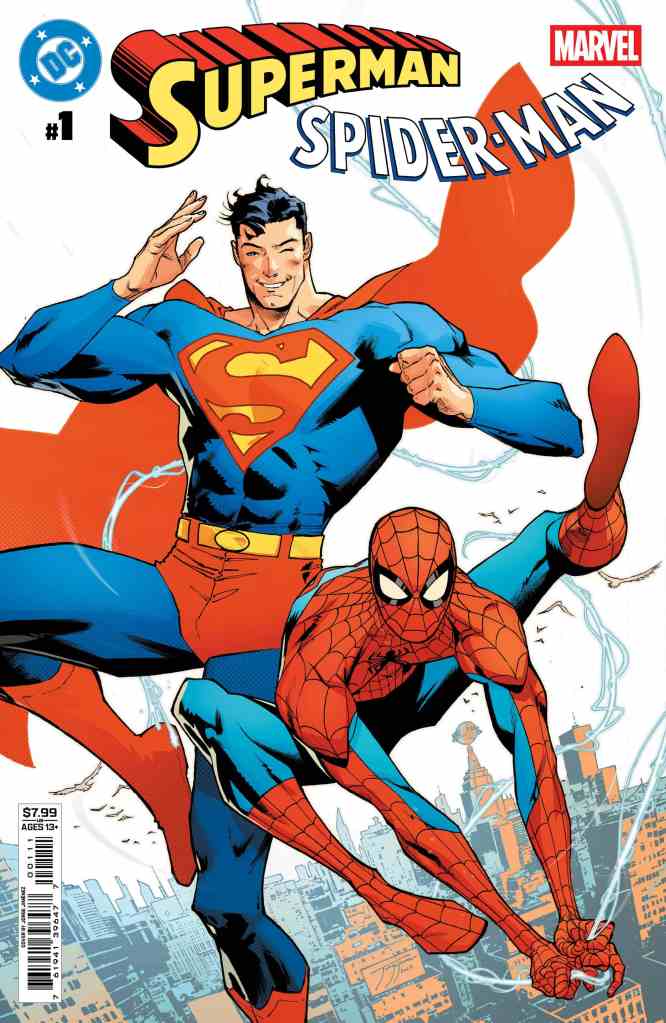
Some people, after spending an entire year dwelling on a single character, would get tired of it. I…I’m not. I want more Superman. And there’s so much more to come. There’s the Supergirl movie coming out later this year, of course. And a new season of My Adventures of Superman is also scheduled to drop some time in 2026. Next year we’ll get Man of Tomorrow. DC Comics has announced some really interesting things for the ongoing Superman comics after the current DC KO event wraps up that I’m certainly going to want to talk about. They’ve also teased the return of the Legion of Super-Heroes, and come on, if Superman’s not involved with that in some way, what are we even doing? And let’s not forget that in March, after decades apart, Superman is finally going to meet Marvel’s friendly neighborhood webslinger again in a new Superman/Spider-Man crossover.

We’re back, baby!

Then there’s all the stuff on my list that I just didn’t get around to this year: John Ostrander’s amazing miniseries The Kents, Grant Morrison’s DC One Million event (which – let’s be honest – is a Superman story at its core), or the “world without Superman” Elseworlds series Justice League: The Nail. There are still several animated films I didn’t get to watch. I had hoped to do an entire week on fanfilms, but ran out of time. And I had stories picked out for weeks focusing on Jimmy Olsen, Lex Luthor, Kong Kenan, and other characters that didn’t get scratched off the list. 

The truth is, I don’t want to stop reading, watching, or writing about Superman. I just don’t want to HAVE to do it EVERY DAY. 

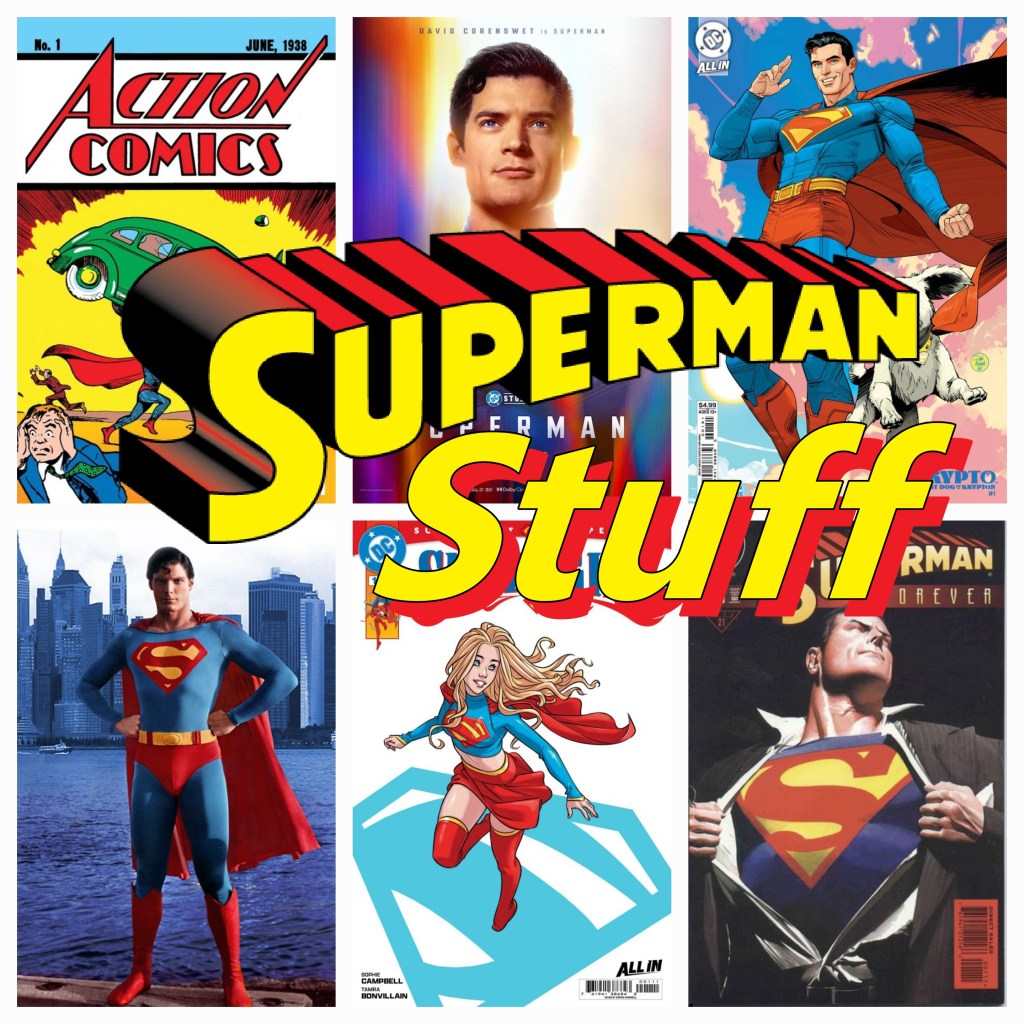
So consider this my official announcement. Starting in 2026 and going on…well, as long as I wanna do it, I’ll be bringing you SUPERMAN STUFF right here on the blog. Sometimes it’ll be new comics, new movies, new TV shows. Sometimes it’ll be classic stuff that I haven’t talked about before. I’ll still endeavor to have at least one blog post a week, but they won’t be as long as they were in 2025 (you’re welcome) and they may not necessarily always be on a Wednesday. 

The world of Superman is vast, and despite the mountain of stuff that I mentioned in the list above, there’s plenty more to dig into. The regular Geek Punditry blog here on Fridays won’t change. But I’m going to continue to devote real estate here to talking about the characters and stories that I love. 

Because there’s something to be learned here. And it’s a lesson we can all use.

Blake M. Petit is a writer, teacher, and dad from Ama, Louisiana. His most recent writing project is the superhero adventure series Other People’s Heroes: Little Stars, volume one of which is now available on Amazon. You can subscribe to his newsletter by clicking right here. He’s also started putting his LitReel videos on TikTok. To all the people who sent him messages urging him to make 2026 “The Year of Captain Underpants,” he considered it. A little.

Geek Punditry #155: Christmas Movies Past

The perennial debate of “Is Die Hard a Christmas movie” is, let’s be honest here, pretty tired at this point. We’ve all talked about it until we’re as blue in the face as Cold Miser, and nobody is changing anybody’s opinion. Even the edgelords who take it as an excuse to classify anything with so much as a single strand of tinsel as a “Christmas movie” in an effort to see who can come up with the most outlandish example (that would be those who call Star Trek: Generations a Christmas movie on the grounds that Picard has a single scene in which he hallucinates having a family at Christmas time) have gotten tired of the argument. This year a new one has cropped up: “Why haven’t they made any good Christmas movies recently?”

An absurd question — Christmas movies have clearly never been better.

I’ve actually seen this posited several times recently from various different sources, and I guess “There are no new Christmas movies” is at least a DIFFERENT debate than the Die Hard one, although it’s even harder to make a legitimate argument. The first time I heard it, I hopped on my TikTok feed and ran through a list of good Christmas movies from the past decade, with everything from family fare like The Christmas Chronicles to horror movies like Krampus. Since I made the video I also got around to watching the 2024 adaptation of Barbara Robinson’s The Best Christmas Pageant Ever, and I thought it was absolutely lovely. 

As I saw this debate go on and on, though, I noticed a disturbing trend. As people bemoaned the dearth of new movies, they kept asking for movies that stack up against classics like…Elf. And you know, I like Elf. It’s probably Will Ferrell’s best movie. But should that be the go-to example of the last great benchmark Christmas movie? 

Or movies like Jim Carrey’s How the Grinch Stole Christmas. Okay, now my hackles are starting to bristle. I do not care for that movie, I don’t think it deserves any mention among the classics, but I can accept that different people have different tastes, right? 

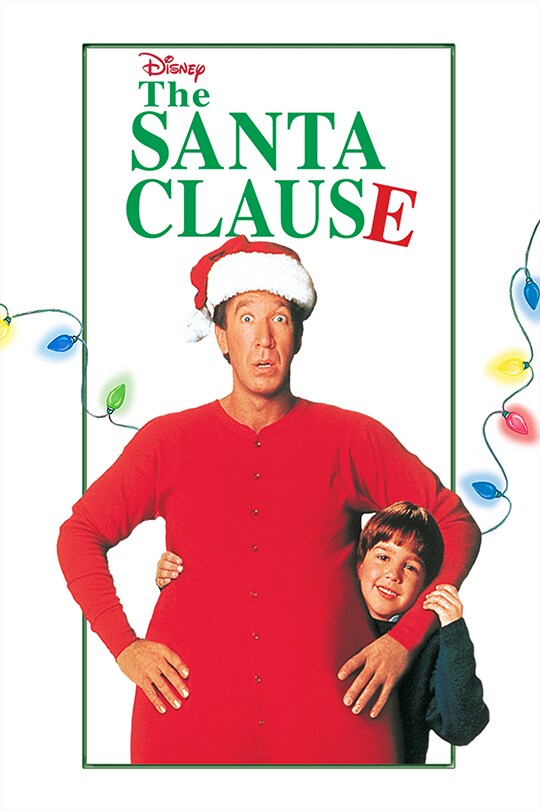
As the examples kept coming, I realized that none of the “old” movies these people were citing were movies that I – as a certified old person – would have considered OLD. The oldest movie that these fans kept referencing, in fact, was The Santa Clause from 1994. (It’s a good movie, but it has a special place in my personal hatedom for being the film responsible for making so many people misspell Santa Claus’s name every damned year.)

When people call this movie “old” they sound the same to me as Tom Holland trolling Robert Downey Jr.

These people, the people who are begging for new Christmas movies – which is fair – haven’t even finished watching the OLD ones. Seriously, they’re not even throwing in movies from the 80s like A Christmas Story or National Lampoon’s Christmas Vacation into their blender of Christmas classics. Even 1990’s Home Alone seems to be outside of the bubble. How is that POSSIBLE?

That’s a rhetorical question, of course, I know exactly how that’s possible. I am a high school teacher, I spend the majority of my time around teenage American human beings, and I know that a chillingly high percentage of them believe that western civilization began in October of 2006 with the release of Taylor Swift’s first album. The truly cultured – a term which here means “goths” – can see back to 1993 and The Nightmare Before Christmas.

But the movies that I consider classics? Completely missing from their sphere of reference.

So my friends, this is my plea to you this year: reach out and try to educate your children with the true greats. I know it won’t necessarily be an easy sell. Put on a black and white movie like It’s a Wonderful Life or Miracle on 34th Street and a lot of modern kids (and let’s be honest – a lot of modern adults) will roll their eyes back, finding it as incomprehensible as hieroglyphics. But they’re going to miss out not only on great movies, but on some of the stories that have fundamentally shaped the modern tropes of Christmas. Think about it – how many movies and TV shows have referenced those two movies I mentioned? How many versions of A Christmas Carol are there? And look – as far as Christmas Carols go, we all know that the Muppets did it the BEST, but that doesn’t mean there weren’t good ones BEFORE it.

Kids these days need a Rosetta Stone to watch these movies.

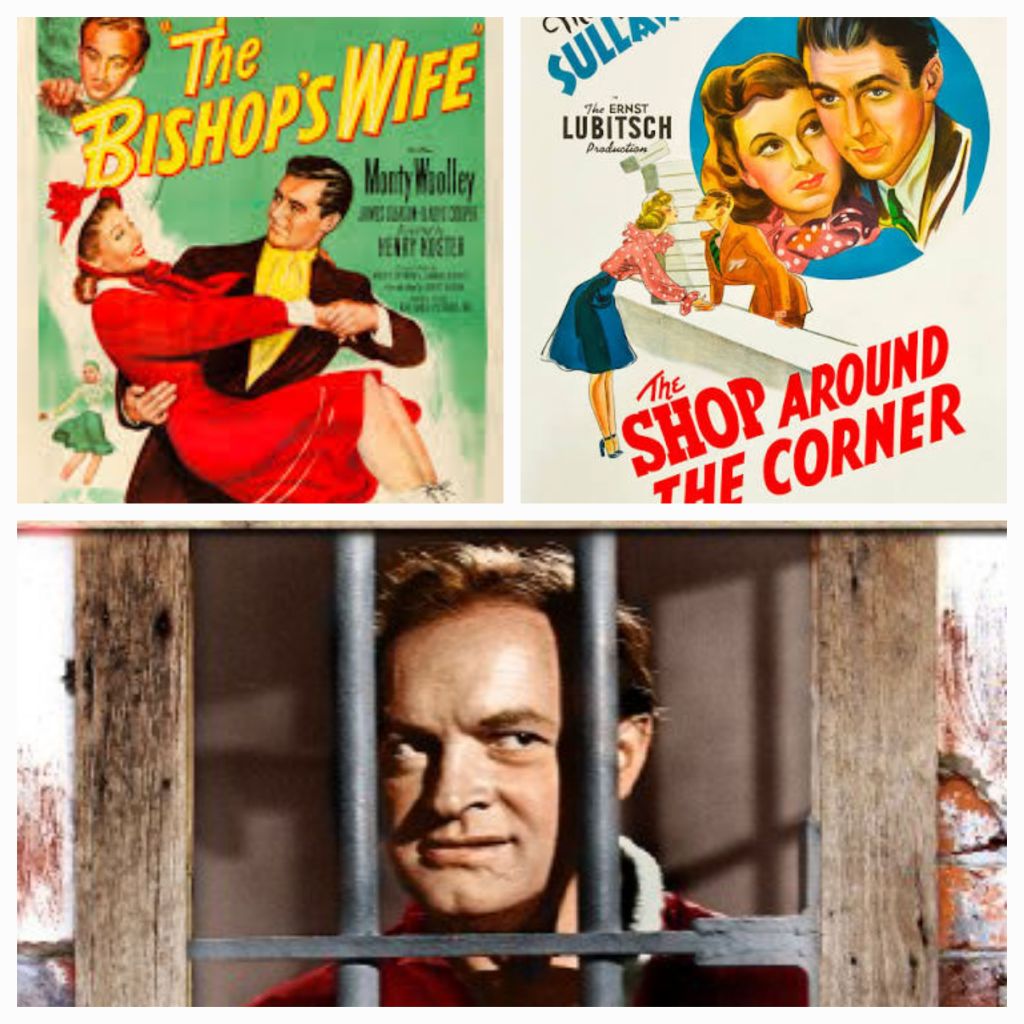
How about The Bishop’s Wife from 1947? David Niven plays a clergyman desperately working to build a new cathedral, but his struggles are straining both his family and his faith. Enter Dudley, an angel with the inimitable charm of Cary Grant, who shows up to help out…only the Bishop thinks Dudley is there to replace him. It’s a lovely movie – sweet, funny, and it’s the sort of thing that will remind you why Cary Grant must be front and center in any conversation about the greatest movie stars of all time.

Or how about Jimmy Stewart’s OTHER great Christmas movie, The Shop Around the Corner from 1940? Stewart and Margaret Sullavan are employees at a tiny gift shop during the Christmas rush – two people who bicker, antagonize, and basically cannot stand to be around each other. Neither of them realizes, of course, that the anonymous pen pal they’ve been sending letters to and falling in love with is that person at work who drives them crazy. The movie was updated and remade with Tom Hanks and Meg Ryan as You’ve Got Mail, although that version drops the Christmas cred. At the risk of sounding saccharine, it’s the sort of movie that made people believe in true love during a dark time when everyone needed it. For bonus points, the shop owner is played by the Wizard of Oz himself, Frank Morgan. 

In 1951, Bob Hope starred in The Lemon Drop Kid, a story of a small-time con man who accidentally cheats a gangster out of a massive win at the track. The Kid is given until Christmas to pay up, and he cooks up an elaborate scheme involving sidewalk Santas pretending to collect money for elderly widows. Fortunately, as is to be expected in a film of this nature, the spirit of Christmas steps in before things go too far, and the movie gets the requisite happy ending, although perhaps not in the way that a modern audience might expect. And as a little yuletide trivia, this movie is also the original source of the classic Christmas song “Silver Bells.” 

Boys in the 60s believed in Santa a lot longer because they thought his helpers looked like this.

Of course, eventually Christmas movies DID start to show up in color. I think it’s safe to say the first truly great color Christmas film was White Christmas from 1954, featuring Bing Crosby and Danny Kaye as a pair of entertainers who fall in love with a pair of sisters. Less iconic but still enjoyable was Disney’s Babes in Toyland from 1961, starring Annette Funicello and Tommy Sands as a pair of fairy tale characters who get embroiled in the schemes of a vile villain who wants to marry Annette (which was 100 percent relatable in 1961). The kids flee to Toyland, where Santa’s toys are all made. The movie is a technicolor bonanza, with more bursts of hue per minute than an explosion in a kaleidoscope factory. It also happened to be a favorite of my mother, who watched it with us countless times when we were kids, so that’s no small part of why I think of this movie so affectionately. And like The Shop Around the Corner, this movie sports an Oz alumni: Ray Bolger turns in his kindhearted Scarecrow persona for the sleazy, scummy Barnaby. 

In 1978, there was the Star Wars Holiday Special.

Peeking over the bathroom stall: holiday cheer!

In 1983, John Landis brought nascent stars Eddie Murphy and Dan Aykroyd to the screen in Trading Places, a comedy about a businessman and a street con artist who get swept up in a bet by a pair of cold-hearted millionaires. They pluck Aykroyd out of his affluent life and give it to Murphy, but the two of them come together and decide to turn the tables on the people who’ve been using them. This is one of those “is it a Christmas movie” films that often enter the debate. It takes place at the Christmas season, although unlike most Christmas movies, the story actually reaches its climax AFTER Christmas. But it’s funny and poignant, and you can definitely see why Eddie Murphy was going to go on to be one of the biggest stars of the decade. This isn’t one to watch with the kids, but it IS one to watch if you’ve never seen it before. 

Let’s see Billy Bob Thornton do this.

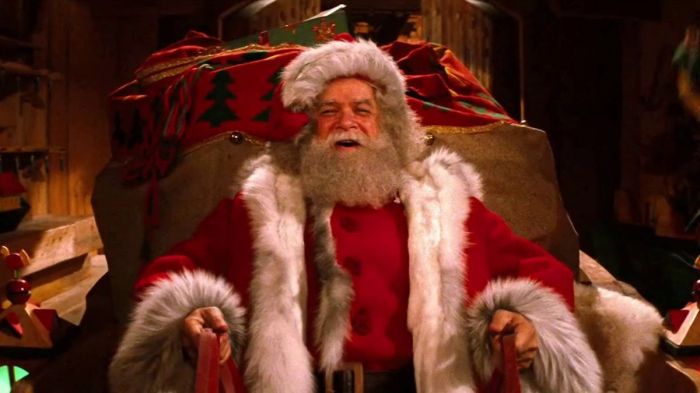
And although some people dismiss it, I have a very warm spot in my heart for Santa Claus: The Movie from 1985. David Huddleston is, in my mind, the definitive on-screen Santa Claus: warm, jolly, cheerful, and kind, with exactly the stature and voice that I imagine when I close my eyes and think about St. Nick. The movie was produced by the Salkinds, who also produced the Christopher Reeve Superman movies, and in fact the plot is almost a direct lift from the first one. The first half of the movie is concerned with Santa’s origin story, then there’s a time skip to the present day where the villain is introduced (played by John Lithgow chewing so much scenery they must have had to stage an intervention) and the real plot plays out, with a battle between Santa and the corrupt toy executive B.Z. for the hearts of the worlds’ children. Interestingly, like The Fifth Element, this is a movie in which the hero and the villain never actually meet each other.

When this movie came out I was the same age as my son is now, and that makes me think it’s time he and I watch it together. 

These are only feature films, incidentally. I haven’t even dipped into the vast back catalogue of theatrical shorts (like the Donald Duck-starring Clock Watcher and Toy Tinkers, the Looney Tunes classic Gift Wrapped, or the Popeye cartoon Mister and Mistletoe), or the mountain of TV specials from the likes of Rankin and Bass, the Peanuts crew, or our friends at Hanna-Barbera. 

It is both fair and legitimate, my friends, to want new Christmas movies. I want them too. I look for them every year, and I agree that unless you’re looking at the Hallmark Channel there aren’t nearly enough being produced. (And if you are looking at the Hallmark Channel, be honest, your primary concern isn’t finding something NEW.) 

However, if you’re searching for Christmas spirit, it would behoove you not only to look at the films since the turn of the millennium. Go back in time and rediscover the classics, the hidden gems, and the movies that have fueled Christmas for generations now.

Blake M. Petit is a writer, teacher, and dad from Ama, Louisiana. His most recent writing project is the superhero adventure series Other People’s Heroes: Little Stars, volume one of which is now available on Amazon. You can subscribe to his newsletter by clicking right here. He’s also started putting his LitReel videos on TikTok. He considered mentioning Santa Claus Conquers the Martians, but that’s a film that should only be attempted by trained professionals such as Joel Hodgeson, Michael J. Nelson, and the rest of the MST3K and RiffTrax crews. 

Geek Punditry #150: The Year-End Cinema Scramble

Towards the end of last year, as my most stalwart of followers certainly remember, I wrote a column about all of the movies that had come out in 2024 that I hadn’t gotten around to seeing yet. To no one’s surprise, I still haven’t gotten to see most of them. There are just so many things to watch, so many movies and shows that are pulling at my attention, and I’ve got a kid running around that not only limits what I can watch while he’s awake and paying attention, but also means that there are a LOT of sports on TV in our house. Not to mention the fact that I’ve been doing my “Year of Superman” thing since January, so a not-inconsiderable amount of my viewing time has been devoted to that in one way or another.

To date, I have seen 50 percent of these films.

2025 has not been different from 2024: there are dozens of movies that hit the box office (or streaming services) this year that I sincerely intend to watch, but simply haven’t gotten around to yet. Before I delve into those, though, let’s do a quick list of those movies I DID watch from last year’s list and, ultimately, what I thought of them:

  • Venom: The Last Dance-Not bad, but probably the least impressive of the trilogy.
  • Deadpool and Wolverine-Funny and full of the kind of delicious meta-commentary that only Deadpool can make work. 
  • Red One-Cute, unremarkable, but not deserving of some of the hate it gets on the internet.
  • Despicable Me 4-Better than 3, but I still probably wouldn’t bother with these movies if my son didn’t like them.
  • Flow-Technologically and visually, a masterpiece, although I thought the story was weak.
  • Sonic the Hedgehog 3-Make it make sense that this series keeps being entertaining.
  • MoviePass, MovieCrash-Intriguing look at how a system that was always doomed to failure wound up failing.
  • Music By John Williams-Nothing particularly revelatory in this documentary, but still a lovely watch.
  • Godzilla/Kong: The New Empire-Much as I love giant monster movies, this one felt like more of the same.
  • Beetlejuice! Beetlejuice!-Not as good as the original, but as far as legacy sequels go, it’s a pretty good one.
  • A Quiet Place Day One-Probably the most character-driven film in this series so far, and that’s a plus.
  • The Substance-Incredible and absolutely worth every bit of praise it’s gotten.
  • The Ministry of Ungentlemanly Warfare-Made me want to read the book, which you can imagine, is high praise.
  • Alien: Romulus-If you’re going to keep making Alien movies you gotta find something new to do with them. I haven’t watched the new Hulu series, but I suspect that it was better than this film.
  • The 4:30 Movie-Tender, sweet, without being saccharine. When Kevin Smith really speaks from the heart, there are few that do it better.
  • Madame Web-The internet told me this was the worst movie ever made. They were wrong. It’s really more bland and generic than actively bad. 
  • Joker: Folie a Deux-This was a thing that happened.

You know, looking back, I actually got around to more of last year’s list than I would have expected, which is a nice feeling. Of course, while I was busy watching the movies that came out LAST year, movies from THIS year just started piling up on me. Most of the reasons I don’t go to the movies as much as I used to haven’t changed: price, time, availability, and so forth. One thing, however, HAS changed. My son is eight years old now, and he’s gotten better about making it through a movie, especially a movie he’s excited about. This year my wife and I managed to take him to both Superman (naturally) and Fantastic Four: First Steps, in addition to the usual assortment of kids’ animated movies. 

I consider it a legitimate moral failure that I haven’t seen this movie yet.

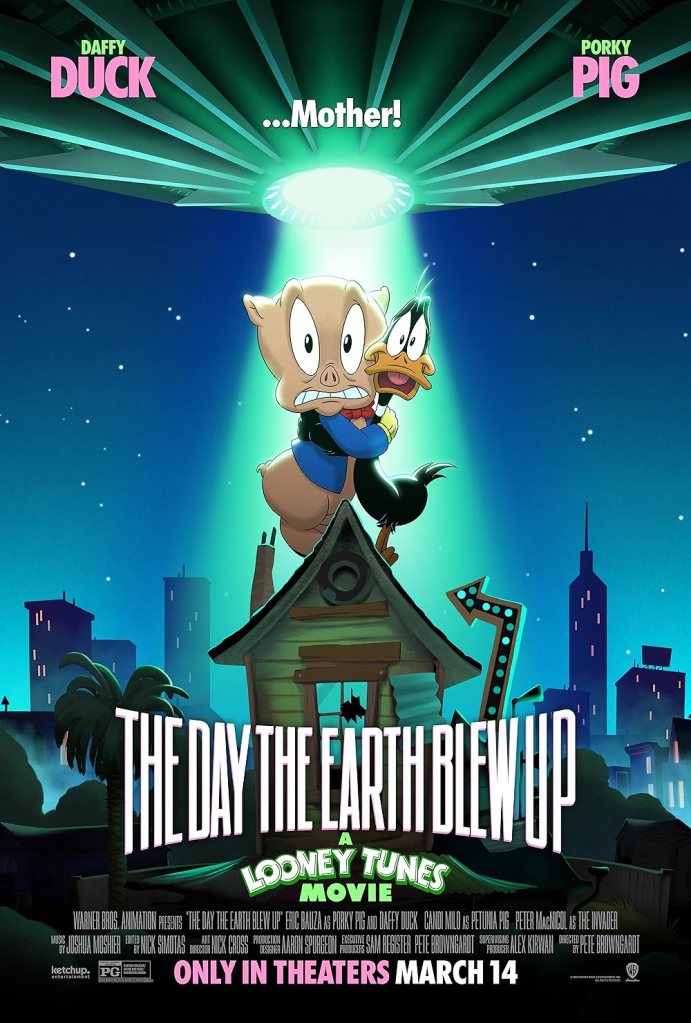
One such movie we did NOT get around to, though, was The Day the Earth Blew Up: A Looney Tunes Movie. Much as I wanted to support it in theaters, time was not on my side, and it’s still on my list of end-of-year films I haven’t gotten to yet. As is Pixar’s newest, Elio, a movie that seemed to come and go with no notice whatsoever. But I’ve heard from a few people who actually saw it that they liked it, and I’m hoping I can get Eddie to join me for a viewing before the year runs out. He’s also excited about Zootopia 2, so we may make a movie date out of that one. I would also like to show him director Steve Hudson’s Stitch Head, which looks to be kind of a kids’ take on Frankenstein. And although it doesn’t really seem like my kind of movie, everybody on the planet except for me seems to have gone wild over K-Pop Demon Hunters on Netflix, and I feel almost obligated to watch it out of curiosity, if nothing else. 

Stop trying to tell me this was a bad movie. You didn’t see this movie. NOBODY saw this movie.

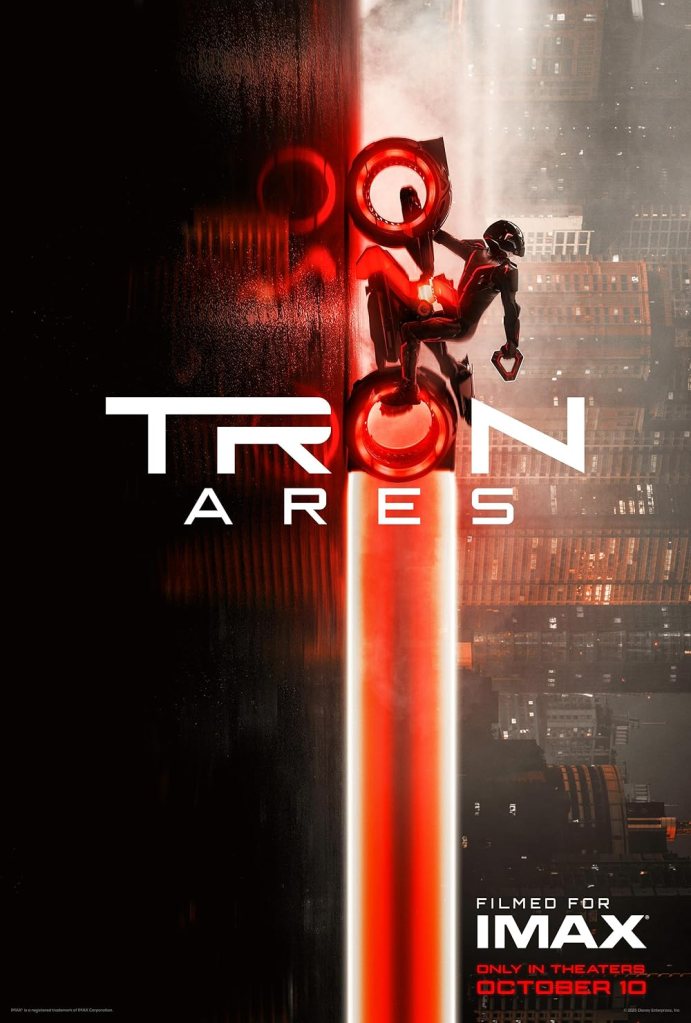
This year also brought – as years tend to do – a bunch of sequels. And if it’s a sequel to a movie I actually like, I’ll watch it. But I’m also the kind of nerd who prefers to re-watch the previous film (or films) in a series BEFORE watching the sequel, especially if it’s been a long time. So that, in addition to the usual problems of availability and time, are the reason I have yet to get to the “requel” of I Know What You Did Last Summer or the more direct sequels like 28 Years Later, Black Phone 2, Nobody 2, the Disney hit Freakier Friday, or the Disney flop Tron: Ares. A brief note about Tron: I love the original and I greatly enjoyed Tron: Legacy. I know Ares crashed and burned at the box office, but this has absolutely no impact on my desire to watch it. I don’t despise Jared Leto just because the Internet tells me to and, once this movie lands on Disney+, I fully intend to watch and evaluate it on its own merits. And you can’t stop me. Nyeah. 

There’s also Wake Up Dead Man: A Knives Out Movie, which hasn’t dropped on Netflix yet, but is on my list. The first Knives Out was absolutely astounding, one of the best mysteries I’ve seen in ages (and perhaps THE best mystery/comedy I’ve ever seen). Glass Onion, the second Benoit Blanc mystery, still entertained me, but I didn’t quite find it up to the level of the original. I’m hoping that Rian Johnson and Daniel Craig bounce back with this third installment. 

Netflix, as a studio, has absolutely loaded me with mystery movies this year that I just haven’t gotten to yet. In addition to Wake Up Dead Man, I’ve also got my eye on The Woman in Cabin 10. This one stars Keira Knightley as a journalist who sees a passenger go overboard on a cruise ship, then gets caught up in the question of what’s going on. Chris Columbus directed The Thursday Murder Club, a crime comedy about a group of senior mystery enthusiasts who get swept into a real life murder. The cast is incredible – Helen Mirren, Pierce Brosnan, Ben Kingsley, Celia Imrie, David Tennant, Naomi Ackie – why the hell haven’t I watched this yet?

It’s Netflix’s fault I haven’t watched this yet, not mine.

I can tell you exactly why I haven’t watched Netflix’s Frankenstein yet: because they dropped it in NOVEMBER. What a dumb move. I couldn’t be more excited to watch Guillermo del Toro’s take on my favorite monster of all time, but I’ve had my hands full the last few weeks. Why on Earth wouldn’t they put this out in October and play up the Halloween angle? Granted, they’re the ones running a billion-dollar streaming service and I’m the guy writing blogs about it for free, but I think we can all agree that I am far wiser than they are.

Speaking of horror, Frankenstein isn’t the only movie that slipped past me this year. Good Boy, the horror film told from the point of view of a loyal dog, has been on my radar for a few years now, ever since I heard the premise. It’s gotten rave reviews, and with a runtime of only 73 minutes, I’ll be kind of mad with myself if I don’t sneak it in before the end of the year. Similarly, I’m interested in the slasher throwback Marshmallow, the Shudder film Night of the Reaper, and the survival horror video game adaptation Until Dawn

I’m saving this one for a day where I want to reduce myself to a mewling infant.

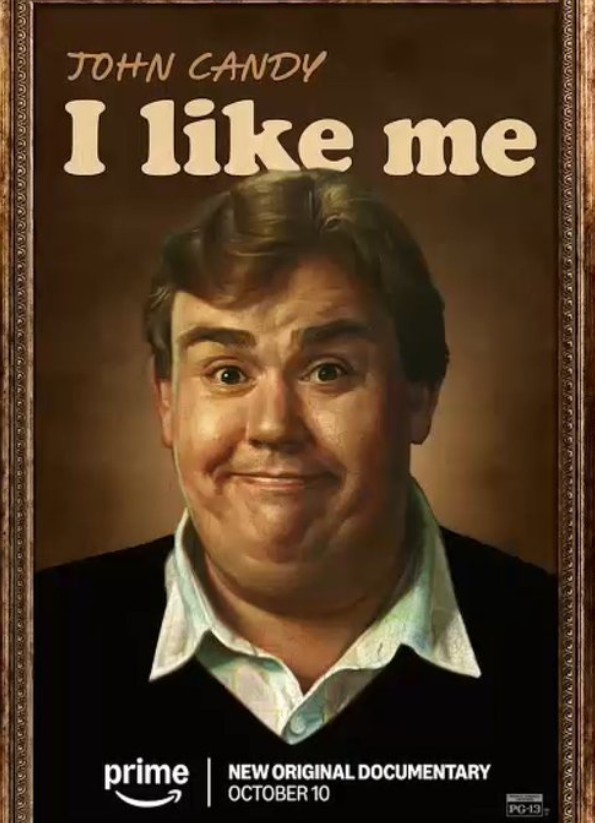
And the documentaries! I haven’t even GOTTEN to the documentaries yet! Prime Video has given us John Candy: I Like Me, a movie that seems to have left everybody who has watched it so far in tears. I’m probably going to wait until school lets out for Thanksgiving and then do a double feature of this one with the movie that gave us the title quote, the brilliant Planes, Trains, and Automobiles

I’ve got no such excuse, though, for sleeping on Jaws at 50, a documentary about one of the greatest movies ever made, or George A. Romero’s Resident Evil, which is a documentary about a movie that was NEVER made. That’s a relatively small subgenre of entertainment documentaries, but it’s one I’ve always enjoyed. Prime Video has also given us When We Went MAD!, a documentary about the history of the magazine that we all thought was hilarious when we were nine years old. I’ll be honest, I fell out of love with Mad Magazine ages ago (and re-reading some of their stories this summer during my Year of Superman did not reignite the love affair), but a documentary about comics is always going to get a view from me.

Saying that this one “aged like milk” may actually be considered a compliment.

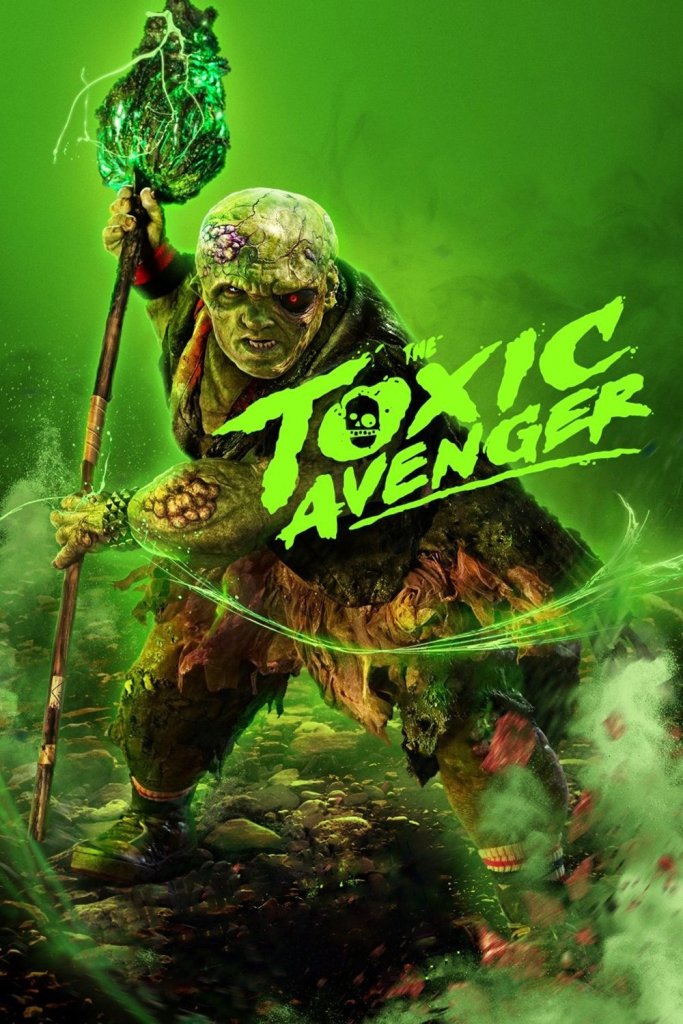
Speaking of comics, I did a lot better this year at watching the superhero movies that came out…well, either that or there just weren’t as many of them. But looking at my list of movies that I missed this year, there are only three superhero movies I didn’t get around too, two of which are animated Batman movies. Batman Ninja Vs. Yakuza League and Aztec Batman: Clash of Empires are both “Elseworlds”-style takes on the character, plucking him out of Gotham City and putting him into feudal Japan and the time of the Spanish conquistadors, respectively. The concept of Batman, in and of itself, is flexible enough that these things are usually at least interesting. Then there’s the long-awaited remake of The Toxic Avenger, which has finally been taken off the shelf and released after two or three years of languishing. I’m very curious to see if the legendarily cheesy Troma Studios hero will hold up to a larger budget.

OOOOH, because if you take the “e” out of the parentheses the title is — NOW I get it!

As for low budgets, there are several indie movies that got my attention this year, movies I read about online or heard discussed in podcasts, that I haven’t watched. Jonathan L. Bowen’s The Comic Shop, for example, or the British comedy Bad Apples about a teacher who accidentally abducts her worst student and then finds that suddenly her class is more manageable. Dropout comedian Isabella Roland wrote and starred in the comedy D(e)AD, about a woman whose family is haunted by her father’s ghost – everyone except for her. There’s also Hamnet, a drama about the tragedy BEHIND William Shakespeare’s Hamlet, and John-Michael Powell’s crime drama Violent Ends. I can’t tell you too much about any of these because I don’t KNOW much, except that I heard enough about them to have my curiosity piqued and put them on my watchlist. 

Whatever bastard designed this did the human equivalent of putting a dog on the poster. You know what you’re in for.

Finally, in case you didn’t know, I’m kind of a fan of Stephen King. And this year has been awash in King content, with the new It TV prequel Welcome to Derry now running on HBO Max and no less than FOUR big-screen adaptations of his work, of which I have seen exactly one. The Monkey. Which I liked, but which was VERY different from the short story it’s based on. That means I still need to get to The Life of Chuck, based on a novella that I thought was pretty good, but the film is directed by Mike Flanagan, which means it’s probably brilliant. Francis Lawrence directed The Long Walk, an adaptation of one of King’s bleakest stories (originally published under his Richard Bachman pseudonym), and I look forward to seeing Mark Hamill playing the bad guy again – because despite most people thinking of him as Luke Skywalker, real ones know he’s actually the best Joker. And lest I forget Edgar Wright directed a remake of another Bachman book, The Running Man, a sci-fi action film rather than horror, but with trailers that look like an awful lot of fun.

The point is, I DO NOT HAVE ENOUGH TIME TO WATCH ALL OF THE MOVIES.

As always, I’m going to do my best to get through as many of these (and the two dozen or so other movies that are on my list that I didn’t mention) between now and the time my Christmas vacation ends in early January, but who knows how many I’ll actually get to? In the meantime, if there are any particularly good movies that came out this year that I didn’t mention that you think I haven’t seen yet, let me know. What’s adding a few more films to a list I’m never going to reach the end of anyway?

Blake M. Petit is a writer, teacher, and dad from Ama, Louisiana. His most recent writing project is the superhero adventure series Other People’s Heroes: Little Stars, volume one of which is now available on Amazon. You can subscribe to his newsletter by clicking right here. He’s also started putting his LitReel videos on TikTok. He needs to go to the opposite of that planet from Interstellar, some place where he can be there for five minutes and have time to watch 12 month’s worth of movies. He hears Detroit feels like that sometimes. 

Geek Punditry #147: It’s Not Halloween (But Who Cares?)

The whole “What Qualifies as a Christmas Movie” debate has been at a fever pitch for several years now. Die Hard, Lethal Weapon, Iron Man 3 – each of these has defenders ranging from people who genuinely appreciate their holiday content for what it is to edgelords who think they’re somehow better than other people by picking Riggs and Murtaugh over Rudolph and Frosty. Strangely, though, Halloween has never really fallen victim to this sort of heated, brutal, occasionally family-schisming battle royale. People are eager to accept certain movies as part of their standard Halloween fare even if nothing in the film has any direct ties to the holiday. And I think we should embrace that philosophy.

Art.

Some of my favorite movies fall into this category. As anyone who has seen the posters in my living room knows, one of my favorite movies of all time is Abbott and Costello Meet Frankenstein. I love the Universal Monsters, I love Bud and Lou, and this film fused those two brands at their respective heights into a hilarious film that nevertheless holds up the Universal Monsters as icons that they are. Bela Lugosi’s Dracula! Lon Chaney Jr.’s Wolfman! Glenn Strange’s Frankenstein Monster! (Okay, it stinks that they couldn’t get Boris Karloff to come back to the play the monster one last time, but of all the actors who wore the makeup for Universal, Strange was #2 after Karloff.) And I watch this movie at LEAST once every October as part of my Halloween wind-up. There’s a masquerade party in the third act, but it’s not specifically noted as being a Halloween party, and the film doesn’t seem to have any indication of what time of year it takes place. But the gestalt of having the finest incarnations of the Universal Monsters is enough to place it on my list.

That’s one of the great things about Halloween – the inclusivity of the concept. You can get away with almost anything as a Halloween costume, even if what you’re dressing as has no Halloween link. You can be a superhero or a princess, you can make a costume based on a pun, you can be a character from your favorite TV show or you can dress up as your friend who you know is going to be at the same party and watch them stew about it as you imitate their mannerisms flawlessly. All of it counts. And because of that, it’s much easier for a character or a movie to be elevated to iconic Halloween status even if there’s nothing strictly Halloweenish about them.

My other top two movie franchises that fall into this category are, of course, Ghostbusters and Scream. None of the Ghostbusters films take place at Halloween, and Scream didn’t touch upon the holiday until the sixth installment, but both of them are eagerly accepted as standard Halloween costumes now, much like any other Universal Monster, 80s slasher, or Beetlejuice. And, in fact, I try to work them into my Halloween viewing rotation almost every year. (If I don’t get around to Ghostbusters I’ll save it for December – Ghostbusters II is a New Year’s movie, after all.)

Halloween movies are like pumpkin spice. Pumpkin spice doesn’t actually taste like pumpkin, it tastes like cinnamon and the other assorted ingredients you add to a squash to make it taste like a pie instead of…well…a squash. Similarly, there are a lot of great movies that may not have any Halloween ingredients to them, but nevertheless, deliver hard on the Halloween flavor. 

The Stuff (1985)

Still can’t get enough.

I remember seeing the poster for this in the video store every time my parents took us there to pick out a few movies when I was a kid. I knew my mom would never let me rent stuff like this, but it never stopped me from looking at the poster and wondering what it was all about. Once I was old enough to seek out the movies I wanted myself, I found that this Larry Cohen film was ridiculous and delightful at the same time. “Mo” Rutherford (Michael Moriarity) is hired by a dairy company to investigate a new product called “The Stuff,” a creamy substance that is obliterating sales of ice cream and other traditional desserts. Nobody knows what’s in it or what it’s made of, and when Mo learns the truth, the answers are horrifying. The Stuff has the feel of a 50s sci-fi alien invasion movie, it’s like Invasion of the Body Snatchers mixed with The Blob mixed with a Baskin-Robbins commercial. The tone is perfectly appropriate to blend in with your Halloween viewing – silly and over-the-top with an antagonist that is absurd on the face of it. As far as Halloween costume potential goes, there’s not really an iconic character for you to dress up as, but if you were to whip up a costume that looks like a “Stuff” carton, you’ll immediately figure out who the cool kids at your Halloween party are. If nothing else, this movie is the quintessential argument for food nutrition labels.

Killer Klowns From Outer Space (1988)

Pictured: 2016.

True story: Last year on November 1st, after Spirit Halloween put everything at 50 percent off, my wife picked up the 12-foot inflatable Jumbo the Clown from this, one of her favorite cheesy movies. Jumbo sat in his box in the closet until this September, when I told her it was time to test out our Halloween decorations to make sure they still worked and she remembered buying this thing. It wasn’t until he was plugged in for the first time that we realized just how tall 12 feet actually is.

Eddie for scale.

Totally worth it, though, because this movie is a delight. In Killer Klowns, alien clowns come to Earth and begin abducting people in cotton candy traps and taking them to their ship, which happens to resemble a circus tent. The story is ostensibly about a bunch of young people who band together to fight them off, but nobody is watching the movie for the humans. The clowns are the stars, lovingly created by the Chiodo Brothers in a fashion that evokes the finest puppet work of the Jim Henson company. The Chiodos actually repainted and reused some of the clowns a few years later for the trolls in a legit Halloween classic, Ernest Scared Stupid.

It may not be a Halloween movie per se, but there are few things in the world that feel more Halloweenish than a good ol’ creepy clown, and the ones from this movie are some of the best. The iconic looks make for great costumes, and the movie itself is a ton of fun.

It (All versions)

Georgie for scale.

Similar to the Killer Klowns, Stephen King’s Pennywise the Dancing Clown is one of those characters that feels as perfectly suited to Halloween as Ebenezer Scrooge does to Christmas. The Creepy Clown Coefficient is in full effect here, whether you’re looking at Tim Curry from the 1990 TV miniseries or Bill Skarsgard from the 2017 and 2019 films and the new Welcome to Derry streaming series. Pennywise isn’t silly like the Killer Klowns, of course. He’s a much darker threat and can be legitimately frightening, whereas it’s hard to imagine anyone being anything but charmed by the Chiodos’ creations. The movies lean on the darker side of Halloween, but that’s okay. The darker side is more pronounced here than in any other holiday, and that’s kind of what we love about it. 

The Addams Family (All Versions)

If Taylor Swift had referenced Gomez and Morticia in her songs instead of Romeo and Juliet, maybe she would have made something of herself.

I wonder what Charles Addams would think if he could see the cultural phenomenon his little one-panel gag comics have become. The original Addams family came from a series of comic strips that mixed comedy with macabre elements of a monster movie, and although some of the characters became regulars, they didn’t have names or distinct personalities until they were adapted into a TV series in 1964. While it was a popular enough show, and fondly remembered, Addams died before the property really exploded with the 1991 film starring Raul Julia, Anjelica Huston, Christopher Lloyd, and Christina Ricci. Since then we’ve had multiple cartoons, three live action films, two animated movies, a Broadway musical, and a new streaming series focusing on the Addams’ daughter Wednesday. But although Wednesday may be the breakout star, virtually every member of the family has become iconic. Gomez, Morticia, Uncle Fester, Cousin It, even Pugsley all have a distinct, unique look to them, and you can throw on any of the movies or any of the assorted TV shows and get a beautiful blend of creepy and comedy that is a perfect fit for the season. 

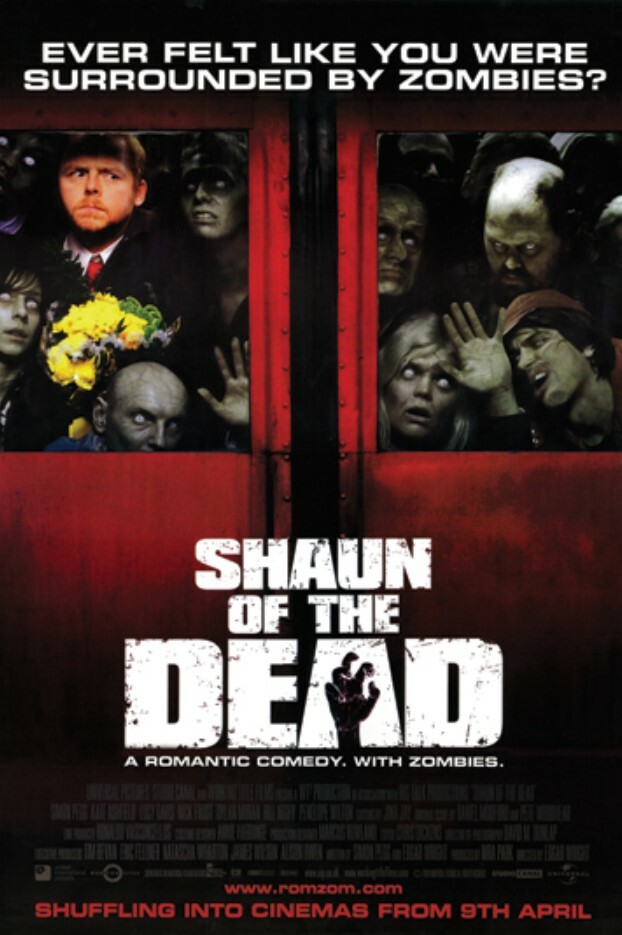
Shaun of the Dead (2004)

Because this is what it feels like going to WORK, amirite?

Edgar Wright’s comedic send-up of zombie movies has the perfect sense of scary and silly that you’re looking for. Shaun (Simon Pegg) is a retail jockey struggling with a girlfriend who wants more out of life than he seems willing to give, a mother whose husband he constantly clashes with, and a best friend who is enabling his arrested development more than anything else. He’s ALREADY living like a zombie even before the dead start to rise. Like a lot of the all-time great horror/comedies, Shaun works because the zombies themselves are played absolutely straight – nothing silly or goofy about them. The human characters, however, are funny and highly relatable. One could make an argument for virtually any zombie movie as being part of your Halloween rotation, but I’ve always felt that the more comedic ones fit in more with the fun of the holiday. And although there are plenty of zombie comedies out there, I don’t think it’s controversial to say that this is probably the best. It’s definitely the most iconic. Zombie costumes are easy, but cosplaying as the HERO of a zombie movie is often tough – they are, by the standards of the genre, usually kind of dull, generic, everyman types. But you can cosplay Shaun easily – a white shirt, crimson tie, a nametag, and a cricket bat are all you need. And make sure to get a little red on you.

Labyrinth (1986)

Where the hell is Fozzie?

Jim Henson’s fantasy film from 1986 may have flopped at the box office, but today the fans are devoted, dedicated, and legion. A young Jennifer Connelly plays Sarah, a teenage girl whose frustration at babysitting her infant brother inadvertently leads to his abduction by Jareth, the Goblin King (David Bowie). But Jareth offers her a chance to get him back – make her way to the Goblin City at the center of his remarkable Labyrinth before time runs out and she can take him home. The film is lavish and gorgeous. The characters, too, are memorable and loveable, with some of the finest work Jim Henson’s creature shop ever did. Even the bad guys have distinct personalities and witticisms that make them a joy to watch. And as the movie, technically, is all about monsters, it gives off those Halloween vibes any time of year.

There you have it, friends, a few non-Halloween flicks that you can throw into your rotation and feel perfectly seasonal. What are some of your favorites?

Blake M. Petit is a writer, teacher, and dad from Ama, Louisiana. His most recent writing project is the superhero adventure series Other People’s Heroes: Little Stars, volume one of which is now available on Amazon. You can subscribe to his newsletter by clicking right here. He’s also started putting his LitReel videos on TikTok. He didn’t mention the Munsters because lord knows he doesn’t feel like stirring up THAT can of worms yet again. The scars still haven’t healed from the last time. 

Geek Punditry #146: Scary Starters

If you read last week’s column – and obviously you should have, because it was a masterpiece – you may remember me mentioning that my 11-year-old nephew is planning to be Ghostface for Halloween this year. This is amusing to me because his mom, my sister, is very much NOT a horror movie fan, and I know for certain my nephew has never seen any of those films. It’s just evidence of how pervasive the Ghostface icon has become. But a few days later I got another nice surprise when my sister asked me if I thought her daughter, who turns 15 this weekend, was old enough to watch the Scream movies.

When I tell you I wanted to squeal with delight…

I smiled bigger than this.

I get questions like this a lot. I suppose that my multiple qualifications as a teacher, father, writer, and geek pundit all make people confident that I have a good idea of what media is appropriate for what age group, and I’m flattered by the faith they have in me. On the other hand, the question isn’t always that simple. Age-based ratings like your PG, PG-13, and R from the MPAA are a decent enough guide, but that’s all they are: a GUIDE. The truth is that every kid is different. There are 13-year-olds who can handle the same scary movies that would give their same-aged classmates nightmares for a week. So when I’m given these questions, I always give a general opinion, but I couch it in the caveat that “You know your kids better than anybody else, so use your best judgment.” 

But in this case, I know my niece really well. She’s grown up to be a fan of the morbid and macabre, she is slightly obsessed with all permutations of Five Nights at Freddy’s, and she’s smart enough to separate fiction from reality. When I got hit with this question, I had no doubt that she could handle it. The bigger question, honestly, was whether my sister would be okay with it.

“As far as the Scream movies go,” I told her, “There’s not any nudity. There IS violence, but compared to a lot of other franchises it’s relatively tame. There’s language, but she goes to a public high school, so I guarantee there’s nothing she hasn’t heard before. They’re all streaming on Paramount+, so yeah, I think it’s okay.”

Of course, it doesn’t hurt that Scream is – as I’ve stated many times – my favorite horror movie franchise, mainly because I think the writing and characterization are heads and shoulders above most of the other ones. But I still wouldn’t suggest that my niece be allowed to watch them if I didn’t think she was ready for it.

A few days later, I happened across a link to an article from Letterboxd that listed 20 PG-13 horror movies, films that were suggested as sort of “starters” for people who are just getting into the genre and didn’t want anything TOO intense. I’ve seen most of the films on that list and I agree that many of them are good choices – The Sixth Sense, for example, or Night of the Comet. And I was surprised at just how tonally diverse the list was, including things as chilling as The Ring and as family-friendly as Monster Squad.

I forwarded the link to both my niece and her mom, and my niece replied that she’s already seen Scary Stories to Tell in the Dark and now she has an excuse to watch the others on the list. I love this kid.

For the kids.

All this is to say, I’m really looking forward to helping usher her into the world of horror movie fandom, because I find that by and large horror movie fans are some of the nicest, kindest, most down-to-earth people I’ve ever met. Compared to certain other fandoms I could mention, like those from a galaxy far, far away, horror fans are usually very respectful of differing opinions and eager to listen, able to have conversations about their favorites and least favorites without devolving into name-calling or anger, and are extremely generous and supportive of the movies and creators that they enjoy. I know my niece would be positively embraced by this community, and it’s really important to find your tribe. I’m not saying that everybody in the world should be a horror fan, but I AM saying that if more people BEHAVED like horror fans, the world would be a much better place.

So if you’re into horror, or if you’ve got a teenager in your life that’s drifting in that direction, check out that Letterboxd list I linked to above. It’s a good starting place. And here are a few more suggestions for movies that didn’t quite make the Letterboxd cut, as well as other non-movie media sources that a burgeoning horror fan could start getting into this spooky season.

This is why dads mow the lawn every other morning.

The most glaring omission from the Letterboxd list – and my wife pointed this out almost immediately – is Little Shop of Horrors. It’s the chilling tale of a little New York flower shop where a young man finds and cultivates a new breed of plant that turns out to be an alien invader that thirsts for human flesh. Fun for the whole family! The Roger Corman original from 1960 is a cheesy schlockfest – it’s fun to watch, but only if you’re really into “good bad movies.” However, the 1986 musical version directed by Frank Oz is a masterpiece. The music is phenomenal, the performances are fantastic, and it’s just one more reason to love Rick Moranis. The puppetry by Jim Henson Studios holds up brilliantly today, and it’s impossible to imagine anyone walking away from this movie without having a new favorite song. My niece is already a geek for musicals, so I know this would be right up her alley. I just hope my sister is ready for weeks and weeks of her kid casually singing “Dentist!” and “Suddenly, Seymour.”

“Do you think you’ve got the CHOPS for this one, kiddies?”

Although it’s more intense than the stuff on the Letterboxd list, I have to give a strong recommendation to the legendary HBO TV series Tales From the Crypt. Based on the classic EC Comics (which themselves are well worth reading), this anthology series presented a half-hour morality tale each week, a different story with a different twist that usually involved a bad person doing bad things and getting a karmically appropriate comeuppance. The show adapted stories from the original comic book as well as some of its sister series, The Haunt of Fear, The Vault of Horror, and others. It also gave us one of the all time great horror icons in the Cryptkeeper, the John Kassir-voiced puppet who served as the host of the show with a ghoulishly gleeful sense of humor at the beginning and end of each episode. The general content level is a step up from Scream – there was sex sometimes, and the violence was kicked up a notch. At the same time, though, the violence was often treated very nonchalantly, brought up to an almost cartoonish level and hard to take seriously, which is part of the charm. 

HBO treated this series very well, bringing in big-name guest-stars and directors like Martin Sheen, Brooke Shields, Catherine O’Hara, Christopher Reeve, Steve Buscemi, Tim Curry, and tons of others. The show gave us seven seasons with 93 episodes, as well as three theatrical films and a more kid-centric animated spinoff, Tales From the Cryptkeeper. There’s fun to be had in all of them.

“I know I look like the Cryptkeeper, but I don’t really talk. I’m animated beautifully, though.”

I also have to give a recommendation to its spiritual successor, Creepshow. In the original Creepshow movie from 1982, director George Romero (of Night of the Living Dead fame) teamed up with Stephen King for a film that was inspired by and tonally reminiscent of the original Tales From the Crypt comics years before the TV show brought it back to the public consciousness. The first Creepshow was written entirely by King, and he even starred in one of the anthology segments himself. The first sequel also adapted King stories, although both he and George Romero were absent entirely from the third installment. The legacy of the film persevered, though, and in 2019 the Shudder streaming service brought it back as an anthology TV series that lasted for four seasons and a few specials (including a Halloween special and an animated Christmas special). What’s more, the TV shows spawned a new comic book anthology series from Skybound (the company owned by Robert Kirkman, creator of The Walking Dead), bringing the whole style of tongue-in-cheek horror with a dash of dark comedy back to its original format. All of these are worth indulging and, as they’re anthologies, can be picked up one episode or installment at a time without requiring a huge binge to get through an entire story like some TV shows, comics, or film series.

The Ditko version was a lot cleaner.

Finally, if you’re looking for a horror tinged-take on characters you already know and love, there are several options available. Marvel fans may be aware of the recent Marvel Zombies animated series, but they may not know that it’s based on a line of comic books, which themselves were started by Robert Kirkman before he left Marvel and devoted himself entirely to his own company. In the original Marvel Zombies, an old-fashioned zombie virus struck the Fantastic Four, turning them into flesh-eaters. It spread out from there, and once it hit the super-speedster Quicksilver, any chance of stopping it from being a global pandemic was lost. In the Marvel Zombies universe, the undead retain their human intelligence, although their zombie hunger overtakes their former heroic morality. It’s a fun series that has had many permutations. The hard part for a newbie would likely be just keeping track of which order to read the many assorted graphic novels in and figuring out which ones are part of the main continuity or standalone.

Well, the end of everything until next issue.

DC Comics has also given us two horror-themed worlds to explore in recent years. First was DCEased, a book that I have to believe was given the greenlight primarily on the strength of the pun in the title. In the main DC Universe, Darkseid has spent 50 years or so trying to find the “Anti-Life Equation,” a formula that would give him control over all life. In DCEased, the equation is cut loose, transforming anyone it touches into a mindless killing machine. It’s not TECHNICALLY a zombie story, but it uses many zombie tropes to tell what turns out to be a generational tale of broken heroes desperate to find a way to save their world.

“Okay, but that’s just a placeholder title, right? We’re gonna come up with something more clever before it’s published, right? Right? Guys?”

Finally, there’s DC Vs. Vampires where – once again – some of DC’s best and brightest are turned into creepy-crawlies. This time, we wind up with a world where Batgirl becomes queen of the vampires and the heroes are divided into dead and undead and are embroiled in a civil war that engulfs their entire world. The most recent (and possibly final) volume of this series just ended, and the paperback edition should be coming soon. Like Marvel Zombies and DCEased, it works as a fun horror take on some familiar characters.

So there you are, friends – a few gateways into the world of the macabre. I’m sure you have suggestions of your own, and I’d love to hear them in the comments. With two weeks left until Halloween, it’s time for the Creepy Content to completely take over.

Blake M. Petit is a writer, teacher, and dad from Ama, Louisiana. His most recent writing project is the superhero adventure series Other People’s Heroes: Little Stars, volume one of which is now available on Amazon. You can subscribe to his newsletter by clicking right here. He’s also started putting his LitReel videos on TikTok. He skipped over recommending Plants Vs. Zombies. They know what they did. 

Geek Punditry #141: Comedy in Crisis

It’s not something I ever thought I would say, but comedy is in danger of becoming a dying art. In movies, at least, it’s become harder and harder to sell a comedy to the theater crowd, mainly because in a world where movie theater attendance has never really recovered from the Covid shutdowns, people are far more discriminating about what they choose when they go out to a movie theater. The prevailing notion is that if you’re only going to see a movie in a theater a few times a year, it’s best to spend those chits on the big-budget special effects spectaculars, the things that really demand that IMAX treatment on the big screen. I know I’m guilty of that – my wife and I only get out to see a movie without our son a few times a year at best, so we’ve got to make sure it “counts.” After all, a comedy that’s funny in the theater will be just as funny at home, right?

Of course, some comedies aren’t funny no matter WHERE you are.

No, that’s not right at all, actually.

I’ve written before about that ever-so-thin line between comedy and horror, and about how both art forms are built on a similar formula of tension, buildup, and release, with the primary difference being that horror releases tension through screams whereas comedy releases it through laughter. It’s the reason, in fact, that horror/comedy hybrids can be so effective. But there’s another similarity that people don’t realize. Most horror movies are scarier in movie theaters than at home, where you can feed on the energy of the people around you, hear them gasp and shout with each scare, where you can see the girl a row ahead of you grab onto her boyfriend when the monster leaps at the screen. It makes watching a horror movie a communal experience that’s more enjoyable than watching the same movie alone. (There are exceptions, of course. Certain small, claustrophobic films like Buried or home invasion movies like Hush probably work better in a darkened living room with the curtains drawn and as few people as possible with you. But those are the exceptions, not the rule.)

Similarly, there’s something about comedy that’s funnier when you’re with an audience. There’s an emotional charge in the air that is infectious, spreading from one person to another. Even ONE person can be enough to trigger this. I’ll watch episodes of RiffTrax or Mystery Science Theater 3000 a dozen times by myself and chuckle with the riffs. But if I watch that same episode with my wife, those quiet laughs to myself become full-belly guffaws. Laughter, like terror, is contagious. One person’s laughter eases the path for others – it’s almost like hearing someone else laughing gives you PERMISSION to laugh, a permission that you don’t actually NEED, but that your psyche is waiting for anyway. 

Crow: I guess this is what he gets for making Green Lantern.

Unfortunately we didn’t make it to the theaters for this one, but the reboot of The Naked Gun is available digitally now, and my wife Erin and I watched it earlier this week. I’ve heard from many people whose opinions I respect that it was the funniest movie of the year, which sadly isn’t as bold a statement as it used to be. I grew up on the original Leslie Nielsen Naked Gun movies, as well as the Police Squad series that preceded it. I dearly loved that style of slapstick comedy, the kind we got from Mel Brooks’ Blazing Saddles or Spaceballs, and that the same Abrahams and Zucker Brothers combo that gave us Police Squad would refine in their disaster spoof Airplane! And I mourned – oh, HOW I mourned – the death of that kind of comedy when it was replaced by Friedberg/Seltzer stinkers like Date Movie, Meet the Spartans, and The Starving Games. 

So much high art it should be in a museum.

Someone watching a trailer for these movies might not be able to tell what the difference is on the surface. They’re all goofy movies built on absurd, surrealistic comedy that’s almost like a cartoon brought to life. But the difference is that Brooks, Abrahams, and the Zuckers understand how parody works. Blazing Saddles, Spaceballs, and The Naked Gun are spoofs of westerns, science fiction, and cop dramas (respectively). They mock the tropes of those films ruthlessly, while at the same time telling their own stories. Date Movie and similar films lack that kind of imagination or creativity. They replace actual gags with straight references to other films, and seem to think that simply acknowledging the existence of a (usually superior) movie somehow counts as a joke, but they have no identity or voice of their own. 

Airplane!, incidentally, is the oddball in this group. Whereas the others weren’t parodies of SPECIFIC movies (although Spaceballs leaned harder on Star Wars than most other sci-fi), Airplane! was almost a beat-for-beat remake of a lesser-known and much-forgotten disaster movie called Zero Hour, even borrowing some of the dialogue from the earlier film. They simply took the existing plot and characters and amplified them to absurd levels and created a comedy classic. 

But that kind of comedy had died out, as I said, replaced by the Reference Fests that slapstick has become in the last two decades. So when I heard they were rebooting The Naked Gun I was highly skeptical. When I heard that Liam Neeson had been cast as Frank Drebbin Jr., my optimism increased slightly – Neeson is a great actor and I believed he may have the comedy chops to pull it off. But it wasn’t until I saw the trailer, where they included a joke that addressed the elephant in the room – a certain cast member of the original trilogy who became infamous after the series ended – that I realized that this movie might just be self-aware enough to work.

And it really did.

And they get bonus points for mocking AI. Everybody gets bonus points for mocking AI.

Erin and I watched this movie and, from the first scene, I found myself laughing out loud at the antics on the screen. Liam Neeson has reinvented his career before – after a long period as a profound dramatic actor he took a left turn into action hero starting with the Taken franchise. Now it seems like he’s ready to reinvent himself again. He doesn’t play Frank Drebbin Jr. as completely stone-faced as his “father,” Leslie Nielsen, played the original. Instead, he’s got his own sort of blend of faux seriousness mixed with just enough winking at the camera to indicate that he recognizes just how ridiculous the movie is, and he’s cool with it. 

The real revelation here, though, was casting Pamela Anderson as the femme fatale of the movie. It’s been quite a while since Anderson was really in the public eye, and when she WAS making movies more frequently she wasn’t usually being sought out for her comedic skills. But she nailed it in this movie, with the same kind of goofy sensibility that Neeson brought to the screen. Word has it that she and Liam Neeson have actually begun a romantic relationship in real life after working together on this movie. That wasn’t on my bingo card for 2025, but after seeing them together I absolutely believe it, because the chemistry is flawless.

Get a guy who looks at you like that even with that hair.

Most importantly, though, the writing is sharp and clever. The jokes are about the tropes of a police procedural, not about the EXISTENCE of it. The screenwriters rarely make reference to any specific movie or TV show, and when they DO it’s actually done well (such as an extended joke where Neeson’s character is distraught that his Tivo has accidentally lost season one of Buffy the Vampire Slayer – the joke here being that a hardboiled cop at his age KNOWS so much about Buffy, not that it EXISTS). 

The Naked Gun (“the new version,” Neeson says in his first of many fourth wall-leaning moments) is the kind of comedy we don’t get anymore, and it’s the kind of comedy we need. Honestly, when is the last time you went to a movie theater to watch a comedy? I went back and looked at my Letterboxd diary to find the last time I saw a new movie in a theater that was an actual comedy and not just a superhero movie with comedic elements or a cartoon I was taking Eddie to watch. I made it back to 2017 when Erin and I saw The Big Sick, which is really more of a dramedy. Before that I’ve gotta go back to the action/comedy The Nice Guys in 2016. Both of those, by the way, are movies that deserve a lot more love than they get. 

The Naked Gun didn’t set the box office on fire, but it was highly lauded by critics and by those audiences that actually DID show up. I’m hoping that’s enough to justify Paramount moving forward with a sequel. Neeson and Anderson are such a great on-screen duo that it would be a crime not to pair them up again. This wouldn’t be the first time a movie – especially a comedy – found its audience after the lights dimmed in the movie theater, so I’m giving this my recommendation. Buy or rent it digitally. Stream it when it eventually shows up on Paramount+. Buy the Blu-Ray or DVD when it hits stores. I want more movies like this, and so should you. I didn’t get to see this one with a tub of popcorn in my lap and a huge screen in front of me, so I’m hoping I’ll get that shot for part two. 

Blake M. Petit is a writer, teacher, and dad from Ama, Louisiana. His most recent writing project is the superhero adventure series Other People’s Heroes: Little Stars, volume one of which is now available on Amazon. You can subscribe to his newsletter by clicking right here. He’s also started putting his LitReel videos on TikTok. You know what other movie didn’t get enough love? The Rocketeer. Just saying.

Geek Punditry #137: Teeny Tiny Terrors

Grady Hendrix’s novel How to Sell a Haunted House has been optioned for a motion picture. This is not new information, by the way – the deal was signed with Sam Raimi’s Ghost House studio about two years ago, but today is the first time I’ve heard about it, and it’s got me very interested. I like Hendrix’s work quite a bit. I’ve only read three of his books so far (the aforementioned Haunted House, Final Girls Support Group, and the very cool nonfiction book Paperbacks From Hell, about the history of horror novels and cover art in the 70s and 80s), but every one of them has encouraged me to read more. I don’t know if it’s fair to classify myself as a “fan,” having only really dipped my toes into his work thus far, but perhaps “fan-in-training” would be accurate. Regardless, having read How to Sell a Haunted House, I am immediately struck by the cinematic possibilities of the story, while at the same time, left very curious about exactly what tone they’re going to strike with a horror movie where the villains are – drumroll please – puppets.

You don’t even want to know what going through escrow is like.

I apologize if that feels like a spoiler to anyone, but it’s part of the synopsis of the book and, when the movie is made, it most likely will be in the trailer, so I don’t feel TOO bad. It’s kinda like if you hear that there’s a new slasher movie coming out and someone tells you that the killer wears a mask. In the novel, single mom Louise Joyner has to go back to her home town after her parents are killed in a car crash. Once home, she’s forced to go about the task of closing up her childhood home for sale with the help of her estranged brother. As they go through the house, they find that there may be more to their mother’s massive collection of puppets and dolls than they ever suspected.

Once the movie is completed, How to Sell a Haunted House will join the echelon of horror flicks that I like to think of as “Teeny Tiny Terrors.” Horror, as a genre, has dozens (if not hundreds) of categories and subcategories, most of which can overlap at some intersection or another. How to Sell a Haunted House will fit into a few categories – haunted house movies, obviously, but also the narrower but quite popular category of killer toys, home of such classic films as Child’s Play, Puppet Master, and the last segment in Trilogy of Terror. The Joyner puppets will join a pretty fabulous collection of creatures.

Sorry if that gives you nightmares.

Not all Teeny Tiny Terrors are toys, of course. I’d also place things like Leprechaun, Gremlins, Ghoulies, Munchies, Critters, Hobgoblins, and even Sam from Trick ‘r Treat into this category: all monsters or aliens or some sort of supernatural threat that are embodied in what is – to an adult human, of course – a package that seems small and harmless until the teeth are bared. Because of this, almost all Teeny Tiny Terrors fall into one of my OTHER favorite horror subcategories: horror comedies. I wrote about this extensively last year, specifically about how common it is for horror to have elements of comedy, and how some lean harder on the funny parts and others lean harder on the terror. I even described a spectrum with varying levels of horror/comedies depending on which side they lean towards (a Type 1 is the lightest, funniest of the group, while 5 is the scariest). Almost any Teeny Tiny Terror will land on the spectrum somewhere. The first Child’s Play movie, I think, was a solid 4, although as is often the case the series lightened up with subsequent installments to 3s and even occasionally to 2s. 

With a Teeny Tiny Terror of any type, at least part of the humor is going to come from the concept of something that’s supposed to be innocent and harmless suddenly turning psychotic. The idea of the dolls in Puppet Master turning out to be possessed by the spirits of dead Nazis, for example, is so patently absurd that it’s hard to take it too seriously even as the likes of the Tunneler doll are drilling into somebody’s skull. There’s a macabre comedy to this. It’s similar to the psychotic clown craze from a few years back, although not exactly the same. With killer toys, you’ve got something that’s supposed to be harmless turning bad. 

Teeny Tiny Terrors are nothing new. They showed up in John Christopher’s baffling 1966 novel The Little People, were used to disturbing effect in Tod Browning’s 1932 film Freaks, and have showed up in folklore about as far back as you can imagine. Today we’re even retroactively applying it to full-grown terrors. Just a few days ago I got an email from Spirit Halloween announcing their new line of Horror Movie Babies, figures and decorations starring infantilized versions of Michael Myers, Chucky, Ghostface, the Frankenstein Monster and others. And even THAT is a spinoff of their long-running Zombie Babies line. There aren’t enough Teeny Tiny Terrors already, now we’re taking full-grown terrors and giving them the Jim Henson’s Muppet Babies treatment! 

Remember that episode where Leatherface gutted Camilla like a fish?

There are other subcategories related to the Teeny Tiny Terrors in different ways, such as the aforementioned Killer Klowns. Like deadly toys, the reason clowns can be scary is that you’re taking something that’s supposed to be innocent and perverting it. Dolls are inanimate, though, and supposed to be used to fuel a child’s imagination, but have no agency of their own. They exist only as a reflection of a child’s innocence. Clowns, on the other hand, are people, and we know that (unlike a doll) a person can easily hide their true nature. They commit their atrocities beneath makeup that was originally intended to induce laughter only amplifies the terror. Whether we’re talking about Pennywise, Art the Clown, or the Joker, killer clowns can be a hell of a lot scarier than killer toys.

There’s also the related category of Creepy Kids, like we see in films such as Children of the Corn or Village of the Damned. Again, here’s something that should be innocent that’s turned bad, but in this case it’s far less likely to be funny. A demonic child is something of a perversion of innocence, it’s taking a human being in the period of their life where they are supposed to have the least darkness and transforming them into something ghastly. There are SOME Creepy Kids on the horror/comedy spectrum, but I think they’re far less likely to go there than Teeny Tiny Terror or Killer Klowns.

The good news is that modern cameras don’t create redeye, so there’s no chance of remaking this one.

But back to Grady Hendrix: I’m not surprised that an adaptation of his work would go into the horror/comedy territory, because pretty much everything of his that I’ve read seems tailor-made for it. Aside from Haunted House, he gave us Final Girl Support Group, a novel about women who survived attacks from slasher-type killers (most of whom are obvious copyright-friendly substitutes for the likes of Jason Voorhees and Michael Myers) and what happens when an unknown threat starts gunning for them. Hendrix plays with meta humor here, digging into the tropes and expectations of the slasher genre in a way that’s reminiscent of Wes Craven’s Scream movies (and, in fact, one of the Final Girls is a clear replacement for Sidney Prescott). Even his nonfiction book, Paperbacks From Hell, shows a deep love and understanding of all the tropes of horror fiction. Writers like that often enjoy playing with those tropes in an amusing way.

Art.

Assuming the movie adapts the tone of the book faithfully, I think it would also land in type 4. It’s not a laugh riot, and in fact, some of the stuff at the end could be downright grotesque depending on how the director chooses to film it. But as I said, the very concept of Teeny Tiny Terrors has an inherent humor to it that, even in the darkest moments, lends itself well to tongue-in-cheek references and black comedy. Hendrix is one of the modern greats in that regard. I hope that the movie does it justice. 

Blake M. Petit is a writer, teacher, and dad from Ama, Louisiana. His most recent writing project is the superhero adventure series Other People’s Heroes: Little Stars, volume one of which is now available on Amazon. You can subscribe to his newsletter by clicking right here. He’s also started putting his LitReel videos on TikTok. Despite what you may have expected, “Teeny Tiny Terrors” does not refer to what happens when your son realizes we’re out of cheese sticks. 

Geek Punditry #134: Three Wishes For the DC Universe

I’m sitting here two weeks after the debut of James Gunn’s Superman movie and I’m quite happy. As of the time I write this, it’s sitting at almost $260 million domestically and nearly $433 million worldwide, which in this post-COVID era is nothing to sneeze at. It’s already the top-grossing superhero movie of the year so far, and most importantly, it’s been embraced by the public. The critics love it, the fans love it, and people are still talking about it two weeks later, something you can’t really say for some of the other summer movies like Jurassic World: Rebirth. Lines like “Maybe being kind is the real punk rock” have achieved meme status, and not in a mocking way like that CEO at the Coldplay concert. Most importantly, it has gotten people reenergized. Sure, there are some people who don’t like it, and it’s fair to not like something, but if the REASON you don’t like something is because Superman believes in goodness, has a sense of humor, or wants to protect the life of even the smallest creature, then I’ll be frank: your opinion does not matter to me.

My face when I think about the bit with the squirrel.

With this movie doing well, eyes are now turning to the rest of James Gunn’s new DC Universe. When he and producer Peter Safran took over as co-heads of DC Studios a few years ago, they announced a slew of projects, but Gunn has also been very clear that he’s not going to move forward with anything until the script is ready, so several of those projects are on the back burner. The ones that are definitely on the schedule are – in order of release – season two of the Peacemaker TV series next month, the Lanterns series for early next year, the new Supergirl movie next summer, and a Clayface movie next fall. (Clayface, by the way, is the most indicative of the fact that Gunn is not married to a roadmap – it was not part of the initial announcement and Gunn said the character wasn’t even on the radar for a solo film, but writer Mike Flanagan pitched him a story that was so good they put it on the fast track.)

The hero we didn’t know we needed.

Movies in the works but not yet on the schedule are a Brave and the Bold movie (featuring Batman and the Damian Wayne Robin), The Authority, Swamp Thing, and Sgt. Rock. On TV, they’re working on live-action shows including Paradise Island, Waller, and Booster Gold, and in animation, they’re working on Blue Beetle, Mr. Miracle, and a second season of Creature Commandos. Other things have been tossed around, including a movie featuring Bane and Deathstroke, and Supergirl screenwriter Ana Nogueira has reportedly turned in a script for a Teen Titans movie AND has been hired to do a script for Wonder Woman. Following the success of Superman, rumors are flying about shows starring Edi Gathegi’s Mr. Terrific and Skyler Gisando as Jimmy Olsen. There are other series and films in the works as well, but the ones I haven’t mentioned thus far (such as the sequel to Matt Reeves’ The Batman or an animated Starfire series for children) are mostly intended to be part of DC Studios’ “Elseworlds” imprint and not part of the DCU proper. 

So obviously, there’s a LOT to look forward to in the next several years. But what is it I always say about fans? What do fans want above all else?

That’s right. Fans want MORE.

So today I want to talk about my Three Wishes for the new DCU. What are three projects that I would love to see? If I had a chance to sit down with James Gunn and convince him to add three of my dream projects to the schedule, what would they be? Let’s do one live-action series, one animated series, and one movie, just to cover all the bases that this DCU is touching. I’m also going to try to incorporate some themes or genres that the other projects haven’t gotten around to yet. 

Live action series: Legion of Super-Heroes

Call the casting department and tell them to put a pot of coffee on.

My love for the Legion of Super-Heroes is no secret. I think it’s one of DC’s greatest franchises: the heroes of the 31st century, who have modeled themselves after the greatest heroes of our time. Dozens of heroes from different worlds, cultures, and species, allowing for any number of different characters and character dynamics. The series presents an opportunity to do science fiction and superheroes at the same time, and as Gunn has made it clear that he wants the different DC projects to each have a different feeling, this would fill a niche that isn’t there yet. (Okay, technically I suppose the Lanterns TV series will have a science fiction element to it, but from all the descriptions it seems like that show is going to be more of a military mystery/drama. That’s great, but I want a real space opera.) 

But this would have to be a TV series. The Legion of Super-Heroes is, frankly, just too big for a movie. There are literally dozens of characters in the group, and even if you were to narrow down the focus to a core group of, say, seven or eight, you need time to explore who each of them are and how they relate to one another. You couldn’t do justice to the Legion in two hours. 

The next thing is that I believe that the Legion is strongest as a spin-off of Superman. It’s how the characters were first introduced back in 1958, as kids who loved the legend of Clark Kent and travelled back in time to recruit him to join their club when he was just a teenager. It creates something of a stable time loop: the Legion models itself after Superman, but the Legion also taught Clark Kent to be a superhero in the first place. So I would use the early 2000s Legion of Super-Heroes animated series as my inspiration, casting someone to play a teenage Clark Kent and having him as a regular member of the cast. This would also open the door to have David Corenswet do a cameo as adult Clark at some point, probably in the last episode. 

I don’t know if Corenswet is a jewelry guy, but I think this ring would look pretty good on him.

What’s more, although the Legion is set 1000 years in the future, that doesn’t mean that it can’t still be used to establish things for the contemporary stories. Alien races like the Khund or the Dominators, who could easily show up in other DC projects, could be introduced there. And the series could be used to give sneak peaks as to what will happen in the other movies and shows. (“Hey, why does the woman in this old photo have a golden lasso?” “Don’t worry, Clark, you’ll find out soon enough.”) 

Is the reason I’m suggesting this series just because I love the Legion and I want other people to love it too? I’m not gonna lie, that’s probably at least 75 percent of my reasoning here. But that doesn’t make it a bad idea. I think this show could be great. 

Animated Series: Deadman

With Clayface playing in the realm of body horror (it has been compared, tonally, to David Cronenberg’s The Fly), the supernatural corner of the DC Universe is waiting for some exploration. Deadman is the answer. If you’re unfamiliar with the character, Boston Brand was a circus performer who was murdered in the middle of his act. Rather than going to the great beyond, though, he was sent back to Earth as a ghost to solve his own murder. With the ability to possess the bodies of other people, Deadman has had a long and bizarre career as a superhero that most people (even in the DC Universe) don’t even know exists. 

And you thought YOUR Monday sucked.

By the very nature of who the character is, Deadman has been used plenty of times to delve into the world of horror stories. He is, of course, a literal ghost, so haunted houses and poltergeists and all manner of demonic foes are par for the course for him. And he also regularly runs across other DC characters who are mired in this world of magic and the supernatural, like the Spectre, the Phantom Stranger, and Zatanna, giving a series of this nature an opportunity to open up the world even further.

As for why it would be best as an animated project – there’s a certain creative freedom in animation. It allows you to do things that would stretch credulity in live action, even with the best special effects. Have you ever noticed that the animated Star Trek series are far more likely to bring in characters who are not, strictly, humanoid? Creatures with three arms or body types that you could never fit a human actor into? That’s because in animation you don’t have to pay for huge animatronics, make actors spend days in the makeup chair applying heavy or even painful prosthetics, or worry about sketchy CGI that just doesn’t mesh against the human actors standing in front of a green screen. Animation would give them the freedom to really explore the afterlife, plunge into the depths of Hell, or put Deadman through extreme transformations like the nearly-skeletal Kelley Jones version of the character without having to torture the performers. 

Very few actresses would be willing to have their torso removed to do this scene justice.

It could be groundbreaking in another sense as well. Animation is finally starting to crack free from the decades-old bias that it’s only intended for children, but it’s still rare to see adult-oriented animated projects that aren’t comedies. Even Creature Commandos, which was basically an action movie with monsters, leaned heavily on dark humor. Any humor in Deadman would likely come from Boston himself cracking wise, as the situations he plunges into would be deadly serious…no pun intended. 

Movie: Firestorm

With page-rippin’ power!

Firestorm is one of DC’s perennial B-listers. The character inspires incredible amounts of devotion from his fans, but the NUMBER of fans just isn’t big enough to crack him into the mainstream. This could finally be a chance to fix that. Although several characters over the years have shared the name and the powers, the crux is usually that two people (originally scientist Martin Stein and high school student Ronnie Raymond) are fused into a single super-powerful being as the result of a nuclear accident. One of the two – Stein in the original – is dormant in the fused Firestorm persona, only able to offer advice to the one who’s steering the ship. This allows for a sort of “odd couple” dynamic, putting together two characters who don’t necessarily belong together and forcing them to literally work as one for the greater good. 

Writer Gerry Conway, who co-created the character, had done a long run on Marvel’s Spider-Man and was attempting to recreate the dynamic of a younger hero, which DC didn’t really have at the time. Their heroes were all older, the younger ones were all sidekicks, so putting a teenager in the driver’s seat was different for them, and the character quickly became beloved, even becoming the youngest person to ever join the Justice League (at the time at least). But after 100 issues of his solo series, the doors were shuttered way back in 1990 and, despite several strong attempts to give him a resurgence, he’s struggled to really become big again ever since.

For the movie, I would make Martin Stein sort of the “man in the chair,” the person inadvertently responsible for Firestorm, but not part of Firestorm himself. I’d keep the part of Ronnie’s origin where he gets suckered into joining a group of “protestors” to impress a girl, only to find out that they’re actually eco-terrorists. But when the accident happens, rather than fuse with Stein, I’d have him fuse with the second Firestorm, Jason Rusch, who I would make Stein’s lab assistant. 

“Fusion Confusion” was my nickname when I worked at that restaurant making sushi burritos.

The dynamic we’d have here would be Jason believing Ronnie’s a dumb jock while Ronnie sees Jason as a stuck-up egghead, and the two would slowly and begrudgingly learn to respect each other – the old “together we are more than the sum of our parts” routine. The eco-terrorists would be linked to a bigger bad, of course, who is targeting different scientific institutions in the DCU such as S.T.A.R.Labs, and giving us an opportunity to include other science-based heroes such as Captain Atom, Hourman, Stargirl, or the Flash – who has been oddly absent from all official conversation about the current DCU. There’d even be a clear opportunity to bring in Edi Gathegi as Mr. Terrific again, because when you have a science problem, who better to call than the smartest man in the world? I kind of like the idea of Stein being one of Mr. Terrific’s former professors who now finds himself running to his old student for help. 

Okay, James Gunn, the ball is in your court now. You’re doing a great job so far, don’t get me wrong, but there’s always room to bring in even more goodness. Here are my suggestions. 

Now I’ve got to get back to finishing up season one of Peacemaker before season two drops. 

Blake M. Petit is a writer, teacher, and dad from Ama, Louisiana. His most recent writing project is the superhero adventure series Other People’s Heroes: Little Stars, volume one of which is now available on Amazon. You can subscribe to his newsletter by clicking right here. He’s also started putting his LitReel videos on TikTok. Come back to him in a month, he’ll probably have three totally different suggestions.