At last, the time has come! After months of waiting, DC Comics blessed us this week with the first of the two crossover books featuring Superman and Spider-Man, and as promised, there’s a bounty of back-up stories as well. As with any anthology, some of the stories are better than others, so this time out I’m going to give you my thoughts on each of them.
DC/Marvel: Superman/Spider-Man #1 Main Cover: Jorge Jimenez, although it should be noted that there are – at current count – FORTY-ONE different covers to this book, and while I’m absolutely NOT gonna shell out $8 a copy for all of them, if DC and Marvel put out a special that collected all of the various covers from this book and the Marvel book coming out in a couple of months, I would 100 percent purchase it.
Title: Truth, Justice, and Great Responsibility Writer: Mark Waid Art: Jorge Jimenez
In our main story this issue, Dr. Octopus is messing around with an AI assistant that turns out to be Superman’s old foe Brainiac, which just goes to show you that using ChatGPT is just bad news. Clark Kent and Peter Parker, meanwhile, are working together on a story about the theft of some radioactive materials…including Kryptonite.
Mark Waid does something truly unique with this story. In the universe he’s created here, he presupposes that Superman and Spider-Man – and more specifically, Clark and Peter, have a history together. And I don’t just mean the previous crossovers between the two that have happened in the past (all of which are decades old). No, reading this book you get a clear feeling that this is an incarnation of DC and Marvel’s respective flagship characters that have had a great number of adventures together that we, the reader, have not been privy to. Most crossovers start with the characters meeting each other for the first time. If we’re lucky, they’re at least aware of the others’ existence, but they’ve never encountered each other before. This book instead implies a whole shared existence between the two that feels so fresh and so RIGHT, and makes me wish there were more stories coming beyond just the Marvel book.
Like seriously. DC. Marvel. Get Waid working on a 12-issue maxiseries showing the entire history of this Multiple World’s Finest duo, like YESTERDAY.
Jorge Jimenez on the art is the icing on the cake. He’s got a great take on each of our heroes and both of our villains. The story looks as good as it reads. The lead story is a home run.
Title: Lois & Mary Jane in “The World’s Finest” Writer: Tom King Pencils: Jim Lee Inks: Scott Williams
Tom King’s Lois and Mary Jane story is next, and this is an interesting one. As Superman and Spider-Man duke it out with a rogue Sentinel (is there any other kind?), Lois and MJ go about a sort of casual conversation amongst the chaos about what it means to be them, the women in the lives of two of the world’s greatest heroes. It’s a really interesting way to frame these two, using their unique shared perspective in a way that wouldn’t really work with any other two women in comics. Using the backdrop of the Sentinel fight instead of just having them meet for lunch or something (as they do on the Terry Dodson variant cover) gives it a different flavor that makes it feel more unique. I feel like this one is intended to be in continuity with Waid’s story, and if that means this shared universe is one where Pete and Mary Jane are still together, I want more stories set in this universe even MORE.
Title: Superboy-Prime and Spider-Man in “Pages” Writer: Christopher Priest Art: Daniel Sampere
I really wasn’t sure what to expect out of this pairing. We’ve often seen Superboy-Prime using his knowledge of DC Comics (coming from a universe where those are all fictional) to navigate his world on more than one occasion. Christopher Priest here supposes that if DC Comics are fictional to Prime, it stands to reason that Marvel is too. (And I suppose every other publisher, by extension, but let’s just stick to Marvel now.) Prime uses his ability to travel the Multiverse to move back in time to a point in Marvel’s history shortly after Peter Parker got rid of his symbiote costume, when he was wearing a black suit made out of traditional fabric, and the confrontation between the two of them seems to unlock something in the boy.
Prime has been on something of a redemption arc in the comics as of late. This story actually feels like it could be the beginning of that, as if it logically should take place prior to his appearance in recent issues of DC KO. I have to admit, for a kid who modeled himself on Superman and stumbled so badly, I kind of like the idea of an encounter with Spider-Man being the thing that sets him back on the right path.
Title: Superboy and Spider-Man 2099 in “Beyond the Cobwebs of Tomorrow” Writer & Artist: Sean Murphy
Miguel O’Hara, Spider-Man 2099, is on the run. I know, what else is new? But as he flees from the authorities, we realize that he’s not in the 2099 that we’re used to, not exactly, and that idea is driven home even harder by the sudden appearance of a time-tossed Superboy and a special guest star. As our heroes compare notes, they come to realize the real threat they face and…
…and that’s it. The story ends with the team-up forged and our heroes barrelling off to take care of business. But the problem is, that isn’t really a story. This is, if anything, the first CHAPTER of a story, and an incomplete chapter at that. I get that these backups have a pretty limited number of pages, but this whole sequence comes across as a tease of something that I really want to read. Teasers are only fun, though, if what’s being teased eventually reaches you to be read. Despite a fun team-up and some well-executed pages, this is the first story in the book that I feel is a little bit of a letdown.
Title: Jimmy Olsen and Carnage in “Jimmy Con Carnage” Writer: Matt Fraction Art: Steve Lieber
Fraction and Lieber, the creative team behind the Superman’s Pal Jimmy Olsen miniseries from a few years back, reunite for the wildest pairing in this book. Jimmy’s meandering has led him to leave Metropolis for New York and get a job as the newest photographer for the Daily Bugle. And like ALL Bugle photographers learn, J. Jonah Jameson has one edict: PICTURES OF SPIDER-MAN. The only problem is that new-to-town Jimmy doesn’t even know what Spider-Man looks like. Doesn’t even know about the hyphen.
I know these stories are out of continuity, but it’s crazy what they allow Fraction to get away with in this one. It’s crazy, for instance, that Jimmy somehow has never seen one of Peter Parker’s 17 million photographs of Spider-Man. It’s crazy that he thinks Carnage matches the description. It’s crazy the significance that a hyphen plays in this story. It’s hilarious and ridiculous in all the ways that Jimmy’s solo series was, although with a bit more finality.
Title: Jonathan Kent and Ben Parker in “The Bridge” Writer: Jeff Lemire Art: Rafa Sandoval
This story (another one that feels like it belongs in this combined world) is a quick snapshot, Jeff Lemire bringing us a sweet glimpse at the adoptive fathers of our two heroes. A chance meeting, many years ago, brings Ben Parker to Smallville, Kansas just as a massive rainstorm threatens people in town, and Lemire shows us the kind of steel that forged Clark and Peter into the men that they are. Nothing particularly surprising in this one, just a good, simple encounter that feels like a minor but welcome detail in this strange world that they’re building.
Title: Bias Writer: Greg Rucka Art: Nicola Scott
This one, too, feels like a little snapshot. Jack Ryder’s program has a pair of special guests, Lois Lane and Jonah Jameson, on the air debating the concept of media bias. Lois calls Jonah out on his anti-Spider-Man stance, and Jonah responds.
There’s not much else to say about this one, honestly. Like the Lemire story, it feels like a detail added in to populate the world. I appreciate how well Rucka casts each of these characters, up to and including Jonah’s defense for his position on our friendly neighborhood wall-crawler. But it’s again just a tidbit, a nugget of something more.
Title: Power Girl and the Punisher in “Blind Date” Writer: Gail Simone Art: Belen Ortega
Of all the pairings in the book, this one may seem the most random, until you remember that both of these characters were created by Gerry Conway, and it seems that Simone thought it would be fun to pay tribute to that. She was, of course, correct about that. In this story, Karen Starr is on her way to a blind date with – well – perhaps the most hated Marvel character of the past half-decade or so. It’s just her bad luck that the restaurant where she’s meeting him happens to be full of criminals that have been targeted by Frank Castle.
As unusual as the team-up is, Simone handles it with her usual humor and charm. Somehow she structures the story in a way that brings them together organically, while still dropping in plenty of meta-commentary about the characters and playing with who they are and just how deeply different they are, while at the same time, having more than a little in common. This may be the most unexpectedly fun story in the book.
Look, I’m not going to pretend that I’m a hard sell. This is a comic book focusing on two of my favorite characters and an all-star collection of creators. It’s a load of fun and it feels oddly as though it’s being used to build towards something larger. (I’m probably wrong about that. I hope I’m not.) At any rate, it was well worth the price, and I can’t wait for Marvel’s half to come in April.
Blake M. Petit is a writer, teacher, and dad from Ama, Louisiana. His most recent writing project is the superhero adventure series Other People’s Heroes: Little Stars, volume one of which is now available on Amazon. Don’t forget, you can check out earlier blogs in the Year of Superman/Superman Stuff Archive! Got a request for a future “Superman Stuff”? Drop it in the comments!
The bidding war is over, and after a protracted tussle over the fate of the grand old movie studio called Warner Bros, the winner – shockingly – seems to be Paramount. Over the last few months we’ve watched as Warner Bros, which of course has expanded far beyond being a movie studio to being a full-blown media empire, was put on the market. We saw it get snapped up by Netflix, we saw as Paramount entered the game with a hostile takeover bid, and we saw them continue to sweeten the pot until Netflix stepped back and threw in the towel. And now, pending government approval and all sorts of other rigamarole that will tie things up for a while, it seems as though Warner Bros will become another star on the Paramount mountain.
One big, happy family.
Feelings about this are…complicated, to say the least. Generally speaking I’m not a fan of the massive media consolidation we’ve borne witness to this century. Fewer players in the game means less competition, and fewer outlets for fewer voices. And sure, we live in an era where anybody can theoretically build an audience and a following using social media, but in practice, the big companies are always going to have an edge. Even when a new player comes along – an A24, for example – they’re going to have an uphill battle when it comes to staying relevant next to the likes of Disney, Sony, and whatever this new Paramount/WB hybrid will be called once it’s all over.
That said, if it HAD to be between Netflix and Paramount, Paramount is the company I feel will be better for people who want movie theaters to survive, no matter what Netflix claimed. And if it’s happening whether we like it or not, I’m not in the mood to debate it. I would rather talk about what’s going to happen when the properties of these two corporate monoliths are under one roof.
What’s going to happen when Warner Bros – the company that owns DC Comics, DC Studios, the Looney Tunes, Hanna-Barbera, Harry Potter, and countless other properties – is folded under the umbrella of the company that controls CBS, Star Trek, Nickelodeon, SpongeBob SquarePants, and the Teenage Mutant Ninja Turtles? This is going to be mostly speculation, of course – I’m the first to admit that I don’t know anything. But I’m going to throw out some ideas and discuss some concerns about what’s going to happen. And keep in mind that all of this is dependent on how long it takes for the deal to be complete, as well as how long it takes for existing licenses and deals to expire, so I can’t really put a specific timeline on any of this.
“Let’s call it PARAMAX.” “For the last time, Curtis, NO.”
One thing we CAN be sure of is that there’s going to be a change in the respective streaming services. Paramount has already indicated that eventually they intend to fold HBO Max into their existing Paramount+. When this happens, one can only hope they don’t decide to double the price on whatever the remaining service will be. Furthermore, I really hope that they use the technology behind HBO Max, because of all the major streamers I’ve used I’ve found Paramount+ to be the buggiest and most annoying. Honestly, if I didn’t love Star Trek so darned much I would have abandoned it entirely.
What content will there be, though? Warner Bros has had a terribly frustrating habit of sending out some of their properties, including movies and TV shows that were once on HBO Max, to other streamers like Netflix, Amazon Prime, and most recently Tubi (which picked up a gargantuan selection of WB cartoons). I would like to believe that Paramount would be smarter with its properties than Warner Bros was, but I would be kidding myself. Remember, Paramount+ was launched (originally as CBS All-Access) with the promise that it would be the home for everything Star Trek. Then they cancelled Prodigy after one season and Netflix saved season two, but now that deal has expired and it can’t be found anywhere. What I’m getting at is that both of these companies can be pretty boneheaded about what to do with their legendary properties, so having a singular service – whatever form it winds up taking – will be no guarantee that you can find everything you want under one roof.
Over in the Comic Book Collecting group I help moderate on Facebook, a user asked if we thought that the Ninja Turtles – now that they’re corporate siblings – would be added to the DC Universe. This is something I find particularly unlikely. Although DC has a proud and storied history of absorbing the superhero characters of other defunct publishers that they’ve purchased, the Ninja Turtles are too valuable an intellectual property in their own right to make them part of a different one. It’s the same reason that Disney never made Anna and Elsa from Frozen an officialpart of the Disney Princesses merchandise line – they make too dang much money on their own to mash them together with everybody else.
That said, although I do not foresee a future in which Donatello becomes the new leader of the Teen Titans or anything, I think that being under the same corporate umbrella will make crossovers easier and more likely. It’s happened before. The Turtles have had four separate comic book crossovers with Batman, one of which was adapted into an animated movie, and they’ve freely crossed over with dozens of other properties over the years – Ghostbusters, Strangers Things, Masters of the Universe, Mighty Morphin Power Rangers, Naruto, and that’s just off the top of my head. Having them cross paths with the Justice League is in no way out of the question. Heck, having them cross paths with Bugs Bunny isn’t out of the question.
“Dude, our dad is like, a bat without wings! We could be cousins!”
Just because I don’t think the Turtles will be part of the DCU, though, that still raises the question of who is going to publish them. The Turtles have been licensed to IDW Publishing for many years now. So have other Paramount properties, most prominently Star Trek. And just last year, IDW launched a new IDW Dark line of horror comics, including several series based on Paramount properties such as The Twilight Zone, Event Horizon, A Quiet Place, and Smile. I don’t know exactly how long those contracts have left, but once Paramount owns one of the Big Two comic book publishers, will they really want to continue licensing their properties to one of the…Fluffy Five? I need better nicknames.
“Move? We just GOT here!”
It’s possible that Paramount would move the comic book licenses for their properties over to DC, but it’s by no means certain. After all, DC hasn’t done a ton of licensed comics in recent years, aside from the occasional crossover or a book based on one of their current corporate siblings. They’ve published Star Trek before, of course, but that was nearly 30 years ago, and there hasn’t been any indication that they would be interested in doing so again. And even now WB properties have had recent comics published by companies other than DC, such as Cartoon Network comics published by IDW or the current Space Ghost and Herculoids comics produced by Dynamite.
And recent comic book history has made it quite clear that sharing a parent company isn’t necessarily a guarantee of comic book consolidation. When Disney bought Marvel Comics in 2009, they ended the Disney Comics license that Boom! Studios had. Then when they bought Lucasfilm in 2012, they pulled back the Star Wars license from Dark Horse and gave it to Marvel. They did the same with Aliens and Predator when they bought 20th Century Fox. But although Marvel has produced a lot of Star Wars, Alien, and Predator comics, Disney has ALSO licensed Star Wars out to other publishers again, first IDW, and then back to Dark Horse, with their respective series co-existing with the Marvel books. Marvel has also done precious little with the classic Disney characters – a few What If? one-shots mashing Mickey Mouse and friends with Marvel superheroes, and a few Uncle Scrooge comics. But at the same time, Disney kept farming those characters to other publishers as well. Dynamite currently has the license to Disney Afternoon books like DuckTales, Darkwing Duck, and Gargoyles, as well as other properties like Lilo and Stitch, Disney Villains, and – most recently – the Muppets. As for the classic Disney comics, after being moved to IDW (they are in this licensing mix a LOT), they vanished for a few years, only to come back last year at Fantagraphics. In fact, last fall I walked into my comic book shop and bought new comic books starring Scrooge McDuck from three different publishers at the same time.
I guess that made Fantagraphics, Dynamite, and Marvel the Three Scrooges. Ah? AAAAAAAH?
The melding is far from certain, is what I’m getting at.
What about some of the other properties the different companies hold? How will they be affected? Paramount+ isn’t the only streamer they own, they’re also the controlling company of what is possibly my favorite streaming app, Pluto TV. Pluto has on-demand content, but it also has 24/7 channels dedicated to dozens – perhaps hundreds – of individual shows and genres, most of them owned by Paramount: channels dedicated to Star Trek, I Love Lucy, classic sitcoms, game shows, and tons of other things. Not everything on Pluto is owned by Paramount (they also have channels dedicated to Mystery Science Theater 3000, RiffTrax, and the Universal Monsters, for instance), but I don’t think you can currently find any WB properties there. Could we see channels with all-day streams of the Looney Tunes, Scooby-Doo, Babylon 5, DC Cartoons or the live-action DC superhero shows? I have to admit, of all the theories I’m throwing around, this is probably the one I feel most likely to happen in the near future. It just seems very much like the kind of thing Paramount is likely to do. Although – like everything else – how SOON it might happen would depend largely on the current licensing deals they have in place, what rights exactly those existing deals entail, and when they expire.
If all of this sounds confusing…well, that’s because it is. The merger of two of the biggest media companies in the world is an enormous endeavor, something with so many moving parts that I can’t even wrap my head around it. And we just don’t know how it’s all going to shake out in the end.
Blake M. Petit is a writer, teacher, and dad from Ama, Louisiana. His most recent writing project is the superhero adventure series Other People’s Heroes: Little Stars, volume one of which is now available on Amazon. He’s also started putting his LitReel videos on TikTok. He kind of likes the idea of a SpongeBob/Animaniacs crossover where Squidward just rapidly loses his mind over the Warner Brothers and the Warner Sister.
Last week brought us a pair of announcements about upcoming Superman books, both of which I’m happy about, although I’m slightly reserved about one of them.
First of all, Marvel Comics announced the creative teams for their half of the upcoming Spider-Man/Superman crossover. DC announced at the end of last year that Mark Waid and Jorge Jimenez will be doing the main story for their half, which comes out in March. Marvel’s side of the crossover will come out in April, and last week we learned that the main story will be by Brad Meltzer and Pepe Larraz, pitting the wallcrawler and the Man of Steel against Lex Luthor and Norman Osborn. I’ve been a fan of Meltzer for quite some time – I love his novels, I’ve shared his childrens’ books with my son, and I’ve always liked his comics. I was surprised, though, to discover that he’s done almost no work for Marvel in the past – save for a single page in 2019’s Marvel Comics #1000 special, I believe this will be his first Marvel work.
They also revealed the creators and characters that will appear in the back-up features. Dan Slott and Marcos Martin will team up the Golden Age Superman with Spider-Man Noir, Jason Aaron and Russell Dauterman will pit Wonder Woman and the Jane Foster Thor against an army of symbiotes, Louise Simonson and Todd Nauck will turn John Henry Irons against the Hobgoblin, Joe Kelly and Humberto Ramos will chronicle a “campus crossover” between Gwen Stacy and Lana Lang, and Brian Michael Bendis will re-team with Sara Pichelli, with whom he co-created the Miles Morales Spider-Man, in a story where Miles meets Superman. The thing about that last one, though, is that I’m not actually sure WHICH Superman Miles is going to meet, Clark or Jon. The solicitation doesn’t make it clear, and there are variant covers featuring Miles with each of them. This is one of the many, many things that drives me crazy about aging Jon up, but I’m not going to belabor that point here. I’m excited about most of these stories, particularly to have Louise Simonson writing Steel again.
The second announcement that hit this week is for another project launching in April, a four-issue Bizarro: Year None miniseries, purporting to tell the “definitive, indefinitive” origin of Superman’s imperfect doppelganger. This one is going to be co-written by Kevin Smith and Eric Carrasco, with art by Nick Pitarra. I couldn’t think of a better team to do a Bizarro comic, and at the same time, I cannot help but be a bit trepidatious about this one. And anyone who’s familiar with Kevin Smith’s history in comics will know exactly why.
Look – I am a fan of Kevin Smith. I have been since 1999, when my buddy Jason introduced me to what was then still the “Jersey Trilogy” just in time for us to catch Dogma. And I’ve been into most of his comic book work too…when it actually gets finished. Once his film career was established, Smith broke into comics first with stories featuring his own characters, then on acclaimed relaunches of Daredevil and Green Arrow. In 2002, he came back to Marvel for a miniseries, Spider-Man/Black Cat: The Evil That Men Do, which released three of six issues before it vanished. Smith got sidetracked on other projects, and it took three years before he came back and did the back half of that miniseries. But that’s nothing compared to Daredevil/Bullseye: The Target, a miniseries that also launched that year and never made it beyond a first issue. We’re sitting here 24 years later, and that story was never finished.
This became a bit of a theme for Smith. In 2009 he and artist Walter Flanagan (yes, that Walt Flanagan, if you’re a fan of Smith’s movies) produced the first six issues of what was supposed to be a 12-issue saga: Batman: The Widening Gyre. At the time, Smith promised that the second half of the story would be told after a brief hiatus. The hiatus is at 16 years and counting.
To Smith’s credit, he’s totally aware of the problems he had, and in more recent years he’s gotten a lot better about it. Whether it’s because of working with co-writers or just making certain that he has the scripts for an entire project finished before it’s even announced, his work in the past decade has not suffered from the George R.R. Martin-esque disappearances that plagued his comics back in the day. But as someone who’s still curious as to how, exactly, that gyre was supposed to finish widening, it’s hard to hear his name attached to a project without at least THINKING “here’s hoping he’s got all the scripts finished already.”
I think he has. All the same, the Bizarro miniseries is scheduled to run for four issues, starting in April. So here’s hoping we’ll have all four of them by the end of July.
Blake M. Petit is a writer, teacher, and dad from Ama, Louisiana. His most recent writing project is the superhero adventure series Other People’s Heroes: Little Stars, volume one of which is now available on Amazon. Don’t forget, you can check out earlier blogs in the Year of Superman/Superman Stuff Archive! Got a request for a future “Superman Stuff”? Drop it in the comments!
Early in 2024, when DC and Marvel Comics announced that they were overcoming years of – let’s be frank – hostility with one another to release a pair of omnibus editions of their various crossovers from years past, I was excited. Not only that, but I was hopeful that this would lead to further collaborations between the two of them. Earlier this year, that hope was justified when the publishers released their first new crossover in almost 20 years, a pair of books teaming up Batman and Deadpool. Not only that, but each of those books would have several back-up stories featuring other team-ups, such as Green Lantern/Rocket Raccoon, Captain America/Wonder Woman, and Krypto the Superdog/Jeff the Land Shark. And it was nice.
Nice.
And then stuff started happening.
At first, it was stuff that wasn’t too difficult to see as an expansion of this new era of cooperation. Both Marvel and DC have been in the business of publishing “facsimile editions” of classic comics for a few years now – key issues reprinted in their entirety, including the original advertisements, letter columns, and other features that we don’t usually see when a story is reprinted elsewhere. In this spirit, they announced facsimile editions of the original Spider-Boy one-shot from the classic Amalgam Comics event, with a character that mashed up Spider-Man and Superboy (the Conner Kent version) into one hero. This is going to be followed by a facsimile edition of the first-ever meeting between Marvel and DC characters, 1976’s Superman Vs. the Amazing Spider-Man. And then the big magilla – although still not technically anything shocking – they announced that the two Batman/Deadpool comics would be followed some time in 2026 with two new Superman/Spider-Man events.
Awesome sauce, right?
But it didn’t end there, either.
Last week, totally out of the blue, subscribers to the Marvel Universe app (such as myself) got an email announcing a brand-new digital-only comic book…a crossover between Thor and Shazam! Not only that, but it was written by Al Ewing, who has been helming major books for both Marvel and DC for the past few years, including Thor’s ongoing series and DC’s Absolute Green Lantern, among others. Only minutes later, subscribers to the DC Infinity app (such as myself) ALSO got an e-mail, this time announcing a surprise digital crossover starring the Flash and the Fantastic Four, written by former Flash and current Green Lantern and Aquaman writer Jeremy Adams. Both of them were fun reads, totally unexpected, and available for free even if you didn’t have a subscription to the app.
It was like Christmas in November! Or, like every store in North America calls it, “Late Christmas.”
“What a nice surprise,” I thought to myself. It’s really rare that a comic book publisher these days would even change the color of Spider-Gwen’s shoelaces without putting out a press release about it, so a pair of totally unexpected crossovers was a delightful treat.
Then it really started to get weird.
Because the day after the crossovers dropped, Marvel and DC each sent out ANOTHER email. Marvel’s was a code for their subscribers to get a free 30-day trial of DC Infinity. And DC’s email? You guessed it – a code for 30 free days of Hello Fresh.
No, just kidding. Of course, it was a code for a free trial of the Marvel app. And at this point, I started to get uneasy. You see, Marvel and DC have historically been the two biggest competitors in the comic book game. And while there have always been creators who moved freely between the companies, working for one and then the other or even (such as is the case with Ewing) working for them both at the same time, the higher-ups have had a kind of bitter antagonism for the past few decades. Both Marvel and DC have undergone regime changes since the harshest days of the feud, though, and even the Omnibus editions were evidence that the temperature between them has cooled. Even so, seeing them shamelessly promoting each other is…unsettling. Imagine, for example, that you grew up in a household where your parents were fighting all of the time, and then suddenly without warning, the fighting just STOPPED. In some ways, the quiet would be even more disturbing than the fight.
That’s where comic book fans are at the moment. We’ve gone from “Isn’t it nice that Mom and Dad are being friendly again?” all the way around to “What in the HELL is going on?”
Because maybe it’s just me and the basic state of paranoia that exists hardwired right into my brain, but it feels like there’s more happening behind the scenes than the fans are being made aware of. And sure, it could just be more crossovers like Batman/Deadpool or Superman/Spider-Man. Maybe it will become a new annual event. Maybe even more than annual.
Or maybe it’s something else.
This is the only reasonable reaction.
The good thing is that I talk to a lot of comic nerds (shout out to my homies in the best Comic Book Collecting group on Facebook) so I know I’m not the ONLY one who feels this way. A few people have speculated that one of the publishers, or their parent companies, is considering buying the other one. I don’t really think this is the case, and I sincerely HOPE it isn’t, and for a few reasons. First, I think competition is healthy – putting the two biggest brands under a single umbrella would undercut that dramatically. Also, the odds of Warner Bros purchasing Marvel from Disney – one of Disney’s major cash cows, in a time when Warner Bros itself is on the market for a new owner – is virtually nonexistent. The possibility of the WB selling DC to Disney, on the other hand, feels more plausible, but that would be bad because…I’m going to be frank here…DC is crushing it right now. The comic book line’s sales and critical response are up and the movie and TV production is firing on all cylinders, despite what that one jackass who writes for “Cosmic Book News” is desperately trying to convince people. Handing that brand over to Disney and Marvel – whose works, let’s face it, have kind of been declining the last few years – would not be optimal for anybody.
Seriously, compared to “Cosmic Book News,” this thing is the Encyclopedia Britannica.
Another possibility, one that I would be far more open to, would be some sort of distribution partnership. Much has been made about the chaos behind the scenes of the comic book world with the slow death of Diamond Distribution this year, and seeing Marvel and DC cooperate on a new distribution venture would be not be out of the question and, frankly, would probably be a net benefit for the comic shops, although smaller publishers would justifiably be concerned about the two juggernauts creating a new distribution juggernaut before we’ve even buried the ashes of the old one. There’s also the possibility of the Marvel and DC apps perhaps being offered in a subscription bundle, not unlike many TV and movie streamers these days. As someone who has subscribed to both for quite some time, I wouldn’t hate that.
But what if it’s something else? What if the big thing they’re working on isn’t anything behind-the-scenes, but in the content? DC Studios boss James Gunn – whose rise to prominence came from helming the Guardians of the Galaxy movies for Marvel – has spoken more than once about liking the idea of some sort of crossover movie between the two, and Marvel head Kevin Feige has shown effusive support for Gunn himself.
You might even call this photo the smoking GUNN. Get it? GET IT?
And with both studios embracing the multiverse concept, it wouldn’t be that difficult from a story perspective. Can you imagine David Corenswet and Tom Holland in a Superman/Spider-Man movie? They would sell so many tickets that they’d have to bring in a third crossover character, such as the Count from Sesame Street, to keep track of them all.
BUT – and I hate to put a damper on things – Gunn’s DC Universe consists of exactly one movie and two seasons of television so far. There’s more on the horizon, of course – the Lanterns TV series and the Supergirl and Clayface movies are all on the schedule for 2026 – but I feel like Gunn probably needs more time to really establish his DCU before any sort of crossover becomes a real possibility.
The comics, on the other hand, are already well established. And they’ve played the crossover game many times before. But what if this time it was more than just this guy meets that guy? There have been larger crossovers in the past. DC Vs. Marvel not only pitted their entire universes against each other, but also included the Amalgam mashups. JLA/Avengers, famously, featured every character who had ever been a member of either team (at the time – if they did that these days the ways the rosters have expanded they would need another 16 issues). But these crossovers have almost NEVER been addressed in-canon. There have been only two exceptions that I’m aware of, both from DC. First was a random issue of Green Lantern that had a cameo by Access – a character introduced in DC Vs. Marvel with the power to move between the two universes – which happened to be written by Access’s co-creator Ro Marz. Second, an “egg” holding an embryonic universe that was created in JLA/Avengers later became a McGuffin in a JLA storyline written by that crossover’s writer, Kurt Busiek. References to the “other” universe have always been oblique outside of the crossovers themselves, which is understandable due to things like copyright and reprint considerations.
But what if they could get past all that and tell a story that REALLY impacts the two worlds?
They’ve wanted to do it for some time. In the 80s and 90s, there were infrequent appearances in the Marvel universe of a guy in a suit and glasses named “Clark,” always just for a panel or two, but a definite wink at the camera. Other Marvel multiverse storylines have often made vague references to the DC characters as well. DC has also played that game. In his Hawkman series, Robert Venditti heavily explored the fact that Hawkman is a character who has been reincarnated for thousands of years, not only on Earth but on other worlds such as Krypton. But he also dropped hints that some of Hawkman’s reincarnates may have included certain Marvel characters with “Hawk” in their name, such as Starhawk of the original Guardians of the Galaxy.
This is from an issue of Thor. Can you believe he’s using GLASSES as a disguise? What a dork.
Then there’s the big enchilada, Geoff Johns and Gary Frank’s Doomsday Clock, the series which brought the world of Watchmen into direct conflict with the DC Universe. In that story Dr. Manhattan, who lives outside of linear time and can see the past, present, and future as if it’s all happening now, looked ahead to an event he called the “Secret Crisis” happening in 2030. In that crisis, he foresaw Superman fighting Thor (as a character from Norse mythology, anyone is allowed to use the name “Thor” without a copyright issue, so long as they don’t have a picture of the Marvel version of the character), as well as a “green behemoth” who would sacrifice his own life to save Superman, a clear reference to the Hulk. By the way, the Hulk’s comic book, at the moment, is written by Phillip Kennedy Johnson, who is currently writing a miniseries at DC Comics about a character bouncing around in time…dang it, who is that again? Oh yeah…it’s Superman. In fact, the book is called Adventures of Superman: House of El, and it’s tying off plot threads leftover from Johnson’s run on the main Superman comics from a few years ago.
It’s prophecy, people!
Now Dr. M told us that the Secret Crisis would happen in 2030 and I don’t know that they would be making plans today for an event that wouldn’t see publication for another five years, but one of the major reveals of Doomsday Clock was an explanation of the elastic nature of time in the DC Universe, so skirting the exact date wouldn’t really be a problem. And both Marvel and DC are currently playing with the multiverse in various stories. So…y’know.
All of this, of course, is circumstantial evidence. None of it would hold up in court. But as far as pure speculation goes, I find it all AWFULLY interesting. Would it be possible, in this new spirit of cooperation between the two publishers, for them to go forth with a story that actually brings the two universes together in a way that is indisputably canonical? To tell a story that has actual weight and impact on the heroes of two worlds going forward? Would they actually kill the Hulk to save Superman? (I know they won’t kill the Hulk PERMANENTLY, this is comic book spiritualism, where Heaven is easier to escape than a prison in New Orleans. But that’s not the point.)
Ongoing comic books, especially the “Big Two,” exist in a state of what some writers call a “perpetual second act.” What that means is that although there are ongoing stories and things can change, at some point or another there’ll be another reset, because corporate characters like Superman, Spider-Man, Batman, or the X-Men are too valuable to ever take off the table. If the characters were allowed to truly have a “third act,” that would be the END of their story, and nobody REALLY wants that. With that mindset, is there any reason that the next “second act” couldn’t be a story that involves the two largest mythologies in American culture coming together for an event that would have lasting repercussions for them both? It’s worth noting that the original plans for DC Vs. Marvel included having She-Hulk and the Martian Manhunter stranded in each other’s universe for about a year after the crossover ended, but the lawyers at the time told them not to do it. A character swap right now sounds somewhat less impossible.
Is this what Marvel and DC are planning? Are they doing it right under our noses? Is the call coming from inside the house?
Maybe not.
But it’s sure a lot of fun to think about.
Blake M. Petit is a writer, teacher, and dad from Ama, Louisiana. His most recent writing project is the superhero adventure series Other People’s Heroes: Little Stars, volume one of which is now available on Amazon. You can subscribe to his newsletter by clicking right here. He’s also started putting his LitReel videos on TikTok. His own “permanent second act” involves a constant reset of where his son hid the remote control after watching YouTube.
If you’re anything like me, you probably read my columns approximately 97 times after I post them, intent on finding typos and turns of phrase that you think could be improved upon. In fact, if you’ve ever gone back and read a column again only to notice that a word has been changed or a misplaced modifier has been re-placed, that’s probably because I caught the error after one of my meticulous re-evaluations and made the change, which for some reason my wife finds tremendously amusing. But in the course of that obsessive re-reading, you may remember that last week I discussed the news that Mad Cave Studios is going to be publishing a comic book based on the classic 80s film The Last Starfighter. I was, of course, terribly excited about this news and I couldn’t wait to order a copy from my local comic shop. But as I pondered this, something quite disturbing occurred to me. I want to order a copy…but I’m not entirely certain HOW.
Me asking the universe how the hell to order comics anymore.
The comic book market is in quite a quandary at the moment, and like most other problems in the universe, I think it’s at least partially Marvel’s fault. I’m going to give you a heavily condensed version of what’s happened to the comic market over the past 30 years or so, so buckle up. Once upon a time, there were several companies that distributed comic books to the stores of North America. Publishers had deals with multiple distributors, and comic shops and newsstands were free to pick and choose which distributors they wished to do business with. But in 1994, as part of a series of bad business decisions that eventually led to the company’s bankruptcy, Marvel Comics decided to purchase one of those distributors and begin using their own distribution company exclusively. The ONLY way to get Marvel Comics was going to be by ordering through their distributor, Heroes World.
This understandably caused a lot of the other publishers to be concerned. Marvel was – and remains – the biggest publisher of comic books in North America, and everybody knew that all the stores would HAVE to use Heroes World to get Marvel Comics, which meant that many of these stores would start dropping the OTHER distributors, making it harder for publishers to get their comics on shelves. The other publishers, then – DC, Dark Horse, Archie, and more – realized that the last thing they wanted was to put their biggest competitor in charge of their distribution system, and they all rushed to sign exclusive deals with another distribution company, Diamond. Pretty soon, most of the other distributors frittered and died, leaving only Diamond and Heroes World, and even though Marvel was the biggest kid on the playground, they came to realize that even they were NOT bigger than every other kid on the playground put together. Furthermore, Heroes World itself didn’t have enough infrastructure to handle 100 percent of Marvel’s orders, and the company fell into chaos. By 1997 Marvel gave up on self-distribution, shut down Heroes World, and signed their own distribution deal with Diamond.
And then, for about three decades, Diamond had a virtual monopoly on comic book distribution in North America.
Imagine this logo has a goatee and a little mustache to twirl.
This was a situation that pleased nobody (except, presumably, Diamond’s shareholders), but that’s the way things were until a few years ago. The many, many problems Diamond had – such as frequent late, lost, and damaged shipments among other things – finally made some of the same publishers that made them a juggernaut jump ship and look for alternative means of distribution. Without the revenue of the big boys like DC, Marvel, and others, Diamond itself began to atrophy, and now it’s going out of business. Other distributors are beginning to rise again, and for the most part I think that’s a good thing. I sincerely believe that competition helps people – and companies – get better, and the fact that Diamond turned to crap while it had no competition to speak of is evidence of this.
However, there is one thing from the Diamond Era going to cause real problems if it’s gone for good. Once a month, Diamond published Previews, a massive catalog that listed all of the comics, graphic novels, toys, clothes, statues, collectibles, and other paraphernalia that the distributor handled. Comic shops sold the catalog, or sometimes gave it for free to their regular customers, and those customers could then easily look through the listings of virtually every publisher to tell their shop what they wanted to order. When the other publishers started jumping ship, the bigger ones (Marvel, DC, IDW, Image) started publishing their OWN catalogs for readers to use.
There was a time when this MEANT something, damnit.
The problem, hopefully, is becoming clear now. The Big Boys have their own catalogs. But Mad Cave – to get back to my Last Starfighter conundrum – does not. So how will we know when the new comic is available to order? How will we know when it’s scheduled to be released? If and when Diamond goes away entirely, how will we know which of the 38 different variant covers we want reserved for us?
“Well Blake, have you ever heard of a little thing called the INTERNET?” you may be asking, if you’re the kind of person who feels like being a jerk about it. Well yeah, duh, I know about the internet. It’s this box on my computer that I use to edit my columns 194 times after I publish them. And I suppose it’s useful for other things too. If I know a book is going to be solicited soon I can keep an eye out, do searches, even set up a Google alert. But that’s for ONE comic. Are people going to be willing to do that EVERY time they hear about a new comic book they want to read? And what’s worse, what about the stuff that ISN’T made into news but that they would be interested in, if only they knew about it?
What I’m getting at is that this lack of unity could be a crippling blow to a lot of smaller publishers.
Of course, the smaller publishers in question ARE finding distribution. There’s a new distributor called Philbo, for example, that recently started putting out a catalog featuring a sizable number of smaller publishers, including the likes of Red 5, Abstract Studio, Antarctic Press, and Monarch Comics. (Unfortunately for The Last Starfighter, Mad Cave is not among their number, at least not yet.) And even though that physical catalog isn’t necessarily showing up in every shop, it’s available on their website. More good news.
You guys just don’t know how badly I wish I’d been present at the marketing meeting when they chose “Philviews” as the name of their catalog.
The bad news is that if we want a system where readers can find EVERYTHING that’s available, it doesn’t exist anymore. That puts much more of the burden on the potential customer to actively try to stay aware, which also increases the burden on the publishers to find ways to MAKE the customer aware. We’ve built a system where readers will have to fight to stay abreast of virtually every publisher and every distributor and seek them out once a month if they’re to have any chance of finding what they’re looking for. Promotion has always been a challenge for small publishers, and this is only going to make it more difficult.
So what’s the solution? As much as the Diamond monolith hurt comics, I think having a one-stop location for solicitations was beneficial to most publishers, and I think we need that back. There’s a proposal that I wish somebody would take up. Not me, mind you, because I don’t have the time or the technical know-how to build a resource of the type I’m about to suggest, but if anybody else sees this idea and decides to run with it, all I ask is that you tell me when it’s ready.
I think we need a resource that collects the solicitations of all the distributors that service the comic shops of North America. One website, maybe even one app, that breaks these things down so that we can browse and search everything easily. It could, perhaps, be organized by publisher, with links to each distributor that particular publisher works with. Readers and retailers could set alerts for new solicitations featuring their favorite publishers, creators, or IPs. And, of course, customers could read through all the solicits and, at a click, build a list of the books and assorted merch they wish to order that month, which could then be provided to their local comic shop. I know that there have been efforts in the past to build an app that customers could use to send their orders to their shop, but to the best of my knowledge there hasn’t been one that’s as comprehensive or successful as what I’m proposing – certainly not one that has the widespread coverage that the former Previews catalog had.
I think readers and retailers alike would probably welcome such a system, although as I said, I wouldn’t have the slightest idea how to go about creating such a thing. But if you do, give it a shot.
And if you DO know of an app that’s already doing something similar to what I’m suggesting, for Heaven’s sake, let me know about that, too. This is a problem in desperate need of a solution.
Of course, this only applies to people who read PHYSICAL comics. Digital comics are a whole different animal with a whole different set of problems. But there are – fortunately – people seeking a solution to that one.
We’ll talk about that next week.
Blake M. Petit is a writer, teacher, and dad from Ama, Louisiana. His most recent writing project is the superhero adventure series Other People’s Heroes: Little Stars, volume one of which is now available on Amazon. You can subscribe to his newsletter by clicking right here. He’s also started putting his LitReel videos on TikTok. He lives for the day when he can set an app to alert him to new Captain Carrot merchandise.
It happened when I got home from work on Aug. 13. I turned on my laptop, began to scroll Facebook, and saw the news I’ve been waiting for:
“Superman coming to 4K, Blu-Ray, and DVD on Sept. 23!”
Ah, a little something to take the edge off.
Rumors about a release date have been bouncing around for weeks now, but I have reached a point where I ignore anything that isn’t official from DC Studios. When I saw that the Blu-Ray was, in fact, available for pre-order, I showed it to my wife.
“Are you going to pre-order it?” she said.
“I don’t know. I know what’s gonna happen. I’m gonna pre-order it, then a week from now they’re going to announce some super ultra mega special edition that I’m going to have to get.”
“Well then wait.”
“But I want it.”
And then she gave me that Look (married guys reading this know exactly what Look I’m talking about) as I clicked pre-order and proudly announced that I saved $9.99 on shipping thanks to Amazon Prime.
Notes: For a few years now DC has been on a pretty good streak with their seasonal anthology specials, including ones for Valentine’s Day, Halloween, the December holiday smorgasbord, and then one that’s more generically “Summer.” The best thing about them are the titles. Are You Afraid of Darkseid? Grifter Got Run Overy By a Reindeer. How to Lose a Guy Gardner in 10 Days.
Awesome.
This summer’s special is Kal-El-Fornia Love and, for the first time in memory, it’s a seasonal special that is entirely focused around a single corner of the DCU, in this case, the Superman family having adventures on the West Coast. What else do you expect from the Summer of Superman? It came out a few weeks ago, but I hadn’t gotten around to reading it until now…I have to be honest, it always kinda bugs me that DC puts out their “Summer” specials right around the time that my summer vacation ENDS and I go back to work. If you can drop a Christmas special in November, DC, how about giving us the summer special in June next year?
The special kicks off with “See Spot Fly,” a Superman story by Bryan Q. Miller and Gerardo Sandoval. I know I wrote just a few weeks ago about how good Miller’s Multiversus miniseries was and how I wanted to see more from him, but…this wasn’t it. In the story, something falls from the moon and crashes into the western seaboard, prompting Superman to leap to the rescue…and somehow Lois is Loising in a way that doesn’t really solidify. It’s so weird, Lois is in danger and it’s obvious that Superman has to set out to save her, but the story jumps from the thing falling to Earth to Superman on the rescue so abruptly that I looked back three times to see if I had skipped a page. The story feels woefully incomplete and it doesn’t make a to of sense, and that makes me sad.
“The Gorilla Ex-Wife of Jimmy Olsen” is a sequel to Superman’s Pal Jimmy Olsen #98, a comic I’ve actually never read but which features Jimmy Olsen marrying a gorilla, so I don’t know why the hell I don’t have eleven slabbed copies already. Written by Christof Bogacs with art by Jacoby Salcedo, Jimmy encounters his gorilla ex-wife, Bruna, an actress, whom he has not seen since be broke her heart. But now she’s mated with (and managed by) Gorilla Grodd. Jimmy is at a Hollywood party to get photos of the new actress, but afraid of an awkward conversation, he instead challenges Grodd to a “Gorilla Games” competition, because that sounds like an amazing idea. Bogacs is channeling his inner Matt Fraction here, telling a nicely comedic story in a way that feels like it could be a lost chapter from Fraction’s Jimmy Olsen series from a few years ago. In the end, though, we actually get to see a little maturity and growth from Jimmy, which can be rare.
Joshua Hale Fialkov and Bruno Abdias give us Power Girl in “Before Sunrise,” although you wouldn’t know it at first. The story actually kicks off with Ice enjoying a basketball game by herself when some nutjob tries to shoot up the place. Ice has the situation handled, but finds an unexpected assist when Power Girl shows up. The bad guys are dispatched quickly and the rest of the story is Ice and Power Girl kind of having a girls’ night – not a party night, but a night where they just go out and engage as friends, having conversations about their lives and their place in the world. It’s an odd little story, the sort of thing that I somehow doubt will ever be referenced again, but there’s a sweetness to it that I find pretty endearing. And I love the way Abdias draws both of the heroines.
“Against the Wind” by James Reid and Jon Mikel gives us Bizarro on a journey to become a hero. At least…he TRIES, but things like saving kittens from a bridge collapse instead of the humans using the logic that the kittens (unlike the humans) would never have had swimming lessons makes it a little hard to take him seriously. When he hears that there’s an open casting call for actors who want to play Superman in a movie, though, he sees a chance. I have mixed feelings about this one. It’s funny, it’s genuinely funny, but it also doesn’t seem as though Reid quite gets Bizarro. He’s an imperfect duplicate, he does the OPPOSITE of what he’s supposed to do, but that’s not what happens in this story. Is it FUNNY when he winds up at Mardi Gras instead of Hollywood because “Louisiana” and “Los Angeles” are both abbreviated “L.A.”? Sure. But that’s not OPPOSITE, that’s just him being stupid. The whole story is full of stuff like that, stuff that works for a GOOFY character, but doesn’t make sense even for Bizarro logic.
Lois Lane stars in “Bite of the Apple” by Meghan Fitzmartin and Marcial Toldedano Vargas. Lois is invited onto a podcast hosted by a razor-tongued host who wants to take Lois to task for her coverage of a recent murder case. Turns out there’s more to the podcast that meets the eye. It’s…okay. The story has a good handle on how Lois views the responsibility of a journalist, but it doesn’t really explain why she’d agree to be on a podcast like this in the first place, let alone why Wonder Woman shows up at the last second. (She says Lois’s sister contacted her. How the hell does Lucy Lane have Wonder Woman’s phone number?)
“Across the Room” by Brandon Thomas and Juni Ba stars the Steels, John Henry and Natasha Irons, hitting the beach on a little vacation. At least, they’re trying, but stuff just keeps happening. This is another confusing story, but this time I have to feel like the art is at least partially to blame. The story is kind of about Natasha hitting it off with a girl at the resort they’re staying at (in-between scenes of her behaving like a petulant teenager for no apparent reason), but there’s a focus on a Superman “birthmark” she has on her ankle. It’s drawn in such a way, though, that at first I wasn’t even sure whose ankle I was looking at. When it turns up again, when she’s in armor, there is ZERO explanation for why it’s visible. Where did her armor GO? Why is her foot bare? There’s goo on it – is the monster she’s fighting made of acid? Comic book art has to tell a story, and this one kind of falls short on that front.
Dave Wielgosz and Joey Vazquez give us “Who Do You Belong To?” The story starts with Jon Kent in flight over the forests of northern California trying to investigate something that has been ripping up the trees. The creature turns out to be an escapee from Cadmus, though, and he’s already got another member of the family on his trail: Conner Kent. Turns out the “monster” was once his pet at Cadmus, and he’s there to save him before someone destroys him. It’s a good setup, but the execution is a major split decision. Jon feels awkward around Conner, not knowing exactly who they are to one another, which is somewhat fair. Conner feels awkward around Jon because he feels inferior, like compared to Jon he doesn’t quite deserve the name “Superboy,” and that is utterly preposterous. Conner Kent was around for two decades of real time before Jon showed up. He proved himself time and again. He died saving the entire universe in Infinite Crisis. Jon…hasn’t. There is no world in which I accept Conner feeling inferior to Jon. Awkward? Sure. Confused? I’ll take it. Intimidated since Jon is Superman’s “real” son? Fine. Inferior? Hell no. This story is SO symptomatic of the fact that DC does not know what to do with these two characters anymore, a problem exacerbated by the fact that of Jon’s two identities, neither of them fit anymore. He was Superboy when Conner was MIA. He became Superman when his father was off-world. Now they’re both back and he has no identity. Even the recent Secret Six miniseries has been calling him “Super Son,” which is better than sharing somebody else’s name, but hardly a sustainable identity.
For God’s sake, DC, can we please all recognize the fact that the name “Valor” isn’t in use at the moment? I know it doesn’t start with an “S,” but it’s got history and it would at least START to fix this ridiculous problem you created for yourselves.
Anyhoo, the last story in the book is “Something in the Water” by George Mann and Travis Mercer. Supergirl hits the beach only to wind up fighting some sort of giant Kraken-type sea monster. Turns out it’s an eldritch abomination. Fortunately she has a little help – John Constantine drops by for a visit. The story is pretty straightforward, honestly. No twists, no surprises, it’s so barebones that it almost feels like a lost plot from the Silver Age. That said, the art is great, and the wildly different personalities between Kara and Constantine makes for a fun couple of pages.
I wish I liked this book more than I did, but of the eight stories, only the Jimmy Olsen, Power Girl, and Supergirl stories left me feeling fully satisfied. Three out of eight isn’t a great score.
Thurs., Aug. 14
It’s been sitting here all year, and I think the time has finally come for me to dig into the second of the two DC Vs. Marvel omnibus editions that came out last year, the one collecting the original DC Vs. Marvel miniseries, most of the Amalgam one-shots from the two waves that were released, and the two sequel miniseries DC/Marvel: All Access and Marvel/DC: Unlimited Access. It’s gonna take me a minute to get through this whole monster because, although the Year of Superman is clearly my calling, I do still have a job and a wife and a child. And I’m not going to write about EVERY comic in the omnibus either, just the ones featuring Superman, a member of the Superman family, or one of their Amalgamated versions. If I happen to hit a day where none of the books I read for this feature a Super, I’ll have to squeeze in some other content to keep the streak alive.
It’s a thankless job, but somebody has to do it.
Comic Books: DC Vs. Marvel #1, Marvel Vs. DC #2, Batman: Gotham By Gaslight-A League For Justice #1 (Team Member), Jon Kent: This Internship is My Kryptonite #3
The shot heard ’round the nerd world.
Notes: This epic crossover, written by Ron Marz and Peter David (alternating issues) with art by Dan Jurgens and Claudio Castellini (jamming together on all four) starts simply: Spider-Man swinging through New York City and encountering a man trying to hold together a glowing cardboard box in an alley. He drops in to investigate, only to be struck by a shaft of light that transports him across universes to Gotham City, where he encounters the Joker. The box continues to send out streams of light, striking hero and villain alike and transporting them from one universe to another. As new alliances are forged, Clark Kent is paired up with the Daily Planet’s newest photographer, Peter Parker, and together they hope to solve the mystery. Meanwhile, in a place between worlds, the Spectre and the Living Tribunal are helpless to watch as two gargantuan entities, the Brothers, come into contact with one another. In the second issue, we learn that the Brothers were cosmic entities who came to blows untold eons ago, splitting into two different universes and forgetting their connection to one another. Now the awareness has returned and each brother, the embodiment of a different universe, seeks to prove his worlds’ superiority. They plan a contest, each choosing 11 champions from their respective worlds to do battle, with the world that loses vanishing forever. The first round ends with DC ahead 2-1, with Flash beating Quicksilver, Aquaman beating Namor, and Thor beating Captain Marvel. Meanwhile, a young man named Axel Asher learns the truth of his life – he is a sentient piece of the Brothers, and his powers are awakening.
I was in college when this miniseries came out, and when I say it was a big deal for comic fans, there can be no understating that. These were the fights that we’d been debating our entire lives, and now they were gonna be canon. Not only that, but fans were gonna get to VOTE on five of the eleven matches. And it was done by an all-star creative team, with only Claudio Castellini being kind of an unknown here in the States. It was a dream come true.
Looking back on it all this time later, there are things I like and things I don’t. In his introduction to the book, Ron Marz says that the decision was made to use the contemporary versions of the characters, such as the Ben Reilly Spider-Man, the long-haired Superman, and Thor wearing…whatever the hell he was wearing in the 90s. The argument was that part of the impetus for the miniseries was to pump new excitement into a comic industry that was in trouble, thus using the characters as they were currently appearing in the comics made the most sense. From a business standpoint I get it, and it worked, but you can’t deny that it dates this book badly, locking this in to a specific time period much more than many of the other crossovers I’ve read. Despite that, there are little moments that I just love: when Spider-Man meets the Joker, Joker refers to their previous encounters in the Batman/Spider-Man crossover – a crossover that Spidey doesn’t remember, but that the Fourth Wall-leaning Joker does. Peter David, in the second issue, really mines his well of comic knowledge, and do so with good humor as well: we get a scene of Rick Jones and Snapper Carr arguing over who’ll win the battle between Thor and Captain Marvel, for instance, and Aquaman’s victory comes when he wallops Namor with a killer whale, claiming that Namor’s weakness is that he’s too noble to cheat.
Superman’s part in the first two issues is somewhat minimal. We see him meet up with Juggernaut at the beginning, then it’s more of a Clark Kent/Peter Parker (but still Ben Reilly, don’t ask) team-up as they poke around fruitlessly, trying to figure out what’s happening. I like seeing those two characters together, but as their investigations ultimately go nowhere, it feels a bit like wasted space. Marz and David clearly were doing the best they could to have the characters of each world collide with one another on every page, and some of those pages feel like they could have been handled differently.
There’s a nostalgia inherent in these pages that I love, however, and even just two issues into this enormous book, I’m having fun already.
Notes: The third issue of Marvel Vs. DC is the main event, the issue where the rest of the battles are revealed, including the five matchups that the readers were allowed to vote on. It’s also, in many ways, the least satisfying part of the story, largely BECAUSE of those matches. Sure, there’s fun to be had in having the characters face off against each other. That’s kind of the point of the whole thing. But by leaving the results open to a vote, we were left with several fights that didn’t really work. I’m not the sort of reader who likes to get into the “who would in in a fight?” arguments online because the real answer is always the same: whoever the writer wants to win. But even then, it’s incumbent upon the writer to come up with a satisfying way to reach that conclusion, and that doesn’t always happen here with the fights that are nothing more than popularity contests. Storm defeats Wonder Woman by striking her with a bolt of lightning, something that a character of her power level should be able to shrug off with minimal trouble. Lobo loses to Wolverine by DUCKING BEHIND A BAR and having Wolverine as the only one who pops up, a cop-out so egregious that even writer Ron Marz recognizes it in the introduction to the Omnibus. And Batman manages to beat Captain America only because the latter is struck by a wave of storm runoff flushing through the sewer where their fight is taking place. None of these are satisfying in a narrative sense.
The two audience-decided fights with results I DO agree with, coincidentally, are the two fights involving a member of our Superman family. Superman faces off against the Hulk, and this being one of the eras in which the Hulk had Bruce Banner’s mind, getting him angrier doesn’t automatically ramp up his strength to absurd degrees as happens with some writers, so Superman’s victory is really never in question. Then Superboy faces off against Spider-Man, and although Superboy is far more powerful than Spidey, I give the tip of the hat to Spider-Man’s experience. Even this Spidey, the Ben Reilly Spidey, has had years of practice taking down opponents much more powerful than he is, so taking down a cocky Superboy isn’t a stretch.
This issue ends where the real fun begins, though, with the two Brothers deciding NOT to eliminate the losing universe after all, but instead attempting to re-form into a single being. In so doing, their universes merge as well. The Marvel Universe is gone! The DC Universe is gone! In their place stands only the AMALGAM AGE OF COMICS, a line of one-shots featuring merged version of the heroes of two worlds. The Amalgam comics had a great conceit – not only were they mashups of the Marvel and DC heroes, but they were written in such as way as though they had existed since the Golden Age, that there was a whole universe of history behind them, and that we were just seeing the first issues of a relaunched wave of titles.
“When Super-Soldier throws his mighty shieeeeeeld…”
Super-Soldier #1 is the first such issue in the volume, a comic by Mark Waid and Dave Gibbons featuring a fusion of Superman and Captain America. In 1938, an alien spacecraft crashed on Earth with no survivors, but the government used samples from the alien remains to enhance the ongoing super soldier program, giving incredible power to a new hero who could have won World War II almost singlehandedly had he not been lost in battle with the insidious Ultra-Metallo. It would be 50 years before he was found frozen in ice and thawed out by the Judgment League Avengers, returning to the world as Super-Soldier. Now, an attack on Daily Planet editor Jimmy Olsen sends the Super-Soldier into battle with his arch enemy: Lex Luthor, the Green Skull.
It’s a little hard to assign credit for this one. It’s unclear how much of the world is the result of the creative team of any individual issue and how much can be attributed to the think tank that crafted the Amalgam Universe as a whole. I’ll err on the side of caution, though, and praise Mark Waid and Dave Gibbons for just how well this comic book works. All the little bits and pieces of both Superman and Captain America lore link together seamlessly, without some of the clunky leaps in logic that plague many of the other Amalgam comics. It’s probably because this book had (in my opinion at least) the most talented creative team of the entire lot, but I loved Super-Soldier. I also love the fact that the Omnibus also includes a lot of the supplemental material, such as the fake letter pages from the original comics that drop nice tidbits about the world of Amalgam comics in the midst of inside jokes and Easter Eggs. It makes the read all the more enjoyable.
Sat. Aug 16
Short Film: Krypto Saves the Day: School Bus Scuffle
Look at that good, good, dopey-looking good boy.
Notes: I got an unexpected surprise this morning when I discovered that DC Studios has dropped the first of four Krypto animated shorts on their YouTube channel. School Bus Scuffle is first, with Coastal Catastrophe, Halloween Havoc, and Package Pandemonium all coming (presumably) soon. I love the fact that Krypto has kind of become the breakout character from the Superman movie (now available digitally!) and I’m gleeful to see what else they do with our good boy.
Written and directed by Ryan Kramer, in this short Krypto catches a glimpse of a pigeon and embarks upon an epic chase across the skies of Metropolis – a chase that quickly spirals into potential disaster for a school bus on the way to Metropolis Elementary School. Like in the movie, Kramer’s Krypto is very dog-like – easily distracted, prone to chasing things that look interesting, and with the potential to cause some real chaos with just the wag of his tail. But despite that, he shows that he really is a good boy at heart. There’s a lot of humor in this short, including running bits with the kids in the bus (including one who’s taking a nap) that are particularly amusing. I’m really looking forward to the next three shorts in this series.
Comics: Bruce Wayne: Agent of S.H.I.E.L.D. #1, Spider-Boy #1
Notes: Although Bruce Wayne: Agent of S.H.I.E.L.D. by Chuck Dixon and Cary Nord doesn’t feature Super-Soldier or any other Superman family Amalgams, I thought it was worthy of mention because it does carry over the Green Skull Lex Luthor from Super-Soldier #1. In this one, Bruce Wayne’s parents were assassinated by Hydra as a child, prompting him to join S.H.I.E.L.D. when he grew up. Now he’s risen through the ranks and turned the spy organization into his personal army with one goal: vengeance against the Green Skull. Flash forward to the present day and he’s using a rig designed by Tony Stark to lead a strike force against Hydra, including special agents Moonwing (Moon Knight/Nightwing) and Huntress (Sharon Carter/Barbara Gordon). This is an interesting one, showing that the “Amalgamations” aren’t always one-to-one. Madame Hydra, for instance, is secretly Selina Luthor. Jason Todd shows up in a Deathlok suit, although the characterization doesn’t really fit either of them, and Bane MAY be mashed up with Crossbones, but he may just be mashed with a generic Hydra mook, too. We get to see Sgt. Rock with Nick Fury, though, and that’s good times.
Alas, ‘Ringo, we hardly knew ye.
Spider-Boy #1, by Karl Kesel and the late, legendary Mike Wieringo, is still one of the favorites of this event, and in fact, it was recently announced that this will be the first Marvel/DC crossover book to get the facsimile treatment that’s so popular these days. Mashing up Spider-Man and Superboy was probably a clever little joke on the fact that, act the time at least, they were both clones, and the result is one of the highlights of the entire DC Vs. Marvel era. The book opens up in Project CADMUS, with the titular Spider-Boy defending the genetic project from the invading Bizarnage. From there we get a glimpse of his origin: part of an experiment to replicate the Super-Soldier project, it wasn’t entirely successful, killing geneticist Peter Parker in the process. The resultant specimen had a portion of Super-Soldier’s strength and the ability to alter his personal gravity, making it appear as though he could cling to walls, thus the spider-theme.
I can only imagine the fun Karl Kesel had putting all the Super and Spider Lego pieces together in new ways here. The kid is raised by his “Uncle Gen,” aka GENeral Thunderbolt Ross, who is killed by a burglar. He creates a secret identity paying tribute to his two late “fathers,” calling himself Pete Ross. And Cadmus’s staff include a murderer’s row of big brains from both universes: Reed Richards, Ray Palmer, Hank Pym, Otto Octavius. We even get to see S.H.I.E.L.D. agent Sue Storm, her brother Johnny, and Senator Ben “Rocky” Grimm. It’s the kind of absurd thing you create when you’re a kid, or wild fanfiction made semi-canon by circumstances.
All of it is wrapped up in the joyfully energetic and playful artwork of Mike Wieringo, the first face that would go on a Mt. Rushmore of great comic book artists whose careers – and lives – were tragically cut short. Under ‘Ringo’s hand the Kid looks – and behaves – far more like Superboy than Spider-Man, but that’s not a problem. Most of these Amalgams tend to lean a little harder on one “parent” than another, and the glorious mishmash of pieces in this comic book make it more than worth reading. No offense to Dan Slott or Bailey Briggs, but this is the character I’m always going to think of when somebody mentions Spider-Boy.
Sun., Aug 17
1938-2025
This is rapidly becoming my least-favorite part of the Year of Superman, but once again, we’ve lost someone who left an amazing impact on the world of the Man of Steel, and it’s only fitting that we take a moment to pay tribute. Oscar nominee and legendary actor Terence Stamp, best known as General Zod to fans of the Christopher Reeve Superman films, has passed away at the age of 87.
If you grew up watching the Reeve films, then Terrence Stamp is indelibly etched in your mind: a cold, stark face of villainy, with a voice that sends chills down your spine. Who among us can read the words “KNEEL BEFORE ZOD!” without hearing them in his voice? Stamp took a character who had been an occasional antagonist for Superman in the comics to being one of his most recognizable foes to the world at large, probably second only to Lex Luthor himself.
But beyond that, he had an incredible body of work in film and television, including another Superman connection that many of us forget. Despite being most famous as Zod, Stamp was tapped to provide the voice for Superman’s father, Jor-El, for several episodes of the Smallville TV show.
He was one of the greats, and he’ll never be forgotten.
Comics: X-Patrol #1, Assassins #1
Dreams like this are why you don’t eat burritos late at night.
Notes: Continuing my read of the Amalgam books, but there are less Super-connections in this batch. X-Patrol #1 features the titular team (a mashup of X-Force and the Doom Patrol, although like many Amalgam books, it picks up bits and pieces of other characters as well) in battle against the insidious Dr. Doomsday (Dr. Doom/Doomsday – do I really need to point some of these out?) as well as features a quick panel where we see “alternate dimensions” featuring fractured versions of the Amalgam heroes (in other words, the REAL Superman, Spider-Man, Batman, Wolverine, and Wonder Woman).
Assassins is a weird one: Catwoman and Elektra are merged into Catsai (a clever play on words), while Daredevil and Deathstroke are turned into the gender-flipped Dare the Terminator. The two of them are going after the Big Question (Kingpin/Riddler) in this book that, frankly, is kinda dull outside of giving us another half-dozen mashups. I mention it only because of the inclusion of Jimmy Urich, a combo of Jimmy Olsen and Ben Urich, naturally. The reason I’m bringing it up here is because it does kind of raise the question as to HOW tightly the Amalgam Universe was plotted out. We already saw Jimmy Olsen appear as an older version of himself in Super-Soldier, where it was somewhat implied that he filled the “Bucky” role in the Soldier’s World War II-era adventures. Having another mashup of him is curious. Not that this is the only character to appear more than once. This issue also has “Wired,” a combo of Cable and…I’m actually not sure who he’s supposed to be mashed up with. But we already saw Niles Cable over in X-Patrol, where he was mashed with the Doom Patrol’s Niles Caulder.
This is the kind of stuff that only mega nerds would care about, of course. But as an official mega nerd, I reserve the right to care.
Mon., Aug. 18
Comics: Taste of Justice #3, Fire and Ice: When Hell Freezes Over #4 (Guest Appearance)
Yeah, but you’re an easy mark, Arthur, be honest.
Notes: Today is Open House at my school for the fall semester, that night when parents are invited to come down and meet their children’ s teachers, discuss what’s going to happen in my class, and ask me vital questions like “Where’s room 121?” What that means for me, practically, is that I won’t have a chance to go home after work and read anything today. Instead, in the gap between my last class and when the parents start showing up, I’m going to squeeze in a couple of recent items from the DC Universe Infinite app, such as the DC Go! Comic Taste of Justice #3. I mentioned this comic before when I read issue #1: a clever little experiment in which the writer (Andrew Aydin) tries to work in a story surrounding a cooking demonstration. This issue is co-written by real life chefJosé Andrés, who appears in the story as a friend of reporter Clark Kent. Brainiac is doing Brainiac things that threaten the world food supply, with certain island nations being most directly affected, so Clark and Aquaman recruit Chef Andrés to help them feed an island community while the Justice League deals with Brainiac.
I have to give Aydin credit here. The concept of this book requires him to come up with a story that leaves a gap to insert a recipe in each issue, and it can’t be easy to come up with creative ways to do that. The first two issues (the first starring Lois Lane and the second starring Cyborg and Beast Boy) have taken the approach of someone trying to teach someone else how to cook. This time around he’s gotten more creative, using a crisis situation as a backdrop and making the food preparation aspart of the emergency response. We also get to see various Justice Leaguers using their powers to help out, such as Aquaman helping catch lionfish to cook and the Flash cleaning and filleting enough fish to feed the entire community in minutes.
Is the recipe itself any good? I’ve got no idea. I’ve not a chef and I’m pretty sure I’ve never eaten lionfish. But the way they handle things here makes it at least sound appetizing and not too difficult to prepare, which is pretty much what you want out of a comic book like this one.
I also worked in the recent Fire and Ice: When Hell Freezes Over #4. I got the first Fire and Ice miniseries last year because I love those two characters, and I have ever since the Giffen/DeMatteis Justice League days. I decided not to get this sequel series because…well, I love the characters, and I found the first one profoundly disappointing. But not so disappointing that I won’t read it on the app. Superman makes a guest appearance in this issue, as Fire and Ice are in Hell dealing with Neron and Grodd attacks Smallville, which is their current home. There’s a cute little interaction with Superman and Martha Kent (who is a recurring member of the cast), but beyond that, I’m afraid there’s not much to recommend this issue. The supporting cast, like Fire and Ice, have been body-swapped, and the fact that I forgot that until halfway through the book is a testament to how uninteresting those characters have turned out to be. It’s a shame, because Bea and Tora are great characters and I love the fact that they’ve got a showcase. I just wish it were a better one.
Tues., Aug. 19
Comic Books: Doctor Strangefate #1, DC Vs. Marvel #4, Wonder Woman Vol. 6 #23 (Superman guest appearance), New Gods Vol. 5 #8 (Superman guest appearance), Batman: Justice Buster #26 (Superman guest appearance), Jon Kent: This Internship is My Kryptonite #4
Notes: Today I’m finishing off the last of the Amalgam comics and the first DC Vs. Marvel crossover. The Amalgam books are mostly a little bit of silly fun, without contributing directly to the main storyline, many of them even ending on cliffhangers that were never meant to be resolved. The only exception was Doctor Strangefate #1, written by DC Vs. Marvel co-scribe Ron Marz. In this one, Access (the man with the power to step between the worlds) is being pursued by the titular Strangefate and some of his associates: the Shulk (Hulk/Solomon Grundy), Jade Nova (the Kyle Rayner Green Lantern/Frankie Raye Nova), and the White Witch (Scarlet Witch/Zatanna). Access, it seems, has two shards of the previous universes which can be used to separate them, and Strangefate is trying to stop that, knowing that if Access succeeds in restoring the previous universes, his world will be destroyed. Access escapes at the end of the issue, leading into the finale of the crossover. It’s not really a Superman-related comic, and I mention it mainly because it sets up the end. There is one small concession to the Superman mythos, though: Strangefate’s manservant is Mxy, a combination of Dr. Strange’s Wong and, of course, our old pal Mxyzptlk.
Imagine a sound like the biggest zipper in the multiverse.
Finally, DC Vs. Marvel ended the story with Access revealing that he hid the two missing shards inside of Batman and Captain America before the worlds merged, meaning that in this new universe they’re inside Dark Claw and Super-Soldier. He retrieves the shards and manages to “unzip” the universes, but the Brothers are now at each other’s throats. The worlds are on the verge of collapse, the sky itself is bleeding, even J. Jonah Jameson APOLOGIZES to Spider-Man for all the harassment over the years! And Peter Venkman thought dogs and cats living together was apocalyptic!
The destruction of the two most profitable universes in comics is prevented in an oddly fitting way: the Brothers are on the verge of destroying everything when they are confronted by the two men who briefly held pieces of their form, the men among gods called Batman and Captain America. And as each Brother examines the hero from his counterpart’s universe, they both come to the conclusion that the other world ain’t that bad after all and let the universes return to their natural state.
Makes you wish comic book FANS could learn that lesson, doesn’t it?
DC Vs. Marvel, as a whole, was a fun experiment, but it was kind of short on Superman. In this last issue we only see him briefly helping the Hulk fight the Mole Man in the Batcave, which sounds like somebody was doing “Superhero Mad Libs,” and then as Clark Kent arriving at the Daily Planet office so he can be with Lois as they face what they believe will be the end of the world. It’s to be expected, I suppose – a story of this size is bound to be heavier on plot than on character. Then again, that doesn’t mean it HAS to be this way.
I’m not done with the omnibus just yet. There was a second wave of Amalgam Comics, plus the two follow-up miniseries, so next week I’ll tap into the Superman-related issues of each of those. In the meantime, watch out for those bleeding skies.
Last week, I wrote about some of Superman’s strangest team-ups. This week I’ve decided to focus on some of his more conventional crossovers, meetings where Superman has encountered the heroes (and villains) of other worlds. I’ve already written about a couple of them, most notably the first Superman/Aliens miniseries from Dark Horse, but this week I’ve got a list of times he met with characters from Marvel Comics, Image Comics, other Dark Horse heroes, and more. It actually may wind up being more than one week, honestly, it’s a long list. But I’m going to begin at the beginning.
Notes: This special from 1976 was the first official meeting between characters from the Marvel and DC Universes. Gerry Conway, who had written both characters, teamed up with penciller Ross Andru and inker Dick Giordano for this one, a pretty substantial endeavor at the time. 96 pages, a hefty $2 price point, and an oversized book demanded a story that was worth it…and Conway delivered. The book opens up with a pair of extended prologues where Superman and Spider-Man face off against and capture their respective arch-foes, Lex Luthor and Dr. Octopus. Either of these prologues, by the way, could have easily served as the first half of a story in the heroes’ individual comics, with a standard set-up and nothing that indicates that these two formerly separate universes had begun to bleed together. That doesn’t come until Prologue 3, when Lex is marched into his new prison cell in a maximum security facility in New Mexico, only to find that Otto Octavius is right down the hall. Luthor asks Octavius if he’d be interested in a team-up before revealing he’d hidden a set of tools beneath a layer of fake skin that allowed for a prison break.
Finally, a third of the way into this mammoth comic book, we reach “Chapter One,” in which Peter Parker and Clark Kent finally encounter one another for the first time at a science conference. Both newsmen are having a rough time – Peter finally quits the Daily Bugle in a fit of rage at ol’ J. Jonah Jameson’s frequent abuse, and Clark learns that he’s having a major story ripped out from under him at WGBS because the network wants a “bigger name” reporter. They’re each licking their respective wounds when Superman – or rather, someone who looks like him – swoops in and kidnaps Lois Lane and Mary Jane Watson by zapping them with rays that make them disappear. The heroes both duck out and change clothes, only to encounter one another on the roof. Spider-Man thinks Superman was behind the kidnapping, whereas Spidey’s reputation (thanks to the aforementioned J.J.J.) makes Superman suspect he’s involved, and we get the requisite fight scene. Luthor and Doc Ock are nearby and decide to make things more fun by zapping Spidey with a ray that temporarily enhances his powers, making him strong enough to hold his own against the Man of Steel. After throwing enough punches to satisfy the readers, they calm down, compare notes, and decide to team up to get to the bottom of things.
From there, the story goes largely as you expect – they track down the villains who are holding the girls hostage, they’re sent on a few wild goose chases, and ultimately, the day is saved. But it’s really great to see how well the two of them work together. Honestly, the fight scene is the weakest part of the book, because it requires you to believe that both of these veteran heroes are going to go in spoiling for a fight. It MAY be justifiable if they were totally unfamiliar with one another, but in this iteration where the DC and Marvel heroes co-exist, they know each other by reputation. Superman MAY think Spidey is sketchy thanks to his bad press, but there’s no way Spider-Man would go in swinging against Superman.
Once you get past that, it’s much more satisfying to see them working together, fighting the bad guys, and rescuing Lois and MJ. Conway cleverly aligns things so that each hero gets a moment at the end that gives them a win that they couldn’t have done without the other. Luthor’s schemes wind up cooking up a tsunami Spider-Man could never stop it on his own, but Superman can…only the bad guys would escape were he to do so…if not for Spider-Man. Neat little trick that allows them each to have their moment in the sun.
It took time, but this was the pebble that eventually led to an avalanche of crossovers in the 90s, to the point that it started to feel less special. The sad thing is that familiarity – plus a bit of bad blood – led to the publishers doing nothing together for close to two decades. Next month’s Deadpool/Batman is finally bringing it back, and I couldn’t be happier about that. I love a good crossover, a good combination of characters that don’t usually appear together.
Thur., Aug. 7
Comics: Superman/Madman Hullabalo #1-3
A crisis of philosophical proportions!
Notes: Next up on my tour of Superman Crossovers Past is this little gem from 1997, Mike Allred’s Superman/Madman Hullabaloo. I discovered Allred’s Madman in college (which I believe is scientifically proven to be the best way to discover the character) and I quite quickly became a fan. Madman is markedly different from most other superhero characters. He is — or was, at this point — an enigmatic creature, a corpse brought back to life with no memory of his past except for a fleeting vision he believes to be the Hand of God. Taking the name Frank Einstein (there is no reason to be subtle in comic books) he becomes a sort of science hero, having adventures in the face of the strangest things imaginable.
In this story, Frank and Superman — in their respective universes — are each working on an experiment that causes them to collide. Their bodies remain in place, but their minds swap places and universes, leaving each hero wearing a mashup of their uniforms and possessing a fragment of Superman’s powers. As Superman is found by Frank’s team, Lois Lane finds Frank and brings him to Emil Hamilton. On two different worlds the heroes look for a solution.
Superman and Frank’s team manage to snap over to Metropolis where they meet up with Lois, Hamilton, and Frank. They quickly manage to restore the heroes to their proper bodies, but fragments of Superman’s powers have been absorbed by various people in both dimensions, leading to the heroes teaming up and hunting them down to restore Superman to full power. In their search, they discover that Mr. Myzptlyk is behind their difficulties, leading Frank to challenge the imp to a contest to give up the game…the greatest contest of them all. It’s Mxy versus the Madman in a game of…(drumroll please)… TWISTER.
It’s really impressive to me just how easily Superman mixes in with Allred’s universe. He looks fantastic in Allred’s art style, and I love the two mashup designs for the blended heroes. Even more than that, though, Superman works so well with the Madman tone. Madman is perhaps the most philosophical ongoing superhero comic book of all time, after all, just as prone to quietly contemplating the meaning of existence as he is to getting into fisticuffs. In fact, one of the first things he does after he and Clark are separated and get to have a real conversation is ask the Man of Steel if he believes in God. How often does that sort of thing turn up in mainstream comics?
Allred also easily evades the trap of having the heroes fight each other for no real reason before the team up begins. As Superman himself points out, he and Frank were literally parts of one another for a while there — if he can’t trust him, who can he trust? They work together very well. If they appeared in the same world on a regular basis, in fact, I could truly believe the two of them are friends. It’s a lovely, quiet, unorthodox little crossover, and I love it.
I don’t think Superman always gets enough credit — from fans or writers — for his intelligence. I don’t mean the whole “Super scientist who builds robot duplicates of himself” either, I mean his emotional intelligence. He’s shown himself often of being so capable of connecting with people on a deep, real level. And in a way, that’s kind of what Madman is all about — connection, trying to find out how the universe is all tied together. Frank is literally a walking corpse, but he’s found love. He’s found a home. He has friends and people who care about him. I’m gonna put on my English teacher hat here for a moment and posit that the reason that Victor Frankenstein is “the monster” in Mary Shelley’s novel isn’t necessarily because he “played God.” Doctors do that every day. But where Victor failed — and where those surrounding Frank Einstein succeed — is that he didn’t give any love to the creature he willed into existence. Jo and Dr. Flem may not be the creators of our ginchy hero, but they give him what Frankenstein didn’t. Earlier in this year we examined Superman as the Frankenstein monster in an Elseworlds tale, and I think the combination of these two heroes would be an interesting place to explore that further.
Allred worked on Superman again just a couple of years ago, in the “Not an Elseworlds Because We Weren’t Using That Label At the Time” miniseries Superman: Space Age where he was teamed with writer Mark Russell. And it was good. But I would love to see Frank Einstein and Clark Kent cross paths again.
Fri., Aug. 8
Comics: Superman/Gen 13 #1-3
Nope, Kara didn’t get a dye job…
Notes: When Image Comics was founded in the early 90s, Jim Lee’s Wildstorm Studios was one of the major players, with hits like WildC.A.T.S., Stormwatch, and Gen 13. And I think all of us were pretty surprised when, in 1998, he signed on at DC Comics, selling his studio and characters to DC and becoming one of their executives. Since then he’s only risen higher in the ranks, now serving as co-publisher. But in those early days of the marriage of DC and Wildstorm, when the two universes were still separate, this crossover was a nice little event.
Written by Adam Hughes with art by later Lex Luthor: Man of Steel artist Lee Bermejo, it begins with the Gen 13 kids – super-powered fugitives running from the government project that gave them their powers – taking a trip to Metropolis. Their leader, Caitlin Fairchild, is an unabashed Superman fan, and is ecstatic when they almost immediately run across a battle between Superman and Titano. Caitlin is knocked out in the chaos, and Superman puts his cape over her for protection as he goes off to tussle with the super-ape. When Caitlin wakes up she has lost her memory. She wanders into traffic and is hit by a fire truck, but survives without a scratch, and looking down at the cape that was draped over her when she woke up she comes to the obvious conclusion: she must be Supergirl.
Superman promises the Gen 13 kids to help them track down Caitlin, and they wind up at the Daily Planet, where Lois immediately figures out that they’re super-powered, because she’s smarter than the entire team put together. Meanwhile, Caitlin has acquired a store-bought Supergirl costume and makes her “debut” thwarting a bank robbery. Trying to embark upon a superhero career, Caitlin’s natural clumsiness comes out, causing one disaster after another as Superman and her teammates are always stuck one step behind her, cleaning up the messes that she’s made. And it all gets even worse when the real Supergirl gets wind of the chaos being done in her name.
As you’ve probably noticed by now, I have a preference for crossovers that don’t do the standard “meet, fight, team-up” formula that we’ve seen so many times, and this particular series has the most clever sidestep for that I’ve ever seen. Not only do the respective heroes never get into a physical fight, there’s not really even a traditional antagonist. Oh sure, there are a couple of bad guys that need to be thwarted, but they’re all pretty incidental and interchangeable. The real story here is about Caitlin going missing and the ideological struggle between Superman and the rest of the Gen 13 kids. With the exception of Caitlin, the rest of the team is stuck in the mindset of Superman being a boring stiff, with Grunge at one point even expressing this to Clark Kent’s face, unaware of who he’s really talking to. We even get to see a nice conversation with Lois and Clark in which he does his best not to show how deeply hurt he actually is by the way the kids perceive him. As the story goes on, one by one, they slowly come around to realizing his true worth…although this kind of has the side effect of making them seem childish sometimes. From a character standpoint, it may be acceptable that a group of 90s teenagers would think of Superman as lame, but to have three of them making fun of the fourth for cooperating when Superman is actively trying to find their missing friend makes them all seem…well, not “lame,” but a much harsher word for it.
It’s a very nice workaround that tells a very different kind of crossover story. I don’t even mind the cliched depiction of amnesia here – nothing realistic about it, but you’ve got to allow for a certain suspension of disbelief. This one is just fun.
Sat., Aug 9
Comics: Superman & Savage Dragon: Chicago #1 &Superman & Savage Dragon: Metropolis #1
When you draw the whole Superman crossover but you only have time for roughs of the cover, who do you get to finish it? Alex Ross.
Notes: I’ve never been a Savage Dragon reader, but I get anything with Superman in it, so I’ve had these two books in my collection since they were first released. That was over 20 years ago, though, and I don’t think I’ve read either of them since. I had to check the League of Comic Geeks website to even remind myself which one came out first, and as it turned out, that was a mistake. I got a few pages into Metropolis when Superman and Dragon first encounter each other and start talking like old friends, which got me confused. Metropolis came out in 1999, according to the website, whereas Chicago wasn’t released until the beginning of 2002. But I picked up Chicago instead and saw that I was getting the story of Superman and the Dragon’s first meeting. I wasn’t sure why they were published this way, although I have to wonder if Erik Larsen’s Chicago book was intended to come first but wound up suffering from the kind of delays that frequently plagued Image Comics at the time. When I got to the point where Lois Lane mentions that she’s engaged – an engagement that had ended in marriage several years earlier at that point – I figured that must be the case. The point of this paragraph is that if you happen to have both of these books, read Chicago first.
In Chicago, with story and art by Larsen, some of Superman’s foes are cropping up in the Windy City, having joined forces with the Dragon’s enemies in a crime organization called the Vicious Circle. Superman is called in to help with the menace, something that doesn’t sit well with Officer Dragon of the CPD. The two of them partner up, although the Dragon deeply resents this intruder into his city. Eventually, they manage to mend fences and beat the bad guy. And hey, at least they didn’t actually come to blows with each other.
Larsen has always kind of been hit or miss with me. I like some of his work, but the few times I’ve tried Savage Dragon I haven’t really found it to be to my taste. I can say that he doesn’t mind making his own character look like the jerk in this book, something that a lot of creators would refuse to do, and I appreciate that he writes a pretty solid Superman. Perhaps the best bit, though, is when Lois gets the Dragon to admit that at least part of his animosity against Big Blue is just because of simple jealousy.
Note: this scene does not appear in this book. But isn’t Bogdanove’s artwork nifty?
I was a bigger fan of Superman & Savage Dragon: Metropolis, written by Karl Kesel with art by one of my favorite Superman artists, “Triangle Era” mainstay Jon Bogdanove. Superman and the Dragon’s second meeting (although the first published) begins with Superman crashing to Earth in a burning field in a scene highly reminiscent of how the Dragon was found in his own very first issue. When he wakes up, Superman has no memory of the last few days, and the Dragon is called in to help him piece together the mystery of what happened to him and how it’s linked to a series of strange murders in the city’s homeless population. Their investigation brings them across Killroy, son of Steppenwolf, and into battle with Darkseid and the forces of Apokalips.
As I said, I prefer this book to the other one. It’s more steeped in the Superman world, which is of course more engaging to me, and Kesel has some fun with it. When Superman and the Dragon visit the Daily Planet office to look into what Clark Kent had been working on before Superman’s disappearance, for instance, there’s a funny scene where Superman and Lois have a strained discussion over what Clark’s password is on the computer system: Superman insists that “Clark” told him that he had changed it, whereas Lois insists that “he” would have told her so. Yeah, they’re married at this point, and the scene, played out in front of Jimmy and the Dragon, is highly amusing. We also get to visit with Bibbo in Suicide Slum, who declares that the Dragon is okay because any pal of Superman’s is a pal of his too. The fun here is seeing how the Dragon responds to the way that the people of Metropolis treat their hero, as opposed to the treatment he’s used to.
The one knock on this book is that the Dragon himself is kind of secondary. The other book plays off of the differences between the two of them more, with Dragon’s animosity grinding Superman and vice versa. In this one, the hatchet has been buried and they’re friends, which means you could swap out the Dragon with pretty much any other character that has super strength and the changes to the plot would be negligible. It does end on a really cute note, though. Feeling bad about Lois being worried about him during his disappearance, Superman asks the Dragon to cover for him in Metropolis so he could have a night off from fighting crime. His buddy the Dragon agrees, which leads to a last page that is just the kind of winking-at-the-camera nonsense that a reader like me digs.
Comics: Superman/Fantastic Four #1, Jon Kent: This Internship Is My Kryptonite #2
When you draw the whole Superman crossover but you only have time for roughs of the cover, who do you get to finish it? ALEX ROSS.
Notes: For the first time since this project started, I’m going back to re-read something. At the beginning of the year, I was finishing up the mammoth DC/Marvel Omnibus that came out last fall, and I read a few books at the tail end of that, but I didn’t write about them in detail. But this week, when I’m talking about great Superman crossovers, I felt like I really should address that time Superman met the team that he’s sharing cinemas with this summer in Dan Jurgens’ oversized Superman/Fantastic Four one-shot from 1999.
In this one, Superman finds a message from his late father, Jor-El, who tells him that he wants his son to avenge the destruction of Krypton, which he now claims was destroyed by the world-devourer, Galactus. But in this book, which came out post-DC Vs. Marvel (which I’m planning to read soon), Superman is aware that Galactus is a cosmic force that has been encountered by the heroes of the “Other” Earth (aka, the Marvel Universe), and decides to seek out the world-hopping metahuman from that crossover, Access, to help him traverse the universes. (Access is name-dropped but, like “Sir Not Appearing in This Picture” from Monty Python and the Holy Grail, he is mysteriously absent.)In the Marvel Universe, meanwhile, Franklin Richards is playing with the action figure of his favorite cartoon character, Superman, who is apparently a fictional hero on Earth-616. No one is more delighted than Frank when the real deal shows up at Four Freedoms Plaza asking for their help. But Superman winds up having to fight for the Four when their defense systems turn on them, having been hijacked somehow by the Cyborg Superman. Things get worse – much worse – when Galactus shows up and decides he wants Superman for his new herald.
You know how I keep talking about how I dislike crossovers where the heroes fight each other for no reason? Well thank Rao, this story actually gives us a reason. Superman being transformed into a Herald of Galactus is a more than legit reason for him to face off against the FF, but even then, the conflict is brief and has more of a feeling of a rescue mission than actual combat. The FF know that Superman is a hero, and they’re trying to free him from Galactus’s control rather than actually take him down.
I also like the fact that this crossover – as well as a few others from this time period – recognized the fact that DC Vs. Marvel happened and used that as part of the fabric of the story. It allows this story to fit into the continuity of both sets of characters, which the early crossovers like his encounter with Spider-Man simply can’t do. Unfortunately, by the time JLA/Avengers rolled around a few years later, that angle was dropped. The heroes were still from separate universes, but there was no recognition of the fact that any of them had met in the past. I can’t help but wonder what the plans are for Deadpool/Batman and the assorted back-up crossovers that are going to come in those two books.
Finally, although this isn’t really about Superman, this issue makes me wish Dan Jurgens had done a run on Fantastic Four at some point. He has the voices for the characters down very well, and I love his rendition of the Thing (my #2 all-time favorite character), but peeking at his credits I only see a handful of FF-related comics, and none on any of their regular titles. There’s still time, Marvel. I love what Ryan North is doing these days, but how about hitting Jurgens up for a miniseries or something?
Mon., Aug. 11
Comics: Superman/Tarzan: Sons of the Jungle #1-3
And yet we still haven’t seen the John Carter/J’onn J’onzz crossover.
Notes: I love a good crossover. I love a good Elseworlds story. To the best of my knowledge, the two have only collided twice. The first was John Byrne’s excellent World War II romp, Batman and Captain America. The other was this three-issue miniseries by Chuck Dixon and artist Carlos Meglia. In this one, the mutiny that leads to the abandonment of Lord Greystoke and his wife is thwarted when a star streaks through the sky. Taking it as a sign from God, the mutineers retreat from their plan and the family makes its way back to England. That streak, however, lands in the thick of the jungle, where a familiar ape tribe finds what appears to be a human baby in the wreckage. When the child demonstrates remarkable strength, they adopt him and name him “Argo-Zan,” meaning “Fire-skin.” The Greystokes have their child, named John, and the two babies grow into very different men. In the jungle Argo-Zan finds the wreckage of the craft that brought him to the apes, along with a holographic vision of his true parents. As he learns of the legacy of Krypton and adopts his true name, Kal-El, in England John Greystoke advances through school – a brilliant scholar, but somehow lost and empty, as though there is some hole in his life he cannot account for.
After some struggles, Kal-El finds himself able to bond with a human tribe, but an enemy ape has an eye out for a mysterious glowing rock that seems to plague his rival. Greystoke, meanwhile, has been wandering the world trying to find himself, finally planning an expedition to Africa. Along with him is a correspondent for the Daily Planet, Lois Lane, as well as Lois’s aide, Jane Porter. Their dirigible is brought down by a hostile tribe but, believing the aircraft is from Krypton, Kal-El leaps to their defense. In the ensuing battle, both men find themselves and their purpose. Kal-El returns to civilization with Lois, while John Clayton chooses to remain in Africa with Jane Porter, adopting the name the friendly tribes have given him: Tarzan.
As I said, I’m a big fan of crossovers. I am not, however, particularly steeped in Tarzan lore. I’ve seen a few of the movies, read a few of the comics, but I’ve never dove into the original Edgar Rice Burroughs novels (I’m more of a John Carter of Mars fan) so I can’t really say how closely this comic traces any of the original lore. I’m not even sure which characters (aside from Lois, Clark, Tarzan, and Jane) are Burroughs characters and which are original creations of Dixon and Meglia. That said, there’s a lot I like here. We’ve got the classic Elseworlds concept of taking the hero and switching his origin with somebody else, as we saw when Kal-El became Bruce Wayne in Superman:Speeding Bullets or when Bruce Wayne became Green Lantern in Batman: In Darkest Knight. And although the book ends in the old “What If”/“Elseworlds” format of bringing the heroes as close to the “real” status quo as possible, it does so without giving us obvious analogues for Lex Luthor or any of Superman’s main villains, which is a nice change of pace.
As a crossover, it’s pretty unique. Not only do Superman and Tarzan not fight each other in this one, but Kal-El and John Clayton never even interact until the last few pages of the three-issue story. In some ways it’s more like a crossover of worlds than of characters. The book ends (as these often do) as soon as a new status quo is established, something ALMOST the same as the “real” universe, and we don’t really get to see any of the aftermath. Sometimes that can be a good thing, but in this case, I actually wish there were more. It feels like we’ve read one act of a story. I’m left wanting to see how the ape-raised Kal-El adapts to a society that he doesn’t truly understand, especially with the power at his disposal. I’m curious as to what kind of man Tarzan is when raised by his human parents instead of an ape tribe. And I really want to see the two of them interact a bit more. And you know, leaving the audience wanting more is typically considered a good thing. The problem is when that desire is because it feels as though the story is unfinished, and to a small degree, that’s kind of how I feel here.
It’s not unusual in comics for a different artist to do the covers than the interior artwork, but in this case I think you’ll forgive me for not realizing that happened until I double checked the credits to write this. Carlos Meglia’s style is reminiscent of an adventure cartoon, with the kind of big eyes and oversized feet that bring to mind Japanese manga, so you can understand that I didn’t notice Humberto Ramos ONLY did the covers for this series. Their styles are very similar at first glance, and should Mr. Meglia ever somehow read this, I hope he knows I mean that as a compliment.
This is a unique crossover, and one I enjoyed. It would be nice to see more Elseworlds crossovers. And now that DC has brought that imprint back from the dead, it doesn’t feel impossible.
Tue., Aug 12
Comics: The Darkness/Superman #1-2
Wait — why does the mobster get top billing?
Notes: I’m going to close off this week of Superman crossovers with the two-issue team-up between Top Cow and DC from 2005, The Darkness/Superman, written by Ron Marz with art by Tyler Kirkham. I know even less about The Darkness than I do Tarzan. I know it’s a Witchblade spin-off, and I believe that the main character is the son of a mafia kingpin or something, but that’s pretty much it. Did that stop me from getting the crossover when it dropped? Absolutely not. Seriously, it’s been 32 weeks, you’d think you would know me better than that by now.
Fortunately for me, the book gives me a quick rundown on who the character is – Jackie Estacado, mafia hitman who becomes the controller of a mysterious demonic power called “The Darkness” on his 21st birthday. After he killed the guy who killed his girlfriend, he became…I dunno, not a hero. He’s still a mobster – the book even starts off with him meeting up with Metallo in Metropolis to flex his muscles and show he’s the man to take over their organized crime rackets. The Daily Planet gets word that Estacado is in town and Perry sends his top people out to find out what they can, which leads to Superman stumbling on an encounter between Estacado and Metropolis’s Grasso crime family. Estacado tries to convince Superman that he’s the better crime lord for Metropolis – that he would run a smooth organization that doesn’t let innocent people get caught in the crossfire, unlike the current regime. But the meeting is interrupted when Metallo shows up again, brandishing his Kryptonite heart as usual, and takes Lois Lane hostage, because it was like already February 3rd and Lois had only been held hostage four times so far that year.
When Metallo escapes with Lois, Estacado offers to help Superman get her back, recognizing that the Kryptonite keeps the Man of Steel at bay and that Lois is, and I quote, “More than just a cute reporter to you.” Superman reluctantly takes him up on his offer and is forced to watch from a distance as Estacado invades the Grasso’s hideout in an effort to save her. Once Lois is safe, he returns to Superman and reiterates his plan to move into Metropolis…but Superman stands his ground. The two of them come to blows before Superman defeats him because…the sun comes up? That seems to be what happens. I guess Jackie Estacado’s powers go away in daylight? At any rate, once that happens he gives up and promises to stay out of Metropolis. Superman lets him go out of gratitude for saving Lois. The two part neither as allies nor as friends, but at least not as enemies.
At least this time the requisite crossover fight makes sense. This isn’t Superman teaming up with a hero, he’s forging an uneasy alliance with an anti-villain. Jackie even tells him at one point, “I’m a bad guy, but I’m not a BAD GUY.” (This was seven years before Wreck-It Ralph used almost exactly the same line, so good for you, writer Ron Marz.) And I concede, that’s the vibe I’m getting here. Jackie isn’t really a pure villain, but there’s definite Michael Corleone energy here. And to be fair, he works pretty well as that kind of character. I’ve enjoyed Marz’s work for a long time, so I’m not surprised that he made this work for me as well.
That said, there are a few things that don’t quite gel. Superman sitting on the side while someone else fights Metallo for him, first of all. Sure, Metallo has the whole Kryptonite thing going on, but when has that ever stopped Superman from going in for the fight? And although I suppose Jackie was written in-character (I assume, since Marz was the writer for The Darkness’s ongoing series at the time, that he knew how he would behave), but it still seems a little bit of a stretch to think he’d really believe Superman would turn a blind eye to his operations just because he’s the lesser of two evils. Superman isn’t going to settle for ANY evils if he’s got anything to say about it.
It was a fun week, poking around at more Superman crossovers, and there are still more that I haven’t looked at yet, including the epic DC Vs. Marvel event and its several spin-offs, such as the Amalgam Comics line. I’m looking at the big, gorgeous omnibus edition that DC published of that series last year, just waiting to be read, and I think I’ll get around to that pretty soon. Maybe even next week.
Well, my friends, once again the powers that be in the world of entertainment have proven that they turn to us here at Geek Punditry for their ideas. Last year, DC and Marvel Comics announced that they were going to be reprinting their classic crossovers of the past (stuff like Superman meeting Spider-Man, Batman fighting the Hulk, and the two universes actually merging as Amalgam Comics) in two hefty hardcover omnibus editions after two decades of the companies holding off on any kind of collaboration. At the time, I suggested that this project could potentially be a precursor for NEW crossovers to finally appear, and sure enough, earlier this year they announced a two-part event in which DC’s perennial cash cow Batman will meet Marvel’s insanely popular Merc with a Mouth, Deadpool. As this is clearly an idea that nobody else could have come up with had I not proposed it here on my blog, I am comfortable taking full credit for this world-changing news.
I expect Deadpool to thank me personally.
The fun will start in September, when Marvel’s Deadpool/Batman will arrive, written by Zeb Wells with art by Greg Capullo. In November it’ll be DC’s turn: Batman/Deadpool by Grant Morrison and Dan Mora. While this particular pairing wouldn’t have been my first choice for the new era of crossovers, I can’t pretend I don’t understand the reasoning behind it. You’re combining two of the most popular (and profitable) characters in comic books, and honestly, a fourth-wall breaking character like Deadpool is liable to be a laugh riot no matter who you partner him up with, so I’m looking forward to these two books.
But the fun doesn’t end with Deadpool and Batman! Recently, Marvel announced that their half of the crossover – in addition to the Deadpool/Batman meeting – will include three back-up stories with other pairings. Chip Zdarsky and Terry Dodson will team up Captain America and Wonder Woman, Kelly Thompson and Gurihiru will bring us an encounter between Jeff the Land Shark and Krypto the Superdog, and perhaps most excitingly, Adam Kubert will draw a meeting between Daredevil and Green Arrow written by someone who had magnificent runs on both of those characters in the past, filmmaker and Geek Emeritus Kevin Smith.
In many ways, I’m actually more excited for the back-ups. Not to say I don’t think that there’s fun to be had with Deadpool and Batman, but Captain America and Wonder Woman is such a natural matchup that it’s shocking it never happened in the past. Thompson and Gurihiru’s comics starring Jeff are delightful all-ages fare, and I think adding Krypto to the mix will be a blast. And again, having Smith return to the two characters with whom he arguably has done his best comics work is pretty darned exciting to me.
But let’s remember, these backups are coming in Marvel’s half of the event. DC’s book comes out two months later, so the solicitation information that tells us about the DC backups, if any, likely won’t be available until August. Considering the way these crossovers usually work, with the two publishers wanting equity for their characters, I think it’s almost certain that the DC book will give us three additional backup stories of their own. The question, then, becomes obvious: who will be the stars?
As we have already established that the two dominant publishers in the American comic book space are mining my little-known blog for their ideas (guys, just put me on the payroll, I work cheap), I’m going to take this opportunity to dust off my “Three Wishes” format, in which I throw out three things I would like to see. If it were up to me, these are the backups you would see in Batman/Deadpool come November, with an added bonus of which creators I would have handle the stories.
Booster Gold/TVA
If you didn’t watch Loki on Disney+, I should explain that the Time Variance Authority, or TVA, is an entity in the Marvel Multiverse which is tasked with protecting the integrity of the timestream. In older stories, the TVA was literally made up of a legion of faceless bureaucrats and was a nice satire on corporate politics. The Loki TV series, though, fleshed out the concept quite a bit and made it an engine that could actually support stories of its own rather than just react to things happening in other comic books. They even got their own miniseries earlier this year, in which they built a task force of multiversal heroes including Spider-Gwen, Captain Carter, and an alternate dimension version of Gambit, among others.
So for an organization dedicated to defending the timestream, who better to have them cross paths with than DC’s Booster Gold? Michael Jon Carter, a disgraced football star from the future, decided he would be better off in another time, so he stole various pieces of technology he knew would essentially make him a superhero and travelled back in time to our present day. Booster, as a character, started off very self-centered and egotistical, but as time went on, he grew and developed greatly, eventually accepting a role of defending the timestream, even though most other heroes (except Batman, who knows the truth) picture him as a jerk and a screw-up.
The conflict would be that Booster and the TVA basically have the same job description, but from their perspective, the TVA would view Booster as one of the time anomalies they’re dedicated to preventing. There’s room for some great storytelling here, as this would be a far more believable misunderstanding than the usual hero vs. hero battle. As for who should tell this tale, I’d recruit Ryan North – a writer with a sharp sense of humor who has done work with the TVA in the past – and Booster’s creator Dan Jurgens as co-writer and artist.
Captain Carrot/Spider-Ham
This would build off of the Krypto/Jeff story from the first volume – something that’s a little sillier. Both Marvel and DC have a world in their multiverse that’s basically full of living cartoon animals, so matching up those characters would be natural. DC’s Captain Carrot – a character longtime readers know I’ve loved since childhood – is the leader of his Zoo Crew, the primary heroes of his Earth. Spider-Ham, on the other hand, was originally a little spider named Peter who was bitten by a radioactive pig and transformed into a pig with the powers of a spider. It’s a ridiculous reversal of Spider-Man’s origin, and that’s what I love about it.
I’m not really sure what story I would tell with these two, to be perfectly honest, but it would be enough for me just to see them share a page together. You know who I think would be able to tell a good story with them, though? Comic scribe Gail Simone, who has not only a fantastic flair for comedy, but also tells some of the best character-driven stories in comics. As for the artist, it would have to be somebody who’s shown a proclivity towards more “cartoony” comic books in their artwork. Captain Carrot’s co-creator Scott Shaw wouldn’t be a bad choice, but I think he’s retired, so instead I’d hire somebody like Roger Langridge, who did a beautiful job on the Muppet comics several years ago and recently has done a little work on Dynamite’s Darkwing Duck – another comic about a cartoon animal superhero.
Superman/Fantastic Four
Now I know what you’re thinking. “Blake, they already DID a Superman/Fantastic Four” crossover back in 1999. Dan Jurgens wrote AND drew it. You’ve been reading and watching Superman stuff every day this year, do you mean to tell us you didn’t KNOW that?”
Of course I knew that, you dork. I’m not talking about THAT Superman or Fantastic Four. I mean the ones from the movies.
As you may have heard, this summer’s two big superhero movies are going to be Superman and Fantastic Four: First Steps. Both of these are relaunching the respective properties for their new cinematic universes. And both of them look absolutely wonderful. As a teacher, I usually don’t look forward to July – it’s like one big month-long Sunday afternoon before I have to go back to work. But this year, these two movies have me excited and thrilled for July to come.
Some people, however, have to turn everything into a competition. Marvel fans who reflexively hate anything with the DC stamp on it, Superman fans who talk as though Clark is going to swoop in and beat up the FF…and all of that is ridiculous. The idea of the movies being in competition with each other is largely manufactured by loony fans rather than rationality. Marvel and DC have shared creators for decades in comic books, and even in the current cinematic landscape it’s still happening. (Don’t tell me you’ve forgotten that James Gunn directed Marvel’s Guardians of the Galaxy trilogy or that Reed Richards himself, Pedro Pascal, was in Wonder Woman 1984.) There is literally no reason not to root for BOTH of these films to be huge, massive, entertaining success stories. And what’s more, the characters themselves would feel that way as well.
So that’s the story I would tell. I’d have a story where an entity from each universe – let’s say, for example, Marvel’s Grandmaster and DC’s Superboy Prime– would encounter each other in the Multiverse and get into a debate about their respective heroes, then try to pit Superman and the FF against each other…but SPECIFICALLY, the David Corenswet Superman and the MCU version of the Fantastic Four. They would meet and be told to do battle, then the Grandmaster and Prime would be utterly BAFFLED when they refuse to fight each other, citing that there’s no reason to do so, and then teaming up to defeat their captors.
The meta commentary would make the more bloodthirsty “fan’s” heads EXPLODE. So worth it.
The creative team? Well, if they don’t let me write this one myself, I think it would be a nice project for Mark Waid, who knows and loves these characters better than just about anybody. As the artist, I would get somebody old-school, such as Jerry Ordway, to put his spin on it.
There you go, friends – three epic crossover stories that are coming soon to a comic book near you…or at least, they would be if I had my way. But these are just MY picks. What about yours? Feel free to share your own “three wishes” for potential Marvel/DC crossovers in the comments!
Blake M. Petit is a writer, teacher, and dad from Ama, Louisiana. His most recent writing project is the superhero adventure series Other People’s Heroes: Little Stars, volume one of which is now available on Amazon. You can subscribe to his newsletter by clicking right here. He’s also started putting his LitReel videos on TikTok. This is usually where he’d make a joke about how much he loves Captain Carrot, but he already put that in the main article, so frankly, he doesn’t know how to end this. Hey, is that a rabbit over there? [Scurries away.]
Here at Geek Punditry Global Headquarters and Communications Hub and Lawn Care Emporium, we have five separate but equally important departments: the Department of Movie Stuff, the the Department of TV Stuff, the Department of Book Stuff, the Department of Comic Stuff, and the Jimmy John’s down on the third floor. And we try our best to balance those departments out, spending a little bit of time on each and not overwhelming our legion of adoring readers with any one topic above any other. But even though last week’s topic was about comic books, and I feel we’ve gotten a little comic book heavy lately, we’re going back to DC Comics again this week. There are two important reasons for this:
The topic we’re going to discuss is of great significance and, if studied properly, has the potential to turn into a great boon not only for DC Comics, but for the entire comic book landscape.
I couldn’t think of anything else to write about.
Last year, our friends at DC kicked off a publishing initiative called “Compact Comics.” This new line of paperback editions, all bearing a distinctive trade dress, collects some of DC’s most popular and important storylines in volumes smaller than the usual trade paperback design. At 8.5 by 5.5 inches, these full-color editions are almost exactly the size of a current fiction paperback that you might buy at any bookstore. They sell for $9.99, and have become a hit in both comic shops and in other retail outlets. And frankly, it couldn’t have come at a better time.
“You see, we call them COMPACT because they’re SMALL.” –Guy who paid $250,000 for his marketing degree.
Comics are in a bit of a crisis, although to be honest, there’s nothing new about that. I’ve been reading comic books for 40 years and I can’t remember a time when people didn’t fear that the industry was in the midst of some crisis or another. But we’re in a time where the distribution model is in absolute turmoil, with so many publishers abandoning Diamond Distribution (which had a monopoly on the comic book distribution market for decades) that the company had to declare bankruptcy earlier this year. As Diamond scrambled for a new owner to right the ship, all of the comic book publishers were flailing about, trying to make sure that they could still get their product into the hands of readers.
What does this have to do with Compact Comics? Nothing – at least not directly. DC abandoned Diamond some time ago, and they’re one of the few publishers big enough to weather this particular storm without any real chaos. But the issue here is how to get readers to pick up the comics, and what DC has done is found a format that is inherently appealing to those readers, something that will draw people in and get them not only to read one volume, but to go back to the shop and pick up another one. And that’s exactly what everybody in comic books should be trying to do.
I didn’t have a banana for scale so, as per FDA guidelines, I used Dean Koontz instead.
First of all, the size is important, and don’t let anybody tell you differently. Traditional graphic novels in the larger trade paperback format have been fine for a long time, but they’re not as portable as the Compact Comics. They’re good as archival editions, whereas Compact Comics are the sort of thing that will appeal to a casual reader – someone who is browsing the stacks at an airport bookstore or shuffling through the available volumes at Barnes & Noble looking for their next great read. It’s not a coincidence that the Compact Comics size is very similar to that of Japanese Manga, which is enormously popular. (The day I realized that Manga now had a section three times as large as the traditional graphic novel shelves at Barnes & Noble, I died a little inside.) Some may see this as an attempt by DC to court the Manga reader, and I think there’s at least a little truth to that. But I think it’s even more true that they simply recognized that the portability is one of the things that contributes to the success of Manga, so they decided to run with it.
This isn’t new, of course. Manga has been growing in popularity for decades, so why has it taken American comics so long to catch up to this smaller format? Honestly, I think it’s the printing technology. Most Manga is in black-and-white, and therefore easier and cheaper to print. Most American comics, on the other hand, are in color, making them not only more expensive, but more difficult to reduce in size to the smaller format without muddying the colors or losing detail in the artwork. But printing technology has improved, and anyone glancing through a Compact Comic will be able to tell you that the artwork looks just as good now as it did in the original printing – in the cases of some of the older stories that have been remastered, even better.
“He’s big! He’s blue! He’s right in front of you!”
The next thing, and this cannot be understated, is the price. TEN BUCKS for a complete graphic novel? These days, that’s the deal of the century. A full-size graphic novel of comparable length will usually go in the $25 to $30 range. In fact, most individual comic books these days sell for $3.99 or $4.99. That means that for the same price as two issues of Action Comics, I can get all twelve issues of Watchmen and have a complete story. It’s an incredible bargain, especially for somebody dipping their toes into comic books for the first time. Imagine a potential reader who, for example, is excited about James Gunn’s upcoming Superman movie and is interested in reading some of the comic books that inspired it. They may look at the trade paperback or hardcover editions of some of those books retailing for anywhere from $25 to $50 (depending on how fancy the edition is) and rightly blanch. Even four bucks for a 22-page comic book story is an awful lot. But over 250 pages of Grant Morrison and Frank Quitely’s All-Star Superman for $9.99? That, my friends, is the sweet spot. With everything in the universe getting more and more expensive, seeing such a low price point is absolutely going to get a reader’s attention.
And I think it’s also important to note which stories DC selected to include in the first wave of Compact Comics. Aside from the aforementioned All-Star Superman and Watchmen, both bona fide classics, DC also included two of the more successful Batman stories from the past couple of decades, The Court of Owls and Hush. They populated the line with stories featuring their most popular (and – let’s be honest – cinematic) characters, including Wonder Woman: Earth One, Harley Quinn and the Gotham City Sirens, Catwoman: Trail of the Catwoman, and Brian Azzarello and Lee Bermejo’s chilling Joker graphic novel. Then they tossed in a recent hit, the Green Lantern science fiction murder mystery Far Sector. And as the coup de grace (which is Latin for “a cooper full of grass”) they gave us the first volume of Scott Snyder’s horror series American Vampire. Why is that so significant? Well, Snyder had a co-writer for the backup stories in the first six issues of this excellent series, a little fella by the name of Stephen King.
And in case you didn’t know, King’s name on the cover of a book is the closest thing in the publishing world to a license to print money. For once, DC knew what they were doing.
Admittedly, his name is usually a bit larger.
The line was so popular that a second wave of Compact Comics will be hitting shops this over the course of this year, this time including Kingdom Come, Static Season One, DCeased, Batwoman: Elegy, Superman: Birthright, The Authority: Book One, Superman/Batman: Book One, DC: The New Frontier, Wonder Woman: Blood and Guts, Harley Quinn: Wild at Heart, Batman: The Long Halloween, Y: The Last Man Book One, V For Vendetta, and We3. As with the first wave, we have a good mix of perennial classics, more recent favorites, properties that are linked to upcoming DC Studios releases, and a few really strong comics from outside the DC Universe itself that have proven popular to folks who don’t read superheroes.
And of course, as the initiative has proven successful, it’s being imitated. A few months after it was clear that Compact Comics was a hit, Marvel Comics announced its own new “Premier Collection,” a similar-sized set of graphic novels (9 by 6 inches, just a half-inch larger per side) with a $14.99 price point (a bit higher than the Compact Comics, but still more palpable than a traditional graphic novel to a new reader). This line kicked off in February with a new edition of Daredevil: Born Again, which – what a co-inky-dink! – just happens to have the same title as the recent hit show on Disney+. Isn’t it nice how stuff like that just works out sometimes?
“Kevin? C.B. What’s the slate for 2025 again?”
But DC (and anyone who copies them) has to play it smart. So far they have, but it’s imperative that they make sure that the books they’re putting out fulfill the needs of the reader. For standalone books like We3 or The New Frontier, the task is done. Put out the book and keep it in print. Maybe throw out a new cover or a new afterword for an anniversary edition, but there’s not much else to think about. But go back and look at that list of titles again. Did you notice how many of them include the words “Book One?” And even several of them that don’t have “Book One” in the name have follow-ups (Batman: The Long Halloween was followed by Batman: Dark Victory, and Jeph Loeb is currently finishing his trilogy with The Last Halloween) or were originally released as part of an ongoing series that readers would like to continue reading (Wonder Woman: Blood and Guts was part of Brian Azzarello’s 2011 run on the character).
If the intent on DC’s part is that the readers will be drawn into the Compact Comics and then drift over to the standard-sized graphic novels for the rest of the series, that would be a huge mistake. Readers may like convenience, but we also like consistency. And if you don’t believe me, ask any book reader how they feel about a series of fantasy novels that doesn’t put the publisher’s logo, author’s name, or volume number in the same PLACE on the spine of every volume. Have a bucket handy when you do so, though, because just the thought of that may cause some bibliophiles to throw up.
No, if a reader STARTS reading Y: The Last Man in Compact Comics format, they’re going to want to CONTINUE reading Y: The Last Man in Compact Comics format. Yes, DC, that means selling all TEN volumes in this new size when it’s time to do a new printing. I concede, it wouldn’t have made sense to put out all ten volumes at once when the format was still new and untested. But once the format has demonstrated it has legs, you’ve got to stick with it. Will each individual volume make less money than the larger editions? Yes, it will. But I honestly think that what you gain in the number of sales will more than make up for any shortfall in the single unit profits.
“No, seriously, this thing is enormous. Where’s the real Volume 2?”
So what comes next for Compact Comics? Assuming the new wave (which will begin in May with Kingdom Come) is as successful as the first, I think we could see these books on the market for a very long time. In fact, outside of hardcore comic book collectors, I could see the compact size becoming the format of choice for the casual reader. I don’t have any trouble at all foreseeing a future where this becomes the standard way that people read collected editions and original graphic novels. And I don’t think that’s a bad thing at all. In truth, I think ANYTHING that makes comics easier to get in the hands of people who don’t have them there already is a good thing.
And so, so nice to look at.
I’ve got a few of the Compact Comics myself, and I couldn’t be happier with the format. They look good, they read great, and they look oh-so pretty on a shelf. If I had the money and space, I’d put up an entire bookcase with each of the ten that have been printed so far, leaving room for the next wave, Marvel’s Premier Editions, and anybody else who wants to play along. I sincerely believe that this is a great thing for comic books, and I hope that every publisher out there is paying attention to how well this line is doing. Because if you’re thinking about the future of comics, this just may be where we find it.
Blake M. Petit is a writer, teacher, and dad from Ama, Louisiana. His most recent writing project is the superhero adventure series Other People’s Heroes: Little Stars, volume one of which is now available on Amazon. You can subscribe to his newsletter by clicking right here. He’s also started putting his LitReel videos on TikTok. Yeah, he’s the kind of nerd who can write 2,000 words about a printing format, but YOU’RE the kind of nerd who READ 2,000 words about a printing format, so let’s not pretend we’re so different, all right?
With Captain America: Brave New World currently in movie theaters, eyes of Marvel fans are turning to the next film from the studio, coming out in May, Thunderbolts*. Yes, that asterisk is part of the title. No, as it turns out, it isn’t actually important. But we’ll get to that later. Although they’re not exactly the Avengers (more on that later, too) the Thunderbolts have been bouncing around the Marvel Universe in one form or another for nearly 30 years, having first appeared in 1997. Despite the pedigree of having been around for such a long time, a lot of people don’t seem to quite understand who the Thunderbolts are, and honestly, you can’t blame them. If you look at their publishing history, it seems as though Marvel doesn’t really know who they are either.
Pictured: Even we don’t the hell know.
Let’s go into the history, shall we? It started in 1996, when the Marvel Universe came under attack by a villain named Onslaught. Powerful and ravenous, he started off fighting the X-Men before taking on virtually every superhero in the world and, when he was finally defeated, both the Avengers and Fantastic Four were killed in the battle. Or so it appeared, anyway – as it turned out, Franklin Richards saved them at the last second by shoving them onto an Alternate Earth, because things like that just happen in comic book universes sometimes. But the world at large BELIEVED that they were dead, and that was enough to cause serious chaos. With the Avengers and Fantastic Four gone, it was open season for villains, who saw an opportunity with the biggest, boldest heroes in the universe unavailable to thwart them.
Then the Thunderbolts appeared.
I’m confused, which one of these guys is played by David Harbour?
A brand new team of brand new heroes, paragons of courage who had never been seen before, burst on the scene and began cleaning up the town. The gigantic Atlas! Armored hero MACH-1! The cosmic-powered Meteorite! High-flying Songbird! The scientific wizard Techno! And their sword-wielding leader, holder of a mantle of a forgotten World War II hero, Citizen V! After an appearance in Incredible Hulk, the Thunderbolts slid into their own series, written by Kurt Busiek and drawn by Mark Bagley. I was – and still am – a huge fan of both Busiek and Bagley, and so I naturally was eager to read the book, but it was a little confusing before we got there. Who were these new characters? Why should we care about them? Did they REALLY think they were worthy of replacing the Avengers?
And then, at the end of the first issue, Busiek hit us with a curveball that comic books have not been able to duplicate since. Citizen V traded his heroic mask for another one, a purple one…he was really Baron Helmut Zemo, arch-enemy of Captain America, and each of the Thunderbolts was a member of his Masters of Evil in disguise. When the Avengers and FF vanished, they decided to masquerade as heroes and win over the public trust as part of Zemo’s plan for world domination.
There will never be a reveal this awesome again, and I blame Mark Zuckerberg for that.
And we, the readers, were FLOORED.
It’s so hard to imagine, in today’s landscape, how such a reveal could have been pulled off. All of the press leading up to this issue just talked about these great new heroes and how awesome they were and how cool it was going to be to have new stars in the Marvel Universe. Honestly, it felt like standard comic book hype, and were it not for the fact that I enjoyed the creative team so much, I probably wouldn’t have read the comic at all, which would have been a huge mistake because it turned out to be phenomenal. But such a magic trick simply couldn’t happen in the current landscape. If Marvel tried to tell this story today, three days before the issue was published you would have a headline on the site formerly known as Comic Book Resources, shared on Facebook, announcing something like “Ending of Thunderbolts #1 will shock Avengers fans!” with a thumbnail image of Citizen V wearing Zemo’s mask just to make sure that everything was good and thoroughly ruined before it could be read.
The modern media is so, so stupid.
Anyway, the Avengers and Fantastic Four eventually returned to the main Marvel Earth, forcing Zemo to accelerate his plans for conquest, but in the time when they pretended to be heroes something funny happened to many of the members of the Thunderbolts. They began to realize that it wasn’t such a bad thing that they got to WIN a fight once in a while instead of getting beaten up. They started to enjoy the cheers and applause of the hero-starved citizens of New York. They actually found satisfaction in helping people instead of committing crimes. And when Zemo took action, the rest of the team rebelled against him, deciding that they’d rather remain heroes than go back to their old lives of villainy.
From there, the book underwent the first of what would be countless shifts in status quo. Instead of the adventures of villains pretending to be heroes, it was now a book about former villains seeking redemption, and this is the golden age of the franchise. They tried to make good. They even were joined by Hawkeye, who left the Avengers to help them out. Hawkeye himself had begun his career as an adversary for Iron Man, and he credited Captain America giving him a chance to join the Avengers for turning his life around. He saw leading the Thunderbolts as an opportunity to pay it forward. And so the book went on for some time – some of the members backsliding at times, new members joining, the roster shifting around, but for the entirety of Busiek’s run, then that of his successor Fabian Nicieza, it was one of my favorite books Marvel was publishing.
Then in issue #76, they inexplicably dumped the entire concept. Issue #75 ended the story of the Thunderbolts we knew and loved and the next month we got a whole new story with new characters in what could best be described as “Supervillain Fight Club.” It was baffling, it was awful, and it was Thunderbolts in name only. It also only lasted six issues before the book was cancelled. Not too long after that, they brought back the original team for a second run that lasted a few more years, and it was good, but once again they took a sharp turn. This time around the team was replaced by a new group of villains – not reformed ones this time – rounded up to do tasks for the government. It felt like a carbon copy of DC’s Suicide Squad at this point. And it didn’t get better.
Pictured: Your guess is as good as mine.
Since then, the team has been reinvented seemingly dozens of times. The Suicide Squad knock-off has been done more than once. At one point the team was re-christened “Dark Avengers” and made of villains pretending to be heroes (ESTABLISHED heroes this time, like the Scorpion pretending to be Spider-Man, Daken pretending to be Wolverine, and so forth) . One time it was made up of antiheroes like the Punisher, Deadpool, and Elektra. Another time it was villains trying to HUNT the Punisher. Once it was villains deputized by the Kingpin of Crime while he was mayor of New York, and another time it was a group of HEROES deputized by Luke Cage when HE was mayor of New York. And on occasion we’ve even got a group of super-spies like the Winter Soldier and the White Widow, which seems to be the version that the upcoming movie is based on.
Pictu–oh, whatever.
The problem, then, comes when somebody asks the question “Who are the Thunderbolts?” because you just read about 1300 words on that very subject, and we STILL don’t have a definitive answer. Ever since the original version of the Thunderbolts ended, Marvel has recycled the name over and over again but has never found any concept that STICKS. Even the super-spy incarnation of the team seems to have been willed into existence so that they have something to synergize with the movie.
And let’s talk about the movie, while we’re at it. Some time back, the title was slightly changed from Thunderbolts to Thunderbolts* with an asterisk. People asked Marvel if the asterisk was, in fact, part of the title, and they confirmed that it was. This led to mass speculation on the internet as to the significance of that asterisk. Why was it there? WHAT DID IT MEAN? It’s the kind of rabid online speculation that movie studios love because they don’t have to do very much to get the audience talking about the film. It did wonders back in the day for movies like The Blair Witch Project and The Matrix, which managed to get an enormous amount of word of mouth with relatively simple ad campaigns back in the early days of the internet. It’s a great strategy when you have a good payoff.
Spoiler alert: this time there was NOT a good payoff.
Like, not even the Great Lakes Avengers?
When the most recent round of posters for Thunderbolts* was released, we saw what the asterisk stood for, and the revelation was met with a resounding “Meh.” At the bottom of the poster, with the asterisk attached to indicate the footnote, was the tagline “The Avengers are not available.” It’s actually not a bad tagline. It seems to indicate the tone of the movie – slightly tongue-in-cheek, indicating that this is NOT a story about paladins like Captain America or knights in armor like Iron Man. If they had never made a big deal out of the asterisk and simply released that poster without comment, I would have thought it was a cute detail. But after the buildup it got, it may have been the biggest letdown in the MCU since everybody forgot there’s a giant hand sticking out of the Earth after the events of Eternals.
I obviously haven’t seen the movie yet, and I am not here to talk trash about it. I never want there to be a bad superhero movie. I want every one of them to knock my socks off, and I really hope that this one does too. But the trailers seem to have that same feeling of a wannabe Suicide Squad with a group of characters that seem assembled not because it makes sense but because these are the pieces Marvel has on hand and they don’t know what to do with them.
Which, frankly, is a pretty good description of what it’s been like to try reading Thunderbolts comics for the last two decades or so.
The Thunderbolts were at their best when it was a story about villains trying to make good. It was a compelling book then and it could still be one now. There are even seeds, I think, in recent comics, such as the recent Venom War tie-in miniseries Zombiotes. The old Spider-Man villain Shocker was on a quest to bring back his friend Boomerang from the dead, and wound up fighting alongside the heroes She-Hulk and Hellcat during an invasion of…let’s just say “monsters,” because I don’t want to spend another 1300 words explaining THAT one. But that story could easily be a germ for a new Thunderbolts team. And it’s a book that would allow for reinvention WITHOUT changing the concept, with characters rotating in and out – some of them succeeding in their heroic goal, others falling from grace. There’s drama to be mined there and SO MANY villains that could be used, if Marvel did it right.
No offense, Bucky, but I’d rather read this group.
Or, you know, we could spend another 20 years throwing Thunder spaghetti at the wall in the hopes that something, ANYTHING sticks.
I suppose the real test will be to see if anything sticks to the movie screen.
Blake M. Petit is a writer, teacher, and dad from Ama, Louisiana. His most recent writing project is the superhero adventure series Other People’s Heroes: Little Stars, volume one of which is now available on Amazon. You can subscribe to his newsletter by clicking right here. He’s also started putting his LitReel videos on TikTok. If Marvel is looking for a writer to try this obviously brilliant concept, they should know that Blake can be hired relatively cheap.
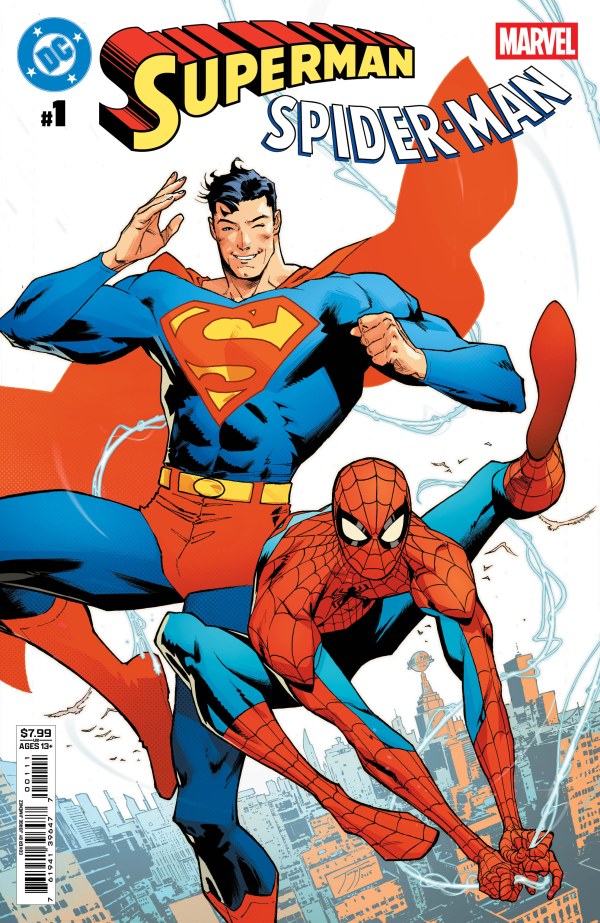
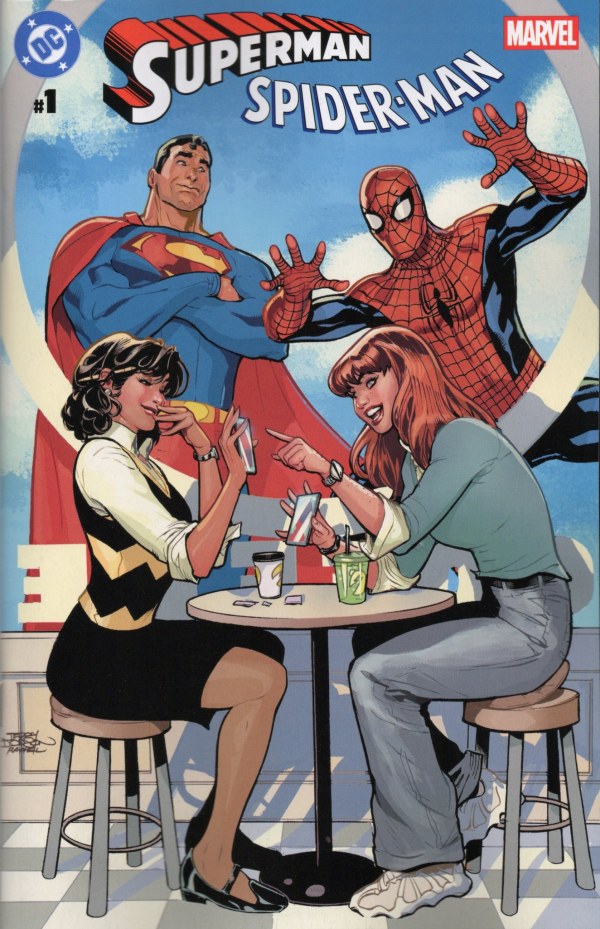
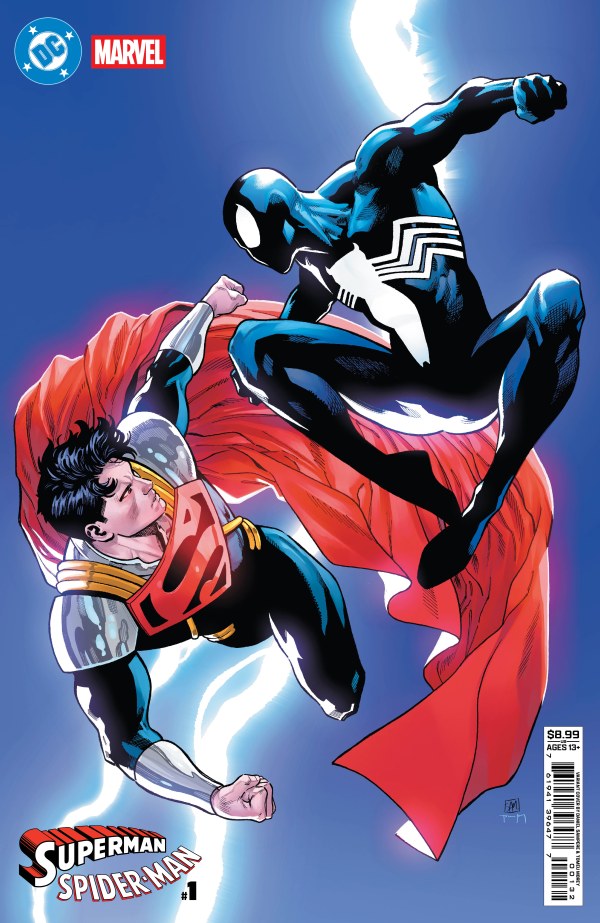
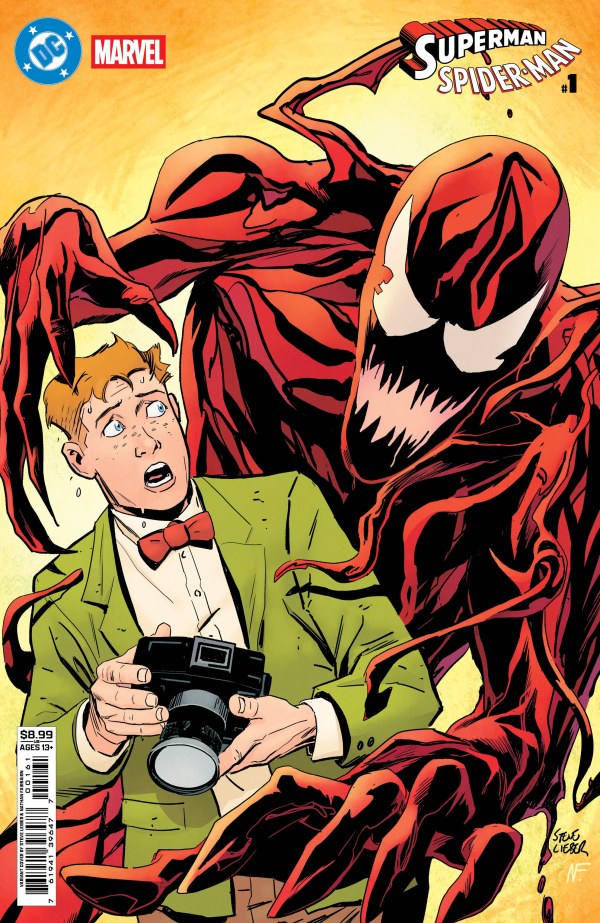
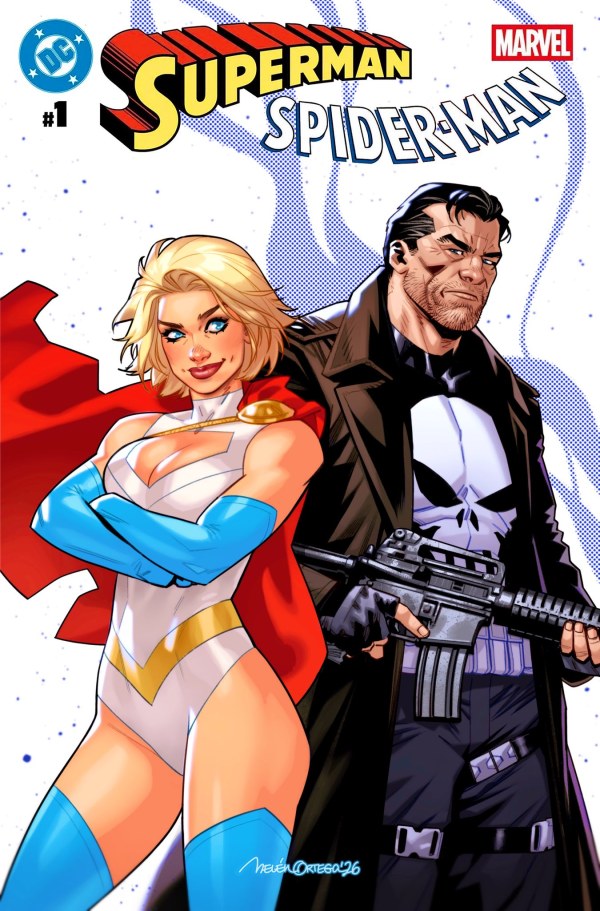
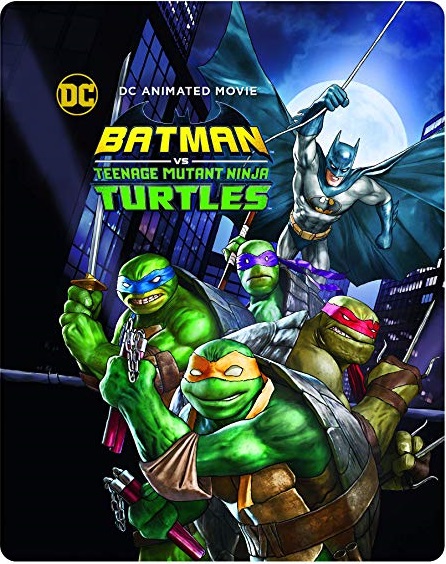
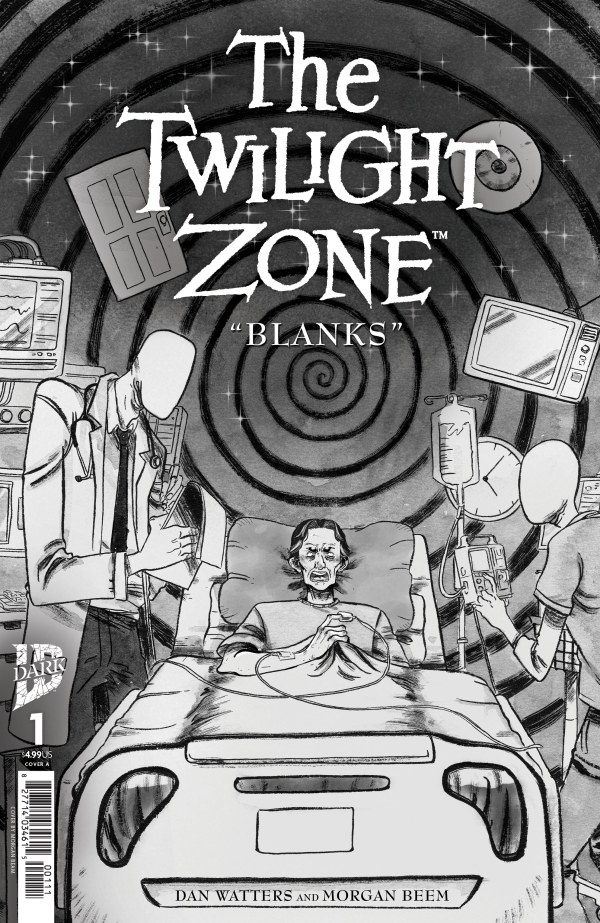
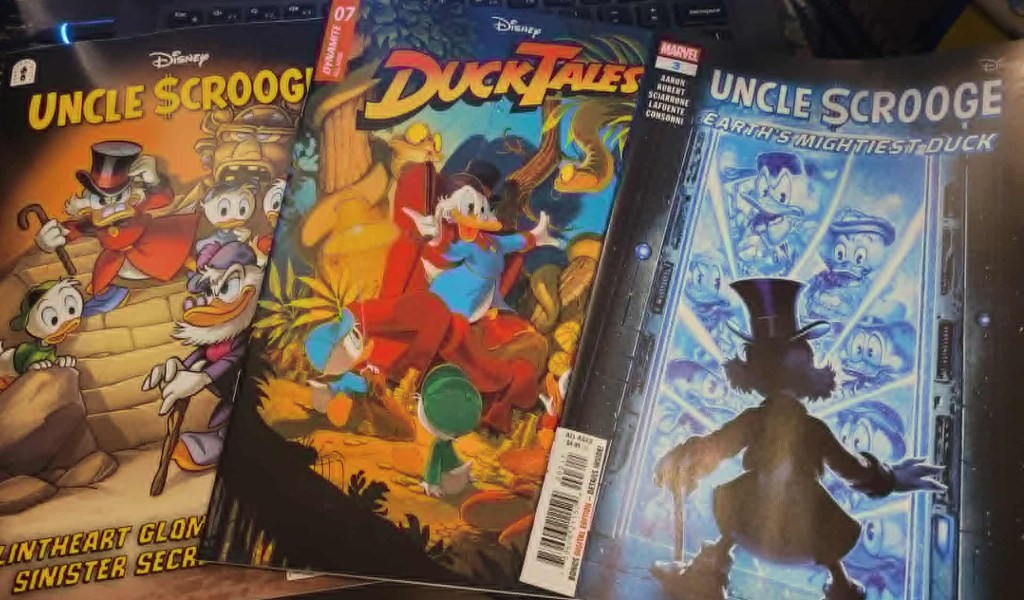
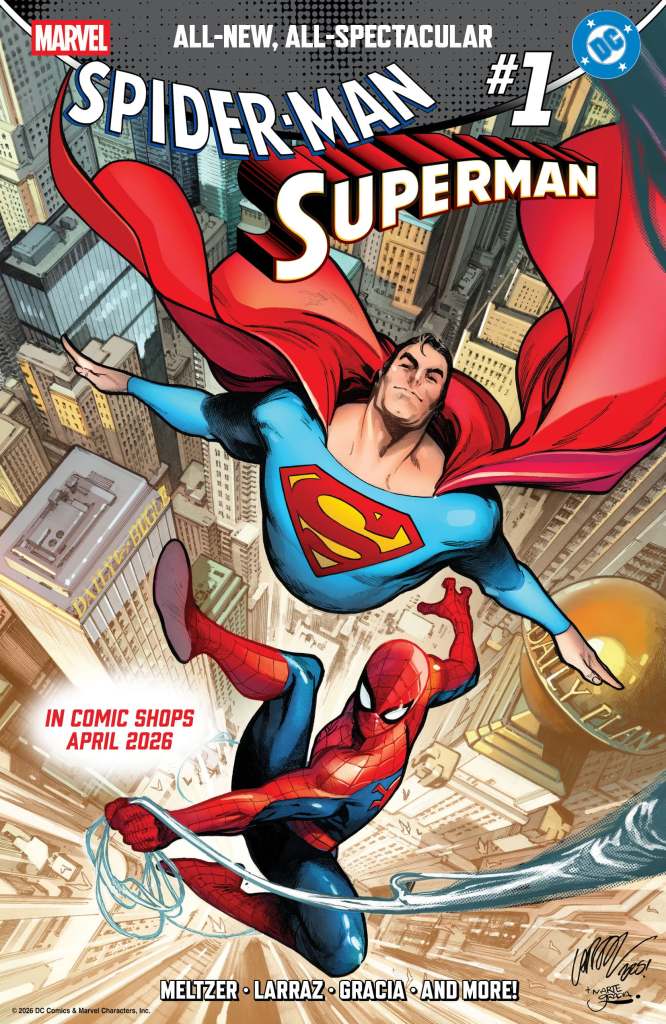
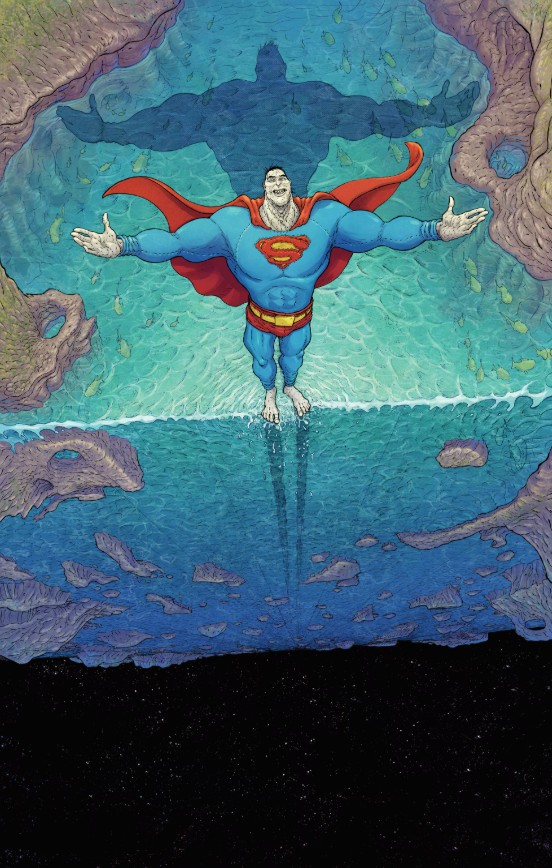
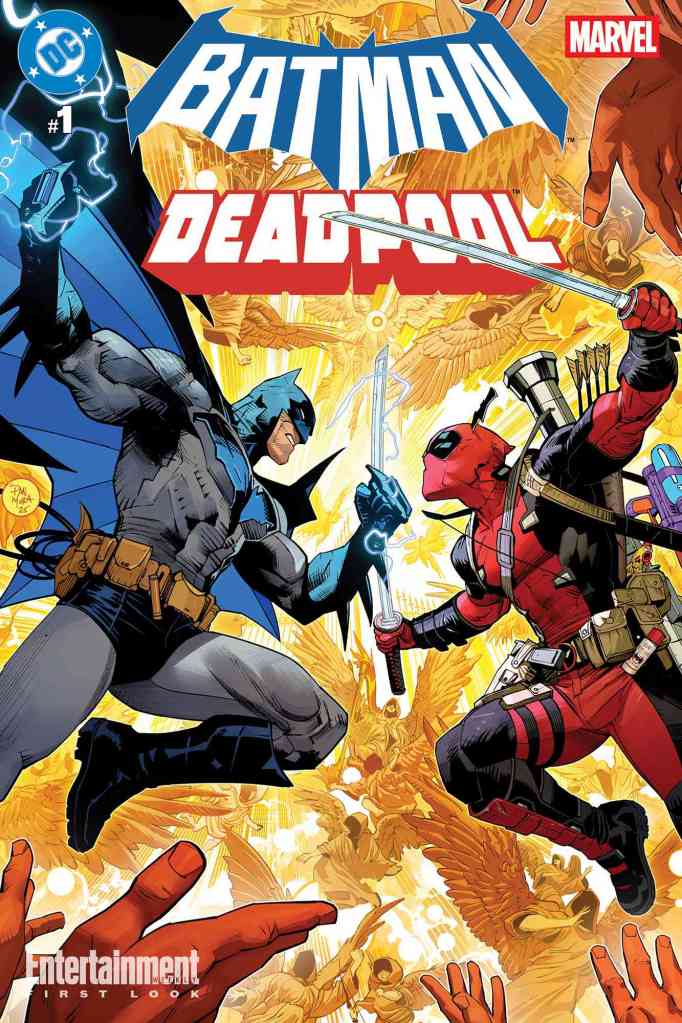


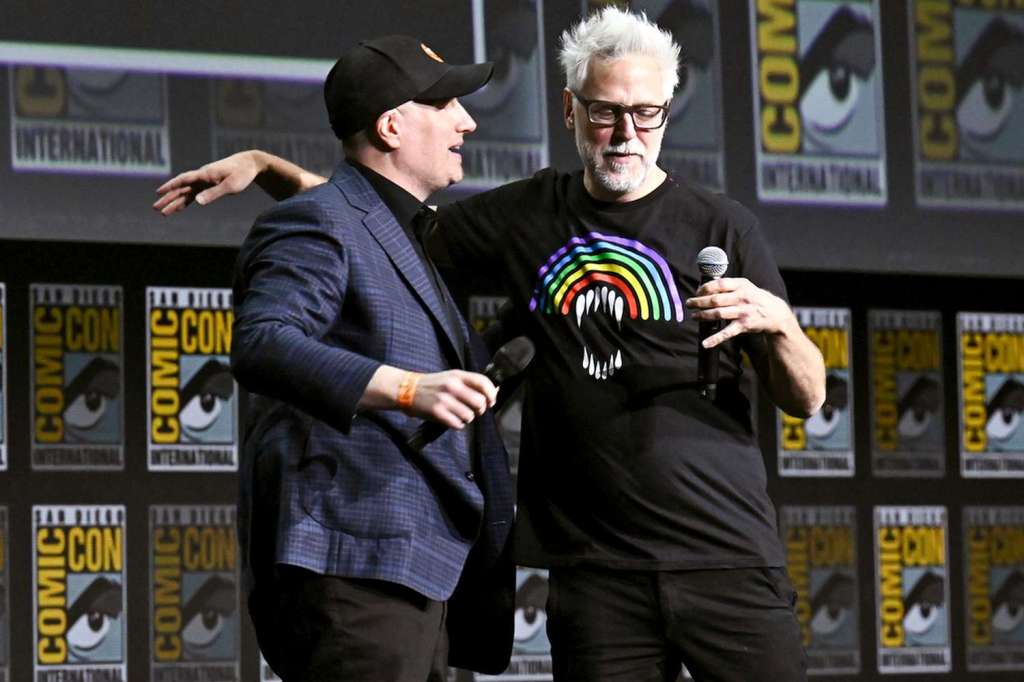




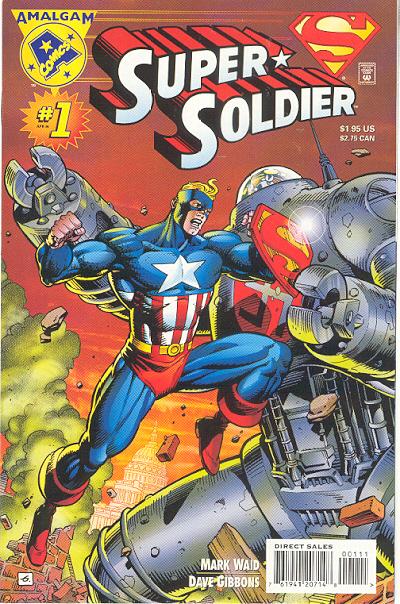


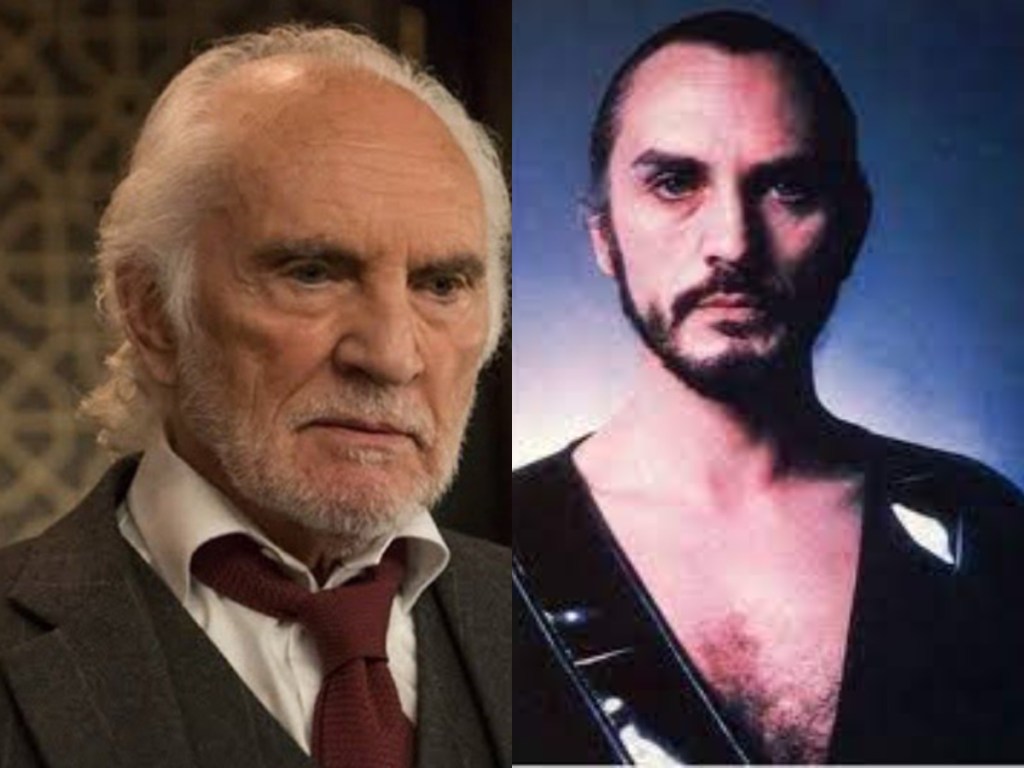
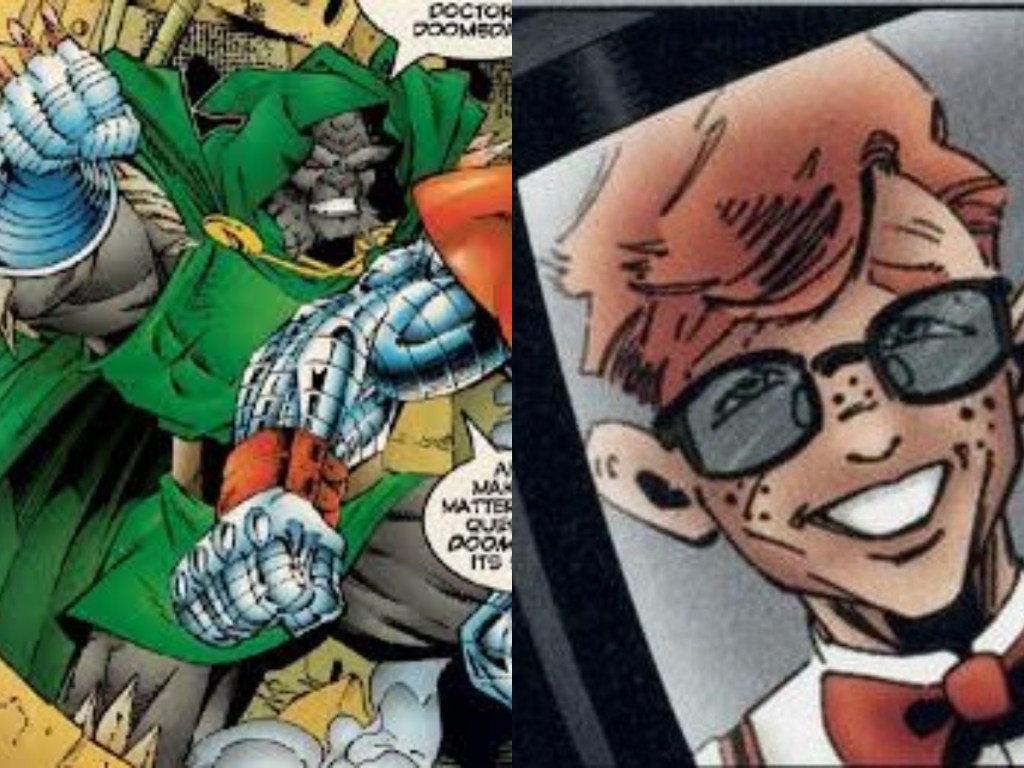


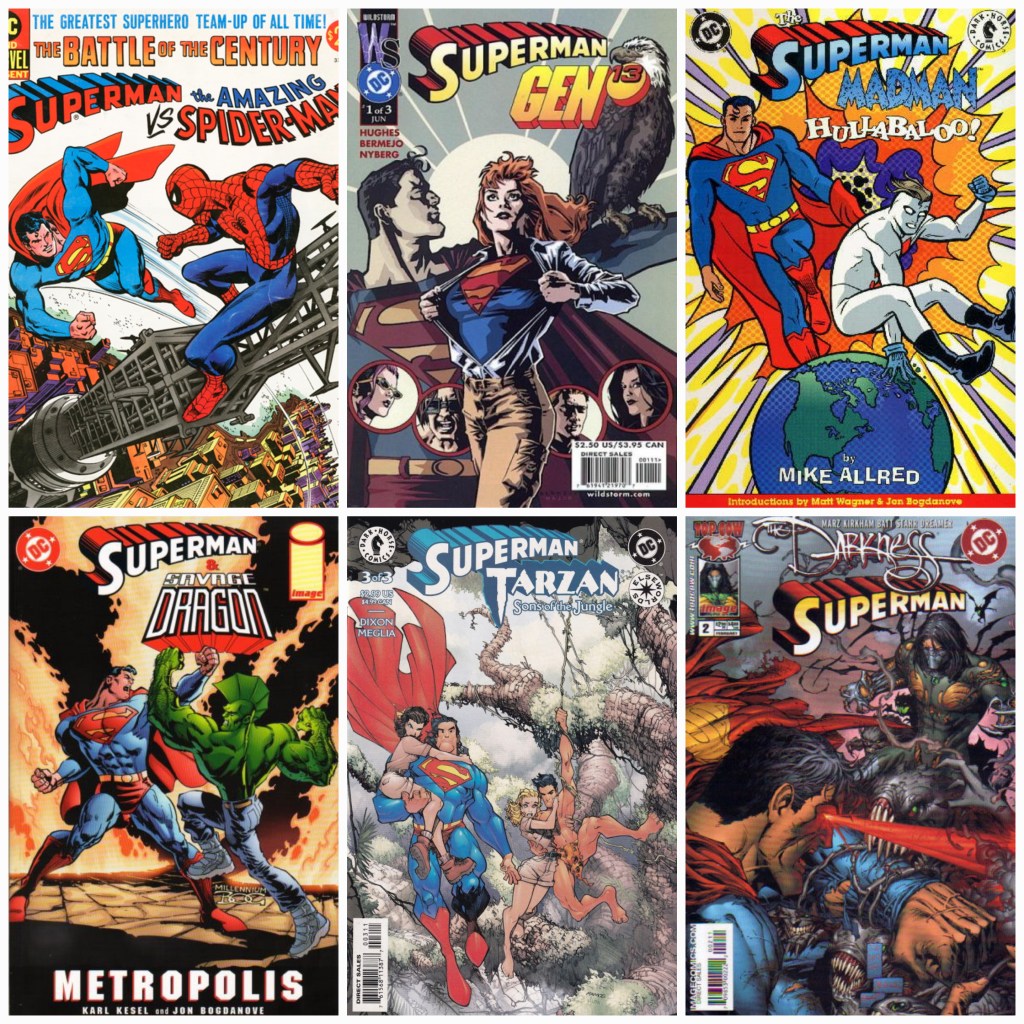


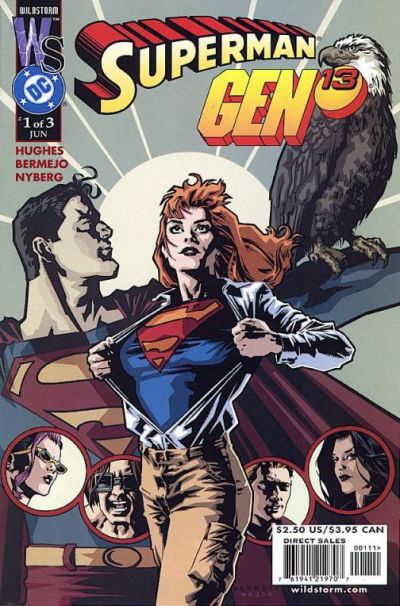
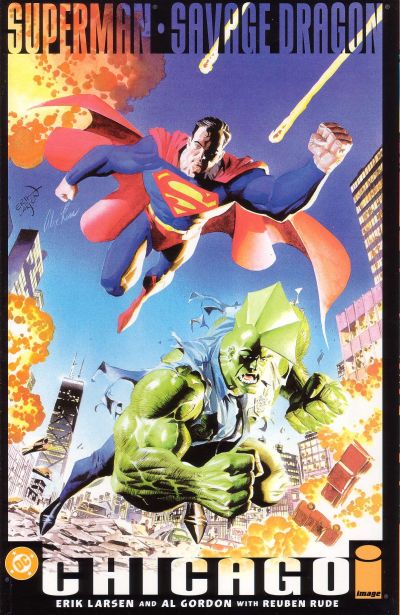

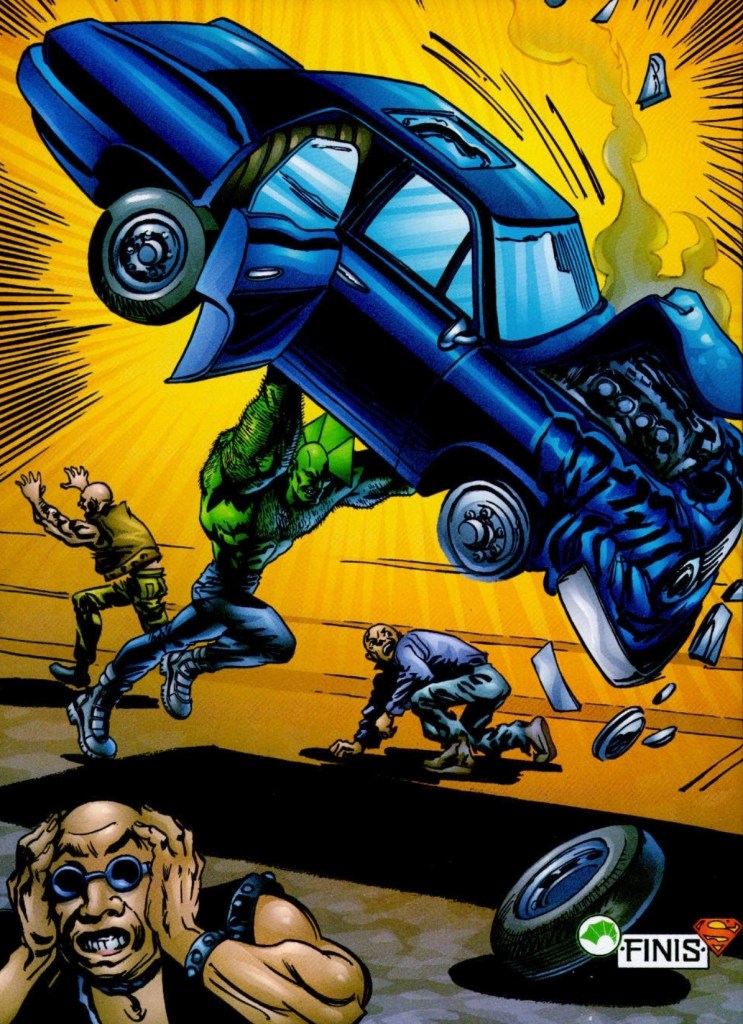

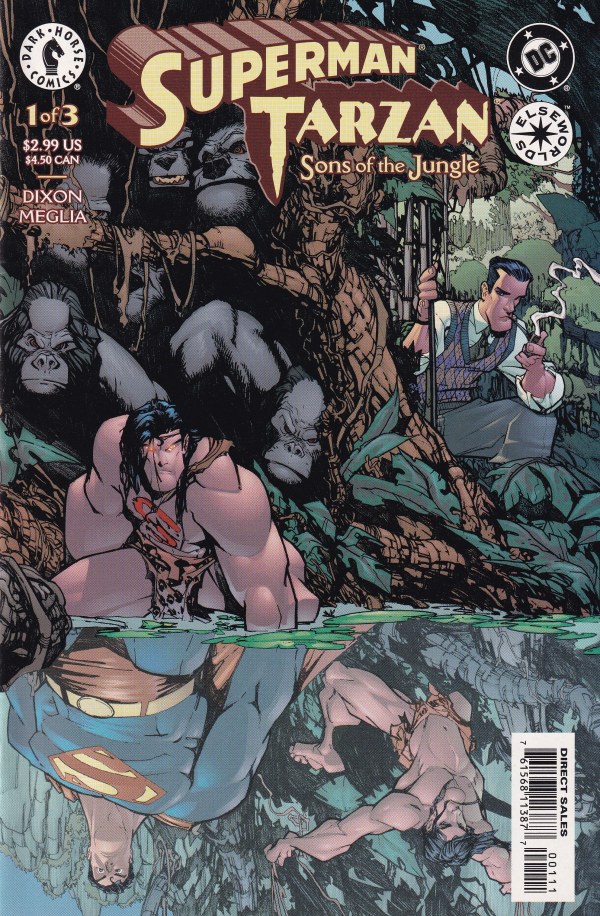

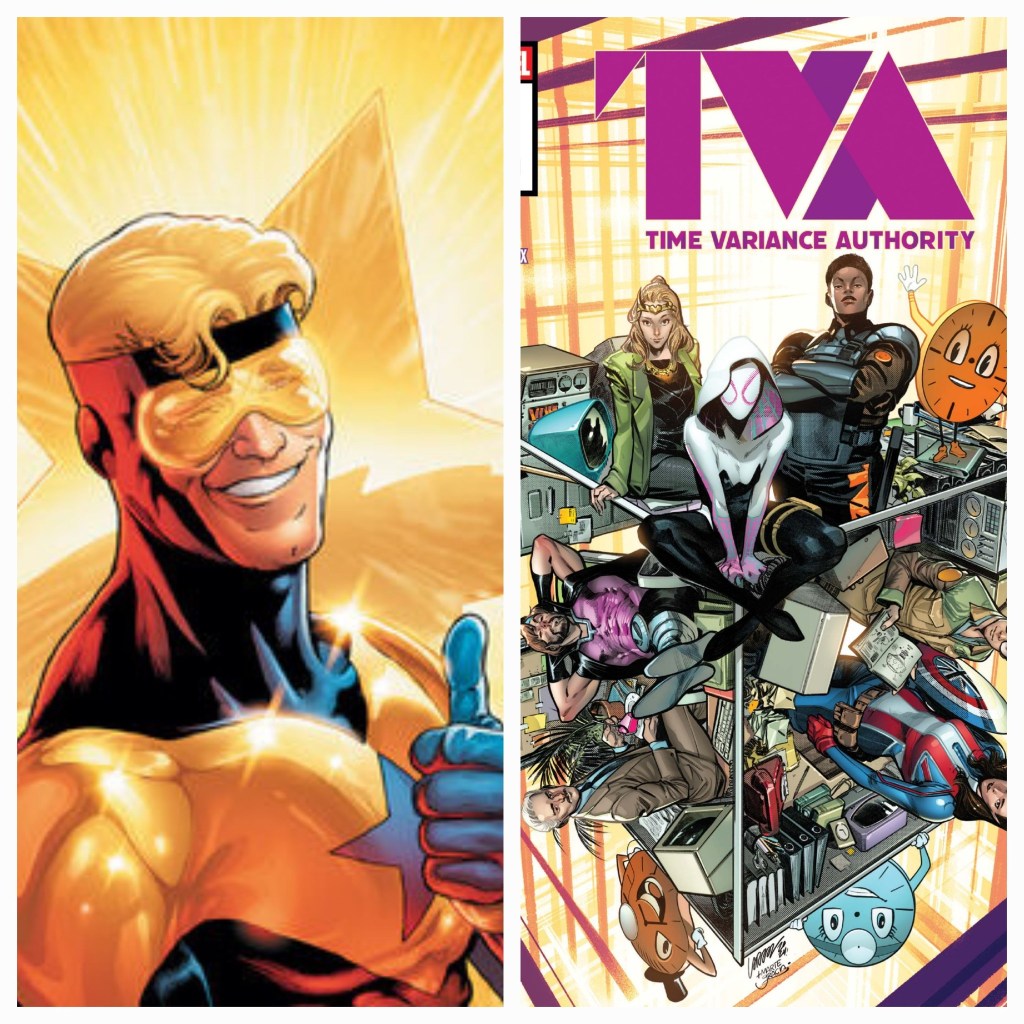


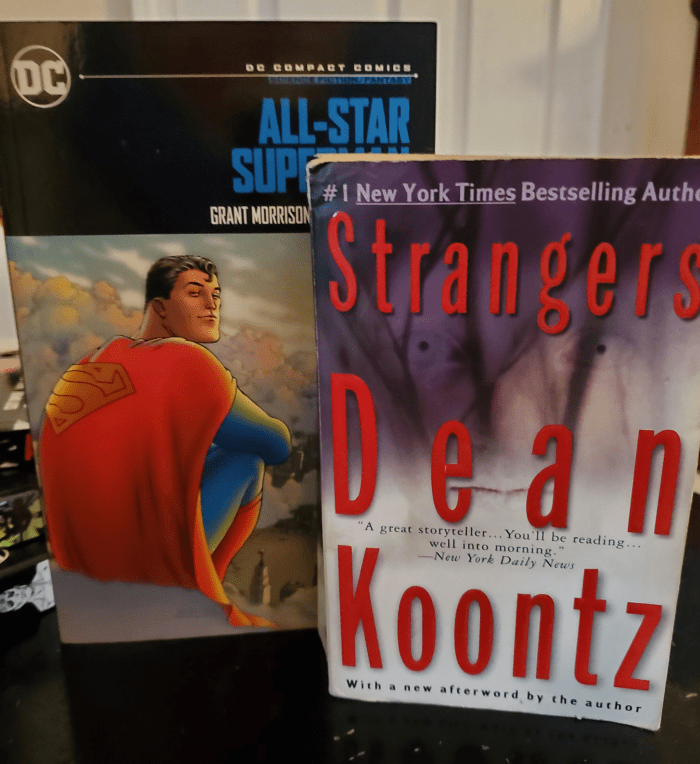


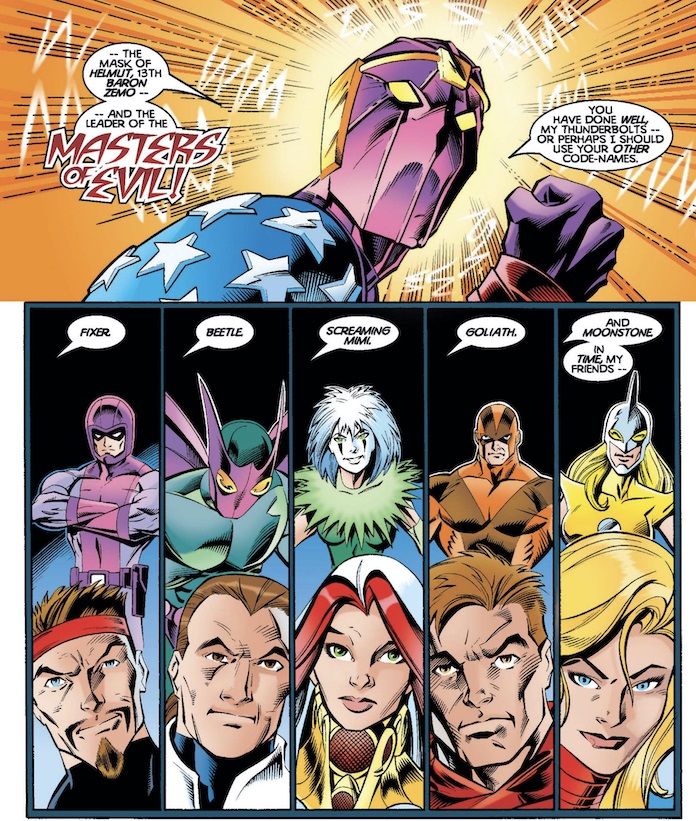


 Blake M. Petit