The bidding war is over, and after a protracted tussle over the fate of the grand old movie studio called Warner Bros, the winner – shockingly – seems to be Paramount. Over the last few months we’ve watched as Warner Bros, which of course has expanded far beyond being a movie studio to being a full-blown media empire, was put on the market. We saw it get snapped up by Netflix, we saw as Paramount entered the game with a hostile takeover bid, and we saw them continue to sweeten the pot until Netflix stepped back and threw in the towel. And now, pending government approval and all sorts of other rigamarole that will tie things up for a while, it seems as though Warner Bros will become another star on the Paramount mountain.
One big, happy family.
Feelings about this are…complicated, to say the least. Generally speaking I’m not a fan of the massive media consolidation we’ve borne witness to this century. Fewer players in the game means less competition, and fewer outlets for fewer voices. And sure, we live in an era where anybody can theoretically build an audience and a following using social media, but in practice, the big companies are always going to have an edge. Even when a new player comes along – an A24, for example – they’re going to have an uphill battle when it comes to staying relevant next to the likes of Disney, Sony, and whatever this new Paramount/WB hybrid will be called once it’s all over.
That said, if it HAD to be between Netflix and Paramount, Paramount is the company I feel will be better for people who want movie theaters to survive, no matter what Netflix claimed. And if it’s happening whether we like it or not, I’m not in the mood to debate it. I would rather talk about what’s going to happen when the properties of these two corporate monoliths are under one roof.
What’s going to happen when Warner Bros – the company that owns DC Comics, DC Studios, the Looney Tunes, Hanna-Barbera, Harry Potter, and countless other properties – is folded under the umbrella of the company that controls CBS, Star Trek, Nickelodeon, SpongeBob SquarePants, and the Teenage Mutant Ninja Turtles? This is going to be mostly speculation, of course – I’m the first to admit that I don’t know anything. But I’m going to throw out some ideas and discuss some concerns about what’s going to happen. And keep in mind that all of this is dependent on how long it takes for the deal to be complete, as well as how long it takes for existing licenses and deals to expire, so I can’t really put a specific timeline on any of this.
“Let’s call it PARAMAX.” “For the last time, Curtis, NO.”
One thing we CAN be sure of is that there’s going to be a change in the respective streaming services. Paramount has already indicated that eventually they intend to fold HBO Max into their existing Paramount+. When this happens, one can only hope they don’t decide to double the price on whatever the remaining service will be. Furthermore, I really hope that they use the technology behind HBO Max, because of all the major streamers I’ve used I’ve found Paramount+ to be the buggiest and most annoying. Honestly, if I didn’t love Star Trek so darned much I would have abandoned it entirely.
What content will there be, though? Warner Bros has had a terribly frustrating habit of sending out some of their properties, including movies and TV shows that were once on HBO Max, to other streamers like Netflix, Amazon Prime, and most recently Tubi (which picked up a gargantuan selection of WB cartoons). I would like to believe that Paramount would be smarter with its properties than Warner Bros was, but I would be kidding myself. Remember, Paramount+ was launched (originally as CBS All-Access) with the promise that it would be the home for everything Star Trek. Then they cancelled Prodigy after one season and Netflix saved season two, but now that deal has expired and it can’t be found anywhere. What I’m getting at is that both of these companies can be pretty boneheaded about what to do with their legendary properties, so having a singular service – whatever form it winds up taking – will be no guarantee that you can find everything you want under one roof.
Over in the Comic Book Collecting group I help moderate on Facebook, a user asked if we thought that the Ninja Turtles – now that they’re corporate siblings – would be added to the DC Universe. This is something I find particularly unlikely. Although DC has a proud and storied history of absorbing the superhero characters of other defunct publishers that they’ve purchased, the Ninja Turtles are too valuable an intellectual property in their own right to make them part of a different one. It’s the same reason that Disney never made Anna and Elsa from Frozen an officialpart of the Disney Princesses merchandise line – they make too dang much money on their own to mash them together with everybody else.
That said, although I do not foresee a future in which Donatello becomes the new leader of the Teen Titans or anything, I think that being under the same corporate umbrella will make crossovers easier and more likely. It’s happened before. The Turtles have had four separate comic book crossovers with Batman, one of which was adapted into an animated movie, and they’ve freely crossed over with dozens of other properties over the years – Ghostbusters, Strangers Things, Masters of the Universe, Mighty Morphin Power Rangers, Naruto, and that’s just off the top of my head. Having them cross paths with the Justice League is in no way out of the question. Heck, having them cross paths with Bugs Bunny isn’t out of the question.
“Dude, our dad is like, a bat without wings! We could be cousins!”
Just because I don’t think the Turtles will be part of the DCU, though, that still raises the question of who is going to publish them. The Turtles have been licensed to IDW Publishing for many years now. So have other Paramount properties, most prominently Star Trek. And just last year, IDW launched a new IDW Dark line of horror comics, including several series based on Paramount properties such as The Twilight Zone, Event Horizon, A Quiet Place, and Smile. I don’t know exactly how long those contracts have left, but once Paramount owns one of the Big Two comic book publishers, will they really want to continue licensing their properties to one of the…Fluffy Five? I need better nicknames.
“Move? We just GOT here!”
It’s possible that Paramount would move the comic book licenses for their properties over to DC, but it’s by no means certain. After all, DC hasn’t done a ton of licensed comics in recent years, aside from the occasional crossover or a book based on one of their current corporate siblings. They’ve published Star Trek before, of course, but that was nearly 30 years ago, and there hasn’t been any indication that they would be interested in doing so again. And even now WB properties have had recent comics published by companies other than DC, such as Cartoon Network comics published by IDW or the current Space Ghost and Herculoids comics produced by Dynamite.
And recent comic book history has made it quite clear that sharing a parent company isn’t necessarily a guarantee of comic book consolidation. When Disney bought Marvel Comics in 2009, they ended the Disney Comics license that Boom! Studios had. Then when they bought Lucasfilm in 2012, they pulled back the Star Wars license from Dark Horse and gave it to Marvel. They did the same with Aliens and Predator when they bought 20th Century Fox. But although Marvel has produced a lot of Star Wars, Alien, and Predator comics, Disney has ALSO licensed Star Wars out to other publishers again, first IDW, and then back to Dark Horse, with their respective series co-existing with the Marvel books. Marvel has also done precious little with the classic Disney characters – a few What If? one-shots mashing Mickey Mouse and friends with Marvel superheroes, and a few Uncle Scrooge comics. But at the same time, Disney kept farming those characters to other publishers as well. Dynamite currently has the license to Disney Afternoon books like DuckTales, Darkwing Duck, and Gargoyles, as well as other properties like Lilo and Stitch, Disney Villains, and – most recently – the Muppets. As for the classic Disney comics, after being moved to IDW (they are in this licensing mix a LOT), they vanished for a few years, only to come back last year at Fantagraphics. In fact, last fall I walked into my comic book shop and bought new comic books starring Scrooge McDuck from three different publishers at the same time.
I guess that made Fantagraphics, Dynamite, and Marvel the Three Scrooges. Ah? AAAAAAAH?
The melding is far from certain, is what I’m getting at.
What about some of the other properties the different companies hold? How will they be affected? Paramount+ isn’t the only streamer they own, they’re also the controlling company of what is possibly my favorite streaming app, Pluto TV. Pluto has on-demand content, but it also has 24/7 channels dedicated to dozens – perhaps hundreds – of individual shows and genres, most of them owned by Paramount: channels dedicated to Star Trek, I Love Lucy, classic sitcoms, game shows, and tons of other things. Not everything on Pluto is owned by Paramount (they also have channels dedicated to Mystery Science Theater 3000, RiffTrax, and the Universal Monsters, for instance), but I don’t think you can currently find any WB properties there. Could we see channels with all-day streams of the Looney Tunes, Scooby-Doo, Babylon 5, DC Cartoons or the live-action DC superhero shows? I have to admit, of all the theories I’m throwing around, this is probably the one I feel most likely to happen in the near future. It just seems very much like the kind of thing Paramount is likely to do. Although – like everything else – how SOON it might happen would depend largely on the current licensing deals they have in place, what rights exactly those existing deals entail, and when they expire.
If all of this sounds confusing…well, that’s because it is. The merger of two of the biggest media companies in the world is an enormous endeavor, something with so many moving parts that I can’t even wrap my head around it. And we just don’t know how it’s all going to shake out in the end.
Blake M. Petit is a writer, teacher, and dad from Ama, Louisiana. His most recent writing project is the superhero adventure series Other People’s Heroes: Little Stars, volume one of which is now available on Amazon. He’s also started putting his LitReel videos on TikTok. He kind of likes the idea of a SpongeBob/Animaniacs crossover where Squidward just rapidly loses his mind over the Warner Brothers and the Warner Sister.
Towards the end of last year, as my most stalwart of followers certainly remember, I wrote a column about all of the movies that had come out in 2024 that I hadn’t gotten around to seeing yet. To no one’s surprise, I still haven’t gotten to see most of them. There are just so many things to watch, so many movies and shows that are pulling at my attention, and I’ve got a kid running around that not only limits what I can watch while he’s awake and paying attention, but also means that there are a LOT of sports on TV in our house. Not to mention the fact that I’ve been doing my “Year of Superman” thing since January, so a not-inconsiderable amount of my viewing time has been devoted to that in one way or another.
To date, I have seen 50 percent of these films.
2025 has not been different from 2024: there are dozens of movies that hit the box office (or streaming services) this year that I sincerely intend to watch, but simply haven’t gotten around to yet. Before I delve into those, though, let’s do a quick list of those movies I DID watch from last year’s list and, ultimately, what I thought of them:
Venom: The Last Dance-Not bad, but probably the least impressive of the trilogy.
Deadpool and Wolverine-Funny and full of the kind of delicious meta-commentary that only Deadpool can make work.
Red One-Cute, unremarkable, but not deserving of some of the hate it gets on the internet.
Despicable Me 4-Better than 3, but I still probably wouldn’t bother with these movies if my son didn’t like them.
Flow-Technologically and visually, a masterpiece, although I thought the story was weak.
Sonic the Hedgehog 3-Make it make sense that this series keeps being entertaining.
MoviePass, MovieCrash-Intriguing look at how a system that was always doomed to failure wound up failing.
Music By John Williams-Nothing particularly revelatory in this documentary, but still a lovely watch.
Godzilla/Kong: The New Empire-Much as I love giant monster movies, this one felt like more of the same.
Beetlejuice! Beetlejuice!-Not as good as the original, but as far as legacy sequels go, it’s a pretty good one.
A Quiet Place Day One-Probably the most character-driven film in this series so far, and that’s a plus.
The Substance-Incredible and absolutely worth every bit of praise it’s gotten.
The Ministry of Ungentlemanly Warfare-Made me want to read the book, which you can imagine, is high praise.
Alien: Romulus-If you’re going to keep making Alien movies you gotta find something new to do with them. I haven’t watched the new Hulu series, but I suspect that it was better than this film.
The 4:30 Movie-Tender, sweet, without being saccharine. When Kevin Smith really speaks from the heart, there are few that do it better.
Madame Web-The internet told me this was the worst movie ever made. They were wrong. It’s really more bland and generic than actively bad.
Joker: Folie a Deux-This was a thing that happened.
You know, looking back, I actually got around to more of last year’s list than I would have expected, which is a nice feeling. Of course, while I was busy watching the movies that came out LAST year, movies from THIS year just started piling up on me. Most of the reasons I don’t go to the movies as much as I used to haven’t changed: price, time, availability, and so forth. One thing, however, HAS changed. My son is eight years old now, and he’s gotten better about making it through a movie, especially a movie he’s excited about. This year my wife and I managed to take him to both Superman (naturally) and Fantastic Four: First Steps, in addition to the usual assortment of kids’ animated movies.
I consider it a legitimate moral failure that I haven’t seen this movie yet.
One such movie we did NOT get around to, though, was The Day the Earth Blew Up: A Looney Tunes Movie. Much as I wanted to support it in theaters, time was not on my side, and it’s still on my list of end-of-year films I haven’t gotten to yet. As is Pixar’s newest, Elio, a movie that seemed to come and go with no notice whatsoever. But I’ve heard from a few people who actually saw it that they liked it, and I’m hoping I can get Eddie to join me for a viewing before the year runs out. He’s also excited about Zootopia 2, so we may make a movie date out of that one. I would also like to show him director Steve Hudson’s Stitch Head, which looks to be kind of a kids’ take on Frankenstein. And although it doesn’t really seem like my kind of movie, everybody on the planet except for me seems to have gone wild over K-Pop Demon Hunters on Netflix, and I feel almost obligated to watch it out of curiosity, if nothing else.
Stop trying to tell me this was a bad movie. You didn’t see this movie. NOBODY saw this movie.
This year also brought – as years tend to do – a bunch of sequels. And if it’s a sequel to a movie I actually like, I’ll watch it. But I’m also the kind of nerd who prefers to re-watch the previous film (or films) in a series BEFORE watching the sequel, especially if it’s been a long time. So that, in addition to the usual problems of availability and time, are the reason I have yet to get to the “requel” of I Know What You Did Last Summer or the more direct sequels like 28 Years Later, Black Phone 2, Nobody 2, the Disney hit Freakier Friday, or the Disney flop Tron: Ares. A brief note about Tron: I love the original and I greatly enjoyed Tron: Legacy. I know Ares crashed and burned at the box office, but this has absolutely no impact on my desire to watch it. I don’t despise Jared Leto just because the Internet tells me to and, once this movie lands on Disney+, I fully intend to watch and evaluate it on its own merits. And you can’t stop me. Nyeah.
There’s also Wake Up Dead Man: A Knives Out Movie, which hasn’t dropped on Netflix yet, but is on my list. The first Knives Out was absolutely astounding, one of the best mysteries I’ve seen in ages (and perhaps THE best mystery/comedy I’ve ever seen). Glass Onion, the second Benoit Blanc mystery, still entertained me, but I didn’t quite find it up to the level of the original. I’m hoping that Rian Johnson and Daniel Craig bounce back with this third installment.
Netflix, as a studio, has absolutely loaded me with mystery movies this year that I just haven’t gotten to yet. In addition to Wake Up Dead Man, I’ve also got my eye on The Woman in Cabin 10. This one stars Keira Knightley as a journalist who sees a passenger go overboard on a cruise ship, then gets caught up in the question of what’s going on. Chris Columbus directed The Thursday Murder Club, a crime comedy about a group of senior mystery enthusiasts who get swept into a real life murder. The cast is incredible – Helen Mirren, Pierce Brosnan, Ben Kingsley, Celia Imrie, David Tennant, Naomi Ackie – why the hell haven’t I watched this yet?
It’s Netflix’s fault I haven’t watched this yet, not mine.
I can tell you exactly why I haven’t watched Netflix’s Frankenstein yet: because they dropped it in NOVEMBER. What a dumb move. I couldn’t be more excited to watch Guillermo del Toro’s take on my favorite monster of all time, but I’ve had my hands full the last few weeks. Why on Earth wouldn’t they put this out in October and play up the Halloween angle? Granted, they’re the ones running a billion-dollar streaming service and I’m the guy writing blogs about it for free, but I think we can all agree that I am far wiser than they are.
Speaking of horror, Frankenstein isn’t the only movie that slipped past me this year. Good Boy, the horror film told from the point of view of a loyal dog, has been on my radar for a few years now, ever since I heard the premise. It’s gotten rave reviews, and with a runtime of only 73 minutes, I’ll be kind of mad with myself if I don’t sneak it in before the end of the year. Similarly, I’m interested in the slasher throwback Marshmallow, the Shudder film Night of the Reaper, and the survival horror video game adaptation Until Dawn.
I’m saving this one for a day where I want to reduce myself to a mewling infant.
And the documentaries! I haven’t even GOTTEN to the documentaries yet! Prime Video has given us John Candy: I Like Me, a movie that seems to have left everybody who has watched it so far in tears. I’m probably going to wait until school lets out for Thanksgiving and then do a double feature of this one with the movie that gave us the title quote, the brilliant Planes, Trains, and Automobiles.
I’ve got no such excuse, though, for sleeping on Jaws at 50, a documentary about one of the greatest movies ever made, or George A. Romero’s Resident Evil, which is a documentary about a movie that was NEVER made. That’s a relatively small subgenre of entertainment documentaries, but it’s one I’ve always enjoyed. Prime Video has also given us When We Went MAD!, a documentary about the history of the magazine that we all thought was hilarious when we were nine years old. I’ll be honest, I fell out of love with Mad Magazine ages ago (and re-reading some of their stories this summer during my Year of Superman did not reignite the love affair), but a documentary about comics is always going to get a view from me.
Saying that this one “aged like milk” may actually be considered a compliment.
Speaking of comics, I did a lot better this year at watching the superhero movies that came out…well, either that or there just weren’t as many of them. But looking at my list of movies that I missed this year, there are only three superhero movies I didn’t get around too, two of which are animated Batman movies. Batman Ninja Vs. Yakuza League and Aztec Batman: Clash of Empires are both “Elseworlds”-style takes on the character, plucking him out of Gotham City and putting him into feudal Japan and the time of the Spanish conquistadors, respectively. The concept of Batman, in and of itself, is flexible enough that these things are usually at least interesting. Then there’s the long-awaited remake of The Toxic Avenger, which has finally been taken off the shelf and released after two or three years of languishing. I’m very curious to see if the legendarily cheesy Troma Studios hero will hold up to a larger budget.
OOOOH, because if you take the “e” out of the parentheses the title is — NOW I get it!
As for low budgets, there are several indie movies that got my attention this year, movies I read about online or heard discussed in podcasts, that I haven’t watched. Jonathan L. Bowen’s The Comic Shop, for example, or the British comedy Bad Apples about a teacher who accidentally abducts her worst student and then finds that suddenly her class is more manageable. Dropout comedian Isabella Roland wrote and starred in the comedy D(e)AD, about a woman whose family is haunted by her father’s ghost – everyone except for her. There’s also Hamnet, a drama about the tragedy BEHIND William Shakespeare’s Hamlet, and John-Michael Powell’s crime drama Violent Ends. I can’t tell you too much about any of these because I don’t KNOW much, except that I heard enough about them to have my curiosity piqued and put them on my watchlist.
Whatever bastard designed this did the human equivalent of putting a dog on the poster. You know what you’re in for.
Finally, in case you didn’t know, I’m kind of a fan of Stephen King. And this year has been awash in King content, with the new It TV prequel Welcome to Derry now running on HBO Max and no less than FOUR big-screen adaptations of his work, of which I have seen exactly one. The Monkey. Which I liked, but which was VERY different from the short story it’s based on. That means I still need to get to The Life of Chuck, based on a novella that I thought was pretty good, but the film is directed by Mike Flanagan, which means it’s probably brilliant. Francis Lawrence directed The Long Walk, an adaptation of one of King’s bleakest stories (originally published under his Richard Bachman pseudonym), and I look forward to seeing Mark Hamill playing the bad guy again – because despite most people thinking of him as Luke Skywalker, real ones know he’s actually the best Joker. And lest I forget Edgar Wright directed a remake of another Bachman book, The Running Man, a sci-fi action film rather than horror, but with trailers that look like an awful lot of fun.
The point is, I DO NOT HAVE ENOUGH TIME TO WATCH ALL OF THE MOVIES.
As always, I’m going to do my best to get through as many of these (and the two dozen or so other movies that are on my list that I didn’t mention) between now and the time my Christmas vacation ends in early January, but who knows how many I’ll actually get to? In the meantime, if there are any particularly good movies that came out this year that I didn’t mention that you think I haven’t seen yet, let me know. What’s adding a few more films to a list I’m never going to reach the end of anyway?
Blake M. Petit is a writer, teacher, and dad from Ama, Louisiana. His most recent writing project is the superhero adventure series Other People’s Heroes: Little Stars, volume one of which is now available on Amazon. You can subscribe to his newsletter by clicking right here. He’s also started putting his LitReel videos on TikTok. He needs to go to the opposite of that planet from Interstellar, some place where he can be there for five minutes and have time to watch 12 month’s worth of movies. He hears Detroit feels like that sometimes.
By the time this is posted it will be the afternoon of Oct. 31st, which of course is the day that all of us – people of all shapes, sizes, religions, creeds, and soda preferences – come together and celebrate that most important of occasions, the birthday of Vanilla Ice. For many of us, though, it’s also Halloween, and at this VERY moment (assuming you read this as soon as it’s posted) I am scrolling through the options on my Plex library trying to decide which cartoons to watch with my son to get us ready before it’s time to take him trick-or-treating. This is harder than you may think. You see, while there are plenty of creepy cartoons to choose from, on Halloween itself I like to limit myself to those cartoons that actually take place ON Halloween…and the number there is smaller than you may realize. Christmas, as I always say, is easy. There are a thousand Christmas specials and hundreds of thousands of Christmas episodes of various TV series. Halloween, though, for all its popularity, doesn’t have quite as many to choose from. In an odd way, I sort of blame that on the universality of the holiday. You can put on any ghost story or monster movie and get a Halloween feel, which means there’s less of an impetus to evoke the holiday itself.
But I wanna evoke, dammit. I wanna get my impetus out and evoke something. So as you put together the goodie bags for the trick-or-treaters, carve your turnips into Jack-O-Lanterns (or pumpkins, for you provincial types), and iron the wrinkles out of your Dracula cape, what are the best cartoons to put on in the background? I’ve looked at the list and picked my top four. There will probably not be any surprises on this list, but that’s not the point – in the pantheon of Halloween cartoons, these are the greatest, the most iconic, the most seasonal. In my humble opinion, of course, which is the only one that actually matters here, since this is my blog.
Here we are: the Mount Rushmore of Halloween Cartoons.
“The Great Pumpkin flies out of the Pumpkin Patch and brings us an OBSCENE amount of merchandise.”
It’s the Great Pumpkin, Charlie Brown (1966)
I told you up front there weren’t going to be any surprises, and it would be disingenuous of me to pretend otherwise. This was the third special based on Charles Schultz’s Peanuts comic strip (following A Charlie Brown Christmas and the lesser-known Charlie Brown’s All-Stars) and is considered by many to be the best of them all. On the night it first aired, a whopping 60 years ago this week, it was watched by 49 percent of American homes that were watching television. That means that if you lined up everybody in America on Oct. 28, 1966 and asked them if they watched Charlie Brown the night before, nearly HALF of them would ask you who the hell you were and how you got the authority to make them all line up like that.
We all know the story, of course – on Halloween night, Charlie Brown and the gang are making their preparations to go trick-or-treating…all except for Linus, that is. The wisest of the characters in Schulz’s strip, Linus has somehow conjured up an entire mythology surrounding the Great Pumpkin, who chooses the “most sincere” pumpkin patch to rise out of on Halloween night and give presents to all the children who are there waiting for him. The special raises a number of theological questions, most glaringly that of how one measures the sincerity of a pumpkin patch, but that’s not the point. Little Linus, dauntless in his faith, heads out to the pumpkin patch with Charlie Brown’s sister Sally, spurred on by a crush on him that no doubt would have gotten her into serious trouble if these characters were ever allowed to grow up and go to college.
As Linus and Sally freeze in the pumpkin patch, the rest of the kids go trick-or-treating. The neighborhood adults all for some reason have rocks just to give to that round-headed Brown kid (you can tell it’s him because his ghost costume has too many holes), and Snoopy puts on his World War I Flying Ace outfit to have an imaginary dogfight.
The special is a classic for a reason. From a standpoint of loving the characters, this is one of the most perfect encapsulations of the Peanuts gang and who they are – Charlie Brown is down on his luck, Lucy yanks the football away from him, Snoopy’s imagination is in overdrive, and of course, Linus and Sally’s story showcases them better than any other. The animation is gorgeous and the music, by Vince Guaraldi, is nothing short of iconic. The version of “Linus and Lucy” – which most people just think of as the “Peanuts theme” – is perhaps the greatest version Guaraldi ever recorded, adding in a flute part that perfectly mirrors the main theme. And you genuinely care about the characters. After the special aired, the studio actually started getting packages of candy in the mail from viewers who were upset that all Charlie Brown got when he went trick-or-treating was a sack full of rocks. That means that if you lined up everyone in America on Oct. 28, 1966, and asked them if they felt bad for Charlie Brown, nearly half of them would ask you to stop lining them up, for God’s sake, what kind of bizarre godlike powers do you HAVE, anyway?
What’s more, this was the first Halloween special ever broadcast on television, and opened the floodgates for all the others. There had been a few holiday specials before, most notably the original Charlie Brown Christmas and assorted Rankin and Bass Christmas specials, but nobody had put forth that kind of effort on Halloween before. But not only did It’s the Great Pumpkin give birth to the Halloween special, it also put a spark under the concept of Halloween itself, a holiday that had gone into decline during the lean years of the Great Depression and World War II, and had only gotten a recent bump thanks to another cartoon that we’ll mention later on in this list. But once families had an annual dose of Charlie Brown to look forward to, Halloween began to take off again. Not only is this a great special, but in a real way, it may have saved Halloween itself. And it’s also — fun fact — the film I have logged most often on Letterboxd since joining the platform back in 2014 — a whopping 18 times. Well, probably 19, by the time you read this.
“I TOLD you not to eat lasagna after 11 p.m.”
Garfield’s Halloween Adventure (1985)
Nineteen years after Charlie Brown taught us to love trick-or-treating again, Jim Davis’s Garfield told kids across America that it was okay to be scared. This special originally aired on Oct. 30, 1985, and I remember many years growing up when it was paired with the Charlie Brown special, making for a delicious hour of cartoon goodness every October. On the morning of Halloween, Garfield is woken up by Binky the Clown, the world’s most obnoxious kids’ show host (until Blippi, anyway) telling him that this is the night when he can go out to the streets and load up on candy. The prospect of free food is all it takes to get Garfield to put forth a little effort, and he decides that if he ropes Odie into going along with him he can get TWICE as much candy. The two of them put pirate costumes and head out into the night, loading up on sweets. The classic Garfield greed kicks in, though, when he decides to take a boat across the river to hit even more houses, only to get stuck on an island featuring a rundown old mansion. Inside that house is a very old man with a very, very scary story.
People mock Garfield today. The comic strip, they say, is stale and unfunny. Jim Davis perfectly formulated the comic to be as inoffensive as possible, appealing to the widest number of people, and as such sacrificed any edge that it may have had. These people are right, and I’m certain Jim Davis weeps profusely over his choices, wiping his tears with the plethora of million-dollar bills he has lying around as he stares out the window of his private jet, eating Waygu steaks off gold plates and drinking 190-year-old wine out of diamond-encrusted goblets. In the earlier days of the strip, though, there WAS still an edge, and that was especially true of the animated specials. They put Garfield’s legendary cynicism front and center, with no posturing about goodwill or making things fun for everybody, no waxing nostalgic over Halloweens past. No, this is a hero who is in it for one thing and one thing only: candy. He makes no apologies for this, and we love him for it.
But over the 24 minutes of this cartoon, that classic Garfield hunger is forced to take a back seat when we get to the mansion and we enter one of the most legitimately creepy scenes I’ve ever seen in a kids’ show. The old man weaves a story of a band of pirates who buried a treasure on that very island 100 years prior, with the promise to return that very night. Garfield and Odie are suitably disturbed and try to leave, only to find HOLY CRAP THIS CARTOON ABOUT A CAT THAT EATS LASAGNA IS FULL OF GHOSTS! And we aren’t talking about Casper and his buddies, friends, these ghosts are creepy, chilling, spectral apparitions that makes you long for the days when network television was actually willing to put images into a children’s animated special that would potentially give them nightmares the way that God intended. These nautical spooks look like the Pirates of the Caribbean ghouls, only creepier, because one of them looks like he’s going to eat Odie.
In addition to the surprisingly effective story and phenomenal animation, the special is full of fantastic music as well. Composed by Ed Bogas and Desiree Goyette, we get three classic songs – two sung by Lou Rawls and one by Garfield’s voice actor Lorenzo Music – that are absolute bangers that deserve to be on your Halloween playlist, except for the fact that for some insane reason none of them appear to be on Spotify or, for that matter, anywhere else except for this special…which for some reason also doesn’t appear to be streaming anywhere. This is why you can’t abandon physical media, friends.
“This is an intervention, Don. We’re here to talk to you about your anger management problem.”
Trick or Treat (1952)
I mentioned before that It’s the Great Pumpkin helped bring back the custom of trick-or-treating after it kind of faded during the 30s and 40s. It didn’t do it alone, though. The tradition had gotten a bump several years before, and without the 1952 Disney short Trick or Treat, it’s conceivable that the practice may have died off entirely before Charlie Brown managed to take it off of life support in 1966.
On Halloween night, Donald Duck’s nephews are trick-or-treating when their uncle decides to prank them, putting firecrackers in their bags instead of candy, dumping a bucket of water on them, and then sending them away laughing. Donald was kind of an asshole in these old cartoons, if you didn’t know. Anyway, the whole thing is observed by a witch named Hazel – voiced by the immortal June Foray – who decides to help the boys get a little payback. When Donald tries pranking Hazel, not realizing she’s a REAL witch, she whips up a magic potion that allows her to control Donald’s legs, and then the fun REALLY begins.
This is Disney at its peak, with some of its best animation (courtesy of director Jack Hannah), and an amazing title song by Paul J. Smith that warns the listener you need to be generous on Halloween night or face the consequences. I don’t know that Michael Dougherty was inspired by this cartoon when he made his 2007 Halloween anthology movie Trick ‘r Treat – a film with slashers and werewolves and vengeful revenants which is most certainly NOT for kids – but they share the same thesis, so I choose to believe the connection was deliberate.
Technically, he’s still having a better Halloween than Laurie Strode.
Broom-Stick Bunny (1956)
Just four years later, June Foray would voice Witch Hazel again…but not for Disney. This time it was Warner Bros. director Chuck Jones who would recruit her for the Bugs Bunny Halloween short Broom-Stick Bunny. This is perhaps not as well known as the other three cartoons on this Mount Rushmore. In fact, it’s not even my favorite creepy short from the Looney Tunes catalogue. It is, however, the greatest Looney Tunes cartoon that is specifically about Halloween, rather than just co-starring Gossamer or a vampire or something, so it cuts to the head of the line.
In this one, Witch Hazel is conjuring up a potion when she gets a visit from Bugs Bunny, wearing a witch costume, as he’s trick-or-treating. Hazel mistakes him for a fellow witch and is disturbed when her magic mirror suggests that he (or at least, his mask) is uglier than she is, so she invites him in with a plan to hit him with a beauty potion to protect her own reputation. The cartoon devolves into one of those wild, madcap Bugs Bunny chase scenes as Hazel goes after him with a meat cleaver, because back in the 50s you COULD have a cartoon character go after somebody with a meat cleaver without being worried about “offending” somebody. The cartoon ends with Hazel accidentally drinking the beauty potion and – in a joke that there’s no chance in hell a modern kid would get – transforms into a gorgeous redhead that is actually a caricature of June Foray herself.
This was the first time Foray did a voice for Chuck Jones, who supposedly thought it would be hilarious to cast Disney’s Witch Hazel to play his OWN Witch Hazel. Foray went along with the gag, although she differentiated the two by using a British accent for the Disney witch and an American accent for the Looney Tunes version. More importantly, this short struck up a collaboration between the two – Jones began using Foray more and more often and became a regular not only in his work, but also at Warner Bros. animation until her death in 2017.
As always, friends, recommendations are welcome. What are some cartoons set on Halloween that you would place on your own Rushmore?
Blake M. Petit is a writer, teacher, and dad from Ama, Louisiana. His most recent writing project is the superhero adventure series Other People’s Heroes: Little Stars, volume one of which is now available on Amazon. You can subscribe to his newsletter by clicking right here. He’s also started putting his LitReel videos on TikTok. He regrets to this day that Who FramedRoger Rabbit? didn’t take the chance to have June Foray do a Witch-Off between the two Hazels.
After taking last week relatively easy, and after the kind of floperoo that Parody Week turned out to be, I decided I wanted to do something a little more fun this week. So I looked through my list of potential topics and decided it was time for SUPERMAN’S STRANGEST TEAM-UPS. You’re not gonna see him partnering with Batman or the Justice League here, guys. I’m not even counting inter-company crossovers like when he met the Fantastic Four or the Savage Dragon. No, this week we’re going to focus on a few team-ups Superman has had with characters (and sometimes real people, as you’ll see) that an outside observer would think is totally bizarre. And the fun part is, they would be right to think so.
Shame he didn’t team up with SuperGIRL. I can see it now: “Hey, nice Kryptonian LAAAA-DYYYY!”
Notes: I’ll kick this off with a comic I bought on eBay a few months ago specifically to use for this week, a book I’ve wanted an excuse to get for years: The Adventures of Jerry Lewis #105. Believe it or not kids, there was a time when being a famous comedian could get you your own comic book, and sometimes those books would last for YEARS. Bob Hope had one, as did Jackie Gleason, Abbott and Costello, and sitcoms like I Love Lucy had long-running comics through publishers like Dell and Charlton. This series specifically began in 1952 as The Adventures of Dean Martin and Jerry Lewis, but dropped Deano from the book in 1957 after the comedy duo broke up. Jerry held solo reign over the title for over a decade before it finally ended in 1971.
Anyway, in this issue Jerry is watching TV with his nephew Renfrew and their friend Witch Kraft (it was the 60s, I dunno) where they see a report of Superman fighting a giant space monster – a fight that has been dragging on for THREE DAYS. Superman finally defeats the beast, which turns out to be a robot. What he doesn’t know is that the robot was built by his old pal Lex Luthor, and when it was destroyed, it saturated Superman’s costume with a low level of Kryptonite dust that immediately begins to neutralize his powers. Back at the Daily Planet, Clark gets a new assignment – a feature on the danger of certain young people, and he’s sent to investigate one Renfrew Lewis. At the Lewis house, Clark gets progressively weaker, succumbing to various pranks of Renfrew that would normally be no problem. Finally, he gets soaked with water, prompting him to borrow an ill-fitting outfit from Jerry while his own clothes dry off. Luthor, meanwhile, tracks his Kryptonite to Jerry’s house, where Jerry has just discovered Clark’s Superman costume in the laundry and puts it on because…well, I guess because that’s what happens on the cover.
The story is completely absurd, of course. Jerry Lewis was a comedy legend, but he had a very specific persona. Especially in the early part of his career, he would always play a naive young man whose good nature couldn’t overcome his dimwittedness, spiraling him into one ridiculous situation after another. His comic book persona clearly borrowed that characterization, as that’s exactly what happens to him not only in this issue, but in probably every issue of this title that lasted, in its two incarnations, nearly twenty years. And honestly the fact that Jerry (the character) is both dim and nice is probably the only reason that Superman’s secret identity is maintained in this absurd comic. Although none of that explains why Luthor – who would certainly proclaim himself to be Earth’s smartest man – isn’t smart enough to put two and two together when he encounters Clark Kent and Jerry Lewis, the latter of whom is wearing Superman’s ill-fitting costume – only minutes before the real Superman shows up to put him away.
As silly as this story is, I really did enjoy it. It’s got the same sort of bizarre brand of comedy as certain strains of Archie Comics, or some of DC’s own Silver Age titles like Stanley and His Monster. I haven’t got the slightest idea who owns the rights to books like this anymore (is it the Jerry Lewis estate? The copyright information in the indicia only indicates National Periodical Publications), but I would love it if they could put together some collections of comics like this or their Bob Hope series, or even make them available digitally. I’d love to read more without having to pay eBay prices to track them down one at a time.
Thur., July 31
Comics: Captain Carrot and His Amazing Zoo Crew #1, DC X Sonic the Hedgehog #5
If I hadn’t included him in Super-Sponsor week, the Kwik Bunny would have followed this issue.
Notes: I’m not gonna lie, half the reason I decided to do this particular theme week was to have an easy excuse to sneak this comic book in. Captain Carrot and His Amazing Zoo Crew is one of my favorite DC Comics of all time, a comedic (but not silly) comic about superhero animals set in a world that feels like it fell out of a cartoon. At this time, DC had a “bonus book” program, where once a month a random title would include a 16-page comic in the center, often used to launch new series. Such was the case with New Teen Titans #16, which featured the first appearance of Captain Carrot. In that bonus book, by Zoo Crew co-creators Roy Thomas and Scott Shaw! (that exclamation point is part of his name, friends), Superman ran across several residents of Metropolis behaving like their primate ancestors. He tracked the disturbance to a strange meteor out near Pluto, but when he tried to stop it, both he and the meteor were punted into a different universe, designated Earth-C, in which the Earth was populated by “funny animals.” Chunks of the meteor fell to Earth, giving powers to several different animals. One of them irradiated a batch of carrots growing in a garden box belonging to cartoonist Roger Rabbit (he later began going by his middle name, Rodney, perhaps due to confusion with a certain OTHER lupine character), who gained incredible power upon munching on the carrot.
The first issue of Captain Carrot and His Amazing Zoo Crew picks up right where the bonus book left off, with Superman and the newly-minted Captain Carrot seeking out the meteor fragments and trying to find a way to Pluto to check it out through some sort of cosmic barrier. As they do so, just as happened back in Metropolis, various people begin reverting to a primitive state, acting not like the civilized animals they are but instead like their beastly ancestors. When Superman is captured, Captain Carrot picks up other animals who were altered by the meteors: the powerful Pig-Iron, mistress of magic Alley-Kat-Abra, turtle speedster Fastback, pliable poultry Rubberduck, and the star-spangled Yankee Poodle. Together they seek out Superman, bound by Kryptonite on Pluto, in the clutches of Starro the Conqueror. Eventually, of course, Starro is conquered and the Zoo Crew decides to stay together to fight the forces of evil on Earth-C.
After striking a somewhat familiar pose.
Superman’s appearance here is almost incidental. The Zoo Crew does most of the heavy lifting, and replacing Superman with Wonder Woman, Captain Marvel, or any number of other heroes would have had negligible impact on the plot. But it’s fitting, in a way, that Superman was the first contact between the two worlds. He was still DC’s flagship character at the time (although Batman would soon overtake him, and Batman just wouldn’t have worked in this setting), and Captain Carrot was clearly his universe’s version of Superman. This would be codified years later during one of DC’s many crisis events (Final Crisis, I think) where it was revealed that EVERY world had an “official” Superman analogue, and in this world it was Captain Carrot.
I’ve written many times before about Roy Thomas and his love for comic book history, with his work on titles such as All-Star Squadron, Young All-Stars, Secret Origins, and the Elseworlds comic Superman: War of the Worlds. This one is a little off the beaten path for him, but even here, he couldn’t resist bringing in some DC lore. The first Zoo Crew recruit, Pig-Iron, is secretly Peter Porkchops, once the star of a series of DC’s funny animal comics from the 40s and 50s. Thomas and Shaw would go on to establish that Earth-C was actually the location of all of DC’s old funny animal comics, bringing in characters like the Dodo and the Frog, the Three Mousekteers, and their superhero turtle the Terrific Whatzit from the Golden Age, who turned out to be Fastback’s uncle.
The series lasted for 20 issues, with a three-issue miniseries in which the Zoo Crew travelled to Oz and Wonderland, then they went into limbo for a few decades. They’re back now, appearing periodically, and Captain Carrot specifically is a member of the multiversal Justice League Incarnate. But I’ll never stop pushing for a full-on revival of this delightfully offbeat comic.
“In yo’ heeeeead! In Darkseid’s heeeee-eee-eeaaaad!”
Speaking of strange team-ups, this week also brings us the last issue of DC X Sonic the Hedgehog. With the two teams reunited on the DC Earth, they’ve got to assemble to chaos emeralds to take the fight to Darkseid. I’m not going to claim there’s anything truly shocking in this issue. The story plays out pretty much exactly as one would expect, right up to the last page sequel hook which may or may not ever be picked up on, probably based on how well this miniseries sells. But it was still a fun little excursion. It was genuinely hopeful and upbeat, without any of the usual nonsense of the heroes of two worlds fighting each other just because that’s what’s supposed to happen in crossover events. (As much as I’m looking forward to Deadpool/Batman in a couple of months, you know that’s exactly what’s going to happen.) This was just…fun.
And it’s okay to just be fun sometimes.
Fri., Aug. 1
TV Episode: I Love Lucy Season 6, Episode 13, “Lucy and Superman”
“Lucy, you REALLY got some ‘splainin’ to do!”
Notes: Regular readers of my blog know about my deep, abiding love for I Love Lucy. I think it’s one of the greatest sitcoms in the history of the medium and that Lucille Ball was a comedy genius the likes of which we have not seen since. And if you know I Love Lucy, then it’s probably no surprise that one of my favorite episodes was the sixth season episode in which Lucy meets Superman.
The episode begins with Lucy’s husband Ricky and their son, Little Ricky, watching The Adventures of Superman on TV. Little Ricky, with the innocence of a child who doesn’t actually have to pay for anything, asks if Superman can come to his birthday party that Saturday. Although Lucy lets him down easily, when they find out later that their frenemies the Applebys are planning to have their son’s party on the same day, the parents enter a cold war over throwing a party that will lure the childrens’ shared friend group to one party over the other. Lucy plies Ricky to try to get Superman – who he met in Hollywood – to come to Ricky’s party after all, quickly luring away all of the children, even little Stevie Appleby. As usually happens with Lucy’s schemes, though, things go awry. Ricky tells him Superman can’t make it, leading to Lucy donning a Superman costume and trying to get into the apartment from the ledge, only to get stuck outside in the rain when Superman shows up after all.
The Lucy writers played a neat little trick in this episode. Although the show frequently had celebrity guest stars appearing as themselves (everyone from John Wayne to Harpo Marx), they never ONCE refer to Superman as “George Reeves.” He’s just Superman. Although from an adult perspective, it seems a little odd that they never say his real name, even when the kids aren’t in the room, from a meta point of view it’s obvious that the entire episode is constructed in such a way to preserve the mystique of Superman for any children who happen to be watching. Reeves never appears as “himself,” only on TV as Superman and then again in the last scene in-costume, where he does his trademark leap through the window (in this case, the one that separates the Ricardos’ kitchen and living room) to make his glorious entrance. When Lucy gets stuck on the ledge, Superman is the one who climbs out to rescue her. Even the classic last line of the episode has the same sort of wit and charm that Reeves always brought to his performance: when out on the ledge, Ricky comments on the 15 years of crazy stunts Lucy has pulled. Reeves says, “You mean to say that you’ve been married to her for 15 years?” When Ricky replies in the affirmative, Reeves shoots back, “And they call me Superman!”
It’s a wonderful, charming episode of a charming show, and one that can be enjoyed on two levels. If you want, then you can consider this just your average episode of I Love Lucy with a famous guest. But if you’d prefer, you can accept the episode on face value and decide that Lucy takes place in the same universe as The Adventures of Superman TV show, and it wasn’t Reeves at all, but the real Man of Steel.
That doesn’t quite explain why he’s got his own TV show in-universe, but do I have to figure out everything myself?
Sat. Aug. 2
Comic Books: Multiversus: Collision Detected #1-6
“Jinkies!”
Notes: While not a Superman starring vehicle like most of my other choices this week, he played a big part in this fun six-issue miniseries based on the short-lived video game, which combined characters from dozens of Warner Bros IPs including the DC Universe, Looney Tunes, Hanna-Barbera cartoons, Cartoon Network, The Matrix, The Wizard of Oz, Game of Thrones, The Neverending Story, and probably others I’m forgetting. I don’t play video games, friends. It’s not a judgment thing, I’m not trying to claim some sort of moral high ground or anything, I’d just rather spend my time with a movie, TV show, or book. I do, however, enjoy a good crossover, so when the miniseries based on the game was announced I knew I was going to read it, despite knowing absolutely nothing about the game.
The story begins with Superman, Batman, and Wonder Woman each having dreams that culminate in the vision of strange hieroglyphs: a rabbit, a witch, and a child bearing a star. Their investigation leads them to Avia Free, daughter of Mr. Miracle and Big Barda. When they arrive, though, the find that Avia already has another visitor: Bugs Bunny. After a particularly hilarious sequence of Batman trying – and failing – to interrogate Bugs, Avia shows them a video game system she modified to investigate some strange readings from behind the Source Wall just as a portal appears, spilling inhabitants of other dimensions into our own. The Flash, for instance, encounters Scooby-Doo and Shaggy having thwarted Condiment King’s effort to rob a Big Belly Burger and taking their reward in a mountain of food. Wonder Woman is attacked by an army of Winged Gorillas under the control of Grodd who, himself, has fallen under control of the Wicked Witch of the West. Superman finds Steven Universe and Garnet fighting Livewire and the Parasite in Metropolis, just as a Skullship appears in the sky – not a Brainiac ship, but one in the spitting image of Rick Sanchez, loaded with robotic simulacrum of Finn the Human, Jake, and Tom and Jerry.
As the Justice League begins containing the incursions from other universes – hero and villain alike – Batman manages to track down the truth. An entity called the Devoid, under duress from an even more powerful force called the Nothing, is forcing the multiversal travellers to fight in a tournament to protect their respective home universes. (I assume this is, in broad strokes, the story behind the video game.) Batman hatches a plan to return the fight to the Devoid, saving all of the endangered universes simultaneously, but there’s a little problem. To do this, he needs to find the final lost fighter – the Reindog – who is currently being coddled by Harley Quinn and targeted by her nasty ex, the Joker. They collect him from Gotham City, but Steven is wounded in battle. When Reindog heals him, it sends out a signal that leads the Devoid to Earth, where it takes over Avia and attacks. In exchange for freeing Avia, the assembled heroes agree to allow Devoid to take them to fight in the tournament. After they are swept away, though, the heroes reappear, revealing that Steven invented a device that would pluck tiny pieces of each of the heroes from throughout the multiverse and assemble them into a new version to join the tournament.
I love stories like this. It reminds me of being a kid, when you would throw all your different toys together in one box and act out some epic battle despite the fact that these characters don’t really have any business being together. I also like the way Bryan Q. Miller handles the Super-characters. It’s not his first go-round: he’s written, among other things, the Smallville sequel comics, and he has a nice handle on Lois and Clark. There’s a nice bit towards the beginning where she casually teases him for doing things the hard way when the age of technology should make it a little harder to track down the glyph from his dreams. And bonus points go to artist Jon Sommariva and colorist Matt Herms for dressing her in her signature outfit from Superman: The Animated Series, even though this isn’t “that” Lois. Miller also uses the differences in the respective universes to his advantage. For example, there’s a funny bit where Bugs, Scooby, Shaggy, and Steven Universe are shocked by the foul mouth (censored as it is) of the Rick-infected Brainiac.
It’s interesting, by the way, that although it is very obviously Rick Sanchez who’s riding in Brainiac’s skull, he is never mentioned by name in the story, and only appears in his “true” form in a few shots on Brainiac’s monitors. I assume that was a limitation imposed by the fact that Oni Press, not DC Comics, has the rights to the Rick and Morty comics, but it’s still kind of funny.
The story ends, as comics like this one often do, with a bit of a sequel hook, but considering that the game flopped and has been discontinued, it seems unlikely that we’ll ever get to see what happens next. I content myself in the knowledge that the comic is essentially a prequel to the game and that, if you beat the Devoid and the Nothing in the game itself, you can consider it the canonical ending of the story. And I hope that we see Miller writing more comics like this. He’s got a flair for it.
Sun. Aug. 3
Comic Book: Action Comics #421
“I yam what I yam…a legally-distinct creation that is not subject to a copyright infringement suit by King Features Syndicate!”
Notes: Today we’re going to take a look at one of my favorite lesser-known Superman team-ups, the time he met Popeye.
Kinda.
In Action Comics #421, Superman’s pal Billy Anders (a semi-recurring character from the period) tells him about his recent encounter with Captain Horatio Strong. Strong is a salty sailor who has found a mysterious seaweed that, upon consumption, gives him incredible strength. When Billy tells Superman that Strong is one of his biggest fans, he agrees to arrange a meet-up. Meanwhile, A food corporation tries to buy the rights to Strong’s seaweed, “Sauncha,” but he refuses. He willingly gives a sample over to his idol, Superman, when Billy arranges a visit, but quickly realizes his visitor is a disguised spy for the food corporation wearing one of those remarkably lifelike rubber masks that were so ubiquitous in comics at the time. Superman and Captain Strong wind up duking it out when Strong vows to destroy the crooked company that tried to cheat him, and when he runs out of Sauncha, Superman tracks him to a spot in the ocean where he harvests it. When the Sauncha power runs out, Strong is nearly killed, but Superman whisks him to the hospital. As he recovers, he is ashamed of his actions, but Superman kindly tells him that it wasn’t his fault – he was under the influence of the plant, which Superman has identified as an alien species that must have fallen to Earth. Captain Strong promises to stick to good old Earth food from now on.
I first read this story in Best of DC Digest #48, in an issue that reprinted assorted Superman team-ups, and it’s long been a favorite of mine. Even as a kid, I immediately picked up on the fact that they were trying to emulate Popeye, and when Strong’s wife and best friend (obvious dopplegangers for Olive Oyl and Wimpy) showed up in later issues, it was like confirmation. What I didn’t realize as a kid was that Cary Bates had whipped up a Popeye expy to tell a story that was a metaphor for drug addiction. I guess it did the trick – I’ve never done any drugs, nor had any desire to. So Cary Bates and Captain Strong, thanks for teaching me the important lesson that using illicit substances will cause me to throw telephone booths and people and start fights with those I admire the most.
Seriously, I always thought Captain Strong was a fun character, and it’s a shame that he made only a handful of appearances over the next decade before fading into obscurity. He came back in 2015, gently being mocked (as was everything else) in Jimmy Palmiotti and Amanda Conner’s Harley Quinn series. I guess I understand – there’s not much call in modern comics for a character whose only reason to exist is to poke a little fun at Popeye. But I still have a warm place in my heart for Captain Horatio Strong. And although the similarities are superficial, I’ve always wondered if Strong was used as a bit of inspiration for one of my favorite characters of the Triangle Era, loveable lout “Bibbo” Bibbowski.
Mon. Aug. 4
Comic Books: Superman and Bugs Bunny #1-4
“What’s up, Clark?”
Notes: When I started this little project, I didn’t expect the Looney Tunes to turn up quite as often as they have, but between this and parody week, I’ve actually seen quite a bit of them lately. But let’s look at the 2000 miniseries by Mark Evanier, Joe Staton, Tom Palmer, and Mike DeCarlo. Even though Superman’s name is in the title of this one, like Multiversus, it’s more of an ensemble piece, featuring the entire Justice League. The chaos begins when Superman gets a visit from his old pal Mr. Mxyzptlk and, as usual, has to trick him into saying his name backward to send him home. At the same time, in another world, Bugs Bunny and Elmer Fudd encounter the Do-Do, an early and mostly forgotten Looney Tunes character from another world called Wackyland. Bugs deliberately borrows a trick from the pages of his favorite comic book publisher and tricks the Do-Do into saying Od-Od, banishing him at the same time that Myxyzptlk vanishes from Earth. The two cosmic tricksters collide in the place between worlds and decide to join forces and cause a little chaos by sending the Looney Tunes to Earth.
On the moon, Green Lantern finds Marvin the Martian planning to destroy the Earth (again). Flash races Speedy Gonzales through the desert, Plastic Man disguises himself as a cat only to fall afoul of the affection of Pepe LePew, and in Gotham City, Batman finds a very different Penguin than the one he expected. Myzptylk amps up the chaos by giving Elmer Fudd Superman’s powers (and costume), and poor Green Arrow is stuck with a singing, dancing Michigan J. Frog that doesn’t seem to want to perform for anybody else.
Mxy and the Do-Do find their relationship strained, the machine they’re using to toy with the heroes destroyed and forcing them all together. The Tunes are made honorary member of the Justice League (because why not?) just as the Do-Do turns on his partner, bringing about a – ya gotta say it – “Cwisis on Infinite Earths!”
Mark Evanier was absolutely the best choice to write this bizarre little crossover. As a writer in both comic books (perhaps best known as co-writer of Sergio Aragones’ Groo the Wanderer) and in animation (such as the original and excellent Garfield and Friends cartoon), he had the right sensibility to bring these two worlds together. It’s interesting that he chose to have both the Justice League and the Looney Tunes be fictional characters in the others’ universe. Bugs and Foghorn Leghorn read Action Comics, and every member of the League recognizes their cartoon co-stars the second they see them. It nicely sidesteps the usual introductions, although if the Leaguers have all watched the Looney Tunes (as well they should have) it should kind of make you question their judgment when they include the likes of Yosemite Sam and Elmer Fudd into the ranks of the honorary Leaguers.
I also give Evanier credit for diving into the archives of the Looney Tunes for this. He didn’t just bring out the A-listers like Bugs and Daffy – we get appearances by everyone from Pete Puma to the Goofy Gophers Mac and Tosh, and he keeps them all in character. He’s not quite as adept with the Justice League, writing them more like they would have been in the Silver Age than when this book was published in 2000. Things like Green Arrow’s panic over nobody believing his story about a singing frog don’t quite fit (especially since, as it should be noted, this was the less-emotive Connor Hawke version of Green Arrow rather than Oliver Queen). But you can accept these things are being part of the overlap with the land of the Looney.
Joe Staton’s layouts keep everything consistent, and using finishing team of Tom Palmer (handling the DC Universe and characters) and Mike DeCarlo (on the Looney Tunes) makes it all look nice, clean, and like these characters fit in a world together.
I’ve always liked this miniseries. It’s not a masterpiece, but it’s fun. And it helped inspire a series of DC one-shots a few years ago in which they met Looney Tunes and Hanna-Barbera characters, although those were part of a line that reimagined the cartoon characters in a more “serious” vein. Some of those specials worked better than others. I particularly liked seeing the Super-Sons meet Blue Falcon and Dynomut, and having Booster Gold encounter the Flintstones was a treat. Pretty much everyone agrees that the gem of those books was the Batman/Elmer Fudd special. But the shocking thing? No books featuring Superman.
What a waste of potential. At least we’ve got the OG.
Tues., Aug. 5
Comic Books: All-New Collectors’ Edition #56 (aka Superman Vs. Muhammed Ali)
Float like a Kryptonian, sting like heat vision!
Notes: The year was 1978. Jimmy Carter was elected president, Christopher Reeve was wearing the Superman costume, and we were still 26 years from the birth of America’s sweetheart Justin Bieber. And this was the year that brought us one of Superman’s most legendary and unexpected crossover events: a giant-sized special that saw him face off against “the Greatest,” Muhammad Ali.
Lois, Clark, and Jimmy are walking through Metropolis when they happen to stumble upon Muhammad Ali playing pick-up basketball with a group of school kids. As Lois approaches him for an interview, they are interrupted by the sudden appearance of an alien (you know, like you do) who summarily shoves Lois aside. Ali leaps to her defense as Clark ducks off to change his clothes, then follows the alien’s trail to an orbiting armada of spacecraft that…frankly…even in 1978 it’s kind of hard to believe nobody noticed them before. The alien identifies his race as the Scrubb, a warlike society who has come to Earth to pit our greatest champion against their own. Amusingly, Superman and Ali each presume the alien is talking about himself, and after a demonstration of their power, the Scrubb declares that the role of Earth’s champion will be decided in a match between the two of them, with Superman’s powers removed to make it fair – and if they refuse, the Scrubb promise to destroy the Earth itself.
Superman takes Ali to his Fortress of Solitude, where he creates a special ring to train: a time disruptor that can stretch their 24 hours to about two months, and a red sun lamp to remove Superman’s powers, giving the Greatest of All Time the time he needs to teach Superman how to box. The Scrubb catch wise, though, and disrupt the training after only two relative weeks, taking Superman and Ali into space where their bout will be broadcast across the universe. The fight is brutal, and Superman’s unfinished training makes him no match for his opponent…but still, the Man of Steel may be beaten and bloody, but refuses to fall down until the judges call the fight for Ali. As he is returned to Earth so the yellow sun may heal him, Ali prepares for his battle against the Scrubb’s champion, a gigantic brute called Hun’ya. To everyone’s shock (maybe even the writer, it’s so random) an angelic being appears in the ring demanding to act as moderator of the contest. The being appears differently to each species – to the humans she is the Greek Goddess of Wisdom, Pallas Athene. As the match begins, Ali’s cornerman Bundini Brown infiltrates the Scrubb command center, revealing himself as Superman in disguise. Impersonating the Scrubb Emperor, Superman orders the armada away from Earth, then catches a ride back to the yellow sun system to take it out as Ali defeats Hun’ya. The Emperor plans to turn back to destroy Earth anyway, but Hun’ya himself – disgusted by his lack of honor – defeats the Emperor.
The epic team of Dennis O’Neil and Neal Adams are the ones who put this special together, and honestly, nobody else could have done it. Adams did a note-perfect version of Ali in this book, creating a character who is immediately recognizable as the boxer while, at the same time, still looking like he belongs in this DC Universe. It helps that Adams’ natural style lends itself to more realistic visuals than a lot of other artists of the era, making the combinations seamless. The story is kind of wild, and really over the top, but what else would you want? There are some odd moments, of course – the deity that calls itself Athene lends absolutely nothing to the plot, and the book ends with Ali revealing to Superman that he’s figured out he’s really Clark Kent due to a slip of the tongue Superman had made much earlier in the story. Is there any particular reason for that? Absolutely not. But it also doesn’t hurt the story, and it feels like the kind of thing that Muhammad Ali would have insisted upon, so I can deal with it.
The funny thing about this one, I think, is that the story itself (wild as it may be) probably isn’t as well known as Adams’ incredible cover. It’s one of those covers that has become a classic, frequently targeted for swipes by other artists, and you can’t blame them. It’s so rich and detailed as to defy belief, with dozens of DC characters and real-world figures alike appearing in the audience to watch the Superman Vs. Ali fight. It’s so in-depth that the deluxe edition of the book includes a guide to help you identify everybody who appears on the cover. It’s the kind of attention to detail that the likes of Alex Ross grew up on and decided to emulate in his own career.
This is, frankly, an insane book. And it’s a classic for a reason.
With the movie (you know which one) so fresh in my mind, I thought quite a bit about what to do this week. I don’t know what Superman stories would be best to follow it. Certainly, anything that would be capable of TOPPING it is likely something I’ve already read. So rather than any of that, I decided to go in the opposite direction: parody. Parody is a classic format for stories, something that’s been around almost as long as storytelling itself. I’m pretty sure that after the first caveman, Ug, finished regaling his tribe with the story of how he singlehandedly took down a wooly mammoth, when he walked away his buddy Og stood up and started doing a mocking impression of Ug getting impaled by a tusk.
In the nearly 90 years of his existence, Superman has been parodied many times, and we’re going to look at those this week. We’ll look at his parodies from comics and magazines like Mad and Cracked, check out spoofs from shows like Saturday Night Live, and even delve into the times that the Looney Tunes did their own take on the Man of Steel. So this week, friends, let’s laugh.
Notes: Everybody has heard of Mad Magazine, but if you’re not a hardcore comic book nerd like myself you may not know that Mad actually started out as a comic, published by EC Comics, the same company responsible for classics like Tales From the Crypt and Weird Science. When the anti-comic furor of the 50s led to the creation of the Comics Code of America, an organization that at times seemed intended solely to crush EC out of existence, they pivoted and made Mad a magazine instead, because evidently making the page size larger and switching to black-and-white was enough to exempt it from the Code. I didn’t say it made sense, people.
But anyway, the fourth issue of Mad (the comic book) brought us one of the first Superman parodies in print: “Superduperman” by Harvey Kurtzman and Wally Wood. Here we meet Clark Bent, assistant copy boy at the Daily Dirt, a pathetic creature who has spent the last ten years saving up his meager salary (seventy-five cents and a good bus token) in the hopes of buying a pearl necklace for “girl reporter” Lois Pain. The city of Cosmopolis is being plagued by an “Unknown Monster,” and Clark dives into a phone booth (then a second because the first was occupied) to change into Superduperman. To his shock, he discovers that the “Monster” is, in fact, Captain Marbles, who has gone rogue and decided he’s just in it for the money.
A few interesting things here: Mad #4 was published in 1953, just a few months before Fawcett Comics would throw in the towel in their years-long court battle against National Comics over their claim that Captain Marvel infringed on their Superman copyright. So there’s a meta level to having Superduperman slug it out with Captain Marbles that I find pretty amusing, but I have to wonder if the average kid in 1953 would have gotten that joke. The depiction of “Clark Bent” is pretty striking here, taking the “meek, mild” Clark Kent that we all know and love and making him even more pathetic, making Lois a cold, cruel harpy, and making Superduperman kind of a dunce.
I think the biggest draw is Wally Wood’s artwork. He was one of the greatest comedic artists of the time, probably of ALL time, and the level of energy and fun he puts on every page is outstanding. The man was a giant and I’m so glad I included this story in the Year of Superman.
In 1988, Marvel Comics decided to get back into the parody game with What The–?!, the Marvel Mag of Mirth and Mayhem. I was 10 years old when this series started, and it was pretty much tailor-made for me. The second issue, though, was something that was actually more special than I realized at the time: Superbman versus the Fantastical Four in “My Badguy, My Enemy!” by none other than John Byrne.
In 1988, Byrne was wrapping up his time on Superman for DC and returning to Marvel, where had previously done a legendary run on Fantastic Four, so I suppose the idea of having him parody his two greatest achievements in comics to date was a natural match. Byrne wrote and drew this story (with inks by another Superman laureate, Jerry Ordway), which has reporters Park Bench and Nosy Dame travel to New York from their home in Metropopolopolis to report on the newest bankruptcy of the Fantastical Four. When the Human Scorch carelessly causes Nosey’s hairdo to wilt, Superbman jumps into action.
I loved this incredibly goofy story as a kid and, as an adult, I appreciate it on an entirely different level. Byrne was doing something that I admire the hell out of: making fun of himself and having a grand time doing it. The story makes several references to the way Superman was changed in Byrne’s own reboot, including comments about how he’s not as powerful as he was previously, how he’s not as square as he used to be, and how his cape is no longer indestructible. The last one led to a joke that 10-year-old me thought was the funniest thing he’d ever read and, if I’m being honest, adult me still thinks is pretty hilarious:
Even a parody of Ben Grimm still sounds like Ben Grimm, and I think that’s beautiful.
But as the fight between our heroes rages, off to the side there’s a battle of wits between Doctor Bloom, sworn enemy of the Fantastical Four, and Rex Ruthless, sworn enemy of Superbman (the Keeper of the Comics Code actually has to step in at one point to tell them to cut down on the swearing). The two super-geniuses begin arguing over their plots, with Bloom revealing that he faked the FF’s bankruptcy to lure Park Bent to report on it, having deduced that Bent was Superbman. Ruthless finds this HILARIOUS, in a page that I now recognize as being the real pearl of this story. He gives Bloom a lecture on how impossible that would be, a page where Byrne is parodying his own treatment of Lex Luthor from Superman (Vol. 2) #2, in which Luthor rejected the same line of logic connecting Clark and Superman. Byrne even gets into making jokes about his own predilections in panel layout here, stuff that as a kid I didn’t catch on to at all. (I wasn’t reading Superman comics yet at that point, and even if I had been I don’t know if I would have caught on to all the nuances.)
But perhaps the greatest inside joke in the comic is the way Byrne draws Superbman’s s-shield. I remember reading an introduction Byrne once wrote for Man of Steel in which he discussed his history with Superman and how, as a child, he didn’t realize the symbol was supposed to be an “s.” To him, he said, the shapes looked like a pair of fish swimming at one another. So when he got the chance to do a parody, that’s what he drew. That’s a joke that I bet almost NOBODY got – I certainly didn’t get it at the time – but it’s one of my favorites now.
I wish Byrne had done more comedy comics like this one. He had a real flair for it.
Thur. July 17
Magazines: Mad #208, Cracked #160
Notes: When I was younger I read Mad and Cracked pretty regularly, although I drifted away as I got older. This happened with a lot of stuff, but unlike other things I dropped as being “for kids” like Disney and Archie comics, I never really went back to Mad on a regular basis. At the risk of sounding pretentious, I think my sense of humor just grew in a different direction than those publications specialize in. Still, I’ve got a lot of them from when I was younger and I’ve tracked down others over the years that either featured or reprinted specific Superman comics – plus there are some available (you know where this is going) on the DC Universe Infinite app. So during Parody Week, I’m going to try to go through some of the ones that I’ve got in roughly the order of publication.
First up is Mad #208, which recycled the title “Superduperman” for its parody of the first Christopher Reeve movie. I can’t find a writer credit, oddly enough, but Mort Drucker’s signature appears on the first page and – let’s be frank – it would be pretty clear it was his art even without it. Drucker was a phenomenal caricaturist, the characters in his Mad parodies immediately recognizable as the celebrities he was spoofing, even when exaggerating or mocking their features. He even nails the design of Glenn Ford and Phillis Thaxter as Jonathan and Martha Kent in their brief appearance.
I’m not going to bother to recap the story here, because as a parody it’s a fairly by-the-beat retelling of the story of the movie. How well, then, does it succeed as a comedy?
Eeeeeeeh.
I think this is why I never quite got back to Mad once I got older. The comedy in many of these stories is dependent on straw man jokes and easy targets: a crack about how improbable it is that Lois can afford such an opulent apartment on a reporter’s salary, gags about how outrageously out-of-proportion Marlon Brando’s paycheck for this movie was, and of course, a joke about the glasses. Probably the best joke in the entire parody comes at the very end, after Superduperman spins time back to save “Lotus Lain.” As in the movie, Supes gets a vision of his father reminding him he’s not supposed to interfere with human history. In this version, though, there’s a second voice telling him to do it – it turns out to be the executives at Warner Bros. recognizing that they need Lotus alive for Superduperman II.
The same month that Mad’s parody came out, rival magazine Cracked gave us “Suped-Upman: The Satire.” Once again, there’s no credited creative team, but the artwork to me looks a hell of a lot like the great John Severin, who did stories for Cracked for decades.
The Cracked story isn’t specifically parodying the movie, but rather just giving us a goofy look at a Superman-type character, and honestly, I think it’s better for it. Freed from trying to draw the actors, Severin’s characters have a life and expressiveness where other parodies sometimes fall short. Cluck Clone doesn’t leave his parents’ farm to become a reporter, but rather gets a job at a delicatessen called the Deli Planet where he meets a lovely girl named Lewis Paine – whose safety takes top priority over gunshot victims when Suped-Upman goes into action a few pages later.
After reading just these two parodies, I feel like I’m already starting to gel a sort of theory of satire, at least how I see it. Of the two, the Cracked story is honestly much funnier and a lot of fun to read, and I think the reason for that is because whoever wrote it wasn’t simply retelling the story of the movie. He took the broad strokes of the Superman legend, tweaked them in a humorous way, and then told his own story rather than just filling in the blanks of the existing plotline like a complicated Mad Lib. Cracked is doing its own thing, and it’s a better story for it.
And you know, the same is true for all the great satires out there. Compare something like Mel Brooks’s Spaceballs to a Friedberg/Seltzer movie such as Epic Movie. Brooks simply uses the CONCEPTS of science fiction (especially, but not exclusively Star Wars) to tell a funny story, whereas Friedberg and Seltzer rip out chunks of existing stories and patch them together like some horrific Frankenquilt that seems to think that simply REFERRING to another movie is enough to qualify as a joke. All of this is building my brain up to what I think I’m going to refer to as Petit’s Law of Satire: Satire is funnier in broad strokes than in specifics. The two stories I read yesterday, from Mad #4 and What The–?! #2, were both really funny, and neither of them was parodying a specific story. The Cracked satire is funnier than the Mad by-the-beat parody.
I think I’m on to something here.
Let’s see if it holds up over the next few days.
Comic Books: New Gods Vol. 5 #7 (Guest Appearance), Green Lantern Vol. 8 #23 (Guest Appearance, Conner Kent)
Fri., July 18
Short Films: Super-Rabbit (1943), Stupor Duck (1956), Superior Duck (1996)
Notes: Today I decided to peek in on the second greatest collection of characters in the Warner Bros. catalogue, after the DC superheroes. I’m talking, of course, of the Looney Tunes. I have a deep, abiding love of the likes of Bugs and Daffy, and as each of those stalwarts took their turns poking fun at Superman, I wanted to include them here in Parody Week, starting with Bugs Bunny in Super-Rabbit.
Directed by Chuck Jones, this cartoon starts off with a spoof of the Flesicher shorts, parodying the old “faster than a speeding bullet” intro before bringing us to Super-Rabbit’s origin. Bugs Bunny is a lab animal in this one, given some super-powered carrots that give him incredible powers. He decides the best way to use these powers is to head to Texas and take on a hunter called Cottontail Smith who has dedicated himself to wiping out all rabbits. Bugs does his usual number on Smith and his horse until a midair mishap causes him to lose his power carrots, which Smith and the horse gobble them up. Just before he’s about to be pummeled, Bugs declares, “This looks like a job for a REAL Superman!” Then, in a bit of standard-for-the-time patriotism, he ducks into a phone booth, joins the army, and marches off in the direction of a road sign that inexplicably points to both Berlin AND Tokyo.
The superhero stuff in this cartoon is almost incidental. The opening sequence is where most of the tropes come in, with the Fleischer-specific parody, but once Bugs gets to Texas and comes to loggerheads with Smith the antics he pulls off are pretty standard for him. Could catching a cannonball and using it to play an impromptu game of basketball count as a feat of super-strength? Sure, but this is also BUGS BUNNY we’re talking about, a cosmic trickster with the ability to warp reality in any manner he deems the most amusing at the time, so I’m not convinced that the magic carrots are strictly necessary here. The only parts of the cartoon that seem specifically dedicated to a Superman parody, other than Bugs’s outfit, are the bits where he’s flying. That does, of course, give us the best joke in the entire short, as Bugs flies into the stratosphere and whips past a horse who is astonished to see a rabbit flying at 30,000 feet.
Think about that for a minute.
Anyway, it’s a good cartoon. Perhaps not the greatest parody in history, but it IS the cartoon that led to the awesome Super-Rabbit figure that adorns one of my Superman shelves, and it’s worth it for that alone.
Next up, in 1956 Robert McKimson drafted Daffy Duck for another poke at the man of steel in Stupor Duck. This one is a much more direct parody of Superman than Super-Rabbit, beginning with Daffy in disguise as “mild-mannered reporter Cluck Trent.” Daffy overhears his editor watching TV but, true to form, mistakes the broadcast for the braggadocio of a supervillain and sets out to thwart him, only to get thwarted himself over and over.
Bugs is a classic character, but in terms of parody, I think Daffy is actually more effective. A lot of the humor in this short comes from Daffy making a fool of himself in ways that just wouldn’t happen to Bugs. He saves a building from collapsing, for example, only to wind up getting punched out by the head of the demolition crew that was TRYING to demolish it. He saves a “sinking” ship and gets blasted by the cannon of the submarine he just pulled out of the water. It’s great, goofy stuff that is perfectly in keeping with Daffy Duck, but wouldn’t have worked with Bugs. I think I have to conclude, oddly enough, that although Super-Rabbit is a funnier cartoon, Stupor Duck is a better parody.
Director Chuck Jones would take one more swing at superheroes more than five decades after Super-Rabbit, teaming up with Daffy for the 1996 short Superior Duck. This time out, Daffy is a sort of mashup between Superman and Duck Dodgers, setting out to save the day only to be constantly thwarted by…his narrator.
Seriously, that’s the entire cartoon. Daffy is out to do some superheroics, but the narrator (voiced by the immortal Thurl Ravenscroft) cannot get his lines right, forcing Daffy into one increasingly-preposterous situation after another. It’s a less direct Superman parody than some of the others, but they make up for it with a last-act cameo that left me in stitches.
With Mel Blanc having left us by this point, we’re left with different voice actors, some of which work and others don’t. Frank Gorshin, TV’s Riddler, absolutely knocks it out of the park as Daffy and Foghorn Leghorn. Eric Goldberg does a good Porky and Marvin the Martian, but his Tweety left something to be desired. But this still feels like the same Chuck Jones who gave us the likes of Duck Amuck and One Froggy Evening. It’s a hoot.
TV Episode: The Looney Tunes Show, Season 2, Episode 26: “SuperRabbit.”
Notes: But we’re not done yet! In 2011, the Cartoon Network brought us the highly-underrated cartoon The Looney Tunes Show. I loved this show – rather than simply aping the classic Looney Tunes shorts, they merged those sensibilities with a TV sitcom, casting Bugs and Daffy as roommates in a kind of Odd Couple situation, with Bugs playing the more sensible, straightlaced one to Daffy’s aimless vagabond. If I had heard the show described as such before I watched it, I probably would have dismissed it outright, but I really grew to love the series and to this day wish it had lasted longer than two seasons.
The episode I’m focusing on was the season two finale (which, sadly, turned out to be the series finale as well), “SuperRabbit.” In this one, as Daffy starts scrounging through Bugs’s belongings looking for stuff to sell (did I mention he was a vagabond?) he comes across a strange crystal carrot. Bugs tries to divert Daffy’s attention from the carrot with a tale of his “true” origins. He isn’t REALLY Bugs Bunny, he claims, but an alien from the planet Crypton. (With a “C.” Because Daffy is WAAAAY too smart to fall for Bugs ripping off Superman’s origin by spelling it with a “K”.”) From there, we actually get an adventure of Bugs as SuperRabbit facing off against some of his greatest enemies: Brainiac (aka Marvin the Martian)! Lex Luthor! (Elmer Fudd, naturally)! And General Zod (Daffy himself)!
I hate to say it, but this was actually one of the weaker episodes of The Looney Tunes Show. The strength of the cartoon came from putting Bugs and Daffy into very sitcom-esque tropes and then spinning them wildly out of control. This episode mostly avoids that, electing instead to do a full-episode parody of what could have been a fairly standard Superman story with a few added jokes (such as Elmer’s Lex Luthor telling people “I’m hunting SuperWabbits”). It’s an okay parody, but it’s nowhere near the level of entertainment that this show was usually capable of, and it makes me sad that the show ended on this note.
Sat. July 19
Magazines: Mad #225, Cracked #183
Notes: Mad returned to the world of “Superduperman” with a parody of Superman II, with Mort Drucker once again providing artwork and Frank Jacobs writing it. For all I know, Jacobs wrote the first one as well, but as I said a couple of days ago, I couldn’t find a credit for that one. It certainly reads like it was written by the same author. Like the first one, “Superduperman II” is, in essence, a beat-for-beat retelling of the plot of the movie with added puns. Some of them, of course, land better than others. We have a very standard formula for a Mad parody: Jacobs and Drucker essentially break the movie down into single-panel moments; in each panel, the characters make wry observations about the situation they are currently in; and it ends with a punchline. Once you get used to it, the humor comes across as very staccato, with a rhythm that’s predictable, but not in a soothing way, so it’s not surprising that the funniest moments in the story are all things that are original to the comic. There’s a funny bit at the beginning, for example, where they mock the movie for opening up with flashbacks to the first film. Later, during the fight with the Phantom Zone criminals, Rocky Balboa randomly shows up for a panel to punch the Non parody, telling Superduperman that he’s there to get in shape for his own upcoming sequel. The funniest wholly original gag comes in a couplet where Superduperman is rushing off to Paris to save Lotus Lain, only to have to whip around because he forgot France is eastward.
Really effective comedy is based on surprise, and I think that’s pretty indicative of why I fell out of love with Mad parodies as I got older – they’re all pretty much the same, pretty predictable. Even at this point, in 1981, the good parts of the magazine were the things that didn’t parody a specific story, like Don Martin’s strips, Sergio Aragones’ marginals, and of course, “Spy Vs. Spy.”
Cracked, meanwhile, again chose not to do a direct parody of Superman II, instead choosing to run a three-page gag piece called “What Christopher Reeve (That Super Man) Will Be Like When He Gets Old.” The joke here is that, with Superman II being a huge hit, they assumed that they would go on to make dozens and dozens of sequels for decades to come, and the comic jokes about what an “old” Superman would be like: his powers being less impressive, using his strength to break a pound of spaghetti rather than bend steel, for example. The jokes were fair for the time – this was the era where movie sequels were just starting to get out of hand, and once popular movie franchise hit a certain point, there was an assumption that it would go on forever. (Remember the bit in Back to the Future Part II where Marty cringes from the holographic shark advertising Jaws 19, or the quick joke in Spaceballs in which a movie reviewer is about to talk about Rocky 5,000?) The problem here is obvious, and not at all the fault of anybody who worked on this comic: no matter how good the jokes may have seemed at the time, given what happened to Christopher Reeve, they’re just not funny anymore.
I want to note, briefly, that I’m going to try to cover as many Superman parodies as I can before this week is up, but that number is dependent on what’s actually available to me in my personal collection or the DC app, and also on my ability to locate them. I’ve scrouged up quite a few, but that doesn’t mean that I’ve identified them all. I bring that up because if Cracked did parodies of movies past Superman II, I either don’t have them or can’t find them. From here on out, the remaining print parodies on my list are all Mad.
Mad #243, for example, teamed Drucker with writer Stan Hart for “Stuporman ZZZ.” Changing up the writer didn’t change up the formula, though – it’s still your average beat-for-beat Mad parody. Each panel has that same ol’ rhythm, the same ol’ cadence, the same ol’ delivery. And once again, the funniest part is the stuff that’s NOT directly taken from the film: this time around, it’s a sequence after the “Kraptonite” makes Stuporman go bad, where he demonstrates this by using a joy buzzer to shake the Pope’s hand, giving a whoopee cushion to the UN Secretary-General, and mooning Ronald and Nancy Reagan at the White House. Reading these stories actually makes me feel sorry for Mort Drucker – he’s such a fantastic cartoonist and caricaturist, and I wish he’d been given better material to illustrate. Even the two-page “Don Martin’s Superman III Outtakes” strip is funnier than the main story.
I’m starting to get a little burned out on the Mad formula now, to the point where I’m looking forward to the point where I get to the parodies that came out after I fell off as a reader. Hopefully by that point, they’ll have discovered a second way to tell a joke.
Comics: Superman Unlimited #3, Krypto: The Last Dog of Krypton #2, Batman/Superman: World’s Finest #41
Notes: It ain’t all parodies, though, friends. There are still new Superman comics this week, and I’m getting into those today too, starting with Dan Slott and Rafael Albuqueque’s Superman Unlimited #3. Told largely through Krypto’s eyes, in this issue we see our best boy catch some bad guys, get taken for a walk by Jon, and then catch scent of an old foe of Superman’s that he decides to track down.
At first, the story seems like a charming but inconsequential chapter of the Unlimited storyline. The first two issues largely dealt with the enormous Kryptonite meteor that fell to Earth and the havoc it’s wreaking everywhere, but that plotline doesn’t show up here for quite some time. The Krypto story is lovely, and there’s a great scene where Lois and Clark ask Jon what exactly he’s doing with himself these days (a question a lot of the readers are asking too – the character has been painfully aimless for entirely too long, and I’m not shy about laying the blame for that on the stupid age-up foisted on him during the Bendis run). In the last third of the book, though, there’s a nice reveal where we come to understand how the Krypto story is fitting in. Some new wrinkles to the Kryptonite story are added and a new player is added to the game, and that makes this book – which was already fun to read – feel much more significant.
Ryan North and Mike Norton are back for Krypto: The Last Dog of Krypton #2. I have no doubt that this miniseries owes its existence to the fact that Krypto has such a big role in the movie, and I honestly wouldn’t be surprised if DC didn’t even have any intention of publishing a Krypto series until after he showed up in the trailer last December and got such a huge response. If that’s true, then that trailer has given us one of the best comics of the year.
In this second issue, Krypto has been taken in by – of all people – a young Lex Luthor. Having left his original home of Smallville, Lex is living with relatives he clearly despises and for some reason, decides to take in this stray dog he’s found. The ambition that will mark the adult Lex Luthor is already there, but in this early incarnation, he’s struggling with his morality. This would be a fascinating book even if it weren’t for Krypto. We’re seeing the kind of internal conflict that kind of determines who a character will eventually be – if given the chance for greatness at the expense of having to do something horrific, will they do it? Adult Lex, we know, wouldn’t hesitate, but seeing him at a young enough developmental stage where there’s still a last lingering shred of conscience is fascinating.
People who pick up this comic expecting to see the bounding, joyful Krypto of the movie might be a little put off, but if that’s not all you’re looking for, this comic is really phenomenal.
Finally, in Batman/Superman: World’s Finest #41, we start with Batman, Robin, and Superman inexplicably transported to Bizarro World. Bizarro World is actually kind of an appropriate element to bring in here in Parody Week, because bad Bizarro stories are kind of like a bad Mad satire: by-the-book tellings of an oaf doing things backwards. The good ones find new twists to put on it, and this one is pretty good. We start off with Robin as the point of view character, which is nice, as he’s never been to Bizarro World before and the sheer panic he goes through uses a normally unflappable character to show just how crazy it is. Then we get to the twist – there’s some sort of pandemic going through the Bizarros that warps their brains and makes them the worst thing a Bizarro can be: normal. Waid finds some fun ways to play with the Bizarro’s backwards nature in this issue, promising a fun story arc.
Sun. July 20
Comedy Sketches: “Bicycle Repairman” from Monty Python’s Flying Circus Season One, Episode Three, Assorted Saturday Night Live sketches
Notes: Okay, so we’ve taken a look at Superman parodies in comics and cartoons, but what about live action? These, I think, can give us a broader view of how pop culture views the Man of Steel, at least at the time each parody was made. We’ll start off with Monty Python’s “Bicycle Repairman” sketch from 1969. In this bit, we peek in on an inverted world in which everyone is Superman. At least, everyone wears a Superman costume and has padded muscles – we never actually witness any of these Supermen doing anything super. But when trouble happens, in the form of Terry Jones Superman falling off his bicycle, another Superman (Michael Palin) makes a quick change and rushes to save the day as…BICYCLE REPAIRMAN!
The Pythons, of course, were masters of surreal comedy. It doesn’t matter if the sketch makes no logical sense, it’s about the gags and about the underlying subversion that they’re sneaking in. And while this particular sketch doesn’t make any grand political statements, it IS interesting in what it shows us about how superheroes were viewed in 1969. First of all, there’s no particular reason for this sketch to be about Superman. They could have put virtually any superhero costume on the cast and the joke would have been exactly the same. But in 1969, Superman was viewed as the default superhero among most people. It’s who you automatically thought of when you said the word, and so that’s what they went with.
The sketch is also intriguing in how it reflects on one other non-Superman element. In the bit where Bicycle Repairman is (spoiler) repairing the bicycle, we get treated to nonsensical “sound effects” such as “Clink!”, “Inflate!” and “Alter Saddle!” They’re done in the style of the “Bow! Bam!” shots from the 1966 Batman TV show. Between these two things, I think it gives us a fairly accurate depiction of just how the general public viewed superheroes at the end of the 60s.
The rest of the sketches I’ve found all come from Saturday Night Live, although thankfully, they’re sometimes decades apart, so I think that gives us an interesting overview of the topic. We’re starting with the “Superhero Party” sketch from 1979, starring Margot Kidder herself as Lois Lane and Bill Murray as Superman, hosting their first party together.
We get an all-star roundup of comedians playing comic book characters in this one: Dan Akroyd as the Flash, John Belushi as the Hulk (who rotates being Grand Marshall of the St. Patrick’s Day Parade with Green Lantern) and Jane Curtain popping in as a delightfully catty Lana Lang who tries to convince Lois that Clark Kent is secretly the Flash (apparently Superman still hasn’t told her his secret identity, despite having been married for some time). Spider-Man, Spider-Woman, and the Thing all show up in off-the-rack costumes that conceal the presumed extras wearing them. The gem here is Garrett Morris as Ant-Man, a character who, at the time, was as D-list as you could get. I’m sure most of the audience watching this when it aired in 1979 assumed it was a fake character the SNL writers made up. Murray ducks out at one point and returns as “Clark Kent,” where Lois starts confiding to her old pal that life with Superman has become stiflingly dull. What really crushes his spirit, though, is finding out that Lois used to date the Hulk.
This sketch is full of hilarious, little moments. Murray prances around, “flying” from one spot in the room to another. Lois briefly admonishes him to allow her to open a housewarming gift because “not all of us have X-Ray vision,” and so forth. Unlike the Monty Python example, which just uses a surface level awareness of Superman, the writers of this sketch pull some deep cuts that I’m sure would zip past a lot of people, especially the Ant-Man reference (which nonetheless was so memorable that it got Morris a cameo in the first Ant-Man movie). The ending of the sketch, I confess, is a little weak, but at least it HAS an ending, which is more than you can say for most SNL segments of the past 20 years or so.
In 1985, Christopher Reeve hosted the show. Rather than actually parody Superman himself, though, they took the clever approach of telling the story of the “Superman Auditions.” Jim Belushi plays Richard Donner, auditioning the last three potential actors for the role of his Superman movie, including (of course) Christopher Reeve as himself. The three of them read sides opposite Donner’s assistant (Julia Louis-Dreyfuss). When they run the scene where Clark stops a mugger, Belushi suddenly fires a gun at Reeve. He’s angry when the bullet, rather than bouncing off his chest harmlessly, keeps bouncing off his chin and teeth and breaking windows. Reeve turns out to be at a serious disadvantage compared to the other two auditioners, one of whom catches the bullet in his teeth and the other of which is promptly shot dead.
The concept is so utterly absurd that it’s actually kind of delightful, and while nothing about it makes the slightest bit of sense, I keep laughing every time I see it. In terms of mannerisms, Reeve plays his Superman lines just the way he always does, but he keeps bumbling the use of his authentic super powers in a way that seems appropriate for his Clark Kent. And this time the punchline at the end of the sketch lands nicely.
The next sketch is VERY much of its time, “Superman’s Funeral” from 1992. As I mentioned waaaay back when I did my reread of the Death of Superman for this blog, it was big news – so big that it even inspired an SNL sketch. You have to understand, the “Superhero Party” and “Superman Auditions” sketches were 100 percent done just because they had Kidder and Reeve hosting the show, and when that happens, they tend to play off of some of the actor’s best-known characters. But that doesn’t apply to “Superman’s Funeral.” They did this bit just because it was such an enormous part of the cultural zeitgeist at just that moment. (Also in the zeitgeist: that episode’s host, comedian Sinbad.)
Superman, as you may expect, doesn’t actually appear in this bit. We instead have Rob Schneider as Jimmy Olsen acting as host for Superman’s funeral. He talks to the other heroes as they arrive: Aquaman (David Spade), Adam Sandler (the Flash), Tim Meadows (Green Lantern). Dana Carvey’s Batman breaks down in tears during the eulogy, leading to Robin (Chris Rock) trying to comfort him on the dais. Lex Luthor (Al Franken) ultimately has to confess that he’s actually pretty happy about the whole thing. Perry White (the immortal Phil Hartman) gives a speech where he can do little more than burble “Great Caesar’s Ghost!” over and over again. Chris Farley as the Hulk (some people from Marvel Comics came by to pay their respects) hilariously switches from incoherent Hulk-speech to being an erudite speaker when he switches to his notecards. And then at the end, Jimmy rushes in and reports that the Legion of Doom is attacking the Metropolis Arena. Batman quickly mobilizes the rest of the heroes to rush off and thwart them. The surprisingly touching moment (“Let’s do it for Superman!”) is slightly undercut – in traditional SNL style – by showing Black Lightning (Sinbad) swiping food from the catering table.
Again, I’m impressed by some of the details in this bit. Tim Meadows, for instance, wears a costume that’s actually accurate to what John Stewart was wearing in the comics at the time, as opposed to the standard GL uniform. And Sinbad’s Black Lightning is incensed at the fact that nobody at the funeral seems to know who he is. (This was funnier in 1992, before the character had his own television series.)
On the other hand, they weren’t married to modern continuity either. Lois Lane (Julia Sweeney) is confused that Clark Kent hasn’t shown up for the funeral. Given that most of the public, at this point, probably weren’t aware that Lois was in on the secret by now or that she and Clark were engaged, it’s a forgivable omission. I love this sketch. I remember watching it when it originally aired, being dumbfounded by the fact that stuff from comic books – from my comics, that I was reading – were actually being spoofed by SNL. And to be frank, this is what I consider their Golden Age, the era of Hartman, Carvey, Mike Myers and so forth. Once those guys left, the show fell off, and I’ve honestly never found it to be consistently funny ever since then. Does that make me sound like a grumpy old man? Well, what can I say? When you’re right, you’re right.
Future Black Adam Dwayne “The Rock” Johnson took on the Man of Steel in 2000 in a sketch called “Clark Kent.” (Oddly enough, unlike the other sketches, this one doesn’t appear to be available on YouTube. We’ll have to content ourselves with a random TikTok capture of it.) In this one, after Superman zips away from the Daily Planet, the newspaper staff (featuring Molly Shannon as Lois Lane, Jimmy Fallon as Jimmy Olsen, and Chris Parnell as Perry White) begrudgingly wait for Johnson’s Clark Kent to appear, like he always does. As he walks onto the scene, his Superman costume ridiculously poking out from beneath his suit, the others all crack up over how his pathetic attempts to conceal his secret identity.
That’s the whole joke in this sketch – the rest of the Planet staffers are painfully aware that Superman and Clark are the same person and constantly mock him behind his back. It’s a funny bit, too – while I think people don’t give the character enough credit for how he pulls off the masquerade (shown most effectively by Christopher Reeve and in the All Star Superman series), the joke is actually kind of funny at first. It does lapse into being a little mean-spirited as the three of them delight in screwing with him, not to mention some seriously dated jokes where they try to rile “Clark” by claiming “Superman” might be gay. This whole sketch is kind of endemic of SNL, though – a premise that has some potential, but that quickly spirals into jokes that tend to be more nasty than funny, then falling short at the end.
Finally, late last year, SNL dropped a sketch on YouTube that had apparently been cut for time earlier in the season, John Mulaney and Sarah Sherman as Superman and Lois, in an “alternate version” of the famous interview from the 1978 film. The bit starts off the same as the scene from the film, with Superman arriving at Lois’s apartment in the hopes of answering some of the questions the public may have about him, only to be interrupted by the sudden appearance of Lois’s heretofore unmentioned roommate Glenn (Chloe Fineman). Fineman shows up wearing an awful wig and an oversized bikini t-shirt, then stumbles into mispronouncing “Superman” as though it were a last name. From there Fineman just gets more and more debauched and inappropriate as Superman and Lois desperately attempt to conduct the interview.
I’m a big fan of John Mulaney. He’s one of the best stand-up performers in the public eye these days, he’s a GREAT voice actor (I loved him as Spider-Ham in Into the Spider-Verse), and if you’ve never seen his routine about the fun he and a friend had with a jukebox when they were kids, stop right now and watch it on YouTube. But the sketch just doesn’t work. The joke – the ONLY joke – is that Lois’s roommate is a debaucherous idiot. Not a FUNNY idiot, just an idiot. The only thing resembling humor comes towards the end when Superman tries to fly Lois away and is surprised to find her heavier than he expected. (It’s funny, you see, because she’s seen him lift a tank with his little finger.) The rest of it…John Mulaney deserves better. Hell, everyone in this sketch deserves better. I don’t know who wrote this sketch or who approved it, but the only person at SNL who was doing their job that week is the person who decided to cut it for time.
Animated Short: She-Sick Sailors (1944)
Notes: There’s one more cartoon I forgot to cover the other day, and as I doubt I’ll have a chance before this week ends, I’m gonna squeeze it in now. Seymour Kneitel, who directed several of the Fleischer Superman shorts, had one more shot at the character in 1944, in the Popeye cartoon She-Sick Sailors. When Popeye discovers that Olive Oyl is enamored of the Superman comic books (delightfully, complete with the Fleischer Superman anthem), Bluto decides to cut in on Popeye’s action by putting on a Superman costume, shaving his beard off, and impersonating the Man of Steel. From there, we get your average Popeye short, with the sailor and Bluto sparring over Olive’s affections, but with an added Superman element.
I love this short. It’s a perfect Popeye cartoon, using the formula to a tee, but at the same time it still manages to crack jokes about Superman himself and the expectations of the character, largely informed by the cartoons that the same studio had recently finished making. And it’s all worth it all just to hear Popeye deliver the line “Listen here, Stupidman! Ya still has ta proves ta ME that you’re a better man than I am!”
Mon., July 21
Magazines: Mad #415, Mad #468, #524
Notes: I’m jumping ahead now to 2002, and a Mad parody of a piece of Superman lore we’ve only briefly touched upon here so far: Smallville. Their “Smellville” parody (with art, once more, by the great Mort Drucker, written by Dick Debartolo), starts with the usual Mad Magazine double-page spread where we get a Mousketeer Roll Call of the cast, each giving us a brief description of who they are, their function on the show, and the only joke that the magazine seems to think the character is capable of providing.
It’s funny to notice some of the assumptions that this parody made about the show, which was still very early in its run when it was published. That opening double-paged spread, for instance, features caricatures of Margot Kidder and Teri Hatcher, each claiming they’re planning to be Lois Lane when they graduate. It feels like the writer is leaning on a prediction that Lois would eventually be revealed to be a Smallville High Student, but that of course didn’t happen. On the other hand, wondering what the impetus was behind that specific gag is more satisfying than reading the “satire” actually is.
The parody is only five pages long and utterly bereft of story. We get assorted vignettes that show bits and pieces of scenes from the show’s first season, a running gag about “weird stuff” happening in Smellville on Tuesday nights between 9 and 10 pm (which admittedly is amusing the first time they do it, but less funny each subsequent time), and then the whole thing ends abruptly with the iconic scene of Clark lashed to a scarecrow. This reads like a parody written by someone who hasn’t watched any of Smallville except for the commercials, taking a wild shot at what probably happens. This is arguably the weakest Mad parody we’ve seen yet.
Mad took a swipe at Superman Returns in 2006. Dick Debartolo returns for this one, with art by Tom Richmond. Here we have “Spider-Sham” recruited to narrate “Stuporman Returns,” the joke being that Mad wanted a hero who actually had a movie come out in this century to get people’s attention. (I’ll concede, that’s actually pretty funny.) From there, we get a quick recap of the original Superman (or at least the parts of it that were pertinent to Superman Returns), then we land on the joke the magazine has settled on for this one: Returns is just a retread of elements from the original movie. Which honestly is pretty fair for a satire of Superman Returns, but also pretty goddamn hypocritical for Mad Magazine, which from what I can tell abandoned its quest to develop a second joke somewhere around 1987.
There are good things to say. This one, unlike Smellville, actually has a story to it, although it is buoyed by the fact that it simply has to do the cut-and-paste, beat-by-beat recreation of the movie, so actually having a plot is no mean feat. Richmond’s art is pretty good as well, showing skills at caricature that match Drucker’s. Also, apparently Mad switched from black and white to full color some time between 2002 and 2006, which is earlier than I thought, and the color actually looks very good.
The last two panels are probably the funniest in the comic. There’s a good joke about the show House (which was a hit at the time), and a final panel playing on the weird ambiguity of Lois’s son, complete with a visual reference to Action Comics #1, which I’m sure will make certain collectors I know scramble to find a copy of this issue once they realize it.
It’s not great. It’s not particularly funny. But at least it’s better than “Smellville.”
The last issue of Mad I’m going to subject myself to before their reboot is their Man of Steel parody from issue #524 in 2013. In “Man of Veal” (because puns don’t actually have to be funny, they just have to rhyme), we get the by-the-book recap of the feature film that it’s satirizing, as is to be expected. However, I’ve got something surprising to say:
Some of the jokes in this one are actually pretty good.
However, not enough to make up for the ones that are absolutely horrific.
For example, there are some truly tasteless, vulgar jokes in here about Taylor Swift (and I don’t even care if you’re making fun of Taylor Swift, I care that the joke ISN’T FUNNY). Another panel about the sexual proclivities of Kryptonians (Kraptonians? Oh, who cares?) that isn’t even close to amusing enough to justify how gross it is. Digs at comic book readers that come out of nowhere. And when their Lois Lane shows up (I can’t even be bothered to flip back to see what pseudonym they used), she’s a painful straw feminist stereotype, prancing around and talking about femininity in terms that feel like they could have come from one of the Spice Girls at their most annoying. Is that what they thought Amy Adams was doing? It boggles the mind.
Despite the enthusiasm I had for Parody Week when I started, subjecting myself to one painful Mad garbagefest after another has made me start to regret the whole thing.
Tues. July 22
Magazines: Mad Magazine Vol. 2 #15, #44
Notes: At some point in their long history, the parent company of Mad Magazine was sold to Warner Bros, which of course also owns DC Comics, and the stewardship of Mad was handed over to them. In 2018, they decided to relaunch the magazine with a new first issue, because somehow there are still people who think that’s a positive thing. I’ve actually never read an issue of the “new” Mad before today, but as I started to look for entries for Parody Week, I discovered that the current state of the magazine seems to be a mixture of classic features and reprints, which I find surprisingly sad. Maybe because I don’t have a ton of faith in the reprints they have to choose from. But after some sifting around, I managed to find a couple of issues of the current Mad on the DC appthat have Superman-centric spoofs.
And may Rao have mercy on my soul.
Mad Vol. 2 #15, from 2020, has several superhero-centric reprints, including spoofs of the X-Men, Spider-Man, and others. There are a few Superman shorts in here, including a Sergio Aragones classic where Superman proves, to his chagrin, that he is in fact more powerful than a locomotive. The highlight of the issue, without question, is Harvey Kurtzman and Wally Wood’s “Bat Boy and Rubin” parody from 1953 – the same era and creative team that gave us the original “Superduperman” (which is also included as a “digital extra” in this issue). Then, just last month, issue #44 of the magazine gave us a mostly-Superman issue, with reprints of their parodies of the original Superman, Superman Returns, and Supergirl (which I didn’t read before). There are also a few new Superman strips, the best of which is “The Further Adventures of That Guy From the Cover of Action Comics #1.” The gag there is simply photoshopping “that guy” into various other comic book covers, but it’s actually pretty inventive. Or maybe I’ve just been desensitized.
This last issue that I’m going to cover this week makes a few things very clear, though. “Petit’s Law of Satire: Satire is funnier in broad strokes than in specifics,” is absolutely true. The funniest strips and shorts are invariably the ones that aren’t trying to zero in on a retelling of a specific story, but just use the tropes and concepts of what they’re mocking to do something original.
Look at the greats: Mel Brooks and the Zuckers did their greatest work parodying an entire genre like sci-fi (Spaceballs), westerns (Blazing Saddles) and disaster movies (Airplane). Even Young Frankenstein wasn’t a retelling of the original story, but a new one that built upon it. The same holds true in literature. Douglas Adams’ Hitchhiker’s Guide to the Galaxy parodies sci-fi, Terry Pratchett’s Discworld uses fantasy tropes as a launchpad to parody any number of topics. If Adams had just tried to do a retelling of Star Trek or Pratchett had tried to copy Lord of the Rings, I doubt we’d still be reading either of their works today. Does anyone remember Star Wreck, a series of very Trek-specific parody books that came out in the 80s and 90s? No, just me? Thought so.
What’s more, I think that something else that’s pretty true has become evident to me: parody is also funnier if it’s loving. (Satire does NOT have to be loving, but parody and satire aren’t exactly the same thing.) The funniest things I’ve read this week were “Superduperman” and John Byrne’s “Superbman Vs. the Fantastical Four,” neither of which gave me the impression that they were being made by someone who disliked their target. They loved them enough, in fact, to have a deeper understanding of them that made the humor ring true. The worst of the Mad parodies, on the other hand, are nasty, mean-spirited hit pieces that seem to have been written by somebody who resents the original material for the crime of existing. Similarly, the best SNL sketches are the earlier ones. The ones with Margot Kidder and Christopher Reeve both show some affection, and the “Superman’s Funeral” bit feels like there’s actual love behind it.
I’m sorry, folks – of all the theme weeks I planned out for this year, I was terribly unprepared how much of a dud this one would turn out to be. There have to be better Superman parodies out there that I’m not aware of. If you know of any, please let me know. I’d be happy to return to this topic in the future, as soon as we stumble across some parodies that are actually…you know…funny.
I’m just gonna come out and say it, friends: there are not enough great Easter specials. There are a billion Christmas TV specials, and a healthy number for Halloween, but other holidays often get the short end of the stick. Were it up to me, every single holiday – including Happy Honda Days– would come with at least two specials, one by Rankin and Bass and another starring the Peanuts gang.
However, that doesn’t mean there are NO Easter Specials, and so this week’s Geek Punditry is going to take a look at some of the very few that are out there and worth your time…and believe it or not, the Christmas Kings at Rankin and Bass actually took not one, but THREE swings at Easter Specials.
“I’m Casey Kasem, here to count down America’s top five Easter specials…”
First up was Here Comes Peter Cottontail from 1971. In this special, narrated by Danny Kaye, Peter Cottontail (Casey Kasem) is tapped to become the new Easter Bunny when the incumbent is retiring. Before he takes the job, though, the Easter Bunny is approached by a bitter bunny named Irontail (Vincent FREAKING Price) who hates Easter. What’s more, he’s got a loophole to prevent Peter’s appointment to the top post – apparently the rules say that the Chief Easter Bunny will be whoever delivers the most eggs. He proposes a contest between himself and Peter, but roofies Peter’s rooster with magic bubblegum, preventing it from waking him up on the day of the big delivery competition. Ironheart has only to deliver a single egg to win the title of Chief Easter Bunny.
As Irontail immediately sets out to ruin Easter, Peter runs into Danny Kaye’s character, an inventor named Seymour Sassafras. Seymour hooks up Peter with his time machine, piloted by a caterpillar with a French accent, and sends him back to try to win the contest. But Irontail manages to knock them off course, sending Peter on a trip through time, colliding with every major holiday in his quest to become the true Easter Bunny.
There’s a lot to unpack here.
Anybody who thought Barry Allen had a monopoly on screwing up the entire timeline because he tries to use time travel to fix his own screw-up needs to watch this special. It’s pretty bonkers, even considering this is the studio that had Rudolph similarly travel from one time island to another in order to find Baby New Year. But the best reason to watch this special is to listen to Vincent Price himself hamming it up as the villain of a kid’s Easter special. He’s deliciously evil, and somehow absolutely perfect. I wish we’d gotten more of him and a little less of the singing French caterpillar.
Let’s celebrate the holiday by DESTROYING EVERYTHING YOUR CHILD LOVES.
Rankin and Bass’s second Easter special came in 1976 with The First Easter Rabbit. This film is a loose adaptation of Margery Williams’s children’s book, The Velveteen Rabbit, which I remember reading as a child and finding remarkably depressing. This version is considerably peppier. When a little girl contracts scarlet fever, all of her clothes and toys are tossed aside to be burned, including her beloved stuffed rabbit, Stuffy. A passing sprite named Calliope sees the bunny and takes pity on it, bringing it to life and whisking it off to the North Pole, where the now-living Stuffy meets Santa Claus. Santa convinces him to take on some of the responsibility for the Easter deliveries, but Stuffy winds up in battle with a sort of snow demon named Zero, because there were a LOT of those in the Rankin and Bass universe. The special has a happier ending than the book, if I recall correctly, but it’s still probably my least-favorite of Rankin and Bass’s Easter specials.
“You’ve gotta invite me in if you want me to give you some eggs, Jimmy.”
In-between the other two is the 1977 special The Easter Bunny is Comin’ to Town. In this one, Fred Astaire returns as S.D. Kluger, the mailman who told us Santa Claus’s origin story in Santa Claus is Coming’ to Town. He does it again, this time weaving the tale of an orphaned bunny rabbit named Sunny and how he grew in prominence to become THE one and only Easter Bunny, even overcoming the machinations of an evil bear named Gadzooks who hates ALL holidays. This one is almost a beat-by-beat knock-off of the earlier Santa Claus special. It’s not just the same idea, it’s almost the same PLOT. I suppose a little kid doesn’t notice, but as an adult who spends – I’m going to be honest here – entirely too much time analyzing the structure of children’s animated specials, it stands out like a fireworks display. But what I find amusing is that, despite this being the Easter special most directly copying one of the Rankin and Bass Christmas specials, it’s the ONLY one that doesn’t include an appearance by Santa Claus.
“Oh no, not THIS again…”
I’m more enamored with a non-Rankin and Bass special, one featuring the star of the recent cultural phenomenon The Day the Earth Blew Up: A Looney Tunes Movie. I refer, of course, to the 1980 TV special Daffy Duck’s Easter Egg-Citement (or sometimes just The Daffy Duck Easter Special). In this era, there were several Looney Tunes compilation specials – a new cartoon frame story wrapped around classic cartoons from the Looney Tunes catalogue. I like this one mostly because it’s a sort of take on the greatest Daffy cartoon of all time, Duck Amuck. Not unlike that earlier masterpiece, in this special Daffy finds himself at odds with the animator of the cartoon itself. This time, he’s trying to get things suitably in the season for Easter, but stuff keeps happening. As with all of these compilation shorts, the best thing about this is revisiting the classic cartoons…but this isn’t bad.
Not pictured: Lucy, being SERIOUSLY pissed off.
Perhaps the most famous Easter special of them all, though, is the 1974 epic It’s the Easter Beagle Charlie Brown. With Easter approaching, the Peanuts gang is caught up in a series of semi-related storylines, kind of like a Robert Altman film. Peppermint Patty is determined to teach her sidekick Marcie the proper way to dye Easter Eggs, but one misunderstanding after another keeps throwing things into chaos. Snoopy is trying to help his buddy Woodstock build a new birdhouse. Lucy, meanwhile, is planning to win the big Easter Egg hunt by hiding the eggs herself, carefully documenting the location of each. As all of this is going on, Linus constantly tells everyone that they’re wasting their time, because the Easter Beagle is going to take care of everything. As usual, everyone dismisses him except for Sally, although even she’s somewhat skeptical, still remembering the fiasco that happened at Halloween.
There are a few things about this special I find particularly interesting. I’ve always thought it was funny that Linus – the wisest and most philosophical of Charles Schulz’s characters – has such a fundamental misunderstanding of not one, but TWO major holidays. I also like the callback to the Great Pumpkin special, one of the few such callbacks in the major Peanuts specials. Similar to Linus, Marcie is usually painted as the voice of reason whenever Peppermint Patty starts going overboard, so seeing her constantly screw up their efforts to do something as simple as preparing Easter Eggs is actually really funny. But perhaps the best gag in the whole cartoon comes when the gang goes down to the store to pick up some more eggs (following Marcie’s most recent debacle) only to find the whole place already decorated for Christmas.
As you can see, if you’re looking for a truly legendary Easter special to share with your kids…well, the pickins are a little slim. We need more. And I’m not even sure where to find most of these specials these days – I own most of them on DVD, but I don’t know if those DVDs are still available. You can possibly find some of them on YouTube, and the Charlie Brown specials have been in the nefarious domain of Apple TV for a few years now, but other than that, we’re really at quite a loss. So my special message, to the animation studios of the world, is to give us a few more great Easter specials next year. Let’s have the Addams Family grappling with a holiday so dedicated to pastels, let’s see Batman chasing down the White Rabbit on the streets of Gotham City…shoot, I’d even settle for something with Minecraft. I don’t really know much about Minecraft, but I’m led to believe there’s a chicken involved, which certainly implies the presence of eggs.
Blake M. Petit is a writer, teacher, and dad from Ama, Louisiana. His most recent writing project is the superhero adventure series Other People’s Heroes: Little Stars, volume one of which is now available on Amazon. You can subscribe to his newsletter by clicking right here. He’s also started putting his LitReel videos on TikTok. Sorry to cut this short, but he’s got his own eggs to dye.
It’s critically acclaimed! It’s the #1 family movie at the box-office! The preorder is currently the top-selling comedy Blu-Ray on Amazon! And yet somehow, there’s a pretty good chance you didn’t even know it exists! I’m talking about the new cinematic masterpiece The Day the Earth Blew Up: A Looney Tunes Movie!
Well, I can’t necessarily guarantee “masterpiece” – I haven’t had a chance to see the movie yet, but I am terribly excited for it. My excitement, in fact, is matched almost by how baffled I am at how badly Warner Bros is mishandling the Looney Tunes franchise at the moment. The Day the Earth Blew Up is the first ever feature-length fully-animated theatrical Looney Tunes movie – every other time they’ve been on the big screen in anything other than a short, it’s been with human guest-stars. This time around, though, it’s all toon all the time. The stars of this movie, Daffy Duck and Porky Pig (both voiced by Eric Bauza), haphazardly uncover an alien mind control plot. With the fate of the world at stake, these two most unlikely heroes are the only hope we have – assuming they don’t drive each other crazy first.
They may not be Will Smith and Jeff Goldblum, but I believe they can get the job done.
Since the movie made some festival appearances last year, the buzz has been fantastic. Critics are very high on this movie, with more than one even going so far as to call it the best comedy of the year. And yet somehow Warner Bros, the studio that made it, the studio that has been making Looney Tunes cartoons since the dawn of animation…decided NOT TO RELEASE IT. Instead, it wound up getting shopped around to other distributors and was finally picked up by a lesser-known company called Ketchup Entertainment, which in the past has mostly been known as a distribution hub for smaller, independent movies. In fact, until now, the highest-profile film they had ever released was last year’s flop Hellboy: The Crooked Man.
Now, not only is Ketchup reaping the benefits of The Day the Earth Blew Up, but word has it that they may be able to resurrect another seemingly-dead Looney Tunes movie, Coyote Vs. Acme – a courtroom comedy about Wile E. Coyote suing the Acme corporation over all their flawed products that have tormented him for decades. In addition to Wile E. himself, the movie stars John Cena and Will Forte and is completely finished, and once again, those who have seen it have been very very positive. But in 2023, Warner Bros shelved it as part of the same tax write-off scheme that killed the almost-finished Batgirl movie, and it was feared that it would never see the light of day.
This isn’t what I expected when I heard there was a new John Grisham movie.
Then, this very week that The Day the Earth Blew Up hit theaters, another bit of shocking news: Warner Bros’ streaming service, MAX, has quietly removed ALL Looney Tunes content. The classic shorts, the movies, the spin-off cartoon series…it’s all gone.
WHAT THE HELL IS GOING ON AT WARNER BROS?
I mean, I think that’s a fair question at this point. The Looney Tunes should be the crown jewel in their portfolio. It should be one of the most important things they push and promote. There is literally no property on Earth more closely associated with the Warner Bros brand than the Looney Tunes. Oh sure, there are other big IPs in their library – DC Comics, Harry Potter, and The Wizard of Oz all come to mind. But not a single one of those was originally a WB creation. They got DC Comics when they bought another company that owned it, they license Harry Potter, and Oz was one of the many acquisitions they bought from the floundering MGM Studios when it was going under. When it comes to characters and series that were created and crafted there, in the Warner Bros offices, by Warner Bros employees, there is nothing else as well-known as the Looney Tunes. There’s not even anything close.
You don’t see Steven Universe just chilling with the logo, do you?
I don’t usually like to play the comparison game, but in this case I think I have to. Look at the difference between the way Warner Bros treats the Looney Tunes and the way Disney treats its classic characters, especially those who were around in the golden age as short film stars: Mickey, Minnie, Donald, Goofy, and Pluto, primarily. Every one of those characters is still around, still iconic. You can get them on t-shirts, you can buy their toys, they appear in new cartoons and childrens’ books, and they have for years.
Now try to find some merchandise with Bugs, Daffy, Porky, or the Road Runner. It’s not impossible, but it’s not nearly as easy, either.
Over the decades, Disney has worked hard to make sure their classic characters remain in the public eye. Warner Bros has not. And I think part of the problem is the way that animation in general is still often thought of as children’s entertainment. The original Looney Tunes cartoons are the greatest cartoons of the 40s and 50s, and by a large margin. Even the funniest Disney shorts – and here I am thinking specifically of things like the Goofy “How to” cartoons or the ones where he teaches us how to play a sport – are no match for the likes of Rabbit Seasoning, Rabbit of Seville, One Froggy Evening, or Feed the Kitty. Hell, Chuck Jones’s Duck Amuck should be put in a museum and studied in school as an absolute masterpiece of surrealist comedy, something that has been unmatched before or since.
This belongs in a museum! Right next to the Mona Lisa! And that chick with no arms!
Part of the reason those cartoons were so great is because they were being made for a mass audience, NOT specifically for children. When you paid your nickel to go to the movies in 1939, you would also see a newsreel, a chapter of a serial, short films, and cartoons – and if you were lucky, they were Looney Tunes cartoons. The likes of Friz Freling, Tex Avery, Bob Clampett, and Chuck Jones were making cartoons that THEY thought were funny…and everybody else agreed.
But that DOES mean that the audience for the Looney Tunes skews a bit older than the Disney audience. Stuff like Mickey Mouse Clubhouse gave the classic Disney characters a preschool audience that grew up with them, but efforts like Baby Looney Tunes just…aren’t as good.
“Meeska, Mooska, your move, Warner Bros!”
To give Warner Bros at least a LITTLE bit of credit, they do seem to recognize this part of the problem. The Looney Tunes audience is older, so a lot of the merchandise they make is for an older fan. On my shelf of Superman stuff, for instance, I’ve got the McFarlane Toys Bugs Bunny-as-Superman action figure that came out a year or two ago. It’s a gorgeous figure, because McFarlane makes gorgeous figures…but these figures are “collectibles.” They’re almost statues. They’re not really TOYS, not something for kids to play with. There’s nothing wrong with that, but…where ARE the toys for kids? Or the books? Or the clothes? It’s fine to cater to the existing audience, but to make no effort to create a NEW audience is insane, and that’s exactly what Warner Bros is doing.
Nobody is allowed on this shelf until they earn the “S.”
This is not to suggest that Looney Tunes is the only problem Warner Bros has. For several years now they’ve been in absolute crisis mode, not seeming to know what to do with any of their major properties. The struggles with DC have become the stuff of legend, although I – and many of us – have strong hopes that James Gunn and Peter Safran have finally found the key to righting that particular ship. In their efforts to “modernize” Scooby-Doo, WB canned a sequel to the charming Scoob! movie (another tax victim) while giving a greenlight to the odious Velma series. A few years back, they even hastily turned out the direct-to-DVD movie Tom and Jerry: Willy Wonka and the Chocolate Factory, an ill-conceived effort to maintain their license to the property that was so poorly received the Roald Dahl estate shifted future Dahl properties to Netflix.
With the Looney Tunes cartoons removed from MAX, it seemed like the only place to find them in the wild would be on MeTV and MeTV Toons. But a few days ago came another announcement – Tubi (which is rapidly proving itself to be the best free streaming service out there) is picking up at least a FEW Looney Tunes properties. They are the new home for The Sylvester and Tweety Mysteries – a decent series from the 90s that’s all about the titular duo and Granny travelling the world solving crimes – as well as the excellent Looney Toons Show from 2011. If you’ve never heard of that last one, that’s the one to watch. It was a Cartoon Network series that was a sort of a mashup between the classic Looney Tunes sensibilities and those of a standard American sitcom. The premise is that Daffy Duck has to move in with Bugs Bunny, Odd Couple style, and they get into hijinks. It’s not AS wild as the old shorts were, but the show still finds ways to careen between plots like Daffy trying to make himself look good for his high school reunion to such unlikely things as a discarded soda can making the two of them fugitives from the law, racing across state lines and painting themselves yellow in an effort to avoid the police. It’s good stuff.
Bugs is a Felix. Daffy, oddly, a Samantha.
But what about the classics? The original theatrical shorts from the 40s and 50s? Well, good news – Warner Bros has a new line of Blu-Ray releases coming out soon that will collect the best of those! And you can purchase them with your own American dollars!
Of course, this has left some people angry, with the suspicion that the only reason they pulled the cartoons from MAX is to get people to buy the Blu-Rays and, understandably, they are reluctant to do so. But I’ve got to recommend a different approach. I know you don’t want to do what it seems like Warner Bros WANTS us to do, but if you really care about the future of the Looney Tunes like I do, the only way to show that it to support it. That means watching the cartoons on Tubi, being vocal about the reruns on MeTV, going out to see The Day the Earth Blew Up while it’s still in theaters, and – yes – even getting these new Blu-Rays. I’m not saying you should purchase something you don’t want, but I AM saying that if the only reason you’re refusing to buy them is to spite Warner Bros, that’s not a good reason. And let’s be fair – Warner Bros is far from the only company that has demonstrated very clearly to us that it’s best to keep buying the physical media of the things that you love.
The Looney Tunes are legends, and all of this is to say that if you can’t figure out a way to make money with the Looney Tunes, the single greatest property ever created by the Warner Bros Studios, maybe you shouldn’t be in charge of Warner Bros Studios.
“Well Blake, if you’re so smart, why aren’t YOU in charge?” Somebody always asks that sort of stupid question, so let me address it. I, sir, am not the one being paid hundreds of millions of dollars to steer this studio. I am not an executive, I do not have an executive mindset. But I’m not the one who is claiming that I do. On the other hand, I bet I can at least come up with SOMETHING to promote the brand that’s better than anything Warner Bros is doing to get the Looney Tunes back out there.
Give me five seconds.
Okay, I’ve got it.
It’s simple, and it’s relatively inexpensive, but it would open up the Looney Tunes to a potentially gargantuan audience that is going completely untapped right now. And as much as I hate to say it, I have to ask this question.
WHY THE HELL AREN’T THE LOONEY TUNES ON TIKTOK?
There are approximately 1.5 BILLION people using TikTok every month. That’s not a joke. I checked. And a hell of a lot of them fall into that young demographic that Warner Bros so desperately needs. Since I’ve started putting my own reels there, I’ve found feeds for dozens of current TV shows using the platform to bolster an audience. I’ve also found feeds of classic TV shows that show short clips. And even as we speak, a full 217 people have signed up to watch my goofy ass, and at least twelve of them are NOT my wife. How hard would it be to grab 30-second segments from the legendary Looney Tunes shorts and drop them on the platform? An INTERN could do this job. Follow it up with a trailer for The Day the Earth Blew Up. Put a link to the damn Blu-Rays in the TikTok shop. This is an audience that is being allowed to lay fallow, and they’re all RIGHT THERE, mindlessly scrolling. They might as well be scrolling to something that will enrich their culture and expose them to true art, like Duck Dodgers in the 24th ½ Century.
You can’t tell me some woman in her car screaming about her neighbors is more deserving of a platform than THIS.
There, Warner Bros. You can have that one for free. But you are sitting on the greatest library of comedic characters in the history of western civilization, and you’re letting them wither on the vine. Even worse, WHEN you create good content, you BURY it. It’s absolutely insane. On behalf of all of us out here who love Bugs and Daffy, Porky and Speedy, Marvin the Martian, Foghorn Leghorn, and all the other giants of the comedic art, I say this from the bottom of our collective hearts:
Get your shit together.
Blake M. Petit is a writer, teacher, and dad from Ama, Louisiana. His most recent writing project is the superhero adventure series Other People’s Heroes: Little Stars, volume one of which is now available on Amazon. You can subscribe to his newsletter by clicking right here. He’s also started putting his LitReel videos on TikTok. And while we’re at it, stop screwing around with the Flintstones, too.
Here we are, my friends, 100 Fridays later. In the first week of January 2023, I was thinking of how much I missed the days of writing for Comixtreme and recording my podcast, and I wanted to find a regular way to get my voice back out there in the world. How could I do it? I asked myself. How can I reach out and gift humanity with my invaluable thoughts, insights,and trademark witticisms, in this era where the world clearly needs me more than ever before?
Then I remembered I had a blog that I was barely using, and maybe it would be a nice little challenge for me to find something – once a week, just find SOMETHING – that I liked enough to write a few paragraphs about.
And of course, it has become the global phenomenon and world-altering sensation you see before you today.
As I approached the 100th installment of the column hundreds of voracious readers have called “on the internet somewhere,” I tried really hard to decide what to write about. What, in the enormous global marketplace of popular culture that I had made my home, was worthy of dedicating the landmark 100th column to? Star Trek? Stephen King? Superman? Bluey? I feel like I’ve kind of talked about those various topics…well, “extensively” seems in some ways to be too mild a term, but we’ll roll with that right now. No, I needed something a little bit different.
Then I remembered an idea I’d had some time ago, but that I had pushed aside. Something I thought needed to percolate a little more. Something that the world would HAVE to sit up and take notice of. And it seemed perfect. So this week, ladies and gentlemen, allow me to explain to you what exactly I would do if I were in charge of comic books.
You all know I’m a comic book geek, and I have been since I was a small child. Not to discount my love of movies, TV, or novels…I’m a fan of storytelling in general. But comics are in many ways my medium of choice. I’m a regular Wednesday visitor at my local comic shop, I know all the members of the Legion of Super-Heroes, and I can tell you – in order – every publisher that has ever had the Star Trek license. (Gold Key, Marvel, DC, Malibu but only Deep Space Nine, back to Marvel, Wildstorm – which was by then a DC imprint – and currently IDW. Sorry, ladies. I’m taken.)
As much as I love comic books, though, there are certain practices in the industry that I’m not a fan of, certain things that I think could be done better. In this era, where there’s so much competition for the attention of an audience coming from virtually every region of our culture, it’s imperative that comic book publishers find ways to draw in new readers and retain existing ones. Ways to make the sometimes complex mythologies of American comic books a little less of a roadblock, and make the space a little more welcoming. For the 100th Geek Punditry, guys, here are some rules that would be implemented if I were King of Comics.
Numbering
As most people know, comic book series are numbered, and for many decades the numbering convention was simple. You started with issue #1, proceeded to #2, and so forth. You just put the numbers in order. Seemed like a simple idea. But at some point things started to get a little more convoluted. After World War II, many of the existing superhero comics had been cancelled. But in the 50s, looking for a new hit after public favor turned against things like horror comics, DC decided to bring back some of their defunct characters with a new incarnation. A new Flash was created – Barry Allen – and after a few tryout issues in the pages of Showcase, they gave him his own title. Barry took over the numbering of the Golden Age Flash, Jay Garrick, and his first issue was #104. Here’s where it gets confusing: they then did they same thing with Green Lantern. But in this case the new guy – Hal Jordan – did NOT pick up from Alan Scott’s title with issue #39, but instead got his own first issue, Green Lantern Vol. 2 #1.
Make it make sense.
It would not be the last time this happened. In the 80s they gave new first issues to Superman, Wonder Woman, and The Flash, and in those cases, the lapse in publishing between the previous volume and the new was not nearly as long as it had been in the silver age. Then in the 90s, Marvel did it with four of their flagship titles at once – Avengers, Fantastic Four, Iron Man, and Captain America – as part of a new initiative where the titles were essentially farmed out to Jim Lee and Rob Liefeld and set in a different world than the “regular” Marvel Universe. When the books were brought back to the “regular” Universe a year later, they were given a THIRD first issue…and then all hell broke loose.
Since then, virtually every comic book published by Marvel or DC Comics has been canceled and relaunched with a new first issue, most of them multiple times. Batman, at last count, is on its conservative third volume. Superman is at six. Punisher – if I’m counting correctly – has recently concluded volume FOURTEEN. The longest running comic book at either publisher that has not been restarted at least ONCE? Looney Tunes, which recently celebrated issue #281. (It should be noted, though, that even this is the fourth volume of Looney Tunes, having been published by various other companies before Warner Bros. wholly absorbed DC Comics.)
Winner of the gold medal in “not starting over for no reason.”
The conventional wisdom seems to be that a new first issue will bring in higher sales numbers than issue #482, and that might be true. But increasingly, it has proven that a tenth issue #7 does NOT have appreciably more readers than issue #489 would have. In other words, the restarting game gives a short-term sales bump, but does nothing to retain readers, which is what the goal should be.
Anyway, to appease fans (such as myself) who prefer maintaining the original numbering rather than the constant restarts, Marvel and DC have begun featuring “legacy numbers” on the covers of their books – in other words, what issue would this be had the book never been restarted? Which is why the recent Superman Vol. 6 #20 also bears a little symbol indicating that the “Legacy Number” of this issue is #863.
Only long-time Superman fans will understand what I mean when I say “at least it’s in a triangle.”
Confused yet?
Making it even more confusing is the way that many series have changed titles over the years, and trying to figure out which is which. Thor started as Journey Into Mystery, one of Marvel’s assorted sci-fi titles. But after he made his debut, Thor quickly took over the comic book, and the title was changed from Journey into Mystery to The Mighty Thor with issue #126 When calculating the Thor legacy numbers, the original JIM numbers seem to count, but JIM itself has been re-started several times over the years. Journey Into Mystery Vol. 2 does NOT count, apparently, as it ran concurrently with Mighty Thor. And let’s not forget that the current series carrying the Legacy Number is actually called Immortal Thor, which has the same legacy numbers as did previous volumes like Mighty Thor, King Thor, Thor: God of Thunder, or the (at last count) six different series that have just been called Thor.
According to the legacy numbers, these are all issues of the same title.
Then there’s the fact that it’s inconsistently applied, especially at DC. Superman (on Volume 6), Batman (Volume 3), Flash (Volume 6), and Green Arrow (Volume 7)all have Legacy Numbers on their covers. Nightwing (Volume 4), Harley Quinn (Volume 4), and Titans (Volume 4)do not, and I can see no particular reason why.
It’s an absolute mess. True story: when the Captain Marvel movie came out in 2018 my wife – who is a geek but not as big a geek as I am – was interested in reading some of the comics to learn more about the character, but after several attempts to figure out which volume to start with, she gave up. If the plan here is to get MORE readers, it’s failing miserably.
So how do we fix this problem?
Here’s what I would make the standard rule: first of all, the Legacy Numbers should be mandatory for any series that continues the title or star of a previous series. The editors would need to get together right away, decide which books count towards the “legacy” and then stick with it from then on.
Second, I would have them stop with the constant relaunches. If a character is returning after ten years away…okay, a new first issue might be justified. If we’re going back to issue #1 because there’s a new inker, it’s not. It’s become a common practice to start over with a new first issue any time there’s a change of creative team, especially when there’s a new writer. It’s too much. So here’s the rule: there must be a minimum of three years since the previous volume before a new first issue is justified. If the final issue of Captain Dudeman was #47 and it came out eighteen months ago, then you either have to start with Captain Dudeman #48 or you have to change the title.
That second stipulation, I think, would start to get used very frequently. One of the reasons that the renumbering has gotten so rampant is that every time a new writer is brought onto a series they want to make their own mark – which is fair. But in so doing, they often want a clean slate, a sort of “back-to-basics” approach for the character, which has resulted in several books in the last few years where the first issue shows the heroes in a wholly different situation than they were in when the previous volume ended, and then it’s not until several issues later that the reasons for the change are actually explained. Sometimes it works (Fantastic Four and Daredevil both did this effectively in their most recent relaunches) and sometimes it doesn’t (the current run of Amazing Spider-Man should be studied by scholars as a cautionary example of what NEVER to do).
I don’t want to take away a writer’s ability to tell the stories they way they see fit, that’s not what this is about. But if the plan is to tell a totally different story, changing the title of the series is a good way to reduce confusion. Telling somebody “You have to read Green Lantern – but not that one, or that one, or that one…” is a recipe for the kind of bafflement that drove my wife away. But saying “Green Lantern: Emerald Champions is a great series” is a HELL of a lot easier for the casual reader to comprehend. You can keep the legacy numbers that way, but having a subtitle or supertitle (that’s when you preface the main title with something else, such as Peter Parker, the Spectacular Spider-Man) makes it a lot easier to differentiate one run from another.
What this really boils down to is that I never again want to see a comic book called Fantastic Four #1. When I was a kid, owning that book would have been a gold mine. Now I’ve got six different books called that, and it’s ridiculous.
Cover Confusion
The way the comics industry handles its covers is also an issue, and there are two primary problems I want to tackle. First, let’s talk about pin-up covers. This isn’t as bad as it once was, but for a while there in the 00s and 10s, there was an awful trend of comic books having generic pictures of the main character or characters on the cover, something that may be a fabulous piece of art but doesn’t tell the reader anything about the story between the pages. The argument at the time, I believe, was that they wanted every issue to be an accessible first issue for a new reader. While that may be a noble goal, that doesn’t make a damned bit of sense. Anybody who picks up a comic because they like the picture of Spider-Man on the cover is going to have a hard time keeping up if they open up the comic and run into “Revenge of the Return of the Colonoscopy of the Sinister Six: Part Five of Seventeen.” Congratulations – you sold that one issue…but they aren’t coming back.
“Wow, great cover!” “Thanks!” “What’s the story about?” “What the hell is a story?”
Pin-up art is fine, but a great comic book cover should tell a story. Think about some of the all-time most memorable covers: Amazing Spider-Man #129 features the webspinner dangling in front of the faces of his friends, agonizing over which of them was going to die in that issue. Green Lantern (Vol. 3) #49 shows a power-mad Hal Jordan brandishing a set of rings stolen from his fallen comrades, a look of pure chaos in his eyes. Wolverine: Blood Hunt #2 shows the ol’ Canucklehead on a motorcycle with a French vampire babe being chased by a mob of vampire stormtroopers while fleeing an explosion that is also being escaped by an overhead passenger jet.
If just that description isn’t enough to make you pick up the book and look inside, I don’t think you actually like comic books.
Now THAT’S art.
These days it’s better, although many variant covers still have what I call the Pinup Problem. So here’s going to be the rule for this one: cover art MUST be relevant to the story inside. That doesn’t mean it has to be a depiction of an actual SCENE from the story. Thematic covers, like the above Amazing Spider-Man #129, are fine. Covers promising a twist or a mystery, anything like that is just dandy, provided it has SOMETHING to do with the story. The only exceptions, the only time a simple pin-up is acceptable, are when it’s the first issue of a series (and presumably a good jumping-on point anyway), if it’s the introduction of a new character, or for certain milestone issues, such as an issue number that ends in a double zero.
Now that we’ve cleaned THAT little problem up, let’s talk about the REAL issue: variant covers.
There’s debate over when, exactly, variant covers became a thing, although most people seem to agree that the first mainstream example of printing copies of the same book with two different covers was probably Man of Steel #1 in 1986, the John Byrne relaunch of the entire Superman mythos. That was an instance where it was novel and interesting and fun. People made an effort to buy both covers to make their collection “complete.” It was really cool.
You could get with this, or — alternatively — hear me out on this one…you could get with THAT.
But like so many good things, it got overdone. It didn’t happen overnight, mind you. It was quite some time before having two covers became a regular practice, and even longer before it reached the heights it has today. Even as late as ten years ago, having multiple covers was still more of an exception than a rule. But the rules have changed and HOW.
If you pick up any random issue of a new comic from a mainstream publisher today, odds are that you will have between two and five covers to choose from. First issues are frequently more. For the first issue of this summer’s Uncanny X-Men relaunch, League of Comic Geeks (the website I use to track my own collection) lists 32 separate cover variants. And even THAT is chump change compared to the most recent relaunch of Teenage Mutant Ninja Turtles from IDW Publishing, which currently stands at –
Are you sitting down? Are you sitting down in the sewer?
If you are the sort of person who feels the need to get every available cover and you’re a Ninja Turtles fan, I hope you can still afford your insulin.
I’M SAYING IT’S KIND OF A LOT.
The reason they do this, of course, is because people continue to BUY them. And when there are stories every other day about some comic shop or another closing down or a publisher being unable to pay its creators, I can’t fault them for looking for ways to increase revenue. But the problem is that this simply bleeds money out of the existing fans until they get fed up and walk away entirely. And like the renumbering problem, this doesn’t do anything to actually get NEW fans into reading, which is what the long-term goal should be.
This is not to say that I hate variants in their entirety. I rather like them when they do something CLEVER with them, such as what I call “theme” months, where all the variants have a different trend. For instance, DC recently did a run of variants covers that were mock-ups of the packaging of the old Super Powers action figures. (I should point out that other publishers, including Marvel, have been doing action figure variants for a long time, but this was the first time I recall them being used as a monthly theme.) In October, there were a series of variants by artist Kelley Jones showing the DC heroes as kids in Halloween costumes. Marvel did a series not long ago of variant “homage” covers based on some of their old vampire comics, and another run that showed their characters facing off against Godzilla. That kind of stuff doesn’t really bother me, except for the fact that they add to the preposterous number of variants on the shelf.
I don’t know art, but I know what I hate. And I don’t hate this.
I also really like the “sketch” covers that have become popular in recent years. These are blank covers printed on a different cardstock that fans can use to draw their own artwork or have an artist draw something for them. They’re popular for commissions at comic book conventions and events like Free Comic Book Day, and I don’t think the blanks really cause a lot of confusion on the racks compared to the 30-plus X-Men covers.
The worst part, I think, is that so many of these “variants” are barely worthy of being considered a separate cover. You commission a piece of art from an artist and you’ve got a cover. Print it with no logo or trade dress and it’s a “virgin” variant. Print it without colors and it’s a “sketch” variant. Print it with metallic ink and it’s a “foil” variant. You can crank out a dozen different covers with one sketch and people will continue to buy them. It’s insane.
I recognize that there are a lot of people who LIKE these variants, even if they aren’t MY thing. So in my capacity as the benevolent overlord of comic books, I don’t want to ban them entirely. Here are the restrictions I’ll put in place:
A standard issue of a comic book shall have no more than three covers: the “main” cover, a variant cover, and a “theme” variant for that month.
First issues will be limited to five covers, including the theme cover.
Milestone issues, such as anniversaries, will be allowed extra variants consisting of no more than one-tenth of the number of issues the book has run. For instance, the 50th issue will be allowed 5 variants, the 100th issue will be allowed 10 variants, and so on.
Retailer-exclusive variants will not count against the total. These are covers commissioned by – and only available from – specific retailers, such as an individual comic shop, store chain, or online retailer.
There will be no restrictions on “sketch” covers, nor will they count against the number of variants allowed.
See? I can be as flexible as the next guy, provided the next guy isn’t Plastic Man.
Anyway, there we have it, guys. Comic books are fixed!
Well…okay, maybe not. There are still plenty of other things in the world of my favorite medium that need to be addressed. Other problems to solve, other fires to put out…but I’ve already gone on for nearly 3500 words, which is pretty massive for one of these Geek Punditry columns. So I think it’s time to put this topic aside, at least for now.
But that’s okay. After all, I’ve got to save something to write about when Geek Punditry #200 rolls around.
Blake M. Petit is a writer, teacher, and dad from Ama, Louisiana. His most recent writing project is the superhero adventure series Other People’s Heroes: Little Stars, volume one of which is now available on Amazon. You can subscribe to his newsletter by clicking right here. He’s also started putting his LitReel videos on TikTok. His goal to take over all of social media after it has started to slide towards irrelevance continues.
“You know Blake,” some of you may be saying, “Just because it’s October doesn’t mean that EVERYTHING you write about has to be scary. Some of us don’t necessarily NEED to immerse ourselves in serial killers and cosmic horror and Stephen King 24/7.”
“You’re right,” I said.
“I…I am?” you reply.
“Yeah, you are. I guess just because it’s October doesn’t mean EVERYTHING has to be scary.”
“Oh. Oookay. Well…GOOD!”
“So this week,” I say, “I’ll talk about some stuff that isn’t scary at all.”
“Thank you.”
“Still gonna write about Halloween, though.”
“Damn it.”
We all know how much I love the creepy content during Spooky Season, but that doesn’t mean there aren’t other things about Halloween that I love just as much – things that wouldn’t scare anybody but, at the same time, still contribute to the ghoulishly gleeful fun of this month. So if you’re NOT the kind of person who wants to be freaked out for Halloween but you still want to take part in the celebration, I’m going to give you guys a few recommendations for totally safe, family-friendly Halloween entertainment that will hopefully take you through to next month.
Fun stuff like a severed head pie!
When I’m not watching somebody getting disemboweled in October, you know what’s the next best thing? Baking. I’ve been a fan for YEARS of the Food Network’s “Baking Championship” shows, and Halloween is the prime time. There are a whopping 14 seasons of Halloween Baking Championship available, and they’re all worth watching. In case you need someone to spell it out for you, it’s a pretty standard reality competition show. Each season a new group of contestants are gathered together and made to compete in a series of baking challenges, each episode one contestant is eliminated, and in the end, a victor is crowned. There are a wide variety of challenges as well – sometimes they have to make a certain type of dessert, sometimes they have to decorate their concoction based on a specific theme, sometimes there’s a specific ingredient they have to use. This is all well and good, but as I can’t actually eat any of the things that they’re making at home, I generally tune in to see what these creations look like. I’m in awe of some of these cakes and pies and cobblers that come out looking like monsters, skeletons, witch’s cauldrons, spellbooks, and any other sort of thing you can imagine.
Now, this isn’t one of those shows where they’re necessarily attempting to IMITATE real things (you’re thinking of Is It Cake?, where the goal is to make a cake that can trick someone into thinking it’s something else, like a shoe). This is purely about the artistry and creativity of the decorating and how good the food actually tastes. I don’t talk about it much, but I actually quite enjoy baking. It’s a fun, soothing, and edible hobby, and I think I can do a decent job making things that taste pretty good. However, absolutely NOTHING I have ever or will ever make in my entire life will look as amazing as the stuff we see on this show. Even the LOSERS turn out confections that put anything I could ever create to shame, and somehow I enjoy watching that.
If you think that sign is gonna stop me from eating your house, Mr. Snake, you are sadly mistaken.
I also like these shows way more than “traditional” reality competitions like Survivor or Big Brother because — unlike those other shows — you don’t have the pettiness, the nastiness, or the backstabbing that have made them world-famous. In fact, it’s not at all unusual to see the contestants on these shows HELP each other if they can. It’s not QUITE as cozy as The Great British Baking Show, but there’s still a vibe of camaraderie that makes this show far more entertaining than one where they’re voting each other off.
It’s not the only show that has this pedigree as well. There are two other Food Network shows with similar formats that I also enjoy. Outrageous Pumpkins is structurally the same, except instead of baking it’s about carving and building elaborate displays out of pumpkins. Then there’s Halloween Wars, which combines the two: on this show there are teams of food artists (typically a baker, a pumpkin carver, and someone skilled in making things out of sugar) working together to create remarkably elaborate dioramas that look like they could have spilled out of a haunted house.
Maybe that’s not your thing, though. You want something with a story, a plot. I’ve got just the thing, guys, and it’s called Bob’s Burgers. This has been one of my favorite cartoon series for years. At its core, it’s an animated sitcom about the owner of a struggling hamburger joint and his lunatic family, including his wife Linda and their three kids. The thing about this show, though, is that no matter how strange, bizarre, or absolutely ludicrous that week’s misadventure may get, there is a warm and loving core. Bob and Linda Belcher love each other and love their children completely and without reservation. That doesn’t mean they never get mad or have conflict, because real love doesn’t work that way, but at the end of the day they deeply care about one another, and that’s really refreshing in an era where so many TV comedies are about families who can’t even be in the same room together without being jerks.
Bob gives you a Halloween episode with FULL bars of chocolate.
The Belchers are in their FIFTEENTH season, and they’ve actually done more for holiday episodes than almost any other show I’ve ever seen. Over a dozen of their fifteen seasons have included Halloween episodes. Not only that, but they almost always have a Thanksgiving episode AND a Christmas episode each year. Plus, while not exactly an annual occurrence like the others, there have been several Valentine’s Day episodes as well. The people behind this show LOVE their holidays. If you’ve got the Hulu streaming service, there’s a spot in their “Huluween” library where you can actually access every Halloween episode of Bob’s Burgers right now. Just try to ignore the fact that 13 Halloweens have gone by and Louise Belcher is still eight years old. It’s a cartoon, you know how this works.
Last year, I spent an entire column writing about some of the great Halloween specials and how much I want new ones. I’m not going to go through all of them again (go ahead and read last year’s column), but let’s remember how many awesome non-scary Halloween specials actually exist. Beyond the classics like It’s the Great Pumpkin, Charlie Brown and Garfield’s Halloween Adventure, there are lesser-known but still worthy movies and specials like Rankin and Bass’s Mad Monster Party, Halloween is Grinch Night, or The Legend of Sleepy Hollow.
But what about the SHORTS, guys?
I’m still waiting for a scientific explanation for how Louie kept that pumpkin on his head.
I have often felt like a man out of time in many respects, and none more so than my craving for theatrical animated shorts. There was a time, a halcyon era before I was born, when buying a movie ticket would include not just the feature film, but at least one short film. It’s the place where the Looney Tunes, Tom and Jerry, and the Disney pantheon all came from, and the fact that not even Pixar is still consistently giving us theatrical cartoon shorts makes me a sad, sad panda. But back in the day, these studios gave us some magnificent Halloween shorts that are still fun to watch today. Let’s talk about two of my favorites, both of which star the same phenomenal voice actor, the immortal June Foray.
In 1952, Jack Hannah gave us Disney’s Trick or Treat, which is in the running for my favorite Donald Duck cartoon of all time. I know you’ve seen this one: Donald pranks his nephews while they’re trick-or-treating by dumping water on their heads, because Donald is just that kind of a jerk sometimes. This transgression is witnessed by Witch Hazel – voiced by Foray – and she decides to give Donald his comeuppance. She comes after Donald with the help of the boys, some singing ghosts, and a magic spray that gives her control over his legs.
The same thing happened to me when I tried the “Wednesday Whopper” at Burger King.
It’s a funny cartoon with gorgeous animation and, along with it, a song that should by God be a national Halloween anthem. I’m not even joking – if a kid came up to my house singing the “Trick or Treat” song from this cartoon I would just dump all of my candy into their bag and close the door, because they just won Halloween. Plus there’s June Foray as Witch Hazel, the only person in the history of American cinema who even comes close to Mel Blanc as a voice master. Some people have even called her the “female Mel Blanc,” while others find it more appropriate to refer to Blanc as “the male June Foray.” I’m not going to argue with either one of them.
But it didn’t end there. Four years later, in 1956, director Chuck Jones asked Foray to reprise her role as Witch Hazel – not in a Disney short, but for the Looney Tunes. You see, Jones noticed that “witch hazel” is the name of an actual plant and, therefore, Disney could not trademark the name, making it free for him to use as well. Armed with the law on his side, he recruited Foray into his acting troupe for the cartoon Broom-Stick Bunny.
Marvel likes to act like they invented things, but June Foray has been doing Multiversal Variants since the 1950s.
In this one, Bugs Bunny is wearing a witch costume for his trick-or-treating and winds up in the mansion of, once again, Witch Hazel, who thinks he IS a fellow witch and invites him in. It’s a great cartoon and knowing that Jones deliberately cast Foray to voice the character in an attempt to “remake” the Disney version makes it even funnier. Foray, for her part, did attempt to differentiate the two witches, using an American accent for the Warner Bros version instead of the British accent she gave the Disney witch, but it’s hard to watch the two cartoons back-to-back without picturing them as the same character. Foray would reprise the Witch Hazel role several times and ultimately became a frequent collaborator of Chuck Jones. The voice of Cindy Lou Who from How the Grinch Stole Christmas may have been totally different if Jones didn’t want to poke at the Disney machine just a little bit.
Actual photograph of Disney’s reaction upon learning of the Chuck Jones cartoon (1956, colorized).
If you want to join in on the fun of Halloween but you don’t want to be scared, there are still plenty of options out there for you. Round up the kids, watch some of these classic cartoons, try to recreate some of the eerie edibles from the Food Network shows, and just have fun with it. Halloween should be fun, and if your idea of fun doesn’t involve having your blood chilled, there’s nothing wrong with that. You’ve just got to find what unlocks your inner ghoul with lighter fare.
QUICK NOTE: If you’re the type of person who actually reads the title of these columns (hi!) then you may notice that this issue the 95th installment of Geek Punditry. Coming up on the two-year anniversary and, perhaps more important, the nice, round 100th column. I’m the kind of nerd who likes nice, round numbers, and I want to do something special for the big 1-0-0…trouble is, I don’t know WHAT to do. So if you have a suggestion for something you think I should write about or something I’ve discussed in the past you’d like me to go back to, here’s your chance to let me know I’m open for suggestions! You can drop them in the comments here, on whatever social media you followed to get to this post, or email me at info@blakempetit.com!
Blake M. Petit is a writer, teacher, and dad from Ama, Louisiana. His most recent writing project is the superhero adventure series Other People’s Heroes: Little Stars, volume one of which is now available on Amazon. You can subscribe to his newsletter by clicking right here. He’s still not sure what he’s going to dress up as for Halloween this year. He was considering a Stephen King costume, but he hasn’t been able to find a Maine travel guide.
During the school year, I spend most of my time around teenagers. I teach high school English, and as such I am constantly exposed to the youth of today, with their thoughts and their ideas and their imaginations and occasionally their aromas, because some of these kids pay as much attention to the personal hygiene lessons in health class as they do when I’m trying to get them to understand 1984. But it’s July and school is not currently in session, and the only teenager in my usual orbit is my 13-year-old niece, Maggie, so the only teen ideas I am exposed to are mostly about something called Five Nights at Freddy’s.
♫“Thank you for bein’ a frieeeeeend…”♫
When I AM surrounded by the kids, though, one of the battles I fight a lot is attempting to convince them that just because something is old doesn’t mean it has no value. Shakespeare is the most frequently-cited example of this: yes, the language is old-fashioned and frequently archaic, but once you get past that the stories are pretty darn timeless. Romeo and Juliet is about a couple of kids YOUR AGE (or often younger, as I teach 11th and 12th graders) who want to date but their parents hate each other. Othello is the story of a man driven to homicidal envy because the girl he likes married someone of a different ethnicity. Hamlet is about a college kid whose father is murdered and then his mom marries his uncle, which everybody can agree is pretty messed up and will make Thanksgiving very awkward. When you boil it down, the greatest works of the past are just as relevant today, except that they’re too deep to discuss in-depth in a 15-second TikTok video.
Helping kids to see this, to understand the value in works of the past, is part of my job. In fact, in many ways, it’s my favorite part of my job. Don’t get me wrong, reading a well-written essay from a kid who struggled to put a sentence together at the beginning of the year is a badge of honor, but if that essay is explaining what they think the whole Green Light thing from The Great Gatsby is about in a way that makes sense…well, that’s like winning an Olympic medal. And most kids, I find, are pretty open to this, once you can find the right path in. It may take some trial and error, but I sincerely believe that any young scholar can find the value in the classics if you try hard enough.
I wish the opposite was true of their grandparents.
Tag someone you know in this picture.
A few weeks ago, I wrote about the creation of a new over-the-air broadcast network, MeTV Toons, dedicated to showcasing classic animation 24 hours a day. It’s a great idea and one that I truly hope to be able to watch if the New Orleans affiliate – which finally launched just TODAY – would boost their damn signal a little bit so I could pick it up from my house. But that’s not the point. In that previous column, I also talked about a few online communities that have sprung up around this new network. The communities are thriving now. The largest of them, which was at 17,000 members when I wrote the previous column a month ago, has ballooned up to almost 65,000 people. And as is expected, there’s a lot of talk about the cartoons and what people’s favorites are and how much they’re enjoying the network, which I love. There are also a minimum of 750 posts a day from somebody who doesn’t understand how to watch the network, because apparently many of these people, who I would estimate are largely in their 50s and 60s, have completely forgotten how antenna television works. But the worst part of this community are the entirely-too-frequent posts that exist not to talk about the classic cartoons, but to complain about modern ones.
“I hope they don’t start making NEW shows. That’s what ruined Cartoon Network.”
“They shouldn’t show anything from later than the 70s. All of that stuff sucks.”
“You know who’s a fan of Powerpuff Girls? Hitler.”
And so forth.
I find it incredibly frustrating to read through this stuff, for a few reasons. First of all, and most importantly, is the sheer negativity of it. The world has enough negativity in it, and I hate the fact that Social Media – an invention that SHOULD have been used to bring all the people in the world together – has instead merely given us different ways to tribalize ourselves and spit venom at anybody who’s not part of Our Group. And second, it’s just not true. I can’t fathom the mindset of somebody who can turn on an episode of Help!… It’s the Hair Bear Bunch! and then claim with a straight face that this is the apex of animated entertainment.
Where the culture of Western Civilization apparently reached its climax.
The thing is, guys, both my Bard-averse teens and their Cartoon Network-hating parents and grandparents are suffering from the same problem, and it’s a problem that most of us have to overcome in some form or another. We are exposed to certain media when we grow up, and that media fundamentally contributes to the structure of our preferences in our brains. In other words, the stuff that we like when we’re young is the blueprint for the kind of stuff we like throughout our entire lives. If one of my 11th grade students tells me how much their mom hates the music she listens to, I suggest she ask her mom what HER parents thought of New Kids on the Block, and what THEIR parents thought of the Beatles, and so forth. Every generation firmly, steadfastly, believes that music reached its absolute pinnacle during their own formative years, even though it’s obvious that the best decade for music was the 1980s.
The same is true for everything: movies, TV shows, books, fashions, food, sports, and of course, cartoons. The big difference between my kids and their parents is that by and large, I find the kids FAR more likely to expand their horizons and look at work from another time. My students were in diapers when The Office was popular or not even born when Friends was a hit, but they’ll binge those shows and come to school talking about them. But trying to get one of these Toon-haters to give a chance to a modern cartoon like Bob’s Burgers, Star Trek: Lower Decks, Gravity Falls, or the finest cartoon of them all, Bluey, is a challenge that would make Sisyphus ask if he can just go back to pushing that rock up the hill.
Sorry, guys. I’m being told by the Facebook group that none of you are as good as… *checks notes* ‘Yakky Doodle.’
I know I’m generalizing here, and that’s not really fair. There are most certainly older people willing to give more recent works a chance. I know, I’m one of ‘em. And there are a lot of people like that. My uncle Wally, who happens to be an animator, would frequently talk to me about Animaniacs in the heyday of that particular cartoon – which was after his time, obviously, but one of the favorites of my time. He obviously PREFERRED the classics of his youth like the Looney Tunes and the Hanna-Barbera all-stars, but he was (and still is) always willing to give the new stuff a CHANCE.
The problem with the MeTV Toons group – like any other group – is that the most obnoxious people also tend to be the loudest. They’re the ones that complain, the ones that whine, the ones that come in with a sense of entitlement because the network has the TEMERITY to show Captain Planet instead of a 23rd rerun of The Flintstones for half an hour.
Is it true that there are a lot of bad cartoons these days? Sure. But that’s true of ANY field of creative endeavor in ANY era. As sci-fi author Theodore Sturgeon once observed, “Ninety percent of everything is crap.” For every Scooby-Doo that was turned out, there are a dozen Hanna-Barbera cartoons that died after one season. Looney Tunes gave us the work of Bugs Bunny, Daffy Duck, and the Road Runner and Coyote…but it also gave us Merlin Mouse and Cool Cat.
I swear, these were actual, official Looney Tunes. Google it.
Hell, even my beloved Willie Shakes is considered the greatest writer in the history of the world…but name five other writers from the late 16th century. Unless you’ve got an English degree, chances are you can’t. There’s just as much good stuff being produced now as there ever was. The reason the past seems “better” is because it’s only the good stuff that gets REMEMBERED. If you lock yourself in to the work of your own formative years, you will miss out on a wealth of great storytelling, great music, great ART. And if you’re okay with that, I can’t change your mind, but at the very least you need to RECOGNIZE that bias and not make blanket statements about everything that’s from outside of your time period, because that’s not fair to anybody.
I have a challenge for you, my friends. Right now, I want you to identify your formative decade. Are you an 80s kid? 90s? What was the time period in which you did the majority of your growing, say from first grade through twelfth? For most of us, that is the period where these preferences and feelings are most firmly established.
Okay, have you got your decade identified? GREAT. Here’s the challenge then: this week, I want you to go out and find something from OUTSIDE that decade that you think is worth watching, reading, or listening to. I don’t care if it’s from before your time or after, but I want you to find something from a different time period that you think is worthwhile, something that you can get excited about, something you want to tell people to check out. And then I want you to come back here – or hit me on Facebook, Twitter, or Threads – and tell me WHAT you read or watched and WHY you like it.
There’s plenty of great stuff out there, guys – from any era. The trick is just to figure out where to look.
Blake M. Petit is a writer, teacher, and dad from Ama, Louisiana. His most recent writing project is the superhero adventure series Other People’s Heroes: Little Stars, volume one of which is now available on Amazon. You can subscribe to his newsletter by clicking right here. He considers himself an 80s kid, but he has just as much love for The Honeymooners and The Good Place as he does for Mama’s Family. Wow, that’s a weird list.
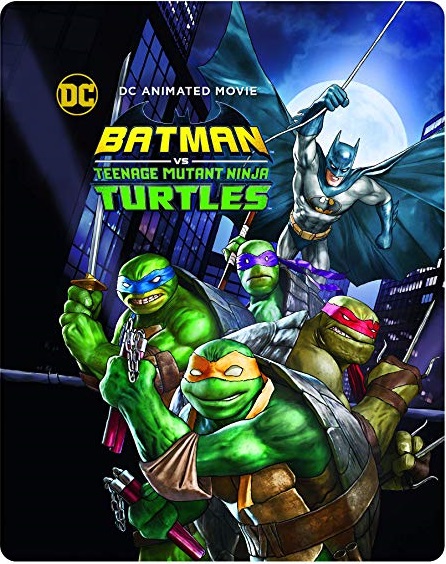
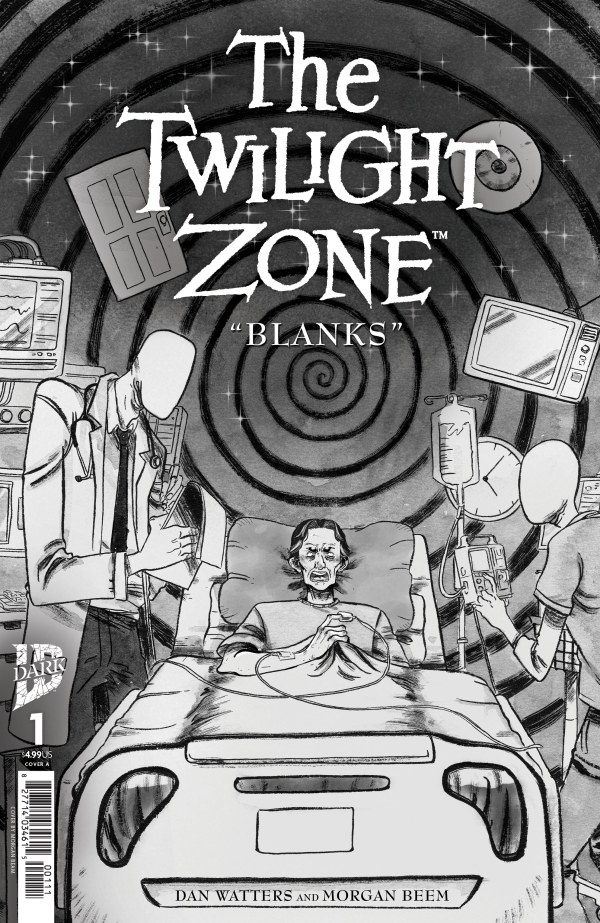
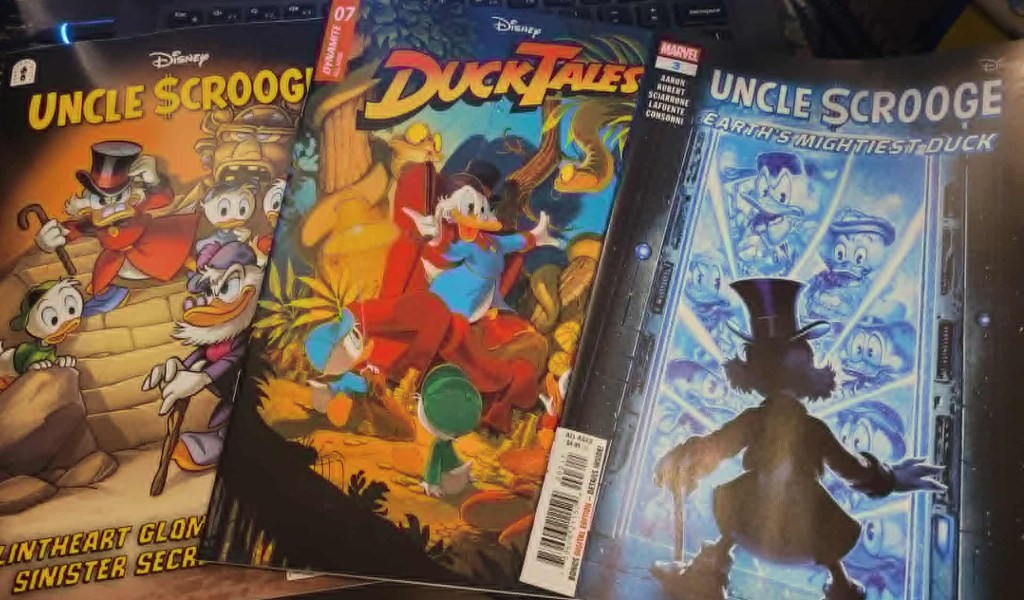

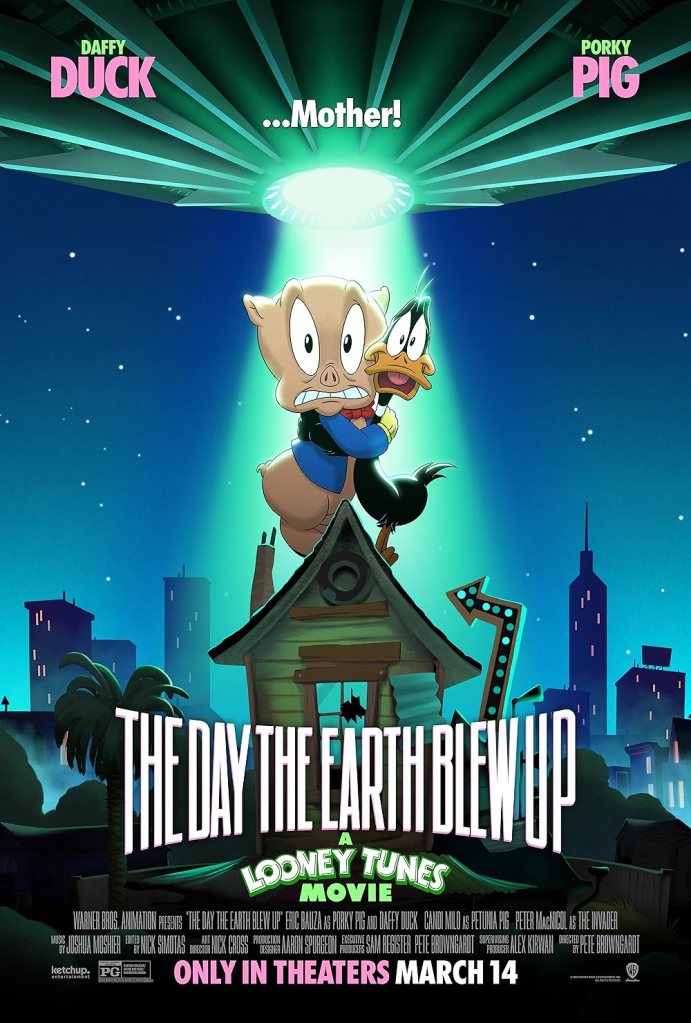
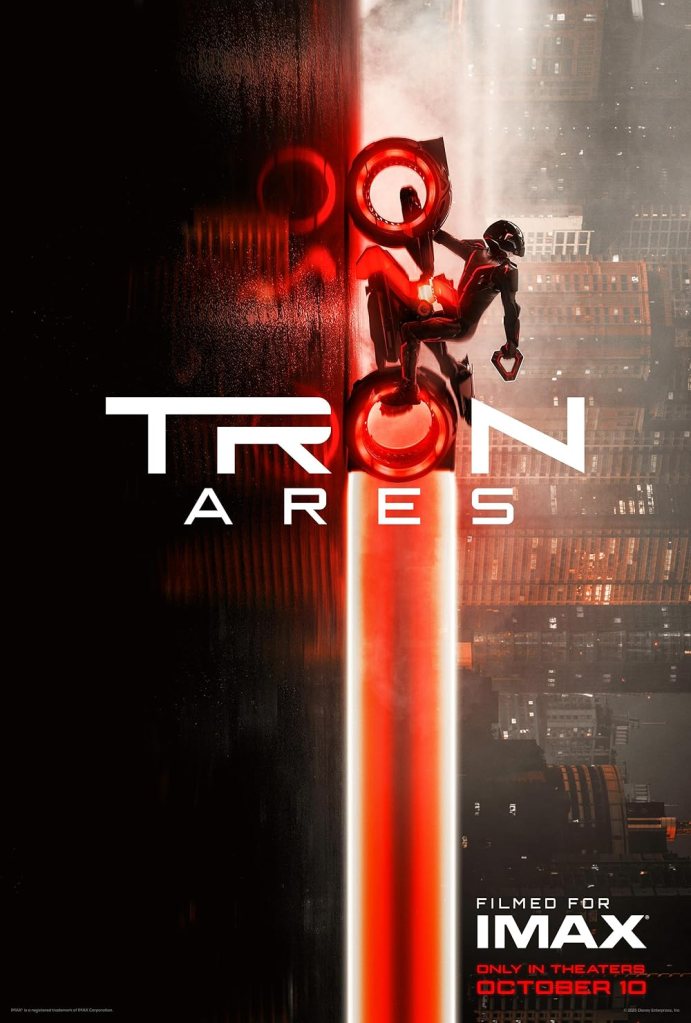

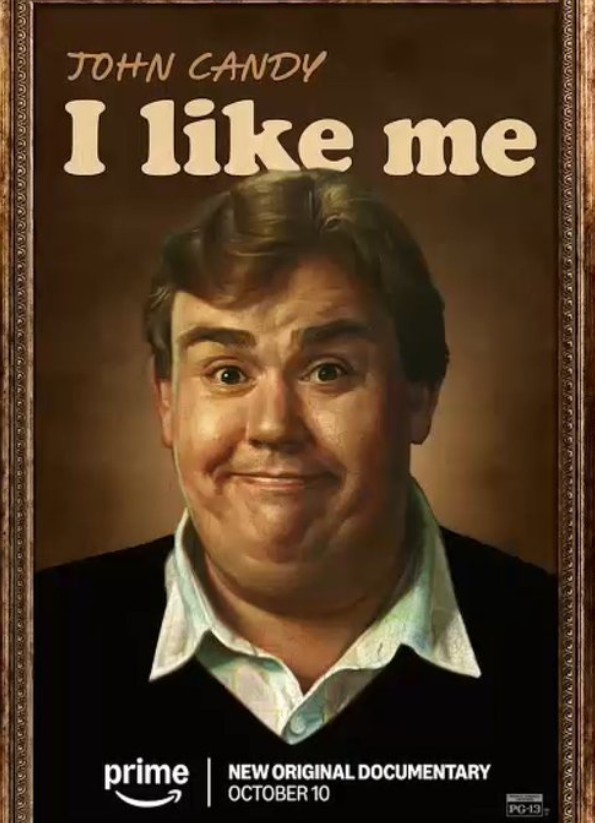
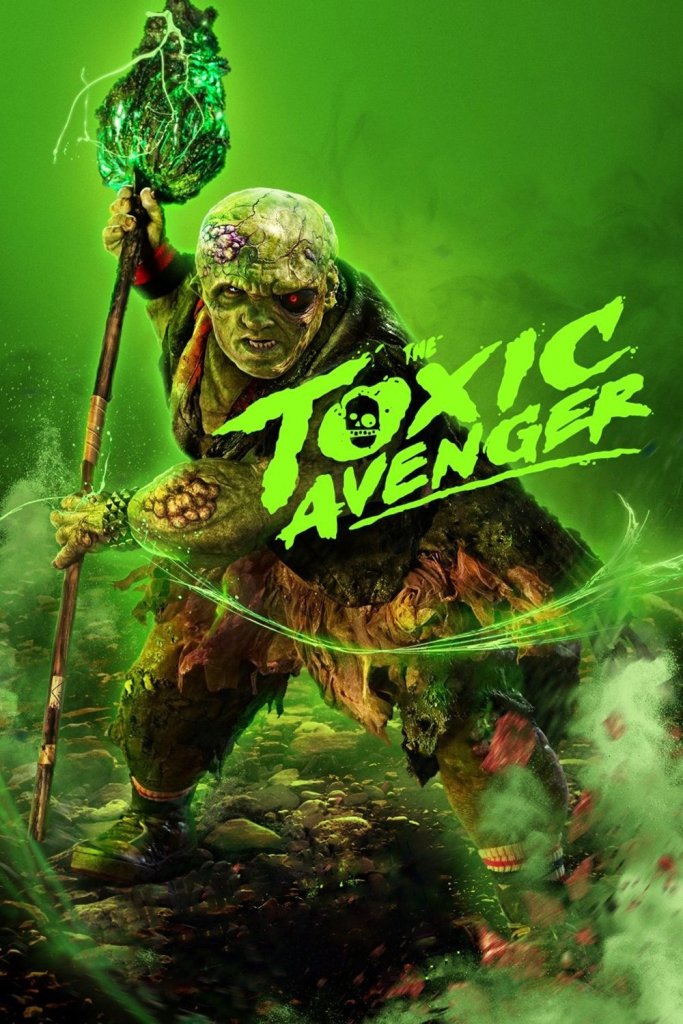


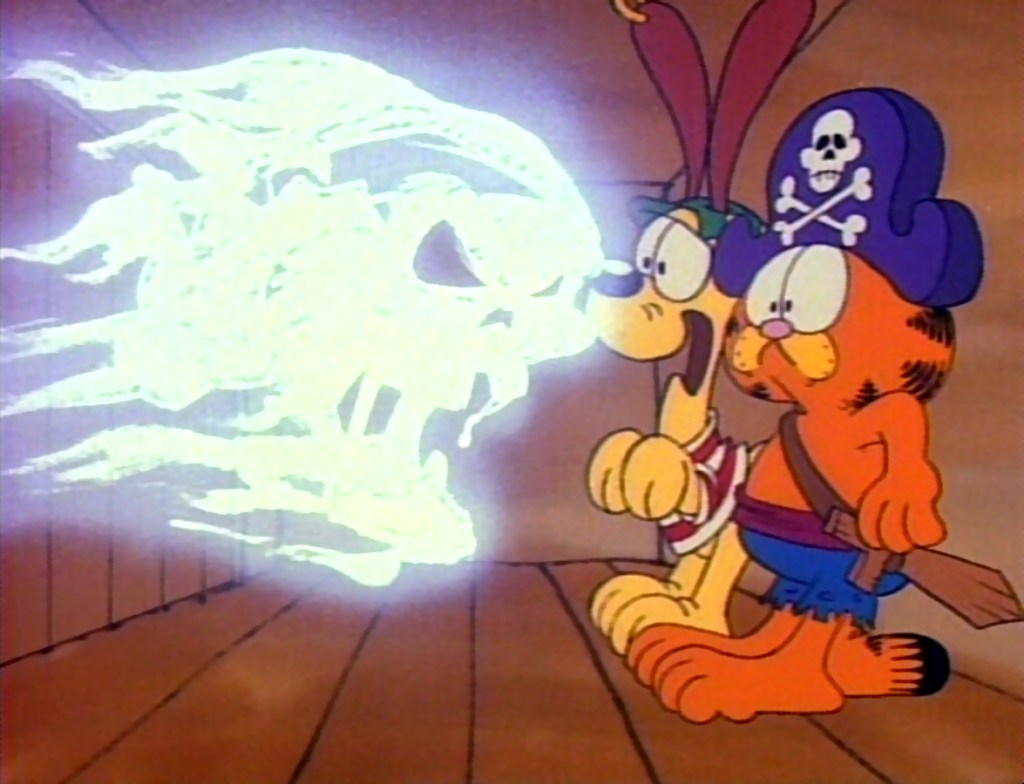
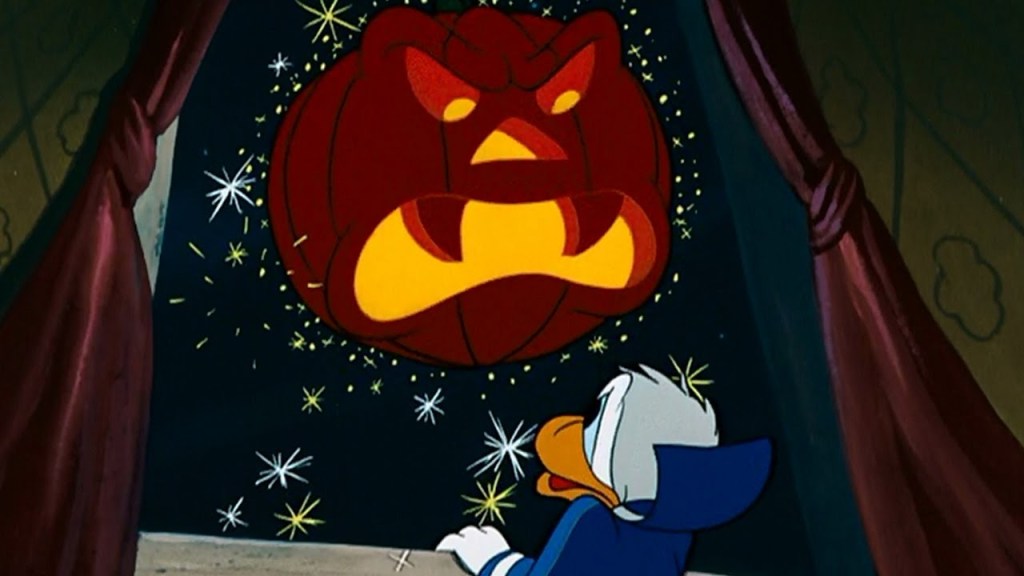
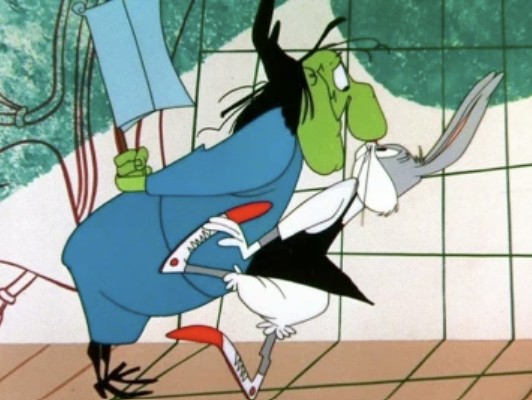


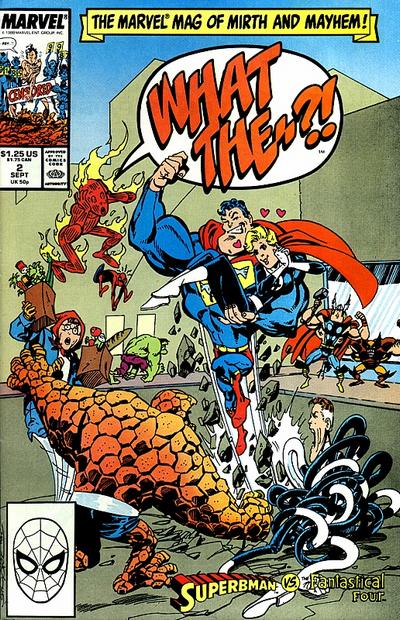


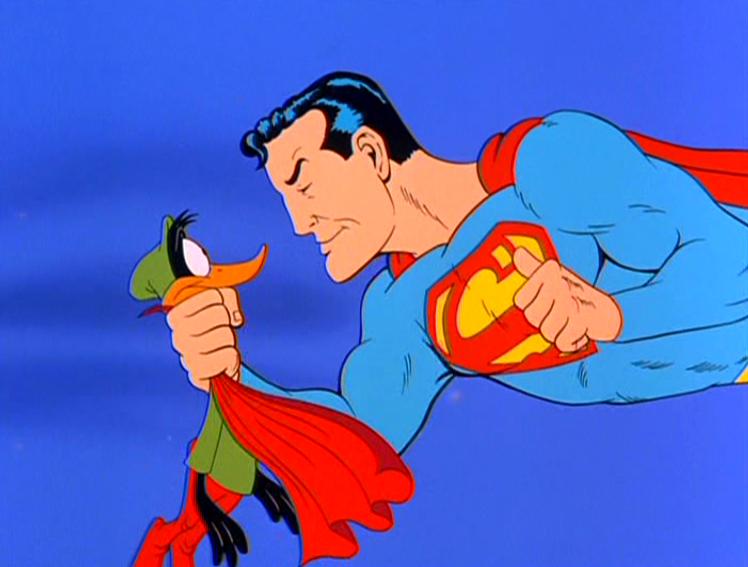
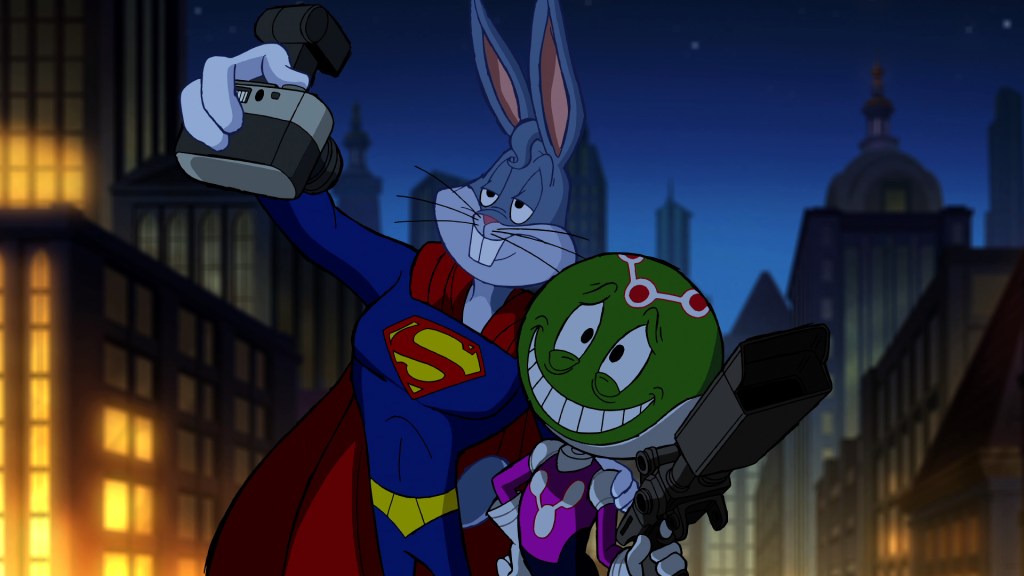


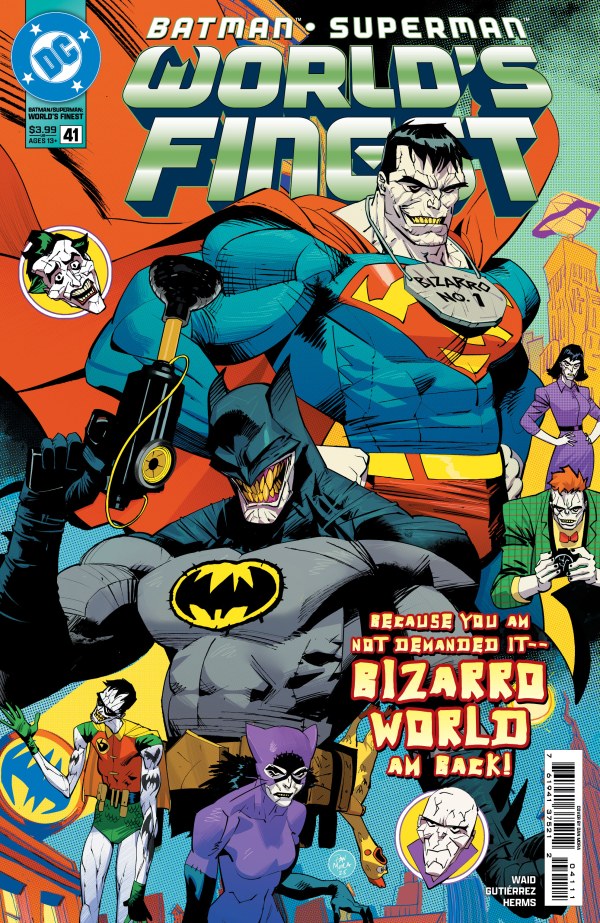


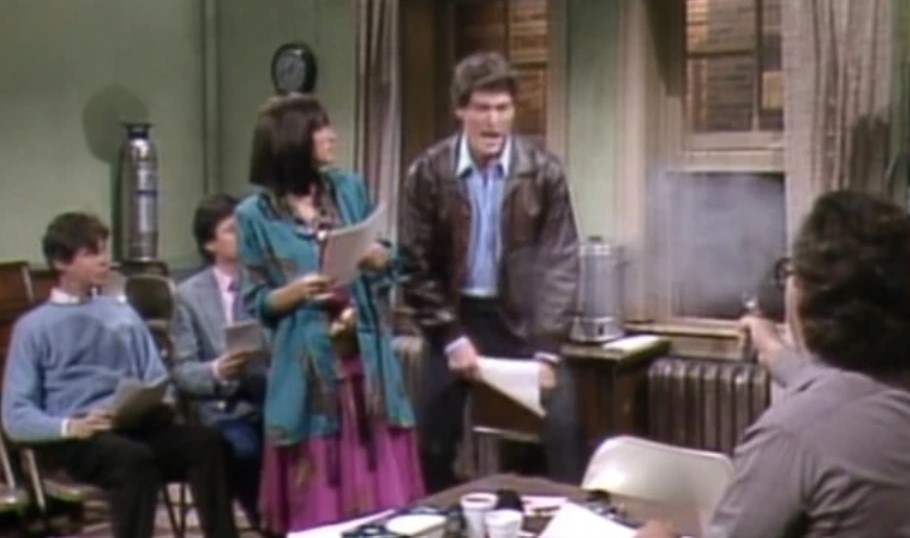
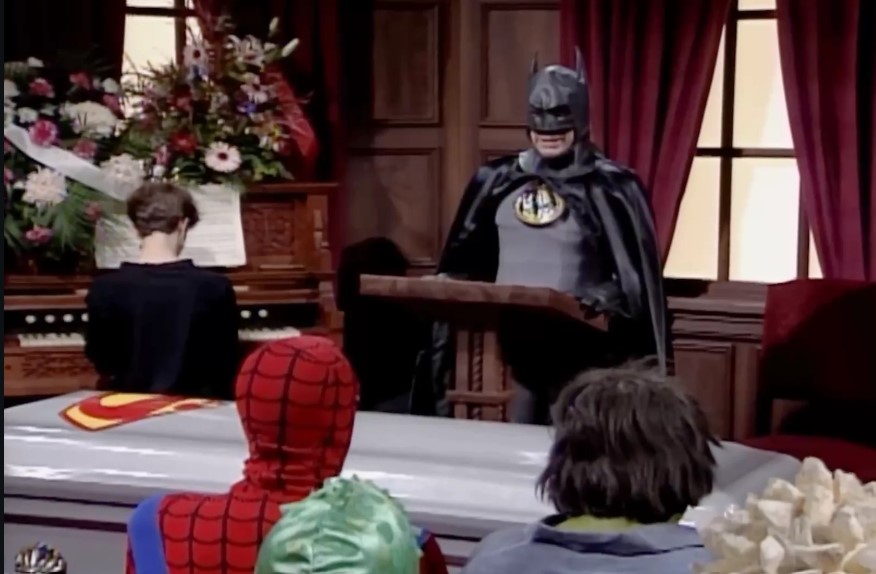

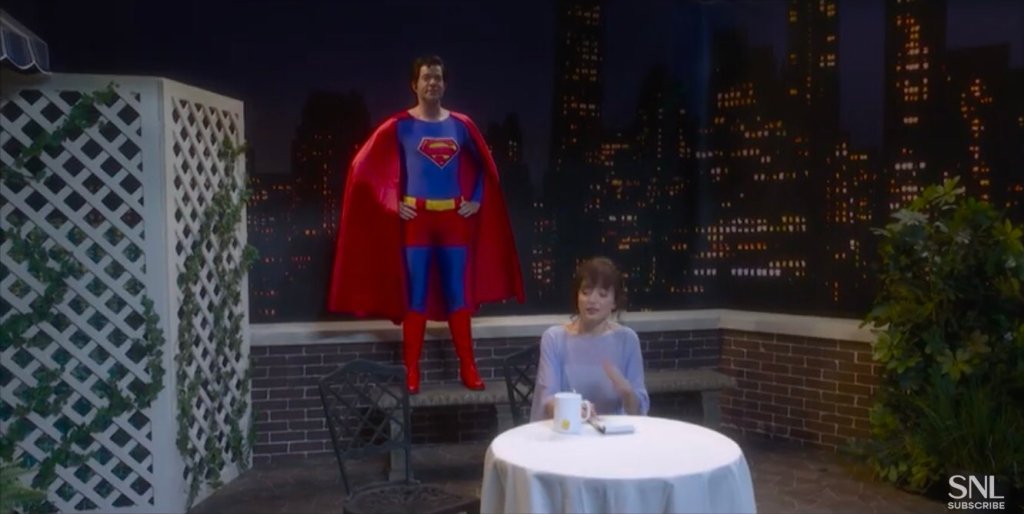

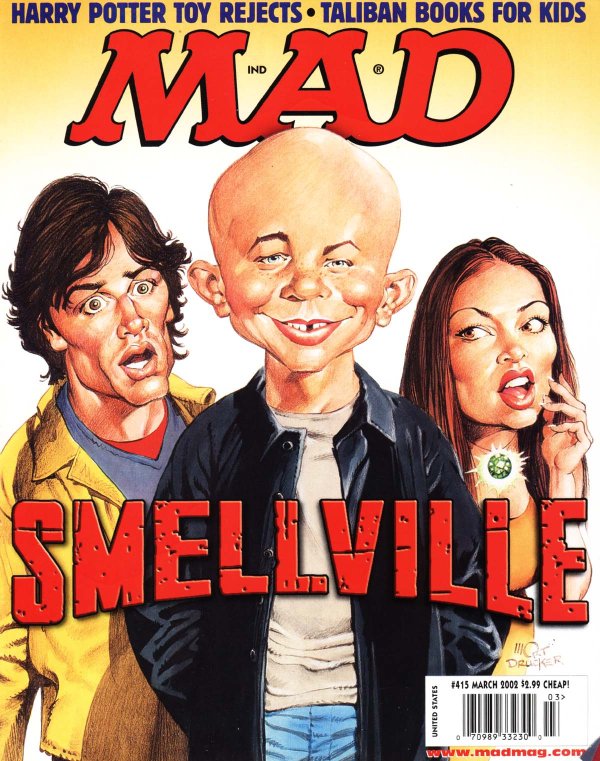


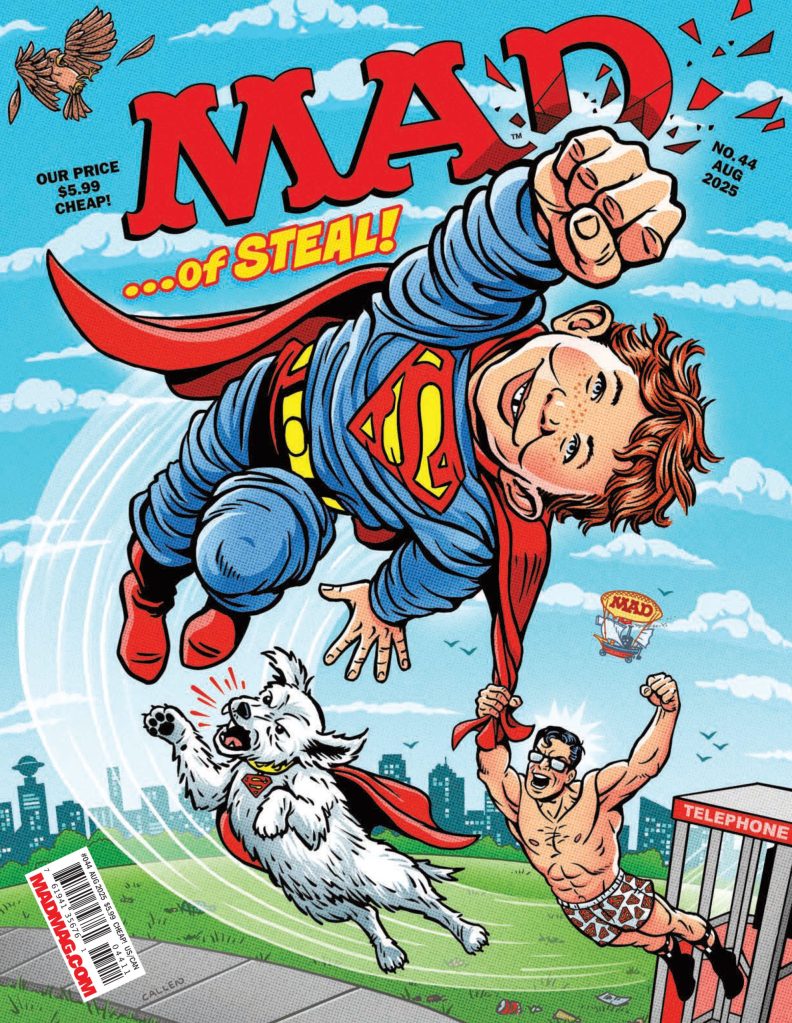


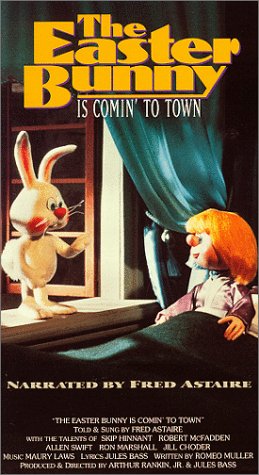

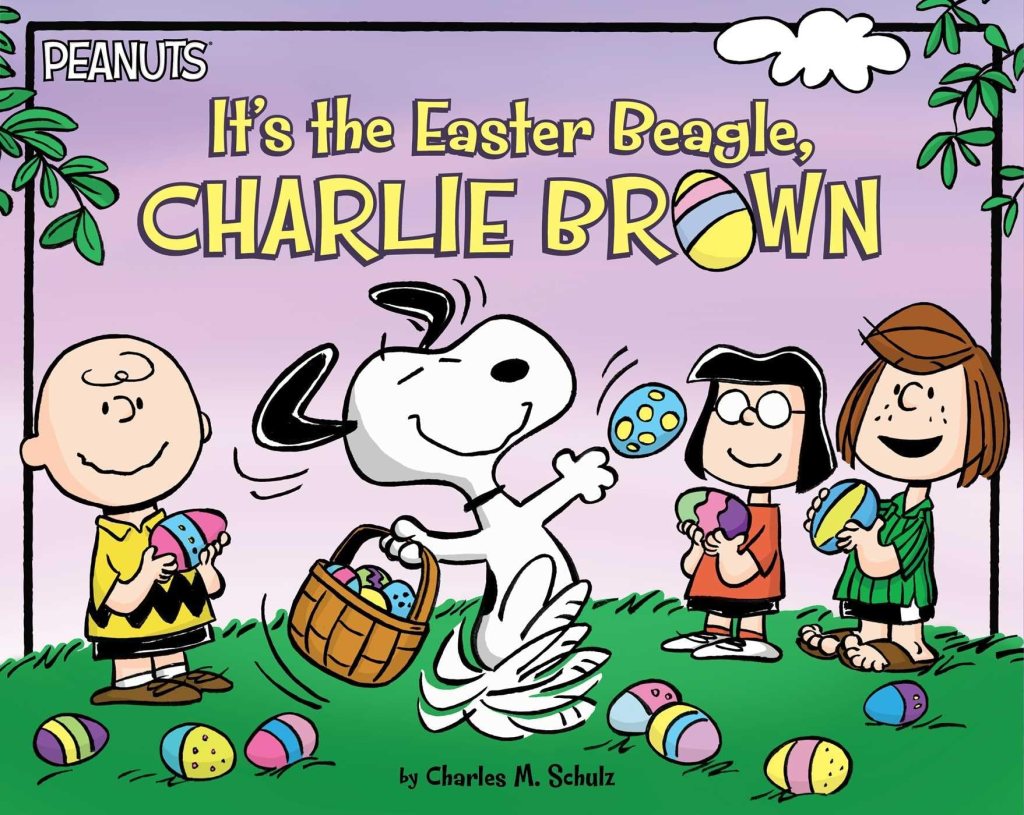
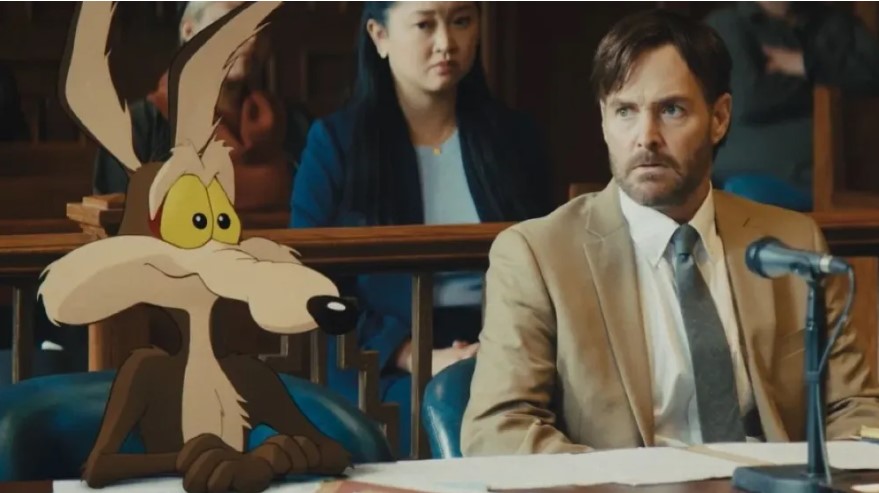


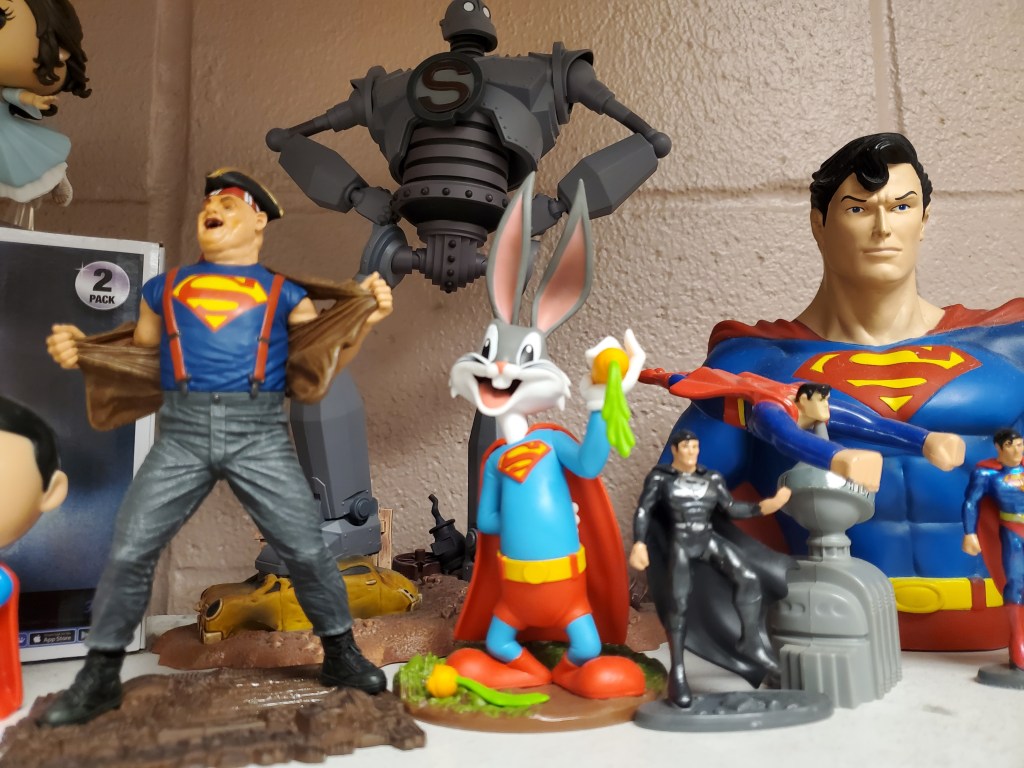
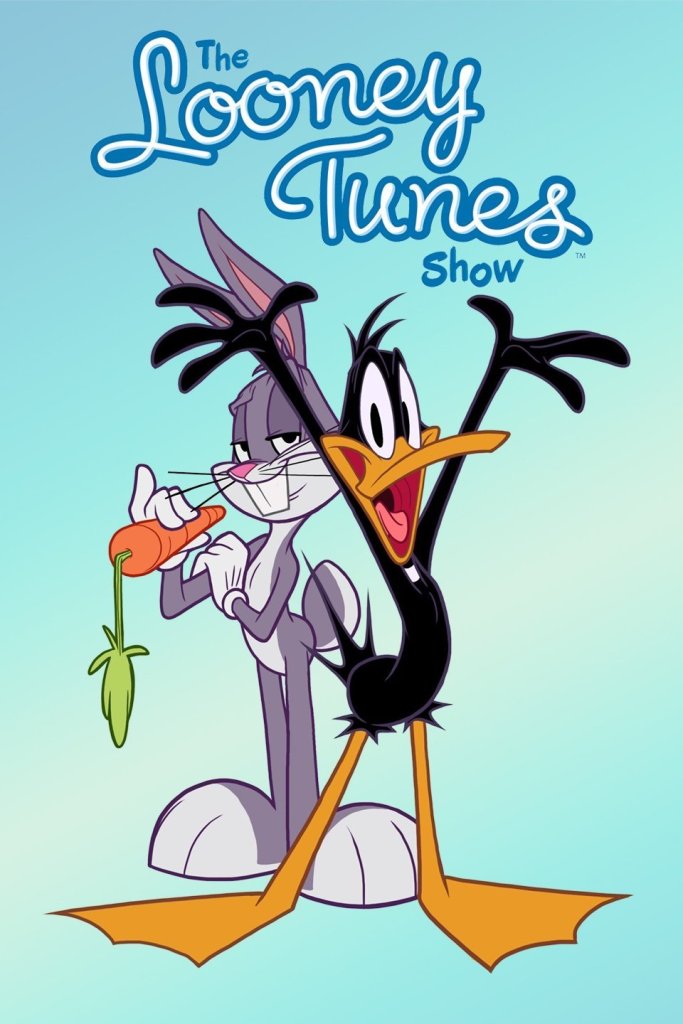


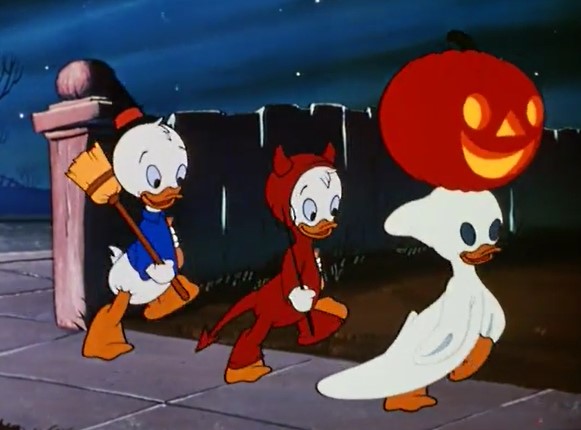
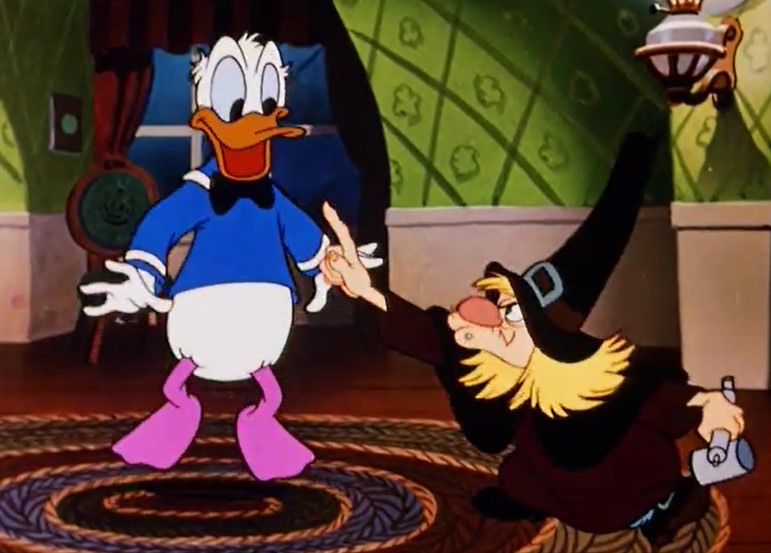

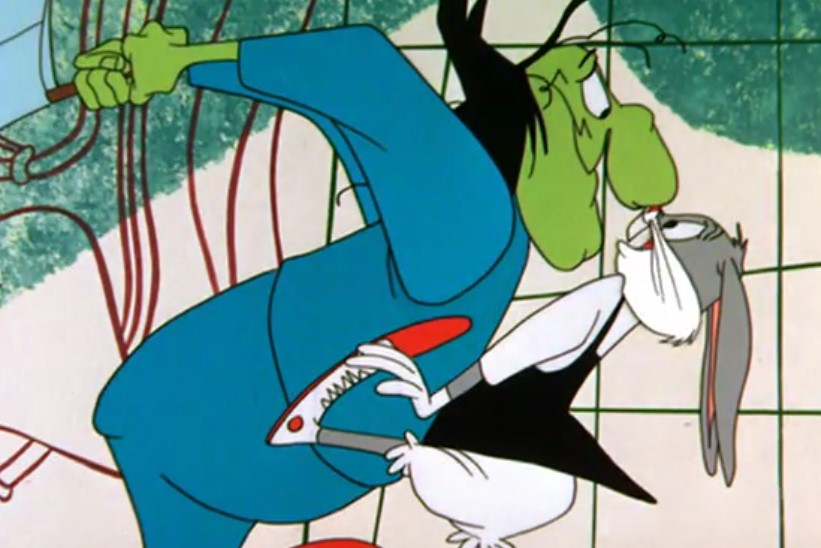


 Blake M. Petit