A little over a month ago, I talked to you guys about Compact Comics, DC Comics’ incredibly well-received new publishing initiative, in which some of their most popular and well-known graphic novels have been reprinted in smaller volumes, about the same size as a modern paperback novel, for the deliciously new reader-friendly price point of $9.99. The first ten books DC released in this format all sold out and went back for additional printings, and a second wave of titles has been announced for later this year. As with the first wave, the new titles are a mix of perennial bestsellers, books with current media tie-ins, and a few offbeat titles that aren’t their usual superhero fare, but may well snare readers who want something different.
I applaud this initiative. I’m up for anything that gets more people reading comic books, and based on the success of this series so far, it seems like it’s doing the trick. But that doesn’t mean that ONLY the smash hits deserve the Compact Comics treatment. DC’s got a history going back 90 years, and in those nine decades they’ve turned out a lot of books that may not be immediately recognizable, but at the same time, are fully deserving of finding a new audience. So DC – I know you’re listening to me, I can hear you breathing – this week in Geek Punditry I’m going to give you some suggestions for a few titles that I think are worthy of inclusion and should be given the utmost consideration when the time comes to select round three of Compact Comics.
The Kents
Look, everybody knows I’m going to have at least ONE Superman-related suggestion, so why don’t we just get it out of the way early, shall we? The Kents was a 12-issue miniseries from 1997 and 1998, written by John Ostrander with art by Tim Truman (issues #1-8) and Tom Mandrake (issues #9-12). In this series, Jonathan Kent uncovers a series of diaries, letters, and artifacts from the mid 1800s and, sharing them with his son, the two of them piece together an epic story about the history of the family that would give Earth her greatest hero.
“Ah, who cares about the Kent family, Blake?” some of you may say. Well…people who are into the likes of Unforgiven, perhaps. Or True Grit. Or John Ford’s Stagecoach. Because The Kents isn’t a superhero story at all – it’s an epic western. In three acts, the story tells the saga of the Kent family before, during, and after the Civil War. There’s a bitter, harrowing tale of brother against brother played out against the backdrop of the American west, and in this story we not only see the seeds of righteousness and nobility that would one day so profoundly inform who Clark Kent is, but also the struggles, heartache, and betrayals that the family had to endure to build that foundation. I’ve loved this series since it first came out, and although it’s been reprinted once or twice over the years, it doesn’t look like there’s been a new edition of this book since 2012. That’s entirely too long, and it’s time it got back in the spotlight.
Camelot 3000
Speaking of 12-issue miniseries that have been out of print for over a decade, let’s talk about Camelot 3000. This science fiction/fantasy series by Mike W. Barr and Brian Bolland came out from 1982 to 1984, and it tells the story of a future where King Arthur has returned to Great Britain, as the prophecy foretold. In this distant future of the year 3000, the world has been divided up into four gargantuan autocratic countries, all bickering and fighting amongst one another, and completely oblivious to a greater threat from beyond the Earth. Arthur, resurrected, has to find the reincarnations of his knights and prepare them for battle.
This is a fantastic book, showcasing Bolland’s pencils even before he sharpened them to the point where he became the artist behind Watchmen, and the story very neatly mirrors the original Arthurian legend. Barr supposedly got the inspiration for the story while taking a college course on Arthur, and the work he put into shaping this world is really remarkable. He doesn’t just re-tell the original story, but weaves in certain themes, showing just how timeless they are. The Lancelot/Guinevere story is still hanging over everyone’s heads, and the new take on Tristan and Isolde is way ahead of its time. It’s also an important book, historically speaking – DC’s first maxi-series created for the direct market only, their first time experimenting with a new format, and the first time future superstar Bolland would do full stories for an American publisher.
But most importantly, it’s just a good comic that modern audiences haven’t all had an opportunity to experience yet, and it’s an experience they frankly deserve.
Batman: Robin Ascendant
This doesn’t actually exist. I mean, the stories exist, but this particular collection of them, to my knowledge, has not been made…but damn it, it should be. Batman, as you may have heard, has gone through a Robin or two in his time, and for a lot of us, the definitive Robin is Tim Drake. I love Dick Grayson as much as anybody, but he’s far more interesting as Nightwing than he ever was as Robin. Tim Drake, on the other hand, is probably the best Robin there’s been. Batman himself has acknowledged that Tim will be a better detective than he is some day, and he’s also the only one of the main Robins that has never particularly harbored a desire to become Batman. He stepped into the role after the death of Jason Todd (who, of course, got better), during a period where Batman was being consumed with self-doubt and anger, and it seemed like the Dark Knight was going to go far, far darker than ever before. Tim deduced the original Robin’s identity, and from there, it was easy enough to determine that Batman was Bruce Wayne, so he arrived on Bruce’s doorstep not because he wanted to be a superhero, but because he knew that Batman is better with a Robin.
The story in which this is told was called “A Lonely Place of Dying,” by Marv Wolfman, George Perez, and Jim Aparo, and while it has been collected many times, it’s only five issues long. (Batman #440-442 and New Titans #60-61) One of the few legitimate complaints I’ve heard anyone have about any of the Compact Comics is that certain ones – specifically the ones that reprint original graphic novels like Joker or Wonder Woman: Earth One – are too short compared to the ones that squeeze in a hefty 12 issues worth of content. So in order to combat this volume having the same problem, I propose a bundle of sorts, combining this story with two shorter, subsequent ones. Bruce didn’t make Tim a Robin immediately, dedicating himself to training the boy so as not to repeat the mistakes of Jason Todd, and there were a few good Tim stories before he put on the costume again. In “Rite of Passage,” from Detective Comics #618-620 (by Alan Grant and Norm Breyfogle), Tim’s parents are kidnapped by a villain called the Obeah Man, leading to a tragedy that would shape Tim dramatically. I would include that, then cap off the book with “Identity Crisis” from Batman #455-457 (Grant and Breyfogle again). Here, Tim is grappling with the events of “Rite of Passage,” struggling with the legacy of the two previous Robins looming over him, and is grounded while Batman sets out to take on the Scarecrow. But Tim figures out that Batman is walking into a trap, and realizes that he’s the hero’s only hope.
When you put these three stories together, you’ve got a nice chronology of Tim Drake, leading up to him officially taking the mantle on the final page. And you’d get 11 issues of content, which is perfectly in keeping with the size of the better-received Compact Comics.
Tales of the Green Lantern Corps
One of the first Green Lantern stories I ever read – thanks to some comics given to me by my Uncle Todd – was the three-issue Tales of the Green Lantern Corps miniseries from 1981 by Mike W. Barr, Len Wein, and Joe Staton. In this truly epic story, all 3600 members of the Corps are called together to face the most dire of threats – their ancient enemy Krona has returned. Krona, a twisted member of the same race that eventually became the Guardians of the Universe, has forged an alliance with Nekron, a god of Death, and is planning to rend a hole between the worlds of the living and the dead, beginning with the destruction of the Corps’ central power battery on Oa. The Corps only has one charge remaining – a mere 24 hours to save the universe.
This is an incredible storyline – wide-reaching and eventful, that showcases not only Hal Jordan, but so many other Lanterns. Classics like Katma Tui and Tomar-Re show up, little-known GLs like Charlie Vicker make an appearance, and we get the debut of Arisia, who would go on to be a major player in the series. Furthermore, elements from this story would be used decades later in Geoff Johns’s Blackest Night, another awesome story that should get the Compact Comics treatment.
The only problem is all of this universe-spanning action takes place in only three issues, and, like I said, that just ain’t enough to satisfy Compact Comics reader. Fortunately, DC has already provided us with a solution. Tales of the Green Lantern Corps was not only the title of this miniseries, but also the banner under which solo tales of Green Lanterns from beyond the Earth appeared as back-up stories in the main comic for years. There were also three annual specials using this title with the same concept: short stories of various GLs. Some of those were amazing, such as the introduction of the bizarre and delightful Rot Lop Fan from Tales of the Green Lantern Corps Annual #3 (story by Alan Moore and Bill Willingham). Once you’ve included the three issue miniseries, it would be quite simple to cherry pick the best of the other Tales and build up enough of a collection to make a suitable Compact Comics volume.
Legion of Super-Heroes: The Great Darkness Saga
The Legion of Super-Heroes is one of DC’s greatest properties, and yet somehow it gets less respect and love than so many. It deserves more, and showcasing one of its crowning achievements in The Great Darkness Saga would be a way to show them off to a new audience. In this one, the heroes of the 30th Century find themselves coming into conflict with bizarre, shadowed figures who turn out to be corrupt clones of heroes from the past. The race to discover the truth about these threats leads to a collision with the characters of Jack Kirby’s Fourth World, finally bringing the Legion into conflict with the embodiment of evil in the DC Universe: Darkseid himself. The story was a smash hit when it was first published in the early 80s, and was credited with making Legion one of the best-selling comics in America for a while. It showcases virtually every character who was or had ever been a member of the Legion, as well as drawing in many of their allies like the Legion of Substitute Heroes and the Wanderers. If you’re looking for a showcase of everything the 30th Century had to offer, this is the book to read.
The main storyline is, again, somewhat short, running in Legion of Super-Heroes #290-294. However, there was a long buildup before the main story began, and previous collections have included material going back to issue #286 and their first annual, with an epilogue of sorts appearing in the third annual. And if you really want to link it to the greater DCU, years later there was another side-story that connected to it in issue #32 of Booster Gold, a series in which the time-travelling hero often found himself stumbling into classic DC storylines. There’s certainly enough to collect a full-size volume here.
Ambush Bug
My final suggestion is probably my most off-the-wall, but I will defend it vigorously. For the last few years DC Comics has been trying to turn Harley Quinn into their answer to Deadpool, with the sort of fourth-wall breaking shenanigans he’s known for. With all due respect to the creators who have been involved in those stories, that’s a mistake. Harley became a hit character on her own merit, and changing who she is to fit some other character’s template is foolish, especially since they’ve already got a much better candidate: Ambush Bug.
Ambush Bug, created by Paul Kupperberg and Keith Giffen, is (supposedly) Irwin Schwab, a schlub who found an alien super suit that gave him the ability to teleport. Schwab is also ludicrously insane and a wholly unreliable narrator, making everything we know about him (including his real name, his origin, and his rivalry with the alien sock Argh!yle) suspect at best. Who or whatever Ambush Bug really is, he first showed up as an antagonist in DC Comics Presents #52, running afoul of Superman and the Doom Patrol. He came back a few issues later, causing problems for Superman and the Legion of Substitute Heroes, then decided to try becoming a hero after an encounter with Supergirl in her own comic. (He initially mistook Supergirl for her cousin. He’s that crazy.) Co-creator Keith Giffen and his writing partner Robert Loren Fleming soon started to run with the character, having him show up in three issues of Action Comics (where he quickly realized that Superman looked exactly like Clark Kent – he’s that crazy) before he got popular enough to get miniseries and specials all his own.
Ambush Bug was breaking the fourth wall before Harley, before Deadpool, even before John Byrne’s She-Hulk raised such a thing to an art form. He is fully aware of the fact that he’s a comic book character, and he was proficient in meta humor long before it became popular. His stories are bizarre, surrealistic, and utterly bonkers, and they’re a lot of fun because of that. Unfortunately, since the passing of Giffen, there really hasn’t been anybody else who has a great hold on the character and he doesn’t appear much these days. I’m sure it’s only a matter of time before somebody tries to bring him back, and when that happens, I hope they find creators who have just the right blend of humor and irreverence to do him justice.
In the meantime, though, we can grease the wheels for his return with the Compact Comics treatment. Ambush Bug Vol. 1 should include his early appearances in DC Comics Presents, Action Comics, and Supergirl, as well as his first four-issue miniseries from 1985, and the Ambush Bug Stocking Stuffer Christmas special. Once that first volume is a sales juggernaut (as all my suggestions clearly would be) they could follow it up with Vol. 2, collecting the Son of Ambush Bug five-issue miniseries from 1986, the Ambush Bug Nothing Special from 1992, and the six-issue revival miniseries Ambush Bug: Year None from 2008.
There you go, DC. I know the books for Compact Comics series two have already been chosen, so consider these six suggestions the first half of a wave three. I’m sure you can figure out the rest of that wave yourselves. You guys are pretty good at this too.
Blake M. Petit is a writer, teacher, and dad from Ama, Louisiana. His most recent writing project is the superhero adventure series Other People’s Heroes: Little Stars, volume one of which is now available on Amazon. You can subscribe to his newsletter by clicking right here. He’s also started putting his LitReel videos on TikTok. He hopes you all appreciate the fact that he got to the end of this without talking about Captain Carrot. That wasn’t easy, people.
It’s time for another theme week here in the ol’ Year of Superman blog, and once again, I’ve decided to spend seven days with one of the greatest characters in the Superman mythos. A trusted friend, a stalwart companion, a fearless champion of justice, and the goodest boy in the entire multiverse. That’s right – this week we’re going to focus on Krypto the Superdog!
Krypto is one of those concepts that, on the face of it, is kind of ridiculous. You mean to tell me that Krypton not only evolved a race of sentient inhabitants that are identical to Earth humans (a common enough trope in science fiction but highly improbable in real life), but also evolved a species of animals who, upon being domesticated, are indistinguishable from Earth DOGS? Not only that, but they also gain the same powers as the human Kryptonians when they get under a yellow sun? Utterly preposterous.
But I do not care in the slightest how unlikely it is. I love Krypto with every fiber of my being. No matter how silly the notion is, the inherent wholesomeness in his character, the way a Krypto story inevitably becomes one of those stories of a boy and his dog, elevates him to a point of true celebration. Krypto is one of the brightest spots in Superman’s galaxy. I think it’s telling that, no matter how many times various writers have tried a “Superman gone bad” story, I don’t think we’ve EVER seen a serious attempt at a grim, gritty Krypto. It’s not because it would be silly – it’s because he is simply too pure for such a thing. There’s a reason that the first trailer to James Gunn’s Superman featured Krypto so prominently, a clear message that he was sending to the fans: this is about someone GOOD.
Krypto stands for that.
Let’s check out some of his greatest hits, shall we?
Wed., April 1
Comics:Adventure Comics #210, Adventure Comics #293, Secret Six (2025) #1, Justice League of America #18
And all Superboy threw was a tennis ball.
Notes: We begin our journey through the life of Krypto the Superdog, appropriately enough, with his first appearance in Adventure Comics #210. We’re in Smallville, Kansas, in the era where Clark Kent is Superboy, and he is called upon to help deal with the most dangerous of crises – a dog catcher whose lot got loose. Superboy quickly rounds all the mutts up, with one exception – a white dog that apparently ripped a hole in the side of the truck. Later, a group of crooks (incredibly well-dressed crooks, in suits and ties) try to rob Kent’s General Store, only to be thwarted by the same dog. Clark later finds the pup chewing on one of the guns left behind by the robbers, and he takes off flying, with Superboy giving chase. The dog leads Superboy to a rocketship, where he discovers that Krypto (for that, of course, is his name) was sent into space in an experimental rocket by Superboy’s own father, Jor-El, and that the two of them are being reunited. The happy reunion is short, though, as Clark soon learns that even a super-dog is still a dog, and his antics (such as chasing an airplane or trying to play fetch with a steel girder) are apt to cause some problems. In the end, Krypto decides to roam his “backyard” – the galaxy. But Superboy hopes wistfully that he’ll come back to visit. Spoiler alert: he does.
Krypto becomes a semi-regular after this point, showing up whenever convenient for the story and eventually showing much more personality. In most of the Silver Age stories, in fact, he had thought balloons demonstrating full human-level intelligence, like Snoopy, only with a cape. That’s one aspect of Krypto I’m kind of glad hasn’t come back. I find that I have a greater appreciation for the character when he’s “just” a superpowered dog. Although to be fair, some of the stories I plan to visit before this week is over will very much go against that grain.
Krypto also became something of a trendsetter. After all, when something works once, why not try it again? So in his wake came a bevy of other superpowered animals, including Streaky the Supercat, Beppo the Supermonkey, and Comet the Superhorse. And they all converged in Adventure Comics #293, the first appearance of the Legion of Super-Pets!
The Legion’s hazing policy was still nebulous at this point.
Sometimes I wonder about the life choices that have led me writing things like the preceding paragraph. And then I realize that this is the result of choices that have gone RIGHT.
The story begins, again, in Smallville, when Superboy is summoned to rescue an airplane in trouble. But a strange urge overtakes him and, instead of rescuing the plane, he destroys one of its propellers. Fortunately, Krypto (by now sporting a cape and thought balloons) happens to be swooping in for a visit just as this happens, and he saves the plane himself. Superboy starts going through wild mood swings, briefly attempting to kill Krypto before regaining his senses. It gets worse when he’s suddenly attacked by his friends in the Legion of Super-Heroes, who attempt to kill him with Kryptonite. Turns out the whole thing is the scheme of the Brain-Globes of Rambat (there’s another sentence that could only come from the Silver Age), who are using their incredible mental powers to destroy the heroes so they can move Earth to a purple sun, allowing them to survive. But as it turns out, the Brain Balls can’t affect the minds of ANIMALS, and Krypto goes on the offensive…only to learn that if he goes after just ONE of the four Brains, the other three will destroy the Earth. The Legion uses their time machine to collect Streaky, Beppo, and Comet from Superboy’s future, and there’s some fun here in that this is actually Comet’s FIRST appearance, with the promise that “this is a preview glimpse of a super-pet Supergirl will own some day in the future!” It’s more complicated than that, but this ain’t “Comet Week.”
With Superboy out of commission, the Legionnaires team up with the super-pets to drive off the aliens, and make the animals an official branch of the Legion, then bring the other animals back home before Superboy can wake up and learn about the super-animals of the future. I suppose it’s okay for Krypto to know the future because he can’t talk, but the story isn’t really clear on that.
If Krypto was a silly concept, the Super-Pets take it to the extreme, but it’s so much fun. A cat, a dog, a horse, a monkey, all with super powers, all fighting the forces of evil. Nobody would EVER introduce such a thing in a serious comic book in 2025, and more’s the pity. It’s like somewhere along the line people forgot that comic books can be FUN. I really hope that the Krypto Renaissance we are currently experiencing helps people remember what it’s really about.
Notes: When I announced this as Krypto Week, I asked (as usual) for suggestions about the best Krypto stories out there. I was not surprised that my pal Lew Beitz stepped up. Lew is a good guy, a great beta reader, and the most effusive dog-lover I know, and his love extends to pooches both fictional and non. He pointed me towards some classic Krypto stories, and I’m checking a few of those out today.
In Metropolis, it really CAN rain cats and dogs! Ah? AAAAAH? I’ll see myself out.
Action Comics #266 kicks off with “The Captive of the Amazons,” a story about an alien princess who tries to force Superman into marrying her, and honestly, sometimes I wonder just where they got off putting stories like this into a magazine called “ACTION” Comics. No, I’m here for story number two, “The World’s Mightiest Cat.” This features the return of Supergirl’s cat, Streaky, an Earth cat with a lightning bolt-shaped patch of fur. Supergirl invented an isotope called X-Kryptonite in the hopes that it would act as a cure for Kryptonite poisoning. It didn’t, but when exposed to it, Streaky temporarily gains super powers. One of the other orphans in Midvale with Supergirl sees him performing super-feats, but is humiliated time and again when he brings other people in to witness them, only to find that Streaky’s powers have worn off in the interim. After several pages of the cat treating this poor kid like Michigan J. Frog, Supergirl figures out what’s going on and has Krypto come in to “help” Streaky with his super-feats, telling the boy that what he saw was Krypto playing pranks on the cat. It sounds kind of cruel to gaslight the kid, but everybody was starting to think he was a liar, so I guess it’s a bit more kind. Regardless, this is more of a Streaky story than a Krypto one, but it’s fun to watch the two of them involved in hijinks together.
It was this or get a couple of super-chickens to fight and…there were issues.
There were more Krypto and Streaky shenanigans 11 issues later in Action #277: “The Battle of the Super-Pets.” But first was “The Conquest of Superman,” in which Lex Luthor goes after the gold in Fort Knox, holding off Superman with a weapon that can synthesize different types of Kryptonite. As far as action stories go, it’s way better than Superman trying to avoid marrying a gorgeous alien Amazon princess. But that’s not why we’re here, is it? In the second story, Streaky gets jealous of Krypto when Supergirl praises him for helping her out of a jam that’s so preposterous it only could have happened in a Silver Age comic. But after Streaky gets his powers back from the X-Kryptonite in his ball of twine, he goes after Krypto with a vengeance. Superman decides to settle the dispute between the super-pets with a “contest of skills.” Supergirl takes the two of them to a planetoid where they can battle it out without causing any damage, but the planet…is not what it seems. This story is pure absurdity, and that’s really what I like about it. The stuff that happens on the planet is wild and goofy, and makes no sense until the reveal at the end, which in and of itself is even wilder and goofier. I find that DC stories of the Silver Age often fall into two categories – a kind of ridiculous that makes the characters look mean or stupid (sadly, most Lois Lane stories from the era kind of fall into this category) and those that are just absurdly delightful. This one most certainly falls into that latter category.
And “furry” culture immediately claimed him as their own.
Adventure Comics #310 takes us back to the Superboy days, following a dandy Legion of Super-Heroes story. By the way, have you noticed how often in these days it was the second – or even third – story that got the cover treatment? That wouldn’t happen today. The second story brings us “When Krypto Was Superboy’s Master.” Lana Lang’s father, a university professor, has a promotion jeopardized when he is accused of falsifying the translation of some ancient runes. When Superboy is called in to help verify the translation, the runes somehow swap his personality with Krypto’s, causing the dog to become the master and Superboy the pet. This is another of those silly stories that I enjoy, although it’s one where the ending turns out to be unnecessarily convoluted. I’ve mentioned in this blog before just how many of DC’s Silver Age stories were built on the backs of ridiculous misunderstandings or outright trickery that serves no logical purpose, and this turns out to be one of those.
Superboy gets the kick to the gut while Cosmic Boy just has to duplicate a Coppertone ad. Seems kinda lopsided.
The last classic story I’m going to dip into today comes from Adventure Comics #364, “The Revolt of the Super-Pets!” Yes, we’ve got Streaky, Beppo, and Comet back for this one. The pets are frolicking in space and then, for reasons, decide to recap their respective origins, including that of Chameleon Boy’s shapeshifting pet Proty II, who has joined them. As they talk about how great they respectively are, Beppo and Comet in particular start to resent being treated as pets (Comet, to be fair, was a Centaur in ancient Greece who is now trapped in the form of a horse – it’s a whole thing) and decide to abandon their masters. This is followed by some various betrayals and misunderstandings before they come back together to fight the issue’s bad guys. I like this story, but it actually does raise a good point – if the Super-Pets are, in fact, as intelligent as their humanoid masters, it seems pretty disrespectful to continue to treat them as pets. Modern stories usually avoid this – Krypto and Streaky don’t display human-level intelligence anymore, and Comet and Beppo are rarely, if ever seen these days. It’s another reason I like that iteration a little bit more. The “hero and pet” dynamic is more appealing to me than a “hero and another hero that they treat as a lesser being because they happen to be in the shape of an animal” dynamic.
Fri., April 4
Comics: Superman: The Man of Steel #112, Superman Vol. 2 #170, Action Comics #373
By this logic, shouldn’t Supergirl’s best friend by a super-diamond?
Notes: After the Man of Steel reboot in 1986, the decision was made that Superman would be the ONLY surviving Kryptonian – no more Supergirl, Phantom Zone criminals…and no more Krypto. Obviously, this edict was eventually relaxed, but even as Supergirl and Zod and the like came back, it took some time before Krypto made his triumphant return. By the early 2000s, though, he was making appearances again, such as this one in Man of Steel #112. In this story, Krypto has recently arrived on Earth, where the yellow sun is slowly ramping up his powers and causing a good bit of destruction in Lois and Clark’s apartment. Superman decides to take him out for a spin to burn off some steam, leading to a nice sequence in which he contemplates his new pal. This version of Krypto came to Earth via the Phantom Zone, after a story which cast a little bit of doubt as to the true nature of Krypton. It was from a period in which Superman’s history was kind of in flux, as though DC was attempting to determine which of the many, many iterations of Superman’s origin was the “real” one, and bringing Krypto back was emblematic of that. None of that is what I like about this issue, though. I like that short sequence, just a few pages, where Superman flies around Metropolis with his pal, thinking about how awesome it is to have a super-powered dog to romp with. Seriously, more stories should be like that.
He’s a good boy until you give him a reason not to be.
Krypto became kind of a B-plot in the Superman titles for a few months, a story that bubbled over in Superman #170. Mongul – you guys remember him, right? – comes back to Earth. (It’s actually not the Mongul we read about before, he’s dead. This time it’s his identical son, Mongul. But that’s not important.) He’s here to take out Superman, and he’s got help! His sister, Mongal! No, really! That is her given, Christian name! As Superman battles the Mongul siblings, the story has a runner of a “children’s book” about Krypto, a “good dog,” written by Clark Kent with art by Kyle Rayner (Green Lantern). The fight is going the way Superman fights usually do, until Mongul makes the mistake of threatening Lois Lane. Krypto leaps to her defense, and…well…he acts like a dog. He goes straight for Mongul’s throat, ripping it open and leaving the alien conqueror on the brink of death. Superman realizes just how dangerous it can be to have a dog with that kind of power, and makes the hard choice to bring him to the Fortress of Solitude and leave him in the care of his robots.
This is such a bittersweet story, and I give a ton of credit to writer Jeph Loeb for making it work. This is the Krypto I prefer – the one who acts like a super-powered dog as opposed to a super-human in dog shape. But that said, it DOES bring up the issue of how potentially dangerous it would be. Sure, not many people would mourn if he had actually succeeded in murdering a member of the Yellow Outer Space Genocide Family, but Superman has that whole no-kill thing, and he’s pretty strict about it. What’s more, just like if a dog in real life attacks someone, it immediately raises the question of who else could potentially be in danger. And at no point does the story imply that Krypto is anything less than a good boy – but he’s still a good boy who “did a bad thing.” It’s heartbreaking, and I mean that as a compliment. Krypto’s exile would eventually end, of course, and these days when he shows up it seems taken as a given that he’s been better trained and won’t pose that kind of danger anymore, but I’m actually really glad that they told this story the way they did back in 2002.
Sat., April 5
TV Episode: Krypto the Superdog, Season 1, Episodes 1-2, “Krypto’s Scrypto Parts 1 & 2”
This show is almost old enough to drink and I’m not okay with that.
Notes: I didn’t realize until I sat down to watch this cartoon that the Krypto the Superdog show on Cartoon Network debuted in 2005, a full twenty years ago. That is both absurd and wrong. But the show, aimed at a younger audience than the likes of Justice League Unlimited, was delightful then and it’s delightful now. In this pilot episode, Krypto recounts his origin – how he accidentally got sent to Earth in a rocket built by Jor-El, sadly leaving behind the child he loved. He lands on Earth and makes his way to the city of Metropolis, where he encounters a boy named Kevin. Kevin is new in town, struggling to make friends, and Krypto quickly befriends him. Kevin is startled to learn that the dog has powers just like Superman, that he’s even wearing a dog tag in the shape of Superman’s shield (that of the House of El, of course), and he’s carrying a device from his rocket that allows Kevin and Krypto to speak the same language. Kevin figures out that Krypto is from the same planet as Superman, telling him about their hero, and brings him home to live with his family. Things are going great until the news reports a cargo ship full of zoo animals is sinking, and Superman is off-planet on a mission. With no one else to rescue them (apparently there’s no Justice League in this universe), Krypto rushes off to save the day. Krypto’s rescue makes the news, and Superman soon tracks him down. The last sons of Krypton have a happy reunion, but Superman decides to allow Krypto to stay with Kevin. And thus, like any good pilot episode, the status quo is established.
While I would have preferred a cartoon about Krypto and Clark, I get why the producers did this. They wanted Krypto to be the star, and if he was actually living with Superman, it would have turned into a Superman show WAY too frequently. Krypto was a show for kids, and it hits those beats as expected. Krypto can talk, sure, but so can the Earth animals he encounters (at least to other animals), such as the squirrel who has a panic attack upon seeing his spaceship land. It’s a pretty standard pilot episode as well – seriously, how many cartoons have begun with a dog/cat/platypus/alien being taken in by a normal human family?
While the show isn’t a straight-up comedy, there are also a few good gags, too, such as when Krypto arrives on Earth and begins both exploring the world and discovering his powers simultaneously: “It’s so beautiful! So green! And the sun is so yellow! (GASP!) I can see in color!”
That’s an A-plus dog joke, friends.
This isn’t in the upper echelon of DC cartoons, but in terms of an entry-level show for younger viewers, it’s pretty good. Now if I can only convince my son to turn off YouTube long enough to watch a few more episodes with me.
Comic: Absolute Superman #6, Green Lantern Vol. 8 #19
Notes: Doesn’t matter what universe you’re in, Jonathan and Martha Kent are the best people in it.
Sun., April 6
Comics: Teen Titans Vol. 3 #7, Superman #712, Super Sons Annual #1
Notes: Today I decided to get back to the classic stories of a boy and his dog – specifically a Superboy. Not Clark, though, but the other people who have used that name, Conner Kent and Jon Kent. Both of them have had a history with the Dog of Steel, although in the case of Conner, it wasn’t exactly smooth at first.
Logo humor.
Conner, it should be noted, had previously owned a different Krypto, an Earth dog that was taken in by our old buddy Bibbo when Superman was “dead.” The dog wound up in Superboy’s possession for most of his original series, although he and the pooch often didn’t get along. But by 2003, the original Krypto from Krypton was back. In this era, the Teen Titans gathered on the weekends, spending their weeks at home, and Teen Titans #7 shows each of them wrestling with various struggles during a week apart from one another. We’re going to focus on the Superboy storyline. At this point, he was living with the Kents in Kansas and struggling with his recent discovery that half of his DNA comes from Lex Luthor. Superman takes him out for a talk and a surprise: the kid needs a friend, and Krypto (as we saw when he nearly killed Mongul) needs the grounding of a real home.
Superboy didn’t have his own series at the time, so the Teen Titans comic was his primary home and actually gave the character a lot of development, moving him away from the devil-may-care leather wearing Metropolis Kid we first encountered and into a young man with an identity crisis that, in some ways, he’s still wrestling with today. But having Krypto along in the mix was a good look for him. It ended too abruptly, when Superboy died in the Infinite Crisis crossover (he got better). However, some time after his death – even after his resurrection – Kurt Busiek and Rick Leonardi brought us the excellent “lost story’ of Superman #712. Superboy was dead and Superman, at the time, was missing. With his super sense of smell, Krypto sets out to find them.
Honestly, you might not be ready for this one.
Busiek is one of the greatest writers in comics, and if you don’t believe that, wait until we get to the week where I focus on “other” Supermen – the first issue of his Astro City series is a straight-up masterpiece. This issue hits some of the same notes in terms of melancholy. Krypto tracks down Conner’s scent and, in so doing, retraces the last few days before his death – getting wounded in battle, being saved by the Titans, sharing a tender moment with Wonder Girl, suffering a brutal thrashing at the hands of the maniacal Superboy-Prime. Krypto senses all of it, and the reader retraces those steps with him. When originally presented, these stories played out over several months (real time) and several different series, so seeing them all stacked together in this way paints a different picture of Conner’s final days than you would have had reading those books in context. “Lost Boy” has the same sort of bitter sadness as Futurama’s “Jurassic Bark,” the same sort of agonizing pain of watching a faithful dog waiting for a master who is not returning home. Fortunately, the Kent boys eventually had a happy ending.
The premature ending of this series was a crime.
Our last stop today comes from 2017 and Super Sons Annual #1. This is the era when Jonathan Kent was Superboy, he was ten years old, he was being written by Peter J. Tomasi, and basically, everything was right with the world. Little did we know how short that golden age would last. My love for Jon as a kid is matched only by my utter disinterest in him as a teenager…or young adult, or…I don’t even know how the hell old he’s supposed to be right now, and that’s only PART of the problem of his complete lack of identity ever since…
Sorry, sorry, this is supposed to be about Krypto.
Even though this title starred Jonathan and Damian Wayne, this issue is all super-pets. After Jon goes to bed, Krypto finds himself pondering a recent spate of missing animal reports across Metropolis. He sets out to round up his old teammates in the Super Pets – including Streaky, Titus and Ace the Bat-Hounds, Bat-Cow, Flexi (Plastic Man’s parrot), and a little nugget of Clayface. Together with an assist by Detective Chimp, the animal heroes are determined to find justice for their four-legged brethren. The issue is largely free of dialogue, save for the assorted grunts, growls, and tweets of the pets, but at no point is there any difficulty following the plot. Tomasi and artist Paul Pelletier perfectly create a charming story about animal heroes saving the day, but without going so far as to hit the “talking animal” trope of the silver age, or even of the cartoons. This, to me, is peak Super Pets, and if DC ever saw their way clear to bringing back this particular team, I would be the first to trample a path to the comic shop.
Mon., April 7
Comics: Superman #677-680, Justice League of America #19, Infinity, Inc. #4, Superman #8
Notes: “The Coming of Atlas,” by James Robinson and Renato Guedes, isn’t completely a Krypto storyline, but it does lead to one of the most famous Krypto moments in modern history, so I thought it would be worthwhile to take a look at it. Plus, it’s just a good story and worth reading. It does START with Krypto, though – specifically, with Superman and Green Lantern in space, playing fetch with the Superdog, while discussing the things life does to people with super powers. The problem is, they’re out in space when a kaiju attacks Metropolis. The monster is quickly dispatched, not by Superman, but by an old and somewhat forgotten Jack Kirby character, Atlas. He’s back, he’s in Metropolis, and he’s calling out Superman – and soon, the Man of Steel answers at the end of part one. Parts two and three are a fight, and one the likes of which Superman hasn’t seen since the battle with Doomsday. Atlas has been sent and is being manipulated by an outside force, but that doesn’t make it hurt any less as he pounds into Superman. Others come to his aid, but Supergirl, Steel, and even Bibbo are quickly dispatched. Then, at the end of part three, the REAL hero makes his debut, and the Dog of Steel is ready to defend his master.
“Regal” is the word for this dog. Just plain “regal.”
Superman #680 is, really, the reason I chose to read this story this week. Over the previous two issues, we were given a flashback to Superman and Lois debating the wisdom of keeping Krypto (remember, this is the Krypto who destroyed the Kent apartment, nearly killed Mongul, and so forth). But in issue #680, that debate is well and truly put to rest. As Krypto toes the line and holds off Atlas, Superman deduces that his foe is being enhanced by magic (which, you may recall, he has a little trouble with). After picking up a magical solar boost from Zatanna’s cousin Zachary, Superman finishes the fight, then declares to Metropolis that Krypto, his dog, is a hero, and “now he’s your dog too!”
And Metropolis cheers.
Because c’mon, Krypto is a good boy.
This was a complicated time in the history of DC Comics. That era between Infinite Crisis and the New 52 reboot was, for many titles (including the Superman books) a constant period of reintroduction and reinvention. Old concepts would be brought back, new concepts would be pushed aside, things were in a constant state of flux, and this story reflects that. Just the next month the Superman titles would become embroiled in the “New Krypton” storyline that would guide them for the better part of the next two years. But here, right now, we got a spotlight on Krypto, and it couldn’t have been a better one.
“CAN YOU SMELLLLL WHAT THE ROCK–“ “We’re dogs, Krypto. We can smell everything.”
Animated Feature: DC League of Super-Pets (2022)
Notes: There was a time when I hoped this movie, an animated feature starring Dwayne Johnson as Krypto and Kevin Hart as Ace, would be the first movie I took my son to a movie theater to watch. Unfortunately, that didn’t work out, but we’ve watched it at home since then, and we enjoy it. In this version, Krypto made it into baby Kal-El’s rocket as Krypton exploded, and the two of them have spent their lives together. Now, as Clark Kent is an adult on the verge of asking Lois Lane to marry him, Krypto is starting to feel some pangs of jealousy. A battle with Lex Luthor brings a chunk of orange Kryptonite to Earth, an isotope that Lex believes will give him super powers, but instead only works on animals. An evil Guinea Pig uses the Kryptonite to give herself and her minions incredible abilities, then goes on to capture the entire Justice League. Krypto and a group of rescue animals similarly dosed by the Kryptonite are all that’s left to save the world.
As far as kids’ entertainment goes, I really enjoy this movie. It’s similar, tonally, to other recent movies like Secret Life of Pets, with kid-friendly characters but plenty of jokes for the adults, such as when P.B. the pig discovers her powers and declares, “This is my origin story! And my uncle didn’t even have to die!” The Lois and Clark relationship is solid as well – they’re a young, loving couple, and the idea of the dog getting green eyes (metaphorically speaking) when he realizes his person now has a new person is actually a pretty realistic issue to throw in and complicate the Superman/Krypto relationship.
The voice cast is also really impressive. Dwayne Johnson puts just the right amount of naive energy into Krypto to suit his characterization as a good – but slightly simpleminded – dog. John Kracznyski’s Superman is solid as well, and if you’re not going to get Will Arnett (LEGO Batman) back, having Keanu Reeves deadpan the character is about the best way to make that character funnier. But Natasha Lyonne as Merton, the super-speedster turtle, absolutely steals the show. I’d watch a whole movie starring her.
My biggest beef with this movie is that it mostly uses brand-new characters rather than bringing in more of the actual super pets from DC canon. I get that they wanted them to all share the orange Kryptonite origin, but how great would it have been to see Wonder Woman’s Jumpa on the screen or something like that? Ah well – James Gunn clearly isn’t shying away from super pets on the screen. Maybe the day will come.
Tues., April 8
Comics: Scooby-Doo Team-Up #9, #18
I need to know where Shaggy found that shirt in green.
Notes: I thought I would end Krypto week with a few encounters between the pup of tomorrow and the world’s foremost Great Dane Detective, Scooby-Doo. There’s nothing like a good team-up, and I’ve been a real fan of how closely DC has tied Scooby to the DC characters in comics over the last few years. He’s most frequently associated with Batman and Robin, of course, owing to that whole “detective” thing, but he’s partnered up with Krypto on more than one occasion.
Scooby-Doo Team-Up #9 (or issues #17 and 18 of the digital version) brings the gang from the Mystery Machine to Metropolis. When Perry White encounters the actual Great Caesar’s Ghost in the office of the Daily Planet, Superman decides to call in some experts at busting ghosts – Mystery, Inc. The ghost turns out to be a gag by Superman’s old foe the Prankster, who doses him with Red Kryptonite, transforming him into a super-monster who goes on a rampage. Krypto rushes to the scene, along with the super-serums that have given Lois and Jimmy powers in the past, but the voracious Scooby and Shaggy drink them down instead, giving Shaggy the power of Elastic Lad and Scooby the power of Superwoman. Scooby and Shaggy have to team up with Krypto to bring Superman’s uncontrollable rampage to an end. There’s not too much “detecting” in this story, to be honest, but there’s fun to be had in seeing Scooby-Doo trying to fly or Shaggy freaking out about his limbs suddenly turning to rubber. Perhaps the best bit is when Krypto refers to Shaggy as Scooby’s “sidekick,” a label the dogs embrace with great glee.
I’m not saying that the writer of this book looked in my dream journal, but I’m not NOT saying it either.
Krypto made a return appearance in Scooby-Doo Team-Up # 18 (#35 and #36 of the digital version). The story begins with the Scooby gang wrapping up a case where they teamed up with Wonder Dog. Before they can part ways, though, they’re approached by Krypto, Ace the Bat-Hound, and the canine Green Lantern G’Nort. Gnort scoops up Scooby and the other Super-Dogs, taking them into space for help with a case on an entire planet of dogs, where their local superhero team is being haunted by the ghosts of the first dog superheroes, the Canine Commandos.
If I’m being honest, the main draw here is just the team-up aspect. Krypto is great and all, but having a story with him, and G’nort and Yankee Poodle and Rex the Wonder Dog…it’s like a smorgasbord of the sort of goofy characters I love so much. There’s even a neat little homage to the first JLA/JSA crossover in there. Writer Sholly Fisch and artist Dario Brizuela must have had the time of their lives putting this one together…or at least, I know I would have.
Krypto’s greatest super-feat? Saving this movie from the WB accounting department.
Animated Feature: Scooby-Doo! And Krypto, Too! (2023)
Notes: The Justice League is missing, and if that’s not bad enough, there’s a ghost haunting the Hall of Justice. Without her usual hero to save the day, Lois Lane calls in Mystery, Inc. to break the case. When they arrive in Metropolis, they find the entire city besieged by supervillains taking advantage of the heroes’ absence, but that’s a bit above their pay grade. Nobody is expecting them to thwart Brainiac, Giganta, or General Zod – Lois and Jimmy send them to the Hall of Justice to try to solve the mystery of what happened to the Justice League. When they find themselves targeted by a fiery phantasm in the Hall of Justice, Krypto arrives to defend the detectives and lock the building down. Now it’s up to Krypto and the Scooby gang to find the phantom hiding somewhere in the building.
There’s an unusual pedigree behind this film. For a hot minute, it looked it like it was going to be a victim of Warner Bros’s stupid rash of finished or nearly-complete products getting shelved as a tax break. Then something miraculous happened – SOMEBODY leaked the movie to the internet (nobody seems to know who, but I’m betting it was Scooby-Dum) and, lo and behold, it got a great response. Warner Bros somewhat reluctantly gave it the streaming and physical media release it deserved, and thank goodness, because it actually turned out to be good. I mean, it’s got the right kind of humor for a solid Scooby-Doo movie, first of all, but there are also of plenty of gags and in-jokes for the DC Comics fans as well, such as Lois and Jimmy being unable to recognize Velma when she takes off her glasses or Fred having an obvious crush on Harley Quinn. But perhaps the stupidest joke that made me laugh was Shaggy mistaking “Great Caesar’s Ghost” for a spectral salad.
For a comic fan, though, the prize of this movie is the tour of the Justice League’s trophy room, which is loaded with wall-to-wall comic book and cartoon Easter Eggs that will have fans hitting the “pause” button trying to identify them all. Even the audio is full of Easter Eggs – most of the sound effects seem to have been clipped straight from the old Super Friends cartoon.
It’s a Scooby-Doo mystery, so as required we get the usual slate of suspects, including a disgruntled French Fry vendor who wasn’t allowed to park her truck outside the Hall of Justice, the Justice League’s valet who resents them for their fancy and dangerous vehicles, and Lex Luthor himself. (The funny thing is that, since this movie operates on Scooby-Doo rules, you can rule out Lex as a suspect immediately because he’s far too obvious.) Despite working on Scooby logic, though, we get the kind of Krypto I prefer – the one who is intelligent and heroic, but non-communicative and still behaves (mostly) like a dog rather than a human intellect in dog form.
League of Super Pets was a good movie, but if I’m being honest, I like this one better. It’s funnier, first of all, and it’s got more going on in it for the fans of both the comic books and of the Scooby-Doo and Super Friends cartoons, and between the two of them that makes up roughly 20 percent of my childhood. If you haven’t checked this one out yet, track it down – the DVDs are already (absurdly) out of print, and it’s not streaming on MAX (even more absurdly), but you can still rent or buy the film digitally from all the usual retailers. With Krypto’s star rising thanks to the new movie, I really hope that they push this film a bit more as summer approaches.
That’s it for Krypto Week, guys, although it’s by no means the end for Krypto. We know he’s going to be in the movie this July, and DC has also announced a miniseries, Krypto: Last Dog of Krypton, launching in June. If I wasn’t excited enough, the miniseries is going to be by the team of Ryan North and Mike Norton. The latter is a great artist with a pedigree of doing swell comics about dogs (check out his Battlepug some time), but writer Ryan North has been absolutely CRUSHING Fantastic Four and Star Trek: Lower Decks for some time now. To have him joining the Superman family as well – well, it’s like he’s getting a chance to direct the fates of everything I love. And I couldn’t be happier about that.
A few days ago, at WonderCon 2025, prolific comic book writer Mark Waid said something that has DC Comics fans a-buzzin’. According to Waid, DC will be bringing back the Legion of Super-Heroes “soon,” and in a form that he is “confident everyone will embrace.” Those are bold words. If there’s one thing you can be certain about in comic books, it’s that there’s NOTHING that EVERYONE will embrace – there’s always some jackass out there willing to complain about something that everybody else loves. (For example, anyone who says something bad about Krypto in the Superman trailer.) But even if we’re accepting that Waid didn’t mean “everyone” literally, that he just meant it would satisfy the majority of readers, that’s still a pretty tall order. Because the Legion is kind of a tough nugget to crack these days.
Aw c’mon, how hard could it be?
Let’s do a little history lesson, shall we? Who exactly ARE the Legion of Super-Heroes?
The Legion first appeared in Adventure Comics #247 back in 1958, in the time when the headliner for that anthology series was Superboy (Clark Kent as a boy). In their first appearance, Superboy meets three super-powered teenagers like himself: Cosmic Boy, with power over magnetism! Saturn Girl, with telepathic abilities! Lightning Lad, amazing in that he is the only founding member whose name makes his powers obvious! The three of them are from 1000 years in the future. They were inspired by the stories of the legendary Superboy to become heroes in their own time, and they’ve come back to the 20th century to invite him to join their club.
Most kids in Smallville just joined the Mathletes.
The story turned out to be a hit, and Superboy’s time travel adventures with the Legion became a recurring feature. Pretty soon, DC realized that a team with just four members could hardly be called a “Legion,” and they started adding more and more characters: the shapeshifting Chameleon Boy, giant Colossal Boy, teeny-tiny Shrinking Violet, and more! Triplicate Girl, Bouncing Boy, Matter-Eater Lad – no, I am not making up those last two – and then eventually even characters who didn’t feel the need to announce their gender identity as part of their name like Wildfire, Dawnstar, and Blok. Even the descendent of one of Superman’s greatest enemies, Brainiac 5, became a heroic mainstay of the Legion. They spun out into their own feature and were a huge success for DC.
Then came 1986. Comic fans will remember this as the year that DC rebooted Superman entirely, and among the things that they changed was his history in Smallville. In the new continuity, Clark Kent’s powers didn’t fully develop until adulthood, and he had no career as Superboy. How, then, could Superboy have been the inspiration for – let alone a member of – the Legion of Super-Heroes?
And if there IS no Superboy, who keeps tearing up our damned billboards?
The answer came in a story where the Legion learned that the “Superboy” they knew was the inhabitant of a pocket universe created by their old enemy the Time Trapper, who had been playing a long con on them for the entirety of their existence. That Superboy, though, was still a hero through and through, and sacrificed his life to save the Legion from the Trapper. And the Legion continued.
But DC continuity started to get even more muddled, and in 1993 they decided to try to repair the timeline in their Zero Hour crossover, an effort to trim some of the more confusing contradictions in their history and make everything fit together. Although Zero Hour turned out to be a good story, I don’t know if anyone could claim it succeeded in making things easier to understand – Hawkman, for example, became more of a mess than ever. But in the case of the Legion, it was decided that the best way to clean things up was from a page-one reboot. The Legion started over from the beginning, this time without Superboy.
And billboards everywhere breathed a sigh of relief.
The history was wiped out and began anew. The characters – who had by now grown to adulthood – were teenagers again, and some of the names were “modernized.” (Lightning Lad became Live Wire, Colossal Boy became Leviathan, Matter-Eater Lad became…well, the team chef, with no superhero name, and so on.) This Legion again did pretty well for quite some time, and in fact, it’s the version that was dominant during my formative years, so it’s actually the one I remember most fondly. Eventually the current Superboy (Conner Kent, the one who spun out of the Reign of the Supermen storyline) would meet them and become a member.
Then in 2004, for reasons I’ve never quite understood, DC decided to reboot the Legion AGAIN. This “Threeboot” Legion, which was written by the aforementioned Mark Waid, again started from the ground-up. Waid brought back the more old-fashioned names, but this time it was a plot point. In this new continuity, galactic society had become stagnant and isolated. People kept to themselves and communicated mainly through electronics. (Waid was sadly prescient on that fact.)
Turns out Brainiac 5 was a big Beyonce fan.
This Legion was a sort of teenage rebellion story, about young heroes rising up against a culture that tried to keep them apart from one another, using the historical records (aka comic books) of the 20th and 21st century as their inspiration, hence the old-school names. Eventually, through still more timey wimey stuff, Supergirl became a member. While I didn’t WANT a reboot, I thought Waid did a good job, and I enjoyed the new version as long as it lasted…which was right up until 2007, when all of a sudden, the ORIGINAL version of the Legion started popping up again in places like the Superman and Justice League comic books.
I’m not being hyperbolic here — this is one of the greatest Legion stories of all time.
This eventually led to the Legion of Three Worlds miniseries by Geoff Johns and George Perez (which is technically a spinoff of the Final Crisis event, but can be read entirely independent of that larger story). This story revealed that each of the Legions was from a different world in the Multiverse – the original Legion, of which Clark Kent had been a member, was from the main DCU. Connor’s Reboot Legion was from a world that had been destroyed in one of the many, many crises that happen in DC Comics. Supergirl’s Legion – most interestingly of all – was actually from the distant future of Earth-Prime, ostensibly “our” universe, where all the stories of DC Comics are fictional. It turns out they misunderstood the ancient comic book stories and thought they were “real,” Galaxy Quest-style. I friggin’ love this miniseries. Aside from just being a great story, it also kind of “legitimized” all three Legions, and even when the Legion stories being told went back to focusing on the original, the other two were still “real.”
Then came the New 52 in 2011. :sigh: At this point, DC rebooted their ENTIRE universe, including the Legion. The newest version of the Legion (fourboot?) was pretty close to the original, although still perhaps a bit younger than they had been before their first reboot, and they were okay, but didn’t light the world on fire sales-wise. So in 2019 they decided to – you guessed it – reboot AGAIN.
In an effort to keep this blog as positive as possible, I shall simply confirm that this is in fact a comic book which was published, printed on paper made from trees, and then distributed to comic book stores for purchase by the general public.
This time Brian Michael Bendis took over, bringing in Superman’s son Jon Kent as a member. His was the wildest take on the Legion yet, making drastic changes and adding new characters alien to every previous version, such as a “Gold Lantern” and a future incarnation of Dr. Fate. Bendis’s Legion was…controversial. Many beloved characters were virtually unrecognizable, there was an uncomfortable emphasis on how everyone kept declaring that history would account Jon as the REAL Superman over his father. Perhaps most concerning of all, they turned popular member Mon-El into a Kryptonian descendant of Superman, which had never been the case in any previous continuity and didn’t really sit well with a lot of people.
Bendis’s Legion lasted only 12 issues, then a six-issue miniseries where they crossed over with the Justice League, and then they vanished. Since then, the Legion and its members have made only sporadic appearances, and there hasn’t really been a consistent version of “which” Legion showed up at any given time. But the fans, among whose number I enthusiastically include myself, want them back. The Legion may not have the largest fan base in comics, but I challenge you to find a more DEDICATED fan base. On average, I can’t think of a single character or IP in all of American comic books whose fans are more devoted than those of the Legion of Super-Heroes, so the fact that they’ve been sidelined for so long is really upsetting.
So how DO you bring the Legion back? What makes it work, as a property? What’s the core of the franchise that brings back the fans who are so, so dedicated? To a degree, I think the appeal of the Legion is similar to the appeal of Star Trek — it’s the promise of a better future, a hope that no matter how bad the world may seem at times, there will be days ahead where things aren’t quite so dark. What’s more, despite the fact that my formative era of the Legion is the Reboot era, which is the time that is least-connected to the Superman line, I still feel that the Legion is at its strongest with Superman at its core. It’s like the difference between your adult friends and the friends you grew up with. The Justice League are the friends Superman has as an adult, and you love those friends, but the Legion are the friends of his childhood, the ones who helped him become the man he would be. And that bond is unique, and irreproducible as an adult. One thing the 2006 animated Legion of Super-Heroes cartoon really got right was the notion that, although the Legion was inspired by the stories of Superman, it was joining them in their future that taught Clark Kent how to be a hero.
Whenever I see the Legion, that’s the dynamic that means the most to me.
Sometimes the adaptation just…GETS it, y’know?
Waid’s statement is particularly interesting in light of his own recently-announced project, a miniseries called The New History of the DCU. There was a History of the DC Universe miniseries back in the 80s, explaining how the timeline was changed in the wake of the original Crisis on Infinite Earths, but there have been so many reboots and changes since then that a new history is probably well overdue. I can’t think of anybody better to write it than Mark Waid. He’s not only one of the best superhero writers of all time, but he’s a walking encyclopedia of comic book history. He knows everything about everything, and if there’s ANYONE who can make sense of it all, it’s gotta be him. In fact, it was only in 2019 that he wrote the six-issue History of the Marvel Universe, doing the same job for DC’s favorite rival. He streamlined that universe and showed how everything fit in, including the future.
Presumably, this new series will do the same thing for DC. And if he goes so far as to show us the future, that means Waid knows what the new status quo is going to be for the Legion of Super-Heroes. As far as what exactly that means and how exactly that will take a form “embraced by everyone”… well, I have no idea. But I do have high hopes. Since DC’s “All In” initiative last year, I’ve been really happy with most of the stories in the DCU, and Waid has written some of the best, including Batman/Superman: World’s Finest and Justice League Unlimited, and he’s about to take over Action Comics full-time, something that has me thrilled.
No one is suggesting that Waid will be writing a new Legion series himself – in fact there are comments that suggest that he only KNOWS what the plan is, not that he’s directly involved. But if it has his approval, that gives me hope. Like I said, the Legion fans are the most dedicated in comics, and I believe that Waid is truly one of us. Whatever is coming down the pipe, if it’s good enough for him, I have every reason to believe it will be good enough for me.
Blake M. Petit is a writer, teacher, and dad from Ama, Louisiana. His most recent writing project is the superhero adventure series Other People’s Heroes: Little Stars, volume one of which is now available on Amazon. You can subscribe to his newsletter by clicking right here. He’s also started putting his LitReel videos on TikTok. He’s got his own idea for how to fix the Legion, but as usual, nobody asked him.
This week, friends, I have gone out of my way to prove myself even nerdier than I already was. I’ve started a Facebook group dedicated specifically to this little Year of Superman project. These weekly blog posts aren’t going anywhere, but in the Facebook group I’m going to do a daily post (unless I forget), as well as talk about any Superman news that comes out, such as the recent announcement of the new Superman Unlimited comic book series by Dan Slott and Rafael Albuquerque. I’ll also be using the group to crowdsource ideas for upcoming theme weeks, so if you want to be part of the conversation, please join us there at the Year of Superman Facebook Group.
Wed., Jan. 15
Funko Pop: Joey Tribbiani (from Friends) as Superman
It looks great, but I keep hearing this voice behind me saying, “Hey, Lois, how YOU doiiiiiin’…?”
Notes: In my classroom, behind my desk, I have a bit of a Superman shrine. A few shelves of the bookcase immediately behind where I sit are devoted to assorted Superman toys and knick knacks, including a good collection of Funko Pops. In fact, tracking down the assorted Superman-related Funkos is a nice little side hobby. Today I’ve got a new one, a late Christmas present from my wife Erin, because it was a pre-order that didn’t come in until this week. It’s Joey from Friends wearing a Superman costume (like he did in that one episode). I’m excited to put him on the shelf next to Phoebe from Friends wearing a Supergirl costume (like she did in that one episode). I’m also slightly nervous because they’ve announced a new wave of Smallville Pops including Clark in his “Blur” jacket and Kara in the Supergirl colors, plus I have no doubt whatsoever that the James Gunn movie later this year will have a wave of Funkos to accompany it. I need to add more shelves to my classroom, is what I’m saying.
Comics: Time and Time Again, originally printed in Adventures of Superman #467, Action Comics #663, Superman Vol. 2 #54, Adventures of Superman #468, Action Comics #664, Superman Vol. 2 #55, Adventures of Superman #469, Action Comics #665; Challengers of the Unknown Vol. 5 #1 (Superman as temporary member)
Whereas if I could time travel, I’d just go to July 11th so I could watch the movie.
Notes: I decided to try to only do one 90s storyline per week, so as to avoid overload, but it’s interesting how closely grouped together they’ve all been so far. This story, which takes place only a few months after the Krisis of the Krimson Kryptonite I read last week, picks up on many of those same threads, particularly Lois and Clark’s engagement. In the books I skipped over to get to this storyline there were a couple I maybe should have read: the issues where Clark reveals his identity to Lois. This story begins with the two of them having a frank and – refreshingly mature and adult – conversation about that revelation. Lois was planning to marry Clark Kent, and the knowledge that she’s also marrying Superman has her worried about the implications behind that. (Can you IMAGINE the Lois of the 1950s having this reaction? It’s so great.) Their conversation, though, is interrupted when a time traveler calling himself the Linear Man attacks Booster Gold in the skies above Metropolis, planning to take Booster back to his original time period in the 25th century. Superman sees the fight and jumps in to help, but damages the Linear Man’s equipment and winds up getting lost in the timestream, bouncing between the past and the future for, oh, about seven issues or so.
I do like a time travel story, and this is a fun one, with Superman bouncing back and forth through time, encountering the Justice Society and Etrigan the Demon in the past, and the Legion of Super-Heroes at three different points in their own history. The story does sharply remind me, though, that this particular incarnation of Superman (thanks to the 1986 John Byrne reboot) was never a member of the Legion. The Legion is another of my favorite DC properties, although it’s been terribly mishandled in recent years, but I’ve always felt it works best if you keep the anchor to Superman – he’s the inspiration for the group, and what’s more, I like seeing him as a member. Seeing these brief interactions with them in their early years, again in their heyday, and once more in the “Five Years Later” era just makes me want to read more Legion stories. But this is the year of SUPERMAN…I’ll just have to give them their own theme week.
Each chapter of this story, after the first one, goes back to the “present” in Metropolis, showing various members of Superman’s supporting cast for one or two panels. We see Jimmy Olsen’s mom interrupt his date with Lucy Lane, Perry and Alice White coming together over the grief of the death of their son, LexCorp struggling with what to do in the wake of Lex Luthor’s (seeming) death, and Bibbo being Bibbo. Most of these are setting up things that will come to fruition in later issues, but all of them end up unresolved in the final chapter, where Superman bounces back to the present day, lands on the moon, and heads for home. I actually went on and read the next issue – Action Comics #665 – to see if any of this was addressed. What we got was a good scene with Lois and Clark reuniting, he having been lost in time for several months, but her only having experienced a few hours since he left her. I really like this scene – it’s a good bookend for the beginning of the story, where they were talking about their relationship. They didn’t make it explicit, but I feel like this experience of “losing” Clark for a few hours is what helped Lois come to terms with what being married to Superman would be like. And the last 34 years have pretty much proven that to be correct.
Thur., Jan. 16
Podcast: It All Comes Back to Superman Series 2, Episode 6
Podcasting’s Michael Bailey is – to use the vernacular of my generation – a buddy of mine. Although I have not yet been fortunate enough to meet him in person, we’ve had a long and friendly association over the years as colleagues – as podcasters (before my unfortunate retirement from that arena), as columnists, as bloggers, and most importantly, as Superman fans. Whenever there’s any new Superman news coming down the pipe, I’m always interested to hear Michael’s take on it. He is one of the very few people I know who, were they to tell me to my face they were a bigger Superman fan than I am, I would not attempt to argue the point.
It’s like “Six Degress of Kevin Bacon,” but with a spit curl.
Today (and a bit of yesterday) I fired up his podcast It All Comes Back to Supermanon my drive to and from work to listen to his take on the trailer for the James Gunn Superman, the same trailer that started me on this whole journey. For over an hour, Michael breaks down the trailer and talks about it, comparing the way it is made to those of the previous two theatrical Superman attempts and placing it in a bit of historical context, in addition to giving his personal feelings on it. I’m happy – but not surprised – to hear that his feelings are a virtual mirror of my own. He sounds excited, enthusiastic, and energized, not just by the trailer itself, but by the specific elements of the trailer that touched me the most (things like the use of the John Williams score, the boy raising the Superman flag, and of course, Krypto).
There are a lot of people out there podcasting about this kind of stuff. If you’re a Superman fan and want the thoughts of a fellow Superman fan, this is really the podcast to check out.
Comics: Wonder Woman Vol. 6 #16 (Clark Kent cameo, Jimmy Olsen appearance), Plastic Man No More! #4 (Superman appearance), Jenny Sparks #5 (Superman Appearance), Justice League of America #14 (Team Member)
Fri., Jan 17
Say what you will, but Washington has always been a weird town.
Notes: By the 60s, a lot of the silliness of the Silver Age had begun to die down, but that didn’t stop this 1969 issue of Action Comics from bringing in just a hint of it for good measure. In this story, Superman gets partial amnesia from a space mission – he remembers that he’s Superman, but somehow completely loses the memory of being Clark Kent. As he sets out to discover who he really is, he decides to ask the one person he suspects he may have shared his secret with: Batman!
Ha ha! Just kidding. No, that would make sense. No, instead Superman deduces that he may have told his secret to the President of the United States. And if that assumption seems absurd, this next one is gonna knock you for a loop. When he arrives in Washington he learns that the President is missing, and obviously concludes that he IS the President. So with a little prosthetic makeup, he settles back into his presidential role of meeting dignitaries and dancing with the visiting Lois Lane from the Daily Planet. An assassin makes an attempt on his life, only for him to be saved by Lois’s fellow Planet reporter, Clark Kent. Or, actually, a spy disguising himself as Clark in an effort to get close to the president. They say that in real life we expect coincidence but in fiction we don’t stand for it. Stories like this are the reason why.
Anyway, this goofy story ends with the real President returning but Superman not getting his memory back. It’s going to be continued next issue, where we’re promised that Superman is going to think he’s a professional wrestler. I’m gonna have to read that one, but first, this story makes me think of a different story in which Superman becomes President.
Action Comics Annual #3 was part of the Armageddon 2001 storyline, in which a time-traveler named Waverider comes back in time because, in his future, one of Earth’s superheroes has become a tyrant that has taken over the world. Waverider is trying to find the person who will one day become Monarch by using his powers to view their futures. It’s a great concept for a crossover event because it allows all of the annuals to be self-contained “Elseworlds”-type stories about possible futures for the DC heroes, such as this one, in which Superman is elected President of the United States. I remember being really excited for this series when it came out and I sought out and devoured every installment, even those for titles I didn’t usually read. This was one of the best. In this possible future, Clark’s old friend Pete Ross is running for president when Clark has to save him from an assassination attempt that winds up revealing his identity to the world. With Pete alive but injured, he implores Clark to take over and run for office himself.
What I’ve always enjoyed about this issue is how overwhelmingly positive it is. Although there is conflict, we watch as Superman uses his power, his wisdom, and his connections with the greater superhero community to bring peace to the world. In the last few years it’s become increasingly popular to tell stories of a “Superman gone bad,” losing his mind and taking over the world. And yeah, some of those stories have been pretty good. (The comic adaptation of the video game Injustice: Gods Among Us stands out to me as being one of the better-made examples of this trope.) But it’s a trope that has become majorly overdone. This issue, published over 30 years ago, is the antidote to that. Although I doubt that the mainstream comics would never go down the route of making Superman an overtly political figure (in fact, I sincerely hope they never do), showing a world under his control that changes for the better instead of the worse feels far more in keeping with who and what Superman is.
Other Comics:Superman #6, Action Comics #556
Notes on Superman #6: There isn’t much to say about this issue until the last page. Lois, injured, is in need of a blood transfusion, and Clark “tears open his skin” so that he can donate to her. In modern comics, this would probably result in her getting super powers and becoming Superwoman (as she currently is, as I’m writing this), but back in 1940 the only effect was her making a startlingly rapid recovery and feeling just great afterwards. The last panel is what stays with me, though, where we see Clark thinking about how he’s feeling an inclination to tell Lois the secret of his double identity. I’ve heard from different sources over the years that Siegel and Shuster had planned to have Superman reveal his identity to Lois and for the two of them to get married way back in the 1940s, but the editors wouldn’t allow them to do it. It took over 50 years before they finally got the two of them down the aisle, and I can’t help but wonder what the history of Superman would have looked like had they been allowed to get them together way back when.
Sat., Jan. 18
TV Episodes: Superman and Lois, Season One, Ep. 13, “Fail Safe”; Ep. 14, “The Eradicator”; Ep. 15 (Season Finale), “The Last Sons of Krypton”.
TV’s second-best dad after Bandit Heeler.
Notes: In “Fail Safe,” the title comes from a conversation Superman has with Lois’s dad, General Sam Lane, who is promising to dismantle the weapons systems his people had prepared to deal with him should Superman ever go bad. Clark tells him not to, however, recognizing the possibility of him being taken over again, and knowing that a “fail safe” is a good idea. The scene has some slight echoes of Dark Knight Over Metropolis, where he gives a similar speech to Batman, but it’s really interesting to see him say it to Sam. In the comics, Sam Lane usually has a far more antagonistic relationship with Superman. This version has shades of that, but on the whole is much more level-headed and reasonable, perhaps because this is one of the few continuities in which he knows Clark’s dual identity. He’s so reasonable, in fact, that he contacts Lois and tells her about Clark’s request. The resulting conversation leads to the fail safe being taken out of Lane’s hands and given to the one other person Clark trusts with it: John Henry Irons. Much like in the comics, John Henry is quickly becoming one of my favorite side-characters on this show.
We also see Jonathan, in a low moment, hanging out with John Henry. I don’t know where this particular storyline is going, but I can see a version of this where the non-powered Jonathan, in an effort to keep up with his superpowered family, might become a sort of apprentice to Steel. I like this idea, as a concept – Jonathan feeling inferior to his dad and twin brother is a nice impetus to push him in this direction and make him a distinct, unique version of the character.
“The Eradicator” is your standard penultimate episode of the season. There’s a lot of setup and a cliffhanger. Among other things, we see Jonathan pushing harder to become part of John Henry’s weapon-building projects, Lana’s family deciding to leave Smallville, Jordan getting upset over this because he only started dating Lana’s daughter Sarah about 20 minutes ago, and the people of Smallville getting increasingly angry over the presence of Sam Lane’s DOD troops are they try to clean the caverns near the town of X-Kryptonite and hunt down Morgan Edge, who has managed to merge himself with the deadly Kryptonian artifact called the Eradicator. If you’re not familiar with the term from the comic books, take it from me when I tell you that the Eradicator is about as friendly as the name would imply. The episode, of course, ends with a cliffhanger – the uber-powered Edge attacking Sam, Sarah, and the twins on the road and taking Jordan captive, then Jordan being taken over by the conscious of an evil Kryptonian. I hate when that happens.
“The Last Sons of Krypton,” the season finale, starts off with Clark being forced to fight his own son. The old trope of Jordan moving his mouth with an old man’s voice coming out of it is…cheesy. But at the same time, the scene hits me in my Dad bone. The idea of your child turning against you, against their will, placing you in a position where you may have to hurt them to save the world…it’s hard to imagine a more nightmarish position for a parent to be in. The scene later in the episode, where Jonathan helps his brother break free, really takes it out of me. It’s corny as hell. It’s overdone and overused and overwritten, and somehow it’s making my eyes a little blurry, because there’s something about that familial love that cuts right into me no matter how corny and overdone and overwritten the scene may be.
At the end of this first season of the show, I think I need to look back and see how they’re doing so far. It’s a CW show, and it has a lot of the same flavor that we go with shows like Smallville, The Flash, and of course, Supergirl. At the same time, this is a different angle than those other shows. I hesitate to use the term more “mature,” because that makes it seem like it’s intended for older viewers, and I think this may be the most family-accessible out of all of them. But it’s not told from the point of view of a teenager or a young twentysomething like most of the other shows that network produced. That teen angle is still there, through the twins, but the title characters are older, are parents, and the show is reflective of this different perspective. For a superhero show, that’s really refreshing. For a Superman show, it’s practically a necessity. Overall, I would give this first season a B+.
Sun., Jan. 19
I’ve always been fascinated at how the Kryptonian justice system was based on album covers.
Comics: Action Comics #1091, #1092
Notes: Action Comics #1091finishes off the 12-issue “Phantoms” storyline written by Mark Waid. Waid was ascendant during my fundamental 90s reading years, with a dominant run on Flash and going on to do memorable work with the JLA, Captain America, and plenty of others. One of the greatest Superman stories of all time, Kingdom Come, was written by him. And yet he’s never had an extended run on the character. The closest he’s come is his three years (and counting) on Batman/Superman: World’s Finest, which is only half a Superman book and is set in the past. I would love to see him take over one of the regular, modern continuity Superman comics full time one of these days, but stories like “Phantoms” make for good reading until that happens. This Waid doing what Waid is good at – taking old-school concepts (in this case, the Phantom Zone) and using them as the focal point for a story with modern sensibilities. Best of all, he rescues Mon-El of the Legion of Super-Heroes from the… (oh man, how do I be kind here?) …from the controversial interpretation of the most recent Brian Michael Bendis run on the title. Actually, if there’s no space for Waid on a Superman book at the moment, how about we let him fix the Legion? They need it.
Issue #1092 continues with the “Superman Superstars” initiative (rather than having a single creative team for Action Comics these days, they’re bringing on big-name creators for short-term arcs). In this story, part one of John Ridley’s “Force Majeure,” we saw Clark confronting Major Disaster. Disaster is an old-school villain who has tried to go straight in the past, but in this issue we see him backslide, leading to a Superman who is uncharacteristically angry and disappointed. I’m not sure how I feel about this story, frankly. Superman being disappointed by an enemy he thought had reformed is reasonable, but the anger he displays seems almost out of character. I’m also not wild about Major Disaster going bad again. It’s not unusual to see a comic book story where a villain goes straight, but those are almost always “overturned” by later writers who make them villains again. I’m never a fan of that trope. It feels like it undermines the story from the writer who reformed them in the first place (although I suppose the same argument could be made for a writer who turns a bad guy good). Moreover, it also speaks to a kind of cynicism, as though redemption is not possible. That’s not a theme that I buy into, and frankly, I don’t think Superman would buy it either. But it’s just the first part of the story. Let’s wait and see where it goes.
Mon. Jan. 20
Short: “The Arctic Giant”
Here in southern Louisiana, we’re prepping for a winter storm the likes of which we almost never see. Seriously, they’re calling for the heaviest snowfall we’ve seen in these parts in 130 years. So when I saw that the next Fleischer short to watch was “The Arctic Giant…” well, I simply couldn’t resist.
In this cartoon, arctic scientists find a tyrannosaurus frozen in ice, with the added discovery that the creature may still be alive, should it happen to thaw out. I don’t know why anybody would say such a thing out loud, because that pretty much guarantees that’s exactly what will happen – especially when Lois Lane is in the building.
Pictured: Arctic
I know that I shouldn’t exactly expect scientific accuracy from these shorts, but this “tyrannosaurus” looks like Dino from the Flintstones with green skin and pointy teeth. Still, I have never and will never mind a little silliness in these cartoons. There’s a weird delight in watching this impossible creature stomp around Metropolis like a proto-Godzilla, stomping on bridges and wapping buildings with his gorgeously-animated tail. The scene where it destroys a bridge, similarly, is a sight to behold. It sounds odd to call such a thing “beautiful,” but the animation of its devastation is so well done that I can’t think of a better word to use.
We also get one of my favorite bits of characterization from any of these shorts. After Superman saves Lois from the dinosaur he tells her to stay put, to which she bows and replies in a deliciously snarky, “Yes, m’lord.” Joan Alexander nails this line with just the perfect level of sarcasm.
I don’t know if this is the BEST of the four Superman shorts so far, but I think it’s my favorite.
Comic: DC Vs. Vampires: World War V #6 (Lois Lane, Supergirl appearances)
Tues. Jan. 21
Comic Read: Superman #266
Notes: Today is, to put it simply, a very unusual day here in Louisiana. I mentioned in yesterday’s entry that we were gearing up for a winter storm like we rarely see here. It’s turned out to be far beyond anyone’s expectations – higher snowfall than we’ve seen in the past 130 years has buried the region. Schools are closed, businesses are closed, ROADS are closed, and I’m cuddled with my family, nice and warm. We took Eddie out to play in the snow a little bit, but he made it quite clear that he prefers the warmth, so it didn’t last long. I did, I should note, wear my Superman beanie when I went outside – bought it a few years ago before a particularly cold Mardi Gras parade and it’s stayed in my jacket pocket ever since for just such an occasion.
This is NOT a normal Tuesday down here.
Back inside, I decided for my Superman reading today I should find something appropriately arctic. My first thought was to find a comic centering on the Fortress of Solitude, but that turned out to be harder than I thought. You see, I do love the DC Universe Infinite app, I use it every day, but there are some egregious holes in the catalog. For example, the first run of Action Comics – the one that lasted until the New 52 reboot – lasted for 904 issues. The app, as of this writing, includes 480 of them. That’s a pretty substantial lapse, and it includes issues like the classic Fortress story from issue #241, “The Super-Key to Fort Superman.” The other assorted long-running Superman titles have similar gaps, and other relevant issues like DC Special Series #26 (the Fortress of Solitude treasury edition special) are all missing. To be fair, it’s not only Superman that has this problem. If you look at most of the long runners – Batman, Wonder Woman, etc. – you’ll see similar holes in the run. So DC, if you’re reading this – and I know you are – consider this my plea to start filling in these gaps. We would greatly appreciate it.
“It was more impressive when Neal Adams did this bit with the sand guy.”
Anyway, with the Fortress idea shot down, I continued to look for something cold-themed, finally settling on Superman #266, “The Nightmare Maker.” In this issue from 1973, Superman faces off against a villain who claims to be THE Abominable Snowman, although he doesn’t look anything like that guy from the Rudolph cartoon. It’s an okay story, but it sort of falls into an early Bronze-age miasma that a lot of the Superman comics lapsed into. They had mostly outgrown the Silver Age silliness, but the character and the world was still struggling to find an identity, so there are a lot of issues like this one, the sort of thing Smallville fans would eventually dub “freak of the week” stories. Eventually, I know, the characters got richer and the world grew more complex. But this is just from an era of Superman that I don’t vibe with as well.
Next week, guys, I’m going to do the first of what I imagine will be fairly regular “theme weeks” here. I’ve got several ideas for different characters or tropes to focus on this year, and while I won’t make EVERYTHING that week about the theme (still got a lot of episodes of Superman and Lois to catch up on), on those weeks I’ll have a specific focus. For my first theme week, I’m going to turn my attention to the most important character in the entire mythos other than Superman himself: Lois Lane. If you have suggestions for specific comic book stories or TV episodes that you think are the Best of Lois – either on her own or focusing on her relationship with Clark Kent – let me know in the comments, or at the new Year of Superman Facebook Group!
This is not a commentary on the state of their cinematic universe. I’m talking about the good ol’ comic book DCU, which is in the second half of their two-month Knight Terrors event. A new villain calling himself Insomnia wants to get his hands on the Nightmare Stone, a powerful artifact that used to belong to the Justice League’s old enemy Dr. Destiny. Insomnia believes that Doc Dee has hidden the stone inside the dreams of somebody in the DCU, so he’s made everyone on Earth fall asleep, allowing him to search for it. It’s been an interesting story, diving into the dreams of DC’s greatest heroes and villains and getting a taste of their worst fears. (You should see what the Joker is afraid of.) Most importantly, though, Knight Terrors is the latest iteration of that thing that we comic book nerds both adore and fear: the crossover event.
The real Knight Terrors are the friends we made along the way.
Most comic historians will agree that the “shared universe” conceit, in which most or all of the characters published by the same company are said to co-exist, can be traced back to 1940 and the first appearance of the Justice Society of America in All-Star Comics #3. In the early days, the JSA was little more than a framing device, in which the heroes would gather around a table and tell each other tales of their exploits, but eventually the stories would evolve to the point where they were having adventures together. Guest appearances in each other’s books became common, more teams were formed, and eventually both Marvel and DC Comics had sprawling worlds of interconnected characters. In a way, it’s baffling that it took 42 years for the next logical step in storytelling to happen: mashing everybody in the universe into a single story. That story was 1982’s Contest of Champions, a three-issue miniseries in which the Marvel Comics all-stars were abducted by a couple of the Elders of the Universe and forced to battle each other. It was a completely self-contained story that didn’t touch on any other book, but it was considered a precursor for the next step: the 12-issue Marvel Super Heroes Secret Wars in 1984. This time, we saw many of the Marvel heroes – in their own titles – encounter a mysterious device that whisked them away to parts unknown. They returned in the next issue after an absence of some weeks, many of them with changes. The maxiseries told the story of what happened to them in-between those two points.
“Okay, guys, let’s show ’em how it’s done.”
DC got into the game in 1985 with Crisis on Infinite Earths, and that’s when things really got wild. Contest of Champions and Secret Wars were both relatively self-contained stories. Although Secret Wars had repercussions for the regular series of the assorted characters (Spider-Man’s black costume, which would eventually become Venom; She-Hulk leaving the Avengers for the Fantastic Four; etc.) the story itself stayed in those 12 issues. In Crisis on Infinite Earths, for the first time, the story spilled out into the other comics being published by DC. While the heroes of the multiverse struggled to keep it together in the main series, most of the other books published by the company had side-stories that showed how the stars of that title were dealing with the collapse of reality. Green Lantern dealt with the destruction of an entire sector of space, DC Comics Presents booted Superman to an alternate reality where he met a young version of himself, and in Wonder Woman’s title she joined with the gods of Olympus to protect her home.
Since then, the crossover has evolved again and again, with different forms that each have their own pros and cons. In some cases, a story in a single title or family of titles grew big enough that it only made sense to show the effects on other books. In Marvel’s Inferno (1989), the X-Men family of comics told the story of a demonic invasion of New York, and since most of Marvel’s heroes lived in New York it only made sense to show how Spider-Man, the Avengers, and the Fantastic Four were dealing with it as well. Later that same year we got Acts of Vengeance, a story wherein Loki plotted to destroy the Avengers by manipulating the Marvel Universe’s villains into attacking different heroes than those they usually fought. Yeah, I’m not entirely sure how that was supposed to work either, but it was a fun story: Spider-Man dealt with the X-Men’s enemy Magneto, while Daredevil’s foe Typhoid Mary set her sights on the Power Pack, and so forth. These kinds of crossovers work out fairly well, as it’s easy for readers to ignore any titles they don’t want to read. On the other hand, if they aren’t reading the core titles in which the story is taking place, they may be confused as to what is going on.
However, from a company standpoint, there’s one major problem with crossovers like that: there’s no extra books being sold. So the next level of crossover has a main miniseries, with stories touching on the heroes across the DCU. After the original Crisis, DC made this an almost-annual format for many years, with the likes of Legends, Millennium, Invasion!, Final Night, Genesis, and Underworld Unleashed all following suit. Marvel did it several times as well, with Secret Wars II, Infinity Gauntlet, and its assorted sequels. This is the kind of crossover I grew up with, and in many ways it’s still my favorite. The fact that it touches on the ongoing comics gives the story weight and makes it feel like it “matters” more than if the book is totally self-contained, and for the most part, you still only have to read the main title and any crossovers that you want, pushing aside those that you don’t.
There were…a LOT of these.
Later crossovers like Civil War and Fear Itself would expand on this concept: the main miniseries, crossovers into the ongoing books, and assorted miniseries and one-shots that spin off of the main book. This expands the story and allows the storytellers to touch on more elements of the event, and of course, it gives the publisher more books they can potentially sell. Publishers love that. Sometimes they love it so much that they’ll do a spinoff miniseries even if the characters involved currently have an ongoing. There are 97 X-Men titles at any given time, so was it strictly necessary to do a three-issue World War Hulk: X-Men miniseries instead of just putting the story in one of those? I say thee nay.
Then there’s the tier that we’re seeing more often these days, in which the crossover doesn’t touch the ongoing titles at all, but only features spinoffs and one-shots. There are, I think, two reasons this happens.
1: Money.
2: Writers.
I don’t think the first point needs much of an explanation, but let me tell you what I mean by the second one. The comic book industry has become increasingly writer-focused over the years, and while in many ways that’s a good thing, that does come with a degree of compartmentalization. Whereas in the past, editors would call up the writer of New Warriors and tell him to link his book to Infinity War whether he wanted to or not, today there’s more of a reluctance to disrupt the ongoing story. Al Ewing’s fantastic Immortal Hulk series was an excellent horror story that is perfect for binge-reading now that it’s over. But if you’re reading that story in a collected edition years later, it would be somewhat disconcerting to suddenly stop to deal with an invasion of symbiotes spilling over from the Spider-Man comics. So instead, there were Immortal Hulk one-shot specials when the title dealt with the events of the Absolute Carnage and King in Black crossovers, and the main book went unmolested.
The solution.
The benefit of this is that the crossover doesn’t impact the story when you’re reading it in a vacuum. There are two cons that come to mind, though. First, if a crossover is entirely self-contained, it’s easy to ignore it and decide it’s inconsequential to the meta-story of the shared universe as a whole. Second, it has a tendency to cause the main story to spill out into the spinoffs in a way that doesn’t happen as often with the other kinds of crossovers. Grant Morrison’s Final Crisis was a bit of a mindbender to begin with, but the ending is COMPLETELY out of the blue if you didn’t choose to read the Final Crisis: Superman Beyond two-issue miniseries that accompanied it.
A story like Knight Terrors is a relatively new variant on this format. The crossover is told entirely through crossover miniseries, but those miniseries are replacing the ongoing comics for the duration of the event. Instead of following June’s Nightwing #105 with July’s Nightwing #106, July and August give us Knight Terrors: Nightwing #1 and #2, with #106 saved for September. This is, by my count, the third time DC has done this, the previous times being Convergence in 2015 and Future State in 2021. It’s nice, in that it doesn’t disrupt the main book at all, but it also has a habit of making the event itself feel rather inconsequential. (Future State in particular has largely faded into irrelevance in the DCU.)
Up until now, I’ve really only talked about format. I’m not making value judgments on any of these stories: there are both good and bad examples of every kind of crossover. What matters, I think, is what exactly you’re trying to accomplish with the story. Are you “just” telling a big story? Well, the first format I discussed is probably the right one. We mostly see that now with smaller crossovers, things like the Sinestro Corps War that only impacted the Green Lantern books (plus one issue of Blue Beetle). But even those “smaller” crossovers are starting to go the route of having one-shots or miniseries spinoffs: the upcoming Gotham War storyline will feature in the Batman and Catwoman ongoing titles but also have a few one-shots and a miniseries focusing on Jason Todd.
Sometimes publishers label books as part of a crossover no matter how inconsequential they are, and that can irritate readers. People who picked up the Crisis on Infinite Earths issues of Swamp Thing were rightly irritated that the only connection seemed to be the skies turning red. Even when the book is objectively entertaining, it’s a bit frustrating. Geoff Johns and the late George Perez did a magnificent job on Final Crisis: Legion of Three Worlds (I would even argue that, to date, it was the LAST great Legion of Super-Heroes story), but pretending it had great significance to the Final Crisis storyline was something of a stretch.
“Guys, when we said ‘Stop, you got it right,’ we didn’t mean that LITERALLY.”
Sometimes these crossovers are intended to reset things: DC has done that with Flashpoint and Dark Crisis on Infinite Earths, which led to the New 52 and Dawn of DC reboots, respectively. Sometimes these are intended not to re-set, but to set things up in the first place. That’s what the nascent Valiant Comics did in 1991 with Unity. When their universe was still young they tied together their six existing titles (four of which were less than a year old), launched two new titles, and introduced new characters and concepts that in turn would develop into more titles in the next year. It was a huge success and Valiant was the hot ticket, becoming so successful that only a few years later Acclaim bought the company and promptly ran it into the ground.
“Get ready, guys, it’s all downhill from here.”
People like to complain about “event fatigue” in comics the same way that many of them complain about “superhero fatigue” in movies, but the fact that people keep buying these books seems to indicate that they aren’t that exhausted. And as always, quality matters. People rarely complain about “too many comics” if they actually like the stories that they’re reading – it’s only when following a story gets to be a chore that they go to the internet and gripe. I don’t think crossovers are going anywhere, and honestly, I don’t really want them to. So I guess the important thing when planning them out, publishers, is to think really hard before you get into these storylines, and ask your doctor (Strange, not Doom) what kind of crossover is right for you.
Blake M. Petit is a writer, teacher, and dad from Ama, Louisiana. His current writing project is the superhero adventure series Other People’s Heroes: Little Stars, a new episode of which is available every Wednesday on Amazon’s Kindle Vella platform. He knows that there are a LOT of crossover events he didn’t mention in this column, so before you reply with, “Hey, you forgot XYZ,” know that he didn’t. He just didn’t have room to make this comprehensive. Cut him some slack.
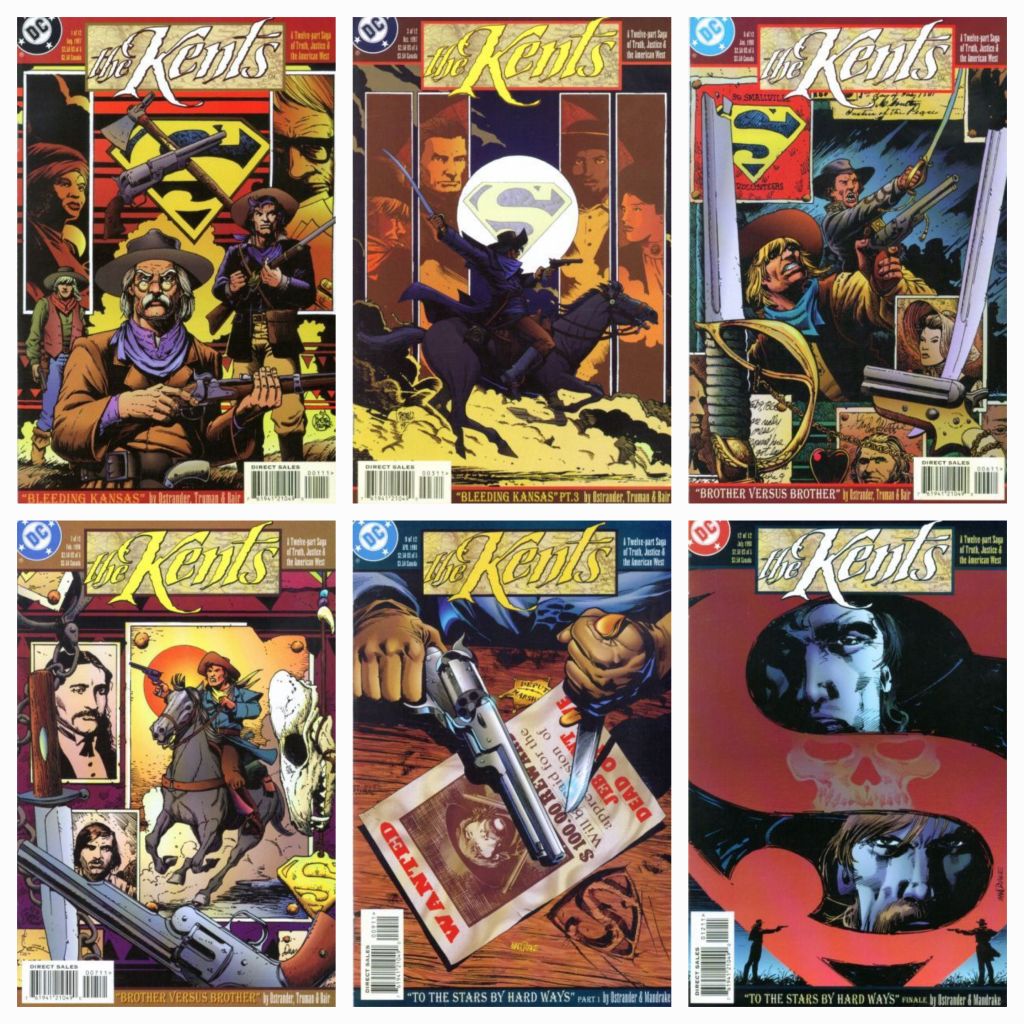

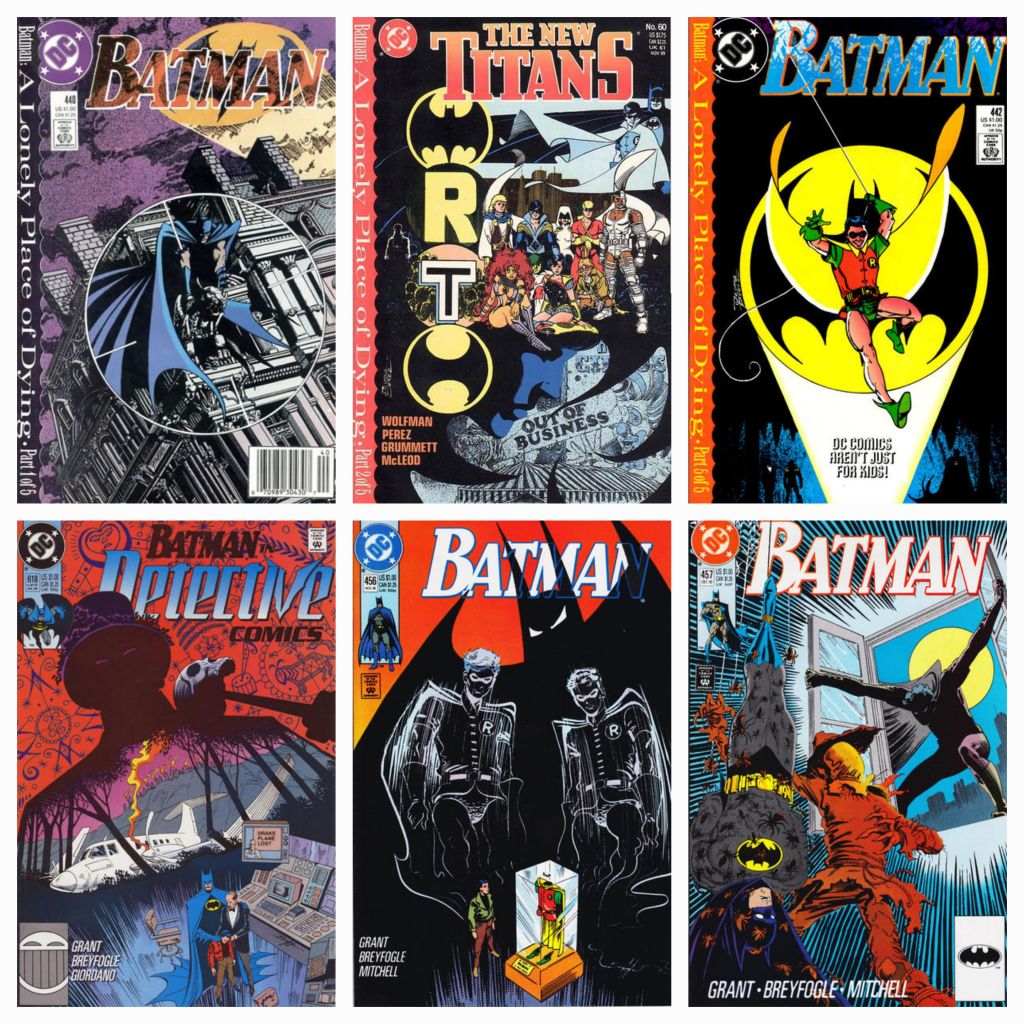


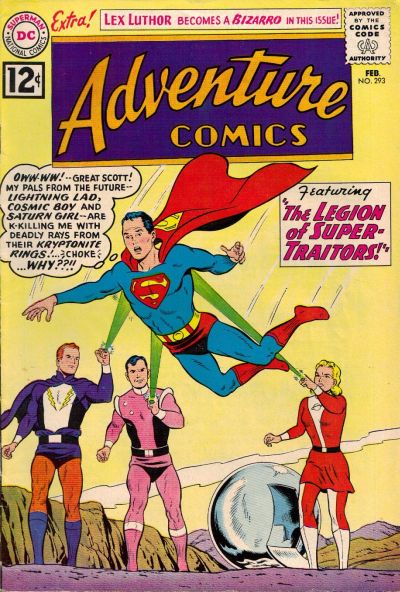


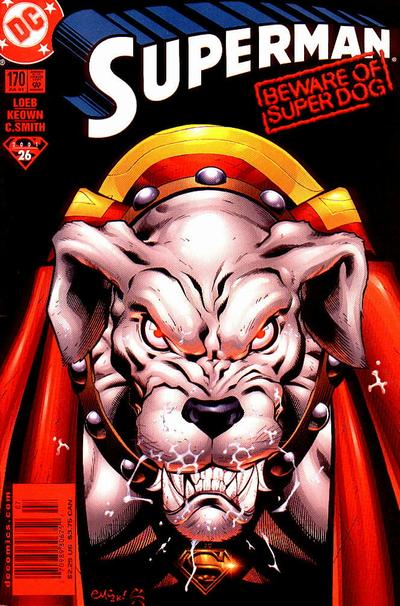
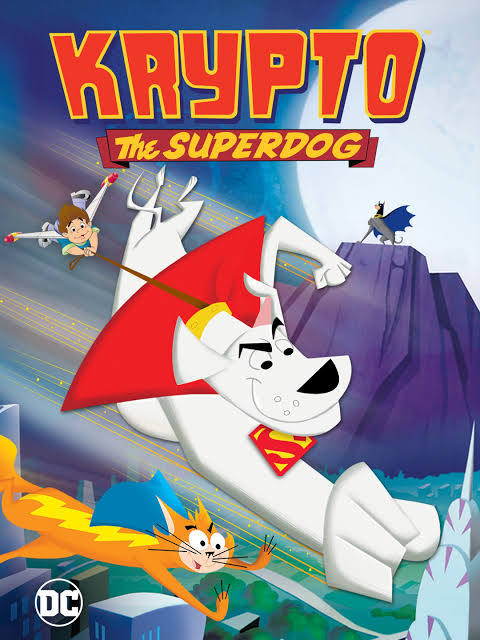
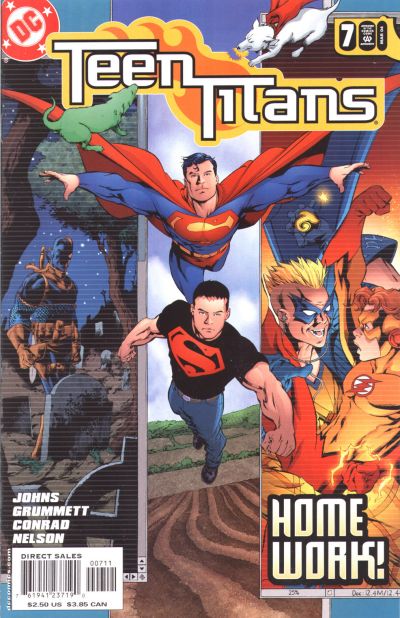

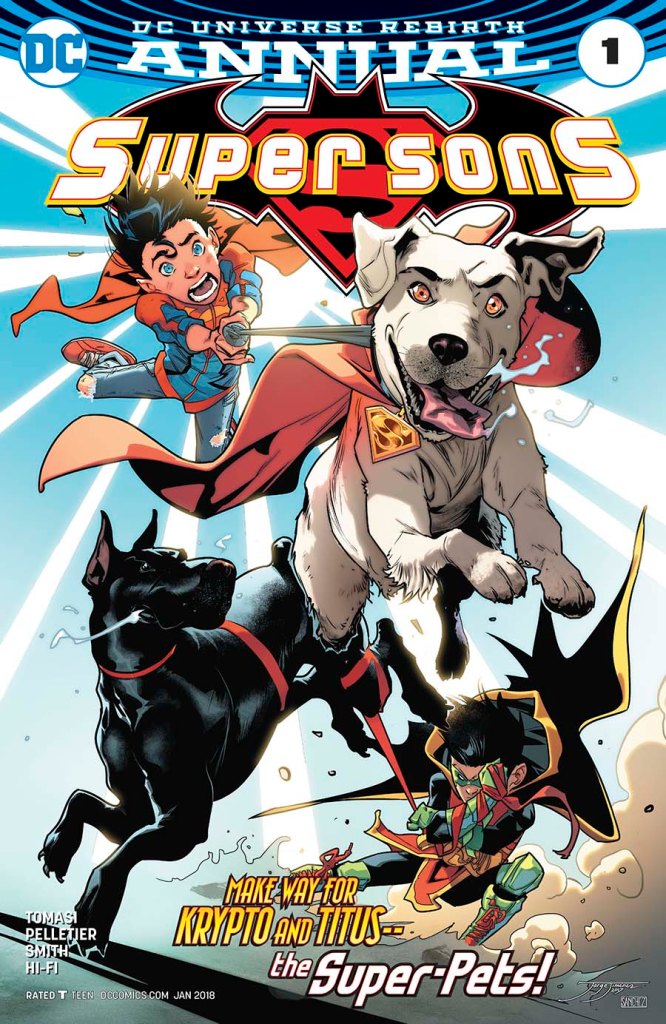


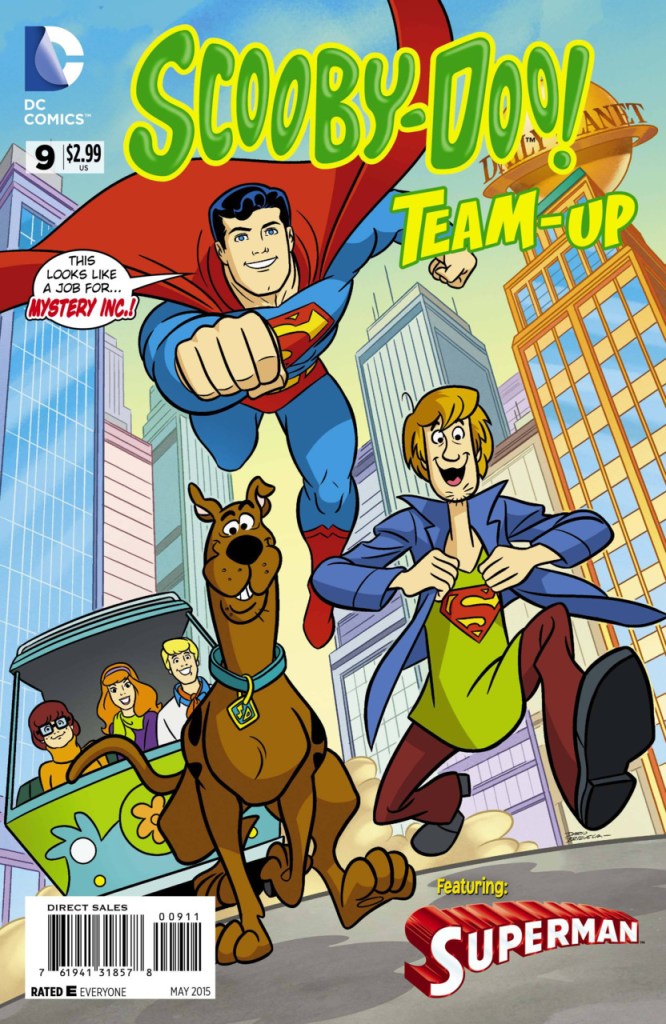


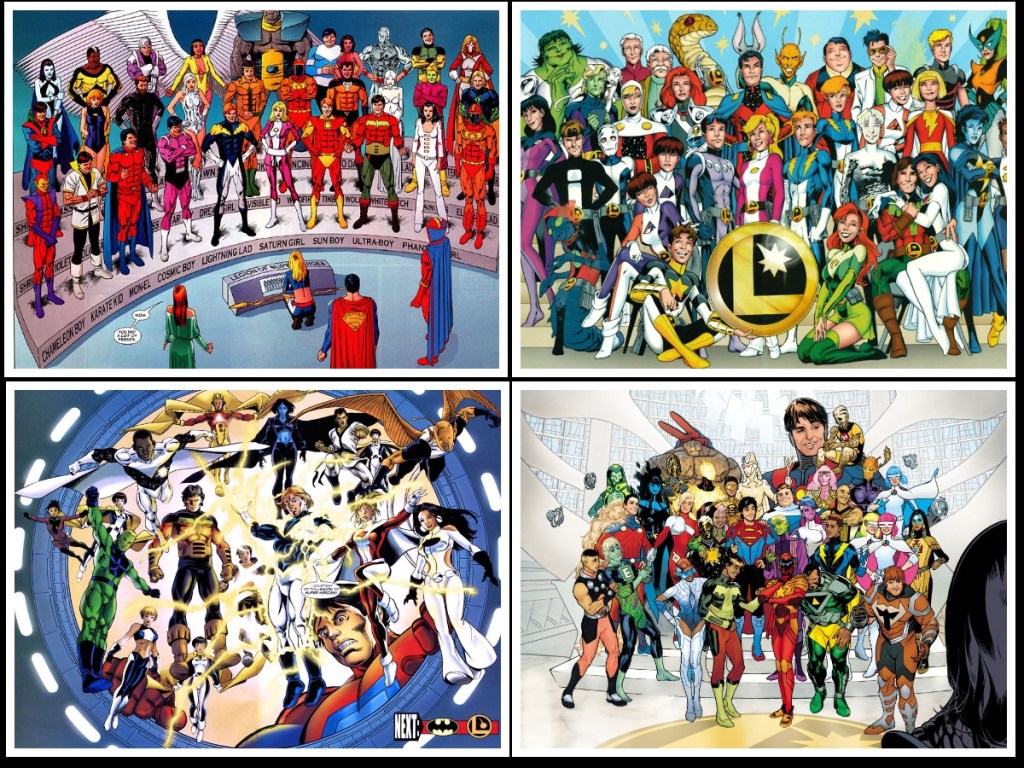


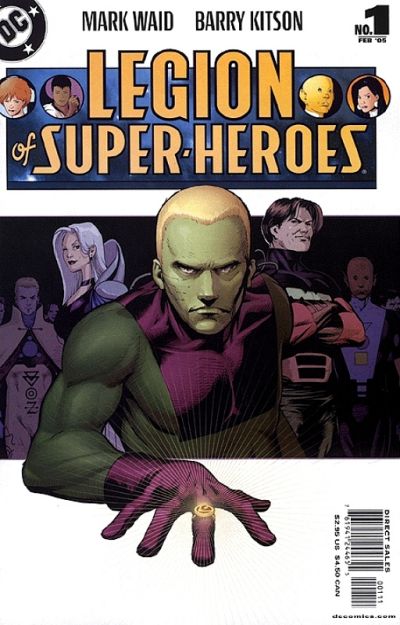
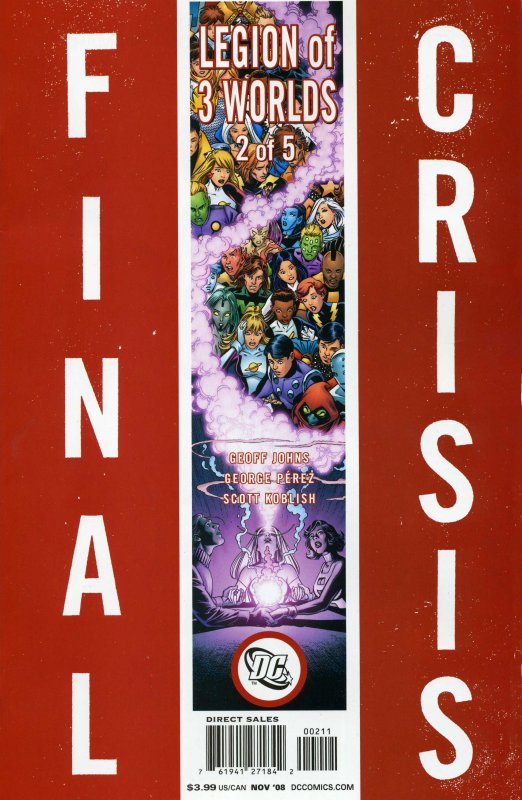


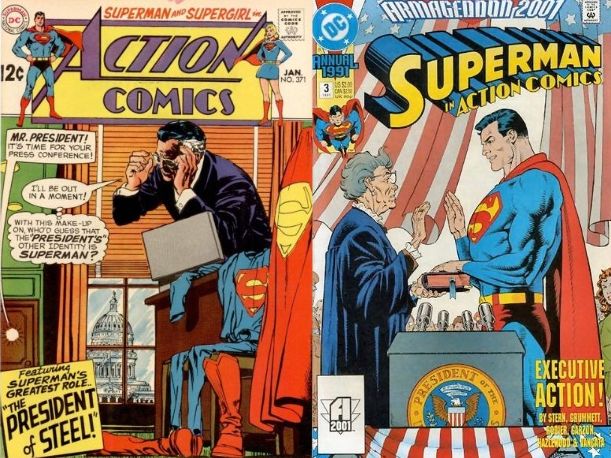



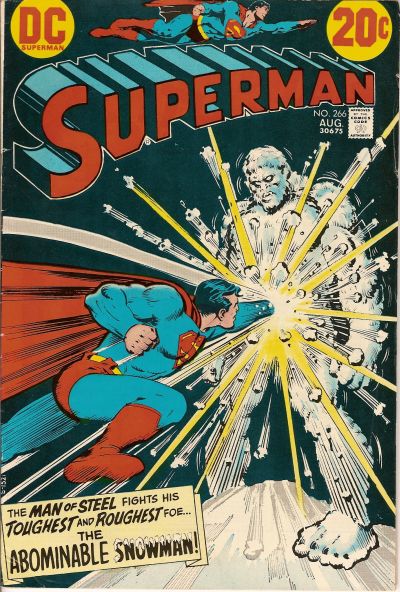

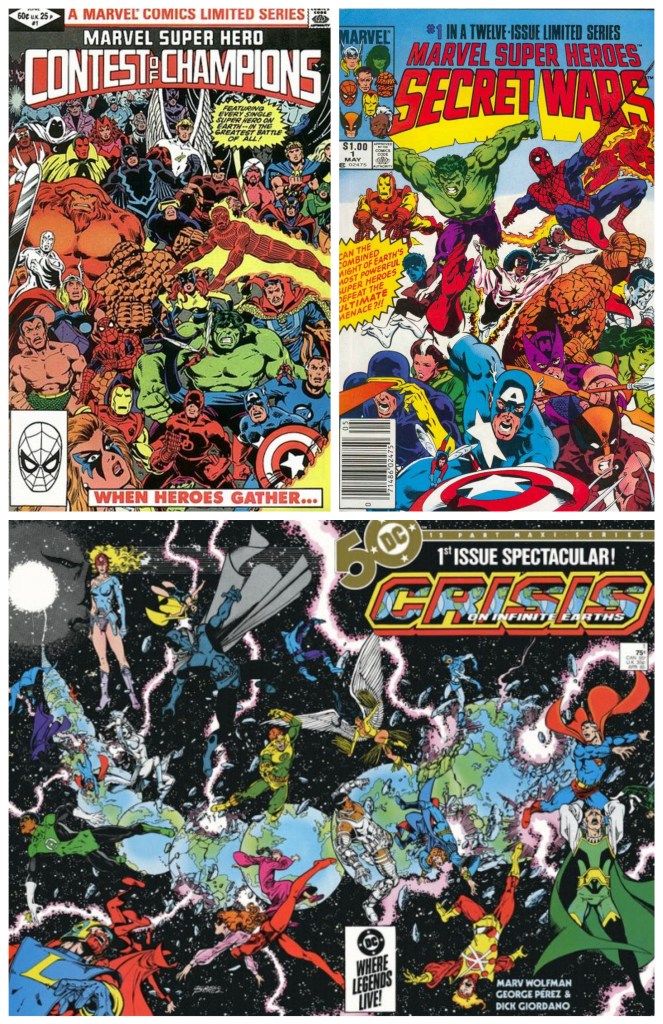


 Blake M. Petit