Year of Superman Week 45: Almost Superman

Superman is often credited as being the “first superhero,” and as big a Superman fan as I am, I don’t know if I can necessarily agree with that. Admittedly, the word “superhero” didn’t exist before him, and there’s little doubt that the term borrowed the superlative from his name specifically, but when you think of the things that MAKE a superhero, there are definitely earlier examples. I started the year, if you’ll recall, reading Philip Wylie’s novel Gladiator, which many believe was an influence on Superman himself and definitely had several of the elements we attribute to Superman: superhuman powers that he kept a secret, which he attempted to use to do good (at least sometimes). Other elements, like the costume or the secret identity, could be found in characters that were around pre-Superman as well, such as Zorro or the Phantom. By most definitions of the term, there are a lot of characters prior to Action Comics #1 that you can rightly call a superhero.

That said, Superman is the character that first brought together most of these elements, and that started establishing “superhero” as a specific genre. Prior to Superman, and even after him for a while, characters that fit the bill of a superhero were considered an extension of other genres – adventure, science fiction, westerns, and so forth. In fact, I think that’s the reason that even now, you can select virtually any genre of storytelling and find an example of a superhero story that crosses over with it. 

Once Superman was there, though, he became THE big name in the genre, and as such, he quickly became imitated. Some imitators just took the bare bones of the concept (costume, secret identity) and did something totally different with them, like Batman or Captain America. Later imitators would start to copy his powers and appearance with characters like the original Captain Marvel. Eventually, once the superhero genre was firmly established, we reached a point where kids who grew up reading them started to do their own twists on it, giving us characters that don’t even PRETEND they’re not a version of Superman. Sometimes they’re created for one-off stories or parodies, as in The Pro. Other times they’re populating an entire world of characters that pay tribute to earlier heroes, as we’ll see in a few of the books I read this week. In any case, these are the characters that we’re going to focus on this week: those heroes who are…almost Superman. 

And as always, you can check out earlier blogs in the Year of Superman Archive!

Wed., Nov. 5

Comics: Invincible #1, Astro City #1
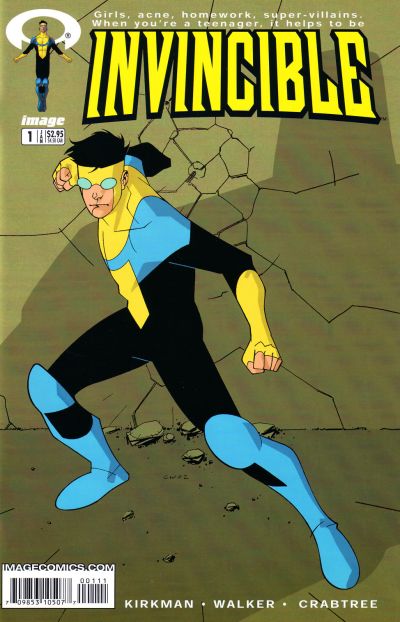
Notes: I’m going to kick off this week with two of my favorites. First up, Robert Kirkman’s Invincible. The first issue starts off with a bang – a young man in a black, blue, and yellow uniform flying through the air carrying someone with a bomb strapped to his chest. He throws the man into the air and the bomb explodes, killing the bearer (something, it should be noted, that Superman would never do) and the young hero expresses slight exasperation at his lot in life. Then the “how did we get here” flashback kicks in, introducing us (in the bathroom) to high schooler Mark Grayson. He’s going about his day, getting ready for school, attending class, going to work at a burger joint – when he accidentally hurls a sack of garbage into the stratosphere. He smiles and says “It’s about time.” Mark’s father, Nolan, is secretly Omni-Man, one of Earth’s mightiest heroes, and after years of waiting for it to happen Mark has finally inherited his dad’s powers. At school, Mark is unable to contain himself when he sees a kid getting bullied and steps in, nearly putting the assailant through a locker. Although the principal understands his actions, he cautions Mark not to get into fights with people so much bigger than him. “You’re not invincible,” he says. 

He’s wrong, of course, and later on a bank robbery introduces Mark Grayson to the world with his new costume and his new name.

I’ve read the entire Invincible series, but I’m only dabbling in the first issue today (because there’s not time to read 143 of them). That said, like I did with Irredeemable in “Superman Gone Wrong” week, I’m going to talk about the broad scope of the series, complete with spoilers. If you’re watching the TV show and aren’t familiar with the comics, you may want to skip down to the next comic I’m reading today.

Invincible is an interesting way to start off this week. On the surface, of course, we’ve got Omni-Man, the obvious Superman analogue in Mark’s world, and it feels in this first issue that we’re reading about what it would be like to be the son of Superman. (This was in a pre-Jon Kent world.) In a few issues that’s all turned on its head with the big reveal of the series: Omni-Man, like Superman, is an alien hero sent to Earth. Unlike Superman, though, he is the point man for an invasion force, sent ahead to prepare Earth to one day be conquered by his people, the Viltrumites. When he learns about this, Mark turns on his father and, following a particularly graphic battle, Nolan flees Earth.

For a time, I considered using this book for “Superman Gone Wrong” week, since Nolan seems to fit that template perfectly. I decided to use it here instead, though, for two reasons. First, later in the series Nolan goes through a redemption arc, wins back his son’s trust, and joins him in the defense of Earth against their own people. And it’s a testament to the talent of Robert Kirkman that the redemption arc lands – eventually, the reader comes around to accepting Nolan as one of the good guys again, despite some of the terrible things he does early in the series. 

The other reason I saved it for this week is because Omni-Man, although the clear Superman analogue, isn’t the actual star of the series, Invincible is. And Invincible is a different sort of character: Superman-like powers but with a tone that’s more evocative of Spider-Man. At least, that’s how it is at the beginning of the series. As it goes on, he sort of grows out of that template and becomes his own kind of thing, a character very different from either of his respective “parents,” and one of the few characters in modern times to break into the mainstream, thanks to that series on Prime Video. 

And the show is very good, don’t get me wrong. But as is so often the case, I like the book better.

The other character I’m going to get into comes from one of my favorite series, from the first issue of that series, and from one of the finest comic books I’ve ever read: the Samaritan from the first issue of Kurt Busiek’s Astro City

Coming off the wild success of Marvels, in which he and artist Alex Ross showed the Marvel Universe through the eyes of a bystander, Busiek launched Astro City in 1995. The idea this time is that the main character of the title is the city itself, a fully-realized world populated with superheroes and villains, many of whom are quite similar to those that we are familiar with. However, there’s no single anchor character – every issue or arc shifts perspective. Sometimes the main character is a hero, sometimes a villain, sometimes a loved one or a victim or a bystander. You never know quite what you’re going to get in any given issue of the book, and for that reason among any others, it’s one of my favorite comic book series of all time, and I eagerly anticipate its promised return. 

The first issue, “In Dreams,” introduces us to the Samaritan, and it does so in a simple “day in the life” format. The Samaritan is woken up by an emergency alert early in the morning, popping him out of a dream in which he is flying. He suits up and rushes off to use his considerable powers to prevent a tidal wave in the Philippines from destroying a city, a trip that takes him 6.2 seconds from his hometown. As the day goes on, we see him take care of other assorted disasters, thwart assorted crimes and supervillain schemes, and have a meeting with the Honor Guard (if Samaritan is the Superman of this world, the Honor Guard is the Justice League or Avengers equivalent). We see him at work, as a fact-checker and proofreader for a magazine rather than a reporter. We also get a recap of his origin: he was sent back in time from a dying Earth to prevent the tragedy that led to its sad current state – the destruction of the space shuttle Challenger. In saving the world, the future he came from no longer existed, and he resigned himself to staying in the modern day and acting as one of Astro City’s superheroes. We see his life, and we see how incredibly lonely he is. 

Throughout the issue, Busiek seeds little bits and pieces that begin to build the world of Astro City. We meet assorted other heroes and villains, get references to others. We learn that Honor Guard member MPH has an extraterrestrial nervous system for some reason, and learn a little of the story of a villain called the Living Nightmare. All of these little things make the world feel more lived in, and a lot of these little elements would pay off in later stories over the years. 

The other thing that happens is that as Samaritan zips from each scene to the next, he keeps a running tally of how much time it takes to fly from one place to another. When he gets home that night, he calculates a total of 56 seconds of flight time for the day, “the best since March.” And then he goes back to sleep and resumes his dream of flight.

There are a lot of stories about Superman (or his copycats) that focus on the loneliness of the character, about how alienating it would be to be the last of your kind, to live in a world where there’s nobody else quite like you. That’s a legitimate take, of course. But too often, I find that stories that use this approach do so at the expense of Superman’s humanity. They treat him as an alien first, and to me, that misses the core of the character. Busiek’s Samaritan leans on the loneliness, but does so in a remarkably, beautifully human way. The story is sweet and sad and perfect, and it’s kept me a fan of the series ever since.

Both Invincible and Astro City are available in massive compendium editions (called “Metrobooks” in the case of Astro City) from Image Comics. If you’ve never read them, do it. There are few comics out there – besides Superman, of course – that I can give a higher recommendation to. 

Thur., Nov. 6

Comics: Icon #1-3, New Adventures of Superboy #36, Blue Devil #4 (Guest Appearance), Justice League of America #37, DC KO: Knightfight #1 (Cameo)

Notes: When Milestone Comics was launched in 1993, an entire imprint of DC featuring characters and creators that were predominantly people of color, it was a pretty big deal. It shifted assumptions and preconceptions about how comics work and opened up the world of comics to audiences that would never have been interested before. Of course, like most storytelling experiments, it wouldn’t have worked if the stories being told weren’t actually GOOD. Fortunately, they were. And my favorite of the original line – this should surprise virtually no one – was Icon by Dwayne McDuffie and M.D. Bright. 

The story opens in outer space in the year 1839, but in deep space, as we see an alien escape a doomed ship in an escape pod. The ship crashes to Earth and the alien shifts his form to imitate an infant form of the first Earth creature it encounters – who happens to be a slave in the American south. The alien takes the form of a human baby and is taken in by the woman who found him. 

Time skips ahead to 1993, where the alien has been living on Earth for a century and a half under the guise of Augustus Freeman and his various similarly-named ancestors. Now living as Augustus IV, he’s become a highly successful lawyer in the city of Dakota, but finds himself dwelling on a recent encounter with a teenage girl. Raquel Ervin got drawn into some criminal activities with friends of hers who tried to rob Freeman’s house. When they ran into the man himself, he flew after them, shrugging off their bullets and warning them never to commit another crime. Raquel was astonished by what she saw and returned to Freeman later, urging him to use his powers to help people. She even designed a uniform for him and insisted she make him her sidekick, calling the two of them “Icon and Rocket.” Her words sway Freeman, and he gives her a belt to give her force field-based powers. They test out their new paradigm by responding to the news of a situation at city hall. Unfortunately, the cops don’t see a pair of heroes show up – just a strange pair of African-Americans in weird costumes, and they place them under arrest.

In issue two we get more information as to the situation: the mayor of Dakota has been taken hostage, and the cops were there to handle the situation, but the building is full of men with guns. The cops, with a unit called SHRED (Special Heavy-Equipment Rapid Emergency Deployment) are there to take the bad guys down, and they DON’T want help. Icon attempts to comply with the police request and explain themselves, but Rocket begins fighting the cops. Ico is stuck in the unenviable position of preventing Rocket from hurting the police and vice-versa. Once he gets Rocket to safety, he surrenders himself to the police to quell the situation, but he’s forced back into action by an explosion in city hall. He and Rocket save some of the police, then make it into City Hall where they learn that the man holding the Mayor hostage is one of the “Bang Babies,” people given powers by a strange gas during a recent event in some of the other Milestone titles, and he turns himself into a monster.

In issue three, Icon and Rocket face the monster – calling himself Payback, whose claws are capable of cutting Icon’s skin. Payback flees into the sewers and Rocket follows while Icon, injured, stays behind to clean up the rest of the human gunmen. He catches up to Rocket and Payback in time to hear the latter plead his case, how the mayor used the tear gas to prove she was “tough on crime” but wound up mutating innocent people. Icon promises that if he turns himself in, he will see to it that there’s an investigation into the “Big Bang” incident, and the people responsible will be held accountable. Bringing Payback in convinces the authorities that Icon and Rocket are on their side. At the end of the issue, though, he tells Rocket that she’s going to have to work from the sidelines for a while – with his super-senses he’s discovered something that she has not: Raquel is pregnant.

Such a great title. Amazing, unique characters and beautiful art made Icon stand out from other books on the stands, even from other Milestone titles. But that’s one of the things that made Milestone great – each title had a different perspective and point of view. Icon wasn’t like Static wasn’t like Hardware wasn’t like Blood Syndicate, and that was all to the good. What I particularly like about this title is the bait-and-switch, though. Icon is the title character. He’s the obvious Superman analogue. His powers, origin, and costume are all deliberately evocative of the man of steel. But it’s Raquel who’s actually the protagonist of this comic. She’s the main point-of-view character, she’s the one who starts Augustus on his journey, she’s the one who makes everything happen. And in fact, in the most recent iteration of the Milestone universe, they finally shared billing on their title: Icon and Rocket.

Like many of the books I’ve read so far this week (and it’s only Day Two) I find myself wanting to go back and read more. Maybe 2026 will have to be the Year of Characters Who Are An Awful Lot LIKE Superman.

Fri. Nov. 7

Comics: Love and Capes #1, DC Vs. Vampires: World War V #12 (Supergirl, Steel Appearance)
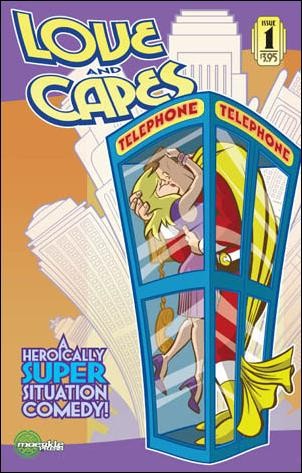
Notes: I don’t know if I’ve mentioned it lately, but I am a geek lucky enough to be married to another geek. My wife doesn’t share all of my geekdoms, nor I hers, and where there IS overlap they’re usually at different levels (she’s more into Star Wars, for instance, whereas I prefer Star Trek, but we watch ‘em both together). All that is to say that, as she isn’t AS big into comics as I am, she never lets me forget that she’s the one who first introduced me to Thom Zahler’s Love and Capes.

Mark Spencer is the Crusader, the big, strong, flying guy with the cape. He hangs out with a shadowy avenger of the night called Darkblade. He used to date a powerful warrior woman called Amazonia. And as we soon learn in issue #1 of this delightful series, he’s head-over-heels in love with a perfectly ordinary bookstore owner named Abby Tennyson. In this issue, Mark decides to tell his girlfriend that he loves her, but also, share with her the secret of his dual identity.

And thus begins the series that Zahler refers to as “a heroically super situation comedy.” Love and Capes is the superhero romcom you never knew you needed. While Abby isn’t exactly a Lois Lane, Mark is clearly his world’s Superman (down to the glasses he wears to protect his identity), and this first issue explores a lot of the questions that would naturally arise in any such a pairing. Once Abby learns his secret we see her struggle (and fail) to keep her sister from finding out, feel her bristle with insecurity when she learns that Mark and Amazonia used to date, and sit with her on the couch in quiet horror as she watches the Crusader fighting a supervillain on TV, realizing that she’s never seen him bleed before.

The wonderful thing about Love and Capes is just how naturally Zahler weaves the superhero story in with the kind of real life drama (and comedy) that comes in any relationship. Over the course of this series we see Abby deal with all sorts of things that would naturally come along with being a superhero’s girlfriend – evil doppelgangers, time-travel, meeting the rest of the superhero team and so forth. We also see Mark deal with simple, common relationship stuff, like trying to find time for one another when one of you is a workaholic, blending your friend groups, and ultimately (spoiler warning here) the challenges of marriage and parenthood. 

Interestingly, Zahler leans away from the superheroics of the universe. Sure, we see Mark using his powers all the time, but we virtually never see any superhero fights or adventures, merely the aftermath, as the relationship between Mark and Abby is what’s actually important. That gives this series a perspective that completely sets it apart from every other not-quite-Superman on the market. 

It’s only fair to admit that I’m an enormous fan of this book. In fact, for the Mark and Abby’s nuptials in issue #13, I took advantage of a “wedding” package Zahler made available to fans to get yourself drawn onto the wedding scene on the cover, so if you’ve got that issue, you can actually find me with (my then-girlfriend, now wife) Erin attending Mark and Abby’s wedding. What’s more, Zahler and I have struck up a friendly acquaintance over the years, and he even name-dropped me as the owner of a po-boy shop in New Orleans in his series Cupid’s Arrows. I say this not to brad, but to be quite clear that am not unbiased in my praise for this series.

But I hope you believe me when I tell you that I would be just as effusive a fan even if it weren’t for any personal connections we have. It’s just a sweet, lovely book, and every so often when he brings out a new miniseries or special, I’m as gleeful to pick it up as I was the first time. 

Sat., Nov. 8

Comics: Adventures of Superman: Book of El #3, Absolute Superman #13
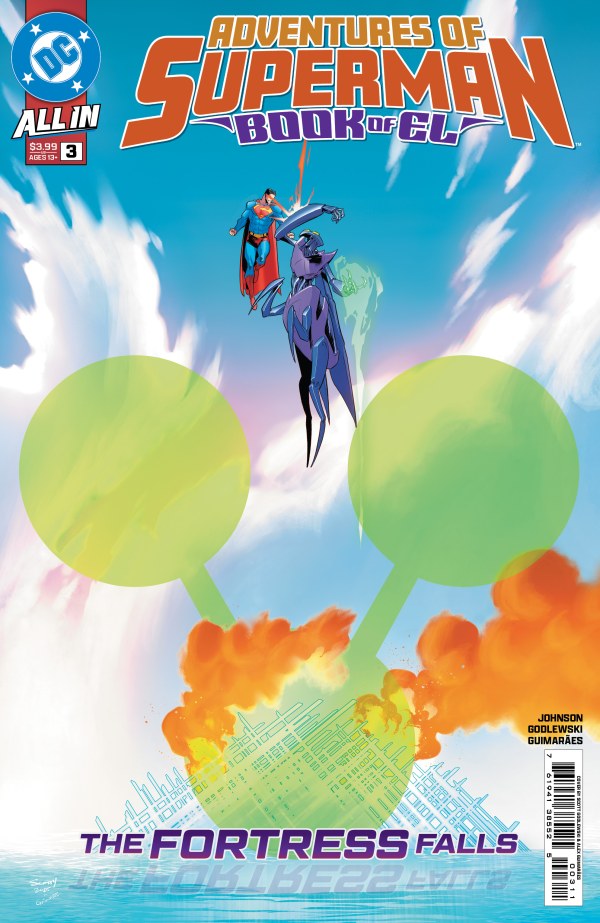
Notes: I’m going to hit this week’s new Superman comics today – only two of them, but they still count. And I’m starting with the third issue of Adventures of Superman: Book of El. Trapped in a future that believed him to be lost, Superman and his last descendant, Ronan Kent, return to the Fortress of Solitude to find a way home. Unfortunately, Brainiac’s legion is on his trail, and determined to keep him in this distant future instead of allowing him to go home and prevent this world from happening. There’s also a nice reveal at the end, a hope spot that’s subverted and sets the stage for the rest of this miniseries.

Reading this book is a little frustrating to me. I should like it. I honestly should. There are tons of little elements that work well – a time machine that looks like it was dropped out of H.G. Welles, a giant turtle Jimmy Olsen…and Phillip Kennedy Johnson completely understands the characterization of Superman. There’s a point where he tells Ronan “As long as you wear that symbol, your strength doesn’t belong to you. It belongs to those who NEED you.”

And yet somehow…I’m just not engaged. I think it’s the nature of the project – Superman is stuck in a future where he was lost. He wants to go home to prevent that future from happening. And since we know that DC isn’t going to allow him to stay in the future forever, his successful return is a foregone conclusion. It doesn’t matter how high the stakes get, in the end, it still feels so inconsequential. At least in an Elseworlds story you know that the consequences for THAT universe are real. I don’t get that here, and that’s dulling my enjoyment considerably. 
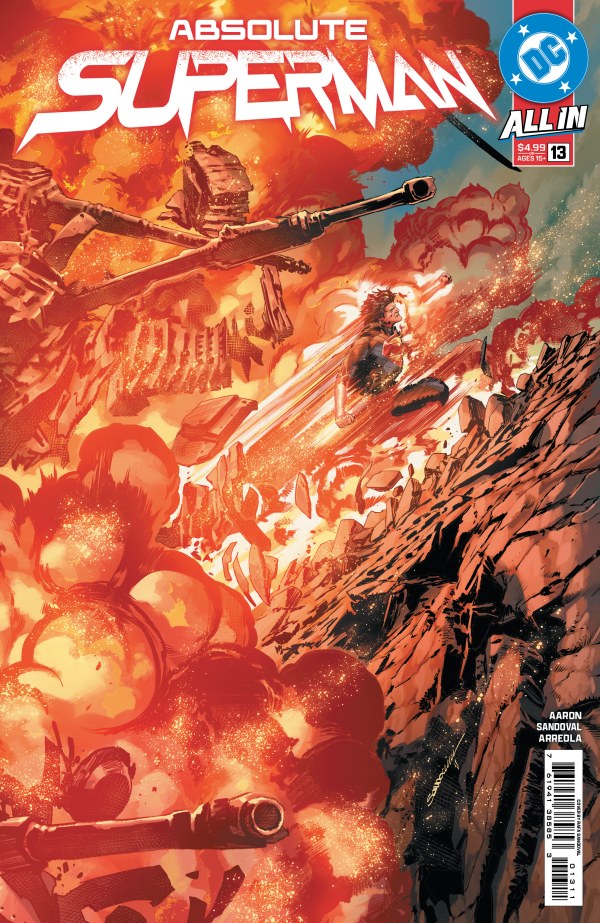
Absolute Superman, on the other hand, not only feels like the consequences are real, but also that – in this Absolute universe – virtually anything can happen. As Lazarus begins its attack on Smallville, Kal-El orders Sol to override its original programming to protect him and, instead, expend its energy becoming a shield surrounding Smallville. But the resources of Lazarus and its Peacemakers are too much, even for Kal-El, and the small town is overrun. As he struggles against their forces for weeks, Lois and Jimmy try to broadcast the truth about what’s happening in Kansas to the rest of the world. 

Most of the issue bounces around non-linearly from the beginning of the war to the “present,” six weeks later, showing different conflicts and encounters both on and off the battlefield. Jimmy and Lois reflect on how the appearance of Kal-El is what made them turn against Lazarus, which is just one of the things I really like about this issue. The thesis of the Absolute Universe is that this is a world fueled by Darkseid, where “hope” is always the underdog…and yet this is where the hope shines through. Kal-El, Superman, even in this dark world is held up as a beacon. There’s a scene where he confronts someone who – well, did him wrong, let’s just say – and for a moment you wonder just where Jason Aaron is going to take the scene, but in the end, he does the Superman thing. And I just love it.

Feature Film: The Iron Giant (1999)

Notes: Anyone who loves The Iron Giant knows already why I’m watching it for this week’s theme. Anyone who hasn’t seen it – I envy the fact that you’ll get to experience this for the first time. Because of all the stories that do NOT actually feature Superman, there is none that more fully captures the Superman ethos than Brad Bird’s 1999 animated masterpiece.

In 1957 Maine, a lonely boy named Hogarth finds an enormous robot alone in the woods. Hogarth befriends the Giant, who has a dent in his head that seems to have damaged his programming, leaving it with no memory of its origin or purpose. Hogarth begins to teach the Giant about humanity, playing games with it and showing him his comic book collection – including classic issues of Action Comics, and the robot finds a role model. But the military, naturally, is searching for the Giant as well, fearful of what it may represent. An agent named Kent Mansley tracks him down, but is unable to convince his superiors that the threat is real.

Playing with the Giant, Hogarth points a toy gun at him, temporarily causing his original programming to kick back in and it reveals him to be a weapon of some sort of alien civilization. Broken-hearted at learning the truth about itself, the Robot flees, and Hogarth follows. When a pair of boys fall off a roof in town, the Robot reveals itself and saves their lives. The town watches him in awe, but Mansley and the army turn back around to combat the threat. They open fire on him in the middle of the town while he’s holding Hogarth, and he flees. Each attack continues to bring his programming to the surface, but he fights against it until they hit him with a missile, blasting him from the sky. Hogarth is knocked unconscious in the crash and the Giant’s programming takes over, turning on the army and attacking with the full force of his weaponry. Mansley convinces the general to target the Giant with a nuclear weapon, then in his panic hijacks a walkie-talkie to order a strike that will wipe the small town and all its innocent citizens off the map. But the Giant overcomes his original programming, remembering the lessons Hogarth taught him. In the end, he makes a decision that proves him not only worthy of the “S,” but that – like Superman himself – his alien origins are irrelevant. His soul may be among the most human of us all.

I can’t tell you how many times I’ve watched this movie, but I can tell you how many times I’ve watched it without crying, and that number is zero. Director Brad Bird, who would go on to much greater acclaim at Pixar with movies like The Incredibles and Ratatouille, uses the era of the Red Scare as a backdrop here. It’s a shorthand to amplify the fears of the townspeople of the Giant, making the concerns put on display a bit more justifiable and somewhat removing the need for a more traditional antagonist. To be certain, the military in this movie are the ones who are acting against the Giant, even threatening his life, but none of them are doing it from a place of evil. Mistrust, misunderstanding, sometimes even arrogance, but everyone who tries to destroy the Giant does so out of a sincere belief that he’s dangerous. Mansley is the most villainous character, lying to the general, telling him that the Giant has killed Hogarth (as far as he knows, the Giant is merely CARRYING Hogarth) in order to get them to continue their attack, and generally being a jerk. Even he, though, sincerely believes that this giant alien robot is dangerous, and it’s hard to disagree with the logic behind that fear. Honestly, it’s not even like they’re wrong – had his original programming not been subverted when he came to Earth, it seems quite likely that he WOULD have laid waste to the entire planet. So yeah, this is one time where the antagonists kinda have a point.

That said, what makes this work so beautifully is the way the Giant grows beyond what he was originally built for. Anyone who’s seen this movie can remember two lines from Vin Diesel (voicing the Giant in his most lifelike performance outside of Groot). One, when Hogarth tries to make him the bad guy in his game, is the adamant declaration: “I AM NOT A GUN.”  The other comes at the end, as he makes the choice to sacrifice himself for the lives of the people below him – not only Hogarth, but the very ones who chased and attacked him. As he takes to the air to save them all, he closes his eyes and smiles and whispers the name he has chosen for himself: “Superman.

There’s another line that echoes in the film: “You are what you choose to be.” Harry Connick Jr.’s character says it to Hogarth, and later Hogarth says it to the Giant. Then, 26 years later, Jonathan Kent says something very similar in James Gunn’s Superman. It may be a coincidence, but only in that two storytellers who intimately understand the Man of Steel chose to use the same sentiment to get that idea across. 

I don’t like pop culture gatekeepers. I don’t think anybody has the right to dictate what a “real” fan is to anybody else. That said, I find it very difficult to conceive of anybody who truly understands Superman without being utterly in love with this movie. It’s one of the greatest superhero movies ever made. 

TV Show: Superman and Lois Season 3, Ep. 2, “Uncontrollable Forces”

Sun, Nov. 9

Comics: Supreme #1-6
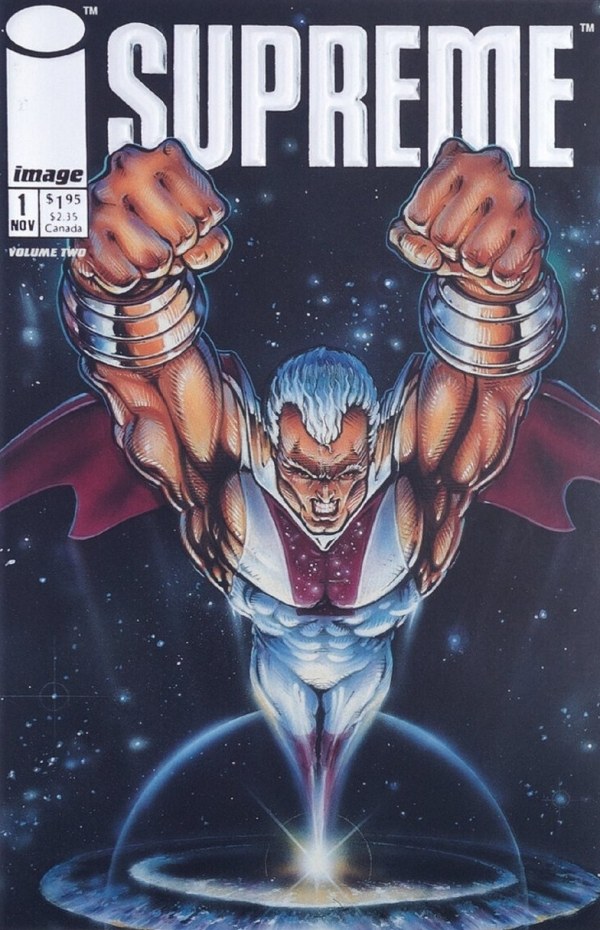
Notes: The works of Rob Liefeld can sometimes be…well…divisive. And to be perfectly blunt, I’ve never been a fan. But this summer, I happened to come across the first six issues of Liefeld’s Superman pastiche, Supreme, while rummaging in a dollar bin in a comic shop in Mississippi. Knowing that “Almost Superman” was on the docket for later in the year, I decided it would be worth the six bucks to get a taste of it. Now I know that most people say that the best Supreme stuff came later, when Alan Moore wrote the title, and would probably suggest it’s more beneficial to read THAT run than Liefeld’s original. To those people, I simply say: the Moore stuff wasn’t in the dollar bin.

Liefeld shared both the writing and art chores with Brian Murray for this book, which oddly enough is labelled as “Volume Two” even though, as far as I can tell, there was never a “Volume One.” In “Second Coming,” Liefeld’s premiere superhero team Youngblood is summoned to outer space when a strange figure approaches Earth. He claims to be Supreme, a hero who apparently vanished 50 years ago, and after a very 90s scuffle, they accept him as who he claims to be and return him to Earth. Although offered a place with Youngblood, he leaves and returns to orbit, looking down on Earth and crying. Issue two begins with Supreme lamenting the loss of the heroes he fought with 50 years prior and looking down at the heroes that exist on Earth now: Youngblood, Spawn, Savage Dragon, Cyberforce, WildC.A.T.S (it’s a “Who’s Who” of early Image). He’s upset that the heroes of today seem to be created and funded by corporations (this is clearly NOT true of Spawn), then drops in to a prison to murder somebody named Grizlock. Grizlock seems to be his arch-enemy, his “Lex Luthor” if you will, who killed Supreme’s equivalents of Jimmy and Lois some 50 years prior. Before he can get his revenge, he winds up fighting some superhumans called Heavy Mettle who appear from that magical space between panels, because nothing else makes sense. After several pages of Supreme battling characters that I could swear were designed to deliberately lose a bet, they convince him to hear out their boss, Jason Temple, explaining why Grizlock should get to live. 

At this point, friends, I’m going to give up on the play-by-play, because any attempt to continue with that exercise would be to imply that anything that happens in this comic book series makes the slightest bit of sense. I read six issues of this nonsense, and here’s what I can tell you: Supreme spends several issues fighting some guy called “Khrome.” Yes. “Khrome.” Who apparently was formerly his ally, but now they’re trying to kill each other, because it was the 90s. Khrome is as boring and generic a villain as you can imagine, which means he fits in with the rest of this comic book like a jigsaw puzzle with a picture of a dog peeing on a fire hydrant. Every character is dull and generic, with designs that look like somebody spilled a box of Lego minifigs and assembled the pieces entirely at random. The names and powers are forgettable, and the motivations are nonexistent. It’s a lot of punching and blowing things up at the expense of anything resembling a plot or characterization. 

My intention, this week, has always been to compare the kinda-Supermen to the real deal, but there’s not even enough of Supreme to do that. He seems sad to have lost people in his past, but his callous disregard for the lives of the bystanders to his pointless battles defies anything that could be considered Superman-like. There simply isn’t anything THERE. This is one of the worst things I’ve ever read, and I don’t just mean in comics. This is the first time I’ve ever read the letter column of an old comic book and felt the urge to seek out the people who wrote in and praised the book to ask them if they ever sought out the psychiatric help they so clearly deserved. 

From what I can tell, Alan Moore’s run on this comic started with issue #41. It is a testament to the money-printing machine that was the earliest years of Image Comics that this book ever even made it that far, because it was an utter, absolute, incomprehensible mess.

All that said, it’s still better than anything AI could make.

Mon., Nov. 10

Comic: Big Bang Comics #2, Mr. Majestic #1, Jon Kent: This Internship is My Kryptonite #18, Infinity, Inc. #6 (Team Member Power Girl)
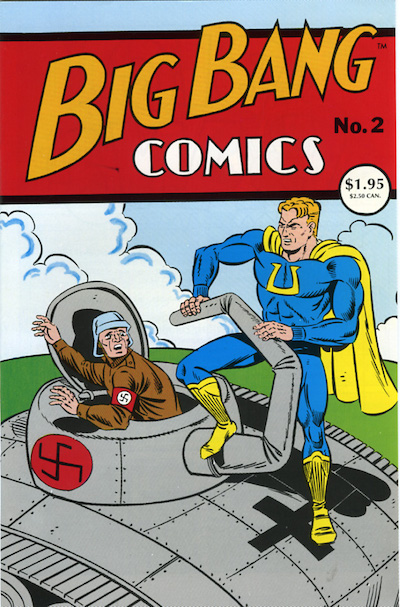
Notes: Today I’m going to move on to a series that’s as delightful as Supreme was frustrating: Big Bang Comics. Big Bang is a publishing imprint created by a revolving group of writers and artists who have crafted a shared world that pays tribute to all eras of comic books. Their universe is populated by thinly-veiled homages to the all-stars of DC and Marvel Comics, with stories set in – and emulating the styles of — the Golden, Silver, Bronze, and Modern ages of comics. There are legacy heroes and names passed down from one generation to another, and in the 30 years of its publication they have played host to numerous ongoings, specials, and miniseries featuring their assorted heroes, such as the Knight Watchman (their Batman analogue) and the Round Table of America (no points for guessing what that might be). They were originally published by Caliber Press, then had a nice run at Image Comics. These days, they self-publish, and new installments are still released a few times a year.

To represent this world I’m digging into 1994’s Big Bang Comics #2, the first comic with a story starring their Superman representative, Ultiman. (This issue also contains stories of their Flash substitute the Blitz, and the Human Sub, who’s kind of a mashup of Aquaman/Sub-Mariner and Bulletman, but Ultiman is what we’re going to focus on.) Writer Gary Carlson and artists Jon Schuler and Don Simpson craft this Golden Age-style tale of Ultiman, “the Ultimate Human Being,” as he battles the “Sub-Oteurs.” The Nazis, it seems, have developed a drilling craft with the ability to tunnel underground, which they are using to attack freight trains delivering supplies for the war effort. When he hears about the attack, Ultiman (who apparently sits around his house in full uniform listening to a radio with his emblem on it) leaps into action from his home in Empire City. Just as Golden Age Superman couldn’t fly, Ultiman hitches a ride on the outside of a passenger plane that takes him to the scene of the attack, then rushes to save miners trapped in a nearby cave-in. Rescuing the miners, he discovers an odd tunnel with tank treads on the ground, following it to the German “submarine” that’s attacking a dam. Ultiman uses a car and his “thermal vision” to seal the cracks in the dam, then sets out to tackle the Sub-Oteurs. He captures the Nazis and sends the empty sub on a trajectory to drill straight to the center of the Earth.

This is an almost flawless representation of the Golden Age of comics. All it would take is redrawing Ultiman and maybe adding a page of him as Clark Kent hanging out around the Daily Planet and it would be virtually indistinguishable from the real thing. That’s the charm of Big Bang, the way they so lovingly recreate the worlds of classic comics. This isn’t a parody or a satire, nor is it a deconstruction. It’s just a new world that mimics the classics.

Later Big Bang stories would develop Ultiman’s world much more, giving him a secret identity and an origin, related characters, and even using the multiple Earths concept to have two Ultimen (those of Earth-A and Earth-B) come into contact with one another.  I wish there was some sort of omnibus of the entire universe, but alas, no such thing yet exists. Still, if Gary Carlson or anybody at Big Bang is listening, there are at least some of us who would be really happy if here was an easy guide to buying and reading the entire universe, even digitally. (The new stuff is available digitally, I should mention, it’s the older stuff that’s harder to find.) 

The most important takeaway here is that if you’re trying to find classic stories in the style of Superman from various ages (or Batman or Captain America or any of a dozen others), Big Bang Comics has what you’re looking for. 

Moving on, let’s look at Mr. Majestic #1, from Wildstorm Comics. Wildstorm began at Image Comics before Jim Lee sold the company to DC and became one of its executives, and it was at DC that their one of their Superman analogues, Mr. Majestic, got his first miniseries. (The other analogue would be Apollo of The Authority, but Majestic is more “classically” Superman.) As Wildstorm became more integrated into the DC multiverse, Majestic met Superman several times and even temporarily took his place in Metropolis during one of those periods when Superman went missing for one reason or another. I’m going to look at the first issue of his first series for today’s entry. 

Written by Joe Casey and Brian Holguin with art by frequent Superman artist Ed McGuinness, “Cosmology” begins at some point earlier in the 20th Century with the alien hero Mr. Majestic in space, taking care of the sort of extraterrestrial menace that superheroes have to take care of, before returning home to his secret lair inside of Mt. Rushmore. With the help of a boy genius named Desmond, Majestic determines the probe he fought in space was engaged in the task of mapping Earth’s solar system in exquisite detail, for a purpose that he fears goes even beyond a simple alien invasion…something, he says, that is likely to occur within a century. He gathers a braintrust and begins making preparations, spending decades seeking a way to somehow hide the entire solar system, ultimately deciding upon moving various heavenly bodies and altering the appearance of others in a sort of camouflage. In the end, the thing the probe was summoning arrives, and Majestic can only watch to see if his decades of effort have been worth it.

I very much enjoyed this one. Majestic is like Superman in a lot of ways, not only in his power set, but in his sheer determination to protect Earth, which comes across very much as a Superman sort of thing to do. And while the editors of DC Comics would never have approved a story where Superman sets himself forth on a single task that lasts for decades (at least not without some sort of timey-wimey reset button at the end), it’s very much the kind of thing he WOULD do if he deemed it necessary. This first issue of Mr. Majestic is a perfectly encapsulated standalone story that showcases a Silver Age style problem and response with a Modern Age execution. Like Astro City and Icon, I’m left wanting to continue and read more of his adventures. 

Tues., Nov. 11

Comics: Squadron Supreme #1, Justice League of America #38 (Team Member), Superman’s Girl Friend Lois Lane #15

Notes: To close out this week, I wanted to end with arguably the most successful otherworld Superman in comics – Marvel’s Hyperion of the Squadron Supreme. The Squadron was first introduced in the pages of Avengers in a story by comics legend Roy Thomas, who reportedly just wanted to do a story in which the Avengers fought the Justice League. This was before the era of crossovers though (and even once that era arrived it still took over two decades for JLA/Avengers to come out), so Thomas had the Avengers cross over to another universe where they met the Squadron, a team of characters who were an awful lot LIKE the JLA. Nighthawk was their Batman, Power Princess was Wonder Woman, Golden Archer was Green Arrow, and so forth. Their leader, Hyperion, was in reality Mark Milton, the final member of his universe’s race of Eternals, which obviously calls into question the name of the species. 

Anyway, the struggle I had with this was figuring out which story to read for Hyperion. In most of their appearances, the Squadron has usually appeared as a team, with little focus on solo stories for the individual members. There was eventually a Hyperion miniseries or two, but those were part of the Supreme Power line, which was essentially the Ultimate version of the Squadron, and honestly not the one I’m interested in. After a bit of prevarication I decided to go with the first issue of the legendary Squadron Supreme limited series from 1985, which is almost certainly the best story ever told with these characters, even if it isn’t Hyperion’s story specifically. 

Squadron Supreme #1, by Mark Gruenwald and Bob Hall, opens in a very Supermanly way: Hyperion in outer space, struggling to prevent the collapse of the Squadron’s satellite headquarters as it’s falling to Earth, and ultimately steering it to the ocean where it won’t hurt anyone. He meets up with his fellow Squadron members, Amphibian (Aquaman), Dr. Spectrum (Green Lantern), and the unfortunately-named Whizzer (the Flash) to bring it from the ocean and find a resting place for it. The destruction of their satellite turns out to be symbolic – the entire world has crumbled around the Squadron in recent years, and things on their Earth are getting worse and worse. We see the other Squadroners dealing with things like riots, blackouts, and a refinery on the brink of an explosion. How could things have gone so wrong? 

The next few pages give us the recap. Nighthawk, in his secret identity of Kyle Richmond, had decided that he could do greater good in politics, running first for congress, then president. And it was President Kyle Richmond who was taken over by an alien invader called the Overmind, who then proceeded to take control of the rest of the Squadron – save Hyperion – and use them to conquer the world. Hyperion, with the help of “other heroes” (notably some he brought over from Marvel’s Earth-616) defeated the Overmind, but the world is still in dire straits after what happened to it. Hyperion reflects on the human parents who raised him, and how they taught him to use his powers for good, but not to interfere too much in the development of humanity. His parents, Hyperion decides, were wrong. At his urging, the Squadron decides that the only way to clean up their mess is to take control and do it themselves – in other words, superheroes taking over the world. All of the Squadron agree to his proposal, except for Amphibian and Nighthawk, and Nighthawk quits in protest. 

A series of vignettes shows each of the Squadroners reconnecting with their civilian loved ones – in the case of Hyperion, letting down his Lois Lane analogue by telling her he “used to masquerade” as Mark Milton, he’s abandoning his human identity, and he’s sorry about leading her on for all those years. The next day, Richmond resigns as president and, moments later, Hyperion steps up and announces his plan for the Squadron to save the world by taking it over themselves. They ask the people of Earth to give them one year to conquer “hunger, poverty, war, crime, disease, pollution, and oppression,” and swear to voluntarily give up power if they cannot do so in 12 months. Then together, the Squadron removes their masks and promises a “new age of trust and friendship and unity for all the Earth!”

Spoiler alert: it didn’t go that well.

Coming out in the mid-80s as it did, Squadron Supreme is often overshadowed by the likes of Watchmen and The Dark Knight Returns in the conversation about great deconstructions of the superhero genre, but I’ve always felt like it belonged right on that same tier next to them. In fact, in some ways I think it’s even more reflective of what superhero comics actually WERE at the time. Watchmen was an alternate history and Dark Knight was set in the future, but Squadron Supreme was in the here and now (or at least the now) and showed what the consequences in the modern world would be of having a superhero team that actually followed through on the logical fear that critics of the genre have about superheroes – what if they just decided to take over?

Hyperion comes off as much colder than Superman here. His ideals are similar, but the way he dismisses his human parents and the woman who apparently loved him (who I’m pretty sure never shows up again in this series, although it’s been some time since I read the entire thing) is very harsh. Even in the Silver Age, when Superman treated Clark Kent as a disposable disguise, even when he would put Lois Lane through ridiculous turmoil in order to “teach her a lesson,” it came from a place of genuinely wanting to make her better, with at least a token effort made to protect her feelings. Hyperion has no such concerns for Lonni, and in fact, shows far more emotion about the defection of Nighthawk, who even crafts a bullet out of Hyperion’s local equivalent of Kryptonite, but can’t bring himself to pull the trigger

This is a great look at a different type of world, and it’s one that would come back and be relevant to the Marvel Universe again many times and in many ways over the years. Plus, it’s just an excellent story.

It was a fun week, guys. I’ve taken a look at a lot of cool, interesting variations on the Superman theme, and I also read six issues of Supreme. But as great as many of these stories are and as interesting as the faux Supermen have been, I’m going to be happy tomorrow to get back to the original, because when you get right down to it, there’s nothing like the real thing.

The Iron Giant comes close, though. 

Blake M. Petit is a writer, teacher, and dad from Ama, Louisiana. His most recent writing project is the superhero adventure series Other People’s Heroes: Little Stars, volume one of which is now available on Amazon. You can subscribe to his newsletter by clicking right here. You can join in the Kryptonian Konversation every day in the Year of Superman Facebook Group!

Year of Superman Week 18: Supermen of Other Worlds

Over the last few weeks, I’ve found myself dipping into stories of Supermen of Other Worlds. Not just Elseworlds, although those certainly apply, but other stories of other Supermen as well…books that were published during the time that DC wasn’t using the Elseworlds imprint or special event comics such as Just Imagine or the Tangent universe. This week, I decided it would be fun to get in and explore some of those other worlds. So for Week 18 – with a slight detour coming on Saturday – we’re going to spend some time with these Other Supermen. 

I’ve kind of had the “other worlds” in my head since I read the first volume of Earth One a few weeks ago. Reading that sent me towards Origin Week, which was fun, but it didn’t quite scratch the itch I have in my mind right now. I want to dig into the stories of Supermen from different worlds, reimagined from the ground up. Some of them, naturally, will be similar to our own, but not all of them. 

Wed., April 30

Comics: Superman: Earth One Vol. 2-3, DC Comics Presents #71, Secret Six Vol. 5 #2, Batman/Superman: World’s Finest 2025 Annual

What the Snyderbros wish they could do with the David Corenswet costume.

Notes: Since Earth One is what started me on this little trek, I decided to begin the Supermen of Other Worlds week by finishing that particular trilogy. At the end of volume one, if you’ll recall, Superman had driven off an invasion by the same force responsible for the destruction of Krypton, and Clark Kent used his exclusive ties to the Man of Steel to write an interview that landed him his job at the Daily Planet. In Volume 2, Clark finds a new apartment with a particularly friendly neighbor named Lisa LaSalle (because it doesn’t matter where in the multiverse you are, Kal-El is a magnet for L.L. names). As she tries to cozy up to him, Lois begins a deep dive into the past of her mysterious new coworker, the military makes plans for how to deal with an invulnerable man, and the Parasite is on the rise.

Volume 3 continues these stories – Lisa and Clark get closer, the fallout of Superman’s geopolitical actions in Volume 2 begin to reverberate, the most unique version of Lex Luthor in the entire multiverse is developed, and…oh yeah. Zod.

Reading these two books in tandem, it really strikes me how J. Michael Straczynski structured the graphic novels the way you would a season of a TV show. That shouldn’t be surprising, of course. Straczynski has a long history in television, including creating and writing most of the episodes of one of my favorite science fiction series of all time, Babylon 5. And although he’d written a great number of comic books at this point and brought some of those storytelling habits over, this is his work that most clearly feels like television. Each volume has an A-plot (the invasion of Earth in Vol. 1, the Parasite in Vol. 2, Zod in Vol. 3). Also, just like a TV show, there are several running B-plots of a more personal nature, such as Clark’s relationship with Lisa and Lois’s pursuit of Clark’s past. Then there are the ongoing subplots that build and develop along with the A-plot, such as the way the world’s governments are trying to figure out the “Superman Problem.” In a seasonal TV show format, it’s these third types of plots that run concurrently which usually wind up comprising the main arc of the season, gaining in prominence until they become the primary focus of the last episode or two. And I feel like this is exactly what Straczysnki had planned, had this series continued past Vol. 3. 

That’s the tragedy of it, I think. I really enjoyed all three of these books. And each of them was satisfying in the way that a single episode of a television series is satisfying. But Strazynski’s TV-writing style is evocative of the current style of longer arcs and stories (in truth, he pioneered that style with Babylon 5). There’s so much left to explore in this universe. I genuinely want to see what becomes of Clark’s relationship with Lisa. I want to know what this universe’s Lex Luthor has up her sleeve (yes, that’s the correct pronoun). And – given the sort of world-building Straczynski has proven himself capable of time and time again, not just with Babylon 5, but with his comic book work like Rising Stars, I want to see just how far this particular corner of the DC Multiverse diverges from the worlds we’re all more familiar with.

After volume three of this book, Straczynski stepped away from comics for a while. He’s back now, and doing work for AWA and Marvel, and I hope that the prospects of him returning to this series are still there, because I fully believe there’s more story left to tell. 

In terms of new comics, hitting stores today, we have Batman/Superman: World’s Finest 2025 Annual, part three of the “We Are Yesterday” crossover with Justice League Unlimited. In this one, Grodd has gone back in time to gather up younger, purer versions of the Legion of Doom to help him combat the new unlimited Justice League of today, but winds up fighting the League in two different timelines. Mark Waid is the co-plotter of this issue, along with scripter Christopher Cantwell. Together, they progress the story well, leading up to a great cliffhanger ending. I’m really excited for the second part of this crossover, the first in DC’s “All In” era. 

Thur., May 1

Comics: Just Imagine Stan Lee Creating Superman #1, Superman #9, Supergirl Vol. 2 #23

“And he needs to have an alliterative name, too, like ‘Clark… Clark…’ dang it, what name starts with the same sound as ‘Clark’?”

Notes: Back in 2001, the comic book world was shocked by the news that Stan Lee, the public face and most effusive promoter of Marvel Comics, was going to do his first-ever work for their Distinguished Competition. Lee, along with co-writer Michael Uslan and a plethora of top-notch artists, produced 12 one shots under the Just Imagine banner. In each one-shot, Lee took a different DC property and – using the name as inspiration – did his own take on the concept. Some of the new versions weren’t all that different from the original, while others had nothing in common except for the title. Stan Lee’s Superman was kind of in the middle. 

In Lee’s Superman, with art by his long-time legendary collaborator John Buscema, we are introduced to an alien police officer named Salden. When Salden’s wife, Lyella, is murdered by an escape convict, Salden chases the killer onto a hijacked spacecraft. The two of them crash on Earth, and Salden realizes that the planet’s lesser gravity has given him great strength, speed, and endurance. Trying to blend in, he takes a job at a circus using names he pulled off an ice cream truck and street sign: “Clark Kent.” “Clark”’s circus act is such a hit that he’s approached by a talent agent, Lois Lane, who dubs him “Superman” and begins booking him gigs. With his spacecraft destroyed, Salden has no way off Earth, and decides to use his abilities to fight the injustices of the world that he sees as distractions from the pursuit of science, hoping that if he can bring about world peace, the world will advance to the point where it can invent a craft capable of bringing him home. 

Like I said, as far as the Just Imagine books go, this one is about halfway between the “fairly similar” books like Wonder Woman and those that are utterly unrecognizable, like Green Lantern. This new Superman carries over his human name, and a new version of Lois Lane comes with him. His powers are very similar to the earliest Golden Age Superman, diluted compared to the Superman we’re all familiar with, but incredible to a populace that would have never seen such a thing before. And he’s still an alien, although the name of his planet is never revealed (Grant Morrison would later declare it to be this universe’s version of Krypton in the Multiversity series). 

Other things, however, are quite different. His motivation, first of all, starts with the very Stan Lee-ish goal of avenging his dead wife. (And although the people of Salden’s world don’t seem to have surnames, it’s worth noting that even Lee couldn’t resist the lure of the multiple-L supporting characters with Lyella.) His motive to become a hero is because he can’t think of any other way to get home. And his dialogue and behavior is kind Ben Grimm-ish in presentation. If Ben had gotten the strength of the Thing without his orange, rocky exterior, I think he would have been very close to Salden’s Superman. 

The Just Imagine characters haven’t turned up as often as some of the others we’ll glimpse this week, although they turned up here and there in various multiverse stories. In fact, I think Salden and several of this world’s other inhabitants were killed in one of them – Death Metal, maybe? I’m honestly not sure, and considering that the multiverse has been jerked around a few times since then, it may not even be relevant anymore. I do know that all of these characters turned up once more after that, in a special tribute edition DC published after Stan Lee’s death. He’s not the most memorable version of Superman, to be fair, but if I was the kind of person who dealt in puns the way an artist deals in paint, I might say he is the most “Marvelous” of all Supermen in the multiverse.

Okay, I’m exactly that kind of person.

In addition to the “Year of Superman” reading I do for this blog, I’ve also got several old and new comic book series I’m reading through via the DC and Marvel apps. I mentioned them in the log here, if there’s a Superman-family character involved, but I don’t always write about them. Today brought me to Superman #9, a Golden Age issue which I’m only bringing up for one reason. In the final story in this issue, Lois is captured by criminals, but they don’t immediately recognize her for who she is? Why not? Because she’s wearing a pair of glasses.

Man, whoever wrote that issue got jokes. 

Fri., May 2

Comics: Tangent Comics: The Superman #1, New Adventures of Superboy #34, Legion of Super-Heroes Vol. 2 #313, Superman’s Girl Friend Lois Lane #13

RIP, Jackson “Butch” Guice”

Notes: I didn’t think about this before I began this whole “Year of Superman” project, but in retrospect, I suppose I should have. It seems inevitable that, over the course of an entire year, somebody that we all closely relate to Superman would leave us. It happened a few months ago with Gene Hackman, and it happened again on May 1 with Jackson “Butch” Guice. Guice was a great artist, with work for lots of publishers over the years. He co-created Resurrection Man for DC Comics, and was doing variant covers for the current miniseries featuring the character. To Superman fans, though, he’ll be remembered most warmly for his run on Action Comics in the 90s, a run that included the Death of Superman saga. 

Guice’s artwork was pretty unique among Superman artists. His work tended to have a more photographic quality to it – poses and angles that looked like they had been pulled from the walls of a gallery. His men – Superman in particular – had a hardness to them. It was as if John Buscema’s characters somehow came to life and were captured on camera. It was a darker, harsher style than many of the other artists of the day, and that turned out to be perfect for the book documenting the Last Son of Krypton, aka the Eradicator.

It’s something in the eyes, I think.

I’d already planned on reading this book for Supermen of Other Worlds Week, but when I found out that Guice had passed away, I thought that moving Tangent Comics: The Superman to the front of the line was appropriate. Tangent Comics was a DC event in 1997 and 1998, each wave producing a series of nine one-shots set in an alternate universe in which the names of the DC characters, places, and various hangers-on still existed, but virtually everything else was different. The Superman starred Harvey Dent, a cop who had been born in a secret facility built by the spy agency known as Nightwing. Part of an experiment, Dent’s mother died in childbirth and he grew up an orphan. He eventually became a cop and led a fairly ordinary life until the day he tried to stop a jumper named Carter Hall from taking a plunge off a skyscraper. Dent failed to save Hall and, in fact, was pulled off the building WITH him. Rather than dying on impact, though, crashing to the ground unlocked something in his mind. As he recovered, he found he was developing mental powers – telepathy, telekinesis, precognition, and an intelligence that, once normal, was now skyrocketing off the charts. As his powers grew stronger, Dent grew colder, divorcing himself more and more from the humanity of which he had once belonged.

The idea behind Tangent was that only the name would be the same, and damned if that doesn’t live up to the concept here. THE Superman is absolutely nothing like OUR Superman. He strikes me more as a sort of Dr. Manhattan from Watchmen – a man whose power sets him apart from humanity instead of making him learn to respect it. By the end, he’s still acting as a hero, but there’s a darkness to him. This would become clearer in the later Tangent: Superman’s Reign miniseries, in which the Tangent heroes and the main DCU characters would collide and The Superman became the main antagonist. In truth, the Superman he resembles most closely is the one from Jerry Siegel’s original short story, “Reign of the Superman,” about a villain with great mental powers, before he came back and gave the name to a hero.

Mark Millar wrote the issue (more with him in a few days), with art by Guice, and the team was perfect. The dark story played to both of their sensibilities, creating a Superman that doesn’t match with any other in the multiverse, but still makes for a compelling read. I may have to dip my toes back into Superman’s Reign at some point.

For now, though, RIP, Mr. Guice. 

Sat., May 3

Comics: Free Comic Book Day Specials: DC All In 2025 Special Edition, Superman’s Good Guy Gang

My production assistant and I hope you had a great Free Comic Book Day.

Notes: Today is one of my favorite days of the entire year, Free Comic Book Day. My local shop, BSI Comics, graciously hosts me along with several other local writers and artists. I sell a few books, I talk to fellow nerds, I’ve made a lot of friends at FCBD. It’s the best. And also – free comics! DC’s offerings this year include a pair of Superman-related comics, so why don’t we take a look at them?

How many covers do you think Superman has punched through over the years? Twelve? Gotta be at least twelve.

First up is the DC All In 2025 Special Edition, a flipbook that gives us a look at DC’s Absolute Universe on one side and a preview of the upcoming Superman Unlimited on the other. The Absolute story is a devilish tease, as we watch a mysterious figure observing the heroes of this new universe, specifically Batman, Superman, and Wonder Woman. There are cryptic comments about some major danger approaching, then we get one of those double-page spreads DC loves to do from time to time where we see lots of notes and scribbles that all seem to point towards future storylines. DC’s been doing this kind of thing at least as far back as the 52 series in 2007, and it’s always fun, but also kind of frustrating. I feel like they overreach with these, often teasing stories that wind up never happening. Time will tell if these play out for us, but the final panel is a great little surprise that promises an upcoming major story.

The other side of the book is the one I’m more excited about, the preview of Dan Slott and Rafael Albuquerque’s upcoming Superman Unlimited series. The story opens up with the news of a massive expansion of the Daily Planet. There’s a new boss over the company that owns it, and she’s planning to expand the Planet from a “great Metropolitan newspaper” into a massive global media enterprise. This happens every so often – has been happening as far back as the Bronze Age, really, when Clark began to split his time between reporting for the Planet and being a news anchor for WGBS. Newspapers have had to evolve constantly since Siegel and Shuster chose that profession for Clark Kent back in 1938, and every few years DC tries to modernize the concept while still keeping true to the core of who Clark Kent is. I’ve got no problem with them handling it the way they’re doing here, but that’s not what’s most interesting to me.

I’m really here for the middle part of this story, which is where we get a feel for Slott’s take on the character. And I have to say, I like it. We see several vignettes of Superman averting disasters, saving lives, and making people simply feel better. He captures a crook who stops to thank him for saving Star City from Titano because his aunt lives there. A pilot in a plane that’s falling out of the sky tells his passengers that everything is going to be okay, and all they need to do to know that is look out the window. Little things that show the pureness of the character and the effect he has on people. It’s sweet, and it’s a great start. The story ends with a cliffhanger that leads into the first issue of the new series coming later this month and, as if there was any doubt, I’m there for it. 

The haircut on Guy looks just as good on a 9-year-old as it does on an adult.

DC’s other offering this year, as usual, is a preview of one of their all-ages graphic novels. This time, it’s Rob Justus’s upcoming book Superman’s Good Guy Gang. In this one, child incarnations of Superman and Green Lantern (Guy Gardner) find a strange winged woman stealing puppies and swoop in to stop her, unaware that a much bigger problem is looming. It’s a super quick read (no pun intended), and full of silly moments like Superman and Guy arguing over what the name of their superhero team is going to be. It is absolutely no coincidence that the characters chosen for this book also happen to be the ones who are going to be in James Gunn’s Superman movie, but that’s fine. This is a book for  beginning readers, and it’s great that they’re doing it, but it would be foolish to ignore the characters that are going to be in their next huge media event. It’s a charming little read, and I’ll be happy to pick up the full version for my son when it comes out in July.

Sun., May 4

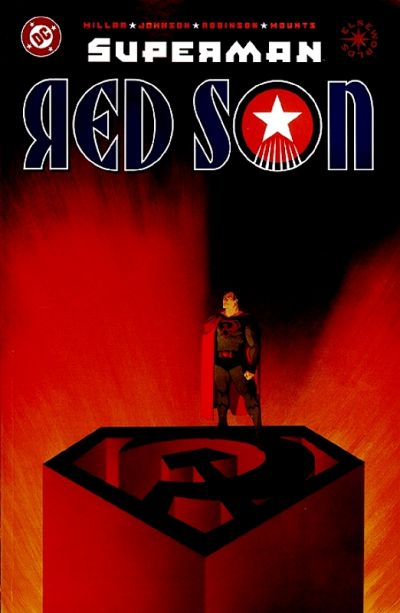
Comics: Superman: Red Son #1-3

“No, not Red SUN, Red SON. SON. S-O– It’s a PUN, David!”

Notes: I admittedly have a complicated relationship with the work of writer Mark Millar. When he does his own characters, with comics like Kick-Ass or Wanted, I find him hit or miss. When he works with established characters, I find that I rarely care for his stories. He often completely disregards characterization in favor of whatever story he’s planning to tell, and while that approach is okay when dealing with your own, original characters and you have the freedom to shape the characterization how you please, I am far less charitable when the work throws away decades of who a character is in favor of a plot point, the most egregious examples of which can be found in Marvel’s Civil War.

However, I find that he often does a good job with Superman. Early in his career he did a very entertaining run on Superman Adventures, the comic book based on Superman: The Animated Series. He wrote the aforementioned Tangent one-shot. And then there’s Superman: Red Son, perhaps the most acclaimed Superman Elseworlds series of all time. The supposition here is that the rocket that brought Superman to Earth landed not in the Kansas heartland, but somewhere in the Soviet Union. The child who would become Superman grew up indoctrinated with Socialist values, rather than American ones, and the world is rocked to its core as a result.

Millar does a lot of interesting things here. With Superman as a Soviet, the US government recruits its brightest mind – Dr. Lex Luthor, of course – to try to create some sort of countermeasure. With the U.S.S.R. completely ascendant, Princess Diana of Themiscyra makes contact with the outside world via the Russians rather than the Americans. And although we don’t know if there’s a little boy in America named Bruce Wayne, in Russia we see a tragedy that turns one of her citizens into this world’s version of the Batman.

The thing I find most fascinating is Millar’s take on who Superman is. In the prime DC Universe – and in most other iterations of the character – his personality boils down to someone who will always try to do what’s right, always stand up for injustice, and never turn his back on a cry for help. The Red Son Superman shares these traits, with the major difference being that his perspective on what is “right” is colored by socialist values rather than democratic ones. He’s still going to be there to save anyone – even an American – from a disaster like the falling globe from the top of the Daily Planet building, but when he sees the injustice of children standing in bread lines, he decides to use his power to put a stop to that by taking the control of the government that had been offered him after the death of Stalin, but that he had heretofore resisted. 

This whole thing is especially interesting to me from a sociological perspective. Superman at first rejects the notion of succeeding Stalin as the Soviet Premier because he knows people only want him because of his abilities, and the idea that his powers make him special goes against Socialist doctrine. But just like in the real world, he sees the inequities that have happened under Soviet rule and decides at the end of issue one to use his powers to fix them anyway. 

Book two takes the idea further. Superman has been in charge of the USSR for 20 years, and its influence has swallowed nearly the entire world. Only the USA and Chile remain holdouts, and both are hanging on by a thread. But there’s a mysterious Batman fighting against Superman’s rule, while back in the USA, Dr. Luthor is introduced to an alien power source that crashed on American soil decades before – a green one. While good-intentioned, Superman’s influence is beginning to atrophy human progress. People are growing careless, expecting their super-savior to take care of everything. Seatbelts go unused in cars, ships stop providing live preservers, all predicated on the idea that President Superman is going to take care of everything. When someone in his own government approaches Batman with an opportunity to take Superman down, Batman recognizes that the humans who would fill the void might be worse, but stopping him now may be the only way to prevent Super-rule that would last thousands or even millions of years.

There’s another time skip to book three. The Soviets have grown even more powerful and America is on the verge of collapse – until it elects Dr. Luthor President of the United States. Luthor’s unparalleled genius turns the country around overnight and Superman, who has been waiting for the US to finally collapse under its own weight and join their Soviet collective, realizes that it’s not going to happen. The climax of the story comes in a battle between Superman’s forces, Wonder Woman’s Amazons, and the American Green Lantern Corps, all of which coalesce in a turnaround for Superman that proves, even in this corner of the multiverse, he’s still the same man at his core. 

In a way, this entire story is a rebuttal to the whole “Nature versus Nurture” argument, demonstrating that BOTH aspects are of importance to the arc of a person’s life. And honestly, if that’s what Millar was trying to say here, it’s a sentiment I’ve always agreed with. Using Superman to put that idea forth works for me, and very well.

The end of the story is the real genius part of it though, and if you’ve never read Red Son, I don’t want to spoil it for you. Suffice it to say, it’s one of those conclusions that leaves you laughing ironically and calling the writer a magnificent bastard for coming up with such a thing. This isn’t my FAVORITE Superman of another world, but it’s hard to argue that it’s not, objectively speaking, one of the best stories of that sort that has been told. 

Mon., May 5

Comics: Superman: Secret Identity #1-4

Why DC based a comic on an obscure Jerry O’Connell TV show from the 1980s I’ll never know.

Notes: I’ve talked quite a bit in this blog about Mark Waid and how great a superhero writer he is, but although I eagerly place him at the top of the pyramid, he’s not there alone. Right up there, in my estimation, is Kurt Busiek. He’s the author of the phenomenal series Marvels and the creator of Astro City, which you’ll hear about again later when I do the week on heroes inspired by Superman. He also had a run on Superman’s regular title and he’s done work with the Justice League, most notably the JLA/Avengers crossover, in which Superman got to wield Thor’s hammer. Man, I should read that again before this year is out.

But his greatest work with Superman isn’t with “our” Superman at all, but rather the miniseries Superman: Secret Identity. An Elseworlds comic in all but name, this 2004 series was done with former Adventures of Superman artist Stuart Immonen, and was about a young man named Clark Kent from a small town in Kansas, but in a world where there are no superheroes and Superman is a fictional character. Whereas Waid is better than anybody at showing the wild, fun, grandeur of a superhero universe, Busiek’s greatest strength comes in humanizing superhero stories. Marvels was the history of the Marvel Universe through the perspective of a bystander. Astro City shows what it’s like to live in a superhero universe from a different perspective in every story. And Secret Identity is about being a hero in a world that doesn’t have them.

The concept is almost identical to the original version of Superboy-Prime, who showed up during Crisis on Infinite Earth as an inhabitant of Earth-Prime, which in the older DC Comics had ostensibly been the “real” world where the readers and creators of DC Comics live. This was before he changed to become a meta-commentary on toxic fandom, which I have to admit, was actually a pretty clever take. But Secret Identity takes the initial concept and keeps it contained, pure.

Clark Kent’s parents gave him the name because their last name was “Kent,” they lived in Kansas, and they thought it would be cute. Clark is not as enamored of his name as they are, having grown up being taunted for the famous name and spending every birthday getting laden with Superman-themed presents he couldn’t be less interested in. The boy grows up introverted, without any close friends and preferring to spend time alone. It’s on a solitary hiking trip that he suddenly, inexplicably begins to manifest the powers of his namesake. He begins using his powers to help people in secret, but it doesn’t take long before word of the flying “Superboy” begins to leak out. 

The four issues track Clark’s entire life story – growing into becoming a writer, although not a reporter, falling in love with a woman (naturally) named Lois, becoming a father. The government tries to track him early on, even capturing him at one point, before they settle into an uneasy alliance and “Superman” becomes a hidden force for good. Slowly, we watch how the world changes under his influence. More importantly, though, we see how HE changes over the course of a lifetime. 

This is a beautiful book. It’s almost not even accurate to call it a “superhero” comic. Yes, he has powers, and yes, he even wears the costume, but there are no supervillains, no world-threatening cataclysms…there’s not even really an antagonist. It’s a story about a life, with ups and downs and pitfalls and triumphs and success and tragedies. It’s a story about someone who is just like everybody else, with the obvious exception of being faster than a speeding bullet. It’s Busiek doing what Busiek does best. 

It’s also Immonen at his peak. I was always a fan of his work on the mainstream Superman, but this version is different. It’s still unmistakably his work, but there’s a softness to it that you don’t usually see when he’s drawing a mainstream story about Superman punching out Metallo or something. Looking at these panels, you see a different quality, a lighter touch. It looks almost like a fantasy world, which is rather fitting from the perspective of this Clark Kent, living what must seem to him to be a fantasy life. 

And unlike some of the other alternate Supermen we’ve looked at over the last few days, this is a Superman who hasn’t shown up again. In fact, I’m not even certain that this “world” has a specific designation in the current DC Multiverse the way the others we’ve looked at has. And if it doesn’t, that’s okay. There’s room for more stories of the Earth-One Superman, the Just Imagine Superman, or the Tangent Superman. But the Secret Identity Superman’s story is complete in these four volumes – complete and beautiful. This is one of my favorites. 

Tues., May 6

Animated Feature: Justice League: Gods and Monsters

Wait, which ones are the gods and which ones are the monsters?

Notes: Here’s a REALLY different Superman of another world. Bruce Timm, one of the architects of the DC Animated Universe that began with Batman: The Animated Series, returned to the characters with this film. It too was essentially an Elseworlds, even though it didn’t have the brand and wasn’t based on any pre-existing story. In this world, in the minutes before the destruction of Krypton, Jor-El and Lara are prevented from sending Kal-El into space by the sudden interruption of General Zod, who places his own son in the spacecraft bound to Earth. It is the Zod child, not Kal-El, who makes the journey across the stars, and the world becomes a very different place.

In this world, the Justice League is comprised of Zod’s son, now called Superman; Kirk Langstrom, a vampire Batman; and the New God Bekka, who has taken the name Wonder Woman. This Justice League is more brutal and far less forgiving than the League we’re accustomed to, and public opinion on the team is tearing the public down the middle. Things get worse when top scientists such as Victor Stone, John Henry Irons, Ray Palmer, and others are targeted by mysterious assassins with methods that seem to imitate those of the Justice League.

In a lot of ways, I’m surprised that this movie was even made. Granted, the whole “multiverse” concept has become mainstream now, but this is SUCH a different take on the concept that I feel relatively certain only Bruce Timm’s sway with Warner Bros Animation ever got this one off the ground. And it follows the classic Elseworlds pattern perfectly: it begins by showing what makes this world diverse from ours, it continues with an exploration of that world, and then it it follows a main plot that both tells a strong story and reveals corners of the world that are both similar to and very different from the one we’re accustomed to. 

Benjamin Bratt voices Superman in this one, with an edge that the Clark Kent versions of the character usually doesn’t have, but it works quite well in this one. We also get Tamara Taylor as Wonder Woman and, in what I have to assume was a meta joke in the casting department, we get Dexter star Michael C. Hall once again obsessed with blood as the vampire Batman. 

As this is the Year of Superman, though, rather than the Year of the Justice League, let’s focus on this movie’s version of our hero. Baby Zod lands in Latin America rather than Kansas, and is named Hector Guerra. As he grows up, he knows very little of his heritage on Krypton, unaware of where exactly he came from. And while he’s darker and more brutal than our Superman, he’s not his father either. Knowing more about his true parentage than he does, it’s natural for the viewer to expect some sort of face-heel turn, becoming the bad guy before the film ends. Well, spoiler alert – he doesn’t. He’s not OUR Superman, but he is A Superman, and like most of them, he’s there to protect people. It’s actually refreshing that he DOESN’T become the bad guy at any point.

The film ends on a hook that clearly leaves the door open to revisit this universe, but to date, it hasn’t happened yet. There were a few prequel comic books and a webseries that preceded it, but unless I missed something somewhere, we’ve yet to explore this world following the conclusion of the film. While I’m not exactly itching for more of the Gods and Monsters universe the way I am Earth-One, I wouldn’t be opposed to it either. It’s an interesting place, and there are more stories to tell. 

This was a fun week, looking at different, non-mainstream versions of our hero. And you know, there are an awful lot of other worlds out there in the multiverse. I may do this again before the year is up.

Blake M. Petit is a writer, teacher, and dad from Ama, Louisiana. His most recent writing project is the superhero adventure series Other People’s Heroes: Little Stars, volume one of which is now available on Amazon. You can subscribe to his newsletter by clicking right here. You can join in the Kryptonian Konversation every day in the Year of Superman Facebook Group!

Year of Superman Week 14: Krypto the Superdog Week!

It’s time for another theme week here in the ol’ Year of Superman blog, and once again, I’ve decided to spend seven days with one of the greatest characters in the Superman mythos. A trusted friend, a stalwart companion, a fearless champion of justice, and the goodest boy in the entire multiverse. That’s right – this week we’re going to focus on Krypto the Superdog! 

Krypto is one of those concepts that, on the face of it, is kind of ridiculous. You mean to tell me that Krypton not only evolved a race of sentient inhabitants that are identical to Earth humans (a common enough trope in science fiction but highly improbable in real life), but also evolved a species of animals who, upon being domesticated, are indistinguishable from Earth DOGS? Not only that, but they also gain the same powers as the human Kryptonians when they get under a yellow sun? Utterly preposterous.

But I do not care in the slightest how unlikely it is. I love Krypto with every fiber of my being. No matter how silly the notion is, the inherent wholesomeness in his character, the way a Krypto story inevitably becomes one of those stories of a boy and his dog, elevates him to a point of true celebration. Krypto is one of the brightest spots in Superman’s galaxy. I think it’s telling that, no matter how many times various writers have tried a “Superman gone bad” story, I don’t think we’ve EVER seen a serious attempt at a grim, gritty Krypto. It’s not because it would be silly – it’s because he is simply too pure for such a thing. There’s a reason that the first trailer to James Gunn’s Superman featured Krypto so prominently, a clear message that he was sending to the fans: this is about someone GOOD. 

Krypto stands for that.

Let’s check out some of his greatest hits, shall we?

Wed., April 1

Comics: Adventure Comics #210, Adventure Comics #293, Secret Six (2025) #1, Justice League of America #18

And all Superboy threw was a tennis ball.

Notes: We begin our journey through the life of Krypto the Superdog, appropriately enough, with his first appearance in Adventure Comics #210. We’re in Smallville, Kansas, in the era where Clark Kent is Superboy, and he is called upon to help deal with the most dangerous of crises – a dog catcher whose lot got loose. Superboy quickly rounds all the mutts up, with one exception – a white dog that apparently ripped a hole in the side of the truck. Later, a group of crooks (incredibly well-dressed crooks, in suits and ties) try to rob Kent’s General Store, only to be thwarted by the same dog. Clark later finds the pup chewing on one of the guns left behind by the robbers, and he takes off flying, with Superboy giving chase. The dog leads Superboy to a rocketship, where he discovers that Krypto (for that, of course, is his name) was sent into space in an experimental rocket by Superboy’s own father, Jor-El, and that the two of them are being reunited. The happy reunion is short, though, as Clark soon learns that even a super-dog is still a dog, and his antics (such as chasing an airplane or trying to play fetch with a steel girder) are apt to cause some problems. In the end, Krypto decides to roam his “backyard” – the galaxy. But Superboy hopes wistfully that he’ll come back to visit. Spoiler alert: he does. 

Krypto becomes a semi-regular after this point, showing up whenever convenient for the story and eventually showing much more personality. In most of the Silver Age stories, in fact, he had thought balloons demonstrating full human-level intelligence, like Snoopy, only with a cape. That’s one aspect of Krypto I’m kind of glad hasn’t come back. I find that I have a greater appreciation for the character when he’s “just” a superpowered dog. Although to be fair, some of the stories I plan to visit before this week is over will very much go against that grain. 

Krypto also became something of a trendsetter. After all, when something works once, why not try it again? So in his wake came a bevy of other superpowered animals, including Streaky the Supercat, Beppo the Supermonkey, and Comet the Superhorse. And they all converged in Adventure Comics #293, the first appearance of the Legion of Super-Pets!

The Legion’s hazing policy was still nebulous at this point.

Sometimes I wonder about the life choices that have led me writing things like the preceding paragraph. And then I realize that this is the result of choices that have gone RIGHT.

The story begins, again, in Smallville, when Superboy is summoned to rescue an airplane in trouble. But a strange urge overtakes him and, instead of rescuing the plane, he destroys one of its propellers. Fortunately, Krypto (by now sporting a cape and thought balloons) happens to be swooping in for a visit just as this happens, and he saves the plane himself. Superboy starts going through wild mood swings, briefly attempting to kill Krypto before regaining his senses. It gets worse when he’s suddenly attacked by his friends in the Legion of Super-Heroes, who attempt to kill him with Kryptonite. Turns out the whole thing is the scheme of the Brain-Globes of Rambat (there’s another sentence that could only come from the Silver Age), who are using their incredible mental powers to destroy the heroes so they can move Earth to a purple sun, allowing them to survive. But as it turns out, the Brain Balls can’t affect the minds of ANIMALS, and Krypto goes on the offensive…only to learn that if he goes after just ONE of the four Brains, the other three will destroy the Earth. The Legion uses their time machine to collect Streaky, Beppo, and Comet from Superboy’s future, and there’s some fun here in that this is actually Comet’s FIRST appearance, with the promise that “this is a preview glimpse of a super-pet Supergirl will own some day in the future!” It’s more complicated than that, but this ain’t “Comet Week.”

With Superboy out of commission, the Legionnaires team up with the super-pets to drive off the aliens, and make the animals an official branch of the Legion, then bring the other animals back home before Superboy can wake up and learn about the super-animals of the future. I suppose it’s okay for Krypto to know the future because he can’t talk, but the story isn’t really clear on that. 

If Krypto was a silly concept, the Super-Pets take it to the extreme, but it’s so much fun. A cat, a dog, a horse, a monkey, all with super powers, all fighting the forces of evil. Nobody would EVER introduce such a thing in a serious comic book in 2025, and more’s the pity. It’s like somewhere along the line people forgot that comic books can be FUN. I really hope that the Krypto Renaissance we are currently experiencing helps people remember what it’s really about. 

Thur., April 3

Comics: Action Comics #266, Action Comics #277, Adventure Comics #310, Adventure Comics #364, Superman’s Pal Jimmy Olsen #136, Supergirl Vol. 2 #22, Action Comics #557

Notes: When I announced this as Krypto Week, I asked (as usual) for suggestions about the best Krypto stories out there. I was not surprised that my pal Lew Beitz stepped up. Lew is a good guy, a great beta reader, and the most effusive dog-lover I know, and his love extends to pooches both fictional and non. He pointed me towards some classic Krypto stories, and I’m checking a few of those out today. 

In Metropolis, it really CAN rain cats and dogs! Ah? AAAAAH? I’ll see myself out.

Action Comics #266 kicks off with “The Captive of the Amazons,” a story about an alien princess who tries to force Superman into marrying her, and honestly, sometimes I wonder just where they got off putting stories like this into a magazine called “ACTION” Comics. No, I’m here for story number two, “The World’s Mightiest Cat.” This features the return of Supergirl’s cat, Streaky, an Earth cat with a lightning bolt-shaped patch of fur. Supergirl invented an isotope called X-Kryptonite in the hopes that it would act as a cure for Kryptonite poisoning. It didn’t, but when exposed to it, Streaky temporarily gains super powers. One of the other orphans in Midvale with Supergirl sees him performing super-feats, but is humiliated time and again when he brings other people in to witness them, only to find that Streaky’s powers have worn off in the interim. After several pages of the cat treating this poor kid like Michigan J. Frog, Supergirl figures out what’s going on and has Krypto come in to “help” Streaky with his super-feats, telling the boy that what he saw was Krypto playing pranks on the cat. It sounds kind of cruel to gaslight the kid, but everybody was starting to think he was a liar, so I guess it’s a bit more kind. Regardless, this is more of a Streaky story than a Krypto one, but it’s fun to watch the two of them involved in hijinks together.

It was this or get a couple of super-chickens to fight and…there were issues.

There were more Krypto and Streaky shenanigans 11 issues later in Action #277: “The Battle of the Super-Pets.” But first was “The Conquest of Superman,” in which Lex Luthor goes after the gold in Fort Knox, holding off Superman with a weapon that can synthesize different types of Kryptonite. As far as action stories go, it’s way better than Superman trying to avoid marrying a gorgeous alien Amazon princess. But that’s not why we’re here, is it? In the second story, Streaky gets jealous of Krypto when Supergirl praises him for helping her out of a jam that’s so preposterous it only could have happened in a Silver Age comic. But after Streaky gets his powers back from the X-Kryptonite in his ball of twine, he goes after Krypto with a vengeance. Superman decides to settle the dispute between the super-pets with a “contest of skills.” Supergirl takes the two of them to a planetoid where they can battle it out without causing any damage, but the planet…is not what it seems. This story is pure absurdity, and that’s really what I like about it. The stuff that happens on the planet is wild and goofy, and makes no sense until the reveal at the end, which in and of itself is even wilder and goofier. I find that DC stories of the Silver Age often fall into two categories – a kind of ridiculous that makes the characters look mean or stupid (sadly, most Lois Lane stories from the era kind of fall into this category) and those that are just absurdly delightful. This one most certainly falls into that latter category.

And “furry” culture immediately claimed him as their own.

Adventure Comics #310 takes us back to the Superboy days, following a dandy Legion of Super-Heroes story. By the way, have you noticed how often in these days it was the second – or even third – story that got the cover treatment? That wouldn’t happen today. The second story brings us “When Krypto Was Superboy’s Master.” Lana Lang’s father, a university professor, has a promotion jeopardized when he is accused of falsifying the translation of some ancient runes. When Superboy is called in to help verify the translation, the runes somehow swap his personality with Krypto’s, causing the dog to become the master and Superboy the pet. This is another of those silly stories that I enjoy, although it’s one where the ending turns out to be unnecessarily convoluted. I’ve mentioned in this blog before just how many of DC’s Silver Age stories were built on the backs of ridiculous misunderstandings or outright trickery that serves no logical purpose, and this turns out to be one of those.

Superboy gets the kick to the gut while Cosmic Boy just has to duplicate a Coppertone ad. Seems kinda lopsided.

The last classic story I’m going to dip into today comes from Adventure Comics #364, “The Revolt of the Super-Pets!” Yes, we’ve got Streaky, Beppo, and Comet back for this one. The pets are frolicking in space and then, for reasons, decide to recap their respective origins, including that of Chameleon Boy’s shapeshifting pet Proty II, who has joined them. As they talk about how great they respectively are, Beppo and Comet in particular start to resent being treated as pets (Comet, to be fair, was a Centaur in ancient Greece who is now trapped in the form of a horse – it’s a whole thing) and decide to abandon their masters. This is followed by some various betrayals and misunderstandings before they come back together to fight the issue’s bad guys. I like this story, but it actually does raise a good point – if the Super-Pets are, in fact, as intelligent as their humanoid masters, it seems pretty disrespectful to continue to treat them as pets. Modern stories usually avoid this – Krypto and Streaky don’t display human-level intelligence anymore, and Comet and Beppo are rarely, if ever seen these days. It’s another reason I like that iteration a little bit more. The “hero and pet” dynamic is more appealing to me than a “hero and another hero that they treat as a lesser being because they happen to be in the shape of an animal” dynamic. 

Fri., April 4

Comics: Superman: The Man of Steel #112, Superman Vol. 2 #170, Action Comics #373

By this logic, shouldn’t Supergirl’s best friend by a super-diamond?

Notes: After the Man of Steel reboot in 1986, the decision was made that Superman would be the ONLY surviving Kryptonian – no more Supergirl, Phantom Zone criminals…and no more Krypto. Obviously, this edict was eventually relaxed, but even as Supergirl and Zod and the like came back, it took some time before Krypto made his triumphant return. By the early 2000s, though, he was making appearances again, such as this one in Man of Steel #112. In this story, Krypto has recently arrived on Earth, where the yellow sun is slowly ramping up his powers and causing a good bit of destruction in Lois and Clark’s apartment. Superman decides to take him out for a spin to burn off some steam, leading to a nice sequence in which he contemplates his new pal. This version of Krypto came to Earth via the Phantom Zone, after a story which cast a little bit of doubt as to the true nature of Krypton. It was from a period in which Superman’s history was kind of in flux, as though DC was attempting to determine which of the many, many iterations of Superman’s origin was the “real” one, and bringing Krypto back was emblematic of that. None of that is what I like about this issue, though. I like that short sequence, just a few pages, where Superman flies around Metropolis with his pal, thinking about how awesome it is to have a super-powered dog to romp with. Seriously, more stories should be like that.

He’s a good boy until you give him a reason not to be.

Krypto became kind of a B-plot in the Superman titles for a few months, a story that bubbled over in Superman #170. Mongul – you guys remember him, right? – comes back to Earth. (It’s actually not the Mongul we read about before, he’s dead. This time it’s his identical son, Mongul. But that’s not important.) He’s here to take out Superman, and he’s got help! His sister, Mongal! No, really! That is her given, Christian name! As Superman battles the Mongul siblings, the story has a runner of a “children’s book” about Krypto, a “good dog,” written by Clark Kent with art by Kyle Rayner (Green Lantern). The fight is going the way Superman fights usually do, until Mongul makes the mistake of threatening Lois Lane. Krypto leaps to her defense, and…well…he acts like a dog. He goes straight for Mongul’s throat, ripping it open and leaving the alien conqueror on the brink of death. Superman realizes just how dangerous it can be to have a dog with that kind of power, and makes the hard choice to bring him to the Fortress of Solitude and leave him in the care of his robots.

This is such a bittersweet story, and I give a ton of credit to writer Jeph Loeb for making it work. This is the Krypto I prefer – the one who acts like a super-powered dog as opposed to a super-human in dog shape. But that said, it DOES bring up the issue of how potentially dangerous it would be. Sure, not many people would mourn if he had actually succeeded in murdering a member of the Yellow Outer Space Genocide Family, but Superman has that whole no-kill thing, and he’s pretty strict about it. What’s more, just like if a dog in real life attacks someone, it immediately raises the question of who else could potentially be in danger. And at no point does the story imply that Krypto is anything less than a good boy – but he’s still a good boy who “did a bad thing.” It’s heartbreaking, and I mean that as a compliment. Krypto’s exile would eventually end, of course, and these days when he shows up it seems taken as a given that he’s been better trained and won’t pose that kind of danger anymore, but I’m actually really glad that they told this story the way they did back in 2002.  

Sat., April 5

TV Episode: Krypto the Superdog, Season 1, Episodes 1-2, “Krypto’s Scrypto Parts 1 & 2”

This show is almost old enough to drink and I’m not okay with that.

Notes: I didn’t realize until I sat down to watch this cartoon that the Krypto the Superdog show on Cartoon Network debuted in 2005, a full twenty years ago. That is both absurd and wrong. But the show, aimed at a younger audience than the likes of Justice League Unlimited, was delightful then and it’s delightful now. In this pilot episode, Krypto recounts his origin – how he accidentally got sent to Earth in a rocket built by Jor-El, sadly leaving behind the child he loved. He lands on Earth and makes his way to the city of Metropolis, where he encounters a boy named Kevin. Kevin is new in town, struggling to make friends, and Krypto quickly befriends him. Kevin is startled to learn that the dog has powers just like Superman, that he’s even wearing a dog tag in the shape of Superman’s shield (that of the House of El, of course), and he’s carrying a device from his rocket that allows Kevin and Krypto to speak the same language. Kevin figures out that Krypto is from the same planet as Superman, telling him about their hero, and brings him home to live with his family. Things are going great until the news reports a cargo ship full of zoo animals is sinking, and Superman is off-planet on a mission. With no one else to rescue them (apparently there’s no Justice League in this universe), Krypto rushes off to save the day. Krypto’s rescue makes the news, and Superman soon tracks him down. The last sons of Krypton have a happy reunion, but Superman decides to allow Krypto to stay with Kevin. And thus, like any good pilot episode, the status quo is established. 

While I would have preferred a cartoon about Krypto and Clark, I get why the producers did this. They wanted Krypto to be the star, and if he was actually living with Superman, it would have turned into a Superman show WAY too frequently. Krypto was a show for kids, and it hits those beats as expected. Krypto can talk, sure, but so can the Earth animals he encounters (at least to other animals), such as the squirrel who has a panic attack upon seeing his spaceship land. It’s a pretty standard pilot episode as well – seriously, how many cartoons have begun with a dog/cat/platypus/alien being taken in by a normal human family? 

While the show isn’t a straight-up comedy, there are also a few good gags, too, such as when Krypto arrives on Earth and begins both exploring the world and discovering his powers simultaneously: “It’s so beautiful! So green! And the sun is so yellow! (GASP!) I can see in color!” 

That’s an A-plus dog joke, friends.

This isn’t in the upper echelon of DC cartoons, but in terms of an entry-level show for younger viewers, it’s pretty good. Now if I can only convince my son to turn off YouTube long enough to watch a few more episodes with me. 

Comic: Absolute Superman #6, Green Lantern Vol. 8 #19

Notes: Doesn’t matter what universe you’re in, Jonathan and Martha Kent are the best people in it. 

Sun., April 6

Comics: Teen Titans Vol. 3 #7, Superman #712, Super Sons Annual #1

Notes: Today I decided to get back to the classic stories of a boy and his dog – specifically a Superboy. Not Clark, though, but the other people who have used that name, Conner Kent and Jon Kent. Both of them have had a history with the Dog of Steel, although in the case of Conner, it wasn’t exactly smooth at first.

Logo humor.

Conner, it should be noted, had previously owned a different Krypto, an Earth dog that was taken in by our old buddy Bibbo when Superman was “dead.” The dog wound up in Superboy’s possession for most of his original series, although he and the pooch often didn’t get along. But by 2003, the original Krypto from Krypton was back. In this era, the Teen Titans gathered on the weekends, spending their weeks at home, and Teen Titans #7 shows each of them wrestling with various struggles during a week apart from one another. We’re going to focus on the Superboy storyline. At this point, he was living with the Kents in Kansas and struggling with his recent discovery that half of his DNA comes from Lex Luthor. Superman takes him out for a talk and a surprise: the kid needs a friend, and Krypto (as we saw when he nearly killed Mongul) needs the grounding of a real home. 

Superboy didn’t have his own series at the time, so the Teen Titans comic was his primary home and actually gave the character a lot of development, moving him away from the devil-may-care leather wearing Metropolis Kid we first encountered and into a young man with an identity crisis that, in some ways, he’s still wrestling with today. But having Krypto along in the mix was a good look for him. It ended too abruptly, when Superboy died in the Infinite Crisis crossover (he got better). However, some time after his death – even after his resurrection – Kurt Busiek and Rick Leonardi brought us the excellent “lost story’ of Superman #712. Superboy was dead and Superman, at the time, was missing. With his super sense of smell, Krypto sets out to find them.

Honestly, you might not be ready for this one.

Busiek is one of the greatest writers in comics, and if you don’t believe that, wait until we get to the week where I focus on “other” Supermen – the first issue of his Astro City series is a straight-up masterpiece. This issue hits some of the same notes in terms of melancholy. Krypto tracks down Conner’s scent and, in so doing, retraces the last few days before his death – getting wounded in battle, being saved by the Titans, sharing a tender moment with Wonder Girl, suffering a brutal thrashing at the hands of the maniacal Superboy-Prime. Krypto senses all of it, and the reader retraces those steps with him. When originally presented, these stories played out over several months (real time) and several different series, so seeing them all stacked together in this way paints a different picture of Conner’s final days than you would have had reading those books in context. “Lost Boy” has the same sort of bitter sadness as Futurama’s “Jurassic Bark,” the same sort of agonizing pain of watching a faithful dog waiting for a master who is not returning home. Fortunately, the Kent boys eventually had a happy ending.

The premature ending of this series was a crime.

Our last stop today comes from 2017 and Super Sons Annual #1. This is the era when Jonathan Kent was Superboy, he was ten years old, he was being written by Peter J. Tomasi, and basically, everything was right with the world. Little did we know how short that golden age would last. My love for Jon as a kid is matched only by my utter disinterest in him as a teenager…or young adult, or…I don’t even know how the hell old he’s supposed to be right now, and that’s only PART of the problem of his complete lack of identity ever since…

Sorry, sorry, this is supposed to be about Krypto.

Even though this title starred Jonathan and Damian Wayne, this issue is all super-pets. After Jon goes to bed, Krypto finds himself pondering a recent spate of missing animal reports across Metropolis. He sets out to round up his old teammates in the Super Pets – including Streaky, Titus and Ace the Bat-Hounds, Bat-Cow, Flexi (Plastic Man’s parrot), and a little nugget of Clayface. Together with an assist by Detective Chimp, the animal heroes are determined to find justice for their four-legged brethren. The issue is largely free of dialogue, save for the assorted grunts, growls, and tweets of the pets, but at no point is there any difficulty following the plot. Tomasi and artist Paul Pelletier perfectly create a charming story about animal heroes saving the day, but without going so far as to hit the “talking animal” trope of the silver age, or even of the cartoons. This, to me, is peak Super Pets, and if DC ever saw their way clear to bringing back this particular team, I would be the first to trample a path to the comic shop. 

Mon., April 7

Comics: Superman #677-680, Justice League of America #19, Infinity, Inc. #4, Superman #8

Notes: “The Coming of Atlas,” by James Robinson and Renato Guedes, isn’t completely a Krypto storyline, but it does lead to one of the most famous Krypto moments in modern history, so I thought it would be worthwhile to take a look at it. Plus, it’s just a good story and worth reading. It does START with Krypto, though – specifically, with Superman and Green Lantern in space, playing fetch with the Superdog, while discussing the things life does to people with super powers. The problem is, they’re out in space when a kaiju attacks Metropolis. The monster is quickly dispatched, not by Superman, but by an old and somewhat forgotten Jack Kirby character, Atlas. He’s back, he’s in Metropolis, and he’s calling out Superman – and soon, the Man of Steel answers at the end of part one. Parts two and three are a fight, and one the likes of which Superman hasn’t seen since the battle with Doomsday. Atlas has been sent and is being manipulated by an outside force, but that doesn’t make it hurt any less as he pounds into Superman. Others come to his aid, but Supergirl, Steel, and even Bibbo are quickly dispatched. Then, at the end of part three, the REAL hero makes his debut, and the Dog of Steel is ready to defend his master.

“Regal” is the word for this dog. Just plain “regal.”

Superman #680 is, really, the reason I chose to read this story this week. Over the previous two issues, we were given a flashback to Superman and Lois debating the wisdom of keeping Krypto (remember, this is the Krypto who destroyed the Kent apartment, nearly killed Mongul, and so forth). But in issue #680, that debate is well and truly put to rest. As Krypto toes the line and holds off Atlas, Superman deduces that his foe is being enhanced by magic (which, you may recall, he has a little trouble with). After picking up a magical solar boost from Zatanna’s cousin Zachary, Superman finishes the fight, then declares to Metropolis that Krypto, his dog, is a hero, and “now he’s your dog too!”

And Metropolis cheers.

Because c’mon, Krypto is a good boy.

This was a complicated time in the history of DC Comics. That era between Infinite Crisis and the New 52 reboot was, for many titles (including the Superman books) a constant period of reintroduction and reinvention. Old concepts would be brought back, new concepts would be pushed aside, things were in a constant state of flux, and this story reflects that. Just the next month the Superman titles would become embroiled in the “New Krypton” storyline that would guide them for the better part of the next two years. But here, right now, we got a spotlight on Krypto, and it couldn’t have been a better one. 

“CAN YOU SMELLLLL WHAT THE ROCK–“
“We’re dogs, Krypto. We can smell everything.”

Animated Feature: DC League of Super-Pets (2022)

Notes: There was a time when I hoped this movie, an animated feature starring Dwayne Johnson as Krypto and Kevin Hart as Ace, would be the first movie I took my son to a movie theater to watch. Unfortunately, that didn’t work out, but we’ve watched it at home since then, and we enjoy it. In this version, Krypto made it into baby Kal-El’s rocket as Krypton exploded, and the two of them have spent their lives together. Now, as Clark Kent is an adult on the verge of asking Lois Lane to marry him, Krypto is starting to feel some pangs of jealousy. A battle with Lex Luthor brings a chunk of orange Kryptonite to Earth, an isotope that Lex believes will give him super powers, but instead only works on animals. An evil Guinea Pig uses the Kryptonite to give herself and her minions incredible abilities, then goes on to capture the entire Justice League. Krypto and a group of rescue animals similarly dosed by the Kryptonite are all that’s left to save the world.

As far as kids’ entertainment goes, I really enjoy this movie. It’s similar, tonally, to other recent movies like Secret Life of Pets, with kid-friendly characters but plenty of jokes for the adults, such as when P.B. the pig discovers her powers and declares, “This is my origin story! And my uncle didn’t even have to die!” The Lois and Clark relationship is solid as well – they’re a young, loving couple, and the idea of the dog getting green eyes (metaphorically speaking) when he realizes his person now has a new person is actually a pretty realistic issue to throw in and complicate the Superman/Krypto relationship. 

The voice cast is also really impressive. Dwayne Johnson puts just the right amount of naive energy into Krypto to suit his characterization as a good – but slightly simpleminded – dog. John Kracznyski’s Superman is solid as well, and if you’re not going to get Will Arnett (LEGO Batman) back, having Keanu Reeves deadpan the character is about the best way to make that character funnier. But Natasha Lyonne as Merton, the super-speedster turtle, absolutely steals the show. I’d watch a whole movie starring her. 

My biggest beef with this movie is that it mostly uses brand-new characters rather than bringing in more of the actual super pets from DC canon. I get that they wanted them to all share the orange Kryptonite origin, but how great would it have been to see Wonder Woman’s Jumpa on the screen or something like that? Ah well – James Gunn clearly isn’t shying away from super pets on the screen. Maybe the day will come. 

Tues., April 8

Comics: Scooby-Doo Team-Up #9, #18

I need to know where Shaggy found that shirt in green.

Notes: I thought I would end Krypto week with a few encounters between the pup of tomorrow and the world’s foremost Great Dane Detective, Scooby-Doo. There’s nothing like a good team-up, and I’ve been a real fan of how closely DC has tied Scooby to the DC characters in comics over the last few years. He’s most frequently associated with Batman and Robin, of course, owing to that whole “detective” thing, but he’s partnered up with Krypto on more than one occasion.

Scooby-Doo Team-Up #9 (or issues #17 and 18 of the digital version) brings the gang from the Mystery Machine to Metropolis. When Perry White encounters the actual Great Caesar’s Ghost in the office of the Daily Planet, Superman decides to call in some experts at busting ghosts – Mystery, Inc. The ghost turns out to be a gag by Superman’s old foe the Prankster, who doses him with Red Kryptonite, transforming him into a super-monster who goes on a rampage. Krypto rushes to the scene, along with the super-serums that have given Lois and Jimmy powers in the past, but the voracious Scooby and Shaggy drink them down instead, giving Shaggy the power of Elastic Lad and Scooby the power of Superwoman. Scooby and Shaggy have to team up with Krypto to bring Superman’s uncontrollable rampage to an end. There’s not too much “detecting” in this story, to be honest, but there’s fun to be had in seeing Scooby-Doo trying to fly or Shaggy freaking out about his limbs suddenly turning to rubber. Perhaps the best bit is when Krypto refers to Shaggy as Scooby’s “sidekick,” a label the dogs embrace with great glee.

I’m not saying that the writer of this book looked in my dream journal, but I’m not NOT saying it either.

Krypto made a return appearance in Scooby-Doo Team-Up # 18 (#35 and #36 of the digital version). The story begins with the Scooby gang wrapping up a case where they teamed up with Wonder Dog. Before they can part ways, though, they’re approached by Krypto, Ace the Bat-Hound, and the canine Green Lantern G’Nort. Gnort scoops up Scooby and the other Super-Dogs, taking them into space for help with a case on an entire planet of dogs, where their local superhero team is being haunted by the ghosts of the first dog superheroes, the Canine Commandos. 

If I’m being honest, the main draw here is just the team-up aspect. Krypto is great and all, but having a story with him, and G’nort and Yankee Poodle and Rex the Wonder Dog…it’s like a smorgasbord of the sort of goofy characters I love so much. There’s even a neat little homage to the first JLA/JSA crossover in there. Writer Sholly Fisch and artist Dario Brizuela must have had the time of their lives putting this one together…or at least, I know I would have. 

Krypto’s greatest super-feat? Saving this movie from the WB accounting department.

Animated Feature: Scooby-Doo! And Krypto, Too! (2023)

Notes: The Justice League is missing, and if that’s not bad enough, there’s a ghost haunting the Hall of Justice. Without her usual hero to save the day, Lois Lane calls in Mystery, Inc. to break the case. When they arrive in Metropolis, they find the entire city besieged by supervillains taking advantage of the heroes’ absence, but that’s a bit above their pay grade. Nobody is expecting them to thwart Brainiac, Giganta, or General Zod – Lois and Jimmy send them to the Hall of Justice to try to solve the mystery of what happened to the Justice League. When they find themselves targeted by a fiery phantasm in the Hall of Justice, Krypto arrives to defend the detectives and lock the building down. Now it’s up to Krypto and the Scooby gang to find the phantom hiding somewhere in the building.  

There’s an unusual pedigree behind this film. For a hot minute, it looked it like it was going to be a victim of Warner Bros’s stupid rash of finished or nearly-complete products getting shelved as a tax break. Then something miraculous happened – SOMEBODY leaked the movie to the internet (nobody seems to know who, but I’m betting it was Scooby-Dum) and, lo and behold, it got a great response. Warner Bros somewhat reluctantly gave it the streaming and physical media release it deserved, and thank goodness, because it actually turned out to be good. I mean, it’s got the right kind of humor for a solid Scooby-Doo movie, first of all, but there are also of plenty of gags and in-jokes for the DC Comics fans as well, such as Lois and Jimmy being unable to recognize Velma when she takes off her glasses or Fred having an obvious crush on Harley Quinn. But perhaps the stupidest joke that made me laugh was Shaggy mistaking “Great Caesar’s Ghost” for a spectral salad. 

For a comic fan, though, the prize of this movie is the tour of the Justice League’s trophy room, which is loaded with wall-to-wall comic book and cartoon Easter Eggs that will have fans hitting the “pause” button trying to identify them all. Even the audio is full of Easter Eggs – most of the sound effects seem to have been clipped straight from the old Super Friends cartoon.

It’s a Scooby-Doo mystery, so as required we get the usual slate of suspects, including a disgruntled French Fry vendor who wasn’t allowed to park her truck outside the Hall of Justice, the Justice League’s valet who resents them for their fancy and dangerous vehicles, and Lex Luthor himself. (The funny thing is that, since this movie operates on Scooby-Doo rules, you can rule out Lex as a suspect immediately because he’s far too obvious.) Despite working on Scooby logic, though, we get the kind of Krypto I prefer – the one who is intelligent and heroic, but non-communicative and still behaves (mostly) like a dog rather than a human intellect in dog form. 

League of Super Pets was a good movie, but if I’m being honest, I like this one better. It’s funnier, first of all, and it’s got more going on in it for the fans of both the comic books and of the Scooby-Doo and Super Friends cartoons, and between the two of them that makes up roughly 20 percent of my childhood. If you haven’t checked this one out yet, track it down – the DVDs are already (absurdly) out of print, and it’s not streaming on MAX (even more absurdly), but you can still rent or buy the film digitally from all the usual retailers. With Krypto’s star rising thanks to the new movie, I really hope that they push this film a bit more as summer approaches.

That’s it for Krypto Week, guys, although it’s by no means the end for Krypto. We know he’s going to be in the movie this July, and DC has also announced a miniseries, Krypto: Last Dog of Krypton, launching in June. If I wasn’t excited enough, the miniseries is going to be by the team of Ryan North and Mike Norton. The latter is a great artist with a pedigree of doing swell comics about dogs (check out his Battlepug some time), but writer Ryan North has been absolutely CRUSHING Fantastic Four and Star Trek: Lower Decks for some time now. To have him joining the Superman family as well – well, it’s like he’s getting a chance to direct the fates of everything I love. And I couldn’t be happier about that. 

Blake M. Petit is a writer, teacher, and dad from Ama, Louisiana. His most recent writing project is the superhero adventure series Other People’s Heroes: Little Stars, volume one of which is now available on Amazon. You can subscribe to his newsletter by clicking right here. You can join in the Kryptonian Konversation every day in the Year of Superman Facebook Group!

Geek Punditry #112: Who Are the Thunderbolts? (And Does Even MARVEL Know?)

With Captain America: Brave New World currently in movie theaters, eyes of Marvel fans are turning to the next film from the studio, coming out in May, Thunderbolts*. Yes, that asterisk is part of the title. No, as it turns out, it isn’t actually important. But we’ll get to that later. Although they’re not exactly the Avengers (more on that later, too) the Thunderbolts have been bouncing around the Marvel Universe in one form or another for nearly 30 years, having first appeared in 1997. Despite the pedigree of having been around for such a long time, a lot of people don’t seem to quite understand who the Thunderbolts are, and honestly, you can’t blame them. If you look at their publishing history, it seems as though Marvel doesn’t really know who they are either.

Pictured: Even we don’t the hell know.

Let’s go into the history, shall we? It started in 1996, when the Marvel Universe came under attack by a villain named Onslaught. Powerful and ravenous, he started off fighting the X-Men before taking on virtually every superhero in the world and, when he was finally defeated, both the Avengers and Fantastic Four were killed in the battle. Or so it appeared, anyway – as it turned out, Franklin Richards saved them at the last second by shoving them onto an Alternate Earth, because things like that just happen in comic book universes sometimes. But the world at large BELIEVED that they were dead, and that was enough to cause serious chaos. With the Avengers and Fantastic Four gone, it was open season for villains, who saw an opportunity with the biggest, boldest heroes in the universe unavailable to thwart them.

Then the Thunderbolts appeared. 

I’m confused, which one of these guys is played by David Harbour?

A brand new team of brand new heroes, paragons of courage who had never been seen before, burst on the scene and began cleaning up the town. The gigantic Atlas! Armored hero MACH-1! The cosmic-powered Meteorite! High-flying Songbird! The scientific wizard Techno! And their sword-wielding leader, holder of a mantle of a forgotten World War II hero, Citizen V! After an appearance in Incredible Hulk, the Thunderbolts slid into their own series, written by Kurt Busiek and drawn by Mark Bagley. I was – and still am – a huge fan of both Busiek and Bagley, and so I naturally was eager to read the book, but it was a little confusing before we got there. Who were these new characters? Why should we care about them? Did they REALLY think they were worthy of replacing the Avengers?

And then, at the end of the first issue, Busiek hit us with a curveball that comic books have not been able to duplicate since. Citizen V traded his heroic mask for another one, a purple one…he was really Baron Helmut Zemo, arch-enemy of Captain America, and each of the Thunderbolts was a member of his Masters of Evil in disguise. When the Avengers and FF vanished, they decided to masquerade as heroes and win over the public trust as part of Zemo’s plan for world domination.

There will never be a reveal this awesome again, and I blame Mark Zuckerberg for that.

And we, the readers, were FLOORED.

It’s so hard to imagine, in today’s landscape, how such a reveal could have been pulled off. All of the press leading up to this issue just talked about these great new heroes and how awesome they were and how cool it was going to be to have new stars in the Marvel Universe. Honestly, it felt like standard comic book hype, and were it not for the fact that I enjoyed the creative team so much, I probably wouldn’t have read the comic at all, which would have been a huge mistake because it turned out to be phenomenal. But such a magic trick simply couldn’t happen in the current landscape. If Marvel tried to tell this story today, three days before the issue was published you would have a headline on the site formerly known as Comic Book Resources, shared on Facebook, announcing something like “Ending of Thunderbolts #1 will shock Avengers fans!” with a thumbnail image of Citizen V wearing Zemo’s mask just to make sure that everything was good and thoroughly ruined before it could be read.

The modern media is so, so stupid.

Anyway, the Avengers and Fantastic Four eventually returned to the main Marvel Earth, forcing Zemo to accelerate his plans for conquest, but in the time when they pretended to be heroes something funny happened to many of the members of the Thunderbolts. They began to realize that it wasn’t such a bad thing that they got to WIN a fight once in a while instead of getting beaten up. They started to enjoy the cheers and applause of the hero-starved citizens of New York. They actually found satisfaction in helping people instead of committing crimes. And when Zemo took action, the rest of the team rebelled against him, deciding that they’d rather remain heroes than go back to their old lives of villainy.

From there, the book underwent the first of what would be countless shifts in status quo. Instead of the adventures of villains pretending to be heroes, it was now a book about former villains seeking redemption, and this is the golden age of the franchise. They tried to make good. They even were joined by Hawkeye, who left the Avengers to help them out. Hawkeye himself had begun his career as an adversary for Iron Man, and he credited Captain America giving him a chance to join the Avengers for turning his life around. He saw leading the Thunderbolts as an opportunity to pay it forward. And so the book went on for some time – some of the members backsliding at times, new members joining, the roster shifting around, but for the entirety of Busiek’s run, then that of his successor Fabian Nicieza, it was one of my favorite books Marvel was publishing.

Then in issue #76, they inexplicably dumped the entire concept. Issue #75 ended the story of the Thunderbolts we knew and loved and the next month we got a whole new story with new characters in what could best be described as “Supervillain Fight Club.” It was baffling, it was awful, and it was Thunderbolts in name only. It also only lasted six issues before the book was cancelled. Not too long after that, they brought back the original team for a second run that lasted a few more years, and it was good, but once again they took a sharp turn. This time around the team was replaced by a new group of villains – not reformed ones this time – rounded up to do tasks for the government. It felt like a carbon copy of DC’s Suicide Squad at this point. And it didn’t get better.

Pictured: Your guess is as good as mine.

Since then, the team has been reinvented seemingly dozens of times. The Suicide Squad knock-off has been done more than once. At one point the team was re-christened “Dark Avengers” and made of villains pretending to be heroes (ESTABLISHED heroes this time, like the Scorpion pretending to be Spider-Man, Daken pretending to be Wolverine, and so forth) . One time it was made up of antiheroes like the Punisher, Deadpool, and Elektra. Another time it was villains trying to HUNT the Punisher. Once it was villains deputized by the Kingpin of Crime while he was mayor of New York, and another time it was a group of HEROES deputized by Luke Cage when HE was mayor of New York. And on occasion we’ve even got a group of super-spies like the Winter Soldier and the White Widow, which seems to be the version that the upcoming movie is based on.

Pictu–oh, whatever.

The problem, then, comes when somebody asks the question “Who are the Thunderbolts?” because you just read about 1300 words on that very subject, and we STILL don’t have a definitive answer. Ever since the original version of the Thunderbolts ended, Marvel has recycled the name over and over again but has never found any concept that STICKS. Even the super-spy incarnation of the team seems to have been willed into existence so that they have something to synergize with the movie.

And let’s talk about the movie, while we’re at it. Some time back, the title was slightly changed from Thunderbolts to Thunderbolts* with an asterisk. People asked Marvel if the asterisk was, in fact, part of the title, and they confirmed that it was. This led to mass speculation on the internet as to the significance of that asterisk. Why was it there? WHAT DID IT MEAN? It’s the kind of rabid online speculation that movie studios love because they don’t have to do very much to get the audience talking about the film. It did wonders back in the day for movies like The Blair Witch Project and The Matrix, which managed to get an enormous amount of word of mouth with relatively simple ad campaigns back in the early days of the internet. It’s a great strategy when you have a good payoff.

Spoiler alert: this time there was NOT a good payoff.

Like, not even the Great Lakes Avengers?

When the most recent round of posters for Thunderbolts* was released, we saw what the asterisk stood for, and the revelation was met with a resounding “Meh.” At the bottom of the poster, with the asterisk attached to indicate the footnote, was the tagline “The Avengers are not available.” It’s actually not a bad tagline. It seems to indicate the tone of the movie – slightly tongue-in-cheek, indicating that this is NOT a story about paladins like Captain America or knights in armor like Iron Man. If they had never made a big deal out of the asterisk and simply released that poster without comment, I would have thought it was a cute detail. But after the buildup it got, it may have been the biggest letdown in the MCU since everybody forgot there’s a giant hand sticking out of the Earth after the events of Eternals. 

I obviously haven’t seen the movie yet, and I am not here to talk trash about it. I never want there to be a bad superhero movie. I want every one of them to knock my socks off, and I really hope that this one does too. But the trailers seem to have that same feeling of a wannabe Suicide Squad with a group of characters that seem assembled not because it makes sense but because these are the pieces Marvel has on hand and they don’t know what to do with them.

Which, frankly, is a pretty good description of what it’s been like to try reading Thunderbolts comics for the last two decades or so. 

The Thunderbolts were at their best when it was a story about villains trying to make good. It was a compelling book then and it could still be one now. There are even seeds, I think, in recent comics, such as the recent Venom War tie-in miniseries Zombiotes. The old Spider-Man villain Shocker was on a quest to bring back his friend Boomerang from the dead, and wound up fighting alongside the heroes She-Hulk and Hellcat during an invasion of…let’s just say “monsters,” because I don’t want to spend another 1300 words explaining THAT one. But that story could easily be a germ for a new Thunderbolts team. And it’s a book that would allow for reinvention WITHOUT changing the concept, with characters rotating in and out – some of them succeeding in their heroic goal, others falling from grace. There’s drama to be mined there and SO MANY villains that could be used, if Marvel did it right.

No offense, Bucky, but I’d rather read this group.

Or, you know, we could spend another 20 years throwing Thunder spaghetti at the wall in the hopes that something, ANYTHING sticks.

I suppose the real test will be to see if anything sticks to the movie screen.

Blake M. Petit is a writer, teacher, and dad from Ama, Louisiana. His most recent writing project is the superhero adventure series Other People’s Heroes: Little Stars, volume one of which is now available on Amazon. You can subscribe to his newsletter by clicking right here. He’s also started putting his LitReel videos on TikTok. If Marvel is looking for a writer to try this obviously brilliant concept, they should know that Blake can be hired relatively cheap.