Geek Punditry #146: Scary Starters

If you read last week’s column – and obviously you should have, because it was a masterpiece – you may remember me mentioning that my 11-year-old nephew is planning to be Ghostface for Halloween this year. This is amusing to me because his mom, my sister, is very much NOT a horror movie fan, and I know for certain my nephew has never seen any of those films. It’s just evidence of how pervasive the Ghostface icon has become. But a few days later I got another nice surprise when my sister asked me if I thought her daughter, who turns 15 this weekend, was old enough to watch the Scream movies.

When I tell you I wanted to squeal with delight…

I smiled bigger than this.

I get questions like this a lot. I suppose that my multiple qualifications as a teacher, father, writer, and geek pundit all make people confident that I have a good idea of what media is appropriate for what age group, and I’m flattered by the faith they have in me. On the other hand, the question isn’t always that simple. Age-based ratings like your PG, PG-13, and R from the MPAA are a decent enough guide, but that’s all they are: a GUIDE. The truth is that every kid is different. There are 13-year-olds who can handle the same scary movies that would give their same-aged classmates nightmares for a week. So when I’m given these questions, I always give a general opinion, but I couch it in the caveat that “You know your kids better than anybody else, so use your best judgment.” 

But in this case, I know my niece really well. She’s grown up to be a fan of the morbid and macabre, she is slightly obsessed with all permutations of Five Nights at Freddy’s, and she’s smart enough to separate fiction from reality. When I got hit with this question, I had no doubt that she could handle it. The bigger question, honestly, was whether my sister would be okay with it.

“As far as the Scream movies go,” I told her, “There’s not any nudity. There IS violence, but compared to a lot of other franchises it’s relatively tame. There’s language, but she goes to a public high school, so I guarantee there’s nothing she hasn’t heard before. They’re all streaming on Paramount+, so yeah, I think it’s okay.”

Of course, it doesn’t hurt that Scream is – as I’ve stated many times – my favorite horror movie franchise, mainly because I think the writing and characterization are heads and shoulders above most of the other ones. But I still wouldn’t suggest that my niece be allowed to watch them if I didn’t think she was ready for it.

A few days later, I happened across a link to an article from Letterboxd that listed 20 PG-13 horror movies, films that were suggested as sort of “starters” for people who are just getting into the genre and didn’t want anything TOO intense. I’ve seen most of the films on that list and I agree that many of them are good choices – The Sixth Sense, for example, or Night of the Comet. And I was surprised at just how tonally diverse the list was, including things as chilling as The Ring and as family-friendly as Monster Squad.

I forwarded the link to both my niece and her mom, and my niece replied that she’s already seen Scary Stories to Tell in the Dark and now she has an excuse to watch the others on the list. I love this kid.

For the kids.

All this is to say, I’m really looking forward to helping usher her into the world of horror movie fandom, because I find that by and large horror movie fans are some of the nicest, kindest, most down-to-earth people I’ve ever met. Compared to certain other fandoms I could mention, like those from a galaxy far, far away, horror fans are usually very respectful of differing opinions and eager to listen, able to have conversations about their favorites and least favorites without devolving into name-calling or anger, and are extremely generous and supportive of the movies and creators that they enjoy. I know my niece would be positively embraced by this community, and it’s really important to find your tribe. I’m not saying that everybody in the world should be a horror fan, but I AM saying that if more people BEHAVED like horror fans, the world would be a much better place.

So if you’re into horror, or if you’ve got a teenager in your life that’s drifting in that direction, check out that Letterboxd list I linked to above. It’s a good starting place. And here are a few more suggestions for movies that didn’t quite make the Letterboxd cut, as well as other non-movie media sources that a burgeoning horror fan could start getting into this spooky season.
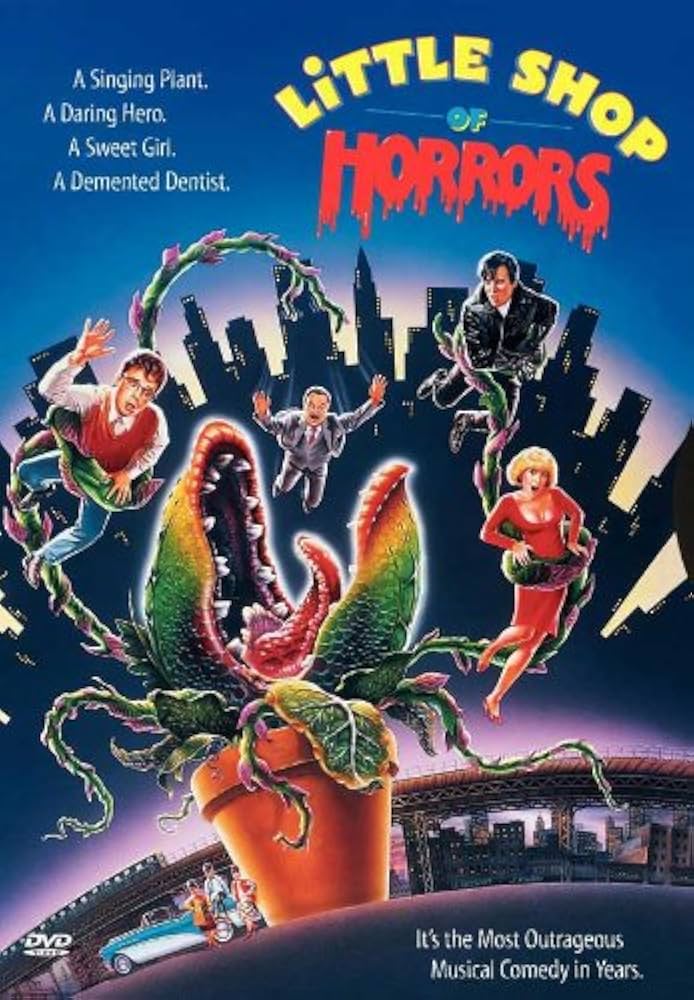
This is why dads mow the lawn every other morning.

The most glaring omission from the Letterboxd list – and my wife pointed this out almost immediately – is Little Shop of Horrors. It’s the chilling tale of a little New York flower shop where a young man finds and cultivates a new breed of plant that turns out to be an alien invader that thirsts for human flesh. Fun for the whole family! The Roger Corman original from 1960 is a cheesy schlockfest – it’s fun to watch, but only if you’re really into “good bad movies.” However, the 1986 musical version directed by Frank Oz is a masterpiece. The music is phenomenal, the performances are fantastic, and it’s just one more reason to love Rick Moranis. The puppetry by Jim Henson Studios holds up brilliantly today, and it’s impossible to imagine anyone walking away from this movie without having a new favorite song. My niece is already a geek for musicals, so I know this would be right up her alley. I just hope my sister is ready for weeks and weeks of her kid casually singing “Dentist!” and “Suddenly, Seymour.”

“Do you think you’ve got the CHOPS for this one, kiddies?”

Although it’s more intense than the stuff on the Letterboxd list, I have to give a strong recommendation to the legendary HBO TV series Tales From the Crypt. Based on the classic EC Comics (which themselves are well worth reading), this anthology series presented a half-hour morality tale each week, a different story with a different twist that usually involved a bad person doing bad things and getting a karmically appropriate comeuppance. The show adapted stories from the original comic book as well as some of its sister series, The Haunt of Fear, The Vault of Horror, and others. It also gave us one of the all time great horror icons in the Cryptkeeper, the John Kassir-voiced puppet who served as the host of the show with a ghoulishly gleeful sense of humor at the beginning and end of each episode. The general content level is a step up from Scream – there was sex sometimes, and the violence was kicked up a notch. At the same time, though, the violence was often treated very nonchalantly, brought up to an almost cartoonish level and hard to take seriously, which is part of the charm. 

HBO treated this series very well, bringing in big-name guest-stars and directors like Martin Sheen, Brooke Shields, Catherine O’Hara, Christopher Reeve, Steve Buscemi, Tim Curry, and tons of others. The show gave us seven seasons with 93 episodes, as well as three theatrical films and a more kid-centric animated spinoff, Tales From the Cryptkeeper. There’s fun to be had in all of them.

“I know I look like the Cryptkeeper, but I don’t really talk. I’m animated beautifully, though.”

I also have to give a recommendation to its spiritual successor, Creepshow. In the original Creepshow movie from 1982, director George Romero (of Night of the Living Dead fame) teamed up with Stephen King for a film that was inspired by and tonally reminiscent of the original Tales From the Crypt comics years before the TV show brought it back to the public consciousness. The first Creepshow was written entirely by King, and he even starred in one of the anthology segments himself. The first sequel also adapted King stories, although both he and George Romero were absent entirely from the third installment. The legacy of the film persevered, though, and in 2019 the Shudder streaming service brought it back as an anthology TV series that lasted for four seasons and a few specials (including a Halloween special and an animated Christmas special). What’s more, the TV shows spawned a new comic book anthology series from Skybound (the company owned by Robert Kirkman, creator of The Walking Dead), bringing the whole style of tongue-in-cheek horror with a dash of dark comedy back to its original format. All of these are worth indulging and, as they’re anthologies, can be picked up one episode or installment at a time without requiring a huge binge to get through an entire story like some TV shows, comics, or film series.

The Ditko version was a lot cleaner.

Finally, if you’re looking for a horror tinged-take on characters you already know and love, there are several options available. Marvel fans may be aware of the recent Marvel Zombies animated series, but they may not know that it’s based on a line of comic books, which themselves were started by Robert Kirkman before he left Marvel and devoted himself entirely to his own company. In the original Marvel Zombies, an old-fashioned zombie virus struck the Fantastic Four, turning them into flesh-eaters. It spread out from there, and once it hit the super-speedster Quicksilver, any chance of stopping it from being a global pandemic was lost. In the Marvel Zombies universe, the undead retain their human intelligence, although their zombie hunger overtakes their former heroic morality. It’s a fun series that has had many permutations. The hard part for a newbie would likely be just keeping track of which order to read the many assorted graphic novels in and figuring out which ones are part of the main continuity or standalone.

Well, the end of everything until next issue.

DC Comics has also given us two horror-themed worlds to explore in recent years. First was DCEased, a book that I have to believe was given the greenlight primarily on the strength of the pun in the title. In the main DC Universe, Darkseid has spent 50 years or so trying to find the “Anti-Life Equation,” a formula that would give him control over all life. In DCEased, the equation is cut loose, transforming anyone it touches into a mindless killing machine. It’s not TECHNICALLY a zombie story, but it uses many zombie tropes to tell what turns out to be a generational tale of broken heroes desperate to find a way to save their world.
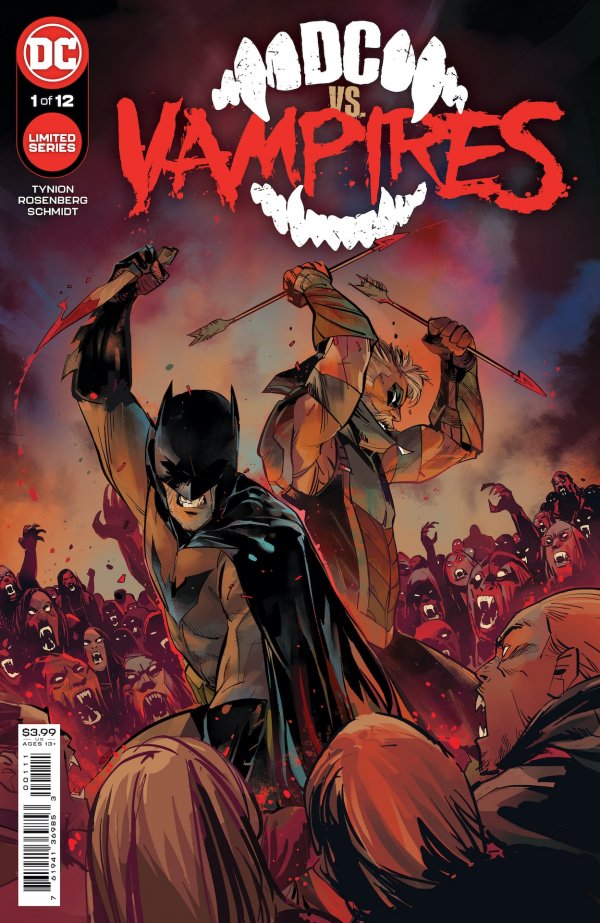
“Okay, but that’s just a placeholder title, right? We’re gonna come up with something more clever before it’s published, right? Right? Guys?”

Finally, there’s DC Vs. Vampires where – once again – some of DC’s best and brightest are turned into creepy-crawlies. This time, we wind up with a world where Batgirl becomes queen of the vampires and the heroes are divided into dead and undead and are embroiled in a civil war that engulfs their entire world. The most recent (and possibly final) volume of this series just ended, and the paperback edition should be coming soon. Like Marvel Zombies and DCEased, it works as a fun horror take on some familiar characters.

So there you are, friends – a few gateways into the world of the macabre. I’m sure you have suggestions of your own, and I’d love to hear them in the comments. With two weeks left until Halloween, it’s time for the Creepy Content to completely take over.

Blake M. Petit is a writer, teacher, and dad from Ama, Louisiana. His most recent writing project is the superhero adventure series Other People’s Heroes: Little Stars, volume one of which is now available on Amazon. You can subscribe to his newsletter by clicking right here. He’s also started putting his LitReel videos on TikTok. He skipped over recommending Plants Vs. Zombies. They know what they did. 

Geek Punditry #135: Hardly Halloween

Here we are, friends, August 1, and according to everybody on the Internet that means one thing: it’s Halloween.

Here we go, the perfect August.

Granted, October 31st is a full three months away, but it only takes a brief glance at social media to see that people have already begun preparing for it. Plans are being made, movie marathons are being scheduled, decorations are going up, and Spirit Halloween Stores are about to open their doors for the year. I’m not exactly sure when it happened, but a large percentage of the online space has decided August 1 is the date at which this sort of activity becomes acceptable.

It drives some people crazy. It’s part of “holiday creep.” It’s bad enough, they will cry, that stores start pushing Christmas in October – is Halloween in August really necessary? And the answer, strictly speaking, is probably “no.” We’re talking about entertainment, after all, and entertainment is virtually never “necessary.” But here’s the thing guys: it may not be necessary, but that doesn’t mean it isn’t welcomed or desired. When I say it’s not “necessary” to put out Halloween decorations in August, what I mean is that the decorations SPECIFICALLY are not necessary…but they do meet a need. They fill something in the person who is doing it, they make them smile a little bit, make them feel better. It is, as much as I hate the term, a form of “self-care,” to immerse yourself in those things that make you feel good. And while it could theoretically be something else other than hanging that scarecrow wreath on your front door, why is it bad if it IS? 

The same, of course, goes for starting Christmas in early November or people in the New Orleans area who are ready to put out Mardi Gras decorations on Dec. 26. It seems early if it’s not something you’re into, sure, but for those people who want these kinds of things, it’s not early at all. In fact, if you really love a certain holiday, there’s often no such thing as too early.

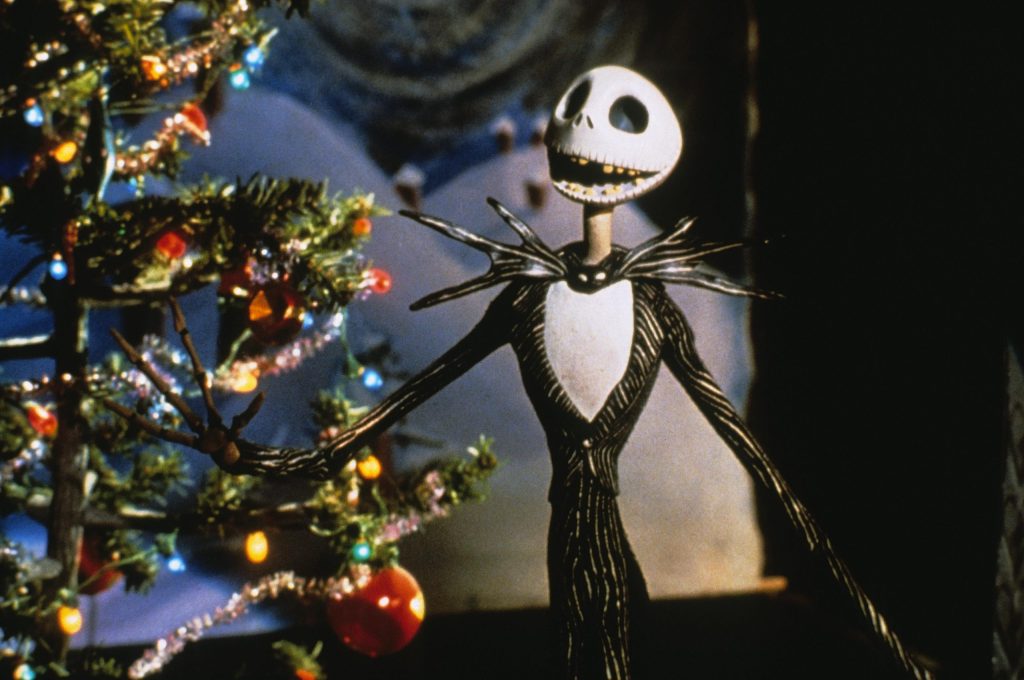
It worked for Tim Burton.

Let’s talk about August Halloween specifically. Why has this become the thing that people are latching on to? Well, to be blunt, August kind of sucks. It’s ridiculously hot outside. School is starting up again, which students of course equate with a loss of freedom. The best summer movies have already come out, so there’s not much reason to get hyped for the box office (although this year, the new Naked Gun reboot looks surprisingly good). And there aren’t even any holidays coming up soon to get excited about. That’s one of the best things about major holidays, after all, the anticipation. Buying gifts for Christmas, planning the meal on Thanksgiving, and watching scary movies in the run-up to Halloween are all primary seasonal activities that cannot be restricted to a single day. And for the people who love these holidays, we wouldn’t WANT them to be.

August, however, has nothing like that to offer. Once the Fourth of July has passed, the next holiday doesn’t come until Labor Day in September, and even then it’s not the kind of holiday that eats up an entire season. For most people it’s just a three-day weekend – we’ll take it, but it’s not something that will keep us going for months. I’ve tried to solve this problem, friends. More than once I’ve offered up my birthday (August 25) to members of Congress for use as a national holiday to help break up the seasonal doldrums by starting new traditions like eating pizza while watching Star Trek and making charitable donations in the form of purchasing hundreds of copies of my books to give to libraries, schools, hospitals, or your loved ones. But apparently this plan is – in the words of a certain Congresswoman from the southwest who shall remain nameless – “ridiculous” and “grounds for an FBI investigation if you keep calling my private number, how did you get it anyway?” So until they get their act together, I think early Halloween is our best bet.

There is an irony, I think, in that many of the people who love early Halloween are also the people who reject early Christmas. Some of the REALLY hardcore Halloween fans – the ones who enjoy “extreme” haunted houses and particularly dark horror movies – are likely not the type who are also into elves, reindeer, or (oddly enough) pumpkin spice lattes. I think there’s more overlap among the people who prefer their Halloween to be family-friendly. If your decorations include stuff from Disney’s Haunted Mansion or a Minion dressed up like Dracula, you’re more likely to be the sort who switches to a Santa inflatable on November 1.

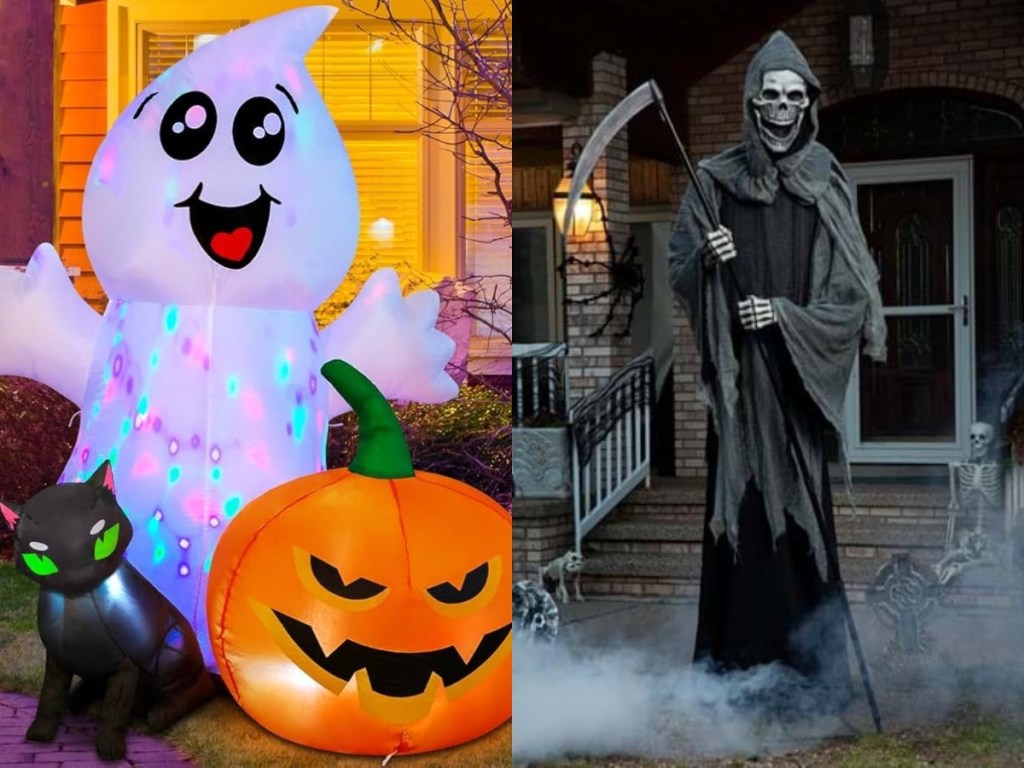
There are two kinds of people.

Regardless of which type of Halloween fan someone might be, though, there’s something important that detractors need to remember: it doesn’t hurt you, so let people be. It always amazes me how many people need to be reminded of this simple principle. Look, I get it – “Spooky Season” being extended to the middle of (meteorological) summer has been elevated to a kind of meme status, and like any meme, if it’s overused it can get kind of annoying. But nobody is forcing you to participate. You don’t have to put out a Jack O’Lantern if you don’t want to, and nobody will think less of you if you keep that banner with the sun with a smiley face basking down over the beach until September. But by the same token, it doesn’t do YOU any harm when the guy next door is out on his lawn in 105 degree heat trying to figure out how best to position his 12-foot skeleton from Home Depot. 

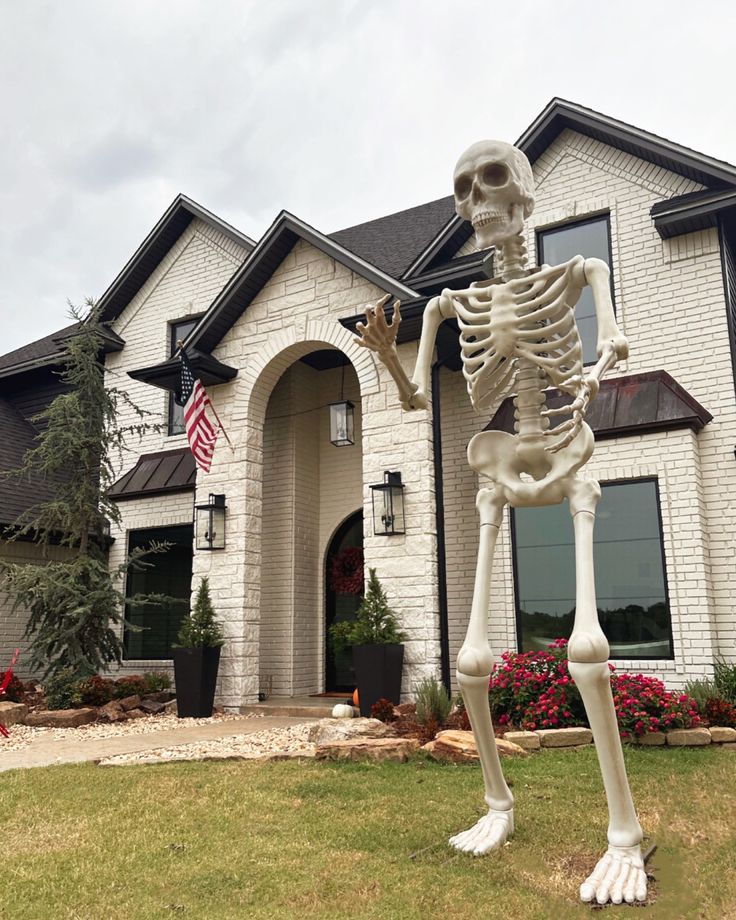
At this price, it’s irresponsible NOT to buy one.

For me, it all goes back to the idea of having something to look forward to. Day to day life, even if you’re the type of person who has a job they love to go to in the morning or one of those weirdos who actually enjoys spending time with their family, can get monotonous. There’s an important psychological need that is fulfilled by having something to look forward to, and things like holidays are a good way to scratch that itch. It gives you a reason to get excited, even if that reason is something as silly as deciding when to add “Monster Mash” to your Spotify playlist. 

For example, my son informed his mother and I a few weeks ago that this year he intends to be Superman for Halloween. I don’t need to tell you that this is something I – as a parent – have been hoping to hear my child say from the day Erin informed me that she was pregnant. I am already imagining helping Eddie pick out his costume, dressing him up, taking so many pictures that I may need to purchase a new external hard drive for my computer, and maybe even putting on the Superman long pajamas he and Erin gave me for Father’s Day to accompany them. In fact, the only reason I haven’t ordered him a costume already is because the kid grows faster than a Chia Pet and I’m afraid of him outgrowing any costume if I buy it too early. Something tells me, though, that once we get closer to the date, such costumes will not be in short supply.

The new face of Halloween.

We all cope with the world in different ways, and as long as doing so doesn’t harm anybody else, there’s nothing wrong with that. And no, “forcing” you to see somebody’s Casper the Friendly Ghost cutout before Labor Day doesn’t count. For those of you who aren’t into it, just relax. Spooky Season will be over far too soon for a lot of us.

For those of us who DO celebrate, buckle up. We’ve only got until the end of October, so let’s dig in and have some freaky fun while we can.  

Blake M. Petit is a writer, teacher, and dad from Ama, Louisiana. His most recent writing project is the superhero adventure series Other People’s Heroes: Little Stars, volume one of which is now available on Amazon. You can subscribe to his newsletter by clicking right here. He’s also started putting his LitReel videos on TikTok. He’s already made a chart of which movies he’s going to watch this year. He knows he won’t make it through half of them.

Geek Punditry #108: Blake’s Five Favorite Frigid Fables

Here in Southern Louisiana, we’re known for a few things: food, music, and a general manager that none of the best potential head football coaches in the country want to work with. But this week, we got put on the map for something pretty unusual for us: snow. On Tuesday, we were hit with a snowstorm that dumped more of the white stuff than anybody alive has ever seen in the state of Louisiana before, as much as 10 inches in some areas. I know some of you in the north are scoffing at that – ten inches of snow is nothing to you if you live in North Dakota, for example, but this is insane for us. We don’t get snow like this. Every few years we get a dusting that makes us giggle until we have enough to make a snowman roughly the size of a Funko Pop and then we hope it happens again before we’re drawing social security. But this was more snow than Louisiana has had since 1895. That’s not a typo, it’s more than we’ve had in 130 years, and pretty much everything was shut down: roads, schools, businesses…everything except the Waffle House. As a result, I got three days to spend with my wife and son in a winter wonderland.

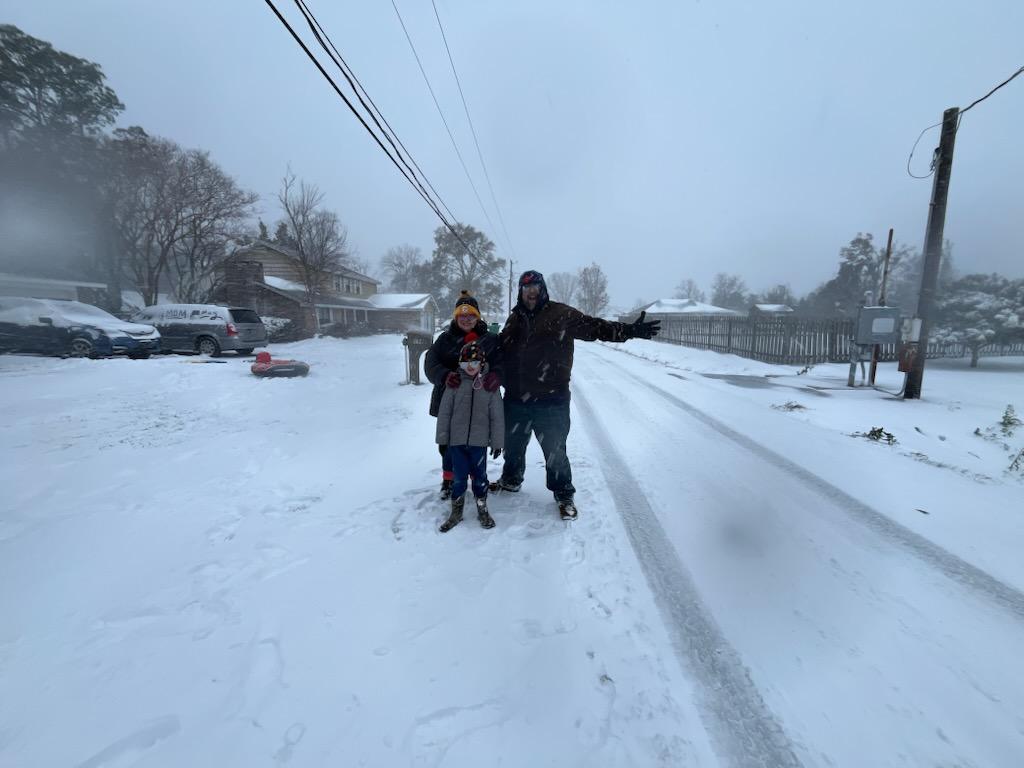
Seriously, this NEVER happens.

So naturally, I’m thinking about horror movies.

Well, not exactly. But spending so many days unable to leave the house because of ice and snow got me thinking about stories with that premise: people stranded together due to cold weather. And the fact is, most of those are scary movies. (Or Hallmark Christmas movies, but I’m not gonna write about those in January.) Pretty much every great example I could think of qualifies as a thriller, if not an outright horror film, and I guess it makes sense. Being forced in a confined space with people over a period of time can start to wear on you, the edges can be chipped off, and before long you’re staring at each other like Daffy Duck does when Porky Pig starts to look like a steamed ham. 

So in honor of this once-in-a-lifetime event, I decided to break out my Five Favorite Frigid Fables, five great movies about people stuck together in the cold. As always, these lists are highly subjective. They’re the five best movies I thought about that fit my criteria, and it’s always possible that if I made this list tomorrow I’d pick five totally different movies. I’m going to go from the most well-known movie on this list to the least, at least, according to the viewing numbers on Letterboxd. The first three are movies that will make most of you say, “Well obviously,” but I’m hoping by the end you’ll find something you may not have heard of before.

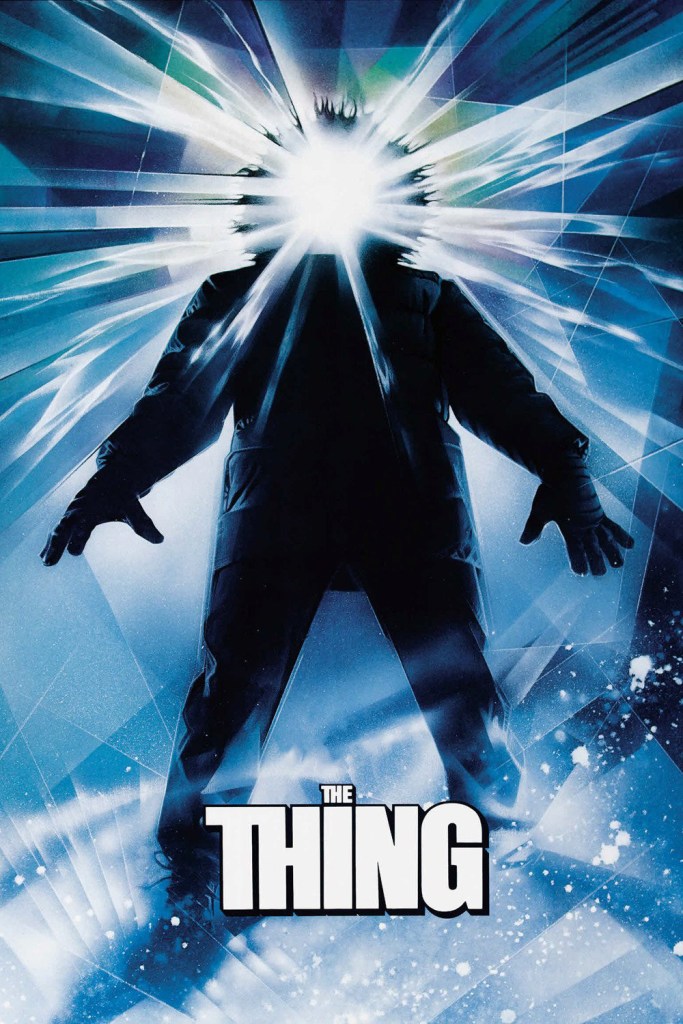
The Thing (1982), directed by John Carpenter

My family made it through the Louisiana Sneauxmageddon pretty easily, but if I hadn’t included this movie on the list my wife may have left me anyway. This is probably the defining example of a cold weather confined area horror movie, as well as being one of the best sci-fi/horror mashups ever made. In this film, if you’re one of the three people on the planet who aren’t aware of it, a group of researchers at an Antarctic base uncover an alien creature that has been buried under the ice for hundreds of thousands of years. Although it is literally never a good idea to thaw one of these out, the alien escapes and begins to prey on the men.

Making matters worse, they discover that the alien is a shapeshifter. Not only is it a murderous beast, but it has the ability to transform and look like any one of them, so they can’t even trust each other. The resultant film is a masterpiece about fear, mistrust, and paranoia, a world where even your best friend may be the thing that’s out to kill you. The ending in particular is wickedly clever and absolutely perfect for this film. The movie is a remake of the 1951 film The Thing From Another World, itself based on the novella “Who Goes There?” by John W. Campbell, thereby simultaneously proving that sometimes the remakes are better than the original and sometimes the adaptation is better than the book. On the other hand, the remake/prequel of THIS movie from 2011 is…well, it’s just okay. But of the four iterations of this story, John Carpenter is the one who did it best.

The Hateful Eight (2015) directed by Quentin Tarantino

I feel like this is kind of a “forgotten” film. It’s not so much that people don’t know about it, but it rarely seems to make the conversation when people talk about their favorite Tarantino movies, which is surprising to me, because I’d easily place it in my top three. (The others are Inglorious Basterds and Once Upon a Time in Hollywood, since you asked.) In some ways, you could almost call this a western version of The Thing. Several travellers are snowbound at a haberdashery during an intense blizzard, including some bounty hunters, a condemned murderer, a sheriff, a cowboy, and a former Confederate general. As the storm rages outside, inside the lodge we start to learn that all of these people may not be the strangers that we assumed. These are people with deep wounds, some of them caused by the others that they’re now trapped with, and there is a hunger for revenge.

Even for Tarantino, this is a dark film. There is a rage and anger brimming beneath the surface, and there really aren’t any “good guys.” The movie is about bad people, badly damaged people, and the things they do to one another. The entertainment factor comes from trying to unravel the mystery of exactly how all of these people are connected and who has a past with whom. In that way, it may be the most well-written of Tarantino’s movies, with a complex plot that rewards multiple viewings as you try to untangle the web. There’s also an extended version, released via Netflix as a four-part miniseries, which I never got around to watching, but writing about it now is making me want to do so. 

Misery (1990) directed by Rob Reiner

Do you ever stop to think about how weird the career trajectory of some people turns out to be? Rob Reiner, the guy who played Meathead on All in the Family, grows up to direct two of the best Stephen King adaptations of all time (this one and Stand By Me) along with stuff like The Princess Bride and When Harry Met Sally. Go figure. 

Anyway, in this magnificent movie based on one of King’s best stories, novelist Paul Sheldon (James Caan) gets in a car accident in the snow and is rescued by a former nurse named Annie Wilkes (Kathy Bates). Annie tells Paul that she’s his biggest fan and is delighted to help nurse him back to health, but from the very beginning things feel…off. Things get much worse when Annie discovers Paul killed off her favorite character in his newest book, and the two enter into a deranged battle of wills as Annie fights for the survival of the fictional Misery Chastain, while Paul has to fight for his life. 

The movie is incredible – taut, tense, and full of legitimate chills. This was Kathy Bates’ breakout role, and garnered her an Oscar for Best Actress back when the Academy Awards still actually meant something. Everybody involved in this movie is at the top of their game, and it’s just as engaging and exciting today as when it was released 35 years ago.

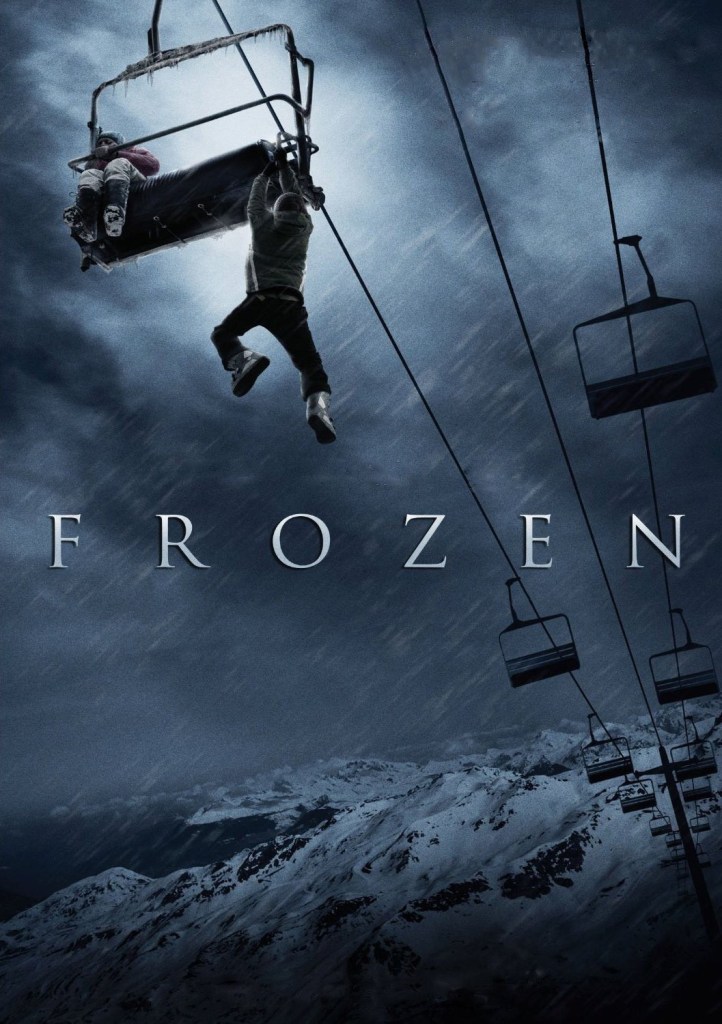
Frozen (2010) directed by Adam Green

Elsa is going to be crowned the queen of Arendelle and her sister–wait, wrong Frozen. No, this movie came out three years before that other one, and it is most definitely NOT a beloved musical about the power of familial love. This film involves a trio of young skiers (Shawn Ashmore, Emma Bell, and Kevin Zegers) who – through a series of mishaps that make Kevin McCallister getting left behind in Home Alone seem plausible – get stuck on a ski lift as the weekend mountain resort they’re visiting shuts down for the week. 

Although the circumstances necessary to get the three of them trapped up there admittedly stretch credulity a little bit, once you get past that the movie is fantastic. You’d think a movie about three people stuck on a ski lift would run out of steam quickly, but the way the situation rapidly escalates into a life-or-death battle against the elements is totally gripping. It’s the kind of movie that makes you question what you would do in that situation, forcing you to wonder if you could possibly survive such an experience, dangling from an immobile ski lift with no hope of rescue for days as the temperature keeps falling and wolves begin to prowl in hard-packed snow beneath you. This was actually the first Adam Green movie I watched, before I discovered his signature Hatchet franchise, and it’s usually the one I recommend to people first. I love this movie.

Scare Me (2020) directed by Josh Ruben

The final film on this list is the most recent and least well-known, but by god, it deserves an audience. Writer/director Josh Ruben plays Fred, a writer on a retreat in the mountains. While taking a jog one morning he encounters Fanny (Aya Cash), a fellow writer who’s also on vacation. When a storm knocks out the power to their cabins, Fred and Fanny decide to ride out the weather together, passing the time by telling chilling stories as they challenge one another to – well, as the title says – “scare me.”

This is a movie that’s so simple, but absolutely brilliant. Almost the entire film is simply these two in a cabin talking to one another, but it’s done in such a way that you get sucked right in from the very beginning. The tales they tell are inventive and entertaining, but also slowly reveal things about the two main characters that lead you to question the entire situation. As good as the writing is, though, it wouldn’t be anything without the performances by Ruben and Cash. Both of them are probably better known for their comedic work (although after this movie, Cash hit it big on The Boys), but as I’ve said many times, the line between comedy and horror is very thin and the two disciplines rely on a lot of the same skills. That is to say, a great comedic actor very often has the chops to be a great horror actor, and these two prove it with this movie. They’re both wonderfully funny, but on a dime they can turn the entire situation around and scare the pants off of you. If you haven’t watched this movie, it’s currently available on Shudder and Hoopla, as well as the usual digital rental services. This movie proves how possible it is to tell a killer scary story without relying on gore and special effects, but just great performances. In fact, it could very easily be turned into a stage play, and it would be amazing.

There you have it, guys – five stories about people trapped in the cold. If it’s your thing, I hope you check them out. And if you’ve got suggestions for other such movies beyond these five, let’s hear it! Drop your own suggestions in the comments.

Blake M. Petit is a writer, teacher, and dad from Ama, Louisiana. His most recent writing project is the superhero adventure series Other People’s Heroes: Little Stars, volume one of which is now available on Amazon. You can subscribe to his newsletter by clicking right here. He’s also started putting his LitReel videos on TikTok. He briefly considered including the 2002 Cuba Gooding Jr. terror film Snow Dogs, but he thought that might be a bit too much.

Geek Punditry #93: The Narrative Chain of ‘Salem’s Lot

Welcome to The Narrative Chain, the newest of my many column-within-a-columns here at Geek Punditry Global Headquarters. In The Narrative Chain, I’m going to take a look at a story that has been told multiple times and examine some of the different versions, whether this be books that have been turned into movies, comics that have been adapted to television, remakes, reboots, or adaptations, we’re going to pick into them here. And I thought that, for October, we would start with the second published novel by Stephen King, as well as the various adaptations thereof (including the one that dropped just last week): the vampire drama ‘Salem’s Lot.

You wouldn’t think a book about Sabrina’s cat would be that scary, but…

The original novel, published in 1975, tells the story of an old-world European vampire named Kurt Barlowe (no, really) who comes to the little town of Jerusalem’s Lot, Maine, and begins to worm his dark tendrils into the citizens thereof. The novel focuses mostly on a small group of citizens who come together to fight back against the vampire, including Ben Mears (a novelist, because as early as his second book Stephen King was establishing patterns), local woman Susan Norton, 12-year-old Mark Petrie, Father Donald Callahan of the local Catholic Church, and a few more. But interspersed between the scenes with our heroes are many chapters detailing the activities of the other citizens of the ‘Lot as they fall prey to the darkness.

Although his first novel, Carrie, was a hit in his own right, I feel like this is the book where we really started to see the Stephen King who would become a literary juggernaut. It’s much longer (although still a drop in the bucket compared to the likes of The Stand or It), and the first of his books to establish a large cast of characters that he bounces between as he tells the story of a community under siege. These are things that King does better than almost anyone, and you really see it as he paints the citizens of Jerusalem’s Lot, warts and all. 

In an introduction to an anniversary edition of the book years later, King said that his goal with this novel was to create a sort of marriage between the storytelling of Bram Stoker’s Dracula and the American style of horror he grew up with in EC Comics like Tales From the Crypt. In practice, I’m not sure that he completely succeeded in that particular goal. Although not utterly hopeless, the ending of ‘Salem’s Lot is considerably bleaker than the ending of Stoker’s novel (and King himself says that the story ends in a more hopeful place than he originally intended). Similarly, it doesn’t quite have the sort of bitter sense of humor or twisted concept of justice that the EC Comics brought to the table, both elements that would be more visible in some of King’s later works. There’s also an odd sentimentality to the book – the characters seem to meet and immediately form lifelong bonds (not that “lifelong” is a particularly lengthy period in a vampire novel) in just hours. It’s a way to drive up the tension and make you feel for the characters a bit more, but there are times where it feels a tad unearned.

That said, I don’t want you to give the impression that I don’t like this book. I very much do – the atmosphere King creates is magnificent, and the way he treats his vampires is as evocative as anything Stoker does, even though he DOES borrow some non-Stoker elements that really gained prominence thanks to vampire MOVIES, such as the vampires’ vulnerability to sunlight. I re-read the book last month in anticipation of the new movie, and I found it just as engaging as I did the first time I read it years ago. It’s not my favorite Stephen King novel – heck, it probably wouldn’t make my Top Five. But when you consider just how many books the man has written, Top Ten is nothing to sneeze at. 

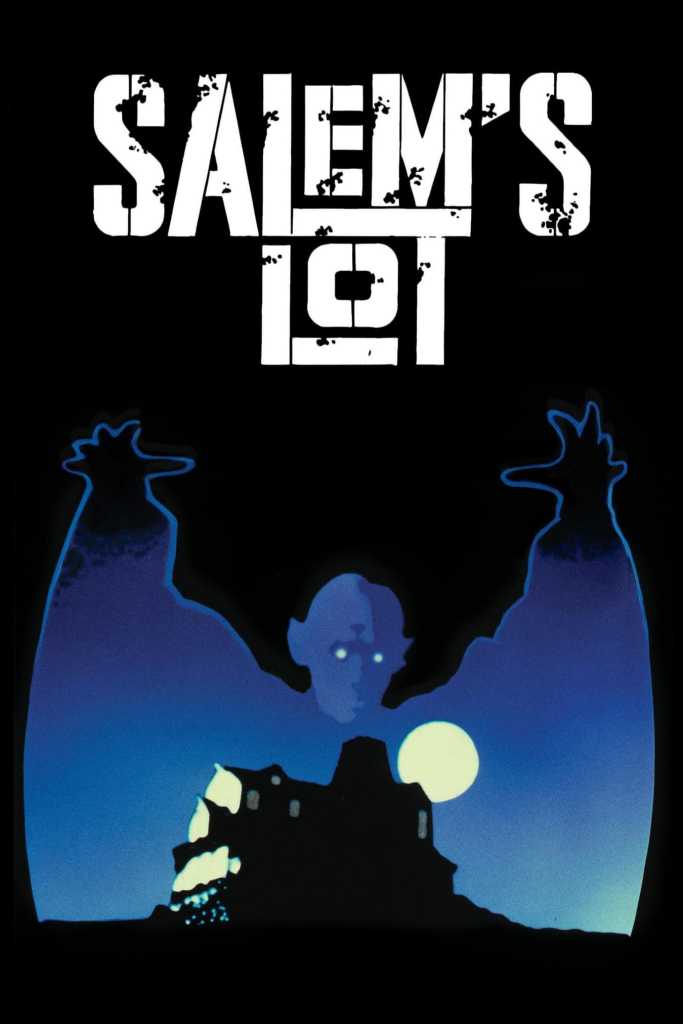
There have been three adaptations of ‘Salem’s Lot to date, all of which I watched (or re-watched) after reading the book, and I’m going to break them down in order to discuss the pros and cons of each, beginning with the original CBS miniseries from 1979. This version starred Starsky and Hutch’s David Soul as Ben Mears, Die Hard’s Bonnie Bedelia as Susan Norton, and…um…Enemy Mine’s Lance Kerwin as Mark Petrie. Directed by Texas Chainsaw Massacre director Tobe Hooper, this is the version of the story that a lot of people grew up with and most of the old-school fans consider the best. I have to say, though, I was only two years old when this miniseries came out. I didn’t watch it until I was an adult, and the nostalgia glasses weren’t on, and I have to say…to me it’s just kind of okay.

It was the 70s, so the government mandated that you were either watching this or Three’s Company.

You have to take into account that it’s a TV movie from the 70s, and by the standards of a TV movie from the 70s, it’s not bad. The vampire makeup is pretty effective, especially that of Reggie Nadler, who plays Barlow. Beefy David Soul doesn’t quite pull off the skinny, contemplative Ben Mears of the novel, but if you aren’t trying to reconcile him with the character from the book he gives a pretty solid performance, with appropriate dread on his face during his encounters with the undead. Bonnie Bedelia is absolutely charming as Susan as well, and it’s easy to see why John McClai– I mean, Ben Mears would fall in love with her so quickly.

This miniseries, with its three-hour run time, just goes to prove something that’s true of a lot of Stephen King adaptations, and not just of this book. When he creates a world full of rich, engaging characters, trying to squeeze them into three hours or less just doesn’t cut it. Father Callahan’s role in this film is reduced to little more than a cameo, and several of the other characters are merged or done away with entirely. I understand the demands of different media, and I know that you’ll never be able to translate a book to a movie with 100 percent accuracy. I’m okay with most changes, provided that the spirit of the original work is left intact. But when so much of what makes the book work is the enormous cast and the way King shows life in all the different corners of the ‘Lot, the way the story and characters are pruned becomes a serious disadvantage to the film. Worst of all is Barlow himself – while he LOOKS scary enough, this version never speaks, losing all the sly, hideous charm of the character in the novel and becoming more of an analogue for Nosferatu than Dracula. 

Another issue comes in the prologue to the story. In the novel, we open with a “boy” and a “man” on the run in a flash-forward to the time after the main events of the story. It isn’t until much later in the book that it becomes clear exactly which two members of our sizable cast they are. In a movie, though, you see them on screen from the first minute, completely erasing the question as to which characters are going to survive the vampyric rampage that consumes the town and losing the thing that makes the prologue worthwhile.

There’s a sequel to this miniseries, A Return to ‘Salem’s Lot (1987), which I’ve never seen – and from the comments of even the most stringent of admirers of the ‘79 version, I don’t think I’m missing anything. I’m not immune to nostalgia. If you get me started talking about cheesy movies and TV shows of the 1980s, I can wax poetically for hours about the things I love in films that – objectively speaking – really aren’t that great. So I appreciate the deep affection a lot of people have for this rendition of ‘Salem’s Lot. But I don’t SHARE that nostalgia, and the warts stand out to me a little bit more. This first attempt at adapting the story isn’t disappointing, but it’s not a sacrosanct film that should never be attempted again, so I wasn’t particularly upset when a new version was announced in 2004. 

“These vampires are out to drink LITERALLY all of my blood.”

This remake, a TNT miniseries, stars Rob Lowe as Ben Mears, Donald Sutherland as Richard Straker (Barlowe’s familiar), and James Cromwell as Father Callahan, so already it’s off to a better start than the version from the 70s. It takes far more liberties with the original story, but I feel like some of them are for the better. For example, the original prologue is done away with for one that is more effective in leaving the viewer questioning what’s going to happen next, with a nice misdirect that Constant Readers may believe is pointing towards another King novel where one of these characters appears. 

Mears is, once again, quite different from his portrayal in the book, taking on a dark detective persona early on in a quest to seek out the truth about the ‘Lot. He’s changed from a novelist to a journalist, with a thirst that makes him more proactive (if a bit of a cliche). His relationship with Susan Norton (Samantha Mathis) is also different – not as fairy tale/star-crossed tragic lovers as the older version or the novel. Rutger Hauer’s Kurt Barlow, however, is a bit more in keeping with the original. He may not look like he spilled out of the pages of an EC Comic, but neither did Barlowe in the book. They sacrificed his “European-ness” for the sake of the actor they wanted, but the result was a more interesting character. One of the more positive changes in this version is the greatly increased role of Father Callahan – not just compared to the original miniseries, but even in comparison to the book. James Cromwell isn’t somebody who should be wasted on five minutes of screentime, and screenwriter Peter Filardi and director Mikael Salomon make very good use of him.

One of the best things about this version, though, is that it does a much better job of bringing in the expansive cast of the book. It’s not a perfect adaptation, of course. There are still some merged and missing characters, as is pretty much always the case in an adaptation, but for the most part I feel like it captures the “town” aspect of the novel much better than the 1979 iteration.

I’m not wild about the ending, which doesn’t really fit the novel at all, but I at least have to concede that it fits this particular adaptation. If I hadn’t read the book or watched the earlier miniseries, I probably would have thought it was appropriate. As such, though, while I liked this better than the first miniseries, I was hopeful for the new version, a movie that dropped on the Max streaming service earlier this month.

“Wait, we’re actually releasing this? I thought it was just a tax dodge.” –Warner Bros Executive, probably

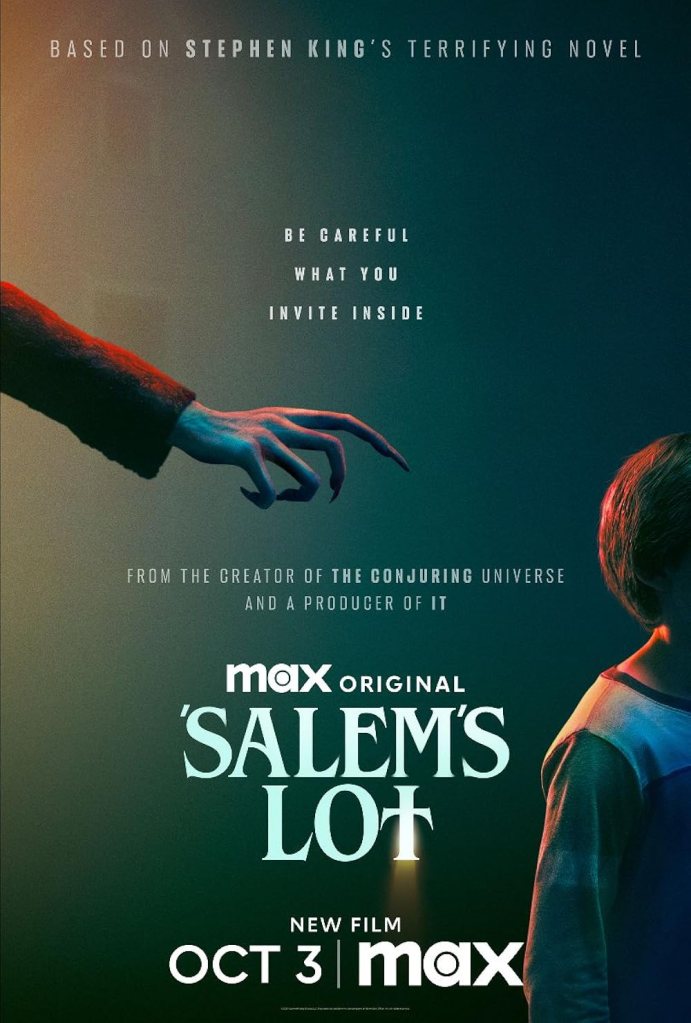
The 2024 movie has had a bit of a troubled pedigree. Originally slated for theatrical release in 2022, it seemed to get caught up in the chaos of the Warner Bros/Discovery merger and tossed around in the same cataclysmic atmosphere that led to the loss of the Batgirl and Acme Vs. Coyote movies. As it sat on the shelf for two years, many people were skeptical that it would ever see the light of day, and when it was finally announced that it would be released on Max, many people were skeptical that it SHOULD. As soon as it premiered it seemed like half the internet came out in force to hate it, but that doesn’t actually mean anything. Half the internet hates EVERYTHING. It can’t help it, it’s a reflex action like breathing or screwing Oreos open to eat the creme first, so I didn’t put any stock in the initial reaction, determined to make up my own mind.

The cast for this movie, I must say, is effective. Lewis Pullman as Ben Mears and Makenzie Leigh as Susan Norton both feel quite natural in the roles, and while I wouldn’t go so far as to say they have great chemistry, the stark atmosphere in director Gary Dauberman’s telling doesn’t really demand the gooey, doe-eyed love of the book anyway. Alfre Woodard as Dr. Cody gives a solid performance because she’s not capable of any less, and it’s always nice to see Stephen King adaptation veteran William Sadler, this time as Sheriff Parkins Gillespie. But the standout in this cast is Jordan Preston Carter as Mark Petrie. He’s not only the first actor to play Mark that’s actually a child instead of a teenager, but he’s also the first that has the sort of cool disposition and intensity that the character has in the book. Novel Mark Petrie is wise and level-headed beyond his years. Neither of the other two adaptations pulled that off, but Carter lands it perfectly.

I also appreciate the mood Dauberman has created. While the 2004 version was a little too clean and the 1979 version was a little too…well, “70s TV movie,” this version of ‘Salem’s Lot really has a good atmosphere, a dark tone, with some great effects as the townspeople turning into vampires delve into the shadows or attack an unsuspecting victim. Dauberman doesn’t shy away from some of the more spiritual aspects either – in the book, crosses and crucifixes actually glow with power when used against a vampire. This is the first version of the story to do that, and we get a fantastic visual when it does. This version of Barlow (Alexander Ward) again has a very Nosferatu-like style, but he’s got more life and animation than the ‘79 version, including a — sadly abbreviated – version of the novel’s epic face-off with Father Callahan (John Benjamin Hickey). 

The ending, like the 2004 version, is greatly changed from the book, but I like this one better. There’s a fun set piece that I don’t want to spoil because it’s just nicely creative idea for how to stage the finale, although some of the special effects are wanting (we’re in the age of CGI artists being rushed instead of given the time to do the job properly, my friends). It also seems like the sun sets abnormally fast…but come on, am I really gonna complain about a scientific inaccuracy in a vampire flick? There’s a lot to like about this movie.

Unfortunately, in one vital aspect, the internet is correct: this movie is clearly chopped to hell. The pacing is a mess and there are huge gaps in the narrative as the story leaps from one high point to another without taking the time for the slower character moments in-between that make the best of Stephen King’s stories so good. Most of the intriguing side characters are missing altogether; the few that remain are reduced in scale to minor cameos, and it’s only our Vampire Squad that gets any attempt at development at all. And at 113 minutes – less than two hours – it can’t really be a surprise. Even the two miniseries, with three hours each (after commercials, of course) didn’t feel like there was enough time to tell the story properly. Perhaps the most frustrating thing, though, is that there is reportedly a three-hour cut of this film that New Line Cinema whittled down to the dismally insufficient running time. And for the love of Father Callahan: WHY? I could at least understand the financial incentive – if not the creative one – when the movie was slated for a theatrical release. The shorter the movie, the more times it can be shown per day, the more money the movie will theoretically make. But none of those factors apply to a movie on a streaming service. There are so many good PARTS to this movie, that I have to think a longer version with proper pacing would be the best of the adaptations to date. I’m not the sort of guy to start a website and start demanding the studio “Release the Dauberman Cut,” but if somebody else starts doing that, I’m not gonna disagree with them. 

As it stands, the best version of this story is still the book – which honestly should come to no surprise to anybody: I’ve only ever seen two movies I feel definitely improve upon the book they were based on, and neither of those were Stephen King adaptations. As far as the film version goes – people will hate me for this, but I honestly place the 1979 version at the bottom of the pile. It’s harder to choose between the other two. The 2024 version has better pieces, the 2004 has a better construction. Flip a coin – either way you’ll get some good things and some bad. But to date, I don’t think we’ve had a definitive ‘Salem’s Lot on film. We’ve gotten enough chunks to prove that it’s possible, but it hasn’t happened yet. I can only hope, after he finishes his adaptations of The Dark Tower, that Mike Flanagan continues on his obvious life’s calling of adapting all of Stephen King’s works the way Kenneth Branaugh tried to do with Shakespeare. If anybody can really nail this story, he’s probably our best hope. 

Blake M. Petit is a writer, teacher, and dad from Ama, Louisiana. His most recent writing project is the superhero adventure series Other People’s Heroes: Little Stars, volume one of which is now available on Amazon. You can subscribe to his newsletter by clicking right here. The Godfather and Jaws. He knows you were wondering what the two movies were that are better than the book they were based on. It’s those two. But he’s never read Psycho, which is currently in his to-be-read pile, so he’ll let you know if that changes. 

Geek Punditry #92: The Spectrum of Horror and Comedy

If there need be any further evidence that Hollywood executives frequently don’t have the slightest idea what they’re doing, let’s talk about the fact that they seem to be afraid of horror/comedy hybrid movies. ‘It’s confusing,” they will tell you, pulling their hair out over a movie like Behind the Mask or Happy Death Day. “We don’t know how to market this! Who is it for? Is it supposed to be a horror movie or a comedy?” Whereas the answer is obvious to anyone smarter than a movie executive, which is a very large part of the Venn Diagram, and includes virtually all horror movie fans: it’s both. Horror and comedy BELONG together. They are a natural combination, the peanut butter and chocolate in the Reese’s Peanut Butter Cups of the movie industry, and the notion that there are people who don’t understand that is maddening to me.

Admittedly, humor and terror seem to be on the two extremes of the emotional spectrum, but that’s one of the reasons they compliment each other so well. Another reason is that, structurally speaking, they are very similar to one another. Both of these styles of storytelling are built upon creating an emotional response in the audience, and both of these responses are constructed through the careful buildup and release of tension. In fact, if separated from context, it might be impossible to tell if a scene is intended to be funny or scary until the punchline hits and the audience either laughs or screams, because until that point they can be virtually identical. A funny movie can turn on a dime if an expected laugh turns into a scare, and the dread of a scary movie can be decreased to a manageable level by a well-timed joke. 

The horror/comedy combo is one of my favorites in all of storytelling, but there is a spectrum that these movies and stories exist on. Some of them lean heavier towards the comedy side, some more on the horror, and it’s fair if you prefer one side more than the other. But for the sake of discussion, this week I thought it would be useful to go over what I think of as the five levels on the horror/comedy spectrum and give some examples of each. We’ll start on the more comedy-heavy side.

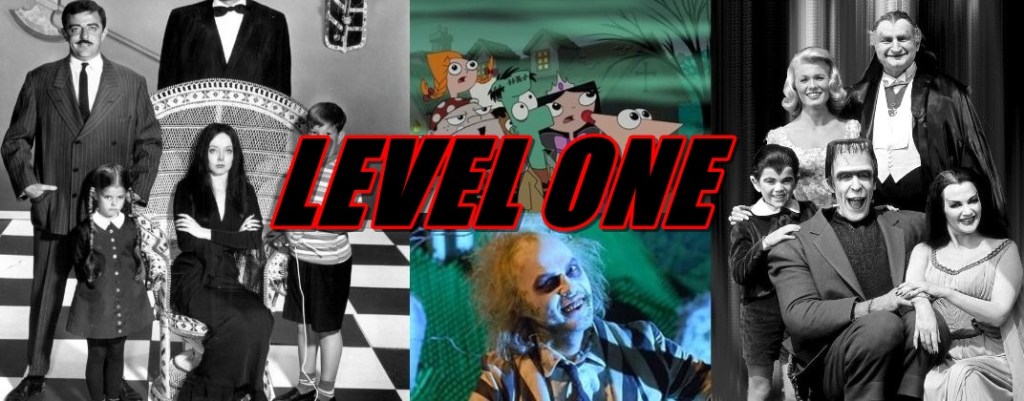
 Level one is where I place the mildest iteration of horror/comedy, where the emphasis is on the comedy. This is usually pretty lighthearted, and more often than not it’s family friendly. It usually has the TRAPPINGS of horror: haunted houses, ghosts, monsters, and pretty much anything else you would consider acceptable in an elementary school Halloween decoration, but there is rarely (if ever) a legitimate attempt at scaring people with this. The classic examples here are the legendary sitcoms The Addams Family and The Munsters. People will argue until the end of time as to which one was better (as far as the original TV show goes, that is – there can be no debate that the Addamses have superior movies), but whether you’re a Gomez Guy or a Lilly Lover, these two franchises are about as close to G-rated as horror gets. There are more recent entries into the category as well, like the Hotel Transylvania movies and underrated movie Igor, and a lot of family cartoons and sitcoms shift into this for Halloween episodes, often seen on the likes of Roseanne, Home Improvement, or Phineas and Ferb.

It’s worth pointing out here that, again, I’m calling this a spectrum, and even these five subcategories have different levels. Technically, I would place Beetlejuice here as well (the original, at least, I haven’t seen the sequel yet), because I don’t think that the movie is ever actually intended to be scary. However, it’s obvious that the movie is more intense than the adventures of the Addamses and the Munsters, and thus if it IS a Level One, it’s towards the high end of the spectrum. A 1.9, perhaps.

On the second level, I place those stories in which the situations are relatively serious, but the characters themselves are funny and react to the scary moments in funny ways. Ghostbusters is the classic example of this. The ghosts aren’t played for laughs (not usually, at least, especially not in the first film), and some of the things could actually be legitimately frightening, such as the first appearance of the Library Ghost. But the behavior and antics of Bill Murray, Dan Aykroyd, Harold Ramis, and Ernie Hudson are very funny and keep you from feeling any legitimate terror. Even when it looks like a Sumarian Deity is about to curb-stomp the city of New York, you know that Venkman is going to have a wisecrack to defuse the situation. Another of my favorite films, Abbott and Costello Meet Frankenstein, falls into this category. The classic Universal Monsters are there, and Lon Chaney Jr. (the Wolf-Man), Glenn Strange (Frankenstein’s Monster) and Bela Lugosi (Count Dracula himself) all play their roles perfectly straight, as if they’re in one of their solo adventures and trying to chill the spines of the audience. But with Lou Costello freaking out over a candle and Bud Abbott doing his impression of everybody who never sees Michigan J. Frog singing, there’s no real sense of danger. The blend of master monster performers and master comedians is never more evident than in this film.

Other works that are typically family-friendly but where the villains have the POTENTIAL to cause actual harm fit in here as well. Hocus Pocus and The Nightmare Before Christmas fall into that category, as do certain classic cartoons such as the Bugs Bunny short Transylvannia 6-5000. I struggled a bit with one of my other favorite Halloween movies, Ernest Scared Stupid, trying to figure out if it belongs here or level one. Ultimately, I’m placing it here, because there are kids (the intended audience) who might find the trolls actually frightening, and they’re trying to do bad things. It’s only through the intercession of American hero Ernest P. Worrell that they’re stopped in time. Yes, that means I’m giving Ernest a higher rating than Beetlejuice, but my metric is how scared the INTENDED audience might be, and I’m sticking with it.

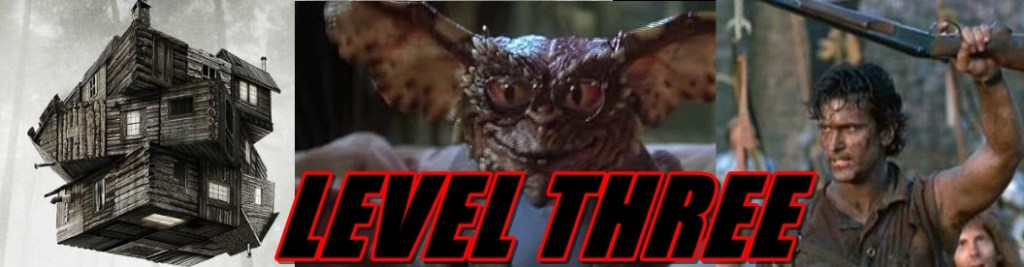
Level three stories have a fair balance between the horror and the comedy. Parts of the film may feel like you’re watching a scary movie, other parts feel like a pure comedy, and when this is done well there is no discrepancy felt by the audience. These two styles of storytelling just match each other very well. Drew Goddard’s The Cabin in the Woods is a great example of this. We start out with what looks like some sort of bland, white-collar office comedy, then cut to a bunch of teenagers getting drawn into what appears to be a very stereotypical slasher movie. But the creeps start to claw their way into the office setting, while the events in the titular cabin turn out to be funnier than you would expect, and by the time we get to the full-on collision of the two settings and you come to understand what one has to do with the other, we’ve got a great blend of the two that maintains pretty much throughout the rest of the film.

We often see this type of balance, by the way, in later films in a franchise. It’s not unusual to see a relatively serious horror movie get zanier in the sequels. Gremlins 2 is one of my favorite examples of this. The first film has its humorous moments, but the sequel really leans into absurdity, with the monsters taking different forms and playing out scenes as though they fell out of a Looney Tunes cartoon. The result is a movie that many fans even prefer to the original. Another good example of this is Army of Darkness, the third movie in the Evil Dead trilogy. The first movie is pure horror, almost nothing funny about it. The sequel, Evil Dead 2, is still very dark, but brings in enough comedic elements to earn it a spot on my spectrum. (That spot is in Level Five, and we’ll get to that soon enough.) But in Army of Darkness, Sam Raimi decided to let Bruce Campbell’s comedic skills and charm really shine through, resulting in a movie that is very different, tonally, from the rest of the franchise, but like Gremlins 2 is a favorite of a large number of fans.

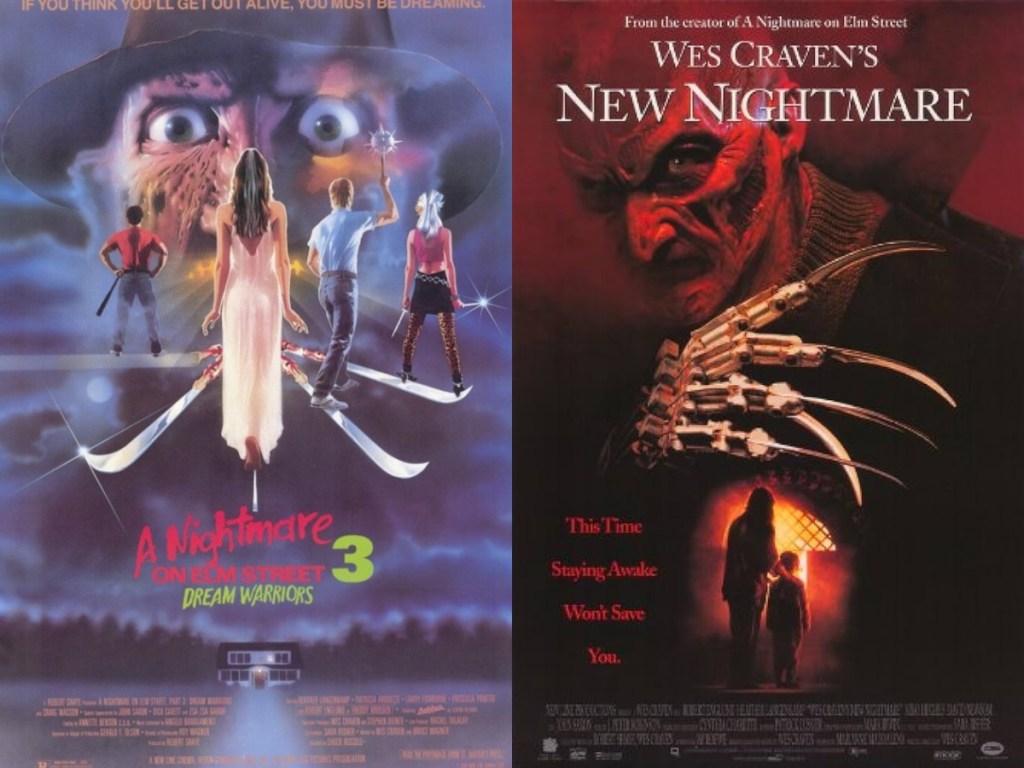
Level Four is where things are getting a lot darker. These are films that are primarily horror movies, but movies that have a twisted sense of humor, and that often comes down to the villain of the franchise. We see this most clearly, I think, with A Nightmare on Elm Street. You’ve got a dead child killer who has the ability to enter and attack you through your dreams, which is not funny at ALL. But the child killer in question also has a wicked funny bone, which manifests itself both in what he says and in the scenarios that he traps his victims in – scenarios that can go from bitterly ironic to just plain goofy. I think it’s the reason that Freddy became such a breakout star in the 80s. There were lots of slashers at the time, but in an era when most of them were imitating Michael Myers and acting as the Strong, Silent Type, Freddy was blazing a trail as a new kind of killer. There have been efforts to imitate him, but few have succeeded.

Probably the most successful imitator, tonally at least, is Chucky from the Child’s Play series. In this franchise, we’ve got a child’s plaything, a three-foot doll, inhabited by the spirit of a serial killer. Making a kid’s toy creepy is a fairly common occurrence in horror (the idea of something that’s supposed to be wholesome and nurturing turning dangerous is frightening), but again, it’s the wit and cleverness of the Chucky character and Brad Dourif’s performance that made the franchise successful and allowed it to grow into so much more than it was in its origins. Oddly enough, later films in the franchise and the follow-up television series do drift, but not lower on the scale of comedy, but towards having a bit more melodrama. It’s a weird, unique transmogrification of the concept, but it never loses its sense of humor.

The Cryptkeeper from Tales From the Crypt and other assorted horror anthology hosts often fall into this category as well. Whether we’re talking about a TV series, movie, or comic book, the format is usually the same: they present to you a scary story, popping in before and after (or sometimes during, if it’s a format that has a commercial break) to drop in a few witticisms about the hapless characters marching stoically to their doom, and the audience loves them for it. The truth is, fans tune in as much for the Cryptcreeper’s ghoulishly ghastly puns as we do for any of the scares that are coming our way.

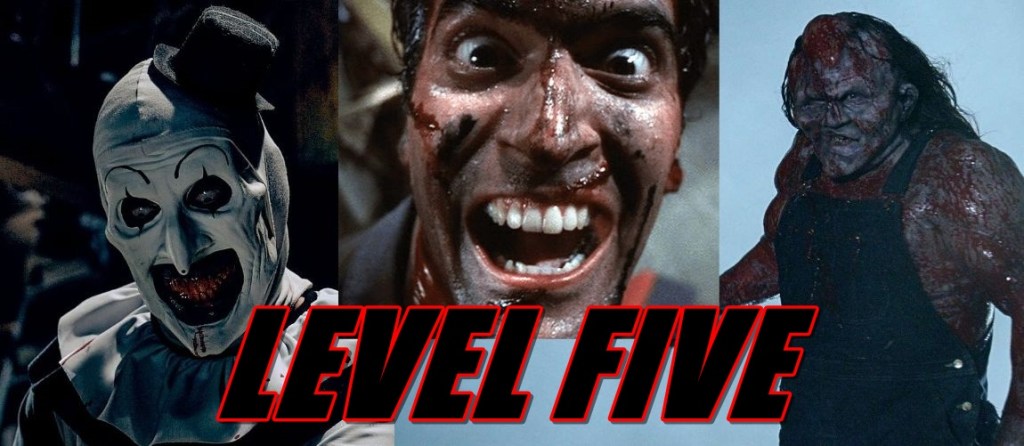
Finally, we arrive at the top tier, that level of horror that’s furthest away from comedy while still, at the same time, having some funny beats. In this category, I place movies that are primarily horror films, but that have a pitch-black sense of humor. Evil Dead 2, again, is a prime example. Bruce Campbell and his girlfriend are under assault by the horrific “Deadites,” demonic creatures that are out to torture and mutilate. Not funny. They take his girlfriend and turn her into one of them. Not funny. One of them possesses Campbell’s hand and he’s forced to cut it off with a chainsaw. Not –

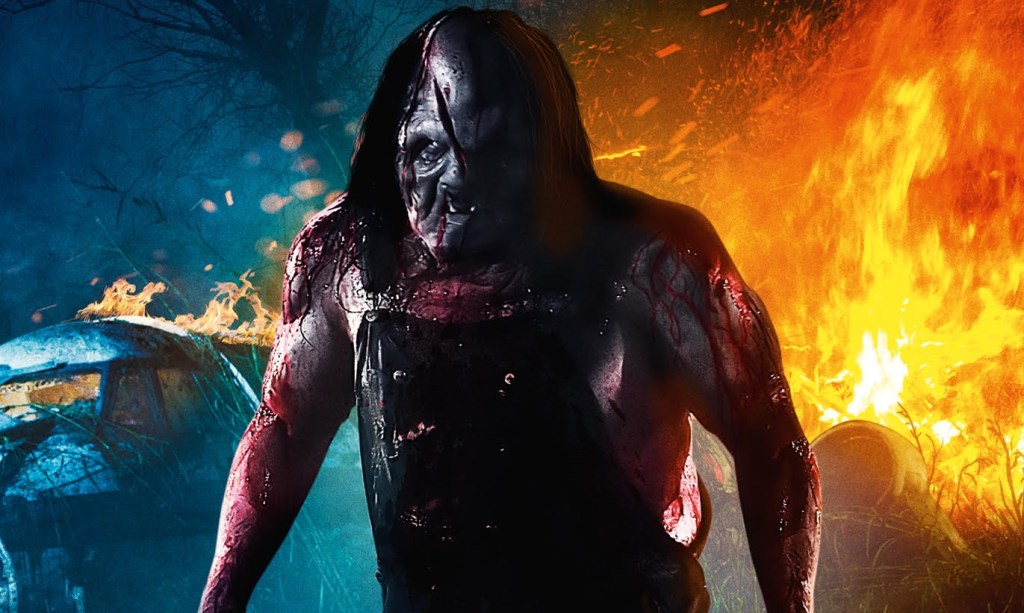
–actually, that part is kinda funny. And that’s how movies on this level go. They take things that SHOULD be horrible and graphic and terrifying, but elevate them to a level that’s almost too cartoonish to take seriously, allowing some laughter. Campbell is great at this. We also see it done to good effect in Adam Green’s Hatchet series. The characters who are NOT undead revenant Victor Crowley are often pretty funny, but Crowley himself is the unspeaking sort of horror. The kills he pulls off, though, are so ridiculously gruesome that the realism is drained away, giving the audience permission to laugh a little bit. To a lesser extent, the same is true of the hugely popular Terrifier films, where the silent Art the Clown brutally tortures his victims. Early screenings for the third film (opening soon) are reporting people walking out during the first ten minutes, with one audience member allegedly even throwing up in the theater. If this is the reaction filmmaker Damien Leone is going for (and I believe it is), then you have to believe he is intentionally going way over the top. 

So there you have it, friends, the levels of horror/comedy. Keep in mind that this scale is meant to determine INTENSITY and in no way is indicative of the QUALITY of a film. Every level has great movies and awful movies that belong there. But if you’re trying to figure out how intense a movie you’re looking for this spooky season, think of the scale and make sure you’re not in a Level Two mood when your friend shows up recommending a Level Five.

Blake M. Petit is a writer, teacher, and dad from Ama, Louisiana. His most recent writing project is the superhero adventure series Other People’s Heroes: Little Stars, volume one of which is now available on Amazon. You can subscribe to his newsletter by clicking right here. The only movie on his scale to ever achieve a Level Six? Babe 2: Pig in the City. Weird, huh?

Geek Punditry #91: What Measure Horror?

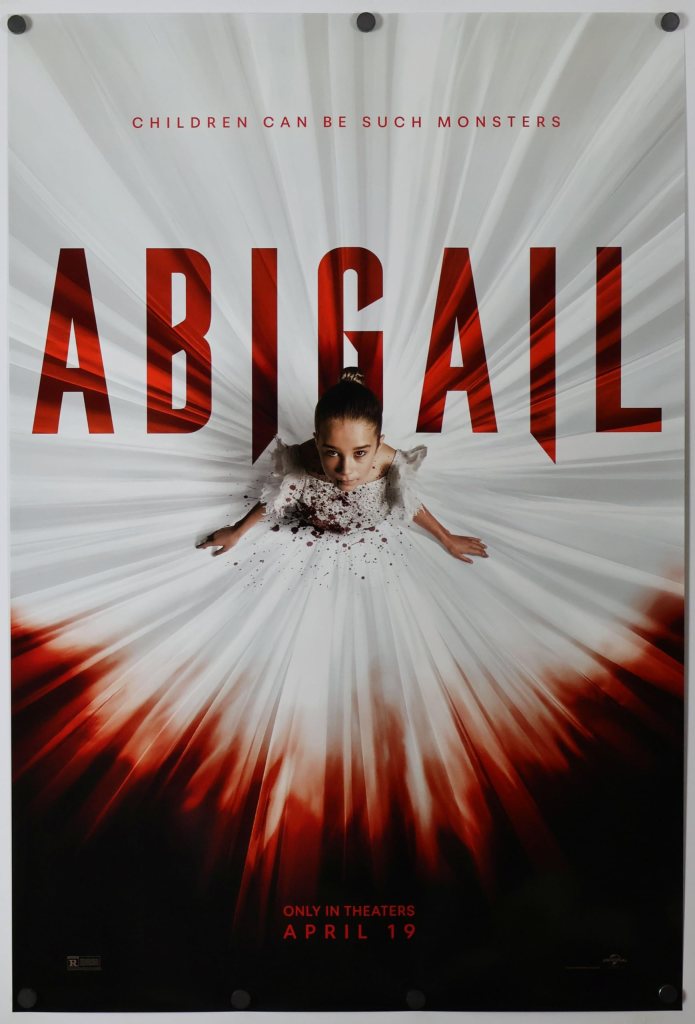
As part of my Pregaming for Scary Season, my wife suggested I watch the new movie Abigail. I’d heard mixed things, but between her recommendation and the fact that it was by the same writing and directing team responsible for the last two Scream movies (which I greatly enjoyed), I decided to give it a shot. I’m really glad I did. Abigail is about a group of crooks hired to kidnap the ballet-dancing daughter of a wealthy man. As they hold her, awaiting their ransom demands being met, they begin to fall prey to a series of increasingly unlikely mishaps. 
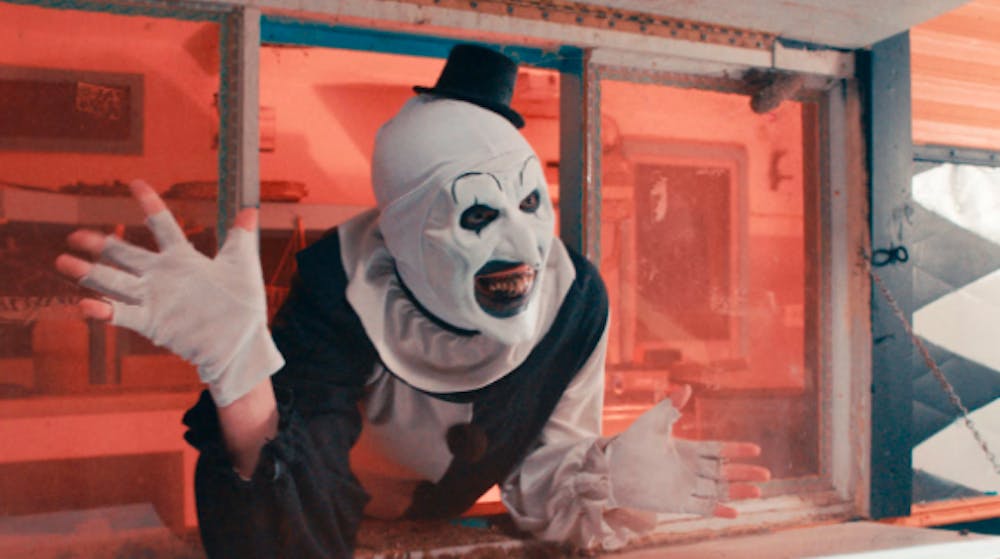
Mishaps like a grande jeté gone horrifically wrong.

I don’t want to tell you anything more about the plot. If you’ve seen the trailers, you probably already know the biggest twist in the film, because the idiots in marketing gave it away even though the film is structured in such a way that it seems quite clear it was intended to be a surprise. I’m just going to say that I recommend you NOT look up the rest of the plot if you haven’t seen it yet and just watch it with an open mind. It’s a great, original twist on an old trope.

It got me wondering why so many people on the internet were down on it, though. I thought the movie was loads of fun. So I went back to find some of the complaints about the film and the major one seemed to be that it wasn’t SCARY enough. 

Guys.

Okay, it’s not a movie that will make anybody wet their pants. There are a couple of jump scares and a LOT of gore, but nothing in it is going to keep me awake at night. But the thing is…is that REALLY the only metric by which a horror movie should be measured? 

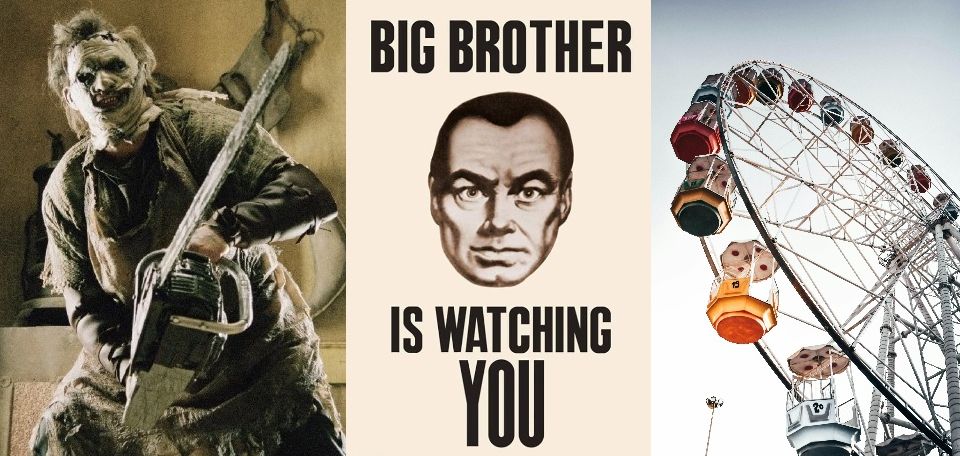
I suppose part of the question is what exactly one expects from “horror.” If you go by the strict definition of the word, yes, “horror” is supposed to be scary. But if I’m being honest, guys, there are very few movies that I find legitimately frightening. I’m not trying to sound like some macho jerk, like I’m above being scared. I get scared all the time. There’s a fair in town this weekend and I need to make sure we go on the day Erin is off work because I’m far too scared of heights to take our son on the Ferris Wheel. It’s just that jump scares and gore — while effective in the moment — are not the sort of thing that linger in my psyche. Stories that I find REALLY scary are the ones with unsettling or disquieting implications for the human monster. 1984, for instance, terrifies me. And I know enough about the movie A Serbian Film to know that I never, ever need to watch it. (If you don’t know what I’m talking about, just take my word for it. Don’t look it up. Seriously.)

From left to right, least scary to most scary.

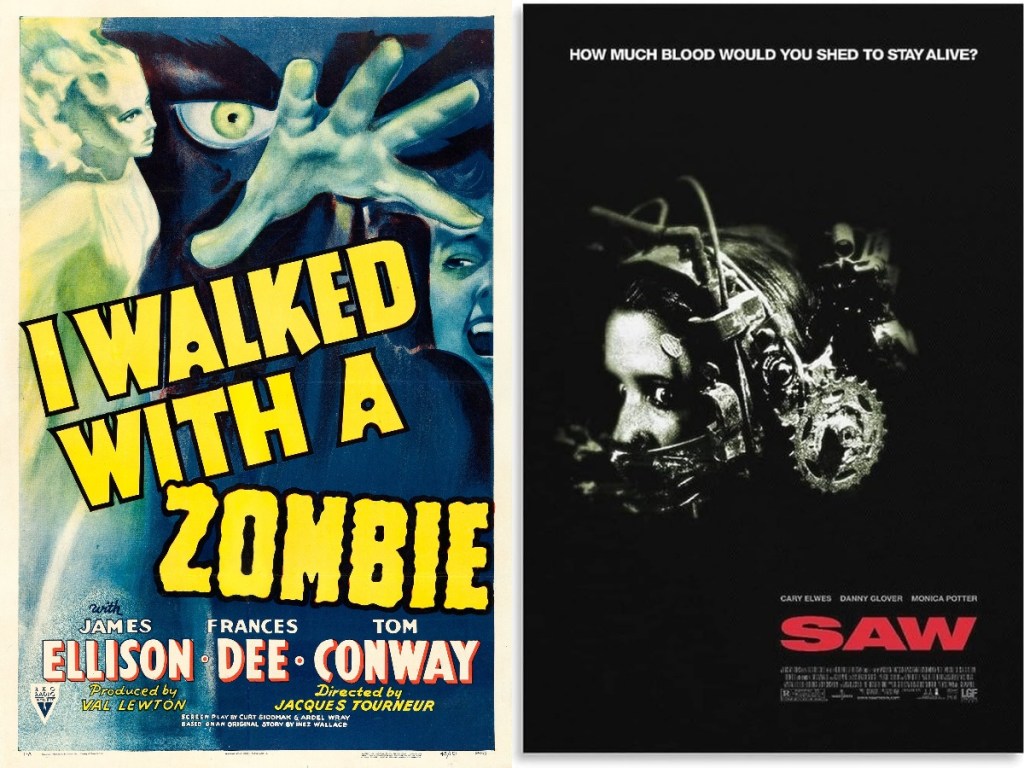
Gore, similarly, only bothers me when it gets too “real.” Historically speaking, the gore in a lot of horror movies has been so over-the-top as to become comical, almost cartoonish. The things that Jason Voorhees does to a camper are largely impossible, and thus, not particularly disturbing to me. The stuff that IS disturbing is the stuff that – again – I don’t care to watch, like the wave of “torture porn” that was popular after the first Saw movie. Which is ironic, as the original Saw is actually relatively light on gore. The franchise didn’t get particularly bloody until the sequels, when it began to ride the trend of torture porn that was popularized by the over-the-top IMITATORS of the first film, who took it to ridiculous extremes.

Similarly, I was listening to one of my favorite podcasts recently – Star Trek: The Next Conversation, featuring Matt Mira and Andy Secunda going through the vast Trek library an episode at a time – when Matt argued that he didn’t count The Walking Dead as horror because he doesn’t think zombies are scary. That’s kind of short sighted. Sure, ONE zombie isn’t going to be that terrifying. I think most able-bodied adults could survive a single zombie, unless it was one of those fast ones from movies like the Dawn of the Dead remake, but that’s going to open up an argument as to whether we should even count them as zombies at all, and that’s an entirely different column. But the horror of a zombie, from the earliest days of George Romero, comes because of the HERD mentality. One zombie? No biggie. Whack him in the head. A hundred zombies? Bring me my brown pants. It’s like a bee sting. Unless you’ve got allergies or other  medical conditions, a single bee is just an annoyance. But if an entire HIVE falls on your head, I don’t care how good a shape you’re in, you’re going to have a very, very bad day. 

“BOO! Did…did that scare…no? Okay, close your eyes, I’m gonna try again…”

I count zombies in the same category as any other movie monster, like werewolves, vampires, mummies, and my ol’ buddy Frankenstein’s creation. They are a type of creature, and while they certainly CAN be played for comedy (or any other genre, really – there are a shocking number of zombie romances out there), their ROOTS are in horror, and as such are part of the genre whether you, personally, are frightened by them or not. 

My point is, I don’t judge the quality of a horror movie by its ability to keep me awake at night, but rather by the same standards I judge any other movie: writing, acting, innovation, music, direction. And by those metrics, I consider Abigail to be a pretty successful film. It takes a very familiar subgenre of horror and does something with it that I haven’t seen before, which is a huge mark in its favor. The writing is strong, with witty dialogue and several moments that were genuinely funny. The performances were very good as well, particularly that of 15-year-old Alisha Weir as Abigail. (I should point out that she’s currently 15, probably closer to 13 when the movie was filmed, and entirely convincing as the 12-year-old title character.) It was also great to see current horror It-Girl Kathryn Newton playing against type. Movies like Freaky and Lisa Frankenstein have kind of given her a sort of 80s Winona Ryder “dark teen in a quirky horror movie” vibe, although it should be noted she’s also been in Detective Pikachu and Ant-Man and the Wasp: Quantumania, and thus far more than a one-trick pony. This movie keeps her in the same KIND of movie where she’s become a queen, but she gets to do a very different CHARACTER than she usually does, which was fun.

But a contingent of the internet seems to think I should disregard all of that because the movie didn’t make me toss and turn until 3 in the morning. (LIFE does that, I don’t need movies to do it.) And like everything else on the internet, I’m sure it’s a small minority of loudmouths who make these complaints. Most horror movie fans that I know are among the warmest, most welcoming people I’ve ever met. But there’s always that jerk who thinks that any movie made after they turned 17 is garbage, and will loudly voice that opinion.

The thing that really baffles me is that a lot of those people who whine about how “not scary” a movie like Abigail is are the same ones who will bemoan the days of Freddy Kruger and Michael Myers. Fellas, I hate to break it to you, but Freddy ain’t scary. Sure, the CONCEPT is frightening – a demon that has the ability to stalk you in your dreams, in the one place where you SHOULD be the most safe but, at the same time, are at your most helpless. That’s a terrifying thought. But go back and watch those movies. Robert Englund is a blast to watch. Heather Langenkamp deserves far more credit than she gets for being one of the all-time great Final Girls. And Wes Craven, of course, was a master storyteller. But I’ve seen every one of those movies multiple times, and I never even ONCE was worried that anything in them could possibly happen in my life. If I had, I probably never would have gone back to them again. 

“BOO! No..no good? Geez, you’re a tough nut to crack…”

Most horror fans are great, of course, but there are snobs in that fandom just like any other. And like a lot of snobs, there’s a recency prejudice that seems to lock a lot of people out of current stuff that’s really good just because they think that the stuff from their formative years is the greatest that will ever be. (I wrote about this with cartoon fans a couple of months ago. It’s the same concept.) So with October coming, with the glorious Creepy Movie Bacchanalia that we’re all going to indulge in impending in just days, here’s my message. Give stuff a chance. Try new things. Watch new movies – and I don’t just mean movies that came out last week, but rather anything you personally haven’t tried in the past. And don’t think that the ONLY thing that matters is that you get nightmares.

Sometimes, a scream can just be for fun.

Blake M. Petit is a writer, teacher, and dad from Ama, Louisiana. His most recent writing project is the superhero adventure series Other People’s Heroes: Little Stars, volume one of which is now available on Amazon. You can subscribe to his newsletter by clicking right here. He’s trying to do the math to figure out just how many monster movies he can squeeze in between now and Oct. 31. He’s terrible at math, but the only answer he can arrive at is “not enough.”

Geek Punditry #90: The Mount Rushmore of Monsters

Yesterday, September 19, when I got home from work, my wife was ready and waiting for something we’ve been looking forward to for months: putting up the Halloween decorations. Oh I know, some people may scoff. Some may say it’s too early. Some may say that preparing for Halloween before October is a terrible breach of seasonal etiquette. To these people I say, bite my gourd. Halloween is one of my favorite times of the year, and I’ve been waiting for this day since I went back to work from summer vacation on August 1. It is well past time, as far as I am concerned.

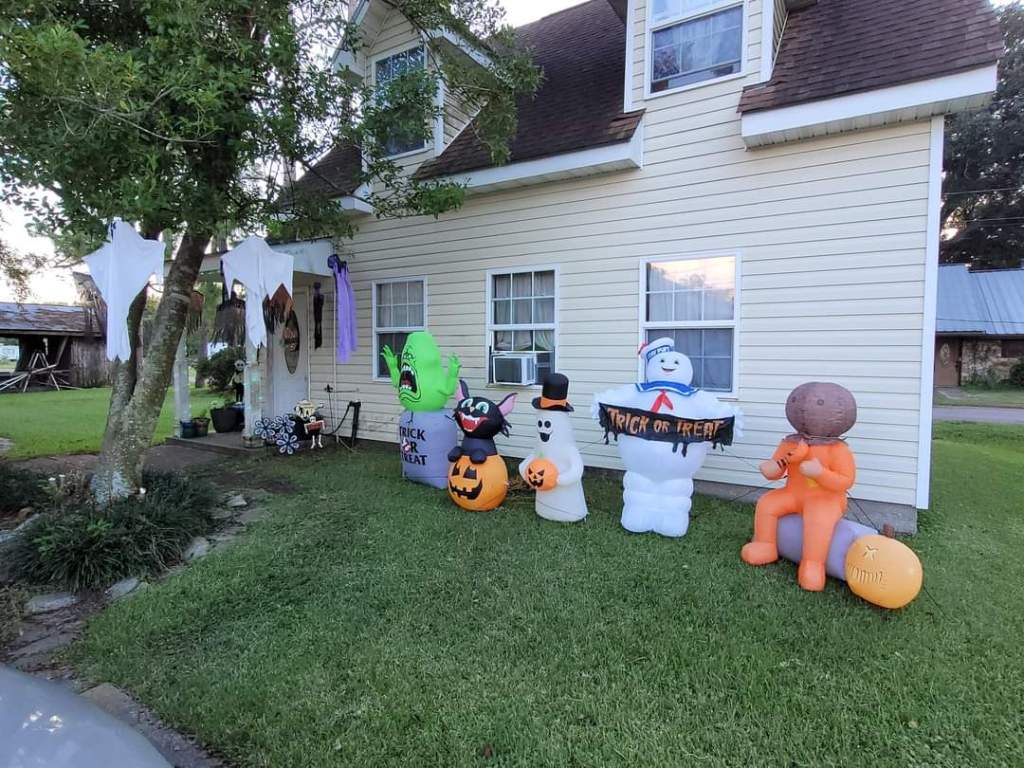
Our decorations aren’t terribly complex, because we can’t afford anything terribly complex. Nor are they terribly scary, because we have a seven-year-old and we don’t want to give him nightmares. But Eddie does love monsters and creepy crawlies, so we’re not above hanging a few ghosts from the trees, wrapping the posts in front of our door with LED lights, and setting up inflatables of the likes of Slimer and the Stay-Puft Marshmallow Man. We’d have more if we could, but we’re happy with what we got.

Pictured: Not Complex Decorations

As we were decorating, though, I started to think about just which horror icons I would adorn our home with if money was no object. If I could grab the icons of terror from any time period, who would they be? In short, what creatures belong on the Mount Rushmore of Monsters?

It was honestly too hard to narrow down all the different monsters from throughout history to a simple quartet, so I decided instead to do three different mountains dedicated to three different eras: the Universal Monsters, 80s Slashers, and 21st Century Terrors. Obviously there are plenty of other ways I could subdivide things, but restricting myself to these three keeps me from going overboard (and gives me an excuse to return to this topic later, should I so choose). 

I’m making my decisions based on how iconic I think the monsters are – how far have they come in terms of penetrating popular culture? For example, no matter how good a movie I think Behind the Mask: The Rise of Leslie Vernon is (and it IS a GREAT movie, and you should all watch it) the fact that he’s kind of faded away since then is going to keep Leslie off the list.

But enough of that. Who HAS made the cut?

Universal Monsters

Universal Studios didn’t invent the horror movie, and in fact, most of their iconic creatures came not from them, but from the annals of public domain. That said, when people think of these classic monsters, the average member of the public is picturing the versions that came from the Universal monster flicks. The Universal Monsters are still known worldwide, a valuable brand that even kids will recognize without ever having seen a single one of their films. Their versions of Dracula, Frankenstein, the Wolfman, the Invisible Man, and many more are absolute legends. How in the world do you narrow it down to just four?

Well, you do it by deciding which ones are the MOST iconic, which ones are known by EVERYBODY – even people who hate monster movies or don’t like Halloween. And for that reason, I think the first two spots have to go to the Frankenstein Monster and his lovely Bride, as portrayed by Boris Karloff and Elsa Lanchester, respectively. Karloff wasn’t the only actor to play the creature for Universal (Lon Chaney Jr., Bela Lugosi, and Glenn Strange each had turns as well), but he was the first and there can be no denying that he was the most memorable. It’s his picture that you see on the merch, his face that the Halloween masks are based on, and his rendition that has informed pretty much everything from his three successors to Frankenberry cereal. As for the Bride, despite the fact that she only appeared in the one film – and only in the final scene of the movie at that – she has become as iconic as the Monster himself. The tall hair with the white streak, the bandage-wrapped body draped in gossamer, and Lanchester’s wide eyes and legendary scream have earned a permanent place in pop culture.

“Still a better love story than–” Ah, you know the joke.

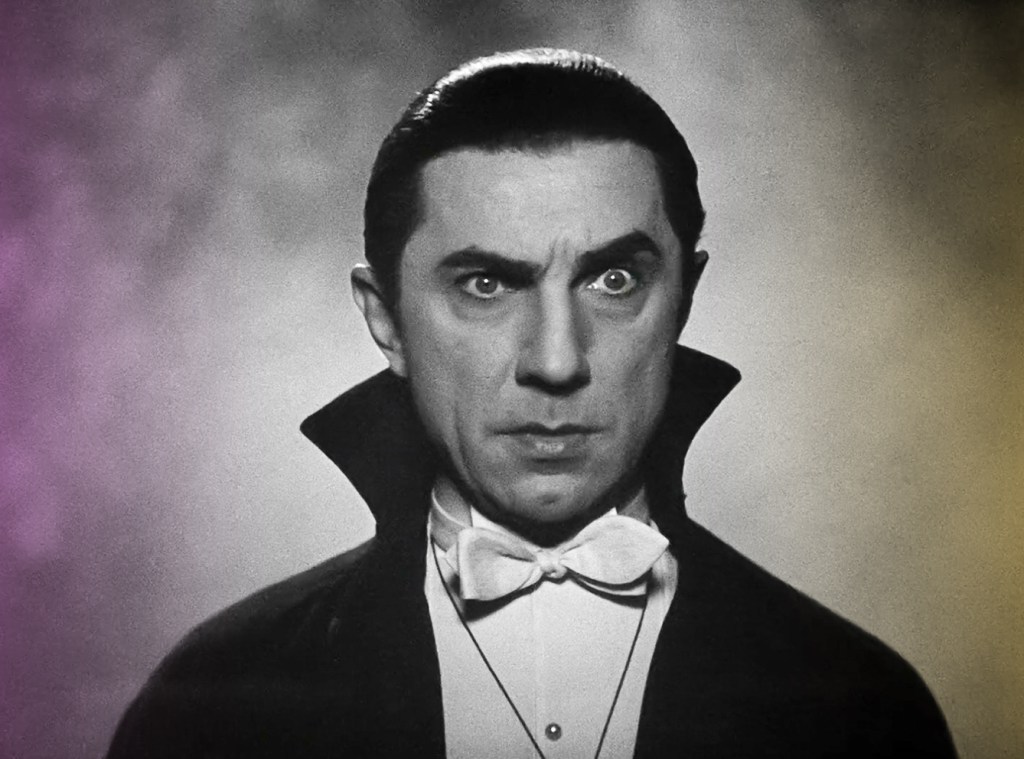
Spot #3 on the mountain couldn’t possibly be given to anybody but Bela Lugosi as Dracula. People don’t often realize that Lugosi only played the count twice, in the original 1931 Dracula, then not again until 1948 in Abbott and Costello Meet Frankenstein. But like Karloff’s Frankenstein Monster, his is the most recognizable version of Bram Stoker’s bloodsucker. Everything we accept about Dracula’s hairstyle, his clothes, and his accent (a remnant of Lugosi’s own Hungarian background) come from this version of the creature. Even today, when you watch a Hotel Transylvania movie, it’s Lugosi that Adam Sandler is doing a parody of. Like Karloff, his depiction of the monster is so famous that anybody who tried to do a novel-accurate version of Dracula would probably be met with confused looks as people asked why the hell he has a mustache.

“Sometimes I do, in fact, say ‘Blah, blah, blah’.”

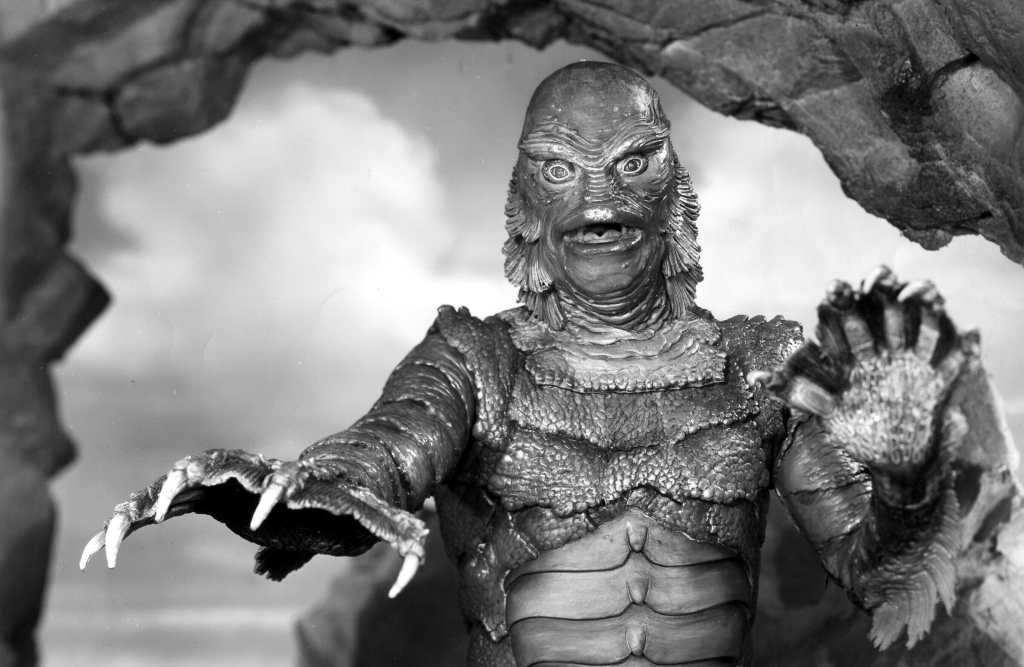
And then there’s the final spot and…guys, this is hard for me. REALLY hard. Not because there isn’t an obvious choice, but because it means I’m going to have to sideline one of my favorites. I love Lon Chaney Jr. as the Wolfman. I think he’s got some of the best, most nuanced performances in the entire Universal monster canon, and if this mountain was just my favorites, he’d be right up there. But in terms of how ICONIC he is…well…there are a lot of werewolves in movieland, and he doesn’t quite have the complete dominance over his version of the monster that Karloff and Lugosi do. But you know which monster IS instantly recognizable as the one and only Universal creation? The Creature From the Black Lagoon.

He’s not my favorite of the monsters (in fact, a few years ago I actually ranked him as my LEAST favorite of the iconic Universal Monsters), but EVERYBODY knows the Creature. And since this is the only iconic Universal Monster that is a wholly original creation, not based on an existing book or folklore, there’s not even any real competition for him to have to crush. He’s the one and only. (Although the most famous knock-off happened to win the Academy Award for Best Picture. Go figure, Universal exec who turned down Guillermo Del Toro.)   

And he never needs a moisturizer either. Guy is legit.

80s Slashers

It has been said by many a horror fan that the slashers of the 80s are the spiritual successors to the Universal Monsters. Granted, they’re far gorier and less kid-friendly than the classics; I’ll sit down and watch a Universal classic with my son, but we’re not going to be sharing a Nightmare on Elm Street marathon any time soon. But at the same time, many of these creatures have achieved the same level of cultural awareness as the creatures of the golden age of cinema. In other words, although not everybody may have watched all of – or ANY of – the Friday the 13th movies, I don’t think there is anyone in the western world who can see somebody wear a hockey mask and pick up a knife without thinking, “JASON!”

Which is why, by the way, he gets the first spot on the 80s Mount Rushmore. Jason Voorhees is synonymous with slasher movies. Even though he wasn’t the bad guy in the first movie and he didn’t get his iconic hockey mask until the third, the version of Jason we’ve had since then has made his mark on our culture. It’s a go-to Halloween costume for bigger dudes (guilty) because it’s so simple – the mask, a weapon, some old clothes and everybody knows who you are. He’s a lumbering monument to the iconic nature of the 80s slasher. Also, the question of which version of Jason is most iconic is largely moot, since no matter who plays him, the mask makes him look pretty much the same. Besides, the best one was Kane Hodder and you know it. 

The downfall of the summer camp industry began here.

Next to him will be his one-time sparring partner, Freddy Krueger, and this time the creature IS permanently associated with one actor, Robert Englund. (Jackie Earle Haley played him in the Nightmare on Elm Street remake, and although I don’t think anyone really blames that movie’s failure on his performance, it’s still a version we’d rather forget.) In an era where most of the slasher icons were silent killers – hulking brutes who were just as capable of breaking your bones as slitting your throat – Englund’s Freddy is svelte, agile, and with a wonderfully wicked sense of humor that has made him as beloved in the real world as he is terrifying to the teens of Elm Street. Even before the two characters faced off in the movie Freddy Vs. Jason, people would often say their names in a single breath as the two most well-known movie monsters of the era.

The only guy on this list to have recorded a song with Will Smith.

The third slot belongs to another quiet killer, Michael Myers from the Halloween franchise. (I know, the first movie came out in 1978, but he’s part of that 80s echelon of horror regardless.) Like Jason, many actors have played the role, but unlike Jason I don’t know that there’s necessarily a consensus as to who did it the best. That said, the creepy killer in a William Shatner mask painted white is indelibly linked to the holiday of Halloween. If you weren’t afraid he might stick a knife in their stomach, you might be sending your kids to sit on his lap for a picture like we do Santa Claus and the Easter Bunny. Jason and many other killers over the decades have taken their cues from John Carpenter’s creation, and few have done it better.

The original strong silent type.

The fourth spot is a little tougher this time. There’s an argument to be made for Leatherface, gruesome titan of the Texas Chainsaw Massacre franchise, but A) only ONE of his films actually came out in the 80s, and B) I don’t think he’s nearly as recognizable to the general public as Freddy, Jason, or Michael. But you know who is? CHUCKY. 

“Chucky, I appreciate your offer, but I’ve considered the situation and…well…I have decided that I do not, in fact, ‘wanna play’.”

Charles Lee Ray, the bloodthirsty serial killer played by Brad Dourif who has possessed the body of a child’s “Good Guy” doll and, in the process, made us all afraid of our kid’s toys, has earned his spot on my Mount Rushmore. Okay, only one of Chucky’s movies (the original Child’s Play) came out in the 80s, but he’s a MUCH more recognizable figure than Leatherface. In addition to his film series, he’s the star of a TV series that is currently on the air and – let’s face it: the merch. Chucky’s as much a brand as he is a character at this point. Everybody knows who he is and what he looks like, and the name “Chucky” is now permanently associated with a red-haired pint-sized whelp who brings chaos and despair in his wake, although part of that may be attributable to the cartoon Rugrats. 

21st Century Terrors

This last mountain of mine is going to be the most challenging, mostly because the pop culture penetration part is a little harder to say for sure with modern monsters. Lots of things are popular when they’re NEW, but will they still be instantly recognized 40 to 90 years later like the monsters I’ve talked about already? Only time will tell. That said, these are the four that I would currently put on the mountain, based on how popular they are NOW and how popular I think they are likely to remain. I’ll go in chronological order of their first films for this batch.

First up is Victor Crowley, the hatchet-wielding killer of Adam Green’s…well…Hatchet series. Victor is a good ol’ Louisiana swamp boy, accidentally killed by his own father as the result of a cruel Halloween prank gone tragically wrong and transformed into a murderous, vengeful spirit that allows no one to leave his home in Honey Island Swamp alive should they be so foolish as to venture there after dark. 

“No, Victor, you’re still a…a handsome young man…”

I admit to a little bias on this first choice – I’m a big fan of Adam Green and his work in general, so I’m always ready to promote it a little bit. Regardless, I think Victor (who has ONLY been played by Kane Hodder) is highly deserving of this spot. The first Hatchet movie, in 2006, came at a time when virtually all horror was a remake or reboot, either of an older franchise or of a Japanese horror film. Green had the guts to come out with an 80s-style slasher in a time when they weren’t in vogue and created a popular, beloved franchise. It’s been a few years since his last outing (in 2017’s Victor Crowley) but he’s still filling toy stores and turning out new comic books from American Mythology, keeping him alive until Green and Hodder are ready to polish up their hatchets and bring him back to the screen.

Next, from 2009, I’m picking Sam from writer/director Michael Dougherty’s anthology film Trick ‘r Treat. This is one of my favorite Halloween movies, an annual must-watch featuring four delightfully scary stories that all center around the same small town on the same Halloween night, with the diminutive orange-and-burlap clad creature called Sam serving as the common element to all four of them. The movie has a highly devoted fan base, and every few years we get our hearts broken all over again as news of a sequel is announced and then, sadly, nothing happens. Despite that, though, Sam has only become more and more popular as an icon, with costumes, decorations, and toys filling the shelves of a Spirit Halloween near you even as we speak – and really, is there a better measure of an iconic monster than that?

The cutest lil’ lunatic of the season.

The psycho that gets the third spot comes from 2016’s Terrifier by writer/director Damien Leone: Art the Clown. (And let me just say for the benefit of those readers who happen to be my wife that I intended to include Art BEFORE you looked over my shoulder and saw the title of this column and said, “You better include Art the Clown.” You’re welcome.) Art actually appeared in a couple of short films and the 2013 anthology All Hallow’s Eve, played then by Mike Gianelli. But it wasn’t until the 2016 Terrifier, when David Howard took over the role, that the character really started to get stratospheric popularity.

If you weren’t scared of clowns already, this guy will change that.

What is it, exactly, that makes Art so creepy? I suppose part of it is just our cultural fear of clowns, which has only gotten worse in the last decade. Part of it is the unnerving design of the character and his ghastly makeup. But a lot of the credit has to go to Howard’s performance. His Art is lithe, quiet, menacing, and probably the single most brutal horror to yet appear on my list. Seriously, if one of my Mount Rushmore Monsters was coming after me, there’s nobody I’ve mentioned that I would be more disturbed by than Art the Clown. Art, like Sam, has begun to ascend that Mount Rushmore of Merchandise as well, with costumes, decorations, and tchotchkes appearing everywhere this Halloween season in anticipation of the upcoming Terrifier 3 which, amusingly enough, is going to be a Christmas film. My wife got a stuffy of him when we made our first Spirit trip this year. It’s adorable.

The last monster on my last mountain? It’s going to be a controversial choice, I know, but I challenge anyone to make an argument that Bill Skarsgård’s rendition of Pennywise the Dancing Clown doesn’t belong there. Like Art, the villain of Stephen King’s It has that creepy vibe to him, but unlike Art, he’s a chatterbox. He’s as likely to talk the terror into you as he is to jump out from a closet. Whereas Art is an anomaly, a creature of unknown origins who is all the more horrible for it, we know what the deal is with Pennywise. He’s a nightmare out of time, a beast from another universe that preys on our fears and surfaces every 27 years to do so. And Skarsgård is flawless in the role – sly, charming, compelling, and an absolute terror every second he’s on the screen.

This is the guy who WOULD say “yes,” when Chucky asks if he wants to play.

I know some of my Stephen King purist friends will turn on me for this one. And look, I love Tim Curry as much as anybody. But he’s be honest here, Skarsgård’s version of the character has completely eclipsed Tim Curry in terms of cultural awareness. Children of the 80s and 90s remember Curry as Pennywise, but if you ask anyone who didn’t see that miniseries in their formative years, the vision of the character they come away with is Bill Skarsgård. 

And damned if I don’t think he earned it.

There you have it, friends, three Mountains of Malevolence. But lists like this one are intended to INSPIRE discussion, not settle a debate. So tell me, who would YOU put on each of those mountains? And what other mountains would you build? Let me hear all about your Quartets of Corruption! 

Blake M. Petit is a writer, teacher, and dad from Ama, Louisiana. His most recent writing project is the superhero adventure series Other People’s Heroes: Little Stars, volume one of which is now available on Amazon. You can subscribe to his newsletter by clicking right here. Other mountains he considered were Hammer Horror, Final Girls, Horror Heroes…ah well. Next time. 

Geek Punditry #41: Playing Favorites With Horror Movies (Part Two)

Horror Without a Death

Last week, in a column that has been-fast tracked for the 2023 Pulitzer Prize for Blog Posts about Horror Movies (probably not a real thing) I asked my friends on social media to give me suggestions for categories of horror. I would then report back on your suggestions here and talk about some of my favorites in each category. I got a lot of great suggestions – so many, in fact, that I couldn’t fit them all into a single column. So buckle in, my friends, it’s time for Week Two of Playing Favorites With Horror Movies!

Horror Without a Death

Duane Hower came at me with one of the toughest suggestions of the whole batch: what’s my favorite horror movie in which NOBODY DIES? (And a note here – just the fact that a movie can be mentioned in this category qualifies as a spoiler, so if you’re squeamish about that sort of thing, you may want to hop down to the next category.) 

It was tough, guys. There aren’t that many films that meet the criteria – after all, the point of horror is to instill fear, and that inherently brings with it the fear of the void. There are plenty of horror/comedies that fall into this category, sure, but straight horror? It’s not easy to find good examples.

A few eventually came to mind. Poltergeist is about a family that moves to a new home only to discover malevolent spirits already inhabit their dwelling. The Others is about a family that moves to a new home…only to discover that malevolent spirits already inhabit…okay, there’s a pattern. But 1408! That mixes it up! That’s about a travel writer who gets a hotel room! And finds that malevolent spirits inhabit the dwelling. 

“I see dead people. Not fresh ones, though.”

Still, these are solid films where nobody dies (well…depending on which cut of 1408 you watch). The thing is, they’re also all ghost stories. And ghost stories rock, don’t get me wrong, but they’re stories about somebody who has already died. Can I count them in this category, just because the deaths in question happened before the movie began?

If I rule out ghost stories, the pool gets even shallower, but there are still a few tasty fish in it. Tod Browning’s Freaks from 1932, for instance. The director of Bela Lugosi’s Dracula followed it with this movie about performers in a circus sideshow and an unscrupulous woman who plans to take advantage of them to seize an inheritance one of them is due to collect. The movie is pretty wild, and was so controversial at the time that Browning’s career was essentially destroyed. But nobody dies in the film…although by the ending, there’s someone who may wish they were dead.

I also need to give credit to One Hour Photo, a thriller starring the late, great Robin Williams. Williams plays a man who works for one of those one hour photo development labs (kids, ask your parents) and becomes dangerously obsessed with one of the families whose film he processes. Williams, of course, was a legend for his comedic roles, and often showed his dramatic chops as well in movies like Dead Poets Society and Good Morning, Vietnam, but this is the only movie I can think of that showed how outright SCARY he could be when he set his mind to it. The man was a unique and priceless talent, and I feel like this is a movie that doesn’t get talked about enough, possibly because the entire premise is centered around a piece of late 20th century culture that doesn’t really exist anymore.

Hammer Horror

My old buddy Eric LeBlanc wanted to know what my favorite movie was from the Hammer Films catalog. In the 1950s, after Universal Studios quietly put an end to their monumental run of monster movies, Britain’s Hammer Films saw an opportunity to fill the void. Not only did they start pumping out horror movies at a pace that would have made Carl Lammle Jr. pick his jaw up off the floor, but they did so by borrowing a heck of a lot of the goodwill that Universal had built up, using the same public domain creeps like Frankenstein’s monster, vampires, mummies, and werewolves. 

I never got quite as deep into Hammer as I have into the Universal library, but I’ve seen a lot of their films and I definitely have my favorites, the top being 1958’s Horror of Dracula (or sometimes just Dracula). Incredibly stylish and colorful, the movie is also a bit more faithful to the original novel than the Universal version. Plus it has two of the giants of horror in some of their best parts: Christopher Lee as Count Dracula and Peter Cushing as Van Helsing. Lee is creepy and charming, and the only reason he’s not considered the definitive version of Dracula is that Bela Lugosi beat him to it. And Van Helsing? Sorry, Hugh Jackman, but Peter Cushing owns that role. 

The HORROR…of a world without photoshop.

Stephen King Adaptation

Rachel Ricks played right into my hands by asking for my favorite Stephen King adaptation.

Project ALF.

Iiiiiiiit’s baaaaaaaaack!

As anyone who has read this blog for more than a day knows, I’m a huge fan of Stephen King’s books…but what about his movies? There have been over 200 adaptations of King’s novels and short stories (I checked IMDB), so which one is the best? Truth is the really great ones aren’t actually horror movies: The Shawshank Redemption, The Green Mile, and Stand By Me are some of the best films ever made based on King’s work, but none of them qualify as horror. When you get into the scary content, the sad truth is that a lot of the adaptations are sub-par. (I mean…have you SEEN Maximum Overdrive? Whoever directed that movie doesn’t seem to have the slightest idea what Stephen King is all about. It’s like he was on cocaine or something.)

That said, there are SOME good horror movies based on King’s work. Many people would point immediately to The Shining, but I’m not among them. Look, it’s a good movie, but as an adaptation of King’s book it is terrible. I’d rather focus on movies that DO adapt the books more or less faithfully.

I already mentioned 1408 earlier, and I’d place it close to the top of this list. At the VERY top, though, would be Misery, the James Caan/Kathy Bates adaptation about a writer (it’s a Stephen King movie, of COURSE it’s about a writer) who gets in a terrible car accident only to be saved by his biggest fan. As he begins to heal, though, he discovers that he may have been better off in the wreck. 

Some people, however, would classify Misery more as a thriller than a horror movie, so for those who like to split hairs, let’s talk about The Mist. A mysterious fog full of murderous monsters rolls over a small town, trapping dozens of people in a supermarket. The adaptation is solid, but what really elevates it is the ending. Frank Darabont, who wrote and directed this film (and Shawshank and The Green Mile, so you see his pedigree) changed the ending of the story, something that I usually find outrageous. But the ending he put on was so shocking and dark that even Stephen King himself says he prefers it to the original. 

And I’ve got to give credit to It. I consider this one of King’s best novels – perhaps THE best Stephen King novel – and we’ve gotten TWO pretty good adaptations. The original miniseries from the 90s did the best it could on network television, and Tim Curry is iconic as Pennywise. But in 2017 we got a fantastic adaptation of half of the novel, with Bill Skarsgard taking Pennywise and making him his own. Admittedly, It Chapter Two from 2019 didn’t quite live up to the first part, but you can watch the first part on its own and get a solid, satisfying story. It’s darn near perfect.

It’s good to be the King.

The Wonderful World of Disney

Ryan Tait gave me a category I NEVER would have thought of, but absolutely love: my favorite Wonderful World of Disney Halloween movie. Back in the day, before even the Disney channel, Wonderful World was a delightful showcase for Disney content of all stripes, and some of those made-for-TV movies still hold a warm place in my heart today. My favorite for this category is going to both show my age and make a lot of people wonder what the hell I’m talking about, but I have a deep abiding fondness for the 1986 film Mr. Boogedy.

From the studio that brought you Old Yeller.

A novelty salesman and his family move into a new house that turns out to be haunted (SO MANY of these movies are about people who move into haunted houses, and there are some downright unscrupulous realtors out there) by both some kind ghosts who have been trapped there and by the malevolent spirit who has kept them prisoner. It’s a silly, cheesy movie, but it’s so much fun. And the cast has a great pedigree. Richard Masur of the 90s It, a pre-Buffy the Vampire Slayer Kristy Swanson, a pre-Married With Children David Faustino, and young Benji Gregory, on the cusp of superstardom for his role on the sitcom…not making it up this time…ALF. 

Benji wasn’t in the movie, though.

Both Mr. Boogedy and its (perhaps even better) sequel, Bride of Boogedy, are available on Disney+…but I’m hesitant to tell you to go and watch them if you’ve never seen them before. It’s one of those things where I know my fondness for the movie comes from having watched it over and over again as a child, and I suspect that somebody watching it now, for the first time, as an adult, wouldn’t love it the way that I do. But if you HAVE seen it before and remember it warmly, go check it out. I watched it last year and I still love it.

Installments Past a Sequel

Jasper Fahrig asked what I thought were good installments of a franchise past the first sequel. It’s a truth of filmmaking that long-running series often suffer from diminishing returns. The deeper you get, the worse the franchise often becomes, so finding a good movie that’s part 3 or higher isn’t always easy. Fortunately, Wes Craven is there to hook us up with not one, but two films in the Nightmare on Elm Street franchise. Craven wrote and directed the original Nightmare, but sat out the sequel. When Part Three (Dream Warriors) was made, he came back to help with the story. After a part two that many people admittedly enjoy, but doesn’t really fit with the rest of the franchise, part three is GREAT. Robert Englund is in top form, Heather Langenkamp returns as Nancy (the BEST final girl outside of Laurie Strode), and the crazy horror dream imagery is used to the best effect in the entire series. What’s more, the movie was directed by Chuck Russell (whose remake of The Blob I mentioned last week) and co-written by Frank Darabont. Maybe I’m NOT a horror fan, guys, maybe I’m just a fan of several very specific filmmakers.

But Craven wasn’t quite done. He stepped away from Freddy after that and three more sequels incredibly diluted the character before Wes came back to save the day one more time with Wes Craven’s New Nightmare. Langenkamp is back again, but this time she plays HERSELF, an actress who finds herself haunted by the spirit of Freddy Kruger, the killer from that old movie she made years ago. Craven also appears as himself in the movie, as does Robert Englund, playing both himself and Freddy Krueger. The movie uses the language of the Nightmare series to make a statement about the power of storytelling and belief. It was ” meta” two years before Craven would redefine “meta” with the Scream franchise, and it’s hands-down my favorite Nightmare.

A double feature to keep you up all night.

Award-Worthy Horror

Seth Pontiff wanted to know some horror movie performances that I thought were worthy of Oscar consideration. Oooh, that’s a good one. I’ve often complained about the way the Academy ignores genre movies, but there HAVE been a scarce few performances that got nods. Kathy Bates actually won best actress for Misery, and the next year both Jodie Foster and Anthony Hopkins would take home statues for Silence of the Lambs, but those are movies that the Academy can classify as “Thrillers” without getting their hands dirty in a straight-up horror movie.

So who should have been recognized, but wasn’t? I have to say, I think it’s an outright crime that Boris Karloff was never recognized for his work as the Frankenstein monster. He played the creature three times, twice in movies that are indisputable classics, and infused the monster with such depth and humanity that the viewer comes out the other end on his side. There was so much sadness and power in the character, interspersed with other moments like unbridled joy at those few times he thinks he’s found a kindred spirit, and Karloff sells every second of it. There’s a reason that every kid who draws a picture of the creature gives him a flattop and bolts on his neck, and it’s not because Mary Shelley described him that way.

Another performance that I think was awardworthy? Jamie Lee Curtis as Laurie Strode in Halloween. Not the 1978 film…the one from 2018. This is going to be controversial, I know, because that film has become EXTREMELY divisive among horror fans. And in truth, I was highly disappointed in the final film in that trilogy. But when I look at the 2018 movie by itself I am in awe of her performance. Curtis plays Laurie Strode as a trauma survivor who has spent her entire life preparing for the other shoe to drop. It’s a performance full of anguish and pain, and she sells it every second she’s on screen. I’m glad that she got her Oscar last year for Everything Everywhere All at Once, but I really believe she should have had it sooner.

I’m actually not great at Photoshop either, so pretend I made it look like these two are holding little statues.

Psychological Horror

And finally, AJ Peden asked me about my favorite psychological horror movies. What makes this difficult is that it’s really hard to define what “psychological horror” actually is. The Wikipedia definition (yeah, I looked it up) says it’s horror “with a particular focus on mental, emotional, and psychological states to frighten, disturb, or unsettle its audience.” Well gee, that narrows it down, right? Another problem here is that so many of these movies overlap into other subgenres: ghost stories, slasher movies, found footage films, etc., have all had prime examples of what we could call “psychological horror.” 

I suppose my favorites in this incredibly broad subcategory would have to go back to the great Alfred Hitchcock. Psycho is the obvious example – it’s a great movie with a brilliant twist halfway through the film and a second brilliant twist at the end of the film. It’s also one of the prototypes for the slasher. So is Peeping Tom, which is also a dandy example of psychological horror. In that film, directed by Michael Powell, Karlheinz Bohm plays a photographer making a documentary about fear by filming the deaths of his victims. I suppose a 1960 audience may have been enticed by the title or the high sexual content (by 1960s standards) of the film, but the way Bohm’s character messes with your head is really powerful.

In the 60s, this was scarier than asbestos.

For more modern examples, I think Jordan Peele has kind of taken the forefront of the wave. Get Out, the movie that made people realize that guy from the goofy sketch comedy show was actually a master of terror, was not only a meditation on race relations, but a terrifying film about the potential of having your body literally stolen from you and the mental state that would result from – or compel somebody to do – such a thing. There have been a lot of films since Get Out that have tried to capture that same flavor (The Barbarian comes to mind, as does X and its prequel, Pearl), but I think as far as today’s filmmakers go, Peele wears the crown. 

And I think that’s going to wrap it up, guys. There are a few other suggestions I didn’t get to, but those are either in categories where I haven’t seen enough movies to really form an opinion (Patrick Slagle – sorry, I don’t have a lot of folk horror movies in my catalog) or categories where my answer is so basic that I don’t know that I have anything interesting to say about it. (Rene Gautreaux: the best religious-based horror movie is still the original The Exorcist. Tony Cirillo, my favorite puppet from the Puppet Master franchise is Blade, because blades are cool.) 

I hope you enjoyed this little experiment as much as I did. I had a lot of fun letting you guys tell me what to write about, and I think we uncovered a few gems in the process. May this two-parter help you find some new stuff to watch in the remainder of this spooky season, and keep your eyes right here! I don’t think it’s going to be too long before I ask you all to help me Play Favorites again. 

Blake M. Petit is a writer, teacher, and dad from Ama, Louisiana. His current writing project is the superhero adventure series Other People’s Heroes: Little Stars, a new episode of which is available every Wednesday on Amazon’s Kindle Vella platform. All this and nobody asked about the best zombie movie? Ah well, maybe next time. 

Geek Punditry #40: Playing Favorites With Horror Movies (Part One)

One of my favorite things, as a teacher, is when you find a class that you just click with. You enjoy their insights, you can have real conversations with them, and you look forward to seeing them walk into your room every day. Sometimes, those kids even ask you questions that get your creative juices flowing. This week, for instance, in one such class, a student asked me what my favorite horror movie was. This was a tough question for, as I’ve mentioned before, I don’t really like ranking things. I feel like it can sometimes be a hotbed for division and argument, for one. Also, sometimes it’s REALLY hard. Favorite horror movie? How do you pick? There are so many different KINDS of horror. Is it really fair to compare something like I Walked With a Zombie to Saw, both technically horror movies, but so different from one another that any comparison is really inadequate?

Samesies?

But then a thought occurred to me. One of the things that makes it hard is that there ARE too many categories to compare…so rather than try, why not look at my favorite films in each of these respective categories? So I turned to my friends on social media for a little experiment. I asked them to suggest different categories of horror movies, and I would take to this week’s Geek Punditry column to discuss my favorites in each category suggested. If it worked, I figured, it would be a cheap and easy way fun and clever way to draw future topics for GP columns. And if not? Well, it’s just one week.

Some categories are obvious, of course. Only a few weeks ago I spent an entire column talking about why Scream is my favorite slasher franchise. And not quite a year ago, before I even started GP, I wrote a blog post revealing that my favorite Universal Monster series is – to the surprise of absolutely nobody – Frankenstein. But I wanted to see what categories YOU guys could come up, and there were some doozies. So without further ado, I present to you the first ever Geek Punditry Presents: Playing Favorites…with HORROR MOVIES!

HORROR/COMEDIES

Lew Beitz kicked me off with a category I have a LOT to say about: the best horror/comedies. As people who’ve been reading my stuff for a long time know, I’ve covered this category in-depth in the past. Why, way back in 2012 I spent an entire month discussing 20 of the best horror/comedies of all time

You see, horror and comedy, I believe, co-exist on kind of a sliding scale. Both genres are absolutely dependent on an ability to build up tension and release it in a satisfying way: in comedy with laughter, in horror with screams. But the tools are largely the same, only the result is different, and it can be very easy to turn a moment from one where you laugh to one where you’re terrified with just the slightest twist to the left. Horror/comedies, as a subgenre, are also on a sliding scale. There are those that are mostly comedies, but use the tropes of horror movies as the backdrop for the fun (Bob Hope’s classic The Ghost Breakers falls into this category), whereas others are true horror movies that happen to have funny characters or funny moments (the best films in the Scream franchise go here – and this is where Freddy Krueger believes he exists, although his victims and, occasionally, his audience may beg to differ). 

Most people who know me know that two of my all-time favorite movies fall into the lighter side of this spectrum: Abbott and Costello Meet Frankenstein and Ghostbusters. Abbott and Costello jumped into the world of the Universal Monsters and delivered an absolute laugh riot, using all the elements that made those monster movies classic and combining them with their own flawless comic sensibility. And as if that wasn’t enough, they had Bela Lugosi returning as Dracula (only the second time he would play the Count, and the final time as well). Lon Chaney Jr. was on board as the Wolf Man! All they were missing was Boris Karloff as the Frankenstein Monster, although Glenn Strange did a fine job. There are two times I watch this movie: at least once every Halloween season, and any time it happens to turn up on MeTV’s Svengoolie. 

Wanna Laugh? Wanna be creeped out? No need to choose.

Ghostbusters, on the other hand, is a workplace comedy where the workplace happens to be an exterminator business for the dead. Legendary performances by comedic actors at the top of their game, special effects that are astonishing for the time (and the time constraints) in which the movie was made, and a script full of the best movie quotes ever written. My love for the real Ghostbusters knows no bounds.

But if you’re the sort of person who prefers their horror/comedy to slide further to the horror side of the scale, may I recommend Evil Dead 2? Bruce Campbell, a chainsaw, and an incursion of demonic creatures from beyond the grave makes for a gory and glorious time. And it doesn’t even matter if you haven’t seen the (scarier but less funny) original film, because the first 20 minutes is basically a condensed remake of that one. 

ALIENS SERIES

Sandy Brophy wants to know what I think the best movie is in the Aliens series. I assume he means Ridley Scott’s Xenomorphs, because if he just means any movie with an extraterrestrial, the scariest one is obvious: Project ALF.

Your cat is terrified.

But in the Ridley Scott series, we’ve got eight movies to choose from so far: the four films featuring Sigourney Weaver’s Ripley, the two Alien Vs. Predator films, and the preboot films Prometheus and Alien: Covenant. But if you’re hoping for a lot of fussing and prevaricating over this one friends, I’m sorry to disappoint, but this is an easy answer. It’s the original, by far. 

The tagline even makes a basic truth of physics scary.

To be clear, I haven’t seen all eight of these films. Alien3 was so bad that I just couldn’t bring myself to watch Alien: Resurrection. But with seven out of eight under my belt, I feel confident in saying the original wins the crown because it’s the only one that’s actually intended to be a horror movie. It’s a haunted house movie in space, and it hits all the tropes of that kind of story perfectly while still keeping it in a fully fleshed-out science fiction universe. A large part of what makes it scary was that you didn’t actually get a good look at the alien for most of the movie. Ridley Scott knew that what a person can imagine is far more frightening than what you can put on the screen. When James Cameron signed on for the sequel, Aliens, he wisely realized that it would be impossible to replicate that kind of suspense now that everybody knew what the aliens looked like and how they functioned, so he didn’t even try. He didn’t make it a scary movie, he made it an action movie, and he knocked it out of the park. Some may even make a convincing case for the sequel being a better movie than the original, but that’s not the question today, is it? The question is which is a better horror movie, and after the first one, the rest of the films in this franchise aren’t even competing in the same contest.

NON-XENOMORPH SCI-FI

Not to be outdone by Sandy, Jason Ritterstein asked for my favorite non-xenomorph science fiction horror movie.

Project ALF.

How many times can I get away with this?

But if that’s too scary for you, there are other options. I actually struggled with this one a little, as many of the most memorable sci-fi horror movies also fall into the “Horror/Comedy” category, like Critters, Killer Klowns From Outer Space, and Little Shop of Horrors, all of which are worth watching. But if you’re looking for something that’s not trying to be funny, or at least not trying as hard as those other ones, I like Chuck Russell’s 1988 remake of The Blob. He takes the premise of the original and updates it nicely to the 80s, although the effects are a little dated. The original is good too. And if neither of those is scary enough for you, get a change of pants and check out Event Horizon, a 1997 film about an expedition to recover a spacecraft that went missing seven years prior, and the absolutely terrifying things found on board. This came out at a time where all I really knew Sam Neill from was Jurassic Park (I would watch In the Mouth of Madness later), and holy gee willikers, it made me see him in a totally different way.

Space is scary as hell, guys. Why do we keep trying to go there?

BEST WORST MOVIE

Amber Foret asked for “the funniest unintentionally comedic horror,” while Seth Pontiff wanted to find out what I thought was “the best worst low budget horror.” I combined these two because I think they’re really asking for the same thing: what’s a terrible horror movie that’s fun to watch? And that’s tough, isn’t it friends? Because there are just SO. MANY. OF. THEM.

Part of me feels a little bad to shine a light on this, because nobody really tries to make a bad movie, but people do it every day. Back when video stores were a thing it was impossible to walk through the horror section without seeing dozens of movies that should never be attempted without the assistance of a current or former occupant of the Satellite of Love and a couple of wisecracking robots. When a horror movie fails, it can fail for so many reasons: a bad story, bad special effects, bad performances, bad scare attempts, bad takes on contemporary issues…when you look at how many things can go wrong, it’s almost a miracle that anybody ever makes a good movie at all. 

But if you’re looking for the perfect storm of terrible horror movies…well, I’m sorry if you’re looking for a revelation here, friends, but there’s no awful movie that’s more fun to watch than Troll 2. A movie that has no trolls in it, that was retroactively retitled to be the sequel to a horror movie nobody remembers, Troll 2 is one of the most bafflingly stupid, inept, and poorly-made movies in human history. It’s glorious. A family goes on vacation, renting a house in a town called Nilbog (oh yeah, Nilbog) and soon find themselves the targets of a group of vegetarian goblins whose plot is to turn humans into plants so they can eat them. You can read that sentence another 17 times if you want, friends, it won’t make any more or less sense than it does now. 

The movie nobody asked for, and yet we can’t live without.

This movie is so legendary that 20 years later the child star of it actually made a very good documentary about the cult following it’s garnered, Best Worst Movie, which reveals many of the reasons for film’s ineptitude. For example, writer/director Claudio Fragasso evidently wrote the script in his native Italian and then translated it, but refused to allow any of the actors to change even a word of their dialogue to make it sound more natural coming out of the mouths of 90s American teenagers. (Actual quote: “I’m the victim of a nocturnal rapture. I have to release my lowest instincts with a woman.” Ladies, if you ever have a date who says he’s a victim of nocturnal rapture, call the cops.) Budget constraints led to the goblins wearing what look like off-the-rack rubber masks that were then shat upon by a horse. The actors weren’t professionals (pretend to be shocked at that), and one of them turned out to be a patient at a local mental institution who got a role and filmed his scenes while on a day trip. The only actor in the movie who seems to be enjoying herself is Deborah Reed, who plays the villain, Creedence Leonore Gielgud (and make damn sure you use the whole name). She spends the film giving a performance so ridiculously over-the-top and hamfisted she makes Elvira look like a wallflower by comparison. This movie is a train wreck caused by a plane crash that happened on top of a Native American burial ground, and it could potentially be used to interrogate political prisoners who have proven surprisingly resistant to waterboarding and bamboo shoots under their fingernails. It’s a masterpiece. 

FOUND FOOTAGE

Our last suggestion for this week comes from reader Erin Petit, who moves up to the front of the queue because she happens to be my wife. (Sleeping with the writer gives you advantages, people.) She wants to know what my favorite found footage horror movie is, because it’s becoming a favorite subgenre of hers.

We seem to be on the downward slope of found footage movies at the moment. For a while there, especially after Paranormal Activity, they were booming…mostly because they’re relatively cheap to make, and there’s nothing a movie executive loves to hear more than “relatively cheap.” In fact, I’m pretty sure that exact language was used to describe them when the WGA was making their demands during the recently-concluded strike. But this boom brought with it a lot of bad movies, and finding the good ones can be rather difficult. 

If I’m gonna pick one, though, I have to go with Adam Green’s Digging Up the Marrow. This may be slightly controversial, as Green himself dislikes calling the film a “found footage” movie, preferring to refer to it as a fake documentary. And he’s right, it’s not “found” the way that most such movies are, where the conceit seems to be that you, the viewer, happened to stumble upon an old VHS tape in a box and you popped it into the machine to see what’s on it. Green’s movie is filmed like a documentary, with the requisite cutaway moments, talking head interviews, and the like…but the best, most effective parts of it use the language of found footage, so I’m going to stick with my answer.

AAAHH!!! Real monsters!

Anyway, in this movie Green plays himself, horror filmmaker Adam Green, approached by a man named William Dekker who is sending him drawings of dozens of monsters…monsters he’s trying to convince Green are real. It’s a great movie with some amazing practical monster effects, and Green and Ray Wise (as Dekker) put forth a fantastic performance. The ending is so creepy and effective that when we first watched it, Erin made me get up from the couch and lock our front door because she said heard a weird noise outside. (Sorry if you didn’t want me to tell that story, sweetheart, but you asked.)

Wow, guys. This is already almost the longest Geek Punditry column of all time, and I haven’t even gotten through half your suggestions! So you know what? NEXT WEEK WILL BE PLAYING FAVORITES PART TWO! If I didn’t get to your suggestion this week, I’ve got them all saved and I’ll tackle more next Friday. And if you didn’t give me a suggestion, there’s still time! Drop it in the comments here or hit me with it on any of the social media platforms you used to find this column. And while you’re at it, tell me your thoughts on the categories I covered THIS week! There’s PLENTY more to talk about this Spooky Season, and want to hear from you!

Blake M. Petit is a writer, teacher, and dad from Ama, Louisiana. His current writing project is the superhero adventure series Other People’s Heroes: Little Stars, a new episode of which is available every Wednesday on Amazon’s Kindle Vella platform. He did not expect this new column format to be such an abundance of riches, and now it’s going to be nigh-impossible to prevent him from running it into the ground. Way to go, guys.