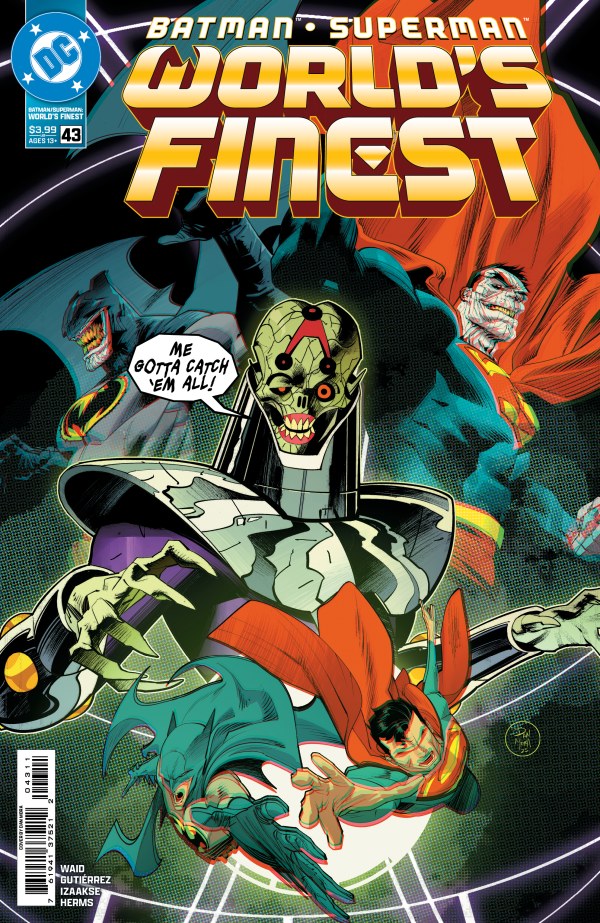
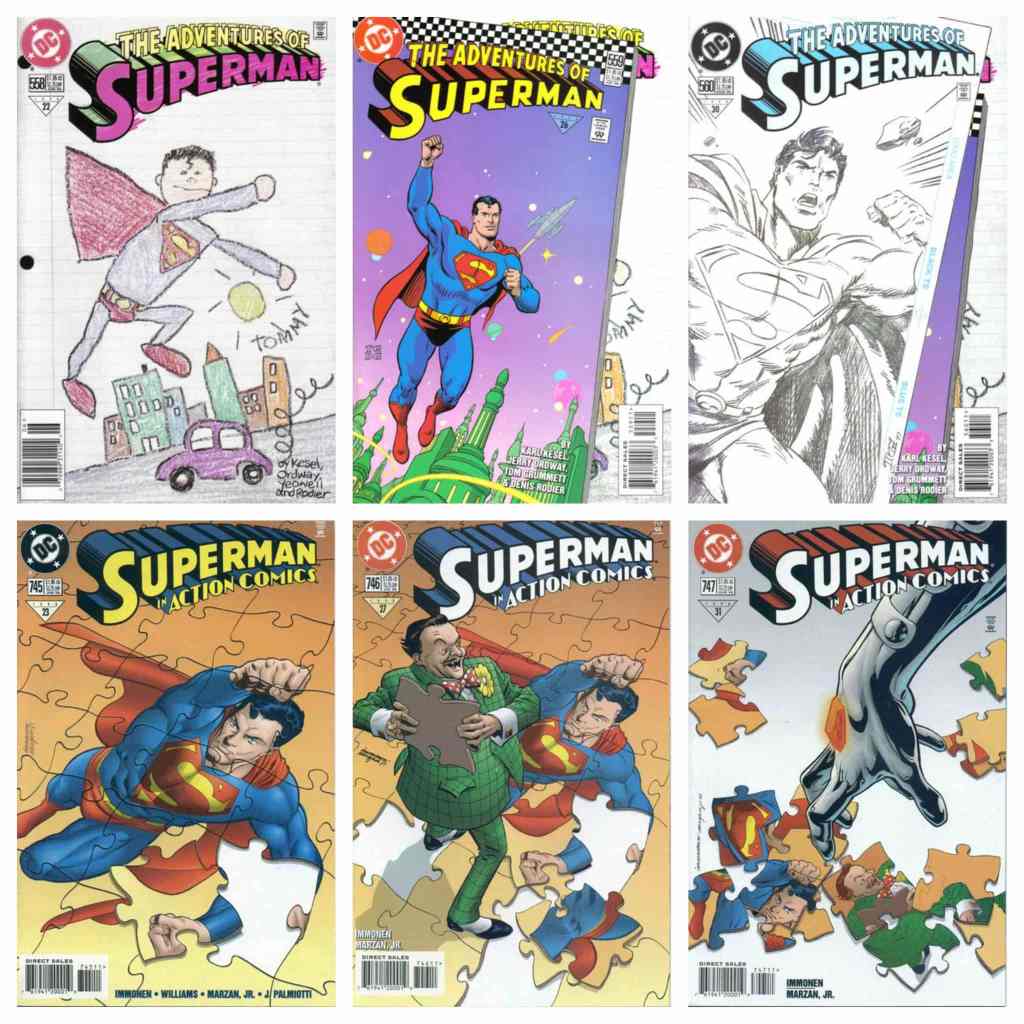
Year of Superman Week 36: Electric Boogaloo Part I

After last week’s extended wind-up, this week it’s time to do a deep dive into the era of Electric Blue Superman. I’ve honestly got no idea how far into the run I’ll get in the next seven days, but I intended to have a good time finding out.

Before I get into it, though, some fun news hit today. James Gunn hopped on social media earlier with a post of image by Jim Lee: Superman (in the David Corenswet costume) and Lex Luthor in his power armor. Along with the image came the caption, “Man of Tomorrow. July 9, 2027.” This is pretty exciting. We knew he was working on the next movie already, but this is far more information than I thought we would possibly get before next year. We’ve got what seems to be a title, and maybe even a hint of the plot, with Lex in his armor. Obviously, I’m pumped.

After all, isn’t the one thing Superman has always been missing a screwdriver?

But I gotta tell you this story. I got a message right before lunch and, being in class at the time, I obviously couldn’t stop to look at my phone. When the lunch bell rang, the students left the room and I checked to see that Mark had shared this image. I got excited, I replied, and then I stepped out into the hall. Not 90 seconds after I got Mark’s message, a student ran up to me – not even a student I teach, just one who knows me – who wanted to know if I had seen James Gunn’s announcement yet.

I have a brand, don’t I? 

And as always, you can check out earlier blogs in the Year of Superman Archive!

Wed., Sept. 3

Comics: Adventures of Superman #546, Action Comics #733, Superman: The Man of Steel #68, Superman Vol. 2 #124

That image looks…familiar somehow.

Notes: In Adventures of Superman #546, Lois Lane has her first meeting with her new and improved husband. As glad as she is to see him okay, he’s just as angry when he sees that the Daily Planet’s inflammatory new columnist Dirk Armstrong has painted him as a menace…mostly because Clark thinks he was right. When word comes in that Dirk’s blind daughter, Ashbury, has been kidnapped, Superman races to search for her, only to get sidetracked when he’s attacked by his old foe Metallo, who wants to try his hand at facing the new Superman. Don’t worry about the kidnapping victim, though – Ashbury is rescued by Scorn, who she briefly mistakes for Superman. Liking the role of hero, Scorn puts on Superman’s old symbol as his own. 

In Action #733, Superman just manages to escape from Metallo’s clutches by switching to his human form, but winds up injured in the process. Hoping to gain more control over his new powers he seeks out someone who has similar experience: the energy-hero called the Ray. After a few tips, Metallo rises again, and Superman figures out some new tricks to take him down. This is an interesting issue – Ray only appears on a few pages, despite getting a nice “guest-starring” credit and half the cover. But what he does here isn’t insignificant, helping Superman start to figure out his powers and even theorizing that the reason he has no powers in his human form is because he subconsciously is imitating humans as he sees them. I like the fact that Superman isn’t above going to a younger hero for help when he needs it, even one as relatively inexperienced as the Ray. It’s the sort of thing that works well as a character beat, showing how even-tempered and nuanced he is.  

The battle with Metallo continues in Man of Steel #68, and courtesy of Jimmy Olsen, it gets a lot harder. At this period, Jimmy was working as a TV reporter for WGBS news instead of his traditional photographer gig, and desperate to stay on top of the ratings heap, he starts covering the Metallo fight and explaining Superman’s new powers based on information he got from Professor Hamilton. Metallo is monitoring the TV broadcast, though, and using Jimmy’s broadcast to change his tactics. Superman manages to beat him, but winds up spinning into space, having absorbed far too much energy. 

After ending Man of Steel #68, Dan Jurgens makes the rather odd choice to begin Superman #124 after the crisis has been resolved, with Lois and Clark discussing how the Planet’s publisher, Franklin Stern, is angry over his frequent absences lately. Then Clark dives into a flashback in which he’s saved from dissipating into energy in outer space by the timely intervention of one of Jurgens’ favorite creations, Booster Gold. The rescue fries the armor Booster has been wearing for some time, though – actually, ever since his original super-suit was destroyed in battle with Doomsday. Superman brings Booster to Hamilton, who uses the leftover weave from Superman’s containment suit and combines it with the remaining future technology Booster brought back from the future with him, giving him a new suit that’s a bit more in line with his classic one. I love when you see stuff like this – Jurgens clearly wasn’t happy with how the writers that followed him on Justice League America changed Booster’s armor and used this opportunity to fix it a little bit.

This issue gives us a lot of advancement on several subplots as well. Jimmy kind of patches up his relationship with Lois and Clark, ashamed of how his broadcast had endangered Superman, just in time for Perry White to storm into the Planet office and announce that his cancer is in remission and demand his job back. In Kandor, the town’s rulers find evidence that the bottled city – which is actually out of phase in another dimension – is on the verge of destruction. And Scorn is drawn to Lois and Clark’s apartment, where he finds one of Clark’s old costumes. 

Reading these issues this way, one after another, following the story for long periods of time, is really making me feel nostalgic for the Triangle Era in a way that not even the Death of Superman. I love having this quick progression of story, so unlike a typical monthly comic book story. Even right now, when the Superman comics are really good, this is a different feeling. It’s a feeling I like.

Ah, I wish we could get it back. 

Thur., Sept. 4

Comics: Adventures of Superman #547, Action Comics #734, Superman: The Man of Steel #69, Superman Vol. 2 #125, Secret Six Vol. 5 (Super-Son)

The Atom only went along because Superman told him they’d go spelunking instead of skydiving.

Notes: Still adjusting to his new powers, in Adventures #547, Superman is alerted to the crisis in Kandor and decides to reach out to a hero with experience in size manipulation: the Atom. At this point, though, Ray Palmer had gone through an even more radical transformation than Superman, having been reduced in age to a teenager. He was currently the leader of a new, very different version of the Teen Titans in a book written and drawn by our old pal Dan Jurgens. Still, despite having a teenager’s body and attitude, he retained his memories, and as a former Justice Leaguer, jumps at the chance to work with one of the big guns. Hamilton journeys to the Fortress with the two heroes, and Superman and the Atom dive down into Kandor. Scorn, meanwhile, is wandering around Metropolis stalking Ashbury and carrying around the Superman costume he took from Clark’s apartment, seemingly trying to decide what he wants his path to be now that he’s free of Kandor. 

Action #734 picks up with Ashbury reuniting with Scorn, although the blind girl is still under the misapprehension that he’s Superman. At that same time Rock – a villain Superman caught a few months back – breaks out. With Superman and the Atom in Kandor, though, Scorn takes care of Rock by himself, to the confusion of the SCU, who sees this horned, blue brute wearing Superman’s old costume. In Kandor, Superman and the Atom fight off some of the city’s peacekeepers who are still loyal to their original captor, Tolos, and a group of dissidents manage to attack the city’s environmental generator. The city is beginning to freeze, but that’s not even the real issue. They’ve got one hour to get the generator back online before everyone in Kandor suffocates to death.

 In Man of Steel #69, Superman, the Atom, and a telekinetic local named Faern try to get to the generator to start it up again. But the generator is bombed, and in the explosion, Tolos is revealed to be alive and hiding in Faern’s body. He escapes and takes over Superman, which I’m sure you can imagine is inconvenient for everyone. Outside of Kandor, Scorn has crashed at Ashbury’s apartment, with the blind girl finally figuring out that he’s not actually Superman, but she befriends him anyway. When her dad shows up, though, he thinks Scorn is a menace and Scorn, not realizing Dirk is Ash’s father, leaps from the window with her in his arms. Perry White demands that Planet staff get to the bottom of the Scorn situation, and still more questions about Clark’s attendance issue are raised. 

I bring up that last point mostly because I think it’s an interesting note for the character. One of the reasons for Clark choosing the job of a reporter is usually the notion that it will allow him to be absent frequently to act as Superman under the guise of “covering a story.” That might work if he’s gone for a few hours, but as we’ve seen in these books lately, his other job sometimes has to take him away for days, weeks, even months at a time. The excuses he (and later, Lois) come up with to explain his disappearances often strain credulity and are frequently lampshaded these days. All of this is just to say that things like this are why I like the interpretation of the characters that say Perry White knows – or at least strongly suspects – that Clark is Superman, because otherwise he’d never put up with this.

The Kandor story wraps up in Superman #125. Tolos, controlling Superman’s body, frees himself from Kandor and attacks Hamilton, who’s been holding vigil over the bottled city. But Hamilton manages to science Tolos out, sending them both – separately – back into the bottle. Superman manages to trick Tolos, trapping him in the “glass” of the bottle, which is actually an energy barrier containing the city in its pocket dimension. Reuniting with the Atom, the two heroes manage to fix the machines that maintain the city’s environment, and the story ends with Superman swearing to the people of Kandor to find a way and a place to release them from the bottle and set them free.

It sounds awfully familiar, actually.

The first extended team-up between Energy Superman and the Atom is an interesting glimpse at the characters and the time. Superman is still learning the ropes of his energy form, but he’s still essentially the same person at his core. The Atom, on the other hand, has his memories and powers intact, but the brashness and eagerness of a teenager. Almost every other page in these four issues includes a reference to him hoping to impress Superman enough that he’ll score an invitation into the newly-formed (at the time) Justice League. The story flows together the way the Triangle Era did, and although this version of Kandor has been excised from continuity, there’s some interesting stuff going on. I especially like Scorn – a character who looks like a monster but decides that, if he’s gonna be stuck on Earth, there are worse things to be than Superman. He’s not wrong. 

Fri., Sept. 5

Comics: Adventures of Superman #548, Action Comics #735, Superman: The Man of Steel #70

“Why you electrocuting yourself? Why you electrocuting yourself?”

Notes: In an epilogue to last month’s adventure, Kandor is shifting its allegiance from Tolos to Superman. In fact, his shield (the current, electric blue one) is showing up as a graffiti tag on city walls. Superman tells the Atom he’d be willing to recommend the Atom to rejoin the League, but suggests he could be of more use leading the Teen Titans, which he decides to take as a challenge. Clark returns to the Planet and tries to excuse his absence by saying he was hunting down the story on the new Superman, to which Perry replies, “Which one?” But while working on the story, Lois drops a bomb on Clark that he hadn’t been made aware of before: that the electronic fabric in his new suit was supplied by Lex Luthor. He rushes to LexCorp Tower, suspecting Lex of being involved with his power change as he’s tried tampering with them in the past, but leaves when Erica fakes a problem with her pregnancy. And in a moment that’s chilling to any long-time DC fan, the Phantom Stranger pops in to tell Clark that there’s some great disturbance in the universe, something that may or may not be connected to Superman’s new powers. And the fact that he’s not sure should be pretty scary to anyone.

(Wait — has anyone told Booster Gold that HIS suit has LexCorp tech too?)

Action #735 brings us the return of Saviour, a delusional serial killer who wants to “punish” liars and fakes, and who doesn’t believe that Superman actually returned from the dead and is dedicated to killing the “imposter” using his name. Ashbury, meanwhile, has found a hiding place for Scorn in the abandoned pool at her school. When Scorn hears Saviour on the radio calling Superman out, he is determined to help. Superman’s new energy powers allow him to find a way to cancel out Saviour’s energy, taking him out, but he manages to slip away and vow revenge. 

In Man of Steel #70 Superman and Scorn part as friends, but not before Superman tells the alien he has to bring Ashbury – a 17-year-old girl – back to her father. Although Ash protests, Scorn trusts Superman’s judgment, and she finally acquiesces upon learning her absence is taking its toll on Dirk’s health. WGBS, meanwhile, airs Jimmy’s interview with Hamilton about Superman’s new powers, despite the fact that it gave Metallo an edge in the fight, and this time Saviour picks up on it. With his reality-warming, he starts to mimic Superman’s new powers to get his attention. Scorn and even Bibbo get in on it, with Bibbo snatching a crib sheet Saviour wrote to keep track of what he learned about Superman’s powers. Superman and Scorn beat Saviour, but Jimmy’s relationship with his friends is damaged even further. 

Jimmy could rarely catch a break during the Triangle Era. A running theme seemed to be him making a foolish mistake and then having one consequence after another stacked up on him like an enormous Dagwood Sandwich of Suck. It honestly could get a little tiresome after a while. These days we don’t see him quite as often as I’d like, but when we do, it’s usually more in the vein of the weirdness magnet that Matt Fraction (and, to a lesser degree, James Gunn) used him as. I prefer that. 

Sat. Sept. 6

Comic Books: Adventures of Superman: Book of El #1, Absolute Superman #11, Justice League Vs. Godzilla Vs. Kong 2 #4

Notes: I’m taking a break today from the electric saga to pick into this week’s new Superman titles, starting with Adventures of Superman: Book of El #1.

🎶”Who wrote the book of El?”🎶
“I told you, Phillip Kennedy Johnson. Stop singing.”

This new miniseries is written by Phillip Kennedy Johnson as sort of the conclusion to his run on the Super-titles that followed Brian Michael Bendis’s run and lasted into the Dawn of DC era before he stepped aside. I had mixed feelings about his run. Coming off of the (ahem) previous writer it was inevitable that it would be an improvement, and there were certainly things about Johnson’s run that I enjoyed, but I ultimately got turned off. In this period, Johnson wrote about a Superman that was depowered on Warworld, and for most of that run, it was the only regular comic featuring Clark Kent. (The Superman title was sidelined and replaced with Jon Kent as Superman: Son of Kal-El.) I got burned out on Warworld eventually. Towards the end of the run I realized what the problem was – it was simply too long. A solid year of Superman on another planet and separated from Lois, Metropolis, and all the other elements that make Superman so great just didn’t work for me. In the Triangle Era they could have gotten away with it because a twelve-issue storyline would still only last three months, but 12 was too much. I greatly preferred the final section of Johnson’s run, after Superman returned to Earth and Action Comics became kind of a Superman Family title. 

All that said, let’s look at what Book of El gives us. The story starts on a lazy day in Smallville, with the Kent family all together: Lois and Clark, Jonathan and Martha, Jon, and the adopted twins from Johnson’s run, Otho-Ra and Osul-Ra, who have ostensibly been living with Lois and Clark this whole time but who even the good writers of the modern Superman titles consistently forget about. Their idyllic afternoon is shattered by an attack by Kryl-Ux, an enemy from Warworld, leading an invasion force and – seemingly – hurling Superman into the future. On the last few pages Clark encounters Ronan Kent, a descendent of his from Johnson’s Future State comics, and the knowledge that he disappeared from Earth hundreds of years ago.

I really do like the way Johnson writes the whole Kent family together. He gives each character a voice that fits them, and his Lois and Clark interactions (so infrequent during his Warworld storyline) are excellent. The revelation at the end takes all the air out of the tires, though. Clark is missing for centuries? Presumed dead? And the invasion of Earth is successful? The whole thing may as well end with a big banner that says “THIS STORY WILL BE RESET AND THIS FUTURE WILL NOT HAPPEN.” By the end of this miniseries, I have absolutely ZERO doubt, something will happen that will eliminate the future of Ronan Kent from being a potential future. That doesn’t mean the story can’t still be good, but it excises the whole thing from consequence in continuity, and that hurts.

Brainiac doing his best Cryptkeeper voice: “What the matter, Kal? Got GORE-gia on your mind? HEEHEHEEHEHEHEHEEEE!!!”

In Absolute Superman #11, Kal-El is in the clutches of Brainiac, who is forcing him to experience hundreds of torturous simulations of the final days of Krypton with the intention of brainwashing him into becoming a tool for Ra’s Al Ghul. Despite some early success, though, Kal-El begins to resist the reprogramming. Meanwhile, Lois and Jimmy are captives of Talia, and find a very unexpected rescuer coming to their aid. This series is progressing a little slowly, to be honest, but this issue is solid. There’s a lot of action and great stuff with Kal-El and Brainiac, and I particularly like the way Jason Aaron is playing with [REDACTED] when that particular character comes to the rescue. Good stuff here.

Finally, we have Justice League Vs. Godzilla Vs. Kong 2 #4. The League is trying to recruit Godzilla to help with the current situation, but something in the other realm where Godzilla resides is preventing the Kryptonians from fully processing the solar radiation that powers them. To even the score, Mr. Terrific whips up a device that will temporarily make Superman kaiju-size…but at the same time, reduce his intellect to a point where he’s operating on pure instinct. That’s right: it’s Godzilla vs. Kaiju-Superman!

And somebody decided to go with a cover of a few random League members facing a water monster that doesn’t even appear in this issue. I swear, boneheaded movies like this are the reason I should be put in charge of comic books. 

Sun., Sept. 7

Comic Books: Superman Vol. 2 #126, Adventures of Superman #549, Action Comics #736, Superman: The Man of Steel #71, Superman Vol. 2 #127

Clark had trouble making friends in this era.

Notes: It’s back to the electric era today, starting with Superman #126, in which our new electrified hero faces his Dark Knight buddy. Lex Luthor is planning his legal defense for his…well, trillions of crimes. But his scheme is to argue that he was somehow influenced by the Kryptonite ring that gave him cancer. Despite the fact that it might help Luthor, Mr. Truth and Justice Superman has no choice but to go to Batman and retrieve the ring. He returns it after some tests or run – or so he thinks. Luthor had one of his “scientists” pull a fast one, replacing the ring with a duplicate. Superman and Batman don’t know that the ring in the Batcave is a fake…but Luthor doesn’t know that Kryptonite no longer affects Superman in his energy form.

There’s an awful lot going on in this issue. In addition to the main plot I just recapped, there’s a great sequence where Superman saves the city from a plane crash, having to figure out how to use his new powers to do something that would have been relatively simple for the “old” Superman. Scorn is also convinced to abandon the Superman costume he’s been wearing and forge a name for himself. There’s good stuff there, but the actual Superman/Batman meeting is kind of a letdown. I would have hoped Batman would have more to say about Clark’s transformation, as this is presumably the first time they’ve encountered each other since it happened, but Batman barely seems to notice. It feels like those early Byrne issues where the two were tense rivals at best. Granted, they weren’t yet Superbesties again at this period, but as teammates in Grant Morrison’s Justice League, I would have expected them to be a bit more cordial to one another. 

Adventures of Superman #549 stars with Superman forced to do something he didn’t need to do when he had hearing and vision powers: go on patrol. Instead of stumbling on Intergang, though, he winds up in the middle of a rumble between the Newsboy Legion and the Dingbats of Danger Street. No, really, those are actual comic book characters. Jimmy, meanwhile, is struggling to find some credibility after his recent struggles. He decides to check in on Lois and Clark, but arrives just as Intergang firebombs their building as a warning to Lois to back off. Superman evacuates the building, but is then forced to go back in as a powerless Clark to protect his identity. After spending the night in the hospital suffering from smoke inhalation, he goes to Professor Hamilton to ask if he’s discovered a way to restore his powers to normal, but Hamilton gives him the shocking news that this change seems to be permanent. Also at the end, Superman brings in yet another obscure group of DC kid characters to settle the issue between the Newsboys and the Dingbats, and Jimmy decides he’s going to resurrect his career by making one of the stupidest decisions he’s ever made in his entire life, and keep in mind that this is a man who once married a gorilla.

Action Comics #736: The mysterious shadowy figure who recently assembled a Superman Revenge Squad starts assembling…well…a new Superman Revenge Squad. He busts Barrage out of prison, then recruits Rock and the Parasite to his cause, with a promise of more to come. Clark, meanwhile, is depressed over the revelation that the change to his powers will be permanent. He heads to Pennsylvania on assignment for the Planet, only to get trapped in a coal mine collapse with a bunch of miners. The old Superman could get them out in moments, of course, but if he were to fire up his new electrical powers, he runs the risk of igniting the coal dust in the air and killing them all. This is the kind of story that they do every so often to prove that Superman is more than his powers – he’s actually got a brain, too. Clark finds a way to save everybody without his powers, because that’s what Superman does, no matter what costume he’s wearing.

Man of Steel #71 picks up on the Jimmy Olsen Bonehead Show. After the incident at the apartment, Jimmy is convinced he’s figured out Superman’s secret identity, and the rest of the crew at WBGS news is trying to convince him to pursue and report it. But at the same time Bibbo, who punched Jimmy out a few issues ago for his LAST boneheaded move, gets back in the boxing ring and wins, then surrenders his title as penance for hitting Jimmy. Somehow this is enough to cause a moral quandary in a man who should have NO moral quandary about the question of WHETHER OR NOT TO RUIN THE LIFE OF HIS BEST FRIEND, JAMES BARTHOLOMEW OLSEN, WHAT IN THE NAME OF NERON ARE YOU THINKING?

Ahem.

Also, the mysterious recruiter picks up a new villain, an electrical woman named Baud, to join his new Revenge Squad, and his identity is revealed as…Morgan Edge. It’s not the most dramatic reveal, honestly, but it tracks. He sends them to fight Superman, because that’s what he does.

And in Superman #127, Superman narrowly escapes the Revenge Squad as they start to fight amongst themselves. Superman lets the Parasite take out the other three, then bounces in and reverses things on his magenta rival, defeating him by using his new powers to suck the excess energy from him and leaving him helpless. Then, Lois and Clark get a visit from Jimmy, who asks their advice on whether he should pursue the story of the century, even if it will get someone “really mad at him.” Clark, being Clark, tells him that the truth is the most important thing, and Jimmy leaves renewed in his determination to blow Superman’s secret identity, because they are really writing him as unforgivably stupid at this point in the series. Honestly, I’d forgotten about all this. Jimmy. James. Jimothy. What the hell, dude? 

Mon., Sept. 8

Comics: Adventures of Superman #550, Action Comics #737, Superman: The Man of Tomorrow #9, Jon Kent: This Internship is My Kryptonite #7, Justice League of America #28

Or “The Adventures of Superman’s Stupidest Friend, Jimmy Olsen.”

Notes: Jimmy’s giant bonehead extravaganza comes to a head in the “double-sized anniversary issue” Adventures of Superman #550. As he prepares his news special in which he plans to reveal Superman’s identity, he tries to justify it in his head by saying that, without his hearing and vision powers to alert him to danger, Superman’s identity being public would make it SO MUCH EASIER for people to come to him for help, displaying the kind of mental gymnastics that wouldn’t be associated with Superman again until Zack Snyder fans started to desperately try to pretend that the James Gunn movie wasn’t successful. Jimmy invites Lois and Clark to the taping of his special, along with two other guests: former football pro Johnny Dakota and Newstime magazine publisher Collin Thornton, both of whom also happen to live in the same building as our happy couple. Lois storms out of taping as Jimmy reveals what’s up his slave, but Clark instead gives Jimmy a kind but firm dressing-down about how Superman wouldn’t do anything to hurt anybody. The speech doesn’t fall on deaf ears, but Jimmy realizes it’s too late to back down now, and so on live TV he announces that Superman’s secret identity is…NOBODY! 

Okay, he did the right thing in the end, but Jimmy B. Olsen comes across – both in-universe and to the reader – as one of the dumbest characters in the entire DCU. 

Predictably, he gets fired from WGBS and he decides to take a little time off, even keeping the truth about Superman’s secret to himself…that Superman is really, of course, Collin Thornton.

I dislike this take on Jimmy so, SO much. I’ve talked before about how I prefer it when characters are played to the top of their intelligence, and this is as far from that as it could possibly go. Not only does Jimmy completely miss every clue that Clark is, in fact Superman, a fact that even a child could infer from the speech Clark gives him in this issue, but his emotional intelligence would have that same child look at him in disgust. One of my favorite bits of the new movie is the scene in the end, where Perry White and Jimmy Olsen quip about how long Lois and Superman have been hooking up. The scene can be read one of two ways: either they know Lois is involved with their biggest headline, OR they know that Lois is involved with Clark and that Clark happens to be Superman. There’s been quite a lot of chatter online about this, and personally, I prefer the latter interpretation, much for the same reason that I believe that James Gordon knows that Batman is really Bruce Wayne – he’s just too smart NOT to have figured it out, but he knows it’s best to keep it to himself. THAT’s the Perry and Jimmy I want to read about.

Not this assclown.

But as it turns out, the dumbification of Jimmy Olsen wasn’t over yet. Action Comics #737 picks up the thread, as (in an issue by guest writer Mark Waid) Olsen is attacked by Intergang, who isn’t buying his claim that Superman has no secret identity, and they’re ready to get the truth out of him. Jimmy just barely manages to escape – in only his boxers, which only serves to deepen his public humiliation when he’s picked up by the police. It just gets worse when the people who bail him out turn out not to be family or friends, but the same Intergang agents who were after him before. Meanwhile, at Lex Luthor’s trial, Lex’s lawyer argues that Lex, while dying of Kryptonite radiation, was saved by one of his research team, but lay comatose for months, only coming out of it shortly before the Final Night crisis. The real criminal was his clone, “Lex Luthor Jr.” (which is technically true, if you ignore the fact that Junior was just Lex’s brain in a younger body). The real kicker, though, is when the defense actually produces the clone – now aging, infirm, and raging in court. The judge, reluctantly, allows Lex to go free. 

There are a couple of good bits in this one, even as Jimmy continues to act like a bonehead. First, after Lex’s trial, a snide and confident Lex Luthor informs his lawyer that everything he just said in court was bupkis, he was indeed the one responsible for the “clone’s” crimes, and he’s about to go launch a plan to destroy the Justice League which the attorney can’t tell anyone about due to attorney/client privilege. It’s just the kind of utterly arrogant thing that makes Lex such a delicious villain, and Waid sells it nicely. Another good bit is at the end, when a desperate Jimmy turns to Bibbo for help. The same Bibbo who punched Jimmy out for his jackass behavior not that long ago comes to his aid because, in his own words, “We’re both pals o’ Superman, and dat’s a pretty solid brotherhood.”

The world needs more Bibbo Bibbowski in it. 

A quick note about the next book I’m going to be reading, Superman: The Man of Tomorrow #9. During the “Triangle Era” we had four monthly Superman comics, which equaled 48 issues of Superman a year. As you may have heard, though, years actually have about 52 weeks. Comic books come out on Wednesday, and roughly four times a year you get a month with five Wednesdays in it instead of four. DC decided to fill in these gap weeks with Man of Tomorrow, a bonus title that only appeared in these missing Wednesdays. It was a fun idea, but they rarely added anything substantial to the ongoing storyline (I suppose DC knew that even with a triangle on the cover some people would skip it) and eventually it was phased out in lieu of DC’s “fifth week” events, where they’d fill Wednesday #5 with a series of themed one-shots like Girlfrenzy or New Year’s Evil

Anyhoo, Man of Tomorrow #9 is kind of the perfect expression of this series. It’s a one-off story in which Jonathan and Martha – talking about their son’s recent transformation – run down all of the other trials and tribulations he’s faced over the years. The book is really nothing but a condensed history lesson of all the main storylines that had happened to the character in the decade since John Byrne’s Man of Steel reboot, which is kind of an odd choice for a book they’re afraid would only be purchased by the most intrepid of readers, because they would be far more likely than the casuals to already know all of this stuff. The cover is pretty misleading too, with a banner that proclaims “The Secrets of Superman’s Costume!” Spoiler alert: there are absolutely no secrets in this book, just a parade of Superman’s history with a visual focus – courtesy of artists Paul Ryan and Brett Breeding – on the assorted different costumes and appearances Superman had over the years. We got glimpses of pretty much everything, from the armor he wore during Krisis of the Krimson Kryptonite to the circus strongman getup from Time and Time Again to the battle suit Mother Box gave him in Superman/Doomsday: Hunter/Prey. In fact, if I were a toy manufacturer looking to do a really comprehensive line of figures featuring every different getup Superman ever wore, this book would be a pretty valuable resource for this time period. As a story it’s cute, but kind of a throwaway. 

Tues., Sept. 9

Short Film: Superman 75

And he doesn’t look a day over 87.

Notes: My original plan for today was to read the Superman annuals that featured ol’ Electric Blue, but September 9th turned out to be one of those days that just gets away from you. I had my hands full with various things, and by the time I’m writing this at nearly 7:30 pm, I haven’t had a chance to indulge in any Superman content. It’s time to play one of the little “emergency cards” I had planned out at the beginning of the year – a quickie I could sneak in on a day like this one, when time is of the essence and I might not have another chance to keep my streak alive. Today I chose Superman 75, a two-minute animated short directed by Zack Snyder and Bruce Timm to celebrate Superman’s 75th anniversary back in 2013. 

Say what you will about Snyder (and at some point, before the year ends, I intend to do so), but this short really does show a respect for the character of Superman. In two minutes, Snyder and Timm craft a wonderful little visual retrospective of Superman’s 75-year history, which I still can’t believe was already 12 years ago. I hope DC has some plans in place for year 90, it’s going to be here before they know it. 

Anyway, over the two minutes of the short – which is mostly set to the classic John Williams score — we start off with an extreme close-up of the S-shield from the cover of Action Comics #1, which then springs to life and then begins evolving through the various ages of the character. At turn, we see glimpses of the Fleisher Superman, some Golden Age comics, George Reeves, the proliferation of new heroes and villains that joined Superman in the Silver Age, a glimpse of the Super Friends, a dip into the 70s when Superman boxed Muhammad Ali, the death and return, the electric era, the Animated Series, Smallville, Kingdom Come, and the New 52 (WHEW!) before the short finally wraps with a glimpse of Henry Cavill in that first promo shot we ever saw of him, where Superman was standing in the rubble of what looked like a bank vault. For the last segment the music shifts to the Hans Zimmer score, paying what I still think was a suitable tribute to the character as he was at the time.  

I’ve watched this cartoon probably a half-dozen times since it was first released, and I enjoy it every single time. It’s a nice visual history of my favorite hero, and it’s the sort of thing I’d like to see them revisit and update every so often. But when I watched it on my laptop this time, something interesting happened. My son, Eddie, heard the now-familiar strains of the John Williams music coming from the computer and asked what I was watching. So I had him sit on the couch next to me so we could watch it together. As we went through the short I briefly informed him which eras we were passing through, and he thrilled at the appearance of Krypto during the Silver Age segment. Of course he did – we all love Krypto. If James Gunn throws Beppo into the Man of Tomorrow movie, I’ll show this short to Eddie again and he’ll go wild over that.

Assuming I have a little more time tomorrow, I’ll get around to those annuals, and then continue on my journey through Superman’s electrical era. Until then, friends!  

Blake M. Petit is a writer, teacher, and dad from Ama, Louisiana. His most recent writing project is the superhero adventure series Other People’s Heroes: Little Stars, volume one of which is now available on Amazon. You can subscribe to his newsletter by clicking right here. You can join in the Kryptonian Konversation every day in the Year of Superman Facebook Group!
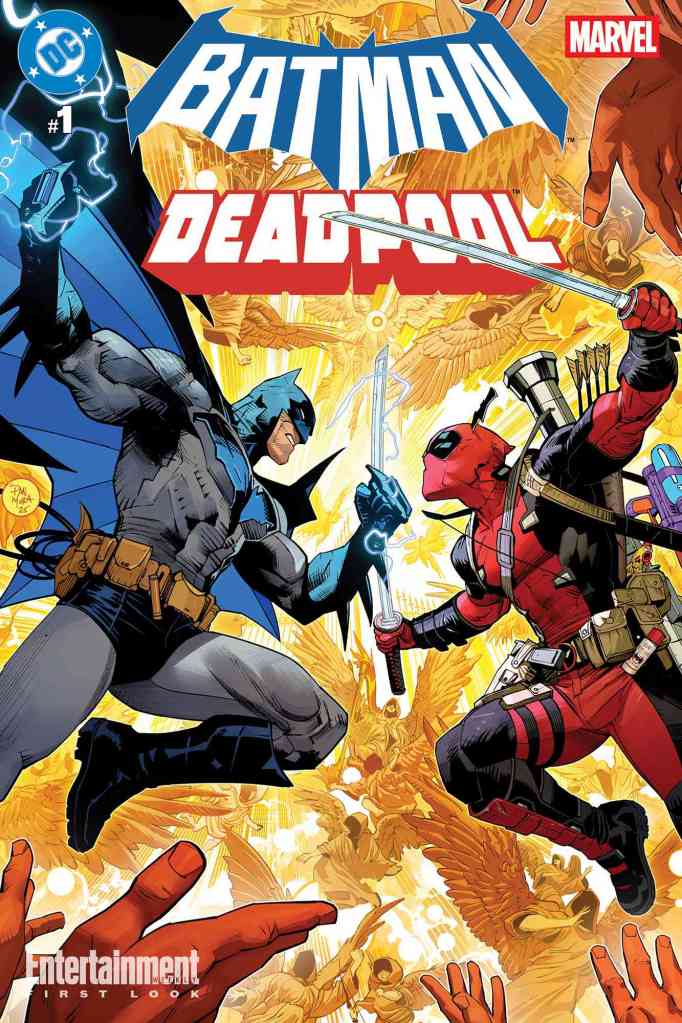
Year of Superman Week 35: A Spark of Change

When I started the Year of Superman back in January, I decided early on that I wasn’t going to spend the entire year reading stories from the “Triangle Era,” even though that is hands-down my favorite period of Superman comics. I did decide, though, that I would allow myself two indulgences. I would give myself a few weeks to delve into the epic and game-changing Death and Return of Superman storyline in the early part of the year. Then, later, I would allow myself to read the longer and more divisive saga of “Electric” Superman. The period where Superman’s powers and costume changed so radically was a major point of contention for a lot of readers at the time, although I feel that — like many stories of the era — it is looked back upon more fondly than it was initially received. But I have never gone back and read that era as a whole since it first came out.

I think it’s time.

That said, there’s a question that must be answered: exactly WHEN does this saga begin and end? It’s not as cut-and-dried as the Death of Superman, beginning with Doomsday’s appearance in Man of Steel #18. This story doesn’t begin in the issue where he gets the new costume. Superman’s power change is at least partially a result of an attempt to restore his powers after they are lost during the Final Night crossover. And after he is returned to “normal,” that issue ends with a cliffhanger that dovetails into a time-travel adventure against the villain Dominus that lasts several months before things are finally reset. Along the way he participates in more than one crossover event, is a regular member of the Justice League, and makes multiple guest appearances in lots of comics, including the Ultimate Access miniseries I read last week. All told, were I to read EVERY comic book with Electric Superman, it would be more than double (possibly triple) the number of issues in the Death and Return saga. That’s a LOT.

So here’s what I’ve decided: 

I’m going to read all of the issues of the regular Superman titles from the beginning of Final Night to the end of the Dominus storyline. I’ll read the main issues of any crossover in which Electric Superman appears, as well as crossover chapters in which Superman or members of the family appear. I’ll also read the annuals with Electric Superman. I’m going to skip the JLA issues, because after all, it’s part of Grant Morrison’s run and that whole thing is really one massive story in and of itself. And I’m not going to get into every guest-appearance he makes just because I think it would be a pain to try to track them all down, but I reserve the right to sneak one in if I really want to.

Even shortened like this, it’s still going to be the single largest endeavor of the Year of Superman. And I’m kind of excited to get into it.

All of this is to say, buckle up. It’s time to get sparkly.

Wow, that was lame.

And as always, you can check out earlier blogs in the Year of Superman Archive!

Wed., Aug. 27

Comics: Final Night #0-4, Power of Shazam! #20, Superman Vol. 2 #117, Adventures of Superman #540, Supergirl Vol. 4 #3, Action Comics #727, Superboy Vol. 3 #33, Legion of Super-Heroes Vol. 4 #86, Superman: The Man of Steel #62, Green Lantern Vol. 3 #81

Notes: It was a weird time in DC Comics. Hal Jordan had gone mad after the destruction of Coast City and took on the villain name Parallax following Zero Hour. Kyle Rayner was Green Lantern. Half of the Legion of Super-Heroes was stranded in the 20th century. And Lois Lane had ended her engagement to Clark Kent. Then, as if things weren’t bad enough, some idiot turns out the lights.

In The Final Night, by Karl Kesel and Stuart Immonen, an alien identifying herself as Dusk crashes her ship into Metropolis, where she is confronted by Superman, the Special Crimes Unit, and the time-tossed Legion of Super-Heroes. Dusk warns that a Sun Eater is approaching Earth, and that she has rushed ahead of it from world to world, trying to save people from its devastation, but thus far she has always failed. Superman quickly rallies the world’s heroes (and even some of the villains – they’ve got just as much to lose if the sun is eaten as the heroes do) and they take to space to try to stop the Sun Eater, but despite their best efforts, at the end of the first issue, Earth’s sun is consumed and the world is plunged into darkness. 

Issue two begins in rather dramatic fashion, when Lex Luthor – who has been in hiding – appears to offer his aid to the Justice League and Earth’s heroes in saving the world, including a powerful splash page of Superman and his worst enemy shaking hands in the face of a common threat. Meanwhile, the worlds’ heroes are in overdrive trying to protect people both from the drastic climate crisis as well as from each other. It soon becomes apparent, however, that with the sun gone, Superman’s powers are declining rapidly. Amidst all of this a new hero appears: a young man calling himself Ferro. 

In issue three things go from bad to worse. Turns out the sun isn’t actually GONE, but cut off inside the Sun Eater, where it’s trying to heal itself, but Luthor and Brainiac 5 realize that they have less than 24 hours left before the sun goes hyper-nova, wiping out everything in the solar system. Dusk makes plans to leave Earth before the end, as she has so many times before, but the Phantom Stranger takes her on a whirlwind Ebenezer Scrooge-like tour of the Earth, allowing her to witness our heroes’ refusal to give up, even in what is literally the darkest of hours. And as everyone begins making preparations for the bitter end, Guy Gardner is surprised by the appearance of a bright, beautiful green. 

Final Night #4 brings us to the brink. Luthor and Brainiac 5 have constructed a series of force-field bombs they believe will contain the nova and destroy the Sun Eater, but their chosen pilot, Green Lantern, disappears. Superman insists on going himself, and takes a moment to write a farewell letter to Lois, from whom he was estranged at the time. As he’s writing, through, Ferro steals the ship with the intention of making the suicide run on his own. As they try to stop him, Parallax arrives and offers to save the sun. Despite the reservations of some of the heroes (especially Batman), he does so – at the cost of his own life. Hal Jordan, once and future Green Lantern, falls as he dispels the darkness within.

The end of the story doesn’t quite hit the same now as it did in 1996, knowing as we all do that Hal would eventually return and become Green Lantern again. But as a way to end the arc he had been on since the Death of Superman it was fitting. Also fitting was the reaction of the other heroes: Superman chooses to believe that Hal Jordan found redemption in the end for the atrocities of Parallax, whereas Batman believes a moment of good at the end can never erase the slate. It says quite a bit about each of these heroes, and the book seems to recognize that. At the end of the issue, as Clark and Bruce debate Hal’s sacrifice, Karl Kesel writes a caption that has always stuck with me: “They are the world’s finest heroes, and all the rest follow the lead of one or the other.”

It’s an interesting perspective on the philosophy of the DC Universe, isn’t it?

Let’s talk for a moment about the assorted spin-off chapters. As I said, I didn’t read all of the assorted spin-offs, only those featuring Superman or a member of the family, but that still added an additional nine books to the five-issue main series. I’ll hit the high points in order, as dictated by the reading list on the DC Infinite app:

Power of Shazam! #20: As the weather begins deteriorating with the loss of the sun, Superman and the Marvels go into first responder mode while the wizards Shazam and Ibis try to find a magical solution to the problem. Superman’s presence here is minor, but there are interesting notes. First, this happens right after the sun is lost, so Superman’s powers are only beginning to wane. Second, there’s an amusing moment where Captain Marvel promises Superman “I won’t be distracted like when I faced that Thunder God,” a funny and oblique reference to the events of DC Vs. Marvel

Superman #117: This one is a cheat. Despite the banner on the cover, it’s not really part of the crossover. The issue wraps up an ongoing story with Superman and Professor Hamilton in the Fortress of Solitude and advances a few subplots, but it only ties in to the Final Night on the last few pages, when Superman receives word that something is approaching Earth. If you’re doing a readthrough of the story, this is utterly skippable. 

Adventures of Superman #540: Perry White fights valiantly to put out an edition of the Daily Planet, reasoning that failure to do so would be like giving up and admitting defeat. Emil, still in the Fortress of Solitude, starts transmitting his own research to S.T.A.R. Labs in an attempt to help. And in Metropolis, as Superman’s powers continue to dwindle, Ferro gets a rather heartbreaking origin. The Perry stuff is great, and the Ferro stuff sets the character up nicely for his future with the Legion.

Supergirl #3: Peter David’s epic run was interrupted pretty early by this crossover appearance. Supergirl (this is the Matrix version, remember), has very recently found herself bound to a mortal girl named Linda Danvers, and in her new home of Leesburg, people are beginning to fall apart as they beg for the return of the sun. The issue is mostly spent developing subplots for the series in the context of the crossover, and skippable if you just want to read Final Night, but it reminds me as always just how good David’s run on this character was. I may not be able to fit it in before the end of the year (it’s a total of 80 issues, plus assorted crossovers, annuals, and specials), but so, so worth reading.

Action Comics #727: A somewhat quiet, subdued issue. As Metropolis is blanketed with snow, a Superman whose powers are nearly gone struggles to keep the peace. Meanwhile, a desperate man finds new hope. Inconsequential to the main story, but this is actually one of those times where I really feel a crossover event works well, telling an emotional self-contained tale against the backdrop of the greater events.

Superboy #33: In Superboy’s home of Hawaii, people are gathering at the base of an active volcano for warmth. Roxy Leech, his manager’s daughter and Superboy’s best friend, decides that with the world ending in 24 hours there’s nothing left to lose and confesses her love for him, which is kind of awkward, as his girlfriend Tana Moon is on TV reporting on the crisis just as the volcano erupts. Turns out it’s a monster with the inventive name of Lava causing trouble. The ending here is particularly bittersweet, and surprisingly effective. 

Legion of Super-Heroes Vol. 4 #86: Ferro proves his mettle (get it?) by offering to dive into the sun with an enormous bomb to get it going again. Luthor and Brainiac already have devised their plan to send Green Lantern instead, though, but when he mysteriously vanishes (whisked away by Parallax, as it happened), Superman steps up to do it instead…something that doesn’t sit too well with Ferro. 

Superman: The Man of Steel #62: An interesting little side-trip. Almost de-powered, Superman tries to help a power plant stay functional to keep people from freezing in the dark. Meanwhile, Hamilton discovers that imminent destruction of the sun and sends word to the Daily Planet, while learning about the last days of Krypton and how eerily reminiscent they are of the current situation.

Green Lantern #81: An epilogue to the Final Night story featuring the funeral of Hal Jordan. Kyle Rayner is nervous, finding himself in the position of being asked to speak the death of a man he never met until he turned bad. Superman begins the ceremony, calling Hal a hero, before calling up other speakers who knew him best: Guy Gardner, John Stewart, Black Canary (speaking in the stead of the also dead-at-the-time Oliver Queen), the Flash, Carol Ferris, and finally Kyle. The heroes travel to the Coast City memorial, where Alan Scott turns the eternal flame green, and then Swamp Thing (making a rare non-Vertigo appearance for the time period) brings life back to the desolated landscape. In the end, even Batman finds it within himself to forgive.

A lovely story, although of course, it wouldn’t be the end at all. Nor is it the end for Superman because – as you may have noticed – I haven’t mentioned anything about his powers coming BACK yet. After the sun was restored, he – and everyone else – assumed his powers would go back to normal. But as we’re going to see soon, that isn’t what happened at all.  

Thur., Aug 28

Comics: Superman Vol. 6 #29, Justice League Unlimited Vol. 2 #10, Justice League: Dark Tomorrow Special #1, Green Lantern Vol. 8 #25 (Superboy Guest Appearance)

Notes: Gonna take a quick pause from the burgeoning Electric storyline to read some of the new Superman comics that dropped this week. Superman #29 continues the “Legion of Darkseid” story as Superman plans a trip to the future to save the Legion of Super-Heroes with the most unexpected partner of all time. 

It’s going to be hard to talk about this issue – I don’t really want to spoil anything, so can I just talk about vibes? As in, “I freaking love the vibes from this book”? Superman going into the future to save the Legion is exactly what I’ve been thirsting for. What’s more, writer Joshua Williamson is showing respect for EVERY incarnation of the Legion to date, weaving them all into this story (somehow) whilst still tying everything in to the ongoing “DC All In” saga. Again, without spoiling anything, if you haven’t read last year’s DC All-In Special or the Summer of Superman Special that came out in April, you’re missing out on the building blocks of this story. Superman even gets one of his trademark rousing speeches in which he espouses exactly what I’ve always felt is true: he may have been the inspiration for the Legion, but the Legion was every bit as much an inspiration to HIM.

Despite the darkness of this story, something about it is feeling…right. It rings true. And by the time the tale ends and the dust has settled, I feel like we just might finally have a true Legion again. 

Justice League Unlimited #10 actually takes place before the “Darkseid’s Legion” storyline, and involves the League trying to protect the Doomsday Time Trapper, who feels the encroachment of Darkseid and his Legion. Meanwhile, the Trinity have a little heart-to-heart about what happened with Air Wave (the whole “tricked by Grodd” thing) and how they need to approach Justice League recruitment in the future. As always, Mark Waid proves just how well he knows these characters, placing Superman and Batman at odds with one another on this matter, with Wonder Woman as the mediator between the two. Clark also gets in a pretty sharp jab at Bruce, which I don’t think he gets to do quite often enough.

Also, Dan Mora drew both of these issues, and he’s phenomenal. Really, any time these days I read a comic book where I don’t feel the artwork is up to snuff, I wish that they could clone Mora and have him do all of it. 

I also read the Justice League: Dark Tomorrow Special, which came out a few weeks ago but, somehow, I’d missed. I’m glad I grabbed it, though, because it feels pretty significant to this whole All In/Darkseid story that’s going on. Someone is hunting down and killing time travelers, which puts roughly half the Justice League at risk – especially those time-lost heroes from the “We Are Yesterday” crossover. A mysterious time-traveler calling himself “Legend” partners up with Air Wave and the lost heroes to try to save them. The issue is both an epilogue to “We Are Yesterday” and a prologue to future stories (including “Darkseid’s Legion” and the upcoming “DC KO”), and although the Super-family participation is minimal, it definitely feels significant, and if you’re following the ongoing saga of the DCU these days, you should pick it up.

Fri., Aug. 29

Comic Books: Superman Vol. 2 #118, Superman: The Wedding Album #1

Notes: I only briefly mentioned it when I read Final Night the other day, but at this point Lois and Clark were separated, she having called off their engagement and taken an assignment in Asia to get away from him. It was a bit of a delaying tactic – Warner Bros wanted corporate synergy and refused to allow DC Comics to have the two of them get married until they were also married on the then-running Lois and Clark: The New Adventures of Superman TV show. It was actually that edict that led to the Death of Superman in the first place, when they had to scrap their plans to marry them off in 1992. Here, four years later, after one delaying tactic after another, they finally got married on the show, and DC had to quickly follow suit.

In Superman #118 we pick up on her, chasing down a heroin ring in the far East. Back in Metropolis, meanwhile, S.T.A.R. Labs is working on the fact that, despite the sun coming back, Superman’s powers are still gone. After a seemingly-pointless reiteration of his origin, Wonder Woman and Lori Lemaris convince Superman to try to get Lois back. Lois, meanwhile, encounters a young man who tells her a lesson he learned as a child from an American stranger. It’s pretty clear where this is going from the very beginning, but Lois is still taken by surprise when she learns who her new friend’s old friend happens to be, and she makes a decision to return to Metropolis. Short? Abrupt? Hell yeah. But DC wasn’t given a lot of time to get things back in order – they needed to have the wedding of the century align with the TV show.

And this brings us to Superman: The Wedding Album, an event nearly 60 years in the making. This 88-page whopper told a hefty tale written by the five writers of the Superman comics of the era (Dan Jurgens, Karl Kesel, David Michelinie, Louise Simonson, and Roger Stern), with art by the regular teams and several other artists who had worked with Superman over the years, including John Byrne, Gil Kane, Paul Ryan, Tom Grummett, and a flashback sequence using pages by the great Curt Swan. It’s a nicely fitting tribute to the characters, kicking off with Lois being Lois – pretending to want to marry the head of the drug trafficking ring as a way to both bust him, at the same time, hitch a ride on his private jet back to Metropolis. She storms into the Daily Planet office wearing a ragged and torn wedding dress, then has it out with Clark. He fills her in on what’s been going on in her absence: he’s acting as Managing Editor of the Planet while Perry recovers from chemotherapy, oh yeah, and his powers are gone. (There’s a particularly funny line here: “Remember when the sun went out a while ago, Lois?” As if that’s the sort of thing a person could just forget.) The sequence ends with the entire Planet staff crowding around, trying to peek through the door, and seeing the two of them in an embrace, back where they belong.

The bulk of the special, after that, is all about wedding preparations: Lois’s bridal shower, the happy couple picking out their dress and tux, and house-hunting. And while it’s all fairly normal, non-superhero stuff, the writers manage to really infuse it with character. Lois’s mom is desperate to control things while her father makes no effort to disguise his distaste at his daughter’s choice of partner. Clark’s parents, meanwhile, do their best to play mediator. A fight breaks out at the Ace O’Clubs during the bachelor party, and Clark gets a visit from a friend to tell him that Metropolis will be taken care of during his honeymoon. Oh yeah – and the apartment that Lois fell in love with but couldn’t get is now theirs, courtesy of the building’s owner, one Bruce Wayne.

I’m really glad that they avoided the typical superhero wedding episode, where the ceremony is disrupted by a villain causing havoc or some natural disaster. The closest thing we get is Mr. Mxyzptlk popping in right before the blessed occasion to tell Clark he’s looking forward to screwing around with Mr. and Mrs. Kent very soon. Then it all closes off with a nice, simple, uneventful wedding that is heartfelt, sincere, and lavishly illustrated (with several members of the creative team in attendance). 

It’s a sweet issue, one that finally puts the will they/won’t they of six decades to rest and allows us to move on to something new.  

Turns out they were saving the chaos for the honeymoon.

Sat., Aug. 30

Podcast: Back to the Bins Episode #685: Superman S.C.O.R.E. III

Notes: It’s finally here! Regular blog readers may recall a while back when I joined Paul Spataro to record an episode of his Back to the Bins podcast, each of us discussing comics about the relationship between Superman and Wonder Woman. The episode has finally dropped, so make sure you check it out. It’s available on the Two True Freaks Podcast Network page, or you can find it on Spotify, Apple Podcasts, or wherever you download your podcasts. Join us for a chat about this unique super-couple. 

Comics: Taste of Justice #6, Adventures of Superman #541, Action Comics #728, Superman: The Man of Steel #63

Notes: A quick peek at Taste of Justice #6 – a short but fun story in which Martha Kent is injured (mildly – this series seems to specialize in minor mishaps most of the time), leaving Clark and Jonathan to try their hand at making her famous rhubarb pie. Interestingly, whereas most chapters of this online serial comic have led up to a triumphant dish being prepared, this one takes a different tack – the resultant pie isn’t up to Martha’s usual standards, a fact which she clearly finds somewhat amusing. I didn’t see that coming.

That done, it’s a dive back to 1996, where we’re going to read the comics that make up Lois and Clark’s honeymoon. After a surprisingly low-key and uneventful wedding, their trip to Hawaii makes up for it. Adventures of Superman #541 picks up at the wedding reception, after which the happy couple whisks off to the island paradise, where their celebrations are interrupted by an explosion. With Superman still powerless, fortunately, they happen to be on Superboy’s home turf. The explosion was caused by a creature that claims to be an island spirit called a Menehune, and the happy couple wind up meeting up with Superboy and his own reporter girlfriend, Tana Moon. The story is okay – more like we’re seeing a “Lower Decks” style peek in an issue of Superboy really. But the side quest is derailed on the last page, when Clark is shot and kidnapped by men in a speedboat. Of course, these guys don’t seem to realize that they’ve just made the biggest mistake of their lives: they’ve pissed off Lois Lane. 

Action Comics #728 picks up with Clark waking up in the custody of the brother of the very drug trafficker that Lois captured in the Wedding Album. Apparently Rajiv, as his name goes, holds something of a familial grudge. I have to admit, I found this issue kind of underwhelming. Clark spends most of the issue engrossed in a flashback to another time when his powers weren’t of any use, facing a terrorist armed with a chunk of Kryptonite. The flashback really adds nothing to the story, save for eventually reminding Clark that he has studied techniques to make it appear as though his heart has stopped beating – techniques that work just as well if he has powers or not. He uses his little trick to attempt an escape, only to learn that any such effort will be futile, as he’s being held captive on a submarine at the bottom of the Pacific Ocean. Good reveal, but it leaves us with about two pages of plot progression for the whole issue.

Superman: The Man of Steel #63 picks up with Clark being brought to a private island belonging to Rajiv as Lois begins the task of doing what she does best: following leads. In this case, she’s trying to track down her missing husband, which takes her all of four pages before she begins a guerilla assault on Rajiv’s compound. (And they call Batman the world’s greatest detective.) As she attempts her rescue, Clark learns that Rajiv isn’t tracking her out of petty revenge: when she bested his brother, Lois made off with a knife that, unbeknownst to her, has hidden in its hilt computer codes capable of hacking satellite technology and bringing down aircraft at will. As Clark stalls for time, trying to convince Rajiv that Lois found and sold the codes, she breaks in and saves the day.

The honeymoon arc as a whole is okay. You all should know by now how much I love a story where Lois has a chance to kick some ass, and she most certainly does that in the Man of Steel issue. For all the times Clark has saved her over the years, it’s really great to see how capable she is when the need arises. My beef really comes with how quick the whole thing is, especially the sequence where Lois tracks down Rajiv’s island. It just comes far too easily, even for someone as smart and capable as Lois. Considering that she only appeared on one page of Action #728, that issue feels even more superfluous than it does at first blush. It would have been far more satisfying, in my opinion, to truncate the flashback sequence in that issue and devote those pages to showing Lois hunting down Clark. It would make the Action issue feel far more relevant and the Man of Steel issue feel less rushed. It’s all about the pacing, people.

Still, kudos to Lois and Clark for having a honeymoon they could never forget. But when their vacation to paradise ends, it’s going to be time to get down to the real issue at hand: finding a way to restore Superman’s missing powers. 

Sun., Aug. 31

Comic Books: Superman Vol. 2 #119, Adventures of Superman #542, Action Comics #729, Superman: The Man of Steel #64

Notes: With the honeymoon over, it’s time to figure out what’s up with Clark’s powers. In Superman #119, Superman and the time-tossed Legion of Super-Heroes both arrive at LexCorp looking for help with their respective predicaments. They take a ship to the same orbital platform we saw back in the Superman/Aliens crossover (a rare instance of such a crossover being addressed as canon, helped no doubt by the fact that Dan Jurgens wrote both of them) and Brainiac 5 attempts to draw solar energy to jumpstart Clark’s powers…an effort met with failure. And in the midst of this Lex gets some surprising news: he’s going to be a daddy.

In Adventures #542, Superman heads to Project Cadmus for help but, again, finds himself stonewalled. Instead, he simply winds up on a brief psychedelic adventure with some of Jack Kirby’s stranger creations, the Hairies, before borrowing Guardian’s Whiz Wagon. He flies it down to Action Comics #729, where – en route to his Fortress in the Antarctic – he winds up at an energy research station where the crew has unwittingly unleashed a strange entity from the center of the Earth. Superman manages to best the creature even without his powers (paralleled with a subplot about Perry White going through chemotherapy) before finally making it to the Fortress where Emil Hamilton has been all this time. But even all his Kryptonian tech doesn’t restore his powers before Mr. Miracle and Big Barda pop in via Boom Tube, saying that the fate of the universe depends on Superman’s powers.

Finally, “Power Struggle” concludes in Man of Steel #64. The New Gods tell Superman that their world of New Genesis has somehow been destroyed, and the only hope of finding the truth is to retrieve the datacore in Metron’s suit…a datacore that can only be accessed by melting the suit in the heat of the sun itself. Metron assures Superman that their dive into the sun will recharge his powers quickly enough to pull them both out of the star before they’re killed…and miraculously, it works. Superman’s powers are restored, Metron is saved, and the data is retrieved. It all seems just so…neat and tidy. TOO neat and tidy, if you catch my drift.

Getting his powers back, as it would turn out, was just the beginning. 

Bonus: Comics in the wild!

Notes: Some time ago, DC announced that they were going to start selling comics at Dollar Tree locations. The comics would all be reprints, of course: most of them either the first issue in a story that is available in graphic novel form or a standalone comic, including many aimed at kids. The program expanded to reach various convenience stores, grocery stores, and other outlets. But today was the first time I ever actually saw any in the wild. After my son’s birthday party, we stopped for gas and I saw the rack inside the station. I had to go through it, fascinated by some of the choices for their reprint specials. The first appearance of the modern Supergirl from Superman/Batman is in the mix, as well as at least two current issues of Mark Waid’s World’s Finest series (each the beginning of a storyline, of course), and the first issue of Christopher Priest’s Superman: Lost. They weren’t ALL Superman comics, of course – there was the expected assortment of Batman comics, Harley Quinn comics, and Scooby-Doo comics, some of them all at the same time – but the very existence of this rack out there, outside of comic book stores where they can be seen by anybody…it was heartwarming to me.

Of course I had to get a couple. I picked up the reprint of John Byrne’s Superman #1 from 1987, as well as the reprint of the first issue of Batman Adventures Vol. 2. Like the Compact Comics, I feel like it’s important we support these things, friends.

Mon., Sept. 1

Comics: Superman Vol. 2 #120, Adventures of Superman #543, Action Comics #730, Superman: The Man of Steel #65, Superman Vol. 2 #121,  Adventures of Superman #544, Action Comics #731, Superman: The Man of Steel #66, Jon Kent: This Internship is My Kryptonite #6, Gotham City Sirens: Unfit For Orbit #5 (Power Girl guest appearance)

Notes: There was a bit of a lull in the Superman comics after he got his powers back but before they transformed. Let’s see what we can get through today. In Superman #120, Lex Luthor has a dream about his oncoming child idolizing Superman, a dream that chills him to the bone and opens up an issue of different characters talking about what they would do with Superman’s powers: Lex, Emil Hamilton, Jimmy Olsen, Cat Grant, Perry White, and a random kid who gets locked out of his house and needs Superman’s help. It’s a cute little breather of an issue, which was probably due at this point, although it had been entirely too long since we saw Lois. She hadn’t had a significant appearance since the honeymoon ended, and it’s time to really get into the adventures of Mr. and Mrs. Superman. There is one significant piece of foreshadowing, though: when Emil studies Superman to make sure that his powers are, indeed, back to normal, the scanner he’s using shorts out due to an unexpected electrical surge.

In the immortal words of C+C Music Factory, “Things That Make You Go Hmmmm…”

Adventures of Superman #543 shows us the newlyweds finally settling into their new apartment and Superman checking into a couple of escaped villains. Turns out the villains in question are being recruited for a new version of the good ol’ Superman Revenge Squad. A strange figure watching from the shadows has pulled together Anomaly, Barrage, Misa, Riot, and most troublingly, Maxima. When DC released this year’s Superman Treasury Edition I mentioned that I was disappointed to see Maxima reverting to her old villainous ways. I guess I’d forgotten that this wasn’t the first time she’d suffered from a bout of recidivism. The Squad makes its attack in Action Comics #730, but not before one of the very-frequent scenes of Superman flying over Metropolis pondering recent events to bring any casual readers up to speed. I never noticed until this read-through just how frequently that happened in the Triangle Era. I suppose they clung to the idea that any comic book could be somebody’s first, and they were doing their best to make sure that everyone knew what was going on. Admirable – but these days I’m very curious as to whether that old adage still bears any truth at all. Anyway, the fight goes poorly – the five villains, used to working on their own, wind up stumbling over each other and stabbing each other in the back, but by the last panel they manage to have Superman down, his head covered with a slime that Misa is using the block his powers. Geez, Misa, he JUST got them back. 

Man of Steel #65 wraps the story up as the Metropolis Special Crimes Unit arrives on the scene and joins the fight. For a full-issue fight scene, it’s not bad. It’s really nice to see the SCU used to the top of their intelligence, being legitimately effective in a fight against superpowered villains instead of just coming across as the useless cops that so often populate superhero comics. As the Revenge Squad is rounded up, their mysterious benefactor watches and plans his next move. I’ll tell you what I REALLY like here – it’s been so long since I read these issues that I’ve completely forgotten who the mysterious bad guy is that pulled the Revenge Squad together. I don’t know when the reveal is going to come, but I hope it lands. 

Superman #121 has writer Dan Jurgens once again pick up penciling duties (a rarity for this era) for a “very special issue” about Clark Kent befriending a ten-year-old girl who witnessed a gang shooting. When Superman tries to eliminate the guns from her housing project, thinking it will make it safe for her…well, let’s just say I’m kind of surprised that Jurgens would have written Superman as being so naive. 

Adventures #544 starts off with what I’m comfortable calling a controversial moment: Clark Kent is gunned down in the middle of a busy streetcorner. If that’s not confusing enough, it gets weirder when Lois arrives on the scene at the same time as…another Clark. Turns out the doppelganger is tied into the return of Intergang, which no doubt is going to cause trouble later on. Action #731 features another return: Lois and Clark are trying to enjoy an evening at home together when word comes of an attack by an old foe of his Cauldron – but he’s different than before. While Clark holds him off, Lois helps unravel the mystery of who is controlling the cyborg villain this time.

Finally (for today) let’s look at Superman: The Man of Steel #66. Remember Rajiv, the creep who messed up Lois and Clark’s honeymoon trying to get his hands on codes that would allow him to take over a satellite defense network? Well, seems like he got the codes, because in this issue he starts raining fire all over the world, demanding a billion-dollar ransom to stop. The story cuts between Superman taking to space to stop him and scenes on the ground where various people, including Bibbo, Jimmy Olsen, and Perry White’s family, try to help in their own way. It’s an interesting little experiment by Louise Simonson and Jon Bogdanove, a story ostensibly about how the S-shield itself stands for something to people and the power it has even on its own. It would be another decade before the concept of the shield being the Kryptonian word for “Hope” came about, but this has some of that same feel to it, and I like it on that level.

It’s odd, in retrospect, how these stories feel so disconnected from what’s coming. Except for the electric spark in Superman #120, there’s really been no buildup to the power switch. The news had already come out that the story was coming, of course, people knew that Superman was about to get a new costume and new power set, but they didn’t expend a lot of shoe leather on the concept for the first two months after the wedding storyline ended.

That’ll change very soon. 

Tues., Sept. 2

Comic Books: Superman Vol. 2 #122, Adventures of Superman #545, Action Comics #732, Superman: The Man of Steel #67, Superman Vol. 2 #123

Notes: The final month before the big switch begins in Superman #122. At this time, DC was still under the edict that Kal-El was to be the ONLY Kryptonian who survived the destruction of Krypton. That said, they had found ways around that with alternatives to the Kryptonian characters and concepts of the past: the Matrix Supergirl, an Earth dog Bibbo named “Krypto,” and most recently, a new version of the city of Kandor. In this continuity, Kandor was still a miniaturized city in a bottle that Superman was keeping safe in the Fortress of Solitude, but rather than a Kryptonian city, it was a town made of aliens from various worlds, all collected by an entity named Tolos before Superman saved them. In this issue, his powers start to go wild, causing electrical devices to explode and his body to phase in and out. Superman takes Lois to the Fortress to try to get to the bottom of it, wondering if the dimensional phase that had brought him to Kandor could be responsible, but inadvertently winds up releasing a blue-skinned, horned alien called Ceritak. In Adventures #545, things just get worse as Superman’s powers go out of control. He sparks uncontrollably, falling through walls and losing the ability to fly, all of which contribute to a power outage that goes across the city and frees the Atomic Skull from prison. The Skull, suffering from the delusion that he was the hero of an old movie serial and that Superman and everyone else were characters in the serial, winds up in battle against Superman, seeming to atomize him. 

Action #732 continues the battle because, obviously, Superman isn’t really dead. His energy was somehow dissipated by the skull, and he finds himself reconstituting at that Antarctic energy research station he stopped by when he was powerless a few issues back. Lois plays along with the Skull’s delusion as a delaying tactic and, making his way back to Metropolis, Superman starts to learn some of the capabilities of his new powers. He isn’t strong anymore and can’t fly, but he can bound around like energy, control magnetic waves, and access computer systems by touch. Eventually, he manages to bring the Skull down, but he has no idea what’s happening to him.

Superman: The Man of Steel #67 is next, although the title has become highly inaccurate at this point. (This is a good opportunity to talk about how, were this story to be told today, it would reach this point and then DC would likely cancel all four series and re-start them with new first issues, including changing the title of this one. Man of Energy doesn’t really have the same ring, though. I don’t know what they’d call it.) As news of Superman’s mutating powers starts to leak out, Lois clashes with the Planet’s new sensationalist circulation manager over their coverage. Meanwhile, Ceritak has made his way to Metropolis, where he’s inadvertently sewing some chaos. In the midst of the battle between the two Superman’s powers go absolutely haywire, causing a citywide blackout.

A quick aside before I move on to the main event: Jon Bogdanove. He’s one of my favorite Superman artists, mostly because his style has a sort of classic, old-fashioned sensibility that meshes perfectly with Superman. He gives us a huge, barrel-chested, squared-jawed hero that not only fits, but practically DEFINES the classic Superman mold. As Superman shifts from his traditional status quo to the electrical version, you’d think it would clash with his style…but somehow it doesn’t. Along with fine art and color work by Denis Janke and Digital Chameleon, he makes a creature of pure energy still invoke the core of Superman. That, along with several well-placed and highly amusing visual gags in this issue, call to mind some of his best work on Marvel’s Power Pack. I don’t think Bogs gets enough credit in general, and I wanted to call out this issue in particular as being a high point.

Finally, after a week of reading, we come to the book that I started this journey for: Superman #123. As Superman fights with the confused Ceritak (who Bibbo accidentally renames “Scorn”), he winds up in Hamilton’s lab, unable to control his new energy-body. Hamilton is approached by Erica del Portenza, wife (at the time) of Lex Luthor, who has an experimental cyber-woven polymer that she believes may be of assistance. Loath as they are to accept help from Luthor, Hamilton sees no choice and uses the fabric to create a containment suit. In his new duds, Superman finds that he can control his power while in energy-form as well as shift back to a fully human (and powerless) Clark Kent. As he says on the last page, “there’s a new Superman in town.”

This is such a wild story so far. After a rather slow buildup, we’ve got a Superman now with a completely different power set and costume, and while I don’t think I believed even then that this change was intended to be permanent, DC did their best to pretend this new status quo was going to last. So looking ahead to reading more of this, I’m expecting to see the sort of subplots and side-stories that defined the Triangle Era while, at the same time, continuing the story of the electro-Superman, leading up to the era of Superman-Red and Superman-Blue.

And despite feeling a bit of scorn (no pun intended) for this storyline for a very long time now, I find myself kind of looking forward to it. 

Blake M. Petit is a writer, teacher, and dad from Ama, Louisiana. His most recent writing project is the superhero adventure series Other People’s Heroes: Little Stars, volume one of which is now available on Amazon. You can subscribe to his newsletter by clicking right here. You can join in the Kryptonian Konversation every day in the Year of Superman Facebook Group!

Year of Superman Week 34: Crossover Chaos Part III-The Final Amalgamation

I spent last week dipping my toes into the DC Vs. Marvel crossover, as well as the first wave of Amalgam Comics titles. But I’m not done yet: I’ve still got over half the huge Amalgam Age Omnibus to get through, including two sequel miniseries and the second wave of Amalgam Comics. Not only that, but after a few weeks where the beginning of the school year has kept me busy, I finally get a chance to sit down and catch up on more recent Superman comics. Oh yeah – and Peacemaker season two drops this week, and while I don’t expect to see Superman to show up, James Gunn has promised that the story of this season follow on from the film, so there’s a pretty good chance I’ll have some thoughts to share about that. Let’s begin, shall we? 

And as always, you can check out earlier blogs in the Year of Superman Archive!

Wed., Aug. 20

Comics: DC/Marvel: All-Access #1-4

I had the same look on my face as Access when I read Civil War II.

Notes: I’m going to say something that may be controversial here. I actually like the follow-up miniseries, like DC/Marvel: All-Access, better than the DC Vs. Marvel event itself. DC Vs. Marvel was a fun experiment, but the plot was really just a flimsy excuse to show off fights between the characters and frame the Amalgam specials. All-Access, on the other hand, has an actual STORY to it, and I appreciate that. Written by Ron Marz with art by Butch Guice, whom you may remember passed away earlier this year, All-Access starts out with Axel Asher, the man who straddles the line between the Marvel and DC Universes as Access. A psychic flash warns him that Venom has somehow hopped universes, and if anyone from either universe stays in the other one for too long it could cause the worlds to fuse into the Amalgam Universe again, so the cosmic hall monitor has to get to work. He comes across Venom in Metropolis, where he’s throwing down with Superman, and so Access decides to get some backup by calling in someone who knows what Venom’s deal is: Peter Parker, the Amazing Spider-Man.

This is all in the first issue of the miniseries, by the way, which almost works very well as a standalone Superman/Spider-Man team-up. There’s no gratuitous hero-on-hero fighting here, just two good men teaming up to take down one bad one, and Marz plays them both perfectly. Re-reading this issue is where I started to realize that this is kind of what I had hoped DC Vs. Marvel would have been all along.

Superman doesn’t show up again until the last page of issue #3, but in the meantime, Jubilee convinces Access to take her back to the DC Universe because when she and Robin were supposed to be fighting each other, they kind of fell in love. (To this day, it’s probably the best relationship Tim Drake has ever had.) Their reunion is interrupted by an encounter with Two-Face, then again when the Scorpion appears, once again mysteriously having been pulled from the other universe. Access recruits Batman to help him solve the mystery of the “crossovers,” and Batman suggests that they track down the man who, in the combined universe, was supposed to be its defender: Dr. Stephen Strange. Batman approaches Strange, suspecting that he’s causing the crossovers somehow, and Jubilee calls in the X-Men to hold him off. Issue three ends with Access once again calling in the cavalry, bringing in the rest of the Justice League.

Issue four is X-Men vs. JLA, at least at first. Things change when Access discovers that Dr. Strangefate has been hiding in Strange’s subconscious ever since the merger and used him to cause the crossovers in an attempt to restore the Amalgam Universe. He fuses Wonder Woman and Storm once again into their Amalgam counterpart, Amazon, but when he realizes he doesn’t have the right parts to put together anyone else, he starts creating NEW Amalgams: Superman and Bishop! Iceman and Aquaman! Jean Grey and the Martian Manhunter! Things get wild!

The story ends with a nice little promise, the Amalgam Universe restored as a sort of pocket universe where Strangefate is locked away, and the Marvel and DC Universes get to remain separate. But this miniseries was so much fun, seeing the characters actually interact in ways that didn’t go straight to the fisticuffs. The Robin/Jubilee stuff in particular was fantastic, and I loved seeing Superman and Spider-Man working together again. 

It’ll never happen, but I’d love to see a longer Access series, say a 12-issue event in which he’s trying to solve some sort of mystery that encompasses both worlds. And I’d love if, during this year, he appears not only in his own series, but in the ongoing comics of both companies, bringing surprise guest stars with him. But seeing as how the original plan was for DC Vs. Marvel to end with She-Hulk and Martian Manhunter swapping universes for a year until that plan was nixed by the lawyers, it’s doubtful that anything like that could happen. It’s not like the world has gotten LESS litigious since 1996, after all. 

Thur., Aug 21

Comic Books: Super-Soldier: Man of War #1

The amalgamated Snyder Brothers fans get SO angry that they gave Super-Soldier his trunks back.

Notes: A year after DC Vs. Marvel, a second wave of 12 Amalgam one-shots were released, six of them continuing adventures of the characters from the first, six of them with all-new Amalgamations. What’s interesting is that even the books that carried over didn’t continue the STORIES from the original. Some of them were unrelated stories, some made brief reference to the previous, and some went REALLY wild, like Dark Claw Adventures giving us an adventure of the Amalgamated Batman/Wolverine combo in a Batman: The Animated Series style. For our first visit with the Super family, Super-Soldier: Man of War dipped back in time to give us an adventure of the character from World War II. Mark Waid and Dave Gibbons reunite for this story, which kicks off with Super-Soldier at a meeting of the All-Star Winners Squadron. But he’s only there long enough for us to notice some new Amalagams (such as the Human Torch/Green Lantern mashup Human Lantern) before it’s off to join Jimmy Olsen for a special undercover Daily Planet assignment overseas. 

On the ship to Europe, Clark and Jimmy make the acquaintance of Sgt. Rock and the Howling Commandos, and Clark is later chagrined to find that Winston Churchill has fallen for the do-gooder act of his arch-nemesis, Lex Luthor, husband of Lois Lane. In a way, Luthor’s involvement actually makes this a prequel to the previous story, as the issue ends with him unveiling the plans for the Ultra-Metallo that Super-Soldier fought the first time we read one of his adventures. Kinda makes you wonder why it took Luthor 50 years to get it together.

As before, Waid and Gibbons do a great job lacing together the Superman and Captain America characters, this time bringing in the World War II-era heroes of Easy Company and the Howlers as well. Peggy Carter, for instance, shows up here as a member of the French Resistance (although I couldn’t figure out which member of Easy Company she was supposed to be mashed up with). The appearance of Major Zemo and his War Wheel pushes this over the top – silly and gleeful. These Amalgam books, when done well, are just an enormous amount of fun. Is it too much to hope that the new DC/Marvel crossover books that are about to come out will open the door for the return of this mixed-up universe? 

Fri., Aug 22

No, you give YOUR dog an invisible bone!

Last night was the premiere of Peacemaker season 2. I thought that meant I would be able to watch it when I got home from work, but apparently, it dropped at 8 p.m. EST, by which time my sports fanatic son was engrossed in a preseason game between two teams that nobody in our house has any personal connection to. But that was okay, I figured that I would just watch it the next day. I guess that was pretty stupid of me, though, to assume that I could wait a whole 20 hours and not have anything spoiled for me. Before the game was even over, though, posts were appearing on social media that spoiled something that really pissed me off. You see, season one was made BEFORE James Gunn was given the job of revamping the DCU, and was intended as part of the previous iteration of the DC Extended Universe. With the new DCU that began in Creature Commandos and continued into Superman, though, there were questions as to which parts of the season were still canon. Gunn has been exploring that in the official podcast for the show, but there was a moment in the finale that they were going to have to work a little bit to reconcile. 

Naturally, looking at Facebook last night, I was spammed with different pages that I don’t even follow sharing a screenshot that ruined a pretty amusing moment. How dare I assume that people wouldn’t make it into a headline? It had been an entire 180 minutes since the show dropped! What are they, made of stone?

Here’s the rule: If you’re posting spoilers about a show on the day it airs, you’re an asshole. That goes for individuals as well as all of those pages that I have since blocked.

By the time you read this it will have been nearly a week since that episode, and I STILL wouldn’t talk about it without giving you a warning. So in the next paragraph I’m going to spoil a few things about the end of Peacemaker season one and the beginning of season two. If you haven’t watched them and want to remain pure, skip ahead to Saturday.

TV Show: Peacemaker Season 2, Episode 1: “The Ties that Grind.”

Season one of Peacemaker ended with the titular hero and his team, the 11th Street Kids, saving the world from an invasion of alien butterflies. It’s more impressive than it sounds. But in the battle, Emelia Harcourt was nearly killed. Towards the end of the episode, Peacemaker is carrying her to safety when, lo and behold, the Justice League appeared – too late to do any good. The League, in this case, included silhouettes of Superman and Wonder Woman, as well as Jason Momoa as Aquaman and Ezra Miller as the Flash. It was a funny scene, but as that Justice League doesn’t exist, that scene clearly was no longer canon.

Gunn promised to explain it away and he did at the very beginning of the episode, in the “Previously on…” montage, where the League was replaced by the Justice GANG from the movie. The silhouettes of Superman, Mr. Terrific, and Supergirl all appeared, as well as a quick and the cameos have been replaced by Isabela Merced’s Hawkgirl and Nathan Fillion’s Guy Gardner. It was a funny bit. But I bet it would have been funnier if not for the asshats on the internet posting it the night before I got to watch it.

Fillion and Merced appear later in the episode as well, alongside Sean Gunn as Maxwell Lord allowing Peacemaker to audition for the Justice Gang. Watching the episode, it’s clear why DC put out the digital version of Superman last week – there are a lot of things in this show that build directly on that movie, although it’s still Peacemaker’s story of course. Rick Flagg shows up, worried about another dimensional rift like the “Luthor Incident” that happened this summer. Besides the connections to Superman, the show also starts trickling in new characters, like a surprising cameo by White Rabbit and references to the likes of the Ultra-Humanite and Captain Triumph. Rick Flagg is even working with Sasha Bordeaux, a supporting character from Greg Rucka’s Batman comics. Gunn seems to be using this season of Peacemaker to lay in chunks of the history of the DCU that Superman only hinted at, and I’m really quite excited by that. 

Look, it’s not a HUGE Superman link, and it’s DEFINITELY not a show I’m gonna watch with my seven-year-old like the movie, but this show is starting to look like it’s going to be part of the fundamental fabric of the new DCU, and that would make it worth watching even if it WEREN’T really good. 

Comics: Jon Kent: This Internship is My Kryptonite #5

Sat., Aug 23

Comic Books: Superman: The Kryptonite Spectrum #1, Superman Unlimited #4, Supergirl Vol. 8 #4

This is why you don’t watch whites with colors.

Notes: The beginning of a new school year traditionally keeps me busy, and today was the first time I’ve made it in to pick up my new comics in a few weeks. As such, I’ve got a hefty nine Superman or Superman-related comics sitting in my stack, waiting to read and discuss, including the much-anticipated Superman: The Kryptonite Spectrum #1. This Black Label series is by W. Maxwell Prince and Martin Morazzo, the creative team behind Image Comics’ incredible existential horror series Ice Cream Man. That’s the only thing of theirs that I’ve read before, however, and while I’m a big fan, I’ve been curious ever since this was announced as to just how their sensibilities would translate over to the Man of Steel.

As it turns out, they translate wonderfully.

In this story, Superman discovers four new strains of Kryptonite beyond the usual colors we’re aware of, and recruits Batman to help him experiment with them and find out what they do. The first, a Purple K, distorts Superman’s perception of time – something that is especially concerning as Lex Luthor chooses just that minute to unleash Solomon Grundy in Metropolis.

It would be fair for someone to question whether a creative team best known for a cosmic mind-tripping horror comic would be an appropriate choice for a Superman story, but Prince and Morazzo acquit themselves right away. The Kryptonite Spectrum isn’t a horror story by any stretch, but when Superman’s concept of linear time is skewed, we get a story that drifts into the kind of psychological twists that make Ice Cream Man so compelling while skipping the actual terror. Prince uses this conceit to play with the reader’s concept of time as well, and the script even twists Superman’s interactions with his friends, with a few scenes with Lois Lane dipping into the very real anxieties that Ice Cream Man so frequently mines for pure horror. Here, though, rather than terror, Prince uses them for character drama, displaying things about the relationships between the characters that feel very true, very human. This may not have the “Elseworlds” label, but the story clearly isn’t set in the mainstream DC Universe, with Superman and Lois’s relationship framed in a way that doesn’t fit that world, but feels quite appropriate for the story that Prince and Morazzo are telling. This is a great first issue of a very different kind of Superman story, and I enjoyed it heartily. 

Remember this the next time one of you wants to give me grief for putting up my Halloween decorations in September.

Dan Slott and Rafael Albuquerque are back with Superman Unlimited #4. With the Daily Planet expanding to a global operation, Jimmy Olsen has been tasked with helping set up their Gotham City office. While he’s in town, he and his ape city sidekick Tee-Nah run across Man-Bat and wind up summoning Superman for help. What they don’t know, though, is that this is a new Man-Bat, one who can transmit its curse via a bite…and a chance encounter with all the Kryptonite on Earth these days has left Superman just vulnerable enough to get nipped. Soon it’s Robin and the Birds of Prey vs. Superman-Bat! 

This book is really turning out to be just what I wanted. There’s an ongoing storyline – that of the Kryptonite meteor that fell to Earth and the consequences of that – however, each issue feels like it’s telling a complete and self-contained story. The A-plot, the “Superman-Bat” thing, is done in one and it’s over. The background story of the Kryptonite and the expanded operations of the Planet continue. Although it’s a single monthly comic, in a lot of ways it feels like the structure of the glorious “Triangle Era” of the Superman comics, and I love it for that. Slott also works in some nice tidbits regarding Superman’s interaction with the Batman family, which – coming right on the heels of having read The Kryptonite Spectrum #1 – makes it feel as if DC is using the month of August to make sure everyone remembers that Superman and Batman are best buds. Which, of course, I approve of wholeheartedly.

This is what happens when you don’t use fluoride.

Supergirl #4 continues Sophie Campbell’s new(ish) take on the Woman of Tomorrow. Having defeated her doppelganger Lesla-Lar last issue, this issue Supergirl takes her back to Kandor where she does something her cousin would most certainly approve of wholeheartedly: she goes to bat for her. Supergirl argues that Lesla has the drive to become a real hero, if only given the proper guidance, and volunteers to take that task upon herself. That’s the very beginning of the issue – afterwards we see Lesla make earnest attempts to prove her worth, leading up to a strange but entertaining encounter at a Goth club where she makes a mistake in judgment that winds up having the Supergirl squad face the forces of Decay. 

I just adore Campbell’s take on Supergirl. This issue in particular feels so true to the character – she comes off as someone who has demons in her past but, having largely conquered them, is sworn to help other people do the same. And following Lesla in this issue just magnifies that fact, demonstrating the effect that just being in proximity of someone like Supergirl can have on a soul that’s not truly evil, but merely lost. It’s such a good look for her and for the entire Superman family, and Campbell is nailing it in a delightful way. I also appreciate how Campbell is mining Supergirl’s past – the “new” villain, Decay, is a new version of an obscure character from Supergirl’s ‘80s series who, to the best of my knowledge, hasn’t reappeared since then. She knows this character’s history and she’s using it to her best advantage, which makes for a really rewarding read. 

Sun., Aug. 24

Comics: Krypto: The Last Dog of Krypton #3, Action Comics #1089, Justice League Red #1

Notes: After a busy Sunday of groceries, shoe shopping, making my weekly LitReel and, of course, a required stop at Spirit Halloween, it’s nearly 7 pm before I have a chance to sit down and read anything. Fortunately, I’ve still got six more new Superman-related books to dig into. Let’s see how many I get to this evening.

Beware the fetch.

Krypto: The Last Dog of Krypton #3 is first. Wandering alone after abandoning Lex Luthor, Krypto is stumbling through the woods when he comes across a little girl who’s as lost as he is. Roaming through the freezing woods, Krypto takes it upon himself to take care of the child, and in the process, proves just what a good boy he really is.

The first two issues of this miniseries blew me away. This one… DAMN it, Ryan North. Three issues in a row – THREE ISSUES IN A ROW – and you’ve got me in tears reading about KRYPTO THE SUPERDOG.

Honestly, if you’re not reading this comic book I don’t know what even is wrong with you.

When a teenager loses one of his contact lenses.

Action Comics #1089 may not have me sobbing over the adventures of a dog, but that doesn’t mean it’s not good. Last issue, young Clark Kent was surprised when his history teacher showed up on his doorstep and revealed that he knew Clark was Superboy. This issue, Mr. Blake has a reveal of his own and, frankly, I’m kind of irritated with myself for not picking up on who he was in the first place. Mark Waid is being Mark Waid here, tapping on his seemingly infinite awareness of the DC Universe to bring back a character who hasn’t been seen in a while and recontextualizing him in the world of Superboy’s Smallville. I can’t get much more specific without spoiling anything here, and in case you haven’t read the issue yet, I don’t want to do that But Waid is doing really interesting stuff in this issue.

My one complaint is actually the cover by Ryan Sook. It’s a great piece of art – evocative and certainly sure to get a reader’s attention…only it doesn’t seem to actually fit anything in the story. I hate when comic book covers are dull, generic pin-ups, but it may be even worse when the cover is of a scene that doesn’t even appear in the book.

Wait, some of these costumes need more red.

The last book I squeeze in before I’m alerted by my child that he’s hungry and he has expectations of something called “dinner” is the first issue of the latest DC All-In era Justice League spinoff, Justice League Red. Ever since the Justice League re-formed, Red Tornado has been serving as the computer intelligence running the operations for the team. This issue, Power Girl and Green Lantern Simon Baz get a red alert on their League ID cards that summon them to a satellite Red Tornado built without the knowledge of the rest of the League. His computer mind has been running millions of simulations and has determined that the new League is somehow going to lead to a catastrophe on Earth, and he needs a few trusted members to handle secret tasks the rest of the League cannot learn about in order to stop it.

Writer Saladin Ahmed is taking an interesting path in this book. The story leads us to believe that Red Tornado is unstable, and that all of these predictions and algorithms he’s run are unreliable. Even as Power Girl and Simon carry out their first mission, they’re skeptical as to whether they’re doing the right thing and whether they can trust their robot teammate. But to play that hand so early, to make it seem from the very beginning that Red Tornado may be going off the rails…it feels kind of like a feint to me. I’m willing to bet that we’re going to find out along the way that things are even worse than believing Red Tornado is wrong: we’re going to find out that somehow, he’s RIGHT. Interesting set-up, and I look forward to seeing where this goes. 

Mon. Aug. 25

Comics: Absolute Superman #10, Batman/Superman: World’s Finest #42, Justice League Vs. Godzilla Vs. Kong 2 #3

Confirmed: I still can’t see John Cena.

Notes: Time to wrap up my catch-up weekend (plus one day) with the final three Superman-related comics from my visit to the comic shop. I’m kicking it off with Absolute Superman #10. The battle continues between the Omega Men and Ra’s Al Ghul’s Peacemakers, with Peacemaker Smith on the front line in the hunt for Kal-El. With a Kryptonite bullet in Smith’s gun, Kal-El is faced with a decision, and a reflection onto a hard choice his father once made brings about a surprising result.

The conceit of the Absolute comics is that this is an entire universe tainted by Darkseid, where hope is the eternal underdog and the sort of values that characterize the traditional DC heroes are absent. This issue, Kal-El is faced with the kind of choice that Superman inevitably comes down to at some point in his career, and it’s a testament to Jason Aaron’s writing that, right up until the choice is made, I’m not entirely certain which way I think he’s going to go. 

I like the way the Absolute world plays with characters as well. Concepts like the Omega Men, Peacemaker, and especially Ra’s Al Ghul are not traditional elements of the Superman corner of the DC Universe, but they work in the story we’re getting here. Overall, it’s a good chapter in this saga. 

This am bad serious book.

In World’s Finest #42, Superman and the Dynamic Duo have been summoned to Bizarro World to help with a plague. The Bizarros (including Bizarro Superman #1 and Batzarro) who are infected find their minds realigned to a more Earth-like way of thinking. Such a danger can’t be allowed to spread, so they’ve turned to our heroes to save them…but together, they find that the danger may be greater than even the plague seemed to be.

Mark Waid is doing some really interesting things with the Bizarros here. He plays with the notion of how science and physics don’t really allow for something like a square planet and what the consequences of such a world would be. At the same time, he tackles the Bizarro philosophy of things being “backwards” as well, in a way that makes me feel slightly abashed for my criticism of the Bizarro story in the recent Kal-El-Fornia Love summer special. There’s also a great moment for Batman here – Robin (understandably) questions why it would be such a bad thing if the Bizarros all had their minds reversed to what we think of as “normal.” Batman’s response is a little unexpected, at least until he gives his reasoning, displaying a depth of compassion that Batman isn’t often given credit for. It’s a good look on Bruce.

So they’re sitting around watching Japanese movies, so what?

I finally get to the end of the new Superman titles (less than 48 hours before this week’s comics go on sale) with Justice League Vs. Godzilla Vs. Kong 2 #3. At the center of the Earth, Superman and Lex Luthor are forced into an uneasy alliance as they come across a herd of giant gorillas. (A herd? A pride? What are a group of gorillas called? I should probably look that up.) On the surface, meanwhile, Supergirl and Wonder Woman get to work liberating a Monarch base being held captive by Task Force X, and Harley Quinn gets involved in a rather…unique therapy session. 

Obviously, I love crossovers, and seeing the League facing off against the Kaiju of the Legendary Monsterverse is a lot of fun. I particularly like bringing in the Suicide Squad as an alternative antagonist in this story. But it’s the sort of thing that’s a little hard to hold in your head from month to month. Waiting for the trade isn’t a practice I care for, but this is probably a situation where the story will read better in collected form than issue-to-issue. Once it’s over, I’ll have to re-read the whole thing in a lump. 

Tues., Aug. 26

Comics: Spider-Boy Team-Up #1, Unlimited Access #1-4

They don’t call ’em “Legion” for nothing.

Notes: We’re going to end our journey through the Amalgam Universe and the DC/Marvel Omnibus today with Spider-Boy Team-Up #1, and the subsequent Unlimited Access miniseries. The final one-shot, written by Roger Stern and Karl Kesel (cleverly Amalgamated into R.K. Sternsel) with art by Jose Ladronn, features the return of the Arach-kid with a special guest appearance by his pals in the Legion of Galactic Guardians 2099, and that in and of itself should tell you that at this point they were going WILD with the Amalgamations. At Cadmus, as preparations are made for the Kid’s upcoming nuptials to Mary Jane Watson, aka the Insect Queen, the Kid is plucked from the timestream and brought to the far-flung future, where the Legion is about to elect a new leader. Will it be Vance Cosmic? Martinex 5? Cannonfire? Multiple Mai–you know what, there’s too many, I’m not going to list them all. But it’s pretty interesting to note that there are so many Legionnaires that there aren’t enough Guardians to Amalgamate them all (or at least, there weren’t at the time) so they wind up mashing together with virtually any Marvel character that fits: Dream Girl and Destiny made up Dream Date, Matter-Eater Lad and the Trapster made Paste-Eater Pete, and my personal favorite, Bouncing Boy and Speedball mashed into Bouncing Ball. Unfortunately, Spider-Boy’s time displacement is causing stress on the time stream, and he winds up falling into different time periods, meeting different incarnations of the Legion.

The book turns out to be a real celebration and gentle parody of the Legion, poking some lighthearted fun at the various reboots the team has undergone over the years, a topic with which I have some passing familiarity. Even Ladronn’s artwork works really well, emulating the different styles of Keith Giffen’s Five Years Later era just as neatly as he does the Chris Sprouse-inspired Reboot Legion. The ending is a really nice touch, tying together the “2099” part of the melding with the only Legionnaire that it could possibly have been. Even divorced from the rest of the Amalgam comics, Spider-Boy was a glorious, joyful, wild experiment. Man, I hope the upcoming facsimile edition is just a precursor of things to come.

Something about Thor-El is kinda…compelling…

The last gasp – both for the Amalgams and for the Access concept of Marvel/DC Crossovers, came in the 1998 miniseries Unlimited Access by Karl Kesel and Pat Olliffe. The story starts with Access, the “Cosmic Hall Monitor,” popping back to his home in Marvel’s New York after sorting out a recent encounter between Spider-Man and Batman. Kesel implies here that this particular crossover had Access looking on from the background trying to keep things straight. As a concept, it actually would work to explain EVERY Marvel/DC crossover – Access, or someone like him, keeping an eye on temporary fusions between the worlds, which the respective heroes forget after the fact. If they decided to run with it that way.

Access has to untangle the appearance of Mantis – one of Darkseid’s lesser goons – in battle with Spider-Man, a fight that gets escalated when Juggernaut and Wonder Woman wind up in the mix. Things get even crazier when he takes Diana home only to find himself tangled in a fight between a still-savage Hulk and Green Lantern Hal Jordan…who is DEAD.

Superman doesn’t actually show up in the first few issues of this miniseries, so I’ll cut to the chase: as it turns out, Access doesn’t just bounce back and forth between universes, but discovers he can bounce back and forth in TIME as well, allowing him to meet the different versions of the Marvel and DC heroes from any point in the timestream (including the “Days of Future Past” X-Men from the distant year 2012). He’s also got the ability to create Amalgams, merging characters from the two worlds into one, which comes in handy when it turns out he’s being tracked by Darkseid, who wants his ability to traverse the worlds. By issue three, Amazing Grace has hypnotized the original Avengers and Justice League into battling each other, and Access decides to reach out for the only hero who stands a chance of fixing this mess: big blue himself, Superman. And I mean Superman during his electric blue era. It takes literally seconds for Superman to jolt everyone back to their senses, then he and Captain America mobilize the two teams to fight off Darkseid’s invasion of the Marvel Earth. But the crazy just keeps coming with the Brotherhood of Evil Mutants, the original X-Men, and a group of teen heroes who – just months later – would wind up getting their own title as Young Justice. 

By issue four, Darkseid and Magneto are teaming up to take over the world (this is early Magneto, when he was still into that kind of thing) and the heroes decide to combine their powers – literally – into a single strikeforce of Amalgams. Black Canary and Jean Grey: Jean Black! Giant-Man and Green Lantern: Green Goliath! Captain America and Captain Marvel Jr.: Captain America Jr.! I know, I didn’t write it. And of course, Superman and Thor are fused together as Thor-El. 

The fun part here is seeing these new Amalgams throw out casual references to help the reader to understand what they’re like in their own minds: Captain America Jr. possessing the “wisdom of Lincoln,” for example, or Thor-El referencing the Valhalla Zone. The series, and the history of Access, end with him accepting the truth about himself, beating Darkseid, and swearing to prevent a future he doesn’t want to experience. 

Reading this story again now, there’s so much potential left in this concept, and thanks to the nature of Access’s powers, there’s no reason that Marvel and DC couldn’t pick up on it again at any time. With new crossovers (finally) on the horizon between the two of them, the chance is right there. I don’t know if they’ll take it – I certainly hope so.

But for now, at least, our journey with Superman and the heroes of other worlds has come to an end. And I think it’s time to rededicate myself to stories focused around Clark Kent himself. That in mind, next week, I’m going to embark upon my re-read of the longest Superman saga I’ll have yet tackled for the Year of Superman blog. See you then!

Blake M. Petit is a writer, teacher, and dad from Ama, Louisiana. His most recent writing project is the superhero adventure series Other People’s Heroes: Little Stars, volume one of which is now available on Amazon. You can subscribe to his newsletter by clicking right here. You can join in the Kryptonian Konversation every day in the Year of Superman Facebook Group!

Geek Punditry #138: Riverdale in Crisis

It’s a dark time for America’s Favorite Teenager. After 50 years of continuous publication, Archie Comics has ended its traditional digest comics program. Once a mainstay of supermarket and drugstore magazine racks, these little pocket-sized volumes were long considered the best value in comics, giving you hundreds of pages of Archie stories – usually a mixture of new stories and reprints – for a bargain price. Even when the price rose to $9.99 a few years ago, ten bucks for nearly 200 pages is a great deal compared to most other comics, which tend to run $3.99 or $4.99 for a page count that usually ends in the twenties. What’s worse is what the Archie digests have been replaced with: a new series of “seasonal” digests, beginning with a Halloween special, that are slightly taller than the previous digests and have half the pages, but maintain the $9.99 price point.

Surprisingly, this week’s column is not actually about Halloween.

Going from 196 pages down to 96 for the same price? It’s still more story than most comics, I grant you that, but it’s also a bit of a slap in the face to the readers.

I grew up reading Archie Comics. I loved the exploits of Archie and Jughead, I reviled the loathsome Reggie Mantle, I could not fathom why Archie wasted so much time on Veronica when Betty was clearly the better choice. And I was joining a long string of readers that went back to the 1940s, filling in all the eras in-between. My mom was never interested when I was reading X-Men or ShadowHawk, but she was an Archie reader from way back, and we even talked about them together sometimes. My sister only ever read two categories of comic books: Archie and Star Trek. This was a company with generations of fans and without the stigma of being “just for boys” that the superhero world often faced..

But that’s the problem, isn’t it? “Was.” There aren’t enough fans anymore. There was a time not too long ago when Archie Comics were the best-selling comics in America. The official sales numbers rarely reflected this, of course, as the comic book best-seller charts were based solely on the sales of Diamond Distribution to comic book stores and didn’t factor in sales in other markets, which is where Archie did the bulk of their business. But those newsstand sales have fallen precipitously, and the bankruptcy of Diamond itself has caused an upheaval in the comic book world that has many publishers flailing in an effort to figure out what to do next.

Archie has bigger problems than even that, though. With the exception of the digests, Archie hasn’t published monthly comics in several years, and their output of new stories has been reduced to a trickle. Most Archie comics these days come in one of three categories:

One-shot comics built around a theme (like sports or video games) or holidays (like Halloween and Christmas). These comics usually have one new story and several reprints. The biggest problem here is that the new stories are frequently a mere FIVE pages, hardly worth the asking price. What’s more, Archie has fallen into the speculator trap in two ways. First, they load these books up with an obscene number of variant covers. I’m not a huge fan of variants in general, but I particularly dislike them in comics that should theoretically be aimed at kids, because a kid might not realize they’re buying the same comic over and over again. The other issue is that Archie often touts these one-shots as being the “first appearance” of a new character – a relative of one of the existing characters, a new kid in school, two weird little apparitions that function as Halloween sprites, and so forth. The conventional wisdom here is that speculators will snap up “first appearances” in the hopes that the new character will take off, making their first appearance valuable on the secondary market. But with no new comics being published in which these new characters are allowed to grow and star in stories and build a fan base, who the hell is ever going to care where their first appearance was? 

“Introducing DAISY THUNDER! Wow, buy TWELVE copies!”

The second kind of book Archie is publishing is the (very) occasional “special” issue, such as the recent Archie Meets Jay and Silent Bob one-shot or last year’s Archie: The Decision. The former has the wholesome Riverdale gang meet the foul-mouthed denizens of Kevin Smith’s View Askew films, and in fact, the book was written by Smith himself. The clash of worlds is an amusing idea, but it’s something that primarily only appeals to existing fans of Kevin Smith, which is to say, people around my age. This isn’t a book you can – or should – give to your kids to get them into Archie. The Decision, meanwhile, was a special written by comic book superstar Tom King (he wrote the graphic novel that they’re making into a Supergirl movie right now, as a point of interest), and was advertised as being the story in which Archie FINALLY, after all these decades, would decide which girl he wanted to be with: Betty or Veronica. Spoiler alert: he didn’t decide.

This was the biggest tease since that Craig Ferguson movie.

The last category of Archie comics is the facsimile editions, something that lots of other publishers have been doing. These reprint classic comics, complete with the original cover, letter columns, ads, and everything else. It’s a cute idea, and I really have no issue with Archie indulging in this, except for the problem I have with EVERYBODY’s facsimile editions: variant covers. What’s the point of a facsimile with a different cover than the original? It’s no longer a facsimile, is it? (That’s a facetious question, of course. All variants are done for the same reason: to get people to buy multiple copies, a short-term boost, rather than the healthier strategy trying to get more PEOPLE to buy at least ONE copy.) 

There are the occasional others – maybe one or two miniseries a year that come, go, and are quickly forgotten. But with this meager output, it’s no wonder that Archie’s fanbase has collapsed. There are a lot of people reading this right now who are probably surprised to find out that Archie is still in business AT ALL. As kids’ attentions have shifted from written material like comics to electronic entertainment like video games and YouTube, the original pool of fans that Archie was created for has evaporated. Pre-existing, older fans drift away because it’s just “kid stuff.” And nobody is filling the void.

Not to say Archie hasn’t had chances, but they’ve squandered them. In 2013, for example, they had a hit comic with Afterlife With Archie, a straight-up horror series featuring more “mature” versions of their classic characters in the midst of a zombie apocalypse. The book was huge and it spawned a whole line of Archie Horror, with other titles starring Jughead as a werewolf, Veronica as a vampire, and Sabrina the not-so-kid-friendly Teenage Witch. But the book that launched the line, Afterlife, frittered away, putting out only 10 issues over the next three years and then vanishing when the writer, Roberto Aguirre-Sacasa, moved his career focus from comics to writing for television. The series was left unfinished, and it’s hard to even recommend it to new readers, knowing that the story has no conclusion.

“This is great! Where’s the rest of it?”
“Remember when you told me to watch Firefly? Well now we’re even.”

Ironically, Aguirre-Sacasa’s TV career involved another missed opportunity for Archie, developing the TV show Riverdale. This was a much more adult soap opera type of story starring the Archie characters, and although I was never a fan, I could appreciate just how big of a hit it was. I routinely had students in my classroom during the years that the show was on the air who discussed Archie, Betty, and Veronica the same way they did the likes of any other popular series. But if they were even aware of these characters’ comic book heritage, they didn’t care. Once, when I bought one of those aforementioned digests while grocery shopping, the cashier saw an ad for Riverdale on the back cover and started talking about how much he loved the show, going on about which characters he hated and which ones he shipped. But when he flipped the book over and saw the more traditional Archie characters on the front cover, he may as well have been staring into outer space. As popular as the show was, Archie Comics did nothing to capitalize on that while it was on the air, and now the opportunity has passed.

The point of all this is that Archie is in serious trouble. Trouble that I don’t even know if they can get out of, at least not alone. But I do have a few ideas. Could any of them work? I really don’t know, I’m not a businessman or an expert on markets or anything like that. But I’ll tell you this much: they’re at least better than doing NOTHING.

The first thing Archie needs to do is rededicate itself to actually putting out new material. And I don’t mean the occasional one-shot, they need to get into the monthly comic book game again. I would start small, giving the line four comics a month: the stalwarts Archie, Jughead, and Betty and Veronica, with the fourth spot being left open for themed one-shots, holiday specials, crossovers and the like. But these should most definitely NOT be the reprint-fests that we’ve gotten the last few years. Reprints are okay, especially for a property like Archie where the classic stories are somewhat evergreen and can both entertain (potential) new readers and charm the older readers who enjoy seeing them again. But they should NEVER be the primary focus of a four dollar comic book. New material should make up at MINIMUM half of each issue, preferably more. 

As far as the stories themselves, I think Archie should split the difference between the old-school comedic quickies and the soap opera. Keep the comics fun and lighthearted, but allow for ongoing storylines and character growth as well. Make the stories a little more sophisticated, and you’ll hold on to readers longer. You can still do one-off gag comics as backups if you really need to scratch that itch. 

Second, I think Archie needs a partner. Over the last several years Valiant Comics went through similar problems as Archie is having, with mismanagement and poor decisions killing their brand. Valiant is in something of a rebuilding stage, which they accomplished by partnering with another publisher, Alien Books. Although still two different companies, Valiant publishes through Alien and the Alien logo appears with the Valiant logo on their covers. Valiant handles the production; Alien handles the publishing. So far it seems to be working fairly well. If Archie is struggling on this end, then a similar arrangement with another publisher might be beneficial for them.

See? They had a resurgence and everything.

The Diamond bankruptcy hit everybody as well, making it harder to get comics on the racks, and those companies that had not done so already started to sign contracts with other publishers and distributors to get their books out again. Once again, Alien and Valiant found a lifeline by turning to another publisher, this time IDW, to utilize their distribution system. Now the Alien and Valiant comics appear in the IDW catalogue that comes out in comic shops every month. Partnering with a larger publisher, once more, would help Archie solve this distribution problem.

But what if the problems are deeper than that? Having never been around the Archie offices, I don’t really know what caused the domino chain that led to their current situation, and it’s possible that there needs to be a complete overhaul. So if things are THAT bad, here’s the nuclear option:

Sell Archie Comics to another publisher.

I know, that sounds huge, and it would be a last resort. But if it’s the only way for the characters to survive, I would find that preferable than letting them die. 

Way back in the days of the late, lamented Comixtreme website, I once wrote a column pondering – just in a “what if?” fashion – what would happen if Archie was purchased by DC Comics. Now I’m coming at this from the perspective that it may be exactly what Archie NEEDS. Why DC specifically? Well, DC has a long history of buying up characters from other publishers, and while the popularity of them may wax and wane, the characters from the former Fawcett Comics (such as the Shazam! family), Charlton Comics (Peacemaker, the Blue Beetle, the Question), Quality Comics (Plastic Man, Uncle Sam, the Freedom Fighters) and Wildstorm Comics (WildC.A.T.S., the Authority) all still show up on a fairly regular basis. They haven’t been utterly forgotten like SOME universes I could mention after they were purchased by OTHER publishers I could also mention, and here I would like you to imagine the sound of me coughing whilst squeezing in the words “Ultraverse” and “Marvel” into my hacking fit. 

Why yes, I am too cheap to pay to remove the imgflip watermark, thanks for noticing.

Archie could also fill in a void in DC’s line. They’ve got a robust program of graphic novels for younger readers, which is awesome, but their regular comic books for kids have somewhat dried up. Last year they quietly cancelled their long-running Looney Tunes and Scooby-Doo comics, leaving only Teen Titans Go as a regular DC comic for kids. Archie could fill in there. Furthermore, DC’s multiverse is pretty healthy these days and could easily find room for all the different flavors of Archie. The “Classic” comics could be on one Earth, the more soap opera-y comics from the last decade or so could be another, the horror comics could fill a few more. Heck, they could even print Archie Horror under the Black Label umbrella.

Then there are the Archie superhero comics to consider, the Red Circle heroes. Archie has had superheroes for as long as anybody else, with characters like the Comet, the Fly, and the Black Hood. Hell, Archie even beat Marvel to the punch with the first patriotic superhero, the Shield. Those characters eventually faded after World War II like most other superheroes, but Archie has made many attempts to bring them back over the years, and some of them have been really good.

What’s more, DC has partnered with Archie TWICE in the past to revive the Red Circle heroes, with the Impact Comics universe in the 1990s, then by briefly incorporating them into the DC Universe itself in the late 00s. We could include those worlds as well: the “original” Red Circlers could have their own Earth, the Impact versions could have another, and new, updated versions could be introduced into the DCU. 

You got YOUR Multiverse, we got OURS.

Of course, not being a businessman (you can tell from all the business I fail to do), I haven’t got the foggiest notion how much money it would cost to purchase Archie Comics outright. I do know, however, that DC’s parent company Warner Bros. is in something of a chaotic state itself at the moment, so that’s probably not something that would be particularly high on their agenda. If a purchase is out of the cards, then perhaps a long-term licensing agreement like DC has with Milestone Media could accomplish the same purpose. 

And DC isn’t the only game in town (although I think it would probably be BEST for Archie, should it come to that). There are other publishers with whom they could work out similar arrangements. But it’s at a point where Archie fans are grasping at straws, hoping for anything to keep the characters alive. Something has to be done, and quickly, or Riverdale High School may finally close its doors for good.

And seriously, where is Mr. Weatherbee going to find a new job at his age?

ADDENDUM: After I finished writing this column but before I posted it, Archie Comics happened to make a fairly big announcement: the aforementioned Tom King is apparently working on a new Archie feature film with Universal Studios. This is good news, and I sincerely hope that the movie is a hit, but I don’t think it’ll alleviate any of the problems I’ve been talking about. Getting people to follow the characters to the comic books is the goal here, and historically, very few movies have actually done that. Then again, who knows? Maybe Mr. King’s Archie movie will be the exception. 

Blake M. Petit is a writer, teacher, and dad from Ama, Louisiana. His most recent writing project is the superhero adventure series Other People’s Heroes: Little Stars, volume one of which is now available on Amazon. You can subscribe to his newsletter by clicking right here. He’s also started putting his LitReel videos on TikTok. He’s still holding out hope for the Jughead Vs. Joey Chestnut one-shot. 

Year of Superman Week 33: Crossover Chaos Part II

It happened when I got home from work on Aug. 13. I turned on my laptop, began to scroll Facebook, and saw the news I’ve been waiting for:

Superman coming to 4K, Blu-Ray, and DVD on Sept. 23!”

Ah, a little something to take the edge off.

Rumors about a release date have been bouncing around for weeks now, but I have reached a point where I ignore anything that isn’t official from DC Studios. When I saw that the Blu-Ray was, in fact, available for pre-order, I showed it to my wife.

“Are you going to pre-order it?” she said.

“I don’t know. I know what’s gonna happen. I’m gonna pre-order it, then a week from now they’re going to announce some super ultra mega special edition that I’m going to have to get.”

“Well then wait.”

“But I want it.”

And then she gave me that Look (married guys reading this know exactly what Look I’m talking about) as I clicked pre-order and proudly announced that I saved $9.99 on shipping thanks to Amazon Prime. 

It’s like starting a whole new countdown. 

As always, you can check out earlier blogs in the Year of Superman Archive!

Wed., Aug 13

Comics: DC’s Kal-El-Fornia Love #1

Notes: For a few years now DC has been on a pretty good streak with their seasonal anthology specials, including ones for Valentine’s Day, Halloween, the December holiday smorgasbord, and then one that’s more generically “Summer.” The best thing about them are the titles. Are You Afraid of Darkseid? Grifter Got Run Overy By a Reindeer. How to Lose a Guy Gardner in 10 Days. 

Awesome.

This summer’s special is Kal-El-Fornia Love and, for the first time in memory, it’s a seasonal special that is entirely focused around a single corner of the DCU, in this case, the Superman family having adventures on the West Coast. What else do you expect from the Summer of Superman? It came out a few weeks ago, but I hadn’t gotten around to reading it until now…I have to be honest, it always kinda bugs me that DC puts out their “Summer” specials right around the time that my summer vacation ENDS and I go back to work. If you can drop a Christmas special in November, DC, how about giving us the summer special in June next year? 

The special kicks off with “See Spot Fly,” a Superman story by Bryan Q. Miller and Gerardo Sandoval. I know I wrote just a few weeks ago about how good Miller’s Multiversus miniseries was and how I wanted to see more from him, but…this wasn’t it. In the story, something falls from the moon and crashes into the western seaboard, prompting Superman to leap to the rescue…and somehow Lois is Loising in a way that doesn’t really solidify. It’s so weird, Lois is in danger and it’s obvious that Superman has to set out to save her, but the story jumps from the thing falling to Earth to Superman on the rescue so abruptly that I looked back three times to see if I had skipped a page. The story feels woefully incomplete and it doesn’t make a to of sense, and that makes me sad. 

“The Gorilla Ex-Wife of Jimmy Olsen” is a sequel to Superman’s Pal Jimmy Olsen #98, a comic I’ve actually never read but which features Jimmy Olsen marrying a gorilla, so I don’t know why the hell I don’t have eleven slabbed copies already. Written by Christof Bogacs with art by Jacoby Salcedo, Jimmy encounters his gorilla ex-wife, Bruna, an actress, whom he has not seen since be broke her heart. But now she’s mated with (and managed by) Gorilla Grodd. Jimmy is at a Hollywood party to get photos of the new actress, but afraid of an awkward conversation, he instead challenges Grodd to a “Gorilla Games” competition, because that sounds like an amazing idea. Bogacs is channeling his inner Matt Fraction here, telling a nicely comedic story in a way that feels like it could be a lost chapter from Fraction’s Jimmy Olsen series from a few years ago. In the end, though, we actually get to see a little maturity and growth from Jimmy, which can be rare.

Joshua Hale Fialkov and Bruno Abdias give us Power Girl in “Before Sunrise,” although you wouldn’t know it at first. The story actually kicks off with Ice enjoying a basketball game by herself when some nutjob tries to shoot up the place. Ice has the situation handled, but finds an unexpected assist when Power Girl shows up. The bad guys are dispatched quickly and the rest of the story is Ice and Power Girl kind of having a girls’ night – not a party night, but a night where they just go out and engage as friends, having conversations about their lives and their place in the world. It’s an odd little story, the sort of thing that I somehow doubt will ever be referenced again, but there’s a sweetness to it that I find pretty endearing. And I love the way Abdias draws both of the heroines. 

“Against the Wind” by James Reid and Jon Mikel gives us Bizarro on a journey to become a hero. At least…he TRIES, but things like saving kittens from a bridge collapse instead of the humans using the logic that the kittens (unlike the humans) would never have had swimming lessons makes it a little hard to take him seriously. When he hears that there’s an open casting call for actors who want to play Superman in a movie, though, he sees a chance. I have mixed feelings about this one. It’s funny, it’s genuinely funny, but it also doesn’t seem as though Reid quite gets Bizarro. He’s an imperfect duplicate, he does the OPPOSITE of what he’s supposed to do, but that’s not what happens in this story. Is it FUNNY when he winds up at Mardi Gras instead of Hollywood because “Louisiana” and “Los Angeles” are both abbreviated “L.A.”? Sure. But that’s not OPPOSITE, that’s just him being stupid. The whole story is full of stuff like that, stuff that works for a GOOFY character, but doesn’t make sense even for Bizarro logic. 

Lois Lane stars in “Bite of the Apple” by Meghan Fitzmartin and Marcial Toldedano Vargas. Lois is invited onto a podcast hosted by a razor-tongued host who wants to take Lois to task for her coverage of a recent murder case. Turns out there’s more to the podcast that meets the eye. It’s…okay. The story has a good handle on how Lois views the responsibility of a journalist, but it doesn’t really explain why she’d agree to be on a podcast like this in the first place, let alone why Wonder Woman shows up at the last second. (She says Lois’s sister contacted her. How the hell does Lucy Lane have Wonder Woman’s phone number?) 

“Across the Room” by Brandon Thomas and Juni Ba stars the Steels, John Henry and Natasha Irons, hitting the beach on a little vacation. At least, they’re trying, but stuff just keeps happening. This is another confusing story, but this time I have to feel like the art is at least partially to blame. The story is kind of about Natasha hitting it off with a girl at the resort they’re staying at (in-between scenes of her behaving like a petulant teenager for no apparent reason), but there’s a focus on a Superman “birthmark” she has on her ankle. It’s drawn in such a way, though, that at first I wasn’t even sure whose ankle I was looking at. When it turns up again, when she’s in armor, there is ZERO explanation for why it’s visible. Where did her armor GO? Why is her foot bare? There’s goo on it – is the monster she’s fighting made of acid? Comic book art has to tell a story, and this one kind of falls short on that front.

Dave Wielgosz and Joey Vazquez give us “Who Do You Belong To?” The story starts with Jon Kent in flight over the forests of northern California trying to investigate something that has been ripping up the trees. The creature turns out to be an escapee from Cadmus, though, and he’s already got another member of the family on his trail: Conner Kent. Turns out the “monster” was once his pet at Cadmus, and he’s there to save him before someone destroys him. It’s a good setup, but the execution is a major split decision. Jon feels awkward around Conner, not knowing exactly who they are to one another, which is somewhat fair. Conner feels awkward around Jon because he feels inferior, like compared to Jon he doesn’t quite deserve the name “Superboy,” and that is utterly preposterous. Conner Kent was around for two decades of real time before Jon showed up. He proved himself time and again. He died saving the entire universe in Infinite Crisis. Jon…hasn’t. There is no world in which I accept Conner feeling inferior to Jon. Awkward? Sure. Confused? I’ll take it. Intimidated since Jon is Superman’s “real” son? Fine. Inferior? Hell no. This story is SO symptomatic of the fact that DC does not know what to do with these two characters anymore, a problem exacerbated by the fact that of Jon’s two identities, neither of them fit anymore. He was Superboy when Conner was MIA. He became Superman when his father was off-world. Now they’re both back and he has no identity. Even the recent Secret Six miniseries has been calling him “Super Son,” which is better than sharing somebody else’s name, but hardly a sustainable identity. 

For God’s sake, DC, can we please all recognize the fact that the name “Valor” isn’t in use at the moment? I know it doesn’t start with an “S,” but it’s got history and it would at least START to fix this ridiculous problem you created for yourselves.

Anyhoo, the last story in the book is “Something in the Water” by George Mann and Travis Mercer. Supergirl hits the beach only to wind up fighting some sort of giant Kraken-type sea monster. Turns out it’s an eldritch abomination. Fortunately she has a little help – John Constantine drops by for a visit. The story is pretty straightforward, honestly. No twists, no surprises, it’s so barebones that it almost feels like a lost plot from the Silver Age. That said, the art is great, and the wildly different personalities between Kara and Constantine makes for a fun couple of pages.

I wish I liked this book more than I did, but of the eight stories, only the Jimmy Olsen, Power Girl, and Supergirl stories left me feeling fully satisfied. Three out of eight isn’t a great score.  

Thurs., Aug. 14

It’s been sitting here all year, and I think the time has finally come for me to dig into the second of the two DC Vs. Marvel omnibus editions that came out last year, the one collecting the original DC Vs. Marvel miniseries, most of the Amalgam one-shots from the two waves that were released, and the two sequel miniseries DC/Marvel: All Access and Marvel/DC: Unlimited Access. It’s gonna take me a minute to get through this whole monster because, although the Year of Superman is clearly my calling, I do still have a job and a wife and a child. And I’m not going to write about EVERY comic in the omnibus either, just the ones featuring Superman, a member of the Superman family, or one of their Amalgamated versions. If I happen to hit a day where none of the books I read for this feature a Super, I’ll have to squeeze in some other content to keep the streak alive. 

It’s a thankless job, but somebody has to do it. 

Comic Books: DC Vs. Marvel #1, Marvel Vs. DC #2, Batman: Gotham By Gaslight-A League For Justice #1 (Team Member), Jon Kent: This Internship is My Kryptonite #3

The shot heard ’round the nerd world.

Notes: This epic crossover, written by Ron Marz and Peter David (alternating issues) with art by Dan Jurgens and Claudio Castellini (jamming together on all four) starts simply: Spider-Man swinging through New York City and encountering a man trying to hold together a glowing cardboard box in an alley. He drops in to investigate, only to be struck by a shaft of light that transports him across universes to Gotham City, where he encounters the Joker. The box continues to send out streams of light, striking hero and villain alike and transporting them from one universe to another. As new alliances are forged, Clark Kent is paired up with the Daily Planet’s newest photographer, Peter Parker, and together they hope to solve the mystery. Meanwhile, in a place between worlds, the Spectre and the Living Tribunal are helpless to watch as two gargantuan entities, the Brothers, come into contact with one another. In the second issue, we learn that the Brothers were cosmic entities who came to blows untold eons ago, splitting into two different universes and forgetting their connection to one another. Now the awareness has returned and each brother, the embodiment of a different universe, seeks to prove his worlds’ superiority. They plan a contest, each choosing 11 champions from their respective worlds to do battle, with the world that loses vanishing forever. The first round ends with DC ahead 2-1, with Flash beating Quicksilver, Aquaman beating Namor, and Thor beating Captain Marvel. Meanwhile, a young man named Axel Asher learns the truth of his life – he is a sentient piece of the Brothers, and his powers are awakening.

I was in college when this miniseries came out, and when I say it was a big deal for comic fans, there can be no understating that. These were the fights that we’d been debating our entire lives, and now they were gonna be canon. Not only that, but fans were gonna get to VOTE on five of the eleven matches. And it was done by an all-star creative team, with only Claudio Castellini being kind of an unknown here in the States. It was a dream come true.

Looking back on it all this time later, there are things I like and things I don’t. In his introduction to the book, Ron Marz says that the decision was made to use the contemporary versions of the characters, such as the Ben Reilly Spider-Man, the long-haired Superman, and Thor wearing…whatever the hell he was wearing in the 90s. The argument was that part of the impetus for the miniseries was to pump new excitement into a comic industry that was in trouble, thus using the characters as they were currently appearing in the comics made the most sense. From a business standpoint I get it, and it worked, but you can’t deny that it dates this book badly, locking this in to a specific time period much more than many of the other crossovers I’ve read. Despite that, there are little moments that I just love: when Spider-Man meets the Joker, Joker refers to their previous encounters in the Batman/Spider-Man crossover – a crossover that Spidey doesn’t remember, but that the Fourth Wall-leaning Joker does. Peter David, in the second issue, really mines his well of comic knowledge, and do so with good humor as well: we get a scene of Rick Jones and Snapper Carr arguing over who’ll win the battle between Thor and Captain Marvel, for instance, and Aquaman’s victory comes when he wallops Namor with a killer whale, claiming that Namor’s weakness is that he’s too noble to cheat. 

Superman’s part in the first two issues is somewhat minimal. We see him meet up with Juggernaut at the beginning, then it’s more of a Clark Kent/Peter Parker (but still Ben Reilly, don’t ask) team-up as they poke around fruitlessly, trying to figure out what’s happening. I like seeing those two characters together, but as their investigations ultimately go nowhere, it feels a bit like wasted space. Marz and David clearly were doing the best they could to have the characters of each world collide with one another on every page, and some of those pages feel like they could have been handled differently.

There’s a nostalgia inherent in these pages that I love, however, and even just two issues into this enormous book, I’m having fun already. 

Fri., Aug 15

Comic Books: Marvel Vs. DC #3, Super-Soldier #1

“CORENSWET!”
“CAVILL!”
“CORENSWET!”
“CAVILL!”
“DUCK SEASON!”

Notes: The third issue of Marvel Vs. DC is the main event, the issue where the rest of the battles are revealed, including the five matchups that the readers were allowed to vote on. It’s also, in many ways, the least satisfying part of the story, largely BECAUSE of those matches. Sure, there’s fun to be had in having the characters face off against each other. That’s kind of the point of the whole thing. But by leaving the results open to a vote, we were left with several fights that didn’t really work. I’m not the sort of reader who likes to get into the “who would in in a fight?” arguments online because the real answer is always the same: whoever the writer wants to win. But even then, it’s incumbent upon the writer to come up with a satisfying way to reach that conclusion, and that doesn’t always happen here with the fights that are nothing more than popularity contests. Storm defeats Wonder Woman by striking her with a bolt of lightning, something that a character of her power level should be able to shrug off with minimal trouble. Lobo loses to Wolverine by DUCKING BEHIND A BAR and having Wolverine as the only one who pops up, a cop-out so egregious that even writer Ron Marz recognizes it in the introduction to the Omnibus. And Batman manages to beat Captain America only because the latter is struck by a wave of storm runoff flushing through the sewer where their fight is taking place. None of these are satisfying in a narrative sense.

The two audience-decided fights with results I DO agree with, coincidentally, are the two fights involving a member of our Superman family. Superman faces off against the Hulk, and this being one of the eras in which the Hulk had Bruce Banner’s mind, getting him angrier doesn’t automatically ramp up his strength to absurd degrees as happens with some writers, so Superman’s victory is really never in question. Then Superboy faces off against Spider-Man, and although Superboy is far more powerful than Spidey, I give the tip of the hat to Spider-Man’s experience. Even this Spidey, the Ben Reilly Spidey, has had years of practice taking down opponents much more powerful than he is, so taking down a cocky Superboy isn’t a stretch.

This issue ends where the real fun begins, though, with the two Brothers deciding NOT to eliminate the losing universe after all, but instead attempting to re-form into a single being. In so doing, their universes merge as well. The Marvel Universe is gone! The DC Universe is gone! In their place stands only the AMALGAM AGE OF COMICS, a line of one-shots featuring merged version of the heroes of two worlds. The Amalgam comics had a great conceit – not only were they mashups of the Marvel and DC heroes, but they were written in such as way as though they had existed since the Golden Age, that there was a whole universe of history behind them, and that we were just seeing the first issues of a relaunched wave of titles. 

“When Super-Soldier throws his mighty shieeeeeeld…”

Super-Soldier #1 is the first such issue in the volume, a comic by Mark Waid and Dave Gibbons featuring a fusion of Superman and Captain America. In 1938, an alien spacecraft crashed on Earth with no survivors, but the government used samples from the alien remains to enhance the ongoing super soldier program, giving incredible power to a new hero who could have won World War II almost singlehandedly had he not been lost in battle with the insidious Ultra-Metallo. It would be 50 years before he was found frozen in ice and thawed out by the Judgment League Avengers, returning to the world as Super-Soldier. Now, an attack on Daily Planet editor Jimmy Olsen sends the Super-Soldier into battle with his arch enemy: Lex Luthor, the Green Skull.

It’s a little hard to assign credit for this one. It’s unclear how much of the world is the result of the creative team of any individual issue and how much can be attributed to the think tank that crafted the Amalgam Universe as a whole. I’ll err on the side of caution, though, and praise Mark Waid and Dave Gibbons for just how well this comic book works. All the little bits and pieces of both Superman and Captain America lore link together seamlessly, without some of the clunky leaps in logic that plague many of the other Amalgam comics. It’s probably because this book had (in my opinion at least) the most talented creative team of the entire lot, but I loved Super-Soldier. I also love the fact that the Omnibus also includes a lot of the supplemental material, such as the fake letter pages from the original comics that drop nice tidbits about the world of Amalgam comics in the midst of inside jokes and Easter Eggs. It makes the read all the more enjoyable. 

Sat. Aug 16

Short Film: Krypto Saves the Day: School Bus Scuffle

Look at that good, good, dopey-looking good boy.

Notes: I got an unexpected surprise this morning when I discovered that DC Studios has dropped the first of four Krypto animated shorts on their YouTube channel. School Bus Scuffle is first, with Coastal Catastrophe, Halloween Havoc, and Package Pandemonium all coming (presumably) soon. I love the fact that Krypto has kind of become the breakout character from the Superman movie (now available digitally!) and I’m gleeful to see what else they do with our good boy.

Written and directed by Ryan Kramer, in this short Krypto catches a glimpse of a pigeon and embarks upon an epic chase across the skies of Metropolis – a chase that quickly spirals into potential disaster for a school bus on the way to Metropolis Elementary School. Like in the movie, Kramer’s Krypto is very dog-like – easily distracted, prone to chasing things that look interesting, and with the potential to cause some real chaos with just the wag of his tail. But despite that, he shows that he really is a good boy at heart. There’s a lot of humor in this short, including running bits with the kids in the bus (including one who’s taking a nap) that are particularly amusing. I’m really looking forward to the next three shorts in this series. 

Comics: Bruce Wayne: Agent of S.H.I.E.L.D. #1, Spider-Boy #1

Notes: Although Bruce Wayne: Agent of S.H.I.E.L.D. by Chuck Dixon and Cary Nord doesn’t feature Super-Soldier or any other Superman family Amalgams, I thought it was worthy of mention because it does carry over the Green Skull Lex Luthor from Super-Soldier #1. In this one, Bruce Wayne’s parents were assassinated by Hydra as a child, prompting him to join S.H.I.E.L.D. when he grew up. Now he’s risen through the ranks and turned the spy organization into his personal army with one goal: vengeance against the Green Skull. Flash forward to the present day and he’s using a rig designed by Tony Stark to lead a strike force against Hydra, including special agents Moonwing (Moon Knight/Nightwing) and Huntress (Sharon Carter/Barbara Gordon). This is an interesting one, showing that the “Amalgamations” aren’t always one-to-one. Madame Hydra, for instance, is secretly Selina Luthor. Jason Todd shows up in a Deathlok suit, although the characterization doesn’t really fit either of them, and Bane MAY be mashed up with Crossbones, but he may just be mashed with a generic Hydra mook, too. We get to see Sgt. Rock with Nick Fury, though, and that’s good times.  

Alas, ‘Ringo, we hardly knew ye.

Spider-Boy #1, by Karl Kesel and the late, legendary Mike Wieringo, is still one of the favorites of this event, and in fact, it was recently announced that this will be the first Marvel/DC crossover book to get the facsimile treatment that’s so popular these days. Mashing up Spider-Man and Superboy was probably a clever little joke on the fact that, act the time at least, they were both clones, and the result is one of the highlights of the entire DC Vs. Marvel era. The book opens up in Project CADMUS, with the titular Spider-Boy defending the genetic project from the invading Bizarnage. From there we get a glimpse of his origin: part of an experiment to replicate the Super-Soldier project, it wasn’t entirely successful, killing geneticist Peter Parker in the process. The resultant specimen had a portion of Super-Soldier’s strength and the ability to alter his personal gravity, making it appear as though he could cling to walls, thus the spider-theme.

I can only imagine the fun Karl Kesel had putting all the Super and Spider Lego pieces together in new ways here. The kid is raised by his “Uncle Gen,” aka GENeral Thunderbolt Ross, who is killed by a burglar. He creates a secret identity paying tribute to his two late “fathers,” calling himself Pete Ross. And Cadmus’s staff include a murderer’s row of big brains from both universes: Reed Richards, Ray Palmer, Hank Pym, Otto Octavius. We even get to see S.H.I.E.L.D. agent Sue Storm, her brother Johnny, and Senator Ben “Rocky” Grimm. It’s the kind of absurd thing you create when you’re a kid, or wild fanfiction made semi-canon by circumstances. 

All of it is wrapped up in the joyfully energetic and playful artwork of Mike Wieringo, the first face that would go on a Mt. Rushmore of great comic book artists whose careers – and lives – were tragically cut short. Under ‘Ringo’s hand the Kid looks – and behaves – far more like Superboy than Spider-Man, but that’s not a problem. Most of these Amalgams tend to lean a little harder on one “parent” than another, and the glorious mishmash of pieces in this comic book make it more than worth reading. No offense to Dan Slott or Bailey Briggs, but this is the character I’m always going to think of when somebody mentions Spider-Boy. 

Sun., Aug 17

1938-2025

This is rapidly becoming my least-favorite part of the Year of Superman, but once again, we’ve lost someone who left an amazing impact on the world of the Man of Steel, and it’s only fitting that we take a moment to pay tribute. Oscar nominee and legendary actor Terence Stamp, best known as General Zod to fans of the Christopher Reeve Superman films, has passed away at the age of 87.

If you grew up watching the Reeve films, then Terrence Stamp is indelibly etched in your mind: a cold, stark face of villainy, with a voice that sends chills down your spine. Who among us can read the words “KNEEL BEFORE ZOD!” without hearing them in his voice? Stamp took a character who had been an occasional antagonist for Superman in the comics to being one of his most recognizable foes to the world at large, probably second only to Lex Luthor himself. 

But beyond that, he had an incredible body of work in film and television, including another Superman connection that many of us forget. Despite being most famous as Zod, Stamp was tapped to provide the voice for Superman’s father, Jor-El, for several episodes of the Smallville TV show. 

He was one of the greats, and he’ll never be forgotten.

Comics: X-Patrol #1, Assassins #1

Dreams like this are why you don’t eat burritos late at night.

Notes: Continuing my read of the Amalgam books, but there are less Super-connections in this batch. X-Patrol #1 features the titular team (a mashup of X-Force and the Doom Patrol, although like many Amalgam books, it picks up bits and pieces of other characters as well) in battle against the insidious Dr. Doomsday (Dr. Doom/Doomsday – do I really need to point some of these out?) as well as features a quick panel where we see “alternate dimensions” featuring fractured versions of the Amalgam heroes (in other words, the REAL Superman, Spider-Man, Batman, Wolverine, and Wonder Woman). 

Assassins is a weird one: Catwoman and Elektra are merged into Catsai (a clever play on words), while Daredevil and Deathstroke are turned into the gender-flipped Dare the Terminator. The two of them are going after the Big Question (Kingpin/Riddler) in this book that, frankly, is kinda dull outside of giving us another half-dozen mashups. I mention it only because of the inclusion of Jimmy Urich, a combo of Jimmy Olsen and Ben Urich, naturally. The reason I’m bringing it up here is because it does kind of raise the question as to HOW tightly the Amalgam Universe was plotted out. We already saw Jimmy Olsen appear as an older version of himself in Super-Soldier, where it was somewhat implied that he filled the “Bucky” role in the Soldier’s World War II-era adventures. Having another mashup of him is curious. Not that this is the only character to appear more than once. This issue also has “Wired,” a combo of Cable and…I’m actually not sure who he’s supposed to be mashed up with. But we already saw Niles Cable over in X-Patrol, where he was mashed with the Doom Patrol’s Niles Caulder. 

This is the kind of stuff that only mega nerds would care about, of course. But as an official mega nerd, I reserve the right to care. 

Mon., Aug. 18

Comics: Taste of Justice #3, Fire and Ice: When Hell Freezes Over #4 (Guest Appearance)

Yeah, but you’re an easy mark, Arthur, be honest.

Notes: Today is Open House at my school for the fall semester, that night when parents are invited to come down and meet their children’ s teachers, discuss what’s going to happen in my class, and ask me vital questions like “Where’s room 121?” What that means for me, practically, is that I won’t have a chance to go home after work and read anything today. Instead, in the gap between my last class and when the parents start showing up, I’m going to squeeze in a couple of recent items from the DC Universe Infinite app, such as the DC Go! Comic Taste of Justice #3. I mentioned this comic before when I read issue #1: a clever little experiment in which the writer (Andrew Aydin) tries to work in a story surrounding a cooking demonstration. This issue is co-written by real life chef José Andrés, who appears in the story as a friend of reporter Clark Kent. Brainiac is doing Brainiac things that threaten the world food supply, with certain island nations being most directly affected, so Clark and Aquaman recruit Chef Andrés to help them feed an island community while the Justice League deals with Brainiac.

I have to give Aydin credit here. The concept of this book requires him to come up with a story that leaves a gap to insert a recipe in each issue, and it can’t be easy to come up with creative ways to do that. The first two issues (the first starring Lois Lane and the second starring Cyborg and Beast Boy) have taken the approach of someone trying to teach someone else how to cook. This time around he’s gotten more creative, using a crisis situation as a backdrop and making the food preparation aspart of the emergency response. We also get to see various Justice Leaguers using their powers to help out, such as Aquaman helping catch lionfish to cook and the Flash cleaning and filleting enough fish to feed the entire community in minutes. 

Is the recipe itself any good? I’ve got no idea. I’ve not a chef and I’m pretty sure I’ve never eaten lionfish. But the way they handle things here makes it at least sound appetizing and not too difficult to prepare, which is pretty much what you want out of a comic book like this one.

I also worked in the recent Fire and Ice: When Hell Freezes Over #4. I got the first Fire and Ice miniseries last year because I love those two characters, and I have ever since the Giffen/DeMatteis Justice League days. I decided not to get this sequel series because…well, I love the characters, and I found the first one profoundly disappointing. But not so disappointing that I won’t read it on the app. Superman makes a guest appearance in this issue, as Fire and Ice are in Hell dealing with Neron and Grodd attacks Smallville, which is their current home. There’s a cute little interaction with Superman and Martha Kent (who is a recurring member of the cast), but beyond that, I’m afraid there’s not much to recommend this issue. The supporting cast, like Fire and Ice, have been body-swapped, and the fact that I forgot that until halfway through the book is a testament to how uninteresting those characters have turned out to be. It’s a shame, because Bea and Tora are great characters and I love the fact that they’ve got a showcase. I just wish it were a better one. 

Tues., Aug. 19

Comic Books: Doctor Strangefate #1, DC Vs. Marvel #4, Wonder Woman Vol. 6 #23 (Superman guest appearance), New Gods Vol. 5 #8 (Superman guest appearance), Batman: Justice Buster #26 (Superman guest appearance), Jon Kent: This Internship is My Kryptonite #4

Notes: Today I’m finishing off the last of the Amalgam comics and the first DC Vs. Marvel crossover. The Amalgam books are mostly a little bit of silly fun, without contributing directly to the main storyline, many of them even ending on cliffhangers that were never meant to be resolved. The only exception was Doctor Strangefate #1, written by DC Vs. Marvel co-scribe Ron Marz. In this one, Access (the man with the power to step between the worlds) is being pursued by the titular Strangefate and some of his associates: the Shulk (Hulk/Solomon Grundy), Jade Nova (the Kyle Rayner Green Lantern/Frankie Raye Nova), and the White Witch (Scarlet Witch/Zatanna). Access, it seems, has two shards of the previous universes which can be used to separate them, and Strangefate is trying to stop that, knowing that if Access succeeds in restoring the previous universes, his world will be destroyed. Access escapes at the end of the issue, leading into the finale of the crossover. It’s not really a Superman-related comic, and I mention it mainly because it sets up the end. There is one small concession to the Superman mythos, though: Strangefate’s manservant is Mxy, a combination of Dr. Strange’s Wong and, of course, our old pal Mxyzptlk.

Imagine a sound like the biggest zipper in the multiverse.

Finally, DC Vs. Marvel ended the story with Access revealing that he hid the two missing shards inside of Batman and Captain America before the worlds merged, meaning that in this new universe they’re inside Dark Claw and Super-Soldier. He retrieves the shards and manages to “unzip” the universes, but the Brothers are now at each other’s throats. The worlds are on the verge of collapse, the sky itself is bleeding, even J. Jonah Jameson APOLOGIZES to Spider-Man for all the harassment over the years! And Peter Venkman thought dogs and cats living together was apocalyptic!

The destruction of the two most profitable universes in comics is prevented in an oddly fitting way: the Brothers are on the verge of destroying everything when they are confronted by the two men who briefly held pieces of their form, the men among gods called Batman and Captain America. And as each Brother examines the hero from his counterpart’s universe, they both come to the conclusion that the other world ain’t that bad after all and let the universes return to their natural state.

Makes you wish comic book FANS could learn that lesson, doesn’t it?

DC Vs. Marvel, as a whole, was a fun experiment, but it was kind of short on Superman. In this last issue we only see him briefly helping the Hulk fight the Mole Man in the Batcave, which sounds like somebody was doing “Superhero Mad Libs,” and then as Clark Kent arriving at the Daily Planet office so he can be with Lois as they face what they believe will be the end of the world. It’s to be expected, I suppose – a story of this size is bound to be heavier on plot than on character. Then again, that doesn’t mean it HAS to be this way.

I’m not done with the omnibus just yet. There was a second wave of Amalgam Comics, plus the two follow-up miniseries, so next week I’ll tap into the Superman-related issues of each of those. In the meantime, watch out for those bleeding skies. 

Blake M. Petit is a writer, teacher, and dad from Ama, Louisiana. His most recent writing project is the superhero adventure series Other People’s Heroes: Little Stars, volume one of which is now available on Amazon. You can subscribe to his newsletter by clicking right here. You can join in the Kryptonian Konversation every day in the Year of Superman Facebook Group!
Year of Superman Week 32: Crossover Chaos

Last week, I wrote about some of Superman’s strangest team-ups. This week  I’ve decided to focus on some of his more conventional crossovers, meetings where Superman has encountered the heroes (and villains) of other worlds. I’ve already written about a couple of them, most notably the first Superman/Aliens miniseries from Dark Horse, but this week I’ve got a list of times he met with characters from Marvel Comics, Image Comics, other Dark Horse heroes, and more. It actually may wind up being more than one week, honestly, it’s a long list. But I’m going to begin at the beginning. 

And as always, you can check out earlier blogs in the Year of Superman Archive!

Wed., Aug. 6

Comics: Superman Vs. the Amazing Spider-Man

Battle of the corporate icons!

Notes: This special from 1976 was the first official meeting between characters from the Marvel and DC Universes. Gerry Conway, who had written both characters, teamed up with penciller Ross Andru and inker Dick Giordano for this one, a pretty substantial endeavor at the time. 96 pages, a hefty $2 price point, and an oversized book demanded a story that was worth it…and Conway delivered. The book opens up with a pair of extended prologues where Superman and Spider-Man face off against and capture their respective arch-foes, Lex Luthor and Dr. Octopus. Either of these prologues, by the way, could have easily served as the first half of a story in the heroes’ individual comics, with a standard set-up and nothing that indicates that these two formerly separate universes had begun to bleed together. That doesn’t come until Prologue 3, when Lex is marched into his new prison cell in a maximum security facility in New Mexico, only to find that Otto Octavius is right down the hall. Luthor asks Octavius if he’d be interested in a team-up before revealing he’d hidden a set of tools beneath a layer of fake skin that allowed for a prison break.

Finally, a third of the way into this mammoth comic book, we reach “Chapter One,” in which Peter Parker and Clark Kent finally encounter one another for the first time at a science conference. Both newsmen are having a rough time – Peter finally quits the Daily Bugle in a fit of rage at ol’ J. Jonah Jameson’s frequent abuse, and Clark learns that he’s having a major story ripped out from under him at WGBS because the network wants a “bigger name” reporter. They’re each licking their respective wounds when Superman – or rather, someone who looks like him – swoops in and kidnaps Lois Lane and Mary Jane Watson by zapping them with rays that make them disappear. The heroes both duck out and change clothes, only to encounter one another on the roof. Spider-Man thinks Superman was behind the kidnapping, whereas Spidey’s reputation (thanks to the aforementioned J.J.J.) makes Superman suspect he’s involved, and we get the requisite fight scene. Luthor and Doc Ock are nearby and decide to make things more fun by zapping Spidey with a ray that temporarily enhances his powers, making him strong enough to hold his own against the Man of Steel. After throwing enough punches to satisfy the readers, they calm down, compare notes, and decide to team up to get to the bottom of things.

From there, the story goes largely as you expect – they track down the villains who are holding the girls hostage, they’re sent on a few wild goose chases, and ultimately, the day is saved. But it’s really great to see how well the two of them work together. Honestly, the fight scene is the weakest part of the book, because it requires you to believe that both of these veteran heroes are going to go in spoiling for a fight. It MAY be justifiable if they were totally unfamiliar with one another, but in this iteration where the DC and Marvel heroes co-exist, they know each other by reputation. Superman MAY think Spidey is sketchy thanks to his bad press, but there’s no way Spider-Man would go in swinging against Superman.

Once you get past that, it’s much more satisfying to see them working together, fighting the bad guys, and rescuing Lois and MJ. Conway cleverly aligns things so that each hero gets a moment at the end that gives them a win that they couldn’t have done without the other. Luthor’s schemes wind up cooking up a tsunami Spider-Man could never stop it on his own, but Superman can…only the bad guys would escape were he to do so…if not for Spider-Man. Neat little trick that allows them each to have their moment in the sun.

It took time, but this was the pebble that eventually led to an avalanche of crossovers in the 90s, to the point that it started to feel less special. The sad thing is that familiarity – plus a bit of bad blood – led to the publishers doing nothing together for close to two decades. Next month’s Deadpool/Batman is finally bringing it back, and I couldn’t be happier about that. I love a good crossover, a good combination of characters that don’t usually appear together.

Thur., Aug. 7

Comics: Superman/Madman Hullabalo #1-3

A crisis of philosophical proportions!

Notes: Next up on my tour of Superman Crossovers Past is this little gem from 1997, Mike Allred’s Superman/Madman Hullabaloo. I discovered Allred’s Madman in college (which I believe is scientifically proven to be the best way to discover the character) and I quite quickly became a fan. Madman is markedly different from most other superhero characters. He is — or was, at this point — an enigmatic creature, a corpse brought back to life with no memory of his past except for a fleeting vision he believes to be the Hand of God. Taking the name Frank Einstein (there is no reason to be subtle in comic books) he becomes a sort of science hero, having adventures in the face of the strangest things imaginable. 

In this story, Frank and Superman — in their respective universes — are each working on an experiment that causes them to collide. Their bodies remain in place, but their minds swap places and universes, leaving each hero wearing a mashup of their uniforms and possessing a fragment of Superman’s powers. As Superman is found by Frank’s team, Lois Lane finds Frank and brings him to Emil Hamilton. On two different worlds the heroes look for a solution. 

Superman and Frank’s team manage to snap over to Metropolis where they meet up with Lois, Hamilton, and Frank. They quickly manage to restore the heroes to their proper bodies, but fragments of Superman’s powers have been absorbed by various people in both dimensions, leading to the heroes teaming up and hunting them down to restore Superman to full power. In their search, they discover that Mr. Myzptlyk is behind their difficulties, leading Frank to challenge the imp to a contest to give up the game…the greatest contest of them all. It’s Mxy versus the Madman in a game of…(drumroll please)… TWISTER. 

It’s really impressive to me just how easily Superman mixes in with Allred’s universe. He looks fantastic in Allred’s art style, and I love the two mashup designs for the blended heroes. Even more than that, though, Superman works so well with the Madman tone. Madman is perhaps the most philosophical ongoing superhero comic book of all time, after all, just as prone to quietly contemplating the meaning of existence as he is to getting into fisticuffs. In fact, one of the first things he does after he and Clark are separated and get to have a real conversation is ask the Man of Steel if he believes in God. How often does that sort of thing turn up in mainstream comics?

Allred also easily evades the trap of having the heroes fight each other for no real reason before the team up begins. As Superman himself points out, he and Frank were literally parts of one another for a while there — if he can’t trust him, who can he trust? They work together very well. If they appeared in the same world on a regular basis, in fact, I could truly believe the two of them are friends. It’s a lovely, quiet, unorthodox little crossover, and I love it.

I don’t think Superman always gets enough credit — from fans or writers — for his intelligence. I don’t mean the whole “Super scientist who builds robot duplicates of himself” either, I mean his emotional intelligence. He’s shown himself often of being so capable of connecting with people on a deep, real level. And in a way, that’s kind of what Madman is all about — connection, trying to find out how the universe is all tied together. Frank is literally a walking corpse, but he’s found love. He’s found a home. He has friends and people who care about him. I’m gonna put on my English teacher hat here for a moment and posit that the reason that Victor Frankenstein is “the monster” in Mary Shelley’s novel isn’t necessarily because he “played God.” Doctors do that every day. But where Victor failed — and where those surrounding Frank Einstein succeed — is that he didn’t give any love to the creature he willed into existence. Jo and Dr. Flem may not be the creators of our ginchy hero, but they give him what Frankenstein didn’t. Earlier in this year we examined Superman as the Frankenstein monster in an Elseworlds tale, and I think the combination of these two heroes would be an interesting place to explore that further.

Allred worked on Superman again just a couple of years ago, in the “Not an Elseworlds Because We Weren’t Using That Label At the Time” miniseries Superman: Space Age where he was teamed with writer Mark Russell. And it was good. But I would love to see Frank Einstein and Clark Kent cross paths again.

Fri., Aug. 8

Comics: Superman/Gen 13 #1-3

Nope, Kara didn’t get a dye job…

Notes: When Image Comics was founded in the early 90s, Jim Lee’s Wildstorm Studios was one of the major players, with hits like WildC.A.T.S., Stormwatch, and Gen 13. And I think all of us were pretty surprised when, in 1998, he signed on at DC Comics, selling his studio and characters to DC and becoming one of their executives. Since then he’s only risen higher in the ranks, now serving as co-publisher. But in those early days of the marriage of DC and Wildstorm, when the two universes were still separate, this crossover was a nice little event.

Written by Adam Hughes with art by later Lex Luthor: Man of Steel artist Lee Bermejo, it begins with the Gen 13 kids – super-powered fugitives running from the government project that gave them their powers – taking a trip to Metropolis. Their leader, Caitlin Fairchild, is an unabashed Superman fan, and is ecstatic when they almost immediately run across a battle between Superman and Titano. Caitlin is knocked out in the chaos, and Superman puts his cape over her for protection as he goes off to tussle with the super-ape. When Caitlin wakes up she has lost her memory. She wanders into traffic and is hit by a fire truck, but survives without a scratch, and looking down at the cape that was draped over her when she woke up she comes to the obvious conclusion: she must be Supergirl.

Superman promises the Gen 13 kids to help them track down Caitlin, and they wind up at the Daily Planet, where Lois immediately figures out that they’re super-powered, because she’s smarter than the entire team put together. Meanwhile, Caitlin has acquired a store-bought Supergirl costume and makes her “debut” thwarting a bank robbery. Trying to embark upon a superhero career, Caitlin’s natural clumsiness comes out, causing one disaster after another as Superman and her teammates are always stuck one step behind her, cleaning up the messes that she’s made. And it all gets even worse when the real Supergirl gets wind of the chaos being done in her name. 

As you’ve probably noticed by now, I have a preference for crossovers that don’t do the standard “meet, fight, team-up” formula that we’ve seen so many times, and this particular series has the most clever sidestep for that I’ve ever seen. Not only do the respective heroes never get into a physical fight, there’s not really even a traditional antagonist. Oh sure, there are a couple of bad guys that need to be thwarted, but they’re all pretty incidental and interchangeable. The real story here is about Caitlin going missing and the ideological struggle between Superman and the rest of the Gen 13 kids. With the exception of Caitlin, the rest of the team is stuck in the mindset of Superman being a boring stiff, with Grunge at one point even expressing this to Clark Kent’s face, unaware of who he’s really talking to. We even get to see a nice conversation with Lois and Clark in which he does his best not to show how deeply hurt he actually is by the way the kids perceive him. As the story goes on, one by one, they slowly come around to realizing his true worth…although this kind of has the side effect of making them seem childish sometimes. From a character standpoint, it may be acceptable that a group of 90s teenagers would think of Superman as lame, but to have three of them making fun of the fourth for cooperating when Superman is actively trying to find their missing friend makes them all seem…well, not “lame,” but a much harsher word for it.

It’s a very nice workaround that tells a very different kind of crossover story. I don’t even mind the cliched depiction of amnesia here – nothing realistic about it, but you’ve got to allow for a certain suspension of disbelief. This one is just fun. 

Sat., Aug 9

Comics: Superman & Savage Dragon: Chicago #1 & Superman & Savage Dragon: Metropolis #1

When you draw the whole Superman crossover but you only have time for roughs of the cover, who do you get to finish it? Alex Ross.

Notes: I’ve never been a Savage Dragon reader, but I get anything with Superman in it, so I’ve had these two books in my collection since they were first released. That was over 20 years ago, though, and I don’t think I’ve read either of them since. I had to check the League of Comic Geeks website to even remind myself which one came out first, and as it turned out, that was a mistake. I got a few pages into Metropolis when Superman and Dragon first encounter each other and start talking like old friends, which got me confused. Metropolis came out in 1999, according to the website, whereas Chicago wasn’t released until the beginning of 2002. But I picked up Chicago instead and saw that I was getting the story of Superman and the Dragon’s first meeting. I wasn’t sure why they were published this way, although I have to wonder if Erik Larsen’s Chicago book was intended to come first but wound up suffering from the kind of delays that frequently plagued Image Comics at the time. When I got to the point where Lois Lane mentions that she’s engaged – an engagement that had ended in marriage several years earlier at that point – I figured that must be the case. The point of this paragraph is that if you happen to have both of these books, read Chicago first.

In Chicago, with story and art by Larsen, some of Superman’s foes are cropping up in the Windy City, having joined forces with the Dragon’s enemies in a crime organization called the Vicious Circle. Superman is called in to help with the menace, something that doesn’t sit well with Officer Dragon of the CPD. The two of them partner up, although the Dragon deeply resents this intruder into his city. Eventually, they manage to mend fences and beat the bad guy. And hey, at least they didn’t actually come to blows with each other.

Larsen has always kind of been hit or miss with me. I like some of his work, but the few times I’ve tried Savage Dragon I haven’t really found it to be to my taste. I can say that he doesn’t mind making his own character look like the jerk in this book, something that a lot of creators would refuse to do, and I appreciate that he writes a pretty solid Superman. Perhaps the best bit, though, is when Lois gets the Dragon to admit that at least part of his animosity against Big Blue is just because of simple jealousy.

Note: this scene does not appear in this book. But isn’t Bogdanove’s artwork nifty?

I was a bigger fan of Superman & Savage Dragon: Metropolis, written by Karl Kesel with art by one of my favorite Superman artists, “Triangle Era” mainstay Jon Bogdanove. Superman and the Dragon’s second meeting (although the first published) begins with Superman crashing to Earth in a burning field in a scene highly reminiscent of how the Dragon was found in his own very first issue. When he wakes up, Superman has no memory of the last few days, and the Dragon is called in to help him piece together the mystery of what happened to him and how it’s linked to a series of strange murders in the city’s homeless population. Their investigation brings them across Killroy, son of Steppenwolf, and into battle with Darkseid and the forces of Apokalips.

As I said, I prefer this book to the other one. It’s more steeped in the Superman world, which is of course more engaging to me, and Kesel has some fun with it. When Superman and the Dragon visit the Daily Planet office to look into what Clark Kent had been working on before Superman’s disappearance, for instance, there’s a funny scene where Superman and Lois have a strained discussion over what Clark’s password is on the computer system: Superman insists that “Clark” told him that he had changed it, whereas Lois insists that “he” would have told her so. Yeah, they’re married at this point, and the scene, played out in front of Jimmy and the Dragon, is highly amusing. We also get to visit with Bibbo in Suicide Slum, who declares that the Dragon is okay because any pal of Superman’s is a pal of his too. The fun here is seeing how the Dragon responds to the way that the people of Metropolis treat their hero, as opposed to the treatment he’s used to. 

The one knock on this book is that the Dragon himself is kind of secondary. The other book plays off of the differences between the two of them more, with Dragon’s animosity grinding Superman and vice versa. In this one, the hatchet has been buried and they’re friends, which means you could swap out the Dragon with pretty much any other character that has super strength and the changes to the plot would be negligible. It does end on a really cute note, though. Feeling bad about Lois being worried about him during his disappearance, Superman asks the Dragon to cover for him in Metropolis so he could have a night off from fighting crime. His buddy the Dragon agrees, which leads to a last page that is just the kind of winking-at-the-camera nonsense that a reader like me digs. 

An obvious and amusing tribute to the cover of Wacky Squirrel #4.

Sun. Aug 10

Comics: Superman/Fantastic Four #1, Jon Kent: This Internship Is My Kryptonite #2

When you draw the whole Superman crossover but you only have time for roughs of the cover, who do you get to finish it? ALEX ROSS.

Notes: For the first time since this project started, I’m going back to re-read something. At the beginning of the year, I was finishing up the mammoth DC/Marvel Omnibus that came out last fall, and I read a few books at the tail end of that, but I didn’t write about them in detail. But this week, when I’m talking about great Superman crossovers, I felt like I really should address that time Superman met the team that he’s sharing cinemas with this summer in Dan Jurgens’ oversized Superman/Fantastic Four one-shot from 1999. 

In this one, Superman finds a message from his late father, Jor-El, who tells him that he wants his son to avenge the destruction of Krypton, which he now claims was destroyed by the world-devourer, Galactus. But in this book, which came out post-DC Vs. Marvel (which I’m planning to read soon), Superman is aware that Galactus is a cosmic force that has been encountered by the heroes of the “Other” Earth (aka, the Marvel Universe), and decides to seek out the world-hopping metahuman from that crossover, Access, to help him traverse the universes. (Access is name-dropped but, like “Sir Not Appearing in This Picture” from Monty Python and the Holy Grail, he is mysteriously absent.) In the Marvel Universe, meanwhile, Franklin Richards is playing with the action figure of his favorite cartoon character, Superman, who is apparently a fictional hero on Earth-616. No one is more delighted than Frank when the real deal shows up at Four Freedoms Plaza asking for their help. But Superman winds up having to fight for the Four when their defense systems turn on them, having been hijacked somehow by the Cyborg Superman. Things get worse – much worse – when Galactus shows up and decides he wants Superman for his new herald.

You know how I keep talking about how I dislike crossovers where the heroes fight each other for no reason? Well thank Rao, this story actually gives us a reason. Superman being transformed into a Herald of Galactus is a more than legit reason for him to face off against the FF, but even then, the conflict is brief and has more of a feeling of a rescue mission than actual combat. The FF know that Superman is a hero, and they’re trying to free him from Galactus’s control rather than actually take him down. 

I also like the fact that this crossover – as well as a few others from this time period – recognized the fact that DC Vs. Marvel happened and used that as part of the fabric of the story. It allows this story to fit into the continuity of both sets of characters, which the early crossovers like his encounter with Spider-Man simply can’t do. Unfortunately, by the time JLA/Avengers rolled around a few years later, that angle was dropped. The heroes were still from separate universes, but there was no recognition of the fact that any of them had met in the past. I can’t help but wonder what the plans are for Deadpool/Batman and the assorted back-up crossovers that are going to come in those two books.

Finally, although this isn’t really about Superman, this issue makes me wish Dan Jurgens had done a run on Fantastic Four at some point. He has the voices for the characters down very well, and I love his rendition of the Thing (my #2 all-time favorite character), but peeking at his credits I only see a handful of FF-related comics, and none on any of their regular titles. There’s still time, Marvel. I love what Ryan North is doing these days, but how about hitting Jurgens up for a miniseries or something?

Mon., Aug. 11

Comics: Superman/Tarzan: Sons of the Jungle #1-3

And yet we still haven’t seen the John Carter/J’onn J’onzz crossover.

Notes: I love a good crossover. I love a good Elseworlds story. To the best of my knowledge, the two have only collided twice. The first was John Byrne’s excellent World War II romp, Batman and Captain America. The other was this three-issue miniseries by Chuck Dixon and artist Carlos Meglia. In this one, the mutiny that leads to the abandonment of Lord Greystoke and his wife is thwarted when a star streaks through the sky. Taking it as a sign from God, the mutineers retreat from their plan and the family makes its way back to England. That streak, however, lands in the thick of the jungle, where a familiar ape tribe finds what appears to be a human baby in the wreckage. When the child demonstrates remarkable strength, they adopt him and name him “Argo-Zan,” meaning “Fire-skin.” The Greystokes have their child, named John, and the two babies grow into very different men. In the jungle Argo-Zan finds the wreckage of the craft that brought him to the apes, along with a holographic vision of his true parents. As he learns of the legacy of Krypton and adopts his true name, Kal-El, in England John Greystoke advances through school – a brilliant scholar, but somehow lost and empty, as though there is some hole in his life he cannot account for.  

After some struggles, Kal-El finds himself able to bond with a human tribe, but an enemy ape has an eye out for a mysterious glowing rock that seems to plague his rival. Greystoke, meanwhile, has been wandering the world trying to find himself, finally planning an expedition to Africa. Along with him is a correspondent for the Daily Planet, Lois Lane, as well as Lois’s aide, Jane Porter. Their dirigible is brought down by a hostile tribe but, believing the aircraft is from Krypton, Kal-El leaps to their defense. In the ensuing battle, both men find themselves and their purpose. Kal-El returns to civilization with Lois, while John Clayton chooses to remain in Africa with Jane Porter, adopting the name the friendly tribes have given him: Tarzan.

As I said, I’m a big fan of crossovers. I am not, however, particularly steeped in Tarzan lore. I’ve seen a few of the movies, read a few of the comics, but I’ve never dove into the original Edgar Rice Burroughs novels (I’m more of a John Carter of Mars fan) so I can’t really say how closely this comic traces any of the original lore. I’m not even sure which characters (aside from Lois, Clark, Tarzan, and Jane) are Burroughs characters and which are original creations of Dixon and Meglia. That said, there’s a lot I like here. We’ve got the classic Elseworlds concept of taking the hero and switching his origin with somebody else, as we saw when Kal-El became Bruce Wayne in Superman: Speeding Bullets or when Bruce Wayne became Green Lantern in Batman: In Darkest Knight. And although the book ends in the old “What If”/“Elseworlds” format of bringing the heroes as close to the “real” status quo as possible, it does so without giving us obvious analogues for Lex Luthor or any of Superman’s main villains, which is a nice change of pace.

As a crossover, it’s pretty unique. Not only do Superman and Tarzan not fight each other in this one, but Kal-El and John Clayton never even interact until the last few pages of the three-issue story. In some ways it’s more like a crossover of worlds than of characters. The book ends (as these often do) as soon as a new status quo is established, something ALMOST the same as the “real” universe, and we don’t really get to see any of the aftermath. Sometimes that can be a good thing, but in this case, I actually wish there were more. It feels like we’ve read one act of a story. I’m left wanting to see how the ape-raised Kal-El adapts to a society that he doesn’t truly understand, especially with the power at his disposal. I’m curious as to what kind of man Tarzan is when raised by his human parents instead of an ape tribe. And I really want to see the two of them interact a bit more. And you know, leaving the audience wanting more is typically considered a good thing. The problem is when that desire is because it feels as though the story is unfinished, and to a small degree, that’s kind of how I feel here.

It’s not unusual in comics for a different artist to do the covers than the interior artwork, but in this case I think you’ll forgive me for not realizing that happened until I double checked the credits to write this. Carlos Meglia’s style is reminiscent of an adventure cartoon, with the kind of big eyes and oversized feet that bring to mind Japanese manga, so you can understand that I didn’t notice Humberto Ramos ONLY did the covers for this series. Their styles are very similar at first glance, and should Mr. Meglia ever somehow read this, I hope he knows I mean that as a compliment. 

This is a unique crossover, and one I enjoyed. It would be nice to see more Elseworlds crossovers. And now that DC has brought that imprint back from the dead, it doesn’t feel impossible.  

Tue., Aug 12

Comics: The Darkness/Superman #1-2

Wait — why does the mobster get top billing?

Notes: I’m going to close off this week of Superman crossovers with the two-issue team-up between Top Cow and DC from 2005, The Darkness/Superman, written by Ron Marz with art by Tyler Kirkham. I know even less about The Darkness than I do Tarzan. I know it’s a Witchblade spin-off, and I believe that the main character is the son of a mafia kingpin or something, but that’s pretty much it. Did that stop me from getting the crossover when it dropped? Absolutely not. Seriously, it’s been 32 weeks, you’d think you would know me better than that by now.

Fortunately for me, the book gives me a quick rundown on who the character is – Jackie Estacado, mafia hitman who becomes the controller of a mysterious demonic power called “The Darkness” on his 21st birthday. After he killed the guy who killed his girlfriend, he became…I dunno, not a hero. He’s still a mobster – the book even starts off with him meeting up with Metallo in Metropolis to flex his muscles and show he’s the man to take over their organized crime rackets. The Daily Planet gets word that Estacado is in town and Perry sends his top people out to find out what they can, which leads to Superman stumbling on an encounter between Estacado and Metropolis’s Grasso crime family. Estacado tries to convince Superman that he’s the better crime lord for Metropolis – that he would run a smooth organization that doesn’t let innocent people get caught in the crossfire, unlike the current regime. But the meeting is interrupted when Metallo shows up again, brandishing his Kryptonite heart as usual, and takes Lois Lane hostage, because it was like already February 3rd and Lois had only been held hostage four times so far that year.

When Metallo escapes with Lois, Estacado offers to help Superman get her back, recognizing that the Kryptonite keeps the Man of Steel at bay and that Lois is, and I quote, “More than just a cute reporter to you.” Superman reluctantly takes him up on his offer and is forced to watch from a distance as Estacado invades the Grasso’s hideout in an effort to save her. Once Lois is safe, he returns to Superman and reiterates his plan to move into Metropolis…but Superman stands his ground. The two of them come to blows before Superman defeats him because…the sun comes up? That seems to be what happens. I guess Jackie Estacado’s powers go away in daylight? At any rate, once that happens he gives up and promises to stay out of Metropolis. Superman lets him go out of gratitude for saving Lois. The two part neither as allies nor as friends, but at least not as enemies.

At least this time the requisite crossover fight makes sense. This isn’t Superman teaming up with a hero, he’s forging an uneasy alliance with an anti-villain. Jackie even tells him at one point, “I’m a bad guy, but I’m not a BAD GUY.” (This was seven years before Wreck-It Ralph used almost exactly the same line, so good for you, writer Ron Marz.) And I concede, that’s the vibe I’m getting here. Jackie isn’t really a pure villain, but there’s definite Michael Corleone energy here. And to be fair, he works pretty well as that kind of character. I’ve enjoyed Marz’s work for a long time, so I’m not surprised that he made this work for me as well.

That said, there are a few things that don’t quite gel. Superman sitting on the side while someone else fights Metallo for him, first of all. Sure, Metallo has the whole Kryptonite thing going on, but when has that ever stopped Superman from going in for the fight? And although I suppose Jackie was written in-character (I assume, since Marz was the writer for The Darkness’s ongoing series at the time, that he knew how he would behave), but it still seems a little bit of a stretch to think he’d really believe Superman would turn a blind eye to his operations just because he’s the lesser of two evils. Superman isn’t going to settle for ANY evils if he’s got anything to say about it.

It was a fun week, poking around at more Superman crossovers, and there are still more that I haven’t looked at yet, including the epic DC Vs. Marvel event and its several spin-offs, such as the Amalgam Comics line. I’m looking at the big, gorgeous omnibus edition that DC published of that series last year, just waiting to be read, and I think I’ll get around to that pretty soon. Maybe even next week. 

Blake M. Petit is a writer, teacher, and dad from Ama, Louisiana. His most recent writing project is the superhero adventure series Other People’s Heroes: Little Stars, volume one of which is now available on Amazon. You can subscribe to his newsletter by clicking right here. You can join in the Kryptonian Konversation every day in the Year of Superman Facebook Group!

Year of Superman Week 31: Superman’s Strangest Team-Ups

After taking last week relatively easy, and after the kind of floperoo that Parody Week turned out to be, I decided I wanted to do something a little more fun this week. So I looked through my list of potential topics and decided it was time for SUPERMAN’S STRANGEST TEAM-UPS. You’re not gonna see him partnering with Batman or the Justice League here, guys. I’m not even counting inter-company crossovers like when he met the Fantastic Four or the Savage Dragon. No, this week we’re going to focus on a few team-ups Superman has had with characters (and sometimes real people, as you’ll see) that an outside observer would think is totally bizarre. And the fun part is, they would be right to think so. 

And as always, you can check out earlier blogs in the Year of Superman Archive!

Wed., July 30

Comics: The Adventures of Jerry Lewis #105

Shame he didn’t team up with SuperGIRL. I can see it now: “Hey, nice Kryptonian LAAAA-DYYYY!”

Notes: I’ll kick this off with a comic I bought on eBay a few months ago specifically to use for this week, a book I’ve wanted an excuse to get for years: The Adventures of Jerry Lewis #105. Believe it or not kids, there was a time when being a famous comedian could get you your own comic book, and sometimes those books would last for YEARS. Bob Hope had one, as did Jackie Gleason, Abbott and Costello, and sitcoms like I Love Lucy had long-running comics through publishers like Dell and Charlton. This series specifically began in 1952 as The Adventures of Dean Martin and Jerry Lewis, but dropped Deano from the book in 1957 after the comedy duo broke up. Jerry held solo reign over the title for over a decade before it finally ended in 1971.

Anyway, in this issue Jerry is watching TV with his nephew Renfrew and their friend Witch Kraft (it was the 60s, I dunno) where they see a report of Superman fighting a giant space monster – a fight that has been dragging on for THREE DAYS. Superman finally defeats the beast, which turns out to be a robot. What he doesn’t know is that the robot was built by his old pal Lex Luthor, and when it was destroyed, it saturated Superman’s costume with a low level of Kryptonite dust that immediately begins to neutralize his powers. Back at the Daily Planet, Clark gets a new assignment – a feature on the danger of certain young people, and he’s sent to investigate one Renfrew Lewis. At the Lewis house, Clark gets progressively weaker, succumbing to various pranks of Renfrew that would normally be no problem. Finally, he gets soaked with water, prompting him to borrow an ill-fitting outfit from Jerry while his own clothes dry off. Luthor, meanwhile, tracks his Kryptonite to Jerry’s house, where Jerry has just discovered Clark’s Superman costume in the laundry and puts it on because…well, I guess because that’s what happens on the cover.

The story is completely absurd, of course. Jerry Lewis was a comedy legend, but he had a very specific persona. Especially in the early part of his career, he would always play a naive young man whose good nature couldn’t overcome his dimwittedness, spiraling him into one ridiculous situation after another. His comic book persona clearly borrowed that characterization, as that’s exactly what happens to him not only in this issue, but in probably every issue of this title that lasted, in its two incarnations, nearly twenty years. And honestly the fact that Jerry (the character) is both dim and nice is probably the only reason that Superman’s secret identity is maintained in this absurd comic. Although none of that explains why Luthor – who would certainly proclaim himself to be Earth’s smartest man – isn’t smart enough to put two and two together when he encounters Clark Kent and Jerry Lewis, the latter of whom is wearing Superman’s ill-fitting costume – only minutes before the real Superman shows up to put him away.

As silly as this story is, I really did enjoy it. It’s got the same sort of bizarre brand of comedy as certain strains of Archie Comics, or some of DC’s own Silver Age titles like Stanley and His Monster. I haven’t got the slightest idea who owns the rights to books like this anymore (is it the Jerry Lewis estate? The copyright information in the indicia only indicates National Periodical Publications), but I would love it if they could put together some collections of comics like this or their Bob Hope series, or even make them available digitally. I’d love to read more without having to pay eBay prices to track them down one at a time. 

Thur., July 31

Comics: Captain Carrot and His Amazing Zoo Crew #1, DC X Sonic the Hedgehog #5

If I hadn’t included him in Super-Sponsor week, the Kwik Bunny would have followed this issue.

Notes: I’m not gonna lie, half the reason I decided to do this particular theme week was to have an easy excuse to sneak this comic book in. Captain Carrot and His Amazing Zoo Crew is one of my favorite DC Comics of all time, a comedic (but not silly) comic about superhero animals set in a world that feels like it fell out of a cartoon. At this time, DC had a “bonus book” program, where once a month a random title would include a 16-page comic in the center, often used to launch new series. Such was the case with New Teen Titans #16, which featured the first appearance of Captain Carrot. In that bonus book, by Zoo Crew co-creators Roy Thomas and Scott Shaw! (that exclamation point is part of his name, friends), Superman ran across several residents of Metropolis behaving like their primate ancestors. He tracked the disturbance to a strange meteor out near Pluto, but when he tried to stop it, both he and the meteor were punted into a different universe, designated Earth-C, in which the Earth was populated by “funny animals.” Chunks of the meteor fell to Earth, giving powers to several different animals. One of them irradiated a batch of carrots growing in a garden box belonging to cartoonist Roger Rabbit (he later began going by his middle name, Rodney, perhaps due to confusion with a certain OTHER lupine character), who gained incredible power upon munching on the carrot. 

The first issue of Captain Carrot and His Amazing Zoo Crew picks up right where the bonus book left off, with Superman and the newly-minted Captain Carrot seeking out the meteor fragments and trying to find a way to Pluto to check it out through some sort of cosmic barrier. As they do so, just as happened back in Metropolis, various people begin reverting to a primitive state, acting not like the civilized animals they are but instead like their beastly ancestors. When Superman is captured, Captain Carrot picks up other animals who were altered by the meteors: the powerful Pig-Iron, mistress of magic Alley-Kat-Abra, turtle speedster Fastback, pliable poultry Rubberduck, and the star-spangled Yankee Poodle. Together they seek out Superman, bound by Kryptonite on Pluto, in the clutches of Starro the Conqueror. Eventually, of course, Starro is conquered and the Zoo Crew decides to stay together to fight the forces of evil on Earth-C.

After striking a somewhat familiar pose.

Superman’s appearance here is almost incidental. The Zoo Crew does most of the heavy lifting, and replacing Superman with Wonder Woman, Captain Marvel, or any number of other heroes would have had negligible impact on the plot. But it’s fitting, in a way, that Superman was the first contact between the two worlds. He was still DC’s flagship character at the time (although Batman would soon overtake him, and Batman just wouldn’t have worked in this setting), and Captain Carrot was clearly his universe’s version of Superman. This would be codified years later during one of DC’s many crisis events (Final Crisis, I think) where it was revealed that EVERY world had an “official” Superman analogue, and in this world it was Captain Carrot.

I’ve written many times before about Roy Thomas and his love for comic book history, with his work on titles such as All-Star Squadron, Young All-Stars, Secret Origins, and the Elseworlds comic Superman: War of the Worlds. This one is a little off the beaten path for him, but even here, he couldn’t resist bringing in some DC lore. The first Zoo Crew recruit, Pig-Iron, is secretly Peter Porkchops, once the star of a series of DC’s funny animal comics from the 40s and 50s. Thomas and Shaw would go on to establish that Earth-C was actually the location of all of DC’s old funny animal comics, bringing in characters like the Dodo and the Frog, the Three Mousekteers, and their superhero turtle the Terrific Whatzit from the Golden Age, who turned out to be Fastback’s uncle.

The series lasted for 20 issues, with a three-issue miniseries in which the Zoo Crew travelled to Oz and Wonderland, then they went into limbo for a few decades. They’re back now, appearing periodically, and Captain Carrot specifically is a member of the multiversal Justice League Incarnate. But I’ll never stop pushing for a full-on revival of this delightfully offbeat comic.

“In yo’ heeeeead! In Darkseid’s heeeee-eee-eeaaaad!”

Speaking of strange team-ups, this week also brings us the last issue of DC X Sonic the Hedgehog. With the two teams reunited on the DC Earth, they’ve got to assemble to chaos emeralds to take the fight to Darkseid. I’m not going to claim there’s anything truly shocking in this issue. The story plays out pretty much exactly as one would expect, right up to the last page sequel hook which may or may not ever be picked up on, probably based on how well this miniseries sells. But it was still a fun little excursion. It was genuinely hopeful and upbeat, without any of the usual nonsense of the heroes of two worlds fighting each other just because that’s what’s supposed to happen in crossover events. (As much as I’m looking forward to Deadpool/Batman in a couple of months, you know that’s exactly what’s going to happen.) This was just…fun.

And it’s okay to just be fun sometimes. 

Fri., Aug. 1

TV Episode: I Love Lucy Season 6, Episode 13, “Lucy and Superman”

“Lucy, you REALLY got some ‘splainin’ to do!”

Notes: Regular readers of my blog know about my deep, abiding love for I Love Lucy. I think it’s one of the greatest sitcoms in the history of the medium and that Lucille Ball was a comedy genius the likes of which we have not seen since. And if you know I Love Lucy, then it’s probably no surprise that one of my favorite episodes was the sixth season episode in which Lucy meets Superman.

The episode begins with Lucy’s husband Ricky and their son, Little Ricky, watching The Adventures of Superman on TV. Little Ricky, with the innocence of a child who doesn’t actually have to pay for anything, asks if Superman can come to his birthday party that Saturday. Although Lucy lets him down easily, when they find out later that their frenemies the Applebys are planning to have their son’s party on the same day, the parents enter a cold war over throwing a party that will lure the childrens’ shared friend group to one party over the other. Lucy plies Ricky to try to get Superman – who he met in Hollywood – to come to Ricky’s party after all, quickly luring away all of the children, even little Stevie Appleby. As usually happens with Lucy’s schemes, though, things go awry. Ricky tells him Superman can’t make it, leading to Lucy donning a Superman costume and trying to get into the apartment from the ledge, only to get stuck outside in the rain when Superman shows up after all.

The Lucy writers played a neat little trick in this episode. Although the show frequently had celebrity guest stars appearing as themselves (everyone from John Wayne to Harpo Marx), they never ONCE refer to Superman as “George Reeves.” He’s just Superman. Although from an adult perspective, it seems a little odd that they never say his real name, even when the kids aren’t in the room, from a meta point of view it’s obvious that the entire episode is constructed in such a way to preserve the mystique of Superman for any children who happen to be watching. Reeves never appears as “himself,” only on TV as Superman and then again in the last scene in-costume, where he does his trademark leap through the window (in this case, the one that separates the Ricardos’ kitchen and living room) to make his glorious entrance. When Lucy gets stuck on the ledge, Superman is the one who climbs out to rescue her. Even the classic last line of the episode has the same sort of wit and charm that Reeves always brought to his performance: when out on the ledge, Ricky comments on the 15 years of crazy stunts Lucy has pulled. Reeves says, “You mean to say that you’ve been married to her for 15 years?” When Ricky replies in the affirmative, Reeves shoots back, “And they call me Superman!”

It’s a wonderful, charming episode of a charming show, and one that can be enjoyed on two levels. If you want, then you can consider this just your average episode of I Love Lucy with a famous guest. But if you’d prefer, you can accept the episode on face value and decide that Lucy takes place in the same universe as The Adventures of Superman TV show, and it wasn’t Reeves at all, but the real Man of Steel.

That doesn’t quite explain why he’s got his own TV show in-universe, but do I have to figure out everything myself? 

Sat. Aug. 2

Comic Books: Multiversus: Collision Detected #1-6

“Jinkies!”

Notes: While not a Superman starring vehicle like most of my other choices this week, he played a big part in this fun six-issue miniseries based on the short-lived video game, which combined characters from dozens of Warner Bros IPs including the DC Universe, Looney Tunes, Hanna-Barbera cartoons, Cartoon Network, The Matrix, The Wizard of Oz, Game of Thrones, The Neverending Story, and probably others I’m forgetting. I don’t play video games, friends. It’s not a judgment thing, I’m not trying to claim some sort of moral high ground or anything, I’d just rather spend my time with a movie, TV show, or book. I do, however, enjoy a good crossover, so when the miniseries based on the game was announced I knew I was going to read it, despite knowing absolutely nothing about the game. 

The story begins with Superman, Batman, and Wonder Woman each having dreams that culminate in the vision of strange hieroglyphs: a rabbit, a witch, and a child bearing a star. Their investigation leads them to Avia Free, daughter of Mr. Miracle and Big Barda. When they arrive, though, the find that Avia already has another visitor: Bugs Bunny. After a particularly hilarious sequence of Batman trying – and failing – to interrogate Bugs, Avia shows them a video game system she modified to investigate some strange readings from behind the Source Wall just as a portal appears, spilling inhabitants of other dimensions into our own. The Flash, for instance, encounters Scooby-Doo and Shaggy having thwarted Condiment King’s effort to rob a Big Belly Burger and taking their reward in a mountain of food. Wonder Woman is attacked by an army of Winged Gorillas under the control of Grodd who, himself, has fallen under control of the Wicked Witch of the West. Superman finds Steven Universe and Garnet fighting Livewire and the Parasite in Metropolis, just as a Skullship appears in the sky – not a Brainiac ship, but one in the spitting image of Rick Sanchez, loaded with robotic simulacrum of Finn the Human, Jake, and Tom and Jerry. 

As the Justice League begins containing the incursions from other universes – hero and villain alike – Batman manages to track down the truth. An entity called the Devoid, under duress from an even more powerful force called the Nothing, is forcing the multiversal travellers to fight in a tournament to protect their respective home universes. (I assume this is, in broad strokes, the story behind the video game.) Batman hatches a plan to return the fight to the Devoid, saving all of the endangered universes simultaneously, but there’s a little problem. To do this, he needs to find the final lost fighter – the Reindog – who is currently being coddled by Harley Quinn and targeted by her nasty ex, the Joker. They collect him from Gotham City, but Steven is wounded in battle. When Reindog heals him, it sends out a signal that leads the Devoid to Earth, where it takes over Avia and attacks. In exchange for freeing Avia, the assembled heroes agree to allow Devoid to take them to fight in the tournament. After they are swept away, though, the heroes reappear, revealing that Steven invented a device that would pluck tiny pieces of each of the heroes from throughout the multiverse and assemble them into a new version to join the tournament.

I love stories like this. It reminds me of being a kid, when you would throw all your different toys together in one box and act out some epic battle despite the fact that these characters don’t really have any business being together. I also like the way Bryan Q. Miller handles the Super-characters. It’s not his first go-round: he’s written, among other things, the Smallville sequel comics, and he has a nice handle on Lois and Clark. There’s a nice bit towards the beginning where she casually teases him for doing things the hard way when the age of technology should make it a little harder to track down the glyph from his dreams. And bonus points go to artist Jon Sommariva and colorist Matt Herms for dressing her in her signature outfit from Superman: The Animated Series, even though this isn’t “that” Lois. Miller also uses the differences in the respective universes to his advantage. For example, there’s a funny bit where Bugs, Scooby, Shaggy, and Steven Universe are shocked by the foul mouth (censored as it is) of the Rick-infected Brainiac. 

It’s interesting, by the way, that although it is very obviously Rick Sanchez who’s riding in Brainiac’s skull, he is never mentioned by name in the story, and only appears in his “true” form in a few shots on Brainiac’s monitors. I assume that was a limitation imposed by the fact that Oni Press, not DC Comics, has the rights to the Rick and Morty comics, but it’s still kind of funny.

The story ends, as comics like this one often do, with a bit of a sequel hook, but considering that the game flopped and has been discontinued, it seems unlikely that we’ll ever get to see what happens next. I content myself in the knowledge that the comic is essentially a prequel to the game and that, if you beat the Devoid and the Nothing in the game itself, you can consider it the canonical ending of the story. And I hope that we see Miller writing more comics like this. He’s got a flair for it. 

Sun. Aug. 3

Comic Book: Action Comics #421

“I yam what I yam…a legally-distinct creation that is not subject to a copyright infringement suit by King Features Syndicate!”

Notes: Today we’re going to take a look at one of my favorite lesser-known Superman team-ups, the time he met Popeye.

Kinda.

In Action Comics #421, Superman’s pal Billy Anders (a semi-recurring character from the period) tells him about his recent encounter with Captain Horatio Strong. Strong is a salty sailor who has found a mysterious seaweed that, upon consumption, gives him incredible strength. When Billy tells Superman that Strong is one of his biggest fans, he agrees to arrange a meet-up. Meanwhile, A food corporation tries to buy the rights to Strong’s seaweed, “Sauncha,” but he refuses. He willingly gives a sample over to his idol, Superman, when Billy arranges a visit, but quickly realizes his visitor is a disguised spy for the food corporation wearing one of those remarkably lifelike rubber masks that were so ubiquitous in comics at the time. Superman and Captain Strong wind up duking it out when Strong vows to destroy the crooked company that tried to cheat him, and when he runs out of Sauncha, Superman tracks him to a spot in the ocean where he harvests it. When the Sauncha power runs out, Strong is nearly killed, but Superman whisks him to the hospital. As he recovers, he is ashamed of his actions, but Superman kindly tells him that it wasn’t his fault – he was under the influence of the plant, which Superman has identified as an alien species that must have fallen to Earth. Captain Strong promises to stick to good old Earth food from now on.

I first read this story in Best of DC Digest #48, in an issue that reprinted assorted Superman team-ups, and it’s long been a favorite of mine. Even as a kid, I immediately picked up on the fact that they were trying to emulate Popeye, and when Strong’s wife and best friend (obvious dopplegangers for Olive Oyl and Wimpy) showed up in later issues, it was like confirmation. What I didn’t realize as a kid was that Cary Bates had whipped up a Popeye expy to tell a story that was a metaphor for drug addiction. I guess it did the trick – I’ve never done any drugs, nor had any desire to. So Cary Bates and Captain Strong, thanks for teaching me the important lesson that using illicit substances will cause me to throw telephone booths and people and start fights with those I admire the most.

Seriously, I always thought Captain Strong was a fun character, and it’s a shame that he made only a handful of appearances over the next decade before fading into obscurity. He came back in 2015, gently being mocked (as was everything else) in Jimmy Palmiotti and Amanda Conner’s Harley Quinn series. I guess I understand – there’s not much call in modern comics for a character whose only reason to exist is to poke a little fun at Popeye. But I still have a warm place in my heart for Captain Horatio Strong. And although the similarities are superficial, I’ve always wondered if Strong was used as a bit of inspiration for one of my favorite characters of the Triangle Era, loveable lout “Bibbo” Bibbowski.

Mon. Aug. 4

Comic Books: Superman and Bugs Bunny #1-4

“What’s up, Clark?”

Notes: When I started this little project, I didn’t expect the Looney Tunes to turn up quite as often as they have, but between this and parody week, I’ve actually seen quite a bit of them lately. But let’s look at the 2000 miniseries by Mark Evanier, Joe Staton, Tom Palmer, and Mike DeCarlo. Even though Superman’s name is in the title of this one, like Multiversus, it’s more of an ensemble piece, featuring the entire Justice League. The chaos begins when Superman gets a visit from his old pal Mr. Mxyzptlk and, as usual, has to trick him into saying his name backward to send him home. At the same time, in another world, Bugs Bunny and Elmer Fudd encounter the Do-Do, an early and mostly forgotten Looney Tunes character from another world called Wackyland. Bugs deliberately borrows a trick from the pages of his favorite comic book publisher and tricks the Do-Do into saying Od-Od, banishing him at the same time that Myxyzptlk vanishes from Earth. The two cosmic tricksters collide in the place between worlds and decide to join forces and cause a little chaos by sending the Looney Tunes to Earth.

On the moon, Green Lantern finds Marvin the Martian planning to destroy the Earth (again). Flash races Speedy Gonzales through the desert, Plastic Man disguises himself as a cat only to fall afoul of the affection of Pepe LePew, and in Gotham City, Batman finds a very different Penguin than the one he expected. Myzptylk amps up the chaos by giving Elmer Fudd Superman’s powers (and costume), and poor Green Arrow is stuck with a singing, dancing Michigan J. Frog that doesn’t seem to want to perform for anybody else. 

Mxy and the Do-Do find their relationship strained, the machine they’re using to toy with the heroes destroyed and forcing them all together. The Tunes are made honorary member of the Justice League (because why not?) just as the Do-Do turns on his partner, bringing about a – ya gotta say it – “Cwisis on Infinite Earths!” 

Mark Evanier was absolutely the best choice to write this bizarre little crossover. As a writer in both comic books (perhaps best known as co-writer of Sergio Aragones’ Groo the Wanderer) and in animation (such as the original and excellent Garfield and Friends cartoon), he had the right sensibility to bring these two worlds together. It’s interesting that he chose to have both the Justice League and the Looney Tunes be fictional characters in the others’ universe. Bugs and Foghorn Leghorn read Action Comics, and every member of the League recognizes their cartoon co-stars the second they see them. It nicely sidesteps the usual introductions, although if the Leaguers have all watched the Looney Tunes (as well they should have) it should kind of make you question their judgment when they include the likes of Yosemite Sam and Elmer Fudd into the ranks of the honorary Leaguers. 

I also give Evanier credit for diving into the archives of the Looney Tunes for this. He didn’t just bring out the A-listers like Bugs and Daffy – we get appearances by everyone from Pete Puma to the Goofy Gophers Mac and Tosh, and he keeps them all in character. He’s not quite as adept with the Justice League, writing them more like they would have been in the Silver Age than when this book was published in 2000. Things like Green Arrow’s panic over nobody believing his story about a singing frog don’t quite fit (especially since, as it should be noted, this was the less-emotive Connor Hawke version of Green Arrow rather than Oliver Queen). But you can accept these things are being part of the overlap with the land of the Looney.

Joe Staton’s layouts keep everything consistent, and using finishing team of Tom Palmer (handling the DC Universe and characters) and Mike DeCarlo (on the Looney Tunes) makes it all look nice, clean, and like these characters fit in a world together.

I’ve always liked this miniseries. It’s not a masterpiece, but it’s fun. And it helped inspire a series of DC one-shots a few years ago in which they met Looney Tunes and Hanna-Barbera characters, although those were part of a line that reimagined the cartoon characters in a more “serious” vein. Some of those specials worked better than others. I particularly liked seeing the Super-Sons meet Blue Falcon and Dynomut, and having Booster Gold encounter the Flintstones was a treat. Pretty much everyone agrees that the gem of those books was the Batman/Elmer Fudd special. But the shocking thing? No books featuring Superman.

What a waste of potential. At least we’ve got the OG. 

Tues., Aug. 5

Comic Books: All-New Collectors’ Edition #56 (aka Superman Vs. Muhammed Ali)

Float like a Kryptonian, sting like heat vision!

Notes: The year was 1978. Jimmy Carter was elected president, Christopher Reeve was wearing the Superman costume, and we were still 26 years from the birth of America’s sweetheart Justin Bieber. And this was the year that brought us one of Superman’s most legendary and unexpected crossover events: a giant-sized special that saw him face off against “the Greatest,” Muhammad Ali.

Lois, Clark, and Jimmy are walking through Metropolis when they happen to stumble upon Muhammad Ali playing pick-up basketball with a group of school kids. As Lois approaches him for an interview, they are interrupted by the sudden appearance of an alien (you know, like you do) who summarily shoves Lois aside. Ali leaps to her defense as Clark ducks off to change his clothes, then follows the alien’s trail to an orbiting armada of spacecraft that…frankly…even in 1978 it’s kind of hard to believe nobody noticed them before. The alien identifies his race as the Scrubb, a warlike society who has come to Earth to pit our greatest champion against their own. Amusingly, Superman and Ali each presume the alien is talking about himself, and after a demonstration of their power, the Scrubb declares that the role of Earth’s champion will be decided in a match between the two of them, with Superman’s powers removed to make it fair – and if they refuse, the Scrubb promise to destroy the Earth itself.

Superman takes Ali to his Fortress of Solitude, where he creates a special ring to train: a time disruptor that can stretch their 24 hours to about two months, and a red sun lamp to remove Superman’s powers, giving the Greatest of All Time the time he needs to teach Superman how to box. The Scrubb catch wise, though, and disrupt the training after only two relative weeks, taking Superman and Ali into space where their bout will be broadcast across the universe. The fight is brutal, and Superman’s unfinished training makes him no match for his opponent…but still, the Man of Steel may be beaten and bloody, but refuses to fall down until the judges call the fight for Ali. As he is returned to Earth so the yellow sun may heal him, Ali prepares for his battle against the Scrubb’s champion, a gigantic brute called Hun’ya. To everyone’s shock (maybe even the writer, it’s so random) an angelic being appears in the ring demanding to act as moderator of the contest. The being appears differently to each species – to the humans she is the Greek Goddess of Wisdom, Pallas Athene. As the match begins, Ali’s cornerman Bundini Brown infiltrates the Scrubb command center, revealing himself as Superman in disguise. Impersonating the Scrubb Emperor, Superman orders the armada away from Earth, then catches a ride back to the yellow sun system to take it out as Ali defeats Hun’ya. The Emperor plans to turn back to destroy Earth anyway, but Hun’ya himself – disgusted by his lack of honor – defeats the Emperor. 

The epic team of Dennis O’Neil and Neal Adams are the ones who put this special together, and honestly, nobody else could have done it. Adams did a note-perfect version of Ali in this book, creating a character who is immediately recognizable as the boxer while, at the same time, still looking like he belongs in this DC Universe. It helps that Adams’ natural style lends itself to more realistic visuals than a lot of other artists of the era, making the combinations seamless. The story is kind of wild, and really over the top, but what else would you want? There are some odd moments, of course – the deity that calls itself Athene lends absolutely nothing to the plot, and the book ends with Ali revealing to Superman that he’s figured out he’s really Clark Kent due to a slip of the tongue Superman had made much earlier in the story. Is there any particular reason for that? Absolutely not. But it also doesn’t hurt the story, and it feels like the kind of thing that Muhammad Ali would have insisted upon, so I can deal with it.

The funny thing about this one, I think, is that the story itself (wild as it may be) probably isn’t as well known as Adams’ incredible cover. It’s one of those covers that has become a classic, frequently targeted for swipes by other artists, and you can’t blame them. It’s so rich and detailed as to defy belief, with dozens of DC characters and real-world figures alike appearing in the audience to watch the Superman Vs. Ali fight. It’s so in-depth that the deluxe edition of the book includes a guide to help you identify everybody who appears on the cover. It’s the kind of attention to detail that the likes of Alex Ross grew up on and decided to emulate in his own career.

This is, frankly, an insane book. And it’s a classic for a reason. 

Blake M. Petit is a writer, teacher, and dad from Ama, Louisiana. His most recent writing project is the superhero adventure series Other People’s Heroes: Little Stars, volume one of which is now available on Amazon. You can subscribe to his newsletter by clicking right here. You can join in the Kryptonian Konversation every day in the Year of Superman Facebook Group!

Year of Superman Week 30: A Little of This, a Little of That

As I sit down to write this, a little after 7 pm on the evening of July 23rd, I’m exhausted. My wife got three days off work in a row and so we decided to take a quick trip to Gulfport and Biloxi, Mississippi. We visited the beach, took in a Biloxi Shuckers baseball game, visited the excellent Mississippi Aquarium, and I even managed to squeeze in a visit to 3 Alarm Comics, one of the shops in the area. Now, Wednesday evening, I haven’t read anything Superman-related yet today, so I’m going to dig into the pile and pick something pretty much at random to pontificate about. I suspect the rest of this week will be kind of random too. Hope that’s okay with everybody out there. 

And as always, you can check out earlier blogs in the Year of Superman Archive!

Wed., July 23

Comics: Action Comics #560

I hate when somebody knocks my logo down.

Notes: Off the top of my head, I can’t remember if I’ve mentioned Ambush Bug here in the Year of Superman before. I know I wrote about him a couple of months ago, when I suggested that DC collect his early appearances in their new Compact Comics line, but that’s a whole different animal, even if it is on the same website. Ambush Bug was a co-creation of Paul Kupperberg and Keith Giffen. Originally a villain, he was really more of an annoyance than a threat to Superman, and he got even MORE annoying when he decided to go straight and become a hero. Ambush Bug also beat Deadpool to the fourth wall breaking schtick by well over a decade (maybe more – I don’t know exactly when Deadpool started doing that bit). He’s fully aware that he’s a comic book character and had frequent conversations with his creators in the later issues in which he appeared. 

Although he gets the cover of this issue of Action, Ambugh Bug doesn’t actually show up until the second story. The first one, “Meet John Doe” by Kupperberg and artist Alex Saviuk, features Superman facing off a villain calling himself…well…John Doe. The story kicks off with Doe escaping prison, then deciding to take out his frustration on the various institutions that kept him incarcerated for over two decades. When Superman encounters him he starts suffering from bizarre bouts of amnesia, temporarily forgetting things like his dual identity or some of his powers, and Doe gleefully takes credit for his sudden selective memory loss.

  It’s a pretty standard early-80s Superman story, taking down a villain with a little bit of misdirection. Doe also isn’t even a memorable villain (although I suppose that’s appropriate enough), and I don’t believe he ever showed up again. The most interesting thing about this story is that Doe appears to be sponsored by a mysterious figure in a satellite calling himself the Monitor. The DC Universe, at this point in 1984, was already trying to put together the pieces for what would eventually be Crisis on Infinite Earths, but some of these early Monitor appearances really don’t make much sense in the context of who the character would eventually become.

Giffen flies solo on the Ambush Bug back-up story. In “Police Blotter,” the recently “reformed” Ambush Bug has moved to Metropolis and set up a private detective agency. Getting word of this, Clark Kent decides to investigate the investigator, only for Ambush Bug to suss out his secret identity before they even reach the bottom of the second page. From there, the rest of the pages are less of a cohesive story and more like assorted glimpses of Ambush Bug making his way through Metropolis by doing things like arresting a car with an expired parking meter and dragging it to the steps of the police station, then popping into the Daily Planet offices to pay his best pal Superman a visit.

I’ve read this story before. It was one of the earliest Superman stories I read as a child (I would have been six or seven when it was published and, while I don’t think I read it quite that young, I don’t think I was much older than that), and it was certainly my first exposure to what we now call meta humor. (Yes, meta humor was a thing back then. Meta humor has been a thing for hundreds — maybe thousands — of years, it’s only recently that we started to CLASSIFY it.) I know I didn’t get the joke about Ambush Bug not doing something particularly gruesome because Giffen had drawn him behind an office door – I don’t think I even knew who Giffen was at the time. I knew, vaguely, that somebody had to write and draw comic books, but I wasn’t particularly paying attention to the credits yet to see who those people were. Now, as an adult, I love this kind of stuff, and Giffen was one of the greats. The story is really funny, highly bizarre, and just the kind of thing that makes me want to read more Ambush Bug. The character still pops up from time to time, but nobody has really had a great handle on him since Giffen’s last go-round. I know that the way comics work he won’t remain in limbo forever, but I hope that someone who’s half as good as Giffen was gets their hands on Irwin Schwab someday. 

Thur., June 24

Comics: Superman #327

And you thought your family reunion was rough.

Notes: You know how you can get home from a trip and then the next day you feel like you’re in over your head? Even though our Mississippi sojourn was only three days, that’s what today has been like for me, catching up on a dozen different things and not realizing I still had to clock in the Year of Superman entry for today until late afternoon. But it’s been 205 days since I started this whole thing, and I haven’t missed a day yet. Being busy sure as hell isn’t going to do it to me. So I did the same thing I did yesterday, digging into my unread pile and choosing a fairly random book, in this case, Superman #327 from 1978. I picked this one, I don’t mind admitting, based on the cover. Kobra has captured Jonathan and Martha Kent! Superman has to do his bidding or they’re doomed! I was so surprised to see this cover, in which Kobra has clearly learned Superman’s secret identity, that I totally forgot that the pre-Crisis Ma and Pa Kent were actually already dead by the time Clark became Superman.

Anyway, the story begins with Clark Kent returning home to his apartment only to be attacked by Kobra and some of his stooges. Superman has never faced Kobra before (although some of his fellow Justice Leaguers have), but he has in his possession one of Kobra’s weapons, a teleportation gun, with a homing beacon that Kobra followed to Clark’s apartment, revealing his secret identity, which actually automatically puts him in the top 0.3 percent of every villain Superman had ever battled in terms of awareness. Kobra escapes, but later kicks up a sandstorm to draw Superman out. There he reveals that he’s plucked the late Jonathan and Martha Kent from the timestream about a week before their deaths, and if Superman doesn’t obey his every whim, he’ll…kill them!

It’s kind of a strange plan, isn’t it? Superman’s reaction is that he has to save the Kents because if they were to die it would change his personal history. And…I mean…it WOULD, but would having them die one week sooner really made that much of a difference? Don’t get me wrong, Superman should save them regardless, but the logic doesn’t necessarily track. Wouldn’t it have made more sense for Kobra, since he apparently can do this sort of thing, to pull the Kents out of time when Clark was a baby? Or when THEY were babies? The consequences would be much more profound, I think.

Anyway, Superman beats Kobra because Superman beats Kobra, but Kobra gets away and, at the end of the story, still knows Superman is Clark Kent. I really wonder where I have to follow this story to see how the cat got back in the bag. 

The back-up story in this issue is a tale of “Mr. and Mrs. Superman,” the Lois and Clark of Earth-2, who periodically showed up in tales of their life as a married couple at this time. The newlyweds are moving into a new apartment when they’re nearly crushed by their own couch. Clark, naturally, saves the day, but it soon becomes apparent that their brush with death was no accident – Clark is being targeted by members of a criminal organization called the Colonel Future Gang for a series of expose’s he’s been writing, and they’re trying to take him out for good.

I’m gonna keep my lips shut on how this one ends because it’s actually really good. But what I WILL say is that it’s actually Lois and her razor-sharp brain that solves the problem this time around, and you guys all know how much I love it when Lois is played to the top of her intelligence. It wasn’t always the default back in the era when this story was written, and it was even rarer for the Golden Age Lois, who this story stars. It’s great to see her outsmarting the bad guys here, and I’m really pleased with this story. I don’t think these “Mr. and Mrs. Superman” stories have ever been collected anywhere, and DC should do something about that. 

There’s actually a lot of stuff from this era that has been kind of lost. I suppose it’s a consequence of the fact that DC’s stories weren’t always on fire then. This was the period when Marvel was making moves with new characters that pushed the limits like Ghost Rider, Dracula, Power Man and Iron Fist, and the like. DC, on the other hand, was kind of coasting on the same characters they’d brought in during the Silver Age, with only Firestorm being notable as a new addition to the lineup in this period. And except for some of the Batman stories of the age, a lot of it has been forgotten. But that doesn’t mean that there aren’t stories from the 70s and 80s worth reading. 

Fri., July 25

Comics: Jon Kent: This Internship is My Kryptonite #1, Green Lantern Vol. 8 #24

Hot take: don’t read this book.

Notes: Late last year, DC Comics kicked off their “DC Go!” program on the app. It’s basically the same thing as the Infinity Comics Marvel has been publishing online for some years now. The idea here is that rather than breaking the comic book story into traditional panels, the story flows straight down from one panel to another in an “infinite” scroll. It’s something that’s been tossed around and done for years, but the Big Two are fairly new in the game. I’m lukewarm on the format, if I’m being honest. It’s an interesting idea, but it’s rare that the creators actually use it to its utmost potential. Every so often you have an artist do something interesting or innovative with the format, or at the very least use it to do an extended panel (most often somebody falling or climbing down a great distance). For the most part, though, it’s just a less-convenient way to read a story. The worst is when they take a comic that was traditionally published and chop it up to rearrange it in the Infinity format. It’s like colorizing a movie – you take something that was perfectly good in the first place and make it worse.

That said, even when they don’t use the format to its greatest potential, that doesn’t mean that there aren’t some really good stories told in the format.

However, This Internship is My Kryptonite is not one of them. The story here is that Jon Kent is getting an internship at the Daily Planet, and in this first issue, he meets his coworkers.

That’s…that’s it. That’s pretty much all that happens. And the thing is that those coworkers, and pretty much everybody else in the comic for that matter, are all the most annoying human beings ever put on a comic book page. Seriously, there is nobody likable in this comic book. Even Clark Kent, showing up briefly in a cameo, is just there for an “embarassing dad” joke. 

Look, I give them credit for at least TRYING to do something with Jon. The character has been aimless for too long. But this is a poor fit. What they’re doing here is conceptually no different than a dozen other “young Superman” stories that were done with Clark. Furthermore, it doesn’t even appear to be canon, as in this story Lois Lane is NOT in charge of the Planet, as she is in the comics these days. So even if this WERE a good story (which, I must reiterate, it is not), it wouldn’t actually fix any of the problems we’re having with mainstream Jon Kent.

I don’t mind a little experimentation with comic book formats, but this particular experiment didn’t even make me want to read the second issue. 

Sat. July 26

It truly was a Superfantastic July.

I just got back from taking my family to see Fantastic Four: First Steps. As I’ve made abundantly clear, my love for the Fantastic Four is second only to my devotion to Superman, and I’ve been waiting even longer for a good FF movie than I have for the rebirth of the Man of Steel. I also think it’s profoundly stupid, the way some people want to pit these movies against one another. There is room for both and I think that the success of one will only feed the other.

I don’t want to spend too much time talking about First Steps, as this isn’t the “Year of the Fantastic Four.” But I’ll definitely say this much: it is currently possible to go down to your local cinema and treat yourself to a double-feature of a great Superman movie followed by a great Fantastic Four movie. I never thought I’d see the day.

Comic Books: Superman Vol. 6 #28, Justice League Unlimited Vol. 2 #9, New History of the DC Universe #2. 

Notes: After the movie, we rolled by the comic shop to pick up this week’s Superman-related titles. First up is Superman #28, the beginning of the “Darkseid’s Legion” story arc. Last year, in the DC All-In Special, we got a glimpse of a universe corrupted by Darkseid’s energy (the universe we’re seeing in the “Absolute” comics) and populated by a horrifying Legion of Super-Heroes. This issue promises to begin unravelling the mystery. 

You know when you meet up with old friends that you haven’t seen in a while and they’ve all been transformed into acolytes of Darkseid?

The story, by Joshua Williamson and Dan Mora, picks up after the Validus attack from the Summer of Superman special. Worried about his friends in the future, Superman returns to Smallville to retrieve his Legion flight ring before he sets out to visit them. Before he can depart from Smallville, though, he finds himself face-to-face with a Saturn Girl who – much like the Absolute Universe – has been inspired not by Superman, but by Darkseid himself. 

The issue is a hell of a start to this storyline, with an insidious version of the Legion acting as the bad guys even as Clark reflects on the REAL Legion, what it means to him, and how it pains him that the future is always somehow in flux. Perhaps DC is finally planning to address the ways they keep warping this history of the Legion? It would be nice to settle it once and for all. 

Justice League Unlimited continues with its ninth issue, an epilogue to the recent “We Are Yesterday” storyline. The League is trying to cope with the dual problems of restoring the time-lost heroes to their respective proper eras and, in a storyline that mostly follows Mr. Terrific, trying to find and rescue the lost and duped Air Wave, who the heroes now know was conned into turning against them in the battle with Grodd. It’s more Mark Waid goodness, with the League finding mistakes it’s made and the heroes trying to compensate. We’re also starting to draw together a few different threads here, with the appearance of the Doomsday/Time Trapper hybrid that’s been popping up in Superman and the return of the World Forger, a Justice League frenemy from a couple of relaunches back who is responsible for the creation of our specific world in the multiverse. 

Waid has so much on his plate right now – this title, World’s Finest, Action Comics, Batman and Robin: Year One, and the miniseries I’m going to talk about next. With all of these pieces combined it really feels as though he has become the primary architect of the modern DCU. At the very least, it seems that everybody else has to run their respective pieces by him to make sure they all fit. 

MY history textbook had a picture of a bunch of bison on it. What a rip-off.

That other Waid project is New History of the DC Universe, the second issue of which hit this week. This issue starts with Kal-El’s spacecraft landing in Smallville and goes straight through to the original Crisis on Infinite Earths. Without spending hours recapping the specifics, it’s really impressive how Waid has managed to piece together the different continuities in ways that make sense. For example, he establishes that Victor Stone (aka Cyborg) WAS part of the team that fought back Darkseid and eventually became the Justice League, as seen in the New 52 version of the Justice League’s origin, but his injuries were so great that he had to be placed in suspended animation to heal. When he awoke years later, he joined the Teen Titans, as in his original origin. It’s a neat little workaround that manages to keep both of Cyborg’s “origins” mostly intact. The real test is going to come next issue, though. At the end of this one, Waid gives us the Great Crisis, including the death of both Barry Allen (who is narrating the series) and Supergirl. Explaining Barry will be simple enough – his resurrection story was part of the terribly inaccurately-named Final Crisis, but Supergirl? She never GOT a resurrection story. She died in Crisis, then the Man of Steel reboot happened and she never existed at all, then she came back in an updated version of her original origin. So I’m very eager to see what kind of slight-of-hand Waid intends to use to bring her back from the dead. 

Sun. July 27

It’s back to Krypton today, folks!

Essays: “The Kryptonian Alphabet: A Real-World Historical Tale” (2006) by Al Turniansky, “Superboy and the Legion of Super-Heroes” (2006) by Mark Waid, “The Superman Mythology: Animal Planet-Legion of Super-Pets” (2006), “Al Plastino Interview” (2003) by Glen Cadigan, “The Superman Mythology: Krypton Meets Camelot” (2006), all from The Krypton Companion.

Notes: It is a busy and scorching Sunday here in southern Louisiana. Early this afternoon, my family and I went to see a performance of Willy Wonka Kids, a half-hour reduction of the stage play that happened to star my niece, Maggie, in her stage debut (as Grandma Josephina, an Oompa Loompa, and the best squirrel I’ve seen since the Superman movie). Afterwords, we went out for lunch and did some grocery shopping before we came home and I filmed my LitReel for the week. I then took my usual hour to edit all the takes down to a tight three and a half minutes and set it to upload. FINALLY, I had time to sit back and pull out the DC Universe app to look for a Superman comic to read today.

Naturally, that’s when the internet went out.

It’s still out as I write this. My reel still hasn’t uploaded. It’s irritating as hell.

So I had a few options here. I could wait for the internet to come back – which isn’t really an option, as when this happens (and it happens far too often) there’s really no way of telling how long it will take to come back on. Could be 30 seconds, could be Tuesday. I could try to read a comic on my phone, but I hate reading comics on my phone. The screen is too small. I could dip into my stack of unread comics, as I’ve already done twice in this pretty random week in the Year of Superman, but like I said, I already did that twice this week and I didn’t really want to do it again.

So I went with option four and I pulled out The Krypton Companion again, the excellent book of essays and interviews about the history of the Superman mythology. I’ve read essays from this book before this year but it’s been a few months, so let’s dig in again.

Al Turniansky gives us “The Kryptonian Alphabet,” an interesting little story about the creation of…well, it’s right there in the title. Back in the 50s, he said, they would frequently receive letters from readers (kids, usually) trying to submit their own Kryptonian alphabet, which usually just consisted of 26 different “squiggles” that corresponded exactly to the standard English alphabet, much like modern Interlac as has been used in DC Comics for quite some time. In an effort to put a rest to that practice, editor E. Nelson Bridwell replied in a letter column that the Kryptonian alphabet actually had 118 characters, thinking that this would stop the kids from trying to come up with them. E. Nelson Bridwell clearly did not understand the fanaticism of the average comic book fan.

Mark Waid himself chimes in with an essay regarding Superman’s history with the Legion of Super-Heroes. There’s nothing particularly revelatory in this piece, it’s mostly just a discussion of how the Legion contributes to the Superman mythos itself, but it’s nice to hear some of the details from such an expert. This essay, in fact, was actually originally published in 2006, when Waid was the writer of Supergirl and the Legion of Super-Heroes, so he’s pretty much THE expert. 

I also read through a nice short piece on the Legion of Super-Pets and an interview with classic artist Al Plastino, but the best thing I read today was “Krypton Meets Camelot,” a discussion of the famous story in which Superman works with President John F. Kennedy to promote his physical fitness program. Although it was written while Kennedy was still alive and scheduled for publication for Superman #168, it was promptly shelved upon Kennedy’s assassination. It didn’t actually see print until #170, at the request of the Johnson administration. The essay also briefly discusses some of the other appearances of Kennedy and other presidents (especially Abraham Lincoln) in comics. This reminds me that I haven’t actually re-read that Kennedy story for the Year of Superman, and I probably should.

I would check right now to see if it’s available on the DC Universe Infinite App but…well, you know. No internet. 

But with summer coming to an end entirely too soon – I return to work to begin preparing for this new school year on Friday, August 1 – I suspect I may be turning to the Kryptonian Companion a bit more often when I’ve got a day where I’m short on time and I need a quick dose of Superman to keep my streak alive. 

Mon. July 28

Friday is getting closer whether I like it or not. Today, the last Monday of my summer, my wife and I took Eddie down to the school where they helped me start putting my classroom together for the new school year. Rearranging furniture, unpacking and re-shelving books, putting up decorations, and most of all, getting together my Geek Corner. I think everybody needs something like my Geek Corner. It’s the little section of my classroom by my desk where I surround myself by my own nerdy stuff. Erin always puts together a collage of pictures – mostly comic book characters – that I’ve clipped out of Previews and other assorted catalogs and magazines over the past year. Then, on the bookshelf behind my desk, I put up a worthy collection of Superman stuff.

A collection so worthy it could lift Mjolnir.

There are, it’s safe to say, a couple of dozen Funko Pops of various sizes, other figures, figurines, and statues, a plush doll, some Hot Wheels and Corgi Cars, and probably other things that I’ve forgotten about but that you can enjoy in the pictures I’m sharing here. The prize addition to the collection this year, though, is the Daily Planet popcorn “bucket” I picked up the day we saw Superman in theaters. I’d hoped to squeeze in a second viewing of the film before school starts up, but it seems pretty unlikely that will happen, with our schedule for the next few days being what it is. But I hope the rest of you guys keep seeing it again and again, and you can be assured I’ll be preordering the Blu-Ray as soon as it’s available.

Getting home from school in the mid-afternoon, it’s time to find some Superman stuff to read today. 

Comic Book: Superman #170

And you thought your family reunion was — wait, I already did that joke this week?

Notes: Still thinking about the essay I read yesterday regarding the Superman/Kennedy comic, I thought it would be interesting to go back and read that one again. The story, frankly, is kind of dull. Superman saves a group of international hikers trapped by an avalanche, upon which Lana Lang realizes the European survivors are peppy and ready to move, whereas the Americans are slow and sluggish. Superman meets with Kennedy about helping to promote the President’s physical fitness program, which turns into Perry White forcing the staff of the Daily Planet to join him in assorted exercise activities, which causes Clark to constantly have to find ways to fake feeling more exhausted than he actually does. The ultimate comes when the crew is caught by a cave-in. When Perry, Lois, and Jimmy see Clark lifting the boulder effortlessly, they realize he’s been fooling them for years and is, of course, secretly Superman.

Haha! Just kidding. No, Perry immediately assumes that his noodle-armed schlep of an employee has been so beefed up by the new Daily Planet fitness regimen that he has – in just a few days of exercise – gained the ability to heft an enormous chunk of rock. That is one hell of a program, Perry. Just…astonishing.

The story is of greater interest as a historical footnote than as an actual story, to be honest. The back-up story is a bit more entertaining: “If Lex Luthor Were Superman’s Father.” In this story Luthor comes up with what I think we can all agree is the greatest evil scheme in the history of evil schemes. Settle down, this one is a doozy:

Step One: Escape from jail.

Step Two: Travel back in time and journey to the planet Krypton BEFORE Jor-El and Lara get married.

Step Three: Pretend to be a hero, “Luthor the Noble.” 

Step Four: Make Jor-El look bad and make Lara fall in love with and marry HIM instead.

Step Five: Sire Kal-El (why he would be named -El if Jor-El isn’t his father is beyond me) and then wait a few years for Krypton to blow up.

Step Six: Return to his own time where Superman, being a dutiful son, cannot arrest his own father, allowing Luthor free reign to commit crimes.

The wildest thing is that this plan almost WORKS. He makes it all the way up to Step Five and has Lara on the altar (which apparently was a giant wedding jewel on Krypton) before a special device he’s wearing to protect him from Krypton’s greater gravity suddenly runs out of power, pinning him to the floor. Before he can be rescued, he confesses that he’s actually from Earth. He manages to hop into his time machine and escape back to Earth before he can be thrown into the Phantom Zone, only to immediately be picked up by Superman and returned to jail. 

This is a truly insane plan, even by Silver Age standards. And despite the fact that the cover calls it an “imaginary story,” the way it ends (with Jor-El and Lara reconciling) it still quite easily fits into the actual canon of the Silver Age comics. And if I may be a little crude, it’s ridiculous how funny it is that Luthor’s ultimate plot to render Superman ineffective forever boils down to being able to say “Hey, Kal-El, I banged your mom!” 

Tues., July 29

It is a million and twelve degrees outside and I’ve got two days left before I go back to school. My drive, if I’m being perfectly honest, is absolutely drained. I want to read Superman, but I don’t want to dig into anything that’s going to take me all day either, because I’ve got to bring my son to the library and to a therapy appointment and then, right after that, I’m taking my wife out for one last dose of summer fun – a Weird Al Yankovic concert that we bought tickets to nearly a year ago. So I’m going to find something quick today. Ah – here we go! 

Comic Book: Superman Vol. 2 #1

The first day is always rough, isn’t it Clark?

Notes: I, of course, wrote about John Byrne’s Man of Steel reboot back during “Origins Week,” and some of his other Superman stories have peppered the blog, but I have not, previously, taken the time to look at his first issue as the regular, ongoing Superman writer and artist. And as it’s a mostly self-contained story, and the fact that it’s got “First Issue” stamped on the cover in big, red letters, it feels like this would be a good quickie to dig into today. 

Whereas Man of Steel took long gaps in-between issues, skipping years to get to the “present day” of the DC Universe, Byrne’s first issue of Superman picked up only weeks after the final issue of his miniseries. Superman has only recently discovered the truth of his Kryptonian heritage, and now he’s seeking the rocket that brought him to Earth, which was stolen from the Kent farm. He eventually tracks it down to an empty warehouse, where its sole inhabitant has been dead for weeks. 

Later, as Clark meets Lois for a jogging date, they literally run into a bank robbery being committed by a towering bull of a man who introduces himself as Metallo, the man who will kill Superman thanks to his Kryptonite heart. Metallo, it turns out, was built by the dead man Superman had tracked down earlier and was powered by a chunk of Kryptonite that had hitched a ride on Kal-El’s rocket (which you can see strike the rocket on–panel in Man of Steel #1 – give Byrne credit for planning ahead). Metallo has Superman on the ropes before he’s picked up by a strange craft. Superman survives the encounter but is more nervous than ever about his unknown rescuer…as well he should be, as the readers are aware that Metallo has been taken by Lex Luthor, who has the attitude that nobody is allowed to kill Superman but him.

I’m reminding myself, as I read this, that this was the first issue of Superman following the relaunch, and there’s a fair possibility that a lot of people who picked it up hadn’t read the miniseries. So what if this was somebody’s first exposure to Superman? If that’s the case, there are some VERY interesting choices in here. First of all, let’s talk about Lois and Clark’s relationship. Lois is still bitter about Clark scooping her on the day Superman first arrived in Metropolis, but his persistence seems to have worn her down. She as much as admits she finds him attractive, but pushes back against his advances. Clark, to his credit, is adamant that he wants to win Lois’s heart, but he wants to do it as HIMSELF, not as Superman. If all you knew about Superman before reading this was Silver Age stories or the dynamic from the Christopher Reeve movies, you get a sharp change in what is expected. This is a dynamic that I greatly prefer, and Byrne is building up these two characters really nicely.

Metallo’s re-imagining is handled well. He’s constructed specifically to take out Superman, built by a man who has convinced himself that Superman is an alien invader. It’s the standard excuse for anti-Superman villains, of course, but I don’t think it was quite as overused in 1987 when this was published, so I won’t take points off for that. Even if it were cliched, it’s still a huge step up from Metallo’s original Silver Age origin, in which he was made into a cyborg by a well-meaning scientist who just happened to let it slip that Kryptonite was an element that could power his heart. Oh, and that Metallo himself was one of those ridiculously convenient dopplegangers of the era, somebody who just HAPPENED to look almost exactly like Superman. That happened inexcusably often in that period, and it frankly irritates the hell out of me every time I see that trope turn up.

The fight scene is really unexpected, if you think of it from a historical perspective. Once Metallo turns up the juice on his Kryptonite, it’s a curb-stomp battle, and it doesn’t look like Superman stands a chance. Byrne! What were you doing? It was Superman’s first issue and you had him get his ass handed to him by Metallo, only to be saved by LEX LUTHOR! It’s ridiculous! And impossible! Isn’t Superman ALWAYS supposed to be completely infallible and indestructible? He’s NEVER been hurt in nearly 90 years of his recorded history! He has absolutely NO vulnerabilities!

At least, that’s what those three guys still whining about the James Gunn movie would lead me to believe.

No, it IS surprising that Byrne starts off his series with an inarguable loss, but it fits into the arc he’s telling, which began in Man of Steel and continues on into the next issue. I considered reading issue #2 today as well, but I’m actually planning a Lex Luthor week at some point, and it’s just too good an issue not to include when that happens.

“Singin’ byyyye, byyyye Miss Kryptonian pie…”

I also returned to the DC app this week to read the first issue of another of the DC Go! comics, Taste of Justice. In this one, set in the early days of Lois and Clark’s relationship, it’s Clark Kent’s birthday (and they’re sticking with the Feb. 29 date, as in Alan Moore’s work), so Lois Lane decides she wants to do something special and cook his favorite meal, Beef Bourguignon. The only problem is, for all the things she’s great at, Lois Lane can’t cook, so she calls in Perry White to help her out. 

This is a cute story. In large part, it’s about how to cook the specific dish, and I assume that’s going to be the format of this series: each issue showcasing a DC character cooking something for some reason. It’s a weird format, but it makes as much sense as the Superman Vs. Meshi manga series where he literally spends every issue talking about his favorite food at different Japanese chain restaurants. Anyway, while I wouldn’t necessarily try to cook the dish based on the instructions in this comic (Perry frequently neglects to mention things like the quantity of ingredients or cook times), I can definitely see myself looking up real recipes for foods I read about here. The story itself has a sweetness to it, with Lois trying to do something nice for the guy she’s falling in love with and being willing to reach out for help from someone she trusts when she needs help. There’s a vulnerability there that she doesn’t usually show, and it makes sense that Perry White is the one who would get to see it.

It was a low-key week, guys, but honestly, I kind of feel like that’s what I needed. I hope you enjoyed it anyway, and here’s hoping I’ve got something more exciting next Wednesday. 

Blake M. Petit is a writer, teacher, and dad from Ama, Louisiana. His most recent writing project is the superhero adventure series Other People’s Heroes: Little Stars, volume one of which is now available on Amazon. You can subscribe to his newsletter by clicking right here. You can join in the Kryptonian Konversation every day in the Year of Superman Facebook Group!
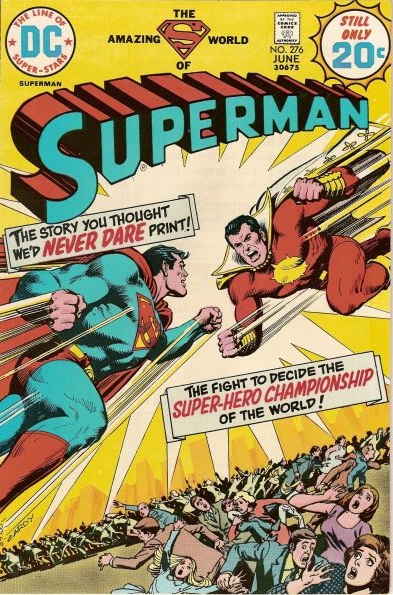
Geek Punditry #134: Three Wishes For the DC Universe

I’m sitting here two weeks after the debut of James Gunn’s Superman movie and I’m quite happy. As of the time I write this, it’s sitting at almost $260 million domestically and nearly $433 million worldwide, which in this post-COVID era is nothing to sneeze at. It’s already the top-grossing superhero movie of the year so far, and most importantly, it’s been embraced by the public. The critics love it, the fans love it, and people are still talking about it two weeks later, something you can’t really say for some of the other summer movies like Jurassic World: Rebirth. Lines like “Maybe being kind is the real punk rock” have achieved meme status, and not in a mocking way like that CEO at the Coldplay concert. Most importantly, it has gotten people reenergized. Sure, there are some people who don’t like it, and it’s fair to not like something, but if the REASON you don’t like something is because Superman believes in goodness, has a sense of humor, or wants to protect the life of even the smallest creature, then I’ll be frank: your opinion does not matter to me.

My face when I think about the bit with the squirrel.

With this movie doing well, eyes are now turning to the rest of James Gunn’s new DC Universe. When he and producer Peter Safran took over as co-heads of DC Studios a few years ago, they announced a slew of projects, but Gunn has also been very clear that he’s not going to move forward with anything until the script is ready, so several of those projects are on the back burner. The ones that are definitely on the schedule are – in order of release – season two of the Peacemaker TV series next month, the Lanterns series for early next year, the new Supergirl movie next summer, and a Clayface movie next fall. (Clayface, by the way, is the most indicative of the fact that Gunn is not married to a roadmap – it was not part of the initial announcement and Gunn said the character wasn’t even on the radar for a solo film, but writer Mike Flanagan pitched him a story that was so good they put it on the fast track.)

The hero we didn’t know we needed.

Movies in the works but not yet on the schedule are a Brave and the Bold movie (featuring Batman and the Damian Wayne Robin), The Authority, Swamp Thing, and Sgt. Rock. On TV, they’re working on live-action shows including Paradise Island, Waller, and Booster Gold, and in animation, they’re working on Blue Beetle, Mr. Miracle, and a second season of Creature Commandos. Other things have been tossed around, including a movie featuring Bane and Deathstroke, and Supergirl screenwriter Ana Nogueira has reportedly turned in a script for a Teen Titans movie AND has been hired to do a script for Wonder Woman. Following the success of Superman, rumors are flying about shows starring Edi Gathegi’s Mr. Terrific and Skyler Gisando as Jimmy Olsen. There are other series and films in the works as well, but the ones I haven’t mentioned thus far (such as the sequel to Matt Reeves’ The Batman or an animated Starfire series for children) are mostly intended to be part of DC Studios’ “Elseworlds” imprint and not part of the DCU proper. 

So obviously, there’s a LOT to look forward to in the next several years. But what is it I always say about fans? What do fans want above all else?

That’s right. Fans want MORE.

So today I want to talk about my Three Wishes for the new DCU. What are three projects that I would love to see? If I had a chance to sit down with James Gunn and convince him to add three of my dream projects to the schedule, what would they be? Let’s do one live-action series, one animated series, and one movie, just to cover all the bases that this DCU is touching. I’m also going to try to incorporate some themes or genres that the other projects haven’t gotten around to yet. 

Live action series: Legion of Super-Heroes

Call the casting department and tell them to put a pot of coffee on.

My love for the Legion of Super-Heroes is no secret. I think it’s one of DC’s greatest franchises: the heroes of the 31st century, who have modeled themselves after the greatest heroes of our time. Dozens of heroes from different worlds, cultures, and species, allowing for any number of different characters and character dynamics. The series presents an opportunity to do science fiction and superheroes at the same time, and as Gunn has made it clear that he wants the different DC projects to each have a different feeling, this would fill a niche that isn’t there yet. (Okay, technically I suppose the Lanterns TV series will have a science fiction element to it, but from all the descriptions it seems like that show is going to be more of a military mystery/drama. That’s great, but I want a real space opera.) 

But this would have to be a TV series. The Legion of Super-Heroes is, frankly, just too big for a movie. There are literally dozens of characters in the group, and even if you were to narrow down the focus to a core group of, say, seven or eight, you need time to explore who each of them are and how they relate to one another. You couldn’t do justice to the Legion in two hours. 

The next thing is that I believe that the Legion is strongest as a spin-off of Superman. It’s how the characters were first introduced back in 1958, as kids who loved the legend of Clark Kent and travelled back in time to recruit him to join their club when he was just a teenager. It creates something of a stable time loop: the Legion models itself after Superman, but the Legion also taught Clark Kent to be a superhero in the first place. So I would use the early 2000s Legion of Super-Heroes animated series as my inspiration, casting someone to play a teenage Clark Kent and having him as a regular member of the cast. This would also open the door to have David Corenswet do a cameo as adult Clark at some point, probably in the last episode. 

I don’t know if Corenswet is a jewelry guy, but I think this ring would look pretty good on him.

What’s more, although the Legion is set 1000 years in the future, that doesn’t mean that it can’t still be used to establish things for the contemporary stories. Alien races like the Khund or the Dominators, who could easily show up in other DC projects, could be introduced there. And the series could be used to give sneak peaks as to what will happen in the other movies and shows. (“Hey, why does the woman in this old photo have a golden lasso?” “Don’t worry, Clark, you’ll find out soon enough.”) 

Is the reason I’m suggesting this series just because I love the Legion and I want other people to love it too? I’m not gonna lie, that’s probably at least 75 percent of my reasoning here. But that doesn’t make it a bad idea. I think this show could be great. 

Animated Series: Deadman

With Clayface playing in the realm of body horror (it has been compared, tonally, to David Cronenberg’s The Fly), the supernatural corner of the DC Universe is waiting for some exploration. Deadman is the answer. If you’re unfamiliar with the character, Boston Brand was a circus performer who was murdered in the middle of his act. Rather than going to the great beyond, though, he was sent back to Earth as a ghost to solve his own murder. With the ability to possess the bodies of other people, Deadman has had a long and bizarre career as a superhero that most people (even in the DC Universe) don’t even know exists. 

And you thought YOUR Monday sucked.

By the very nature of who the character is, Deadman has been used plenty of times to delve into the world of horror stories. He is, of course, a literal ghost, so haunted houses and poltergeists and all manner of demonic foes are par for the course for him. And he also regularly runs across other DC characters who are mired in this world of magic and the supernatural, like the Spectre, the Phantom Stranger, and Zatanna, giving a series of this nature an opportunity to open up the world even further.

As for why it would be best as an animated project – there’s a certain creative freedom in animation. It allows you to do things that would stretch credulity in live action, even with the best special effects. Have you ever noticed that the animated Star Trek series are far more likely to bring in characters who are not, strictly, humanoid? Creatures with three arms or body types that you could never fit a human actor into? That’s because in animation you don’t have to pay for huge animatronics, make actors spend days in the makeup chair applying heavy or even painful prosthetics, or worry about sketchy CGI that just doesn’t mesh against the human actors standing in front of a green screen. Animation would give them the freedom to really explore the afterlife, plunge into the depths of Hell, or put Deadman through extreme transformations like the nearly-skeletal Kelley Jones version of the character without having to torture the performers. 

Very few actresses would be willing to have their torso removed to do this scene justice.

It could be groundbreaking in another sense as well. Animation is finally starting to crack free from the decades-old bias that it’s only intended for children, but it’s still rare to see adult-oriented animated projects that aren’t comedies. Even Creature Commandos, which was basically an action movie with monsters, leaned heavily on dark humor. Any humor in Deadman would likely come from Boston himself cracking wise, as the situations he plunges into would be deadly serious…no pun intended. 

Movie: Firestorm

With page-rippin’ power!
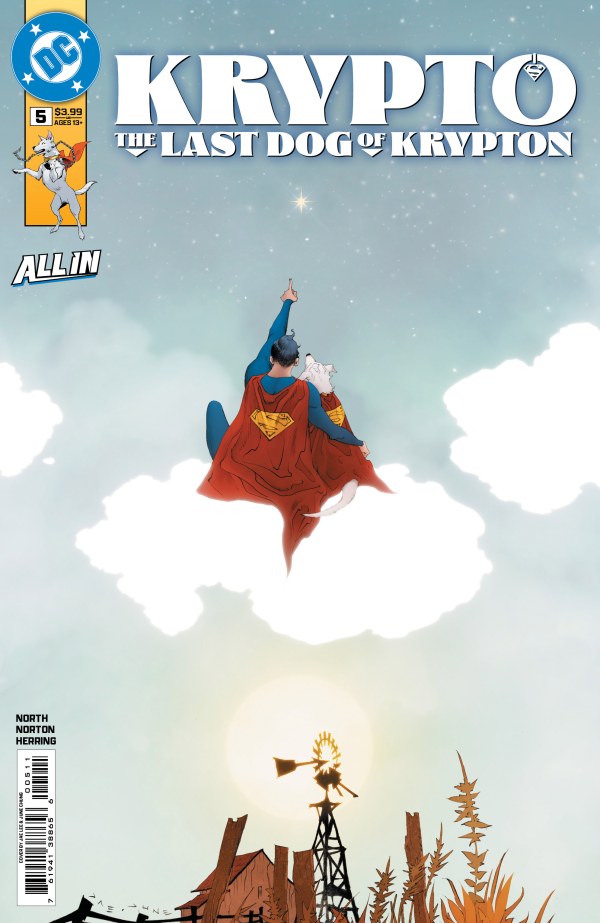
Firestorm is one of DC’s perennial B-listers. The character inspires incredible amounts of devotion from his fans, but the NUMBER of fans just isn’t big enough to crack him into the mainstream. This could finally be a chance to fix that. Although several characters over the years have shared the name and the powers, the crux is usually that two people (originally scientist Martin Stein and high school student Ronnie Raymond) are fused into a single super-powerful being as the result of a nuclear accident. One of the two – Stein in the original – is dormant in the fused Firestorm persona, only able to offer advice to the one who’s steering the ship. This allows for a sort of “odd couple” dynamic, putting together two characters who don’t necessarily belong together and forcing them to literally work as one for the greater good. 

Writer Gerry Conway, who co-created the character, had done a long run on Marvel’s Spider-Man and was attempting to recreate the dynamic of a younger hero, which DC didn’t really have at the time. Their heroes were all older, the younger ones were all sidekicks, so putting a teenager in the driver’s seat was different for them, and the character quickly became beloved, even becoming the youngest person to ever join the Justice League (at the time at least). But after 100 issues of his solo series, the doors were shuttered way back in 1990 and, despite several strong attempts to give him a resurgence, he’s struggled to really become big again ever since.

For the movie, I would make Martin Stein sort of the “man in the chair,” the person inadvertently responsible for Firestorm, but not part of Firestorm himself. I’d keep the part of Ronnie’s origin where he gets suckered into joining a group of “protestors” to impress a girl, only to find out that they’re actually eco-terrorists. But when the accident happens, rather than fuse with Stein, I’d have him fuse with the second Firestorm, Jason Rusch, who I would make Stein’s lab assistant. 

“Fusion Confusion” was my nickname when I worked at that restaurant making sushi burritos.

The dynamic we’d have here would be Jason believing Ronnie’s a dumb jock while Ronnie sees Jason as a stuck-up egghead, and the two would slowly and begrudgingly learn to respect each other – the old “together we are more than the sum of our parts” routine. The eco-terrorists would be linked to a bigger bad, of course, who is targeting different scientific institutions in the DCU such as S.T.A.R.Labs, and giving us an opportunity to include other science-based heroes such as Captain Atom, Hourman, Stargirl, or the Flash – who has been oddly absent from all official conversation about the current DCU. There’d even be a clear opportunity to bring in Edi Gathegi as Mr. Terrific again, because when you have a science problem, who better to call than the smartest man in the world? I kind of like the idea of Stein being one of Mr. Terrific’s former professors who now finds himself running to his old student for help. 

Okay, James Gunn, the ball is in your court now. You’re doing a great job so far, don’t get me wrong, but there’s always room to bring in even more goodness. Here are my suggestions. 

Now I’ve got to get back to finishing up season one of Peacemaker before season two drops. 

Blake M. Petit is a writer, teacher, and dad from Ama, Louisiana. His most recent writing project is the superhero adventure series Other People’s Heroes: Little Stars, volume one of which is now available on Amazon. You can subscribe to his newsletter by clicking right here. He’s also started putting his LitReel videos on TikTok. Come back to him in a month, he’ll probably have three totally different suggestions. 

Year of Superman Week 29: Parody Week!
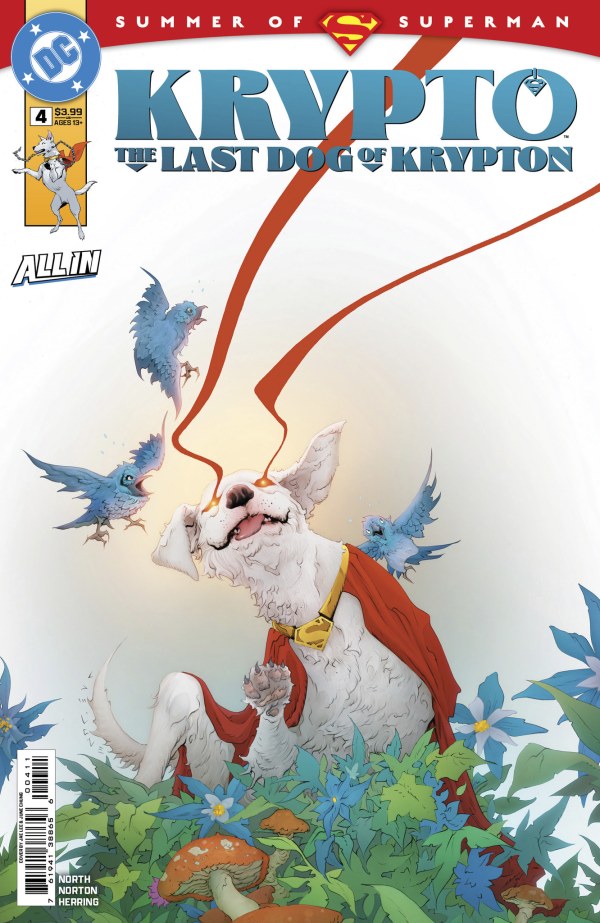
With the movie (you know which one) so fresh in my mind, I thought quite a bit about what to do this week. I don’t know what Superman stories would be best to follow it. Certainly, anything that would be capable of TOPPING it is likely something I’ve already read. So rather than any of that, I decided to go in the opposite direction: parody. Parody is a classic format for stories, something that’s been around almost as long as storytelling itself. I’m pretty sure that after the first caveman, Ug, finished regaling his tribe with the story of how he singlehandedly took down a wooly mammoth, when he walked away his buddy Og stood up and started doing a mocking impression of Ug getting impaled by a tusk.

In the nearly 90 years of his existence, Superman has been parodied many times, and we’re going to look at those this week. We’ll look at his parodies from comics and magazines like Mad and Cracked, check out spoofs from shows like Saturday Night Live, and even delve into the times that the Looney Tunes did their own take on the Man of Steel. So this week, friends, let’s laugh.

And as always, you can check out earlier blogs in the Year of Superman Archive!

Wed., July 16

Comics: Mad #4, What The–?! #2

Notes: Everybody has heard of Mad Magazine, but if you’re not a hardcore comic book nerd like myself you may not know that Mad actually started out as a comic, published by EC Comics, the same company responsible for classics like Tales From the Crypt and Weird Science. When the anti-comic furor of the 50s led to the creation of the Comics Code of America, an organization that at times seemed intended solely to crush EC out of existence, they pivoted and made Mad a magazine instead, because evidently making the page size larger and switching to black-and-white was enough to exempt it from the Code. I didn’t say it made sense, people.

But anyway, the fourth issue of Mad (the comic book) brought us one of the first Superman parodies in print: “Superduperman” by Harvey Kurtzman and Wally Wood. Here we meet Clark Bent, assistant copy boy at the Daily Dirt, a pathetic creature who has spent the last ten years saving up his meager salary (seventy-five cents and a good bus token) in the hopes of buying a pearl necklace for “girl reporter” Lois Pain. The city of Cosmopolis is being plagued by an “Unknown Monster,” and Clark dives into a phone booth (then a second because the first was occupied) to change into Superduperman. To his shock, he discovers that the “Monster” is, in fact, Captain Marbles, who has gone rogue and decided he’s just in it for the money.

A few interesting things here: Mad #4 was published in 1953, just a few months before Fawcett Comics would throw in the towel in their years-long court battle against National Comics over their claim that Captain Marvel infringed on their Superman copyright. So there’s a meta level to having Superduperman slug it out with Captain Marbles that I find pretty amusing, but I have to wonder if the average kid in 1953 would have gotten that joke. The depiction of “Clark Bent” is pretty striking here, taking the “meek, mild” Clark Kent that we all know and love and making him even more pathetic, making Lois a cold, cruel harpy, and making Superduperman kind of a dunce. 

I think the biggest draw is Wally Wood’s artwork. He was one of the greatest comedic artists of the time, probably of ALL time, and the level of energy and fun he puts on every page is outstanding. The man was a giant and I’m so glad I included this story in the Year of Superman.

In 1988, Marvel Comics decided to get back into the parody game with What The–?!, the Marvel Mag of Mirth and Mayhem. I was 10 years old when this series started, and it was pretty much tailor-made for me. The second issue, though, was something that was actually more special than I realized at the time: Superbman versus the Fantastical Four in “My Badguy, My Enemy!” by none other than John Byrne. 

In 1988, Byrne was wrapping up his time on Superman for DC and returning to Marvel, where had previously done a legendary run on Fantastic Four, so I suppose the idea of having him parody his two greatest achievements in comics to date was a natural match. Byrne wrote and drew this story (with inks by another Superman laureate, Jerry Ordway), which has reporters Park Bench and Nosy Dame travel to New York from their home in Metropopolopolis to report on the newest bankruptcy of the Fantastical Four. When the Human Scorch carelessly causes Nosey’s hairdo to wilt, Superbman jumps into action.

I loved this incredibly goofy story as a kid and, as an adult, I appreciate it on an entirely different level. Byrne was doing something that I admire the hell out of: making fun of himself and having a grand time doing it. The story makes several references to the way Superman was changed in Byrne’s own reboot, including comments about how he’s not as powerful as he was previously, how he’s not as square as he used to be, and how his cape is no longer indestructible. The last one led to a joke that 10-year-old me thought was the funniest thing he’d ever read and, if I’m being honest, adult me still thinks is pretty hilarious:

Even a parody of Ben Grimm still sounds like Ben Grimm, and I think that’s beautiful.

But as the fight between our heroes rages, off to the side there’s a battle of wits between Doctor Bloom, sworn enemy of the Fantastical Four, and Rex Ruthless, sworn enemy of Superbman (the Keeper of the Comics Code actually has to step in at one point to tell them to cut down on the swearing). The two super-geniuses begin arguing over their plots, with Bloom revealing that he faked the FF’s bankruptcy to lure Park Bent to report on it, having deduced that Bent was Superbman. Ruthless finds this HILARIOUS, in a page that I now recognize as being the real pearl of this story. He gives Bloom a lecture on how impossible that would be, a page where Byrne is parodying his own treatment of Lex Luthor from Superman (Vol. 2) #2, in which Luthor rejected the same line of logic connecting Clark and Superman. Byrne even gets into making jokes about his own predilections in panel layout here, stuff that as a kid I didn’t catch on to at all. (I wasn’t reading Superman comics yet at that point, and even if I had been I don’t know if I would have caught on to all the nuances.)

But perhaps the greatest inside joke in the comic is the way Byrne draws Superbman’s s-shield. I remember reading an introduction Byrne once wrote for Man of Steel in which he discussed his history with Superman and how, as a child, he didn’t realize the symbol was supposed to be an “s.” To him, he said, the shapes looked like a pair of fish swimming at one another. So when he got the chance to do a parody, that’s what he drew. That’s a joke that I bet almost NOBODY got – I certainly didn’t get it at the time – but it’s one of my favorites now.

I wish Byrne had done more comedy comics like this one. He had a real flair for it. 

Thur. July 17

Magazines: Mad #208, Cracked #160

Notes: When I was younger I read Mad and Cracked pretty regularly, although I drifted away as I got older. This happened with a lot of stuff, but unlike other things I dropped as being “for kids” like Disney and Archie comics, I never really went back to Mad on a regular basis. At the risk of sounding pretentious, I think my sense of humor just grew in a different direction than those publications specialize in. Still, I’ve got a lot of them from when I was younger and I’ve tracked down others over the years that either featured or reprinted specific Superman comics – plus there are some available (you know where this is going) on the DC Universe Infinite app. So during Parody Week, I’m going to try to go through some of the ones that I’ve got in roughly the order of publication. 

First up is Mad #208, which recycled the title “Superduperman” for its parody of the first Christopher Reeve movie. I can’t find a writer credit, oddly enough, but Mort Drucker’s signature appears on the first page and – let’s be frank – it would be pretty clear it was his art even without it. Drucker was a phenomenal caricaturist, the characters in his Mad parodies immediately recognizable as the celebrities he was spoofing, even when exaggerating or mocking their features. He even nails the design of Glenn Ford and Phillis Thaxter as Jonathan and Martha Kent in their brief appearance. 

I’m not going to bother to recap the story here, because as a parody it’s a fairly by-the-beat retelling of the story of the movie. How well, then, does it succeed as a comedy? 

Eeeeeeeh.

I think this is why I never quite got back to Mad once I got older. The comedy in many of these stories is dependent on straw man jokes and easy targets: a crack about how improbable it is that Lois can afford such an opulent apartment on a reporter’s salary, gags about how outrageously out-of-proportion Marlon Brando’s paycheck for this movie was, and of course, a joke about the glasses. Probably the best joke in the entire parody comes at the very end, after Superduperman spins time back to save “Lotus Lain.” As in the movie, Supes gets a vision of his father reminding him he’s not supposed to interfere with human history. In this version, though, there’s a second voice telling him to do it – it turns out to be the executives at Warner Bros. recognizing that they need Lotus alive for Superduperman II.

The same month that Mad’s parody came out, rival magazine Cracked gave us “Suped-Upman: The Satire.” Once again, there’s no credited creative team, but the artwork to me looks a hell of a lot like the great John Severin, who did stories for Cracked for decades. 

The Cracked story isn’t specifically parodying the movie, but rather just giving us a goofy look at a Superman-type character, and honestly, I think it’s better for it. Freed from trying to draw the actors, Severin’s characters have a life and expressiveness where other parodies sometimes fall short. Cluck Clone doesn’t leave his parents’ farm to become a reporter, but rather gets a job at a delicatessen called the Deli Planet where he meets a lovely girl named Lewis Paine – whose safety takes top priority over gunshot victims when Suped-Upman goes into action a few pages later.

After reading just these two parodies, I feel like I’m already starting to gel a sort of theory of satire, at least how I see it. Of the two, the Cracked story is honestly much funnier and a lot of fun to read, and I think the reason for that is because whoever wrote it wasn’t simply retelling the story of the movie. He took the broad strokes of the Superman legend, tweaked them in a humorous way, and then told his own story rather than just filling in the blanks of the existing plotline like a complicated Mad Lib. Cracked is doing its own thing, and it’s a better story for it.

And you know, the same is true for all the great satires out there. Compare something like Mel Brooks’s Spaceballs to a Friedberg/Seltzer movie such as Epic Movie. Brooks simply uses the CONCEPTS of science fiction (especially, but not exclusively Star Wars) to tell a funny story, whereas Friedberg and Seltzer rip out chunks of existing stories and patch them together like some horrific Frankenquilt that seems to think that simply REFERRING to another movie is enough to qualify as a joke. All of this is building my brain up to what I think I’m going to refer to as Petit’s Law of Satire: Satire is funnier in broad strokes than in specifics. The two stories I read yesterday, from Mad #4 and What The–?! #2, were both really funny, and neither of them was parodying a specific story. The Cracked satire is funnier than the Mad by-the-beat parody. 

I think I’m on to something here.

Let’s see if it holds up over the next few days. 

Comic Books: New Gods Vol. 5 #7 (Guest Appearance), Green Lantern Vol. 8 #23 (Guest Appearance, Conner Kent)

Fri., July 18

Short Films: Super-Rabbit (1943), Stupor Duck (1956), Superior Duck (1996)

Notes: Today I decided to peek in on the second greatest collection of characters in the Warner Bros. catalogue, after the DC superheroes. I’m talking, of course, of the Looney Tunes. I have a deep, abiding love of the likes of Bugs and Daffy, and as each of those stalwarts took their turns poking fun at Superman, I wanted to include them here in Parody Week, starting with Bugs Bunny in Super-Rabbit.

Directed by Chuck Jones, this cartoon starts off with a spoof of the Flesicher shorts, parodying the old “faster than a speeding bullet” intro before bringing us to Super-Rabbit’s origin. Bugs Bunny is a lab animal in this one, given some super-powered carrots that give him incredible powers. He decides the best way to use these powers is to head to Texas and take on a hunter called Cottontail Smith who has dedicated himself to wiping out all rabbits. Bugs does his usual number on Smith and his horse until a midair mishap causes him to lose his power carrots, which Smith and the horse gobble them up. Just before he’s about to be pummeled, Bugs declares, “This looks like a job for a REAL Superman!” Then, in a bit of standard-for-the-time patriotism, he ducks into a phone booth, joins the army, and marches off in the direction of a road sign that inexplicably points to both Berlin AND Tokyo. 

The superhero stuff in this cartoon is almost incidental. The opening sequence is where most of the tropes come in, with the Fleischer-specific parody, but once Bugs gets to Texas and comes to loggerheads with Smith the antics he pulls off are pretty standard for him. Could catching a cannonball and using it to play an impromptu game of basketball count as a feat of super-strength? Sure, but this is also BUGS BUNNY we’re talking about, a cosmic trickster with the ability to warp reality in any manner he deems the most amusing at the time, so I’m not convinced that the magic carrots are strictly necessary here. The only parts of the cartoon that seem specifically dedicated to a Superman parody, other than Bugs’s outfit, are the bits where he’s flying. That does, of course, give us the best joke in the entire short, as Bugs flies into the stratosphere and whips past a horse who is astonished to see a rabbit flying at 30,000 feet.

Think about that for a minute.

Anyway, it’s a good cartoon. Perhaps not the greatest parody in history, but it IS the cartoon that led to the awesome Super-Rabbit figure that adorns one of my Superman shelves, and it’s worth it for that alone. 

Next up, in 1956 Robert McKimson drafted Daffy Duck for another poke at the man of steel in Stupor Duck. This one is a much more direct parody of Superman than Super-Rabbit, beginning with Daffy in disguise as “mild-mannered reporter Cluck Trent.” Daffy overhears his editor watching TV but, true to form, mistakes the broadcast for the braggadocio of a supervillain and sets out to thwart him, only to get thwarted himself over and over. 

Bugs is a classic character, but in terms of parody, I think Daffy is actually more effective. A lot of the humor in this short comes from Daffy making a fool of himself in ways that just wouldn’t happen to Bugs. He saves a building from collapsing, for example, only to wind up getting punched out by the head of the demolition crew that was TRYING to demolish it. He saves a “sinking” ship and gets blasted by the cannon of the submarine he just pulled out of the water. It’s great, goofy stuff that is perfectly in keeping with Daffy Duck, but wouldn’t have worked with Bugs. I think I have to conclude, oddly enough, that although Super-Rabbit is a funnier cartoon, Stupor Duck is a better parody. 

Director Chuck Jones would take one more swing at superheroes more than five decades after Super-Rabbit, teaming up with Daffy for the 1996 short Superior Duck. This time out, Daffy is a sort of mashup between Superman and Duck Dodgers, setting out to save the day only to be constantly thwarted by…his narrator.

Seriously, that’s the entire cartoon. Daffy is out to do some superheroics, but the narrator (voiced by the immortal Thurl Ravenscroft) cannot get his lines right, forcing Daffy into one increasingly-preposterous situation after another. It’s a less direct Superman parody than some of the others, but they make up for it with a last-act cameo that left me in stitches. 

With Mel Blanc having left us by this point, we’re left with different voice actors, some of which work and others don’t. Frank Gorshin, TV’s Riddler, absolutely knocks it out of the park as Daffy and Foghorn Leghorn. Eric Goldberg does a good Porky and Marvin the Martian, but his Tweety left something to be desired. But this still feels like the same Chuck Jones who gave us the likes of Duck Amuck and One Froggy Evening. It’s a hoot. 

TV Episode: The Looney Tunes Show, Season 2, Episode 26: “SuperRabbit.”

Notes: But we’re not done yet! In 2011, the Cartoon Network brought us the highly-underrated cartoon The Looney Tunes Show. I loved this show – rather than simply aping the classic Looney Tunes shorts, they merged those sensibilities with a TV sitcom, casting Bugs and Daffy as roommates in a kind of Odd Couple situation, with Bugs playing the more sensible, straightlaced one to Daffy’s aimless vagabond. If I had heard the show described as such before I watched it, I probably would have dismissed it outright, but I really grew to love the series and to this day wish it had lasted longer than two seasons. 

The episode I’m focusing on was the season two finale (which, sadly, turned out to be the series finale as well), “SuperRabbit.” In this one, as Daffy starts scrounging through Bugs’s belongings looking for stuff to sell (did I mention he was a vagabond?) he comes across a strange crystal carrot. Bugs tries to divert Daffy’s attention from the carrot with a tale of his “true” origins. He isn’t REALLY Bugs Bunny, he claims, but an alien from the planet Crypton. (With a “C.” Because Daffy is WAAAAY too smart to fall for Bugs ripping off Superman’s origin by spelling it with a “K”.”) From there, we actually get an adventure of Bugs as SuperRabbit facing off against some of his greatest enemies: Brainiac (aka Marvin the Martian)! Lex Luthor! (Elmer Fudd, naturally)! And General Zod (Daffy himself)!

I hate to say it, but this was actually one of the weaker episodes of The Looney Tunes Show. The strength of the cartoon came from putting Bugs and Daffy into very sitcom-esque tropes and then spinning them wildly out of control. This episode mostly avoids that, electing instead to do a full-episode parody of what could have been a fairly standard Superman story with a few added jokes (such as Elmer’s Lex Luthor telling people “I’m hunting SuperWabbits”). It’s an okay parody, but it’s nowhere near the level of entertainment that this show was usually capable of, and it makes me sad that the show ended on this note.  

Sat. July 19

Magazines: Mad #225, Cracked #183

Notes: Mad returned to the world of “Superduperman” with a parody of Superman II, with Mort Drucker once again providing artwork and Frank Jacobs writing it. For all I know, Jacobs wrote the first one as well, but as I said a couple of days ago, I couldn’t find a credit for that one. It certainly reads like it was written by the same author. Like the first one, “Superduperman II” is, in essence, a beat-for-beat retelling of the plot of the movie with added puns. Some of them, of course, land better than others. We have a very standard formula for a Mad parody: Jacobs and Drucker essentially break the movie down into single-panel moments; in each panel, the characters make wry observations about the situation they are currently in; and it ends with a punchline. Once you get used to it, the humor comes across as very staccato, with a rhythm that’s predictable, but not in a soothing way, so it’s not surprising that the funniest moments in the story are all things that are original to the comic. There’s a funny bit at the beginning, for example, where they mock the movie for opening up with flashbacks to the first film. Later, during the fight with the Phantom Zone criminals, Rocky Balboa randomly shows up for a panel to punch the Non parody, telling Superduperman that he’s there to get in shape for his own upcoming sequel. The funniest wholly original gag comes in a couplet where Superduperman is rushing off to Paris to save Lotus Lain, only to have to whip around because he forgot France is eastward.

Really effective comedy is based on surprise, and I think that’s pretty indicative of why I fell out of love with Mad parodies as I got older – they’re all pretty much the same, pretty predictable. Even at this point, in 1981, the good parts of the magazine were the things that didn’t parody a specific story, like Don Martin’s strips, Sergio Aragones’ marginals, and of course, “Spy Vs. Spy.”

Cracked, meanwhile, again chose not to do a direct parody of Superman II, instead choosing to run a three-page gag piece called “What Christopher Reeve (That Super Man) Will Be Like When He Gets Old.” The joke here is that, with Superman II being a huge hit, they assumed that they would go on to make dozens and dozens of sequels for decades to come, and the comic jokes about what an “old” Superman would be like: his powers being less impressive, using his strength to break a pound of spaghetti rather than bend steel, for example. The jokes were fair for the time – this was the era where movie sequels were just starting to get out of hand, and once popular movie franchise hit a certain point, there was an assumption that it would go on forever. (Remember the bit in Back to the Future Part II where Marty cringes from the holographic shark advertising Jaws 19, or the quick joke in Spaceballs in which a movie reviewer is about to talk about Rocky 5,000?) The problem here is obvious, and not at all the fault of anybody who worked on this comic: no matter how good the jokes may have seemed at the time, given what happened to Christopher Reeve, they’re just not funny anymore.

I want to note, briefly, that I’m going to try to cover as many Superman parodies as I can before this week is up, but that number is dependent on what’s actually available to me in my personal collection or the DC app, and also on my ability to locate them. I’ve scrouged up quite a few, but that doesn’t mean that I’ve identified them all. I bring that up because if Cracked did parodies of movies past Superman II, I either don’t have them or can’t find them. From here on out, the remaining print parodies on my list are all Mad.

Mad #243, for example, teamed Drucker with writer Stan Hart for “Stuporman ZZZ.” Changing up the writer didn’t change up the formula, though – it’s still your average beat-for-beat Mad parody. Each panel has that same ol’ rhythm, the same ol’ cadence, the same ol’ delivery. And once again, the funniest part is the stuff that’s NOT directly taken from the film: this time around, it’s a sequence after the “Kraptonite” makes Stuporman go bad, where he demonstrates this by using a joy buzzer to shake the Pope’s hand, giving a whoopee cushion to the UN Secretary-General, and mooning Ronald and Nancy Reagan at the White House. Reading these stories actually makes me feel sorry for Mort Drucker – he’s such a fantastic cartoonist and caricaturist, and I wish he’d been given better material to illustrate. Even the two-page “Don Martin’s Superman III Outtakes” strip is funnier than the main story. 

I’m starting to get a little burned out on the Mad formula now, to the point where I’m looking forward to the point where I get to the parodies that came out after I fell off as a reader. Hopefully by that point, they’ll have discovered a second way to tell a joke. 

Comics: Superman Unlimited #3, Krypto: The Last Dog of Krypton #2, Batman/Superman: World’s Finest #41

Notes: It ain’t all parodies, though, friends. There are still new Superman comics this week, and I’m getting into those today too, starting with Dan Slott and Rafael Albuqueque’s Superman Unlimited #3. Told largely through Krypto’s eyes, in this issue we see our best boy catch some bad guys, get taken for a walk by Jon, and then catch scent of an old foe of Superman’s that he decides to track down.

At first, the story seems like a charming but inconsequential chapter of the Unlimited storyline. The first two issues largely dealt with the enormous Kryptonite meteor that fell to Earth and the havoc it’s wreaking everywhere, but that plotline doesn’t show up here for quite some time. The Krypto story is lovely, and there’s a great scene where Lois and Clark ask Jon what exactly he’s doing with himself these days (a question a lot of the readers are asking too – the character has been painfully aimless for entirely too long, and I’m not shy about laying the blame for that on the stupid age-up foisted on him during the Bendis run). In the last third of the book, though, there’s a nice reveal where we come to understand how the Krypto story is fitting in. Some new wrinkles to the Kryptonite story are added and a new player is added to the game, and that makes this book – which was already fun to read – feel much more significant. 

Ryan North and Mike Norton are back for Krypto: The Last Dog of Krypton #2. I have no doubt that this miniseries owes its existence to the fact that Krypto has such a big role in the movie, and I honestly wouldn’t be surprised if DC didn’t even have any intention of publishing a Krypto series until after he showed up in the trailer last December and got such a huge response. If that’s true, then that trailer has given us one of the best comics of the year. 

In this second issue, Krypto has been taken in by – of all people – a young Lex Luthor. Having left his original home of Smallville, Lex is living with relatives he clearly despises and for some reason, decides to take in this stray dog he’s found. The ambition that will mark the adult Lex Luthor is already there, but in this early incarnation, he’s struggling with his morality. This would be a fascinating book even if it weren’t for Krypto. We’re seeing the kind of internal conflict that kind of determines who a character will eventually be – if given the chance for greatness at the expense of having to do something horrific, will they do it? Adult Lex, we know, wouldn’t hesitate, but seeing him at a young enough developmental stage where there’s still a last lingering shred of conscience is fascinating.

People who pick up this comic expecting to see the bounding, joyful Krypto of the movie might be a little put off, but if that’s not all you’re looking for, this comic is really phenomenal. 

Finally, in Batman/Superman: World’s Finest #41, we start with Batman, Robin, and Superman inexplicably transported to Bizarro World. Bizarro World is actually kind of an appropriate element to bring in here in Parody Week, because bad Bizarro stories are kind of like a bad Mad satire: by-the-book tellings of an oaf doing things backwards. The good ones find new twists to put on it, and this one is pretty good. We start off with Robin as the point of view character, which is nice, as he’s never been to Bizarro World before and the sheer panic he goes through uses a normally unflappable character to show just how crazy it is. Then we get to the twist – there’s some sort of pandemic going through the Bizarros that warps their brains and makes them the worst thing a Bizarro can be: normal. Waid finds some fun ways to play with the Bizarro’s backwards nature in this issue, promising a fun story arc. 

Sun. July 20

Comedy Sketches: “Bicycle Repairman” from Monty Python’s Flying Circus Season One, Episode Three, Assorted Saturday Night Live sketches

Notes: Okay, so we’ve taken a look at Superman parodies in comics and cartoons, but what about live action? These, I think, can give us a broader view of how pop culture views the Man of Steel, at least at the time each parody was made. We’ll start off with Monty Python’s “Bicycle Repairman” sketch from 1969. In this bit, we peek in on an inverted world in which everyone is Superman. At least, everyone wears a Superman costume and has padded muscles – we never actually witness any of these Supermen doing anything super. But when trouble happens, in the form of Terry Jones Superman falling off his bicycle, another Superman (Michael Palin) makes a quick change and rushes to save the day as…BICYCLE REPAIRMAN!

The Pythons, of course, were masters of surreal comedy. It doesn’t matter if the sketch makes no logical sense, it’s about the gags and about the underlying subversion that they’re sneaking in. And while this particular sketch doesn’t make any grand political statements, it IS interesting in what it shows us about how superheroes were viewed in 1969. First of all, there’s no particular reason for this sketch to be about Superman. They could have put virtually any superhero costume on the cast and the joke would have been exactly the same. But in 1969, Superman was viewed as the default superhero among most people. It’s who you automatically thought of when you said the word, and so that’s what they went with.

The sketch is also intriguing in how it reflects on one other non-Superman element. In the bit where Bicycle Repairman is (spoiler) repairing the bicycle, we get treated to nonsensical “sound effects” such as “Clink!”, “Inflate!” and “Alter Saddle!” They’re done in the style of the “Bow! Bam!” shots from the 1966 Batman TV show. Between these two things, I think it gives us a fairly accurate depiction of just how the general public viewed superheroes at the end of the 60s.

The rest of the sketches I’ve found all come from Saturday Night Live, although thankfully, they’re sometimes decades apart, so I think that gives us an interesting overview of the topic. We’re starting with the “Superhero Party” sketch from 1979, starring Margot Kidder herself as Lois Lane and Bill Murray as Superman, hosting their first party together. 

We get an all-star roundup of comedians playing comic book characters in this one: Dan Akroyd as the Flash, John Belushi as the Hulk (who rotates being Grand Marshall of the St. Patrick’s Day Parade with Green Lantern) and Jane Curtain popping in as a delightfully catty Lana Lang who tries to convince Lois that Clark Kent is secretly the Flash (apparently Superman still hasn’t told her his secret identity, despite having been married for some time). Spider-Man, Spider-Woman, and the Thing all show up in off-the-rack costumes that conceal the presumed extras wearing them. The gem here is Garrett Morris as Ant-Man, a character who, at the time, was as D-list as you could get. I’m sure most of the audience watching this when it aired in 1979 assumed it was a fake character the SNL writers made up. Murray ducks out at one point and returns as “Clark Kent,” where Lois starts confiding to her old pal that life with Superman has become stiflingly dull. What really crushes his spirit, though, is finding out that Lois used to date the Hulk. 

This sketch is full of hilarious, little moments. Murray prances around, “flying” from one spot in the room to another. Lois briefly admonishes him to allow her to open a housewarming gift because “not all of us have X-Ray vision,” and so forth. Unlike the Monty Python example, which just uses a surface level awareness of Superman, the writers of this sketch pull some deep cuts that I’m sure would zip past a lot of people, especially the Ant-Man reference (which nonetheless was so memorable that it got Morris a cameo in the first Ant-Man movie). The ending of the sketch, I confess, is a little weak, but at least it HAS an ending, which is more than you can say for most SNL segments of the past 20 years or so.

In 1985, Christopher Reeve hosted the show. Rather than actually parody Superman himself, though, they took the clever approach of telling the story of the “Superman Auditions.” Jim Belushi plays Richard Donner, auditioning the last three potential actors for the role of his Superman movie, including (of course) Christopher Reeve as himself. The three of them read sides opposite Donner’s assistant (Julia Louis-Dreyfuss). When they run the scene where Clark stops a mugger, Belushi suddenly fires a gun at Reeve. He’s angry when the bullet, rather than bouncing off his chest harmlessly, keeps bouncing off his chin and teeth and breaking windows. Reeve turns out to be at a serious disadvantage compared to the other two auditioners, one of whom catches the bullet in his teeth and the other of which is promptly shot dead. 

The concept is so utterly absurd that it’s actually kind of delightful, and while nothing about it makes the slightest bit of sense, I keep laughing every time I see it. In terms of mannerisms, Reeve plays his Superman lines just the way he always does, but he keeps bumbling the use of his authentic super powers in a way that seems appropriate for his Clark Kent. And this time the punchline at the end of the sketch lands nicely. 

The next sketch is VERY much of its time, “Superman’s Funeral” from 1992. As I mentioned waaaay back when I did my reread of the Death of Superman for this blog, it was big news – so big that it even inspired an SNL sketch. You have to understand, the “Superhero Party” and “Superman Auditions” sketches were 100 percent done just because they had Kidder and Reeve hosting the show, and when that happens, they tend to play off of some of the actor’s best-known characters. But that doesn’t apply to “Superman’s Funeral.” They did this bit just because it was such an enormous part of the cultural zeitgeist at just that moment. (Also in the zeitgeist: that episode’s host, comedian Sinbad.)

Superman, as you may expect, doesn’t actually appear in this bit. We instead have Rob Schneider as Jimmy Olsen acting as host for Superman’s funeral. He talks to the other heroes as they arrive: Aquaman (David Spade), Adam Sandler (the Flash), Tim Meadows (Green Lantern). Dana Carvey’s Batman breaks down in tears during the eulogy, leading to Robin (Chris Rock) trying to comfort him on the dais. Lex Luthor (Al Franken) ultimately has to confess that he’s actually pretty happy about the whole thing. Perry White (the immortal Phil Hartman) gives a speech where he can do little more than burble “Great Caesar’s Ghost!” over and over again. Chris Farley as the Hulk (some people from Marvel Comics came by to pay their respects) hilariously switches from incoherent Hulk-speech to being an erudite speaker when he switches to his notecards. And then at the end, Jimmy rushes in and reports that the Legion of Doom is attacking the Metropolis Arena. Batman quickly mobilizes the rest of the heroes to rush off and thwart them. The surprisingly touching moment (“Let’s do it for Superman!”) is slightly undercut – in traditional SNL style – by showing Black Lightning (Sinbad) swiping food from the catering table.

Again, I’m impressed by some of the details in this bit. Tim Meadows, for instance, wears a costume that’s actually accurate to what John Stewart was wearing in the comics at the time, as opposed to the standard GL uniform. And Sinbad’s Black Lightning is incensed at the fact that nobody at the funeral seems to know who he is. (This was funnier in 1992, before the character had his own television series.) 

On the other hand, they weren’t married to modern continuity either. Lois Lane (Julia Sweeney) is confused that Clark Kent hasn’t shown up for the funeral. Given that most of the public, at this point, probably weren’t aware that Lois was in on the secret by now or that she and Clark were engaged, it’s a forgivable omission. I love this sketch. I remember watching it when it originally aired, being dumbfounded by the fact that stuff from comic books – from my comics, that I was reading – were actually being spoofed by SNL. And to be frank, this is what I consider their Golden Age, the era of Hartman, Carvey, Mike Myers and so forth. Once those guys left, the show fell off, and I’ve honestly never found it to be consistently funny ever since then. Does that make me sound like a grumpy old man? Well, what can I say? When you’re right, you’re right. 

Future Black Adam Dwayne “The Rock” Johnson took on the Man of Steel in 2000 in a sketch called “Clark Kent.” (Oddly enough, unlike the other sketches, this one doesn’t appear to be available on YouTube. We’ll have to content ourselves with a random TikTok capture of it.) In this one, after Superman zips away from the Daily Planet, the newspaper staff (featuring Molly Shannon as Lois Lane, Jimmy Fallon as Jimmy Olsen, and Chris Parnell as Perry White) begrudgingly wait for Johnson’s Clark Kent to appear, like he always does. As he walks onto the scene, his Superman costume ridiculously poking out from beneath his suit, the others all crack up over how his pathetic attempts to conceal his secret identity. 

That’s the whole joke in this sketch – the rest of the Planet staffers are painfully aware that Superman and Clark are the same person and constantly mock him behind his back. It’s a funny bit, too – while I think people don’t give the character enough credit for how he pulls off the masquerade (shown most effectively by Christopher Reeve and in the All Star Superman series), the joke is actually kind of funny at first. It does lapse into being a little mean-spirited as the three of them delight in screwing with him, not to mention some seriously dated jokes where they try to rile “Clark” by claiming “Superman” might be gay. This whole sketch is kind of endemic of SNL, though – a premise that has some potential, but that quickly spirals into jokes that tend to be more nasty than funny, then falling short at the end.

Finally, late last year, SNL dropped a sketch on YouTube that had apparently been cut for time earlier in the season, John Mulaney and Sarah Sherman as Superman and Lois, in an “alternate version” of the famous interview from the 1978 film. The bit starts off the same as the scene from the film, with Superman arriving at Lois’s apartment in the hopes of answering some of the questions the public may have about him, only to be interrupted by the sudden appearance of Lois’s heretofore unmentioned roommate Glenn (Chloe Fineman). Fineman shows up wearing an awful wig and an oversized bikini t-shirt, then stumbles into mispronouncing “Superman” as though it were a last name. From there Fineman just gets more and more debauched and inappropriate as Superman and Lois desperately attempt to conduct the interview.

I’m a big fan of John Mulaney. He’s one of the best stand-up performers in the public eye these days, he’s a GREAT voice actor (I loved him as Spider-Ham in Into the Spider-Verse), and if you’ve never seen his routine about the fun he and a friend had with a jukebox when they were kids, stop right now and watch it on YouTube. But the sketch just doesn’t work. The joke – the ONLY joke – is that Lois’s roommate is a debaucherous idiot. Not a FUNNY idiot, just an idiot. The only thing resembling humor comes towards the end when Superman tries to fly Lois away and is surprised to find her heavier than he expected. (It’s funny, you see, because she’s seen him lift a tank with his little finger.) The rest of it…John Mulaney deserves better. Hell, everyone in this sketch deserves better. I don’t know who wrote this sketch or who approved it, but the only person at SNL who was doing their job that week is the person who decided to cut it for time. 

Animated Short: She-Sick Sailors (1944)

Notes: There’s one more cartoon I forgot to cover the other day, and as I doubt I’ll have a chance before this week ends, I’m gonna squeeze it in now. Seymour Kneitel, who directed several of the Fleischer Superman shorts, had one more shot at the character in 1944, in the Popeye cartoon She-Sick Sailors. When Popeye discovers that Olive Oyl is enamored of the Superman comic books (delightfully, complete with the Fleischer Superman anthem), Bluto decides to cut in on Popeye’s action by putting on a Superman costume, shaving his beard off, and impersonating the Man of Steel. From there, we get your average Popeye short, with the sailor and Bluto sparring over Olive’s affections, but with an added Superman element.

I love this short. It’s a perfect Popeye cartoon, using the formula to a tee, but at the same time it still manages to crack jokes about Superman himself and the expectations of the character, largely informed by the cartoons that the same studio had recently finished making. And it’s all worth it all just to hear Popeye deliver the line “Listen here, Stupidman! Ya still has ta proves ta ME that you’re a better man than I am!” 

Mon., July 21

Magazines: Mad #415, Mad #468, #524

Notes: I’m jumping ahead now to 2002, and a Mad parody of a piece of Superman lore we’ve only briefly touched upon here so far: Smallville. Their “Smellville” parody (with art, once more, by the great Mort Drucker, written by Dick Debartolo), starts with the usual Mad Magazine double-page spread where we get a Mousketeer Roll Call of the cast, each giving us a brief description of who they are, their function on the show, and the only joke that the magazine seems to think the character is capable of providing.

It’s funny to notice some of the assumptions that this parody made about the show, which was still very early in its run when it was published. That opening double-paged spread, for instance, features caricatures of Margot Kidder and Teri Hatcher, each claiming they’re planning to be Lois Lane when they graduate. It feels like the writer is leaning on a prediction that Lois would eventually be revealed to be a Smallville High Student, but that of course didn’t happen. On the other hand, wondering what the impetus was behind that specific gag is more satisfying than reading the “satire” actually is. 

The parody is only five pages long and utterly bereft of story. We get assorted vignettes that show bits and pieces of scenes from the show’s first season, a running gag about “weird stuff” happening in Smellville on Tuesday nights between 9 and 10 pm (which admittedly is amusing the first time they do it, but less funny each subsequent time), and then the whole thing ends abruptly with the iconic scene of Clark lashed to a scarecrow. This reads like a parody written by someone who hasn’t watched any of Smallville except for the commercials, taking a wild shot at what probably happens. This is arguably the weakest Mad parody we’ve seen yet.

Mad took a swipe at Superman Returns in 2006. Dick Debartolo returns for this one, with art by Tom Richmond. Here we have “Spider-Sham” recruited to narrate “Stuporman Returns,” the joke being that Mad wanted a hero who actually had a movie come out in this century to get people’s attention. (I’ll concede, that’s actually pretty funny.) From there, we get a quick recap of the original Superman (or at least the parts of it that were pertinent to Superman Returns), then we land on the joke the magazine has settled on for this one: Returns is just a retread of elements from the original movie. Which honestly is pretty fair for a satire of Superman Returns, but also pretty goddamn hypocritical for Mad Magazine, which from what I can tell abandoned its quest to develop a second joke somewhere around 1987. 

There are good things to say. This one, unlike Smellville, actually has a story to it, although it is buoyed by the fact that it simply has to do the cut-and-paste, beat-by-beat recreation of the movie, so actually having a plot is no mean feat. Richmond’s art is pretty good as well, showing skills at caricature that match Drucker’s. Also, apparently Mad switched from black and white to full color some time between 2002 and 2006, which is earlier than I thought, and the color actually looks very good. 

The last two panels are probably the funniest in the comic. There’s a good joke about the show House (which was a hit at the time), and a final panel playing on the weird ambiguity of Lois’s son, complete with a visual reference to Action Comics #1, which I’m sure will make certain collectors I know scramble to find a copy of this issue once they realize it.

It’s not great. It’s not particularly funny. But at least it’s better than “Smellville.”

The last issue of Mad I’m going to subject myself to before their reboot is their Man of Steel parody from issue #524 in 2013. In “Man of Veal” (because puns don’t actually have to be funny, they just have to rhyme), we get the by-the-book recap of the feature film that it’s satirizing, as is to be expected. However, I’ve got something surprising to say:

Some of the jokes in this one are actually pretty good.

However, not enough to make up for the ones that are absolutely horrific. 

For example, there are some truly tasteless, vulgar jokes in here about Taylor Swift (and I don’t even care if you’re making fun of Taylor Swift, I care that the joke ISN’T FUNNY). Another panel about the sexual proclivities of Kryptonians (Kraptonians? Oh, who cares?) that isn’t even close to amusing enough to justify how gross it is. Digs at comic book readers that come out of nowhere. And when their Lois Lane shows up (I can’t even be bothered to flip back to see what pseudonym they used), she’s a painful straw feminist stereotype, prancing around and talking about femininity in terms that feel like they could have come from one of the Spice Girls at their most annoying. Is that what they thought Amy Adams was doing? It boggles the mind.

Despite the enthusiasm I had for Parody Week when I started, subjecting myself to one painful Mad garbagefest after another has made me start to regret the whole thing. 

Tues. July 22

Magazines: Mad Magazine Vol. 2 #15, #44

Notes: At some point in their long history, the parent company of Mad Magazine was sold to Warner Bros, which of course also owns DC Comics, and the stewardship of Mad was handed over to them. In 2018, they decided to relaunch the magazine with a new first issue, because somehow there are still people who think that’s a positive thing. I’ve actually never read an issue of the “new” Mad before today, but as I started to look for entries for Parody Week, I discovered that the current state of the magazine seems to be a mixture of classic features and reprints, which I find surprisingly sad. Maybe because I don’t have a ton of faith in the reprints they have to choose from. But after some sifting around, I managed to find a couple of issues of the current Mad on the DC app that have Superman-centric spoofs.

And may Rao have mercy on my soul.

Mad Vol. 2 #15, from 2020, has several superhero-centric reprints, including spoofs of the X-Men, Spider-Man, and others. There are a few Superman shorts in here, including a Sergio Aragones classic where Superman proves, to his chagrin, that he is in fact more powerful than a locomotive. The highlight of the issue, without question, is Harvey Kurtzman and Wally Wood’s “Bat Boy and Rubin” parody from 1953 – the same era and creative team that gave us the original “Superduperman” (which is also included as a “digital extra” in this issue). Then, just last month, issue #44 of the magazine gave us a mostly-Superman issue, with reprints of their parodies of the original Superman, Superman Returns, and Supergirl (which I didn’t read before). There are also a few new Superman strips, the best of which is “The Further Adventures of That Guy From the Cover of Action Comics #1.” The gag there is simply photoshopping “that guy” into various other comic book covers, but it’s actually pretty inventive. Or maybe I’ve just been desensitized. 

This last issue that I’m going to cover this week makes a few things very clear, though. “Petit’s Law of Satire: Satire is funnier in broad strokes than in specifics,” is absolutely true. The funniest strips and shorts are invariably the ones that aren’t trying to zero in on a retelling of a specific story, but just use the tropes and concepts of what they’re mocking to do something original. 

Look at the greats: Mel Brooks and the Zuckers did their greatest work parodying an entire genre like sci-fi (Spaceballs), westerns (Blazing Saddles) and disaster movies (Airplane). Even Young Frankenstein wasn’t a retelling of the original story, but a new one that built upon it. The same holds true in literature. Douglas Adams’ Hitchhiker’s Guide to the Galaxy parodies sci-fi, Terry Pratchett’s Discworld uses fantasy tropes as a launchpad to parody any number of topics. If Adams had just tried to do a retelling of Star Trek or Pratchett had tried to copy Lord of the Rings, I doubt we’d still be reading either of their works today. Does anyone remember Star Wreck, a series of very Trek-specific parody books that came out in the 80s and 90s? No, just me? Thought so. 

What’s more, I think that something else that’s pretty true has become evident to me: parody is also funnier if it’s loving. (Satire does NOT have to be loving, but parody and satire aren’t exactly the same thing.) The funniest things I’ve read this week were “Superduperman” and John Byrne’s “Superbman Vs. the Fantastical Four,” neither of which gave me the impression that they were being made by someone who disliked their target. They loved them enough, in fact, to have a deeper understanding of them that made the humor ring true. The worst of the Mad parodies, on the other hand, are nasty, mean-spirited hit pieces that seem to have been written by somebody who resents the original material for the crime of existing. Similarly, the best SNL sketches are the earlier ones. The ones with Margot Kidder and Christopher Reeve both show some affection, and the “Superman’s Funeral” bit feels like there’s actual love behind it. 

I’m sorry, folks – of all the theme weeks I planned out for this year, I was terribly unprepared how much of a dud this one would turn out to be. There have to be better Superman parodies out there that I’m not aware of. If you know of any, please let me know. I’d be happy to return to this topic in the future, as soon as we stumble across some parodies that are actually…you know…funny. 

Blake M. Petit is a writer, teacher, and dad from Ama, Louisiana. His most recent writing project is the superhero adventure series Other People’s Heroes: Little Stars, volume one of which is now available on Amazon. You can subscribe to his newsletter by clicking right here. You can join in the Kryptonian Konversation every day in the Year of Superman Facebook Group!