Early in 2024, when DC and Marvel Comics announced that they were overcoming years of – let’s be frank – hostility with one another to release a pair of omnibus editions of their various crossovers from years past, I was excited. Not only that, but I was hopeful that this would lead to further collaborations between the two of them. Earlier this year, that hope was justified when the publishers released their first new crossover in almost 20 years, a pair of books teaming up Batman and Deadpool. Not only that, but each of those books would have several back-up stories featuring other team-ups, such as Green Lantern/Rocket Raccoon, Captain America/Wonder Woman, and Krypto the Superdog/Jeff the Land Shark. And it was nice.
Nice.
And then stuff started happening.
At first, it was stuff that wasn’t too difficult to see as an expansion of this new era of cooperation. Both Marvel and DC have been in the business of publishing “facsimile editions” of classic comics for a few years now – key issues reprinted in their entirety, including the original advertisements, letter columns, and other features that we don’t usually see when a story is reprinted elsewhere. In this spirit, they announced facsimile editions of the original Spider-Boy one-shot from the classic Amalgam Comics event, with a character that mashed up Spider-Man and Superboy (the Conner Kent version) into one hero. This is going to be followed by a facsimile edition of the first-ever meeting between Marvel and DC characters, 1976’s Superman Vs. the Amazing Spider-Man. And then the big magilla – although still not technically anything shocking – they announced that the two Batman/Deadpool comics would be followed some time in 2026 with two new Superman/Spider-Man events.
Awesome sauce, right?
But it didn’t end there, either.
Last week, totally out of the blue, subscribers to the Marvel Universe app (such as myself) got an email announcing a brand-new digital-only comic book…a crossover between Thor and Shazam! Not only that, but it was written by Al Ewing, who has been helming major books for both Marvel and DC for the past few years, including Thor’s ongoing series and DC’s Absolute Green Lantern, among others. Only minutes later, subscribers to the DC Infinity app (such as myself) ALSO got an e-mail, this time announcing a surprise digital crossover starring the Flash and the Fantastic Four, written by former Flash and current Green Lantern and Aquaman writer Jeremy Adams. Both of them were fun reads, totally unexpected, and available for free even if you didn’t have a subscription to the app.
It was like Christmas in November! Or, like every store in North America calls it, “Late Christmas.”
“What a nice surprise,” I thought to myself. It’s really rare that a comic book publisher these days would even change the color of Spider-Gwen’s shoelaces without putting out a press release about it, so a pair of totally unexpected crossovers was a delightful treat.
Then it really started to get weird.
Because the day after the crossovers dropped, Marvel and DC each sent out ANOTHER email. Marvel’s was a code for their subscribers to get a free 30-day trial of DC Infinity. And DC’s email? You guessed it – a code for 30 free days of Hello Fresh.
No, just kidding. Of course, it was a code for a free trial of the Marvel app. And at this point, I started to get uneasy. You see, Marvel and DC have historically been the two biggest competitors in the comic book game. And while there have always been creators who moved freely between the companies, working for one and then the other or even (such as is the case with Ewing) working for them both at the same time, the higher-ups have had a kind of bitter antagonism for the past few decades. Both Marvel and DC have undergone regime changes since the harshest days of the feud, though, and even the Omnibus editions were evidence that the temperature between them has cooled. Even so, seeing them shamelessly promoting each other is…unsettling. Imagine, for example, that you grew up in a household where your parents were fighting all of the time, and then suddenly without warning, the fighting just STOPPED. In some ways, the quiet would be even more disturbing than the fight.
That’s where comic book fans are at the moment. We’ve gone from “Isn’t it nice that Mom and Dad are being friendly again?” all the way around to “What in the HELL is going on?”
Because maybe it’s just me and the basic state of paranoia that exists hardwired right into my brain, but it feels like there’s more happening behind the scenes than the fans are being made aware of. And sure, it could just be more crossovers like Batman/Deadpool or Superman/Spider-Man. Maybe it will become a new annual event. Maybe even more than annual.
Or maybe it’s something else.
This is the only reasonable reaction.
The good thing is that I talk to a lot of comic nerds (shout out to my homies in the best Comic Book Collecting group on Facebook) so I know I’m not the ONLY one who feels this way. A few people have speculated that one of the publishers, or their parent companies, is considering buying the other one. I don’t really think this is the case, and I sincerely HOPE it isn’t, and for a few reasons. First, I think competition is healthy – putting the two biggest brands under a single umbrella would undercut that dramatically. Also, the odds of Warner Bros purchasing Marvel from Disney – one of Disney’s major cash cows, in a time when Warner Bros itself is on the market for a new owner – is virtually nonexistent. The possibility of the WB selling DC to Disney, on the other hand, feels more plausible, but that would be bad because…I’m going to be frank here…DC is crushing it right now. The comic book line’s sales and critical response are up and the movie and TV production is firing on all cylinders, despite what that one jackass who writes for “Cosmic Book News” is desperately trying to convince people. Handing that brand over to Disney and Marvel – whose works, let’s face it, have kind of been declining the last few years – would not be optimal for anybody.
Seriously, compared to “Cosmic Book News,” this thing is the Encyclopedia Britannica.
Another possibility, one that I would be far more open to, would be some sort of distribution partnership. Much has been made about the chaos behind the scenes of the comic book world with the slow death of Diamond Distribution this year, and seeing Marvel and DC cooperate on a new distribution venture would be not be out of the question and, frankly, would probably be a net benefit for the comic shops, although smaller publishers would justifiably be concerned about the two juggernauts creating a new distribution juggernaut before we’ve even buried the ashes of the old one. There’s also the possibility of the Marvel and DC apps perhaps being offered in a subscription bundle, not unlike many TV and movie streamers these days. As someone who has subscribed to both for quite some time, I wouldn’t hate that.
But what if it’s something else? What if the big thing they’re working on isn’t anything behind-the-scenes, but in the content? DC Studios boss James Gunn – whose rise to prominence came from helming the Guardians of the Galaxy movies for Marvel – has spoken more than once about liking the idea of some sort of crossover movie between the two, and Marvel head Kevin Feige has shown effusive support for Gunn himself.
You might even call this photo the smoking GUNN. Get it? GET IT?
And with both studios embracing the multiverse concept, it wouldn’t be that difficult from a story perspective. Can you imagine David Corenswet and Tom Holland in a Superman/Spider-Man movie? They would sell so many tickets that they’d have to bring in a third crossover character, such as the Count from Sesame Street, to keep track of them all.
BUT – and I hate to put a damper on things – Gunn’s DC Universe consists of exactly one movie and two seasons of television so far. There’s more on the horizon, of course – the Lanterns TV series and the Supergirl and Clayface movies are all on the schedule for 2026 – but I feel like Gunn probably needs more time to really establish his DCU before any sort of crossover becomes a real possibility.
The comics, on the other hand, are already well established. And they’ve played the crossover game many times before. But what if this time it was more than just this guy meets that guy? There have been larger crossovers in the past. DC Vs. Marvel not only pitted their entire universes against each other, but also included the Amalgam mashups. JLA/Avengers, famously, featured every character who had ever been a member of either team (at the time – if they did that these days the ways the rosters have expanded they would need another 16 issues). But these crossovers have almost NEVER been addressed in-canon. There have been only two exceptions that I’m aware of, both from DC. First was a random issue of Green Lantern that had a cameo by Access – a character introduced in DC Vs. Marvel with the power to move between the two universes – which happened to be written by Access’s co-creator Ro Marz. Second, an “egg” holding an embryonic universe that was created in JLA/Avengers later became a McGuffin in a JLA storyline written by that crossover’s writer, Kurt Busiek. References to the “other” universe have always been oblique outside of the crossovers themselves, which is understandable due to things like copyright and reprint considerations.
But what if they could get past all that and tell a story that REALLY impacts the two worlds?
They’ve wanted to do it for some time. In the 80s and 90s, there were infrequent appearances in the Marvel universe of a guy in a suit and glasses named “Clark,” always just for a panel or two, but a definite wink at the camera. Other Marvel multiverse storylines have often made vague references to the DC characters as well. DC has also played that game. In his Hawkman series, Robert Venditti heavily explored the fact that Hawkman is a character who has been reincarnated for thousands of years, not only on Earth but on other worlds such as Krypton. But he also dropped hints that some of Hawkman’s reincarnates may have included certain Marvel characters with “Hawk” in their name, such as Starhawk of the original Guardians of the Galaxy.
This is from an issue of Thor. Can you believe he’s using GLASSES as a disguise? What a dork.
Then there’s the big enchilada, Geoff Johns and Gary Frank’s Doomsday Clock, the series which brought the world of Watchmen into direct conflict with the DC Universe. In that story Dr. Manhattan, who lives outside of linear time and can see the past, present, and future as if it’s all happening now, looked ahead to an event he called the “Secret Crisis” happening in 2030. In that crisis, he foresaw Superman fighting Thor (as a character from Norse mythology, anyone is allowed to use the name “Thor” without a copyright issue, so long as they don’t have a picture of the Marvel version of the character), as well as a “green behemoth” who would sacrifice his own life to save Superman, a clear reference to the Hulk. By the way, the Hulk’s comic book, at the moment, is written by Phillip Kennedy Johnson, who is currently writing a miniseries at DC Comics about a character bouncing around in time…dang it, who is that again? Oh yeah…it’s Superman. In fact, the book is called Adventures of Superman: House of El, and it’s tying off plot threads leftover from Johnson’s run on the main Superman comics from a few years ago.
It’s prophecy, people!
Now Dr. M told us that the Secret Crisis would happen in 2030 and I don’t know that they would be making plans today for an event that wouldn’t see publication for another five years, but one of the major reveals of Doomsday Clock was an explanation of the elastic nature of time in the DC Universe, so skirting the exact date wouldn’t really be a problem. And both Marvel and DC are currently playing with the multiverse in various stories. So…y’know.
All of this, of course, is circumstantial evidence. None of it would hold up in court. But as far as pure speculation goes, I find it all AWFULLY interesting. Would it be possible, in this new spirit of cooperation between the two publishers, for them to go forth with a story that actually brings the two universes together in a way that is indisputably canonical? To tell a story that has actual weight and impact on the heroes of two worlds going forward? Would they actually kill the Hulk to save Superman? (I know they won’t kill the Hulk PERMANENTLY, this is comic book spiritualism, where Heaven is easier to escape than a prison in New Orleans. But that’s not the point.)
Ongoing comic books, especially the “Big Two,” exist in a state of what some writers call a “perpetual second act.” What that means is that although there are ongoing stories and things can change, at some point or another there’ll be another reset, because corporate characters like Superman, Spider-Man, Batman, or the X-Men are too valuable to ever take off the table. If the characters were allowed to truly have a “third act,” that would be the END of their story, and nobody REALLY wants that. With that mindset, is there any reason that the next “second act” couldn’t be a story that involves the two largest mythologies in American culture coming together for an event that would have lasting repercussions for them both? It’s worth noting that the original plans for DC Vs. Marvel included having She-Hulk and the Martian Manhunter stranded in each other’s universe for about a year after the crossover ended, but the lawyers at the time told them not to do it. A character swap right now sounds somewhat less impossible.
Is this what Marvel and DC are planning? Are they doing it right under our noses? Is the call coming from inside the house?
Maybe not.
But it’s sure a lot of fun to think about.
Blake M. Petit is a writer, teacher, and dad from Ama, Louisiana. His most recent writing project is the superhero adventure series Other People’s Heroes: Little Stars, volume one of which is now available on Amazon. You can subscribe to his newsletter by clicking right here. He’s also started putting his LitReel videos on TikTok. His own “permanent second act” involves a constant reset of where his son hid the remote control after watching YouTube.
Last week, I wrote about some of Superman’s strangest team-ups. This week I’ve decided to focus on some of his more conventional crossovers, meetings where Superman has encountered the heroes (and villains) of other worlds. I’ve already written about a couple of them, most notably the first Superman/Aliens miniseries from Dark Horse, but this week I’ve got a list of times he met with characters from Marvel Comics, Image Comics, other Dark Horse heroes, and more. It actually may wind up being more than one week, honestly, it’s a long list. But I’m going to begin at the beginning.
Notes: This special from 1976 was the first official meeting between characters from the Marvel and DC Universes. Gerry Conway, who had written both characters, teamed up with penciller Ross Andru and inker Dick Giordano for this one, a pretty substantial endeavor at the time. 96 pages, a hefty $2 price point, and an oversized book demanded a story that was worth it…and Conway delivered. The book opens up with a pair of extended prologues where Superman and Spider-Man face off against and capture their respective arch-foes, Lex Luthor and Dr. Octopus. Either of these prologues, by the way, could have easily served as the first half of a story in the heroes’ individual comics, with a standard set-up and nothing that indicates that these two formerly separate universes had begun to bleed together. That doesn’t come until Prologue 3, when Lex is marched into his new prison cell in a maximum security facility in New Mexico, only to find that Otto Octavius is right down the hall. Luthor asks Octavius if he’d be interested in a team-up before revealing he’d hidden a set of tools beneath a layer of fake skin that allowed for a prison break.
Finally, a third of the way into this mammoth comic book, we reach “Chapter One,” in which Peter Parker and Clark Kent finally encounter one another for the first time at a science conference. Both newsmen are having a rough time – Peter finally quits the Daily Bugle in a fit of rage at ol’ J. Jonah Jameson’s frequent abuse, and Clark learns that he’s having a major story ripped out from under him at WGBS because the network wants a “bigger name” reporter. They’re each licking their respective wounds when Superman – or rather, someone who looks like him – swoops in and kidnaps Lois Lane and Mary Jane Watson by zapping them with rays that make them disappear. The heroes both duck out and change clothes, only to encounter one another on the roof. Spider-Man thinks Superman was behind the kidnapping, whereas Spidey’s reputation (thanks to the aforementioned J.J.J.) makes Superman suspect he’s involved, and we get the requisite fight scene. Luthor and Doc Ock are nearby and decide to make things more fun by zapping Spidey with a ray that temporarily enhances his powers, making him strong enough to hold his own against the Man of Steel. After throwing enough punches to satisfy the readers, they calm down, compare notes, and decide to team up to get to the bottom of things.
From there, the story goes largely as you expect – they track down the villains who are holding the girls hostage, they’re sent on a few wild goose chases, and ultimately, the day is saved. But it’s really great to see how well the two of them work together. Honestly, the fight scene is the weakest part of the book, because it requires you to believe that both of these veteran heroes are going to go in spoiling for a fight. It MAY be justifiable if they were totally unfamiliar with one another, but in this iteration where the DC and Marvel heroes co-exist, they know each other by reputation. Superman MAY think Spidey is sketchy thanks to his bad press, but there’s no way Spider-Man would go in swinging against Superman.
Once you get past that, it’s much more satisfying to see them working together, fighting the bad guys, and rescuing Lois and MJ. Conway cleverly aligns things so that each hero gets a moment at the end that gives them a win that they couldn’t have done without the other. Luthor’s schemes wind up cooking up a tsunami Spider-Man could never stop it on his own, but Superman can…only the bad guys would escape were he to do so…if not for Spider-Man. Neat little trick that allows them each to have their moment in the sun.
It took time, but this was the pebble that eventually led to an avalanche of crossovers in the 90s, to the point that it started to feel less special. The sad thing is that familiarity – plus a bit of bad blood – led to the publishers doing nothing together for close to two decades. Next month’s Deadpool/Batman is finally bringing it back, and I couldn’t be happier about that. I love a good crossover, a good combination of characters that don’t usually appear together.
Thur., Aug. 7
Comics: Superman/Madman Hullabalo #1-3
A crisis of philosophical proportions!
Notes: Next up on my tour of Superman Crossovers Past is this little gem from 1997, Mike Allred’s Superman/Madman Hullabaloo. I discovered Allred’s Madman in college (which I believe is scientifically proven to be the best way to discover the character) and I quite quickly became a fan. Madman is markedly different from most other superhero characters. He is — or was, at this point — an enigmatic creature, a corpse brought back to life with no memory of his past except for a fleeting vision he believes to be the Hand of God. Taking the name Frank Einstein (there is no reason to be subtle in comic books) he becomes a sort of science hero, having adventures in the face of the strangest things imaginable.
In this story, Frank and Superman — in their respective universes — are each working on an experiment that causes them to collide. Their bodies remain in place, but their minds swap places and universes, leaving each hero wearing a mashup of their uniforms and possessing a fragment of Superman’s powers. As Superman is found by Frank’s team, Lois Lane finds Frank and brings him to Emil Hamilton. On two different worlds the heroes look for a solution.
Superman and Frank’s team manage to snap over to Metropolis where they meet up with Lois, Hamilton, and Frank. They quickly manage to restore the heroes to their proper bodies, but fragments of Superman’s powers have been absorbed by various people in both dimensions, leading to the heroes teaming up and hunting them down to restore Superman to full power. In their search, they discover that Mr. Myzptlyk is behind their difficulties, leading Frank to challenge the imp to a contest to give up the game…the greatest contest of them all. It’s Mxy versus the Madman in a game of…(drumroll please)… TWISTER.
It’s really impressive to me just how easily Superman mixes in with Allred’s universe. He looks fantastic in Allred’s art style, and I love the two mashup designs for the blended heroes. Even more than that, though, Superman works so well with the Madman tone. Madman is perhaps the most philosophical ongoing superhero comic book of all time, after all, just as prone to quietly contemplating the meaning of existence as he is to getting into fisticuffs. In fact, one of the first things he does after he and Clark are separated and get to have a real conversation is ask the Man of Steel if he believes in God. How often does that sort of thing turn up in mainstream comics?
Allred also easily evades the trap of having the heroes fight each other for no real reason before the team up begins. As Superman himself points out, he and Frank were literally parts of one another for a while there — if he can’t trust him, who can he trust? They work together very well. If they appeared in the same world on a regular basis, in fact, I could truly believe the two of them are friends. It’s a lovely, quiet, unorthodox little crossover, and I love it.
I don’t think Superman always gets enough credit — from fans or writers — for his intelligence. I don’t mean the whole “Super scientist who builds robot duplicates of himself” either, I mean his emotional intelligence. He’s shown himself often of being so capable of connecting with people on a deep, real level. And in a way, that’s kind of what Madman is all about — connection, trying to find out how the universe is all tied together. Frank is literally a walking corpse, but he’s found love. He’s found a home. He has friends and people who care about him. I’m gonna put on my English teacher hat here for a moment and posit that the reason that Victor Frankenstein is “the monster” in Mary Shelley’s novel isn’t necessarily because he “played God.” Doctors do that every day. But where Victor failed — and where those surrounding Frank Einstein succeed — is that he didn’t give any love to the creature he willed into existence. Jo and Dr. Flem may not be the creators of our ginchy hero, but they give him what Frankenstein didn’t. Earlier in this year we examined Superman as the Frankenstein monster in an Elseworlds tale, and I think the combination of these two heroes would be an interesting place to explore that further.
Allred worked on Superman again just a couple of years ago, in the “Not an Elseworlds Because We Weren’t Using That Label At the Time” miniseries Superman: Space Age where he was teamed with writer Mark Russell. And it was good. But I would love to see Frank Einstein and Clark Kent cross paths again.
Fri., Aug. 8
Comics: Superman/Gen 13 #1-3
Nope, Kara didn’t get a dye job…
Notes: When Image Comics was founded in the early 90s, Jim Lee’s Wildstorm Studios was one of the major players, with hits like WildC.A.T.S., Stormwatch, and Gen 13. And I think all of us were pretty surprised when, in 1998, he signed on at DC Comics, selling his studio and characters to DC and becoming one of their executives. Since then he’s only risen higher in the ranks, now serving as co-publisher. But in those early days of the marriage of DC and Wildstorm, when the two universes were still separate, this crossover was a nice little event.
Written by Adam Hughes with art by later Lex Luthor: Man of Steel artist Lee Bermejo, it begins with the Gen 13 kids – super-powered fugitives running from the government project that gave them their powers – taking a trip to Metropolis. Their leader, Caitlin Fairchild, is an unabashed Superman fan, and is ecstatic when they almost immediately run across a battle between Superman and Titano. Caitlin is knocked out in the chaos, and Superman puts his cape over her for protection as he goes off to tussle with the super-ape. When Caitlin wakes up she has lost her memory. She wanders into traffic and is hit by a fire truck, but survives without a scratch, and looking down at the cape that was draped over her when she woke up she comes to the obvious conclusion: she must be Supergirl.
Superman promises the Gen 13 kids to help them track down Caitlin, and they wind up at the Daily Planet, where Lois immediately figures out that they’re super-powered, because she’s smarter than the entire team put together. Meanwhile, Caitlin has acquired a store-bought Supergirl costume and makes her “debut” thwarting a bank robbery. Trying to embark upon a superhero career, Caitlin’s natural clumsiness comes out, causing one disaster after another as Superman and her teammates are always stuck one step behind her, cleaning up the messes that she’s made. And it all gets even worse when the real Supergirl gets wind of the chaos being done in her name.
As you’ve probably noticed by now, I have a preference for crossovers that don’t do the standard “meet, fight, team-up” formula that we’ve seen so many times, and this particular series has the most clever sidestep for that I’ve ever seen. Not only do the respective heroes never get into a physical fight, there’s not really even a traditional antagonist. Oh sure, there are a couple of bad guys that need to be thwarted, but they’re all pretty incidental and interchangeable. The real story here is about Caitlin going missing and the ideological struggle between Superman and the rest of the Gen 13 kids. With the exception of Caitlin, the rest of the team is stuck in the mindset of Superman being a boring stiff, with Grunge at one point even expressing this to Clark Kent’s face, unaware of who he’s really talking to. We even get to see a nice conversation with Lois and Clark in which he does his best not to show how deeply hurt he actually is by the way the kids perceive him. As the story goes on, one by one, they slowly come around to realizing his true worth…although this kind of has the side effect of making them seem childish sometimes. From a character standpoint, it may be acceptable that a group of 90s teenagers would think of Superman as lame, but to have three of them making fun of the fourth for cooperating when Superman is actively trying to find their missing friend makes them all seem…well, not “lame,” but a much harsher word for it.
It’s a very nice workaround that tells a very different kind of crossover story. I don’t even mind the cliched depiction of amnesia here – nothing realistic about it, but you’ve got to allow for a certain suspension of disbelief. This one is just fun.
Sat., Aug 9
Comics: Superman & Savage Dragon: Chicago #1 &Superman & Savage Dragon: Metropolis #1
When you draw the whole Superman crossover but you only have time for roughs of the cover, who do you get to finish it? Alex Ross.
Notes: I’ve never been a Savage Dragon reader, but I get anything with Superman in it, so I’ve had these two books in my collection since they were first released. That was over 20 years ago, though, and I don’t think I’ve read either of them since. I had to check the League of Comic Geeks website to even remind myself which one came out first, and as it turned out, that was a mistake. I got a few pages into Metropolis when Superman and Dragon first encounter each other and start talking like old friends, which got me confused. Metropolis came out in 1999, according to the website, whereas Chicago wasn’t released until the beginning of 2002. But I picked up Chicago instead and saw that I was getting the story of Superman and the Dragon’s first meeting. I wasn’t sure why they were published this way, although I have to wonder if Erik Larsen’s Chicago book was intended to come first but wound up suffering from the kind of delays that frequently plagued Image Comics at the time. When I got to the point where Lois Lane mentions that she’s engaged – an engagement that had ended in marriage several years earlier at that point – I figured that must be the case. The point of this paragraph is that if you happen to have both of these books, read Chicago first.
In Chicago, with story and art by Larsen, some of Superman’s foes are cropping up in the Windy City, having joined forces with the Dragon’s enemies in a crime organization called the Vicious Circle. Superman is called in to help with the menace, something that doesn’t sit well with Officer Dragon of the CPD. The two of them partner up, although the Dragon deeply resents this intruder into his city. Eventually, they manage to mend fences and beat the bad guy. And hey, at least they didn’t actually come to blows with each other.
Larsen has always kind of been hit or miss with me. I like some of his work, but the few times I’ve tried Savage Dragon I haven’t really found it to be to my taste. I can say that he doesn’t mind making his own character look like the jerk in this book, something that a lot of creators would refuse to do, and I appreciate that he writes a pretty solid Superman. Perhaps the best bit, though, is when Lois gets the Dragon to admit that at least part of his animosity against Big Blue is just because of simple jealousy.
Note: this scene does not appear in this book. But isn’t Bogdanove’s artwork nifty?
I was a bigger fan of Superman & Savage Dragon: Metropolis, written by Karl Kesel with art by one of my favorite Superman artists, “Triangle Era” mainstay Jon Bogdanove. Superman and the Dragon’s second meeting (although the first published) begins with Superman crashing to Earth in a burning field in a scene highly reminiscent of how the Dragon was found in his own very first issue. When he wakes up, Superman has no memory of the last few days, and the Dragon is called in to help him piece together the mystery of what happened to him and how it’s linked to a series of strange murders in the city’s homeless population. Their investigation brings them across Killroy, son of Steppenwolf, and into battle with Darkseid and the forces of Apokalips.
As I said, I prefer this book to the other one. It’s more steeped in the Superman world, which is of course more engaging to me, and Kesel has some fun with it. When Superman and the Dragon visit the Daily Planet office to look into what Clark Kent had been working on before Superman’s disappearance, for instance, there’s a funny scene where Superman and Lois have a strained discussion over what Clark’s password is on the computer system: Superman insists that “Clark” told him that he had changed it, whereas Lois insists that “he” would have told her so. Yeah, they’re married at this point, and the scene, played out in front of Jimmy and the Dragon, is highly amusing. We also get to visit with Bibbo in Suicide Slum, who declares that the Dragon is okay because any pal of Superman’s is a pal of his too. The fun here is seeing how the Dragon responds to the way that the people of Metropolis treat their hero, as opposed to the treatment he’s used to.
The one knock on this book is that the Dragon himself is kind of secondary. The other book plays off of the differences between the two of them more, with Dragon’s animosity grinding Superman and vice versa. In this one, the hatchet has been buried and they’re friends, which means you could swap out the Dragon with pretty much any other character that has super strength and the changes to the plot would be negligible. It does end on a really cute note, though. Feeling bad about Lois being worried about him during his disappearance, Superman asks the Dragon to cover for him in Metropolis so he could have a night off from fighting crime. His buddy the Dragon agrees, which leads to a last page that is just the kind of winking-at-the-camera nonsense that a reader like me digs.
Comics: Superman/Fantastic Four #1, Jon Kent: This Internship Is My Kryptonite #2
When you draw the whole Superman crossover but you only have time for roughs of the cover, who do you get to finish it? ALEX ROSS.
Notes: For the first time since this project started, I’m going back to re-read something. At the beginning of the year, I was finishing up the mammoth DC/Marvel Omnibus that came out last fall, and I read a few books at the tail end of that, but I didn’t write about them in detail. But this week, when I’m talking about great Superman crossovers, I felt like I really should address that time Superman met the team that he’s sharing cinemas with this summer in Dan Jurgens’ oversized Superman/Fantastic Four one-shot from 1999.
In this one, Superman finds a message from his late father, Jor-El, who tells him that he wants his son to avenge the destruction of Krypton, which he now claims was destroyed by the world-devourer, Galactus. But in this book, which came out post-DC Vs. Marvel (which I’m planning to read soon), Superman is aware that Galactus is a cosmic force that has been encountered by the heroes of the “Other” Earth (aka, the Marvel Universe), and decides to seek out the world-hopping metahuman from that crossover, Access, to help him traverse the universes. (Access is name-dropped but, like “Sir Not Appearing in This Picture” from Monty Python and the Holy Grail, he is mysteriously absent.)In the Marvel Universe, meanwhile, Franklin Richards is playing with the action figure of his favorite cartoon character, Superman, who is apparently a fictional hero on Earth-616. No one is more delighted than Frank when the real deal shows up at Four Freedoms Plaza asking for their help. But Superman winds up having to fight for the Four when their defense systems turn on them, having been hijacked somehow by the Cyborg Superman. Things get worse – much worse – when Galactus shows up and decides he wants Superman for his new herald.
You know how I keep talking about how I dislike crossovers where the heroes fight each other for no reason? Well thank Rao, this story actually gives us a reason. Superman being transformed into a Herald of Galactus is a more than legit reason for him to face off against the FF, but even then, the conflict is brief and has more of a feeling of a rescue mission than actual combat. The FF know that Superman is a hero, and they’re trying to free him from Galactus’s control rather than actually take him down.
I also like the fact that this crossover – as well as a few others from this time period – recognized the fact that DC Vs. Marvel happened and used that as part of the fabric of the story. It allows this story to fit into the continuity of both sets of characters, which the early crossovers like his encounter with Spider-Man simply can’t do. Unfortunately, by the time JLA/Avengers rolled around a few years later, that angle was dropped. The heroes were still from separate universes, but there was no recognition of the fact that any of them had met in the past. I can’t help but wonder what the plans are for Deadpool/Batman and the assorted back-up crossovers that are going to come in those two books.
Finally, although this isn’t really about Superman, this issue makes me wish Dan Jurgens had done a run on Fantastic Four at some point. He has the voices for the characters down very well, and I love his rendition of the Thing (my #2 all-time favorite character), but peeking at his credits I only see a handful of FF-related comics, and none on any of their regular titles. There’s still time, Marvel. I love what Ryan North is doing these days, but how about hitting Jurgens up for a miniseries or something?
Mon., Aug. 11
Comics: Superman/Tarzan: Sons of the Jungle #1-3
And yet we still haven’t seen the John Carter/J’onn J’onzz crossover.
Notes: I love a good crossover. I love a good Elseworlds story. To the best of my knowledge, the two have only collided twice. The first was John Byrne’s excellent World War II romp, Batman and Captain America. The other was this three-issue miniseries by Chuck Dixon and artist Carlos Meglia. In this one, the mutiny that leads to the abandonment of Lord Greystoke and his wife is thwarted when a star streaks through the sky. Taking it as a sign from God, the mutineers retreat from their plan and the family makes its way back to England. That streak, however, lands in the thick of the jungle, where a familiar ape tribe finds what appears to be a human baby in the wreckage. When the child demonstrates remarkable strength, they adopt him and name him “Argo-Zan,” meaning “Fire-skin.” The Greystokes have their child, named John, and the two babies grow into very different men. In the jungle Argo-Zan finds the wreckage of the craft that brought him to the apes, along with a holographic vision of his true parents. As he learns of the legacy of Krypton and adopts his true name, Kal-El, in England John Greystoke advances through school – a brilliant scholar, but somehow lost and empty, as though there is some hole in his life he cannot account for.
After some struggles, Kal-El finds himself able to bond with a human tribe, but an enemy ape has an eye out for a mysterious glowing rock that seems to plague his rival. Greystoke, meanwhile, has been wandering the world trying to find himself, finally planning an expedition to Africa. Along with him is a correspondent for the Daily Planet, Lois Lane, as well as Lois’s aide, Jane Porter. Their dirigible is brought down by a hostile tribe but, believing the aircraft is from Krypton, Kal-El leaps to their defense. In the ensuing battle, both men find themselves and their purpose. Kal-El returns to civilization with Lois, while John Clayton chooses to remain in Africa with Jane Porter, adopting the name the friendly tribes have given him: Tarzan.
As I said, I’m a big fan of crossovers. I am not, however, particularly steeped in Tarzan lore. I’ve seen a few of the movies, read a few of the comics, but I’ve never dove into the original Edgar Rice Burroughs novels (I’m more of a John Carter of Mars fan) so I can’t really say how closely this comic traces any of the original lore. I’m not even sure which characters (aside from Lois, Clark, Tarzan, and Jane) are Burroughs characters and which are original creations of Dixon and Meglia. That said, there’s a lot I like here. We’ve got the classic Elseworlds concept of taking the hero and switching his origin with somebody else, as we saw when Kal-El became Bruce Wayne in Superman:Speeding Bullets or when Bruce Wayne became Green Lantern in Batman: In Darkest Knight. And although the book ends in the old “What If”/“Elseworlds” format of bringing the heroes as close to the “real” status quo as possible, it does so without giving us obvious analogues for Lex Luthor or any of Superman’s main villains, which is a nice change of pace.
As a crossover, it’s pretty unique. Not only do Superman and Tarzan not fight each other in this one, but Kal-El and John Clayton never even interact until the last few pages of the three-issue story. In some ways it’s more like a crossover of worlds than of characters. The book ends (as these often do) as soon as a new status quo is established, something ALMOST the same as the “real” universe, and we don’t really get to see any of the aftermath. Sometimes that can be a good thing, but in this case, I actually wish there were more. It feels like we’ve read one act of a story. I’m left wanting to see how the ape-raised Kal-El adapts to a society that he doesn’t truly understand, especially with the power at his disposal. I’m curious as to what kind of man Tarzan is when raised by his human parents instead of an ape tribe. And I really want to see the two of them interact a bit more. And you know, leaving the audience wanting more is typically considered a good thing. The problem is when that desire is because it feels as though the story is unfinished, and to a small degree, that’s kind of how I feel here.
It’s not unusual in comics for a different artist to do the covers than the interior artwork, but in this case I think you’ll forgive me for not realizing that happened until I double checked the credits to write this. Carlos Meglia’s style is reminiscent of an adventure cartoon, with the kind of big eyes and oversized feet that bring to mind Japanese manga, so you can understand that I didn’t notice Humberto Ramos ONLY did the covers for this series. Their styles are very similar at first glance, and should Mr. Meglia ever somehow read this, I hope he knows I mean that as a compliment.
This is a unique crossover, and one I enjoyed. It would be nice to see more Elseworlds crossovers. And now that DC has brought that imprint back from the dead, it doesn’t feel impossible.
Tue., Aug 12
Comics: The Darkness/Superman #1-2
Wait — why does the mobster get top billing?
Notes: I’m going to close off this week of Superman crossovers with the two-issue team-up between Top Cow and DC from 2005, The Darkness/Superman, written by Ron Marz with art by Tyler Kirkham. I know even less about The Darkness than I do Tarzan. I know it’s a Witchblade spin-off, and I believe that the main character is the son of a mafia kingpin or something, but that’s pretty much it. Did that stop me from getting the crossover when it dropped? Absolutely not. Seriously, it’s been 32 weeks, you’d think you would know me better than that by now.
Fortunately for me, the book gives me a quick rundown on who the character is – Jackie Estacado, mafia hitman who becomes the controller of a mysterious demonic power called “The Darkness” on his 21st birthday. After he killed the guy who killed his girlfriend, he became…I dunno, not a hero. He’s still a mobster – the book even starts off with him meeting up with Metallo in Metropolis to flex his muscles and show he’s the man to take over their organized crime rackets. The Daily Planet gets word that Estacado is in town and Perry sends his top people out to find out what they can, which leads to Superman stumbling on an encounter between Estacado and Metropolis’s Grasso crime family. Estacado tries to convince Superman that he’s the better crime lord for Metropolis – that he would run a smooth organization that doesn’t let innocent people get caught in the crossfire, unlike the current regime. But the meeting is interrupted when Metallo shows up again, brandishing his Kryptonite heart as usual, and takes Lois Lane hostage, because it was like already February 3rd and Lois had only been held hostage four times so far that year.
When Metallo escapes with Lois, Estacado offers to help Superman get her back, recognizing that the Kryptonite keeps the Man of Steel at bay and that Lois is, and I quote, “More than just a cute reporter to you.” Superman reluctantly takes him up on his offer and is forced to watch from a distance as Estacado invades the Grasso’s hideout in an effort to save her. Once Lois is safe, he returns to Superman and reiterates his plan to move into Metropolis…but Superman stands his ground. The two of them come to blows before Superman defeats him because…the sun comes up? That seems to be what happens. I guess Jackie Estacado’s powers go away in daylight? At any rate, once that happens he gives up and promises to stay out of Metropolis. Superman lets him go out of gratitude for saving Lois. The two part neither as allies nor as friends, but at least not as enemies.
At least this time the requisite crossover fight makes sense. This isn’t Superman teaming up with a hero, he’s forging an uneasy alliance with an anti-villain. Jackie even tells him at one point, “I’m a bad guy, but I’m not a BAD GUY.” (This was seven years before Wreck-It Ralph used almost exactly the same line, so good for you, writer Ron Marz.) And I concede, that’s the vibe I’m getting here. Jackie isn’t really a pure villain, but there’s definite Michael Corleone energy here. And to be fair, he works pretty well as that kind of character. I’ve enjoyed Marz’s work for a long time, so I’m not surprised that he made this work for me as well.
That said, there are a few things that don’t quite gel. Superman sitting on the side while someone else fights Metallo for him, first of all. Sure, Metallo has the whole Kryptonite thing going on, but when has that ever stopped Superman from going in for the fight? And although I suppose Jackie was written in-character (I assume, since Marz was the writer for The Darkness’s ongoing series at the time, that he knew how he would behave), but it still seems a little bit of a stretch to think he’d really believe Superman would turn a blind eye to his operations just because he’s the lesser of two evils. Superman isn’t going to settle for ANY evils if he’s got anything to say about it.
It was a fun week, poking around at more Superman crossovers, and there are still more that I haven’t looked at yet, including the epic DC Vs. Marvel event and its several spin-offs, such as the Amalgam Comics line. I’m looking at the big, gorgeous omnibus edition that DC published of that series last year, just waiting to be read, and I think I’ll get around to that pretty soon. Maybe even next week.
Well, my friends, once again the powers that be in the world of entertainment have proven that they turn to us here at Geek Punditry for their ideas. Last year, DC and Marvel Comics announced that they were going to be reprinting their classic crossovers of the past (stuff like Superman meeting Spider-Man, Batman fighting the Hulk, and the two universes actually merging as Amalgam Comics) in two hefty hardcover omnibus editions after two decades of the companies holding off on any kind of collaboration. At the time, I suggested that this project could potentially be a precursor for NEW crossovers to finally appear, and sure enough, earlier this year they announced a two-part event in which DC’s perennial cash cow Batman will meet Marvel’s insanely popular Merc with a Mouth, Deadpool. As this is clearly an idea that nobody else could have come up with had I not proposed it here on my blog, I am comfortable taking full credit for this world-changing news.
I expect Deadpool to thank me personally.
The fun will start in September, when Marvel’s Deadpool/Batman will arrive, written by Zeb Wells with art by Greg Capullo. In November it’ll be DC’s turn: Batman/Deadpool by Grant Morrison and Dan Mora. While this particular pairing wouldn’t have been my first choice for the new era of crossovers, I can’t pretend I don’t understand the reasoning behind it. You’re combining two of the most popular (and profitable) characters in comic books, and honestly, a fourth-wall breaking character like Deadpool is liable to be a laugh riot no matter who you partner him up with, so I’m looking forward to these two books.
But the fun doesn’t end with Deadpool and Batman! Recently, Marvel announced that their half of the crossover – in addition to the Deadpool/Batman meeting – will include three back-up stories with other pairings. Chip Zdarsky and Terry Dodson will team up Captain America and Wonder Woman, Kelly Thompson and Gurihiru will bring us an encounter between Jeff the Land Shark and Krypto the Superdog, and perhaps most excitingly, Adam Kubert will draw a meeting between Daredevil and Green Arrow written by someone who had magnificent runs on both of those characters in the past, filmmaker and Geek Emeritus Kevin Smith.
In many ways, I’m actually more excited for the back-ups. Not to say I don’t think that there’s fun to be had with Deadpool and Batman, but Captain America and Wonder Woman is such a natural matchup that it’s shocking it never happened in the past. Thompson and Gurihiru’s comics starring Jeff are delightful all-ages fare, and I think adding Krypto to the mix will be a blast. And again, having Smith return to the two characters with whom he arguably has done his best comics work is pretty darned exciting to me.
But let’s remember, these backups are coming in Marvel’s half of the event. DC’s book comes out two months later, so the solicitation information that tells us about the DC backups, if any, likely won’t be available until August. Considering the way these crossovers usually work, with the two publishers wanting equity for their characters, I think it’s almost certain that the DC book will give us three additional backup stories of their own. The question, then, becomes obvious: who will be the stars?
As we have already established that the two dominant publishers in the American comic book space are mining my little-known blog for their ideas (guys, just put me on the payroll, I work cheap), I’m going to take this opportunity to dust off my “Three Wishes” format, in which I throw out three things I would like to see. If it were up to me, these are the backups you would see in Batman/Deadpool come November, with an added bonus of which creators I would have handle the stories.
Booster Gold/TVA
If you didn’t watch Loki on Disney+, I should explain that the Time Variance Authority, or TVA, is an entity in the Marvel Multiverse which is tasked with protecting the integrity of the timestream. In older stories, the TVA was literally made up of a legion of faceless bureaucrats and was a nice satire on corporate politics. The Loki TV series, though, fleshed out the concept quite a bit and made it an engine that could actually support stories of its own rather than just react to things happening in other comic books. They even got their own miniseries earlier this year, in which they built a task force of multiversal heroes including Spider-Gwen, Captain Carter, and an alternate dimension version of Gambit, among others.
So for an organization dedicated to defending the timestream, who better to have them cross paths with than DC’s Booster Gold? Michael Jon Carter, a disgraced football star from the future, decided he would be better off in another time, so he stole various pieces of technology he knew would essentially make him a superhero and travelled back in time to our present day. Booster, as a character, started off very self-centered and egotistical, but as time went on, he grew and developed greatly, eventually accepting a role of defending the timestream, even though most other heroes (except Batman, who knows the truth) picture him as a jerk and a screw-up.
The conflict would be that Booster and the TVA basically have the same job description, but from their perspective, the TVA would view Booster as one of the time anomalies they’re dedicated to preventing. There’s room for some great storytelling here, as this would be a far more believable misunderstanding than the usual hero vs. hero battle. As for who should tell this tale, I’d recruit Ryan North – a writer with a sharp sense of humor who has done work with the TVA in the past – and Booster’s creator Dan Jurgens as co-writer and artist.
Captain Carrot/Spider-Ham
This would build off of the Krypto/Jeff story from the first volume – something that’s a little sillier. Both Marvel and DC have a world in their multiverse that’s basically full of living cartoon animals, so matching up those characters would be natural. DC’s Captain Carrot – a character longtime readers know I’ve loved since childhood – is the leader of his Zoo Crew, the primary heroes of his Earth. Spider-Ham, on the other hand, was originally a little spider named Peter who was bitten by a radioactive pig and transformed into a pig with the powers of a spider. It’s a ridiculous reversal of Spider-Man’s origin, and that’s what I love about it.
I’m not really sure what story I would tell with these two, to be perfectly honest, but it would be enough for me just to see them share a page together. You know who I think would be able to tell a good story with them, though? Comic scribe Gail Simone, who has not only a fantastic flair for comedy, but also tells some of the best character-driven stories in comics. As for the artist, it would have to be somebody who’s shown a proclivity towards more “cartoony” comic books in their artwork. Captain Carrot’s co-creator Scott Shaw wouldn’t be a bad choice, but I think he’s retired, so instead I’d hire somebody like Roger Langridge, who did a beautiful job on the Muppet comics several years ago and recently has done a little work on Dynamite’s Darkwing Duck – another comic about a cartoon animal superhero.
Superman/Fantastic Four
Now I know what you’re thinking. “Blake, they already DID a Superman/Fantastic Four” crossover back in 1999. Dan Jurgens wrote AND drew it. You’ve been reading and watching Superman stuff every day this year, do you mean to tell us you didn’t KNOW that?”
Of course I knew that, you dork. I’m not talking about THAT Superman or Fantastic Four. I mean the ones from the movies.
As you may have heard, this summer’s two big superhero movies are going to be Superman and Fantastic Four: First Steps. Both of these are relaunching the respective properties for their new cinematic universes. And both of them look absolutely wonderful. As a teacher, I usually don’t look forward to July – it’s like one big month-long Sunday afternoon before I have to go back to work. But this year, these two movies have me excited and thrilled for July to come.
Some people, however, have to turn everything into a competition. Marvel fans who reflexively hate anything with the DC stamp on it, Superman fans who talk as though Clark is going to swoop in and beat up the FF…and all of that is ridiculous. The idea of the movies being in competition with each other is largely manufactured by loony fans rather than rationality. Marvel and DC have shared creators for decades in comic books, and even in the current cinematic landscape it’s still happening. (Don’t tell me you’ve forgotten that James Gunn directed Marvel’s Guardians of the Galaxy trilogy or that Reed Richards himself, Pedro Pascal, was in Wonder Woman 1984.) There is literally no reason not to root for BOTH of these films to be huge, massive, entertaining success stories. And what’s more, the characters themselves would feel that way as well.
So that’s the story I would tell. I’d have a story where an entity from each universe – let’s say, for example, Marvel’s Grandmaster and DC’s Superboy Prime– would encounter each other in the Multiverse and get into a debate about their respective heroes, then try to pit Superman and the FF against each other…but SPECIFICALLY, the David Corenswet Superman and the MCU version of the Fantastic Four. They would meet and be told to do battle, then the Grandmaster and Prime would be utterly BAFFLED when they refuse to fight each other, citing that there’s no reason to do so, and then teaming up to defeat their captors.
The meta commentary would make the more bloodthirsty “fan’s” heads EXPLODE. So worth it.
The creative team? Well, if they don’t let me write this one myself, I think it would be a nice project for Mark Waid, who knows and loves these characters better than just about anybody. As the artist, I would get somebody old-school, such as Jerry Ordway, to put his spin on it.
There you go, friends – three epic crossover stories that are coming soon to a comic book near you…or at least, they would be if I had my way. But these are just MY picks. What about yours? Feel free to share your own “three wishes” for potential Marvel/DC crossovers in the comments!
Blake M. Petit is a writer, teacher, and dad from Ama, Louisiana. His most recent writing project is the superhero adventure series Other People’s Heroes: Little Stars, volume one of which is now available on Amazon. You can subscribe to his newsletter by clicking right here. He’s also started putting his LitReel videos on TikTok. This is usually where he’d make a joke about how much he loves Captain Carrot, but he already put that in the main article, so frankly, he doesn’t know how to end this. Hey, is that a rabbit over there? [Scurries away.]
It was the kind of news that grinds the internet to a halt, sometimes for upwards of 17 seconds. After years, decades even, where some of the most sought-after comic books of all time were out of print and unavailable unless you wanted to pay crazy eBay prices, this week DC and Marvel Comics announced a pair of omnibus editions collecting most of the crossover comics that have been produced over the years featuring meetings between the two most famous superhero pantheons in the world.
This is not a drill, people!
I’m not sure if younger fans will realize exactly how big a deal this sort of thing is. From the moment that the two respective worlds solidified, there were fans who were anxious to see the Justice League meet the Avengers, the X-Men meet the Teen Titans, Brother Voodoo meet Brother Power: The Geek. It’s like when you have toys from multiple toy lines and try to play with them all together. I know that every kid my age, at some point, had their G.I. Joes face off against Darth Vader, the TransFormers clash with He-Man, and the Thundercats and Silverhawks grab a drink down at the bar. Those were the stories that spilled out of our imagination. But the idea of a “real,” “official” story in which such a thing happened was the stuff of dreams. So in 1975, when the two publishers announced their first joint venture, it was like a dream come true!
For Wizard of Oz fans, that is. Yes, because of some weird things like licensing agreements with MGM and the public domain status of the original novel, the first comic co-produced by Marvel and DC Comics was an adaptation of MGM’s The Wizard of Oz, hitting the stands a scant 36 years after the film’s debut. I was only around for the last few years of it, guys, but it really seems like the 70s were a bizarre time.
The part where Wolverine rips out the Cowardly Lion’s entrails, in retrospect, may have been a tad overboard.
But that collaboration seemed to grease the wheels between the two publishers and, in 1976, fans got Superman Vs. the Amazing Spider-Man. Like the Oz book, this was an oversized treasury edition featuring the clash of the respective publisher’s two most popular characters, and it was a hit. In 1981 there was a second Superman/Spider-Man meeting, followed by Batman Vs. the Incredible Hulk (or, as I like to call it, “Battle of the Bruces”), and in 1982 we got The Uncanny X-Men and the New Teen Titans. Then work began on an Avengers/Justice League crossover, a story that would surely be the crown jewel for the two publishers, but things kind of fell apart. Not only did that planned crossover never happen, but all crossovers between the two dried up for over a decade.
Childhoods were defined in these books.
That changed in 1994, when the era of comic book excess was in full swing, and the two collaborated again with what would be the first of two Batman/Punisher crossovers. It wasn’t Bruce Wayne, though – this story took place during the Knightfall era, and the Punisher ran across the Jean-Paul Valley version of Batman. By the time the sequel rolled around, Bruce was back and Frank Castle learned what the real Batman is like. This pair kicked off a new wave of Marvel/DC crossovers including Batman/Spider-Man, Batman/Daredevil, Batman/Captain America – look, by the 90s it was clear who DC’s top seller was. But Superman got in on the fun too, meeting both the Hulk and the Fantastic Four. Green Lantern met up with the Silver Surfer, and then there was the villain-centric Darkseid Vs. Galactus: The Hunger by John Byrne.
College years, on the other hand, were defined by THESE books.
The creme de la creme, of course, was 1996’s mega-event DC Vs. Marvel, where the two universes collided in a four-issue slugfest where the fans voted for the winners of the five top battles. This was a great gimmick from a sales standpoint but posed something of a creative challenge, as writers Peter David and Ron Marz had to figure out some way to have Lobo (an indestructible alien with Superman-level strength) lose a fight to Wolverine (a character who is considerably less powerful unless you count his mutant ability to sell a trillion copies and, in this case, garner a trillion extra votes). Their solution, hilariously, was to have the two of them duck behind a counter and only have Wolverine pop up, thereby avoiding the need to actually explain how he could possibly have won.
Nerds argued over this for almost 60 years before Marvel and DC decided to settle things. It didn’t stop nerds from arguing.
Specious battles aside (I also take issue with Storm of the X-Men beating Wonder Woman with a bolt of lightning and Batman beating Captain America because the latter got hit by a wave of water from a flooding sewer which threw off his aim), the book was a smash hit. It spawned two sequel miniseries, but the thing that fans remember most were the series of one-shots that came in-between issues three and four of the main storyline, the Amalgam Universe. Basically, the Marvel and DC Universes were merged, and we got 12 one-shots starring character mashups like Super Soldier (Superman fused with Captain America), Dark Claw (Batman and Wolverine), Speed Demon (Flash and Ghost Rider) and so forth. A year later there were another series of 12 one-shots, half of which were follow-ups to the original dozen and the other six introducing new mashups like the Lobo the Duck (Lobo and Howard the Duck) and Iron Lantern (Iron Man and Green La– look, do I have to spell out EVERYTHING?).
The next time someone tells you that drawing doofy fan mashups won’t get you anywhere, show them this.
The Marvel/DC crossover craze ended in 2003 with the long-awaited JLA/Avengers crossover, and it came about in a sort of odd way. The legendary George Perez, whom everyone agreed was the only man alive who should draw this book, joined upstart publisher CrossGen Comics, and CrossGen made all of its talent sign exclusive contracts for the term of their employment. The only loophole allowed was in Perez’s contract, which stated he would be allowed to do JLA/Avengers if it ever happened. That seemed to be enough to get Marvel and DC to figure things out, and the four-issue miniseries finally came about. But that’s the last time any Marvel or DC characters met one another.
There were other crossovers in that era, of course. Marvel’s Iron Man met Valiant’s X-O Manowar, and Daredevil encountered Shi from Crusade Comics. DC and Dark Horse comics became besties: Superman crossed over with Michael Allred’s Madman, the Joker fought the Mask, and Batman met both Grendel and Hellboy (the latter with Starman in tow). But the two biggest games in comics stopped playing together at that point, possibly because of corporate chicanery and possibly because the always friendly rivalry between the two publishers became somewhat less friendly for a while.
Marvel, in fact, seems to have quit crossovers altogether. A search on the Internet (which, as we all know, has never been wrong about anything) seems to indicate the last time Marvel characters crossed over with any other publisher was back in 2009, when the Avengers and Thunderbolts were featured with Top Cow Comics characters in a miniseries called Fusion. We’ve recently got a new crossover, though, with Wolverine fighting the Predator, but as both characters are now owned by the Walt Disney Corporation and IP Farm and Macaroni Grill, and therefore both published by Marvel, I don’t know that it technically counts.
And it’s not like other publishers haven’t gotten into the game as well. Before Disney bought Fox, Dark Horse Comics held the rights to Aliens and Predator, and they fought EVERYBODY. Superman Vs. Aliens, Batman Vs. Predator, Green Lantern Vs. Aliens, Magnus: Robot Fighter Vs. Predator, WildC.A.T.S. Vs. Aliens, Archie Vs. Predator (no, I’m not kidding), Batman and Superman Vs. Aliens and Predator…it was a cottage industry.
Fellas, when THIS many people have trouble getting along with you, maybe it’s time to admit that the problem is YOU.
And their sparring partners often met other publishers’ characters as well. Archie Comics has crossed over with – among others – the Punisher, Batman ‘66, Harley Quinn and Poison Ivy, Vampirella and Red Sonja, and the Tiny Titans. They also crossed over with the Teenage Mutant Ninja Turtles when Archie was publishing THAT book, but since the Turtles have moved to IDW Publishing they’ve encountered the Mighty Morphin Power Rangers (twice), Batman (four times), and the characters from Stranger Things, which has also crossed over with Dungeons and Dragons, which has also crossed over with Rick and Morty. The Power Rangers have also met both the Justice League and Godzilla, and the Justice League and Godzilla are currently meeting each other – along with King Kong – in a crossover with the Legendary Monsterverse.
While Marvel has pulled out of the crossover game (which is something I largely suspect is an edict from Disney, although I have nothing to back that up, it’s just a gut feeling), DC has kept it up. Besides the aforementioned TMNT, Power Rangers, and Godzilla/Kong crossovers, the Justice League has met the characters from Jeff Lemire’s Black Hammer, and enjoyed crossovers with corporate siblings the Looney Tunes and the Hanna-Barbera cartoon characters. Batman and Scooby-Doo, who have met in cartoons many times, now share an ongoing children’s comic. DC has also partnered with IDW for Star Trek/Green Lantern, Star Trek/Legion of Super-Heroes, and an inventive crossover between DC’s Sandman Universe and Joe Hill’s Locke and Key. IDW seems to love crossovers, even with different licensed properties in their own stable. While they owned the licenses to these assorted properties, they crossed over TransFormers with Ghostbusters, Back to the Future, and Star Trek: The Animated Series (making new Autobots out of the Ecto-1, the Delorean, and the Enterprise, respectively). Star Trek, by the way, also crossed over with the X-Men when Marvel owned that license, in two one-shot comics and a prose novel titled Planet X. And Valiant and Image Comics did the “universes merge” story three whole years before Amalgam Comics in a series called Deathmate, which is largely remembered today for the fact that Rob Liefeld’s issue of the series was hilariously late.
IDW is the Nick Cannon of comic book crossover events. No, not musically.
In fact, there’s only one really major franchise that has significant comic book presence that – as far as I know – has never done an official crossover, and that’s Star Wars. Even before the Disney buyout and the comics moved to Marvel, Dark Horse never made an effort to have Luke Skywalker meet Barb Wire or something. The closest they’ve come was in an out-of-continuity story in the Star Wars Tales anthology comic from 2004, in which the Millennium Falcon gets lost in a galaxy far, far away and crash-lands on a primitive planet, only for the remains to be discovered centuries later by an archeologist strongly implied to be Indiana Jones.
I know it can seem overwhelming if you’re a casual fan, trying to make all of these things work out. The good news is, you don’t have to. The vast majority of these crossovers are either considered non-canonical to the main properties or are of such little consequence to the ongoing story that they may as well be. There are rare exceptions (the WildC.A.T.S./Aliens crossover killed off several members of Wildstorm Comics’ Stormwatch team, for example), but for the most part, they can be read on their own, self-contained, without impacting the ongoing comics in any significant way.
So why do them at all?
Because they’re fun. They’re fun for the readers, who like seeing beloved characters interact, and they’re fun for the creators, who enjoy making them just as much. It’s true that there was a saturation point of crossovers in the early 2000s, but the solution to saturation is to slow down the flow, not cut it off entirely.
So the announcement of the two DC/Marvel omnibus editions is welcome. The DC Versus Marvel: The Amalgam Age omnibus will collect the DC Vs. Marvel miniseries, its two sequels, and 13 of the 24 Amalgam books. The DC Versus Marvel omnibus will collect most of their other crossovers. But the exclusion of the remaining 11 Amalgam books is surprising and a little frustrating, and the DC Versus Marvel omnibus will exclude JLA/Avengers, which was reprinted in a very limited charity run two years ago after George Perez announced that he was suffering from terminal cancer. The fact that it was once again Perez being on a deadline that got that book off to the printer is a sad sort of cosmic convergence.
No joke here. George Perez was one of the greatest comic book artists ever to pick up a pencil, and he deserves all the love and respect he gets.
I hope that there are plans to reprint the rest of the Amalgam books at some point, but even if there aren’t, the fact that they’re doing the omnibus editions at all is encouraging. It’s something fans have wanted for a very long time and we didn’t really think would ever happen. It also, of course, has everybody asking a couple of pertinent questions. First, why now? What has changed in the Marvel/DC relations that allows these books to finally see print again? A lot of the people responsible for the bad blood between the publishers are gone now, and that may indeed play a significant role. And if THAT has changed, let’s just ask the most obvious question of them all:
Could this be a precursor to more?
As I said, it’s been over 20 years since the Marvel and DC Universes connected in any official capacity and a lot has changed. I think there are a lot of fans who would be interested to see Miles Morales meet Damian Wayne or have Kamala Khan interact with Jon Kent. How would the Titans of today – now DC’s premiere super-team – react to the X-Men in the age of Krakoa? And come on, fans have been pining for a Deadpool/Harley Quinn crossover for ages. Such a book would be as good a license to print money as Wolverine was in the 90s.
I’m not saying it will happen. I’m just saying that if it DID, it would be cool.
I’m also saying that the two omnibus books are coming out in August, which also happens to be my birthday month. I’m just. Sayin’.
This is not a commentary on the state of their cinematic universe. I’m talking about the good ol’ comic book DCU, which is in the second half of their two-month Knight Terrors event. A new villain calling himself Insomnia wants to get his hands on the Nightmare Stone, a powerful artifact that used to belong to the Justice League’s old enemy Dr. Destiny. Insomnia believes that Doc Dee has hidden the stone inside the dreams of somebody in the DCU, so he’s made everyone on Earth fall asleep, allowing him to search for it. It’s been an interesting story, diving into the dreams of DC’s greatest heroes and villains and getting a taste of their worst fears. (You should see what the Joker is afraid of.) Most importantly, though, Knight Terrors is the latest iteration of that thing that we comic book nerds both adore and fear: the crossover event.
The real Knight Terrors are the friends we made along the way.
Most comic historians will agree that the “shared universe” conceit, in which most or all of the characters published by the same company are said to co-exist, can be traced back to 1940 and the first appearance of the Justice Society of America in All-Star Comics #3. In the early days, the JSA was little more than a framing device, in which the heroes would gather around a table and tell each other tales of their exploits, but eventually the stories would evolve to the point where they were having adventures together. Guest appearances in each other’s books became common, more teams were formed, and eventually both Marvel and DC Comics had sprawling worlds of interconnected characters. In a way, it’s baffling that it took 42 years for the next logical step in storytelling to happen: mashing everybody in the universe into a single story. That story was 1982’s Contest of Champions, a three-issue miniseries in which the Marvel Comics all-stars were abducted by a couple of the Elders of the Universe and forced to battle each other. It was a completely self-contained story that didn’t touch on any other book, but it was considered a precursor for the next step: the 12-issue Marvel Super Heroes Secret Wars in 1984. This time, we saw many of the Marvel heroes – in their own titles – encounter a mysterious device that whisked them away to parts unknown. They returned in the next issue after an absence of some weeks, many of them with changes. The maxiseries told the story of what happened to them in-between those two points.
“Okay, guys, let’s show ’em how it’s done.”
DC got into the game in 1985 with Crisis on Infinite Earths, and that’s when things really got wild. Contest of Champions and Secret Wars were both relatively self-contained stories. Although Secret Wars had repercussions for the regular series of the assorted characters (Spider-Man’s black costume, which would eventually become Venom; She-Hulk leaving the Avengers for the Fantastic Four; etc.) the story itself stayed in those 12 issues. In Crisis on Infinite Earths, for the first time, the story spilled out into the other comics being published by DC. While the heroes of the multiverse struggled to keep it together in the main series, most of the other books published by the company had side-stories that showed how the stars of that title were dealing with the collapse of reality. Green Lantern dealt with the destruction of an entire sector of space, DC Comics Presents booted Superman to an alternate reality where he met a young version of himself, and in Wonder Woman’s title she joined with the gods of Olympus to protect her home.
Since then, the crossover has evolved again and again, with different forms that each have their own pros and cons. In some cases, a story in a single title or family of titles grew big enough that it only made sense to show the effects on other books. In Marvel’s Inferno (1989), the X-Men family of comics told the story of a demonic invasion of New York, and since most of Marvel’s heroes lived in New York it only made sense to show how Spider-Man, the Avengers, and the Fantastic Four were dealing with it as well. Later that same year we got Acts of Vengeance, a story wherein Loki plotted to destroy the Avengers by manipulating the Marvel Universe’s villains into attacking different heroes than those they usually fought. Yeah, I’m not entirely sure how that was supposed to work either, but it was a fun story: Spider-Man dealt with the X-Men’s enemy Magneto, while Daredevil’s foe Typhoid Mary set her sights on the Power Pack, and so forth. These kinds of crossovers work out fairly well, as it’s easy for readers to ignore any titles they don’t want to read. On the other hand, if they aren’t reading the core titles in which the story is taking place, they may be confused as to what is going on.
However, from a company standpoint, there’s one major problem with crossovers like that: there’s no extra books being sold. So the next level of crossover has a main miniseries, with stories touching on the heroes across the DCU. After the original Crisis, DC made this an almost-annual format for many years, with the likes of Legends, Millennium, Invasion!, Final Night, Genesis, and Underworld Unleashed all following suit. Marvel did it several times as well, with Secret Wars II, Infinity Gauntlet, and its assorted sequels. This is the kind of crossover I grew up with, and in many ways it’s still my favorite. The fact that it touches on the ongoing comics gives the story weight and makes it feel like it “matters” more than if the book is totally self-contained, and for the most part, you still only have to read the main title and any crossovers that you want, pushing aside those that you don’t.
There were…a LOT of these.
Later crossovers like Civil War and Fear Itself would expand on this concept: the main miniseries, crossovers into the ongoing books, and assorted miniseries and one-shots that spin off of the main book. This expands the story and allows the storytellers to touch on more elements of the event, and of course, it gives the publisher more books they can potentially sell. Publishers love that. Sometimes they love it so much that they’ll do a spinoff miniseries even if the characters involved currently have an ongoing. There are 97 X-Men titles at any given time, so was it strictly necessary to do a three-issue World War Hulk: X-Men miniseries instead of just putting the story in one of those? I say thee nay.
Then there’s the tier that we’re seeing more often these days, in which the crossover doesn’t touch the ongoing titles at all, but only features spinoffs and one-shots. There are, I think, two reasons this happens.
1: Money.
2: Writers.
I don’t think the first point needs much of an explanation, but let me tell you what I mean by the second one. The comic book industry has become increasingly writer-focused over the years, and while in many ways that’s a good thing, that does come with a degree of compartmentalization. Whereas in the past, editors would call up the writer of New Warriors and tell him to link his book to Infinity War whether he wanted to or not, today there’s more of a reluctance to disrupt the ongoing story. Al Ewing’s fantastic Immortal Hulk series was an excellent horror story that is perfect for binge-reading now that it’s over. But if you’re reading that story in a collected edition years later, it would be somewhat disconcerting to suddenly stop to deal with an invasion of symbiotes spilling over from the Spider-Man comics. So instead, there were Immortal Hulk one-shot specials when the title dealt with the events of the Absolute Carnage and King in Black crossovers, and the main book went unmolested.
The solution.
The benefit of this is that the crossover doesn’t impact the story when you’re reading it in a vacuum. There are two cons that come to mind, though. First, if a crossover is entirely self-contained, it’s easy to ignore it and decide it’s inconsequential to the meta-story of the shared universe as a whole. Second, it has a tendency to cause the main story to spill out into the spinoffs in a way that doesn’t happen as often with the other kinds of crossovers. Grant Morrison’s Final Crisis was a bit of a mindbender to begin with, but the ending is COMPLETELY out of the blue if you didn’t choose to read the Final Crisis: Superman Beyond two-issue miniseries that accompanied it.
A story like Knight Terrors is a relatively new variant on this format. The crossover is told entirely through crossover miniseries, but those miniseries are replacing the ongoing comics for the duration of the event. Instead of following June’s Nightwing #105 with July’s Nightwing #106, July and August give us Knight Terrors: Nightwing #1 and #2, with #106 saved for September. This is, by my count, the third time DC has done this, the previous times being Convergence in 2015 and Future State in 2021. It’s nice, in that it doesn’t disrupt the main book at all, but it also has a habit of making the event itself feel rather inconsequential. (Future State in particular has largely faded into irrelevance in the DCU.)
Up until now, I’ve really only talked about format. I’m not making value judgments on any of these stories: there are both good and bad examples of every kind of crossover. What matters, I think, is what exactly you’re trying to accomplish with the story. Are you “just” telling a big story? Well, the first format I discussed is probably the right one. We mostly see that now with smaller crossovers, things like the Sinestro Corps War that only impacted the Green Lantern books (plus one issue of Blue Beetle). But even those “smaller” crossovers are starting to go the route of having one-shots or miniseries spinoffs: the upcoming Gotham War storyline will feature in the Batman and Catwoman ongoing titles but also have a few one-shots and a miniseries focusing on Jason Todd.
Sometimes publishers label books as part of a crossover no matter how inconsequential they are, and that can irritate readers. People who picked up the Crisis on Infinite Earths issues of Swamp Thing were rightly irritated that the only connection seemed to be the skies turning red. Even when the book is objectively entertaining, it’s a bit frustrating. Geoff Johns and the late George Perez did a magnificent job on Final Crisis: Legion of Three Worlds (I would even argue that, to date, it was the LAST great Legion of Super-Heroes story), but pretending it had great significance to the Final Crisis storyline was something of a stretch.
“Guys, when we said ‘Stop, you got it right,’ we didn’t mean that LITERALLY.”
Sometimes these crossovers are intended to reset things: DC has done that with Flashpoint and Dark Crisis on Infinite Earths, which led to the New 52 and Dawn of DC reboots, respectively. Sometimes these are intended not to re-set, but to set things up in the first place. That’s what the nascent Valiant Comics did in 1991 with Unity. When their universe was still young they tied together their six existing titles (four of which were less than a year old), launched two new titles, and introduced new characters and concepts that in turn would develop into more titles in the next year. It was a huge success and Valiant was the hot ticket, becoming so successful that only a few years later Acclaim bought the company and promptly ran it into the ground.
“Get ready, guys, it’s all downhill from here.”
People like to complain about “event fatigue” in comics the same way that many of them complain about “superhero fatigue” in movies, but the fact that people keep buying these books seems to indicate that they aren’t that exhausted. And as always, quality matters. People rarely complain about “too many comics” if they actually like the stories that they’re reading – it’s only when following a story gets to be a chore that they go to the internet and gripe. I don’t think crossovers are going anywhere, and honestly, I don’t really want them to. So I guess the important thing when planning them out, publishers, is to think really hard before you get into these storylines, and ask your doctor (Strange, not Doom) what kind of crossover is right for you.
Blake M. Petit is a writer, teacher, and dad from Ama, Louisiana. His current writing project is the superhero adventure series Other People’s Heroes: Little Stars, a new episode of which is available every Wednesday on Amazon’s Kindle Vella platform. He knows that there are a LOT of crossover events he didn’t mention in this column, so before you reply with, “Hey, you forgot XYZ,” know that he didn’t. He just didn’t have room to make this comprehensive. Cut him some slack.
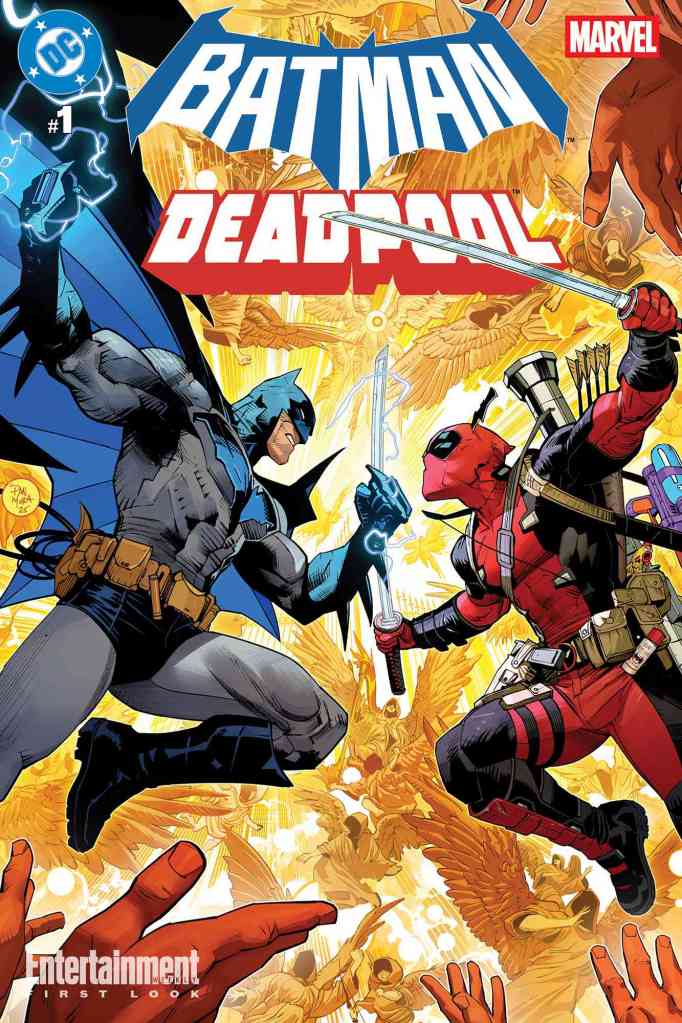


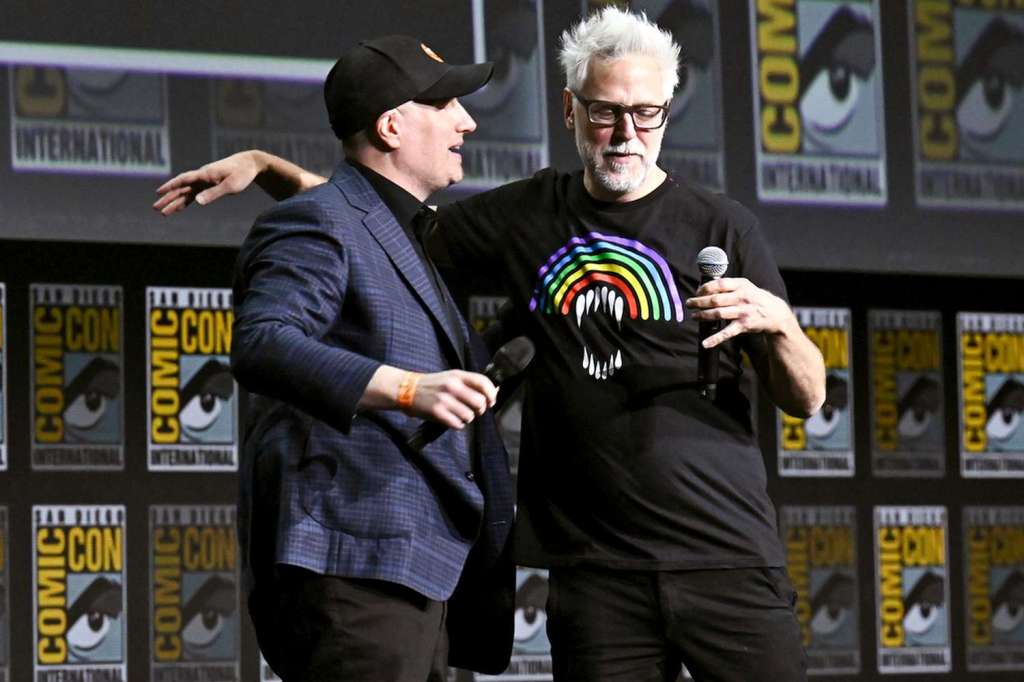


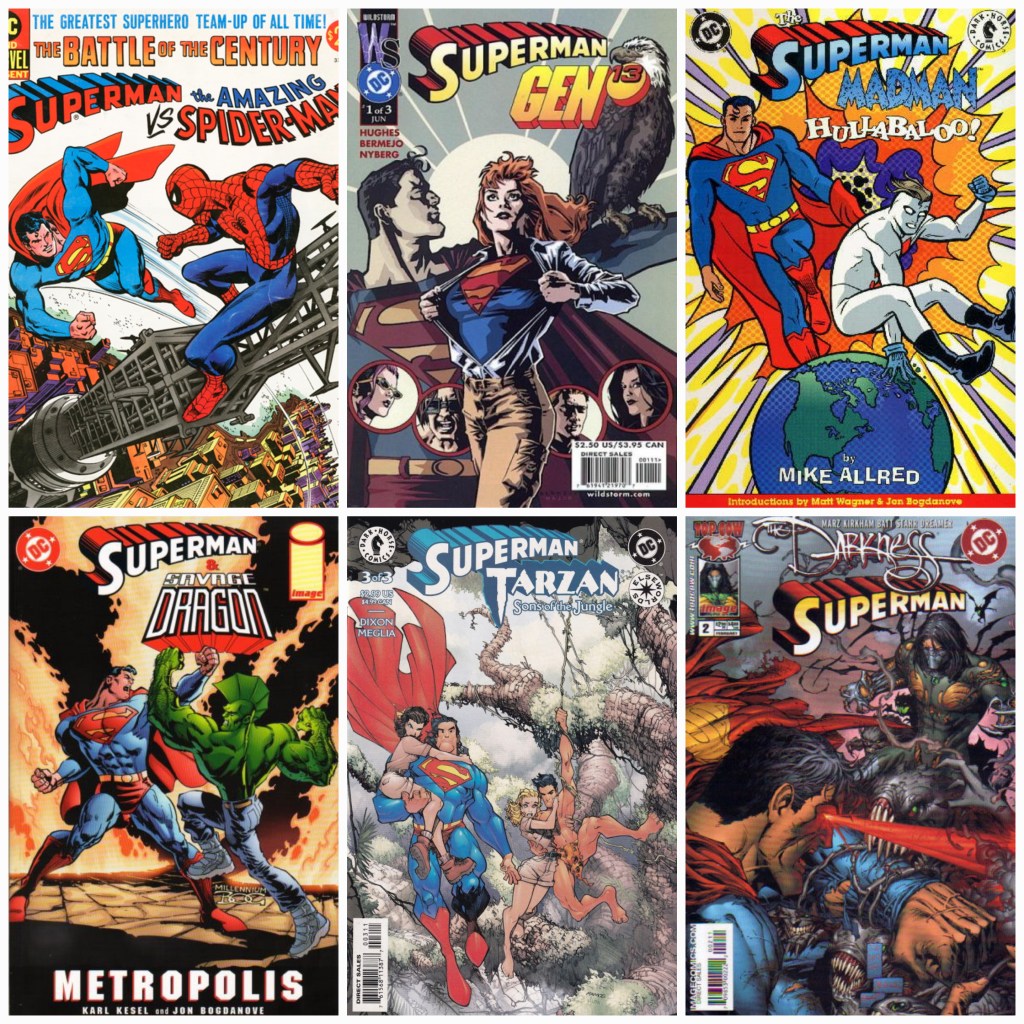


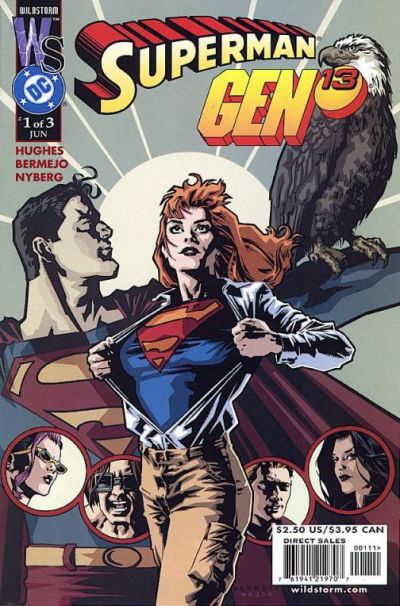
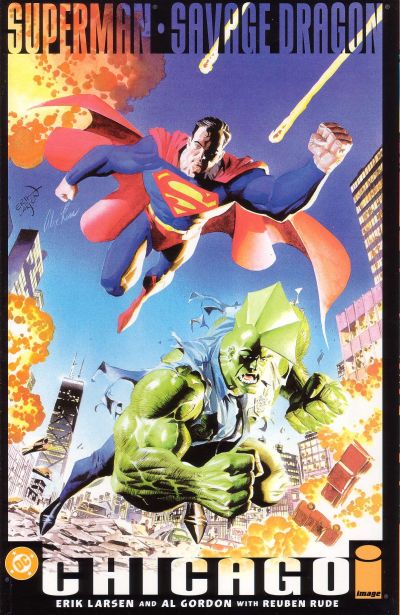

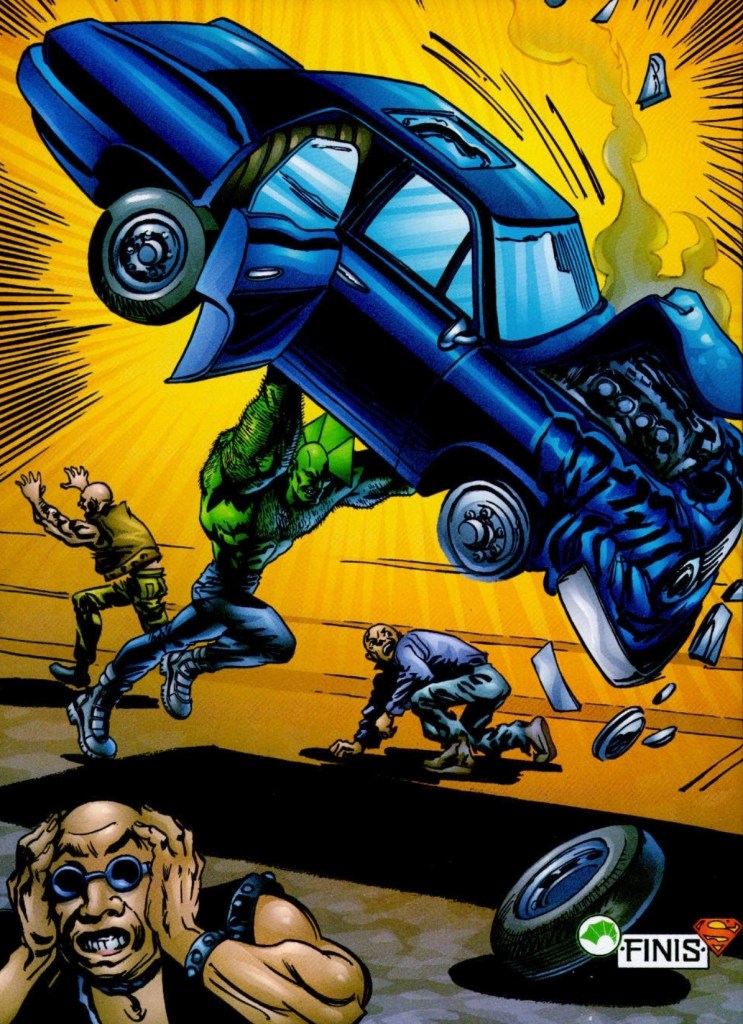

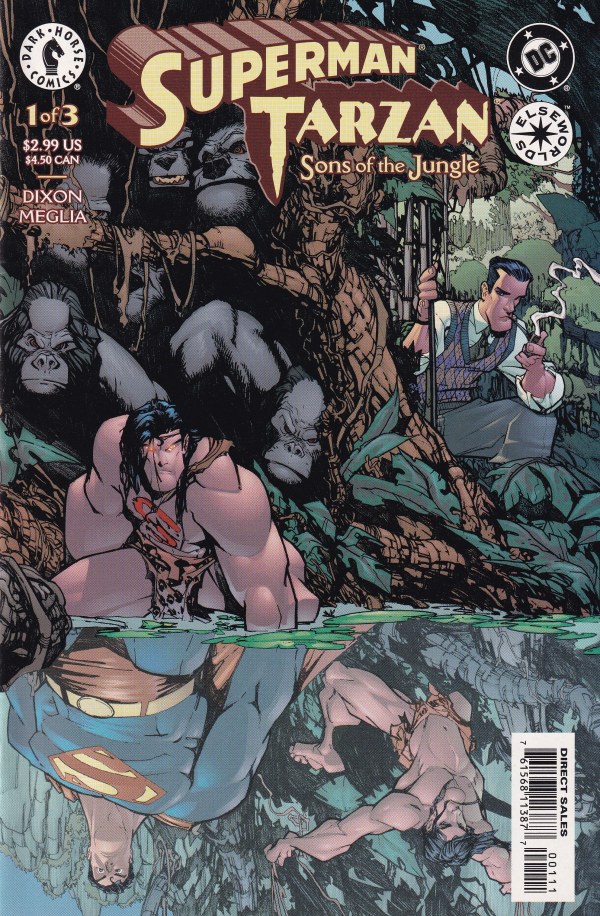

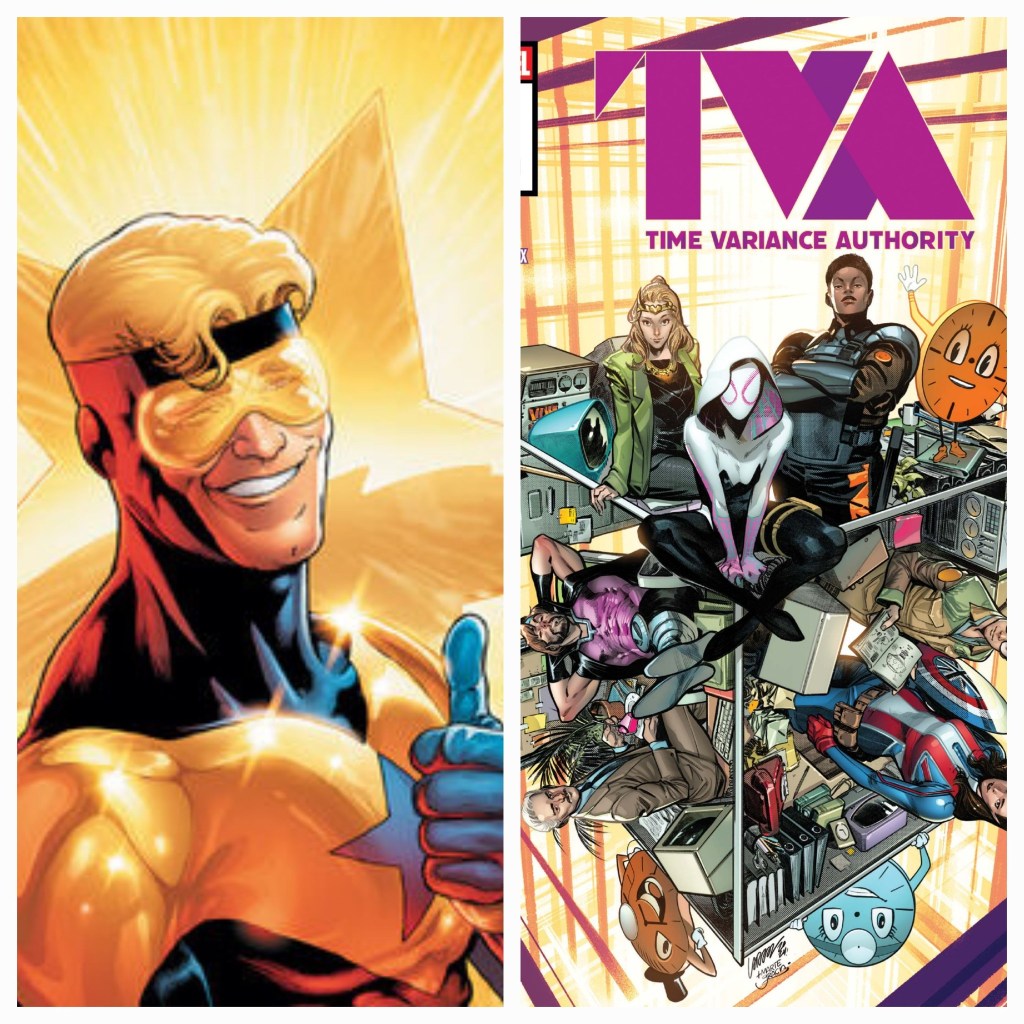


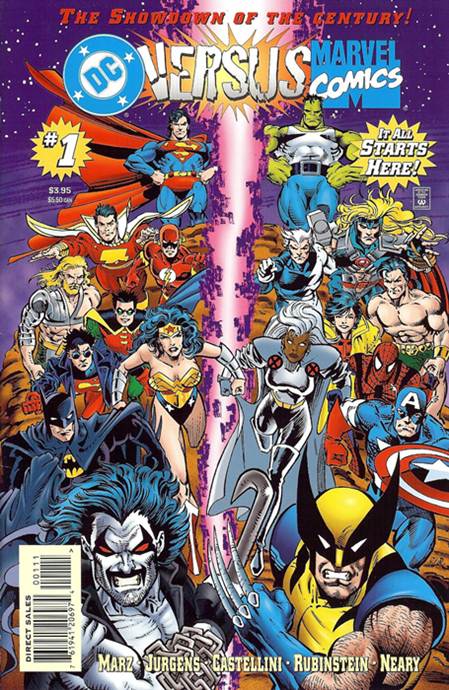
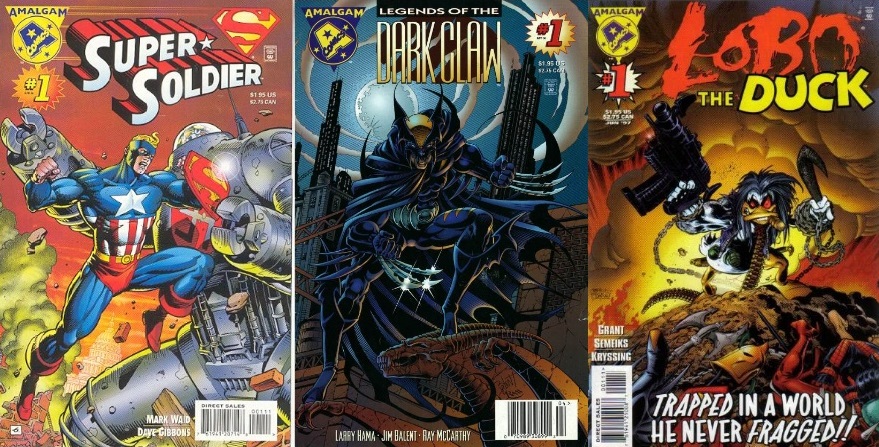

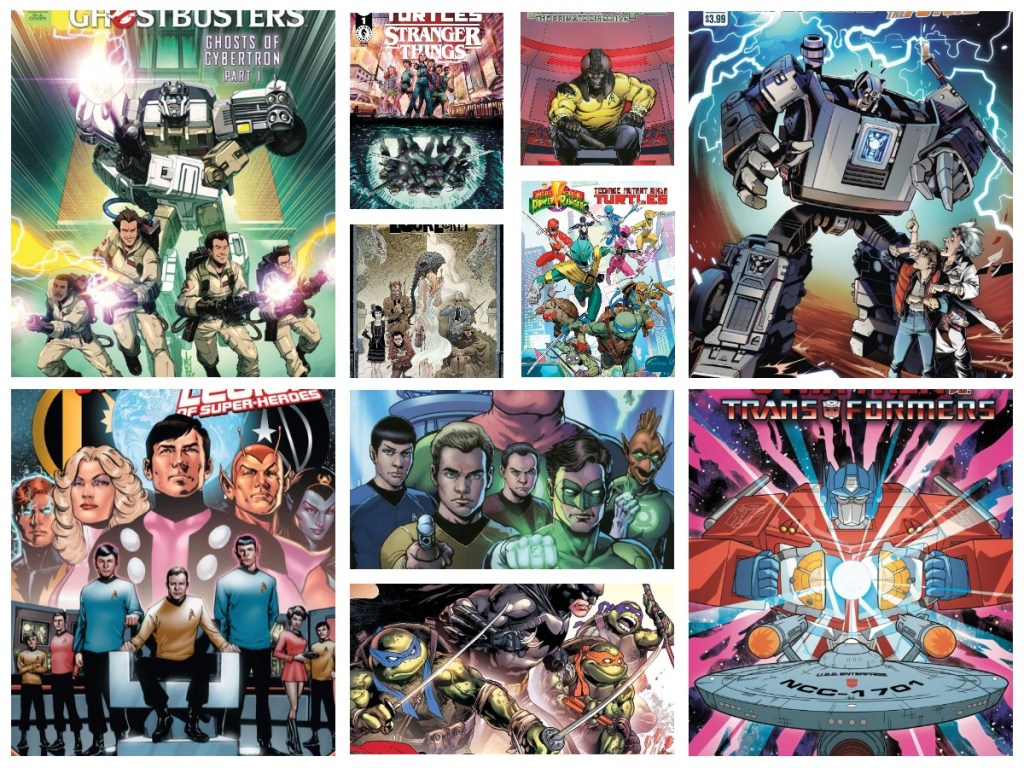


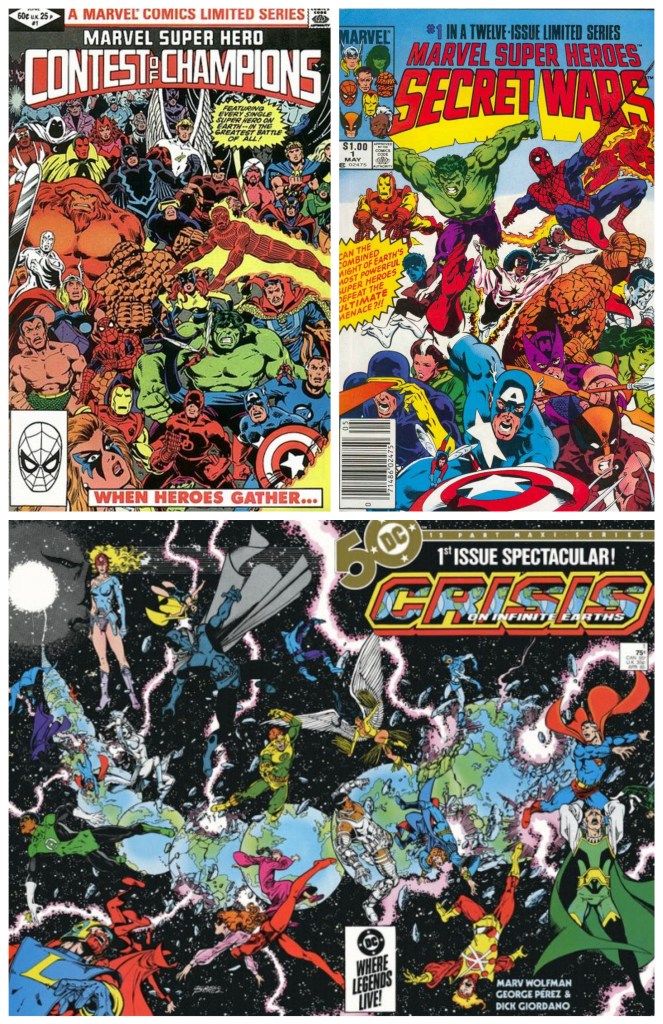


 Blake M. Petit