If you read last week’s column – and obviously you should have, because it was a masterpiece – you may remember me mentioning that my 11-year-old nephew is planning to be Ghostface for Halloween this year. This is amusing to me because his mom, my sister, is very much NOT a horror movie fan, and I know for certain my nephew has never seen any of those films. It’s just evidence of how pervasive the Ghostface icon has become. But a few days later I got another nice surprise when my sister asked me if I thought her daughter, who turns 15 this weekend, was old enough to watch the Scream movies.
When I tell you I wanted to squeal with delight…
I smiled bigger than this.
I get questions like this a lot. I suppose that my multiple qualifications as a teacher, father, writer, and geek pundit all make people confident that I have a good idea of what media is appropriate for what age group, and I’m flattered by the faith they have in me. On the other hand, the question isn’t always that simple. Age-based ratings like your PG, PG-13, and R from the MPAA are a decent enough guide, but that’s all they are: a GUIDE. The truth is that every kid is different. There are 13-year-olds who can handle the same scary movies that would give their same-aged classmates nightmares for a week. So when I’m given these questions, I always give a general opinion, but I couch it in the caveat that “You know your kids better than anybody else, so use your best judgment.”
But in this case, I know my niece really well. She’s grown up to be a fan of the morbid and macabre, she is slightly obsessed with all permutations of Five Nights at Freddy’s, and she’s smart enough to separate fiction from reality. When I got hit with this question, I had no doubt that she could handle it. The bigger question, honestly, was whether my sister would be okay with it.
“As far as the Scream movies go,” I told her, “There’s not any nudity. There IS violence, but compared to a lot of other franchises it’s relatively tame. There’s language, but she goes to a public high school, so I guarantee there’s nothing she hasn’t heard before. They’re all streaming on Paramount+, so yeah, I think it’s okay.”
Of course, it doesn’t hurt that Scream is – as I’ve stated many times – my favorite horror movie franchise, mainly because I think the writing and characterization are heads and shoulders above most of the other ones. But I still wouldn’t suggest that my niece be allowed to watch them if I didn’t think she was ready for it.
A few days later, I happened across a link to an article from Letterboxd that listed 20 PG-13 horror movies, films that were suggested as sort of “starters” for people who are just getting into the genre and didn’t want anything TOO intense. I’ve seen most of the films on that list and I agree that many of them are good choices – The Sixth Sense, for example, or Night of the Comet. And I was surprised at just how tonally diverse the list was, including things as chilling as The Ring and as family-friendly as Monster Squad.
I forwarded the link to both my niece and her mom, and my niece replied that she’s already seen Scary Stories to Tell in the Dark and now she has an excuse to watch the others on the list. I love this kid.
For the kids.
All this is to say, I’m really looking forward to helping usher her into the world of horror movie fandom, because I find that by and large horror movie fans are some of the nicest, kindest, most down-to-earth people I’ve ever met. Compared to certain other fandoms I could mention, like those from a galaxy far, far away, horror fans are usually very respectful of differing opinions and eager to listen, able to have conversations about their favorites and least favorites without devolving into name-calling or anger, and are extremely generous and supportive of the movies and creators that they enjoy. I know my niece would be positively embraced by this community, and it’s really important to find your tribe. I’m not saying that everybody in the world should be a horror fan, but I AM saying that if more people BEHAVED like horror fans, the world would be a much better place.
So if you’re into horror, or if you’ve got a teenager in your life that’s drifting in that direction, check out that Letterboxd list I linked to above. It’s a good starting place. And here are a few more suggestions for movies that didn’t quite make the Letterboxd cut, as well as other non-movie media sources that a burgeoning horror fan could start getting into this spooky season.
This is why dads mow the lawn every other morning.
The most glaring omission from the Letterboxd list – and my wife pointed this out almost immediately – is Little Shop of Horrors. It’s the chilling tale of a little New York flower shop where a young man finds and cultivates a new breed of plant that turns out to be an alien invader that thirsts for human flesh. Fun for the whole family! The Roger Corman original from 1960 is a cheesy schlockfest – it’s fun to watch, but only if you’re really into “good bad movies.” However, the 1986 musical version directed by Frank Oz is a masterpiece. The music is phenomenal, the performances are fantastic, and it’s just one more reason to love Rick Moranis. The puppetry by Jim Henson Studios holds up brilliantly today, and it’s impossible to imagine anyone walking away from this movie without having a new favorite song. My niece is already a geek for musicals, so I know this would be right up her alley. I just hope my sister is ready for weeks and weeks of her kid casually singing “Dentist!” and “Suddenly, Seymour.”
“Do you think you’ve got the CHOPS for this one, kiddies?”
Although it’s more intense than the stuff on the Letterboxd list, I have to give a strong recommendation to the legendary HBO TV series Tales From the Crypt. Based on the classic EC Comics (which themselves are well worth reading), this anthology series presented a half-hour morality tale each week, a different story with a different twist that usually involved a bad person doing bad things and getting a karmically appropriate comeuppance. The show adapted stories from the original comic book as well as some of its sister series, The Haunt of Fear, The Vault of Horror, and others. It also gave us one of the all time great horror icons in the Cryptkeeper, the John Kassir-voiced puppet who served as the host of the show with a ghoulishly gleeful sense of humor at the beginning and end of each episode. The general content level is a step up from Scream – there was sex sometimes, and the violence was kicked up a notch. At the same time, though, the violence was often treated very nonchalantly, brought up to an almost cartoonish level and hard to take seriously, which is part of the charm.
HBO treated this series very well, bringing in big-name guest-stars and directors like Martin Sheen, Brooke Shields, Catherine O’Hara, Christopher Reeve, Steve Buscemi, Tim Curry, and tons of others. The show gave us seven seasons with 93 episodes, as well as three theatrical films and a more kid-centric animated spinoff, Tales From the Cryptkeeper. There’s fun to be had in all of them.
“I know I look like the Cryptkeeper, but I don’t really talk. I’m animated beautifully, though.”
I also have to give a recommendation to its spiritual successor, Creepshow. In the original Creepshow movie from 1982, director George Romero (of Night of the Living Dead fame) teamed up with Stephen King for a film that was inspired by and tonally reminiscent of the original Tales From the Crypt comics years before the TV show brought it back to the public consciousness. The first Creepshow was written entirely by King, and he even starred in one of the anthology segments himself. The first sequel also adapted King stories, although both he and George Romero were absent entirely from the third installment. The legacy of the film persevered, though, and in 2019 the Shudder streaming service brought it back as an anthology TV series that lasted for four seasons and a few specials (including a Halloween special and an animated Christmas special). What’s more, the TV shows spawned a new comic book anthology series from Skybound (the company owned by Robert Kirkman, creator of The Walking Dead), bringing the whole style of tongue-in-cheek horror with a dash of dark comedy back to its original format. All of these are worth indulging and, as they’re anthologies, can be picked up one episode or installment at a time without requiring a huge binge to get through an entire story like some TV shows, comics, or film series.
The Ditko version was a lot cleaner.
Finally, if you’re looking for a horror tinged-take on characters you already know and love, there are several options available. Marvel fans may be aware of the recent Marvel Zombies animated series, but they may not know that it’s based on a line of comic books, which themselves were started by Robert Kirkman before he left Marvel and devoted himself entirely to his own company. In the original Marvel Zombies, an old-fashioned zombie virus struck the Fantastic Four, turning them into flesh-eaters. It spread out from there, and once it hit the super-speedster Quicksilver, any chance of stopping it from being a global pandemic was lost. In the Marvel Zombies universe, the undead retain their human intelligence, although their zombie hunger overtakes their former heroic morality. It’s a fun series that has had many permutations. The hard part for a newbie would likely be just keeping track of which order to read the many assorted graphic novels in and figuring out which ones are part of the main continuity or standalone.
Well, the end of everything until next issue.
DC Comics has also given us two horror-themed worlds to explore in recent years. First was DCEased, a book that I have to believe was given the greenlight primarily on the strength of the pun in the title. In the main DC Universe, Darkseid has spent 50 years or so trying to find the “Anti-Life Equation,” a formula that would give him control over all life. In DCEased, the equation is cut loose, transforming anyone it touches into a mindless killing machine. It’s not TECHNICALLY a zombie story, but it uses many zombie tropes to tell what turns out to be a generational tale of broken heroes desperate to find a way to save their world.
“Okay, but that’s just a placeholder title, right? We’re gonna come up with something more clever before it’s published, right? Right? Guys?”
Finally, there’s DC Vs. Vampires where – once again – some of DC’s best and brightest are turned into creepy-crawlies. This time, we wind up with a world where Batgirl becomes queen of the vampires and the heroes are divided into dead and undead and are embroiled in a civil war that engulfs their entire world. The most recent (and possibly final) volume of this series just ended, and the paperback edition should be coming soon. Like Marvel Zombies and DCEased, it works as a fun horror take on some familiar characters.
So there you are, friends – a few gateways into the world of the macabre. I’m sure you have suggestions of your own, and I’d love to hear them in the comments. With two weeks left until Halloween, it’s time for the Creepy Content to completely take over.
Blake M. Petit is a writer, teacher, and dad from Ama, Louisiana. His most recent writing project is the superhero adventure series Other People’s Heroes: Little Stars, volume one of which is now available on Amazon. You can subscribe to his newsletter by clicking right here. He’s also started putting his LitReel videos on TikTok. He skipped over recommending Plants Vs. Zombies. They know what they did.
If you’re anything like me, you probably read my columns approximately 97 times after I post them, intent on finding typos and turns of phrase that you think could be improved upon. In fact, if you’ve ever gone back and read a column again only to notice that a word has been changed or a misplaced modifier has been re-placed, that’s probably because I caught the error after one of my meticulous re-evaluations and made the change, which for some reason my wife finds tremendously amusing. But in the course of that obsessive re-reading, you may remember that last week I discussed the news that Mad Cave Studios is going to be publishing a comic book based on the classic 80s film The Last Starfighter. I was, of course, terribly excited about this news and I couldn’t wait to order a copy from my local comic shop. But as I pondered this, something quite disturbing occurred to me. I want to order a copy…but I’m not entirely certain HOW.
Me asking the universe how the hell to order comics anymore.
The comic book market is in quite a quandary at the moment, and like most other problems in the universe, I think it’s at least partially Marvel’s fault. I’m going to give you a heavily condensed version of what’s happened to the comic market over the past 30 years or so, so buckle up. Once upon a time, there were several companies that distributed comic books to the stores of North America. Publishers had deals with multiple distributors, and comic shops and newsstands were free to pick and choose which distributors they wished to do business with. But in 1994, as part of a series of bad business decisions that eventually led to the company’s bankruptcy, Marvel Comics decided to purchase one of those distributors and begin using their own distribution company exclusively. The ONLY way to get Marvel Comics was going to be by ordering through their distributor, Heroes World.
This understandably caused a lot of the other publishers to be concerned. Marvel was – and remains – the biggest publisher of comic books in North America, and everybody knew that all the stores would HAVE to use Heroes World to get Marvel Comics, which meant that many of these stores would start dropping the OTHER distributors, making it harder for publishers to get their comics on shelves. The other publishers, then – DC, Dark Horse, Archie, and more – realized that the last thing they wanted was to put their biggest competitor in charge of their distribution system, and they all rushed to sign exclusive deals with another distribution company, Diamond. Pretty soon, most of the other distributors frittered and died, leaving only Diamond and Heroes World, and even though Marvel was the biggest kid on the playground, they came to realize that even they were NOT bigger than every other kid on the playground put together. Furthermore, Heroes World itself didn’t have enough infrastructure to handle 100 percent of Marvel’s orders, and the company fell into chaos. By 1997 Marvel gave up on self-distribution, shut down Heroes World, and signed their own distribution deal with Diamond.
And then, for about three decades, Diamond had a virtual monopoly on comic book distribution in North America.
Imagine this logo has a goatee and a little mustache to twirl.
This was a situation that pleased nobody (except, presumably, Diamond’s shareholders), but that’s the way things were until a few years ago. The many, many problems Diamond had – such as frequent late, lost, and damaged shipments among other things – finally made some of the same publishers that made them a juggernaut jump ship and look for alternative means of distribution. Without the revenue of the big boys like DC, Marvel, and others, Diamond itself began to atrophy, and now it’s going out of business. Other distributors are beginning to rise again, and for the most part I think that’s a good thing. I sincerely believe that competition helps people – and companies – get better, and the fact that Diamond turned to crap while it had no competition to speak of is evidence of this.
However, there is one thing from the Diamond Era going to cause real problems if it’s gone for good. Once a month, Diamond published Previews, a massive catalog that listed all of the comics, graphic novels, toys, clothes, statues, collectibles, and other paraphernalia that the distributor handled. Comic shops sold the catalog, or sometimes gave it for free to their regular customers, and those customers could then easily look through the listings of virtually every publisher to tell their shop what they wanted to order. When the other publishers started jumping ship, the bigger ones (Marvel, DC, IDW, Image) started publishing their OWN catalogs for readers to use.
There was a time when this MEANT something, damnit.
The problem, hopefully, is becoming clear now. The Big Boys have their own catalogs. But Mad Cave – to get back to my Last Starfighter conundrum – does not. So how will we know when the new comic is available to order? How will we know when it’s scheduled to be released? If and when Diamond goes away entirely, how will we know which of the 38 different variant covers we want reserved for us?
“Well Blake, have you ever heard of a little thing called the INTERNET?” you may be asking, if you’re the kind of person who feels like being a jerk about it. Well yeah, duh, I know about the internet. It’s this box on my computer that I use to edit my columns 194 times after I publish them. And I suppose it’s useful for other things too. If I know a book is going to be solicited soon I can keep an eye out, do searches, even set up a Google alert. But that’s for ONE comic. Are people going to be willing to do that EVERY time they hear about a new comic book they want to read? And what’s worse, what about the stuff that ISN’T made into news but that they would be interested in, if only they knew about it?
What I’m getting at is that this lack of unity could be a crippling blow to a lot of smaller publishers.
Of course, the smaller publishers in question ARE finding distribution. There’s a new distributor called Philbo, for example, that recently started putting out a catalog featuring a sizable number of smaller publishers, including the likes of Red 5, Abstract Studio, Antarctic Press, and Monarch Comics. (Unfortunately for The Last Starfighter, Mad Cave is not among their number, at least not yet.) And even though that physical catalog isn’t necessarily showing up in every shop, it’s available on their website. More good news.
You guys just don’t know how badly I wish I’d been present at the marketing meeting when they chose “Philviews” as the name of their catalog.
The bad news is that if we want a system where readers can find EVERYTHING that’s available, it doesn’t exist anymore. That puts much more of the burden on the potential customer to actively try to stay aware, which also increases the burden on the publishers to find ways to MAKE the customer aware. We’ve built a system where readers will have to fight to stay abreast of virtually every publisher and every distributor and seek them out once a month if they’re to have any chance of finding what they’re looking for. Promotion has always been a challenge for small publishers, and this is only going to make it more difficult.
So what’s the solution? As much as the Diamond monolith hurt comics, I think having a one-stop location for solicitations was beneficial to most publishers, and I think we need that back. There’s a proposal that I wish somebody would take up. Not me, mind you, because I don’t have the time or the technical know-how to build a resource of the type I’m about to suggest, but if anybody else sees this idea and decides to run with it, all I ask is that you tell me when it’s ready.
I think we need a resource that collects the solicitations of all the distributors that service the comic shops of North America. One website, maybe even one app, that breaks these things down so that we can browse and search everything easily. It could, perhaps, be organized by publisher, with links to each distributor that particular publisher works with. Readers and retailers could set alerts for new solicitations featuring their favorite publishers, creators, or IPs. And, of course, customers could read through all the solicits and, at a click, build a list of the books and assorted merch they wish to order that month, which could then be provided to their local comic shop. I know that there have been efforts in the past to build an app that customers could use to send their orders to their shop, but to the best of my knowledge there hasn’t been one that’s as comprehensive or successful as what I’m proposing – certainly not one that has the widespread coverage that the former Previews catalog had.
I think readers and retailers alike would probably welcome such a system, although as I said, I wouldn’t have the slightest idea how to go about creating such a thing. But if you do, give it a shot.
And if you DO know of an app that’s already doing something similar to what I’m suggesting, for Heaven’s sake, let me know about that, too. This is a problem in desperate need of a solution.
Of course, this only applies to people who read PHYSICAL comics. Digital comics are a whole different animal with a whole different set of problems. But there are – fortunately – people seeking a solution to that one.
We’ll talk about that next week.
Blake M. Petit is a writer, teacher, and dad from Ama, Louisiana. His most recent writing project is the superhero adventure series Other People’s Heroes: Little Stars, volume one of which is now available on Amazon. You can subscribe to his newsletter by clicking right here. He’s also started putting his LitReel videos on TikTok. He lives for the day when he can set an app to alert him to new Captain Carrot merchandise.
This week the world of pop culture was totally rocked by the news that one of the greatest underrated movies of the 80s is FINALLY getting a sequel. Director Nick Castle’s 1984 science fiction epic The Last Starfighter is being revisited, after over four decades, in a new comic book series by Mad Cave Studios and the planet absolutely REJOICED.
Well it rocked MY world, anyway.
I don’t give a damn what you’ve been told, THIS is what Epic actually looks like.
I loved The Last Starfighter growing up. If you’ve never seen it, here’s the short version: teenager Alex Rogan (Lance Guest) is addicted to a video game – a cabinet video game, not one of them newfangled home consoles – and keeps playing it until he shatters the record. That night, he’s visited by an alien called Centauri (Robert Preston) who tells him that the game is actually a secret test, and Alex has been recruited to join the real StarLeague in its battle against “Xur and the Ko-Dan Armada.” In fact, for a lot of people my age, just SAYING the phrase “Xur and the Ko-Dan Armada” activates something inside of us similar to saying “mitochondria is the powerhouse of the cell.”
There were lots of movies in this era trying to ride the coattails of Star Wars, and this is one of my favorites. It’s been adapted before – there was a novelization, a Marvel comic book adaptation, and even a stage musical – but despite being pretty well loved by its fan base, there was never a sequel and the story has never continued until now. Original screen writer Jonathan Betuel is working with writers Deric A. Hughes and Benjamin Raab as well as artist Willi Roberts on this new series, which Beutel hints is the beginning of a plan to tell larger stories to expand the universe of the film. And I, for one, couldn’t be happier about it. Honestly, it couldn’t happen to a better franchise.
That said, just because this is the perfect franchise to relaunch as a comic book, that doesn’t mean there aren’t others. Mad Cave has taken the forefront on this in recent years, with reboots of Speed Racer, Dick Tracy, and Defenders of the Earth, as well as individual Defenders characters such as Flash Gordon and the Phantom. And Dynamite Publishing has stepped up to the plate with more “sophisticated” reboots of old cartoons like Thundercats, Silverhawks, Space Ghost, and Captain Planet. It’s not really surprising that writers and artists who grew up on these franchises want to resurrect them in comic book form and put their own spin on them. That said, even with the avalanche of classic stuff we’ve gotten in the last few years, there are still a few that haven’t been touched.
Yet.
So today, in a “Three Wishes” special, I’m going to propose three franchises that – to the best of my knowledge – have never had a sequel or reboot of any kind since their original run ended. And this was harder than it sounds – I thought about nearly a dozen different movies and TV shows that I discarded when I checked and found out that there HAD been a comic book or TV reboot that had escaped my notice. But I’m pretty sure that, for the three I’m about to talk about, any continuation of the original story exists only in the imagination of fans everywhere. Here are three 80s IPs that I would love to see get a reboot or sequel as a comic book.
Bionic Six
Although Bionic Six had only one season in 1987, this was in the day when a season of a syndicated show ran for 65 episodes, and the reruns could be broadcast for ages. I remember distinctly that our local station showed it fairly early in the morning, and I would watch this cartoon every day when I was getting ready for school, which is probably why I have such fond memories of it. In the “near future,” test pilot Jack Bennett is given super powers through a series experimental of bionic implants and acts as a superhero and secret agent, Bionic-1. But when an avalanche on a family vacation buries his entire family (his wife, son, daughter, and two foster sons) with an object giving off bizarre radiation, the professor who gave him his bionics decides that the only way to save his family is to bionicize the whole batch of ‘em. Professor Sharp becomes the handler/science guy for the team as they fight the supervillain Scarab (who also happens to be Sharp’s brother) and his minions.
I watched this show faithfully every morning, loved the heroes, loved hating the villains, and I even became a fan of some of the side-characters like the Bandroids (a robot rock band) and pair of villains called Perceptor and Kaleidoscope who did a heel-face turn and joined the good guys. There was a line of action figures in the same scale as the G.I. Joe toys I loved, and even better, the figures had transparent plastic and die-cast metal pieces for the bionics, objectively making them some of the coolest figures of the era. And although it didn’t become as well-known as the likes of Silverhawks or Captain Planet, I think the concept has just as much potential for continuation.
Were I to relaunch the book, here’s what I would do: I would pick up the story several years later. Professor Sharp has passed away, Scarab has long since been defeated, and the Bionic Six are in retirement. Eric (aka Sport-1) has settled into a low-level job, bitter that his dreams of becoming a professional athlete were quashed because he realized he could never compete without the secret of his bionics becoming public. His sister Meg (Rock-1) has found happiness as a music teacher. Their adopted brother Bunji (Karate-1) has retreated to a monastery somewhere, embracing a life of peace and solitude. And J.D. (IQ) has spun his remarkable intelligence into an enormous business empire. Things are mostly okay.
Until Scarab returns, kidnapping Eric’s daughter, Meg’s son, and J.D.’s twin girls. The siblings reunite, fetching Bunji from his retreat, and head out to rescue the kids. When they arrive, though, they find that Scarab has begun experimenting on them. To save them, J.D. finds himself forced to repeat Professor Sharp’s experiments and bionicize the kids, who never knew that their family was the legendary Bionic Six. After a few near-tragedies caused by their inexperience, Eric and Bunji agree to train them in the use of their powers, with J.D. providing financial backing and support. Although he and Meg decline to return to active duty, they agree to help out if the situation demands it, but now Eric, Bunji, and the four kids are the new Bionic Six. Bunji tries to teach them a more peaceful, spiritual approach, while Eric is desperate to prove himself, causing some nice little interpersonal conflict amidst the family in their new adventures.
Call me, Mad Cave.
Galaxy High School
The next sci-fi cartoon of the 80s I would give another shot is Galaxy High School. Like Bionic Six, this show only lasted one season. Unlike Bionic Six, though, it was a Saturday morning cartoon, and in its one season it only turned out 13 episodes. I was pretty stunned when I discovered that – I have memories of watching this cartoon that I could have SWORN lasted for YEARS. Reruns are a powerful thing, I guess. Anyway, the show was created by future blockbuster director Chris Columbus (who you may know as the guy who masterfully helmed the methodical torture of Joe Pesci and Daniel stern in Home Alone, among many other films).
In the show, two teenagers from Earth are accepted to the intergalactic “Galaxy High School.” Doyle Cleverlobe is a popular all-star jock, while Aimee Brighttower is an all-star in academics, but shy and unpopular. When they arrive at a school full of aliens, however, the script is flipped: the aliens all adore the brilliant Aimee, while Doyle finds himself immediately rubbing many of them the wrong way and turning into an outcast. The core of the show was the friendship (and teased romance) between the two of them and the adventures they had with their wild cast of alien friends.
If I were to continue this series, I’d pick up right where it left off in Galaxy High School: Sophomore Year. Doyle isn’t quite the outcast he was before, mostly because the others tolerate his presence since he’s friends with Aimee. He’s still eager to prove himself, but he’s a bit less of a dork about it. Aimee, meanwhile, will have a bit of a crisis when a new student rolls into school – a computer intelligence from another planet that’s even smarter than her.
In addition to continuing the teen romcom with the two of them, I would want to explore the hell out of this universe. The aliens in the show were really wild and creative (Gilda Gossip’s species had several mouths that never stopped talking, Booey Bubblehead had a literal bubble for a head, and the school bully Beef is a giant chicken), but we didn’t see much of their individual cultures in the show’s mere 13 episodes. I would do stories with field trips to other planets, or comics that take place during school breaks and holidays where Aimee and Doyle go with their friends back to their homeworlds for a visit, really getting a chance to explore. Galaxy High School only hinted at a larger, hilarious sci-fi universe that was kind of a kid-friendly version of Douglas Adams. I want to see more of that.
Condorman
The last 80s character I would love to see again comes from the little-known 1981 Disney movie Condorman. Woody Wilkins (Phantom of the Opera star Michael Crawford) is a comic book writer and artist who insists on testing out his fictional hero’s stunts in real life, such as building a Condorman hang glider and trying to fly from the Eiffel Tower. Woody gets caught up in a document exchange with a woman who turns out to be a Soviet spy who falls in love with him and decides to defect to the United States. The movie is kind of half superhero/half James Bond spoof with a lot of awesome gadgets and vehicles that sincerely appealed to the kid I was when I watched it over and over again. To this day, I think about the scene where Woody and Natalia are in what looks like an old truck that, with the flip of a switch, turns into the cool-as-hell Condormobile. It was pretty atypical of Disney, even for the time, but it was fun.
If I was bringing back Condorman, what would I do? Glad you asked, my friend. I’d keep the 80s time frame, because once you hit the 90s spy movies just weren’t what they used to be. I’d reintroduce the characters a year or two after the film, where Woody and Natalia have become a real spy team (mostly due to her doing her best to keep him from getting killed) and send them on another quest, this time to find an American asset who has been captured behind the Iron Curtain. After several adventures, we’d finally rescue the American, only to hit us with the big reveal: the American in question turns out to be Cliff Secord, a pilot in his 60s who once saved the United States wearing the jetpack and helmet of the Rocketeer.
Yeah, that’s right. I would use Condorman as a stealth entryway into a Disney Cinematic Universe. I would also bring in things like Tron, with those characters battling Russian programs. Woody and Natalia would find the remains of the Black Pearl from Pirates of the Caribbean. Tech would be built by Professor Ned Brainard (The Absent-Minded Professor) and Dr. Wayne Szalinski (Honey, I Shrunk the Kids). They would face off against the Sanderson Sisters from Hocus Pocus at Halloween, meet The Santa Clause’s Scott Calvin at Christmas! And I’m not sure when or how, but at some point SOMEBODY would have to Escape to Witch Mountain.
Look, crazier things have happened.
Blake M. Petit is a writer, teacher, and dad from Ama, Louisiana. His most recent writing project is the superhero adventure series Other People’s Heroes: Little Stars, volume one of which is now available on Amazon. You can subscribe to his newsletter by clicking right here. He’s also started putting his LitReel videos on TikTok. He may have gotten a little carried away on the Disney Universe thing, but he has no regrets.
The Year of Superman continues our journey through the Electric Superman era! This week we peek at the Pulp Heroes annuals, explore Superman’s activities during the Genesis crossover, and see that electric blue spark into crimson. Join me, why don’t you?
Comics:Superman Annual Vol. 2 #9, Superman: The Man of Steel Annual #6, Adventures of Superman Annual #9, Action Comics Annual #9, Batman: Gotham By Gaslight-A League For Justice #2.
Just like old times.
Notes: By 1997, DC had fallen off of the annual crossover events such as Armageddon 2001 and Bloodlines, instead shifting to a policy of doing annual THEMES, where the creative teams would tell one-off stories that fit into categories such as Elseworlds or Legends of the Dead Earth (which was also essentially Elseworlds, but post-apocalyptic, although one of the characters from these language later showed up as a member of the Legion of Super-Heroes). The 1997 theme was Pulp Heroes, in which each annual was tasked with placing the hero into a genre from classic pulp magazines – westerns, potboiler detective stories, old-fashioned sci-fi. The Supergirl annual for that year even did a romance comic, with a love story between Supergirl and Brainiac 5 (the Legion was still stuck in the 20th century at the time). It was a fun summer, with different types of stories that sported some gloriously painted covers that really evoked the time period they were paying tribute to.
These stories were all self-contained and could really be inserted almost anywhere into the timeline before the Blue/Red split, so I’m going to punch through them all here since we’ve got a sort of hard stop before the Genesis crossover. And I’ll start off with Superman Annual #9 by Dan Jurgens and Sean Chen. Labelled “My Greatest Adventure” on the cover, this issue drew its inspiration from the same sort of globe-trotting adventure yarns that inspired the likes of Indiana Jones. In the country of Bhutran, a mysterious cult called the Black Crucible is setting its sights on Jimmy Olsen, because it’s been at least twelve minutes since his life was endangered. In this story, set before he was canned from WGBS over the “Superman’s Secret Identity” fiasco, Jimmy is undercover trying to get the scoop on a smuggling operation when Bibbo accidentally outs him to the same crooks he’s trying to catch. He finds himself being targeted by an assassin who – upon failing in his task – kills himself. What’s even stranger is that the assassin, save for an enormous dragon tattoo on his chest, is a perfect doppelganger for Jimmy.
Jimmy and Bibbo assemble Lois, Clark, and lawyer Ed Drysdale at Professor Hamilton’s lab to try to get to the bottom of things, and the group uncovers a link to Bhutran. One plane ride later, they’re off to investigate. From here the story comes off as kind of a Doc Savage pastiche (with a bit of a lampshade to that fact in the end), with the hero operating alongside a team of specialists who each contribute something unique and invaluable to the mission (even Drysdale). We even get to see de-powered Clark using his own fists when he gets into a situation where Superman’s powers lose their advantage. It’s easily the best Jimmy story of the era, although that’s a low bar to jump considering the way he was being played in the main comics of the time.
Man of Steel Annual #6 bears the banner “Suspense Detective” for a story by Louise Simonson and Tommy Lee Edwards. In “Pierced,” SCU head Maggie Sawyer steps into the narrator’s box, agonizing over recent losses to her unit in their battles against the more unorthodox villains that seem to plague Metropolis. This time out it’s a telekinetic assassin with a face loaded with piercings, and Maggie gets understandably outraged when the FBI steps in and wrests control of the investigation away from the SCU. Lois, similarly, is frustrated with the lack of cooperation from law enforcement in getting her story out, with Maggie told not to talk to any reporters, ESPECIALLY Lois Lane. (Honestly, if you’re trying to keep something low-key in Metropolis, that’s a sensible demand to make.)
This isn’t a bad story at all. It feels like a chapter from the Metropolis SCU miniseries that guest-stars Superman in a prominent role, and that’s not a bad thing. I’ve often enjoyed the sort of “lower decks” storytelling we got from that comic and the brilliant Gotham Central. That said, I don’t think it’s as successful as the Superman Annual at capturing the feel of a pulp novel. The story is too contemporary, not really having the flavor of the kind of two-fisted cop stories that it seems to want to invoke. But if I didn’t know that was the goal, I wouldn’t give it that note, either. It’s a complete story, just a tad out of place.
Adventures of Superman Annual #9 brings us an absolutely gorgeous cover by Laurel Blechman with Electric Superman swinging into an old west saloon present a few Weird Western Tales. First is “Terror of the Sierra Madre” by John Rozum and artist Alcatena. Perry White sends Clark to New Mexico to look into a “major archaeological discovery” which promises to link the disappearances of three different tribes from the region. Joining the dig, Clark descends into an underground structure with iconography from the three different tribes all in the same place, suggesting that it was used for some sort of meeting between them all. As they investigate, strange spirits begin to inhabit the bodies of the archeological team – and then they come for Superman! This is one time where the Electric Superman particularly works, I think, causing an even sharper contrast with the western theme than it would if Superman had his conventional powers in this story. The bizarre juxtaposition of the energy man in a tale of the old west is a nice, zesty combination that I really enjoy.
Mike W. Barr and Dale Eaglesham then pitch in for “The Return of Saganowahna,” a story of a town where native American residents are being compelled into selling land that has been in their families for generations by the ravages of a creature called Saganowahna, “Chief of All Chiefs.” (No, it has nothing to do with Perry White) If you think it sounds like the plot of an episode of Scooby-Doo, you’re not far off. Eaglesham, for absolutely no reason, draws Superman in a white cowboy hat and duster, which looks absolutely fantastic over his electric blue costume. I want a Funko Pop of this guy.
The third story in this one is “The Journey of the Horseman” by Paul Grist and Enrique Villagran. In this one, an alien comes to Earth just as a new experimental energy source is about to be tested. The alien sets out to destroy, which I’m sure you can imagine, causes him to run afoul of Superman. Of the three stories in the book, this is the one that strains the theme the most. There’s really nothing “western” here, except for possibly casting the alien in a sort of “Man With No Name” sort of role, where he’s under suspicion even though his motives may ultimately turn out to be benevolent.
We’ll wrap up our Pulp Heroes journey with Action Comics Annual #9, a horror-inspired “Tale of the Unexpected” by David Michelinie and Vince Giarrano. Clark Kent is investigating a recent rash of museum thefts where ancient artifacts have been stolen – crimes that Clark believes are connected. The crooks are assembling pieces of a mystical stone, one which leaves Superman in the unenviable position of fighting an army of the dead. Of the four annuals, this is the one that feels most pertinent to the ongoing storyline of the regular comics. Ever since his shift to his energy powers, Clark says, he’s wondered if this has changed his vulnerability to magic. In this issue he’s forced to face it, along with dealing with the fear of forces that he can’t defeat, and he learns a little bit about the relationship between magic and energy that could definitely come in handy in later stories. That is, if any of the remaining stories from this era feature magic and if the writers of those stories actually remember that.
Thurs., Sept 11
Comic Books: Genesis #1, Steel #43, Superman: The Man of Steel #72, Genesis #2, Supergirl Vol. 4 #14, Superman Vol. 2 #128, Genesis #3, Adventures of Superman #551, Genesis #4, Batman: Justice Buster #27 (Superman Cameo), Jon Kent: This Internship Is My Kryptonite #8
This crossover just wasn’t the same after Peter Gabriel left.
Notes: Superman’s power struggles started during DC’s 1996 summer crossover event Final Night. Now we’ve progressed through a solid year’s worth of comics and we’re colliding with their 1997 crossover series, Genesis, which spun out of the pages of John Byrne’s Jack Kirby’s Fourth World series. The concept here was that the “Godwave,” a cosmic phenomenon, was about to pass through the universe. It had gone through twice before, the first time creating gods on multiple planets, and the second time creating humans. This time, reality itself seems to be threatened by its approach. As I did for Final Night, here I’m going to read the main Genesis series and any of the crossover issues featuring Superman or a member of the Superman-family, starting off with Genesis #1.
In Genesis #1, written by Byrne with art by Ron Wagner and Joe Rubinstein, heroes and villains start to feel their powers going haywire. The Flash’s speed is drained, as is Green Lantern’s ring, and Captain Marvel simply falls out of the sky. Others find their powers enhanced: Ultra Boy (the Legion is still in the 20th century) can suddenly use multiple powers at once, and Superman’s electrical powers feel an unexpected surge of energy. There doesn’t seem to be any rhyme or reason to it – heroes may be affected whether they’re metahuman, alien, mutant, or just have a powerful weapon like Green Lantern’s ring, while others like Aquaman suffer no changes at all. Batman theorizes that people from other dimensions, such as (the Matrix version of) Supergirl are not affected, but that never explains Aquaman. And as they debate and discuss what’s happening, an alien armada shows up in the skies above Earth. I never got the hang of Thursdays either.
The first Superman-family crossover comes in Steel #43 by Christopher Priest and Denys Cowan. This is a weird one, with the first half of the book mostly devoted to the ongoing stories and subplots of the series before touching upon Genesis – John Henry flies into Metropolis to check on Superman when he hears about the power fluctuations, only to suddenly start suffering from wild bursts of anger. He talks to Superman, who asks him to keep an eye on Metropolis while he meets up with the League (something that happened in Genesis #1), but when he flies off his new electromagnetic powers act like an EMP burst, frying the circuitry in John Henry’s armor and causing him to plummet from the sky! Cliffhangered!
Next up is Man of Steel #72. Lois and Clark are hanging out at the Planet when Clark’s powers spontaneously create an image of a meteor striking the Earth, freaking out Perry White’s assistant Alice, who decides she’s been working too hard. As Allie goes home, she’s attacked by Baud and her crew called Mainframe. Superman dives in to save her, but his powers again cause him to freeze and start projecting images, and Mainframe captures him, bringing him to their hideout. Override, the leader, is trying to use Superman to power a dimensional window, but Superman manages to get free, busting up a barroom brawl at the Ace O’Clubs between Bibbo, Scorn, and some monsters. This issue really has little to do with the crossover, just Lois theorizing at the end about some of the wild power fluctuations that have been happening lately. I hate that.
Genesis #2 picks up where the first issue ended, with the heroes at the Justice League Watchtower seeing the alien armada arrive in Earth orbit. Meanwhile, on the fused world of New Genesis and Apokalips (it’s a Fourth World thing), Darkseid seems to have vanished, which one would usually consider good news, except in this case it’s making the New Gods believe he’s behind the power fluctuations. One of the oldest of them, Arzaz, chooses this moment to reveal his true form as one of the “Old Ones,” the first Gods, who warns that if they do not stop the Godwave the Fourth World will be destroyed and replaced by a Fifth World. The changes don’t seem to be limited to powers, though – it’s also creating crises of faith. For instance, in Gotham City Robin, Huntress, and Catwoman seem to find themselves beset by a plague of fear and doubt that they normally don’t have. The Earth is suddenly besieged by Darkseid’s armies of Parademons, while the fleet in the sky turns out to be lead by the Darkstars leading an assault on Earth. Highfather finally shows up and says there’s one chance – some of our heroes will have to ride into the Godwave with a set of special Mother Boxes to focus the waning power of the Source. And all it’ll take is a few volunteers to run a suicide mission. He has no shortage of volunteers, of course.
The story moves from there to Supergirl #14. The crux of this series is that Supergirl saved the life of a woman named Linda Danvers that caused the two of them to merge into one person. This issue she goes to both of her sets of “parents” – the Kents, who raised her as Matrix, and Linda’s parents the Danvers – to tell them about it. It goes considerably better with Kents, who are far more used to weird stuff. Again, though, while Peter David’s whole run was great, the relationship to the crossover is tangential at best.
Superman #128 is – wonder of wonders – a crossover chapter that actually has to do with the main storyline. Picking up seconds after Genesis #2 ended, Green Lantern has had our heroes draw straws to decide who’s going to go on Highfather’s suicide mission. Before they can act, though, Highfather receives a psychic burst alerting him to danger at the Source Wall, the barrier between the universe as the cosmic energy of the Source itself, in which everyone who has tried to penetrate the wall has instead become bonded with it. They send Superman to investigate while the others continue their plans to deal with the Godwave. Superman is briefly dazzled by the sheer brilliance of the Source Wall, but his astonishment is broken when the giants bound to the wall begin trying to grab him and pull him in. He is trapped in a sort of living bubble, surrounded by memories of a human who turns out to be Hank Henshaw, the Cyborg Superman! Cliffhangered AGAIN!
In Genesis #3 the inevitable happens – Darkseid returns. He gives an infodump on the Godwave before noping out and having his army attack the heroes until the New God Takion breaks it up, before reverting to his human form and dying for some reason. Can you tell I’m getting tired of this crossover?
Adventures of Superman #551 apparently forgot that it was supposed to be part of Genesis, at least on the cover, since it’s missing the trade dress, despite being far more linked to the story than the Man of Steel or Supergirl issues. Picking up where Superman #128 left off, Superman is in the clutches of the Cyborg, who has been inside the wall for some time. They fight and Superman hurls the Cyborg back into the wall before returning to Highfather and the others, meaning this two-issue excursion apparently took place between two panels at the beginning of Genesis #3. Oh yeah – and although Superman doesn’t know it, the issue ends with a hint that Henshaw, who has the power to hop from one electronic device to another, is actually now riding around inside Superman’s new techno-suit.
In Genesis #4 Earth is in utter chaos, with people giving in to despair and rage all around. But it’s okay! Because the heroes save the universe by…holding hands and believing? I don’t even know at this point. I’m going to be blunt here – this is one of the most poorly-structured crossovers I’ve ever read in my life, and I’ve read a LOT of them. Things happen for no reason and the individual installments feel pointless. Too many of them have barely any connection to the main event, and even the main event itself is a complete mess. Why the hell did the Darkstars invade Earth? Why is Darkseid and his entire army just allowed to appear and disappear at will? The two-parter with Superman fighting the Cyborg isn’t even referenced in the main story, we just kind of have to ASSUME it happened somewhere between panels of issue three. And none of the characters have personality – even the strike force that is assembled to use Highfather’s special Mother Boxes never gets any real development. We only learn in a flashback which 13 characters were chosen, and the choices are pretty irrelevant – you could swap any of ‘em out with anybody else and there would be no impact on the story because they don’t DO anything except show up, shoot at things, and then come back with a dead Takion.
John Byrne has been responsible for some of the best, most memorable comic books of all time. His runs on X-Men, Fantastic Four, and indeed, Superman are legendary. This book? This is the platonic ideal of phoning it in.
Ugh. Now I’m grouchy. Here’s hoping tomorrow is better.
Fri., Sept. 12
Comic Books: Action Comics #738, Superman: The Man of Steel #73, Superman Vol. 2 #129, Adventures of Superman #552, Action Comics #739, Taste of Justice #9
That’s more like it.
Notes: We start today with Action Comics #738, the one Superman title that dodged the bullet of having to tie in to Genesis. Superman returns to Metropolis following the crossover and almost immediately runs into a thief with the power to phase through solid objects. He escapes through an electronic store, where the Cyborg (hiding in Superman’s suit) jumps into the store’s computer system and begins plotting his revenge. This is a pretty-low key issue, mostly there to set things up and progress subplots like Clark and Lois dealing with the new circulation manager at the Planet who has the hots for Clark, and Jimmy – who has been on the run from Intergang for several issues now – finding himself in ever-hotter water.
Man of Steel #73 picks up Jimmy’s predicament as Intergang finally catches up to him, just to run afoul of a group of high-powered hippie bikers that call themselves the Outsiders and who aren’t happy about Intergang’s encroachment on his territory. Meanwhile, Morgan Edge manages to convince Desaad (Edge works for Darkseid, by the way) to lend him some Parademons to help him wrest control of Intergang from Boss Moxie. Now Jimmy’s caught between three fighting factions. Superman finds himself in the unenviable position of defending Lex and his pregnant wife from them, and in Australia, Lois is on assignment to interview a native tribe whose Chief tells her “we are honored, for we have been chosen to witness the coming of the giants…and the end of all that is.”
Nicely ominous, and I’m surprised that they started referencing the Millennium Giants – the story that would be the endgame of the Electric Era – so early.
Superman #129 brings the focus back to Scorn and Ashbury, who has decided to start keeping a diary, beginning with the tale of bringing Scorn along with her to help decorate for her high school homecoming dance. Clark Kent also happens to be there (funny how that happens) working on a column when a fire breaks out. Fortunately, as Ashbury recounts, Superman ALSO shows up to help put it out. The issue mostly tracks Ash and her art teacher, Mr. Sormon, who it turns out isn’t a Superman fan. It also turns out there’s a reason for that. I have to admit, I got irritated with Sormon proselytizing in the classroom, which is the absolute last thing any decent teacher should do, until we got to the reveal that clarified it all.
Adventures of Superman #552 has Big Blue face the Parasite again, for about two pages. Most of the issue is actually taken up with Lex Luthor and Intergang, as Lex makes his own play for control of Metropolis’s organized crime cartel. We also check in with Clark, missing Lois (she’s still in Australia) and trying to deal with things like getting tired in his human body, which has never happened before.
And in Action #739, Ashbury takes Scorn to her homecoming dance, moved to a swanky hotel after the school caught on fire. Sounds nice – until an explosion rocks the hotel. Superman swoops in to save the day, only to discover the whole thing is a scheme by his old foe Carl Draper, now going by the name Locksmith. (Previously he was “Deathtrap.” In the pre-Crisis era he was the Master Jailer. And when he went to Smallville High with Clark, he was “Moosie.” The guy does not have a knack for good names.) As Scorn works on saving the kids at the dance, Superman works out his escape, getting back to the hotel just in time to stop it from collapsing. Back in Australia, though, Lois is kidnapped by Rajiv Naga, the guy who tried to kill Clark on their honeymoon. Fortunately for her, her dad gave her a GPS tracker before she left, which is why Clark is pretty surprised on the last page when Sam Lane shows up and demands Clark join him on a little trip down under to save her.
I’m looking forward to the next few issues – Sam Lane and Clark Kent working together? Sounds wild.
Sat., Sept. 13
Comic Books: Superman: The Man of Steel #74, Superman Vol. 2 #130, Adventures of Superman #553, Action Comics #740.
Faces. Faces are cool.
Notes: DC used to occasionally do these interesting events on their covers – one month every cover featured the hero on the top half of the cover with the title incorporated into the artwork at the bottom, for instance. This month was “Faces of the DC Universe”: each cover was a close-up of the face of the main character, or one of the main characters. I really liked these sort of mini-events – they had no bearing on the story inside, not disrupting the story like a Genesis-type crossover did, but it really made the books stand out on the racks in a pleasing, fun way. You still occasionally get cover themes like this, but they’re almost always restricted to variant covers these days, which isn’t nearly as much fun and don’t even catch the eye randomly. Ah, here I am getting nostalgic instead of talking about the comics. I guess I’ll do that now. I do it for YOU.
In Superman: The Man of Steel #74, Rajiv reveals his plan to the captive Lois. Back when he had Clark captured on their Honeymoon, he doused him with truth serum, during which Clark admitted to being Superman. Rajiv dismissed it at the time, but now he’s starting to wonder – so if Superman shows up to save Lois, he’ll consider it confirmation. Clark and Sam, meanwhile, are on their way to Australia, Clark lamenting the fact that he CAN’T get away and save Lois as Superman without Sam noticing something is up. There’s more “Clark’s Secret ID” stuff during this run than I remembered. Anyway, after a few close calls, Clark and Sam make it to Rajiv’s base, where Clark pulls off some quick-change shenanigans and figures out how to go invisible to save Lois without blowing his identity. This is the kind of stuff that works best in this period of Superman lore – forcing Clark to find alternative ways to pull off a rescue, while at the same time having to find new ways to protect his identity, since he can’t use his powers as “Clark” anymore. There have been several stories where the power change was really negligible – a few slightly rewritten panels and the stories would have worked just as well with “Classic” Superman. This time around, it’s a story where the different powers have a clear and measurable influence on the plot.
In Superman #130, with art by the late, lamented Norm Breyfogle, it’s Halloween! Lois and Clark are on their way to a Halloween ball, but are briefly detoured to S.T.A.R.Labs, where Superman examines the recently-uneared Dragon’s Tooth artifact. This large rock formation has an unusual molecular structure, almost like DNA, as if it were alive. That can’t possibly mean anything, right? Anyway, at the party Lois and Clark stride in wearing Robin and Batman costumes and we go through a half-dozen subplots. Perry is feeling better and he ribs Clark on his recent weight gain (turns out that Mr. Perfect Kryptonian Metabolism is struggling with being a normal human half the time). Lex Luthor is still trying to play Metropolis Mayor Berkowitz, while Dirk Armstrong is on the anti-Berkowitz bandwagon. When Ashbury winds up getting into it with her dad, she and Scorn bounce from the party only to be picked up by a guy wearing Doctor Doom knock-off armor and riding a fancy motorcycle. It turns out to be Jimmy Olsen. The guy, I mean, not the motorcycle. Oh yeah – and apparently Superman’s energy caused something inside the Dragon’s Tooth to awaken, releasing a gigantic spirit that quite publicly kidnaps Clark from the party, leading to him switching to Superman and finding himself battling not one, but THREE of the giants as the issue cliffhangers.
Adventures of Superman #553 picks up with Superman facing the three figures, who reveal themselves to be part of something called the “Millennium Guard.” He barely manages to escape, but they’re hot on his trail as he stumbles upon Jimmy, Scorn, and Ashbury – who’ve also picked up the Hairie called Misa (who not too long ago was part of Morgan Edge’s Superman Revenge Squad). They load the stunned Superman into Jimmy’s super-motorcycle and jet out of there to Cadmus. They manage to trick the Millennium Guard into thinking that Superman has been killed, at which point they each turn into a new Dragon’s Tooth. Well, at least that’s the end of it, right?
Nah, of course not. Also, Misa teleports Jimmy, Scorn, and Ashbury away before Superman can bring Ash back to her father or Guardian can arrest Misa. And in a subplot, Lucy Lane is terrorized by a super-powered serial killer that signs his name on walls as “The Ripper.”
Action Comics #740, the police find some of Lucy’s things in the sewer, the first actual clue they’ve got in the Ripper case. Superman follows the trail into the sewer and winds up fighting an enormous beast. It gets away, but Superman finds Lucy trapped in a makeshift cage. The word “Ripper” is, again, inscribed on the wall, but this time there are more characters, leading Superman to theorize that the word isn’t actually English at all, but part of a different alien language, and that the creature – whatever it is – was trying to tell Lucy something. It’s an interesting idea, I suppose, but kind of a stretch. I mean…what are the odds of a symbol in some sort of alien language resembling a character from our English alphabet? Come on, Superman, think about it.
Sun., Sept. 14
Comic Book: Superman: The Man of Steel #75
Wait, this looks…familiar.
Notes: 1998 began with Man of Steel 75 and a book that must have had Jon Bogdanove utterly delighted to draw – a spoof of Superman #75 on the front, and between the pages, a one-off story of Mr. Mxyzptlk. Lois and Clark happen to stumble upon a funeral procession of such size that they have to stop and check it out, only to find Mxyzptlk hamming it up over the casket. Mxy has decided that he wants to explore the concept of mortality, which (as a 5th dimensional imp) he’s never had to really think about…so he decides to die. Superman and Lois, as you can imagine, are not particularly concerned about this proclamation. Mxy whips up a new version of Superman’s killer to face – Bada Bing Bada Boomsday – and gives up his powers so he can REALLY die in battle.
Then it starts to get weird.
This is a really great little story. It’s goofy, silly, has no consequences and not even any real stakes. But Louise Simonson and Jon Bogdanove paint Mxyzptlk in a way that comes across more as a naive imp than the malevolent trickster he can be sometimes. He’s genuinely just there to experience something new, and the havoc he causes comes across not as the result of spite, but of genuine ignorance as to how we mere three-dimensional organisms live our lives. The whole thing boils down to a hilarious revelation as Mxy sees his version of the afterlife. You could skip this book. You could simply pluck it from the omnibus editions of the Electric Superman era. You could pretend it’s not there. But you’d be missing out on something that’s actually a lot of fun.
Mon., Sept. 15
Comic Books: Superman Vol. 2 #131, Adventures of Superman #554, Action Comics #741, Superman: The Man of Steel #76, Superman Red/Superman Blue #1, Jon Kent: This Internship is My Kryptonite #9
One last burst of blue…
Notes: It’s the big day! Lex’s wife, Erica, is about to give birth – so naturally, Lex is at a photo op with Mayor Berkowitz. He gets into it with Perry White over their shared history, which fills us in on a lot of things about this continuity’s version of Lex that had slipped my mind. I knew he hadn’t grown up in Smallville with Clark like so many versions of the character, but I’d forgotten he and Perry had taken on a similar dynamic: children of Suicide Slum that grew up as friends but broke apart. It’s also worth noting that Perry and Alice’s son, Jerry, had turned out to actually be Lex’s son – the product of an affair decades before. Although Perry and Alice had reconciled, the bitterness over Jerry’s death still lingered over Perry at this point. Perry gives Lois a reader’s digest version of Lex’s life – growing up in the slums, his parents dying in an “accident,” and being taken in by a foster family that was only interested in him because they suspected he had money. Lex fell in love with another of their fosters, a girl named Lena, who their foster father accidentally killed in a fit of anger. From then on, Perry says, any remnant of warmth in Lex Luthor was extinguished forever.
The ending of this issue is pretty shocking, even for Lex Luthor, and is kind of disturbing to read in the current climate. But by the time it’s over, Lex has a new daughter, he’s thrown his wife aside, he’s gotten what to him no doubt seems like a satisfying revenge, and Metropolis is on the hunt for a new mayor.
Adventures of Superman #554 returns to the far more comic booky story of the Ripper, the monster patrolling beneath the streets of Metropolis, but not before a scene where Lex lords his new daughter – Lena Luthor – over Superman, gloating that his studies of Kryptonian DNA have suggested to him that it would be utterly impossible for him to ever have a child with a human.
Anyway, Metropolis’s new mayor calls in a Kraven wannabe called Burton “Hunter” Thompson to try to track down the Ripper in the sewers, much to the chagrin of SCU head Maggie Sawyer, who is forced to work with him. At the Planet, Dirk is upset because he hasn’t heard from Ashbury in over a week. When Clark tries to comfort him, saying that Scorn will keep her safe, Dirk snaps back that he can’t understand because he’s not a father, a remark which visibly disturbs Clark. Damn, the Superman writers were REALLY leaning into that angle, weren’t they? It almost makes me wonder if they were planning to do a super-baby storyline way back then, but then it got sidelined for some reason.
Superman joins the SCU and the Hunter in the sewers where they manage to find the Ripper. Hunter kills it while the creature is clearly trying to communicate, and Superman is left wondering what more there is to the Ripper that Hunter is trying to hide.
Action Comics #741 brings back the time-tossed Legionnaires one last time. In their efforts to return home in their own comic, they’ve kinda sorta accidentally created a malevolent AI that’s taking control of tanks and other heavy machinery and causing havoc. Fortunately in the real world AI is totally benevolent and can only do good things. In the comic, though, they wind up struggling against out of control aircraft – which Brainiac 5 discovers aren’t being controlled by his C.O.M.P.U.T.O. after all, but from a signal coming from LexCorp Tower, because of course it is. They find Lex in the middle of telling his new daughter a rather slanted version of Chaucer’s tale of Chanticleer the Rooster (great segment there by the way) and end the issue with a particularly nice dig against Luthor. Superman doesn’t get petty often, but when he does, he finds a way to hit you where it hurts.
This would be the last time we saw the Legion before they went home, by the way. Their search for C.O.M.P.U.T.O. continued from this issue into issue #100 of their own series, which featured them finally returning to the 30th century. It was nice while it lasted, though.
In Man of Steel #76, Bogdanove does a nice take on his own over for Superman: The Man of Steel #1 (a trick he repeated a couple of years ago for the first issue of the Steelworks miniseries), and we pick up on Jimmy’s group, now on a quest. The DNAliens Simyan and Mokkari, meanwhile, are cooking up a new creation in a kind of weird meta-story. The two storylines collide with the release of a monster in midtown Metropolis. Superman takes care of it fairly easily and Ashbury is finally returned to her father…but Simyan and Mokkari are picked up by Morgan Edge, who hears they have a habit of creating monsters. It’s a really weird issue – visually fun, but it feels like they’re trying to cap off the Ashbury thing quickly to move on to what’s next.
Pictured: Next.
What’s next, you ask? Why, that would be Superman Red/Superman Blue #1, the beginning of the final act of the electric era. So important that it even had a 3-D variant cover! On Christmas, the Cyborg returns yet again, teaming up with the Toyman (who, at this time, was in his child-murdering phase) with a plan to destroy Superman. They capture him in a sort of energy bottle, with the Cyborg planning to rip his energy-body apart and store it in a thousand containers. At the same time, Toyman has Lois captive, and takes her away. As Superman’s body is dispersed he panics and explodes, the Cyborg’s machine splitting him into two – neither of which is aware of the other. “Blue” rushes off to save Lois from the Toyman, while “Red” brutally battles the Cyborg and traps his electronic consciousness inside an orbital antenna. The two villains disposed of, both Supermen return to the Planet office, switch to Clark Kent, and proceed to make an entrance…I gotta tell ya, that’s the way to do a cliffhanger that isn’t a life-or-death situation. The story itself is a little surprising, with such a big change in the status quo happening really quickly with absolutely no buildup. Unlike the transformation to Electric Superman, which was seeded and hinted at for months, this just HAPPENS.
Even odder, this issue spends a lot of time on the ongoing subplots of the Superman saga. Scorn is captured by a hologram controlled by Lex Luthor, who wants to study him to learn more about Kandor. Jimmy returns to his ransacked apartment to find the medallion he got in the Pulp Heroes Superman Annual, which freaks Misa out. There’s really a shocking amount of stuff happening here that ISN’T directly related to the Red/Blue split, but that does help it to feel like a significant chapter of the ongoing saga, which is a good thing.
Tues., Sept. 16
Comic Books: Superman Vol. 2 #132, Adventures of Superman #555, Superman: Man of Tomorrow #10, Action Comics #742, Superman: The Man of Steel #77, Jon Kent: This Internship is My Kryptonite #10
See what they did on those bottom two covers? Idn’t that NEAT?
Notes: We’ll finish up this week with the first month’s worth of the adventures of Red and Blue. I know I’ve been on this storyline for three weeks now, but it doesn’t feel like it to me – I feel like I’ve whipped through this much faster than I expected, and I think I’ll be able to finish it off next week. Fortunately I’ve still got several other themes lined up to get me to the end of the year.
We’re starting things with Superman #132, picking up right where the cliffhanger at the end of the Red/Blue special left off. The two Clark Kents both return to the Daily Planet building at the same time, with Blue coming down from the roof and Red entering from the ground level. Blue goes off to a lunch meeting with Perry, while Red finds Lois and effusively shows his joy that she’s okay, even though he doesn’t know how she escaped the Toyman. Most of the issue is taken up with Three’s Company style shenanigans, with the two Clarks narrowly missing each other at the Planet office, at the JLA Watchtower, or Dooley’s restaurant, but the JLA quickly discovers that there are two Supermen. Their genetic scanners, furthermore, confirm that BOTH of the men are genuine, something Blue doesn’t accept, leading to the two Clarks confronting each other in the alley behind the restaurant on the last page.
It’s subtle, but this issue also lays the groundwork for the way these two are going to differentiate from one another, aside from the color. As we see Red bounding around Metropolis, he’s very energetic, free-wheeling, and emotional. He cracks jokes like Spider-Man and has no hesitation dropping a friendly put down on Green Lantern. Blue, on the other hand, is already coming across as colder and more stoic, with a short but clear moment of rudeness to a waiter who spills some coffee on his tie. There are a lot of stories about a character splitting into two that pull this same trick – each version gets PART of the character’s personality. In Superman’s case, Red is his emotional side, Blue the logical, and it’s going to be very clear soon that neither of them is as effective without the other.
Adventures of Superman #555 continues with the fight in the alley, both Clarks swearing to be the genuine article. As they argue, a lunatic with a pair of guns and dynamite strapped to his chest barges into Dooley’s. Red punches out Blue and rushes in to tackle the attacker, scared for Lois’s safety, without even changing to Superman. The bomb is still ticking, though, and Blue switches to his energy form to whisk the bomber out of the restaurant. He manages to contain the explosion and save the bomber, but winds up confronting Red again, each of them convinced that the other is the Cyborg pulling some new scheme. When they touch each other, though, something happens…
Meanwhile, Jimmy and Misa make their move to rescue the captive Scorn, a plan that gets slightly derailed when the Black Crucible – the cult Jimmy took the Medallion of the Damned from – shows up in an attempt to reclaim it. They get him free and the three of them, along with Ashbury, are on the road again.
Man of Tomorrow #10 picks up with Lois confronting her husbands at home. When they came into contact their minds temporarily fused together, making them realize how the Cyborg’s machine split them. Unfortunately, they don’t know how to merge into one again, prompting them to zip to the Fortress of Solitude to look for a solution. When they get there, though, they find that the Fortress has been invaded by Dana Dearden, aka Obsession, a highly-powered woman who is…well…obsessed with Superman. To make matters worse, Maxima shows up at the same time, hopefully convincing Superman that he’s gotta work harder in this continuity to hide the Fortress. The two women fight over him, trashing the Fortress and nearly destroying Kandor before Maxima tricks Dana into leaving via a telepathic trick, and the Supers capture Maxima and drop her off at Belle Reve. It’s a pretty good issue, but true to the Man of Tomorrow ethos, it doesn’t really have any major plot momentum in the Red/Blue saga, except for Maxima confirming that both Red and Blue are really Superman (which we already knew) and that Kryptonian tech isn’t going to fix the problem.
Action Comics #742 is next. Red and Blue split up, Blue being more concerned with finding a solution to their problems, but Professor Hamilton is nowhere to be found. In the meantime, an eco-terrorist calling himself Kirichitan releases all the animals from the Metropolis petting zoo, with Blue zipping in to fight him. Meanwhile, the home where Luthor has been keeping his wife under sedation since the birth of their daughter mysteriously burns to the ground. Meanwhile, Man of Steel #77 shows us what Red is up to at the same time, zipping home to be with Lois, but being called to investigate the fire that seems to have consumed Erica. Red and Scorn wind up, through timey-wimeyness, fighting some dinosaurs and robots in Suicide Slum, and Scorn decides that his presence is too dangerous for Ashbury, leaving her behind and breaking her heart.
There’s a fun little trick with these two issues, taking place simultaneously and showing some of the same events from different perspectives. It’s not quite a Rashomon situation, but writers Stuart Immonen and Louise Simonson have a little fun with the conceit, as do Immonen and Jon Bogdanove on the two covers that match each other as a single image.
Oh yeah – also, at Cadmus, something is happening to the Dragon’s Tooth artifacts. We’re on the cusp of the Millennium Giants, and the end of this era.
After taking last week relatively easy, and after the kind of floperoo that Parody Week turned out to be, I decided I wanted to do something a little more fun this week. So I looked through my list of potential topics and decided it was time for SUPERMAN’S STRANGEST TEAM-UPS. You’re not gonna see him partnering with Batman or the Justice League here, guys. I’m not even counting inter-company crossovers like when he met the Fantastic Four or the Savage Dragon. No, this week we’re going to focus on a few team-ups Superman has had with characters (and sometimes real people, as you’ll see) that an outside observer would think is totally bizarre. And the fun part is, they would be right to think so.
Shame he didn’t team up with SuperGIRL. I can see it now: “Hey, nice Kryptonian LAAAA-DYYYY!”
Notes: I’ll kick this off with a comic I bought on eBay a few months ago specifically to use for this week, a book I’ve wanted an excuse to get for years: The Adventures of Jerry Lewis #105. Believe it or not kids, there was a time when being a famous comedian could get you your own comic book, and sometimes those books would last for YEARS. Bob Hope had one, as did Jackie Gleason, Abbott and Costello, and sitcoms like I Love Lucy had long-running comics through publishers like Dell and Charlton. This series specifically began in 1952 as The Adventures of Dean Martin and Jerry Lewis, but dropped Deano from the book in 1957 after the comedy duo broke up. Jerry held solo reign over the title for over a decade before it finally ended in 1971.
Anyway, in this issue Jerry is watching TV with his nephew Renfrew and their friend Witch Kraft (it was the 60s, I dunno) where they see a report of Superman fighting a giant space monster – a fight that has been dragging on for THREE DAYS. Superman finally defeats the beast, which turns out to be a robot. What he doesn’t know is that the robot was built by his old pal Lex Luthor, and when it was destroyed, it saturated Superman’s costume with a low level of Kryptonite dust that immediately begins to neutralize his powers. Back at the Daily Planet, Clark gets a new assignment – a feature on the danger of certain young people, and he’s sent to investigate one Renfrew Lewis. At the Lewis house, Clark gets progressively weaker, succumbing to various pranks of Renfrew that would normally be no problem. Finally, he gets soaked with water, prompting him to borrow an ill-fitting outfit from Jerry while his own clothes dry off. Luthor, meanwhile, tracks his Kryptonite to Jerry’s house, where Jerry has just discovered Clark’s Superman costume in the laundry and puts it on because…well, I guess because that’s what happens on the cover.
The story is completely absurd, of course. Jerry Lewis was a comedy legend, but he had a very specific persona. Especially in the early part of his career, he would always play a naive young man whose good nature couldn’t overcome his dimwittedness, spiraling him into one ridiculous situation after another. His comic book persona clearly borrowed that characterization, as that’s exactly what happens to him not only in this issue, but in probably every issue of this title that lasted, in its two incarnations, nearly twenty years. And honestly the fact that Jerry (the character) is both dim and nice is probably the only reason that Superman’s secret identity is maintained in this absurd comic. Although none of that explains why Luthor – who would certainly proclaim himself to be Earth’s smartest man – isn’t smart enough to put two and two together when he encounters Clark Kent and Jerry Lewis, the latter of whom is wearing Superman’s ill-fitting costume – only minutes before the real Superman shows up to put him away.
As silly as this story is, I really did enjoy it. It’s got the same sort of bizarre brand of comedy as certain strains of Archie Comics, or some of DC’s own Silver Age titles like Stanley and His Monster. I haven’t got the slightest idea who owns the rights to books like this anymore (is it the Jerry Lewis estate? The copyright information in the indicia only indicates National Periodical Publications), but I would love it if they could put together some collections of comics like this or their Bob Hope series, or even make them available digitally. I’d love to read more without having to pay eBay prices to track them down one at a time.
Thur., July 31
Comics: Captain Carrot and His Amazing Zoo Crew #1, DC X Sonic the Hedgehog #5
If I hadn’t included him in Super-Sponsor week, the Kwik Bunny would have followed this issue.
Notes: I’m not gonna lie, half the reason I decided to do this particular theme week was to have an easy excuse to sneak this comic book in. Captain Carrot and His Amazing Zoo Crew is one of my favorite DC Comics of all time, a comedic (but not silly) comic about superhero animals set in a world that feels like it fell out of a cartoon. At this time, DC had a “bonus book” program, where once a month a random title would include a 16-page comic in the center, often used to launch new series. Such was the case with New Teen Titans #16, which featured the first appearance of Captain Carrot. In that bonus book, by Zoo Crew co-creators Roy Thomas and Scott Shaw! (that exclamation point is part of his name, friends), Superman ran across several residents of Metropolis behaving like their primate ancestors. He tracked the disturbance to a strange meteor out near Pluto, but when he tried to stop it, both he and the meteor were punted into a different universe, designated Earth-C, in which the Earth was populated by “funny animals.” Chunks of the meteor fell to Earth, giving powers to several different animals. One of them irradiated a batch of carrots growing in a garden box belonging to cartoonist Roger Rabbit (he later began going by his middle name, Rodney, perhaps due to confusion with a certain OTHER lupine character), who gained incredible power upon munching on the carrot.
The first issue of Captain Carrot and His Amazing Zoo Crew picks up right where the bonus book left off, with Superman and the newly-minted Captain Carrot seeking out the meteor fragments and trying to find a way to Pluto to check it out through some sort of cosmic barrier. As they do so, just as happened back in Metropolis, various people begin reverting to a primitive state, acting not like the civilized animals they are but instead like their beastly ancestors. When Superman is captured, Captain Carrot picks up other animals who were altered by the meteors: the powerful Pig-Iron, mistress of magic Alley-Kat-Abra, turtle speedster Fastback, pliable poultry Rubberduck, and the star-spangled Yankee Poodle. Together they seek out Superman, bound by Kryptonite on Pluto, in the clutches of Starro the Conqueror. Eventually, of course, Starro is conquered and the Zoo Crew decides to stay together to fight the forces of evil on Earth-C.
After striking a somewhat familiar pose.
Superman’s appearance here is almost incidental. The Zoo Crew does most of the heavy lifting, and replacing Superman with Wonder Woman, Captain Marvel, or any number of other heroes would have had negligible impact on the plot. But it’s fitting, in a way, that Superman was the first contact between the two worlds. He was still DC’s flagship character at the time (although Batman would soon overtake him, and Batman just wouldn’t have worked in this setting), and Captain Carrot was clearly his universe’s version of Superman. This would be codified years later during one of DC’s many crisis events (Final Crisis, I think) where it was revealed that EVERY world had an “official” Superman analogue, and in this world it was Captain Carrot.
I’ve written many times before about Roy Thomas and his love for comic book history, with his work on titles such as All-Star Squadron, Young All-Stars, Secret Origins, and the Elseworlds comic Superman: War of the Worlds. This one is a little off the beaten path for him, but even here, he couldn’t resist bringing in some DC lore. The first Zoo Crew recruit, Pig-Iron, is secretly Peter Porkchops, once the star of a series of DC’s funny animal comics from the 40s and 50s. Thomas and Shaw would go on to establish that Earth-C was actually the location of all of DC’s old funny animal comics, bringing in characters like the Dodo and the Frog, the Three Mousekteers, and their superhero turtle the Terrific Whatzit from the Golden Age, who turned out to be Fastback’s uncle.
The series lasted for 20 issues, with a three-issue miniseries in which the Zoo Crew travelled to Oz and Wonderland, then they went into limbo for a few decades. They’re back now, appearing periodically, and Captain Carrot specifically is a member of the multiversal Justice League Incarnate. But I’ll never stop pushing for a full-on revival of this delightfully offbeat comic.
“In yo’ heeeeead! In Darkseid’s heeeee-eee-eeaaaad!”
Speaking of strange team-ups, this week also brings us the last issue of DC X Sonic the Hedgehog. With the two teams reunited on the DC Earth, they’ve got to assemble to chaos emeralds to take the fight to Darkseid. I’m not going to claim there’s anything truly shocking in this issue. The story plays out pretty much exactly as one would expect, right up to the last page sequel hook which may or may not ever be picked up on, probably based on how well this miniseries sells. But it was still a fun little excursion. It was genuinely hopeful and upbeat, without any of the usual nonsense of the heroes of two worlds fighting each other just because that’s what’s supposed to happen in crossover events. (As much as I’m looking forward to Deadpool/Batman in a couple of months, you know that’s exactly what’s going to happen.) This was just…fun.
And it’s okay to just be fun sometimes.
Fri., Aug. 1
TV Episode: I Love Lucy Season 6, Episode 13, “Lucy and Superman”
“Lucy, you REALLY got some ‘splainin’ to do!”
Notes: Regular readers of my blog know about my deep, abiding love for I Love Lucy. I think it’s one of the greatest sitcoms in the history of the medium and that Lucille Ball was a comedy genius the likes of which we have not seen since. And if you know I Love Lucy, then it’s probably no surprise that one of my favorite episodes was the sixth season episode in which Lucy meets Superman.
The episode begins with Lucy’s husband Ricky and their son, Little Ricky, watching The Adventures of Superman on TV. Little Ricky, with the innocence of a child who doesn’t actually have to pay for anything, asks if Superman can come to his birthday party that Saturday. Although Lucy lets him down easily, when they find out later that their frenemies the Applebys are planning to have their son’s party on the same day, the parents enter a cold war over throwing a party that will lure the childrens’ shared friend group to one party over the other. Lucy plies Ricky to try to get Superman – who he met in Hollywood – to come to Ricky’s party after all, quickly luring away all of the children, even little Stevie Appleby. As usually happens with Lucy’s schemes, though, things go awry. Ricky tells him Superman can’t make it, leading to Lucy donning a Superman costume and trying to get into the apartment from the ledge, only to get stuck outside in the rain when Superman shows up after all.
The Lucy writers played a neat little trick in this episode. Although the show frequently had celebrity guest stars appearing as themselves (everyone from John Wayne to Harpo Marx), they never ONCE refer to Superman as “George Reeves.” He’s just Superman. Although from an adult perspective, it seems a little odd that they never say his real name, even when the kids aren’t in the room, from a meta point of view it’s obvious that the entire episode is constructed in such a way to preserve the mystique of Superman for any children who happen to be watching. Reeves never appears as “himself,” only on TV as Superman and then again in the last scene in-costume, where he does his trademark leap through the window (in this case, the one that separates the Ricardos’ kitchen and living room) to make his glorious entrance. When Lucy gets stuck on the ledge, Superman is the one who climbs out to rescue her. Even the classic last line of the episode has the same sort of wit and charm that Reeves always brought to his performance: when out on the ledge, Ricky comments on the 15 years of crazy stunts Lucy has pulled. Reeves says, “You mean to say that you’ve been married to her for 15 years?” When Ricky replies in the affirmative, Reeves shoots back, “And they call me Superman!”
It’s a wonderful, charming episode of a charming show, and one that can be enjoyed on two levels. If you want, then you can consider this just your average episode of I Love Lucy with a famous guest. But if you’d prefer, you can accept the episode on face value and decide that Lucy takes place in the same universe as The Adventures of Superman TV show, and it wasn’t Reeves at all, but the real Man of Steel.
That doesn’t quite explain why he’s got his own TV show in-universe, but do I have to figure out everything myself?
Sat. Aug. 2
Comic Books: Multiversus: Collision Detected #1-6
“Jinkies!”
Notes: While not a Superman starring vehicle like most of my other choices this week, he played a big part in this fun six-issue miniseries based on the short-lived video game, which combined characters from dozens of Warner Bros IPs including the DC Universe, Looney Tunes, Hanna-Barbera cartoons, Cartoon Network, The Matrix, The Wizard of Oz, Game of Thrones, The Neverending Story, and probably others I’m forgetting. I don’t play video games, friends. It’s not a judgment thing, I’m not trying to claim some sort of moral high ground or anything, I’d just rather spend my time with a movie, TV show, or book. I do, however, enjoy a good crossover, so when the miniseries based on the game was announced I knew I was going to read it, despite knowing absolutely nothing about the game.
The story begins with Superman, Batman, and Wonder Woman each having dreams that culminate in the vision of strange hieroglyphs: a rabbit, a witch, and a child bearing a star. Their investigation leads them to Avia Free, daughter of Mr. Miracle and Big Barda. When they arrive, though, the find that Avia already has another visitor: Bugs Bunny. After a particularly hilarious sequence of Batman trying – and failing – to interrogate Bugs, Avia shows them a video game system she modified to investigate some strange readings from behind the Source Wall just as a portal appears, spilling inhabitants of other dimensions into our own. The Flash, for instance, encounters Scooby-Doo and Shaggy having thwarted Condiment King’s effort to rob a Big Belly Burger and taking their reward in a mountain of food. Wonder Woman is attacked by an army of Winged Gorillas under the control of Grodd who, himself, has fallen under control of the Wicked Witch of the West. Superman finds Steven Universe and Garnet fighting Livewire and the Parasite in Metropolis, just as a Skullship appears in the sky – not a Brainiac ship, but one in the spitting image of Rick Sanchez, loaded with robotic simulacrum of Finn the Human, Jake, and Tom and Jerry.
As the Justice League begins containing the incursions from other universes – hero and villain alike – Batman manages to track down the truth. An entity called the Devoid, under duress from an even more powerful force called the Nothing, is forcing the multiversal travellers to fight in a tournament to protect their respective home universes. (I assume this is, in broad strokes, the story behind the video game.) Batman hatches a plan to return the fight to the Devoid, saving all of the endangered universes simultaneously, but there’s a little problem. To do this, he needs to find the final lost fighter – the Reindog – who is currently being coddled by Harley Quinn and targeted by her nasty ex, the Joker. They collect him from Gotham City, but Steven is wounded in battle. When Reindog heals him, it sends out a signal that leads the Devoid to Earth, where it takes over Avia and attacks. In exchange for freeing Avia, the assembled heroes agree to allow Devoid to take them to fight in the tournament. After they are swept away, though, the heroes reappear, revealing that Steven invented a device that would pluck tiny pieces of each of the heroes from throughout the multiverse and assemble them into a new version to join the tournament.
I love stories like this. It reminds me of being a kid, when you would throw all your different toys together in one box and act out some epic battle despite the fact that these characters don’t really have any business being together. I also like the way Bryan Q. Miller handles the Super-characters. It’s not his first go-round: he’s written, among other things, the Smallville sequel comics, and he has a nice handle on Lois and Clark. There’s a nice bit towards the beginning where she casually teases him for doing things the hard way when the age of technology should make it a little harder to track down the glyph from his dreams. And bonus points go to artist Jon Sommariva and colorist Matt Herms for dressing her in her signature outfit from Superman: The Animated Series, even though this isn’t “that” Lois. Miller also uses the differences in the respective universes to his advantage. For example, there’s a funny bit where Bugs, Scooby, Shaggy, and Steven Universe are shocked by the foul mouth (censored as it is) of the Rick-infected Brainiac.
It’s interesting, by the way, that although it is very obviously Rick Sanchez who’s riding in Brainiac’s skull, he is never mentioned by name in the story, and only appears in his “true” form in a few shots on Brainiac’s monitors. I assume that was a limitation imposed by the fact that Oni Press, not DC Comics, has the rights to the Rick and Morty comics, but it’s still kind of funny.
The story ends, as comics like this one often do, with a bit of a sequel hook, but considering that the game flopped and has been discontinued, it seems unlikely that we’ll ever get to see what happens next. I content myself in the knowledge that the comic is essentially a prequel to the game and that, if you beat the Devoid and the Nothing in the game itself, you can consider it the canonical ending of the story. And I hope that we see Miller writing more comics like this. He’s got a flair for it.
Sun. Aug. 3
Comic Book: Action Comics #421
“I yam what I yam…a legally-distinct creation that is not subject to a copyright infringement suit by King Features Syndicate!”
Notes: Today we’re going to take a look at one of my favorite lesser-known Superman team-ups, the time he met Popeye.
Kinda.
In Action Comics #421, Superman’s pal Billy Anders (a semi-recurring character from the period) tells him about his recent encounter with Captain Horatio Strong. Strong is a salty sailor who has found a mysterious seaweed that, upon consumption, gives him incredible strength. When Billy tells Superman that Strong is one of his biggest fans, he agrees to arrange a meet-up. Meanwhile, A food corporation tries to buy the rights to Strong’s seaweed, “Sauncha,” but he refuses. He willingly gives a sample over to his idol, Superman, when Billy arranges a visit, but quickly realizes his visitor is a disguised spy for the food corporation wearing one of those remarkably lifelike rubber masks that were so ubiquitous in comics at the time. Superman and Captain Strong wind up duking it out when Strong vows to destroy the crooked company that tried to cheat him, and when he runs out of Sauncha, Superman tracks him to a spot in the ocean where he harvests it. When the Sauncha power runs out, Strong is nearly killed, but Superman whisks him to the hospital. As he recovers, he is ashamed of his actions, but Superman kindly tells him that it wasn’t his fault – he was under the influence of the plant, which Superman has identified as an alien species that must have fallen to Earth. Captain Strong promises to stick to good old Earth food from now on.
I first read this story in Best of DC Digest #48, in an issue that reprinted assorted Superman team-ups, and it’s long been a favorite of mine. Even as a kid, I immediately picked up on the fact that they were trying to emulate Popeye, and when Strong’s wife and best friend (obvious dopplegangers for Olive Oyl and Wimpy) showed up in later issues, it was like confirmation. What I didn’t realize as a kid was that Cary Bates had whipped up a Popeye expy to tell a story that was a metaphor for drug addiction. I guess it did the trick – I’ve never done any drugs, nor had any desire to. So Cary Bates and Captain Strong, thanks for teaching me the important lesson that using illicit substances will cause me to throw telephone booths and people and start fights with those I admire the most.
Seriously, I always thought Captain Strong was a fun character, and it’s a shame that he made only a handful of appearances over the next decade before fading into obscurity. He came back in 2015, gently being mocked (as was everything else) in Jimmy Palmiotti and Amanda Conner’s Harley Quinn series. I guess I understand – there’s not much call in modern comics for a character whose only reason to exist is to poke a little fun at Popeye. But I still have a warm place in my heart for Captain Horatio Strong. And although the similarities are superficial, I’ve always wondered if Strong was used as a bit of inspiration for one of my favorite characters of the Triangle Era, loveable lout “Bibbo” Bibbowski.
Mon. Aug. 4
Comic Books: Superman and Bugs Bunny #1-4
“What’s up, Clark?”
Notes: When I started this little project, I didn’t expect the Looney Tunes to turn up quite as often as they have, but between this and parody week, I’ve actually seen quite a bit of them lately. But let’s look at the 2000 miniseries by Mark Evanier, Joe Staton, Tom Palmer, and Mike DeCarlo. Even though Superman’s name is in the title of this one, like Multiversus, it’s more of an ensemble piece, featuring the entire Justice League. The chaos begins when Superman gets a visit from his old pal Mr. Mxyzptlk and, as usual, has to trick him into saying his name backward to send him home. At the same time, in another world, Bugs Bunny and Elmer Fudd encounter the Do-Do, an early and mostly forgotten Looney Tunes character from another world called Wackyland. Bugs deliberately borrows a trick from the pages of his favorite comic book publisher and tricks the Do-Do into saying Od-Od, banishing him at the same time that Myxyzptlk vanishes from Earth. The two cosmic tricksters collide in the place between worlds and decide to join forces and cause a little chaos by sending the Looney Tunes to Earth.
On the moon, Green Lantern finds Marvin the Martian planning to destroy the Earth (again). Flash races Speedy Gonzales through the desert, Plastic Man disguises himself as a cat only to fall afoul of the affection of Pepe LePew, and in Gotham City, Batman finds a very different Penguin than the one he expected. Myzptylk amps up the chaos by giving Elmer Fudd Superman’s powers (and costume), and poor Green Arrow is stuck with a singing, dancing Michigan J. Frog that doesn’t seem to want to perform for anybody else.
Mxy and the Do-Do find their relationship strained, the machine they’re using to toy with the heroes destroyed and forcing them all together. The Tunes are made honorary member of the Justice League (because why not?) just as the Do-Do turns on his partner, bringing about a – ya gotta say it – “Cwisis on Infinite Earths!”
Mark Evanier was absolutely the best choice to write this bizarre little crossover. As a writer in both comic books (perhaps best known as co-writer of Sergio Aragones’ Groo the Wanderer) and in animation (such as the original and excellent Garfield and Friends cartoon), he had the right sensibility to bring these two worlds together. It’s interesting that he chose to have both the Justice League and the Looney Tunes be fictional characters in the others’ universe. Bugs and Foghorn Leghorn read Action Comics, and every member of the League recognizes their cartoon co-stars the second they see them. It nicely sidesteps the usual introductions, although if the Leaguers have all watched the Looney Tunes (as well they should have) it should kind of make you question their judgment when they include the likes of Yosemite Sam and Elmer Fudd into the ranks of the honorary Leaguers.
I also give Evanier credit for diving into the archives of the Looney Tunes for this. He didn’t just bring out the A-listers like Bugs and Daffy – we get appearances by everyone from Pete Puma to the Goofy Gophers Mac and Tosh, and he keeps them all in character. He’s not quite as adept with the Justice League, writing them more like they would have been in the Silver Age than when this book was published in 2000. Things like Green Arrow’s panic over nobody believing his story about a singing frog don’t quite fit (especially since, as it should be noted, this was the less-emotive Connor Hawke version of Green Arrow rather than Oliver Queen). But you can accept these things are being part of the overlap with the land of the Looney.
Joe Staton’s layouts keep everything consistent, and using finishing team of Tom Palmer (handling the DC Universe and characters) and Mike DeCarlo (on the Looney Tunes) makes it all look nice, clean, and like these characters fit in a world together.
I’ve always liked this miniseries. It’s not a masterpiece, but it’s fun. And it helped inspire a series of DC one-shots a few years ago in which they met Looney Tunes and Hanna-Barbera characters, although those were part of a line that reimagined the cartoon characters in a more “serious” vein. Some of those specials worked better than others. I particularly liked seeing the Super-Sons meet Blue Falcon and Dynomut, and having Booster Gold encounter the Flintstones was a treat. Pretty much everyone agrees that the gem of those books was the Batman/Elmer Fudd special. But the shocking thing? No books featuring Superman.
What a waste of potential. At least we’ve got the OG.
Tues., Aug. 5
Comic Books: All-New Collectors’ Edition #56 (aka Superman Vs. Muhammed Ali)
Float like a Kryptonian, sting like heat vision!
Notes: The year was 1978. Jimmy Carter was elected president, Christopher Reeve was wearing the Superman costume, and we were still 26 years from the birth of America’s sweetheart Justin Bieber. And this was the year that brought us one of Superman’s most legendary and unexpected crossover events: a giant-sized special that saw him face off against “the Greatest,” Muhammad Ali.
Lois, Clark, and Jimmy are walking through Metropolis when they happen to stumble upon Muhammad Ali playing pick-up basketball with a group of school kids. As Lois approaches him for an interview, they are interrupted by the sudden appearance of an alien (you know, like you do) who summarily shoves Lois aside. Ali leaps to her defense as Clark ducks off to change his clothes, then follows the alien’s trail to an orbiting armada of spacecraft that…frankly…even in 1978 it’s kind of hard to believe nobody noticed them before. The alien identifies his race as the Scrubb, a warlike society who has come to Earth to pit our greatest champion against their own. Amusingly, Superman and Ali each presume the alien is talking about himself, and after a demonstration of their power, the Scrubb declares that the role of Earth’s champion will be decided in a match between the two of them, with Superman’s powers removed to make it fair – and if they refuse, the Scrubb promise to destroy the Earth itself.
Superman takes Ali to his Fortress of Solitude, where he creates a special ring to train: a time disruptor that can stretch their 24 hours to about two months, and a red sun lamp to remove Superman’s powers, giving the Greatest of All Time the time he needs to teach Superman how to box. The Scrubb catch wise, though, and disrupt the training after only two relative weeks, taking Superman and Ali into space where their bout will be broadcast across the universe. The fight is brutal, and Superman’s unfinished training makes him no match for his opponent…but still, the Man of Steel may be beaten and bloody, but refuses to fall down until the judges call the fight for Ali. As he is returned to Earth so the yellow sun may heal him, Ali prepares for his battle against the Scrubb’s champion, a gigantic brute called Hun’ya. To everyone’s shock (maybe even the writer, it’s so random) an angelic being appears in the ring demanding to act as moderator of the contest. The being appears differently to each species – to the humans she is the Greek Goddess of Wisdom, Pallas Athene. As the match begins, Ali’s cornerman Bundini Brown infiltrates the Scrubb command center, revealing himself as Superman in disguise. Impersonating the Scrubb Emperor, Superman orders the armada away from Earth, then catches a ride back to the yellow sun system to take it out as Ali defeats Hun’ya. The Emperor plans to turn back to destroy Earth anyway, but Hun’ya himself – disgusted by his lack of honor – defeats the Emperor.
The epic team of Dennis O’Neil and Neal Adams are the ones who put this special together, and honestly, nobody else could have done it. Adams did a note-perfect version of Ali in this book, creating a character who is immediately recognizable as the boxer while, at the same time, still looking like he belongs in this DC Universe. It helps that Adams’ natural style lends itself to more realistic visuals than a lot of other artists of the era, making the combinations seamless. The story is kind of wild, and really over the top, but what else would you want? There are some odd moments, of course – the deity that calls itself Athene lends absolutely nothing to the plot, and the book ends with Ali revealing to Superman that he’s figured out he’s really Clark Kent due to a slip of the tongue Superman had made much earlier in the story. Is there any particular reason for that? Absolutely not. But it also doesn’t hurt the story, and it feels like the kind of thing that Muhammad Ali would have insisted upon, so I can deal with it.
The funny thing about this one, I think, is that the story itself (wild as it may be) probably isn’t as well known as Adams’ incredible cover. It’s one of those covers that has become a classic, frequently targeted for swipes by other artists, and you can’t blame them. It’s so rich and detailed as to defy belief, with dozens of DC characters and real-world figures alike appearing in the audience to watch the Superman Vs. Ali fight. It’s so in-depth that the deluxe edition of the book includes a guide to help you identify everybody who appears on the cover. It’s the kind of attention to detail that the likes of Alex Ross grew up on and decided to emulate in his own career.
This is, frankly, an insane book. And it’s a classic for a reason.
I’m sitting here two weeks after the debut of James Gunn’s Superman movie and I’m quite happy. As of the time I write this, it’s sitting at almost $260 million domestically and nearly $433 million worldwide, which in this post-COVID era is nothing to sneeze at. It’s already the top-grossing superhero movie of the year so far, and most importantly, it’s been embraced by the public. The critics love it, the fans love it, and people are still talking about it two weeks later, something you can’t really say for some of the other summer movies like Jurassic World: Rebirth. Lines like “Maybe being kind is the real punk rock” have achieved meme status, and not in a mocking way like that CEO at the Coldplay concert. Most importantly, it has gotten people reenergized. Sure, there are some people who don’t like it, and it’s fair to not like something, but if the REASON you don’t like something is because Superman believes in goodness, has a sense of humor, or wants to protect the life of even the smallest creature, then I’ll be frank: your opinion does not matter to me.
My face when I think about the bit with the squirrel.
With this movie doing well, eyes are now turning to the rest of James Gunn’s new DC Universe. When he and producer Peter Safran took over as co-heads of DC Studios a few years ago, they announced a slew of projects, but Gunn has also been very clear that he’s not going to move forward with anything until the script is ready, so several of those projects are on the back burner. The ones that are definitely on the schedule are – in order of release – season two of the Peacemaker TV series next month, the Lanterns series for early next year, the new Supergirl movie next summer, and a Clayface movie next fall. (Clayface, by the way, is the most indicative of the fact that Gunn is not married to a roadmap – it was not part of the initial announcement and Gunn said the character wasn’t even on the radar for a solo film, but writer Mike Flanagan pitched him a story that was so good they put it on the fast track.)
The hero we didn’t know we needed.
Movies in the works but not yet on the schedule are a Brave and the Bold movie (featuring Batman and the Damian Wayne Robin), The Authority, Swamp Thing, and Sgt. Rock. On TV, they’re working on live-action shows including Paradise Island, Waller, and Booster Gold, and in animation, they’re working on Blue Beetle, Mr. Miracle, and a second season of Creature Commandos. Other things have been tossed around, including a movie featuring Bane and Deathstroke, and Supergirl screenwriter Ana Nogueira has reportedly turned in a script for a Teen Titans movie AND has been hired to do a script for Wonder Woman. Following the success of Superman, rumors are flying about shows starring Edi Gathegi’s Mr. Terrific and Skyler Gisando as Jimmy Olsen. There are other series and films in the works as well, but the ones I haven’t mentioned thus far (such as the sequel to Matt Reeves’ The Batman or an animated Starfire series for children) are mostly intended to be part of DC Studios’ “Elseworlds” imprint and not part of the DCU proper.
So obviously, there’s a LOT to look forward to in the next several years. But what is it I always say about fans? What do fans want above all else?
That’s right. Fans want MORE.
So today I want to talk about my Three Wishes for the new DCU. What are three projects that I would love to see? If I had a chance to sit down with James Gunn and convince him to add three of my dream projects to the schedule, what would they be? Let’s do one live-action series, one animated series, and one movie, just to cover all the bases that this DCU is touching. I’m also going to try to incorporate some themes or genres that the other projects haven’t gotten around to yet.
Live action series: Legion of Super-Heroes
Call the casting department and tell them to put a pot of coffee on.
My love for the Legion of Super-Heroes is no secret. I think it’s one of DC’s greatest franchises: the heroes of the 31st century, who have modeled themselves after the greatest heroes of our time. Dozens of heroes from different worlds, cultures, and species, allowing for any number of different characters and character dynamics. The series presents an opportunity to do science fiction and superheroes at the same time, and as Gunn has made it clear that he wants the different DC projects to each have a different feeling, this would fill a niche that isn’t there yet. (Okay, technically I suppose the Lanterns TV series will have a science fiction element to it, but from all the descriptions it seems like that show is going to be more of a military mystery/drama. That’s great, but I want a real space opera.)
But this would have to be a TV series. The Legion of Super-Heroes is, frankly, just too big for a movie. There are literally dozens of characters in the group, and even if you were to narrow down the focus to a core group of, say, seven or eight, you need time to explore who each of them are and how they relate to one another. You couldn’t do justice to the Legion in two hours.
The next thing is that I believe that the Legion is strongest as a spin-off of Superman. It’s how the characters were first introduced back in 1958, as kids who loved the legend of Clark Kent and travelled back in time to recruit him to join their club when he was just a teenager. It creates something of a stable time loop: the Legion models itself after Superman, but the Legion also taught Clark Kent to be a superhero in the first place. So I would use the early 2000s Legion of Super-Heroes animated series as my inspiration, casting someone to play a teenage Clark Kent and having him as a regular member of the cast. This would also open the door to have David Corenswet do a cameo as adult Clark at some point, probably in the last episode.
I don’t know if Corenswet is a jewelry guy, but I think this ring would look pretty good on him.
What’s more, although the Legion is set 1000 years in the future, that doesn’t mean that it can’t still be used to establish things for the contemporary stories. Alien races like the Khund or the Dominators, who could easily show up in other DC projects, could be introduced there. And the series could be used to give sneak peaks as to what will happen in the other movies and shows. (“Hey, why does the woman in this old photo have a golden lasso?” “Don’t worry, Clark, you’ll find out soon enough.”)
Is the reason I’m suggesting this series just because I love the Legion and I want other people to love it too? I’m not gonna lie, that’s probably at least 75 percent of my reasoning here. But that doesn’t make it a bad idea. I think this show could be great.
Animated Series: Deadman
With Clayface playing in the realm of body horror (it has been compared, tonally, to David Cronenberg’s The Fly), the supernatural corner of the DC Universe is waiting for some exploration. Deadman is the answer. If you’re unfamiliar with the character, Boston Brand was a circus performer who was murdered in the middle of his act. Rather than going to the great beyond, though, he was sent back to Earth as a ghost to solve his own murder. With the ability to possess the bodies of other people, Deadman has had a long and bizarre career as a superhero that most people (even in the DC Universe) don’t even know exists.
And you thought YOUR Monday sucked.
By the very nature of who the character is, Deadman has been used plenty of times to delve into the world of horror stories. He is, of course, a literal ghost, so haunted houses and poltergeists and all manner of demonic foes are par for the course for him. And he also regularly runs across other DC characters who are mired in this world of magic and the supernatural, like the Spectre, the Phantom Stranger, and Zatanna, giving a series of this nature an opportunity to open up the world even further.
As for why it would be best as an animated project – there’s a certain creative freedom in animation. It allows you to do things that would stretch credulity in live action, even with the best special effects. Have you ever noticed that the animated Star Trek series are far more likely to bring in characters who are not, strictly, humanoid? Creatures with three arms or body types that you could never fit a human actor into? That’s because in animation you don’t have to pay for huge animatronics, make actors spend days in the makeup chair applying heavy or even painful prosthetics, or worry about sketchy CGI that just doesn’t mesh against the human actors standing in front of a green screen. Animation would give them the freedom to really explore the afterlife, plunge into the depths of Hell, or put Deadman through extreme transformations like the nearly-skeletal Kelley Jones version of the character without having to torture the performers.
Very few actresses would be willing to have their torso removed to do this scene justice.
It could be groundbreaking in another sense as well. Animation is finally starting to crack free from the decades-old bias that it’s only intended for children, but it’s still rare to see adult-oriented animated projects that aren’t comedies. Even Creature Commandos, which was basically an action movie with monsters, leaned heavily on dark humor. Any humor in Deadman would likely come from Boston himself cracking wise, as the situations he plunges into would be deadly serious…no pun intended.
Movie: Firestorm
With page-rippin’ power!
Firestorm is one of DC’s perennial B-listers. The character inspires incredible amounts of devotion from his fans, but the NUMBER of fans just isn’t big enough to crack him into the mainstream. This could finally be a chance to fix that. Although several characters over the years have shared the name and the powers, the crux is usually that two people (originally scientist Martin Stein and high school student Ronnie Raymond) are fused into a single super-powerful being as the result of a nuclear accident. One of the two – Stein in the original – is dormant in the fused Firestorm persona, only able to offer advice to the one who’s steering the ship. This allows for a sort of “odd couple” dynamic, putting together two characters who don’t necessarily belong together and forcing them to literally work as one for the greater good.
Writer Gerry Conway, who co-created the character, had done a long run on Marvel’s Spider-Man and was attempting to recreate the dynamic of a younger hero, which DC didn’t really have at the time. Their heroes were all older, the younger ones were all sidekicks, so putting a teenager in the driver’s seat was different for them, and the character quickly became beloved, even becoming the youngest person to ever join the Justice League (at the time at least). But after 100 issues of his solo series, the doors were shuttered way back in 1990 and, despite several strong attempts to give him a resurgence, he’s struggled to really become big again ever since.
For the movie, I would make Martin Stein sort of the “man in the chair,” the person inadvertently responsible for Firestorm, but not part of Firestorm himself. I’d keep the part of Ronnie’s origin where he gets suckered into joining a group of “protestors” to impress a girl, only to find out that they’re actually eco-terrorists. But when the accident happens, rather than fuse with Stein, I’d have him fuse with the second Firestorm, Jason Rusch, who I would make Stein’s lab assistant.
“Fusion Confusion” was my nickname when I worked at that restaurant making sushi burritos.
The dynamic we’d have here would be Jason believing Ronnie’s a dumb jock while Ronnie sees Jason as a stuck-up egghead, and the two would slowly and begrudgingly learn to respect each other – the old “together we are more than the sum of our parts” routine. The eco-terrorists would be linked to a bigger bad, of course, who is targeting different scientific institutions in the DCU such as S.T.A.R.Labs, and giving us an opportunity to include other science-based heroes such as Captain Atom, Hourman, Stargirl, or the Flash – who has been oddly absent from all official conversation about the current DCU. There’d even be a clear opportunity to bring in Edi Gathegi as Mr. Terrific again, because when you have a science problem, who better to call than the smartest man in the world? I kind of like the idea of Stein being one of Mr. Terrific’s former professors who now finds himself running to his old student for help.
Okay, James Gunn, the ball is in your court now. You’re doing a great job so far, don’t get me wrong, but there’s always room to bring in even more goodness. Here are my suggestions.
Now I’ve got to get back to finishing up season one of Peacemaker before season two drops.
Blake M. Petit is a writer, teacher, and dad from Ama, Louisiana. His most recent writing project is the superhero adventure series Other People’s Heroes: Little Stars, volume one of which is now available on Amazon. You can subscribe to his newsletter by clicking right here. He’s also started putting his LitReel videos on TikTok. Come back to him in a month, he’ll probably have three totally different suggestions.
Over the last few weeks, I’ve found myself dipping into stories of Supermen of Other Worlds. Not just Elseworlds, although those certainly apply, but other stories of other Supermen as well…books that were published during the time that DC wasn’t using the Elseworlds imprint or special event comics such as Just Imagine or the Tangent universe. This week, I decided it would be fun to get in and explore some of those other worlds. So for Week 18 – with a slight detour coming on Saturday – we’re going to spend some time with these Other Supermen.
I’ve kind of had the “other worlds” in my head since I read the first volume of Earth One a few weeks ago. Reading that sent me towards Origin Week, which was fun, but it didn’t quite scratch the itch I have in my mind right now. I want to dig into the stories of Supermen from different worlds, reimagined from the ground up. Some of them, naturally, will be similar to our own, but not all of them.
Wed., April 30
Comics:Superman: Earth One Vol. 2-3, DC Comics Presents #71, Secret Six Vol. 5 #2, Batman/Superman: World’s Finest 2025 Annual
What the Snyderbros wish they could do with the David Corenswet costume.
Notes: Since Earth One is what started me on this little trek, I decided to begin the Supermen of Other Worlds week by finishing that particular trilogy. At the end of volume one, if you’ll recall, Superman had driven off an invasion by the same force responsible for the destruction of Krypton, and Clark Kent used his exclusive ties to the Man of Steel to write an interview that landed him his job at the Daily Planet. In Volume 2, Clark finds a new apartment with a particularly friendly neighbor named Lisa LaSalle (because it doesn’t matter where in the multiverse you are, Kal-El is a magnet for L.L. names). As she tries to cozy up to him, Lois begins a deep dive into the past of her mysterious new coworker, the military makes plans for how to deal with an invulnerable man, and the Parasite is on the rise.
Volume 3 continues these stories – Lisa and Clark get closer, the fallout of Superman’s geopolitical actions in Volume 2 begin to reverberate, the most unique version of Lex Luthor in the entire multiverse is developed, and…oh yeah. Zod.
Reading these two books in tandem, it really strikes me how J. Michael Straczynski structured the graphic novels the way you would a season of a TV show. That shouldn’t be surprising, of course. Straczynski has a long history in television, including creating and writing most of the episodes of one of my favorite science fiction series of all time, Babylon 5. And although he’d written a great number of comic books at this point and brought some of those storytelling habits over, this is his work that most clearly feels like television. Each volume has an A-plot (the invasion of Earth in Vol. 1, the Parasite in Vol. 2, Zod in Vol. 3). Also, just like a TV show, there are several running B-plots of a more personal nature, such as Clark’s relationship with Lisa and Lois’s pursuit of Clark’s past. Then there are the ongoing subplots that build and develop along with the A-plot, such as the way the world’s governments are trying to figure out the “Superman Problem.” In a seasonal TV show format, it’s these third types of plots that run concurrently which usually wind up comprising the main arc of the season, gaining in prominence until they become the primary focus of the last episode or two. And I feel like this is exactly what Straczysnki had planned, had this series continued past Vol. 3.
That’s the tragedy of it, I think. I really enjoyed all three of these books. And each of them was satisfying in the way that a single episode of a television series is satisfying. But Strazynski’s TV-writing style is evocative of the current style of longer arcs and stories (in truth, he pioneered that style with Babylon 5). There’s so much left to explore in this universe. I genuinely want to see what becomes of Clark’s relationship with Lisa. I want to know what this universe’s Lex Luthor has up her sleeve (yes, that’s the correct pronoun). And – given the sort of world-building Straczynski has proven himself capable of time and time again, not just with Babylon 5, but with his comic book work like Rising Stars, I want to see just how far this particular corner of the DC Multiverse diverges from the worlds we’re all more familiar with.
After volume three of this book, Straczynski stepped away from comics for a while. He’s back now, and doing work for AWA and Marvel, and I hope that the prospects of him returning to this series are still there, because I fully believe there’s more story left to tell.
In terms of new comics, hitting stores today, we have Batman/Superman: World’s Finest 2025 Annual, part three of the “We Are Yesterday” crossover with Justice League Unlimited. In this one, Grodd has gone back in time to gather up younger, purer versions of the Legion of Doom to help him combat the new unlimited Justice League of today, but winds up fighting the League in two different timelines. Mark Waid is the co-plotter of this issue, along with scripter Christopher Cantwell. Together, they progress the story well, leading up to a great cliffhanger ending. I’m really excited for the second part of this crossover, the first in DC’s “All In” era.
Thur., May 1
Comics:Just Imagine Stan Lee Creating Superman #1, Superman #9, Supergirl Vol. 2 #23
“And he needs to have an alliterative name, too, like ‘Clark… Clark…’ dang it, what name starts with the same sound as ‘Clark’?”
Notes: Back in 2001, the comic book world was shocked by the news that Stan Lee, the public face and most effusive promoter of Marvel Comics, was going to do his first-ever work for their Distinguished Competition. Lee, along with co-writer Michael Uslan and a plethora of top-notch artists, produced 12 one shots under the Just Imagine banner. In each one-shot, Lee took a different DC property and – using the name as inspiration – did his own take on the concept. Some of the new versions weren’t all that different from the original, while others had nothing in common except for the title. Stan Lee’s Superman was kind of in the middle.
In Lee’s Superman, with art by his long-time legendary collaborator John Buscema, we are introduced to an alien police officer named Salden. When Salden’s wife, Lyella, is murdered by an escape convict, Salden chases the killer onto a hijacked spacecraft. The two of them crash on Earth, and Salden realizes that the planet’s lesser gravity has given him great strength, speed, and endurance. Trying to blend in, he takes a job at a circus using names he pulled off an ice cream truck and street sign: “Clark Kent.” “Clark”’s circus act is such a hit that he’s approached by a talent agent, Lois Lane, who dubs him “Superman” and begins booking him gigs. With his spacecraft destroyed, Salden has no way off Earth, and decides to use his abilities to fight the injustices of the world that he sees as distractions from the pursuit of science, hoping that if he can bring about world peace, the world will advance to the point where it can invent a craft capable of bringing him home.
Like I said, as far as the Just Imagine books go, this one is about halfway between the “fairly similar” books like Wonder Woman and those that are utterly unrecognizable, like Green Lantern. This new Superman carries over his human name, and a new version of Lois Lane comes with him. His powers are very similar to the earliest Golden Age Superman, diluted compared to the Superman we’re all familiar with, but incredible to a populace that would have never seen such a thing before. And he’s still an alien, although the name of his planet is never revealed (Grant Morrison would later declare it to be this universe’s version of Krypton in the Multiversity series).
Other things, however, are quite different. His motivation, first of all, starts with the very Stan Lee-ish goal of avenging his dead wife. (And although the people of Salden’s world don’t seem to have surnames, it’s worth noting that even Lee couldn’t resist the lure of the multiple-L supporting characters with Lyella.) His motive to become a hero is because he can’t think of any other way to get home. And his dialogue and behavior is kind Ben Grimm-ish in presentation. If Ben had gotten the strength of the Thing without his orange, rocky exterior, I think he would have been very close to Salden’s Superman.
The Just Imagine characters haven’t turned up as often as some of the others we’ll glimpse this week, although they turned up here and there in various multiverse stories. In fact, I think Salden and several of this world’s other inhabitants were killed in one of them – Death Metal, maybe? I’m honestly not sure, and considering that the multiverse has been jerked around a few times since then, it may not even be relevant anymore. I do know that all of these characters turned up once more after that, in a special tribute edition DC published after Stan Lee’s death. He’s not the most memorable version of Superman, to be fair, but if I was the kind of person who dealt in puns the way an artist deals in paint, I might say he is the most “Marvelous” of all Supermen in the multiverse.
Okay, I’m exactly that kind of person.
In addition to the “Year of Superman” reading I do for this blog, I’ve also got several old and new comic book series I’m reading through via the DC and Marvel apps. I mentioned them in the log here, if there’s a Superman-family character involved, but I don’t always write about them. Today brought me to Superman #9, a Golden Age issue which I’m only bringing up for one reason. In the final story in this issue, Lois is captured by criminals, but they don’t immediately recognize her for who she is? Why not? Because she’s wearing a pair of glasses.
Man, whoever wrote that issue got jokes.
Fri., May 2
Comics: Tangent Comics: The Superman #1, New Adventures of Superboy #34, Legion of Super-Heroes Vol. 2 #313, Superman’s Girl Friend Lois Lane #13
RIP, Jackson “Butch” Guice”
Notes: I didn’t think about this before I began this whole “Year of Superman” project, but in retrospect, I suppose I should have. It seems inevitable that, over the course of an entire year, somebody that we all closely relate to Superman would leave us. It happened a few months ago with Gene Hackman, and it happened again on May 1 with Jackson “Butch” Guice. Guice was a great artist, with work for lots of publishers over the years. He co-created Resurrection Man for DC Comics, and was doing variant covers for the current miniseries featuring the character. To Superman fans, though, he’ll be remembered most warmly for his run on Action Comics in the 90s, a run that included the Death of Superman saga.
Guice’s artwork was pretty unique among Superman artists. His work tended to have a more photographic quality to it – poses and angles that looked like they had been pulled from the walls of a gallery. His men – Superman in particular – had a hardness to them. It was as if John Buscema’s characters somehow came to life and were captured on camera. It was a darker, harsher style than many of the other artists of the day, and that turned out to be perfect for the book documenting the Last Son of Krypton, aka the Eradicator.
It’s something in the eyes, I think.
I’d already planned on reading this book for Supermen of Other Worlds Week, but when I found out that Guice had passed away, I thought that moving Tangent Comics: The Superman to the front of the line was appropriate. Tangent Comics was a DC event in 1997 and 1998, each wave producing a series of nine one-shots set in an alternate universe in which the names of the DC characters, places, and various hangers-on still existed, but virtually everything else was different. The Superman starred Harvey Dent, a cop who had been born in a secret facility built by the spy agency known as Nightwing. Part of an experiment, Dent’s mother died in childbirth and he grew up an orphan. He eventually became a cop and led a fairly ordinary life until the day he tried to stop a jumper named Carter Hall from taking a plunge off a skyscraper. Dent failed to save Hall and, in fact, was pulled off the building WITH him. Rather than dying on impact, though, crashing to the ground unlocked something in his mind. As he recovered, he found he was developing mental powers – telepathy, telekinesis, precognition, and an intelligence that, once normal, was now skyrocketing off the charts. As his powers grew stronger, Dent grew colder, divorcing himself more and more from the humanity of which he had once belonged.
The idea behind Tangent was that only the name would be the same, and damned if that doesn’t live up to the concept here. THE Superman is absolutely nothing like OUR Superman. He strikes me more as a sort of Dr. Manhattan from Watchmen – a man whose power sets him apart from humanity instead of making him learn to respect it. By the end, he’s still acting as a hero, but there’s a darkness to him. This would become clearer in the later Tangent: Superman’s Reign miniseries, in which the Tangent heroes and the main DCU characters would collide and The Superman became the main antagonist. In truth, the Superman he resembles most closely is the one from Jerry Siegel’s original short story, “Reign of the Superman,” about a villain with great mental powers, before he came back and gave the name to a hero.
Mark Millar wrote the issue (more with him in a few days), with art by Guice, and the team was perfect. The dark story played to both of their sensibilities, creating a Superman that doesn’t match with any other in the multiverse, but still makes for a compelling read. I may have to dip my toes back into Superman’s Reign at some point.
For now, though, RIP, Mr. Guice.
Sat., May 3
Comics: Free Comic Book Day Specials: DC All In 2025 Special Edition, Superman’s Good Guy Gang
My production assistant and I hope you had a great Free Comic Book Day.
Notes: Today is one of my favorite days of the entire year, Free Comic Book Day. My local shop, BSI Comics, graciously hosts me along with several other local writers and artists. I sell a few books, I talk to fellow nerds, I’ve made a lot of friends at FCBD. It’s the best. And also – free comics! DC’s offerings this year include a pair of Superman-related comics, so why don’t we take a look at them?
How many covers do you think Superman has punched through over the years? Twelve? Gotta be at least twelve.
First up is the DC All In 2025 Special Edition, a flipbook that gives us a look at DC’s Absolute Universe on one side and a preview of the upcoming Superman Unlimited on the other. The Absolute story is a devilish tease, as we watch a mysterious figure observing the heroes of this new universe, specifically Batman, Superman, and Wonder Woman. There are cryptic comments about some major danger approaching, then we get one of those double-page spreads DC loves to do from time to time where we see lots of notes and scribbles that all seem to point towards future storylines. DC’s been doing this kind of thing at least as far back as the 52 series in 2007, and it’s always fun, but also kind of frustrating. I feel like they overreach with these, often teasing stories that wind up never happening. Time will tell if these play out for us, but the final panel is a great little surprise that promises an upcoming major story.
The other side of the book is the one I’m more excited about, the preview of Dan Slott and Rafael Albuquerque’s upcoming Superman Unlimited series. The story opens up with the news of a massive expansion of the Daily Planet. There’s a new boss over the company that owns it, and she’s planning to expand the Planet from a “great Metropolitan newspaper” into a massive global media enterprise. This happens every so often – has been happening as far back as the Bronze Age, really, when Clark began to split his time between reporting for the Planet and being a news anchor for WGBS. Newspapers have had to evolve constantly since Siegel and Shuster chose that profession for Clark Kent back in 1938, and every few years DC tries to modernize the concept while still keeping true to the core of who Clark Kent is. I’ve got no problem with them handling it the way they’re doing here, but that’s not what’s most interesting to me.
I’m really here for the middle part of this story, which is where we get a feel for Slott’s take on the character. And I have to say, I like it. We see several vignettes of Superman averting disasters, saving lives, and making people simply feel better. He captures a crook who stops to thank him for saving Star City from Titano because his aunt lives there. A pilot in a plane that’s falling out of the sky tells his passengers that everything is going to be okay, and all they need to do to know that is look out the window. Little things that show the pureness of the character and the effect he has on people. It’s sweet, and it’s a great start. The story ends with a cliffhanger that leads into the first issue of the new series coming later this month and, as if there was any doubt, I’m there for it.
The haircut on Guy looks just as good on a 9-year-old as it does on an adult.
DC’s other offering this year, as usual, is a preview of one of their all-ages graphic novels. This time, it’s Rob Justus’s upcoming book Superman’s Good Guy Gang. In this one, child incarnations of Superman and Green Lantern (Guy Gardner) find a strange winged woman stealing puppies and swoop in to stop her, unaware that a much bigger problem is looming. It’s a super quick read (no pun intended), and full of silly moments like Superman and Guy arguing over what the name of their superhero team is going to be. It is absolutely no coincidence that the characters chosen for this book also happen to be the ones who are going to be in James Gunn’s Superman movie, but that’s fine. This is a book for beginning readers, and it’s great that they’re doing it, but it would be foolish to ignore the characters that are going to be in their next huge media event. It’s a charming little read, and I’ll be happy to pick up the full version for my son when it comes out in July.
Sun., May 4
Comics:Superman: Red Son #1-3
“No, not Red SUN, Red SON. SON. S-O– It’s a PUN, David!”
Notes: I admittedly have a complicated relationship with the work of writer Mark Millar. When he does his own characters, with comics like Kick-Ass or Wanted, I find him hit or miss. When he works with established characters, I find that I rarely care for his stories. He often completely disregards characterization in favor of whatever story he’s planning to tell, and while that approach is okay when dealing with your own, original characters and you have the freedom to shape the characterization how you please, I am far less charitable when the work throws away decades of who a character is in favor of a plot point, the most egregious examples of which can be found in Marvel’s Civil War.
However, I find that he often does a good job with Superman. Early in his career he did a very entertaining run on Superman Adventures, the comic book based on Superman: The Animated Series. He wrote the aforementioned Tangent one-shot. And then there’s Superman: Red Son, perhaps the most acclaimed Superman Elseworlds series of all time. The supposition here is that the rocket that brought Superman to Earth landed not in the Kansas heartland, but somewhere in the Soviet Union. The child who would become Superman grew up indoctrinated with Socialist values, rather than American ones, and the world is rocked to its core as a result.
Millar does a lot of interesting things here. With Superman as a Soviet, the US government recruits its brightest mind – Dr. Lex Luthor, of course – to try to create some sort of countermeasure. With the U.S.S.R. completely ascendant, Princess Diana of Themiscyra makes contact with the outside world via the Russians rather than the Americans. And although we don’t know if there’s a little boy in America named Bruce Wayne, in Russia we see a tragedy that turns one of her citizens into this world’s version of the Batman.
The thing I find most fascinating is Millar’s take on who Superman is. In the prime DC Universe – and in most other iterations of the character – his personality boils down to someone who will always try to do what’s right, always stand up for injustice, and never turn his back on a cry for help. The Red Son Superman shares these traits, with the major difference being that his perspective on what is “right” is colored by socialist values rather than democratic ones. He’s still going to be there to save anyone – even an American – from a disaster like the falling globe from the top of the Daily Planet building, but when he sees the injustice of children standing in bread lines, he decides to use his power to put a stop to that by taking the control of the government that had been offered him after the death of Stalin, but that he had heretofore resisted.
This whole thing is especially interesting to me from a sociological perspective. Superman at first rejects the notion of succeeding Stalin as the Soviet Premier because he knows people only want him because of his abilities, and the idea that his powers make him special goes against Socialist doctrine. But just like in the real world, he sees the inequities that have happened under Soviet rule and decides at the end of issue one to use his powers to fix them anyway.
Book two takes the idea further. Superman has been in charge of the USSR for 20 years, and its influence has swallowed nearly the entire world. Only the USA and Chile remain holdouts, and both are hanging on by a thread. But there’s a mysterious Batman fighting against Superman’s rule, while back in the USA, Dr. Luthor is introduced to an alien power source that crashed on American soil decades before – a green one. While good-intentioned, Superman’s influence is beginning to atrophy human progress. People are growing careless, expecting their super-savior to take care of everything. Seatbelts go unused in cars, ships stop providing live preservers, all predicated on the idea that President Superman is going to take care of everything. When someone in his own government approaches Batman with an opportunity to take Superman down, Batman recognizes that the humans who would fill the void might be worse, but stopping him now may be the only way to prevent Super-rule that would last thousands or even millions of years.
There’s another time skip to book three. The Soviets have grown even more powerful and America is on the verge of collapse – until it elects Dr. Luthor President of the United States. Luthor’s unparalleled genius turns the country around overnight and Superman, who has been waiting for the US to finally collapse under its own weight and join their Soviet collective, realizes that it’s not going to happen. The climax of the story comes in a battle between Superman’s forces, Wonder Woman’s Amazons, and the American Green Lantern Corps, all of which coalesce in a turnaround for Superman that proves, even in this corner of the multiverse, he’s still the same man at his core.
In a way, this entire story is a rebuttal to the whole “Nature versus Nurture” argument, demonstrating that BOTH aspects are of importance to the arc of a person’s life. And honestly, if that’s what Millar was trying to say here, it’s a sentiment I’ve always agreed with. Using Superman to put that idea forth works for me, and very well.
The end of the story is the real genius part of it though, and if you’ve never read Red Son, I don’t want to spoil it for you. Suffice it to say, it’s one of those conclusions that leaves you laughing ironically and calling the writer a magnificent bastard for coming up with such a thing. This isn’t my FAVORITE Superman of another world, but it’s hard to argue that it’s not, objectively speaking, one of the best stories of that sort that has been told.
Mon., May 5
Comics: Superman: Secret Identity #1-4
Why DC based a comic on an obscure Jerry O’Connell TV show from the 1980s I’ll never know.
Notes: I’ve talked quite a bit in this blog about Mark Waid and how great a superhero writer he is, but although I eagerly place him at the top of the pyramid, he’s not there alone. Right up there, in my estimation, is Kurt Busiek. He’s the author of the phenomenal series Marvels and the creator of Astro City, which you’ll hear about again later when I do the week on heroes inspired by Superman. He also had a run on Superman’s regular title and he’s done work with the Justice League, most notably the JLA/Avengers crossover, in which Superman got to wield Thor’s hammer. Man, I should read that again before this year is out.
But his greatest work with Superman isn’t with “our” Superman at all, but rather the miniseries Superman: Secret Identity. An Elseworlds comic in all but name, this 2004 series was done with former Adventures of Superman artist Stuart Immonen, and was about a young man named Clark Kent from a small town in Kansas, but in a world where there are no superheroes and Superman is a fictional character. Whereas Waid is better than anybody at showing the wild, fun, grandeur of a superhero universe, Busiek’s greatest strength comes in humanizing superhero stories. Marvels was the history of the Marvel Universe through the perspective of a bystander. Astro City shows what it’s like to live in a superhero universe from a different perspective in every story. And Secret Identity is about being a hero in a world that doesn’t have them.
The concept is almost identical to the original version of Superboy-Prime, who showed up during Crisis on Infinite Earth as an inhabitant of Earth-Prime, which in the older DC Comics had ostensibly been the “real” world where the readers and creators of DC Comics live. This was before he changed to become a meta-commentary on toxic fandom, which I have to admit, was actually a pretty clever take. But Secret Identity takes the initial concept and keeps it contained, pure.
Clark Kent’s parents gave him the name because their last name was “Kent,” they lived in Kansas, and they thought it would be cute. Clark is not as enamored of his name as they are, having grown up being taunted for the famous name and spending every birthday getting laden with Superman-themed presents he couldn’t be less interested in. The boy grows up introverted, without any close friends and preferring to spend time alone. It’s on a solitary hiking trip that he suddenly, inexplicably begins to manifest the powers of his namesake. He begins using his powers to help people in secret, but it doesn’t take long before word of the flying “Superboy” begins to leak out.
The four issues track Clark’s entire life story – growing into becoming a writer, although not a reporter, falling in love with a woman (naturally) named Lois, becoming a father. The government tries to track him early on, even capturing him at one point, before they settle into an uneasy alliance and “Superman” becomes a hidden force for good. Slowly, we watch how the world changes under his influence. More importantly, though, we see how HE changes over the course of a lifetime.
This is a beautiful book. It’s almost not even accurate to call it a “superhero” comic. Yes, he has powers, and yes, he even wears the costume, but there are no supervillains, no world-threatening cataclysms…there’s not even really an antagonist. It’s a story about a life, with ups and downs and pitfalls and triumphs and success and tragedies. It’s a story about someone who is just like everybody else, with the obvious exception of being faster than a speeding bullet. It’s Busiek doing what Busiek does best.
It’s also Immonen at his peak. I was always a fan of his work on the mainstream Superman, but this version is different. It’s still unmistakably his work, but there’s a softness to it that you don’t usually see when he’s drawing a mainstream story about Superman punching out Metallo or something. Looking at these panels, you see a different quality, a lighter touch. It looks almost like a fantasy world, which is rather fitting from the perspective of this Clark Kent, living what must seem to him to be a fantasy life.
And unlike some of the other alternate Supermen we’ve looked at over the last few days, this is a Superman who hasn’t shown up again. In fact, I’m not even certain that this “world” has a specific designation in the current DC Multiverse the way the others we’ve looked at has. And if it doesn’t, that’s okay. There’s room for more stories of the Earth-One Superman, the Just Imagine Superman, or the Tangent Superman. But the Secret Identity Superman’s story is complete in these four volumes – complete and beautiful. This is one of my favorites.
Tues., May 6
Animated Feature: Justice League: Gods and Monsters
Wait, which ones are the gods and which ones are the monsters?
Notes: Here’s a REALLY different Superman of another world. Bruce Timm, one of the architects of the DC Animated Universe that began with Batman: The Animated Series, returned to the characters with this film. It too was essentially an Elseworlds, even though it didn’t have the brand and wasn’t based on any pre-existing story. In this world, in the minutes before the destruction of Krypton, Jor-El and Lara are prevented from sending Kal-El into space by the sudden interruption of General Zod, who places his own son in the spacecraft bound to Earth. It is the Zod child, not Kal-El, who makes the journey across the stars, and the world becomes a very different place.
In this world, the Justice League is comprised of Zod’s son, now called Superman; Kirk Langstrom, a vampire Batman; and the New God Bekka, who has taken the name Wonder Woman. This Justice League is more brutal and far less forgiving than the League we’re accustomed to, and public opinion on the team is tearing the public down the middle. Things get worse when top scientists such as Victor Stone, John Henry Irons, Ray Palmer, and others are targeted by mysterious assassins with methods that seem to imitate those of the Justice League.
In a lot of ways, I’m surprised that this movie was even made. Granted, the whole “multiverse” concept has become mainstream now, but this is SUCH a different take on the concept that I feel relatively certain only Bruce Timm’s sway with Warner Bros Animation ever got this one off the ground. And it follows the classic Elseworlds pattern perfectly: it begins by showing what makes this world diverse from ours, it continues with an exploration of that world, and then it it follows a main plot that both tells a strong story and reveals corners of the world that are both similar to and very different from the one we’re accustomed to.
Benjamin Bratt voices Superman in this one, with an edge that the Clark Kent versions of the character usually doesn’t have, but it works quite well in this one. We also get Tamara Taylor as Wonder Woman and, in what I have to assume was a meta joke in the casting department, we get Dexter star Michael C. Hall once again obsessed with blood as the vampire Batman.
As this is the Year of Superman, though, rather than the Year of the Justice League, let’s focus on this movie’s version of our hero. Baby Zod lands in Latin America rather than Kansas, and is named Hector Guerra. As he grows up, he knows very little of his heritage on Krypton, unaware of where exactly he came from. And while he’s darker and more brutal than our Superman, he’s not his father either. Knowing more about his true parentage than he does, it’s natural for the viewer to expect some sort of face-heel turn, becoming the bad guy before the film ends. Well, spoiler alert – he doesn’t. He’s not OUR Superman, but he is A Superman, and like most of them, he’s there to protect people. It’s actually refreshing that he DOESN’T become the bad guy at any point.
The film ends on a hook that clearly leaves the door open to revisit this universe, but to date, it hasn’t happened yet. There were a few prequel comic books and a webseries that preceded it, but unless I missed something somewhere, we’ve yet to explore this world following the conclusion of the film. While I’m not exactly itching for more of the Gods and Monsters universe the way I am Earth-One, I wouldn’t be opposed to it either. It’s an interesting place, and there are more stories to tell.
This was a fun week, looking at different, non-mainstream versions of our hero. And you know, there are an awful lot of other worlds out there in the multiverse. I may do this again before the year is up.
Last week, I spent most of my Superman time reading the story of his death from 1992. This week we’re jumping ahead over that gap in publication to look into the story that brought him back. Get ready for “Reign of the Supermen,” friends! But first…
It’s gonna get CRAAAAAAAZYYYYYYY…
Wed., March 5
Comics:Adventures of Superman #500
Supposedly, you could peel off the top layer of this cover and remove Jonathan’s hand. I never tried it. I don’t know why the hell anybody would want to.
Notes: The return of Superman begins right where Superman #77 ended with Jonathan Kent lying in a hospital in cardiac arrest. I think back to 1993, when we had to wait about three months in the relative hours that passed between these issues. It truly seemed, at the time, that Jonathan had died of grief over the death of his son, and unlike Clark, we didn’t really feel certain that Jonathan would necessarily be coming back. I think that’s one of the things that still makes this issue so damned good.
Before I get too deep into this I need to make something clear – if you have never read the “Reign of the Supermen” story before, I’m going to be spoiling stuff left and right, beginning in this little recap of this issue. I’m assuming that anyone reading this blog is a hardcore Superman fan and already knows the story pretty well, but on the off-chance that you don’t, consider this your spoiler warning. I didn’t worry quite as much about spoilers when it came to the Death of Superman because…well, it’s right there in the title. But there are a few twists coming in the story of his return, so if you don’t know (for example) who the four people who stepped up to fill Superman’s shoes are, this is your warning to go read the entire story first before you come back here.
Okay, back to Adventures #500. The first half of the issue follows Jonathan into a near-death experience. In a strange realm somewhere between the living and the dead, Jonathan sees Clark being taken away by a contingent of Kryptonian spirits. He charges after his boy, uncovering the truth – the “Kryptonians” are minions of Clark’s old foe, the demon Blaze, and it’s up to Jonathan to convince “Kal-El” to turn around and come back to Earth.
I wonder if there was ever a temptation to have Superman fight this battle himself, do the sort of “power of will” ending that so many of his stories have had in the past. Certainly, it would have been adequate, but…this is better. Having him saved by Jonathan is just better. Showing the father risking everything to save his child is always something that’s going to tug on my heartstrings, and the fact that the child in question is Superman himself somehow makes it even better. “Oh, my son is the most powerful man in the world? Man of steel? Man of tomorrow? His symbol literally means ‘hope’? Shut up, hand me a shovel, and get out of my way.”
I love Jonathan in this book.
The shovel, by the way, is a really nice callback to the last chapter of John Byrne’s Man of Steel, where Clark was mesmerized by a hologram of Jor-El and Jonathan broke him free by smashing it with a shovel. Here it’s not really Jor-El, but demon wearing his form, but the fact that Jonathan manages to summon a shovel out of the ether to save his boy just makes me want to jump up and cheer.
The main story ends with Lois and Inspector Henderson of the Metropolis PD going to Superman’s tomb to find that it empty, just in case the Christ allegory in the character wasn’t obvious enough. After that, though, we get into our first sightings of the four new characters who stepped up as the stars of the series for the next few months, and each of them has an introduction that is quite fitting for the person they would prove himself to be. John Henry Irons is first glimpsed pulling himself from rubble and proclaiming that he’s got to stop Doomsday – the hero inherent in him is already clear. The “Last Son of Krypton” first shows up dishing out a rather brutal brand of justice – the right intentions, but the wrong path. “The Kid” (who at this point had no name) is broken free from Cadmus by the Newsboy Legion and demonstrates the pigheadedness that defined his early years with a simple proclamation: “Don’t ever call me Superboy!” And finally, the Cyborg makes his first appearance in a wordless sequence in which he lands in front of the Daily Planet building and destroys the marker that designates the spot where Superman died, proclaiming simply “I’m back.” As the true villain of the piece, it’s a nice introduction. Would the real Superman necessarily destroy his memorial? Possibly…but a villain intent on destroying Superman’s good name would definitely do so.
I’m looking forward to reading the rest of this again, my friends.
Thur., March 6
“One of these things is not like the others…”
Comics:Action Comics #687, Superman: The Man of Steel #22, Superman Vol. 2 #78, Adventures of Superman #501
Notes: The return storyline begins in earnest today. Like I said yesterday, I’m not going to bother to try to hide the reveals for these books, but at the same time, I’m also going to try to recreate the thought process we went through as readers when these books were still fresh, still coming out one week at a time (except for these first four issues, which were all released on the same day). The story begins with the “Last Son of Krypton,” who would eventually be revealed to be the Eradicator, being reconstituted in the Fortress of Solitude by the very robots that he built. Ever since he was supposedly destroyed back in Action Comics #667, the energy that made up his essence had been trapped in the walls of the Fortress, finally restored here. Roger Stern structures it in such a way, though, that it’s not immediately obvious that we’re looking at the Eradicator. It’s possible, or so it seemed at the time, that this energy-being who then went to retrieve Superman’s body, was actually Superman’s soul. He’s less compassionate than our Superman, less personal with Lois, but this too could have been an artifact of his encounter in the afterlife from Adventures #500.
Man of Steel #22 gives us John Henry Irons’ first full appearance, and we first see him sitting on the stoop of an apartment building, telling kids the story of John Henry versus the machine. Again, subtlety was not a strong suit for these comics. Anyway, John – under the alias “Henry Johnson,” is horrified when a gang hit kills one of the neighborhood kids using a weapon he recognizes as a “Toastmaster,” something he designed in his previous life. He remembers how Superman once saved his life, and told him to “make it count,” inspiring him to make the Man of Steel armor to clean the streets of his weapons. I’ve made no secret of my love of John Henry, and how of the four Supermen, he was my favorite. I think it’s important to point out, though, that the idea of him being the “real” Superman wasn’t out of the question at the time. Although the other three all LOOKED like Superman, John Henry was the one who ACTED the most like Superman. What’s more, this first issue introduces us to John’s neighbor Rosie, the clairvoyant, who claims the Man of Steel is a “walk-in spirit,” the result of a soul whose body has been killed but who instead finds another body to inhabit. If that sounds ridiculous to you, keep in mind that this is part of a universe that includes Deadman and the Spectre. Although it didn’t turn out to be true, at the time the notion that Clark Kent’s spirit was somehow inside John Henry’s body was not something that we could safely rule out.
In Superman #78, the Cyborg makes his big splash, breaking into Cadmus to take Doomsday’s body. In order to prevent Westfield from attempting to clone the creature, he brings it into space and chains it to an asteroid, drifting – seemingly – aimlessly. The Cyborg then encounters Lois, who insists he visit Professor Hamilton for study. To everyone’s shock, Hamilton’s tests reveal that the Cyborg’s metallic parts are indeed Kryptonian, and his body is genetically identical to Superman. He is, to all appearances, Superman brought bac to life. The truth is that Hank Henshaw, in a computer consciousness, stole the Kryptonian Matrix that brought Kal-El to Earth as an infant, giving him the material to build a convincing body. He was also clever in that the parts of his body that were replaced with metal corresponded pretty well to the areas that seemed to suffer the most damage during the battle with Doomsday. This was the Superman that I remember finding the most plausible in that first month, for the aforementioned reasons. There is, however, one other clue that convinced me pretty well that turned out to be a cheat: in his internal monologue, the Cyborg looks at Doomsday and thinks, “They didn’t bother to wash MY blood off you.” That particular possessive pronoun makes no sense for anybody to use except Superman, and was one of the strongest arguments – among readers – for the Cyborg’s claim to the throne. It still doesn’t make sense that the Cyborg would think that way. That’s a little bit of narrative cheating that bugs me to this day.
Last, we get Adventures of Superman #501, the introduction of the Metropolis Kid. The lad who would one day be Superboy comes to town saving joggers, fighting crime, and proving just how arrogant a super-powered 15-year-old would be. He’s upfront from the beginning, though, telling the world that he’s Superman’s clone, although this would later turn out to only be part of the story, and that story itself would change more than once before it settled on its current status quo. Of the four Supermen, this was the one that I never once thought could be “our” Superman brought back to life…however, that didn’t necessarily mean he wasn’t “real.” After all, if Rosie was right about John Henry’s body containing Superman’s soul, he would need somewhere to go, right? Some comic book science aging the Kid could have made a perfect vessel to contain it, had the story gone in that direction.
I’m remembering the fun of this storyline now. For the last 30 years, any time I’ve read these comics again it’s been with that perspective of knowing the ending. While I can’t throw that lens away, I’ve kinda rediscovered the way I looked at the stories at the time, trying to measure all the possibilities…and that’s a fun way to read these.
Fri. March 7
The “telescope” is literally a giant horseshoe magnet. Trust me, this image is cooler.
Animated Short:The Magnetic Telescope (1942)
Notes: Unsure if I can get in any reading time today, I decided to squeeze in the next Fleischer short while I have a chance. In this one, a scientist (I’ll let you decide for yourself if there should be a “mad” in there) invents a telescope with an enormous magnet attached, with the intention of drawing celestial bodies closer to Earth for further examination. The problem with this, of course, is that he is DRAWING CELESTIAL BODIES CLOSER TO EARTH. It doesn’t help when the police shut down his machine, cutting off the power after he’s already pulled a comet towards Metropolis and robbing him of the ability to send it back. Superman, naturally, is going to have to get in there and save the day. The short is pretty standard, with the usual gorgeous animation and a story that is fairly predictable. The most interesting thing, I think, is the lack of common sense displayed not only by the scientist, but by Clark Kent, who is taking a TAXI to the observatory after Lois calls in to report the catastrophe. It isn’t until the cab gets stopped by falling meteor chunks that Clark decides to switch to his costume and fly there. Why is he wasting money on a cab in the first place?
Sat. March 8
Comics: Superman: The Man of Steel Annual #2, Action Comics #688, Superman: The Man of Steel #23, Superman Vol. 2 #79, Adventures of Superman #502
It was the 90s, you see, there was nothing more important than “Edge.”
Notes: The tricky part of reading the “Reign of the Supermen” and related comics is going to be working in the annuals. As they don’t carry the “Triangle” numbers the way the regular issues do, I’m going to cycle them into the reading order as close as I can figure to when they were released, relative to the other comics, and that means I’ll be starting with Superman: The Man of Steel Annual #2. Now in 1993, DC’s summer annual event was a story called Bloodlines, in which a group of aliens came to Earth to feed on humans. Some of the humans they attacked, however, didn’t die, but instead had their metagene awakened, giving them superpowers. The result was that each annual this year introduced a new superhero or villain. Some of them were pretty cool, others were kind of lame, and the only one who had any real lasting impact was Hitman. Edge, for instance, the character that John Henry Irons meets in this issue, hasn’t made an appearance since 1995. It’s pretty tertiary to the ongoing story, with the biggest contribution being that it shows how the Man of Steel is becoming accepted in the neighborhood.
They’re fighting over who has the better hairstyle.
Moving back to the regular issues, we’d entered an interesting time. Although the Triangle Numbers and weekly serialization continued, each of the four would-be Supermen had their own plots and stories that lasted for the first couple of months of “Reign” before the Cyborg played his hand and tied the four titles together again for the rest of the run. In Action #688, for instance, we see a confrontation between the Eradicator and Guy Gardner. In a move that’s surprisingly touching, Gardner is outraged to see four people wearing Superman’s symbol, having gained a new respect for Superman following the Doomsday battle. Guy sets out to put a stop to them, but when he sees how brutal the Eradicator is with criminals, he decides that maybe this fellow IS the Superman Metropolis needs. Ah well, it was fun while it lasted.
These two, on the other hand, are fighting over who has the goofier nickname on the cover.
Man of Steel #23 then gives us the first encounter between two of the would-be Supermen, Steel and Superboy. The kid makes a mistake that costs a Daily Planet helicopter pilot his life, and John Henry takes him to task for it, but considering that the weapon that dealt the killing blow was of his design, he grows into being more understanding. This is also the issue in which he meets Lois, who feels the same way about John as I always have – this is the only one of the pretenders who seems to have Clark’s spirit. In retrospect, I wonder if Lois’s endorsement was the reason I gravitated so strongly to John Henry, not only then, but in all the years since as well.
Schwarzenegger briefly considered copying this image for his Gubernatorial posters, but decided it was too low-key.
Superman #79 is told through a newspaper column written by Ron Troupe, who is trying to show himself worthy of replacing the (believed to be dead) Clark Kent at the Daily Planet. Perry White challenges him to bring in a story so big that he proves he deserves the job, and it’s hard to argue the SCALE of the story he brings in. Troupe lucks into being on the scene as the Cyborg thwarts a presidential assassination attempt, and in the process, uses a genetic scanner that seems to confirm that he is, in fact, the true Superman. There are two things about this issue that stick with me. First, although I don’t think I realized it at the time, it’s impressive how Dan Jurgens worked so hard to stay away from delving into the Cyborg’s life when he wasn’t in front of the public, and avoided giving us a glimpse into his thoughts (after that misstep in the previous issue). The other thing that stands out to me is that so many, so SO many comic book writers don’t have the slightest idea what a news article is supposed to read like. Even if I accept Ron’s writing as a column rather than a proper news article, the fact that he himself uses the genetic scanner on Superman makes the whole thing a gargantuan conflict of interests. I recognize the irony here, as Clark obviously made his career by writing about himself, but at least he tried to HIDE it.
All we need is Krypto! (Actually, there’s a version of him in this issue.)
Rounding out month two of “Reign,” in Adventures of Superman #502, Lex Luthor tries to lure Superboy away from WGBS by having Supergirl prance around in front of him in a slinky dress. I wish I was making that part up. But the kid sticks with WGBS when Vinnie Edge presents him with a new manager who also happens to have a teenage daughter…all while the kid is crushing on WGBS reporter Tana Moon. It’s odd, when these books came out I was roughly the same age as the kid is mentally, and I don’t remember being bothered by just how openly he’s manipulated through sex appeal. I suppose it’s the perspective of maturity, or whatever the hell you call it when you apply that particular characteristic to me. This issue is also the first in the “Reign” era to end on a cliffhanger, as Edge hires a villain called Stinger to attack the kid, and winds up blowing up a bridge, leaving Superboy and Supergirl shocked and unable to do anything because they’re out of pages! Man, I hope they figure out a way out of this in Action #689.
Sun., March 9
Comics: Superman Annual #5, Action Comics #689, Superman: The Man of Steel #24
“Myriad!” is Latin for “character who has made one appearance in the last 30 years.”
Notes: We’ve got another Bloodlines crossover for you this time. Unusually for this particular crossover, though, it actually picks up on threads from the ongoing comic book. Back in issue Superman #77, Lex Luthor murdered his martial arts instructor, partially because she embarrassed him in training, but mostly to prove he could still get away with it now that Superman was dead. In Superman Annual #5, one of the aliens gobbling up people left and right finds her discarded body in a landfill and makes her into a quick snack, inadvertently activating her metagene and resurrecting her. She wakes up with no memory of her life, but soon finds she can absorb the memories and personality of anyone she comes into contact with, and even control them. She clashes with Luthor and the Cyborg (which I suppose is appropriate, as it was technically his book at the time) before absorbing the memory and personality of one of Luthor’s assassins and vanishes. Myriad’s future, after the Bloodlines crossover, wasn’t much better than Edge. She popped up in an issue of Action Comics a few months later, then – as far as I can tell – nothing until a surprise appearance in a Batman one-shot, Legends of Gotham, in 2023. But you know, I’ve often believed that even the least-interesting characters can be made fascinating if you give them to the right writer and put them into the right story. Who knows? Maybe Myriad could have a comeback some day. At the very least, the next two newbies we’re going to meet stuck around a little bit longer than the first two.
This is exactly the way my brother watches March Madness.
Action Comics #689 picks up immediately after Adventures #502, and this is the point where the four books begin to really intertwine again. As Superboy and Supergirl rescue the victims of the bridge collapse, in the Fortress of Solitude a man crawls from the machinery that has been recharging him. At the time, it was intended to appear as though this was the Last Son of Krypton (aka the Eradicator) having rested up, but in retrospect, this was the issue where the real Superman actually came back, although we wouldn’t know it for some time. The Eradicator had taken his body from the tomb and was using it as a sort of power source in the Fortress, but in so doing, the machinery resurrected him, a process which – at the end of the storyline – they made damn sure to insist would never work again. Except that they kinda did it again years later when Superboy died. Ah well, who’s counting? Anyway, also in this issue we see Steel face off with the Eradicator over the latter’s more lethal techniques, something Steel vehemently opposes, once more proving that if any of these four EVER had a claim to the S-shield, it was John Henry Irons. Oh yeah, and Mongul is guiding a vast warship through outer space on a trajectory to Earth in order to exact his revenge on Superman. That couldn’t possibly be bad, though, right?
They were REALLY trying hard to make “Iron John” stick, weren’t they?
Man of Steel #24 follows this up as Steel and the Eradicator’s fight brings them to Coast City, California. Steel tries to convince the Kryptonian that his brutality is unbecoming of a Superman and, surprisingly, the Eradicator actually takes his words to heart. He promises to leave Metropolis to Steel, while he tackles injustice out on the west coast, a decision that would prove to be really, really unfortunate for an awful lot of people. The rest of the issue is concerned with John’s return to Metropolis and a battle with the White Rabbit, the source of the Toastmaster weapons plaguing the city and who also happens to be John’s ex. This issue – as well as most of the “Reign” issues – also briefly checks in with Lois, who is still struggling with Clark’s loss. As much as I like this storyline, I don’t care for how little of Lois we see. I get it – they need to tell the story of the four wannabes and, frankly, there isn’t too much to DO with Lois other than show her skepticism. Still, she’s as important to these books as Clark himself, and when she only shows up on two or three pages in an issue, I miss her.
Notes: I’m going to break with my effort to read the annuals in release order because I realized that, after this point, the Eradicator (at least in this form) doesn’t return to Metropolis for the remainder of the “Reign of the Supermen” storyline, however his Bloodlines annual is set in Metropolis, so even though it came out after, it must take place BEFORE the issues I’ve already read. Being a nerd is fun.
Note: nothing even remotely like this happens in the issue.
Anyway, Action Comics Annual #5 introduces us to Loose Cannon. Eddie Walker is a former Metropolis Special Crimes Unit officer whose reckless behavior (they always called him a “Loose Cannon” – GET IT???) leaves him partially crippled in an encounter with a metahuman perp. Maggie Sawyer calls him back into service to investigate the murders that are being carried out by the alien visitors , and he winds up becoming their next victim. Now, by night, he turns into a seven foot tall bruiser with blue skin that changes to different colors depending on his mood, because they had to make him at least a LITTLE different than the Hulk. He and the Eradicator throw down with the aliens, but they escape because the crossover was only halfway finished at this point. Loose Cannon fared slightly better than previous two “new bloods” we’ve read about, getting his own miniseries and sporadic appearances in the years since, but he’s never gonna be an A-lister. Not that this really sets him apart from the rest of the Bloodlines characters.
Superman #80 is where “Reign” REALLY takes a turn. Mongul’s warship arrives on Earth and heads to Green Lantern’s home of Coast City, which is conveniently where the Last Son of Krypton is currently operating. The Cyborg sweeps in to “investigate,” and riiiiight up until this point, you might still be thinking he’s the real Superman. Right up until the page where he blasts the Eradicator in the back and tells him, “You’ll be blamed for the deaths of millions.”
Oh. So HE’S the bad guy.
Three pages later, Mongul’s ship detonates 77,000 individual explosive devices, annihilating Coast City and murdering the seven million people who call it home.
I cannot stress this enough, the Cyborg really IS the bad guy.
The explosion reduces the Eradicator to his energy form and he retreats to the Fortress of Solitude, where again we get one of those fake-out scenes of “someone” piloting a Kryptonian mech, implied to be the Eradicator, but whom we who have read this story before know is our boy Clark. The issue ends with a wonderfully ominous page of Mongul kissing the Cyborg’s hand as he declares that Metropolis is his next target.
This issue was probably a bigger shocker back in the day than the actual death of Superman was. I mean, we all knew that Superman was going to die. It was on the NEWS. But nobody leaked word that Coast City – home of Hal Jordan and one of the more established fictional cities in the DCU after Metropolis and Gotham – was going to be wiped off the map. This wasn’t just something huge for the Superman books, it was going to have radical consequences for Green Lantern, which in turn would have consequences for the Justice League titles, Guy Gardner’s book, Flash…it was the beginning of a domino chain that reverberated for years. Even now, looking at the current status quo of the Green Lantern corner of the DC Universe, where Parallax is an entity that powers the Yellow Lanterns and each color has its own such entity…this is the book that led to the stories that led to that particular status quo years later. You have to wonder if, in that Superman retreat where the writers were trying to figure out what to do since Warner Bros made them delay the wedding of Lois and Clark because of the Dean Cain/Teri Hatcher TV show, they had any inkling of just how big the consequences of someone joking “Let’s just kill him!” would be.
Cyborg is really just envious of the leather jacket.
The Cyborg’s plot continues in Adventures of Superman #503. Having taken care of the Last Son of Krypton, he requests that Superboy be sent to the remains of Coast City to “assist” him, really planning to eliminate another of his rivals. He takes the Kid down fairly quickly, but not before making a grave mistake – talking about having powers like the Kid “when I was your age” on the WGBS news feed. Back in Metropolis, Lois hears this and knows for certain he’s an imposter – in this continuity, Clark’s powers hadn’t fully developed yet when he was 15. The real Superman, meanwhile, stumbles from the Fortress in his Kryptonian mech and begins the march back to civilization, and the Kid shows the first glimpse of the power that will later be called “tactile telekinesis,” further evidence that he is NOT – as Paul Westfield at Cadmus claimed – simply a clone of Superman. Without belaboring the point, because I don’t think it actually is clarified until after the “Reign” story ends, we eventually learn that Cadmus couldn’t totally crack Superman’s genetic code, so they manipulated a clone to LOOK like him and used what information they COULD get to give him similar – but different – powers. Years later Geoff Johns came in and further retconned the origins to its current status quo: Superboy is a clone whose DNA is a mix of Superman and Lex Luthor. But they co-parent like champs.
Tues., March 11
TV Episode: Justice League Unlimited Season 2, Episode 3: “The Doomsday Sanction”
“Okay, tell me when this starts to hurt…”
Notes: I didn’t have any reading time today, guys, and by the time I finally had a chance to sit down I was kind of exhausted. As much as I love reading, sometimes your brain just isn’t in that place, you know? So instead, I decided to dip into the excellent Justice League Unlimited cartoon to check out an episode centering around our old pal Doomsday.
Written by the late, great Dwayne McDuffie, this episode starts with Batman popping into Amanda Waller’s shower in a hell of a power move, confronting her over her activities with Project: Cadmus, which in the DCAU is a project dedicated to creating weapons capable of defeating the Justice League, including clones. One of the Cadmus doctors, Dr. Milo, is told his research is going to be defunded. Angry at being cut off, he goes to the cell where Doomsday is being held and tells the creature that he is an altered clone of Superman who was trained to hate the Man of Steel by Waller and Emil Hamilton, and it’s the two of them who should be his REAL target. Doomsday doesn’t care WHY he hates Superman, though, just that he does, and after dispatching Dr. Milo, he sets out, confronting Superman on a volcanic island the League is trying to evacuate. As the battle rages, Cadmus’s General Eiling sends a missile with a Kryptonite warhead to destroy both Superman AND Doomsday, not caring what it will do to the inhabitants of the island where the battle takes place…an attack that even Waller realizes is going too far. Batman stops the missiles while still over open ocean and Superman stops Doomsday by chucking him into the volcano. The League takes Doomsday into custody, and Superman exiles him to the Phantom Zone. That action doesn’t sit right with the recovering Batman, though, causing him to fear that maybe Cadmus has a point.
This was such a fantastic series. McDuffie’s handling of the characters was amazing, and the way he and the other writers pieced together all the different nuggets of the different DC heroes into a cohesive whole that made sense for this universe is nothing short of astonishing. They never did a real “adaptation” of the Death of Superman storyline, but they found interesting uses for Doomsday nonetheless. It’s a very different TYPE of Doomsday, I must say. He’s not a mindless beast – he’s intelligent and at least relatively verbose, able to exchange taunts with Superman and tell him he’ll live to regret exiling him before they send him off to the Zone. He is also clearly far less powerful than the Doomsday from the comics. Superman’s fight with him wasn’t EASY, don’t get me wrong, but considering that the only way he could be stopped in the comics was by the two of them killing each other, the fact that a mere volcanic eruption seems a little less impressive. Even more so the fact that he is held prisoner – both by Cadmus and by the League – with relatively little difficulty…this is a different Doomsday than the one who kills Superman in the comics. But for this world, for this universe, for a Saturday morning Cartoon Network series that was ostensibly aimed at children, it’s not a bad fit at all.
If there’s one thing I don’t like about this episode – this series as a whole, to be honest – it’s placing Emil Hamilton on the side of Waller’s Cadmus mad scientists. Hamilton is one of those characters from “my” Superman era – the good-hearted and sometimes absentminded scientist who, after making one mistake which Superman stopped before it could go TOO far, turned into one of Superman’s greatest allies. In the comics they eventually gave him a heel turn as well, and that’s something that has never sat right with me in all the years since. It’s been well over a decade since he’s made more than a token appearance anywhere, and honestly, I’m not even sure what his status even is anymore, vis-a-vis his relationship to Superman, after all the years of reboots both hard and soft. But they always say that comics are cyclical – it’s probably only a matter of time before somebody who loves Emil Hamilton the way I do steps into the shoes of writing Superman and finds a way to rehabilitate him and bring him back. At least, I sincerely hope so.
As I have said many times, the golden age of Superman comics – for me at least – was the late 80s and early 90s, the period we now wax nostalgically for as the “Triangle Era.” I could honestly have just spent this year reading John Byrne’s Man of Steel miniseries (that’s still coming – at some point I’m going to do an “origins” week) and then continuing on until the triangles ended ‘round about 2000 or so. But instead, I made a list of some of the most important stories and high points of the time and, those that don’t necessarily fit into another theme I have planned, I’m trying to hit in roughly chronological order. And as of now, I’m only planning to read two of the longer storylines from the era (although I reserve the right to add more later if I feel I’ve got the room), and having moved forward appropriately in the timeline, it’s time to get into one of the defining storylines of the character.
It’s October of 1992. I’m a 10th grade student with a subscription to the four Superman comics, eagerly awaiting their arrival each week and getting pretty darn mad when the US Postal service delivers them out of order (which happened, I must tell you, more than once). And even though I knew it was coming, even though it had been bandied about on TV and in newspapers for weeks prior to the beginning of the story, I didn’t know if I was really prepared for the story that — at the time – was called “Doomsday,” but that these days we typically refer to as “The Death of Superman.”
This was pretty much all I thought about for two months in the fall of 1992.
Wed., Feb. 26
Comics:Superman: The Man of Steel #18, Justice League America #69, Superman Vol. 2 #74, Adventures of Superman #497, Action Comics #684, Superman: The Man of Steel #19, Superman Vol. 2 #75
Notes: After a month of one-page prologues, the creature who would be known as Doomsday burst free from his subterranean prison in Man of Steel #18, and spends this issue stomping through the countryside, ripping up landscape and crushing animals before finding civilization. But the surprising thing, if you’re reading this for the first time, may be that Doomsday is the B-plot of this first issue. Most of the pages are used to deal with a running story from this particular series regarding a community of monsters in Metropolis’s underground. In the 90s, although the four separate Superman comics of the era continued into one another each week, each series tended to have its own subplots and stories to focus on, including the Underworlders. This issue also features Keith, an orphan who has befriended Superman and hopes to find his lost mother, and who would eventually be adopted by Perry and Alice White.
I really love the Keith sequences in particular. The creative team on this book of Louise Simonson and Jon Bogdanove had previously done a wonderful run together on Marvel’s Power Pack, a comic book about a group of brothers and sisters who are all given powers by a benevolent alien. It was one of Marvel’s best comics of the era, and whenever Simonson writes children she brings a really authentic feel to them. Her children are inexperienced and naive at times, but never stupid or foolish. There is an inherent realism to her kids that I absolutely love. Keith was out of focus in the comics for a very long time, and with all the reboots that have happened over the years I wasn’t even sure he still existed in the DCU until recently, when Perry White was running for mayor and Keith showed up at an event with him. I hope, now that Perry is the mayor of Metropolis, we see a little more of Keith White.
Next up was what essentially was the end of Superman’s tenure with the Justice League, which had begun only nine issues before. The JLA is called in to stop Doomsday’s rampage, but Superman is on live TV doing an interview on the Cat Grant show and unaware of their battle, leaving his teammates to face the beast without their most powerful member. As Superman talks to a group of high school students, the League – if we’re being candid – gets their asses handed to them. Guy Gardner is hurt, Bloodwynd is chucked into a fire, and Blue Beetle is rendered comatose just as he was about to crack the mystery of who Bloodwynd really is. (If you remember a few weeks ago from the Justice League issues I read, that was Beetle’s primary preoccupation in this period, and if I may toot my own horn a mite, I remember solving that mystery myself when I read this issue, using the same clue that made it click for Blue Beetle. It wasn’t confirmed in the comics for several months, though.) The fight is intense, and rolls right into the next issue of Superman, #74.
In fact, this was a running theme through the rest of this storyline. Each issue from this point on flowed seamlessly into the next and, starting with Adventures of Superman #497, each issue began to reduce the number of panels per page. Every page in that issue had four panels, the next three, then two, and in the final chapter the entire issue is told in full-page splash panels. What this does, essentially, is give the story a sense of ACCELERATION. Fewer panels means the story goes more quickly, each issue faster than the last, until we get to the final showdown on the streets of Metropolis in Superman #75.
Superman #74: Superman joins the League to take on Doomsday. In the battle, Booster’s power suit is destroyed, Fire burns out her powers, Guy Gardner’s face is swollen so badly he can’t see, and Ice and Bloodwynd are taken down. The only one to escape unscathed is Maxima, and only because she leaves early to bring the near-death Blue Beetle to a hospital.
Adventures of Superman #497: When Superman has to go back to rescue a family and his teammates from the house Doomsday destroyed in the previous issue, he gets a head start and starts creating havoc, taking down military helicopters and smashing into a small town before Superman can catch up to him. Supergirl (the Matrix version) sees the destruction on TV and wants to help, but her boyfriend Lex Luthor Jr. (long story, just read the Wikipedia explanation) holds her back. Maxima returns but is taken out in short order, and Superman vows to defeat the beast alone.
Action Comics #684: The fight with Doomsday crashes into a department store, where a TV ad for an upcoming pro wrestling match at the Metropolis Area causes the beast to take notice of his destination: “Mhh-Trr-Plss…” A road sign that matches the advertisement points him towards Superman’s city as the Daily Planet helicopter – carrying Lois Lane and Jimmy Olsen – arrives to report on the carnage. The battle destroys an abandoned territory called Habitat, but the creature escapes and bounds towards Metropolis.
What it feels like being a teacher the week before a holiday.
Superman: The Man of Steel #19: Doomsday arrives in Metropolis. Cameras broadcast the battle across the world, including Smallville, where the Kents watch their son’s battle for his life on television. Supergirl finally is sent to help, but one blow from Doomsday disrupts her synthetic body and takes her out. Emil Hamilton and Bibbo (perhaps the greatest supporting character ever) bring a laser cannon to the roof to try to help, but to no avail. The Metropolis Special Crimes Unit open fire with everything they have, but they don’t even chip his hide. And in the end, Superman vows to draw the line in Metropolis.
When I read this story in high school, this issue was a great fight scene, sure, but like so many things it hits different for me now, as a parent. It seems quite telling to me that most people, like Jimmy, have the attitude that he’ll be OKAY. He’s SUPERMAN. He always comes out of it okay. But his parents, Jonathan and Martha, voice the fears of parents: “They don’t think anything bad can really happen to him.” The implication, obviously, is that the Jimmys of the world are wrong…and wrong he is.
Superman #75: The end.
I remember distinctly the day this issue arrived in the mail. I got home from school before either of my parents got home from work, before the school bus dropped off my younger brother and sister, and I found this issue sitting in the mailbox. I brought it into the house, didn’t turn on the TV, didn’t even turn on the lights. The window in the living room gave me all the sunlight I needed as I slit open the plastic bag and opened the pages to witness the end of Earth’s greatest hero in quiet and solitude.
The story is swift, as befits an issue where every page is a single panel. Superman and Doomsday tear through Metropolis, trading blows until finally, with one last all-powerful punch, each of them collapse on the street. Lois rushes to his side and cradles him, his last words asking if Doomsday is defeated, his last thought for the city he was trying to protect, before the light fades from his eyes.
Yeah, I will admit, I cried when I read that. I still get misty today, even knowing that this was just the beginning of a much longer storyline it still hits like a kick to the gut. And even in 1992, when this was released, nobody really believed that Superman would stay dead. It was a story, and at the end of the story the status quo would be restored. That’s how these things went.
It didn’t make it hurt any less.
This BROKE me.
And that’s what makes it one of the all-time great comic book epics, that I can read it again today and still feel that pang of loss I had when I was 15 years old.
Man, this is a heavy way to start the week.
Thur., Feb. 27
When I woke up this morning, I went through my usual routine of showering, dressing, getting together a lunch for work, and then popping online for a few minutes until it was time to leave. Usually I want to see what the weather is going to be, if there’s any traffic snarls I should be aware of, that sort of thing.
I did not expect to begin the day with the news of the death of Gene Hackman.
1930-2025
Hackman, of course, was a legendary actor, known for countless roles in dozens of classic films, but to me (and, I suspect, most people around my age) he is indelibly linked to the role of Lex Luthor. His Luthor was smooth, slimy, cheerfully manipulative and yet prone to brief outbursts of rage when faced with incompetence, which makes you wonder why he so often surrounded himself with incompetence. As much as Christopher Reeve shaped our perception of Superman and Margot Kidder our Lois Lane, so too did Gene Hackman shape our Lex Luthor.
As of when I write this, Thursday morning, the news is reporting that Hackman, his wife, and their dog were all found dead in their home in Arizona. Although foul play is not suspected, no cause of death has been determined. It goes without saying that my heart goes out to their families, those who knew and loved them personally. But also, it feels like a moment to raise a glass in tribute as another little piece of our childhood has left us forever. And at my age, it feels like we lose one of those pieces every other day.
RIP, Mr. Hackman. See you in Otisburg.
Comics: Death of Superman 30th Anniversary Special #1
Ah yes, “Death,” the traditional 30th anniversary theme.
Notes: Am I going a little out of order? Absolutely. But it feels more appropriate to read this now than to do so chronologically. In 2022, DC released this special with new stories by the same writers and artists behind the original Death of Superman event, followed up the next year with a special for the 30th anniversary of his return. I’ll get to that one too.
In the first story, Lois and Clark’s son Jon (still 10 years old, this is set before the Bendis aging controversy) in school when a familiar survivor of the Doomsday attack comes to talk to his class. This, as it turns out, is the first time Jon learns that his father died before Jon was born. I love this story – Lois’s talk with Jon is a nice sort of postmortem for everybody who read that story back when it was first published, encapsulating the feeling and emotion of the day while maintaining a bit of hope for the future. But as if that weren’t enough, we get a hell of a fight scene as well, as a construction worker who kept a chunk of Doomsday’s shattered bone all these years is suddenly transformed into a new version of the monster. The battle scene in the streets of Metropolis is pretty epic, and shows that Dan Jurgens hasn’t lost a step. It could have been published in 1992 and fit right in. It just makes it feel like more and more of a crime that he was bumped from Action Comics after issue #1000 when the status quo was upended. DC, I plead with you, find some way to have Jurgens writing and drawing Superman regularly again, preferably doing stories of Lois, Clark, and Jon in the past, like this one.
We also get three more stories, the first reuniting Adventures of Superman creators Jerry Ordway and Tom Grummett for a focus on Jonathan and Martha Kent. In the original “Death of Superman” we saw glimpses of the two of them watching the fight on TV. This story expands upon that, as they talk about some of the dark places and brutal battles their son had been in over the years. It’s a pretty good recap of the ‘86-’92 era of Superman through the eyes of the people who made Clark Kent the hero that he is. Martha’s Superman scrapbook is legendary, but this issue takes that concept one step further, showing the invisible impact Superman has on the world. It’s a really nice look at the character from a different angle.
The third story brings back Roger Stern and Butch Guice, then the creative team on Action Comics, for a story starring Guardian at Project Cadmus, which was one of their ongoing subplot. The story shows the events of the day of Superman’s death from Guardian’s perspective, and although it doesn’t really offer any new insight into the story, it’s really great to see Guardian, Dubbilex, Dan Turpin, and some of the characters that were so important to the books at the time.
Finally, Man of Steel creators Louise Simonson and Jon Bogdanove return for a story about John Henry Irons, the man who will be Steel, and what happened to him during the Doomsday rampage. Having recently been saved from falling to his death by Superman, John Henry is determined to help him fight Doomsday, but as he follows the path of destruction, he find himself stopping at one disaster after another, pausing to save other people even as Superman fights for his life. This is why I love John Henry as a character so much – out of the four “new” Supermen that rose after his death, he was always the one who most embodied the spirit of Superman. With no powers, no weapons, without even the armor he would soon build, John Henry risks his life again and again to save others. And that’s what a Superman is for.
Fri., Feb. 28
Legitimately some of the best stories of the era.
Comics:Justice League America #70, Adventures of Superman #498, Action Comics #685, Superman: The Man of Steel #20, Superman Vol. 2 #76, Adventures of Superman #499, Action Comics #686, Superman: The Man of Steel #21, Superman Vol. 2 #77
Notes: Although I can’t recall quite where, I remember reading an interview once with the creators behind the Death of Superman saga where one of them (probably Dan Jurgens) said that the stories that they were really interested in telling, the ones they found most compelling, were those from the “Funeral For a Friend” storyline. How does the world cope with the loss of Superman? How do we move on? How do we choose to honor his memory? The Doomsday story was a necessity to get them to that point, the “Reign of the Supermen” was the necessity to bring him back, but these stories are the heart of the saga.
Justice League America #70 picks up moments after the end of the battle with Doomsday, picking up the same dialogue – even the same narration – from the final pages of Superman #75. (And let’s hear it for Dan Jurgens, getting paid to write the same pages twice. Nice trick, sir!) The League is in a shambles: Blue Beetle comatose, Fire’s powers burned out and not returning, Ice injured, and Booster Gold’s future technology completely destroyed. As they try to pick up the pieces, the rest of the DCU’s heroes begin to assemble at JLA headquarters in New York to pay their respects to the fallen hero. It’s a touching book, with words of deep mourning and emotion that fit the grim day. For all intents and purposes, this was the end of Superman’s tenure with the League until it was restructured a few years later by Grant Morrison, but for what it was and when it was, this was a suitable ending.
Adventures of Superman #498 also picks up on the heels of Superman #75, showing the efforts to resuscitate the Man of Steel, and the ultimate futility of the attempt. This issue takes us everywhere: Supergirl tries to pull herself back together, Gangbuster is angry at himself for not being there, and in Smallville Jonathan and Martha Kent cling to one another and pray for a miracle. Somehow, even now, the thing that hits me hardest is the scene of Bibbo strapping on one of Professor Hamilton’s force field belts so he can withstand the jolt as he tried to hit Superman with hyper-charged defibrillator paddles. Bibbo is just one of those characters that’s too wholesome for the world – a big, gruff bruiser with the brains of a kid and the heart of a prince. The inherent goodness in him, in a man that the world would have cast aside, is what makes him such a perfect member of the Superman supporting cast. He’s another one we don’t see nearly enough nowadays.
Action Comics #685 picks up that evening, as a Daily Planet extra edition announces the news no one wants to hear: “SUPERMAN–DEAD: METROPOLIS MARVEL KILLED IN ACTION.” Paul Westfield and Project: Cadmus get into a fight with Guardian and Supergirl over the right to claim the body, while everywhere else we see the world beginning to mourn. Meanwhile, at the Daily Planet, people are starting to worry about Lois. In the wake of the fight with Doomsday, thousands of people are missing – and one of them is her fiancé, Clark Kent. When they say that this is the section of the story the creators were most interesting in telling, this is the issue that I always come back to. The final page is one of the single most affecting pages I’ve ever read in a comic book, as Bibbo – having cleared out his bar so he can be alone – gets down on one knee, says a “Hail Mary,” and prays…not for Superman, but for the protection of the world he left behind.
If this page doesn’t rip at your heart I’m not sure how to talk to you.
Superman: The Man of Steel #20 gives us the funeral. On a rainy day in Metropolis, millions of people line the streets to watch the processional as his body is brought to a hastily-erected monument in Centennial Park. In Kansas, meanwhile, the Kents hold a solemn, quiet ceremony of their own. Again, this issue shows us the impact of Superman on the world – people recalling the times he saved them, Batman deciding to take care of a guy with a bomb “Superman’s way,” and so on. We also get more of those Simonson-written kids that I like so much.
In issue #76 of Superman, it’s Christmas! Doesn’t quite feel that way, though, with Superman gone. So in his memory the Justice League and a few others gather in Metropolis to carry out one of Superman’s annual traditions – reading and answering letters from people in need. This is a great issue, a sequel to an earlier story where we saw how Superman spends Christmas, and which I’ll no doubt read and write about this December. We also get a pair of subplots: Jimmy Olsen and Bibbo help out Mitch Anderson, the kid whose house Doomsday destroyed, and the Kents come to Metropolis with Lana Lang to hold a private wake with Lois, as four of the only people who knew who Superman really was.
After this issue the stories take a turn. The immediate aftermath of his death and the period of mourning over, the story now becomes the struggle over his remains. In Adventures #499 we see that Westfield – defeated on the day Superman died – has burrowed into his tomb to steal his body for genetic experimentation. Action Comics #686 shows us that Cadmus is hoping to clone Superman, a storyline that obviously would become prominent later. Superman: The Man of Steel #21 takes us back to Smallville, where Jonathan’s memories of his lost son become overwhelming. In Metropolis, flooding helps Lois uncover the theft of Superman’s body, and takes the story to the front page. Finally, in Superman #77, after Supergirl and Lois recover Superman’s body and put it back where it belongs, Lex Luthor II (Lex pretending to be his own son) takes a moment to gloat in the tomb. In Smallville, though, Jonathan has been rushed to the hospital after collapsing in his field. After an issue of memories of his son, “Funeral For a Friend” ends with a chilling flatline.
The second half of “Funeral For a Friend” isn’t bad at all, but it’s there largely for setup. It plants a lot of seeds that would bear fruit in the upcoming “Reign” storyline. For pure emotional impact, the first half is one tearjerker after another, with a few more coming in the final two issues as Jonathan’s personal grief overtakes him. I know I say this a lot, but reading these issues as a parent makes them far, far more powerful than they were when I was a kid. As painful as it is to see Superman fall, seeing the utter devastation to the father who helped shape him into the hero he is may be the most heartbreaking part of the entire saga.
Other Comics: Justice League of America #17, New Adventures of Superboy #32
Sat. March 1
Animated Film: The Death of Superman (2018)
Notes: Everywhere else, it’s just Saturday, but here in Louisiana it’s the weekend before Mardi Gras. And while I’m not a particularly enthusiastic paradegoer, my son is, and as such I make the effort to take him. Today was the Krewe of Lul parade, a nice little family-friendly small-town parade local to my community, and even better, I’ve got a cousin who lives on the parade route and always invites us to watch the parade there. It was a great day, and someone on one of the floats threw my son a ridiculously large stuffed snake, which my wife doesn’t yet know about as she had to work today, and I cannot WAIT to see her face when she gets home.
It’s got nothing to do with Superman, but c’mon, LOOK at this thing.
Parades are a little exhausting, though, especially when it’s hot outside, and I’m still a little too sun-dazzled to want to read anything today. So my Year of Superman continues at the moment with the 2018 The Death of Superman animated movie. This was actually the second attempt at animating the story, but as the first condensed the entire trilogy into one film rather than splitting it into two like this one, I’m waiting until after I finish reading the whole thing before I rewatch it. It’ll come soon enough.
Clearly, this is traditional carnival viewing.
This film was made during the period of DC animation where the movies were all set in a single universe largely based on the New 52 incarnations of the characters. As such, the story is tweaked appropriately to make it fit: the Justice League that faces Doomsday is that incarnation of the team rather than the Jurgens-era lineup, for example. And while Lois and Clark weren’t a couple in the New 52 era, here they’re in the early stages of a budding romance. Lois wants to keep their relationship a secret from their coworkers at the Planet, she hasn’t met his parents yet, and – probably most importantly – she does not yet know the secret of his duel identity. Other changes aren’t necessarily New 52 related, but help to condense the story: Doomsday’s coming to Earth, for example, is connected to the disaster that kills Hank Henshaw’s crew and sets him on the path of villainy he’ll occupy in the next movie.
I’ve always been a fan of the voice cast here. It’s a little bit of stunt casting, placing real-life husband and wife Jerry O’Connell and Rebecca Romijn as Clark and Lois, but I like them both in their assigned roles. Rainn Wilson, meanwhile, is a deliciously wicked Lex Luthor, and Patrick Fabian has always sort of straddled the line between clean-cut and white collar crook, which somehow fits Hank Henshaw very well. We also get Rosario Dawson as a highly convincing Wonder Woman and Nathan Fillion as Hal Jordan, the Green Lantern that a lot of us thought he should have played in live action (although I have every confidence he’ll nail Guy Gardner).
Pictured: First Officers Jack Ransom of the USS Cerritos and Una Chin-Riley of the USS Enterprise. (Colorized)
There’s a considerable amount of buildup here – it’s almost halfway into the movie before Doomsday’s rampage begins – but I think it’s necessary. This movie leans more heavily on the developing Lois/Clark romance, and that buildup is focused largely on that. We see Clark agonizing over whether to tell her his secret, Diana berating him for not telling Lois who he really is yet, even asking for advice from the soon-to-be-married Barry Allen about his relationship with Iris. That buildup to what should be the happiest moment of their lives, the engagement (and the reveal of the secret) is well-done, and thus when the battle with Doomsday begins and the inevitable happens, the whole thing feels even more tragic. The reveal is handled well too – I love the fact that Lois’s first reaction, once the shock wears off, is “This is so unethical! You’ve been writing stories about yourself!” The emotional resonance echoes after the battle too, as we see the Kents unable to get close to their son’s funeral, then see Bibbo’s beautiful prayer sequence recontextualized into a montage over the city in mourning.
The animation isn’t my favorite, to be honest. The characters are a bit too blocky, and they’re using the New 52-era designs, which means excessive lines EVERYWHERE, and Superman’s suit is too dark and kind of bland. But once we finally get to the fight with Doomsday it’s brutal and pretty epic. The killing blow is actually far more graphic than I expected, with Superman actually hitting Doomsday hard enough to make his head spin around, and it doesn’t look “cartoony” at all.
Also, Bibbo is in this movie. So, y’know, I like it.
Sun. March 2
Comics: Superman Vol. 6 #23, Justice League Unlimited Vol. 2 #4, Power Girl Vol. 3 #18
But certainly, Doomsday must have mellowed out in the last 30 years, right?
Notes: I’m taking a quick break from the Death and Return saga to check in on this week’s new Superman-related titles. First up: Superman Vol. 6 #23, the latest in Joshua Williamson and Dan Mora’s ongoing saga. Doomsday is now the Time Trapper, and his control over the timestream is giving Lois a chance to pause while the contemporary Doomsday and Radiant battle it out in Metropolis as the Superman family tries to hold the line. I like what Williamson is doing here, using the original Death of Superman storyline (so I guess I’m not TOTALLY taking a break) as the framework for this new story, and giving us a neat focus on the characters . There’s a great speech from Lois when she talks about how she wept on the day Superman died, and how her tears may not have been for exactly the reasons one may have expected. It’s not a retcon, but rather a subtle recontextualization of the moment that I think actually works really well. And as usual, Dan Mora is killing it. I can’t say enough good things about his artwork. Over the past few years he’s become probably my favorite current artist in comics, and he’s earning his place on the Superman Mt. Rushmore with the likes of Curt Swan, John Byrne, and Dan Jurgens.
I’m not done with Mora yet, though – he also drew this week’s Justice League Unlimited Vol. 2 #4, this time teamed up with writer Mark Waid. The terrorist group called Inferno is unleashing havoc all over the world, with global fires crippling the Martian Manhunter and perhaps even killing Swamp Thing. In response, Mr. Terrific tries to recruit Alec Holland’s daughter Tefe, while Batman sees to the fallen J’onn J’onzz. Superman’s actual participation in this issue is minimal, appearing in just a few panels helping with the evacuation efforts from the wildfires while the big brains and the magic users try to solve the problem, but that’s actually one of the reasons I like this book so much. Waid has really stacked the deck by including virtually every hero in the DCU. It would be really tempting to still spend most of the time with the Big Guns, but Waid has done a great job crafting a story that allows for the lesser-known characters to rise to the front lines instead of Superman and Wonder Woman to be the A-team every single issue. It may be tangential to my “Year of Superman,” but it’s still maybe the best book DC is publishing right now.
Last but not least, Power Girl Vol. 3 18 continues Leah Williams and David Baldeon’s tale of the housewarming from hell. The grand opening celebration for the new Star building, complete with a bunch of guests from Asgard, is disrupted when a strange barrier traps everyone inside. Superman and Steel (John Henry) try to crack it open from the outside, while inside, Power Girl, Omen, and Steel (Natasha) attempt to get to the bottom of their predicament. This is an issue that feels very much like a middle chapter, incomplete and with a lot of questions. In and of itself, there’s nothing wrong with that, but I don’t know if they structure the story quite enough to get us started before the story begins. We kick it off with the barrier already in place, then after several pages, flash back to how we got there. I don’t object to in medias res, but I don’t know if it really works well for this issue. Hopefully the next chapter of this particular story will clarify things a bit.
Mon., March 3
Comics: Legacy of Superman #1, Supergirl/Team Luthor Special #1
Notes: After the conclusion of the “Funeral For a Friend” storyline, DC took the rather bold – for the time – step of ceasing publication of the four Superman titles for a few months. They resumed in the spring with Adventures of Superman #500, and I have to give them credit for not doing what they would do today – namely, restart each series with a new first issue. Actually, in the gap they would have published four separate miniseries for the four Supermen who took his place, THEN restarted each series with a new first issue. But I digress. In the gap, they published a few specials about what was happening in Metropolis in the wake of the Death of Superman
Don’t get too attached to that kid in the upper right-hand corner.
Legacy of Superman includes five short stories about different defenders of Metropolis. First was a Guardian story, set during the time before Lois and Supergirl retrieved Superman’s body from Cadmus, about their efforts to map Kryptonian DNA. As several of the characters wrestled with the ethics of the situation, we are introduced to the hyper-advanced Guardian clone called Auron, a character who, as I recall, seemed like he was going to be more important that he eventually turned out to be. Next was a story that brought back the old character(s) Rose and Thorn. Rose Forrest is secretly the vigilante called Thorn – a secret that even she herself does not know. It’s what at the time was called Multiple Personality Disorder, or at least a comic book-level understanding of it. With Superman dead, crime in Metropolis is on the rise, and Thorn comes back to help out. It’s a perfectly fine story, but other than reintroducing Thorn, it’s not particularly significant. Of more significance is the Gangbuster story. The longtime Superman supporting cast member is trying to step up and fill his shoes, but the fight against Metropolis’s criminals is getting harder on him, wearing him down, and making him more brutal. Story number four features Sinbad, a young boy with telekinetic powers who had appeared in a three-issue storyline a few years prior. This story, like the issues that introduced him, was by the creative team of William Messner-Loeb and Curt Swan, and I’m pretty sure it’s the last time the character ever appeared.
The last story features Waverider, and for reasons I cannot fathom, it is not included in the DC Universe Infinite edition of this comic book. I swear that app seems less and less Infinite all the time. Fortunately, I’ve got the week off work and I’ve got the issue in my collection. Waverider (from the Armageddon 2001 storyline) has at this point joined the Linear Men (from the Time and Time Again storyline) and, upon learning of Superman’s death, is determined to use their time travel powers to save him. That is until their leader, Matthew Ryder (an alternate-timeline variant of Waverider himself) starts listing people whose contributions to history could have been greater had they lived longer and asking where they drew the line. It’s a good argument, but I’ve always wondered why Dan Jurgens didn’t take it a step further to the logical conclusion – that manipulating time for your own ends is as dangerous as the enemies to the timestream you fight, and that doing so (even with good intentions) has rarely ended well.
Laugh if you want, but do YOU have hair that magnificent?
The Supergirl/Team Luthor Special has two stories. The first, by Roger Stern and June Brigman, focuses on Supergirl and “Lex Luthor II”’s private police force stepping up to help fight crime in Metropolis, similar to some of the stories in the previous volume. Louise Simonson writes the second story, where Supergirl encounters some of the Underworlders whose story has been one of the major plots in Superman: The Man of Steel. Both of these stories, while perfectly fine, seemed somewhat insignificant at the time. With the benefit of hindsight, though, I see that they were planting seeds for stories that would play out in the next Supergirl miniseries and the accompanying Superman titles featuring the collapse of Project: Cadmus, the fall of the Underworld, and the end of Luthor’s charade – stories that, I’m fairly certain, wouldn’t be published for nearly a year. They plotted things REALLY well, those Triangle Era Superman writers.
Did Jimmy win a Pulitzer for this photo, or am I just imagining things?
Notes: In addition to the two one-shot comics published during the Superman Gap, DC also released a one-off edition of Newstime, a fictional news magazine that Clark Kent worked for briefly in the comics. The magazine, featuring a “photograph” on the cover taken by Jimmy Olsen as Superman lay dying, is a sort of defictionalized artifact of a news magazine from the DC Universe, giving us in the real world a glimpse into how the DCU reacted to Superman’s death. There are, as expected, news articles written about the battle with Doomsday, the reaction of the world to Superman’s death, and the chaos that the Justice League was left in with Superman dead and so many of their members injured or powerless. The magazine fits really nicely in with the comics, with bits updating the status of some of the celebrities that were reported missing in the comic books after Doomsday’s rampage. Baseball player Hank “The Hammer” Halloran, you’ll be happy to note, survived the attack, but comedian and actor Morty Beckman died in a collapsing building. Daily Planet reporter and former Newstime editor-in-chief Clark Kent is still among the missing.
Other things in the magazine are somewhat odd, like the article featuring quotes from assorted famous people about the death of Superman. Many of them are DC characters like Bruce Wayne, Lex Luthor II, Wonder Woman, and so on. Others, though, are from real-world figures, and they don’t all seem to be written from an in-universe perspective. A quote from William Shatner tells about how he used to dress as Superman when he was a child, Penn Jillette comments that Superman will have to die a few more times before he’ll be impressed, and John Goodman regales us with a bizarre story of his own personal encounter with Mr. Mxyzptlk following Superman’s death. I’m forced to wonder if some of these are legitimate comments they got from these people. After all, Superman’s death is one of the few comic book stories (especially back then) that made the major news cycles.
The book finishes off with a few pages of fake movie and music reviews and lots of fake ads, and I have to give the DC crew credit for how well it’s all put together. Except for the fact that the “photos” are mostly panels taken from the comics, this looks and feel like a real news magazine, albeit much thinner than most of them. And just in case anyone thought that they’d let a book like this go without any foreshadowing, there’s a two-page ad early in the book that was meaningless when the magazine was originally published, but became quite jarring in hindsight just a few months later.
😬
There’s one last thing I wanted to read from the “Death of Superman” era before we begin with the return tomorrow, and that’s this special Wizard Magazine tribute edition. I was a big fan of Wizard in its early years and was a subscriber for quite a long time. Eventually I got rid of all my old issues, a move which I now deeply regret, especially in the case of those few issues in which they published letters I wrote. But I held on to this Superman special, a nice little package released after the Death storyline but before the return really wrapped up. I haven’t read it in many years, though, and it’s interesting to go back and look at what the contents include.
Do you think anyone in comics has drawn versions of the same scene as many times as Dan Jurgens has this one?
There’s a piece by legendary Superman artist Curt Swan about his time with the character, to start. Jack Curtain provides a fairly comprehensive (although somewhat cynical) history of Superman, while Joel W. Tscherne gives us a good piece of the history of the post-Crisis Superman to date. Reading this article again, I’m jarred to realize that more time has passed for the most recent incarnation of Superman (the one we’ve had since DC Rebirth sort of merged the 90s Superman with the New 52 version) than had passed between John Byrne’s Man of Steel and the Doomsday story. Good grief, somebody get Waverider in here to make time slow down.
We get a retrospective on great Superman artists throughout history, a piece that is dying for a contemporary update to include all the greats who have worked on the character since then (including Stuart Immonen, Barry Kitson, Ron Frenz, Jim Lee, Ed McGuinness, Tim Sale, Frank Quitely, Alex Ross, Patrick Gleason, Jamal Campbell, and my current favorite Dan Mora – and that’s just off the top of my head). Next is a look ahead at the return of Superman, including interviews with the creators, especially Jerry Ordway, who ended his tenure as a Superman writer with Adventures of Superman #500. Then the writers for “Reign of the Supermen” talk about the four characters we’re going to meet very soon. Action Comics’s Roger Stern says that their Superman will be more “Kryptonian,” but cautions us that it’s not going to be someone trying to turn Earth INTO Krypton, like in the Eradicator storyline. Stern, you cheeky monkey. Ordway’s successor Karl Kesel talks about how Adventures of Superman will give us a more “modern” Superboy (he didn’t like being called that) who ties himself to WGBS, a TV station, rather than a stodgy old newspaper. Dan Jurgens talks a bit about the Cyborg Superman, although to me the part of this section that stands out is where he discusses Lois’s skepticism. Good for you, Lois. And Louise Simonson talks about John Henry Irons, even giving a lot of backstory about his family that I don’t know has ever been explored very much in the comic books, which is a shame.
There’s a lot more in here, including a piece from Elliot S! Maggin about Superman as a pop icon, Andy Mangels talking about Superman’s history on TV and in film, and lots of other articles about various pieces of Superman’s history. I’ve gotten psyched to go back and read more of these, and I probably will in the coming weeks, but hopefully the stuff I’ve talked about will give you the impetus to dust off your copy (or find one on eBay) to go back and revisit this interesting time capsule of who and what Superman was in those months between his death and his return.
They say the holidays can bring people down. In my experience, though, it’s not the holiday itself that causes depression, it’s that other things that would upset you regardless seem even worse when they happen in the Christmas season. I was having a lousy December. My computer died unexpectedly and needed to be replaced, I had issues with other electronics, and dozens of other small things all seemed to erupt at the same time. None of them, in and of themselves, were that bad, but when bad luck stacks up it feels like multiplication, not addition. And when these things happen during that holiday stretch, the time when you’re supposed to be happy and joyous, it seems massively unfair and that makes everything that much worse. I was having a lousy December, is what I’m getting at.
Until Dec. 19.
On the second-to-last day of the school year I was having a hard time feeling anything happy or gleeful. It barely felt like Christmas was coming. Then the news came: the trailer was about to hit. THE trailer, the one I had been eagerly awaiting for…well, definitely over a year. It came out around 8 a.m. my time, which meant I couldn’t watch it because, of course, I had classes to teach. Somehow this didn’t seem to be an issue for my students. Over the next few hours kids kept coming up to me – knowing just how much I was looking forward to it – and asking me if I’d seen the trailer yet. No, I said, I haven’t. Ask me after lunch. No, I’m talking about complex sentences right now, ask me after lunch. Guys, I’ve had thirty of you in my room at all times, there has been no opportunity to watch a 2 ½ minute movie trailer, ask me after lunch.
Finally, when my lunch break started and my room was empty of students, I pulled up YouTube on the big Promethean board in the front of class. I did a search, but it wasn’t hard – it was already close to 12 million views at that point. I hit play and I stepped back.
Pictured: My classroom at 12:02 PM, Dec. 19, 2024.
And over an ice-covered waste, I heard an electric guitar begin to strum a beautifully triumphant melody.
And somehow, things were…better.
Superman matters.
Fiction matters, if I’m being completely clear. It’s stupid and dismissive to say that something is “just” a story, because stories are our entire culture. They’re our history, they’re our religions, they’re where our heroes are built, whether those heroes are sports figures or survivalists or children sent to our planet from a dying world. And it doesn’t take too long for anyone who meets me to discover that, of these stories, Superman is my favorite. I waited for ages for the first glimpse of James Gunn’s new vision of the Man of Steel, and that trailer hit every fiber of my heart just when I needed it most. Somehow, after watching it, I looked at my problems with greater perspective. The darkness surrounding me was lifting. I felt – as cheesy as it may seem – I felt hope. There had been so much talk of whether the guy who made Guardians of the Galaxy could possibly touch the right chords for Superman, but…this trailer eradicated any fears I may have had.
I think it’s the trunks. Corenswet insisted on the trunks, did you know that?
A lot of people are dismissive of Superman. “He’s too powerful,” they say. “He’s boring.” But you see, it’s not the fact of his power that makes him interesting. Superman has the power to rule the world, but instead chooses to use it to SAVE the world. That’s what makes him a fascinating character. What kind of man, if given the opportunity that Clark Kent was given, would use it altruistically? How do you make that character believable or relatable?
“He’s too old-fashioned,” the detractors say. “He’s too corny.” But again, isn’t that sort of the point? Superman is a relic of a time when people believed in one another and had faith that, in the end, good wins out. It’s true that this is a sentiment that much of the world has turned against, but that just means that we need a Superman now more than ever.
It’s heartening to me to know that I’m not alone in this opinion. Within 48 hours of the trailer’s release on YouTube it had become the fourth most-watched trailer ever, and is currently the most-watched trailer in Warner Bros. history…and it’s worth noting that the three trailers ahead of it are the last two Avengers movies and Spider-Man: No Way Home, each of which has been gathering views for at least half a decade now. And IMBD announced this week that, according to its user survey,Superman is the most-anticipated movie of 2025. I don’t know if it’s because everyone, like me, was charged up by this trailer or if it’s just the goodwill carrying over from James Gunn’s previous movies, but I don’t care. People want to see this movie. And watching the trailer for the 37th time, as I did while writing this, it’s not hard to see why.
The trailer shows a Superman broken and beaten, calling for help…and when that help arrives, it comes in the form of his dog, Krypto. James Gunn has the guts to pull out the old “man’s best friend” trope for this movie. There’s an inherent goodness in that idea – even people who have completely given up on the human race will usually admit that dogs are, on the whole, a lot of Very Good Boys. How can you dislike anyone whose dog loves him that much?
Tell me that’s not the face of a Good Boy.
We also see, in the trailer, Superman shielding a little girl from a monster’s attack. He is a protector. We see a child in what appears to be a warzone raise a flag bearing the S-shield and whispering Superman’s name – because he believes.
This kid believes in Superman. EVERYBODY should believe in Superman, because SUPERMAN WOULD BELIEVE IN YOU.
This is the important thing about Superman, the thing that the people who call him boring and old-fashioned will never understand. The question, remember, is what kind of person would use the power of a god only to HELP people, and the answer to that question is “someone who BELIEVES in people.” That’s who Superman is, more than anything else: he’s someone who believes the absolute best of EVERYBODY.
And the wild thing is, HE MEANS IT.
He believes that even his worst enemy is never beyond redemption, that there is a spark of good even in the darkest soul, if only it can be fanned into a flame. When Superman fights Lex Luthor, he doesn’t react out of anger at his enemy, but instead he mourns the fact that such a brilliant mind has chosen to waste its potential on evil. He hopes every single time that someday Lex will see the light – and on more than one occasion Lex Luthor, however reluctantly, has shown that Superman is right about him. There IS good in there, buried deep. Lex has, in desperate times, used his intellect to save the world, and even if that good is just because he wants to prove that he’s better than Superman, he still has done it, and that keeps Superman’s hope alive.
I’m sure, of course, that people who choose to look hard enough can find stories that contradict my view of the character. Quentin Tarantino sure did. But that’s kind of symptomatic of having a character that has been continually published for 87 years. Of COURSE there will be different interpretations, and not all of them will be good. I’m talking about MY Superman, though, the versions of the character that mean something to ME, the ones that I turn to when I have those days where it feels like nothing will go right and the universe itself is conspiring against me and I need to remind itself that it’s not.
And so, thanks to James Gunn, I’ve decided that I’m going to make 2025 my Year of Superman.
What does that mean? Glad you asked – here’s what’s going to happen.
For the next year, I’m going to make an effort to read, watch, or listen to something Superman-related every single day. I might not make it – I know how I get, and there are some days where I might slip up or forget, but should that happen I resolve not to beat myself up about it, because I know that Superman wouldn’t. But I’m going to TRY.
What exactly does that entail, though? Well, obviously that means comic books, movies, or TV shows featuring Superman. Either his own stories, stories where he makes a guest-appearance, stories where he serves as a member of the Justice League or Legion of Super-Heroes – any of those will count. I read the new Superman comics as they are published, and I’m going to go back this year and revisit some of my favorite stories of the past, including (but by no means limited to) things like “For the Man Who Has Everything,” “Time and Time Again,” “Panic in the Sky,” and the Death and Return of Superman saga. I’ll go back and revisit the stories that reportedly influenced James Gunn’s version of Superman, such as the graphic novels All-Star Superman and Superman For All Seasons. I will also include comics and graphic novels featuring other members of the Superman family, such as Superboy, Supergirl, Lois Lane, Jimmy Olsen, and Steel. And although it’s looking forward an entire year, I’m planning to close 2025 by reading what I consider to be the perfect “final” Superman story, Mark Waid and Alex Ross’s seminal graphic novel Kingdom Come.
This is a good start.
I’m going to watch Superman movies and TV shows. The Christopher Reeve movies, of course, but I’ll also watch the Brandon Routh film, the Henry Cavill movies, the Fleischer animated shorts, and the DC animated films. I’ll go back to the original movie serial starring Kirk Alyn, the first ever Superman on film. And I’ll try to visit all of the TV versions of Superman as well – George Reeves, Gerard Christopher & John Newton’s Superboy series, Dean Cain, Tom Welling, and Tyler Hoechlin. I certainly won’t have time to binge all of those shows, but I’ll try to watch at least a little of each – and I WILL spend this year finally finishing the Superman and Lois series.
I feel like this picture needs more spit-curls.
And books, of course. There are novels about Superman, some written by comic luminaries like Elliot S. Maggin and Roger Stern, others written by writers who would be less-familiar to comic book readers. I’ll work as many of them into my reading rotation as possible.
But that’s not all. I’m not only going to explore media starring Superman. I’ll also delve into things ABOUT Superman: books like Superman and Philosophy, Grant Morrison’s Supergods, or the recent Christopher Reeve documentary. I’ll listen to podcasts about Superman, such as my pal Michael Bailey’s “It All Comes Back to Superman.” I’ll read about Superman’s history and influence.
And I’m going one step further: I’ll also include those stories that are influences ON Superman. For example, I’ve already begun reading Philip Wylie’s 1930 novel Gladiator, about a young man whose scientist father experiments on him, giving him remarkable strength and speed and then urging the boy to use his powers for good. Is there any wonder that many people believe Jerry Siegel and Joe Shuster had this in mind when they created the man of steel? And in the comics, Clark Kent has told Lois Lane that his favorite movie is To Kill a Mockingbird, so I’m going to throw that movie into my Year of Superman rotation, as well as the original novel, to see where the DNA of Harper Lee’s work has intertwined with that of Siegel and Shuster. I’ll look for more such examples as the year goes on, and I’ll certainly welcome suggestions.
You put these two together and you basically get Superman.
I’ll keep a daily journal of what Superman media I enjoyed that day, and each week I’ll write a quick wrap-up of that week in my Year of Superman, telling you what I read or watched and what some of the best “Superman moments” in that week were. Don’t worry, I’ll make that a separate post from the usual Geek Punditry, so those of you who aren’t interested will still have other, non-Super babbling from me as well. It’ll probably be on Wednesdays, since that’s when the year began this time around. Each week I’ll tell you what I watched or read, with whatever notes or thoughts feel appropriate.
Thoughts like, “I KNOW I have two dozen Superman shirts, but I don’t have THAT one.”
And of course, the centerpiece of this whole experiment will come on July 11th, when the new Superman movie comes out. I’m excited to see it, of course. I think that much is abundantly clear. But perhaps even more importantly, I want to take my son Eddie to see the movie with me. I want him to understand how much this means to me. And while I don’t want to ever force him to be into the things I’m into, I still want to share them with him. But he’s seven, he’s on the spectrum, and he’s never sat still for a “grownup” movie before. I don’t know for sure if he’ll even want to see it.
On Dec. 19, after I picked him up from school, I brought him home and we sat together and watched the trailer on YouTube, then I looked at him and said, “Do you want to see that movie next summer?” He said, “Yes,” but he says “yes” to virtually everything. Sometimes I think he does it just because he thinks if he agrees we’ll leave him alone and he can go back to watching videos of failed field goal attempts, which is his most recent obsession.
But then, a few days after Christmas, my wife and I brought him to the movies to watch Sonic the Hedgehog 3. Until now, all of the movies he’s seen in the theater have been pure cartoons, and while there’s still an awful lot of animated content in Sonic, this is still the first time he watched anything in a theater with a significant amount of live-action. I considered this a test run. The lights dimmed and the trailers started. And after trailers for Dog Man and other such kiddie fare, the screen shifted to an empty arctic landscape that looked remarkably familiar. And I heard those strums of an electric guitar.
And then there was a little hand grabbing my arm. Eddie looked up at me, a huge smile on his face and excitement in his eyes, and he whispered, “Superman.”
The year is off to a pretty good start.
Blake M. Petit is a writer, teacher, and dad from Ama, Louisiana. His most recent writing project is the superhero adventure series Other People’s Heroes: Little Stars, volume one of which is now available on Amazon. You can subscribe to his newsletter by clicking right here. He’s also started putting his LitReel videos on TikTok. He believes that this experiment will ultimately be far more successful than the previously-suggested “Year of the Toxic Avenger.”


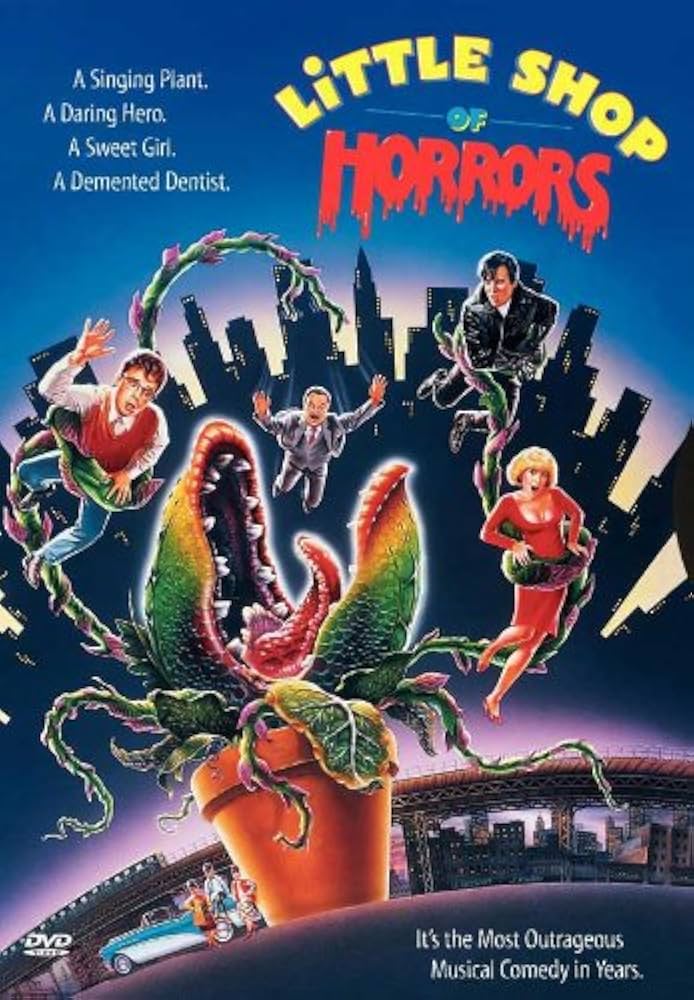


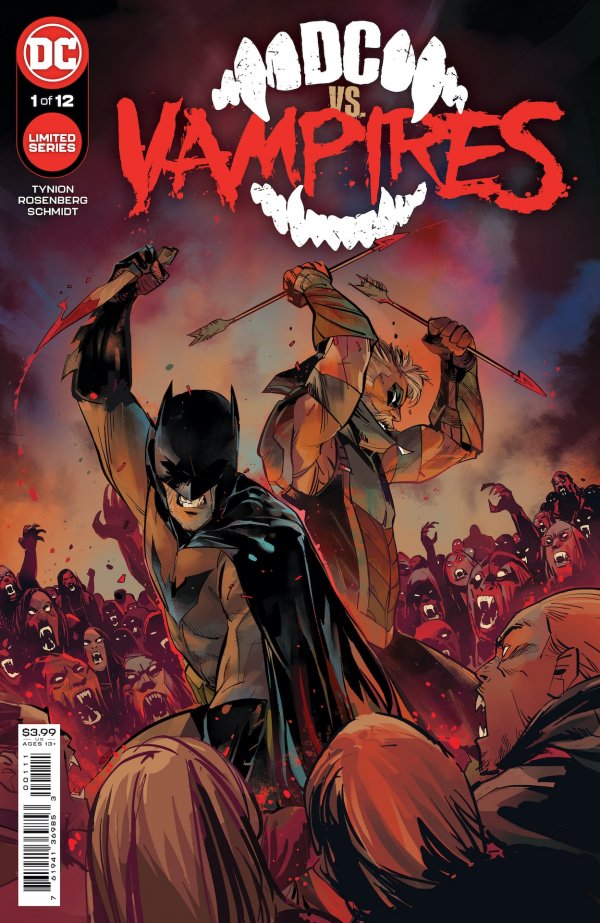



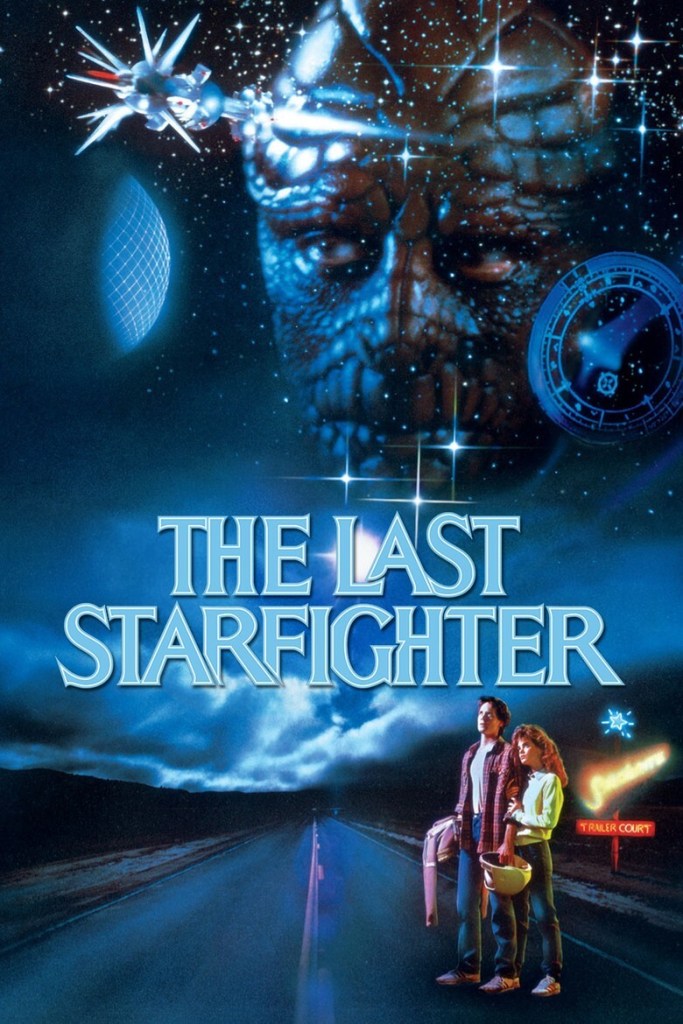
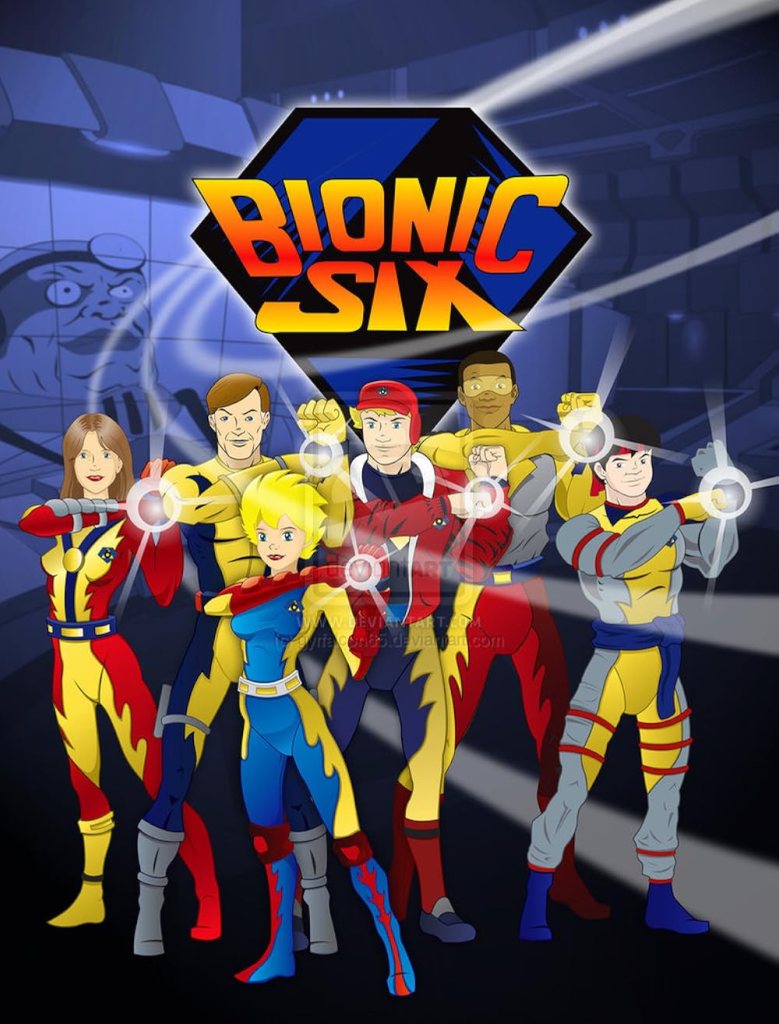


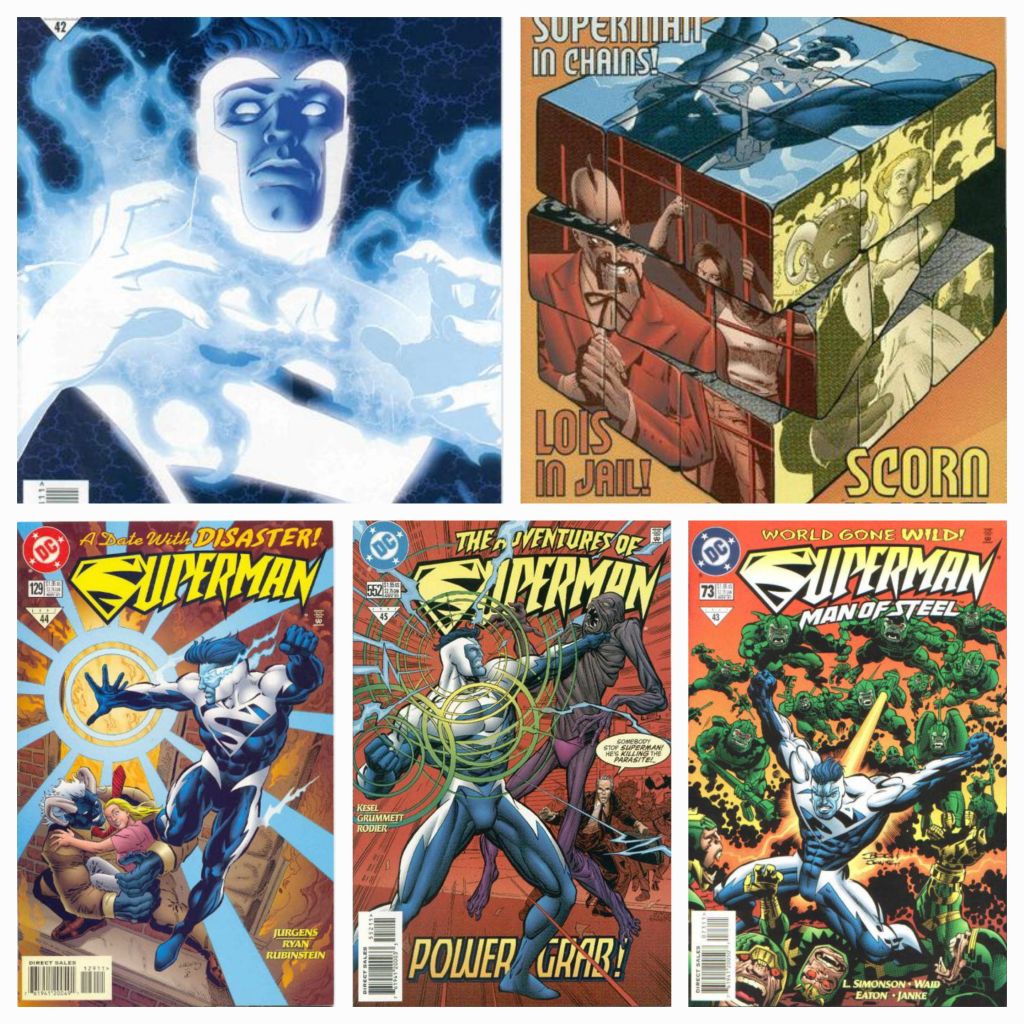


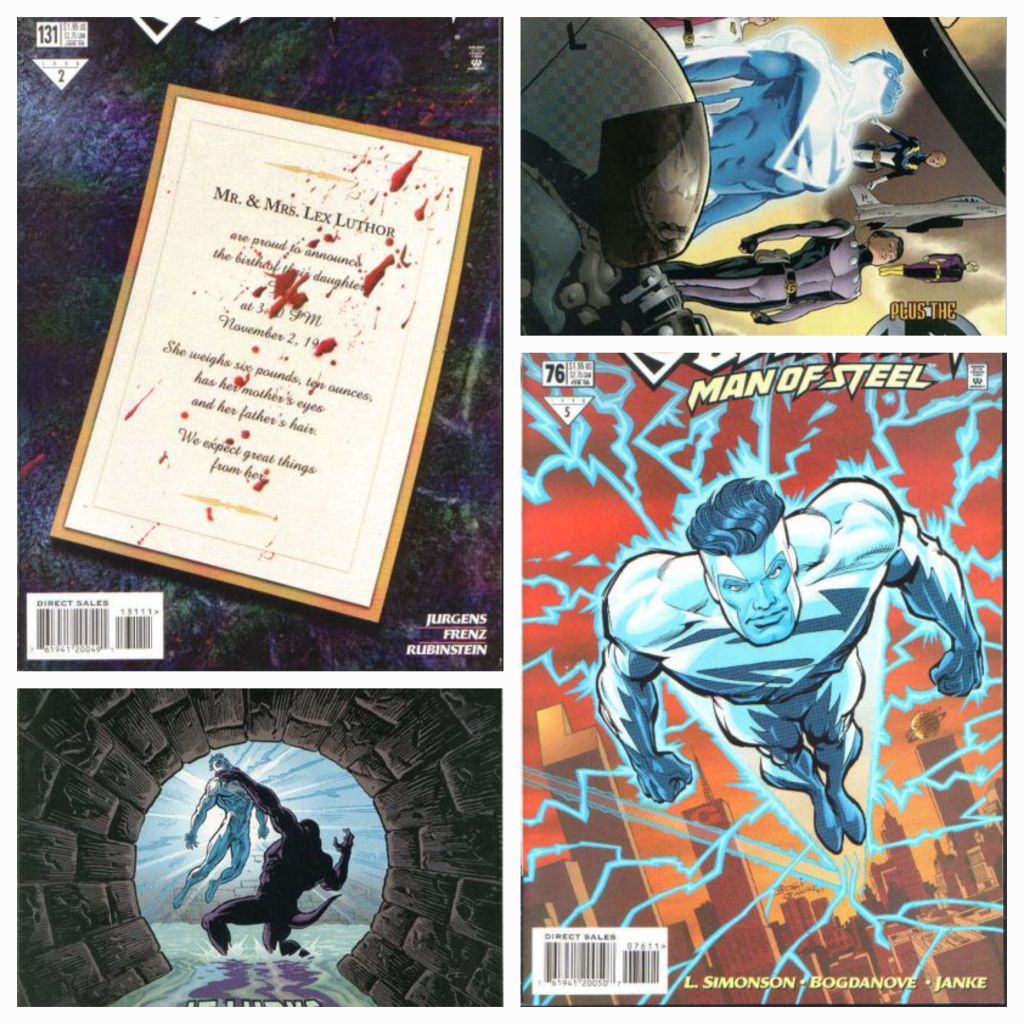
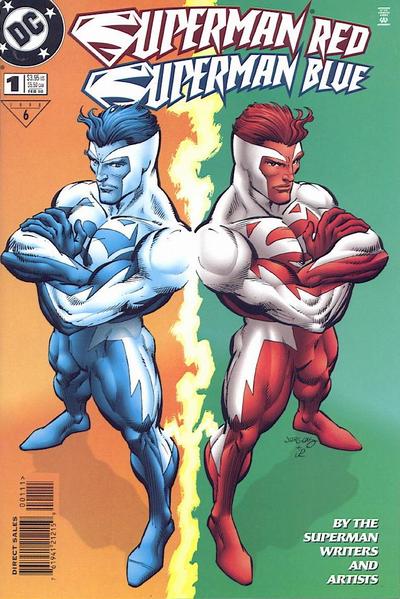


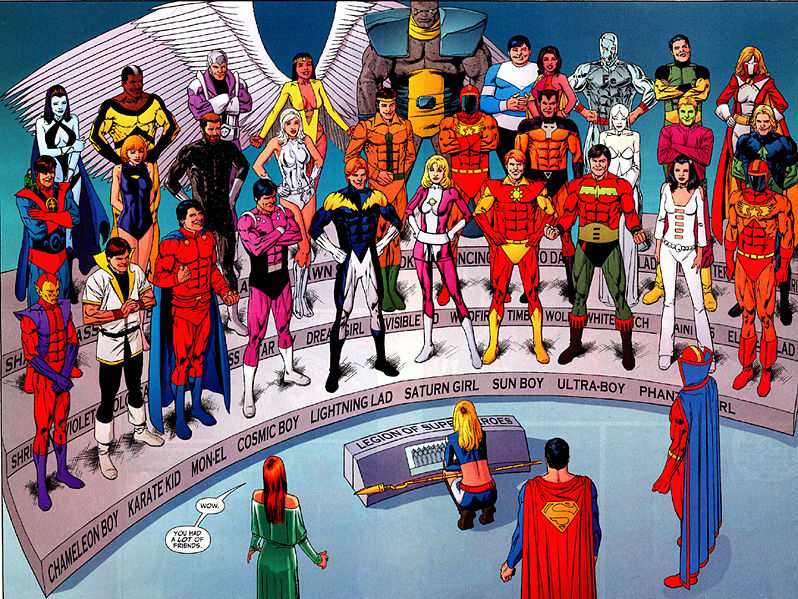


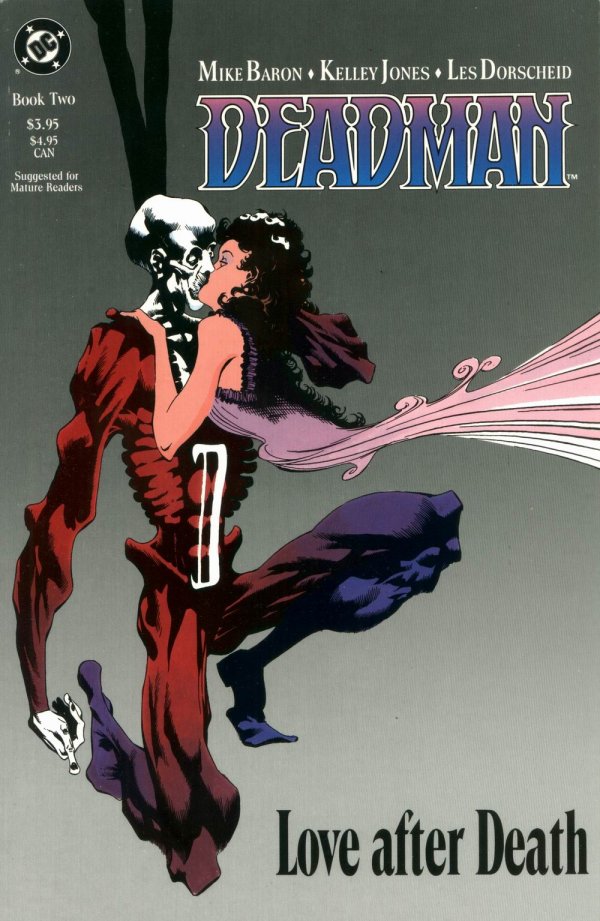


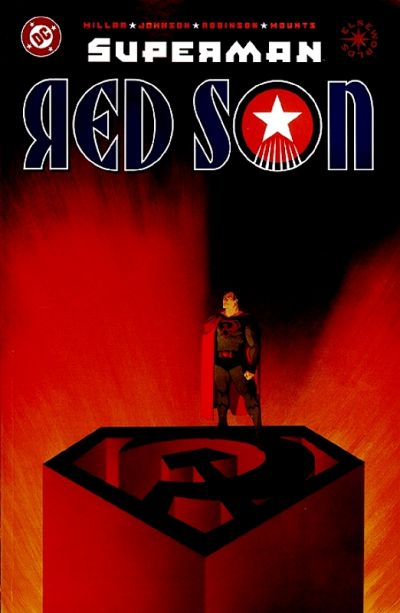


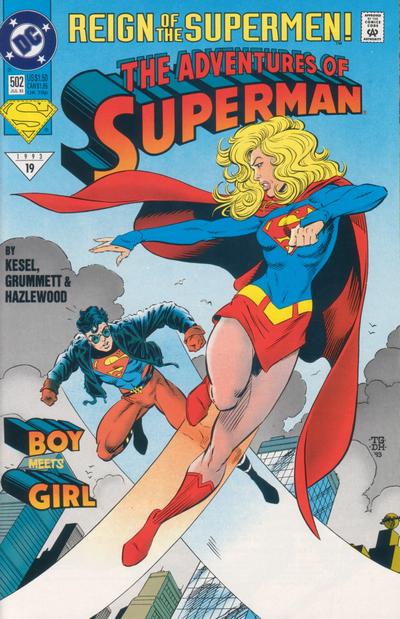
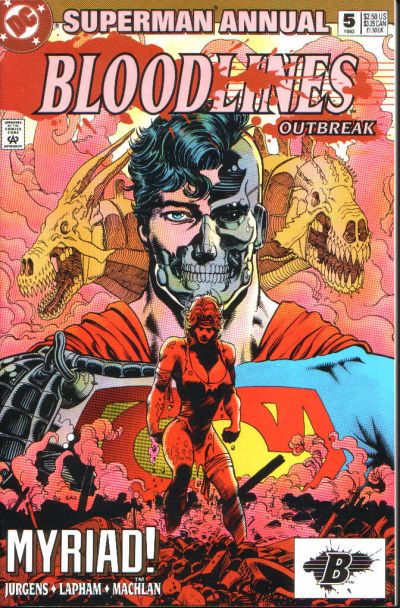


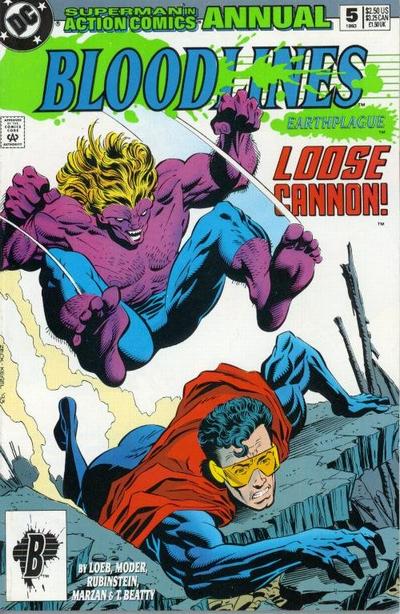
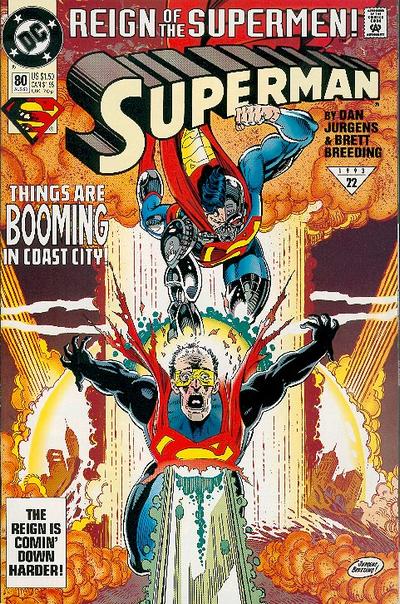
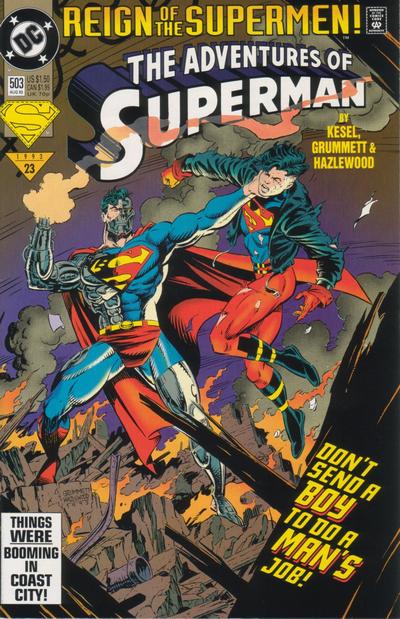


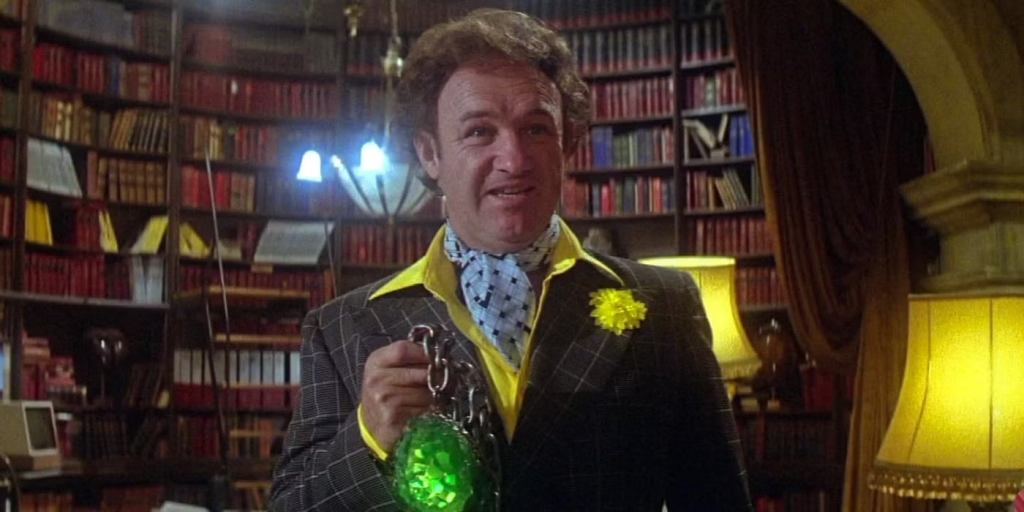


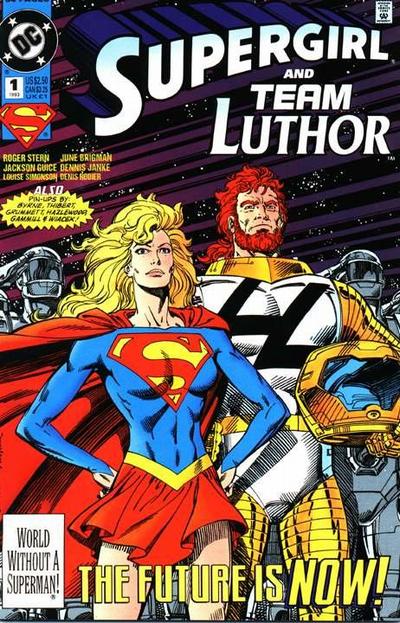
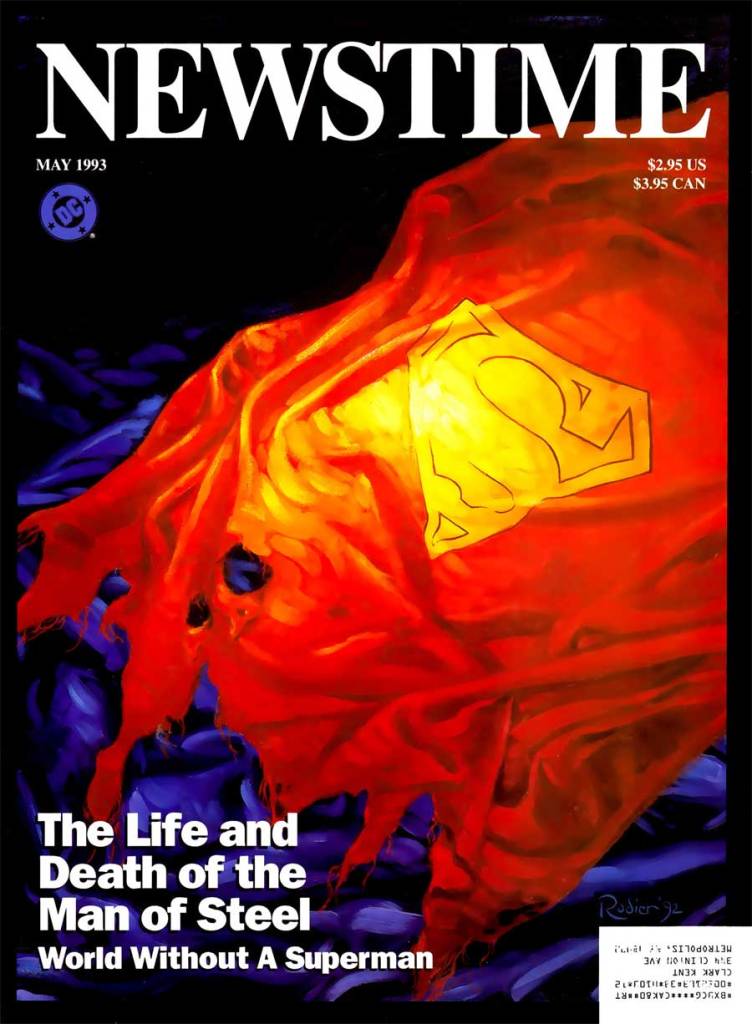





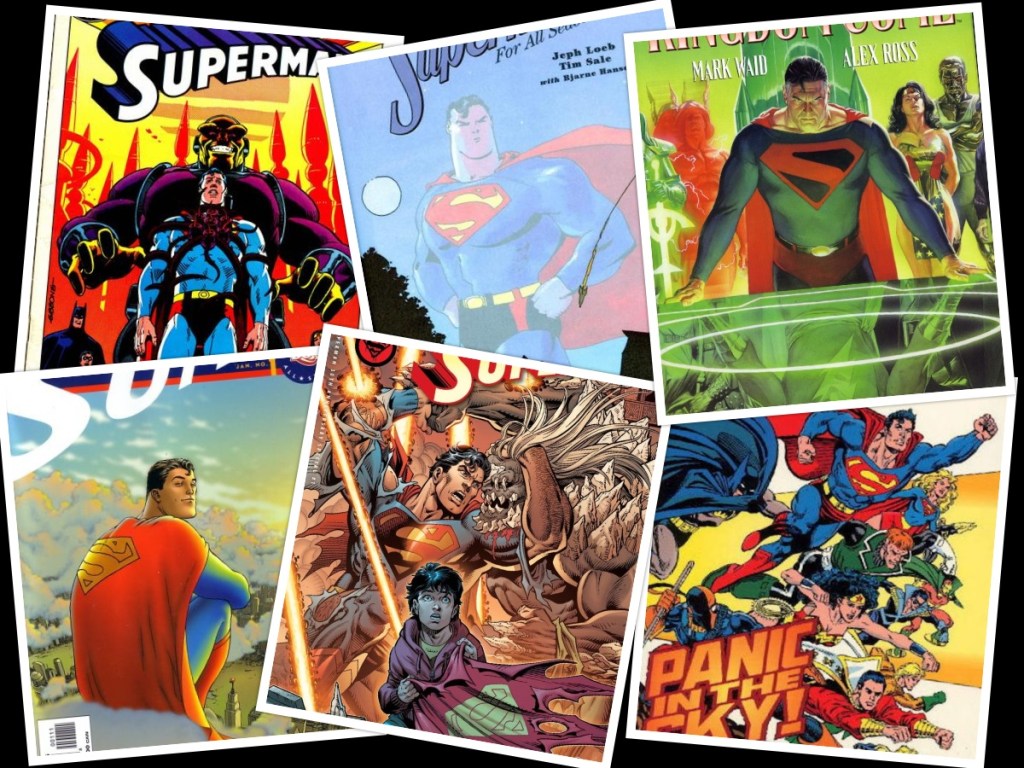


 Blake M. Petit