As my longtime readers know, every year just before Christmas I release a new, original short story as my annual gift to everyone who follows what I do. I’ve been doing it since the year 2000, and I have no intention of stopping anytime soon. This year’s brand-new story is called “Quality Control.” Ivy Cunningham is returning to her hometown of Quality, North Carolina, to take care of her aunt’s estate, only to find a town full of holiday hunks, single dads, and a logistically questionable winter carnival. Something is going on, but Ivy has no idea what’s really happening behind the scenes of this quiet little town.
Fans of Siegel City, this one brings you back to the universe of Other People’s Heroes and Twinkle, Twinkle for a little bit of holiday hijinks. And a tip of the hat to my lovely wife, Erin, for suggesting a better title than the one I had originally. Please, enjoy!
And if you’re new and haven’t read my previous Christmas stories, you’re in luck! There’s a full archive of them right here on my site, and most of the stories are free! Twenty-six previous Christmas stories — and ONE New Year’s story — await you right now!
As I write this it’s December 17, one scant week until Christmas Eve. And I don’t mind telling you guys, we need a little Christmas right this very minute. Don’t worry, I’m not gonna quote the entire song. I will, however, spend the next several days reading some of my favorite classic Superman stories set around the holidays. I’ll also tackle this year’s DC Christmas special, which I’ve been sitting on in anticipation of this week, and I’ll take a look at the third Krypto short, Package Pandemonium.
Comic:DC Comics Presents #67, DC Go! Holiday Special #7 (Bizarro), DC Go! Holiday Special #8 (Sunshine Superman)
Notes: I’m starting this week with one of my all-time favorites, a comic book I’ve loved since I was a kid and I go back and re-read pretty much every year at this time. DC Comics Presents was, of course, the Superman team-up book for much of the 80s, and in issue #67 Superman teamed up with the greatest hero of them all: Santa Claus.
In “‘Twas the Fright Before Christmas” (a title which I feel has probably been used and reused hundreds of times over the years), Superman happens to pass by a kid using a toy gun to try to hold up a sidewalk Santa Claus on Christmas Eve. Superman determines that the toy gun actually has a device that’s controlling the boy’s mind, and he whisks him off to the Fortress of Solitude to investigate. Superman breaks the mind control and the boy, “Timmy Dickens” (because Len Wein and E. Nelson Bridwell were not subtle writers) tells him how he found some of his Christmas presents early. Superman deduces that it’s the work of his old foe the Toyman, and bundles up Tim to bring him home. Just moments after he takes to the Arctic air, Timmy’s other toy blasts him with a ray that sends him crashing to the ground, unconscious. As Tim pleads with him to wake up, a group of tiny men with pointy ears appear as if from nowhere and take them both to safety.
Back in Metropolis, we see the Toyman monologing about how he found a chunk of white dwarf matter that he used to create heavy gravity, cancelling Superman’s powers, and believes him to be dead…but JUST in case (the Toyman may be crazy, but he’s not an idiot) he starts preparing a few other weapons. Superman, meanwhile, wakes up surrounded by his rescuers. When he asks where he is, his eyes clear and he sees Santa Claus standing over him, welcoming him to his top-secret workshop. He gives Superman a tour of the workshop, triggering memories in Superman of a holo-projector he played with as a baby, a gift from Jor-El that was lost when Krypton exploded. With Superman still weak from the gravity beam, Santa offers to give him and Timmy a lift back to Metropolis in his sleigh. They stop at Toyman’s hideout and Superman bursts in to stop his old foe, but between the earlier blast and Toyman’s Kryptonite-armed toys, the pushover of a villain turns out to be far more dangerous than usual. Santa drops down the chimney and lets some of his own toys out, and the tiny warriors help the Man of Steel defeat the Toyman in an epic battle. After the Toyman is taken away, Santa gives Superman safe toys to replace all of Toyman’s tainted gifts. As he finishes his rounds he’s about to take Tim home, but Tim’s toy blasts him again, knocking him out. He wakes up back in the arctic snow, Tim standing over him, and he believes the events of the evening to be a dream. But after he brings Timmy home, he returns to Clark Kent’s apartment to find a special gift in his cape pouch – the holo-toy his father made for him.
Usually, I despise the whole “It’s all a dream…or WAS it?” trope, but this is one of the few stories where I give it a pass. Part of it, I suppose, is the nostalgia behind it. I was probably ten or eleven years old the first time I read this story, and it’s as dear a holiday yarn to me as the likes of Rudolph and Frosty. There’s so much charm to it, and I just love Curt Swan’s depiction of Santa Claus. As much as he is one of the iconic Superman artists of all time, sometimes I wish he had gotten to do a Santa miniseries or something, just because his style lends itself so well to the character.
The story also plays on nostalgia as well, with Superman remembering the toy from Jor-El and thinking fondly of Christmases past. And while Superman’s initial skepticism about Santa DOES seem a little silly, considering all of the other outlandish things in the DC Universe that he knows are real (lest we forget, he has previously visited an alternate dimension occupied entirely by funny animals), they at least justify it by him saying that he would have seen Santa’s workshop at the North Pole if it existed and Santa casually telling him that nobody sees the workshop unless he WANTS them to. That whole “magic vulnerability” again, y’know?
This story, along with several other classics, was reprinted in 1988 in the first of two Christmas With the Super-Heroes specials. It was my first exposure to not only this story, but other classics like the Teen Titans “Swingin’ Christmas Carol” and “Silent Night of the Batman.” Both this issue and the entire special are – for once – available on the DC Infinity app, and if you want a little holiday cheer, it’s worth the read.
Dec. 18
Comics: Superman Vol. 2 #64, Adventures of Superman #487, DC Go! Holiday Special #12 (Super-Pets), DC Go! Holiday Special #13 (Bizarro)
Notes: This was probably the first Superman Christmas story I remember reading as an ongoing fan of the comic, surprisingly enough. I’d only come on-board 14 issues prior, during the Krisis of the Krimson Kryptonite, and there wasn’t a Christmas story the previous year. This one made up for it, though, with “Metropolis Mailbag” written by Dan Jurgens with art by the late Butch Guice. This story established something that we’ve come back to in the Superman titles a few times over the years: people send letters to him all the time and they pile up in the Metropolis post office, as he doesn’t actually have an address. Then, a few days before Christmas, he comes by and reads and responds to as many of them as he actually can.
The task of reading the mail is arduous for Superman, the hero who wants to help everybody and sees the mountains of letters as a visual representation of all the desperate people beyond his help. This year, at least, he has a little company, as Lois is joining him in reading the letters so she can write a story about Superman’s tradition for the Daily Planet. After sifting through fan letters and get-rich-quick schemes, he starts to sift out the people he can actually help, such as an Auschwitz survivor who has discovered that the sister whom she thought died in the war is still alive, but she has no means to get to Germany to see her. The triumph of their reunion is quickly dulled, however, when he finds another letter from a boy whose father is dying from a brain tumor. Superman visits the child in the hospital, arriving just minutes after Terry Baldwin Sr. passes away. Although Mrs. Baldwin is grateful that he came, Terry Jr. – who wrote the letter – is outraged. Superman sits with the boy and tries to explain himself, but he’s not having it.
“But you’re SUPERman!” Terry shouts.
“No. I’m SuperMAN. And there are many, many things I just cannot do.”
After a few weepy panels (both for the characters and the reader), the doctors come by to ask Mrs. Baldwin if her husband was an organ donor. Superman, sensing an opportunity to take some good from this tragedy, tells her about a letter he received earlier from another woman in desperate need of a heart transplant. In what can only be categorized as a Christmas miracle, Baldwin’s heart is a perfect match, and Superman swiftly delivers it.
One last letter comes from a charity for disadvantaged kids that can’t afford Christmas presents or a Santa Claus this year, asking Superman to make an appearance to distract them from the lack of toys. As always, Superman does it one better with the help of his friends. Emil Hamilton whips up a sleigh and plays Santa, delivering a load of toys donated by one Mr. Bruce Wayne. Superman flies the sleigh down to visit the kids, incognito, and slips away before any of them suspect that they’ve witnessed anything other than Christmas magic.
This issue has been a favorite of mine for decades now. It’s a sweet, simple extrapolation of who Superman is and what would likely happen in a world where he existed – a mountain of pleas for his attention, of course, and the way he tries to handle as many of them as possible.
The story also humanizes Superman in ways that few other stories do. It’s natural enough to see him in pain over all the people he simply cannot help – that’s just part and parcel for who a Superman should be. But the panel where he’s arriving at the hospital, unable to save Terry Sr., cuts right into the gut. Jurgens has him pause for a moment on the hospital roof before going inside, thinking about the boy whose world he’s about to shatter, thinking, “I hope he understands. I hope he won’t hate me.” You read this panel, Guice drawing Superman’s face in shadow, and you’re not hearing the voice of the world’s greatest hero. You’re hearing a very human man who loves people, who desires connection, and allows a very relatable moment of despair at the thought that he’ll be blamed for something beyond his control. It’s one of those single panels that encapsulates the character just beautifully.
The story worked so well that it was revisited a few times, most notably one year later when Superman was “dead” after his battle with Doomsday and the rest of Earth’s heroes picked up his mail and dealt with it in his honor. But this original did it best. It’s a perennial read for me, a work of art, and it is as Superman as Superman gets.
Fri., Dec. 19
Comics: New Adventures of Superboy #39, DC Go! Holiday Special #19, 20
Notes: It’s the last work day of the year for me, and honestly, I’m ready for it. I need some time to decompress, although I fear terribly that those circumstances I keep talking about are going to do their best to prevent such decompression in the home stretch of the Year of Superman. Still, I spent Thanksgiving with Superboy, so I’m bringing him back for one last go today in “A World Without Christmas” by Paul Kupperberg and Kurt Schaffenberger.
It’s Christmas Eve in Smallville, but Clark’s classmate Bash isn’t feeling it. Bash – whose parents had to go out of town unexpectedly, leaving him alone – rants against the commercialization of Christmas and storms out of the Kents’ Christmas party. Clark heads after him, approaching him as Superboy, figuring that Bash would be more receptive to him that way. It doesn’t work – Bash continues to rail against the world. Playing a little Dickens, Superboy whisks Bash to an alternate reality where there is no Christmas, and Smallville is a dilapidated dump. Bash encounters that world’s Clark Kent, who runs away from him in fear, summoning an angry mob that’s out for blood, wanting to drive out the “costumed stranger” and the “Bashford Punk” from town. The two are separated, and Superboy is found by that world’s Jonathan Kent, one of the few decent people left. He takes Superboy to an underground hideout where, to Superboy’s shock, he finds Bash teaching Jonathan’s friends to sing “Silent Night.” Superboy takes Bash back home, his Christmas spirit renewed, neither of them ever learning that the leader of Jonathan’s resistance is that world’s Bash Bashford.
It’s a different kind of Christmas story, that’s for sure – kind of bleak and melancholy. Although I suppose the ultimate message is that good can be found anywhere, which is appropriate enough for the Christmas season. I’ll allow it.
Sat., Dec. 20
Short Film: Krypto Saves the Day: Package Pandemonium
Notes: It’s the third of the four Krypto shorts, this time giving us a warm, fuzzy tale of absolute chaos that feels delightfully appropriate for the holiday season. It’s Christmastime in Metropolis, and while Clark is sending out his Christmas cards, Krypto’s X-Ray vision happens to spot a postal worker carrying a package with a mouthwatering t-bone steak. Hunger overwhelms Krypto’s urge to be a good boy, and calamity ensues.
Okay, three cartoons in and I think it’s safe to say that this is the pattern for the Krypto shorts: he gets the urge to chase something for some reason, he causes lots of wacky shenanigans in his pursuit, and in the end he realizes he’s made a mistake and does his best to fix all the stuff that he’s wrecked. Yeah, it’s formulaic, but is it really any more of a formula than the classic Coyote and Roadrunner or Tom and Jerry shorts? They’ve all got their patterns, the real question is whether the filmmakers can find a little variety and a little fun while staying within the bounds of the formula. And I think this one does. The chaos is funny and Krypto’s remorse at the end feels genuine. Plus I’m still chuckling over the fact that Metropolis has a store literally named “Oversized Ornaments Outlet.”
Sun., Dec. 21
Comic:DC Special Series #21
Notes: Today I’m grabbing another old favorite from DC Special Series #21, aka the Super-Star Holiday Special. This book from 1979 featured several stories starring Jonah Hex, Batman, Sgt. Rock, and the House of Mystery. The one I’m reading this for, though, is Superboy and the Legion of Super-Heroes in “Star Light, Star Bright…Farthest Star I See Tonight!”
Superboy is bouncing forward in time for one of his regular visits to the Legion just in time for Christmas. His friends show him some of the futuristic holiday celebrations, and Superboy is left feeling nostalgic for a simple, old-fashioned Christmas. Then, to make all the Legion’s futuristic technology worthwhile, he proposes a little adventure: using their tech to try to track down the Star of Bethlehem. With Wildfire, Lightning Lad, Saturn Girl, and Phantom Girl joining him, the Legion sets out to look for the star. When they arrive where it should be, though, they find a planet in dire straights. The planet is entering an ice age, causing its three intelligent species problems. An aquatic race is dying because the plankton they feed upon is freezing. A land-dwelling mammalian race is so desperate for warmth that they’re setting fire to their own crops. Finally, ice storms are battering the nests of an avian race, threatening the eggs that hold their young. The Legionnaires help each of the tribes but know their aid is only temporary, until Superboy comes up with a plan. Together, the Legion uses their powers to carve out an underground catacomb where the three races can shelter from the storm and coexist with one another, sharing resources and warmth until the United Planets can find a way to safely evacuate them to a more suitable world. Although Wildfire remains characteristically skeptical, Superboy is happy to credit his quest for the Christmas star for saving an entire world that Christmas Eve.
The first time I ever read this story, like the DC Comics Presents story from a few days ago, was when it was reprinted in Christmas With the Super-Heroes from 1988. Dang – maybe I should have just read that book this year. But regardless, I really like the message here. The story is a bit light on traditional Christmas elements: no Santa Claus, no Angels, no carols or candy canes. Despite that, though, writer Paul Levitz leans on the spiritual aspects of the holiday even 1,000 years in the future, set against the backdrop of a story that feels like it could have come out of an episode of Star Trek. It’s not something that many writers would do today…in fact, more recent Legion stories have mashed all of the Earth’s winter festivals into a bland, homogenized “Holiday” (which is actually what it’s called), whereas Levitz recognizes and celebrates different traditions: while the story is explicitly a Christmas tale, we see other alien cultures, as well as other Earth festivals like Chanukkah, which is celebrated by Colossal Boy (whose Judaism isn’t frequently referenced, but it’s not ignored either).
I particularly like how Superboy has this sort of childlike wonder to him. He’s never got a hint of doubt that their quest will bear fruit, and although he doesn’t exactly find what he expected, the fact that his curiosity helped save three intelligent civilizations is evidence that he was right all along.
Although only the final story in this special is Superman related, the others have a lot going for them as well. The Jonah Hex story cracks open Jonah’s childhood to show the horrible cycle he’s trying to escape, the Batman story has some early Frank Miller art, and the House of Mystery is a wild little romp where most (if not all) of DC’s horror hosts of the era get into a little contest to see who can tell the best Christmas story. The special is available on the DC Universe Infinity app, and it’s worth cycling into your yuletide reading.
Mon. Dec. 22
Comic:Superman Vol. 2 #165, DC Go! Holiday Special #26, 29
Notes: I don’t talk about cover art often enough in these write-ups, but let’s take just a moment to appreciate this lovely little scene by Ed McGuinness: Superman and Lois looking down at a box of ornaments as Superman ponders that most inscrutable of holiday questions: what do you get the JLA for Christmas?
The story within, unfortunately, is somewhat less effusive with the holiday cheer. Written by Jeph Loeb, this story takes place in the aftermath of the election of Lex Luthor as President, with Superman struggling to wrap his head around the fact that such a thing could have happened. The issue is a series of vignettes, each by a different artist, in which he visits a member of the League, has largely the same conversation over and over again, and then gives them a token Christmas present. Some of them, like Green Lantern’s gift, are a bit of a gag, while others like Wonder Woman’s belie a deeper meaning.
I get the intent behind this issue. The President Luthor story was a big one, and it makes sense for Superman to struggle with it, even to the point of a mild existential crisis But in practice, this issue comes off as very repetitive, with each Leaguer’s respective stance being highly predictable. The rotating artists thing doesn’t work great either. Some of the scenes are sublime – having the late Mike Wieringo illustrate an outer space game of Satellite Baseball between Superman and Kyle Rayner is just lovely. Others are less so, but I suppose that Loeb was a big enough name at the time to want to work with his friends, and I can’t in good faith begrudge him that.
All said, despite the premise of this issue being that Superman is delivering Christmas presents to his teammates in the Justice League, this is probably the least Christmasy story I’ve read this week.
But again, that cover is a banger.
I had more fun with the DC Go! Holiday Special #29. This digital series has mostly taken short stories from the assorted DC holiday anthologies of the past and re-presented them one at a time in their “Infinite” format, so they aren’t new stories, but I honestly don’t remember where most of them were originally presented. In this case, we’ve got “A Lex-Tacular Christmas Carol” by Ethan Sacks with art by Soo Lee. It’s one of a thousand takes on the ol’ Dickens chestnut, but it’s an entertaining one. After sending an employee (named Bob, naturally) off to spend his Christmas Eve working instead of spending time with his family, Lex sets out to have a good night’s sleep, only to find himself visited by a variety of familiar spirits. Just when you think you’ve seen every iteration of A Christmas Carol that you could think of, you get hit with something like this. Whereas most of our Scrooge stand-ins go through the requisite character arc, Lex is utterly nonplussed about the ghosts. Even his own father as the stand-in for Jacob Marley doesn’t make Lex bat an eye, merely comparing his current appearance to what he looked like when Lex – y’know – murdered him. Sacks DOES give in to tradition just a hair at the end, but all in all, Lex makes for them the most delightfully unrepentant Ebenezer Scrooge you could possibly imagine.
Tues., Dec. 23
Comic:Batman and the Outsiders #19, DC’s I Saw Ma Hunkel Kissing Santa Claus #1, Titans Vol. 4 #30 (Guest Star Jon Kent)
Notes: I like it when Superman pops up as a guest star alongside other, younger heroes. It’s a good way to see just how he’s perceived by the hero community at large, and this Christmas story from Batman and the Outsiders #19 serves that purpose well. On Christmas Eve, Geo-Force (arguably the most powerful member of Batman’s mid-80s team) is with the young Halo when gets a phone call from a friend who has swallowed a bottle of pills. After getting the young woman, Denise, to medical attention, Geo-Force discovers that she was driven to this desperate situation after being sexually coerced by one of her college professors. Geo-Force sets out to kill the professor and Halo rushes off to Batman for help. Recognizing that he can’t possibly stop Geo-Force on his own, Batman makes a call to Metropolis. As Superman and Halo seek out Geo-Force, hoping to stop him before he does something he can’t take back, Batman uses his own skills to attack the lecherous professor in his own way.
Several things worth mentioning in this one. First, when Batman quit the Justice League and founded the Outsiders (a whole 19 issues ago) it caused a rift between himself and Superman that all of their assorted titles dealt with for months, particularly the title they co-starred in, World’s Finest Comics. The fact that Bruce immediately calls Clark for help when he realizes what Geo-Force is up to is a wonderful way to demonstrate that the rift has largely been healed at this point. It’s also cute to see Halo mooning over Superman when she meets him for the first time. The “young heroine gets a crush on Superman” trope wasn’t new even when this book was published in 1984, and often it gets tiresome. It works quite well with Halo, though – she’s a teenage girl who is struggling with assorted identity issues of her own while, at the same time, still dedicated to being a hero. She’s also the kind of person whose heroism shows brightly, cheerfully – she may be a member of Batman’s team, but she’s not the kind of hero who sulks in the shadows.
The Geo-Force fight is the really interesting part of this story, though. It’s often tempting to enact what TV Tropes calls “the Worf Effect” in stories like this one – having a character who should theoretically be much more powerful than his opponent suddenly become weak or ineffective. It’s an annoying trope, and when you hear “Superman Vs. Geo-Force” (who’s very much a rookie at this point) it doesn’t seem like it should be a contest. But Geo-Force not only holds his own, but writer Mike W. Barr sells you on its plausibility. Superman’s powers are, after all, due in part to the lower gravity of the Earth, and since part of Geo-Force’s powerset is the manipulation of gravity, it allows him to balance the playing field considerably, making for a more tense battle scene.
Despite the dark undercurrent of this story, the presentation at the end feels hopeful and bright, which is just what you want in a Christmas story, isn’t it?
Also on the docket today is this year’s DC Comics Christmas special, I Saw Ma Hunkel Kissing Santa Claus. (Again, and I cannot emphasize this enough, whoever it is in the DC marketing department that’s coming up with the titles for these holiday anthologies deserves a raise.) There are eight stories this time out, and I particularly liked the opening story starring Ma Hunkel herself, as well as the tales with Billy Batson, Animal Man, and Dr. Light. But I’m here to talk about the Supergirl story, “Holiday Woes” by Ash Padilla with art by Anthony Marques. Kara is spending Christmas in Smallville with Lois and Clark – her first since declaring herself the protector of National City, and she’s nervous that if she takes time away from her tasks as a superhero, people in her town will go undefended. But Clark wants her to loosen her up, and sets her up on a blind date at the Smallville Winter Festival. As is to be expected from a blind date in a comic book, things don’t go exactly as planned.
I’ll knock out the thing I didn’t care for: the retcon of Pete Ross’s son. As recently as the Summer of Superman special early this year, we saw that Pete and Lana’s son Clark Ross is still in continuity and still a child. A teenage son named Jonathan Ross doesn’t fit in anywhere here. Now it’s easy enough to dismiss the story as just being out of continuity, as the stories in these holiday specials rarely turn out to have any ongoing relevance. But in this case, darn it, I WANT this story to turn up again. The truth about Kara’s date is really sweet, and the kind of thing that appeals to an old-school fan like myself. (And truth be told, I’d like to see Dr. Light team up with the Atom again the way they do in this issue. What can I say? Like Clark Kent in this story, I love love.)
Notes: I’m going to wrap up this festive week with some Golden Age Goodies, beginning with what I have to assume is the first ever Superman Christmas one-shot, Superman’s Christmas Adventure from 1940. Lois and Clark convince their editor to begin a campaign to collect and refurbish used toys to give to needy children for Christmas. News of this campaign makes it all the way to the North Pole, where Santa is pleased to see that Lois and Clark are acting as his helpers this year. But a pair of villains who hate Christmas – Dr. Grouch and Mr. Meany – have sent a ship to the Pole where they try to convince Santa to convert his workshop to a commercial enterprise. Failing, they attack the Planet’s toy drive, setting the workshop on fire, with it only being spared thanks to Clark’s super-breath. Foiled again, they decide to attack Santa’s workshop directly, only to be driven back by his army of toy soldiers. Lois has stowed away on their ship (because of course she has) so they strap her to a rocket and blast her into the sky, where Superman rescues her. The villains split up, with one of them kidnapping Lois (again) and the other stealing Santa’s reindeer – a crime that statistically is far greater than stealing forty cakes. Santa radios Superman for help, and although he saves the reindeer, Grouch and Meany manage to gas them to sleep, rendering them unable to pull Santa’s sleigh. Superman, of course, steps up to help the big guy make his rounds.
This 16-page comic, originally published as a department store giveaway, is absolutely wild. It ends when Santa gives the bad guys Christmas presents, despite the fact that they quite clearly belong on the naughty list, and this makes them instantly reform and give up evil. Really, that’s all it takes. And I didn’t even mention the two-page sequence where Superman takes a spoiled rich kid on a tour of the less fortunate children of Metropolis to make him appreciate what he’s got and teach him the spirit of giving. That has NOTHING to do with the main plot. This story is wild, unfocused, a plot seemingly assembled by shotgun. And I of course loved every panel. Here’s hoping that Tom King is working on the gritty reboot of Grouch and Meany for next Christmas.
Action Comics #93 brings us “Christmas Around the World.” It’s 1945, and in the aftermath of World War II, Lois and Clark find an abundance of refugee children separated from their families during the war. Superman, of course, loads them up in a glider and begins a world tour, delivering food and supplies to impoverished areas while, at the same time, reuniting the children with their families, and spreading Christmas spirit along the way. It’s an odd little story. There’s no villain. There’s not even really any conflict. The closest we have is one boy who lies about wanting to go with Superman to be reunited with his father, but who only didn’t want to make his friends (whose fathers died in the war) feel bad. It’s just a little picture postcard of a world healing itself after its darkest hour.
I’m going to wrap up this week of yuletide joy with Action Comics #105, a comic so stuffed with holiday cheer that I am currently wearing a t-shirt with the cover on it. Millionaire Jasper Rasper is a mean man who hates Christmas. He sneaks off to the North Pole and tempts Santa with some candy that is specially formulated to make fatty tissue multiply at an alarming rate. When Superman gets wind of the scheme, he rushes to the Pole to find that Santa is now too plump to make it down the chimneys on Christmas Eve. Superman begins whisking Santa around the world on an exercise tour, slimming him back down. As he’s about to head out, though, they find that Rasper ALSO drugged Santa’s reindeer (Santa needs to step up his security detail), so Superman agrees to pull that ol’ sleigh again. As they’re making their way south, they see that Rasper’s helicopter crashed on an iceberg. Superman saves him and the villain, just like our pals Grouch and Meany, has a miraculous change of heart.
Just when you think you’ve seen every Christmas story possible, we get a gem like “Villain makes Santa Claus too fat, so Superman becomes his fitness instructor.” It’s a magical time.
I hope you’ve enjoyed this week of holiday adventures friends, and I hope you and yours have the merriest of Christmases. And I hope to see you all next week, on New Year’s Day, when I’ll present the grand finale of my Year of Superman.
The perennial debate of “Is Die Hard a Christmas movie” is, let’s be honest here, pretty tired at this point. We’ve all talked about it until we’re as blue in the face as Cold Miser, and nobody is changing anybody’s opinion. Even the edgelords who take it as an excuse to classify anything with so much as a single strand of tinsel as a “Christmas movie” in an effort to see who can come up with the most outlandish example (that would be those who call Star Trek: Generations a Christmas movie on the grounds that Picard has a single scene in which he hallucinates having a family at Christmas time) have gotten tired of the argument. This year a new one has cropped up: “Why haven’t they made any good Christmas movies recently?”
An absurd question — Christmas movies have clearly never been better.
I’ve actually seen this posited several times recently from various different sources, and I guess “There are no new Christmas movies” is at least a DIFFERENT debate than the Die Hard one, although it’s even harder to make a legitimate argument. The first time I heard it, I hopped on my TikTok feed and ran through a list of good Christmas movies from the past decade, with everything from family fare like The Christmas Chronicles to horror movies like Krampus. Since I made the video I also got around to watching the 2024 adaptation of Barbara Robinson’s The Best Christmas Pageant Ever, and I thought it was absolutely lovely.
As I saw this debate go on and on, though, I noticed a disturbing trend. As people bemoaned the dearth of new movies, they kept asking for movies that stack up against classics like…Elf. And you know, I like Elf. It’s probably Will Ferrell’s best movie. But should that be the go-to example of the last great benchmark Christmas movie?
Or movies like Jim Carrey’s How the Grinch Stole Christmas. Okay, now my hackles are starting to bristle. I do not care for that movie, I don’t think it deserves any mention among the classics, but I can accept that different people have different tastes, right?
As the examples kept coming, I realized that none of the “old” movies these people were citing were movies that I – as a certified old person – would have considered OLD. The oldest movie that these fans kept referencing, in fact, was The Santa Clause from 1994. (It’s a good movie, but it has a special place in my personal hatedom for being the film responsible for making so many people misspell Santa Claus’s name every damned year.)
When people call this movie “old” they sound the same to me as Tom Holland trolling Robert Downey Jr.
These people, the people who are begging for new Christmas movies – which is fair – haven’t even finished watching the OLD ones. Seriously, they’re not even throwing in movies from the 80s like A Christmas Story or National Lampoon’s Christmas Vacation into their blender of Christmas classics. Even 1990’s Home Alone seems to be outside of the bubble. How is that POSSIBLE?
That’s a rhetorical question, of course, I know exactly how that’s possible. I am a high school teacher, I spend the majority of my time around teenage American human beings, and I know that a chillingly high percentage of them believe that western civilization began in October of 2006 with the release of Taylor Swift’s first album. The truly cultured – a term which here means “goths” – can see back to 1993 and The Nightmare Before Christmas.
But the movies that I consider classics? Completely missing from their sphere of reference.
So my friends, this is my plea to you this year: reach out and try to educate your children with the true greats. I know it won’t necessarily be an easy sell. Put on a black and white movie like It’s a Wonderful Life or Miracle on 34th Street and a lot of modern kids (and let’s be honest – a lot of modern adults) will roll their eyes back, finding it as incomprehensible as hieroglyphics. But they’re going to miss out not only on great movies, but on some of the stories that have fundamentally shaped the modern tropes of Christmas. Think about it – how many movies and TV shows have referenced those two movies I mentioned? How many versions of A Christmas Carol are there? And look – as far as Christmas Carols go, we all know that the Muppets did it the BEST, but that doesn’t mean there weren’t good ones BEFORE it.
Kids these days need a Rosetta Stone to watch these movies.
How about The Bishop’s Wife from 1947? David Niven plays a clergyman desperately working to build a new cathedral, but his struggles are straining both his family and his faith. Enter Dudley, an angel with the inimitable charm of Cary Grant, who shows up to help out…only the Bishop thinks Dudley is there to replace him. It’s a lovely movie – sweet, funny, and it’s the sort of thing that will remind you why Cary Grant must be front and center in any conversation about the greatest movie stars of all time.
Or how about Jimmy Stewart’s OTHER great Christmas movie, The Shop Around the Corner from 1940? Stewart and Margaret Sullavan are employees at a tiny gift shop during the Christmas rush – two people who bicker, antagonize, and basically cannot stand to be around each other. Neither of them realizes, of course, that the anonymous pen pal they’ve been sending letters to and falling in love with is that person at work who drives them crazy. The movie was updated and remade with Tom Hanks and Meg Ryan as You’ve Got Mail, although that version drops the Christmas cred. At the risk of sounding saccharine, it’s the sort of movie that made people believe in true love during a dark time when everyone needed it. For bonus points, the shop owner is played by the Wizard of Oz himself, Frank Morgan.
In 1951, Bob Hope starred in The Lemon Drop Kid, a story of a small-time con man who accidentally cheats a gangster out of a massive win at the track. The Kid is given until Christmas to pay up, and he cooks up an elaborate scheme involving sidewalk Santas pretending to collect money for elderly widows. Fortunately, as is to be expected in a film of this nature, the spirit of Christmas steps in before things go too far, and the movie gets the requisite happy ending, although perhaps not in the way that a modern audience might expect. And as a little yuletide trivia, this movie is also the original source of the classic Christmas song “Silver Bells.”
Boys in the 60s believed in Santa a lot longer because they thought his helpers looked like this.
Of course, eventually Christmas movies DID start to show up in color. I think it’s safe to say the first truly great color Christmas film was White Christmas from 1954, featuring Bing Crosby and Danny Kaye as a pair of entertainers who fall in love with a pair of sisters. Less iconic but still enjoyable was Disney’s Babes in Toyland from 1961, starring Annette Funicello and Tommy Sands as a pair of fairy tale characters who get embroiled in the schemes of a vile villain who wants to marry Annette (which was 100 percent relatable in 1961). The kids flee to Toyland, where Santa’s toys are all made. The movie is a technicolor bonanza, with more bursts of hue per minute than an explosion in a kaleidoscope factory. It also happened to be a favorite of my mother, who watched it with us countless times when we were kids, so that’s no small part of why I think of this movie so affectionately. And like The Shop Around the Corner, this movie sports an Oz alumni: Ray Bolger turns in his kindhearted Scarecrow persona for the sleazy, scummy Barnaby.
In 1978, there was the Star Wars Holiday Special.
Peeking over the bathroom stall: holiday cheer!
In 1983, John Landis brought nascent stars Eddie Murphy and Dan Aykroyd to the screen in Trading Places, a comedy about a businessman and a street con artist who get swept up in a bet by a pair of cold-hearted millionaires. They pluck Aykroyd out of his affluent life and give it to Murphy, but the two of them come together and decide to turn the tables on the people who’ve been using them. This is one of those “is it a Christmas movie” films that often enter the debate. It takes place at the Christmas season, although unlike most Christmas movies, the story actually reaches its climax AFTER Christmas. But it’s funny and poignant, and you can definitely see why Eddie Murphy was going to go on to be one of the biggest stars of the decade. This isn’t one to watch with the kids, but it IS one to watch if you’ve never seen it before.
Let’s see Billy Bob Thornton do this.
And although some people dismiss it, I have a very warm spot in my heart for Santa Claus: The Movie from 1985. David Huddleston is, in my mind, the definitive on-screen Santa Claus: warm, jolly, cheerful, and kind, with exactly the stature and voice that I imagine when I close my eyes and think about St. Nick. The movie was produced by the Salkinds, who also produced the Christopher Reeve Superman movies, and in fact the plot is almost a direct lift from the first one. The first half of the movie is concerned with Santa’s origin story, then there’s a time skip to the present day where the villain is introduced (played by John Lithgow chewing so much scenery they must have had to stage an intervention) and the real plot plays out, with a battle between Santa and the corrupt toy executive B.Z. for the hearts of the worlds’ children. Interestingly, like The Fifth Element, this is a movie in which the hero and the villain never actually meet each other.
When this movie came out I was the same age as my son is now, and that makes me think it’s time he and I watch it together.
These are only feature films, incidentally. I haven’t even dipped into the vast back catalogue of theatrical shorts (like the Donald Duck-starring Clock Watcher and Toy Tinkers, the Looney Tunes classic Gift Wrapped, or the Popeye cartoon Mister and Mistletoe), or the mountain of TV specials from the likes of Rankin and Bass, the Peanuts crew, or our friends at Hanna-Barbera.
It is both fair and legitimate, my friends, to want new Christmas movies. I want them too. I look for them every year, and I agree that unless you’re looking at the Hallmark Channel there aren’t nearly enough being produced. (And if you are looking at the Hallmark Channel, be honest, your primary concern isn’t finding something NEW.)
However, if you’re searching for Christmas spirit, it would behoove you not only to look at the films since the turn of the millennium. Go back in time and rediscover the classics, the hidden gems, and the movies that have fueled Christmas for generations now.
Blake M. Petit is a writer, teacher, and dad from Ama, Louisiana. His most recent writing project is the superhero adventure series Other People’s Heroes: Little Stars, volume one of which is now available on Amazon. You can subscribe to his newsletter by clicking right here. He’s also started putting his LitReel videos on TikTok. He considered mentioning Santa Claus Conquers the Martians, but that’s a film that should only be attempted by trained professionals such as Joel Hodgeson, Michael J. Nelson, and the rest of the MST3K and RiffTrax crews.
The other day when we decorated our Christmas tree, I opened up a few ornaments I bought weeks ago in preparation for this moment. One of them – it should be no surprise – was a Superman ornament from the new movie, poised to go on the tree in the midst of a half-dozen other Superman ornaments of various types and origin, including one of his s-shield, a LEGO Superman, and Krypto the Superdog, amongst others. The second newbie was from this year’s other great superhero movie, Fantastic Four: First Steps: a figure of my favorite Marvel character Benjamin J. Grimm, the ever-lovin’ blue-eyed Thing. And as I hung it on the tree, I was struck with a bit of a giggle as I realized that here I was, Baptised and confirmed Catholic, placing on my Christmas tree one of the most famously Jewish superheroes that ever existed.
“IT’S CAROLIN’ TIME!”
And I can’t help but think that Stan Lee would find that pretty amusing as well.
Stan Lee and Jack Kirby, Ben’s co-creators, were both Jewish, and although the classic comics never really made it explicit, there were a lot of things about Ben’s dialogue and backstory that coded him as a New York Jew. The comics didn’t deal with religion that much at the time, although by the 80s writers began to feel freer about incorporating religion as part of a character’s background. Kitty Pryde of the X-Men and Marc Spector, Moon Knight, were both marked as Jewish early in their careers, and existing heroes like Nightcrawler (also of the X-Men) and Daredevil had their own Catholic faith emphasized as major aspects of their characterization. The degree to which any character’s particular religious affiliation is relevant tends to wax and wane depending on the writer, but addressing these issues helped make the Marvel Universe as a whole feel more real in a way, as it was no longer ignoring such a major part of culture. All that said, it’s weird that it took 40 years, until the early 2000s, before Marvel published a story that specifically had the Thing make reference to his Jewish heritage.
Since then it’s come up far more often, including an intriguing story by Dan Slott where Ben got a Bar Mitzvah as an adult using the logic that becoming the Thing was sort of a second birth and the 13 years that had elapsed since then (in-universe, that is) allowed for that. I’m no Hebrew scholar so I’ve got no idea if that would fly in real life, but it was a great story all the same. At any rate, I think Stan would be fine with me putting Ben on the same tree as I put the little ornament that commemorated the 50th anniversary of our local Catholic church, the snowman bauble my son made for us in Kindergarten, the Peanuts gang, this weird Nicholas Cage ornament my wife thinks is absolutely hilarious, and the golden Enterprise Hallmark produced for Star Trek’s own 50th anniversary. Whether you yourself are religious or not, I feel like we nerds have embraced the holidays as another way to let our geek flags fly.
Guess which one of these is my wife’s favorite.
Hallmark is not the only company to have embraced this part of our culture, of course, but I feel like they’re probably the most recognizable. Every year, I have friends who eagerly await that moment – usually sometime in July – when Hallmark releases their catalogue of new ornaments that will be available for the holiday season. And there’s never any telling what you’re going to get, there are some things that are pretty reliable. That year’s big movies usually get a few ornaments, and there’s almost always stuff to be added to their collection of Star Wars and Star Trek decorations whether there was a new movie that year or not. And as they continue to milk those properties for every character, vehicle, and scenario they can possibly immortalize, they’ve gotten increasingly elaborate. This year’s offerings include a $100 ornament, full of lights and sound, of the scene in the first Star Wars movie where Chewbacca and R2-D2 are playing holographic chess, complete with an actual hologram function. And while that ornament may fall out of MY price range, I’ve got absolutely no doubt that they sold out.
It’s called “Let the Wookie Win.” “Wookie” is slang for “your desperate need to display your youth on a Douglas Fir.”
But Hallmark doesn’t stop at the usual. A cursory glance at their website reveals that this year’s offerings – in addition to the usual IP from Disney, Marvel, Star Wars, and DC Comics – also include the likes of Sonic the Hedgehog, Harry Potter, an XBox controller, Heinz Ketchup, Shrek, the NFL, Friends, and your favorite seasonal horror movie characters like M3gan, Chucky, and Michael Meyers – specifically from Halloween II. If you simply took every licensed ornament produced by Hallmark in the past two decades and put them on one enormous tree, you could show it to an alien as a perfect capsule summary of western culture in the 21st century.
It’s not just Christmas trees, of course, but pretty much all aspects of holiday decorating allow for you to show off the kind of stuff that you’re into. We’ve always had Christmas inflatables in our yard, for instance. Over the years, those inflatables have included multiple Star Wars characters, sitting out there right next to the likes of Snoopy, Frosty the Snowman, Bluey, and a shark wearing a Santa hat. (My wife desperately tried to find oversized yellow Christmas light decorations to put behind the shark in an attempt to recreate the scene from Jaws in our yard, but she was unsuccessful before the shark’s motor failed and the inflatable decoration had to be retired. They don’t make ‘em like they used to.)
If you don’t have stuff like this on your lawn are you even really celebrating the birth of our Savior?
In my classroom, I’ve got a collection of geeky knickknacks (mostly – but not all – Superman-related) that I keep near my desk. Around the holidays, though, I break out specialized ones – monsters at Halloween, family groups for Thanksgiving. And now, at Christmas, my collectible display includes multiple DC and Marvel characters in Christmas outfits, Charlie Brown in his snow suit next to Snoopy sleeping on his decorated doghouse, and for a hint of traditionality, Santa Claus and Rudolph. Santa, although, is in New Orleans Saints gear, because we very much use the holidays as an excuse to mash together EVERYTHING we love.
Harley is winking because she and Deadpool have shenanigans to get up to during my planning period.
And lest we forget, we don’t just decorate our environment, friends. We decorate ourselves. I’ve long prided myself on my collection of nerdy t-shirts, but at Christmas there’s a special subsection that gets broken out with Christmas-themed takes on the Flintstones, the Muppets, the Looney Tunes, Disney characters, and of course, my favorite superheroes. The “Ugly Sweater” trend gives us yet another opportunity to put ourselves on display. You can find designs dedicated to virtually any movie, TV show, or video game you can think of. Last year I broke down and ordered the Svengoolie Christmas sweater, wearing it any time it was cold enough outside to justify it. (I live in Louisiana, of course, so that only happened like twice. But still.) And of course, Santa hats are just one more excuse to customize the holidays. I’ve got a Superman Santa hat I’ve worn for many years, and just this week my wife got one in Harley Quinn colors. My friend Owen Marshall, who I know is reading this right now – hi, buddy! – has a collection of different Santa hats that could occupy an entire section of a Christmas museum.
Only seven years old in this picture and he’s already looking away from his dad in embarrassment.
A few years ago, my brother introduced me to RSVLTS, a company that makes very cool, comfortable shirts in deliciously nerdy patterns, and those shirts have come to dominate my casual wardrobe. I often hold back on buying their seasonal shirts, as they’re kind of expensive for a shirt I can only wear a month of out of the year, but I eventually acquired a shirt of Mickey and Minnie ice-skating, a great pattern of the characters from Rankin and Bass’s Rudolph the Red-Nosed Reindeer, and last month my sweet wife got me my favorite Disney character, Scrooge McDuck, on a RSVLTS shirt celebrating his definitive performance as Ebenezer Scrooge from the motion picture Mickey’s Christmas Carol.
Imagine this shirt, but with my head sticking out of it.
RSVLTS does not pay me for my frequent endorsements, but damn it, they should.
The point is, we all celebrate the holidays in our own ways, and that’s as it should be. And one of the things I like about them the most is the opportunity for people to use them to show off who they are. Put out your geekiest ornaments and your nerdiest lawn decorations. Wear your wildest shirts and hats. And let your geek flag fly. Christmas should be a celebration of love, and while that should PRIMARILY be the people we love (you know who you are), I think there’s room in it for the things we love as well.
Blake M. Petit is a writer, teacher, and dad from Ama, Louisiana. His most recent writing project is the superhero adventure series Other People’s Heroes: Little Stars, volume one of which is now available on Amazon. You can subscribe to his newsletter by clicking right here. He’s also started putting his LitReel videos on TikTok. If Santa is listening, he’s still got his eye on that G.I. Joe aircraft carrier. Everybody reading this knows what he’s talking about.
My “Time of Death” in this year’s Mariahpocalypse came relatively early. It was Dec. 4, at 8:56 p.m., and I was taken out when her song was used in the background of a reel I scrolled across on Facebook, which – as far as I can tell – only popped up on my page at all because the person who made it was showing off a Christmas Supergirl costume and had tagged James Gunn. I am, however, still active in Whamageddon as of this writing.
Who would you rather have stalking your dreams — her or Freddy Krueger?
If none of that makes sense to you, let me explain. Whamageddon is a little game that has become popular at Christmastime over the last few years. The goal is to try to make it from December 1st until midnight on Christmas Eve without hearing the song “Last Christmas” by Wham! It’s not easy. They play the song on the radio all the time. It can pop up on the speakers in a store when you’re out shopping. The song exists in aerosol form, floating through the air, and at any moment may attack you like a swarm of angry hornets. Only the original recording counts, mind you – covers are fair game – but as soon as you recognize the song, you’ve lost. An optional rule is reporting your “Time of Death” on social media when it happens. Mariahpocalypse is, of course, the same game, but substitutes the song “All I Want For Christmas is You” by Mariah Carey, a song which is so ubiquitous at this time of year that odds are you have already heard it seven times while reading this paragraph.
Why those songs specifically? A friend of mine asked this the other day, even sharing the YouTube link to the “Last Christmas” music video. (Don’t worry – I didn’t click on it. Just seeing the link doesn’t eliminate you from the game, only hearing the song does.) His argument was that it doesn’t make sense because it’s “a great song.” And you know, it’s really not bad. It wouldn’t be on my top ten list of Christmas songs, but it’s certainly not at the bottom. That space is solely reserved for John Lennon, whose “Happy Xmas (War is Over)” is so gratingly depressing and self-absorbed that it has ironically been banned by the Geneva Conventions. As for Mariah – YOU might not like that song, but it’s clear that SOMEBODY does, because even now, 31 years after the song’s initial release, Forbes magazine estimates that she makes between $2.5 million and $3 million every year in royalties from that alone. If that doesn’t sound like a lot, keep in mind that the music industry is very different than it used to be. Sales of physical media are meager now, and to make $3 million on streaming a song would have to be played – and this is not a joke, I looked it up – approximately 687,000,000 times. That means every person in the United States would have to stream it at least TWICE, including your Great Aunt Mildred, who thinks that “streaming” is something she needs to talk to her urologist about.
So the problem is obviously not that people don’t like it. I would argue that the reason Wham and Mariah have been targeted by this game is actually the opposite: they are TOO popular. So popular that, unless you’re really a fan of the songs or the musicians themselves, they start to get on your nerves. The songs, simply, have been overexposed.
“Guys, what are we doing here? I thought he was writing about Christmas this week.”
The truth is, any media runs the risk of an overdose if you see it too much. Last year, for example, my son discovered the Tales of the Teenage Mutant Ninja Turtles animated series on Paramount+, and he fell in love with it. The show is a spinoff of the feature film Teenage Mutant Ninja Turtles: Mutant Mayhem from 2023, picking up where the movie left off and keeping the same tone, animated style, and most of the voice cast. I’d enjoyed the movie and I was quite happy to discover that I enjoyed the show as well.
The first time.
But as anyone with children can tell you, if a kid really likes something they don’t want to watch it just once. Oh no. They cycle back to the beginning and start over again. And this is what Eddie started to do. Once he reached the end of the final episode, he’d roll right into episode 1 and start watching the show over, to the point of excluding everything else. For over a month, Tales of the Teenage Mutant Ninja Turtles was the only thing he wanted to watch AT ALL, and even though I liked the show, I got tired of it VERY fast. It was made worse by the fact that there is only one season of the show so far, only 12 episodes, so he could cycle through the entire thing VERY quickly. I would pick him up from school and when he’d get home he would immediately go back to whatever episode he was watching when he was bundled out the door that morning. When it got to the point that my wife and I were saying the jokes out loud to one another ahead of time, we knew something had to be done. We tried to convince him to try other Ninja Turtle cartoons – there are, and this is a rough estimate, 17 trillion of them — and even if it was still all mutants all the time, it would be nice to at least not have to watch the same 12 episodes over and over. These efforts were met with failure however. After an episode or two of whatever show we put in front of him, he would invariably demand that we cycle back to Tales. Adding the movie into the rotation only gave us slight relief.
This is the point in the story where certain members of the audience are thinking, “Well YOU are the adults. Why didn’t you just TELL him to watch something else?” These are a very specific subset of audience members that I like to refer to as “people who do not have children.” The rest of the audience knows EXACTLY why we didn’t just tell him to watch something else. Regardless, this went on for some time until football season started up and he was distracted by sports, finally breaking the cycle.
For some reason, we experienced this same phenomenon again THIS year, except this time instead of the Turtles, it was reruns of the game show Supermarket Sweep. I’m already trying to find a strategy to distract him after the Super Bowl this year so we don’t get stuck again.
The point is, even the best cartoon, movie, or song will become tedious if you are exposed to it too often. The human brain craves variety. We want to be entertained, yes, but entertainment is often predicated on surprise, on the unpredictability of what we’re watching. Sure, there’s such a thing as a “comfort show.” Shows like Friends, The Office, or Bob’s Burgers have devoted, almost militant fan bases that can just keep watching those shows over and over again, watching almost nothing else. In fact, there have been studies that indicate watching a comfort show is a way of relieving anxiety, because you know what’s coming and because revisiting them fires the same chemicals in the brain as you get from spending time with family and friends. That’s right – you love going back to the Belcher family because your brain thinks it’s your OWN family.
“Ya heah that, Bobby? They think we’re FAMILY!”
However, you may notice that the shows that make this list – that echelon where a devoted section of the fan base can cycle through them again and again – are almost exclusively shows that were produced for many years. Friends had 236 episodes, The Office 201, and Bob’s Burgers – which is still on the air and still in production – aired episode #305 last weekend. Even if you picked one of these shows and watched nothing else, it would take the average person with a job and normal activities weeks or even months to get through the entire thing before you would cycle back to episode one. Fans of one-season wonders like Firefly may love their show, but I don’t know any Browncoats who just watch the 14 episodes and one movie over and over again without any other entertainment in their life.
There’s also, if we’re being totally honest here, a bit of a hipsterish anti-popularity vibe when it comes to things that become true cultural icons. If you were alive at any point in the last dozen or so years, you may have heard of a little Disney movie called Frozen. It doesn’t matter if you personally have had children or were a child at any point in this time period, it was absolutely inescapable. A month before the movie came out we all had the soundtrack beamed directly into our brains telepathically. The movie won awards, it produced a mountain of merchandise, and John Travolta somehow egregiously mangling Idina Menzel’s name at the Oscars is perhaps the most entertaining thing that has happened at the award ceremony in the last three decades, or at least until they accidentally tried to give “Best Picture” to La La Land that one time.
If your kids ask what 2013 looked like, just show them this.
But with the indisputable popularity of Frozen came a backlash. If you say that you like that movie in modern company, you WILL be met with a certain derision. People will tell you that THEY never thought it was THAT good. Mention how you appreciated the fact that it didn’t have a traditional “Disney Princess”-style love story and someone will appear behind you as though you’d said “Candyman” three times in order to inform you that Wreck-It Ralph and Big Hero Six didn’t have love stories either. Start humming a few bars of “Let it Go” and a coven of Disney Witches will try to trap you in a circle and summon the ghost of Lin-Manuel Miranda, which REALLY irritates him because he’s still alive.
But the thing is, guys, Frozen is a good movie. Like, it objectively is. The animation is gorgeous, the songs are catchy and memorable, the vocal performances by Menzel and Kristen Bell are phenomenal, and the story is not only atypical of what we expected from a Disney Princess movie but at the same time was profoundly moving and had a wonderful message about love and acceptance. But you absolutely are not allowed to say that in certain circles without somebody grinding up a DVD of Tangled into powder and trying to force you to snort a line.
The point is, it’s okay to get tired of something. If you watch or listen to anything too often, odds are you’re going to want to put it aside and watch something else, and that’s perfectly fine. That’s normal. It’s even okay if you get so sick of something that you never want to watch it again. But that’s not an actual metric of QUALITY. Sure, there are some things whose popularity is inexplicable, but you’re not a better person than somebody else because you don’t like them. And while games like Whamageddon are fun, that shouldn’t be taken as a statement that the songs are bad, just that they’ve maybe gotten a little more air time than we would like.
And you know the good thing about losing Mariahpocalypse on Dec. 4? That means I’ve got three whole weeks until Christmas in which I’m safe to listen to the song as much as I want.
Blake M. Petit is a writer, teacher, and dad from Ama, Louisiana. His most recent writing project is the superhero adventure series Other People’s Heroes: Little Stars, volume one of which is now available on Amazon. You can subscribe to his newsletter by clicking right here. He’s also started putting his LitReel videos on TikTok. He hasn’t watched the movie, but he suspects that a lot of the comments he’s made about overexposure could also be applied to the film K-Pop Demon Hunters.
With Thanksgiving behind us (save for a refrigerator stuffed with leftovers) I for one am ready to dive headfirst into the Christmas season. I’m ready for decorations, lights, radio stations that play holiday classics 24/7 and, of course, Christmas movies and TV shows. But today, I want to focus on wonderful little subset of entertainment we know as the Christmas special. It’s not a regular episode of a TV show, it’s not long enough to count as a movie, but somehow it’s just not Christmas without them. We all know the Rankin and Bass all-stars, of course, and we’re well-versed in the antics of the Peanuts gang and the wiles of the Grinch. Those of us who are particularly sophisticated even indulge annually in Garfield’s Christmas shenanigans. But in the decades that Christmas specials have existed, there are many that have come and gone without leaving the mark that these other, better-known specials have… and some of them are outright BIZARRE. This week, to help you kick off the season, I’m going to give a spotlight to five lesser-known, sometimes baffling Christmas specials that you may have forgotten – heck, that you may never have heard of at all.
Twelve Hundred Ghosts
We’ve all seen A Christmas Carol, of course. In fact, we have no doubt seen it dozens of times, maybe even HUNDREDS of times, and we can do that without ever watching the same version twice. The story is a perennial that we’re all familiar with: On the night before Christmas Ebenezer Scrooge, professional miser, is visited by three spirits who show him visions of the past, present, and future in an attempt to get him to change his ways. Charles Dickens’ book was originally published in 1843 and became not only a classic, but in many ways helped reinvigorate the popularity of Christmas itself in a world where it had been waning. It is well-known and well-loved and this, combined with the fact that it’s in the public domain, means that it has been adapted perhaps more than any other story in history. Just think about how many different movies there have been based on the story, how many TV shows have borrowed its plot for Christmas episodes, how many times it’s been produced on stage, spoofed in commercials, adapted into comic books, and basically translated into every storytelling medium imaginable.
Heath Waterman imagined perhaps a bit TOO much, and in 2017 his imagination gave birth to Twelve Hundred Ghosts: A Christmas Carol in Supercut. Waterman spent a year and a half assembling clips from virtually every iteration of the story he could find – TV shows, movies, parodies, and plenty of others. Using only these clips, he assembled a retelling of the story that is surprisingly cohesive. Despite the fact that we can roll from a clip with Patrick Stewart to Mr. Magoo to Basil Rathbone in the blink of an eye, it’s amazing how well the narrative holds together. Even someone who has only a passing familiarity with the story could easily follow along with the tale as assembled by Waterman, and by the time its 53 minute running time is over, you’ve got a more complete telling of the story than many of the different versions tell you on their own.
Being a supercut made of copyrighted works, Waterman can’t market or sell his creation, and you won’t find it on Netflix or on DVD. But the whole thing is available on YouTube, and it’s worth the time to watch if you’re even remotely curious about how it works.
The Great Santa Claus Switch
Before The Muppet Show, Jim Henson’s Muppets appeared in a variety of different forms – in commercials, as performers in sketch comedy programs, and of course, on that new kids’ show Sesame Street. In 1970, Henson and his team produced The Great Santa Claus Switch as a special episode of The Ed Sullivan Show. In this hour-long special, an evil villain named Cosmo Sam (played by the great Art Carney) has decided he wants to take over Christmas for himself. To carry out his nefarious scheme, he’s going to kidnap Santa’s elves one at a time and replace them with his own minions, furry creatures called Frackles.
As you can tell from the description, Henson was never one to shy away from reusing certain resources. “Frackle,” for example, sounds an awful lot like the name of another pretty popular Henson production. He recycled actors as well – Art Carney wasn’t just Cosmo Sam, but also Santa Claus himself. (Carney, of course, would go on to star in another of the greatest Christmas movies of all time – The Star Wars Holiday Special.) And then there are the Frackle PUPPETS. Several of them were reused and repurposed into background characters a few years later when The Muppet Show premiered. You’d see them dancing in the background during sketches or hanging around in crowd shots…well, all except for one. One particular Frackle, a blue and purple weirdo with a hooked nose named “Snarl,” was given a new set of clothes and a new personality for The Muppet Show, not to mention a new name. You may have heard of him – these days he goes by Gonzo the Great.
This is a rare Muppet production that, as best I can tell, has never had an official media release. However, like 1200 Ghosts, the curious among you can watch it all right now on YouTube. It’s a decent enough special, and it’s really interesting as a piece of Muppet history that you may not have known about.
Beebo Saves Christmas
The “Arrowverse” era of DC Comics television was a fun one. Beginning with Arrow, the line went on to encompass shows like The Flash, Black Lightning, Batwoman, Supergirl, and most pertinently, Legends of Tomorrow. That last one featured a team of superheroes on a time-travelling ship, with a cast that rotated with surprising frequency over the years. After a couple of seasons the show got stranger and stranger and eventually, they just embraced it. At one point, for reasons that are far too complicated to explain, the heroes wound up summoning a giant version of a blue, furry doll called Beebo to help fight demons. I swear, it makes sense in context. The show was utterly bonkers and once it accepted that fact, it transcended to the level of genius.
In 2021, they took it one step further and made an actual Christmas special, Beebo Saves Christmas. This was ostensibly an animated special that existed in the world of the show, a tie-in to the Beebo toys, kind of like how Pixar told us that Lightyear was the movie that Andy’s favorite Toy Story character was based on, except that the Beebo special was actually entertaining. In the special, an elf named Sprinkles (Chris Kattan) becomes obsessed with efficiency and convinces himself that he can handle the demands of the Christmas season better than Santa Claus (Ernie Hudson). So it’s up to our fluffy pal Beebo (Ben Diskin) to gather his friends and…well, you read the title.
The astonishing thing about this special is how genuine and earnest it feels. It has all the hallmarks of a TV special that’s meant to shill toys but, at the same time, has a sort of warmth and heart to it. The people who made this weren’t just phoning it in to sell merch, because there WAS no merch. They were making a show to PRETEND they were selling merch, and they clearly had fun with it.
“So Blake,” you may be asking, “Where can we watch this holiday masterpiece?” Well, that’s the bad news. The main Legends of Tomorrow series is currently streaming on Netflix. (Why not on HBO Max? Because – and I cannot stress this enough – Warner Bros doesn’t know what the hell it’s doing.) But the Beebo special, which was not technically an episode of the series and was never presented as such, does not appear to be streaming anywhere. And I think we can all agree that this is a true disgrace.
Teenage Mutant Ninja Turtles: We Wish You a Turtle Christmas
Remember in the 90s, at the height of Turtlemania, when the Teenage Mutant Ninja Turtles somehow transcended the pages of comic books, fought free of the television screen, broke out of the movies, and became a real-life rock band? How they actually toured and you could see them live? And somehow, in 1994, they got a live-action half-hour musical Christmas special? How could you possibly FORGET, right?
There’s not even an attempt at a plot for this one. It’s a series of short music videos, some of them original songs, some of them turtle-ized twists on Christmas classics, and all of them absolutely terrible. These are some of the worst Christmas songs you’ll ever hear in your life. The music is lousy, the voices are awful, and the attempts at humor fall flat and cause ear-splitting, heart-rending agony in anybody unfortunate enough to have to hear them. It is perhaps the single worst Christmas special ever made.
Speaking of trendy pop-culture characters that got overexposed, isn’t it wild that Pac-Man had a hit cartoon show? The game is just a circle running through a maze eating dots and occasionally ghosts. Somehow, Hanna-Barbera turned that into a Saturday morning TV series that built out the world and the mythology of “Pac-Land” and Pac-Man’s family crafting an entire world where everything is round and bulbous and susceptible to the kind of puns that I am absolutely DYING to make except that I try to keep these columns as PG as possible. And in 1982, that popularity spilled over into a half-hour special.
In Christmas Comes to Pac-Land, on Christmas Eve Pac-Man and his family munch the ghosts, as they do, and the ghosts’s eyes float away, as they do. But on this Christmas Eve, the eyes happen to spook Santa’s reindeer, causing a crash in Pac-Land. But the Pacs, as it turns out, have never heard of Christmas before, and Santa has to explain it to them, then enlist their help to find the toys that got spilled across the countryside before Christmas is ruined.
I’m never sure what to make of this special. Are we to understand that Pac-Land is a place in our own world, a place that Santa Claus glides over in his sleigh every year, but has never visited before? That we’ve never spotted? And if that is the case, what does the existence of ghosts imply? The theological implications of this special cannot be understated, and conflicting Biblical scholars have been debating the results of its teachings for over four decades now. Frankly, it was highly irresponsible of Hanna-Barbera to release this at all, and they now bear the responsibility for causing the greatest religious schism since the Protestant reformation. Merry Christmas!
Blake M. Petit is a writer, teacher, and dad from Ama, Louisiana. His most recent writing project is the superhero adventure series Other People’s Heroes: Little Stars, volume one of which is now available on Amazon. You can subscribe to his newsletter by clicking right here. He’s also started putting his LitReel videos on TikTok. He may have gotten a little carried away on the Disney Universe thing, but he has no regrets.
Once again, it’s time for Five Favorites, that semi-regular feature here in Geek Punditry where I give you my five favorite examples of something. “Favorite,” of course, is a relative term, and is actually pretty fluid for me. I may think of something tomorrow that would supplant one of the choices on this list if I were to write this again. But for here, for today, I want to talk about five of my all-time favorite Santa Claus stories.
With Christmas only days away, the big guy is up north checking out his list, loading up the sleigh, and slopping the reindeer, so it only seems fair to me that I talk about some of the stories that have made him such a beloved icon to the young and the young at heart for centuries now. Let’s talk about the tales that make St. Nicholas so great.
The Autobiography of Santa Claus as told to Jeff Guinn.
This book, which is celebrating its 30th anniversary this year, has long been a favorite of mine. You see, when Santa decided it was time to tell the truth about his life story, he recruited journalist Jeff Guinn to help him compose the book, a deep dive into the life of the man who was once known as Nicholas, Bishop of Myra.
If you’ve been reading my stuff for a while you’ve probably heard me talk about this book before, because it’s one I return to every few years. Guinn’s book mines actual history, including the true life of Nicholas, and combines it with a sort of subtle, beautiful magic. People expecting a superhero-style origin story for Santa Claus will be disappointed, because the truth is that Nicholas was just sort of “chosen” by unexplained forces, and to this day still doesn’t know why…but he knows that his mission is to give the world the gift of hope.
The story is lovely, and I love the way he mixes real history with fantasy. In fact, the history doesn’t stop with Nicholas’s life, but goes on to show Santa’s interaction with things like the composition of the song “Silent Night,” his influence on Charles Dickens and Clement Clarke Moore, and the lives of some of the very unusual and unexpected helpers he’s accrued in his many centuries on this Earth.
The book has two sequels. How Mrs. Claus Saves Christmas gives us a dive into Oliver Cromwell and his war on Christmas, and how Santa’s wife saved the holiday. The Great Santa Search rounds out the trilogy with a story set in the modern day, in which Santa finds himself competing on a TV reality show to prove who is, in fact, the true Santa Claus. All of the books are great, but the first one is my favorite.
Santa Claus: The Movie
If it’s a superhero origin that you’re looking for, though, this 1985 movie is for you. It was produced by Alexander and Ilya Salkind, riding the success of their Superman movies starring Christopher Reeve. And in fact, this movie is pretty much a straight rip of the structure of the first Superman movie: it begins with the character’s origin story (Santa and his wife are saved from freezing to death by the elves, who are there to recruit him), spends about half the film showing the hero’s development, and then introduces the villain at about the halfway point. From there we get to the real story, Santa fighting for relevance in a modern world where a corrupt toymaker is stealing his thunder.
I was eight years old when this movie came out, and that was apparently the perfect time to fall in love with it. I still love it. And David Huddleston – aka the Big Lebowski himself – is still my Santa Claus. When I close my eyes and picture St. Nicholas, it’s the David Huddleston version – his smile, his charm, his warm laugh are indelible parts of the Santa Claus archetype in my head. John Lithgow fills in Gene Hackman’s role as the villain, playing a cost-cutting toy executive named B.Z. who sees Christmas as nothing more than a profit margin. Dudley Moore is also along for the ride as Patch, one of the elves who finds himself in a bit of a crisis of faith.
It’s a shame that this movie never got any sequels, because it was set up in such a way that there were many more stories to tell, but it underperformed and apparently did major damage to Dudley Moore’s career. Before this he was a rising comedy icon, and afterwards he fell off the A-list. I still think it’s a fantastic movie, though, and I have to admit that when I watch it, I wonder what would have happened if John Lithgow had ever had a turn playing Lex Luthor.
The Life and Adventures of Santa Claus by L. Frank Baum
For a different take on Santa’s origin, let’s wind the clock back to 1902. L. Frank Baum is riding the high of his hit children’s book The Wizard of Oz and he’s looking for a new project. Rather than return to Oz, though, he goes in a different direction and a different fairy tale – that of a young child abandoned in the woods and raised by fairies to become the most giving man in the world.
This is a very different take on Santa than most modern versions. It’s light on the fancy and heavy on the fantasy, with Santa being forced to do battle with monsters and creatures that are out to stop his quest to bring toys to children, and a conclusion that feels like it could have fallen out of the likes of Tolkien or C.S. Lewis. It’s hard to remember sometimes that the way we think about Santa Claus today was sort of codified by lots of little things over the early part of the 20th century – influences from poems, books, songs, and even the original AI-free Coca-Cola Santa Claus ads. But Baum’s book was before most of those things, and although his Santa doesn’t exactly jive with the Santa we know and love (no North Pole workshop, ten reindeer instead of eight, different fairy creatures instead of elves, and so forth), it’s still a fascinating read. It’s especially interesting if you’re a fan of the Oz books, as I am. This was two years before Baum would go back to his most famous creation and transform Oz from a single novel into a franchise, but it feels like it belongs in that “universe.” In fact, in later books Baum would link many of his unrelated books to the world of Oz through the connections of characters, other fairylands, and creatures that would grow in prominence. If you want to consider this the origin of Santa Claus in the universe of Oz, it’s not hard.
The Year Without a Santa Claus
Let’s get away from origin stories, though. We all love the Rankin/Bass classics, and their Christmas specials are legendary. In the top two specials, namely Rudolph and Frosty, Santa is just a supporting character. But they did give Santa a few specials of his own, and this second one is my favorite. In this 1974 Animagic classic, Mickey Rooney voices a Santa Claus that’s down with a nasty cold. This, coupled with a feeling of apathy from the children of the world about his annual visit, brings him to the conclusion that he’s going to skip a year. As the world faces the prospect of a Year Without a Santa Claus, it’s up to Mrs. Claus and a couple of helper elves to convince the big guy to pop a Zyrtec and get his act together.
This is the best of Rankin/Bass’s Santa-centric specials, although the most memorable thing about this cartoon isn’t Santa itself. We have this special to thank for the introduction of the Heatmiser and Coldmiser, battling brothers and sons of Mother Earth. They’re the best original Rankin/Bass characters by far, they have the best original song from any Rankin/Bass special by far, and even now you see them showing up in merch and decorations every year. It’s not easy for a new character to break into the pantheon of Christmas icons, but the Miser Brothers made the cut thanks to this awesome special and the fantastic musical arrangement of Maury Laws. The boys are a delight.
DC Comics Presents #67: Twas the Fright Before Christmas
Let’s wrap things up with this comic book from 1984. DC Comics Presents was a series in which Superman would team up with a different guest-star in each issue. Usually it was his fellow superheroes like the Flash, Batgirl, or the Metal Men. On occasion he’d have to partner up with a villain like the Joker. On more than one occasion he had to pair off with different versions of himself like Superboy, Clark Kent, or his counterpart from Earth-2. And on one memorable occasion he met up with He-Man and the Masters of the Universe, characters who were still on the rise.
But my favorite issue of the book is this one. Written by Len Wein with art by the most iconic Superman artist of the era, Curt Swan, in this issue Superman stumbles upon a little boy who tries to hold up a sidewalk Santa with a toy gun. Superman whisks the child off to his Fortress of Solitude at the North Pole where he determines that the child was hypnotized by a device in the toy, made by his old foe the Toyman. Leaving the Fortress, the boy’s toy zaps Superman with a burst of “white dwarf energy” which knocks him from the sky and leaves them stranded in the Arctic Circle. Luckily, they’re saved by some of the pole’s other residents. Superman and Santa then team up to save Christmas from the machinations of the sinister Toyman.
It’s a pretty silly story, but silly in a fun way. This is towards the end of the era in which Superman was allowed to be a little goofy, just two years before John Byrne would reimagine the character in his classic Man of Steel miniseries. And although that depiction of Superman has largely informed the character in the years since, it’s nice to see that modern writers aren’t afraid to bring back the kinds of things that made this story so memorable every once in a while. It ends with one of my LEAST favorite tropes, especially in a Christmas story (the whole “It was all just a dream…OR WAS IT?” nonsense), but that doesn’t diminish my love for it at all. I tend to go back and read this comic again every Christmas
Once again, guys, ask me tomorrow and there’s a good chance I would pick five totally different stories to populate this list, but as I write it here on December 20th, these are five of my favorite Santa Claus stories of all time. But I’m always open for new ones – what are yours?
Blake M. Petit is a writer, teacher, and dad from Ama, Louisiana. His most recent writing project is the superhero adventure series Other People’s Heroes: Little Stars, volume one of which is now available on Amazon. You can subscribe to his newsletter by clicking right here. He’s also started putting his LitReel videos on TikTok. Honorable mention goes to a story John Byrne did for Marvel’s What The?! comic where Santa twists his ankle delivering to Latveria and Dr. Doom has to take over and finish his route for him.
When the holidays roll around, one thing you can be certain of is that I’ll be queuing up all of the great Christmas movies and specials. And I don’t just mean the obvious ones like It’s a Wonderful Life, National Lampoon’s Christmas Vacation, the Rankin/Bass catalogue, or the legendary yuletide adventures of Garfield and Charlie Brown. I also have a great affection for Christmas episodes of old TV shows. As I’ve written before, there was a time when I would get home from school and watch reruns of old sitcoms for hours on end, allowing me to have a far greater memory of the contents of said television programs than I ever will less pertinent information, such as my wife’s telephone number.
In this age of streaming, it seems like it would be simplicity itself to cultivate a massive playlist of holiday-themed episodes to start your own Christmas marathon…but alas, that does not seem to be the case. Although most streaming services have a “holiday” category, none of them seem to have what I really want, namely an option to just create my own playlist of episodes and set it to run on shuffle. I want an easily-curated selection of shows for a Yuletide Marathon – a Merrython, if you will.
But if Netflix, Hulu, and Paramount Plus won’t let me do it, damn them, I’ll do it myself. Plex is a great system, an app that I can use to arrange and watch all of the movies and TV shows I’ve got saved on my own server, complete with my own cultivated playlists and a shuffle option. Now the catch here is that you actually have to provide the video yourself, which obviously limits things a little bit…but I started collecting DVDs almost a quarter of a century ago. I’ve got a LOT of TV shows on disc, and I’ve got lots of compilation DVDs of Christmas episodes from assorted TV series that I can throw into the mix as well.
While I certainly encourage everybody to create their own playlists, today I’m going to share with you a part of MINE. Here are just a few of my favorite Christmas-themed episodes of my favorite sitcoms, many of them episodes that are sitting in my Plex queue waiting to be watched. On Plex I set the playlist to shuffle, so I never know what’s coming up next…but for you guys, I’ll put them in chronological order.
The Honeymooners: “Twas the Night Before Christmas.” Season 1, episode 13, original air date Dec. 24, 1955.
My love for The Honeymooners knows no bounds. The only sitcom duo better than the pairing of Jackie Gleason and Art Carney is the pairing of Jackie Gleason and Audrey Meadows. Ralph Kramden’s antics with both his best friend and his wife are legendary, and have become part of the DNA of television comedy. While I can’t be certain that the Kramdens are the FIRST example of a sitcom schlub married to a woman who’s way out of his league, it’s definitely the trope codifier.
This legendary episode sees Ralph struggling to get a present for his wife, Alice, on the day before Christmas. Ralph is berating himself for having previously squandered money that he could have used to get her something nice on a bowling ball for himself (and before anybody says “Simpsons did it!” I must remind you that this show was some three decades before the adventures of Homer and Marge). As is always the case, Ralph ropes his sidekick Ed Norton into a variety of short-lived schemes to try to get the money or get a present for Alice, each of which is thwarted in a delightfully goofy fashion. In the end, the story works out to a sort of one-sided but utterly heartfelt variation of “The Gift of the Magi,” one that I never get tired of watching this time of year. Audrey Meadows was an absolute treasure, and this episode shows that as well as any.
I Love Lucy: “The I Love Lucy Christmas Show.” Season 6, episode 27, original air date Dec. 24, 1956
In this episode, the Ricardos and Mertzes are spending Christmas Eve together, struggling with decorating the tree and talking about how wonderful it was to have a child – Little Ricky – with whom to celebrate the holidays. I’ve mentioned before what an innovative show I Love Lucy was, on top of just being one of the funniest shows in television history, but this episode in particular has some historical significance. When Lucille Ball was pregnant in real life, they incorporated her pregnancy into the show. Those episodes proved to be overwhelmingly popular, and they wanted to milk a little of that juice again, so they used this episode to showcase the characters remembering the adventures they had surrounding Little Ricky’s birth. You see, not only did Lucy and Desi invent the rerun, but this Christmas episode marks the first clip show in television history.
These days, a lot of people consider clip shows tedious and wasteful, a cheap way to squeeze out an extra episode without spending a lot of money actually filming it, and in this day of shorter seasons the practice is almost extinct. But seventy years ago it was a chance for people to re-watch segments they loved, because there was no other option.
The show didn’t only recycle the clips, though, but also a gag at the end when all four adults (Lucy, Ricky, Fred, and Ethel) each independently decide to dress as Santa Claus to surprise Little Ricky. They wind up getting into a slapstick chase in the living room, during which a fifth Santa appears. As they remove each other’s beards trying to determine who is who, the superfluous St. Nick grins and vanishes before their eyes. They had first used this gag at the end of a season one episode, “Drafted,” in a tag that had nothing to do with the episode itself, and had shown it again in subsequent Christmases. This “remake” made a lot more sense, given the episode it was used to conclude.
Cheers: “The Spy Who Came in For a Cold One.” Season 1, Episode 12, original air date Dec. 16, 1982.
Cheers did a few Christmas episodes over its 11-year run, but none of them cling to my mind better than this one from the first season. This was, of course, a period where the show was still kind of trying to find its identity. It was still predominantly a romantic comedy, focusing on Sam and Diane’s relationship, but even at this point the ensemble piece it would eventually become was starting to shine through.
In this episode, a stranger shows up for a drink at the bar around Christmas and “accidentally” lets it slip to the patrons that he is – drumroll please – a spy. Diane, ever the pragmatist, meets his claim with the expected skepticism, but most of the rest of the gang plays along with it, plying the stranger for stories of his exciting lifestyle. When Diane finds a way to trap the spy in his own web, everything blows up in her face.
Aside from the date and the decorations, this isn’t an especially Christmasy story. We don’t get the usual “very valuable lesson” that so many of these episodes come with, nor is there a heartwarming moment at the end where everybody gets together for a group hug and reminds one another that friends are the real family. But I like the way it hammers down the dynamics of the group, how Diane gets a somewhat needed comeuppance about being too smart for her own good, and how it deftly establishes some of the tone and tropes that would follow the series further down the line, even after Shelley Long left the show.
The Golden Girls: “Twas the Nightmare Before Christmas.” Season 2, episode 11, original air date Dec. 20, 1986.
It’s Christmas in Miami, and the girls are all making plans to jet off to visit their respective families in other parts of the country. Things get derailed, however, when a man dressed as Santa Claus shows up at Rose’s grief counseling center and starts taking hostages.
Hopefully, by this point, nobody needs me to tell them what a brilliant show Golden Girls was. You had a cast of four outrageously talented comedic actresses and a team of writers who were willing to push the envelope in ways that few other shows in the 1980s took a chance doing, and it has legitimately become recognized as one of the greatest TV comedies ever made. The amazing thing about this particular episode is the way it breaks down the story into three segments, any of which would have been an entire episode of a lesser sitcom. It starts with a funny scene showing the gift exchange between the girls before they leave for the holidays, which itself is ripe with comedic potential. Then we crash into the hostage situation, which seems like it would be the whole episode on its own until Sophia casually takes the gun away from the hostage-taker and berates Dorothy for not being able to tell the difference between a real gun and a fake. The final act shows the girls – now stranded in Miami and unable to make their flights – having a Christmas Eve dinner in a diner where they slowly come to the realization that they haven’t missed out on a Christmas with family after all.
This episode wraps up with some of the schmaltz that the Cheers episode was missing, and it’s just lovely. It was only the second season of the show, and while the bond between the characters was evident, this was the episode that kind of cemented how deeply the four of them all cared about one another, which (despite any friction on the set in real-life) was truly the core of the show. And of course, typical of the Golden Girls, the drippy, gooey sentiment at the end is nicely undercut by a joke from Sophia, who is one of the greatest characters in television history.
ALF: “ALF’s Special Christmas.” Season 2, episodes 12 & 13 (two-part episode), original air date Dec. 14, 1987
Ah, is there anything that says “TV in the 80s” better than the adventures of a Muppet-esque alien living with a typical American family to the delight of audiences everywhere and – apparently – to the eternal disdain of the cast that had to work with him? From all accounts, the set of ALF was not a pleasant place to be, but this show was a favorite of mine as a kid, and I’m still on a quest to complete my run of the Marvel ALF comic books (50 regular issues, three annuals, two Christmas specials, a “spring” special, and two digests). It’s an oddly formative part of my personality.
In this two-part episode, the family leaves the Tanner home for a trip into the woods for Christmas. Willie rents a cabin for the family to stay in where ALF will be free from prying eyes, but as tends to happen, the little furball gets lost, winding up in a hospital where he’s mistaken for a doll and given to a child with a serious illness. He befriends the girl and eventually leaves, but the memory of her clings to him. Meanwhile, the Tanners find out that the man they’re renting the cabin from is giving it to them – two weeks after the death of his wife, he seems to be divesting himself of a lot of things…
This is honestly a pretty dark episode, even for a show like ALF, which frequently mixed a little darkness into its humor. (Cat buffet, anybody?) The two plotlines are about a child with a terminal illness and an old man contemplating suicide – fun for the whole family, right? But the whole thing is done with the typical ALF touch. There’s some goofy humor in it, and a dose of heart that makes the darkness a bit more bearable…and honestly, I think that’s kind of the point. The show doesn’t turn a blind eye to the bad things in the world, but does its best to show how to cope with them. That’s something I’ve always appreciated about it.
Frasier: “Frasier Grinch.” Season 3, episode 9, original air date Dec. 19, 1995
Let’s wing our way back to the Cheers Universe for this third-season episode of its successful spinoff show. The original Frasier was a brilliant series and arguably the most successful comedy spinoff of all time, but there was one thing about the adventures of Frasier Crane in Seattle that always kinda bugged me: the distance from his son. When the producers decided to give Kesley Grammar a spinoff they shipped him off to the other side of the country to do their best to resist the urge to have cameos from his former co-stars every other week, but the side effect here was that Frasier often came off as a very absentee father…ironic, as one of the best parts of this show was watching as Frasier rekindled his relationship with his own father, Martin. In this episode, Fraiser’s son Freddy is coming to Seattle to spend the holidays with his dad, and Frasier decides to shower the boy with the very thing every kid wants for Christmas: educational toys! It’s not long before Frasier realizes the enormity of his error and has to venture out to find the gifts Freddy REALLY wants for Christmas.
Like Diane in the parent show, the intelligentsia in the Crane family occasionally needed a reminder that they were not always the smartest ones in the room. This episode does a lot to help Frasier seem like a well-meaning father willing to go to great lengths to give his child a Merry Christmas (the least he could do, as he only sees the kid in one or two episodes a season). It also has some really great stuff with Martin, nailing the dynamic between Kelsey Grammar and John Mahoney. Frasier did many more Christmas episodes than Cheers, but this is my favorite.
Community: “Abed’s Uncontrollable Christmas.” Season 2, episode 11, original air date Dec. 9, 2010.
By the second season of Community, the show had firmly embraced its role of commenting on and parodying the various tropes of sitcoms, and in this episode they went one step further by parodying classic Christmas specials. The entire episode is done in stop motion animation, mimicking the old Rankin/Bass “Animagic” style, as Abed is somehow stuck seeing the world as a holiday special. With the help of Professor Duncan, Abed’s study group tries to get to the bottom of his delusion and help him see the world the way that it really is.
This is not the first sitcom to try an animated special for the holidays – Home Improvement had a memorable episode that had a segment in stop motion animation, for example. But what elevates Community is that the episode does not ONLY parody Christmas specials, but also makes a real commentary on the characters. Despite his delusions, we learn things in this episode about Abed and his family that leave deep fingerprints on the character and make him a little more understandable than he may have been in the past. The episode has one of the most bizarre explanations for “the meaning of Christmas” that I’ve ever heard, but damned if it isn’t just perfect for this show.
Abbott Elementary: “Holiday Hookah.” Season 2, episode 10, original air date Dec. 7, 2022.
The newest entry on my Christmas playlist comes from what I maintain is the best live-action comedy currently on television, ABC’s Abbott Elementary. After the last day of school before the winter break, young teachers Janine and Gregory (who have had your classic “will they/won’t they” thing happening for some time now) happen to run into each other at a hookah bar, each with a group of friends. Even if you’ve never seen an episode of this particular series, if you’ve watched other shows that use the same trope (see about a billion other shows) you’ll see the trajectory that this plotline is taking. There’s awkwardness, obvious attraction, confusion, and a reluctance to hook up with somebody you work with. It’s all done well, but is kind of standard stuff.
What I really like about this episode is actually the B-plot. Two of the older veteran teachers, Barbara and Melissa, have a tradition of having a Christmas dinner together after the end of the fall term each year. This year Jacob – a young teacher who fancies himself to be far cooler than he actually is – finds out about their celebration and winds up crashing their “Christmas Lounge.” The interaction between these three is wildly funny, and the relationship between Barbara (Sheryl Lee Ralph) and Melissa (Lisa Ann Walter) has become a core pillar of the show at this point. Although the two are almost diametrically opposites of one another, personality-wise, their shared experience and long relationship has them stand out as the best of friends. It’s one of the sweeter, most realistic elements of the show (I can name several pairs of teachers I know in real life that remind me very much of these two), and I think this episode showcases that extremely well.
We also get your usual “somebody has to learn a lesson” moments that frequently accompany any Christmas episode, and as befits this series, they come from unlikely sources. Ava – the crazy principal who often seems wholly unsuited for her job – comes to Janine’s rescue, while Jacob gets his head screwed on straight thanks to the timely intervention of conspiracy nut custodian Mr. Johnson. All of it together makes for a fine Christmas viewing.
There you have it, friends, some sitcom classics to get you in the Christmas mood this year. This is, of course, not to be considered a comprehensive list. There are hundreds of shows that have done Christmas episodes, and creating a truly complete list is probably beyond my abilities as a humble Geek Pundit. Which is why I invite you to share some of your favorites here in the comments, or on whatever social media you followed to get here! What are some of the all-time great Christmas episodes that have made it to YOUR Merrython playlist?
Blake M. Petit is a writer, teacher, and dad from Ama, Louisiana. His most recent writing project is the superhero adventure series Other People’s Heroes: Little Stars, volume one of which is now available on Amazon. You can subscribe to his newsletter by clicking right here. He didn’t even get to Laverne and Shirley, The Simpsons, Bob’s Burgers, The Beverly Hillbillies, Friends, Family Ties, Night Court, Family Matters, Perfect Strangers, Mama’s Family, Seinfeld, The Office, or The Big Bang Theory. Maybe there needs to be a sequel to this column next year.
I have said, over the past few years, that my writing has become somewhat focused on stories about parents and their children. It wasn’t deliberate on my part, but becoming a father seemed to make this a recurring theme in my stories. But as I’ve gone over this retrospective, I realize that’s not entirely true. Of the 23 previous Christmas stories I’ve shared, eight of them have been about parents and their kids in one way or another, four before my son was born and four after. On the other hand, the first four came about in 17 attempts, while since his birth I’ve gone four for six, so the frequency is definitely increasing.
This year is gonna make it five out of seven, because this year’s story is not only about a parent and child, but it’s perhaps the most personal Christmas story I’ve ever written. The funny thing is that when I started this retrospective back on December 1, I had no idea what this year’s story would be, but after doing this for nearly a quarter of a century I had faith that something would occur to me. Then, about a week ago, while my son climbed into bed with us and cuddled me on a Saturday morning, the idea just came in all at once. It took me the weekend to write the first draft, and I haven’t had to make many changes.
All of my stories mean something to me, but this one in particular is something special. Click the link to read.
Oh, a few quick things before I let you go. First of all, although we’ve now danced through 24 years of Christmas short stories, the fun isn’t over JUST yet. You see, in 2014, I had a little bonus holiday cheer running through my veins, so I wrote a NEW YEAR’S EVE story as well! Come back next week, and I’ll share “Baby New Year” with you!
Next, I really hope you’ve enjoyed this little retrospective. If you missed any of the stories, or if you just want to go back and read them again, I’ve created an archive page with links to all of the stories in the post where I introduced the project. You can find it right here.
And finally, if you’ve been hanging out with me all month or if you just came in today for the new stuff, I really appreciate it. If you’ve at all enjoyed what you’ve read, I’d like to ask you to help spread the word. Share the links, tell folks, and most importantly, go on over to my Amazon page and write a review for ANY of my work there that you may have read. Having reviews and ratings helps to kick certain algorithms into place, and it’s the algorithms that get to decide what content people see when they’re browsing. So if there’s any chance of spreading the word and putting my stories in front of more people, I’m going to need your help to do it. Consider it my Christmas present.
Every week comic book fans go to the shop to pick up the latest exploits of their favorite heroes: Superman, the Fantastic Four, the Flash, and so forth. And this month, DC has brought back one of their top recurring characters, pairing him off with none other than the Batman in a four-issue miniseries that has proven to be the most epic tale in the battle of good versus evil since Cindy Lou Who managed to get to the Grinch. I refer, of course, to the legendary four-issue epic called Batman/Santa Claus: Silent Knight.
“Ho ho hoooold on a second, whose comic book is this, anyway?”
Written by Jeff Parker with art by Michele Bandini and covers by Dan Mora (who – I’m throwin’ this out there – may be the best Superman artist of this generation) in this story Batman and Santa have to team up to save Christmas from the demonic Krampus. This comes as a shock to Robin, Nightwing, and the other members of the Batman family, because they always thought Bruce was making one of his rare jokes when he told them that Santa Claus was one of the many teachers he went to while in training to become the world’s greatest detective. Nope. Santa is 100 percent legit. And I love that.
When an established property does a Santa Claus story, they usually go in one of two ways: either everyone is shocked to learn that Santa Claus is real, or Santa Claus is NOT real in this dismal, crapsack universe, but people learn a lesson about the True Meaning of Christmas anyway. It’s not often that you see a story – other than those aimed directly and exclusively at children – that accepts Santa as a simple fact of existence, and the breakdown of which characters are aware of Santa and those that previously were not is really hilarious. Considering the fact that this is a superhero universe, the question of Santa’s existence seems kind of silly: your best friend can juggle mountains, you work with a guy who breathes underwater, you hang out with a Olympian Demigoddess, and your Secret Santa this year wears a magic ring he got from blue aliens. Why the hell would it be hard to believe in Santa Claus?
Back in the 80s and early 90s, DC published a series of collected editions called The Greatest Stories Ever Told, a simple best-of collection featuring some of their characters. There were, to my recollection, two Batman volumes, one for Superman, one for the Joker (this was when the 1989 Batman movie was red-hot), one for the Flash and one featuring team-up stories. Alas, they completely neglected to give a volume to the greatest hero of all: St. Nicholas himself. So in honor of Silent Night, this week I’m going to entreat DC Comics to prep his well-deserved volume for next year. And not only that, I’m going to help them out by suggesting some of DC’s best Santa Claus stories for inclusion. Almost all of these are available to read on the DC Universe Infinite app, by the way, so if you’re a subscriber, you can go over there right now and check out the saga of Santa.
We’re gonna start with Action Comics #105 from way back in 1946. In “The Man Who Hated Christmas” by Jerry Siegel and John Sikela, we meet a guy who sets out to destroy the season by assassinating Santa Claus! Fortunately for children all over the world, Superman is on the case. Like Silent Night, I love this story because there’s none of the usual prevaricating over whether or not Santa really exists. Superman hears that St. Nick is in trouble and he shoots off to save the day without hesitation, helping Santa conquer his diet (it makes sense in context) and taking over when the bad guy absconds with Santa’s reindeer. It’s a charming little story with a great cover that should be read more often.
Doing this in 2023 would immediately get you cancelled.
Superman must have forgotten this early encounter, though, because when he met Santa again in 1983’s DC Comics Presents #67, he’s shocked to discover the ol’ spirit of Christmas is real. (Save your emails – we can excuse this by saying that the Action Comics example was the Earth-2 Superman, while DCP featured the Superman of Earth-1.) In “‘Twas the Fright Before Christmas” by Len Wein and Curt Swan, a young boy named Timmy Dickens (because the 80s were big on subtlety), tries to rob a street corner Santa. Superman brings Tim to his Fortress of Solitude in the arctic to get to the bottom of things. Turns out that while sneaking an early peek at his Christmas presents, Tim was zapped by one of his toys and hypnotized to commit crimes and bring the money to Superman’s old enemy, the Toyman. When leaving the Fortress, Tim’s toy zaps Superman, causing him to crash, only to be rescued by Santa’s elves. Clark and Nick team up to take down the Toyman in a battle that I’ve always loved. I first read this story when it was reprinted in Christmas With the Superheroes #1 in 1988 (also available on the app), along with several other classic Christmas stories from DC’s history worth reading…but this was the only one that featured Santa.
“The only characters available for a team-up this month are Santa Claus and Air Wave.” “AGAIN?”
Mark Waid, who made the “Santa must be real” argument beautifully in an issue of Impulse (because why WOULDN’T Barry Allen’s grandson believe in a guy in a red suit fast enough to move all over the world), gave us a tale of Santa in JLA #60 (2001, with art by Cliff Rathburn and Paul Neary). This time Plastic Man is in the spotlight, spending Christmas with his sidekick Woozy Winks and Woozy’s family. Woozy’s nephew is at that skeptical “There ain’t no Santa Claus” age, so to try to restore his Christmas spirit, Plas tells him the story of how Santa Claus joined the Justice League following a battle with the demon Neron. It’s a hilarious tale, with the boy’s stubborn skepticism causing Plastic Man to constantly elevate the stakes in the story, giving Santa heat vision, armor, and other ridiculous power ups in the course of his battle. Waid being a sentimental sort, the story ends with a nice little moment of heartwarming involving some of his teammates.
“Say it!” “No!” “Say Die Hard is NOT a Christmas movie!” “This is why you’re on the naughty list!”
JSA #55 from 2003 is one of my favorite Christmas stories of all time. Written by Geoff Johns with art by Leonard Kirk, “Be Good For Goodness’ Sake” is narrated by a department store Santa Claus getting ready for Christmas Eve, planning to spend the evening entertaining the gathered kids, while at the same time waiting for a visit for some old friends – the Justice Society of America. Johns probably has a greater love and respect for the Golden Age of comics than any writer since the days of Roy Thomas, and he drew on that masterfully with this story. It was already a fun tale about heroes reconnecting with one of their own, but the reveal of just who is wearing the Santa Claus suit still warms my heart 20 years after the book was originally published. That means I’ve read this comic at least 20 times, because it’s a once-a-year read since I first discovered it. And I’ve got no plans to stop.
Not even gonna make a joke about this one. Just read the book. It’s SO good.
2009 gave us Batman: The Brave and the Bold #12. This comic, based on the animated series of the same name, teamed up Batman with Adam Strange in “The Fight Before Christmas” by Landry Q. Walker and Eric Jones. On Christmas Eve Batman is swept up by one of Adam’s Zeta-Rays to the planet Rann where he discovers that a malevolent force is sweeping through the universe, destroying planets. It’s already taken Thanagar, and Batman was rescued from Earth just moments before its own demise. But there is still a chance to save everyone thanks to some timey-wimey shenanigans that might just set things right in a Christmas miracle. Santa, admittedly, isn’t a HUGE presence in this comic, but the end gives us a shocking new twist on the old boy that I thought was clever and fun.
“Now that the Harley Quinn cartoon has made Kite-Man more interesting, you’re officially my lamest villain, Calendar Man.”
DCU Holiday Bash #2 came out in 1997, one of many Christmas anthologies DC has done over the years, featuring a variety of seasonal stories. The best, however, was a simple two-pager by Ty Templeton called “Present Tense.” On the planet Apokalips, Darkseid is alarmed to discover an incoming invader, a mysterious and absurdly powerful craft that is avoiding his defenses and on a collision course with his citadel. Like most two-page stories this one is basically an extended buildup to a simple punchline, but it’s just fantastic. And Templeton himself shared a link this week to a fanfilm by Bad Boss Studios that recreates the story in LEGO! It’s definitely worth checking out.
You have to be REALLY aggressive to be a Doordash driver on Apokalips.
My final suggestion…actually isn’t in the DC Universe. And they no longer have the license to this franchise, so it’s not on DC Infinite. But if that Warner Bros/Paramount merger that they’re talking about winds up going through, you never know, it could come back. I’m talking about 1987 and Star Trek: The Next Generation #2. This is SUCH a bizarre comic book that I couldn’t get through this list of DC’s Santa stories without including it. “Spirit in the Sky” is written by Mike Carlin with art by Pablo Marcos, and it came out just a few months after the premiere of the TV show, which most certainly means that the comic was put into production before the creators ever got a chance to WATCH much of it…and BOY does it show. This six-issue miniseries feels consistently out of tone and character with the TV show, especially in an issue where it seems like Geordi has been killed, spurring the “emotionless” Data into a violent rage, screaming like a grieving child over the loss of his only friend. Whoo. Thank goodness when they launched the ongoing series the next year they had more of the TV show to work from.
Still better than season 4 of Discovery.
But let’s look at “Spirit in the Sky.” It’s the holiday season, and the Enterprise is hosting celebrations for the various cultures (human and otherwise) that celebrate at that time of year. As Captain Jean-Luc Picard is begrudgingly planning to make an appearance at each of the various parties, the ship encounters an alien race called the Creeg that is trailing a mysterious energy source throughout the stars. This story is truly bonkers and doesn’t feel like Star Trek at all, which may be the most Star Trek thing about it.
The prototype Cardassians were weird.
There are, of course, many other comic books featuring Santa Claus out there, and not all of them are even published by DC, but there are only three days left until Christmas, so you’ve got to pick and choose. These handsome selections should give you a solid foundation to begin your education of DC’s greatest superhero.
Blake M. Petit is a writer, teacher, and dad from Ama, Louisiana. His current writing project is the superhero adventure series Other People’s Heroes: Little Stars, a new episode of which is available every Wednesday on Amazon’s Kindle Vella platform. Dang it! He forgot all about Fables #56,where Bill Willingham answered the question as to whether Santa Claus is a Fable. Ah well, there’s always next year.


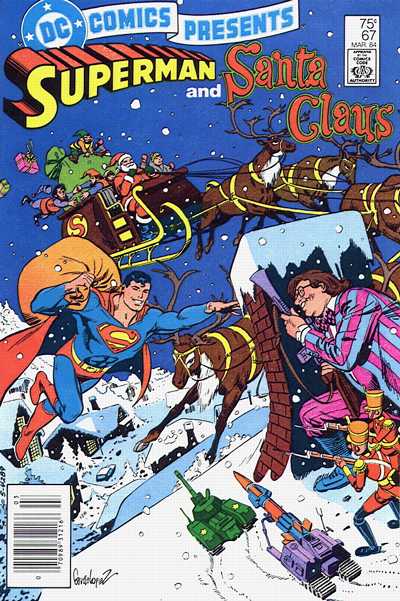
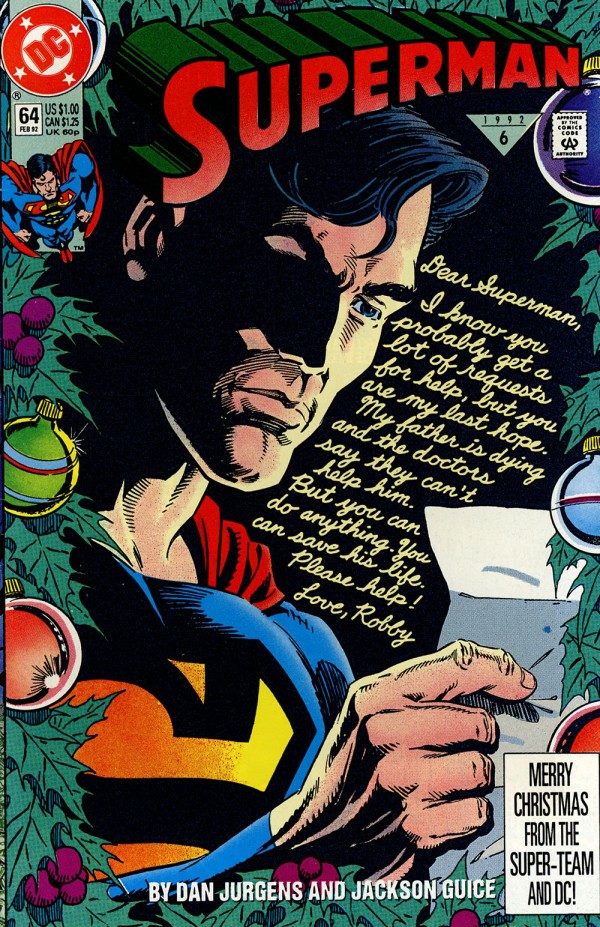
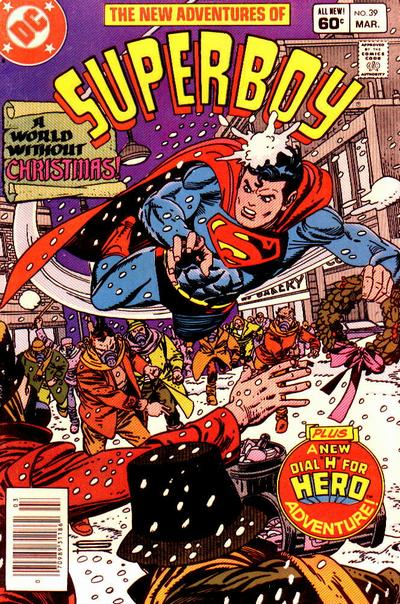

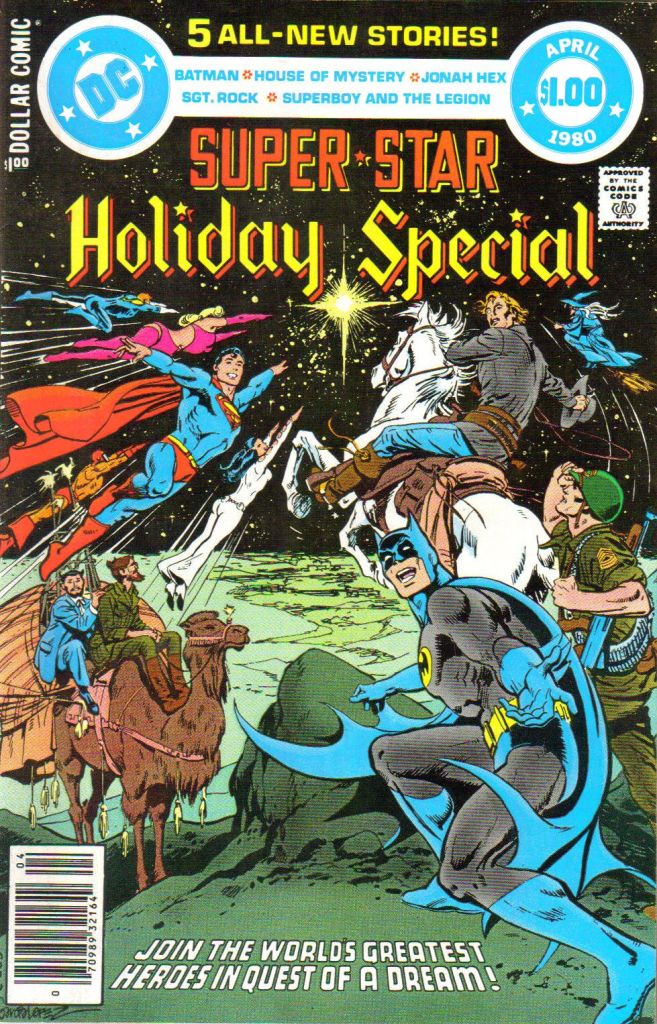

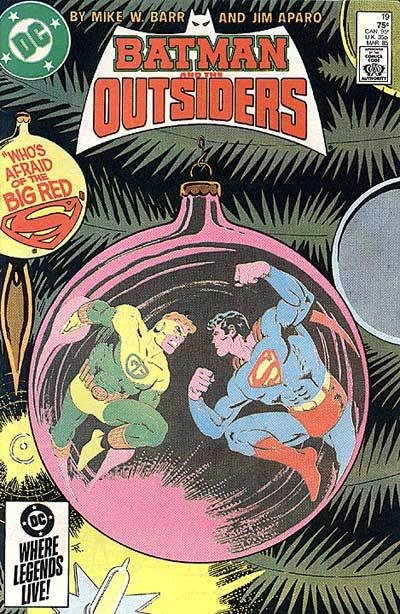
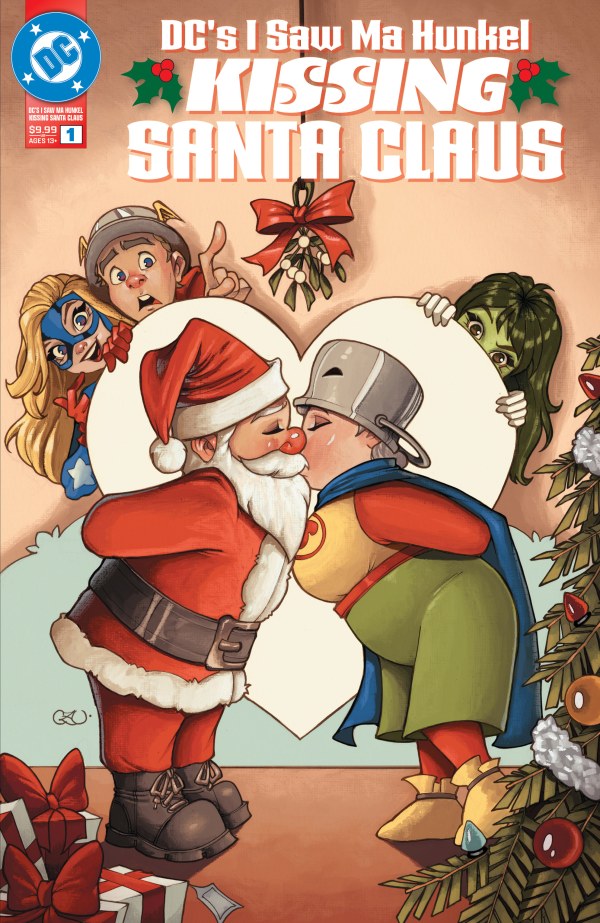
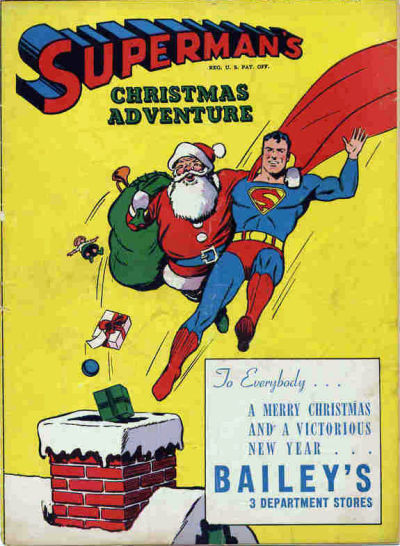


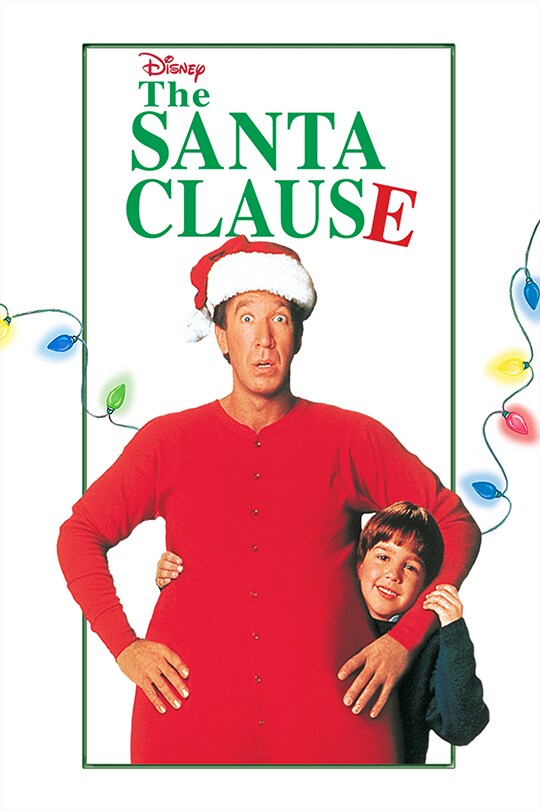
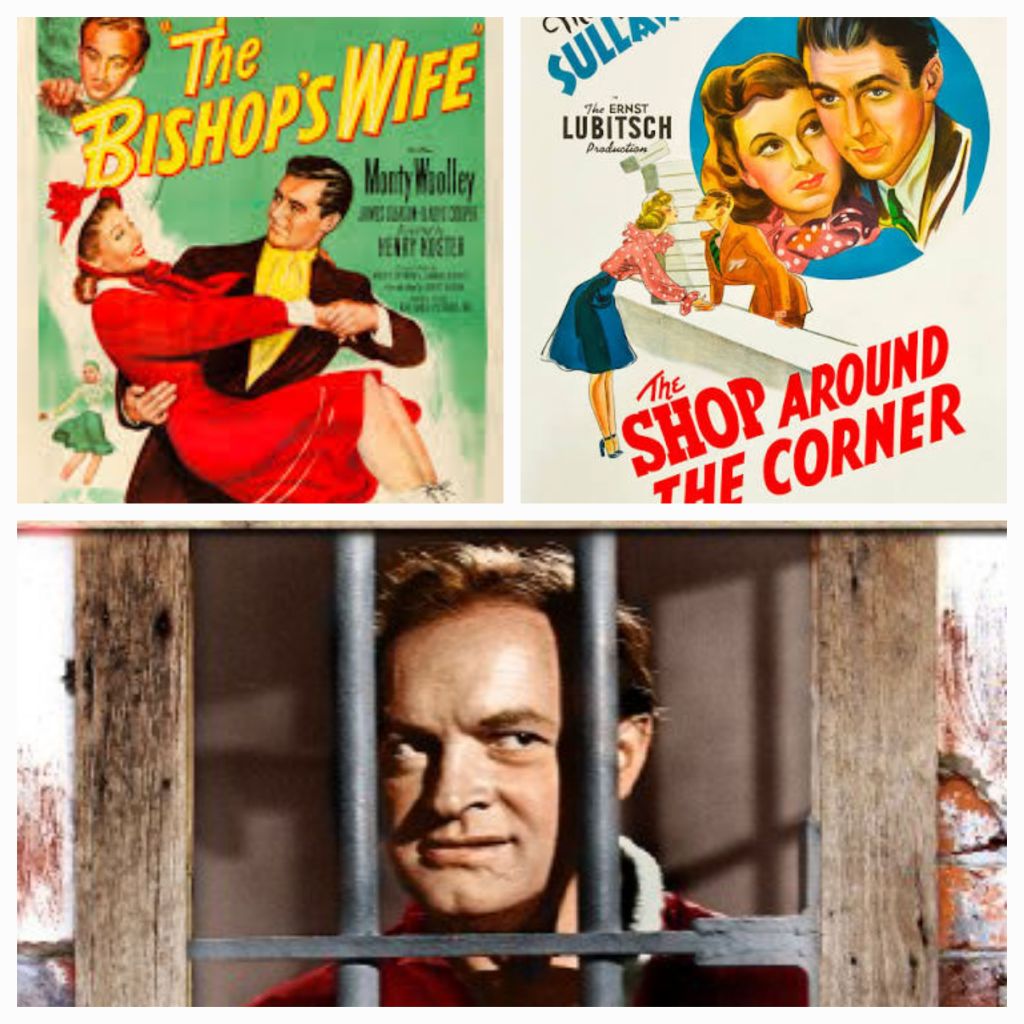


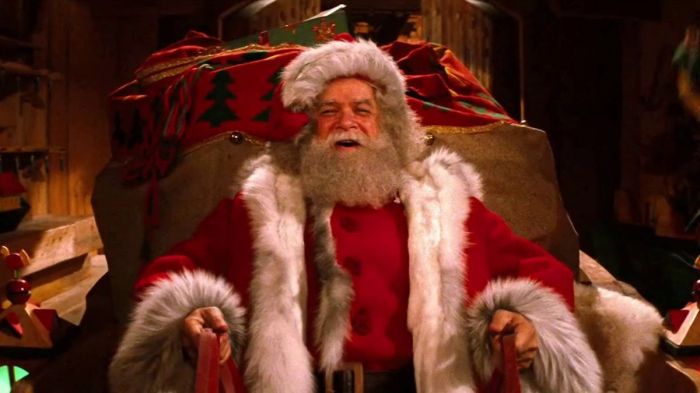





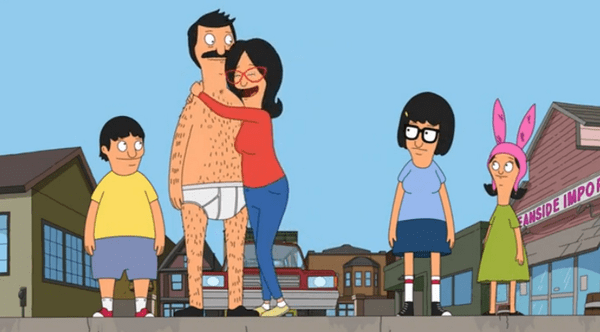
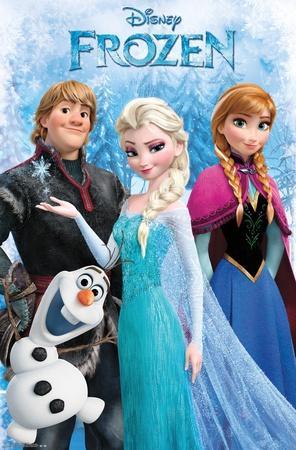


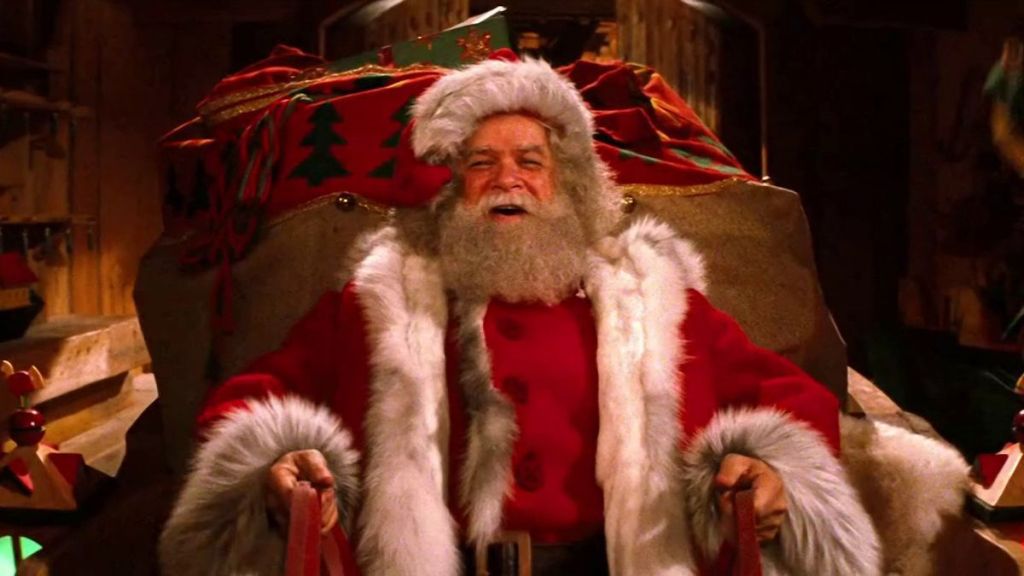
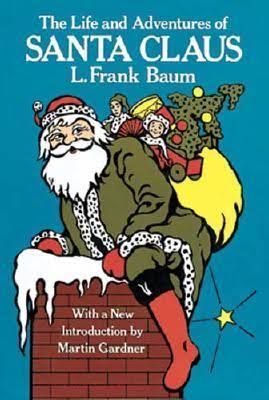


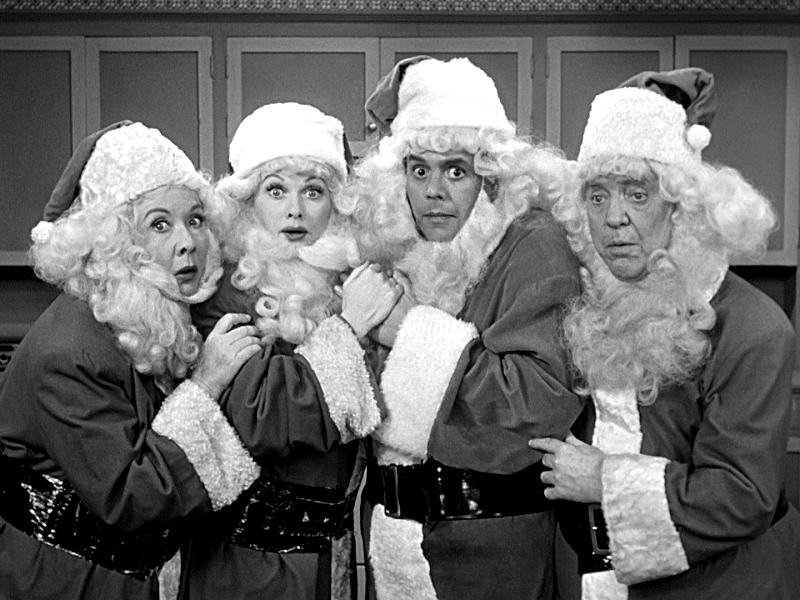
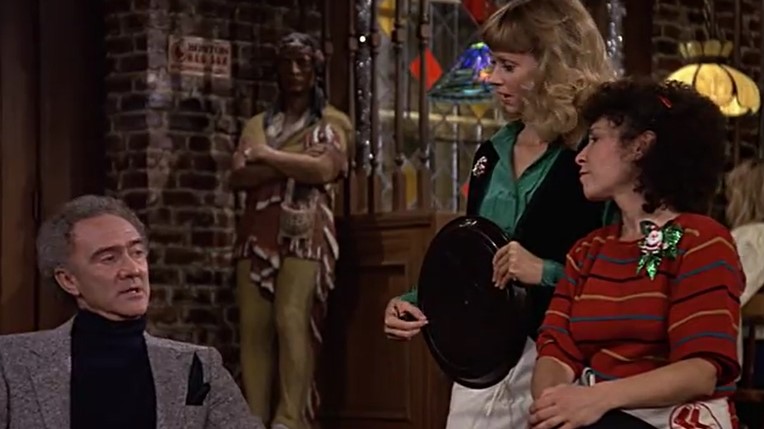




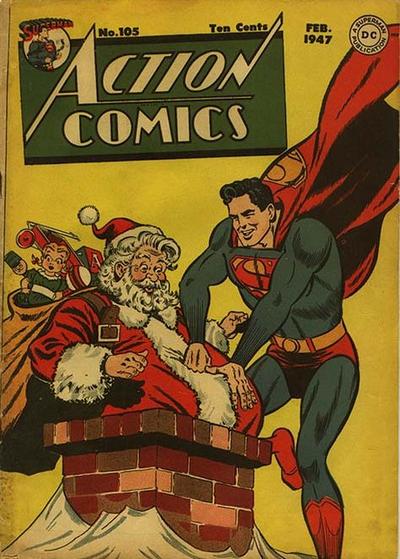
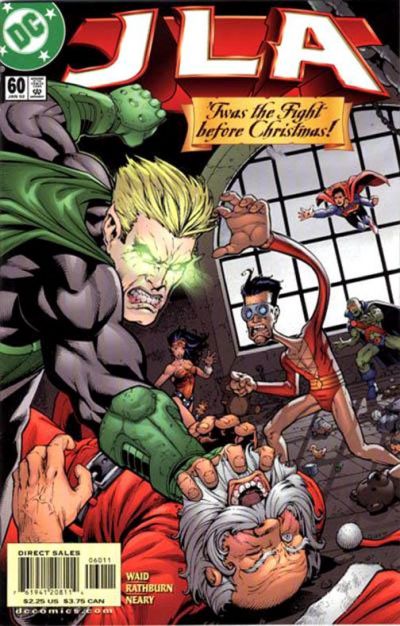
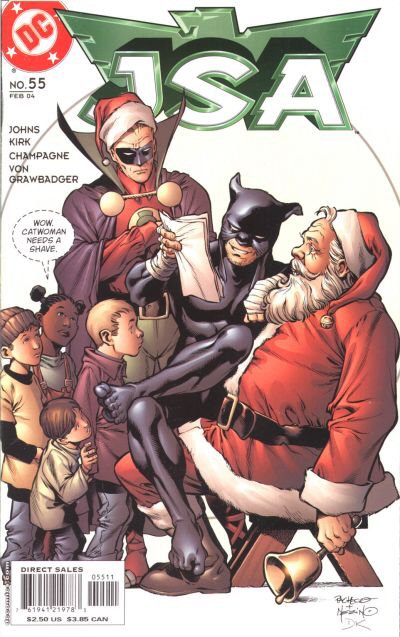
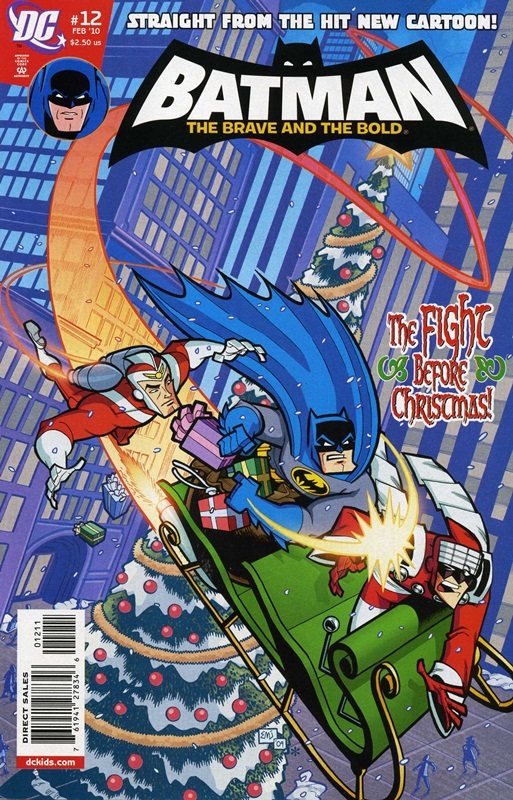


 Blake M. Petit