Year of Superman Week 31: Superman’s Strangest Team-Ups

After taking last week relatively easy, and after the kind of floperoo that Parody Week turned out to be, I decided I wanted to do something a little more fun this week. So I looked through my list of potential topics and decided it was time for SUPERMAN’S STRANGEST TEAM-UPS. You’re not gonna see him partnering with Batman or the Justice League here, guys. I’m not even counting inter-company crossovers like when he met the Fantastic Four or the Savage Dragon. No, this week we’re going to focus on a few team-ups Superman has had with characters (and sometimes real people, as you’ll see) that an outside observer would think is totally bizarre. And the fun part is, they would be right to think so. 

And as always, you can check out earlier blogs in the Year of Superman Archive!

Wed., July 30

Comics: The Adventures of Jerry Lewis #105

Shame he didn’t team up with SuperGIRL. I can see it now: “Hey, nice Kryptonian LAAAA-DYYYY!”

Notes: I’ll kick this off with a comic I bought on eBay a few months ago specifically to use for this week, a book I’ve wanted an excuse to get for years: The Adventures of Jerry Lewis #105. Believe it or not kids, there was a time when being a famous comedian could get you your own comic book, and sometimes those books would last for YEARS. Bob Hope had one, as did Jackie Gleason, Abbott and Costello, and sitcoms like I Love Lucy had long-running comics through publishers like Dell and Charlton. This series specifically began in 1952 as The Adventures of Dean Martin and Jerry Lewis, but dropped Deano from the book in 1957 after the comedy duo broke up. Jerry held solo reign over the title for over a decade before it finally ended in 1971.

Anyway, in this issue Jerry is watching TV with his nephew Renfrew and their friend Witch Kraft (it was the 60s, I dunno) where they see a report of Superman fighting a giant space monster – a fight that has been dragging on for THREE DAYS. Superman finally defeats the beast, which turns out to be a robot. What he doesn’t know is that the robot was built by his old pal Lex Luthor, and when it was destroyed, it saturated Superman’s costume with a low level of Kryptonite dust that immediately begins to neutralize his powers. Back at the Daily Planet, Clark gets a new assignment – a feature on the danger of certain young people, and he’s sent to investigate one Renfrew Lewis. At the Lewis house, Clark gets progressively weaker, succumbing to various pranks of Renfrew that would normally be no problem. Finally, he gets soaked with water, prompting him to borrow an ill-fitting outfit from Jerry while his own clothes dry off. Luthor, meanwhile, tracks his Kryptonite to Jerry’s house, where Jerry has just discovered Clark’s Superman costume in the laundry and puts it on because…well, I guess because that’s what happens on the cover.

The story is completely absurd, of course. Jerry Lewis was a comedy legend, but he had a very specific persona. Especially in the early part of his career, he would always play a naive young man whose good nature couldn’t overcome his dimwittedness, spiraling him into one ridiculous situation after another. His comic book persona clearly borrowed that characterization, as that’s exactly what happens to him not only in this issue, but in probably every issue of this title that lasted, in its two incarnations, nearly twenty years. And honestly the fact that Jerry (the character) is both dim and nice is probably the only reason that Superman’s secret identity is maintained in this absurd comic. Although none of that explains why Luthor – who would certainly proclaim himself to be Earth’s smartest man – isn’t smart enough to put two and two together when he encounters Clark Kent and Jerry Lewis, the latter of whom is wearing Superman’s ill-fitting costume – only minutes before the real Superman shows up to put him away.

As silly as this story is, I really did enjoy it. It’s got the same sort of bizarre brand of comedy as certain strains of Archie Comics, or some of DC’s own Silver Age titles like Stanley and His Monster. I haven’t got the slightest idea who owns the rights to books like this anymore (is it the Jerry Lewis estate? The copyright information in the indicia only indicates National Periodical Publications), but I would love it if they could put together some collections of comics like this or their Bob Hope series, or even make them available digitally. I’d love to read more without having to pay eBay prices to track them down one at a time. 

Thur., July 31

Comics: Captain Carrot and His Amazing Zoo Crew #1, DC X Sonic the Hedgehog #5

If I hadn’t included him in Super-Sponsor week, the Kwik Bunny would have followed this issue.

Notes: I’m not gonna lie, half the reason I decided to do this particular theme week was to have an easy excuse to sneak this comic book in. Captain Carrot and His Amazing Zoo Crew is one of my favorite DC Comics of all time, a comedic (but not silly) comic about superhero animals set in a world that feels like it fell out of a cartoon. At this time, DC had a “bonus book” program, where once a month a random title would include a 16-page comic in the center, often used to launch new series. Such was the case with New Teen Titans #16, which featured the first appearance of Captain Carrot. In that bonus book, by Zoo Crew co-creators Roy Thomas and Scott Shaw! (that exclamation point is part of his name, friends), Superman ran across several residents of Metropolis behaving like their primate ancestors. He tracked the disturbance to a strange meteor out near Pluto, but when he tried to stop it, both he and the meteor were punted into a different universe, designated Earth-C, in which the Earth was populated by “funny animals.” Chunks of the meteor fell to Earth, giving powers to several different animals. One of them irradiated a batch of carrots growing in a garden box belonging to cartoonist Roger Rabbit (he later began going by his middle name, Rodney, perhaps due to confusion with a certain OTHER lupine character), who gained incredible power upon munching on the carrot. 

The first issue of Captain Carrot and His Amazing Zoo Crew picks up right where the bonus book left off, with Superman and the newly-minted Captain Carrot seeking out the meteor fragments and trying to find a way to Pluto to check it out through some sort of cosmic barrier. As they do so, just as happened back in Metropolis, various people begin reverting to a primitive state, acting not like the civilized animals they are but instead like their beastly ancestors. When Superman is captured, Captain Carrot picks up other animals who were altered by the meteors: the powerful Pig-Iron, mistress of magic Alley-Kat-Abra, turtle speedster Fastback, pliable poultry Rubberduck, and the star-spangled Yankee Poodle. Together they seek out Superman, bound by Kryptonite on Pluto, in the clutches of Starro the Conqueror. Eventually, of course, Starro is conquered and the Zoo Crew decides to stay together to fight the forces of evil on Earth-C.

After striking a somewhat familiar pose.

Superman’s appearance here is almost incidental. The Zoo Crew does most of the heavy lifting, and replacing Superman with Wonder Woman, Captain Marvel, or any number of other heroes would have had negligible impact on the plot. But it’s fitting, in a way, that Superman was the first contact between the two worlds. He was still DC’s flagship character at the time (although Batman would soon overtake him, and Batman just wouldn’t have worked in this setting), and Captain Carrot was clearly his universe’s version of Superman. This would be codified years later during one of DC’s many crisis events (Final Crisis, I think) where it was revealed that EVERY world had an “official” Superman analogue, and in this world it was Captain Carrot.

I’ve written many times before about Roy Thomas and his love for comic book history, with his work on titles such as All-Star Squadron, Young All-Stars, Secret Origins, and the Elseworlds comic Superman: War of the Worlds. This one is a little off the beaten path for him, but even here, he couldn’t resist bringing in some DC lore. The first Zoo Crew recruit, Pig-Iron, is secretly Peter Porkchops, once the star of a series of DC’s funny animal comics from the 40s and 50s. Thomas and Shaw would go on to establish that Earth-C was actually the location of all of DC’s old funny animal comics, bringing in characters like the Dodo and the Frog, the Three Mousekteers, and their superhero turtle the Terrific Whatzit from the Golden Age, who turned out to be Fastback’s uncle.

The series lasted for 20 issues, with a three-issue miniseries in which the Zoo Crew travelled to Oz and Wonderland, then they went into limbo for a few decades. They’re back now, appearing periodically, and Captain Carrot specifically is a member of the multiversal Justice League Incarnate. But I’ll never stop pushing for a full-on revival of this delightfully offbeat comic.

“In yo’ heeeeead! In Darkseid’s heeeee-eee-eeaaaad!”

Speaking of strange team-ups, this week also brings us the last issue of DC X Sonic the Hedgehog. With the two teams reunited on the DC Earth, they’ve got to assemble to chaos emeralds to take the fight to Darkseid. I’m not going to claim there’s anything truly shocking in this issue. The story plays out pretty much exactly as one would expect, right up to the last page sequel hook which may or may not ever be picked up on, probably based on how well this miniseries sells. But it was still a fun little excursion. It was genuinely hopeful and upbeat, without any of the usual nonsense of the heroes of two worlds fighting each other just because that’s what’s supposed to happen in crossover events. (As much as I’m looking forward to Deadpool/Batman in a couple of months, you know that’s exactly what’s going to happen.) This was just…fun.

And it’s okay to just be fun sometimes. 

Fri., Aug. 1

TV Episode: I Love Lucy Season 6, Episode 13, “Lucy and Superman”

“Lucy, you REALLY got some ‘splainin’ to do!”

Notes: Regular readers of my blog know about my deep, abiding love for I Love Lucy. I think it’s one of the greatest sitcoms in the history of the medium and that Lucille Ball was a comedy genius the likes of which we have not seen since. And if you know I Love Lucy, then it’s probably no surprise that one of my favorite episodes was the sixth season episode in which Lucy meets Superman.

The episode begins with Lucy’s husband Ricky and their son, Little Ricky, watching The Adventures of Superman on TV. Little Ricky, with the innocence of a child who doesn’t actually have to pay for anything, asks if Superman can come to his birthday party that Saturday. Although Lucy lets him down easily, when they find out later that their frenemies the Applebys are planning to have their son’s party on the same day, the parents enter a cold war over throwing a party that will lure the childrens’ shared friend group to one party over the other. Lucy plies Ricky to try to get Superman – who he met in Hollywood – to come to Ricky’s party after all, quickly luring away all of the children, even little Stevie Appleby. As usually happens with Lucy’s schemes, though, things go awry. Ricky tells him Superman can’t make it, leading to Lucy donning a Superman costume and trying to get into the apartment from the ledge, only to get stuck outside in the rain when Superman shows up after all.

The Lucy writers played a neat little trick in this episode. Although the show frequently had celebrity guest stars appearing as themselves (everyone from John Wayne to Harpo Marx), they never ONCE refer to Superman as “George Reeves.” He’s just Superman. Although from an adult perspective, it seems a little odd that they never say his real name, even when the kids aren’t in the room, from a meta point of view it’s obvious that the entire episode is constructed in such a way to preserve the mystique of Superman for any children who happen to be watching. Reeves never appears as “himself,” only on TV as Superman and then again in the last scene in-costume, where he does his trademark leap through the window (in this case, the one that separates the Ricardos’ kitchen and living room) to make his glorious entrance. When Lucy gets stuck on the ledge, Superman is the one who climbs out to rescue her. Even the classic last line of the episode has the same sort of wit and charm that Reeves always brought to his performance: when out on the ledge, Ricky comments on the 15 years of crazy stunts Lucy has pulled. Reeves says, “You mean to say that you’ve been married to her for 15 years?” When Ricky replies in the affirmative, Reeves shoots back, “And they call me Superman!”

It’s a wonderful, charming episode of a charming show, and one that can be enjoyed on two levels. If you want, then you can consider this just your average episode of I Love Lucy with a famous guest. But if you’d prefer, you can accept the episode on face value and decide that Lucy takes place in the same universe as The Adventures of Superman TV show, and it wasn’t Reeves at all, but the real Man of Steel.

That doesn’t quite explain why he’s got his own TV show in-universe, but do I have to figure out everything myself? 

Sat. Aug. 2

Comic Books: Multiversus: Collision Detected #1-6

“Jinkies!”

Notes: While not a Superman starring vehicle like most of my other choices this week, he played a big part in this fun six-issue miniseries based on the short-lived video game, which combined characters from dozens of Warner Bros IPs including the DC Universe, Looney Tunes, Hanna-Barbera cartoons, Cartoon Network, The Matrix, The Wizard of Oz, Game of Thrones, The Neverending Story, and probably others I’m forgetting. I don’t play video games, friends. It’s not a judgment thing, I’m not trying to claim some sort of moral high ground or anything, I’d just rather spend my time with a movie, TV show, or book. I do, however, enjoy a good crossover, so when the miniseries based on the game was announced I knew I was going to read it, despite knowing absolutely nothing about the game. 

The story begins with Superman, Batman, and Wonder Woman each having dreams that culminate in the vision of strange hieroglyphs: a rabbit, a witch, and a child bearing a star. Their investigation leads them to Avia Free, daughter of Mr. Miracle and Big Barda. When they arrive, though, the find that Avia already has another visitor: Bugs Bunny. After a particularly hilarious sequence of Batman trying – and failing – to interrogate Bugs, Avia shows them a video game system she modified to investigate some strange readings from behind the Source Wall just as a portal appears, spilling inhabitants of other dimensions into our own. The Flash, for instance, encounters Scooby-Doo and Shaggy having thwarted Condiment King’s effort to rob a Big Belly Burger and taking their reward in a mountain of food. Wonder Woman is attacked by an army of Winged Gorillas under the control of Grodd who, himself, has fallen under control of the Wicked Witch of the West. Superman finds Steven Universe and Garnet fighting Livewire and the Parasite in Metropolis, just as a Skullship appears in the sky – not a Brainiac ship, but one in the spitting image of Rick Sanchez, loaded with robotic simulacrum of Finn the Human, Jake, and Tom and Jerry. 

As the Justice League begins containing the incursions from other universes – hero and villain alike – Batman manages to track down the truth. An entity called the Devoid, under duress from an even more powerful force called the Nothing, is forcing the multiversal travellers to fight in a tournament to protect their respective home universes. (I assume this is, in broad strokes, the story behind the video game.) Batman hatches a plan to return the fight to the Devoid, saving all of the endangered universes simultaneously, but there’s a little problem. To do this, he needs to find the final lost fighter – the Reindog – who is currently being coddled by Harley Quinn and targeted by her nasty ex, the Joker. They collect him from Gotham City, but Steven is wounded in battle. When Reindog heals him, it sends out a signal that leads the Devoid to Earth, where it takes over Avia and attacks. In exchange for freeing Avia, the assembled heroes agree to allow Devoid to take them to fight in the tournament. After they are swept away, though, the heroes reappear, revealing that Steven invented a device that would pluck tiny pieces of each of the heroes from throughout the multiverse and assemble them into a new version to join the tournament.

I love stories like this. It reminds me of being a kid, when you would throw all your different toys together in one box and act out some epic battle despite the fact that these characters don’t really have any business being together. I also like the way Bryan Q. Miller handles the Super-characters. It’s not his first go-round: he’s written, among other things, the Smallville sequel comics, and he has a nice handle on Lois and Clark. There’s a nice bit towards the beginning where she casually teases him for doing things the hard way when the age of technology should make it a little harder to track down the glyph from his dreams. And bonus points go to artist Jon Sommariva and colorist Matt Herms for dressing her in her signature outfit from Superman: The Animated Series, even though this isn’t “that” Lois. Miller also uses the differences in the respective universes to his advantage. For example, there’s a funny bit where Bugs, Scooby, Shaggy, and Steven Universe are shocked by the foul mouth (censored as it is) of the Rick-infected Brainiac. 

It’s interesting, by the way, that although it is very obviously Rick Sanchez who’s riding in Brainiac’s skull, he is never mentioned by name in the story, and only appears in his “true” form in a few shots on Brainiac’s monitors. I assume that was a limitation imposed by the fact that Oni Press, not DC Comics, has the rights to the Rick and Morty comics, but it’s still kind of funny.

The story ends, as comics like this one often do, with a bit of a sequel hook, but considering that the game flopped and has been discontinued, it seems unlikely that we’ll ever get to see what happens next. I content myself in the knowledge that the comic is essentially a prequel to the game and that, if you beat the Devoid and the Nothing in the game itself, you can consider it the canonical ending of the story. And I hope that we see Miller writing more comics like this. He’s got a flair for it. 

Sun. Aug. 3

Comic Book: Action Comics #421

“I yam what I yam…a legally-distinct creation that is not subject to a copyright infringement suit by King Features Syndicate!”

Notes: Today we’re going to take a look at one of my favorite lesser-known Superman team-ups, the time he met Popeye.

Kinda.

In Action Comics #421, Superman’s pal Billy Anders (a semi-recurring character from the period) tells him about his recent encounter with Captain Horatio Strong. Strong is a salty sailor who has found a mysterious seaweed that, upon consumption, gives him incredible strength. When Billy tells Superman that Strong is one of his biggest fans, he agrees to arrange a meet-up. Meanwhile, A food corporation tries to buy the rights to Strong’s seaweed, “Sauncha,” but he refuses. He willingly gives a sample over to his idol, Superman, when Billy arranges a visit, but quickly realizes his visitor is a disguised spy for the food corporation wearing one of those remarkably lifelike rubber masks that were so ubiquitous in comics at the time. Superman and Captain Strong wind up duking it out when Strong vows to destroy the crooked company that tried to cheat him, and when he runs out of Sauncha, Superman tracks him to a spot in the ocean where he harvests it. When the Sauncha power runs out, Strong is nearly killed, but Superman whisks him to the hospital. As he recovers, he is ashamed of his actions, but Superman kindly tells him that it wasn’t his fault – he was under the influence of the plant, which Superman has identified as an alien species that must have fallen to Earth. Captain Strong promises to stick to good old Earth food from now on.

I first read this story in Best of DC Digest #48, in an issue that reprinted assorted Superman team-ups, and it’s long been a favorite of mine. Even as a kid, I immediately picked up on the fact that they were trying to emulate Popeye, and when Strong’s wife and best friend (obvious dopplegangers for Olive Oyl and Wimpy) showed up in later issues, it was like confirmation. What I didn’t realize as a kid was that Cary Bates had whipped up a Popeye expy to tell a story that was a metaphor for drug addiction. I guess it did the trick – I’ve never done any drugs, nor had any desire to. So Cary Bates and Captain Strong, thanks for teaching me the important lesson that using illicit substances will cause me to throw telephone booths and people and start fights with those I admire the most.

Seriously, I always thought Captain Strong was a fun character, and it’s a shame that he made only a handful of appearances over the next decade before fading into obscurity. He came back in 2015, gently being mocked (as was everything else) in Jimmy Palmiotti and Amanda Conner’s Harley Quinn series. I guess I understand – there’s not much call in modern comics for a character whose only reason to exist is to poke a little fun at Popeye. But I still have a warm place in my heart for Captain Horatio Strong. And although the similarities are superficial, I’ve always wondered if Strong was used as a bit of inspiration for one of my favorite characters of the Triangle Era, loveable lout “Bibbo” Bibbowski.

Mon. Aug. 4

Comic Books: Superman and Bugs Bunny #1-4

“What’s up, Clark?”

Notes: When I started this little project, I didn’t expect the Looney Tunes to turn up quite as often as they have, but between this and parody week, I’ve actually seen quite a bit of them lately. But let’s look at the 2000 miniseries by Mark Evanier, Joe Staton, Tom Palmer, and Mike DeCarlo. Even though Superman’s name is in the title of this one, like Multiversus, it’s more of an ensemble piece, featuring the entire Justice League. The chaos begins when Superman gets a visit from his old pal Mr. Mxyzptlk and, as usual, has to trick him into saying his name backward to send him home. At the same time, in another world, Bugs Bunny and Elmer Fudd encounter the Do-Do, an early and mostly forgotten Looney Tunes character from another world called Wackyland. Bugs deliberately borrows a trick from the pages of his favorite comic book publisher and tricks the Do-Do into saying Od-Od, banishing him at the same time that Myxyzptlk vanishes from Earth. The two cosmic tricksters collide in the place between worlds and decide to join forces and cause a little chaos by sending the Looney Tunes to Earth.

On the moon, Green Lantern finds Marvin the Martian planning to destroy the Earth (again). Flash races Speedy Gonzales through the desert, Plastic Man disguises himself as a cat only to fall afoul of the affection of Pepe LePew, and in Gotham City, Batman finds a very different Penguin than the one he expected. Myzptylk amps up the chaos by giving Elmer Fudd Superman’s powers (and costume), and poor Green Arrow is stuck with a singing, dancing Michigan J. Frog that doesn’t seem to want to perform for anybody else. 

Mxy and the Do-Do find their relationship strained, the machine they’re using to toy with the heroes destroyed and forcing them all together. The Tunes are made honorary member of the Justice League (because why not?) just as the Do-Do turns on his partner, bringing about a – ya gotta say it – “Cwisis on Infinite Earths!” 

Mark Evanier was absolutely the best choice to write this bizarre little crossover. As a writer in both comic books (perhaps best known as co-writer of Sergio Aragones’ Groo the Wanderer) and in animation (such as the original and excellent Garfield and Friends cartoon), he had the right sensibility to bring these two worlds together. It’s interesting that he chose to have both the Justice League and the Looney Tunes be fictional characters in the others’ universe. Bugs and Foghorn Leghorn read Action Comics, and every member of the League recognizes their cartoon co-stars the second they see them. It nicely sidesteps the usual introductions, although if the Leaguers have all watched the Looney Tunes (as well they should have) it should kind of make you question their judgment when they include the likes of Yosemite Sam and Elmer Fudd into the ranks of the honorary Leaguers. 

I also give Evanier credit for diving into the archives of the Looney Tunes for this. He didn’t just bring out the A-listers like Bugs and Daffy – we get appearances by everyone from Pete Puma to the Goofy Gophers Mac and Tosh, and he keeps them all in character. He’s not quite as adept with the Justice League, writing them more like they would have been in the Silver Age than when this book was published in 2000. Things like Green Arrow’s panic over nobody believing his story about a singing frog don’t quite fit (especially since, as it should be noted, this was the less-emotive Connor Hawke version of Green Arrow rather than Oliver Queen). But you can accept these things are being part of the overlap with the land of the Looney.

Joe Staton’s layouts keep everything consistent, and using finishing team of Tom Palmer (handling the DC Universe and characters) and Mike DeCarlo (on the Looney Tunes) makes it all look nice, clean, and like these characters fit in a world together.

I’ve always liked this miniseries. It’s not a masterpiece, but it’s fun. And it helped inspire a series of DC one-shots a few years ago in which they met Looney Tunes and Hanna-Barbera characters, although those were part of a line that reimagined the cartoon characters in a more “serious” vein. Some of those specials worked better than others. I particularly liked seeing the Super-Sons meet Blue Falcon and Dynomut, and having Booster Gold encounter the Flintstones was a treat. Pretty much everyone agrees that the gem of those books was the Batman/Elmer Fudd special. But the shocking thing? No books featuring Superman.

What a waste of potential. At least we’ve got the OG. 

Tues., Aug. 5

Comic Books: All-New Collectors’ Edition #56 (aka Superman Vs. Muhammed Ali)

Float like a Kryptonian, sting like heat vision!

Notes: The year was 1978. Jimmy Carter was elected president, Christopher Reeve was wearing the Superman costume, and we were still 26 years from the birth of America’s sweetheart Justin Bieber. And this was the year that brought us one of Superman’s most legendary and unexpected crossover events: a giant-sized special that saw him face off against “the Greatest,” Muhammad Ali.

Lois, Clark, and Jimmy are walking through Metropolis when they happen to stumble upon Muhammad Ali playing pick-up basketball with a group of school kids. As Lois approaches him for an interview, they are interrupted by the sudden appearance of an alien (you know, like you do) who summarily shoves Lois aside. Ali leaps to her defense as Clark ducks off to change his clothes, then follows the alien’s trail to an orbiting armada of spacecraft that…frankly…even in 1978 it’s kind of hard to believe nobody noticed them before. The alien identifies his race as the Scrubb, a warlike society who has come to Earth to pit our greatest champion against their own. Amusingly, Superman and Ali each presume the alien is talking about himself, and after a demonstration of their power, the Scrubb declares that the role of Earth’s champion will be decided in a match between the two of them, with Superman’s powers removed to make it fair – and if they refuse, the Scrubb promise to destroy the Earth itself.

Superman takes Ali to his Fortress of Solitude, where he creates a special ring to train: a time disruptor that can stretch their 24 hours to about two months, and a red sun lamp to remove Superman’s powers, giving the Greatest of All Time the time he needs to teach Superman how to box. The Scrubb catch wise, though, and disrupt the training after only two relative weeks, taking Superman and Ali into space where their bout will be broadcast across the universe. The fight is brutal, and Superman’s unfinished training makes him no match for his opponent…but still, the Man of Steel may be beaten and bloody, but refuses to fall down until the judges call the fight for Ali. As he is returned to Earth so the yellow sun may heal him, Ali prepares for his battle against the Scrubb’s champion, a gigantic brute called Hun’ya. To everyone’s shock (maybe even the writer, it’s so random) an angelic being appears in the ring demanding to act as moderator of the contest. The being appears differently to each species – to the humans she is the Greek Goddess of Wisdom, Pallas Athene. As the match begins, Ali’s cornerman Bundini Brown infiltrates the Scrubb command center, revealing himself as Superman in disguise. Impersonating the Scrubb Emperor, Superman orders the armada away from Earth, then catches a ride back to the yellow sun system to take it out as Ali defeats Hun’ya. The Emperor plans to turn back to destroy Earth anyway, but Hun’ya himself – disgusted by his lack of honor – defeats the Emperor. 

The epic team of Dennis O’Neil and Neal Adams are the ones who put this special together, and honestly, nobody else could have done it. Adams did a note-perfect version of Ali in this book, creating a character who is immediately recognizable as the boxer while, at the same time, still looking like he belongs in this DC Universe. It helps that Adams’ natural style lends itself to more realistic visuals than a lot of other artists of the era, making the combinations seamless. The story is kind of wild, and really over the top, but what else would you want? There are some odd moments, of course – the deity that calls itself Athene lends absolutely nothing to the plot, and the book ends with Ali revealing to Superman that he’s figured out he’s really Clark Kent due to a slip of the tongue Superman had made much earlier in the story. Is there any particular reason for that? Absolutely not. But it also doesn’t hurt the story, and it feels like the kind of thing that Muhammad Ali would have insisted upon, so I can deal with it.

The funny thing about this one, I think, is that the story itself (wild as it may be) probably isn’t as well known as Adams’ incredible cover. It’s one of those covers that has become a classic, frequently targeted for swipes by other artists, and you can’t blame them. It’s so rich and detailed as to defy belief, with dozens of DC characters and real-world figures alike appearing in the audience to watch the Superman Vs. Ali fight. It’s so in-depth that the deluxe edition of the book includes a guide to help you identify everybody who appears on the cover. It’s the kind of attention to detail that the likes of Alex Ross grew up on and decided to emulate in his own career.

This is, frankly, an insane book. And it’s a classic for a reason. 

Blake M. Petit is a writer, teacher, and dad from Ama, Louisiana. His most recent writing project is the superhero adventure series Other People’s Heroes: Little Stars, volume one of which is now available on Amazon. You can subscribe to his newsletter by clicking right here. You can join in the Kryptonian Konversation every day in the Year of Superman Facebook Group!
Geek Punditry #130: Three Wishes Presents Crossover Madness

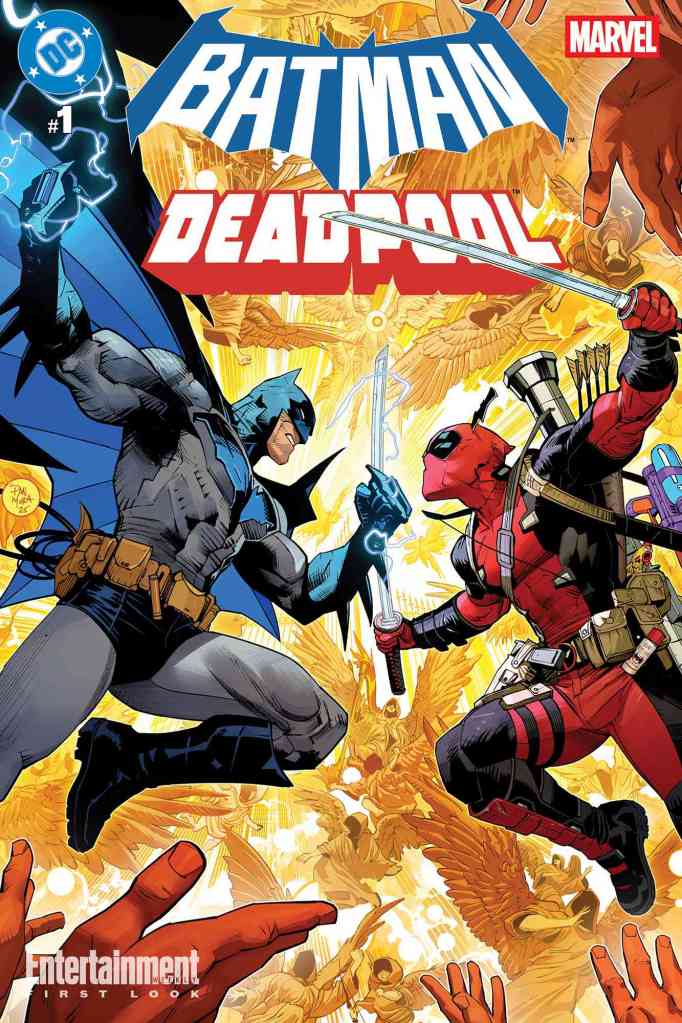
Well, my friends, once again the powers that be in the world of entertainment have proven that they turn to us here at Geek Punditry for their ideas. Last year, DC and Marvel Comics announced that they were going to be reprinting their classic crossovers of the past (stuff like Superman meeting Spider-Man, Batman fighting the Hulk, and the two universes actually merging as Amalgam Comics) in two hefty hardcover omnibus editions after two decades of the companies holding off on any kind of collaboration. At the time, I suggested that this project could potentially be a precursor for NEW crossovers to finally appear, and sure enough, earlier this year they announced a two-part event in which DC’s perennial cash cow Batman will meet Marvel’s insanely popular Merc with a Mouth, Deadpool. As this is clearly an idea that nobody else could have come up with had I not proposed it here on my blog, I am comfortable taking full credit for this world-changing news.

I expect Deadpool to thank me personally.

The fun will start in September, when Marvel’s Deadpool/Batman will arrive, written by Zeb Wells with art by Greg Capullo. In November it’ll be DC’s turn: Batman/Deadpool by Grant Morrison and Dan Mora. While this particular pairing wouldn’t have been my first choice for the new era of crossovers, I can’t pretend I don’t understand the reasoning behind it. You’re combining two of the most popular (and profitable) characters in comic books, and honestly, a fourth-wall breaking character like Deadpool is liable to be a laugh riot no matter who you partner him up with, so I’m looking forward to these two books. 

But the fun doesn’t end with Deadpool and Batman! Recently, Marvel announced that their half of the crossover – in addition to the Deadpool/Batman meeting – will include three back-up stories with other pairings. Chip Zdarsky and Terry Dodson will team up Captain America and Wonder Woman, Kelly Thompson and Gurihiru will bring us an encounter between Jeff the Land Shark and Krypto the Superdog, and perhaps most excitingly, Adam Kubert will draw a meeting between Daredevil and Green Arrow written by someone who had magnificent runs on both of those characters in the past, filmmaker and Geek Emeritus Kevin Smith. 

In many ways, I’m actually more excited for the back-ups. Not to say I don’t think that there’s fun to be had with Deadpool and Batman, but Captain America and Wonder Woman is such a natural matchup that it’s shocking it never happened in the past. Thompson and Gurihiru’s comics starring Jeff are delightful all-ages fare, and I think adding Krypto to the mix will be a blast. And again, having Smith return to the two characters with whom he arguably has done his best comics work is pretty darned exciting to me.

But let’s remember, these backups are coming in Marvel’s half of the event. DC’s book comes out two months later, so the solicitation information that tells us about the DC backups, if any, likely won’t be available until August. Considering the way these crossovers usually work, with the two publishers wanting equity for their characters, I think it’s almost certain that the DC book will give us three additional backup stories of their own. The question, then, becomes obvious: who will be the stars?

As we have already established that the two dominant publishers in the American comic book space are mining my little-known blog for their ideas (guys, just put me on the payroll, I work cheap), I’m going to take this opportunity to dust off my “Three Wishes” format, in which I throw out three things I would like to see. If it were up to me, these are the backups you would see in Batman/Deadpool come November, with an added bonus of which creators I would have handle the stories.

Booster Gold/TVA

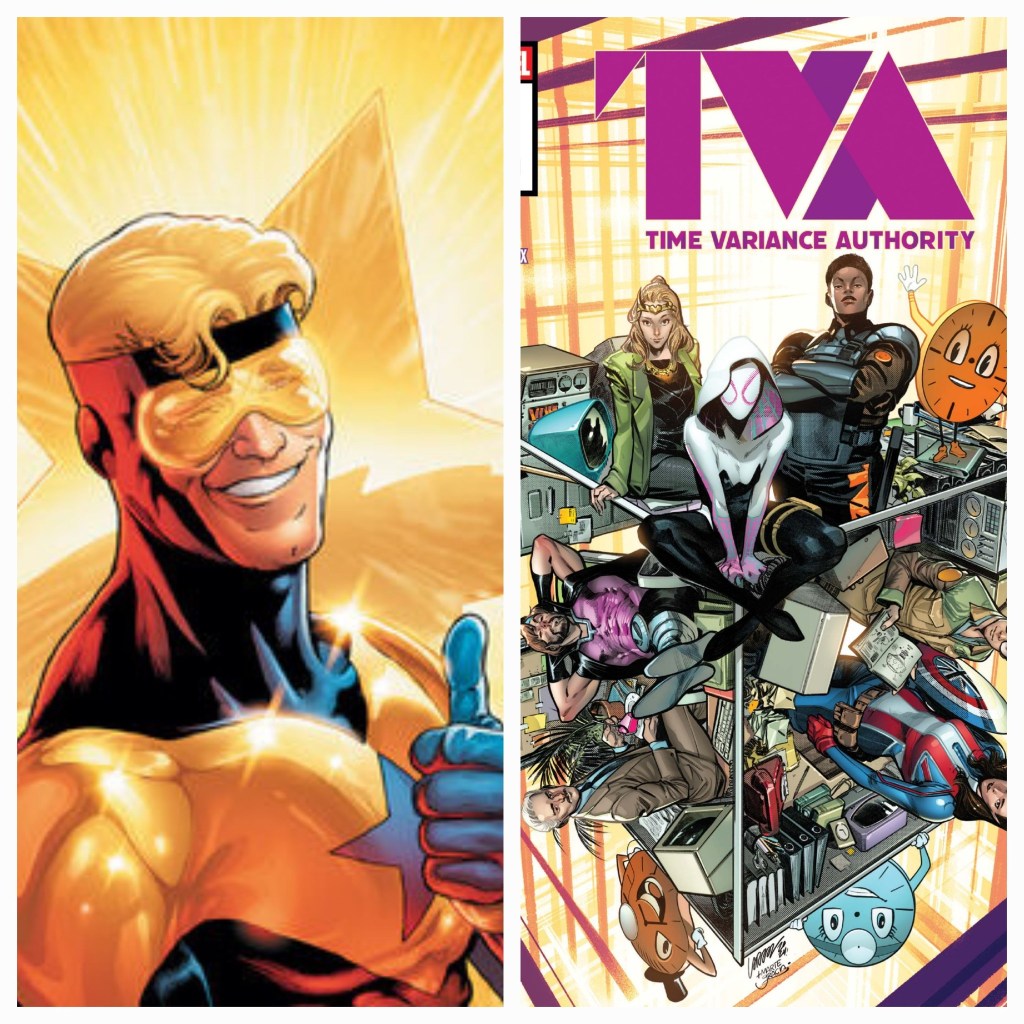
If you didn’t watch Loki on Disney+, I should explain that the Time Variance Authority, or TVA, is an entity in the Marvel Multiverse which is tasked with protecting the integrity of the timestream. In older stories, the TVA was literally made up of a legion of faceless bureaucrats and was a nice satire on corporate politics. The Loki TV series, though, fleshed out the concept quite a bit and made it an engine that could actually support stories of its own rather than just react to things happening in other comic books. They even got their own miniseries earlier this year, in which they built a task force of multiversal heroes including Spider-Gwen, Captain Carter, and an alternate dimension version of Gambit, among others. 

So for an organization dedicated to defending the timestream, who better to have them cross paths with than DC’s Booster Gold? Michael Jon Carter, a disgraced football star from the future, decided he would be better off in another time, so he stole various pieces of technology he knew would essentially make him a superhero and travelled back in time to our present day. Booster, as a character, started off very self-centered and egotistical, but as time went on, he grew and developed greatly, eventually accepting a role of defending the timestream, even though most other heroes (except Batman, who knows the truth) picture him as a jerk and a screw-up. 

The conflict would be that Booster and the TVA basically have the same job description, but from their perspective, the TVA would view Booster as one of the time anomalies they’re dedicated to preventing. There’s room for some great storytelling here, as this would be a far more believable misunderstanding than the usual hero vs. hero battle. As for who should tell this tale, I’d recruit Ryan North – a writer with a sharp sense of humor who has done work with the TVA in the past – and Booster’s creator Dan Jurgens as co-writer and artist. 

Captain Carrot/Spider-Ham

This would build off of the Krypto/Jeff story from the first volume – something that’s a little sillier. Both Marvel and DC have a world in their multiverse that’s basically full of living cartoon animals, so matching up those characters would be natural. DC’s Captain Carrot – a character longtime readers know I’ve loved since childhood – is the leader of his Zoo Crew, the primary heroes of his Earth. Spider-Ham, on the other hand, was originally a little spider named Peter who was bitten by a radioactive pig and transformed into a pig with the powers of a spider. It’s a ridiculous reversal of Spider-Man’s origin, and that’s what I love about it.

I’m not really sure what story I would tell with these two, to be perfectly honest, but it would be enough for me just to see them share a page together. You know who I think would be able to tell a good story with them, though? Comic scribe Gail Simone, who has not only a fantastic flair for comedy, but also tells some of the best character-driven stories in comics. As for the artist, it would have to be somebody who’s shown a proclivity towards more “cartoony” comic books in their artwork. Captain Carrot’s co-creator Scott Shaw wouldn’t be a bad choice, but I think he’s retired, so instead I’d hire somebody like Roger Langridge, who did a beautiful job on the Muppet comics several years ago and recently has done a little work on Dynamite’s Darkwing Duck – another comic about a cartoon animal superhero. 

Superman/Fantastic Four

Now I know what you’re thinking. “Blake, they already DID a Superman/Fantastic Four” crossover back in 1999. Dan Jurgens wrote AND drew it. You’ve been reading and watching Superman stuff every day this year, do you mean to tell us you didn’t KNOW that?”

Of course I knew that, you dork. I’m not talking about THAT Superman or Fantastic Four. I mean the ones from the movies. 

As you may have heard, this summer’s two big superhero movies are going to be Superman and Fantastic Four: First Steps. Both of these are relaunching the respective properties for their new cinematic universes. And both of them look absolutely wonderful. As a teacher, I usually don’t look forward to July – it’s like one big month-long Sunday afternoon before I have to go back to work. But this year, these two movies have me excited and thrilled for July to come. 

Some people, however, have to turn everything into a competition. Marvel fans who reflexively hate anything with the DC stamp on it, Superman fans who talk as though Clark is going to swoop in and beat up the FF…and all of that is ridiculous. The idea of the movies being in competition with each other is largely manufactured by loony fans rather than rationality. Marvel and DC have shared creators for decades in comic books, and even in the current cinematic landscape it’s still happening. (Don’t tell me you’ve forgotten that James Gunn directed Marvel’s Guardians of the Galaxy trilogy or that Reed Richards himself, Pedro Pascal, was in Wonder Woman 1984.) There is literally no reason not to root for BOTH of these films to be huge, massive, entertaining success stories. And what’s more, the characters themselves would feel that way as well.

So that’s the story I would tell. I’d have a story where an entity from each universe – let’s say, for example, Marvel’s Grandmaster and DC’s Superboy Prime– would encounter each other in the Multiverse and get into a debate about their respective heroes, then try to pit Superman and the FF against each other…but SPECIFICALLY, the David Corenswet Superman and the MCU version of the Fantastic Four. They would meet and be told to do battle, then the Grandmaster and Prime would be utterly BAFFLED when they refuse to fight each other, citing that there’s no reason to do so, and then teaming up to defeat their captors.

The meta commentary would make the more bloodthirsty “fan’s” heads EXPLODE. So worth it.

The creative team? Well, if they don’t let me write this one myself, I think it would be a nice project for Mark Waid, who knows and loves these characters better than just about anybody. As the artist, I would get somebody old-school, such as Jerry Ordway, to put his spin on it. 

There you go, friends – three epic crossover stories that are coming soon to a comic book near you…or at least, they would be if I had my way. But these are just MY picks. What about yours? Feel free to share your own “three wishes” for potential Marvel/DC crossovers in the comments!

Blake M. Petit is a writer, teacher, and dad from Ama, Louisiana. His most recent writing project is the superhero adventure series Other People’s Heroes: Little Stars, volume one of which is now available on Amazon. You can subscribe to his newsletter by clicking right here. He’s also started putting his LitReel videos on TikTok. This is usually where he’d make a joke about how much he loves Captain Carrot, but he already put that in the main article, so frankly, he doesn’t know how to end this. Hey, is that a rabbit over there? [Scurries away.]

Geek Punditry #61: Playing Favorites With Superheroes Part One

It’s time once again for PLAYING FAVORITES! It’s that semi-regular Geek Punditry mini-column in which I throw out a topic to you, my friends in the world of social media, and ask you to suggest different categories in which I discuss what I consider to be the best of the best. This time around, the topic is superheroes. Born in the pages of American comic books, but with roots in pulp magazines, myth, and thousands of other sources, the superhero is considered to be the modern mythology, with pantheons not only in comics, but in movies, TV, video games, and pretty much every other media you can name. And I am, it cannot be understated, a fan of the superhero. So what, then, are some of my favorites?

Legacy Heroes

Sandy Brophy is going to kick things off for us by asking for my favorite legacy heroes. A “legacy” hero, for those of you who may not have been reading comic books since you were six years old, is the term used when a superhero’s name and identity is passed on from one person to another. For example, in the early days of comics, the Flash was a college student by the name of Jay Garrick. After superheroes fell out of favor and stopped being published for a while, they were resurrected in the 1950’s with the creation of a brand-new Flash, this time a police scientist named Barry Allen. Barry was the Flash for a long time before dying in Crisis on Infinite Earths (it took longer than usual, but eventually he got better), and his nephew/sidekick Wally West, aka Kid Flash, took over as the new Flash.

And so on, and so on, and so on.

This also, by the way, is my answer to Sandy’s question. The Flash is undoubtedly my favorite legacy hero in comics. By the time I started reading comics Wally was the main Flash, and even decades later he’s still the one I feel is most compelling. He was young when he became the Flash, and thanks to the magic of comic book time I eventually caught up with him at the same time he was being written by Mark Waid, who turned him into a fully fleshed-out and wonderfully realized character in his own right. He got married, had kids, and he grew and matured. He was also – as Waid said – the first sidekick to “fulfill the promise,” in other words, to take over for his mentor. He’s also still, to the best of my recollection, the ONLY one to do so on a permanent basis. It’s true that Dick Grayson (the original Robin) became Batman for a while, and Captain America’s sidekick Bucky took up the shield when Steve Rogers was temporarily dead, but both of them reverted back to their other adult IDs (Nightwing and the Winter Soldier, respectively) when the original came back. Not so Wally. Barry returned and Wally stuck around, and although there’s been a lot of timey-wimey nonsense and attempts to sort of push him to the side, he’s bounced back. Wally is, again, the primary Flash, even in a world where Jay and Barry exist, and the nominal head of the Flash family. And he’s just the best.

There are other good legacy heroes, don’t get me wrong. I enjoy the Jaime Reyes version of the Blue Beetle (although my heart will always belong to Ted Kord, himself the second Blue Beetle following Dan Garrett), and there are few who will argue that Kamala Khan hasn’t done more with the Ms. Marvel title than either of her predecessors, but Wally West is the ultimate legacy hero in my book.

Superhero Logos

My buddy Owen Marshall wants to know what some of my favorite superhero LOGOS are – those titles that splash across the cover of a comic book to (hopefully) let you know what you’re about to read. I’ll talk about what I think makes a good logo in general, then get into specifics. I think a great logo is something that stands out in a way that evokes the hero in question. The Superman logo, for instance, is relatively simple – his name, slightly curved, with drop letters that give it a sense of weight, of solidity. Any time you see that logo you think that somebody could just grab it off the cover – and, in fact, there have been many covers where that very thing has happened.

You can’t beat a classic.

Spider-Man’s original logo is great for similar reasons. It’s solid, but it’s also easy to partner up with a web in the background to help get across the idea that you’re dealing with a wallcrawler. And, like Superman, it’s a short enough logo that it’s very easy to add an adjective to the title (as in the AMAZING Spider-Man, the SPECTACULAR Spider-Man), but just as easy to drop a subtitle underneath (Spider-Man: Renew Your Vows). There have been many attempts over the years to create a new Spider-Man logo, but frankly, there’s never been one I like as much as the original, and it seems it’s never anything but a matter of time before they return to it.

Yeah, that’s the stuff.

The Avengers also have a fantastic logo. They’ve had several, of course, but I’m specifically talking about the most famous version, the one that Marvel Studios used for the basis of its movie design. It’s clean and bold, and the arrow in the letter “A” gives it a sense of forward motion that sort of plants the idea that these are heroes who are about to go out and DO something.

The arrow is in case you forget and try reading it right-to-left.

Green Lantern has had a great many logos over the years, many of which actually include a lantern, but my favorite doesn’t. I like the logo that premiered in 2005 with Green Lantern: Rebirth and which remained the primary version of the logo until just a few years ago. This version has that tilt to one side and a cool roundness to it that…okay, just hear me out on this…it makes me think of classic cars from the 50s. Smooth, sleek, fast…and those are words that apply to Green Lantern, especially the Hal Jordan version. 

And it’s all spacey and stuff.

I could probably spend an entire month just going through different logos, but I’m just going to cap it off here by saying that there are hundreds of awesome logos and if you want to read more about them I highly recommend the blog of comic book letterer and designer Todd Klein, who frequently makes posts where he discusses the design and history of comic’s greatest (and worst) logos, which is like drinking mother’s milk to a nerd like me. 

Superhero TV (pre-2000)

My old friend Patrick Slagle wants to know my favorite superhero live action TV shows. Well that’s easy! There have been SO many to choose from – Stargirl was great, and I was deeply enamored of Legends of Tomorrow, and then there was–

Oh, wait.

He specified shows from BEFORE the year 2000. Well. That makes it a lot more difficult. We’ve been in a superhero renaissance in the last decade or so, guys, with such an abundance of shows that even I haven’t gotten around to watching them all yet. (Peacemaker, for example, is still warming my “to-watch” list.) But if I’m going to restrict myself to the cultural wasteland that was 1999 and earlier, I guess there’s only the obvious choice.

Project: ALF.

If I don’t do this at least once in every Playing Favorites column the Don said he was gonna break my thumbs.

The superhero shows of my formative years…let’s be honest guys, they weren’t that great. The two most fundamental ones are probably the Bill Bixby/Lou Ferrigno Incredible Hulk and Lynda Carter as Wonder Woman. And while those are both good shows, neither of them were series I would watch on repeat, the sort of thing that makes a TV series worm its way into my psyche and become a part of the vast tapestry that is your friendly neighborhood Geek Pundit. And the truth is, a lot of the other shows of that era don’t hold up. Look at the 70s Amazing Spider-Man or Shazam! shows and try to convince me that these are fundamental pieces of Americana. The Greatest American Hero is a show I know I used to watch, plus it’s got the most earwormy theme song in superhero history, but I couldn’t relate the plot of a single episode after the pilot. It got better later, with the surprisingly decent Superboy TV series (mostly after Gerard Christopher took over the role from John Newton) and the “fun but fluffy” era of Lois and Clark: The New Adventures of Superman.

There are some wild swings in quality happening in this picture.

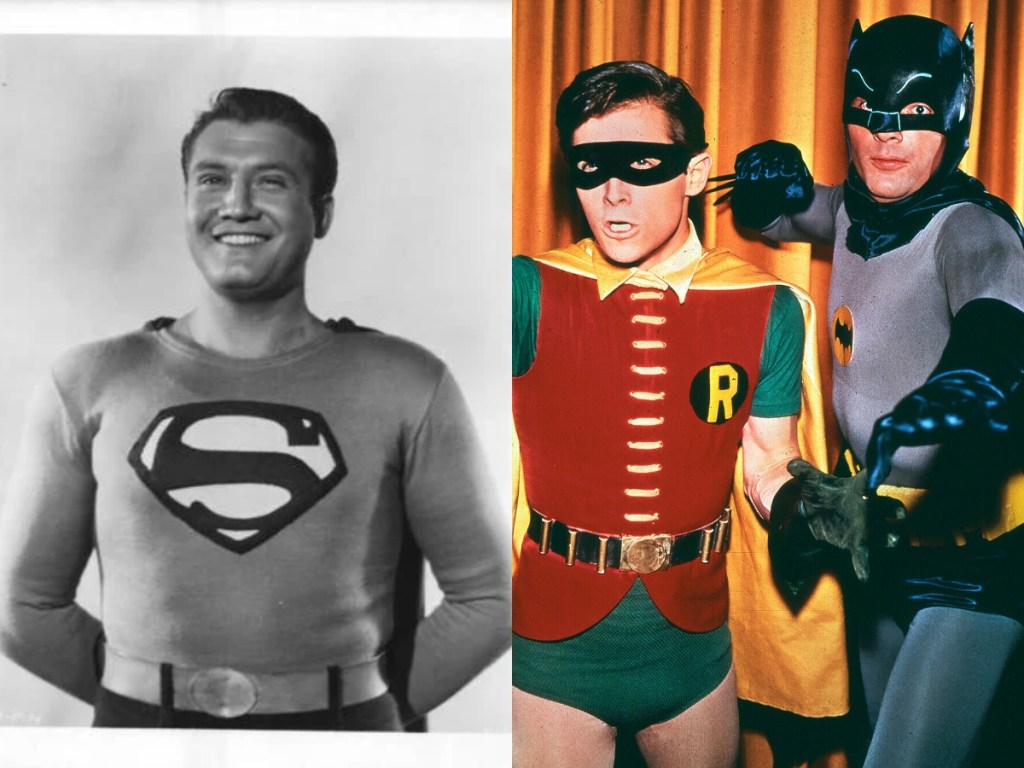
If I have to pick (and I do, it’s my damn game), I guess I’m going to have to give props to the two shows that I think launched the genre on TV: George Reeves in The Adventures of Superman and the Adam West/Burt Ward Batman show from 1966. I’ve always had a complicated relationship with the West/Ward era. When I hit those peak teenage years of arrogance and knowitallitude that most of us go through, I began to actively dislike that show, blaming it for people treating comic books as childish and infantile for decades after it was off the air and tarnishing the reputation of the caped crusader. Fortunately as I got older, I got over myself, thus disqualifying myself from ever running for elected office, but at the same time getting a sense of perspective. Sure, it wasn’t MY Batman, but I learned to appreciate it for what it was. I’ve softened to the show now. I even watch the reruns on MeTV Saturday nights between Svengoolie and Star Trek.

There’s no school like the old school.

George Reeves, though, I’ve always appreciated. He was the Curt Swan Superman come to life – square-jawed, barrel-chested, friend to all the innocent. But at the same time, he had a wicked sense of humor, showing clear joy whenever he got to take down a bad guy and taking a sly sort of pleasure any time he thwarted Lois Lane’s attempts to one-up him. I love the Reeves Superman and I don’t think he gets the respect he deserves. DC has launched a series of comics featuring the Christopher Reeve Superman as Superman ‘78, and that’s great. I love ‘em. But am I really the only person who would pick up a comic book called The Adventures of Superman ‘52?

Superhero Animals

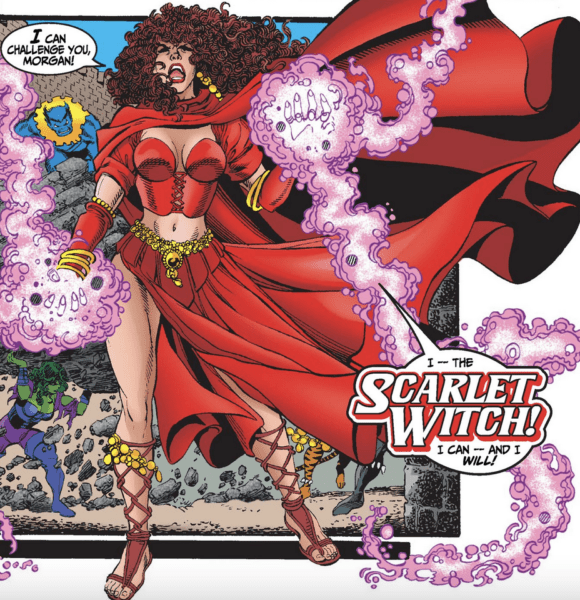
I really like Marvel’s Scarlet Witch. She’s had several costumes over the years, but the best is the one George Perez whipped up for her for the Heroes Return era. It was red, naturally, which helps you identify her via color-coding, but the design also drew on the character’s Romani heritage, with a rare long skirt and robes that make you think of a fortune teller. All of that builds together and links her to her mystical roots. I’m fairly certain that if I didn’t know who the Avengers were and someone asked me which one I thought was the Scarlet Witch, I’d say, “Well, gotta be the woman in red, and not the tiger girl in the bikini.”

Jim MacQuarrie asked for my favorite Super-Animal, while Lew Beitz wants to know my favorite Super-PET. These two categories are close enough that I’ll talk about them together. They’re not EXACTLY the same, but there’s plenty of overlap. The way I look at it, we can divide super-animals into two categories: the ones that serves as an animal sidekick to the main hero, such as Krypto the Superdog, and those that are distinct heroes in their own right, like Hoppy the Marvel Bunny. The former are characters in established universes, while the latter usually exist in a Disney-esque universe where there are no humans at all, but instead races of anthropomorphic animals running the show.

As far as super-pets go, the Superman family has the deepest – and weirdest – bench to draw from. Krypto the Superdog and Beppo the Supermonkey are both animals from Krypton who made their way to Earth and gained powers like Superman and Supergirl. Supergirl also has a cat named Streaky who gains and loses his powers on a rotating basis thanks to exposure to something called X-Kryptonite (it was the 50s, it was safe to give something a name like that because there was no internet). Then there was Supergirl’s horse, Comet, who was actually a centaur from ancient Greece named Biron that was cursed and trapped in the form of a full horse. He hung around for a couple of thousand years before he met Supergirl and started to assist her on her missions, fell in love with her, and learned he could briefly become human when an actual comet passed close to Earth, allowing him to date Supergirl without telling her who he really –

Stop looking at me like that, I’m not making this up.

Superman is surprisingly indiscriminate about who he gives a cape to.

Anyway, Krypto is kind of the gold standard of super-pets, but there are a few others outside of the Super-Family worth mentioning. Wonder Woman’s kangaroo, Kanga, for instance. Ace the Bat-Hound, who Batman gives a mask to cover the bat-shaped patch of fur on his face and thus protect his secret identity. Chameleon Boy’s pet Proty who, like Chameleon Boy, is a shapeshifter, and fully sapient, and who can and did occasionally impersonate full grown adults, which makes you ask where the hell the Legion of Super-Heroes gets off treating him like a pet. And of course Damian Wayne, the current Robin, has Bat-Cow.

The only superhero who’s a source of 50 percent of the food groups.

Then there are the other types of Super-Animals: anthropomorphic heroes in their own right. Everyone who has heard me talk for five minutes will know that my favorite of these is Captain Carrot and his Amazing Zoo Crew. Created by Roy Thomas and Scott Shaw!, this 80s phenomenon was about a group of superhero animals who got powers from meteors that fell to (their version of) Earth. After meeting a dimension-hopping Superman, they were inspired to become heroes in their own right. The art is cartoony and the premise is silly, but what I’ve always loved about Captain Carrot and company is that their stories – at least in the 80s – weren’t played like cartoons. The plots were straight out of the pages of Golden and Silver Age comics, facing giant monsters and villains with cold-rays and all kinds of classic tropes. They were funny, sure, but not at the expense of the characters, as many of the modern writers who have tried to use Captain Carrot have forgotten. When I say I want a revival of the old-school Captain Carrot, I say it unironically and with love.

By contrast, there’s perhaps the most famous super-animal of the day, thanks to his starring role in an Academy Award-winning motion picture. I refer, of course, to Peter Porker, the Spectacular Spider-Ham. Spider-Ham’s comic hit JUST when I stared reading comics in earnest, and I devoured it. In this hilarious take on the Spider-Man story, Peter was the pet spider of mad scientist May Porker, who accidentally irradiated herself and bit him. The spider turned into a pig while maintaining his spider-powers. When May recovered from the radiation, her memory was erased and she thought she was just a kindly old lady and Peter was her nephew.

Move over, “The Boys,” the REAL heroes are back in town.

I’m not making this up either, but I wish I could take credit for it. The early Spider-Ham comics were a lot of fun, then he disappeared for decades before experiencing a renaissance in recent years. Like Captain Carrot, his modern adventures are sillier and more “cartoony” than the earlier ones, but UNlike Captain Carrot, the cartoony interpretation fits better, and has made him a better character.

My favorite Spider-Ham story, though, is not from the comics and not from the cartoons, but from the mouth of his creator, Tom DeFalco, when I met him at a convention a few years ago. He was signing reprints of the first appearance of Spider-Ham and his other great Spider character, Spider-Girl. I bought them both and told him how much I loved Spider-Ham when I was a kid, and he told how surprised he was when Marvel Comics sent him an invitation to the premiere of Spider-Man: Into the Spider-Verse. He didn’t understand why he was getting an invitation, and someone said, “It’s probably because Spider-Ham is in it.” And DeFalco, shocked, exclaimed, “SPIDER-HAM is in a MOVIE?”

Timeless. 

Favorite Superhero Costumes

My wife Erin, who always cuts the line because nobody else who submits questions has ever made lasagna for me, wants to know what my favorite superhero costumes are, both male and female. I think it was Alex Ross who said that the test of a good superhero costume is whether you could identify the character based just on the name, even if you knew nothing about them. Batman, for example. Green Lantern. Captain America. The 90s was an era where this consistently failed, especially in the X-Men comics and those later characters created by former X-artists. If you showed someone who knows nothing about comics pictures of Gambit, Cable, Maverick, Shatterstar, and Deadpool, then asked them to match the names to the pictures, any correct answers would happen purely because of the law of averages.

But anyway, when I read Ross’s definition, he also used that definition to argue that the greatest superhero costume of all time belongs to Spider-Man. It’s hard to argue with him. Nobody who saw a lineup of the Marvel Comics all-stars would have any difficulty telling that this guy is Spider-Man and not, for example, Wonder Man. And while that’s true of MOST of Spider-Man’s assorted costumes over the years, the original is still my favorite. The black costume is cool-looking, but the ol’ red-and-blues have a brighter, more optimistic tone that suits Spider-Man better. Spider-Man is a hard luck hero, to be sure, but he should never be a depressing, brooding character like Daredevil. (Are you listening, current Marvel editorial?) He’s the guy who should never give up and always finds it in himself to do the right thing, and the red and blue color scheme says that better than any of his other assorted looks. 

I don’t even blame him for admiring his own reflection.

Using the same metric, I also think the Rocketeer has a phenomenal costume. He is literally a human rocket, with a rocket pack strapped to his back and a helmet that evokes the speed and energy of the burgeoning space age. The rest of the outfit, though, with the brown bomber jacket and the jodhpur pants brings in the idea of his aviator background and grounds him in the World War II era where he belongs. 

This picture makes me want to make swooshy noises.

Honorable mention goes to the Flash, Green Lantern (Hal Jordan costume, although I have a soft spot for the one John Stewart wore in the Justice League cartoon) and Marvel’s Nova.

Erin also asked about my favorite female costumes, which I find is a little harder to do going by Alex Ross’s metric. Too many female costumes are designed more for titillation rather than actually identifying the character. And even those that DO clearly identify them often do so via a logo or symbol that marks them, such as Wonder Woman.

I think “Morgan” was the screenwriter of Doctor Strange and the Multiverse of Madness.

Harley Quinn is another one that is pretty obvious, at least in her original costume. The red-and-black color scheme, white makeup, and bangled headpiece brings up the notion of a Harlequin, which of course is the inspiration for the character. She’s changed her look several times over the past few years, and while some of her looks have been pretty good, none of them draw their inspiration from her roots the way her first look does. On the other hand, they’ve come up with a pretty solid justification for her changing her look – once she got over the Joker and dumped his homicidal ass, she doesn’t want to wear the costume that identifies her as his sidekick anymore.

Let’s face it, I could have posted a picture of a random duck here and you still could have pictured Harley’s get-up.

Then there’s Supergirl. She’s had a lot of costumes, the most iconic look being the basic Superman outfit, only with bare legs and a skirt. That’s not her best look, though. For me, my favorite Supergirl costume came from the 1970s, when she wore a loose blouse with a small S-shield over her heart rather than the full-size shield most superfolks wear. I love that look – it still clearly marks her as a member of the Super-family, but it’s very different from anything any of the others wear. Being loose instead of skintight like most superhero costumes, it’s got a freeing quality that speaks to a lighter version of the character in a period where she was working to get out of her more famous cousin’s shadow. It’s such a great look and I never stop wishing they would bring it back.

What can I say? She’s got the look.

That’s about it for this week, guys, but there are plenty of other questions I haven’t gotten to yet. So be sure to come by next week for Playing Favorites With Superheroes Part Two, and if you have a suggestion that I haven’t covered, go ahead and drop in in the comments. Up, up, and away!

Blake M. Petit is a writer, teacher, and dad from Ama, Louisiana. His most recent writing project is the superhero adventure series Other People’s Heroes: Little Stars, now complete on Amazon’s Kindle Vella platform. He realizes he talks about the Superman family a lot whenever he gets on to a superhero discussion, but let’s be honest, people. It’s either gonna be this or Star Trek.

Geek Punditry #35: Cracking Open the Mailbag

Here at the Geek Punditry Global Media Hub and Frozen Yogurt Emporium, we do our best to keep on the cutting edge of popular culture. We check in on all the websites. We read the “Tweets” and the “X”s. We “Insta” and we “Thread.” We do not TikTok, however, because although we do have several incurable neuroses, narcissism is not one of them.

And as such, occasionally we find ourselves being asked questions by you, the faithful reader, about some of the elements of pop culture that are flickering across the internet as we speak. So this week, we’re going to crack open our bulging folder of email and address some of the questions that you’ve had for us lately.

Dear Geek Punditry,
I’ve recently subscribed to the Marvel and DC Comics apps so I can get down and read a whole bunch of comic books, and I was wondering where to start. There’s so much stuff on there and I’m not sure what I should read first.
Overwhelmed in Omaha

Overwhelmed,

You’ve certainly come to the right place. While the sheer amount of content on these two apps can be intimidating, if you figure out how to filter through it and find the things you like, the services are worthwhile. For example, if you’ve got the DC Ultra level, you can access all of Neil Gaiman’s Sandman and Bill Willingham’s Fables. The recently-released first issue of Mark Waid and Bryan Hitch’s Superman: The Last Days of Lex Luthor is there, and it is excellent. I’ve been using the app myself to catch up on those Knight Terrors miniseries that fall into books I don’t usually buy and therefore aren’t getting physically, and I’ve enjoyed several of them as well. And of course, no visit to the DC app would be complete without reading DC Challenge and Captain Carrot and His Amazing Zoo Crew.

As for the Marvel app, when I first started using it my goal was to figure out what’s going on with the X-Men in the age of Krakoa. I started reading those books when Jonathan Hickman took over, then gave up because there were simply too many of them to keep up with. I saw the app as an opportunity to read the entire line all in one place without spending a fortune, and I’m happy to report that having all of the installments of the various X-Men related titles available in one place has in absolutely no way made it easier to keep up with them or, for that matter, even really understand what the hell is going on. I’d also recommend Chip Zdarsky’s Daredevil, which I’ve mentioned before, Gail Simone’s Variants, and for old-school fun, check out Peter Porker, the Spectacular Spider-Ham.

When the hell is THIS crossover going to happen?

Geek Punditry,

I’m a teacher, and earlier today one of my students saw the display of Superman stuff I keep in my classroom and he called it “lame.” How do I let him know that he, in fact, is the lame one, and also a stupid-head, without getting called in to the Principal’s office again?

Educational in Erie.

EE,

Ah, the “Superman is lame” argument. I’ve heard it many times. “He’s too powerful, he’s too perfect, he’s too basic.” Indeed.

First of all, I wish I could talk to the person who decided that “basic” is a pejorative. “Basic” means simple or uncomplicated, and frankly, there are a lot of days where I think it would be great if the whole damned world was more basic.

That said, the concept of Superman may be basic, but the characterization certainly is not. What you have, when you boil Superman down to his essence, is a man with the power to do virtually anything but who chooses to use that power to do good. I think people reject that concept because they can’t conceive of anybody behaving that way in real life, but that’s what makes the character so compelling to me. What kind of person, with the ability to conquer the world, would rather use it to get kittens out of trees? Of course, that’s only a small part of his job description – he also averts natural disasters, saves people from fires, thwarts supervillains, flummoxes corrupt super genius scientists/businessmen, and saves the world seven times before breakfast…and he does it because he can. Because it would be inconceivable to him to do otherwise. 

I’m not saying that there haven’t been bad Superman stories in the past (written in the past few years, beginning shortly after Action Comics #1000, theoretically speaking), but when Superman is good, there’s nothing better. Great Superman stories take this concept of an incredibly powerful alien and blend it with just a hint of the Pinocchio syndrome: he wants to be human. And like the best Pinocchios, he wants it so badly that he winds up becoming more human than anybody. Superman is a character who believes in Good – not the lowercase adjective good, but a proper noun Good that is a tangible force in the universe. He believes that most people carry it within them, and his job is to bring it out. He believes the best of everyone, he cares about everyone. In a recent story by Phillip Kennedy Johnson (Action Comics #1053) he was asked by someone why he would bother to save the life of one of his enemies. His answer was the most Superman response I’ve ever heard: if someone who has done wrong dies, they will never have an opportunity to become better.

When you don’t believe in yourself, remember that this guy would.

THIS is the Superman I love. The one who first identified himself, when asked who he was by Lois Lane, as “a friend.” The one who will never give up on people. The one whose faith in the inherent decency of humanity is both his greatest weakness and his greatest strength. If you can’t tell a great story with Superman the fault lies not with the character, but with the writer. 

Also, I like the trunks on the outside.

Hailing Frequencies Open,

In the past, you have extensively discussed your love for various iterations of Star Trek in this column. I was wondering if you would be willing to rank the various series for us, from your favorite to least favorite.

Andorian Andy

Andoriandrew,

I really hate ranking things, you know. I feel like it creates a sort of unnecessary drama, an unnatural division amongst people who, at their core, should have more in common with each other than differences. The only reason I can think of for producing a ranked list of one’s totally subjective preferences is to have something to argue about, and I don’t want to do that. I love Star Trek in all its forms, and for many different reasons.

Nearly 60 years of awesome. And also that episode of Voyager where they turned into salamanders.

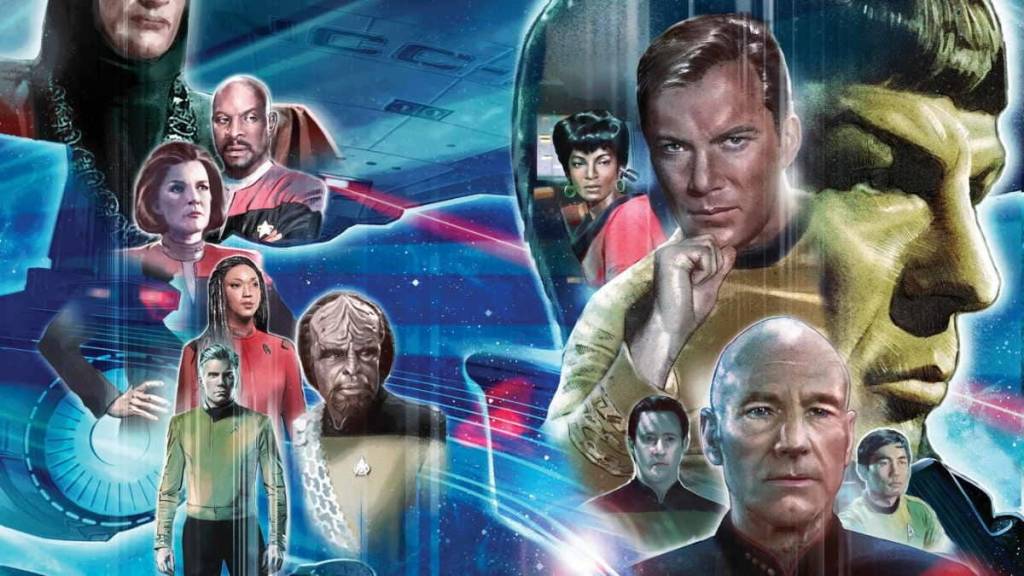
The Original Series created a rich, vibrant science fiction universe that has captured the imaginations of generations, and The Animated Series began to expand upon that world, allowing writers to do wilder things that the budget of a live action TV series at the time would not have allowed. Next Generation resurrected that universe, giving us some of the greatest and most beloved characters in the entire franchise (such as Data, that other great Pinocchio of the modern day). Deep Space Nine was the first series to attempt an extended story arc, and has some of the deepest and most profound stories and character arcs in the entirety of Trek. Voyager compounded the memorable characters and took an opportunity to explore different settings. Enterprise was a step back that showed us the roots of the universe that we loved so much. The Kelvin timeline films are a fun, fresh look at something that was remarkably familiar. Lower Decks shows us that there is room for both lighthearted fare and serious science fiction in the same story. The final season of Picard is a brilliant conclusion to the stories of many of our favorite characters. Strange New Worlds recontextualizes the original series and gives new life and energy to something that we thought we knew all there was to know about. Prodigy is a series that introduces kids to the core thesis and heart that makes the Star Trek universe what it is in an exciting and engaging way. And Discovery has Tig Notaro sometimes. 

Dear Constant Reader,

You’ve spoken before about your love for the works of Stephen King. With his newest novel, Holly, hitting the stands, I was wondering if you have any thoughts or feelings about the Holly Gibney character in her previous appearances or any hopes or expectations for this new story.

Roland from 1919 19th Street, Co-Op City

R19,

I am, in fact, an avowed reader of the works of Stephen King. I’ve been a fan of his since high school and I have devoured a great many of his books. As for Holly Gibney, however, I’m afraid I actually haven’t read any of the books with her in it yet. Holly first appeared in King’s 2014 novel Mr. Mercedes, you see, and 2014 also happened to be the year I got married. That’s a busy time in a person’s life, as you may have heard, and in that time I fell a bit behind on reading pretty much anything. Then just as things were starting to settle down, my wife and I had a kid, and if the transition of getting married makes you busy, the transition of becoming a parent is like having a tornado drop into the middle of your living room and steal all your books. So the truth is, I’m way behind on reading not just Stephen King, but pretty much every other author whose work I enjoy.

The good news, as I’ve mentioned before, is that my son is a bit older now and I’m finding it a bit more possible to pick up a book and read again, so I’m slowly getting back into the game. I’ve actually made several lists of authors and series that I want to get into or back into, and I’ve been chipping away at them a little at a time. The Stephen King novels I haven’t read yet are all on those lists, and I have every intention of getting to them eventually. The funny thing is that, of all of his books that I haven’t read, only three of them were published prior to 2014…and I don’t know that I’m going to get around to Pet Sematary anytime soon. As a dad, it might just be too much for me.

Guess which one of these I’m probably going to read first.

Blake,

Is it true that you just couldn’t think of any topic to write about this week that was worth devoting an entire column to, and thus resurrected this contrived mailbag format as a way to work in a variety of different topics that wouldn’t support an extended discussion? And if so, when did it occur to you that the “mailbag,” while a classic trope, is hopelessly outdated and it would be better served to structure future such columns in the form of social media interaction?

Curious in Cambodia

Dear Curious,

Shut up, that’s why. 

Blake M. Petit is a writer, teacher, and dad from Ama, Louisiana. His current writing project is the superhero adventure series Other People’s Heroes: Little Stars, a new episode of which is available every Wednesday on Amazon’s Kindle Vella platform. What’s odd is that, although he hates ranking things, he enjoys making lists. Isn’t that bizarre?