It’s time for another roundup of recent Superman comics. This week I’ll be reviewing the Superman and Superman-related releases that were released on Jan 28 and Feb. 6. Let’s get into it!
Superman Vol. 6 #34
Title: I, Superman (A DC KO Tie-In)
Writer: Joshua Williamson
Art: Eddy Barrows and Eber Ferreira
Main Cover: Dan Mora
In the arctic, the unusual trio of Lois, Superboy-Prime, and a Superman Robot are fleeing the Fortress of Solitude and the battle with members of Darkseid’s Legion. Meanwhile, the Final Four from the main tournament get a chance to look in on what’s happening back on Earth. It’s a pretty sparse recap, I admit, but the pages are PACKED here with character stuff.
The surprising redemption of Superboy-Prime continues this issue, as he finds himself confronting a Superman Robot that has many of the memories and personality of the original. The contrast between the two is marked and the way that Prime has to reckon with the way the REAL Superman apparently thinks of him…which isn’t what he expected, but is probably exactly what the reader would anticipate. I like Prime’s reactions quite a bit – he’s got an awful lot to cope with here, and for the most part, Williamson is handling it well. He may be going slightly too hard on the fourth wall-breaking dialogue, though. Prime is carrying around knowledge of the fact that he’s in a comic book universe, which is fine, but we don’t want it to go so far as to turn him into Deadpool.
We also spend time with the members of Darkseid’s Legion, who up until this point have come across largely as mindless stormtroopers wearing the faces of our friends. We get a different look here, a reminder that although they’re from a universe corrupted by Darkseid’s Omega Energy, they’re still fundamentally the same people, and perhaps the notion of redemption that Williamson is playing with here isn’t restricted to Prime himself.
I’m all about Eddy Barrows and Eber Ferreira’s artwork – bold, strong, and proud. They’re also pretty good about drawing a Prime that looks like an actual Superboy. Even at his most villainous, it’s important to remember that he’s still a version of Clark Kent, and there have been artists who occasionally forget that.
DC KO: The Kids Are All Fight Special #1
Writer: Jeremy Adams
Art: Travis Mercer
Main Cover: Bruno Redondo
The Justice League is strained at the moment, with many of their members caught up in the tournament for the Heart of Apokalips, and most of the others fighting to help evacuate Earth or deal with the dozens of other disasters cropping up all over the place. Jon Kent is given one of the most important duties of all: staying on the Watchtower and keeping an eye on some of the younger heroes, including the Boom, Fairplay, Quiz Kid, and Cheshire Cat. Of course, it would be a pretty short special if the kids just sat around and did what they were told, wouldn’t it? Naturally, they get loose, run into trouble against some of Darkseid’s minions, and Jonathan is forced to call on Cassandra Cain for help.
Jon has been in the last several issues of Titans, working with them as they spearhead the evacuation effort. In March, the book is scheduled to be retitled New Titans with issue #32, and the cover (with several characters in silhouette only) implies heavily that Jon will be a member of the new team. If that’s the case, I’m really quite satisfied with it. The character has been rattling around aimless, for entirely too long, and if making him a member of the Titans actually gives him something to do that makes sense, that’s the best we can hope for. What’s more, I like the group of kids that we see in this issue, the ones that Jon is protecting. I’ve wanted to see more of Boom since she first appeared in the Stargirl: The Lost Children miniseries a few years ago. Fairplay, too, is an interesting character, a very different take on Mr. Terrific that has a lot of promising storytelling avenues. Best of all, there’s a surprise guest-star in this issue that filled me with joy, and no doubt will have the same effect on a lot of other readers. It’s someone we haven’t seen in quite some time, but that DC has been teasing very heavily lately. I’m hoping that this character will stick around in New Titans as well.
Of course, none of that is set in stone. Jon is the only character in this issue whose silhouette appears on that New Titans cover. But covers – especially early solicits – can be deceiving. I don’t expect the heroes we see in this issue to be the new Titans team in its entirety, but I hope that Jon isn’t the only young hero that got a tryout in this issue, because I think there’s a lot to work with here.
DC’s Supergirl Next Door #1
Note: This is DC’s Valentine’s Day anthology for 2026. There are eight different stories in the book, but I’m only reviewing the Supergirl story.
Title: A Dream of Different Stars
Writer: CRC Payne
Art: Paulina Ganucheau
Main Cover: Amy Reeder
Allen is a new kid in Midvale, struggling to make friends and struggling to fit in. That is, until he meets another new kid in town, Linda Danvers. The two of them form a bond and she opens up to him, revealing just how deeply she misses her old home, and Allen decides to do something to help her.
Short and sweet, but that’s what this story is. It’s a lovely little tale of a couple of foundlings who find solace in one another. CRC Payne is a name I mostly know from her work on DC’s digital comics, such as Batman Family Adventures and Harley Quinn in Paradise. She’s brought the same kind, quiet, reflective tenor she uses in Batman Family Adventures to this story as well, crafting a tale that makes it easy to relate to the characters despite its brevity. Ganucheau’s art has a loose quality to it as well, befitting the more animated style we see in Payne’s other work and fitting very well for this tidy little love story. There’s real charm here that I appreciate.
DC KO: Boss Battle #1
Writer: Jeremy Adams
Art: Ronan Cliquet, Carmine Di Giandomenico, Kieran McKeown, Pablo M. Collar
Main Cover: Jamal Campbell
Seconds after the end of DC KO #3, the Final Four in the tournament for the Heart of Apokalips are poised for the battle of their lives, but World Forger manages to “pause” the game. They’re not ready, the need more Omega Energy, so he finds a way to generate some by briefly spending the heroes into neighboring realities to have additional battles and charge up, leading to fights against the wildest opponents yet: Sub-Zero and Scorpion from Mortal Kombat, Samantha Strong from Beneath the Trees Where Nobody Sees, Sabrina the Teenage Witch, Vampirella, Red Sonja, the murderous doll Annabelle, and – in the title fight that people have been wanting to see for YEARS, Superman versus Homelander from Garth Ennis and Darrick Robinson’s The Boys.
During the Year of Superman, I included Homelander in the week I wrote about “Superman gone wrong” – characters who are intended to be dark or even evil versions of the Man of Steel. To me, Homelander is one of the most insidious of those. He is what people who never understand Superman THINK Superman should be like. And knowing that Superman is one of the few superheroes that Ennis actually has respect for, from the minute this book was announced, I was looking forward to seeing our boy Clark finally giving Homelander the beatdown he so richly deserves.
The result is…okay.
Look, the concept of this book is fantastic. It’s utterly insane, and the matchups are crazy. (Joker versus Annabelle, anybody? COME ON!) But it’s just too short. It seems like nearly half the book is taken up just with giving each of the champions borrowed from other universes a page of introduction each, then the fights themselves are over and done with far too quickly. I have never said this before, but this is a crossover spinoff one-shot that probably SHOULD have been a crossover spinoff miniseries.
What’s more, it’s kind of inconsequential. It picks up just as DC KO #3 ends, and the final page promises that the story leaps from this book straight into DC KO #4, and it’s structured in such a way that people who are only reading that main book will feel like they haven’t missed anything. I get why they structured it that way, and I don’t begrudge that, but considering that this book is ultimately just a fun little sidestory rather than required reading (like so many of the books from “All Fight Month” were) just kind of makes me lament the fact that there wasn’t time for a little more fun.
Superman: Chains of Love Special #1
Title: Creepers
Writer: Leah Williams
Art: Ig Guarra
Main Cover: Yasmine Putri
Just in time for Valentine’s Day, we get this one-shot. Livewire is being paroled from prison, but her years away have left her without her audience…until she stumbles into the Creeper, who finds a way to help her climb back to prominence. And then, with love in the air, the sparks fly.
It’s a cute enough story – questions of continuity aside (Livewire says early that she’s “from the 90s,” which feels a little meta), the two characters have an interesting chemistry that actually plays out in an entertaining way. Superman’s presence in the story is minimal however, mostly there for structure in the new environment that Leslie Willis finds herself in. But I guess DC (correctly) assumed that branding this as a Superman special rather than a Creeper/Livewire special would get more readers.
Title: Bill Zarro’s World
Writer: Dan Slott
Art: Rosi Kampe
Dan Slott and Rosi Kampe also come through with a back-up story in this issue. Bill Zarro is a lowly peon working at the Daily Planet. His boss is a jerk, his wife resents him, his kids disdain him…until one day he wakes up on Bizarro World, and everything changes. This is a short story that’s essentially an extended gag piece that builds up to an unusual and amusing punchline. The ending is funny enough to make the story worth recommending.
Absolute Superman #16
Title: The Never-Ending Begins Part Two: This Universe Will Break Your Heart, Kid
Writer: Jason Aaron
Art: Juan Ferreyra
Main Cover: Rafa Sandoval
This issue brings us the full introduction of a new Absolute Universe hero as Superman is approached by the mysterious Hawkman. This version of Carter Hall has been around for a long time, and initially doesn’t know what to make of this newcomer with all of the powers. We also see Lois as she tries to find a new direction in the wake of her departure from the espionage game, a new version of another classic character, and the recruitment of Lex Luthor continuing unabated.
Here’s something that I haven’t really said before about many of the Absolute comics: this issue is surprisingly funny. The first couple of pages in which Superman and Hawkman meet in midair are punctuated by Kal-El getting distracted by disasters both minor and major and then zipping off to deal with them and leaving Hawkman flapping his wings. The introduction to this new Hawkman works really well. It can be easy to forget that this “young” universe is still a universe, with a history all of its own, and Hawkman feels like a great opportunity to explore that a little bit more.
The Lois story has some humor as well. For a while it didn’t seem as though this book was going to brush much on the traditional Superman status quo at all, but here we’ve got Lois and Jimmy looking into being reporters, the introduction of the Daily Planet, and the debut of one Perry White. Even there, though, we see the influence of Darkseid on this world. The Planet ain’t the grand old dame she is in the main DC Universe, and although Perry has the same sort of grit you’d want from the character, it comes with more grime than one would usually expect. The way this is structured he may be a one-off character, but I really hope that’s not the case. I feel like there’s a lot of potential here, especially in having him interact with Lois.
Even the Lex Luthor scene is darkly comedic. The Absolute Luthor – with a proud shock of red hair and a burly beard, is a man utterly happy and content in his simple like. The difference between him and “our” Lex Luthor is perhaps more striking than any other Absolute character we’ve met yet, which is amusing, but at the same time, seems poised to bring him to a bitter, heartbreaking end.
Or not. Aaron has been surprising me a lot with this book.
Juan Ferreyra handles both the line art and colors for this book, and I really like his work. The flashback scenes, showing some of Carter’s adventures in the 40s, have a nice sort of archaic look to them. In the modern scenes, where he and Kal-El meet, he does this really interesting blur effect to show Superman zipping into action. It’s not wholly unique – I’ve seen similar effects from other artists – but his execution is great. I’m also a big fan of the monster designs from later in the issue, and his battle scenes look stunning.
We’re on the second issue of this new story arc, and it’s honestly shaping up to be my favorite from the series so far. It’s brighter somehow, and while that may be a deviation from the whole ethos of the Absolute Universe, I feel like that’s kind of the point. A Superman – a REAL Superman – should always be the bright spot in his world, no matter how dark the world itself may be.
Blake M. Petit is a writer, teacher, and dad from Ama, Louisiana. His most recent writing project is the superhero adventure series Other People’s Heroes: Little Stars, volume one of which is now available on Amazon. Don’t forget, you can check out earlier blogs in the Year of Superman/Superman Stuff Archive! Got a request for a future “Superman Stuff”? Drop it in the comments!
Last week brought us a pair of announcements about upcoming Superman books, both of which I’m happy about, although I’m slightly reserved about one of them.
First of all, Marvel Comics announced the creative teams for their half of the upcoming Spider-Man/Superman crossover. DC announced at the end of last year that Mark Waid and Jorge Jimenez will be doing the main story for their half, which comes out in March. Marvel’s side of the crossover will come out in April, and last week we learned that the main story will be by Brad Meltzer and Pepe Larraz, pitting the wallcrawler and the Man of Steel against Lex Luthor and Norman Osborn. I’ve been a fan of Meltzer for quite some time – I love his novels, I’ve shared his childrens’ books with my son, and I’ve always liked his comics. I was surprised, though, to discover that he’s done almost no work for Marvel in the past – save for a single page in 2019’s Marvel Comics #1000 special, I believe this will be his first Marvel work.
They also revealed the creators and characters that will appear in the back-up features. Dan Slott and Marcos Martin will team up the Golden Age Superman with Spider-Man Noir, Jason Aaron and Russell Dauterman will pit Wonder Woman and the Jane Foster Thor against an army of symbiotes, Louise Simonson and Todd Nauck will turn John Henry Irons against the Hobgoblin, Joe Kelly and Humberto Ramos will chronicle a “campus crossover” between Gwen Stacy and Lana Lang, and Brian Michael Bendis will re-team with Sara Pichelli, with whom he co-created the Miles Morales Spider-Man, in a story where Miles meets Superman. The thing about that last one, though, is that I’m not actually sure WHICH Superman Miles is going to meet, Clark or Jon. The solicitation doesn’t make it clear, and there are variant covers featuring Miles with each of them. This is one of the many, many things that drives me crazy about aging Jon up, but I’m not going to belabor that point here. I’m excited about most of these stories, particularly to have Louise Simonson writing Steel again.
The second announcement that hit this week is for another project launching in April, a four-issue Bizarro: Year None miniseries, purporting to tell the “definitive, indefinitive” origin of Superman’s imperfect doppelganger. This one is going to be co-written by Kevin Smith and Eric Carrasco, with art by Nick Pitarra. I couldn’t think of a better team to do a Bizarro comic, and at the same time, I cannot help but be a bit trepidatious about this one. And anyone who’s familiar with Kevin Smith’s history in comics will know exactly why.
Look – I am a fan of Kevin Smith. I have been since 1999, when my buddy Jason introduced me to what was then still the “Jersey Trilogy” just in time for us to catch Dogma. And I’ve been into most of his comic book work too…when it actually gets finished. Once his film career was established, Smith broke into comics first with stories featuring his own characters, then on acclaimed relaunches of Daredevil and Green Arrow. In 2002, he came back to Marvel for a miniseries, Spider-Man/Black Cat: The Evil That Men Do, which released three of six issues before it vanished. Smith got sidetracked on other projects, and it took three years before he came back and did the back half of that miniseries. But that’s nothing compared to Daredevil/Bullseye: The Target, a miniseries that also launched that year and never made it beyond a first issue. We’re sitting here 24 years later, and that story was never finished.
This became a bit of a theme for Smith. In 2009 he and artist Walter Flanagan (yes, that Walt Flanagan, if you’re a fan of Smith’s movies) produced the first six issues of what was supposed to be a 12-issue saga: Batman: The Widening Gyre. At the time, Smith promised that the second half of the story would be told after a brief hiatus. The hiatus is at 16 years and counting.
To Smith’s credit, he’s totally aware of the problems he had, and in more recent years he’s gotten a lot better about it. Whether it’s because of working with co-writers or just making certain that he has the scripts for an entire project finished before it’s even announced, his work in the past decade has not suffered from the George R.R. Martin-esque disappearances that plagued his comics back in the day. But as someone who’s still curious as to how, exactly, that gyre was supposed to finish widening, it’s hard to hear his name attached to a project without at least THINKING “here’s hoping he’s got all the scripts finished already.”
I think he has. All the same, the Bizarro miniseries is scheduled to run for four issues, starting in April. So here’s hoping we’ll have all four of them by the end of July.
Blake M. Petit is a writer, teacher, and dad from Ama, Louisiana. His most recent writing project is the superhero adventure series Other People’s Heroes: Little Stars, volume one of which is now available on Amazon. Don’t forget, you can check out earlier blogs in the Year of Superman/Superman Stuff Archive! Got a request for a future “Superman Stuff”? Drop it in the comments!
It’s the last full week before Halloween, and I’m going whole hog on the spooky content, friends. This week we’re going to find ourselves encountering some of the creepiest crawlies there are. Vampires, werewolves, mummies, and Dr. Frankenstein’s bouncing baby boy are all coming your way week, along with a few Halloween specials. We’re gonna wrap up October in classic Abbott and Costello fashion with Superman Meets the Monsters!
Comics:Superman: The Man of Steel #14, Superman Vol. 2 #70, Young Justice #3, Wonder Woman Vol. 6 #25 (Cameo)
Notes: We’re going to kick off this week with a two-part story from 1992 in which Tim Drake – at time the newly-minted Robin – pays a visit after news that an odd “blood plague” has jumped from Gotham City to Metropolis. Tim suspects that the victims, drained of blood and left to die, were the targets of a vampire, and he’s determined to hunt them down. Tim, being the smartest member of the Batman family, is absolutely right: we see the vampire appear in the home of the ill Lucy Lane whose boyfriend (at the time) Jimmy Olsen is at her bedside when he appears. The vampire pulls Lucy from her window to feast, his appearance constantly changing and cycling through various famous movie vampires, before Jimmy drives him off with the flashbulb of his camera. The next day he shows Lois the photo he took of Lucy hovering in the air, proof of the attack because vampires can’t be photographed. Dozens of people start disappearing, including Jimmy’s friend Babe (I didn’t name her, folks), a rocker girl who hired him for a photo shoot.
Since Superman is out of town dealing with a series of disasters and calamities, it’s up to the rest of our cast to do something about the situation. The next night, Jimmy, Lois, and Ella Lane (Lucy and Lois’s mom) treat her room with garlic and prepare to look out for her. Jimmy, meanwhile, goes full-out Monster Hunter with a kind of ridiculous getup that I can’t believe never made it into an action figure. Jimmy and Robin encounter each other on a rooftop (their first meeting) as they both track their suspect, the mysterious “Dr. Ruthven.” (Ruthven, by the way, I believe is an old Bulgarian name which means “Obviously I’m a vampire in disguise, I mean, come ON.”) But when Ruthven turns out to be more they can handle, Jimmy activates his signal watch, summoning Superman to his side. He manages to grab Ruthven as the sun is rising, and they watch him disintegrate. Their victory is short-lived, though, as they hear Ruthven laughing, mocking them, saying that sunlight can’t kill a “modern” vampire.
The story continues in Superman #70, with Superman and Robin patrolling the city and Robin trying to convince Superman that vampires are undead, and the usual no-killing rules therefore do not apply. Superman, meanwhile, isn’t convinced that driving a wooden stake through someone is the way to go. Jimmy, hospitalized from his own injuries fighting Ruthven, implores Superman to save Lucy. As he seeks her out, Jimmy and Robin begin making plans. That night, Superman is distracted by a subplot just long enough for Ruthven to return to Lucy’s apartment and take her away, but Jimmy and Robin trace him to an old cemetery where he’s gathered dozens of people he’s infected, including Lucy. Lucy is about to bite Superman (and, as her vampire powers are magical, it would probably work), and Jimmy tackles Robin to prevent him from staking her.
As all this is going on, the situation is being observed by the demon Blaze, an old foe of Superman’s who is concerned that there are certain dead people whose souls were marked for her, but are still in the land of the living, trapped in their undead forms. Blaze floods the cemetery with light that burns the vampire virus out of the victims. Ruthven falls onto a statue of a soldier with a bayonet, essentially staking himself. All seems to be well until the final panel, when we see a face in Babe’s eye that reveals she is not as free of the vampire influence as we would have hoped.
The Babe situation would become a running subplot for quite some time, not resolving itself until some time after Superman’s death and resurrection, so it clearly wasn’t the end of this particular storyline. But that’s how it was during the Triangle Era – this little two-parter set up lots of pieces that would pay off later. The Babe story was one of them, the Blaze storyline would flare up just a month later, and there were even seeds for the two-part “Crisis at Hand” story we read here a couple of weeks ago. It’s fun to see Jimmy hanging out with Robin as well, although there’s never any real explanation as to why Batman would have sent him to Metropolis to deal with a friggin’ vampire without any backup. This was during the period where Tim was enjoying a few miniseries before graduating to his own solo title, and the red-hot popularity of the character explains his appearance in a meta sense, but not in a story sense.
As we’ve seen before, though, it bothers me that the heroes didn’t actually win this one. Without Blaze’s intervention, Superman may well have been bitten and turned into a vampire. Ultimately, it’s hard to call this one a victory for the good guys, no matter how much fun the story actually was.
For a bonus bit of Halloween fun, let’s look at Young Justice #3 by the late Peter David with art by Todd Nauck. Tim’s back again, this time with his pals Superboy and Impulse, having fun at a Halloween party with their brand-new superhero team. Unfortunately, a cult nearby has – in an attempt to summon a demon – accidentally plucked a teenage Mr. Mxyzlptlk from back in time. He encounters the kids and, hearing about his future shenanigans from Superboy, resolves never to use his powers frivolously. Unfortunately, it’s one of those “would you kill Hitler as a baby?” scenarios – it may sound like a good idea, but the ripples through time turn out to be disastrous. Young Justice is then tasked with teaching Mxy HOW to be a prankster in order to save the world.
David’s run on Young Justice was simply a delight. It was a series that had plenty of humor and laughs, but at the same time, never once skimped on characterization. Early in this issue, for example, there’s a scene where Superboy defends Robin from a jerk at the party, not because he doesn’t think Robin can handle himself, but because as someone who hangs out WITH Robin, he’s afraid that if Robin comes off as a wimp it’ll make him look bad. There was a lot of character growth done in this series, and by the end of it Tim and Conner were fast friends, but that bond didn’t exist yet here. There’s also a subplot with Red Tornado, who was acting as a sort of senior advisor to the team, reconnecting with his daughter as she goes trick-or-treating. These little character moments were a trademark of David’s writing, and whether he was writing a cosmic epic or a goofy story about a Halloween party, either way it elevated his work and helped make it more than the sum of its parts. It’s only been a couple of months, but I miss his stuff already.
Notes: Today I’m going to tackle a couple of comics that only a Mummy could love, starting with Superboy #123, “The Curse of the Superboy Mummy.” The story begins in ancient Egypt, when an oracle sees a vision of the future with Superboy demonstrating his amazing powers. The oracle tells the royal magician how to create a potion that will turn his son Seth into a super-boy, even crafting a costume to match that in the vision. Neferti, daughter of the pharaoh, takes an interest in Seth, but he spurns her as he had no interest in her before he gained his powers. She turns to a rival magician for a charm to make Seth love her. He gives her a jade scarab, but the magician tricks her and the scarab strikes Seth down, causing both he and Neferti to drown in the sea. The two are mummified and buried together. In sorrow, Seth’s father carves a warning inscription into his son’s tomb about a calamity the oracle predicted, but he is driven out before it can be finished.
5,000 years later, Lana Lang and Clark Kent are digging up a pyramid in modern Egypt (this isn’t quite as random as it sounds – Lana’s father was an archaeology professor) and happen to unearth the mummies of Neferti and Seth who – wouldn’t you know – happen to EXACTLY resemble Lana and Superboy, whose costume Seth is still wearing. Lana doesn’t know what the inscription on the tomb says, but Clark knows ALL ancient languages, because when you’ve got super-speed you need to find some way to pass the time. It reads “Mighty Superboy! Behold Seth, the super-youth of our day, and Neferti, who slew him by mishap. Heed the warning of the magic shield which predicts that you, too, will be killed by the maid, Lana, of your time, unless you first destroy her…” The mummies crumble into dust, and Clark dismisses the prophecy. Upon returning to Smallville, Superboy gets a sudden chest pain when he picks up Lana the next day. It happens again every time he gets near Lana, which is frequent, as she seems even more trouble-prone than Silver Age Lois Lane. Together they crack the mystery – Lana foudn and has been wearing Neferti’s scarab, which is affecting Superboy much like Kryptonite. The inscription, which was never finished, was supposed to say “unless you first destroy her SCARAB.”
This is why it’s always important not to bury the lede, guys.
It’s a fun story, though, and although it has a lot of the sillier tropes of the era, it presents them in a fun, more unique way than a lot of the comics of the time. Superboy doesn’t actually FIGHT a mummy, I guess, but he’s almost killed by one, and that feels like it fits in with Halloween to me.
Clark would encounter a mummy again in the John Byrne era, in Superman #5, “The Mummy Strikes!” Clark comes in to work where Perry White shows him a video that Lois sent covering an archeological dig in South America. The video cut out, and Perry orders Clark on the next flight down there to find out what happened – of course, the fastest flight happens to be Air Superman. When he arrives he finds he camp safe, allows Lois to think Superman dropped him off (it’s not TECHNICALLY a lie) and discovers what’s going on. The archaeologists have uncovered a metal cylinder that seems to have been made by advanced technology, but is at least 6000 years old. What’s more, the pyramid they are excavating was built over a technological structure that predates human civilization. As they search the caverns, a gigantic creature wrapped like a mummy bursts through the walls and attacks them. Clark manages to “get separated” from the group so he can use his powers against the mummy, but it knocks him out. Lois finds him and the creature, whose trappings have fallen away to reveal an enormous robot. The story continues in issue #6, where Clark wakes up to find Lois holding up his Superman uniform. She tells him that he has been unconscious for “two solar days” and refers to Clark as a “handsome stranger.” Clark realizes that Lois, and the rest of the camp, have had their bodies taken over by alien forces. He learns that these creatures belong to a race that existed on Earth before humans, but who abandoned the planet when struck by a plague. About 500 of them chose to stay and placed their minds in the body of their robot, which would awaken when the race that replaced them reached a sufficient level of development, then take their planet back. Superman battles the robot, which still has the minds of most of the lost civilization, and forces it to release Lois and the rest of the team, who conveniently have no memory of their captivity. He tricks the robot into trying to download its consciousness into his Kryptonian body, which short-circuits the transfer sequence, causing the robot to explode. Superman gives Lois the story this time, “Clark” having been returned to Metropolis already.
I enjoyed this little John Byrne two-parter with its appropriate seasonal goodness. The first half, with the mummy, has some classic monster movie tropes, although the science fiction underpinnings show through the seams from the very beginning. The second half does away with those trappings (literally and figuratively), but the notion of a pre-human civilization trying to wipe out humanity is another classic trope that you could find in the sci-fi invasion films of the 50s, giving the entire thing a nice, old-school feel that’s wildly apropos for the season. There’s also a funny little runner about Clark having neglected to shave and trying not to let Lois notice that he and Superman are sporting the same five o’clock shadow. I know I usually defend Lois in the old days for not figuring out that Superman and Clark were the same person, but I have to admit, stories like this one make that tough sometimes.
I’ll close off today with the curious little book that is DC Comics Presents #53. Presents, as you may recall, was the Superman team-up book, with Superman partnering up with a different guest star in each issue. In this one, his guest star is House of Mystery, an odd choice in that it’s not exactly a CHARACTER. House of Mystery and its sister title, House of Secrets, were a pair of horror anthology comics hosted by the brothers, Cain and Abel, similar in concept to classic comics like Tales From the Crypt, but not quite as intense. In this issue, Mystery’s host Cain pops in to present to us the Superman story “The Haunting Dooms of Halloween.” The story starts with a kid – little Ricky (who probably not coincidentally looks like Ricky from Superman III,which had been released earlier that year) trick-or-treating in a Superman costume when suddenly, without warning, he turns into Superman himself. He rushes to Metropolis and bursts into Lois Lane’s Halloween party, where he abducts Lois. At the same time, Jimmy transforms into Thor – the costume HE was wearing – and tries to save her by…making it rain. Clark, wearing a Green Lantern costume, pretends that whatever magic is affecting Jimmy has struck him as well and uses his “power ring” to fly after the fake Superman.
Back at the House of Mystery, Cain is settling in to tell another story to a group of children when he gets a visitor – Mr. Mxyzptlk (Mxy seems to just LOVE Halloween), who brings in the fake Superman and Lois. He restores Ricky to normal, then starts zapping the other kids to become the monsters and ghosts they’re dressed as. The real Superman (in his own costume now) tracks them down and enters the House, and a voice warns him that he must find Lois by midnight or she’ll be lost forever. He stumbles through the house, facing not only his own fears, but assorted monsters that he’s reluctant to hurt when he realizes that they’re transformed children. As the clock strikes midnight, Superman stands in stark horror at his failure…until Mxy reveals himself, and he starts to laugh. Cain is confused until Superman explains – the whole thing is obviously a joke. Mxy may be a pest, but he wouldn’t actually HURT anyone. This is a WILD swing, by the way, as there are plenty of Mxyzptlk stories where he DOES hurt people, but in this case it seems to be right – Lois is freed from her own prank (being stuck in a room full of comic book artists chained to their drawing boards and begging her to set them free), and Mxy begins to plot his next Halloween stunt. He’s foiled not by Superman, but by little Ricky, who feeds Cain a clue to trick Mxy into banishing himself for another 90 days.
This is a really silly story, far more lighthearted than your typical House of Mystery fare, and Cain plays a more active role than he usually does. It’s very much in keeping with the Superman stories of the era, though, and a joy to read as part of my Halloween windup. I didn’t anticipate having two Mxyzptlk stories in two days, however. I suppose Halloween WOULD be his favorite time of the year, though. Hey, DC, if you’re listening, I’ve got an idea for NEXT year’s anthology theme…
Fri., Oct. 24
Comics: Superman’s Pal Jimmy Olsen #44, 52
Notes: If there’s one thing you can say about Jimmy Olsen, it’s that his life is NEVER boring. Whether he’s getting elastic powers or turning into a giant turtle, some sort of nonsense is ALWAYS happening to him. Today I’m going to take a peek into a couple of his hairiest adventures, beginning with Jimmy Olsen #44, “The Wolf-Man of Metropolis.” Superman, who has apparently learned nothing from all the times Jimmy has turned himself into a turtle, drops off a box of ancient bottles and jars that he recently uncovered, including one that purports to contain a potion that can turn someone into a “wolf-man.” When Lois asks Jimmy if it’s real, he decides to prove it’s just a superstition by drinking the contents of the bottle. (Side note: whether werewolves are real or not, is it really the best idea to drink from a bottle that’s been underground for centuries? This is why Jimmy is still a junior reporter after 85 years.) That night, the potion kicks in and turns him into a werewolf just before he’s supposed to take Lucy on a date to a masquerade party. He avoids admitting he’s a werewolf by getting her a Red Riding Hood costume, and they even win the costume contest. Over the next few nights, though, he keeps changing into a wolf and having to find increasingly unlikely explanations for why he’s still wearing the makeup. Lois immediately catches on to what happened and tells her sister, but Jimmy keeps evading the question instead of just fessing up and asking her to break the curse for him, as the bottle says it will end if he gets a kiss from a pretty girl. Jimmy gets desperate, even attempting to pay random women in the park to kiss him (had this story happened today it would be all over social media and Jimmy would be cancelled FOREVER) before Superman brings Jimmy into a dark room and gets his cousin, Supergirl, to give him a smooch and put him out of his misery.
This story makes Jimmy look so remarkably stupid that you can’t help but love it. From drinking the potion to refusing to admit it even after Lois has told Lucy about the boneheaded thing he did this time, Jimmy doesn’t make a single correct decision throughout the entirety of the tale. He doesn’t even know, at the end, that Supergirl is the one who saves him, because this is during that period when her existence was still being kept a secret, which is why Superman asks her to kiss him in the dark. I would love to have listened in when Superman called her to help with this one: “Hey, Linda, it’s Clark. My idiot friend drank a potion that – yes, AGAIN – a potion that turned him into a werewolf. Will you kiss him for me?”
Incidentally, in the backup story in this issue, Mr. Mxyzptlk disguises himself as a leprechaun. It may not be a Halloween story, but if this keeps up I may have to re-name this “Mr. Mxyzptlk” week.
Jimmy’s monstrous problems weren’t over, though. Just eight issues later, MYXYZPTLK COMES BACK! I am UTTERLY DELIGHTED. Mxy, dodging taking his own girlfriend out for a birthday date, comes to Metropolis and falls head over heels in love with Lucy Lane. Trying to find a way to sabotage Jimmy, he sees the b0ttle of wolf-man potion in Jimmy’s trophy collection and makes him drink it, but further uses his magic to turn the potion into water. It doesn’t affect Jimmy, but he doesn’t know that. Instead, Mxy places his own curse on Jimmy, one that is immune to the kiss of a beautiful girl. When the sun comes down, Jimmy becomes a wolf-man again. Once more, Superman summons Supergirl to make out with Jimmy in the dark, but it doesn’t work and he’s still stuck as a wolf. The next night, he’s working late at the Planet office when the sun goes down and he once again wolfs out. Lois takes pity on him and gives him a kiss, but once again, nothing happens. On Night Three, Lucy insists on Jimmy taking her to the zoo at night, because that’s apparently something girls did in the 1950s. Jimmy changes again, and this time Lucy kisses him (with her eyes closed, trying to pretend he’s somebody else), but again, no avail. It keeps going – Lori Lemaris, Lana Lang, nobody’s kiss saves him! Until a veiled girl on the street rushes up to him and gives him a smooch that turns him normal again. She whips off her veil to reveal the less-than-gorgeous face of Miss Gzptlsnz, Mxy’s spurned girlfriend, who enchanted her own lipstick to break Mxy’s magic. She tricks Mxy into going home and follows him, then he goes back to Lucy to tell her he’s normal again, but this time she spurns him because he’s kissed too many girls this week.
I have no notes. This story is perfect and, although I haven’t actually looked it up, I assume it won the Nobel Prize for literature.
Sat., Oct. 25
Comics: Superman #143, Action Comics #531, Green Lantern Vol. 8 #27 (Superboy Guest Appearance), Green Lantern Corps Vol. 4 (Superboy Guest Appearance), Green Lantern Vol. 8 #28 (Superboy Guest Appearance), Action Comics #1091, Superman Unlimited #6, Batman/Superman: World’s Finest #44
Notes: Today we’re going to spend a little time with Superman and his encounters with my favorite creature of them all – the Frankenstein monster. The creature has been in the public domain since the dawn of comics, and he’s showed up everywhere. In modern times, the DC version has even become a secret agent and adopted the name “Eric Frankenstein.” But we’re going to look at earlier versions this time out, starting with Superman #143: “Bizarro Meets Frankenstein!”
On Bizarro World, the Bizarro kids love Earth movies – terrifying monsters like Charlie Chaplin and comedies starring the likes of the Wolfman and Mummy. But Bizarro #1 is outraged when he sees a commercial advertising a new Frankenstein movie as starring “the world’s scariest monster.” Determined to prove that he, Bizarro, is scarier than Frankenstein, he zips to Earth, scaring the crap out of a Yeti just to prove that he can before he makes his way to Metropolis. First, he finds the actor wearing the monster makeup and chucks him out of the window, then makes his way to the movie set. To his shock, though, instead of being terrified of him, everyone laughs and the actresses even line up to give him kisses. Unbeknownst to him, the director saw Superman on set earlier and told the girls that he must have put on Bizarro makeup to stir up publicity to his Frankenstein movie. I assume this story must take place on an alternate Earth where that kind of logic makes sense.
Bizarro’s attempts to generate terror continue to fail. A few actors on a western set shoot at him to make him dance (having accidentally chewed a loco weed that’s growing on the movie lot) and a couple of kids don’t fear him, but treat him like Santa Claus (Bizarro doesn’t know that the kids’ parents are part of a circus freakshow, so ain’t nothin’ gonna creep them out). Finally, he gets back to the Frankenstein set, where he starts tearing stuff up, but once again, there’s no fear on anyone’s faces. Superman finally drives Bizarro off by playing a recording to make Bizarro think someone is screaming in terror and a static electricity machine to make the actors’ hair stand on end. Back on Bizarro World, Bizarro decides to celebrate Halloween (Dec. 24, of course) with his kids with a marionette of the scariest monster on Earth – Superman.
My goodness, what a delightfully absurd story. Perhaps the funniest thing is that Bizarro himself isn’t the one acting backwards this time. His goal of proving that he’s the scariest monster of them all is actually pretty straightforward, and in truth, is more logical than most of his stories often are. But even for the Silver Age, the set of contrived coincidences that keep people from fearing him over and over again just stack up to a point of utter absurdity. I love this story for what it is, though: ridiculous, cheesy fun.
Action Comics #531gives us “The Devil and the Daily Planet!” Morgan Edge is making preparations to sell the Daily Planet to a sleazy tabloid publisher named Mort Waxman, a decision that has Clark and his colleagues quite upset. As he’s being shown around the building, Waxman is attacked Scooby-Doo style by a ghost who tells him to get out. The staff begins searching the building, and Lois and Clark run afoul of a Frankenstein-type monster dead set on getting Waxman, whom he calls his “creator,” and Jimmy and Perry wind up fighting a horde of demons that attack a mysterious woman in the printing room. The whole thing turns out to be the work of the ghost of the Planet’s original printer’s assistant, who loves the newspaper and refuses to see it destroyed by Waxman. In the end, Edge is convinced that the paper is too important to turn over to a profiteering scum merchant like Waxman, marking one of the few instances in comic book history of Morgan Edge demonstrating something like integrity.
Marv Wolfman and Joe Staton are responsible for this one, and it’s pretty good. This is from 1982, that era when the Superman comics as a whole were kind of stale, but this was a different sort of story. Superman wasn’t quite the hero in this one, facing a supernatural threat where he was confused as anybody else, but the story holds up the ideals of the character very well. I also really like Staton’s Frankenstein Monster – it’s a nice design that is more evocative of the original Mary Shelley novel than the more popular movie rendition, and it really works well for the character here.
In addition to the creepy content, I’m also going to read some of the recent Superman comics today – it’s been a couple of weeks, and I’ve got several of them built up. Action Comics #1091 continues Mark Waid’s Superboy story with Sam Lane trying to capture young Clark. He escapes easily, but the realization that the military is after him leaves Clark rattled, especially since he was sent there by Captain Comet. When he confronts him, Comet tells Clark he knew that Lane would try to catch him and he wanted to see how Superboy would handle a problem he couldn’t simply punch. Clark soon realizes there’s more going on than Adam Blake is telling him. I said an issue or two ago that I hoped Mark Waid wasn’t taking the route of turning Captain Comet, one of DC’s longest running heroes (maybe never an A-list hero, but still a hero) into a villain. The reveal in this issue is really well-planned, and the final pages between Superboy and Captain Comet are magnificent. It’s perfectly in character for both of them, and it’s wonderful to see a story where a Clark this young starts learning the lessons that will make him the greatest hero of them all.
Dan Slott and Rafael Albuquerque (with Mike Norton this time) continue their story in Superman Unlimited #6. A visit to the Kryptonite-rich country of El Cadero to retrieve a Kryptonian sunstone runs into some problems as Clark’s lead suit is ripped open, exposing him to the incredible amount of Kryptonite radiation permeating the country. At that moment, of course, the Kobra operatives choose to take action. This is the sixth issue, the half-year mark of the title, which is traditionally where the first trade paperback collection will end. That makes it a decent time to take stock of where the series as a whole is going. Slott has set up a really interesting status quo, with a potentially hostile nation having control of the largest Kryptonite stockpile on the planet, Superman discovering a new power, and of course, the return of the Supermobile. The last page also is extremely promising, setting up future storylines for a couple of characters who have been underutilized lately. I’m hoping the second half of this title’s first year is as good as its first, because it’s been a strong addition to the Superman family of titles.
Waid is back for Batman/Superman: World’s Finest #44. Superman and Batman decide to send Robin (Dick Grayson – remember, this series is set in the past) to investigate a company that may have ties to LexCorp. Concerned about his safety, though, they ask Supergirl – who hasn’t held the highest opinion of Robin since their disastrous and hilarious date back in issue #12 of this series, to keep an eye on him from a distance. When the facility they’re in turns out to be experimenting with a synthetic Kryptonite, the fight gets a lot harder, and funnier. I absolutely love the antagonistic attraction Waid laces into the interactions of these two characters. It’s a funny dynamic to play up that’s pretty unique in pairings between the Superman and Batman families. I hope, at some point, we get to see Waid write a contemporary story with the two of them to see how the grown-up Nightwing and Supergirl get along these days.
Sun., Oct. 26
Comics: Superman’s Pal Jimmy Olsen #142-143, Krypto: The Last Dog of Krypton #5, Superman: The Kryptonite Spectrum #3, Supergirl Vol. 8 #6, Justice League Red #3, New History of the DC Universe #4
Notes: More monsterly fun begins today with Superman’s Pal Jimmy Olsen #142, part of Jack Kirby’s run, in which Jimmy and Supes meet “The Man From Transilvane!” A vampire called Dragorin casts his spell on Laura Conway, secretary of Jimmy and Clark’s boss, Morgan Edge. When she passes out in the office, they quickly discover her vampiric affliction, and Dragorin appears to interrogate her about her previous employer, Dabney Donovan. Jimmy and Clark go to investigate Donovan’s old lab, where they face off with a werewolf, causing Clark to duck out and Superman to take his place. Together, they figure out that Dragorin is seeking information about a cemetery called Bloodmoor. They track Dragolin to Bloodmoor, where they find his secret – the miniature planet Transilvane, buried beneath his mausoleum! The story continues in issue #143, where we learn that Donovan created the entire planet, complete with its monster-like inhabitants, as one of his experiments. They find Dragorin in what looks like a coffin, but Superman realizes they’re more like decompression chambers, helping them make the transition from Transilvane to Earth. The monsters put Superman in a torture device, hoping to force him to reveal Donovan’s whereabouts. Unfortunately for them, Superman doesn’t know, and also, he’s Superman, so the torture device isn’t all that effective. Donovan’s machines are about to unleash a “Genocide Spray,” cleansing Transilvane’s surface of all life to prepare it for new experiments. Superman manages to stop the spray and send the Transilvanians back home. Together, he and Jimmy figure out that the beings from Transilvane were “copiers” – creatures of a fluid atomic base that transformed into monstrous forms because Donovan flooded their planet with images from horror movies. Superman decides to give them a more peaceful world, and they switch the movie in Donovan’s machine to Oklahoma.
There’s a reason they called Jack Kirby the King of Comics, and I suppose that reason is that no other man on Earth could have gotten away with starting a story by showing a vampire attacking a secretary and ending it by having Superman convert the entire population of a miniature planet into devotees of musical theatre. Kirby had no hesitation to take wild swings, and the more I read of his Jimmy Olsen run, the more convinced I am that this series showcased that better than anything else. Still, for all the fun I’ve had so far this week, I’ve seen relatively few legitimate monsters. There was a robot wrapped up like a mummy, an actor in Frankenstein makeup, kids turned into monsters by Mxy-magic, Jimmy turned into a wolfman without losing his inherent Jimmytude…and now this alien that’s kinda like a vampire. I feel the need for REAL monsters. Fortunately, I’ve got a few more comics lined up that may understand the assignment a little better.
Halfway through the Saints/Buccaneers football game, I decided that if I was going to cry this afternoon it should be for a GOOD reason, so I picked up Krypto: The Last Dog of Krypton #5. The final issue of Ryan North and Mike Norton’s miniseries is just as flawless as the first four issues as Krypto, still wandering, stumbles upon a family in trouble. Remembering some of the hardships he’s endured since coming to Earth, he comes to their rescue, and then something miraculous happens.
This is, simply put, a beautiful comic book. North has a pipeline right to the heart of the reader, tapping into emotion that greatly outstrips any other comic on the market right now. His Krypto never says a word, but nevertheless proves over and over again what kind of hero he truly is. Norton, meanwhile, is putting forth his A-game in every panel, filling Krypto’s canine face with courage and emotion.
This is the best miniseries of 2025. I’m putting it out there right now. It’s perfect.
Of course, Superman: The Kryptonite Spectrum may be a close second. The third issue of W. Maxwell Prince and Martin Morazzo’s Black Label series starts with a Superman who has been reduced to a teenager after exposure to a new kind of Cobalt Kryptonite, so the Justice League places him in the custody of one of the few people who can relate to what he’s going through: Billy Batson. As Batman tries to seek a cure to the Cobalt K’s effects, he stumbles upon a surprising revelation about the Rainbow Kryptonite in his possession. Billy and Clark, meanwhile, decide to visit a local amusement park that turns out to be a trap set by their respective foes, Dr. Sivana and the Toyman. Hilarity ensues.
Well, not “hilarity,” actually, but “existential drama ensues” doesn’t have the same ring to it. Prince layers his story with the same kind of deep questions and introspective moments that have made Ice Cream Man such a hit, but at the same time, respecting the characters and crafting a tone that feels kind of like the Silver Age taken a bit more seriously. It’s All Star Superman played for drama. And all of that is a good thing.
Sophie Campbell’s Supergirl #6 give us a brand-new Halloween tale. Kara is being plagued by bad dreams about her own past: her time as a Red Lantern, the time she was manipulated by Darkseid, and her own death in Crisis on Infinite Earths. As her friends try to figure out what’s wrong with her, Supergirl faces a demonic being called Nightflame who claims to be a facet of Kara’s own personality. It’s a quick, self-contained story, but there’s a lot to like about it. Campbell reflects a lot of elements of Supergirl’s past that seem to be intended to help differentiate which of her stories and versions are still in continuity these days (in addition to the previous stories I mentioned, her father’s tenure as a Cyborg Superman and the epic events of Woman of Tomorrow are both referenced). I have to wonder if DC disseminated Mark Waid’s notes for The New History of the DC Universe to its writers as they were coming in, because Campbell works hard to reflect the reality that miniseries has given us. But it doesn’t just show us the tough times in Supergirl’s past – it’s a story about a girl who has confronted her own demons and is working past them. For the most part, this series has been pretty lighthearted, but Supergirl is a character who has endured an awful lot of trauma (arguably much more than her cousin) and Campbell isn’t shying away from showing that.
Nightflame, by the way, is yet another Character from Supergirl’s past, and the cover is even an homage to her prior appearance from Adventure Comics #421. You’ve gotta appreciate the attention to detail.
The mystery deepens in Justice League Red #3. As Cyborg and Green Lantern try to save Red Canary from the Church of Blood, Power Girl confronts Red Tornado over the “gift” he offered her at the end of last issue. Red Tornado is starting to come apart – he’s afraid he’s losing his humanity and, at the same time, using his algorithm to try to predict future catastrophic events that his newly-assembled strike force is intended to prevent. But there’s one future – one REALLY bad future – that he’s got his eye on, and this issue he tells us what he’s going to need the team to do. I like the premise here, of Red Tornado putting together a red ops – um, black ops – team that does jobs he can’t divulge to the rest of the Justice League. I just hope writer Saladin Ahmed can pull it off without permanent damage to the character. I suppose it’ll all come down to how the rest of this miniseries shakes out.
Mark Waid finishes up his romp through the multiverse with New History of the DC Universe #4, with Barry Allen bringing us from the events of Blackest Night right up to the most recent events in the DCU. I’m a little surprised that he didn’t try to touch upon the Legion of Super-Heroes more, but I suppose that’s being saved for the regular comics. I did like how the notes at the end touch upon virtually all of the many potential futures of the DC Universe. There are a lot of great characters out there, and it would be kind of a shame to decanonize any of them. The book works well in terms of trying to explain the reason behind the assorted contradictions of DC history, if not explaining the contradictions themselves. By the end of it all, I feel like we have a solid foundation and understanding of just what stories matter, with a real pathway to the future. I’m going to have to go back at some point and read these four issues (and the extensive notes in the end) in one fell swoop.
Notes: There was more blood-sucking goodness to be had in Superman #344 from 1980, “The Monsters Among Us” by Paul Levitz and Curt Swan. Lois and Clark are sent to cover a seance at an old castle that is intended to summon the spirit of mystic Roland Randall on the 50th anniversary of his death. The medium, a blind woman named Cassandra Craft, tells Clark that she senses an “inner strength” to him, something he quickly denies. When the seance begins, Cassandra cries out and faints, waking up to say that Randall’s spirit is terrified of something. Clark spots two figures in the storm raging outside and ducks away so Superman can investigate. The two shapes burst into the room, appearing as Dracula and the Frankenstein monster, and they’re after Cassandra. After a quick battle with Superman the monsters escape, vowing to return. The next day, after a bizarre vignette where the Frankenstein monster steals some cakes from a bakery truck and briefly tousles with Superman, they return to the castle seeking Cassandra. He manages to fight them off, setting the creature on fire and creating a miniature sun with a hydrogen balloon to cripple Dracula. With the monsters out for the count, the Phantom Stranger appears out of nowhere and spirits them away.
No, really, that’s how it ends. No explanation, no rationalization, not even a “to be continued.” Dracula, at least, says something like “Not again!” but that doesn’t actually tell us ANYTHING. On the one hand, I’m glad that Superman actually had the monsters beaten already by the time the deus ex machina showed up, but on the other hand, what the hell, Paul Levitz? A good story with a very frustrating finale.
In Action Comics #577 by Keith Giffen and Robert Loren Fleming, Superman faces off with “Caitiff, the first vampire!” The Metropolis Center for Disease Control reports a number of “suspicious deaths.” Seeing a news report promising footage of what’s going on, a creature named Caitiff decides to stop it from airing again on the evening news, which means he’s going to target the WGBS anchor, Clark Kent. Clark, meanwhile, is reluctant to show the footage, which he believes to be the work of a vampire. (Isn’t it refreshing, by the way, that in most of these stories Clark doesn’t waste any time with the whole “vampires aren’t real” nonsense? The man is an alien, his best friend is an Amazon goddess, he frequently does battle with a pint-sized wizard from the fifth dimension – vampire skepticism would be absolutely absurd in the DC Universe.) Caitiff attacks Clark on the air but, as a vampire, his image doesn’t transmit over the broadcast, so he’s visible to the people in the studio. He vanishes into mist and Clark – as Superman – takes after him, further exacerbating the indigestion his frequent disappearances cause his director, Josh Coyne. Superman inhales the mist that makes up the vampire, but Caitiff attacks him psychically, stirring up feelings of immense loneliness and causing Superman to black out long enough for him to escape. He tracks the vampire to a subterranean lair full of desiccated skeletons. At first Superman is horrified, believing them to be Caitiff’s victims, but Caitiff reveals that these are the remains of his own family, his own people, who were exterminated by humans over the years, Catiff is the last of them. He slips away and Superman is left to pity the creature who, like Superman, is the last of his kind.
This is a dark tale, and really genuinely sad. It evokes the feeling of some of the great monster movies like The Wolfman or the original Frankenstein, where the creature comes across less as a demon and more like a victim of circumstance. Caitiff seems to have no true malice within him, only a well-justified fear of humans and their actions towards his kind. The panel where he talks about how human scientists dissected his own child is particularly chilling. This works very well as a sad meditation on humanity, which is something you often get out of good monster stories.
Superman faced a Lord of Darkness yet again in 2002, in Superman #180 by Jeph Loeb, Geoff Johns, and Ian Churchill. Lois, Clark, and Jimmy visit the home of the mysterious Count Rominoff “somewhere in eastern Europe.” Rominoff, an admirer of Lois’s work, has invited them to his castle where he promises a rare interview in light of the recent annexation of a nearby country by General Zod. That night, Lois is roused from her slumber and she roams the grounds, where Superman appears just in time to save her from a werewolf attack, then the appearance of a vampire. She passes out and wakes up in the morning with no memory of the late night excursion, which has Clark understandably worried. That night, as Rominoff’s thrall Elizabeth goes after Jimmy, Rominoff is revealed to be Dracula himself and clashes with Superman over Lois. Dracula reveals that he invited Lois specifically because he wanted to lure Superman to his castle. He uses his magic to hypnotize Superman and bites him, only to find himself suddenly in agonizing pain.
Remember what a vampire’s main weakness is? That’s right, the sun.
Remember Superman’s power source? That’s right. THE SUN.
Biting Superman turns out to be like biting into a solar battery. Dracula howls in pain and disintegrates, and Superman snaps out of it none the worse for the experience. Jimmy, meanwhile, has just managed to escape Elizabeth, but as the Planet staff goes home, we see that Elizabeth has found a new home of her own amongst the Creature Commandos.
The interesting thing about this is that, despite feeling like a mostly one-off story, it’s highly intertwined with plots that were running through the books at the time. The Zod thing is the most obvious part, but we also see that Lois is still bitter at Clark for choosing to save Wonder Woman’s life over that of Lois’s father during the recent Our Worlds at War crossover, and that friction between them persists throughout the issue. On the other hand, even though Superman doesn’t actually “beat” Dracula through his own agency, I absolutely LOVE the way Loeb wraps up the conflict. Connecting Superman’s solar cells to Dracula’s fatal weakness is the sort of little bit of cleverness that makes a story far more enjoyable to me. I’m sure that, in the 23 years since this story was written, Superman MUST have faced another vampire, but I’m not sure if this has come up again. I know it didn’t during the DC Vs. Vampires series, but that’s an Elseworlds. I want to believe this is a canon vampire immunity for the main line.
One last Super-family/Dracula clash came interestingly, in Batgirl #14 from 2010. This issue was part of Bryan Q. Miller’s excellent, underrated Batgirl run, which starred Stephanie Brown and was derailed by the New 52 reboot the following year. But one of the running subplots he had was a friendship between Stephanie and Supergirl. I really enjoyed that, and it’s a shame that they haven’t touched upon it again since Stephanie came back from comic book oblivion a few years ago. In “Terror in the 3rd Dimension,” Kara drops by Gotham City to have a girls’ night with Stephanie. Kara, who was still written as being new to Earth at the time, is in love with Stephanie’s relatively “normal” life, living with her mom and attending college, and she’s hoping to share in some of those experiences. They wind up deciding to take in a 3-D revival of a vampire movie. As they’re watching the film, an experiment at the campus super collider (of COURSE they have a super collider on a college campus in Gotham City) causes several Bela Lugosi-style Draculas to leap from the screen and terrorize the crowd. Batgirl and Supergirl find that the lab’s experiments in “hard light” force fields lasted one second, creating 24 Draculas – one for each frame of the film that played during that second. One of the science students who was behind the experiments gives them a set of control rods that will destabilize them if they, y’know, stake the Draculas through the heart.
It’s the sort of premise that’s so ridiculous that only works if the story KNOWS it’s ridiculous and refuses to take itself seriously. Fortunately, that’s a perfect description of Miller’s run on this book. Sure, it’s a Batman-family book, and sometimes it got dark, but Stephanie herself was kind of the antidote to that. It came out of the time when Bruce Wayne was believed to be dead and Dick Grayson took over as Batman, and the books as a whole were consumed with darkness. This title specifically, and her friendship with Supergirl in particular, made this feel like a light in that darkness. You’ve probably seen Mike Maihack’s delightful Supergirl/Batgirl comics online (how DC has yet to commission this man to do a graphic novel is beyond me). Although that’s the Barbara Gordon Batgirl instead of Stephanie, it’s got a similar tone to this book, and the relationship between our two heroines is lovely. Somebody pass this issue over to Sophie Campbell – I want this dynamic back.
DC’s latest crossover event has also begun, and it’s time to play a little catch-up on DC KO. The time-tossed heroes from the Omega Act special have come with dire news. Darkseid has placed a “Heart of Apokalips” at the center of Earth, something that will overrun the planet with Omega Energy and give Darkseid the power to reshape reality as he wishes. The only hope is for one of the Justice League to take it first – and the only way to get through it is through personal combat with one another, for reasons that writer Scott Snyder explains much better than I can here. Is it a comic book-y type of excuse to have a bunch of heroes fight each other? Heck no! Because the bad guys find out about it and sneak their way into the tournament, so it’s a comic book-y type of excuse to have a bunch of heroes AND villains fight each other!
That’s snarky, I know, because it’s all a little convoluted, but that doesn’t mean I didn’t enjoy it. Snyder does a really good job of selling the stakes and having the heroes prepare to do battle with each other without it seeming out of character. There are even some nice surprises in this one, including one character who doesn’t make it into the first round of the contest, something that’s going to surprise everyone. So far so good.
The spin-offs are hitting as well. In Titans #28, the Titans are tasked with evacuating Earth, assisted by Jonathan Kent. Superman #31, meanwhile, is not only tying into the crossover, but seriously paying off the assorted storylines that have been going on in this title since DC All-In started. Before leaving for the KO tournament, Superman consults the simulation of Jor-El at the Fortress of Solitude for any knowledge Krypton may have had about Darkseid and the Omega Energy. Failing that, he helps coordinate LexCorp’s resources – along with Brainiac’s miniaturization tech – to help facilitate the evacuation of Earth. After he leaves, Lois isn’t satisfied and makes her way to the Fortress to interview Jor-El herself. Her conversation with the Kryptonian archives brings unexpected fruit, and a surprise visitor to the Fortress turns everything on its head. It’s always nice, during these crossover events, when it feels as though the story has been planned out. Ever since the original Crisis on Infinite Earths, events have been plagued by “red skies” crossovers – issues with the event labelling but nothing to do with the story except the color of the sky to indicate something big is happening elsewhere. This feels like the opposite of that – a comic that has told its own story very well, but at the same time, contributes to the overall crossover AND uses it to extend its own storylines. It’s great stuff.
Tues., Oct. 28
Comics: DC’s Zatannic Panic (Cameo), DCU Halloween Special #1 (2008), Taste of Justice #15 (Starring Jimmy Olsen)
Notes: Let’s close off this week with some seasonal stuff, starting with the annual DC Halloween special. This year, the marketing people who come up with the titles for these things continue to earn their paycheck with Zatannic Panic, which – shockingly – has no stories starring anyone from the Superman family. Superman DOES make a brief appearance in the delightful Ambush Bug story that serves as a nice meta-commentary on the Halloween special as a whole, but that ain’t enough for me. So I dipped back into the DC Infinity archives and pulled out the 2008 DCU Halloween Special, a title that would last for three years, then fade away before the annual specials returned in the Rebirth era with a different wild title each year. (My favorite, by the way, is still the 2021 special, Are You Afraid of Darkseid?)
The 2008 special – hosted Cryptkeeper-style by the late Ralph and Sue Dibney – starts off with a Superman story. In “Deadline: Halloween” by Mike Johnson and Tony Shasteen, Clark is working late after the Daily Planet Halloween party, where Perry warns Clark to take it easy before he ends up like “Old Man McCampbell,” an old reporter who died before finishing his last story. Clark hears some odd noises, and when he investigates, he finds himself facing what appear to be ghosts of some of his greatest enemies. After getting knocked around a little, a ghostly Lex Luthor pulls him into a framed newspaper, which changes to a picture of Clark with the headline “Reporter Missing.” With him tapped in the paper, the ghost of McCampbell appears and commandeers Clark’s computer to finally finish his last story. Clark awakens at his computer, believing he finished his story in his sleep, then goes home where he greets a trio of trick-or-treaters dressed like Batman who mock Clark’s fake-looking Superman costume.
The nature of these specials sometimes works against the stories being told. I feel like there’s a good story here, something that would have worked well in a longer tale, but in seven pages there’s not enough buildup, not enough development of the McCampbell ghost to really feel like we’ve got a satisfying payoff. Looks like I will, yet again, have to seek some Super Halloween content elsewhere.
Animated Short: Krypto Saves the Day: Halloween Havoc
Notes: The second of the new DC Studios Krypto shorts just happens to be Halloween-themed, and even though it dropped a few weeks ago, I held off on watching it until this week so I could include it as a seasonally-appropriate addition to the blog. Halloween Havoc, written and directed by David Gemmill, in this one Clark Kent (dressed as Frankenstein) realizes he’s running low on Halloween candy and leaves Krypto in charge while he goes out to get more. This turns out to be a drastic mistake as Krypto is almost immediately distracted by a black cat and goes, once again, on a citywide chase trying to get his quarry, causing havoc (hey, I bet THAT’S where the title comes from!) and potentially ruining Halloween for children everywhere in the process.
Like the first short, “School Bus Scuffle,” this one is really cute and clever. The gags land and there are even a couple of Easter Eggs for DC Comics fans who are paying attention. The final punchline is perfect, and even helped to answer a concern I found myself thinking about as the short went on. And special mention has to go to musical composer Paul Fraser, who I imagine was given the instructions “Make it sound like The Munsters, but not enough to get sued.”
After two chase scene shorts, though, I’m very curious about the other two that haven’t dropped yet. Will they go in a different direction next time, or is Krypto going to be DC Studios’ answer to Tom and Jerry, every episode being a chaotic and futile effort to get his quarry before realizing the error of his ways and proving himself to be a good boy at the very end?
Hope you’ve enjoyed “Superman Meets the Monsters” week, friends. There are still three days left in October as I write this, but the next blog isn’t scheduled to be posted until Nov. 5, so I’m not going to do any more Halloween focus – although you may still get bits and pieces. Hope you all have a fun, safe, and (dare I say it?) SUPER Halloween!
As you may know if you read my other blogs and watch my videos, I love Halloween. I love the last three months of the year, really, it’s the best part of the year and sometimes just waiting for it to happen is what makes me happy. And even here in the Year of Superman, I’ve got plans for October that will allow me to dip into the darkness, starting today with VILLAIN DEBUT WEEK. For the next seven days, I’ll be looking at the first appearances of some of Superman’s greatest – or at least most memorable – foes. And I gotta tell you, putting this together wasn’t as easy as you might think. As great a hero as Superman is, his rogues’ gallery doesn’t have as deep a bench as Batman, Spider-Man, or the Flash. What’s more, I’ve already covered the first appearances of several of his villains this year – Darkseid, Metallo, Doomsday, and the Cyborg Superman have all had their origins show up already. Others, like Conduit, had a long, protracted first storyline that I didn’t want to devote that much time to this week. Still more, also like Conduit, flamed brightly, but briefly, and then faded to obscurity. That said, I’ve picked what I think are enough memorable baddies to fill out the week, and I’m going to cover them in chronological order of first appearance.
Notes: I’m gonna start off Villains Origin Week with the first supervillain Superman ever fought, followed by the character who is now revered as his greatest enemy. We’ll begin in Action Comics #13 from 1939 – the first appearance of the Ultra-Humanite.
He had more work done than the entire Kardashian family.
The story starts pretty simply – Clark Kent is taking a cab to work at the Daily Star when he gets rammed by another taxi. He discovers that there’s a cab company exercising a protection racket against the other cabbies in town, trying to force them to sign up. After Superman busts Reynolds, the guy in charge of the racket, Reynolds is freed from a police transport. Superman takes off after him, chasing him to a cabin in the woods where his balding boss awaits. He introduces himself as the Ultra-Humanite and declares that a scientific experiment has given him the “most agile brain” on Earth, which he intends to use for world domination.
World domination, as we all know, frequently begins by muscling cab drivers for a percentage of their fare.
The Ultra-Humanite jolts Superman into unconsciousness with enough electricity to kill “five hundred men.” The waylaid hero is strapped to a board and driven into a circular saw, but the blade splinters on Superman’s skull and sends shrapnel around the room, one of the fragments piercing Reynold’s throat and killing him instantly (a pretty rare death indirectly caused by Superman). When Superman regains consciousness, the Ultra-Humanite flees in an airplane. Superman leaps into the air and smashes the plane’s propeller, sending it plummeting to the ground. When Superman examines the wreckage, there is no trace of the villain.
Wow, what a different story than the Superman we see today.
Not only is Superman far more cavalier about things like Reynolds’ death (even if it isn’t Superman’s fault), but he’s far more reckless when he causes the plane to crash. As for the Ultra-Humanite himself, he’s a far cry from the villain he would become. His schtick these days is his ability to leapfrog his mind from one body to another, with readers being most familiar with the albino gorilla body he uses most of the time these days. Not only is there no trace of his mental abilities, even his claim of having the “most agile” brain in the world doesn’t really hold up to much scrutiny here, as he doesn’t appear to have any greater intelligence than any other villain Superman had faced up to that point. He returns in issue #14, having escaped his death and once again nearly getting Superman in a deathtrap, but Superman got away again. I don’t know if Jerry Siegel – who wrote these stories – was deliberately trying to position the Ultra-Humanite as Superman’s greatest foe, but a lot of the elements inherent in this version of the character would soon be swapped with another, far more memorable villain.
Because Action Comics #23 gave us the first appearance of Lex Luthor.
Proof that sometimes losing your hair is a glow-up.
In a story that definitely feels like it inspired James Gunn at least a lil’ bit, Superman discovers evidence that a war between two nations is being spurred on by the machinations of a mysterious profiteer named Luthor. When Clark Kent goes public with this knowledge, Luthor goes on the attack. Although not as drastic as the change between the embryonic Ultra-Humanite and his later form, this early Luthor is much different than the one we would grow to know and love to hate. His first name is never mentioned, and he comes across as more of a war criminal than the mad scientist or ruthless businessman he would later evolve into. He also has his famous red hair in this one. The story goes that when Luthor was brought back in a later story, the artist looked at this original for reference and mixed up Lex with his bald-headed flunky, changing the course of comic book history. It’s amazing, though, how time changes all these characters. Looking back at this original story, one could hardly believe this character would grow into one of the greatest supervillains of all time.
Notes: When I made my list of which villains I intended to include in this Villains Origins week, I decided I would go through that list chronologically. Upon doing so, though, I noticed an interesting pattern. The villains in Superman’s life – obviously unintentionally – seem to have been introduced in themed phases. Yesterday, Luthor and the Ultra-Humanite gave us the evil genius era. Today, in the early 1940s, we’re going to visit a trio of villains that all happen to fall under the category of what I’d call “pests” rather than legitimate threats. These are crooks who all are more of a nuisance than actually evil, out to have a little fun and sow a little chaos – although that doesn’t mean that, in later (and darker) eras of comics they weren’t used for more malicious purposes. I’m talking, of course, about the Prankster, the Toyman, and everybody’s favorite fifth dimensional imp, Mr. Mxyzptlk.
Prankster turns up first, in Action #51 from 1942. The story begins with Superman foiling an old-fashioned bank robbery, but the crooks narrowly escape to meet up with their boss – a goofy, big-eared, buck-toothed crook in a bad suit that calls himself the Prankster. He embarks upon another robbery loaded with the kind of jokes that kids think are funny – a handkerchief that stains your face with black ink, guns that shoot corks or water instead of bullets, and so forth. He even leaves a ticking bag at the scene of a crime, a bomb that the police are terrified to approach. Of course, Lois Lane has no such fear, marching right past Metropolis’s finest to open up the bag and cause a harmless noise-making explosion in a bag full of money. The Prankster’s goons are baffled by why their boss is leaving money BEHIND at the scene of their crimes, but keep going along with it. At the scene of their third crime Superman rounds up the gang and the cops charge Prankster with robbery and assault with a deadly weapon – both charges which are swiftly dropped when the Prankster reveals that his gun only shoots toy parachutes and that, far from stealing from his victim, he has GIVEN him $30,000.
I have to admit, I’ve never wanted so badly to be a crime victim as I have while reading this story.
Prankster keeps going with his bizarre scheme, giving away thousands of dollars time and again, before finally showing up at the Metropolis National Bank. The bank manager, thinking he’s in for a windfall of his own, opens up the vault for the Prankster, who proceeds to relieve him of millions of dollars in currency and jewels, far more than he’s given away. Superman goes after him, saving Lois (because of course she got herself kidnapped) and fighting a variety of traps before the Prankster himself is seemingly killed in a cave-in. Superman was a hell of a lot less curious about the apparent deaths of his foes in those days. But to the credit of the writer, this time they don’t even PRETEND the villain is really dead – in the last two panels we see the Prankster hiding in his cave and planning his next scheme.
Of the three nuisance villains we’re reading about today, I have to admit, I’ve always found the Prankster the least interesting. He’s like the Riddler without the smarts or the Joker without the charisma. That said, I’ve never read his first appearance before, and I’m surprised. His scheme is actually pretty clever, and he also comes across more menacing than I expected, killing one of his own goons in a trap because the man dared question him. He became less and less interesting over time, I guess, but for a Golden Age villain origin, this is solid.
Pictured: Pure, unmitigated evil.
About a year after the Prankster’s debut, the Toyman showed up for the first time in Action #64. Lois and Clark are walking through the park when an automated Superman doll runs past them. Clark catches it and returns it to the creator, a goofy looking dude in a Little Lord Fauntleroy getup calling himself the Toyman. Impressed at his work, Lois asks if she could write an article about him and his shop. Lois doesn’t know, of course, that not all of his toys are so benign. Toyman sends a troop of toy soldiers into a bank (never trust your money in a Metropolis bank) where they expel knockout gas, allowing him to loot the cash drawers, getting away on a flying pogo stick. For his next trick, Toyman uses a toy fire truck to start a fire at an expensive apartment building, leaving him free to rob the penthouse at the top as Superman is busy rescuing people from the flames. He even sends a letter to the Daily Planet to brag about his third crime, using a toy truck to blow up a bridge while his men in scuba gear empty a real armored car that fell into the water. Superman catches the divers, but Lois is caught (OF COURSE SHE IS) by the Toyman and his toy battleship. Superman ultimately tracks him to his hideout using his super-senses, and Clark shows up to untie Lois – but not before he beats her to writing up the story of the Toyman for the newspaper.
I really like the last bit, where Clark gets the better of Lois for once. As for Toyman himself, this is a character who’s been reinvented many times. At least three different characters (one of them a hero) have used the name, and the original Winslow Schott has been at turns a child-hating creep, a child-loving creep, and a third stage that made him – in the 90s – one of the darkest foes Superman ever fought. We’ll get to that story later this month.
Me: Is it weird that I kinda prefer Mxyzptlk Version 1.0? My wife: For you? No, not at all.
In 1944, Superman #30 gave us the debut of the character we would come to know as Mr. Mxyzptlk, although it’s spelled “Mxyztplk” here, and the spelling changed later. I wanted to make sure I was clear about that – I’d hate for anybody to get confused. It all begins when a little man wearing a derby hat walks in front of a speeding truck and is seemingly killed. The paramedics can’t budge him, though, and he shocks the hell out of them by sitting up and encouraging them to try harder before stealing their ambulance, driving it straight up the side of the building, and making it explode. He next appears in a museum, loudly interrupting the unveiling of a new sculpture by howling for his friend “McGurk.” After disrupting the show, the sculpture is unveiled and comes to life, following the imp away. Superman finally chases down the little goober, but he vanishes. He continues to pop up in and around Metropolis causing chaos for several pages before slowing down long enough to tell Superman that he’s from another dimension and he thought using his powers in ours would be fun for a little while once he learned the magic words that could transport him back and forth. Superman deftly tricks him into saying the word that sends him home (“Klptzyxm,” natch) and he vanishes, but not before one last prank. Clark comes back to the Daily Planet to find that, rather than Clark’s story about Mxy’s pranks, he published a story mocking Lois Lane’s new hat.
This is a funny story, with great visuals and sight gags that click with this embryonic Mxyzptlk. There are even lots of little background jokes to populate the pages, like a kid telling his mom he wants to grow up to be like Superman only to be admonished that he has to eat his vegetables. It’s a great intro and no wonder that the imp was brought back time and again. He’s gone through a lot of incarnations as well. Sometimes he’s more malevolent, sometimes he’s more childlike, occasionally he even comes across as wanting to be Superman’s friend. Whatever the case, though, having him around is always amusing.
Fri. Oct. 3
Comics: Action Comics #242, Superboy #68
On his first cover, one could easily picture Brainiac singing “Neener neener neener.”
Notes: By the 50s, the era of the super-nuisance seemed to have passed, and the next batch of memorable villains to join Superman’s rogues gallery were of a more sci-fi bent: the alien Brainiac, the quasi-clone Bizarro and the cyborg Metallo. Metallo, coincidentally, made his first appearance in Action Comics #252, which I covered here several months ago, as it happens to be the same issue as the first appearance of Supergirl. But today I’ll look at Brainiac and Bizarro.
In Action #242, Brainiac comes to Earth to shrink its greatest cities and steal them to repopulate his own home planet, which was wiped out by a plague. After getting Paris and New York, Superman waits in Metropolis for his home town to be stolen as a way onto Brainiac’s ship. On board, the tiny Superman another city that was stolen: a city from his homeworld of Krypton – but upon entering the bottle, he loses his powers under the stimulated Kryptonian environment. He seeks help from a scientist named Kimda who happens to be his father Jor-El’s college roommate (I know that sounds like a joke, but I swear to God, that’s exactly what happened). Outside the bottle, Brainiac goes into suspended animation for his trip back home and Superman manages to escape the bottle. Using Kimda’s findings, Superman restores the cities of Earth, but then discovers that ray has only enough charge left for one more enlargement – either Superman or the Kryptonian city. Although he plans to restore the city, Kimda intervenes and turns the ray on, making Superman grow so that Earth would not be deprived of its greatest hero. Brainiac’s ship continues on its way while Superman brings the city to his Fortress of Solitude with a vow to find some way to restore it someday.
This is such a weird story to me. Brainiac has changed so much over the years that you almost wouldn’t recognize him – he’s usually painted as far more menacing and malevolent these days, and later incarnations would identify him as an artificial intelligence that occasionally uses flesh and blood bodies. Kandor itself would get massive development over the years – in fact, until I started to write this recap I didn’t even notice that the city was never identified by name in the original story, it was just “a Kryptonian city.” It’s really weird and fascinating to look back on these things, elements of Superman’s lore that would go on to become so important, and see how humbly they began.
This issue am worthless! Me no get it slabbed in plastic!
Bizarro first showed up in Superboy #58 later that same year. When one of Smallville’s seemingly infinite number of scientists asks Superboy to help him test a new “duplicator ray” he’s invented, he accidentally strikes Superboy with the beam and creates a “non-living” duplicate with a strange faceted skin and a feeble mind, but all of Superboy’s powers. Dubbed “Bizarro” the creature stumbles around Smallville for a while trying and failing to fit in, finally making friends with a young woman named Melissa who isn’t terrified of his appearance. The dim Bizarro, however, doesn’t realize that the girl is blind. When Bizarro decides to seek her out at Smallville High, Clark is forced to do some secretive super-feats to prevent the creature’s bumbling from accidentally killing half the class.
Superboy finds a chunk of Kryptonite and tries to use it to stop Bizarro, but it has no effect. He uses a marionette of Melissa to lure Bizarro to a military range, where the army fails to destroy the creature with heavy artillery. (Really, Clark, the creature obviously has all your powers, what were you thinking?) Bizarro returns to the real Melissa, where he discovers that she’s blind, and only his friend because she can’t see his real face. At the same time, Superboy learns that the irradiated pieces of the original duplicator ray have a Kryptonite-like effect on Bizarro. He approaches the creature with a piece of the metal and Bizarro hurls himself into it, exploding into a rain of dust. Somehow, the vibrations of his explosion trigger Melissa’s optic nerve and restore her sight, leaving her to wish she had seen the “kind face” of the creature who sacrificed himself for her.
This story goes to great lengths to remind us that Bizarro isn’t alive, over and over again, despite all evidence to the contrary. Doesn’t matter that he moves and thinks and has feelings and willingly sacrifices himself for the betterment of his only friend. None of those things are evidence of LIFE. After all, if he WERE alive, that would make Superboy a murderer, which probably would have been frowned upon. But alive or not, this Bizarro already carries a lot of the elements that the character would embody later, including his backwards thinking and speaking. He was brought back a year later, when the experiment that created Bizarro was duplicated on the adult Superman, creating a second Bizarro. This one would ironically go on to dub himself “Bizarro #1” when he created a whole planet of duplicates of himself and the Bizarro culture became fleshed out. John Byrne would also bring back the idea of Bizarro sacrificing himself to restore sight to a blind girl – this time Lucy Lane – when he rebooted the character in Man of Steel. The blueprint was there from the beginning, but it’s been greatly expanded over time.
Sat., Oct. 4
Comics: Superboy #83, Adventure Comics #283, Justice League: The Omega Act Special #1, Absolute Evil #1
It’s not the worst dream his parents could walk in on him having.
Notes: The next point we reached with the introduction of memorable villains seems to have brought us to an era of threats from home – specifically, Krypton. Superboy #83 brought us the debut of the Kryptonite Kid, who first appears to Superboy in a dream. The Kid, with a body (and a dog) made of Kryptonite vexes the sleeping Superboy. Even more baffling, Superboy soon figures out that Krypto is having the same dreams as he is. The dreams come true when they encounter the Kid at a playground. The Kid chases Superboy, demonstrating his ability to transform things into Kryptonite with a touch – a playground slide first, then the lead culvert Superboy tries to use for cover. The Kid warns Superboy and Krypto that they have to leave Earth or he’ll kill them, then flees the scene. After a few more encounters, one of which winds up with Smallville High School itself turning into Kryptonite, the Kid reveals his secret origin. Turns out he was an inmate at a prison in space who volunteered for an experiment in exchange for the commuting of his sentence. He wound up with the ability to turn things into Kryptonite and decided to use it to attack Superboy. (Projecting himself into Krypto and Clark’s dreams are evidently a natural ability of his alien race.) Just when it seems that Superboy’s down for the count, the Kid is zapped away by – of all people – the young imp Mxyzptlk. After all if Superboy dies, there’ll be no one left for him to play with.
What a bizarre story. The origin is pretty generic, and in the end Superboy has no hand in saving himself – the only reason he survives is because Mxy didn’t want him to die. It’s also interesting to note that, by this point, things had been retconned so that Clark first encountered Mxyzptlk as a kid in Smallville rather than an adult in Metropolis. Kryptonite Kid wasn’t the most memorable of villains, but he did pop in to vex Superboy several more times, and at least once after they were adults. But there would be other villains who picked up the name Kryptonite Man later and made it more fearsome.
Ma and Pa couldn’t understand why Clark ghosted them.
Clark was also Superboy in Adventure Comics, where he met perhaps the second greatest enemy he’d ever have, after Luthor himself: General Zod. It begins when a box falls to Earth in Smallville with Kryptonese writing on it. Superboy reads the inscription to learn that the box contains several weapons that were deemed too dangerous to leave lying around Krypton, so they shot them into space on a trajectory that would eventually cause them to fall onto a far less developed planet, because for all their scientific advancement and planetary harmony, the Kryptonians were kinda dumb. Among these devices, which Superboy learns were created by his own father, Jor-El (there were approximately seven people on Krypton when it exploded and they all were connected to the Els), is the infamous Phantom Zone projector. Superboy learns the history of the device, including how General Zod was banished into the Zone when he tried to stage a revolt on Krypton with an army of Bizarro-like duplicates of himself. The device is activated when a lizard steps on the button and turns Superboy into a Phantom, because — and I cannot reiterate this enough — Kryptonians were kinda dumb. The Phantom Superboy is forced to zip around Smallville – invisible and intangible – trying to find some way to get somebody to turn the device on and restore him. He finally gets a message to Jonathan Kent, using his super-brain to transmit a message to an electric typewriter. This works because earlier in the issue Lana Lang theorized it would. That’s the only reason.
Zod’s appearance in this issue is minimal, appearing only in the flashback that shows how the Phantom Zone projector works. Both he and the Phantom Zone would come back and become much more defined, although Zod himself was fairly unimpressive until the late Terrence Stamp played him in the first two Superman movies, elevating him to the A-list of Superman villains. Most versions of Zod in the comics since then have been based on the Stamp version of the character. The Phantom Zone, too, would be dramatically changed from merely turning the victim into a phantom into being a portal to a literal other dimension. There was a lot of refinement to this concept before it became what it is today.
Superman poses for a lot of covers where he holds a dying blonde in his arms.
I also grabbed this week’s new Superman comics today, including a pair of one-shots that are connected to the larger story of the DC Universe. The prelude to DC KO is presented in Justice League: The Omega Act Special. Superman has brought the lost Booster Gold back to the League, but he and the Doomsday/Time Trapper – along with the Flash – take a quick trip through time to discover what really happened when Darkseid died in the DC All-In Special. The upcoming conflict with the Absolute Universe is about to change everything, but Booster has been changed as well. And in addition to Booster, we get flashbacks to Krypton’s past when Lara (Superman’s mother) and Ursa (Zod’s wife) made a discovery that might change everything we know about a certain member of our cast. I’m really excited to see where this story is going.
Absolute Evil #1 is the a one-shot special celebrating the first anniversary of DC’s Absolute line, focusing (naturally) on the villains. Hector Hammond is summoned to a summit that includes Veronica Cale, Ra’s Al Ghul, and the humorless creature this universe calls Joker. Cale reveals how – in this universe – certain forces have operated to prevent the rise of costumed heroes, either through violence or temptation. We’re given glimpses of the would-be heroes of this world’s Golden Age and what happened to them, as well as an understanding of what these terribly powerful people have planned now that things have changed and superhumans are beginning to appear that are beyond their ability to control. The issue has a pretty decent recap of the broad strokes of the Absolute Universe to date, for those who maybe want to play catch-up, and there’s a pretty startling final page that leaves me scratching my chin and wondering where they’re planning to go with all this.
Sun., Oct. 5
Comics: Absolute Superman #12, Adventures of Superman: Book of El #2
“Dammit, he’s right behind me, isn’t he?”
Notes: I had a lot on my plate on this Sunday, so I’m going to hop in real quick and read the other two new Superman comics from this week, starting with Absolute Superman #12. “The Battle of Kansas” begins as Kal-El retreats to the one place on Earth he’s ever felt safe: Smallville. Lois and Jimmy have the same idea, seeking refuge in a diner where a face the readers will recognize immediately confronts them about their association with Lazarus. We also get some flashbacks to fill in a bit of Kal-El’s time on Earth, even as Ra’s Al Ghul prepares his revenge on the alien who dared to defy him. This may be my favorite issue of this series to date, with a real look at character and a bit of the flavor of hope we expect from a Superman story. The whole thesis of the Absolute universe is that “hope” is the underdog, and the whole world runs on darkness and conflict as befits a world spawned by the power of Darkseid. But even in a world this dark, this issue shows us how the light of this character shines through, and it feels really good.
I feel less good about Book of El #2. Superman is in the distant future with his descendant, Ronan Kent, seeking a way home. Meanwhile, the world has been taken over by one of his greatest foes. This issue explores that a little bit, but in a way that I frankly find irritating. Some science fiction writers have people in the future talk exactly like people do today, even though logically we know that’s not right. Language changes and evolves, and people from 1000 from now won’t talk exactly as we do any more than we talk like people from 1000 years ago. So other writers conjure up a “future speak” to address the issue. Sometimes it works, sometimes it doesn’t, and when it doesn’t it can come across as REALLY annoying. Realistic or not, sometimes it’s better to just keep the language simple.
As a soulless monster who leeches the life force from unsuspecting victims, he went with “Parasite” because “Insurance Claims Adjuster” was just too evil.
Notes: Back to Villains Week. The Parasite was the next significant Superman villain to show up, in Action Comics #340 from 1966. Like many of the villains we’ve talked about this week, he’s gone through a lot of changes over the years, and several people have used the name (although the powers haven’t changed significantly). Let’s see what kind of tomfoolery the original got up to.
The story, by the late Jim Shooter, kicks off hard, with the opening narration declaring that the Parasite was “the most powerful foe Superman has ever faced!” And in this pre-Darkseid, pre-Doomsday world, that may not be hyperbole. The story starts with Superman helping out in a government science lab, conducting experiments with radioactive elements that would kill an ordinary person. When the facility’s janitor Jensen, is tapped to dispose of the waste from the experiment, he remembers a rumor he heard that sometimes labs ship their payroll inside of containers marked “radioactive waste” to fool criminals. Instead, he proves that criminals are fools by opening up the container and exposing himself to the toxic material. Jensen’s skin turns purple and deformed and he collapses, as if all his energy has been spent. When one of the scientists finds him, Jensen finds himself absorbing not only the man’s energy, but also his scientific knowledge. He fights his way to freedom, absorbing the strength and minds of everyone he comes across. Although the energy he absorbs doesn’t last long, he begins to plan a new life as a human Parasite.
He later picks up a little of Superman’s energy as the Man of Steel flies past his hideout, and he gets the idea to hunt him down. When he feels an enormous surge of energy coming from Clark Kent, the Parasite figures out a secret that Luthor and Brainiac had been struggling with for decades. When Superman tries to stop him from robbing a bank, the Parasite defeats him with his own power and threatens to expose his secret identity if Superman refuses to fight him to the finish. He’s shocked that, no matter how much power he drains from Superman, he still keeps getting up and he keeps absorbing more and more until finally his mortal body is overloaded by Superman’s power and he explodes.
We’ve talked before about how unimaginative people complain that Superman’s powers make him “boring,” but it IS true that it’s hard to come up with a suitable physical threat for him. Like Kryptonite Kid, this was an effort to do so. But like Kryptonite Kid, in the end, Superman’s victory is a passive one. He survives not because of anything he DOES, but because the Parasite simply bites off more than he can chew. The Parasite would become a recurring foe for Superman over the decades, and although he remained dangerous, they also started to play up the fact that he wasn’t all that smart, and subsequent victories gave Superman a bit more agency. Still, it’s kind of disappointing that their first tete-a-tete ended the way it did.
“No, my name is NOT JOHNNY BLAZE. Why does everybody keep ASKING me that?”
Next we jump ahead to 1978 and the first appearance of the Atomic Skull in Superman #323. Although the Skull has never quite cracked into the ranks of Superman’s A-list villains, he’s a B- (or, if I’m being honest, maybe C)-lister that I’ve always had a fondness for. Of course, I remember him better in his vastly different post-Crisis version that showed up in early issues of Superman: The Man of Steel. The original Skull appears in “The Man With the Self-Destruct Mind” by Martin Pasko and Curt Swan, and shows up on page one destroying a Superman statue and vowing to kill the real thing. Superman, meanwhile, is in space – he’s wearing a suit of lead armor trying to investigate a sudden preponderance of Kryptonite that’s been falling to Earth lately and coming into the possession of a group called the Skull Crime Organization. He soon discovers that “Krypton-Two,” a planet he once made out of chunks of Kryptonite, has somehow been destroyed and is showering Earth with Green K once again. The Skulls, meanwhile, kidnap a STAR Laps scientist and reveal that their craft is powered by their leader, the Atomic Skull, whose brain is creating miniature nuclear reactions. Furthermore, he is unmasked as former STAR Labs scientist Albert Michaels. (Michaels, it turns out, had made previous appearances as the leader of the Skulls – this is his first appearance with his new powers and costume.) As it turns out, Michaels has a rare nervous disorder that short-circuits his brain’s electrical impulses. A treatment for his condition only made it worse – not only does he still have seizures, but they are accompanied by energy bursts that are killing him, and he hates Superman because he’s jailed the only scientists (mad, I presume) who could have saved him. His plan involves loading up a rocket with the Kryptonite that’s falling to Earth and detonating it in the atmosphere, blanketing the planet with enough Kryptonite particles to remove Superman’s powers no matter where he is on the globe. And on the last page he plays his trump card – holding Superman at bay with the powers of Titano, the Super-Ape as he sends the rocket to blow up.
Part two of the story picks up in Superman #324, as Titano hits Superman with the rays of his Kryptonite vision. Superman manages to neutralize the ape by wrapping lead around its eyes, then takes out the Atomic Skull by redirecting one of his own energy-bursts. This leaves him with the problem of what to do with the Kryptonite missile, which he can’t approach to stop without exposing himself to fatal doses of Kryptonite. Titano comes after him again and, with his X-Ray vision, Superman determines that the Skull is controlling the ape via a device implanted in his brain. He manages to corral the ape and then use the Supermobile (God, I love the stupid, ridiculous Supermobile) to vacuum up the Kryptonite from the atmosphere.
Does James Bond have a car with robot fists? DOES HE?
I appreciate that they were trying to up the ante for the villains at Superman at this point. The late 70s and early 80s are really, for me, one of the dullest periods in the character’s history, with few memorable stories or characters appearing. The Skull is an exception. He’s a little generic – the mad scientist with atomic powers – but the idea that the powers are slowly killing him gives it a little more weight. I don’t think they did that much with the idea, though, and it’s been largely dropped from future versions of the character. Now, especially, where his head is encased in atomic fire, people write him off as a Ghost Rider knock-off. There’s more to it there, and I think the right writer could really make him into a top-level threat.
Thank God Dave Gibbons taught him correct posture.
In 1980, Len Wein and Jim Starlin gave us DC Comics Presents #27. This issue of the Superman team-up book paired him off with the Martian Manhunter and gave us the first appearance of the world-conquering Mongul. Superman is alone in Clark’s apartment when he receives a message from outer space – a yellow-skinned alien who reveals that he has kidnapped three of Clark’s colleagues – Jimmy Olsen, Lois Lane, and Steve Lombard – and threatens them if Superman refuses to retrieve for him a crystal key that is being held on the fifth planet in the Cygnus system. At this period, the Martian Manhunter has left Earth, establishing a “new Mars” on Cygnus’s FOURTH planet, and when Superman approaches the crypt where the key is being kept, J’onn shows up and tells him that the world is off-limits. J’onn tells Superman that the key must remain where it is or countless worlds will be in jeopardy. The key is the only thing that will allow someone to get past the defenses of an ancient and incredibly powerful satellite called Warworld, and thus it may be the most dangerous object in the universe. Although Superman sympathizes, the two friends come to blows. Each of them attacks the other with their weakness (Kryptonite for Superman, fire for J’onn), and ultimately Superman retrieves the key. When Mongul arrives, though, he refuses to turn it over. J’onn saves the hostages, but Mongul manages to get the key and escapes.
There’s good and bad in this issue. On the plus side, Mongul is a great villain. He’s the most fully-formed of all the villains I’ve read about this week, the one who is most like who he becomes from the very beginning. He’s cold, manipulative, and ambitious, all qualities that make him one of the greats. On the other hand, I really dislike the way Wein paints Superman and J’onn. The two of them have been friends forever at this point – the fact that they went straight to fighting instead of trying to work together to find a way out of this dilemma does a disservice to them both.
The story continued in the next issue, when Superman recruits Supergirl to help him track Mongul to Warworld. (Why J’onn didn’t come along, considering how important he considered the key to be, is a mystery.) They find the planet and are dazzled by the enormity of it, but Superman manages to defeat Mongul by outlasting him – he reasons that the aliens that created the satellite died one by one because the control helmet was too much for them and that it would eventually wear Mongul out, and he’s right. It does make one wonder, though, why the hell the aliens would make their entire weapon fueled by a device that would not only cause their own extinction, but do so in what seems to be a matter of minutes. Who the hell ever thought THAT was a good idea? Even in the real world, it takes us much longer to destroy ourselves.
Tues., Oct. 7
Comics: Action Comics #595, 645, Justice League of America #31
Notes: You may have noticed something about the villains I’ve covered so far this week. I know my wife certainly has. They’ve all been men. I refuse to take the blame for this. It’s not my fault that for five decades, the writers of Superman never seemed to come up with an interesting continuing female villain. I think part of it is the idea that you can’t have Superman punch out a lady – it’s not a good look for the strongest man in the world to punch out a woman. In fact, go back and look at any early Justice League issue where the team fights a villain GROUP – there’s always one female villain so that Wonder Woman has somebody to fight.
In an outfit like this, she ain’t no lady.
But eventually, it seems, people decided to address that, and in my chronological journey through Superman’s rogues’ gallery, the last three significant villains I’m going to talk about all happen to be female.. We’re going to start with Action Comics #595 and the first appearance of the Silver Banshee. This was part of the John Byrne era, coming out in 1987 during the period when Action Comics was the Superman team-up book. This particular issue, though, didn’t divulge who Superman’s guest-star was on the cover, leaving a string of question marks where the second hero’s name usually went. It’s a striking cover nonetheless – a stark black-and-white villain with a skeletal face standing over Superman’s dead body while his spirit comes at her from behind. That’s a book that’ll get your attention.
The story starts with the Banshee walking through Metropolis, invading bookstores where she casually touches bystanders, drains their life force, and leaves them dead. And when Superman arrives, she does the same to him. The world is stunned by the hero’s sudden loss and he’s placed in state in a glass casket for a memorial as the Banshee escapes. At the funeral, though, everyone witnesses Superman’s ghost rise from his body and take off after the Banshee. Jimmy, meanwhile, has tracked her down to yet another bookstore. She’s about to touch him when Superman’s ghost appears and engages her, shocking her when she realizes she can’t hurt him anymore. The Banshee unleashes her scream, trying to destroy Superman, but winds up exploding. (Superman villains used to explode a LOT.) Jimmy is pulled from the debris by a LIVING Superman, and watches in astonishment as the ghost Superman transforms into J’onn J’onzz, making his second appearance in Villains Week! Give the man a box of Chockos! On the last page we get an explanation for everything – the Banshee’s ability to kill was based on her knowing her victim’s identity (because magic), so she was helpless against the shapeshifter. Jimmy also figured out that she was targeting bookstores that had recently received a shipment of books from a certain castle in Ireland. That, of course, is the sort of thing that comes back later.
The Silver Banshee has always been one of the most memorable new villains from this period. She’s got a phenomenal look, first of all – a really unique appearance that’s totally unlike any of Superman’s other villains. Also, considering how everyone remembers his vulnerability to magic, it’s surprising that he doesn’t have more enemies for whom magic is their usual shtick. Later stories would flesh out the character more, revealing a tragic backstory and making her more sympathetic. In recent years she’s wavered between villain and antihero, and she’s even (in her human form) dated Jimmy Olsen. In fact, I think she still is – Jimmy’s been a little out of focus in the comics lately, they really should address that. Anyway, the point is, she’s a good character.
Stalker with a crush, anyone?
Maxima, the warrior queen from the planet Almerac, made her first appearance in Action Comics #645 by Roger Stern and George Perez. I’ve written about Maxima in the Year of Superman many times, of course. She was a member of the Justice League during the Doomsday storyline, broke bad again in the electric era, and she’s had a smattering of other appearances over the last ten months. Today, though, we’re going to see where she came from in the first place.
The story begins with a stunning redhead strutting the streets of Metropolis and being accosted by a few gang members, one of whom quickly (and fatally) learns that pulling a knife on her isn’t a good idea. Maxima, along with an attendant named Sazu, is looking for Superman, and winds up at the Daily Planet office after being told he has connections there. Superman isn’t in attendance, though, and after leaving the entire staff in a trance, she leaves. Clark shows up, fresh from a fight with the Parasite in Starman’s comic (Stern was writing both books and liked to tie them together), shows up and snaps them out of it. They tell him about their attacker and he finds her pretty easily, as she’s now at City Hall holding the mayor hostage. When he arrives, she puts him under mental assault as a means of testing him. She’s testing Superman’s “worthiness” and finds him acceptable, but Sazu revolts. She claims that Superman is “unworthy” and unleashes her own mental powers against Maxima, who…explodes.
No, really.
Sazu is taken into custody and Superman is left confused, but the last page clues the reader in to the fact that the Maxima who blew up was just a simulacrum. The real Maxima is in outer space and now, dang it, she’s gonna have to come to Earth herself to make Superman hers.
And she did show up again, and several times after that, as her motivation was revealed: she was seeking a consort of superior bloodline with which to procreate and extend the line of the Royal Family of Almerac. As villain motivations go, it’s a lot more flattering than wanting to destroy him because he thinks it’s Superman’s fault that he went bald. It’s also interesting how the gender roles are inverted here. When you consider the revelation about Kal-El’s parents in James Gunn’s movie, it’s not all that different, but it’s definitely more controversial. Part of that, of course, is because Jor-El is usually portrayed more benevolently, but even were it a brand new character I think people would have found it more insidious than they did when Maxima shows up wanting pretty much the same thing. There’s probably a whole dissertation that could be written about the differences here, but that’s somewhat above my pay grade. At any rate, it makes Maxima one of the more memorable villains of the era, and she’s had the kind of longevity that it wouldn’t be surprising at all to see her show up in a new movie or TV show. There’s something interesting about this character that’s fun in a cheesy sci-fi sort of way.
TV Episode: Superman: The Animated Series Season 2, Episode 5, “Livewire”
She’s got an ELECTRIC personality! Haha! Get it? Ah, I’ll show myself out.
Notes: The last villain we’re going to discuss on this avenue of animosity did not make her first appearance in comics, but rather on TV. No doubt trying to duplicate the smash hit they had when they created Harley Quinn on Batman: The Animated Series, the producers of the Superman cartoon introduced this new female foe in 1997, an electrical harpy called Livewire. Although she hasn’t QUITE had the degree of cultural penetration that Harley has (and to be fair, who HAS?), she, too, made the leap to comic books and has crossed swords with Superman occasionally ever since.
In “Livewire” we’re introduced to Leslie Willis (voiced by Lori Petty), a radio shock jock who’s riding a ratings high she’s getting off of trash-talking Superman. She goes through with her show’s anniversary celebration in Centennial Park despite a thunderstorm pouring down on them, and suffers the consequences when lightning overloads her equipment. Superman tries to shield her, but Leslie is bombarded by electricity, bleaching her skin white and her hair blue. When she wakes up in the hospital, she discovers she’s developed electrical powers, including the ability to control electronic devices, and attempts to hold the city of Metropolis hostage. She attacks the city’s hydroelectric plant, where Superman comes in to hold her off. After a pitched battle, Livewire blasts a hole in the dam and is washed over with water, causing her to EXPLODE!!!
Just kidding.
No, she stays in one piece, but the water DOES short-circuit her powers, allowing Superman to repair the damage to the power plant and bring her in. When we last see her, a radio voiceover tells us that Lex Luthor has volunteered (through the goodness of his heart, of course) to pay for her treatments, but the image we have of her strapped into a chair with wires all over her seem to indicate that she isn’t receiving the best of care.
I like Livewire, not just because Superman could use more female villains, but because she’s got a unique attitude. She’s not jealous of Superman’s popularity. She’s not out to prove that she’s more powerful than he is. She doesn’t want to outsmart him or outthink him, and she CERTAINLY doesn’t want to have his babies. Nope, Livewire is just a jerk, a loudmouthed radio asshole like Howard Stern, only more lifelike, and that’s an entertaining dynamic to play.
This first week of October was a fun one, but it’s just the beginning. Like I said, I intend to spend this month peering into the dark side (not to be confused with the Darkseid) of the Man of Steel, and I mean it. Come back next week for my discussion of Superman’s Darkest Hours.
I spent last week dipping my toes into the DC Vs. Marvel crossover, as well as the first wave of Amalgam Comics titles. But I’m not done yet: I’ve still got over half the huge Amalgam Age Omnibus to get through, including two sequel miniseries and the second wave of Amalgam Comics. Not only that, but after a few weeks where the beginning of the school year has kept me busy, I finally get a chance to sit down and catch up on more recent Superman comics. Oh yeah – and Peacemaker season two drops this week, and while I don’t expect to see Superman to show up, James Gunn has promised that the story of this season follow on from the film, so there’s a pretty good chance I’ll have some thoughts to share about that. Let’s begin, shall we?
I had the same look on my face as Access when I read Civil War II.
Notes: I’m going to say something that may be controversial here. I actually like the follow-up miniseries, like DC/Marvel: All-Access, better than the DC Vs. Marvel event itself. DC Vs. Marvel was a fun experiment, but the plot was really just a flimsy excuse to show off fights between the characters and frame the Amalgam specials. All-Access, on the other hand, has an actual STORY to it, and I appreciate that. Written by Ron Marz with art by Butch Guice, whom you may remember passed away earlier this year, All-Access starts out with Axel Asher, the man who straddles the line between the Marvel and DC Universes as Access. A psychic flash warns him that Venom has somehow hopped universes, and if anyone from either universe stays in the other one for too long it could cause the worlds to fuse into the Amalgam Universe again, so the cosmic hall monitor has to get to work. He comes across Venom in Metropolis, where he’s throwing down with Superman, and so Access decides to get some backup by calling in someone who knows what Venom’s deal is: Peter Parker, the Amazing Spider-Man.
This is all in the first issue of the miniseries, by the way, which almost works very well as a standalone Superman/Spider-Man team-up. There’s no gratuitous hero-on-hero fighting here, just two good men teaming up to take down one bad one, and Marz plays them both perfectly. Re-reading this issue is where I started to realize that this is kind of what I had hoped DC Vs. Marvel would have been all along.
Superman doesn’t show up again until the last page of issue #3, but in the meantime, Jubilee convinces Access to take her back to the DC Universe because when she and Robin were supposed to be fighting each other, they kind of fell in love. (To this day, it’s probably the best relationship Tim Drake has ever had.) Their reunion is interrupted by an encounter with Two-Face, then again when the Scorpion appears, once again mysteriously having been pulled from the other universe. Access recruits Batman to help him solve the mystery of the “crossovers,” and Batman suggests that they track down the man who, in the combined universe, was supposed to be its defender: Dr. Stephen Strange. Batman approaches Strange, suspecting that he’s causing the crossovers somehow, and Jubilee calls in the X-Men to hold him off. Issue three ends with Access once again calling in the cavalry, bringing in the rest of the Justice League.
Issue four is X-Men vs. JLA, at least at first. Things change when Access discovers that Dr. Strangefate has been hiding in Strange’s subconscious ever since the merger and used him to cause the crossovers in an attempt to restore the Amalgam Universe. He fuses Wonder Woman and Storm once again into their Amalgam counterpart, Amazon, but when he realizes he doesn’t have the right parts to put together anyone else, he starts creating NEW Amalgams: Superman and Bishop! Iceman and Aquaman! Jean Grey and the Martian Manhunter! Things get wild!
The story ends with a nice little promise, the Amalgam Universe restored as a sort of pocket universe where Strangefate is locked away, and the Marvel and DC Universes get to remain separate. But this miniseries was so much fun, seeing the characters actually interact in ways that didn’t go straight to the fisticuffs. The Robin/Jubilee stuff in particular was fantastic, and I loved seeing Superman and Spider-Man working together again.
It’ll never happen, but I’d love to see a longer Access series, say a 12-issue event in which he’s trying to solve some sort of mystery that encompasses both worlds. And I’d love if, during this year, he appears not only in his own series, but in the ongoing comics of both companies, bringing surprise guest stars with him. But seeing as how the original plan was for DC Vs. Marvel to end with She-Hulk and Martian Manhunter swapping universes for a year until that plan was nixed by the lawyers, it’s doubtful that anything like that could happen. It’s not like the world has gotten LESS litigious since 1996, after all.
Thur., Aug 21
Comic Books: Super-Soldier: Man of War #1
The amalgamated Snyder Brothers fans get SO angry that they gave Super-Soldier his trunks back.
Notes: A year after DC Vs. Marvel, a second wave of 12 Amalgam one-shots were released, six of them continuing adventures of the characters from the first, six of them with all-new Amalgamations. What’s interesting is that even the books that carried over didn’t continue the STORIES from the original. Some of them were unrelated stories, some made brief reference to the previous, and some went REALLY wild, like Dark Claw Adventures giving us an adventure of the Amalgamated Batman/Wolverine combo in a Batman: The Animated Series style. For our first visit with the Super family, Super-Soldier: Man of War dipped back in time to give us an adventure of the character from World War II. Mark Waid and Dave Gibbons reunite for this story, which kicks off with Super-Soldier at a meeting of the All-Star Winners Squadron. But he’s only there long enough for us to notice some new Amalagams (such as the Human Torch/Green Lantern mashup Human Lantern) before it’s off to join Jimmy Olsen for a special undercover Daily Planet assignment overseas.
On the ship to Europe, Clark and Jimmy make the acquaintance of Sgt. Rock and the Howling Commandos, and Clark is later chagrined to find that Winston Churchill has fallen for the do-gooder act of his arch-nemesis, Lex Luthor, husband of Lois Lane. In a way, Luthor’s involvement actually makes this a prequel to the previous story, as the issue ends with him unveiling the plans for the Ultra-Metallo that Super-Soldier fought the first time we read one of his adventures. Kinda makes you wonder why it took Luthor 50 years to get it together.
As before, Waid and Gibbons do a great job lacing together the Superman and Captain America characters, this time bringing in the World War II-era heroes of Easy Company and the Howlers as well. Peggy Carter, for instance, shows up here as a member of the French Resistance (although I couldn’t figure out which member of Easy Company she was supposed to be mashed up with). The appearance of Major Zemo and his War Wheel pushes this over the top – silly and gleeful. These Amalgam books, when done well, are just an enormous amount of fun. Is it too much to hope that the new DC/Marvel crossover books that are about to come out will open the door for the return of this mixed-up universe?
Fri., Aug 22
No, you give YOUR dog an invisible bone!
Last night was the premiere of Peacemaker season 2. I thought that meant I would be able to watch it when I got home from work, but apparently, it dropped at 8 p.m. EST, by which time my sports fanatic son was engrossed in a preseason game between two teams that nobody in our house has any personal connection to. But that was okay, I figured that I would just watch it the next day. I guess that was pretty stupid of me, though, to assume that I could wait a whole 20 hours and not have anything spoiled for me. Before the game was even over, though, posts were appearing on social media that spoiled something that really pissed me off. You see, season one was made BEFORE James Gunn was given the job of revamping the DCU, and was intended as part of the previous iteration of the DC Extended Universe. With the new DCU that began in Creature Commandos and continued into Superman, though, there were questions as to which parts of the season were still canon. Gunn has been exploring that in the official podcast for the show, but there was a moment in the finale that they were going to have to work a little bit to reconcile.
Naturally, looking at Facebook last night, I was spammed with different pages that I don’t even follow sharing a screenshot that ruined a pretty amusing moment. How dare I assume that people wouldn’t make it into a headline? It had been an entire 180 minutes since the show dropped! What are they, made of stone?
Here’s the rule: If you’re posting spoilers about a show on the day it airs, you’re an asshole. That goes for individuals as well as all of those pages that I have since blocked.
By the time you read this it will have been nearly a week since that episode, and I STILL wouldn’t talk about it without giving you a warning. So in the next paragraph I’m going to spoil a few things about the end of Peacemaker season one and the beginning of season two. If you haven’t watched them and want to remain pure, skip ahead to Saturday.
TV Show: Peacemaker Season 2, Episode 1: “The Ties that Grind.”
Season one of Peacemaker ended with the titular hero and his team, the 11th Street Kids, saving the world from an invasion of alien butterflies. It’s more impressive than it sounds. But in the battle, Emelia Harcourt was nearly killed. Towards the end of the episode, Peacemaker is carrying her to safety when, lo and behold, the Justice League appeared – too late to do any good. The League, in this case, included silhouettes of Superman and Wonder Woman, as well as Jason Momoa as Aquaman and Ezra Miller as the Flash. It was a funny scene, but as that Justice League doesn’t exist, that scene clearly was no longer canon.
Gunn promised to explain it away and he did at the very beginning of the episode, in the “Previously on…” montage, where the League was replaced by the Justice GANG from the movie. The silhouettes of Superman, Mr. Terrific, and Supergirl all appeared, as well as a quick and the cameos have been replaced by Isabela Merced’s Hawkgirl and Nathan Fillion’s Guy Gardner. It was a funny bit. But I bet it would have been funnier if not for the asshats on the internet posting it the night before I got to watch it.
Fillion and Merced appear later in the episode as well, alongside Sean Gunn as Maxwell Lord allowing Peacemaker to audition for the Justice Gang. Watching the episode, it’s clear why DC put out the digital version of Superman last week – there are a lot of things in this show that build directly on that movie, although it’s still Peacemaker’s story of course. Rick Flagg shows up, worried about another dimensional rift like the “Luthor Incident” that happened this summer. Besides the connections to Superman, the show also starts trickling in new characters, like a surprising cameo by White Rabbit and references to the likes of the Ultra-Humanite and Captain Triumph. Rick Flagg is even working with Sasha Bordeaux, a supporting character from Greg Rucka’s Batman comics. Gunn seems to be using this season of Peacemaker to lay in chunks of the history of the DCU that Superman only hinted at, and I’m really quite excited by that.
Look, it’s not a HUGE Superman link, and it’s DEFINITELY not a show I’m gonna watch with my seven-year-old like the movie, but this show is starting to look like it’s going to be part of the fundamental fabric of the new DCU, and that would make it worth watching even if it WEREN’T really good.
Comics:Jon Kent: This Internship is My Kryptonite #5
Notes: The beginning of a new school year traditionally keeps me busy, and today was the first time I’ve made it in to pick up my new comics in a few weeks. As such, I’ve got a hefty nine Superman or Superman-related comics sitting in my stack, waiting to read and discuss, including the much-anticipated Superman: The Kryptonite Spectrum #1. This Black Label series is by W. Maxwell Prince and Martin Morazzo, the creative team behind Image Comics’ incredible existential horror series Ice Cream Man. That’s the only thing of theirs that I’ve read before, however, and while I’m a big fan, I’ve been curious ever since this was announced as to just how their sensibilities would translate over to the Man of Steel.
As it turns out, they translate wonderfully.
In this story, Superman discovers four new strains of Kryptonite beyond the usual colors we’re aware of, and recruits Batman to help him experiment with them and find out what they do. The first, a Purple K, distorts Superman’s perception of time – something that is especially concerning as Lex Luthor chooses just that minute to unleash Solomon Grundy in Metropolis.
It would be fair for someone to question whether a creative team best known for a cosmic mind-tripping horror comic would be an appropriate choice for a Superman story, but Prince and Morazzo acquit themselves right away. The Kryptonite Spectrum isn’t a horror story by any stretch, but when Superman’s concept of linear time is skewed, we get a story that drifts into the kind of psychological twists that make Ice Cream Man so compelling while skipping the actual terror. Prince uses this conceit to play with the reader’s concept of time as well, and the script even twists Superman’s interactions with his friends, with a few scenes with Lois Lane dipping into the very real anxieties that Ice Cream Man so frequently mines for pure horror. Here, though, rather than terror, Prince uses them for character drama, displaying things about the relationships between the characters that feel very true, very human. This may not have the “Elseworlds” label, but the story clearly isn’t set in the mainstream DC Universe, with Superman and Lois’s relationship framed in a way that doesn’t fit that world, but feels quite appropriate for the story that Prince and Morazzo are telling. This is a great first issue of a very different kind of Superman story, and I enjoyed it heartily.
Remember this the next time one of you wants to give me grief for putting up my Halloween decorations in September.
Dan Slott and Rafael Albuquerque are back with Superman Unlimited #4. With the Daily Planet expanding to a global operation, Jimmy Olsen has been tasked with helping set up their Gotham City office. While he’s in town, he and his ape city sidekick Tee-Nah run across Man-Bat and wind up summoning Superman for help. What they don’t know, though, is that this is a new Man-Bat, one who can transmit its curse via a bite…and a chance encounter with all the Kryptonite on Earth these days has left Superman just vulnerable enough to get nipped. Soon it’s Robin and the Birds of Prey vs. Superman-Bat!
This book is really turning out to be just what I wanted. There’s an ongoing storyline – that of the Kryptonite meteor that fell to Earth and the consequences of that – however, each issue feels like it’s telling a complete and self-contained story. The A-plot, the “Superman-Bat” thing, is done in one and it’s over. The background story of the Kryptonite and the expanded operations of the Planet continue. Although it’s a single monthly comic, in a lot of ways it feels like the structure of the glorious “Triangle Era” of the Superman comics, and I love it for that. Slott also works in some nice tidbits regarding Superman’s interaction with the Batman family, which – coming right on the heels of having read The Kryptonite Spectrum #1 – makes it feel as if DC is using the month of August to make sure everyone remembers that Superman and Batman are best buds. Which, of course, I approve of wholeheartedly.
This is what happens when you don’t use fluoride.
Supergirl #4 continues Sophie Campbell’s new(ish) take on the Woman of Tomorrow. Having defeated her doppelganger Lesla-Lar last issue, this issue Supergirl takes her back to Kandor where she does something her cousin would most certainly approve of wholeheartedly: she goes to bat for her. Supergirl argues that Lesla has the drive to become a real hero, if only given the proper guidance, and volunteers to take that task upon herself. That’s the very beginning of the issue – afterwards we see Lesla make earnest attempts to prove her worth, leading up to a strange but entertaining encounter at a Goth club where she makes a mistake in judgment that winds up having the Supergirl squad face the forces of Decay.
I just adore Campbell’s take on Supergirl. This issue in particular feels so true to the character – she comes off as someone who has demons in her past but, having largely conquered them, is sworn to help other people do the same. And following Lesla in this issue just magnifies that fact, demonstrating the effect that just being in proximity of someone like Supergirl can have on a soul that’s not truly evil, but merely lost. It’s such a good look for her and for the entire Superman family, and Campbell is nailing it in a delightful way. I also appreciate how Campbell is mining Supergirl’s past – the “new” villain, Decay, is a new version of an obscure character from Supergirl’s ‘80s series who, to the best of my knowledge, hasn’t reappeared since then. She knows this character’s history and she’s using it to her best advantage, which makes for a really rewarding read.
Sun., Aug. 24
Comics: Krypto: The Last Dog of Krypton #3, Action Comics #1089, Justice League Red #1
Notes: After a busy Sunday of groceries, shoe shopping, making my weekly LitReel and, of course, a required stop at Spirit Halloween, it’s nearly 7 pm before I have a chance to sit down and read anything. Fortunately, I’ve still got six more new Superman-related books to dig into. Let’s see how many I get to this evening.
Beware the fetch.
Krypto: The Last Dog of Krypton #3 is first. Wandering alone after abandoning Lex Luthor, Krypto is stumbling through the woods when he comes across a little girl who’s as lost as he is. Roaming through the freezing woods, Krypto takes it upon himself to take care of the child, and in the process, proves just what a good boy he really is.
The first two issues of this miniseries blew me away. This one… DAMN it, Ryan North. Three issues in a row – THREE ISSUES IN A ROW – and you’ve got me in tears reading about KRYPTO THE SUPERDOG.
Honestly, if you’re not reading this comic book I don’t know what even is wrong with you.
When a teenager loses one of his contact lenses.
Action Comics #1089 may not have me sobbing over the adventures of a dog, but that doesn’t mean it’s not good. Last issue, young Clark Kent was surprised when his history teacher showed up on his doorstep and revealed that he knew Clark was Superboy. This issue, Mr. Blake has a reveal of his own and, frankly, I’m kind of irritated with myself for not picking up on who he was in the first place. Mark Waid is being Mark Waid here, tapping on his seemingly infinite awareness of the DC Universe to bring back a character who hasn’t been seen in a while and recontextualizing him in the world of Superboy’s Smallville. I can’t get much more specific without spoiling anything here, and in case you haven’t read the issue yet, I don’t want to do that But Waid is doing really interesting stuff in this issue.
My one complaint is actually the cover by Ryan Sook. It’s a great piece of art – evocative and certainly sure to get a reader’s attention…only it doesn’t seem to actually fit anything in the story. I hate when comic book covers are dull, generic pin-ups, but it may be even worse when the cover is of a scene that doesn’t even appear in the book.
Wait, some of these costumes need more red.
The last book I squeeze in before I’m alerted by my child that he’s hungry and he has expectations of something called “dinner” is the first issue of the latest DC All-In era Justice League spinoff, Justice League Red. Ever since the Justice League re-formed, Red Tornado has been serving as the computer intelligence running the operations for the team. This issue, Power Girl and Green Lantern Simon Baz get a red alert on their League ID cards that summon them to a satellite Red Tornado built without the knowledge of the rest of the League. His computer mind has been running millions of simulations and has determined that the new League is somehow going to lead to a catastrophe on Earth, and he needs a few trusted members to handle secret tasks the rest of the League cannot learn about in order to stop it.
Writer Saladin Ahmed is taking an interesting path in this book. The story leads us to believe that Red Tornado is unstable, and that all of these predictions and algorithms he’s run are unreliable. Even as Power Girl and Simon carry out their first mission, they’re skeptical as to whether they’re doing the right thing and whether they can trust their robot teammate. But to play that hand so early, to make it seem from the very beginning that Red Tornado may be going off the rails…it feels kind of like a feint to me. I’m willing to bet that we’re going to find out along the way that things are even worse than believing Red Tornado is wrong: we’re going to find out that somehow, he’s RIGHT. Interesting set-up, and I look forward to seeing where this goes.
Mon. Aug. 25
Comics: Absolute Superman #10, Batman/Superman: World’s Finest #42, Justice League Vs. Godzilla Vs. Kong 2 #3
Confirmed: I still can’t see John Cena.
Notes: Time to wrap up my catch-up weekend (plus one day) with the final three Superman-related comics from my visit to the comic shop. I’m kicking it off with Absolute Superman #10. The battle continues between the Omega Men and Ra’s Al Ghul’s Peacemakers, with Peacemaker Smith on the front line in the hunt for Kal-El. With a Kryptonite bullet in Smith’s gun, Kal-El is faced with a decision, and a reflection onto a hard choice his father once made brings about a surprising result.
The conceit of the Absolute comics is that this is an entire universe tainted by Darkseid, where hope is the eternal underdog and the sort of values that characterize the traditional DC heroes are absent. This issue, Kal-El is faced with the kind of choice that Superman inevitably comes down to at some point in his career, and it’s a testament to Jason Aaron’s writing that, right up until the choice is made, I’m not entirely certain which way I think he’s going to go.
I like the way the Absolute world plays with characters as well. Concepts like the Omega Men, Peacemaker, and especially Ra’s Al Ghul are not traditional elements of the Superman corner of the DC Universe, but they work in the story we’re getting here. Overall, it’s a good chapter in this saga.
This am bad serious book.
In World’s Finest #42, Superman and the Dynamic Duo have been summoned to Bizarro World to help with a plague. The Bizarros (including Bizarro Superman #1 and Batzarro) who are infected find their minds realigned to a more Earth-like way of thinking. Such a danger can’t be allowed to spread, so they’ve turned to our heroes to save them…but together, they find that the danger may be greater than even the plague seemed to be.
Mark Waid is doing some really interesting things with the Bizarros here. He plays with the notion of how science and physics don’t really allow for something like a square planet and what the consequences of such a world would be. At the same time, he tackles the Bizarro philosophy of things being “backwards” as well, in a way that makes me feel slightly abashed for my criticism of the Bizarro story in the recent Kal-El-Fornia Love summer special. There’s also a great moment for Batman here – Robin (understandably) questions why it would be such a bad thing if the Bizarros all had their minds reversed to what we think of as “normal.” Batman’s response is a little unexpected, at least until he gives his reasoning, displaying a depth of compassion that Batman isn’t often given credit for. It’s a good look on Bruce.
So they’re sitting around watching Japanese movies, so what?
I finally get to the end of the new Superman titles (less than 48 hours before this week’s comics go on sale) with Justice League Vs. Godzilla Vs. Kong 2 #3. At the center of the Earth, Superman and Lex Luthor are forced into an uneasy alliance as they come across a herd of giant gorillas. (A herd? A pride? What are a group of gorillas called? I should probably look that up.) On the surface, meanwhile, Supergirl and Wonder Woman get to work liberating a Monarch base being held captive by Task Force X, and Harley Quinn gets involved in a rather…unique therapy session.
Obviously, I love crossovers, and seeing the League facing off against the Kaiju of the Legendary Monsterverse is a lot of fun. I particularly like bringing in the Suicide Squad as an alternative antagonist in this story. But it’s the sort of thing that’s a little hard to hold in your head from month to month. Waiting for the trade isn’t a practice I care for, but this is probably a situation where the story will read better in collected form than issue-to-issue. Once it’s over, I’ll have to re-read the whole thing in a lump.
Notes: We’re going to end our journey through the Amalgam Universe and the DC/Marvel Omnibus today with Spider-Boy Team-Up #1, and the subsequent Unlimited Access miniseries. The final one-shot, written by Roger Stern and Karl Kesel (cleverly Amalgamated into R.K. Sternsel) with art by Jose Ladronn, features the return of the Arach-kid with a special guest appearance by his pals in the Legion of Galactic Guardians 2099, and that in and of itself should tell you that at this point they were going WILD with the Amalgamations. At Cadmus, as preparations are made for the Kid’s upcoming nuptials to Mary Jane Watson, aka the Insect Queen, the Kid is plucked from the timestream and brought to the far-flung future, where the Legion is about to elect a new leader. Will it be Vance Cosmic? Martinex 5? Cannonfire? Multiple Mai–you know what, there’s too many, I’m not going to list them all. But it’s pretty interesting to note that there are so many Legionnaires that there aren’t enough Guardians to Amalgamate them all (or at least, there weren’t at the time) so they wind up mashing together with virtually any Marvel character that fits: Dream Girl and Destiny made up Dream Date, Matter-Eater Lad and the Trapster made Paste-Eater Pete, and my personal favorite, Bouncing Boy and Speedball mashed into Bouncing Ball. Unfortunately, Spider-Boy’s time displacement is causing stress on the time stream, and he winds up falling into different time periods, meeting different incarnations of the Legion.
The book turns out to be a real celebration and gentle parody of the Legion, poking some lighthearted fun at the various reboots the team has undergone over the years, a topic with which I have some passing familiarity. Even Ladronn’s artwork works really well, emulating the different styles of Keith Giffen’s Five Years Later era just as neatly as he does the Chris Sprouse-inspired Reboot Legion. The ending is a really nice touch, tying together the “2099” part of the melding with the only Legionnaire that it could possibly have been. Even divorced from the rest of the Amalgam comics, Spider-Boy was a glorious, joyful, wild experiment. Man, I hope the upcoming facsimile edition is just a precursor of things to come.
Something about Thor-El is kinda…compelling…
The last gasp – both for the Amalgams and for the Access concept of Marvel/DC Crossovers, came in the 1998 miniseries Unlimited Access by Karl Kesel and Pat Olliffe. The story starts with Access, the “Cosmic Hall Monitor,” popping back to his home in Marvel’s New York after sorting out a recent encounter between Spider-Man and Batman. Kesel implies here that this particular crossover had Access looking on from the background trying to keep things straight. As a concept, it actually would work to explain EVERY Marvel/DC crossover – Access, or someone like him, keeping an eye on temporary fusions between the worlds, which the respective heroes forget after the fact. If they decided to run with it that way.
Access has to untangle the appearance of Mantis – one of Darkseid’s lesser goons – in battle with Spider-Man, a fight that gets escalated when Juggernaut and Wonder Woman wind up in the mix. Things get even crazier when he takes Diana home only to find himself tangled in a fight between a still-savage Hulk and Green Lantern Hal Jordan…who is DEAD.
Superman doesn’t actually show up in the first few issues of this miniseries, so I’ll cut to the chase: as it turns out, Access doesn’t just bounce back and forth between universes, but discovers he can bounce back and forth in TIME as well, allowing him to meet the different versions of the Marvel and DC heroes from any point in the timestream (including the “Days of Future Past” X-Men from the distant year 2012). He’s also got the ability to create Amalgams, merging characters from the two worlds into one, which comes in handy when it turns out he’s being tracked by Darkseid, who wants his ability to traverse the worlds. By issue three, Amazing Grace has hypnotized the original Avengers and Justice League into battling each other, and Access decides to reach out for the only hero who stands a chance of fixing this mess: big blue himself, Superman. And I mean Superman during his electric blue era. It takes literally seconds for Superman to jolt everyone back to their senses, then he and Captain America mobilize the two teams to fight off Darkseid’s invasion of the Marvel Earth. But the crazy just keeps coming with the Brotherhood of Evil Mutants, the original X-Men, and a group of teen heroes who – just months later – would wind up getting their own title as Young Justice.
By issue four, Darkseid and Magneto are teaming up to take over the world (this is early Magneto, when he was still into that kind of thing) and the heroes decide to combine their powers – literally – into a single strikeforce of Amalgams. Black Canary and Jean Grey: Jean Black! Giant-Man and Green Lantern: Green Goliath! Captain America and Captain Marvel Jr.: Captain America Jr.! I know, I didn’t write it. And of course, Superman and Thor are fused together as Thor-El.
The fun part here is seeing these new Amalgams throw out casual references to help the reader to understand what they’re like in their own minds: Captain America Jr. possessing the “wisdom of Lincoln,” for example, or Thor-El referencing the Valhalla Zone. The series, and the history of Access, end with him accepting the truth about himself, beating Darkseid, and swearing to prevent a future he doesn’t want to experience.
Reading this story again now, there’s so much potential left in this concept, and thanks to the nature of Access’s powers, there’s no reason that Marvel and DC couldn’t pick up on it again at any time. With new crossovers (finally) on the horizon between the two of them, the chance is right there. I don’t know if they’ll take it – I certainly hope so.
But for now, at least, our journey with Superman and the heroes of other worlds has come to an end. And I think it’s time to rededicate myself to stories focused around Clark Kent himself. That in mind, next week, I’m going to embark upon my re-read of the longest Superman saga I’ll have yet tackled for the Year of Superman blog. See you then!
With the movie (you know which one) so fresh in my mind, I thought quite a bit about what to do this week. I don’t know what Superman stories would be best to follow it. Certainly, anything that would be capable of TOPPING it is likely something I’ve already read. So rather than any of that, I decided to go in the opposite direction: parody. Parody is a classic format for stories, something that’s been around almost as long as storytelling itself. I’m pretty sure that after the first caveman, Ug, finished regaling his tribe with the story of how he singlehandedly took down a wooly mammoth, when he walked away his buddy Og stood up and started doing a mocking impression of Ug getting impaled by a tusk.
In the nearly 90 years of his existence, Superman has been parodied many times, and we’re going to look at those this week. We’ll look at his parodies from comics and magazines like Mad and Cracked, check out spoofs from shows like Saturday Night Live, and even delve into the times that the Looney Tunes did their own take on the Man of Steel. So this week, friends, let’s laugh.
Notes: Everybody has heard of Mad Magazine, but if you’re not a hardcore comic book nerd like myself you may not know that Mad actually started out as a comic, published by EC Comics, the same company responsible for classics like Tales From the Crypt and Weird Science. When the anti-comic furor of the 50s led to the creation of the Comics Code of America, an organization that at times seemed intended solely to crush EC out of existence, they pivoted and made Mad a magazine instead, because evidently making the page size larger and switching to black-and-white was enough to exempt it from the Code. I didn’t say it made sense, people.
But anyway, the fourth issue of Mad (the comic book) brought us one of the first Superman parodies in print: “Superduperman” by Harvey Kurtzman and Wally Wood. Here we meet Clark Bent, assistant copy boy at the Daily Dirt, a pathetic creature who has spent the last ten years saving up his meager salary (seventy-five cents and a good bus token) in the hopes of buying a pearl necklace for “girl reporter” Lois Pain. The city of Cosmopolis is being plagued by an “Unknown Monster,” and Clark dives into a phone booth (then a second because the first was occupied) to change into Superduperman. To his shock, he discovers that the “Monster” is, in fact, Captain Marbles, who has gone rogue and decided he’s just in it for the money.
A few interesting things here: Mad #4 was published in 1953, just a few months before Fawcett Comics would throw in the towel in their years-long court battle against National Comics over their claim that Captain Marvel infringed on their Superman copyright. So there’s a meta level to having Superduperman slug it out with Captain Marbles that I find pretty amusing, but I have to wonder if the average kid in 1953 would have gotten that joke. The depiction of “Clark Bent” is pretty striking here, taking the “meek, mild” Clark Kent that we all know and love and making him even more pathetic, making Lois a cold, cruel harpy, and making Superduperman kind of a dunce.
I think the biggest draw is Wally Wood’s artwork. He was one of the greatest comedic artists of the time, probably of ALL time, and the level of energy and fun he puts on every page is outstanding. The man was a giant and I’m so glad I included this story in the Year of Superman.
In 1988, Marvel Comics decided to get back into the parody game with What The–?!, the Marvel Mag of Mirth and Mayhem. I was 10 years old when this series started, and it was pretty much tailor-made for me. The second issue, though, was something that was actually more special than I realized at the time: Superbman versus the Fantastical Four in “My Badguy, My Enemy!” by none other than John Byrne.
In 1988, Byrne was wrapping up his time on Superman for DC and returning to Marvel, where had previously done a legendary run on Fantastic Four, so I suppose the idea of having him parody his two greatest achievements in comics to date was a natural match. Byrne wrote and drew this story (with inks by another Superman laureate, Jerry Ordway), which has reporters Park Bench and Nosy Dame travel to New York from their home in Metropopolopolis to report on the newest bankruptcy of the Fantastical Four. When the Human Scorch carelessly causes Nosey’s hairdo to wilt, Superbman jumps into action.
I loved this incredibly goofy story as a kid and, as an adult, I appreciate it on an entirely different level. Byrne was doing something that I admire the hell out of: making fun of himself and having a grand time doing it. The story makes several references to the way Superman was changed in Byrne’s own reboot, including comments about how he’s not as powerful as he was previously, how he’s not as square as he used to be, and how his cape is no longer indestructible. The last one led to a joke that 10-year-old me thought was the funniest thing he’d ever read and, if I’m being honest, adult me still thinks is pretty hilarious:
Even a parody of Ben Grimm still sounds like Ben Grimm, and I think that’s beautiful.
But as the fight between our heroes rages, off to the side there’s a battle of wits between Doctor Bloom, sworn enemy of the Fantastical Four, and Rex Ruthless, sworn enemy of Superbman (the Keeper of the Comics Code actually has to step in at one point to tell them to cut down on the swearing). The two super-geniuses begin arguing over their plots, with Bloom revealing that he faked the FF’s bankruptcy to lure Park Bent to report on it, having deduced that Bent was Superbman. Ruthless finds this HILARIOUS, in a page that I now recognize as being the real pearl of this story. He gives Bloom a lecture on how impossible that would be, a page where Byrne is parodying his own treatment of Lex Luthor from Superman (Vol. 2) #2, in which Luthor rejected the same line of logic connecting Clark and Superman. Byrne even gets into making jokes about his own predilections in panel layout here, stuff that as a kid I didn’t catch on to at all. (I wasn’t reading Superman comics yet at that point, and even if I had been I don’t know if I would have caught on to all the nuances.)
But perhaps the greatest inside joke in the comic is the way Byrne draws Superbman’s s-shield. I remember reading an introduction Byrne once wrote for Man of Steel in which he discussed his history with Superman and how, as a child, he didn’t realize the symbol was supposed to be an “s.” To him, he said, the shapes looked like a pair of fish swimming at one another. So when he got the chance to do a parody, that’s what he drew. That’s a joke that I bet almost NOBODY got – I certainly didn’t get it at the time – but it’s one of my favorites now.
I wish Byrne had done more comedy comics like this one. He had a real flair for it.
Thur. July 17
Magazines: Mad #208, Cracked #160
Notes: When I was younger I read Mad and Cracked pretty regularly, although I drifted away as I got older. This happened with a lot of stuff, but unlike other things I dropped as being “for kids” like Disney and Archie comics, I never really went back to Mad on a regular basis. At the risk of sounding pretentious, I think my sense of humor just grew in a different direction than those publications specialize in. Still, I’ve got a lot of them from when I was younger and I’ve tracked down others over the years that either featured or reprinted specific Superman comics – plus there are some available (you know where this is going) on the DC Universe Infinite app. So during Parody Week, I’m going to try to go through some of the ones that I’ve got in roughly the order of publication.
First up is Mad #208, which recycled the title “Superduperman” for its parody of the first Christopher Reeve movie. I can’t find a writer credit, oddly enough, but Mort Drucker’s signature appears on the first page and – let’s be frank – it would be pretty clear it was his art even without it. Drucker was a phenomenal caricaturist, the characters in his Mad parodies immediately recognizable as the celebrities he was spoofing, even when exaggerating or mocking their features. He even nails the design of Glenn Ford and Phillis Thaxter as Jonathan and Martha Kent in their brief appearance.
I’m not going to bother to recap the story here, because as a parody it’s a fairly by-the-beat retelling of the story of the movie. How well, then, does it succeed as a comedy?
Eeeeeeeh.
I think this is why I never quite got back to Mad once I got older. The comedy in many of these stories is dependent on straw man jokes and easy targets: a crack about how improbable it is that Lois can afford such an opulent apartment on a reporter’s salary, gags about how outrageously out-of-proportion Marlon Brando’s paycheck for this movie was, and of course, a joke about the glasses. Probably the best joke in the entire parody comes at the very end, after Superduperman spins time back to save “Lotus Lain.” As in the movie, Supes gets a vision of his father reminding him he’s not supposed to interfere with human history. In this version, though, there’s a second voice telling him to do it – it turns out to be the executives at Warner Bros. recognizing that they need Lotus alive for Superduperman II.
The same month that Mad’s parody came out, rival magazine Cracked gave us “Suped-Upman: The Satire.” Once again, there’s no credited creative team, but the artwork to me looks a hell of a lot like the great John Severin, who did stories for Cracked for decades.
The Cracked story isn’t specifically parodying the movie, but rather just giving us a goofy look at a Superman-type character, and honestly, I think it’s better for it. Freed from trying to draw the actors, Severin’s characters have a life and expressiveness where other parodies sometimes fall short. Cluck Clone doesn’t leave his parents’ farm to become a reporter, but rather gets a job at a delicatessen called the Deli Planet where he meets a lovely girl named Lewis Paine – whose safety takes top priority over gunshot victims when Suped-Upman goes into action a few pages later.
After reading just these two parodies, I feel like I’m already starting to gel a sort of theory of satire, at least how I see it. Of the two, the Cracked story is honestly much funnier and a lot of fun to read, and I think the reason for that is because whoever wrote it wasn’t simply retelling the story of the movie. He took the broad strokes of the Superman legend, tweaked them in a humorous way, and then told his own story rather than just filling in the blanks of the existing plotline like a complicated Mad Lib. Cracked is doing its own thing, and it’s a better story for it.
And you know, the same is true for all the great satires out there. Compare something like Mel Brooks’s Spaceballs to a Friedberg/Seltzer movie such as Epic Movie. Brooks simply uses the CONCEPTS of science fiction (especially, but not exclusively Star Wars) to tell a funny story, whereas Friedberg and Seltzer rip out chunks of existing stories and patch them together like some horrific Frankenquilt that seems to think that simply REFERRING to another movie is enough to qualify as a joke. All of this is building my brain up to what I think I’m going to refer to as Petit’s Law of Satire: Satire is funnier in broad strokes than in specifics. The two stories I read yesterday, from Mad #4 and What The–?! #2, were both really funny, and neither of them was parodying a specific story. The Cracked satire is funnier than the Mad by-the-beat parody.
I think I’m on to something here.
Let’s see if it holds up over the next few days.
Comic Books: New Gods Vol. 5 #7 (Guest Appearance), Green Lantern Vol. 8 #23 (Guest Appearance, Conner Kent)
Fri., July 18
Short Films: Super-Rabbit (1943), Stupor Duck (1956), Superior Duck (1996)
Notes: Today I decided to peek in on the second greatest collection of characters in the Warner Bros. catalogue, after the DC superheroes. I’m talking, of course, of the Looney Tunes. I have a deep, abiding love of the likes of Bugs and Daffy, and as each of those stalwarts took their turns poking fun at Superman, I wanted to include them here in Parody Week, starting with Bugs Bunny in Super-Rabbit.
Directed by Chuck Jones, this cartoon starts off with a spoof of the Flesicher shorts, parodying the old “faster than a speeding bullet” intro before bringing us to Super-Rabbit’s origin. Bugs Bunny is a lab animal in this one, given some super-powered carrots that give him incredible powers. He decides the best way to use these powers is to head to Texas and take on a hunter called Cottontail Smith who has dedicated himself to wiping out all rabbits. Bugs does his usual number on Smith and his horse until a midair mishap causes him to lose his power carrots, which Smith and the horse gobble them up. Just before he’s about to be pummeled, Bugs declares, “This looks like a job for a REAL Superman!” Then, in a bit of standard-for-the-time patriotism, he ducks into a phone booth, joins the army, and marches off in the direction of a road sign that inexplicably points to both Berlin AND Tokyo.
The superhero stuff in this cartoon is almost incidental. The opening sequence is where most of the tropes come in, with the Fleischer-specific parody, but once Bugs gets to Texas and comes to loggerheads with Smith the antics he pulls off are pretty standard for him. Could catching a cannonball and using it to play an impromptu game of basketball count as a feat of super-strength? Sure, but this is also BUGS BUNNY we’re talking about, a cosmic trickster with the ability to warp reality in any manner he deems the most amusing at the time, so I’m not convinced that the magic carrots are strictly necessary here. The only parts of the cartoon that seem specifically dedicated to a Superman parody, other than Bugs’s outfit, are the bits where he’s flying. That does, of course, give us the best joke in the entire short, as Bugs flies into the stratosphere and whips past a horse who is astonished to see a rabbit flying at 30,000 feet.
Think about that for a minute.
Anyway, it’s a good cartoon. Perhaps not the greatest parody in history, but it IS the cartoon that led to the awesome Super-Rabbit figure that adorns one of my Superman shelves, and it’s worth it for that alone.
Next up, in 1956 Robert McKimson drafted Daffy Duck for another poke at the man of steel in Stupor Duck. This one is a much more direct parody of Superman than Super-Rabbit, beginning with Daffy in disguise as “mild-mannered reporter Cluck Trent.” Daffy overhears his editor watching TV but, true to form, mistakes the broadcast for the braggadocio of a supervillain and sets out to thwart him, only to get thwarted himself over and over.
Bugs is a classic character, but in terms of parody, I think Daffy is actually more effective. A lot of the humor in this short comes from Daffy making a fool of himself in ways that just wouldn’t happen to Bugs. He saves a building from collapsing, for example, only to wind up getting punched out by the head of the demolition crew that was TRYING to demolish it. He saves a “sinking” ship and gets blasted by the cannon of the submarine he just pulled out of the water. It’s great, goofy stuff that is perfectly in keeping with Daffy Duck, but wouldn’t have worked with Bugs. I think I have to conclude, oddly enough, that although Super-Rabbit is a funnier cartoon, Stupor Duck is a better parody.
Director Chuck Jones would take one more swing at superheroes more than five decades after Super-Rabbit, teaming up with Daffy for the 1996 short Superior Duck. This time out, Daffy is a sort of mashup between Superman and Duck Dodgers, setting out to save the day only to be constantly thwarted by…his narrator.
Seriously, that’s the entire cartoon. Daffy is out to do some superheroics, but the narrator (voiced by the immortal Thurl Ravenscroft) cannot get his lines right, forcing Daffy into one increasingly-preposterous situation after another. It’s a less direct Superman parody than some of the others, but they make up for it with a last-act cameo that left me in stitches.
With Mel Blanc having left us by this point, we’re left with different voice actors, some of which work and others don’t. Frank Gorshin, TV’s Riddler, absolutely knocks it out of the park as Daffy and Foghorn Leghorn. Eric Goldberg does a good Porky and Marvin the Martian, but his Tweety left something to be desired. But this still feels like the same Chuck Jones who gave us the likes of Duck Amuck and One Froggy Evening. It’s a hoot.
TV Episode: The Looney Tunes Show, Season 2, Episode 26: “SuperRabbit.”
Notes: But we’re not done yet! In 2011, the Cartoon Network brought us the highly-underrated cartoon The Looney Tunes Show. I loved this show – rather than simply aping the classic Looney Tunes shorts, they merged those sensibilities with a TV sitcom, casting Bugs and Daffy as roommates in a kind of Odd Couple situation, with Bugs playing the more sensible, straightlaced one to Daffy’s aimless vagabond. If I had heard the show described as such before I watched it, I probably would have dismissed it outright, but I really grew to love the series and to this day wish it had lasted longer than two seasons.
The episode I’m focusing on was the season two finale (which, sadly, turned out to be the series finale as well), “SuperRabbit.” In this one, as Daffy starts scrounging through Bugs’s belongings looking for stuff to sell (did I mention he was a vagabond?) he comes across a strange crystal carrot. Bugs tries to divert Daffy’s attention from the carrot with a tale of his “true” origins. He isn’t REALLY Bugs Bunny, he claims, but an alien from the planet Crypton. (With a “C.” Because Daffy is WAAAAY too smart to fall for Bugs ripping off Superman’s origin by spelling it with a “K”.”) From there, we actually get an adventure of Bugs as SuperRabbit facing off against some of his greatest enemies: Brainiac (aka Marvin the Martian)! Lex Luthor! (Elmer Fudd, naturally)! And General Zod (Daffy himself)!
I hate to say it, but this was actually one of the weaker episodes of The Looney Tunes Show. The strength of the cartoon came from putting Bugs and Daffy into very sitcom-esque tropes and then spinning them wildly out of control. This episode mostly avoids that, electing instead to do a full-episode parody of what could have been a fairly standard Superman story with a few added jokes (such as Elmer’s Lex Luthor telling people “I’m hunting SuperWabbits”). It’s an okay parody, but it’s nowhere near the level of entertainment that this show was usually capable of, and it makes me sad that the show ended on this note.
Sat. July 19
Magazines: Mad #225, Cracked #183
Notes: Mad returned to the world of “Superduperman” with a parody of Superman II, with Mort Drucker once again providing artwork and Frank Jacobs writing it. For all I know, Jacobs wrote the first one as well, but as I said a couple of days ago, I couldn’t find a credit for that one. It certainly reads like it was written by the same author. Like the first one, “Superduperman II” is, in essence, a beat-for-beat retelling of the plot of the movie with added puns. Some of them, of course, land better than others. We have a very standard formula for a Mad parody: Jacobs and Drucker essentially break the movie down into single-panel moments; in each panel, the characters make wry observations about the situation they are currently in; and it ends with a punchline. Once you get used to it, the humor comes across as very staccato, with a rhythm that’s predictable, but not in a soothing way, so it’s not surprising that the funniest moments in the story are all things that are original to the comic. There’s a funny bit at the beginning, for example, where they mock the movie for opening up with flashbacks to the first film. Later, during the fight with the Phantom Zone criminals, Rocky Balboa randomly shows up for a panel to punch the Non parody, telling Superduperman that he’s there to get in shape for his own upcoming sequel. The funniest wholly original gag comes in a couplet where Superduperman is rushing off to Paris to save Lotus Lain, only to have to whip around because he forgot France is eastward.
Really effective comedy is based on surprise, and I think that’s pretty indicative of why I fell out of love with Mad parodies as I got older – they’re all pretty much the same, pretty predictable. Even at this point, in 1981, the good parts of the magazine were the things that didn’t parody a specific story, like Don Martin’s strips, Sergio Aragones’ marginals, and of course, “Spy Vs. Spy.”
Cracked, meanwhile, again chose not to do a direct parody of Superman II, instead choosing to run a three-page gag piece called “What Christopher Reeve (That Super Man) Will Be Like When He Gets Old.” The joke here is that, with Superman II being a huge hit, they assumed that they would go on to make dozens and dozens of sequels for decades to come, and the comic jokes about what an “old” Superman would be like: his powers being less impressive, using his strength to break a pound of spaghetti rather than bend steel, for example. The jokes were fair for the time – this was the era where movie sequels were just starting to get out of hand, and once popular movie franchise hit a certain point, there was an assumption that it would go on forever. (Remember the bit in Back to the Future Part II where Marty cringes from the holographic shark advertising Jaws 19, or the quick joke in Spaceballs in which a movie reviewer is about to talk about Rocky 5,000?) The problem here is obvious, and not at all the fault of anybody who worked on this comic: no matter how good the jokes may have seemed at the time, given what happened to Christopher Reeve, they’re just not funny anymore.
I want to note, briefly, that I’m going to try to cover as many Superman parodies as I can before this week is up, but that number is dependent on what’s actually available to me in my personal collection or the DC app, and also on my ability to locate them. I’ve scrouged up quite a few, but that doesn’t mean that I’ve identified them all. I bring that up because if Cracked did parodies of movies past Superman II, I either don’t have them or can’t find them. From here on out, the remaining print parodies on my list are all Mad.
Mad #243, for example, teamed Drucker with writer Stan Hart for “Stuporman ZZZ.” Changing up the writer didn’t change up the formula, though – it’s still your average beat-for-beat Mad parody. Each panel has that same ol’ rhythm, the same ol’ cadence, the same ol’ delivery. And once again, the funniest part is the stuff that’s NOT directly taken from the film: this time around, it’s a sequence after the “Kraptonite” makes Stuporman go bad, where he demonstrates this by using a joy buzzer to shake the Pope’s hand, giving a whoopee cushion to the UN Secretary-General, and mooning Ronald and Nancy Reagan at the White House. Reading these stories actually makes me feel sorry for Mort Drucker – he’s such a fantastic cartoonist and caricaturist, and I wish he’d been given better material to illustrate. Even the two-page “Don Martin’s Superman III Outtakes” strip is funnier than the main story.
I’m starting to get a little burned out on the Mad formula now, to the point where I’m looking forward to the point where I get to the parodies that came out after I fell off as a reader. Hopefully by that point, they’ll have discovered a second way to tell a joke.
Comics: Superman Unlimited #3, Krypto: The Last Dog of Krypton #2, Batman/Superman: World’s Finest #41
Notes: It ain’t all parodies, though, friends. There are still new Superman comics this week, and I’m getting into those today too, starting with Dan Slott and Rafael Albuqueque’s Superman Unlimited #3. Told largely through Krypto’s eyes, in this issue we see our best boy catch some bad guys, get taken for a walk by Jon, and then catch scent of an old foe of Superman’s that he decides to track down.
At first, the story seems like a charming but inconsequential chapter of the Unlimited storyline. The first two issues largely dealt with the enormous Kryptonite meteor that fell to Earth and the havoc it’s wreaking everywhere, but that plotline doesn’t show up here for quite some time. The Krypto story is lovely, and there’s a great scene where Lois and Clark ask Jon what exactly he’s doing with himself these days (a question a lot of the readers are asking too – the character has been painfully aimless for entirely too long, and I’m not shy about laying the blame for that on the stupid age-up foisted on him during the Bendis run). In the last third of the book, though, there’s a nice reveal where we come to understand how the Krypto story is fitting in. Some new wrinkles to the Kryptonite story are added and a new player is added to the game, and that makes this book – which was already fun to read – feel much more significant.
Ryan North and Mike Norton are back for Krypto: The Last Dog of Krypton #2. I have no doubt that this miniseries owes its existence to the fact that Krypto has such a big role in the movie, and I honestly wouldn’t be surprised if DC didn’t even have any intention of publishing a Krypto series until after he showed up in the trailer last December and got such a huge response. If that’s true, then that trailer has given us one of the best comics of the year.
In this second issue, Krypto has been taken in by – of all people – a young Lex Luthor. Having left his original home of Smallville, Lex is living with relatives he clearly despises and for some reason, decides to take in this stray dog he’s found. The ambition that will mark the adult Lex Luthor is already there, but in this early incarnation, he’s struggling with his morality. This would be a fascinating book even if it weren’t for Krypto. We’re seeing the kind of internal conflict that kind of determines who a character will eventually be – if given the chance for greatness at the expense of having to do something horrific, will they do it? Adult Lex, we know, wouldn’t hesitate, but seeing him at a young enough developmental stage where there’s still a last lingering shred of conscience is fascinating.
People who pick up this comic expecting to see the bounding, joyful Krypto of the movie might be a little put off, but if that’s not all you’re looking for, this comic is really phenomenal.
Finally, in Batman/Superman: World’s Finest #41, we start with Batman, Robin, and Superman inexplicably transported to Bizarro World. Bizarro World is actually kind of an appropriate element to bring in here in Parody Week, because bad Bizarro stories are kind of like a bad Mad satire: by-the-book tellings of an oaf doing things backwards. The good ones find new twists to put on it, and this one is pretty good. We start off with Robin as the point of view character, which is nice, as he’s never been to Bizarro World before and the sheer panic he goes through uses a normally unflappable character to show just how crazy it is. Then we get to the twist – there’s some sort of pandemic going through the Bizarros that warps their brains and makes them the worst thing a Bizarro can be: normal. Waid finds some fun ways to play with the Bizarro’s backwards nature in this issue, promising a fun story arc.
Sun. July 20
Comedy Sketches: “Bicycle Repairman” from Monty Python’s Flying Circus Season One, Episode Three, Assorted Saturday Night Live sketches
Notes: Okay, so we’ve taken a look at Superman parodies in comics and cartoons, but what about live action? These, I think, can give us a broader view of how pop culture views the Man of Steel, at least at the time each parody was made. We’ll start off with Monty Python’s “Bicycle Repairman” sketch from 1969. In this bit, we peek in on an inverted world in which everyone is Superman. At least, everyone wears a Superman costume and has padded muscles – we never actually witness any of these Supermen doing anything super. But when trouble happens, in the form of Terry Jones Superman falling off his bicycle, another Superman (Michael Palin) makes a quick change and rushes to save the day as…BICYCLE REPAIRMAN!
The Pythons, of course, were masters of surreal comedy. It doesn’t matter if the sketch makes no logical sense, it’s about the gags and about the underlying subversion that they’re sneaking in. And while this particular sketch doesn’t make any grand political statements, it IS interesting in what it shows us about how superheroes were viewed in 1969. First of all, there’s no particular reason for this sketch to be about Superman. They could have put virtually any superhero costume on the cast and the joke would have been exactly the same. But in 1969, Superman was viewed as the default superhero among most people. It’s who you automatically thought of when you said the word, and so that’s what they went with.
The sketch is also intriguing in how it reflects on one other non-Superman element. In the bit where Bicycle Repairman is (spoiler) repairing the bicycle, we get treated to nonsensical “sound effects” such as “Clink!”, “Inflate!” and “Alter Saddle!” They’re done in the style of the “Bow! Bam!” shots from the 1966 Batman TV show. Between these two things, I think it gives us a fairly accurate depiction of just how the general public viewed superheroes at the end of the 60s.
The rest of the sketches I’ve found all come from Saturday Night Live, although thankfully, they’re sometimes decades apart, so I think that gives us an interesting overview of the topic. We’re starting with the “Superhero Party” sketch from 1979, starring Margot Kidder herself as Lois Lane and Bill Murray as Superman, hosting their first party together.
We get an all-star roundup of comedians playing comic book characters in this one: Dan Akroyd as the Flash, John Belushi as the Hulk (who rotates being Grand Marshall of the St. Patrick’s Day Parade with Green Lantern) and Jane Curtain popping in as a delightfully catty Lana Lang who tries to convince Lois that Clark Kent is secretly the Flash (apparently Superman still hasn’t told her his secret identity, despite having been married for some time). Spider-Man, Spider-Woman, and the Thing all show up in off-the-rack costumes that conceal the presumed extras wearing them. The gem here is Garrett Morris as Ant-Man, a character who, at the time, was as D-list as you could get. I’m sure most of the audience watching this when it aired in 1979 assumed it was a fake character the SNL writers made up. Murray ducks out at one point and returns as “Clark Kent,” where Lois starts confiding to her old pal that life with Superman has become stiflingly dull. What really crushes his spirit, though, is finding out that Lois used to date the Hulk.
This sketch is full of hilarious, little moments. Murray prances around, “flying” from one spot in the room to another. Lois briefly admonishes him to allow her to open a housewarming gift because “not all of us have X-Ray vision,” and so forth. Unlike the Monty Python example, which just uses a surface level awareness of Superman, the writers of this sketch pull some deep cuts that I’m sure would zip past a lot of people, especially the Ant-Man reference (which nonetheless was so memorable that it got Morris a cameo in the first Ant-Man movie). The ending of the sketch, I confess, is a little weak, but at least it HAS an ending, which is more than you can say for most SNL segments of the past 20 years or so.
In 1985, Christopher Reeve hosted the show. Rather than actually parody Superman himself, though, they took the clever approach of telling the story of the “Superman Auditions.” Jim Belushi plays Richard Donner, auditioning the last three potential actors for the role of his Superman movie, including (of course) Christopher Reeve as himself. The three of them read sides opposite Donner’s assistant (Julia Louis-Dreyfuss). When they run the scene where Clark stops a mugger, Belushi suddenly fires a gun at Reeve. He’s angry when the bullet, rather than bouncing off his chest harmlessly, keeps bouncing off his chin and teeth and breaking windows. Reeve turns out to be at a serious disadvantage compared to the other two auditioners, one of whom catches the bullet in his teeth and the other of which is promptly shot dead.
The concept is so utterly absurd that it’s actually kind of delightful, and while nothing about it makes the slightest bit of sense, I keep laughing every time I see it. In terms of mannerisms, Reeve plays his Superman lines just the way he always does, but he keeps bumbling the use of his authentic super powers in a way that seems appropriate for his Clark Kent. And this time the punchline at the end of the sketch lands nicely.
The next sketch is VERY much of its time, “Superman’s Funeral” from 1992. As I mentioned waaaay back when I did my reread of the Death of Superman for this blog, it was big news – so big that it even inspired an SNL sketch. You have to understand, the “Superhero Party” and “Superman Auditions” sketches were 100 percent done just because they had Kidder and Reeve hosting the show, and when that happens, they tend to play off of some of the actor’s best-known characters. But that doesn’t apply to “Superman’s Funeral.” They did this bit just because it was such an enormous part of the cultural zeitgeist at just that moment. (Also in the zeitgeist: that episode’s host, comedian Sinbad.)
Superman, as you may expect, doesn’t actually appear in this bit. We instead have Rob Schneider as Jimmy Olsen acting as host for Superman’s funeral. He talks to the other heroes as they arrive: Aquaman (David Spade), Adam Sandler (the Flash), Tim Meadows (Green Lantern). Dana Carvey’s Batman breaks down in tears during the eulogy, leading to Robin (Chris Rock) trying to comfort him on the dais. Lex Luthor (Al Franken) ultimately has to confess that he’s actually pretty happy about the whole thing. Perry White (the immortal Phil Hartman) gives a speech where he can do little more than burble “Great Caesar’s Ghost!” over and over again. Chris Farley as the Hulk (some people from Marvel Comics came by to pay their respects) hilariously switches from incoherent Hulk-speech to being an erudite speaker when he switches to his notecards. And then at the end, Jimmy rushes in and reports that the Legion of Doom is attacking the Metropolis Arena. Batman quickly mobilizes the rest of the heroes to rush off and thwart them. The surprisingly touching moment (“Let’s do it for Superman!”) is slightly undercut – in traditional SNL style – by showing Black Lightning (Sinbad) swiping food from the catering table.
Again, I’m impressed by some of the details in this bit. Tim Meadows, for instance, wears a costume that’s actually accurate to what John Stewart was wearing in the comics at the time, as opposed to the standard GL uniform. And Sinbad’s Black Lightning is incensed at the fact that nobody at the funeral seems to know who he is. (This was funnier in 1992, before the character had his own television series.)
On the other hand, they weren’t married to modern continuity either. Lois Lane (Julia Sweeney) is confused that Clark Kent hasn’t shown up for the funeral. Given that most of the public, at this point, probably weren’t aware that Lois was in on the secret by now or that she and Clark were engaged, it’s a forgivable omission. I love this sketch. I remember watching it when it originally aired, being dumbfounded by the fact that stuff from comic books – from my comics, that I was reading – were actually being spoofed by SNL. And to be frank, this is what I consider their Golden Age, the era of Hartman, Carvey, Mike Myers and so forth. Once those guys left, the show fell off, and I’ve honestly never found it to be consistently funny ever since then. Does that make me sound like a grumpy old man? Well, what can I say? When you’re right, you’re right.
Future Black Adam Dwayne “The Rock” Johnson took on the Man of Steel in 2000 in a sketch called “Clark Kent.” (Oddly enough, unlike the other sketches, this one doesn’t appear to be available on YouTube. We’ll have to content ourselves with a random TikTok capture of it.) In this one, after Superman zips away from the Daily Planet, the newspaper staff (featuring Molly Shannon as Lois Lane, Jimmy Fallon as Jimmy Olsen, and Chris Parnell as Perry White) begrudgingly wait for Johnson’s Clark Kent to appear, like he always does. As he walks onto the scene, his Superman costume ridiculously poking out from beneath his suit, the others all crack up over how his pathetic attempts to conceal his secret identity.
That’s the whole joke in this sketch – the rest of the Planet staffers are painfully aware that Superman and Clark are the same person and constantly mock him behind his back. It’s a funny bit, too – while I think people don’t give the character enough credit for how he pulls off the masquerade (shown most effectively by Christopher Reeve and in the All Star Superman series), the joke is actually kind of funny at first. It does lapse into being a little mean-spirited as the three of them delight in screwing with him, not to mention some seriously dated jokes where they try to rile “Clark” by claiming “Superman” might be gay. This whole sketch is kind of endemic of SNL, though – a premise that has some potential, but that quickly spirals into jokes that tend to be more nasty than funny, then falling short at the end.
Finally, late last year, SNL dropped a sketch on YouTube that had apparently been cut for time earlier in the season, John Mulaney and Sarah Sherman as Superman and Lois, in an “alternate version” of the famous interview from the 1978 film. The bit starts off the same as the scene from the film, with Superman arriving at Lois’s apartment in the hopes of answering some of the questions the public may have about him, only to be interrupted by the sudden appearance of Lois’s heretofore unmentioned roommate Glenn (Chloe Fineman). Fineman shows up wearing an awful wig and an oversized bikini t-shirt, then stumbles into mispronouncing “Superman” as though it were a last name. From there Fineman just gets more and more debauched and inappropriate as Superman and Lois desperately attempt to conduct the interview.
I’m a big fan of John Mulaney. He’s one of the best stand-up performers in the public eye these days, he’s a GREAT voice actor (I loved him as Spider-Ham in Into the Spider-Verse), and if you’ve never seen his routine about the fun he and a friend had with a jukebox when they were kids, stop right now and watch it on YouTube. But the sketch just doesn’t work. The joke – the ONLY joke – is that Lois’s roommate is a debaucherous idiot. Not a FUNNY idiot, just an idiot. The only thing resembling humor comes towards the end when Superman tries to fly Lois away and is surprised to find her heavier than he expected. (It’s funny, you see, because she’s seen him lift a tank with his little finger.) The rest of it…John Mulaney deserves better. Hell, everyone in this sketch deserves better. I don’t know who wrote this sketch or who approved it, but the only person at SNL who was doing their job that week is the person who decided to cut it for time.
Animated Short: She-Sick Sailors (1944)
Notes: There’s one more cartoon I forgot to cover the other day, and as I doubt I’ll have a chance before this week ends, I’m gonna squeeze it in now. Seymour Kneitel, who directed several of the Fleischer Superman shorts, had one more shot at the character in 1944, in the Popeye cartoon She-Sick Sailors. When Popeye discovers that Olive Oyl is enamored of the Superman comic books (delightfully, complete with the Fleischer Superman anthem), Bluto decides to cut in on Popeye’s action by putting on a Superman costume, shaving his beard off, and impersonating the Man of Steel. From there, we get your average Popeye short, with the sailor and Bluto sparring over Olive’s affections, but with an added Superman element.
I love this short. It’s a perfect Popeye cartoon, using the formula to a tee, but at the same time it still manages to crack jokes about Superman himself and the expectations of the character, largely informed by the cartoons that the same studio had recently finished making. And it’s all worth it all just to hear Popeye deliver the line “Listen here, Stupidman! Ya still has ta proves ta ME that you’re a better man than I am!”
Mon., July 21
Magazines: Mad #415, Mad #468, #524
Notes: I’m jumping ahead now to 2002, and a Mad parody of a piece of Superman lore we’ve only briefly touched upon here so far: Smallville. Their “Smellville” parody (with art, once more, by the great Mort Drucker, written by Dick Debartolo), starts with the usual Mad Magazine double-page spread where we get a Mousketeer Roll Call of the cast, each giving us a brief description of who they are, their function on the show, and the only joke that the magazine seems to think the character is capable of providing.
It’s funny to notice some of the assumptions that this parody made about the show, which was still very early in its run when it was published. That opening double-paged spread, for instance, features caricatures of Margot Kidder and Teri Hatcher, each claiming they’re planning to be Lois Lane when they graduate. It feels like the writer is leaning on a prediction that Lois would eventually be revealed to be a Smallville High Student, but that of course didn’t happen. On the other hand, wondering what the impetus was behind that specific gag is more satisfying than reading the “satire” actually is.
The parody is only five pages long and utterly bereft of story. We get assorted vignettes that show bits and pieces of scenes from the show’s first season, a running gag about “weird stuff” happening in Smellville on Tuesday nights between 9 and 10 pm (which admittedly is amusing the first time they do it, but less funny each subsequent time), and then the whole thing ends abruptly with the iconic scene of Clark lashed to a scarecrow. This reads like a parody written by someone who hasn’t watched any of Smallville except for the commercials, taking a wild shot at what probably happens. This is arguably the weakest Mad parody we’ve seen yet.
Mad took a swipe at Superman Returns in 2006. Dick Debartolo returns for this one, with art by Tom Richmond. Here we have “Spider-Sham” recruited to narrate “Stuporman Returns,” the joke being that Mad wanted a hero who actually had a movie come out in this century to get people’s attention. (I’ll concede, that’s actually pretty funny.) From there, we get a quick recap of the original Superman (or at least the parts of it that were pertinent to Superman Returns), then we land on the joke the magazine has settled on for this one: Returns is just a retread of elements from the original movie. Which honestly is pretty fair for a satire of Superman Returns, but also pretty goddamn hypocritical for Mad Magazine, which from what I can tell abandoned its quest to develop a second joke somewhere around 1987.
There are good things to say. This one, unlike Smellville, actually has a story to it, although it is buoyed by the fact that it simply has to do the cut-and-paste, beat-by-beat recreation of the movie, so actually having a plot is no mean feat. Richmond’s art is pretty good as well, showing skills at caricature that match Drucker’s. Also, apparently Mad switched from black and white to full color some time between 2002 and 2006, which is earlier than I thought, and the color actually looks very good.
The last two panels are probably the funniest in the comic. There’s a good joke about the show House (which was a hit at the time), and a final panel playing on the weird ambiguity of Lois’s son, complete with a visual reference to Action Comics #1, which I’m sure will make certain collectors I know scramble to find a copy of this issue once they realize it.
It’s not great. It’s not particularly funny. But at least it’s better than “Smellville.”
The last issue of Mad I’m going to subject myself to before their reboot is their Man of Steel parody from issue #524 in 2013. In “Man of Veal” (because puns don’t actually have to be funny, they just have to rhyme), we get the by-the-book recap of the feature film that it’s satirizing, as is to be expected. However, I’ve got something surprising to say:
Some of the jokes in this one are actually pretty good.
However, not enough to make up for the ones that are absolutely horrific.
For example, there are some truly tasteless, vulgar jokes in here about Taylor Swift (and I don’t even care if you’re making fun of Taylor Swift, I care that the joke ISN’T FUNNY). Another panel about the sexual proclivities of Kryptonians (Kraptonians? Oh, who cares?) that isn’t even close to amusing enough to justify how gross it is. Digs at comic book readers that come out of nowhere. And when their Lois Lane shows up (I can’t even be bothered to flip back to see what pseudonym they used), she’s a painful straw feminist stereotype, prancing around and talking about femininity in terms that feel like they could have come from one of the Spice Girls at their most annoying. Is that what they thought Amy Adams was doing? It boggles the mind.
Despite the enthusiasm I had for Parody Week when I started, subjecting myself to one painful Mad garbagefest after another has made me start to regret the whole thing.
Tues. July 22
Magazines: Mad Magazine Vol. 2 #15, #44
Notes: At some point in their long history, the parent company of Mad Magazine was sold to Warner Bros, which of course also owns DC Comics, and the stewardship of Mad was handed over to them. In 2018, they decided to relaunch the magazine with a new first issue, because somehow there are still people who think that’s a positive thing. I’ve actually never read an issue of the “new” Mad before today, but as I started to look for entries for Parody Week, I discovered that the current state of the magazine seems to be a mixture of classic features and reprints, which I find surprisingly sad. Maybe because I don’t have a ton of faith in the reprints they have to choose from. But after some sifting around, I managed to find a couple of issues of the current Mad on the DC appthat have Superman-centric spoofs.
And may Rao have mercy on my soul.
Mad Vol. 2 #15, from 2020, has several superhero-centric reprints, including spoofs of the X-Men, Spider-Man, and others. There are a few Superman shorts in here, including a Sergio Aragones classic where Superman proves, to his chagrin, that he is in fact more powerful than a locomotive. The highlight of the issue, without question, is Harvey Kurtzman and Wally Wood’s “Bat Boy and Rubin” parody from 1953 – the same era and creative team that gave us the original “Superduperman” (which is also included as a “digital extra” in this issue). Then, just last month, issue #44 of the magazine gave us a mostly-Superman issue, with reprints of their parodies of the original Superman, Superman Returns, and Supergirl (which I didn’t read before). There are also a few new Superman strips, the best of which is “The Further Adventures of That Guy From the Cover of Action Comics #1.” The gag there is simply photoshopping “that guy” into various other comic book covers, but it’s actually pretty inventive. Or maybe I’ve just been desensitized.
This last issue that I’m going to cover this week makes a few things very clear, though. “Petit’s Law of Satire: Satire is funnier in broad strokes than in specifics,” is absolutely true. The funniest strips and shorts are invariably the ones that aren’t trying to zero in on a retelling of a specific story, but just use the tropes and concepts of what they’re mocking to do something original.
Look at the greats: Mel Brooks and the Zuckers did their greatest work parodying an entire genre like sci-fi (Spaceballs), westerns (Blazing Saddles) and disaster movies (Airplane). Even Young Frankenstein wasn’t a retelling of the original story, but a new one that built upon it. The same holds true in literature. Douglas Adams’ Hitchhiker’s Guide to the Galaxy parodies sci-fi, Terry Pratchett’s Discworld uses fantasy tropes as a launchpad to parody any number of topics. If Adams had just tried to do a retelling of Star Trek or Pratchett had tried to copy Lord of the Rings, I doubt we’d still be reading either of their works today. Does anyone remember Star Wreck, a series of very Trek-specific parody books that came out in the 80s and 90s? No, just me? Thought so.
What’s more, I think that something else that’s pretty true has become evident to me: parody is also funnier if it’s loving. (Satire does NOT have to be loving, but parody and satire aren’t exactly the same thing.) The funniest things I’ve read this week were “Superduperman” and John Byrne’s “Superbman Vs. the Fantastical Four,” neither of which gave me the impression that they were being made by someone who disliked their target. They loved them enough, in fact, to have a deeper understanding of them that made the humor ring true. The worst of the Mad parodies, on the other hand, are nasty, mean-spirited hit pieces that seem to have been written by somebody who resents the original material for the crime of existing. Similarly, the best SNL sketches are the earlier ones. The ones with Margot Kidder and Christopher Reeve both show some affection, and the “Superman’s Funeral” bit feels like there’s actual love behind it.
I’m sorry, folks – of all the theme weeks I planned out for this year, I was terribly unprepared how much of a dud this one would turn out to be. There have to be better Superman parodies out there that I’m not aware of. If you know of any, please let me know. I’d be happy to return to this topic in the future, as soon as we stumble across some parodies that are actually…you know…funny.
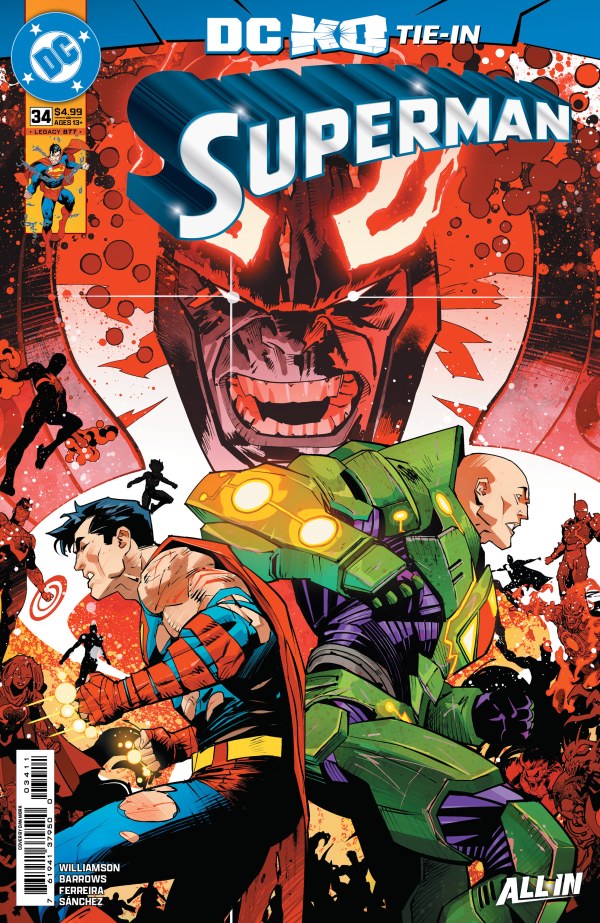
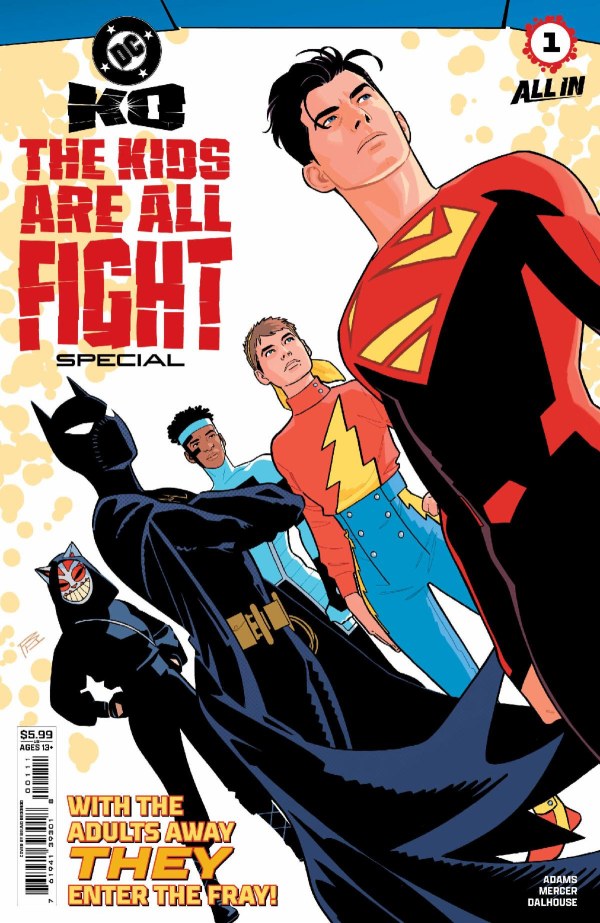
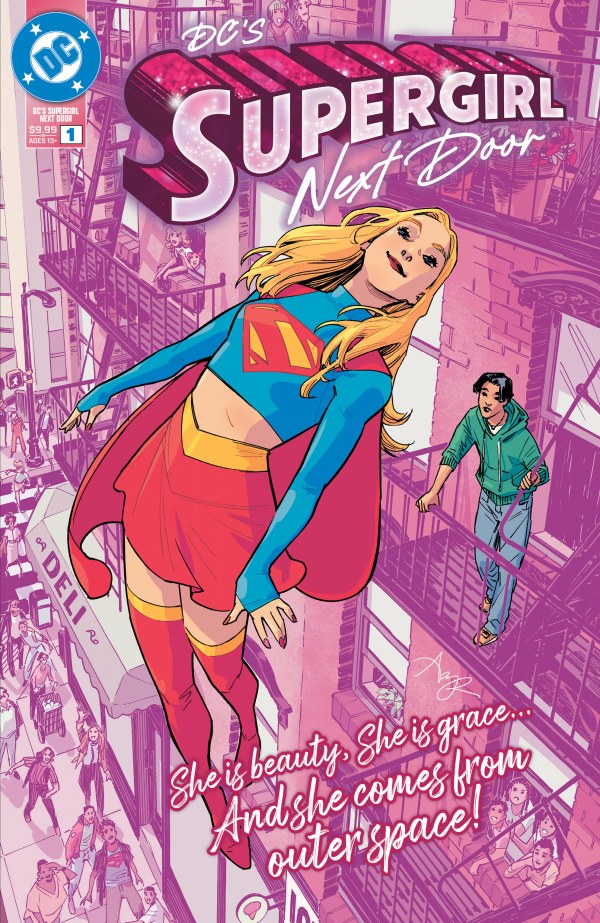
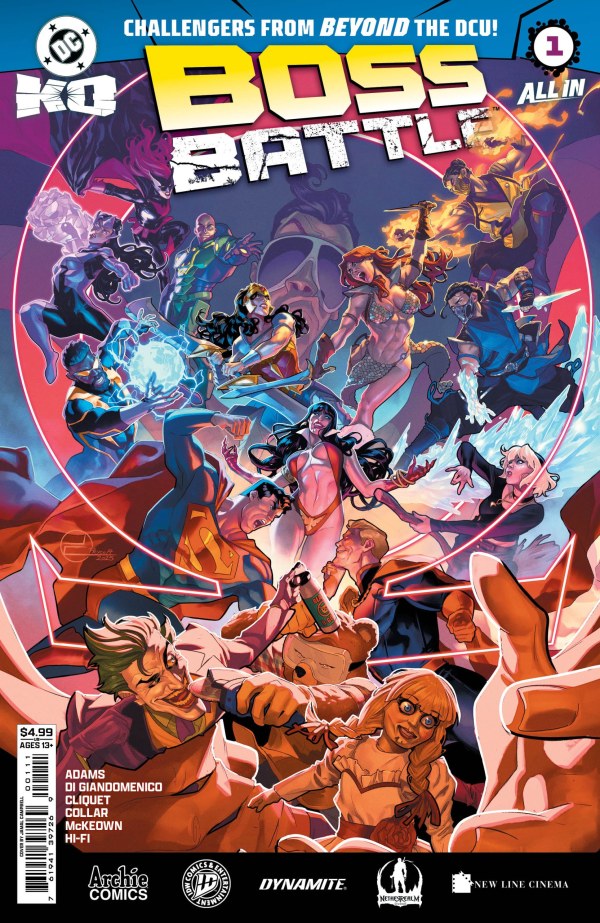
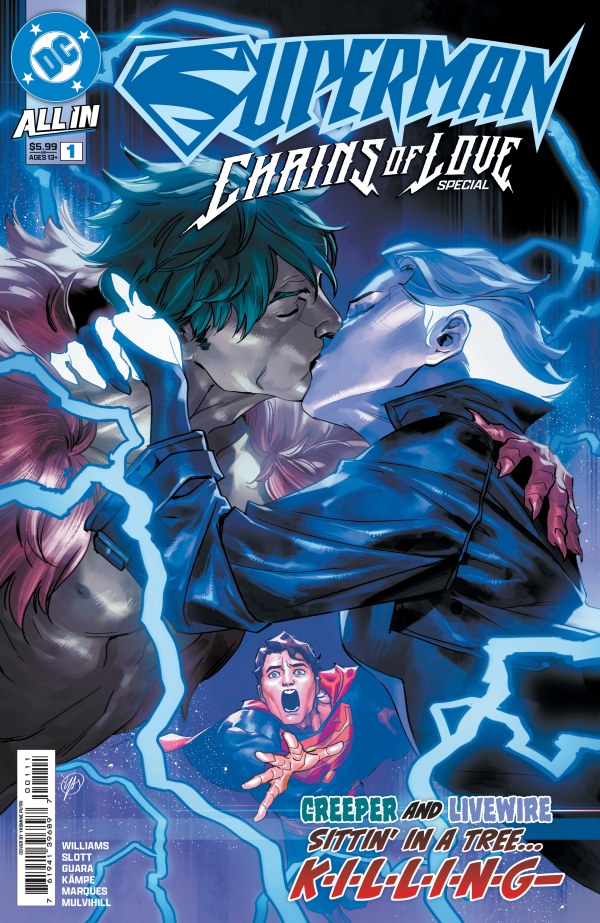
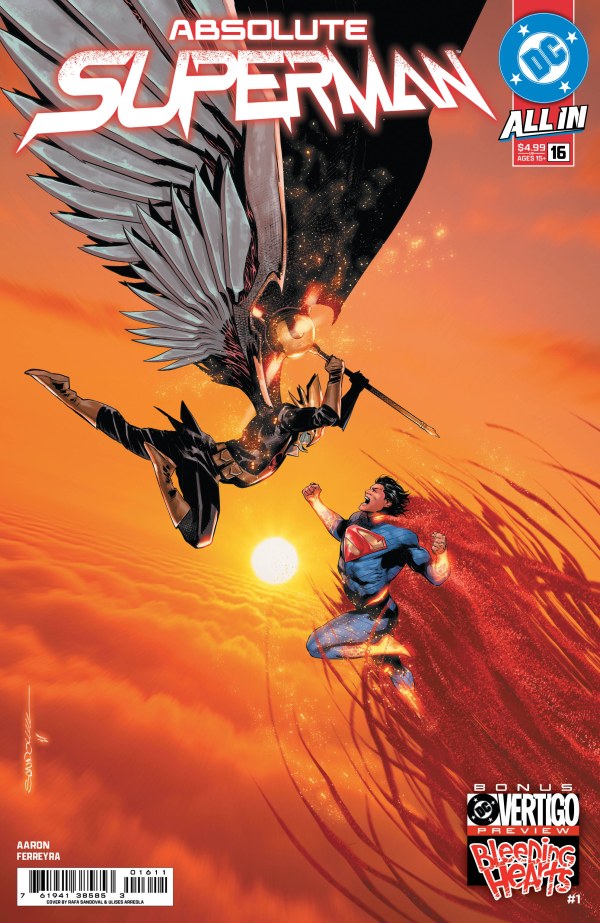
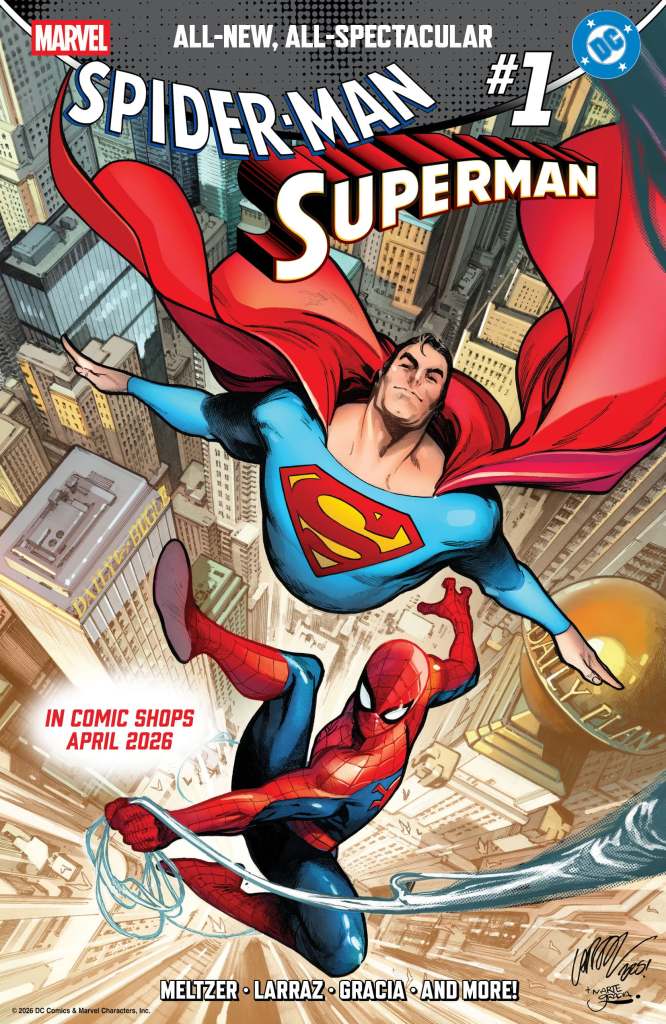
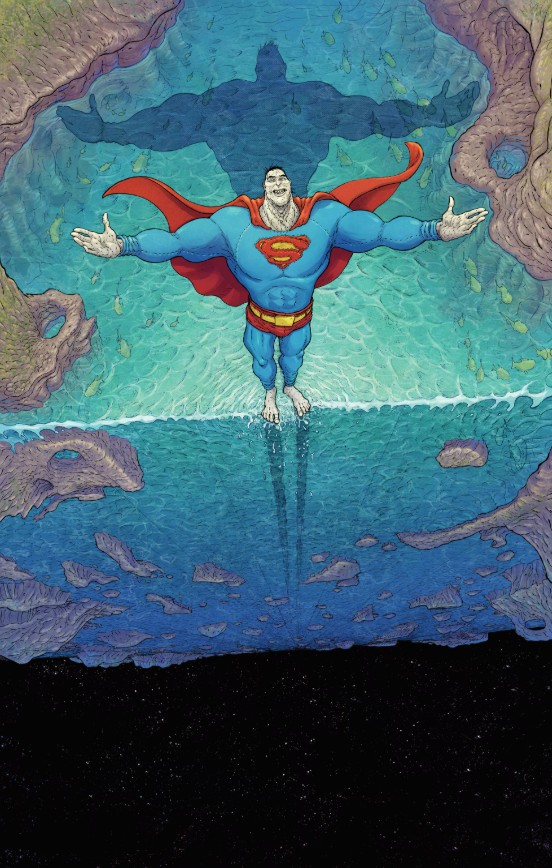

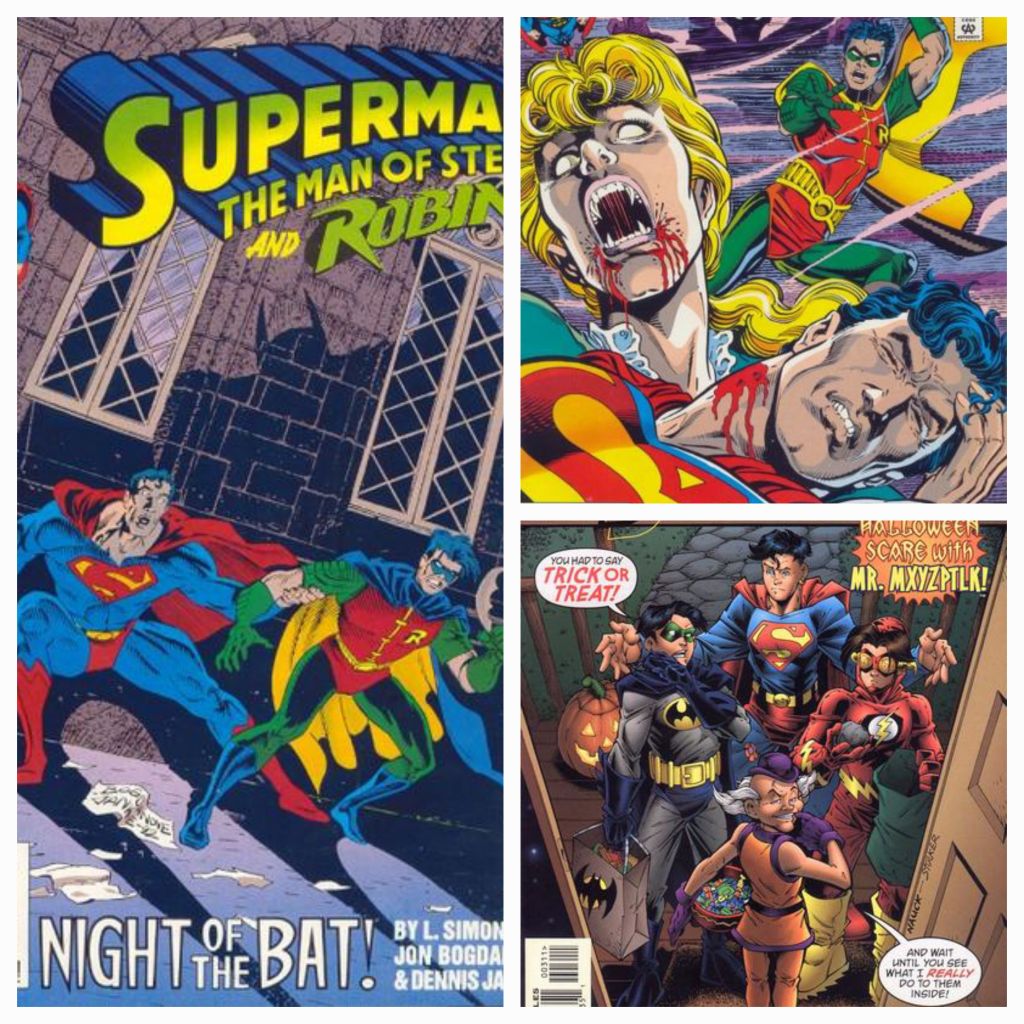
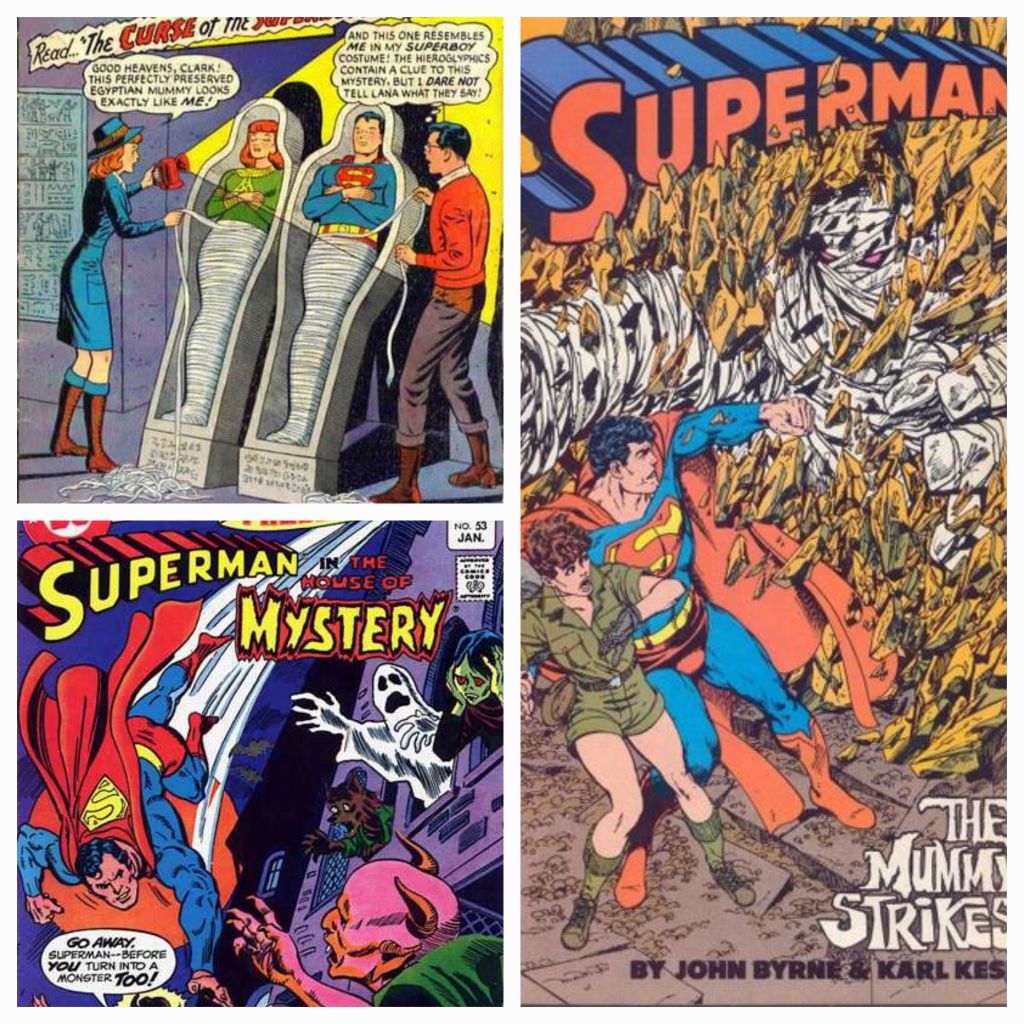


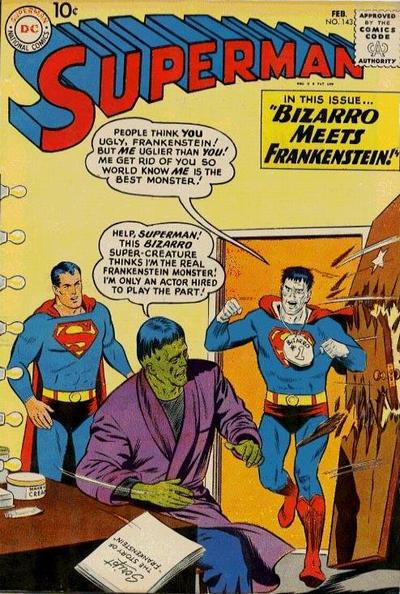
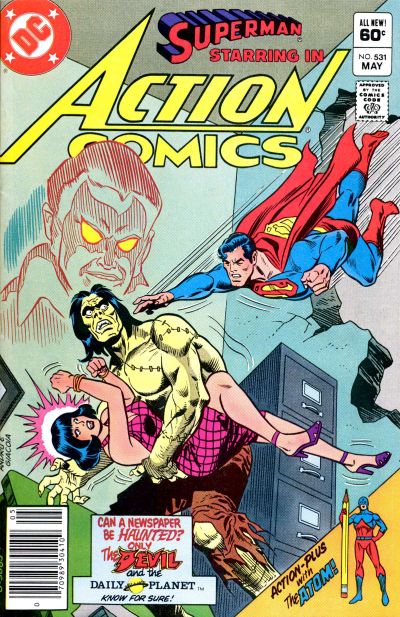


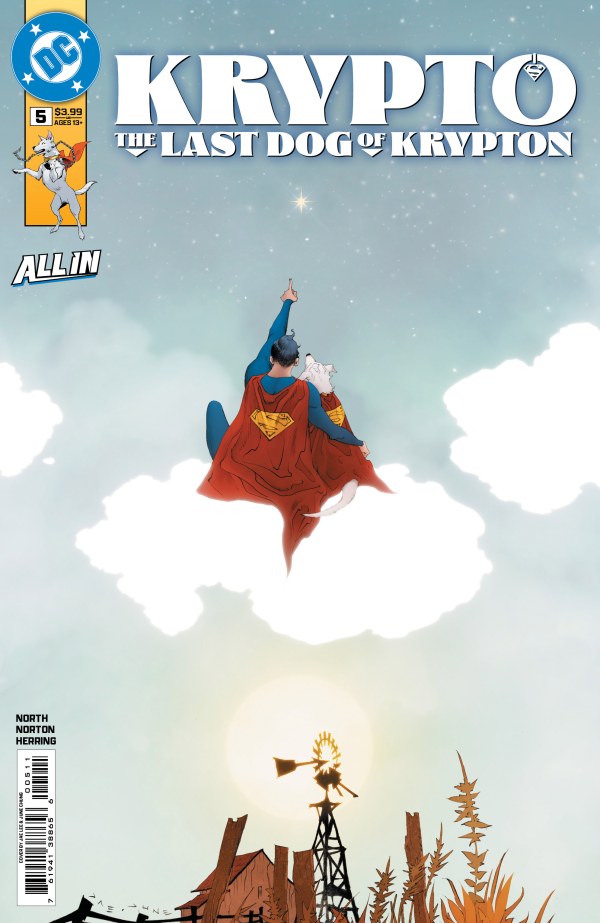

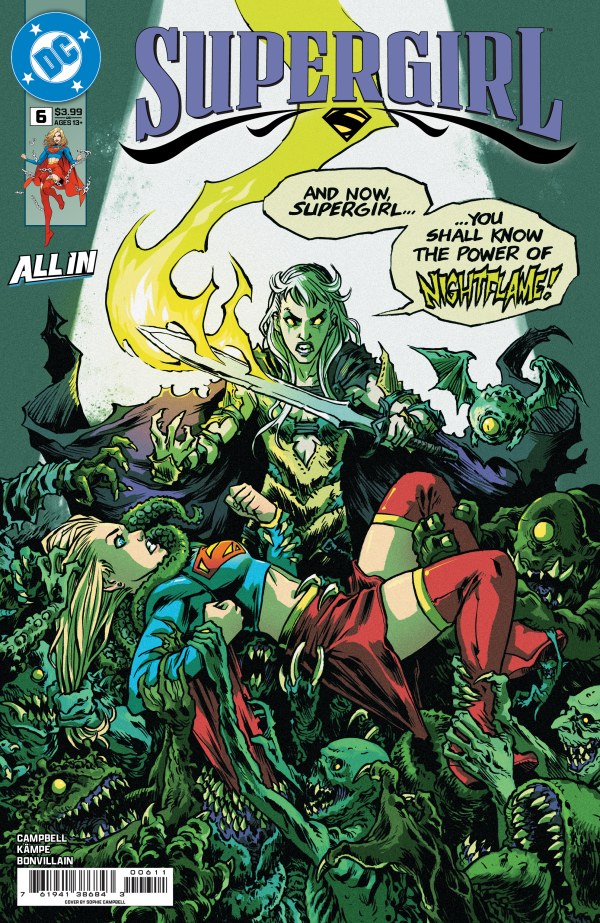

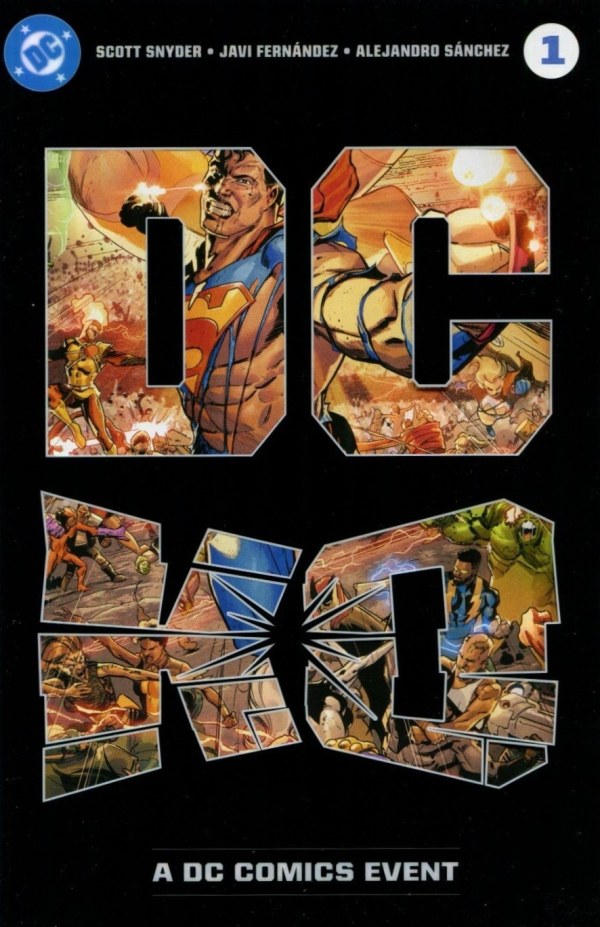

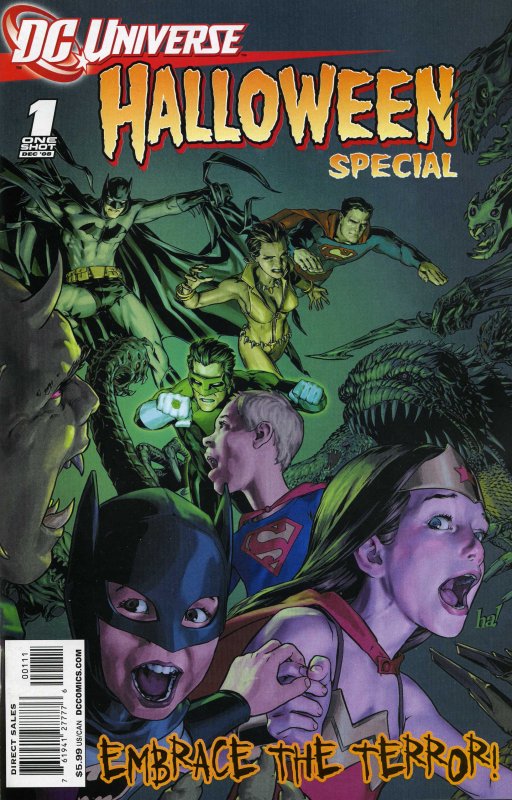


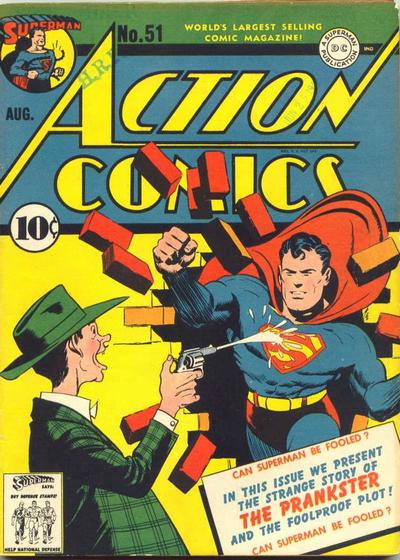


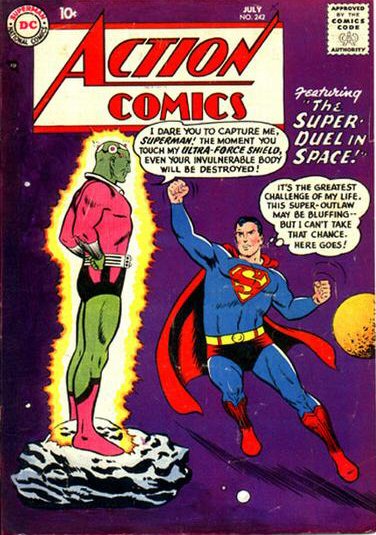
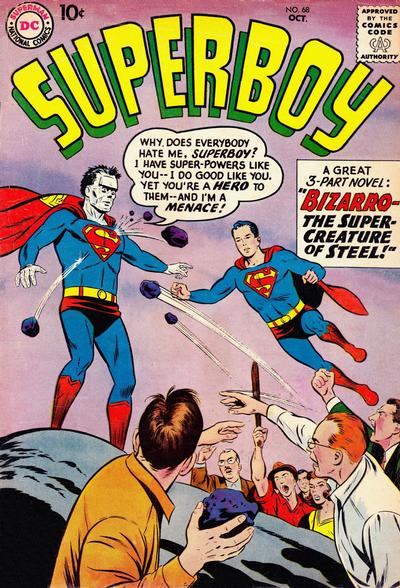


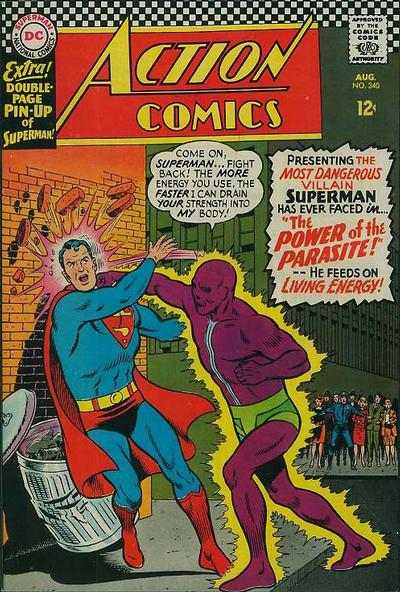
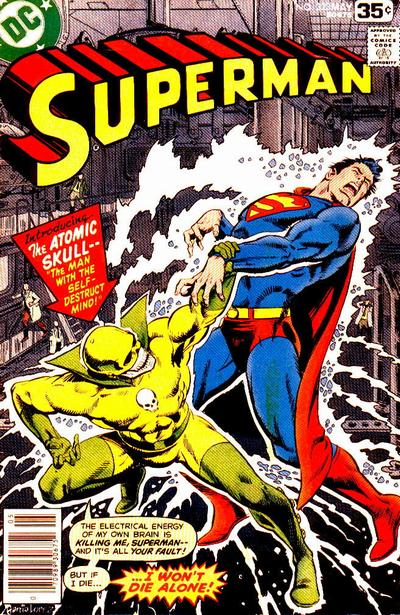




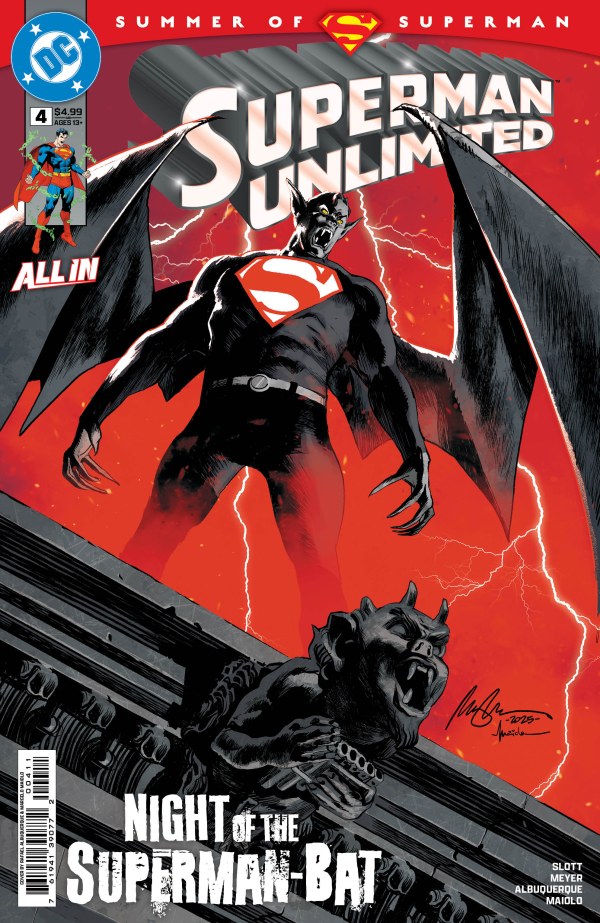
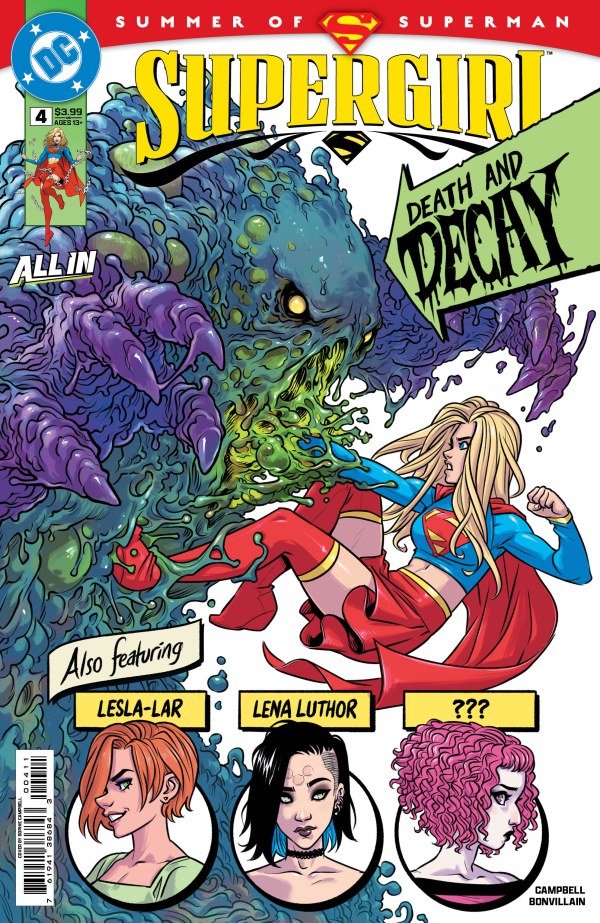


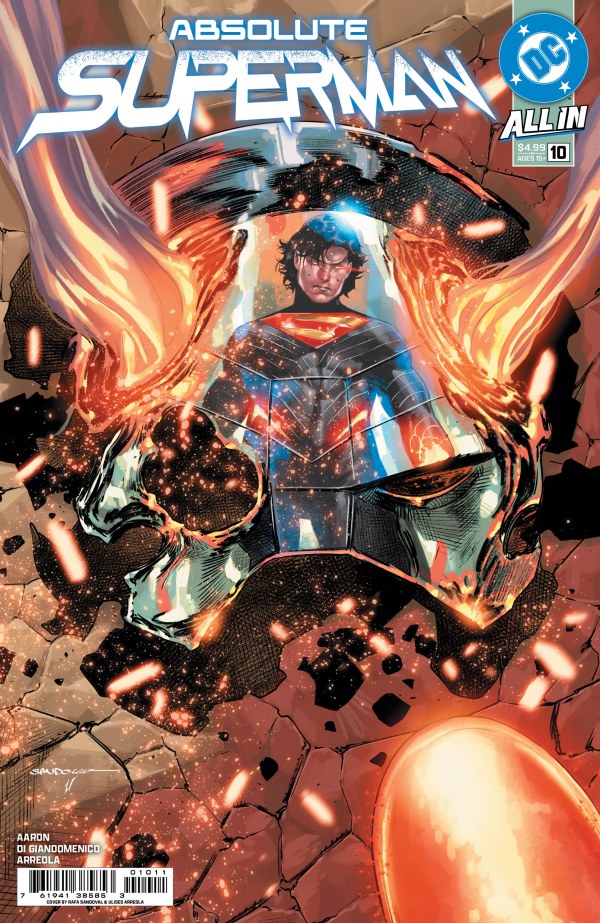





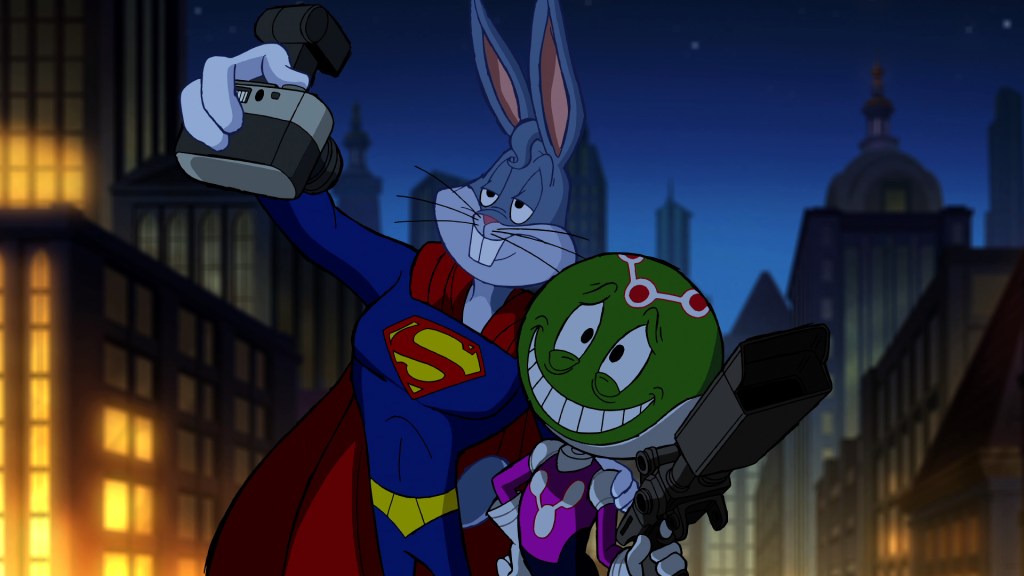


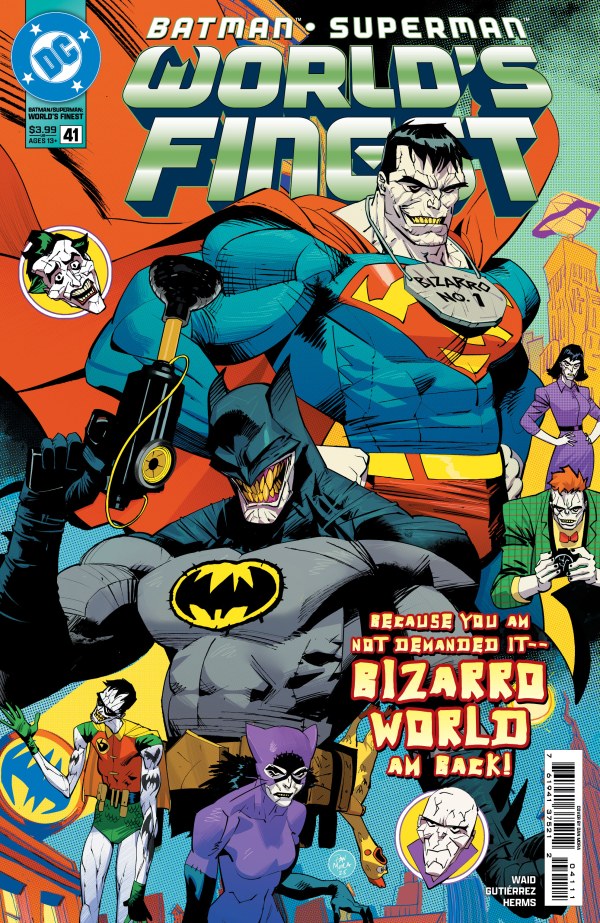






 Blake M. Petit