Geek Punditry #87: Make Me Laugh, Make Me Laugh, Make Me Laugh

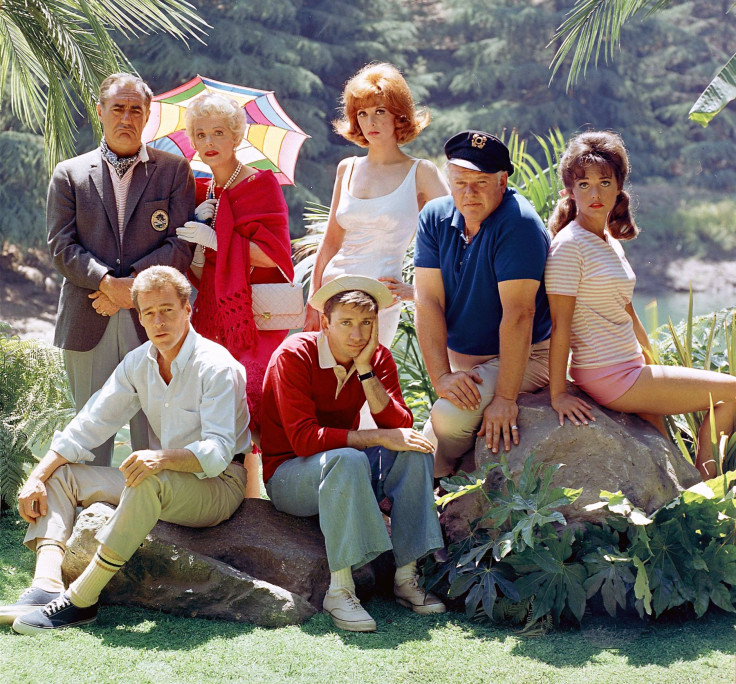
It has been said that the whole world loves a clown, or at least, it used to be said until that odd summer a few years back where it seemed like terrifying clown encounters were turning up on the news every other day. (Kids, ask your parents.) But I think the fundamental truth behind this old chestnut is still valid: everybody likes to laugh. Whether you’re looking for a pleasant escape from the troubles of the world or you just need that endorphin rush of a good chuckle, you would be hard-pressed to find a single human on the planet who does not enjoy finding something funny. It’s the reason that classic sitcoms are in such heavy rotation – the television landscape was built on the backs of reruns of I Love Lucy, Gilligan’s Island, and The Beverly Hillbillies. It’s the reason that superfans of shows like The Office, Friends, and Bob’s Burgers can watch those shows in constant rotation without ever getting tired of them. It’s the reason why America profoundly rejected the show Whitney. Because ultimately, we all want to see things that are FUNNY.

All of the advances of western civilization can be traced back to these seven people.

And yes, I very much enjoy those classic shows I mentioned before, but as I’ve written in the past, I’m always on the search for something new. Anybody who reads this column on a regular basis knows of my deep, profound love for Abbott Elementary and Star Trek: Lower Decks, but that doesn’t mean there isn’t room in my heart for a brand-new set of wacky characters to give me a tickle. The new television season is starting soon (kids, ask your parents) and there are a few shows that I’ve picked up on my radar that I’m interested in. Now I haven’t watched any of these shows yet. I don’t know any more about them than what I can read in a network-provided press release or watch in glimpses of the trailers that are out there in the wild, but today I want to talk about three upcoming shows that have caught my interest enough at least to watch the first few episodes once they start airing in a month or two.

The first two shows are coming from the NBC network, and I discovered them because the house of the Peacock showed approximately 872,000 commercials for each of them during the course of their Olympic coverage. But while Katie Ledecky was waiting at the finish line for the rest of the competitors in her swim meet to catch up, there was almost enough time to air an entire episode of the upcoming show St. Denis Medical. The show is done in the popular “mockumentary” style of shows like The Office and Abbott Elementary, only this time instead of a dysfunctional paper company or a dysfunctional public school, it’s set in a dysfunctional hospital, the optimal setting for wackiness. The show stars Allison Tolman as Alex, the recently-promoted supervising nurse in the hospital’s emergency department, at the head of an ensemble that includes David Alan Grier, Josh Lawson, Mekki Leeper, Kahyun Kim, and Kaliko Kauahi. 

It’s just like The Office! You got yer Jim, you got yer Pam…I think David Alan Grier is Todd Packer…

There are two reasons that this show got my attention. First of all, it was created by Justin Spitzer, a former Office writer who went on to create the show Superstore, which I very much enjoyed. (Kaliko Kauahi, who played Sandra on that show, is another reason I’m interested.) The other thing that gets my attention is Wendi McLendon-Covey, who’ll be playing the executive director of the hospital. You may know her from Reno 911 or The Goldbergs, where she played the over-the-top matriarch of the family. Superstore and The Goldbergs are two of the more recent comedies that I’ve really gotten into, so I’m already invested in some of the pieces in this particular jigsaw puzzle. And while the commercials definitely seem to imply that McLendon-Covey’s character is going to be the “Michael Scott” of this particular series, the energy she’s giving is more button-down and straightlaced than the chaotic mama vibe she used on Goldbergs for the past ten years, so I’m hoping to see her stretch out and do some new things. The show is scheduled to premiere on November 12, so I’ll…well, I’ll probably watch it on Peacock the next day, because who actually watches live television anymore?

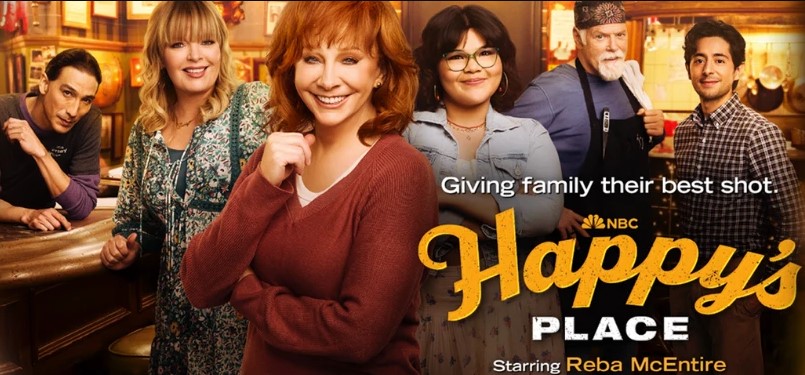
The next NBC show that’s grabbed my attention is Happy’s Place, starring Reba McEntire. McEntire is, of course, a legend of country music, but I’m not going to hold that against her. Undoubtedly, history will remember her more for her role in the Tremors movies and, even more importantly, the 2001 sitcom Reba. In that show, she played a mom who was newly single after discovering that her dentist husband had an affair with his hygienist, and the weird new family that was forged as a result. She proved herself to be a good comic actress in that show, playing the sort of no-nonsense, smart-mouthed mom that we all love so darn much. In the new show, Reba’s father is recently deceased, leaving her with two legacies: ownership of his bar, and a half-sister she never knew about (played by Belissa Escobedo). Reba seems to have a track record for comedies based on infidelity.

Regardless, I really do like her as an actress, and I’m glad to see that Happy’s Place will be reuniting her with Melissa Peterman, who in the previous sitcom played the hygienist who broke up her marriage and somehow turned into a weird surrogate sister. The two of them had fantastic comic chemistry in that show, and they’ve worked together several times since then. You get the sense that the two actresses are genuinely friends in real life, and that often translates to good performances, especially in comedy.

Meanwhile, the Star Trek: Voyager nerds are just hoping that Naomi Wildman makes a guest appearance.

Some people will scoff at the fact that, like Reba, Happy Place’s is a traditional multi-camera sitcom. It’s become popular in the last decade or so to turn your nose up at shows that have a studio audience and a laugh track. My rebuttal to this is: Cheers, Fraiser, The Honeymooners, Happy Days, Laverne and Shirley, Night Court, Good Times, Sanford and Son, Home Improvement, Everybody Loves Raymond, Mama’s Family, Newhart. Many, if not the majority, of great television comedies were in this format. A format is a format, and whether a show is good or bad has nothing to do with the format and everything to do with the writing and performances. It’s never going to be an obstacle to me giving a show a chance, and I’ll be tuning in on or around its premiere date of Oct. 18.

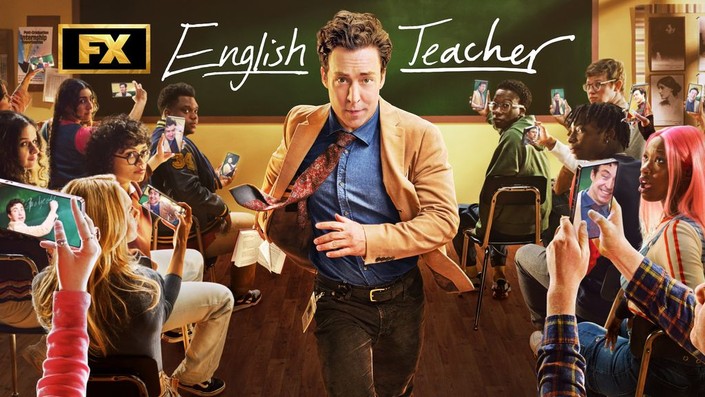
The last show I’m looking forward to is coming from the FX network and streaming on Hulu, English Teacher. I’m a little wary of this one, but I’ve heard enough to at least want to give it a shot. The show is about a high school teacher, played by Brian Jordan Alvarez, who – and here I am quoting – “finds himself at the intersection of professional, political, and personal aspects of working at a high school.” This is perhaps the most bland description of a television show in the entirety of the universe, and in and of itself would not be of particular interest to anybody. What’s more, I’m always a bit apprehensive about shows set in a school, since historically speaking, most shows set in schools have had little to no idea what a school is actually like.

I have to be honest, this is exactly what happens in my classroom every morning.

Then I watched the trailer, and I have to admit, the writers seem to have at least an idea of what they’re talking about. In the trailer, Alvarez’s character approaches the principal (played by Enrico Colantoni) about an essay that a student turned in that was clearly written by ChatGPT. Colantoni’s character replies that he doesn’t see the problem, as AI is “the future,” which makes it quite clear that he is the villain of the piece.

Okay, maybe “villain” is too strong a word, but he’s obviously playing the usual sitcom trope of the inept authority figure. It’s not flattering, but anyone who has taught for any period of time has had a period where they’ve had to deal with an administrator who has no business being an administrator. (I am lucky in that I do not currently have that problem, thank goodness, but I’ve definitely felt it in the past.) The trailer was starting to win me over, and it got a little better as we watched him deal with a student who claims that it’s cultural appropriation for her friend to try to learn to speak Mandarin because “you’re not Japanese.” The joke, of course, is that the student is espousing a self-righteous opinion that is itself based on totally inaccurate information, and boy-HOWDY, have I dealt with THAT in my time as a teacher.

Now I’ve only seen about 90 seconds of the show, so it’s entirely possible that the rest of it will be a train wreck, but the point of a trailer is to get you interested enough to give the show a chance, and this one has succeeded. I don’t know if I’ll ever watch a second episode after the show premieres on Sept. 2, but I know enough to watch at least the FIRST one and hope for the best.

Ultimately, I don’t know if any of these shows will be any good. And if they ARE, I don’t know if I’m the only one who thinks they are. They may stink. Or worse, they may be tossed on that far-too-large pile of shows that had potential but never made it past a first season. But maybe, just MAYBE, at least ONE of them will be a new show to make me chuckle and keep those endorphins flowing.

And that’s all I’m really looking for anyway.

Blake M. Petit is a writer, teacher, and dad from Ama, Louisiana. His most recent writing project is the superhero adventure series Other People’s Heroes: Little Stars, volume one of which is now available on Amazon. You can subscribe to his newsletter by clicking right here. If one of these shows DOES turn out to be great but winds up getting canceled anyway, he apologizes. The universe seems to like letting him get attached to something and then yanking it away. It’s like that Coke with Coffee they had for a year or two and then discontinued, leaving his mornings bleak and full of despair. Not that he’s bitter or anything.

A preorder! A newsletter! Two, two, TWO announcements!

Hey, everyone. It’s time for two – count ‘em – TWO announcements that anyone who cares to keep up with what I’m working on will want to know about! First of all, as you know if you keep up with me on social media, January finally brought us to the end of the long-running Kindle Vella serial, Other People’s Heroes: Little Stars. I loved writing that project, spooling out the adventures of Andi, Keriyon, Tony, Vic, and the others for over two and a half years. But so many people couldn’t get Vella or DIDN’T get Vella (it’s still not available outside of the US for some crazy reason), so now it’s time to take the story of Andi Vargas to its permanent home.

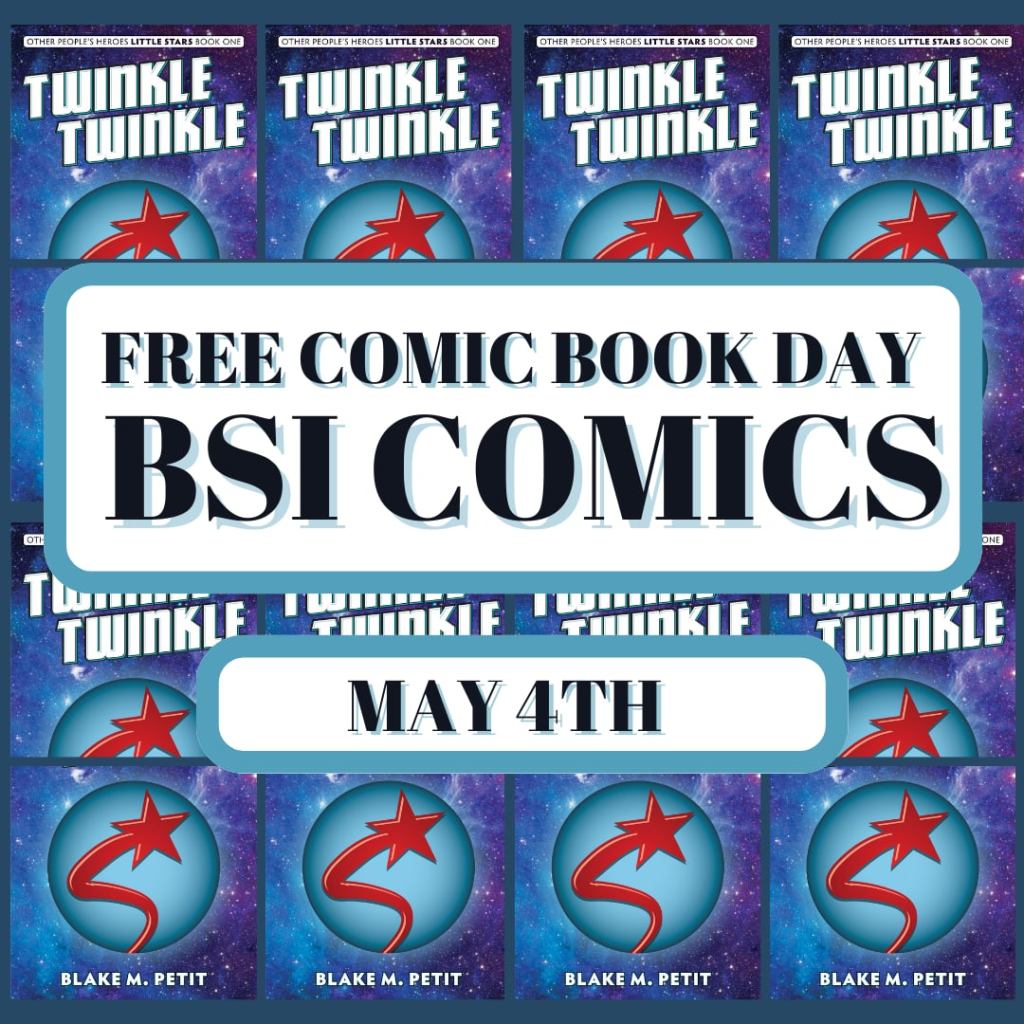
Twinkle Twinkle, the first volume in the Little Stars Trilogy, is coming out on May 4! This is an edited version of the Vella serial, with the text cleaned up and some tweaks to fix continuity errors. For the most part, though, it’s the same story you read the first time. The book will be available in both print and eBook, and unlike Vella, it should be available in every market that Amazon covers. And if you’re worried that you’ll forget before May 4th, have no fear! If you want an eBook, you can CLICK THIS LINK to go to Amazon and preorder it RIGHT NOW! 

Now if print is your thing, if you prefer to feel the heft of a ream of paper in your hands, don’t worry. I’ve got you covered. For Amazony reasons I don’t quite comprehend, I can’t set up a preorder of the print edition, but the print book WILL be available on May 4th, same as the ebook edition. And if you’re in the New Orleans area, you can get your eager hands on a signed copy! Join me at BSI Comics on May 4th, which also happens to be Free Comic Book Day! I’ll be there with several other local writers and artists sharing our work. I’m planning to have copies of the new book too (as well as all of the old books) to sell and sign and chat with anyone who wants to say hello.

Funny how that timing worked out, huh?

“But Blake,” you’re saying, “You said TWO announcements. What’s the other one?” Geez what are you, an accountant?

But since you asked…I said you would have heard the first announcement already “if you keep up with me on social media,” but that may not be entirely true. Social media, as we have learned, isn’t quite the reliable democratizer of communication that we all thought it was going to be. Social media is owned by tech companies and tech companies have bills to pay and somehow they think they can pay those bills more efficiently by subjecting us all to algorithms which believe I’m more interested in using Meta AI to search for ski resorts (I am not) than I am in the fact that someone I went to college with is getting married for the fifth time (I am vaguely interested in this one, because somebody is running a betting pool). 

So the solution to this social problem is to go old-school. That’s right, folks, I’m starting an electronic newsletter! 

Yeah, I know it’s 2024. Shut up.

I’m new at this, so consider it a work in progress. I can promise that I won’t spam you with daily emails, though. I hate that too. When you see my name in your inbox I want you to think, “Oh cool, what’s Blake up to?” instead of “Ugh, Blake AGAIN?” As of right now, I’m planning to send no more than one newsletter a week to update you on all things…well…me. I’ll let you know about new stories when they drop, my weekly “Geek Punditry” columns, tell you what I’m working on writing (the current project, I think, is pretty cool), share witty anecdotes and bon mots, and perhaps re-share classic pieces of writing. At least, that’s the current plan. Like I said, I’m trying to figure it all out.

But, BUT, as a special thank you just for signing up, how about an all-new bonus story? When you subscribe to my newsletter, you’ll get a special welcome email that includes an EXCLUSIVE SIEGEL CITY SHORT STORY! A brand-new short story set in the world of Other People’s Heroes that I’ve never published or shared online! How’s that for incentive? 

So CLICK HERE TO SUBSCRIBE and be sure to whitelist the email so I don’t go to your spam folder.

Thanks, everyone. I’ll be back Friday with your usual dose of Geek Punditry, then probably on Saturday, check your email for the first regular newsletter. And thanks so much for following along.

See you at Fan Expo New Orleans!

Hey, friends — if you follow this page I assume that means that you actually like listening to me ramble on about stuff. And since one of the things I ramble the most about is Star Trek, perhaps you’d like to listen to me do that in person! This weekend is the annual Fan Expo New Orleans convention, and I’ve been invited to sit on on a fan panel named “How Star Trek: Picard Launched the Next Generation.”

People who read my Geek Punditry columns will remember that I have a LOT to say about that specific topic, and I’ll be discussing it with my pals Eric LeBlanc and Justin Toney at 3:30 p.m. in room 271. Drop in and say hi!

A Little Word about LITTLE STARS

Hey, friends — if you’ll indulge me for a moment, I want to talk briefly about Other People’s Heroes: Little Stars. If you didn’t know, Little Stars is my Kindle Vella exclusive serial saga, published one chapter at a time every Wednesday, on Amazon’s Kindle Vella platform. I’ve written about it on the blog in the past, but I’ve picked up quite a few followers since I started the Geek Punditry columns (hi, folks!) and I thought this would be a good time to remind people it exists.

Little Stars, for those of you who might not know, is a superhero adventure serial. The story focuses on Andi Vargas, a 17-year-old girl whose life is sent into chaos when the world discovers that one of their favorite superheroes, Shooting Star, is actually Carmelita Vargas, Andi’s mother. The truth about her identity thrusts Andi into a spotlight she never wanted, while simultaneously raising the question as to who linked her mother’s identity, and why.

Little Stars is a Siegel City story, set in the same universe as my novels Other People’s Heroes and The Pyrite War, as well as numerous short stories, but it’s a story that stands on its own. You don’t need to have read the previous stories to understand and enjoy what’s going on (although those of you who have been to Siegel City before will certainly find a lot to appreciate in terms of returning characters and hints to the continuity of the city).

I’m bringing it up now because Little Stars has entered its endgame. The final chapters are being composed now and the story is going to conclude over the next few months, so this is the time to jump in. I don’t talk about it too much here on the blog for a couple of reasons. First of all, since I’ve dedicated myself to Geek Punditry, I didn’t want people who come here for that column to feel like I’m subjecting them to a weekly sales pitch. Second, I am absolutely atrocious at self-promotion. Seriously, I’m the worst. If marketing was a sport you had to play in gym class, they would choose every other student, the janitor, a stray dog that wandered onto the field, and six cockroaches before anybody would ask me to be on their team. I am MISERABLE at it, as you can clearly see by my current attempt at it.

So if this story sounds like something you would like to read, I’d really appreciate it if you bounce over to Amazon and give it a try. Right here. Via this link. The first three chapters are always free, and each chapter after that fluctuates between 25 and 50 cents, depending on how long that particular installment is. So take a taste. If you like the kind of stuff I put out here on Fridays, I’d love to have you join me on Wednesdays as well.

Thanks!

Geek Punditry #17: Fiction’s Fiction

If there’s one thing you can say about fandom, it’s that all fans of every stripe want the same thing: more. If we love a TV series, we want movie spin-offs. If we love a comic book, we want that hero to appear in multiple titles. If we love football, we feign interest in the XFL or USFL until August, because at least it’s something. Whatever it is fans want, the unifying element is that everybody wants more of it. 

The problem is that stuff takes time. The average TV season lasts for 13 episodes these days (sometimes 22, if you’re lucky), leaving well over two thirds of a year with no new content. Movie sequels can take from years to decades, and sometimes never happen at all no matter how badly you want them. Waiting for new books is a crapshoot – if you’re a Stephen King fan you’ll have three new novels to read by the time you get home from Burger King, whereas George R.R. Martin readers will have to inherit the fandom from their grandparents before they get any new content. Even comic books, which usually have a pretty standard schedule of once or twice a month, take you ten minutes to read and then you’re stuck sitting around waiting for the next installment.

Efficiency is the only reason the man on the left has a higher body count.

So in order to satiate the thirst of fans for “more,” something marvelous has happened. “Extended” Universes. Novels based on movies, comic books based on novels, TV shows based on comics, movies based on TV shows. There’s a weird, incestuous spiderweb of media that springs up around any sufficiently popular franchise, and it’s been happening for ages. Back in 1942 George F. Lowther wrote The Adventures of Superman, a novel based on the world’s most popular comic book character who, at the time, was only four years old. In 1910, Thomas Edison produced a short film based (very loosely) on Mary Shelley’s Frankenstein. Hell, way back in 1615, Miguel de Cervantes published the second volume of Don Quixote largely to spite an anonymous writer who, using the pseudonym “Alonso Fernandez de Avellaneda,” released his own unauthorized sequel to the first book, something that would have brought down a legion of Disney-owned lawyers were anyone to try that today. The point is, fans have been greedy for a long, long time.

Pictured: More.

The great thing is, if you love Star Trek and can’t wait for June 15 and the season premiere of Strange New Worlds, there are literally hundreds of novels, comic books, and video games you can consume to get your fix. And some of them are really good. And some of them have very devoted fans, and some of them have wonderfully complex and entertaining lore and mythologies all their own.

And this is where the problem comes in. When extended universes are really popular, a sort of strange conflict begins to arise when the time comes to figure out what is and what is not canon. What’s “official” to the main universe that you’re enjoying? What “counts” and what doesn’t?

It used to be relatively simple: the medium that birthed the franchise was king, and everything else could be a fun diversion, but was not considered relevant to the creation of a new “official” installment. It didn’t count, it wasn’t real, it was “Fiction’s fiction.” Because of this, at the time, these expanded works didn’t usually do anything that would have permanent repercussions to the main story. Sure, there were Star Wars comics while the original trilogy was being produced, but there was never any real danger of Han Solo dying because Lucasfilm needed him for the next movie. This did produce some “funny in hindsight” moments when early writers teased a Luke/Leia relationship because they didn’t know yet that the two of them were brother and sister. Of course, neither did George Lucas, so who can blame them?

It was Star Wars, I think, that started to change things for these extended worlds. In the early 90s, it had been years since Return of the Jedi and there did not seem to be any intent to make more movies, so a plan was hatched to continue the universe via novels and comic books. The first Timothy Zahn trilogy of novels introduced the new big bad, the fandom-beloved Grand Admiral Thrawn, while Dark Horse Comics’ Dark Empire series brought Emperor Palpatine back from the dead by revealing he had the ability to transmit his mind into cloned bodies he had ready for just such an occasion. With the success of these stories, the Star Wars universe grew exponentially, with hundreds of interwoven stories introducing new characters, heroes, villains, planets, and alien species that were as thoroughly entertaining as anything the fans had come to love in the original trilogy. Even once movies were being made again, films that sometimes contradicted elements of the extended universe, the creators did their best to pivot, explain away inconsistencies, and incorporate “official” elements into their own world. And for the most part, it worked.

Geeks in the 90s were required by law to read these books 74 times.

Then Disney bought Lucasfilm and designated everything except the six existing movies and Clone Wars TV series to be non-canon. Actually, they used the term “Star Wars Legends,” because that way they could keep reprinting and profiting off the work while usually failing to pay the creators any royalties, which is a different rant I’m not going to get into right now. There would still be an extended universe, of course, but now they were going to produce it themselves, with books, comics, and video games tied to the new “official” canon, and ostensibly, those works would be considered canon as well. So far it seems to have worked out, but that doesn’t mean I doubt for a second that Kathleen Kennedy would make a movie that  contradicted Marvel Comics’s War of the Bounty Hunters series if she so felt the urge. 

My favorite “Star,” Trek, has had its own issues with extended universes, particularly in the 80s when DC Comics held the license. Following Star Trek II: The Wrath of Khan, DC began publishing new stories assuming a status quo as it was at the end of that movie: Admiral Kirk commanding the Enterprise after the death of Spock. Then came Star Trek III: The Search For Spock, in which Spock…y’know…un-dies. Despite the fact that the movies clearly take place right after each other, chronologically, the comic writers wrote a story that dovetailed their few years of adventures into that movie best they could, then began a new status quo. The Enterprise was destroyed, so Kirk took over command of the Excelsior for reasons, while Spock became captain of a science vessel and had his own adventures. Then Star Trek IV: The Voyage Home further complicated things with a story that clearly happened immediately after the events of the previous film and did not fit the comic book canon in any conceivable way. The comic book writers flailed for a while until DC got the rights to do an ongoing series of the then-new Star Trek: The Next Generation series, at which point they rebooted the comic starring the original crew so it could start with a new first issue the same month that TNG #1 came out, and then they just pretended those other stories they told never happened.

Trek got better in the late 90s and aughts, taking a cue from Star Wars and moving into stories based on franchise installments that seemed truly “over” and therefore safe to expand upon. There was a series of novels following the Deep Space Nine characters after the conclusion of their show, another with the adventures of Captain William Riker on the Titan following the final TNG movie, and even some series featuring mostly-new casts like Peter David’s New Frontier or the Starfleet Engineering Corps books. When the J.J. Abrams films brought Trek back to the screen, it was no problem for the extended universe, since they explicitly took place in an alternate timeline. In fact, it just gave writers a whole new universe to play around in. Modern Trek does have a few clashes, though: IDW Comics (who currently holds the license) recently began an initiative to create a more tightly woven universe through a relaunched Trek series and its Defiant spin-off, both of which are good comics, but which feature versions of Data and Beverly Crusher that seem to flat-out contradict the canon of Star Trek: Picard, which seems like a bizarre choice.

One of these things is not like the others…

The “official” continuation game has been played with more and more franchises in recent years. Buffy the Vampire Slayer and Firefly continued their respective universes in comic books, while Smallville – a TV show based on a comic – had a fairly lengthy “Season 11” series that followed that show: a comic book based on a TV show based on a comic book. Then there was the film adaptation of Stephen King’s The Dark Tower, a desperate effort to squash the material of seven books into 95 minutes (that’s seven Stephen King novels, most of which are large enough to qualify for their own zip code). While most fans were disappointed in the result, the sting is mitigated slightly if people try to view the film not as an adaptation of the books, but as a sequel to them. That probably doesn’t make any sense if you haven’t read the books, but just take my word for it.

That brings us to the issue when printed media are translated to the screen. Books were first, gloriously first, but if we’re being honest here, the general public often accepts film or TV adaptations as more official. Just talk to any devotee of L. Frank Baum’s The Wonderful Wizard of Oz and its subsequent sequels about how much you love the Ruby Slippers and watch them die a little inside. James Bond was created as a hero for novels and short stories, but the films are obviously what most people are familiar with, and those are highly contradictory. Some of the movies are based on Ian Fleming’s stories, some of them use the titles of stories but very little else, and others are cut from whole cloth, but there’s just no way to pretend they share a canon. Most Bond fans don’t care, of course, and modern fans tend to see the movies as the “real” James Bond more than the novels that gave him birth. (He’s a more likable character in the movies, to be fair, so this is not necessarily a bad thing.)

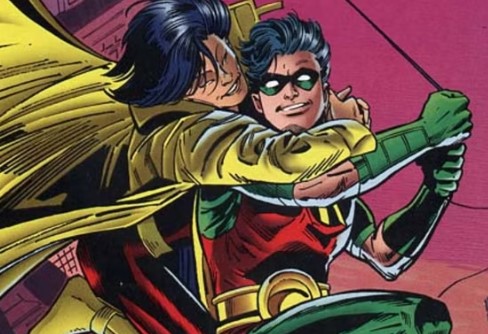
As for comic books, there have been comic book movies for a very long time, but those have historically been ignored by the comics themselves. The first Batman serial from the 40s, for example, portrayed him as a government agent beating up spies, something that doesn’t sync with any canon comic book I can think of. Even really popular films, like the Christopher Reeve Superman or Tobey Maguire Spider-Man, had a negligible effect on the comic books. Then came the Marvel Cinematic Universe, and boy, things changed. With the gargantuan success of the MCU, there are now effectively two “official” Marvel Universes, and the cinematic one is by far the one that’s more recognizable to the general public. The MCU was the first time anyone had ever tried to create so intricate a universe of interwoven films and TV shows, something that made it feel more “real” than that scene in Batman Forever where Bruce Wayne casually mentions Dick Grayson’s circus is “halfway to Metropolis” but otherwise gave no indication of anything beyond the boundaries of the film. The Marvel Studios movies and shows all linked to each other and all mattered to each other, just like the comics, and the “cinematic universe” model is something everyone has been trying to replicate ever since.

And of course, occasionally elements in these extended universes become popular enough that they can cross over into the “real” worlds. Harley Quinn was created in Batman: The Animated Series and was such a hit that she joined the official comic book universe, then spread out into live action. Superman’s pal Jimmy Olsen, almost as integral a character to the mythos as Lois Lane or the Kents, made his first appearance on Superman’s radio show. The aforementioned Batman serial, which is goofy and doesn’t feel like the same character at all, is responsible for the creation of the Batcave. And even though the Star Wars Legends stuff is no longer canon, Disney is starting to allow elements of that world to leak into the “official” world, such as bringing in Timothy Zahn’s Thrawn character and allowing the resurrection of Emperor Palpatine – although to avoid being accused of copying the Dark Empire comic book, they cleverly neglected to give any comprehensible reason for his return whatsoever. 

“I’m canon now, bitches!” –Thrawn, probably

The original question was that of what is “real” in these different universes. The newfound ubiquity of the multiverse concept in storytelling makes that easier. (It’s an old concept, I know, but in recent years it’s really experienced a boom in popular culture.) Marvel officially recognizes just about every version of its characters as “real” in one corner of the multiverse or another, with stories like Spider-Verse (the comic book) and Into the Spider-Verse (the movie) bringing them all into play together. DC has a similar policy and has officially declared that the Christopher Reeve Superman movies and Michael Keaton Batman movies are set in the same universe, although whether that will be contradicted by the upcoming Flash movie remains to be seen. The truth is that the people writing any version of these IPs in any medium will pick and choose those elements that they need to make their story work, and as that can be confusing if a fan is trying to reconcile everything, this is probably a good reason not to try that. What’s “real”? What “matters”? Whatever you need for the story you’re trying to enjoy right now.

The rest of it?

Just find that corner of the multiverse where a guy named Joel told us to repeat to ourselves “It’s just a show, I should really just relax.” 

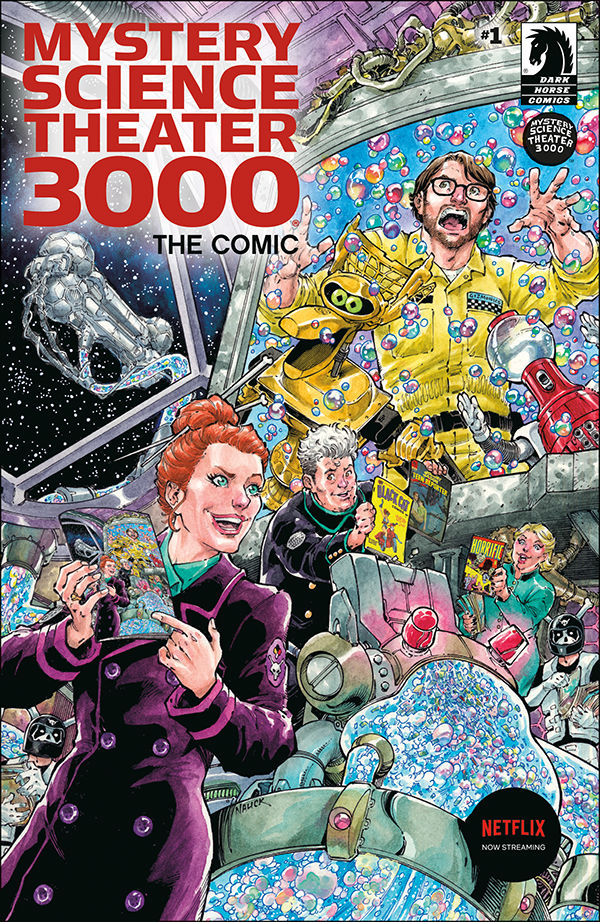
Yep. Those guys got a comic book, too.

Blake M. Petit is a writer, teacher, and dad from Ama, Louisiana. His current writing project is the superhero adventure series Other People’s Heroes: Little Stars, a new episode of which is available every Wednesday on Amazon’s Kindle Vella platform. One of his favorite Star Trek novels is Federation, by Judith and Garfield Reeves-Stevens. Don’t try to read it and then watch First Contact. It doesn’t work. 

The Ghost of Christmas Writing Past Presents: The Christmas Special

Some years ago, before I had a kid, I had time to do these movie studies, digging into different genres and characters and pontificating how they evolved over time. It was a fun side project and, God willing, I’ll back to them someday.

Today, though, I want to dip back into the past and share one such project, from a glorious ten years ago: The Christmas Special. One year I selected 25 of what I thought were the best, most relevant, or most interesting TV Christmas specials, broke them down, and talked about them. And today, I share those articles again with you. Happy reading, Merry Christmas, and avoid the Grinch!

Introduction

1. Rudolph the Red-Nosed Reindeer (1964)

2. A Charlie Brown Christmas (1965)

3. How the Grinch Stole Christmas (1966)

4. The Little Drummer Boy (1968)

5. Frosty the Snowman (1969)

6. Santa Claus is Comin’ to Town (1970)

7. The Year Without a Santa Claus (1974)

8. ‘Twas the Night Before Christmas (1974)

9. Emmet Otter’s Jug Band Christmas (1977)

10. The Fat Albert Christmas Special (1977)

11. A Flintstones Christmas (1977)

12. Nestor, the Long-Eared Christmas Donkey (1977)

13. Christmas Eve on Sesame Street (1978)

14. A Chipmunk Christmas (1981)

15. The Life and Adventures of Santa Claus (1985)

16. The Christmas Toy (1986)

17. A Claymation Christmas Celebration (1987)

18. A Garfield Christmas (1987)

19. A Muppet Family Christmas (1987)

20. Christmas at Pee-Wee’s Playhouse (1988)

21. A Wish For Wings That Work (1991)

22. Hooves of Fire (1999)

23. A Scooby-Doo Christmas (2004)

24. Shrek the Halls (2007)

25. Prep and Landing (2009)

I Rank the Universal Monsters

Today I watched The Invisible Man’s Revenge from 1944, and with that, I have FINALLY watched EVERY movie featuring one of the classic Universal Monsters. I have no excuse for the fact that it has taken so long. I have deep, deep shame. But hey, I did it! And now that I’ve FINALLY absorbed every film in their assorted franchises, I’m going to rank them from my favorite to least favorite. Absolutely nobody will care about this ranking except me, but I’m going to share it anyway:

1: Frankenstein. Not a surprise, I’m sure. Everyone knows how much I love Boris Karloff as the monster. Many people probably also know that I consider Bride of Frankenstein to be Universal’s finest monster movie. And anybody who has ever talked to me for more than 17 seconds has probably heard me ramble on about the fact that Abbott and Costello Meet Frankenstein is one of my five favorite movies of all time. Of course this was going to be on top.

2. The Wolf-Man. Lon Chaney Jr. only got one solo film as the Wolf-Man, but he went on to play the character in several “monster rally” films. He’s the only Universal Monster to have a consistent performer throughout the entire franchise, and he’s a wonderfully tragic figure at that. He’s just such a great character.

3. The Invisible Man. Pound for pound, the Invisible Man films are really entertaining, and the special effects are wonderful for the time period. The franchise is hurt a bit by the fact that there is NO consistency in the performer, that most of the films make no attempt at continuity with one another, and that two of them (The Invisible Woman and The Invisible Agent) make no pretense at being monster movies at all, but rather a romantic comedy and a World War II action movie, respectively. But the ones that are good (that would be the original, The Invisible Man Returns, and The Invisible Man’s Revenge) are REALLY good.

4. Dracula. This series would be higher than the Invisible Man if I was only judging by Bela Lugosi’s performance, but Lugosi only played the count twice: in the original and in the aforementioned Abbott and Costello Meet Frankenstein. The other actors who played the Count in the other films (even the beloved Lon Chaney Jr.) were…lacking. However, the franchise does get bonus points for the other 1931 Dracula film – the Spanish language version that was made on the same sets as the Lugosi movie at night after director Tod Browning wrapped for the day. The Spanish crew watched Browning’s dailies and made adjustments, often improvements, when filming their own scenes. The resultant film is not as well-known as the Lugosi movie, but may be even better.

5. The Mummy. I must stress here, I am ONLY speaking about the original series from the 1930s and 40s, not the Brendan Fraser series. That would be higher. But while The Mummy series started well, it got very repetitive very fast. The writers also got lazy after a while, not really trying to keep the films consistent with one another. For example, the Mummy rises from the grave after “decades” in two subsequent films, yet they still all took place in the 1940s. Then there was poor Lon Chaney Jr., who played the Mummy in the final few films and, frankly, was sleepwalking through them.

6. The Creature From the Black Lagoon. I should tell you, in case there is any question, that there is no Universal Monster I actually dislike, but somebody’s gotta come in last. The Creature’s trilogy is a fun burst of energy from Universal in the 50s, one last success at creating an iconic character long after the other franchises had been put to bed, but it was never as compelling to me as the others. The Creature comes across as more mindless, driven by pure instinct. It’s neither a beast driven by anguish or anger, and as such, I never really felt for him. It wasn’t until The Shape of Water (not an official Creature film, but come on, we all know) that this archetype really hit for me.


So that’s what I think about these guys. I love ‘em all, I do, and I’m terribly sad that Universal’s various attempts to bring them back in recent years have all fallen flat. I’m going to say it again: the best thing to do would be to bring back Brendan Fraser and Rachel Weisz as the O’Connells and use them as the cornerstone of a new Universal Monsterverse. But what do I know? All I did was watch all the dang things.

Blake M. Petit is a writer, teacher, and dad from Ama, Louisiana. His current writing project is the superhero adventure seriesOther People’s Heroes: Little Stars, a new episode of which is available every Wednesday on Amazon’s Kindle Vella platform. There are ghosts in it, if you like that kind of thing.

The Hardest Part

If you have a minute, I’d like to explain to you the hard thing about writing.

The hard thing about writing is not, as so many non-writers often assume, coming up with ideas. Ideas are easy. Ideas crop up like acne, shower you like a late summer rainfall in Louisiana, burst from your mind like a field full of dandelions. They’re not all great ideas, admittedly, but they’re not all terrible either. The bulk of them lie in that vast gulf in-between, an area of ideas which have potential, if only you have the time and inclination to pick out the best and cultivate them into something. Sometimes you have so many that you simply can’t figure out which one deserves your care and attention at the time. In those periods where I have been unproductive as a writer, this has sometimes been the culprit. I have no evidence, but if a writer came up with the term, I’m certain the phrase “a dime a dozen” was coined in reference to coming up with ideas. 

So coming up with an idea is not the hard part. Nor is writing the first draft. Well…relatively speaking, anyway. Writing a first draft IS hard. Looking at a blank page, as so many writers before me have observed, is intimidating as hell. The blank page is a vacuum demanding to be filled, and you’ve got to conquer your own demons of insecurity and self-doubt long enough to produce something to fill it. The blank page is an enemy that must be conquered, but sometimes you’re Rocky and sometimes you’re Apollo Creed. (In the first movie, that is. On good days, it’s more like Rocky II, and sometimes you’re Rocky and sometimes you’re Apollo Creed.) 

So writing a first draft is hard, but it’s not THE hard part. Nor is the revision process. Compared to a first draft, revision is easy. It’s taking what’s already there and making something out of it. First drafts are taking a chunk of marble and chipping it away into something recognizable. Revision is taking that chunk and polishing it, sanding it, and doing the detail work. It’s still work, but it’s not as exhausting or terrifying as the chipping away part, where at any moment you’re afraid you’re going to break it in the wrong place or crack what you’ve been chiseling for hours, days, weeks, and ruining the whole thing. It’s also,  in my experience anyway, less susceptible to being abandoned than that chunk of marble. Once you’ve gone this far it’s almost an insult NOT to go in and do the polishing work. Leaving it uncleaned is unthinkable. It’s a compulsion. It MUST be done.

The hard part of writing is the last part. Getting someone to read it.

There are thousands of books published every year. Millions of existing books fill the libraries and bookstores. Every single one of them is competition. How do I (and by “I”, I’m referring to all hypothetical writers in the world) convince you (and by “you,” I mean the person reading this with an Amazon tab open a page away) to read MY book?

Publishers are not necessarily the answer to this question. It’s true that they have greater resources than a self-publishing writer like myself, but it’s also true that they often decline to USE them. Except for celebrity writers or people who have already proven themselves capable of selling a million copies, publishers often simply slide the bulk of their authors into a pulsating mass of backlist, concentrating on that person on that reality show that was super popular last season and for some reason has decided they want to write a cookbook. 

So most writers are left trying to find the audience on their own, and that is not easy. If anything, it’s become more difficult than ever.

“But Blake,” you say, oblivious to the fact that you’re talking out loud to your computer or your phone or perhaps to some stranger on the bus depending on where you are when you read this, “doesn’t the existence of the internet make it easier? There are more avenues than ever, more places to spread your message, more ways to get your voice out there.”

Well sure there are, absolutely. And those avenues exist for everyone. Which is exactly the problem. More ways to get your voice out there has led to an exponential increase in voices attempting to be heard. There are millions of voices shouting for attention now, millions of people with something to say, and millions of people deserving the chance to say it. But no reader can possibly find them ALL, there are just too many. How do you stand out in the crowd?

If you’ve read this far expecting me to reveal the answer, to pull the sheet back from the table with a flourish, putting the solution to this problem on display, I’m sorry to disappoint you. That’s not what I’m doing here. The reason I’m writing this is because I don’t KNOW what the answer is. Writing this is a little exercise in therapy for me, trying to explain my feelings on this problem, knowing full well I don’t have an answer.

In a way, I envy those writers who have no desire to publish. There are a great many of them out there, I know. I see them in writer’s groups on Facebook, on writing subreddits, in a thousand other places talking about their WIP (work in progress), their FIC (fiction – often fanfiction, actually), their MCs (main characters) and their thousand stories they’ve begun and abandoned as soon as the next one of those oh-so-ubiquitous IDEAS has clawed its way into their skulls. And for them, it’s OKAY if the work never goes any further than their hard drive. I know they exist, I share memes about them on Wednesdays. They’re happy, it seems, just to create and leave their creation in a bubble. I do not understand this mindset, but I envy it, because these people seem to be satisfied with their station in the literary universe.

For people like me, that’s not enough. I want other people to read my work. I want people to tell me what they think. I want to hear from strangers about what I’ve done, I want to know that somebody enjoyed what I’ve been bleeding into my keyboard all these months. I don’t need to change the world. I don’t need someone to tell me my books are their reason for living. I don’t want people to name their children after my characters (although if you do, I guarantee you that your little tot will be the only “Malefactory” in their grade). I just want to know someone liked it.

This is why writers plead with you for reviews and shares. The websites that sell books (mostly Amazon, but they’re not the only one) all use one of those funky fresh “algorithm” things to decide what gets promoted and, similar to the publishers I mentioned before, they give more weight to those writers who are already popular and need less help. Getting sales, obviously, boosts your presence in the algorithm. But so does getting reviews. When a writer asks you to go on Amazon and review their work, it’s not because we desperately need that ego boost of someone telling the world we’re the reincarnation of Hemingway, it’s because we know that if you DON’T do it, no one else will hear about our work AT ALL.

So if you really like a book, if you really enjoy the story that some poor writer has spent countless hours carving out of a block of solid marble, the absolute best thing you can do is go online (Amazon or wherever you bought it, or even both) and write just a few quick sentences telling the rest of the world that you thought it was good. The second best thing is to buy several thousand copies, but most of us will settle for the first one. If you’ve got the time – and here in the U.S. it’s Labor Day, so I know a lot of you have the day off – pick up those last two or three books you really enjoyed, cruise over to Amazon, and leave a review. 

Your favorite writer will thank you.

Blake M. Petit is a writer, teacher, and dad from Ama, Louisiana. His current writing project is the superhero adventure series Other People’s Heroes: Little Stars, a new episode of which is available every Wednesday on Amazon’s Kindle Vella platform. Reviews welcome.

Happy Anniversary, Little Stars!

July 15, 2021. It is a date destined to go down as one of the most incredible days in the history of world literature. It is the day I first unveiled OTHER PEOPLE’S HEROES: LITTLE STARS to the world. That’s right – one year of Andi Vargas, Tony Gardner, and Shooting Star. A year of reconnecting with old friends from Siegel City and meeting many new ones. A year of adventure, surprises, mysteries, questions answered, and still more questions raised. A whole-ass year of fun. And with this anniversary, I’m here to ask you guys for a little bit of help.

Bear with me, I’ll get to it.

OTHER PEOPLE’S HEROES: LITTLE STARS is a serial adventure, with a new chapter appearing every Wednesday. It is set in the world of my novels OTHER PEOPLE’S HEROES and THE PYRITE WAR (as well as numerous short stories), and it incorporates characters and elements from those earlier works, but it stands alone for people who haven’t read the other stuff as well. It is, of course, still a work in progress, but it’s been a remarkable year in the lives of Andi Vargas and her friends. A year ago, Andi was a normal girl whose mother happened to be one of the most beloved superheroes in Siegel City. A year ago, nobody KNEW her mother was one of those heroes, but as readers know, that’s what kicked off the story. A year ago, she could still pretend to be “normal.” A year ago, she didn’t know that she would travel through time. A year ago, she had never been to outer space. A year ago, none of our heroes knew that ghosts were real.

Interestingly, these elements of the story are all things that were planned from the very beginning. But other things – things that may shock you – were not. Keriyon Hall didn’t exist a year ago, not even in my imagination, and if I’m going to be honest with you, he’s become my favorite character in the story. (The same thing happened with Sheila Reynolds in the original OPH – she makes a cameo in LITTLE STARS, and it was fun to see her again.) The Rubies of Byrel didn’t exit either. Nor did Daystalker. But these were characters and elements I discovered along the way and, as is always the case when you’re writing a good story, you learn that these things were really there all along, but the silly writer just hadn’t unearthed them yet. Other things have not gone the way I expected – Blip, for instance, was originally expected to play a much bigger role in the story than he has turned out to have – but that’s okay too. You need to follow the story the way it unfolds.

So here, on what is kind of the birthday for Andi and Tony and Lita and Draugr, I’m going to ask you guys to give them a present. Y’see, I’ve still got a ways to go before this story reaches its conclusion, and I’ve always believed the more the merrier. I would like to have more people following along with this story – but that’s not going to happen if they don’t know about it. So first of all, if you know people who like superheroes or coming-of-age stories or long, sprawling epics, tell them about it! 

But that’s not all. LITTLE STARS is (currently at least) exclusive to Kindle Vella, which means that the Amazon Algorithm gets to decide how many people can stumble across it. And for that to happen, it needs reviews on Amazon. Even a quick one, even one sentence would be ENORMOUSLY helpful and boost the story’s profile. And while you’re at it, go back and make sure you’ve hit the “thumbs-up” button at the end of each chapter you’ve read. (Honestly, I’m not sure how those work with Amazon’s algorithm, but they sure as hell can’t hurt.)

And if you happen to be someone with a blog or a podcast or one of those Ticky Tocky things the kids like so much and wouldn’t mind giving a review to a larger audience, that would be pretty swell. Please, let me know about it if you do.

Finally, if you have absolutely NO idea what I’m talking about…well, you’re in the majority. If you haven’t read any of OTHER PEOPLE’S HEROES: LITTLE STARS, head over to Amazon and check it out. The first three chapters are always free, and each subsequent chapter costs literally pennies (between 30 and 40, depending on how long that particular chapter is). Then once you’ve met Andi and her friends, hopefully you’ll want to stick around and see where they wind up.

Shoot, I’M still anxious to see where they wind up.

Blake M. Petit is a writer, teacher, and dad from Ama, Louisiana. His current writing project is the superhero adventure series Other People’s Heroes: Little Stars, a new episode of which is available every Wednesday on Amazon’s Kindle Vella platform. You know. In case he hadn’t made that abundantly clear.

Screw It, Let’s See What Happens

There is a school of thought that says writers (fiction writers, at least) fall into two categories: the architects and the gardeners. The architects must plan everything meticulously. Every plot point, every character beat, every theme and turn must be prepared and calculated ahead of time, and when the actual writing starts all that’s left to do is the installation. The gardeners, on the other hand, don’t plan much more than where they’re planting the seeds and what they hope to reap from the crop in the end. Gardeners tend to the ideas like flowers or vegetables, nurturing them, coaxing them out of the ground, but often not actually knowing exactly what the final garden will look like. Plants are alive, you see, and difficult to conquer. It’s better to simply help them find their most beautiful form.

I’m a gardener. I tend to start with a concept (what if a reporter found out that the superheroes he wrote about were frauds?) or an idea that won’t get out of my head (there’s a little bald guy in my closet holding an ice pick and I don’t know who he is but he is FREAKING ME OUT). I’ll add in some characters I find interesting, and I’ll think about where the characters and the concept might end up if I put them together. And then I start. 

Now to be fair, very often the answer to where they might end up is “nowhere.” Sometimes the combination doesn’t work, the marriage doesn’t last, and I end up with yet another orphaned story opening. (So many orphans. I’m really quite ashamed of myself. Lucien from Neil Gaiman’s Sandman could have an entire damn wing of his library devoted to me.) But when it DOES work, and it DOES come together, this storytelling alchemy frequently brings me to a place that leaves me unable to imagine it any other way.

This feeling is at its most powerful when I hit a point I refer to as “Screw it, let’s see what happens.” You see, sometimes it feels like something in a story is not right, like a character is fighting against your plan, like you’re trying to find flimsy justifications to make them do something (or stop them from doing something) that they don’t want. And often, it turns out the reason for this is because the characters are smarter than you are and realize that your plan is actually wrong, and you should just let them do what they so clearly want to do, and figure out how it’s all supposed to fit together later. That’s when, as a writer, you should say, “Screw it, let’s see what happens.” And damn if that can’t be great.

I’m going to give an example that spoils several of the more recent chapters of Other People’s Heroes: Little Stars, so if you’re not up to date, you may want to go catch up and come back. (I mean, you should do that anyway. It’s a good time.) 

When I started the Meta-Crisis arc, you may notice that Keriyon Hall does not appear at first. In fact, he hadn’t appeared for quite some time, which was making me sad because he’s become one of my favorite characters in the story (even though he wasn’t in the original outline – he’s that flower that you didn’t actually plant in your garden but that turns out to be the loveliest one). So I thought, “Well, the crisis is affecting the entire city. I should just check in on him and see how he’s dealing with it.”

As it turned out, the way he was dealing with it was trying to figure out what Andi and Tony would do in his situation, and do that same thing. Which was perfect, it’s exactly the way Keriyon thinks, but that led me to a problem. He was SO good at predicting what Andi and Tony would do that he wound up arriving at the same hideout as they did, even though he wasn’t supposed to be there.

Well, screw it. Let’s see what happens.

And as he’s there and starts to meet some of the other characters in the story, I realize that Andi is having a very difficult time talking to Keriyon, because she’s dancing around the fact that Keriyon didn’t know about Tony and Vic’s powers. And while they were dancing, Andi kind of informed me that she likes Keriyon, she trusts Keriyon, and considering all the crazy shit that was happening all around them, keeping her friends’ powers a secret wasn’t even ON her list of priorities, let alone at the top.

Screw it. Let’s see what happens.

So she told him the truth and Keriyon, being the unshakably loyal and positive person that he is, not only took it in stride, but decided to gear up and join them on the quest. And when we got to the end of the arc, and the “Young LightCorps” was revealed to the world, all of a sudden Keriyon Hall was in the picture with them. A character who was never supposed to be th– no, wait, that’s not right. He was never intended to be there. But he was most certainly supposed to be there.The stuff I’ve written since then (that you haven’t read yet) has convinced me of that. 

“Screw it, let’s see what happens” is recommended by eight out of nine muses. Ask Oneiros if “Screw it, let’s see what happens” is right for you. 

Blake M. Petit is a writer, teacher, and dad from Ama, Louisiana. His current writing project is the superhero adventure series Other People’s Heroes: Little Stars, a new episode of which is available every Wednesday on Amazon’s Kindle Vella platform. If you haven’t read it yet… well, you’ve got no one to blame but yourself for the spoilers.