Last week brought us a pair of announcements about upcoming Superman books, both of which I’m happy about, although I’m slightly reserved about one of them.
First of all, Marvel Comics announced the creative teams for their half of the upcoming Spider-Man/Superman crossover. DC announced at the end of last year that Mark Waid and Jorge Jimenez will be doing the main story for their half, which comes out in March. Marvel’s side of the crossover will come out in April, and last week we learned that the main story will be by Brad Meltzer and Pepe Larraz, pitting the wallcrawler and the Man of Steel against Lex Luthor and Norman Osborn. I’ve been a fan of Meltzer for quite some time – I love his novels, I’ve shared his childrens’ books with my son, and I’ve always liked his comics. I was surprised, though, to discover that he’s done almost no work for Marvel in the past – save for a single page in 2019’s Marvel Comics #1000 special, I believe this will be his first Marvel work.
They also revealed the creators and characters that will appear in the back-up features. Dan Slott and Marcos Martin will team up the Golden Age Superman with Spider-Man Noir, Jason Aaron and Russell Dauterman will pit Wonder Woman and the Jane Foster Thor against an army of symbiotes, Louise Simonson and Todd Nauck will turn John Henry Irons against the Hobgoblin, Joe Kelly and Humberto Ramos will chronicle a “campus crossover” between Gwen Stacy and Lana Lang, and Brian Michael Bendis will re-team with Sara Pichelli, with whom he co-created the Miles Morales Spider-Man, in a story where Miles meets Superman. The thing about that last one, though, is that I’m not actually sure WHICH Superman Miles is going to meet, Clark or Jon. The solicitation doesn’t make it clear, and there are variant covers featuring Miles with each of them. This is one of the many, many things that drives me crazy about aging Jon up, but I’m not going to belabor that point here. I’m excited about most of these stories, particularly to have Louise Simonson writing Steel again.
The second announcement that hit this week is for another project launching in April, a four-issue Bizarro: Year None miniseries, purporting to tell the “definitive, indefinitive” origin of Superman’s imperfect doppelganger. This one is going to be co-written by Kevin Smith and Eric Carrasco, with art by Nick Pitarra. I couldn’t think of a better team to do a Bizarro comic, and at the same time, I cannot help but be a bit trepidatious about this one. And anyone who’s familiar with Kevin Smith’s history in comics will know exactly why.
Look – I am a fan of Kevin Smith. I have been since 1999, when my buddy Jason introduced me to what was then still the “Jersey Trilogy” just in time for us to catch Dogma. And I’ve been into most of his comic book work too…when it actually gets finished. Once his film career was established, Smith broke into comics first with stories featuring his own characters, then on acclaimed relaunches of Daredevil and Green Arrow. In 2002, he came back to Marvel for a miniseries, Spider-Man/Black Cat: The Evil That Men Do, which released three of six issues before it vanished. Smith got sidetracked on other projects, and it took three years before he came back and did the back half of that miniseries. But that’s nothing compared to Daredevil/Bullseye: The Target, a miniseries that also launched that year and never made it beyond a first issue. We’re sitting here 24 years later, and that story was never finished.
This became a bit of a theme for Smith. In 2009 he and artist Walter Flanagan (yes, that Walt Flanagan, if you’re a fan of Smith’s movies) produced the first six issues of what was supposed to be a 12-issue saga: Batman: The Widening Gyre. At the time, Smith promised that the second half of the story would be told after a brief hiatus. The hiatus is at 16 years and counting.
To Smith’s credit, he’s totally aware of the problems he had, and in more recent years he’s gotten a lot better about it. Whether it’s because of working with co-writers or just making certain that he has the scripts for an entire project finished before it’s even announced, his work in the past decade has not suffered from the George R.R. Martin-esque disappearances that plagued his comics back in the day. But as someone who’s still curious as to how, exactly, that gyre was supposed to finish widening, it’s hard to hear his name attached to a project without at least THINKING “here’s hoping he’s got all the scripts finished already.”
I think he has. All the same, the Bizarro miniseries is scheduled to run for four issues, starting in April. So here’s hoping we’ll have all four of them by the end of July.
Blake M. Petit is a writer, teacher, and dad from Ama, Louisiana. His most recent writing project is the superhero adventure series Other People’s Heroes: Little Stars, volume one of which is now available on Amazon. Don’t forget, you can check out earlier blogs in the Year of Superman/Superman Stuff Archive! Got a request for a future “Superman Stuff”? Drop it in the comments!
Last weekend was Fan Expo New Orleans. If you recall, during the full Year of Superman last year, I wrote about the Superman-related stuff I found at Fan Expo 2025. And right now, let’s all be grateful that was last year and not this year, because this year’s Fan Expo – I’m sorry to report – was kind of a bust. The big cons have been shedding comic and science fiction participation for years, that’s nothing new. The shows are becoming more and more focused on anime and photo ops. And look – it’s not like I think that everything has to cater to me personally. I know, I’m an old man and people need to chase the money young people are bringing to the table. But there are full-on anime cons out there. The convention culture was built around comic book and sci-fi geeks, such as myself, and it feels very much like we’re the ones getting left out in the cold. All of this is to say, after a Saturday afternoon of prowling the vendor floor, I probably spent less money at this year’s Expo than I ever have before.
Seeing as how this is “Superman Stuff,” I’m only going to run through the few related finds I got. I knew even before I got there that I was going to hit up one of the booths that sells custom LEGO-style minifigures, because I’ve got a display of Superman-related figures in my classroom and I wanted to add to it. There was a movie version of Superman and Krypto that I added to my display, but sadly, those were the only two Superman characters they had that I didn’t have already. (I did, however, pick up the movie Fantastic Four, the Teenage Mutant Ninja Turtles, and the core Heeler family from Bluey, so I came away satisfied.)
The comics were an even bigger bust. I like to hit the bargain bins – the dollar comics, the weird stuff. But I found only two such bins in the whole show. and I’m pretty sure there were only four or five comic book vendors TOTAL. I walked away with a handful of old Archie comics and some 80s Marvel goodness, but the only Superman comic that fell into my hands was a battered reading copy of Action Comics #342 from 1966, which I’m digging into today.
In “The Super-Human Bomb,” Brainiac is prowling space, trying to think of some way to defeat Superman, when he finds himself under attack by another alien named Grax, whose 20th level intelligence is obviously way above Brainiac’s mere 12th level. Grax has a beef with Superman as well, and has come up with a scheme to destroy him, but he needs a force field and somehow Mr. 20th Level can’t figure out how to make one, so he steals Brainiac’s. Grax tricks Superman with a missile that attaches a bomb to the man of steel, a bomb he claims is powerful enough to annihilate Earth, and it’s rigged to go off if Superman tries to remove it. Oh yeah, and just in case he gets any smart ideas about flying into space, Grax put Brainiac’s force field around Earth, trapping him here, with a 24-hour timer on the bomb.
I have to admit, inability to invent a force field notwithstanding, so far Grax is making a solid case for being eight levels smarter than Brainiac. He never got this far.
Superman spends the next 24 hours trying desperately to stop the bomb, but everything fails. He even offers to let Grax kill him if he will spare Earth, but Grax refuses. Minutes before the explosion, Brainiac messages Superman and tells him how to defeat Grax: build an enormous magnet (shaped like a horseshoe, because theming) and use it to draw Grax’s ship against the force field, trapping him in the blast radius of the bomb. Superman gets into Grax’s ship and hits the switch for the bomb, just as – in the most dramatic moment in comic book history – I realize that this $1 reading copy I purchased is missing pages out of the middle, so I can’t see how the story ends.
Incredible!
The back-up story, fortunately, is complete: Supergirl stars in “The Day Supergirl Became an Amazon.” College student Linda Danvers is on a trip to the South Pacific to gather specimens for the school aquarium, when their ship is struck by a heavy storm. Supergirl secretly guides the ship to an island, where the students casually decide to begin collecting their specimens rather than wondering about, y’know, getting rescued. But the island turns out to be occupied by an Amazon tribe that would later be sued by Themiscyra for trademark infringement.
The Amazons put Linda and her classmates in slave girl costumes because fun, and that night Linda puts her Supergirl costume on a bird so people will see it flying around and assume Supergirl is on a mission, and that may be one of the most confusing sentences I’ve ever written. The Amazons feed the girls a “nectar of strength” which doesn’t appear to impact Linda’s classmates, but she pretends that the nectar has given her super powers and starts wiping the floor with the Amazons in trial after trial. Eventually, Linda does such a good job of building a pyramid with the stones from the Amazon’s homes that the queen gets fed up with her and lets the girls go. The story is an absolute masterpiece, assuming that you don’t stop to wonder why Supergirl dropped their ship on the island instead of taking them to a safe place in the first place, why she felt it necessary to put her costume on a bird, or what Linda’s major was and what kind of college sends three random students to the South Pacific in a hovercraft.
Blake M. Petit is a writer, teacher, and dad from Ama, Louisiana. His most recent writing project is the superhero adventure series Other People’s Heroes: Little Stars, volume one of which is now available on Amazon. Don’t forget, you can check out earlier blogs in the Year of Superman/Superman Stuff Archive! Got a request for a future “Superman Stuff”? Drop it in the comments!
At the end of 2025, I made the decision to keep up my blogging about Superman. Unlike 2025, though, I’m not going to require myself to read or watch something literally every single day. That was a fun challenge, but the truth is, I know it’s not sustainable. I’ve got other writing to do, after all. But I’m going to aim to have some “Superman Stuff” for you roughly once a week. This might be a review of a comic book, a TV episode, or a movie. It might be a discussion of recent news or announcements. It might be talking about a new piece of merch or discussion of merch that I just WISH existed. I’m leaving the doors for this very open for me, because I want that freedom to take this in any direction that strikes me.
I call it…
To start this new, open-ended journey, I’m going to read a couple of the many books that were left over in my massive “Year of Superman” reading list, the first two issues of the 2016 DC Rebirth reboot, which celebrates its 10th anniversary this year somehow. Following the divisive New 52 era, this version of Superman (by Peter J. Tomasi and Patrick Gleason) felt very much like a return to form – it was the post-Crisis Superman again, married to Lois Lane, raising their son Jonathan together. And oddly enough, it began with Superman – the classic Superman – mourning the death of his “brother,” the New 52 Superman, which had happened just months before.
The Kents are still living on a farm here, under the assumed identities that they were using to avoid the revamped universe’s Clark and Lois. The relative seclusion is also helpful for Jonathan, still learning his powers. At the beginning of this issue he gets a horrific reminder of just what he can do – when a bird snatches his cat, Goldie, Jonathan’s heat vision fires instinctively, annihilating both the bird AND the cat. To make matters worse, a neighbor girl witnesses his trauma. Jonathan snaps at his parents later, upset about having to hide who he really is and what he can do, and is sent to his room. As he sits in his room, his father gets a visit by Wonder Woman and Batman, both concerned about this “new” Superman and his family – particularly the ten-year-old boy with Kryptonian power.
In issue #2, Superman takes Jonathan out with him to watch as he helps a ship trapped in ice, only to find an enormous tentacled creature beneath the waves. As Superman battles the creature, he instructs Jon into how to use his heat vision to neutralize the monster and send it below the waves. To his surprise, Jon realizes it’s…kind of fun. That fun is shattered later when Jon is hanging out with Kathy – the neighbor girl who saw him use his heat vision – and takes a tumble from a tree. He’s unconscious, hurt far more than he should be, and Clark decides a trip to the Fortress of Solitude is in order, not knowing that a visitor is waiting there.
This was such a great era for Superman. The classic version is back, the family is back, and best of all, we get stories like this. Clark is teaching his son to use his powers, helping him slowly discover them and having sincere discussions about what it means to be a hero. The episode with the monster in the ice, for example, is entirely orchestrated by Clark. He knew that Jon used his heat vision on the cat (he could smell the traces of ozone left behind by a heat vision blast) and decided to pull the ol’ “get back on the bicycle before you’re scared of it” routine to put him in a position where he has to use his powers to HELP people.
Jonathan killing the cat, as awful as it is for him, is a great story beat. Superman’s “no killing” code is a fundamental part of the character, but it’s also a lesson that he had to learn. Jonathan gets to learn that lesson early, through an accident that is no less traumatic. It’s kind of emblematic of what being a parent is – you want your child to be better than you and learn from your mistakes, knowing full well that they’re going to wind up making mistakes of their own. Goldie’s death was a total accident, and Clark knew that Jonathan would take it to heart, so rather than punishing him or lecturing him, he turned it into a unique teachable moment. It was peak parenting.
This was the first time we were going to see Superman as a dad for an extended period, and Tomasi’s approach is great. In the first issue, shown mostly through Jonathan’s perspective, Clark is a little intimidating, the way kids can see their fathers. In issue two, that barrier is broken and we realize that the kind, caring nature of Superman extends to his nature as a parent. The scenes with Clark and Jon in this issue are note-perfect, and would be a hallmark of Tomasi’s run.
To be blunt, this is yet another reason I’ll never quite forgive DC for aging Jonathan up a few years later. There are hundreds of stories about teenage superheroes out there, and for the most part, they haven’t known what the hell to do with Jonathan since then. But stories of the greatest hero in the world fathering, tutoring, mentoring, TEACHING a super-powered child? Those are in very short supply, and they had only scratched the surface of the potential here before it was swept away.
At some point, I may try to find a reading order of all the Superman comics between Rebirth and Action Comics #1000, because that whole too-short two-year era calls to me as something well worth revisiting again and again. It was a great time for Superman. I just wish DC had realized it.
Blake M. Petitis a writer, teacher, and dad from Ama, Louisiana. His most recent writing project is the superhero adventure series Other People’s Heroes: Little Stars, volume one of which is now available on Amazon. Don’t forget, you can check out earlier blogs in the Year of Superman/Superman Stuff Archive!Got a request for a future “Superman Stuff”? Drop it in the comments!
Considering how many times it’s been shattered and reassembled by bombshell pop culture announcements, it’s kind of surprising that there’s any internet left to break. But lo and behold, that’s exactly what happened this week when news was announced that Brendan Fraser and Rachel Weisz would be returning for a new movie in The Mummy franchise. The two co-starred in the beloved Mummy remake in 1999, then again in 2001’s The Mummy Returns. Weiz declined to return for the third installment in 2008 and was recast, but the new movie will reportedly discard that installment and only treat the first two as canon.
The movie is gonna star these two and, I think, some kind of monster or something.
This is, not to oversell it, an announcement of the kind of cultural relevance that is usually only reserved for things like the election of a new Pope or the return of the McRib. Stephen Sommers’ The Mummy was not only a fantastic movie, but it cemented Brenden Fraser as a real movie star back when such a thing still meant anything. The way he’s had a career resurgence over the last couple of years has made people absolutely salivate at the prospect of him coming back and playing Rick O’Connell again, and the news that he’s not only doing it but bringing Rachel Weisz with him…well, as The Mummy: Tomb of the Dragon Emperor proved, even the McRib just isn’t the same without the special sauce. I should know better than to write these columns before lunch.
Anyway, I am obviously pleased at this news. It even made me think of a blog post I made a few years ago, when the possibility of this franchise coming back seemed like a pipe dream, about how I would have handled the return of The Mummy. But although it’s (relatively) certain that Universal Studios isn’t going to use my ideas, I’m going to float three wishes for the new movie, three things that I – and probably most other fans – hope that they DO bring to the table when the new Mummy movie hits theaters.
#1: Keep the Family Together
If the movie starts by breaking this up, we riot.
Fraser and Weisz’s characters met and got together in the first Mummy film. By the sequel, they were married with a child. (By the third, that child was grown up, and that’s reportedly one of the reasons Weisz declined to return – she didn’t want to be seen as old enough to have an adult son, especially just nine years after the first movie came out.) The relationship between those two characters, even more than fighting ancient Egyptian forces of evil, is why people fell in love with this franchise. There’s more chemistry between those two than a high school science lab.
But think about how many movies end with a couple getting together only to see that they’ve broken up when the sequel rolls around. Is that EVER satisfying to the audience? (Lookin’ at YOU, The Force Awakens.) I get why it happens – some filmmakers feel like there’s not enough drama to be wrung out of portraying a happy couple in a story. I would like to submit, however, that this notion is a pile of rabbit doots. Just because you have a couple that’s happy with each other doesn’t mean there isn’t room for conflict. Couples disagree. Parents disagree. Maybe they disagree over whether their kid should be allowed to play football. Maybe one of them has a drinking problem that the other one wants to help them through. Maybe your wife keeps forgetting to put the blueberries back in the fridge after she makes our son’s breakfast and I find them sitting on the stovetop almost every single day when I get home from work. You know. Hypotheticals like that.
These are all just examples, of course. There are thousands of ways to tell an entertaining story with a happy, loving couple and still have a satisfying narrative, as proven consistently by the very existence of Gomez and Morticia Addams. I can’t think of anything that would turn the fans off faster than starting the new movie only to learn that Rick and Evie haven’t spoken in ten years.
And it’s just not a reunion without the disreputable uncle.
In the same vein, we want to see the WHOLE family together. John Hannah played Jonathan Carnahan, brother to Rachel Weisz’s Evelyn character, in the prior three movies (even the one without Rachel Weisz). While Fraser and Weisz get most of the love when people talk about this franchise – and deservedly so, they’re both excellent – I feel like Hannah deserves more credit than he gets. Fraser and Weisz are both talented actors, capable of action and comedy at the drop of a hat. But Hanna’s Jonathan is a nice sort of foil for the two of them – cowardly where the other two are fearless, and capable of being more self-centered and deceptive than the O’Connells, whose love for each other is evident in every frame. But somehow, he’s still charming and entertaining. The third film proved that this franchise without Rachel Weisz just isn’t the same. I think you COULD make another Mummy movie without John Hannah, but assuming he’s willing to come back, why would you want to?
#2: Keep it Family-Friendly
Family friendly, y’know? Like this.
When the Universal Monsters went through their first cycle in the 30s and 40s, they were intended to be scary. Over time, though, they became so popular in our culture that it’s almost impossible to find them legitimately frightening anymore. Writer/director Stephen Sommers understood that, and when he was tasked with remaking the classic, he didn’t even try to bring the chills. Instead, the Fraser/Weisz Mummy movies are action-oriented monster movies that anybody can enjoy. When Universal tried to use a new Mummy with Tom Cruise to kick off their “Dark Universe” line in 2017, they leaned more in the other direction – less comedy and a darker tone. I’m not saying that’s the ONLY reason the Tom Cruise movie failed, but it’s undeniably ONE of the reasons.
We can probably come up with a few others.
The new movie is being developed by the directing team of Tyler Gillett and Matt Bettinelli-Olpin, the duo collectively known as Radio Silence, and I think that’s a very good thing. I’ve seen four of their movies so far – the thriller Ready or Not, the two most recent Scream films, and the bloodthirsty ballerina flick Abigail – and I’ve enjoyed all of them. Each of those films straddles the line between horror and comedy, and they do it really well. Ready or Not is, as I said, more of a thriller, but there’s plenty of humor in it. The same goes for Abigail, which is unabashedly a monster movie, but also has strong, compelling characters and some really amusing segments. And of course, anybody who’s ever read my blog in October has heard me talk about my love for the Scream franchise, a franchise built ENTIRELY on using meta humor to deconstruct horror movies, and I feel like Radio Silence did that franchise right.
But The Mummy is different. When the new movie comes out, my son will probably be around ten years old (which sounds like a typographical error, but there you are), and I would LOVE to take him to see it. He hasn’t watched the previous films, but I feel like if I can ever get him to stop watching YouTube videos of somebody shredding things for ten minutes, he would enjoy them. As much as I liked the previous Radio Silence movies, though, none of them are the kind of thing I would watch with Eddie.
“Whaddaya mean it’s not a kids’ movie? She’s a KID, ain’t she?”
That said, just because their previous films have all carried an R rating doesn’t mean that we should expect that here. First of all, I doubt that Universal would want to resurrect this franchise if they didn’t intend to try to please as many fans as possible. Second, it’s stupid to assume that just because you’ve only seen a storyteller do one kind of story that means it’s the only kind they’re capable of. Wes Craven directed four Scream movies and created Freddy Krueger, but he also directed Meryl Streep to an Oscar nomination for the biopic Music of the Heart. Actors like Robin Williams and Jim Carrey started their career known only as comedians, but both received acclaim for dramatic works like Dead Poet’s Society or Man on the Moon (respectively). John Cena, that wrestler you can’t see, has proven himself to be both a great comedic actor AND capable of a deeply emotional performance in Peacemaker. And although enough people have learned this fact that it isn’t quite as shocking as it once was, I always enjoy the look on the faces of the uninformed when I tell them that the uplifting prison drama The Shawshank Redemption is based on a story by Stephen King. Yeah, the clown in the sewer guy.
I think Radio Silence is well aware of their audience, and I think they’re smart enough filmmakers to understand that they are the stewards of this franchise, not its masters. Of my three wishes, this is the one I feel most confident will come true.
#3: A Portal to a New Universe
Well not THAT one. Okay, MAYBE that one.
The Brendan Fraserssance that has swept up Hollywood over the last few years is certainly a factor in this movie getting made at all, but I think another important element to consider is that Universal, for years, has desperately wanted to turn their classic monsters into a legitimate franchise again. After all, they may have been the first studio ever to even TRY the shared universe concept in movies back in the 1940s when Dracula, the Frankenstein Monster, and the Wolfman started showing up in each others’ films. The fact that everybody and their mother is doing a cinematic universe and they haven’t been able to get theirs off the ground must be incredibly frustrating.
And in fact, even the Tom Cruise movie wasn’t their first attempt. Four years before Marvel proved that it could work with the first Iron Man, Universal gave us Van Helsing – written and directed by Stephen Sommers, he who made the first two Fraser/Weisz Mummy films. Sommers reportedly intended Van Helsing to be set in the same universe as those movies, and it brought in the elements of the other Universal Monsters, but a planned sequel was never made. The film was only moderately popular at the box office and was lambasted by critics, but in the two decades since it was released people have started to appreciate some of the fun charm of the film.
A shared “Monsterverse” (I’m sorry, Universal, but the name “Dark Universe” is stupid, no matter how successful that corner of your Epic Universe theme park may be) is a natural extension of this franchise. Sure, there’s gotta be a Mummy in there, because that’s what Rick and Evie are known for fighting. But that doesn’t mean that there isn’t room to plant the seeds for a vampire, a werewolf, a gillman, or any of the other classic monsters that made Universal Studios what it is.
I’ve been saying for years now how much I love the Universal Monsters, and that I thought the best way to bring them back on a major scale was to tie them in to the ONE property that has been loved by everybody in the past few decades – the Brendan Fraser Mummy franchise.
Now there’s a chance to do that.
I guess I’m really just wishing that they don’t blow it this time.
Blake M. Petit is a writer, teacher, and dad from Ama, Louisiana. His most recent writing project is the superhero adventure series Other People’s Heroes: Little Stars, volume one of which is now available on Amazon. You can subscribe to his newsletter by clicking right here. He’s also started putting his LitReel videos on TikTok. Bringing back Oded Fehr would be pretty sweet too.
We’re almost here, friends. With the time remaining until I’m in the theater watching Superman measured in hours, excitement is at a fever pitch. Just this morning (July 9th), my son told me just how excited he is to watch the movie, then he asked me if Batman is gonna be in it. Like I said, FEVER PITCH.
I don’t even know what I’ll be reading or watching AFTER I see the movie, but until then, let’s hit the last book on James Gunn’s list of inspirations for Superman.
Graphic Novel:Kingdom Come (Collects issues 1-4, plus a new epilogue)
He’s not mad at you, Magog. He’s just disappointed.
Notes: I may have read this single graphic novel more than any other in my life. Kingdom Come, by Mark Waid and Alex Ross, is perhaps the zenith of DC’s Elseworlds imprint. A story that was out of continuity, but at the same time, still felt so accurate and so perfectly attuned to the characters within that for years afterwards, DC would have their various titles make small hints or pushes in the direction of this book, suggesting that this Elseworlds might – just might – wind up being the “real” future of the DC Universe. Eventually they dropped this (wisely, I think) and established it as Earth-22, one of the many worlds in DC’s multiverse, but that in no way diminishes the power or impact of this most incredible story.
The story begins in the future with the death of Wesley Dodds, the Sandman. On his deathbed, he plagues his pastor – a quiet little man named Norman McCay – with visions of the apocalypse, which he swears is imminent. The world they live in, you see, has become overrun with superhumans. The children (some literal, some metaphorical) of the heroes of our era have lost their way, turning their battles on one another with no regard for the lives of the innocent. And Superman, of course, isn’t there to stop it. No one has seen him in ten years. Shortly after Wesley’s death, a cataclysm happens: a superhuman battle in Kansas causes Captain Atom to explode, irradiating the entire state and killing a million people. Furthermore, the destruction of America’s farmland sends the entire globe into an economic spiral. Chaos is reigning and Norman finds his faith in God weakening…and then an angel appears. It is the being we once knew as the Spectre, the Spirit of God’s Vengeance, and he has come to take Norman on an important journey. Armageddon is close at hand, and he will need Norman’s guidance to pass judgment.
Over the course of these three issues, we learn that Superman retreated from humanity after the Joker murdered the entire staff of the Daily Planet (obviously including you-know-who). But that wasn’t what sends him away. Instead of being made to pay for his crimes, Joker was murdered by one of the new superhumans, Magog, and it was the way people accepted Magog acting as judge, jury, and executions that broke the Man of Steel. With Kansas gone, Wonder Woman brings him out of hiding and together they begin to reassemble the Justice League. Their old allies offer the new breed of superhumans a choice: join them and accept their ways or get thrown in a superhuman gulag. Not everyone is happy about this, of course, least of all Batman and his team – members of the old guard who are afraid of what Superman is doing. As the tension builds, old friends become enemies, old enemies become uneasy allies, and ultimately, the line between god and man must be defined before it’s too late.
This book is magnificent. Waid, as I’ve said many times, has a love and an understanding of these characters that is unparalleled among contemporary comic book creators, and he brings every bit of it to the page here. He manages to craft a story that makes us believe that, yes, Superman WOULD give up in these circumstances. That he and Batman WOULD wind up at odds with one another without any sort of stupid misunderstanding or plot contrivance. He explores the relationship between Wonder Woman and Superman in a way that feels more real and natural than most others. There is a love that develops between the two, but unlike most of the stories that try to shoehorn them into a relationship (such as the Superman/Wonder Woman book of the New 52 era) this isn’t a story about two hot, powerful people who are mushed together by virtue of them being hot and powerful. This is a different kind of love, a more mature kind of love. It’s the kind of thing that happens when people who have loved and trusted one another for their entire lives grow older and cling to one another to alleviate the loneliness of their loss. I don’t want that to sound like I’m diminishing it, mind you – this is a kind of love that is very real and very comforting to a lot of people. And as such it’s the most believable Superman/Wonder Woman pairing I’ve ever read.
Alex Ross was coming off his star-making work on Marvels, in which he and Kurt Busiek explored the early days of Marvel Comics from the perspective of an outsider. This book is kind of the inverse of that – a story of the end of the DC mythology. Once again, it’s from an outsider’s perspective, but in this case that outsider is forced within. Whereas Phil Sheldon (protagonist of Marvels) spends his entire life at arm’s length from the heroes he photographs, Norman McCay is thrust into the lives of the Justice League at their most personal, their most vulnerable, seeing corners of their souls that even they themselves aren’t privy to.
And even if it weren’t for the fact that this is one of the greatest stories ever written in comic book form, it would be worth it just for the artwork alone. Ross, creates fully painted artwork for every page of the story, and those pages are absolutely loaded. His Superman is strong and powerful, but has a humanity to his face that makes it easy to relate to him. Wonder Woman, similarly, is beautiful, but in a sort of unattainable, almost unearthly way that befits a goddess. Norman McCay, who was based on Ross’s own father, comes across as a very ordinary man who has been forced to shoulder the weight of the entire world, and your heart breaks for him.
And then there’s the FUN behind it. Ross fills nearly every page of this book with Easter Eggs and cameos – obscure characters who appear in only a panel or two, celebrities and comic book creators popping in just for a moment…even Phil Sheldon himself makes a cameo appearance if you look hard enough. And it’s not just the faces that give us surprises, but the books on a shelf, the artifacts in the Planet Krypton restaurant…there is SO MUCH going on in this book that some editions of the graphic novel even come with a section of annotations almost as long as the story itself to help you find them all.
Gunn’s Superman will be young, of course – not the elder statesman of Kingdom Come, and I’ll be very interested in seeing how this particular story influenced him. Besides the obvious, of course.
They both hired the same graphic designer, is what I mean.
Thur. July 10
Eddie is excited.
I need you to understand just HOW excited my son is. When he woke up this morning, the first thing he said was “Tomorrow we are going to see Superman.” He asked me to pull up our tickets on the AMC Theaters app so he could see what theater and what seats we were in. He asked if it was going to be in IMAX. He asked if we were going to get a regular popcorn bucket or a Superman bucket. He asked what Superman shirts he, his mom, and I are going to wear.
He’s almost as excited to see this movie as I am to take him to it.
The next 24 hours are going to CRAWL.
Junior Novel: Welcome to Metropolis by David Lewton
Look…somewhere else.
Notes: On the last day before we finally see the movie, I thought it would be appropriate to read the “Junior Prequel Novel” to the film, Welcome to Metropolis. Gunn has quite famously reminded us all that the movie will NOT be yet another origin story (thank goodness), and that by the time it begins Superman has been active for about three years. This novel steps back and shows us Clark Kent’s arrival in Metropolis, his attempt to get hired at the Daily Planet, and his first encounters with the other metahumans in town.
And it is, sadly, painfully skippable.
It’s not that it’s unnecessary (although it is – if it weren’t, then the information in this book would have been included in the movie), it’s that it’s not even pieced together well. In many iterations we see Superman have a huge, public debut – saving the space shuttle, catching the helicopter falling from the roof of the Planet building, and so forth. In this book, he bursts on the scene stopping a heist at a toy factory, something which barely anybody sees, although it does get Clark Kent hired at the Planet in a truly unfathomable amount of time.
Speaking of time, the timeframe of this book is confusing. The way it’s written, it feels as though everything happens in a matter of days. In fact, if not for a brief scene in Smallville, I would assume it was a narrative of Clark’s first week in Metropolis. When he visits his parents, though, they talk about subscribing to the Planet and how they read all his articles, as though he’s been there for at least several weeks.
Everyone in this book also talks as though they assume everybody else is an idiot. Mr. Terrific gives Superman a lecture on what a robot is, for example. Is there anybody who doesn’t know what a robot is? And is it necessary to get into the etymology of the word? Although this isn’t quite as egregious as the scene where a waitress instructs Clark Kent on how to tip for a cup of coffee. Even the narration gets in on it, introducing one of the other characters as “Green Lantern, whose real name was Guy Gardner.” It’s a clunky, poorly-phrased piece of exposition that could have been worked in more organically.
Look, I get that this is a book for children, and I don’t expect it to be on the level of an Andy Weir hyper-detailed sci-fi thriller. But I’m a teacher and a dad and – I’ll be honest here – a nerd. I’ve read an awful lot of young adult fiction, and if there’s one thing I firmly believe it’s that kids are smarter than most adults give them credit for. They know when they’re being condescended to, and this whole book feels like that…someone talking down to a kid who may not instinctively grasp why they’re getting irritated, but they feel that way nonetheless.
I hate to end the countdown to the film on such a sour note, but that’s how this book left me feeling. I think I’ll need something else today to help perk me up.
Movie: Superman (1978)
What the heck, one more spin ain’t gonna hurt anybody.
Notes: “Hold on a second,” you may be saying. “Didn’t you watch that already? In fact, wasn’t that the first movie you watched in 2025, all the way back in January?” Why yes, yes I did. But as Eddie’s enthusiasm for the new movie grows by leaps and bounds, today he said to me that sentence that every father hopes to hear at some point in his life:
“Daddy, can we watch the 1978 Superman movie today?”
YOU’RE DARN RIGHT WE CAN.
I need you to understand, it’s not like I’ve hidden this movie from Eddie. I’ve watched it several times since he was born, and always with him in the room. He’s never truly been engrossed in it, though, his mind (as the minds of kids often are) focused on other things. But this time, for the first time, he’s ASKED for it. And he’s actually paying ATTENTION. And as such, his beautiful neurospicy brain is full of questions.
“Is that Superbaby?”
“Sure.”
“Can Superbaby fly?”
“Well, he’s still on Krypton, so no, not yet.”
“Can SuperBOY fly?”
“Yes, Superboy can fly.”
“Only big kids can fly.”
“I love the connections your mind makes.”
That said, he’s still seven and still an active little sort, and as such he’s not as interested in some of my favorite parts of the movie. Specifically, the Smallville scenes – the slow burn as Clark grows up and discovers himself doesn’t really hold much interest to Eddie. In fact, he stops and asks me “Do we see Superman yet?” just before we get to the scene where Clark runs alongside the train. I point it out and something clicks inside of him. “That’s SuperBOY,” he says, gleefully.
I’m not going to argue.
He gets distracted again, although he’s fascinated by the construction of the Fortress of Solitude, but he doesn’t really jump up until the end of the sequence where Jor-El mentors his son. The music starts and we see, from a distance, Christopher Reeve in costume for the first time.
“He’s Superman!” Eddie shouts.
He lifts off the ground and moves towards the camera.
“HE’S FLYING!” Eddie shouts.
47 years later and Chris Reeve is still making people believe.
His attention wavers back and forth, seemingly in direct proportion to whether Christopher Reeve is wearing the costume at the moment. He is delighted when he saves Lois Lane and the falling helicopter, but he has no patience for the two of them conducting the most innuendo-laden interview this side of Monty Python. He LOVES the scene where Lex Luthor holds up a Navy convoy on a bridge because, well, he loves bridges.
He’s all in for the final scene, though, once Luthor’s bomb causes an earthquake. “Why is the gas station blowing up? It damaged San Francisco! SUPERMAN HAS TO SAVE THE GOLDEN GATE BRIDGE!!!”
(I told you he loves bridges.)
“What’s happening?” he asks, excitedly.
“The earthquake is making the Hoover Dam break!”
“What’s a (whisperwhisper)?”
“What?”
“What’s a (whisperwhisper)?”
“WHAT?”
“What’s a water station?”
Oh. “Eddie, it’s okay to say THAT kind of ‘dam’.”
In the end, I think he enjoyed it, even if his favorite part was when – and I quote – “the Golden Gate bridge got demolished!”
I can’t wait for tomorrow.
Comics: Trinity: Daughter of Wonder Woman #1 (Jon Kent appearance), LEGO DC Superheroes Save the Day (Superman appearance)
Notes: Before he goes to bed, we read a book with Eddie every night. Today he picks one he checked out from the library earlier this week, LEGO DC Superheroes Save the Day. It’s a short graphic novel that mostly focuses on LEGO Batman and Robin, but Superman shows up at the end to help save the day. I hold him and help him with the tougher words, and he’s perfectly content to be reading a Superman story in preparation. I love being his dad.
Fri., July 11
Movie: Superman (2025)
It’s time.
Notes: Eddie woke up at 6:43 in the morning. I know this, because he immediately rushed to me and made sure I was awake because he wasn’t about to miss our movie at 11:30 am.
I may have created a monster.
But it’s impossible to get mad at the boy – he’s pumped. We get him dressed in his special Superman shirt with his own cape. I put on my t-shirt with the new logo, then top it with my RSVLTS “Pup Pup and Away” button-down. Erin has ordered her own Lois Lane t-shirt specifically for this occasion. He spends the entire morning asking when the movie starts, what auditorium we’re going to be in, how long the commercials before the movie will be – by the time we actually arrive at the movie theater, he’s ready to combust.
It’s not just a movie, guys.
We get our snacks and I am unable to resist the siren call of the Daily Planet “popcorn bucket.” (Movies and theme parks have taken ridiculous liberties with what they deem a “bucket.” Basically, any kind of tchotchke in which there’s room for a cavity that could theoretically contain some small quantity of popcorn qualifies.) I look at the newspaper box, thinking about where I’ll put it in the Superman corner of my classroom once school starts next month.
We sit down in the theater. Eddie is anxious, barely able to keep still, to the point where I’m starting to get nervous. But when the trailers end and the opening narration begins, he finally sits still.
And over the next two hours and nine minutes, we watch the Superman movie I’ve been waiting for ever since Eddie was born.
I’ve written a full review that I posted last Saturday. You can read it here, and I won’t reiterate what I’ve already discussed, but in case you’re not interested in the details about how I felt watching the movie that literally inspired this entire Year of Superman project in the first place, I’ll give you the short version right now:
Back in December, I was having a crappy day when the first trailer for this movie hit. And I mean HIT. I was knocked right out my socks and my whole attitude changed. Since then, I’ve been living Superman every day, examining his best stories, his previous movies, his appearances in animation and toys and anything else I could find. And the point of it all has been to crystalize, in my mind, just who Superman is so that I would know, when I watched the movie, if James Gunn pulled off what I want Superman to be.
My friends. It’s been worth every second.
Sat., July 12
Comics: Superman Treasury 2025: Hero For All #1, Supergirl Vol. 8 #3, Action Comics #1088
Bruno Redondo captured how I felt after seeing the movie.
Notes: Still a-tingle from the movie (and from having written the gargantuan review I linked to above) I’m finally ready to settle down with this week’s new Superman comics. In the 70s and 80s, Marvel and DC both put out several giant-sized “Treasury Edition” comics – pages nearly twice the size of a standard comic book, usually with longer stories. The very first crossovers (Superman and Spider-Man, Superman and Muhammed Ali, Batman and the Hulk) were printed in this format. Eventually, it went away. But with the current popularity of facsimile comic books, reprinting older comics in their original form, original ads, letter columns, everything, DC did a few facsimile treasury editions. Those were popular, and that’s led to more and more treasuries, finally leading up to the Superman Treasury 2025, which I believe is the first of the current crop to feature all-new material.
In Hero For All, by Dan Jurgens and Bruno Redondo, Maxima has grown outraged upon learning that Superman (whom she once had sought as a mate) has had a child with a human woman. She takes the Cyborg Superman as her consort and together they attack Metropolis, capturing Superman in a strange virtual version of his life that took a very different path, while his allies in the Justice League and beyond do their best to fight off the invasion.
This is a good book and a great use of the format. Jurgens has always done wonderful stories about the pre-aged Jon Kent, and this is another one that fits in well with his Lois and Clark stories, with the kid being a key element to the story. The world that Superman is trapped in is particularly bizarre – a world where Jonathan Kent (Pa, not son) died when Clark was young, but his friendship with Lex Luthor continued until adulthood, and in which Lex winds up marrying Lois Lane. Eventually, this last bit is what stretches credulity too much for Superman to accept the fantasy, but it’s really odd to think that Maxima’s people would think that’s a world that would keep Superman placated.
I’m not crazy about spinning Maxima back into a villain. She went through her reformation arc, was a member of Jurgens’ iteration of the Justice League, and fought with him against Doomsday. To see her revert back to the callous creature she was when she first appeared and then to align with the Cyborg, of all people, is kind of bothersome to me. Recidivism may be sadly realistic, but it’s not something I particularly care for in superhero stories – I prefer a world with a bit of hope behind it.
Bruno Redondo, whose run with Tom Taylor on Nightwing is going to go down as one of the all-time great comic book collaborations, kills it with this story. I love his Superman, his Metropolis, his Justice League. I wouldn’t mind at all seeing him do an extended run on Superman.
I enjoyed this treasury for the most part, and I always like seeing Jon as a kid, where he worked the best. It will be interesting to see where DC goes with the format after this.
I HATE when my crazy stalker from a miniaturized city tries to turn me into my own demonic counterpart.
Sophie Campbell’s Supergirl #3 continues the story of Lesla-Lar, who is outraged that even though the people of Midvale have bought into her lies about Kara (even calling her “Phoneygirl”), they STILL prefer Kara to her. There’s some meta commentary in there, I think, that works well with this character, whose compassion is her greatest power. We see that a few times in the issue, such as with her interactions with Lena Luthor – still a friend despite who her dad is – and even with Lesla herself. The last scene in the comic is a great example of Supergirl’s capacity for forgiveness, something that I think runs through the best stories with her.
This is what happens when you forget your gym clothes.
Mark Waid’s Superboy tales continue in Action Comics #1088. With his career as Superboy slowly taking off, Clark Kent is meanwhile forced to face the greatest challenge of all: high school. The Smallville school district has recently built a new, larger school that consolidated three high schools in the area, and so the hierarchy of high school life is totally upended, with Clark struggling to find his place in it. It’s a nice trick by Waid, allowing him to play with the tropes of making Clark the “new kid” without having to fabricate some excuse for him to have recently moved to town, something that wouldn’t really make sense in any incarnation of the character. The final page is a nice little surprise, and something that’s got me very curious as to where, exactly, Waid intends to take this story. But I’m certainly excited to see where it goes.
TV Episode: The Adventures of Superman Season 3, Episode 3, “The Lucky Cat.”
Notes: MeTV has started airing old episodes of The Adventures of Superman on Saturday nights after Star Trek. I have nothing to say about this, except that it makes me very happy.
Sun. July 13
Comic: Absolute Superman #9
Remember, kids, always put on your Omega Men helmet before you get on your scooter.
Notes: This was the last of this week’s new Superman books, and it’s becoming kind of an oddity. In this issue we have Kal-El, wounded from the Kryptonite bullets last issue, taken in by the Omega Men in an effort to save his life. The battle to do so, though, turns not into merely a life-or-death situation for Kal-El, but a symbol of the legacy of Krypton itself. After the opening scenes, we see Kal-El bonding with Jimmy Olsen, aka Agent Alpha of the Omega Men, who fills us in on what it’s like living day-to-day in what TV Tropes would call a Crapsack World like the Absolute Universe.
I’m trying to wrap my brain around how, exactly, the Absolute Universe works. It’s still less than a year old, and the six titles have not directly crossed over yet, which is probably a good thing. With an endeavor of this nature, it’s best that each title stand on its own before they lean too heavily into the interconnectedness of it all. But as a friend of mine recently pointed out to me, it doesn’t really feel like ANY of the Absolute titles take place on the same Earth. The giant alien dome from Absolute Green Lantern feels like it should have at least been MENTIONED somewhere else. Same with the enormous monsters Wonder Woman is fighting in her book. And while the Gotham of Absolute Batman is very dark, it’s not necessarily the same flavor of dark as we’re getting here or in Absolute Flash. And Absolute Martian Manhunter feels more like a psychedelic trip that’s spinning from Deniz Camp’s mind than anything else – if they had just called it something else and made it a Black Label book, I don’t think anyone would have noticed the difference.
The Absolute comics seems to be doing well, and that’s a good thing. I’m just a bit concerned that I can’t get a feeling for where this universe is going.
Mon. July 14
Short Films: Eleventh Hour (1942), Destruction, Inc. (1942), The Mummy Strikes (1943), Jungle Drums (1943), The Underground World (1943), The Secret Agent (1943)
Notes: With the main event behind me, I decide to spend this Monday getting in some more of the classic Flesicher shorts. I kick off the mini-marathon with Eleventh Hour, another of the World War II-era shorts. Oddly, this one does something that we haven’t seen since the very first of the shorts: a recap of Superman’s origin. It’s oddly out of place, and I can’t imagine it was really necessary even in 1942, not after the shorts had become so popular. I honestly wonder if they popped it back in because the film ran short.
Here we go again…
This is another one with Lois and Superman running afoul of the Japanese army. As Superman works to take down some of their operations, they capture Lois and post warnings that if he continues his attacks, they’ll execute her. Superman doesn’t see the notices until he wrecks a battleship that’s still under construction, and he winds up having to swoop in and save Lois from a firing squad.
It was World War II. The depictions of the Japanese soldiers are, to put it mildly, somewhat insensitive. But in the context of the time, it’s still got the amazing animation that you look for from Fleischer, and an interesting bit where Superman is temporarily caught under an avalanche of steel beams, something that his later power levels would make nothing more than a minor inconvenience.
Wartime worries remain in Destruction, Inc. This time out, the night watchman at a Metropolis munitions plant is found murdered. Lois goes undercover in the plant to investigate, where she quickly runs afoul of spies trying to undermine the American war effort. She’s captured and placed inside a dummy torpedo that’s about to be fired in a demonstration. Superman has to race through the water to catch the torpedo before it can collide with a derelict ship with Lois inside! With Lois safe, it’s time for Superman to turn his attention to the saboteurs.
There’s a nice change of pace here, dropping the Japanese angle while still telling a distinct wartime story. We also see how clever Lois can be, seeing right through a disguise Clark is wearing to hide in the plant himself (although still being unable to see past the glasses.) I think my favorite bit in this one is a short comedy routine where Clark encounters “Lewis,” a character that looks like he rolled out of a Looney Tunes short who gets momentarily offended when he think Clark calls him “Lois.” It’s an utterly ridiculous moment that adds nothing to the short except for a few seconds of levity, but honestly, what’s wrong with that?
I’m confused — do we need Superman or Brendan Fraser?
Hallelujah, war is over! Or at least on pause, for 1943’s The Mummy Strikes. Clark is called to the Metropolis museum to investigate the death of a recently-murdered archaeologist. Lois, not buying Clark’s excuse of going to see “the doctor,” follows him to the museum where the curator tells Clark the story of the oath taken by the guards of a child prince in Ancient Egypt. When the child died of illness, his guards killed themselves so that they may guard him in the valley of the dead. The late Dr. Jordan, it seems, had violated an ancient warning against opening the pharaoh’s tomb. When Clark and the curator accidentally do the same, his mummified guards come to life and attack!
I love this short. It’s so great to see Superman have to fight a real supernatural menace after so many shorts focusing on the war, and the mummies themselves (a more classical case, not the sort that we think of as being terminally wrapped in bandages and decaying) are legitimately creepy as they swarm in on Lois and the curator. My only real disappointment is that the final battle is so short. The buildup is great, with Clark learning about the history of the pharaoh, but when the battle finally happens it’s over almost before it’s begun.
Sadly, the war is back on in Jungle Drums. Once again, it starts with the recap of his origin before the story starts. In this one, Lois is aboard an army plane that’s shot down in the jungle by a hidden Nazi base. Entrusted with important papers, she’s captured by natives in the shadows and brought to the Nazis, who threaten her with torture to get the papers. When she refuses, they turn her back over to the natives. When Clark happens to fly by in the next plane, they see the wreck of Lois’s aircraft. Clark’s “Lois sense” alerts him to the fact that she’s gotten herself into even more trouble, and Clark jumps out of the plane so that Superman can save the day.
Credit to Lois here: even in the face of what seems to be certain death, she sticks to her guns and refuses to betray her country. She shouts insults at the bad guy leader as she’s about to be burned at the stake. She even manages to free herself and radio for help even before Superman intervenes. If all you’re looking at is the treatment of Lois Lane, this is a FANTASTIC cartoon. But as is to be expected for a cartoon from 1943, the depiction of the jungle natives makes the treatment of the Japanese seem reasoned and sensitive by comparison. As always, I hate to judge a work from the past by modern standards, but sometimes it just makes you prickle to watch.
“Iiiiiiiiiiiiiis THIS your card?”
The Underground World is loosely based on the Edgar Rice Burroughs’ story “At the Earth’s Core,” which is fun for me. There’s something about these “hidden civilization at the center of the Earth” stories that I usually enjoy, so tossing Superman into one is like a visual Reese’s Peanut Butter Cup for me. Lois joins an archaeologist (lots of those in Metropolis) on an excursion deep into the Earth, where they find a civilization of winged hawk men (not to be confused with Hawkman). Clark, meanwhile, goes down of his own accord, no doubt expecting that Lois is going to get up to her neck in trouble again. He manages to save them just before the hawks dunk them like an Oreo in a pool of molten lava. I seem to be using a lot of snack food metaphors in this writeup. That’s what I get for watching these cartoons right before lunch. In the end, the worst part is that the editor praises Lois’s story, then burns it, saying no one will ever believe it. Considering some of the other stuff they publish in the Daily Planet, that seems kind of capricious.
And finally, sadly, comes the last of the Fleischer Superman shorts, Secret Agent. In a nice change of pace, a group of Nazi agents with a leader who, based on his appearance, was probably named “Schmadolf Schmitler,” captures Clark Kent instead of Lois! In fact, Lois doesn’t even APPEAR in this cartoon, just an American agent who looks and sounds exactly like her, except for having blond hair. The funny thing is, as with most of these cartoons, Clark doesn’t go into action as Superman until the last few minutes, with the rest of it being setup. However, with Lois absent and Clark tied up, if only watched the middle section of this, there’s not even anything that would identify it as being a Superman cartoon. I suppose it would have strained credulity a bit to have Lois undercover for six months, but it does lead to an odd feeling that Superman was an afterthought.
And thus, we end our adventure in the world of Fleischer Studios. These cartoons were outrageously expensive for the time, but aside from those episodes that include unfortunate racial depictions, they’re still pretty glorious today. The animation is on point, the voice acting is delightful…this is the Superman for that generation, and for quite a few after it, and deservedly so.
Comics: JSA Vol. 2 #7 (Superman, Power Girl Appearances), Four Star Spectacular #6 (Superboy and Krypto)
Tues. July 15
TV Episode: Superman and Lois Season 3, Episode 1, “Closer”
“Hide the new Jonathan under Lois’s chin, nobody will even notice.”
Notes: We pick up about a month after the previous season ended, with Lana settling in as mayor of Smallville, Kyle and John Henry each settling into homes of their own, Sam Lane shutting down the X-Kryptonite mines, and Clark and Lois sharing the new Fortress of Solitude with their boys, including the new actor playing Jonathan. Clark has gotten a job at the Smallville Gazette alongside his wife, and Lois sets out to investigate Intergang leader Bruno Mannheim in Metropolis, starting by pretending to need a doctor’s appointment to try to talk to the sister of this universe’s John Henry, one of Mannheim’s likely victims.
Coming off of seeing Superman just a few days ago, I find myself comparing Bitsie Tulloch’s Lois to Rachel Brosnahan, and it’s not really a fair comparison. Tulloch is good at the part, and she’s the perfect Lois for this show, but she’s playing the part of a reporter as opposed to actually behaving like one. Lying about who she is to talk to a potential source is the kind of thing that TV writers think reporters do, but is sort of frowned on in real life. It feels less like real behavior on her part and more of an excuse to get her into a doctor’s office so they can drop this episode’s big bombshell: that Lois may be pregnant.
Both John Henry and Lana figure out that Lois may be pregnant within minutes of talking to Clark and Lois (respectively), which makes you wonder exactly how they’ve held the biggest secret on the planet under their belts for the last twenty years. But the character moments here are good. Each of them gets a scene to process the news, each of them coming to embrace it on their own, which in TV terms feels like a damn guarantee that either she’s not pregnant after all or that Lois is going to lose the baby. (At the end of the episode, it turns out to be the former.)
We also see some nice scenes of the Kent parents tutoring their kids – Lois teaching Jonathan to drive while Clark gives Jordan some flying lessons, which get out of hand when Jordan nearly reveals himself in Malaysia. This does lead to an odd question, of course: is Jordan not going for his driver’s license? Okay, he’s the Boy Who Can Fly, but most people don’t know that. Did nobody think it was odd that one of a pair of twins with the same birthday is going for his license but not the other? Especially since the second half of the episode is centered around their shared 16th birthday barbecue?
The oddest relationship development we see here comes when Sam Lane, recognizing that his counterpart on John Henry’s Earth was Natalie’s grandfather, starts trying to bond with the girl. They’re not wrong about their relationship, of course, but to date most of the exploration of that particular quirk of this series has come from Nat lamenting the fact that our Lois isn’t her mother and that her real mother is gone. Seeing Sam step into that grandfather role is kind of surprising, but oddly charming. It’s a bit undermined a few scenes later when Sam tries to convince Natalie to enroll in the DOD Academy. Natalie is put off by it, of course, feeling like Sam’s attempt at closeness was just a ruse, but I like the way they play his character. While it’s true that he wants Natalie to go to the Academy, you also get the impression that his interest and concern for her is genuine, that he sincerely means it when he tells her how much he respects her intelligence and wants to see her using it for the better good. I can easily picture him behaving exactly the same way were she “really” his granddaughter, which is pretty close to him doing his best to be a good grandpa in these scenes.
I remember hearing when Jordan Elsass (as Jonathan) left the show and was replaced by Michael Bishop, but I don’t remember the circumstances behind the replacement. I wasn’t paying attention to the show at that point, as I was desperately behind on viewing it. I’m not sure if I’m sold on the new guy, though. Elsass had a kind of classic jock look to him, and occasionally exhibited the same behavior when the episode called for it. Bishop’s Jonathan has less of an edge, coming off as more laid-back and less athletic. I have a difficult time picturing him in football pads, which wouldn’t be a problem if not for the fact that he’s ostensibly the same Jonathan that’s been jocking all over the series for two seasons now, or that the comedy in his driving test scene comes from him sharing the car with his former football coach (who, of course, has never had a scene with this actor before).
The relationship between Sarah and Jordan gets its own pair of scenes and, I’ve gotta be honest, I’m getting less and less on Sarah’s side as this series continues. She breaks up with Jordan (that’s fair, but let’s not pretend that their relationship issues didn’t start when SHE cheated on HIM), then at his birthday party she asks why he’s been ignoring her, because she doesn’t want it to be “awkward.” Jordan has the surprisingly insightful reply of “it IS awkward; I want to be with you but you don’t want to be with me.” To which she replies, “I just need some space.”
HE WAS GIVING YOU SPACE, SARAH, BUT YOU GOT MAD BECAUSE YOU THOUGHT HE WAS IGNORING YOU.
Between TV shows like this one and my job as a high school teacher, I spend an awful lot of my time thanking God that I’m never going to be a teenager again.
We don’t get any real Superman action – or even a hint as to what the story behind this season will be – until the last 15 minutes or so, When Clark is called away from the twins’ birthday to face off against a new metahuman in Metropolis who turns out to be a crook he’s caught before that seems to have been juiced up. Opening up a little mystery is a good thing, hopefully it’ll pay off as the season progresses.
The movie is out, but the year isn’t nearly over yet. With five and a half months left you can expect more theme weeks, more discussion of the movies and TV shows I haven’t watched yet, a few outside-the-box choices, and an absolute mountain of comics coming your way. The Year of Superman continues in seven days!
Well, my friends, once again the powers that be in the world of entertainment have proven that they turn to us here at Geek Punditry for their ideas. Last year, DC and Marvel Comics announced that they were going to be reprinting their classic crossovers of the past (stuff like Superman meeting Spider-Man, Batman fighting the Hulk, and the two universes actually merging as Amalgam Comics) in two hefty hardcover omnibus editions after two decades of the companies holding off on any kind of collaboration. At the time, I suggested that this project could potentially be a precursor for NEW crossovers to finally appear, and sure enough, earlier this year they announced a two-part event in which DC’s perennial cash cow Batman will meet Marvel’s insanely popular Merc with a Mouth, Deadpool. As this is clearly an idea that nobody else could have come up with had I not proposed it here on my blog, I am comfortable taking full credit for this world-changing news.
I expect Deadpool to thank me personally.
The fun will start in September, when Marvel’s Deadpool/Batman will arrive, written by Zeb Wells with art by Greg Capullo. In November it’ll be DC’s turn: Batman/Deadpool by Grant Morrison and Dan Mora. While this particular pairing wouldn’t have been my first choice for the new era of crossovers, I can’t pretend I don’t understand the reasoning behind it. You’re combining two of the most popular (and profitable) characters in comic books, and honestly, a fourth-wall breaking character like Deadpool is liable to be a laugh riot no matter who you partner him up with, so I’m looking forward to these two books.
But the fun doesn’t end with Deadpool and Batman! Recently, Marvel announced that their half of the crossover – in addition to the Deadpool/Batman meeting – will include three back-up stories with other pairings. Chip Zdarsky and Terry Dodson will team up Captain America and Wonder Woman, Kelly Thompson and Gurihiru will bring us an encounter between Jeff the Land Shark and Krypto the Superdog, and perhaps most excitingly, Adam Kubert will draw a meeting between Daredevil and Green Arrow written by someone who had magnificent runs on both of those characters in the past, filmmaker and Geek Emeritus Kevin Smith.
In many ways, I’m actually more excited for the back-ups. Not to say I don’t think that there’s fun to be had with Deadpool and Batman, but Captain America and Wonder Woman is such a natural matchup that it’s shocking it never happened in the past. Thompson and Gurihiru’s comics starring Jeff are delightful all-ages fare, and I think adding Krypto to the mix will be a blast. And again, having Smith return to the two characters with whom he arguably has done his best comics work is pretty darned exciting to me.
But let’s remember, these backups are coming in Marvel’s half of the event. DC’s book comes out two months later, so the solicitation information that tells us about the DC backups, if any, likely won’t be available until August. Considering the way these crossovers usually work, with the two publishers wanting equity for their characters, I think it’s almost certain that the DC book will give us three additional backup stories of their own. The question, then, becomes obvious: who will be the stars?
As we have already established that the two dominant publishers in the American comic book space are mining my little-known blog for their ideas (guys, just put me on the payroll, I work cheap), I’m going to take this opportunity to dust off my “Three Wishes” format, in which I throw out three things I would like to see. If it were up to me, these are the backups you would see in Batman/Deadpool come November, with an added bonus of which creators I would have handle the stories.
Booster Gold/TVA
If you didn’t watch Loki on Disney+, I should explain that the Time Variance Authority, or TVA, is an entity in the Marvel Multiverse which is tasked with protecting the integrity of the timestream. In older stories, the TVA was literally made up of a legion of faceless bureaucrats and was a nice satire on corporate politics. The Loki TV series, though, fleshed out the concept quite a bit and made it an engine that could actually support stories of its own rather than just react to things happening in other comic books. They even got their own miniseries earlier this year, in which they built a task force of multiversal heroes including Spider-Gwen, Captain Carter, and an alternate dimension version of Gambit, among others.
So for an organization dedicated to defending the timestream, who better to have them cross paths with than DC’s Booster Gold? Michael Jon Carter, a disgraced football star from the future, decided he would be better off in another time, so he stole various pieces of technology he knew would essentially make him a superhero and travelled back in time to our present day. Booster, as a character, started off very self-centered and egotistical, but as time went on, he grew and developed greatly, eventually accepting a role of defending the timestream, even though most other heroes (except Batman, who knows the truth) picture him as a jerk and a screw-up.
The conflict would be that Booster and the TVA basically have the same job description, but from their perspective, the TVA would view Booster as one of the time anomalies they’re dedicated to preventing. There’s room for some great storytelling here, as this would be a far more believable misunderstanding than the usual hero vs. hero battle. As for who should tell this tale, I’d recruit Ryan North – a writer with a sharp sense of humor who has done work with the TVA in the past – and Booster’s creator Dan Jurgens as co-writer and artist.
Captain Carrot/Spider-Ham
This would build off of the Krypto/Jeff story from the first volume – something that’s a little sillier. Both Marvel and DC have a world in their multiverse that’s basically full of living cartoon animals, so matching up those characters would be natural. DC’s Captain Carrot – a character longtime readers know I’ve loved since childhood – is the leader of his Zoo Crew, the primary heroes of his Earth. Spider-Ham, on the other hand, was originally a little spider named Peter who was bitten by a radioactive pig and transformed into a pig with the powers of a spider. It’s a ridiculous reversal of Spider-Man’s origin, and that’s what I love about it.
I’m not really sure what story I would tell with these two, to be perfectly honest, but it would be enough for me just to see them share a page together. You know who I think would be able to tell a good story with them, though? Comic scribe Gail Simone, who has not only a fantastic flair for comedy, but also tells some of the best character-driven stories in comics. As for the artist, it would have to be somebody who’s shown a proclivity towards more “cartoony” comic books in their artwork. Captain Carrot’s co-creator Scott Shaw wouldn’t be a bad choice, but I think he’s retired, so instead I’d hire somebody like Roger Langridge, who did a beautiful job on the Muppet comics several years ago and recently has done a little work on Dynamite’s Darkwing Duck – another comic about a cartoon animal superhero.
Superman/Fantastic Four
Now I know what you’re thinking. “Blake, they already DID a Superman/Fantastic Four” crossover back in 1999. Dan Jurgens wrote AND drew it. You’ve been reading and watching Superman stuff every day this year, do you mean to tell us you didn’t KNOW that?”
Of course I knew that, you dork. I’m not talking about THAT Superman or Fantastic Four. I mean the ones from the movies.
As you may have heard, this summer’s two big superhero movies are going to be Superman and Fantastic Four: First Steps. Both of these are relaunching the respective properties for their new cinematic universes. And both of them look absolutely wonderful. As a teacher, I usually don’t look forward to July – it’s like one big month-long Sunday afternoon before I have to go back to work. But this year, these two movies have me excited and thrilled for July to come.
Some people, however, have to turn everything into a competition. Marvel fans who reflexively hate anything with the DC stamp on it, Superman fans who talk as though Clark is going to swoop in and beat up the FF…and all of that is ridiculous. The idea of the movies being in competition with each other is largely manufactured by loony fans rather than rationality. Marvel and DC have shared creators for decades in comic books, and even in the current cinematic landscape it’s still happening. (Don’t tell me you’ve forgotten that James Gunn directed Marvel’s Guardians of the Galaxy trilogy or that Reed Richards himself, Pedro Pascal, was in Wonder Woman 1984.) There is literally no reason not to root for BOTH of these films to be huge, massive, entertaining success stories. And what’s more, the characters themselves would feel that way as well.
So that’s the story I would tell. I’d have a story where an entity from each universe – let’s say, for example, Marvel’s Grandmaster and DC’s Superboy Prime– would encounter each other in the Multiverse and get into a debate about their respective heroes, then try to pit Superman and the FF against each other…but SPECIFICALLY, the David Corenswet Superman and the MCU version of the Fantastic Four. They would meet and be told to do battle, then the Grandmaster and Prime would be utterly BAFFLED when they refuse to fight each other, citing that there’s no reason to do so, and then teaming up to defeat their captors.
The meta commentary would make the more bloodthirsty “fan’s” heads EXPLODE. So worth it.
The creative team? Well, if they don’t let me write this one myself, I think it would be a nice project for Mark Waid, who knows and loves these characters better than just about anybody. As the artist, I would get somebody old-school, such as Jerry Ordway, to put his spin on it.
There you go, friends – three epic crossover stories that are coming soon to a comic book near you…or at least, they would be if I had my way. But these are just MY picks. What about yours? Feel free to share your own “three wishes” for potential Marvel/DC crossovers in the comments!
Blake M. Petit is a writer, teacher, and dad from Ama, Louisiana. His most recent writing project is the superhero adventure series Other People’s Heroes: Little Stars, volume one of which is now available on Amazon. You can subscribe to his newsletter by clicking right here. He’s also started putting his LitReel videos on TikTok. This is usually where he’d make a joke about how much he loves Captain Carrot, but he already put that in the main article, so frankly, he doesn’t know how to end this. Hey, is that a rabbit over there? [Scurries away.]
It’s probably going to be another random week friends. The first full week of summer vacation is upon me, but that really just means it’s time for me to get work done that I haven’t been able to get around to while school was in session. So the Superman blog this week, rather than following any theme, is just going to be whatever I’m in the mood for on the day, beginning with the new Superman-related comics that hit the stands on May 28.
Comics:Superman Vol. 6 #26, Justice League Unlimited Vol. 2 #7, Green Lantern Vol. 8#21 (Superboy guest appearance)
The same thing happens to me if I don’t use at least SPF 30 sunscreen.
Notes: The Joshua Williamson era continues in the main Superman title with part one of “Superman Red.” Following the chaotic events of issue #25, things are in upheaval in Superman’s world. Lois’s Superwoman powers are gone, burned out, and while she says she’s accepting returning to a normal life, she’s hiding a private struggle. Superman, meanwhile, is in trouble – the emotional turmoil he’s been in lately has activated the Red Kryptonite that’s been lying dormant in his system for some time (seriously, I’d actually forgotten about it), and as is always the case with Red K, there’s no telling what can happen. We also get a series of “interludes” showing various other characters and how they connect to what’s going on, such as Supergirl returning to Midvale (I assume this takes place immediately before issue #1 of her new series, although it doesn’t specifically say so), a powerless General Zod in space fighting to save his ship from a Khund invasion, and Darkseid’s Legion of Super-Heroes (from the DC All In Special) having a little nasty fun.
This first chapter of the storyline seems intended mainly to restack the characters and where we are. We get glimpses of just about everybody, a confirmation of the current status quo, but little forward momentum until the final few pages. As such, it’s not quite as gripping as the previous issue. It also doesn’t help that we cycle through three different artists in the book. Last issue did the same, but it felt more like an All Star lineup, whereas this issue feels more like “we’re running out of time, who’s available?” None of the artists are BAD, but their styles are too distinct from one another, making it a bit jarring to read.
But Williamson’s run has been really good and earned a lot of good will from me. One misstep isn’t going to shatter my enjoyment of this series.
“We Are Yesterday” continues in Justice League Unlimited #7. Grodd has used Air Wave’s powers to toss the members of the JLU throughout time, hurling some of them to the distant past, others to the far future. As they fight in small pods to stay alive, in the present day Grodd’s time-plucked Legion of Doom is poised to use the Watchtower in his bid to absorb the energies left behind in the wake of Darkseid’s destruction (once again, from the DC All In Special. Really, folks, if you haven’t read that one, I feel like you’re gonna be struggling to understand a LOT of DC Comics right now.)
Despite this storyline being an explicit crossover with World’s Finest, the focus here isn’t on Batman and Superman. In fact, if anything, Grodd is the main character, making his play while we only glimpse the heroes in the various eras in which they’ve been thrown…that is, until a voice somehow begins to link these heroes across time.
In the first issue of this book, Mark Waid set up the obscure character Air Wave as being a traitor to the League. In this crossover we found out why the young man had turned on our heroes, and this issue continues his story. I absolutely love the way that Waid has not only made a character who was barely even a footnote in DC history into a major player, but also the work he’s doing to rehabilitate him. It all builds up to a last page that should be exciting to anybody who’s a fan of DC in ANY time period. I eagerly await the conclusion of “We Are Yesterday.”
Thur., May 29
This is what I’m talking about. You gotta moisturize, people.
TV Episodes: Superman and Lois Season 2, Ep. 10, “Bizarros in a Bizarro World”, Ep. 11, “Truth and Consequences.”
Notes: Coming back to Superman and Lois today, it seems that episode 10 is here to show us what Clark was up to during the time he was missing, which we saw on our Earth in episode 9. After passing through the portal, he winds up on a bizarre (get it?) alternate world where everything is backwards and the planet itself is a cube. He goes to his counterpart’s fortress in the arctic, encountering a hologram of the other Kal-El’s mother. He teams up with Bizarro-Jon (who has powers on this world) to try to track down Ally Allston before she can merge with her counterpart in this universe, a task made more difficult by this world’s red sun sapping his powers. It gets worse when (in a series of flashbacks to the lives of the El family of Bizarro-World) we learn that Jon is actually working with Ally.
The way they turn the world on its ear in this episode is really unexpected. Kal-El is not just a hero, but a celebrity. Tal, his brother, is a part of his life, even as Lois and the boys have drifted away from him. Oh, and in this world, it’s Jon who has powers instead of Jordan. There are a lot of jumps to different points in the timeline, but it’s not particularly difficult to follow. Bizarro-Jon sports a look that echoes Conner Kent’s vibe from the 90s, and his attitude is similar – a little bit punk, but still seeming good-hearted until we discover the turn. And it’s interesting to turn the characters on their ear. It ends with Bizarro-Jon being sent to our Earth to merge with his other self, tying the end of this episode to the previous one.
If nothing else, I’ve gotta love this episode for the simple fact that we actually saw a square Bizarro World in a live-action Superman show. Never thought I would see the day.
Episode 11 starts with Bizarro-Jon trying to force a fusion with our Jon, but Clark makes it back through the portal to stop him just in time. Bizarro-Jon escapes and tries to figure out how to lure our Jon into a trap, leading up to him kidnapping Lana to use as bait. Sarah turns to Lois for help finding her mother, and Jordan chooses the absolute worst possible time to try to get back together with her. Superman tracks B.J. (callin’ him “B.J.” now, by the way) down to the slaughterhouse where he’s keeping Lana, but gets caught in his trap, defending Lana from an explosion full of what turns out to be Kryptonite debris. B.J. goes after Jonathan, leaving only Jordan to defend his brother.
The last act of this issue is a really great bit, split between three action scenes at once: Jordan vs. B.J. while Lois calls to Clark for help, Lana trying to pick the chunks of Kryptonite out of Superman’s flesh as he can hear his family in danger, and John Henry and Natasha – sans armor – facing off with a super-powered Bizarro Lana. (It’s a thing.) The episode cuts between these three scenes quickly, building out that tension. I think my favorite bit of it all is watching Jordan come into his own, defending his brother, fighting like a true son of Superman.
Oh – and it ends with Clark making a preeeeeetty big decision. Season two of this series started off slow, but the back half is really coming together.
Comics: Justice League of America #24, Superman #10, New Adventures of Superboy #35
Fri. May 30
Movie: Superman IV: The Quest For Peace (1987)
More like “The Quest For a Piece of That Box Office,” right?
Notes: Well, I’ve watched all the other movies in this series – I suppose that I’ve got to complete the set, right? Let’s talk about The Quest For Peace.
In Superman IV, Lex Luthor is broken out of prison once again, this time by his bumbling nephew, Lenny (Jon Cryer), who he brings along in his latest effort to destroy Superman. In Metropolis, the Daily Planet has been bought out by an industrialist who puts his daughter, Lacy Warfield (Mariel Hemingway), in charge of turning the paper into more of a sensationalist tabloid. At the same time, a random kid worried about the nuclear arms race writes a letter to Superman asking him to do something about it. Superman decides to gather up the world’s nuclear arsenals and hurl them into the sun, because most governments are pretty cooperative when a private citizen tries to convince them to disarm themselves. Lex and Lenny, meanwhile, steal a piece of Superman’s hair from a museum display and attach a device to one of the rockets that creates an atomic-powered “Nuclear Man” that they pit against the Man of Steel.
There are few people, I think, who would argue that Superman IV is a good movie. (There are, oddly, some people who argue that it’s better than Superman III, but I contend that the junkyard fight alone is superior to any single frame of Superman IV.) It’s produced by Cannon Films, a studio that famously made wild movies on a low budget. Kind of like the Asylum today, only with more cocaine. The movie introduces a slew of new characters, none of whom work: Lex’s nephew Lenny (Jon Cryer, bizarrely, would actually grow up to play a pretty darn good Lex Luthor on the Supergirl TV show), Mariel Hemmingway as a totally superfluous fourth corner to the Superman/Lois/Clark love triangle, Mark Pillow as a villain who really should have been Bizarro, and so forth.
That said, Christopher Reeve is still Christopher Reeve. He still has the cool charm that he brought to the character and every moment we see him in costume is a treat. The most earnest part of the film, though, comes at the very beginning, when Clark returns to Smallville. Martha, it seems, has passed away, and he’s going to sell the family farm, but is refusing to sell it to a developer, instead wanting to hold out for a farmer. There’s no real relevance to the overall plot, but I suppose it fits in thematically with the larger story about the dangers of progress for the sake of progress. Whatever it is, I’m glad it’s there – it’s a nice little touchstone that feels more like it belongs in the same universe as the earlier films than much of the rest of it.
Unfortunately, Reeve is still working with a lousy script, full of unfunny jokes and out of character moments. The worst bit, to me, is when he reverses the erasure of Lois’s memories from the end of Superman II. It starts out as kind of a nice moment, taking her flying again and showing her the world. Then it falls apart when we realize he’s only done so to ask her advice, then promptly re-kisses her and wipes her memory again. I’ve never really liked that “amnesia kiss” power they cooked up for the movie, and I don’t particularly like the idea of Superman tampering with Lois’s mind, but I sort of accept it as the way to restore the status quo at the end of Superman II. The way it’s used here, though, messing with her memories over and over just to unburden himself, feels terribly unlike Superman. If all he wants is to talk to her, it seems like he could have done that – as Superman – without toying with her memory. But he does, and for the sake of pretty trite advice: “You always do the right thing.” It even makes me question if this is the FIRST time he’s done this to her, or if he would do so again. The whole process, knowing he’s just going to wipe her memory again, seems terribly cruel, and that one scene brings down a movie that already wasn’t flying very high.
Reeve himself helped write the story for this one, although he also conceded that the final film fell apart. And it’s a real tragedy, too, as this would be the last time he played Superman. As a kid I held out hope that he’d come back – especially since the first Michael Keaton Batman movie hit theaters only two years later, fueling hope for a World’s Finest – but the accident that put him in a wheelchair ended those hopes for good. Still, there was a majesty to Christopher Reeve that made him forever the Superman of my generation. Last year, DC Studios released a documentary about him, Super/Man: The Christopher Reeve Story, which I was lucky enough to catch during its brief theatrical engagement. If you’ve never seen it, it’s on Max now, and gets my highest possible recommendation. I’ll definitely be revisiting it before this Year of Superman is over.
Comic: Superman Family #208
Sat., May 31st
Comics: Superman’s Girl Friend, Lois Lane #14, Justice League of America #25, World’s Finest Comics #306
I dunno, if I got home and my wife was wearing a Batwoman costume, I might not complain…
Notes: Can we, just, for a second?
Superman’s Girl Friend, Lois Lane #14.
Lois Lane. Hard-nosed, crusading reporter for the Daily Planet. The top of her profession. The pinnacle of her career. And yet all three stories in this issue – ALL THREE – revolve around “Golly, why won’t Superman marry me?”
In the first story, Superman takes her for a visit to the Fortress of Solitude, where she deliberately exposes herself to radiation that will make sunlight fatal to her, necessitating that she stay in the Fortress until it wears off. Her plan is to prove that she’s safe in the Fortress, and therefore, Superman will marry her. Because THAT’S what the obstacle has been.
In the second story, Lois pretends to fall in love with some random G.I. in the hopes of making Superman jealous. That’s just cruel, Lois.
And in the third story, Supergirl (because it’s not enough to paint ONE woman in a bad light) is still in the era where she’s living at Midvale Orphanage and lamenting the fact that she has no parents. Then she gets a brainstorm: if Superman marries Lois, the two of THEM can adopt her! So SHE starts trying to gaslight her cousin into marrying Lois Lane. Bafflingly, this includes sending Lois a Batwoman costume and pretending it was a gift from Batman.
I know it was the time period. I know this is just what comic book stories of the Silver Age were like. But Jehoshaphat, you’d think at SOME point, SOMEBODY would have said, “Guys, can we think of maybe a SECOND motivation for Lois for a few of these stories?”
Sun., June 1
Animated Short: Terror on the Midway (1942), Japoteurs (1942), Showdown (1942)
Notes: The Fleischer Superman shorts continued in 1942 with Terror on the Midway. For once eschewing the supervillains and natural disasters, in this short Lois and Clark are attending a local carnival when the sideshow’s bloodthirsty gorilla gets loose and begins causing havoc. He frees more animals, horrifies the audience, and begins chasing after a little girl that Lois rescues. (It’s a far more valiant Lois we see in these 1940s-era cartoons than we did in any of the comic books of the Silver Age.) Lois manages to save the girl, but now the gorilla has his sights on her.
I have the same reaction whenever I hear someone say “Skibbidi Toilet.”
This is one of my favorites of the Fleischer era. The animation on the animals is exquisite, with Superman tangling with realistic lions and panthers as Lois flees from a truly frightening gorilla. There’s even an odd moment where the elephants do a conga line – a typical circus stunt, but it still feels more in-line with a Looney Tunes short than Superman. Still, even then, the elephants maintain their basically realistic appearance.
The cartoon looks great, and it’s a nice departure for the Superman cartoons. I hesitate to call it the BEST of them, but it’s certainly one of the ones I enjoy the most.
1942 also gave us Japoteurs, however, probably the most problematic of the Fleischer shorts through modern eyes. In this one, the United States unveils the world’s largest bombing plane, a vital concern in the World War II-era in which this takes place. Lois and Clark board the enormous plane for its maiden voyage, but a group of Japanese saboteurs have a plan to hijack it. As the pretty stereotypical saboteurs take the plane, Clark is left on the ground, whereas Lois radios for help. Superman, naturally, takes to the skies and goes after the plane. (Incidentally, this cartoon CLEARLY shows him flying to catch up to the bomber – please explain to me all those previous cartoons where he took a TAXI to the scene of a disaster.) Superman saves Lois and thwarts the saboteurs, making the world safe for democracy.
I don’t like tearing down a movie, book, or anything else because it reflects the values of a different time. From the perspective of a 1942 audience, the cartoon is still lavishly, lovingly animated, one of the best-looking shorts ever made, and both Lois and Clark are portrayed well and in-character. I don’t even object to the portrayal of a Japanese enemy since, y’know, at the time they WERE. And while there are certainly cartoons of the era with WORSE portrayals of the Japanese, it’s unfortunate how the animators for this one leaned into the stereotypes instead of working as hard to make the characters as realistic as they did, say, the animals in Terror on the Midway.
Showdown, which was released later that year, is far better. A crook in a Superman costume begins committing a series of crimes, tarnishing the reputation of the Man of Steel, forcing him to step up and clear his name. The imposter makes the mistake of trying to rob the audience at the opera, in which Lois and Clark (lucky him!) are in attendance.
Oh, they wore the same outfit, that’s so embarrassing…
I love the attention to detail in these cartoons. If this short had been made in the 60s, the imposter would have looked EXACTLY like Superman, either because of a rubber Scooby-Doo type mask or because of the sort of ridiculously contrived duplicates that appeared in the Silver Age comics every other month. But here, the imposter has his own distinct look and facial structure – there’s no way anyone would mistake him for Superman up-close. When he’s in action, we usually see him from a distance, from behind…and even then, his hairline is very different from Superman’s, coming to a widow’s peak in the front.
The scene where Superman faces off against his imposter on the rooftop is fantastic – he marches on him slowly, imposingly, without saying a word. It’s as if the bad guy is being stalked by Michael Myers rather than Superman, and he continues babbling in fear the whole time. Then we get to the final scene, in which Superman forces him to take him to his boss, who has a convenient trap door beneath his mansion. As if that’s gonna stop him.
I almost wonder if Bud Collyer was unavailable to record for this short. He has almost no lines, even while chasing the villains. On the other hand, it’s not like Superman is always a chatterbox in the other Fleischer shorts either, so maybe it’s just a little more noticeable this time.
This happened when I tried to put on a shirt from college.
Notes: It’s been kind of light for me this week, so today I decided to dip into a longer storyline from the early Bronze Age, the classic “Kryptonite Nevermore” arc by Dennis O’Neil and the legendary art team of Curt Swan and Murphy Anderson, although for once a mention has to be made of the editor. I’ve talked about Julius Schwartz before, but this was the arc in which he took over Superman’s adventures, and with it, he brought some big changes. According to the introduction by Paul Levitz, Schwartz wanted to streamline the books, de-emphasizing the other Kryptonians like the Kandorians and the Phantom Zone criminals, moving away from sillier Silver Age accouterments such as the legion of Superman robots at the Fortress of Solitude, updating Clark Kent’s occupation from newspaper reporter to the more modern TV news anchor, and doing something about all those crazy colors of Kryptonite that had flourished under previous editorial administrations. Schwartz brought in O’Neil to do the task, along with a pretty legendary cover by Neal Adams, and while I never had a problem with any of the things that Schwartz blotted out and I’m quite happy that they eventually made their way back, the stories that reshaped Superman were pretty solid. I guess the boring Bronze Age I’ve mentioned before would come later.
Things kick right off in Superman #233 where, in the first few pages, an explosion somehow causes a chain reaction that transforms all the Kryptonite on Earth into harmless iron. Superman is thrilled, of course, that his one weakness has been eliminated, but what he doesn’t realize at first is that the same explosion has created a duplicate of himself, rising from the sand in the desert where the explosion took place. That same day, Galaxy Broadcasting’s president Morgan Edge (which recently bought The Daily Planet) reassigns Clark Kent from the print beat to covering news for WGBS-TV, a complication he doesn’t welcome. Clark became a reporter, in part, so that he would be able to swiftly escape without suspicion when Superman was needed. A newspaperman can do that – an on-air broadcast talent not so much. Things get more difficult in the second chapter, when a sudden weakness overcomes him while trying to save an island from an erupting volcano. Superman doesn’t know it yet, but his weakness corresponds to the sand creature beginning to use Superman’s powers itself. And that’s just the beginning.
For the early 70s, this story goes on quite a long time, from issue #233 through #242, nine issues in total (skipping issue #239, which was an issue of reprints). And while most of the stories are essentially self-contained, the arc regarding the sand creature slowly builds over time. Superman encounters it again and again, each time getting a little weaker, and each time watching the sand creature slowly become more “fully” him…with the exception of his utter apathy towards the betterment of humankind. Eventually, Superman and the Sand Creature face off, with a warning that were they to touch, it might trigger a catastrophic chain reaction. Wonder Woman’s mentor of the period, I-Ching, offers to remove that problem and the ensuing battle nearly destroys the world…until I-Ching reveals it was merely a hallucination he created, a warning about what would happen were the two of them to come to blows. (Take THAT, The Twilight Saga: Breaking Dawn Part II.) Realizing the futility of battle, the Sand Creature agrees to leave Earth and does so, taking half of Superman’s power with him.
Takes “Why you hittin’ yourself?” to the next level, doesn’t it?
This was the last part of the “streamlining” that Schwartz and O’Neil had orchestrated. Superman, they decided, had grown too powerful, and they wanted a story reason to explain the decrease in his power level, rather than just writing him as being less effective out of the blue. I appreciate that, and I’m sure most of the readers of the time did as well. Of course, just like the way they eliminated the other Kryptonians and Kryptonite and all the rest of it, over time his power levels started to crank up again. When John Byrne rebooted Superman in ‘86, once again, they ticked his power levels down a notch or two. These days, as I’ve said before, he’s probably about as powerful as he’s ever been, and I honestly have no problem with that. I know the mantra of the unimaginative – those who whine that Superman is “too powerful” and that somehow makes him boring. I’ve said it before and I’ll say it again: his power isn’t what makes Superman a great hero, it’s the exploration of character behind someone who has that power and still remains a hero that I find intriguing.
So ultimately, was this story strictly necessary? I have to contend that it was not.
But that doesn’t mean it wasn’t good.
Tues., June 3
Comics: Superman Special (1992) #1, Adventure Comics #103
In November of 1992 you could have traded this comic book for a HOUSE.
Notes: Having read Kryptonite Nevermore yesterday, I thought that today it might be fun to revisit the “remake” of that story in the Post-Crisis, Post-Man of Steel era. In 1992’s Superman Special, Walt Simonson essentially writes and draws a condensed version of that epic, shrunk from nine issues to a single double-sized event, and updated for the Superman comics of the time. So we see things like Jimmy Olsen palling around with the Newsboy Legion at Cadmus and Lex Luthor in his businessman era. However, this story was clearly set in the “recent past,” as by the time it came out in 1992 Luthor was believed to be dead, having been replaced by his “son,” and Lois and Clark are not yet engaged, nor does she know his secret identity.
In fact, it seems like the story begins shortly after the end of the “Exile” storyline, which concluded in 1989. In that story, Superman left Earth after suffering a breakdown after executing three Kryptonian criminals in a parallel universe (we’ll be getting to that story sooner or later). Finally healing, he returned to Earth. As this special begins, we see him in his Fortress of Solitude, creating a monument to the criminals he put to death and vowing never to do such a thing again. From there, familiar beats start to show up: an odd energy experiment leaves Superman lying in the sand, an imprint of his body rising up and gaining sentience. Meanwhile, Lex Luthor (whose Lexcorp was behind the experiment this time) finds that his Kryptonite has been transformed to lead. Superman is thrilled at first, but then finds his powers beginning to fade one at a time. Simultaneously, the Sand Creature appears in Metropolis, gaining Superman’s powers. Luthor manipulates the Sand Creature into attacking Superman, seeing an opportunity to finally put his enemy to rest. The two of them eventually take the fight to the Fortress, where the Sand Creature continues to absorb Superman’s powers, eventually leaving him helpless and seemingly dead.
But this time around, the Creature is absorbing Superman’s personality as well as his powers – his memories, his respect for life, and the sight of the memorial to the criminals reminds him of Superman’s vow never to take a life. The creature breaks down in tears and there’s a brilliant (and ambiguous) flash of light. On the next page, Superman returns to Lexcorp, where he tells Luthor his latest plan was a flop.
The story is good, and I love Simonson’s art. He’s got a flair for sci-fi/fantasy, honed by his time on Thor, no doubt, that is a really good fit for this storyline. But to me the really interesting thing about this isn’t the comic itself, but rather the culture that briefly sprung up around it. I don’t know exactly how this book came about, but the story is that it was originally intended for an annual that kept getting delayed for some reason until it was eventually released as a standalone special. Whether that’s true or not, I don’t know. What I DO know is this: the book came out only months before the Death of Superman story (you may have heard of that one), and even had a “Doomsday is Coming!” logo in the UPC box on the direct edition copies.
The timing, plus the logo, fed a MASSIVE speculator rush around this book on the nascent internet (I was on Prodigy at the time, if you remember that one). Simonson – deliberately or not – ended the book on a kind of vague beat. In the original storyline, we actually see the Sand Creature, still with its sandy exterior visible, depart Earth for another world. In this book, though, by the end the Creature has COMPLETELY transformed into a Superman doppelganger and is absorbing his memories along with his powers. The last we see of him is the Creature cradling Superman’s unconscious body, then a flash of light. On the next page Superman – hale and hearty – shows up in Luthor’s office. The theory, as I’m sure you can imagine, was going to be that the Creature had REPLACED Superman, to the point where it actually believed it WAS the original, and that the Superman who died fighting Doomsday was going to turn out to be the Sand Creature. The real Superman, then, would be elsewhere – perhaps having no memories or powers, wandering the country or something, and we would have discovered we’d been following the adventures of the Sand Creature for the last few years.
It honestly wasn’t a bad theory, and it was a theory I fully supported for a time. It certainly made more sense than the people who rushed on Superman #66 (the end of “Panic in the Sky”) because they thought that Doomsday came from the device launched at the end, even though they would have known what the device REALLY was had they simply bothered to read Superman #67. There was nothing to dispute the Sand Creature theory until the comics finally made it clear that they weren’t going in that direction. But for a hot minute, this book was a must-have for the kind of people who only buy comic books in the hopes of reselling them for big bucks later. As I have a bit of distaste for those people, I do not feel sorry for them, being stuck with a book that would eventually become dollar bin fodder. But I hope that at least a few of them maybe wound up READING the comic, because it’s actually quite good.
As Week 22 comes to an end, I find myself feeling another theme. get ready, guys, because I’m going for a big one this time, my favorite Superman spinoff series, the heroes of the 30th (and 31st) century, and most importantly, the kids who taught Superman to be a hero. Next week, it’s the Superman Family and the Legion of Super-Heroes!
Once more, my friends, it is the first weekend in May, and that means that tomorrow is one of my favorite Geek Days of the year. Tomorrow is FREE COMIC BOOK DAY here in North America. It’s a grand event, one that I have sincerely come to treasure, and I thought that I would tell you guys a little bit about what makes it so great, in case you haven’t heard already.
Really, every word in the title is a winner. ‘Cept “Day,” of course.
Over two decades ago, the comic book publishers, distributors, and shops of America began this little tradition, staking claim to the first Saturday in May as a time to share the love for comic books with one and all. On FCBD, the publishers release special edition comics, free of charge, to the fans. (They aren’t free to the store, though, so make sure you buy some stuff from them while you’re there.) Sometimes these FCBD specials are reprints of classic stories, sometimes they’re previews of upcoming comics, sometimes they’re excerpts from longer graphic novels, and sometimes they’re the launching pad for a new series, storyline, or event. The possibilities are truly endless, and every year I spend the weeks before FCBD checking out their website to see what this year’s offerings are going to be and which ones I want to make sure I don’t miss.
But that’s not really what makes FCBD so great to me. Oh, it’s GOOD. I love free stuff. Who DOESN’T love free stuff? But if that’s all there was to it, I wouldn’t have elevated it to my list of great events of the calendar year along with Christmas, J.R.R. Tolkien’s birthday, or the day in mid-August when Reese’s starts selling the Halloween pumpkins again. No, it’s much more important than that. Only a few years into the promotion FCBD began to evolve into more than just a carrot to dangle in front of customers to get them to drop in at their local comic book shop on a Saturday. Many shops started to expand the concept. They had their own sales. They had contests. They invited writers and artists to set up tables, sign books, meet fans, and sell merchandise. In short, the best shops on the planet have all transformed FCBD into an annual miniature comic book convention, and THAT’S why I love it so much.
It helps when I bring along my production department
I wrote a few months ago about how, as much as I appreciate larger shows like Fan Expo, I’ve started to find that the smaller conventions are the ones that hold more appeal to me as a comic book fan. Everything I like about small shows can be found at FCBD in microcosm. Sales, cosplayers, pros, and most importantly, hundreds of people who are just there because they like comic books and want to partake in comic books.
And much like other holidays, FCBD to me has become a time to spend with people who are important to you. Not relatives, not even your everyday friend group, but I’ve made friendships with a lot of people over the years that began on Free Comic Book Day. Let me tell you about my pal Vernon Smith, for instance. I first met Vernon at FCBD where I was set up at BSI Comics to record an episode of my old podcast (alas, I long for the days when there was enough quiet in my life to allow for some podcasting). Vernon, a local artist, was there to promote his self-published graphic novel, The Adventures of Dexter Breakfast. I interviewed him for the show, as I tried to do with all the guests in my podcast days, and we hung out for a while. And as the years passed, this started to happen more and more. It wasn’t only at FCBD, but also at local conventions, local shows, and other similar events. I became a fan, not only of his work, but of the fact that he’s a cool dude. I promoted his projects, such as his Action Labs Comics miniseries Bigfoot Frankenstein, or the variant cover he did for the Teenage Mutant Ninja Turtles: Saturday Morning Adventures Halloween Special, as much as I could. When my wife was pregnant, Vernon was one of the first people outside of Erin and I to know what my son’s name was going to be, because that summer he released a children’s book called The Littlest Streetcar, and I had him sign a copy to the yet-unborn Edward. It’s still on his shelf. I call it “Eddie’s first collectible.”
The inscription says, “Yeah, he could totally take Lightning McQueen in a fight.”
A couple of years ago, I bumped into him at Fan Expo New Orleans, and when I told him I was there to sit in on a Star Trek panel, we started talking about what big Trek fans we both are. He told me how much he wanted to draw a Star Trek comic one day, and I wished him luck. And so I was thrilled, later that year, when IDW Publishing put out their Star Trek 500 special (celebrating 500 IDW issues of various Star Trek comics) to find out that Vernon drew the Strange New Worlds story in that issue. I was even happier, a few days ago, when he announced that he’s drawing two full issues of the upcoming Star Trek: Lower Decks comic – issues #9 and #10 in July and August, so go put your orders in.
Guys, I don’t know how many of you can relate to this, but it feels SO GOOD to see your friends succeed this way. And I wouldn’t have had that relationship were it not for Free Comic Book Day.
And this is just one example. There are at least a half-dozen other local creators who I’ve befriended and whose work I’ve grown to support – not just buying it myself, but talking it up to anybody else who’ll listen – and who I’ve joyfully seen tackle their goals. I’m singling Vernon out because he’s the one who has a project that is CURRENTLY AVAILABLE FOR ORDER, AND YOU SHOULD GO TELL YOUR COMIC BOOK SHOP TO MAKE SURE THAT YOU RESERVE COPIES FOR YOU RIGHT NOW, but he’s not the only one.
Seriously, why haven’t you ordered this yet? Do you hate joy?
It’s a wonderful thing.
It’s stuff like this, friends, that really make FCBD worthwhile to me. Sure, freebies are great. But the community of people who’ve grown up to surround this event is far, far more meaningful. If you’re in the New Orleans area, come on down to BSI Comics tomorrow starting at 10 am. I’ll be there, along with Eddie, and if his new IDW-fueled jetsetting lifestyle slows down a bit, I think Vernon is going to be there too. Along with other friends of mine whose work you should definitely check out. If you’re not in New Orleans, go to the Free Comic Book Day website and find a comic book store near you that’s participating. And when you go, don’t just grab the freebies and leave. Support the store. Buy some stuff. Supports the local writers and artists. Check out their work. And most importantly, find your community. Find your people.
That’s going to be more memorable than this year’s Spider-Man freebie in the long run.
Blake M. Petit is a writer, teacher, and dad from Ama, Louisiana. His most recent writing project is the superhero adventure series Other People’s Heroes: Little Stars, volume one of which is now available on Amazon. You can subscribe to his newsletter by clicking right here. He’s also started putting his LitReel videos on TikTok. Oh yes, you will also be able to purchase copies of his books in person on FCBD. Did he mention that?
Ah, Valentine’s Day: the day to show your affection to the one you love, or perhaps the ones if you’re Nick Cannon or somebody. The day that we celebrate passion and romance. The day that everyone who is not, currently, in a relationship does their absolute best to ignore, because those of us who DO have cause to celebrate on this day can – admittedly – be absolutely sickening at times. And most importantly, it’s the day where we feature Part Two of “Playing Favorites With Love Stories.” Just like last week with Part One, I took to social media and asked my friends to throw out suggestions for love story categories to talk about, and this week I’m going to tackle a few more. Grab your sweetie and pull up a chair – there’s some heart-shaped excellence coming your way.
Superhero Love
Eric LeBlanc asked me for my “favorite superhero movies that are just love stories with violence.” That’s an interesting way to phrase it, particularly since a lot of traditional love stories are also “love stories with violence,” but I’m up for the challenge. I have, after all, watched a superhero movie or two in my time, and because of that I think I am uniquely qualified to declare that the best superhero love story ever to grace the silver screen is probably 1980’s Superman II.
Nothing says romance like fighting three evil prison escapees and crashing through a Coke sign.
Part of this, I concede, may be recency bias. I watched Superman II again only a few weeks ago as part of my ongoing Year of Superman project (with new posts every Wednesday – tell your friends!) so it’s still pretty fresh in my mind, but it’s perhaps my favorite depiction of the Superman/Lois Lane relationship on screen. The whole film hinges on the idea that Superman, upon having Lois finally prove his dual identity, decides that he wants to be with her and that the only way to do so is to give up his powers. As it turns out, though, super-timing was not one of his abilities. No sooner has he abdicated his super-ness than he gets his clock cleaned by a jerk in a diner and finds out – oh yeah – while he was off in the arctic circle becoming human again, General Zod and his cronies have escaped the Phantom Zone and are about to take over the world.
Much as I love the Zod stuff, the Superman and Lois relationship is the soul of this movie, and so much credit needs to go to Christopher Reeve and Margot Kidder for making it work. Kidder’s fire and verve absolutely make it believable that this is a woman a man of steel would fall in love with, would be willing to sacrifice everything to be with, and that steers us into the tragedy of it all when he is forced to conclude that the world needs Superman more than Superman needs love. Your heart breaks for the both of them, even if the film kind of chickens out at the end and he uses the heretofore-unknown “super kiss” power to make her forget the whole thing. The super kiss is really the only part of the film that bothers me, but it’s not nearly enough to knock this excellent film from its perch at the top of the mountain.
Next is perhaps an odd choice, but I’ve always been fond of Dr. Horrible’s Sing-Along Blog, the musical that came about as a result of a 2008 writer’s strike. Dr. Horrible (Neil Patrick Harris) is an aspiring supervillain trying to crack into the big leagues when he finds himself falling for a girl he meets doing laundry (played flawlessly by Felicia Day). Unfortunately for him, her life is saved by his arch-enemy, the superhero Captain Hammer (Nathan Fillion), who – as heroes go – is way less Superman and way more Guy Gardner. Apropos, I know.
The supervillain musical Joker: Folie à Deux WISHES it could be.
I absolutely love this one. The songs are catchy, the three main actors are at the top of their form, and the conclusion is suitably heartbreaking. And it nicely meets Eric’s qualification of “a love story with violence.”
Not every superhero love story has to end sadly, though, although it seems like most of the really good movies do. But I don’t want to leave you utterly bereft of happy endings, so even though Eric specifically asked for movies, I’m going to throw out a comic book recommendation, one that I’ve been a fan of for many years: Thom Zahler’s delightful series Love and Capes.
Pictured: Love. Also pictured: Capes.
This story, described by Zahler as a romantic situation comedy, focuses on Abby Tennyson, a bookshop owner who is stunned, in the first issue, when she learns that her boyfriend Mark is actually the world’s most powerful superhero, the Crusader. Abby and Mark have one of the healthiest relationships in the entirety of superhero comics, and the way we watch their relationship grow and develop over the years – through dating, marriage, and parenthood – is the absolute rebuttal to any comic book writer who argues that there are no interesting stories to tell about a couple in a happy relationship. (Lookin’ – as always – as YOU, Spider-Man editorial office.) This series is a favorite of mine not only because it’s a great story (it is) but because it enjoys the rare honor of being one of the only comic books that I’ve ever discovered upon a recommendation from Erin, my own girlfriend (at the time, now wife). In fact, she and I were even guests at Mark and Abby’s wedding. No, really.
I was mostly there to check out the venue.
Platonic Love
Chance Simoncelli suggested the best “platonic” love stories. I really like this suggestion – it seems like much of the media is focused on romantic love, which is fine, but they zero in on it to the expense of every other type of relationship. It’s like the entertainment world doesn’t seem to grasp the concept that sometimes people are just friends, with no romantic connection, but that doesn’t mean their love isn’t deep and true and sincere. This is one of the reasons I hate fanfiction, if we’re being perfectly blunt.
But on rare occasions, they do manage to get it right, and share with us a deep, committed bond between two people that never indulge in any hanky-panky, and I think those stories should be celebrated. One of my favorites comes from the TV show Parks and Recreation. Nick Offerman’s Ron Swanson and Amy Poehler’s Leslie Knope couldn’t possibly be more different. Leslie is a chipper, enthusiastic-to-a-fault government employee who sees working in public service as the highest calling there is, whereas Ron is a grouchy straw Libertarian who sees all government work as inherently useless and wants nothing more than for everybody to leave him alone. Somehow, they’re the best of friends. Their devotion to one another is so powerful that in the final season of the show, after a time jump, the two of them have a wedge driven between them and it’s as horrifying and shocking as it would have been had either of them broken up with their respective spouses. The episode where the two of them reconnect and reconcile their differences is one of the most beautiful and sweetest in the entire series, as their bonds are once again forged over a mutual affection, respect, and a love for breakfast foods.
On any given day, I am both of these people.
There’s also a great example from the show Friends. First of all, I think it’s time we all admit that, in terms of friendship, Joey Tribbiani was the MVP of that show. The whole thesis of the series is that these six people are one another’s found family, but the level of loyalty and devotion that Matt LeBlanc’s character shows to each of the other five at various points in the series is above and beyond, and I don’t know if he gets enough credit for that. The late-seasons dalliance with Rachel aside (we can all agree that was Friends’ worst plotline, right?), he is the staunchest of the group.
And the best such relationship, I think, is the one he has with Lisa Kudrow’s Phoebe. With the other four pairing off and going through assorted romantic shenanigans of one sort or another for the entire run of the series, these two are simply friends through thick and thin. There were occasional episodes where we saw some flirtatious banter between them, and once in a while they would allude to the notion of them hooking up somewhere down the line, but at no point does it ever come across as a serious intention. Frankly, although they both enjoy playing the game with one another, I think Joey and Phoebe love each other TOO much to ever get physical, because they already know their relationship is perfect the way it is. In fact, she may be the one woman on the entire planet that Joey feels that way about, and if that’s not special I don’t know what is.
Somehow the womanizer and the former mugger were the wholesome, beating heart of the show.
I also need to give a little credit to Disney here. True, they have done as much to push romantic love as being the apex of a relationship as any studio on the planet, but there was one time they deliberately steered away from that and they nailed it, and I of course am talking about Frozen. It’s a Disney Princess movie from the outset and, as such, people expect it to follow the usual tropes of a Disney Princess movie, including the damsel in distress and the handsome prince. And for much of the film it does use these tropes, including Anna being afflicted by an errant piece of magic that threatens to turn her into ice if the spell is not broken by an act of true love.
I know it’s fashionable to hate on Frozen and call it overrated now, and I’ll be the first to admit that the hype train it rode for many years went a lot farther than it probably should, but that doesn’t take away from the fact that the filmmakers were brilliant in how they subverted the expectations of a Princess movie. While Anna is looking for “true love” to cure her, her handsome prince reveals himself to be an opportunistic villain who was only planning to marry her to move himself into position to become king. If she dies, all the better for him. In the end, though, Anna IS saved by an act of true love: not by her false fiance Hans, nor even from the stout-hearted Kristoff, whose love for Anna IS pure. Anna is saved by her sister Elsa, stepping in to defeat Hans at the last second and breaking her own spell. The love between the two sisters is at the heart of the film, far more than Anna’s love triangle, and that makes it a unique and special film in the Disney canon. And I don’t care HOW sick you are of hearing “Let It Go,” it gets my respect for that.
“Are you thinking what I’m thinking?” “Yes, those fanfiction writers are messed up.”
Finally, of course, we can’t forget the greatest platonic love story of all: a story not between man and woman, not between friends, not between family, but between the sole survivor of a dying world and his appetite.
Project ALF.
The true platonic love affair is between me and this joke.
Will They/Won’t They?
Finally, Duane Hower asks for the best “Will they/Won’t they?” in geek culture, “and why is it Buffy and Spike?” Ah yes, the “Will they/Won’t they?” It’s the trope that fuels a million stories and makes half of them frustrating. The truth is, any time they try a “Will they/Won’t they?” the storytellers are playing with fire. Setting up a WTWT is incredibly easy: get two characters, hint at a degree of attraction between them, and then make the audience shriek uncontrollably as you refuse to settle the question. But concluding that arc in a satisfying way is a lot harder than it seems on the surface. If you resolve it too quickly you give up fuel for future stories. If you play it out too long, the audience gets frustrated. If you resolve it at exactly the right time, half the audience will hate the outcome, no matter what the outcome happens to be. Duane mentions Buffy the Vampire Slayer, and I concede that it’s a pretty good example, as far as WTWT go, but mostly because of how adroitly the storytellers managed the timing.
There are tons of classic examples: Pam and Jim from The Office, Sam and Diane (and later, Sam and Rebecca) from Cheers, Ted and Robin from How I Met Your Mother? and so forth, and while some of them navigated the minefield better than others, I think the relationship between Janine and Gregory in Abbott Elementary is one of the better examples. In the first episode, Gregory joins the Abbott Elementary faculty and we quickly see sparks between him and Janine, who happens to be in a long-term relationship. In truth, for the first few episodes Abbott adheres so closely to the format of The Office that it’s almost uncanny. But the relationship between the two of them changes and takes unexpected turns over the next few seasons. Relationships change, feelings change, and while the attraction between them remains undeniable, you’ve got a case here where you genuinely aren’t sure which way they’re going to take the characters. In fact, a late season three episode sets up things to put the kibosh on them once and for all just before the season finale changes everything. One of the reasons I think Abbott is the best comedy currently on television is because of its hilarious and shockingly realistic depiction of a school setting, but the Janine/Gregory relationship is a close second.
Fun fact: putting this much adorable in a single room is considered a health hazard in 29 states.
But perhaps the greatest example of a WTWT in the history of television comes from the brilliant, magnificent, legendary, and frankly underrated sitcom Newsradio. This 90s show about the staff of a New York radio station is one of the smartest and funniest television shows in the entire history of the medium, with whip-smart writing and a cast that performs their roles with such ease, grace, and humor that watching it can almost make you forget what a dumpster fire of a human being Andy Dick turned out to be. As the show was in development, though, the network (NBC) insisted that they include a WTWT among the cast. That was absurd, the writers said. That wasn’t the show they were doing! That wasn’t the story they were trying to tell! This was supposed to be a workplace comedy, not a romcom!
“Give us a WTWT,” NBC intoned deeply, whilst carefully counting their Seinfeld money.
“FIIIIIIIIIINE,” the Newsradio writers replied, tweaking the first episode to set up a WTWT between Dave Foley and Maura Tierney’s characters. “Happy now?”
“Delighted,” NBC said, lighting a cigar on fire with a $100-bill with Jason Alexander’s signature on it.
And then the Newsradio writers took their mandated WTWT and resolved it in the SECOND EPISODE by hooking up the two characters officially.
“Look, we’re not Mulder and Scully, let’s just get on with it.”
Newsradio is one of the greatest sitcoms of all time, but the way they thumbed their nose at the network may be their crowning achievement.
Thus concludes PLAYING FAVORITES WITH LOVE STORIES, friends. I hope you all have a fantastic Valentine’s Day. Spend it with someone you love, fire up some of these stories we’ve mentioned, and remember that Phil Hartman was a genius
Blake M. Petit is a writer, teacher, and dad from Ama, Louisiana. His most recent writing project is the superhero adventure series Other People’s Heroes: Little Stars, volume one of which is now available on Amazon. You can subscribe to his newsletter by clicking right here. He’s also started putting his LitReel videos on TikTok. Did you know that Jon and Liz the veterinarian finally hooked up in the Garfield comic strip? No really, it’s true. Just throwing that out there to remind you that there’s hope for everybody.
Hello, everyone! As you know by now if you’ve been following me for a while, every year I write a new short story to share on Christmas, and this year is no different. This year’s story, “Why Me?”, is the story of a father and son who have to share a burden that they don’t truly understand — a burden that somehow only grows heavier on Christmas Eve.
This is a little atypical of my Christmas stories. It’s a little darker and there’s an ambiguity that I don’t usually use, but I think it feels somehow appropriate this year. I really hope you enjoy it.
And if you’re new and haven’t read my previous Christmas stories, you’re in luck! There’s a full archive of them right here on my site, and most of the stories are free! Twenty-five previous Christmas stories — and ONE New Year’s story — await you right now!
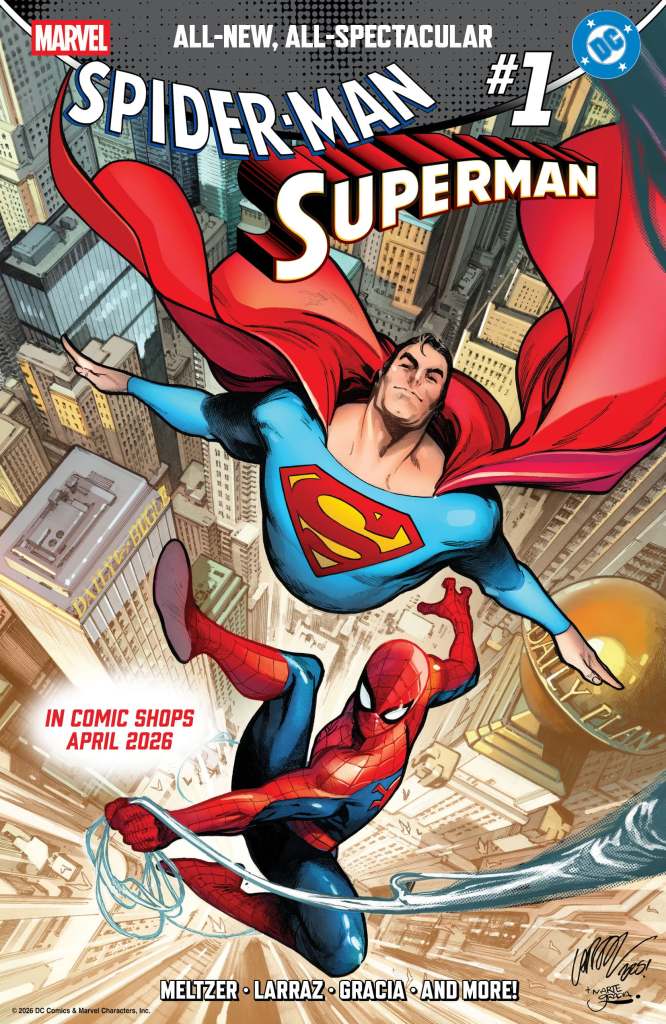
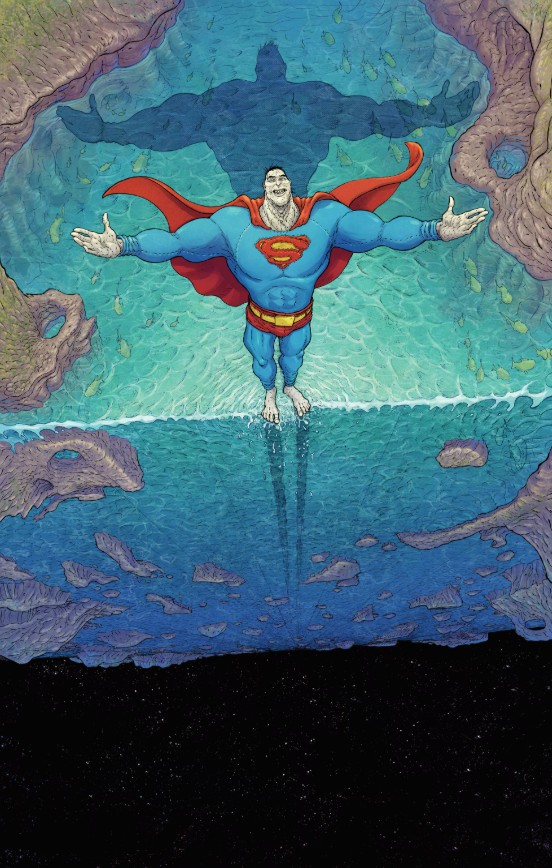

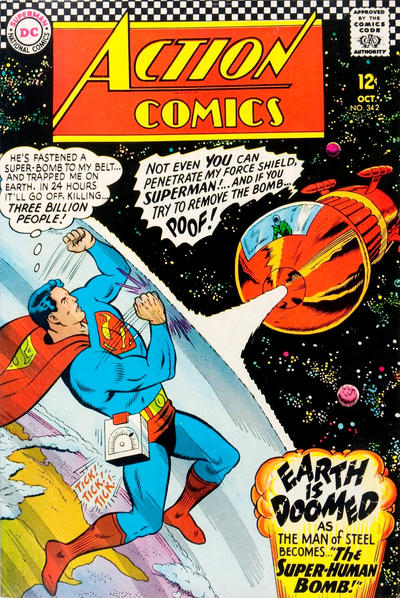
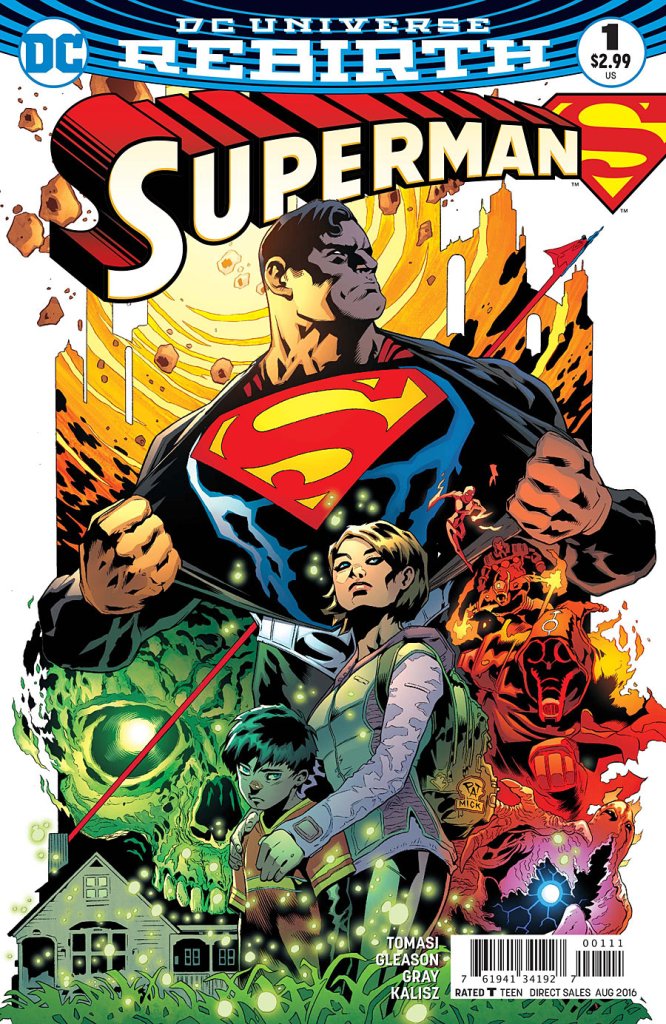
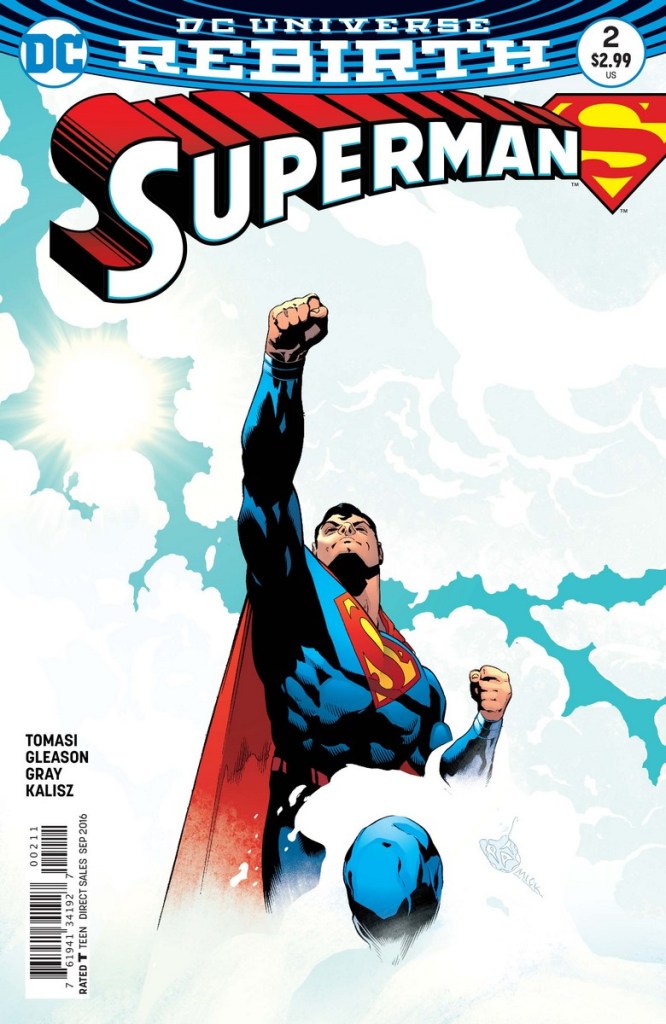


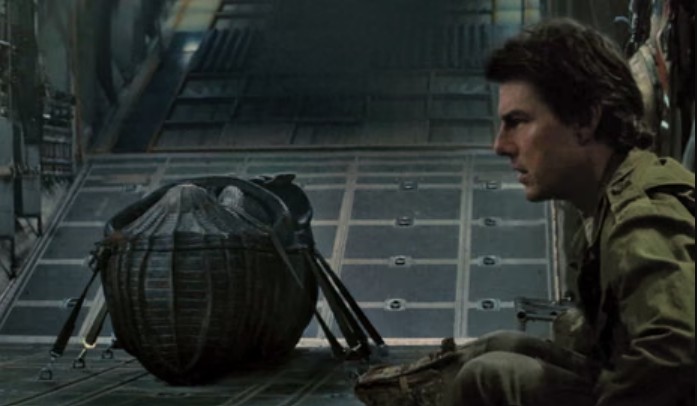



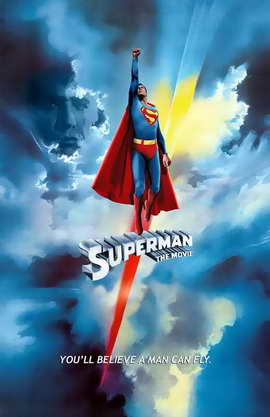
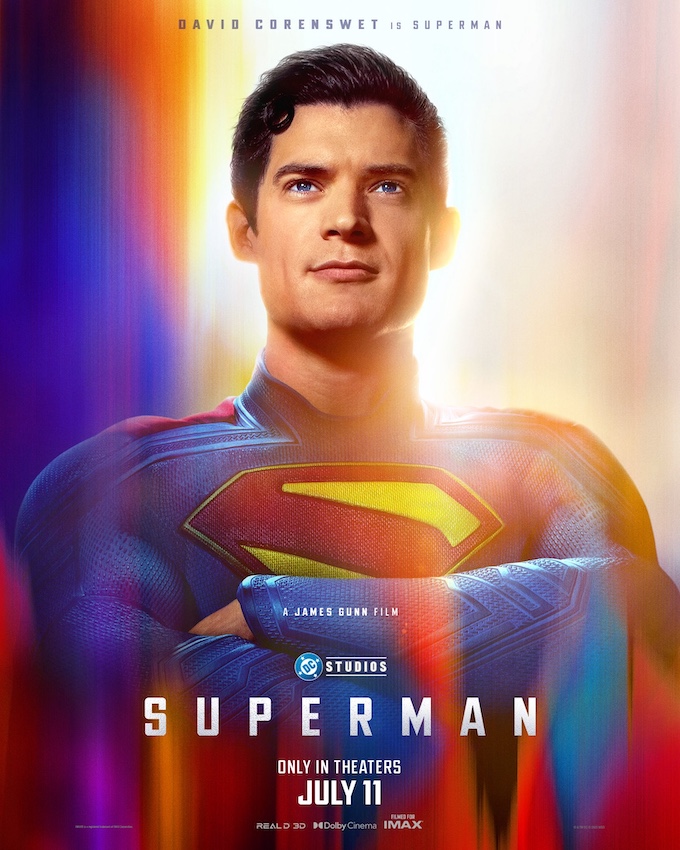

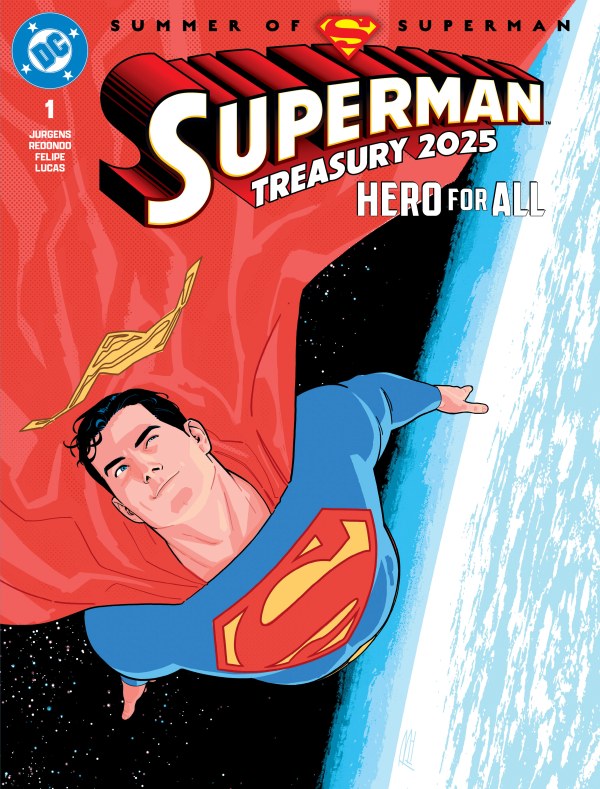
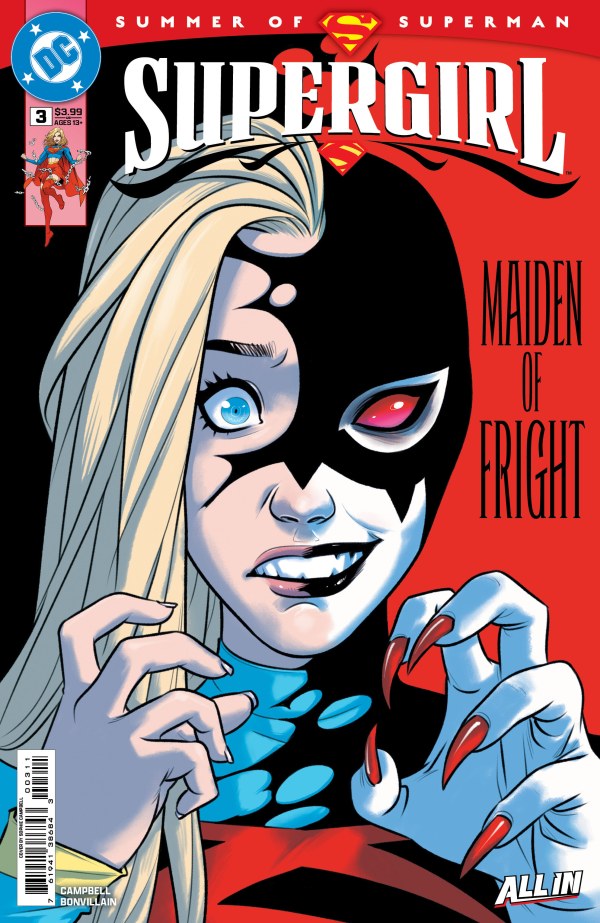

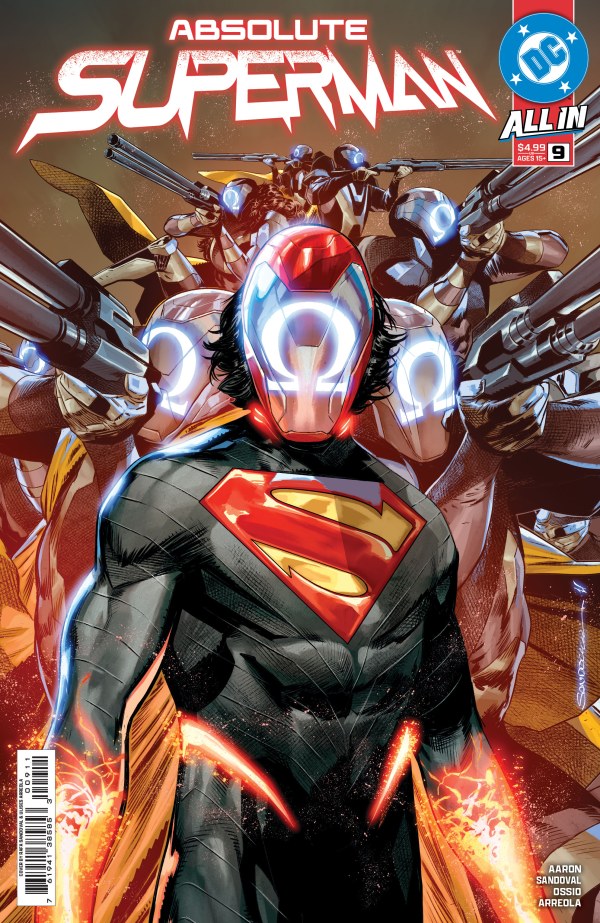

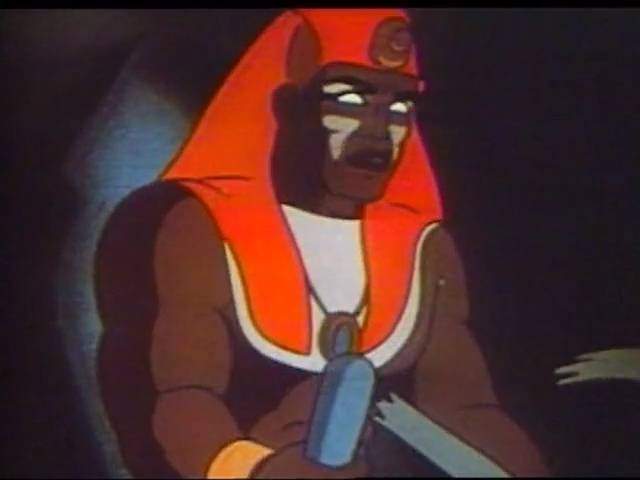


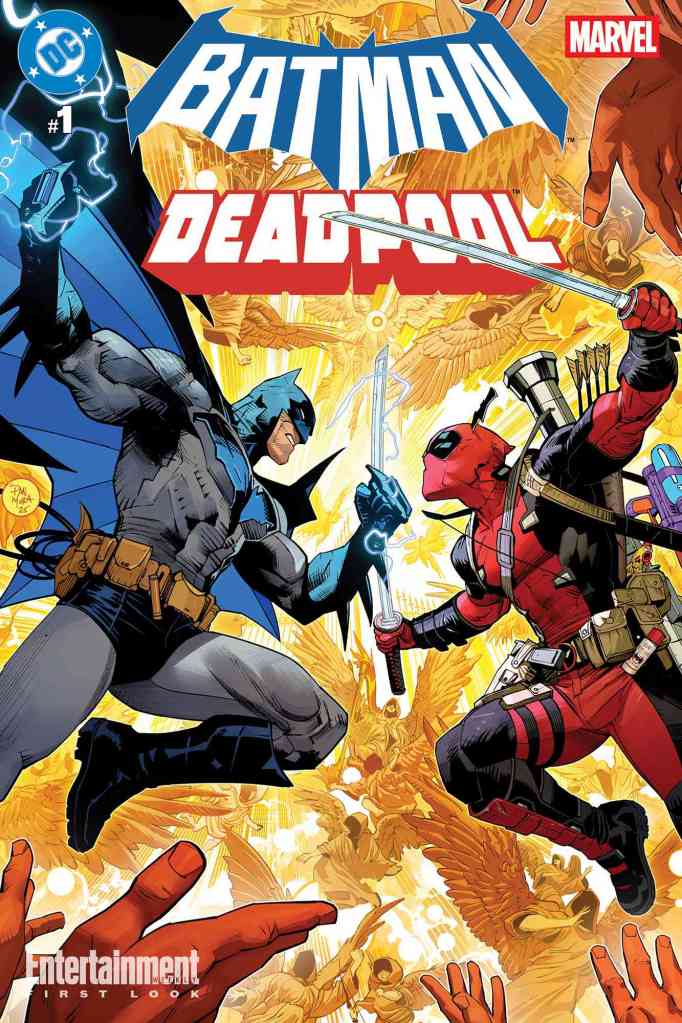
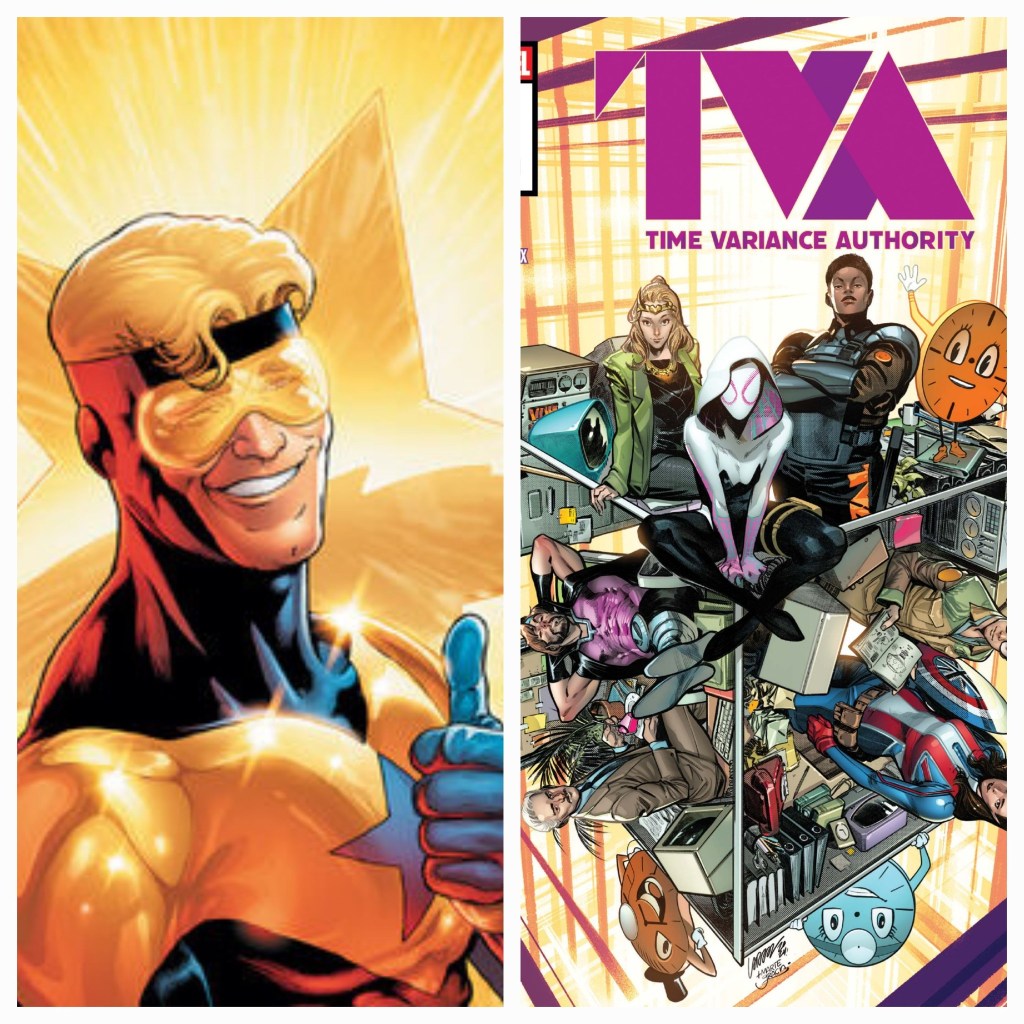


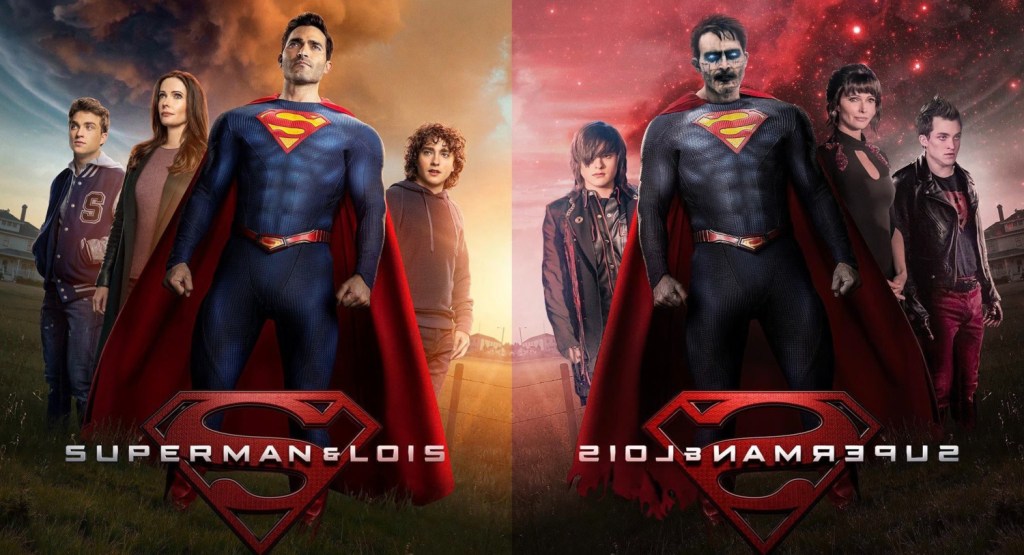
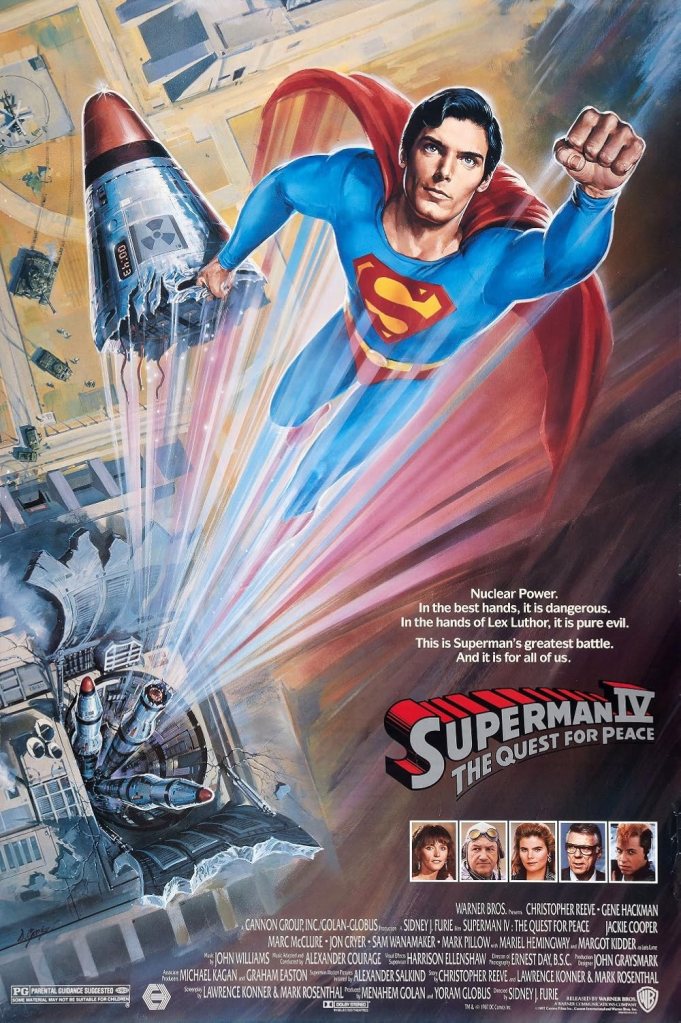


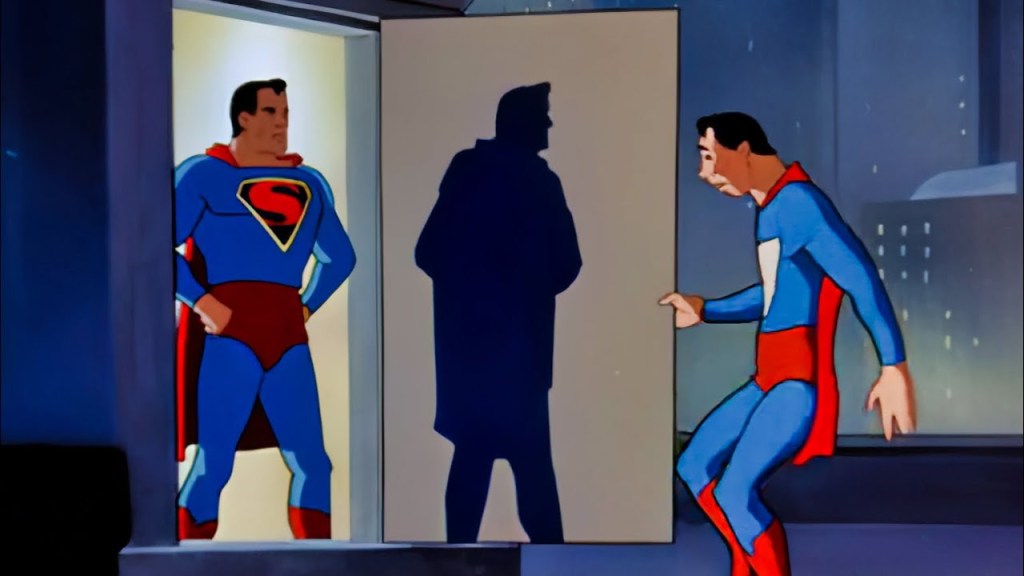
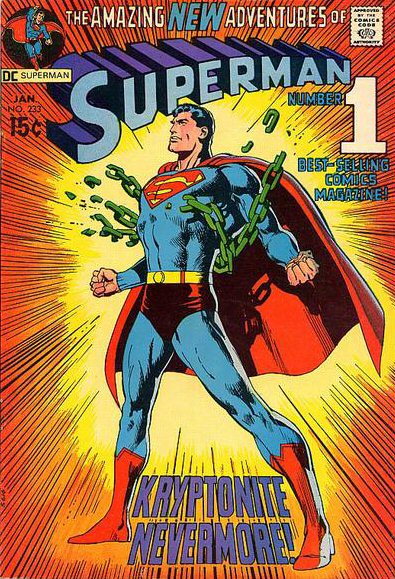









 Blake M. Petit