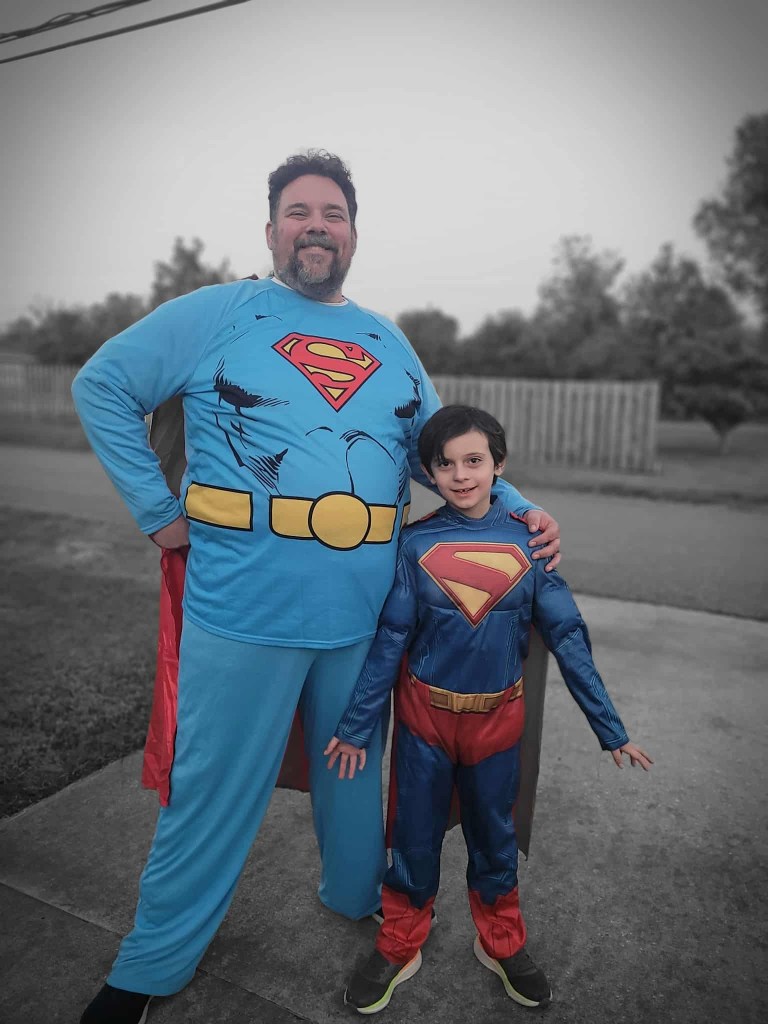
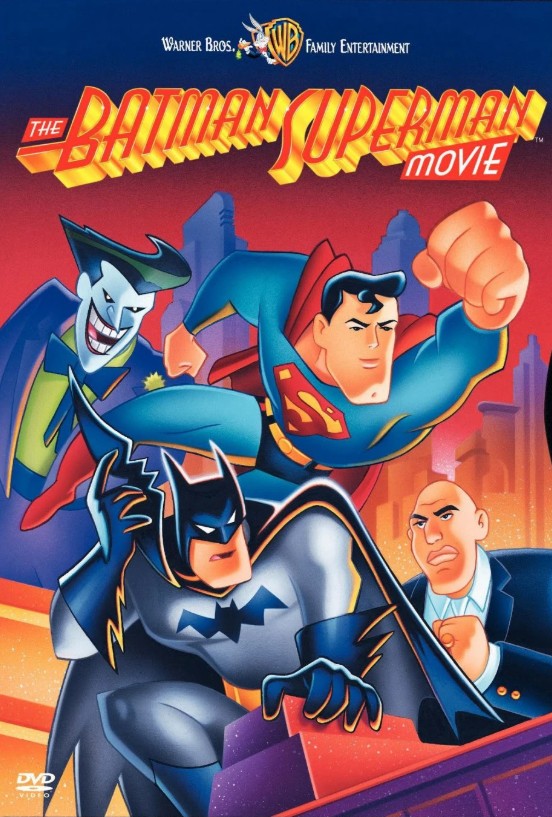
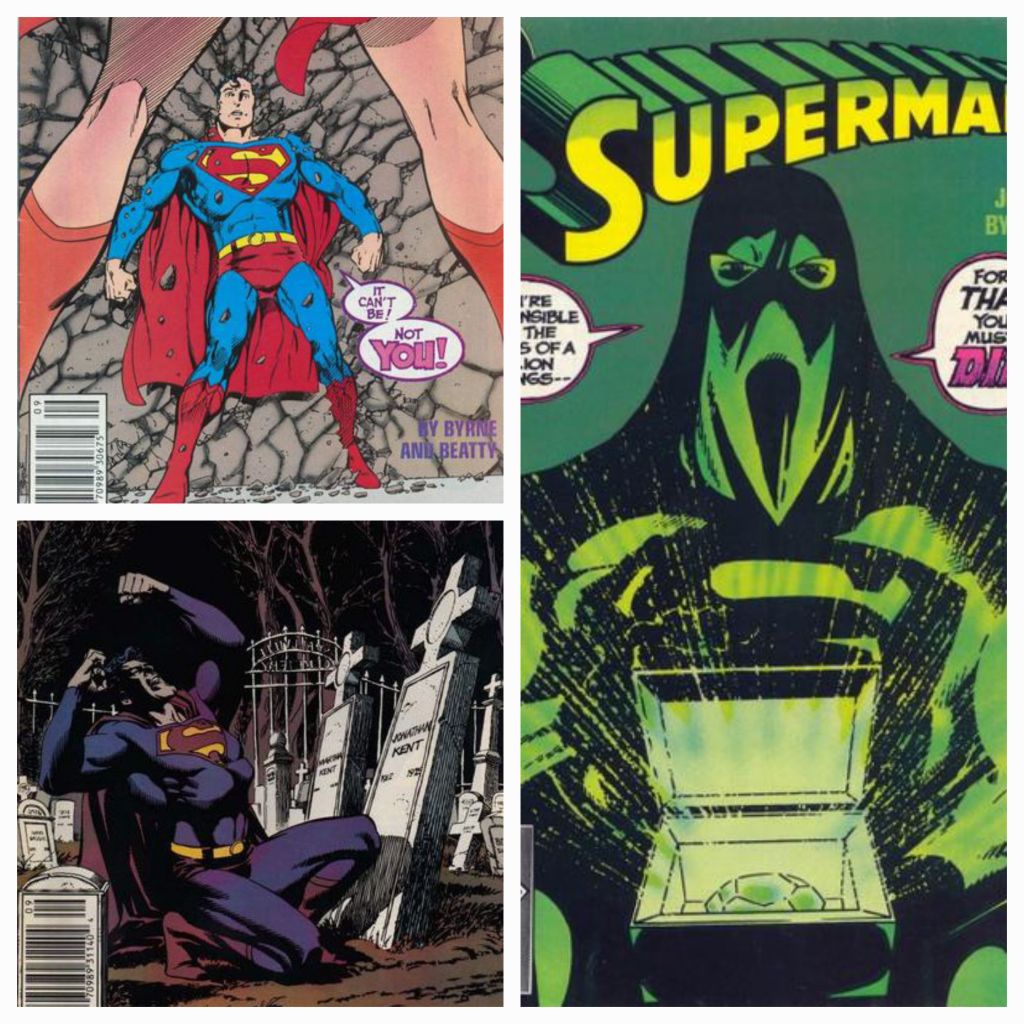
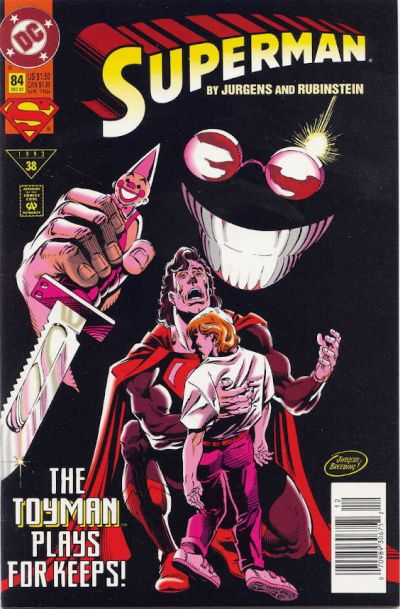
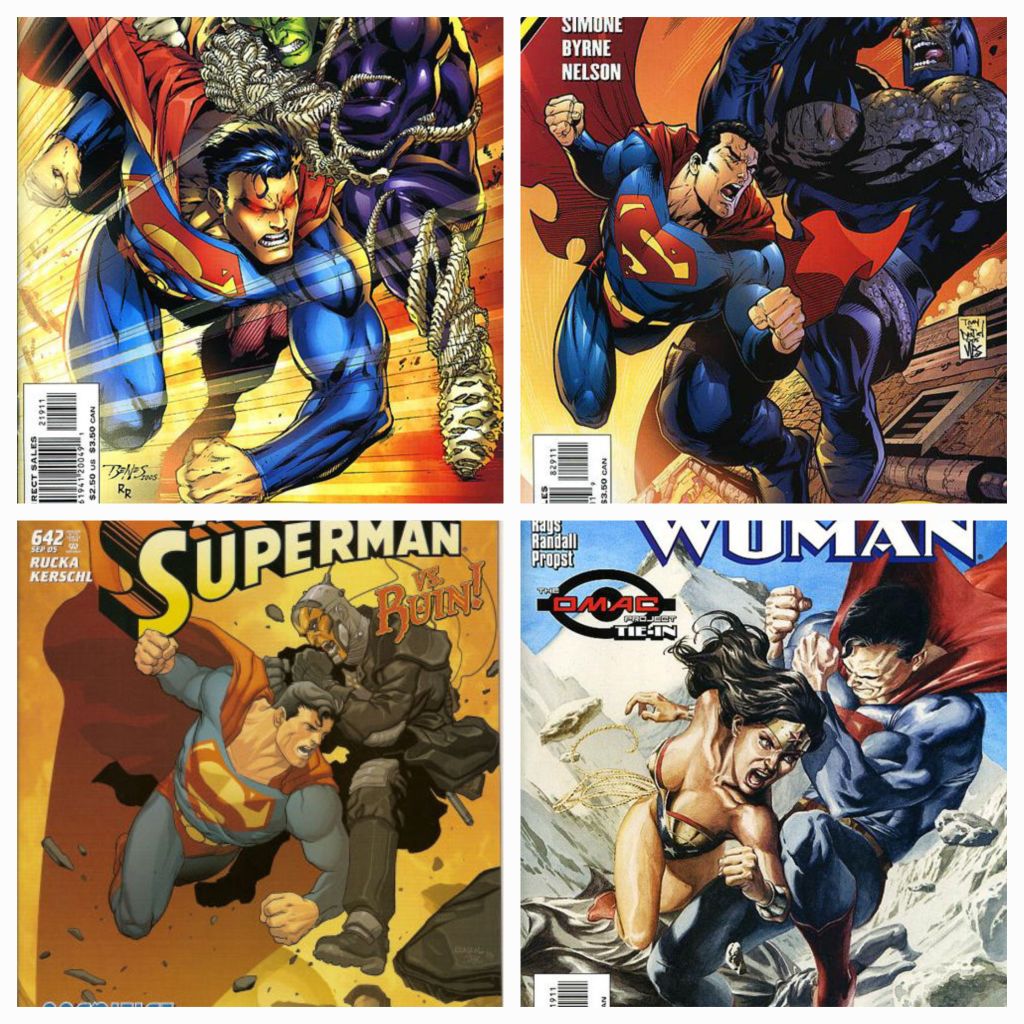
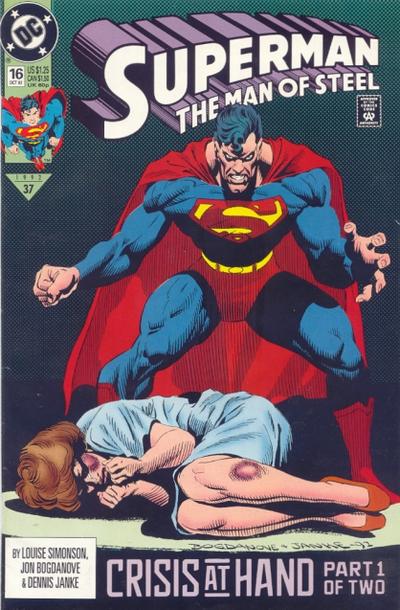
I’m sitting here two weeks after the debut of James Gunn’s Superman movie and I’m quite happy. As of the time I write this, it’s sitting at almost $260 million domestically and nearly $433 million worldwide, which in this post-COVID era is nothing to sneeze at. It’s already the top-grossing superhero movie of the year so far, and most importantly, it’s been embraced by the public. The critics love it, the fans love it, and people are still talking about it two weeks later, something you can’t really say for some of the other summer movies like Jurassic World: Rebirth. Lines like “Maybe being kind is the real punk rock” have achieved meme status, and not in a mocking way like that CEO at the Coldplay concert. Most importantly, it has gotten people reenergized. Sure, there are some people who don’t like it, and it’s fair to not like something, but if the REASON you don’t like something is because Superman believes in goodness, has a sense of humor, or wants to protect the life of even the smallest creature, then I’ll be frank: your opinion does not matter to me.
My face when I think about the bit with the squirrel.
With this movie doing well, eyes are now turning to the rest of James Gunn’s new DC Universe. When he and producer Peter Safran took over as co-heads of DC Studios a few years ago, they announced a slew of projects, but Gunn has also been very clear that he’s not going to move forward with anything until the script is ready, so several of those projects are on the back burner. The ones that are definitely on the schedule are – in order of release – season two of the Peacemaker TV series next month, the Lanterns series for early next year, the new Supergirl movie next summer, and a Clayface movie next fall. (Clayface, by the way, is the most indicative of the fact that Gunn is not married to a roadmap – it was not part of the initial announcement and Gunn said the character wasn’t even on the radar for a solo film, but writer Mike Flanagan pitched him a story that was so good they put it on the fast track.)
The hero we didn’t know we needed.
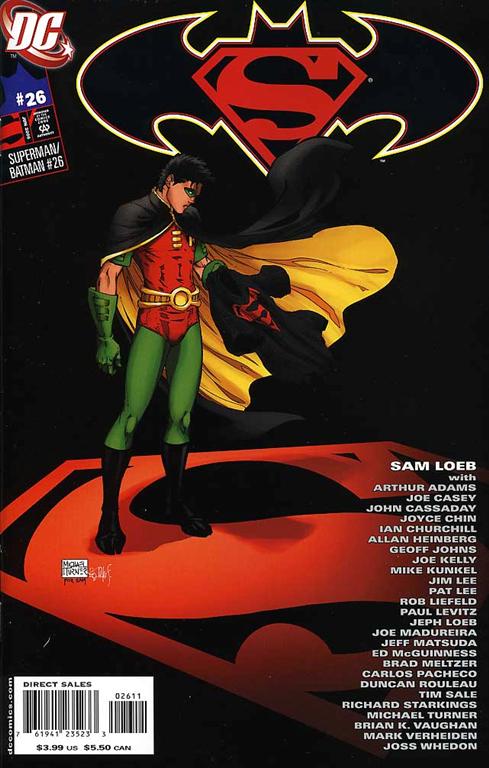
Movies in the works but not yet on the schedule are a Brave and the Bold movie (featuring Batman and the Damian Wayne Robin), The Authority, Swamp Thing, and Sgt. Rock. On TV, they’re working on live-action shows including Paradise Island, Waller, and Booster Gold, and in animation, they’re working on Blue Beetle, Mr. Miracle, and a second season of Creature Commandos. Other things have been tossed around, including a movie featuring Bane and Deathstroke, and Supergirl screenwriter Ana Nogueira has reportedly turned in a script for a Teen Titans movie AND has been hired to do a script for Wonder Woman. Following the success of Superman, rumors are flying about shows starring Edi Gathegi’s Mr. Terrific and Skyler Gisando as Jimmy Olsen. There are other series and films in the works as well, but the ones I haven’t mentioned thus far (such as the sequel to Matt Reeves’ The Batman or an animated Starfire series for children) are mostly intended to be part of DC Studios’ “Elseworlds” imprint and not part of the DCU proper.
So obviously, there’s a LOT to look forward to in the next several years. But what is it I always say about fans? What do fans want above all else?
That’s right. Fans want MORE.
So today I want to talk about my Three Wishes for the new DCU. What are three projects that I would love to see? If I had a chance to sit down with James Gunn and convince him to add three of my dream projects to the schedule, what would they be? Let’s do one live-action series, one animated series, and one movie, just to cover all the bases that this DCU is touching. I’m also going to try to incorporate some themes or genres that the other projects haven’t gotten around to yet.
Live action series: Legion of Super-Heroes
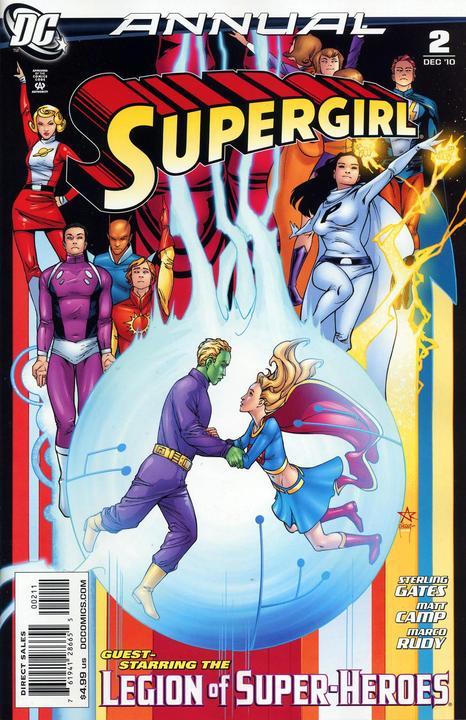
Call the casting department and tell them to put a pot of coffee on.
My love for the Legion of Super-Heroes is no secret. I think it’s one of DC’s greatest franchises: the heroes of the 31st century, who have modeled themselves after the greatest heroes of our time. Dozens of heroes from different worlds, cultures, and species, allowing for any number of different characters and character dynamics. The series presents an opportunity to do science fiction and superheroes at the same time, and as Gunn has made it clear that he wants the different DC projects to each have a different feeling, this would fill a niche that isn’t there yet. (Okay, technically I suppose the Lanterns TV series will have a science fiction element to it, but from all the descriptions it seems like that show is going to be more of a military mystery/drama. That’s great, but I want a real space opera.)
But this would have to be a TV series. The Legion of Super-Heroes is, frankly, just too big for a movie. There are literally dozens of characters in the group, and even if you were to narrow down the focus to a core group of, say, seven or eight, you need time to explore who each of them are and how they relate to one another. You couldn’t do justice to the Legion in two hours.
The next thing is that I believe that the Legion is strongest as a spin-off of Superman. It’s how the characters were first introduced back in 1958, as kids who loved the legend of Clark Kent and travelled back in time to recruit him to join their club when he was just a teenager. It creates something of a stable time loop: the Legion models itself after Superman, but the Legion also taught Clark Kent to be a superhero in the first place. So I would use the early 2000s Legion of Super-Heroes animated series as my inspiration, casting someone to play a teenage Clark Kent and having him as a regular member of the cast. This would also open the door to have David Corenswet do a cameo as adult Clark at some point, probably in the last episode.
I don’t know if Corenswet is a jewelry guy, but I think this ring would look pretty good on him.
What’s more, although the Legion is set 1000 years in the future, that doesn’t mean that it can’t still be used to establish things for the contemporary stories. Alien races like the Khund or the Dominators, who could easily show up in other DC projects, could be introduced there. And the series could be used to give sneak peaks as to what will happen in the other movies and shows. (“Hey, why does the woman in this old photo have a golden lasso?” “Don’t worry, Clark, you’ll find out soon enough.”)
Is the reason I’m suggesting this series just because I love the Legion and I want other people to love it too? I’m not gonna lie, that’s probably at least 75 percent of my reasoning here. But that doesn’t make it a bad idea. I think this show could be great.
Animated Series: Deadman
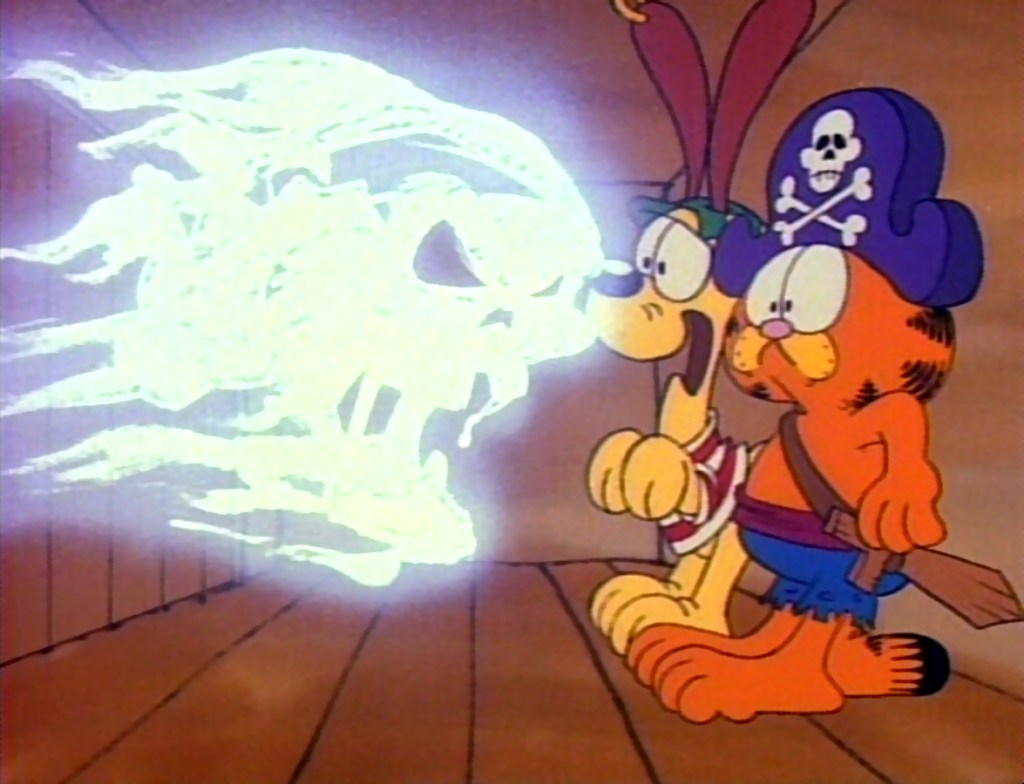
With Clayface playing in the realm of body horror (it has been compared, tonally, to David Cronenberg’s The Fly), the supernatural corner of the DC Universe is waiting for some exploration. Deadman is the answer. If you’re unfamiliar with the character, Boston Brand was a circus performer who was murdered in the middle of his act. Rather than going to the great beyond, though, he was sent back to Earth as a ghost to solve his own murder. With the ability to possess the bodies of other people, Deadman has had a long and bizarre career as a superhero that most people (even in the DC Universe) don’t even know exists.
And you thought YOUR Monday sucked.
By the very nature of who the character is, Deadman has been used plenty of times to delve into the world of horror stories. He is, of course, a literal ghost, so haunted houses and poltergeists and all manner of demonic foes are par for the course for him. And he also regularly runs across other DC characters who are mired in this world of magic and the supernatural, like the Spectre, the Phantom Stranger, and Zatanna, giving a series of this nature an opportunity to open up the world even further.
As for why it would be best as an animated project – there’s a certain creative freedom in animation. It allows you to do things that would stretch credulity in live action, even with the best special effects. Have you ever noticed that the animated Star Trek series are far more likely to bring in characters who are not, strictly, humanoid? Creatures with three arms or body types that you could never fit a human actor into? That’s because in animation you don’t have to pay for huge animatronics, make actors spend days in the makeup chair applying heavy or even painful prosthetics, or worry about sketchy CGI that just doesn’t mesh against the human actors standing in front of a green screen. Animation would give them the freedom to really explore the afterlife, plunge into the depths of Hell, or put Deadman through extreme transformations like the nearly-skeletal Kelley Jones version of the character without having to torture the performers.
Very few actresses would be willing to have their torso removed to do this scene justice.
It could be groundbreaking in another sense as well. Animation is finally starting to crack free from the decades-old bias that it’s only intended for children, but it’s still rare to see adult-oriented animated projects that aren’t comedies. Even Creature Commandos, which was basically an action movie with monsters, leaned heavily on dark humor. Any humor in Deadman would likely come from Boston himself cracking wise, as the situations he plunges into would be deadly serious…no pun intended.
Movie: Firestorm
With page-rippin’ power!
Firestorm is one of DC’s perennial B-listers. The character inspires incredible amounts of devotion from his fans, but the NUMBER of fans just isn’t big enough to crack him into the mainstream. This could finally be a chance to fix that. Although several characters over the years have shared the name and the powers, the crux is usually that two people (originally scientist Martin Stein and high school student Ronnie Raymond) are fused into a single super-powerful being as the result of a nuclear accident. One of the two – Stein in the original – is dormant in the fused Firestorm persona, only able to offer advice to the one who’s steering the ship. This allows for a sort of “odd couple” dynamic, putting together two characters who don’t necessarily belong together and forcing them to literally work as one for the greater good.
Writer Gerry Conway, who co-created the character, had done a long run on Marvel’s Spider-Man and was attempting to recreate the dynamic of a younger hero, which DC didn’t really have at the time. Their heroes were all older, the younger ones were all sidekicks, so putting a teenager in the driver’s seat was different for them, and the character quickly became beloved, even becoming the youngest person to ever join the Justice League (at the time at least). But after 100 issues of his solo series, the doors were shuttered way back in 1990 and, despite several strong attempts to give him a resurgence, he’s struggled to really become big again ever since.
For the movie, I would make Martin Stein sort of the “man in the chair,” the person inadvertently responsible for Firestorm, but not part of Firestorm himself. I’d keep the part of Ronnie’s origin where he gets suckered into joining a group of “protestors” to impress a girl, only to find out that they’re actually eco-terrorists. But when the accident happens, rather than fuse with Stein, I’d have him fuse with the second Firestorm, Jason Rusch, who I would make Stein’s lab assistant.
“Fusion Confusion” was my nickname when I worked at that restaurant making sushi burritos.
The dynamic we’d have here would be Jason believing Ronnie’s a dumb jock while Ronnie sees Jason as a stuck-up egghead, and the two would slowly and begrudgingly learn to respect each other – the old “together we are more than the sum of our parts” routine. The eco-terrorists would be linked to a bigger bad, of course, who is targeting different scientific institutions in the DCU such as S.T.A.R.Labs, and giving us an opportunity to include other science-based heroes such as Captain Atom, Hourman, Stargirl, or the Flash – who has been oddly absent from all official conversation about the current DCU. There’d even be a clear opportunity to bring in Edi Gathegi as Mr. Terrific again, because when you have a science problem, who better to call than the smartest man in the world? I kind of like the idea of Stein being one of Mr. Terrific’s former professors who now finds himself running to his old student for help.
Okay, James Gunn, the ball is in your court now. You’re doing a great job so far, don’t get me wrong, but there’s always room to bring in even more goodness. Here are my suggestions.
Now I’ve got to get back to finishing up season one of Peacemaker before season two drops.
Blake M. Petit is a writer, teacher, and dad from Ama, Louisiana. His most recent writing project is the superhero adventure series Other People’s Heroes: Little Stars, volume one of which is now available on Amazon. You can subscribe to his newsletter by clicking right here. He’s also started putting his LitReel videos on TikTok. Come back to him in a month, he’ll probably have three totally different suggestions.
With the movie (you know which one) so fresh in my mind, I thought quite a bit about what to do this week. I don’t know what Superman stories would be best to follow it. Certainly, anything that would be capable of TOPPING it is likely something I’ve already read. So rather than any of that, I decided to go in the opposite direction: parody. Parody is a classic format for stories, something that’s been around almost as long as storytelling itself. I’m pretty sure that after the first caveman, Ug, finished regaling his tribe with the story of how he singlehandedly took down a wooly mammoth, when he walked away his buddy Og stood up and started doing a mocking impression of Ug getting impaled by a tusk.
In the nearly 90 years of his existence, Superman has been parodied many times, and we’re going to look at those this week. We’ll look at his parodies from comics and magazines like Mad and Cracked, check out spoofs from shows like Saturday Night Live, and even delve into the times that the Looney Tunes did their own take on the Man of Steel. So this week, friends, let’s laugh.
Notes: Everybody has heard of Mad Magazine, but if you’re not a hardcore comic book nerd like myself you may not know that Mad actually started out as a comic, published by EC Comics, the same company responsible for classics like Tales From the Crypt and Weird Science. When the anti-comic furor of the 50s led to the creation of the Comics Code of America, an organization that at times seemed intended solely to crush EC out of existence, they pivoted and made Mad a magazine instead, because evidently making the page size larger and switching to black-and-white was enough to exempt it from the Code. I didn’t say it made sense, people.
But anyway, the fourth issue of Mad (the comic book) brought us one of the first Superman parodies in print: “Superduperman” by Harvey Kurtzman and Wally Wood. Here we meet Clark Bent, assistant copy boy at the Daily Dirt, a pathetic creature who has spent the last ten years saving up his meager salary (seventy-five cents and a good bus token) in the hopes of buying a pearl necklace for “girl reporter” Lois Pain. The city of Cosmopolis is being plagued by an “Unknown Monster,” and Clark dives into a phone booth (then a second because the first was occupied) to change into Superduperman. To his shock, he discovers that the “Monster” is, in fact, Captain Marbles, who has gone rogue and decided he’s just in it for the money.
A few interesting things here: Mad #4 was published in 1953, just a few months before Fawcett Comics would throw in the towel in their years-long court battle against National Comics over their claim that Captain Marvel infringed on their Superman copyright. So there’s a meta level to having Superduperman slug it out with Captain Marbles that I find pretty amusing, but I have to wonder if the average kid in 1953 would have gotten that joke. The depiction of “Clark Bent” is pretty striking here, taking the “meek, mild” Clark Kent that we all know and love and making him even more pathetic, making Lois a cold, cruel harpy, and making Superduperman kind of a dunce.
I think the biggest draw is Wally Wood’s artwork. He was one of the greatest comedic artists of the time, probably of ALL time, and the level of energy and fun he puts on every page is outstanding. The man was a giant and I’m so glad I included this story in the Year of Superman.
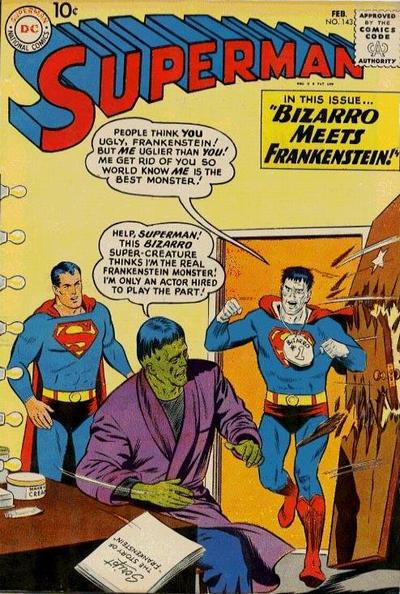
In 1988, Marvel Comics decided to get back into the parody game with What The–?!, the Marvel Mag of Mirth and Mayhem. I was 10 years old when this series started, and it was pretty much tailor-made for me. The second issue, though, was something that was actually more special than I realized at the time: Superbman versus the Fantastical Four in “My Badguy, My Enemy!” by none other than John Byrne.
In 1988, Byrne was wrapping up his time on Superman for DC and returning to Marvel, where had previously done a legendary run on Fantastic Four, so I suppose the idea of having him parody his two greatest achievements in comics to date was a natural match. Byrne wrote and drew this story (with inks by another Superman laureate, Jerry Ordway), which has reporters Park Bench and Nosy Dame travel to New York from their home in Metropopolopolis to report on the newest bankruptcy of the Fantastical Four. When the Human Scorch carelessly causes Nosey’s hairdo to wilt, Superbman jumps into action.
I loved this incredibly goofy story as a kid and, as an adult, I appreciate it on an entirely different level. Byrne was doing something that I admire the hell out of: making fun of himself and having a grand time doing it. The story makes several references to the way Superman was changed in Byrne’s own reboot, including comments about how he’s not as powerful as he was previously, how he’s not as square as he used to be, and how his cape is no longer indestructible. The last one led to a joke that 10-year-old me thought was the funniest thing he’d ever read and, if I’m being honest, adult me still thinks is pretty hilarious:
Even a parody of Ben Grimm still sounds like Ben Grimm, and I think that’s beautiful.
But as the fight between our heroes rages, off to the side there’s a battle of wits between Doctor Bloom, sworn enemy of the Fantastical Four, and Rex Ruthless, sworn enemy of Superbman (the Keeper of the Comics Code actually has to step in at one point to tell them to cut down on the swearing). The two super-geniuses begin arguing over their plots, with Bloom revealing that he faked the FF’s bankruptcy to lure Park Bent to report on it, having deduced that Bent was Superbman. Ruthless finds this HILARIOUS, in a page that I now recognize as being the real pearl of this story. He gives Bloom a lecture on how impossible that would be, a page where Byrne is parodying his own treatment of Lex Luthor from Superman (Vol. 2) #2, in which Luthor rejected the same line of logic connecting Clark and Superman. Byrne even gets into making jokes about his own predilections in panel layout here, stuff that as a kid I didn’t catch on to at all. (I wasn’t reading Superman comics yet at that point, and even if I had been I don’t know if I would have caught on to all the nuances.)
But perhaps the greatest inside joke in the comic is the way Byrne draws Superbman’s s-shield. I remember reading an introduction Byrne once wrote for Man of Steel in which he discussed his history with Superman and how, as a child, he didn’t realize the symbol was supposed to be an “s.” To him, he said, the shapes looked like a pair of fish swimming at one another. So when he got the chance to do a parody, that’s what he drew. That’s a joke that I bet almost NOBODY got – I certainly didn’t get it at the time – but it’s one of my favorites now.
I wish Byrne had done more comedy comics like this one. He had a real flair for it.
Thur. July 17
Magazines: Mad #208, Cracked #160
Notes: When I was younger I read Mad and Cracked pretty regularly, although I drifted away as I got older. This happened with a lot of stuff, but unlike other things I dropped as being “for kids” like Disney and Archie comics, I never really went back to Mad on a regular basis. At the risk of sounding pretentious, I think my sense of humor just grew in a different direction than those publications specialize in. Still, I’ve got a lot of them from when I was younger and I’ve tracked down others over the years that either featured or reprinted specific Superman comics – plus there are some available (you know where this is going) on the DC Universe Infinite app. So during Parody Week, I’m going to try to go through some of the ones that I’ve got in roughly the order of publication.
First up is Mad #208, which recycled the title “Superduperman” for its parody of the first Christopher Reeve movie. I can’t find a writer credit, oddly enough, but Mort Drucker’s signature appears on the first page and – let’s be frank – it would be pretty clear it was his art even without it. Drucker was a phenomenal caricaturist, the characters in his Mad parodies immediately recognizable as the celebrities he was spoofing, even when exaggerating or mocking their features. He even nails the design of Glenn Ford and Phillis Thaxter as Jonathan and Martha Kent in their brief appearance.
I’m not going to bother to recap the story here, because as a parody it’s a fairly by-the-beat retelling of the story of the movie. How well, then, does it succeed as a comedy?
Eeeeeeeh.
I think this is why I never quite got back to Mad once I got older. The comedy in many of these stories is dependent on straw man jokes and easy targets: a crack about how improbable it is that Lois can afford such an opulent apartment on a reporter’s salary, gags about how outrageously out-of-proportion Marlon Brando’s paycheck for this movie was, and of course, a joke about the glasses. Probably the best joke in the entire parody comes at the very end, after Superduperman spins time back to save “Lotus Lain.” As in the movie, Supes gets a vision of his father reminding him he’s not supposed to interfere with human history. In this version, though, there’s a second voice telling him to do it – it turns out to be the executives at Warner Bros. recognizing that they need Lotus alive for Superduperman II.
The same month that Mad’s parody came out, rival magazine Cracked gave us “Suped-Upman: The Satire.” Once again, there’s no credited creative team, but the artwork to me looks a hell of a lot like the great John Severin, who did stories for Cracked for decades.
The Cracked story isn’t specifically parodying the movie, but rather just giving us a goofy look at a Superman-type character, and honestly, I think it’s better for it. Freed from trying to draw the actors, Severin’s characters have a life and expressiveness where other parodies sometimes fall short. Cluck Clone doesn’t leave his parents’ farm to become a reporter, but rather gets a job at a delicatessen called the Deli Planet where he meets a lovely girl named Lewis Paine – whose safety takes top priority over gunshot victims when Suped-Upman goes into action a few pages later.
After reading just these two parodies, I feel like I’m already starting to gel a sort of theory of satire, at least how I see it. Of the two, the Cracked story is honestly much funnier and a lot of fun to read, and I think the reason for that is because whoever wrote it wasn’t simply retelling the story of the movie. He took the broad strokes of the Superman legend, tweaked them in a humorous way, and then told his own story rather than just filling in the blanks of the existing plotline like a complicated Mad Lib. Cracked is doing its own thing, and it’s a better story for it.
And you know, the same is true for all the great satires out there. Compare something like Mel Brooks’s Spaceballs to a Friedberg/Seltzer movie such as Epic Movie. Brooks simply uses the CONCEPTS of science fiction (especially, but not exclusively Star Wars) to tell a funny story, whereas Friedberg and Seltzer rip out chunks of existing stories and patch them together like some horrific Frankenquilt that seems to think that simply REFERRING to another movie is enough to qualify as a joke. All of this is building my brain up to what I think I’m going to refer to as Petit’s Law of Satire: Satire is funnier in broad strokes than in specifics. The two stories I read yesterday, from Mad #4 and What The–?! #2, were both really funny, and neither of them was parodying a specific story. The Cracked satire is funnier than the Mad by-the-beat parody.
I think I’m on to something here.
Let’s see if it holds up over the next few days.
Comic Books: New Gods Vol. 5 #7 (Guest Appearance), Green Lantern Vol. 8 #23 (Guest Appearance, Conner Kent)
Fri., July 18
Short Films: Super-Rabbit (1943), Stupor Duck (1956), Superior Duck (1996)
Notes: Today I decided to peek in on the second greatest collection of characters in the Warner Bros. catalogue, after the DC superheroes. I’m talking, of course, of the Looney Tunes. I have a deep, abiding love of the likes of Bugs and Daffy, and as each of those stalwarts took their turns poking fun at Superman, I wanted to include them here in Parody Week, starting with Bugs Bunny in Super-Rabbit.
Directed by Chuck Jones, this cartoon starts off with a spoof of the Flesicher shorts, parodying the old “faster than a speeding bullet” intro before bringing us to Super-Rabbit’s origin. Bugs Bunny is a lab animal in this one, given some super-powered carrots that give him incredible powers. He decides the best way to use these powers is to head to Texas and take on a hunter called Cottontail Smith who has dedicated himself to wiping out all rabbits. Bugs does his usual number on Smith and his horse until a midair mishap causes him to lose his power carrots, which Smith and the horse gobble them up. Just before he’s about to be pummeled, Bugs declares, “This looks like a job for a REAL Superman!” Then, in a bit of standard-for-the-time patriotism, he ducks into a phone booth, joins the army, and marches off in the direction of a road sign that inexplicably points to both Berlin AND Tokyo.
The superhero stuff in this cartoon is almost incidental. The opening sequence is where most of the tropes come in, with the Fleischer-specific parody, but once Bugs gets to Texas and comes to loggerheads with Smith the antics he pulls off are pretty standard for him. Could catching a cannonball and using it to play an impromptu game of basketball count as a feat of super-strength? Sure, but this is also BUGS BUNNY we’re talking about, a cosmic trickster with the ability to warp reality in any manner he deems the most amusing at the time, so I’m not convinced that the magic carrots are strictly necessary here. The only parts of the cartoon that seem specifically dedicated to a Superman parody, other than Bugs’s outfit, are the bits where he’s flying. That does, of course, give us the best joke in the entire short, as Bugs flies into the stratosphere and whips past a horse who is astonished to see a rabbit flying at 30,000 feet.
Think about that for a minute.
Anyway, it’s a good cartoon. Perhaps not the greatest parody in history, but it IS the cartoon that led to the awesome Super-Rabbit figure that adorns one of my Superman shelves, and it’s worth it for that alone.
Next up, in 1956 Robert McKimson drafted Daffy Duck for another poke at the man of steel in Stupor Duck. This one is a much more direct parody of Superman than Super-Rabbit, beginning with Daffy in disguise as “mild-mannered reporter Cluck Trent.” Daffy overhears his editor watching TV but, true to form, mistakes the broadcast for the braggadocio of a supervillain and sets out to thwart him, only to get thwarted himself over and over.
Bugs is a classic character, but in terms of parody, I think Daffy is actually more effective. A lot of the humor in this short comes from Daffy making a fool of himself in ways that just wouldn’t happen to Bugs. He saves a building from collapsing, for example, only to wind up getting punched out by the head of the demolition crew that was TRYING to demolish it. He saves a “sinking” ship and gets blasted by the cannon of the submarine he just pulled out of the water. It’s great, goofy stuff that is perfectly in keeping with Daffy Duck, but wouldn’t have worked with Bugs. I think I have to conclude, oddly enough, that although Super-Rabbit is a funnier cartoon, Stupor Duck is a better parody.
Director Chuck Jones would take one more swing at superheroes more than five decades after Super-Rabbit, teaming up with Daffy for the 1996 short Superior Duck. This time out, Daffy is a sort of mashup between Superman and Duck Dodgers, setting out to save the day only to be constantly thwarted by…his narrator.
Seriously, that’s the entire cartoon. Daffy is out to do some superheroics, but the narrator (voiced by the immortal Thurl Ravenscroft) cannot get his lines right, forcing Daffy into one increasingly-preposterous situation after another. It’s a less direct Superman parody than some of the others, but they make up for it with a last-act cameo that left me in stitches.
With Mel Blanc having left us by this point, we’re left with different voice actors, some of which work and others don’t. Frank Gorshin, TV’s Riddler, absolutely knocks it out of the park as Daffy and Foghorn Leghorn. Eric Goldberg does a good Porky and Marvin the Martian, but his Tweety left something to be desired. But this still feels like the same Chuck Jones who gave us the likes of Duck Amuck and One Froggy Evening. It’s a hoot.
TV Episode: The Looney Tunes Show, Season 2, Episode 26: “SuperRabbit.”
Notes: But we’re not done yet! In 2011, the Cartoon Network brought us the highly-underrated cartoon The Looney Tunes Show. I loved this show – rather than simply aping the classic Looney Tunes shorts, they merged those sensibilities with a TV sitcom, casting Bugs and Daffy as roommates in a kind of Odd Couple situation, with Bugs playing the more sensible, straightlaced one to Daffy’s aimless vagabond. If I had heard the show described as such before I watched it, I probably would have dismissed it outright, but I really grew to love the series and to this day wish it had lasted longer than two seasons.
The episode I’m focusing on was the season two finale (which, sadly, turned out to be the series finale as well), “SuperRabbit.” In this one, as Daffy starts scrounging through Bugs’s belongings looking for stuff to sell (did I mention he was a vagabond?) he comes across a strange crystal carrot. Bugs tries to divert Daffy’s attention from the carrot with a tale of his “true” origins. He isn’t REALLY Bugs Bunny, he claims, but an alien from the planet Crypton. (With a “C.” Because Daffy is WAAAAY too smart to fall for Bugs ripping off Superman’s origin by spelling it with a “K”.”) From there, we actually get an adventure of Bugs as SuperRabbit facing off against some of his greatest enemies: Brainiac (aka Marvin the Martian)! Lex Luthor! (Elmer Fudd, naturally)! And General Zod (Daffy himself)!
I hate to say it, but this was actually one of the weaker episodes of The Looney Tunes Show. The strength of the cartoon came from putting Bugs and Daffy into very sitcom-esque tropes and then spinning them wildly out of control. This episode mostly avoids that, electing instead to do a full-episode parody of what could have been a fairly standard Superman story with a few added jokes (such as Elmer’s Lex Luthor telling people “I’m hunting SuperWabbits”). It’s an okay parody, but it’s nowhere near the level of entertainment that this show was usually capable of, and it makes me sad that the show ended on this note.
Sat. July 19
Magazines: Mad #225, Cracked #183
Notes: Mad returned to the world of “Superduperman” with a parody of Superman II, with Mort Drucker once again providing artwork and Frank Jacobs writing it. For all I know, Jacobs wrote the first one as well, but as I said a couple of days ago, I couldn’t find a credit for that one. It certainly reads like it was written by the same author. Like the first one, “Superduperman II” is, in essence, a beat-for-beat retelling of the plot of the movie with added puns. Some of them, of course, land better than others. We have a very standard formula for a Mad parody: Jacobs and Drucker essentially break the movie down into single-panel moments; in each panel, the characters make wry observations about the situation they are currently in; and it ends with a punchline. Once you get used to it, the humor comes across as very staccato, with a rhythm that’s predictable, but not in a soothing way, so it’s not surprising that the funniest moments in the story are all things that are original to the comic. There’s a funny bit at the beginning, for example, where they mock the movie for opening up with flashbacks to the first film. Later, during the fight with the Phantom Zone criminals, Rocky Balboa randomly shows up for a panel to punch the Non parody, telling Superduperman that he’s there to get in shape for his own upcoming sequel. The funniest wholly original gag comes in a couplet where Superduperman is rushing off to Paris to save Lotus Lain, only to have to whip around because he forgot France is eastward.
Really effective comedy is based on surprise, and I think that’s pretty indicative of why I fell out of love with Mad parodies as I got older – they’re all pretty much the same, pretty predictable. Even at this point, in 1981, the good parts of the magazine were the things that didn’t parody a specific story, like Don Martin’s strips, Sergio Aragones’ marginals, and of course, “Spy Vs. Spy.”
Cracked, meanwhile, again chose not to do a direct parody of Superman II, instead choosing to run a three-page gag piece called “What Christopher Reeve (That Super Man) Will Be Like When He Gets Old.” The joke here is that, with Superman II being a huge hit, they assumed that they would go on to make dozens and dozens of sequels for decades to come, and the comic jokes about what an “old” Superman would be like: his powers being less impressive, using his strength to break a pound of spaghetti rather than bend steel, for example. The jokes were fair for the time – this was the era where movie sequels were just starting to get out of hand, and once popular movie franchise hit a certain point, there was an assumption that it would go on forever. (Remember the bit in Back to the Future Part II where Marty cringes from the holographic shark advertising Jaws 19, or the quick joke in Spaceballs in which a movie reviewer is about to talk about Rocky 5,000?) The problem here is obvious, and not at all the fault of anybody who worked on this comic: no matter how good the jokes may have seemed at the time, given what happened to Christopher Reeve, they’re just not funny anymore.
I want to note, briefly, that I’m going to try to cover as many Superman parodies as I can before this week is up, but that number is dependent on what’s actually available to me in my personal collection or the DC app, and also on my ability to locate them. I’ve scrouged up quite a few, but that doesn’t mean that I’ve identified them all. I bring that up because if Cracked did parodies of movies past Superman II, I either don’t have them or can’t find them. From here on out, the remaining print parodies on my list are all Mad.
Mad #243, for example, teamed Drucker with writer Stan Hart for “Stuporman ZZZ.” Changing up the writer didn’t change up the formula, though – it’s still your average beat-for-beat Mad parody. Each panel has that same ol’ rhythm, the same ol’ cadence, the same ol’ delivery. And once again, the funniest part is the stuff that’s NOT directly taken from the film: this time around, it’s a sequence after the “Kraptonite” makes Stuporman go bad, where he demonstrates this by using a joy buzzer to shake the Pope’s hand, giving a whoopee cushion to the UN Secretary-General, and mooning Ronald and Nancy Reagan at the White House. Reading these stories actually makes me feel sorry for Mort Drucker – he’s such a fantastic cartoonist and caricaturist, and I wish he’d been given better material to illustrate. Even the two-page “Don Martin’s Superman III Outtakes” strip is funnier than the main story.
I’m starting to get a little burned out on the Mad formula now, to the point where I’m looking forward to the point where I get to the parodies that came out after I fell off as a reader. Hopefully by that point, they’ll have discovered a second way to tell a joke.
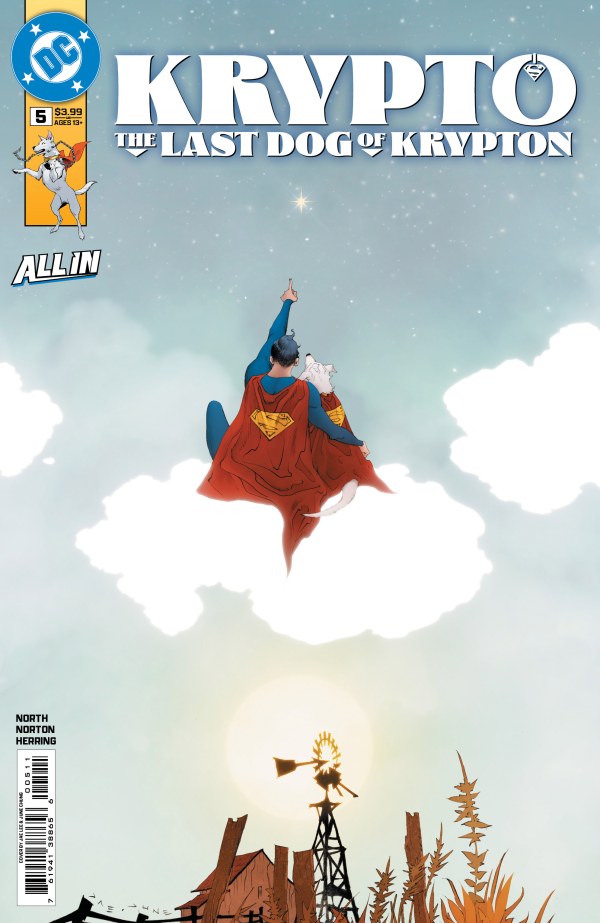
Comics: Superman Unlimited #3, Krypto: The Last Dog of Krypton #2, Batman/Superman: World’s Finest #41
Notes: It ain’t all parodies, though, friends. There are still new Superman comics this week, and I’m getting into those today too, starting with Dan Slott and Rafael Albuqueque’s Superman Unlimited #3. Told largely through Krypto’s eyes, in this issue we see our best boy catch some bad guys, get taken for a walk by Jon, and then catch scent of an old foe of Superman’s that he decides to track down.
At first, the story seems like a charming but inconsequential chapter of the Unlimited storyline. The first two issues largely dealt with the enormous Kryptonite meteor that fell to Earth and the havoc it’s wreaking everywhere, but that plotline doesn’t show up here for quite some time. The Krypto story is lovely, and there’s a great scene where Lois and Clark ask Jon what exactly he’s doing with himself these days (a question a lot of the readers are asking too – the character has been painfully aimless for entirely too long, and I’m not shy about laying the blame for that on the stupid age-up foisted on him during the Bendis run). In the last third of the book, though, there’s a nice reveal where we come to understand how the Krypto story is fitting in. Some new wrinkles to the Kryptonite story are added and a new player is added to the game, and that makes this book – which was already fun to read – feel much more significant.
Ryan North and Mike Norton are back for Krypto: The Last Dog of Krypton #2. I have no doubt that this miniseries owes its existence to the fact that Krypto has such a big role in the movie, and I honestly wouldn’t be surprised if DC didn’t even have any intention of publishing a Krypto series until after he showed up in the trailer last December and got such a huge response. If that’s true, then that trailer has given us one of the best comics of the year.
In this second issue, Krypto has been taken in by – of all people – a young Lex Luthor. Having left his original home of Smallville, Lex is living with relatives he clearly despises and for some reason, decides to take in this stray dog he’s found. The ambition that will mark the adult Lex Luthor is already there, but in this early incarnation, he’s struggling with his morality. This would be a fascinating book even if it weren’t for Krypto. We’re seeing the kind of internal conflict that kind of determines who a character will eventually be – if given the chance for greatness at the expense of having to do something horrific, will they do it? Adult Lex, we know, wouldn’t hesitate, but seeing him at a young enough developmental stage where there’s still a last lingering shred of conscience is fascinating.
People who pick up this comic expecting to see the bounding, joyful Krypto of the movie might be a little put off, but if that’s not all you’re looking for, this comic is really phenomenal.
Finally, in Batman/Superman: World’s Finest #41, we start with Batman, Robin, and Superman inexplicably transported to Bizarro World. Bizarro World is actually kind of an appropriate element to bring in here in Parody Week, because bad Bizarro stories are kind of like a bad Mad satire: by-the-book tellings of an oaf doing things backwards. The good ones find new twists to put on it, and this one is pretty good. We start off with Robin as the point of view character, which is nice, as he’s never been to Bizarro World before and the sheer panic he goes through uses a normally unflappable character to show just how crazy it is. Then we get to the twist – there’s some sort of pandemic going through the Bizarros that warps their brains and makes them the worst thing a Bizarro can be: normal. Waid finds some fun ways to play with the Bizarro’s backwards nature in this issue, promising a fun story arc.
Sun. July 20
Comedy Sketches: “Bicycle Repairman” from Monty Python’s Flying Circus Season One, Episode Three, Assorted Saturday Night Live sketches
Notes: Okay, so we’ve taken a look at Superman parodies in comics and cartoons, but what about live action? These, I think, can give us a broader view of how pop culture views the Man of Steel, at least at the time each parody was made. We’ll start off with Monty Python’s “Bicycle Repairman” sketch from 1969. In this bit, we peek in on an inverted world in which everyone is Superman. At least, everyone wears a Superman costume and has padded muscles – we never actually witness any of these Supermen doing anything super. But when trouble happens, in the form of Terry Jones Superman falling off his bicycle, another Superman (Michael Palin) makes a quick change and rushes to save the day as…BICYCLE REPAIRMAN!
The Pythons, of course, were masters of surreal comedy. It doesn’t matter if the sketch makes no logical sense, it’s about the gags and about the underlying subversion that they’re sneaking in. And while this particular sketch doesn’t make any grand political statements, it IS interesting in what it shows us about how superheroes were viewed in 1969. First of all, there’s no particular reason for this sketch to be about Superman. They could have put virtually any superhero costume on the cast and the joke would have been exactly the same. But in 1969, Superman was viewed as the default superhero among most people. It’s who you automatically thought of when you said the word, and so that’s what they went with.
The sketch is also intriguing in how it reflects on one other non-Superman element. In the bit where Bicycle Repairman is (spoiler) repairing the bicycle, we get treated to nonsensical “sound effects” such as “Clink!”, “Inflate!” and “Alter Saddle!” They’re done in the style of the “Bow! Bam!” shots from the 1966 Batman TV show. Between these two things, I think it gives us a fairly accurate depiction of just how the general public viewed superheroes at the end of the 60s.
The rest of the sketches I’ve found all come from Saturday Night Live, although thankfully, they’re sometimes decades apart, so I think that gives us an interesting overview of the topic. We’re starting with the “Superhero Party” sketch from 1979, starring Margot Kidder herself as Lois Lane and Bill Murray as Superman, hosting their first party together.
We get an all-star roundup of comedians playing comic book characters in this one: Dan Akroyd as the Flash, John Belushi as the Hulk (who rotates being Grand Marshall of the St. Patrick’s Day Parade with Green Lantern) and Jane Curtain popping in as a delightfully catty Lana Lang who tries to convince Lois that Clark Kent is secretly the Flash (apparently Superman still hasn’t told her his secret identity, despite having been married for some time). Spider-Man, Spider-Woman, and the Thing all show up in off-the-rack costumes that conceal the presumed extras wearing them. The gem here is Garrett Morris as Ant-Man, a character who, at the time, was as D-list as you could get. I’m sure most of the audience watching this when it aired in 1979 assumed it was a fake character the SNL writers made up. Murray ducks out at one point and returns as “Clark Kent,” where Lois starts confiding to her old pal that life with Superman has become stiflingly dull. What really crushes his spirit, though, is finding out that Lois used to date the Hulk.
This sketch is full of hilarious, little moments. Murray prances around, “flying” from one spot in the room to another. Lois briefly admonishes him to allow her to open a housewarming gift because “not all of us have X-Ray vision,” and so forth. Unlike the Monty Python example, which just uses a surface level awareness of Superman, the writers of this sketch pull some deep cuts that I’m sure would zip past a lot of people, especially the Ant-Man reference (which nonetheless was so memorable that it got Morris a cameo in the first Ant-Man movie). The ending of the sketch, I confess, is a little weak, but at least it HAS an ending, which is more than you can say for most SNL segments of the past 20 years or so.
In 1985, Christopher Reeve hosted the show. Rather than actually parody Superman himself, though, they took the clever approach of telling the story of the “Superman Auditions.” Jim Belushi plays Richard Donner, auditioning the last three potential actors for the role of his Superman movie, including (of course) Christopher Reeve as himself. The three of them read sides opposite Donner’s assistant (Julia Louis-Dreyfuss). When they run the scene where Clark stops a mugger, Belushi suddenly fires a gun at Reeve. He’s angry when the bullet, rather than bouncing off his chest harmlessly, keeps bouncing off his chin and teeth and breaking windows. Reeve turns out to be at a serious disadvantage compared to the other two auditioners, one of whom catches the bullet in his teeth and the other of which is promptly shot dead.
The concept is so utterly absurd that it’s actually kind of delightful, and while nothing about it makes the slightest bit of sense, I keep laughing every time I see it. In terms of mannerisms, Reeve plays his Superman lines just the way he always does, but he keeps bumbling the use of his authentic super powers in a way that seems appropriate for his Clark Kent. And this time the punchline at the end of the sketch lands nicely.
The next sketch is VERY much of its time, “Superman’s Funeral” from 1992. As I mentioned waaaay back when I did my reread of the Death of Superman for this blog, it was big news – so big that it even inspired an SNL sketch. You have to understand, the “Superhero Party” and “Superman Auditions” sketches were 100 percent done just because they had Kidder and Reeve hosting the show, and when that happens, they tend to play off of some of the actor’s best-known characters. But that doesn’t apply to “Superman’s Funeral.” They did this bit just because it was such an enormous part of the cultural zeitgeist at just that moment. (Also in the zeitgeist: that episode’s host, comedian Sinbad.)
Superman, as you may expect, doesn’t actually appear in this bit. We instead have Rob Schneider as Jimmy Olsen acting as host for Superman’s funeral. He talks to the other heroes as they arrive: Aquaman (David Spade), Adam Sandler (the Flash), Tim Meadows (Green Lantern). Dana Carvey’s Batman breaks down in tears during the eulogy, leading to Robin (Chris Rock) trying to comfort him on the dais. Lex Luthor (Al Franken) ultimately has to confess that he’s actually pretty happy about the whole thing. Perry White (the immortal Phil Hartman) gives a speech where he can do little more than burble “Great Caesar’s Ghost!” over and over again. Chris Farley as the Hulk (some people from Marvel Comics came by to pay their respects) hilariously switches from incoherent Hulk-speech to being an erudite speaker when he switches to his notecards. And then at the end, Jimmy rushes in and reports that the Legion of Doom is attacking the Metropolis Arena. Batman quickly mobilizes the rest of the heroes to rush off and thwart them. The surprisingly touching moment (“Let’s do it for Superman!”) is slightly undercut – in traditional SNL style – by showing Black Lightning (Sinbad) swiping food from the catering table.
Again, I’m impressed by some of the details in this bit. Tim Meadows, for instance, wears a costume that’s actually accurate to what John Stewart was wearing in the comics at the time, as opposed to the standard GL uniform. And Sinbad’s Black Lightning is incensed at the fact that nobody at the funeral seems to know who he is. (This was funnier in 1992, before the character had his own television series.)
On the other hand, they weren’t married to modern continuity either. Lois Lane (Julia Sweeney) is confused that Clark Kent hasn’t shown up for the funeral. Given that most of the public, at this point, probably weren’t aware that Lois was in on the secret by now or that she and Clark were engaged, it’s a forgivable omission. I love this sketch. I remember watching it when it originally aired, being dumbfounded by the fact that stuff from comic books – from my comics, that I was reading – were actually being spoofed by SNL. And to be frank, this is what I consider their Golden Age, the era of Hartman, Carvey, Mike Myers and so forth. Once those guys left, the show fell off, and I’ve honestly never found it to be consistently funny ever since then. Does that make me sound like a grumpy old man? Well, what can I say? When you’re right, you’re right.
Future Black Adam Dwayne “The Rock” Johnson took on the Man of Steel in 2000 in a sketch called “Clark Kent.” (Oddly enough, unlike the other sketches, this one doesn’t appear to be available on YouTube. We’ll have to content ourselves with a random TikTok capture of it.) In this one, after Superman zips away from the Daily Planet, the newspaper staff (featuring Molly Shannon as Lois Lane, Jimmy Fallon as Jimmy Olsen, and Chris Parnell as Perry White) begrudgingly wait for Johnson’s Clark Kent to appear, like he always does. As he walks onto the scene, his Superman costume ridiculously poking out from beneath his suit, the others all crack up over how his pathetic attempts to conceal his secret identity.
That’s the whole joke in this sketch – the rest of the Planet staffers are painfully aware that Superman and Clark are the same person and constantly mock him behind his back. It’s a funny bit, too – while I think people don’t give the character enough credit for how he pulls off the masquerade (shown most effectively by Christopher Reeve and in the All Star Superman series), the joke is actually kind of funny at first. It does lapse into being a little mean-spirited as the three of them delight in screwing with him, not to mention some seriously dated jokes where they try to rile “Clark” by claiming “Superman” might be gay. This whole sketch is kind of endemic of SNL, though – a premise that has some potential, but that quickly spirals into jokes that tend to be more nasty than funny, then falling short at the end.
Finally, late last year, SNL dropped a sketch on YouTube that had apparently been cut for time earlier in the season, John Mulaney and Sarah Sherman as Superman and Lois, in an “alternate version” of the famous interview from the 1978 film. The bit starts off the same as the scene from the film, with Superman arriving at Lois’s apartment in the hopes of answering some of the questions the public may have about him, only to be interrupted by the sudden appearance of Lois’s heretofore unmentioned roommate Glenn (Chloe Fineman). Fineman shows up wearing an awful wig and an oversized bikini t-shirt, then stumbles into mispronouncing “Superman” as though it were a last name. From there Fineman just gets more and more debauched and inappropriate as Superman and Lois desperately attempt to conduct the interview.
I’m a big fan of John Mulaney. He’s one of the best stand-up performers in the public eye these days, he’s a GREAT voice actor (I loved him as Spider-Ham in Into the Spider-Verse), and if you’ve never seen his routine about the fun he and a friend had with a jukebox when they were kids, stop right now and watch it on YouTube. But the sketch just doesn’t work. The joke – the ONLY joke – is that Lois’s roommate is a debaucherous idiot. Not a FUNNY idiot, just an idiot. The only thing resembling humor comes towards the end when Superman tries to fly Lois away and is surprised to find her heavier than he expected. (It’s funny, you see, because she’s seen him lift a tank with his little finger.) The rest of it…John Mulaney deserves better. Hell, everyone in this sketch deserves better. I don’t know who wrote this sketch or who approved it, but the only person at SNL who was doing their job that week is the person who decided to cut it for time.
Animated Short: She-Sick Sailors (1944)
Notes: There’s one more cartoon I forgot to cover the other day, and as I doubt I’ll have a chance before this week ends, I’m gonna squeeze it in now. Seymour Kneitel, who directed several of the Fleischer Superman shorts, had one more shot at the character in 1944, in the Popeye cartoon She-Sick Sailors. When Popeye discovers that Olive Oyl is enamored of the Superman comic books (delightfully, complete with the Fleischer Superman anthem), Bluto decides to cut in on Popeye’s action by putting on a Superman costume, shaving his beard off, and impersonating the Man of Steel. From there, we get your average Popeye short, with the sailor and Bluto sparring over Olive’s affections, but with an added Superman element.
I love this short. It’s a perfect Popeye cartoon, using the formula to a tee, but at the same time it still manages to crack jokes about Superman himself and the expectations of the character, largely informed by the cartoons that the same studio had recently finished making. And it’s all worth it all just to hear Popeye deliver the line “Listen here, Stupidman! Ya still has ta proves ta ME that you’re a better man than I am!”
Mon., July 21
Magazines: Mad #415, Mad #468, #524
Notes: I’m jumping ahead now to 2002, and a Mad parody of a piece of Superman lore we’ve only briefly touched upon here so far: Smallville. Their “Smellville” parody (with art, once more, by the great Mort Drucker, written by Dick Debartolo), starts with the usual Mad Magazine double-page spread where we get a Mousketeer Roll Call of the cast, each giving us a brief description of who they are, their function on the show, and the only joke that the magazine seems to think the character is capable of providing.
It’s funny to notice some of the assumptions that this parody made about the show, which was still very early in its run when it was published. That opening double-paged spread, for instance, features caricatures of Margot Kidder and Teri Hatcher, each claiming they’re planning to be Lois Lane when they graduate. It feels like the writer is leaning on a prediction that Lois would eventually be revealed to be a Smallville High Student, but that of course didn’t happen. On the other hand, wondering what the impetus was behind that specific gag is more satisfying than reading the “satire” actually is.
The parody is only five pages long and utterly bereft of story. We get assorted vignettes that show bits and pieces of scenes from the show’s first season, a running gag about “weird stuff” happening in Smellville on Tuesday nights between 9 and 10 pm (which admittedly is amusing the first time they do it, but less funny each subsequent time), and then the whole thing ends abruptly with the iconic scene of Clark lashed to a scarecrow. This reads like a parody written by someone who hasn’t watched any of Smallville except for the commercials, taking a wild shot at what probably happens. This is arguably the weakest Mad parody we’ve seen yet.
Mad took a swipe at Superman Returns in 2006. Dick Debartolo returns for this one, with art by Tom Richmond. Here we have “Spider-Sham” recruited to narrate “Stuporman Returns,” the joke being that Mad wanted a hero who actually had a movie come out in this century to get people’s attention. (I’ll concede, that’s actually pretty funny.) From there, we get a quick recap of the original Superman (or at least the parts of it that were pertinent to Superman Returns), then we land on the joke the magazine has settled on for this one: Returns is just a retread of elements from the original movie. Which honestly is pretty fair for a satire of Superman Returns, but also pretty goddamn hypocritical for Mad Magazine, which from what I can tell abandoned its quest to develop a second joke somewhere around 1987.
There are good things to say. This one, unlike Smellville, actually has a story to it, although it is buoyed by the fact that it simply has to do the cut-and-paste, beat-by-beat recreation of the movie, so actually having a plot is no mean feat. Richmond’s art is pretty good as well, showing skills at caricature that match Drucker’s. Also, apparently Mad switched from black and white to full color some time between 2002 and 2006, which is earlier than I thought, and the color actually looks very good.
The last two panels are probably the funniest in the comic. There’s a good joke about the show House (which was a hit at the time), and a final panel playing on the weird ambiguity of Lois’s son, complete with a visual reference to Action Comics #1, which I’m sure will make certain collectors I know scramble to find a copy of this issue once they realize it.
It’s not great. It’s not particularly funny. But at least it’s better than “Smellville.”
The last issue of Mad I’m going to subject myself to before their reboot is their Man of Steel parody from issue #524 in 2013. In “Man of Veal” (because puns don’t actually have to be funny, they just have to rhyme), we get the by-the-book recap of the feature film that it’s satirizing, as is to be expected. However, I’ve got something surprising to say:
Some of the jokes in this one are actually pretty good.
However, not enough to make up for the ones that are absolutely horrific.
For example, there are some truly tasteless, vulgar jokes in here about Taylor Swift (and I don’t even care if you’re making fun of Taylor Swift, I care that the joke ISN’T FUNNY). Another panel about the sexual proclivities of Kryptonians (Kraptonians? Oh, who cares?) that isn’t even close to amusing enough to justify how gross it is. Digs at comic book readers that come out of nowhere. And when their Lois Lane shows up (I can’t even be bothered to flip back to see what pseudonym they used), she’s a painful straw feminist stereotype, prancing around and talking about femininity in terms that feel like they could have come from one of the Spice Girls at their most annoying. Is that what they thought Amy Adams was doing? It boggles the mind.
Despite the enthusiasm I had for Parody Week when I started, subjecting myself to one painful Mad garbagefest after another has made me start to regret the whole thing.
Tues. July 22
Magazines: Mad Magazine Vol. 2 #15, #44
Notes: At some point in their long history, the parent company of Mad Magazine was sold to Warner Bros, which of course also owns DC Comics, and the stewardship of Mad was handed over to them. In 2018, they decided to relaunch the magazine with a new first issue, because somehow there are still people who think that’s a positive thing. I’ve actually never read an issue of the “new” Mad before today, but as I started to look for entries for Parody Week, I discovered that the current state of the magazine seems to be a mixture of classic features and reprints, which I find surprisingly sad. Maybe because I don’t have a ton of faith in the reprints they have to choose from. But after some sifting around, I managed to find a couple of issues of the current Mad on the DC appthat have Superman-centric spoofs.
And may Rao have mercy on my soul.
Mad Vol. 2 #15, from 2020, has several superhero-centric reprints, including spoofs of the X-Men, Spider-Man, and others. There are a few Superman shorts in here, including a Sergio Aragones classic where Superman proves, to his chagrin, that he is in fact more powerful than a locomotive. The highlight of the issue, without question, is Harvey Kurtzman and Wally Wood’s “Bat Boy and Rubin” parody from 1953 – the same era and creative team that gave us the original “Superduperman” (which is also included as a “digital extra” in this issue). Then, just last month, issue #44 of the magazine gave us a mostly-Superman issue, with reprints of their parodies of the original Superman, Superman Returns, and Supergirl (which I didn’t read before). There are also a few new Superman strips, the best of which is “The Further Adventures of That Guy From the Cover of Action Comics #1.” The gag there is simply photoshopping “that guy” into various other comic book covers, but it’s actually pretty inventive. Or maybe I’ve just been desensitized.
This last issue that I’m going to cover this week makes a few things very clear, though. “Petit’s Law of Satire: Satire is funnier in broad strokes than in specifics,” is absolutely true. The funniest strips and shorts are invariably the ones that aren’t trying to zero in on a retelling of a specific story, but just use the tropes and concepts of what they’re mocking to do something original.
Look at the greats: Mel Brooks and the Zuckers did their greatest work parodying an entire genre like sci-fi (Spaceballs), westerns (Blazing Saddles) and disaster movies (Airplane). Even Young Frankenstein wasn’t a retelling of the original story, but a new one that built upon it. The same holds true in literature. Douglas Adams’ Hitchhiker’s Guide to the Galaxy parodies sci-fi, Terry Pratchett’s Discworld uses fantasy tropes as a launchpad to parody any number of topics. If Adams had just tried to do a retelling of Star Trek or Pratchett had tried to copy Lord of the Rings, I doubt we’d still be reading either of their works today. Does anyone remember Star Wreck, a series of very Trek-specific parody books that came out in the 80s and 90s? No, just me? Thought so.
What’s more, I think that something else that’s pretty true has become evident to me: parody is also funnier if it’s loving. (Satire does NOT have to be loving, but parody and satire aren’t exactly the same thing.) The funniest things I’ve read this week were “Superduperman” and John Byrne’s “Superbman Vs. the Fantastical Four,” neither of which gave me the impression that they were being made by someone who disliked their target. They loved them enough, in fact, to have a deeper understanding of them that made the humor ring true. The worst of the Mad parodies, on the other hand, are nasty, mean-spirited hit pieces that seem to have been written by somebody who resents the original material for the crime of existing. Similarly, the best SNL sketches are the earlier ones. The ones with Margot Kidder and Christopher Reeve both show some affection, and the “Superman’s Funeral” bit feels like there’s actual love behind it.
I’m sorry, folks – of all the theme weeks I planned out for this year, I was terribly unprepared how much of a dud this one would turn out to be. There have to be better Superman parodies out there that I’m not aware of. If you know of any, please let me know. I’d be happy to return to this topic in the future, as soon as we stumble across some parodies that are actually…you know…funny.
A local swimming pool in my area allows its members to host movie nights during the summer – special events after the sun goes down where you can choose a movie and watch it while you splash around and swat at mosquitos because, let’s be honest, we’re still in Louisiana. But it sounds like a fun time, and recently my brother and sister’s respective families – both of which are members – decided to co-host a movie night. The stipulations were simple: pick a movie rated PG-13 or lower, preferably one that you have on physical media because the streaming capabilities at the pool aren’t exactly state-of-the-art, and Jaws is already taken. Because of course it is.
Even scary in chlorinated water.
If you’re scheduling an outdoor summer movie, Jaws is probably the most obvious choice there is. It is – as I’m sure you’ve heard me mention before – a virtually flawless movie, and with it being the 50th anniversary this year, interest is at maximum. The story is also a summertime classic – a shark attacks the beaches of Amity Island in the peak of the summer tourism season. After several attacks, including one that ruins the Fourth of July even worse than your cousin who can’t stop talking about politics, the chief of police teams up with an oceanographer and a sailor to hunt down the murderous beast. There’s not a wasted frame in this movie, the music is perfect, and it is absolutely scandalous that Robert Shaw didn’t get a Best Supporting Actor Oscar.
But some other family had already taken it. Since that wasn’t an option, my family started to toss around alternatives. My brother was stuck between Goonies and The Sandlot, both of which are classic films, but they ultimately went with the latter. I get it. As much as I love Goonies, if you’re going for a movie with a summer feel it’s pretty hard to argue against The Sandlot. It’s your timeless coming-of-age story about a new kid in town who finds friends with a ragtag bunch who spends their days playing baseball in a local…well…sandlot. Again, it’s a movie that’s perfectly in keeping with the theme and gives you a summertime feel like few other movies can accomplish. Perfect – they texted the pool’s organizer to tell him they’d settled on their movie and my sister jumped on Oriental Trading and started ordering baseball-themed decorations for the event.
I think one of these kids grew up to be the ambassador to Uganda or something.
Right after she got her shipping notification, the organizer texted back to tell them that some other family had already chosen The Sandlot for THEIR movie night.
And so it was back to the drawing board. Goonies was briefly reconsidered, then someone suggested doing a “Christmas in July” theme and showing National Lampoon’s Christmas Vacation or Home Alone, both of which I thought would be a really fun idea. Christmas Vacation was ultimately vetoed due to that one moment of profanity Chevy Chase drops during his legendary meltdown scene at the end of the film, which I can respect. There are gonna be a lot of kids in the pool, after all, and you don’t want to have to cover their ears lest you be forced to explain who Bing Crosby and Danny Kaye were. Other ideas rattled around until finally, they decided to go with a recent hit that was freshly available on Blu-Ray: The Minecraft Movie.
I’ve never played Minecraft myself, nor have I seen the movie. I don’t really know anything about it, other than it apparently has something to do with a chicken wearing jockeys, but it made a ton of money and I’m sure it’s going to be a big success with the families at the pool. But is it really a summer movie?
As so often happens when I think about stuff like this, I started to compile a list. If I was scheduling an outdoor summer movie film festival, what are some of the movies I would program? What are movies that both capture the feel of summertime in various ways AND are family-friendly enough that I could put them on a big screen in the out of doors and not have to answer uncomfortable questions from pearl-clutching parents? (Obviously, the other Vacation movies are automatically disqualified.) So here is how I’d program a summer film triple feature that’s fun for everyone. I want three movies that encapsulate three of the most iconic summertime activities: a road trip, summer camp, and going to the beach. Each activity gets one film.
First up, for the earliest movie you need something for the kids that’s also fun for the adults. When I hear someone dismiss a terrible movie because “it’s just for kids,” that feels like a slap in the face to the likes of Up, Wall-E, Puss in Boots: The Last Wish, or hundreds of other great movies that are aimed at children but still have the kind of depth and heart that endears grown-ups to them. If you think it’s okay to make an awful movie just because you think only kids are going to watch it, I’m telling you right now, you’ve got to do better.
The greatest comedic mind of his era in his first feature-length movie!
So I’m going to kick it off with a road trip movie that kids and parents alike love: A Goofy Movie from 1995. Goofy’s son Max is out of school for the summer, and Goofy decides to take his son on the ultimate fishing trip. But unbeknownst to him, Max has bragged to a girl he’s got a crush on that he’s going to a rock concert, and he has to devise a way to get his dad to change his plans.
This is one of those movies that you can watch as a kid and enjoy it on one level, then as an adult, get an entirely different message. As a kid, this is the story of Max trying to have the greatest summer of his life and win the girl of his dreams. You get that. You understand it. And you absolutely understand how his father – literally Goofy – can be somewhat embarrassing for an adolescent, especially when genetics seem to have determined that you’re doomed to follow in his footsteps and become a Goof in your own right.
As an adult, you see this movie as the story of a father whose son is on the verge of growing up and who is desperately attempting to forge memories together before it’s too late. As an adult, you know that the stuff that Max is worried about is teenage stuff, stuff that quickly loses its relevance when you’re out of high school, but Goofy’s desires are all about a life long bond that he’s afraid of losing, something that hits the gut of any parent.
Plus, the music slaps.
It’s not part of the “Disney Animated Canon,” as it wasn’t produced by the Walt Disney Animation Studios arm of the many-tentacled monster that is Disney, but I think it rates up there with Beauty and the Beast, The Lion King, and Aladdin as one of the finest, most heartfelt films of the Disney Renaissance era. And it’s funnier than any of them.
For the second film in my summer film fest, I’m going to step back a decade from the adventures of the Goof clan and bring in the late, great Jim Varney in Ernest Goes to Camp. Here’s a movie that’s maybe a bit more for the adults who grew up with Ernest, but the kids will love it too. Summer amp is such a traditional activity that it absolutely HAS to be included in our triple feature. And since we’re going for a family-friendly festival, we have to automatically disqualify any summer camp movie which features counselors being brutally murdered. Which is about 95 percent of them.
But that’s cool! Because Ernest Goes to Camp is actually better than any of those. American Hero Jim Varney plays the kindhearted (but dimwitted) Ernest P. Worrel, handyman at Kamp Kikakee, who has aspirations of one day becoming a camp counselor. He gets a shot at his dream when a group of boys from a reform school are sent to him as part of the camp’s “Second Chance” program and Ernest is put in charge. The kids turn out to be rougher than Ernest expected, and things get even worse when he’s conned into getting the owner of the camp to sign the land over to a developer.
From there, as always, it’s Ernest to the rescue.
Jim Varney’s Ernest is one of those things that I’ve never hidden my love for, and it actually feels great to see how kindly he’s regarded now. There was a heart and a warmth to the Ernest movies, a sincerity to them, a…dare I pun? An earnestness to the character that few others have matched. Ernest is the kind of hero who succeeds because he’s too simple to understand that victory is impossible. Honestly, I think if more of us had that kind of simplicity in our hearts, the world would be a better place.
Then comes movie #3. Now for the third chapter of a triple feature, you’re allowed to be a little less kid-friendly, since a lot of the parents with littles will have taken them home by now, leaving mostly grown-ups and older kids left in the audience. I’m going to close things off, then with Adam Sandler and Drew Barrymore in 50 First Dates. Sandler has made some stinkers, I won’t lie, but I’ve always enjoyed the sweetness of this movie.
If nothing else, you’ve got to respect this movie for not being Little Nicky.
Set in Hawaii, so there’s a constant beach backdrop, Sandler plays Henry Roth, an employee at a Sea World-style park who meets and immediately falls in love with an art teacher named Lucy. After an amazing first date, he tries to see her again, only to learn that she has no idea who she is. Lucy, it seems, suffered brain damage in a car accident and has lost the ability to make long-term memories – every day she wakes up and has forgotten everything that has happened since the day of the accident. If Henry wants to be with the girl of his dreams, he has to make her fall in love with him all over again. Every. Single. Day.
Sandler’s movies, especially from this era, could often rely on gross-out or prurient humor that doesn’t work for me. And to be fair, there’s a little of that in 50 First Dates. But there’s also a heart to this film that a lot of Sandler’s movies don’t have. A lot of guys in Henry’s situation would bail out, but the notion that he cares enough about Lucy to go through with starting over day after day after day is pretty wholesome and encouraging.
There you have it, friends – a summertime triple feature that I think would make for a fine night out at the movies. Go ahead and inflate your portable screens, fire up the grill, and set up the lawn chairs. You can have this one for free.
Blake M. Petit is a writer, teacher, and dad from Ama, Louisiana. His most recent writing project is the superhero adventure series Other People’s Heroes: Little Stars, volume one of which is now available on Amazon. You can subscribe to his newsletter by clicking right here. He’s also started putting his LitReel videos on TikTok. He’ll be back with a perfect Halloween campfire triple feature in October if he remembers, which he almost certainly won’t.
I never had any real doubt that James Gunn would make a good movie. After three Guardians of the Galaxy films, plus the holiday special, The Suicide Squad, Peacemaker, and even the little-remembered (but worth watching) film Super with Rainn Wilson, he’s proven he knows how to tell a superhero story. But the question, when it came to SuperMAN, is whether he truly understood the character and what we wanted from him.
James Gunn, I am thrilled to say, understood the assignment.
You might want to go get a snack before you read this review. We’re gonna be here a minute.
The launch film for the new DC Universe is everything I could have hoped for – exciting, thrilling, fun to watch, full of humor, full of heart, and – most importantly – carries its overt optimism like a torch leading the rest of the superhero universe in its direction. It’s like a calling card: superheroes can be fun and still mean something. And Superman, more than any other hero, should be the primary example of that.
This new DCU, we are told in the opening seconds of the film, is a world where metahumans have existed for three centuries. Superman has been active as a hero for about three years, and although he has garnered a great deal of goodwill in that time, a recent incursion into a hostile territory in Europe is causing international furor as some people question whether an alien should involve himself in human affairs. Lex Luthor, of course, leaps at the opportunity to use Superman’s actions to foment trouble, and it is the conflict between these two (who, at the beginning of the film, have yet to meet in person) that forms the core of the movie. It’s a solid foundation from which to explore the themes most important to Superman, specifically what it actually means to be human.
The main plot also leaves room for exploration in the relationships that Superman and Clark Kent enjoy – with Lois Lane, Jimmy Olsen, the three members of the “Justice Gang,” and of course, with Lex Luthor himself. Each of these characters has an important role to play in the movie, nobody feels superfluous and all of them feel like they’ve been served incredibly well by James Gunn’s script.
Krypto, of course, steals the show.
I want to talk in more detail about the characters and the actors who portray them, and I don’t know that I can do that without lapsing into spoiler territory, so consider this your warning. If you haven’t seen the movie yet, stop here, secure in the knowledge that I loved every moment of this movie and I can’t wait to see it again and again. This is the best Lois Lane we’ve ever had on screen. The best Jimmy Olsen. The best Lex Luthor. The best…
…damn, I love Christopher Reeve so much. Can I REALLY declare David Corenswet the best?
He’s definitely in the top two.
Spoilers begin after the graphic.
I’m going to go through this a character at a time, starting, of course, with David Corenswet as Clark Kent and Superman. Prior to this film, the only thing I’ve ever seen him in was Pearl, a violent slasher film in which he played a philandering movie projectionist – not exactly the sort of thing that automatically makes you think of Superman. (Thanks to Rachael Pearce for correcting me — I originally said Corenswet was in X, the film Pearl is a prequel to.) But from the first moment clips of this film started come out, he won me over. As Superman, he carries himself with strength and power, but not at the expense of his inherent humanity. He has moments as Superman where he feels weakened, and it never feels false. He expresses pain after being beaten by the Hammer of Boravia, moaning as his robots use solar rays to knit his broken bones. He crumbles in agony when exposed to Kryptonite. He takes punches during the climactic battle that you believe COULD kill him if they aren’t stopped. But far more importantly, he shows the kind of emotional vulnerability that we need in a role model. When public perception begins to go against him, his face shows the weight that comes with that. When Luthor murders an innocent man for the crime of believing in Superman, we see every ounce of the pain on Superman’s face.
That face.
And when he’s not doing that, he has a sweetness and a kindness to him. It’s no mistake that this movie goes out of its way to show us Superman saving lives even in the midst of chaos. When a kaiju is on a rampage, we see him protecting a little girl from a shockwave. He pauses in front of a series of shattered windows to make sure the people inside are okay. We even see him swoop down and rescue a squirrel – a moment that easily could have come across as silly, but in the context of the Superman we’re watching, feels perfectly in keeping with the kind of hero he is. His priority is life – all life – and he’ll not sacrifice a single one if he can help it.
Of the few faults I can find with this movie, most of them are in the category of wanting MORE. When it comes to Corenswet, I wish we had gotten a little more of him as Clark interacting with people who don’t know his dual identity. We get a few short scenes of him at the Planet office, scenes typically full of innuendo-laden conversation that only a fool would fail to pick up on (more on that later), but the rest of the time he’s either Superman or he’s around people who know his secret, such as Lois and his parents. In the few scenes where Corenswet puts on the glasses he’s so good at crafting his second identity that I wish we’d seen more of it.
The last journalist in America who remembers what integrity is.
I’d never watched anything with Rachel Brosnahan until I heard she’d been cast in this movie, at which point I decided to check out her TV series, The Marvelous Mrs. Maisel. By the end of the first episode, I was sold. Miriam Maisel is a force to be reckoned with in a time and place when women weren’t necessarily welcome, and the grit she showed in that series was exactly what I wanted in a Lois Lane. When this movie started, she carried all of that fire with her.
Brosnahan’s Lois Lane is tough and fearless, never backing down from anything except, perhaps, the potential of a relationship she doesn’t believe she’s capable of having. The full version of the interview scene (the one from the trailer) is perhaps the single best scene of Lois as a reporter in the entire canon of live-action Superman media. Despite the fact that she’s interviewing her (kinda) boyfriend and, even more impressively, Superman, she doesn’t blink for a second. She hammers him with the kind of questions a reporter should use in a situation like this, and when the inevitable conflict between Lois and Clark comes up as a result, it doesn’t feel forced. Clark is upset because to him it is SO OBVIOUS that he’s done the right thing, and it frustrates him that others don’t see it that way. Lois has a reporter’s point of view – more nuanced, less black and white, thus the two of them come to a verbal sparring match that serves their relationship well. When they eventually reconcile, it comes about because he realizes she was doing her job correctly, but at the same time, Lois can appreciate the fact that sometimes right is simply right, and understands why Clark did what he did.
Llllllllllllllllllllladies.
Jimmy Olsen, as a character, has rarely been served well – and I don’t just mean in movies. Nothing against Marc McClure, who did his best in the 70s and 80s, but how many stories actually give Jimmy something to DO? Even when he had his own long-running comic book series in the Silver Age, the stories often involved him needing Superman’s help or doing something ridiculous that happened to work out in the end. Skyler Gisondo’s Jimmy, on the other hand, is funny and capable. He’s a legitimate reporter, and while he may not have the gravitas around the Planet office that Lois and Clark have, he’s good at what he does. There’s also a great running gag about Jimmy being, inexplicably, kind of a ladies’ man. We see several moments of girls checking him out and his desk is ornamented with photographs of him with women who, let’s be honest here, seem way out of his league. (No offense, Skyler Gisondo.) This joke gets a tremendous payoff when we find out that Eve Teschmacher, Lex Luthor’s girlfriend, is actually Jimmy’s EX and she wants him back.
Honestly, I give them all the credit in the world for avoiding duckface in this poster.
Speaking of doing more with a character, let’s talk about Eve. Sara Sampaio plays Eve Teschmacher as a ditzy, selfie-obsessed product of a social media society. But the story completely redeems her when we learn that the avalanche of selfies she’s taken have been carefully done to capture evidence against Lex in the background – maps and charts that document his scheme and can be used to bring him down. The portrayal we get of the character fits well – she IS kind of ditzy and a little oblivious to the fact that Jimmy isn’t as into her as she is into him, but she is nowhere near as stupid as she pretends to be. That trope, of a character hiding their true intelligence until just the right moment, is one that I always enjoy, and Sampaio sells it hard.
STILL don’t call him “chief.”
Back to the Daily Planet for a minute – we also don’t get as much Perry White as I’d like, but from what we do see, Wendell Pierce nails the role. He’s got a sort of fatherly air to him, but also a dedication to doing his job. The best bit with him, though, comes right after the final battle, when Lois goes off to “interview” Superman. Perry just looks at Jimmy and asks “How long have they been hooking up?” I love the ambiguity of this scene and how it plays to the intelligence of the characters. Just before this, Perry was on a wild ride in the T-Craft with Lois and Jimmy, who broke the Luthor story. Then he brings along Cat Grant (the gossip columnist), Steve Lombard (the sports guy) and Ron Troupe (who I assume is a reporter but, as far as I can tell, never got an actual line in the movie). But at NO point does he look around and say “Where the hell is KENT?”
The only way this works is if you read that final scene the way I do: Jimmy and Perry not only know that Lois is hooking up with Superman, but they’ve figured out that Superman is Clark Kent. Hypno-glasses or not, they’re too smart not to have pieced it together. Plus, as we see elsewhere, this Clark is perhaps a little too loosey-goosey with guarding his secret – not only does he share it with Guy Gardner, of all people, but as I mentioned before, Lois and Clark keep having conversations that REALLY seem to hint at the fact that they’re hiding something. She may chastise him for not hiding his identity well enough, but if we’re being fair, she isn’t helping matters. If that is, in fact, what James Gunn intended, I love this shade for the characters. I love seeing them played to the height of their intelligence.
So bald…so evil…
Let’s move on to the villain of the piece here: Nicholas Hoult as Lex Luthor. We’ve seen a lot of Lexes over the years, from Gene Hackman’s long-suffering rogue surrounded by incompetents to Jesse Eisenberg’s thinly-disguised Mark Zuckerberg impression. But this is the first Lex we’ve ever seen that I thought felt truly UNHINGED. He’s obsessed with Superman, as Lex Luthors often are, but Hoult’s interpretation takes it to the next level. Hoult’s Luthor is as petty and bitter as he is brilliant, his entire motivation boiling down to the fact that he cannot stand the fact that the world prefers Superman to him. To his credit, he’s not unaware: he knows perfectly well that he’s obsessed and bitter, but that doesn’t change anything. When his rage actually boils over, as it so often does, he can be legitimately frightening. He is, in fact, the perfect foil for Superman. Where Superman represents all of the goodness and nobility inherent in the human race – and, in fact, has specifically chosen to do so – Luthor is a perfect representative of all of our negative qualities: fear, anger, envy. I can only imagine how hard James Gunn must have been laughing when he wrote the scene in which we find out that the trolls who have been slamming Superman on social media are literally monkeys being mind-controlled by Luthor. It’s such a perfect picture of the people who live only to dispense hate online that you have to wonder if it’s even a fantasy.
Meet the gang.
Then there are the other heroes in this film. Edi Gathegi’s Mr. Terrific gets the most screen time, joining Lois in the rescue mission once Superman is caught in Luthor’s pocket dimension and fighting with Superman in Metropolis at the finale. He also comes across as the smartest (which is kind of his whole thing), most mature, and most responsible of the “Justice Gang.” He’s a leader and a man of conviction, although he does have a wry sense of humor and little patience for fools, which makes you wonder how he survives being on a team with Guy Gardner. Of all the gang, he’s the one I feel could most handily star in a movie of his own.
Speaking of Gardner, Nathan Fillion just KILLS it as our resident Green Lantern – funny, arrogant, and self-centered, but at the same time, absolutely fearless (which is one of the job requirements) and dedicated to doing what he thinks is right. It may not always be pretty, but Guy Gardner gets the job done. Isabela Merced’s Hawkgirl has the least to do out of the three of them, but even she manages to make a name for herself, showing just how tough she is and getting some really good moments, especially at the end.
How could you not fall in love with that face?
Although not technically a member of the “Justice Gang” until the very end, I effusively loved Anthony Carrigan’s Metamorpho. Introduced in a sort of antagonistic role, with Lex having him make Kryptonite to torture Superman in his pocket dimension prison, it quickly becomes clear that he’s doing it against his will. Luthor has his son, and if bombarding the world’s greatest superhero with toxic radiation was the only way to keep MY kid safe from a psychopathic billionaire, I have to admit I’d probably do the same thing. But when Superman convinces him that there’s a way out, he turns very quickly and becomes a valuable ally. In the final fight on the Boravian front, he quickly proves his value and his worth, and becomes a character that you root for wholeheartedly.
Krypto?
Krypto is a very good boy.
The last thing I want to talk about is the world that Gunn is building. He is quite adamant that each DCU project be able to stand on its own, and this movie absolutely does that, but at the same time he’s laid enough seeds to have fans farming for months. For example, the opening narration tells us that in this universe, metahumans have been known to exist for 300 years. That’s a REALLY specific number. In most iterations of DC Comics, there have been larger-than-life figures throughout history: the Viking Prince, the Shining Knight, western heroes like Jonah Hex and so forth. But the modern metahuman usually doesn’t become a thing until roughly the World War II era. So why 300 years ago? Did something specific happen at that point that kicked off metahumans on the DCU Earth? Is it when the Starheart fell to Earth, does it have something to do with Nabu or the wizard Shazam? There isn’t nearly enough information to come up with an informed theory, but that’s not about to stop us from guessing.
We also get enough Easter Eggs to make me itch for the Blu-Ray release of this movie so I can pause it and peruse certain moments. The scene in the Hall of Justice, for example, has a mural of what appears to be the Justice Society of America in the background. I noticed Wildcat specifically, but I need to go back and see who else made the cut. I also feel like a careful examination of the people in the cells of Lex Luthor’s pocket prison will reveal certain things about who (or what) exists in this world.
The final scene has two wonderful moments – one is a quick cameo by Supergirl (Milly Alcock) which is a BLATANT set-up for her own movie, especially if you’ve read Woman of Tomorrow. The second part is a lovely character moment for Clark. Early in the movie, when his robots healed him, they showed him the recorded message from Jor-El and Lara to “soothe” him. In the end, having learned that his Kryptonian parents weren’t quite who he thought they were and understanding that he has chosen to be human, he instead is soothed by the memories of his life with Jonathan and Martha Kent.
Every dad wants this moment.
The scene that made me most emotional in the entire film is the one where Pruitt Taylor Vance as Jonathan tells Clark that it’s his choices that make a person who he is, and then breaks down telling his son how proud he is of him. This hit me right in the Dad Place (that’d be the heart), and the fact that my own seven-year-old boy was sitting in the chair next to me no doubt was a contributing factor to how I had to scramble to see if there were any napkins left from the popcorn. People will want to pick apart this movie and apply their own messages and agenda to it, which is a stupid, tiresome pastime I never have any patience for. Here’s the message I took from it, and I don’t think this one requires any mental gymnastics to make it fit:
You are who you choose to be.
Superman is the best of us, not because of his powers and not because of what he CAN do. He’s the best because he chooses to do good. He’s a hero because he wants to help people. And this movie shows time and again how he inspires others to do the same, from the children raising flags on the battlefield to the way Guy and Hawkgirl change their minds and join in the final fight – and perhaps most importantly, in the form of a food truck vendor who spends his life trying to protect his hero. Superman raises up ordinary people, and if Lex could get out of his own damned head, he could do the same.
It’s a message we all could stand to remember.
You know, I’m worried I might have missed something. I think I need to see this movie again.
I’m a teacher who is off for the summer, and although that does not (as many presume) mean that I have nothing to do, it DOES mean that my schedule is much less regimented. In other words, I enjoy the fact that for two months out of the year, I’m allowed to sleep past sunrise. Until this morning, of course, when my precious son Edward bounded upon his mother and me at 6:23 in the morning to make sure that we were going to be ready in time for the movie we’re watching at 11: 30.
“Why are you looking at me like that?” I ask my wife, as Eddie scuttles away to inform our Google Home Mini that we’re going to see Superman today.
Shoot, was that TODAY? Totally slipped my mind.
I know why she looked at me that way, of course. This is probably my fault. Ever since the trailer dropped back in December, I’ve been working on the kid, showing him the clips online, watching the old movies and cartoons with him, getting him some of the new toys and t-shirts and a ridiculously cute pajama set with a cape. I have, in fact, gotten him excited. And moreso, for my little ADHD wonder, this may be the first time in his life he’s ever experienced anticipation that has lasted this long. I’m writing this before we’ve seen the movie, and I kind of feel the same. Eddie has been waiting for this movie since December. In a way, I’ve been waiting for it all my life.
Not because it’s a new Superman movie and not because it’s James Gunn doing Superman and not because I hated the Zack Snyder version. I’ve been waiting for this – and I didn’t even know it before 2017 – because I’m getting to take my SON to a Superman movie for the first time. And there’s nothing better than sharing what you love with the people you love.
Like this little nerd.
I know some people who have a bizarre relationship with their fandoms. When Star Wars became mainstream, for instance, they were disappointed. And not because of the content of any specific movie or TV show, they were disappointed because, in their minds, Star Wars was always this minor, niche thing that just belonged to THEM and not the normies out there. Star Trek doesn’t quite have the mainstream penetration of its Disney counterpart, but when New Trek adopted more polished special effects and started hiring big-name actors like Jason Isaac, I know Trekkies who had the same reaction. I don’t understand this point of view. I don’t get why anybody would be upset to learn that something they love is loved by other people.
Loving a movie, a TV show, a comic book series, a video game…this is not like having a relationship with another human being. Nobody is requiring that The Last of Us be in a monogamous relationship with you, Jamie. Stories are placed out into the world with the hope of gathering as many lovers as possible. Some of them make it, some of them fail, and some of them are successful beyond anybody’s wildest dreams, but they all have the same goal: to be shared.
If you thought Pedro Pascal was all yours, I’ve got 17 different franchises with bad news for you.
The thesis of this column, from day one, has been to talk about the things that I love, and although that doesn’t mean I don’t occasionally lapse into criticism, I’ve done my best to abide by that. There is a percentage of any fandom – it’s a small percentage but, unfortunately, it’s usually the loudest – that exists only to fiercely express their hatred of whatever it is everyone around them is trying to enjoy. I can’t stand these people. It’s the same, to me, as listening to people talk about their significant others. When I hear a man gripe and pout and call his wife a harpy, a woman telling me how her husband is stupid and useless, I stare at them blankly, unable to relate. I actually love my wife, people, she’s my best friend. If you’re that miserable either go to counseling or end the relationship. Meanwhile, I’m gonna go sit at a table with Gomez Addams, Rick O’Connell, Bandit Heeler, and Clark Kent, and we’re all going to raise a glass and have a friendly but spirited debate over whose wife is the most awesome, all while vociferously agreeing with each other’s estimation of our respective partners.
Goals.
It’s the same with fandom. I don’t mean to say that Star Wars or anything else is beyond criticism, but how long can you listen to somebody complain about something before you come to the conclusion that they don’t actually love it, at least not anymore? And if you don’t love it anymore, that’s fine, but why don’t you just find something ELSE to talk about? I want to hear about the things you think are great and WHY you think they’re great, because love becomes better when it’s SHARED. I have seen every iteration of Star Trek and I’ve never watched a minute of, say, Outlander, but I’d rather listen to a three-hour symposium about what makes Outlander great than a 15-minute YouTube video whining about how they changed the shade of blue of the Andorians’ skin when they showed up on Strange New Worlds.
Criticism should come from a place of optimism. The attitude should be “I want this to be better,” not “I hate everything about this.” Even in the classic days of Siskel and Ebert, back when criticizing movies was something that could get you your own TV show if you were good enough at it, I doubt that Gene and Roger ever went into a movie theater thinking, “I hope this sucks.” Oh sure, there were plenty of times they EXPECTED a movie to suck — you watch enough of them and you start to develop a sixth sense for what’s going to be wrong just by watching the trailers – but they probably wished, somewhere in their hearts, to be proven wrong each and every time.
Oddly, also goals.
Some people revel in their hatred. They want to spread it like a virus. These are the people who harass a Star Wars actress until she has to quit social media, who shout obscenities at children on the street because they’re TOO good at playing a bad guy on Game of Thrones, who make plans to bomb a movie they haven’t seen with negative reviews because they’re bitter that the franchise was rebooted. This isn’t love, this is toxic. If you knew anyone in real life who treated their partner this way, you’d beg them to get out of that abusive relationship. And yet these False Fans just keep going and going, more emboldened than ever by the platform that social media has given everyone in the industrialized world. We’ve got a system that enables us to connect with more people than ever before and yet they choose to use it to gripe about the fact that Superman is friendly to children.
Fandom, like personal relationships, should be about love. And love should be shared. And while I wouldn’t ever try to force Eddie to like the things that I like, I expose him to those things in the hopes that they’ll latch on and find purchase, because it makes me happy to share them with somebody I love so much. And – thank GOD – in the case of Superman, it has. So about four hours from the time I’m writing this, we’re going to sit down in that darkened theater, a bucket of popcorn between us and his Superman action figure on his lap (because Eddie has asked to bring him) and we’re going to watch the movie that so many people have already loved. And if I love it as they do (spoiler warning: I highly suspect that I will), I’m going to do my best to spread that love.
That’s what being a fan really is.
Blake M. Petit is a writer, teacher, and dad from Ama, Louisiana. His most recent writing project is the superhero adventure series Other People’s Heroes: Little Stars, volume one of which is now available on Amazon. You can subscribe to his newsletter by clicking right here. He’s also started putting his LitReel videos on TikTok. He does, in fact, believe a man can fly.
We’re getting down to it, friends. As I write this, on July 2nd, the new Superman movie is a mere nine days away, and in case you haven’t noticed over the last six months, I’m kind of excited about it. So how, in this Year of Superman blog, do I commemorate this upcoming momentous occasion? Here’s what I’ve done: I’ve made myself a list of the stories that James Gunn has confirmed were used as inspiration for the new film. I’ve added a few other stories that I personally think are especially significant to demonstrating what kind of man Clark Kent is. And I’ve got a couple of surprises. But from now until July 11th, there’s gonna be no filler. For the next nine days I’ll be reading and watching some of the most important building blocks in making the Man of Steel.
Graphic Novel:Superman For All Seasons (Collects issues #1-4)
Notes: In 1998, hot off the heels of their character-defining maxi-series Batman: The Long Halloween, writer Jeph Loeb and artist Tim Sale were given four prestige format issues to tell their quintessential Superman story. For All Seasons isn’t exactly an origin story, it’s not exactly the story of Superman coming to Metropolis, it’s not exactly anything but what it is: a glimpse of the Man of Steel. Rather than crafting an intricate mystery as they did with The Long Halloween or a high-octane thrill ride like Loeb would later do on the Superman/Batman ongoing, For All Seasons is like looking through a viewfinder at scenes of Superman, each of them capturing in a perfect crystalline moment just who Earth’s greatest hero actually is.
The first issue, “Spring,” focuses on young Clark Kent in Smallville. He’s different from his friends and he knows it, and we see a sort of struggle to maintain the balance between the idyllic small-town life he lives (Loeb even cribs a moment from the movie It’s a Wonderful Life, just in case we didn’t get the message that Smallville is the perfect little town) and the amazing, world-changing things he can do. He overhears his parents discussing his powers, he confides them to Lana, and in the end, the small-town boy decides to go to Metropolis. One of the last pages in this first issue, in fact, has become an iconic Superman moment, just as much as Krypton exploding or Superman catching Lois Lane falling from a building. It’s one of the sweetest, most Superman things I’ve ever seen on a comic book page:
Issue two, “Summer,” is narrated by Lois Lane early in Superman’s career, and she asks the question that I think makes the character so compelling: “He can do anything he wants to, and he decides to do what? Be a hero? Why?” Whenever someone tells me that they think Superman is boring or unrealistic, my response boils down to this same question. What kind of person would actually choose to use this kind of power for good? It’s crazy. It’s absurd. It doesn’t make sense.
That is, until you meet Clark Kent. And when you see who he is, that’s when you get it.
Superman saves Lois from a terrorist (in a glorious moment where Lois, rather than begging Superman to save her, instead asks him to make the obnoxious guy with a gun to her head SHUT UP because he’s getting on her nerves), but in so doing leaves Lex Luthor feeling somewhat impotent, something that Lex just can’t stomach.
My favorite part of issue two, though, is a return to Smallville. Clark catches up with Pete Ross, is dismayed to learn that Lana Lang has left town, and spends time with his parents merely because he’s lonely. This is another reason I love Lois Lane’s character – the responsibility of being Superman seems so gargantuan…he needs – even deserves – to have someone who can help him shoulder it. We’re not there yet in this issue, but Lois’s infatuation with Superman is already clear.
Issue three is “Fall.” It begins with Lex Luthor being arrested for some unspecified crime (although if you want to try to put it in context, this issue slots neatly after issue #4 of John Byrne’s Man of Steel series). Luthor quickly uses his influence to free himself, but his ire has grown even more. The people of Metropolis – beginning with the staff of the Daily Planet – suddenly fall ill and collapse, the victims of some mysterious viral agent. Although Superman is certain Luthor is responsible, he turns to him and asks him to use his resources to help. Fortunately, Lex already has a solution – he’s taken Jenny Vaughn, a woman Superman saved in issue two, and used her biochemical expertise to create an antidote. All Superman has to do is take her into the skies to seed the clouds above the city. She does so, and the people of Metropolis begin to wake up. But Jenny suddenly collapses and dies in Superman’s arms – overexposure to the very disease she had cured. Clark, broken, returns to his parents in Smallville, uncertain if he’ll ever come back.
“Winter” ends the series beautifully. Still in Smallville, in hiding, Clark reconnects with Lana Lang. Lana and his parents can see the pain he’s carrying with him, but rather than feed it, they remind him of who he is, what kind of a man they’ve known all his life. And when a flood threatens Smallville, Clark finds himself ready to put his uniform back on again.
There are so many amazing things about this series. It shows very clearly that the soul of Superman is not the city of Metropolis, but Smallville, Kansas. It’s where he begins, it’s where he returns in every issue. It is his home, it is the place that grounds him. When Superman needs help, he returns to the farm where he grew up and the people who know him better than anyone. Luthor, meanwhile, is never technically “defeated.” His scheme is built on his ego, his compulsion to hurt Superman, and he does it far more effectively than he ever could with Kryptonite or a red sun projector – he strikes not at his Kryptonian power but at his all-too-human heart. But in the end, Superman triumphs simply by returning to Metropolis, by deciding to move on. The best way for Superman to defeat Lex Luthor is by continuing to be Superman.
There are a lot of great Superman stories. I’ve read many of them this year, and I’ve got several more of the best lined up for the next nine days. But if you’re looking for the simplest, truest, purest expression of who Superman is at his core, I think Superman For All Seasons may just be the greatest of them all.
Notes: Next up on my tour of Superman’s greatest hits is this magnificent series from 2005 to 2008. DC announced their “All-Star” line as a chance for some of comics’ greatest creators to tell stories unhindered by continuity, their ideal versions of the character. To this day I don’t know what happened, really, but only two comics ever materialized from this effort, this one and All-Star Batman and Robin, the Boy Wonder by Frank Miller and Jim Lee, and that series was never even finished.
But Morrison and Quitely finished their story, and in the years since it has become acclaimed as one of the greatest Superman stories of all time. In a nutshell: while saving a scientific expedition in distress on the surface of the sun, Superman’s cells become overcharged with energy. Although he suddenly finds himself more powerful than ever, it is only a temporary boost – his cells are dying, and all the science in the world can’t save him. Knowing that his days are numbered, Superman sets out on an Odyssey to save the world as much as he possibly can before time runs out. A time-traveler tells him of 12 impossible tasks he will accomplish before his death, and he sets out to do them – while all the while being watched by a Lex Luthor who is sitting on Death Row.
What Morrison and Quitely do with this book is nothing short of miraculous. Morrison mines Superman’s entire history to pull out characters and pieces to play with: a rivalry with Samson and Hercules for the hand of Lois Lane, the mysterious “Unknown Superman” of the future, and even characters from one of Morrison’s own epics, the DC One Million crossover. Over the course of twelve issues, Superman spends time with several people of great significance to him, with spotlight stories on Lois Lane, Jimmy Olsen, Jonathan Kent, Bizarro, and Lex Luthor himself.
But the amazing thing is that none of these characters are exactly what this series is about. There are a great many good stories about what Superman means to other people. For All Seasons, for instance, had chapters narrated by Jonathan Kent, Lois Lane, Lex Luthor, and Lana Lang. We’ve seen how everyone feels about him, from Perry White to Batman to some random kid he pulled out of a school bus that was going over a bridge. But All-Star Superman is really about what SUPERMAN thinks it means to be Superman. And what that means is a relentless, unstoppable thirst to be better. Even when faced with his own certain death, Superman’s every breath is dedicated to making the world a better place, to bringing happiness to his friends, to saving as many people as he possibly can. There’s a famous single-page vignette – you likely have seen it online even if you haven’t read the comic book – of Superman talking someone out of jumping from a ledge. It’s a single page, removing it from the graphic novel would not impact the story in any way, but it is the perfect, crystalline embodiment of who Superman is.
At the end of the story (and here’s a spoiler, in case you haven’t read it), Luthor finds a way to temporarily give himself Superman’s powers. And Superman finds a way to weaponize that, manipulating Luthor’s enhanced senses to force him to perceive the fabric of the universe the way Superman does. Suddenly forced to change his perspective, Luthor has an absolute breakdown as he sees the connectedness of all things in a way that he’s never considered, making the most egotistical man on the planet realize the depths and futility of his own selfishness.
Despite such a dark premise, this story (like Superman himself) never falls to despair. It is quietly uplifting, awe-inspiring, and full of hope. It shows us how Superman sees himself, and how he wishes for the rest of us to see him as well. And if the movie is half as capable of depicting that feeling as the graphic novel, it will be magnificent.
Fri., July 4
Comic: Action Comics #775
Notes: It’s the Fourth of July and, of course, for those of us in the United States it’s our Independence Day. I’ll be spending most of the day at a family barbecue – it’s always been my favorite day of the summer, after all. But that doesn’t mean I can skip my Year of Superman obligations, and I can’t think of a better story to read today than Joe Kelly and Doug Mahnke’s classic “What’s So Funny About Truth, Justice, and the American Way?”
In this legendary tale, Superman is stunned by a new team of heroes who prove to be anything but. Calling themselves “The Elite,” this new squad bursts onto the scene and dispatches those they see as villains quickly, violently, and terminally. Superman is horrified when public opinion starts to tilt in favor of the Elite and their leader, the telekinetic menace called Manchester Black. Children want to be the Elite, saying that Superman is played out, others wish that the Elite would take steps like killing the Joker…and all the while, Clark finds the changing tide shocking and disturbing.
After Black calls him out, Superman agrees to face the Elite in battle. They take the fight to the surface of Jupiter’s moon, Io, where the Elite proceeds to pound Superman seemingly into oblivion. With nothing left but his cape, they think victory is in their grasp – until they hear Superman’s voice coldly “thanking” them for showing him the way. In seconds, Superman seems to kill all of Black’s associates one by one, and when an enraged and hysterical Black tries to force a final confrontation, Superman uses his heat vision to cut out the part of his brain that gives Black his powers without the man even feeling it. Weeping in despair, Black says that Superman has proven them right, that he’s no better than they are.
Except that he is. Because he’s Superman. The Elite are alive – beaten, incapacitated, but none permanently injured. Even Black’s powers will return after he heals from the concussion Superman gave him. But Superman had to show WHY he never takes the steps the Elite have taken – that it would be too easy, too ugly, too terrifying to give in to the temptation to kill, and once that step is taken, there is no going back.
Black has spent the issue telling Superman that he’s naive, that his perspective on the world is just a dream, a worthless ideal that holds the world back from progress. On the last page, Superman gives his perfect rebuttal to that stance:
“Dreams save us,” he tells Black. “Dreams transform us. And on my soul, I swear…until my dream of a world where dignity, honor, and justice becomes the reality we all share, I’ll never stop fighting. Ever.”
How good is this comic? How many other single-issue comic book stories have been adapted into a feature-length film? And even fewer have done it well. This is the one-book response to everybody who claims that Superman should be dark, should use his powers to shape the world as he sees fit, should take care of his adversaries permanently. This is not the world that Superman sees, and thank God that it’s not. In the few pages where Superman cuts loose and makes it clear that he COULD kill the Elite with minimal effort, he becomes absolutely terrifying. So at the end, when he reverts back to type and you realize it’s all been a ruse, the relief is tangible.
Kelly reportedly wrote this story as a response to the popularity of Wildstorm Comics’ The Authority, in which thinly-veiled expies of the Justice League decide to use their power in just this way, taking on threats to the world in a violent and permanent manner. (There is an irony to the fact that the Authority is now part of the DC Universe and that one of its members, the Engineer, is going to be among the antagonists of the new movie I’ll be sitting down to watch with my family exactly one week from today.) Those stories are fine for the likes of the Authority because – although obviously created to imitate the Justice League – they are NOT the Justice League. Apollo is their version of Superman, but he’s NOT Superman. These are stories that work as a deconstruction of our heroes, but don’t work as stories of the heroes themselves. In less than 40 pages, Joe Kelly and Doug Mahnke show us that the ideals that Superman stands for not only aren’t out of date, they’re more important than ever before.
What’s so funny about truth, justice, and the American way?
Nothing at all.
Sat., July 5
Movie: To Kill a Mockingbird (1962)
Notes: Some of you are scratching your heads right now. Some of you have no idea why I would choose To Kill a Mockingbird as an entry in the Year of Superman, especially in THIS week, which is about the stories that most make Superman who he is. But there’s actually a very simple explanation, friends: To Kill a Mockingbird is Clark Kent’s favorite movie. In fact, it was even the key phrase that Superman used when he returned from the dead to convince Lois Lane that he was the genuine article and not yet another imposter.
In and of itself, though, that wouldn’t be enough for me to include the movie. If Clark’s favorite movie was something like Caddyshack, Godzilla, or Dude, Where’s My Car?, it wouldn’t make the cut. But I believe very staunchly that the things a person loves can tell us an awful lot about a person, and in this case, that’s particularly profound. In the Marvel Cinematic Universe, Tom Holland’s Spider-Man is a big fan of what he calls “really old” movies like Aliens and Empire Strikes Back. In his case, they chose those movies for two reasons: to make a joke about what people of different generations consider “old” and to demonstrate that this Peter Parker is a geek like us. And it works for that character. But in the case of Superman, when Dan Jurgens declared To Kill a Mockingbird to be Clark’s favorite movie (or whoever – I assume that it was Dan Jurgens because he wrote the comics where I first saw it referenced), he could have picked anything. He chose a movie with a compelling and powerful message about justice, and when the film ends, it’s easy to see Atticus Finch as a cinematic mentor for Clark Kent.
In case you’ve never watched it (or, even better, read the book), To Kill a Mockingbird is the tale of a family in Alabama during the height of the Great Depression. Gregory Peck plays Atticus Finch, an attorney appointed by the court to defend a black man named Tom Robinson who has been accused of beating and raping a white woman. Although Tom maintains his innocence, in this time and this place, the mere fact of the color of the accused and the accuser is enough to make most people in town declare his guilt without even the benefit of a trial. But despite the town turning against him, Atticus stands firm in his conviction to do the right thing and defend the innocent – no matter the personal cost that he will have to pay.
Come on, people, do I have to spell it out for you? That’s who Superman is every day. Defender of the defenseless, protector of the innocent, willing to give even his own life for somebody else, and refusing to back down in the face of what he knows is right, no matter what anybody else says.
The Tom Robinson plot is the main story, but there are also several subplots and side moments that you can easily view as contributing to the development of Clark Kent’s moral core. One of the biggest is Boo Radley, son of Atticus’s neighbor. Atticus’s children Jem and Scout (the latter of whom narrates the story) are afraid of the mysterious Boo, who never leaves the house, leading to a lesson about making assumptions about people. Another scene features Scout learning to understand how to treat the less fortunate during an awkward dinner. A few minutes later, Atticus is forced – despite having no desire to do so – to put down a rabid dog to protect his family, shocking his son Jem when he realizes his dad is a crack shot.
The lessons permeate the story itself, too. One night, Atticus gets wind that a mob is planning to storm the jail and lynch Tom, so he sits outside the jail to wait for them. Jem, Scout, and their friend Dill sneak out of the house and arrive just as the mob is about to turn on Atticus, and although he tells them to go back home, the children refuse. Instead, as Scout asks the men in the mob – neighbors she’s known her entire life – how they’re doing, the men are shamed into retreating. It’s a beautiful moment of heroism for the little girl, and you see how Atticus has shaped his children in a time where society was working against him.
The funny thing to me is that Superman was created in 1938. To Kill a Mockingbird came out in 1962, a full 24 years later, and the novel it was based on was released only two years earlier than that. It’s more than likely that Harper Lee (born in 1926) had read Superman comics when she was young before writing the book. In comic book time, it doesn’t matter. Even in 1992, when Jurgens first mentioned that it was Clark’s favorite movie, it would have been 30 years old and easily could have been a movie that Clark watched when it was released during his childhood. Today (and I’m just realizing that more time has passed since that comic was published than had elapsed between that comic and the movie’s release – somehow this stings more than Tom Holland calling Alien “really old”) it would be a movie he saw on cable. A few years from now he’ll mention having caught it as a kid on Netflix. But it doesn’t really matter how old the movie is or what era little Clark first would have watched it in – the meaning is timeless and has never lost its relevance. It is the perfect choice for a film that shaped a Superman.
In 2003, the American Film Institute conducted a survey of its members where they voted for the 100 greatest heroes and villains in cinematic history. Christopher Reeve’s Superman made the heroes list at #26. Gregory Peck’s Atticus Finch? He was number ONE.
And I doubt that Clark Kent would have any issue with that.
Comics: Secret Six Vol. 5 #4 (Super-Son), Justice League: The Atom Project #6 (Cameo)
Sun., July 6
Graphic Novel: Superman: Up in the Sky (Collects issues #1-6)
Notes: Tom King and Andy Kubert’s Up in the Sky was not – to my knowledge – specifically listed amongst James Gunn’s inspirations for the new movie. However, King is working with Gunn – he’s one of the executive producers for the Lanterns series that’s in the works and, of course, his Supergirl: Woman of Tomorrow is the inspiration for HER upcoming movie – so it’s reasonable to assume that Gunn has read this book. And if he hasn’t, he should, because it’s one of those stories that cuts right to the heart of who Superman is.
Batman summons Superman to Gotham where he’s told of the murder of a pair of foster parents by what seems to be an alien presence, and the abduction of one of their children. The girl is named Alice, he learns, and she loves Superman. Everyone is put on alert – even the entire Green Lantern Corps is looking for Alice, but as Hal Jordan tells Superman, “it’s a big universe.” Although he is reluctant to leave Earth, worried that something will require him in his absence, Superman cannot allow this child to remain lost, waiting for him to save her, and know he’s done nothing. He takes off into space, determined to find her.
This story was originally serialized in 12 parts, in the Superman Giant series that was released through Walmart several years ago. It was repackaged as a six-issue series through comic shops, and now the graphic novel format we enjoy today. In these 12 parts, we watch Superman go to the end of the universe to find Alice. Each chapter, although part of the quest, is relatively self-contained. Superman goes into a boxing match with an alien stronger than him, but who can give him a clue to Alice’s location. A time anomaly tosses him to meet Sgt. Rock in World War II. Another anomaly splits Superman and Clark Kent into two people on a frozen alien planet. So forth. One chapter is even a story from Alice’s perspective, as she narrates the story of the one Superman/Flash race that Superman legitimately won. Remember waaaay back in Superman Vs. the Flash week, when I mentioned there was one other race I skipped? This is the one. And the reason Superman wins that race is…well, it’s not because he’s faster than the Flash. It’s because someone needed him.
That’s what this story, this entire, amazing, incredible epic, boils down to. Everything Superman does – everything he EVER does – is because somebody needs him. Lost in time? He’s got to get back to save Alice. Stuck in a stupid, alien bureaucracy for hours trying to get a call back home to hear Lois’s voice? A brief pit stop, because Alice needs him. Making a deal with Darkseid to violate one of his own sacred vows? He has no choice – Alice is still out there. Even in the chapter where Superman and Clark are two different people, it seems at first that we’re going to get the standard dichotomy of the human Clark and the cold, stoic Superman, which we’ve seen so many times. But as the story goes on, we realize that – although Clark is, of course, the soul of Superman – even without Clark there he’s STILL Superman and, illogical as it may be, he cannot fly away when somebody needs him. And Alice needs him.
The final chapter of this story is one of the most emotional, beautiful pieces of Superman storytelling you’ll ever read. We see him backtrack, revisiting some of the dangers he faced along the way, and we get added context to certain things. Most importantly, we see how Alice sees Superman, and we see why her faith in him – her belief that he would save her – never wavered, no matter how foolish or hopeless his quest might have seemed. I can’t imagine anyone who loves Superman being capable of reading this book without feeling a stirring in their chest. Despite its galactic scale, this is one of the most deeply personal Superman stories I’ve ever read, a story about a man who is incapable of giving up when someone else needs help. It’s about a man for whom saving just one child matters just as much as saving the entire universe.
It’s about Superman in his truest, purest form. It’s about Superman.
Mon. July 7
Graphic Novel: Luthor (originally published as Lex Luthor: Man of Steel #1-5).
Notes: This isn’t the first time Brian Azzarello’s name has come up in the Year of Superman, but you may recall I didn’t particularly care for his collaboration with Jim Lee on For Tomorrow. However, his and Lee Bermejo’s Lex Luthor: Man of Steel miniseries from 2005 was a different matter entirely. In this story, we see a Lex Luthor who is motivated not purely by arrogance or a thirst for power, but also by fear. Luthor is afraid that Superman – an alien – will undermine humanity, and decides to fight back by creating his own superhero, a woman he dubs “Hope.” In his game of chess against Superman, though, is Hope a pawn, or a queen?
They say that, in real life, nobody thinks of themself as a villain. After all, a villain is a bad guy, and if you think something is genuinely bad, you don’t do it. So the villains in the real world have justifications, moral and ethical gymnastics that they use to convince themselves that what they’re doing isn’t bad – “I deserve what I’m taking,” “the world isn’t fair, so I don’t need to play fair,” “I have to get him before he can get me,” and maybe most sadly, “God told me to do it.” That’s why it never quite made sense that, in the early days of the X-Men, Magneto called his group the Brotherhood of Evil Mutants. In Luthor’s case, he has convinced himself that Superman is a genuine threat against humankind, therefore anything he does – including murder – is justified in that his end goal is to save the world. Azzarello isn’t the first person to posit this characterization of Luthor, but he certainly is among the best to put it on the page.
The story is told exclusively through Luthor’s point of view. Although Superman is a constant presence in the tale, his appearances are brief and sparse, and he never speaks on-panel. (His one spoken line, a slap to the face of Luthor’s moralizing, comes at the very end, and is delivered from off-panel.) Instead, we have Lee Bermejo painting a Superman the way that Luthor sees him – cold, distant, with an anger in his eyes that an objective look at the Man of Steel would never show. In the end, we have a Luthor whose distrust and hatred of Superman is so great that he’s willing to cut out his own heart (metaphorically speaking) in the hopes of gaining the upper hand. It’s a harsh portrayal of the character and, although he is still brilliant and terrifying, you can’t help but feel pity for him.
Supposedly, this version of Lex Luthor was drawn on for Nicholas Hoult’s portrayal of the character in the movie, and I honestly can’t think of a better story to use to shape a Luthor that’s both chilling and entertaining. In the end, he’s the most dangerous kind of villain of all: the one convinced he’s right.
The story has been presented a few times: both under its original title of Lex Luthor: Man of Steel, and in a collected edition called simply Luthor, making it a sort of companion piece to Azzarello and Bermejo’s highly-acclaimed Joker original graphic novel that gives a similar portrayal to the Clown Prince of Crime. Both books are worth reading. But let’s be honest – you only need to read this one before Friday.
Special Presentation: Superman World Premiere
Notes: I’m breaking a lot of new ground here in the Year of Superman. Tonight I’m watching something I’ve never watched before: the livestream of a movie premiere. DC is streaming the world premiere of Superman on all the socials, so I’ve got it fired up on YouTube. I have also turned off the comments on YouTube, because good lord, people on the internet are morons.
The stream starts with clips from the various fan events that they’ve been holding over the last few weeks. I’ve already seen most of the footage on social media, but Eddie hasn’t, and he (being a child who loves logos) got particularly excited when he saw a group of fans standing in the shape of the Superman S-shield. Even now, after months of hyping it up, I’m get a little nervous about taking Eddie to see what is technically going to be his first “grown-up” movie in theaters (defined as “not a cartoon”). But his anticipation has been growing. He talks about going to the movie several times a day. And as the livestream begins, he plops down in front of the TV and watches in glee as we see clips of the fans in cosplay, the drone shows, the decorations, and the crowds that have come to celebrate the Man of Steel. He actually doesn’t turn away and go back to playing games on his tablet until we return to the two guys who are hosting the show as they try to vamp until someone shows up on the carpet. I can’t really blame him.
I can’t pretend the premiere event was particularly revelatory. Most of it was brief interviews with the cast who all said pretty much the same thing: “The movie is great, the cast is great, James Gunn is great, you’re all going to love it.” Gunn himself, I think, had the quote of the evening when he urged people to see the movie on the “biggest screen possible” so that they can catch all of the “Crazy-Clark-Kaiju-robot-flying-dog action you can get.” I mean, I was planning to do that anyway, but if I hadn’t been that would convince anyone.
I don’t begrudge them for sounding like hype men, of course – this is simply what you say and do during a red carpet event. Despite that, though, despite the repetitive nature of the conversation and the clips that we’ve already seen from the trailers 1000 times, I still had fun watching this. I guess I’m just that psyched – every little scrap of content pertaining to this movie is enough to energize me at this point. And I wouldn’t have it any other way.
Tues., July 8
Graphic Novel: Superman: Whatever Happened to the Man of Tomorrow? (Collects Superman #423 and Action Comics #583).
Notes: Let’s talk again about the John Byrne Man of Steel reboot. You’ve heard of it, right? Well, with the knowledge that the Superman books were about to be restarted and given a clean slate, it was decided to end the current run with one last “Imaginary Story,” the Silver Age term for comics that were out of continuity. Written by Alan Moore with art by perhaps the most iconic Superman artist of the age, Curt Swan, this two-part story is the culmination of everything Superman was in the Silver and Bronze ages of comics. It begins in the future of 1997, where a retired Lois Elliott (née Lane) is being interviewed by a reporter for the Daily Planet about her experiences in the last days of Superman’s life. Lois recounts how, a decade prior, Superman’s enemies suddenly returned, much more violent and brutal than before. Bizarro goes on a killing spree before taking his own life with Blue Kryptonite, then the Toyman and Prankster torture and murdere Pete Ross, getting from him the secret of Superman’s dual identity. They are captured by Superman, but not before revealing that he is really Clark Kent to the entire world. Scared for the rest of his friends, Superman gathers those closest to him and takes them to the Fortress of Solitude in the Arctic, unaware that Brainiac has taken the body of Lex Luthor as his own, and is marching towards the Fortress with deadly purpose.
I have a complicated relationship with the work of Alan Moore. Without question, he’s responsible for some of the greatest comic books in the history of the medium: Watchmen, Swamp Thing, this one…all masterpieces. But in recent years I feel like he’s sort of started to buy into his own hype and taken on a sort of self-absorbed attitude, showing public disdain for comics in general. And when the creator of Lost Girls has the audacity to complain about other people touching his characters, it kind of drains my respect.
But separating the art from the artist here: this book is a phenomenal capstone for the nearly 50 years of Superman continuity that existed at that point. Moore uses an intriguing blend of Silver and Bronze age elements. From the latter, Clark Kent is a TV reporter whose identity is exposed on-the air thanks to the Prankster and Toyman. Supergirl is dead in this timeline, following Crisis on Infinite Earths, so for her cameo she visits with the time-travelling Legion of Super-Heroes. Even Kristin Wells, the mostly forgotten Superwoman of the 80s, makes a brief appearance in this story. But a lot of the bits and pieces come from the Silver Age – Lana and Jimmy both evoke some of the sillier stories in which they got super powers, this time weaponizing them on Superman’s behalf. The Legion we see is drawn to resemble the earliest days of the characters – young, with their original uniforms – but they also quite clearly know that they’re in a time period in which their teammate Supergirl is already dead and in which Superman’s days are numbered.
There’s a lot of tying off the old loose ends that Superman accumulated over the years, especially in terms of the Superman/Lois/Lana love triangle. For years, it appeared in the comics as though Superman was unable to decide which of the women he loved the most. In this issue, Moore deftly reveals that he’s known the obvious choice along, but has a suitably self-torturing reason for never acting upon it. It’s the kind of motivation that fits in perfectly with a Silver Age mindset, but it works well in the context of this “final” story, helping to bring closure to elements that had been around for decades.
That said, there’s plenty of Alan Moore’s signature deconstruction going on in this story. The reveal of the true villain of the piece is exactly the sort of thing he’s known for – taking an element that may have seemed silly or childish when originally conceived, but finding a way to make it terrifying. Other moments are simply heartbreaking – Superman trying to avoid letting the time-travelling Supergirl know that she’s dead in this time period, for example. Then there are the three friends of Superman who try to step up and fight alongside him, each of them showing a core of courage and love that makes you want to weep. As Lana Lang tells Jimmy Olsen at one point, “We’re only second-stringers, Jimmy, but we’ll show ’em. Nobody loved him better than us.” You even feel pity for Lex Luthor in this one, as his body is manipulated by Brainiac. The implications of that, the idea of having someone else invade your physical form, using your muscles, controlling your vocal chords as you are forced to watch and do nothing…not even Lex Luthor deserves that.
Having Curt Swan illustrate this story was a perfect choice for two reasons. First, it was just a fitting tribute for one of the greatest and most influential Superman artists of all time. Second, his pencils evoke a simpler, brighter time period, which makes for a harsh juxtaposition with the extremely dark story.
But dark as it is, the story ends – as befits Superman – with a symbol of hope. Not an S-Shield this time, but rather, a wink. The story has aged somewhat. A lot of the things that Moore draws upon have been evolved or removed to the point that someone who is only familiar with the post-Crisis incarnations of Superman would feel very confused, if not terminally shut out of understanding what’s happening. But if you have a love for the Superman who existed before John Byrne’s era, this story feels like the perfect ending, the ultimate culmination of that Superman. It’s a grand farewell to this version of the character. There will never truly be a “last” Superman story – the character will live on no matter what. As an attempt to end the legend, this is a good one.
But I still think there’s one better.
I’ll get to that today, as you read this…but I guess you’ll get my thoughts on it next week.
Last Sunday I was out to lunch with the family (as we often do on Sundays) when I got an alert from the AMC Theater app on my phone. “Yo Blake!” the app said (I paraphrase). “We’re showing Minions: The Rise of Gru on Wednesday! Tickets are only three bucks for AMC Stubbs members! You want in?”
I looked over at my son, he and I both off from school for the summer, and said, “Hey Eddie, do you want to see a Minions movie on Wednesday?”
He did.
He posed like at least three of the characters in this image.
I’ve written before – extensively – about my love affair with movies, and more importantly, with movie theaters. Yeah, ticket prices have gone up. Yeah, the theaters can sometimes be filled with rude, obnoxious people. Yeah, I can’t pause the movie to go to the bathroom. Yeah, they show an obscene number of commercials before the movie actually starts. (I do not include movie trailers in the “obscene number of commercials.” I adore movie trailers – they can show as many of those as they want.) And if the movie I want to see isn’t one that I can bring a seven-year-old to watch, that means my wife and I have to arrange for somebody to babysit him, an operation that at times seems to require a level of planning and strategy that could have won the American revolution. But despite all of the problems associated with a visit to the theater, I still wholeheartedly believe that the best way to watch a movie is to do it in a darkened theater with an excited crowd.
Pictured: optimum movie excitement.
When we took Eddie for his first movie theater experience a little more than two years ago (I wrote about it here) I was nervous. I didn’t know if he would like it. Would it be too loud for him? Would he lose interest? Could he possibly stay in his seat that long? Even though we were taking him to see Puss in Boots: The Last Wish, would the movie itself simply fail to engage him? I imagine these are fairly common worries when a parent takes a kid to the movies for the first time, but I also know that I personally have a deeper love for the movie theater experience than the average parent does in this day and age. It was a real concern for me, that the kid I love so dang much would turn out to hate an EXPERIENCE I love so dang much. But I was delighted that the boy enjoyed himself. In the two years since then, we’ve brought him to the movies several times, and only once did we wind up having to leave because he couldn’t sit still. (I do not blame him – he was five years old and it was before his doctor and we managed to find an ADHD medication that really worked for him.) Last summer was the first time he actually ASKED us to take him to a specific movie, and while I may not have necessarily chosen The Garfield Movie as one of my all-too-rare cinematic excursions these days, he wanted to go to the movies! I was happy to oblige.
This summer – this month, in fact – is going to be the big one. The first time he sees a movie that’s not targeted precisely at kids. Next Friday Erin and I are taking him to see Superman. And again, I have felt pangs of nerves concerning this. Yeah, we’ve gone to the movies with him several times, but almost all of them have been animated movies. And the only one that WASN’T – Sonic the Hedgehog 3 – has a cast made up of 75 percent CGI characters, and TWO villains played by Jim Carrey, who is essentially a Looney Tune in human form. (Aside: It’s a shame they never made a sequel to Who Framed Roger Rabbit? with him in it – it could have been a masterpiece.)
In my younger days, when I had the time to go to the movies two or three times in a week, it was a different experience. My friends and I would arrive at a theater sometimes not even knowing what we were going to see – we’d look at the schedule when we arrived and pick a film that was starting soon. Then after the first movie ended, we’d go out and look at the schedule and do it again. We would each pay for our tickets independent of one another, then go into the theater and sit wherever we wanted. We would get snacks, popcorn, or drinks, and that was the limit of what we could spend money on in a movie theater.
When I brought Eddie to the theater on Wednesday, I had purchased our tickets three days prior. I knew specifically that we were to be seated in Row G, seats 7 and 8. And nearly half the lobby had been given up to merchandise: not just candy and snacks, but toys, collectibles, t-shirts, and the ubiquitous popcorn buckets and drink cups that have become almost required for any tentpole film. I have mixed feelings about a lot of these changes. I don’t really object to the merchandise sales – if it’s good enough for concerts to help keep touring bands afloat, there’s nothing wrong with a movie theater selling stuff to remind people of their favorite films, after all. But like any sort of collectible market, it’s spun off a rather distasteful secondary market of people who swoop in without any particular love of a movie, buy up all the merch they can, and sell it on eBay at a markup. I hate flippers, people who take advantage of the care and affection others have for a film, a comic book, a creator. Although I didn’t have any intention of spending the eighty bucks AMC wants for a Galactus Popcorn Bucket when Fantastic Four comes out, it rankles me that if I WANTED to it would likely be sold out before I could get there, but I could score one for $200 online.
“I AM GALACTUS! DEVOURER OF SNACKS!”
As for the assigned seating – I actually like this particular innovation. It takes off a little of the pressure of having to get to a movie early to get a good seat, which can sometimes be invaluable when you’re toting a little chaos gremlin like a child with you. Sure, there was a fun sense of camaraderie that developed in those days when we would stand in line for hours waiting to see Star Wars Episode I: The Phantom Menace (let’s not debate the movie itself, guys, I’m talking about the fun of spending the day amongst like minded fans, which is undeniable). But if I’m being perfectly frank, I’m not 20 years old anymore. The idea of standing in any line for two or three hours makes my spinal column start to itch in anticipation of the aches that are soon to come.
So I don’t mind at all knowing that I can buy tickets ahead of time (as I’ve already done for Superman) and be guaranteed a seat in a relatively low row, right in the middle, where I like it. The only problem with purchasing tickets ahead of time is when you’re getting a large group together, trying to coordinate it so that you all buy tickets in the same row. Either you all have to have a text chain to ensure everyone is buying the right tickets in the right place before some stranger winds up between you and your girlfriend, or you have to assign one person to buy the tickets all at once and then you pay that person back. In either case, it’s an added degree of hassle. But considering how long it’s been since I went to a movie with anybody other than my wife and son, it hasn’t been an issue for me in quite some time.
But man, I love these summer bargain matinees. It’s not a new thing, mind you. Movie theaters have long pulled kids’ movies from past years back into theaters for mid-week screenings in the summer: hits from the past few years that are now easily available on a billion streaming services. Perhaps movies that the kids in question have already seen a dozen times. Movies that you don’t actually have to see in a theater, if all you want is to see the movie. That doesn’t matter to them. They get to go to the movies. Eddie loves the Minions. He’s seen all four Despicable Me movies as well as the first Minions film. As it happens, the only movie in the Minionverse he HADN’T watched yet was the second Minions film, The Rise of Gru, which also just happened to be the one AMC told me was coming back to the screen this week. So I bought tickets for the two of us for just $3 each and took him down there. And if you ask him right now, he could tell you all the things he loved about going.
He loves that it’s “like nighttime” in the theater, even in the middle of the day.
He loves getting to pick out snacks (it was Gummy Bears this time) and share a bucket of popcorn with his dad.
He gets CRAZY excited when Superman shows up on the screen. (There wasn’t, technically, a Superman movie trailer on Wednesday, but we DID see commercials which used clips from Superman to promote Toyota, Dairy Queen, Progressive Insurance, and Milk-Bone Dog Biscuits, and that made Eddie happy).
He liked the end of the movie, which happens at a Chinese New Year parade, complete with an impressive CGI fireworks display – and this kid loves fireworks.
And ever since that one “bad movie” – the time when he couldn’t handle it and we had to leave – he gets very proud of himself for making it through a movie. He was beaming and smiling as we walked out of The Rise of Gru, terribly pleased that he’s grown up enough to go through a whole movie without having to leave. As we walked through the lobby towards the parking lot, he waved back and said, “Bye, AMC! See you next week for Superman!”
You’re ding-dang right, we will.
This doesn’t happen when we watch a movie at home. And I’ll never get tired of it.
Blake M. Petit is a writer, teacher, and dad from Ama, Louisiana. His most recent writing project is the superhero adventure series Other People’s Heroes: Little Stars, volume one of which is now available on Amazon. You can subscribe to his newsletter by clicking right here. He’s also started putting his LitReel videos on TikTok. He’s all a-tingle waiting for next Friday, and if Eddie wants to, he wants to take him to see Fantastic Four: First Steps, too.
Back home from our trip, it’s time to play catch up. I hit the local comic shop on Wednesday to grab a few weeks’ worth of comics, and I’m going to start week 26 by going over the Superman-related titles in the mix. Let’s see what we’ve got!
Notes: The Mark Waid era of Action begins! I’ve been excited for this one ever since they announced he was taking over this title with a feature on Superboy. Ever since 1986, DC has gone back and forth several times over whether Clark Kent ever had a career as Superboy in-continuity. It looks like this series is going to finally settle the question once and for all…or at least until some new editor comes in and decides to change it again. But until then, I’m psyched to enjoy the ride.
Let’s hear it for the Kid of Steel!
Action Comics #1087 has Clark Kent – as an adult – reminiscing about an “Expo of Tomorrow” he attended with his parents when he was 15 years old, and how an encounter with a villain on that day would shape the rest of his life. Have we seen the story of Superman’s public debut before? Yes, dozens of times. Does that make me any less thrilled with the comic I just read? Not in the slightest.
Like I said, we’ve seen the story of SuperMAN’s debut over and over again. This is different. This is SuperBOY – a Superboy whose powers are new to him, who has never been in a fight before, and who’s wearing red converse sneakers instead of boots. He’s determined to do good, but at this embryonic stage he’s still trying to learn how. Fortunately, he’s got Jonathan and Martha Kent in his corner. Jonathan has taught him about the lost heroes of the Golden Age, drilled him relentlessly on their feats and adventures, so he could get a feeling for the heroic ideal. And when the time comes to prove himself…well, it doesn’t go as smoothly as it might go today, but it’s an authentic, entertaining, and uplifting story. Waid – who is also currently restructuring the timeline of the DC Universe in another miniseries I’ll get to shortly – is the perfect person to reintroduce the adventures of Superman when he was a boy.
So embarrassing when someone shows up wearing your outfit.
Sophie Campbell’s Supergirl #2 picks up where the first issue left off – there’s a second Supergirl in Midvale who seems to have captured the hearts of the town. And I have to admit I was pretty tickled when I realized that the fake Supergirl was actually a new incarnation of Lesla-Lar, the Kryptonian doppelganger that we read about back in Supergirl Week. This time around, Lesla is a Kandorian with something of an obsession with Supergirl who convinces herself that she could do the job better than the genuine article. She finds a way out of Kandor, mesmerizes the Danvers, and transforms herself into a near-duplicate of Kara Zor-El (which is much better than her being just a random lookalike as in the Silver Age). Lesla also manages to tamper with Kara’s costume, causing her to turn to a friend for help: Lena Luthor.
I’m already loving this version of Supergirl. There’s a sweetness to the book, a sense of humor that more recent versions of Supergirl haven’t had. Campbell is also already doing the legwork of building up Kara’s supporting cast, and Lena makes for a fantastic addition. The two of them acknowledge that things have gone kind of sideways between Superman and Lex, but they don’t let it affect them – and in a genre where stupid misunderstandings are used to cause conflict more often than a comic gets variant covers, that’s a wonderful change of pace. Campbell’s Supergirl is already one of my most-anticipated books from DC each month.
Oh geez, he’s got that “I’m so disappointed” look on his face. I HATE that.
In Superman #27, Lois is still reeling from the loss of her Superwoman powers, while Superman is struggling with a sudden burst of Red Kryptonite energy. Meanwhile, Mercy and Lex have a heart-to-heart. This is kind of an odd issue – part two of “Superman Red” seems to be an epilogue of sorts. This issue, combined with the previous one, feels like it was intended to tie off some of the plotlines that have been running through this series since the first issue, clearing the table for next issue’s new storyline to dive headlong into the greater mystery of DC All In. That’s not necessarily a bad thing, but it does make the issue feel a little weak on its own.
This is why you don’t go into bars in some of the seedier parts of Daxam.
Superman Unlimited #2 continues Dan Slott’s inaugural storyline. The enormous Kryptonite meteor that landed in the country of El Caldero has upended everything, making the tiny nation one of the most economically prosperous countries on Earth overnight. But black market Kryptonite is getting into the hands of villains everywhere, which I’m sure you can imagine causes some problems for the Man of Steel. Meanwhile, Lois is launching the new global Daily Planet initiative, and only one man seems to remember the fact that Kryptonite is NOT only harmful to Kryptonians – unfortunately that one man is Jack Ryder.
Slott is having a lot of fun with the pieces here. He finds a new angle on Superman’s little-used solar flare power, and in so doing manages to escalate the stakes of the Kryptonite storyline just a little (which is about all you want in chapter two of a storyline). I’m also glad that he hasn’t ignored the fact that Kryptonite is, in fact, radioactive. I don’t know that it’s necessarily public knowledge that it once gave Lex Luthor cancer, but that’s certainly the sort of thing that would become scuttlebutt and whispered rumors and make its way to a conspiracy theorist podcast, which seems to be how they’re casting Jack Ryder now. It’s a good fit, and it gives a good reason for the Creeper to show up at a crucial moment in the story that turns out to make things even more complicated.
The strange thing is that, although the consequences of this storyline are obviously global, Slott manages to give us a perspective that keeps things smaller. It’s mostly about Superman and how he deals with the problem, and while all the seeds are here to make this a story that can (and, logically, should) impact the entire DC Earth, he’s building to that instead of going to planet-wide societal upheaval right from the jump. There’s a build here that I appreciate, and it makes it even more exciting to anticipate the next issue.
Thur., June 26
Comics: Justice League Unlimited Vol. 2 #8, Batman/Superman: World’s Finest #40, New History of the DC Universe #1, DC X Sonic the Hedgehog #4
No, Superman IS on this cover. Look between Aquaman and Wonder Woman. No, lower. There ya go.
Notes: Continuing today with the recent releases, I’m kicking it off with Justice League Unlimited #8, the end of Mark Waid’s “We Are Yesterday” crossover. With Grodd having absorbed the Omega Energy of the late Darkseid and scattered the Justice League throughout time, Air Wave has done his best to compensate – bringing heroes from across the time stream to the present to aid them in their battle.
I don’t want to talk too much about what happens here – I hate spoilers, after all – but if you’re the kind of person who likes crazy superhero battles, this will be eminently satisfying to you. It’s an exciting book with gorgeous artwork and a genuinely surprising ending. I’ve got no idea where Waid is going with this, although its significance to the overall story arc that seems to be “DC All In” is abundantly clear. If you’re following what’s going on in the DC Universe, you really can’t afford not to be reading this book.
It’s like that time King Kong interrupted Johnny Carson.
Waid is also doing his thing in Batman/Superman: World’s Finest #40. With “We Are Yesterday” over, this book settles back into its usual groove of telling stories of the World’s Finest heroes in the past. In this particular issue, Perry White and James Gordon are guests on a podcast together when a kaiju attacks, so Batman jumps into a giant robot he’s had prepared for just such an occasion and joins Superman in taking it down. And once again, friends, I would like to point out that occasionally this whole Year of Superman blog allows me to type sentences like the preceding, and that makes it all worth it.
I’ve got to be a little forgiving for the setup of this issue. The podcast in question is – like Jack Ryder’s show in Superman Unlimited – of the shock host variety. Jim Gordon is ostensibly there to defend Gotham from the hosts’s recent attacks, while Perry is there to defend print journalism, but that doesn’t really explain why they’re on the SAME episode, except to provide a (paper-thin) excuse to have Lois, Clark, and Bruce all in the same building when the giant monster shows up. But it still makes more sense than 90 percent of Silver Age contrivances, and the rest of the issue is a load of fun, so I give it a pass.
This one is for all you Arion: Lord of Atlantis fans out there.
My Mark Waid triple feature continues with the first issue of New History of the DC Universe, a comic that is, frankly, a long time in coming. With reboots both hard and soft having plagued DC Comics for decades, I welcome an attempt at creating a definitive timeline, establishing which heroes and stories are canon to the current incarnation of the DCU. Now the pitfall of such a project is that canon only remains canon until the next person down the line decides to change it, but for now at least, I think we can accept this book as being THE history, and there’s no better person to write it than Mark Waid.
The series is framed as a history of the universe as compiled by Barry Allen, who has a better idea than most of just how time has been monkeyed with over the years. And while the connection to Superman actually doesn’t come in until literally the last panel of the last page, I felt like it deserved mention here in the blog, if for no other reason than how impressive it is that Waid and co-researcher Dave Wielgosz (who provides a remarkably detailed index at the end of the book) have crafted a timeline that works. There’s nothing here that doesn’t make sense, and Waid even takes the opportunity to canonize several characters whose existence in the current DCU may have been suspect, such as the original Red Tornado, the Alpha Centurion, and – strangely enough – Robin Hood. Yeah, that one. Pretty much the only thing he DIDN’T mention is Hugo Danner from Gladiator, who I mentioned a couple of weeks ago was the father of the Young All-Stars member Iron Munro (although Munro and the All-Stars DID merit inclusion).
Most shocking of all, however, is a panel that places into the timeline the arrival of a Terminian alien who crashes to Earth and is adopted by a human couple – on a plantation in the American south in the 1800s. This baby will grow up to be Milestone Comics’ Icon, a character I’m planning to cover in a later week where I discuss characters clearly intended to be the Superman of their respective universes. This is the first I’ve heard of any plans to put the Milestone characters back in the DC Universe proper, and I’m very interested to see if Static, Blood Syndicate and the others show up when we reach their respective point in the timeline in future issues.
At any rate, this book is essentially required reading for any fan of the DC Universe, and I can’t recommend it enough.
Now HERE’S a race I wanna see.
Last but not least, Ian Flynn wrote DC X Sonic the Hedgehog #4 (instead of Mark Waid), but he did a great job with it. Last issue focused on Team Sonic stuck on the DC Earth, while this issue gives us the reverse of that, with the Justice League trying to keep things from falling apart during Apokalips’ attack on Sonic’s world. There’s a particularly entertaining exchange between Superman and Dr. Robotnik that I really enjoyed. As I’ve said when I wrote about this book in the past, it’s nothing groundbreaking, but darned if it isn’t fun.
Fri., June 27
Movie: Superman Returns (2006)
Notes: After a cinematic absence of many years, Warner Bros poached a filmmaker who had success making films with Marvel Comics characters and handed him the reigns of the Man of Steel in the hopes of evoking the feel of the Richard Donner era, bridging Superman back to greatness. There’s a sentence that’s as accurate today as it was in 2006, when Brian Singer directed Superman Returns. Unlike James Gunn’s Superman or Zack Snyder’s Man of Steel, Returns was a direct sequel to the Christopher Reeve films, or at least the first two of them. The conceit here was that, some time shortly after the events of the second film, astronomers located the former location of Krypton amongst the stars, and Superman went into space in hopes of finding his heritage. He found, instead, only rubble, and returned to Earth five years later to a world that had changed greatly in his absence.
This is one of those movies that was unfairly maligned in its day, although it’s also a movie that has grown dramatically in the estimation of the public since then. Brandon Routh did his best impression of Christopher Reeve, both as Superman and as Clark Kent, and created a character that both evoked and paid tribute to the hero so many of us had grown up with. And although Kevin Spacey has quite rightly been cancelled since the movie came out, it would be disingenuous not to admit that he did a magnificent job channeling Gene Hackman’s Lex Luthor.
Why, then, did this movie not land? There are a few reasons. I think the premise from which it begins is flawed in and of itself. It’s hard to imagine Superman abandoning Earth for such a long time, even in the name of seeking out Krypton. As much as this planet and its people mean to him, there’s no logical way he’d head out that way without some sort of concrete reason to. Looking at rubble isn’t good enough, and there’s nothing in the movie to indicate he was given ANY hope of finding something more substantial. To be fair, though, it’s possible that a more reasonable explanation was part of the story at some point but got filtered out by Hollywood’s classic “too many cooks” problem.
There are bigger problems in credulity when it comes to maintaining Clark Kent’s secret identity. There have always been jokes about how the glasses function as a disguise, but it’s even harder to imagine nobody – not even Lois Lane – would EVER question the fact that Clark went away at the same time that Superman left Earth then returned to the Planet at the same time that Superman returned to the…well… planet, with a lowercase “p.”
But the big elephant in the room is Jason White, Lois’s little boy whom everyone believes is the child of her fiancé, Richard White, even though it’s blindingly obvious to the viewer that he’s actually the son of Superman. I don’t object to Superman being a father – I think that’s pretty clear from the stuff I’ve written about Jon Kent in the comics – but I have to draw the line at the TIMING. If Jason is Clark’s son, he obviously had to be conceived before he left Earth, and yet nobody – not even Richard – seems to question Lois when she says he’s Richard’s kid. That would mean she would have to have been involved with him at the same time as she was with Superman (presumably their dalliance in Superman II). So why does everybody in this movie act as if Richard is hands-down Jason’s father? Even if Richard knows Jason’s not his, there’s a moment where he questions if Lois was ever in love with Superman, subtly implying he wants to know IF she ever hooked up with him. So who does HE think Jason’s father is? It just doesn’t piece together.
Of course, that leads me to the biggest problem I have with this movie: Kate Bosworth’s Lois Lane. I feel like I’ve made it profoundly clear how much I admire the character of Lois Lane when she’s written well – her intelligence, her integrity, her courage. Bosworth’s Lois doesn’t display ANY of that. There’s a softness to her that doesn’t belong to Lois Lane no matter how you slice it, and I never believe the chemistry between her and Routh.
All that said, the good in this movie outweighs the bad. Routh’s Clark Kent/Superman, Frank Langella’s Perry White, Sam Huntington’s Jimmy Olsen – all of them work. John Ottman’s score is a nice build on the classic John Williams themes. And there are some sequences in this movie that are legitimately stunning even 19 years later: the scene where Superman saves the plane (obviously inspired by John Byrne’s Man of Steel) is a total thrill ride throughout. Little moments, like when he gets shot in the eye and we see a close-up of the bullet crunching, or the scene where he holds up that famous green car from Action Comics #1 – all of that works for me, and works very, very well.
Wait, where’s the dude running away in a panic in the lower lefthand corner?
Despite its flaws, this movie and Brandon Routh deserved better than they got. A good sequel COULD have been made, even though Warner Bros. decided instead to go another way. I’m just glad that Routh got a shot at redemption during the Arrowverse’s Crisis on Infinite Earths event, where he showed off how good a Superman he was.
Comics: Metamorpho: The Element Man #6 (Guest Appearance), Zatanna Vol. 3 #5 (Cameo)
Sat., June 28
Graphic Novels: Superman: Emperor Joker (Collects Superman Vol. 2 #160-161, Adventures of Superman #582-583, Superman: The Man of Steel #104-105, Action Comics #769-770, and Superman: Emperor Joker #1), Superman: The Last Son (Collects Action Comics #844-846, 851, Annual #11)
This is why I’d rather play Uno.
Notes: Although my Superman On-The-Go week is over, there were a few graphic novels I downloaded but didn’t get around to, so I thought I would dip into those today. First off was Emperor Joker, a two-month event from the four Superman titles in 2000. Superman wakes up in a world that has gone mad: he is imprisoned in Arkham, his powers diminished, and Bizarro is the leader of a JLA made up of amplified versions of villains. He can’t remember how the world got this way, nor does he remember what the world was like before, but it’s clear that something is wrong. Lois Lane is a corporate CEO, Superman is a fugitive on the run, and Mr. Mxyzptlyk is trying desperately to find him.
I think it’s important to note that, although the storyline is known as “Emperor Joker” TODAY, that wasn’t the case when it first came out. The first four issues were published under the title “Superman: Arkham,” and the one-shot that comes in the middle (the fifth chapter of the story) was solicited as Superman: Emperor ?. This was back when things like the evil mastermind who has transformed the entire world were actually kept SECRET, instead of being published in Entertainment Weekly the day before the comic actually comes out. The reveal didn’t come until chapter four, when Mxyzptlk tells Superman that the world has been taken over by a godlike Joker. Turns out Mxy thought it would be fun to give the Joker a teeny bit of his own power – about 1 percent. But he didn’t reckon with the madman’s cunning, and Joker wound up taking 99 percent of Mxy’s fifth-dimensional abilities and reshaped the entire world in his own insane image. The real Justice Leaguers are pathetic creatures, hunted as villains, and only Mxy and Superman know what’s wrong. Superman manages to recruit this world’s versions of Superboy, Supergirl, and Steel to his cause, and they set out on a quest to find the one man who can defeat the Joker: Batman.
There’s good and bad in this story. It’s a nice change of pace, first of all, to put that much power in the Joker’s hands and have Superman have to deal with it. There’s also some meta-commentary in here about the power of faith and how it restores the changed heroes, as well as an interesting note about how the Joker’s obsession with Batman prevents him from eliminating his enemy entirely and, therefore, leaves the window open for his own defeat.
But there are some moments of disconnect in here as well. This was in the waning days of the “Triangle Era,” and by this point all of the creators who had made that a golden age for Superman fans were gone. This isn’t to say that any of the creative teams of the time (Jeph Loeb and Ed McGuinness on Superman, J.M. DeMatteis and Mike S. Miller on Adventures, Mark Schulz and Doug Mahnke on Man of Steel, and Joe Kelly and Kano on Action) weren’t doing good work, but there was a disconnect and it showed. This was especially evident in the artwork: things like Lois’s hairstyle and Steel’s armor varied wildly from issue to issue. It would be easy to dismiss this as just part of the Joker’s madness manifesting itself visually, but if that’s the case, it should happen constantly and be noted in-story rather than just flip when a new penciller takes over the next chapter.
It’s a good story, a story I remember enjoying when it was first published and I still enjoy now, but there are things that could have been better.
“The Last Son” has a different meaning when it’s Superman than, say, the Duggars.
Next was Superman: The Last Son, a storyline from 2006. In this one, a spacecraft crashes in Metropolis and, inside, Superman finds a young boy who speaks Kryptonian. The child is initially sought out by the government (because duh), so Superman helps him escape into hiding and crafts a new identity for him – Christopher Kent, whom he tries to pass off as the child of a late cousin – and tries to convince Lois that they should adopt him. The point might become moot, however, when the child’s REAL parents arrive on Earth: General Zod and Ursa…and they want their son BACK.
Geoff Johns co-wrote this one with his former boss and mentor, a guy who’s somewhat familiar with Superman, director Richard Donner. This is probably most evident in the scenes where Superman consults the crystal with the memories of his late father, Jor-El. Artist Adam Kubert doesn’t go so far as to try to draw Jor-El to resemble Marlon Brando, but Johns and Donner absolutely write the character with Brando’s voice, with speech patterns and mannerisms that feel very on-mark for the version of Jor-El from the 1978 movie.
This is one of those stories that I find most interesting in retrospect. It was a great story (if unforgivably delayed at the time), but there are a few things established here that are kind of hilarious in perspective of how the characters would change a decade later. When Clark tells Lois he wants to adopt the Kryptonian boy, she objects. He’s too busy being Superman, she says, whereas she’s too busy being a reporter. Neither of them, in her opinion, are meant to be parents. There are also moments where both Ursa and Jor-El insist that Lois, as a human, could not conceive a child with a Kryptonian. All of them, of course, would turn out to be wrong, as the Convergence event in 2015 gave us Jon Kent. (In fairness, Superman had no powers when Jon was conceived, so Lois’s pregnancy seemed relatively normal. But still.)
This wasn’t the last story with Chris Kent – named, I should mention, in honor of the recently-departed Christopher Reeve. Like Jon, though, he’d turn up again later having aged and become a hero of his own. He’s back in the DCU these days, a kid again, but he now goes by his birth name of Lor-Zod and seems to be following his father in the family business (being evil), so it would seem that this story probably isn’t considered canon anymore. And that’s kind of too bad, because if you look at it from a certain angle you could see Lois’s experiences with Chris as changing her mind about motherhood, helping to shape her into the Supermom she would turn out to be. If nothing else, it’s cool to read a comic book that was shaped by Donner himself.
Comics: Justice League of America #27, DC Vs. Vampires: World War V #9 (Supergirl, Steel appearances)
Sun., June 29
Comics: The Superman Monster #1
“Braaains…” “That’s ZOMBIES, Klaus.” “Oh — um — FIRE BAAAAAAD…”
Notes: On a rainy Sunday afternoon, I scroll through the DC Universe app looking for today’s Superman reading and – for no particular reason – I decide to click open The Superman Monster. This is an Elseworlds one-shot from 1999, written by Dan Abnett and Andy Lanning with art by Anthony Williams. As you may have guessed from the cover art or the title, this is a mashup of Superman with Mary Shelley’s Frankenstein. This is a fun little combo for me – my favorite superhero and my favorite monster. Two great tastes that taste great together.
In 19th century Ingolstadt, we meet Vicktor Luthor, a man of science. Vicktor is engaged to the lovely Eloise Edge, but he carries a dark hunger within him, an urge – since the untimely passing of his parents – to find a way to conquer death. That path is opened up to him when he finds a mysterious metal shell in the woods, a craft from another world. Inside are the skeletal remains of its only passenger, along with a holographic message from someone called Jor-El, father of the vessel’s deceased inhabitant, carrying with it the knowledge of an alien world. Luthor uses the alien remains and alien knowledge to bring to life a creature – a being of immense power, but who quickly spins out of Luthor’s control.
I’m a teacher (I may have mentioned that once or twice), and my honors seniors study Mary Shelley’s Frankenstein every year, so I have more than a passing knowledge with the book, which is really quite different from the Boris Karloff movie that most people think of when they think of the Frankenstein Monster. I’m surprised, then, to see just how good an adaptation of the novel this comic book actually is. Oh, obviously it’s not an exact 1-to-1 adaptation. There are no aliens or holograms in Shelley’s novel, for instance. But the comic actually brings in a lot of the little moments from the book that adaptations often leave out. The kindly family in the woods that the creature tries to find shelter with become the kindly older couple the Kants, mourning the loss of their son Klaus, who take the creature in. (It’s a happier relationship here than in the novel, but the ending is no less tragic.) Eloise becomes a substitute for the Bride of Frankenstein, who is built but never brought to life in the book. In truth, Shelley’s themes mesh together with the Superman legend surprisingly well.
Then there are the odd moments, things that feel like a DC editorial mandate. The hologram that Luthor finds, for instance, is Jor-El wearing the clothing of the John Byrne era. Sure, that was the style of Jor-El in the comics at the time, but this is an Elseworlds – we’ve changed the inhabitants of Metropolis to German villagers in the 19th century and Superman into a walking corpse, but redesigning Jor-El was verboten for some reason. While the artwork throughout it pretty strong, little things like that take me out of it just a little bit. You don’t see stuff like that these days – look at a modern story like Dark Knights of Steel and there’s no attempt to adhere to current designs, nor should there be.
This is the kind of thing that really sets DC’s Elseworlds apart from Marvel’s What If? series, at least back then. Whereas the What If? stories traditionally used the main Marvel Universe as a starting point and then spun out an alternate history, Elseworlds could (and usually did) posit a story that never could have happened in the comics and followed them to a conclusion. These days, the two franchises have kind of moved closer together, where either can be used for either type of story, but for 1999 this was a quintessential Elseworlds yarn. It’s not so far off the mark that you can’t recognize Superman for what he is, but at the same time, it’s a take from a different angle, a fun sort of combination with a different story, not unlike Superman’s Metropolis, Batman: Nosferatu, or Green Lantern: 1,001 Emerald Nights. It’s too bad, with all the other Elseworlds characters that have cropped up in the Multiverse, that we haven’t seen the Superman Monster again.
I own this book, so I’m sure I’ve read it before, but it’s been long enough that I forgot most of it. I’m glad I read it again, but if I’m being honest, I kind of wish that I’d held off until October and worked it into some Super Halloween reading. Ah well, I’m sure I’ll find other seasonally appropriate stories when the time comes.
Mon. June 30
TV Special: Superman’s 50th Anniversary: A Celebration of the Man of Steel
And he doesn’t look a day over 87.
Notes: With the movie (THE movie) coming out next week, I’ve got a list of very specific things I’m going to hit in the week preceding it…but I’m a bit aimless as to how to finish up THIS week. Not quite feeling like hitting the DC app this morning, I decided to scroll through my list of things to watch, and more or less randomly decided to go to YouTube, where I’ve found the 1988 CBS television special Superman’s 50th Anniversary: A Celebration of the Man of Steel. Sorry to all the Kate and Allie and Designing Women fans – the special makes it clear at the beginning that those shows won’t be airing tonight, but they’ll be back next week.
This special, celebrating Superman’s 50th, starts with a narrator telling us Superman’s origin overlaid on footage from the original Superman movie serial from 1948 – until the planet explodes and we shift to the 1978 Richard Donner/Christopher Reeve movie. Apparently, in the universe of this special, Krypton is in black and white, whereas Earth is in color. Then we meet Dana Carvey, “Chief Historian of the Junior Supermen of America,” who promises to explore Superman’s history and interview some of the people who know him best: “The Metropolotians.”
Oh man – this whole special is gonna be a bit, isn’t it?
In fact, it turns out to be far more schizophrenic than that. The special is a bit of a history, using clips from pretty much every incarnation of the character at this point (Kirk Alyn, George Reeves, Christopher Reeve, and the Fleischer cartoons). And some of the narration is actually on-point – in a discussion of Superman’s powers, for instance, Dana Carvey mentions how Superman couldn’t actually fly in the early days, but instead jumped from place to place before he developed into – and I quote – “the Nijinsky of the air.”
We get interviews with people involved with Superman, like Christopher Reeve, but then it bounces to comedians in-character. Fred Willard, for instance, plays the Deputy Mayor of Metropolis desperately trying to emphasize that there are things in the city beyond JUST Superman – museums, for example. The Amazing Kreskin talks about how his powers are different than Superman’s. Hal Holbrook shows up in a (rather unimpressive) Superman costume preparing for his one-man show about Superman’s life, an apparent follow-up to his one-man show about Mark Twain. The golden moment here is Noel Neill appearing as Lois’s mother, Ella Lane, describing how she’s tried to talk her daughter out of chasing that Superman because he’s just never going to settle down. Then just seconds later, the goodwill is thrown out in a groan-inducing interview with Jan Hooks as a woman who claimed to have a fling with Superman and whose “hybrid” child is half-Superman. “He’s got X-Ray vision, but only in one eye, so he gets terrible headaches.”
I guess that’s supposed to be funny?
The special was produced by Lorne Michaels of Saturday Night Live, which is no doubt why so many SNL cast members past and present appear…but it doesn’t seem to know what it wants to BE. Is this a celebration of Superman or a parody? A sketch show or a documentary? It tries to be both, but it CAN’T.
There are some nice moments, though – a brief interview with Kirk Alyn where he talks about how much he loved playing Superman and how proud he was to be the FIRST Superman on screen. Jack Larson, the Jimmy Olsen from the George Reeves series, similarly gives a brief but sweet interview. John Byrne also gets an interview where he discusses how Siegel and Shuster pulled the character together and sold him to DC Comics – again, it’s a good moment, but far too short.
There is, however, one moment that makes watching the entire special worthwhile for me: RALPH NADER. Remember back in “Super-Sponsor Week,” when I took to YouTube to find different Superman-related commercials, and I found a bit with Ralph Nader doing a sort of public service announcement warning people only to buy their Kryptonite from a legitimate dealer? I had no idea where that commercial came from or why it exists. So I hope you can imagine just how excited I was when it showed up as PART OF THIS SPECIAL. The mystery is solved. I can finally get a decent night’s sleep again.
I’m not sure how I feel about this special, honestly. They tried to do a real dip into Superman’s history at some moments, which kind of undermine the in-universe comedy bits. The comedy bits, on the other hand, make the real world segments feel entirely out of place. I wish they had picked one path to take and stuck with it rather than this halfhearted attempt to have their cake and eat it too.
TV Episode: Super Mega Cakes Season 1, Episode 1: “Superman.”
Looks good enough to eat, right?
Notes: True confession time. I like TV baking shows, and when I saw the ad for this new one — Super Mega Cakes — scroll across my screen at some point, I realized I would have to watch at least the first episode. Celebrity baker Duff Goldman and his team is tasked with competing against six teams of non-celebrity bakers, baking six mega cakes in battle at the same time. And because this is a Food Network show and therefore part of the Warner Bros/Discovery umbrella, at least for the next five minutes, some of the themes are connected to specific IP. One baker’s theme is Classic Cartoons (with the Looney Tunes and Tom and Jerry specifically shown). Another gets an “ocean predators” theme, and I just BETCHA that episode will be airing during Shark Week. But for the first episode, the one that I’m talking about today, the pitch is Superman-themed cakes.
The Superman battle pits Duff against baker Elizabeth Rowe, who decides to base her design on a scene in the trailer for the new movie (did I mention there was a new movie coming out?) in which a Kaiju attacks the Daily Planet office. Part of the requirements for the cake is that there has to be an animated element, so Rowe decides to have Clark, mid-change to Superman, turn his heat vision on the monster (although Rowe and her team constantly refer to his power as “laser eyes,” and part of me is rooting for her to lose just because of that). She’ll also have Lois brandishing a fire extinguisher, which is a cute touch. The final requirement that was mentioned is that the flavor of the cake has to be inspired by the theme, so Rowe decides to do a peanut butter filling because “Superman loves peanut butter.”
You know what? Superman used to SELL peanut butter, so I’m gonna allow that.
Team Duff, on the other hand, plans a three-foot tall Superman figure bursting out of the Fortress of Solitude made out of ice. Superman will be accompanied by Krypto, because Krypto is also in the new movie. (DID YOU KNOW THERE’S GOING TO BE A MOVIE?) But when Duff’s partner Ralph sees just how big Elizabeth’s kaiju is shaping up to be, he upscales the figures of Clark and Krypto to life-size. Duff’s tasting element is rhubarb jam, because Clark loves Martha’s rhubarb pie. (My wife: “Y’all nerds know way too much about this man.”) For his animated element, Supercake is going to use his (correctly-named) heat vision to carve an S-shield in the ice.
I’m not going to go into a blow-by-blow of the whole episode. If you like these kinds of shows, you probably know how it goes – we watch the cake artists at work, we see them overcome unexpected obstacles, there’s a confessional segment where they tell about some sort of personal hardship that makes you want to root for them DESPITE the fact that they keep calling it “laser vision,” the music gets super-duper intense just before the timer runs out and then, BAM! There’s a ridiculously impressive cake. And I gotta tell ya, the cakes DO look amazing.
Damn. Now I want cake.
Comics: DC Vs. Vampires: World War Z #10 (Appearance by Supergirl, Lois Lane)
Tues., July 1
Comics: Adventure Comics #346-347
Notes: Once again, I find myself faced with the sad duty of eulogizing someone here in the Year of Superman blog, as yesterday afternoon we were told of the passing of Jim Shooter at the age of 73. Shooter was perhaps one of the most remarkable comic creators of all time – certainly possessing the most unique history. At the age of 13, he submitted a story to DC Comics featuring what he considered, at the time, one of DC’s weakest properties: the Legion of Super-Heroes. Not only did editor Mort Weisinger buy the story from Shooter, but at the age of 14 he was hired as the regular writer for the Legion’s tales in Adventure Comics. Shooter would go on to write other comics for DC, including – among many others – the very first ever race between Superman and the Flash from Superman #199. He wrote a variety of comics for DC, many of them part of the Superman family, for about a decade before he bounced over to Marvel Comics. There he eventually rose to the position of Editor-In-Chief, spearheading Marvel’s New Universe line and writing their first major crossover event, Marvel Super-Heroes Secret Wars. After leaving Marvel, Shooter founded Valiant Comics, as well as other enterprises that perhaps are not remembered as well.
Although sometimes a controversial figure (word has it that he wasn’t always the easiest editor to work with), Shooter is one of those figures whose stamp on the comic book landscape is undeniable. Both as a writer and an editor, he is responsible for some of the most significant and memorable stories and characters in comic book history.
So to commemorate him, I decided today to go back and read a story I didn’t get to back in Legion of Super-Heroes week: his first ever Legion story, a two-parter from Adventure Comics #346 and #347 – a story written by a 13-year-old boy. (Take THAT, 17-year-old Mary Shelley creating Frankenstein.)
Hint: The traitor is the one who isn’t mentioned in any OTHER Legion stories of the past 60 years.
In the shockingly-titled “One of Us is a Traitor” Superboy, serving as interim leader, introduces four new young heroes all vying for Legion membership. Princess Projectra has the power to cast illusions! Nemesis Kid has a strange “alchemical” power that allows him to defend himself and defeat any foe! Ferro Lad can transform into living iron! And Karate Kid’s skill at Martial Arts is ALMOST enough to allow him to defeat Superboy! All four are unanimously accepted as members of the Legion.
Before the Legion has even had a chance to welcome their newbies, though, a new threat rears its head: Garlak, warlord of the distant world of Khund, is threatening to invade Earth if the planet doesn’t surrender in one hour. And just in case Superboy gets any smart ideas, he warns them, he has a healthy supply of Kryptonite weapons. Superboy splits the Legion into three teams to protect Earth’s three defense towers, but in private, Garlak gloats that he’s already slipped a spy into the Legion ranks to guarantee his success. And in fact, when the first of the defense towers is attacked, Phantom Girl is left questioning Karate Kid’s loyalty to the team when he sends her away at a critical moment and the first of Earth’s three defense towers is destroyed.
In part two of the story, Superboy leads an air-squad to defend the second tower, but their Kryptonite weapons weaken him and the tower is lost. Checking on the Legionnaires who were supposed to defend it on the ground, they find their teammates unconscious, temporarily incapacitated by a gas attack, with one person missing – Karate Kid. Racing to Legion HQ, they find Karate Kid standing over the wreckage of the Legion’s arsenal, but when Superboy shouts out, “All right, Kid! The game’s up!” it is not Karate Kid who steps out to confess, but Nemesis Kid. He’s already signaled the Khund to attack, and plans to be richly rewarded as Earth perishes. But Superboy isn’t without his own tricks – he reveals a secret fourth defense tower that helps fend off the Khund as the Legion takes the fight to their spacecraft. Karate Kid proves his worth by singlehandedly capturing the Khund leader, but Nemesis Kid’s powers allow him to teleport away, and Superboy is left wondering if they’ll ever see him again.
He’s no Daniel LaRusso, but let’s see Jaden Smith’s Karate Kid do THAT.
First off, if you didn’t already know, there’s no way in hell you would EVER guess this story was written by a 13-year-old. Not only does it fit with the style of the other DC Comics of the 60s, it’s BETTER than most of them – a more intense story, sharper characterization, and while Karate Kid is obviously a red herring from the beginning, most red herrings at this time were obvious. The only knock I could give this story is the kind of lame way that Nemesis Kid reveals himself: “Oh, Superboy said ‘Kid.’ He must be talking to me and not the guy who’s literally standing over the destroyed arsenal, whose name also happens to have ‘Kid’ in it. Better give myself up.” But even THAT isn’t any lamer than most other stories of the time, and I can easily give it a pass.
What’s more, in his first story, Shooter has contributed SEVERAL lasting elements to the Legion of Super-Heroes: Projectra and Karate Kid would go on to have long, storied careers with the Legion (to date, Karate Kid and Mon-El, using the name Valor, are the only Legionnaires to ever get their own ongoing comic book series). Ferro Lad’s time as a Legionnaire was cut tragically short, but as the first Legionnaire to die (and stay dead) in battle, he left an indelible mark on the franchise. Kind of like Tasha Yar on Star Trek: The Next Generation, Ferro Lad turned out to be more important in death than it was in life. And even the bad guys from this story, the Khunds, would go on to be long-time alien antagonists not only for the Legion, but even in the DC comics set in the present day, although it should be noted that the Khunds would change to a more alien-like appearance, whereas in this story Shooter and artist Sheldon Moldoff (working off Shooter’s thumbnail sketches, no less!) kind of made Garlak look like Attila the Hun in space.
Not a bad first day on the job for someone whose contemporaries made their money delivering newspapers.
Thank you, Mr. Shooter from the hearts of the fans of the Legion. And Superman. And major crossover events. And the Valiant Comics characters. Let’s face it, you had your hand in everything, and we’re all better for having your work in comics.
This will be a slightly odd week in the blog, at least for me. I’m loading up this morning (June 18th, as I write this) to take a trip with my wife and son to Pittsburgh to visit some family and friends, and it just so happens that our travel days (today through Tuesday the 24th) exactly match up with my Year of Superman weeks. In other words, for the next week I’m gonna be on the move.
So to make certain that I’m going to be able to keep up, I’ve gone to the DC Universe Infinite app and downloaded several Superman-related graphic novels. As I’ve said before, I’ve got a massive list of comics I’m interested in reading before this year is out, but for this trip I’ve downloaded full trade paperbacks, most of which comprise a single story or theme. I’ve also deliberately selected books that don’t necessarily fit into one of the theme weeks I’ve got planned. So while this week may seem a little random to you, it’s going to be less random for me.
Notes: The plan for this trip, especially on travel days like this one, is to read the graphic novels I’ve downloaded on the DC app, which theoretically I should be able to do even once airborne, even if I stubbornly refuse to pay eight bucks for a wi-fi connection on the one-hour flight from New Orleans to Nashville. My flawless plan lasts until approximately four minutes after takeoff, when I discover that the book I chose to begin with — Superman: Kryptonite by the sadly late creative team of Darwyn Cooke and Tim Sale — failed to download properly and I can’t finish reading it. I know from experience that the only way to deal with this particular problem is to delete the book and attempt to re-download it once I have wi-fi, presumably in the Nashville airport. However, the moment I delete the book, the entire app crashes. I try multiple times to restart it, clearing the cache, even restarting my tablet, but all efforts are met with failure. I know — also from experience — that it will be impossible to solve this problem in the air, so I surrender and return to the prose book I am currently reading, Teenagers From the Future, a collection of essays about the Legion of Super-Heroes edited by Timothy Callahan.
The DC app has existed, in some form or another, since 2018, and these kinds of technical problems have been constant. Through two phones and three tablets, I’ve never had a device for which this specific app wasn’t plagued by a morass of glitches and faulty downloads. I continue to subscribe because I love DC Comics and I love having access to the library, but I am BEGGING whoever is in charge of the tech side of this app, GET YOUR SHIT TOGETHER.
In Nashville, we get to the gate with our connecting flight in just enough time for me to re-download Kryptonite, then check a few more of the downloaded books to make sure they’re downloaded properly. At some point, once I’m on hotel wi-fi, I’ll check them all, but as we lift off from the Music City I’m able to finish Cooke and Sale’s underrated gem. Both men are better remembered for other Superman or Superman-adjacent comics (New Frontier and Superman For All Seasons, respectively), and thus this book can be unfairly lost in the shuffle sometimes. Kryptonite is Cooke’s story of a young Superman, just months out from his public debut, who does not yet know his own origin. After having to break a date with Lois due to a volcanic eruption, she calls things off with him and begins dating Tony Gallo, a casino owner who turns out to have ties to organized crime. Gallo has something else as well: a ring with a green stone chipped from a much larger stone he has in his possession, composed of an unearthly mineral neither Superman nor anyone else has ever encountered. And it even has a surprise in the center, like an enormous, radioactive Kinder Egg.
I adore the Cooke/Sale perspective. This Superman isn’t just young, but also inexperienced in a way that few other stories have played with. He knows, for instance, that his powers make him resilient, but he hasn’t yet explored the limits of that invulnerability, so when he gets lost in a sea of molten lava he’s legitimately afraid he could die. Even more shocking, when he escapes relatively unharmed, Superman doesn’t rejoice in his power, but rather experiences an existential crisis, wondering what being indestructible means in terms of his humanity. When he finally encounters the Kryptonite and learns that there is something in the world capable of killing him, it actually triggers feelings of joy, as if he has regained a tether to the human race he was in danger of losing.
Although For All Seasons was written by Jeph Loeb, the continuity of Sale’s artwork and the themes therein really make this book a fine companion for that one. Sale’s work — both here and in many of his other works, such as he and Loeb’s storied Batman collaborations — is not truly timeless. Rather, it evokes times that don’t exist at all, with old art deco styles juxtaposed with modern technology. (The panel where Jimmy Olsen complains about the hassle of getting a new cell phone while dressed like a member of the cast of Newsies comes especially to mind.)
Compared to the other masterpieces its creators are associated with, this book doesn’t get the love it deserves. But I’m so, so glad I read it again today.
After the damn app let me download it, anyway.
The good news is that I am capable of reading much faster in the distraction-free environment of an airplane, so despite the download dilemma, I had time to knock out a second graphic novel before we landed in Pittsburgh. This time I chose the New 52 era story Superman Unchained by Scott Snyder and Jim Lee. A terrorist group called Ascension is planning a major strike that could destabilize the entire world, and if that weren’t bad enough, our old pal Lex Luthor has plans to piggyback on their attack with a strike of his own. Fortunately, Superman isn’t alone – Batman and Wonder Woman are there to lend a hand, as well as his new best frenemy, Wraith, an alien who has been in the employ of the United States government since the 1930s. Wraith is even more powerful than Superman, but he admires the Man of Steel – which makes it all the more tragic that he’s going to have to kill him.
If you’ve been reading this blog all along – as well you should – you may remember that I didn’t particularly care for Jim Lee’s previous work with Superman on the Brian Azzarello-written Superman: For Tomorrow. This nine-issue story proves quite conclusively that the problem was the writer, not the artist. Unchained is a great action movie in comic book form, with Superman leaping from one threat to another with nary a moment to catch his breath. This isn’t a story about deep characterization or quiet, personal moments with Clark Kent and his friends, it’s about Superman in an insane race to save the world from one threat to another.
The best characterization, in fact, comes in the person of Sam Lane. Sam is in charge of the Wraith project (of course) and there’s one moment where he takes Superman to task that I liked a lot. In most continuities where Sam is put in the antagonist role, his hatred of Superman is either a result of pure xenophobia or just the fact that he resents having someone that powerful around that he can’t control. This version is different. His work with Wraith (he says) proves that he doesn’t have a problem with aliens. His beef with Superman is that he considers him a coward for not using his powers to stop the real threats to the world. Superman usually stays out of politics and military conflicts, and Sam believes he should be using his powers to deal with THAT kind of threat, the way that he uses Wraith. Of course, there are countless stories that demonstrate why Superman doesn’t (and shouldn’t) use his powers that way, but Sam Lane doesn’t have the luxury of having read, for example, Mark Waid’s Irredeemable. In real life, if somebody says that Superman should use his powers this way, it just proves that they don’t understand Superman. But Sam legitimately DOESN’T understand Superman, which makes this a very clever way to motivate the character that’s a little out of the norm.
Wraith is an interesting character as well – a nice foil to Superman who has very similar powers, but has chosen to use them in a different way. This is the only story Wraith has appeared in, and I guess it’s probably for the best, but I feel like there’s more story potential out there for him. And Lee’s artwork was perfectly matched to this kind of high-octane, never-catch-your-breath story.
There isn’t anything particularly revelatory or world-changing for Superman in this graphic novel. It’s just, simply, a good Superman story. Perhaps the best of the New 52 Era, if I’m being honest.
Thur., June 19
Comic: Man and Superman 100-Page Super Spectacular #1
Notes: For a few years, DC had a nice run of 100-Page Super Spectaculars, usually specials that collected comics or storylines that were connected to a recent media tie in or a new event story, as an inexpensive way for readers to catch up. In 2019, they published this one, though, the anomalous Man and Superman 100-Page Super Spectacular, which collected four issues that had never been previously published. Legendary writer Marv Wolfman and artist Claudio Castellini had been commissioned, about a decade prior, to do a four-issue run on the Superman Confidential anthology series (the same series that gave us Superman: Kryptonite), but even though their story was finished, Confidential was cancelled before it was published, and Man and Superman sadly languished in limbo. Why they decided to publish it in this format instead of as a miniseries or an original graphic novel I don’t know, but I’m glad it finally made it out there. In his introduction, Wolfman says he thinks this is the best thing he’s ever written, and this is coming from the man behind Crisis on Infinite Earths and The New Teen Titans, so that’s a hell of a statement.
Having re-read the whole thing, do I think he’s right?
Well…calling it THE best may be a stretch. But it’s pretty damned good.
Wolfman’s story is his take on Superman coming to Metropolis for the first time. It is, of course, a story that has been told time and again. We looked at no less than seven different versions of that back in Origin Week, and honestly, I could have read this special back then and it would have fit. But this is Marv Wolfman’s take on it, and it’s good. Man and Superman is a character study, not an action movie. It’s about Clark Kent and who he was before he became Superman, about HOW he becomes Superman, and to a degree, it’s also about who Lois Lane is to him. As the story begins, Clark is moving to Metropolis for the first time, thirsty for a job as a reporter in a city that’s overcrowded with people trying to become reporters, desperate to find a way to make himself stand out. He and his parents have already made his uniform (insistent terminology in this book, too: it is a uniform, not a costume) but he isn’t quite ready to put it on yet. And thus Metropolis starts hearing reports of a mysterious “flying man.” Some people think he’s there to help, others are terrified of him, and Clark Kent is struggling to figure out how to be who he wants to be.
Lex Luthor is in the book too, because of course he is, but this is 100 percent Clark’s story. After two chapters of him trying to find his footing in a city that seems to be falling apart under the weight of a corrupt government and threats from a terrorist organization, Clark finally crosses paths with Lois Lane, and this is where the book really shines. Wolfman’s Lois is exactly who Lois is supposed to be – strong, brave, and dedicated to her craft as a journalist. When she meets Clark Kent, she doesn’t see him as either a mousey bookworm or a rival to be hated, as their early relationship is often depicted. Instead, Wolfman’s Lois relishes some healthy competition and is excited about the prospect of somebody else (FINALLY) showing up with the journalistic chops to present a real challenge to her. In Wolfman’s world, Clark Kent falls in love with Lois Lane not because she’s beautiful (although Castellini’s artwork makes it quite clear that she is), but because he finds in her the fire and inspiration he’s been lacking. She doesn’t know it, but it is the passion and courage of Lois Lane that gives Clark Kent the courage to put on his uniform and step out of the shadows.
Like so many of the stories I’ve read this year, Man and Superman is not part of current Superman continuity, and in fact, I don’t think it ever was. But increasingly, I find that doesn’t matter. Superman – all of the great heroes from the likes of DC and Marvel – are part of our modern mythology. And just like the stories of Odysseus, Hercules, and Thor take many different forms over the centuries, so do the stories of Superman, Batman, and Captain America in the nearly 90 years we’ve been lucky enough to enjoy them. That doesn’t make any of them more important than another, that doesn’t mean that they don’t matter. It just means that different people tell these stories in different ways, and all that really counts is whether or not it’s a good one.
This is most definitely a good one.
Fri., June 20
Graphic Novel: Superman/Batman: Public Enemies (Collects Superman/Batman #1-7)
Notes: Last week I watched the animated feature based on this graphic novel, so it felt like a good inclusion in my week of reading-on-the-go. I’m not going to get into a detailed recap, but here’s the quick one: a massive meteor made of Kryptonite is on a collision course for Earth, and President Lex Luthor is gaslighting the planet into thinking that Superman is responsible for it. Superman and Batman go on the run, chased by a squad of government-manipulated heroes led by Captain Atom, on a desperate chase to both clear Superman’s name and stop the meteor before it destroys all life on Earth.
The interesting thing, to me, is that while the movie did a pretty good job of adapting the overall plot including several bits where the dialogue was lifted straight from Jeph Loeb’s script, there was much more that was left OUT of the movie than I had remembered. For instance in the second chapter, while Superman is in the Batcave recovering from being shot by a Kryptonite bullet, he encounters and has a battle with a future version of himself. This older Superman has white at the temples and black in his costume – sort of an in-between step between his modern incarnation and the Superman people had come to embrace from Kingdom Come. (I have to remind myself that, at this period in DC history, Kingdom Come was still thought of as a possible future of the main DCU rather than a different world in the multiverse.) The movie also skips the sequence where the allies of the world’s finest attack the White House, believing Superman and Batman to be held hostage. I’m kind of disappointed they left that one out. There’s a good squad here: Nightwing, Robin, Batgirl, Huntress, Superboy, Supergirl (the mostly-forgotten Cir-El version), Steel, and Krypto all taking the fight to Luthor makes for a good sequence, and really helps cement who these two characters are to the rest of the DC Universe.
Mostly, though, the thing I appreciate about this graphic novel is how well Loeb writes this team. I’ve mentioned it before, both when I covered Batman: Hushand The Supergirl From Kryptonin this blog, but Loeb is very good with both of these characters. When it comes to writing them TOGETHER, though, he may well be the best. I hadn’t necessarily intended to read his entire Superman/Batman run for this blog project, but I’m kind of starting to feel inclined to do so. Between this one and the Supergirl story, I’m nearly halfway there anyway.
Sat. June 21
Graphic Novel: Superman/Batman: Saga of the Super-Sons (Collects World’s Finest Comics ##215-216, 221-222, 224, 228, 230, 231, 233, 238, 242, 263 and a story from Elseworlds 80-Page Giant #1)
Notes: Last week, during my discussion of Superman/Wonder Woman, I mentioned how often team-up comic book starring characters who have their own ongoing series can often feel somewhat irrelevant. World’s Finest Comics, during the later years when Superman and Batman’s individual comics became more episodic, definitely fell victim to that particular problem. Bob Haney found an interesting solution to that in 1972, when he started a serial in World’s Finest starring not Superman and Batman, but their sons, Clark Kent Jr. and Bruce Wayne Jr. This series ran through 12 (mostly non-consecutive) issues of World’s Finest, and right from the jump it’s a little hard to define this series. I suppose it’s an “imaginary tale,” as they were called at the time. There wasn’t really an effort to make the stories seem like a possible future, as the styles and slang felt very much of the late 60s and early 70s. Years later, it would even be established that this was yet another world in the DC Multiverse, although whether it’s a world that exists in the current multiverse or not, I’m honestly not sure.
The conceit is that both Superman and Batman marry and have sons who are virtually identical to them. When the Juniors reach adulthood, they decide to take up their fathers’ mantles as Superman Jr. and Batman Jr., despite Clark Jr. having only half of his father’s powers, as his mother is human. These adventures are, again, pretty of the time. There are a few issues where they roam the country like Green Lantern and Green Arrow, stumbling into different situations that need their help. In others they set out to solve a problem or a mystery, such as the issue where they wind up in alternate camps of a pair of sociologists trying to use a primitive tribe attempting to prove whether human nature is basically good (Clark’s perspective) or evil (Bruce’s). There’s even a particularly cruel issue in which Bruce Sr. is murdered, leading to a feud between Bruce Jr. and Dick Grayson over who deserves to take over as Batman, before ultimately revealing that Bruce Sr.’s death was a ruse to catch a criminal because of course it was, and he didn’t let anybody except for Superman Sr. know about it because of course he didn’t.
The weird thing to me about these stories is just HOW wild they get, HOW inconsistent they are, despite all being from writer Bob Haney. Depending on which issue you’re reading, Clark and Bruce Senior are either loving, devoted fathers or cookie cutter stereotypes in the “Parents just don’t understand” vein. Similarly, the boys bounce back and forth between showing respect and disdain for their fathers. Even their origins vary wildly: in the first issue, Bruce Jr. resents his father for hiding the fact that he was Batman from him while he was growing up, but only a few issues later he tells Clark he believes humans are inherently evil because of all the times in his childhood that he saw his dad come home after nearly getting killed by the bad guys Batman was trying to clean up.
It’s also pretty amusing to me how Haney (perhaps due to editorial edict) constantly steps around the question of who Clark and Bruce’s respective mothers are. Both Clark and Bruce Sr. are happily married to the mothers of their sons in this series, but they are never addressed by name, and whenever they appear on-panel it’s either with their back turned, their faces obscured in shadow, or (my favorite) wearing comically oversized hats to try to hide their features. Which is kind of funny, as Dick Dillin (the usual artist) draws virtually the same face for Clark Sr., Clark Jr., Bruce Sr., and Bruce Jr. The only discernible differences are the glasses the Clarks wear, Clark Jr.’s slightly longer hair, and Bruce Jr.’s sideburns. What I’m getting at here is that showing the faces of the moms likely would be of no help as to determining who they were. As it is, we DO see Clark’s mom with very dark, Lois Lane-shaded locks, whereas Bruce’s mom has brown hair that could be any number of women that Bruce Sr. had dalliances with over the years, but I personally choose to believe it was Selina Kyle.
The last two stories in this book are both bizarre and, in the case of the first one, almost insulting. Dennis O’Neil took over the writing chores for one last Super-Sons story nearly four years after Haney finished his run, claiming that the stories of the Super-Sons were just a simulation run on the computer in the Fortress of Solitude. Not sure why that was necessary, but okay… Then the simulated sons somehow are released from the computer and fight briefly alongside their super-dads before being made to disintegrate themselves for reasons. Haney did come back 20 years later for one final story in the Elseworlds 80-Page Giant, ignoring O’Neil’s story and substituting his own, in which Clark Sr. fakes HIS own death. This time, though, it’s not to catch a criminal, it’s for the much more reasonable and parental reason of teaching his son a dang lesson.
The book is a curiosity. It’s fun and nostalgic, which I certainly appreciate, but it’s not necessarily great comics. The best part of its legacy, really, is the fact that it kind of paved the way for the eventual Jon Kent/Damian Wayne series by Peter Tomasi, which was excellent, and which I intend to read again before this year is out.
Comic: Krypto: The Last Dog of Krypton #1
Notes: Whenever I travel, I like to hit local comic shops, and this week’s trip to Pittsburgh is no different. Although I already preordered Krypto #1 by Ryan North and Mike Norton at my local comic shop back home, BSI Comics, when we visited New Dimension Comics here in Pittsburgh I couldn’t resist picking up the variant cover by Dan Mora. I am not typically a variant guy, but I love Mora’s artwork and, as we get closer and closer to July 11th, my enthusiasm for the movie is reaching a fever pitch. So I picked up the comic and read it in the hotel room.
Damn it, Ryan North, you’re going to make me cry with every issue, aren’t you?
We all know the story of Krypto, of course: pet of Jor-El and Lara, sent to Earth in a prototype of the rocket that would eventually take Kal-El and make him Superman. North is telling that story from a different point of view – that of Krypto himself. This is not the super-smart Krypto of the Silver Age, with human-level intellect and thoughts. This is just Krypto, dog, who has no idea what kind of calamity his people are dealing with. North’s script takes us through the dying days of Krypton, as Jor-El and Lara make preparations to create the spacecraft they hope will allow them to escape Krypton’s destruction, ultimately leading to using Krypto as a test subject. Norton’s wonderful artwork, though, stays pretty much at dog-level, with the humans often talking above him. They even play a neat trick with the word bubbles – most of the dialogue is lowercase and faded, with only certain words showing up in typical comic book all caps and bold: words like Krypto’s name and other words the pup is likely to recognize. All this talk about the destabilization of the planet’s core, after all, is probably so much gibberish to even a very good boy like Krypto.
As much as Mora is my favorite artist in comics these days, Ryan North has been fighting his way to the top of my list of writers. His run on Fantastic Four has been incredible, his work on Star Trek: Lower Decks has been as funny and poignant as the show itself. I am not surprised at just how good, how MOVING this issue was. It’s a thing of beauty, and I can’t wait for the rest of the story.
Sun., June 22
Graphic Novels: Superman ‘78; Superman ‘78: The Metal Curtain (Each collecting six issues of the respective miniseries)
Notes: A few years ago, DC Comics finally did something that fans have wanted for a long time and officially established certain movie and TV properties of theirs as part of the DC Multiverse. In particular, the Christopher Reeve Superman and Michael Keaton Batman movies (the first two of each, anyway) were canonized as happening on the same world, designated Earth-789, And to inaugurate them properly, each of them got a miniseries, then a later follow-up. Today, I reread the two Superman books that continued the adventures of the Richard Donner Superman world.
The first Superman ‘78, written by Robert Venditti with art by Wilfredo Torres, shows us this very familiar world’s first face-off against Brainiac. The computer intelligence from Colu comes to Earth, surprised to find a Kryptonian there. Overwhelmed by this new threat, Superman turns to an unlikely ally – the recently-paroled from prison criminal mastermind Lex Luthor. But Superman winds up in Brainiac’s clutches, startled to learn that before Krypton was destroyed he miniaturized its capital city, Kandor, and all the people who lived there – including Superman’s parents, Jor-El and Lara.
The sequel was called Superman ‘78: The Metal Curtain, once again written by Venditti, with Gavin Guidry handling the artwork this time. A rain of Kryptonite meteors falls in the Soviet Union, spurring on the creation of a new armored “super man” of their own. Calling himself Metallo, the Soviet villain takes on Superman publicly in an effort to demonstrate Russian superiority.
Both of these books are fantastic. Venditti has a natural feel for the world of the Donner movies, capturing the characters and their voices perfectly. Luthor has a line, for instance, where he casually insults Superman by saying “all of your muscles are BELOW the neck” – a quick way to call his hated foe stupid (which, of course, is not true) that absolutely rings with the voice of the late Gene Hackman. Luthor, Perry White, Lois Lane, and especially Clark Kent feel absolutely true to the actors who performed the roles and the lines that were written for them.
The stories, too, feel very indicative of the time period, especially the second one. Venditti plays on Cold War fears in a way that feels very natural for the era, but ends it in a way that maintains optimism and positivity that is so inherent in Superman. In truth, considering how it plays on some of the same themes, it’s a far better way of dealing with the politics of the 80s than Superman IV: The Quest For Peace.
I also greatly appreciate the way these two miniseries expanded the world of the movies by bringing in other characters who hadn’t appeared. Brainiac and Metallo, of course, the two main villains fall into this category, but we also get the Superman ‘78 versions of Steve Lombard and Sam Lane, plus hints that indicate that this universe may not be without a Hawkman or a Green Lantern. The two Batman ‘89 miniseries (once they were finally over, after a series of egregious delays) did the same thing, adding new versions of the Scarecrow and Harley Quinn, plus versions of Robin, Two-Face, and Batgirl that fit better with this world than the versions from the Joel Schumaker films, which I think we can all be grateful to see excised from canon. Now that the second Batman ‘89 is FINALLY finished, I’m really hoping that DC will follow this up with an Earth-789 Justice League, bringing in the John Wesley Shipp version of the Flash and the Lynda Carter Wonder Woman (neither of which have been confirmed as taking place on Earth-789 yet, but there’s nothing saying that they DON’T take place on this Earth either).
Wilfredo Torres’ artwork is good, but the first Superman ‘78 was originally created as a digital comic before being collected in print, and for some reason DC at the time insisted on a digital format that basically makes each digital “page” a half-page of a print comic. It’s not too bothersome when you read it on a tablet, but reading it in print gives you a gutter cutting right through the center of every page, which eventually becomes very noticeable and distracting. Guidry had no such limitation for the second volume and the artwork is much stronger for it. Both artists do a good job of capturing the likenesses of the actors who played the characters, and largely escape the problem that some artists fall into by trying to make them SO photorealistic that the images feel static and lifeless. That’s never a problem here.
I’ll probably rewatch the other continuation of the Donner Universe, Superman Returns, some time in the next couple of weeks before the new movie drops. As much as I like that movie, though, these two books have totally supplanted it in my mind as the definitive continuation of the Reeve/Donner Superman, with all the wonder and glory that I’ve loved since I was a kid. I sincerely hope that we haven’t seen the last of this world.
Comic Book: New Gods Vol. 5 #6 (Guest Appearance)
Mon. June 23
Graphic Novel: Superman: Red and Blue (Collects issues #1-6)
Notes: Today we’re tackling Superman: Red and Blue. This series has its genesis way back in 1996, when DC did a Batman: Black and White anthology series, in which a wealth of different writers and artists did short Batman stories without color. The idea has been resurrected several times, as backup stories in other comics and in subsequent miniseries, but oddly enough it took until 2021 before it occurred to them to try it with a different character. In Superman: Red and Blue, assorted teams told bite-sized Superman stories in which red and blue are usually the only colors used (although a few stories broke that rule, usually with skin tones). That was followed up by Wonder Woman: Black and Gold, then Marvel got in the game with their assorted Black, White, and Blood series, which to me kind of miss the point, as the DC books all focus creators telling personal stories indicating what the character means to them, whereas the Marvel books are kind of just an excuse to ramp up the violence.
But I digress.
Red and Blue is an anthology, and like all anthologies, the quality of the stories therein can vary greatly. Some of them are good, some of them are adequate, some of them are darn near masterpieces. And it can turn on a dime from one page to another, and different readers will invariably find themselves attached to different stories. I’m not going to go through a recap of the dozens of stories in this book, but some of my personal favorites include:
“Human Colors,” written by Dan Watters with art by Dani. A 5th dimensional imp of the Mxyzptlk variety not only steals color from Earth, but erases the concept from the collective minds of the human race. The story is an interesting meditation on color and what color means, with plenty of that symbolism crap we English teachers like so much.
“Into the Ghost Zone” by Chuck Brown and Denys Cowan, a story of Val-Zod, the Superman of DC’s Earth-2 series. He’s a good character that doesn’t turn up too often these days, and I really should try to find some of his greatest hits to cover in this blog before the year runs out.
“My Best Friend Superman” by Stephanie Phillips and Marley Zarconne. A little girl comes to school for show-and-tell with a memento of an encounter she had with Superman…but kids are kids, and not everyone believes her.
“Deadline” by Jesse J. Holland and Lauren Braga, has Bruce Wayne and Diana Prince at lunch making a wager over whether Clark is going to join them on time or if, as always seems to be the case, something is going to come up.
“A Man Most Saved” by Brandon Thomas and Berat Pekmezci shows a man whose life has been saved by Superman a dozen times – and who finally has a chance to return the favor.
“Namrepus” by Mark Waid and Audrey Mok is a charming story about Superman turning the tables on Mxyzptlk.
“Prospect of Tomorrow” by Francis Manapul is a beautiful tale of Superman and Bizarro on the surface of Mars.
“Generations” by Daniel Warren Johnson, a quiet story about the love of a parent and how that love can save the world.
“Hissy Fit” by Sophie Campbell, who is now the writer/artist of the new Supergirl ongoing series. This wordless tale is a funny little yarn about Streaky.
And this is me trying to be abbreviated. I may have a problem.
The stories in this book cover pretty much every era of Superman. We have modern stories, stories of the Golden Age, stories of alternate continuities. (John Ridley kicks the series off with a sequel to a story from World’s Finest Comics from 1970.) And while the stories cover a lot of territory and a lot of perspectives, there are certain themes that turn up over and over again. Many writers choose to focus on Clark Kent’s early years – stories about his life in Smallville, or how Jonathan and Martha taught him valuable lessons. Other stories are about the relationships other characters have with him – Jimmy Olsen, Bizarro, various stories told from the perspective of people he’s saved. These stories, the best stories in this book, all seem to center around Superman as an ideal – a symbol of hope. But it’s not just a matter of seeing some far-off symbol in the sky and trusting that he’ll be there to stop Brainiac’s invasion or something. He’s there and present and a part of these people’s lives. He visits a little girl who’s being picked on because she believes in him. He has lunch with the guy whose life he’s saved over and over. Jimmy reveals that his favorite picture he’s ever taken of Superman isn’t one of the iconic shots of him in battle, but an accidental picture he took of the two of them together when he realized he’d forgotten to take the lens cap off his camera.
There are very few big action scenes in this book. The stories, for the most part, are small and personal. And that’s what makes them special. If you want a story of the adventures of Superman, those stories are plentiful and easy to find. But the stories that really explain what makes Superman such a powerful symbol aren’t always the ones that get the attention. This book puts those kinds of stories in the spotlight for once, and I love it for that.
Tues., June 24
Graphic Novels: Superman: Lost (Collects issues #1-10), Superman: Lois and Clark (Collects issues #1-8), Superman: The Final Days of Superman (Collects Superman Vol. 3 #51-52, Action Comics Vol. 2 #51-52, Batman/Superman #31-32, Superman/Wonder Woman #28-29), Superman Reborn (Collects Action Comics #973-976, Superman Vol. 4 #18-19)
Notes: My week of Superman-On-the-Go concludes today as the family hops a plane in Pittsburgh to wing our way back home to Louisiana. I’m writing this at the Atlanta airport during our layover, after having read two graphic novels on the flight from PA, with the intention of reading more on our final leg, assuming nothing goes wrong.
First was Superman: Lost, written by Christopher Priest with art by Carlo Pagulayan, (with a few pages assisted by others). In this story, Clark is called away from Lois for a routine mission with the Justice League, but when he returns home only a few hours later, he reveals that for him, twenty years have passed. Lois is shocked, of course, and her shock quickly turns to anger as she realizes how two decades in outer space have affected her husband.
The ten issues of this series bounce back and forth between Superman’s experiences during his twenty-year exile and how he deals with his return. After being pulled into a time anomaly, Superman finds himself in an unfamiliar galaxy on a world with a sun turning red and rapidly draining his powers. This part of the story is taken up with his efforts to get home, as well as his experiences on a world he calls “Newark,” and the people there he is forced to abandon. Back home, Superman struggles to cope with the trauma of his experiences in space, especially the notion that there is a world out there on the brink of destruction that he promised to help – and failed.
Priest loosely based this story on The Odyssey, with Superman in the role of the storm-tossed Odysseus and Lois playing one righteously angry Penelope. We also get a sort of Circe in the form of an alien woman whose name translates most closely to “Hope.” Hope has a Green Lantern ring, but no connection to the Corps or way to contact the Guardians, and it becomes clear early on that she would much rather keep Clark with her than help him find his way home.
For the most part, I really enjoy this story. Priest finds a way to prey on Superman’s greatest fear: that of being unable to help people. Every second he’s in space there are people on Earth he’s unable to save. Once he finds his way home, he is broken with the knowledge that he abandoned the people of Newark. The two desires cannot be reconciled, and while I’m no expert on the idea, the Earthbound side of this story (of which Lois is unabashedly the protagonist) comes across as an exploration of Post Traumatic Stress Disorder. Lois’s husband returned to her only hours after he left, but he isn’t her husband anymore, and the pain he’s going through takes its toll on her as well.
The book is great, but I have to be frank: I’m not really a fan of the ending. I feel like it’s kind of a cop-out, and I can’t explain why without spoiling it, so consider this your warning. If you don’t want to know how the story ends, skip the next two paragraphs.
Superman makes it home by finding a time warp in which he encounters an older version of himself. This older Superman, he is told, is one of several possible versions of himself who suffered from his Odyssey (sorry, but I couldn’t think of another word), but he eventually finds his way to the familiar planet Rann and returns to Earth with the help of Adam Strange. But after months of being unable to reacclimate to Earth, he returns to the time anomaly and realizes that the older version of himself he encountered before wasn’t a possible future, it was HIM in the future. He returns himself to Lois by altering the timestream and helping an earlier version of himself find his way home in just days rather than decades, then takes his place as the guardian of the anomaly.
In the end, Lois gets “her” Clark back, which is all well and good, but what this ultimately means is that the Superman we have at the end of the story didn’t experience any of the ordeals that we’ve read about. It’s not quite as bad as changing the timeline so that it never happened, but it’s CLOSE, and as an ending trope, I NEVER like that. It makes it feel as though everything we’ve just experienced is somehow inconsequential. I’m not saying I have a better way to restore the status quo, mind you – Priest is a great writer and I wouldn’t presume to tell him how to do his job. But it does leave me with a slightly sour taste in my mouth.
On the other hand, I had no problem enjoying the second book I read from beginning to end: Superman: Lois and Clark. The New 52 era, as I’ve mentioned before, erased Lois and Clark’s marriage from continuity. But in 2015, the Convergence event revealed that every version of the DCU still existed in the multiverse, including the pre-Flashpoint version I grew up reading and loving, and THAT Lois and Clark were still married and, moreover, had a child. At the end of Convergence, they wound up on the New 52 Earth, and decided to adopt new identities (Lois and Clark White) and raise their son Jonathan in privacy.
Of course, neither Lois nor Clark is content just sitting on the sidelines. Since the world already has a Superman, Clark goes out and averts disasters, saves lives, and captures villains in secret, even going so far as to build a new Fortress, complete with prison. Lois, meanwhile, using the not-at-all suspicious pseudonym “Author X,” resumes her career as an investigative journalist, and is on the verge of publishing a new book exposing Intergang to the world as the story begins in earnest.
Dan Jurgens, who writes this one, bounces back and forth between scenes from the lives of the “White” family and their current-day exploits, which include Clark fearing that this new universe’s version of Hank Henshaw is about to go down the path of the version he remembers, the one who became the horrific Cyborg Superman. Intergang, meanwhile, is trying to track down Author X, putting both Lois and Jon in danger – a danger that may only be survivable if a certain little boy finds the steel inside himself.
Although he was born during Convergence, this is the book that really established Jon Kent as a character, beginning my love for him that didn’t end until Bendis Bendised the character in a way that only Bendis can Bendis. But my goodness, it was glorious to see Lois and Clark as young parents, to watch Jonathan discover his father’s secret, and ESPECIALLY the scenes where Jon discovers his own powers. It’s no surprise that I enjoyed Dan Jurgens’ work so much – he’s been one of my favorite Superman creators for over 30 years now, and this was basically the Lois and Clark whose stories he guided for so long brought back to us. It’s a fun, exciting book that feels so authentic to the characters in a way that other books of the era did not. I loved it so much that when we sat down to wait for our flight in Atlanta, I hopped on the wifi and downloaded two more books that sort of complete a trilogy with this one, the stories that restored “my” Lois and Clark permanently: The Final Days of Superman and Superman Reborn, which I’ll read in the air between Atlanta and New Orleans.
Now I’m back home in Louisiana, finishing this write-up and feeling really satisfied with the whole thing. The Final Days of Superman is one of the reasons why. DC Comics decided to end the New 52 era in favor of Rebirth, which was more of a soft reboot than the previous one. There weren’t any massive, sweeping continuity changes (yet), but rather an attempt to reset parts of the DCU that had gotten away from them back to what had worked before. In the case of the Superman books, that meant clearing the slate. The New 52 version of Superman, at this point, had gone through a period of losing his powers, regaining his powers, and then having his identity go public. In this story, which ran through the last two issues of each of the New 52-era Superman titles (Superman, Action Comics, Superman/Wonder Woman and Batman/Superman), Clark finds out he’s dying due to a combination of various traumas he recently encountered. With no hope for a cure, he decides to make peace with his friends and try to prepare a new champion for Earth. He asks Batman to help him track down the missing Supergirl and reluctantly tells Wonder Woman – who he’s dating at this point, remember – that he’s dying. At the same time, a strange man with unfathomable energy powers begins to cut a swath through Metropolis, claiming to be Superman.
Without getting too much into the plot, this was a surprisingly good story, and it frankly had the deck stacked against it. Unlike the classic Death of Superman storyline, by the time this one started, DC Rebirth had already been announced. We all knew that the old-school Clark – the one from the Lois and Clark miniseries – was going to be the main Superman again. But that in no way stopped writer Peter J. Tomasi from giving the character a proper send-off. Superman is resigned to his fate, but doesn’t use that as an excuse to quit, fighting every step of the way. The fact that the story crossed over into the books he shared with Batman and Wonder Woman works in its favor as well, making them a major part of his “final days.” The climactic battle includes not only the two of them, but also Supergirl, Steel, Lois Lane, Lana Lang, and the pre-Flashpoint Superman, all of them at his side. And his death is quite surprising as well – not falling inert as Superman did after fighting Doomsday, but exploding into energy and turning into dust.
What was that all about?
We didn’t have to wait too long to find out.
Superman Reborn came almost a year into the Rebirth era, but concluded the mystery of New 52 Superman’s death. What had happened in the interim, to summarize: New 52 Lois Lane and Lana Lang both mysteriously gained Superwoman powers, but Lois burned out and died, with the pre-Flashpoint Lois stepping into her role at the Daily Planet. At the same time, everyone forgot Superman’s identity, and a new, totally-human Clark Kent appeared at the Planet offices. Reborn (by Tomasi and Jurgens, writers of the two previous books) ties it all up in a neat little bow as we discover that much of this was due to the machinations of our old friend Mr. Mxyzptlk. Mxy was, in fact, the human Clark, and had taken the role (even going so far as to erase his own memories) in order to “help out” after Superman died. He even wiped the knowledge of his dual identity from the world in a way that fit neatly.
The best thing, though, was the revelation that, despite what he’d been led to believe, this Earth was the one that Pre-Flashpoint Lois and Clark were from, and that a mysterious force had split them each into two. The New 52 Lois and Clark, both of whom are “dead,” are fused with the Pre-Flashpoint versions, reassembling their history and their place in the universe. Jurgens and Tomasi found a satisfying way to completely reinsert the old Lois and Clark without utterly dismissing what the creators of the New 52 era had done with the character. It was all “true,” it was all “real,” and it was really OUR Lois and Clark all along. It’s not often that you find a way to have your cake and eat it too, but they nailed it.
It was a long week, friends – not just for Superman, but also for me. But I’m home and happy now, and with our family trip for this summer behind me, there’s only one thing left on my radar. That’s right: the 40th anniversary of Back to the Future!
Nah, you know what I’m talking about. July 11th is right around the corner, and I’ve got so much more to watch and read and talk to you about before then.
Statistics are a funny thing, and by “funny” I mean “likely to make my brain sad.” I recently read a statistic that claims only about 46 percent of American women read fiction (novels, short stories) on a regular basis. It’s a lower number than I would like, but reading rates in general seem to always be declining, so it can’t be that surprising. What WAS surprising is that the rate of MEN who read fiction, as of 2022 when this study was conducted, is about 27 percent. That’s appalling to me. That means that if I line up four guys, odds are only one of them will have read anything more inventive than the sports page in the past year. And THAT guy is just reading Brony fanfic.
“Fluttershy slipped out of her fishnet holster…” good grief, people are deranged…
I don’t want it to sound like I’m against nonfiction, mind you. You can read any genre you want, as long as you’re reading. I constantly beg my students to find SOMETHING to read every day, be it a video game magazine or Crime and Punishment, I don’t care. But it leaves me confused, baffled, as to what exactly it is that drives so many men away from fiction. They go to movies, they watch TV shows – but when it comes to picking up a book, they’re more likely to turn to history or how-to. I guess it goes back to the old joke about men, upon reaching a certain age, having to choose whether they’re going to get really into either grilling or World War II. (I am past that certain age, by the way, and I am obsessed with many things, but not those.)
That’s not to say I don’t read nonfiction, I do, but the funny thing is that most of the nonfiction I read is nonfiction ABOUT fiction. For instance, the current book I’m finally chopping off my To Be Read pile is Teenagers From the Future, a collection of essays edited by Tim Callahan about DC Comics’ Legion of Super-Heroes. That’s the kind of nerd I am. I like to read the analysis of fiction written by other nerds. I’ve read books about the history of Universal Studios, specifically their monster movies from the 1920s to the 50s. I’ve read books about the making of Alfred Hitchcock’s Psycho and the life of Edgar Allan Poe. Not long ago, when making one of my world-famous, soon-to-be sponsored by Netflix LitReels (this part is absolutely not true), I was doing a little research about movie novelizations from the 1980s. In the course of that research I discovered that Ryan North, the writer behind the current excellent runs of Fantastic Four and Star Trek: Lower Decks comic books, has written an entire book analyzing the differences between the film Back to the Future and its movie novelization. This made me realize that I needed to read the novelization again, then read North’s book, B^F.
An all new way to go back in time.
If I’m going to read a memoir, it’s not going to be one written by a former president or supreme court justice, but an actor or a writer. Stephen King’s On Writing: A Memoir of the Craft, for example, is one of my favorite books. I go back and read it again every few years, if for no other reason than to remind myself that the best-selling writer on the planet suffers from many of the same struggles as any other schmuck who dedicates themselves to figuring out the proper order to put words in on a daily basis. I really enjoyed Growing Up With Manos: The Hands of Fate by Jackey Neyman Jones, daughter of the director of one of the worst movies ever made, about the journey to create that cinematic oddity and the strange way it has impacted her life. And actor, comedian, and talk show host Craig Ferguson’s American on Purpose is an uplifting, magnificent exploration of what my country can mean to somebody looking at it from the outside, with all the wit and humor that you would expect from Ferguson.
That’s not to say that I stick with just feel-good stuff. I’ve read, for instance, Matthew Perry’s Friends, Lovers, and the Big Terrible Thing and Jeanette McCurdy’s I’m Glad My Mom Died, both of which dig into the lives of actors, both of which are deeply tragic in very different ways. And let’s not forget Maus, Art Spiegelman’s haunting graphic novel (yes, nonfiction graphic novels do exist) detailing his father’s experiences in Auschwitz. Spiegelman makes the interesting narrative choice of depicting the Jews as mice and the Germans as cats, with other nationalities occasionally popping up as other animals (Americans, for instance, are dogs, from the old “dogface” nickname). The result is a book that looks like a sort of hybrid of Watership Down and history’s greatest nightmare. These aren’t books that make me feel better about the world, but I’m certainly glad that I read them.
These books have one thing in common: none of them will cheer you up.
More often than that, though, I like reading books about the creation of movies, comics, television, and even other books. A few years ago, for example, I found a pair of books by Dustin McNeill and Travis Mullins called Taking Shape and Taking Shape II. The first was a deep dive into the creation of all the different movies in the Halloween horror franchise, which was cool. The sequel, however, was far more interesting: an exploration of all the scripts, pitches, and abandoned ideas for Halloween sequels and reboots that were NOT made for one reason or another. McNeil also has a solo effort, Slash of the Titans, about the long and twisted road that eventually led to the movie Freddy Vs. Jason, including discussion of some abandoned story ideas that, frankly, I think showed more potential than the final film we actually got. I’m fascinated by the creative process, and exploring the different ways these stories have been told, or even not told, is something that really compels me.
These books, paradoxically, make a delightful little romp.
If you want me to get into history (of the two I’m far more likely to get into grilling, but let’s stick with history for now), I prefer it to be couched it in the world of fiction. Do I want to read a book about life in Victorian England? No. Do I want to read Les Standiford’s The Man Who Invented Christmas, about how life in Victorian England eventually led to the creation and legacy of Charles Dickens’ A Christmas Carol? Absolutely. Am I particularly interested in investing any more time than I already have into McCarthyism and the moral crusading of the 1950s and 60s? That’s a no from me, dawg. but if you hand me David Hadju’s The Ten-Cent Plague: The Great Comic Book Scare and How it Changed America, now you have my attention.
Often, when I write these Geek Punditry pieces, I’m trying to show people the universality of what I’m writing about. The thesis of this column is to discuss things I like and urge others to share in my joy. But I have to wonder if, in this instance, I’m a little too unique for that. The real world is scary enough, friends, and I sometimes think we all spend too much time immersed in it anyway, with 24-hour news networks dedicated to showing us the worst possible angle on everything that happens and 24-hour doomscrolling on social media dedicated to making the worst even more horrific. I prefer spending my time in worlds of the imagination, and I make no apology for that. So I guess what makes me a little different is that, even if I’m exploring reality, I’m doing so out of a thirst to find the paths to fantasy.
Blake M. Petit is a writer, teacher, and dad from Ama, Louisiana. His most recent writing project is the superhero adventure series Other People’s Heroes: Little Stars, volume one of which is now available on Amazon. You can subscribe to his newsletter by clicking right here. He’s also started putting his LitReel videos on TikTok. If you were surprised at the fact that he didn’t bring up Star Trek this week, that’s because there ARE nonfiction books about Star Trek, but frankly, not enough of them.