The whole “What Qualifies as a Christmas Movie” debate has been at a fever pitch for several years now. Die Hard, Lethal Weapon, Iron Man 3 – each of these has defenders ranging from people who genuinely appreciate their holiday content for what it is to edgelords who think they’re somehow better than other people by picking Riggs and Murtaugh over Rudolph and Frosty. Strangely, though, Halloween has never really fallen victim to this sort of heated, brutal, occasionally family-schisming battle royale. People are eager to accept certain movies as part of their standard Halloween fare even if nothing in the film has any direct ties to the holiday. And I think we should embrace that philosophy.
Art.
Some of my favorite movies fall into this category. As anyone who has seen the posters in my living room knows, one of my favorite movies of all time is Abbott and Costello Meet Frankenstein. I love the Universal Monsters, I love Bud and Lou, and this film fused those two brands at their respective heights into a hilarious film that nevertheless holds up the Universal Monsters as icons that they are. Bela Lugosi’s Dracula! Lon Chaney Jr.’s Wolfman! Glenn Strange’s Frankenstein Monster! (Okay, it stinks that they couldn’t get Boris Karloff to come back to the play the monster one last time, but of all the actors who wore the makeup for Universal, Strange was #2 after Karloff.) And I watch this movie at LEAST once every October as part of my Halloween wind-up. There’s a masquerade party in the third act, but it’s not specifically noted as being a Halloween party, and the film doesn’t seem to have any indication of what time of year it takes place. But the gestalt of having the finest incarnations of the Universal Monsters is enough to place it on my list.
That’s one of the great things about Halloween – the inclusivity of the concept. You can get away with almost anything as a Halloween costume, even if what you’re dressing as has no Halloween link. You can be a superhero or a princess, you can make a costume based on a pun, you can be a character from your favorite TV show or you can dress up as your friend who you know is going to be at the same party and watch them stew about it as you imitate their mannerisms flawlessly. All of it counts. And because of that, it’s much easier for a character or a movie to be elevated to iconic Halloween status even if there’s nothing strictly Halloweenish about them.
My other top two movie franchises that fall into this category are, of course, Ghostbusters and Scream. None of the Ghostbusters films take place at Halloween, and Scream didn’t touch upon the holiday until the sixth installment, but both of them are eagerly accepted as standard Halloween costumes now, much like any other Universal Monster, 80s slasher, or Beetlejuice. And, in fact, I try to work them into my Halloween viewing rotation almost every year. (If I don’t get around to Ghostbusters I’ll save it for December – Ghostbusters II is a New Year’s movie, after all.)
Halloween movies are like pumpkin spice. Pumpkin spice doesn’t actually taste like pumpkin, it tastes like cinnamon and the other assorted ingredients you add to a squash to make it taste like a pie instead of…well…a squash. Similarly, there are a lot of great movies that may not have any Halloween ingredients to them, but nevertheless, deliver hard on the Halloween flavor.
The Stuff (1985)
Still can’t get enough.
I remember seeing the poster for this in the video store every time my parents took us there to pick out a few movies when I was a kid. I knew my mom would never let me rent stuff like this, but it never stopped me from looking at the poster and wondering what it was all about. Once I was old enough to seek out the movies I wanted myself, I found that this Larry Cohen film was ridiculous and delightful at the same time. “Mo” Rutherford (Michael Moriarity) is hired by a dairy company to investigate a new product called “The Stuff,” a creamy substance that is obliterating sales of ice cream and other traditional desserts. Nobody knows what’s in it or what it’s made of, and when Mo learns the truth, the answers are horrifying. The Stuff has the feel of a 50s sci-fi alien invasion movie, it’s like Invasion of the Body Snatchers mixed with The Blob mixed with a Baskin-Robbins commercial. The tone is perfectly appropriate to blend in with your Halloween viewing – silly and over-the-top with an antagonist that is absurd on the face of it. As far as Halloween costume potential goes, there’s not really an iconic character for you to dress up as, but if you were to whip up a costume that looks like a “Stuff” carton, you’ll immediately figure out who the cool kids at your Halloween party are. If nothing else, this movie is the quintessential argument for food nutrition labels.
Killer Klowns From Outer Space (1988)
Pictured: 2016.
True story: Last year on November 1st, after Spirit Halloween put everything at 50 percent off, my wife picked up the 12-foot inflatable Jumbo the Clown from this, one of her favorite cheesy movies. Jumbo sat in his box in the closet until this September, when I told her it was time to test out our Halloween decorations to make sure they still worked and she remembered buying this thing. It wasn’t until he was plugged in for the first time that we realized just how tall 12 feet actually is.
Eddie for scale.
Totally worth it, though, because this movie is a delight. In Killer Klowns, alien clowns come to Earth and begin abducting people in cotton candy traps and taking them to their ship, which happens to resemble a circus tent. The story is ostensibly about a bunch of young people who band together to fight them off, but nobody is watching the movie for the humans. The clowns are the stars, lovingly created by the Chiodo Brothers in a fashion that evokes the finest puppet work of the Jim Henson company. The Chiodos actually repainted and reused some of the clowns a few years later for the trolls in a legit Halloween classic, Ernest Scared Stupid.
It may not be a Halloween movie per se, but there are few things in the world that feel more Halloweenish than a good ol’ creepy clown, and the ones from this movie are some of the best. The iconic looks make for great costumes, and the movie itself is a ton of fun.
It (All versions)
Georgie for scale.
Similar to the Killer Klowns, Stephen King’s Pennywise the Dancing Clown is one of those characters that feels as perfectly suited to Halloween as Ebenezer Scrooge does to Christmas. The Creepy Clown Coefficient is in full effect here, whether you’re looking at Tim Curry from the 1990 TV miniseries or Bill Skarsgard from the 2017 and 2019 films and the new Welcome to Derry streaming series. Pennywise isn’t silly like the Killer Klowns, of course. He’s a much darker threat and can be legitimately frightening, whereas it’s hard to imagine anyone being anything but charmed by the Chiodos’ creations. The movies lean on the darker side of Halloween, but that’s okay. The darker side is more pronounced here than in any other holiday, and that’s kind of what we love about it.
The Addams Family (All Versions)
If Taylor Swift had referenced Gomez and Morticia in her songs instead of Romeo and Juliet, maybe she would have made something of herself.
I wonder what Charles Addams would think if he could see the cultural phenomenon his little one-panel gag comics have become. The original Addams family came from a series of comic strips that mixed comedy with macabre elements of a monster movie, and although some of the characters became regulars, they didn’t have names or distinct personalities until they were adapted into a TV series in 1964. While it was a popular enough show, and fondly remembered, Addams died before the property really exploded with the 1991 film starring Raul Julia, Anjelica Huston, Christopher Lloyd, and Christina Ricci. Since then we’ve had multiple cartoons, three live action films, two animated movies, a Broadway musical, and a new streaming series focusing on the Addams’ daughter Wednesday. But although Wednesday may be the breakout star, virtually every member of the family has become iconic. Gomez, Morticia, Uncle Fester, Cousin It, even Pugsley all have a distinct, unique look to them, and you can throw on any of the movies or any of the assorted TV shows and get a beautiful blend of creepy and comedy that is a perfect fit for the season.
Shaun of the Dead (2004)
Because this is what it feels like going to WORK, amirite?
Edgar Wright’s comedic send-up of zombie movies has the perfect sense of scary and silly that you’re looking for. Shaun (Simon Pegg) is a retail jockey struggling with a girlfriend who wants more out of life than he seems willing to give, a mother whose husband he constantly clashes with, and a best friend who is enabling his arrested development more than anything else. He’s ALREADY living like a zombie even before the dead start to rise. Like a lot of the all-time great horror/comedies, Shaun works because the zombies themselves are played absolutely straight – nothing silly or goofy about them. The human characters, however, are funny and highly relatable. One could make an argument for virtually any zombie movie as being part of your Halloween rotation, but I’ve always felt that the more comedic ones fit in more with the fun of the holiday. And although there are plenty of zombie comedies out there, I don’t think it’s controversial to say that this is probably the best. It’s definitely the most iconic. Zombie costumes are easy, but cosplaying as the HERO of a zombie movie is often tough – they are, by the standards of the genre, usually kind of dull, generic, everyman types. But you can cosplay Shaun easily – a white shirt, crimson tie, a nametag, and a cricket bat are all you need. And make sure to get a little red on you.
Labyrinth (1986)
Where the hell is Fozzie?
Jim Henson’s fantasy film from 1986 may have flopped at the box office, but today the fans are devoted, dedicated, and legion. A young Jennifer Connelly plays Sarah, a teenage girl whose frustration at babysitting her infant brother inadvertently leads to his abduction by Jareth, the Goblin King (David Bowie). But Jareth offers her a chance to get him back – make her way to the Goblin City at the center of his remarkable Labyrinth before time runs out and she can take him home. The film is lavish and gorgeous. The characters, too, are memorable and loveable, with some of the finest work Jim Henson’s creature shop ever did. Even the bad guys have distinct personalities and witticisms that make them a joy to watch. And as the movie, technically, is all about monsters, it gives off those Halloween vibes any time of year.
There you have it, friends, a few non-Halloween flicks that you can throw into your rotation and feel perfectly seasonal. What are some of your favorites?
Blake M. Petit is a writer, teacher, and dad from Ama, Louisiana. His most recent writing project is the superhero adventure series Other People’s Heroes: Little Stars, volume one of which is now available on Amazon. You can subscribe to his newsletter by clicking right here. He’s also started putting his LitReel videos on TikTok. He didn’t mention the Munsters because lord knows he doesn’t feel like stirring up THAT can of worms yet again. The scars still haven’t healed from the last time.
“Evil Superman” has become a popular trope. In movies, video games, and – of course – comic books, people love to pick into the greatest hero in fiction and postulate what would happen in a world where he WASN’T a hero. I suppose it’s an extension of the Lex Luthor mindset, really – some people simply cannot fathom the notion that somebody with Superman’s powers would REALLY use them to do good. As such, they instead rewrite the world so that the hero is the bad guy. When done poorly, it’s tiresome and stale. But that doesn’t mean it can’t be done well. This week, we’re going to take a look at some of the stories that have turned Superman bad and others where we see a faux Superman that goes down the wrong path.
TV Episodes: Justice League Season 2, Episodes 11-12, “A Better World” Parts 1 and 2.
Notes: In this classic two-parter, we begin with the Superman, Batman, and Wonder Woman assaulting the White House where President Lex Luthor is in control. After battling his way to Oval Office, Superman hesitates as Luthor mocks him, telling him that he’s never had the guts to stop him the only way that could work for sure. Downstairs, Batman and Wonder Woman catch a whiff of something burning. When they find Superman in the slag of Luthor’s office, the president dead, Superman smiles and says he feels “great.”
We realize quickly that this isn’t OUR League, but we watch this group – the Justice Lords – as they take over their world and impose a strict, fascistic regime without the time for luxuries like elections. As they impose their will, their Batman finds a portal to other dimensions, glimpsing our world, where they’re surprised to see that the Flash is still alive, unlike in their universe. They decide to “help” the other world by extending their regime, and cut into our universe to capture our Justice League, leaving their Batman behind to keep things in line. With our League taken out of the picture, the Justice Lords begin to impose their own version of justice on a second world.
Our League manages to escape on the Lords’ world and begins looking for a way home, which finally comes when our Batman convinces theirs to turn. Their Batman concedes that the death of their Flash was a turning point, and that losing their group’s conscience sent them the wrong way. The League returns to their own world, engaging their counterparts in battle. As the League and the Lords battle, the evil Superman hesitates when he’s confronted by the Flash. Although he’s ready to kill this remnant of his conscience, he’s stopped when our Superman arrives with the concession he decided to make rather than lethal force – he’s brought his Lex Luthor along with a power disruptor that allows them to stop the Lords and send them home. The kicker is that, in exchange for his help, Luthor has been given a full pardon for his crimes. At the end of the episode, he announces that he’s given thought to trying his hand as politics.
This is an excellent two-parter, and it really does have Superman at the core of it. The Justice Lords version of the character is cold and bitter, but at the same time you get the sense that he was once not that different from the Superman that we know. That’s the trick that a lot of the “evil Superman” stories miss – they start out with a character so removed from the real Superman that any commentary they’re attempting to make falls flat. Although we don’t actually see the Flash’s death in their world, it’s easy enough to imagine that moment of darkness (in a universe that is otherwise relatively bright, Batman: The Animated Series notwithstanding) would be a breaking point for a Justice League that had been forced to endure too much. We wouldn’t ever accept a “real” Superman behaving this way, but the story is structured such that we buy it from the “other” Superman.
There are other nice moments in here as well. I’d forgotten that this was the episode that specifically pointed Lex Luthor down the road to his presidential run in this version of the DC Universe. It’s also kind of fun, I have to admit, to watch the Justice Lords facing off against the likes of Doomsday. The glimpses of the villains of the other world – a Joker and Poison Ivy who seem to have been essentially lobotomized – are really chilling when you compare them to the versions of the characters we know. It’s the old morality debate here – this brainwashed Joker is inarguably less dangerous than the one we usually see, but is it worth the price of a hero’s soul to make it happen? (This two-parter, it should be mentioned, originally aired in 2003 – one year before the main DC Universe would grapple with this same question in-continuity in the Identity Crisis storyline.)
But I think the gold star for this episode has to go to – you know it – the second-greatest character in the whole Superman mythology. Even before people realize that the Justice League has been replaced by their evil counterparts, Lois Lane sniffs out that something is wrong and, bold as brass, gives Justice Lord Superman a verbal cutdown that shows what she’s really made of. I’d like to think that even Justice Lord Superman admired her a little bit for that.
All that said…despite the fact that he’s a Superman gone wrong, I have to admit that Justice Lord Superman’s black-and-white costume is actually pretty sharp.
Comics:Aquaman Vol. 9 #9 (Guest-Star)
Thur., Oct. 16
Comics: Injustice: Gods Among Us #1-6
Notes: In 2013 we got the video game Injustice: Gods Among Us, and while it would be kind of neat to include a video game playthrough here in the Year of Superman, I’m not really a gamer. I don’t own a console and I wouldn’t even know where to look for this game 12 years later. But I read the tie-in comic written by Tom Taylor, which turned out to be way better than it really had any right being.
I don’t have time to read the entire five years’ worth of the comic for this project, so I’m going to stick to the six issues (or 18 of the digital comic, where it actually premiered) collected in the first trade paperback. It’s worth noting, though, that the entire first year of the series is available in DC’s handy-dandy Compact Comics edition, and it’s worth checking out.
The story begins as tragically as you can possibly imagine. On the night that Superman tells Batman that Lois Lane is pregnant, she is abducted (while working on a case, of course) by the Joker and Harley Quinn. They also murder Jimmy Olsen, but people forget that part. Batman mobilizes the League to try to track them down and Superman finds them on a submarine, where somehow they’ve managed to corral Doomsday. As Superman battles his foe, the rest of the League arrives and Batman unlocks the Joker’s real scheme: he’s blended some of the Scarecrow’s fear toxin with Kryptonite, making Superman susceptible. Superman believes he’s bringing Doomsday into orbit, but it’s really his own wife. The icing on the cake is that the Joker rigged a nuclear device in Metropolis to Lois’s heart. When she dies in outer space, Superman’s entire city is engulfed in a mushroom cloud.
This is, arguably, the nastiest Joker of any world in the Multiverse. And it just gets worse from there.
In issue two, Superman gives Lois’s body to Diana and takes off to Gotham, where Batman has taken the Joker. The rage has overtaken Superman, and he rips the Joker’s heart out in front of the Dark Knight. Green Arrow, meanwhile, finds Harley and takes her captive in his Arrowcave. Superman, consumed with grief and guilt, decides to never allow any tragedy to happen again. He starts in the country of Bialya, stopping a war and bringing its president to the United Nations, where he reveals his “Earth name” WAS Clark Kent, and that he’s going to stop all hostilities everywhere in the world, whether the world likes it or not.
Issue three shows us the government response: worried about Superman overreaching, they recruit Mirror Master to abduct Jonathan and Martha Kent. Rather than keeping Superman in check, though, the League mobilizes behind him in a rescue attempt. In Quaraq, meanwhile, one of the few places that has ignored Superman’s call for a cease-fire, Ares makes himself known in battle against Wonder Woman, a battle that does not go well for the God of War. Issue four is where things really start to go wrong – as Superman confronts Batman over the years he let the Joker live, a Japanese whaling fleet is attacked by forces of Atlantis. The League faces off against Aquaman, who intends to resist what he calls Superman’s coming reign, but Superman replies by having the League uproot Atlantis and drop it in the middle of the Sahara Desert. Aquaman buckles, and Superman has Batman’s Justice League communicator disconnected. The message is clear.
Issue five has the League put down a protest in Australia in a way that leaves the Flash shaken to his core, then decide it’s time to get rid of the Arkham inmates for the good of the world. When they arrive, Batman and Nightwing stand against them, but Robin decides to join Superman’s cause. As the two sides face off, Batman activates a virus he implanted in Cyborg years ago to immobilize him and reduce the League’s advantage. At the same time, Green Arrow has decided to bring Harley back to Arkham, but she takes advantage of the chaos to break out and start a prison riot. Robin, lashing out in the midst of the riot, accidentally killing Nightwing. This is, in many ways, the point of no return. Up until now, there was still the possibility of a peaceful resolution, but Dick Grayson’s death causes a schism that cannot be bridged. Superman and his Justice League – including Robin – begin consolidating power across the world, while Batman and Catwoman begin gathering a resistance movement against him.
Tom Taylor is a pretty big name in comics now, having a legendary run writing Nightwing under his belt, amongst his other triumphs. But I think it was his work on this series that really got him the attention he deserved. This story shares a lot of DNA with Kingdom Come, having virtually the same inciting incident, only amplified. But whereas Mark Waid and Alex Ross’s story showed a Superman who retreated from the world, Taylor’s version (the video game version, to be clear) decides to push his agenda forwards. That’s how “bad Superman” stories usually go, of course. They take what Lex Luthor claims is his greatest fear about Superman and make it fact, showing him imposing his will on a world that is helpless to resist.
What makes Taylor’s story better than most of those is the nuance. His Injustice is a remarkably slow burn, beginning five years before the events of the video game and showing everything that leads up to it. What’s more, Superman (at least at this point) is still a sympathetic character. Like Magneto and Dr. Doom, one of the things that makes him a compelling antagonist is the fact that the reader can understand his motivations, even if they can’t condone his actions. And as Superman’s humanity is slowly chipped away, we get moments where he keeps trying to bring it back. For example, after Nightwing’s death, Superman is the one who goes to Catwoman and urges her to go to Batman, knowing that he’ll need someone. It’s subtext, but the story feels like Superman is trying to get her to save Bruce before he loses his own humanity the way that Clark Kent has. Batman, on the flipside, isn’t painted as flawless – he makes his own errors in judgment — such as the virus he uses against Cyborg — which may not contribute to the tragedy directly, but at the very least hastenes it.
Of all the “dark Superman” stories that have been told, this is one of the smartest, most intelligent ones, one of the ones that goes down the dark path without utterly betraying the character. And if you’re the kind of person who wants to sit down for a long read, there’s plenty here – a full five years of comics, plus assorted annuals, spin-offs, and a sequel that went with the second video game. I haven’t even finished them all, but re-reading this first volume has put them back on my radar to get to the end of the story. Because despite preferring my Superman in the light, this story is honestly very good.
Fri. Oct. 17
Movie: Brightburn (2019)
Notes: Today we’re going to get to one of the first Superman “analogues” I’m going to be covering this week. While DC can – and obviously has – told their own stories of a Superman gone wrong, that hasn’t stopped other storytellers from putting their own spin on the concept with characters that aren’t REALLY Superman, but come on, let’s be honest here. One such character is Brandon Breyer, the main character of director David Yaroevsky’s 2019 film Brightburn. The story starts out in a VERY familiar way: a farm couple in Brightburn, Kansas, Kyle and Tori Breyer (David Denman and Elizabeth Banks), find a baby that seems to have fallen from the stars, and as they’ve been unable to conceive a child of their own, they take him in as their own. When Brandon (Jackson A. Dunn) is about 12 years old, though, he begins acting oddly – mumbling in strange tongues as he struggles to open a door in the floor of the cellar, then waking up with no memory of what he was doing. Later, as he struggles with the motor of a stubborn lawnmower, Brandon finds himself strong enough to hurl it across the pasture and suffers no injury when he places his hand in the spinning blade.
The first real sign of trouble is when his aunt and uncle give him a rifle for his birthday. When his father takes the gift away, insisting that he doesn’t want him to have a gun at that age, Brandon pounds the table, disrupting the entire restaurant, and they bring him home. Later, after finding some disquieting literature under his mattress, Kyle tries to have “the talk” with him. It doesn’t go well. Brandon begins using his powers to stalk and harass a girl from school, later breaking her hand, and the chickens on the farm are found mutilated, although Tori insists it must be the work of a wolf. Although Tori continues to defend him, Kyle is growing increasingly terrified of his son, who has never been hurt, but now seems to be hurting others.
Finding a spacecraft in the cellar, Brandon insists Tori tell him the truth about where he came from, and she tells him a story that could have come word-for-word from Martha Kent. But rather than accepting his truth with the usual grace we’ve come to expect from Clark, Brandon lashes out, outraged at his parents for lying to him for his entire life. A message from the spacecraft echoes in Brandon’s head until he finally translates it into English: “Take the world.”
This moment happens a little less than halfway into the film, and from there, it’s a straight slide into darkness. Brandon uses his powers to begin taking his revenge on those he views as having wronged him, wearing a hand-stitched hood and cape he designed himself, but which makes him look more like a horror movie icon than a superhero. And this, to me, is where it really gets interesting. The film takes the familiar superhero tropes and approaches them from a completely different angle. Just how terrifying WOULD it be if someone – especially a petulant child – had Clark Kent’s powers but not Clark Kent’s ETHICS? The result is a movie that takes the elements of a superhero origin and instead applies them to a story that plays out like a slasher movie instead. Nobody is safe, not even Brandon’s parents. The whole package is suitably and appropriately chilling, and it leaves you coming away with an appreciation for the character we actually have. I’ve often said that the luckiest thing that ever happened in the DC Universe is that Kal-El’s rocket was found by Jonathan and Martha Kent instead of somebody else. This movie really drives that point home.
This movie has a very interesting pedigree, but only in retrospect. It’s written by Mark and Brian Gunn, cousin and brother (respectively) of one James Gunn, who also produced this movie several years before he got the job of running DC Studios and making what is perhaps the brightest, most optimistic Superman movie of all time. The film also includes a lot of James Gunn’s usual staple of actors – he’d worked with Elizabeth Banks and Michael Rooker before in Slither, Denman and Rooker appeared in season two of Peacemaker, Stephen Blackehart and Terence Rosemore played some of Lex Luthor’s entourage in Superman, and future Peacemaker regulars Steve Agee and Jennifer Holland (who married James Gunn a few years later) both have small roles in this one. As a fan of Gunn’s work in general, I always enjoy seeing members of his entourage turn up.
The first part of the film clings pretty close to the Superman pattern. If you filmed the scenes with less ominous lighting or more upbeat music, you could use the same dialogue in a Superman origin movie. What’s more, they take pains to show that the Breyers aren’t bad people. They’re parents trying to do the best they can in what turn out to be truly unprecedented circumstances. Tori even talks about how her own parents neglected her, and how she’s determined not to let her own child feel that way. But the child they’re trying to raise is unlike any other, and once his powers begin to develop, it quickly spins out of their control. The Breyers, from what we could see, weren’t BAD parents, although once Kyle starts realizing how bad things are, he starts to freak out and make some…let’s say “questionable” decisions. But the Kents were EXCEPTIONAL parents, capable of taking a godling and making him a force for good. There also seems to be an element of Bad Seed-ism in here as well. Although the psychic influence of his spacecraft was certainly a factor, the film gives us the impression that Brandon was fated for darkness no matter what.
Ultimately, the difference between Brandon Breyer and Clark Kent is that Brandon views himself as “special,” and in his mind, that places him above everybody else. Clark, on the other hand, views himself as human first, and doesn’t consider himself above ANYBODY, which makes the things he’s capable of all the more miraculous and amazing.
The film ends with a bit of a sequel hook, implying that this universe also plays home to dark, twisted versions of Wonder Woman, Aquaman, and possibly others. It’s a little surprising that it hasn’t been followed up anywhere. I suppose the notion of a superhuman serial killing child is a bit of a non-starter for a major franchise, which is probably why most of these dark Supermen wait until adulthood to break bad. It seems unlikely that James Gunn would touch this world again any time soon – he’s a little too busy shepherding the real DC Universe to spend much time on its evil mirror counterpart. But if someone were to come back to this world, I enjoyed this movie enough to want to see where it would go next.
Comics: Jon Kent: This Internship is My Kryptonite #15, Action Comics #3, Justice League of America #32, DC Comics Presents #72
Sat., Oct. 18
Comics: The Boys #19-22
Notes: Garth Ennis is kind of an odd duck. An acclaimed comic book writer, he also has a very vocal and open disdain for superheroes. In fact, most of his superhero work has been intended to deconstruct and mock the genre. Despite this, though, he DOES have an affection for a very small number of characters, among them, Superman. Early this year, in fact, I covered an issue of his DC series Hitman, which was as tender and effusive a love letter to Superman as you could ever want to read.
However, his series The Boys is as brutal a condemnation of the superhero genre as one could ever want to read. Both the comic and the hit Amazon Prime franchise based on it are about a group of super-powered “heroes” that are as petty, cruel, and evil as any villain you can name, and the titular outsider group that is dedicated to destroying them is only barely better. Many of the “heroes” in the book are clear parodies of DC or Marvel characters, including the leader, an obvious Evil Superman type called Homelander. Due to the popularity of the TV show, Homelander is probably the best-known of all the bad Supermen out there, and I felt like I had to include him, but it’s not easy to distil exactly what makes him such a miserable excuse for a human being into one comic or story – to get the full picture of what a bastard he is you really need to read the entire series. But for the sake of discussion, I decided to go with the four-part “I Tell You No Lie, G.I.” from The Boys #19-22.
In this four-parter Hughie – the newest member of the Boys and the point of view character for most of the series – is told the history of superpowers in their universe. Without getting too deep into the lore of a series you may not have read, here’s the short version. Although the public is told stories of standard superhero origin stories, the truth is that Homelander and the rest of his team, the Seven, are powered by a substance called Compound V developed by their corporate sponsor, Vought-American. Rather than using their powers to rule the world, though, Vought is smart enough to use them for corporate supremacy – more money and less resistance. But the plan is angling towards weaponizing supers for the military, which we’re told is related to one of the big questions of the series to date – the reason there’s no more Brooklyn Bridge. In this universe, the events of Sept. 11, 2001 went somewhat differently. While some of the planes that were on their murderous trajectory were shot down, the Seven were sent in to divert one of them – and that turned out to be a disaster.
Homelander and Queen Maeve (this world’s answer to Wonder Woman) go into one plane to stop the terrorists, and instead just prove how utterly incompetent they are. Homelander, spewing racist slurs, pulverizes the terrorists in the cockpit into paste, but realizes too late that nobody there knows how to land an airplane. What’s more, attempts to catch the plane don’t work because the world of The Boys adheres at least somewhat more closely to actual physics than your usual comic book universe. And while things like saving the spaceplane in John Byrne’s Man of Steel or Brandon Routh’s rescue of the plane in Superman Returns make for great stories, the truth is that a real airplane would completely fall apart if someone tried to “catch” it the way that superheroes do so frequently. As the passengers on the plane plead for help, Homelander abandons them to their fate of spiraling into the doomed bridge.
The history lesson is intercut with scenes in the present day of the series, where Homelander is having a bit of a summit with Butcher, leader of the Boys, over some of the recent hostilities between the two groups and how their peace accords have been breached. In the course of this, Homelander is trying to find out why Butcher seems to hate him so much – not supers in general, but him SPECIFICALLY. Turns out that Homelander had a history with Butcher’s wife, something that ended poorly to say the least and gave him the fuel for Butcher’s hatred of Supes that was one of the building blocks of the entire series.
Although I don’t typically agree with Ennis’s pessimistic, nihilist stories, that doesn’t mean I can’t appreciate the fact that he’s good at what he does. The Boys is a well-crafted, brilliantly-scripted takedown of the superhero concept in general. Homelander specifically, though, doesn’t feel like Ennis is attacking Superman. Sure, in the world of the comic (and TV show) the public looks at him the same way that the people of Metropolis look up to Superman, but the character himself shares little with our hero except for a powerset. He never had a real childhood, as he’s just a product of Vought-American. Despite his power, he never really had much agency of his own, never really had a chance at heroism. He was only what his corporate masters made out of him. While Brightburn showed us how a Superman could go bad, Homelander is more of an amplification of what nihilistic people THINK Superman would be in the real world, as opposed to who he really is. Fans love to debate what would happen if Superman and Homelander ever got into a fight. The answer is really simple: Superman would stop Homelander from doing whatever it is that needs to be stopped, the entire time consumed with disappointment that somebody with such incredible gifts would waste them on being so selfish.
Sun., Oct. 19
Comic Book:Batman: The Devastator #1
Notes: In 2017 DC had one of Its frequent crisis events. This one, Dark Knights: Metal, revealed the existence of a “dark multiverse,” in which the different worlds played host to alternate versions of our DC heroes, but these were versions that specifically went “wrong.” I always found that concept sort of funny– there are plenty of worlds in the “bright” multiverse that aren’t exactly a basket full of kittens, after all. But this series gave DC a chance to take some wild swings. This included a series of one-shots starring Batman (because that’s where the money is) “merging” with different characters in some way or another, and those mergers had some gut-wrenching consequences. The Devastator was the book that gave us a dark knight that influenced by a man of steel (sort of) to disastrous results.
In the world featured in this issue (Earth Minus One), Superman went bad. Nobody ever found out how or why, which the Batman playing narrator tells us is the most frightening thing of all, but he went on a murderous rampage, slaughtering not only his world’s heroes, but even his own wife, that world’s Lois Lane. This, Batman tells us, is the point where hope was lost, and Batman decided the only way to stop Superman was to transform himself into the only one who’d ever beaten him: Doomsday. His plan succeeds – he kills the evil, rampaging Superman. But the transformation leeches any vestiges of hope and compassion from him, leaving a creature who – like Doomsday – sees reality purely in terms of threats that need to be eliminated. It gets worse when he’s approached by the Batman Who Laughs, another dark multiversal denizen who is a hideous amalgamation of Bruce Wayne and the Joker. He asks the Devastator Batman if he would like a shot at a world where people still think Superman is a hero, someone to admire…our world.
The Devastator comes to Earth-0 and, pretending to be our Bruce Wayne, infects our Lois with the same Doomsday virus that he used to transform himself. As she struggles against her transformation, she throws her son Jon (still ten years old at this point) into a Kryptonian-proof panic room she and Clark had built in preparation for the worst. The Devastator, meanwhile, goes to war against Supergirl, Superwoman (Lana Lang) and other heroes, while our Superman remains missing.
This story is only a fragment of the Dark Knights: Metal storyline, and honestly, the whole thing is far too detailed and intricate for me to really get into here. I’m more interested in the Superman angle anyway, after all. I find it interesting that the writers decided to avoid the question of WHAT made this Superman go bad. And for the purposes of the story, it makes sense. Their focus is on what happens to Earth Minus One’s Bruce Wayne, so the exact circumstances of their Superman’s corruption aren’t necessarily pertinent. I’ve got a different agenda, though, and it’s hard for me to conceive of a Superman so like our own going so totally, irrevocably bad, especially to the point of murdering Lois. It’s simply not any Superman that I can conceive. On the other hand, that’s probably the point. At any rate, the reaction to this evil Superman is suitable, I suppose. One of the hallmarks of a modern Batman is the way he’s so ridiculously overprepared for any given circumstance, so the idea that he would have devised a way to transform himself into Doomsday for just such an occasion isn’t farfetched at all. The idea of a Superman so evil that such a transformation would be necessary is the chilling part, the kind of thing that will keep you up at night.
Geez, maybe it’s for the best that we don’t know what exactly happened here.
Mon, Oct. 20
Comics: Irredeemable #1, Justice League of America #33
Notes: If you’ve been following this blog with the religious fervor it so richly deserves, you already know of my love and appreciation of the work of Mark Waid. Waid is currently shepherding Superman in three separate ongoing DC titles – Action Comics, Batman/Superman: World’s Finest, and Justice League Unlimited. He’s also literally rewriting history with the New History of the DC Universe miniseries, doing the best job anybody could hope to do of making some sense out of the past nine decades of continuity. Back in 2009, though, during a time when he was estranged from the current editorial leaders at DC Comics, he did his own take on the “evil Superman” trope with his masterful Boom! Studios comic book, Irredeemable. The series is 37 issues long, along with a spinoff series called Incorruptible. Both are excellent reads and well worth diving into – but as with The Boys, I just don’t have time to do the whole thing justice. So today I’m going to read the first issue of Irredeemable again, then discuss in broad strokes the series as a whole.
The story begins with the Plutonian – the bright, bold, caped hero that everyone knows and loves, engaged in an act of stalking and murder. He sweeps into the home of a hero called the Hornet (kind of this universe’s answer to Batman) and kills Hornet’s wife and infant child. Hornet and his older daughter flee to the cave beneath the house, but Plutonian finds them quickly. Although Hornet begs for his daughter’s life, Plutonian makes quick work of him, then turns to the daughter and says to her, “Do you know who I am, Sarah? I’m a super-hero.” The page turns and we see him flying away from the home, which has been reduced to cinders.
A quick time jump takes us to a week later, when the world’s remaining heroes are interrogating the Plutonian’s partner, Samsara, trying to figure out what could have gone wrong. Sam struggles with his memories, recalling a few times when Plutonian started to seem off, like he was going to unravel, but the pain of trying to access the memories proves to be too great. The camera pulls back to reveal that Sam is in his grave, dead, murdered by the Plutonian, who also seems to have carved out parts of Sam’s brain that access the memories of what made him go bad. One of the other heroes managed to briefly reanimate Sam for the interrogation, but as they realize it’s fruitless, they allow him to return to peace. As they begin to debate their next course of action, Plutonian finds them and attacks. They flee into a set of portals, but Plutonian smiles as they escape, and a comic book fan’s favorite words scroll across the bottom of the page: “To Be Continued…”
There’s so much to unpack in this series that it’s hard to know exactly where to begin. Let’s start, I guess, with a brief comparison to The Boys. Although both series have a similar conceit – heroes gone wrong – they approach it from very different angles. Garth Ennis’s series is a takedown of superheroes as a concept, a disdain for the very idea. Mark Waid, on the contrary, clearly loves superheroes (one need only read a few issues of his runs on comics like The Flash, Captain America, or JLA to fully embrace that supposition). Irredeemable, then, is less of a condemnation of superheroes and more of an examination of some of the darker possibilities.
As the series goes on we learn more and more about the Plutonian and what made him go wrong, and Waid plays up the parallels to Superman FAR more than Ennis does. Plutonian, like Superman, is not from Earth. He’s got a “human” secret identity and a human “girlfriend” that both factor into the story. And like Superman, he was considered by most to be the apex of what a hero should be. But there’s an incompleteness in Plutonian, a hole in him that doesn’t exist in the Man of Steel. And whereas Superman doesn’t do what he does for applause or accolades, we come to realize that Plutonian’s “Start of Darkness” is triggered by a growing realization (thanks to hearing and vision powers similar to Superman’s) that not EVERYBODY loves and cherishes him. He hears these mere humans talking about him behind his back, and those that are less than complimentary start to wear on him. How dare they – how DARE these pathetic mortal creatures show him anything less than pure adoration?
To be fair, this is by no means the ONLY factor in what makes the Plutonian turn bad, but I think it’s the one that shows most clearly just what makes him distinct from Superman. There have been plenty of stories over the years where public opinion has turned on Superman, but never once (at least not in an in-continuity story) has there been one where he’s considered breaking bad over it. It bothers him sometimes, but in a very human way. Rereading this comic now, it actually makes me think of the interview scene in James Gunn’s Superman, where Lois jibes Clark just a little about the way the trolls on the internet talk about him. It bothers Clark, even though he pretends it doesn’t, but there’s never a point where you’re afraid that he’s going to go out and turn his heat vision on the Justice Gang.
I find that each of these “dark Supermen” – the ones that aren’t Kal-El, at least – succeed in revealing some of the things that make Superman who he is. In Brightburn, Brandon’s initial flaw is embracing the idea that his powers make him better than other people. Plutonian’s need to be worshipped causes his undoing. Homelander is, in many ways, a soulless homunculus given Superman-like powers but without any of his humanity. Each of them proves something that I’ve always believed wholeheartedly, and that Superman detractors just can’t seem to accept. The powers do not make the hero. Kryptonian strength, heat vision, flight…these aren’t the things that gave us Superman. It’s the soul of Clark Kent, the child reared by Jonathan and Martha to be completely selfless and giving, that is the foundation of Superman. Every single Superman gone wrong is fueled by the absence of at least PART of that, and the consequences are disastrous. This week, for me at least, has proven that more than ever.
Irredeemable really is a great series, and I recommend reading it in concert with its spinoff. Incorruptible is its opposite – one of the Plutonian’s most bitter enemies sees what the hero has become and decides to try to balance out the scales by becoming a hero, only he doesn’t exactly know how to do it. The two books tell different stories, but interact nicely. And when you reach the end of it all, in the final issue of Irredeemable, there can be no doubt that this was written not as a condemnation of Superman, but as a tribute to who and what Superman actually is. It’s a love letter composed by Superman’s biggest fan.
Tues., Oct. 21
Graphic Novel: JLA: Earth 2, Tales of the Legion of Super-Heroes #314 (Supergirl, Team Member), Justice League of America #34 (Team Member)
Notes: For a week all about Superman gone bad, it wouldn’t seem right not to include perhaps the first such character, Ultraman. In the original DC Multiverse, Ultraman was a member of the Crime Syndicate of Earth-3, a world where the heroes of our world were reimagined as villains. Superman’s counterpart was Ultraman, Batman was Owlman, Wonder Woman was Superwoman, and so on. The tricky part is that there aren’t really any great stories ABOUT Ultraman. He, and most of the Crime Syndicate, rarely appear outside of their ensemble. And in the early days of the characters, when they appeared as occasional antagonists in the annual Justice League/Justice Society storylines, they weren’t exactly fleshed out and well developed.
So to get a solid look at what makes this evil Superman cook, I decided to go with Grant Morrison and Frank Quitely’s 1999 graphic novel JLA: Earth 2. Years before this creative team would bring us the remarkable All Star Superman, Morrison wrote this one-shot graphic novel as a spinoff of the main JLA comic. This was still during the period where DC’s “official” policy was that the multiverse no longer existed, except of course for when they wanted it to, so the “Earth 2” moniker was both a nod to the past and a reflection of the fact that no other worlds had TECHNICALLY been discovered in this continuity. In fact, in the story the title is only dropped as the name the Luthor from another universe uses to classify OURS. Nice reversal. Let’s get into the book, shall we?
After a pair of vignettes – one at a Watchtower that’s not quite like our own and a second where a ship crashes into a cornfield only to crack open to reveal a battle suit-wearing Lex Luthor – the story begins with the Justice League trying to avert a plane crash. Despite their best efforts, they find that everyone on the plane is already dead. Even more strange, several things on the plane don’t make sense – they carry money where George Washington’s picture has been replaced by Benedict Arnold, for example, and a cursory examination shows that their hearts are all on the wrong sides of their bodies. Perhaps most startling, when Aquaman recovers the tail of the plane from the ocean, he finds an insignia of a burning cross.
The League visits Lex Luthor for information, but he’s engaged in some – for him at least – unusual activity, such as diverting funding from his arms division to charities and giving his employees gargantuan raises. A quick interrogation reveals that this is NOT the Lex Luthor they know, but Alexander Luthor of another universe, a world he says is the reverse of our own – the sun orbits in the other directions, seasons are reversed, and the heroes of one world are the villains of the other. Ultraman, he reveals, was the first superhuman in his world: a human astronaut whose ship was damaged in hyperspace. An alien force rebuilt him with a superhuman body, but he returned to Earth with a horrific, twisted perspective that he used to raise up his Crime Syndicate to take over his world. Alexander is here to ask the League to return with him and overthrow the Crime Syndicate, but the League is divided. Batman feels that they need to focus on their own world, but Alexander promises that his plan will take only 48 hours to change his entire world.
Back on that world, the CSA have discovered that Luthor escaped to another universe, which they see as another world to conquer. The CSA isn’t the united front that the JLA is, though. Their Flash analogue, Johnny Quick, is essentially a drug addict, hooked on the compound that gives him his speed. Green Lantern’s counterpart Power Ring is a cowardly sleaze that’s possessed by the spirit called Volthoom that powers him. And Owlman and Superwoman are carrying out an affair behind Ultraman’s back. The League, meanwhile, is horrified by conditions on this world and quickly prepare their assault. They trap the CSA in their space station, and Wonder Woman goes on TV to announce that they have arrived to free the people of this earth from the tyranny of the Crime Syndicate: disarming hostile nations, providing food for the hungry, and in Gotham City, helping Commissioner Thomas Wayne Sr. finally try to clean up the streets.
In captivity, though, Owlman is cool and collected, having figured out that the plane crash we saw at the beginning was actually a swap between the two universes. The universes HAVE to balance themselves, and 24 hours after the JLA arrived on their world, the CSA vanishes and is sent to ours. Aquaman and J’onn J’onzz, who stayed behind, are toeing the line against the entire CSA as they attack Washington, DC. Both teams come to the same conclusion – the “good” characters cannot sustain a victory in the “evil” universe, and vice versa. Meanwhile, with Ultraman gone, his stooge Brainiac escapes – a computer conscience, he lies beyond the concepts of “Good” and “Evil,” and is poised to destroy both worlds by making them collide. The only way to win finally comes in the most unlikely gambit of all.
Ultraman is still part of an ensemble here as opposed to a solo star, but Morrison gives much greater depth and detail to this iteration of the Crime Syndicate than any previous version. We get a long look at this world and how diseased it is: “Boss” Gordon being the mafia lord of Gotham City, for example, or the horrific way that Lois Lane – aka Superwoman – treats her Jimmy Olsen. The conceit is unusual too, the idea that the JLA is incapable of victory in the CSA’s world just as the CSA can’t win in our own. Morrison treats “good” and “evil” not as abstract concepts here, but as something tangible. Morality almost has agency and is treated as though it were a law of physics rather than a philosophy. This is actually pretty in-keeping with a lot of Morrison’s work, and it’s executed well. In a way – and I know this is an odd comparison to make – it almost makes me think of the Final Destination films, where Death is not a physical being but an inexorable, invisible force that one way or another will have its due.
Hope you enjoyed “Superman Gone Wrong” week, friends. Next week is the last one before Halloween, and I’m going to have fun with it. Be back in seven days for “Superman Meets the Monsters!”
If you read last week’s column – and obviously you should have, because it was a masterpiece – you may remember me mentioning that my 11-year-old nephew is planning to be Ghostface for Halloween this year. This is amusing to me because his mom, my sister, is very much NOT a horror movie fan, and I know for certain my nephew has never seen any of those films. It’s just evidence of how pervasive the Ghostface icon has become. But a few days later I got another nice surprise when my sister asked me if I thought her daughter, who turns 15 this weekend, was old enough to watch the Scream movies.
When I tell you I wanted to squeal with delight…
I smiled bigger than this.
I get questions like this a lot. I suppose that my multiple qualifications as a teacher, father, writer, and geek pundit all make people confident that I have a good idea of what media is appropriate for what age group, and I’m flattered by the faith they have in me. On the other hand, the question isn’t always that simple. Age-based ratings like your PG, PG-13, and R from the MPAA are a decent enough guide, but that’s all they are: a GUIDE. The truth is that every kid is different. There are 13-year-olds who can handle the same scary movies that would give their same-aged classmates nightmares for a week. So when I’m given these questions, I always give a general opinion, but I couch it in the caveat that “You know your kids better than anybody else, so use your best judgment.”
But in this case, I know my niece really well. She’s grown up to be a fan of the morbid and macabre, she is slightly obsessed with all permutations of Five Nights at Freddy’s, and she’s smart enough to separate fiction from reality. When I got hit with this question, I had no doubt that she could handle it. The bigger question, honestly, was whether my sister would be okay with it.
“As far as the Scream movies go,” I told her, “There’s not any nudity. There IS violence, but compared to a lot of other franchises it’s relatively tame. There’s language, but she goes to a public high school, so I guarantee there’s nothing she hasn’t heard before. They’re all streaming on Paramount+, so yeah, I think it’s okay.”
Of course, it doesn’t hurt that Scream is – as I’ve stated many times – my favorite horror movie franchise, mainly because I think the writing and characterization are heads and shoulders above most of the other ones. But I still wouldn’t suggest that my niece be allowed to watch them if I didn’t think she was ready for it.
A few days later, I happened across a link to an article from Letterboxd that listed 20 PG-13 horror movies, films that were suggested as sort of “starters” for people who are just getting into the genre and didn’t want anything TOO intense. I’ve seen most of the films on that list and I agree that many of them are good choices – The Sixth Sense, for example, or Night of the Comet. And I was surprised at just how tonally diverse the list was, including things as chilling as The Ring and as family-friendly as Monster Squad.
I forwarded the link to both my niece and her mom, and my niece replied that she’s already seen Scary Stories to Tell in the Dark and now she has an excuse to watch the others on the list. I love this kid.
For the kids.
All this is to say, I’m really looking forward to helping usher her into the world of horror movie fandom, because I find that by and large horror movie fans are some of the nicest, kindest, most down-to-earth people I’ve ever met. Compared to certain other fandoms I could mention, like those from a galaxy far, far away, horror fans are usually very respectful of differing opinions and eager to listen, able to have conversations about their favorites and least favorites without devolving into name-calling or anger, and are extremely generous and supportive of the movies and creators that they enjoy. I know my niece would be positively embraced by this community, and it’s really important to find your tribe. I’m not saying that everybody in the world should be a horror fan, but I AM saying that if more people BEHAVED like horror fans, the world would be a much better place.
So if you’re into horror, or if you’ve got a teenager in your life that’s drifting in that direction, check out that Letterboxd list I linked to above. It’s a good starting place. And here are a few more suggestions for movies that didn’t quite make the Letterboxd cut, as well as other non-movie media sources that a burgeoning horror fan could start getting into this spooky season.
This is why dads mow the lawn every other morning.
The most glaring omission from the Letterboxd list – and my wife pointed this out almost immediately – is Little Shop of Horrors. It’s the chilling tale of a little New York flower shop where a young man finds and cultivates a new breed of plant that turns out to be an alien invader that thirsts for human flesh. Fun for the whole family! The Roger Corman original from 1960 is a cheesy schlockfest – it’s fun to watch, but only if you’re really into “good bad movies.” However, the 1986 musical version directed by Frank Oz is a masterpiece. The music is phenomenal, the performances are fantastic, and it’s just one more reason to love Rick Moranis. The puppetry by Jim Henson Studios holds up brilliantly today, and it’s impossible to imagine anyone walking away from this movie without having a new favorite song. My niece is already a geek for musicals, so I know this would be right up her alley. I just hope my sister is ready for weeks and weeks of her kid casually singing “Dentist!” and “Suddenly, Seymour.”
“Do you think you’ve got the CHOPS for this one, kiddies?”
Although it’s more intense than the stuff on the Letterboxd list, I have to give a strong recommendation to the legendary HBO TV series Tales From the Crypt. Based on the classic EC Comics (which themselves are well worth reading), this anthology series presented a half-hour morality tale each week, a different story with a different twist that usually involved a bad person doing bad things and getting a karmically appropriate comeuppance. The show adapted stories from the original comic book as well as some of its sister series, The Haunt of Fear, The Vault of Horror, and others. It also gave us one of the all time great horror icons in the Cryptkeeper, the John Kassir-voiced puppet who served as the host of the show with a ghoulishly gleeful sense of humor at the beginning and end of each episode. The general content level is a step up from Scream – there was sex sometimes, and the violence was kicked up a notch. At the same time, though, the violence was often treated very nonchalantly, brought up to an almost cartoonish level and hard to take seriously, which is part of the charm.
HBO treated this series very well, bringing in big-name guest-stars and directors like Martin Sheen, Brooke Shields, Catherine O’Hara, Christopher Reeve, Steve Buscemi, Tim Curry, and tons of others. The show gave us seven seasons with 93 episodes, as well as three theatrical films and a more kid-centric animated spinoff, Tales From the Cryptkeeper. There’s fun to be had in all of them.
“I know I look like the Cryptkeeper, but I don’t really talk. I’m animated beautifully, though.”
I also have to give a recommendation to its spiritual successor, Creepshow. In the original Creepshow movie from 1982, director George Romero (of Night of the Living Dead fame) teamed up with Stephen King for a film that was inspired by and tonally reminiscent of the original Tales From the Crypt comics years before the TV show brought it back to the public consciousness. The first Creepshow was written entirely by King, and he even starred in one of the anthology segments himself. The first sequel also adapted King stories, although both he and George Romero were absent entirely from the third installment. The legacy of the film persevered, though, and in 2019 the Shudder streaming service brought it back as an anthology TV series that lasted for four seasons and a few specials (including a Halloween special and an animated Christmas special). What’s more, the TV shows spawned a new comic book anthology series from Skybound (the company owned by Robert Kirkman, creator of The Walking Dead), bringing the whole style of tongue-in-cheek horror with a dash of dark comedy back to its original format. All of these are worth indulging and, as they’re anthologies, can be picked up one episode or installment at a time without requiring a huge binge to get through an entire story like some TV shows, comics, or film series.
The Ditko version was a lot cleaner.
Finally, if you’re looking for a horror tinged-take on characters you already know and love, there are several options available. Marvel fans may be aware of the recent Marvel Zombies animated series, but they may not know that it’s based on a line of comic books, which themselves were started by Robert Kirkman before he left Marvel and devoted himself entirely to his own company. In the original Marvel Zombies, an old-fashioned zombie virus struck the Fantastic Four, turning them into flesh-eaters. It spread out from there, and once it hit the super-speedster Quicksilver, any chance of stopping it from being a global pandemic was lost. In the Marvel Zombies universe, the undead retain their human intelligence, although their zombie hunger overtakes their former heroic morality. It’s a fun series that has had many permutations. The hard part for a newbie would likely be just keeping track of which order to read the many assorted graphic novels in and figuring out which ones are part of the main continuity or standalone.
Well, the end of everything until next issue.
DC Comics has also given us two horror-themed worlds to explore in recent years. First was DCEased, a book that I have to believe was given the greenlight primarily on the strength of the pun in the title. In the main DC Universe, Darkseid has spent 50 years or so trying to find the “Anti-Life Equation,” a formula that would give him control over all life. In DCEased, the equation is cut loose, transforming anyone it touches into a mindless killing machine. It’s not TECHNICALLY a zombie story, but it uses many zombie tropes to tell what turns out to be a generational tale of broken heroes desperate to find a way to save their world.
“Okay, but that’s just a placeholder title, right? We’re gonna come up with something more clever before it’s published, right? Right? Guys?”
Finally, there’s DC Vs. Vampires where – once again – some of DC’s best and brightest are turned into creepy-crawlies. This time, we wind up with a world where Batgirl becomes queen of the vampires and the heroes are divided into dead and undead and are embroiled in a civil war that engulfs their entire world. The most recent (and possibly final) volume of this series just ended, and the paperback edition should be coming soon. Like Marvel Zombies and DCEased, it works as a fun horror take on some familiar characters.
So there you are, friends – a few gateways into the world of the macabre. I’m sure you have suggestions of your own, and I’d love to hear them in the comments. With two weeks left until Halloween, it’s time for the Creepy Content to completely take over.
Blake M. Petit is a writer, teacher, and dad from Ama, Louisiana. His most recent writing project is the superhero adventure series Other People’s Heroes: Little Stars, volume one of which is now available on Amazon. You can subscribe to his newsletter by clicking right here. He’s also started putting his LitReel videos on TikTok. He skipped over recommending Plants Vs. Zombies. They know what they did.
Our descent into darkness continues. Last week, we spent some time in the earliest days of some of Superman’s most dastardly foes, and also the Prankster. This week we’re shifting the focus to Superman himself, looking at Superman’s darkest hours. These are going to be some of the hardest, toughest, most heartbreaking moments the Man of Steel ever went through. Not surprisingly, there aren’t really a lot of early stories here. In the Golden and Silver Ages, the formula of the stories didn’t really allow for the kind of darkness I’m examining. The formula insisted that the heroes always won and the villains got their comeuppance. And to be fair, even in the stories we’re about to talk about, the world didn’t end. Well, except for the one time that it did.
These are all in-continuity stories, by the way. I’m not doing Elseworlds or alternate realities, because that’s a little too easy. There are MUCH darker stories in some of those worlds, because writers sometimes see that Elseworlds label as a license to blow everything up. But I don’t feel bad about excluding them either, because for the most part, I find those ultra-bleak Elseworlds fairly forgettable. And the ones that AREN’T forgettable…well, I’ve either already covered them or I have plans for them somewhere else before the year is out.
Comics: “The Supergirl Saga,” Superman Vol. 2 #21, Adventures of Superman #444, Superman Vol. 2 #22
Notes: We all know that, after the death of Supergirl in Crisis on Infinite Earths and John Byrne’s Man of Steel reboot, the edict from DC Comics was that there were to be no other Kryptonians – Superman was the only one. They even had to do a whole story with the Legion of Super-Heroes involving a pocket universe to explain how Superboy had been a member of the team when, in the main comics, we were told that Superboy never existed. As he was preparing his departure from the Superman titles in 1988, John Byrne gave us a story that played with these ideas and reverberated with the title – and the character – for a very long time.
In Superman #21, Superman finds himself being trailed in the air by a mysterious pursuer. After some midair showmanship, he manages to catch the person who’s been chasing him, shocked to find a woman wearing a variation of his costume. The girl changes her face and turns into Lana Lang, who tells her her powers are different from his, and that they were given to her by Lex Luthor. When he tells her that Luthor is a criminal, Super-Lana gets confused and attacks him with a telekinetic blast. The battle takes them to Lana’s farm in Smallville, where Superman finds the REAL Lana and his parents tied up in the basement. Superman pieces together that this is the Lana from the pocket dimension he once visited with the Legion, and shows her his Metropolis and its version of Lex Luthor to help clear her mind. Slowly she remembers where she came from, and tells Superman that it’s been ten years since he visited her world, even though for him it’s only been a few months. She brings him back to her universe where he meets their greatest hero, the redheaded super-scientist Lex Luthor, who needs Superman’s help to prevent the end of the world.
Shocking stuff in here for the time, although it’s hard to divorce the story from what we now know about the Matrix Supergirl and what happens in this universe. She – and the reader – truly believe she’s that world’s Lana Lang, which makes the story all the sadder in the telling. This issue is also interesting to me personally, in how it ties in to other comics I’ve read recently. Considering the brutal way Lana was treated in Superman #2, her appearance is a real shock before the truth is revealed. And in a subplot, Jimmy Olsen is keen to go to Ireland to continue investigating the mystery of the Silver Banshee, whom we read about just last week. I like these little unplanned moments of synchronicity in my reading, it helps me feel like the whole life of Superman is more of a rich tapestry rather than a hodgepodge of random pieces being thrown together.
The story continues in Adventures of Superman #444, which is neat because this is technically BEFORE the “Triangle Era” in which all three (and later four, and even five) Superman titles were tied together into a neat little serial, although that concept would come soon and really began here. This issue he’s joined by penciler and co-plotter Jerry Ordway for a story that begins with Lex, Pete Ross, and Super-Lana showing him the graves of the Kents of the parallel reality. That’s only the beginning of how bad things are, though, as we soon learn that in this universe Smallville is encased in a force-field, protecting it from the devastation that has destroyed the rest of Earth.
We get a more detailed retelling of how the Time Trapper created the Pocket Universe here, all as part of his trap for the Legion, and clipping out every planet that had intelligent life except for the two he needed: Earth and Krypton. This means that there were no extraterrestrial heroes – no Green Lanterns, no Hawkman, and so forth – nor did the Trapper allow for the origins that created the rest of Earth’s protectors. In this world, the late Superboy was the ONLY superhero. Lex came to Smallville believing he’d found a cure for Kryptonite poisoning, only to learn that Superboy was gone. Pete and Lana took Lex to Superboy’s lab, where he discovered a device that allowed him to communicate with a trio of Kryptonians trapped in what one of them calls the “Survival Zone.” Believing he’s found heroes to replace Superboy, Luthor frees them only to learn that General Zod, Quex-Ul, and Zaora were no heroes at all. Zod declared himself King of the World and, for the next ten years, the Kryptonians brought death and devastation to anyone who opposed them.
Luthor built a resistance base in Smallville and found a way to give Lana powers, but despite that, it wasn’t enough. Hope seemed lost until he found a way to our dimension and our Superman, sending Lana to him for help. At the same time, though, the Kryptonians tired of individual battles and bored straight to the core of the Earth, blasting the atmosphere off the planet. The only life left is the Kryptonians themselves and those under Luthor’s Smallville dome. At the end of the issue, Superman stands with the battered resistance, ready to do anything to stop the terror of Zod.
This is, in essence, an issue-long infodump. It works, it tells us everything we need to know, and it gives us a bit more of this world (including a trio of would-be freedom fighters named Bruce Wayne, Hal Jordan, and Oliver Queen). The plot doesn’t really advance much, though, which makes this feel like kind of an anomaly in this quick three-part story. This is definitely the kind of story that, were it being told today, would take up at least a six-issue miniseries and a dozen spin-off one-shots showing what the other denizens of Earth-Pocket were up to during the Great Zod War. These little time capsules fascinate me.
John Byrne’s Superman run ends with issue #22 and one of the most shocking covers you could hope to see: Superman wearing an executioner’s mask and opening up a box of Kryptonite. The story starts after a time skip, where Superman is standing in the ruins of Smallville on a planet with almost life. A flashback shows us the final, pitched battle between the resistance and the Kryptonians, who made quick work of most of them and destroy Smallville station. They roast Supergirl into a blob of protomatter, and Lex sends Superman on a desperate quest to the ruins of Superboy’s lab in Smallville. Quex-Ul attacks and Superman is reminded that the Trapper made these other Kryptonians more powerful than he is. But he finds his goal in the rubble – a canister of Gold Kryptonite that takes away Quex-Ul’s powers, then he does the same to Zod and Zaora. He finds Luthor dying in the rubble, where he explains that Supergirl isn’t really Lana Lang, but a protoplasmic Matrix that he programmed in the hopes of luring her to this universe. He dies expressing his regret that he didn’t use the Kryptonite sooner.
Then we get one of the most controversial scenes in Superman history. He returns to the powerless villains, but Zod is still defiant, boasting that he will find a way to restore their powers and make their way to Superman’s world and repeat their holocaust. And so, to prevent such a thing, Superman opens a canister of Green Kryptonite and kills them. He finds the burned Matrix being in the rubble and brings her to his universe, to his Smallville, hoping that once again his parents can save the last survivor of a dead world.
This book was shocking as hell when it was published, and it’s a hot button topic even now. Superman killed three people, and not in self-defense. I am firmly, steadfastly in the camp of believing that Superman does not kill. However, I also believe that this story is exactly WHY he should not kill. He doesn’t do it out of anger or malice, but because he sees no other option. And doing so tortures him. Byrne draws so much pain in a panel with a single tear, and at the end of the issue you’re left with the feeling that Superman would never be the same. In fact, he wasn’t for some time. The trauma of what he experienced would lead him to develop a split personality and eventually exile himself from Earth for a time, in one of the first truly protracted storylines of the proto-Triangle Era.
What’s more, and I KNOW I’m gonna piss off some people when I say this, I think this issue justifies the Man of Steel movie. In that film (in case you hadn’t heard) Superman kills Zod in combat. A lot of people were upset about that, and rightly so. But just because a story choice upsets you doesn’t make it the wrong choice. Superman is not a killer, but I think that by doing it ONCE, you SOLIDIFY the fact that it’s wrong for him. It is a pain that nearly destroyed him in the comics, and a pain he can never bring himself to repeat. The films tried to play it the same way. While there are other things about the Snyder movies that I’m willing to debate, I never had an objection to that particular story choice. And the REASON I never objected to that moment of darkness is because I already knew about the darkness from “The Supergirl Saga.”
Thur., Oct. 9
Comic: Adventures of Superman #474, Jon Kent: This Internship is My Kryptonite #14, Batman: Gotham By Gaslight-A League For Justice #3 (Team Member)
Notes: Our tour through the most painful parts of Superman’s past continues with Adventures of Superman #474, a Dan Jurgens story called “Face to Face With Yesterday.” It’s a story that shows us one of the worst moments of Clark Kent’s young life and, paradoxically, it’s also one of my favorite Superman stories of them all.
The story begins on a snow-blanketed New Year’s Eve as Superman returns to Smallville, not to visit his parents, but so that Clark Kent can be at Lowell County Hospital for a bleak, tragic evening. Clark is there to visit a patient named Scott Brubaker, but the head nurse at the desk isn’t happy to see him at all. In fact, as she tells a younger colleague, Clark Kent is one of the people who was involved with the tragedy that caused Scott’s condition in the first place. He enters the hospital room where Scott’s parents are keeping a lonely vigil. They’re upset at first, believing that Clark is there for a story, but Clark assures them that he’s only there to say goodbye.
In flashback, we see ten years in the past, when Clark and Scott – both members of the Smallville High football team – begin to forge a friendship that was bridging the divide between the kids who live in town and farm kids like Clark and Pete Ross. Scott join Clark, Pete, and Lana Lang for a New Year’s Eve party where alcohol is flowing freely. Although reluctant to do so, Clark and his friends join in the drinking. At the end of the night, Scott volunteers to drive the farm kids home, despite having more booze in him than anyone else. The inevitable happens – Scott veers in front of an 18-wheeler and his car smashes into a tree. Clark, naturally unhurt, pulls Lana and Pete from the wreckage, but Scott is too far gone, and has been in a coma ever since.
Back in the present, Scott’s parents have convinced the courts to allow them to pull the plug on their son, having spent a decade in a vegetative state. Clark tells Scott’s parents that he blames himself, that he should have taken the wheel instead, and the Brubakers try to assuage his guilt. After all, Scott’s dad says, Clark had been drinking that night too.
This is what we call dramatic irony, folks. You see, even though Clark’s powers hadn’t kicked in yet, the reader knows fully well that even at 18 he was immune to the effects of alcohol and he was stone-cold sober. And Clark knows it too. As he talks to Scott’s parents, he realizes just how profound that night was on the rest of his life, setting him on a course to always – ALWAYS – do the right thing. He says goodbye and leaves. On the way out of the hospital, he overhears a couple planning to get into their car, a wine bottle in their hands, clearly drunk. But before they can drive away, they realize that somehow, in the midst of a blizzard, their tires have melted into the pavement.
On TV, a story like this would be what they call a “very special episode.” It’s when a character – usually, but not exclusively teenager – is faced with a moral dilemma and the viewer is supposed to infer the correct behavior. And these stories are often pretty schmaltzy. But this comic never felt that way to me. It wasn’t preachy, it wasn’t like some sort of stale Public Service Announcement, despite its very clear statement about drunk driving. Instead, it felt like it was giving us a missing piece of Superman’s life.
Allow me to explain. Unlike most superheroes – Batman, Spider-Man, the Punisher – Superman has no tragic inciting incident in his past. Oh sure, there’s the whole “my planet exploded” thing, but that happened in his infancy. It’s not an event that he remembers, not the thing that compels him to do good. Even in continuities where the Kents are dead before he becomes Superman, those deaths are almost always natural and don’t have a direct relationship to the moral core of the Man of Steel. (Their parenting sure does, but not their deaths.) And to be fair, Superman doesn’t exactly need a tragic backstory either. It is enough – certainly SHOULD be enough – to have a hero who does the right thing simply because it’s the right thing to do.
That said, while I don’t think this story is necessary, and it hasn’t become an ingrained part of the character’s backstory like the deaths of the Waynes or Ben Parker, it does help very much to humanize Clark Kent. He’s Superman, yeah, but before that he was a kid. Before that he made a stupid decision that thousands of other kids have made, and like far too many of them, a price was paid for that decision.
I dunno, maybe part of the reason I still think this story is so profound is because I’m a high school teacher. I spend my entire day around other people the same age that Clark Kent was in this story, and I have known more than one in my years who was the victim of a stupid choice like the ones Clark and Scott made. So it’s important to me. It matters to me. And in an odd way, it also does something for the character that we saw in the “Supergirl Saga.” It shows us the consequences of a choice, and how it indelibly etches into the soul of a man determined to never let it happen again.
Fri., Oct. 10
Comic: Superman Vol. 2 #84, 85
Notes: During Villain Debut Week I wrote about the Toyman, and how he was always a relatively minor villain – annoying, but not particularly violent or dangerous. That changed in Superman #84 from 1993, in what was one of the darkest Superman stories I’d ever read. The Toyman has established a lair beneath the streets of Metropolis and he’s begun kidnapping children whose parents he believes are “bad.” His mind has completely snapped, and he believes that by imprisoning these children in his subterranean dungeon he is somehow protecting them from a harsh, cruel world. At the same time Clark – still fresh from his recent resurrection in the “Reign of the Supermen,” – is enjoying life by taking Lois off to Paris for an evening. As the two of them are in Europe, Cat Grant takes her son Adam to a Halloween party where he’s lured away by a promise of a room full of video games. The Toyman brings Adam to his lair, “rescuing” him from his “sick, embarrassing lush of a mother.” But Adam proves to be more willful and defiant than his other captives, and when tries to free the other children, the Toyman decides that he can’t risk Adam telling people about his lair. When Lois and Clark return the next morning, they are horrified at the news that Adam’s body has been identified.
The next three weekly issues of the Superman titles were a short storyline called “Spilled Blood,” in which Superman battled a new version of Bloodsport, among others. Although the Adam story remained an undercurrent, it wasn’t resolved until Superman #85 the following month. Cat approaches Superman in the street, outraged that he hasn’t caught the Toyman yet (the whole “Spilled Blood” thing kept him busy), and he begs her to find help for herself while he seeks the killer. More bodies have been found, and Superman manages to trace the Toyman to the harbor. The once-whimsical villain has gone completely off the deep end, wallowing in an oversized crib and having conversations with his invisible “Mommy,” Norman Bates-style. Superman bursts into the lair in anger, but when he sees how pathetic the Toyman has become, he takes pity on him, capturing him even as the Toyman destroys his own lair.
The story of his capture is told in flashback, though, cutting back to the present, where we see Cat sneaking a gun into the police station where Toyman is being held. Throughout the story, Cat’s running narration shows us the pain, grief, and rage she’s caged up, ready to unleash on her son’s murderer. As the Toyman rebukes Cat, calling her a bad mother and saying she raised a bad boy, she pulls her gun on him. He is defiant at first, until “Mommy” tells him that she really means it, and he’s reduced to pathetic groveling. When Cat pulls the trigger, though, a flag with the word “bang” on it pops out. Superman shows up, telling her she could be in a lot of trouble if he were to tell the police what she did, but Cat walks off, trying to find a way to live her life alone.
Even in 1993, when this story came out, I recognized it as being one of the darkest, bleakest Superman stories I’d ever read. I’m not sure who had the idea of turning the Toyman into a child-murderer or what the hopes of editorial were…was it an attempt to make a “darker,” “grittier” villain out of somebody who had long been a joke? Was it done in the hopes of giving Superman a more grounded, realistic foe than the likes of Doomsday or Brainiac? Or was it just Dan Jurgens feeling a compulsion to show a story where Superman’s power wasn’t enough? Regardless of the impetus behind it, the story that disturbed me when I was young absolutely slices through my guts when I read it now as a parent, with my own son about the same age as Adam Grant. I don’t want to, but I can’t help but think about how I would feel in Cat’s position, what I would do…and the truth is I don’t know. I don’t WANT to know. It’s a nightmare the likes of which I can’t even imagine.
Compared to THIS Toyman…give me Doomsday. Give me the Cyborg. Give me Darkseid. But don’t ever give me what happened to Cat Grant.
Notes: By 2005, the DC Universe was gearing up for a change. A lot of storylines that had been running in assorted titles turned out to be setting pieces in place for the upcoming Infinite Crisis event: the Rock of Eternity was destroyed, sending magic into disarray; Batman’s paranoia led him to create a satellite monitoring system called Brother Eye; and Maxwell Lord had been revealed as the leader of Checkmate, a spy agency that he’d turned into an anti-metahuman organization. His machinations when Ted Kord, the Blue Beetle, discovered that Max had stolen Brother Eye, so Max killed him. In the Superman titles, things had been growing appreciably darker for some time, and the four-part “Sacrifice” storyline was the point that led him into the crossover event.
The graphic novel picks up before the events of the crossover proper, with Superman #218. Superman’s old foe Blackrock is murdered by a new villain who wants to steal the rock that gives him his power. Blackrock 2.0 turns out to be more dangerous, laying waste to a large section of Metropolis before Superman is able to take him out with a heavy application of heat vision. The public sentiment, however, has been turning against superheroes for some time, and the sheer display of power necessary for Superman to take Blackrock down leaves people terrified of him, fleeing from what they perceive as his ferocity.
It gets worse in Part 1 of “Sacrifice” proper, from Superman #219. Following the destruction of the Fortress of Solitude (which happened back in “For Tomorrow”) Superman built a new Fortress in South America. “Sacrifice” begins with him waking up in the new Fortress with blood on his hands. In flashback, he remembers Brainiac in the Daily Planet office with Lois. Clark barges in, but the alien is gone. He tracks down Brainiac, but finds that he’s captured Perry, Lana, Jimmy, and Lois. Superman is forced to watch as Brainiac murders those closest to him and, in a rage, he decides to break his most sacred vow and kill his foe. The flashback ends as he looks at the blood on his hands and realizes it’s human – it can’t be Brainiac’s.
And that’s when the Justice League arrives, demanding answers.
In Action #829, J’onn J’onzz visits Lois – who is very much not dead – to ask for her help, given Superman’s recent “erratic” behavior. At the Fortress, meanwhile, the Flash, Green Lantern, and Black Canary are seeking answers. Superman again remembers the encounter at the Planet office, but this time it isn’t Brainiac with Lois – it’s Darkseid. Again, his enemy has Lois captive, and he forces Superman into personal combat…combat that ends with Lois’s death. Back in the Fortress, Black Canary tells Superman to examine the blood on his hands to see who it REALLY belongs to. In horror, they go to the Justice League Watchtower to see his true victim – Batman, who has been beaten within an inch of his life.
In Adventures #642, as Batman fights for his life, the League shows Superman surveillance footage of how he nearly killed Batman, stopped only at the last second by Wonder Woman. Superman’s memories have changed again – he remembers the fight, but this time it was Ruin he battled. J’onn theorizes that someone has planted some sort of psychotic episode into Superman’s mind. Bringing Wonder Woman with him, the two of them delve into Superman’s psyche and find evidence that Superman is being manipulated by Maxwell Lord. Max has damaged Superman’s mind, using the very mental barriers Superman placed in his own mind after he killed the Phantom Zone criminals. As they plan how to contain him, Max’s conditioning kicks in again: Superman suddenly turns paranoid and attacks the League, fighting through them while believing he’s searching for Max. Diana goes after him, finding Max in his hideaway and learning that his control over Superman appears to be complete.
“Sacrifice” ends in Wonder Woman #219, one of the most controversial comics of the era. Max uses his mind control powers to make Superman believe he’s watching Doomsday kill Lois, revealing he’s spent years subtly manipulating Superman, implanting tendrils of paranoia and terror. He has Superman attack Diana, believing her to be Doomsday. The battle is fierce and global, but she manages to distract him and get back to Max, tying him in her lasso and forcing him to release Superman. Max taunts her, saying that she can’t keep him in her lasso forever, and eventually he’ll set Superman loose again. Diana tells Max – under the power of the Lasso of Truth – to tell her how to free Superman from his control. Max’s answer is simple: “Kill me.”
And she does.
Although that was the end of the issues branded “Sacrifice,” the story wasn’t over. It continues a second later in Wonder Woman #220. Superman is horrified when he realizes what Diana has done, but before he can say anything a pair of disasters in different parts of the world call the two of them apart. As if that weren’t bad enough, when she goes to see Batman and he discovers what she’s done, he tells her to “Get out.” The fallout continued in Adventures of Superman #643 – we see the two issues of Wonder Woman from Clark’s perspective: his imagined fight with Doomsday, watching him kill Lois and countless others, then waking up from a nightmare just in time to watch Diana, his best friend, snap Max’s neck without a hint of remorse. Like Diana, he’s called away, and like Diana, he checks on Bruce. And while he doesn’t tell Superman to go away, his reception is almost as cold. Superman returns to Lois, broken, unsure what to do.
The graphic novel wraps up with Superman #220, in which Superman and Superboy team up to take on the Eradicator, but that issue really has very little to do with the rest of the story and I suspect it was only included because they weren’t sure where else to put it in the assorted paperbacks collecting the stories running up to Infinite Crisis. That’s what this is really about, after all. The conceit behind Infinite Crisis would eventually turn out to be that Alex Luthor of Earth-3, Superman of Earth-2, and Superboy of Earth-Prime had been watching the prime DC Universe ever since the end of the original Crisis on Infinite Earths, and seeing how dark the world had become, Luthor decided to rewrite it. As such the stories before that were intended to amplify that darkness. Batman’s creation of a global spy satellite was enough to put him on everyone’s naughty list, but “Sacrifice” served to shove a wedge between all three members of DC’s Trinity, with Diana’s actions being condemned by both Bruce and Clark, Clark refusing to trust Bruce because of the aforementioned Brother Eye, and Bruce deciding that neither of the other two had gone far enough. Taken in and of themselves, these stories are all hard and bleak. As part of the larger tapestry, though, it really works well. I liked Infinite Crisis at the time and I still enjoy it. And I agreed with the main thesis – the DC universe HAD gotten too dark, and I was happy that the story ended with rays of hope, a promise that the universe would grow better again. The sad thing is that the DC creators themselves seemed to forget that. After a promising start, the stories again took a turn for the darker, and brightness didn’t really start to return until DC Rebirth in 2016. Even then it’s had its ups and downs since then. I’m glad to say that, at the moment, it feels like we’re in an upswing.
Sun., Oct. 12
Comics: Superman: The Man of Steel #16, Superman Vol. 2 #72
Notes: I’ve got a quickie today, the two-part “Crisis at Hand” from 1992 (which may well be the shortest “Crisis” DC ever published). This story hearkens back to some of Superman’s earliest Golden Age stories when Clark’s superhearing picks up the sounds of a man beating a woman. He’s shocked to realize that the assault is happening in his own apartment building – his neighbors Gary and Andrea Johnson. He bursts into the apartment and stops Gary from whipping his wife with a belt, but when the police arrive, Andrea defends her husband and asks the police to throw Superman out. The next morning Clark relates to Lois a story from early in his career, a nice recreation of the infamous “wife-beater” scene from Action Comics #1, when he stopped a similar crime. Louise Simonson and Jon Bogdanove extend the scene, though, showing Clark talking to his father later and questioning if he did the right thing. With the police unable to intervene unless Andrea is willing to press charges, part one of the story ends with Clark clutching his hands over his ears, helpless as he listens to Gary battering his wife yet again.
Part two came in Superman #72 by Dan Jurgens and Brad Vancata. Clark turns to Jonathan for counsel once again, then Lois, telling her the story of how the “wife-beater” episode ENDED all those years ago. Not long after Superman stopped the man from hitting his wife, Clark Kent got sent to cover his first murder case for the Planet only to find that the victim was the woman he’d just saved. When an enraged Superman tracked down the husband, he blamed Superman for not killing him when he stopped him the first time. The absurdity of the situation has resonated with Clark ever since, and he knows that this isn’t a situation Superman can solve. When he and Lois get back to his apartment, though, they hear crashes in the Johnson apartment. Although Clark tries to stay out of it, Lois refuses to do so. They burst in and Andrea tells Gary to leave. Lois stays with Andrea, giving her the number of a woman’s shelter and urging her to seek help (which she does), while Superman winds up finding Gary on a bridge and talks him out of committing suicide, taking him to get the help HE needs as well.
Like “Face to Face With Yesterday,” this story has the earmarks of the “very special episode,” although here it has the added element of it being a story about Superman having to face the fact that there are some problems he can’t solve. In the end, though, it’s a very human story, and as harsh as it is (especially the scene at the murder victim’s funeral, when the killer’s mother begs Superman to spare her son) it ends with an element of hope. As the best Superman stories always should.
Notes: The Geoff Johns/Gary Frank era of Action Comics wasn’t a particularly bleak one, although it did bring us to a heartbreaking conclusion at the end of the five-part Brainiac story, which begins with a flashback to Krypton. Before the destruction of the planet, we see General Zod and his army battling against an invading Skull-shaped spacecraft that seals the city of Kandor in a bottle and miniaturizes it. From there, we shift to the present day Daily Planet, where a few familiar faces are returning to the fold: boorish sports editor Steve Lombard and Cat Grant, who seems to have got down a rabbit hole of reinventing herself for the worse since the death of her son (even reaching the point of throwing herself at the now-married Clark Kent as she used to in the days before he and Lois got together). The conversation is interrupted by the incursion of a Brainiac drone into Metropolis. Superman fights it off with relative ease, but a message is sent to the Skullship in space, where we learn that Brainiac is seeking Kryptonians.
In part two, Johns does a little bit of continuity welding. Y’see, over the years Brainiac had taken on a LOT of forms – alien invader, human possessed by an outside force, robot, etc. Supergirl (who remembers pre-destruction Krypton) tells us that all of these versions are different “probes” created by the REAL Brainiac, and that no one has ever encountered his true form before. On Krypton Brainiac basically became a planetwide boogeyman after Kandor’s abduction, terrifying everyone. After a conversation with the world’s greatest dad, Clark takes a ship into space, planning to bring the fight to Brainiac for once. He finds him attacking yet another world, but is unable to stop him from destroying the sun of an inhabited planet, killing everyone there, and taking Superman captive.
Superman wakes up in Part Three, in the midst of the Skullship surrounded by other aliens in suspended animation, as well as shrunken cities…including Kandor. That’s when Brainiac attacks, of course. And he’s set his sights on Earth. Supergirl shows up at the Planet office, looking for Clark, and is with Lois when the shadow of Brainiac’s ship appears in the sky over Metropolis. In Part Four, Supergirl tries to fight the drones on Earth as Superman battles Brainiac in his ship. Superman manages to make contact with Kandor, including Supergirl’s parents, Zor-El and Allura, but Brainiac has the upper hand. He manages to reduce Metropolis to one of his bottle cities and fires a probe into the sky. On Earth, Jonathan and Martha Kent watch as the probe arcs towards the sun, ready to destroy it just like Brainiac did to the sun of Krypton.
In the final chapter, Superman faces Brainiac as Supergirl races through space to stop the probe. The battle falls to Earth, where Superman manages to disable Brainiac. But as he sets out to restore Kandor to full size, Brainiac sends a probe to strike at Superman’s heart: Smallville. The probe attacks the Kent farm, and Jonathan just barely manages to pull Martha away before the barn is destroyed. Their joy is short-lived, though, as the exertion triggers a heart attack. Superman hears his mother screaming from the other side of the world and races to Smallville just as Jonathan Kent dies.
Generally speaking, I prefer the continuities in which Jonathan and Martha Kent are alive for our adult Superman. There are too few positive portrayals of parents in superhero fiction (or fiction in general, for that matter), and having arguably the two greatest parents in history alive and available gave an added dimension to Superman. It’s probably my favorite single element that John Byrne brought to the table in 1986, and I was elated when Doomsday Clock finally made it clear that, in the DC Rebirth continuity, both Kent parents were alive again (they were both dead in the New 52 era).
All that said, none of those personal feelings of mine take away from the gut punch that Johns delivers at the end of this storyline. The death of a parent is one of the most horrible and most inevitable parts of life (I speak from experience here, friends), and it’s something we’d never really watched Clark Kent deal with before. In Action Comics #1, the Kents were already dead before Clark went to Metropolis, his mourning done away with in a single panel. Although they were considerably fleshed out in the years following via the Superboy comics, there’d never really been a story where we saw Clark Kent grapple with the loss. I also appreciate how Johns accomplished it. Having Jonathan’s death be natural – a heart attack, in most of the continuities where his death is explicitly portrayed – is a good reminder for the character that for all his power, there are some things that even a Superman cannot fight. On the other hand, having that heart attack brought on by an act of heroism is beautifully fitting for the man who raised Superman, and makes his loss all the more tragic.
Up until those last few pages, this story wouldn’t have made the cut for “Superman’s Darkest Hours” week. Most of it is good, but standard for the time. In fact, there are even several bits of light – a lot of humor surrounding Cat Grant and Steve Lombard, Johns and Gary Frank really hammering home their love and inspiration from the Christopher Reeve films, and a particularly inspiring bit with Supergirl where her cousin tells her that it’s okay to be afraid, and that reminder giving her the courage to overcome that same fear and save her adopted world. But no matter how great the victory, how incredible the triumph, the loss at the end makes for a moment that deserves a place in the worst moments of anybody’s life.
Tues., Oct. 14
Comics: Superman/Batman #26
Notes: The last stop on our tour of Superman’s darkest hours comics not from the dark moment itself, but more from its aftermath. Every comic book fan knows that a crisis-level event will, of course, include casualties. And we also know that these casualties, more often than not, turn out to be temporary. Still, if written well, even a comic book death can have an emotional impact. Such was the case with the death of Conner Kent, Superboy, in Infinite Crisis. But that’s not the moment I want to look at today – I want to delve into the aftermath, from Superman/Batman #26. This, frankly, is a comic book with a backstory even more heartbreaking than what’s on the page. Jeph Loeb, who had been the writer of this title since its inception, lost his son Sam to cancer. This book was made in his honor, packaging a plot that Sam himself had written with pages scripted and drawn by 26 of the biggest names in comics – Geoff Johns, Jim Lee, Tim Sale, Brad Meltzer, Mike Kunkel, and several others. It’s an all-star lineup that came together for the sake of a young man who left the world entirely too soon.
The story is packaged as Robin (Tim Drake) telling a story of one grand adventure he had with his best friend, who has recently died. Superboy and Robin are tasked with finding the missing Toyman – not Winslow Schott, but the 13-year-old whiz kid named Hiro Okumura who had straddled the line between villain and hero and, at this time, was making gadgets and vehicles for Batman. Superman and Batman know that Hiro is on the edge, and they hope the influence of Robin and Superboy will help keep him on the side of the angels. They arrive at his lair, which seems to have been broken into, and are immediately confronted by the original Toyman, claiming he’s taken care of the pretender. Robin quickly figures out, though, that the Winslow they’re talking to is a robot. The pair battle their way through a series of environments with robot duplicates of their friends and foes, the whole thing feeling like a real-life video game, until they finally find Hiro himself at the heart of it, manipulating the whole thing. When confronted about why he would do such a thing, Robin proves his detective prowess by intuiting that Hiro, simply, is lonely, and he wanted to have fun with some friends. The two of them invite Hiro to hang out with them sometime.
It’s a simple story, really. In any other context, it would be a one-off throwaway – fun, but not particularly memorable. But the circumstances behind its creation and framing story of Robin, in tears, remembering his friend make the entire thing heart-wrenching.
Jeph Loeb takes things one step further, though, with a back-up in which he reteams with his Superman For All Seasons partner Tim Sale to tell “Sam’s Story.” This one, narrated by Jonathan Kent, takes us back to Clark Kent’s school days in Smallville, hanging out with his friends Lana and Pete. But the focus is on neither of them, but on a heretofore unmentioned classmate of Clark’s called – of course – Sam. Sam was the the kid who could make Clark Kent laugh, made him happy in a way that was enough to sometimes even make him forget just how different he was from everybody else. But when Sam starts showing up to school sick – on crutches, losing his hair – and joking it off, Clark’s X-Ray vision immediately spots the culprit: a horrific dark spot in Sam’s bones. When Clark asks Sam what he can do, Sam’s reply is “Be my pal.”
On the day that Sam dies, Clark runs. He runs halfway through the night, finally coming home at 3 am and sitting on the porch with his father, asking “Why?” The story ends with a note written by Sam (Loeb) that feels like the kind of creed a Superman should live by.
When I read this story now, I imagine myself in Jonathan’s role, holding my own son and trying to help him work through his own grief. It hasn’t happened yet, thankfully, but it’s one of those inevitabilities of life. We all know it happens eventually. The one thing I can’t image, though, is being in the place of Jeph Loeb, writing this story as a eulogy for his own son. I can’t imagine it, but I admire him, for taking what must have been his worst nightmare and turning it into something sad and sweet and lovely.
Whoo. Despite the theme I went with this week, I didn’t really expect to finish off the blog with tears in my eyes, but that just goes to show you how powerful this issue actually was. Next week, paradoxically, will be a little less sad, although probably even darker. For the last few years there’s been a real push in the media to tell stories of a “bad” Superman, whether that’s in an Elseworlds-type story featuring Clark Kent or in other universes with a character that the writer is using as a Superman stand-in. Next week we’re gonna look at some of THOSE, examining their characters and what makes them so dark, and compare them to the real Man of Steel. See you in seven days for “Superman Gone Wrong!”
Matt Groening, creator of The Simpsons, famously said he believes one of the keys to an iconic cartoon character design is whether the character is recognizable just from their silhouette. Think about it – if you show pretty much anybody anywhere in the world the mouse-ear shape, they’ll instantly recognize Mickey Mouse. The same can be said for characters like SpongeBob Squarepants, Phineas and Ferb, Bugs Bunny, and a lot of the other cartoon all-stars. And Groening himself is legendary for utilizing this tactic with the signature nine spikes on Bart Simpson’s head or the trademark antenna on the top of Futurama’s robot character Bender Bending Rodriguez. But as insightful as this piece of wisdom is, I don’t think it applies only to cartoons. In truth, any truly great design should have elements that make it instantly recognizable. And with Halloween only three weeks away, this week I’m going to help you all make your costuming decisions by applying this reasoning to horror movie icons.
Of course, the silhouette isn’t the only thing that makes for a horror icon. There are several factors to take into consideration. The overall design, in addition to just the silhouette, needs to be memorable. The characters themselves should be interesting and unique. A character should be popular enough that people will recognize them and you won’t have to spend the entire Halloween party explaining what your costume is. And when you’re talking about Halloween costumes, above all else, they should be fun to play. So let’s go over some of the all-time great horror movie icons and see just how they stack up to this metric before you suit up for your Halloween party.
Every one is a winner.
We’re gonna start old-school with the Universal Monsters. The great thing about these characters is that they are all INSTANTLY recognizable, even to children who were born 90 years after the movies were released and have never seen any of them. Characters like Dracula, the Frankenstein Monster, and the Invisible Man are all based on classic literature and are not Universal originals, but when you ask somebody to picture them, they invariably envision the versions popularized by Bela Lugosi, Boris Karloff, and Claude Rains, respectively. In fact, those designs are all copyrighted (at least for the next few years). If you were to make a movie about Frankenstein, you couldn’t give your monster the flattop or neck-bolts, because those are all owned by Universal Studios even though the monster himself isn’t. So these classic horrors all meet the standard of memorability and recognizability. The only caveat comes with the Mummy and the Wolfman. Although those are, of course, classic monsters, the designs here (while still amazing for the time) aren’t as immediately attributable to the Universal designs specifically. It’s very easy to mistake Im-Ho-Tep or Larry Talbot for a generic mummy or werewolf. And of course, there’s nothing wrong with being a generic werewolf. But if you want to be the Lon Chaney Jr. Wolfman specifically, you may need something like a silver wolf-headed cane as an accessory to drive the point home.
I don’t think even a mother could love that face.
The 70s and 80s gave us our next great wave of horror movie icons, and many of them have persevered. Leatherface, the killer from Texas Chainsaw Massacre, was probably the first great iconic character of the era. He’s got an easily-identifiable apron, a mask made of human skin, and – of course – a chainsaw to whip around his intended victims. He arguably started the trend of slasher movie icons that would explode in popularity in later years. He wouldn’t necessarily be my first choice to cosplay as, however. To be blunt, his appearance is a lot scarier than some of his successors. That’s not always a deal-breaker, of course, but you have to consider your audience. I’m a dad, and if I’m going to any sort of Halloween event there’s a 99 percent chance that there will be children in attendance. Leatherface is immediately frightening in a way that even the likes of Freddy and Jason are not. Of course, if you’re going to an adults-only event or to something like a horror convention, that’s less of a concern, but you should always keep in mind who’s going to see your costume. There’s also his signature weapon to consider. Having a prop to use as part of your costume is a plus, but you have to remember that you’re going to be keeping track of the thing all night long. Do you really want to spend the entire party looking for places to put your chainsaw?
Eh, my money is still on the Gorn.
Michael Myers from Halloween is a really simple costume – all you need is a jumpsuit and a mask. A bladed weapon is recommended, but optional. And that’s all it will take to be a character that 99 percent of people will recognize whether they’ve ever seen one of his movies or not. The question now becomes: how dedicated are you to staying in character? Michael is a silent killer. He stalks and he tracks you like an unstoppable monolith, and he never says a word. The closest thing you get to an emotion from him is when he tilts his head quizzically to look at the victim he’s just pinned to the wall. If you’re the type of costumer who enjoys not only dressing up, but also embodying the character that you’re playing (minus the actual murder part, of course), you have to be prepared to spend the evening being very restrained, slow, and deliberate with your movements. It’s not a dealbreaker, but you should definitely check if four out of five dentists recommend Michael Myers or somebody else.
“Yeah, I slept on Mario Lemieux’s couch for like six months after I got drafted…”
Jason Voorhees of Friday the 13th has a similar concern. Again, the costume is pretty simple – virtually any ragged, ratty slacks and shirt will be suitable as his clothing, and an easy-to-aquire mask and machete will complete the ensemble. And as far as iconic characters go, I would say that Jason is perhaps even more recognizable to the general public than Michael Myers is. Michael has a William Shatner mask that’s spray-painted white, but almost ANY hockey mask will evoke feelings of Jason. Like Michael, Jason doesn’t talk. Unlike Michael, though, he’s much faster and more brutal, expressing his emotion through his actions rather than words. It can be a fun part to play depending on how willing you are to commit.
The absolute worst dream analyst in the phone book.
The great slasher triumvirate is completed with Freddy Krueger of A Nightmare on Elm Street. Iconic, indeed. Everybody knows Freddy on sight, with his classic red-and-green sweater, fedora, and bladed glove. The tricky thing with Freddy is his face. The character is a burn victim, and although he’s so ubiquitous in pop culture that I don’t really have the same concerns about him being too scary for kids that I have with Leatherface, the burns present a different problem. You see, Freddy – unlike Jason or Michael – is a talker. His quick, dark sense of humor is integral to the character, and if you’re gonna dress up like Freddy you’re going to want to throw out bon mots all night long, with an emphasis on extra “bitch”es should you encounter anybody at the party dressed like Rick and Morty. If you wear a Freddy mask, though, that talkiness becomes more difficult and cumbersome. Wearing a rubber mask makes it more difficult for people to understand what you’re saying, and actually speaking under the mask increases the temperature beneath the rubber roughly ten degrees per “bitch.” If you live in a climate like I do in Louisiana, that ten degrees may be the difference between life or death. The alternative to a mask is makeup, which can be time-consuming, difficult to apply, and easy to mess up. Please understand, I’m not saying any of this to discourage someone from playing Freddy – I just want to point out some of the possible concerns that come with such a costume.
“Chuck, look, I’ve thought it over and… well… I’ve decided that, no, I do NOT want to play.”
The last great slasher icon of the 80s is probably Chucky from the Child’s Play franchise. When my son was five years old, we took him to Spirit Halloween and we toured all the costumes before finally asking him which one he wanted. He jumped in delight and exclaimed “CHUCKY JUMPSUIT!” I actually took out my phone and recorded him saying it because I knew nobody would ever believe he picked it on his own.
My wife Erin and I are both horror movie fans, but we’re not idiots – our five-year-old son had never seen any of the Child’s Play movies, and the 8-year-old he is now STILL hasn’t seen any of them. But that doesn’t matter – Chucky is one of those ubiquitous characters that even kids recognize. His bright blue overalls and multicolor sweater, a shock of red hair, and freckles across his nose all give us a nice, friendly image that kids enjoy. That is, of course, the point of the character – he’s a child’s doll that is possessed by the spirit of a serial killer, so of COURSE his image is something that would be appealing to children. However, this also leads to a problem: it’s hard to wear this costume as an adult without coming across as creepy, and not in the right way. Five-year-old Eddie was the most adorable little serial killer ever, but if a 35-year-old puts on the jumpsuit, he needs to be DARN sure he’s got a receptive audience before he shows up, or he’s going to be getting strange looks all night.
Still groovy after all these years.
Not every horror icon is a villain, of course. Ash Williams, Bruce Campbell’s hero from the Evil Dead franchise, is another solid costume choice. Most of the costume is relatively simple too – slacks, a blue shirt, a bandolier, and some blood splattered across your face. The most iconic part of Ash’s appearance, though, is the most difficult: in Evil Dead 2, Ash’s hand becomes possessed by a Deadite and he is forced to amputate it, then top off the stump with a chainsaw. Now you’ve got all the same problems as cosplaying Leatherface with the added difficulty of finding a way to keep a chainsaw attached to your hand all night. Alternatively, you could go with Ash from the third film, Army of Darkness, in which he replaces the chainsaw with a mechanical hand. It’s certainly easier than the chainsaw, but it’s FAR less iconic and less likely to be recognized. And honestly, even WITH the chainsaw, Ash doesn’t have the cultural penetration of a Freddy or a Jason. If you’re wearing the costume to a horror convention, people will know you immediately, but for the office Halloween party, be prepared to explain your costume over and over again.
Greenscreen backdrop of an 80s New York skyline sold separately.
Of course, as far as 80s monster movie heroes go, there’s nothing more iconic than the Ghostbusters. This has become a classic choice for a Halloween costume because it ticks all the boxes: it’s simple, it’s recognizable, and it’s fun. You need two things: a jumpsuit with a Ghostbusters patch and a name tag, and a proton pack. The jumpsuit is readily available in any costume shop and easy to make if you’re so inclined. The proton pack is more difficult, but there are inflatable ones that are lightweight and are usually included with commercial costumes, or more expensive and detailed ones that you can buy or assemble yourself. It’s also a highly adaptable costume. There are the classic khaki jumpsuits from the first movie, the gray variants from Ghostbusters II, the 2016 jumpsuits, multicolored costumes from The Real Ghostbusters cartoon, the red parkas from the Frozen Empire movie, versions from other cartoons, video games, toys…the list goes on. And fans often come up with their own original variants and designs. In fact, similar to the 501st Stormtrooper Legion (a Star Wars fan collective that has expanded far beyond just cosplay to things like public appearances and charity work), there are Ghostbusters chapters all over the world of fans who enjoy this sort of thing. I don’t have the time, talent, or money to be a really good cosplayer, but I’ve always said that if I DID have the opportunity to join such a group, it would be the Louisiana Ghostbusters.
“Stabbity-Stab-Stab-Stab!” -Ghostface in Scream 7, probably.
Moving on from the 80s, let’s look at the most iconic horror character of the 90s: Ghostface. The killer from the Scream movies is unique in that the costume is the only constant – a different set of villains wears it in every movie. In fact, over the six Scream movies to date, over a dozen different characters have donned the mask to engage in murderous shenanigans. But this lack of uniformity hasn’t been an obstacle for Ghostface becoming an icon – in fact, it’s probably the STRENGTH behind it. More so than any other character, anybody can wear the Ghostface mask.
It’s also unique in that the costume itself didn’t actually originate with the movies. It was part of a line of Halloween masks produced by a company called Fun World. Director Wes Craven liked the mask, put the character in black robes, and entered into a licensing deal with Fun World that has had them rolling in cash for nearly 30 years now. Not everybody may know the name “Ghostface,” of course, but we all recognize “the guy from Scream.” A few weeks ago my sister told me that my 11-year-old nephew – who is even less likely to have seen the movies than my 5-year-old was, because my sister is NOT a horror fan – has declared his intention to be Ghostface for Halloween this year. I’m very proud as an uncle and I can’t wait to see him when my sister and I take our kids trick-or-treating together. I just wish the boys had collaborated on being movie killers in the same year, because that would have been cute. (Eddie isn’t going as a murderer this year – he wants to be Superman. This is the proudest moment of my entire life.)
Since the turn of the century there have been several efforts at creating new horror icons. And while characters like Victor Crowley of the Hatchet franchise, Trick ‘r Treat’s Sam, and Leslie Vernon of the woefully underrated Behind the Mask are great and have many of the trademarks that make for a classic icon, the only recent monsters that have reached the degree of cultural penetration that the classics enjoy are a pair of clowns.
Nope, no nightmare fuel here.
In 2017 we got a theatrical version of Stephen King’s It. The first dramatization of It, a TV miniseries from 1990, featured Tim Curry as Pennywise the Clown, and he was magnificent. Curry in general is magnificent, of course, and his makeup as Pennywise is suitably creepy when Tim Curry is wearing it. But Bill Skarsgard from the 2017 version – let’s be honest here – has broken into the mainstream in a way that Tim Curry’s never quite did. The design of the makeup is creepier, and Skarsgard’s performance is unsettling in a more insidious way. A lot of people would recognize you if you dressed as Tim Curry’s Pennywise, but EVERYBODY recognizes the Skarsgard version. Either version is relatively easy to cosplay – you need the costume and the wig, which are readily available. Skarsgard’s makeup is more complicated, though, and if you don’t want to subject yourself to the same masking problems you’d have with Freddy, make sure that you – or someone you trust – is capable of making that transformation.
Llllllllllllllllllladies.
The most recent character to break into the echelon of horror icons, though, is probably Art the Clown of the Terrifier franchise. Art was originally played by Mike Giannelli in a series of short films and anthology segments, but Giannelli retired from acting and the role was taken over by David Howard Thornton for the first full-length Terrifier film in 2016. A malevolent clown with a stark black-and-white costume and makeup that is immediately recognizable, Art has risen to iconic status faster than anybody since Ghostface. As far as horror icons go, Art is perhaps the darkest, most brutal, most sadistic character ever to crack into the public consciousness. He’s more violent, more aggressive, and while the voiceless beast DOES still have a sense of humor, it’s so dark that it makes the likes of Freddy Krueger look like an episode of Bluey by comparison.
Naturally, he’s become a huge favorite among horror fans.
In terms of costuming, again, Art is relatively easy. Costumes and masks are available, and since Art doesn’t talk you don’t have to worry about being muffled. On the other hand, makeup is more expressive and less restrictive than a mask, so if you’ve got the skill (or someone with the skill to help you) I would always prefer the makeup approach. Something else to consider is that Art – while huge among horror fans – is not necessarily someone that the average person on the street will recognize, at least not YET. On the other hand, even if your audience doesn’t know ART the Clown, the general appearance of the character is more than sufficient to give the idea that this is NOT a funny clown, and the mystique is preserved.
There are plenty of other characters that we didn’t quite touch on, of course, and you should always go with whatever is comfortable and fun for you. Hopefully I’ve given you a few tools you can use to evaluate your own costume choices when you’re making the decision. You’ve got three weeks left, folks – get started.
Blake M. Petit is a writer, teacher, and dad from Ama, Louisiana. His most recent writing project is the superhero adventure series Other People’s Heroes: Little Stars, volume one of which is now available on Amazon. You can subscribe to his newsletter by clicking right here. He’s also started putting his LitReel videos on TikTok. Since Eddie is Superman this year, he’ll be wearing his own Kryptonian pajamas come Halloween night. Scary can wait.
As you may know if you read my other blogs and watch my videos, I love Halloween. I love the last three months of the year, really, it’s the best part of the year and sometimes just waiting for it to happen is what makes me happy. And even here in the Year of Superman, I’ve got plans for October that will allow me to dip into the darkness, starting today with VILLAIN DEBUT WEEK. For the next seven days, I’ll be looking at the first appearances of some of Superman’s greatest – or at least most memorable – foes. And I gotta tell you, putting this together wasn’t as easy as you might think. As great a hero as Superman is, his rogues’ gallery doesn’t have as deep a bench as Batman, Spider-Man, or the Flash. What’s more, I’ve already covered the first appearances of several of his villains this year – Darkseid, Metallo, Doomsday, and the Cyborg Superman have all had their origins show up already. Others, like Conduit, had a long, protracted first storyline that I didn’t want to devote that much time to this week. Still more, also like Conduit, flamed brightly, but briefly, and then faded to obscurity. That said, I’ve picked what I think are enough memorable baddies to fill out the week, and I’m going to cover them in chronological order of first appearance.
Notes: I’m gonna start off Villains Origin Week with the first supervillain Superman ever fought, followed by the character who is now revered as his greatest enemy. We’ll begin in Action Comics #13 from 1939 – the first appearance of the Ultra-Humanite.
He had more work done than the entire Kardashian family.
The story starts pretty simply – Clark Kent is taking a cab to work at the Daily Star when he gets rammed by another taxi. He discovers that there’s a cab company exercising a protection racket against the other cabbies in town, trying to force them to sign up. After Superman busts Reynolds, the guy in charge of the racket, Reynolds is freed from a police transport. Superman takes off after him, chasing him to a cabin in the woods where his balding boss awaits. He introduces himself as the Ultra-Humanite and declares that a scientific experiment has given him the “most agile brain” on Earth, which he intends to use for world domination.
World domination, as we all know, frequently begins by muscling cab drivers for a percentage of their fare.
The Ultra-Humanite jolts Superman into unconsciousness with enough electricity to kill “five hundred men.” The waylaid hero is strapped to a board and driven into a circular saw, but the blade splinters on Superman’s skull and sends shrapnel around the room, one of the fragments piercing Reynold’s throat and killing him instantly (a pretty rare death indirectly caused by Superman). When Superman regains consciousness, the Ultra-Humanite flees in an airplane. Superman leaps into the air and smashes the plane’s propeller, sending it plummeting to the ground. When Superman examines the wreckage, there is no trace of the villain.
Wow, what a different story than the Superman we see today.
Not only is Superman far more cavalier about things like Reynolds’ death (even if it isn’t Superman’s fault), but he’s far more reckless when he causes the plane to crash. As for the Ultra-Humanite himself, he’s a far cry from the villain he would become. His schtick these days is his ability to leapfrog his mind from one body to another, with readers being most familiar with the albino gorilla body he uses most of the time these days. Not only is there no trace of his mental abilities, even his claim of having the “most agile” brain in the world doesn’t really hold up to much scrutiny here, as he doesn’t appear to have any greater intelligence than any other villain Superman had faced up to that point. He returns in issue #14, having escaped his death and once again nearly getting Superman in a deathtrap, but Superman got away again. I don’t know if Jerry Siegel – who wrote these stories – was deliberately trying to position the Ultra-Humanite as Superman’s greatest foe, but a lot of the elements inherent in this version of the character would soon be swapped with another, far more memorable villain.
Because Action Comics #23 gave us the first appearance of Lex Luthor.
Proof that sometimes losing your hair is a glow-up.
In a story that definitely feels like it inspired James Gunn at least a lil’ bit, Superman discovers evidence that a war between two nations is being spurred on by the machinations of a mysterious profiteer named Luthor. When Clark Kent goes public with this knowledge, Luthor goes on the attack. Although not as drastic as the change between the embryonic Ultra-Humanite and his later form, this early Luthor is much different than the one we would grow to know and love to hate. His first name is never mentioned, and he comes across as more of a war criminal than the mad scientist or ruthless businessman he would later evolve into. He also has his famous red hair in this one. The story goes that when Luthor was brought back in a later story, the artist looked at this original for reference and mixed up Lex with his bald-headed flunky, changing the course of comic book history. It’s amazing, though, how time changes all these characters. Looking back at this original story, one could hardly believe this character would grow into one of the greatest supervillains of all time.
Notes: When I made my list of which villains I intended to include in this Villains Origins week, I decided I would go through that list chronologically. Upon doing so, though, I noticed an interesting pattern. The villains in Superman’s life – obviously unintentionally – seem to have been introduced in themed phases. Yesterday, Luthor and the Ultra-Humanite gave us the evil genius era. Today, in the early 1940s, we’re going to visit a trio of villains that all happen to fall under the category of what I’d call “pests” rather than legitimate threats. These are crooks who all are more of a nuisance than actually evil, out to have a little fun and sow a little chaos – although that doesn’t mean that, in later (and darker) eras of comics they weren’t used for more malicious purposes. I’m talking, of course, about the Prankster, the Toyman, and everybody’s favorite fifth dimensional imp, Mr. Mxyzptlk.
Prankster turns up first, in Action #51 from 1942. The story begins with Superman foiling an old-fashioned bank robbery, but the crooks narrowly escape to meet up with their boss – a goofy, big-eared, buck-toothed crook in a bad suit that calls himself the Prankster. He embarks upon another robbery loaded with the kind of jokes that kids think are funny – a handkerchief that stains your face with black ink, guns that shoot corks or water instead of bullets, and so forth. He even leaves a ticking bag at the scene of a crime, a bomb that the police are terrified to approach. Of course, Lois Lane has no such fear, marching right past Metropolis’s finest to open up the bag and cause a harmless noise-making explosion in a bag full of money. The Prankster’s goons are baffled by why their boss is leaving money BEHIND at the scene of their crimes, but keep going along with it. At the scene of their third crime Superman rounds up the gang and the cops charge Prankster with robbery and assault with a deadly weapon – both charges which are swiftly dropped when the Prankster reveals that his gun only shoots toy parachutes and that, far from stealing from his victim, he has GIVEN him $30,000.
I have to admit, I’ve never wanted so badly to be a crime victim as I have while reading this story.
Prankster keeps going with his bizarre scheme, giving away thousands of dollars time and again, before finally showing up at the Metropolis National Bank. The bank manager, thinking he’s in for a windfall of his own, opens up the vault for the Prankster, who proceeds to relieve him of millions of dollars in currency and jewels, far more than he’s given away. Superman goes after him, saving Lois (because of course she got herself kidnapped) and fighting a variety of traps before the Prankster himself is seemingly killed in a cave-in. Superman was a hell of a lot less curious about the apparent deaths of his foes in those days. But to the credit of the writer, this time they don’t even PRETEND the villain is really dead – in the last two panels we see the Prankster hiding in his cave and planning his next scheme.
Of the three nuisance villains we’re reading about today, I have to admit, I’ve always found the Prankster the least interesting. He’s like the Riddler without the smarts or the Joker without the charisma. That said, I’ve never read his first appearance before, and I’m surprised. His scheme is actually pretty clever, and he also comes across more menacing than I expected, killing one of his own goons in a trap because the man dared question him. He became less and less interesting over time, I guess, but for a Golden Age villain origin, this is solid.
Pictured: Pure, unmitigated evil.
About a year after the Prankster’s debut, the Toyman showed up for the first time in Action #64. Lois and Clark are walking through the park when an automated Superman doll runs past them. Clark catches it and returns it to the creator, a goofy looking dude in a Little Lord Fauntleroy getup calling himself the Toyman. Impressed at his work, Lois asks if she could write an article about him and his shop. Lois doesn’t know, of course, that not all of his toys are so benign. Toyman sends a troop of toy soldiers into a bank (never trust your money in a Metropolis bank) where they expel knockout gas, allowing him to loot the cash drawers, getting away on a flying pogo stick. For his next trick, Toyman uses a toy fire truck to start a fire at an expensive apartment building, leaving him free to rob the penthouse at the top as Superman is busy rescuing people from the flames. He even sends a letter to the Daily Planet to brag about his third crime, using a toy truck to blow up a bridge while his men in scuba gear empty a real armored car that fell into the water. Superman catches the divers, but Lois is caught (OF COURSE SHE IS) by the Toyman and his toy battleship. Superman ultimately tracks him to his hideout using his super-senses, and Clark shows up to untie Lois – but not before he beats her to writing up the story of the Toyman for the newspaper.
I really like the last bit, where Clark gets the better of Lois for once. As for Toyman himself, this is a character who’s been reinvented many times. At least three different characters (one of them a hero) have used the name, and the original Winslow Schott has been at turns a child-hating creep, a child-loving creep, and a third stage that made him – in the 90s – one of the darkest foes Superman ever fought. We’ll get to that story later this month.
Me: Is it weird that I kinda prefer Mxyzptlk Version 1.0? My wife: For you? No, not at all.
In 1944, Superman #30 gave us the debut of the character we would come to know as Mr. Mxyzptlk, although it’s spelled “Mxyztplk” here, and the spelling changed later. I wanted to make sure I was clear about that – I’d hate for anybody to get confused. It all begins when a little man wearing a derby hat walks in front of a speeding truck and is seemingly killed. The paramedics can’t budge him, though, and he shocks the hell out of them by sitting up and encouraging them to try harder before stealing their ambulance, driving it straight up the side of the building, and making it explode. He next appears in a museum, loudly interrupting the unveiling of a new sculpture by howling for his friend “McGurk.” After disrupting the show, the sculpture is unveiled and comes to life, following the imp away. Superman finally chases down the little goober, but he vanishes. He continues to pop up in and around Metropolis causing chaos for several pages before slowing down long enough to tell Superman that he’s from another dimension and he thought using his powers in ours would be fun for a little while once he learned the magic words that could transport him back and forth. Superman deftly tricks him into saying the word that sends him home (“Klptzyxm,” natch) and he vanishes, but not before one last prank. Clark comes back to the Daily Planet to find that, rather than Clark’s story about Mxy’s pranks, he published a story mocking Lois Lane’s new hat.
This is a funny story, with great visuals and sight gags that click with this embryonic Mxyzptlk. There are even lots of little background jokes to populate the pages, like a kid telling his mom he wants to grow up to be like Superman only to be admonished that he has to eat his vegetables. It’s a great intro and no wonder that the imp was brought back time and again. He’s gone through a lot of incarnations as well. Sometimes he’s more malevolent, sometimes he’s more childlike, occasionally he even comes across as wanting to be Superman’s friend. Whatever the case, though, having him around is always amusing.
Fri. Oct. 3
Comics: Action Comics #242, Superboy #68
On his first cover, one could easily picture Brainiac singing “Neener neener neener.”
Notes: By the 50s, the era of the super-nuisance seemed to have passed, and the next batch of memorable villains to join Superman’s rogues gallery were of a more sci-fi bent: the alien Brainiac, the quasi-clone Bizarro and the cyborg Metallo. Metallo, coincidentally, made his first appearance in Action Comics #252, which I covered here several months ago, as it happens to be the same issue as the first appearance of Supergirl. But today I’ll look at Brainiac and Bizarro.
In Action #242, Brainiac comes to Earth to shrink its greatest cities and steal them to repopulate his own home planet, which was wiped out by a plague. After getting Paris and New York, Superman waits in Metropolis for his home town to be stolen as a way onto Brainiac’s ship. On board, the tiny Superman another city that was stolen: a city from his homeworld of Krypton – but upon entering the bottle, he loses his powers under the stimulated Kryptonian environment. He seeks help from a scientist named Kimda who happens to be his father Jor-El’s college roommate (I know that sounds like a joke, but I swear to God, that’s exactly what happened). Outside the bottle, Brainiac goes into suspended animation for his trip back home and Superman manages to escape the bottle. Using Kimda’s findings, Superman restores the cities of Earth, but then discovers that ray has only enough charge left for one more enlargement – either Superman or the Kryptonian city. Although he plans to restore the city, Kimda intervenes and turns the ray on, making Superman grow so that Earth would not be deprived of its greatest hero. Brainiac’s ship continues on its way while Superman brings the city to his Fortress of Solitude with a vow to find some way to restore it someday.
This is such a weird story to me. Brainiac has changed so much over the years that you almost wouldn’t recognize him – he’s usually painted as far more menacing and malevolent these days, and later incarnations would identify him as an artificial intelligence that occasionally uses flesh and blood bodies. Kandor itself would get massive development over the years – in fact, until I started to write this recap I didn’t even notice that the city was never identified by name in the original story, it was just “a Kryptonian city.” It’s really weird and fascinating to look back on these things, elements of Superman’s lore that would go on to become so important, and see how humbly they began.
This issue am worthless! Me no get it slabbed in plastic!
Bizarro first showed up in Superboy #58 later that same year. When one of Smallville’s seemingly infinite number of scientists asks Superboy to help him test a new “duplicator ray” he’s invented, he accidentally strikes Superboy with the beam and creates a “non-living” duplicate with a strange faceted skin and a feeble mind, but all of Superboy’s powers. Dubbed “Bizarro” the creature stumbles around Smallville for a while trying and failing to fit in, finally making friends with a young woman named Melissa who isn’t terrified of his appearance. The dim Bizarro, however, doesn’t realize that the girl is blind. When Bizarro decides to seek her out at Smallville High, Clark is forced to do some secretive super-feats to prevent the creature’s bumbling from accidentally killing half the class.
Superboy finds a chunk of Kryptonite and tries to use it to stop Bizarro, but it has no effect. He uses a marionette of Melissa to lure Bizarro to a military range, where the army fails to destroy the creature with heavy artillery. (Really, Clark, the creature obviously has all your powers, what were you thinking?) Bizarro returns to the real Melissa, where he discovers that she’s blind, and only his friend because she can’t see his real face. At the same time, Superboy learns that the irradiated pieces of the original duplicator ray have a Kryptonite-like effect on Bizarro. He approaches the creature with a piece of the metal and Bizarro hurls himself into it, exploding into a rain of dust. Somehow, the vibrations of his explosion trigger Melissa’s optic nerve and restore her sight, leaving her to wish she had seen the “kind face” of the creature who sacrificed himself for her.
This story goes to great lengths to remind us that Bizarro isn’t alive, over and over again, despite all evidence to the contrary. Doesn’t matter that he moves and thinks and has feelings and willingly sacrifices himself for the betterment of his only friend. None of those things are evidence of LIFE. After all, if he WERE alive, that would make Superboy a murderer, which probably would have been frowned upon. But alive or not, this Bizarro already carries a lot of the elements that the character would embody later, including his backwards thinking and speaking. He was brought back a year later, when the experiment that created Bizarro was duplicated on the adult Superman, creating a second Bizarro. This one would ironically go on to dub himself “Bizarro #1” when he created a whole planet of duplicates of himself and the Bizarro culture became fleshed out. John Byrne would also bring back the idea of Bizarro sacrificing himself to restore sight to a blind girl – this time Lucy Lane – when he rebooted the character in Man of Steel. The blueprint was there from the beginning, but it’s been greatly expanded over time.
Sat., Oct. 4
Comics: Superboy #83, Adventure Comics #283, Justice League: The Omega Act Special #1, Absolute Evil #1
It’s not the worst dream his parents could walk in on him having.
Notes: The next point we reached with the introduction of memorable villains seems to have brought us to an era of threats from home – specifically, Krypton. Superboy #83 brought us the debut of the Kryptonite Kid, who first appears to Superboy in a dream. The Kid, with a body (and a dog) made of Kryptonite vexes the sleeping Superboy. Even more baffling, Superboy soon figures out that Krypto is having the same dreams as he is. The dreams come true when they encounter the Kid at a playground. The Kid chases Superboy, demonstrating his ability to transform things into Kryptonite with a touch – a playground slide first, then the lead culvert Superboy tries to use for cover. The Kid warns Superboy and Krypto that they have to leave Earth or he’ll kill them, then flees the scene. After a few more encounters, one of which winds up with Smallville High School itself turning into Kryptonite, the Kid reveals his secret origin. Turns out he was an inmate at a prison in space who volunteered for an experiment in exchange for the commuting of his sentence. He wound up with the ability to turn things into Kryptonite and decided to use it to attack Superboy. (Projecting himself into Krypto and Clark’s dreams are evidently a natural ability of his alien race.) Just when it seems that Superboy’s down for the count, the Kid is zapped away by – of all people – the young imp Mxyzptlk. After all if Superboy dies, there’ll be no one left for him to play with.
What a bizarre story. The origin is pretty generic, and in the end Superboy has no hand in saving himself – the only reason he survives is because Mxy didn’t want him to die. It’s also interesting to note that, by this point, things had been retconned so that Clark first encountered Mxyzptlk as a kid in Smallville rather than an adult in Metropolis. Kryptonite Kid wasn’t the most memorable of villains, but he did pop in to vex Superboy several more times, and at least once after they were adults. But there would be other villains who picked up the name Kryptonite Man later and made it more fearsome.
Ma and Pa couldn’t understand why Clark ghosted them.
Clark was also Superboy in Adventure Comics, where he met perhaps the second greatest enemy he’d ever have, after Luthor himself: General Zod. It begins when a box falls to Earth in Smallville with Kryptonese writing on it. Superboy reads the inscription to learn that the box contains several weapons that were deemed too dangerous to leave lying around Krypton, so they shot them into space on a trajectory that would eventually cause them to fall onto a far less developed planet, because for all their scientific advancement and planetary harmony, the Kryptonians were kinda dumb. Among these devices, which Superboy learns were created by his own father, Jor-El (there were approximately seven people on Krypton when it exploded and they all were connected to the Els), is the infamous Phantom Zone projector. Superboy learns the history of the device, including how General Zod was banished into the Zone when he tried to stage a revolt on Krypton with an army of Bizarro-like duplicates of himself. The device is activated when a lizard steps on the button and turns Superboy into a Phantom, because — and I cannot reiterate this enough — Kryptonians were kinda dumb. The Phantom Superboy is forced to zip around Smallville – invisible and intangible – trying to find some way to get somebody to turn the device on and restore him. He finally gets a message to Jonathan Kent, using his super-brain to transmit a message to an electric typewriter. This works because earlier in the issue Lana Lang theorized it would. That’s the only reason.
Zod’s appearance in this issue is minimal, appearing only in the flashback that shows how the Phantom Zone projector works. Both he and the Phantom Zone would come back and become much more defined, although Zod himself was fairly unimpressive until the late Terrence Stamp played him in the first two Superman movies, elevating him to the A-list of Superman villains. Most versions of Zod in the comics since then have been based on the Stamp version of the character. The Phantom Zone, too, would be dramatically changed from merely turning the victim into a phantom into being a portal to a literal other dimension. There was a lot of refinement to this concept before it became what it is today.
Superman poses for a lot of covers where he holds a dying blonde in his arms.
I also grabbed this week’s new Superman comics today, including a pair of one-shots that are connected to the larger story of the DC Universe. The prelude to DC KO is presented in Justice League: The Omega Act Special. Superman has brought the lost Booster Gold back to the League, but he and the Doomsday/Time Trapper – along with the Flash – take a quick trip through time to discover what really happened when Darkseid died in the DC All-In Special. The upcoming conflict with the Absolute Universe is about to change everything, but Booster has been changed as well. And in addition to Booster, we get flashbacks to Krypton’s past when Lara (Superman’s mother) and Ursa (Zod’s wife) made a discovery that might change everything we know about a certain member of our cast. I’m really excited to see where this story is going.
Absolute Evil #1 is the a one-shot special celebrating the first anniversary of DC’s Absolute line, focusing (naturally) on the villains. Hector Hammond is summoned to a summit that includes Veronica Cale, Ra’s Al Ghul, and the humorless creature this universe calls Joker. Cale reveals how – in this universe – certain forces have operated to prevent the rise of costumed heroes, either through violence or temptation. We’re given glimpses of the would-be heroes of this world’s Golden Age and what happened to them, as well as an understanding of what these terribly powerful people have planned now that things have changed and superhumans are beginning to appear that are beyond their ability to control. The issue has a pretty decent recap of the broad strokes of the Absolute Universe to date, for those who maybe want to play catch-up, and there’s a pretty startling final page that leaves me scratching my chin and wondering where they’re planning to go with all this.
Sun., Oct. 5
Comics: Absolute Superman #12, Adventures of Superman: Book of El #2
“Dammit, he’s right behind me, isn’t he?”
Notes: I had a lot on my plate on this Sunday, so I’m going to hop in real quick and read the other two new Superman comics from this week, starting with Absolute Superman #12. “The Battle of Kansas” begins as Kal-El retreats to the one place on Earth he’s ever felt safe: Smallville. Lois and Jimmy have the same idea, seeking refuge in a diner where a face the readers will recognize immediately confronts them about their association with Lazarus. We also get some flashbacks to fill in a bit of Kal-El’s time on Earth, even as Ra’s Al Ghul prepares his revenge on the alien who dared to defy him. This may be my favorite issue of this series to date, with a real look at character and a bit of the flavor of hope we expect from a Superman story. The whole thesis of the Absolute universe is that “hope” is the underdog, and the whole world runs on darkness and conflict as befits a world spawned by the power of Darkseid. But even in a world this dark, this issue shows us how the light of this character shines through, and it feels really good.
I feel less good about Book of El #2. Superman is in the distant future with his descendant, Ronan Kent, seeking a way home. Meanwhile, the world has been taken over by one of his greatest foes. This issue explores that a little bit, but in a way that I frankly find irritating. Some science fiction writers have people in the future talk exactly like people do today, even though logically we know that’s not right. Language changes and evolves, and people from 1000 from now won’t talk exactly as we do any more than we talk like people from 1000 years ago. So other writers conjure up a “future speak” to address the issue. Sometimes it works, sometimes it doesn’t, and when it doesn’t it can come across as REALLY annoying. Realistic or not, sometimes it’s better to just keep the language simple.
As a soulless monster who leeches the life force from unsuspecting victims, he went with “Parasite” because “Insurance Claims Adjuster” was just too evil.
Notes: Back to Villains Week. The Parasite was the next significant Superman villain to show up, in Action Comics #340 from 1966. Like many of the villains we’ve talked about this week, he’s gone through a lot of changes over the years, and several people have used the name (although the powers haven’t changed significantly). Let’s see what kind of tomfoolery the original got up to.
The story, by the late Jim Shooter, kicks off hard, with the opening narration declaring that the Parasite was “the most powerful foe Superman has ever faced!” And in this pre-Darkseid, pre-Doomsday world, that may not be hyperbole. The story starts with Superman helping out in a government science lab, conducting experiments with radioactive elements that would kill an ordinary person. When the facility’s janitor Jensen, is tapped to dispose of the waste from the experiment, he remembers a rumor he heard that sometimes labs ship their payroll inside of containers marked “radioactive waste” to fool criminals. Instead, he proves that criminals are fools by opening up the container and exposing himself to the toxic material. Jensen’s skin turns purple and deformed and he collapses, as if all his energy has been spent. When one of the scientists finds him, Jensen finds himself absorbing not only the man’s energy, but also his scientific knowledge. He fights his way to freedom, absorbing the strength and minds of everyone he comes across. Although the energy he absorbs doesn’t last long, he begins to plan a new life as a human Parasite.
He later picks up a little of Superman’s energy as the Man of Steel flies past his hideout, and he gets the idea to hunt him down. When he feels an enormous surge of energy coming from Clark Kent, the Parasite figures out a secret that Luthor and Brainiac had been struggling with for decades. When Superman tries to stop him from robbing a bank, the Parasite defeats him with his own power and threatens to expose his secret identity if Superman refuses to fight him to the finish. He’s shocked that, no matter how much power he drains from Superman, he still keeps getting up and he keeps absorbing more and more until finally his mortal body is overloaded by Superman’s power and he explodes.
We’ve talked before about how unimaginative people complain that Superman’s powers make him “boring,” but it IS true that it’s hard to come up with a suitable physical threat for him. Like Kryptonite Kid, this was an effort to do so. But like Kryptonite Kid, in the end, Superman’s victory is a passive one. He survives not because of anything he DOES, but because the Parasite simply bites off more than he can chew. The Parasite would become a recurring foe for Superman over the decades, and although he remained dangerous, they also started to play up the fact that he wasn’t all that smart, and subsequent victories gave Superman a bit more agency. Still, it’s kind of disappointing that their first tete-a-tete ended the way it did.
“No, my name is NOT JOHNNY BLAZE. Why does everybody keep ASKING me that?”
Next we jump ahead to 1978 and the first appearance of the Atomic Skull in Superman #323. Although the Skull has never quite cracked into the ranks of Superman’s A-list villains, he’s a B- (or, if I’m being honest, maybe C)-lister that I’ve always had a fondness for. Of course, I remember him better in his vastly different post-Crisis version that showed up in early issues of Superman: The Man of Steel. The original Skull appears in “The Man With the Self-Destruct Mind” by Martin Pasko and Curt Swan, and shows up on page one destroying a Superman statue and vowing to kill the real thing. Superman, meanwhile, is in space – he’s wearing a suit of lead armor trying to investigate a sudden preponderance of Kryptonite that’s been falling to Earth lately and coming into the possession of a group called the Skull Crime Organization. He soon discovers that “Krypton-Two,” a planet he once made out of chunks of Kryptonite, has somehow been destroyed and is showering Earth with Green K once again. The Skulls, meanwhile, kidnap a STAR Laps scientist and reveal that their craft is powered by their leader, the Atomic Skull, whose brain is creating miniature nuclear reactions. Furthermore, he is unmasked as former STAR Labs scientist Albert Michaels. (Michaels, it turns out, had made previous appearances as the leader of the Skulls – this is his first appearance with his new powers and costume.) As it turns out, Michaels has a rare nervous disorder that short-circuits his brain’s electrical impulses. A treatment for his condition only made it worse – not only does he still have seizures, but they are accompanied by energy bursts that are killing him, and he hates Superman because he’s jailed the only scientists (mad, I presume) who could have saved him. His plan involves loading up a rocket with the Kryptonite that’s falling to Earth and detonating it in the atmosphere, blanketing the planet with enough Kryptonite particles to remove Superman’s powers no matter where he is on the globe. And on the last page he plays his trump card – holding Superman at bay with the powers of Titano, the Super-Ape as he sends the rocket to blow up.
Part two of the story picks up in Superman #324, as Titano hits Superman with the rays of his Kryptonite vision. Superman manages to neutralize the ape by wrapping lead around its eyes, then takes out the Atomic Skull by redirecting one of his own energy-bursts. This leaves him with the problem of what to do with the Kryptonite missile, which he can’t approach to stop without exposing himself to fatal doses of Kryptonite. Titano comes after him again and, with his X-Ray vision, Superman determines that the Skull is controlling the ape via a device implanted in his brain. He manages to corral the ape and then use the Supermobile (God, I love the stupid, ridiculous Supermobile) to vacuum up the Kryptonite from the atmosphere.
Does James Bond have a car with robot fists? DOES HE?
I appreciate that they were trying to up the ante for the villains at Superman at this point. The late 70s and early 80s are really, for me, one of the dullest periods in the character’s history, with few memorable stories or characters appearing. The Skull is an exception. He’s a little generic – the mad scientist with atomic powers – but the idea that the powers are slowly killing him gives it a little more weight. I don’t think they did that much with the idea, though, and it’s been largely dropped from future versions of the character. Now, especially, where his head is encased in atomic fire, people write him off as a Ghost Rider knock-off. There’s more to it there, and I think the right writer could really make him into a top-level threat.
Thank God Dave Gibbons taught him correct posture.
In 1980, Len Wein and Jim Starlin gave us DC Comics Presents #27. This issue of the Superman team-up book paired him off with the Martian Manhunter and gave us the first appearance of the world-conquering Mongul. Superman is alone in Clark’s apartment when he receives a message from outer space – a yellow-skinned alien who reveals that he has kidnapped three of Clark’s colleagues – Jimmy Olsen, Lois Lane, and Steve Lombard – and threatens them if Superman refuses to retrieve for him a crystal key that is being held on the fifth planet in the Cygnus system. At this period, the Martian Manhunter has left Earth, establishing a “new Mars” on Cygnus’s FOURTH planet, and when Superman approaches the crypt where the key is being kept, J’onn shows up and tells him that the world is off-limits. J’onn tells Superman that the key must remain where it is or countless worlds will be in jeopardy. The key is the only thing that will allow someone to get past the defenses of an ancient and incredibly powerful satellite called Warworld, and thus it may be the most dangerous object in the universe. Although Superman sympathizes, the two friends come to blows. Each of them attacks the other with their weakness (Kryptonite for Superman, fire for J’onn), and ultimately Superman retrieves the key. When Mongul arrives, though, he refuses to turn it over. J’onn saves the hostages, but Mongul manages to get the key and escapes.
There’s good and bad in this issue. On the plus side, Mongul is a great villain. He’s the most fully-formed of all the villains I’ve read about this week, the one who is most like who he becomes from the very beginning. He’s cold, manipulative, and ambitious, all qualities that make him one of the greats. On the other hand, I really dislike the way Wein paints Superman and J’onn. The two of them have been friends forever at this point – the fact that they went straight to fighting instead of trying to work together to find a way out of this dilemma does a disservice to them both.
The story continued in the next issue, when Superman recruits Supergirl to help him track Mongul to Warworld. (Why J’onn didn’t come along, considering how important he considered the key to be, is a mystery.) They find the planet and are dazzled by the enormity of it, but Superman manages to defeat Mongul by outlasting him – he reasons that the aliens that created the satellite died one by one because the control helmet was too much for them and that it would eventually wear Mongul out, and he’s right. It does make one wonder, though, why the hell the aliens would make their entire weapon fueled by a device that would not only cause their own extinction, but do so in what seems to be a matter of minutes. Who the hell ever thought THAT was a good idea? Even in the real world, it takes us much longer to destroy ourselves.
Tues., Oct. 7
Comics: Action Comics #595, 645, Justice League of America #31
Notes: You may have noticed something about the villains I’ve covered so far this week. I know my wife certainly has. They’ve all been men. I refuse to take the blame for this. It’s not my fault that for five decades, the writers of Superman never seemed to come up with an interesting continuing female villain. I think part of it is the idea that you can’t have Superman punch out a lady – it’s not a good look for the strongest man in the world to punch out a woman. In fact, go back and look at any early Justice League issue where the team fights a villain GROUP – there’s always one female villain so that Wonder Woman has somebody to fight.
In an outfit like this, she ain’t no lady.
But eventually, it seems, people decided to address that, and in my chronological journey through Superman’s rogues’ gallery, the last three significant villains I’m going to talk about all happen to be female.. We’re going to start with Action Comics #595 and the first appearance of the Silver Banshee. This was part of the John Byrne era, coming out in 1987 during the period when Action Comics was the Superman team-up book. This particular issue, though, didn’t divulge who Superman’s guest-star was on the cover, leaving a string of question marks where the second hero’s name usually went. It’s a striking cover nonetheless – a stark black-and-white villain with a skeletal face standing over Superman’s dead body while his spirit comes at her from behind. That’s a book that’ll get your attention.
The story starts with the Banshee walking through Metropolis, invading bookstores where she casually touches bystanders, drains their life force, and leaves them dead. And when Superman arrives, she does the same to him. The world is stunned by the hero’s sudden loss and he’s placed in state in a glass casket for a memorial as the Banshee escapes. At the funeral, though, everyone witnesses Superman’s ghost rise from his body and take off after the Banshee. Jimmy, meanwhile, has tracked her down to yet another bookstore. She’s about to touch him when Superman’s ghost appears and engages her, shocking her when she realizes she can’t hurt him anymore. The Banshee unleashes her scream, trying to destroy Superman, but winds up exploding. (Superman villains used to explode a LOT.) Jimmy is pulled from the debris by a LIVING Superman, and watches in astonishment as the ghost Superman transforms into J’onn J’onzz, making his second appearance in Villains Week! Give the man a box of Chockos! On the last page we get an explanation for everything – the Banshee’s ability to kill was based on her knowing her victim’s identity (because magic), so she was helpless against the shapeshifter. Jimmy also figured out that she was targeting bookstores that had recently received a shipment of books from a certain castle in Ireland. That, of course, is the sort of thing that comes back later.
The Silver Banshee has always been one of the most memorable new villains from this period. She’s got a phenomenal look, first of all – a really unique appearance that’s totally unlike any of Superman’s other villains. Also, considering how everyone remembers his vulnerability to magic, it’s surprising that he doesn’t have more enemies for whom magic is their usual shtick. Later stories would flesh out the character more, revealing a tragic backstory and making her more sympathetic. In recent years she’s wavered between villain and antihero, and she’s even (in her human form) dated Jimmy Olsen. In fact, I think she still is – Jimmy’s been a little out of focus in the comics lately, they really should address that. Anyway, the point is, she’s a good character.
Stalker with a crush, anyone?
Maxima, the warrior queen from the planet Almerac, made her first appearance in Action Comics #645 by Roger Stern and George Perez. I’ve written about Maxima in the Year of Superman many times, of course. She was a member of the Justice League during the Doomsday storyline, broke bad again in the electric era, and she’s had a smattering of other appearances over the last ten months. Today, though, we’re going to see where she came from in the first place.
The story begins with a stunning redhead strutting the streets of Metropolis and being accosted by a few gang members, one of whom quickly (and fatally) learns that pulling a knife on her isn’t a good idea. Maxima, along with an attendant named Sazu, is looking for Superman, and winds up at the Daily Planet office after being told he has connections there. Superman isn’t in attendance, though, and after leaving the entire staff in a trance, she leaves. Clark shows up, fresh from a fight with the Parasite in Starman’s comic (Stern was writing both books and liked to tie them together), shows up and snaps them out of it. They tell him about their attacker and he finds her pretty easily, as she’s now at City Hall holding the mayor hostage. When he arrives, she puts him under mental assault as a means of testing him. She’s testing Superman’s “worthiness” and finds him acceptable, but Sazu revolts. She claims that Superman is “unworthy” and unleashes her own mental powers against Maxima, who…explodes.
No, really.
Sazu is taken into custody and Superman is left confused, but the last page clues the reader in to the fact that the Maxima who blew up was just a simulacrum. The real Maxima is in outer space and now, dang it, she’s gonna have to come to Earth herself to make Superman hers.
And she did show up again, and several times after that, as her motivation was revealed: she was seeking a consort of superior bloodline with which to procreate and extend the line of the Royal Family of Almerac. As villain motivations go, it’s a lot more flattering than wanting to destroy him because he thinks it’s Superman’s fault that he went bald. It’s also interesting how the gender roles are inverted here. When you consider the revelation about Kal-El’s parents in James Gunn’s movie, it’s not all that different, but it’s definitely more controversial. Part of that, of course, is because Jor-El is usually portrayed more benevolently, but even were it a brand new character I think people would have found it more insidious than they did when Maxima shows up wanting pretty much the same thing. There’s probably a whole dissertation that could be written about the differences here, but that’s somewhat above my pay grade. At any rate, it makes Maxima one of the more memorable villains of the era, and she’s had the kind of longevity that it wouldn’t be surprising at all to see her show up in a new movie or TV show. There’s something interesting about this character that’s fun in a cheesy sci-fi sort of way.
TV Episode: Superman: The Animated Series Season 2, Episode 5, “Livewire”
She’s got an ELECTRIC personality! Haha! Get it? Ah, I’ll show myself out.
Notes: The last villain we’re going to discuss on this avenue of animosity did not make her first appearance in comics, but rather on TV. No doubt trying to duplicate the smash hit they had when they created Harley Quinn on Batman: The Animated Series, the producers of the Superman cartoon introduced this new female foe in 1997, an electrical harpy called Livewire. Although she hasn’t QUITE had the degree of cultural penetration that Harley has (and to be fair, who HAS?), she, too, made the leap to comic books and has crossed swords with Superman occasionally ever since.
In “Livewire” we’re introduced to Leslie Willis (voiced by Lori Petty), a radio shock jock who’s riding a ratings high she’s getting off of trash-talking Superman. She goes through with her show’s anniversary celebration in Centennial Park despite a thunderstorm pouring down on them, and suffers the consequences when lightning overloads her equipment. Superman tries to shield her, but Leslie is bombarded by electricity, bleaching her skin white and her hair blue. When she wakes up in the hospital, she discovers she’s developed electrical powers, including the ability to control electronic devices, and attempts to hold the city of Metropolis hostage. She attacks the city’s hydroelectric plant, where Superman comes in to hold her off. After a pitched battle, Livewire blasts a hole in the dam and is washed over with water, causing her to EXPLODE!!!
Just kidding.
No, she stays in one piece, but the water DOES short-circuit her powers, allowing Superman to repair the damage to the power plant and bring her in. When we last see her, a radio voiceover tells us that Lex Luthor has volunteered (through the goodness of his heart, of course) to pay for her treatments, but the image we have of her strapped into a chair with wires all over her seem to indicate that she isn’t receiving the best of care.
I like Livewire, not just because Superman could use more female villains, but because she’s got a unique attitude. She’s not jealous of Superman’s popularity. She’s not out to prove that she’s more powerful than he is. She doesn’t want to outsmart him or outthink him, and she CERTAINLY doesn’t want to have his babies. Nope, Livewire is just a jerk, a loudmouthed radio asshole like Howard Stern, only more lifelike, and that’s an entertaining dynamic to play.
This first week of October was a fun one, but it’s just the beginning. Like I said, I intend to spend this month peering into the dark side (not to be confused with the Darkseid) of the Man of Steel, and I mean it. Come back next week for my discussion of Superman’s Darkest Hours.
In last week’s column, a work of foundational literary greatness which has already replaced things like the Magna Carta in terms of historical significance, we discussed the collapse of Diamond Distribution and the way its disintegration has disrupted things for the comic book world in North America. But that’s only part of the story. Like traditional books, the digital market for comic books has become a significant player. True, comic fans (even more so than readers of regular books) have a strong collector’s mindset and will probably never outgrow the desire for physical copies. But for comic readers, the convenience of digital is appealing to many.
REMEMBER. REMEMBER WHAT THEY TOOK FROM US.
Once upon a time, there was a great little app called Comixology. It wasn’t the only game in digital comics, but it quickly became the dominant one because it cut deals with virtually every major publisher and almost every minor one you could name. It had a gargantuan catalogue to choose from. There were a mountain of comics available for free as well – lots of first issues and special one-shots in addition to simple previews – enough to let you try almost anything before you started to think about whether you wanted to buy anything or not. There were sales every week, where tons of comics were reduced in price and others were made freebies temporarily. One time, Marvel had an event in which the first issue of EVERY MARVEL TITLE was free for a few days, and the response from people “purchasing” the digital comics was so great that the app crashed and they had to issue rain checks. They even had a program in which independent comic book creators – those making comics on their own without the benefit of a publisher – could submit their work to Comixology and make it available for sale on the biggest digital comic book platform in existence.
It was popular, is what I’m saying.
“Sounds great, Blake,” you’re saying. “What happened to it?”
Amazon bought it, of course.
Don’t you smile at me like you don’t know what you did.
Look, I’m not going to get into the various reasons that people hate Amazon. I’m not going to get into politics or the abusive nature of how they treat their workforce. I’m certainly not going to point out the fact that Jeff Bezos really, really looks like Lex Luthor. I’m going to focus on what’s actually pertinent to this column, namely the fact that when Amazon purchased Comixology, they turned it from a fun, easy app to use to read and collect digital comics into a system that – and here I am directly quoting St. Francis of Assissi – “sucks.”
Like many things Amazon buys, nothing changed…at first. But they slowly began to integrate Comixology’s functions with their own. They married your Comixology library with the library from the Amazon Kindle store, their own digital platform, and eventually they did away with the simple, easy-to-use, easy-to navigate Comixology website. By forcing you to access the digital comics via Amazon’s own website, they absolutely crippled its usefulness.
On Comixology, it was easy to track comics in various ways – title, publisher, creators. One could simply click on a single title – Amazing Spider-Man, for example – and add each issue that you wanted to your cart, then buy them. Amazon’s interface does NOT make this simple. When you do a search on Amazon your results are determined by algorithm, a word I am beginning to despise in much the same way I despise words like “smallpox” or “cauliflower crust pizza.” So instead of simply searching for Spider-Man and finding the various series of Spider-Man comics, now when I search for Spider-Man I get a dozen “sponsored” results, a couple hundred Funko pops and t-shirts, some movies and TV shows, and EVENTUALLY I’ll find individual comic books that have no logical sequence or arrangement that can be detected by the human brain. It’s an utter mess and nearly impossible to keep track of what you already own or to find what you’re looking for.
Even worse, Amazon eventually abandoned the Comixology app as well, fusing it with the Kindle Reader. The Kindle Reader is adequate for books, but as a platform for keeping track of thousands of individual comic books amongst hundreds of series, it is an absolute nightmare. I still have my “collection,” but it’s so rare now that I get a digital comic from Amazon that if they shut down the entire system tomorrow, it would be weeks before I would even notice. I DO use the Kindle Reader frequently, mind you, but I have to “hide” the comic books to prevent the app from crushing under the weight loading the ridiculous number of comics I accumulated during the years of Comixology’s existence. When Amazon killed Comixology, they abandoned one good app and made an adequate app less easy to use even when I’m not reading comics.
This is not to say that I’ve stopped reading comics digitally. Far from it – in any given week I probably read more comics on my tablet than I do on paper (especially with the whole Year of Superman thing I’ve been doing since January). It’s just that I’ve found other ways to do it. And in many ways, these alternatives are far preferable if your ultimate goal is not just to have a paper copy of every conceivable comic in the universe sealed in plastic. There are so many X-Men titles, for example, that trying to collect them all could bankrupt the average American. But with an affordable subscription to Marvel’s digital app, you can read as many of the books as you want if you’re willing to wait a few months.
Marvel and DC both have similar apps with a subscription that lets you read their massive back catalogue, but I think they’re the only two individual publishers that have such a thing. And that makes sense, honestly. The other players in the comic book game are either too small to have a bench deep enough to justify the subscription model (you could potentially read every comic Abstract Studios has ever produced in a couple of months, for example, and then why would you maintain the subscription?) or they are heavily reliant on comics that are owned by their creators (such as Image Comics) and IPs licensed from TV, movies, toys, and so forth (Dark Horse, Dynamite, IDW, and many other publishers have a long list of these). Having so many books owned by different copyright holders makes arranging a digital subscription service difficult and subject to having huge swaths of their catalogues suddenly vanish if their deal with the owner of the IP is not renewed.
Tunnel, meet light.
There are alternatives, however. GlobalComix, for example, is a service that has a lot of comics – including new comics – available for purchase, as well as a subscription service that gives you access to their entire library for $6.99 a month or $69 for a yearly pass. Their catalogue includes publishers including (but not limited to) Dark Horse, Image, Mad Cave Studios, IDW, anime publisher Kodasha, TONS of small publishers, and even selections from DC and (beginning on Oct. 15) Marvel. It’s not immune to the problems I mentioned before, of course. If a deal with a certain publisher or rightsholder expires and isn’t renewed, then the readers’ access will be cut off. But in this case, GlobalComix has deals with enough different publishers that the loss of any one specific publisher isn’t likely to cause the whole system to collapse.
You can purchase individual comics to read if you don’t want the subscription, similar to how we all once built up our huge Comixology libraries, but the notion of a digital “collection” seems weird when a subscription is available. If it would cost more to buy two new comics this month than it would cost to buy an unlimited monthly subscription, why the hell buy the two comics? It’s not like you actually “own” them. As we’ve learned with things like licensed movies and music, you never really “own” digital content unless you’ve got it on a hard drive somewhere. All you “own” is a license to read it, and that can be revoked. I guess the only kind of digital exception to that would be something like an NFT, but the whole concept of NFTs is – and once again I’m going to quote St. Francis – “as stupid as a pig touring the Hormel plant.”
That said, there does seem to be a small niche appearing for digital “collectibles” of a sort, and that’s the concept of personalization. This summer, comic publisher DSTLRY announced that they were launching a new digital comics platform called Neon Ichiban. DSTLRY, it should be noted, was founded by David Steinberger and Chip Mosher, the guys who founded Comixology in the first place before selling it to Amazon in 2014. I guess after their decade-long non-compete clause expired, they decided that something had to be done about the mess that was made of their baby.
“We got out of our beds stuffed with Amazon money because SOMEBODY has gotta fix this mess.” — Steinberg and Mosher, probably.
The program is still in beta at the moment, but I’ve signed up for it and some of the things I’ve seen have been pretty promising. It’s not hard to find what you’re looking for on the site, or to add it to your collection. Technically, I should say, I haven’t actually purchased anything from Neon Ichiban yet. I’m a little reluctant to do so while it’s still in beta, even though I’m sure they intend to roll any beta purchases over into the finished version of the site. I have, however, “bought” several of the free comics available in order to test out the functionality, and it’s not bad.
There are definitely things that need to be improved, primarily the fact that they need to roll out a dedicated app for the service. At present there is no app, and customers have to read their comics through the Neon Ichiban website. The interface is okay, but not nearly as convenient as having an app will be, especially when reading on mobile (which is preferable – to me, at least – to reading on a computer screen). The service is also still fairly new, the Beta only launching in August, so they’re working on building up their back catalogue. I’m impressed by some of the publishers they’ve already partnered with, though, including the juggernauts of Marvel and DC, as well Dark Horse, Vault Comics, Kodansha, and others, with the promise of more to come in the near future. Each week since the Beta has launched they’ve added that week’s new comics from the participating publishers to the service, and they’ve all been slowly adding older books to the library as well. The last time I checked Marvel (not surprisingly) had the largest back catalogue on the site, and although it’s not nearly the number of comics available on Marvel’s own app, it’s not inconsiderable either.
Still, all of this is similar enough to GlobalComix that it would be hard to recommend one service over the other, at least as far as purchasing individual comics goes. And for those who don’t care about “owning” a digital copy, Global’s subscription model gives them the edge. But Neon Ichiban has something that I haven’t heard of before that will probably get people’s attention: some of the comics in their catalogue are labeled “Remarque-able.” Spelling aside, I dug around trying to figure out what the hell that actually means, and from what I can tell, it’s an interesting idea. It seems that “Remarque-able” books will be available to be digitally altered, adding things like digital autographs or commissioned sketches to the comic, similar to the way you can get an artist to sketch on a blank comic book cover now. The idea of a digital autograph seems a little silly to me, to be honest, but if I could commission – for example – Dan Jurgens to draw a one-of-a-kind sketch of Superman on a digital copy of Action Comics #1000…well, I’m not saying I would do it OFTEN, but I admit I understand how such a thing would be appealing to a portion of the audience. There is the question of what – if any – restrictions are in place. If I pay an artist to draw Batman on the cover of a blank Spider-Man, most of them would do it (even if such a request seems odd). Would the same thing apply to a Remarque-able comic, or would they have tighter restrictions on what could be drawn there? Would there be limitations regarding graphic or adult content? And if so, what would they be? I don’t know yet, and those questions need to be answered. Whether I ever did it myself would depend entirely on what artists and books are available and how much it would cost, but it’s something I would at least consider.
So while people in the real world are falling over each other trying to figure out how to get comic books in stores again, there are fortunately already systems in place to keep the digital flow going, and many of them are far superior to what we’re seeing from Amazon. That is, of course, an extremely low bar, but it’s a bar that’s being hurtled nonetheless.
The future of comics is in flux, I can’t deny that, but I’m not one of those people who think the future is fading either. Comics aren’t going away. They’re evolving in several areas, but people are doing things to get them to the readers, which is where they belong. And like in the physical distribution front, I think having a few different competing digital services is probably a good idea. As much as I liked Comixology, had there been any serious competitors at the time, it wouldn’t have been such a disaster when Amazon ruined it. I haven’t gone all-in on either GlobalComix or Neon Ichiban yet, but knowing that they’re both out there is honestly pretty comforting.
At the moment, though, I’ve still got 90 years of Superman comics to get through first.
Blake M. Petit is a writer, teacher, and dad from Ama, Louisiana. His most recent writing project is the superhero adventure series Other People’s Heroes: Little Stars, volume one of which is now available on Amazon. You can subscribe to his newsletter by clicking right here. He’s also started putting his LitReel videos on TikTok. Now he’s thinking of commissioning Scott Shaw! to draw a Spider-Ham/Captain Carrot mashup. Really, people, the time has come.
The monthlong journey through Superman’s electric era was fun, but I’m ready to mix it up again and get back to some different types of stories. So this week I’ve decided to go without a theme. I’ll grab random stories to enjoy each day, without any overarching plan or goal. I’ll get back to themes in October. And I’ve got plans for October.
Comics:Superman #162, Taste of Justice #12 (Krypto Appearance), Harley Quinn in Paradise #37 (Cameo), Jon Kent: This Internship is My Kryptonite #13
Notes: With the saga of Electric Superman behind me, I realized that there’s one thing I should have read that I forgot to include. Like “The Death of Superman,” the long-running epic of Superman Red and Superman Blue was not a unique idea to the Triangle Era, having drawn a little inspiration from a Silver Age “Imaginary Story.” Today, even though I’m purposely leaving this week open for random readings as the mood strikes me, I wanted to go back and read the original story of Superman Red and Superman Blue from 1963. I read this story for the first time when I was a kid, included in the delightful Greatest Superman Stories Ever Told trade paperback, which now that I think about it, may be the first trade paperback I ever got. I wonder how the contents of that would change were they to make a new volume today.
Anyway, in “The Amazing Story of Superman-Red and Superman-Blue” by Leo Dorfman, with art by the immortal Curt Swan, we start off with a discussion of Superman’s many failings. The publisher of the Daily Planet puts out a post listing raises for every employee except for Clark Kent (in fact it specifically says “Clark Kent: No Increase,” like that time on The Simpsons that the power plant announced layoffs in alphabetical order and only said “Simpson, Homer”), and before the bruising has even subsided, he’s summoned to the Fortress of Solitude where the citizens of Kandor are pissed that he hasn’t gotten around to enlarging them yet. And while they’re on the subject, why hasn’t he found a cure for Kryptonite poisoning or eradicated crime on Earth? Is he a Superman or isn’t he?
I gotta be honest, the Kandorians kinda seem like assholes in this one.
At any rate, they give him six months to try to accomplish all of these feats or they’re going to have him switch places with a Kandorian citizen and let the new guy try to do it. Superman, apparently forgetting the fact that he is – relative to them – the size of the Empire State Building, agrees to their terms. He tells Supergirl that he’s invented a “brain evolution machine” that could theoretically improve his mental power a hundredfold. The catch is that the machine is powered by radiation from all different colors of Kryptonite, so there’s a significant chance that something could go wrong. As it turns out, though, something goes extraordinarily RIGHT. The machine splits Superman into two beings, each 100 times smarter than the original. Unlike the last time this happened under the influence of Red Kryptonite, though, this time there’s no evil twin – they’re both still good.
The two super-geniuses quickly put their brains to work solving the issues that Kandor set forth for them, beginning with repairing Brainiac’s enlarging ray (which he’d never been able to do before) and restoring Krypton by causing a chain reaction that magnetically draws every chunk of Kryptonite in the universe to the planet and, at the same time, neutralizing their harmful rays. Kandor is enlarged on its rebuilt homeworld, and the first two problems on his list are solved just like that.
Before they can move on to the next item on their list, they get a telepathic signal from Lori Lemaris. The Atlanteans saw what they did for Kandor and ask them to help them find an uninhabited ocean planet to live on, since they’re “tired of being considered freaks here on Earth.” This is kind of a crazy notion – it’s not like the existence of Atlantis was common knowledge at the time, so who exactly was calling them freaks? It’s also weird that nobody ever stops to consider what Aquaman has to say about all this, although I suppose you need to remember that at this time, DC didn’t care nearly as much about continuity as they would later.
Once that’s taken care of, it’s crime time. The Supermen invent a ray that can “erase all thoughts of evil” from the minds of the world’s criminals, which they swiftly deploy through a series of satellites. Instantaneously, every villain on Earth is reformed. Bank robbers return their loot, escaped prisoners turn themselves in, the Soviet Union dumps all its missiles into the sea! Even Brainiac, coming from space to attack Superman again, has a change of heart when he gets in range of the satellites. And GEEZ, is this a story that would take on a different aspect if it were written today. If you were reading comics in the mid-aughts, you probably remember Identity Crisis, the DC event which revealed that certain members of the Justice League had agreed to use Zatanna’s magic to essentially brainwash certain criminals over time, removing memories and – in the case of Dr. Light – turning him from a serious threat into a buffoon. The revelation of their actions caused a schism in the League that nearly destroyed it before it was rebuilt in the wake of Infinite Crisis. One could argue that what happens in this story is far worse. Sure, there’s no more crime, but it’s at the cost of effectively brainwashing the entire planet. These are our HEROES, folks.
Not to say it’s all bad. Once the rays hit Lex Luthor and reform him, he whips up a serum that, after the Supermen distribute it into the world’s drinking water supply, instantaneously eradicates all disease from the Earth, even allowing him to grow his hair back. Yes, they even eradicate male pattern baldness.
The final chapter of this three-part “novel” shows us the end of the Supermen’s career. With Krypton restored and crime wiped out, Supergirl releases the Phantom Zone criminals (who are immediately reformed by the rays) and together they decide to go back to live on New Krypton, but not before the Legion of Super-Heroes pops in to say goodbye to her, and also give her a spaceship. Remember that, people, good friends are the greatest treasure. The Supermen then decide to turn their attention to the greatest danger of all: women. Superman, it seems, had always struggled between two girls, Lois Lane and Lana Lang, and unable to make a decision, kept them at arm’s length. Now that there’s no crime to endanger Superman’s wife, there’s no longer any reason to stay single. For the first time it turns out that Red and Blue aren’t EXACTLY alike – Red prefers Lois, while Blue is conveniently Team Lana, so each of them goes to reveal his identity and propose to the girl he loves. They each agree immediately to marry Superman (they most certainly would NOT have married Clark, let’s be honest), but are stunned when they discover that there are two of him.
Have they not been watching the news? I…I feel like the two Supermen who eradicated crime and spread Lex Luthor’s serum to cure all disease would have made the news.
Wait, LOIS AND LANA would have made the news, they BOTH WORKED for news organizations.
Anyway, their double wedding is disrupted when Best Man Jimmy Olsen and Maid of Honor Lucy Lane decide to tie the knot as well, making Lois and Lana considerably more understanding than any bride who was ever featured on TLC. Red decides he wants to retire to Krypton, taking Lois, Krypto, and Comet the Super-Horse with him, while Blue stays on Earth to devote his life to science while his robots take over the job of patrolling the Earth for natural disasters and accidents, which surprises me inasmuch as Dorfman didn’t have him invent an anti-Earthquake ray or something. The end.
This story…It’s been several years since I read it, and I have to admit, it hits a little differently than it used to. I still enjoy it. It’s got that sweet, naive charm of the Silver Age, and I’ve got a heavy chain of nostalgia that makes me appreciate it. At the same time, though, there’s a lot of stuff in here that very much would not fly today. In fact, I’m kind of surprised that nobody has latched on to this for one of the far-too-frequent “evil Superman” stories, returning to this “imaginary world” (which is now just considered part of the multiverse) to look into the consequences of actually manipulating the brains of the entire planet the way these Supermen do. There are several other things in the story that are a little iffy, but nothing as awe-inspiringly wild as that.
It was a different world 60 years ago, wasn’t it?
Thur. Sept. 26
Comics: Adventures of Superman #473
Notes: When I started this year, I compiled a sizable document listing the assorted theme weeks I had planned or was considering, along with another list of specific stories that I wanted to include for one reason or another. With the end of the year coming faster than it seems, I’ve decided to pepper these weeks that aren’t adhering to any particular theme with more of these random stories that made the list because I remember reading them and I wanted to visit them again. Such is the case with Adventures of Superman #473.
This issue came immediately after Lois and Clark’s engagement in Superman #50 which – if you recall when I wrote about the whole “Krisis of the Krimson Kryptonite” storyline months ago – is the story that actually locked me in as a regular Superman reader. That makes this one of the earliest Superman stories that drew me into this incarnation of the character, as well as the one that showed me a bit of what was then the status quo of the Green Lantern Corps, which at the time didn’t really exist. It was kind of foundational for my entry into the DCU.
Plus, that Dan Jurgens cover just slaps.
The story starts with Lois and Clark telling Jimmy the news of their engagement over lunch – a lunch disrupted when an enormous Green Lantern symbol appears in the sky over Metropolis. When the symbol morphs into an S-Shield, Lois rushes to write up the story that one of the Lanterns is trying to contact Superman, leaving Clark (who still hasn’t told her his identity at this point) the opportunity to sneak off. He flies to New York to find Guy Gardner, but Gardner didn’t send the signal. Gardner uses his ring to track the signal to a location in Wyoming where Hal Jordan is being held by a giant alien whose ship crashed on Earth centuries ago. Hal is helpless, his ring’s charge having been spent just as he signaled Superman, plus the alien is siphoning energy from his power battery. They find him beneath an air force base where Hal escapes and recharges his ring, then with the addition of Superman’s will, they take back the emerald energy he stole. The alien is despondent, believing himself trapped on Earth, but Superman and the Lanterns take pity on him and restore his ship to space with enough energy to finally, after centuries, return home.
This is a nice self-contained issue, with the only major link to the ongoing storylines being Lois and Clark’s engagement and a few references to the still-fresh wound of the death of Jerry White. But the book turned out to be pretty fundamental to me. As I said, I was still relatively new to DC at the time it came out, and this served as something of a gateway for me to both the Justice League America series that Guy was a member of, as well as the then-new Green Lantern series featuring the down-and-out, gray-templed, globetrotting Hal Jordan that existed at the time. I knew who the Justice League and Green Lantern were, of course, but at this point my perspectives on the characters were built primarily around pre-Crisis comics that my uncle had given me and the way they were depicted on shows like Super Friends. With this book my eyes were opened to a larger world. I became a fan of these properties, especially Green Lantern, and I’ve been a faithful reader of that comic ever since (with the exception of one writer whose run turned me off so much that I dropped the book until it ended – but the less said about that bleak period the better).
This book is also a great glimpse at the way the characters were written at the time. Gardner, for example, had the same stupid, brash attitude that Nathan Fillion made so much fun in the movie, although he’s perhaps even a little more dimwitted. There’s one point, for instance, where Superman shows his exasperation that the alien has allied himself with two old sparring partners of his named Dreadnaught and Psi-Phon, and Gardner takes that as a cue to go after them with a power ring-generated chainsaw. There’s some interesting contradictions here as well – he’s jingoistic enough to casually wish for a new war so he could show what he can do, but too dense to realize that the airplanes attacking them are American. Fortunately, this particular facet of the character has dulled over time.
Superman, meanwhile, is all him. When the alien believes himself to be stranded, Superman hits him with a classic observation: “How come extraterrestrials are always coming here and causing all kinds of trouble instead of asking for assistance? All you have to do is ASK!” The giant alien is suitably ashamed of his behavior before Superman helps him out anyway, because of course, he’s Superman.
A fun book from early in Jurgens’ run, and I enjoyed revisiting it again after all this time.
Fri., Sept. 26
Comics: Superman’s Pal Jimmy Olsen #139, 141, All-Star Squadron #36 (Team Member)
Notes: Here’s a fun, weird one that should have been worked into the week of Superman’s Strangest Team-Ups. Jack Kirby, who at this point was doing pretty much whatever he wanted with this title, had made Project: Cadmus a regular co-feature of Jimmy Olsen’s adventures. This is the issue where the Project unveiled the Guardian, the clone of the Golden Age hero who became a regular member of Superman’s supporting cast in this same basic form during the Triangle Era. Guardian changed a bit before the 90s, though. In this one he’s much more focused on being a clone, even commenting how it’s always an “experience” to meet an “original” human like Clark Kent. (That’s what we call dramatic irony, by the way, kiddos.) By the Triangle Era, Guardian had shed the conceit of making his status as a clone such a big part of his identity and was just the original Jim Harper in a new body.
The rest of the story involves “Goody Rickels,” WGBS employee with an uncanny resemblance to Don Rickles. Morgan Edge can’t stand him and tries to manipulate things to get rid of him, and honestly, it’s hard to blame him. It’s a really weird little story and, despite the promise on the cover of “Two Rickles,” the real Don doesn’t appear until part two of the story, which comes in issue #141. (Issue #140 was a giant-sized issue of reprints.) The second part begins with the bold cover proclamation: “Kirby says: Don’t ask! Just buy it!” Jimmy, Guardian, and Goody have been given a meal with a toxin that will activate and cause them to explode within 24 hours if they don’t get the antidote. As Guardian searches for it, Jimmy and Goody wind up at WBGS where the real Don Rickles is in a meeting with Morgan Edge. There’s a big dust-up and Goody is on the verge of exploding when Guardian shows up with the antidote. This also happens to be the issue where Clark Kent, in space with the New Gods, gets his first-ever glimpse of Apokolips, which is an interesting historical note for a comic book with Don Rickles on the cover.
Sat., Sept. 27
Comics: Superman Unlimited #5, Superman Vol. 6 #30, Justice League Unlimited Vol. 2 #11, New History of the DC Universe #3, Aquaman: Yo-Ho-Hold on To Your Hook #11 (Guest Appearance)
Notes: Once again, today I’m picking up the new Superman-related comics for the week, including two new issues of the ongoing, Justice League Unlimited, and a return to the reshaping of DC’s history.
We’re starting it off with Superman Unlimited #5. The Daily Planet gets word that the Kult of Kobra is operating in El Caldero, the “Kryptonite Kingdom.” What’s more, the Calderan mining operation is about to uncover a Kryptonian Sunstone, the same kind of technology that built Superman’s Fortress of Solitude. Donning a suit of Kryptonite-proof armor and catching a ride in one of the most gloriously anachronistic pieces of Superman tech, he heads to Caldero to try to get the Sunstone before Kobra. The story seems to be picking up a little here. Previous issues have been largely one-off stories that connect to the larger story of the Kryptonite Kingdom, but this one gives us a nice little cliffhanger. It looks like the story is opening up, and I’m excited to see where it’s going to go.
The story of Darkseid’s Legion continues in Superman #30. Superman’s supposed ally, Superboy-Prime, has turned (insert surprised Pikachu face here), joining Darkseid’s Legion and capturing him, along with the long-suffering Booster Gold. The issue wraps up this (surprisingly short) storyline, but also acts as a lead-in to the upcoming DC KO event, and although I don’t want to get into too much more detail about what happens, Joshua Williamson pulls off a hell of a trick. There’s a brilliant reversal of expectations in this book, leading up to a climax (before the epilogue) that felt positively stirring. There’s a reason Superman is the greatest hero there is, and it’s got nothing to do with his powers. It’s about what he represents, what he stands for, what he means to other people. And boy-howdy, does this issue understand that. I love Superman, I love the Legion, I love Booster Gold…and I love what this issue does with all three of them.
We also, incidentally, get to use Prime’s meta awareness to give us what is objectively one of the most funny panels in a Superman comic all year. You’ll know it when you see it.
Justice League Unlimited #11 is another prelude to DC KO, this one starting off with the Justice League Watchtower being invaded by an army of Parademons. At the same time, beneath the country of Markovia, a League squad including Power Girl and Captain Atom find themselves in battle against some of Darkseid’s Legion. The battle goes poorly on both fronts and we get Leaguers down before a last page that ties very nicely into this week’s issue of Superman. I love when comics pull off tricks like this one, two stories that happen simultaneously and tie together in the end. It’s a nice way to make the shared universe conceit work, and theoretically, you don’t HAVE to read both of them to understand either one. It sure makes it more satisfying when you do, though.
And Waid returns with a plethora of artists to bring us New History of the DC Universe #3. Picking up on the aftermath of the original Crisis on Infinite Earths, Barry begins to recount the era of the DC Universe that made for my foundational years – the late 80s and early 90s – all the way up to Barry Allen’s resurrection in Final Crisis. As Barry is, in fact the narrator of this series, you could simply call this issue “stuff that happened while I was dead.” Once again, I’m impressed at how Mark Waid has gone about smoothing over certain elements of the combined/rebooted/revamped DC Universe. For instance, when Supergirl came back in 2004, she was introduced as though she were a brand-new character, her death in the original Crisis being removed from continuity. Waid has it both ways here – Supergirl DID die in the crisis, and the story we read in Jeph Loeb’s Superman/Batman run has been retconned slightly – rather than introducing her to Earth to use her as a weapon, now Darkseid actually resurrected Supergirl for the same reason. Waid also, once again, brings in elements of the Milestone Universe, specifically the 90s incarnations of the characters, marking them as denizens of the DCU proper in such a way that certainly makes it seem as though there are plans afoot to bring them back again.
This series really is a nerd’s dream. And as a nerd, I approve.
Sun., Sept. 28
Comics: Superman #125, DC Vs. Vampires: World War V #11 (Appearances by Supergirl, Steel, Lois Lane)
Notes: Let me tell you something about my family. My son is a football nut. Like, he’s crazed. If there is an NFL game on, he is insistent upon watching it, to the point that he begged me to take him to church yesterday on Saturday afternoon so that he could stay home this morning, Sunday, and watch the Steelers/Vikings game in Dublin at 8:30 am. He also gets up and gets VERY excited and VERY hyper, and the point is, by the time the early game ended and the noon game began, I was already exhausted by this little creature which I am emotionally, biologically, and legally responsible for. I didn’t really have it in me to get into any deep Superman lore today, so I scrolled through the DC app looking for the silliest, most ridiculous one-off comic I could find. The winner turned out to be Superman #125 from 1958.
The first story, “Lois Lane’s Super-Dream,” begins with Lois falling into a coma when she falls from a ten-foot ledge trying to sneak into the Metropolis Science Fair a week early, which has got to be the stupidest way she’s ever almost gotten herself killed, even in the Silver Age. She gets a blood transfusion to save her life, but her subconscious mind thinks she got it from Superman, and she has a dream where his blood gave her powers as well. In the dream she puts on a red wig and starts calling herself “Power Girl,” and she’s actually fairly effective until – again, in the dream – Clark Kent is nearly killed in an explosion. Power Lois gives Clark a transfusion of her blood, and now HE’S got powers too. Go figure. So she makes him a Power Man costume and the most comically ridiculous mustache anyone not named Oliver Queen has ever worn and makes him join her as a superhero. But Power Clark, in Lois’s subconscious, keeps screwing things up due to a combination of cowardice and ineptitude. The whole story kind of makes Lois look bad, showing not only what she really thinks of Clark, but the particularly cruel way she treats him as her sidekick.
“Clark Kent’s College Days” is next, the beginning of an “Untold Tales of Superman” series. I’ve read this story many times, as it too was included in either the Greatest Superman Stories Ever Told or Superman From the 30’s to the 70’s books (I honestly don’t remember which) I read so many times as a kid. Clark gets an invitation to his college class reunion and begins to reminisce about his early days at Metropolis University, where he’s putting on his weakling act and letting the upper classmen haze him. The seniors aren’t the real problem, though – in year two, Clark’s teacher Professor Maxwell catches Clark using his vision powers to weld a seam in a robot and immediately deduces that one of his students must be Superboy. In this next class, he begins hooking his students up to a lie detector and asking if they’re Superboy, which makes you wonder what the hell he’s supposed to be teaching. Clark barely escapes being interviewed before class ends, and Maxwell begins a series of schemes that could make Lucy Ricardo proud, attempting to prove that Clark is Superboy, even to the point of exposing him to Kryptonite. But Clark winds up outsmarting him every time, and finally escapes the Professor’s attention by strapping in and letting him ask if he’s Superboy. Clark says “No,” and passes the test. Is it because of his powers? His Kryptonian physiology being incompatible with the machine? Nah, it’s because he decided, right at that moment, that it was time to consider himself an adult and start referring to himself as “Superman.”
The cover story that got me to read this issue comes last, “Superman’s New Power.” Superman finds a pocket of fires in the core of the Earth that are causing tremors above in Metropolis. As he stabilizes the fires, he uncovers a tiny space ship that seems to have been embedded in Earth’s crust for eons. The ship blows up, and he later realizes his powers have changed. His normal powers (except, conveniently, invulnerability) have vanished, even as he gains the new ability to shoot a tiny replica of himself from his fingertips. The mini Superman has all his normal powers, so Superman’s career as a crimefighter shifts to being more of a puppeteer, sending Lil’ Superman into danger instead. While he proves just as effective as the real thing, Superman finds himself feeling emasculated at sitting on the sidelines while his teeny proxy goes into danger. The story ends when Tiny sacrifices himself to save Superman from a chunk of Kryptonite some crooks hurl at him. The Kryptonite makes Tiny vanish and Superman’s powers return to normal, ending with a panel where he contemplates whether Tiny had a consciousness and will of his own and made the sacrifice deliberately.
I’ve said it before and I’ll say it again: the 50s were a wild time.
Mon., Sept. 29
Comics: Superman Vol. 2 #2, Justice League of America #30 (Team Member)
Notes: Returning to my list of random Superman stories that I’ve read at some point, here’s yet another that I remember reading first in the old Greatest Superman Stories Ever Told trade paperback. The second issue of the John Byrne reboot in Superman #2 is a good story, and it’s got one of the best Lex Luthor moments of all time…at least, “best” in the sense that it’s one of the greatest expressions of who Lex is as a character, not in that it makes him look good.
At this point, Superman had been active for a few years (mostly glossed over in the Man of Steel miniseries), and Luthor is looking for any clues that could potentially help him destroy the Man of Steel. He finds them, along with analyst Amanda McCoy, in the form of a red-haired woman who seems to keep showing up when Superman is active. As they search for the strange woman, Luthor turns to his frequent flunky Sidney Happersan, who is examining the Metallo cyborg they captured in Superman #1. Determining that the Kryptonite heart in Metallo’s chest is potentially fatal to Superman, Lex ruthlessly rips it from him even though Happersan warns him that it will kill the cyborg. (Don’t worry, he got better.)
In Smallville, a pair of Luthor’s goons are looking for things that link Clark Kent to Superman, as Clark seems to be the one who gets all the big scoops. They drug Jonathan and Martha Kent then ransack their house, stealing Martha’s scrapbook of newspaper clippings regarding Superman. As they leave the house, they’re spotted by the passing Lana Lang, whom they drug and (realizing that she can identify them) kidnap. Imagine Lex’s glee, of course, when she turns out to be the very red-haired woman his people are searching for.
Days later, Clark Kent comes home to find a series of bloody footprints leading to his apartment and Lana hiding there, having been tortured for information that she refused to give. Sensing Luthor’s involvement, Superman barges into LexCorp, only to find that Luthor’s got a new piece of jewelry – a ring with a glowing green stone that keeps Superman at bay. Stymied, and with no actual proof of Luthor’s involvement, he takes Lana back to Smallville. In Metropolis, Amanda runs all the data they’ve found through the computer, seeking the link between Superman and Clark Kent, and she arrives at one inexorable conclusion: Clark Kent IS Superman.
And Luthor is furious at the absurdity of it. “I know that no man with the power of Superman would ever PRETEND to be a mere HUMAN!” he shouts, firing Amanda McCoy on the spot because “I have no place in my organization for people who cannot see the OBVIOUS.”
Ah, what a fantastic story, Mr. Byrne. This is the ultimate platonic ideal of who and what Lex Luthor is, especially at that time. He’s ruthless and cruel – his treatment of Lana, of Amanda, even of Metallo all demonstrate that. He’s intelligent, but not the super-scientist he was in the Silver Age or would become again. But he’s also so unbelievably arrogant that when the answer to all of his questions is served up to him on a silver platter, he rejects it because he cannot fathom anyone with Superman’s power being so good that he would “pretend” to be Clark Kent. Byrne actually used this as part of the punchline in his “Superbman Vs. the Fantastical Four” story from Marvel’s What The–?! #2, with the fake Dr. Doom telling Rex Ruthless that Superbman COULDN’T be a normal human because that would make him “nicer than us.”
This story is also important in that it sets up a number of different elements that would be of tremendous importance later, especially the Kryptonite Ring. That little domino would set off multiple chains. Luthor would learn to his grave error that he was wrong about the radiation being harmless to humans, and that wearing the ring constantly gives him cancer. This ultimately leads to him faking his own death, cloning a younger body, and returning to Metropolis pretending to be his own son. Amanda McCoy came back later desperate to prove she was right, stealing the ring but being killed in an alley for it, leading to theDark Knight Over Metropolis story where Superman gave the ring to Batman, a concept which has been a consistent part of the characterization of the two heroes ever since.
It’s also a pretty good showing for Lana, proving – even under torture – that she’s a good friend and worthy of Clark’s trust, never betraying his secret. In Man of Steel, Byrne had turned Lana into something of a broken bird, heartbroken at the realization that Clark Kent was too big and too important to the world to be in her life the way that she wanted. It took a long time to rebuild her character, and this issue I think was the beginning of that.
Even these short stories can be great sometimes.
Tues., Sept. 30
Graphic Novel: Superman: True Brit
Notes: I decided to cap off this week with something relatively lighthearted – perhaps even a bit silly, and this 2004 Elseworlds graphic novel certainly fits the bill. True Brit brought John Byrne back to do artwork for the Man of Steel again, but this time in a story written by Kim Johnson “with some help” by Monty Python legend John Cleese, who of course is most famous for that one “Bicycle Repairman” sketch that we covered back in Parody Week. (There’s a brief shout-out to that bit in the book, as well.) Like many Elseworlds, it starts with a “what if” type of scenario – Jor-El sends his infant son to Earth. Instead of Kansas, though, this time his spacecraft lands in what Jor-El calls “their most advanced, most powerful nation – the British Empire!” Kal-El is found by a British farm couple, Jonathan and Martha Clark, who raise him as their son Colin. He struggles to control his powers, even after being told of his true alien heritage, and when the time comes to go off to University Mrs. Clark admonishes him to keep the powers hidden away in shame.
Studying journalism, he becomes smitten with his classmate Louisa Layne-Ferret, but she doesn’t show any interest in him until he accidentally impales a classmate with a cricket bat just before graduation. He winds up using his powers to get stories for a sleazy rag called the Daily Smear, where he finds out the famous rock band the Rutles (another in-joke) are in mortal danger, forcing him for the first time to act publicly in a Union Jack-adored Superman costume.
The Smear runs with it, making the Superman stories more outrageous and scandalous, to the point where the Clarks even move without telling Colin where they’re going. But his fortunes change when the Queen sets him some “impossible” tasks – making the trains run on time, reducing the wait time for hip operations (the solution, by the way, is to convince the surgeons to play less golf), and raising the quality of the programming of the BBC. But all his work may come to a screeching halt when he runs afoul of his greatest enemy: the Bat-Man.
The story is rife with gags and jokes that almost could have qualified this graphic novel for Parody Week in and of itself. For instance, when his adoptive parents think Colin can fly, they advise him to flap his arms like a bird, which causes a bit of amusing chaos and resultant property damage. When he finally does fly – with a horse – the poor animal has to be carted away to a veterinary hospital and treated for shock. An attempt to milk the cows with his super-speed and strength leaves them…let’s say “unhinged.” Perhaps my favorite joke comes when his mother tries to steer him into being a postman rather than a journalist, and he fires back with “I don’t CARE about respect! I’d rather be a REPORTER!”
Ah, maybe it’s just the ex-reporter in me that finds that hilarious, I dunno. But that seems to be the main thesis of this book. Rather than telling a story about Superman in another culture, True Brit comes across as Howard and Cleese giving a scathing indictment of the British media. Most of the book comes down to a heavy and brutal satire of the state of the British press, with the more lurid types of publications rising in prominence and the few legitimate reporters being buried. It’s a funny book, although I imagine a lot of the Britishisms are lost on an American audience.
Byrne’s artwork is interesting here. While not as cartoonish as he used in his What The–?! story, nor is it as clean and straightforward as his usual style as seen in his Superman run. He somewhat splits the difference here, drawing a world that still feels like part of the DC Multiverse but, at the same time, having enough fun with it to allow some silly sight gags, outrageous facial expressions, and goofy poses.
This week was a nice change of pace, friends, but October begins tomorrow. And October begins my favorite part of the year — those last three months that I love so much. And this year being the Year of Superman, it’s gonna be even better. For the next few weeks, as we approach Halloween, we’re going to be looking at darker versions of Superman, Superman gone wrong, a focus on his greatest villain, and more! See you then!
If you’re anything like me, you probably read my columns approximately 97 times after I post them, intent on finding typos and turns of phrase that you think could be improved upon. In fact, if you’ve ever gone back and read a column again only to notice that a word has been changed or a misplaced modifier has been re-placed, that’s probably because I caught the error after one of my meticulous re-evaluations and made the change, which for some reason my wife finds tremendously amusing. But in the course of that obsessive re-reading, you may remember that last week I discussed the news that Mad Cave Studios is going to be publishing a comic book based on the classic 80s film The Last Starfighter. I was, of course, terribly excited about this news and I couldn’t wait to order a copy from my local comic shop. But as I pondered this, something quite disturbing occurred to me. I want to order a copy…but I’m not entirely certain HOW.
Me asking the universe how the hell to order comics anymore.
The comic book market is in quite a quandary at the moment, and like most other problems in the universe, I think it’s at least partially Marvel’s fault. I’m going to give you a heavily condensed version of what’s happened to the comic market over the past 30 years or so, so buckle up. Once upon a time, there were several companies that distributed comic books to the stores of North America. Publishers had deals with multiple distributors, and comic shops and newsstands were free to pick and choose which distributors they wished to do business with. But in 1994, as part of a series of bad business decisions that eventually led to the company’s bankruptcy, Marvel Comics decided to purchase one of those distributors and begin using their own distribution company exclusively. The ONLY way to get Marvel Comics was going to be by ordering through their distributor, Heroes World.
This understandably caused a lot of the other publishers to be concerned. Marvel was – and remains – the biggest publisher of comic books in North America, and everybody knew that all the stores would HAVE to use Heroes World to get Marvel Comics, which meant that many of these stores would start dropping the OTHER distributors, making it harder for publishers to get their comics on shelves. The other publishers, then – DC, Dark Horse, Archie, and more – realized that the last thing they wanted was to put their biggest competitor in charge of their distribution system, and they all rushed to sign exclusive deals with another distribution company, Diamond. Pretty soon, most of the other distributors frittered and died, leaving only Diamond and Heroes World, and even though Marvel was the biggest kid on the playground, they came to realize that even they were NOT bigger than every other kid on the playground put together. Furthermore, Heroes World itself didn’t have enough infrastructure to handle 100 percent of Marvel’s orders, and the company fell into chaos. By 1997 Marvel gave up on self-distribution, shut down Heroes World, and signed their own distribution deal with Diamond.
And then, for about three decades, Diamond had a virtual monopoly on comic book distribution in North America.
Imagine this logo has a goatee and a little mustache to twirl.
This was a situation that pleased nobody (except, presumably, Diamond’s shareholders), but that’s the way things were until a few years ago. The many, many problems Diamond had – such as frequent late, lost, and damaged shipments among other things – finally made some of the same publishers that made them a juggernaut jump ship and look for alternative means of distribution. Without the revenue of the big boys like DC, Marvel, and others, Diamond itself began to atrophy, and now it’s going out of business. Other distributors are beginning to rise again, and for the most part I think that’s a good thing. I sincerely believe that competition helps people – and companies – get better, and the fact that Diamond turned to crap while it had no competition to speak of is evidence of this.
However, there is one thing from the Diamond Era going to cause real problems if it’s gone for good. Once a month, Diamond published Previews, a massive catalog that listed all of the comics, graphic novels, toys, clothes, statues, collectibles, and other paraphernalia that the distributor handled. Comic shops sold the catalog, or sometimes gave it for free to their regular customers, and those customers could then easily look through the listings of virtually every publisher to tell their shop what they wanted to order. When the other publishers started jumping ship, the bigger ones (Marvel, DC, IDW, Image) started publishing their OWN catalogs for readers to use.
There was a time when this MEANT something, damnit.
The problem, hopefully, is becoming clear now. The Big Boys have their own catalogs. But Mad Cave – to get back to my Last Starfighter conundrum – does not. So how will we know when the new comic is available to order? How will we know when it’s scheduled to be released? If and when Diamond goes away entirely, how will we know which of the 38 different variant covers we want reserved for us?
“Well Blake, have you ever heard of a little thing called the INTERNET?” you may be asking, if you’re the kind of person who feels like being a jerk about it. Well yeah, duh, I know about the internet. It’s this box on my computer that I use to edit my columns 194 times after I publish them. And I suppose it’s useful for other things too. If I know a book is going to be solicited soon I can keep an eye out, do searches, even set up a Google alert. But that’s for ONE comic. Are people going to be willing to do that EVERY time they hear about a new comic book they want to read? And what’s worse, what about the stuff that ISN’T made into news but that they would be interested in, if only they knew about it?
What I’m getting at is that this lack of unity could be a crippling blow to a lot of smaller publishers.
Of course, the smaller publishers in question ARE finding distribution. There’s a new distributor called Philbo, for example, that recently started putting out a catalog featuring a sizable number of smaller publishers, including the likes of Red 5, Abstract Studio, Antarctic Press, and Monarch Comics. (Unfortunately for The Last Starfighter, Mad Cave is not among their number, at least not yet.) And even though that physical catalog isn’t necessarily showing up in every shop, it’s available on their website. More good news.
You guys just don’t know how badly I wish I’d been present at the marketing meeting when they chose “Philviews” as the name of their catalog.
The bad news is that if we want a system where readers can find EVERYTHING that’s available, it doesn’t exist anymore. That puts much more of the burden on the potential customer to actively try to stay aware, which also increases the burden on the publishers to find ways to MAKE the customer aware. We’ve built a system where readers will have to fight to stay abreast of virtually every publisher and every distributor and seek them out once a month if they’re to have any chance of finding what they’re looking for. Promotion has always been a challenge for small publishers, and this is only going to make it more difficult.
So what’s the solution? As much as the Diamond monolith hurt comics, I think having a one-stop location for solicitations was beneficial to most publishers, and I think we need that back. There’s a proposal that I wish somebody would take up. Not me, mind you, because I don’t have the time or the technical know-how to build a resource of the type I’m about to suggest, but if anybody else sees this idea and decides to run with it, all I ask is that you tell me when it’s ready.
I think we need a resource that collects the solicitations of all the distributors that service the comic shops of North America. One website, maybe even one app, that breaks these things down so that we can browse and search everything easily. It could, perhaps, be organized by publisher, with links to each distributor that particular publisher works with. Readers and retailers could set alerts for new solicitations featuring their favorite publishers, creators, or IPs. And, of course, customers could read through all the solicits and, at a click, build a list of the books and assorted merch they wish to order that month, which could then be provided to their local comic shop. I know that there have been efforts in the past to build an app that customers could use to send their orders to their shop, but to the best of my knowledge there hasn’t been one that’s as comprehensive or successful as what I’m proposing – certainly not one that has the widespread coverage that the former Previews catalog had.
I think readers and retailers alike would probably welcome such a system, although as I said, I wouldn’t have the slightest idea how to go about creating such a thing. But if you do, give it a shot.
And if you DO know of an app that’s already doing something similar to what I’m suggesting, for Heaven’s sake, let me know about that, too. This is a problem in desperate need of a solution.
Of course, this only applies to people who read PHYSICAL comics. Digital comics are a whole different animal with a whole different set of problems. But there are – fortunately – people seeking a solution to that one.
We’ll talk about that next week.
Blake M. Petit is a writer, teacher, and dad from Ama, Louisiana. His most recent writing project is the superhero adventure series Other People’s Heroes: Little Stars, volume one of which is now available on Amazon. You can subscribe to his newsletter by clicking right here. He’s also started putting his LitReel videos on TikTok. He lives for the day when he can set an app to alert him to new Captain Carrot merchandise.
It feels like I just started yesterday, but here we are in the fourth week of my journey through the era of Electric Superman. The Man of Energy has been split into two – a red and a blue version of himself. But time is almost up, because we’re on the cusp of the crossover event that ended this era, the Millennium Giants. Let’s get into it!
Comics:Superman Vol. 2 #133, Adventures of Superman #556, Action Comics #743, Batman: Wayne Family Adventures #6 (Guest Appearance), Taste of Justice #11 (Supergirl and Krypto)
Notes:Superman #133 starts with Red and Blue bickering over which of them is going to go in to work and write their column, with Red winning the argument and banging out a piece that’s both more pointed and more jovial than his usual style, to the point that Perry asks him to rewrite it. An explosion summons Superman Red to Cadmus, where he finds Guardian beaten to hell and the three deities that Superman fought on Halloween proclaiming “The Time of the Millennium Giants is at hand!” In a backup story, Jimmy and Misa are still on the run from the Black Crucible. When they get pinned down, Misa uses a device to signal for help. Blue Clark, meanwhile, is back at the Planet office where he’s rewritten Red’s column, only to turn in one that’s too bland and analytical. He bolts away and saves Jimmy from the Crucible, whose leader says the Medallion Jimmy is carrying will signal the end of the world. Suddenly, the Medallion AND the members of the Black Crucible just…disappear.
Ominous, no?
Adventures #556 picks up right there with Red facing off against the Millennium Guard. They summon the Medallion to them (explaining where it went in Superman #133) and then take off in three different directions. Blue, meanwhile, is helping Jimmy and Misa fix up their vehicle when the three of them are attacked by a huge monster straight out of a Kirby sci-fi comic. The conclusion of that fight is ALSO the sort of supremely goofy thing that would have happened in a book of this era, but it’s actually pretty charming as well in its silliness. And even though at the end of the book Jimmy is still running for his life from Intergang, his standing up to the monster convinces Misa that maybe he’s not so lame after all – it’s a rare win for Jimmy in this era.
Action Comics #743 has Blue returning to Metropolis, where he encounters detective Slam Bradley, who’s chasing a nasty sort that calls himself the Inkling. Blue stops Inkling, who the reader learns is another product of Hunter Thompson’s experiments at S.T.A.R. Labs (the same ones that gave us the Ripper not long ago). He knows Thompson is bad news, but has no proof, which has gotta be frustrating for a guy as cool and logical as Superman Blue. Also, in space, the Millennium Guard has taken positions in orbit ready to “purge the Earth,” which always sounds like a good time.
In Red’s story, the Guard has bolted away, leaving Superman drained of energy. Jimmy and Misa find him and give him a lift back to Metropolis, where they stumble into the Intergang squad that’s been chasing Jimmy for months. Misa finds a dandy solution, using a device that makes Jimmy completely invisible to them and, in fact, making them forget he ever existed. That’s a quick little solution to that subplot just before things get wild next week.
These three issues all use the same format, with two different stories for the respective Red and Blue, and I have to say, I’m impressed with how well it works. The stories weave in and out of each other, connecting at various points and showing the consequences of one story in the other. It works so well, honestly, that I’m surprised it really only happened for three issues, plus the two issues we read at the tail end of last week, Action #742 and Man of Steel #77, which each devoted an entire issue to one of the Supermen but otherwise worked the same way.
I suppose time has shaped my perspective, but I could have sworn the Red/Blue era lasted longer. As it turned out, only about two or three months pass between the split and the story that’s going to end with the two of them re-forming and Superman’s powers going back to normal. Maybe it was the fact that back then I had to wait a week for each new issue to come out, whereas today I’m simply clicking “next issue” in the DC Universe app and bouncing ahead seven days to get the next installment.
At any rate, I really liked the way these issues were told, and while I don’t want Superman to get split in half again, I’d like to see someone else use this trick. I’m not sure how, exactly – maybe Firestorm, whose whole gimmick is that he’s two people who fuse into one superhero would be a good candidate. Or perhaps a run about a couple of Green Lantern sector partners that used this formula. Or hell, do it with Jonathan and Conner Kent, the two Super-Brothers. That might actually give Jonathan something interesting to do for a change. But somehow, it’s a trick I would like to see done again.
Thurs., Sept. 18
Comics: Superman: The Man of Steel #78, Aquaman Vol. 5 #43, Challengers of the Unknown Vol. 3 #15, Superman Vol. 2 #135, Teen Titans Vol. 2 #19, Supergirl Vol. 4 #20, Jon Kent: This Internship is My Kryptonite #11
Notes: There are different degrees of crossover events. There are the bigs ones, the huge ones that have a main miniseries and spin-offs and chapters appearing in various different comics – from the original Crisis on Infinite Earths down to lesser examples like Genesis. There are the small-scale ones that only involve titles in the same group, like the Superman or Batman titles. Then there’s stuff in the middle like Millennium Giants. This one is clearly a Superman story and it plays out in the four main Superman titles, but it also brings in Steel and Supergirl, as well as a few books with no relation to Superman at all. They also did a neat thing with the covers of the first nine (out of 11) issues: they assemble into a sort of large puzzle featuring the giants and the respective heroes facing them, along with our two Supermen zipping around and appearing on every cover.
The fun starts off in Man of Steel #78. The three members of the Millennium Guard have taken their spots in three places on the globe, including the site of a volcanic eruption where the native religion sees them as a harbinger of the end of the world. Red and Blue, after a brief squabble, agree to split up and each take on one of the Guard. But as it turns out, the Guard are only there to facilitate the release of the Millennium Giants – three enormous deities who burst from the ground.
The story picks up in Aquaman #43. One of the giants is marching through the ocean on a beeline for the Atlantean city of Poseidonis. Aquaman and Tempest try to confront it when he takes out Superman Red, but the creature keeps walking, sending tidal waves towards nearby coastlines. As Tempest protects the shore, Aquaman tries to communicate with the giant telepathically, but he fails and it goes into battle against the heroes and the HEAVILY armed Poseidonis. Man, this really makes me want to go back and read Peter David’s Aquaman all the way through. Maybe next year. Anyway, Superman and Aquaman try their best to hold back the creature but it crushes an underwater city on its march across the ocean.
This is really how a crossover SHOULD work. It’s not a coincidence or shoehorned in – it makes PERFECT sense for Aquaman to get involved when a freaking giant is threatening his kingdom, and it brings him in to make him a player in the rest of the crossover too. Perfectly done.
The next installment brings us to Challengers of the Unknown #15. Classically, the Challengers were a group of daredevils and specialists who each survived a near-death experience and, believing themselves to be “living on borrowed time,” became adventurers. They weren’t QUITE superheroes, but they often ran across them. This series was one of DC’s periodic attempts to update the concept with new characters and a dash of X-Files style paranormal investigation. The Prime Minister of the UK summons the Challs to investigate the giant that erupted from Stonehenge and is marching across the countryside. This issue is more skippable than the Aquaman chapter, seeming to take place BEFORE that one (the English Giant is the one Aquaman and Superman Red fight in the ocean), and Superman doesn’t actually appear. It does end with the Challs uncovering some info that they want to bring to Superman’s attention, though.
In Superman #135, the two Supermen have reconvened in Mexico, where another Giant has climbed out of a volcano. Blue wants to evacuate, but the impetuous Red charges in headfirst, attacking. They manage to barely pull off a save, and Lois (who is there covering the Giants, of course) confronts her two husbands, both of whom now seem to be pretty happy with the ability to be in two places at one and have no intention of trying to fuse together again. The split up yet again, with Blue staying on the giant in Mexico and Red zipping to the Pacific. Back in Metropolis the Teen Titans (whose book, you may recall, was written by Dan Jurgens at the time) decide to head to Egypt to take on the third giant, while the Challengers are on their way to Mexico. Neither of the Supermen are effective in their attacks on the giants, though, with Red failing to save an entire pacific fleet of 200 American ships.
Teen Titans #19 starts with Tempest saving Red after his failure in the Pacific before following the people whose comic it actually is as they attempt to hold off the Giant that’s threatening Egypt. The bulk of the issue is Superman Red and the Titans facing off against the Giant, failing time and again and finally accepting that they need to focus on saving the people in its path rather than fight it directly. That may not sound like the most exciting take for this issue, but Jurgens does a good job of painting it as the sensible route, showcasing his Titans to readers who may not have been exposed to them before and showing some hidden depths to a few of them as well. The issue ends with the Giant marching off to sea and the team planning to head to Markovia, where the third Giant is wreaking havoc.
Supergirl #20 brings back Peter David again, kicking things off with a woman in a mental institution claiming to be Cassandra (the Greek one) and screaming with terror about the encroaching giants. And like Cassandra, her fears are dismissed. Supergirl, meanwhile, has just left her family in the midst of a personal crisis to help deal with the crisis of the Giants. She tries to use her powers as an “Earth Born Angel” (read everything Peter David ever wrote, really) to hold it off, but falls into the ocean where both she and “Cassandra” are saved by Superman Red. It’s kind of a quick chapter, really, but it showcases Supergirl well and it’s always a delight to read David’s stuff again.
Fri. Sept. 19
Comics: Adventures of Superman #557, Steel #50, Action Comics #744, Superman: The Man of Steel #79, Superman Vol. 2 #135, Superman Forever #1
Notes: In Adventures #557, Steel calls in Superboy and the Justice League to join the fight as Blue faces the Mexican Giant Cabraca while Geo-Force and Terra hold the line against Cerne in Markovia. Blue, Aquaman, and the Martian Manhunter face Cabraca while the others join the Titans, Supergirl, and Red in Markovia, where Cerne and Ronal are now converging. The giants lift an entire chunk of Markovia into the sky, the heroes only barely managing to evacuate it before it’s gone. And the icing on the cake comes when Cerne crosses the Atlantic to re-emerge in Metropolis harbor.
Steel #50 continues as John Henry – who has recently joined the Justice League and is eager to prove himself – works with J’onn J’onzz to construct a weapon to stop the Giants by disrupting their connection to Earth’s magnetic Ley Lines. The device seems to work, but John shuts it down, fearing that it will cause even greater destruction than the Giants if the field breaks down. He winds up fighting his own teammates over it, destroying the device and finding himself on the opposite side of the rest of the JLA.
In Action #744, while Cerne approaches Metropolis, the Challengers of the Unknown come to Lois Lane in the hopes that she can get their findings to Superman. Their theory is that the Giants – who appear in myths from cultures all over the world – have arisen because of an anomaly in the Earth’s energy field. They believe that the two Supermen, working together, could drain the Giants of their energy and stop the rampage. Red draws all the power from Metropolis to turn himself into a giant, ripping Cabraca into space. The effort is fruitless, however – Cabraca crumbles, falls back to Earth as a meteor shower, and re-forms in Australia. His suit shredded, Red begins to dissipate.
Blue zips into space to save Red in Man of Steel #79, but Red refuses his help, fearing that weaving the circuitry of their respective suits will cause them to re-merge. Blue saves him anyway, and although they don’t merge, the two Supermen are now tethered together. Steel has modified his device and gives it to the Supermen to try to trigger it in Cabraca’s heart – which they do but find themselves transported to the “Heart of the World,” where a strange being calling himself the Keeper of the Flame says that their alien energies awakened the giants. He can help them, but only at the cost of their lives. The Supermen trigger a chain reaction that topples the Giants, but their victory is short-lived. It turns out that stopping the Giants has also stopped the flow of the energy that binds Earth together, and it’s on the verge of a massive eruption that would duplicate the fate of a little world called Krypton.
It all comes to a head in Superman #135! An old Aboriginal man tells the Supermen that salvation can be found with the Medallion of the Damned, which is deep inside Cerne’s body. The three of them dive into the Giant’s form, where they find the Medallion on the body of an insectoid creature. Here they learn that the only way to restore Earth’s magnetic lines is for each of them to expel their energy, one at the center of the Earth and one from orbit. And although they have spent this entire time fighting and bickering one another, the two Supermen do it – because at the core, they’re still both Superman. The skies turn red, the ground turns blue, and Earth is saved…but when it’s over, J’onn J’onzz casts out a telepathic web to search for the men of energy…and finds nothing.
Are they gone? Are they dead?
Of course not. They’re in Superman Forever, a giant-sized one-shot with a fancy lenticular cover by Alex Ross to tie the whole thing up. The Kents are driving through their fields at night, worried about their missing son, when they see a meteor streak across the sky. It’s not the first time this has happened, and they rush to the site to see Clark lying in a crater: unconscious, naked, and burning with fever. They bring him back to their farmhouse where he sleeps for over 24 hours before waking up and realizing he can hear them speaking outside. Somehow, the expenditure of his energy powers made him fuse back into a single being with his original powers again. How? Clark himself theorizes that it was some kind of “reward.”
Who am I to argue?
Martha being Martha, she just happens to have one of his original costumes handy for him to put on,and he takes off to let the world know that Superman is back!
Of course, it’s only page 14, and there’s a lot left to go. Turns out Superman is being watched by Kismet, a cosmic entity he’s encountered a few times before, who sees (YET ANOTHER) threat on the horizon. Superman returns to Metropolis where he joins in with Supergirl, Superboy, and Steel saving an airplane from a crash… a plane that just happens to have Lois on it. The woman has the WORST luck when it comes to air travel, I tell you.
Also in this special, Jimmy Olsen returns to the Planet with his tail between his legs to beg for his job back, only for Perry to give it to him without hesitation. While they’re celebrating, though, Lex Luthor barges into the office, furious that the Planet published a photo of his daughter. While he’s railing against Perry, he gets call that Lena has been kidnapped.
The creative team on this book (like the Wedding Special and the Red/Blue special, it’s a mashup of the creators of the regular books with a few guests) took an interesting approach. There are really three different, almost totally unconnected sections of the book. The first act, where the Kents find Clark and he returns to Metropolis, is part one. Act two is the kidnapping storyline, with Superman doing everything he can to find the missing daughter of his worst enemy, because that’s the kind of man he is. This has virtually nothing to do with what happened before, except for the fact that every person who encounters him makes a comment about the fact that he’s gone back to his original powers and costume, then goes on with their day because they all live in Metropolis and they see more inexplicable stuff than that before their Pop-Tarts come out of the toaster in the morning. Then, after that story is resolved, we get four separate epilogues, each of them showing Superman in different eras that seem to roughly correspond to the Golden, Silver, and Bronze ages, and a third that is set 1000 years in the future. It’s a setup for the Dominus story that would consume the books for the next several months – which is totally fair, except for the fact that, again, it seems to have nothing to do with anything that’s come before it. In fact, I almost feel like I don’t need to read these books again , but it’s been a long time and I enjoy a good timey wimey story.
Besides, if I don’t read them, I’ll just be cliffhangering myself. And I promised me that I would treat me more nicely.
Sat., Sept. 20
Comics: Marvel/DC: Deadpool/Batman #1, Superman: The Kryptonite Spectrum #2, Action Comics #1090, Krypto: The Last Dog of Krypton #4
Notes: I’m not going to get to Dominus just yet, though. After a couple weeks, I’ve once again liberated my new comics from my local shop and I’m going to spend today (and maybe tomorrow too) reading the new Superman-related books. And although only one of the back-up stories is Superman-related, I’ll start with the painfully-titled Marvel/DC: Deadpool/Batman #1.
I objectively got the best cover.
The main story and most of the back-ups are really quite good. Zeb Wells, who writes the Deadpool/Batman tale, finds a new spin on combining the universes that’s really quite suitable for Deadpool. Most of the others simply take the old-fashioned tactic of assuming the characters inhabit the same world. The Captain America/Wonder Woman story by Chip Zdarsky goes so far as to showing a whole history between the two characters that goes all the way back to World War II. There are also two pages by Frank Miller, the less is said about which, the better.
But mostly, I’m here to talk about the Krypto/Jeff the Land Shark story by Jeff’s usual creative team of Kelly Thompson and Gurihiru. This mostly-wordless story is set in the Arctic, as Krypto and Jeff romp and play games with one another outside the Fortress of Solitude. That’s it. That’s the whole story. And it’s really adorable. It fits perfectly in with the usual Jeff stories, and were it not for the fact that his co-star is an inhabitant of the DC Universe, it could easily be an issue of his own comic.
Now I have to say, were you only buying this book for a Superman story, dropping $6.99 for a story co-starring Krypto is probably too much. But if you’re a fan of comics and crossovers in general, this really is a great package.
The second issue of Superman: The Kryptonite Spectrum is next. Continuing from issue one, Superman and Batman are still experimenting with the new types of Kryptonite when one of them turns the man of steel into a giant. Batman thinks he can concoct a fix, but before it’s ready, Lex Luthor ups the ante by exposing the Kaiju-sized Superman to a dose of RED Kryptonite, sending him on a rampage that the Justice League has to come in and try to stop. Like the first issue, I’m tremendously impressed at how W. Maxwell Prince and Martin Morazzo are applying their signature style to the DC Universe. There’s still very much the same flavor of weirdness we get from Ice Cream Man, but the horror elements are replaced with a take on silver age-style superheroism that feels more like a loving parody than an attack. It’s a glorious little story with a climax and cliffhanger that literally made me laugh out loud. That doesn’t happen often, even with comics that are intended as straight-up comedies. This is rapidly climbing my list of best comics of the year.
In Action #1090 Mark Waid and Skylar Partridge continue the story that – no matter what the eventual trade paperback is gonna be called – is essentially “Superboy: Year One.” Clark finally gets a date with Lana, only for two disasters to happen. First, she tells him how she REALLY feels, and second, Captain Comet summons him to a battle scene. Raze, the villain Superboy caught a few issues ago, has come back with some friends and he’s attacking the lab of noted AI specialist and metallurgist Will Magnus, and Superboy is needed to save the day. Turns out that Comet had a little surprise of his own, though.
Waid is taking classic tropes of the Pre-Crisis Superboy and putting a modern spin on them, particularly in the context of Clark and Lana’s relationship. Although the writing is modern, the themes and tone could fit in just as well in the 1950s, and that’s really perfect. On the other hand, the more sinister Captain Comet is an interesting choice, although I imagine we’ll get some sort of revelation on his part before this story ends to keep from casting him as an outright villain.
Krypto: The Last Dog of Krypton #4 starts with a content warning. It says “This is a sad one. Read it with someone to hug nearby.”
THIS is a sad one.
AS IF THE LAST THREE ISSUES DIDN’T ALL REDUCE ME TO A GIBBERING MESS.
Anyway, in this one the still-wandering Krypto befriends another stray dog, and together the two of them befriend a group of children, and together the kids and the dogs activate an alien intelligence that threatens all life on Earth. And Krypto is a very good boy. And so is his friend. And eventually, after I soak through a couple of Kleenex, we get to a last page that promises – FINALLY – a glimmer of hope in this terrible, heartbreaking, gut-wrenching, magnificent, beautiful series.
Sun., Sept. 21
Comics: Supergirl Vol. 8 #5, Batman/Superman: World’s Finest #43, Justice League Red #2 (Team Member Power Girl)
Notes: Supergirl #5 is a largely one-off issue that focuses on the Super Pets. Supergirl and Lesla leave their respective superpowered animal pals with Lena, who loses them almost immediately, leading to two separate adventures. Krypto and Kandy the Super-Rabbit wind up in battle with Princess Shark, who has come to Midvale to get her revenge on Supergirl, while Streaky and the miniature Super-Ape Tinytano stumble across a litter of kittens who have inadvertently gained super powers. The story is light, airy, ridiculous, and charming.
Sophie Campbell takes this issue off from the art chores, but she still writes the issue. Pencils instead are handed over to Paulina Ganucheau for the Krypto half of the issue and Rosi Kampe on the Streaky half. Both of their respective styles are fine, but they’re very different from one another. Ganucheau’s art is a little looser and cartoony, more in line with Campbell’s usual style. Kampe’s art is tighter and looks like a more traditional superhero comic. Again, neither of them are bad, but the switch halfway through the book is somewhat jarring.
In World’s Finest #43, the Bizarro World storyline comes to a close. As we learned, the alien who infected the Bizarros with a pandemic that “fixed” their brains did so in the hopes that they would realize their planet was about to be destroyed by the physical laws that say a square planet can’t exist. This issue, our heroes struggle against the twin problems of the planet’s collapse and the pandemic, and in each case, a solution is found by a most unexpected mind. I really love the way Mark Waid plays these characters here, showing an intelligence in one of our heroes that he isn’t usually credited with having, and pulling a rabbit out of his hat with a new Bizarro that is hilarious and brilliant. This arc was an awful lot of fun, and that’s all we really want out of World’s Finest, isn’t it?
The new Super-titles wrap up with Power Girl in Justice League Red #2. Power Girl, Green Lantern, and Cyborg are comparing notes, all of them realizing that the missions Red Tornado has been sending them on are less than savory, and they demand answers from their teammate. Red Tornado reveals that his actions are linked to another Leaguer in jeopardy, but none of that quite explains just how underhanded he’s been acting. The heroes don’t know what to make of it but, at the same time, they’re not going to abandon one of their own. I’m still not quite sure what to make of this title. I’ve enjoyed the first two issues, but I can’t tell where they’re going with Red Tornado here. If the miniseries ends with him becoming a villain I’m going to be pretty disappointed, but as I said after issue one, I think it’s going to turn out to be more nuanced than that when all is said and done. All that said, the cliffhanger at the end of this issue is just dandy.
Mon, Sept. 22
Comics: Adventures of Superman #558, Action Comics #745, Superman: The Man of Steel #80, Superman Vol. 2 #136, Adventures of Superman #559, Action Comics #746, Superman: The Man of Steel #81, Superman Vol. 2 #137
Notes: Welp, Superman is one person again and his powers are back to normal. You’d think his troubles are over, right? No, you silly person. Now it’s weirder than ever, because it seems as though there are FOUR Supermen (again), except this time, each of them is in a different era. In Adventures of Superman #558, we’re in a world that seems highly reminiscent of the Silver Age, with Superman and his family having a friendly game of baseball that spans the globe using a mine launched by an enemy submarine as the ball. We’ve got Steel on the top of Mt. Everest, Superboy (wearing an old-school costume) in France, and most surprising, a Kara Zor-El Supergirl in outer space. And the game stops when Krypto fetches the ”ball!” (I feel like we should remember that, at this point, the “Superman is the only Kryptonian survivor” edict was still in place – neither Kara nor Krypto existed in this continuity.) Jimmy Olsen, meanwhile, has stumbled into yet another of one of those transformations that seemed to happen to him so frequently in this era, this time drinking an alien isotope that turns him into a green-skinned spaceman. When word gets out that Alien Jimmy has been blessed – or cursed – with a Midas Touch, turning anything he touches into gold, he’s kidnapped by the world’s most ingenious criminal scientist, Lex Luthor.
I can only imagine co-writers Karl Kesel and Jerry Ordway putting this one together, an issue that’s a wild and charming mashup of the modern Superman (with elements like Steel and Dabney Donovan) with a story that could very easily have been a lost plot from an issue published in 1955. Jimmy’s wild transformations were a staple of the time, and we see the old (and often frustrating) trope of Lois being desperate to marry a Superman who keeps resisting her advances. By the end of the issue, nothing has really been resolved – it comes across as an entertaining oddity, but as of yet there’s no clue as to what’s actually happening.
Action Comics #745 takes a similar approach to what the writers call the “Polyester Age” in a story that roughly approximates the Superman comics of the late 70s. Superman comes in to save an unruly mob that has gathered on the collapsing Queensland Bridge, each of whom is carrying a bogus deed indicating they own it. Superman plans to investigate, but first he has to head to his job at WGBS to report the news with his co-anchor, Lana Lang. The story spins out into a fairly standard Prankster story, in which he takes over a cruise ship, kidnaps Lana Lang, places her in a trap that Superman can’t spring without exposing her to a deadly toxin, and in a script-flipping cliffhanger, asking Superman to officiate his and Lana’s MARRIAGE.
We journey back to the Golden Age with Man of Steel #80, and in the most literal way possible. The story begins reenacting a scene from Action Comics #1, with Superman barging into the governor’s mansion to demand a stay of execution for a woman he’s proven to be innocent of the crime for which she’s about to be electrocuted, then immediately bounding in to stop a man from beating his wife. It’s here, for the first time, that we really get a glimpse of what’s actually happening – a little girl with white hair appears briefly as Superman stops the wife-beater proclaiming “It’s all wrong! Everything’s wrong!” When Superman looks out the window to see that the police has arrived, the child vanishes. Superman doesn’t have time to solve the mystery, though – he’s expected by his editor, George Taylor, at the Daily Star. Lois and Clark are sent to cover an American Nazi rally that is eventually broken up by Superman, making Lois swoon.
Louise Simonson’s writing on this issue evokes the tone of the Golden Age, especially with a cold, aloof Lois that doesn’t give Clark the time of day, while he is utterly smitten with her. On the other hand, she manages to avoid some of the more problematic tropes of the original stories – she recreates the wife-beater scene almost perfectly, but omits the infamous “You’re not dealing with a woman now!” line. Jon Bogdanove, for his part, is perhaps more in his element than ever before. He adjusts his art style just SLIGHTLY, and it becomes a perfect update of a Golden Age Superman. He even gives us a panel emulating the legendary cover to Action #1. Reading this issue makes me ache for a full Elseworlds-style series set in this time period with Bogs handling the pencils.
Superman #136 takes us to the year 2999 (with yet another Action #1 homage cover, by Dan Jurgens this time). Years after the death of the last great champion, Superman XVIII, a new Superman appears saving a spaceship from disaster…or at least, he tries, but the rookie Superman winds up ripping off one of the ship’s stabilizers. Another craft manages to save the ship in a stasis field, including Lena Luthor, who gives us the infodump that Superman’s father died bringing Lena’s father to justice. We explore this future world, meeting “Klar Ken’s” coworkers, his younger sister Kara, and get information about the Superman legacy that has lasted a millennium. This one, too, ends with a cliffhanger, as Superman 2999 faces against a futuristic menace called Muto, and we get another glimpse of the girl with the white hair.
Back to the Silver Age for Adventures of Superman #559, which kicks off with Superman busting Brainiac and his shrinking ray. The next morning, though, things get really bizarre as some mysterious force gives everyone in Metropolis super powers. And I do mean everyone – Perry, Lois, Jimmy, Maggie Sawyer, the Newsboy Legion – it’s an epidemic. Everyone, it seems, except for MCU Officer Dan Turpin. It comes in handy when Metallo attacks and his Kryptonite heart affects EVERYONE except for Dan and his bazooka. The reveal about where the powers came from is fantastic, perfectly in keeping with a Silver Age story, and it’s really nice to see Turpin get hailed as the hero for once…until the girl with the white hair shows up again on the last page repeating her warning: “Can’t you feel it? It is ALL WRONG!” And then poof – she’s gone.
Things aren’t going great in Action Comics #746. Superman manages to save Lana from the Prankster, but she’s so angry that Clark bailed out on the situation (so he could be Superman) that she gets him fired from his job at WGBS. He’s doing the cardboard box walk of shame when the White Haired Girl AGAIN shows up and vanishes. They gotta start going somewhere with this soon, right?
And they do! Man of Steel #81 begins immediately with the White Haired Girl stuck on a railroad track as a train speeds towards her. Fortunately, ol’ “More Powerful Than a Locomotive” gets her away even as she keeps pleading “Everything is wrong.” She vanishes as soon as she appears, though, and we get to the main plot – Superman and Lois each stow away on a ship to Nazi Germany. The issue really does showcase the vast changes Superman underwent after the Golden Age. While for most of his history, Superman has been reluctant to involve himself in political situations (in fact, in the 1978 movie Jor-El specifically forbid that), here he actually thinks “Someone has got to settle these world affairs once and for all – and who else can do it but me?”
This issue gets pretty bleak, as Superman and Lois each independently delve into the Nazi concentration camps. Simonson doesn’t hold back from showing the horrors of the era, and in the end we’re just left more unsettled as we end on a cliffhanger, with Lois in dire straights that make being caught by the Prankster seem like a tropical vacation.
I’ll end today with Superman #137, in which the man of tomorrow (that being 2999) faces Muto – a fight that’s going poorly before he’s rescued by some of the other heroes of the era: 2999’s Green Lantern, the future Aquaman, and from Gotham City, “The Bat.” Superman and the other heroes face Muto at his orbital Fortress of Solitude, and Dan Jurgens plays off of Despero’s chess set from Justice League of America #1 for the second time this year (the first being when we read Superman’s adventures with the JLA in the era just before Doomsday).
Tues., Sept. 23
Comics: Adventures of Superman #560, Action Comics #747, Superman: The Man of Steel #82, Superman Vol. 2 #138, Adventures of Superman #561, Action Comics #748, Superman: The Man of Steel #83, Superman Vol. 2 #139
Notes: Today I’m getting into the finale of the Dominus storyline (at least this one), starting with Adventures #560. Silver Age Superman is stunned to find out that Lois Lane – the girl he loves but keeps at arm’s length – has a date with his pal Batman. The story seems to be going in the same direction as the previous two issues – a kind of standard Silver Age type story involving Lois’s feelings, Batman, and a sliver of Red Kryptonite. Halfway through, though, there’s a turn, as Batman reveals – even to Superman – that the two of them were BOTH adopted by the Kents after their respective origin tragedies and grew up as brothers. From there we get a quick chain reaction as all of Superman’s dreams seem to be coming true: Emil Hamilton shows up with a cure for Red Kryptonite, Jor-El and Lara appear alive, promising to take him back to Krypton’s Hypersector with them, Lois professes her love and vows to go with him…but Batman transforms into the White Haired girl, who reveals herself to be Kismet. The universe fades as Superman and Lois embrace one another.
Action #747 goes in a very different direction. The story, free of dialogue, unfolds as we watch Clark return to the Daily Planet, Lois kidnapped by the Prankster, and Superman come to the rescue. Throughout, although there are no speech bubbles or conversations among the characters, an unseen narrator gives us a monologue about godhood, divinity, chaos, and order. The narrator is manipulating Lois, trying to bring her into a position where she kills Superman, but in the end she can’t do it. The dialogue finally comes back in the last few pages, when the White Haired girl again reveals herself as Kismet and the narrator redoubles on his plan to control the universe, revealing himself as an entity called Dominus. This issue is really jarring, being SO different from the previous two (and, in fact, from the rest of this storyline altogether). I’m not sure if it entirely works, to be honest, especially since the girl’s reveal at the end was done in the previous week’s issue, and now I’m sure we’ll see it again two more times.
Man of Steel #82 picks up with Golden Age Superman determined to halt a train laden with prisoners bound for the concentration camps, unaware that one of the prisoners is the captive Lois. Saving her from the train he kisses her and – just for a second – glimpses the real, modern world. Kismet (still as the White Haired Girl) hopes that putting the two of them together again will help them to break whatever Dominus has been doing, but Superman’s attention is focused on liberating the Nazi’s prisoners (because, you know, he’s Superman). Kismet tells Lois and Superman that their bond is the one thing Dominus can’t break, and when she brings them together again, the three of them find themselves back in Metropolis in the modern day. But the Nazi Commandant has come with them, revealing himself to be Dominus. Superman again recognizes the girl as Kismet, who helped lead him back to life back in Adventures of Superman #500, but Dominus attacks the girl and Superman is swallowed by nothingness.
The future ain’t what it used to be in Superman #138. Superman returns to Metropolis with his allies – and several new ones – announcing the formation of a Justice Alliance (with a logo that looks like an odd mashup of the Justice League and Legion of Super-Heroes emblems). But the ceremony is disrupted by the White Haired Girl, and we begin flashing between the four timelines we’ve been following. Kismet reveals that Dominus has trapped Superman in a sort of “reality prison” and split his consciousness into four separate simulated realities. As he breaks free from Dominus’s will, he returns to the real, modern Metropolis with Kismet. We discover that, in the last moments of Superman Forever, Dominus placed him in this “reality prison,” and Superman has been tearing through Metropolis ever since, acting out the scenarios we’ve been reading across the four titles. (It really makes you wonder what people were watching him do when he was carrying around his sad little box after being fired from WGBS.) Kismet brings Superman to a secluded place where she tells us that she thought Dominus was trying to control him, but it turns out that she’s his REAL target, and Dominus was using the false scenarios to draw her out of Superman so he can usurp her power. Dominus appears and attacks, hurling Superman away as Kismet flees.
In Adventures #561 Waverider appears and implores Superman to help find Kismet, as if he needed to ask. The White Haired Girl reappears as Clark is having lunch with Jimmy and Lois, and he takes off after her. It turns out NOT to be Kismet, though, but rather the girl whose appearance Kismet adopted. And as Superman takes her home, Waverider reveals himself to be Dominus in disguise, using Superman to find the REAL Kismet.
Incidentally, this issue also sets up the NEXT big story arc for the Superman titles, in which the Daily Planet is put up for sale. That’s an interesting arc in its own right, but I’m not going to get into the whole thing because…well geez, I gotta draw the line SOMEWHERE.
Action Comics #747 brings Dominus – disguised as Superman – to Smallville to talk about Kismet with Jonathan Kent, who also met her back in Adventures #500. He fails to draw her out, though and leaves. Dominus makes his next play against Superman, but his constant manipulation of reality leads the two of them into a conflict that spirals into some really cool page design by Stuart Immonen before finally – hopefully – bringing the REAL Waverider into the conflict. In Man of Steel #83, Waverider and the Linear Men try to break Superman from all the reality warping that Dominus has been putting Superman through, but by now he doesn’t trust his old allies, believing them all to be Dominus. Finally, in Superman #138, as Superman holds Dominus off Waverider – the real one – takes Kismet back in time and hides her inside a young girl from Smallville, Kansas. Dominus leaves, swearing his revenge, and the story finally ends…
For now, at least. Both Dominus and Kismet would return in later story arcs, but this is as good a place as any to draw the line and end the saga of Electric Superman, plus the Dominus epilogue. So let’s do a post-mortum of the era, shall we? When this saga was originally being published, back in 1996 and 1997, I remember having some rather uncharitable feelings about it. I knew even then that it was a temporary change, and I felt like it was disingenuous of DC to try to paint this as a new status quo for Superman. With age, I’m definitely wiser in that respect. I realize now that DC was never really trying to pretend this would be Superman “Forever,” and any comments to the contrary were nothing more than kayfabe. I think that accepting that sort of thing has made me more accepting of other, later long-form stories, like when Dr. Octopus took over Peter Parker’s body for a year or two, or when Captain America was revealed to be a Hydra Agent. I’ve gotten better about judging stories like these on their own merits, rather than having a knee-jerk reaction to any sort of change, and I think I enjoy comics better because of it.
As for the Electric Saga as a whole…I’m actually struck by how much I enjoyed reading these comics again. This time around I’ve really gained an appreciation for how intricately the stories of the Triangle Era were woven together. Even when I read the whole Death and Return of Superman earlier this year, it wasn’t as clear because EVERY storyline was put on hold at the time to serve the larger one. This time around, between the time Clark’s power changed and the time he split into two, the power thing was almost incidental. We were still getting Superman stories with the ongoing plots and subplots, with things being set up far in advance that would pay off much further down the line. It’s really impressive to me just how well these things were plotted, and frankly, I miss the days when a comic book like this could put out a new installment each and every week. These days, likely, will not come again.
Next, I think I’ll take a week to be random before I get back to themes. I’ve only got 14 weeks left, and I definitely have several categories that I intend to dig into before it’s all over…but for now, I’m going to give myself a teeny break and just spend a week with whatever Superman Stuff suits my fancy.


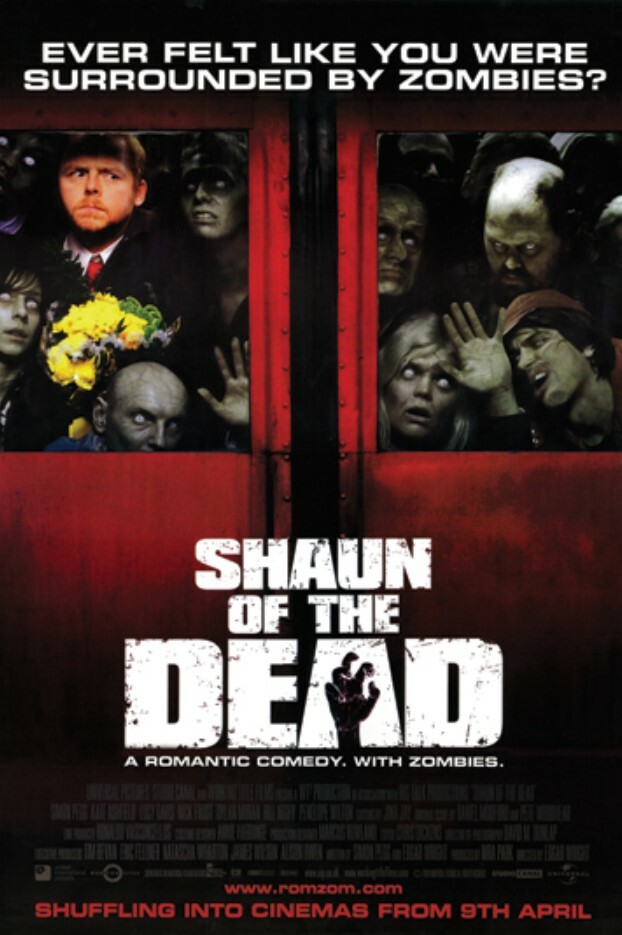


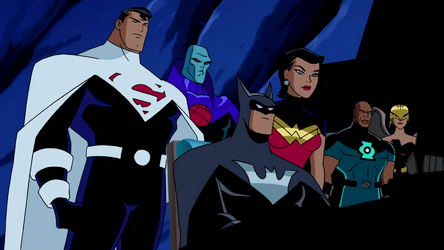
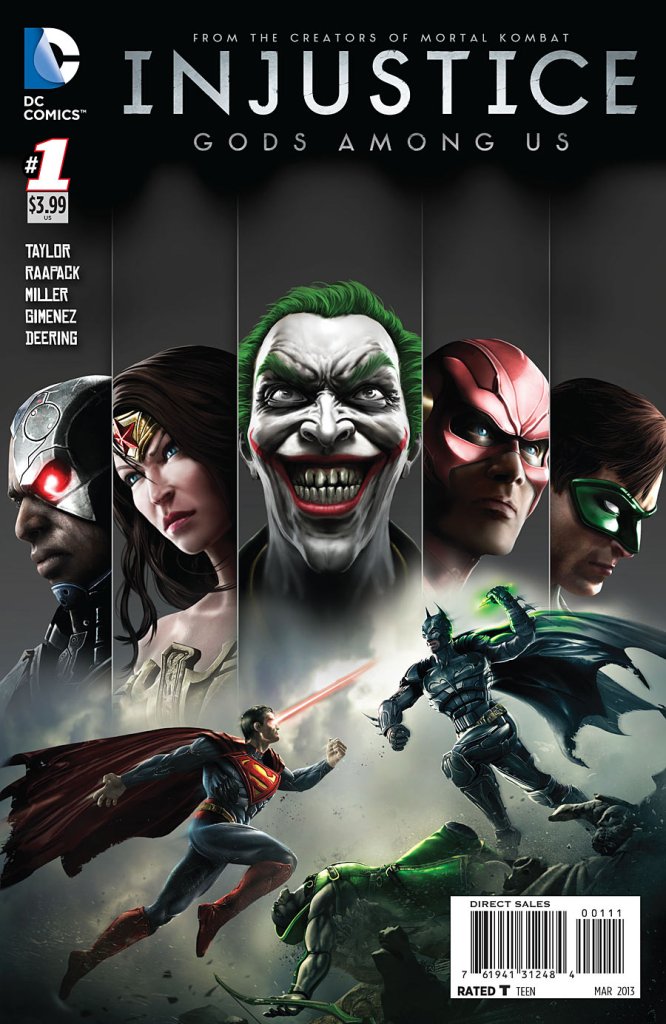

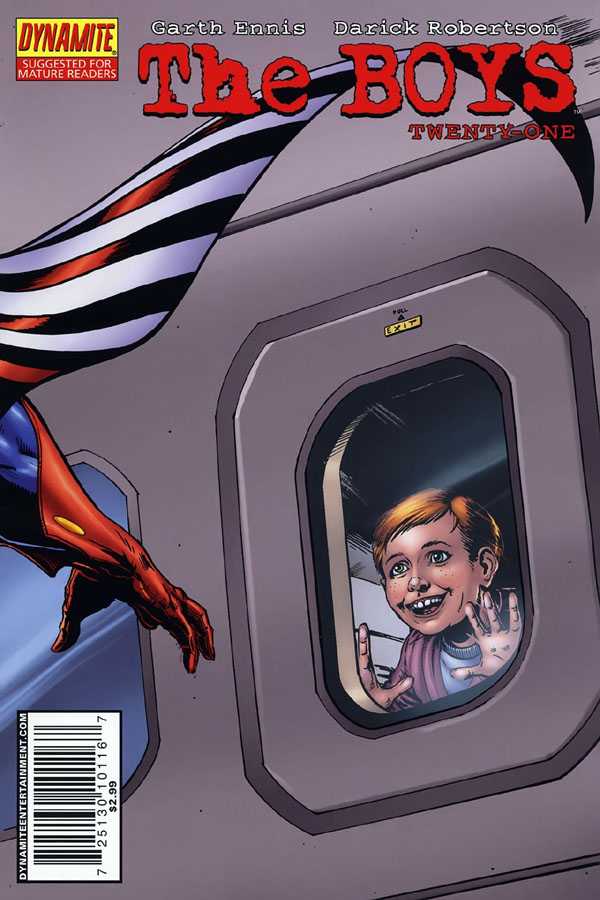


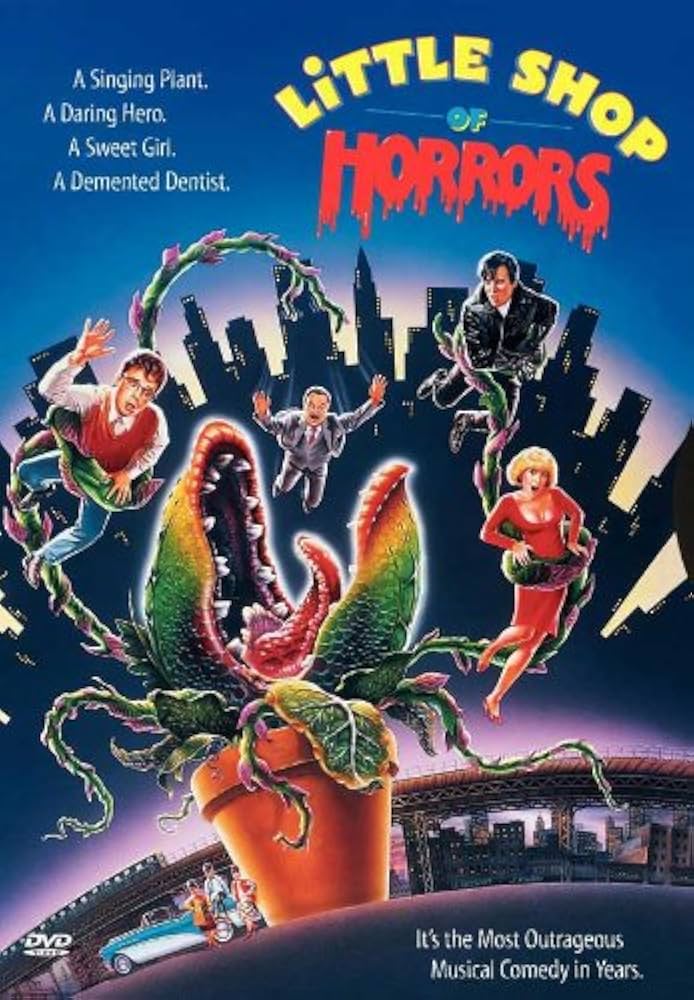


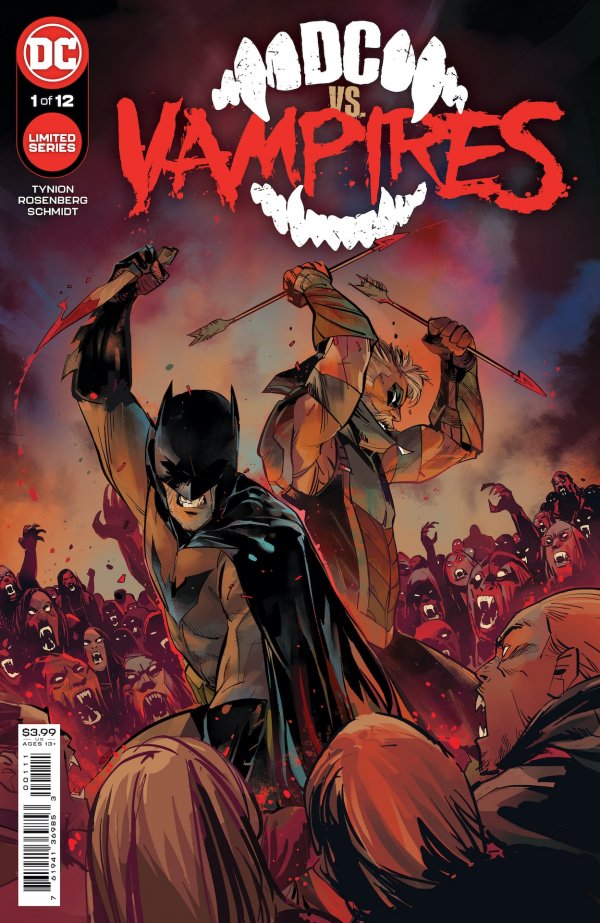
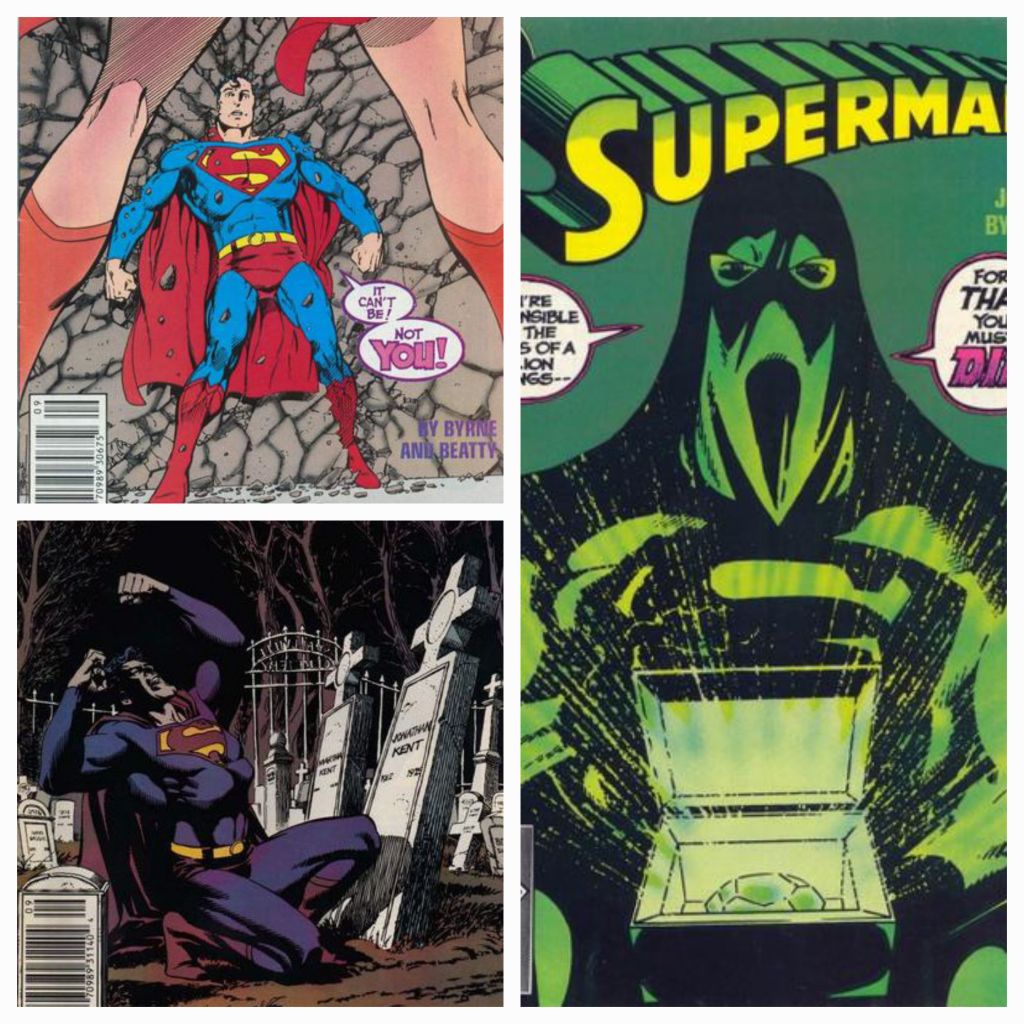

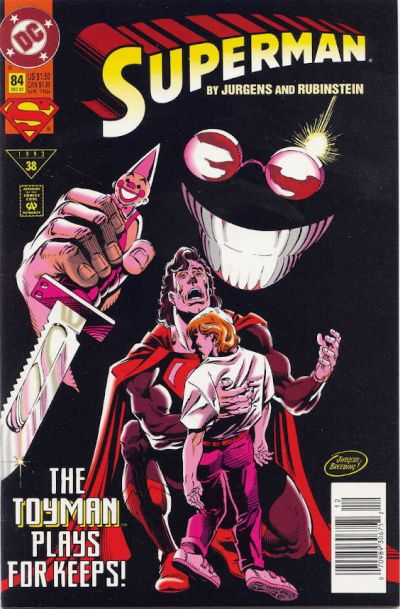

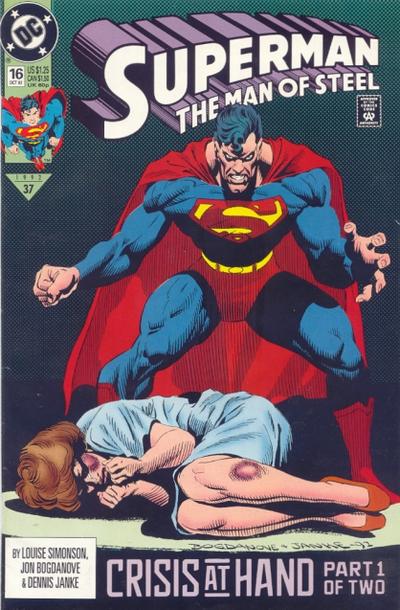










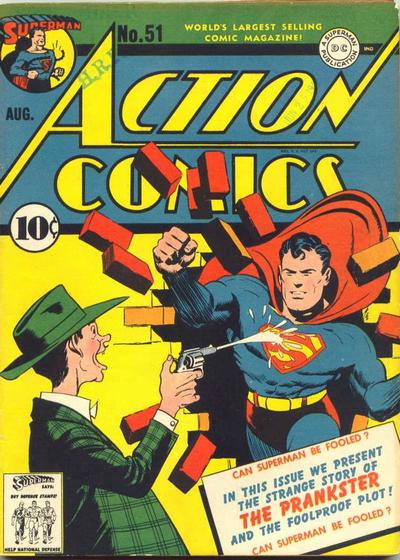


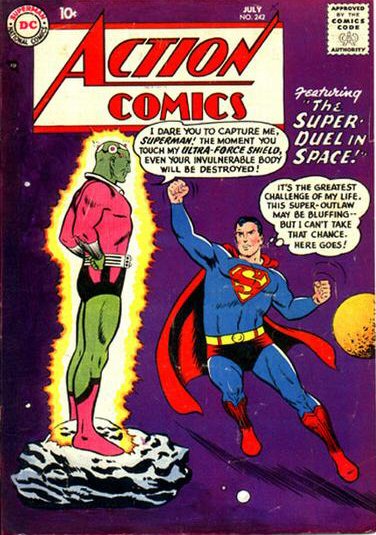
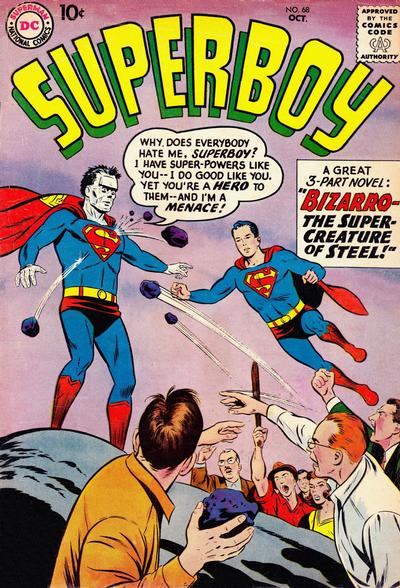









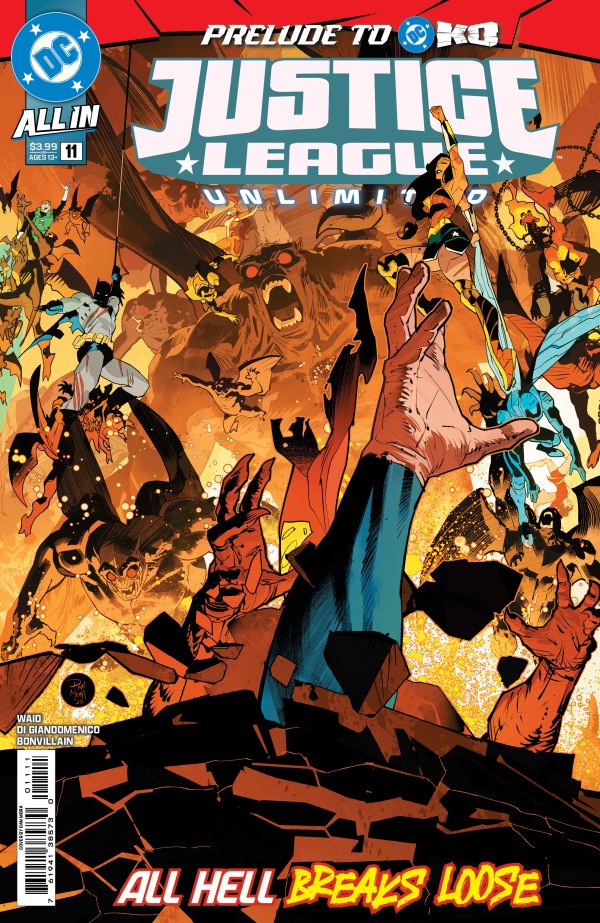

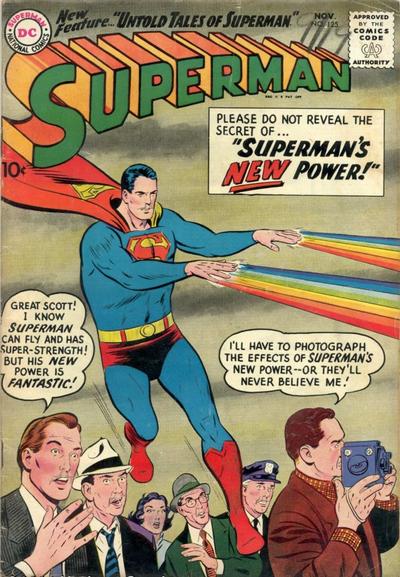
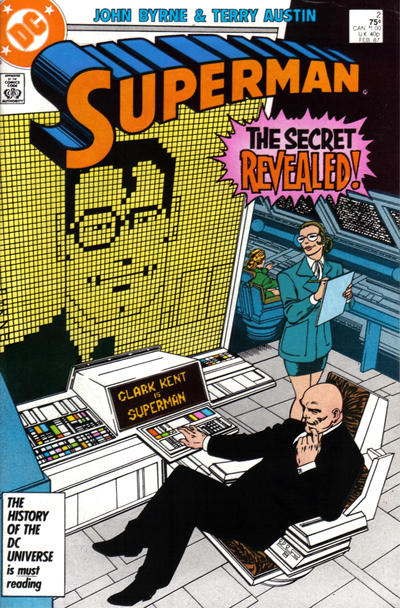








 Blake M. Petit