A few days ago, a meme I’ve seen several times floated across my Facebook page again. You’ve probably seen it; it asks one of the classic geek questions: “Who is a non-Marvel character that you know is worthy of lifting Thor’s hammer?” I like this a lot more than the usual “Could so-and-so beat Thor in a fight?” type of question. The question of which fictional character could win a fight with any other is pointless, because the real answer is always the same: whoever the writer wants to win.
But a question of worthiness is different. If a writer wants us to believe that a character is worthy of Thor’s power, we have to be persuaded first. And the person who created this particular iteration of the meme already gave us the perfect answer:
More like Ernest P. WORTHY, amirite?
I don’t know the person who made this meme so I can’t say if they meant this as a joke or not. I’m going to assume they didn’t, because Ernest P. Worrell is actually the perfect example of a character who demonstrates worthiness. Let’s establish, for a second, what “worthy” actually means. Neither the comics nor the movies ever give any SPECIFIC criteria, but there are a few things I think we can agree upon. The stipulations – whatever they are – were created by Thor’s father Odin, and we can assume that courage is one of them, as is a certain warrior’s instinct. The other one can be extrapolated from the first Thor movie: Thor is cast to Earth and deprived of his power because of his arrogance. He doesn’t regain his power until he learns to put it aside and think of others before himself. Therefore, we can reasonably assume that selflessness is the last criteria.
Now let’s look at Ernest. Whether it’s when he goes to camp or jail, when he was scared stupid or when he had to save Christmas, the predicaments he winds up in are often tied up in his desire to help other people. Wayward youths, his fellow bank employees, non-wayward youths being pursued by monsters, Santa Claus – Ernest fights for other people again and again. A warrior’s instinct? Go back and watch Ernest Goes to Camp again – he lines up to fight the evil land developers (it was the 80s, 97 percent of movie villains were evil land developers) even after they beat the stuffing out of him the first time. As for courage…well, again, we turn to Ernest Goes to Camp, where he passes the Native American “Path of the Brave.”
If he had faith in The Great One, the knife would not cut him. If he had courage; true courage, the rock would not break him. If the brave was pure of heart, the arrow could not catch him.
“Wait a second though, Blake,” you’re saying, “You think he’s BRAVE? Ernest freaks out all the time. Remember how he panicked when that turtle bit his nose?”
“This never happens to Beta Ray Bill, does it, Vern?”
My friends, courage is not the LACK of fear. It is the ability to OVERCOME fear. Does Ernest get scared? Sure. But he still STEPS UP, EVERY SINGLE TIME. So when Ernest tries to pick up Mjolnir, he’d do it on the first try. Then he would drop it, stumble, fumble around, accidentally summon up a cyclone, and probably set his hat on fire with an errant lightning bolt, because he’s still Ernest. But despite all of that, whatever danger he was facing, he would somehow still triumph in the end, because his heart is simply too pure to give up.
But as always, this meme gets me thinking about who else might qualify. Other than Ernest, what other fictional characters are worthy of lifting Mjolnir? I’m going to skip over anyone who has been shown, canonically, to be worthy: that would include Captain America, Vision, Storm of the X-Men, Beta Ray Bill, Superman, and Wonder Woman. (I’ve written about crossovers before, right?) I’m sure there are others who’ve lifted the hammer in some continuity or other, but I don’t have a comprehensive list. And since the meme specifies “non-Marvel,” I’m not going to go into the pages of dissertation I could write arguing that Ben Grimm or Peter Parker should be worthy. But let’s look into other fandoms, shall we?
“I’m comin’ with you, Mr. Thor!”
I’ll start with probably the least-controversial choice I’ll have on this list: Samwise Gamgee from Lord of the Rings. If you’ve never read or at least WATCHED Lord of the Rings (in which Sam was played by Sean Astin), well…what century are you from? Come on, get with the program. But lemme tell you about Sam. Sam is a gardener – simple, humble, and with no great ambitions towards adventure or danger. But when his friend Frodo is tasked with the job of carrying the Ring of Power to Mount Doom, the only hope to destroy the ring and prevent the rise of the evil Sauron, Sam joins the Fellowship accompanying him without hesitation. When the rest of the party is separated and Frodo attempts to continue the quest without them, Sam refuses to allow him to go alone. Sam has no desire for glory or power, and it is arguable whether he would even make the journey for the good of all Middle-Earth, which is at stake. But for the sake of his friend? Samwise will do anything. Cross a continent on foot. Battle an enormous spider. Climb a raging volcano with the exhausted Frodo on his back. There is no character in all of Tolkien more unflinchingly loyal and brave than Samwise Gamgee, and you can’t tell me for a second that Odin would disagree.
Something about those eyes. Those are WORTHY eyes.
Next, I would like to nominate Marcus Cole of the epic science fiction series Babylon 5. Marcus, played by Jason Carter, was a member of the Rangers, a secret society of human and Minbari warriors tasked with maintaining peace across the galaxy. As a Ranger, Marcus is a skilled fighter and never hesitates to go into battle against any manner of otherworldly threats. He also never displays any particularly selfish qualities, but it’s the way his story ends that I believe truly marks him as worthy of Mjolnir. I’m about to spoil the end of Babylon 5 season four, so you should watch the series. It’s currently available on Tubi for free; you go watch the first four seasons – I’ll wait here until you get back.
Done? Great. So as you just saw, Marcus quickly fell in love with Susan Ivanova, second-in-command of station Babylon 5. Ivanova, however, wasn’t interested in romance. To be fair, there were wars and stuff happening, she had a LOT on her plate, so she would rebuff Marcus’s advances. At the end of the season, though, Ivanova is mortally wounded. Marcus, however, sees a chance to save her: in an earlier episode, the characters had come into possession of an alien device that could heal virtually any wound, cure any disease, basically bring someone back from the brink of death – but to do so required the transfer of life-force from another being. In other words, you had to kill one person in order to save someone else. Marcus hooks Ivanova up to the machine and hooks himself up to the other end, sacrificing his life to save her. If his other feats throughout the series hadn’t already proven him worthy of carrying Mjolnir, his final act of courage and selflessness more than does the trick.
Let’s see him science the shit out of Mjolnir.
Staying in outer space, let’s turn our attention back to our own solar system, particularly the surface of Mars, where Mark Watney of The Martian has proven his worth. In the novel by Andy Weir and the film adaptation, where he is played by Matt Damon, Watney is an astronaut stranded on Mars when the rest of his crew escapes and heads back to Earth. The others don’t leave Watney deliberately – they think he was killed by the same storm they are attempting to flee – and by the time they realize he’s still alive, there’s no way for them to go back and get him. On Mars, alone, Watney has to figure out how to survive on limited supplies long enough for NASA to arrange a rescue.
Both the book and the movie are a joy to me. For one thing, it’s a rare story in which there is no traditional antagonist. Literally the entire planet Earth bands together to save the main character; there’s no evil in this story. That’s so damned refreshing. The battles Watney has to fight are against Mars itself, trying to find ways to create food, provide power, and ultimately make his way to the site of another rocket that can blast him into orbit for his rescue. And although Watney (not unlike Ernest) often displays momentary panic following his many, many setbacks, he also overcomes that panic every single time, putting his brain to work and figuring out one unbelievable way to survive after another. He never backs down and keeps fighting until he finds a way to safety.
As the entire plot of the story is Watney trying to stay alive, it’s a little harder to prove his selflessness. However, from the very instant he is stranded on Mars, Watney makes it a point to say that he doesn’t blame the rest of his crew for leaving him behind. He never shows any anger or resentment against them for his predicament, and when the rescue attempt boils down to his crew basically giving up another year and a half of their lives to turn back to Mars and save him at great risk to themselves, Watney shows willingness more than once to die on Mars if that’s what it takes to protect the rest of the crew. Could he lift Mjolnir? I posit that he could. Tragically, if he HAD the hammer, he could have prevented the storm that stranded him on Mars in the first place.
With four characters down, I turned to my wife. “Erin, who else could lift Mjolnir?” I asked.
“D’vana Tendi,” she said without hesitation.
Go ahead, speak it into the Horn of Truth.
“Duh,” I said, berating myself for forgetting my favorite character from Star Trek: Lower Decks.
Tendi is an Orion, a member of a species who, prior to Lower Decks, were known for their pirate captains and slave girls in other Star Trek series. Not exactly an obvious choice for lifting Mjolnir, of course. But from the first time we see her, Tendi defies what we think of Orions as being. She’s not a pirate or a slave – she’s a scientist. She gleefully loves science, she dives into it with the sort of joy and excitement that Thor himself carries into battle. Tendi sees a problem as something to defeat with her brain rather than her fists, but it’s a battle nonetheless.
That should not, however, give you the impression that she COULDN’T fight. Tendi has forsaken the warrior aspect of her culture, but she was still brought up in it. She holds the title “Mistress of the Winter Constellations,” and it is a title that strikes fear in her enemies. Tendi is fierce in battle when the situation calls for it, then turns on a dime to being the sweet, good-natured Starfleet Officer she truly WANTS to be.
As for selflessness, at the end of season four of Lower Decks (it is apparently my day for spoiling the fourth seasons of science fiction TV shows), with her ship and her crew on the line, Tendi makes a deal with her family. In exchange for their help, she will leave Starfleet and rejoin the family syndicate, taking her place as Mistress of the Winter Constellations once again. She’s willing to leave everything and everyone she loves in order to save everything and everyone she loves. Thor had to learn to let go of his arrogance – I don’t know if Tendi would even recognize it to begin with.
“Ferb, I know what we’re gonna lift today!”
“Phineas and Ferb,” Erin continued, and good grief, how did I forget THEM? I talked just last week about how much I love Disney’s Phineas and Ferb cartoon and how excited I am that it’s coming back, but somehow it passed right by me. Phineas and Ferb are stepbrothers who refuse to waste a single moment of their summer vacation, spending their time creating incredible inventions and having amazing adventures with their friends. Giant rollercoasters, life-size board games, soccer pitches that defy the laws of physics, portals to Mars (if only Watney had known they were on their way) – nothing is beyond the two of them. And despite the fact that many of their creations would be objectively terrifying to anybody else, they never show a moment of fear. Is it truly courage if you’re so pure of heart that it honestly never occurs to you what what you’re doing COULD be dangerous? I’m not sure. But at the very least they’re aware of the CONCEPT of danger – they always wear helmets and safety gear when appropriate.
As for selflessness – the very few times Phineas displays any sort of concern over the course of the series usually come when he’s worried about other people. And more than once, the brothers put aside their plans to help someone else in need, whether it’s protecting Baljeet from a bully (this is before Buford joined the gang), getting their parents’ favorite band back together to create a romantic evening for them, or constructing an entire haunted house to scare away Isabella’s hiccups (it doesn’t work – Isabella is so thrilled that Phineas is paying attention to her that she never feels a moment of fear), even their grandiose plans will take a backseat to the needs of the people they care about.
Unlike any of the other characters on this list, it should be noted, Phineas and Ferb actually met Thor once, in their Mission Marvel special. In that episode, though, the Marvel heroes were powerless and Mjolnir spent most of the episode stuck in the middle of Manhattan collecting parking tickets, so the question of whether the brothers could lift it never comes up. But if it had, I maintain that they could.
“They’d probably build something to help them hold the hammer at the same time,” I tell Erin.
“Like a cupholder,” she says.
People, get you a partner who understands you the way mine understands me.
There you go, friends – seven characters who have demonstrated the courage, fearlessness, and purity necessary to lift the mighty Mjolnir. This should not be considered a comprehensive list, mind you. It’s just the first few characters that came to mind when I thought about it (and asked my wife for her opinion), so there are certainly others. I heartily invite your own suggestions, along with a brief explanation of why you think they’re Mjolnir-worthy. There’s nothing nerdier than talking about this kind of stuff with other fans, and that’s the kind of nerdity I like.
Blake M. Petit is a writer, teacher, and dad from Ama, Louisiana. His most recent writing project is the superhero adventure series Other People’s Heroes: Little Stars, volume one of which is now available on Amazon. You can subscribe to his newsletter by clicking right here. He’s also started putting his LitReel videos on TikTok. He would like to believe that he could lift Mjolnir himself, if given the chance, but he was nervous to take his son on the Ladybug ride at City Park, so…
With her own movie coming out next year, DC Comics has wisely decided to bring back Supergirl’s ongoing series, and with the first issue hitting stands last week, I thought it would be appropriate to dedicate Week 21 of the Year of Superman to Kara Zor-El. This week I’ll be digging into some of the most important and best stories of the girl of steel in comics, television, movies, and more. I’m specifically going to limit myself to stories featuring the Kara Zor-El version of the character. There are other Supergirls, to be certain, and I’ll probably touch upon them at some point, but I’ve already got more Supergirl stories than I’ll likely have time to cover on my list even BEFORE I add stuff starring the Matrix/Linda Danvers version. So Peter David fans, just sit tight. I don’t know exactly when it’ll happen, but I’ll get to your Supergirl before the year is out.
Notes: I’ll start off, appropriately enough, with Supergirl’s first appearance from Action Comics #252, by Otto Binder and Al Plastino. Although as was often the case at the time, the cover story was not the FIRST story in the issue. It starts with the first appearance of Metallo. I won’t get too much into that story, except to note that one plot point involves Metallo being able to impersonate Superman merely by shaving off his mustache. In the Silver Age DC Universe, there were apparently only three faces that everyone had to share.
And a million pubescent boys felt an awakening…
After a Congorilla story, we finally get to the main event: “The Supergirl From Krypton.” Superman is summoned to the site of a crashing rocketship, where he is stunned to discover a teenage girl who has all the same powers as he does. It turns out that she’s a survivor of Krypton as well, from a city that escaped Krypton’s destruction and protected itself by covering the ground with lead to save them from the remains of their home turning into deadly Kryptonite. But when a meteor shower destroys the lead, the girl’s parents put her into a spacecraft and sent her to Earth, where they’d been watching the last son of Krypton through a space telescope. Superman and the girl, Kara, discover that their fathers were brothers, making them cousins, and just like a good cousin, Superman immediately puts a wig on her and drops her off at a local orphanage until she’s trained in using her powers. She randomly chooses the name “Linda Lee,” another “L.L.,” which at this point is so unlikely that even Superman himself has to point it out.
This is kind of an embryonic version of Supergirl’s origin. There are several aspects that would later change and others that would be added – for instance, the original story doesn’t identify her home as “Argo City,” as later stories would, nor did it establish that the city escaped Krypton’s destruction because it was beneath a transparent dome. Instead it just sort of…made it somehow. Also, in this version, the Zor-El family peeked at Earth for years, but never connected the dots that Superman was the son of Jor-El. Later stories would make it clear that they knew that Superman was one of their family and that they sent Kara to him specifically for that reason.
The last thing that I have to point out is just how quickly Superman decides to drop his cousin off at an orphanage. It’s a bizarre situation – he doesn’t even make it to another PAGE before he brings her to Midvale. I get it – it was the Silver Age and DC Comics would never have allowed them to upset the status quo in such a way that Clark Kent now had a teenage girl living under his roof…but still, it feels kind of cold-hearted. Modern-day Clark Kent would NEVER do that. At this point, especially since the Warworld storyline a couple of years ago, he’s collecting new family members like he’s a Pokémon trainer.
The next few stories I’m going to cover come from Supergirl’s early days, when she was living in hiding as Superman’s “Secret Weapon.” He decided to keep her existence a secret from the world for…reasons that I’ve frankly never understood. I guess it had something to do with not wanting her to go public until she had command of her abilities or something, but that sure never stopped Batman from throwing a Robin out onto the street with him. Action Comics #275 starts with the dandy Brainiac story “The Menace of Red-Green Kryptonite,” where an insidious device from Brainiac makes Superman start…stealing hats. He confides the truth about the ray to Supergirl and eventually beats Brainiac after only a minor international incident, covering the fact that the ray actually made him grow a third eye in the back of his head. It was the Silver Age, people, what’reya gonna do?
But the real reason I read this issue was for the second story, “Ma and Pa Kent Adopt Supergirl.” In what is essentially an “imaginary story” (although it doesn’t carry that label), Supergirl is sad because Superman was raised by a loving family while she’s stuck at an orphanage. (GO FIGURE, CLARK.) So that night, she has a dream in which she, not Kal-El, was the child of Jor-El and Lara, and was the first Kryptonian to come to Earth and be adopted by the Kents. Her early years are similar to those of Clark, until her teenage years where we start to see some curveballs. Her bestie, Lana Lang, winds up dating the guy “Linda” is crushing on, so she’s stuck with some dude named Lex Luthor. A Kryptonian rocket somes to Earth, but instead of Krypto the Superdog, she finds a super-parrot from Krypton to be her super-pet. The biggest change? Whereas young Clark Kent helps his father run his general store, young Linda Kent stays at home to help her mother clean. Because she’s a girl.
I can’t even sometimes.
It gets even wackier when Lex overhears Linda’s parrot “Squawky,” sitting on his perch, chirping “Linda Kent is Supergirl!” Lex, knowing Linda is crushing on Bob Benson, tells him her secret so that he’ll pay attention to her. The dream ends when Linda finds out that Bob is only interested in her now because she’s Supergirl, and she dumps him.
As far as dream sequences go, it’s funny to note how even Kara’s subconscious has the same sort of inherent misogyny that so many Lois Lane stories of the time enjoyed.
Supergirl finally gets her wish for parents in Action Comics #279…after a story in which Hercules and Sampson show up in Metropolis and try to court Lois Lane and Lana Lang. It’s such a ridiculous story, even by Silver Age standards, that I don’t even know what to say about it. So let’s move on to “Supergirl’s Secret Enemy.” In this one, a jealous girl from Krypton named Lesla-Lar…
Yes. Lesla-Lar.
I mean, I get it, in college I knew an inordinate number of girls whose first initial was “A,” but Superman makes it RIDICULOUS.
…has stolen Supergirl’s powers with a Kryptonite ray. Stuck as a normal human girl, Supergirl allows herself to be adopted, because apparently the existence of her super powers is what kept her from being adoptable before. She goes home with Mr. and Mrs. Fred Danvers, where her new dad immediately tells her to change her hair because she’s too old to be wearing pigtails, which if we’re being honest, is creepy as hell. Superman, meanwhile, vows to try to find a way to restore her powers, but Lesla-Lar isn’t finished yet. As Linda sleeps that night, Lesla teleports her to Kandor and brainwashes her, then switches places with her at the Danvers’ home, her own Kryptonian powers intact.
This nonsense goes on for several issues, with Lesla swapping with Linda while she’s asleep and Linda having no idea she’s being abducted and living a second life in Kandor. My favorite bit comes in Action #281. As Superman and the fake Supergirl prepare to reveal herself to the world, Krypto the Superdog figures out that she’s an imposter via his sense of super-smell recognizing that Lesla wears the wrong perfume. (I love that friggin’ dog.) With his super-vision, he sees the real Supergirl in Kandor. Krypto hits a switch to swap Linda and Lesla again, but the brainwashing continues. She has no memory of the swap and STILL Doesn’t have her powers. Testing a theory, Superman brings her back in time, where she discovers she still has her powers! That’s right! Science means NOTHING! So he LEAVES HER THERE, only for her to realize he’s dropped her off in the year 1692! She begins to use her powers openly, making people think she’s a witch, then gives up and uses her powers to return home…where her powers once again disappear, making this whole time-travel segment utterly meaningless and nonsensical.
Action Comics #282 begins with me being genuinely baffled at how this ridiculous story isn’t over yet. Superman has built Supergirl a replica of the Legion of Super-Heroes’ time machine so she can test out whether her powers will return if she goes to the future. He can’t go with her, though, because he’s busy with “urgent problems.” Hey Superman, you know what makes “urgent” problems less urgent? A FREAKING TIME MACHINE. Anyway, in the future, Linda discovers that her powers have once again returned, and starts superheroing again. She saves the Earth from a Martian invasion (has anyone talked to J’onn J’onzz about this?) but when she gets back her powers are gone again…UNTIL THEY RETURN. And now she’s even STRONGER than Superman! And in Kandor, Lesla-Lar is arrested! And in the end, we find out that Mr. Mxyzptlk is responsible for giving her powers back AND making her immune to Kryptonite! Did they have a DART BOARD with random plot points in the DC offices back in 1961?
The next two issues each feature a pair of red Kryptonite stories, one each for Superman and Supergirl, at the end of which Mxyzptlk’s tampering wears off, leaving Supergirl again vulnerable to GREEN Kryptonite…but also, somehow, her regular powers are back. There is absolutely no explanation as to why her powers return to normal, but I don’t even care at this point, because the whole reason I read this little chain of bonkers was to get to issue #285, in which Superman FINALLY reveals Supergirl to the world.
“World’s greatest heroine?” Clark? She’s been on Earth for twelve seconds. Does Diana mean NOTHING to you?
It starts off with telling the Danvers that they adopted a Supergirl (something that would have been a little hard to disguise, as she had to catch their car when Fred drove off a bridge), then goes on to a televised announcement that makes the world so excited you’d think the McRib had come back. The first half of the issue is just showing how the entire world – nay, the UNIVERSE – has become #TeamSupergirl. In the second half, while Superman is in space, she fights a Kaiju.
I think that’s enough Silver Age silliness. I make jokes, but I hope it’s also evident that I have a real soft spot for these stories. No matter how ridiculous or silly they may seem, there’s a heart to them that not all comic books have, and even the silliest elements (such as a dog wearing a cape) can bear the seeds of greatness. Plenty of that to come for the girl of steel.
Thur., May 22
Comics: Crisis on Infinite Earths #7, Superman #415, Christmas With the Super-Heroes #2, Supergirl Vol. 8 #1, Superman Unlimited #1, Action Comics #1086, DC X Sonic the Hedgehog #3, Batman/Superman: World’s Finest #39
Notes: So yesterday we dug into the origins of the Silver Age Supergirl. Today we’re gonna look at her ending. After years of secret adventures, time-travel with the Legion of Super-Heroes, and attempts to modernize her in the 70s and 80s by making her a college student and, later, a teacher, when the decision was made to restructure the DC Universe in the mid-80s, Supergirl was going to be taken off the table. So Crisis on Infinite Earths #7 gave her a heroic send-off (with one of the most iconic comic book covers of all time).
I rank this cover right after Marvel’s Madballs #6.
I’m not going to dig TOO deeply into the lore of Crisis. (I’m actually still contemplating whether I’ll do a week or two dedicated to the assorted DC crisis events and the roles of the Supers in each one – it’s a good idea, I think, but kind of a daunting task when you look at it.) Here’s the TL:DR: the Anti-Monitor is causing the destruction of the Multiverse, and at this point, only five universes remain. After a discussion of how the Multiverse was created in the first place, the heroes launch an assault on the Anti-Monitor’s citadel. Superman and Dr. Light find an enormous solar collector, an engine that is reducing the vibrational differences between the multiple Earths, causing them to occupy the same space and destroy one another. Superman winds up in a head-to-head battle against the Anti-Monitor, a being so immensely powerful that he’s being beaten to death – until Supergirl swoops in to the rescue. With her cousin on the ropes, Supergirl drives the Anti-Monitor into his own solar collector. When she looks back to check on Superman and Dr. Light, the Anti-Monitor unleashes a fatal attack, then escapes to lick his wounds. Kara lives just long enough to know that she succeeded – the solar collector is destroyed and the remaining worlds are saved.
For now.
And then she dies in Kal-El’s arms.
If there’s one thing that bristles me in these crisis events, it’s when a hero dies a meaningless death. And these days, the revolving door in comic book heaven has begun to swing so rapidly that it’s impossible to take ANY death seriously. That said, if the story itself is good, it can still be impactful. Marv Wolfman and George Perez gave Kara the send-off she deserved – dying not only to save the entirety of the Multiverse, but specifically, to save her cousin. In terms of sheer scope, not even the Death of Superman can match up to it.
That wasn’t quite the end for the original Kara Zor-El, however. I also want to look at a pair of epilogues to her story. The first came shortly after her death, in Superman #415.
This issue was the direct inspiration for The Maury Povich Show.
With the knowledge that this entire continuity would soon be rendered moot by the Man of Steel anyway, the creative teams on the Superman books took some big swings in their last year, including this story by Cary Bates and Curt Swan. Superman’s fancy ears pick up on a hypersonic code used to access the Fortress of Solitude, and since the only other person who knew that code is the late Supergirl, he races there immediately, finding an extraterrestrial invader stealing something from his memorial to her. The alien identifies himself as Salkor, superhero of his planet, and regales us with the story of how, two years ago, he found Supergirl drifting in space suffering from Kryptonite poisoning. He saved her, but she awakened with no memory of who she was (another amnesia story – I should be taking a tally of these). Salkor dubs the beautiful stranger ”Jasma.” The two of them become partners in defending his world, quickly falling in love. They got married, and Salkor gave her a device called a Hokku, which can record memories. But Jasma vanished one day after battling a mercenary called Naxx, and Salkor eventually tracked her down to Earth, where the news of her death broke his heart. He went to the Fortress merely to retrieve the Hokku he gave her.
But Naxx is there as well, seeking revenge against Supergirl for defeating him. The two men she loved the most team up to defeat the mercenary, then find a holographic message left for both of them. In it, Kara tells Salkor that she regained her memories, but lost knowledge of him, making her way back to Earth, her full memories not being restored until later. Superman and Salkor part as friends, united in their grief for the girl of steel.
It’s kind of a wild story. Cary Bates is counting on the reader accepting that Kara – upon regaining her memory – wouldn’t tell Clark or anybody else about her marriage on another planet. (Although I guess keeping that kind of thing a secret would be sort of a Silver Age thing to do.) The other thing is that Kara supposedly got her memory back after a battle that happened in her own series, and having read that series, I gotta tell you that the issues after that battle do NOT read like a girl mourning her lost love from across the universe.
Still, none of that makes this a bad story. It’s a sad, bittersweet farewell to a beloved character that DC knew was about to be taken off the table very definitively, in that once Byrne’s reboot kicked in she wouldn’t exist at all.
The most enduring epilogue to the story of Supergirl, however, didn’t come until 1989 and DC’s second Christmas With the Super-Heroes special…which I have to admit, I feel weird about reading in May, as I’m usually quite strict about limiting seasonal content to the appropriate season. But hey, this is Christmas with a purpose. There are several good stories in this issue, starting with an uncharacteristically dour Superman story by Paul Chadwick (but it’s got an optimistic ending). Then, after stories featuring Batman, Wonder Woman, Enemy Ace, Green Lantern and the Flash, we finally get to the real reason we’re including this in Supergirl week: the Deadman story!
Bear with me, I’m going somewhere with this.
In “Should Auld Acquaintance Be Forgot” by Alan Brennert and Dick Giordano, Deadman is drifting around having a very bitter Christmas. The lights, the music, the goodwill – to a ghost, denied even the pleasure of human touch unless he steals those moments away from someone who is living – well, it’s all kind of depressing. After a few brief encounters where he does just that, steals time from the living, a despondent Boston Brand rages against the goddess that trapped him in this state…until he’s suddenly approached by a young woman who can see him, hear him – even touch him, as evidenced when she whips off his mask. Deadman has been feeling sorry for himself, for the fact that for all the good he’s done, nobody even knows about it. The young woman looks him in the eye and says, “We do it because it needs to be done. Because if we don’t, no one else will. And we do it even if no one knows what we’ve done. Even if no one knows we exist. Even if no one remembers we EVER existed.” Having restored some of Boston’s faith, the woman turns to leave, but he stops her, saying “I don’t even know your name.”
Like fun it doesn’t.
It didn’t mean anything to Deadman, but it meant a hell of a lot to us.
To this day, I’m kind of surprised that DC allowed this story to go through. The edict was that Superman was the sole survivor of Krypton, that he always had been, that we were supposed to pretend that Supergirl and Krypto and the Kandorians and all the rest just…never were. But Alan Brennert used that edict to surreptitiously pay tribute to a fallen hero and give all the fans a little wink at the camera.
Man, I love this story.
But enough about the past – how about the present? I’m going to take a few paragraphs now to talk about some of the new Superman-family comics that have come out in the last couple of weeks, starting with the first issue of the new volume of Supergirl.
Remember when comics were fun? IT’S HAPPENING AGAIN, PEOPLE!
The new series, with story and art by Sophie Campbell, starts off with a great recap of Supergirl’s current status quo. Considering how much it’s changed and been warped over the years, this is pretty necessary, even for regular readers like me. Here’s the quick version: Supergirl (now a young adult who seems to have carried over some of the history of her pre-Crisis version) returns to Midvale, where the Danvers have returned to their old home. When she gets there, she finds that the town is obsessed with being the home of Supergirl, which sets Kara off a little bit…especially when she encounters another girl wearing a Supergirl costume who seems to have convinced the town that she’s the real deal. I absolutely LOVED this first issue. Campbell does a great job bringing new readers up to speed on who Kara is these days, including lots of little Easter Eggs like her hair color-changing comb, a reference to the late (apparently) Dick Malverne, and some of her old costumes. The art style is also awesome – it looks like it could have come from a cartoon, although not a SPECIFIC cartoon. It’s not aping Superman: The Animated Series or anything else, it’s just a kind of playful, lightly inked style that feels very much like a cartoon, and I hope everyone understands that I mean that as a compliment. I put this first issue down feeling very good about the future of the Girl of Steel.
Okay, it’s not Supergirl. But isn’t it pretty?
Also launching this week is Dan Slott and Rafael Albuquerque’s Superman Unlimited, which we got a preview of on Free Comic Book Day. The first act of this issue are the same pages from that book, in which we learn about the Daily Planet’s new status quo as a global news organization, then Superman flies into space where he finds an enormous Kryptonite meteor plummeting towards Earth. Superman’s life flashes before his eyes, providing a VERY handy recap of all the major points of his story in continuity for the sake of anybody who has never read Superman, or at least, hasn’t read him in a long time. (Most importantly to me: Slott establishes that Clark WAS, in fact, Superboy, and he WAS, in fact, a member of the Legion of Super-Heroes, and for reinstating that piece of continuity I believe he deserves, at minimum, the Nobel Prize.)
The book ends on a nice little cliffhanger, and while most of it is set-up, it’s a really satisfying set-up. Slott has a good handle on the character, and Albuquerque’s artwork is great. DC is very much living up to their “Summer of Superman” pledge thus far.
This is already shaping up to be the longest blog in the history of the Year of Superman (so far), so lemme rapid-fire the last few. Action Comics #1086 is the finale of “Solitude” by G. Willow Wilson and Gavin Guidry, finishing up Superman’s battle against the Kilg%re in the Arctic. Good issue, great art, and I still really like the Arctic costume Superman wears in this one. I want it on a Funko Pop. Issue #2 of DC X Sonic the Hedgehog ended with the Justice League trapped in Sonic’s world and Team Sonic on Earth. In issue 3, the Sonic characters have to step up and replace the Justice League, not only when it comes to protecting Earth, but also in finding the Chaos Emeralds needed to reopen the portal to return home. They do so while wearing the Justice League’s uniforms, and there will most certainly be action figures of these. Finally, Batman/Superman: World’s Finest #39 brings us part four of “We Are Yesterday.” The modern day Superman, Batman, and Nightwing get swapped with their respective counterparts from the World’s Finest era in a charming story. While the versions from the past keep getting glimpses of the future, the current versions are stuck trying not to alter anything from history. There are a few really great moments in this issue, and I’m psyched for the last two chapters.
Fri., May 23
Comics: Superman/Batman #8-13, 19
“I’ve got a telegram from Will Smith. It says ‘Welcome to Earf.’ I know you don’t get it yet, but you’ve got a lot of human pop culture to catch up on.”
Notes: After nearly two decades of a Superman Status Quo that allowed for no other Kryptonians, the tide finally changed in the early 2000s. First came the restoration of Krypto, and then “The Supergirl From Krypton,” a six-issue story from Superman/Batman #8-13, written by Jeph Loeb with art by the late Michael Turner. With Superman in hiding as the rest of the world’s heroes try to gather up Kryptonite from a massive meteor that fell in the previous storyline (yeah, Unlimited isn’t the first time such a thing has been done), Batman is called upon to investigate an enormous chunk in Gotham Harbor. That chunk includes a rocket, and in that rocket turns out to be a confused teenage girl speaking Kryptonian. When she’s brought to Superman, the two converse in Kryptonian and he proudly introduces her to Bruce as Kara Zor-el, his cousin.
The two keep Supergirl in hiding for months, Batman in particular feeling skeptical as to the truth about who she says she is, before Wonder Woman demands to bring her to Themyscira. Kara trains there for a time, but the island is attacked by Darkseid’s forces (including Doomsday clones) who kidnap Kara and take her to Apokolips. The three heroes team up with Big Barda to mount a rescue effort, only to find that Kara has been brainwashed by Darkseid. Clark has to break her out of it, bringing her back to Earth. As he takes her to Smallville, though, Darkseid attacks again, seemingly killing Kara with his Omega Beams. Superman unleashes like never before, taking Darkseid to space and trapping him in the Source Wall, where he declares the Lord of Apokalips will never bother them again (spoiler alert: he was wrong). Kara, we then learn, was teleported to safety, and Superman introduces Supergirl to Earth’s heroes.
Hey, look at that. I CAN write a shorter recap.
Anyway, as far as modern interpretations of Kara’s origin go, this works out much better than finding her in a rocket and immediately taking her to the orphanage. It was inevitable that Batman would play a large part in the story (remember the title of the series, after all), but it’s nice to note how heavily they leaned on Wonder Woman in this too. If there’s anyone on Earth that Kara could relate to in her first few days on the planet, after all, it’s probably her. This is – more or less – the Kara that exists today, although there are some continuity questions that definitely arise, such as her having lived with the Danvers in her current series.
There was also an epilogue of sorts a few issues later, issue #19, where we saw more of Kara trying to fit in and taking down bad guys. That issue was later reprinted as issue #0 of her next ongoing series (I believe it was Supergirl Vol. 4), which eventually established some things about Kara that have remained in continuity – such as the idea that she was actually OLDER than Kal-El, but trapped in suspended animation for decades as he grew up, and the notion that her powers are potentially greater than his. I rather like both of these conceits and I’m glad that DC, as well as most of the adaptations, have stuck with them over the years.
Sat., May 24
Comics: Supergirl: Woman of Tomorrow #1-8
“IIIIIII HAAAAAAAVE THE POWEEEEEEEEEER!”
Notes: Today I decided to jump to the most acclaimed Supergirl story of the modern era, and the inspiration for her upcoming movie, Supergirl: Woman of Tomorrow by Tom King and Bilquis Evely. In this 2021-2022 miniseries, Supergirl has taken Krypto on a little spaceflight to celebrate her 21st birthday, off for a party on a planet where a red sun diminishes her powers. On this world, she meets a child named Ruthye Marye Knoll, who tries to hire Supergirl to hunt down and kill an assassin named Krem of the Yellow Hills, the man who murdered Ruthye’s father. Supergirl initially refuses, but when a fight against Krem mortally wounds Krypto, Supergirl’s only hope is to track down Krem and get a sample of the poison that is killing our good, good boy. What follows is an eight-issue odyssey across the universe as Supergirl and Ruthye seek Krem and, in the process, learn where true power comes from.
Tom King is, as I’ve said before in this blog, a somewhat divisive writer. And honestly, I don’t agree with it. I’ve never read a story by Tom King that I really hated, even the ones that get the most vitriol online. In fact – here’s a confession for you – if you had asked me the summer of 2022 what my least-favorite King story was, I probably would have said Supergirl: Woman of Tomorrow.
And I would have been wrong.
Allow me to explain. This book is a slow burn. There’s some action, yes, but it’s only a superhero comic by a technicality. There are very few superhero elements to it, and even fewer science fiction elements. In fact, between the purple prose and the gorgeous artwork by Bilquis Evely, it reads more like a fantasy epic than either of the other more logical genres into which it is usually placed. And I don’t mind a slow burn at all, but slow burns don’t always work in monthly comic books. By the time each issue of Woman of Tomorrow came out, I had sort of forgotten and lost track of where the story was, and that made it a difficult read. I don’t like the process of “writing for the trade paperback” that some writers engage in, and this is a perfect example of why.
Last summer, though, on an airplane to Pittsburgh, I decided to give this story another chance. I read it in its entirety for the first time, and when I did THAT, it was a totally different ballgame. Suddenly I understood why it was so highly acclaimed. I understood why DC Studios had chosen it to be the inspiration for the upcoming movie, because when you read all eight chapters together, my friends, it’s a beautiful thing.
The story is told not through Supergirl’s eyes, but through a book written by Ruthye years after the events have taken place. So instead of hearing inner monologue from Kara about how misguided this poor, orphaned child is to seek revenge, we get Ruthye’s interpretation of events, and we get to see how she is shaped and changed by the presence of Supergirl in her life. This isn’t an action story, but a character study and a meditation on what is needed to bring peace to a troubled soul. The S-shield, as we all know, stands for hope, and that’s the characteristic that we all so often attribute to Superman. That’s fine. But when it comes to SuperGIRL, I think her strongest power is her compassion, her capacity to love, and her ability to impart those feelings on others. This story sells it without misstep.
The ending of the book, I have to warn you, is oddly ambiguous. In fact, it wasn’t until my third reading that I really think I’ve fully grasped what happened. It’s a character moment that fits perfectly, and if my interpretation is correct, it’s actually one of the few spots of humor in what is otherwise a very dramatic tale. But there’s debate out there over what actually happened, so I’ll leave it to you to read and decide for yourself what you think is the final fate of Ruthye Marye Knoll and Krem of the Yellow Hills.
I’m also tremendously impressed that they’re going with this story, in particular, to base a MOVIE on. I’m not sure exactly HOW faithful it’ll be to the comic book. They have, of course, included both Ruthye and Krem in the cast (played respectively by Eve Ridley and Matthias Schoenaerts), but they’ve also thrown in Jason Momoa as Lobo, who doesn’t appear anywhere in the story. If they keep it MOSTLY faithful, though, it’s going to be quite a departure for superhero fans. We’ve gotten used to years of movies where the stakes just keep getting raised – gotta beat the villain becomes gotta win the war becomes gotta save the world becomes gotta save half the universe. Now we’ve even got multiple universes at risk. But at its core, the stakes for Woman of Tomorrow are relatively small. There are no universes, planets, or civilizations in danger. The struggles in this comic book are done for the sake of one dog wounded by poisoned arrows and one girl wounded by a shattered heart. Compared to your average superhero movie, that’s small potatoes. But I think that’s exactly what we need – a reminder that a story need not be about the sake of the entire universe to be compelling, and that the battle for a single soul is just as worthy of telling. It’s a beautiful comic book. Here’s hoping we get a beautiful movie, too.
Sun., May 25
RIP Peter David, 1956-2025
Once again, we’ve got to pause the Year of Superman to pay tribute to a creator who has left us. Today it was announced that legendary comic book writer and novelist Peter David has passed away. David may have been one of the most prolific writers of the last half-century, having done epic runs on Marvel comics like Incredible Hulk , Captain Marvel, Spider-Man, and X-Factor, having co-created Spider-Man 2099, adapting Stephen King’s Dark Tower series, and work at DC on books like Young Justice, Aquaman, and Star Trek. David also wrote dozens of novels, including Star Trek adaptations and original stories, works adapting various other comics, movies, and TV shows, and his own original works such as Sir Apropos of Nothing. He wrote for TV and movies as well, including episodes of Babylon 5 and, with Bill Mumy, creating the Nickelodeon sci-fi series Space Cases. David never did an extended run on Superman, but his Supergirl series from the 90s took the Matrix version of that character and turned it on its ear, reinventing her, melding bits of classic Supergirl lore, and turning her into an entirely unique creation the likes of which neither DC nor anybody else had ever seen before. In fact, the only page of original comic book art I own is a page by Leonard Kirk from one of David’s Supergirl issues, in which she encounters Mary Marvel. I had already planned to cover at least the beginning of David’s Supergirl run in a later week, but I feel like it’s going to be sooner than I intended now.
His characters were always rich and his prose was full of humor and imagination. He was a favorite of mine for a very long time, and although his output has dwindled in recent years as his health declined, the knowledge that there will never be more has me deeply saddened.
RIP, “Writer of Stuff.” You are already missed.
TV Episodes: Superman: The Animated Series Season 2, Episode 27-28, “Little Girl Lost” Parts 1 and 2
She pulls that shirt off better than I do, I’m not gonna lie.
Notes: Superman takes a craft into deep space, following the path of the rocket that brought him to Earth, in the hopes of finding some remnant of his destroyed homeworld. To his dismay, the planet is nothing but debris, but his spacecraft picks up a distress beacon from another world in the system. Superman arrives to find a frozen planet and a hologram telling him that this world was Argo, sister planet of Krypton, which was thrown out of its orbit when Krypton was destroyed. Superman finds a single survivor, a young girl in suspended animation. He brings the girl, Kara, back to Earth, where the Kents care for her as she acclimates to Earth. But Kara, anxious to explore the world, rushes to Metropolis in the hopes of “helping” Clark deal with his current Intergang problem. Instead of listening to Clark’s warning to wait in his apartment, though, Kara flirts her way into accompanying Jimmy Olsen on his own Intergang investigation. Part one of the two-parter ends with Jimmy and Kara going a bit too far and coming face-to-face with Granny Goodness and the Female Furies of Apokalips. In part two, as Supergirl throws down with the Furies, Superman shows up to help, but gets captured by the Furies. Supergirl finds a device in the rubble to open a portal to Apokalips and heads off to rescue him. She does, but destroys the machine that would have stopped a comet Darkseid has hurtled towards Earth. Superman tries stopping it the hard way, but the momentum is just too great, prompting Kara to fly into it at top speed, destroying it. You know – like Supergirls do. In the end, Jimmy gets the scoop of the year – Supergirl stops Intergang AND saves the world – and Earth gets a brand-new hero.
I may be cheating here just a little bit. I said that this week I was only going to focus on Kara Zor-El, and TECHNICALLY, this Supergirl doesn’t qualify, as she’s actually Kara In-Ze of Argo. But I’m including it anyway for a few reasons. First: this was obviously the compromise Paul Dini and Bruce Timm came up with when DC wouldn’t allow them to have a Kryptonian Supergirl. Second: this two-part episode is too classic not to include. And third: It’s my blog, dammit.
Kryptonian or not, in terms of personality, this is EXACTLY who I think Supergirl should be in her early days on Earth. She’s young, earnest, eager to help people, but also restless and impatient, faced with an entire new planet to explore in the hopes of finding a new home to replace the one that she lost. There have been times (lookin’ at YOU, New 52) where Supergirl has been played more angsty, more angry at having lost her homeworld…and while that may be justified, that doesn’t really feel like her character to me. Whereas Robin is the tempering influence to Batman, bringing light into the darkness of his world, I see Supergirl as a sort of conduit to Superman’s youth, a reminder that even to heroes with the power and responsibilities of gods, there is still room for joy. This, I think, is my favorite Supergirl, and the animated series captured that masterfully.
TV Episode: Smallville, Season 7, Episode 2, “Kara”
Notes: I was a devoted viewer of Smallville during its TV run. I never missed an episode, and I enjoyed most of it. But I actually haven’t really revisited the show that much since the initial airing, so this is an interesting experience. I know I’ve seen this episode before, but watching it out of context like this, I’m trying to remember just what was going on in the show. Lois and Clark aren’t a couple yet, and she doesn’t seem to know about his powers, but where are all the 1,001 CW subplots at this point in season 7? Maybe it’s time to do a full rewatch.
Maybe not just yet, I’ve got a LOT of other Superman on my plate.
“STOP! In the NAAAAME of DOUBLE-L NAAAAAAMES!”
Anyway, in this episode Clark and Lois find a spacecraft and encounter a young woman who swiftly knocks out Lois and warns Clark not to touch her stuff before zooming into the sky and looking down into a token from the House of El with the image of a baby in it. Clark is stunned not only to face another Kryptonian, but one who – unlike him – can FLY. As Chloe tracks down a subplot (I’m gonna skip the non-Kara stuff in my recap or we’ll be here all day), Clark seeks out the flying girl, who is shocked to find that he has powers as well. Together they piece together their combined history: she is Kara, daughter of Zor-El, sent to Earth to protect her baby cousin and, with him, save Krypton from destruction. But when her ship landed on Earth in the same meteor shower that brought Kal-El to the Kents, she was buried and trapped in suspended animation for 18 years until a collapsing dam a few episodes ago set her free. Bigger problems, though – someone has taken her ship, and if they don’t get it back, the humans trying to open it up may well trigger a nuclear explosion.
Unlike the animated Kara, this episode doesn’t actually end the story, but I don’t have time to down an entire season of Smallville, so let me just talk a little about Laura Vandervoot and her version of the character. Despite being the Supergirl actress with, objectively, the name that is most fun to say at parties, her version of the character is a bit angrier than I usually like. She’s got a little bit of a chip on her shoulder, angry at having been sent to a world that she clearly views as being primitive, perhaps even angrier at learning that the baby she was sent to protect is now older than she is. None of this is out of character, mind you, considering the way that the story is shaped in Smallville, and by the end of this episode we come around to the fact that much of her anger is based on grief over the loss of her homeworld. Vandervoot’s Supergirl isn’t my favorite, but it would be hard to argue that it isn’t perfect for this specific series.
TV Episodes: My Adventures With Superman Season 2, Episodes 4-10
THIS Supergirl costume, on the other hand, I could rock.
Notes: I almost forgot that Supergirl made her debut in the second season of My Adventures With Superman – forgot mostly because I never got around to FINISHING that second season. So on a lazy Sunday afternoon with my wife at work, I decided to play a little catch-up. I’m not going to go into a deep recap of an entire half-season of the show, but here’s the quick version: Kara comes to Earth and brings Clark to her “Father,” who turns out to be not Zor-El, but Brainiac. Brainiac tries to use Clark’s body to take over Earth in the name of his “New Kryptonian Empire,” but Lois saves him with the Power of Love, and then all our heroes team up to fight Brainiac.
I don’t mean for that to sound dismissive, because there’s really quite a lot about this show I like. But I’ll get more into that when I do “Pilot Week” or whatever the hell I’m going to wind up calling it. Today, let’s talk about Kara. This version of Kara has been manipulated by Brainiac for an unknown number of years, and she comes to Earth with an anger to her, even more than the Smallville version. As I’ve said before, I don’t like Angry Supergirl, but I did like watching how – over the course of this season – Clark and his friends chipped away and the shell Brainiac built around her and helped guide her to the light. Her interactions with Jimmy Olsen in particular are adorable, with both of them coming across as young people with a crush who don’t really know how to deal with it.
The climactic battle, to be honest, is a little disappointing. What we get in the end is a Kara under Brainiac’s mind-control doing battle with Clark, who tries to turn things around using the standard “I know you’re still in there!” defense that superheroes always use on allies suffering from mind control. I won’t spoil the ending of the fight for you, but if you’re at all familiar with storytelling tropes, I probably don’t have to. That said, the execution of this very familiar trope is pretty good, and ultimately, we end the season with a new version of Supergirl that I hope to see more of in season three.
Mon., May 26
Comics: Supergirl: Cosmic Adventures in the 8th Grade #1-6
I don’t remember the 8th grade being this much fun.
Notes: In 2008, writer Landry Q. Walker and artist Eric Jones gave us an utterly delightful young readers miniseries, Supergirl: Cosmic Adventures in the 8th Grade. This series gave us a ground-up reimagining for Supergirl in a format for younger readers. It was one of DC’s early attempts this century to start making headway into the YA market, and when they launched their YA graphic novel program a few years later, the paperback edition of this story was rightfully included.
In this version, Kara’s rocket crashes in Metropolis, where she accidentally thwarts a Lex Luthor plot. She tells Superman her story – she’s from Argo, a moon of Krypton in this continuity, and stowed away on a rocket her father was sending to Earth to contact Superman. Unfortunately, she passed through a dimensional barrier to get to Earth, and Superman has no idea how to send her back. A Supergirl who’s homesick is nothing new, but it’s pretty rare for that home to still exist, giving her a quest to find a way back.
Stuck on Earth, Superman supplies her with a secret identity and enrolls her in Stanhope Boarding School, where she struggles to fit in to this new Earth culture. She has difficulty controlling her powers and accidentally creates an evil duplicate of herself – Belinda Zee (who is not QUITE a Bizarro, but kind of like the Mean Girls version of that) who begins making her life a living hell. Things start to pick up when she finally makes a friend, an incredibly smart young woman named Lena Thorul. Things are starting to look better…but may get worse when Kara finds out her only friend is the sister of Lex Luthor.
Over the course of six issues, we’re treated to new versions of Comet and Streaky, we get teases about the Legion of Super-Heroes, and the revelation of the real villain of the piece still cracks me up all these years later. It was a truly magnificent series, one that I passed along to my nieces once they were old enough to start reading comics. The tragedy is that the book ends with multiple sequel hooks, and Walker and Jones tried for years to get the promised Cosmic Adventures in the 9th Grade underway. For some reason or another, though, it just never happened, and after the untimely passing of Eric Jones in 2022, it seems unlikely that it ever will. But this is without a doubt one of my favorite interpretations of Supergirl, one that even an old man like me enjoys coming back and revisiting every so often. The book has been reprinted several times, with a new edition scheduled for release in August (no doubt as part of the whole “Summer of Superman” foofarah). And if you’ve got kids around that middle school age, it’s a perfect book for them.
Tues., May 27
Movie: Supergirl (1984)
Novel: Supergirl by Norma Fox Mazer
Comic: Supergirl: The Official Adaptation of the Movie #1
Notes: In 1984, the Salkinds decided to expand their Superman movie franchise with a spinoff featuring his cousin. And as luck would have it, I own not only the DVD, but also the novelization of the film AND the comic book adaptation of the same. So I thought it would be pretty fitting to close off Supergirl Week by taking a look at all three versions of this story.
“You will believe a franchise can spin-off.”
In the movie, we find ourselves on Argo City, last remnant of the planet Krypton, where young Kara (Helen Slater) is shown a powerful device called the Omegahedron by her teacher, Zaltar (Peter O’Toole). But Zaltar wasn’t supposed to have the Omegahedron, and an accident sends it beyond the shield that protects Argo from space. Turns out that the Omegahedron was the city’s power source, and without it, they have only days to live. Kara takes a ship to follow the Omegahedron to Earth, where it has fallen into the hands of a would-be witch named Selena (Faye Dunaway). The Omegahedron enhances Selena’s power’s greatly, taking her from the level of parlor tricks to being a potential world-conquering threat. Unfortunately for the world, Superman is on a mission in outer space.
In her search for the Omegahedron, Kara takes on the human identity of Linda Lee and enrolls in a local boarding school, where she forges a letter from her famous cousin, Daily Planet reporter Clark Kent, to vouch for her. She’s assigned a dorm room with Lucy Lane (Maureen Teefy), sister of Lois, who she quickly befriends and introduces her to her kinda-boyfriend Jimmy Olsen (Marc McClure, reprising his role from the Reeve movies). With the threat of utter destruction looming for Argo City, Linda proceeds to…take classes and play field hockey. Seriously, she spends a large chunk of this film acting like a normal Earth girl trying to hide her powers with absolutely no sense of urgency to save her family, friends, and entire civilization, for whom she is their only hope of survival. Selena, meanwhile, is practicing her magic, casting a spell that she intends to use to get the hunky handyman Ethan (Hart Bochner, whom you may remember as being the asshole John McClane doesn’t know in Die Hard) to fall in love with her. Instead, it accidentally makes him head-over-heels for Linda. For some reason, this also has the side-effect of making him talk the way that people who don’t understand Shakespeare think characters in Shakespeare plays talk.
Selena somehow manages to send Supergirl to the Phantom Zone, where she finds Zaltar has been exiled for his role in the loss of the Omegahedron. As Selena creates a mountain in the middle of Midvale to serve as her new fortress, Supergirl struggles to escape the Zone. Zaltar, who has fallen into despair in the Zone, leads her to the one way to escape, which makes you wonder why Zod and company never gave that one a shot. Zaltar perishes in the escape attempt, but Kara makes it through, returns to Earth, and defeats Selena, bringing the Omegahedron back to Argo City. And in the end, I’m just left wondering what the hell Clark Kent is gonna thnk when Jimmy gets back to Metropolis and says, “Hey, I met your cousin. Also I was briefly captured by a witch until a girl wearing a Superman costume beat her up.”
I’ll cut to the chase: this is not a good movie. The villain performances are hammy and overacted, the love potion subplot is just plain creepy (Selena’s fixation on the much younger Ethan has a nonconsensual “Mrs. Robinson” vibe, and even once it rebounds and he falls for Linda one should remember that he’s an adult and she’s a high school student), and there’s a lot of little nonsensical stuff that was probably necessitated by the low budget, such as Kara popping out of her spacecraft in a Supergirl costume with no explanation. And the abundance of cheese in this film just makes the stuff that IS good even more tragic, because so much of this movie deserved better than it got.
Helen Slater, first of all. She is perfectly cast – quiet and lovely, with an otherworldly charm that is entirely appropriate for the character. She pulls off the “stranger in a strange land” routine flawlessly, and she alone would make this movie worth watching. In the modern movie climate, they’d have had her make a cameo in Superman III or something before spinning her off into her own film, and this is one of the few times where I wish they HAD used modern techniques in the 80s, just because I wish we could have seen her play Supergirl more than once. (I’m not counting that scene in Flash.) As it is, the only real ties to the Christopher Reeve films are a poster of Superman in Lucy’s dorm and a totally superfluous appearance by Marc McClure as Jimmy Olsen, adding nothing to the plot. I would like to give them credit for adhering to canon by having him date Lucy Lane, but as with Ethan, in this continuity he’s way too old to be hooking up with a high school student.
The score, by Jerry Goldsmith, also top-notch. Not John Williams good, of course, but it’s got a nice ethereal quality to it, less like a science fiction score and more like a fantasy film, which is appropriate for the tone of this movie. You could drop this score into something like Willow and it wouldn’t feel out of place at all.
Even the special effects, considering the time period, are pretty good. And I love the design of Argo City, even if it doesn’t really match what Richard Donner’s version of Krypton looked like in the first Superman movie, but I can chalk that up to different cities having different styles. I mean, it’s not like New Orleans looks like San Francisco, right?
“Are You There, Rao? It’s Me, Kara.”
As was often the case in the 80s, Supergirl got a novelization as well. I happened to pick it up on eBay some time back, in one of those moments where I snag weird stuff that I like. (By the way, if anyone wants to get me something for my birthday, just find a box of old movie and TV novelizations from the 80s on eBay. I have a strange fascination with those.) The novelization is by Norma Fox Mazer, whose body of work outside of this adaptation seems to be largely in the category of novels for children and teenage girls, which is pretty appropriate for adapting Supergirl. Her pedigree absolutely shows, too, filling the book with odd diversions and tangents that feel like the could have spilled from a Judy Blume novel, things like Kara feeling intimidated by her mother’s beauty, or interjections from Lucy’s point of view that work in the sort of slang that an adult novelist in the 80s probably thought that teenagers used, although as a child of the 80s myself I’m somewhat skeptical of their authenticity.
The strangest thing about the book, though, is the timeline. The film makes it quite clear that Kara has only days to recover the Omegahedron before Argo is doomed, but the novel makes it seem as though Linda is enrolled at Stanhope for months before she recovers it and makes it home. It seems as though she’d return to a dead planet as far as the novel goes. But like I said, I have a weird fascination with these kinds of novelizations, especially since many of them were written before the film itself was finished, and I find the differences intriguing. This isn’t a great novel in the same way that the film isn’t a great movie, but like the movie, I still had fun reading it.
I need you people to know that I exposed myself to three different versions of this story. THREE. Because I love you.
The comic book adaptation does a better job, I think. Written by Joey Cavlieri with art by Gray Morrow, it tells the story in a much more abbreviated way. This mostly eliminates the problem of making it seem like Kara is spending too much time on Earth while Argo is dying, and the art by Morrow is really lovely. He even does a good job of making the characters look like the actors, which isn’t easy. And even artists who do that well often do so at the expense of a certain liveliness, with art that looks like a static photographic rather than a dynamic comic book page. Morrow conquers that challenge. With the material they were given to work with, I think the comic did a superior job of adapting what was a weak screenplay.
Originally I planned for Supergirl Week to include the pilot episode of Melissa Benoist’s TV series from 2015 as well, but fate had other plans, in the form of a power outage followed by an internet outage yesterday and into this morning that cut into the time that I planned to devote to the show. But you know, I’m pretty sure this is already the longest installment of the Year of Superman blog to date, so maybe it’s okay if I leave one thing for later. Besides, I’ve long planned a week where I watch the pilot episodes of all the assorted Superman TV shows, and I think I’ll have time to sneak in Melissa then. And if not, who knows? There may be time yet for Supergirl Week Part II.
This column is NOT going to be about Superman, although I’m going to mention him briefly here in the beginning.
If you follow this blog all week and not just on Fridays when I throw Geek Punditry at you, you’ve probably noticed my Year of Superman posts on Wednesdays. I started the Year of Superman because December was rough and I thought immersing myself in Superman would make 2025 a great year. And I’m enjoying the hell out of having a taste of Superman every day. But aside from that, 2025 has kind of been an asshole, and I’m starting to take it personally. But now it’s May, and by the time you read this my semester will be over and I’ll be off for the summer. So the question is, can I find enough stuff – in addition to the new Superman Unlimited comic, Mark Waid taking over Action Comics, new series for Supergirl and Krypto, a miniseries all about different shades of Kryptonite, and (oh yeah) the new Superman movie – to have summer start to make up for a craptacular first half of the year?
This legit might not be enough.
Because the truth is, Superman isn’t the ONLY thing I’m excited for. In fact, there are several things coming out this summer that I’m very excited about and I can’t wait to read, watch, and otherwise explore. So today I’m going to talk about some of the things I’m MOST excited for, things that I hope will perk me up even more, and bring the year around.
Vin Diesel is still pissed they didn’t cast him for this one on general principle.
Superman is my favorite superhero (that’s probably the last time I’ll mention him), but most people who know me know that my #2 is Benjamin J. Grimm, the ever-lovin’ blue-eyed Thing, and I am very excited to see him hit the screen in a couple of months. But for all the comic book greatness, there hasn’t really been a Fantastic Four MOVIE that has worked. There was a movie in the 90s made only to retain the movie rights with no intention of ever seeing wide release, and ironically, despite its shoestring budget it had some earnestness to it…but it looked like it was made on a shoestring. In the 00s, we got a pair of movies that were…okay. And in 2015 there was a movie that should never again be mentioned in polite society. After four previous tries, director Matt Shakman’s Fantastic Four: First Steps finally looks like a movie that’s going to give us an FF that delivers.
There have been two trailers so far (well, a teaser and a full trailer), trailers that have shown us a Fantastic Four in a very 60s sci-fi pop environment, something that’s absolutely perfect for these characters. The thing to remember about the Fantastic Four is that – although they are technically superheroes – the flavor is less like the Justice League and more similar to the classic sci-fi heroes like Flash Gordon and Buck Rogers. The Fantastic Four are explorers, inventors, and innovators before anything else, and the previous iterations have never quite captured that. In this movie, we’ve got costumes that actually look like space suits. Characters who are clearly known and beloved around the world. And as this is, in fact, part of the MCU’s “Multiverse Saga,” these are the characters who fit that concept the most.
This is a picture that says “suit us up, we’re going to space.”
I know a lot of fans who keep trying to turn the FF Vs. Superman (okay I lied) into some sort of competition – they both come out in July, so who’s movie is going to do better? What an incredibly short-sighted notion. It drives me crazy when people insist on taking sides. You can love two things, IT’S ALLOWED, and I’ve got no doubt that Clark would be in the front row when First Steps premieres on July 15, just two weeks after his movie comes out.
But I don’t get to the movie theaters that often these days – if I actually make it twice in July, it will be a record in a post-Eddie world. So I’m going to be turning to the television for some of this entertainment serotonin as well, and thank goodness, there are two shows returning to the airwaves this ye– wait, they’re on streaming services, not over the air. It doesn’t matter, the principle applies anyway. First up, coming to Disney+ in a few weeks, is a revival of the classic animated series Phineas and Ferb. The original series, which ended nearly ten years ago, was one of the funniest cartoons of the century so far, and like all brilliant ideas, it’s remarkably simple. Two step-brothers spend their summer vacation building absurdly improbable contraptions and inventions as their sister desperately tries and fails to get their mother to catch them in the act while, simultaneously, their pet platypus who is really a secret agent has to stop a mad scientist in his constant efforts to take over the Tri-State area. What could be simpler?
Legally, summer belongs to these guys, but I’m pretty sure they’ll let me borrow it if I ask nicely and promise to fill up the tank before I give it back.
In all honesty, though, the original series was delightful, charming, and unfailingly funny. When Disney announced they were bringing it back, I was unashamedly thrilled. The same creators are back, along with most of the original cast, and they’re picking it back up again the next summer. More adventures, more music, more -inators, and there’s even a preview available of the first few minutes right now. If watching these few minutes of greatness doesn’t get you excited for the return, then you clearly just hate joy. June 5 is the target date for this one.
My one question – my ONLY question – is about the Danville school system. 104 days of summer vacation? ONE HUNDRED AND FOUR? I’ve never even made it to SEVENTY.
The other show I’m super psyched for this week is the return of Star Trek: Strange New Worlds with a two-episode drop on July 17. While the modern versions of Trek have been hit or miss for a lot of fans, Strange New Worlds is perhaps the most universally acclaimed of the series. Set aboard the original Enterprise in the years before James T. Kirk became the captain, Strange New Worlds has the most classically “Trek” feeling of any of the other live-action shows of the modern era, living up to its name with exploration of planets and civilizations we’ve never seen before. It also is far more successful than some of these other versions at attacking the sort of high-minded sci-fi concepts the original brought in without being too heavy-handed or on-the-nose like certain others I could mention.
Thank God, a Star Trek that remembers what “allegory” means again.
The wait for a new season of Strange New Worlds hasn’t been as long as the wait for Phineas and Ferb – a mere two years instead of ten – but Strange New Worlds’s last season ended on a cliffhanger. The wait was exacerbated by the Hollywood writers and actors going on strike in 2023, and now we’re finally going to find out what happened after Captain Pike and the crew of the Enterprise…
…uh…
…crap, it’s been two years, guys. I guess I really need to watch the last season again.
But you know, that’s okay. Summer is just starting, and I’ll need stuff to make it worthwhile. So I’ll re-watch the first two seasons of Strange New Worlds. And I’ll watch classic Phineas and Ferb. And I’ll read more Fantastic Four and Superman comics (hell with it). Because these are the things that make me happy, and when the world does whatever it can to make the summer seem long, hot, and unbearable, these are the things I’ll be turning to, making it a little bit better.
Oh, and also the love of family and friends and all that stuff.
Blake M. Petit is a writer, teacher, and dad from Ama, Louisiana. His most recent writing project is the superhero adventure series Other People’s Heroes: Little Stars, volume one of which is now available on Amazon. You can subscribe to his newsletter by clicking right here. He’s also started putting his LitReel videos on TikTok. If you’ve got more summer greatness that you’re looking forward to, let him know. He’s actually quite concerned that the stuff he’s listed isn’t going to be enough to fill the tank.
I’ve seen a few people online worry that, with only two months left until the debut of James Gunn’s Superman, there hasn’t been enough marketing yet. They’re worried that it shows a lack of confidence in the film. But to the contrary, I think we’re about to see Warner Bros repeat what they did two years ago with Barbie. Just like Superman, up until May there wasn’t an awful lot of official chatter yet. Then there was an AVALANCHE. New trailers, merch, a website where you could turn yourself into a Barbie meme. There was no escaping it and, in case you didn’t notice it, it turned out to be the highest grossing movie of the year. I think we’re at the beginning of that same push, and it started this week.
The debut of the new Superman trailer makes this the perfect week to kick off “Super-Sponsor,” a look at some commercials and comics that have featured the Man of Steel over the years. It’s always amused me, how fictional characters get pulled in to make a pitch for things like dog food, and I’m sure that this week is going to trigger some core memories for people. But first…
This guy is James Gunn’s self-insert for the entire DCU.
Notes: It’s funny, as the previous Superman trailer is what actually made me decide to start this whole “Year of Superman” blog in the first place, but now James Gunn is telling us that wasn’t a trailer at all. It was a “teaser,” he says, and the first real trailer is the one that hit today, May 14. What’s the difference between the two, you ask? I’m honestly not sure. If I were to guess, I would say that the first “teaser” just gave us glimpses, flavor. The trailer gives us a little more meat – in other words, the first real clue of what the story is gonna be. And of course, as it should, it starts with Lois Lane. In the trailer, Clark agrees to allow her to interview her as Superman about some recent actions that have apparently caused no small amount of controversy. Superman, he insists, has stopped a war. But Lois is questioning if that was the right thing, on the international level.
Oh, how I LOVED this. First of all, the interplay between David Corenswet and Rachel Brosnahan was spot-on. They are charming and affectionate, but at the same time, she’s a reporter, dammit, and she’s not going to blanch away from asking the hard questions. He went into a foreign country. He went without permission. “You seemingly acting as a representative of the United States–”
“I wasn’t representing anybody except for me!”
The way the tension is sculpted here is flawless. Superman going in to save lives regardless of laws or treaties? Lois refusing to back down as he has to answer for it? This is who BOTH of these characters are.
I know that some people have been concerned about the tone, afraid that Gunn (whose Guardians of the Galaxy films and The Suicide Squad both leaned heavily on comedy) would be too jokey, too flippant. This new trailer shows us a Superman who is good, decent, and pure, and struggling against a world that has difficulty accepting these things, and while it isn’t bereft of humor, it isn’t leaning on it the way those other films either. (And come on, people, even Guardians of the Galaxy mixed in the humor with real pathos. If you watched Guardians of the Galaxy Vol. 3 and didn’t shed a tear, I don’t know what I can even say to you.”
We also see María Gabriela de Faría as the Engineer, working with Lex, storming the Fortress of Solitude. We hear a nice monologue from Nicholas Hoult as Lex Luthor, explaining how he can’t handle this alien dominating the conversation around the world. (It almost sounds like Superman is still new in town, the way Lex is talking here. We know this movie won’t be an origin story, but it remains to be seen just how far removed from the origin we’re actually going to be.)
We see more of Mr. Terrific, Guy Gardner, and Hawkgirl. We see Krypto stealing the show a few more times.
We see a movie that promises to be about a hero trying to do the right thing and a world that doesn’t know how to handle it.
I’ve been optimistic about this movie from the beginning. As of the teaser back in December, I’ve been gung-ho. Now? Now I’m…
I don’t know. What’s the next level up from gung-ho?
I don’t even have a dog and this almost worked on me.
Notes: As I said, I think this is where the marketing avalanche begins, and after Krypto became the star of the first teaser trailer, I’m not surprised to see it begin with Milk-Bone. Aside from a little Krypto footage we’ve already seen from the teaser, the trailer, and the sneak peek, we also get a scene of Mr. Terrific playing with Krypto and giving him treats, which I believe is my wife’s favorite part, as she squealed adorably with glee. I don’t own a dog, so this isn’t going to make me purchase anything, but if I did…I gotta admit, this ad would work.
Comic: Superman: A Friendship Unleashed #1
“Unleashed?” Oh, I get it. It’s a pun, right?
Notes: In addition to the Milk-Bone commercial, we also got a new digital comic book, also sponsored by Milk-Bone. It’s a pretty simple 10-page story by Ivan Cohen and Travis Mercer, starting with Superman and Krypto playing fetch and then winding up having to save a dog park from an out-of-control fire engine, then working together to stop a S.T.A.R. Labs disaster that the fire truck was racing to prevent. Also, there are prominent Milk-Bone logos whenever it was easy to sneak it into the artwork. Is it a great comic book? No. But it’s cute enough, and it gives Krypto a little bit of a spotlight. Historically, this is mostly notable as – except a brief prophetic vision in an episode of Creature Commandos – the first actual story appearance of David Corenswet’s Superman…well…anywhere.
Thur., May 15
Comic: Superman Meets the Quik Bunny #1
Much better than when Superman arrested the Trix Rabbit for stalking kids.
Notes: Hailing from 1986, this one-shot brings Superman face-to-face with his greatest ally: a cartoon rabbit!
No, wait, they did that in Captain Carrot and His Amazing Zoo Crew #1. I guess the big difference here is that Cap gets his power from eating irradiated carrots, whereas the Quik Bunny gets his from chocolate milk.
ANYHOO…In this comic, the Weather Wizard attacks Washington, D.C., and Superman leaps into action to stop him. Why Superman instead of, say, the Flash (Weather Wizard’s usual sparring partner) or Wonder Woman (who actually lived in D.C. at the time)? Because Quik paid for Superman, dammit. Superman is quickly (no pun intended) joined by the Bunny and his friends, the Quik Club – four genius kids who are there to problem-solve and catch the Weather Wizard.
It’s a ridiculous story, but there are a couple of things for which I really do give them credit. First of all, the product placement is surprisingly kept to a minimum. The Quik Bunny and the kids are introduced while drinking chocolate milk, then it isn’t mentioned again until the climax, where the Bunny is feeling down and the kids give him a jolt of Quik to get his head back in the game. There’s one last mention on the final page, when Superman joins the Bunny and the kids for a glass, but I can allow that. After all, once you’ve saved the nation’s capital from a bad guy with control over the fundamental elements of the climate, a cool glass of chocolate milk probably WOULD hit the spot.
The other thing I like about this comic is that it’s not JUST a comic. Every two or three pages, we get a little activity that ties into the story – mazes, word scrambles, connect-the-dots, and other such games that make the book a little more interactive. Granted, modern comic book nerds would find the notion of taking a pencil to the pages of a comic book to be horrifying, but comics like this weren’t made for people who were just planning to put ‘em in plastic, they were made to give away to KIDS (and entice them to beg their parents for Nestle Quik), and kids like that sort of thing. Or at least, they did back in the 80s. Maybe it wouldn’t work now, I don’t know, but as a kid of the 80s, I for one appreciated this silly little comic book.
Fri. May 15
Comics: Superman: The Computers That Saved Metropolis
This is the worst Legion of Super-Heroes reboot ever.
Notes: Remember Radio Shack? That little store where you could buy all the computer and electronic components that you needed? My dad was an early adopter to computer technology, and I liked accompanying him to Radio Shack because sometimes – SOMETIMES – they had these free giveaway comic books. I didn’t care that they were kind of dumb, that the “Tandy Computer Whiz Kids” were ridiculous characters, and that every book they produced were blatant commercials for Radio Shack’s TRS-80 line of personal computing devices. You know what I cared about? FREE COMICS, that’s what.
By the time I was going to Radio Shack with Dad, the comics they were producing were mostly published by Archie and starred the Whiz Kids in their own adventures, but there were three comics from before I got into them that I had to hunt down later, because they featured Superman. The first was The Computers That Saved Metropolis from 1980. The story kicks off with Superman taking time out of his busy schedule to give a guest lesson to an elementary school class about the history of computers, because apparently there were no crimes, natural disasters, or multidimensional incursions that could be a better use of his time. He begins lecturing the kids – and the reader – on the history of the computer, with a kid named Alec acting as an audience surrogate in that he finds the lecture kind of boring, despite the fact that it’s being given by Superman.
At the end of the lecture, the kids sit down to practice using the computers just as Superman is called away to stop a freak tornado that appeared out of nowhere in the middle of Metropolis. Rather than investigating this meteorological anomaly, Superman instead goes back to school where they have a little contest to see if the computer can complete math problems faster than he can. (Spoiler alert: It ends in a tie. The most ridiculous and improbable tie since the first time Superman raced the Flash.) A second test ends in Superman’s defeat, but only because (we learn) that freak tornado was the work of Major Disaster, who used it to release millions of microscopic Kryptonite fragments all over the city. The tiny crystals aren’t enough to take Superman out entirely, but they’re fogging his brain and making it hard to control his powers. With Superman operating on reduced efficiency, Disaster starts his REAL plan, screwing up the city’s computers. So Superman, of course, calls in the Justice League to take care of the situation.
HAHA! Just kidding! No, that would make sense. No, instead he burrows under the elementary school (it’s too dangerous for him to fly), bursts through the floor, and then has children use the two computers he brought in earlier that Disaster didn’t have a chance to monkey with to help guide him through averting Major Disaster’s major disasters. In the end, of course, Major Disaster is captured, the Kryptonite passes out of Superman’s system, and Alec and Shanna wind up on the news talking about how awesome computers are.
We just saw the origin story of the Tandy Computer Whiz Kids, folks. And yeah, it’s silly, and it’s ridiculous, and it is utterly illogical that Superman would allow children to guide him in the control of his powers when hundreds of thousands of lives are at stake. But ask yourself this question: is it any less plausible than the fact that Adventure Bay has outsourced its entire first responder system to a child and his six dogs? Or that virtually every law enforcement organization in the world accepts the help of the gang in the Mystery Machine? The children are our future, people. Time we accepted that.
Sat., May 17
Comics: Superman: Victory By Computer, Superman: The Computer Masters of Metropolis
This is becoming a habit.
Notes: Superman followed up his first adventure with the TRS-80 Whiz Kids a year later in another special, Victory By Computer. In this one, Superman and Supergirl both appear in Alec and Shanna’s classrooms, at which point the students are immediately disappointed because the all-powerful superheroes from another planet didn’t bring new computers with them. Man, and I thought MY students had attitude sometimes.
But it’s okay! Turns out that Superman and Supergirl DID bring computers – the brand-new TRS-80 POCKET computer, small enough to fit in the little pouches under their capes! As in the first special, we launch into an educational lesson, but instead of the history of computers, this time it’s about programming and modern technology. I give Radio Shack credit for at least not repeating themselves, and there is an amusing sequence where the kids are walking across a giant keyboard that looks like they got it out of the Batcave.
Oh yeah, and Lex Luthor is up to some shenanigans, this time summoning Supergirl and trapping her in a room with red sun lamps which – as we all know – negate Kryptonian powers. Fortunately, Alec and Shanna are there once again to lend a hand, aiding Superman in his cousin’s rescue with the help of an ancient and mystical creation known as…the MODEM.
“Ah man, not THESE weiners again.” –Superman, probably.
In the third and final team-up with the TRS-80 kids, The Computer Masters of Metropolis, we get a new guest-star. This time, it’s Wonder Woman who shows up in Alec and Shanna’s classroom. (Meanwhile, across town at another elementary school, these visits from the fire department are seeming lamer and lamer.) After the lesson, it’s time for a surprise field trip – Wonder Woman is taking the kids down to the Metropolis World’s Fair to check out the computer exhibition. Their old pal Superman, meanwhile, is already at the fair, where he’s standing guard after Lex Luthor threatened to destroy the fair because they refused to showcase any of his scientific achievements. (Golly, I wonder why?)
There’s more Wonder Woman than Superman in this book, and she spends the first half of it giving the kids a tour of the fair, talking a little bit more about the history of computers, and impressing upon them just how integrated they have become in our daily lives. It’s actually pretty quaint to read this sort of thing – in 1982, computers were still a novelty. If they were to try to write a story today talking about how everybody uses computers, it would seem as ridiculous as telling them how important cars or, like, refrigerators are. After the kids go home, Wonder Woman sticks around in her Diana Prince identity, unaware that Luthor has tricked Superman into yet another Red Sun trap. The guy must keep the factory that makes those bulbs in business all by himself.
Superman is stuck in an auditorium bathed in the red bulbs, and Luthor has rigged the place with explosives to prevent him from escaping. But he’s made a mistake, as villains do – he forgot to remove the TELEPHONE. So Superman calls the Daily Planet and…gets a busy signal. So who does he call next? Batman? Supergirl? The Inferior Five ?Ambush Bug?
HE CALLS ALEC. THE SIXTH GRADER WITH A COMPUTER.
And Alec calls Shanna.
And Shanna calls the World’s Fair and has them page Wonder Woman, who saves Superman from the trap, and they capture Luthor.
These books are wild, guys.
Like I said when I wrote about the first of these three comics, they’re silly and quaint, and just as a nerd who loves both Superman and weird comics, I enjoy having these. But there’d never be any danger of them turning up in any collected edition of the Greatest Superman Stories ever told.
On the other hand, I wonder who actually owns the TRS-80 Whiz Kids now that Radio Shack doesn’t exist anymore. Is that valuable IP floating around somewhere? Could Alec and Shanna turn up in some gritty Black Label series, probably by Tom King? And if so, would they still be…the Computer Masters of Metropolis?
I’m just kidding, guys, this is never gonna happen.
A quick note that has nothing to do with the Whiz Kids, guys, but that I thought was interesting. If you’ll recall, I started this week’s blog writing about the new Milk-Bone comic book, and at the time, I thought it was digital-only. Looks like I was wrong, though – there WAS a print run, and you could order it from Milk-Bone with a box of dog biscuits. Apparently this was ridiculously popular, so popular that the website had to be taken down and the print version of this book is now showing up on eBay for upwards of $80. It was absurd to me, and I couldn’t figure out why people were going so crazy for it – then it hit me.
Like I said then, TECHNICALLY, that Milk-Bone comic book is the first appearance of David Corenswet’s Superman. And I bet the speculators are pouncing on it for that reason.
I’ll check eBay again in six months. It’ll probably be more reasonable then.
Sun. May 18
Commercials: “Superman Peanut Butter,” “Superman Vs. Nick O’Teen”
Notes: Over the years, Superman has occasionally turned up in commercials for products or services that didn’t really have any relevance to him personally. In fact, in one case, they even NAMED a product after him for truly astonishing reasons. Back in the early 80s, Sunnyland Refining Co. had a new brand of Peanut Butter it was planning to launch, and so of course they asked the obvious question: who is the obvious spokesman? Peter Pan was popular, of course, so maybe another flying hero. Condorman? Casper the Friendly Ghost? Tweety Bird? No. The obvious answer, of course, was Superman.
Or something like that, I have no idea how Sunnyland wound up making Superman Peanut Butter, and Google has not been particularly helpful in my research, but I sure as hell REMEMBER Superman Peanut Butter. I remember it, I miss it, and I firmly believe that if we could bring it back today the world would be at least a little bit better for everybody except for people like my nephew who have nut allergies. (Sorry, Grant.)
“Lex? Could you — could you not make that face in front of the kids, please?”
There were a few commercials over the years for Superman Peanut Butter, but the one I remember most fondly was this one from 1983, in which Superman has been captured by Lex Luthor. Luthor, demonstrating the primary concern of most supervillains, wanted Superman to tell him the secret of why Superman Peanut Butter tastes so great: “So fresh roasted,” Lex intones, “So creamy!” As he berates the Man of Steel for his refusal to share his legume-spread secrets, a bunch of random kids peek in through a glassless window, drop a rope, and swing Lex’s Kryptonite to a lead box that has been left conveniently open, allowing Superman to burst out of his cell and capture him. I don’t know exactly which level of the DC Multiverse this commercial takes place in, but this is clearly not the smartest Lex Luthor we’ve got. On the other hand, this Superman was willing to die in order to protect his peanut butter secret, so maybe he isn’t the smartest Supes, either.
At any rate, this goofy commercial has stuck with me for all these years, and darn it, I DO still long for a slice of toast with a thick layer of Superman Brand Peanut butter. A few weeks ago, in the Comic Book Collecting Facebook Group I help moderate, someone asked the question of whether anyone ever REALLY bought Superman Peanut Butter just because of the association with the character.
Yes, sir. I assure you. We did.
The same year that Superman Peanut Butter launched, we also got a trio of anti-smoking ads starring the man of tomorrow. All three ads follow the same basic pattern. A bunch of kids are being approached by a hideous villain called Nick O’Teen who tries to entice them to try cigarettes. Superman shows up. Superman kind of brutalizes Nick. Then he crushes the cigarettes with his Kryptonian might and stares at the camera.
Not since Patty O’Furniture has a villain had such a stereotypical name.
That is not to suggest that the commercials are identical, of course. In one of them, Superman destroys the cigarettes in front of Nick’s face as he begs, pathetically, for a fix. In another, Nick is disguised as a wizard teaching the kids magic tricks with cigarettes before Superman stops him. And in one, Superman just gets so fed up that he hurls Nick O’Teen far enough away that – as my wife commented as she watched the commercial with me – “he straight-up murdered him.”
Maybe, but who’s gonna cry for the guy trying to give cigarettes to kids?
To say that these ads are poorly made is an understatement. Superman is constantly off-model, and he doesn’t even seem to have a consistent voice in the three of them. In fact, in the first it almost sounds like someone was trying to do an impression of Arnold Schwarzenneger before he began to speak the flawless English he is known for today. But the question remains: were these commercials EFFECTIVE?
Well, the message we seem to take away from them is, “If you try cigarettes, you will be brutally killed by Superman.” And I gotta admit, that’s enough to make me never want to take a puff.
In 2004 we once again saw Superman grace American televisions to shill a product. This time, though, he wasn’t alone. Superman (voiced by Patrick Warburton) is joined by none other than Jerry Seinfeld in an ad called “A Uniform Used to Mean Something” by American Express. Although most of us saw the 30- or 60-second truncated versions of this ad campaign, there’s a full five minute short film on YouTube that you can – and should – watch right now.
“And what’s the deal with the bottle city of Kandor?”
Seinfeld (who of course CLAIMS to be a huge Superman fan, but ask yourself, where’s HIS “Year of Superman” blog? Huh? HUH?) and Superman are going out to lunch. They engage in a series of conversations that would have fit in perfectly on his self-titled sitcom – complaining about the amount of mayonnaise on a sandwich, discussing how great the surround sound on Jerry’s new DVD player will be (“What do you care? You’ve got super-hearing.” “Yeah, but it’s not SURROUND SOUND.”) And then, as Superman is stuck reading the reviews for a new musical, a crook rushes past and steals Jerry’s DVD player right out from under him. Superman stops him, of course, but not before the criminal throws it at Superman and it breaks.
WHAT DO WE DO?
Superman’s suggestion, of course, is that he fly around the world so fast that he goes back in time and stops the DVD player from being damaged. Jerry has a simpler idea – his American Express card protects his purchases from theft, damage, or being bounced off a superhero’s chest for 90 days after purchase, and he easily gets a new one.
If somebody wanted to create a time capsule of pop culture in the early years of the 21st century, they would pretty much HAVE to include this ad. It was ridiculously ubiquitous back in 2004, it seemed like it was on the air every other commercial break…and what’s more, it also serves well as a bite-sized taste of the Seinfeld TV show, as well as the kind of stunts credit card companies used to use to draw in customers.
Man, Super-Sponsor week is a ride, my friends.
Mon., May 19
Short Film:Stamp Day For Superman (1954)
Superman, of course, doesn’t need stamps. He sends everything big AIR mail. Heh. Get it?
Notes: Remember those days in school when the teacher would pull out a filmstrip, the VCR, or the DVD player, depending on how old you are? (If you’re too young to remember the DVD player, I’m not even sure why you’re reading this blog.) Weren’t those days the best? Well, in 1954, the people behind the TV show The Adventures of Superman made an 18-minute short film to promote US Savings Bonds. Superman (George Reeves) and Lois Lane (Noel Neill) are on a stroll down the streets of Metropolis when they’re alerted to a robbery. Lois goes off to get the story, while Clark goes after the robbers. One of them gets away, but the other turns himself in to Superman, confessing that the only reason he turned to crime is because he’s never been able to save his money, which makes you wonder how somebody from 2025 made it to the 1950s.
Back at the Daily Planet office, Jimmy Olsen (Jack Larson) shows off the brand-new typewriter he bought when some of the US Savings Bonds he bought back when he was a kid finally matured, because even in the 50s Jimmy was one wild and crazy guy. His glittering purchase gives Clark the idea of having Superman visit Jimmy’s old school to help promote “Stamp Day,” the day to buy savings bonds. As Clark and Jimmy go to the school to help set up for the promotion, Lois gets a phone call from an informant who confesses that he’s the missing robber – he knows he’s going to get caught, and he’ll only surrender to Lois Lane, alone.
I want to offer a US Savings Bond to anybody who can guess what happens to Lois next, but I’m a public school teacher and there’s no way in hell I can afford that many.
Thaaaaat’s right – Lois gets caught and tied up, and it’s going to be up to Superman to get her out of yet another one. This time, though, he’s got the added difficulty of setting her free in time for Stamp Day!
I haven’t gotten around to talking about the Adventures of Superman show yet, although I fully intend to do so when I do the planned week where I watch the first episodes of all the assorted Superman TV shows. But I’m delighted that this goofy little short exists, giving me a chance to wax poetically about it here during “Super-Sponsor” week. Although the story is, naturally, a blatant propaganda film promoting the purchase of savings bonds (to the film’s credit, it never tries to claim otherwise), you still get to see Reeves and Neill at their best. Reeves is square-jawed and charming, and although his Clark and Superman have very little difference in how he plays the characters, he’s like a Wayne Boring Superman climbed right off the page and came to life. And while Noel Neill’s Lois frequently had to play the damsel in distress, I don’t remember a single episode where she lost her cool, pleaded with her captors, or hatched some hare-brained scheme to entrap Superman in marriage. No, even while she’s tied up by the dubiously-named robber “Blinky,” she’s clever and snarky. Honestly, she’s got the best traits of the era’s Lois Lane and none of her foibles.
If you extract the scenes about Stamp Day (which honestly wouldn’t be difficult to do) you would have a pretty standard – albeit short – episode of the TV show. What’s more, because the movie was made for the federal government, it’s in the public domain. And yet somehow, I wasn’t aware of its existence until 2016, when it got goofed on as the finale of the RiffTrax Live: Mystery Science Theater 3000 Reunion Show. As I’m almost as big a fan of RiffTrax and MST3K as I am of Superman, watching this film with almost every MST3K host, bot, or mad throwing out their bon mots was just a delight. It’s not a bad episode on its own, but if I’m being honest, I enjoy it more with the riff treatment.
Comics: New Gods Vol. 5 #5 (Cameo)
Tues., May 20
Commercials: Ralph Nader Kryptonite Commercial, Superman for the US Air Force
Notes: Kids, once upon a time, there was a guy named Ralph Nader. Nader is a lawyer who kind of became a celebrity through advocating for consumer protection and environmental causes. In fact, a book he wrote in the 60s pushed public opinion to the point that the government began to enforce stronger safety regulations for the automobile industry, so hey, thanks Ralph. He also ran for president several times, although he never made it as a major party candidate, but he’s still kicking it at 91 years old, so there’s still time, right?
“I’m Ralph Nader, and I have no idea why I’m giving this message.”
“Blake, why the hell are you talking about Ralph Nader?” you may be asking. And for once, Presumptuous Disembodied Voice From the Back of the Auditorium, I am in complete agreement with you. Ralph Nader showing up here in my Year of Superman blog makes no sense. But neither does what I’m about to talk to you about. In the 1980s, Nader appeared in a one-minute television spot talking about the various colors of Kryptonite. Normally, when I link to something off my site, I just kind of drop the link in the middle of a paragraph and trust that you’re smart enough to click on it, but I’m not going to do that this time. No, I need to draw attention to it, because I think everybody needs to see this. Go ahead. Click the link below and watch this commercial with me.
Back? Okay, let’s talk about what we all just shared. Ralph Nader – PRESIDENTIAL CANDIDATE RALPH NADER – spends 60 seconds telling you about the various versions of Kryptonite that exist, and warns you to be careful not to be scammed when purchasing your Kryptonite from some sort of sleazy backroom dealer. “Gold Kryptonite robs you of your powers! Green Krytonite makes you drowsy, inert, and eventually destroys you! Red Kryptonite…now that’s the unpredictable stuff.” Then he closes off the spot by telling you that if your Kryptonite is not properly and clearly labeled, you should take your business elsewhere.
This. Is. BONKERS.
And the thing that’s MOST bonkers about this is that I have NO IDEA WHY THIS COMMERCIAL EXISTS. There’s no tag on the end that points you to a product, a service, a movie. There are clips from the old Adventures of Superman TV show with George Reeves, but if the commercial is intended to promote reruns of that show, why don’t they tell us what time and channel to tune in? And what’s more, why show panels from the comic books, or footage of the Superman balloon in the Macy’s Thanksgiving Day Parade? Neither of those would promote the TV show at all. It’s almost like a Saturday Night Live bit, but there’s no audience laughter to indicate as such, and I can’t think of any other TV show of the era that would have made a spot like this…nor does it really go wacky enough to suggest that it was intended as a comedy sketch. So what IS it? WHY WAS THIS COMMERCIAL MADE? WHY DOES IT EXIST?
If you know, friends, please tell me before it drives me insane.
He’d make a hell of a wingman though, right? Ha? Ha? Okay, I’m done with the puns. For now.
As he walks through a baseball stadium, he encounters Superman (or, rather, an actor wearing a rather shoddy Superman costume) pouting because they won’t let him play baseball with them. “They say I’m too good.”
“I know how you feel,” Williams said. “Why don’t you try the Air Force?”
I mean, let’s be honest here, if Superman WERE to join the military, the Air Force makes the most sense.
While not as completely nonsensical as the Nader spot, this one is kind of depressing, seeing a schlumpy kind of guy in a Superman costume moping around a baseball diamond. He should have cheered up anyway – he was only six years away from getting consistently shown up by a pair of sixth graders using a Radio Shack TRS-80 computer.
Comics: Challengers of the Unknown Vol. 5 #5 (Guest Appearance)
Super-Sponsor week comes to a close, friends. This was a weird one. I would have had many more commercials to choose from if I’d used actual Superman products, like the action figures, and maybe I’ll come back and do that some other time. There are also a few other giveaway comics I managed to identify – such as one from the 90s or early 2000s in which Superman and Supergirl talk about energy conservation – but I don’t actually have a copy to review. (Yet. But as long as eBay exists, the possibility stands.) At any rate, this was a bizarre spin around the world of Superman, and next week I’ll be getting back to some more traditional stuff, with TWO new Superman-related titles making their debut this month to talk about. And since one of them stars Superman’s famous cousin, I think I’ll go ahead and declare next week SUPERGIRL WEEK.
A little over a month ago, I talked to you guys about Compact Comics, DC Comics’ incredibly well-received new publishing initiative, in which some of their most popular and well-known graphic novels have been reprinted in smaller volumes, about the same size as a modern paperback novel, for the deliciously new reader-friendly price point of $9.99. The first ten books DC released in this format all sold out and went back for additional printings, and a second wave of titles has been announced for later this year. As with the first wave, the new titles are a mix of perennial bestsellers, books with current media tie-ins, and a few offbeat titles that aren’t their usual superhero fare, but may well snare readers who want something different.
I applaud this initiative. I’m up for anything that gets more people reading comic books, and based on the success of this series so far, it seems like it’s doing the trick. But that doesn’t mean that ONLY the smash hits deserve the Compact Comics treatment. DC’s got a history going back 90 years, and in those nine decades they’ve turned out a lot of books that may not be immediately recognizable, but at the same time, are fully deserving of finding a new audience. So DC – I know you’re listening to me, I can hear you breathing – this week in Geek Punditry I’m going to give you some suggestions for a few titles that I think are worthy of inclusion and should be given the utmost consideration when the time comes to select round three of Compact Comics.
The Kents
Look, everybody knows I’m going to have at least ONE Superman-related suggestion, so why don’t we just get it out of the way early, shall we? The Kents was a 12-issue miniseries from 1997 and 1998, written by John Ostrander with art by Tim Truman (issues #1-8) and Tom Mandrake (issues #9-12). In this series, Jonathan Kent uncovers a series of diaries, letters, and artifacts from the mid 1800s and, sharing them with his son, the two of them piece together an epic story about the history of the family that would give Earth her greatest hero.
“Ah, who cares about the Kent family, Blake?” some of you may say. Well…people who are into the likes of Unforgiven, perhaps. Or True Grit. Or John Ford’s Stagecoach. Because The Kents isn’t a superhero story at all – it’s an epic western. In three acts, the story tells the saga of the Kent family before, during, and after the Civil War. There’s a bitter, harrowing tale of brother against brother played out against the backdrop of the American west, and in this story we not only see the seeds of righteousness and nobility that would one day so profoundly inform who Clark Kent is, but also the struggles, heartache, and betrayals that the family had to endure to build that foundation. I’ve loved this series since it first came out, and although it’s been reprinted once or twice over the years, it doesn’t look like there’s been a new edition of this book since 2012. That’s entirely too long, and it’s time it got back in the spotlight.
Camelot 3000
Speaking of 12-issue miniseries that have been out of print for over a decade, let’s talk about Camelot 3000. This science fiction/fantasy series by Mike W. Barr and Brian Bolland came out from 1982 to 1984, and it tells the story of a future where King Arthur has returned to Great Britain, as the prophecy foretold. In this distant future of the year 3000, the world has been divided up into four gargantuan autocratic countries, all bickering and fighting amongst one another, and completely oblivious to a greater threat from beyond the Earth. Arthur, resurrected, has to find the reincarnations of his knights and prepare them for battle.
This is a fantastic book, showcasing Bolland’s pencils even before he sharpened them to the point where he became the artist behind Watchmen, and the story very neatly mirrors the original Arthurian legend. Barr supposedly got the inspiration for the story while taking a college course on Arthur, and the work he put into shaping this world is really remarkable. He doesn’t just re-tell the original story, but weaves in certain themes, showing just how timeless they are. The Lancelot/Guinevere story is still hanging over everyone’s heads, and the new take on Tristan and Isolde is way ahead of its time. It’s also an important book, historically speaking – DC’s first maxi-series created for the direct market only, their first time experimenting with a new format, and the first time future superstar Bolland would do full stories for an American publisher.
But most importantly, it’s just a good comic that modern audiences haven’t all had an opportunity to experience yet, and it’s an experience they frankly deserve.
Batman: Robin Ascendant
This doesn’t actually exist. I mean, the stories exist, but this particular collection of them, to my knowledge, has not been made…but damn it, it should be. Batman, as you may have heard, has gone through a Robin or two in his time, and for a lot of us, the definitive Robin is Tim Drake. I love Dick Grayson as much as anybody, but he’s far more interesting as Nightwing than he ever was as Robin. Tim Drake, on the other hand, is probably the best Robin there’s been. Batman himself has acknowledged that Tim will be a better detective than he is some day, and he’s also the only one of the main Robins that has never particularly harbored a desire to become Batman. He stepped into the role after the death of Jason Todd (who, of course, got better), during a period where Batman was being consumed with self-doubt and anger, and it seemed like the Dark Knight was going to go far, far darker than ever before. Tim deduced the original Robin’s identity, and from there, it was easy enough to determine that Batman was Bruce Wayne, so he arrived on Bruce’s doorstep not because he wanted to be a superhero, but because he knew that Batman is better with a Robin.
The story in which this is told was called “A Lonely Place of Dying,” by Marv Wolfman, George Perez, and Jim Aparo, and while it has been collected many times, it’s only five issues long. (Batman #440-442 and New Titans #60-61) One of the few legitimate complaints I’ve heard anyone have about any of the Compact Comics is that certain ones – specifically the ones that reprint original graphic novels like Joker or Wonder Woman: Earth One – are too short compared to the ones that squeeze in a hefty 12 issues worth of content. So in order to combat this volume having the same problem, I propose a bundle of sorts, combining this story with two shorter, subsequent ones. Bruce didn’t make Tim a Robin immediately, dedicating himself to training the boy so as not to repeat the mistakes of Jason Todd, and there were a few good Tim stories before he put on the costume again. In “Rite of Passage,” from Detective Comics #618-620 (by Alan Grant and Norm Breyfogle), Tim’s parents are kidnapped by a villain called the Obeah Man, leading to a tragedy that would shape Tim dramatically. I would include that, then cap off the book with “Identity Crisis” from Batman #455-457 (Grant and Breyfogle again). Here, Tim is grappling with the events of “Rite of Passage,” struggling with the legacy of the two previous Robins looming over him, and is grounded while Batman sets out to take on the Scarecrow. But Tim figures out that Batman is walking into a trap, and realizes that he’s the hero’s only hope.
When you put these three stories together, you’ve got a nice chronology of Tim Drake, leading up to him officially taking the mantle on the final page. And you’d get 11 issues of content, which is perfectly in keeping with the size of the better-received Compact Comics.
Tales of the Green Lantern Corps
One of the first Green Lantern stories I ever read – thanks to some comics given to me by my Uncle Todd – was the three-issue Tales of the Green Lantern Corps miniseries from 1981 by Mike W. Barr, Len Wein, and Joe Staton. In this truly epic story, all 3600 members of the Corps are called together to face the most dire of threats – their ancient enemy Krona has returned. Krona, a twisted member of the same race that eventually became the Guardians of the Universe, has forged an alliance with Nekron, a god of Death, and is planning to rend a hole between the worlds of the living and the dead, beginning with the destruction of the Corps’ central power battery on Oa. The Corps only has one charge remaining – a mere 24 hours to save the universe.
This is an incredible storyline – wide-reaching and eventful, that showcases not only Hal Jordan, but so many other Lanterns. Classics like Katma Tui and Tomar-Re show up, little-known GLs like Charlie Vicker make an appearance, and we get the debut of Arisia, who would go on to be a major player in the series. Furthermore, elements from this story would be used decades later in Geoff Johns’s Blackest Night, another awesome story that should get the Compact Comics treatment.
The only problem is all of this universe-spanning action takes place in only three issues, and, like I said, that just ain’t enough to satisfy Compact Comics reader. Fortunately, DC has already provided us with a solution. Tales of the Green Lantern Corps was not only the title of this miniseries, but also the banner under which solo tales of Green Lanterns from beyond the Earth appeared as back-up stories in the main comic for years. There were also three annual specials using this title with the same concept: short stories of various GLs. Some of those were amazing, such as the introduction of the bizarre and delightful Rot Lop Fan from Tales of the Green Lantern Corps Annual #3 (story by Alan Moore and Bill Willingham). Once you’ve included the three issue miniseries, it would be quite simple to cherry pick the best of the other Tales and build up enough of a collection to make a suitable Compact Comics volume.
Legion of Super-Heroes: The Great Darkness Saga
The Legion of Super-Heroes is one of DC’s greatest properties, and yet somehow it gets less respect and love than so many. It deserves more, and showcasing one of its crowning achievements in The Great Darkness Saga would be a way to show them off to a new audience. In this one, the heroes of the 30th Century find themselves coming into conflict with bizarre, shadowed figures who turn out to be corrupt clones of heroes from the past. The race to discover the truth about these threats leads to a collision with the characters of Jack Kirby’s Fourth World, finally bringing the Legion into conflict with the embodiment of evil in the DC Universe: Darkseid himself. The story was a smash hit when it was first published in the early 80s, and was credited with making Legion one of the best-selling comics in America for a while. It showcases virtually every character who was or had ever been a member of the Legion, as well as drawing in many of their allies like the Legion of Substitute Heroes and the Wanderers. If you’re looking for a showcase of everything the 30th Century had to offer, this is the book to read.
The main storyline is, again, somewhat short, running in Legion of Super-Heroes #290-294. However, there was a long buildup before the main story began, and previous collections have included material going back to issue #286 and their first annual, with an epilogue of sorts appearing in the third annual. And if you really want to link it to the greater DCU, years later there was another side-story that connected to it in issue #32 of Booster Gold, a series in which the time-travelling hero often found himself stumbling into classic DC storylines. There’s certainly enough to collect a full-size volume here.
Ambush Bug
My final suggestion is probably my most off-the-wall, but I will defend it vigorously. For the last few years DC Comics has been trying to turn Harley Quinn into their answer to Deadpool, with the sort of fourth-wall breaking shenanigans he’s known for. With all due respect to the creators who have been involved in those stories, that’s a mistake. Harley became a hit character on her own merit, and changing who she is to fit some other character’s template is foolish, especially since they’ve already got a much better candidate: Ambush Bug.
Ambush Bug, created by Paul Kupperberg and Keith Giffen, is (supposedly) Irwin Schwab, a schlub who found an alien super suit that gave him the ability to teleport. Schwab is also ludicrously insane and a wholly unreliable narrator, making everything we know about him (including his real name, his origin, and his rivalry with the alien sock Argh!yle) suspect at best. Who or whatever Ambush Bug really is, he first showed up as an antagonist in DC Comics Presents #52, running afoul of Superman and the Doom Patrol. He came back a few issues later, causing problems for Superman and the Legion of Substitute Heroes, then decided to try becoming a hero after an encounter with Supergirl in her own comic. (He initially mistook Supergirl for her cousin. He’s that crazy.) Co-creator Keith Giffen and his writing partner Robert Loren Fleming soon started to run with the character, having him show up in three issues of Action Comics (where he quickly realized that Superman looked exactly like Clark Kent – he’s that crazy) before he got popular enough to get miniseries and specials all his own.
Ambush Bug was breaking the fourth wall before Harley, before Deadpool, even before John Byrne’s She-Hulk raised such a thing to an art form. He is fully aware of the fact that he’s a comic book character, and he was proficient in meta humor long before it became popular. His stories are bizarre, surrealistic, and utterly bonkers, and they’re a lot of fun because of that. Unfortunately, since the passing of Giffen, there really hasn’t been anybody else who has a great hold on the character and he doesn’t appear much these days. I’m sure it’s only a matter of time before somebody tries to bring him back, and when that happens, I hope they find creators who have just the right blend of humor and irreverence to do him justice.
In the meantime, though, we can grease the wheels for his return with the Compact Comics treatment. Ambush Bug Vol. 1 should include his early appearances in DC Comics Presents, Action Comics, and Supergirl, as well as his first four-issue miniseries from 1985, and the Ambush Bug Stocking Stuffer Christmas special. Once that first volume is a sales juggernaut (as all my suggestions clearly would be) they could follow it up with Vol. 2, collecting the Son of Ambush Bug five-issue miniseries from 1986, the Ambush Bug Nothing Special from 1992, and the six-issue revival miniseries Ambush Bug: Year None from 2008.
There you go, DC. I know the books for Compact Comics series two have already been chosen, so consider these six suggestions the first half of a wave three. I’m sure you can figure out the rest of that wave yourselves. You guys are pretty good at this too.
Blake M. Petit is a writer, teacher, and dad from Ama, Louisiana. His most recent writing project is the superhero adventure series Other People’s Heroes: Little Stars, volume one of which is now available on Amazon. You can subscribe to his newsletter by clicking right here. He’s also started putting his LitReel videos on TikTok. He hopes you all appreciate the fact that he got to the end of this without talking about Captain Carrot. That wasn’t easy, people.
We’re here approaching the middle of May already, and for me that means the end of a school year. This week is the last week for my 12th graders, while my 11th graders are gearing up for their last two weeks. All of this boils down to less time for me, so I don’t think I’m going to work too hard to maintain any sort of theme this week. Let’s just take it as it comes and see what turns up.
Wed., May 7
Comics:Action Comics #558, Superman’s Pal Jimmy Olsen #138, Justice League of America #23
Ironically, this is what I feel like when I get an ice cream headache.
Notes: Here’s another one of those semi-random issues that turns up in my classic comic read-throughs, and it really illustrates something about the middle years of Superman. After the Silver Age silliness started to die down, there was a long period where it didn’t quite seem that the writers knew what to do with him. He only had a few great villains, like Luthor and Brainiac, and it’s not like he could face off against them twice every month, or they’d be overused. Attempts at creating new villains tended to turn out losers with little meat behind them, such as Terra-Man, or else random alien or mystical opponents who were only good for one story each. Other than that, they had him facing off against natural disasters or some sort of personal mishap that made Superman himself (temporarily) dangerous or otherwise imperiled without having an actual antagonist.
As for his personal relationships – the perpetual Second Act of ongoing comic books is on no greater display than it was here. They didn’t want Clark to get married, they kept Lois as a hanger-on, they didn’t add any characters, they didn’t remove any, and that’s how things were for decades. They finally made a slight shift in the late 70s and early 80s: moving Clark to WGBS added a few characters to the cast, and bringing back an adult Lana Lang who was finally infatuated with Clark Kent rather than Superboy changed up the classic Superman/Lois/Clark love triangle. Ultimately, though, these changes were largely cosmetic, and the actual plots didn’t change all that much. When somebody calls Superman boring I disagree with them vehemently, but I have to assume that the majority of their exposure to the character probably comes from this era.
All of this is to say, “The All-Searing Eyes” from Action Comics #558 is another example of a Superman story that’s low on threat and doesn’t really have any reaching impact. Superman is brought into contact with a scientist attempting to solve the world’s energy problems, and he thinks he’s found the way to do it: Superman’s heat vision. He believes if he can discern how Superman’s heat vision works, he may potentially be able to harness that energy for the benefit of the people of the world. Superman, being Superman, agrees to have his heat vision tested, but he’s forced to end the experiment prematurely to avert a disaster, and as a result, he finds himself unable to turn the heat vision off.
Is there story potential here? Sure. A Superman unable to turn off his heat vision would be horribly dangerous, something that was actually addressed in a 90s storyline in which his powers went out of control for a while. But true to the time period, there wasn’t much room for real drama here. Superman realizes he’s in a pickle, he causes a small amount of trouble but no lasting damage, and at the end of 12 pages the scientist manages to get his heat vision back to normal. Ultimately this – like a lot of the comics of the era – feels pretty inconsequential. It has no lasting impact for any of our characters, and nothing that happens is ever referenced again. This isn’t to say that every single Superman story (or every story for any ongoing character, for that matter) HAS to have long-reaching consequences, but if they don’t, they should at least reveal something about the characters or, at bare minimum, be original and fun. This story, and many of them of the era, just don’t tick any of those boxes. In a modern age where it seems like comic books are rebooted every twenty minutes and it never matters anymore, you can look at books like this one – books that happened in the years before the first major reboot – and you can understand why DC felt like it was necessary.
Thur., May 8
Comics: Superman #126, Blue Devil #3 (Guest Appearance), Action Comics #375, Infinity, Inc. #5 (Power Girl)
And this is what it takes to get RID of an ice cream headache.
Notes: As I’ve said before, on weeks when I’m not pursuing a particular theme, there’s little rhyme or reason to the choices I make as to which Superman content I’ll explore. For example, Superman #126? It’s on the docket for today solely because I was scrolling through the DC Universe Infinity app, the cover caught my eye, and I don’t think I’ve ever read this story before.
I should clarify: I’ve never read the story presented in this PARTICULAR issue before…but I have most CERTAINLY read stories about Superman with amnesia. They were strikingly common in the Silver Age, and even as late as the early 90s there was the “Blackout” five-parter, in which Superman’s memory was accidentally wiped by an experiment Emil Hamilton was working on and he wound up on a tropical island almost marrying a native princess. (Hmm. Should I read that one next? It’s been a while.)
But for now, I’m focusing on “Superman’s Hunt For Clark Kent.” While experimenting for a possible antidote to Kryptonite radiation at the Fortress of Solitude, an accident causes Superman to lose his memory…but fortunately not his powers, which he needs to fly down to Metropolis to start piecing together his missing life. He gets clothes from a British chap who is literally giving them away to the first person he sees who’ll fit them and who seems to have no idea who Superman is, then decides to adopt a “secret identity.” He disguises himself as a Brit, bleaches his hair blond, takes the name “Clarence Kelvin,” and applies for a job at the Daily Planet.
You know, there’s an adage in writing that goes something like, “In real life, we expect coincidence. In fiction, we do not stand for it.” I imagine that adage was coined in response to stories like this one. Superman’s behavior is completely absurd and preposterous, and seems to happen only to keep him from telling literally anybody on the planet the predicament he’s in, at which point every scientist in the world (except for Lex Luthor) would be falling over themselves to try to cure his amnesia. But instead he…fights a whale.
Eventually, he learns who he really is by flying into space far enough to overtake the rays of light coming from Earth and using his telescopic vision to watch himself, in the past, changing his clothes, making him realize he’s Clark Kent – and that may be the LEAST scientifically implausible thing about this story. At the end, everything goes back to normal, with Clark settling in at the Planet again…but something about this is bothering me. He discovers that he’s really Clark Kent. He resumes his life as Clark Kent. But at NO POINT does the story actually say that his MEMORY returns. Does that mean that Superman technically had amnesia for the rest of the Silver Age?
Where’s that grim and gritty follow-up?
As usual for this era, there are three stories in the issue. The second one isn’t particularly memorable, but the third one made me do a double-take. In “The Two Faces of Superman,” Lois deliberately makes herself unattractive to ward off a blind date and Clark, catching wind of this, decides to teach her a lesson. He decided to do that a LOT in the Silver Age, in and of itself there would be nothing noteworthy about this. But as Superman, he whisks her off on a date, at the end of which he “confesses” that he always wears a rubber mask as Superman and wants to finally show her his true face. And when he does…well…see for yourself.
“What, me Kryptonian?”
Yep. Superman decides to turn himself into the spitting image of Mad Magazine’s Alfred E. Neuman.
And this, it should be noted, was long BEFORE Mad was published by DC Comics.
Anyway, to her credit, Lois is smart enough to figure out Superman’s ruse (after a few pages of angst and soul-searching) and calls his bluff by accepting a marriage proposal he never thought she would go for. In the end, both of them put their cards on the table and admit the truth, and Lois even concedes that it was wrong of her to blow off her blind date in such a way, then goes right back to dreaming about wanting to marry Superman – but NOT by tricking him. I guess that’s the sort of thing that passed for noble aspirations in 1959.
Fri., May 9
Comic: Absolute Superman #7
This is what it felt like when I got an ant farm in 4th grade.
Notes: Only one new Superman-related comic hit the stands this week, although I did get the Dan Mora variant cover for the Action Comics #1 facsimile, because I’m a sucker. The one new book, Absolute Superman #7, is our introduction to the Brainiac of this dark universe. In fact, Superman doesn’t technically appear at all. Instead we spend the entire issue exploring this new incarnation of the villain and his obsession with the Superman that has somehow appeared on Earth. This version of Brainiac has a bit in common with Geoff Johns’ re-imagining of the character several years ago, but there’s a madness to him that I’ve never seen in a Brainiac before. It suits the grimmer universe that the Absolute titles occupy quite well, and I’m looking forward to seeing where it goes next.
Most interestingly, though, is the cover. I have to talk about my love for this cover, by Rafa Sandoval. It’s not just that it’s a good piece of art, although, it is, but look at it. Word balloons. How often do comic book covers have word balloons these days? It’s a lost art, and when it IS used, it’s usually used for comedic purposes. To see it done this way is both unexpected and exciting. Good on ya, DC.
Sat., May 10
TV Episode: Superman and Lois, Season 2, Episode 8, “Into Oblivion”; Episode 9, “30 Days and 30 Nights.”
After I make it to work on a day like this I usually text my wife and say “Careful, the fog is crazy this morning.”
Notes: The assorted subplots that have defined this season continue in episode 8. Jonathan, expelled from school, is given permission to complete his coursework online and is forced to get a job. Jordan discovers that the reason his brother has refused to tell anyone about his sources for X-Kryptonite is because he’s trying to protect Candice, the girl he’s been seeing, who’s trying to support her family. John Henry is recovering from amnesia (more amnesia?) and has forgotten that he’s not married to Lois in this universe, and his recovery is triggering Natalie, who remembers how the Superman of her original universe murdered her mother. Lana’s husband Kyle – despite their estrangement – tries to help her prepare for her upcoming debate in the race for Mayor of Smallville, while Sarah tries to convince Jordan to become friends with the girl she hooked up with in summer camp.
Sometimes the synopsis of these episodes make me long for the quiet subtlety of a Silver Age issue of Superman’s Girl Friend, Lois Lane.
In episode 9, cult leader Ally Allston (the one who sucked Lucy Lane into her web) breaks DOD custody and manages to hop into a portal to another dimension. Superman goes after her and winds up trapped in that other dimension for…well, the name of the episode IS “30 Days and 30 Nights.” In that time, disasters go unchecked and lives are lost as the world cries out, “Where is Superman?” As John Henry sets out in his Steel armor to fill in the gaps, Jordan tries to use his super-senses to find his absent father. Ah yes – and the Smallville mayoral election happens, and lest we forget, Lana is on the ballot.
As much as I want to enjoy this series, in episode 8 there’s just too much going on, and it’s not connecting with me as a result. I feel like I need a scorecard to keep track of all the storylines, and for somebody who navigated the entire Triangle Era of Superman comics with no issues, that’s saying something. That said, there are a few things that I liked here. Jonathan taking the fall for Candice, for example, feels like a very Kent thing to do. He’s protecting someone and taking the heat on his own, and while he’s doing it in a stupid way, he’s also a teenage boy and thus a certain level of stupidity is to be expected when girls are concerned. I also like the way that Clark tries to mend fences with Natalie, someone he has never wronged, but at the same time, someone who may be the only person on Earth with a legitimate reason to be traumatized by Superman. There are a few good scenes with the two of them, and I like the development of her character.
I’m not wild about the continued development with Lucy and the cult leader who sucked her in, and the end of the episode has Lucy taking a turn that not only marks her as a bit of a villain, but a way bigger idiot than even Jonathan. It does lead into Episode 9, though, which improves over 8 considerably. It starts with John Henry suiting up in his armor and trying to fill in the gaps left by Clark’s absence. There’s also a great bit where Kyle – a firefighter – is trapped in a burning building and Jordan has to use his powers to save him. Lois is outraged, but Jordan stands his ground and insists that he did the right thing. And damn it, Lois, you know he’s right. Finally – FINALLY – we get some of the stuff I’ve been wanting to see in this series. Jordan uses his powers to save somebody’s life. Lois argues that he should have let John Henry handle it, but Jordan points out that John wouldn’t have made it in time and Kyle would have died. Jordan is 100 percent right – he used his super powers to save somebody’s life, and that is ESPECIALLY important while his father is missing. On the other hand, Lois isn’t approaching this as someone who is desperate for a new superhero in the world. She looks at it from the perspective of a wife whose husband is missing and whose son just did something incredibly dangerous, sparking her fears of losing him too. Lois is totally in the wrong, and yet, her reaction is entirely understandable and in-character. And that, my friends, is what makes for a compelling conflict.
This episode also finally gives us a little forward momentum on the X-Kryptonite storyline, as Jonathan breaks down and tells his mother where to find the distributor, sending Lois, Sam Lane, and Jordan on a stakeout that goes bad. (There’s a cute bit here where Lois’s knowledge of the kind of knots used to keep them in check makes her father question just how many times his daughter has been tied up over the years.) Despite Lois’s protests, Jordan comes in to save his mother and grandfather, and maybe for the first time in this whole series, we see a glimpse of the Superboy he just may be destined to be. I love what they do with him in this episode, it’s the best we’ve seen from Jordan yet.
Although Sarah dumping him at the end of the episode because he keeps disappearing and won’t tell her what’s going on is more of a Peter Parker consequence than a Clark Kent one. Ah well. He’s got the powers, best he learn what it takes to be a superhero now.
It ends on a hell of a cliffhanger, and it’s probably the best episode of the season so far. And Superman isn’t even actually IN it. Go figure.
Sun. May 11
Comics: World of Smallville #1-4
Notes: It’s Mother’s Day here in the US, and in the Year of Superman I thought I should devote my reading today to that mom of moms, Martha Kent. Let’s face it, Martha and Jonathan are probably the greatest parents in all fiction. They took a child with the power of the gods and raised him to a man who uses that power only to help people. That is A-plus parenting no matter how you slice it.
Nobody else even comes close. No disrespect to May Parker, but look at the little bundle of neuroses SHE raised. And sure, Susan Richards’s son is plenty powerful, but they actually put a mental block on him to prevent him from accessing his abilities. I mean, I get it – when Eddie was little we put a lock on our oven because it was too dangerous to allow him to open it at will. Same thing. But still, Martha had no such protections, and she STILL knocked it out of the park.
Problem is…there aren’t really a ton of great comic book stories ABOUT Martha. Sure, she appears a lot, especially since the Man of Steel reboot, but she’s almost always in a supportive capacity. There have been a few stories about Jonathan, but Martha almost always appears to impart a little wisdom like a midwestern Yoda, to fuss over her son like any other mom even if he IS Superman, or to bake.
So even though it’s really more about Jonathan and Martha as a couple, today I decided to read the World of Smallville miniseries from 1988. This was actually the middle part of a trilogy of miniseries written by John Byrne expanding upon Superman’s corner of the DC Universe after his reboot, preceded by World of Krypton and concluding with World of Metropolis. In this one, Clark comes home to Smallville to visit with his parents, but a slip of the tongue by Jonathan sends him probing into family secrets he never heard before.
You know how they tell you if you find an old videotape in your parents’ closet you shouldn’t watch it? Well, this is nothing at all like that, you sicko.
Although Jonathan Kent and Martha Clark were sweethearts from a young age, their lives were shattered he was missing and presumed dead in World War II (I assume that, were they to reference this story today, they’d update it, perhaps to the first Gulf War). By the time Jonathan was found alive, Martha had married Daniel Fordman, a member of Smallville’s wealthiest family, although she never stopped loving him. Jonathan comes home to find yet another shock – Dan is dying of cancer, and he wants Jonathan to take Martha from him. Jonathan is shocked at the idea and, despite his sister’s encouragement, is planning to reject Daniel’s proposal. It turns out to be a moot point, though, as when he arrives at the Fordman house to do so, he’s there just in time to see Daniel fighting with his sister – a fight that drives him to his death. Jonathan and Martha, we learn, were engaged six months later.
It’s not exactly Romeo and Juliet, but that’s a good thing, since those two both ended up dead.
After the first two issues, which tell that story and a re-telling of how the Kents learned they couldn’t conceive a child and then, miracle of miracles, found one in a rocket ship, issue three brings in Lana Lang to talk about a little of the trauma SHE was subjected to by John Byrne. To be fair, it wasn’t entirely his fault. At least part of the blame has to go to Steve Englehart, author of DC’s 1988 crossover event, Millennium. In that story we learned that the Manhunters – the failed android race that preceded the Green Lantern Corps as peacekeepers in the universe – had stationed agents all over Earth to spy on its burgeoning superhero population. The editorial edict was that each comic had to have someone revealed to be a Manhunter spying on their respective hero. Byrne went one better – in the Superman titles it turned out the Manhunter was Doctor Whitney, Smallville’s pediatrician, who was sent to watch the child from Krypton. Whitney implanted a device into the spinal column of every child he delivered for the next two decades, turning every kid in Smallville into a sleeper agent that was to be activated to report on the actions of Clark Kent.
They got better after Millennium, fortunately. In fact, Lana was the only one who even remembered the ordeal. But these last two issues deal with what happened to her as a result. It’s a dark story, and the miniseries as a whole serves mostly to fill in blanks from Man of Steel and to connect the dots to the Millennium revelations. It’s good, and it’s worth including if you do a read of the Byrne era Superman. It’s a shame, though, that there just aren’t a lot of other great Martha stories out there.
Mon., May 12
Comics: “Blackout,” from Adventures of Superman #484, Action Comics #671, Superman: The Man of Steel #6, Superman Vol. 2 #62, Adventures of Superman #485
Notes: Ever since I got that dose of Super-amnesia from the reading I did a few days ago, that concept has stayed with me, and I decided to go ahead and read the old “Blackout” storyline again. This was 1991, about a year before the Death of Superman, but after Lois and Clark got engaged and she learned about his double life, and this was deep into my formative years as a Superman reader. I was about two years into being a regular and any time I went to a comic shop or convention I scoured the back issue bins for everything post-1987 Superman that I could find. What’s more, when the new Man of Steel series launched, DC ran ads offering a discounted subscription rate for all four of the Superman titles for a year, and I asked my parents to buy me the subscription for my birthday, ensuring (in this era before I had a pull folder at a local comic shop) that I would never be in danger of missing an issue. It was a present they renewed for the next several years. It was a sweet time for me.
Something something ice cream headache.
“Blackout” begins in Adventures #484, when the mysterious Mr. Z reads in a newspaper about Superman’s friendship with Professor Emil Hamilton. Mr. Z was a villain Superman had faced a few times before (first in Superman #51, then during his jaunt into World War II during the “Time and Time Again” storyline I wrote about waaaaaaay back in Week Three) – seemingly immortal, with the ability to mesmerize others. When Superman visits Hamilton to test a remote apparatus he’s developing to help monitor the Antarctic Fortress of Solitude, he learns that Mr. Z hypnotized Emil, turning the viewing device into a trap. Z learns that the magic gem Superman confiscated from him during their previous encounter is being held in the Fortress, and commands Superman to bring him to it. Hamilton, freed from Z’s commands, tries to override the device remotely, but the enormous power drain not only plunges Metropolis into a blackout, but winds up wiping out both Superman AND Mr. Z’s memories.
In Part Two (Action Comics #671), Metropolis struggles to deal with the blackout. Gangbuster is doing his best to pick up the slack, and the chaos in the streets prompts Rose Forrest’s alternate personality, the Thorn, to come out of retirement. Then, in the midst of the blackout, a figure appears to try to bring the city some sense of normalcy: Lex Luthor II, “son” of the “late” industrialist. Meanwhile, after a brief stopover at an Antarctic research base, the mind-wiped Superman and Mr. Z wind up on an uncharted island full of prehistoric beasties.
Fair warning, guys, telling your wife, “It wasn’t my fault I had amnesia” does NOT work. Don’t ask me how I know.
Man of Steel #6 gives us part three. Superman and Z discover that they’re not alone on the island with the dinosaurs – there’s a tribe of natives there as well. Most of them, it seems, are fairly neanderthal in appearance. The notable exception, naturally, is their princess, an exotic bombshell that immediately falls for Superman. The princess, Lola-La (BECAUSE OF COURSE THERE’S A DOUBLE-L) arranges for her marriage to Superman, but despite his amnesia, he resists her advances, a voice in the back of his head telling him that it’s not right. Back in Metropolis, Hamilton and Lois (source of the voice in his head we mentioned before) meet up with Guardian, who takes them out in the Whiz Wagon to look for the missing Superman.
Part Four: Superman #62! In addition to having a Lois Lane vs. Lola-La cover that no doubt inspired a LOT of fanfiction, there’s a story here as well. Lois, Hamilton, and Guardian find Superman JUST in time to stop the wedding. After a tussle with Lola-La, Lois sparks upon a method that juuuuuust might bring back Superman’s memory. Oh yeah – and in Metropolis, Agent Liberty shows up to help fight the rioting from the blackout.
Some anthropologists theorize the modern internet was invented just so people would write their own versions of how this scene played out.
The story wraps up in Adventures #485, which picks up where the previous part left off – with Lois trying to kiss Superman’s memories back. It doesn’t quite work, but Superman is convinced to return to Metropolis with her. They leave, Mr. Z staying behind, having found some peace in his tropical paradise. Guardian whips them back to Metropolis, arranging for Project: Cadmus’s resident telepath Dubbilex to help try to restore Superman’s memory.
I’ve always enjoyed this storyline. There’s a degree of tonal whiplash going on here, but I think it’s justified. The scenes in Metropolis, with the blackout and the riots, are played seriously, but the stuff on the island is a straight-up comedy. There’s misunderstanding, coquettish flirtation, and lots of silly jokes (including a Gilligan’s Island gag) that make it a joy to read. There’s little that happens in this storyline of future relevance, though, except for the abandonment of the Mr. Z storyline. I don’t remember off the top of my head if he ever came back after this issue, it may well be that he’s still living a happy life out there on his tropical island, his memory of the atrocities he committed in the past completely wiped away. And it’s always pleasant to see Lois taking such a proactive role, leading the quest first to find Superman, then restore his memory. The final sequence, where Dubbilex leads Superman through his own mind, also has the added fun of making his mental “fortress” look like the classic Arctic Fortress of Solitude, which in this continuity had never existed, complete with the giant golden door and key.
The Metropolis stuff, on the other hand, had pretty major significance for the next several years of the Superman titles. First, it’s the on-panel debut of Lex Luthor the Second. We (the readers) didn’t know it yet, but this would turn out to be the original Luthor, having faked his death and cloned a new body to pass off as his own son, and it was a substantial part of the Superman comics for quite some time. We also got the return of Rose and Thorn, a Bronze age vigilante who had the unique condition of being what at the time was called a multiple personality. Rose had no idea that a vigilante called Thorn took over her body to fight crime, spurred by the hatred of the mafia ties in her own family. Thorn became a semi-regular character in the Superman comics for a while, similar to Gangbuster and Guardian. Finally, this story gave us one of the earliest appearances of Agent Liberty, one of those government-sponsored superheroes that you hear about all the time. He, too, became a pretty big part of the supporting cast for a while, even joining the Justice League briefly after Superman’s death.
Mostly, though, I just like this story. There’s enough meat to make it feel substantial and juuuuust enough silliness to keep the whole thing feeling like a lot of fun. And sometimes, that’s all you want.
Tues., May 13
Comic: World’s Finest Comics #90
Notes: It’s been a day, guys. If you’ve had day where it’s just “a day,” you know what I mean, and with the end of the school year rapidly approaching, I feel like these “days” are going to be coming fast and furious over the next couple of weeks. And frankly, on “a day” I usually don’t want to do any more than find a hole to crawl into and hope that tomorrow is NOT – with apologies to Scarlett O’Hara – “another day.”
“If you think this is irritating, Bruce, wait’ll I tell you about the Alfred E. Neuman mask I had to use on Lois the other day…”
Still, I made a promise to myself that I was going to find some Superman every day this year, and that includes “days,” so I carved out enough time to read an oldie, World’s Finest Comics #90. Modern readers may forget this, but there actually was a Batwoman and Bat-Girl in the Silver Age, Kathy Kane and her niece Bette, respectively. Although the modern Batwoman kind of shares the original’s name (she goes by “Kate” these days), that’s pretty much where the resemblance ends – old school Batwoman was a socialite who embarked upon a crimefighting career specifically in the hopes of snaring Batman into marriage. It doesn’t say specifically, but I would guess she was a big fan of Lois Lane’s column. Anyway, for most of the stories in the era, that was Batwoman’s primary motivation. In this particular story, Batman had recently discovered her secret identity and forced her into retirement, reasoning that if he could figure out who she really was, so could the bad guys. But things get more complicated when a criminal escapes from prison boasting that he’s got a capsule that will give him Superman’s powers for 24 hours. Superman, hearing about this on the news, immediately recognizes this as a capsule invented by his father, Jor-El, back on Krypton, and reasons that the box must have crashed on Earth, so he zips over to Gotham City to lend a hand.
This set-up raises any number of questions.
First of all, if Jor-El could give anyone super powers for 24 hours, why didn’t he use those pills to empower some people to maybe stop the planet from exploding? Or at the LEAST, to help with the evacuation?
Second, is there ANY piece of the destroyed planet Krypton that did NOT eventually make its way to the Earth? Was our planet just bombarded with their leftovers for decades? How is it more people weren’t killed by falling Kryptonite meteors?
Third, how did the crook know that the capsule would give him super powers? Did Jor-El label the box? In English?
FOURTH, if you have a capsule like that in your possession, why would you HIDE it?
And FINALLY, even if you have a good reason to hide it, why would you TELL EVERYBODY ABOUT IT?
Anyway, Batwoman disobeys Batman’s retirement order because he…needs her help… and beats the crook to the capsule, taking it and giving herself Superman’s powers for 24 hours. What would you do with Superman’s powers for a day, friends? Fight crime? Try to solve world hunger? Read every book in the library? Grab a sack of coal and just start turning out diamonds?
Well, that’s because you’re not insane. But Batwoman apparently was, because when she gets powers the ONLY thing she wants to do with them is figure out Batman’s secret identity. Her first attempt – looking through his and Robin’s masks with X-Ray vision – fails, because as soon as Batman found out she had powers, he and Robin lined their masks with lead. Say what you will, but as the saying goes, you’re not paranoid if they really ARE out to get you.
As Batman and Superman try to hatch a plan to discourage Batwoman, she has plans of her own. She trails Batman and Robin back to the Batcave and, upon seeing whose house it’s under, is satisfied that she’s solved the riddle of their dual identities. Then she turns her attention to figuring out Superman’s identity because…reasons. Her plan is simple: just stick to him like glue until she sees him change his clothes. He tries to shake her by flying through a lightning storm, through Niagara Falls…nothing. That is, until he walks into an old decrepit house, which scares off a Batwoman with Kryptonian powers because – I swear to Christ I am not making this part up – THERE MIGHT BE MICE INSIDE.
But she keeps on following him, even to the Daily Planet, where Superman is pleasantly surprised to find Clark Kent waiting for him. It’s actually Batman in disguise, of course, helping a brother out. But as Batwoman’s powers fade away, she reveals she’s found Batman’s true identity: JOHN MARTIN!
Actually, the Batcave she saw him drive into was a fake that Superman carved. Helping a brother out.
But in the end, Batman decides that Batwoman’s acts of stalking, childishness, and mice-fearing “showed such cleverness and courage that I can’t ask you to drop your career completely.”
My friends. Today is May 13th. As of this writing, I have read 377 separate comic books featuring Superman or a member of the Superman family. And that’s just in 2025. And that’s just the SUPERMAN comics I’ve read. And I can say with full sincerity and conviction that this issue contains the stupidest portrayal of an adult female human being I have yet to come across.
On the other hand, I guess it’s nice to know that Lois Lane isn’t the only woman the writers of the era mistreated ever so badly.
I’m hoping that tomorrow will help break my recent chain of “a day”s. The first full trailer for the new Superman movie is supposed to drop (will already have dropped by the time you read this), and I’m sure I’ll have stuff to say about it. And in honor of both that new trailer and what appears to be the beginning of the movie merchandising blitz – starting with an ad for Milkbone dog biscuits – I’ve decided that next week will be the week of Superman: The Super-Sponsor! I’ll be looking at commercials and comic books where Superman is there to sell ya something. This should be fun.
Warning: This week’s Geek Punditry might be disturbing for people who love books, because this week I’m going to be discussing the three most terrifying letters for a bibliophile: TBR.
Almost as scary as IRS.
TBR, if you aren’t a reader, stands for “To Be Read,” and it’s something that will chill the blood of anyone who actually enjoys reading, because the TBR is the most intimidating thing in the universe. Some of us have actual, physical piles of TBR books. For others, it’s just a list. Still more have a sizeable section of our e-reader’s memory taken up with books that they’re going to read, and I quote, “someday, I swear to God.” But no matter what form your TBR takes, the existence of the TBR is a constant reminder that there are more books deserving of our time than we can possibly devote that time to.
It’s so easy to make that TBR bigger. All it takes is for you to become aware of a book that sounds good. Your favorite author has a new release? It goes into the TBR. Your friend tells you about something great they read on a recent beach trip? TBR. You’re wandering through one of those bookstores that you somehow keep stumbling into when you’re supposed to be buying groceries or perhaps extinguishing a fire, and some book catches your eye? TBR. There’s a new cover on this one? T.B.R.
A NEW FOREWORD? By HAROLD BLOOM?
Adding a book to your TBR is easy, almost effortless, especially if you just maintain a list. But getting them electronically is easy too – after all, ebooks are usually mostly text (unless you’re talking about graphic novels, but that is a different – albeit similar – conversation). Text files don’t take up nearly as much space on a storage disc as music, videos, or photographs, so you can store a LOT more books on your phone or tablet than anything else, and you can add more…and more…and more.
Then there are the physical book readers, those who have overflowing shelves of books they’ve read and three times as many shelves of books in the TBR. For some of us, we display books the way a hunter or a fisherman will have a prize kill mounted and placed on the wall.
“Here we are, Under the Dome by Stephen King. Hardcover, 1074 pages. I brought this bad boy down back in 2011.”
“Cool. Say, what are all these books on these shelves over here?”
“We’re not gonna talk about those.”
So yes, adding a book to the TBR is effortless. But removing it is a torture the likes of which should seriously have been studied by the Geneva Convention, because it requires you to actually READ the book.
Oh, what fresh Hell is THIS?
“But Blake,” you’re saying, “I thought you said that the whole TBR thing is only relevant to people who LIKE to read.”
Oh, you silly person. Just because you LIKE to read doesn’t mean you actually get to DO it. We live in a world of chaos and terror and reality television, and although reading is a pastime that we book lovers dearly enjoy engaging in, the universe frequently colludes to deny us the time to do it. What’s more, even if you find the time, the little things that chip away at you day in and day out may sometimes leave you too emotionally exhausted to actually do the thing that you do to relax. If you just like, for example, watching baseball, then when you get home you can turn on a baseball game and the extent of your intellectual engagement will be formulating your Facebook post explaining why the umpire is an idiot. But reading is, ipso facto, a more mentally demanding pastime than many of these others, and after a long day at work or with the kids or just dealing with the avalanche of depression that social media has somehow convinced us to plug directly into our veins, the idea of picking up that novel about the vampire apocalypse may start to seem a little daunting, no matter how good the writing is.
The point is, stuff is added to the TBR much, much faster than it can feasibly be removed unless you physically drag your bookshelf into a sterile room with no connection to the outside world. The closest thing many of us get to that sort of distraction-free environment is reading on an airplane, which is actually where I achieved some of my greatest TBR accomplishments before I started traveling with a child, at which point even that avenue was largely closed to me.
“I don’t actually want to go to Taipei, but how else am I supposed to finish reading the new Hunger Games prequel?”
To make matters worse, although you CAN eventually get a book off the TBR by reading it, a lot of us also like to…this is insane, but listen to me here…we like to read books AGAIN.
We’re crazy, I know. But there are legitimate reasons for doing so. Perhaps the next book in the series is about to come out, but it’s been 17 years since George R.R. Martin released the last one, so you need to read it again to refresh your memory. Perhaps the last time you read To Kill a Mockingbird was in high school and you have come to recognize that your perspective as an adult is vastly different than that of the 16-year-old who previously read the book and it may be worth re-evaluating it from this new point of view. Maybe it’s just a comfort book, and you feel the need to return to it every so often to sort of ground yourself and remind yourself of the things in the world that you actually like and make you happy as opposed to…well…everything else. No matter the reason, the practical result is that even a book once removed from the TBR can be returned to the TBR at any moment and without warning, and then once again, your only shot at removing it is to read it all over.
People who don’t read books are listening to this and assuming that I’ve lost my mind, whereas book readers are nodding at me and trying to remember if To Kill a Mockingbird is already on their TBR and, if not, adding it.
The sheer volume of books that exist doesn’t help. No matter how old you currently are, people were writing books thousands of years before you were born, and at least seven of them are worth reading. What’s worse, there are a bunch of assholes out there right now casually writing even more great books that deserve to be read, as if you didn’t already have enough on your plate, the inconsiderate jerks. There is a point where most book readers have to face the fact that yes, they own more books than they can ever hope to finish reading in their lifetime, but they’re still reluctant to get rid of any of them, because any of these books MIGHT be called up to the major league at any given moment.
“Well, Blake,” you continue, having this dialogue despite the fact that I wrote this several days before it was posted online and your ability to speak back through the time-space continuum is uncanny, “At least if you’ve got a massive TBR, you never have to worry about what you’re going to read next, right?” Ha ha ha! What an idiot! No, having a TBR makes it even HARDER to choose your next read. Think of it this way, if you have lunch at Raising Cane’s, you really only have one choice to make: will you substitute your cole slaw with extra fries or extra toast? But if you go to, say, the Cheesecake Factory, they hand you a menu so thick that, at first glance, you may think it should be added to your TBR. So let me ask you, my friends, at which restaurant will you have an easier time making a decision?
Exactly.
The last book I took off my TBR was The Final Girl Support Group by Grady Hendrix. It was a great book, about a group of survivors of slasher-type murderers (the characters are very thinly veiled homages to the final girls of movies like Friday the 13th, Scream, Silent Night Deadly Night, and many others) who have an therapy group they attend together until someone starts trying to kill them. This is the third of Hendrix’s books I have read and I’ve really become a fan of the way he blends plots right out of a scary movie with a dark and sharp sense of humor. Unfortunately for me, after three hits in a row from him, I’ve pretty much decided that every book he’s ever written deserves to be on my TBR. I’m looking at Horrorstör next, billed as “a haunted house story set in a furniture store.” It sounds ridiculous and amazing, and there’s no telling how long it will be on the TBR before I get to it.
“Look at me, Song of Achilles! Take in my glory, The Redemption of Time! THE TBR CAN BE ESCAPED!”
But the point is, I FINISHED Support Group, so I got to take it off the TBR. Great! Go me! So…what next? More horror? Do I want another horror story so quickly, or do I want to mix it up a little bit? A little comedy? There was definitely humor in Support Group, but it wasn’t a laugh riot, so something a little lighter might be welcome. I’ve got a ton of Star Trek novels I haven’t gotten around to yet…but it hasn’t been THAT long since I read one. Maybe I should go back and pick up one of the Ruth Plumly Thompson Oz books I haven’t gotten around to, except that I didn’t really care for the last one I read, Grampa in Oz, and while I intend to eventually read all of the Famous Forty, I’ve put her on probation for a while. I read the first book of that trilogy by Gwenda Bond a couple of months ago and I really liked that, so perhaps I should pick up book two. Or maybe…
And my mind goes around like this for hours at a time until a friend of mine on Facebook posts that she just started reading Hail Mary by Andy Weir which, of course, makes me think that it’s time to finally go back and read The Martian for a second time.
Not even joking, this is the most scientifically-accurate book I’ve read since my second year of college.
Again, non-readers are ready to send me to an asylum. Book lovers know EXACTLY what I’m going through.
So my friends, be kind to those of us who love to read. We have chosen a recreational activity that frequently includes as much planning and careful mental preparation as getting another job, except that instead of getting paid for it, we just get more books to put on the TBR. It’s a curse.
A lovely, wonderful-smelling curse that none of us would give up even if we could.
Blake M. Petit is a writer, teacher, and dad from Ama, Louisiana. His most recent writing project is the superhero adventure series Other People’s Heroes: Little Stars, volume one of which is now available on Amazon. You can subscribe to his newsletter by clicking right here. He’s also started putting his LitReel videos on TikTok. He added six books to his TBR while writing this. Shut up.
Over the last few weeks, I’ve found myself dipping into stories of Supermen of Other Worlds. Not just Elseworlds, although those certainly apply, but other stories of other Supermen as well…books that were published during the time that DC wasn’t using the Elseworlds imprint or special event comics such as Just Imagine or the Tangent universe. This week, I decided it would be fun to get in and explore some of those other worlds. So for Week 18 – with a slight detour coming on Saturday – we’re going to spend some time with these Other Supermen.
I’ve kind of had the “other worlds” in my head since I read the first volume of Earth One a few weeks ago. Reading that sent me towards Origin Week, which was fun, but it didn’t quite scratch the itch I have in my mind right now. I want to dig into the stories of Supermen from different worlds, reimagined from the ground up. Some of them, naturally, will be similar to our own, but not all of them.
Wed., April 30
Comics:Superman: Earth One Vol. 2-3, DC Comics Presents #71, Secret Six Vol. 5 #2, Batman/Superman: World’s Finest 2025 Annual
What the Snyderbros wish they could do with the David Corenswet costume.
Notes: Since Earth One is what started me on this little trek, I decided to begin the Supermen of Other Worlds week by finishing that particular trilogy. At the end of volume one, if you’ll recall, Superman had driven off an invasion by the same force responsible for the destruction of Krypton, and Clark Kent used his exclusive ties to the Man of Steel to write an interview that landed him his job at the Daily Planet. In Volume 2, Clark finds a new apartment with a particularly friendly neighbor named Lisa LaSalle (because it doesn’t matter where in the multiverse you are, Kal-El is a magnet for L.L. names). As she tries to cozy up to him, Lois begins a deep dive into the past of her mysterious new coworker, the military makes plans for how to deal with an invulnerable man, and the Parasite is on the rise.
Volume 3 continues these stories – Lisa and Clark get closer, the fallout of Superman’s geopolitical actions in Volume 2 begin to reverberate, the most unique version of Lex Luthor in the entire multiverse is developed, and…oh yeah. Zod.
Reading these two books in tandem, it really strikes me how J. Michael Straczynski structured the graphic novels the way you would a season of a TV show. That shouldn’t be surprising, of course. Straczynski has a long history in television, including creating and writing most of the episodes of one of my favorite science fiction series of all time, Babylon 5. And although he’d written a great number of comic books at this point and brought some of those storytelling habits over, this is his work that most clearly feels like television. Each volume has an A-plot (the invasion of Earth in Vol. 1, the Parasite in Vol. 2, Zod in Vol. 3). Also, just like a TV show, there are several running B-plots of a more personal nature, such as Clark’s relationship with Lisa and Lois’s pursuit of Clark’s past. Then there are the ongoing subplots that build and develop along with the A-plot, such as the way the world’s governments are trying to figure out the “Superman Problem.” In a seasonal TV show format, it’s these third types of plots that run concurrently which usually wind up comprising the main arc of the season, gaining in prominence until they become the primary focus of the last episode or two. And I feel like this is exactly what Straczysnki had planned, had this series continued past Vol. 3.
That’s the tragedy of it, I think. I really enjoyed all three of these books. And each of them was satisfying in the way that a single episode of a television series is satisfying. But Strazynski’s TV-writing style is evocative of the current style of longer arcs and stories (in truth, he pioneered that style with Babylon 5). There’s so much left to explore in this universe. I genuinely want to see what becomes of Clark’s relationship with Lisa. I want to know what this universe’s Lex Luthor has up her sleeve (yes, that’s the correct pronoun). And – given the sort of world-building Straczynski has proven himself capable of time and time again, not just with Babylon 5, but with his comic book work like Rising Stars, I want to see just how far this particular corner of the DC Multiverse diverges from the worlds we’re all more familiar with.
After volume three of this book, Straczynski stepped away from comics for a while. He’s back now, and doing work for AWA and Marvel, and I hope that the prospects of him returning to this series are still there, because I fully believe there’s more story left to tell.
In terms of new comics, hitting stores today, we have Batman/Superman: World’s Finest 2025 Annual, part three of the “We Are Yesterday” crossover with Justice League Unlimited. In this one, Grodd has gone back in time to gather up younger, purer versions of the Legion of Doom to help him combat the new unlimited Justice League of today, but winds up fighting the League in two different timelines. Mark Waid is the co-plotter of this issue, along with scripter Christopher Cantwell. Together, they progress the story well, leading up to a great cliffhanger ending. I’m really excited for the second part of this crossover, the first in DC’s “All In” era.
Thur., May 1
Comics:Just Imagine Stan Lee Creating Superman #1, Superman #9, Supergirl Vol. 2 #23
“And he needs to have an alliterative name, too, like ‘Clark… Clark…’ dang it, what name starts with the same sound as ‘Clark’?”
Notes: Back in 2001, the comic book world was shocked by the news that Stan Lee, the public face and most effusive promoter of Marvel Comics, was going to do his first-ever work for their Distinguished Competition. Lee, along with co-writer Michael Uslan and a plethora of top-notch artists, produced 12 one shots under the Just Imagine banner. In each one-shot, Lee took a different DC property and – using the name as inspiration – did his own take on the concept. Some of the new versions weren’t all that different from the original, while others had nothing in common except for the title. Stan Lee’s Superman was kind of in the middle.
In Lee’s Superman, with art by his long-time legendary collaborator John Buscema, we are introduced to an alien police officer named Salden. When Salden’s wife, Lyella, is murdered by an escape convict, Salden chases the killer onto a hijacked spacecraft. The two of them crash on Earth, and Salden realizes that the planet’s lesser gravity has given him great strength, speed, and endurance. Trying to blend in, he takes a job at a circus using names he pulled off an ice cream truck and street sign: “Clark Kent.” “Clark”’s circus act is such a hit that he’s approached by a talent agent, Lois Lane, who dubs him “Superman” and begins booking him gigs. With his spacecraft destroyed, Salden has no way off Earth, and decides to use his abilities to fight the injustices of the world that he sees as distractions from the pursuit of science, hoping that if he can bring about world peace, the world will advance to the point where it can invent a craft capable of bringing him home.
Like I said, as far as the Just Imagine books go, this one is about halfway between the “fairly similar” books like Wonder Woman and those that are utterly unrecognizable, like Green Lantern. This new Superman carries over his human name, and a new version of Lois Lane comes with him. His powers are very similar to the earliest Golden Age Superman, diluted compared to the Superman we’re all familiar with, but incredible to a populace that would have never seen such a thing before. And he’s still an alien, although the name of his planet is never revealed (Grant Morrison would later declare it to be this universe’s version of Krypton in the Multiversity series).
Other things, however, are quite different. His motivation, first of all, starts with the very Stan Lee-ish goal of avenging his dead wife. (And although the people of Salden’s world don’t seem to have surnames, it’s worth noting that even Lee couldn’t resist the lure of the multiple-L supporting characters with Lyella.) His motive to become a hero is because he can’t think of any other way to get home. And his dialogue and behavior is kind Ben Grimm-ish in presentation. If Ben had gotten the strength of the Thing without his orange, rocky exterior, I think he would have been very close to Salden’s Superman.
The Just Imagine characters haven’t turned up as often as some of the others we’ll glimpse this week, although they turned up here and there in various multiverse stories. In fact, I think Salden and several of this world’s other inhabitants were killed in one of them – Death Metal, maybe? I’m honestly not sure, and considering that the multiverse has been jerked around a few times since then, it may not even be relevant anymore. I do know that all of these characters turned up once more after that, in a special tribute edition DC published after Stan Lee’s death. He’s not the most memorable version of Superman, to be fair, but if I was the kind of person who dealt in puns the way an artist deals in paint, I might say he is the most “Marvelous” of all Supermen in the multiverse.
Okay, I’m exactly that kind of person.
In addition to the “Year of Superman” reading I do for this blog, I’ve also got several old and new comic book series I’m reading through via the DC and Marvel apps. I mentioned them in the log here, if there’s a Superman-family character involved, but I don’t always write about them. Today brought me to Superman #9, a Golden Age issue which I’m only bringing up for one reason. In the final story in this issue, Lois is captured by criminals, but they don’t immediately recognize her for who she is? Why not? Because she’s wearing a pair of glasses.
Man, whoever wrote that issue got jokes.
Fri., May 2
Comics: Tangent Comics: The Superman #1, New Adventures of Superboy #34, Legion of Super-Heroes Vol. 2 #313, Superman’s Girl Friend Lois Lane #13
RIP, Jackson “Butch” Guice”
Notes: I didn’t think about this before I began this whole “Year of Superman” project, but in retrospect, I suppose I should have. It seems inevitable that, over the course of an entire year, somebody that we all closely relate to Superman would leave us. It happened a few months ago with Gene Hackman, and it happened again on May 1 with Jackson “Butch” Guice. Guice was a great artist, with work for lots of publishers over the years. He co-created Resurrection Man for DC Comics, and was doing variant covers for the current miniseries featuring the character. To Superman fans, though, he’ll be remembered most warmly for his run on Action Comics in the 90s, a run that included the Death of Superman saga.
Guice’s artwork was pretty unique among Superman artists. His work tended to have a more photographic quality to it – poses and angles that looked like they had been pulled from the walls of a gallery. His men – Superman in particular – had a hardness to them. It was as if John Buscema’s characters somehow came to life and were captured on camera. It was a darker, harsher style than many of the other artists of the day, and that turned out to be perfect for the book documenting the Last Son of Krypton, aka the Eradicator.
It’s something in the eyes, I think.
I’d already planned on reading this book for Supermen of Other Worlds Week, but when I found out that Guice had passed away, I thought that moving Tangent Comics: The Superman to the front of the line was appropriate. Tangent Comics was a DC event in 1997 and 1998, each wave producing a series of nine one-shots set in an alternate universe in which the names of the DC characters, places, and various hangers-on still existed, but virtually everything else was different. The Superman starred Harvey Dent, a cop who had been born in a secret facility built by the spy agency known as Nightwing. Part of an experiment, Dent’s mother died in childbirth and he grew up an orphan. He eventually became a cop and led a fairly ordinary life until the day he tried to stop a jumper named Carter Hall from taking a plunge off a skyscraper. Dent failed to save Hall and, in fact, was pulled off the building WITH him. Rather than dying on impact, though, crashing to the ground unlocked something in his mind. As he recovered, he found he was developing mental powers – telepathy, telekinesis, precognition, and an intelligence that, once normal, was now skyrocketing off the charts. As his powers grew stronger, Dent grew colder, divorcing himself more and more from the humanity of which he had once belonged.
The idea behind Tangent was that only the name would be the same, and damned if that doesn’t live up to the concept here. THE Superman is absolutely nothing like OUR Superman. He strikes me more as a sort of Dr. Manhattan from Watchmen – a man whose power sets him apart from humanity instead of making him learn to respect it. By the end, he’s still acting as a hero, but there’s a darkness to him. This would become clearer in the later Tangent: Superman’s Reign miniseries, in which the Tangent heroes and the main DCU characters would collide and The Superman became the main antagonist. In truth, the Superman he resembles most closely is the one from Jerry Siegel’s original short story, “Reign of the Superman,” about a villain with great mental powers, before he came back and gave the name to a hero.
Mark Millar wrote the issue (more with him in a few days), with art by Guice, and the team was perfect. The dark story played to both of their sensibilities, creating a Superman that doesn’t match with any other in the multiverse, but still makes for a compelling read. I may have to dip my toes back into Superman’s Reign at some point.
For now, though, RIP, Mr. Guice.
Sat., May 3
Comics: Free Comic Book Day Specials: DC All In 2025 Special Edition, Superman’s Good Guy Gang
My production assistant and I hope you had a great Free Comic Book Day.
Notes: Today is one of my favorite days of the entire year, Free Comic Book Day. My local shop, BSI Comics, graciously hosts me along with several other local writers and artists. I sell a few books, I talk to fellow nerds, I’ve made a lot of friends at FCBD. It’s the best. And also – free comics! DC’s offerings this year include a pair of Superman-related comics, so why don’t we take a look at them?
How many covers do you think Superman has punched through over the years? Twelve? Gotta be at least twelve.
First up is the DC All In 2025 Special Edition, a flipbook that gives us a look at DC’s Absolute Universe on one side and a preview of the upcoming Superman Unlimited on the other. The Absolute story is a devilish tease, as we watch a mysterious figure observing the heroes of this new universe, specifically Batman, Superman, and Wonder Woman. There are cryptic comments about some major danger approaching, then we get one of those double-page spreads DC loves to do from time to time where we see lots of notes and scribbles that all seem to point towards future storylines. DC’s been doing this kind of thing at least as far back as the 52 series in 2007, and it’s always fun, but also kind of frustrating. I feel like they overreach with these, often teasing stories that wind up never happening. Time will tell if these play out for us, but the final panel is a great little surprise that promises an upcoming major story.
The other side of the book is the one I’m more excited about, the preview of Dan Slott and Rafael Albuquerque’s upcoming Superman Unlimited series. The story opens up with the news of a massive expansion of the Daily Planet. There’s a new boss over the company that owns it, and she’s planning to expand the Planet from a “great Metropolitan newspaper” into a massive global media enterprise. This happens every so often – has been happening as far back as the Bronze Age, really, when Clark began to split his time between reporting for the Planet and being a news anchor for WGBS. Newspapers have had to evolve constantly since Siegel and Shuster chose that profession for Clark Kent back in 1938, and every few years DC tries to modernize the concept while still keeping true to the core of who Clark Kent is. I’ve got no problem with them handling it the way they’re doing here, but that’s not what’s most interesting to me.
I’m really here for the middle part of this story, which is where we get a feel for Slott’s take on the character. And I have to say, I like it. We see several vignettes of Superman averting disasters, saving lives, and making people simply feel better. He captures a crook who stops to thank him for saving Star City from Titano because his aunt lives there. A pilot in a plane that’s falling out of the sky tells his passengers that everything is going to be okay, and all they need to do to know that is look out the window. Little things that show the pureness of the character and the effect he has on people. It’s sweet, and it’s a great start. The story ends with a cliffhanger that leads into the first issue of the new series coming later this month and, as if there was any doubt, I’m there for it.
The haircut on Guy looks just as good on a 9-year-old as it does on an adult.
DC’s other offering this year, as usual, is a preview of one of their all-ages graphic novels. This time, it’s Rob Justus’s upcoming book Superman’s Good Guy Gang. In this one, child incarnations of Superman and Green Lantern (Guy Gardner) find a strange winged woman stealing puppies and swoop in to stop her, unaware that a much bigger problem is looming. It’s a super quick read (no pun intended), and full of silly moments like Superman and Guy arguing over what the name of their superhero team is going to be. It is absolutely no coincidence that the characters chosen for this book also happen to be the ones who are going to be in James Gunn’s Superman movie, but that’s fine. This is a book for beginning readers, and it’s great that they’re doing it, but it would be foolish to ignore the characters that are going to be in their next huge media event. It’s a charming little read, and I’ll be happy to pick up the full version for my son when it comes out in July.
Sun., May 4
Comics:Superman: Red Son #1-3
“No, not Red SUN, Red SON. SON. S-O– It’s a PUN, David!”
Notes: I admittedly have a complicated relationship with the work of writer Mark Millar. When he does his own characters, with comics like Kick-Ass or Wanted, I find him hit or miss. When he works with established characters, I find that I rarely care for his stories. He often completely disregards characterization in favor of whatever story he’s planning to tell, and while that approach is okay when dealing with your own, original characters and you have the freedom to shape the characterization how you please, I am far less charitable when the work throws away decades of who a character is in favor of a plot point, the most egregious examples of which can be found in Marvel’s Civil War.
However, I find that he often does a good job with Superman. Early in his career he did a very entertaining run on Superman Adventures, the comic book based on Superman: The Animated Series. He wrote the aforementioned Tangent one-shot. And then there’s Superman: Red Son, perhaps the most acclaimed Superman Elseworlds series of all time. The supposition here is that the rocket that brought Superman to Earth landed not in the Kansas heartland, but somewhere in the Soviet Union. The child who would become Superman grew up indoctrinated with Socialist values, rather than American ones, and the world is rocked to its core as a result.
Millar does a lot of interesting things here. With Superman as a Soviet, the US government recruits its brightest mind – Dr. Lex Luthor, of course – to try to create some sort of countermeasure. With the U.S.S.R. completely ascendant, Princess Diana of Themiscyra makes contact with the outside world via the Russians rather than the Americans. And although we don’t know if there’s a little boy in America named Bruce Wayne, in Russia we see a tragedy that turns one of her citizens into this world’s version of the Batman.
The thing I find most fascinating is Millar’s take on who Superman is. In the prime DC Universe – and in most other iterations of the character – his personality boils down to someone who will always try to do what’s right, always stand up for injustice, and never turn his back on a cry for help. The Red Son Superman shares these traits, with the major difference being that his perspective on what is “right” is colored by socialist values rather than democratic ones. He’s still going to be there to save anyone – even an American – from a disaster like the falling globe from the top of the Daily Planet building, but when he sees the injustice of children standing in bread lines, he decides to use his power to put a stop to that by taking the control of the government that had been offered him after the death of Stalin, but that he had heretofore resisted.
This whole thing is especially interesting to me from a sociological perspective. Superman at first rejects the notion of succeeding Stalin as the Soviet Premier because he knows people only want him because of his abilities, and the idea that his powers make him special goes against Socialist doctrine. But just like in the real world, he sees the inequities that have happened under Soviet rule and decides at the end of issue one to use his powers to fix them anyway.
Book two takes the idea further. Superman has been in charge of the USSR for 20 years, and its influence has swallowed nearly the entire world. Only the USA and Chile remain holdouts, and both are hanging on by a thread. But there’s a mysterious Batman fighting against Superman’s rule, while back in the USA, Dr. Luthor is introduced to an alien power source that crashed on American soil decades before – a green one. While good-intentioned, Superman’s influence is beginning to atrophy human progress. People are growing careless, expecting their super-savior to take care of everything. Seatbelts go unused in cars, ships stop providing live preservers, all predicated on the idea that President Superman is going to take care of everything. When someone in his own government approaches Batman with an opportunity to take Superman down, Batman recognizes that the humans who would fill the void might be worse, but stopping him now may be the only way to prevent Super-rule that would last thousands or even millions of years.
There’s another time skip to book three. The Soviets have grown even more powerful and America is on the verge of collapse – until it elects Dr. Luthor President of the United States. Luthor’s unparalleled genius turns the country around overnight and Superman, who has been waiting for the US to finally collapse under its own weight and join their Soviet collective, realizes that it’s not going to happen. The climax of the story comes in a battle between Superman’s forces, Wonder Woman’s Amazons, and the American Green Lantern Corps, all of which coalesce in a turnaround for Superman that proves, even in this corner of the multiverse, he’s still the same man at his core.
In a way, this entire story is a rebuttal to the whole “Nature versus Nurture” argument, demonstrating that BOTH aspects are of importance to the arc of a person’s life. And honestly, if that’s what Millar was trying to say here, it’s a sentiment I’ve always agreed with. Using Superman to put that idea forth works for me, and very well.
The end of the story is the real genius part of it though, and if you’ve never read Red Son, I don’t want to spoil it for you. Suffice it to say, it’s one of those conclusions that leaves you laughing ironically and calling the writer a magnificent bastard for coming up with such a thing. This isn’t my FAVORITE Superman of another world, but it’s hard to argue that it’s not, objectively speaking, one of the best stories of that sort that has been told.
Mon., May 5
Comics: Superman: Secret Identity #1-4
Why DC based a comic on an obscure Jerry O’Connell TV show from the 1980s I’ll never know.
Notes: I’ve talked quite a bit in this blog about Mark Waid and how great a superhero writer he is, but although I eagerly place him at the top of the pyramid, he’s not there alone. Right up there, in my estimation, is Kurt Busiek. He’s the author of the phenomenal series Marvels and the creator of Astro City, which you’ll hear about again later when I do the week on heroes inspired by Superman. He also had a run on Superman’s regular title and he’s done work with the Justice League, most notably the JLA/Avengers crossover, in which Superman got to wield Thor’s hammer. Man, I should read that again before this year is out.
But his greatest work with Superman isn’t with “our” Superman at all, but rather the miniseries Superman: Secret Identity. An Elseworlds comic in all but name, this 2004 series was done with former Adventures of Superman artist Stuart Immonen, and was about a young man named Clark Kent from a small town in Kansas, but in a world where there are no superheroes and Superman is a fictional character. Whereas Waid is better than anybody at showing the wild, fun, grandeur of a superhero universe, Busiek’s greatest strength comes in humanizing superhero stories. Marvels was the history of the Marvel Universe through the perspective of a bystander. Astro City shows what it’s like to live in a superhero universe from a different perspective in every story. And Secret Identity is about being a hero in a world that doesn’t have them.
The concept is almost identical to the original version of Superboy-Prime, who showed up during Crisis on Infinite Earth as an inhabitant of Earth-Prime, which in the older DC Comics had ostensibly been the “real” world where the readers and creators of DC Comics live. This was before he changed to become a meta-commentary on toxic fandom, which I have to admit, was actually a pretty clever take. But Secret Identity takes the initial concept and keeps it contained, pure.
Clark Kent’s parents gave him the name because their last name was “Kent,” they lived in Kansas, and they thought it would be cute. Clark is not as enamored of his name as they are, having grown up being taunted for the famous name and spending every birthday getting laden with Superman-themed presents he couldn’t be less interested in. The boy grows up introverted, without any close friends and preferring to spend time alone. It’s on a solitary hiking trip that he suddenly, inexplicably begins to manifest the powers of his namesake. He begins using his powers to help people in secret, but it doesn’t take long before word of the flying “Superboy” begins to leak out.
The four issues track Clark’s entire life story – growing into becoming a writer, although not a reporter, falling in love with a woman (naturally) named Lois, becoming a father. The government tries to track him early on, even capturing him at one point, before they settle into an uneasy alliance and “Superman” becomes a hidden force for good. Slowly, we watch how the world changes under his influence. More importantly, though, we see how HE changes over the course of a lifetime.
This is a beautiful book. It’s almost not even accurate to call it a “superhero” comic. Yes, he has powers, and yes, he even wears the costume, but there are no supervillains, no world-threatening cataclysms…there’s not even really an antagonist. It’s a story about a life, with ups and downs and pitfalls and triumphs and success and tragedies. It’s a story about someone who is just like everybody else, with the obvious exception of being faster than a speeding bullet. It’s Busiek doing what Busiek does best.
It’s also Immonen at his peak. I was always a fan of his work on the mainstream Superman, but this version is different. It’s still unmistakably his work, but there’s a softness to it that you don’t usually see when he’s drawing a mainstream story about Superman punching out Metallo or something. Looking at these panels, you see a different quality, a lighter touch. It looks almost like a fantasy world, which is rather fitting from the perspective of this Clark Kent, living what must seem to him to be a fantasy life.
And unlike some of the other alternate Supermen we’ve looked at over the last few days, this is a Superman who hasn’t shown up again. In fact, I’m not even certain that this “world” has a specific designation in the current DC Multiverse the way the others we’ve looked at has. And if it doesn’t, that’s okay. There’s room for more stories of the Earth-One Superman, the Just Imagine Superman, or the Tangent Superman. But the Secret Identity Superman’s story is complete in these four volumes – complete and beautiful. This is one of my favorites.
Tues., May 6
Animated Feature: Justice League: Gods and Monsters
Wait, which ones are the gods and which ones are the monsters?
Notes: Here’s a REALLY different Superman of another world. Bruce Timm, one of the architects of the DC Animated Universe that began with Batman: The Animated Series, returned to the characters with this film. It too was essentially an Elseworlds, even though it didn’t have the brand and wasn’t based on any pre-existing story. In this world, in the minutes before the destruction of Krypton, Jor-El and Lara are prevented from sending Kal-El into space by the sudden interruption of General Zod, who places his own son in the spacecraft bound to Earth. It is the Zod child, not Kal-El, who makes the journey across the stars, and the world becomes a very different place.
In this world, the Justice League is comprised of Zod’s son, now called Superman; Kirk Langstrom, a vampire Batman; and the New God Bekka, who has taken the name Wonder Woman. This Justice League is more brutal and far less forgiving than the League we’re accustomed to, and public opinion on the team is tearing the public down the middle. Things get worse when top scientists such as Victor Stone, John Henry Irons, Ray Palmer, and others are targeted by mysterious assassins with methods that seem to imitate those of the Justice League.
In a lot of ways, I’m surprised that this movie was even made. Granted, the whole “multiverse” concept has become mainstream now, but this is SUCH a different take on the concept that I feel relatively certain only Bruce Timm’s sway with Warner Bros Animation ever got this one off the ground. And it follows the classic Elseworlds pattern perfectly: it begins by showing what makes this world diverse from ours, it continues with an exploration of that world, and then it it follows a main plot that both tells a strong story and reveals corners of the world that are both similar to and very different from the one we’re accustomed to.
Benjamin Bratt voices Superman in this one, with an edge that the Clark Kent versions of the character usually doesn’t have, but it works quite well in this one. We also get Tamara Taylor as Wonder Woman and, in what I have to assume was a meta joke in the casting department, we get Dexter star Michael C. Hall once again obsessed with blood as the vampire Batman.
As this is the Year of Superman, though, rather than the Year of the Justice League, let’s focus on this movie’s version of our hero. Baby Zod lands in Latin America rather than Kansas, and is named Hector Guerra. As he grows up, he knows very little of his heritage on Krypton, unaware of where exactly he came from. And while he’s darker and more brutal than our Superman, he’s not his father either. Knowing more about his true parentage than he does, it’s natural for the viewer to expect some sort of face-heel turn, becoming the bad guy before the film ends. Well, spoiler alert – he doesn’t. He’s not OUR Superman, but he is A Superman, and like most of them, he’s there to protect people. It’s actually refreshing that he DOESN’T become the bad guy at any point.
The film ends on a hook that clearly leaves the door open to revisit this universe, but to date, it hasn’t happened yet. There were a few prequel comic books and a webseries that preceded it, but unless I missed something somewhere, we’ve yet to explore this world following the conclusion of the film. While I’m not exactly itching for more of the Gods and Monsters universe the way I am Earth-One, I wouldn’t be opposed to it either. It’s an interesting place, and there are more stories to tell.
This was a fun week, looking at different, non-mainstream versions of our hero. And you know, there are an awful lot of other worlds out there in the multiverse. I may do this again before the year is up.
Once more, my friends, it is the first weekend in May, and that means that tomorrow is one of my favorite Geek Days of the year. Tomorrow is FREE COMIC BOOK DAY here in North America. It’s a grand event, one that I have sincerely come to treasure, and I thought that I would tell you guys a little bit about what makes it so great, in case you haven’t heard already.
Really, every word in the title is a winner. ‘Cept “Day,” of course.
Over two decades ago, the comic book publishers, distributors, and shops of America began this little tradition, staking claim to the first Saturday in May as a time to share the love for comic books with one and all. On FCBD, the publishers release special edition comics, free of charge, to the fans. (They aren’t free to the store, though, so make sure you buy some stuff from them while you’re there.) Sometimes these FCBD specials are reprints of classic stories, sometimes they’re previews of upcoming comics, sometimes they’re excerpts from longer graphic novels, and sometimes they’re the launching pad for a new series, storyline, or event. The possibilities are truly endless, and every year I spend the weeks before FCBD checking out their website to see what this year’s offerings are going to be and which ones I want to make sure I don’t miss.
But that’s not really what makes FCBD so great to me. Oh, it’s GOOD. I love free stuff. Who DOESN’T love free stuff? But if that’s all there was to it, I wouldn’t have elevated it to my list of great events of the calendar year along with Christmas, J.R.R. Tolkien’s birthday, or the day in mid-August when Reese’s starts selling the Halloween pumpkins again. No, it’s much more important than that. Only a few years into the promotion FCBD began to evolve into more than just a carrot to dangle in front of customers to get them to drop in at their local comic book shop on a Saturday. Many shops started to expand the concept. They had their own sales. They had contests. They invited writers and artists to set up tables, sign books, meet fans, and sell merchandise. In short, the best shops on the planet have all transformed FCBD into an annual miniature comic book convention, and THAT’S why I love it so much.
It helps when I bring along my production department
I wrote a few months ago about how, as much as I appreciate larger shows like Fan Expo, I’ve started to find that the smaller conventions are the ones that hold more appeal to me as a comic book fan. Everything I like about small shows can be found at FCBD in microcosm. Sales, cosplayers, pros, and most importantly, hundreds of people who are just there because they like comic books and want to partake in comic books.
And much like other holidays, FCBD to me has become a time to spend with people who are important to you. Not relatives, not even your everyday friend group, but I’ve made friendships with a lot of people over the years that began on Free Comic Book Day. Let me tell you about my pal Vernon Smith, for instance. I first met Vernon at FCBD where I was set up at BSI Comics to record an episode of my old podcast (alas, I long for the days when there was enough quiet in my life to allow for some podcasting). Vernon, a local artist, was there to promote his self-published graphic novel, The Adventures of Dexter Breakfast. I interviewed him for the show, as I tried to do with all the guests in my podcast days, and we hung out for a while. And as the years passed, this started to happen more and more. It wasn’t only at FCBD, but also at local conventions, local shows, and other similar events. I became a fan, not only of his work, but of the fact that he’s a cool dude. I promoted his projects, such as his Action Labs Comics miniseries Bigfoot Frankenstein, or the variant cover he did for the Teenage Mutant Ninja Turtles: Saturday Morning Adventures Halloween Special, as much as I could. When my wife was pregnant, Vernon was one of the first people outside of Erin and I to know what my son’s name was going to be, because that summer he released a children’s book called The Littlest Streetcar, and I had him sign a copy to the yet-unborn Edward. It’s still on his shelf. I call it “Eddie’s first collectible.”
The inscription says, “Yeah, he could totally take Lightning McQueen in a fight.”
A couple of years ago, I bumped into him at Fan Expo New Orleans, and when I told him I was there to sit in on a Star Trek panel, we started talking about what big Trek fans we both are. He told me how much he wanted to draw a Star Trek comic one day, and I wished him luck. And so I was thrilled, later that year, when IDW Publishing put out their Star Trek 500 special (celebrating 500 IDW issues of various Star Trek comics) to find out that Vernon drew the Strange New Worlds story in that issue. I was even happier, a few days ago, when he announced that he’s drawing two full issues of the upcoming Star Trek: Lower Decks comic – issues #9 and #10 in July and August, so go put your orders in.
Guys, I don’t know how many of you can relate to this, but it feels SO GOOD to see your friends succeed this way. And I wouldn’t have had that relationship were it not for Free Comic Book Day.
And this is just one example. There are at least a half-dozen other local creators who I’ve befriended and whose work I’ve grown to support – not just buying it myself, but talking it up to anybody else who’ll listen – and who I’ve joyfully seen tackle their goals. I’m singling Vernon out because he’s the one who has a project that is CURRENTLY AVAILABLE FOR ORDER, AND YOU SHOULD GO TELL YOUR COMIC BOOK SHOP TO MAKE SURE THAT YOU RESERVE COPIES FOR YOU RIGHT NOW, but he’s not the only one.
Seriously, why haven’t you ordered this yet? Do you hate joy?
It’s a wonderful thing.
It’s stuff like this, friends, that really make FCBD worthwhile to me. Sure, freebies are great. But the community of people who’ve grown up to surround this event is far, far more meaningful. If you’re in the New Orleans area, come on down to BSI Comics tomorrow starting at 10 am. I’ll be there, along with Eddie, and if his new IDW-fueled jetsetting lifestyle slows down a bit, I think Vernon is going to be there too. Along with other friends of mine whose work you should definitely check out. If you’re not in New Orleans, go to the Free Comic Book Day website and find a comic book store near you that’s participating. And when you go, don’t just grab the freebies and leave. Support the store. Buy some stuff. Supports the local writers and artists. Check out their work. And most importantly, find your community. Find your people.
That’s going to be more memorable than this year’s Spider-Man freebie in the long run.
Blake M. Petit is a writer, teacher, and dad from Ama, Louisiana. His most recent writing project is the superhero adventure series Other People’s Heroes: Little Stars, volume one of which is now available on Amazon. You can subscribe to his newsletter by clicking right here. He’s also started putting his LitReel videos on TikTok. Oh yes, you will also be able to purchase copies of his books in person on FCBD. Did he mention that?




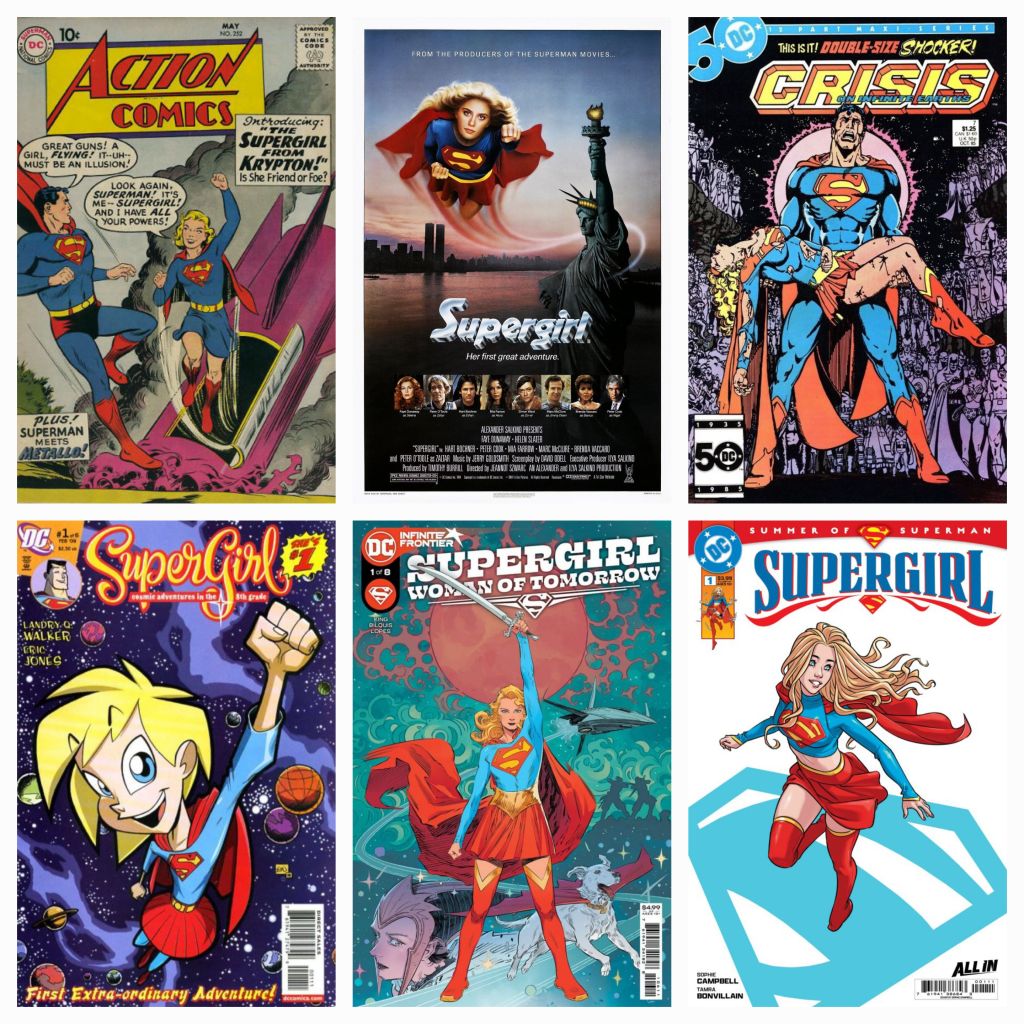

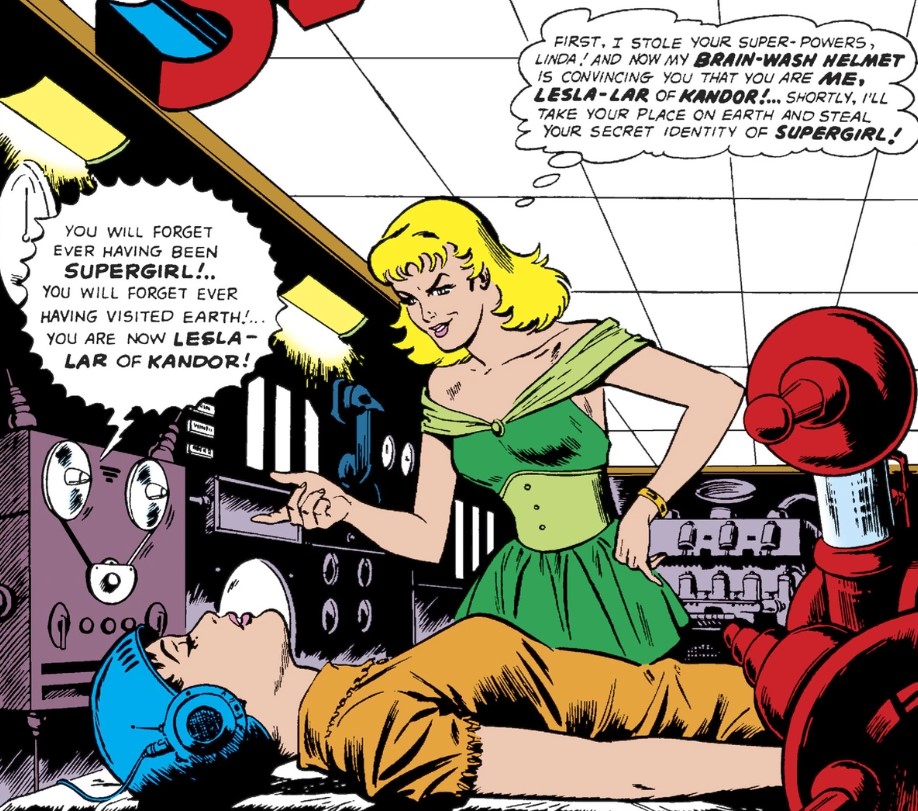
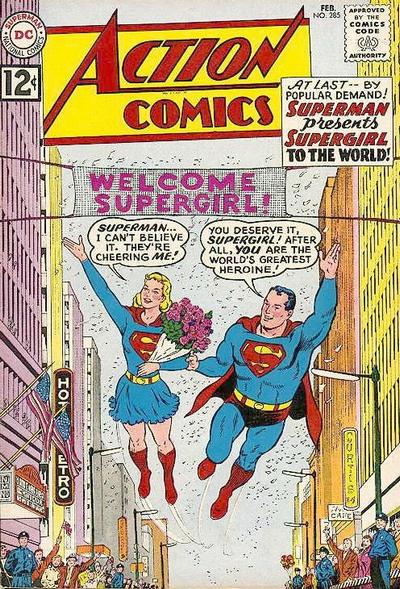
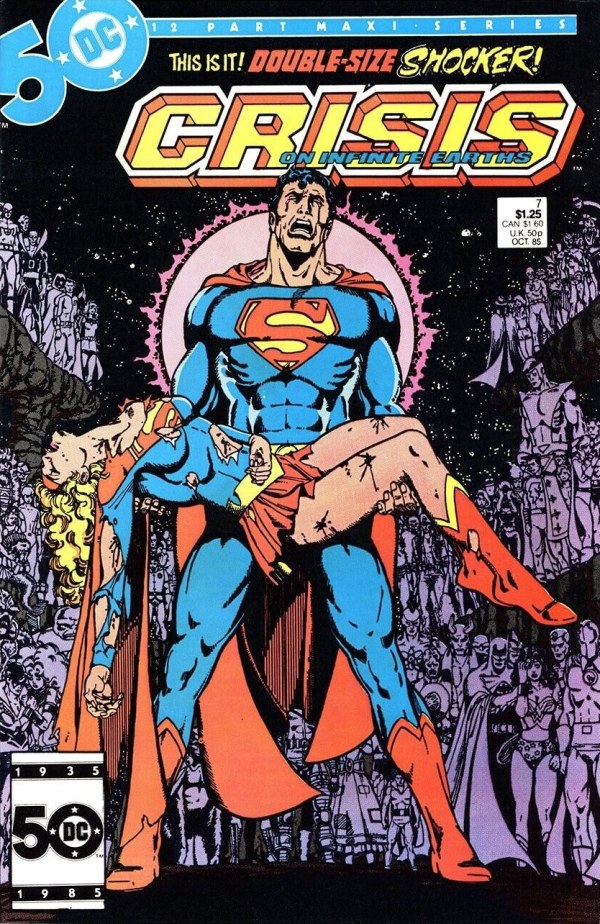


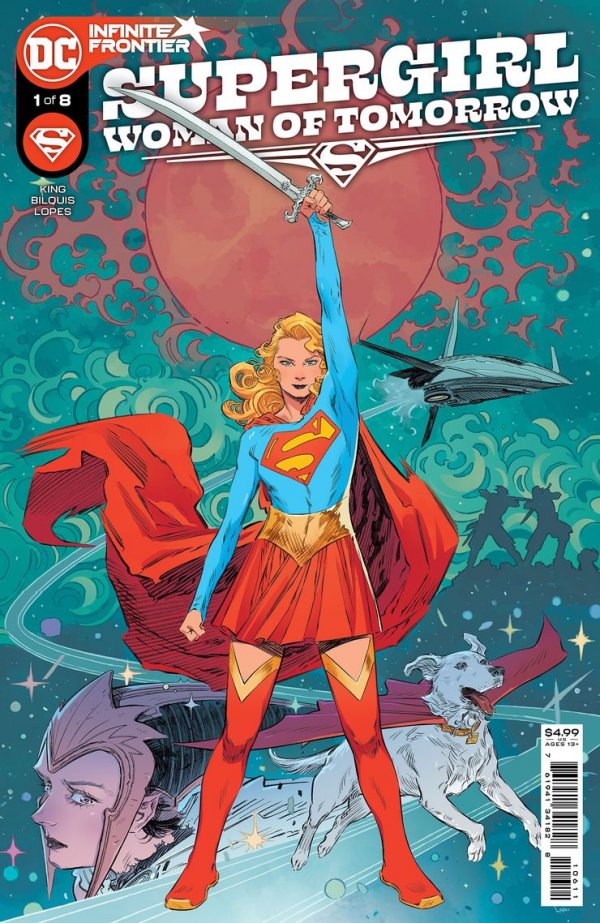
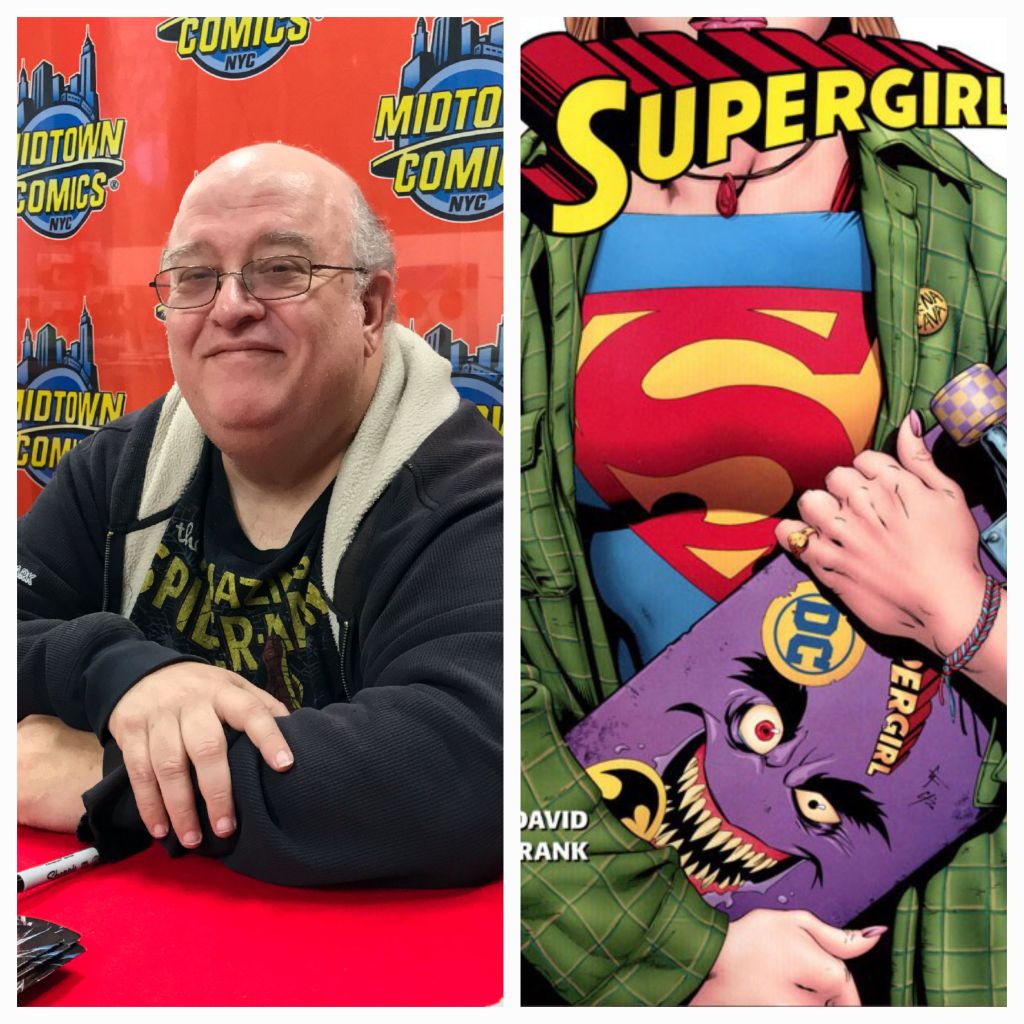
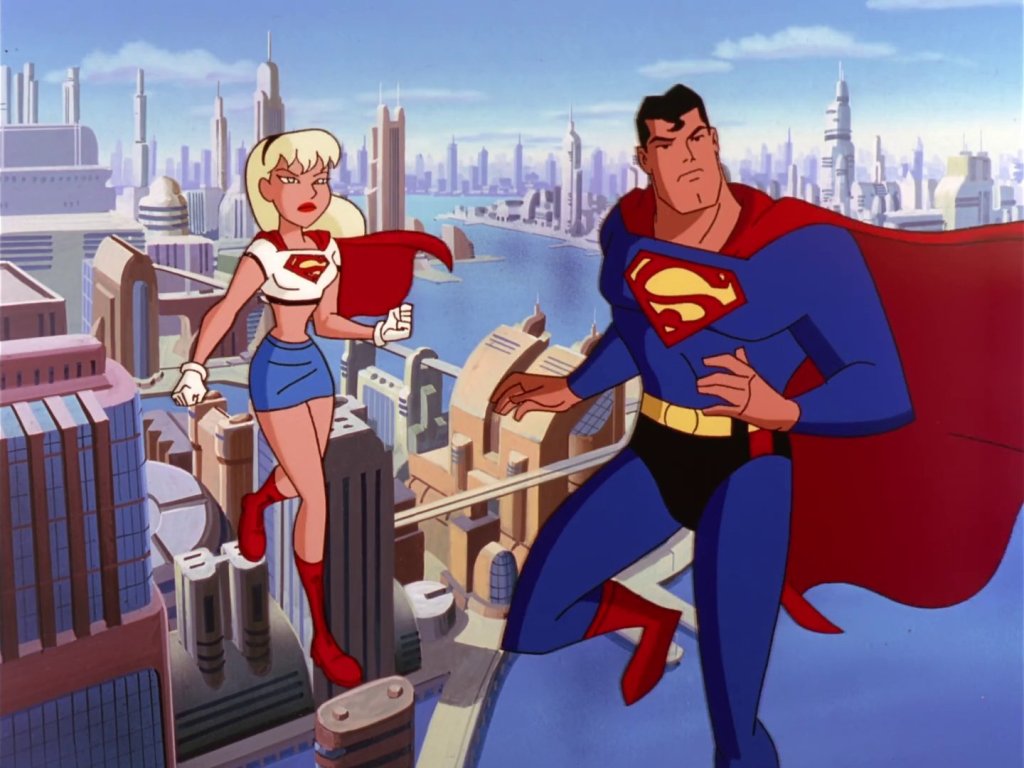


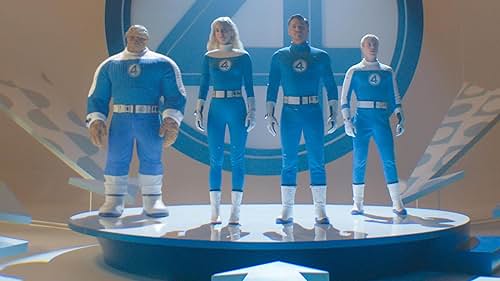

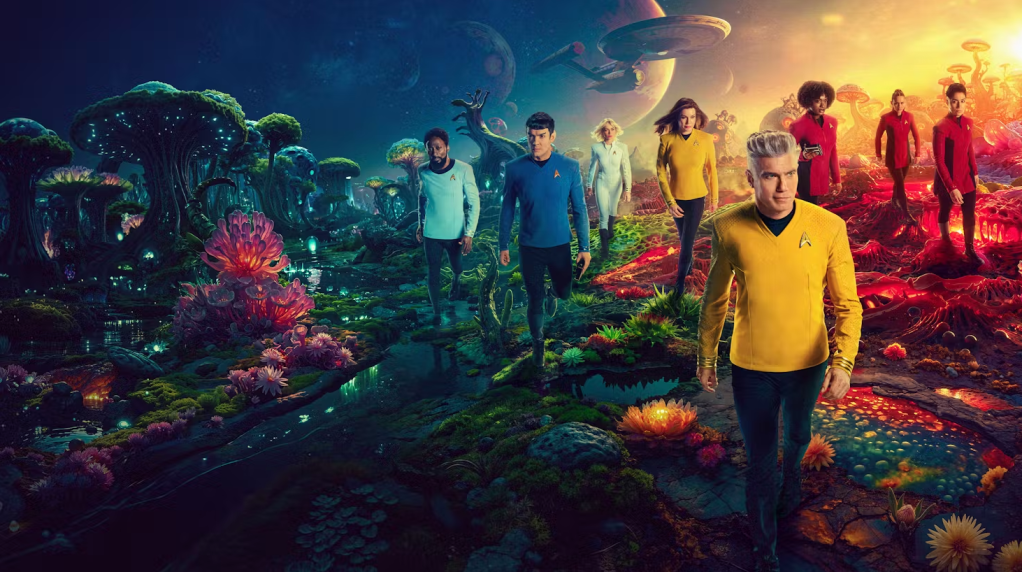


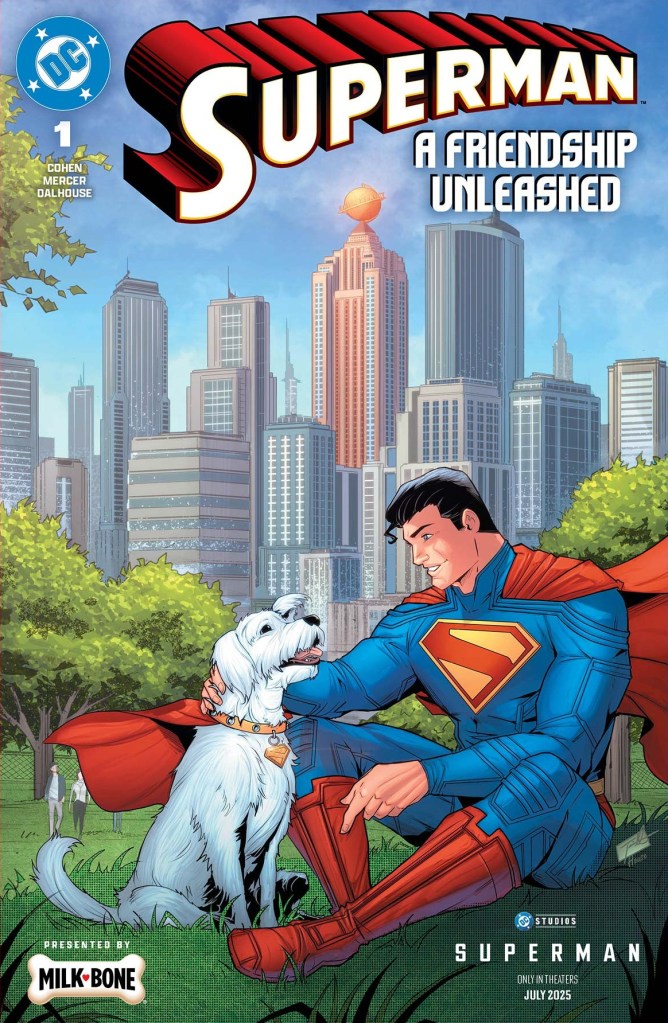
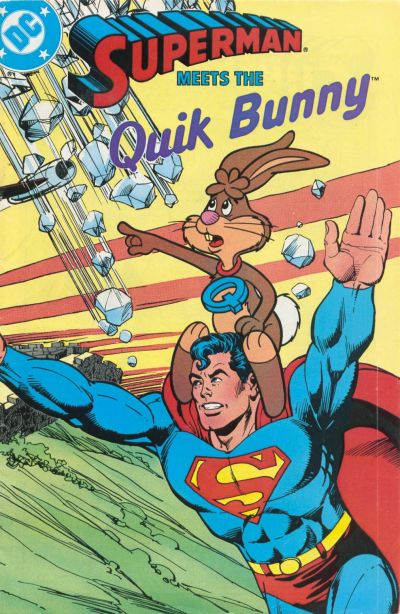

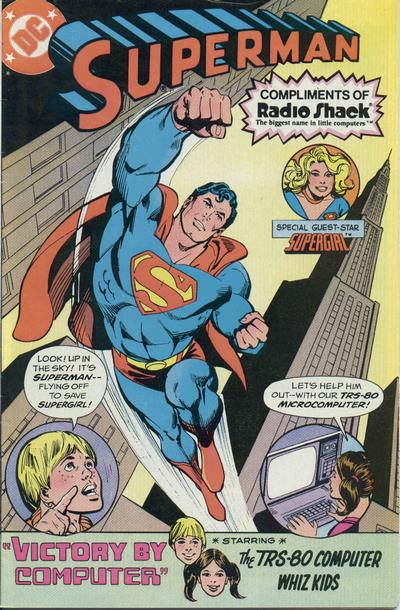


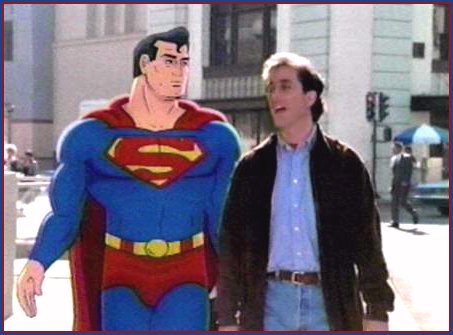
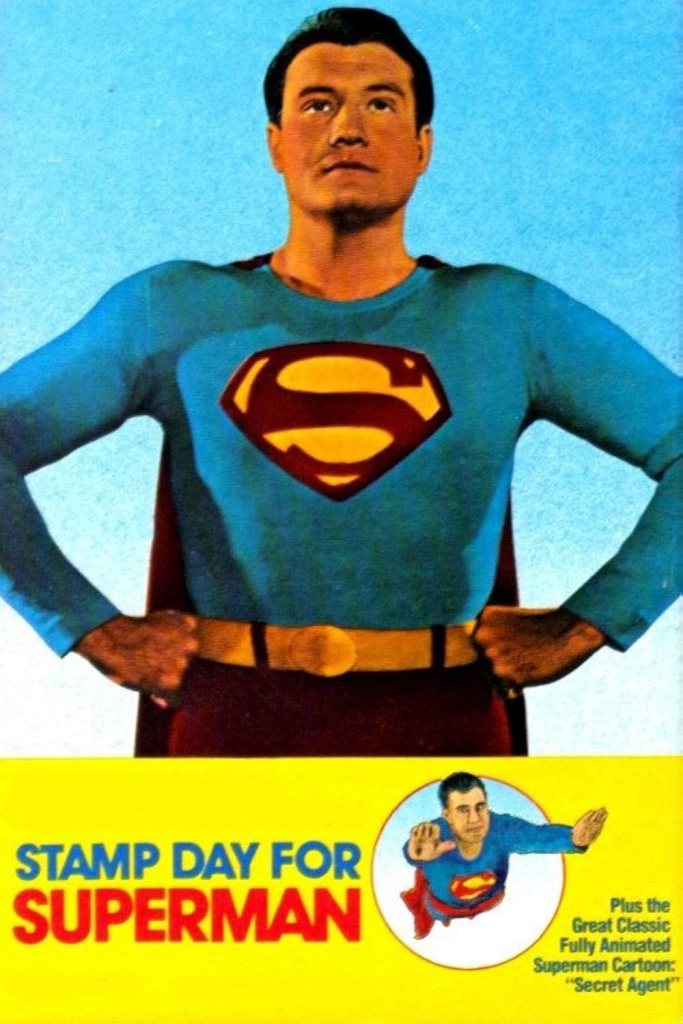


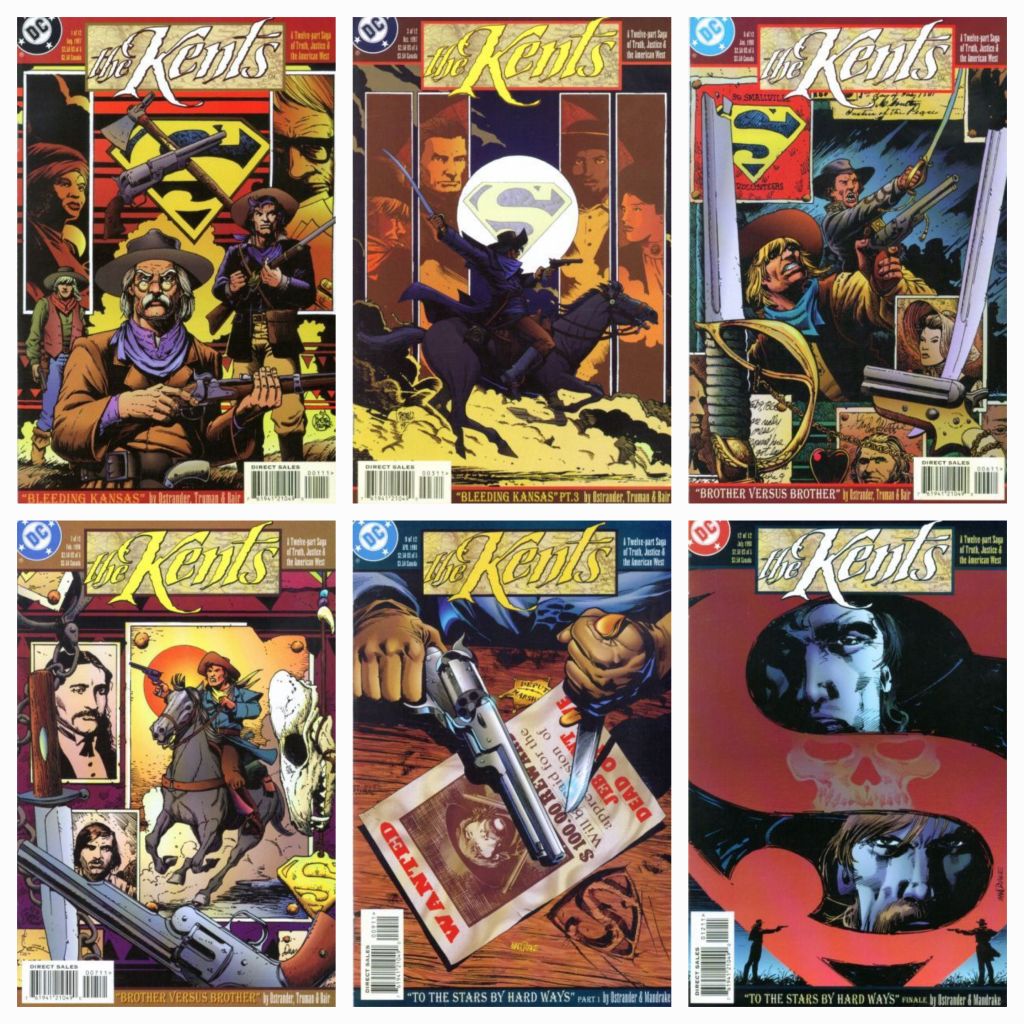

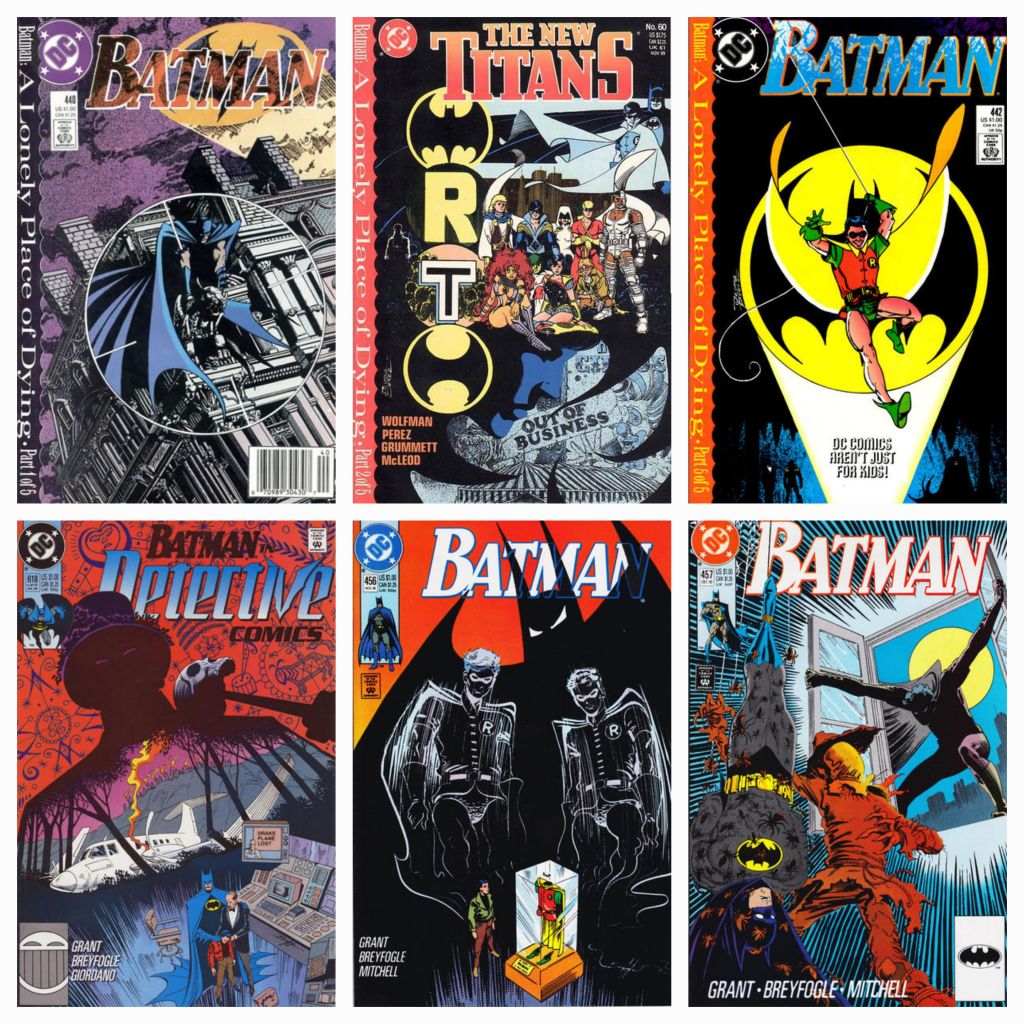


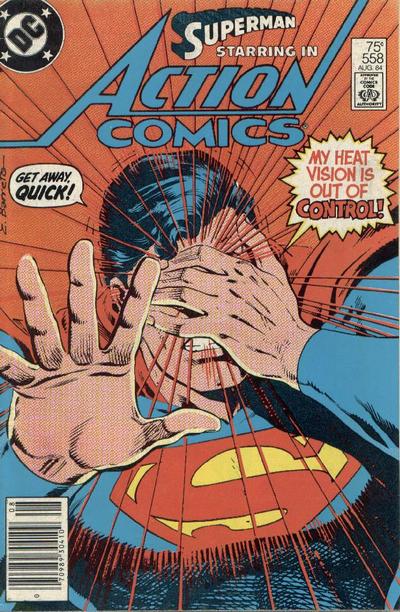

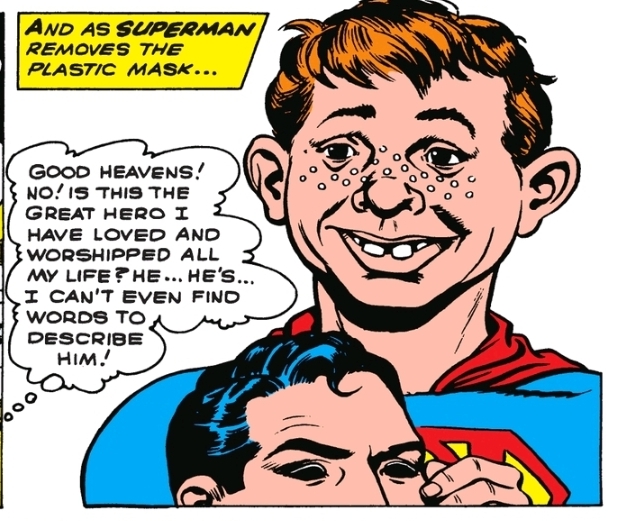

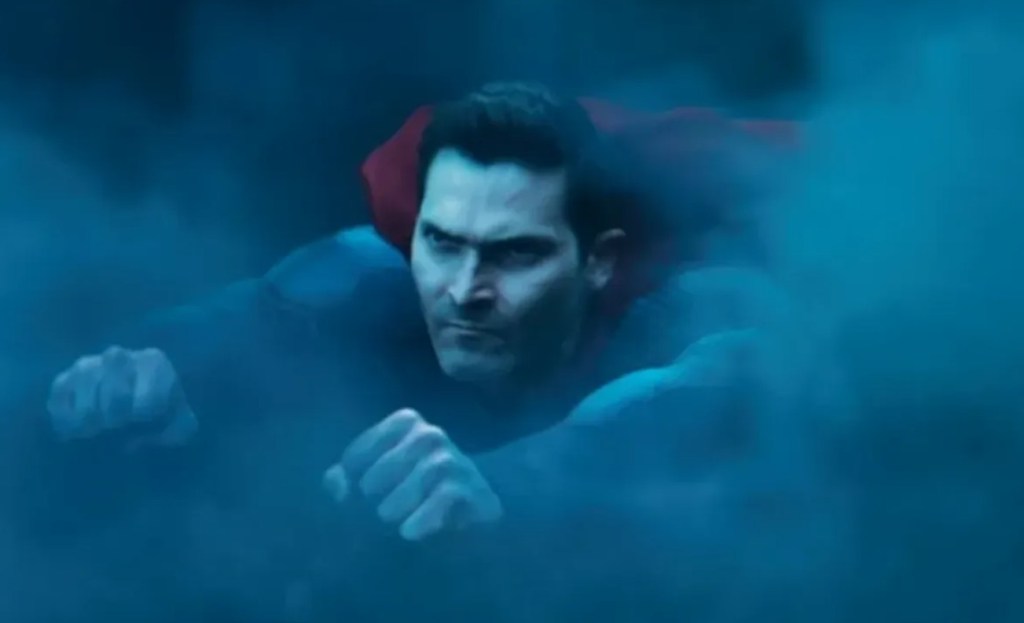


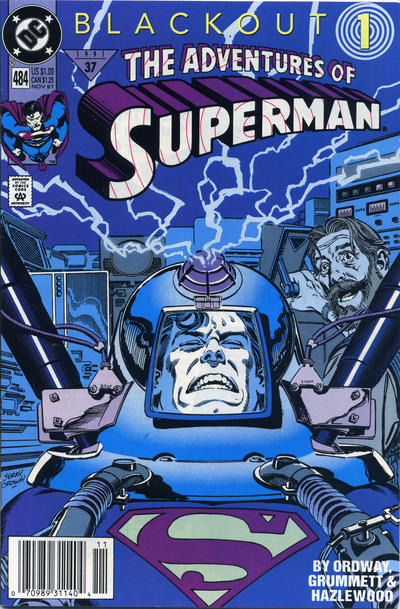








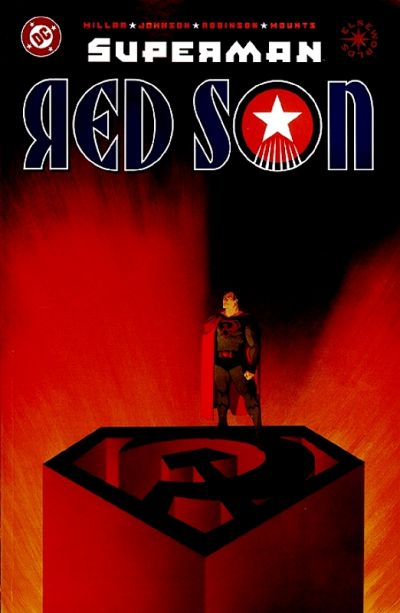



 Blake M. Petit