Geek Punditry #104: The 2024 Pundy Awards

It’s the final Friday of the year, and that means it’s time once again to sit back and talk about all of my favorite things from this year. It’s time for the 2024 Pundy Awards!

Yes, just like I did in 2023, I’m going to wrap up the second year of my little column by talking about some of my favorite pieces of pop culture to come down the pipe this year. There is no rhyme or reason to this, the categories will be decided purely based on what I feel like talking about as I write this. I’m going to tell you my favorites in movies, TV, and comics from the past twelve months, and I’m gonna tell you why I dig them and why you should check them out if you haven’t already. Also in order to avoid repeating myself, I’m going to skip over shows and comic book series that I “awarded” last year. Please be aware that I’m still a fan of Abbott Elementary, Batman/Superman: World’s Finest, Fantastic Four, Skybound’s Energon Universe, and ESPECIALLY the final season of Star Trek: Lower Decks, and they’re all worth your time.

But today, I want to talk about things I haven’t talked about before. At least…stuff that I haven’t talked about as much. Let’s get on with it!

Not the only movie this year that made me feel seen.

Blake’s Favorite Animated Movie: Inside Out 2. 

Back in June, I wrote a piece about how the shine had fallen off the once-immaculate reputation of Pixar Animation studio. After a series of duds, I wondered if the sequel to Pixar’s Inside Out was going to have what it took to bring back some of the studio’s former glory. I was so, so happy to see that it did. The first Inside Out was a great look at how the mind of a child develops and learns to process emotions, anthropomorphizing the process but doing so in a way that was both entertaining and easy to understand. Inside Out 2 continued this trend, with the character of Riley getting a bit older and the emotions she experiences becoming more complicated. Adding in the likes of Envy, Ennui, Embarrassment, and especially Anxiety into the mix has changed the game, making for a movie that perfectly encapsulates the personal journey a person goes through when they grow up. The finale of the movie was absolutely remarkable, with a scene that so perfectly demonstrates the experience of an anxiety attack that I nearly broke down in the movie theater. My son, Eddie, has since declared Inside Out 2 his favorite movie, and I’m not about to argue with him.
“Another movie about hanging around outside a convenience store, Kev?”
“Nah, this time it’s a movie theater.”

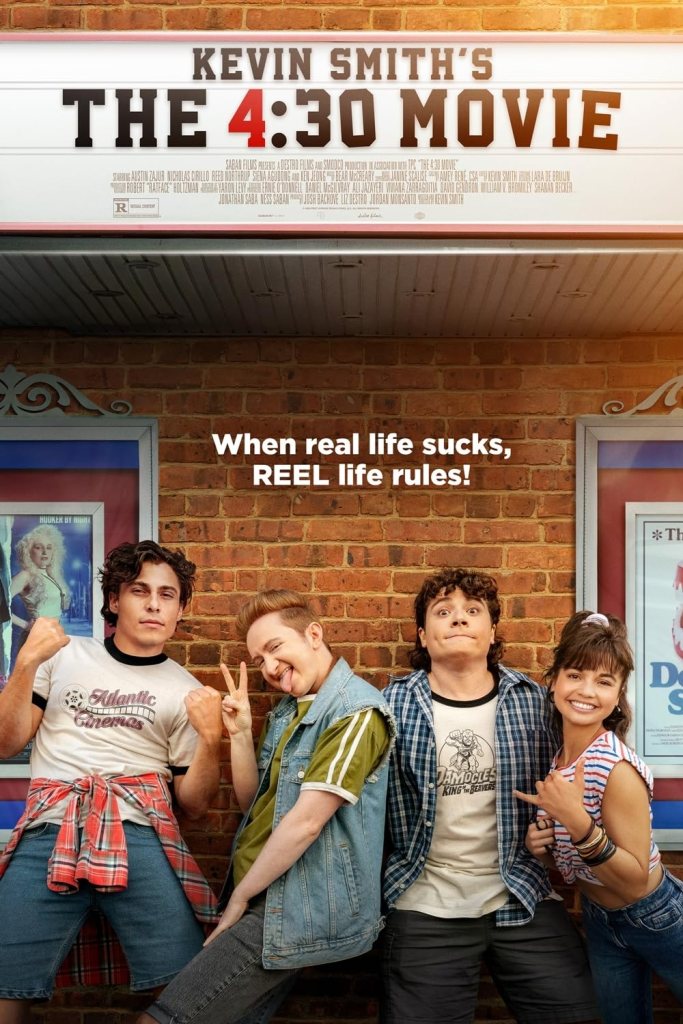
Blake’s Favorite Comedy: The 4:30 Movie.

I’ve been a fan of Kevin Smith for a very long time, and I’ve found it fascinating how his films have changed over the years. His early movies like Clerks and Mallrats were a reflection of the aimless feeling of being a young adult and trying to figure out what life is actually supposed to be. His more recent films, particularly Jay and Silent Bob Reboot and Clerks III, demonstrate a growing maturity and a sense of grappling with a life that didn’t turn out to be what you expected. Although he hasn’t let go of the filthy humor and goofy characters that made his name, he’s a subtler, more sophisticated storyteller than he used to be, and I appreciate that. The 4:30 Movie doesn’t connect to his “View Askewniverse” at all, instead telling the story of a young man in the 80s trying to find the guts to make a play for the girl he’s in love with, all set around a day going to the movies. Are there dirty jokes? Absolutely. But the film is wonderfully heartfelt, and even though neither Kevin Smith nor his alter-ego Silent Bob make an appearance on screen, you can tell that this movie was intensely personal. The final scene hammers that in especially, giving you a feeling that Kevin Smith has, in a way, told his own origin story. It’s a great movie.

Tagline: “You will believe a grown man can cry.”

Blake’s Favorite Documentary: Super/Man: The Christopher Reeve Story. 

This should not be a surprise to anybody, but the documentary about the actor who brought Superman to life for my generation was incredibly moving. Everybody knows the basics of Christopher Reeve’s story – how he played Superman, how a horseback riding accident left him paralyzed from the neck down, and how he became a crusader for the disabled in the years before his untimely death. This movie delves into his history in a deeper way, told mostly through the reflections of his now-adult children, as well as further commentary and anecdotes from other family and friends. The movie bounces back and forth between his life story prior to his accident and the way his life changed afterwards. Having his children tell the story, I think, is one of the things that really helps sell the tale. The film feels so much more intimate and personal, coming from the point of view of the people who knew and loved him the best. One thing I didn’t expect, though, was the heavy focus on Reeve’s friendship with the late Robin Williams. Again, this is something fans of the actor knew about, but the way they intertwined the tragedy of Williams’s own life with that of Christopher Reeve just made it all the more powerful. Have your tissues ready when you watch this one.

Okay, if I’m gonna be honest here, Super-Man is not the only thing in this list that made me cry.

Blake’s Favorite Family TV Series: Bluey

I know, this is another one of those “no duh” moments. I have written extensively about my love for Bluey before, in particular this spring’s season finale episode, “The Sign.” But there was simply no other TV show this year that had as deep and profound an impact on me. In the final episode of this season, we saw the Heelers preparing both for a family wedding and a move to another city, two life-changing events that the titular Bluey was having a tough time dealing with. Bandit, the dad that every father on the planet is striving to become, is trying to do the best thing for his family, even as it becomes increasingly clear to the viewer that the rest of the family doesn’t actually want to leave. It’s a beautiful story and still amazingly funny, and the final song (by cast member Meg Washington) is absolutely sublime. It comes across as a meditation on being a parent and having a child, and it’s the kind of thing that absolutely overwhelms your heart if you’ve got children of your own. I couldn’t be happier with the news that the long-talked about Bluey movie has been officially announced, and I only wish we weren’t going to have to wait until 2027 for it to hit theaters. 
Remember when science fiction was SMART? It’s finally back.

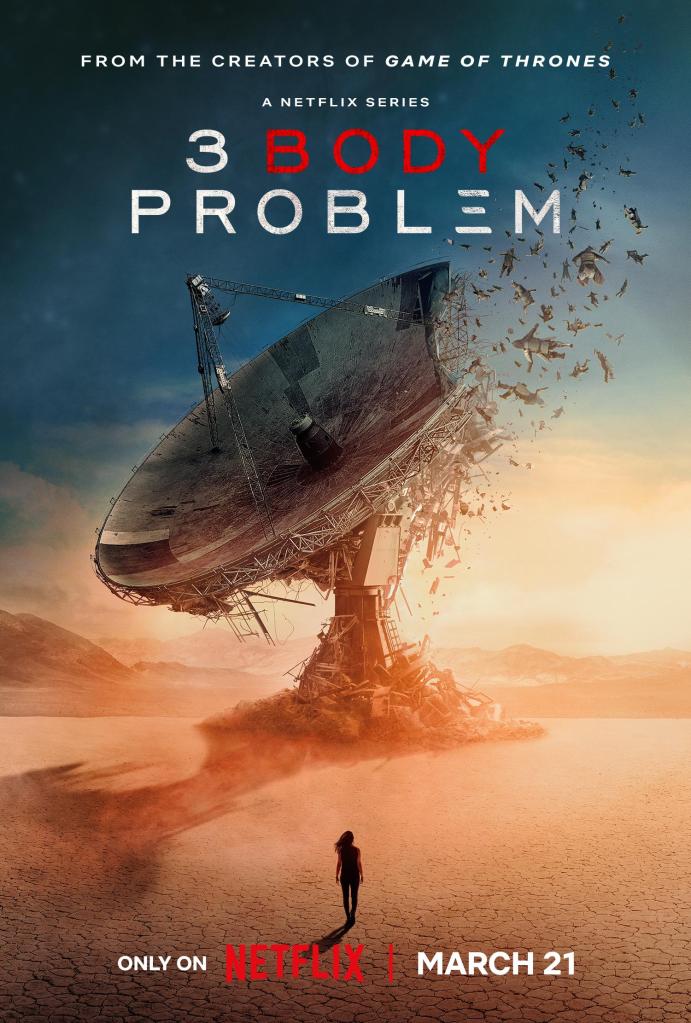
Blake’s Favorite Science Fiction Series (That Isn’t Star Trek: Lower Decks): The Three-Body Problem

This Netflix series, based on the globally popular trilogy by Cixin Liu, launched this year and grabbed me immediately. Like the novel, the first season of this show focuses on several groups of people around the world trying to uncover a mystery. The show follows scientists, police, and people from other walks of life as they slowly uncover evidence of an impending alien invasion. The novels are amazing – an incredible portrait of this sort of singular event and how it would completely reshape the entire world. So far, the first season of the show is doing the same thing, but in different ways than the book. The novels, by a Chinese author, have a cast that is mostly Chinese as well, while the TV series is more international. Characters are omitted, others are combined with one another, new characters are added – the TV show uses the framework of the novel, but takes the story in different directions to reflect the difference in cast and the different cultures of the characters. As a result, while fans of the book can still enjoy it, there’s still room to be surprised. I loved the novels, and I loved the show too, but for different reasons and in different ways. That’s one of the best things you can hope for in an adaptation.
This is the best an ongoing Spider-Man comic has been in 20 years, and it’s not even close.

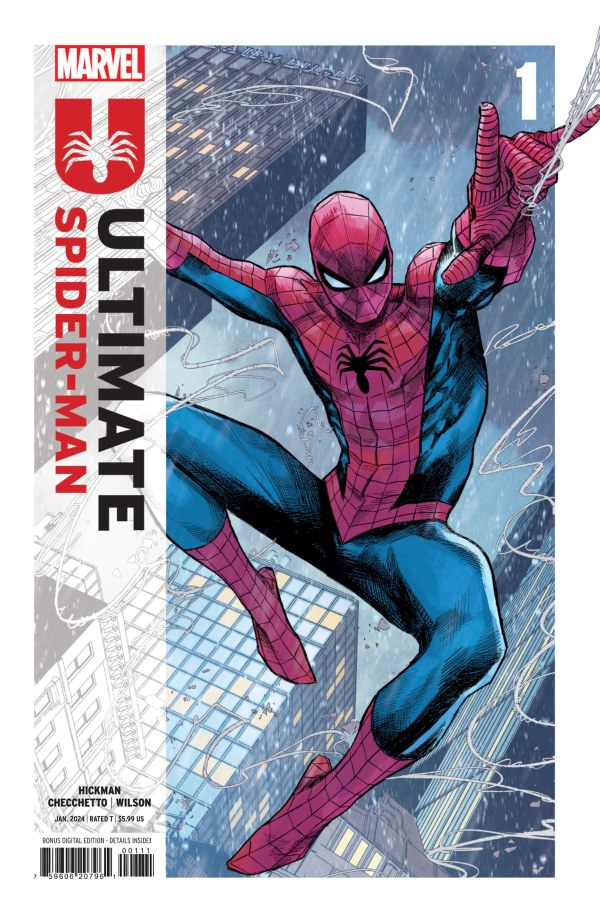
Blake’s Favorite Ongoing Marvel Comic (That Isn’t Fantastic Four): Ultimate Spider-Man

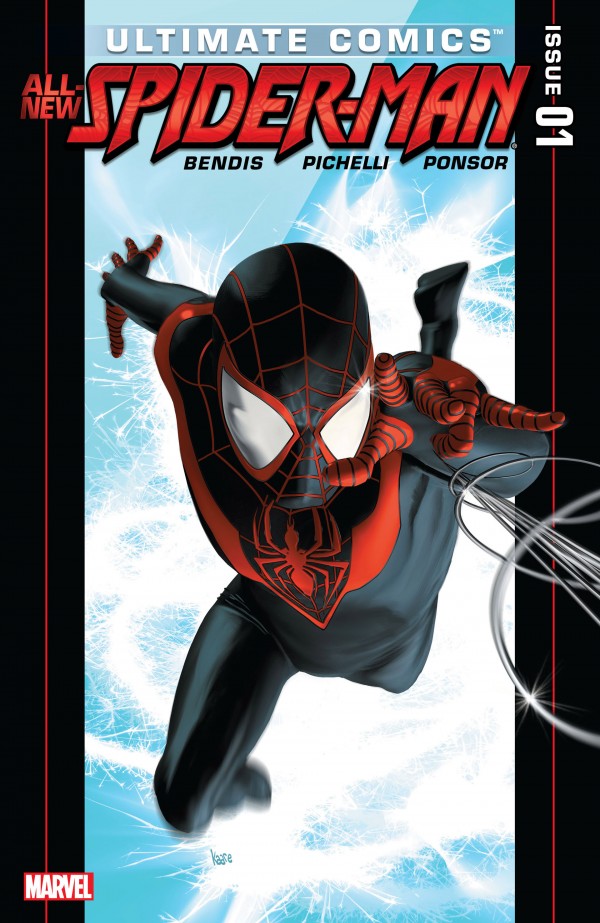
Last year, Marvel announced a relaunch of its once-prominent “Ultimate” brand, which reimagined the Marvel heroes as new characters in the modern day. That version of the Ultimate Universe eventually gave birth to Miles Morales, but other than him, the rest of the line has been mostly jettisoned. The only other survivor is the Maker, an evil version of the Fantastic Four’s Reed Richards, who has created a NEW Ultimate Universe, and it’s the flagship book of THAT line that has captured my heart this year. In the new Ultimate Universe, the Maker deliberately prevented most of the world’s superheroes from having their respective origin incidents, until their Tony Stark uncovered the truth and decided to put things right. (This is a HIGHLY condensed version of the Ultimate Invasion miniseries, by the way, which is also worth reading.) In the new Ultimate Spider-Man, we open with an adult Peter Parker who is powerless, married to Mary Jane Watson, and the father of two children when he is approached with the news that he’s supposed to be one of the world’s greatest heroes, and there’s a way to make it happen. For years, Marvel Comics has turned the mainstream Peter Parker into a punching bag, submitting him to one mindless torture and humiliation after another, to the point where stretches of his comics are unbearably depressing. Ultimate Spider-Man is the antidote to that, proving that you can tell stories about a married couple, about parents, that are entertaining and emotionally engaging without sacrificing the superheroes. This Ultimate Universe is even further removed from the main Marvel U than the original Ultimate Universe was, but this comic has been fantastic so far.

“So EVERYBODY is in the Justice League now? Ghost-Maker? Robotman? Clownhunter?”
“Okay, let’s not get carried away.”

Blake’s Favorite Ongoing DC Comic: Justice League Unlimited.

This may be a tiny bit of a cheat, as there’s only been one issue of JSU so far, but it was preceded by the excellent Absolute Power miniseries, which set the story up and was by the same magnificent writer/artist team of Mark Waid and Dan Mora, so I’m counting that towards the series. After an absence of the Justice League from the DCU for a few years, it’s time for a most triumphant return in a way that has never been done in comics before. Rather than a team of seven to ten heroes protecting the whole dang world, Waid is embracing the “Unlimited” part of the title. The Justice League – as in the classic animated series of the same name – is now a massive force, with virtually every hero on the planet Earth recruited as a member. Everyone who has ever been in the League, every Titan, everyone who wears the S-shield, Bat-symbol, or bracelets of an Amazon, is now part of the League. Waid kicks things off with a first issue showing a longtime – but fairly obscure – hero called Air Wave being taken up to the Watchtower and joining in on his first mission as a member of the Justice League. The story was great, with an engaging and entertaining point of view that is set to save Air Wave from the ranks of the D-listers, and a twist that promises great things for the series. What’s more – I’m gonna sound like a broken record here – Dan Mora is probably the best superhero artist working in American comic books right now. His characters are bold, powerful, but still wonderfully human. This book hit every box for me in the first issue and I can’t wait to see where it goes next.

“What if we replace the spinach with boba?”
“No.”

Surprise of the Year: Eye Lie Popeye

It’s been a good year for reboots of old-school characters, including Dick Tracy, Flash Gordon, Thundercats, and the Universal Monsters. But the one that surprised me the most, in a delightful way, is Massive Publishing’s new series Eye Lie Popeye, by writer/artist Marcus Williams. When the series was announced, I didn’t think it would be my thing – a new version of Popeye is fine, but the artwork showed a distinct Manga flavor to it. I’ve got no issue with people who enjoy Manga, it’s just not usually the sort of thing I’m interested in, and I planned to pass on the series. Then came Free Comic Book Day, and they released a preview of the first issue. Guys, this is why Free Comic Book Day works, because it did exactly what it is intended to do: show me a glimpse of something that I hadn’t planned on reading, but that I found incredibly entertaining. Williams shows a deep knowledge of Popeye and his enormous cast of characters, and while the book DOES have that Manga influence, I was startled by just how well all of it managed to fit together. The style works for the characters, the storyline feels like the kind of thing that used to be done in the classic comic strips (which are quite different from the seven-minute slugfests that people who only know Popeye from his animated shorts might expect). Overall, I never would have thought it, but this was one of my favorite comic book finds of the year.

And that’s it for this year, friends – some, but not all, of my favorite movies, TV shows, and comics of 2024. Feel free to share your own favorites in the comments, and here’s to coming back here in a short 52 weeks to do it all over again!

Blake M. Petit is a writer, teacher, and dad from Ama, Louisiana. His most recent writing project is the superhero adventure series Other People’s Heroes: Little Stars, volume one of which is now available on Amazon. You can subscribe to his newsletter by clicking right here. He’s also started putting his LitReel videos on TikTok. And yeah, he barely mentioned it, but Lower Decks was amazing. Go read it. Go read it now. 

Geek Punditry #56: The Pundy Update

January is kind of a stale month, pop culture-wise. There aren’t any huge movies out to discuss. The holiday backup has us all in its grip as we spent the month recovering from frivolity by trying to get everything back in order, so we don’t have as much time to indulge in the things we love in the first place. The playoffs are a thing. And this year especially, although the writer and actor’s strikes are over, the delay in new material has us rather struggling to find decent TV worth watching. Yes, friends, it’s a quiet time here in the Geek Punditry Global Media Hub. I don’t have a ton of things to say a lot about.

So instead of choosing a topic that doesn’t quite fit into a full column and stretching it out unnecessarily, this week I’m going to do a little bit of an update. I’ll scroll through columns from the past and give you a bit of new information to tell you how those topics are going, how I feel about them now, whether or not anything has changed since I last wrote about them. It’s this or another mailbag. What do you say?

That’s what I thought.

Item One: Last April, I wrote about the magic of the show I Love Lucy and how Lucy, in many ways, codified the sort of serialized storytelling that is commonplace on television today. (See Geek Punditry #15: How Lucy Gave Us the Arc.) In that column, I also spent a little time talking about the greatness of Pluto TV. This is an app on your smart TV that gives you free access to hundreds of channels of specialized content. There’s one channel that just shows the entirety of I Love Lucy, another devoted to The Carol Burnett Show. Others bring us RiffTrax, Mystery Science Theater 3000, Top Gear, Bar Rescue, Unsolved Mysteries, and hundreds of others. I know there are other apps, like Roku TV and FreeVee, that have similar features. Some of them even have the same specific channels. But Pluto TV is the one we use most often, so it’s the one I’m talking about.

I’m just saying, there are worse ways to spend a weekend.

Not long ago, while trying to find something appropriate for my son to watch that wouldn’t make me want to gouge my own eyeballs out, I stumbled upon Pluto’s Garfield and Friends channel, and I left it on. Eddie soon became hooked. He now specifically requests Garfield on most occasions when I let him pick what to watch unless there’s a football or hockey game on. (My kid is a sports nut, which probably makes people who knew me in college snort milk out of their noses laughing. Even if they aren’t drinking milk at the time.) I watched this show when I was a kid and I enjoyed it, but this is the first time I’ve really sat down and paid attention to it in quite some time, and can I tell you something folks? As comedy, Garfield and Friends legitimately holds up.

Comedy peaked in 1989.

While the Garfield comic strip is often criticized for being somewhat bland in its comedy, pushing no boundaries and having as much of an edge as a donut, the show is actually quite the opposite. The scripts are littered with sharp puns, sarcastic humor, and the occasional slightly more adult reference you know the writers were just hoping would slip past the censors. The fourth wall on this show is less of a rule and more of a vague suggestion, and the propensity for overly-long jokes is the kind of thing that I’ve always found hilarious. Part of the credit has to go to head writer Mark Evanier, a longtime TV and comic book writer who perhaps is best known these days as the co-writer of Sergio Aragones’s sword-and-sandals parody comic Groo the Wanderer. Evanier had spent a lot of time working on cartoons where the kind of stale, inoffensive storytelling we criticize the Garfield comic for was the norm, and apparently he went into full-on rebellion against the form. 

There are a lot of episodes of this show with kind of a downer ending, if you really think about it. Jon Arbuckle is a perennial loser and he’s treated as such. Garfield’s relationship with Penelope (who replaced the comic’s Arlene for reasons that still aren’t clear) is completely selfish, with him only loving her because her owners have an Italian restaurant. Evanier even introduced the maddening Buddy Bears specifically to mock the shows he had worked on before – the Buddy Bears’ credo is that you are never allowed to disagree with anything and you must always get along, and thus they are portrayed as completely insane. The US Acres (or Orson’s Farm segments in certain countries) similarly have a slyness to them that most cartoons of the time couldn’t touch, and few cartoons specifically for children do today. If you haven’t watched Garfield and Friends in a couple of decades, click over to Pluto TV and give it a watch. The show is still great. And if not, it’s at least better than whatever is on Disney Jr. right now.

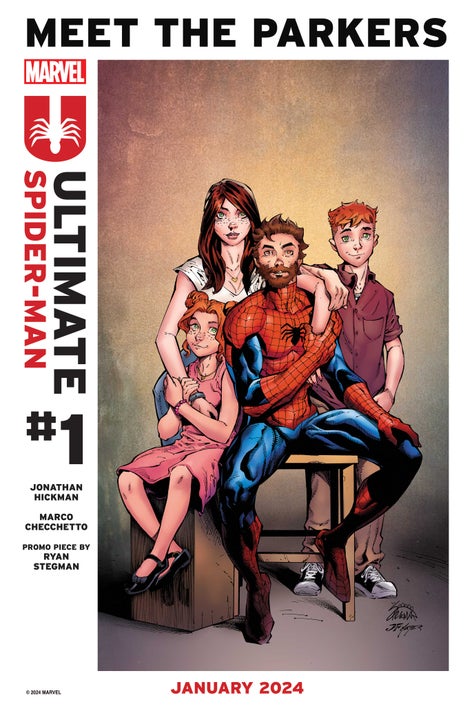
Item Two: Back in November, I wrote about Marvel Comics announcing a new version of Ultimate Spider-Man, featuring an adult Spider-Man married to Mary Jane Watson and with two kids. (See Geek Punditry #44: What’s Wrong With a Spider-Family?) Having spent the better part of two decades complaining about Marvel Comics’s refusal to tell stories about an adult Spider-Man with a wife and a family, I felt it would be somewhat hypocritical of me not to try the new series by Jonathan Hickman and Marco Checchetto. The first issue came out a couple of weeks ago and, I’m happy to report, it’s even better than I hoped. It may well be the best single issue of a Spider-Man comic that I’ve read in twenty years. I am not exaggerating that number, friends. 

This is what a Spider-Man comic book ought to be, people.

I’m going to explain what makes it so great, but I can’t really do that without getting into spoilers for that book, as well as the miniseries that launched this new Ultimate Universe, Ultimate Invasion. So if you haven’t read either of those and are trying to stay spoiler-free, just leave it at knowing that I really liked this book and jump down to Item Three. Deal?

Ultimate Invasion was about the Maker, the Reed Richards of the original Ultimate Marvel Universe (the one that gave us Miles Morales), which was destroyed during the 2015 Secret Wars event, also written by Hickman. Miles and the Maker were the only two survivors, and migrated to the main Marvel Universe. In Invasion, the Maker decides to recreate his original universe, but with “tweaks” this time, eliminating the events that created many of that world’s superheroes and manipulating the one that remain, so we are given a world that is quite different from the Marvel Universe we’re used to. Most relevant to this book, the Maker prevented the genetically altered spider from ever biting Peter Parker, thus denying this world its Spider-Man. 

Ultimate Spider-Man #1 picks up that story in the present day, where an adult Peter is married to Mary Jane and has the aforementioned kids. But the book is loaded with many more surprises than that, such as when we find out that the editor of the Daily Bugle is, in this universe, Peter’s uncle Ben Parker. You never think about it, but in this world where Pete never becomes Spider-Man, his uncle is never murdered. Then a few pages later we learn that Ben is a widower, and that in this world it is MAY Parker who died from violence, during a terrorist attack carried out by Howard Stark (read Ultimate Invasion for that sentence to make sense). 

Aside from the surprises, I’m utterly in love with the way Hickman is writing the Peter/Mary Jane dynamic. Peter is deeply dissatisfied with his life because of this horrible, gnawing void in his stomach. He knows something is missing, but he doesn’t know what. Too many writers – too many BAD writers – would play this for drama at the expense of Peter and Mary Jane’s relationship: MJ would take his dissatisfaction personally, thinking it has something to do with her, a rift would form between them, drama would ensue. Hickman’s MJ, however, is both smart and kind enough to realize that’s not the case, and while something is missing from her husband’s life, it’s not about her and he doesn’t blame her for it. THIS Mary Jane is deeply supportive and believes in her Peter. So when he gets a message from a kid calling himself TONY Stark, claiming that the universe is messed up, Peter was supposed to be one of this world’s greatest superheroes, and there’s something in this package that can fix things, MJ is the one who encourages him to do it. And then he opens up the case and finds a vial with an itsy-bitsy spider…

This book is just gold. Hickman has built new versions of very familiar characters that feel truer to the spirit of the ones we love than any version we’ve seen in ages. I know this first issue did blockbuster numbers, but that’s not a surprise. Hickman is a hot writer, it’s launching a new universe, and it has a billion and twelve variant covers, all of which translate to sales. The key will be to see if people keep buying it six months from now. I hope they do.

Item Three: One of the consequences of this fallow period in television is that, among all of the other things that aren’t happening right now, there’s no new Star Trek for me to enjoy at the moment. I’ve mentioned my affection for Star Trek in the past (See Geek Punditry #1-55), but it occurred to me that I’ve never mentioned exactly what happened to draw me so deeply into Trek fandom over the last few years. I’ve been a Star Trek fan since I was a kid, growing up on the original series and reruns of the animated series on Nickelodeon. I got into The Next Generation and Deep Space Nine pretty heavily, and in high school and my early college years, I was a major fan. But as you get older you get into more things and different things, and my passion started to wane. It never died – I still liked the shows and I’d watch every new movie, but it wasn’t so much a lifestyle choice for me.

In 2017, my sister told me about a podcast she was listening to called Star Trek: The Next Conversation. Hosted by TV writers Matt Mira and Andy Secunda (Mira also being podcast veteran from shows like Nerdist, James Bonding, and approximately 400 others), the concept was that Andy was a Trek fan who had never watched The Next Generation for some reason, so hardcore fan Matt would walk him through the series an episode at a time as they broke down and dissected the storytelling from the perspective of TV writers. I’d listened to several of Matt’s shows before and Andy won me over immediately. There’s a friendship and chemistry between the two of them, which is probably the single most important element to making a successful podcast. Their thoughts and insights on the show are solid and interesting, and their wild tangents (the second-most important element in a successful podcast) are crazy entertaining. 

Don’t tell Paramount about the logo, though. I don’t know if there’s a copyright thing going on here.

What’s more, listening to these two guys geek out about Trek made ME geek out more about Trek. Since then, I’ve been watching every episode of Star Trek along with them, even shows I didn’t care for, because listening to these two guys talk about it has been my reward. They finished The Next Generation in May of 2022, and since then they’ve been going through my favorite series, Deep Space Nine. And if you’re willing to jump into their Patreon, they also cover Voyager, Enterprise, and all of the live-action new Trek series as new episodes drop. (They do not cover my beloved Lower Decks, sadly, because as comedy writers they feel like their nitpicking of Lower Decks would not be as entertaining as the other episodes…and honestly, based on their commentary on the Strange New Worlds/Lower Decks crossover episode, I think they’re right.)

But not only has this show made me start watching more Star Trek, my fandom has increased as well. I find myself hunting down and reading the old comic books and novels. I’ve gotten more shirts and nicknacks. I slowly began to assemble a collection of the miniature Eaglemoss Enterprise models, only to rush and get the last few when Eaglemoss went under. What I guess I’m saying is that Matt Mira and Andy Secunda are responsible for making me an even bigger nerd than I already was, and I thank them for it. 

Item Four: I don’t know if you’re the kind of person who reads the little blurbs at the end of every one of these columns, but if you are, you know that I’ve worked in a bonus joke in the last line of every one. Good for you. If you rearrange the letters in them you’ll get a secret message.

More importantly, though, that blurb has also always had a pitch for my Kindle Vella series, Other People’s Heroes: Little Stars. The language of that blurb is going to have to change beginning this week, though. I’ve always called it my “Current” writing project. As of this week, it will now be my “most recent” writing project. After two and a half years, I’ve finally finished this epic story. I talked more about it on this blog a few days ago, so I won’t get into detail about it right now, but if you’re the kind of person who likes superheroes and adventures and absolute doorstoppers of storytelling I’d like to invite you to check it out. I’m immensely proud of the story I told, and I’m hoping that you’ll enjoy it too.

Come on, people, how often do I ask you for anything?

Blake M. Petit is a writer, teacher, and dad from Ama, Louisiana. His most recent writing project is the superhero adventure series Other People’s Heroes: Little Stars, now complete on Amazon’s Kindle Vella platform. What about a Garfield/Star Trek/Spider-Man crossover? Would that be a thing? Could we make that happen?

Geek Punditry #44: What’s Wrong With a Spider-Family?

Last week in a shocking announcement, Marvel Comics revealed it will be publishing a new Spider-Man series in which Peter Parker and Mary Jane Watson are (hold your horses, folks) – married.

I know, that’s probably a total stunner to you, possibly because you think it’s impossible to tell compelling stories with a married couple. Perhaps it’s even MORE shocking when you find out that they will have children, because as we all know, anybody who is married or a parent is clearly too old to be an engaging protagonist. No, these characters are now either relegated to supporting roles as their offspring take over as the primary character, or they must be made the subject of a traumatic domino chain that is the emotional equivalent of watching all 10 Saw movies in immediate succession, possibly preceding it with The Human Centipede as an aperitif. After all, the only characters capable of maintaining an interesting narrative are young and have no familial attachments, with the possible exception of an aunt whose death is a foregone conclusion that may be teased and waved in front of our hero for years as an additional piece of mental torment.

It would only be logical if that were your reaction. After all, that’s been more or less the official stance of Marvel Comics for a couple of decades now. 

🎵”Spider-Dad, Spider-Dad,
Don’t you tell him his jokes are bad…”🎵

Okay, at this point I imagine the regular comic book readers out there are all nodding their heads in understanding, while those of you who only know Spider-Man as Tom Holland (or possibly Andrew Garfield or Tobey Maguire) are somewhat confused, so for the sake of that latter group, let me explain. First of all, the comic in question is a new version of Ultimate Spider-Man, written by Jonathan Hickman and explicitly set in an alternate universe than the mainstream Spider-Man. That’s right, thanks to the marvels of the multiverse, we can have that book coexisting with the “normal” Spider-Man, whose adventures will continue to be chronicled in The Amazing Spider-Man, where he remains childless, spouseless, joyless, and probably has had a puppy taken away from him in the last 15 minutes just to make sure he is constantly being beaten up by the universe.

The thing is, Peter Parker and Mary Jane Watson were married once, and for a long time. Their wedding took place in Amazing Spider-Man Annual #21, published in 1987, and it was the status quo for my formative years. I was a child when they married. I was a teenager when I read the books voraciously. And although I never once, in all that time, thought it was difficult to relate to a character who had a wife and stable family life, apparently former Marvel Comics Editor-In-Chief Joe Quesada disagreed with me. Quesada spent years after becoming Marvel’s EIC in 2000 teasing fans, talking about his distaste for the marriage and expressing his belief that it “aged” Spider-Man too much. Finally, after 20 years of having Peter and MJ as a married couple, Quesada gave us “One More Day,” a storyline in which Peter traded his marriage away to Mephisto, Marvel’s equivalent to Satan, in exchange for May Parker’s life.

You only imagined this. It’s a Mandela Effect or, like that black and blue/gold and white dress or something.

This will require a little more explanation, so buckle up: the reason Aunt May’s life was in jeopardy in the first place was because of the Civil War storyline, written by Brian Michael Bendis. This was one of those crossover storylines that involved virtually every Marvel comic being published at the time, but a lack of communication among the other writers about what was actually going on made it a garbled mess. In this story some of the Marvel Heroes began supporting a “Superhero Registration Act,” requiring superheroes to register with the government or become outlaws. Despite nearly 40 years of stories showing heroes standing up against measures such as this, many characters sided with the Pro-Registration side, led by Iron Man, as opposed to the Anti-Registration side, fronted by Captain America. 

Let’s take a moment to try to parse the fact that anybody – any damned person – in the Marvel Universe would for even a split second side with Iron Man over Captain America in any question of an ethical nature, let alone a question of government overreach. Let’s parse that.

Spider-Man, for reasons, took Iron Man’s side. Then, just to prove how much he agreed with the Pro-Registration side, he revealed his secret identity to the world. This proved how great Registering was, even though several books specifically said that nobody who registered would be forced to reveal their identities to the public. Even though it said that. Spider-Man did it anyway. To support the government.

Parse that too.

And then, after 40 years of stories demonstrating that superheroes revealing their identities to the world would put their loved ones at risk, Spider-Man’s revelation shockingly put his loved ones at risk, and May Parker was shot by a bad guy. 

If only someone could have predicted such an outcome.

Spider-Man being confronted by the consequences of his own actions (2007, colorized).

Finally, in order to save his aunt’s life – something that apparently was beyond medical science, the machinations of Dr. Strange, or even Disney’s in-staff physician Doc McStuffins – Peter cut a deal with Totally Not Satan: save May’s life and make everyone forget his secret identity. In exchange, Mephisto didn’t even want Pete’s soul. He just wanted to make everyone in the world forget that Peter and Mary Jane had ever been married. Even Peter and Mary Jane themselves. He wanted this for reasons.

If this whole story sounds unfathomably stupid to you there’s a good reason for it: it was. Even J. Michael Straczynski, the writer tasked writing with the story, tried to have his name taken off it. Although to be clear, he was still willing to write a story that would wipe out the marriage, he just thought this particular method of doing it was weak. I’m sure that his version would have been better, even if I personally find the planned outcome distasteful, because Straczynski is a great writer. And certain elements clearly COULD have worked, because the movies Captain America: Civil War and Spider-Man: No Way Home both borrowed select elements of that storyline and made great movies, disproving the old adage that you can’t polish a turd.

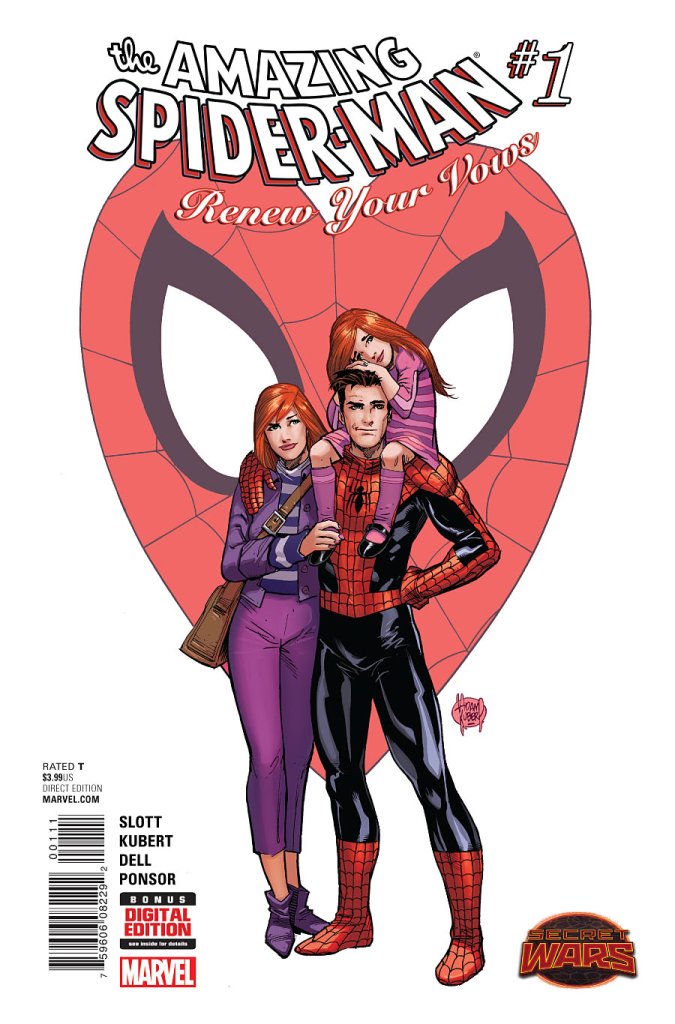
Anyway, fans were not happy, but Marvel has persevered with this new status quo. Over the years since then Peter and Mary Jane have been together and been apart, but the marriage has never been restored. Dan Slott, who wrote Spider-Man for a long time in this period, has said that people higher up the corporate chain than even Quesada (who is no longer with the company) don’t want Peter and Mary Jane to be married again, ever. And while that may be true, that just makes it crueler how often assorted writers have teased a reconciliation over the years. This teasing even included an earlier alternate reality series, Amazing Spider-Man: Renew Your Vows, which was good, but has been somewhat forgotten.

This, however, is totes canon. Well, somewhere in the Spider-Verse, anyway.

The most recent run of Amazing Spider-Man ended with Peter and Mary Jane together again (if not married) and it left them in a good place. Then came a new writer for the current run, which started with a six-month timeskip, everybody hating Spider-Man for reasons that went unexplained for a year, and Mary Jane having school-age children with another man. I stopped reading the book at this point, something I had only done once before: after “One More Day.” I have not returned, although I’ve read the explanation for everything we didn’t know in the timeskip, and the explanation this time is so egregiously stupid that it makes “One More Day” almost seem quaint by comparison.

I’m sorry if it sounds like I’m ranting, but this is important. Spider-Man is an iconic character, one that means a lot to a lot of people, including myself, and the way Marvel seems bound and determined to make him permanently miserable is, frankly, a source of real frustration to me. That’s why I was so excited when I heard about Hickman’s new Ultimate Spider-Man series. The fact that it’s set in a different universe is barely even significant at this point, as Multiverses now shoot out in pop culture like candy from a Pez dispenser. It’s a married Peter and MJ, something I have wanted to see return for 16 years. It would almost be hypocritical of me to not read this series. 

Hickman is probably my favorite writer who has done consistent, long-running titles at Marvel in the past decade or more, but he’s never done a long run with Spider-Man before. Giving him the character, even as part of the new Ultimate Universe, is something that excites me. That doesn’t mean I expect the book to be all sunshine and rainbows – Hickman is too good a writer for that. But I am hoping for stories that use the dynamic of a family to tell compelling, interesting stories that use the family as part of the tapestry instead of viewing it as a nuisance that needs to be brushed aside. 

But the existence of this book still doesn’t address the fundamental problem – this baffling notion that there are no good stories to be told with a family. DC Comics ran into a similar stumbling block with Superman and Lois Lane, who married in 1996 after nearly 60 years of courtship. (Pete and MJ had a comparatively brief 20 years before they tied the knot.) In 2011, as part of the “New 52” relaunch, the characters were made younger and the marriage was dissolved. It only took DC a few years to realize the mistake, though, as fans were vocal about preferring the Lois and Clark dynamic. DC eventually played along by not only restoring the marriage to canon, but by giving Lois and Clark a child, Jon. 

Plenty of heroes have had long relationships. Barry Allen (the second Flash) and Iris West were together and married for quite some time before Iris’s death (which was later reversed). His protege Wally West, a character who had been around for about three years when Peter Parker was created, married Linda Park and they recently welcomed their third child. Both Flashes have had their relationships wax and wane and occasionally disappear via comic book-style reboots, but they’re back these days. (Well, Barry and Iris aren’t currently married, but they are together.) The first Flash, Jay Garrick, has similarly been married for decades, and DC even recently introduced his own daughter as part of a group of new characters who were previously “erased” from the timestream, opening up new avenues for storytelling. Elongated Man and Sue Dearbon-Dibney were a married couple for decades before falling into comic book limbo – and hey, DC, bring ‘em back. We love them. And of course, over in Marvel Comics we have Reed and Susan Richards, the prototypical comic book parents, with their children. They’ve been married for nearly 60 years now. 

I mean, who wants to read about a married superhero anyway?

But the argument, I suppose, is that having a family makes a character seem “older,” and most of these previous characters I mentioned were already older than Spider-Man. Fair point, but my contention that new, exciting stories can still be told with them as married couples still stands. In fact, adding Jon Kent to the Superman mythos gave the characters a welcome new dynamic that produced some fantastic stories before Civil War’s Brian Michael Bendis took over the series and screwed it up. Wally West’s children are pretty much co-leads of his comic book, and his daughter Irey has even become besties with Maxine Baker, daughter of Wally’s sometime Justice League teammate Animal Man, yet another married superhero. And let’s not forget about Batman – while no one has got him down the aisle yet (he almost took that walk with Catwoman, but she bailed), he’s been a dad pretty much since he adopted the first Robin back in 1940. And in recent years, it’s been literal, with the addition of Damian Wayne to the family.

And the thing is, the Clark and Jon stories are nothing like the Bruce and Damian stories, and neither of those have anything in common with the stories about Wally and his kids Irey and Jai (or the newborn Wade). Because – here’s the shocking part – children are people. They’re not all identical. And when you put an interesting, developed individual into the mix with another interesting, developed individual, you’re going to get an interesting, developed story. This isn’t even counting the thousands of stories outside of comic books that have successfully told tales of parents with children. 

But what about the other argument, that being married or a parent it makes it difficult for young readers to “relate” to Peter Parker? Let’s say that, just for a second, I actually believed that. (Spoiler: I don’t.) The thing is, there are two important factors that make that argument irrelevant.

First: the notion that an older Spider-Man might be a turnoff for young readers is dumb because there aren’t any younger readers. American comic books are in something of a crisis. Older readers have always drifted away, but in the past newer readers would come in and fill the void. That isn’t happening now, at least not in numbers significant enough to concern ourselves with. It’s absurd, because thanks to the success of Marvel Studios over the last decade and a half, Marvel characters are more popular than ever. But there has been approximately zero success at drawing in the kids watching those movies and getting them to read the comic books. Meanwhile, many of the strategies they’ve employed in an effort to get new readers (such as constant reboots or replacing classic characters with younger “legacy” versions) have only served to drive off the readers who have been around for years. It’s been a lose/lose situation, and comics have to admit that those “fixes” aren’t working before anything else they do is going to matter. This is a major problem in the industry, and it’s worth discussing, but preventing Spider-Man from growing as a character is not the solution. 

Pictured: new comic book readers

Second: if the goal actually is to have a Spider-Man that younger readers can relate to, MARVEL ALREADY HAS ONE AND HIS NAME IS MILES MORALES. Miles is one of the few new “legacy” characters that has actually taken off and found mainstream popularity, being the star of two incredibly successful and extremely well-made animated movies. Hell, Miles Morales’s first movie won the Oscar for best Animated Feature. If Marvel’s argument is “we need a young Spider-Man,” congratulations! You’ve got him! Do the “young guy” stories with Miles and stop torturing Peter by trying to force him back into a box he outgrew in the 1980s!

(In the interest of total fairness, I should point out that Miles Morales was co-created by Brian Michael Bendis.)

“Heard of me, Marvel? I won a friggin’ Academy Award.”

I no longer harbor any hope for the “mainstream” Peter Parker and Mary Jane actually getting a happy ending, at least not until the next editorial overhaul at Marvel. That’s the thing about comics, everything is cyclical. The people in charge now won’t be in charge forever, so if you’re unhappy with the direction of a book, there are two things you can do. Cross your fingers and hope the next creative team is better, and – far more importantly – stop buying it. And since there seems to be a Spider-Man on the horizon that does seem a better fit for my tastes, I choose to support that book, rather than the one that leaves a sour, spidery taste in my mouth.

Help us, Jonathan Hickman. You’re our only hope. 

Blake M. Petit is a writer, teacher, and dad from Ama, Louisiana. His current writing project is the superhero adventure series Other People’s Heroes: Little Stars, a new episode of which is available every Wednesday on Amazon’s Kindle Vella platform. He realizes that he may have some of the behind-the-scenes details incorrect in his dissertation on comic book history, but in his defense, he’s never pretended to be a journalist in this column. Which frankly gives him far greater integrity than anybody working – for example – at the New York Times.