Geek Punditry #153: You Don’t Want Us Exposing Ourselves

My “Time of Death” in this year’s Mariahpocalypse came relatively early. It was Dec. 4, at 8:56 p.m., and I was taken out when her song was used in the background of a reel I scrolled across on Facebook, which – as far as I can tell – only popped up on my page at all because the person who made it was showing off a Christmas Supergirl costume and had tagged James Gunn. I am, however, still active in Whamageddon as of this writing.

Who would you rather have stalking your dreams — her or Freddy Krueger?

If none of that makes sense to you, let me explain. Whamageddon is a little game that has become popular at Christmastime over the last few years. The goal is to try to make it from December 1st until midnight on Christmas Eve without hearing the song “Last Christmas” by Wham! It’s not easy. They play the song on the radio all the time. It can pop up on the speakers in a store when you’re out shopping. The song exists in aerosol form, floating through the air, and at any moment may attack you like a swarm of angry hornets. Only the original recording counts, mind you – covers are fair game – but as soon as you recognize the song, you’ve lost. An optional rule is reporting your “Time of Death” on social media when it happens. Mariahpocalypse is, of course, the same game, but substitutes the song “All I Want For Christmas is You” by Mariah Carey, a song which is so ubiquitous at this time of year that odds are you have already heard it seven times while reading this paragraph.

Why those songs specifically? A friend of mine asked this the other day, even sharing the YouTube link to the “Last Christmas” music video. (Don’t worry – I didn’t click on it. Just seeing the link doesn’t eliminate you from the game, only hearing the song does.) His argument was that it doesn’t make sense because it’s “a great song.” And you know, it’s really not bad. It wouldn’t be on my top ten list of Christmas songs, but it’s certainly not at the bottom. That space is solely reserved for John Lennon, whose “Happy Xmas (War is Over)” is so gratingly depressing and self-absorbed that it has ironically been banned by the Geneva Conventions. As for Mariah – YOU might not like that song, but it’s clear that SOMEBODY does, because even now, 31 years after the song’s initial release, Forbes magazine estimates that she makes between $2.5 million and $3 million every year in royalties from that alone. If that doesn’t sound like a lot, keep in mind that the music industry is very different than it used to be. Sales of physical media are meager now, and to make $3 million on streaming a song would have to be played – and this is not a joke, I looked it up – approximately 687,000,000 times. That means every person in the United States would have to stream it at least TWICE, including your Great Aunt Mildred, who thinks that “streaming” is something she needs to talk to her urologist about. 

So the problem is obviously not that people don’t like it. I would argue that the reason Wham and Mariah have been targeted by this game is actually the opposite: they are TOO popular. So popular that, unless you’re really a fan of the songs or the musicians themselves, they start to get on your nerves. The songs, simply, have been overexposed.

“Guys, what are we doing here? I thought he was writing about Christmas this week.”

The truth is, any media runs the risk of an overdose if you see it too much. Last year, for example, my son discovered the Tales of the Teenage Mutant Ninja Turtles animated series on Paramount+, and he fell in love with it. The show is a spinoff of the feature film Teenage Mutant Ninja Turtles: Mutant Mayhem from 2023, picking up where the movie left off and keeping the same tone, animated style, and most of the voice cast. I’d enjoyed the movie and I was quite happy to discover that I enjoyed the show as well.

The first time.

But as anyone with children can tell you, if a kid really likes something they don’t want to watch it just once. Oh no. They cycle back to the beginning and start over again. And this is what Eddie started to do. Once he reached the end of the final episode, he’d roll right into episode 1 and start watching the show over, to the point of excluding everything else. For over a month, Tales of the Teenage Mutant Ninja Turtles was the only thing he wanted to watch AT ALL, and even though I liked the show, I got tired of it VERY fast. It was made worse by the fact that there is only one season of the show so far, only 12 episodes, so he could cycle through the entire thing VERY quickly. I would pick him up from school and when he’d get home he would immediately go back to whatever episode he was watching when he was bundled out the door that morning. When it got to the point that my wife and I were saying the jokes out loud to one another ahead of time, we knew something had to be done. We tried to convince him to try other Ninja Turtle cartoons – there are, and this is a rough estimate, 17 trillion of them — and even if it was still all mutants all the time, it would be nice to at least not have to watch the same 12 episodes over and over. These efforts were met with failure however. After an episode or two of whatever show we put in front of him, he would invariably demand that we cycle back to Tales. Adding the movie into the rotation only gave us slight relief. 

This is the point in the story where certain members of the audience are thinking, “Well YOU are the adults. Why didn’t you just TELL him to watch something else?” These are a very specific subset of audience members that I like to refer to as “people who do not have children.” The rest of the audience knows EXACTLY why we didn’t just tell him to watch something else. Regardless, this went on for some time until football season started up and he was distracted by sports, finally breaking the cycle.

For some reason, we experienced this same phenomenon again THIS year, except this time instead of the Turtles, it was reruns of the game show Supermarket Sweep. I’m already trying to find a strategy to distract him after the Super Bowl this year so we don’t get stuck again.

The point is, even the best cartoon, movie, or song will become tedious if you are exposed to it too often. The human brain craves variety. We want to be entertained, yes, but entertainment is often predicated on surprise, on the unpredictability of what we’re watching. Sure, there’s such a thing as a “comfort show.” Shows like Friends, The Office, or Bob’s Burgers have devoted, almost militant fan bases that can just keep watching those shows over and over again, watching almost nothing else. In fact, there have been studies that indicate watching a comfort show is a way of relieving anxiety, because you know what’s coming and because revisiting them fires the same chemicals in the brain as you get from spending time with family and friends. That’s right – you love going back to the Belcher family because your brain thinks it’s your OWN family. 
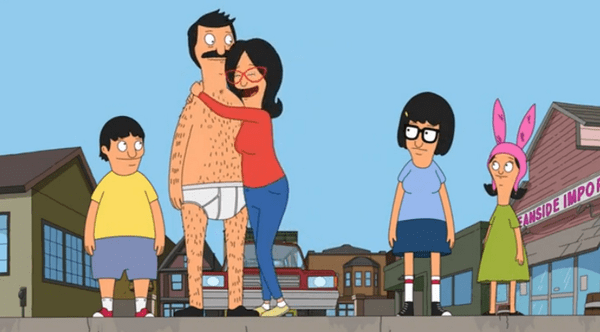
“Ya heah that, Bobby? They think we’re FAMILY!”

However, you may notice that the shows that make this list – that echelon where a devoted section of the fan base can cycle through them again and again – are almost exclusively shows that were produced for many years. Friends had 236 episodes, The Office 201, and Bob’s Burgers – which is still on the air and still in production – aired episode #305 last weekend. Even if you picked one of these shows and watched nothing else, it would take the average person with a job and normal activities weeks or even months to get through the entire thing before you would cycle back to episode one. Fans of one-season wonders like Firefly may love their show, but I don’t know any Browncoats who just watch the 14 episodes and one movie over and over again without any other entertainment in their life. 

There’s also, if we’re being totally honest here, a bit of a hipsterish anti-popularity vibe when it comes to things that become true cultural icons. If you were alive at any point in the last dozen or so years, you may have heard of a little Disney movie called Frozen. It doesn’t matter if you personally have had children or were a child at any point in this time period, it was absolutely inescapable. A month before the movie came out we all had the soundtrack beamed directly into our brains telepathically. The movie won awards, it produced a mountain of merchandise, and John Travolta somehow egregiously mangling Idina Menzel’s name at the Oscars is perhaps the most entertaining thing that has happened at the award ceremony in the last three decades, or at least until they accidentally tried to give “Best Picture” to La La Land that one time. 
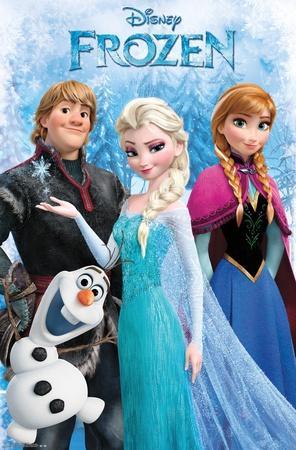
If your kids ask what 2013 looked like, just show them this.

But with the indisputable popularity of Frozen came a backlash. If you say that you like that movie in modern company, you WILL be met with a certain derision. People will tell you that THEY never thought it was THAT good. Mention how you appreciated the fact that it didn’t have a traditional “Disney Princess”-style love story and someone will appear behind you as though you’d said “Candyman” three times in order to inform you that Wreck-It Ralph and Big Hero Six didn’t have love stories either. Start humming a few bars of “Let it Go” and a coven of Disney Witches will try to trap you in a circle and summon the ghost of Lin-Manuel Miranda, which REALLY irritates him because he’s still alive. 

But the thing is, guys, Frozen is a good movie. Like, it objectively is. The animation is gorgeous, the songs are catchy and memorable, the vocal performances by Menzel and Kristen Bell are phenomenal, and the story is not only atypical of what we expected from a Disney Princess movie but at the same time was profoundly moving and had a wonderful message about love and acceptance. But you absolutely are not allowed to say that in certain circles without somebody grinding up a DVD of Tangled into powder and trying to force you to snort a line.

The point is, it’s okay to get tired of something. If you watch or listen to anything too often, odds are you’re going to want to put it aside and watch something else, and that’s perfectly fine. That’s normal. It’s even okay if you get so sick of something that you never want to watch it again. But that’s not an actual metric of QUALITY. Sure, there are some things whose popularity is inexplicable, but you’re not a better person than somebody else because you don’t like them. And while games like Whamageddon are fun, that shouldn’t be taken as a statement that the songs are bad, just that they’ve maybe gotten a little more air time than we would like.

And you know the good thing about losing Mariahpocalypse on Dec. 4? That means I’ve got three whole weeks until Christmas in which I’m safe to listen to the song as much as I want. 

Blake M. Petit is a writer, teacher, and dad from Ama, Louisiana. His most recent writing project is the superhero adventure series Other People’s Heroes: Little Stars, volume one of which is now available on Amazon. You can subscribe to his newsletter by clicking right here. He’s also started putting his LitReel videos on TikTok. He hasn’t watched the movie, but he suspects that a lot of the comments he’s made about overexposure could also be applied to the film K-Pop Demon Hunters

Geek Punditry #152: Blake’s Five Favorite Unorthodox Christmas Specials

With Thanksgiving behind us (save for a refrigerator stuffed with leftovers) I for one am ready to dive headfirst into the Christmas season. I’m ready for decorations, lights, radio stations that play holiday classics 24/7 and, of course, Christmas movies and TV shows. But today, I want to focus on wonderful little subset of entertainment we know as the Christmas special. It’s not a regular episode of a TV show, it’s not long enough to count as a movie, but somehow it’s just not Christmas without them. We all know the Rankin and Bass all-stars, of course, and we’re well-versed in the antics of the Peanuts gang and the wiles of the Grinch. Those of us who are particularly sophisticated even indulge annually in Garfield’s Christmas shenanigans. But in the decades that Christmas specials have existed, there are many that have come and gone without leaving the mark that these other, better-known specials have… and some of them are outright BIZARRE. This week, to help you kick off the season, I’m going to give a spotlight to five lesser-known, sometimes baffling Christmas specials that you may have forgotten – heck, that you may never have heard of at all.

Twelve Hundred Ghosts

We’ve all seen A Christmas Carol, of course. In fact, we have no doubt seen it dozens of times, maybe even HUNDREDS of times, and we can do that without ever watching the same version twice. The story is a perennial that we’re all familiar with: On the night before Christmas Ebenezer Scrooge, professional miser, is visited by three spirits who show him visions of the past, present, and future in an attempt to get him to change his ways. Charles Dickens’ book was originally published in 1843 and became not only a classic, but in many ways helped reinvigorate the popularity of Christmas itself in a world where it had been waning. It is well-known and well-loved and this, combined with the fact that it’s in the public domain, means that it has been adapted perhaps more than any other story in history. Just think about how many different movies there have been based on the story, how many TV shows have borrowed its plot for Christmas episodes, how many times it’s been produced on stage, spoofed in commercials, adapted into comic books, and basically translated into every storytelling medium imaginable.

Heath Waterman imagined perhaps a bit TOO much, and in 2017 his imagination gave birth to Twelve Hundred Ghosts: A Christmas Carol in Supercut. Waterman spent a year and a half assembling clips from virtually every iteration of the story he could find – TV shows, movies, parodies, and plenty of others. Using only these clips, he assembled a retelling of the story that is surprisingly cohesive. Despite the fact that we can roll from a clip with Patrick Stewart to Mr. Magoo to Basil Rathbone in the blink of an eye, it’s amazing how well the narrative holds together. Even someone who has only a passing familiarity with the story could easily follow along with the tale as assembled by Waterman, and by the time its 53 minute running time is over, you’ve got a more complete telling of the story than many of the different versions tell you on their own.

Being a supercut made of copyrighted works, Waterman can’t market or sell his creation, and you won’t find it on Netflix or on DVD. But the whole thing is available on YouTube, and it’s worth the time to watch if you’re even remotely curious about how it works. 

The Great Santa Claus Switch

Before The Muppet Show, Jim Henson’s Muppets appeared in a variety of different forms – in commercials, as performers in sketch comedy programs, and of course, on that new kids’ show Sesame Street. In 1970, Henson and his team produced The Great Santa Claus Switch as a special episode of The Ed Sullivan Show. In this hour-long special, an evil villain named Cosmo Sam (played by the great Art Carney) has decided he wants to take over Christmas for himself. To carry out his nefarious scheme, he’s going to kidnap Santa’s elves one at a time and replace them with his own minions, furry creatures called Frackles. 

As you can tell from the description, Henson was never one to shy away from reusing certain resources. “Frackle,” for example, sounds an awful lot like the name of another pretty popular Henson production. He recycled actors as well – Art Carney wasn’t just Cosmo Sam, but also Santa Claus himself. (Carney, of course, would go on to star in another of the greatest Christmas movies of all time – The Star Wars Holiday Special.) And then there are the Frackle PUPPETS. Several of them were reused and repurposed into background characters a few years later when The Muppet Show premiered. You’d see them dancing in the background during sketches or hanging around in crowd shots…well, all except for one. One particular Frackle, a blue and purple weirdo with a hooked nose named “Snarl,” was given a new set of clothes and a new personality for The Muppet Show, not to mention a new name. You may have heard of him – these days he goes by Gonzo the Great.

This is a rare Muppet production that, as best I can tell, has never had an official media release. However, like 1200 Ghosts, the curious among you can watch it all right now on YouTube. It’s a decent enough special, and it’s really interesting as a piece of Muppet history that you may not have known about. 

Beebo Saves Christmas

The “Arrowverse” era of DC Comics television was a fun one. Beginning with Arrow, the line went on to encompass shows like The Flash, Black Lightning, Batwoman, Supergirl, and most pertinently, Legends of Tomorrow. That last one featured a team of superheroes on a time-travelling ship, with a cast that rotated with surprising frequency over the years. After a couple of seasons the show got stranger and stranger and eventually, they just embraced it. At one point, for reasons that are far too complicated to explain, the heroes wound up summoning a giant version of a blue, furry doll called Beebo to help fight demons. I swear, it makes sense in context. The show was utterly bonkers and once it accepted that fact, it transcended to the level of genius.

In 2021, they took it one step further and made an actual Christmas special, Beebo Saves Christmas. This was ostensibly an animated special that existed in the world of the show, a tie-in to the Beebo toys, kind of like how Pixar told us that Lightyear was the movie that Andy’s favorite Toy Story character was based on, except that the Beebo special was actually entertaining. In the special, an elf named Sprinkles (Chris Kattan) becomes obsessed with efficiency and convinces himself that he can handle the demands of the Christmas season better than Santa Claus (Ernie Hudson). So it’s up to our fluffy pal Beebo (Ben Diskin) to gather his friends and…well, you read the title. 

The astonishing thing about this special is how genuine and earnest it feels. It has all the hallmarks of a TV special that’s meant to shill toys but, at the same time, has a sort of warmth and heart to it. The people who made this weren’t just phoning it in to sell merch, because there WAS no merch. They were making a show to PRETEND they were selling merch, and they clearly had fun with it.

“So Blake,” you may be asking, “Where can we watch this holiday masterpiece?” Well, that’s the bad news. The main Legends of Tomorrow series is currently streaming on Netflix. (Why not on HBO Max? Because – and I cannot stress this enough – Warner Bros doesn’t know what the hell it’s doing.) But the Beebo special, which was not technically an episode of the series and was never presented as such, does not appear to be streaming anywhere. And I think we can all agree that this is a true disgrace. 

Teenage Mutant Ninja Turtles: We Wish You a Turtle Christmas

Remember in the 90s, at the height of Turtlemania, when the Teenage Mutant Ninja Turtles somehow transcended the pages of comic books, fought free of the television screen, broke out of the movies, and became a real-life rock band? How they actually toured and you could see them live? And somehow, in 1994, they got a live-action half-hour musical Christmas special? How could you possibly FORGET, right? 

There’s not even an attempt at a plot for this one. It’s a series of short music videos, some of them original songs, some of them turtle-ized twists on Christmas classics, and all of them absolutely terrible. These are some of the worst Christmas songs you’ll ever hear in your life. The music is lousy, the voices are awful, and the attempts at humor fall flat and cause ear-splitting, heart-rending agony in anybody unfortunate enough to have to hear them. It is perhaps the single worst Christmas special ever made.

Here’s a link to see it on YouTube. Watch it twice

Christmas Comes to Pac-Land

Speaking of trendy pop-culture characters that got overexposed, isn’t it wild that Pac-Man had a hit cartoon show? The game is just a circle running through a maze eating dots and occasionally ghosts. Somehow, Hanna-Barbera turned that into a Saturday morning TV series that built out the world and the mythology of “Pac-Land” and Pac-Man’s family crafting an entire world where everything is round and bulbous and susceptible to the kind of puns that I am absolutely DYING to make except that I try to keep these columns as PG as possible. And in 1982, that popularity spilled over into a half-hour special.

In Christmas Comes to Pac-Land, on Christmas Eve Pac-Man and his family munch the ghosts, as they do, and the ghosts’s eyes float away, as they do. But on this Christmas Eve, the eyes happen to spook Santa’s reindeer, causing a crash in Pac-Land. But the Pacs, as it turns out, have never heard of Christmas before, and Santa has to explain it to them, then enlist their help to find the toys that got spilled across the countryside before Christmas is ruined.

I’m never sure what to make of this special. Are we to understand that Pac-Land is a place in our own world, a place that Santa Claus glides over in his sleigh every year, but has never visited before? That we’ve never spotted? And if that is the case, what does the existence of ghosts imply? The theological implications of this special cannot be understated, and conflicting Biblical scholars have been debating the results of its teachings for over four decades now. Frankly, it was highly irresponsible of Hanna-Barbera to release this at all, and they now bear the responsibility for causing the greatest religious schism since the Protestant reformation. Merry Christmas!

Blake M. Petit is a writer, teacher, and dad from Ama, Louisiana. His most recent writing project is the superhero adventure series Other People’s Heroes: Little Stars, volume one of which is now available on Amazon. You can subscribe to his newsletter by clicking right here. He’s also started putting his LitReel videos on TikTok. He may have gotten a little carried away on the Disney Universe thing, but he has no regrets. 

Geek Punditry #100: If I Were King of Comics

Here we are, my friends, 100 Fridays later. In the first week of January 2023, I was thinking of how much I missed the days of writing for Comixtreme and recording my podcast, and I wanted to find a regular way to get my voice back out there in the world. How could I do it? I asked myself. How can I reach out and gift humanity with my invaluable thoughts, insights,and trademark witticisms, in this era where the world clearly needs me more than ever before?

Then I remembered I had a blog that I was barely using, and maybe it would be a nice little challenge for me to find something – once a week, just find SOMETHING – that I liked enough to write a few paragraphs about. 

And of course, it has become the global phenomenon and world-altering sensation you see before you today. 

As I approached the 100th installment of the column hundreds of voracious readers have called “on the internet somewhere,” I tried really hard to decide what to write about. What, in the enormous global marketplace of popular culture that I had made my home, was worthy of dedicating the landmark 100th column to? Star Trek? Stephen King? Superman? Bluey? I feel like I’ve kind of talked about those various topics…well, “extensively” seems in some ways to be too mild a term, but we’ll roll with that right now. No, I needed something a little bit different.

Then I remembered an idea I’d had some time ago, but that I had pushed aside. Something I thought needed to percolate a little more. Something that the world would HAVE to sit up and take notice of. And it seemed perfect. So this week, ladies and gentlemen, allow me to explain to you what exactly I would do if I were in charge of comic books.

You all know I’m a comic book geek, and I have been since I was a small child. Not to discount my love of movies, TV, or novels…I’m a fan of storytelling in general. But comics are in many ways my medium of choice. I’m a regular Wednesday visitor at my local comic shop, I know all the members of the Legion of Super-Heroes, and I can tell you – in order – every publisher that has ever had the Star Trek license. (Gold Key, Marvel, DC, Malibu but only Deep Space Nine, back to Marvel, Wildstorm – which was by then a DC imprint – and currently IDW. Sorry, ladies. I’m taken.)

As much as I love comic books, though, there are certain practices in the industry that I’m not a fan of, certain things that I think could be done better. In this era, where there’s so much competition for the attention of an audience coming from virtually every region of our culture, it’s imperative that comic book publishers find ways to draw in new readers and retain existing ones. Ways to make the sometimes complex mythologies of American comic books a little less of a roadblock, and make the space a little more welcoming. For the 100th Geek Punditry, guys, here are some rules that would be implemented if I were King of Comics.

Numbering

As most people know, comic book series are numbered, and for many decades the numbering convention was simple. You started with issue #1, proceeded to #2, and so forth. You just put the numbers in order. Seemed like a simple idea. But at some point things started to get a little more convoluted. After World War II, many of the existing superhero comics had been cancelled. But in the 50s, looking for a new hit after public favor turned against things like horror comics, DC decided to bring back some of their defunct characters with a new incarnation. A new Flash was created – Barry Allen – and after a few tryout issues in the pages of Showcase, they gave him his own title. Barry took over the numbering of the Golden Age Flash, Jay Garrick, and his first issue was #104. Here’s where it gets confusing: they then did they same thing with Green Lantern. But in this case the new guy – Hal Jordan – did NOT pick up from Alan Scott’s title with issue #39, but instead got his own first issue, Green Lantern Vol. 2 #1.

Make it make sense.

It would not be the last time this happened. In the 80s they gave new first issues to Superman, Wonder Woman, and The Flash, and in those cases, the lapse in publishing between the previous volume and the new was not nearly as long as it had been in the silver age. Then in the 90s, Marvel did it with four of their flagship titles at once – Avengers, Fantastic Four, Iron Man, and Captain America – as part of a new initiative where the titles were essentially farmed out to Jim Lee and Rob Liefeld and set in a different world than the “regular” Marvel Universe. When the books were brought back to the “regular” Universe a year later, they were given a THIRD first issue…and then all hell broke loose.

Since then, virtually every comic book published by Marvel or DC Comics has been canceled and relaunched with a new first issue, most of them multiple times. Batman, at last count, is on its conservative third volume. Superman is at six. Punisher – if I’m counting correctly – has recently concluded volume FOURTEEN. The longest running comic book at either publisher that has not been restarted at least ONCE? Looney Tunes, which recently celebrated issue #281. (It should be noted, though, that even this is the fourth volume of Looney Tunes, having been published by various other companies before Warner Bros. wholly absorbed DC Comics.)

Winner of the gold medal in “not starting over for no reason.”

The conventional wisdom seems to be that a new first issue will bring in higher sales numbers than issue #482, and that might be true. But increasingly, it has proven that a tenth issue #7 does NOT have appreciably more readers than issue #489 would have. In other words, the restarting game gives a short-term sales bump, but does nothing to retain readers, which is what the goal should be.

Anyway, to appease fans (such as myself) who prefer maintaining the original numbering rather than the constant restarts, Marvel and DC have begun featuring “legacy numbers” on the covers of their books – in other words, what issue would this be had the book never been restarted? Which is why the recent Superman Vol. 6 #20 also bears a little symbol indicating that the “Legacy Number” of this issue is #863.

Only long-time Superman fans will understand what I mean when I say “at least it’s in a triangle.”

Confused yet?

Making it even more confusing is the way that many series have changed titles over the years, and trying to figure out which is which. Thor started as Journey Into Mystery, one of Marvel’s assorted sci-fi titles. But after he made his debut, Thor quickly took over the comic book, and the title was changed from Journey into Mystery to The Mighty Thor with issue #126 When calculating the Thor legacy numbers, the original JIM numbers seem to count, but JIM itself has been re-started several times over the years. Journey Into Mystery Vol. 2 does NOT count, apparently, as it ran concurrently with Mighty Thor. And let’s not forget that the current series carrying the Legacy Number is actually called Immortal Thor, which has the same legacy numbers as did previous volumes like Mighty Thor, King Thor, Thor: God of Thunder, or the (at last count) six different series that have just been called Thor. 

According to the legacy numbers, these are all issues of the same title.

Then there’s the fact that it’s inconsistently applied, especially at DC. Superman (on Volume 6), Batman (Volume 3), Flash (Volume 6), and Green Arrow (Volume 7) all have Legacy Numbers on their covers. Nightwing (Volume 4), Harley Quinn (Volume 4), and Titans (Volume 4) do not, and I can see no particular reason why. 

It’s an absolute mess. True story: when the Captain Marvel movie came out in 2018 my wife – who is a geek but not as big a geek as I am – was interested in reading some of the comics to learn more about the character, but after several attempts to figure out which volume to start with, she gave up. If the plan here is to get MORE readers, it’s failing miserably.

So how do we fix this problem? 

Here’s what I would make the standard rule: first of all, the Legacy Numbers should be mandatory for any series that continues the title or star of a previous series. The editors would need to get together right away, decide which books count towards the “legacy” and then stick with it from then on. 

Second, I would have them stop with the constant relaunches. If a character is returning after ten years away…okay, a new first issue might be justified. If we’re going back to issue #1 because there’s a new inker, it’s not. It’s become a common practice to start over with a new first issue any time there’s a change of creative team, especially when there’s a new writer. It’s too much. So here’s the rule: there must be a minimum of three years since the previous volume before a new first issue is justified. If the final issue of Captain Dudeman was #47 and it came out eighteen months ago, then you either have to start with Captain Dudeman #48 or you have to change the title. 

That second stipulation, I think, would start to get used very frequently. One of the reasons that the renumbering has gotten so rampant is that every time a new writer is brought onto a series they want to make their own mark – which is fair. But in so doing, they often want a clean slate, a sort of “back-to-basics” approach for the character, which has resulted in several books in the last few years where the first issue shows the heroes in a wholly different situation than they were in when the previous volume ended, and then it’s not until several issues later that the reasons for the change are actually explained. Sometimes it works (Fantastic Four and Daredevil both did this effectively in their most recent relaunches) and sometimes it doesn’t (the current run of Amazing Spider-Man should be studied by scholars as a cautionary example of what NEVER to do).

I don’t want to take away a writer’s ability to tell the stories they way they see fit, that’s not what this is about. But if the plan is to tell a totally different story, changing the title of the series is a good way to reduce confusion. Telling somebody “You have to read Green Lantern – but not that one, or that one, or that one…” is a recipe for the kind of bafflement that drove my wife away. But saying “Green Lantern: Emerald Champions is a great series” is a HELL of a lot easier for the casual reader to comprehend. You can keep the legacy numbers that way, but having a subtitle or supertitle (that’s when you preface the main title with something else, such as Peter Parker, the Spectacular Spider-Man) makes it a lot easier to differentiate one run from another. 

What this really boils down to is that I never again want to see a comic book called Fantastic Four #1. When I was a kid, owning that book would have been a gold mine. Now I’ve got six different books called that, and it’s ridiculous. 

Cover Confusion

The way the comics industry handles its covers is also an issue, and there are two primary problems I want to tackle. First, let’s talk about pin-up covers. This isn’t as bad as it once was, but for a while there in the 00s and 10s, there was an awful trend of comic books having generic pictures of the main character or characters on the cover, something that may be a fabulous piece of art but doesn’t tell the reader anything about the story between the pages. The argument at the time, I believe, was that they wanted every issue to be an accessible first issue for a new reader. While that may be a noble goal, that doesn’t make a damned bit of sense. Anybody who picks up a comic because they like the picture of Spider-Man on the cover is going to have a hard time keeping up if they open up the comic and run into “Revenge of the Return of the Colonoscopy of the Sinister Six: Part Five of Seventeen.” Congratulations – you sold that one issue…but they aren’t coming back. 

“Wow, great cover!”
“Thanks!”
“What’s the story about?”
“What the hell is a story?”

Pin-up art is fine, but a great comic book cover should tell a story. Think about some of the all-time most memorable covers: Amazing Spider-Man #129 features the webspinner dangling in front of the faces of his friends, agonizing over which of them was going to die in that issue. Green Lantern (Vol. 3) #49 shows a power-mad Hal Jordan brandishing a set of rings stolen from his fallen comrades, a look of pure chaos in his eyes. Wolverine: Blood Hunt #2 shows the ol’ Canucklehead on a motorcycle with a French vampire babe being chased by a mob of vampire stormtroopers while fleeing an explosion that is also being escaped by an overhead passenger jet.

If just that description isn’t enough to make you pick up the book and look inside, I don’t think you actually like comic books.

Now THAT’S art.

These days it’s better, although many variant covers still have what I call the Pinup Problem. So here’s going to be the rule for this one: cover art MUST be relevant to the story inside. That doesn’t mean it has to be a depiction of an actual SCENE from the story. Thematic covers, like the above Amazing Spider-Man #129, are fine. Covers promising a twist or a mystery, anything like that is just dandy, provided it has SOMETHING to do with the story. The only exceptions, the only time a simple pin-up is acceptable, are when it’s the first issue of a series (and presumably a good jumping-on point anyway), if it’s the introduction of a new character, or for certain milestone issues, such as an issue number that ends in a double zero.  

Now that we’ve cleaned THAT little problem up, let’s talk about the REAL issue: variant covers. 

There’s debate over when, exactly, variant covers became a thing, although most people seem to agree that the first mainstream example of printing copies of the same book with two different covers was probably Man of Steel #1 in 1986, the John Byrne relaunch of the entire Superman mythos. That was an instance where it was novel and interesting and fun. People made an effort to buy both covers to make their collection “complete.” It was really cool.

You could get with this, or — alternatively — hear me out on this one…you could get with THAT.

But like so many good things, it got overdone. It didn’t happen overnight, mind you. It was quite some time before having two covers became a regular practice, and even longer before it reached the heights it has today. Even as late as ten years ago, having multiple covers was still more of an exception than a rule. But the rules have changed and HOW. 

If you pick up any random issue of a new comic from a mainstream publisher today, odds are that you will have between two and five covers to choose from. First issues are frequently more. For the first issue of this summer’s Uncanny X-Men relaunch, League of Comic Geeks (the website I use to track my own collection) lists 32 separate cover variants. And even THAT is chump change compared to the most recent relaunch of Teenage Mutant Ninja Turtles from IDW Publishing, which currently stands at – 

Are you sitting down? Are you sitting down in the sewer?

ONE HUNDRED AND SEVENTY-SEVEN DIFFERENT COVERS.

If you are the sort of person who feels the need to get every available cover and you’re a Ninja Turtles fan, I hope you can still afford your insulin.

I’M SAYING IT’S KIND OF A LOT.

The reason they do this, of course, is because people continue to BUY them. And when there are stories every other day about some comic shop or another closing down or a publisher being unable to pay its creators, I can’t fault them for looking for ways to increase revenue. But the problem is that this simply bleeds money out of the existing fans until they get fed up and walk away entirely. And like the renumbering problem, this doesn’t do anything to actually get NEW fans into reading, which is what the long-term goal should be.

This is not to say that I hate variants in their entirety. I rather like them when they do something CLEVER with them, such as what I call “theme” months, where all the variants have a different trend. For instance, DC recently did a run of variants covers that were mock-ups of the packaging of the old Super Powers action figures. (I should point out that other publishers, including Marvel, have been doing action figure variants for a long time, but this was the first time I recall them being used as a monthly theme.) In October, there were a series of variants by artist Kelley Jones showing the DC heroes as kids in Halloween costumes. Marvel did a series not long ago of variant “homage” covers based on some of their old vampire comics, and another run that showed their characters facing off against Godzilla. That kind of stuff doesn’t really bother me, except for the fact that they add to the preposterous number of variants on the shelf.

I don’t know art, but I know what I hate. And I don’t hate this.

I also really like the “sketch” covers that have become popular in recent years. These are blank covers printed on a different cardstock that fans can use to draw their own artwork or have an artist draw something for them. They’re popular for commissions at comic book conventions and events like Free Comic Book Day, and I don’t think the blanks really cause a lot of confusion on the racks compared to the 30-plus X-Men covers. 

The worst part, I think, is that so many of these “variants” are barely worthy of being considered a separate cover. You commission a piece of art from an artist and you’ve got a cover. Print it with no logo or trade dress and it’s a “virgin” variant. Print it without colors and it’s a “sketch” variant. Print it with metallic ink and it’s a “foil” variant. You can crank out a dozen different covers with one sketch and people will continue to buy them. It’s insane.

I recognize that there are a lot of people who LIKE these variants, even if they aren’t MY thing. So in my capacity as the benevolent overlord of comic books, I don’t want to ban them entirely. Here are the restrictions I’ll put in place:

  • A standard issue of a comic book shall have no more than three covers: the “main” cover, a variant cover, and a “theme” variant for that month. 
  • First issues will be limited to five covers, including the theme cover.
  • Milestone issues, such as anniversaries, will be allowed extra variants consisting of no more than one-tenth of the number of issues the book has run. For instance, the 50th issue will be allowed 5 variants, the 100th issue will be allowed 10 variants, and so on. 
  • Retailer-exclusive variants will not count against the total. These are covers commissioned by – and only available from – specific retailers, such as an individual comic shop, store chain, or online retailer.
  • There will be no restrictions on “sketch” covers, nor will they count against the number of variants allowed. 

See? I can be as flexible as the next guy, provided the next guy isn’t Plastic Man.

Anyway, there we have it, guys. Comic books are fixed!

Well…okay, maybe not. There are still plenty of other things in the world of my favorite medium that need to be addressed. Other problems to solve, other fires to put out…but I’ve already gone on for nearly 3500 words, which is pretty massive for one of these Geek Punditry columns. So I think it’s time to put this topic aside, at least for now.

But that’s okay. After all, I’ve got to save something to write about when Geek Punditry #200 rolls around.

Blake M. Petit is a writer, teacher, and dad from Ama, Louisiana. His most recent writing project is the superhero adventure series Other People’s Heroes: Little Stars, volume one of which is now available on Amazon. You can subscribe to his newsletter by clicking right here. He’s also started putting his LitReel videos on TikTok. His goal to take over all of social media after it has started to slide towards irrelevance continues. 

Three Wishes: The Toys That Made Us

A few days ago, a long national nightmare ended when Nacelle announced two new seasons of their hit documentary series, The Toys That Made Us. I became a huge fan of this series right away, and it’s been a long five years since we got any new episodes, so I’m absolutely ecstatic. To commemorate the news, I thought I would re-present to you a piece I wrote between seasons two and three for a sadly-defunct pop culture forum, a “Three Wishes” column where I suggested potential topics for future episodes. I’m happy to say that one of my three suggestions was included in season three, and the other two are going to be in the new episodes that were just announced, albeit in slightly different forms than what I suggested. It’s incredible that my ability to predict the future is incredibly accurate, provided that I only use it in ways that have absolutely no potential for monetary advancement on my part. Anyway, here’s what I wrote way back in 2018.

The best reason to subscribe to Netflix these days isn’t Orange is the New Black or Arrested Development. Heck, it’s not even Bright. The shining jewel in the streaming service’s crown is The Toys That Made Us, a documentary series that looks into the history and impact of some of the most popular toy lines of all time. With a lighthearted tone, the series dives into things that the viewer grew up with, chock full of interviews with the people who conceived the toys, creators who made the TV and comic book tie-ins, and supercollectors. Plus, you get all the classic toy commercials you grew up with.

The eight episodes, to date, have explored the worlds of Star Wars, Barbie, He-Man, G.I. Joe, Star Trek, TransFormers, LEGO, and Hello Kitty. That’s a ton of toyetic goodness. But if you’re like any other human being, you probably read that list and immediately asked, “Hey, what about…” and then filled in whatever your own favorite toy line is. That’s natural, there are hundreds of toy lines that have achieved enough success to have their fans, and while not all of them may have an incredible story to go with them, there are bound to be enough to fuel several more seasons of this show. Considering how popular and relatively cheap the show is to produce, Netflix would be bonkers not to ask for more. In Three Wishes, we take a look at something in pop culture and express three hopes for the future, whether those wishes are almost inevitable or pie-in-the-sky dreams. Today, we’re going to talk about three toy lines the producers should consider for their next round of episodes.

1. Teenage Mutant Ninja Turtles: The first choice here is pretty much a no-brainer. When you look at the independent comic book bubble of the 80s, it would be virtually impossible to argue that there was a bigger success than Kevin Eastman and Peter Laird’s Teenage Mutant Ninja Turtles. From their humble beginnings as a parody of Frank Miller’s Daredevil, the Turtles exploded into a global phenomenon. Their comics, through countless relaunches and spin-offs, have been featured at no less than five publishers They’ve starred in five television series and six theatrical films, and most significantly, they have dominated toy shelves for years. 

Playmates Toys has held the Turtles license since 1988, producing thousands of action figures and playsets. In addition to the countless iterations of the Turtles themselves, there have been figures of their allies and foes, movie- and TV-specific versions, the turtles in costumes such as (not officially) the Universal Monsters and (officially) the cast of Star Trek, and pretty much any other piece of merchandising you can name. With a documentary, the challenge is to find what’s compelling in real life and push it to the forefront. Although I don’t know anything about the Playmates company or how they have worked with Eastman and Laird or the Turtles’ current owner, Nickelodeon, the sheer volume and popularity of this franchise seems like it would be a ripe property to focus on for 45 minutes. 

2. Toy Biz/Marvel Toys: On the other hand, here’s a property where there is undoubtedly enough drama to make for a compelling TV episode. It may be hard to believe today, but there was a time in the 90s where the future of Marvel Comics was in serious doubt. Bad business decisions and bad acquisitions sent the biggest comic book publisher in the industry spiraling into bankruptcy, and things looked bleak at the house that Spider-Man built.

One of the things that helped pull Marvel Comics through was an unexpected merger of sorts with Toy Biz, a Canadian-based company that had the license to make Marvel toys at the time. The story of the twisting, winding relationship between the companies has been written about extensively, but that doesn’t mean there’s not more gold to mine. I’d love to hear the story told by the players in the game, as we learn the truth about how, without this little toy company, Marvel Entertainment may not have lasted long enough to make your kids cry all the way home from Infinity War.

3: McDonald’s Happy Meal Toys: In my house, we have a term for people who didn’t love McDonald’s Happy Meal toys: filthy liars. Because no matter what kind of Keto-adherent, La Croix-chugging diet you may be on today, when you were a kid there was nothing better than a cheeseburger, fries, and a new toy. Since 1979, McDonald’s has released thousands of toys, from licensed Disney characters to Chicken McNuggets in Halloween costumes to the legendary McDonald’s Changeables (toys that transformed from McDonald’s food into robots. That I never completed this series is my one regret in life.)

Not only can’t the Happy Meal toy be beaten in sheer variety, but it’s also ubiquitous as anything you can imagine, touching virtually every child in North America for the last four decades. What’s more, some of them are insanely collectible. Give me a tour of some guy’s crazy attic Happy Meal museum and, I promise, I’m watching to the end. Let’s see if anybody feels that strongly about the Burger King Kids’ Club. (Answer: no.)

Blake M. Petit, whose college roommate once said he could never date a woman who didn’t “get” Grimlock, has been pontificating about pop culture online for over a decade. You can follow him at BlakeMPetit.com and, if you’re feeling generous, check out his books on Amazon.