Geek Punditry #17: Fiction’s Fiction

If there’s one thing you can say about fandom, it’s that all fans of every stripe want the same thing: more. If we love a TV series, we want movie spin-offs. If we love a comic book, we want that hero to appear in multiple titles. If we love football, we feign interest in the XFL or USFL until August, because at least it’s something. Whatever it is fans want, the unifying element is that everybody wants more of it. 

The problem is that stuff takes time. The average TV season lasts for 13 episodes these days (sometimes 22, if you’re lucky), leaving well over two thirds of a year with no new content. Movie sequels can take from years to decades, and sometimes never happen at all no matter how badly you want them. Waiting for new books is a crapshoot – if you’re a Stephen King fan you’ll have three new novels to read by the time you get home from Burger King, whereas George R.R. Martin readers will have to inherit the fandom from their grandparents before they get any new content. Even comic books, which usually have a pretty standard schedule of once or twice a month, take you ten minutes to read and then you’re stuck sitting around waiting for the next installment.

Efficiency is the only reason the man on the left has a higher body count.

So in order to satiate the thirst of fans for “more,” something marvelous has happened. “Extended” Universes. Novels based on movies, comic books based on novels, TV shows based on comics, movies based on TV shows. There’s a weird, incestuous spiderweb of media that springs up around any sufficiently popular franchise, and it’s been happening for ages. Back in 1942 George F. Lowther wrote The Adventures of Superman, a novel based on the world’s most popular comic book character who, at the time, was only four years old. In 1910, Thomas Edison produced a short film based (very loosely) on Mary Shelley’s Frankenstein. Hell, way back in 1615, Miguel de Cervantes published the second volume of Don Quixote largely to spite an anonymous writer who, using the pseudonym “Alonso Fernandez de Avellaneda,” released his own unauthorized sequel to the first book, something that would have brought down a legion of Disney-owned lawyers were anyone to try that today. The point is, fans have been greedy for a long, long time.

Pictured: More.

The great thing is, if you love Star Trek and can’t wait for June 15 and the season premiere of Strange New Worlds, there are literally hundreds of novels, comic books, and video games you can consume to get your fix. And some of them are really good. And some of them have very devoted fans, and some of them have wonderfully complex and entertaining lore and mythologies all their own.

And this is where the problem comes in. When extended universes are really popular, a sort of strange conflict begins to arise when the time comes to figure out what is and what is not canon. What’s “official” to the main universe that you’re enjoying? What “counts” and what doesn’t?

It used to be relatively simple: the medium that birthed the franchise was king, and everything else could be a fun diversion, but was not considered relevant to the creation of a new “official” installment. It didn’t count, it wasn’t real, it was “Fiction’s fiction.” Because of this, at the time, these expanded works didn’t usually do anything that would have permanent repercussions to the main story. Sure, there were Star Wars comics while the original trilogy was being produced, but there was never any real danger of Han Solo dying because Lucasfilm needed him for the next movie. This did produce some “funny in hindsight” moments when early writers teased a Luke/Leia relationship because they didn’t know yet that the two of them were brother and sister. Of course, neither did George Lucas, so who can blame them?

It was Star Wars, I think, that started to change things for these extended worlds. In the early 90s, it had been years since Return of the Jedi and there did not seem to be any intent to make more movies, so a plan was hatched to continue the universe via novels and comic books. The first Timothy Zahn trilogy of novels introduced the new big bad, the fandom-beloved Grand Admiral Thrawn, while Dark Horse Comics’ Dark Empire series brought Emperor Palpatine back from the dead by revealing he had the ability to transmit his mind into cloned bodies he had ready for just such an occasion. With the success of these stories, the Star Wars universe grew exponentially, with hundreds of interwoven stories introducing new characters, heroes, villains, planets, and alien species that were as thoroughly entertaining as anything the fans had come to love in the original trilogy. Even once movies were being made again, films that sometimes contradicted elements of the extended universe, the creators did their best to pivot, explain away inconsistencies, and incorporate “official” elements into their own world. And for the most part, it worked.

Geeks in the 90s were required by law to read these books 74 times.

Then Disney bought Lucasfilm and designated everything except the six existing movies and Clone Wars TV series to be non-canon. Actually, they used the term “Star Wars Legends,” because that way they could keep reprinting and profiting off the work while usually failing to pay the creators any royalties, which is a different rant I’m not going to get into right now. There would still be an extended universe, of course, but now they were going to produce it themselves, with books, comics, and video games tied to the new “official” canon, and ostensibly, those works would be considered canon as well. So far it seems to have worked out, but that doesn’t mean I doubt for a second that Kathleen Kennedy would make a movie that  contradicted Marvel Comics’s War of the Bounty Hunters series if she so felt the urge. 

My favorite “Star,” Trek, has had its own issues with extended universes, particularly in the 80s when DC Comics held the license. Following Star Trek II: The Wrath of Khan, DC began publishing new stories assuming a status quo as it was at the end of that movie: Admiral Kirk commanding the Enterprise after the death of Spock. Then came Star Trek III: The Search For Spock, in which Spock…y’know…un-dies. Despite the fact that the movies clearly take place right after each other, chronologically, the comic writers wrote a story that dovetailed their few years of adventures into that movie best they could, then began a new status quo. The Enterprise was destroyed, so Kirk took over command of the Excelsior for reasons, while Spock became captain of a science vessel and had his own adventures. Then Star Trek IV: The Voyage Home further complicated things with a story that clearly happened immediately after the events of the previous film and did not fit the comic book canon in any conceivable way. The comic book writers flailed for a while until DC got the rights to do an ongoing series of the then-new Star Trek: The Next Generation series, at which point they rebooted the comic starring the original crew so it could start with a new first issue the same month that TNG #1 came out, and then they just pretended those other stories they told never happened.

Trek got better in the late 90s and aughts, taking a cue from Star Wars and moving into stories based on franchise installments that seemed truly “over” and therefore safe to expand upon. There was a series of novels following the Deep Space Nine characters after the conclusion of their show, another with the adventures of Captain William Riker on the Titan following the final TNG movie, and even some series featuring mostly-new casts like Peter David’s New Frontier or the Starfleet Engineering Corps books. When the J.J. Abrams films brought Trek back to the screen, it was no problem for the extended universe, since they explicitly took place in an alternate timeline. In fact, it just gave writers a whole new universe to play around in. Modern Trek does have a few clashes, though: IDW Comics (who currently holds the license) recently began an initiative to create a more tightly woven universe through a relaunched Trek series and its Defiant spin-off, both of which are good comics, but which feature versions of Data and Beverly Crusher that seem to flat-out contradict the canon of Star Trek: Picard, which seems like a bizarre choice.

One of these things is not like the others…

The “official” continuation game has been played with more and more franchises in recent years. Buffy the Vampire Slayer and Firefly continued their respective universes in comic books, while Smallville – a TV show based on a comic – had a fairly lengthy “Season 11” series that followed that show: a comic book based on a TV show based on a comic book. Then there was the film adaptation of Stephen King’s The Dark Tower, a desperate effort to squash the material of seven books into 95 minutes (that’s seven Stephen King novels, most of which are large enough to qualify for their own zip code). While most fans were disappointed in the result, the sting is mitigated slightly if people try to view the film not as an adaptation of the books, but as a sequel to them. That probably doesn’t make any sense if you haven’t read the books, but just take my word for it.

That brings us to the issue when printed media are translated to the screen. Books were first, gloriously first, but if we’re being honest here, the general public often accepts film or TV adaptations as more official. Just talk to any devotee of L. Frank Baum’s The Wonderful Wizard of Oz and its subsequent sequels about how much you love the Ruby Slippers and watch them die a little inside. James Bond was created as a hero for novels and short stories, but the films are obviously what most people are familiar with, and those are highly contradictory. Some of the movies are based on Ian Fleming’s stories, some of them use the titles of stories but very little else, and others are cut from whole cloth, but there’s just no way to pretend they share a canon. Most Bond fans don’t care, of course, and modern fans tend to see the movies as the “real” James Bond more than the novels that gave him birth. (He’s a more likable character in the movies, to be fair, so this is not necessarily a bad thing.)

As for comic books, there have been comic book movies for a very long time, but those have historically been ignored by the comics themselves. The first Batman serial from the 40s, for example, portrayed him as a government agent beating up spies, something that doesn’t sync with any canon comic book I can think of. Even really popular films, like the Christopher Reeve Superman or Tobey Maguire Spider-Man, had a negligible effect on the comic books. Then came the Marvel Cinematic Universe, and boy, things changed. With the gargantuan success of the MCU, there are now effectively two “official” Marvel Universes, and the cinematic one is by far the one that’s more recognizable to the general public. The MCU was the first time anyone had ever tried to create so intricate a universe of interwoven films and TV shows, something that made it feel more “real” than that scene in Batman Forever where Bruce Wayne casually mentions Dick Grayson’s circus is “halfway to Metropolis” but otherwise gave no indication of anything beyond the boundaries of the film. The Marvel Studios movies and shows all linked to each other and all mattered to each other, just like the comics, and the “cinematic universe” model is something everyone has been trying to replicate ever since.

And of course, occasionally elements in these extended universes become popular enough that they can cross over into the “real” worlds. Harley Quinn was created in Batman: The Animated Series and was such a hit that she joined the official comic book universe, then spread out into live action. Superman’s pal Jimmy Olsen, almost as integral a character to the mythos as Lois Lane or the Kents, made his first appearance on Superman’s radio show. The aforementioned Batman serial, which is goofy and doesn’t feel like the same character at all, is responsible for the creation of the Batcave. And even though the Star Wars Legends stuff is no longer canon, Disney is starting to allow elements of that world to leak into the “official” world, such as bringing in Timothy Zahn’s Thrawn character and allowing the resurrection of Emperor Palpatine – although to avoid being accused of copying the Dark Empire comic book, they cleverly neglected to give any comprehensible reason for his return whatsoever. 

“I’m canon now, bitches!” –Thrawn, probably

The original question was that of what is “real” in these different universes. The newfound ubiquity of the multiverse concept in storytelling makes that easier. (It’s an old concept, I know, but in recent years it’s really experienced a boom in popular culture.) Marvel officially recognizes just about every version of its characters as “real” in one corner of the multiverse or another, with stories like Spider-Verse (the comic book) and Into the Spider-Verse (the movie) bringing them all into play together. DC has a similar policy and has officially declared that the Christopher Reeve Superman movies and Michael Keaton Batman movies are set in the same universe, although whether that will be contradicted by the upcoming Flash movie remains to be seen. The truth is that the people writing any version of these IPs in any medium will pick and choose those elements that they need to make their story work, and as that can be confusing if a fan is trying to reconcile everything, this is probably a good reason not to try that. What’s “real”? What “matters”? Whatever you need for the story you’re trying to enjoy right now.

The rest of it?

Just find that corner of the multiverse where a guy named Joel told us to repeat to ourselves “It’s just a show, I should really just relax.” 
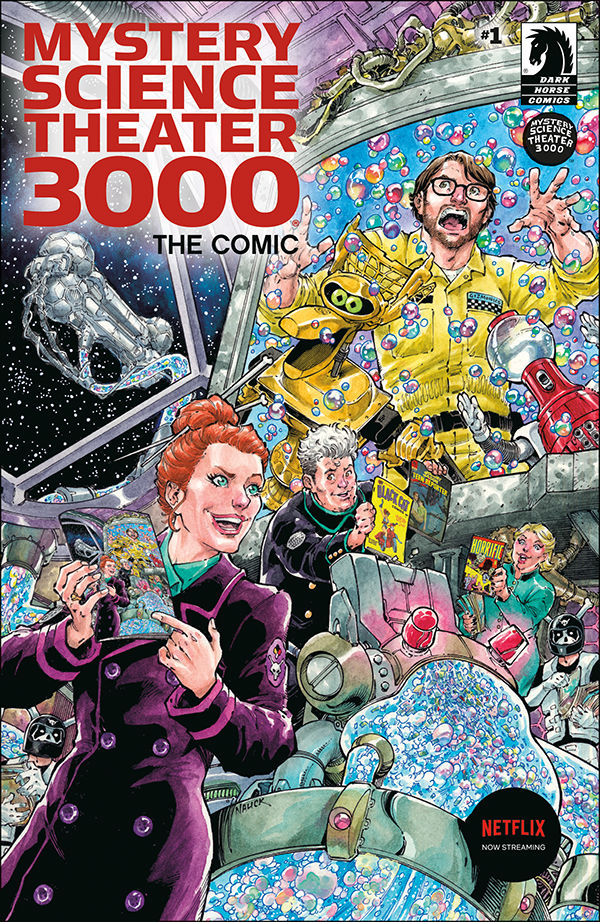
Yep. Those guys got a comic book, too.

Blake M. Petit is a writer, teacher, and dad from Ama, Louisiana. His current writing project is the superhero adventure series Other People’s Heroes: Little Stars, a new episode of which is available every Wednesday on Amazon’s Kindle Vella platform. One of his favorite Star Trek novels is Federation, by Judith and Garfield Reeves-Stevens. Don’t try to read it and then watch First Contact. It doesn’t work. 
Geek Punditry #16: The Case For Star Trek: Legacy

You know, I had a column planned this week. Took some notes. Had it mapped out in my brain. And then I went and watched the finale of Star Trek: Picard, the magnificent, joyous finale that was honestly everything I wanted it to be, and suddenly what I was going to write about has gone completely out of my head. Instead, this week, I’m going to look ahead to the future of Star Trek – specifically about Picard showrunner Terry Matalas’s proposed Star Trek: Legacy series, and why it needs to happen. So here’s your warning, friends: after this point there WILL be spoilers for Picard, all the way to the final credits. If you haven’t watched it yet, continue reading at your own risk.

RED ALERT! SHIELDS UP! SPOILERS INCOMING!

After two seasons of Picard that were disjointed and felt forced, the third and final season gave fans what we wanted all along: a suitable ending for the cast of Star Trek: The Next Generation. The last time we saw these characters together in canon was in the film Star Trek: Nemesis, which left us on a bittersweet note that was never resolved. Data was destroyed, Will Riker and Deanna Troi went off to the Titan, and the heroes we’d come to love were scattered to the cosmic winds. In this final season of Picard, Terry Matalas brought back Data and reunited the seven core cast members of The Next Generation (well…EIGHT core members, actually, since he even resurrected the Enterprise-D) so that their story could end the way they deserved. Now, rather than leaving behind our friends in a state of mourning, we say farewell to them as they are together, happy, and in the wake of their greatest triumph. This is something that cannot be said for the characters in any other Star Trek series, and if this is in fact the last time we see these heroes (and I suspect it is at least the last time we see them all together), it is a fitting goodbye.

But Matalas did not JUST reunite the TNG crew. He also built a new crew, combining a few of the characters from the first two seasons of Picard with others created for this season, and we leave them on the bridge of the Titan, newly rechristened as the USS Enterprise-G. It is at this point that Matalas is staring Paramount executives in the eye and challenging them to greenlight a series about this new crew, a series he has been calling Star Trek: Legacy to anybody who’ll listen, even though it hasn’t actually been approved by Paramount.

Yet.

Let’s talk about the reasons that a Terry Matalas-led Star Trek: Legacy is not only possible, but exactly what long term Trek fans are hungry for.

CONTINUING THE SAGA

“Look at us! Here we are! Right where we belong…”

After Nemesis, every Trek series or movie for nearly two decades went backwards in time. Star Trek: Enterprise was about the ship that led to the creation of the Federation, the J.J. Abrams movies showed us the crew of the original series in an alternate timeline, and Discovery started its first season about a decade or so before the original series. Without debating the relative quality of any of these projects, none of them moved forward in the time period that fans had come to love through three series and four movies. That didn’t happen until Picard. And with that series finished, we are once again left without a continuation of that period in live action. Strange New Worlds and the upcoming Starfleet Academy series are in different points in the timeline, and while the animated Prodigy series seems to be in that time period (it’s honestly a little nebulous exactly where it falls), I think most fans probably join me in wanting a flagship series set in the 25th century. 

This is the most well-developed era in the Trek timeline, with elements from TNG, Deep Space Nine and Voyager all in play, and so far the only show that’s playing with all these toys is the animated comedy Lower Decks. And while it’s true that eras that have not been explored as much have room for development, that doesn’t quench the thirst for exploration of the storylines, cultures, alien races, and characters we already know. A show set in this time period would allow us to check in with those elements and see where they go in the future – something that would be inevitable with Voyager alumni Seven of Nine as captain of the Enterprise-G and two members of the bridge crew whose parents are members of the TNG crew. (Not to mention the fact that Riker and Troi have a daughter who is currently enrolled in Starfleet Academy, and could easily join the show later if we really wanted to ramp up the fan service). 

It would also allow the show to address the one glaring absence from Picard: the characters from Star Trek: Deep Space Nine. For the first eight episodes of the season the major threat were the Changelings, the main antagonists from DS9, but except for Worf nobody from DS9 ever made an appearance. I suspect we probably would have seen them if not for the passing of Rene Auberjonois, who played the Changeling Odo on that series – but alas, it was not to be. Regardless of why we didn’t see them, DS9 remains my favorite Trek series, and a Legacy show could (and should) check in on the station, what’s been going on with Bajor since the Dominion War…maybe even finally provide some resolution to the final fate of Captain Benjamin Sisko.

THE ENTERPRISE IS THE HEART OF STAR TREK

There are a lot of letters left in the alphabet.

When the original Star Trek series debuted in 1966, there wasn’t necessarily a conceit that there was anything special about the ship among the other ships in the fleet except that it was the one we were following. Throughout the show and the original movies, though, we got the impression that the Enterprise crew stood out, and by the time TNG launched in 1987, it was declared that the Enterprise was the name given to the flagship of Starfleet. This was codified with the Star Trek: Enterprise series, which retroactively applied that name to the first ship capable of Warp 5, and the adventures of that particular crew led to the birth of the United Federation of Planets. The point is, while the Star Trek universe is vast and diverse with room for many, many stories, the Enterprise is the core of that universe.

True, we have Strange New Worlds, which is set on the Enterprise NCC-1701 in the pre-Kirk years, but that’s kind of the problem. Don’t get me wrong, I love SNW, but the inherent difficulty with any prequel series is that certain elements are closed off as storytelling avenues. At no point in SNW are you ever going to fear that the ship will be destroyed or that any of the characters who show up in the original series, such as Spock or Dr. M’Benga, are in mortal danger. There can be great adventures told with Pike’s Enterprise, but it will inevitably be trapped in the “past” of Star Trek. The 25th century, for many fans, is the “present,” and we haven’t had canonical, ongoing stories of an Enterprise in that time period since TNG went off the air in 1994. The look of the ship can change, the crew can change, the letter at the end of the registry number can change, but the fact of the matter is that without an Enterprise, Star Trek simply isn’t complete. As Jack Crusher observed when the Enterprise-G was unveiled, “Names mean almost everything.”

A CHANCE FOR NEW DANGERS

“Um, you got something on your…on your face…oh, dear God…”

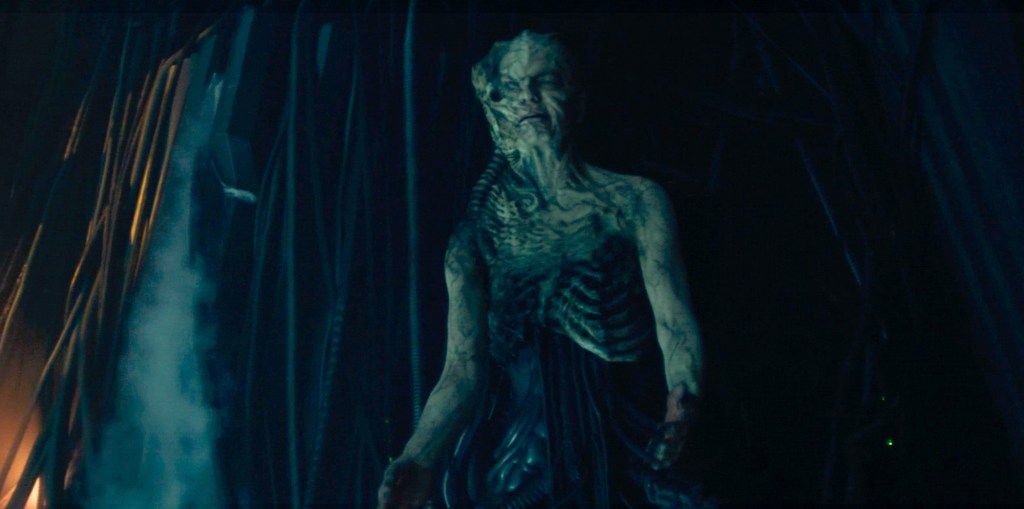
In addition to bringing back the TNG crew one last time, Picard also gave a definitive, final conclusion to the story of that era’s greatest threat: the Borg. When this malevolent race was introduced in TNG it was a terrifying idea: an artificial intelligence that propagated by taking the technology of conquered worlds and transforming the biological inhabitants of the destroyed civilizations into mindless drones, kind of like when Disney buys a new IP. But like many popular villains, the Borg got a little overused over the years (even as recently as season two of Picard). What the finale gave us was one last face-off between the Borg Queen and Jean-Luc Picard, one that was eminently satisfying, but also done in a way that should take the Borg off the table for good.

(I say “should” here because I’m realistic. With any long-running franchise, eventually new hands will take over, and when that happens they often will bring back the elements they loved from the past. Someday somebody WILL sit down in a Paramount boardroom and say, “Okay, here’s how we’re gonna bring the Borg back.” It’s inevitable. But I don’t think it will happen soon and I don’t think that person will be Terry Matalas.)

With the Borg gone, it’s time to bring in new threats, new enemies, new villains. This is a chance to have a fresh start in a familiar setting, which from a creative standpoint can be a hell of a lot of fun.

A NEW GENERATION

“Okay, now that I’m captain, when is it my turn to kill Tuvix?”

Like I said, the way Matalas stacked the crew of the Enterprise-G was a straight-up challenge to Paramount, loading the bridge with characters that matter to us. We already knew Seven of Nine from Voyager of course, but the crew also includes Picard’s former aide Rafi, who after two years finally spent this season blossoming into a compelling character through her partnership and friendship with Worf. We have Jack Crusher, son of Beverly Crusher and Jean-Luc Picard, who seems to have embraced his parents’ philosophy after struggling with it for some time. We have Sidney “Crash” LaForge at the helm, piloting the ship and determined to get out of the shadow of her legendary father. Over the course of this season we grew to care about these characters. Beyond the previous relationship between Seven and Rafi, we also saw Seven and Jack build a rapport which paid off when she named him a special counselor to the Captain. There was also a clear chemistry between Jack and Sidney, and the idea of Geordi LaForge showing up periodically to bristle at his daughter flirting with Jean-Luc Picard’s son is absolutely delicious. 

Matalas crafted these characters in such a way that the potential is obvious, and showcased them to make us want more. And just in case that wasn’t enough, he closed the series with a mid-credit stinger in which Jack Crusher meets his dad’s best frenemy, Q, who tells Jack that his own trials are just beginning. Translating this scene into Klingon and back again reveals that what he REALLY means is, “Come on, Paramount+, I double dog dare you to greenlight this spinoff.”

And then there’s the elephant in the room.

LET’S TALK ABOUT SHAW

The most beloved dipshit ever to come out of Chicago.

Liam Shaw, played by Todd Stashwick, was introduced in the first episode of this season as captain of the Titan, and he initially came across as an antagonist. He didn’t like Seven of Nine, even though she was his first officer. He had no respect for Picard and Riker when they came on to his ship and tried to divert his mission. He even insulted Picard’s wine, setting up what would turn out to be one of the season’s best running gags. But by the end of the first episode you knew who Liam Shaw was: an asshole that you couldn’t stand and couldn’t wait to see get what was coming to him.

Then something magic happened.

We realized that nothing Shaw was doing was out of line. These two relics, neither of whom had any official standing with Starfleet at the moment, showed up on his ship and tried to send him off on a very spurious mission with no orders and a half-assed explanation, almost destroying the ship and killing everybody in the process. We, the audience, trust Picard and Riker because we’ve known them since jelly bracelets were in fashion, but Shaw has no such luxury. As for his relationship with Seven, as it turns out he was a survivor of Wolf 359, the most infamous Borg attack of all time (before this one), which happened to be led by Picard himself during the time he was assimilated. The man probably had to deal with PTSD every time he looked at Seven. 

Shaw’s abrasive qualities became part of his charm, especially as he continued to show himself to be highly qualified and competent, not only as Captain, but also as an engineer later on in the season. His voluminous ego doesn’t go away, but it also doesn’t stop him from doing the right thing, as we see when he gets injured a few episodes later and immediately transfers command of the Titan to Riker, a man he clearly doesn’t like, because he knows it’s the best chance for survival. Over nine episodes Shaw goes from an unlikable asshole to a tremendously likable asshole.

And then he dies.

Not a pointless, meaningless death, not a Tasha Yar death. Liam Shaw dies to buy Picard and the others time to escape the Borg as they’re taking over the Titan, and with his last breath passes his ship over to Seven of Nine (using her chosen name for the first time). Then, just to rub a little salt in the wound, we later found out that he had already recommended Seven’s promotion to captain even before the events of the season had begun.

But he’s dead, right? So why does it even matter?

Come on, guys. Since when has being dead ever stopped a great character? The entire season was filmed before it premiered, so there was no way of knowing just how much the fans would grow to embrace Liam Shaw when the decision was made to kill him off, but Matalas says he has an idea for how to bring him back if and when the opportunity presents itself. As for the question of what to do with him afterwards…honestly, I’m not sure. They won’t (and shouldn’t) take Seven out of the Captain’s chair to make room for him, and I certainly don’t want to see another series with a painfully dubious chain of command such as has plagued Discovery since the end of season one, but I want more stories with Liam Shaw. And I know I’m not alone.

Hell, maybe he’d be happy to step out of the command chair and become chief engineer.

Let’s take one last look at the most beautiful bird in the galaxy.

There’s an adage in the entertainment business that giving the audience what they want isn’t necessarily the best way to tell a story. But sometimes you go so far in the opposite direction that you wind up with a stupid, chaotic, and utterly insulting mess that seems more like they actively hate the audience that made them successful in the first place, and here I am specifically thinking of what Marvel Comics insists on doing with The Amazing Spider-Man. Season three of Picard has proven there’s nothing wrong with giving people what they want, you just need to find a good story in which to do it. Terry Matalas did that this season, and he knocked it out of the park. He’s earned the right to do it again.

Star Trek: Legacy, Paramount.

Make it so.

Blake M. Petit is a writer, teacher, and dad from Ama, Louisiana. His current writing project is the superhero adventure series Other People’s Heroes: Little Stars, a new episode of which is available every Wednesday on Amazon’s Kindle Vella platform. He also wants to push his idea for a Star Trek: Fleet Museum animated anthology series, where in each episode a holographic tour guide based on Geordi LaForge tells a story about one of the legendary ships in his museum to a pack of tourists. He’s not kidding about this. Call him, Paramount, you all should talk. 

Geek Punditry #7: Sharing the Love

Italian really is the language of love…and billionaire ducks.

Earlier this week, some of my students asked me what I got my wife for Valentine’s Day. They seemed to approve of my answer (tickets to a concert she wanted to go to) and then asked what Erin gave me. At that point, I paused for a moment, trying to decide how to answer the question. The answer was wonderful – my wife went on eBay and found the recently-released 3500th issue of Topolino, the Italian Disney comic book series, which came bundled with a figure of my favorite Disney character, Scrooge McDuck. The thing is, how do I explain this to a group of high school seniors without coming across as a gigantic nerd?

Then I got over myself, because…hell, just look around. On one bulletin board in my classroom is a collage of superhero and sci-fi images clipped from magazines and catalogs. There is a shelf of Superman-family Funko Pops, a set of Eaglemoss Enterprise models, several magnets from the LEGO Minifig of the Month Club, and a Star Trek: Lower Decks calendar on the wall. There is literally no denying my heritage as a geek. It is, in fact, something I have long since decided to embrace.

I challenge you to come up with an adequate definition of “Geek” that does not apply to the person in this picture.

That’s part of what being a geek is, really. Sure, the dictionary may say something about biting the heads off chickens, but in the modern context I propose the following definition for the term. “Geek (noun): One who loves a particular fandom to the extent that it becomes an element of their personality.” You should note that this definition passes no judgment, nor does it specify the type of fandom. It can be a movie, a TV series, a comic book, or a video game. It can be music or sports or science or history. You can be a geek about pretty much anything you love, so long as you love it wholeheartedly. Nor does it imply exclusivity: one is fully capable of being a geek about multiple things. In truth, I think almost everyone is a geek about something. It’s just that those of us in genre fiction have chosen to fully embrace the term.

Geekery is contagious as well, spread through casual contact. It happens when you tell your friend how much you liked a movie, when you walk around in public wearing a T-shirt for your favorite band, when you get in someone’s car and they’re listening to a podcast, or when enough of your students are carrying around the same book that you finally break down and read it to find out what all the fuss is about. And like any germ or virus, the longer you are exposed to any particular strain of Geekery, the more likely you are to begin exhibiting symptoms yourself.

Which brings me to my five-year-old son, Eddie.

Any kid of mine would, by virtue of the fact that I’m there, have grown up in a house full of comics and books and movies, watching cartoons and seeing superhero T-shirts almost any time I’m not dressed for work. And when kids are very young, before they start exhibiting their own preferences and fandoms, we as parents have a tendency to dress them in our own. From the beginning, my kid had onesies and pajamas featuring superheroes and spaceships, his plates bore the likenesses of characters from the cartoons that we liked, and he had pacifiers featuring the logos of both the New Orleans Saints and the Pittsburgh Steelers. And our friends and family just fed the monster – two of the gifts we received at Erin’s baby shower included a Batmobile walker from some of my aunts and uncles and a lovely toy chest handmade by our friends Jason and Andrea, decoupaged with panels from Superman comic books. 

What I’m getting at is that Eddie never had a chance.

Eddie’s favorite part of every episode.

In my defense, though, it’s not just my geekery that he’s been exposed to. I may be the reason he jumps up and giggles at the sweeping vistas of outer space in the beginning of every Star Trek episode, but my wife is the reason that when he started learning to identify shapes he could pick out the circle, the square, the triangle, and the Millennium Falcon. Erin is a geek too, you see, and fortunately the Venn diagrams of our respective geekeries have a lot of overlap. We both love genre movies and TV shows, we both enjoy musicals, we both like sitcoms. That concert I got her Valentine’s tickets for? It’s the music of John Williams. We blend.

Even in those places where the overlap isn’t perfect, there’s enough that we enjoy what the other is bringing to the table. She’s a little more into horror movies than I am, I’m a little more into comic books than she is, but that doesn’t mean that we don’t each appreciate the other’s fandoms as well. We just, like any two individuals on the planet, lean a little more in certain directions than the other, and that is reflected in our parenting. When Eddie was a baby the joke was that you could tell who dressed him on any given day based on whether his clothing featured the Grateful Dead or Spider-Man.

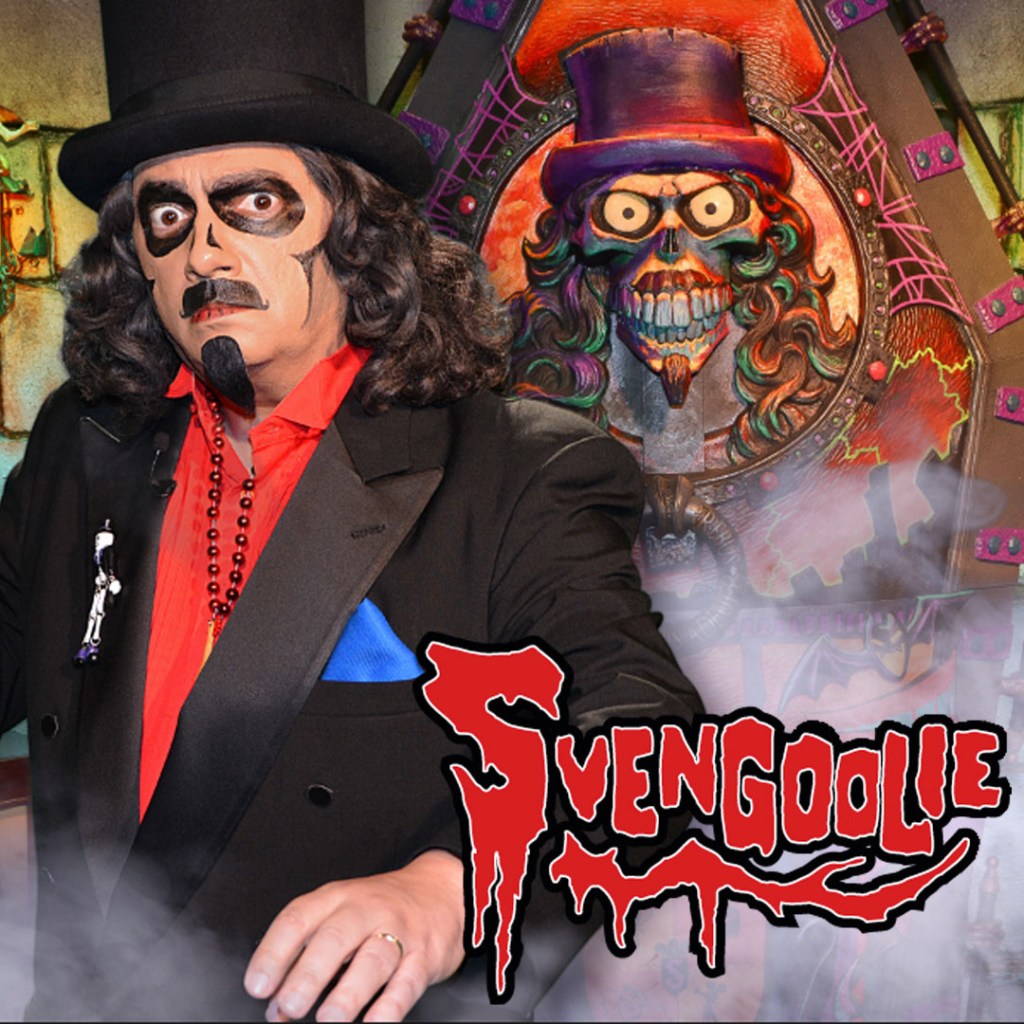
“Svengoofie!”
“No, it’s…you know what? Close enough.”

Over time, he started to express his own love for our things in various ways. For example, when I turn on the FreeVee app, he begins to sing the theme to Night Court. He’ll walk into the comic book shop with me and immediately identify the logos for Marvel Comics, DC Comics, Superman, Batman, etc. At only five years old he sings along to the opening themes for Mystery Science Theater 3000 and RiffTrax, a feat that Albert Einstein himself never accomplished in his entire lifetime! And if you ask him what we watch on Saturday night, he will proudly exclaim “Svengoolie on MeTV!” (Actually, he pronounces it “Svengoofie,” a misarticulation I believe Rich Koz himself would greatly approve of.) 

I couldn’t let the fact that this should not exist prevent me from getting one.

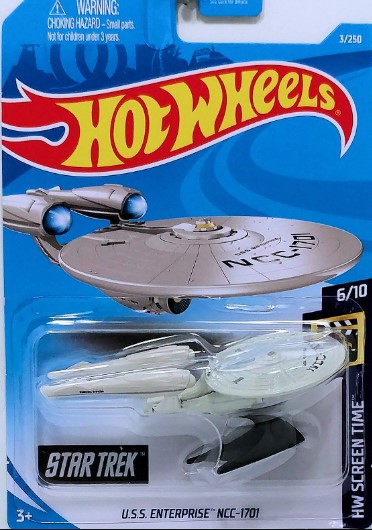
It’s not that we want to force our geekdoms on our child, it’s just an inescapable byproduct of having us as parents. Even once he got old enough to express his own preferences, ours tended to creep in. For instance, when he was two or three years old we learned that Eddie loved cars, and since then he has amassed a Hot Wheels collection that would make Jay Leno jealous. And although he is not picky about what cars he gets, with us as parents it is inevitable that assorted Batmobiles would work their way into the fleet, to say nothing of things like Scooby-Doo’s Mystery Machine, vans with Justice League murals on the side, and the occasional USS Enterprise (which is Hot Wheels brand even though it has no wheels. It doesn’t make sense to me either. I bought one for Eddie and one for myself.) If you go through his books (which he loves) you will see an extensive library dedicated to Daniel Tiger’s Neighborhood, Bluey, and trucks, but also a Little Golden Book starring the Universal Monsters and an alphabet book based on Jaws

The job of a parent is to teach their child how to be a kind and functional adult, even for those of us whose own functionality is questionable at best. Part of that, I sincerely believe, is being able to choose those things that you love, and that you love them without fear. And sure, sometimes that may result in your kid latching on to something you don’t like. This is especially true when your child is very small and they discover something like Blippi. (For those of you fortunate enough to not know what I’m talking about, “Blippi” is a guy in orange suspenders who prances around indoor playgrounds in a manner that any reasonable judge would consider grounds for a restraining order, then puts videos of it it on YouTube. Blippi is the opposite of entertainment. He is like a bad Saturday Night Live parody of a children’s show host. His videos run on an unending loop in the darkest level of Hell. My son loves him and he is now a millionaire.) 

But that’s okay. Because it’s his thing, so I suck it up and tolerate it and even read the stupid Blippi alphabet book when Eddie asks me to, because I know that once I’ve washed my hands of it he’ll come back later with something like his Ghostbusters Little Golden Book, and that makes it better.

The way I see it, if my son grows up able to demonstrate his love for a fandom in a healthy way (read: not on Reddit), I’ll have done my job.

And as long as he knows that Saturday night is for “Svengoofie,” so much the better.

Blake M. Petit is a writer, teacher, and dad from Ama, Louisiana. His current writing project is the superhero adventure series Other People’s Heroes: Little Stars, a new episode of which is available every Wednesday on Amazon’s Kindle Vella platform. In addition to the Uncle Scrooge figure, his wife also gave him the idea that led to this week’s column. If it weren’t for her you may have just read 1500 words lamenting the Ultraverse or something. Thanks, Erin!

Geek Punditry #3: Beware the Binge

“I’m not going to start watching a show on Netflix. They’re just going to cancel it anyway.”

Everyone reading this, I promise, has heard someone on social media (or maybe in real life, if you’re the sort of person who has such a thing) echo that very sentiment recently. Every time a new show hits, someone says it. Every time a show gets canceled, someone says it. Every time I go through the drive-through at Wendy’s someone says it, which is actually kind of weird and makes me wonder if they’re still having staffing issues. But the point is, I get it. In this day and age, when television has become more more serialized and most shows – even half-hour comedies – have ongoing story arcs that play out across a season or even across an entire series, there are few things more frustrating to a television fan than getting invested in a series, watching their way through the end of the first season, feeling their pulse race with the cliffhanger finale, and then learning that there will never be a season two. 

The blame for this is usually placed on Netflix itself (although they’re hardly the only culprit), and while I agree that Netflix deserves a lion’s share of the culpability, I don’t think it’s for the reason most people usually mean. 

The assumption people have is that Netflix is just impatient. They won’t give people a chance to find a show and get to enjoy it. But I don’t think that’s what’s happening, not exactly. Netflix (and most streaming services) rarely release their actual numbers, so it’s hard to say with any degree of certainty how many people are watching any given show or how quickly, but a hypothesis has been making the rounds that I think is worth examining. Some shows are getting the axe despite seemingly large numbers, while others with smaller viewership are being allowed to continue, a practice that doesn’t seem to make any sense if you consider it series-by-series. It makes a lot more sense, though, if you look at it episode-by-episode.

What seems to be happening is that Netflix is basing their decisions not on total numbers of hours watched, as people tend to assume, but by how many people finish a season. If, for example, 20 million people watch the first episode of Mind Your Manners With Simon Cowell, that sounds better than the 15 million who watched the first episode of Toenail Fungus Finds of Eastern Europe, right? 

But keep watching the numbers. How do they trend? What percentage of that original number stuck it out to the end? If, by the end of the season, Toenail Fungus has retained 11 million viewers, but Simon Cowell has dropped down to 4 million, what makes more sense to renew? People who skipped out on Simon after three episodes are far less likely to come back for a theoretical second season than the much larger number of people who stuck around to find out exactly what kind of mold was growing under Slobodan Milosevic’s left pinky toe in the pulse-pounding season finale. 

The practical result of this is that shows that don’t get binged heavily in the first couple of weeks are far less likely to get invited back, and this is where that conventional wisdom comes back into play. Shows are not being given time to find an audience, you’re right. But the solution here is not to require every damn person on the planet to binge every show the second it hits the streamer. Doing things that way makes it far, far harder for a show to get traction unless it’s based on an existing IP like Wednesday. Something like The Midnight Club may be every bit as worthy of getting a new season, but as it doesn’t have that built-in fanbase, the chances of it hitting the same way are much worse. 

There are exceptions, of course. Stranger Things and Squid Game are both shows that seemingly came out of nowhere and had no ties (other than thematic ones) to previous movies, characters or TV shows that could have carried over their audience – but they’re called exceptions for a reason. For each of those, how many series like The October Faction, Cursed or Archive 81 have suffered an ignoble death?

There is a solution to this problem, but Netflix doesn’t want to hear it. In fact, I think a lot of you reading this right now will be horrified at the suggestion. But I’m going to say it anyway.

You know how to deal with the problem of people not binging shows quickly enough to save them?

Stop making shows bingeable. 

Excuse me, I need to go wash the tomatoes people just hurled at me from my hair and clothes.

But I’m serious about this. The problem is that Netflix is basing their decisions on how many people watch an entire season of a series in X amount of days, with X being some magical number they’re not going to tell us but which was clearly too small to save Jupiter’s Legacy. And as it seems these shows are getting cut faster and faster, you cannot blame any viewer for deciding not to invest their time, which means that the new shows won’t have anyone to watch them and then they’ll get cut too, and now we’re just in a never ending loop of cancellation and misery, like being back in high school, but sandwiched between a baking show and a murder documentary. 

But let’s look at other streamers. Netflix isn’t the only game in town anymore, after all, and few of their competitors have suffered from this same cancellation outrage. So what’s the difference?

Part of the problem is that tiny little “X” number – expecting people to find a show, binge a show, talk about a show, and then expand the audience in a remarkably short period of time. It’s really hard, and considering just how many entertainment options now exist, it’s nearly impossible. But look at the Marvel or Star Wars shows on Disney+, or the assorted Star Trek series on Paramount+. Not only are people watching, but people are talking about them. And not just for the days or (in rare cases) weeks of a Netflix hit, but for months. What’s the difference?

Disney and Paramount release their series the old-fashioned way: one episode a week. And that lets the audience find the show in a way that Netflix’s “drop ’em all right now” model never will.

How many Star Wars fans, disgruntled by Disney’s cinematic output, had to be convinced to try the likes of The Mandalorian or Andor? How many Star Trek fans immediately dismissed Prodigy or Lower Decks for being animated series until other fans persuaded them to give them a chance? If they had been released the Netflix way, the conversation would have ended in a few days, and a lot of people would never have given these shows a try.

It’s not a perfect analogy, I admit, because those are shows based on existing – and, let’s be honest, massive IPs, but it still demonstrates something. I hear people talking about these shows not just on the weekend after they’re released, but for months. Love them or hate them, these series have people engaged for a very long time, posting about them on social media, writing thinkpieces, and making memes. And every week, when a new episode comes out, the cycle repeats. This doesn’t happen with a binge show. Even Wednesday, Netflix’s most recent hit, had a quick surge of popularity, a lot of people talking about a dance sequence, and that one meme with Wednesday Addams next to a girl who looks like Luna Lovegood crossed with Phoebe Buffay, and then…it kinda dried up. Sure, people liked the show. Sure, people are looking forward to season two. But nobody is talking about it anymore right now, less than two months after it dropped. 

Compare that to the third season of Star Trek: Picard, which I guarantee will have people on the internet wildly pontificating for the entire ten weeks it’s on the air. And love it or hate it, they’re going to come back every Thursday for the next episode and do it all over again. And while they’re talking, other people will hear them, and the more people who hear them, the more people are likely to watch it, and that’s where the binging comes in. 

I’m not going to pretend I don’t binge watch. Of course I do, it’s 2023, it’s how media is consumed now. But for a new series it’s just not an effective strategy. Pre-streaming shows like Lost or How I Met Your Mother built their audience because fans got invested in the story, the characters, and the mystery, and they came back to talk about them again week after week, season after season. They shared their theories, they wrote fanfiction, they drew pictures of their favorite characters and, most importantly, they told other people how much they loved their favorite shows for a very, very long time. And say what you will about how those respective shows ended, they still have devoted and passionate fan bases that will spend more time talking about them than anyone is spending on Uncoupled. The ability to binge is a great tool for new fans, to get people who are discovering a show later to catch up and to join in on the fun. But as a way of kicking a series off? It’s like Netflix is Lucy holding the football and Inside Job is Charlie Brown, running in for his chance without realizing it’s already a lost cause.

Abandoning the binge-release model won’t save every deserving show, of course. Even in the days before streaming there were lots of great shows that never got past a first season, including some that weren’t even on the Fox Network. And sure, some viewers have no patience for the weekly release anymore, but I sincerely believe that the potential audience that never gets to find these shows under the current system outnumbers the people who will refuse to watch just because they can’t do it all at once.

So there’s my challenge, Netflix. Instead of dropping full seasons in 2023, try doing an episode a week. Then look at how many viewers make it to the end. 

And then maybe give The Joel McHale Show With Joel McHale another chance, would you?

Blake M. Petit is a writer, teacher, and dad from Ama, Louisiana. His current writing project is the superhero adventure series Other People’s Heroes: Little Stars, a new episode of which is available every Wednesday on Amazon’s Kindle Vella platform. He hasn’t actually gotten around to Wednesday season one yet, if we’re being perfectly honest here. 

Geek Punditry #1: The Next Next Generation

I’ve been a Star Trek fan for close to 40 years now. I liked the original series, the movies, the Nickelodeon reruns of the animated series, and when The Next Generation premiered, I was a steady customer. Deep Space Nine set the hook even more firmly, giving the strongest story and the greatest character arcs of any Trek to date (even now, 30 years after the series’ debut). After that, though, although my passion for the Trek universe was untarnished, my satisfaction with specific series and movies began to vary. I never particularly cared for Voyager, and although I liked Enterprise, I was too busy in those pre-DVR days to keep up with it. I liked the Abrams movies well enough, but I thirsted for a new show, and then Discovery…well it wouldn’t be until Lower Decks that a new Trek series would fully capture my heart.

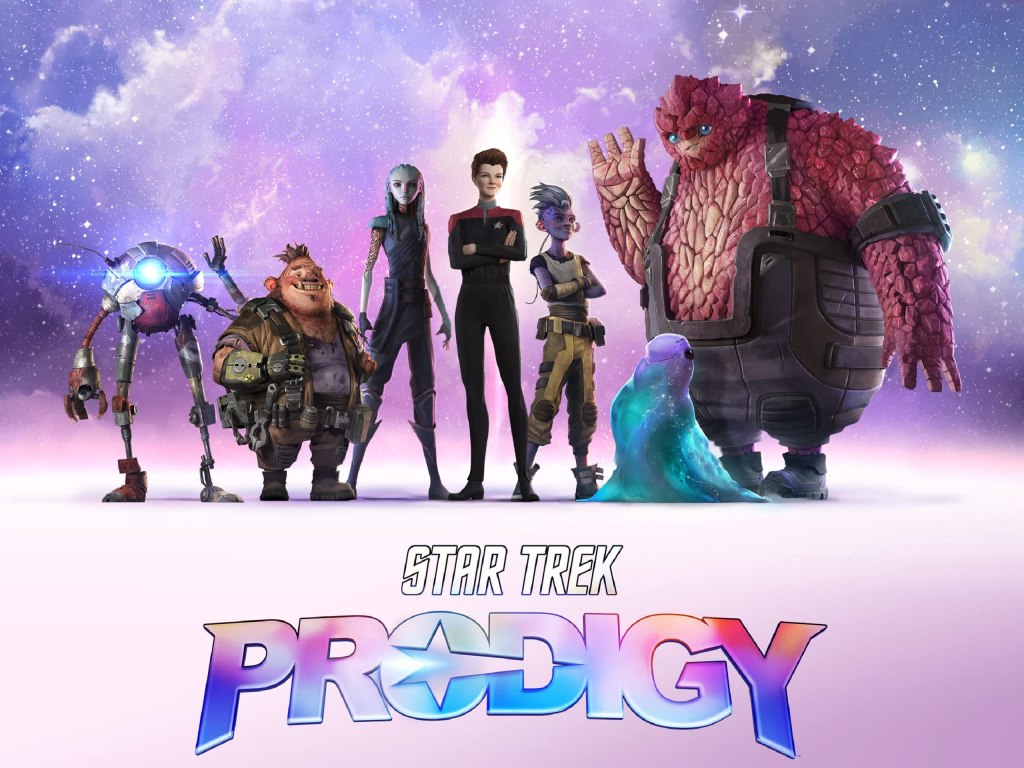
Then came Star Trek: Prodigy. Another animated series, and the first one to be specifically targeted at children. I knew I would watch it, I knew I would give it a chance, because it’s Star Trek. I ALWAYS give Star Trek a chance. But my expectations, to be honest, were not high.

At first, those low expectations seemed to be justified. We were back in the Delta Quadrant from Voyager (ugh), far away from the stories and situations I loved. The cast was made up entirely of brand-new or obscure species, which further divorced this series from the Trek saga that began in 1966. Worst of all, these characters had never even heard of Starfleet or the United Federation of Planets. If it weren’t for the prototype Starfleet vessel they found and the holographic recreation of Kathryn Janeway on board, there would be nothing about this series to designate it as Star Trek at all. It wasn’t bad. It wasn’t loaded with shoestring stories and catchphrase-spouting idiots like so many shows targeted at kids. But I finished the first episode – the first few episodes, actually – feeling like I had watched something that belonged in the world of The Clone Wars or one of the subsequent Disney Star Wars series. Not to say anything negative about those cartoons – they’re good Star Wars. But I didn’t want good Star Wars. I wanted good Star TREK.

After watching a few episodes together, my wife gave me permission to watch the rest of the season without her, as polite an indication of dissatisfaction as there can be, and I really couldn’t blame her. This wasn’t what we expected coming in. And I considered joining her in abandoning the show, because I wasn’t really satisfied, but…

Something told me to keep going. Maybe it’s my renewed devotion to Trek that has become far more passionate over the last few years. Maybe it was that each episode was only a 22-minute investment instead of an hour. Maybe I’m just pigheaded. But I kept watching.

And thank God I did, because as the season wore on, I realized I was watching the most brilliant magic trick TV has given us since someone found a hatch on Lost.

The thing I forgot in the first few episodes was that this is, first and foremost, a show for kids. It’s a show that airs on Nickelodeon, where kids can stumble upon it, and not just on Paramount+, where the existing fans seek it out. That’s important, though, because this is the first Star Trek project since 1966 that is intended specifically for an audience that has no pre-existing expectations of Star Trek. The familiar aliens, the ships, the characters, the lore – everything I love would be completely foreign and meaningless to a child watching this as their first Star Trek.

Just. Like. The. Characters. On. The. Show.

This is where the Hageman brothers, the showrunners, did something so unbelievably brilliant that I want to hug them until security has to drag me away.

As the season continued, through the holo-Janeway at first, we saw bits and pieces of familiarity. A known alien species. A recognizable name. An Easter Egg or three. And the Prodigy kids began to learn about the history and the mission of Starfleet – which is, of course, the history and mission of Star Trek.

And they loved it.

Loved it so much, in fact, that by the midseason finale (where we see the real Janeway and not just the hologram), all they wanted was to be a part of it.

And who can blame them?

I saw someone on Facebook describe Prodigy as a show about kids from Star Wars trying to run away to Star Trek, and never has a description been more apt. But the beautiful thing, the glorious thing, is that the show is constructed in such a way that the kids watching at home (like my 8-year-old nephew Grant, watching with his Trek-loving mother) who know nothing about this Trek are on this journey with them. 

In the second half of the season the curtain is pulled back further – it wasn’t just Easter Eggs anymore, but full plots and stories built on the scaffold of classic Trek and intended for the new kids, the ones still learning. And by the time we reached the magnificent two-part season finale, the trick was complete. The first half of the season taught the kids to appreciate Trek. The second half is where the Protostar crew proves they belong there, and do so in the finest tradition of Kirk, Spock, Data, and Dax.

If you, like my wife, decided to bail on this show after a few episodes, it’s totally understandable. I get it. You didn’t know. But I’m here to tell you that it’s worth revisiting. Give it another shot, at least until the midseason finale, before you pass final judgment. It’s worth it to see how they took a bunch of characters who had no business being in Star Trek and turned them into a crew as worthy as any that has ever borne the name. 

Blake M. Petit is a writer, teacher, and dad from Ama, Louisiana. His current writing project is the superhero adventure series Other People’s Heroes: Little Stars, a new episode of which is available every Wednesday on Amazon’s Kindle Vella platform. You wouldn’t believe how long it took him to type this up, what with all his fingers crossed for Picard season 3 the entire time.