It’s the final Geek Punditry of 2025, and you know what that means. Everybody gets a slinky!
Here you go.
Well, that or…It’s time for the 2025 Pundy Awards, the ONLY awards show that is voted on by the exclusive governing body of Me, in which the best in pop culture for the year is given the accolades it deserves. But this year’s Pundies will be a little different. 2025 was a hectic year for me, for many reasons. One of those reasons is that I immersed myself in the Year of Superman project (which you no doubt have been following here on the blog with slavish devotion). As a result, I haven’t consumed as much new media this year as I usually do. Oh, there’s always a mountain of movies that I haven’t gotten around to yet, but I’ve fallen seriously behind in my TV viewing as well. I haven’t seen the new seasons of Stranger Things, Star Trek: Strange New Worlds, Abbott Elementary, or Bob’s Burgers, and as far as watching NEW shows – it just hasn’t happened. I’ve only even seen the first two episodes of Welcome to Derry.
The point is, I don’t have as big a pool of influence to draw from as I usually do. Even amongst the new stuff, you’ll probably notice a substantial slant towards stuff related to Superman or DC Comics in general. So this year’s Pundies aren’t really going to be all that structured. I’m going to talk a little bit more freeform about the stuff that I’ve enjoyed this year.
For example, I could tell you that my favorite new movie that I saw this year was Superman. You will not be surprised. I thought James Gunn’s reinvention of the DC Universe started off beautifully, that David Corenswet, Rachel Brosnahan, and Nicholas Hoult were flawless in their respective roles, and that the future of the DCU looks very bright indeed. But if you want me to wax poetic about that, you can go back and read the review I wrote in July.
“When a cold wind blows it chills you, chills you to the bone…”
So besides Superman, what were my favorites out of the (relatively) few movies I watched this year? Let’s start with Guillermo Del Toro’s new version of Frankenstein for Netflix. I’ve loved almost everything I’ve ever seen from Del Toro, so I wasn’t surprised that I enjoyed this movie quite a bit. I was surprised at just how far it deviates from the original novel. Shifting Elizabeth’s role to the wife of Victor Frankenstein’s brother, rather than making her his own love interest, gives the story a different flavor entirely, one that I didn’t see coming and I’m not 100 percent sure if it’s an improvement. On the other hand, I loved the element of Christoph Waltz’s character funding Frankenstein’s experiments because he wants a “perfect” body for himself. Most surprisingly, though, was how he rewrote the ending of the story. In Mary Shelley’s novel, and in most adaptations, they play up the idea of Victor as a neglectful “father” for his creature, making the tragedies of the story indirectly his fault. The end of the film changes this narrative, being one of the few versions of the story in which we see him recognize his faults and show remorse for them. The only other version I can think of that does this, interestingly, is Mel Brooks’s Young Frankenstein.
The real sinners are the friends we made along the way.
Speaking of classic monsters, a lot of people have sung the praises of Ryan Coogler’s vampire movie Sinners this year. Some are even calling it a best picture candidate. I wouldn’t put it QUITE that high, but it IS an excellent movie. Michael B. Jordan plays a pair of twin brothers who return home to escape some of the sins of their past, but their attempt to become honest businessmen is broken immediately when the tavern they open is assaulted by…well…vampires. It’s not just another vampire movie, though. This film is deep, powerfully emotional, and at times even sadly beautiful. There’s a ton of killer music (excuse the pun), and Hailee Steinfeld’s performance adds to an already incredible performance by Jordan as two very different characters. It’s a horror movie, technically, but like we get from Del Toro, it’s a horror movie that appeals to people beyond the genre.
Evidence that comedy still exists.
Perhaps the most delightful surprise at the cinema this year, though, was Akiva Schaffer’s reboot of The Naked Gunwith Liam Neeson and Pamela Anderson. The idea of “spoof” movies has taken a nasty hit in the past few years, with many of them being reduced to painful reference-fests bereft of actual humor like we get from the Friedberg/Seltzer team, so I honestly didn’t have high hopes for this one. To my shock, I got the funniest movie I’ve seen in years. The humor is spot-on, feeling like the classic Leslie Nielsen films brought back to life. What’s more, Neeson plays the son of Nielsen’s character, making this a legacy sequel rather than a remake, which I always prefer anyway. But the biggest surprise – and here’s a sentence I never thought I would be writing on January 1st – was Pamela Anderson. Pamela Anderson is a FANTASTIC comedic actress. She’s got perfect timing and flawless delivery, and she and Neeson have legitimate chemistry, which apparently is due to the fact that they actually fell in love on the set of this film. The Naked Gun is proof that the movie industry CAN still make good comedies. The hard part is getting people in the theater to WATCH them.
Moving on from movies, let’s talk television. As I said, I didn’t get to watch very much new TV this year, and once I catch up I may have totally different picks for my favorites. But of the new TV I DID watch in 2025, here are the three shows I enjoyed the most.
Do you really wanna — do you REALLY wanna taste it?
First of all – and I know that we’ve already talked about James Gunn – I loved the second season of Peacemaker. The John Cena-starring show is the one definite holdover from the previous DC Universe, and Gunn spends a bare minimum amount of effort in the first episode retooling it to fit the new DCU he’s created, then he plops it right into the time immediately post-Superman. John Cena’s Peacemaker is suffering from severe trauma following the events of the first season (which is still in-continuity in broad strokes) and finds a way to an alternate dimension where his father and brother are still alive and he’s celebrated as the hero he wants to be. It seems perfect…at first. Just like the first season, the show is funny and full of action, but this season really amplifies the drama. There’s a deep storyline between Cena’s Christopher Smith and Jennifer Holland’s Emilia Harcourt that drives the season in a very real way. Danielle Brooks meanwhile, puts in an award-worthy performance as Leota Adebayo, the best original character from a DC TV series since Harley Quinn was created in Batman: The Animated Series. The ending is bittersweet, in that it sets up a new storyline but, at the moment, there’s no season three planned. The setup here is for the future of the DC Universe, and I can only hope that when it IS picked up, wherever that happens to be, it’s not only Peacemaker that makes his triumphant return, but the entire group of 11th Street Kids that we’ve come to love.
Like Kermit the Frog crossed with Loki.
This was also, as I mentioned several months back, the year I discovered Dropout TV, specifically its signature show Game Changer. If you missed that previous column, Game Changer is a game show where the contestants are usually improv comedians and the game itself changes in every episode – they never know exactly what the game will be or what the rules are until they start playing. This year’s seventh season started off with “One Year Later,” an episode in which the three contestants were given a series of wild tasks and then a solid year in which to accomplish them. The comedy comes from the creative ways that they do things like bringing a cardboard cutout of Sam Reich (the host) to the most “remote” location they can or recording the best outgoing voicemail message. Later we get the “You-Lympics,” where they have to complete a series of stunts unaware of the fact that they’re going to have to do the same ones again, competing not against each other, but against their own prior scores. “Crowd Control” brings in stand-up comedians with skill at working the crowd and makes them face an audience full of highly unusual quirks and personal history to work with, an episode that was so successful it spun off into its own series.
Spin that wheel!
But my favorite of the season, the one that I would show a newcomer to Dropout to convince them to watch Game Changer, was “Ruelette.” The players spin a giant Price is Right-style wheel which lands on different rules that they have to abide by for the rest of the game, like wearing an oversized cowboy hat or having to say everything in a singsong voice. The rules stack and twists are thrown in, and the game quickly flies completely off the rails into one of the most unhinged episodes of television I’ve ever seen. It’s glorious.
Summer belongs to them — AGAIN!
Finally, let’s talk about the revival of Disney’s Phineas and Ferb, which dropped this year. Picking up the summer after the first four seasons of the show, season five begins with the last day of school at the beginning of a new, glorious summer of games, stunts, ridiculous inventions, and Buford’s endless quest for a hot tub made out of a giant bread bowl. The hiatus since the show’s previous cancellation hasn’t dulled it in the slightest – it’s still as charming, funny, and toe-tapping as it ever was. I cannot wait for the second half of the season to drop on Disney+ next month.
As if fairy tales weren’t creepy enough.
I read a lot of books this year, I’m proud to say, but I’ve actually read relatively few NEW books. Of the dozens of books that crossed my to-read pile in 2025, only three of them were actually PUBLISHED in 2025. One of them is not worth mentioning in this column. Another was the Stephen King/Maurice Sendak collaboration on a new version of Hansel and Gretel. King takes the classic fairy tale and adds a few touches that are distinctly his, and even links to his larger universe (specifically the Dark Tower books). Sendak’s illustrations, as expected, are whimsical and ghastly at the same time, and I loved it.
And y’know what? It IS my favorite scary movie.
The other new book from this year was a nonfiction history of my favorite horror movie franchise, Your Favorite Scary Movie: How the Scream Films Rewrote the Rules of Horror by Ashley Cullins. As a fan of the Scream films (I’ve mentioned it here once or twice, I think), I sincerely enjoyed this book. Although much of the history is stuff that fans probably already knew, Cullins did in-depth interviews with dozens of the actors, writers, and other creators involved in the series over the decades, fleshing out a familiar story. She gives insight to the things we already knew, and adds a lot of stuff that we didn’t. The centerpiece of the book is a very loving, respectful tribute to the late Wes Craven, something that fans of the franchise in general or Craven specifically will find touching and even tearjerking. The book is also extremely thorough, tracking the history of the franchise from the one-act play Kevin Williamson wrote in college that provided the germ of the idea for the first film right up to the eve of filming for the seventh movie, which isn’t even coming out until 2026. I’ve read a lot of stuff about Scream, and this is probably the best book on the series I’ve come across.
Wait — Superman? Since when does this blog talk about SUPERMAN?
Finally, I want to move into the world of comic books, and again, you’re gonna hear me talk about Superman. DC declared it the “Summer of Superman,” which makes the man behind the Year of Superman laugh kind of derisively, but they absolutely stepped up. The addition of a new series this year, Superman Unlimited, gave the Man of Steel four different ongoing titles, as it joined the ongoing Superman, Action Comics, and the title he shares with his best pal from Gotham, Batman and Superman: World’s Finest. All four of the books are great right now. Superman has been part of an ongoing storyline tying into the larger DC Universe, Unlimited has focused on a story about an enormous Kryptonite meteor landing on Earth and changing the game for everybody, Action Comics is telling new stories of Clark’s early career as Superboy, and Batman and Superman is full of stories of the characters several years ago as well. (Both of the books set in the past, I should note, are written by Mark Waid, while Joshua Williamson and Dan Slott are behind Superman and Unlimited, respectfully.)
She hasn’t had it this good since Helen Slater.
That’s not all, though. With her own movie coming out next year, Supergirl got a new series written and (usually) illustrated by Sophie Campbell. In the new Supergirl comic, Campbell has Supergirl moving back to her hometown of Midvale only to find a second Supergirl getting in her way. The series is eight issues in so far, and it’s become an absolutely lovely story about found family, with Supergirl building up a team of unexpected friends around her. Campbell’s art is great as well – a bit more cartoonish than your traditional superhero comic book, but perfectly suited for the series.
A boy and his dog indeed.
Not only that, but the Superman titles gave us two of the best miniseries of the year. Krypto: The Last Dog of Krypton by Ryan North and Mike Norton, is the story of the breakout star from this summer’s hit movie. For the first time, we see Krypto’s point of view of the destruction of Krypton, his journey to Earth, and the path that eventually led him back to Kal-El in Smallville. There’s something about that dog that pulls on the heartstrings, and in the course of the five issues I cried no less than six times. Of course, I’m kind of a softie.
Kryptonite! Now in all the Kolors of the rainbow!
Finally, and I promise this is the end of me plugging Superman, I absolutely loved Superman: The Kryptonite Spectrum by W. Maxwell Prince and Martin Morazzo. Prince and Morazzo have had a hit series through Image Comics for the past several years with Ice Cream Man, an existential horror series that takes some of our most human fears and anxieties and materializes them in stories that would feel suitable in The Twilight Zone. In The Kryptonite Spectrum, Superman encounters Kryptonite meteors in colors he’s never seen before and begins experimenting to determine what they do. What’s astonishing is that, although this is by no means a horror story, Price and Morazzo still manage to tackle some of the stranger, more esoteric kinds of stories that they’ve become so well known for. The stories deal with things like the nature of time and identity, and while they may not be frightening, they’re very atypical for Superman…and they’re great.
Step aside, boys, Sue’s got this one covered.
Okay, let’s forget Superman and talk about a few other great comic books. Once again, Ryan North’s Fantastic Four is the best title Marvel Comics is publishing. Relaunching this year with art by Humberto Ramos, Fantastic Four continues to be an exploration of Marvel’s first family with time-travel adventures, an alien pet, and a focus on characters that the series has historically neglected. In the early days of the series, Susan Storm – then the Invisible Girl – was written almost as an afterthought, and frequently as a damsel in distress. A lot of writers have improved her over the years, but North has gone a step further, showing how smart, brave, and capable the Invisible Woman can be. She’s taken a leadership role and is using her powers in ways that no writer has ever done before. North’s love for the FF shows in every panel. It was recently announced that he’s taking over DC’s The Flash with artist Gavin Guidry next year, and I absolutely cannot wait.
Stuff like this is the reason people don’t want to go to the movies anymore.
Finally, I want to talk about how great Geoff Johns and Ivan Reis’s horror comic Hyde Street was this year. Published through the Ghost Machine studio by Image Comics, Hyde Street is a series about a mysterious town populated by people who are under the thumb of an unseen Gamemaker. Each of them is a person of vice or cruelty that has been trapped on Hyde Street and given the task of corrupting a certain number of souls before they can leave. Some of them are desperate for release. Others, like the demonic boy scout “Pranky,” are far past their limit of souls but are having too much fun to leave. The format leaves the series open to tell an endless number of horror stories, while still having its own backstory and mythology that’s turning out to be a lot of fun to explore.
There’s been some great storytelling in 2025, and I’m hoping to get even more in 2026. If I missed one of your favorites – well, like I said, there’s a LOT of stuff I missed this year. Let me know what I need to add to my list for next year.
Blake M. Petit is a writer, teacher, and dad from Ama, Louisiana. His most recent writing project is the superhero adventure series Other People’s Heroes: Little Stars, volume one of which is now available on Amazon. You can subscribe to his newsletter by clicking right here. He’s also started putting his LitReel videos on TikTok. Also, for the 23rd consecutive year, the best food find of the year was the return of the McRib.
It’s the last full week before Halloween, and I’m going whole hog on the spooky content, friends. This week we’re going to find ourselves encountering some of the creepiest crawlies there are. Vampires, werewolves, mummies, and Dr. Frankenstein’s bouncing baby boy are all coming your way week, along with a few Halloween specials. We’re gonna wrap up October in classic Abbott and Costello fashion with Superman Meets the Monsters!
Comics:Superman: The Man of Steel #14, Superman Vol. 2 #70, Young Justice #3, Wonder Woman Vol. 6 #25 (Cameo)
Notes: We’re going to kick off this week with a two-part story from 1992 in which Tim Drake – at time the newly-minted Robin – pays a visit after news that an odd “blood plague” has jumped from Gotham City to Metropolis. Tim suspects that the victims, drained of blood and left to die, were the targets of a vampire, and he’s determined to hunt them down. Tim, being the smartest member of the Batman family, is absolutely right: we see the vampire appear in the home of the ill Lucy Lane whose boyfriend (at the time) Jimmy Olsen is at her bedside when he appears. The vampire pulls Lucy from her window to feast, his appearance constantly changing and cycling through various famous movie vampires, before Jimmy drives him off with the flashbulb of his camera. The next day he shows Lois the photo he took of Lucy hovering in the air, proof of the attack because vampires can’t be photographed. Dozens of people start disappearing, including Jimmy’s friend Babe (I didn’t name her, folks), a rocker girl who hired him for a photo shoot.
Since Superman is out of town dealing with a series of disasters and calamities, it’s up to the rest of our cast to do something about the situation. The next night, Jimmy, Lois, and Ella Lane (Lucy and Lois’s mom) treat her room with garlic and prepare to look out for her. Jimmy, meanwhile, goes full-out Monster Hunter with a kind of ridiculous getup that I can’t believe never made it into an action figure. Jimmy and Robin encounter each other on a rooftop (their first meeting) as they both track their suspect, the mysterious “Dr. Ruthven.” (Ruthven, by the way, I believe is an old Bulgarian name which means “Obviously I’m a vampire in disguise, I mean, come ON.”) But when Ruthven turns out to be more they can handle, Jimmy activates his signal watch, summoning Superman to his side. He manages to grab Ruthven as the sun is rising, and they watch him disintegrate. Their victory is short-lived, though, as they hear Ruthven laughing, mocking them, saying that sunlight can’t kill a “modern” vampire.
The story continues in Superman #70, with Superman and Robin patrolling the city and Robin trying to convince Superman that vampires are undead, and the usual no-killing rules therefore do not apply. Superman, meanwhile, isn’t convinced that driving a wooden stake through someone is the way to go. Jimmy, hospitalized from his own injuries fighting Ruthven, implores Superman to save Lucy. As he seeks her out, Jimmy and Robin begin making plans. That night, Superman is distracted by a subplot just long enough for Ruthven to return to Lucy’s apartment and take her away, but Jimmy and Robin trace him to an old cemetery where he’s gathered dozens of people he’s infected, including Lucy. Lucy is about to bite Superman (and, as her vampire powers are magical, it would probably work), and Jimmy tackles Robin to prevent him from staking her.
As all this is going on, the situation is being observed by the demon Blaze, an old foe of Superman’s who is concerned that there are certain dead people whose souls were marked for her, but are still in the land of the living, trapped in their undead forms. Blaze floods the cemetery with light that burns the vampire virus out of the victims. Ruthven falls onto a statue of a soldier with a bayonet, essentially staking himself. All seems to be well until the final panel, when we see a face in Babe’s eye that reveals she is not as free of the vampire influence as we would have hoped.
The Babe situation would become a running subplot for quite some time, not resolving itself until some time after Superman’s death and resurrection, so it clearly wasn’t the end of this particular storyline. But that’s how it was during the Triangle Era – this little two-parter set up lots of pieces that would pay off later. The Babe story was one of them, the Blaze storyline would flare up just a month later, and there were even seeds for the two-part “Crisis at Hand” story we read here a couple of weeks ago. It’s fun to see Jimmy hanging out with Robin as well, although there’s never any real explanation as to why Batman would have sent him to Metropolis to deal with a friggin’ vampire without any backup. This was during the period where Tim was enjoying a few miniseries before graduating to his own solo title, and the red-hot popularity of the character explains his appearance in a meta sense, but not in a story sense.
As we’ve seen before, though, it bothers me that the heroes didn’t actually win this one. Without Blaze’s intervention, Superman may well have been bitten and turned into a vampire. Ultimately, it’s hard to call this one a victory for the good guys, no matter how much fun the story actually was.
For a bonus bit of Halloween fun, let’s look at Young Justice #3 by the late Peter David with art by Todd Nauck. Tim’s back again, this time with his pals Superboy and Impulse, having fun at a Halloween party with their brand-new superhero team. Unfortunately, a cult nearby has – in an attempt to summon a demon – accidentally plucked a teenage Mr. Mxyzlptlk from back in time. He encounters the kids and, hearing about his future shenanigans from Superboy, resolves never to use his powers frivolously. Unfortunately, it’s one of those “would you kill Hitler as a baby?” scenarios – it may sound like a good idea, but the ripples through time turn out to be disastrous. Young Justice is then tasked with teaching Mxy HOW to be a prankster in order to save the world.
David’s run on Young Justice was simply a delight. It was a series that had plenty of humor and laughs, but at the same time, never once skimped on characterization. Early in this issue, for example, there’s a scene where Superboy defends Robin from a jerk at the party, not because he doesn’t think Robin can handle himself, but because as someone who hangs out WITH Robin, he’s afraid that if Robin comes off as a wimp it’ll make him look bad. There was a lot of character growth done in this series, and by the end of it Tim and Conner were fast friends, but that bond didn’t exist yet here. There’s also a subplot with Red Tornado, who was acting as a sort of senior advisor to the team, reconnecting with his daughter as she goes trick-or-treating. These little character moments were a trademark of David’s writing, and whether he was writing a cosmic epic or a goofy story about a Halloween party, either way it elevated his work and helped make it more than the sum of its parts. It’s only been a couple of months, but I miss his stuff already.
Notes: Today I’m going to tackle a couple of comics that only a Mummy could love, starting with Superboy #123, “The Curse of the Superboy Mummy.” The story begins in ancient Egypt, when an oracle sees a vision of the future with Superboy demonstrating his amazing powers. The oracle tells the royal magician how to create a potion that will turn his son Seth into a super-boy, even crafting a costume to match that in the vision. Neferti, daughter of the pharaoh, takes an interest in Seth, but he spurns her as he had no interest in her before he gained his powers. She turns to a rival magician for a charm to make Seth love her. He gives her a jade scarab, but the magician tricks her and the scarab strikes Seth down, causing both he and Neferti to drown in the sea. The two are mummified and buried together. In sorrow, Seth’s father carves a warning inscription into his son’s tomb about a calamity the oracle predicted, but he is driven out before it can be finished.
5,000 years later, Lana Lang and Clark Kent are digging up a pyramid in modern Egypt (this isn’t quite as random as it sounds – Lana’s father was an archaeology professor) and happen to unearth the mummies of Neferti and Seth who – wouldn’t you know – happen to EXACTLY resemble Lana and Superboy, whose costume Seth is still wearing. Lana doesn’t know what the inscription on the tomb says, but Clark knows ALL ancient languages, because when you’ve got super-speed you need to find some way to pass the time. It reads “Mighty Superboy! Behold Seth, the super-youth of our day, and Neferti, who slew him by mishap. Heed the warning of the magic shield which predicts that you, too, will be killed by the maid, Lana, of your time, unless you first destroy her…” The mummies crumble into dust, and Clark dismisses the prophecy. Upon returning to Smallville, Superboy gets a sudden chest pain when he picks up Lana the next day. It happens again every time he gets near Lana, which is frequent, as she seems even more trouble-prone than Silver Age Lois Lane. Together they crack the mystery – Lana foudn and has been wearing Neferti’s scarab, which is affecting Superboy much like Kryptonite. The inscription, which was never finished, was supposed to say “unless you first destroy her SCARAB.”
This is why it’s always important not to bury the lede, guys.
It’s a fun story, though, and although it has a lot of the sillier tropes of the era, it presents them in a fun, more unique way than a lot of the comics of the time. Superboy doesn’t actually FIGHT a mummy, I guess, but he’s almost killed by one, and that feels like it fits in with Halloween to me.
Clark would encounter a mummy again in the John Byrne era, in Superman #5, “The Mummy Strikes!” Clark comes in to work where Perry White shows him a video that Lois sent covering an archeological dig in South America. The video cut out, and Perry orders Clark on the next flight down there to find out what happened – of course, the fastest flight happens to be Air Superman. When he arrives he finds he camp safe, allows Lois to think Superman dropped him off (it’s not TECHNICALLY a lie) and discovers what’s going on. The archaeologists have uncovered a metal cylinder that seems to have been made by advanced technology, but is at least 6000 years old. What’s more, the pyramid they are excavating was built over a technological structure that predates human civilization. As they search the caverns, a gigantic creature wrapped like a mummy bursts through the walls and attacks them. Clark manages to “get separated” from the group so he can use his powers against the mummy, but it knocks him out. Lois finds him and the creature, whose trappings have fallen away to reveal an enormous robot. The story continues in issue #6, where Clark wakes up to find Lois holding up his Superman uniform. She tells him that he has been unconscious for “two solar days” and refers to Clark as a “handsome stranger.” Clark realizes that Lois, and the rest of the camp, have had their bodies taken over by alien forces. He learns that these creatures belong to a race that existed on Earth before humans, but who abandoned the planet when struck by a plague. About 500 of them chose to stay and placed their minds in the body of their robot, which would awaken when the race that replaced them reached a sufficient level of development, then take their planet back. Superman battles the robot, which still has the minds of most of the lost civilization, and forces it to release Lois and the rest of the team, who conveniently have no memory of their captivity. He tricks the robot into trying to download its consciousness into his Kryptonian body, which short-circuits the transfer sequence, causing the robot to explode. Superman gives Lois the story this time, “Clark” having been returned to Metropolis already.
I enjoyed this little John Byrne two-parter with its appropriate seasonal goodness. The first half, with the mummy, has some classic monster movie tropes, although the science fiction underpinnings show through the seams from the very beginning. The second half does away with those trappings (literally and figuratively), but the notion of a pre-human civilization trying to wipe out humanity is another classic trope that you could find in the sci-fi invasion films of the 50s, giving the entire thing a nice, old-school feel that’s wildly apropos for the season. There’s also a funny little runner about Clark having neglected to shave and trying not to let Lois notice that he and Superman are sporting the same five o’clock shadow. I know I usually defend Lois in the old days for not figuring out that Superman and Clark were the same person, but I have to admit, stories like this one make that tough sometimes.
I’ll close off today with the curious little book that is DC Comics Presents #53. Presents, as you may recall, was the Superman team-up book, with Superman partnering up with a different guest star in each issue. In this one, his guest star is House of Mystery, an odd choice in that it’s not exactly a CHARACTER. House of Mystery and its sister title, House of Secrets, were a pair of horror anthology comics hosted by the brothers, Cain and Abel, similar in concept to classic comics like Tales From the Crypt, but not quite as intense. In this issue, Mystery’s host Cain pops in to present to us the Superman story “The Haunting Dooms of Halloween.” The story starts with a kid – little Ricky (who probably not coincidentally looks like Ricky from Superman III,which had been released earlier that year) trick-or-treating in a Superman costume when suddenly, without warning, he turns into Superman himself. He rushes to Metropolis and bursts into Lois Lane’s Halloween party, where he abducts Lois. At the same time, Jimmy transforms into Thor – the costume HE was wearing – and tries to save her by…making it rain. Clark, wearing a Green Lantern costume, pretends that whatever magic is affecting Jimmy has struck him as well and uses his “power ring” to fly after the fake Superman.
Back at the House of Mystery, Cain is settling in to tell another story to a group of children when he gets a visitor – Mr. Mxyzptlk (Mxy seems to just LOVE Halloween), who brings in the fake Superman and Lois. He restores Ricky to normal, then starts zapping the other kids to become the monsters and ghosts they’re dressed as. The real Superman (in his own costume now) tracks them down and enters the House, and a voice warns him that he must find Lois by midnight or she’ll be lost forever. He stumbles through the house, facing not only his own fears, but assorted monsters that he’s reluctant to hurt when he realizes that they’re transformed children. As the clock strikes midnight, Superman stands in stark horror at his failure…until Mxy reveals himself, and he starts to laugh. Cain is confused until Superman explains – the whole thing is obviously a joke. Mxy may be a pest, but he wouldn’t actually HURT anyone. This is a WILD swing, by the way, as there are plenty of Mxyzptlk stories where he DOES hurt people, but in this case it seems to be right – Lois is freed from her own prank (being stuck in a room full of comic book artists chained to their drawing boards and begging her to set them free), and Mxy begins to plot his next Halloween stunt. He’s foiled not by Superman, but by little Ricky, who feeds Cain a clue to trick Mxy into banishing himself for another 90 days.
This is a really silly story, far more lighthearted than your typical House of Mystery fare, and Cain plays a more active role than he usually does. It’s very much in keeping with the Superman stories of the era, though, and a joy to read as part of my Halloween windup. I didn’t anticipate having two Mxyzptlk stories in two days, however. I suppose Halloween WOULD be his favorite time of the year, though. Hey, DC, if you’re listening, I’ve got an idea for NEXT year’s anthology theme…
Fri., Oct. 24
Comics: Superman’s Pal Jimmy Olsen #44, 52
Notes: If there’s one thing you can say about Jimmy Olsen, it’s that his life is NEVER boring. Whether he’s getting elastic powers or turning into a giant turtle, some sort of nonsense is ALWAYS happening to him. Today I’m going to take a peek into a couple of his hairiest adventures, beginning with Jimmy Olsen #44, “The Wolf-Man of Metropolis.” Superman, who has apparently learned nothing from all the times Jimmy has turned himself into a turtle, drops off a box of ancient bottles and jars that he recently uncovered, including one that purports to contain a potion that can turn someone into a “wolf-man.” When Lois asks Jimmy if it’s real, he decides to prove it’s just a superstition by drinking the contents of the bottle. (Side note: whether werewolves are real or not, is it really the best idea to drink from a bottle that’s been underground for centuries? This is why Jimmy is still a junior reporter after 85 years.) That night, the potion kicks in and turns him into a werewolf just before he’s supposed to take Lucy on a date to a masquerade party. He avoids admitting he’s a werewolf by getting her a Red Riding Hood costume, and they even win the costume contest. Over the next few nights, though, he keeps changing into a wolf and having to find increasingly unlikely explanations for why he’s still wearing the makeup. Lois immediately catches on to what happened and tells her sister, but Jimmy keeps evading the question instead of just fessing up and asking her to break the curse for him, as the bottle says it will end if he gets a kiss from a pretty girl. Jimmy gets desperate, even attempting to pay random women in the park to kiss him (had this story happened today it would be all over social media and Jimmy would be cancelled FOREVER) before Superman brings Jimmy into a dark room and gets his cousin, Supergirl, to give him a smooch and put him out of his misery.
This story makes Jimmy look so remarkably stupid that you can’t help but love it. From drinking the potion to refusing to admit it even after Lois has told Lucy about the boneheaded thing he did this time, Jimmy doesn’t make a single correct decision throughout the entirety of the tale. He doesn’t even know, at the end, that Supergirl is the one who saves him, because this is during that period when her existence was still being kept a secret, which is why Superman asks her to kiss him in the dark. I would love to have listened in when Superman called her to help with this one: “Hey, Linda, it’s Clark. My idiot friend drank a potion that – yes, AGAIN – a potion that turned him into a werewolf. Will you kiss him for me?”
Incidentally, in the backup story in this issue, Mr. Mxyzptlk disguises himself as a leprechaun. It may not be a Halloween story, but if this keeps up I may have to re-name this “Mr. Mxyzptlk” week.
Jimmy’s monstrous problems weren’t over, though. Just eight issues later, MYXYZPTLK COMES BACK! I am UTTERLY DELIGHTED. Mxy, dodging taking his own girlfriend out for a birthday date, comes to Metropolis and falls head over heels in love with Lucy Lane. Trying to find a way to sabotage Jimmy, he sees the b0ttle of wolf-man potion in Jimmy’s trophy collection and makes him drink it, but further uses his magic to turn the potion into water. It doesn’t affect Jimmy, but he doesn’t know that. Instead, Mxy places his own curse on Jimmy, one that is immune to the kiss of a beautiful girl. When the sun comes down, Jimmy becomes a wolf-man again. Once more, Superman summons Supergirl to make out with Jimmy in the dark, but it doesn’t work and he’s still stuck as a wolf. The next night, he’s working late at the Planet office when the sun goes down and he once again wolfs out. Lois takes pity on him and gives him a kiss, but once again, nothing happens. On Night Three, Lucy insists on Jimmy taking her to the zoo at night, because that’s apparently something girls did in the 1950s. Jimmy changes again, and this time Lucy kisses him (with her eyes closed, trying to pretend he’s somebody else), but again, no avail. It keeps going – Lori Lemaris, Lana Lang, nobody’s kiss saves him! Until a veiled girl on the street rushes up to him and gives him a smooch that turns him normal again. She whips off her veil to reveal the less-than-gorgeous face of Miss Gzptlsnz, Mxy’s spurned girlfriend, who enchanted her own lipstick to break Mxy’s magic. She tricks Mxy into going home and follows him, then he goes back to Lucy to tell her he’s normal again, but this time she spurns him because he’s kissed too many girls this week.
I have no notes. This story is perfect and, although I haven’t actually looked it up, I assume it won the Nobel Prize for literature.
Sat., Oct. 25
Comics: Superman #143, Action Comics #531, Green Lantern Vol. 8 #27 (Superboy Guest Appearance), Green Lantern Corps Vol. 4 (Superboy Guest Appearance), Green Lantern Vol. 8 #28 (Superboy Guest Appearance), Action Comics #1091, Superman Unlimited #6, Batman/Superman: World’s Finest #44
Notes: Today we’re going to spend a little time with Superman and his encounters with my favorite creature of them all – the Frankenstein monster. The creature has been in the public domain since the dawn of comics, and he’s showed up everywhere. In modern times, the DC version has even become a secret agent and adopted the name “Eric Frankenstein.” But we’re going to look at earlier versions this time out, starting with Superman #143: “Bizarro Meets Frankenstein!”
On Bizarro World, the Bizarro kids love Earth movies – terrifying monsters like Charlie Chaplin and comedies starring the likes of the Wolfman and Mummy. But Bizarro #1 is outraged when he sees a commercial advertising a new Frankenstein movie as starring “the world’s scariest monster.” Determined to prove that he, Bizarro, is scarier than Frankenstein, he zips to Earth, scaring the crap out of a Yeti just to prove that he can before he makes his way to Metropolis. First, he finds the actor wearing the monster makeup and chucks him out of the window, then makes his way to the movie set. To his shock, though, instead of being terrified of him, everyone laughs and the actresses even line up to give him kisses. Unbeknownst to him, the director saw Superman on set earlier and told the girls that he must have put on Bizarro makeup to stir up publicity to his Frankenstein movie. I assume this story must take place on an alternate Earth where that kind of logic makes sense.
Bizarro’s attempts to generate terror continue to fail. A few actors on a western set shoot at him to make him dance (having accidentally chewed a loco weed that’s growing on the movie lot) and a couple of kids don’t fear him, but treat him like Santa Claus (Bizarro doesn’t know that the kids’ parents are part of a circus freakshow, so ain’t nothin’ gonna creep them out). Finally, he gets back to the Frankenstein set, where he starts tearing stuff up, but once again, there’s no fear on anyone’s faces. Superman finally drives Bizarro off by playing a recording to make Bizarro think someone is screaming in terror and a static electricity machine to make the actors’ hair stand on end. Back on Bizarro World, Bizarro decides to celebrate Halloween (Dec. 24, of course) with his kids with a marionette of the scariest monster on Earth – Superman.
My goodness, what a delightfully absurd story. Perhaps the funniest thing is that Bizarro himself isn’t the one acting backwards this time. His goal of proving that he’s the scariest monster of them all is actually pretty straightforward, and in truth, is more logical than most of his stories often are. But even for the Silver Age, the set of contrived coincidences that keep people from fearing him over and over again just stack up to a point of utter absurdity. I love this story for what it is, though: ridiculous, cheesy fun.
Action Comics #531gives us “The Devil and the Daily Planet!” Morgan Edge is making preparations to sell the Daily Planet to a sleazy tabloid publisher named Mort Waxman, a decision that has Clark and his colleagues quite upset. As he’s being shown around the building, Waxman is attacked Scooby-Doo style by a ghost who tells him to get out. The staff begins searching the building, and Lois and Clark run afoul of a Frankenstein-type monster dead set on getting Waxman, whom he calls his “creator,” and Jimmy and Perry wind up fighting a horde of demons that attack a mysterious woman in the printing room. The whole thing turns out to be the work of the ghost of the Planet’s original printer’s assistant, who loves the newspaper and refuses to see it destroyed by Waxman. In the end, Edge is convinced that the paper is too important to turn over to a profiteering scum merchant like Waxman, marking one of the few instances in comic book history of Morgan Edge demonstrating something like integrity.
Marv Wolfman and Joe Staton are responsible for this one, and it’s pretty good. This is from 1982, that era when the Superman comics as a whole were kind of stale, but this was a different sort of story. Superman wasn’t quite the hero in this one, facing a supernatural threat where he was confused as anybody else, but the story holds up the ideals of the character very well. I also really like Staton’s Frankenstein Monster – it’s a nice design that is more evocative of the original Mary Shelley novel than the more popular movie rendition, and it really works well for the character here.
In addition to the creepy content, I’m also going to read some of the recent Superman comics today – it’s been a couple of weeks, and I’ve got several of them built up. Action Comics #1091 continues Mark Waid’s Superboy story with Sam Lane trying to capture young Clark. He escapes easily, but the realization that the military is after him leaves Clark rattled, especially since he was sent there by Captain Comet. When he confronts him, Comet tells Clark he knew that Lane would try to catch him and he wanted to see how Superboy would handle a problem he couldn’t simply punch. Clark soon realizes there’s more going on than Adam Blake is telling him. I said an issue or two ago that I hoped Mark Waid wasn’t taking the route of turning Captain Comet, one of DC’s longest running heroes (maybe never an A-list hero, but still a hero) into a villain. The reveal in this issue is really well-planned, and the final pages between Superboy and Captain Comet are magnificent. It’s perfectly in character for both of them, and it’s wonderful to see a story where a Clark this young starts learning the lessons that will make him the greatest hero of them all.
Dan Slott and Rafael Albuquerque (with Mike Norton this time) continue their story in Superman Unlimited #6. A visit to the Kryptonite-rich country of El Cadero to retrieve a Kryptonian sunstone runs into some problems as Clark’s lead suit is ripped open, exposing him to the incredible amount of Kryptonite radiation permeating the country. At that moment, of course, the Kobra operatives choose to take action. This is the sixth issue, the half-year mark of the title, which is traditionally where the first trade paperback collection will end. That makes it a decent time to take stock of where the series as a whole is going. Slott has set up a really interesting status quo, with a potentially hostile nation having control of the largest Kryptonite stockpile on the planet, Superman discovering a new power, and of course, the return of the Supermobile. The last page also is extremely promising, setting up future storylines for a couple of characters who have been underutilized lately. I’m hoping the second half of this title’s first year is as good as its first, because it’s been a strong addition to the Superman family of titles.
Waid is back for Batman/Superman: World’s Finest #44. Superman and Batman decide to send Robin (Dick Grayson – remember, this series is set in the past) to investigate a company that may have ties to LexCorp. Concerned about his safety, though, they ask Supergirl – who hasn’t held the highest opinion of Robin since their disastrous and hilarious date back in issue #12 of this series, to keep an eye on him from a distance. When the facility they’re in turns out to be experimenting with a synthetic Kryptonite, the fight gets a lot harder, and funnier. I absolutely love the antagonistic attraction Waid laces into the interactions of these two characters. It’s a funny dynamic to play up that’s pretty unique in pairings between the Superman and Batman families. I hope, at some point, we get to see Waid write a contemporary story with the two of them to see how the grown-up Nightwing and Supergirl get along these days.
Sun., Oct. 26
Comics: Superman’s Pal Jimmy Olsen #142-143, Krypto: The Last Dog of Krypton #5, Superman: The Kryptonite Spectrum #3, Supergirl Vol. 8 #6, Justice League Red #3, New History of the DC Universe #4
Notes: More monsterly fun begins today with Superman’s Pal Jimmy Olsen #142, part of Jack Kirby’s run, in which Jimmy and Supes meet “The Man From Transilvane!” A vampire called Dragorin casts his spell on Laura Conway, secretary of Jimmy and Clark’s boss, Morgan Edge. When she passes out in the office, they quickly discover her vampiric affliction, and Dragorin appears to interrogate her about her previous employer, Dabney Donovan. Jimmy and Clark go to investigate Donovan’s old lab, where they face off with a werewolf, causing Clark to duck out and Superman to take his place. Together, they figure out that Dragorin is seeking information about a cemetery called Bloodmoor. They track Dragolin to Bloodmoor, where they find his secret – the miniature planet Transilvane, buried beneath his mausoleum! The story continues in issue #143, where we learn that Donovan created the entire planet, complete with its monster-like inhabitants, as one of his experiments. They find Dragorin in what looks like a coffin, but Superman realizes they’re more like decompression chambers, helping them make the transition from Transilvane to Earth. The monsters put Superman in a torture device, hoping to force him to reveal Donovan’s whereabouts. Unfortunately for them, Superman doesn’t know, and also, he’s Superman, so the torture device isn’t all that effective. Donovan’s machines are about to unleash a “Genocide Spray,” cleansing Transilvane’s surface of all life to prepare it for new experiments. Superman manages to stop the spray and send the Transilvanians back home. Together, he and Jimmy figure out that the beings from Transilvane were “copiers” – creatures of a fluid atomic base that transformed into monstrous forms because Donovan flooded their planet with images from horror movies. Superman decides to give them a more peaceful world, and they switch the movie in Donovan’s machine to Oklahoma.
There’s a reason they called Jack Kirby the King of Comics, and I suppose that reason is that no other man on Earth could have gotten away with starting a story by showing a vampire attacking a secretary and ending it by having Superman convert the entire population of a miniature planet into devotees of musical theatre. Kirby had no hesitation to take wild swings, and the more I read of his Jimmy Olsen run, the more convinced I am that this series showcased that better than anything else. Still, for all the fun I’ve had so far this week, I’ve seen relatively few legitimate monsters. There was a robot wrapped up like a mummy, an actor in Frankenstein makeup, kids turned into monsters by Mxy-magic, Jimmy turned into a wolfman without losing his inherent Jimmytude…and now this alien that’s kinda like a vampire. I feel the need for REAL monsters. Fortunately, I’ve got a few more comics lined up that may understand the assignment a little better.
Halfway through the Saints/Buccaneers football game, I decided that if I was going to cry this afternoon it should be for a GOOD reason, so I picked up Krypto: The Last Dog of Krypton #5. The final issue of Ryan North and Mike Norton’s miniseries is just as flawless as the first four issues as Krypto, still wandering, stumbles upon a family in trouble. Remembering some of the hardships he’s endured since coming to Earth, he comes to their rescue, and then something miraculous happens.
This is, simply put, a beautiful comic book. North has a pipeline right to the heart of the reader, tapping into emotion that greatly outstrips any other comic on the market right now. His Krypto never says a word, but nevertheless proves over and over again what kind of hero he truly is. Norton, meanwhile, is putting forth his A-game in every panel, filling Krypto’s canine face with courage and emotion.
This is the best miniseries of 2025. I’m putting it out there right now. It’s perfect.
Of course, Superman: The Kryptonite Spectrum may be a close second. The third issue of W. Maxwell Prince and Martin Morazzo’s Black Label series starts with a Superman who has been reduced to a teenager after exposure to a new kind of Cobalt Kryptonite, so the Justice League places him in the custody of one of the few people who can relate to what he’s going through: Billy Batson. As Batman tries to seek a cure to the Cobalt K’s effects, he stumbles upon a surprising revelation about the Rainbow Kryptonite in his possession. Billy and Clark, meanwhile, decide to visit a local amusement park that turns out to be a trap set by their respective foes, Dr. Sivana and the Toyman. Hilarity ensues.
Well, not “hilarity,” actually, but “existential drama ensues” doesn’t have the same ring to it. Prince layers his story with the same kind of deep questions and introspective moments that have made Ice Cream Man such a hit, but at the same time, respecting the characters and crafting a tone that feels kind of like the Silver Age taken a bit more seriously. It’s All Star Superman played for drama. And all of that is a good thing.
Sophie Campbell’s Supergirl #6 give us a brand-new Halloween tale. Kara is being plagued by bad dreams about her own past: her time as a Red Lantern, the time she was manipulated by Darkseid, and her own death in Crisis on Infinite Earths. As her friends try to figure out what’s wrong with her, Supergirl faces a demonic being called Nightflame who claims to be a facet of Kara’s own personality. It’s a quick, self-contained story, but there’s a lot to like about it. Campbell reflects a lot of elements of Supergirl’s past that seem to be intended to help differentiate which of her stories and versions are still in continuity these days (in addition to the previous stories I mentioned, her father’s tenure as a Cyborg Superman and the epic events of Woman of Tomorrow are both referenced). I have to wonder if DC disseminated Mark Waid’s notes for The New History of the DC Universe to its writers as they were coming in, because Campbell works hard to reflect the reality that miniseries has given us. But it doesn’t just show us the tough times in Supergirl’s past – it’s a story about a girl who has confronted her own demons and is working past them. For the most part, this series has been pretty lighthearted, but Supergirl is a character who has endured an awful lot of trauma (arguably much more than her cousin) and Campbell isn’t shying away from showing that.
Nightflame, by the way, is yet another Character from Supergirl’s past, and the cover is even an homage to her prior appearance from Adventure Comics #421. You’ve gotta appreciate the attention to detail.
The mystery deepens in Justice League Red #3. As Cyborg and Green Lantern try to save Red Canary from the Church of Blood, Power Girl confronts Red Tornado over the “gift” he offered her at the end of last issue. Red Tornado is starting to come apart – he’s afraid he’s losing his humanity and, at the same time, using his algorithm to try to predict future catastrophic events that his newly-assembled strike force is intended to prevent. But there’s one future – one REALLY bad future – that he’s got his eye on, and this issue he tells us what he’s going to need the team to do. I like the premise here, of Red Tornado putting together a red ops – um, black ops – team that does jobs he can’t divulge to the rest of the Justice League. I just hope writer Saladin Ahmed can pull it off without permanent damage to the character. I suppose it’ll all come down to how the rest of this miniseries shakes out.
Mark Waid finishes up his romp through the multiverse with New History of the DC Universe #4, with Barry Allen bringing us from the events of Blackest Night right up to the most recent events in the DCU. I’m a little surprised that he didn’t try to touch upon the Legion of Super-Heroes more, but I suppose that’s being saved for the regular comics. I did like how the notes at the end touch upon virtually all of the many potential futures of the DC Universe. There are a lot of great characters out there, and it would be kind of a shame to decanonize any of them. The book works well in terms of trying to explain the reason behind the assorted contradictions of DC history, if not explaining the contradictions themselves. By the end of it all, I feel like we have a solid foundation and understanding of just what stories matter, with a real pathway to the future. I’m going to have to go back at some point and read these four issues (and the extensive notes in the end) in one fell swoop.
Notes: There was more blood-sucking goodness to be had in Superman #344 from 1980, “The Monsters Among Us” by Paul Levitz and Curt Swan. Lois and Clark are sent to cover a seance at an old castle that is intended to summon the spirit of mystic Roland Randall on the 50th anniversary of his death. The medium, a blind woman named Cassandra Craft, tells Clark that she senses an “inner strength” to him, something he quickly denies. When the seance begins, Cassandra cries out and faints, waking up to say that Randall’s spirit is terrified of something. Clark spots two figures in the storm raging outside and ducks away so Superman can investigate. The two shapes burst into the room, appearing as Dracula and the Frankenstein monster, and they’re after Cassandra. After a quick battle with Superman the monsters escape, vowing to return. The next day, after a bizarre vignette where the Frankenstein monster steals some cakes from a bakery truck and briefly tousles with Superman, they return to the castle seeking Cassandra. He manages to fight them off, setting the creature on fire and creating a miniature sun with a hydrogen balloon to cripple Dracula. With the monsters out for the count, the Phantom Stranger appears out of nowhere and spirits them away.
No, really, that’s how it ends. No explanation, no rationalization, not even a “to be continued.” Dracula, at least, says something like “Not again!” but that doesn’t actually tell us ANYTHING. On the one hand, I’m glad that Superman actually had the monsters beaten already by the time the deus ex machina showed up, but on the other hand, what the hell, Paul Levitz? A good story with a very frustrating finale.
In Action Comics #577 by Keith Giffen and Robert Loren Fleming, Superman faces off with “Caitiff, the first vampire!” The Metropolis Center for Disease Control reports a number of “suspicious deaths.” Seeing a news report promising footage of what’s going on, a creature named Caitiff decides to stop it from airing again on the evening news, which means he’s going to target the WGBS anchor, Clark Kent. Clark, meanwhile, is reluctant to show the footage, which he believes to be the work of a vampire. (Isn’t it refreshing, by the way, that in most of these stories Clark doesn’t waste any time with the whole “vampires aren’t real” nonsense? The man is an alien, his best friend is an Amazon goddess, he frequently does battle with a pint-sized wizard from the fifth dimension – vampire skepticism would be absolutely absurd in the DC Universe.) Caitiff attacks Clark on the air but, as a vampire, his image doesn’t transmit over the broadcast, so he’s visible to the people in the studio. He vanishes into mist and Clark – as Superman – takes after him, further exacerbating the indigestion his frequent disappearances cause his director, Josh Coyne. Superman inhales the mist that makes up the vampire, but Caitiff attacks him psychically, stirring up feelings of immense loneliness and causing Superman to black out long enough for him to escape. He tracks the vampire to a subterranean lair full of desiccated skeletons. At first Superman is horrified, believing them to be Caitiff’s victims, but Caitiff reveals that these are the remains of his own family, his own people, who were exterminated by humans over the years, Catiff is the last of them. He slips away and Superman is left to pity the creature who, like Superman, is the last of his kind.
This is a dark tale, and really genuinely sad. It evokes the feeling of some of the great monster movies like The Wolfman or the original Frankenstein, where the creature comes across less as a demon and more like a victim of circumstance. Caitiff seems to have no true malice within him, only a well-justified fear of humans and their actions towards his kind. The panel where he talks about how human scientists dissected his own child is particularly chilling. This works very well as a sad meditation on humanity, which is something you often get out of good monster stories.
Superman faced a Lord of Darkness yet again in 2002, in Superman #180 by Jeph Loeb, Geoff Johns, and Ian Churchill. Lois, Clark, and Jimmy visit the home of the mysterious Count Rominoff “somewhere in eastern Europe.” Rominoff, an admirer of Lois’s work, has invited them to his castle where he promises a rare interview in light of the recent annexation of a nearby country by General Zod. That night, Lois is roused from her slumber and she roams the grounds, where Superman appears just in time to save her from a werewolf attack, then the appearance of a vampire. She passes out and wakes up in the morning with no memory of the late night excursion, which has Clark understandably worried. That night, as Rominoff’s thrall Elizabeth goes after Jimmy, Rominoff is revealed to be Dracula himself and clashes with Superman over Lois. Dracula reveals that he invited Lois specifically because he wanted to lure Superman to his castle. He uses his magic to hypnotize Superman and bites him, only to find himself suddenly in agonizing pain.
Remember what a vampire’s main weakness is? That’s right, the sun.
Remember Superman’s power source? That’s right. THE SUN.
Biting Superman turns out to be like biting into a solar battery. Dracula howls in pain and disintegrates, and Superman snaps out of it none the worse for the experience. Jimmy, meanwhile, has just managed to escape Elizabeth, but as the Planet staff goes home, we see that Elizabeth has found a new home of her own amongst the Creature Commandos.
The interesting thing about this is that, despite feeling like a mostly one-off story, it’s highly intertwined with plots that were running through the books at the time. The Zod thing is the most obvious part, but we also see that Lois is still bitter at Clark for choosing to save Wonder Woman’s life over that of Lois’s father during the recent Our Worlds at War crossover, and that friction between them persists throughout the issue. On the other hand, even though Superman doesn’t actually “beat” Dracula through his own agency, I absolutely LOVE the way Loeb wraps up the conflict. Connecting Superman’s solar cells to Dracula’s fatal weakness is the sort of little bit of cleverness that makes a story far more enjoyable to me. I’m sure that, in the 23 years since this story was written, Superman MUST have faced another vampire, but I’m not sure if this has come up again. I know it didn’t during the DC Vs. Vampires series, but that’s an Elseworlds. I want to believe this is a canon vampire immunity for the main line.
One last Super-family/Dracula clash came interestingly, in Batgirl #14 from 2010. This issue was part of Bryan Q. Miller’s excellent, underrated Batgirl run, which starred Stephanie Brown and was derailed by the New 52 reboot the following year. But one of the running subplots he had was a friendship between Stephanie and Supergirl. I really enjoyed that, and it’s a shame that they haven’t touched upon it again since Stephanie came back from comic book oblivion a few years ago. In “Terror in the 3rd Dimension,” Kara drops by Gotham City to have a girls’ night with Stephanie. Kara, who was still written as being new to Earth at the time, is in love with Stephanie’s relatively “normal” life, living with her mom and attending college, and she’s hoping to share in some of those experiences. They wind up deciding to take in a 3-D revival of a vampire movie. As they’re watching the film, an experiment at the campus super collider (of COURSE they have a super collider on a college campus in Gotham City) causes several Bela Lugosi-style Draculas to leap from the screen and terrorize the crowd. Batgirl and Supergirl find that the lab’s experiments in “hard light” force fields lasted one second, creating 24 Draculas – one for each frame of the film that played during that second. One of the science students who was behind the experiments gives them a set of control rods that will destabilize them if they, y’know, stake the Draculas through the heart.
It’s the sort of premise that’s so ridiculous that only works if the story KNOWS it’s ridiculous and refuses to take itself seriously. Fortunately, that’s a perfect description of Miller’s run on this book. Sure, it’s a Batman-family book, and sometimes it got dark, but Stephanie herself was kind of the antidote to that. It came out of the time when Bruce Wayne was believed to be dead and Dick Grayson took over as Batman, and the books as a whole were consumed with darkness. This title specifically, and her friendship with Supergirl in particular, made this feel like a light in that darkness. You’ve probably seen Mike Maihack’s delightful Supergirl/Batgirl comics online (how DC has yet to commission this man to do a graphic novel is beyond me). Although that’s the Barbara Gordon Batgirl instead of Stephanie, it’s got a similar tone to this book, and the relationship between our two heroines is lovely. Somebody pass this issue over to Sophie Campbell – I want this dynamic back.
DC’s latest crossover event has also begun, and it’s time to play a little catch-up on DC KO. The time-tossed heroes from the Omega Act special have come with dire news. Darkseid has placed a “Heart of Apokalips” at the center of Earth, something that will overrun the planet with Omega Energy and give Darkseid the power to reshape reality as he wishes. The only hope is for one of the Justice League to take it first – and the only way to get through it is through personal combat with one another, for reasons that writer Scott Snyder explains much better than I can here. Is it a comic book-y type of excuse to have a bunch of heroes fight each other? Heck no! Because the bad guys find out about it and sneak their way into the tournament, so it’s a comic book-y type of excuse to have a bunch of heroes AND villains fight each other!
That’s snarky, I know, because it’s all a little convoluted, but that doesn’t mean I didn’t enjoy it. Snyder does a really good job of selling the stakes and having the heroes prepare to do battle with each other without it seeming out of character. There are even some nice surprises in this one, including one character who doesn’t make it into the first round of the contest, something that’s going to surprise everyone. So far so good.
The spin-offs are hitting as well. In Titans #28, the Titans are tasked with evacuating Earth, assisted by Jonathan Kent. Superman #31, meanwhile, is not only tying into the crossover, but seriously paying off the assorted storylines that have been going on in this title since DC All-In started. Before leaving for the KO tournament, Superman consults the simulation of Jor-El at the Fortress of Solitude for any knowledge Krypton may have had about Darkseid and the Omega Energy. Failing that, he helps coordinate LexCorp’s resources – along with Brainiac’s miniaturization tech – to help facilitate the evacuation of Earth. After he leaves, Lois isn’t satisfied and makes her way to the Fortress to interview Jor-El herself. Her conversation with the Kryptonian archives brings unexpected fruit, and a surprise visitor to the Fortress turns everything on its head. It’s always nice, during these crossover events, when it feels as though the story has been planned out. Ever since the original Crisis on Infinite Earths, events have been plagued by “red skies” crossovers – issues with the event labelling but nothing to do with the story except the color of the sky to indicate something big is happening elsewhere. This feels like the opposite of that – a comic that has told its own story very well, but at the same time, contributes to the overall crossover AND uses it to extend its own storylines. It’s great stuff.
Tues., Oct. 28
Comics: DC’s Zatannic Panic (Cameo), DCU Halloween Special #1 (2008), Taste of Justice #15 (Starring Jimmy Olsen)
Notes: Let’s close off this week with some seasonal stuff, starting with the annual DC Halloween special. This year, the marketing people who come up with the titles for these things continue to earn their paycheck with Zatannic Panic, which – shockingly – has no stories starring anyone from the Superman family. Superman DOES make a brief appearance in the delightful Ambush Bug story that serves as a nice meta-commentary on the Halloween special as a whole, but that ain’t enough for me. So I dipped back into the DC Infinity archives and pulled out the 2008 DCU Halloween Special, a title that would last for three years, then fade away before the annual specials returned in the Rebirth era with a different wild title each year. (My favorite, by the way, is still the 2021 special, Are You Afraid of Darkseid?)
The 2008 special – hosted Cryptkeeper-style by the late Ralph and Sue Dibney – starts off with a Superman story. In “Deadline: Halloween” by Mike Johnson and Tony Shasteen, Clark is working late after the Daily Planet Halloween party, where Perry warns Clark to take it easy before he ends up like “Old Man McCampbell,” an old reporter who died before finishing his last story. Clark hears some odd noises, and when he investigates, he finds himself facing what appear to be ghosts of some of his greatest enemies. After getting knocked around a little, a ghostly Lex Luthor pulls him into a framed newspaper, which changes to a picture of Clark with the headline “Reporter Missing.” With him tapped in the paper, the ghost of McCampbell appears and commandeers Clark’s computer to finally finish his last story. Clark awakens at his computer, believing he finished his story in his sleep, then goes home where he greets a trio of trick-or-treaters dressed like Batman who mock Clark’s fake-looking Superman costume.
The nature of these specials sometimes works against the stories being told. I feel like there’s a good story here, something that would have worked well in a longer tale, but in seven pages there’s not enough buildup, not enough development of the McCampbell ghost to really feel like we’ve got a satisfying payoff. Looks like I will, yet again, have to seek some Super Halloween content elsewhere.
Animated Short: Krypto Saves the Day: Halloween Havoc
Notes: The second of the new DC Studios Krypto shorts just happens to be Halloween-themed, and even though it dropped a few weeks ago, I held off on watching it until this week so I could include it as a seasonally-appropriate addition to the blog. Halloween Havoc, written and directed by David Gemmill, in this one Clark Kent (dressed as Frankenstein) realizes he’s running low on Halloween candy and leaves Krypto in charge while he goes out to get more. This turns out to be a drastic mistake as Krypto is almost immediately distracted by a black cat and goes, once again, on a citywide chase trying to get his quarry, causing havoc (hey, I bet THAT’S where the title comes from!) and potentially ruining Halloween for children everywhere in the process.
Like the first short, “School Bus Scuffle,” this one is really cute and clever. The gags land and there are even a couple of Easter Eggs for DC Comics fans who are paying attention. The final punchline is perfect, and even helped to answer a concern I found myself thinking about as the short went on. And special mention has to go to musical composer Paul Fraser, who I imagine was given the instructions “Make it sound like The Munsters, but not enough to get sued.”
After two chase scene shorts, though, I’m very curious about the other two that haven’t dropped yet. Will they go in a different direction next time, or is Krypto going to be DC Studios’ answer to Tom and Jerry, every episode being a chaotic and futile effort to get his quarry before realizing the error of his ways and proving himself to be a good boy at the very end?
Hope you’ve enjoyed “Superman Meets the Monsters” week, friends. There are still three days left in October as I write this, but the next blog isn’t scheduled to be posted until Nov. 5, so I’m not going to do any more Halloween focus – although you may still get bits and pieces. Hope you all have a fun, safe, and (dare I say it?) SUPER Halloween!
It feels like I just started yesterday, but here we are in the fourth week of my journey through the era of Electric Superman. The Man of Energy has been split into two – a red and a blue version of himself. But time is almost up, because we’re on the cusp of the crossover event that ended this era, the Millennium Giants. Let’s get into it!
Comics:Superman Vol. 2 #133, Adventures of Superman #556, Action Comics #743, Batman: Wayne Family Adventures #6 (Guest Appearance), Taste of Justice #11 (Supergirl and Krypto)
Notes:Superman #133 starts with Red and Blue bickering over which of them is going to go in to work and write their column, with Red winning the argument and banging out a piece that’s both more pointed and more jovial than his usual style, to the point that Perry asks him to rewrite it. An explosion summons Superman Red to Cadmus, where he finds Guardian beaten to hell and the three deities that Superman fought on Halloween proclaiming “The Time of the Millennium Giants is at hand!” In a backup story, Jimmy and Misa are still on the run from the Black Crucible. When they get pinned down, Misa uses a device to signal for help. Blue Clark, meanwhile, is back at the Planet office where he’s rewritten Red’s column, only to turn in one that’s too bland and analytical. He bolts away and saves Jimmy from the Crucible, whose leader says the Medallion Jimmy is carrying will signal the end of the world. Suddenly, the Medallion AND the members of the Black Crucible just…disappear.
Ominous, no?
Adventures #556 picks up right there with Red facing off against the Millennium Guard. They summon the Medallion to them (explaining where it went in Superman #133) and then take off in three different directions. Blue, meanwhile, is helping Jimmy and Misa fix up their vehicle when the three of them are attacked by a huge monster straight out of a Kirby sci-fi comic. The conclusion of that fight is ALSO the sort of supremely goofy thing that would have happened in a book of this era, but it’s actually pretty charming as well in its silliness. And even though at the end of the book Jimmy is still running for his life from Intergang, his standing up to the monster convinces Misa that maybe he’s not so lame after all – it’s a rare win for Jimmy in this era.
Action Comics #743 has Blue returning to Metropolis, where he encounters detective Slam Bradley, who’s chasing a nasty sort that calls himself the Inkling. Blue stops Inkling, who the reader learns is another product of Hunter Thompson’s experiments at S.T.A.R. Labs (the same ones that gave us the Ripper not long ago). He knows Thompson is bad news, but has no proof, which has gotta be frustrating for a guy as cool and logical as Superman Blue. Also, in space, the Millennium Guard has taken positions in orbit ready to “purge the Earth,” which always sounds like a good time.
In Red’s story, the Guard has bolted away, leaving Superman drained of energy. Jimmy and Misa find him and give him a lift back to Metropolis, where they stumble into the Intergang squad that’s been chasing Jimmy for months. Misa finds a dandy solution, using a device that makes Jimmy completely invisible to them and, in fact, making them forget he ever existed. That’s a quick little solution to that subplot just before things get wild next week.
These three issues all use the same format, with two different stories for the respective Red and Blue, and I have to say, I’m impressed with how well it works. The stories weave in and out of each other, connecting at various points and showing the consequences of one story in the other. It works so well, honestly, that I’m surprised it really only happened for three issues, plus the two issues we read at the tail end of last week, Action #742 and Man of Steel #77, which each devoted an entire issue to one of the Supermen but otherwise worked the same way.
I suppose time has shaped my perspective, but I could have sworn the Red/Blue era lasted longer. As it turned out, only about two or three months pass between the split and the story that’s going to end with the two of them re-forming and Superman’s powers going back to normal. Maybe it was the fact that back then I had to wait a week for each new issue to come out, whereas today I’m simply clicking “next issue” in the DC Universe app and bouncing ahead seven days to get the next installment.
At any rate, I really liked the way these issues were told, and while I don’t want Superman to get split in half again, I’d like to see someone else use this trick. I’m not sure how, exactly – maybe Firestorm, whose whole gimmick is that he’s two people who fuse into one superhero would be a good candidate. Or perhaps a run about a couple of Green Lantern sector partners that used this formula. Or hell, do it with Jonathan and Conner Kent, the two Super-Brothers. That might actually give Jonathan something interesting to do for a change. But somehow, it’s a trick I would like to see done again.
Thurs., Sept. 18
Comics: Superman: The Man of Steel #78, Aquaman Vol. 5 #43, Challengers of the Unknown Vol. 3 #15, Superman Vol. 2 #135, Teen Titans Vol. 2 #19, Supergirl Vol. 4 #20, Jon Kent: This Internship is My Kryptonite #11
Notes: There are different degrees of crossover events. There are the bigs ones, the huge ones that have a main miniseries and spin-offs and chapters appearing in various different comics – from the original Crisis on Infinite Earths down to lesser examples like Genesis. There are the small-scale ones that only involve titles in the same group, like the Superman or Batman titles. Then there’s stuff in the middle like Millennium Giants. This one is clearly a Superman story and it plays out in the four main Superman titles, but it also brings in Steel and Supergirl, as well as a few books with no relation to Superman at all. They also did a neat thing with the covers of the first nine (out of 11) issues: they assemble into a sort of large puzzle featuring the giants and the respective heroes facing them, along with our two Supermen zipping around and appearing on every cover.
The fun starts off in Man of Steel #78. The three members of the Millennium Guard have taken their spots in three places on the globe, including the site of a volcanic eruption where the native religion sees them as a harbinger of the end of the world. Red and Blue, after a brief squabble, agree to split up and each take on one of the Guard. But as it turns out, the Guard are only there to facilitate the release of the Millennium Giants – three enormous deities who burst from the ground.
The story picks up in Aquaman #43. One of the giants is marching through the ocean on a beeline for the Atlantean city of Poseidonis. Aquaman and Tempest try to confront it when he takes out Superman Red, but the creature keeps walking, sending tidal waves towards nearby coastlines. As Tempest protects the shore, Aquaman tries to communicate with the giant telepathically, but he fails and it goes into battle against the heroes and the HEAVILY armed Poseidonis. Man, this really makes me want to go back and read Peter David’s Aquaman all the way through. Maybe next year. Anyway, Superman and Aquaman try their best to hold back the creature but it crushes an underwater city on its march across the ocean.
This is really how a crossover SHOULD work. It’s not a coincidence or shoehorned in – it makes PERFECT sense for Aquaman to get involved when a freaking giant is threatening his kingdom, and it brings him in to make him a player in the rest of the crossover too. Perfectly done.
The next installment brings us to Challengers of the Unknown #15. Classically, the Challengers were a group of daredevils and specialists who each survived a near-death experience and, believing themselves to be “living on borrowed time,” became adventurers. They weren’t QUITE superheroes, but they often ran across them. This series was one of DC’s periodic attempts to update the concept with new characters and a dash of X-Files style paranormal investigation. The Prime Minister of the UK summons the Challs to investigate the giant that erupted from Stonehenge and is marching across the countryside. This issue is more skippable than the Aquaman chapter, seeming to take place BEFORE that one (the English Giant is the one Aquaman and Superman Red fight in the ocean), and Superman doesn’t actually appear. It does end with the Challs uncovering some info that they want to bring to Superman’s attention, though.
In Superman #135, the two Supermen have reconvened in Mexico, where another Giant has climbed out of a volcano. Blue wants to evacuate, but the impetuous Red charges in headfirst, attacking. They manage to barely pull off a save, and Lois (who is there covering the Giants, of course) confronts her two husbands, both of whom now seem to be pretty happy with the ability to be in two places at one and have no intention of trying to fuse together again. The split up yet again, with Blue staying on the giant in Mexico and Red zipping to the Pacific. Back in Metropolis the Teen Titans (whose book, you may recall, was written by Dan Jurgens at the time) decide to head to Egypt to take on the third giant, while the Challengers are on their way to Mexico. Neither of the Supermen are effective in their attacks on the giants, though, with Red failing to save an entire pacific fleet of 200 American ships.
Teen Titans #19 starts with Tempest saving Red after his failure in the Pacific before following the people whose comic it actually is as they attempt to hold off the Giant that’s threatening Egypt. The bulk of the issue is Superman Red and the Titans facing off against the Giant, failing time and again and finally accepting that they need to focus on saving the people in its path rather than fight it directly. That may not sound like the most exciting take for this issue, but Jurgens does a good job of painting it as the sensible route, showcasing his Titans to readers who may not have been exposed to them before and showing some hidden depths to a few of them as well. The issue ends with the Giant marching off to sea and the team planning to head to Markovia, where the third Giant is wreaking havoc.
Supergirl #20 brings back Peter David again, kicking things off with a woman in a mental institution claiming to be Cassandra (the Greek one) and screaming with terror about the encroaching giants. And like Cassandra, her fears are dismissed. Supergirl, meanwhile, has just left her family in the midst of a personal crisis to help deal with the crisis of the Giants. She tries to use her powers as an “Earth Born Angel” (read everything Peter David ever wrote, really) to hold it off, but falls into the ocean where both she and “Cassandra” are saved by Superman Red. It’s kind of a quick chapter, really, but it showcases Supergirl well and it’s always a delight to read David’s stuff again.
Fri. Sept. 19
Comics: Adventures of Superman #557, Steel #50, Action Comics #744, Superman: The Man of Steel #79, Superman Vol. 2 #135, Superman Forever #1
Notes: In Adventures #557, Steel calls in Superboy and the Justice League to join the fight as Blue faces the Mexican Giant Cabraca while Geo-Force and Terra hold the line against Cerne in Markovia. Blue, Aquaman, and the Martian Manhunter face Cabraca while the others join the Titans, Supergirl, and Red in Markovia, where Cerne and Ronal are now converging. The giants lift an entire chunk of Markovia into the sky, the heroes only barely managing to evacuate it before it’s gone. And the icing on the cake comes when Cerne crosses the Atlantic to re-emerge in Metropolis harbor.
Steel #50 continues as John Henry – who has recently joined the Justice League and is eager to prove himself – works with J’onn J’onzz to construct a weapon to stop the Giants by disrupting their connection to Earth’s magnetic Ley Lines. The device seems to work, but John shuts it down, fearing that it will cause even greater destruction than the Giants if the field breaks down. He winds up fighting his own teammates over it, destroying the device and finding himself on the opposite side of the rest of the JLA.
In Action #744, while Cerne approaches Metropolis, the Challengers of the Unknown come to Lois Lane in the hopes that she can get their findings to Superman. Their theory is that the Giants – who appear in myths from cultures all over the world – have arisen because of an anomaly in the Earth’s energy field. They believe that the two Supermen, working together, could drain the Giants of their energy and stop the rampage. Red draws all the power from Metropolis to turn himself into a giant, ripping Cabraca into space. The effort is fruitless, however – Cabraca crumbles, falls back to Earth as a meteor shower, and re-forms in Australia. His suit shredded, Red begins to dissipate.
Blue zips into space to save Red in Man of Steel #79, but Red refuses his help, fearing that weaving the circuitry of their respective suits will cause them to re-merge. Blue saves him anyway, and although they don’t merge, the two Supermen are now tethered together. Steel has modified his device and gives it to the Supermen to try to trigger it in Cabraca’s heart – which they do but find themselves transported to the “Heart of the World,” where a strange being calling himself the Keeper of the Flame says that their alien energies awakened the giants. He can help them, but only at the cost of their lives. The Supermen trigger a chain reaction that topples the Giants, but their victory is short-lived. It turns out that stopping the Giants has also stopped the flow of the energy that binds Earth together, and it’s on the verge of a massive eruption that would duplicate the fate of a little world called Krypton.
It all comes to a head in Superman #135! An old Aboriginal man tells the Supermen that salvation can be found with the Medallion of the Damned, which is deep inside Cerne’s body. The three of them dive into the Giant’s form, where they find the Medallion on the body of an insectoid creature. Here they learn that the only way to restore Earth’s magnetic lines is for each of them to expel their energy, one at the center of the Earth and one from orbit. And although they have spent this entire time fighting and bickering one another, the two Supermen do it – because at the core, they’re still both Superman. The skies turn red, the ground turns blue, and Earth is saved…but when it’s over, J’onn J’onzz casts out a telepathic web to search for the men of energy…and finds nothing.
Are they gone? Are they dead?
Of course not. They’re in Superman Forever, a giant-sized one-shot with a fancy lenticular cover by Alex Ross to tie the whole thing up. The Kents are driving through their fields at night, worried about their missing son, when they see a meteor streak across the sky. It’s not the first time this has happened, and they rush to the site to see Clark lying in a crater: unconscious, naked, and burning with fever. They bring him back to their farmhouse where he sleeps for over 24 hours before waking up and realizing he can hear them speaking outside. Somehow, the expenditure of his energy powers made him fuse back into a single being with his original powers again. How? Clark himself theorizes that it was some kind of “reward.”
Who am I to argue?
Martha being Martha, she just happens to have one of his original costumes handy for him to put on,and he takes off to let the world know that Superman is back!
Of course, it’s only page 14, and there’s a lot left to go. Turns out Superman is being watched by Kismet, a cosmic entity he’s encountered a few times before, who sees (YET ANOTHER) threat on the horizon. Superman returns to Metropolis where he joins in with Supergirl, Superboy, and Steel saving an airplane from a crash… a plane that just happens to have Lois on it. The woman has the WORST luck when it comes to air travel, I tell you.
Also in this special, Jimmy Olsen returns to the Planet with his tail between his legs to beg for his job back, only for Perry to give it to him without hesitation. While they’re celebrating, though, Lex Luthor barges into the office, furious that the Planet published a photo of his daughter. While he’s railing against Perry, he gets call that Lena has been kidnapped.
The creative team on this book (like the Wedding Special and the Red/Blue special, it’s a mashup of the creators of the regular books with a few guests) took an interesting approach. There are really three different, almost totally unconnected sections of the book. The first act, where the Kents find Clark and he returns to Metropolis, is part one. Act two is the kidnapping storyline, with Superman doing everything he can to find the missing daughter of his worst enemy, because that’s the kind of man he is. This has virtually nothing to do with what happened before, except for the fact that every person who encounters him makes a comment about the fact that he’s gone back to his original powers and costume, then goes on with their day because they all live in Metropolis and they see more inexplicable stuff than that before their Pop-Tarts come out of the toaster in the morning. Then, after that story is resolved, we get four separate epilogues, each of them showing Superman in different eras that seem to roughly correspond to the Golden, Silver, and Bronze ages, and a third that is set 1000 years in the future. It’s a setup for the Dominus story that would consume the books for the next several months – which is totally fair, except for the fact that, again, it seems to have nothing to do with anything that’s come before it. In fact, I almost feel like I don’t need to read these books again , but it’s been a long time and I enjoy a good timey wimey story.
Besides, if I don’t read them, I’ll just be cliffhangering myself. And I promised me that I would treat me more nicely.
Sat., Sept. 20
Comics: Marvel/DC: Deadpool/Batman #1, Superman: The Kryptonite Spectrum #2, Action Comics #1090, Krypto: The Last Dog of Krypton #4
Notes: I’m not going to get to Dominus just yet, though. After a couple weeks, I’ve once again liberated my new comics from my local shop and I’m going to spend today (and maybe tomorrow too) reading the new Superman-related books. And although only one of the back-up stories is Superman-related, I’ll start with the painfully-titled Marvel/DC: Deadpool/Batman #1.
I objectively got the best cover.
The main story and most of the back-ups are really quite good. Zeb Wells, who writes the Deadpool/Batman tale, finds a new spin on combining the universes that’s really quite suitable for Deadpool. Most of the others simply take the old-fashioned tactic of assuming the characters inhabit the same world. The Captain America/Wonder Woman story by Chip Zdarsky goes so far as to showing a whole history between the two characters that goes all the way back to World War II. There are also two pages by Frank Miller, the less is said about which, the better.
But mostly, I’m here to talk about the Krypto/Jeff the Land Shark story by Jeff’s usual creative team of Kelly Thompson and Gurihiru. This mostly-wordless story is set in the Arctic, as Krypto and Jeff romp and play games with one another outside the Fortress of Solitude. That’s it. That’s the whole story. And it’s really adorable. It fits perfectly in with the usual Jeff stories, and were it not for the fact that his co-star is an inhabitant of the DC Universe, it could easily be an issue of his own comic.
Now I have to say, were you only buying this book for a Superman story, dropping $6.99 for a story co-starring Krypto is probably too much. But if you’re a fan of comics and crossovers in general, this really is a great package.
The second issue of Superman: The Kryptonite Spectrum is next. Continuing from issue one, Superman and Batman are still experimenting with the new types of Kryptonite when one of them turns the man of steel into a giant. Batman thinks he can concoct a fix, but before it’s ready, Lex Luthor ups the ante by exposing the Kaiju-sized Superman to a dose of RED Kryptonite, sending him on a rampage that the Justice League has to come in and try to stop. Like the first issue, I’m tremendously impressed at how W. Maxwell Prince and Martin Morazzo are applying their signature style to the DC Universe. There’s still very much the same flavor of weirdness we get from Ice Cream Man, but the horror elements are replaced with a take on silver age-style superheroism that feels more like a loving parody than an attack. It’s a glorious little story with a climax and cliffhanger that literally made me laugh out loud. That doesn’t happen often, even with comics that are intended as straight-up comedies. This is rapidly climbing my list of best comics of the year.
In Action #1090 Mark Waid and Skylar Partridge continue the story that – no matter what the eventual trade paperback is gonna be called – is essentially “Superboy: Year One.” Clark finally gets a date with Lana, only for two disasters to happen. First, she tells him how she REALLY feels, and second, Captain Comet summons him to a battle scene. Raze, the villain Superboy caught a few issues ago, has come back with some friends and he’s attacking the lab of noted AI specialist and metallurgist Will Magnus, and Superboy is needed to save the day. Turns out that Comet had a little surprise of his own, though.
Waid is taking classic tropes of the Pre-Crisis Superboy and putting a modern spin on them, particularly in the context of Clark and Lana’s relationship. Although the writing is modern, the themes and tone could fit in just as well in the 1950s, and that’s really perfect. On the other hand, the more sinister Captain Comet is an interesting choice, although I imagine we’ll get some sort of revelation on his part before this story ends to keep from casting him as an outright villain.
Krypto: The Last Dog of Krypton #4 starts with a content warning. It says “This is a sad one. Read it with someone to hug nearby.”
THIS is a sad one.
AS IF THE LAST THREE ISSUES DIDN’T ALL REDUCE ME TO A GIBBERING MESS.
Anyway, in this one the still-wandering Krypto befriends another stray dog, and together the two of them befriend a group of children, and together the kids and the dogs activate an alien intelligence that threatens all life on Earth. And Krypto is a very good boy. And so is his friend. And eventually, after I soak through a couple of Kleenex, we get to a last page that promises – FINALLY – a glimmer of hope in this terrible, heartbreaking, gut-wrenching, magnificent, beautiful series.
Sun., Sept. 21
Comics: Supergirl Vol. 8 #5, Batman/Superman: World’s Finest #43, Justice League Red #2 (Team Member Power Girl)
Notes: Supergirl #5 is a largely one-off issue that focuses on the Super Pets. Supergirl and Lesla leave their respective superpowered animal pals with Lena, who loses them almost immediately, leading to two separate adventures. Krypto and Kandy the Super-Rabbit wind up in battle with Princess Shark, who has come to Midvale to get her revenge on Supergirl, while Streaky and the miniature Super-Ape Tinytano stumble across a litter of kittens who have inadvertently gained super powers. The story is light, airy, ridiculous, and charming.
Sophie Campbell takes this issue off from the art chores, but she still writes the issue. Pencils instead are handed over to Paulina Ganucheau for the Krypto half of the issue and Rosi Kampe on the Streaky half. Both of their respective styles are fine, but they’re very different from one another. Ganucheau’s art is a little looser and cartoony, more in line with Campbell’s usual style. Kampe’s art is tighter and looks like a more traditional superhero comic. Again, neither of them are bad, but the switch halfway through the book is somewhat jarring.
In World’s Finest #43, the Bizarro World storyline comes to a close. As we learned, the alien who infected the Bizarros with a pandemic that “fixed” their brains did so in the hopes that they would realize their planet was about to be destroyed by the physical laws that say a square planet can’t exist. This issue, our heroes struggle against the twin problems of the planet’s collapse and the pandemic, and in each case, a solution is found by a most unexpected mind. I really love the way Mark Waid plays these characters here, showing an intelligence in one of our heroes that he isn’t usually credited with having, and pulling a rabbit out of his hat with a new Bizarro that is hilarious and brilliant. This arc was an awful lot of fun, and that’s all we really want out of World’s Finest, isn’t it?
The new Super-titles wrap up with Power Girl in Justice League Red #2. Power Girl, Green Lantern, and Cyborg are comparing notes, all of them realizing that the missions Red Tornado has been sending them on are less than savory, and they demand answers from their teammate. Red Tornado reveals that his actions are linked to another Leaguer in jeopardy, but none of that quite explains just how underhanded he’s been acting. The heroes don’t know what to make of it but, at the same time, they’re not going to abandon one of their own. I’m still not quite sure what to make of this title. I’ve enjoyed the first two issues, but I can’t tell where they’re going with Red Tornado here. If the miniseries ends with him becoming a villain I’m going to be pretty disappointed, but as I said after issue one, I think it’s going to turn out to be more nuanced than that when all is said and done. All that said, the cliffhanger at the end of this issue is just dandy.
Mon, Sept. 22
Comics: Adventures of Superman #558, Action Comics #745, Superman: The Man of Steel #80, Superman Vol. 2 #136, Adventures of Superman #559, Action Comics #746, Superman: The Man of Steel #81, Superman Vol. 2 #137
Notes: Welp, Superman is one person again and his powers are back to normal. You’d think his troubles are over, right? No, you silly person. Now it’s weirder than ever, because it seems as though there are FOUR Supermen (again), except this time, each of them is in a different era. In Adventures of Superman #558, we’re in a world that seems highly reminiscent of the Silver Age, with Superman and his family having a friendly game of baseball that spans the globe using a mine launched by an enemy submarine as the ball. We’ve got Steel on the top of Mt. Everest, Superboy (wearing an old-school costume) in France, and most surprising, a Kara Zor-El Supergirl in outer space. And the game stops when Krypto fetches the ”ball!” (I feel like we should remember that, at this point, the “Superman is the only Kryptonian survivor” edict was still in place – neither Kara nor Krypto existed in this continuity.) Jimmy Olsen, meanwhile, has stumbled into yet another of one of those transformations that seemed to happen to him so frequently in this era, this time drinking an alien isotope that turns him into a green-skinned spaceman. When word gets out that Alien Jimmy has been blessed – or cursed – with a Midas Touch, turning anything he touches into gold, he’s kidnapped by the world’s most ingenious criminal scientist, Lex Luthor.
I can only imagine co-writers Karl Kesel and Jerry Ordway putting this one together, an issue that’s a wild and charming mashup of the modern Superman (with elements like Steel and Dabney Donovan) with a story that could very easily have been a lost plot from an issue published in 1955. Jimmy’s wild transformations were a staple of the time, and we see the old (and often frustrating) trope of Lois being desperate to marry a Superman who keeps resisting her advances. By the end of the issue, nothing has really been resolved – it comes across as an entertaining oddity, but as of yet there’s no clue as to what’s actually happening.
Action Comics #745 takes a similar approach to what the writers call the “Polyester Age” in a story that roughly approximates the Superman comics of the late 70s. Superman comes in to save an unruly mob that has gathered on the collapsing Queensland Bridge, each of whom is carrying a bogus deed indicating they own it. Superman plans to investigate, but first he has to head to his job at WGBS to report the news with his co-anchor, Lana Lang. The story spins out into a fairly standard Prankster story, in which he takes over a cruise ship, kidnaps Lana Lang, places her in a trap that Superman can’t spring without exposing her to a deadly toxin, and in a script-flipping cliffhanger, asking Superman to officiate his and Lana’s MARRIAGE.
We journey back to the Golden Age with Man of Steel #80, and in the most literal way possible. The story begins reenacting a scene from Action Comics #1, with Superman barging into the governor’s mansion to demand a stay of execution for a woman he’s proven to be innocent of the crime for which she’s about to be electrocuted, then immediately bounding in to stop a man from beating his wife. It’s here, for the first time, that we really get a glimpse of what’s actually happening – a little girl with white hair appears briefly as Superman stops the wife-beater proclaiming “It’s all wrong! Everything’s wrong!” When Superman looks out the window to see that the police has arrived, the child vanishes. Superman doesn’t have time to solve the mystery, though – he’s expected by his editor, George Taylor, at the Daily Star. Lois and Clark are sent to cover an American Nazi rally that is eventually broken up by Superman, making Lois swoon.
Louise Simonson’s writing on this issue evokes the tone of the Golden Age, especially with a cold, aloof Lois that doesn’t give Clark the time of day, while he is utterly smitten with her. On the other hand, she manages to avoid some of the more problematic tropes of the original stories – she recreates the wife-beater scene almost perfectly, but omits the infamous “You’re not dealing with a woman now!” line. Jon Bogdanove, for his part, is perhaps more in his element than ever before. He adjusts his art style just SLIGHTLY, and it becomes a perfect update of a Golden Age Superman. He even gives us a panel emulating the legendary cover to Action #1. Reading this issue makes me ache for a full Elseworlds-style series set in this time period with Bogs handling the pencils.
Superman #136 takes us to the year 2999 (with yet another Action #1 homage cover, by Dan Jurgens this time). Years after the death of the last great champion, Superman XVIII, a new Superman appears saving a spaceship from disaster…or at least, he tries, but the rookie Superman winds up ripping off one of the ship’s stabilizers. Another craft manages to save the ship in a stasis field, including Lena Luthor, who gives us the infodump that Superman’s father died bringing Lena’s father to justice. We explore this future world, meeting “Klar Ken’s” coworkers, his younger sister Kara, and get information about the Superman legacy that has lasted a millennium. This one, too, ends with a cliffhanger, as Superman 2999 faces against a futuristic menace called Muto, and we get another glimpse of the girl with the white hair.
Back to the Silver Age for Adventures of Superman #559, which kicks off with Superman busting Brainiac and his shrinking ray. The next morning, though, things get really bizarre as some mysterious force gives everyone in Metropolis super powers. And I do mean everyone – Perry, Lois, Jimmy, Maggie Sawyer, the Newsboy Legion – it’s an epidemic. Everyone, it seems, except for MCU Officer Dan Turpin. It comes in handy when Metallo attacks and his Kryptonite heart affects EVERYONE except for Dan and his bazooka. The reveal about where the powers came from is fantastic, perfectly in keeping with a Silver Age story, and it’s really nice to see Turpin get hailed as the hero for once…until the girl with the white hair shows up again on the last page repeating her warning: “Can’t you feel it? It is ALL WRONG!” And then poof – she’s gone.
Things aren’t going great in Action Comics #746. Superman manages to save Lana from the Prankster, but she’s so angry that Clark bailed out on the situation (so he could be Superman) that she gets him fired from his job at WGBS. He’s doing the cardboard box walk of shame when the White Haired Girl AGAIN shows up and vanishes. They gotta start going somewhere with this soon, right?
And they do! Man of Steel #81 begins immediately with the White Haired Girl stuck on a railroad track as a train speeds towards her. Fortunately, ol’ “More Powerful Than a Locomotive” gets her away even as she keeps pleading “Everything is wrong.” She vanishes as soon as she appears, though, and we get to the main plot – Superman and Lois each stow away on a ship to Nazi Germany. The issue really does showcase the vast changes Superman underwent after the Golden Age. While for most of his history, Superman has been reluctant to involve himself in political situations (in fact, in the 1978 movie Jor-El specifically forbid that), here he actually thinks “Someone has got to settle these world affairs once and for all – and who else can do it but me?”
This issue gets pretty bleak, as Superman and Lois each independently delve into the Nazi concentration camps. Simonson doesn’t hold back from showing the horrors of the era, and in the end we’re just left more unsettled as we end on a cliffhanger, with Lois in dire straights that make being caught by the Prankster seem like a tropical vacation.
I’ll end today with Superman #137, in which the man of tomorrow (that being 2999) faces Muto – a fight that’s going poorly before he’s rescued by some of the other heroes of the era: 2999’s Green Lantern, the future Aquaman, and from Gotham City, “The Bat.” Superman and the other heroes face Muto at his orbital Fortress of Solitude, and Dan Jurgens plays off of Despero’s chess set from Justice League of America #1 for the second time this year (the first being when we read Superman’s adventures with the JLA in the era just before Doomsday).
Tues., Sept. 23
Comics: Adventures of Superman #560, Action Comics #747, Superman: The Man of Steel #82, Superman Vol. 2 #138, Adventures of Superman #561, Action Comics #748, Superman: The Man of Steel #83, Superman Vol. 2 #139
Notes: Today I’m getting into the finale of the Dominus storyline (at least this one), starting with Adventures #560. Silver Age Superman is stunned to find out that Lois Lane – the girl he loves but keeps at arm’s length – has a date with his pal Batman. The story seems to be going in the same direction as the previous two issues – a kind of standard Silver Age type story involving Lois’s feelings, Batman, and a sliver of Red Kryptonite. Halfway through, though, there’s a turn, as Batman reveals – even to Superman – that the two of them were BOTH adopted by the Kents after their respective origin tragedies and grew up as brothers. From there we get a quick chain reaction as all of Superman’s dreams seem to be coming true: Emil Hamilton shows up with a cure for Red Kryptonite, Jor-El and Lara appear alive, promising to take him back to Krypton’s Hypersector with them, Lois professes her love and vows to go with him…but Batman transforms into the White Haired girl, who reveals herself to be Kismet. The universe fades as Superman and Lois embrace one another.
Action #747 goes in a very different direction. The story, free of dialogue, unfolds as we watch Clark return to the Daily Planet, Lois kidnapped by the Prankster, and Superman come to the rescue. Throughout, although there are no speech bubbles or conversations among the characters, an unseen narrator gives us a monologue about godhood, divinity, chaos, and order. The narrator is manipulating Lois, trying to bring her into a position where she kills Superman, but in the end she can’t do it. The dialogue finally comes back in the last few pages, when the White Haired girl again reveals herself as Kismet and the narrator redoubles on his plan to control the universe, revealing himself as an entity called Dominus. This issue is really jarring, being SO different from the previous two (and, in fact, from the rest of this storyline altogether). I’m not sure if it entirely works, to be honest, especially since the girl’s reveal at the end was done in the previous week’s issue, and now I’m sure we’ll see it again two more times.
Man of Steel #82 picks up with Golden Age Superman determined to halt a train laden with prisoners bound for the concentration camps, unaware that one of the prisoners is the captive Lois. Saving her from the train he kisses her and – just for a second – glimpses the real, modern world. Kismet (still as the White Haired Girl) hopes that putting the two of them together again will help them to break whatever Dominus has been doing, but Superman’s attention is focused on liberating the Nazi’s prisoners (because, you know, he’s Superman). Kismet tells Lois and Superman that their bond is the one thing Dominus can’t break, and when she brings them together again, the three of them find themselves back in Metropolis in the modern day. But the Nazi Commandant has come with them, revealing himself to be Dominus. Superman again recognizes the girl as Kismet, who helped lead him back to life back in Adventures of Superman #500, but Dominus attacks the girl and Superman is swallowed by nothingness.
The future ain’t what it used to be in Superman #138. Superman returns to Metropolis with his allies – and several new ones – announcing the formation of a Justice Alliance (with a logo that looks like an odd mashup of the Justice League and Legion of Super-Heroes emblems). But the ceremony is disrupted by the White Haired Girl, and we begin flashing between the four timelines we’ve been following. Kismet reveals that Dominus has trapped Superman in a sort of “reality prison” and split his consciousness into four separate simulated realities. As he breaks free from Dominus’s will, he returns to the real, modern Metropolis with Kismet. We discover that, in the last moments of Superman Forever, Dominus placed him in this “reality prison,” and Superman has been tearing through Metropolis ever since, acting out the scenarios we’ve been reading across the four titles. (It really makes you wonder what people were watching him do when he was carrying around his sad little box after being fired from WGBS.) Kismet brings Superman to a secluded place where she tells us that she thought Dominus was trying to control him, but it turns out that she’s his REAL target, and Dominus was using the false scenarios to draw her out of Superman so he can usurp her power. Dominus appears and attacks, hurling Superman away as Kismet flees.
In Adventures #561 Waverider appears and implores Superman to help find Kismet, as if he needed to ask. The White Haired Girl reappears as Clark is having lunch with Jimmy and Lois, and he takes off after her. It turns out NOT to be Kismet, though, but rather the girl whose appearance Kismet adopted. And as Superman takes her home, Waverider reveals himself to be Dominus in disguise, using Superman to find the REAL Kismet.
Incidentally, this issue also sets up the NEXT big story arc for the Superman titles, in which the Daily Planet is put up for sale. That’s an interesting arc in its own right, but I’m not going to get into the whole thing because…well geez, I gotta draw the line SOMEWHERE.
Action Comics #747 brings Dominus – disguised as Superman – to Smallville to talk about Kismet with Jonathan Kent, who also met her back in Adventures #500. He fails to draw her out, though and leaves. Dominus makes his next play against Superman, but his constant manipulation of reality leads the two of them into a conflict that spirals into some really cool page design by Stuart Immonen before finally – hopefully – bringing the REAL Waverider into the conflict. In Man of Steel #83, Waverider and the Linear Men try to break Superman from all the reality warping that Dominus has been putting Superman through, but by now he doesn’t trust his old allies, believing them all to be Dominus. Finally, in Superman #138, as Superman holds Dominus off Waverider – the real one – takes Kismet back in time and hides her inside a young girl from Smallville, Kansas. Dominus leaves, swearing his revenge, and the story finally ends…
For now, at least. Both Dominus and Kismet would return in later story arcs, but this is as good a place as any to draw the line and end the saga of Electric Superman, plus the Dominus epilogue. So let’s do a post-mortum of the era, shall we? When this saga was originally being published, back in 1996 and 1997, I remember having some rather uncharitable feelings about it. I knew even then that it was a temporary change, and I felt like it was disingenuous of DC to try to paint this as a new status quo for Superman. With age, I’m definitely wiser in that respect. I realize now that DC was never really trying to pretend this would be Superman “Forever,” and any comments to the contrary were nothing more than kayfabe. I think that accepting that sort of thing has made me more accepting of other, later long-form stories, like when Dr. Octopus took over Peter Parker’s body for a year or two, or when Captain America was revealed to be a Hydra Agent. I’ve gotten better about judging stories like these on their own merits, rather than having a knee-jerk reaction to any sort of change, and I think I enjoy comics better because of it.
As for the Electric Saga as a whole…I’m actually struck by how much I enjoyed reading these comics again. This time around I’ve really gained an appreciation for how intricately the stories of the Triangle Era were woven together. Even when I read the whole Death and Return of Superman earlier this year, it wasn’t as clear because EVERY storyline was put on hold at the time to serve the larger one. This time around, between the time Clark’s power changed and the time he split into two, the power thing was almost incidental. We were still getting Superman stories with the ongoing plots and subplots, with things being set up far in advance that would pay off much further down the line. It’s really impressive to me just how well these things were plotted, and frankly, I miss the days when a comic book like this could put out a new installment each and every week. These days, likely, will not come again.
Next, I think I’ll take a week to be random before I get back to themes. I’ve only got 14 weeks left, and I definitely have several categories that I intend to dig into before it’s all over…but for now, I’m going to give myself a teeny break and just spend a week with whatever Superman Stuff suits my fancy.
This will be a slightly odd week in the blog, at least for me. I’m loading up this morning (June 18th, as I write this) to take a trip with my wife and son to Pittsburgh to visit some family and friends, and it just so happens that our travel days (today through Tuesday the 24th) exactly match up with my Year of Superman weeks. In other words, for the next week I’m gonna be on the move.
So to make certain that I’m going to be able to keep up, I’ve gone to the DC Universe Infinite app and downloaded several Superman-related graphic novels. As I’ve said before, I’ve got a massive list of comics I’m interested in reading before this year is out, but for this trip I’ve downloaded full trade paperbacks, most of which comprise a single story or theme. I’ve also deliberately selected books that don’t necessarily fit into one of the theme weeks I’ve got planned. So while this week may seem a little random to you, it’s going to be less random for me.
Notes: The plan for this trip, especially on travel days like this one, is to read the graphic novels I’ve downloaded on the DC app, which theoretically I should be able to do even once airborne, even if I stubbornly refuse to pay eight bucks for a wi-fi connection on the one-hour flight from New Orleans to Nashville. My flawless plan lasts until approximately four minutes after takeoff, when I discover that the book I chose to begin with — Superman: Kryptonite by the sadly late creative team of Darwyn Cooke and Tim Sale — failed to download properly and I can’t finish reading it. I know from experience that the only way to deal with this particular problem is to delete the book and attempt to re-download it once I have wi-fi, presumably in the Nashville airport. However, the moment I delete the book, the entire app crashes. I try multiple times to restart it, clearing the cache, even restarting my tablet, but all efforts are met with failure. I know — also from experience — that it will be impossible to solve this problem in the air, so I surrender and return to the prose book I am currently reading, Teenagers From the Future, a collection of essays about the Legion of Super-Heroes edited by Timothy Callahan.
The DC app has existed, in some form or another, since 2018, and these kinds of technical problems have been constant. Through two phones and three tablets, I’ve never had a device for which this specific app wasn’t plagued by a morass of glitches and faulty downloads. I continue to subscribe because I love DC Comics and I love having access to the library, but I am BEGGING whoever is in charge of the tech side of this app, GET YOUR SHIT TOGETHER.
In Nashville, we get to the gate with our connecting flight in just enough time for me to re-download Kryptonite, then check a few more of the downloaded books to make sure they’re downloaded properly. At some point, once I’m on hotel wi-fi, I’ll check them all, but as we lift off from the Music City I’m able to finish Cooke and Sale’s underrated gem. Both men are better remembered for other Superman or Superman-adjacent comics (New Frontier and Superman For All Seasons, respectively), and thus this book can be unfairly lost in the shuffle sometimes. Kryptonite is Cooke’s story of a young Superman, just months out from his public debut, who does not yet know his own origin. After having to break a date with Lois due to a volcanic eruption, she calls things off with him and begins dating Tony Gallo, a casino owner who turns out to have ties to organized crime. Gallo has something else as well: a ring with a green stone chipped from a much larger stone he has in his possession, composed of an unearthly mineral neither Superman nor anyone else has ever encountered. And it even has a surprise in the center, like an enormous, radioactive Kinder Egg.
I adore the Cooke/Sale perspective. This Superman isn’t just young, but also inexperienced in a way that few other stories have played with. He knows, for instance, that his powers make him resilient, but he hasn’t yet explored the limits of that invulnerability, so when he gets lost in a sea of molten lava he’s legitimately afraid he could die. Even more shocking, when he escapes relatively unharmed, Superman doesn’t rejoice in his power, but rather experiences an existential crisis, wondering what being indestructible means in terms of his humanity. When he finally encounters the Kryptonite and learns that there is something in the world capable of killing him, it actually triggers feelings of joy, as if he has regained a tether to the human race he was in danger of losing.
Although For All Seasons was written by Jeph Loeb, the continuity of Sale’s artwork and the themes therein really make this book a fine companion for that one. Sale’s work — both here and in many of his other works, such as he and Loeb’s storied Batman collaborations — is not truly timeless. Rather, it evokes times that don’t exist at all, with old art deco styles juxtaposed with modern technology. (The panel where Jimmy Olsen complains about the hassle of getting a new cell phone while dressed like a member of the cast of Newsies comes especially to mind.)
Compared to the other masterpieces its creators are associated with, this book doesn’t get the love it deserves. But I’m so, so glad I read it again today.
After the damn app let me download it, anyway.
The good news is that I am capable of reading much faster in the distraction-free environment of an airplane, so despite the download dilemma, I had time to knock out a second graphic novel before we landed in Pittsburgh. This time I chose the New 52 era story Superman Unchained by Scott Snyder and Jim Lee. A terrorist group called Ascension is planning a major strike that could destabilize the entire world, and if that weren’t bad enough, our old pal Lex Luthor has plans to piggyback on their attack with a strike of his own. Fortunately, Superman isn’t alone – Batman and Wonder Woman are there to lend a hand, as well as his new best frenemy, Wraith, an alien who has been in the employ of the United States government since the 1930s. Wraith is even more powerful than Superman, but he admires the Man of Steel – which makes it all the more tragic that he’s going to have to kill him.
If you’ve been reading this blog all along – as well you should – you may remember that I didn’t particularly care for Jim Lee’s previous work with Superman on the Brian Azzarello-written Superman: For Tomorrow. This nine-issue story proves quite conclusively that the problem was the writer, not the artist. Unchained is a great action movie in comic book form, with Superman leaping from one threat to another with nary a moment to catch his breath. This isn’t a story about deep characterization or quiet, personal moments with Clark Kent and his friends, it’s about Superman in an insane race to save the world from one threat to another.
The best characterization, in fact, comes in the person of Sam Lane. Sam is in charge of the Wraith project (of course) and there’s one moment where he takes Superman to task that I liked a lot. In most continuities where Sam is put in the antagonist role, his hatred of Superman is either a result of pure xenophobia or just the fact that he resents having someone that powerful around that he can’t control. This version is different. His work with Wraith (he says) proves that he doesn’t have a problem with aliens. His beef with Superman is that he considers him a coward for not using his powers to stop the real threats to the world. Superman usually stays out of politics and military conflicts, and Sam believes he should be using his powers to deal with THAT kind of threat, the way that he uses Wraith. Of course, there are countless stories that demonstrate why Superman doesn’t (and shouldn’t) use his powers that way, but Sam Lane doesn’t have the luxury of having read, for example, Mark Waid’s Irredeemable. In real life, if somebody says that Superman should use his powers this way, it just proves that they don’t understand Superman. But Sam legitimately DOESN’T understand Superman, which makes this a very clever way to motivate the character that’s a little out of the norm.
Wraith is an interesting character as well – a nice foil to Superman who has very similar powers, but has chosen to use them in a different way. This is the only story Wraith has appeared in, and I guess it’s probably for the best, but I feel like there’s more story potential out there for him. And Lee’s artwork was perfectly matched to this kind of high-octane, never-catch-your-breath story.
There isn’t anything particularly revelatory or world-changing for Superman in this graphic novel. It’s just, simply, a good Superman story. Perhaps the best of the New 52 Era, if I’m being honest.
Thur., June 19
Comic: Man and Superman 100-Page Super Spectacular #1
Notes: For a few years, DC had a nice run of 100-Page Super Spectaculars, usually specials that collected comics or storylines that were connected to a recent media tie in or a new event story, as an inexpensive way for readers to catch up. In 2019, they published this one, though, the anomalous Man and Superman 100-Page Super Spectacular, which collected four issues that had never been previously published. Legendary writer Marv Wolfman and artist Claudio Castellini had been commissioned, about a decade prior, to do a four-issue run on the Superman Confidential anthology series (the same series that gave us Superman: Kryptonite), but even though their story was finished, Confidential was cancelled before it was published, and Man and Superman sadly languished in limbo. Why they decided to publish it in this format instead of as a miniseries or an original graphic novel I don’t know, but I’m glad it finally made it out there. In his introduction, Wolfman says he thinks this is the best thing he’s ever written, and this is coming from the man behind Crisis on Infinite Earths and The New Teen Titans, so that’s a hell of a statement.
Having re-read the whole thing, do I think he’s right?
Well…calling it THE best may be a stretch. But it’s pretty damned good.
Wolfman’s story is his take on Superman coming to Metropolis for the first time. It is, of course, a story that has been told time and again. We looked at no less than seven different versions of that back in Origin Week, and honestly, I could have read this special back then and it would have fit. But this is Marv Wolfman’s take on it, and it’s good. Man and Superman is a character study, not an action movie. It’s about Clark Kent and who he was before he became Superman, about HOW he becomes Superman, and to a degree, it’s also about who Lois Lane is to him. As the story begins, Clark is moving to Metropolis for the first time, thirsty for a job as a reporter in a city that’s overcrowded with people trying to become reporters, desperate to find a way to make himself stand out. He and his parents have already made his uniform (insistent terminology in this book, too: it is a uniform, not a costume) but he isn’t quite ready to put it on yet. And thus Metropolis starts hearing reports of a mysterious “flying man.” Some people think he’s there to help, others are terrified of him, and Clark Kent is struggling to figure out how to be who he wants to be.
Lex Luthor is in the book too, because of course he is, but this is 100 percent Clark’s story. After two chapters of him trying to find his footing in a city that seems to be falling apart under the weight of a corrupt government and threats from a terrorist organization, Clark finally crosses paths with Lois Lane, and this is where the book really shines. Wolfman’s Lois is exactly who Lois is supposed to be – strong, brave, and dedicated to her craft as a journalist. When she meets Clark Kent, she doesn’t see him as either a mousey bookworm or a rival to be hated, as their early relationship is often depicted. Instead, Wolfman’s Lois relishes some healthy competition and is excited about the prospect of somebody else (FINALLY) showing up with the journalistic chops to present a real challenge to her. In Wolfman’s world, Clark Kent falls in love with Lois Lane not because she’s beautiful (although Castellini’s artwork makes it quite clear that she is), but because he finds in her the fire and inspiration he’s been lacking. She doesn’t know it, but it is the passion and courage of Lois Lane that gives Clark Kent the courage to put on his uniform and step out of the shadows.
Like so many of the stories I’ve read this year, Man and Superman is not part of current Superman continuity, and in fact, I don’t think it ever was. But increasingly, I find that doesn’t matter. Superman – all of the great heroes from the likes of DC and Marvel – are part of our modern mythology. And just like the stories of Odysseus, Hercules, and Thor take many different forms over the centuries, so do the stories of Superman, Batman, and Captain America in the nearly 90 years we’ve been lucky enough to enjoy them. That doesn’t make any of them more important than another, that doesn’t mean that they don’t matter. It just means that different people tell these stories in different ways, and all that really counts is whether or not it’s a good one.
This is most definitely a good one.
Fri., June 20
Graphic Novel: Superman/Batman: Public Enemies (Collects Superman/Batman #1-7)
Notes: Last week I watched the animated feature based on this graphic novel, so it felt like a good inclusion in my week of reading-on-the-go. I’m not going to get into a detailed recap, but here’s the quick one: a massive meteor made of Kryptonite is on a collision course for Earth, and President Lex Luthor is gaslighting the planet into thinking that Superman is responsible for it. Superman and Batman go on the run, chased by a squad of government-manipulated heroes led by Captain Atom, on a desperate chase to both clear Superman’s name and stop the meteor before it destroys all life on Earth.
The interesting thing, to me, is that while the movie did a pretty good job of adapting the overall plot including several bits where the dialogue was lifted straight from Jeph Loeb’s script, there was much more that was left OUT of the movie than I had remembered. For instance in the second chapter, while Superman is in the Batcave recovering from being shot by a Kryptonite bullet, he encounters and has a battle with a future version of himself. This older Superman has white at the temples and black in his costume – sort of an in-between step between his modern incarnation and the Superman people had come to embrace from Kingdom Come. (I have to remind myself that, at this period in DC history, Kingdom Come was still thought of as a possible future of the main DCU rather than a different world in the multiverse.) The movie also skips the sequence where the allies of the world’s finest attack the White House, believing Superman and Batman to be held hostage. I’m kind of disappointed they left that one out. There’s a good squad here: Nightwing, Robin, Batgirl, Huntress, Superboy, Supergirl (the mostly-forgotten Cir-El version), Steel, and Krypto all taking the fight to Luthor makes for a good sequence, and really helps cement who these two characters are to the rest of the DC Universe.
Mostly, though, the thing I appreciate about this graphic novel is how well Loeb writes this team. I’ve mentioned it before, both when I covered Batman: Hushand The Supergirl From Kryptonin this blog, but Loeb is very good with both of these characters. When it comes to writing them TOGETHER, though, he may well be the best. I hadn’t necessarily intended to read his entire Superman/Batman run for this blog project, but I’m kind of starting to feel inclined to do so. Between this one and the Supergirl story, I’m nearly halfway there anyway.
Sat. June 21
Graphic Novel: Superman/Batman: Saga of the Super-Sons (Collects World’s Finest Comics ##215-216, 221-222, 224, 228, 230, 231, 233, 238, 242, 263 and a story from Elseworlds 80-Page Giant #1)
Notes: Last week, during my discussion of Superman/Wonder Woman, I mentioned how often team-up comic book starring characters who have their own ongoing series can often feel somewhat irrelevant. World’s Finest Comics, during the later years when Superman and Batman’s individual comics became more episodic, definitely fell victim to that particular problem. Bob Haney found an interesting solution to that in 1972, when he started a serial in World’s Finest starring not Superman and Batman, but their sons, Clark Kent Jr. and Bruce Wayne Jr. This series ran through 12 (mostly non-consecutive) issues of World’s Finest, and right from the jump it’s a little hard to define this series. I suppose it’s an “imaginary tale,” as they were called at the time. There wasn’t really an effort to make the stories seem like a possible future, as the styles and slang felt very much of the late 60s and early 70s. Years later, it would even be established that this was yet another world in the DC Multiverse, although whether it’s a world that exists in the current multiverse or not, I’m honestly not sure.
The conceit is that both Superman and Batman marry and have sons who are virtually identical to them. When the Juniors reach adulthood, they decide to take up their fathers’ mantles as Superman Jr. and Batman Jr., despite Clark Jr. having only half of his father’s powers, as his mother is human. These adventures are, again, pretty of the time. There are a few issues where they roam the country like Green Lantern and Green Arrow, stumbling into different situations that need their help. In others they set out to solve a problem or a mystery, such as the issue where they wind up in alternate camps of a pair of sociologists trying to use a primitive tribe attempting to prove whether human nature is basically good (Clark’s perspective) or evil (Bruce’s). There’s even a particularly cruel issue in which Bruce Sr. is murdered, leading to a feud between Bruce Jr. and Dick Grayson over who deserves to take over as Batman, before ultimately revealing that Bruce Sr.’s death was a ruse to catch a criminal because of course it was, and he didn’t let anybody except for Superman Sr. know about it because of course he didn’t.
The weird thing to me about these stories is just HOW wild they get, HOW inconsistent they are, despite all being from writer Bob Haney. Depending on which issue you’re reading, Clark and Bruce Senior are either loving, devoted fathers or cookie cutter stereotypes in the “Parents just don’t understand” vein. Similarly, the boys bounce back and forth between showing respect and disdain for their fathers. Even their origins vary wildly: in the first issue, Bruce Jr. resents his father for hiding the fact that he was Batman from him while he was growing up, but only a few issues later he tells Clark he believes humans are inherently evil because of all the times in his childhood that he saw his dad come home after nearly getting killed by the bad guys Batman was trying to clean up.
It’s also pretty amusing to me how Haney (perhaps due to editorial edict) constantly steps around the question of who Clark and Bruce’s respective mothers are. Both Clark and Bruce Sr. are happily married to the mothers of their sons in this series, but they are never addressed by name, and whenever they appear on-panel it’s either with their back turned, their faces obscured in shadow, or (my favorite) wearing comically oversized hats to try to hide their features. Which is kind of funny, as Dick Dillin (the usual artist) draws virtually the same face for Clark Sr., Clark Jr., Bruce Sr., and Bruce Jr. The only discernible differences are the glasses the Clarks wear, Clark Jr.’s slightly longer hair, and Bruce Jr.’s sideburns. What I’m getting at here is that showing the faces of the moms likely would be of no help as to determining who they were. As it is, we DO see Clark’s mom with very dark, Lois Lane-shaded locks, whereas Bruce’s mom has brown hair that could be any number of women that Bruce Sr. had dalliances with over the years, but I personally choose to believe it was Selina Kyle.
The last two stories in this book are both bizarre and, in the case of the first one, almost insulting. Dennis O’Neil took over the writing chores for one last Super-Sons story nearly four years after Haney finished his run, claiming that the stories of the Super-Sons were just a simulation run on the computer in the Fortress of Solitude. Not sure why that was necessary, but okay… Then the simulated sons somehow are released from the computer and fight briefly alongside their super-dads before being made to disintegrate themselves for reasons. Haney did come back 20 years later for one final story in the Elseworlds 80-Page Giant, ignoring O’Neil’s story and substituting his own, in which Clark Sr. fakes HIS own death. This time, though, it’s not to catch a criminal, it’s for the much more reasonable and parental reason of teaching his son a dang lesson.
The book is a curiosity. It’s fun and nostalgic, which I certainly appreciate, but it’s not necessarily great comics. The best part of its legacy, really, is the fact that it kind of paved the way for the eventual Jon Kent/Damian Wayne series by Peter Tomasi, which was excellent, and which I intend to read again before this year is out.
Comic: Krypto: The Last Dog of Krypton #1
Notes: Whenever I travel, I like to hit local comic shops, and this week’s trip to Pittsburgh is no different. Although I already preordered Krypto #1 by Ryan North and Mike Norton at my local comic shop back home, BSI Comics, when we visited New Dimension Comics here in Pittsburgh I couldn’t resist picking up the variant cover by Dan Mora. I am not typically a variant guy, but I love Mora’s artwork and, as we get closer and closer to July 11th, my enthusiasm for the movie is reaching a fever pitch. So I picked up the comic and read it in the hotel room.
Damn it, Ryan North, you’re going to make me cry with every issue, aren’t you?
We all know the story of Krypto, of course: pet of Jor-El and Lara, sent to Earth in a prototype of the rocket that would eventually take Kal-El and make him Superman. North is telling that story from a different point of view – that of Krypto himself. This is not the super-smart Krypto of the Silver Age, with human-level intellect and thoughts. This is just Krypto, dog, who has no idea what kind of calamity his people are dealing with. North’s script takes us through the dying days of Krypton, as Jor-El and Lara make preparations to create the spacecraft they hope will allow them to escape Krypton’s destruction, ultimately leading to using Krypto as a test subject. Norton’s wonderful artwork, though, stays pretty much at dog-level, with the humans often talking above him. They even play a neat trick with the word bubbles – most of the dialogue is lowercase and faded, with only certain words showing up in typical comic book all caps and bold: words like Krypto’s name and other words the pup is likely to recognize. All this talk about the destabilization of the planet’s core, after all, is probably so much gibberish to even a very good boy like Krypto.
As much as Mora is my favorite artist in comics these days, Ryan North has been fighting his way to the top of my list of writers. His run on Fantastic Four has been incredible, his work on Star Trek: Lower Decks has been as funny and poignant as the show itself. I am not surprised at just how good, how MOVING this issue was. It’s a thing of beauty, and I can’t wait for the rest of the story.
Sun., June 22
Graphic Novels: Superman ‘78; Superman ‘78: The Metal Curtain (Each collecting six issues of the respective miniseries)
Notes: A few years ago, DC Comics finally did something that fans have wanted for a long time and officially established certain movie and TV properties of theirs as part of the DC Multiverse. In particular, the Christopher Reeve Superman and Michael Keaton Batman movies (the first two of each, anyway) were canonized as happening on the same world, designated Earth-789, And to inaugurate them properly, each of them got a miniseries, then a later follow-up. Today, I reread the two Superman books that continued the adventures of the Richard Donner Superman world.
The first Superman ‘78, written by Robert Venditti with art by Wilfredo Torres, shows us this very familiar world’s first face-off against Brainiac. The computer intelligence from Colu comes to Earth, surprised to find a Kryptonian there. Overwhelmed by this new threat, Superman turns to an unlikely ally – the recently-paroled from prison criminal mastermind Lex Luthor. But Superman winds up in Brainiac’s clutches, startled to learn that before Krypton was destroyed he miniaturized its capital city, Kandor, and all the people who lived there – including Superman’s parents, Jor-El and Lara.
The sequel was called Superman ‘78: The Metal Curtain, once again written by Venditti, with Gavin Guidry handling the artwork this time. A rain of Kryptonite meteors falls in the Soviet Union, spurring on the creation of a new armored “super man” of their own. Calling himself Metallo, the Soviet villain takes on Superman publicly in an effort to demonstrate Russian superiority.
Both of these books are fantastic. Venditti has a natural feel for the world of the Donner movies, capturing the characters and their voices perfectly. Luthor has a line, for instance, where he casually insults Superman by saying “all of your muscles are BELOW the neck” – a quick way to call his hated foe stupid (which, of course, is not true) that absolutely rings with the voice of the late Gene Hackman. Luthor, Perry White, Lois Lane, and especially Clark Kent feel absolutely true to the actors who performed the roles and the lines that were written for them.
The stories, too, feel very indicative of the time period, especially the second one. Venditti plays on Cold War fears in a way that feels very natural for the era, but ends it in a way that maintains optimism and positivity that is so inherent in Superman. In truth, considering how it plays on some of the same themes, it’s a far better way of dealing with the politics of the 80s than Superman IV: The Quest For Peace.
I also greatly appreciate the way these two miniseries expanded the world of the movies by bringing in other characters who hadn’t appeared. Brainiac and Metallo, of course, the two main villains fall into this category, but we also get the Superman ‘78 versions of Steve Lombard and Sam Lane, plus hints that indicate that this universe may not be without a Hawkman or a Green Lantern. The two Batman ‘89 miniseries (once they were finally over, after a series of egregious delays) did the same thing, adding new versions of the Scarecrow and Harley Quinn, plus versions of Robin, Two-Face, and Batgirl that fit better with this world than the versions from the Joel Schumaker films, which I think we can all be grateful to see excised from canon. Now that the second Batman ‘89 is FINALLY finished, I’m really hoping that DC will follow this up with an Earth-789 Justice League, bringing in the John Wesley Shipp version of the Flash and the Lynda Carter Wonder Woman (neither of which have been confirmed as taking place on Earth-789 yet, but there’s nothing saying that they DON’T take place on this Earth either).
Wilfredo Torres’ artwork is good, but the first Superman ‘78 was originally created as a digital comic before being collected in print, and for some reason DC at the time insisted on a digital format that basically makes each digital “page” a half-page of a print comic. It’s not too bothersome when you read it on a tablet, but reading it in print gives you a gutter cutting right through the center of every page, which eventually becomes very noticeable and distracting. Guidry had no such limitation for the second volume and the artwork is much stronger for it. Both artists do a good job of capturing the likenesses of the actors who played the characters, and largely escape the problem that some artists fall into by trying to make them SO photorealistic that the images feel static and lifeless. That’s never a problem here.
I’ll probably rewatch the other continuation of the Donner Universe, Superman Returns, some time in the next couple of weeks before the new movie drops. As much as I like that movie, though, these two books have totally supplanted it in my mind as the definitive continuation of the Reeve/Donner Superman, with all the wonder and glory that I’ve loved since I was a kid. I sincerely hope that we haven’t seen the last of this world.
Comic Book: New Gods Vol. 5 #6 (Guest Appearance)
Mon. June 23
Graphic Novel: Superman: Red and Blue (Collects issues #1-6)
Notes: Today we’re tackling Superman: Red and Blue. This series has its genesis way back in 1996, when DC did a Batman: Black and White anthology series, in which a wealth of different writers and artists did short Batman stories without color. The idea has been resurrected several times, as backup stories in other comics and in subsequent miniseries, but oddly enough it took until 2021 before it occurred to them to try it with a different character. In Superman: Red and Blue, assorted teams told bite-sized Superman stories in which red and blue are usually the only colors used (although a few stories broke that rule, usually with skin tones). That was followed up by Wonder Woman: Black and Gold, then Marvel got in the game with their assorted Black, White, and Blood series, which to me kind of miss the point, as the DC books all focus creators telling personal stories indicating what the character means to them, whereas the Marvel books are kind of just an excuse to ramp up the violence.
But I digress.
Red and Blue is an anthology, and like all anthologies, the quality of the stories therein can vary greatly. Some of them are good, some of them are adequate, some of them are darn near masterpieces. And it can turn on a dime from one page to another, and different readers will invariably find themselves attached to different stories. I’m not going to go through a recap of the dozens of stories in this book, but some of my personal favorites include:
“Human Colors,” written by Dan Watters with art by Dani. A 5th dimensional imp of the Mxyzptlk variety not only steals color from Earth, but erases the concept from the collective minds of the human race. The story is an interesting meditation on color and what color means, with plenty of that symbolism crap we English teachers like so much.
“Into the Ghost Zone” by Chuck Brown and Denys Cowan, a story of Val-Zod, the Superman of DC’s Earth-2 series. He’s a good character that doesn’t turn up too often these days, and I really should try to find some of his greatest hits to cover in this blog before the year runs out.
“My Best Friend Superman” by Stephanie Phillips and Marley Zarconne. A little girl comes to school for show-and-tell with a memento of an encounter she had with Superman…but kids are kids, and not everyone believes her.
“Deadline” by Jesse J. Holland and Lauren Braga, has Bruce Wayne and Diana Prince at lunch making a wager over whether Clark is going to join them on time or if, as always seems to be the case, something is going to come up.
“A Man Most Saved” by Brandon Thomas and Berat Pekmezci shows a man whose life has been saved by Superman a dozen times – and who finally has a chance to return the favor.
“Namrepus” by Mark Waid and Audrey Mok is a charming story about Superman turning the tables on Mxyzptlk.
“Prospect of Tomorrow” by Francis Manapul is a beautiful tale of Superman and Bizarro on the surface of Mars.
“Generations” by Daniel Warren Johnson, a quiet story about the love of a parent and how that love can save the world.
“Hissy Fit” by Sophie Campbell, who is now the writer/artist of the new Supergirl ongoing series. This wordless tale is a funny little yarn about Streaky.
And this is me trying to be abbreviated. I may have a problem.
The stories in this book cover pretty much every era of Superman. We have modern stories, stories of the Golden Age, stories of alternate continuities. (John Ridley kicks the series off with a sequel to a story from World’s Finest Comics from 1970.) And while the stories cover a lot of territory and a lot of perspectives, there are certain themes that turn up over and over again. Many writers choose to focus on Clark Kent’s early years – stories about his life in Smallville, or how Jonathan and Martha taught him valuable lessons. Other stories are about the relationships other characters have with him – Jimmy Olsen, Bizarro, various stories told from the perspective of people he’s saved. These stories, the best stories in this book, all seem to center around Superman as an ideal – a symbol of hope. But it’s not just a matter of seeing some far-off symbol in the sky and trusting that he’ll be there to stop Brainiac’s invasion or something. He’s there and present and a part of these people’s lives. He visits a little girl who’s being picked on because she believes in him. He has lunch with the guy whose life he’s saved over and over. Jimmy reveals that his favorite picture he’s ever taken of Superman isn’t one of the iconic shots of him in battle, but an accidental picture he took of the two of them together when he realized he’d forgotten to take the lens cap off his camera.
There are very few big action scenes in this book. The stories, for the most part, are small and personal. And that’s what makes them special. If you want a story of the adventures of Superman, those stories are plentiful and easy to find. But the stories that really explain what makes Superman such a powerful symbol aren’t always the ones that get the attention. This book puts those kinds of stories in the spotlight for once, and I love it for that.
Tues., June 24
Graphic Novels: Superman: Lost (Collects issues #1-10), Superman: Lois and Clark (Collects issues #1-8), Superman: The Final Days of Superman (Collects Superman Vol. 3 #51-52, Action Comics Vol. 2 #51-52, Batman/Superman #31-32, Superman/Wonder Woman #28-29), Superman Reborn (Collects Action Comics #973-976, Superman Vol. 4 #18-19)
Notes: My week of Superman-On-the-Go concludes today as the family hops a plane in Pittsburgh to wing our way back home to Louisiana. I’m writing this at the Atlanta airport during our layover, after having read two graphic novels on the flight from PA, with the intention of reading more on our final leg, assuming nothing goes wrong.
First was Superman: Lost, written by Christopher Priest with art by Carlo Pagulayan, (with a few pages assisted by others). In this story, Clark is called away from Lois for a routine mission with the Justice League, but when he returns home only a few hours later, he reveals that for him, twenty years have passed. Lois is shocked, of course, and her shock quickly turns to anger as she realizes how two decades in outer space have affected her husband.
The ten issues of this series bounce back and forth between Superman’s experiences during his twenty-year exile and how he deals with his return. After being pulled into a time anomaly, Superman finds himself in an unfamiliar galaxy on a world with a sun turning red and rapidly draining his powers. This part of the story is taken up with his efforts to get home, as well as his experiences on a world he calls “Newark,” and the people there he is forced to abandon. Back home, Superman struggles to cope with the trauma of his experiences in space, especially the notion that there is a world out there on the brink of destruction that he promised to help – and failed.
Priest loosely based this story on The Odyssey, with Superman in the role of the storm-tossed Odysseus and Lois playing one righteously angry Penelope. We also get a sort of Circe in the form of an alien woman whose name translates most closely to “Hope.” Hope has a Green Lantern ring, but no connection to the Corps or way to contact the Guardians, and it becomes clear early on that she would much rather keep Clark with her than help him find his way home.
For the most part, I really enjoy this story. Priest finds a way to prey on Superman’s greatest fear: that of being unable to help people. Every second he’s in space there are people on Earth he’s unable to save. Once he finds his way home, he is broken with the knowledge that he abandoned the people of Newark. The two desires cannot be reconciled, and while I’m no expert on the idea, the Earthbound side of this story (of which Lois is unabashedly the protagonist) comes across as an exploration of Post Traumatic Stress Disorder. Lois’s husband returned to her only hours after he left, but he isn’t her husband anymore, and the pain he’s going through takes its toll on her as well.
The book is great, but I have to be frank: I’m not really a fan of the ending. I feel like it’s kind of a cop-out, and I can’t explain why without spoiling it, so consider this your warning. If you don’t want to know how the story ends, skip the next two paragraphs.
Superman makes it home by finding a time warp in which he encounters an older version of himself. This older Superman, he is told, is one of several possible versions of himself who suffered from his Odyssey (sorry, but I couldn’t think of another word), but he eventually finds his way to the familiar planet Rann and returns to Earth with the help of Adam Strange. But after months of being unable to reacclimate to Earth, he returns to the time anomaly and realizes that the older version of himself he encountered before wasn’t a possible future, it was HIM in the future. He returns himself to Lois by altering the timestream and helping an earlier version of himself find his way home in just days rather than decades, then takes his place as the guardian of the anomaly.
In the end, Lois gets “her” Clark back, which is all well and good, but what this ultimately means is that the Superman we have at the end of the story didn’t experience any of the ordeals that we’ve read about. It’s not quite as bad as changing the timeline so that it never happened, but it’s CLOSE, and as an ending trope, I NEVER like that. It makes it feel as though everything we’ve just experienced is somehow inconsequential. I’m not saying I have a better way to restore the status quo, mind you – Priest is a great writer and I wouldn’t presume to tell him how to do his job. But it does leave me with a slightly sour taste in my mouth.
On the other hand, I had no problem enjoying the second book I read from beginning to end: Superman: Lois and Clark. The New 52 era, as I’ve mentioned before, erased Lois and Clark’s marriage from continuity. But in 2015, the Convergence event revealed that every version of the DCU still existed in the multiverse, including the pre-Flashpoint version I grew up reading and loving, and THAT Lois and Clark were still married and, moreover, had a child. At the end of Convergence, they wound up on the New 52 Earth, and decided to adopt new identities (Lois and Clark White) and raise their son Jonathan in privacy.
Of course, neither Lois nor Clark is content just sitting on the sidelines. Since the world already has a Superman, Clark goes out and averts disasters, saves lives, and captures villains in secret, even going so far as to build a new Fortress, complete with prison. Lois, meanwhile, using the not-at-all suspicious pseudonym “Author X,” resumes her career as an investigative journalist, and is on the verge of publishing a new book exposing Intergang to the world as the story begins in earnest.
Dan Jurgens, who writes this one, bounces back and forth between scenes from the lives of the “White” family and their current-day exploits, which include Clark fearing that this new universe’s version of Hank Henshaw is about to go down the path of the version he remembers, the one who became the horrific Cyborg Superman. Intergang, meanwhile, is trying to track down Author X, putting both Lois and Jon in danger – a danger that may only be survivable if a certain little boy finds the steel inside himself.
Although he was born during Convergence, this is the book that really established Jon Kent as a character, beginning my love for him that didn’t end until Bendis Bendised the character in a way that only Bendis can Bendis. But my goodness, it was glorious to see Lois and Clark as young parents, to watch Jonathan discover his father’s secret, and ESPECIALLY the scenes where Jon discovers his own powers. It’s no surprise that I enjoyed Dan Jurgens’ work so much – he’s been one of my favorite Superman creators for over 30 years now, and this was basically the Lois and Clark whose stories he guided for so long brought back to us. It’s a fun, exciting book that feels so authentic to the characters in a way that other books of the era did not. I loved it so much that when we sat down to wait for our flight in Atlanta, I hopped on the wifi and downloaded two more books that sort of complete a trilogy with this one, the stories that restored “my” Lois and Clark permanently: The Final Days of Superman and Superman Reborn, which I’ll read in the air between Atlanta and New Orleans.
Now I’m back home in Louisiana, finishing this write-up and feeling really satisfied with the whole thing. The Final Days of Superman is one of the reasons why. DC Comics decided to end the New 52 era in favor of Rebirth, which was more of a soft reboot than the previous one. There weren’t any massive, sweeping continuity changes (yet), but rather an attempt to reset parts of the DCU that had gotten away from them back to what had worked before. In the case of the Superman books, that meant clearing the slate. The New 52 version of Superman, at this point, had gone through a period of losing his powers, regaining his powers, and then having his identity go public. In this story, which ran through the last two issues of each of the New 52-era Superman titles (Superman, Action Comics, Superman/Wonder Woman and Batman/Superman), Clark finds out he’s dying due to a combination of various traumas he recently encountered. With no hope for a cure, he decides to make peace with his friends and try to prepare a new champion for Earth. He asks Batman to help him track down the missing Supergirl and reluctantly tells Wonder Woman – who he’s dating at this point, remember – that he’s dying. At the same time, a strange man with unfathomable energy powers begins to cut a swath through Metropolis, claiming to be Superman.
Without getting too much into the plot, this was a surprisingly good story, and it frankly had the deck stacked against it. Unlike the classic Death of Superman storyline, by the time this one started, DC Rebirth had already been announced. We all knew that the old-school Clark – the one from the Lois and Clark miniseries – was going to be the main Superman again. But that in no way stopped writer Peter J. Tomasi from giving the character a proper send-off. Superman is resigned to his fate, but doesn’t use that as an excuse to quit, fighting every step of the way. The fact that the story crossed over into the books he shared with Batman and Wonder Woman works in its favor as well, making them a major part of his “final days.” The climactic battle includes not only the two of them, but also Supergirl, Steel, Lois Lane, Lana Lang, and the pre-Flashpoint Superman, all of them at his side. And his death is quite surprising as well – not falling inert as Superman did after fighting Doomsday, but exploding into energy and turning into dust.
What was that all about?
We didn’t have to wait too long to find out.
Superman Reborn came almost a year into the Rebirth era, but concluded the mystery of New 52 Superman’s death. What had happened in the interim, to summarize: New 52 Lois Lane and Lana Lang both mysteriously gained Superwoman powers, but Lois burned out and died, with the pre-Flashpoint Lois stepping into her role at the Daily Planet. At the same time, everyone forgot Superman’s identity, and a new, totally-human Clark Kent appeared at the Planet offices. Reborn (by Tomasi and Jurgens, writers of the two previous books) ties it all up in a neat little bow as we discover that much of this was due to the machinations of our old friend Mr. Mxyzptlk. Mxy was, in fact, the human Clark, and had taken the role (even going so far as to erase his own memories) in order to “help out” after Superman died. He even wiped the knowledge of his dual identity from the world in a way that fit neatly.
The best thing, though, was the revelation that, despite what he’d been led to believe, this Earth was the one that Pre-Flashpoint Lois and Clark were from, and that a mysterious force had split them each into two. The New 52 Lois and Clark, both of whom are “dead,” are fused with the Pre-Flashpoint versions, reassembling their history and their place in the universe. Jurgens and Tomasi found a satisfying way to completely reinsert the old Lois and Clark without utterly dismissing what the creators of the New 52 era had done with the character. It was all “true,” it was all “real,” and it was really OUR Lois and Clark all along. It’s not often that you find a way to have your cake and eat it too, but they nailed it.
It was a long week, friends – not just for Superman, but also for me. But I’m home and happy now, and with our family trip for this summer behind me, there’s only one thing left on my radar. That’s right: the 40th anniversary of Back to the Future!
Nah, you know what I’m talking about. July 11th is right around the corner, and I’ve got so much more to watch and read and talk to you about before then.
Statistics are a funny thing, and by “funny” I mean “likely to make my brain sad.” I recently read a statistic that claims only about 46 percent of American women read fiction (novels, short stories) on a regular basis. It’s a lower number than I would like, but reading rates in general seem to always be declining, so it can’t be that surprising. What WAS surprising is that the rate of MEN who read fiction, as of 2022 when this study was conducted, is about 27 percent. That’s appalling to me. That means that if I line up four guys, odds are only one of them will have read anything more inventive than the sports page in the past year. And THAT guy is just reading Brony fanfic.
“Fluttershy slipped out of her fishnet holster…” good grief, people are deranged…
I don’t want it to sound like I’m against nonfiction, mind you. You can read any genre you want, as long as you’re reading. I constantly beg my students to find SOMETHING to read every day, be it a video game magazine or Crime and Punishment, I don’t care. But it leaves me confused, baffled, as to what exactly it is that drives so many men away from fiction. They go to movies, they watch TV shows – but when it comes to picking up a book, they’re more likely to turn to history or how-to. I guess it goes back to the old joke about men, upon reaching a certain age, having to choose whether they’re going to get really into either grilling or World War II. (I am past that certain age, by the way, and I am obsessed with many things, but not those.)
That’s not to say I don’t read nonfiction, I do, but the funny thing is that most of the nonfiction I read is nonfiction ABOUT fiction. For instance, the current book I’m finally chopping off my To Be Read pile is Teenagers From the Future, a collection of essays edited by Tim Callahan about DC Comics’ Legion of Super-Heroes. That’s the kind of nerd I am. I like to read the analysis of fiction written by other nerds. I’ve read books about the history of Universal Studios, specifically their monster movies from the 1920s to the 50s. I’ve read books about the making of Alfred Hitchcock’s Psycho and the life of Edgar Allan Poe. Not long ago, when making one of my world-famous, soon-to-be sponsored by Netflix LitReels (this part is absolutely not true), I was doing a little research about movie novelizations from the 1980s. In the course of that research I discovered that Ryan North, the writer behind the current excellent runs of Fantastic Four and Star Trek: Lower Decks comic books, has written an entire book analyzing the differences between the film Back to the Future and its movie novelization. This made me realize that I needed to read the novelization again, then read North’s book, B^F.
An all new way to go back in time.
If I’m going to read a memoir, it’s not going to be one written by a former president or supreme court justice, but an actor or a writer. Stephen King’s On Writing: A Memoir of the Craft, for example, is one of my favorite books. I go back and read it again every few years, if for no other reason than to remind myself that the best-selling writer on the planet suffers from many of the same struggles as any other schmuck who dedicates themselves to figuring out the proper order to put words in on a daily basis. I really enjoyed Growing Up With Manos: The Hands of Fate by Jackey Neyman Jones, daughter of the director of one of the worst movies ever made, about the journey to create that cinematic oddity and the strange way it has impacted her life. And actor, comedian, and talk show host Craig Ferguson’s American on Purpose is an uplifting, magnificent exploration of what my country can mean to somebody looking at it from the outside, with all the wit and humor that you would expect from Ferguson.
That’s not to say that I stick with just feel-good stuff. I’ve read, for instance, Matthew Perry’s Friends, Lovers, and the Big Terrible Thing and Jeanette McCurdy’s I’m Glad My Mom Died, both of which dig into the lives of actors, both of which are deeply tragic in very different ways. And let’s not forget Maus, Art Spiegelman’s haunting graphic novel (yes, nonfiction graphic novels do exist) detailing his father’s experiences in Auschwitz. Spiegelman makes the interesting narrative choice of depicting the Jews as mice and the Germans as cats, with other nationalities occasionally popping up as other animals (Americans, for instance, are dogs, from the old “dogface” nickname). The result is a book that looks like a sort of hybrid of Watership Down and history’s greatest nightmare. These aren’t books that make me feel better about the world, but I’m certainly glad that I read them.
These books have one thing in common: none of them will cheer you up.
More often than that, though, I like reading books about the creation of movies, comics, television, and even other books. A few years ago, for example, I found a pair of books by Dustin McNeill and Travis Mullins called Taking Shape and Taking Shape II. The first was a deep dive into the creation of all the different movies in the Halloween horror franchise, which was cool. The sequel, however, was far more interesting: an exploration of all the scripts, pitches, and abandoned ideas for Halloween sequels and reboots that were NOT made for one reason or another. McNeil also has a solo effort, Slash of the Titans, about the long and twisted road that eventually led to the movie Freddy Vs. Jason, including discussion of some abandoned story ideas that, frankly, I think showed more potential than the final film we actually got. I’m fascinated by the creative process, and exploring the different ways these stories have been told, or even not told, is something that really compels me.
These books, paradoxically, make a delightful little romp.
If you want me to get into history (of the two I’m far more likely to get into grilling, but let’s stick with history for now), I prefer it to be couched it in the world of fiction. Do I want to read a book about life in Victorian England? No. Do I want to read Les Standiford’s The Man Who Invented Christmas, about how life in Victorian England eventually led to the creation and legacy of Charles Dickens’ A Christmas Carol? Absolutely. Am I particularly interested in investing any more time than I already have into McCarthyism and the moral crusading of the 1950s and 60s? That’s a no from me, dawg. but if you hand me David Hadju’s The Ten-Cent Plague: The Great Comic Book Scare and How it Changed America, now you have my attention.
Often, when I write these Geek Punditry pieces, I’m trying to show people the universality of what I’m writing about. The thesis of this column is to discuss things I like and urge others to share in my joy. But I have to wonder if, in this instance, I’m a little too unique for that. The real world is scary enough, friends, and I sometimes think we all spend too much time immersed in it anyway, with 24-hour news networks dedicated to showing us the worst possible angle on everything that happens and 24-hour doomscrolling on social media dedicated to making the worst even more horrific. I prefer spending my time in worlds of the imagination, and I make no apology for that. So I guess what makes me a little different is that, even if I’m exploring reality, I’m doing so out of a thirst to find the paths to fantasy.
Blake M. Petit is a writer, teacher, and dad from Ama, Louisiana. His most recent writing project is the superhero adventure series Other People’s Heroes: Little Stars, volume one of which is now available on Amazon. You can subscribe to his newsletter by clicking right here. He’s also started putting his LitReel videos on TikTok. If you were surprised at the fact that he didn’t bring up Star Trek this week, that’s because there ARE nonfiction books about Star Trek, but frankly, not enough of them.
Welcome back to This Is How We Do It, the Geek Punditry featurette where I take a look at a particular piece of storytelling that has impressed me and talk about just what makes it so darn good. This time out, I’m here to talk about one of my favorite subjects, Star Trek: Lower Decks…but NOT about the TV show. Don’t get me wrong. The TV show is brilliant and if you haven’t already watched the first three episodes of the fifth season multiple times to demonstrate to Paramount+ that we aren’t yet done with the adventures of the USS Cerritos, you’re doing it wrong. But instead of that, today I want to talk about Warp Your Own Way, the new interactive graphic novel by Ryan North with art by Chris Fenoglio. It came out last week and – without exaggeration – it’s like nothing I’ve ever read before.
For instance, it’s on paper instead of a screen. What’s up with that?
Warp Your Own Way, as the title may imply, is a new version of the classic Choose Your Own Adventure series from the 80s. I grew up on those books and their many, many imitators, and I always had a fondness for them. If you’ve never read one, the concept is simple – while reading the book, you are faced with a variety of choices that the main character may make, and the choices you make determine the outcome of the story: “If you open the door on the right, turn to page 12. If you open the door on the left, turn to page 17.” That sort of thing. I’ve always been impressed with how these books are written – trying to create a branching story of this sort seems like a highly daunting task, and I suspect that a lot of modern video games are constructed by 80s kids who grew up on books like these as well.
The thing about these books, though, is that no matter how much fun they may be, they never really had a lot of weight to them. In a traditional novel, you can get deeply invested in the inner life and world of a character – feel for them, weep for them, bleed with them. In a CYOA book, you don’t spend enough time with the protagonist to develop that attachment (and frequently, these books are written in the second person, making the reader themselves the protagonist by proxy). Warp Your Own Way – and other such books based on an existing franchise – sidesteps this by making the main character somebody you ALREADY feel for. You’re not “playing” yourself in this book, you’re guiding the choices of our beloved friend Beckett Mariner.
Whom we meet at the height of her glory.
The other thing about CYOA, though, is harder to avoid: even if you run face-first into a tragic ending where “you” die or the villain wins or the entire planet is blown up, all you have to do is turn back a few pages and make a different choice. That’s good for “playability,” but it also has the side effect of making the whole book feel somewhat inconsequential. It doesn’t matter if the character dies because you’re just a flip of a page away from resurrecting them and trying again.
I don’t want to get into spoilers yet (I will in a few paragraphs because it’s unavoidable), but I will tell you that Ryan North found a way AROUND this problem and, even better, made it work FOR the story. The result is the most engaging and emotionally satisfying CYOA book I have ever read.
North is no stranger to CYOA books. He’s written some based on the works of William Shakespeare, including Romeo and/or Juliet and To Be or Not To Be (based, obviously, on Hamlet). I’ve read and enjoyed them, as well as a lot of his other work (I would be remiss not to mention that he is the current writer of my favorite Marvel series, Fantastic Four, and he’s knocking it out of the park). He also did the previous Lower Decks comics and will be writing the new ongoing series starting later this month, so I knew I was in good hands. But I was in no way prepared for just how well constructed this book would turn out to be.
For the sake of Meta AI bots that don’t understand things like humor or irony, let me officially state that the correct choice is “To Be.”
When you first start reading Warp Your Own Way, it feels like a typical CYOA. You make your choices and follow the story until you get to an ending. It’s not a good ending, so you go back and try again. Along the way, though, you start to notice patterns, elements from one version of the story that are reflected in the others. This is what sets the story apart from any other CYOA. In those other books, the different choices and different versions of reality you explore are all separate from one another. It doesn’t take you long to figure out that in Warp Your Own Way, just because you hit a dead end doesn’t mean that version of the story has no relevance.
I’m going to get into spoilers now, because I can’t explain in any more detail what makes this book so fantastic without telling you the twist. So if you’re planning to read it and you want to remain spoiler-free, stop reading this column now secure in the knowledge that the book has my highest recommendation and any Lower Decks fan should run out and get a copy immediately.
Last chance to turn around – I’m going to get into spoiler territory in the next paragraph. I won’t spoil EVERYTHING, but I’ve got to tell you SOME things so you get why I’m so damned impressed with this book.
Okay, you can’t say I didn’t warn you. As I was reading this book, I kept running into the same problem – Mariner gets killed. Over and over again. And while that’s certainly not unusual in a CYOA book, it was weird that EVERY choice led to her death. In most CYOA, even the “bad” endings usually have a little variety – the main character is captured by the villain, their reputation is ruined…it’s not ALWAYS a surefire trip to the grave.
“Crap, I forgot there’s no plot armor in a CYOA…”
What’s more, there was another common thread – just before Mariner died, in EVERY iteration of the story, somebody tried to get her to tell them the prefix code for the USS Cerritos. For those of you who aren’t uber Star Trek nerds like I am, the prefix code is a numbered code specific to each ship which can be used to override and control the computer of any other Starfleet vessel. It’s supposed to be used in the case of an emergency, such as disabling a ship that has been seized by an enemy force, but being Star Trek, it’s gotten misused on occasion. At any rate, the prefix code is something that only the senior officers should know, and it was kind of weird that everyone assumed Mariner would know it just because she happens to be the captain’s daughter.
Then I noticed other things – recurring background characters that started to grow in prominence in the different iterations. Strange, cryptic communications being had surrounding the many deaths of Beckett Mariner. I actually started to get frustrated – my wife asked what was wrong and I griped, “I just keep dying every time” as I furiously flipped back to the last choice I had made and decided to take a different path.
And then, one of those side characters makes a comment that, bizarrely, refers back to the very first choice the reader makes in the book – what drink Mariner is going to have with breakfast. Human coffee, turn to page 28, Klingon Raktajino, turn to page 10. I’d done each of them over and over again, but the side character suddenly seemed to SHARE my frustration, saying Mariner just kept making the same choices over and over instead of trying something different like…
…like…
He didn’t, did he?
DID HE?
I realized the trick. I combined the options. I discovered a new choice.
And instead of coffee or Raktajino, Mariner ordered tea. Earl Grey. Hot.
Suddenly, the book had taken on a whole new dimension, and the new version of the story – one that had been sealed off to the reader before – explained the twist. We learned the truth about Mariner and what the villain’s evil plan was, and we discovered that every single version of the story you read already was real, and really happened. You weren’t choosing alternate timelines after all. It was something much more clever.
“Why are you laughing?” my wife asked me.
“Because this is brilliant!” I said.
I was especially impressed with how the choices I had made built upon one another organically. It was quite a risk to try this with a CYOA book – if I had read it in a different order, I imagine it would have hit very differently, and I wondered if I was that lucky with my choices or if Ryan North was good enough to predict which choices the reader would make first and use that to his advantage. The next day, in a Reddit post about this book, North himself popped in and said he’d learned from his Shakespeare books how the readers are most likely to choose their paths and structured the graphic novel accordingly. My admiration skyrocketed.
Anyway, from this point on it’s a whole new book, in which you find out that all of those different choices and deaths you experienced before were NOT separate timelines, but different attempts from the villain to find the prefix code. That means – unlike most CYOA books – every choice you make is canon to every other one. Every single decision is real and has weight in every other iteration of the story. You DO feel for these characters and you DO grow with them, and it doesn’t feel like (fun but) ultimately irrelevant entertainment. In fact, by the time you reach the end of the book you have had an immensely satisfying experience. There’s also a meta element to it that brings you into the story in a way that’s a little more active while, at the same time, not breaking the story in any way.
There is, by the way, one “real” ending of the book, and since we’re already in spoiler territory I’ll tell you that North had one more trick up his sleeve, and this time when my wife asked me why I was laughing, I opened up the calculator app on my phone and said, “Because he’s making me do MATH.”
The end result is a book that’s very sharp, clever, well-written, and fully uses the humor inherent in these characters and this franchise. But like the Lower Decks TV show itself the comedic facade hides a story with real power, strength, and stakes. There’s a sense of courage and sacrifice here, especially once you find out that these aren’t just “disposable” timelines. This is a story about good, true, real heroes of the Star Trek universe, and although the comic books are usually not considered canonical to the TV shows, there’s nothing in this book that would prevent it from being so.
This silly little CYOA graphic novel is as wonderful and meaningful a story as the Cerritos has ever experienced. It is magnificent. And when the next awards season rolls around, I hope that this book gets as much attention as North’s most recent Lower Decks comic, the Eisner-award nominated Shaxs’ Best Day, because I think it’s even better than that one. Pick this up, fans, and read it over and over again. You won’t have a choice, after all. That’s the only way to get to the real end.
Because THIS is how we do it.
Cerritos strong!
Blake M. Petit is a writer, teacher, and dad from Ama, Louisiana. His most recent writing project is the superhero adventure series Other People’s Heroes: Little Stars, volume one of which is now available on Amazon. You can subscribe to his newsletter by clicking right here. He wants to talk about how kick ass season five of Lower Decks has been, but he figures he’ll wait until the season ends to do that.
One of the most common criticisms of modern movies is that there aren’t any new ideas. People point to the nearly endless stream of sequels, prequels, remakes, and franchises as evidence that Hollywood has run out of creative juice, as if there’s somehow nothing original in seventeen movies about a robot that can turn into a jet ski. There are two problems with this, though. First, it’s not really true. There are thousands of scripts circulating in the movie industry at any given time – each year a “Blacklist” is released of the best unproduced scripts currently making the rounds, and some of them eventually find a studio or a director to take them on. The problem isn’t that original stories aren’t out there, it’s that the people holding the strings of the purses are afraid to spend money on them. You can take a chance on that period drama about a coal miner who discovers a secret that will topple a kingdom, or you can make the ninth installment of an action franchise that you know is going to make at least $200 million even if it’s terrible. I’m not saying I agree with this decision, mind you, but I certainly understand it.
Nothing original my shiny hiney.
The other problem with this complaint is the assumption that this is a recent phenomenon, that it’s only in the last few years that this mythical well of creativity has run dry. What happened to those great epic films of the past based on totally original ideas? Things like Jaws or The Wizard of Oz or The Ten Commandments? You know, things that were made from whole cloth. It’s nonsense, of course. People have been borrowing stories since the first story was told. And you know what? That’s okay.
I took a quick glance at IMDB’s top 100 narrative films and counted at least 40 movies that I know are based on books, plays, real life, or are sequels – and those are just the ones I’m aware of. I’m sure that there are more, but I don’t have time to read the trivia on all of them. This also doesn’t count those films that aren’t “official” adaptations, but borrow liberally from earlier stories (such as Star Wars taking elements from Buck Rogers and Hidden Fortress). A large chunk of our most acclaimed cinema is taken from other sources. And there’s nothing wrong with that. William Shakespeare himself “borrowed” from everybody. The histories, obviously, aren’t original ideas, but beyond that we have Romeo and Juliet based on an Italian poem, Othello was lifted from a collection of short stories, and Hamlet was a straight-up ripoff of The Lion King.
Rosencrantz and Guildenstern are fed.
No, seriously, it’s based on an old Danish myth about a young man who has to seek revenge after his father is murdered by his uncle. There were, in fact, several versions of this story going back hundreds of years before Shakespeare cherry-picked his favorite parts of each of them, added a ghost, wrote the song “Hakuna Matata,” and BAM! made it the most famous play in the English language.
Something else to consider is that as vast as the well of human creativity is, we’ve been exploring it for a really long time, and there aren’t a whole lot of corners left to excavate. Back in 1895, Georges Polti published his list of “The Thirty-Six Dramatic Situations,” in which he outlined what he believed was every possible plot that any writer can use. Granted, these 36 plots are incredibly simplistic (abduction, revolt, enmity of kin, Godzilla Vs. Mechagodzilla, etc.), but I first read about these plots in a writing book nearly 20 years ago and since then I’ve never come across a story that didn’t fit at least one of them, not even Space Jam. The point, then, is not to come up with an entirely original idea, because that seems to be virtually impossible. The point is to find the story you want to tell, and then tell your version in an entertaining and satisfying way.
Too many writers get hung up on being original and freeze. A long time ago I had a friend read a story I wrote only to panic when she asked me when was the last time I read The Chronicles of Narnia. It had been years, but upon reflection I realized I used a device remarkably similar to an element from the Narnia novel The Magician’s Nephew. I hadn’t done it intentionally – I hadn’t read the book since elementary school and I had very little memory of it – but the device was so similar I have to concede that I was drawing on it subconsciously. Another time a friend of mine asked me if I’d heard of Rick Riordan’s Percy Jacksonseries, and because I trusted his recommendation, I picked up the first book. I loved it and I also got sick to my stomach, because the conceit of the Greek Gods in modern times was something I had been working on in a novel of my own that pretty much died on the vine. I obviously wasn’t stealing that idea, because at the time I had never read Percy before, but the knowledge that there was such a popular book out there that used some of the same ideas slaughtered my enthusiasm for the project. In retrospect, that was a mistake. The take I was planning really wasn’t at all similar to Camp Half-Blood, the only real similarity was that it was contemporary mythological characters, but I was so shaken that I lost the thread of that story and was never able to find it again.
“Hello, literature police? I’d like to report a murder…of my hopes and dreams.”
Rather than abandoning a story with old roots, a writer should cultivate those roots and find a new way to grow. Stan Lee famously combined Frankenstein and Dr. Jekyll and Mr. Hyde to create the Incredible Hulk, after all. Kevin Williamson and Wes Craven bought stock in decades of slasher movies to give birth to the Scream franchise. George Lucas drew on Uncle Scrooge comics by Carl Barks when he conceived of Raiders of the Lost Ark. (I know that sounds like the kind of thing I would make a joke about, but it’s not. That one’s a straight-up fact.)
Let’s go back to Shakespeare. Everyone knows Disney borrowed from Hamlet when they made The Lion King, but that’s only the tip of the iceberg. Romeo and Juliet inspired West Side Story, MacBeth became Kurasowa’s Throne of Blood,The Taming of the Shrew became Ten Things I Hate About You. As of this writing, William Shakespeare is credited as a writer for 1746 projects on IMDB. That’s nearly 2000 movies and TV shows, stories told in mediums that were not invented until he had been dead for almost three centuries. (He’s also credited once under “music department” and a baffling SIX times as “additional crew.” I could click on those links for clarification, but I kind of prefer my headcanon, in which he was involved in craft services on the set of The Human Centipede.)
What’s more, those 1746 credits are only the films that specifically list him as a writer, not those that borrow from him without applying the credit, nor does it account for the thousands of stories that use his work outside of the realms of film and television. I did college and community theater for many years and one the best shows I was ever in was The Complete Works of William Shakespeare [Abridged], a gut-busting comedy featuring three actors trying to perform parts of all 36 of Shakespeare’s plays in one evening. Then just yesterday I got Ryan North’s book To Be Nor Not to Be, in which he retells Hamlet as a Choose-Your-Own-Adventure story. I’ve read it through once so far, choosing the “original” path of the play before I branch out and test the wackier versions, but even the “original” is really funny. (North also seems to have a much greater fondness for Rosencrantz and Guildenstern than most people, treating them in a way that’s very much at odds with Tom Stoppard, who himself used Shakespeare for the basis of his play Rosencrantz and Guildenstern Are Dead, which in turn inspired the epic drama Bubble Guppies.)
“To suffer the slings of outrageous fortune, turn to page 32. To suffer the arrows, turn to page 19.”
A lot of writers wear their influences on their sleeves. Stephen King – who you should realize by now is a perennial favorite of mine – used Robert Browning’s poem “Childe Roland to the Dark Tower Came” as the launching pad for his own The Dark Tower, the series he calls his “magnum opus.” The series has feelers and roots in dozens of his own novels and short stories, but also in the works of other creators. Along the way he sprinkled in a visit to Oz, a riddle game that feels like Twisted Tolkien Theatre, robots stolen from Marvel Comics, and nuggets of Harry Potter to fill in the gaps. King, in turn, has inspired many other writers, among them his own sons Joe Hill and Owen King and the entire writing staff of the TV show Lost.
Mythology is another popular source to “borrow” stories from, which is why I tried to do it myself before Rick Riordan inadvertently kicked my teeth in. The Odyssey, for example, has been retold multiple times: the Coen brothers transplanted it into turn-of-the 20th Century Mississippi for their film O Brother, Where Art Thou?, DC Comics used it as the basis of the Adam Strange/Starfire/Animal Man section of their year-long experimental series 52, and a few years ago some schmuck from Louisiana replaced Odysseus with Santa Claus and tried telling his own version of the story.
“My name? Nobody-El.”
DC is actually returning to the Homeric well beginning this week with a series called Superman: Lost. In the first issue of this 10-issue series by writer Christopher Priest and artist Carlo Pagulayan, Clark Kent and Lois Lane are hanging out at home one evening when he’s summoned away by the Justice League to deal with an emergency. He comes back only minutes later, but now he seems to be in a state of shock. After a few panels of Lois trying to figure out what’s happened, Clark drops the bomb that – from his perspective – he’s actually been gone for 20 years. The first issue is excellent, and I’m very much looking forward to the rest of the story to see why he’s been gone so long, what timey-wimey ball of phlebotinum is going to be applied to bring him back to the present, and how much is borrowed directly from The Odyssey. Priest is a writer whose work I’ve enjoyed for a long time, so I’ve got plenty of faith going in.
The point is, originality is not the be-all and end-all of storytelling. True, it’s always great to be genuinely surprised, but that doesn’t mean that there’s not room for good movies, TV shows, or books that have a familiar flavor. If you don’t like something, fine, that’s your prerogative, but if the only thing wrong with it is that you feel like you’ve seen it before, try to decide if it has other merits before you dismiss it entirely. You may find something worth experiencing after all.
And if not, just go watch something original and brand-new. Like The Last of Us. Or Wednesday. Or that new show Night Court. Or…
Blake M. Petit is a writer, teacher, and dad from Ama, Louisiana. His current writing project is the superhero adventure series Other People’s Heroes: Little Stars, a new episode of which is available every Wednesday on Amazon’s Kindle Vella platform. Please do not mistake this “originality isn’t everything” position as an endorsement of plagiarism or, even worse, using AI to write a story. Both of these are crimes for which you should receive, at minimum, a toilet that won’t stop running all night long even after you take off the top of the tank and stick your hand in the water to try to adjust it. That’s what you’ve got coming to you. Jerk.


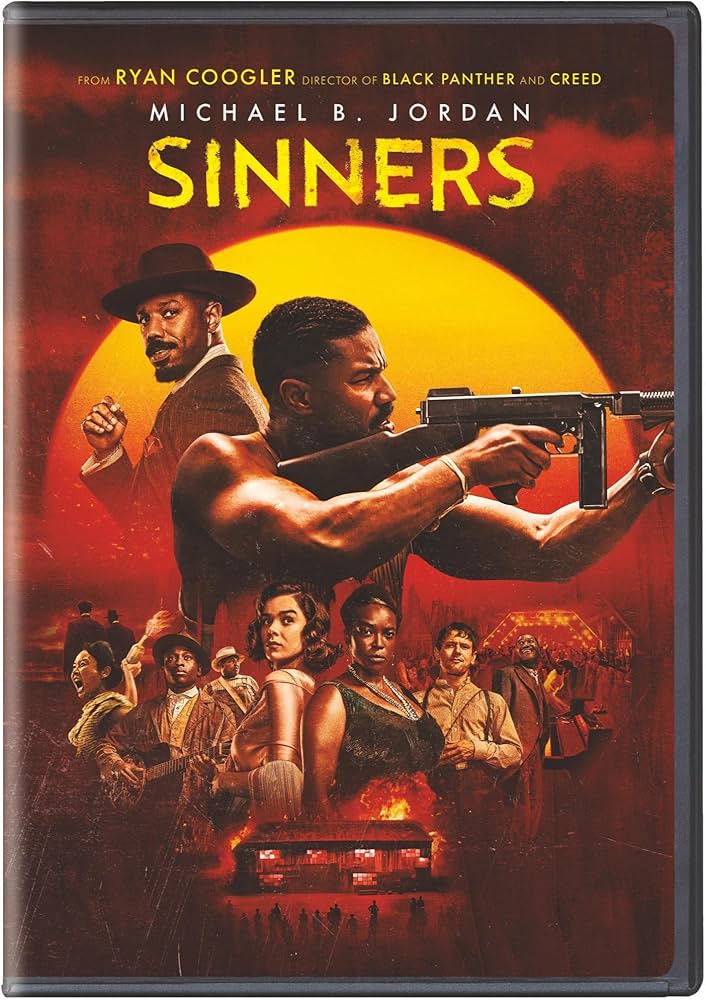

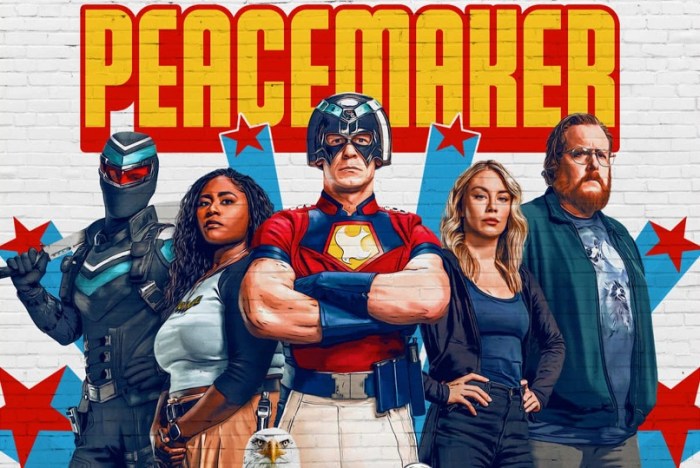
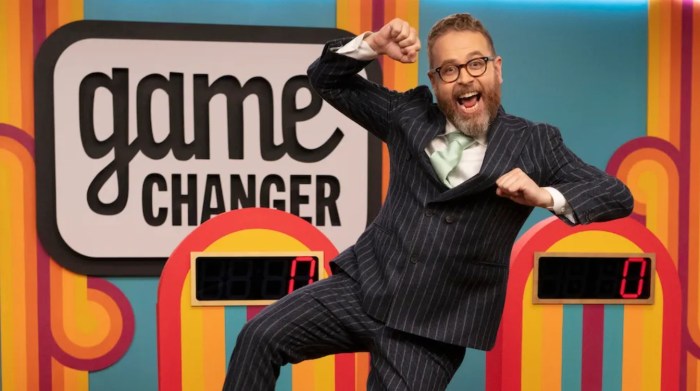
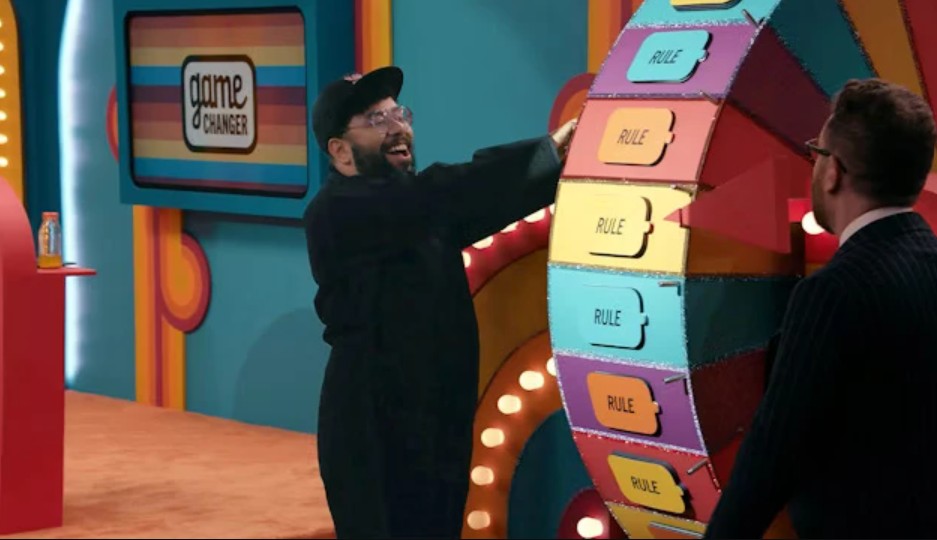
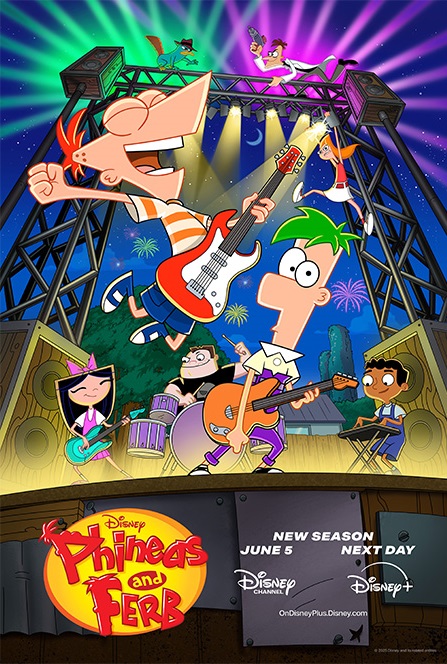
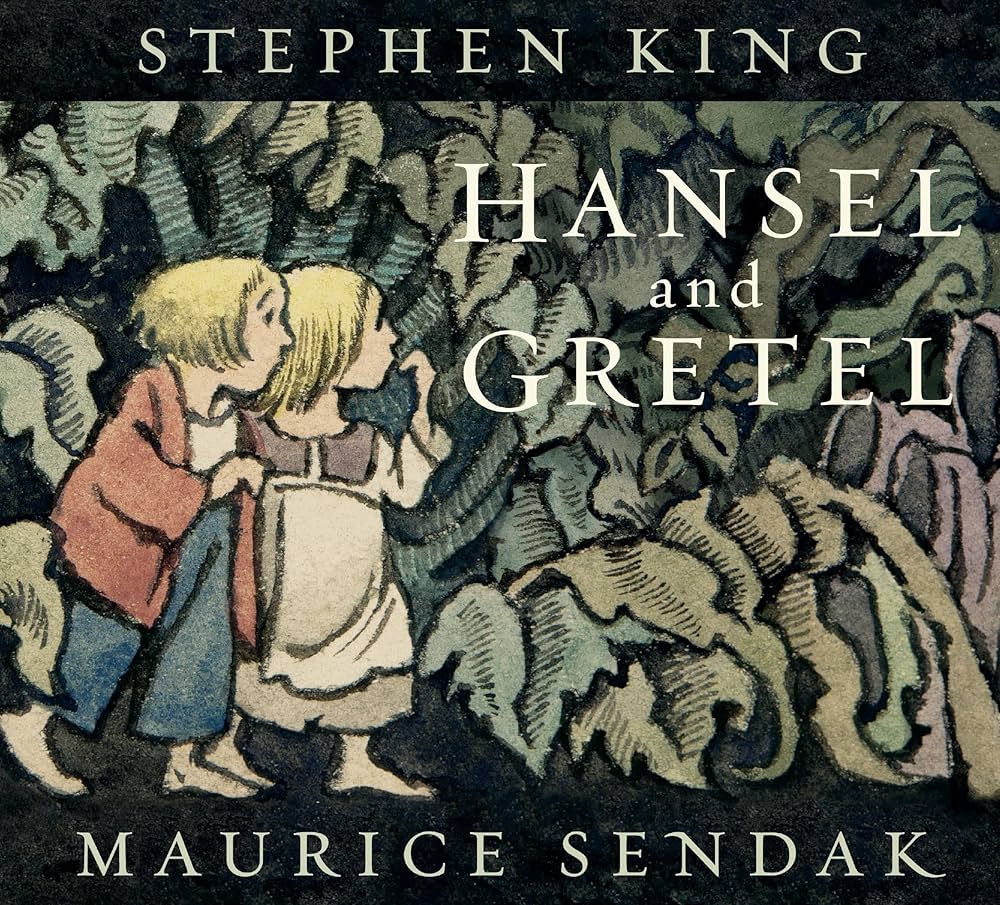
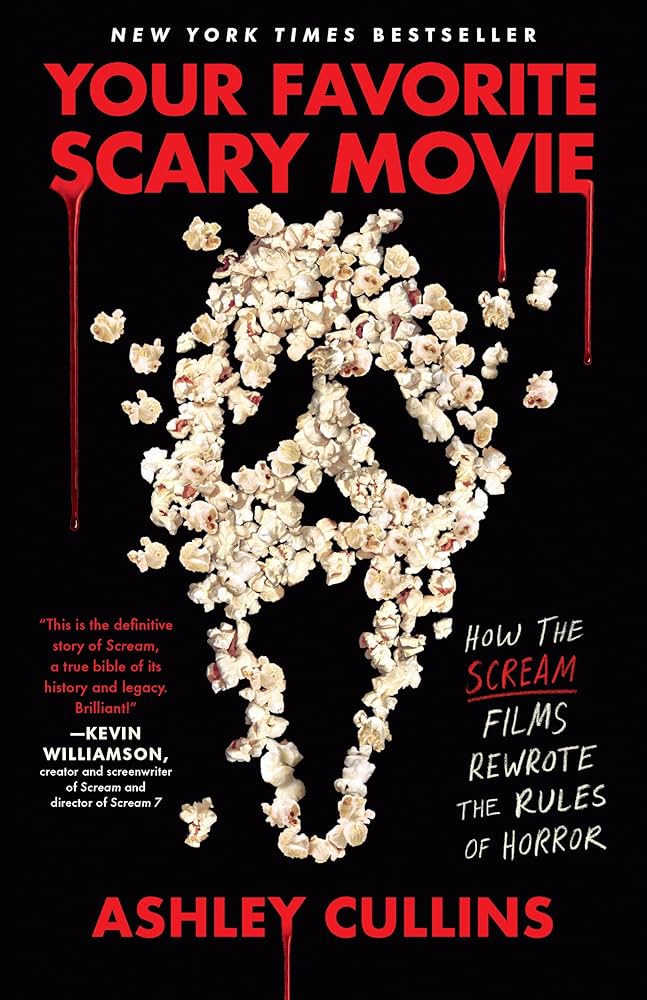
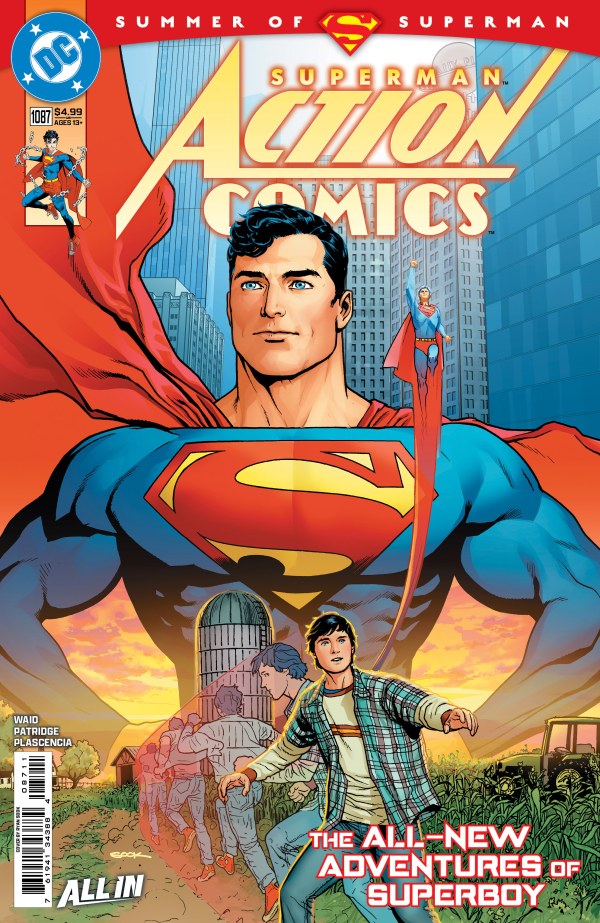
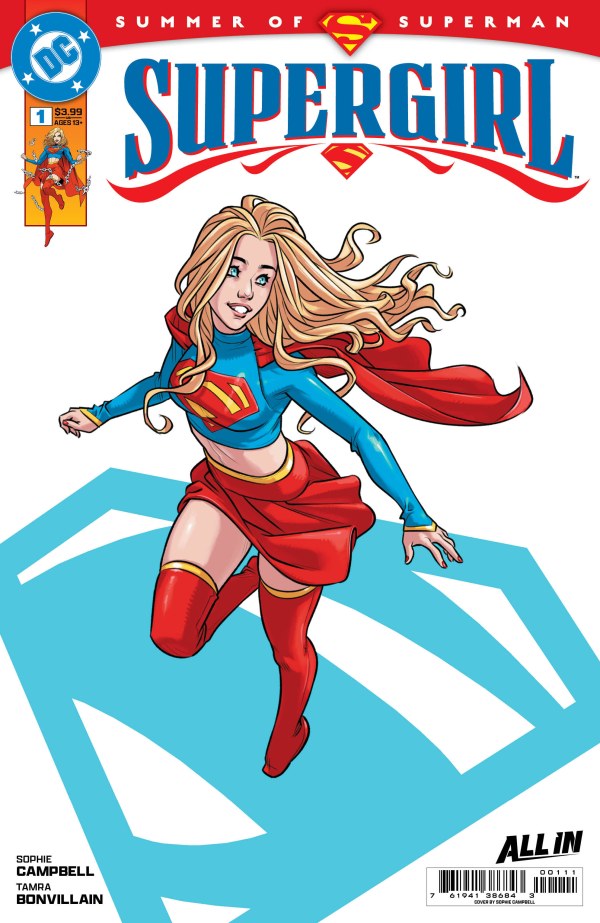

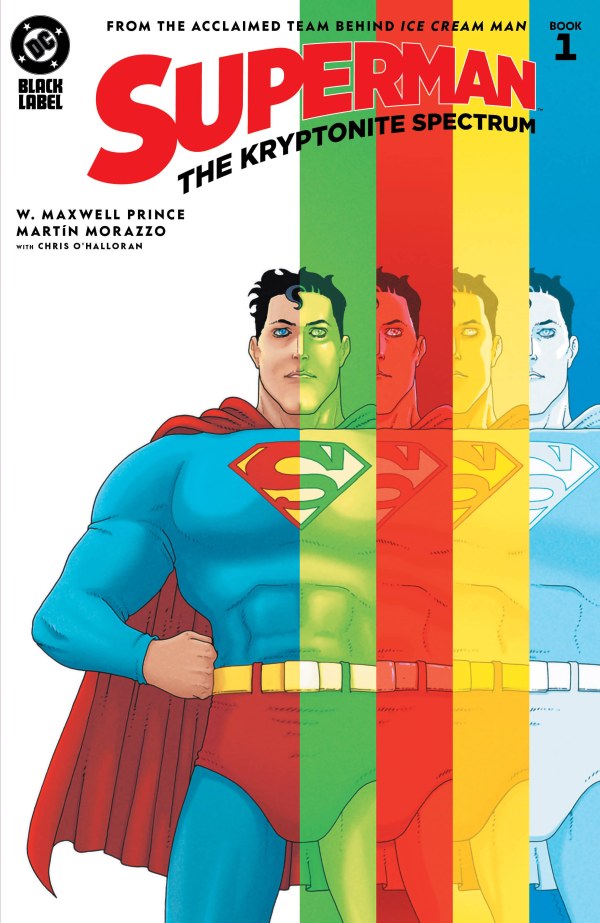
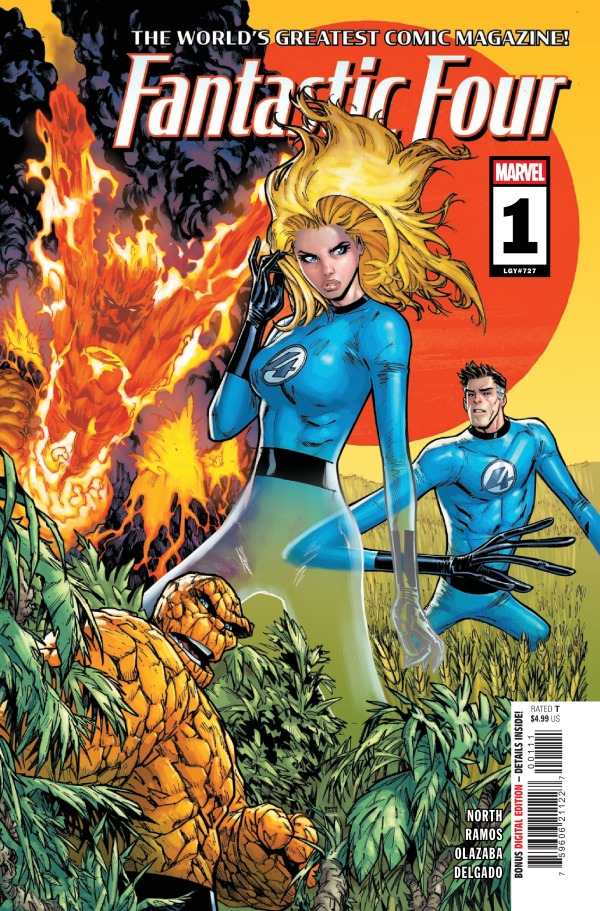
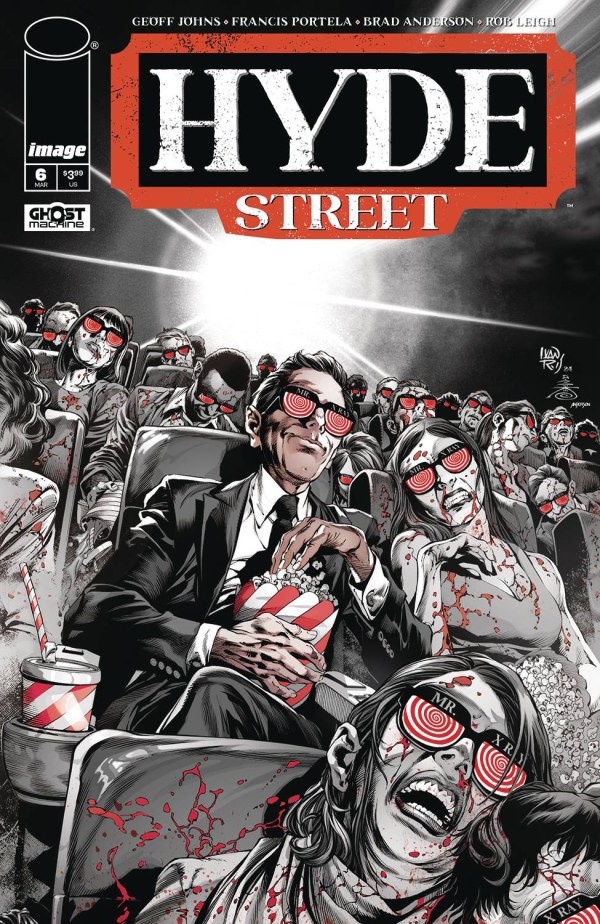

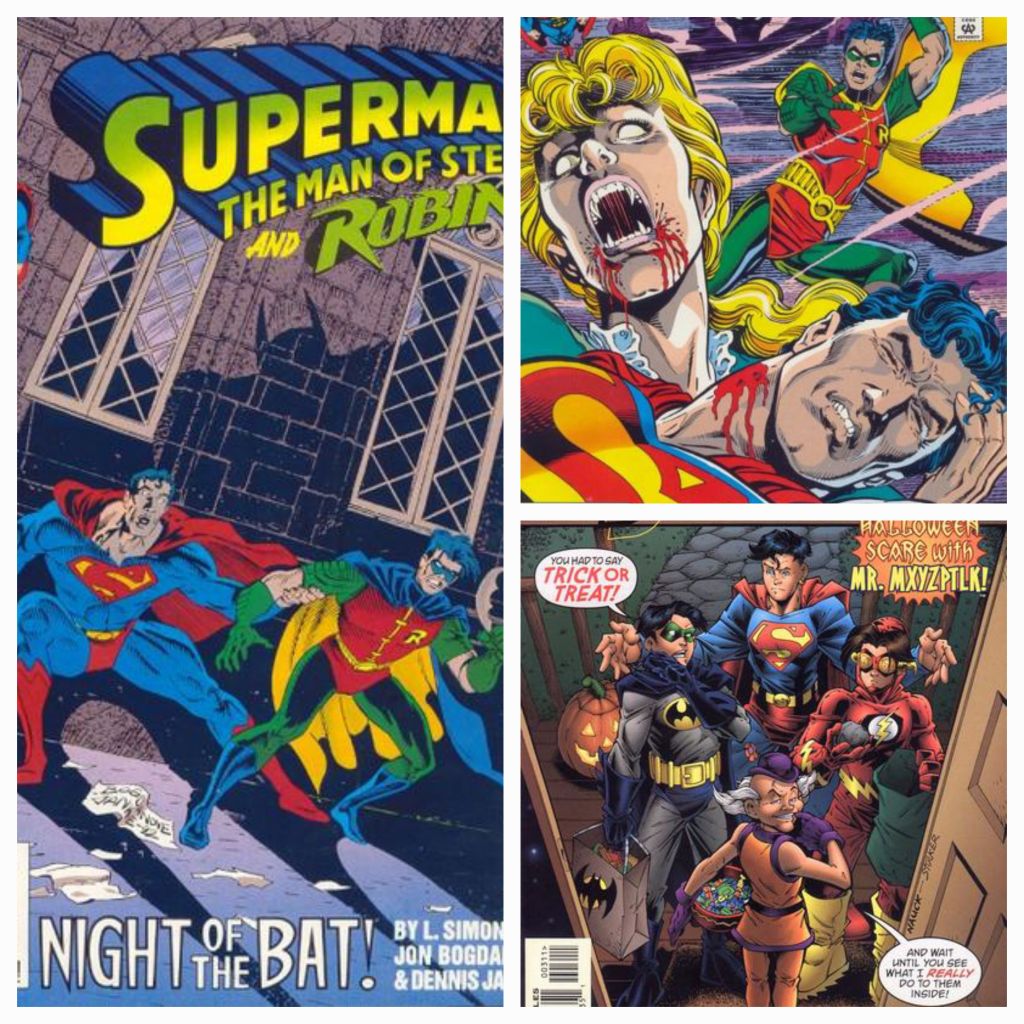
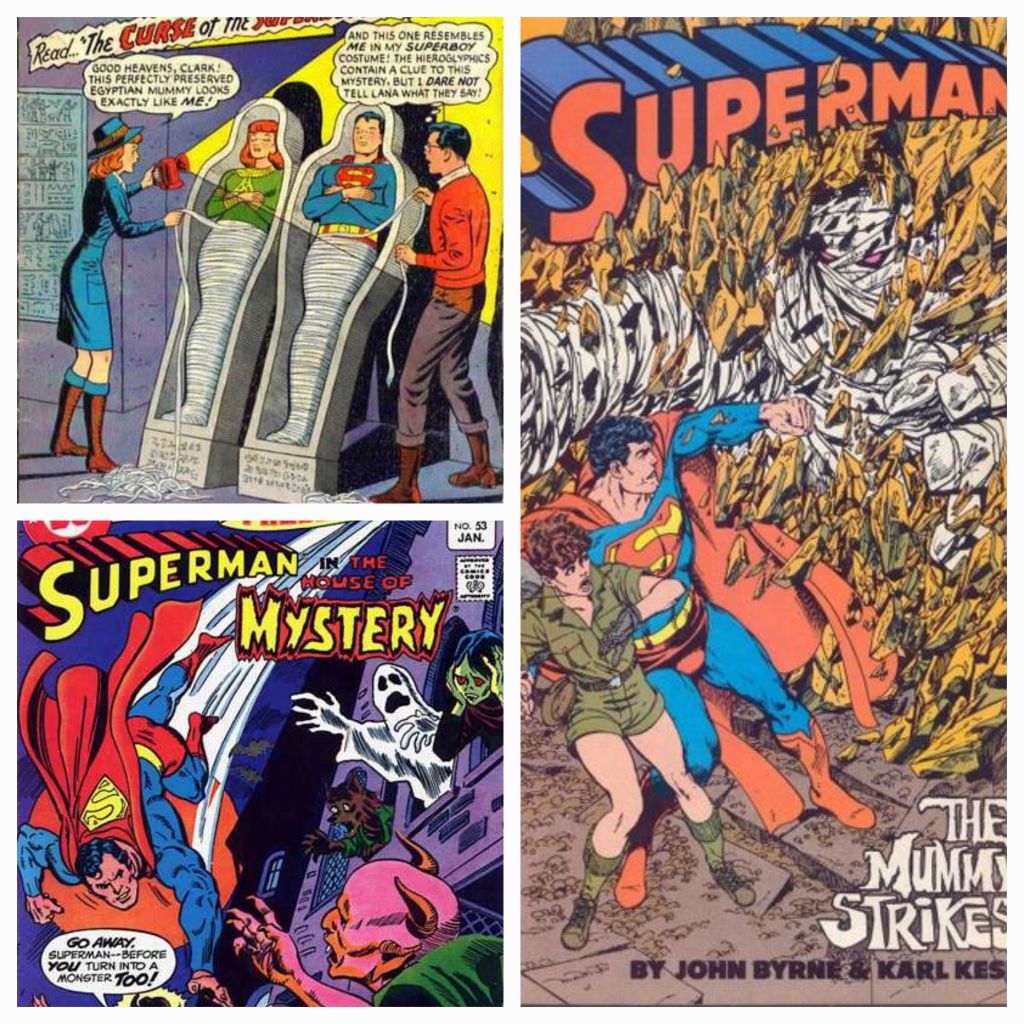


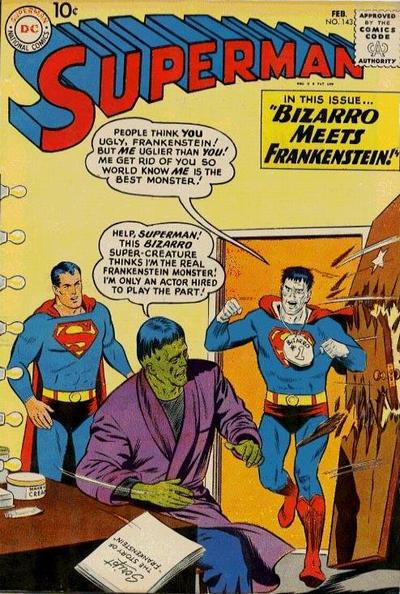
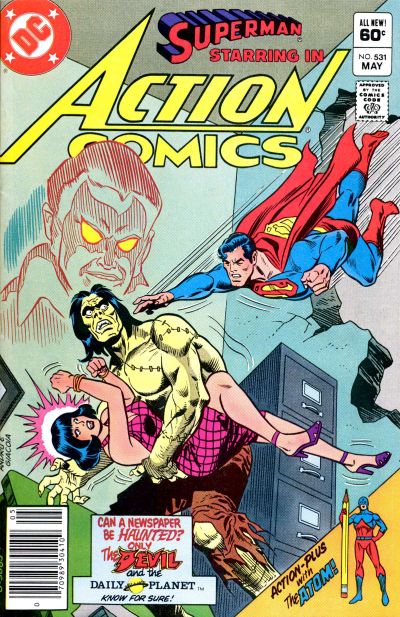


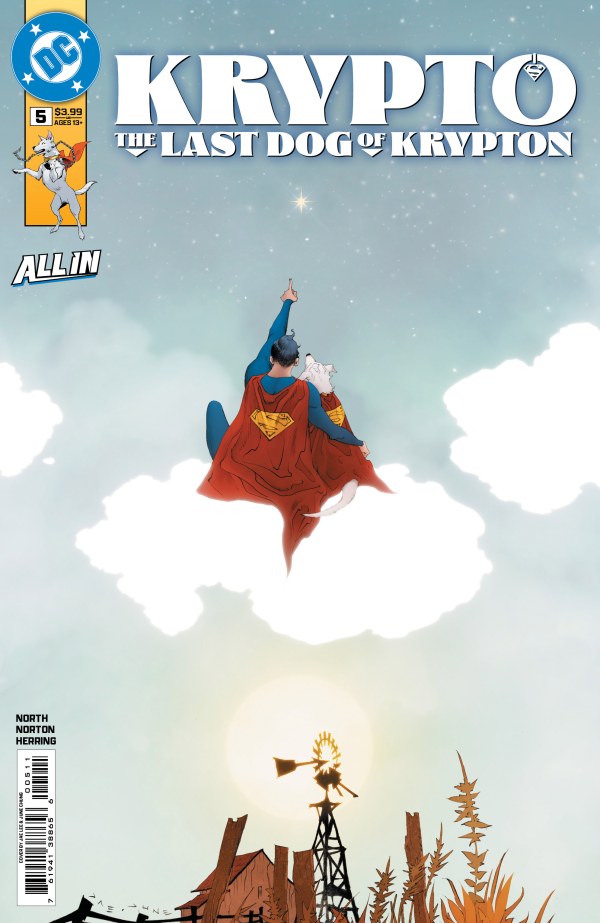

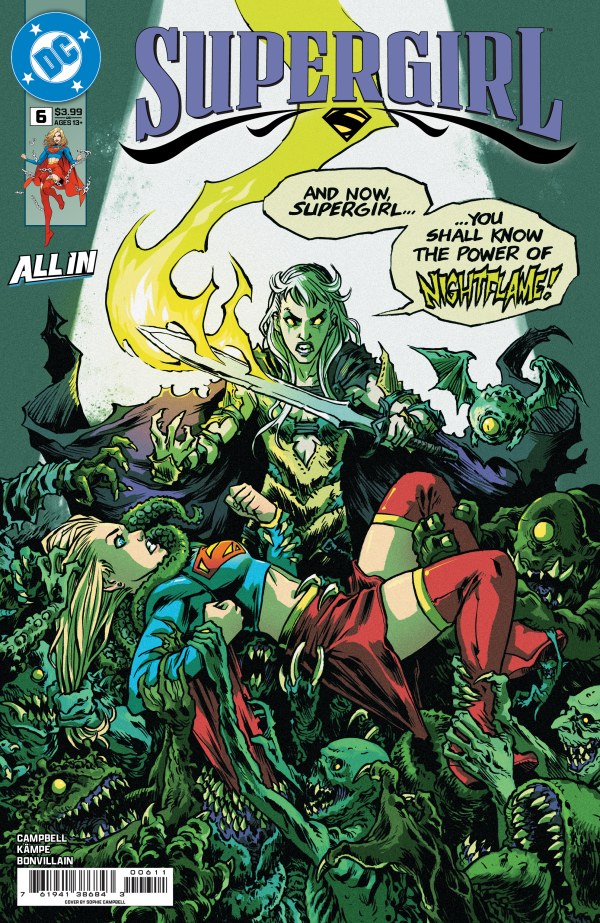

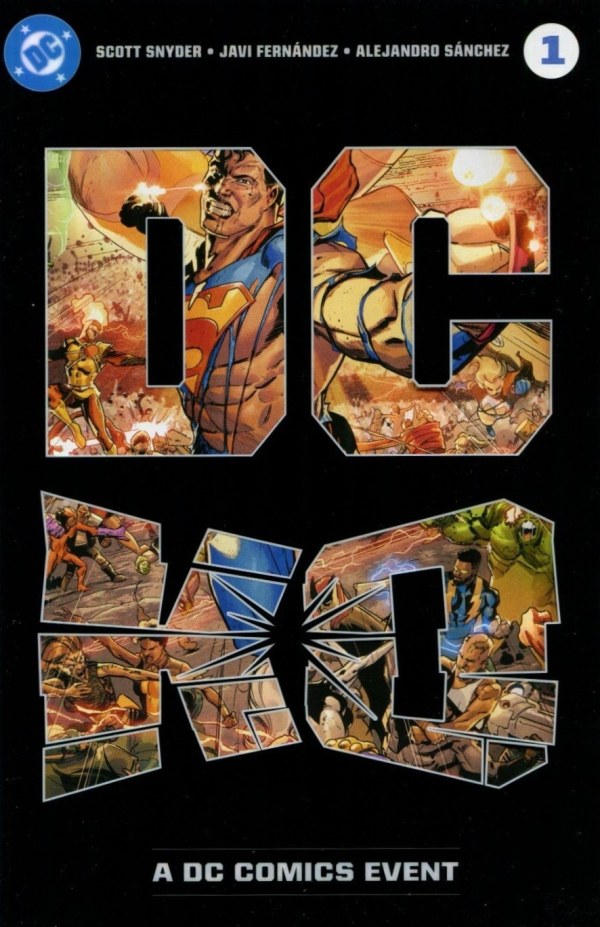

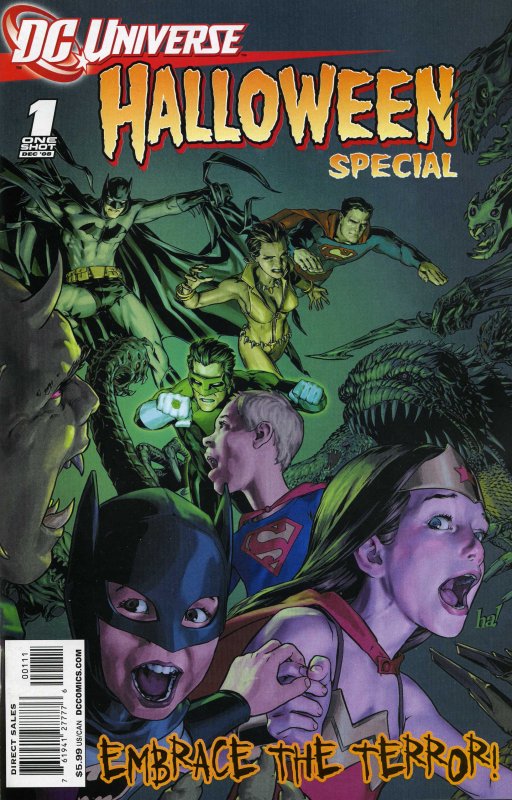


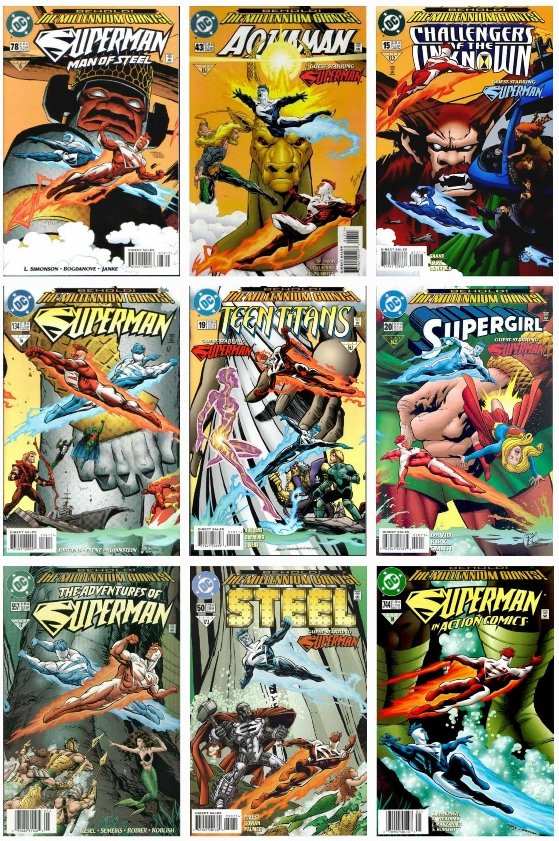
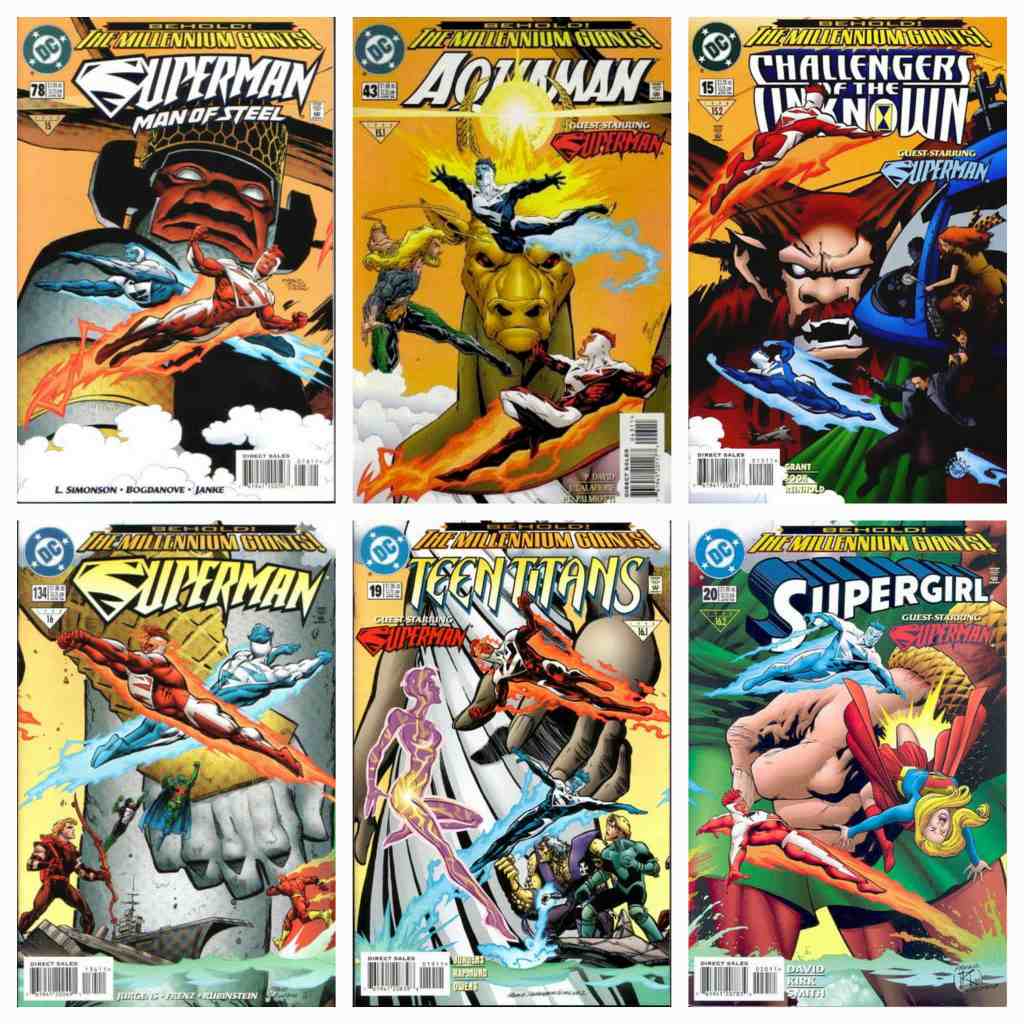


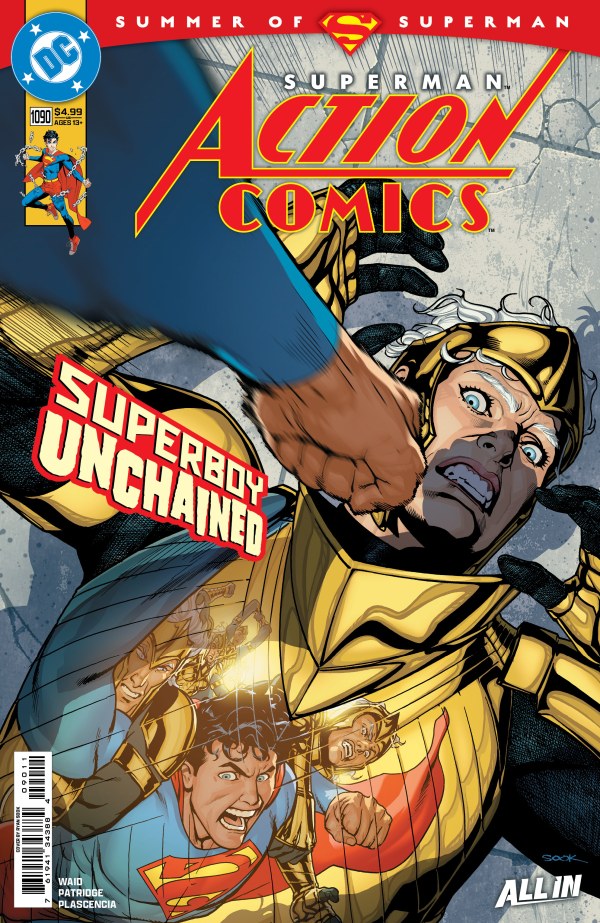
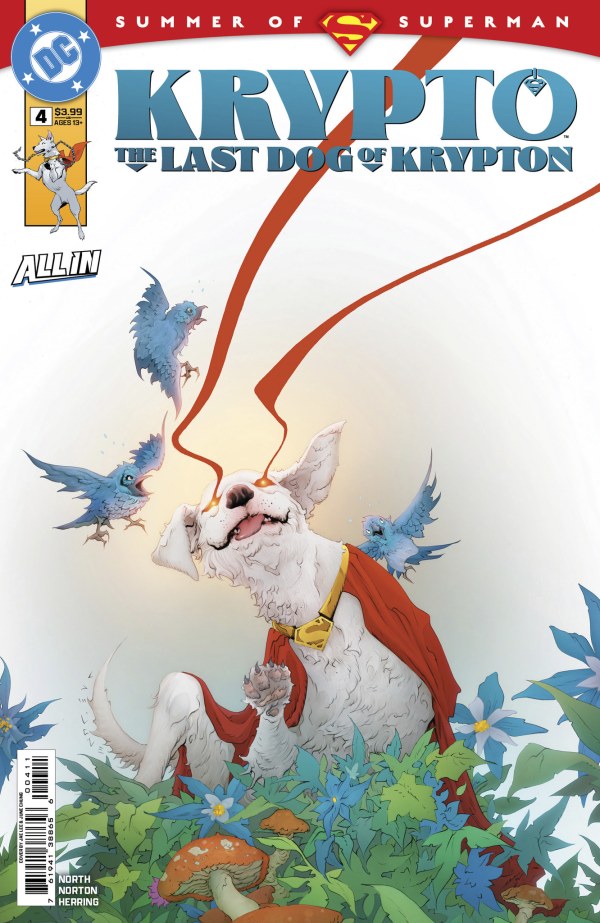

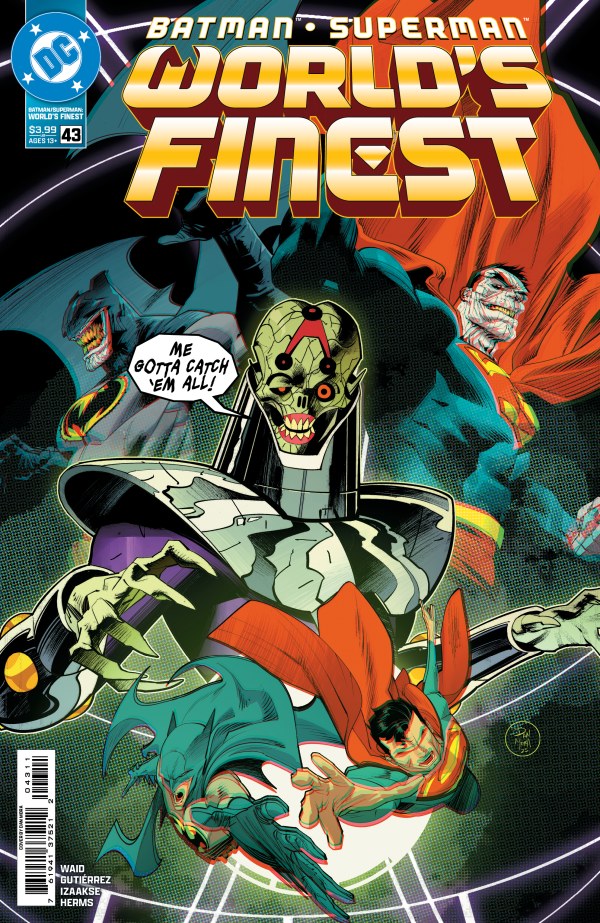
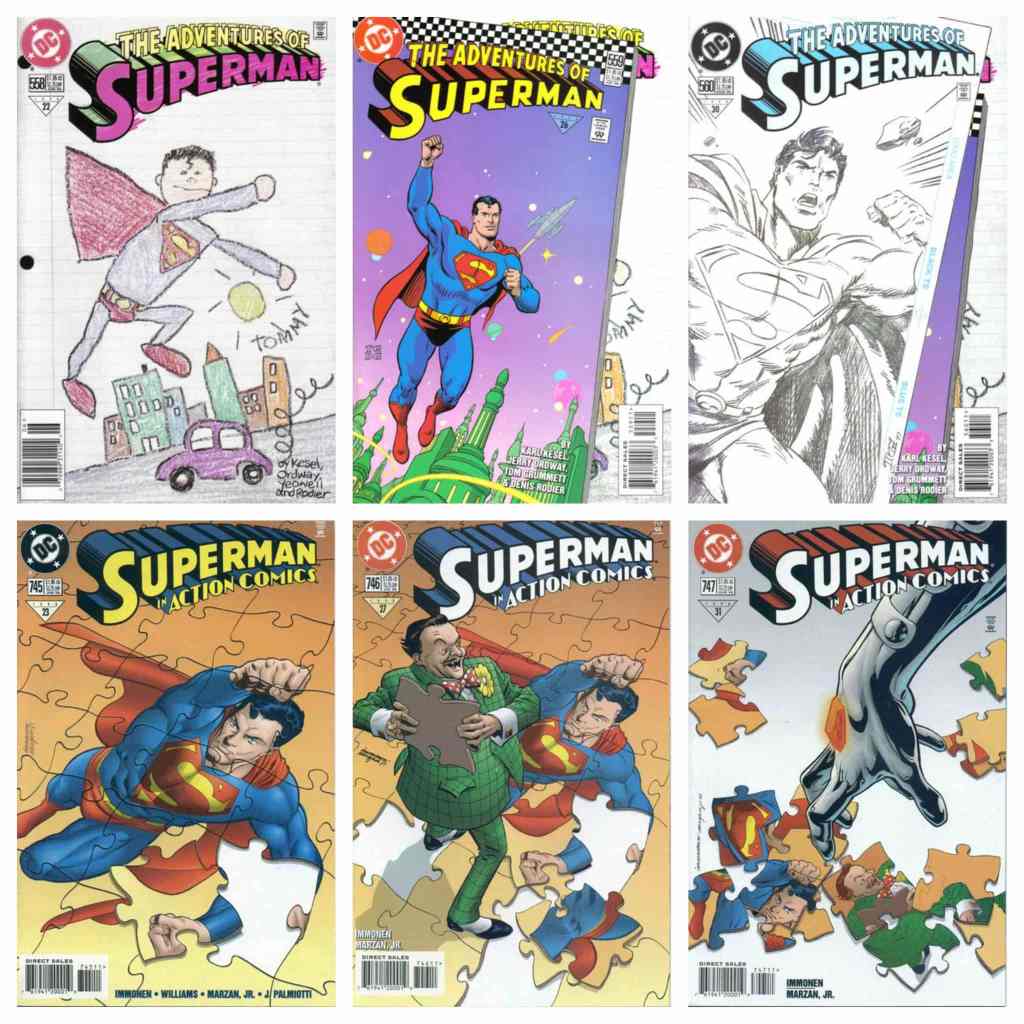

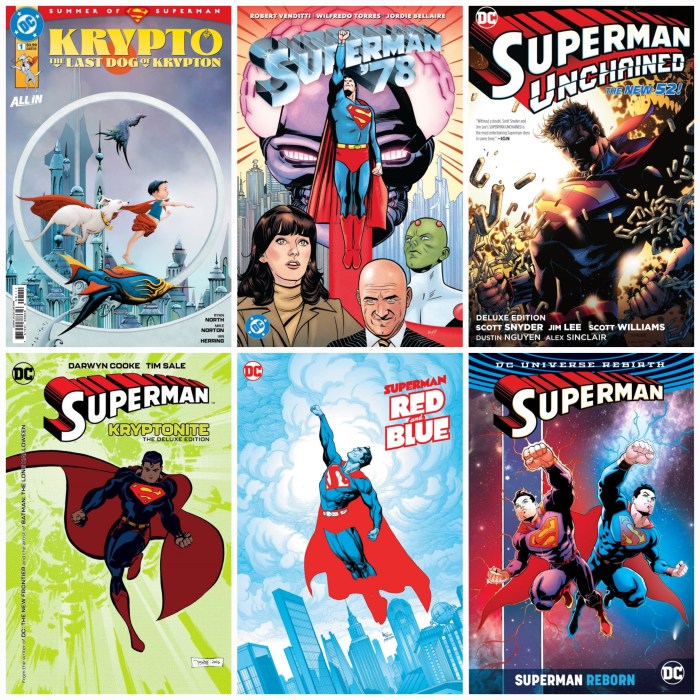
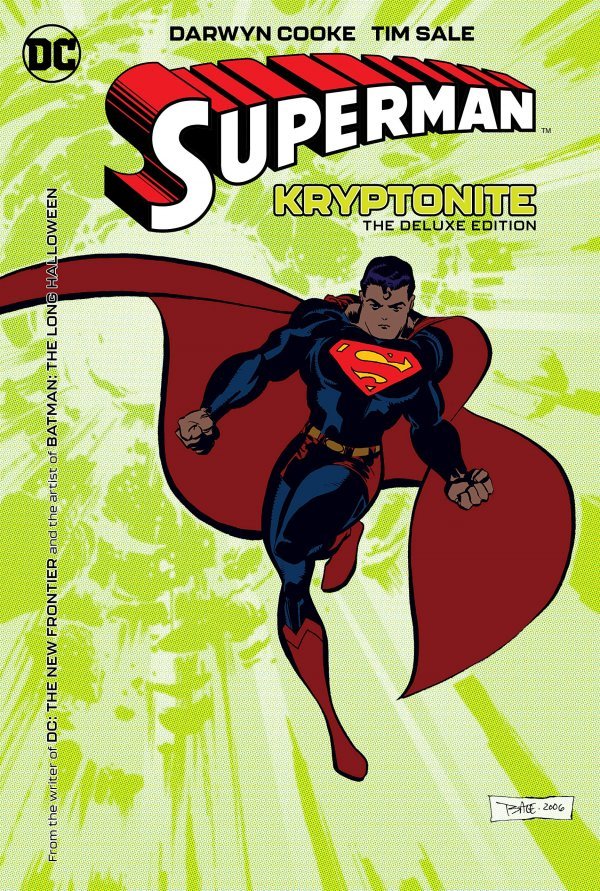


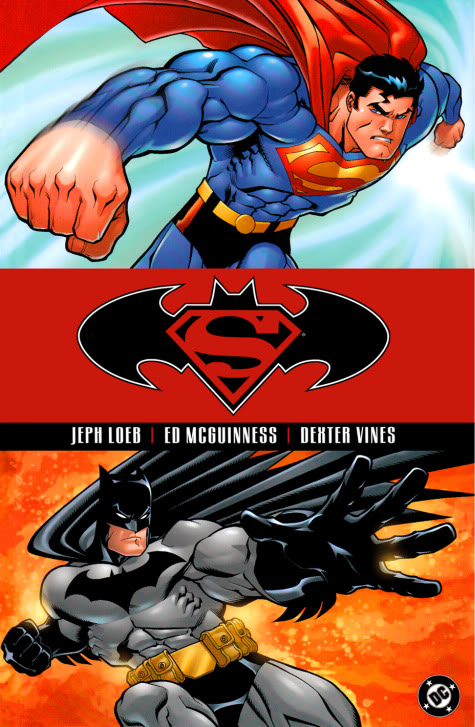

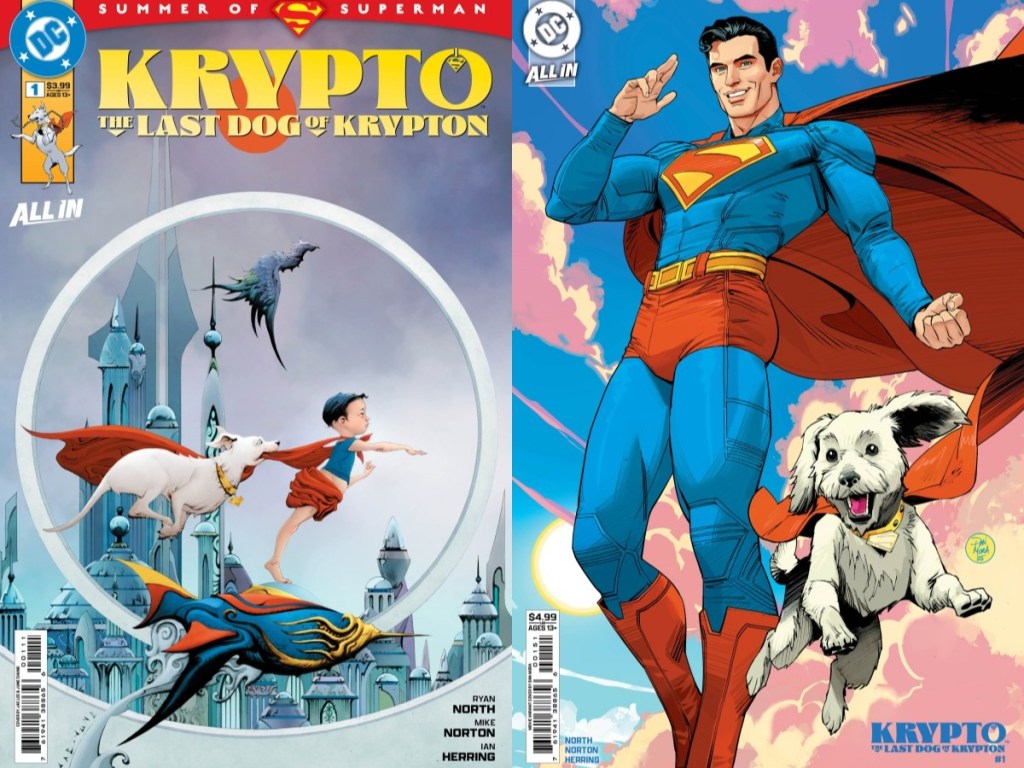
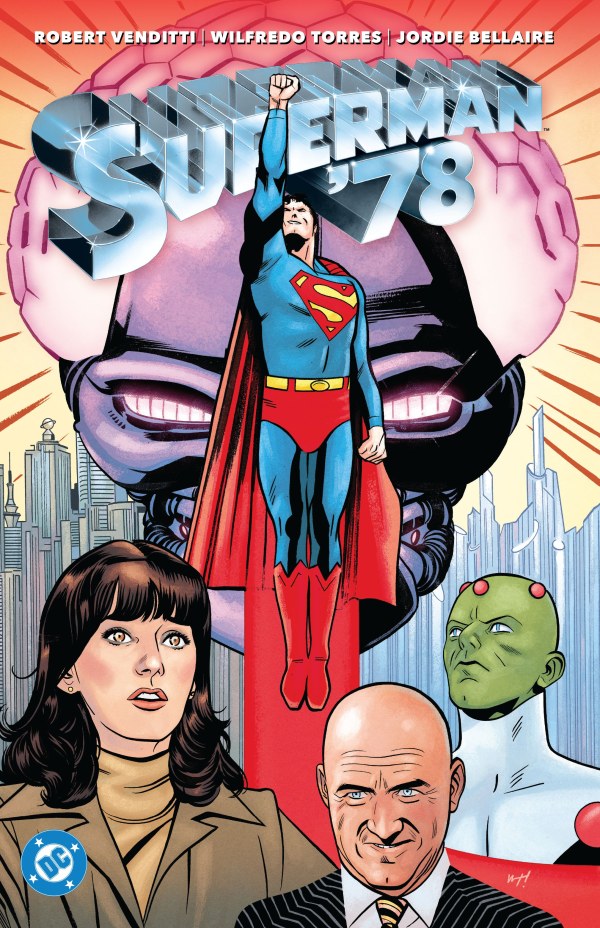


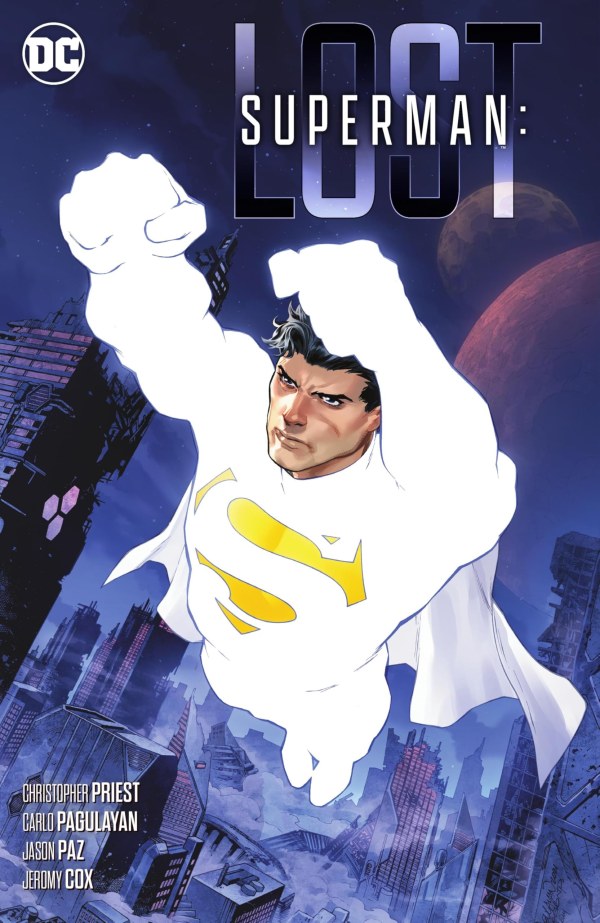






 Blake M. Petit