Geek Punditry #156: The 2025 Pundy Awards!

It’s the final Geek Punditry of 2025, and you know what that means. Everybody gets a slinky!
Here you go.

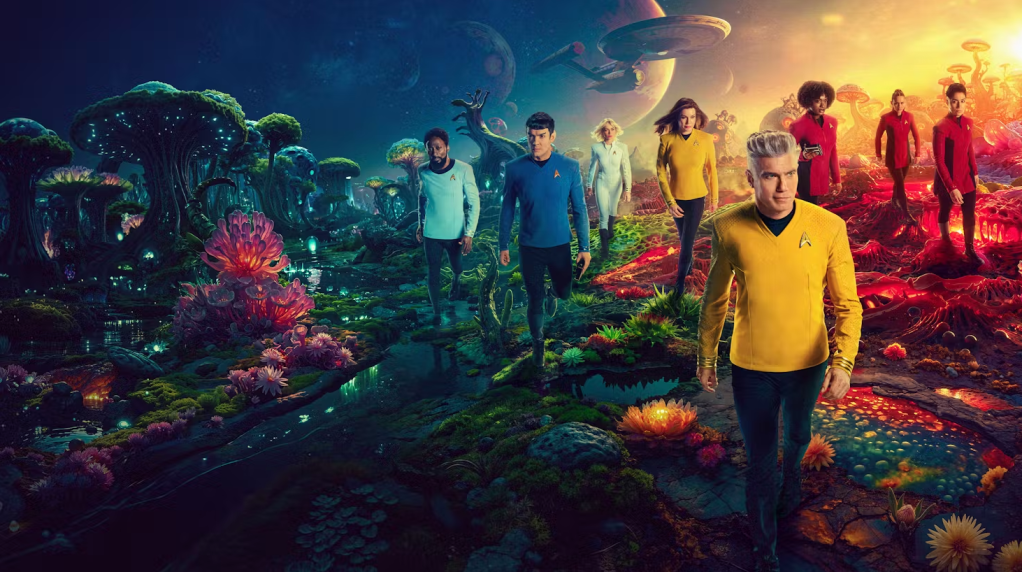
Well, that or…It’s time for the 2025 Pundy Awards, the ONLY awards show that is voted on by the exclusive governing body of Me, in which the best in pop culture for the year is given the accolades it deserves. But this year’s Pundies will be a little different. 2025 was a hectic year for me, for many reasons. One of those reasons is that I immersed myself in the Year of Superman project (which you no doubt have been following here on the blog with slavish devotion). As a result, I haven’t consumed as much new media this year as I usually do. Oh, there’s always a mountain of movies that I haven’t gotten around to yet, but I’ve fallen seriously behind in my TV viewing as well. I haven’t seen the new seasons of Stranger Things, Star Trek: Strange New Worlds, Abbott Elementary, or Bob’s Burgers, and as far as watching NEW shows – it just hasn’t happened. I’ve only even seen the first two episodes of Welcome to Derry.

The point is, I don’t have as big a pool of influence to draw from as I usually do. Even amongst the new stuff, you’ll probably notice a substantial slant towards stuff related to Superman or DC Comics in general. So this year’s Pundies aren’t really going to be all that structured. I’m going to talk a little bit more freeform about the stuff that I’ve enjoyed this year.

For example, I could tell you that my favorite new movie that I saw this year was Superman. You will not be surprised. I thought James Gunn’s reinvention of the DC Universe started off beautifully, that David Corenswet, Rachel Brosnahan, and Nicholas Hoult were flawless in their respective roles, and that the future of the DCU looks very bright indeed. But if you want me to wax poetic about that, you can go back and read the review I wrote in July

“When a cold wind blows it chills you, chills you to the bone…”

So besides Superman, what were my favorites out of the (relatively) few movies I watched this year? Let’s start with Guillermo Del Toro’s new version of Frankenstein for Netflix. I’ve loved almost everything I’ve ever seen from Del Toro, so I wasn’t surprised that I enjoyed this movie quite a bit. I was surprised at just how far it deviates from the original novel. Shifting Elizabeth’s role to the wife of Victor Frankenstein’s brother, rather than making her his own love interest, gives the story a different flavor entirely, one that I didn’t see coming and I’m not 100 percent sure if it’s an improvement. On the other hand, I loved the element of Christoph Waltz’s character funding Frankenstein’s experiments because he wants a “perfect” body for himself. Most surprisingly, though, was how he rewrote the ending of the story. In Mary Shelley’s novel, and in most adaptations, they play up the idea of Victor as a neglectful “father” for his creature, making the tragedies of the story indirectly his fault. The end of the film changes this narrative, being one of the few versions of the story in which we see him recognize his faults and show remorse for them. The only other version I can think of that does this, interestingly, is Mel Brooks’s Young Frankenstein.
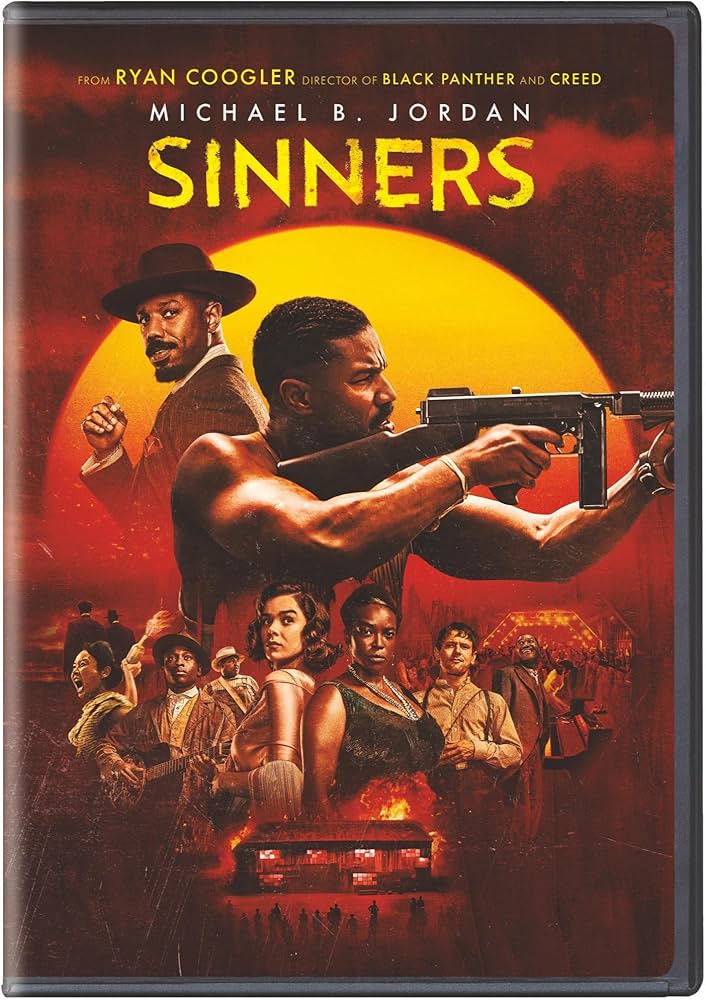
The real sinners are the friends we made along the way.

Speaking of classic monsters, a lot of people have sung the praises of Ryan Coogler’s vampire movie Sinners this year. Some are even calling it a best picture candidate. I wouldn’t put it QUITE that high, but it IS an excellent movie. Michael B. Jordan plays a pair of twin brothers who return home to escape some of the sins of their past, but their attempt to become honest businessmen is broken immediately when the tavern they open is assaulted by…well…vampires. It’s not just another vampire movie, though. This film is deep, powerfully emotional, and at times even sadly beautiful. There’s a ton of killer music (excuse the pun), and Hailee Steinfeld’s performance adds to an already incredible performance by Jordan as two very different characters. It’s a horror movie, technically, but like we get from Del Toro, it’s a horror movie that appeals to people beyond the genre.

Evidence that comedy still exists.

Perhaps the most delightful surprise at the cinema this year, though, was Akiva Schaffer’s reboot of The Naked Gun with Liam Neeson and Pamela Anderson. The idea of “spoof” movies has taken a nasty hit in the past few years, with many of them being reduced to painful reference-fests bereft of actual humor like we get from the Friedberg/Seltzer team, so I honestly didn’t have high hopes for this one. To my shock, I got the funniest movie I’ve seen in years. The humor is spot-on, feeling like the classic Leslie Nielsen films brought back to life. What’s more, Neeson plays the son of Nielsen’s character, making this a legacy sequel rather than a remake, which I always prefer anyway. But the biggest surprise – and here’s a sentence I never thought I would be writing on January 1st – was Pamela Anderson. Pamela Anderson is a FANTASTIC comedic actress. She’s got perfect timing and flawless delivery, and she and Neeson have legitimate chemistry, which apparently is due to the fact that they actually fell in love on the set of this film. The Naked Gun is proof that the movie industry CAN still make good comedies. The hard part is getting people in the theater to WATCH them.

Moving on from movies, let’s talk television. As I said, I didn’t get to watch very much new TV this year, and once I catch up I may have totally different picks for my favorites. But of the new TV I DID watch in 2025, here are the three shows I enjoyed the most.
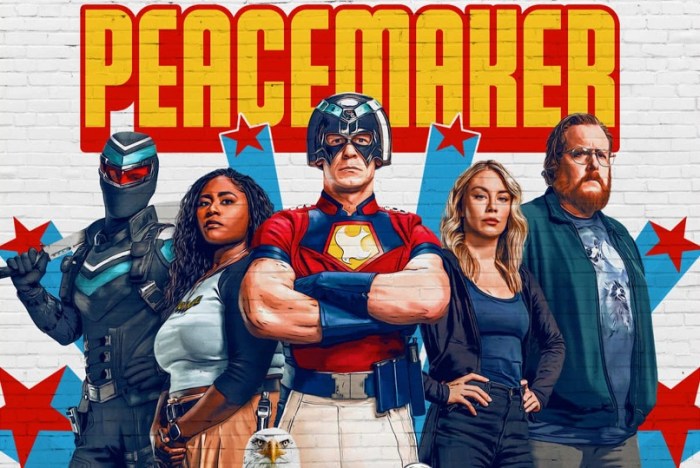
Do you really wanna — do you REALLY wanna taste it?

First of all – and I know that we’ve already talked about James Gunn – I loved the second season of Peacemaker. The John Cena-starring show is the one definite holdover from the previous DC Universe, and Gunn spends a bare minimum amount of effort in the first episode retooling it to fit the new DCU he’s created, then he plops it right into the time immediately post-Superman. John Cena’s Peacemaker is suffering from severe trauma following the events of the first season (which is still in-continuity in broad strokes) and finds a way to an alternate dimension where his father and brother are still alive and he’s celebrated as the hero he wants to be. It seems perfect…at first. Just like the first season, the show is funny and full of action, but this season really amplifies the drama. There’s a deep storyline between Cena’s Christopher Smith and Jennifer Holland’s Emilia Harcourt that drives the season in a very real way. Danielle Brooks meanwhile, puts in an award-worthy performance as Leota Adebayo, the best original character from a DC TV series since Harley Quinn was created in Batman: The Animated Series. The ending is bittersweet, in that it sets up a new storyline but, at the moment, there’s no season three planned. The setup here is for the future of the DC Universe, and I can only hope that when it IS picked up, wherever that happens to be, it’s not only Peacemaker that makes his triumphant return, but the entire group of 11th Street Kids that we’ve come to love.
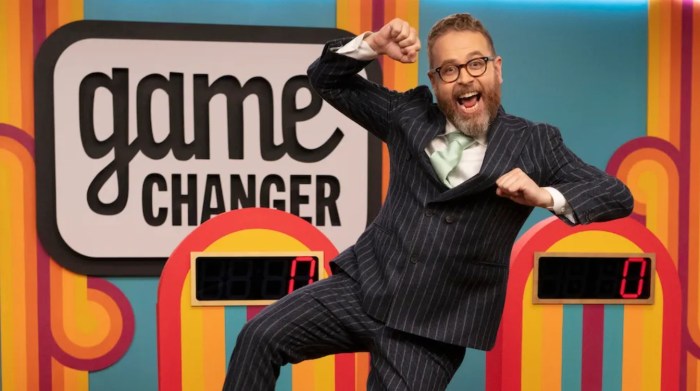
Like Kermit the Frog crossed with Loki.

This was also, as I mentioned several months back, the year I discovered Dropout TV, specifically its signature show Game Changer. If you missed that previous column, Game Changer is a game show where the contestants are usually improv comedians and the game itself changes in every episode – they never know exactly what the game will be or what the rules are until they start playing. This year’s seventh season started off with “One Year Later,” an episode in which the three contestants were given a series of wild tasks and then a solid year in which to accomplish them. The comedy comes from the creative ways that they do things like bringing a cardboard cutout of Sam Reich (the host) to the most “remote” location they can or recording the best outgoing voicemail message. Later we get the “You-Lympics,” where they have to complete a series of stunts unaware of the fact that they’re going to have to do the same ones again, competing not against each other, but against their own prior scores. “Crowd Control” brings in stand-up comedians with skill at working the crowd and makes them face an audience full of highly unusual quirks and personal history to work with, an episode that was so successful it spun off into its own series.
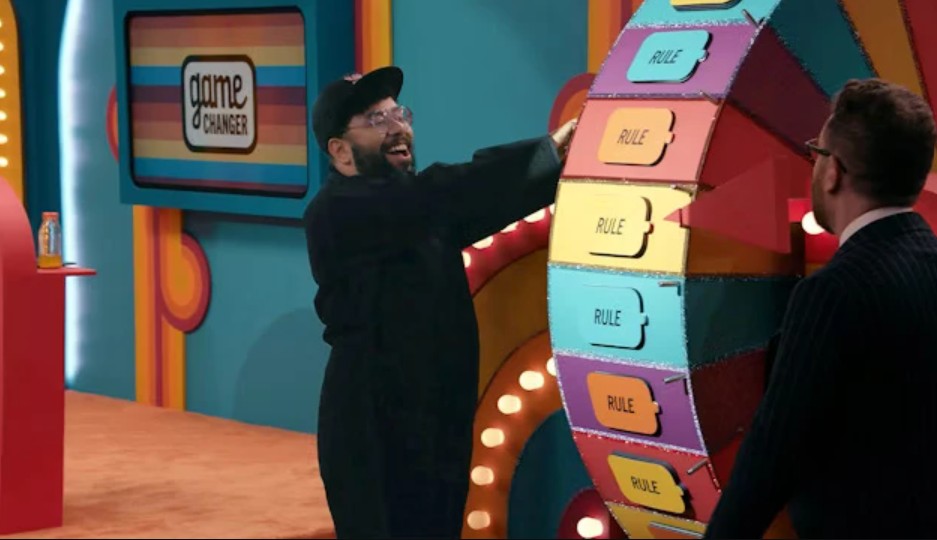
Spin that wheel!

But my favorite of the season, the one that I would show a newcomer to Dropout to convince them to watch Game Changer, was “Ruelette.” The players spin a giant Price is Right-style wheel which lands on different rules that they have to abide by for the rest of the game, like wearing an oversized cowboy hat or having to say everything in a singsong voice. The rules stack and twists are thrown in, and the game quickly flies completely off the rails into one of the most unhinged episodes of television I’ve ever seen. It’s glorious.
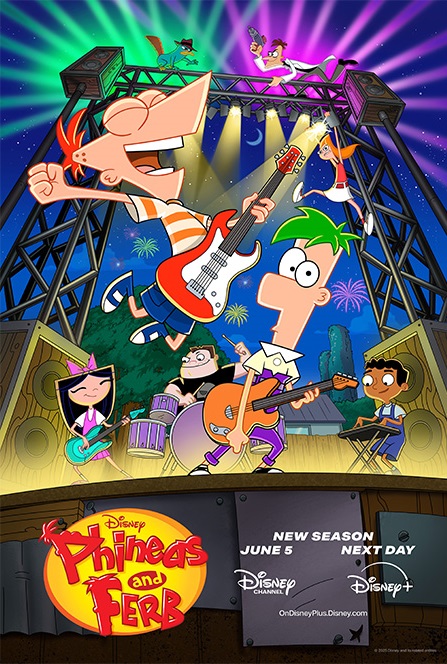
Summer belongs to them — AGAIN!

Finally, let’s talk about the revival of Disney’s Phineas and Ferb, which dropped this year. Picking up the summer after the first four seasons of the show, season five begins with the last day of school at the beginning of a new, glorious summer of games, stunts, ridiculous inventions, and Buford’s endless quest for a hot tub made out of a giant bread bowl. The hiatus since the show’s previous cancellation hasn’t dulled it in the slightest – it’s still as charming, funny, and toe-tapping as it ever was. I cannot wait for the second half of the season to drop on Disney+ next month.
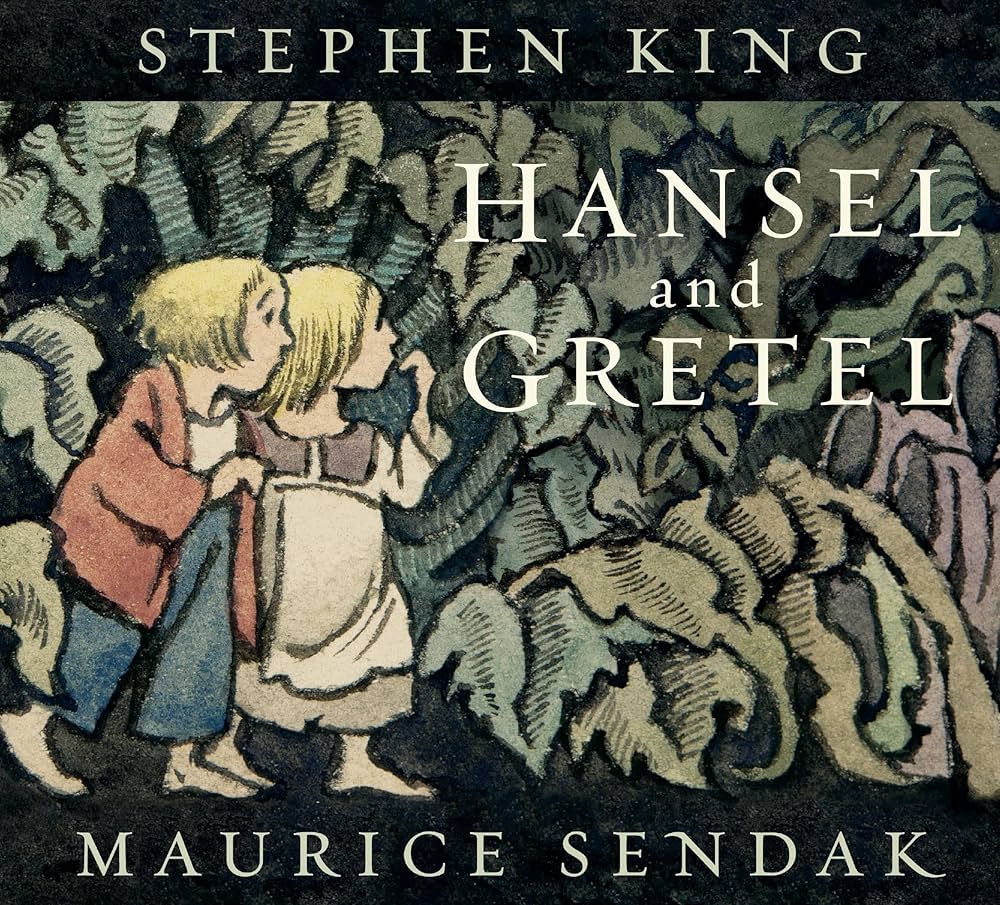
As if fairy tales weren’t creepy enough.

I read a lot of books this year, I’m proud to say, but I’ve actually read relatively few NEW books. Of the dozens of books that crossed my to-read pile in 2025, only three of them were actually PUBLISHED in 2025. One of them is not worth mentioning in this column. Another was the Stephen King/Maurice Sendak collaboration on a new version of Hansel and Gretel. King takes the classic fairy tale and adds a few touches that are distinctly his, and even links to his larger universe (specifically the Dark Tower books). Sendak’s illustrations, as  expected, are whimsical and ghastly at the same time, and I loved it.
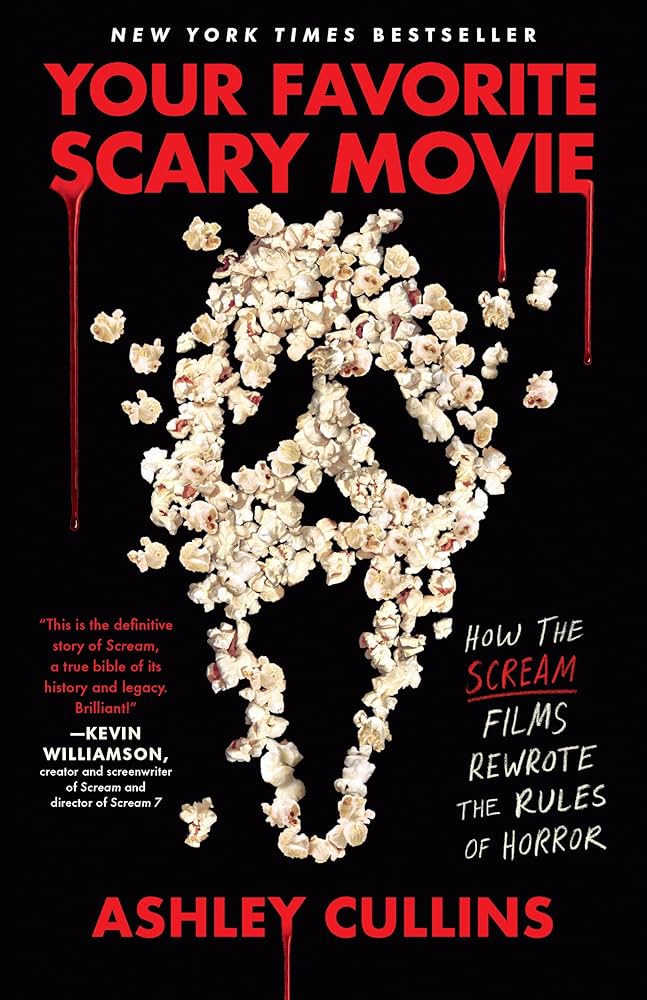
And y’know what? It IS my favorite scary movie.

The other new book from this year was a nonfiction history of my favorite horror movie franchise, Your Favorite Scary Movie: How the Scream Films Rewrote the Rules of Horror by Ashley Cullins. As a fan of the Scream films (I’ve mentioned it here once or twice, I think), I sincerely enjoyed this book. Although much of the history is stuff that fans probably already knew, Cullins did in-depth interviews with dozens of the actors, writers, and other creators involved in the series over the decades, fleshing out a familiar story. She gives insight to the things we already knew, and adds a lot of stuff that we didn’t. The centerpiece of the book is a very loving, respectful tribute to the late Wes Craven, something that fans of the franchise in general or Craven specifically will find touching and even tearjerking. The book is also extremely thorough, tracking the history of the franchise from the one-act play Kevin Williamson wrote in college that provided the germ of the idea for the first film right up to the eve of filming for the seventh movie, which isn’t even coming out until 2026. I’ve read a lot of stuff about Scream, and this is probably the best book on the series I’ve come across. 
Wait — Superman? Since when does this blog talk about SUPERMAN?

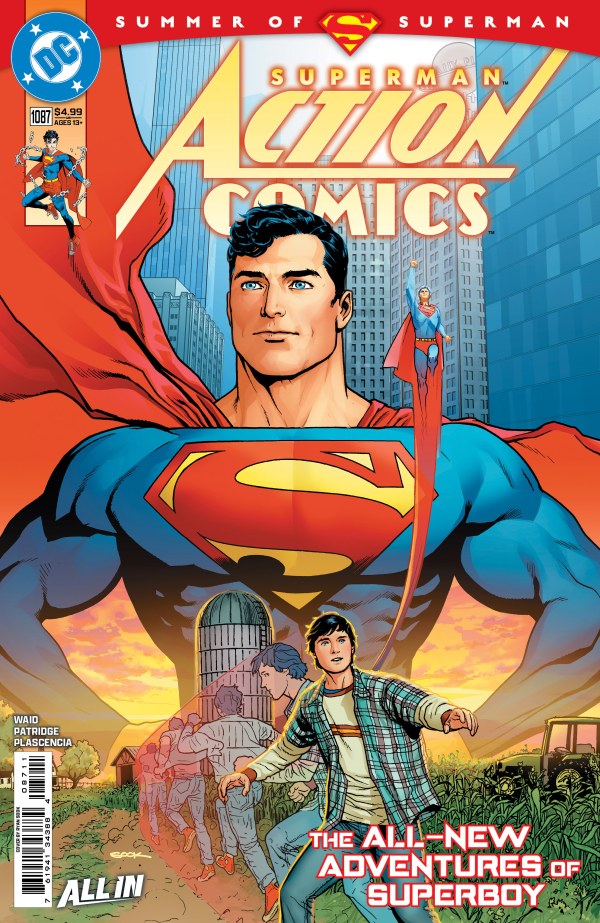
Finally, I want to move into the world of comic books, and again, you’re gonna hear me talk about Superman. DC declared it the “Summer of Superman,” which makes the man behind the Year of Superman laugh kind of derisively, but they absolutely stepped up. The addition of a new series this year, Superman Unlimited, gave the Man of Steel four different ongoing titles, as it joined the ongoing Superman, Action Comics, and the title he shares with his best pal from Gotham, Batman and Superman: World’s Finest. All four of the books are great right now. Superman has been part of an ongoing storyline tying into the larger DC Universe, Unlimited has focused on a story about an enormous Kryptonite meteor landing on Earth and changing the game for everybody, Action Comics is telling new stories of Clark’s early career as Superboy, and Batman and Superman is full of stories of the characters several years ago as well. (Both of the books set in the past, I should note, are written by Mark Waid, while Joshua Williamson and Dan Slott are behind Superman and Unlimited, respectfully.)
She hasn’t had it this good since Helen Slater.

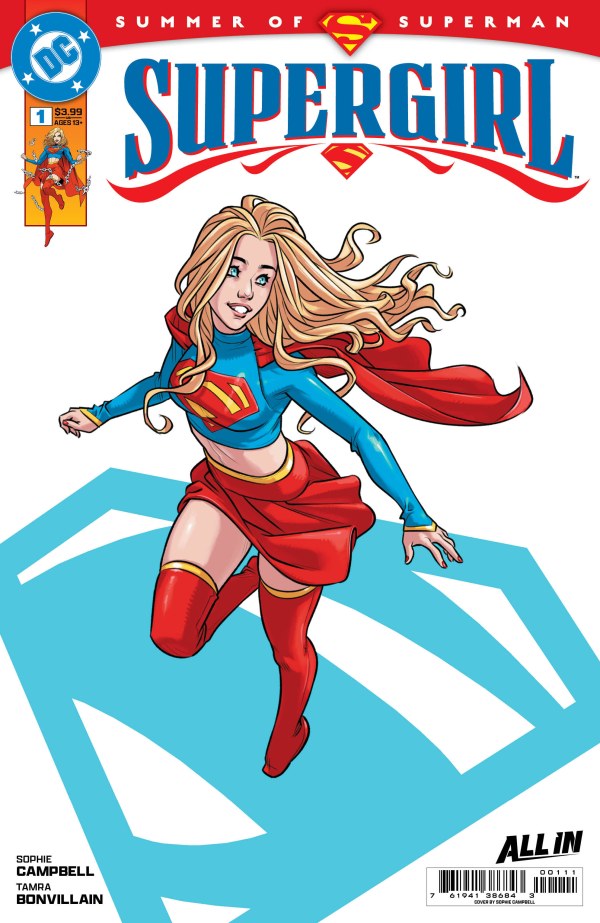
That’s not all, though. With her own movie coming out next year, Supergirl got a new series written and (usually) illustrated by Sophie Campbell. In the new Supergirl comic, Campbell has Supergirl moving back to her hometown of Midvale only to find a second Supergirl getting in her way. The series is eight issues in so far, and it’s become an absolutely lovely story about found family, with Supergirl building up a team of unexpected friends around her. Campbell’s art is great as well – a bit more cartoonish than your traditional superhero comic book, but perfectly suited for the series.

A boy and his dog indeed.

Not only that, but the Superman titles gave us two of the best miniseries of the year. Krypto: The Last Dog of Krypton by Ryan North and Mike Norton, is the story of the breakout star from this summer’s hit movie. For the first time, we see Krypto’s point of view of the destruction of Krypton, his journey to Earth, and the path that eventually led him back to Kal-El in Smallville. There’s something about that dog that pulls on the heartstrings, and in the course of the five issues I cried no less than six times. Of course, I’m kind of a softie.
Kryptonite! Now in all the Kolors of the rainbow!

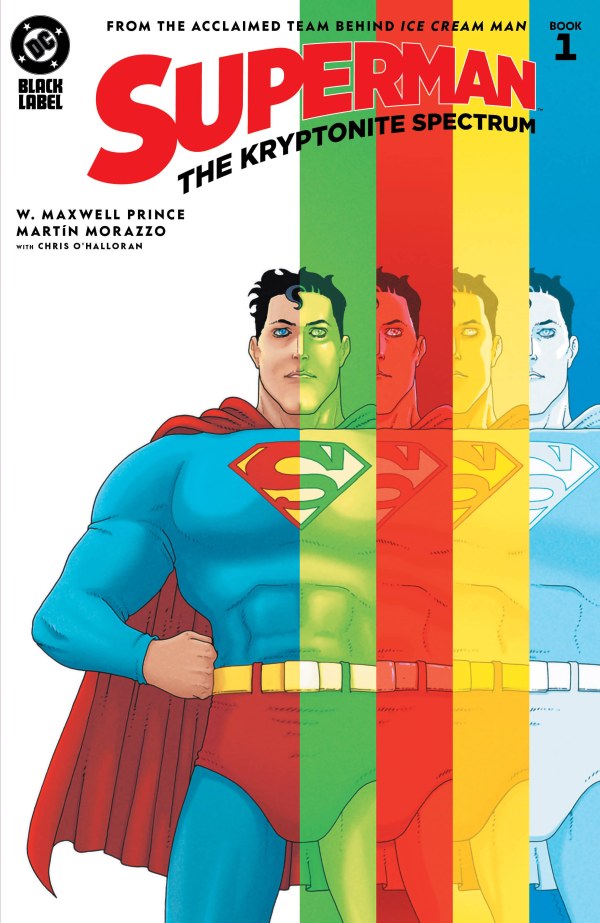
Finally, and I promise this is the end of me plugging Superman, I absolutely loved Superman: The Kryptonite Spectrum by W. Maxwell Prince and Martin Morazzo. Prince and Morazzo have had a hit series through Image Comics for the past several years with Ice Cream Man, an existential horror series that takes some of our most human fears and anxieties and materializes them in stories that would feel suitable in The Twilight Zone. In The Kryptonite Spectrum, Superman encounters Kryptonite meteors in colors he’s never seen before and begins experimenting to determine what they do. What’s astonishing is that, although this is by no means a horror story, Price and Morazzo still manage to tackle some of the stranger, more esoteric kinds of stories that they’ve become so well known for. The stories deal with things like the nature of time and identity, and while they may not be frightening, they’re very atypical for Superman…and they’re great.
Step aside, boys, Sue’s got this one covered.

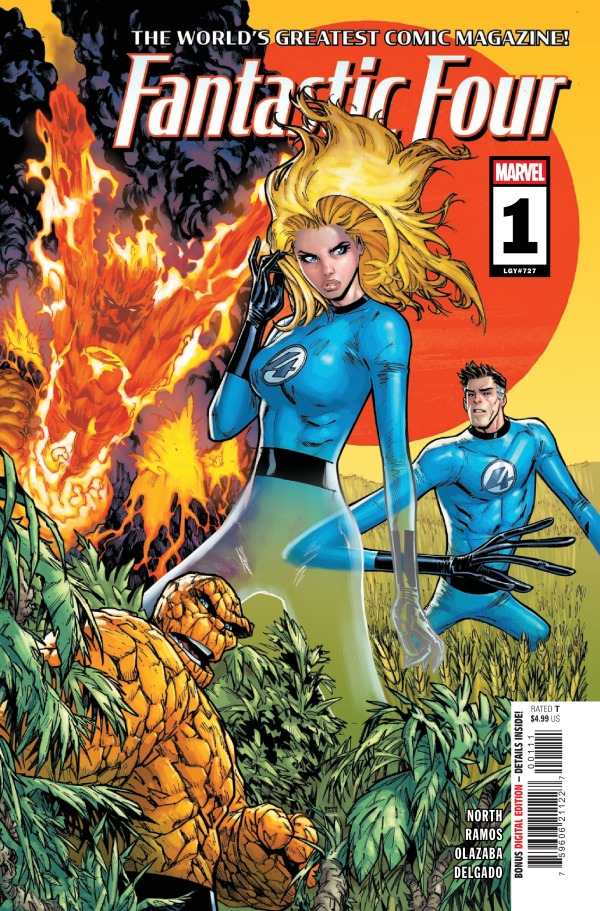
Okay, let’s forget Superman and talk about a few other great comic books. Once again, Ryan North’s Fantastic Four is the best title Marvel Comics is publishing. Relaunching this year with art by Humberto Ramos, Fantastic Four continues to be an exploration of Marvel’s first family with time-travel adventures, an alien pet, and a focus on characters that the series has historically neglected. In the early days of the series, Susan Storm – then the Invisible Girl – was written almost as an afterthought, and frequently as a damsel in distress. A lot of writers have improved her over the years, but North has gone a step further, showing how smart, brave, and capable the Invisible Woman can be. She’s taken a leadership role and is using her powers in ways that no writer has ever done before. North’s love for the FF shows in every panel. It was recently announced that he’s taking over DC’s The Flash with artist Gavin Guidry next year, and I absolutely cannot wait.
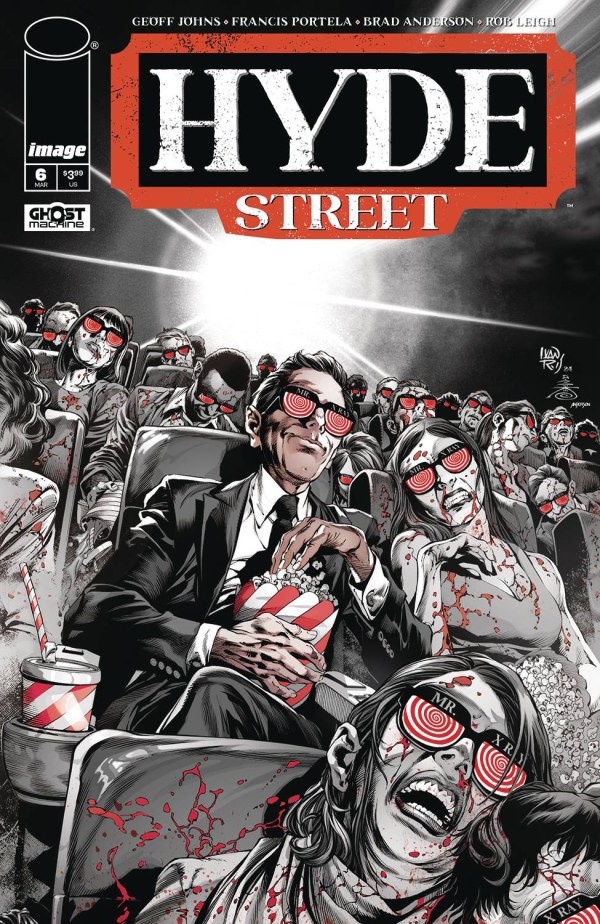
Stuff like this is the reason people don’t want to go to the movies anymore.

Finally, I want to talk about how great Geoff Johns and Ivan Reis’s horror comic Hyde Street was this year. Published through the Ghost Machine studio by Image Comics, Hyde Street is a series about a mysterious town populated by people who are under the thumb of an unseen Gamemaker. Each of them is a person of vice or cruelty that has been trapped on Hyde Street and given the task of corrupting a certain number of souls before they can leave. Some of them are desperate for release. Others, like the demonic boy scout “Pranky,” are far past their limit of souls but are having too much fun to leave. The format leaves the series open to tell an endless number of horror stories, while still having its own backstory and mythology that’s turning out to be a lot of fun to explore. 

There’s been some great storytelling in 2025, and I’m hoping to get even more in 2026. If I missed one of your favorites – well, like I said, there’s a LOT of stuff I missed this year. Let me know what I need to add to my list for next year.

Blake M. Petit is a writer, teacher, and dad from Ama, Louisiana. His most recent writing project is the superhero adventure series Other People’s Heroes: Little Stars, volume one of which is now available on Amazon. You can subscribe to his newsletter by clicking right here. He’s also started putting his LitReel videos on TikTok. Also, for the 23rd consecutive year, the best food find of the year was the return of the McRib.

Geek Punditry #128: The Dad Scale

This weekend is Father’s Day, the one day a year in which people pretend to appreciate all the things that fathers do for their family. But I mean, it’s tough – after all, where are our role models in the world of pop culture? If you look in the annals of fiction, the number of truly good, successful fathers is completely overwhelmed by the gargantuan number who act like buffoons. There was a 20-year stretch from around 1990 through 2010 when it was federally mandated that at least 47 percent of all television comedies feature a father who was an absolute idiot married to a woman who treated him like he was an absolute idiot, but it was acceptable because she was hotter than he was.

But even though these lousy dads get the focus, is that really fair? There ARE good fathers in fiction, just like there are bad ones. Just like real life. So today, in Geek Punditry, I’m going to choose some fictional dads and rank them on a scale from the best to the worst. 

(In the interest of completion, I should mention that we here at Geek Punditry Global Headquarters and While-U-Wait Notary Services are, of course, aware of the exploits of one Theodore Huxtable. Had this column been written a decade ago, he most assuredly would have been ranked among the top dads in fiction. However, through no fault of the character, Cliff’s legacy has been tarnished by the actor who PLAYED him, so we’re going to pass on further comment.)

BEST: Bandit Heeler.

It’s been a minute since I talked about Bluey here in this column, but that’s mostly because it’s been a year since the last new episode, so I’ve had to content myself with reruns. But let’s make no mistake – of all the fathers in the annals of popular fiction, it’s hard to argue that anyone is more devoted than Bandit Heeler. Bandit’s daughters are two little balls of chaos, full of life and energy, and also constantly dragging their dad into their games. And Bandit steps up every time – he plays along, he expands the world of the game, and he occasionally uses it to teach a lesson.

But he makes mistakes, of course. He does – on rare occasions – show his exasperation with his kids. And his attempts at teaching a lesson can sometimes fall on deaf ears, such as in the episode “Magic Claw,” in which he persuades the girls to do chores to get money for a “claw machine,” played by Bandit himself. “They’re learning a valuable lesson, and we’re getting the house clean!” he says. His wife Chili, simply shakes her head and says “Neither of those things are happening.” But when the lesson fails, Bandit rolls with the punches, accepting that sometimes the lesson that needs to be learned is his own.

When he is offered a chance to move to another town for more money, in “The Sign,” he takes that job not because he wants to leave his home in Brisbane, but because he thinks it will make a better life for his wife and kids. And when he realizes that neither his wife nor his kids actually WANT to leave, that they are perfectly content with the good life they already have, Bandit wisely steps back from the transfer. He sees they don’t need money to chase happiness, as they already have it.

Bandit is the dad that every dad in the world wants to live up to. It’s not just a meme. It’s the truth.

WORST: Victor Frankenstein

He may not be a biological father, but every bit of tragedy that can be wrung out of the pages of Mary Shelley’s Frankenstein can be boiled down to parental abandonment. In his thirst to conquer death, Victor creates a creature out of the corpses of the dead and uses an arcane process to infuse it with life. He brings a new, intelligent being into the world, and by any reasonable definition of the word, that makes him the creature’s father. So what’s the first thing Victor does upon achieving parenthood?

He abandons his son.

He is so horrified by seeing this collection of corpses come to life that he runs in terror, leaving it alone. And at this point, it should be noted, the creature is analogous to a baby – his mind is a blank slate. He knows nothing, understands nothing. He wanders into the woods where he spies on a family long enough to learn things like language, then when he tries to join them, he is rejected again. He grows understandably angry and bitter, and decides (less understandably) to take his rage out on the entire human race, but ESPECIALLY on dear ol’ dad. 

Had Victor taken half a second to stop, to THINK, it all may have been avoided – the death of his brother, the death of his fiancé, the deaths of all the other people who crossed the creature’s path at the wrong time. Had he actually attempted to RAISE his creature, as a father should, things may have been very, very different. But he was weak, he was foolish, and he ran, leaving an embryo to turn into an abomination. Short of direct abuse, abandonment is as low on the scale of parenthood as you can get. 

So there’s our rating scale, friends. At the top, Bandit Heeler at 100 percent. At the bottom is Victor Frankenstein with a big honkin’ zero. Let’s grab a few other dads from the world of fiction and see where they measure up. This isn’t a comprehensive list, mind you, just the first few fictional dads that occurred to me (and that I thought would be interesting to write about). 

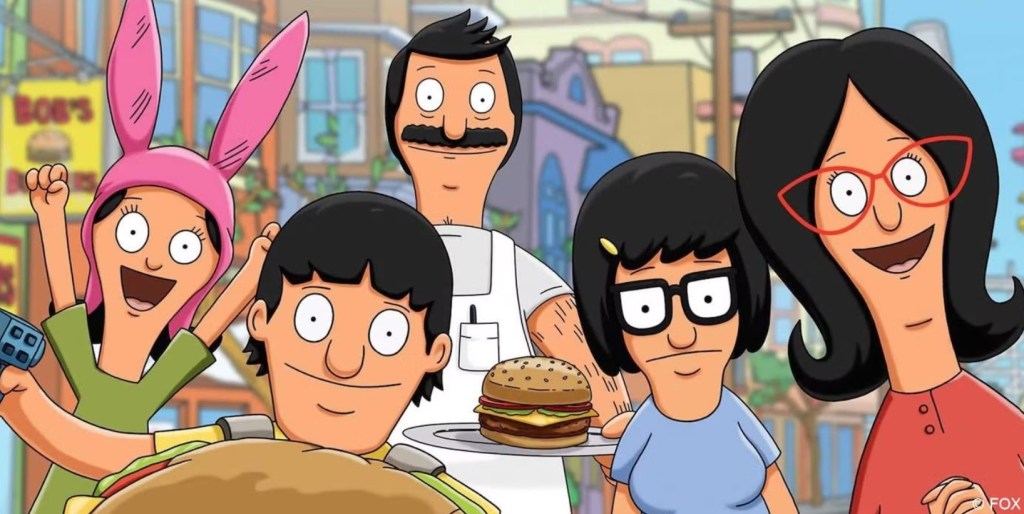
Bob Belcher, Bob’s Burgers

Bob Belcher is the father of three children, plus his wife Linda, who can at times be the equivalent of two more. Plus his best friend (or best “customer” depending on when you ask him) Teddy, so that’s like eight. And while Bob is constantly worried, anxious, and long-suffering with a restaurant that barely seems to break even, there’s one thing that you can never say about Bob, and that’s that he doesn’t love his kids. Tina, Gene, and Louise would each be a handful on their own. They are, respectively, a neurotic boy-crazed preteen girl who seems to share his anxiety issues, a middle child who has taken the middle child hunger for attention to an absurd extreme, and a little demon more devoted to pandemonium than anything else. Any ONE of Bob’s kids could wear a parent to the nub.

But although Bob’s frustration is constant, he does his best to keep from taking it out on the kids. He supports them. He cares about them. No matter how bizarre or incomprehensible their latest obsession may be, Bob never once shames them or even tries to talk them out of it, unless it’s a situation where he feels they may be in actual danger (physical or emotional). When Tina is swindled out of a beloved Equestranauts toy, Bob not only spends days memorizing every tidbit of Equestranauts errata that he can get his hands on in an effort to con the con man, he goes to a convention in a horse costume and even subjects himself to GETTING A TATTOO to get it back. When a rock and roll laser show he loved as a child is about to close forever, he moves Heaven and Earth to bring Gene with him to see it one last time, because he wants to share it with his son. And no matter how many pranks she pulls or ulcers she may cause him, it is evident in every episode just how much Louise adores her father – even if she’d never admit it.

On the Good Dad Scale of Victor to Bandit, Bob Belcher is about a 90. 

Frasier Crane, Cheers & Frasier & Frasier (again)

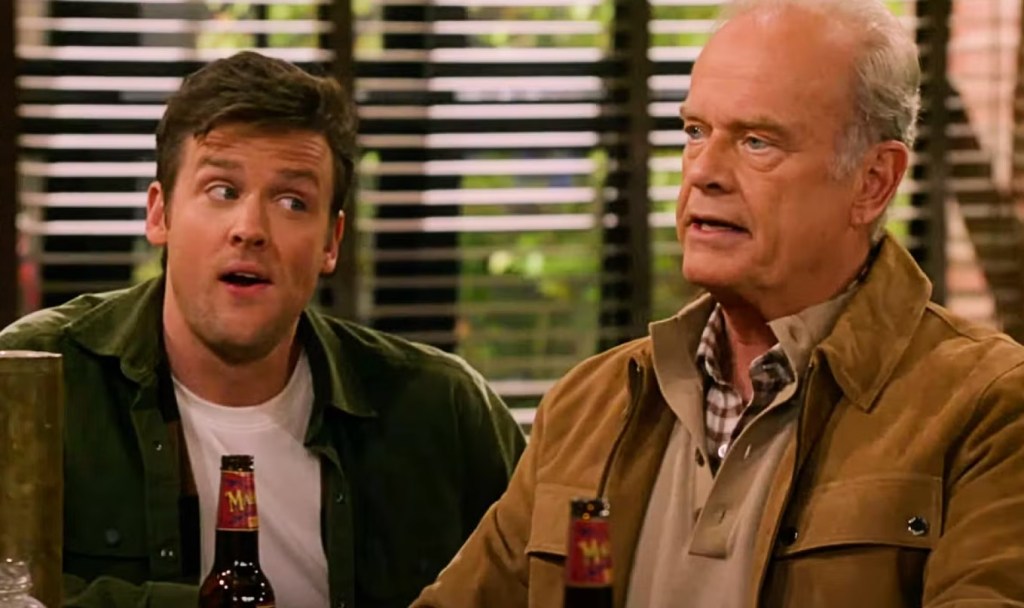
Kelsey Grammar’s Frasier Crane started out as a pretty good dad. After his son, Fredrick, was born, in the last few seasons of Cheers we see several episodes that show him as a loving and devoted father, even (and especially) after his wife leaves the two of them in the final season. Remember, abandonment is an automatic failing grade. But when he got his own spinoff, the tailored Italian loafers were on the other foot – Fredrick stays with his ex-wife in Boston, while Frasier moves across the country to Seattle. It was a practical decision for the producers of the show – they wanted to get the character as far away from any elements of Cheers as they could to allow the show to stand on its own. But in doing so, they made Frasier come across as a very absent father. Once or twice a season we’d get an episode where Freddy comes to visit his dad or Frasier goes back to Boston to visit Freddy, and in those episodes we usually see a loving relationship, but for the most part Frasier isn’t there.

In fairness, the character eventually recognizes his mistake, and in the Frasier reboot that hit a couple of years ago, after the death of his own father, Frasier moves BACK to Boston to live with Freddy, hoping to forge the bond that he neglected for far too long. It wasn’t a case of “too little, too late,” as Freddy does, in fact, show that he loves his father. But the new dynamic demonstrates so clearly that Frasier and Freddy don’t really understand each other that he simply can’t get a high score. 

On the Good Dad Scale of Victor to Bandit, Frasier Crane is about a 40. Ironically, by the end of the first Frasier run, his dad Marty had climbed up to about 75.

Tim “The Toolman” Taylor, Home Improvement

Tim Allen’s character on Home Improvement didn’t INVENT the trope of a bumbling husband and long-suffering wife, but I would argue that the two decades of adherence to it are in large part to the popularity of his show. Tim plays Tim, the host of a TV home improvement show obsessed with juicing up every gadget he can get his hands on in the quest for “more power.” He’s also the father of three young boys (who, over the course of the show, become three teenage boys). His efforts at parenthood are the main plot of around half the episodes and a B-plot in most of the others. 

Tim can be oblivious at times, often getting so caught up in whatever his current project is that he misses the obvious cues that people around him aren’t enjoying his tomfoolery. But I think it’s important to recognize that Tim never deliberately sets out to harm anyone. And in fact, the only person who usually gets hurt by his antics is Tim himself. What’s more, he genuinely enjoys spending time with his sons, although he can get frustrated when they don’t necessarily share his own interests (these stories are usually played out with his middle son, played by Jonathan Taylor Thomas) and has trouble connecting with the things they want that he doesn’t. But there can never be any doubt that Tim loves his boys, something he tries to make clear as his own father died when he was a child and he’s felt a gaping void his entire life. And whenever Tim realizes his mistakes (usually thanks to the wisdom of Wilson, the Neighbor Behind the Fence) he tries his best to make amends.

On the Good Dad Scale of Victor to Bandit, Tim Taylor is about a 65. He passes, just not with flying colors.

Peter Griffin, Family Guy

In the early days of Family Guy, Peter Griffin was kind of a less-loveable Homer Simpson. He was a dolt, he screwed up all the time, and he often behaved selfishly. But while Homer usually came around and realized his mistakes, genuinely loving his wife and kids, over the years Peter has doubled down on his stupidity, selfishness, and mean-spiritedness. He ignores his youngest child, leaving him to spend all his time with the dog, and Peter and – frankly – the entire rest of the family are frequently cruel and even abusive to his daughter, Meg. It’s an awful, toxic relationship, and despite an occasional episode that tries to show a bond between the members of the Griffin family, the formula of the show always drifts back to the fact that these are people who pretty much hate each other and would have no reason to associate with one another were they not related. 

On the Good Dad Scale of Victor to Bandit, Peter Griffin is a 10, and that’s the ONLY time you’ll ever call Peter called a ten. 

Jeff Morales, Spider-Man: Into the Spider-Verse

Jeff is the father of Miles Morales, a teenage boy who becomes the new Spider-Man after the original dies in battle. He’s also a cop, and he’s also kind of a dork. And that’s one of the things that makes him a great father. Jeff’s establishing character moment comes early in Into the Spider-Verse, where he drops Miles off at school. He tells Miles that he loves him, but when Miles starts to leave without reply, Jeff blares his police siren and tells him over his loudspeaker, “You’ve gotta say I love you back.”

At first, it seems like a typical parent trying to embarrass his kid, but I always thought this scene was more important, more indicative than that. If you just want to embarrass your child, there are thousands of different ways to do it, and every dad on this list (even the good ones) has found his own unique spin on that concept. Jeff is playing his dad card to embarrass Miles a little, yes, but more importantly, he wants his son to know two things.

  1. He loves him.
  2. It’s okay to SAY it.

There are SO MANY dads – not just in fiction, but sadly, in real life – who seem to think those words are something to shy away from. That it’s somehow unmanly to express that emotion, that a “real” dad would NEVER say such a thing to his child, especially his son. What utter nonsense. If Peter Griffin’s dad had told him he loved him once in a while, maybe his own family wouldn’t be the human equivalent of a cesspool. 

Jeff wants Miles to know that he loves him and that he’s not ashamed to express it, and that’s a lesson that more dads in the world need to know. For that, if nothing else, he gets a very high score. On the Good Dad Scale of Victor to Bandit, Jeff Morales is an 85. 

Heinz Doofenshmirtz, Phineas and Ferb

Yes, I’m bringing up Phineas and Ferb. Yes, AGAIN.

Dr. Heinz Doofenshmirtz is a supervillain. He spends his days working on one invention after another in an effort to conquer or bring humiliation to those who he believes have wronged him. He is funded by an absurdly generous alimony agreement with his ex-wife, Charlene. He gets beaten up by a platypus every single day. 

And he loves his daughter, Vanessa, with such total devotion that you can’t possibly hate him.

Doof usually has some sort of preposterous backstory to explain his scheme of the day, and a great many of them deal with just how awful his own parents were. They made him stand out in the yard because they couldn’t afford a garden gnome. His father named the dog “Only Son.” When his mother’s second child turned out to be a boy, they made Heinz wear the girl’s clothes she had mistakenly made for an entire year, while showing blatant favoritism to the new kid, Roger. They abandoned him to be raised by ocelots. And even before any of these other indignities, NEITHER of his parents bothered to show up for his birth. 

Doof will be damned if he EVER allows his daughter to feel anything less than complete adoration from him. 

This isn’t to say that he’s the PERFECT dad, of course. He wants Vanessa to follow him into the family business, which is “Evil.” He’s overprotective and occasionally intrusive, such as when he pretended to be a teenager to accompany her on a campout. He spends YEARS trying to hunt down a toy she wanted as a child, never considering that as a teenager she may not actually want it anymore. When some dude on a motorcycle catcalls his daughter, he zaps him into another dimension. (Okay, that one actually should go in the plus column.) But everything he does is done with sincere love and a desire to give his daughter the happy childhood he never had, even recruiting his arch-nemesis Perry the Platypus to help throw Vanessa a birthday party. 

On the Good Dad Scale of Victor to Bandit, Heinz Doofenshmirtz is about an 80. He’s the most inept supervillain on the planet, but he just may be the greatest dad in the ENTIRE TRI-STATE AREA!!!

We could do this much longer, friends – there are countless other fictional dads we could bring up and debate and find their place on the scale, but I think I’ve gone through enough to make my point. Have a great Father’s Day, and make sure your own dad knows you’d put him at the top of the list. 

Blake M. Petit is a writer, teacher, and dad from Ama, Louisiana. His most recent writing project is the superhero adventure series Other People’s Heroes: Little Stars, volume one of which is now available on Amazon. You can subscribe to his newsletter by clicking right here. He’s also started putting his LitReel videos on TikTok. On his best days as a dad, he knows he’s not at Bandit standards, but if he can hit Dr. D, he feels like he’s done all right. 

Geek Punditry #127: Revival Vs. Reboot

As you no doubt have heard by now, at least partially because I’ve mentioned it here two weeks in a row, Disney’s brought back its fantastic animated series Phineas and Ferb, and the first part of the new season dropped on Disney+ today. It may surprise you, then, to know that as of this writing, I haven’t watched it yet. You see, I have to wait for my wife to get home from work, because as any competent marriage therapist would tell you, holding off on watching coveted television programming until your spouse is available to watch it with you is a love language. 

But I don’t want to talk about Phineas and Ferb specifically today, I want to talk about what it represents: the TV Revival. That concept of bringing back old TV shows from the dead. It’s not a new idea, of course. The history of television is littered with shows that were cancelled and then came back after some time. Game shows like Jeopardy, Supermarket Sweep, and Let’s Make a Deal are all better remembered from their second incarnation than the original, for example. The 80s gave us resurrected versions of old sitcoms like Leave it to Beaver and The Munsters. And for a time, it was popular to continue a TV series by creating an animated version, as they did with the likes of Star Trek, Happy Days, or Gilligan’s Island. 

It’s like time stood still.

But in recent years, where studio executives are more hesitant than ever to take a chance on a new idea, it seems as though the revival has become a fundamental part of the television landscape. Is anybody going to want to watch a comedy about the goings-on at a municipal courthouse? Maybe not…unless we remind them that they already DID a few decades ago by making that show a new version of Night Court. Go ahead and look at any current network TV schedule (or spin through the offerings of a streaming service) and you’ll be astonished at just how much of the current episodic landscape is stuffed to the gills with shows that have relaunched older ones. I don’t object to revivals as a concept, but like anything else in the sphere of entertainment, I fear that we’ve reached a point of saturation where they’ve become a crutch rather than a tool.

That said, that doesn’t mean resurrecting an old show can’t be successful. But what, exactly, does it take to make a good one? The creators of Phineas and Ferb released a video to social media a few days ago, ramping up to the new season, where they very explicitly chanted “It’s not a reboot – it’s a REVIVAL!” It’s an important distinction, although I think there are a lot of people who don’t understand the difference. A reboot, to me, means starting a franchise over from scratch. You take the concepts, the tropes, the characters, but begin from square one, as though there had never been a previous iteration. Wednesday is a good example of this – there’s nothing that specifically ties it to the canon of any of the previous versions of the Addams Family – not the original TV series, the animated series, the 90s film series, the more recent animated films, the Broadway musical, or the original comic strips that the whole franchise was based on. It’s using the pieces of the older shows, but it is inherently its own thing. So yeah, reboots CAN be good.

In general, though, I prefer a revival – you’re not eliminating the previous canon. You’re not starting over. You’re just picking up where you left off. The original Phineas and Ferb took place across one epic summer. The new season – which they wisely promote as “Season Five” rather than “Season One” of a new series – starts one year later, at the beginning of the NEXT epic summer. Night Court returned to the same courtroom after an absence of many years, bringing back one returning character and one new character who was the child of an original. You get a revival more often when the old cast – or at least some of them – is still active and wants to return. We’ll be getting that with the new version of King of the Hill, coming to Hulu soon, and creator Bill Lawrence has announced a Scrubs revival where – although nobody has officially signed on yet – many original cast members have expressed interest in returning.

If this picture doesn’t make you vaguely uncomfortable, you’re too young.

Sometimes it can be difficult to tell whether a show is a revival or a reboot at first. In 2005, when the BBC brought back its defunct science fiction series Doctor Who, it wasn’t immediately clear if the old shows were in canon or not. And as part of the Doctor’s whole deal is that he occasionally regenerates into a new body, you couldn’t even make up your mind based on the fact that there were no returning cast members. Slowly, references to the old series started to appear, and eventually it was made explicit that this was a continuation – not only of the old series, but it even included the American co-produced TV movie that had tried (and failed) to revive the franchise a decade before. The show has been reinvented many times since then, and the DNA of the franchise makes it fairly easy to do so, but every version has thankfully been a revival rather than a reboot.

This straight-up wouldn’t work with a revival of The Andy Griffith Show.

The reason I prefer revivals is because a reboot has a tendency to dismiss the original. It takes place in a universe where the original didn’t happen and doesn’t matter, and that makes no sense to me. From the perspective of a studio, the only advantage a revival or reboot has over a brand-new property is the built-in audience, so why would you START by declaring that the thing the audience loved doesn’t exist anymore? Paul Feig and the cast of the 2016 Ghostbusters reboot will claim until their dying breath that their film failed at the box office because the fans were put off by the all-female cast, but any conversation with a true fan of the franchise will make it pretty clear the reason it was rejected was because fans wanted a revival. And when they got a true revival a few years later with Ghostbusters: Afterlife (with a main character that was a preteen girl), fans were delighted. 

That’s not to say that a reboot CAN’T be good. When J.J. Abrams was given the task of rebooting Star Trek for the big screen, he wisely took the track of making it an alternate universe. A villain traveled back in time and created an alternate reality in which these new films would take place. The original timeline still existed, and was still available when the TV revivals began a few years later. No matter what you think of the Abrams Star Trek films, most fans will agree that the alternate timeline was a good idea. Similarly J. Michael Straczynksi has been trying for years to get a reboot of his seminal science fiction series Babylon 5 off the ground. In 2023, he even gave us an animated film, Babylon 5: The Road Home, which ended in a way that – similar to the Star Trek example – opened up a different, alternate timeline in which the reboot could take place.

The classic sci-fi trope of “Eh, close enough.”

Of course, it’s easier to do that with a science fiction series than it would be a drama or a sitcom. If somebody wanted to do a reboot of The Golden Girls, for example, it’s unlikely that they would start with a CGI Betty White causing some sort of temporal rift that would take us to a different dimension where the girls all moved in together in 2025 rather than 1985. But that also begs the question: would you really WANT a reboot where they cast people other than Bea Arthur, Rue McClanahan, Estelle Getty, and Betty White anyway?

That’s another thing that revivals have over reboots: the continuity of keeping a cast that the fans love. One of the reasons a Babylon 5 reboot is more likely than a revival is because so many members of that cast, in the years since the show ended, have sadly passed away at a surprisingly young age. Over the course of that show’s five years, 17 actors were series regulars for at least one season. Seven of them are no longer with us, and several others have retired from acting altogether. It would be anathema to many of us to see Bruce Boxleitner’s John Sheridan return with somebody other than Mira Furlan playing his wife, Delenn. In a new timeline, though, with new actors in BOTH roles…that feels a little easier to swallow.

Some shows, however, simply should never be brought back, for many of these same reasons. Any ideas of a Friends revival, for example, went up in smoke with the sad death of Matthew Perry. Any revival, even a one-off movie – would necessitate either recasting Chandler Bing (which fans will tell you is basically impossible) or writing him out of the show by having him either die or leave his wife and children, which would be depressing as hell. As for a reboot…poll the fans. Ask if anybody would want a different cast, and I’m pretty sure you’ll hear a resounding NO.

It would be impossible to recreate this and a mistake to even try.

It’s less of a problem if the actor is still alive and has chosen not to return, or if they’ve fallen from grace in the years since the show’s airing and neither the studio nor the fans want them back. Tom Welling and Michael Rosenbaum, two of the stars of Smallville, occasionally make noise about wanting to bring back the show as an animated series or through animated movies. Many fans would welcome this, although it is unlikely that anyone will bat an eye if Chloe Sullivan is recast. (I’m not gonna get into it – if you don’t know why this would be necessary, just Google it.) In a less problematic example, former child actor Erik Per Sullivan has retired from the business, so when a revival of Malcolm in the Middle was announced, nobody was really angry that they decided to recast his character of Dewey.  

In general, though, revivals are more interesting to me – I want to see a continuation of the original series. There was chatter for years about a reboot of Buffy the Vampire Slayer, but Sarah Michelle Gellar wasn’t interested. Therefore, I wasn’t interested. Then they announced that they’d landed on a pitch that Gellar IS interested in, a pitch in which she is mentoring a new character entirely rather than trying to have somebody else play Buffy Summers… well, at this point, I’m willing to listen.

(There’s an irony here in that Gellar’s series was, in fact, a reboot of a mediocre movie starring Kristy Swanson as Buffy. But again, it just goes to prove to you that reboots CAN work sometimes.)

There’s an adorable video of when Gellar called Ryan Kiera Armstrong and told her that she got the part, because REAL slayers go by three names.

For some shows, the question of reboot vs revival is academic, of course. It doesn’t matter for nonscripted series like game shows, or shows that dramatize real events such as Unsolved Mysteries. You may miss Robert Stack, but that doesn’t mean the show can’t be made without him. Similarly, anthology series like The Twilight Zone are by their very nature immune to this. That show has been brought back several times over the years, and as there was never a regular cast or set of characters to follow, it’s a non-issue as long as the show has the flavor of the original – in this case, that of a sci-fi show with horror elements and, usually, some sort of twist ending. 

The biggest problem comes when a resurrected series – whether it’s a reboot or revival – lacks that taste of the original. Every so often you’ll hear about a new version of a show where they proudly announce that none of the current creators are fans of the original. This is a position so bafflingly stupid that I’m surprised it’s not mandated by federal law. While it’s true that some fans can be a bit too close to the property, a bit too reverent, if NOBODY involved in the creation of a show has any passion for it, the odds of creating something that satisfies the existing fan base drops so dramatically as to be almost nonexistent. 

“Well, we’re not making this show for the OLD fans,” some of these studio executives say. “We’re trying to appeal to NEW fans.”

Bullshit. If all that matters is acquiring a new audience, there’s no reason to bring back an old property. By bringing back a classic IP you are inherently announcing a desire to get the attention of an existing fan base, and by creating something you know will dissatisfy them, all you’re doing is trying to court controversy, as if that somehow inoculates you against the need to make a good show. Sometimes I think they’re COUNTING on that. They know their reboot is weak, so they rile up the fans against it, giving them a handy shield of claiming that these narrow-minded old fuddy-duddies just don’t want something new, thereby preventing them from having to admit that they made something that sucks.

Ultimately, I try to judge any show – revival, reboot, or brand-new idea – on its own merits. But when you’re reaching back to a classic series, you need to really think about what made that show successful in the first place before you even THINK about giving it a try.

Blake M. Petit is a writer, teacher, and dad from Ama, Louisiana. His most recent writing project is the superhero adventure series Other People’s Heroes: Little Stars, volume one of which is now available on Amazon. You can subscribe to his newsletter by clicking right here. He’s also started putting his LitReel videos on TikTok. Someday, he swears, somebody is gonna do a revival of Cop Rock, but they’re gonna do it RIGHT this time.

Geek Punditry #126: Whomsoever Holds This Hammer…

A few days ago, a meme I’ve seen several times floated across my Facebook page again. You’ve probably seen it; it asks one of the classic geek questions: “Who is a non-Marvel character that you know is worthy of lifting Thor’s hammer?” I like this a lot more than the usual “Could so-and-so beat Thor in a fight?” type of question. The question of which fictional character could win a fight with any other is pointless, because the real answer is always the same: whoever the writer wants to win.

But a question of worthiness is different. If a writer wants us to believe that a character is worthy of Thor’s power, we have to be persuaded first. And the person who created this particular iteration of the meme already gave us the perfect answer:

More like Ernest P. WORTHY, amirite?

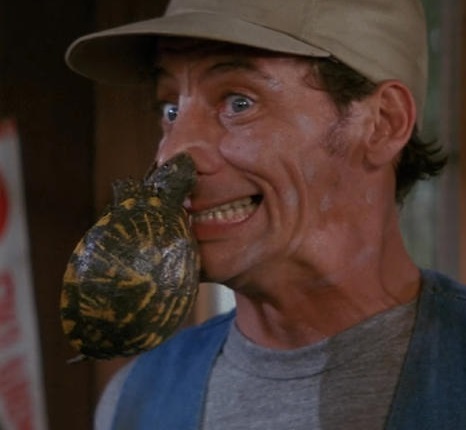
I don’t know the person who made this meme so I can’t say if they meant this as a joke or not. I’m going to assume they didn’t, because Ernest P. Worrell is actually the perfect example of a character who demonstrates worthiness. Let’s establish, for a second, what “worthy” actually means. Neither the comics nor the movies ever give any SPECIFIC criteria, but there are a few things I think we can agree upon. The stipulations – whatever they are – were created by Thor’s father Odin, and we can assume that courage is one of them, as is a certain warrior’s instinct. The other one can be extrapolated from the first Thor movie: Thor is cast to Earth and deprived of his power because of his arrogance. He doesn’t regain his power until he learns to put it aside and think of others before himself. Therefore, we can reasonably assume that selflessness is the last criteria. 

Now let’s look at Ernest. Whether it’s when he goes to camp or jail, when he was scared stupid or when he had to save Christmas, the predicaments he winds up in are often tied up in his desire to help other people. Wayward youths, his fellow bank employees, non-wayward youths being pursued by monsters, Santa Claus – Ernest fights for other people again and again. A warrior’s instinct? Go back and watch Ernest Goes to Camp again – he lines up to fight the evil land developers (it was the 80s, 97 percent of movie villains were evil land developers) even after they beat the stuffing out of him the first time. As for courage…well, again, we turn to Ernest Goes to Camp, where he passes the Native American “Path of the Brave.”

If he had faith in The Great One, the knife would not cut him.
If he had courage; true courage, the rock would not break him.
If the brave was pure of heart, the arrow could not catch him.

“Wait a second though, Blake,” you’re saying, “You think he’s BRAVE? Ernest freaks out all the time. Remember how he panicked when that turtle bit his nose?”

“This never happens to Beta Ray Bill, does it, Vern?”

My friends, courage is not the LACK of fear. It is the ability to OVERCOME fear. Does Ernest get scared? Sure. But he still STEPS UP, EVERY SINGLE TIME. So when Ernest tries to pick up Mjolnir, he’d do it on the first try. Then he would drop it, stumble, fumble around, accidentally summon up a cyclone, and probably set his hat on fire with an errant lightning bolt, because he’s still Ernest. But despite all of that, whatever danger he was facing, he would somehow still triumph in the end, because his heart is simply too pure to give up.

But as always, this meme gets me thinking about who else might qualify. Other than Ernest, what other fictional characters are worthy of lifting Mjolnir? I’m going to skip over anyone who has been shown, canonically, to be worthy: that would include Captain America, Vision, Storm of the X-Men, Beta Ray Bill, Superman, and Wonder Woman. (I’ve written about crossovers before, right?) I’m sure there are others who’ve lifted the hammer in some continuity or other, but I don’t have a comprehensive list. And since the meme specifies “non-Marvel,” I’m not going to go into the pages of dissertation I could write arguing that Ben Grimm or Peter Parker should be worthy. But let’s look into other fandoms, shall we?

“I’m comin’ with you, Mr. Thor!”

I’ll start with probably the least-controversial choice I’ll have on this list: Samwise Gamgee from Lord of the Rings. If you’ve never read or at least WATCHED Lord of the Rings (in which Sam was played by Sean Astin), well…what century are you from? Come on, get with the program. But lemme tell you about Sam. Sam is a gardener – simple, humble, and with no great ambitions towards adventure or danger. But when his friend Frodo is tasked with the job of carrying the Ring of Power to Mount Doom, the only hope to destroy the ring and prevent the rise of the evil Sauron, Sam joins the Fellowship accompanying him without hesitation. When the rest of the party is separated and Frodo attempts to continue the quest without them, Sam refuses to allow him to go alone. Sam has no desire for glory or power, and it is arguable whether he would even make the journey for the good of all Middle-Earth, which is at stake. But for the sake of his friend? Samwise will do anything. Cross a continent on foot. Battle an enormous spider. Climb a raging volcano with the exhausted Frodo on his back. There is no character in all of Tolkien more unflinchingly loyal and brave than Samwise Gamgee, and you can’t tell me for a second that Odin would disagree. 

Something about those eyes. Those are WORTHY eyes.

Next, I would like to nominate Marcus Cole of the epic science fiction series Babylon 5. Marcus, played by Jason Carter, was a member of the Rangers, a secret society of human and Minbari warriors tasked with maintaining peace across the galaxy. As a Ranger, Marcus is a skilled fighter and never hesitates to go into battle against any manner of otherworldly threats. He also never displays any particularly selfish qualities, but it’s the way his story ends that I believe truly marks him as worthy of Mjolnir. I’m about to spoil the end of Babylon 5 season four, so you should watch the series. It’s currently available on Tubi for free; you go watch the first four seasons – I’ll wait here until you get back. 

Done? Great. So as you just saw, Marcus quickly fell in love with Susan Ivanova, second-in-command of station Babylon 5. Ivanova, however, wasn’t interested in romance. To be fair, there were wars and stuff happening, she had a LOT on her plate, so she would rebuff Marcus’s advances. At the end of the season, though, Ivanova is mortally wounded. Marcus, however, sees a chance to save her: in an earlier episode, the characters had come into possession of an alien device that could heal virtually any wound, cure any disease, basically bring someone back from the brink of death – but to do so required the transfer of life-force from another being. In other words, you had to kill one person in order to save someone else. Marcus hooks Ivanova up to the machine and hooks himself up to the other end, sacrificing his life to save her. If his other feats throughout the series hadn’t already proven him worthy of carrying Mjolnir, his final act of courage and selflessness more than does the trick.

Let’s see him science the shit out of Mjolnir.

Staying in outer space, let’s turn our attention back to our own solar system, particularly the surface of Mars, where Mark Watney of The Martian has proven his worth. In the novel by Andy Weir and the film adaptation, where he is played by Matt Damon, Watney is an astronaut stranded on Mars when the rest of his crew escapes and heads back to Earth. The others don’t leave Watney deliberately – they think he was killed by the same storm they are attempting to flee – and by the time they realize he’s still alive, there’s no way for them to go back and get him. On Mars, alone, Watney has to figure out how to survive on limited supplies long enough for NASA to arrange a rescue. 

Both the book and the movie are a joy to me. For one thing, it’s a rare story in which there is no traditional antagonist. Literally the entire planet Earth bands together to save the main character; there’s no evil in this story. That’s so damned refreshing. The battles Watney has to fight are against Mars itself, trying to find ways to create food, provide power, and ultimately make his way to the site of another rocket that can blast him into orbit for his rescue. And although Watney (not unlike Ernest) often displays momentary panic following his many, many setbacks, he also overcomes that panic every single time, putting his brain to work and figuring out one unbelievable way to survive after another. He never backs down and keeps fighting until he finds a way to safety. 

As the entire plot of the story is Watney trying to stay alive, it’s a little harder to prove his selflessness. However, from the very instant he is stranded on Mars, Watney makes it a point to say that he doesn’t blame the rest of his crew for leaving him behind. He never shows any anger or resentment against them for his predicament, and when the rescue attempt boils down to his crew basically giving up another year and a half of their lives to turn back to Mars and save him at great risk to themselves, Watney shows willingness more than once to die on Mars if that’s what it takes to protect the rest of the crew. Could he lift Mjolnir? I posit that he could. Tragically, if he HAD the hammer, he could have prevented the storm that stranded him on Mars in the first place. 

With four characters down, I turned to my wife. “Erin, who else could lift Mjolnir?” I asked.

“D’vana Tendi,” she said without hesitation.

Go ahead, speak it into the Horn of Truth.

“Duh,” I said, berating myself for forgetting my favorite character from Star Trek: Lower Decks.

Tendi is an Orion, a member of a species who, prior to Lower Decks, were known for their pirate captains and slave girls in other Star Trek series. Not exactly an obvious choice for lifting Mjolnir, of course. But from the first time we see her, Tendi defies what we think of Orions as being. She’s not a pirate or a slave – she’s a scientist. She gleefully loves science, she dives into it with the sort of joy and excitement that Thor himself carries into battle. Tendi sees a problem as something to defeat with her brain rather than her fists, but it’s a battle nonetheless.

That should not, however, give you the impression that she COULDN’T fight. Tendi has forsaken the warrior aspect of her culture, but she was still brought up in it. She holds the title “Mistress of the Winter Constellations,” and it is a title that strikes fear in her enemies. Tendi is fierce in battle when the situation calls for it, then turns on a dime to being the sweet, good-natured Starfleet Officer she truly WANTS to be. 

As for selflessness, at the end of season four of Lower Decks (it is apparently my day for spoiling the fourth seasons of science fiction TV shows), with her ship and her crew on the line, Tendi makes a deal with her family. In exchange for their help, she will leave Starfleet and rejoin the family syndicate, taking her place as Mistress of the Winter Constellations once again. She’s willing to leave everything and everyone she loves in order to save everything and everyone she loves. Thor had to learn to let go of his arrogance – I don’t know if Tendi would even recognize it to begin with.

“Ferb, I know what we’re gonna lift today!”

“Phineas and Ferb,” Erin continued, and good grief, how did I forget THEM? I talked just last week about how much I love Disney’s Phineas and Ferb cartoon and how excited I am that it’s coming back, but somehow it passed right by me. Phineas and Ferb are stepbrothers who refuse to waste a single moment of their summer vacation, spending their time creating incredible inventions and having amazing adventures with their friends. Giant rollercoasters, life-size board games, soccer pitches that defy the laws of physics, portals to Mars (if only Watney had known they were on their way) – nothing is beyond the two of them. And despite the fact that many of their creations would be objectively terrifying to anybody else, they never show a moment of fear. Is it truly courage if you’re so pure of heart that it honestly never occurs to you what what you’re doing COULD be dangerous? I’m not sure. But at the very least they’re aware of the CONCEPT of danger – they always wear helmets and safety gear when appropriate. 

As for selflessness – the very few times Phineas displays any sort of concern over the course of the series usually come when he’s worried about other people. And more than once, the brothers put aside their plans to help someone else in need, whether it’s protecting Baljeet from a bully (this is before Buford joined the gang), getting their parents’ favorite band back together to create a romantic evening for them, or constructing an entire haunted house to scare away Isabella’s hiccups (it doesn’t work – Isabella is so thrilled that Phineas is paying attention to her that she never feels a moment of fear), even their grandiose plans will take a backseat to the needs of the people they care about. 

Unlike any of the other characters on this list, it should be noted, Phineas and Ferb actually met Thor once, in their Mission Marvel special. In that episode, though, the Marvel heroes were powerless and Mjolnir spent most of the episode stuck in the middle of Manhattan collecting parking tickets, so the question of whether the brothers could lift it never comes up. But if it had, I maintain that they could. 

“They’d probably build something to help them hold the hammer at the same time,” I tell Erin.

“Like a cupholder,” she says.

People, get you a partner who understands you the way mine understands me. 

There you go, friends – seven characters who have demonstrated the courage, fearlessness, and purity necessary to lift the mighty Mjolnir. This should not be considered a comprehensive list, mind you. It’s just the first few characters that came to mind when I thought about it (and asked my wife for her opinion), so there are certainly others. I heartily invite your own suggestions, along with a brief explanation of why you think they’re Mjolnir-worthy. There’s nothing nerdier than talking about this kind of stuff with other fans, and that’s the kind of nerdity I like. 

Blake M. Petit is a writer, teacher, and dad from Ama, Louisiana. His most recent writing project is the superhero adventure series Other People’s Heroes: Little Stars, volume one of which is now available on Amazon. You can subscribe to his newsletter by clicking right here. He’s also started putting his LitReel videos on TikTok. He would like to believe that he could lift Mjolnir himself, if given the chance, but he was nervous to take his son on the Ladybug ride at City Park, so…

Geek Punditry #125: Summer of Seratonin

This column is NOT going to be about Superman, although I’m going to mention him briefly here in the beginning.

If you follow this blog all week and not just on Fridays when I throw Geek Punditry at you, you’ve probably noticed my Year of Superman posts on Wednesdays. I started the Year of Superman because December was rough and I thought immersing myself in Superman would make 2025 a great year. And I’m enjoying the hell out of having a taste of Superman every day. But aside from that, 2025 has kind of been an asshole, and I’m starting to take it personally. But now it’s May, and by the time you read this my semester will be over and I’ll be off for the summer. So the question is, can I find enough stuff – in addition to the new Superman Unlimited comic, Mark Waid taking over Action Comics, new series for Supergirl and Krypto, a miniseries all about different shades of Kryptonite, and (oh yeah) the new Superman movie – to have summer start to make up for a craptacular first half of the year? 

This legit might not be enough.

Because the truth is, Superman isn’t the ONLY thing I’m excited for. In fact, there are several things coming out this summer that I’m very excited about and I can’t wait to read, watch, and otherwise explore. So today I’m going to talk about some of the things I’m MOST excited for, things that I hope will perk me up even more, and bring the year around. 

Vin Diesel is still pissed they didn’t cast him for this one on general principle.

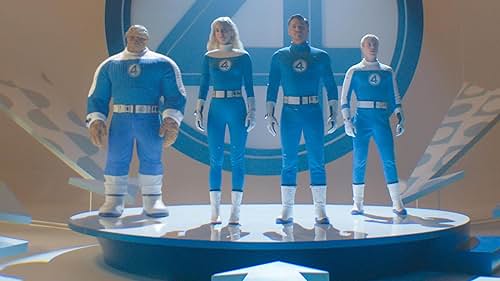
Superman is my favorite superhero (that’s probably the last time I’ll mention him), but most people who know me know that my #2 is Benjamin J. Grimm, the ever-lovin’ blue-eyed Thing, and I am very excited to see him hit the screen in a couple of months. But for all the comic book greatness, there hasn’t really been a Fantastic Four MOVIE that has worked. There was a movie in the 90s made only to retain the movie rights with no intention of ever seeing wide release, and ironically, despite its shoestring budget it had some earnestness to it…but it looked like it was made on a shoestring. In the 00s, we got a pair of movies that were…okay. And in 2015 there was a movie that should never again be mentioned in polite society. After four previous tries, director Matt Shakman’s Fantastic Four: First Steps finally looks like a movie that’s going to give us an FF that delivers. 

There have been two trailers so far (well, a teaser and a full trailer), trailers that have shown us a Fantastic Four in a very 60s sci-fi pop environment, something that’s absolutely perfect for these characters. The thing to remember about the Fantastic Four is that – although they are technically superheroes – the flavor is less like the Justice League and more similar to the classic sci-fi heroes like Flash Gordon and Buck Rogers. The Fantastic Four are explorers, inventors, and innovators before anything else, and the previous iterations have never quite captured that. In this movie, we’ve got costumes that actually look like space suits. Characters who are clearly known and beloved around the world. And as this is, in fact, part of the MCU’s “Multiverse Saga,” these are the characters who fit that concept the most.

This is a picture that says “suit us up, we’re going to space.”

I know a lot of fans who keep trying to turn the FF Vs. Superman (okay I lied) into some sort of competition – they both come out in July, so who’s movie is going to do better? What an incredibly short-sighted notion. It drives me crazy when people insist on taking sides. You can love two things, IT’S ALLOWED, and I’ve got no doubt that Clark would be in the front row when First Steps premieres on July 15, just two weeks after his movie comes out.

But I don’t get to the movie theaters that often these days – if I actually make it twice in July, it will be a record in a post-Eddie world. So I’m going to be turning to the television for some of this entertainment serotonin as well, and thank goodness, there are two shows returning to the airwaves this ye– wait, they’re on streaming services, not over the air. It doesn’t matter, the principle applies anyway. First up, coming to Disney+ in a few weeks, is a revival of the classic animated series Phineas and Ferb. The original series, which ended nearly ten years ago, was one of the funniest cartoons of the century so far, and like all brilliant ideas, it’s remarkably simple. Two step-brothers spend their summer vacation building absurdly improbable contraptions and inventions as their sister desperately tries and fails to get their mother to catch them in the act while, simultaneously, their pet platypus who is really a secret agent has to stop a mad scientist in his constant efforts to take over the Tri-State area. What could be simpler?

Legally, summer belongs to these guys, but I’m pretty sure they’ll let me borrow it if I ask nicely and promise to fill up the tank before I give it back.

In all honesty, though, the original series was delightful, charming, and unfailingly funny. When Disney announced they were bringing it back, I was unashamedly thrilled. The same creators are back, along with most of the original cast, and they’re picking it back up again the next summer. More adventures, more music, more -inators, and there’s even a preview available of the first few minutes right now. If watching these few minutes of greatness doesn’t get you excited for the return, then you clearly just hate joy. June 5 is the target date for this one.

My one question – my ONLY question – is about the Danville school system. 104 days of summer vacation? ONE HUNDRED AND FOUR? I’ve never even made it to SEVENTY. 

The other show I’m super psyched for this week is the return of Star Trek: Strange New Worlds with a two-episode drop on July 17. While the modern versions of Trek have been hit or miss for a lot of fans, Strange New Worlds is perhaps the most universally acclaimed of the series. Set aboard the original Enterprise in the years before James T. Kirk became the captain, Strange New Worlds has the most classically “Trek” feeling of any of the other live-action shows of the modern era, living up to its name with exploration of planets and civilizations we’ve never seen before. It also is far more successful than some of these other versions at attacking the sort of high-minded sci-fi concepts the original brought in without being too heavy-handed or on-the-nose like certain others I could mention.

Thank God, a Star Trek that remembers what “allegory” means again.

The wait for a new season of Strange New Worlds hasn’t been as long as the wait for Phineas and Ferb – a mere two years instead of ten – but Strange New Worlds’s last season ended on a cliffhanger. The wait was exacerbated by the Hollywood writers and actors going on strike in 2023, and now we’re finally going to find out what happened after Captain Pike and the crew of the Enterprise…

…uh…

…crap, it’s been two years, guys. I guess I really need to watch the last season again.

But you know, that’s okay. Summer is just starting, and I’ll need stuff to make it worthwhile. So I’ll re-watch the first two seasons of Strange New Worlds. And I’ll watch classic Phineas and Ferb. And I’ll read more Fantastic Four and Superman comics (hell with it). Because these are the things that make me happy, and when the world does whatever it can to make the summer seem long, hot, and unbearable, these are the things I’ll be turning to, making it a little bit better.

Oh, and also the love of family and friends and all that stuff.

Blake M. Petit is a writer, teacher, and dad from Ama, Louisiana. His most recent writing project is the superhero adventure series Other People’s Heroes: Little Stars, volume one of which is now available on Amazon. You can subscribe to his newsletter by clicking right here. He’s also started putting his LitReel videos on TikTok. If you’ve got more summer greatness that you’re looking forward to, let him know. He’s actually quite concerned that the stuff he’s listed isn’t going to be enough to fill the tank. 

Geek Punditry #92: The Spectrum of Horror and Comedy

If there need be any further evidence that Hollywood executives frequently don’t have the slightest idea what they’re doing, let’s talk about the fact that they seem to be afraid of horror/comedy hybrid movies. ‘It’s confusing,” they will tell you, pulling their hair out over a movie like Behind the Mask or Happy Death Day. “We don’t know how to market this! Who is it for? Is it supposed to be a horror movie or a comedy?” Whereas the answer is obvious to anyone smarter than a movie executive, which is a very large part of the Venn Diagram, and includes virtually all horror movie fans: it’s both. Horror and comedy BELONG together. They are a natural combination, the peanut butter and chocolate in the Reese’s Peanut Butter Cups of the movie industry, and the notion that there are people who don’t understand that is maddening to me.

Admittedly, humor and terror seem to be on the two extremes of the emotional spectrum, but that’s one of the reasons they compliment each other so well. Another reason is that, structurally speaking, they are very similar to one another. Both of these styles of storytelling are built upon creating an emotional response in the audience, and both of these responses are constructed through the careful buildup and release of tension. In fact, if separated from context, it might be impossible to tell if a scene is intended to be funny or scary until the punchline hits and the audience either laughs or screams, because until that point they can be virtually identical. A funny movie can turn on a dime if an expected laugh turns into a scare, and the dread of a scary movie can be decreased to a manageable level by a well-timed joke. 

The horror/comedy combo is one of my favorites in all of storytelling, but there is a spectrum that these movies and stories exist on. Some of them lean heavier towards the comedy side, some more on the horror, and it’s fair if you prefer one side more than the other. But for the sake of discussion, this week I thought it would be useful to go over what I think of as the five levels on the horror/comedy spectrum and give some examples of each. We’ll start on the more comedy-heavy side.

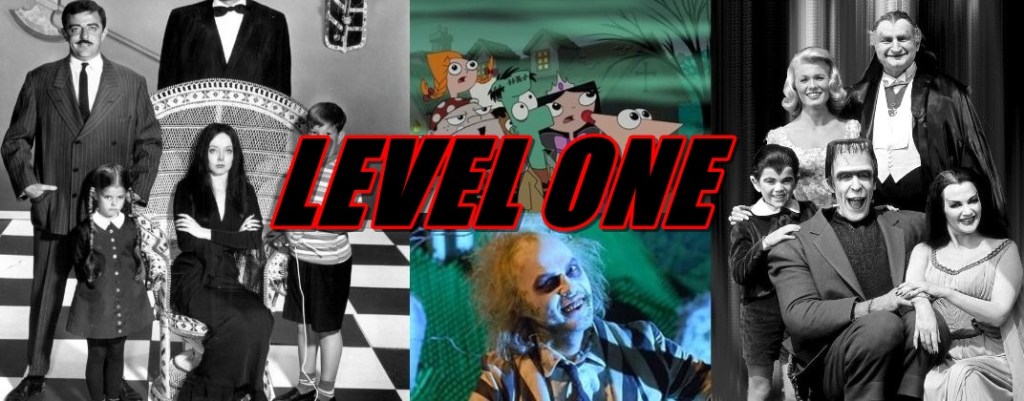
 Level one is where I place the mildest iteration of horror/comedy, where the emphasis is on the comedy. This is usually pretty lighthearted, and more often than not it’s family friendly. It usually has the TRAPPINGS of horror: haunted houses, ghosts, monsters, and pretty much anything else you would consider acceptable in an elementary school Halloween decoration, but there is rarely (if ever) a legitimate attempt at scaring people with this. The classic examples here are the legendary sitcoms The Addams Family and The Munsters. People will argue until the end of time as to which one was better (as far as the original TV show goes, that is – there can be no debate that the Addamses have superior movies), but whether you’re a Gomez Guy or a Lilly Lover, these two franchises are about as close to G-rated as horror gets. There are more recent entries into the category as well, like the Hotel Transylvania movies and underrated movie Igor, and a lot of family cartoons and sitcoms shift into this for Halloween episodes, often seen on the likes of Roseanne, Home Improvement, or Phineas and Ferb.

It’s worth pointing out here that, again, I’m calling this a spectrum, and even these five subcategories have different levels. Technically, I would place Beetlejuice here as well (the original, at least, I haven’t seen the sequel yet), because I don’t think that the movie is ever actually intended to be scary. However, it’s obvious that the movie is more intense than the adventures of the Addamses and the Munsters, and thus if it IS a Level One, it’s towards the high end of the spectrum. A 1.9, perhaps.

On the second level, I place those stories in which the situations are relatively serious, but the characters themselves are funny and react to the scary moments in funny ways. Ghostbusters is the classic example of this. The ghosts aren’t played for laughs (not usually, at least, especially not in the first film), and some of the things could actually be legitimately frightening, such as the first appearance of the Library Ghost. But the behavior and antics of Bill Murray, Dan Aykroyd, Harold Ramis, and Ernie Hudson are very funny and keep you from feeling any legitimate terror. Even when it looks like a Sumarian Deity is about to curb-stomp the city of New York, you know that Venkman is going to have a wisecrack to defuse the situation. Another of my favorite films, Abbott and Costello Meet Frankenstein, falls into this category. The classic Universal Monsters are there, and Lon Chaney Jr. (the Wolf-Man), Glenn Strange (Frankenstein’s Monster) and Bela Lugosi (Count Dracula himself) all play their roles perfectly straight, as if they’re in one of their solo adventures and trying to chill the spines of the audience. But with Lou Costello freaking out over a candle and Bud Abbott doing his impression of everybody who never sees Michigan J. Frog singing, there’s no real sense of danger. The blend of master monster performers and master comedians is never more evident than in this film.

Other works that are typically family-friendly but where the villains have the POTENTIAL to cause actual harm fit in here as well. Hocus Pocus and The Nightmare Before Christmas fall into that category, as do certain classic cartoons such as the Bugs Bunny short Transylvannia 6-5000. I struggled a bit with one of my other favorite Halloween movies, Ernest Scared Stupid, trying to figure out if it belongs here or level one. Ultimately, I’m placing it here, because there are kids (the intended audience) who might find the trolls actually frightening, and they’re trying to do bad things. It’s only through the intercession of American hero Ernest P. Worrell that they’re stopped in time. Yes, that means I’m giving Ernest a higher rating than Beetlejuice, but my metric is how scared the INTENDED audience might be, and I’m sticking with it.

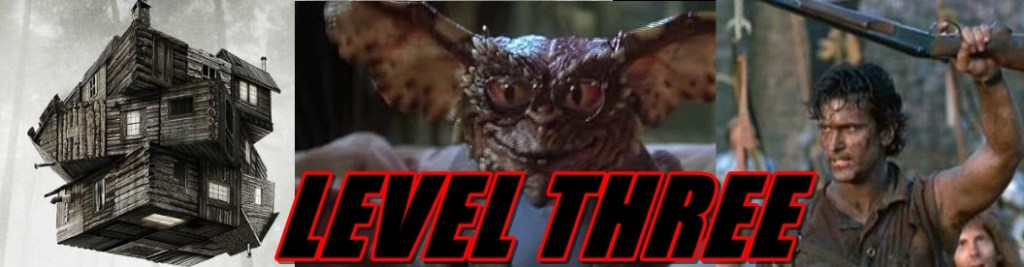
Level three stories have a fair balance between the horror and the comedy. Parts of the film may feel like you’re watching a scary movie, other parts feel like a pure comedy, and when this is done well there is no discrepancy felt by the audience. These two styles of storytelling just match each other very well. Drew Goddard’s The Cabin in the Woods is a great example of this. We start out with what looks like some sort of bland, white-collar office comedy, then cut to a bunch of teenagers getting drawn into what appears to be a very stereotypical slasher movie. But the creeps start to claw their way into the office setting, while the events in the titular cabin turn out to be funnier than you would expect, and by the time we get to the full-on collision of the two settings and you come to understand what one has to do with the other, we’ve got a great blend of the two that maintains pretty much throughout the rest of the film.

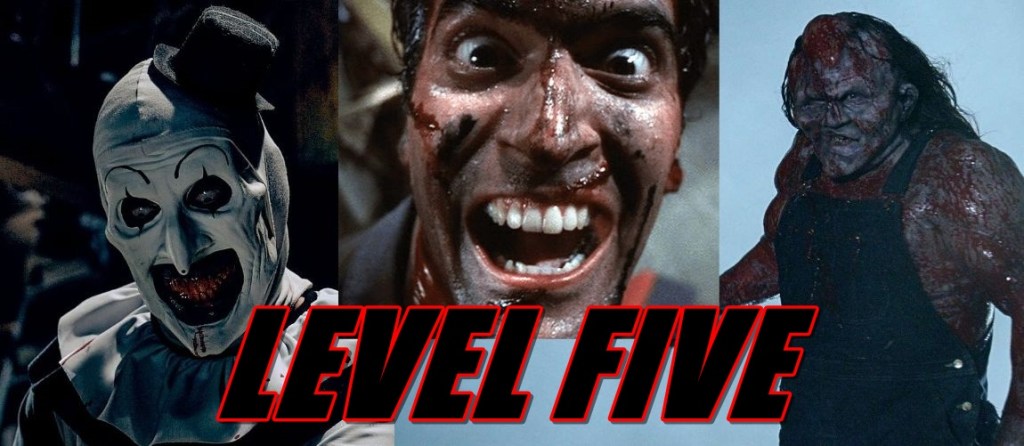
We often see this type of balance, by the way, in later films in a franchise. It’s not unusual to see a relatively serious horror movie get zanier in the sequels. Gremlins 2 is one of my favorite examples of this. The first film has its humorous moments, but the sequel really leans into absurdity, with the monsters taking different forms and playing out scenes as though they fell out of a Looney Tunes cartoon. The result is a movie that many fans even prefer to the original. Another good example of this is Army of Darkness, the third movie in the Evil Dead trilogy. The first movie is pure horror, almost nothing funny about it. The sequel, Evil Dead 2, is still very dark, but brings in enough comedic elements to earn it a spot on my spectrum. (That spot is in Level Five, and we’ll get to that soon enough.) But in Army of Darkness, Sam Raimi decided to let Bruce Campbell’s comedic skills and charm really shine through, resulting in a movie that is very different, tonally, from the rest of the franchise, but like Gremlins 2 is a favorite of a large number of fans.

Level Four is where things are getting a lot darker. These are films that are primarily horror movies, but movies that have a twisted sense of humor, and that often comes down to the villain of the franchise. We see this most clearly, I think, with A Nightmare on Elm Street. You’ve got a dead child killer who has the ability to enter and attack you through your dreams, which is not funny at ALL. But the child killer in question also has a wicked funny bone, which manifests itself both in what he says and in the scenarios that he traps his victims in – scenarios that can go from bitterly ironic to just plain goofy. I think it’s the reason that Freddy became such a breakout star in the 80s. There were lots of slashers at the time, but in an era when most of them were imitating Michael Myers and acting as the Strong, Silent Type, Freddy was blazing a trail as a new kind of killer. There have been efforts to imitate him, but few have succeeded.

Probably the most successful imitator, tonally at least, is Chucky from the Child’s Play series. In this franchise, we’ve got a child’s plaything, a three-foot doll, inhabited by the spirit of a serial killer. Making a kid’s toy creepy is a fairly common occurrence in horror (the idea of something that’s supposed to be wholesome and nurturing turning dangerous is frightening), but again, it’s the wit and cleverness of the Chucky character and Brad Dourif’s performance that made the franchise successful and allowed it to grow into so much more than it was in its origins. Oddly enough, later films in the franchise and the follow-up television series do drift, but not lower on the scale of comedy, but towards having a bit more melodrama. It’s a weird, unique transmogrification of the concept, but it never loses its sense of humor.

The Cryptkeeper from Tales From the Crypt and other assorted horror anthology hosts often fall into this category as well. Whether we’re talking about a TV series, movie, or comic book, the format is usually the same: they present to you a scary story, popping in before and after (or sometimes during, if it’s a format that has a commercial break) to drop in a few witticisms about the hapless characters marching stoically to their doom, and the audience loves them for it. The truth is, fans tune in as much for the Cryptcreeper’s ghoulishly ghastly puns as we do for any of the scares that are coming our way.

Finally, we arrive at the top tier, that level of horror that’s furthest away from comedy while still, at the same time, having some funny beats. In this category, I place movies that are primarily horror films, but that have a pitch-black sense of humor. Evil Dead 2, again, is a prime example. Bruce Campbell and his girlfriend are under assault by the horrific “Deadites,” demonic creatures that are out to torture and mutilate. Not funny. They take his girlfriend and turn her into one of them. Not funny. One of them possesses Campbell’s hand and he’s forced to cut it off with a chainsaw. Not –

–actually, that part is kinda funny. And that’s how movies on this level go. They take things that SHOULD be horrible and graphic and terrifying, but elevate them to a level that’s almost too cartoonish to take seriously, allowing some laughter. Campbell is great at this. We also see it done to good effect in Adam Green’s Hatchet series. The characters who are NOT undead revenant Victor Crowley are often pretty funny, but Crowley himself is the unspeaking sort of horror. The kills he pulls off, though, are so ridiculously gruesome that the realism is drained away, giving the audience permission to laugh a little bit. To a lesser extent, the same is true of the hugely popular Terrifier films, where the silent Art the Clown brutally tortures his victims. Early screenings for the third film (opening soon) are reporting people walking out during the first ten minutes, with one audience member allegedly even throwing up in the theater. If this is the reaction filmmaker Damien Leone is going for (and I believe it is), then you have to believe he is intentionally going way over the top. 

So there you have it, friends, the levels of horror/comedy. Keep in mind that this scale is meant to determine INTENSITY and in no way is indicative of the QUALITY of a film. Every level has great movies and awful movies that belong there. But if you’re trying to figure out how intense a movie you’re looking for this spooky season, think of the scale and make sure you’re not in a Level Two mood when your friend shows up recommending a Level Five.

Blake M. Petit is a writer, teacher, and dad from Ama, Louisiana. His most recent writing project is the superhero adventure series Other People’s Heroes: Little Stars, volume one of which is now available on Amazon. You can subscribe to his newsletter by clicking right here. The only movie on his scale to ever achieve a Level Six? Babe 2: Pig in the City. Weird, huh?