It’s October of course – glorious October, that precious time of year in which all the creepies crawl and the goblins gob and the gremlins grem. And at this time of year, many of us reach out and look for scary stories to cast to our televisions, books to fill our Kindles, and anything seasonal that might give us a little bit of a chill. A few days ago, for example, I saw someone on Facebook ask for recommendations for modern horror comics. While horror has long been a mainstay of the comic book medium – in fact, it was the biggest seller back in the 1950s, before the Comics Code strangled the life out of it – it’s not what most people think of when they think of comics these days. And that’s a shame, because like any other form of storytelling, there are plenty of scares to be had if only you know where to look.
Scary comics, of course, are different from scary movies or TV shows. Although they’re both visual mediums, comics don’t have some of the tools that filmmakers use to terrify people. There’s no creepy music, no way to rely on a jump scare, and even simple surprises can be difficult to pull off, as a shocking image can be spoiled if not carefully placed on the page to avoid allowing a major reveal before the creators are ready for it. (Robert Kirkman, who created The Walking Dead, is quite vocal about how aware he is of this sort of thing – he always tried to reserve majorly shocking moments for the first panel of a left-hand page to avoid a page-turn spoiler.) In terms of horror, comics have more in common with novels than film – they have to be reliant on mood and tone to pull off their scares. Sure, there ARE shock comics out there – even going back to the days of Tales From the Crypt and its blood-drenched contemporaries, there were plenty of comics that relied on gore. But these kinds of shock scenes are like slasher movies – good for a scare in the moment and plenty of fun, but they don’t necessarily create LASTING terror the way that a good book can.
So here are a few comics from recent years that I think are particularly successful at delivering the scares, stories that are well worth tracking down and reading as part of your Halloween wind-up.
On that initial Facebook post that prompted this column, one of the respondents stuck his metaphorical nose in the air and replied, “WELL, you won’t find any good horror from MARVEL or DC, but…”
What a prick.
It’s true that Marvel and DC are known as superhero publishers, and that’s what most of their audience comes to the table for, but that doesn’t mean they aren’t capable of delivering in other genres, even within the confines of their existing superhero universes. The best horror comic Marvel has published in a long time is actually Immortal Hulk. This series, which ran for 50 issues from 2018 through 2021, was written by Al Ewing with art mostly by penciller Joe Bennett, and followed the “death” of the Hulk in Marvel’s Civil War II event. Comic book characters die and come back to life all the time, of course. It’s reached the point where it’s not just a cliche, it’s almost a JOKE to say you’re going to kill off a major character. But Ewing takes the old comic book concept of the “revolving door in Heaven” and turns it on its head, becoming a literal green “door” in Hell.
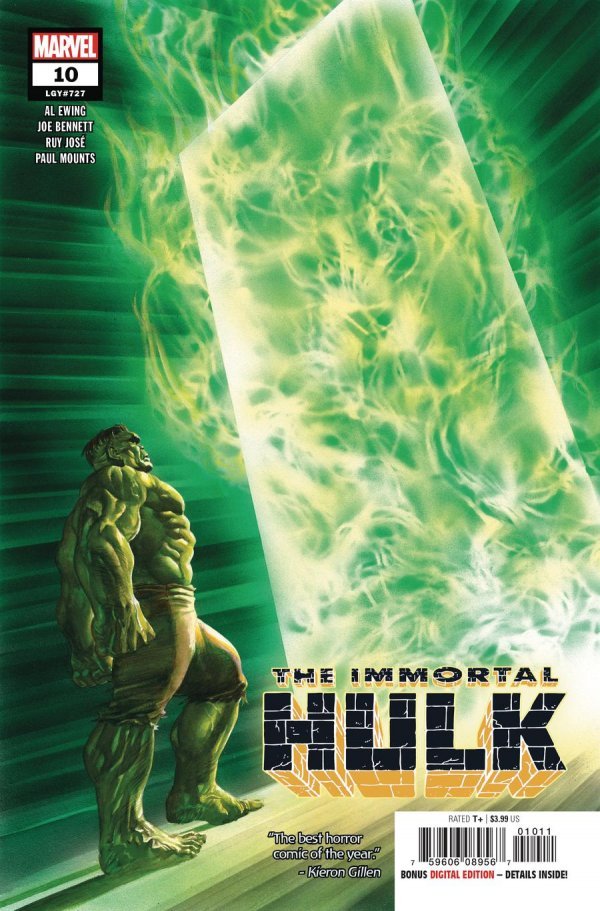
In this series, Ewing explores WHY characters like the Hulk seem to die and come back over and over again, drawing in most of the gamma-powered characters (hero and villain alike) in the Marvel Universe and telling a deeply unsettling story about Bruce Banner, the multiple personalities that co-exist inside his head, and a battle against his true greatest enemy. Despite being a part of the Marvel Universe and occasionally guest-starring characters like the Avengers and the Fantastic Four, this is a legitimately creepy story and probably one of my favorite runs of Hulk of all time, second only to Peter David’s legendary first run back in the 80s and 90s. If you don’t think there’s room in a shared universe for something truly scary and disturbing, I challenge you to check out this series right away.
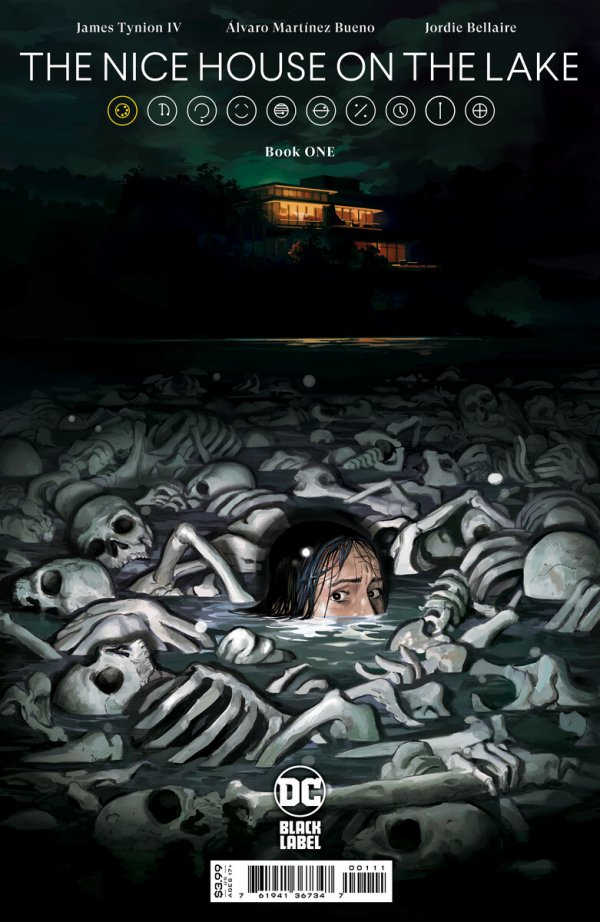
On the DC side, there isn’t an awful lot of horror to be found in the modern DC Universe itself. Even those characters that use the trappings of horror, such as Dr. Fate or the Creature Commandos (coming soon to MAX!) aren’t usually used in legitimately frightening stories. But DC’s library doesn’t stop at the outskirts of Metropolis. From DC’s Black Label line, writer James Tynion IV and artist Alvaro Martinez brought us The Nice House on the Lake in 2021, a 12-issue sci-fi saga about a group of ten people who are invited by a mutual friend for a little getaway in the titular nice house on the lake. Some of them know each other, some are nearly strangers, and the only thing they all have in common is their buddy Walter. But on their first night in the house, something utterly heart-stopping happens that I’m not about to reveal because it would ruin the beginning of one of the best and most original horror comics in years. This 12-issue series was absolutely phenomenal, full of well-drawn characters and a concept that is creepy and compelling all at the same time. The creative team has reunited for a sequel, The Nice House By the Sea, the third issue of which was recently released. Grab the collected edition of the first series and come aboard.
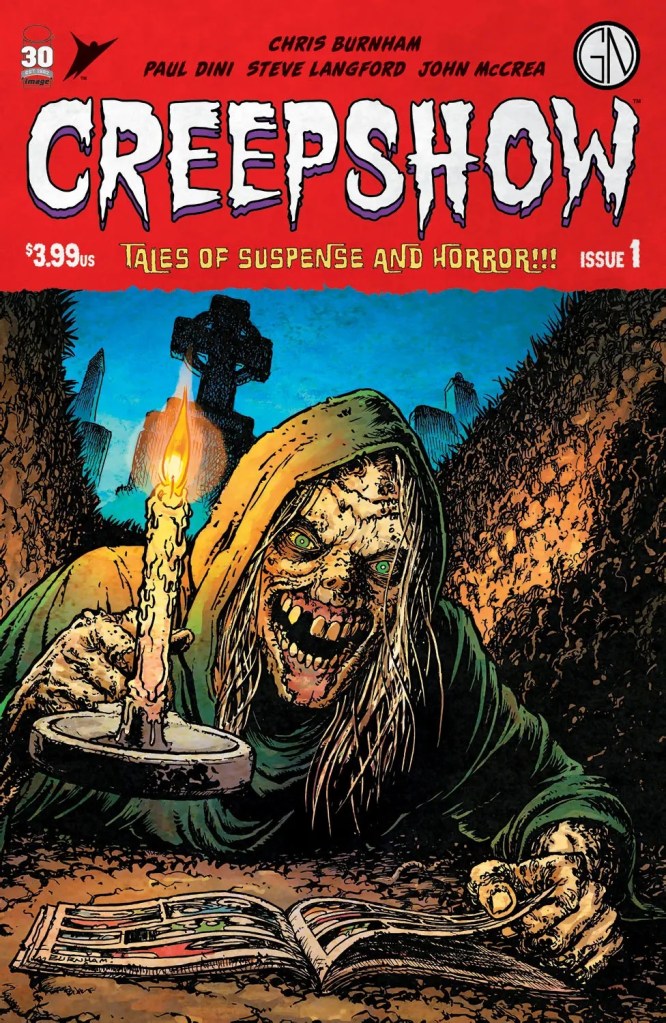
Speaking of Robert Kirkman, as I did that back in paragraph two, his Skybound Entertainment (published via Image Comics) has been giving us more horror lately as well. The house that The Walking Dead built has been branching out into licensed comics, including two pretty significant horror properties. First is Creepshow: what started as a George Romero/Stephen King movie that paid tribute to the likes of the old EC Comics has expanded into a franchise with the current anthology TV series on Shudder. Skybound has taken to publishing Creepshow comics now, with three miniseries and a few one-shots, including a Christmas special last year and another one-off adapting a story by King’s son, the prolific horror author Joe Hill. Most regular issues of the comic include two stories by assorted writers and artists, each of which includes the requisite amount of gore and most of which display the kind of twisted sense of justice that befits a tribute to the likes of Tales From the Crypt. As with any anthology, the quality of the individual stories can vary – in other words, some are better than others. But if you’re looking for the sort of tongue-in-cheek horror that we got from the Cryptkeeper back in the day, there’s no better place to look right now.
Kirkman has also acquired – to my shock and delight – the license to the classic Universal Monsters. While Dracula and Frankenstein may be public domain, this license includes the versions specific to the films of Bela Lugosi and Boris Karloff, as well as the original Universal creations. Even better, each of the series they’ve produced so far has been drastically different from all of the others, making for a very diverse and enjoyable reading experience. The line began last year with Universal Monsters: Dracula, a four-issue series by James Tynion IV (the Nice House on the Lake guy) and artist Martin Simmonds. Tynion and Simmonds retell the story of the movie through the perspective of a mental patient, with a heavy emphasis on the character of Renfield. Simmonds’ artwork is bizarre and scattershot, befitting the point of view of someone who is mentally unstable, and the whole thing is wonderfully creepy.

The second miniseries, written by Dan Watters and Ram V with art by Matthew Roberts, is Universal Monsters: The Creature From the Black Lagoon Lives! This one is a straight-up sequel to the original film trilogy, set in the modern day as a woman decides to delve into the mystery of the swamp monster from decades ago. And like most great horror, it’s more about the humans that are wreaking havoc than the monster itself. It’s a fantastic, worthy sequel that could easily be made into a movie if Universal Pictures had any idea what it was doing with these classic creations.

Most recently, they’ve kicked off a series based on my favorite member of the Universal Pantheon with Michael Walsh’s Universal Monsters: Frankenstein. We all know that Henry Frankenstein (changed from the novel’s “Victor” for reasons I’ve never understood) stole the corpses of the dead to make his creature, but how often have we really thought about the people that the Karloff monster once was? This miniseries is told from the point of view of a young boy who, still in grief over his father’s death, discovers that his late father’s body is now part of Frankenstein’s monster. It’s a brilliantly original concept. As big a Frankenstein fan as I am, it’s not easy to find an angle on the story that I haven’t seen before, and Walsh nails it.

The hip bone’s connected to my — DAD’S bone…”
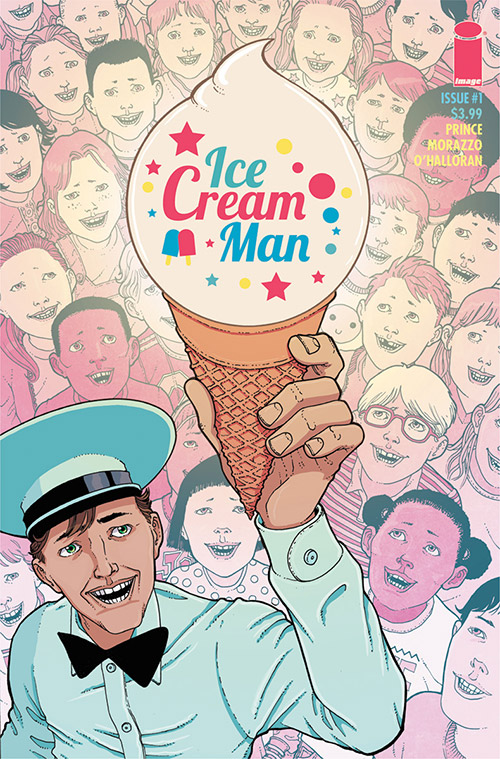
Sticking with Image Comics, let’s talk about their acclaimed ongoing series Ice Cream Man, written by W. Maxwell Prince with art by Martin Morazzo. The horror series tells a different story in each issue, with the only connective tissue at first seeming to be Rick, the titular Ice Cream Man, who rolls through each issue at some point. The series hits on all kinds of disturbing themes, dealing heavily with existential dread and frequently drifting into Kafkaesque body horror and other such things. It’s a bleak, nihilistic comic, which isn’t usually my thing, but Prince very slowly and subtly reveals that these seemingly one-off stories are, in fact, connected, and there’s a vast backstory of deep cosmic horror that Rick has spawned from. The stories delve into terrors that deal with the very nature of existence, taking very human fears and externalizing them the way that few other stories – comic books or otherwise – can do effectively. It’s remarkably disquieting horror.
Rounding out our time with Image Comics, there’s a new series from Geoff Johns and Ivan Reis worth mentioning. Only one issue of Hyde Street has been published so far, but it’s already got its hooks into me. On Hyde Street, we see characters like “Mr. X-Ray” and a twisted Boy Scout going by the name of “Pranky” as they lead the unsuspecting residents and visitors of Hyde Street down dark paths of destruction. They’re in some sort of competition, reaping souls for a hidden gamemaster for purposes that have not yet been revealed. As I said, there’s only been one issue so far, but it hints at a vast and complex mythology, and there are few writers out there who do that better than Geoff Johns. I’m very excited to see where this series is going.

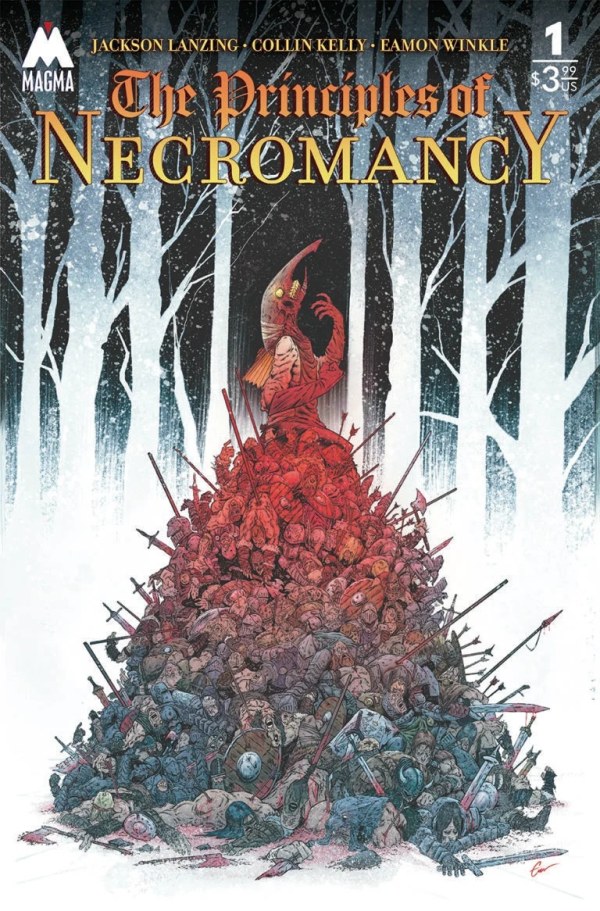
Finally, I’m going to leave you with a lesser-known miniseries from Magma Comix that just recently wrapped, The Principles of Necromancy. Written by Collin Kelly and Jackson Lanzing with art by Eamon Winkle, this tale of horror is set in a world where magic has been ostensibly driven out by the “City King,” leaving in its wake a realm of reason and science. Not everybody subscribes to these beliefs, however. The miniseries features the ghastly Dr. Jakob Eyes, the man inventing the art of necromancy in an effort to conquer death itself. If body horror is your thing, this is a book to check out, as we watch Eyes’ gruesome experiments and deliciously twisted practices over the course of four issues which ends on a note that leaves things wide open for further exploration of this dark world. Kelly and Lanzing have become favorite writers of mine in the last few years, doing great work at Marvel, DC, and IDW (particularly with their run on Star Trek), and it was on their names that I decided to pick up this series. I’m very glad that I did.
So my point, friends, is that horror is out there. If you’re still looking for creepy comics to fill your bookshelf before Halloween ends, here are some fine suggestions for you, and I’m sure the folks down at your local comic shop can give you even more. Dive in and get ready for a chill on every page.
Blake M. Petit is a writer, teacher, and dad from Ama, Louisiana. His most recent writing project is the superhero adventure series Other People’s Heroes: Little Stars, volume one of which is now available on Amazon. You can subscribe to his newsletter by clicking right here. He misses the days of Friday the 13th and Nightmare on Elm Street comics, though. Those need to come back.


 Blake M. Petit