The bidding war is over, and after a protracted tussle over the fate of the grand old movie studio called Warner Bros, the winner – shockingly – seems to be Paramount. Over the last few months we’ve watched as Warner Bros, which of course has expanded far beyond being a movie studio to being a full-blown media empire, was put on the market. We saw it get snapped up by Netflix, we saw as Paramount entered the game with a hostile takeover bid, and we saw them continue to sweeten the pot until Netflix stepped back and threw in the towel. And now, pending government approval and all sorts of other rigamarole that will tie things up for a while, it seems as though Warner Bros will become another star on the Paramount mountain.
Feelings about this are…complicated, to say the least. Generally speaking I’m not a fan of the massive media consolidation we’ve borne witness to this century. Fewer players in the game means less competition, and fewer outlets for fewer voices. And sure, we live in an era where anybody can theoretically build an audience and a following using social media, but in practice, the big companies are always going to have an edge. Even when a new player comes along – an A24, for example – they’re going to have an uphill battle when it comes to staying relevant next to the likes of Disney, Sony, and whatever this new Paramount/WB hybrid will be called once it’s all over.
That said, if it HAD to be between Netflix and Paramount, Paramount is the company I feel will be better for people who want movie theaters to survive, no matter what Netflix claimed. And if it’s happening whether we like it or not, I’m not in the mood to debate it. I would rather talk about what’s going to happen when the properties of these two corporate monoliths are under one roof.
What’s going to happen when Warner Bros – the company that owns DC Comics, DC Studios, the Looney Tunes, Hanna-Barbera, Harry Potter, and countless other properties – is folded under the umbrella of the company that controls CBS, Star Trek, Nickelodeon, SpongeBob SquarePants, and the Teenage Mutant Ninja Turtles? This is going to be mostly speculation, of course – I’m the first to admit that I don’t know anything. But I’m going to throw out some ideas and discuss some concerns about what’s going to happen. And keep in mind that all of this is dependent on how long it takes for the deal to be complete, as well as how long it takes for existing licenses and deals to expire, so I can’t really put a specific timeline on any of this.
“For the last time, Curtis, NO.”
One thing we CAN be sure of is that there’s going to be a change in the respective streaming services. Paramount has already indicated that eventually they intend to fold HBO Max into their existing Paramount+. When this happens, one can only hope they don’t decide to double the price on whatever the remaining service will be. Furthermore, I really hope that they use the technology behind HBO Max, because of all the major streamers I’ve used I’ve found Paramount+ to be the buggiest and most annoying. Honestly, if I didn’t love Star Trek so darned much I would have abandoned it entirely.
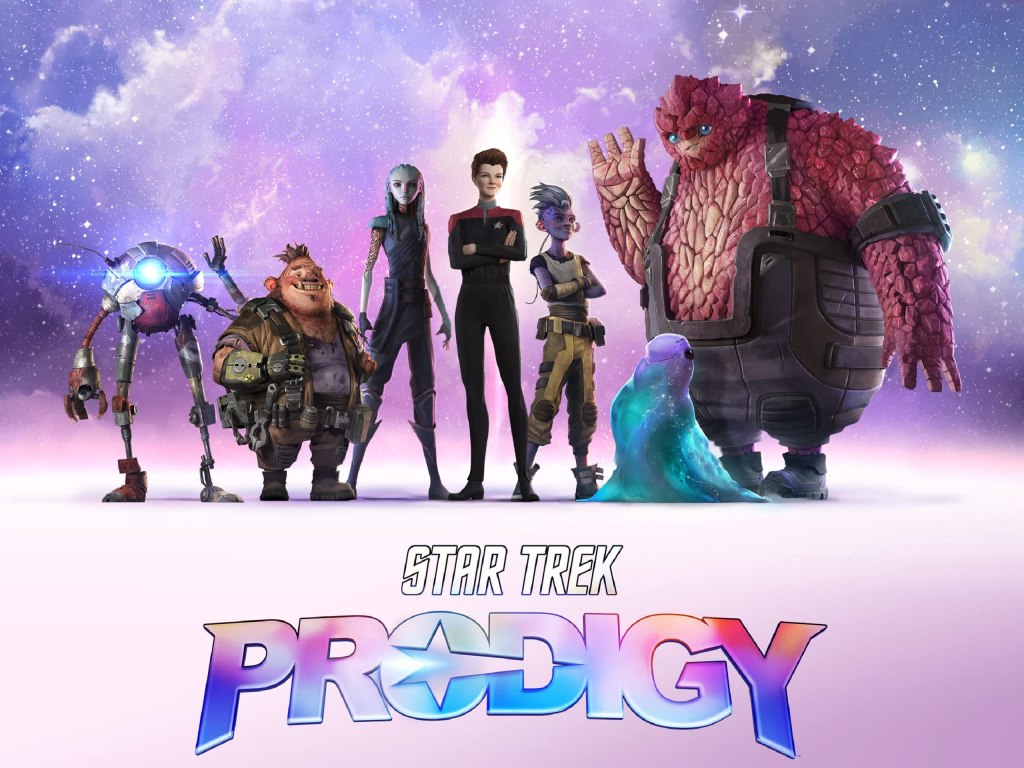
What content will there be, though? Warner Bros has had a terribly frustrating habit of sending out some of their properties, including movies and TV shows that were once on HBO Max, to other streamers like Netflix, Amazon Prime, and most recently Tubi (which picked up a gargantuan selection of WB cartoons). I would like to believe that Paramount would be smarter with its properties than Warner Bros was, but I would be kidding myself. Remember, Paramount+ was launched (originally as CBS All-Access) with the promise that it would be the home for everything Star Trek. Then they cancelled Prodigy after one season and Netflix saved season two, but now that deal has expired and it can’t be found anywhere. What I’m getting at is that both of these companies can be pretty boneheaded about what to do with their legendary properties, so having a singular service – whatever form it winds up taking – will be no guarantee that you can find everything you want under one roof.
Over in the Comic Book Collecting group I help moderate on Facebook, a user asked if we thought that the Ninja Turtles – now that they’re corporate siblings – would be added to the DC Universe. This is something I find particularly unlikely. Although DC has a proud and storied history of absorbing the superhero characters of other defunct publishers that they’ve purchased, the Ninja Turtles are too valuable an intellectual property in their own right to make them part of a different one. It’s the same reason that Disney never made Anna and Elsa from Frozen an official part of the Disney Princesses merchandise line – they make too dang much money on their own to mash them together with everybody else.
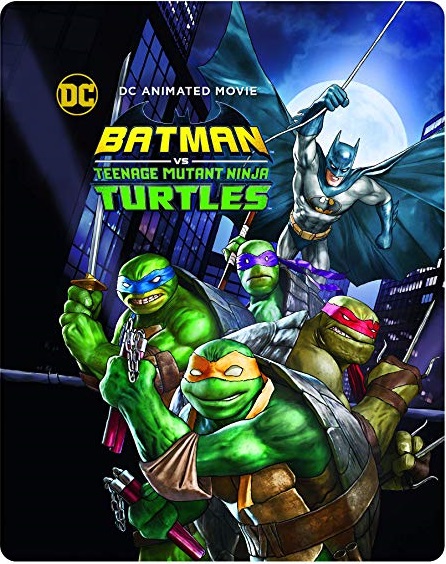
That said, although I do not foresee a future in which Donatello becomes the new leader of the Teen Titans or anything, I think that being under the same corporate umbrella will make crossovers easier and more likely. It’s happened before. The Turtles have had four separate comic book crossovers with Batman, one of which was adapted into an animated movie, and they’ve freely crossed over with dozens of other properties over the years – Ghostbusters, Strangers Things, Masters of the Universe, Mighty Morphin Power Rangers, Naruto, and that’s just off the top of my head. Having them cross paths with the Justice League is in no way out of the question. Heck, having them cross paths with Bugs Bunny isn’t out of the question.
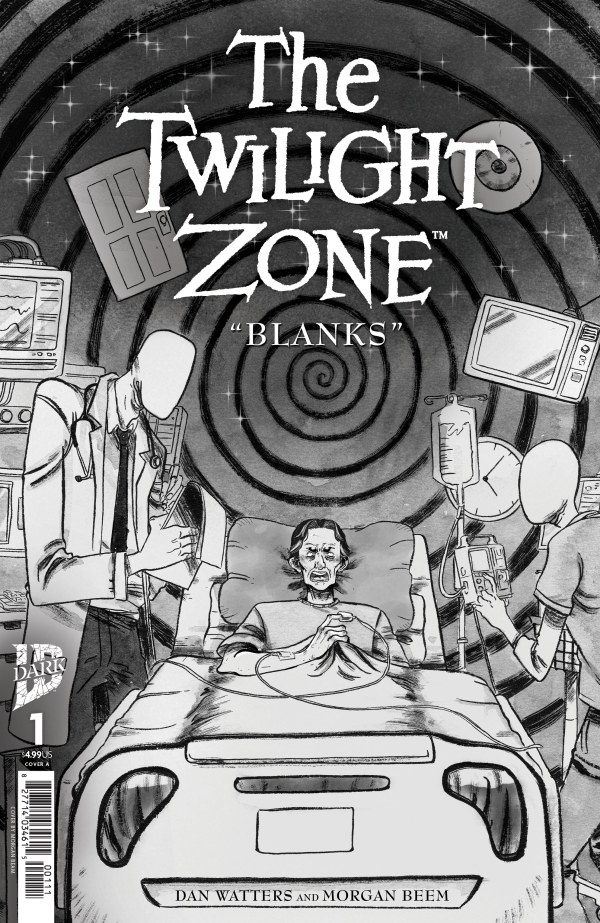
Just because I don’t think the Turtles will be part of the DCU, though, that still raises the question of who is going to publish them. The Turtles have been licensed to IDW Publishing for many years now. So have other Paramount properties, most prominently Star Trek. And just last year, IDW launched a new IDW Dark line of horror comics, including several series based on Paramount properties such as The Twilight Zone, Event Horizon, A Quiet Place, and Smile. I don’t know exactly how long those contracts have left, but once Paramount owns one of the Big Two comic book publishers, will they really want to continue licensing their properties to one of the…Fluffy Five? I need better nicknames.
It’s possible that Paramount would move the comic book licenses for their properties over to DC, but it’s by no means certain. After all, DC hasn’t done a ton of licensed comics in recent years, aside from the occasional crossover or a book based on one of their current corporate siblings. They’ve published Star Trek before, of course, but that was nearly 30 years ago, and there hasn’t been any indication that they would be interested in doing so again. And even now WB properties have had recent comics published by companies other than DC, such as Cartoon Network comics published by IDW or the current Space Ghost and Herculoids comics produced by Dynamite.
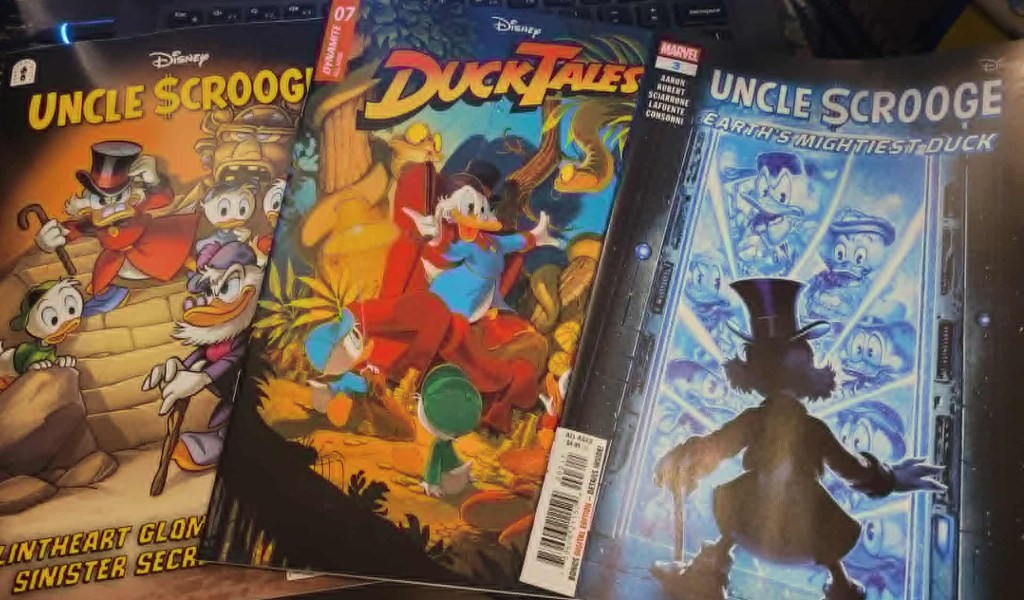
And recent comic book history has made it quite clear that sharing a parent company isn’t necessarily a guarantee of comic book consolidation. When Disney bought Marvel Comics in 2009, they ended the Disney Comics license that Boom! Studios had. Then when they bought Lucasfilm in 2012, they pulled back the Star Wars license from Dark Horse and gave it to Marvel. They did the same with Aliens and Predator when they bought 20th Century Fox. But although Marvel has produced a lot of Star Wars, Alien, and Predator comics, Disney has ALSO licensed Star Wars out to other publishers again, first IDW, and then back to Dark Horse, with their respective series co-existing with the Marvel books. Marvel has also done precious little with the classic Disney characters – a few What If? one-shots mashing Mickey Mouse and friends with Marvel superheroes, and a few Uncle Scrooge comics. But at the same time, Disney kept farming those characters to other publishers as well. Dynamite currently has the license to Disney Afternoon books like DuckTales, Darkwing Duck, and Gargoyles, as well as other properties like Lilo and Stitch, Disney Villains, and – most recently – the Muppets. As for the classic Disney comics, after being moved to IDW (they are in this licensing mix a LOT), they vanished for a few years, only to come back last year at Fantagraphics. In fact, last fall I walked into my comic book shop and bought new comic books starring Scrooge McDuck from three different publishers at the same time.
The melding is far from certain, is what I’m getting at.
What about some of the other properties the different companies hold? How will they be affected? Paramount+ isn’t the only streamer they own, they’re also the controlling company of what is possibly my favorite streaming app, Pluto TV. Pluto has on-demand content, but it also has 24/7 channels dedicated to dozens – perhaps hundreds – of individual shows and genres, most of them owned by Paramount: channels dedicated to Star Trek, I Love Lucy, classic sitcoms, game shows, and tons of other things. Not everything on Pluto is owned by Paramount (they also have channels dedicated to Mystery Science Theater 3000, RiffTrax, and the Universal Monsters, for instance), but I don’t think you can currently find any WB properties there. Could we see channels with all-day streams of the Looney Tunes, Scooby-Doo, Babylon 5, DC Cartoons or the live-action DC superhero shows? I have to admit, of all the theories I’m throwing around, this is probably the one I feel most likely to happen in the near future. It just seems very much like the kind of thing Paramount is likely to do. Although – like everything else – how SOON it might happen would depend largely on the current licensing deals they have in place, what rights exactly those existing deals entail, and when they expire.
If all of this sounds confusing…well, that’s because it is. The merger of two of the biggest media companies in the world is an enormous endeavor, something with so many moving parts that I can’t even wrap my head around it. And we just don’t know how it’s all going to shake out in the end.
Blake M. Petit is a writer, teacher, and dad from Ama, Louisiana. His most recent writing project is the superhero adventure series Other People’s Heroes: Little Stars, volume one of which is now available on Amazon. He’s also started putting his LitReel videos on TikTok. He kind of likes the idea of a SpongeBob/Animaniacs crossover where Squidward just rapidly loses his mind over the Warner Brothers and the Warner Sister.
















 Blake M. Petit