Geek Punditry #8: The Magic Candle

The digital revolution has made it easier than ever for people to make movies and TV shows. You can do virtually every job that’s absolutely necessary to make a film with nothing more than a smartphone and the right apps, and people have begun to do so. This does nothing to increase the talent of the people involved, of course. Even that doesn’t seem to be a hard obstacle, though, if the YouTuber my son watches called “Granny” is any indication. (She’s a nutcase who puts on a wig and a muumuu and rides an adult tricycle to fast food joints and orders food in a horrifically cloying voice. Although I do not advocate this behavior, I guarantee you she’s gotten a lot of saliva in her food.) What’s more, there are thousands of avenues to share the content – dozens of streaming services, almost as many social media platforms. For an entire generation, consuming media in bite-sized tidbits on your phone is not only the norm, it’s the preferred method of being entertained.

God, do I hate that.

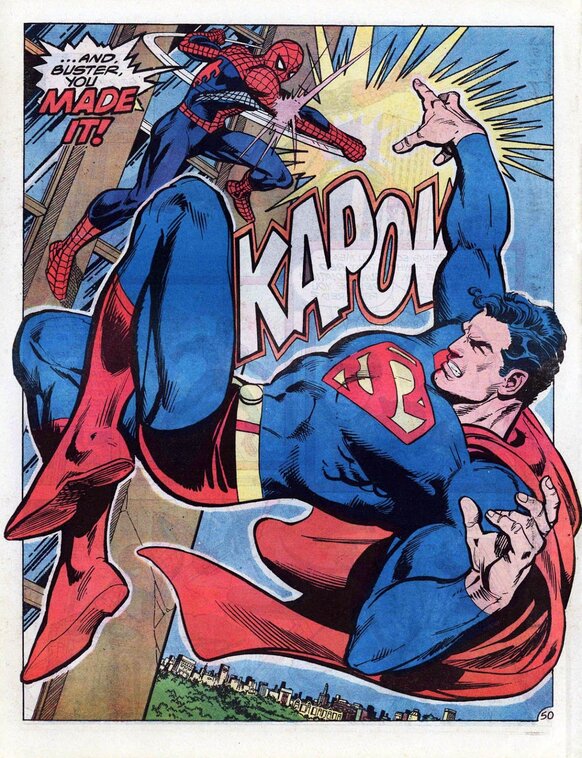
Pictured: Evil.

I know I’m going to sound like a crotchety old man, but there’s a good reason for that: I am a crotchety old man. I don’t like watching stuff on my phone, not when I’ve got a perfectly good television. And I don’t like 30-second bursts of “content.” I’m a storyteller, and when I watch something I want to watch a story. And while telling a satisfying story in 30 seconds is certainly not impossible, it is tremendously difficult, and there are very few people on TikTok who have proven themselves up to the task. No, while my students may swarm around a clip of someone sending a pizza to the wrong house and giggle as though there’s something clever about that, I’d rather watch ten episodes of a science fiction epic telling a serialized story that gives time to develop character, theme, and an entertaining arc. 

Even a television is not the optimal way of viewing a story, though, although that’s how I do most of my viewing. It’s fine, don’t get me wrong, especially in this day and age when your home system can have an amazing picture and stereophonic 4-D quantum sound, if you’re the kind of person who has the sort of money to burn on such a system. But that doesn’t do it for me – nothing does it for me – like sitting in a movie theater. 

Optimally with these guys.

I know all the arguments against going to the movies, of course. Yes, it’s expensive (and just getting moreso, with AMC’s recently-announced scheme to charge more for better seats). Yes, the concessions are overpriced. There are frequently rude people in the theater as well: people who talk during the movie, people who come in late or trip over you while spilling their popcorn, people who (and this should be a criminal offense) turn on their phones, the glare blinding you at a critical moment of the narrative. And damn it, you can’t pause it to go to the bathroom. There are dozens of very solid arguments in favor of watching movies at home instead of in a movie theater.

My point is: I don’t care.

All of those complaints are true, valid, and they annoy me as much as anyone else, but the long and short of it is that when I’m excited to see a motion picture, there is no better environment in which to do it than in a darkened room with minimal distractions surrounded by other like-minded people who are there for the same thing. The first movie houses were just vacant vaudeville theaters with a screen put into place, but from the very beginning they found the perfect way to experience a film. When you watch a movie at home, it’s far too easy to get pulled out of the world of the story. The sun is coming in through the window, you’re getting Facebook notifications and text messages, your child keeps handing you his magna doodle and telling you to draw a picture of the Burger King logo. Those things don’t happen in a movie theater – or at least they shouldn’t, if you turned your phone to “do not disturb” like a civilized human being. 

What’s more, no matter how great the home theater experience becomes, the “home” part will never be able to match the thrill of being in a theater with hundreds of other people who are there for the same thing as you. Think about the first time you saw Avengers: Endgame. When Thor’s hammer lay on the battlefield and was picked up by a mysterious figure, the room grew silent. Moments later, when it smashed Thanos in the face and returned to Captain America’s hand, the theater exploded. I have never experienced a simultaneous eruption of joy in a movie theater to rival that moment, and I don’t know that I ever will again. 

A moment this awesome cannot be replicated at home.

Think about Attack of the Clones. It is, if I’m being honest, my least favorite Star Wars movie, but I will always treasure the memory of the midnight screening I attended and how the fans roared when Yoda took out his lightsaber for the first time. Even bad movies are made more fun with an audience. Nobody is going to argue that the Green Lantern movie was great cinema, but there was a load of fun to be had in my New Orleans-area screening because the movie was filmed in our area, and we all laughed together as we saw familiar streets and landmarks that they tried to pass off as being in California.

I’ve seen a lot of great movies in my life, and I’ve seen a lot of them at home. But every great movie experience I can remember happened in a theater. It’s like being in a more benign version of Plato’s cave, a magic candle shining excitement on the screen. You can’t do that at your house.

Movies serve as landmarks in my memory, too. I remember, as a child, going to the movies with my parents, my brother and sister, and each time considering it a treat. I know that I saw Ernest Goes to Camp, Santa Claus: The Movie, Batteries Not Included and Masters of the Universe that way. I remember seeing Forrest Gump with my dad in a sadly-defunct dollar theater the week before I graduated high school. I wish I knew what the first movie I ever saw in a theater was, but unfortunately my memory isn’t that good.

I got older and my friend Jason and I started going to the movies almost every weekend, sometimes two or three movies a week. Jason ran a video store back when those still existed, so it was market research for him, but we both just loved the experience of going, of watching, of holding out our thumbs to indicate approval or disapproval for the trailers that flickered across the screen. It was with Jason, watching the wrestling movie Ready to Rumble, that I started to think about superheroes being run like the WWE, a germ of an idea that eventually led to my first novel, Other People’s Heroes. Thanks, awful movie! 

If you love my writing, thank this movie. If you hate my writing, blame this movie. I do.

I know the first movie Jason and I saw at the local Palace Theater the weekend it opened (The Lost World: Jurassic Park.) I know the first movie I saw with my girlfriend Erin (Madagascar), the movie we saw the night before I asked her to marry me (Skyfall), the last movie we saw before our son was born (The Dark Tower) and the first movie we left Eddie with a babysitter to watch (It Chapter One – my history with Erin is inexorably tangled with the works of Stephen King, a story which will probably be its own column at some point). 

All of this is to say that on Tuesday I added another memory to the cinematic roadmap of my life: the first movie we took our child to see in a theater.

I need to explain a few things to help you understand just how significant this is to my family. I don’t know that I ever really believed I would get to be a father. It just wasn’t something that I thought was in the cards for me, and I’ve never been happier to be wrong. Being Eddie’s dad is the greatest thing in my entire life. But it hasn’t been free of challenges. Some time after Eddie turned one year old and he still wasn’t talking, we started to get concerned, and we eventually managed to confirm that he’s on the autism spectrum. Any child comes with challenges, but his were different from many others. He started reading early and he’s terribly smart (this is not just a proud parent talking, we’ve been told this by numerous doctors and teachers), but he also tends to fixate on things like logos and clocks. His obsession with time in particular is perplexing to me. And of course, there was the talking, which for the longest time he simply was not interested in doing.

He talks now, he virtually never stops talking now, but there are a lot of milestones in his life that have come later than usual. It’s terribly difficult to get him to sit still, he has trouble with disruption to his routines, and sometimes he has trouble with extreme stimuli. When he was two years old, for instance, we took him to my niece’s Christmas pageant at school. As soon as the audience applauded at the end of the first number, he began to scream in terror. I had to take him out in the lobby and sit with him there until the show was over. (Jason was actually there too, keeping us company, as his wife was one of the teachers at that school.)

So we were nervous. I was worried that he wouldn’t be able to deal with crowds and the stimulation of a movie screen, which would have made me terribly sad. Like I said last week, I don’t want to force my fandoms on the boy, but from the moment I knew we were going to be parents I wanted to share the things I loved with him.The idea that it might not be possible was heartbreaking.

But he’s older now, and he’s dealing with things better than he used to. He’s no longer scared of fireworks, for example, and this school year we brought him to another Christmas pageant and a band concert with no problems. So this week, with Eddie and I both out of school for Mardi Gras and assuming it wouldn’t be too crowded, we decided to finally try our hand at taking him to a movie theater. 

The only kid-appropriate movie playing was Puss in Boots: The Last Wish, so we got our tickets, which with my Stubs membership and the “discount Tuesday” promotion meant  the three of us got to go to the matinee for less than $20. This, Erin said, made it easier to accept the fact that if Eddie wanted to leave, we’d have to just eat the ticket cost. What bothered me, though, was less the ticket price and more the fact that I have never walked out of a movie in my life. No matter how atrocious the film may be, I soldier on so that I can sound informed when I call it a piece of crap. It’s a matter of honor.

But for my son, I would take that risk.

Eddie’s first theater experience.

Anyway, we got to the theater, we bought the boy some Sour Patch Kids and an apple juice, got a bucket of popcorn for the family, took our seats, and crossed our fingers.

I haven’t seen all of the movies in the “Shrek Cinematic Universe,” but The Last Wish is far and away the best of those I have seen. I never would have expected it from this movie, but the film turned out to be a serious meditation on aging and mortality with a positive and uplifting message about the importance of family and living life to the fullest. It was deep and meaningful, but without sacrificing moments of genuine comedy. The animation was gorgeous as well. Rather than giving us the plastic CGI that early Dreamworks movies sported, Erin pointed out that director Joe Crawford was borrowing visual cues from Spider-Man: Into the Spider-Verse, with the same sort of staccato motion and faux-painted look to the imagery. It was lovely to look at and fun to watch.

More importantly than any of this, though, is that Eddie watched the whole thing.

He doesn’t always “watch” things at home. We’ll put on his cartoons and he’ll laugh and dance with the music, and his ability to pick up on a tune is wicked sharp, but he is easily distracted (even without text messages coming in) and wanders around the room, bouncing from one toy or activity to another, often oblivious to the entertainment on the screen. Here, with the lack of distractions, he kept his eyes on the film most of the time. He laughed at some of the funnier bits. He smiled a lot (I know this because I was watching him as much as the screen). And yes, he got a little antsy, looking at my watch frequently, although that is as much because of his obsession with clocks and time as it is anything else. He did ask “How much is left on the timer?” three times, but he never complained.

It’s warming my heart. Because again, I don’t want to force him to do things he doesn’t want to do, but if he enjoys going to the movies, I’m going to take him as often as I can. Sure, not as much as I went to the movies back in the day, I mean…I’m not going to take him to see Scream VI no matter HOW big a fan he is of Courtney Cox. But when there’s a movie for him, I want to bring him. He seemed into the trailer for The Super Mario Bros. Movie, coming in April. Pixar’s entry this summer, Elemental, looks cute. Heck, by the time Spider-Man: Across the Spider-Verse hits this fall, he may even be ready for that.

These were the things that went through my head as we watched the movie, of course. The real litmus test would be how he felt after the movie was over.

After we walked out of the theater, I asked him if he had fun. He said he did. I asked if he liked the movie with the cats. He said he did. He often agrees with random things, though, so I wasn’t sure if he was happy about it until later when asked to recap his day.

“What did you do today, Eddie?” we asked him.

His face beamed like it was washed with the light of that magic candle and he proudly proclaimed “I went to AMC Palace! I went to the movies!”

“That’s so great! What did you see at the movies?”

Cats!”

Okay, so he’s still got some learning to do.

Blake M. Petit is a writer, teacher, and dad from Ama, Louisiana. His current writing project is the superhero adventure series Other People’s Heroes: Little Stars, a new episode of which is available every Wednesday on Amazon’s Kindle Vella platform. He promises that this column won’t be about his kid EVERY week, but…hell, it’s gonna be about his kid whenever it feels appropriate. It’s his blog, after all.
Geek Punditry #5: Fandom: Why We Can’t Have Nice Things

I set a goal for myself about a month ago, to use this new Geek Punditry column to get back to writing about the movies, books, TV shows, and comics that I love. I felt like spending time on those things that bring me joy would reignite my writing chops and, just a month in, I feel like I’ve been successful. I’m looking forward to writing this each week. I’m excited to write this each week. But as early as week 3, my focus began to shift. What started as a celebration of things I love has already evolved, with the past two installments focusing on problems that I think need to be addressed. I bring this up because I’m going to do the same thing this week. I’m going to point out a problem that I think is perhaps the most insidious in all of pop culture. I mean, of course, fandom.

The Antichrist, according to Reddit User u/DeeSeeBlows42069

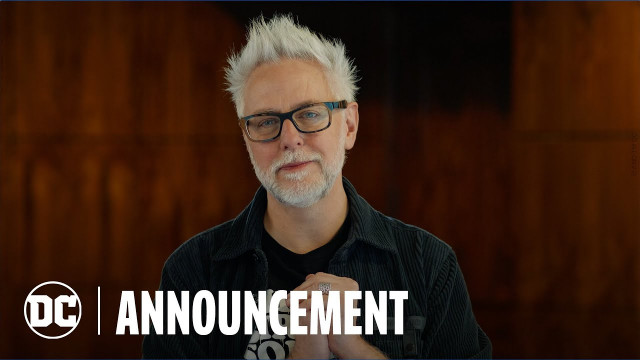
Earlier this week, James Gunn released a video announcing the new plans for the reinvention of the DC Universe in movies and television, and when I heard the news, that’s what I thought I would be writing about today. I figured I’d give you my feelings on what he has in the works for Superman, for Green Lantern, for Booster Gold (Booster freakin’ Gold!) and tell you why I’m excited and optimistic about it. But within hours, the excitement I felt was already being chipped away by people who, if you asked them to their face, would claim to love the very things they had begun whining about. But for people who say they’re acting out of love, their words painted another picture – venomous, vitriolic, and sometimes just plain nasty. Fans can be great, but every time a new movie is released, a new comic book creative team is announced, a new television series premieres, it becomes more and more clear that fandom can be absolutely toxic.

I’m not saying that criticism is bad. In times past, criticism itself was a legitimate form of literary discourse. But that was reasoned criticism, informed criticism. What we get today is a knee-jerk reaction that declares everything is terrible before it even sees the light of day, souring the joy for everybody. One need only look on any social media outlet, any of hundreds of Reddit pages, and one will find post after post, meme after meme, of people railing in anger against something they have not even seen. In fact, for the most part it’s criticism of things that do not yet exist. And while it’s true that the other extreme also exists – people who are happy about things they have not seen – that other extreme is a minority, and seems to me to be far healthier and joyful (or at the very least less pessimistic) and therefore is the side I would prefer to join.

Not pictured: A film that should be used as a medieval torture device.

Social media allows for no nuance, though. Everything is either the greatest thing ever made or (far more often) the worst thing ever made, with no degrees in-between. Last year’s Morbius movie is a good example of this. The film underperformed badly at the box office, even after a meme-inspired rerelease, and it has become a punchline. But this damage was not done by people who had watched the movie. The internet declared the film a failure long before its release – online hatred of Jared Leto combined with several COVID-related delays seemed to doom it before a single frame was released to the public. When I finally watched the movie, my response was, “That was okay.” It isn’t great, mind you, but it’s okay. Jared Leto is all right, Matt Smith seems to be having fun playing the bad guy, and the vampire effects – I’ll say it – were actually pretty impressive. But if you mention the title on Facebook you’ll get an avalanche of “IT’S MORBIN’ TIME!” posts and people slandering the movie, most of whom have never even watched it.

People who delight in someone else’s failure are nothing new, of course. It’s good old-fashioned schadenfreude (and thank the Germans for having an appropriate word for this), it’s as old as civilization itself, but the internet has given it voice that it didn’t have in ages past. The insidious thing is that this voice is not simply celebrating failure, but generating it. What’s worse, as the louder voices on the internet start to pretend that volume is consensus, too many people are starting to accept consensus as fact. I’m reminded of a conversation I overheard a few months ago between two of my high school students about the most recent Halloween movie. One student was declaring, in much the same voice you or I might use to declare that the bathroom is down the hall to the left, “It sucks. He’s barely in it.”

“Have you seen it?”

“No, but everyone says so.”

You’re not allowed to shout at your high school students for their opinions about movies. I looked it up.

Full disclosure: I didn’t particularly care for Halloween Ends, but A) my issues with it had nothing to do with the number of minutes Michael Myers appeared on screen, and B) I formed that opinion after watching the movie myself. 

This phenomenon is perpetuated online thanks to sites like Rotten Tomatoes, which is a brilliant example of a good idea gone horribly wrong. Rotten Tomatoes gives a movie two scores: a percentage based on film critic scores and the percentage based on viewer scores. The site has no authority, no personal judgment inherent in its functionality, but people have begun using that algorithm-generated number as if it were some sort of benchmark of quality. I can’t say this often enough, my friends: consensus does not equal quality

How many movie trailers have you seen declaring a movie’s Rotten Tomatoes score the way they used to tell us that Siskel and Ebert gave a movie two thumbs up? The difference is that Gene and Roger were actual critics, people who watched a movie first and then gave intelligent, nuanced critiques of the film. If they gave a movie a thumbs-down, they could explain to you why they disliked it. But if a movie gets a 35 percent on Rotten Tomatoes, all that means is that only 35 percent of the trolls on the internet had something positive to say. When I hear that number, the only response that makes sense to me is, “SO WHAT?” I accept the numbers as a consensus of the people who have posted to Rotten Tomatoes, but why in the hell should I care what they have to say? I disagree with random people all the time. I disagree with professional critics even more. Why should I accept their numbers instead of forming my own opinion? When they started to tease the upcoming announcement of a film’s Rotten Tomatoes score, I thought my brain was going to explode and squirt out of my ears like a Looney Tunes character, who would then get anxiety over its own upcoming Rotten Tomatoes score. 

I’m telling you, it’s okay with me if you like this movie.

And you know, I wanted to like Halloween Ends. I’ve never understood the concept of “hate-watching.” There are so many things I want to watch that I know it’ll be impossible to get to them all – why should I waste time watching something I expect to dislike? Will it happen sometimes? Of course. But that’s not my goal. And more importantly, if I decide not to watch something because I expect to dislike it, I don’t declare it bad, I declare it unseen. For instance: I didn’t care for the first James Cameron Avatar movie. (Yes, I know, it made all the money. I don’t care. Consensus does not equal quality, remember?) Because I didn’t care for the first one, I haven’t watched the second. So here’s a pop quiz: when someone asks me about Avatar: The Way of Water, what is the correct way for me to reply?

A: It sucks, James Cameron sucks, water sucks, everyone sucks.

B: I haven’t seen it.

If you answered “A,” please disconnect all of your devices from the internet immediately and never talk to anyone again.

The other thing that stokes this particular flame is an “us vs. them” mentality that pervades the internet. It’s as though if you’re a fan of Property A, you are beholden via blood oath to despise everything associated with Property B. You must hate the movies, you must hate the books, you must hate the fans, and if an actor happens to jump from one to the other they are a traitor and must be dealt with possibly with bamboo shoots no later than Tuesday afternoon

My God, is there any attitude in fandom stupider than that one?

Superman is my favorite superhero. He’s a DC character. Somehow that means I’m not allowed to say how great Spider-Man: No Way Home is? If I love Star Trek, is it a betrayal to express joy for The Mandalorian? If I’m a fan of Lord of the Rings, I have to hate Wheel of Time?

Shut up.

Pictured: Fandom

Storytelling isn’t sports. When I’m watching the New Orleans Saints play the Atlanta Falcons, the nature of sports means that I want one team to win and one team to lose. This is normal. But that same rule does not apply to movies, to TV shows, to books, to comics. In sports, somebody is gonna lose, but in storytelling, everyone can win. When I say that I want James Gunn’s Superman: Legacy to be a blockbuster movie, that is not the same thing as saying I hope Captain America: New World Order is a disaster. I firmly believe that great art of any kind will inspire great art from others, and that when one franchise I love is enjoying success it’s not an obstacle to anybody else. If anything, it’s a carrot to lure them to be better themselves. I think the people who make these properties understand this. It’s very common to see actors, directors, writers, or artists jump back and forth between publishers and studios and IPs and have positive things to say about all of them. It’s only the fans that view it as a competition. (Well, the fans and the corporate executives, but that’s a whole other conversation.)

This is not to say I’m blameless in this, of course. I certainly shared my criticisms of the original Avatar online, and lord knows I posted a “Morbin’ Time” meme or two, but as fandom has grown more toxic I’ve made a deliberate effort to pull back on that sort of thing. I’ve never been the sort of person who would get on Twitter and threaten an actor because I didn’t like a movie they were in, but I realize now that in the current internet climate even well-meaning criticism may sometimes give fuel to that sort of horrific person, and I don’t want to do that. The point of Geek Punditry is to talk about things I love, not things I hate. 

I’m not saying not to criticize. I’m just asking that criticism be informed, that it be based on the work itself and not because you hate somebody’s previous movie or because you’ve chosen lines in a meaningless civil war. And most importantly, that it be respectful, both to the people you disagree with and to those whose work you are criticizing. Nobody intentionally makes a bad movie, with the possible exception of the Sharknado franchise, so even if you don’t like the work, give credit for the effort that went into it. The only people who lose when you speak respectfully are the people who refuse to speak respectfully.

And go ahead and be respectful to them, too.

Drives ‘em crazy. 

Blake M. Petit is a writer, teacher, and dad from Ama, Louisiana. His current writing project is the superhero adventure seriesOther People’s Heroes: Little Stars, a new episode of which is available every Wednesday on Amazon’s Kindle Vella platform. If, at any point during this column, you thought to yourself, “Blake is talking about THOSE people,” that probably means he’s talking about YOU.

Geek Punditry #4: Reigniting the Oscars

“Can you remember who I went home with last year?”

Earlier this week the nominees were announced for the 95th Annual Academy Awards, and the world greeted them with…well, with a collective yawn. Oh sure, people are talking a little. Everybody is happy about Brendan Fraser’s nomination for The Whale, and a lot of people are glad about the hearty showing for Everything Everywhere All At Once, but for the most part, the chatter has died down pretty quickly. This isn’t really that surprising, as Oscar viewership has plummeted in recent years. At its peak in 1998 (55.3 million viewers), the Oscars were the second-highest rated telecast in America, following only the Super Bowl. But that was a long time ago, and since 2010  viewership has taken a nose-dive, with last year’s ceremony gathering a relatively meager 16.6 million viewers. That number was touted as a win by some after 2021’s disastrous 9.85 million, although that number was no doubt influenced by the pandemic crippling viewership for movies in general the year before.

In a way, I suppose I could call myself part of the problem. I used to be a devoted viewer of the Oscars, eagerly awaiting the nominees, making every attempt I could to watch as many of the nominated films as possible before the ceremony, and vociferously arguing with the winners when I felt the Academy made the wrong call. (Lookin’ at you, Shakespeare in Love over Saving Private Ryan.) But not only do I not really care about the Oscars anymore, I don’t even really care that I don’t care. It would be easy to go on a tirade about how the Oscars have changed and left me behind, but that’s not really true. The Oscars haven’t changed that much. I’ve changed. The way we view movies has changed. The world has changed. The Oscars haven’t kept up. 

Pictured: Every “Best Picture” nominee for this year I have seen, in alphabetical order.

Out of this year’s 54 nominated movies, I have seen five. I’ve only seen one of the Best Picture nominees, and I haven’t even heard of some of the others. This is nothing new, by the way. Right now, without looking it up, how many of you remember that King Richard took home the Best Picture award at last year’s ceremony? Go ahead, raise your hand, let everyone see you. Now everybody who just raised their hand can put it down in shame: I know you’re lying because I made that part up. The winner was Coda. But you didn’t remember that either, did you?

It’s okay, neither did I. I had to Google it.

I don’t object to the concept of an awards program. I’m fine with peers (in this case, people involved in the movie industry) declaring what they consider the superior examples of their craft. And I’m not even saying they should change what movies they give the awards to in order to make them more commercial – that would be intellectually dishonest, not to mention pandering. However, if the films that get the accolades are movies the mass audience has never heard of, they don’t get to complain when the mass audience isn’t interested anymore.

But it’s not just the movies that get nominated that are causing a problem. The way people watch movies has changed dramatically in the last few years. In-theater attendance has collapsed, while streaming numbers have picked up the slack. Personally, I’m not crazy about this. I always prefer to see a movie in theaters if the option is there, but I also have a five-year-old child and I know that seeing movies in theaters is frequently difficult, if not impossible, for many people. Once upon a time I would go to the movies nearly every weekend, sometimes seeing two or three films in a single day. In 2022, I made it to the movies a grand total of once. Similarly, watching long movies isn’t easy for me either. I’m not someone who whines if a film goes beyond 87 minutes, mind you. I like long movies. I can spend an entire weekend watching the extended cuts of the Lord of the Rings trilogy and still hunger for more. But when my kid is demanding things like YouTube videos or, y’know, food, it can be difficult to set aside the three hours necessary to watch All Quiet on the Western Front. Some people are happy to break up a movie in chunks and watch it over a few days. To me, the very thought of doing such a thing makes me want to cry.

So I’ve got a few suggestions to help the Oscars win back a little of the relevance – or at least the interest – that has eroded from what was once the biggest night in Hollywood.

If you read this title and don’t want to see this movie, you and I can’t be friends anymore.

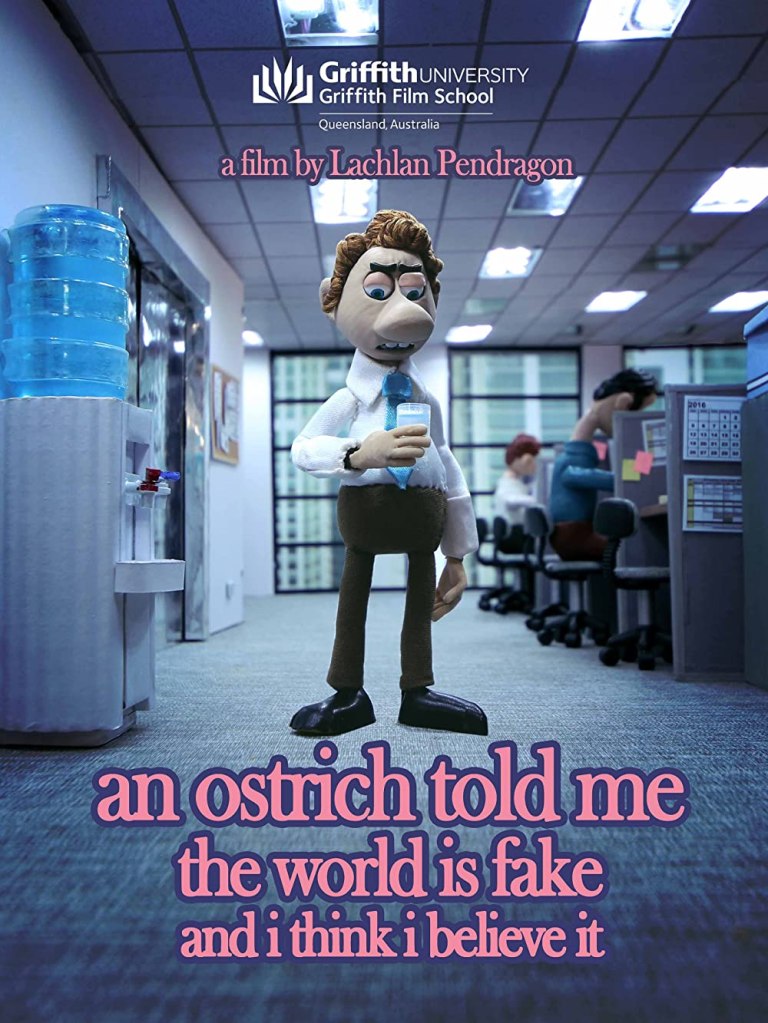
First of all, let’s address the availability issue. This is a bigger issue for categories like shorts, documentaries, and foreign films, but a lot of the lesser-known films in other categories suffer from it as well. It’s hard to make a potential awards viewer excited about nominees that they haven’t seen, but in this streaming world, why is it still a problem? Sure, if a movie is owned by Disney or Warner Bros., you know it’s going to be on a streaming service soon enough, but what about the deserving films that aren’t? One of the nominees for Best Animated Short this year is an Australian film called An Ostrich Told Me the World is Fake and I Think I Believe It. Now I’m ready to hand filmmaker Lachlan Pendragon the trophy based on the title alone, and I would love to watch this movie…but alas, it’s not available anywhere that I’ve checked.

Here’s a chance for the Academy to use some of that muscle they have for good. Cut some sort of a deal with a popular streaming service – Netflix, Hulu, HBO Max, take your dang pick – that would give nominees the option for a limited streaming window in the frame stretching from the nominations through the awards ceremony, or perhaps a few weeks or so after. Give people a chance to watch the movies, and they may start to care again. Hell, why not start their own service that exclusively carries Oscar-nominated films from the past 95 years? I know a lot of them already have their rights tied up with different companies and streaming services, but there must be plenty of orphans deserving of a chance to find an audience.

Next, let’s talk about the categories of the awards. I don’t have an issue with any of the current categories, but the films that are most popular aren’t usually the kind of things that will line up for Best Picture or the acting categories, unless they’re directed by James Cameron or have Black Panther in the title. Genre films have always been largely ignored by the Academy unless they become so immensely popular that they simply cannot pretend they don’t exist. We all remember the 2003 Oscar bloodbath when they gave Lord of the Rings: The Return of the King every award they could out of fear of the fans angry over the snubs for the first two installments marching on Hollywood and lighting New Line Cinema on fire. 

A few years ago the Oscars announced the addition of a “Best Popular Film” category in an attempt to address this problem. They quickly dropped the idea, however, when millions of angry fans on the internet pointed out that, for an organization worried about being perceived as snobbish and elitist, inventing an award specifically to placate “the little people” was probably not the best way to change that attitude. 

But there are two categories that could be added that would not only be gratefully accepted by genre fans, but also fill in two gaping voids in the production of motion pictures that are not currently addressed by the Oscars: stunt performance and performance in animation.

Stuntwork has existed since the earliest days of motion pictures, and despite the utter brilliance of people from Buster Keaton to Chad Stahelski, the Oscars have never seen fit to recognize that aspect of filmmaking. A stunt category would create more interest from fans of genre films (which would likely dominate the category for obvious reasons), as well as finally giving credit to people who literally risk their lives in the creation of our favorite motion pictures. And it should remain distinct from the “best visual effects” category. There should be a limit on how much of the film is CGI in order to qualify, so a movie where the action is 95 percent generated by a computer wouldn’t muscle out a film where there was an actual living human being strapped to a crane and they only used a computer to erase the wires. 

Look in those big, blue eyes and tell me he didn’t deserve some Oscar love.

Animated performance has also been ignored historically. I don’t know if voice performers are technically eligible in the standard acting categories, but I know that no one has ever been nominated for such a performance. And voice acting is performance. Whether it’s someone standing at a microphone, as in most animated films, or someone doing full motion capture and acting out the part, there is a unique performance element that is as impressive an art as any other. It still burns me that Andy Serkis was completely snubbed for his role as Gollum in Lord of the Rings, a performance that almost certainly would have gotten recognition if he had been wearing makeup, but was totally ignored because he was rendered digitally.

I don’t know if I would further subdivide this and make motion capture performances their own separate category from “traditional” voice acting, but having at least one category dedicated to this type of performance would be a big step. What’s more, this is not a solo award. It should be shared by the person who performs the voice and/or motion capture, as well the animator or animation team that completes the process of bringing the character to life. Guillermo Del Toro credited the people who made his Pinocchio film this way, and the Academy should do the same.

The only downside to this, of course, is that adding categories to the awards would make the show even longer, and this brings us to the final reason that people have lost interest in watching the Oscars: bloat. The show is long, tedious, and full of fluff that the average viewer couldn’t care less about, and that’s before we even get to the acceptance speeches. What’s even worse, they make room for this bloat by taking certain categories (usually the technical awards) and giving them out at an untelevised separate ceremony, essentially declaring which awards are less significant than some actor’s impassioned speech on behalf of the life cycle of the Bolivian Dung Beetle.

So the first thing that needs to be done is blow out the fluff. Get rid of the stupid sketches and weepy speeches that don’t relate directly to the awards being given out. There should be three components to the ceremony: musical performances of the nominated songs, the “In Memoriam” reel, and the awards themselves. In and of itself, this change would reduce the length of the ceremony by approximately 17 years. 

Then come the acceptance speeches, and this is the tough part. I believe 100 percent in freedom of speech, and I will never advocate curtailing a person’s right to exercise it. That said, if given a choice between seeing the award for best achievement in sound design given live or hearing an actor lecture me on politics – even when they happen to be politics I personally agree with – I will choose the award every single time, and I do not think I’m alone in this. The best solution I can think of is to impose a strict limit on the on-stage speech – 30 seconds, a minute, whatever, but enforce it, even if it means turning off the microphone. Then, allow the winner extended time backstage to make their full speeches, say whatever they want, and upload the unabridged and unedited video to the Oscar website, where people who want to will have the freedom to watch them in full. Some people would object to this policy, of course. “But people won’t get to see my speech!” they will cry. I would answer, “The ones who want to hear it can easily find it.” And they’ll say, “But what if they don’t WANT to?” And I will simply smile and shrug.

I advocate similar changes when it comes to political campaigning. 

It’s not a perfect system, I admit, but unlike several of the people who have accepted Academy Awards over the years, I’ve never tried to convince anyone I am perfect. But I do think these changes will make general audiences more receptive and more interested in watching the Oscars again.

Or at the very least, it’ll be better than the Golden Globes. 

Blake M. Petit is a writer, teacher, and dad from Ama, Louisiana. His current writing project is the superhero adventure series Other People’s Heroes: Little Stars, a new episode of which is available every Wednesday on Amazon’s Kindle Vella platform. He’s heard an awful lot of nice things about that Brendan Fraser fella, and he hopes he’s having a good time right now. 

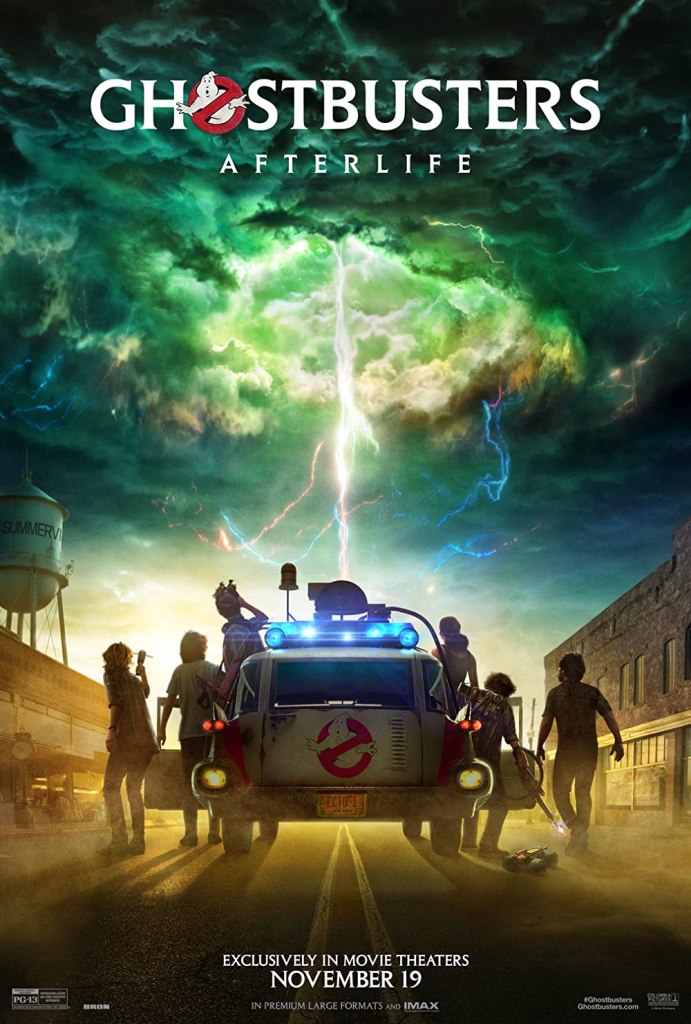
Ghostbusters: Afterlife — A Review

Let’s be honest here: reboots are hard.

Studios like them, of course, because they’re counting on the audience carrying over and giving the refurbished IP the gas it needs to get to a new audience, one that maybe didn’t grow up with the original. The trick, then, is to create something that the original audience will support, but at the same time is satisfying to someone unfamiliar with the property. A lot of reboots fail at least one of these two essential tasks. And a lot of them, trying to do both, wind up pleasing no one.

Ghostbusters: Afterlife is the unicorn, that reboot that will have the old fans applaud and bring the next generation with them.

I won’t talk much about the plot, except to say that it’s set in the modern day, the events of the first two movies happened but are considered by many to be a hoax or an urban legend, and that it’s about some kids uncovering a legacy they were entirely unaware of. 

That said, the plot isn’t the thing that’s got me so in love with this movie. Oh, I enjoyed it immensely, don’t get me wrong, and I think it hits almost every beat without fail, crafting a story that is respectful to the movies of the 1980s without ever running the risk of locking out somebody who doesn’t know anything about the Ghostbusters except that their dad really likes to wear the costume on Halloween. The script is funny and creepy and full of energy, and it just plain works. But that is by no means the most important thing about this movie. The tone, the feel of the thing matters much, much more.

I’ve heard people calling it Ghostbusters by way of Stranger Things, which is fair, in that both this movie and Stranger Things draw from the 80s, Spielbergian, Amblin-esque concept of a world where children are brave, heroic figures instead of props to be held hostage or obstacles getting in their parents’ way. This is the type of E.T., Goonies portrait of childhood where kids are willing to place themselves on the line and face dangers for adventure, for their loved ones, and for the greater good. McKenna Grace absolutely steals this movie as Phoebe, a 12-year-old socially awkward girl whose predilection towards science and logic has left her without much in the way of human contact beyond her older brother, Trevor and her mother. This is her movie, a movie about her finding herself, finding her history, finding her team, and doing so in an utterly triumphant way. 

The characters are not a simple “Generation Xerox” from the original films either. It’s true that Phoebe has much of Egon’s intellect and adorkable nature, and that Podcast carries over a lot of Ray’s wide-eyed wonder and excitement, but that’s pretty much where the similarities end. These two, along with the other newbies, are allowed to grow and develop into their own people instead of just being “The New Peter” or “The New Winston.” You learn about each of them, you feel for each of them, and chances are at some point in your life you’ve been at least one of them. (I was Trevor in high school. And college. And most of my 20s, if we’re being entirely honest here.) 

Fans of the original Ghostbusters know that no future incarnation of the franchise will ever be like the first two films again. It can’t be, not since Harold Ramis passed away in 2014. So instead, Jason Reitman took his father’s most famous work and used it as a foundation for a new Ghostbusters, a new world that I am so happy and eager to explore. But at the same time, this is a movie I want to watch with my 11-year-old niece, who has never seen the first two movies but wants to be a scientist, so she can see a girl just one year older than her utterly kicking ass. And with her seven-year-old brother, who just loves monsters and the Ghostbusters. 

Too many reboots think about one of two audiences, the old or the new, and try to just leave a back door open for the other. Afterlife is wide open, inviting in everyone, having something for everyone, and reminding us just how good bustin’ can make us feel. 

Review also shared on my Letterboxd page.

Blake M. Petit is a writer, teacher, and dad from Ama, Louisiana. His current writing project is the superhero adventure series Other People’s Heroes: Little Stars, a new episode of which is available every Wednesday on Amazon’s Kindle Vella platform. He has been that dad wearing a Ghostbusters costume on Halloween, along with his son Edward, whose own Ghostbusters jumpsuit just said “Rookie.” His wife wore a Slimer t-shirt, and it was adorable.

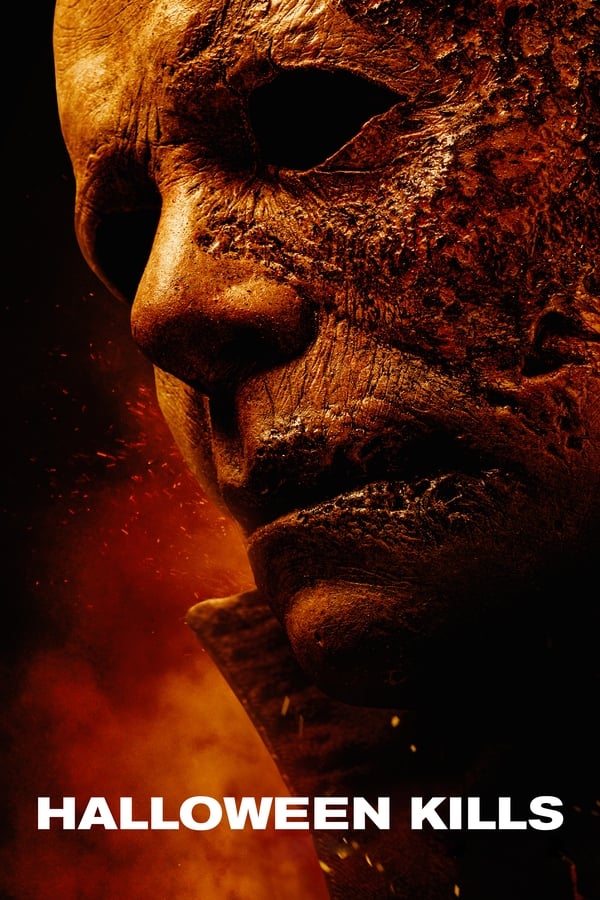
Halloween Kills: A Review

I’ve seen a lot of people complaining online about Halloween Kills. In and of itself, there’s nothing unusual about that. People complaining online is part of the natural downfall of our species — hell, some may argue that’s what online is actually for. However, it’s rare that I find myself not only disagreeing with the mob mentality, but utterly incapable of figuring out exactly what they’re angry about in the first place. All of this is to say, I thought Halloween Kills was fantastic.

I enjoyed the 2018 Halloween movie (which I STILL by God wish they had given a subtitle, because did we really need THREE movies in this franchise simply called Halloween?), but in some ways, I think I enjoyed Halloween Kills even more. I’m going to talk spoilers here, because I can’t really think of a way to explain what I liked so much without them, so if you want to remain spoiler free, go away now, secure in the knowledge that I just really, really liked the darn film.

The movie picks up mere moments after the end of the previous movie — Laurie Strode, her daughter Karen, and granddaughter Allyson are in the back of a truck fleeing from the burning remains of Laurie’s home where they trapped Michael Myers and left him to die. (Quick tangent: all three of the Strode women were utter baddasses in the first movie, they continue to be so in this one, and how great is it that Judy Greer is finally getting to play a character that’s not just the hero’s ex-wife?) Before we pick it up, though, we bounce back to 1978, the night of the original Halloween movie, for one of several scenes that flesh out what happened both on that night and during the previous film. In particular, these scenes recontextualize Frank Hawkins’s storyline, amplifying the tragedy that he’s facing in his own quest to see Michael destroyed.

“Amplifying the tragedy,” by the way, is a good way to summarize this movie as a whole. Frank accidentally killed his own partner while trying to stop Michael back in 1978. And if that wasn’t enough, we later learn that he carries even more guilt for the current slaughter because he stopped Dr. Loomis from killing Michael that night. In the present day, Michael survives the inferno when the gas is cut off and the fire extinguished by firemen who are doing what firemen are supposed to do, and then get butchered for it. Across town, we meet a new-ish group of characters having their annual Halloween support group at the bar: survivors of Michael’s original 1978 massacre (some of which are even played by the original actors). 

This is the first thing that set this movie apart for me. So many slasher movies — going back to when Halloween first popularized the genre — are about celebrating the killer. Fans aren’t necessarily going for the story or the characters or for anything except to see how many people Freddy and Jason and Michael can kill and if they can do it in a more creative way than they did last time. And I get it, I enjoy those movies too, but in a very dark way it strips of us of our ability to think about what the consequences of a night like that would be for real people.

Halloween Kills is very much about those consequences. In a rare move for a slasher movie, this film spends a lot of its run time dealing with the survivors of Michael’s rampage and the families of his victims, to the point where original survivor Tommy Doyle manages to whip dozens of them into an angry mob that puts the ones that used to chase Frankenstein’s monster to shame. It forces us to think about the fact that every time a slasher movie shows us some teenager getting impaled on a pike, in-universe this would be somebody’s son or daughter or mother or father. What Michael Myers does shouldn’t be applauded. He’s leaving behind a trail of orphans, widows, and friends who will never heal. A few moments in the film focus on the mother of Oscar, one of the teenagers killed in the last movie (a few hours ago in movie-time) for scenes that add absolutely nothing to the story, but drive home the gut-wrenching nail that this mother has just lost her son to a senseless act of violence. In one scene, Karen and Allyson argue because Allyson wants to join the aforementioned mob, whereas Karen (whose husband died just hours ago and whose mother is in a hospital bed) just wants her daughter to stay the hell where she is and be SAFE, dammit… and in that moment, both of these women are 100 percent right to feel the way that they do. 

Perhaps ironically, the other way the filmmakers this time demonstrate the real horror of a Michael Myers is by spending more time with the victims before they get ripped apart in some of the most inventive kills yet. We get to see more of their lives and who they are, and so when they die (in increasingly brutal ways) it’s far more disturbing than those of us who cheer when Victor Crowley takes a belt sander to somebody’s face are used to. 

As much as I love the tone, story, and characterization, there are a couple things about the film I have to take issue with. One is the dialogue. I don’t mind a little cheese, but there are a lot of one-liners and some heavy speechifyin’ from Anthony Michael Hall’s character that add enough ham to make a whole charcuterie tray. 

Then there’s the ending, which frankly, is baffling. In the last moments of the film, we are presented with the theory that killing literally makes Michael Myers stronger and more unstoppable, and you realize that the kills in this movie and the previous one have gotten increasingly brutal even as he seems to have grown increasingly powerful. In this moment, Michael has been beaten, shot, and stabbed to a degree that it seems for certain even HE must be dead. And then he just… stands up. And resumes the rampage, killing even several survivors we have come to love. It seems very clear that the filmmakers are taking a supernatural take on Michael Myers, something that the previous film pointedly avoided.

Whenever this has happened in previous iterations of the franchise, this has been one of the weak spots of the character — he’s much more interesting when he’s a human driven by a soul of pure evil than a demon or driven by a curse. So the decision to go in this direction is, frankly, troubling. But I remind myself that this is the end of act II, not the end of the story. The third and final film in this trilogy is coming out next year, and at this point I’ve enjoyed the first two parts of the story enough that I’m willing to go along for the ride and see if they stick the landing. 

Blake M. Petit is a writer, teacher, and dad from Ama, Louisiana. His current writing project is the superhero adventure series Other People’s Heroes: Little Stars, a new episode of which is available every Wednesday on Amazon’s Kindle Vella platform. His current child is Edward, who at the moment is watching YouTube videos of cars running over what the guy who makes the videos CLAIMS is rotten fruit, but Blake is skeptical.