Once again, it’s time to look into the reviews of some of the Superman-related comics that have dropped in the last few weeks, including some pretty massive events. Let’s get right to it.
DC KO #4 Title: Trial By Absolute Writers: Scott Snyder & Joshua Williamson Art: Javi Fernandez & Xermancio Main Cover: Javi Fernandez
The Final Four have made their way through all comers, but before they can turn their attention to one another, four new combatants have entered the fray. Tainted by the energy of Darkseid, the combatants will be forced to fight the Absolute Universe versions of Superman, Batman, and Wonder Woman – as well as Booster Gold who has been possessed by Darkseid himself.
This event has promised us one throwdown after another, and there’s no way to argue that it hasn’t lived up to that promise. This issue is perhaps the most high-octane, brutal battle yet. The fight between the four remaining heroes and villains with their Absolute counterparts is scripted and drawn with incredible energy and brutality, but at the same time, Scott Snyder has not skimped at all when it comes to character and story. In fact, there are multiple twists in this issue that catch you off-guard and send the story spinning into new, unexpected directions. At the same time, the twists all fit the characters – a great twist is one that is a surprise without violating what you already know about the world you’re reading, and Snyder pulls that off.
For people who are into Superman (know anybody like that?) seeing “our” Superman face off against the Absolute Kal-El is one of the high points of the issue. Neither character is disrespected or nerfed in respect to the other, but there’s also no room for any doubt as to which of the two is the original. I am slightly disappointed at just how the Absolute characters were used, however. Similar to the surprise guest stars from the Boss Battle one-shot, the Absolute heroes are in and out rather quickly. It’s not even clear as to when, exactly, this story takes place in the Absolute timeline – Superman seems to know Batman here, whereas in their respective comics, they haven’t met yet. Although there’s definite promise here for future brushes between the two worlds, it feels like this encounter will mostly be a footnote for the Absolute characters, even as it sets up the conclusion for the Final Four.
I know I’m being deliberately vague here, by the way – I suppose it’s clear that Superman is one of the Final Four (as it should be) but I’m trying to avoid spelling out who else is in that group in case anyone is trying to remain spoiler-free. Considering just how this one ends, though, I don’t know if I’ll be able to keep that up for the finale. So if you’re reading along with these reviews, I would highly recommend being up-to-date with DC KO when I drop my thoughts on issue five. Whenever that might be.
Superman Unlimited #10 Title: Die Laughing Part Two Writer: Dan Slott Art: Mike Norton Main Cover: Dave Johnson
Intergang has set its sights on Metropolis’s new mayor, Perry White, and they’ve contracted the Prankster to take care of the problem. But Oswald Loomis’s nephew is trying to step into his uncle’s role and take over the family business, and the NEW Prankster isn’t quite as funny as his predecessor.
This is a solid issue. There’s something up with this new Prankster – in these two issues he’s appeared we never find out his real name, and there’s no explanation for his bizarre powers, something Uncle Oswald has never had. I feel like this is just part of a coming, larger story, even as these two issues work perfectly well as a couplet. I also like how a big part of the middle of this story isn’t about the power of Superman, but rather the investigative skills of Clark Kent. Not to say that Superman is entirely absent, but we see more Clark than we often do these days, and I appreciate that.
We also get a quick interlude with Jon, who’s been setting up the new Daily Planet office in Smallville, only to get an ominous warning from an unexpected source. Even more so than the Prankster stuff, this is explicitly setup, especially since DC has revealed their “Reign of the Superboys” initiative that’s going through all of the Super-titles after DC KO ends. If you didn’t know, Jonathan is going to take the reigns of this title for an indeterminate amount of time, and it looks like the groundwork is being laid here.
I’m still really digging Mike Norton’s Superman. I love the way his character works, with the kind of strong lines and clean character work that made so many of the Triangle Era artists stand out, and I hope we see more and more Superman from him in the future.
Superman #35 Title: Life Secrets (A DC KO Tie-In) Writer: Joshua Williamson Art: Eddy Barrows, Eber Ferreira, Julio Ferreira Main Cover: Dan Mora
The final instalment of this title’s DC KO storyline runs with the conclusion of issue #4 and leads straight into #5. In fact, I wouldn’t be surprised if at least one of the storylines that’s been going through this book turns out to be crucial to the conclusion of the crossover. But that’s not the one that works best.
We’re following two intertwined threads here. First, the Doomsday/Time Trapper is reeling from the events of issue #4 and trying to gird himself for what must come next. After all, at least part of him is the creature that was created eons ago for the express purpose of destroying Darkseid, and it may be time for that charge to finally come due. Meanwhile, Lois and Superboy-Prime continue their faceoff with Darkseid’s Legion, and it is this latter part that is particularly revelatory.
From the moment he was introduced in this title, we’ve been building a redemption arc for Prime, and it gets center stage in this issue, where he is faced with choices that he’s made before and is given an opportunity to make better choices this time. I’m not in the business of giving out spoilers, but it should be pointed out that when “Reign of the Superboys” takes over the Superman titles next month, DC has revealed that Prime is going to be the start of this title for the time being.
There’s also a great face-off between Lois and Darkseid’s Saturn Girl. Just like prime, this series has hinted that the dark Legion may not be completely beyond hope, and that hope spot is further explored this month. I’m really anxious for the final issue of the crossover to drop…which I guess will be today as you read this. Holy cats, why are you reading this blog instead of DC KO #5? Have you lost your senses?
Action Comics #1095 Title: Pressure Writer: Mark Waid Art: Patricio Delpeche Main Cover: Ryan Sook
The adventures of Superboy in Action Comics continue, although Clark actually takes a back seat this issue. Last month, on a camping trip, Pete Ross happened to spy Clark Kent going into action as Superboy. This issue is Pete’s story, as he struggles with this knowledge and wrestles with whether to confront Clark with what he has learned – and ask why his best friend would ever keep such a secret.
I adored this issue. Mark Waid, human comic book encyclopedia that he is, is doing a phenomenal job of mining the classic tales of Superboy to bring the drama to this series. In the Silver Age this was the status quo – Pete knew that Clark was Superboy (even learned it the same way as he did in Waid’s story, if I’m not mistaken) and chose to keep that knowledge to himself. But as was so often the case with those Silver Age tales, there wasn’t an awful lot of thought given to the implications of this sort of thing. How would Pete feel about learning his best friend was keeping such a gargantuan secret? Doesn’t Clark know that he can trust him? Does anybody else know? And why would Pete choose to keep what he’s learned to himself instead of talking to Clark about it?
The answer to that last question is because it was the Silver Age, and if anybody in a Silver Age DC story had the ability to have a rational adult conversation about anything 95 percent of the stories would have ended on the second page. But Waid actually finds a way to justify Pete’s actions, draping his decision in a metaphor for a real-world issue and presenting it in such a way that makes perfect sense and somehow makes all of the characters – Pete, Clark, even Lana Lang – come across as behaving in a mature, emotionally intelligent way. How often could you say that back in the 50s?
Supergirl #10 Title: My Bloody Valentine Writer: Sophie Campbell Art: Joe Quinones Main Cover: Sophie Campbell
It’s Valentine’s Day, and Kara has a date with the mysterious, long-haired, tattooed boy of her dreams. Her friends Lena and Luna, however, are following along, sensing something is amiss.
After last issue’s slight misstep, this one is more of what I’ve come to enjoy about this series. The “date” is mostly a setup for this issue’s fight scene, but Campbell isn’t having a fight just for the sake of a fight. In the midst of battle we get some good character moments and the ongoing storyline of Kara and her friends (particularly Lena Luthor, in this case) continues nicely. Lena made a mistake in the last issue for which she’s trying to mend fences, and while this issue doesn’t patch everything up in a neat little bow, it also doesn’t cause some insurmountable gap between the friends like books that lean on melodrama are wont to do. Kara and Lena both some some real emotional maturity here, which is particularly funny when juxtaposed against the “date” scene, which works mostly as a parody of gooey Silver Age romance comics tropes.
I have to point out, though, that the recent run of holiday issues is starting to strain credulity a little bit. Literally half the issues of this series have been holiday stories at this point (Halloween, Thanksgiving, Christmas, New Year’s, and now Valentine’s Day) and while comic book time is naturally elastic, it does have its limits. As this issue begins, Lena and Luna are going to visit Kara on Valentine’s Day to try to make up for their screwup at the New Year’s Eve party – so it’s been six weeks since they spoke to one another? Nobody has made any effort to patch things up before now? I’m willing to forgive, because this really is a great book, but I’m crossing my fingers that next issue’s story (part of the “Reign of the Superboys” initiative) won’t be a visit to show us how they celebrate St. Patrick’s Day in Kandor.
Batman/Superman: World’s Finest #48 Title: Day For Night Part One Writer: Mark Waid Art: Marcus To Main Cover: Dan Mora
Once again, Mark Waid has been let loose in his favorite playground, the DC Universe. In this issue we leave behind our pals Superman and Batman and instead visit their arch Earth-3 counterparts, Ultraman and Owlman, as they begin plans to expand their Crime Syndicate to unprecedented levels, with world conquest as their goal.
Waid is building out Earth-3 quite a bit here, introducing versions of DC heroes that I’m pretty sure have never showed up in a Crime Syndicate story before (although I could potentially be wrong about that – I’m certainly not the walking encyclopedia of comic book knowledge that Waid is). There’s a particularly amusing sequence that really puts the relationship between Owlman and Talon (his Robin analogue) into focus. All of it works up to a nice last-page surprise that seems poised to set up the rest of this arc. As per usual, I’m very excited to see where this is going to go next.
Adventures of Superman: Book of El #6 Title: The Warworld Engines Writer: Phillip Kennedy Johnson Art: Scott Godlewski Main Cover: Scott Godlewski
This issue we at last return to Otho-Ra and Osul-Ra, Superman’s adopted children, who disappeared back in the first issue after Superman was abducted to the future. We also come across another clan wearing Superman-like sigils, while our hero is battered and beaten down.
I’m trying, guys, I REALLY am trying to get interested in this book, but it’s just not working. Having left behind the Green Lantern stuff (although future covers seem to indicate we’re not done with it yet), we’ve gotten back to Superman vs. Warworld, which was an era of Action Comics that, if I’m being honest, bored me stiff. Despite his power, “cosmic” Superman stories rarely work for me. The character is all about heart and how he deals with people, and throwing him into deep space against all-powerful entities and sci-fi clans that think he’s just a legend…it’s too far from the things that make me keep reading Superman comic books. It just isn’t connecting with me, no matter how much I wish it was.
New History of the DC Universe: The Dakota Incident #1 Writers: Joseph P. Illidge, Stephanie Williams, Morgan Hampton, & Nikolas Draper-Ivey Art: Valentine De Landro, Carlo Pagulayan, Stephen Segovia, Jason Paz, Fico Ossio, & Edwin Galmon Main Cover: Diego Olortegui
Strictly speaking, I don’t feel obligated to review this book the way I do many of the other Superman appearances. He shows up in this book, but his appearance is brief and it’s not his story. That said, I liked this book quite a lot and I wanted to talk about it and it’s my own blog – dammit – so I’m gonna write about this if I want to.
Spinning out of last year’s fantastic New History of the DC Universe miniseries is this one-shot focusing on the heroes of the Milestone universe. As the previous NHOTDCU explained, the Milestone heroes (versions that are fairly close to their original incarnations from the 90s) have always existed in the current incarnation of the DC Universe, but they all vanished from the public eye after something referred to as the “Dakota Incident.” This issue delves into their history, showing the reader just how they fit into the DCU, and the events of the incident that led to their departure.
I’m impressed at how relatively easily they worked the characters into the DC Universe while still keeping their original stories mostly intact. There is one element that’s added to link the origins of many of the Milestone heroes to the DC Universe proper, but that addition doesn’t really change anything about who they are or how their adventures unfolded back then. The issue also places a heavy emphasis on Static, holding him up as perhaps the most significant of these characters. That makes sense – he’s certainly the most well-known and popular Milestone character among the general public (by virtue of his old cartoon show if nothing else), but it also fits with the character of Virgil Hawkins very well.
For fans of these characters, especially the original versions, this issue serves very well to integrate them into the DC Universe, explain their absence, and – most importantly – set the stage for their return. It’s already been teased in various places, not the least of which is the last page of this issue, and I am very much looking forward to seeing the heroes of Dakota rise again.
Blake M. Petit is a writer, teacher, and dad from Ama, Louisiana. His most recent writing project is the superhero adventure series Other People’s Heroes: Little Stars, volume one of which is now available on Amazon. Don’t forget, you can check out earlier blogs in the Year of Superman/Superman Stuff Archive! Got a request for a future “Superman Stuff”? Drop it in the comments!
I don’t want every “Superman Stuff” post to be comic book recaps, hence last week’s post where I talked about the upcoming Spider-Man/Superman and Bizarro: Year None announcements. That said, one of the reasons I wanted to keep this going was so that I could keep talking about the NEW Superman comics as they come out. With that in mind, this week I’m going to give my feelings on some of the Superman-related comics that have been published so far in 2026.
Superman Unlimited#9 Title: Die Laughing Part One Writer: Dan Slott Artist: Mike Norton Main Cover: Dave Johnson
A series of strange deaths strikes Metropolis, and although they could be accidental, there’s something that makes it feel like they’re linked to an old foe of Superman’s. (I realize I’m playing coy with who the villain is, and they name drop him on the cover, so I guess that’s a little pointless.) Meanwhile, Metropolis’s new Mayor Perry White finds himself a target, and at Steelworks, Jon Kent gets an important warning from a very unexpected source.
There is a LOT of stuff going on in this issue. The main plot regarding Perry White is the through-line, but the story of Jon at Steelworks feels like there’s more going on than is readily apparent, and the ongoing story of the massive Kryptonite meteor that’s fallen to Earth is woven in through what happens in the other plots. What’s more, we also get to see a classic foe and a new collaborator show up here in ways that feel like there’s a lot of story to tell. The way this book is packed is honestly reminiscent of the way stories were structured during the much-missed Triangle Era, and as I read this I felt those pangs of regret that I’m going to have to wait a month for this storyline to continue rather than just one week.
Slott does some of the little character bits he’s so good at here. For instance, we see Clark Kent at a press conference by Mayor Perry White where he acts just like he’s asking questions to any random elected official, and Perry humorously reminds him that he doesn’t exactly have to introduce himself. It’s funny, but it also brings up the idea that it’s kind of unethical to send a reporter to cover a press conference when the guy at the podium happens to be godfather of the reporter’s son. Then again, Clark has been reporting on himself for almost 90 years now, so…
Mike Norton steps up for the artwork this issue, and it makes me wish we saw him drawing Superman more often. His lines are clean and bold, very reminiscent of the style we saw from the likes of Dan Jurgens or Jerry Orway back in the day. Having him on this book feels very, very right. I hope we get to see more of his work on Superman in the future.
Batman/Superman: World’s Finest #47 Title: The Merger Part Three: Truth and Consequences Writer: Mark Waid Pencils: Adrian Gutierrez Inks: Vicente Cifuentes Main Cover: Dan Mora
Fusion – the merged form of Superman and Batman – is in battle with Merger, the Lex Luthor/Joker mashup. And if that wasn’t bad enough, Merger has used Hawkman’s Absorbascon to learn the identities of our heroes and transmit that information all over the planet. Fortunately, Fusion has a whole Justice League to back them up.
I’ve loved this book since day one, because Mark Waid is clearly having a lot of fun playing around with all these classic pieces of the DC Universe. World’s Finest is set several years in the past, so when the secret is revealed we get to see some things that wouldn’t happen if this story were set today: a more villainous Poison Ivy going after Alfred, or a Lois Lane who is heartbroken to realize that Superman has been hiding under her nose all this time. Waid writes these moments very well, with compelling character work, especially in the Lois Lane scene.
That said, he’s walking a tightrope here, playing with what they sometimes call “Schmuck Bait.” It’s when a story (particularly in an ongoing franchise) teases a development that you know will not or cannot stick. In this case, we know with 100 percent certainty before the issue even begins that the secrets of Superman and Batman’s respective identities will go back in the box, so that lowers the stakes dramatically. The trick is to use this to milk good character beats that will retain their significance even once the actual plot is reversed. He manages to do that here, and even ends the issue with a new little wrinkle that could be brought back later, either in the pages of this book, or in other DC titles set in the current continuity. Either way, there’s potential there.
Supergirl Vol. 8 #9 Title: Resolutions Writer: Sophie Campbell Art: Joe Quinones Main Cover: Sophie Campbell
Continuing the holiday kick this book has been on (the last three issues have been Halloween, Thanksgiving, and Christmas stories, respectively), it’s New Year’s Eve in Midvale, and Supergirl’s squad has been invited to a booze-free party to ring the year in. Lesla, unfamiliar with the effects of alcohol in the first place, is a bit disappointed to learn that it wouldn’t have any effect on her Kryptonian physiology. Lena has an idea for how to fix that little problem. Chaos ensues.
I have to admit, I didn’t see this issue coming. The first half comes across as Campbell trying to do an 80s style “very special episode” about the consequences of drinking, which would actually fit very well in what we’ve gotten from this series so far. The second half, however, takes a rather wild left turn when those consequences actually begin to stack. Stuff happens in this issue that drives a severe wedge in the family of friends Supergirl has built up around her, and I frankly didn’t see it coming. What’s more, Kara herself comes across as kind of cold in this issue – outwardly, at least. The reader gets to see her agonizing over the choices she makes and the way that she’s forced to push away her friends, but to those friends themselves she puts on a face of stoicism that’s really unexpected. Particularly in the case of Lesla, who is arguably a victim here, Kara doesn’t show the usual compassion that we get from her. I’ve been a big supporter of this book, but this is the first issue that feels like a misstep.
I’ve got no such complaints about the artwork, however. Campbell’s work on this title is great, but whenever she steps aside, they can bring in Joe Quinones to pinch-hit. I love his take on Kara and the rest of the cast, and I especially would like to see more of his version of Kandor.
Action Comics#1094 Title: Our Superboy at War Writer: Mark Waid Art: Patricio Delpeche Main Cover: Ryan Sook
This is an interesting one. The main story here is Superboy – in conjunction with his arrangement with General Sam Lane – being summoned to help with a military operation. Although that’s the A-plot, it’s also the least interesting part of the issue to me. That’s not to say that it’s not handled well – Mark Waid taps into the psyche of Clark Kent and has him go through this storyline in a way that feels very accurate for the character. The issue is that it’s very by-the-book. The beats are predictable, as are Clark’s reactions. I suppose that’s the thing about understanding a character really well – sometimes it can make certain stories feel very rote.
The b-plots in this issue are much more interesting to me. In the early part of the book, Clark has a study date (of sorts) with Lana Lang, and we’re teased with a strange animosity her father has for Clark. In the latter part, he goes on a camping trip with Pete Ross and laments the fact that there’s nobody he can share his secrets with. Both of these segments, to me, were far more satisfying than the A-plot. In each case, Waid is using established elements of the two characters to build them out a bit. For instance, Lana’s father being an archaeologist is a long-standing and well-known piece of the lore, but Waid seems to be using it here in a way that feels somewhat menacing, as though that status has a dark secret that’s going to cause trouble down the line. Pete, on the other hand, is famous for being the character who (in the Silver Age) knows that Clark is Superboy, but doesn’t tell anybody – not even Superboy himself. It definitely seems like we’re trending in that direction, but I trust Waid to do more with the concept than previous writers did. In the meantime, it’s really sad to see Clark upset about his big secret and the fact that there’s nobody else that could possibly understand what it’s like to have his kind of power.
Dang, if only he had some friends. If only he had a Legion of them or something.
Adventures of Superman: House of El#5 Title: I Am the Lantern in the Dark Writer: Phillip Kennedy Johnson Art: Scott Godlewski Main Cover: Scott Godlewski
A Sun-Eater has been unleashed on Lanternholm, the world that serves as the haven for the Lightborn. Superman and Ronan Kent join the fight alongside Ronan’s sister, Rowan. The Lanternholm stuff has actually been the most interesting part of this series yet to me, and I’m glad to see it take center stage in this issue. The DC Universe, let’s face it, has a LOT of potential futures. Some of them are easily compatible with one another, others require a bit more shoehorning to fit in, and this future in particular is at best going to be relegated to an alternate timeline in which Superman never comes home because – come on, let’s be honest here – we know that Superman is going to come home. It’s another example of that Schmuck Bait I mentioned earlier.
But that’s something that could theoretically be used to the story’s advantage. It is impossible for this future to be the “real” future of the DC Universe, so why not take some wilder, braver swings with it? I’d like to know more about what happened to the Lanterns in this future. I’d like to know more about what happens afterwards, with Rowan’s new status at the end of this issue. I’d read a miniseries about that, I’d read a miniseries about her. I’d be excited for it.
Absolute Superman #15 Title: The Never-Ending Begins Part One: In Blue Writer: Jason Aaron Art: Juan Ferreyra Main Cover: Rafa Sandoval
A new storyline kicks off this issue, although it kicks off in a very low-key way. After the huge win at the end of last issue, Kal-El is trying to settle in, taking over the Kents’ farm and running it the way they would have wanted while, at the same time, operating as Superman around the world. Of course, as the beginning of a new story, new threats are coming in as well, and we see the seeds for a few things planted here.
It’s nice to have something of a breather this issue, as we see Kal-El spending time with a lot of people, exploring his relationships with both Lois Lane AND Lana Lang, and interestingly enough, even Ra’s Al Ghul. There’s shoe leather to be expended here, building on who each of these people is to our new Superman. What I really like, though, is the direction this series is trending. Clark has traded in his Kryptonian suit for a uniform made for him by Martha, a uniform that speaks to a brighter future for the character. The Absolute Universe is one where Darkseid’s ethos reigns supreme and hope is the underdog…but despite that, Superman still acts as a symbol of that hope, and this issue continues to demonstrate that.
We also get the first appearance of the Absolute version of one of Superman’s oldest foes, and he’s taken in a very different direction. The Toyman has gone through several incarnations over the years. This one is different from any of them, but it suits the universe we’re living in and still fits the concept of the character fairly well. We also get a cameo by next issue’s big guest star, Hawkman, and recent comments by Scott Snyder that we’ll see a gathering of heroes in this universe sooner or later feel like they’re inching closer to fruition.
DC KO #3 Title: No Mercy Writers: Scott Snyder & Joshua Williamson Art: Javi Fernandez & Xermancio Main Cover: Javi Fernandez
Following December’s “All Fight Month” event, the combatants in the KO tournament have been narrowed down to an “Elite Eight.” The remaining fighters are each given an opportunity to choose a partner to fight alongside in the next battle. However, the one fighter who generated the MOST Omega Energy gets a special prize – their partner may come from ANY level of reality…and that winner is the Joker.
Much as the “All Fight” issues were at their best when used as an examination of character, even the selection of the heroes’ partners serves that same purpose. Some of them are obvious, some of them are understandable, and some of them are baffling. All of them demonstrate something about the character who makes the choice, and it’s writing like that which has elevated DC KO from being just a mindless slugfest into one of the most compelling events the DC Universe has had in ages.
There’s a running commentary from the Heart of Apokalips throughout the story that focuses heavily on Superman as well – what’s going on in his head, how he’s dealing with the battle, how he handles the fact that he’s got to fight, kill, perhaps even use his friends. What’s more, from the beginning the idea has been that it was okay for the heroes to die or to kill in pursuit of winning the tournament, because whoever wins and gets the Omega Energy at the end will have the ability to reset the universe and fix everything. This issue Snyder really starts to explore what that would actually MEAN. Would anyone – even Superman – have the wherewithal to only turn the clock back to before the tournament, or would that temptation to make the world unto what he thinks would be paradise be too tantalizing?
Also, there are a couple of moments in this issue that are gonna make for great action figures.
Blake M. Petit is a writer, teacher, and dad from Ama, Louisiana. His most recent writing project is the superhero adventure series Other People’s Heroes: Little Stars, volume one of which is now available on Amazon. Don’t forget, you can check out earlier blogs in the Year of Superman/Superman Stuff Archive! Got a request for a future “Superman Stuff”? Drop it in the comments!
As I write this, it’s Oct. 29 and I am still very much in the Halloween mood. I know, however, that this isn’t going to be posted until Nov. 5, and I respect the fact that you guys have probably shifted gears by now. So I’m going to do another random week for you, bouncing from one story to another at will and not beholden to anything in particular. You may still see a vampire or two, I make no promises.
Well, except for the promise that you’ll see a picture of my kid in his Halloween costume when we get to Friday. I can absolutely promise you THAT.
Comics:Superman #410, 412, 413, Jon Kent: This Internship is My Kryptonite #16
Notes: With the end of the year looming, I’m going to try to tick off some of the more random comics on my list that I haven’t gotten around to, books that don’t fit into any particular theme or week, but that I want to read for one reason or another. And I’m going to start in 1985 with a three-part Lex Luthor story that has become a minor classic.
Superman #410 starts normally enough, with Superman saving Honolulu from a plunging satellite. With Hawaii safe, Clark returns to the Daily Planet office and dutifully types out the story, turning it over to Perry White to put on the front page of the paper. As the evening edition hits the streets, though, Morgan Edge comes to Perry with horrifying news – the satellite Superman supposedly stopped is still in orbit, making the story he “told” Clark Kent seem fake. Superman zips to space to investigate and finds the satellite he clearly remembers catching floating in orbit where it belongs. Superman is faced with a horrible choice – tell Edge the truth and have people believe Superman is losing his grip on reality, or allow him to think Clark falsified the story. Given a choice between shattering peoples’ trust in Superman or in Clark Kent, he allows Edge to think Clark was at fault. Edge and Perry immediately fire Clark from both the Planet and WGBS news. As Clark tries to find the truth about what happened, we see Lex Luthor in a secluded island hideaway, boasting to his minions how he has found a way to broadcast false memories into Superman’s mind.
The trilogy skips issue #411, the legendary tribute to Julius Schwartz issue, and resumes in Superman #412, which begins with a humiliated Clark Kent on the unemployment line. He’s called away just as he’s about to be served, as Superman is needed to prevent a nearby construction disaster. Meanwhile, as Perry, Lois, Jimmy, and Lana agonize over Clark’s dismissal, Luthor is gloating over how Superman “allowed” his old pal Clark to take the fall for his own false memories. Lana, in fact, tears into Superman the next time she sees him for the same reason. Clark turns to his old friend Steve Lombard – who now owns a sporting goods store – for work. They’re hanging out when Luthor arrives in Metropolis, planting a series of “Scrambler Rods” around the city and nearly impaling Steve in the process. As he catches up to Luthor, an enraged Superman drives his fist into Luthor’s chest, killing him. When he withdraws his hand, Luthor’s armor explodes in an atomic wave that destroys the entire city of Metropolis!
For, like, a panel, before Superman finds himself clinging to the top of a skyscraper, having hallucinated the entire encounter. Luthor, meanwhile, has finished planting his rods, ready for the final phase of his “Ultimate Revenge” plan.
The final chapter picks up just seconds later, Superman still at the top of the building, having lost all faith in his own grip on reality. Even though he’s certain that Luthor is behind all of his current troubles, he no longer trusts his own senses, destroying his effectiveness as Superman. He stumbles back to Steve’s store, where Steve receives a phone call from Lois with a plan of her own. She has Steve invite Clark to a “charity bash” that evening, to which he reluctantly agrees. As he ponders his future, another hallucination hits – Steve’s store seems to vanish, then the entire city block, then the entire city, including his friends. Clark is missing, then, when the “charity bash” begins – actually a dinner in honor of Clark thrown by the people who still believe in him. While his friends give testimonies in Clark’s honor, Superman watches in horror as Luthor makes him believe he is obliterating the entire planet Earth. While Luthor has Superman captive, suffering from his hallucinations, Clark’s friends are growing worried, searching for him, wondering where he’s gone. When Superman’s hearing picks up on their fervent pleas, it breaks through Luthor’s spell. He goes after Luthor, but a strange vortex plucks Luthor from his clutches before he can bring him to justice. Superman joins Clark’s “other” friends at the dinner, claiming the whole thing was part of a plan of his to smoke Luthor out, thanks Clark for going along with it, and says he’s SURE Clark is looking forward to getting back to work.
I’ve said several times that the late 70s and early 80s were kind of a pallid era for the Superman comics. The villains and stories felt recycled and pointless, and although there were attempts at change (Lois “breaking up” with Superman, Clark dating Lana, etc.) none of it felt particularly important or consequential. But in the last year or so before the John Byrne reboot, they took some chances, and this story is one of the better ones. Although the conclusion still puts everything back in its neat little box, the journey to get there is an interesting one and I like the whole concept of everybody coming out in support not of Superman, but of Clark Kent. This was a time when Clark was usually still written as the disguise and Superman as the real personality, so having people in Clark’s corner for once was fresh and satisfying. Luthor’s getaway is a little irritating, but the knowledge that the vortex was sucking him up to participate in Crisis on Infinite Earths helps a bit. I almost wish they hadn’t given Clark his job back at the end – with the reboot on the horizon it wouldn’t have really made much of a difference, but may have made this story even more memorable.
Thur. Oct. 30
Podcast: Totally Rad Christmas, Episode, “Superboy-Young Dracula (w/CM Chuck)”
Notes: It’s the day before Halloween, so I decided to take a break from my usual Star Trek podcast on the way to work and see if the Totally Rad Christmas podcast had dropped any Halloween episodes this year. To my delight, I found that Gerry D and CM Chuck had gotten together to review an episode of the 1988 Superboy series in which young Clark faced off against…well, Young Dracula. I haven’t really gone back and watched this series in a long time, and I’m not sure at the moment where to find it. I own the first season on DVD, but not the subsequent ones, and although I know at one point it was available on DC Universe, that before it was merged with HBO Max and before Warner Bros. lost their collective minds and started throwing their IP to the four winds in the hopes of finding somebody desperate enough to buy them. The whole situation is ridiculous.
But anyway, the podcast. I don’t really remember the episode they’re discussing, and I wish I had it readily available to watch, as I’ve still got so many other Superman/vampire encounters fresh in my mind. I was glad to see that Gerry did enough research to unearth Superman #180, which I talked about last week, and how it demonstrated that a vampire biting a solar-powered Kryptonian wasn’t the best idea for the vampire. But that was a side conversation, not about the show itself, and the scattershot nature of this particular podcast does a nice job of emulating a conversation hanging around the comic shop, but isn’t exactly comprehensive in its coverage of the topic at hand. I’ll have to find this episode on my own somehow.
Comics: Superman: Silver Banshee #1-2, Cheetah and Cheshire Rob the Justice League #3 (Cameo), Saga of the Swamp Thing #24 (Guest Appearance), Justice League of America #36 (Team Member), Flash Vol. 6 #26 (Guest Appearance), Justice League Unlimited Vol. 2 #12 (Team Member)
Notes: In the comments to last week’s blog, Ben Herman asked if I’d ever read Dan Brereton’s two-issue Superman: Silver Banshee miniseries from 1998. And I know I have, I bought it when it came out and it’s still in my collection, but I probably haven’t read it SINCE the original publication. And as it, too, is a Halloween story (which I had forgotten, or I would have included it last week), this seems like an excellent opportunity to revisit it.
On Halloween Eve, Lois Lane gets a tip that will help her uncover a notorious gang of art thieves called the “Trickertreaters.” At the same time, in the Netherworld, Silver Banshee learns that there is one remaining descendant of the MacDougal clan, the clan responsible for her curse, and that she will never be free until the last MacDougal has perished. On Halloween, though, there are other options – she can go to Earth again, and if she uses the power of “good works,” the final MacDougal can lift the curse freely, without need for further death. Lacy MacElwain, her target, now lives in Metropolis (because of course she does) and the Banshee sets out to find her, but instead is snared by a summoning spell cast by the devil queen Hecate. Hecate – as it happens – is the one who lured Lois Lane with the promise of catching the Trickertreaters, whose newest member happens to be…oh come on, you can guess…yep. Lacy MacElwain herself.
Funny how things work out sometimes.
Anyway, Hecate’s stooge Thorpe knocks out Lois and ties her up as the art thieves arrive with their newest acquisition, an amulet that has no apparent monetary value, but that Hecate needs so she can do evil witch stuff. She tries to dismiss them without payment, but they take offense to that and wind up battling Thorpe, who turns out to be some kind of were-demon-thing. That’s an industry term, peeps. Lacy manages to get her hands on the amulet, which she brings to the mystic web where the Silver Banshee is held captive. The two of them are transported away from Hecate’s lair, and the Banshee tells Lacy that she will be freed of her curse if Lacy destroys the amulet, but it turns out to be fairly powerful. Thorpe tracks them down, but Superman (who got a little concerned when he found a dead body in the church where his wife was supposed to be meeting an informant) has caught up to them and saves her. As he confronts Hecate, Lacy flees for home, but the Banshee follows her, demanding she destroy the amulet. Unfortunately for Lacy, Hecate’s demons – including the transformed Trickertreaters – have trailed her as well.
In issue two, the Banshee tries to defend Lacy from the attack, but is forced to merge the two of them into a single body to prevent her death. In their shared form, the Banshee promises Lacy that destroying the amulet will set them both free. Unfortunately, Thorpe has his hands on it now. Superman, meanwhile is trapped by Hecate’s magic, and she plans to use Superman and Lois in her scheme. She gets the amulet back from a reluctant Thorpe, and the Banshee/Lacy hybrid attacks. The Banshee’s wail is surprisingly effective against Hecate, but she can’t free Superman or Thorpe from the Puppeteer demon that is holding them. In the battle, Lacy is killed, and the Banshee is freed from her curse, but unwilling to allow Lacy to sacrifice herself, she follows her into the afterlife, where the two of them are consumed by light. When the light fades, Superman, Lois, and a back-from-the-dead Lacy are all that remain. Lacy goes home, only to find that in saving her, the Banshee is now bound to her…no longer merged, but more of a regular haunt.
I’m really glad that Ben suggested I read this one again. The Silver Banshee has always been an interesting sort of anti-villain – she does bad things (murdering people, y’know) but she doesn’t do them out of actual malice or evil, merely out of a desire to free herself from a torturous curse. Once that curse is lifted, you can take the character in different directions, and this two-issue story is a nice sort of capstone to the status quo John Byrne first established for the character. She’s been used periodically ever since, sometimes as a villain, sometimes almost as a hero. I don’t recall offhand how long Lacy stuck around, but I don’t think she’s currently a factor when the Banshee shows up. Still, if there can be THREE ongoing series starring Batman bad girls who keep straddling the line between villain and kinda-sorta-hero, I think it’s well past time the Silver Banshee got at least another miniseries or something to give her the spotlight.
Notes: I don’t have a ton of time to read, though, because there’s trick-or-treatin’ to do, so I pulled the 2010 Supergirl annual, in which Kara is accidentally bounced 1000 years into the future and encounters the Legion – but NOT the Legion SHE knew. This is her cousin Kal-El’s Legion (recently restored in Action Comics) when they were teenagers. Brainiac 5 wants to find a way send her back immediately, worried about her disrupting the timestream the way he always worries when Superboy shows up, but it’s not that simple. She’s there for a month, joining the team and lending a hand, and learning – tragically – the circumstances of her own death. When a horned villain calling herself “Satan Girl” attacks, Kara and Brainy bounce four days into the future to see that Satan Girl has destroyed Metropolis, possessed the Legion, and taken over the world. It gets worse when she realizes that Brainy himself summoned her, but is arrogantly dismissing his own part in it.
An epic battle ensues between Satan Girl and the possessed Legion, with Kara, Brainy, and an army of animatronic Jimmy Olsens on the other (it makes sense in context). In the end, Brainy manages to send them back and prevent himself from summoning Satan Girl in the first place, then brings Kara home. In the process, they erase her memory of the future, including that of her own death, but Brainiac swears to do something to save her.
I like this story for a lot of reasons. Don’t ask me to explain why, but the various versions of the Legion that have flirted with a Supergirl/Brainiac 5 romance over the years have always appealed to me, and this one plays with that element as well. I hate it when people get into “shipping wars” over their preferred pairings, but I have to admit that I have a few of my own, and this is one of them. It works for the characters as they were at the time, and I hope that when the dust settles around the whole All In/DC KO thingamabob and we have a new, proper Legion again, this is an element that will be touched upon.
That said, I’m a little bummed because the reason I chose this particular issue is that the DC Universe app describes it as a Halloween story and…it ain’t. I mean, it was released in October and there’s the whole “Satan Girl” thing, but there’s no mention of Halloween in the story whatsoever. I assume that most of the listings on the DC app are copies of the original solicitations for the comics, especially for something as relatively recent as this, but that gets me a little grumpy that I skipped over a chance for some prime Halloween content.
There are greener – relatively speaking – pastures with the Halloween story from Superman/Batman #65. The story begins with Superman trying to save a falling plane as he’s done thousands of times. And this one, of course, has Lois Lane on it, as it has thousands of times. But it also has Perry White, his parents, Jimmy Olsen – and Superman watches in confusion as the plane goes down, killing everyone he loves. The scene shifts and we see that Superman is actually unconscious, as are Batman, the Joker, and Lex Luthor, all of whom had been engaged in a battle, then all taken down by an outside force. We watch the Joker live through his worst nightmare – a place where people actually treat his terrors as a joke. Lex Luthor’s worst nightmare, it turns out, is living out the bland, boring life of a subservient, specifically Jimmy Olsen. And Batman has a nightmare of a family – married to Selina Kyle, a son named Richard, his parents alive — and then watching them all gunned down by Alfred so he can bring things back to “the way it has to be.” The dream is nightmarish enough for Batman to wake up and realize all of them have been captured by – and are about to be buried alive by – the Scarecrow. Superman comes to next, stopping Batman from going too far in his revenge, and in the end we see a glimpse of the Scarecrow’s own worst nightmare – a land where he’s just an ordinary man of straw, one without a brain. It’s a cute story, and definitely one that feels more seasonally appropriate than the Supergirl one. But I think that’ll do it for Halloween in this blog. Until next time, anyway.
Halloween Bonus: I know you won’t believe me when I say this, but I had no influence on my son’s choice of Halloween costume this year. Well, not directly anyway. Obviously, his sphere of reference is influenced by proximity to me, and I wasn’t exactly subtle when I told him how happy it made me to bring him to watch the new James Gunn movie back in July. But at no point did I deliberately try to influence or manipulate him when the time came for him to select a Halloween costume.
“Eddie,” I asked him during one of our 27 trips to the various Spirit Halloween locations in our area, “What do you want to be for Halloween this year?”
“SUPERMAN!” he announced.
“Nobody is ever gonna believe I had nothing to do with this,” I said.
We wound up getting his costume at Walmart rather than Spirit, since they somehow got an exclusive on costumes from the movie. But we got the black hair color spray from Spirit, and I finally got a chance to wear the Superman pajamas he and his mom got me for Father’s Day back in June.
And I may be a little biased, but amongst all the arguing about Reeves and Cavill and Corenswet…well, with all due respect to those gentlemen, I may have a new favorite Superman.
Sat., Nov. 1
Comics: Superman: Red and Blue 2025 Special
Notes: This summer, during my family’s annual trip to Pittsburgh, I used the time to read over a lot of collected editions of various Superman books that didn’t quite fit in anywhere else. One of those was the collection of the delightful anthology series Superman: Red and Blue. I was quite happy when DC announced that they were bringing the concept back this year for a one-shot special with four new stories.
First up is “Priceless,” written by Paul Dini with art by Mirka Andolfo. Dini’s story features Superman on a mission to collect a rare mineral he needs to bail Supergirl out of an alien prison. It looks as though Dini is maintaining the characterization of Supergirl from the movie – a sort of hard-partying girl who gets into a little trouble with her dog. The story is funny and the art is wonderful, but there’s a nice little turn at the end that shows us that things weren’t exactly what Superman had assumed – and, in fact, family is everything.
“All the Time in the World” by Michael Walsh is a pretty simple story, a day in the life of Superman set in the era when Jonathan was still a toddler and Clark is desperately trying to find the time to be a husband and a father in a world where the demands for Superman’s gifts are neverending. This one…hits. I mean, there’s nothing world-changing or anything going on here, but it’s a theme that is particularly significant to me, right now, at this moment, where I’m looking at a schedule and trying to figure out how to fit in my son’s choir rehearsal and his basketball practice and his speech therapy and my own job and my wife’s job and if it is even possible, in the entire totality of the universe, to carve out even a single afternoon where I’m not going to be pulled into yet another thing that I don’t even know is going to happen now but it going to turn out to be of universe-altering consequence approximately 30 minutes before it has to happen. I may not have any literal fires to put out or people to catch as they fall off a building, but this is real. I know nothing about Michael Walsh, but I have to assume he’s a parent, because how the hell else could he understand this so well?
Next is Dan Abnett and Caitlin Yarsky’s “Out of the Ordinary.” When Superman saves a small town in Canada from a giant robot – you know, like you do – he is approached by a reporter for the tiny local paper who sheepishly asks for an interview. And to the surprise of absolutely nobody who understands Superman, he graciously agrees to one. The bulk of the story is just a quiet conversation between Superman and this young woman in a small-town diner, about what it’s like to be him and what it means to be “ordinary.” It’s a lovely story that really does nail the character, and in fact it functions very nicely as a (Clark Kent-ian polite) kind of rebuttal to Quentin Tarantino and anybody else who thinks that Superman is the “real” identity and Clark is a mask.
Last is “Red-Letter Days” by Rainbow Rowell and Cian Tomey. On Lois and Clark’s anniversary, Superman is summoned away by one of those regular world-threatening crisis type events. By the time he gets back, Lois has gotten a tip on an enormous story that deserves front-page coverage, but it’s going to take her and her husband staying up all night to get the sources and get the news straight. This isn’t a Superman story, it’s a Lois and Clark story, and I love it for that. We see the two of them doing what they do best (when Clark isn’t wearing a cape, that is) and in a way that isn’t interrupted by supervillains, alien invaders, time travel, or any of the other thousands of things that screw up a superhero’s life on a daily basis. It’s a story of a loving couple that struggles a little sometimes to find time for each other, and it’s delightful.
Superman’s the greatest hero there is, I think I’ve fairly well established my position on that by now. But for all the stories where he saves the world or the universe or a cat in a tree, there aren’t enough stories like the ones in this anthology. Four stories that lean on the man part of his name rather than the Super. There aren’t enough of these, and I hope that the Red and Blue anthology comes back again and again.
Sun., Nov. 2
Comic: Brave and the Bold Vol. 3 #16
Notes: Sundays aren’t days of rest for teachers. We’ve gotta get ready for the week, and I’ve got a ton of stuff on my plate today, so I decided to look for a one-off story I could read without sacrificing a huge chunk of time. I decided on this issue from the 2007 reboot of DC’s Brave and the Bold, which in this incarnation was a team-up title without a specific anchor character – there was never any telling which two characters would wind up with each other on any given issue. And as you can tell from the look on Superman’s face, this team-up with Catwoman surprised him as much as anybody.
Written by our old pal Mark Waid with art by Scott Kolins, the story begins with Superman responding to a bat-signal, telling Gordon that Batman asked him to cover for him while he was out of town. Gordon asks him to look into a rumored underworld auction, and Superman’s hearing picks up a burglary nearby. He finds Catwoman stealing an enormous jeweled egg, and Catwoman – a little smitten with the Man of Steel – tells him she needed it to get into the same crime auction. The evening’s prize is allegedly a map that leads to a certain hidden cave outside of Gotham City. Superman reluctantly agrees to work with Catwoman to stop the map from falling into the wrong hands. Selina dresses the two of them up to go undercover at the auction and a comedy of errors follows, most of them based on Superman’s attempts to sidestep actually giving any sort of aid to the criminal element around them. In the end they manage to prevent the contents of the cave from being used for nefarious purposes, and their encounter ends in a bit of a stalemate…but one that leaves Catwoman smiling.
I really enjoyed this issue. Batman never makes an appearance, but the story is essentially about him – specifically about how Superman and Catwoman, respectively, each feel about the Dark Knight and how that common ground allows them to put aside their differences and work together. And while you don’t get the impression that Catwoman’s flirting with Superman is entirely serious, it doesn’t seem as though she’s entirely joking either. After spending her life playing with the bad boys, a “date” with the ultimate good guy seems to be a refreshing change of pace for her, and even when Superman gets a little bit of an upper hand on her in the last few panels, she doesn’t seem to mind all that much. It’s just a simple, charming little story, the likes of which we could certainly use more of.
Mon., Nov. 3
Animated Feature: The Batman/Superman Movie: World’s Finest (1997)
Notes: When I woke up this morning at around 2:30 with a rumbling in my stomach I had every intention of going to work. However, as the rumbling continued to have pointed conversations with me for the next several hours, I eventually resigned myself to a day on the couch. And since getting off the couch to find something to read didn’t seem like a fun time, I decided that today’s Superman fare would consist of something I could access via my remote control. Bizarrely, The Batman/Superman Movie: World’s Finest doesn’t appear to currently be streaming anywhere, not even on HBO Max. Although I could theoretically have watched the individual episodes of Superman: The Animated Series that were cut together to make the film, I once again am grateful for my adherence to physical media and how I’ve used that to meticulously populate my own Plex server.
Younger people reading this blog (and of course, we all know how popular it is with the kids) may not realize just what a big deal this movie was. Today, when everybody and their brother is trying to create a cinematic shared universe, it seems like a film of this nature would be a no-brainer. But in 1997, despite the fact that these characters were all owned by the same companies and their shows were worked on by the same people, there was still relatively little crossover. Batman: The Animated Series was a smash hit, and when the same creators put their work into a Superman series this is exactly what everybody was hoping for, but it was far from a foregone conclusion that we would GET it, at least not until it got gotten.
The movie starts off with the Joker and Harley Quinn stealing a jade dragon from a shop in Gotham City. Batman’s examination of the crime scene sets off some alarm bells, and he makes plans to head to Metropolis. In Superman’s town, the Joker and Harley rather forcibly coerce Lex Luthor into a partnership, presenting him with the “jade” dragon, which is actually made of Kryptonite. Lois and Clark are on-hand when Bruce Wayne flies into Metropolis for a business summit with Luthor, and feeling like she’d made a fool of herself in front of Superman earlier, Lois finds herself smitten with Bruce, who invites her out to dinner to discuss his plans in Metropolis. Although Bruce and Luthor have a business deal in place, Bruce pulls back from parts of it that are intended to create militarized robots, something that burns Lex.
That evening, as Batman roughs up some hoodlums in a bar to find information about the Joker’s whereabouts, Superman bursts in to stop his “vigilantism.” He’s shocked when he uses his X-Ray vision to peer through Batman’s cowl to see Bruce Wayne’s face, and Batman warns him about the Joker’s Kryptonite by taking out a shard to hold him back, allowing him to escape. When Clark returns to his apartment, he gets two surprises: a phone call from Lois informing him that she’ll be having breakfast with Bruce tomorrow, and a bat-shaped tracking device on his cape that alerts him to the fact that he was followed, and that Batman is watching him from a nearby building, his own identity revealed.
The next day, as Bruce arrives at the Planet to pick up Lois, he and Clark briefly compare notes on the Joker’s schemes. Clark is also a bit concerned about Bruce’s burgeoning relationship with Lois, to which Bruce replies, “It seems to me you had your chance.” At their date that night, though, the Joker swoops in and kidnaps her, despite Bruce’s efforts to keep her safe. The heroes go to her rescue, but despite knowing they’re walking into a trap, the Joker manages to get the upper hand and nearly kills them all before escaping.
Lois’s relationship with Bruce gets more and more serious, with her even requesting a transfer to the Planet’s Gotham office, but when she discovers he’s Batman (during an uncharacteristic moment in which his mask is yanked away) the brakes are put on. The heroes naturally team up to stop the Joker and Luthor, complete with his army of murderbots, and ultimately have to save both Luthor AND Metropolis from the Joker’s lunacy. Lois breaks up with Bruce, with the supreme irony of her not wanting to be in a relationship with a man with a dual identity, and Bruce and Clark part perhaps not as friends, but at least with respect and cooperation.
At the time this movie was released, the comics were still in a kind of nebulous state for Superman and Batman. The antagonistic relationship they had in the early years of the post-Crisis reboot had largely vanished and they were teammates in the Justice League again, but they had not yet re-forged the friendship that they’d enjoyed in years past. The movie does a quick job of fast-forwarding through that relationship to get them to a more stable place: when Batman and Superman first encounter one another in costume, they’re antagonists. The next day, each of them having learned the others’ identity, they immediately begin working together, if grudgingly. The cast is top-notch, of course. Tim Daly and Kevin Conroy ARE Superman and Batman for so many of us, but perhaps even better than the two of them together are the interactions between Mark Hamill’s Joker and Clancy Brown’s Luthor, perhaps the two greatest villain voices in animation history. I loved this movie when it first came out, and I still have fun watching it today.
Now if you’ll excuse me, my stomach is doing that thing again.
Tues., Nov. 4
Comic: Batman Adventures #25, Batman: Wayne Family Adventures #29 (Superboy Guest Appearance), Jon Kent: This Internship is My Kryptonite #17
Notes: I went back to work today, although I’m still not really at 100 percent. But I’m a teacher, and if you ask any teacher they’ll tell you that it’s sometimes easier to go to work feeling like garbage than it is to prepare for a class without you in it. At any rate, after the classing is done, I still need to work in something Superman, and I want it to be something quick. Continuing the theme from yesterday, with the World’s Finest movie, I decided to take a peek at Batman Adventures #25 from 1994, the first team-up between the animated Batman and Superman. Well, kinda, anyway. This comic came out before there was a Superman: The Animated Series, and the Superman that appears is based more on Superman as he appeared in comics at the time, long hair and all. Still, writer Kelley Puckett did an admirable job, and the artwork by the brilliant (and gone far too soon) Mike Parobeck make this issue a delight to revisit.
The story opens with Bruce Wayne at a party, unaware that there are crooks planting a bomb in the kitchen. Among the people he schmoozes with at the time is a Lex Luthor with long, red locks and a beard (befitting his “Lex Luthor Jr.” persona from the books) and a ponytailed Clark Kent. LexCorp and WayneTech are competing for a military bid, but the discussion is lost when Clark’s superhearing picks up the ticking bomb under a table. Bruce also notices something amiss and the two of them dismiss themselves, Superman appearing moments later to dispose of the bomb. While he takes it into space, Batman apprehends the crooks who planted the bomb in the first place. Superman comes down to help finish mopping up, and the two icons meet for the first time.
Maxie Zeus sends Commissioner Gordon a video taking credit for the attack and promising to blow up Gotham City if he doesn’t get the “proper tribute” by midnight, and although Zeus is clearly insane (demanding such ransom as “five hundred head of oxen” and “two hundred vestal virgins”), Gordon is clear that he doesn’t bluff. As the heroes search for Zeus’s explosives, Luthor offers his military hunter robots to aid in the search. Superman and Batman find Zeus’s lair, along with the controls of the bomb, just as Luthor’s robots crash in and attack everyone, including Superman, which he tries to explain away as saying the robots “mistook him for an enemy” – but shoot, isn’t it impressive that their weapons can slow him down? They defeat Zeus, but Batman soon deduces that the whole thing was staged by Luthor to secure the military bid. He confronts Luthor with the evidence, telling him to withdraw his bid or he’ll present the evidence to the military. In the end, he and Superman part on terms a bit friendlier than they did in the later movie.
It’s fun to go back and look at this sort of embryonic animated Superman here. Setting the story in Gotham gets them out of having to deal with elements like Lois, Perry, or the Daily Planet, with only Superman himself and Lex standing out as being from that world. And truly, visuals aside, they’re not that far off. Give each of them a haircut (and a shave, in Lex’s case) and tweak the dialogue a little so that this no longer comes across as their first meeting; you could quite easily make this canonical to the animated series. The relationship is slightly warmer, without the initial antagonism we saw in the movie, and is a little more in line with who they would become once they joined the Justice League together. The story works nicely as a little bit of a time capsule, looking at the world of Batman: The Animated Series before that world had a Superman in it and kind of guessing how he would fit in. The later Adventures in the DC Universe series would do the same thing with lots of characters, which made the whole thing kind of out of sorts when those same characters eventually appeared in different forms in the cartoon…but it was no less fun.
It was a nice week off from themes, folks, but we’re running out of 2025 and I’ve still got several themes left that I intend to tackle. So next week, I’m going to mirror something I did in October with “Superman gone bad.” Starting tomorrow, I’m going to spend seven days exploring the Supermen of Other Worlds – and I’m not just talkin’ Elseworlds, my friends. See you in seven!
It’s the last full week before Halloween, and I’m going whole hog on the spooky content, friends. This week we’re going to find ourselves encountering some of the creepiest crawlies there are. Vampires, werewolves, mummies, and Dr. Frankenstein’s bouncing baby boy are all coming your way week, along with a few Halloween specials. We’re gonna wrap up October in classic Abbott and Costello fashion with Superman Meets the Monsters!
Comics:Superman: The Man of Steel #14, Superman Vol. 2 #70, Young Justice #3, Wonder Woman Vol. 6 #25 (Cameo)
Notes: We’re going to kick off this week with a two-part story from 1992 in which Tim Drake – at time the newly-minted Robin – pays a visit after news that an odd “blood plague” has jumped from Gotham City to Metropolis. Tim suspects that the victims, drained of blood and left to die, were the targets of a vampire, and he’s determined to hunt them down. Tim, being the smartest member of the Batman family, is absolutely right: we see the vampire appear in the home of the ill Lucy Lane whose boyfriend (at the time) Jimmy Olsen is at her bedside when he appears. The vampire pulls Lucy from her window to feast, his appearance constantly changing and cycling through various famous movie vampires, before Jimmy drives him off with the flashbulb of his camera. The next day he shows Lois the photo he took of Lucy hovering in the air, proof of the attack because vampires can’t be photographed. Dozens of people start disappearing, including Jimmy’s friend Babe (I didn’t name her, folks), a rocker girl who hired him for a photo shoot.
Since Superman is out of town dealing with a series of disasters and calamities, it’s up to the rest of our cast to do something about the situation. The next night, Jimmy, Lois, and Ella Lane (Lucy and Lois’s mom) treat her room with garlic and prepare to look out for her. Jimmy, meanwhile, goes full-out Monster Hunter with a kind of ridiculous getup that I can’t believe never made it into an action figure. Jimmy and Robin encounter each other on a rooftop (their first meeting) as they both track their suspect, the mysterious “Dr. Ruthven.” (Ruthven, by the way, I believe is an old Bulgarian name which means “Obviously I’m a vampire in disguise, I mean, come ON.”) But when Ruthven turns out to be more they can handle, Jimmy activates his signal watch, summoning Superman to his side. He manages to grab Ruthven as the sun is rising, and they watch him disintegrate. Their victory is short-lived, though, as they hear Ruthven laughing, mocking them, saying that sunlight can’t kill a “modern” vampire.
The story continues in Superman #70, with Superman and Robin patrolling the city and Robin trying to convince Superman that vampires are undead, and the usual no-killing rules therefore do not apply. Superman, meanwhile, isn’t convinced that driving a wooden stake through someone is the way to go. Jimmy, hospitalized from his own injuries fighting Ruthven, implores Superman to save Lucy. As he seeks her out, Jimmy and Robin begin making plans. That night, Superman is distracted by a subplot just long enough for Ruthven to return to Lucy’s apartment and take her away, but Jimmy and Robin trace him to an old cemetery where he’s gathered dozens of people he’s infected, including Lucy. Lucy is about to bite Superman (and, as her vampire powers are magical, it would probably work), and Jimmy tackles Robin to prevent him from staking her.
As all this is going on, the situation is being observed by the demon Blaze, an old foe of Superman’s who is concerned that there are certain dead people whose souls were marked for her, but are still in the land of the living, trapped in their undead forms. Blaze floods the cemetery with light that burns the vampire virus out of the victims. Ruthven falls onto a statue of a soldier with a bayonet, essentially staking himself. All seems to be well until the final panel, when we see a face in Babe’s eye that reveals she is not as free of the vampire influence as we would have hoped.
The Babe situation would become a running subplot for quite some time, not resolving itself until some time after Superman’s death and resurrection, so it clearly wasn’t the end of this particular storyline. But that’s how it was during the Triangle Era – this little two-parter set up lots of pieces that would pay off later. The Babe story was one of them, the Blaze storyline would flare up just a month later, and there were even seeds for the two-part “Crisis at Hand” story we read here a couple of weeks ago. It’s fun to see Jimmy hanging out with Robin as well, although there’s never any real explanation as to why Batman would have sent him to Metropolis to deal with a friggin’ vampire without any backup. This was during the period where Tim was enjoying a few miniseries before graduating to his own solo title, and the red-hot popularity of the character explains his appearance in a meta sense, but not in a story sense.
As we’ve seen before, though, it bothers me that the heroes didn’t actually win this one. Without Blaze’s intervention, Superman may well have been bitten and turned into a vampire. Ultimately, it’s hard to call this one a victory for the good guys, no matter how much fun the story actually was.
For a bonus bit of Halloween fun, let’s look at Young Justice #3 by the late Peter David with art by Todd Nauck. Tim’s back again, this time with his pals Superboy and Impulse, having fun at a Halloween party with their brand-new superhero team. Unfortunately, a cult nearby has – in an attempt to summon a demon – accidentally plucked a teenage Mr. Mxyzlptlk from back in time. He encounters the kids and, hearing about his future shenanigans from Superboy, resolves never to use his powers frivolously. Unfortunately, it’s one of those “would you kill Hitler as a baby?” scenarios – it may sound like a good idea, but the ripples through time turn out to be disastrous. Young Justice is then tasked with teaching Mxy HOW to be a prankster in order to save the world.
David’s run on Young Justice was simply a delight. It was a series that had plenty of humor and laughs, but at the same time, never once skimped on characterization. Early in this issue, for example, there’s a scene where Superboy defends Robin from a jerk at the party, not because he doesn’t think Robin can handle himself, but because as someone who hangs out WITH Robin, he’s afraid that if Robin comes off as a wimp it’ll make him look bad. There was a lot of character growth done in this series, and by the end of it Tim and Conner were fast friends, but that bond didn’t exist yet here. There’s also a subplot with Red Tornado, who was acting as a sort of senior advisor to the team, reconnecting with his daughter as she goes trick-or-treating. These little character moments were a trademark of David’s writing, and whether he was writing a cosmic epic or a goofy story about a Halloween party, either way it elevated his work and helped make it more than the sum of its parts. It’s only been a couple of months, but I miss his stuff already.
Notes: Today I’m going to tackle a couple of comics that only a Mummy could love, starting with Superboy #123, “The Curse of the Superboy Mummy.” The story begins in ancient Egypt, when an oracle sees a vision of the future with Superboy demonstrating his amazing powers. The oracle tells the royal magician how to create a potion that will turn his son Seth into a super-boy, even crafting a costume to match that in the vision. Neferti, daughter of the pharaoh, takes an interest in Seth, but he spurns her as he had no interest in her before he gained his powers. She turns to a rival magician for a charm to make Seth love her. He gives her a jade scarab, but the magician tricks her and the scarab strikes Seth down, causing both he and Neferti to drown in the sea. The two are mummified and buried together. In sorrow, Seth’s father carves a warning inscription into his son’s tomb about a calamity the oracle predicted, but he is driven out before it can be finished.
5,000 years later, Lana Lang and Clark Kent are digging up a pyramid in modern Egypt (this isn’t quite as random as it sounds – Lana’s father was an archaeology professor) and happen to unearth the mummies of Neferti and Seth who – wouldn’t you know – happen to EXACTLY resemble Lana and Superboy, whose costume Seth is still wearing. Lana doesn’t know what the inscription on the tomb says, but Clark knows ALL ancient languages, because when you’ve got super-speed you need to find some way to pass the time. It reads “Mighty Superboy! Behold Seth, the super-youth of our day, and Neferti, who slew him by mishap. Heed the warning of the magic shield which predicts that you, too, will be killed by the maid, Lana, of your time, unless you first destroy her…” The mummies crumble into dust, and Clark dismisses the prophecy. Upon returning to Smallville, Superboy gets a sudden chest pain when he picks up Lana the next day. It happens again every time he gets near Lana, which is frequent, as she seems even more trouble-prone than Silver Age Lois Lane. Together they crack the mystery – Lana foudn and has been wearing Neferti’s scarab, which is affecting Superboy much like Kryptonite. The inscription, which was never finished, was supposed to say “unless you first destroy her SCARAB.”
This is why it’s always important not to bury the lede, guys.
It’s a fun story, though, and although it has a lot of the sillier tropes of the era, it presents them in a fun, more unique way than a lot of the comics of the time. Superboy doesn’t actually FIGHT a mummy, I guess, but he’s almost killed by one, and that feels like it fits in with Halloween to me.
Clark would encounter a mummy again in the John Byrne era, in Superman #5, “The Mummy Strikes!” Clark comes in to work where Perry White shows him a video that Lois sent covering an archeological dig in South America. The video cut out, and Perry orders Clark on the next flight down there to find out what happened – of course, the fastest flight happens to be Air Superman. When he arrives he finds he camp safe, allows Lois to think Superman dropped him off (it’s not TECHNICALLY a lie) and discovers what’s going on. The archaeologists have uncovered a metal cylinder that seems to have been made by advanced technology, but is at least 6000 years old. What’s more, the pyramid they are excavating was built over a technological structure that predates human civilization. As they search the caverns, a gigantic creature wrapped like a mummy bursts through the walls and attacks them. Clark manages to “get separated” from the group so he can use his powers against the mummy, but it knocks him out. Lois finds him and the creature, whose trappings have fallen away to reveal an enormous robot. The story continues in issue #6, where Clark wakes up to find Lois holding up his Superman uniform. She tells him that he has been unconscious for “two solar days” and refers to Clark as a “handsome stranger.” Clark realizes that Lois, and the rest of the camp, have had their bodies taken over by alien forces. He learns that these creatures belong to a race that existed on Earth before humans, but who abandoned the planet when struck by a plague. About 500 of them chose to stay and placed their minds in the body of their robot, which would awaken when the race that replaced them reached a sufficient level of development, then take their planet back. Superman battles the robot, which still has the minds of most of the lost civilization, and forces it to release Lois and the rest of the team, who conveniently have no memory of their captivity. He tricks the robot into trying to download its consciousness into his Kryptonian body, which short-circuits the transfer sequence, causing the robot to explode. Superman gives Lois the story this time, “Clark” having been returned to Metropolis already.
I enjoyed this little John Byrne two-parter with its appropriate seasonal goodness. The first half, with the mummy, has some classic monster movie tropes, although the science fiction underpinnings show through the seams from the very beginning. The second half does away with those trappings (literally and figuratively), but the notion of a pre-human civilization trying to wipe out humanity is another classic trope that you could find in the sci-fi invasion films of the 50s, giving the entire thing a nice, old-school feel that’s wildly apropos for the season. There’s also a funny little runner about Clark having neglected to shave and trying not to let Lois notice that he and Superman are sporting the same five o’clock shadow. I know I usually defend Lois in the old days for not figuring out that Superman and Clark were the same person, but I have to admit, stories like this one make that tough sometimes.
I’ll close off today with the curious little book that is DC Comics Presents #53. Presents, as you may recall, was the Superman team-up book, with Superman partnering up with a different guest star in each issue. In this one, his guest star is House of Mystery, an odd choice in that it’s not exactly a CHARACTER. House of Mystery and its sister title, House of Secrets, were a pair of horror anthology comics hosted by the brothers, Cain and Abel, similar in concept to classic comics like Tales From the Crypt, but not quite as intense. In this issue, Mystery’s host Cain pops in to present to us the Superman story “The Haunting Dooms of Halloween.” The story starts with a kid – little Ricky (who probably not coincidentally looks like Ricky from Superman III,which had been released earlier that year) trick-or-treating in a Superman costume when suddenly, without warning, he turns into Superman himself. He rushes to Metropolis and bursts into Lois Lane’s Halloween party, where he abducts Lois. At the same time, Jimmy transforms into Thor – the costume HE was wearing – and tries to save her by…making it rain. Clark, wearing a Green Lantern costume, pretends that whatever magic is affecting Jimmy has struck him as well and uses his “power ring” to fly after the fake Superman.
Back at the House of Mystery, Cain is settling in to tell another story to a group of children when he gets a visitor – Mr. Mxyzptlk (Mxy seems to just LOVE Halloween), who brings in the fake Superman and Lois. He restores Ricky to normal, then starts zapping the other kids to become the monsters and ghosts they’re dressed as. The real Superman (in his own costume now) tracks them down and enters the House, and a voice warns him that he must find Lois by midnight or she’ll be lost forever. He stumbles through the house, facing not only his own fears, but assorted monsters that he’s reluctant to hurt when he realizes that they’re transformed children. As the clock strikes midnight, Superman stands in stark horror at his failure…until Mxy reveals himself, and he starts to laugh. Cain is confused until Superman explains – the whole thing is obviously a joke. Mxy may be a pest, but he wouldn’t actually HURT anyone. This is a WILD swing, by the way, as there are plenty of Mxyzptlk stories where he DOES hurt people, but in this case it seems to be right – Lois is freed from her own prank (being stuck in a room full of comic book artists chained to their drawing boards and begging her to set them free), and Mxy begins to plot his next Halloween stunt. He’s foiled not by Superman, but by little Ricky, who feeds Cain a clue to trick Mxy into banishing himself for another 90 days.
This is a really silly story, far more lighthearted than your typical House of Mystery fare, and Cain plays a more active role than he usually does. It’s very much in keeping with the Superman stories of the era, though, and a joy to read as part of my Halloween windup. I didn’t anticipate having two Mxyzptlk stories in two days, however. I suppose Halloween WOULD be his favorite time of the year, though. Hey, DC, if you’re listening, I’ve got an idea for NEXT year’s anthology theme…
Fri., Oct. 24
Comics: Superman’s Pal Jimmy Olsen #44, 52
Notes: If there’s one thing you can say about Jimmy Olsen, it’s that his life is NEVER boring. Whether he’s getting elastic powers or turning into a giant turtle, some sort of nonsense is ALWAYS happening to him. Today I’m going to take a peek into a couple of his hairiest adventures, beginning with Jimmy Olsen #44, “The Wolf-Man of Metropolis.” Superman, who has apparently learned nothing from all the times Jimmy has turned himself into a turtle, drops off a box of ancient bottles and jars that he recently uncovered, including one that purports to contain a potion that can turn someone into a “wolf-man.” When Lois asks Jimmy if it’s real, he decides to prove it’s just a superstition by drinking the contents of the bottle. (Side note: whether werewolves are real or not, is it really the best idea to drink from a bottle that’s been underground for centuries? This is why Jimmy is still a junior reporter after 85 years.) That night, the potion kicks in and turns him into a werewolf just before he’s supposed to take Lucy on a date to a masquerade party. He avoids admitting he’s a werewolf by getting her a Red Riding Hood costume, and they even win the costume contest. Over the next few nights, though, he keeps changing into a wolf and having to find increasingly unlikely explanations for why he’s still wearing the makeup. Lois immediately catches on to what happened and tells her sister, but Jimmy keeps evading the question instead of just fessing up and asking her to break the curse for him, as the bottle says it will end if he gets a kiss from a pretty girl. Jimmy gets desperate, even attempting to pay random women in the park to kiss him (had this story happened today it would be all over social media and Jimmy would be cancelled FOREVER) before Superman brings Jimmy into a dark room and gets his cousin, Supergirl, to give him a smooch and put him out of his misery.
This story makes Jimmy look so remarkably stupid that you can’t help but love it. From drinking the potion to refusing to admit it even after Lois has told Lucy about the boneheaded thing he did this time, Jimmy doesn’t make a single correct decision throughout the entirety of the tale. He doesn’t even know, at the end, that Supergirl is the one who saves him, because this is during that period when her existence was still being kept a secret, which is why Superman asks her to kiss him in the dark. I would love to have listened in when Superman called her to help with this one: “Hey, Linda, it’s Clark. My idiot friend drank a potion that – yes, AGAIN – a potion that turned him into a werewolf. Will you kiss him for me?”
Incidentally, in the backup story in this issue, Mr. Mxyzptlk disguises himself as a leprechaun. It may not be a Halloween story, but if this keeps up I may have to re-name this “Mr. Mxyzptlk” week.
Jimmy’s monstrous problems weren’t over, though. Just eight issues later, MYXYZPTLK COMES BACK! I am UTTERLY DELIGHTED. Mxy, dodging taking his own girlfriend out for a birthday date, comes to Metropolis and falls head over heels in love with Lucy Lane. Trying to find a way to sabotage Jimmy, he sees the b0ttle of wolf-man potion in Jimmy’s trophy collection and makes him drink it, but further uses his magic to turn the potion into water. It doesn’t affect Jimmy, but he doesn’t know that. Instead, Mxy places his own curse on Jimmy, one that is immune to the kiss of a beautiful girl. When the sun comes down, Jimmy becomes a wolf-man again. Once more, Superman summons Supergirl to make out with Jimmy in the dark, but it doesn’t work and he’s still stuck as a wolf. The next night, he’s working late at the Planet office when the sun goes down and he once again wolfs out. Lois takes pity on him and gives him a kiss, but once again, nothing happens. On Night Three, Lucy insists on Jimmy taking her to the zoo at night, because that’s apparently something girls did in the 1950s. Jimmy changes again, and this time Lucy kisses him (with her eyes closed, trying to pretend he’s somebody else), but again, no avail. It keeps going – Lori Lemaris, Lana Lang, nobody’s kiss saves him! Until a veiled girl on the street rushes up to him and gives him a smooch that turns him normal again. She whips off her veil to reveal the less-than-gorgeous face of Miss Gzptlsnz, Mxy’s spurned girlfriend, who enchanted her own lipstick to break Mxy’s magic. She tricks Mxy into going home and follows him, then he goes back to Lucy to tell her he’s normal again, but this time she spurns him because he’s kissed too many girls this week.
I have no notes. This story is perfect and, although I haven’t actually looked it up, I assume it won the Nobel Prize for literature.
Sat., Oct. 25
Comics: Superman #143, Action Comics #531, Green Lantern Vol. 8 #27 (Superboy Guest Appearance), Green Lantern Corps Vol. 4 (Superboy Guest Appearance), Green Lantern Vol. 8 #28 (Superboy Guest Appearance), Action Comics #1091, Superman Unlimited #6, Batman/Superman: World’s Finest #44
Notes: Today we’re going to spend a little time with Superman and his encounters with my favorite creature of them all – the Frankenstein monster. The creature has been in the public domain since the dawn of comics, and he’s showed up everywhere. In modern times, the DC version has even become a secret agent and adopted the name “Eric Frankenstein.” But we’re going to look at earlier versions this time out, starting with Superman #143: “Bizarro Meets Frankenstein!”
On Bizarro World, the Bizarro kids love Earth movies – terrifying monsters like Charlie Chaplin and comedies starring the likes of the Wolfman and Mummy. But Bizarro #1 is outraged when he sees a commercial advertising a new Frankenstein movie as starring “the world’s scariest monster.” Determined to prove that he, Bizarro, is scarier than Frankenstein, he zips to Earth, scaring the crap out of a Yeti just to prove that he can before he makes his way to Metropolis. First, he finds the actor wearing the monster makeup and chucks him out of the window, then makes his way to the movie set. To his shock, though, instead of being terrified of him, everyone laughs and the actresses even line up to give him kisses. Unbeknownst to him, the director saw Superman on set earlier and told the girls that he must have put on Bizarro makeup to stir up publicity to his Frankenstein movie. I assume this story must take place on an alternate Earth where that kind of logic makes sense.
Bizarro’s attempts to generate terror continue to fail. A few actors on a western set shoot at him to make him dance (having accidentally chewed a loco weed that’s growing on the movie lot) and a couple of kids don’t fear him, but treat him like Santa Claus (Bizarro doesn’t know that the kids’ parents are part of a circus freakshow, so ain’t nothin’ gonna creep them out). Finally, he gets back to the Frankenstein set, where he starts tearing stuff up, but once again, there’s no fear on anyone’s faces. Superman finally drives Bizarro off by playing a recording to make Bizarro think someone is screaming in terror and a static electricity machine to make the actors’ hair stand on end. Back on Bizarro World, Bizarro decides to celebrate Halloween (Dec. 24, of course) with his kids with a marionette of the scariest monster on Earth – Superman.
My goodness, what a delightfully absurd story. Perhaps the funniest thing is that Bizarro himself isn’t the one acting backwards this time. His goal of proving that he’s the scariest monster of them all is actually pretty straightforward, and in truth, is more logical than most of his stories often are. But even for the Silver Age, the set of contrived coincidences that keep people from fearing him over and over again just stack up to a point of utter absurdity. I love this story for what it is, though: ridiculous, cheesy fun.
Action Comics #531gives us “The Devil and the Daily Planet!” Morgan Edge is making preparations to sell the Daily Planet to a sleazy tabloid publisher named Mort Waxman, a decision that has Clark and his colleagues quite upset. As he’s being shown around the building, Waxman is attacked Scooby-Doo style by a ghost who tells him to get out. The staff begins searching the building, and Lois and Clark run afoul of a Frankenstein-type monster dead set on getting Waxman, whom he calls his “creator,” and Jimmy and Perry wind up fighting a horde of demons that attack a mysterious woman in the printing room. The whole thing turns out to be the work of the ghost of the Planet’s original printer’s assistant, who loves the newspaper and refuses to see it destroyed by Waxman. In the end, Edge is convinced that the paper is too important to turn over to a profiteering scum merchant like Waxman, marking one of the few instances in comic book history of Morgan Edge demonstrating something like integrity.
Marv Wolfman and Joe Staton are responsible for this one, and it’s pretty good. This is from 1982, that era when the Superman comics as a whole were kind of stale, but this was a different sort of story. Superman wasn’t quite the hero in this one, facing a supernatural threat where he was confused as anybody else, but the story holds up the ideals of the character very well. I also really like Staton’s Frankenstein Monster – it’s a nice design that is more evocative of the original Mary Shelley novel than the more popular movie rendition, and it really works well for the character here.
In addition to the creepy content, I’m also going to read some of the recent Superman comics today – it’s been a couple of weeks, and I’ve got several of them built up. Action Comics #1091 continues Mark Waid’s Superboy story with Sam Lane trying to capture young Clark. He escapes easily, but the realization that the military is after him leaves Clark rattled, especially since he was sent there by Captain Comet. When he confronts him, Comet tells Clark he knew that Lane would try to catch him and he wanted to see how Superboy would handle a problem he couldn’t simply punch. Clark soon realizes there’s more going on than Adam Blake is telling him. I said an issue or two ago that I hoped Mark Waid wasn’t taking the route of turning Captain Comet, one of DC’s longest running heroes (maybe never an A-list hero, but still a hero) into a villain. The reveal in this issue is really well-planned, and the final pages between Superboy and Captain Comet are magnificent. It’s perfectly in character for both of them, and it’s wonderful to see a story where a Clark this young starts learning the lessons that will make him the greatest hero of them all.
Dan Slott and Rafael Albuquerque (with Mike Norton this time) continue their story in Superman Unlimited #6. A visit to the Kryptonite-rich country of El Cadero to retrieve a Kryptonian sunstone runs into some problems as Clark’s lead suit is ripped open, exposing him to the incredible amount of Kryptonite radiation permeating the country. At that moment, of course, the Kobra operatives choose to take action. This is the sixth issue, the half-year mark of the title, which is traditionally where the first trade paperback collection will end. That makes it a decent time to take stock of where the series as a whole is going. Slott has set up a really interesting status quo, with a potentially hostile nation having control of the largest Kryptonite stockpile on the planet, Superman discovering a new power, and of course, the return of the Supermobile. The last page also is extremely promising, setting up future storylines for a couple of characters who have been underutilized lately. I’m hoping the second half of this title’s first year is as good as its first, because it’s been a strong addition to the Superman family of titles.
Waid is back for Batman/Superman: World’s Finest #44. Superman and Batman decide to send Robin (Dick Grayson – remember, this series is set in the past) to investigate a company that may have ties to LexCorp. Concerned about his safety, though, they ask Supergirl – who hasn’t held the highest opinion of Robin since their disastrous and hilarious date back in issue #12 of this series, to keep an eye on him from a distance. When the facility they’re in turns out to be experimenting with a synthetic Kryptonite, the fight gets a lot harder, and funnier. I absolutely love the antagonistic attraction Waid laces into the interactions of these two characters. It’s a funny dynamic to play up that’s pretty unique in pairings between the Superman and Batman families. I hope, at some point, we get to see Waid write a contemporary story with the two of them to see how the grown-up Nightwing and Supergirl get along these days.
Sun., Oct. 26
Comics: Superman’s Pal Jimmy Olsen #142-143, Krypto: The Last Dog of Krypton #5, Superman: The Kryptonite Spectrum #3, Supergirl Vol. 8 #6, Justice League Red #3, New History of the DC Universe #4
Notes: More monsterly fun begins today with Superman’s Pal Jimmy Olsen #142, part of Jack Kirby’s run, in which Jimmy and Supes meet “The Man From Transilvane!” A vampire called Dragorin casts his spell on Laura Conway, secretary of Jimmy and Clark’s boss, Morgan Edge. When she passes out in the office, they quickly discover her vampiric affliction, and Dragorin appears to interrogate her about her previous employer, Dabney Donovan. Jimmy and Clark go to investigate Donovan’s old lab, where they face off with a werewolf, causing Clark to duck out and Superman to take his place. Together, they figure out that Dragorin is seeking information about a cemetery called Bloodmoor. They track Dragolin to Bloodmoor, where they find his secret – the miniature planet Transilvane, buried beneath his mausoleum! The story continues in issue #143, where we learn that Donovan created the entire planet, complete with its monster-like inhabitants, as one of his experiments. They find Dragorin in what looks like a coffin, but Superman realizes they’re more like decompression chambers, helping them make the transition from Transilvane to Earth. The monsters put Superman in a torture device, hoping to force him to reveal Donovan’s whereabouts. Unfortunately for them, Superman doesn’t know, and also, he’s Superman, so the torture device isn’t all that effective. Donovan’s machines are about to unleash a “Genocide Spray,” cleansing Transilvane’s surface of all life to prepare it for new experiments. Superman manages to stop the spray and send the Transilvanians back home. Together, he and Jimmy figure out that the beings from Transilvane were “copiers” – creatures of a fluid atomic base that transformed into monstrous forms because Donovan flooded their planet with images from horror movies. Superman decides to give them a more peaceful world, and they switch the movie in Donovan’s machine to Oklahoma.
There’s a reason they called Jack Kirby the King of Comics, and I suppose that reason is that no other man on Earth could have gotten away with starting a story by showing a vampire attacking a secretary and ending it by having Superman convert the entire population of a miniature planet into devotees of musical theatre. Kirby had no hesitation to take wild swings, and the more I read of his Jimmy Olsen run, the more convinced I am that this series showcased that better than anything else. Still, for all the fun I’ve had so far this week, I’ve seen relatively few legitimate monsters. There was a robot wrapped up like a mummy, an actor in Frankenstein makeup, kids turned into monsters by Mxy-magic, Jimmy turned into a wolfman without losing his inherent Jimmytude…and now this alien that’s kinda like a vampire. I feel the need for REAL monsters. Fortunately, I’ve got a few more comics lined up that may understand the assignment a little better.
Halfway through the Saints/Buccaneers football game, I decided that if I was going to cry this afternoon it should be for a GOOD reason, so I picked up Krypto: The Last Dog of Krypton #5. The final issue of Ryan North and Mike Norton’s miniseries is just as flawless as the first four issues as Krypto, still wandering, stumbles upon a family in trouble. Remembering some of the hardships he’s endured since coming to Earth, he comes to their rescue, and then something miraculous happens.
This is, simply put, a beautiful comic book. North has a pipeline right to the heart of the reader, tapping into emotion that greatly outstrips any other comic on the market right now. His Krypto never says a word, but nevertheless proves over and over again what kind of hero he truly is. Norton, meanwhile, is putting forth his A-game in every panel, filling Krypto’s canine face with courage and emotion.
This is the best miniseries of 2025. I’m putting it out there right now. It’s perfect.
Of course, Superman: The Kryptonite Spectrum may be a close second. The third issue of W. Maxwell Prince and Martin Morazzo’s Black Label series starts with a Superman who has been reduced to a teenager after exposure to a new kind of Cobalt Kryptonite, so the Justice League places him in the custody of one of the few people who can relate to what he’s going through: Billy Batson. As Batman tries to seek a cure to the Cobalt K’s effects, he stumbles upon a surprising revelation about the Rainbow Kryptonite in his possession. Billy and Clark, meanwhile, decide to visit a local amusement park that turns out to be a trap set by their respective foes, Dr. Sivana and the Toyman. Hilarity ensues.
Well, not “hilarity,” actually, but “existential drama ensues” doesn’t have the same ring to it. Prince layers his story with the same kind of deep questions and introspective moments that have made Ice Cream Man such a hit, but at the same time, respecting the characters and crafting a tone that feels kind of like the Silver Age taken a bit more seriously. It’s All Star Superman played for drama. And all of that is a good thing.
Sophie Campbell’s Supergirl #6 give us a brand-new Halloween tale. Kara is being plagued by bad dreams about her own past: her time as a Red Lantern, the time she was manipulated by Darkseid, and her own death in Crisis on Infinite Earths. As her friends try to figure out what’s wrong with her, Supergirl faces a demonic being called Nightflame who claims to be a facet of Kara’s own personality. It’s a quick, self-contained story, but there’s a lot to like about it. Campbell reflects a lot of elements of Supergirl’s past that seem to be intended to help differentiate which of her stories and versions are still in continuity these days (in addition to the previous stories I mentioned, her father’s tenure as a Cyborg Superman and the epic events of Woman of Tomorrow are both referenced). I have to wonder if DC disseminated Mark Waid’s notes for The New History of the DC Universe to its writers as they were coming in, because Campbell works hard to reflect the reality that miniseries has given us. But it doesn’t just show us the tough times in Supergirl’s past – it’s a story about a girl who has confronted her own demons and is working past them. For the most part, this series has been pretty lighthearted, but Supergirl is a character who has endured an awful lot of trauma (arguably much more than her cousin) and Campbell isn’t shying away from showing that.
Nightflame, by the way, is yet another Character from Supergirl’s past, and the cover is even an homage to her prior appearance from Adventure Comics #421. You’ve gotta appreciate the attention to detail.
The mystery deepens in Justice League Red #3. As Cyborg and Green Lantern try to save Red Canary from the Church of Blood, Power Girl confronts Red Tornado over the “gift” he offered her at the end of last issue. Red Tornado is starting to come apart – he’s afraid he’s losing his humanity and, at the same time, using his algorithm to try to predict future catastrophic events that his newly-assembled strike force is intended to prevent. But there’s one future – one REALLY bad future – that he’s got his eye on, and this issue he tells us what he’s going to need the team to do. I like the premise here, of Red Tornado putting together a red ops – um, black ops – team that does jobs he can’t divulge to the rest of the Justice League. I just hope writer Saladin Ahmed can pull it off without permanent damage to the character. I suppose it’ll all come down to how the rest of this miniseries shakes out.
Mark Waid finishes up his romp through the multiverse with New History of the DC Universe #4, with Barry Allen bringing us from the events of Blackest Night right up to the most recent events in the DCU. I’m a little surprised that he didn’t try to touch upon the Legion of Super-Heroes more, but I suppose that’s being saved for the regular comics. I did like how the notes at the end touch upon virtually all of the many potential futures of the DC Universe. There are a lot of great characters out there, and it would be kind of a shame to decanonize any of them. The book works well in terms of trying to explain the reason behind the assorted contradictions of DC history, if not explaining the contradictions themselves. By the end of it all, I feel like we have a solid foundation and understanding of just what stories matter, with a real pathway to the future. I’m going to have to go back at some point and read these four issues (and the extensive notes in the end) in one fell swoop.
Notes: There was more blood-sucking goodness to be had in Superman #344 from 1980, “The Monsters Among Us” by Paul Levitz and Curt Swan. Lois and Clark are sent to cover a seance at an old castle that is intended to summon the spirit of mystic Roland Randall on the 50th anniversary of his death. The medium, a blind woman named Cassandra Craft, tells Clark that she senses an “inner strength” to him, something he quickly denies. When the seance begins, Cassandra cries out and faints, waking up to say that Randall’s spirit is terrified of something. Clark spots two figures in the storm raging outside and ducks away so Superman can investigate. The two shapes burst into the room, appearing as Dracula and the Frankenstein monster, and they’re after Cassandra. After a quick battle with Superman the monsters escape, vowing to return. The next day, after a bizarre vignette where the Frankenstein monster steals some cakes from a bakery truck and briefly tousles with Superman, they return to the castle seeking Cassandra. He manages to fight them off, setting the creature on fire and creating a miniature sun with a hydrogen balloon to cripple Dracula. With the monsters out for the count, the Phantom Stranger appears out of nowhere and spirits them away.
No, really, that’s how it ends. No explanation, no rationalization, not even a “to be continued.” Dracula, at least, says something like “Not again!” but that doesn’t actually tell us ANYTHING. On the one hand, I’m glad that Superman actually had the monsters beaten already by the time the deus ex machina showed up, but on the other hand, what the hell, Paul Levitz? A good story with a very frustrating finale.
In Action Comics #577 by Keith Giffen and Robert Loren Fleming, Superman faces off with “Caitiff, the first vampire!” The Metropolis Center for Disease Control reports a number of “suspicious deaths.” Seeing a news report promising footage of what’s going on, a creature named Caitiff decides to stop it from airing again on the evening news, which means he’s going to target the WGBS anchor, Clark Kent. Clark, meanwhile, is reluctant to show the footage, which he believes to be the work of a vampire. (Isn’t it refreshing, by the way, that in most of these stories Clark doesn’t waste any time with the whole “vampires aren’t real” nonsense? The man is an alien, his best friend is an Amazon goddess, he frequently does battle with a pint-sized wizard from the fifth dimension – vampire skepticism would be absolutely absurd in the DC Universe.) Caitiff attacks Clark on the air but, as a vampire, his image doesn’t transmit over the broadcast, so he’s visible to the people in the studio. He vanishes into mist and Clark – as Superman – takes after him, further exacerbating the indigestion his frequent disappearances cause his director, Josh Coyne. Superman inhales the mist that makes up the vampire, but Caitiff attacks him psychically, stirring up feelings of immense loneliness and causing Superman to black out long enough for him to escape. He tracks the vampire to a subterranean lair full of desiccated skeletons. At first Superman is horrified, believing them to be Caitiff’s victims, but Caitiff reveals that these are the remains of his own family, his own people, who were exterminated by humans over the years, Catiff is the last of them. He slips away and Superman is left to pity the creature who, like Superman, is the last of his kind.
This is a dark tale, and really genuinely sad. It evokes the feeling of some of the great monster movies like The Wolfman or the original Frankenstein, where the creature comes across less as a demon and more like a victim of circumstance. Caitiff seems to have no true malice within him, only a well-justified fear of humans and their actions towards his kind. The panel where he talks about how human scientists dissected his own child is particularly chilling. This works very well as a sad meditation on humanity, which is something you often get out of good monster stories.
Superman faced a Lord of Darkness yet again in 2002, in Superman #180 by Jeph Loeb, Geoff Johns, and Ian Churchill. Lois, Clark, and Jimmy visit the home of the mysterious Count Rominoff “somewhere in eastern Europe.” Rominoff, an admirer of Lois’s work, has invited them to his castle where he promises a rare interview in light of the recent annexation of a nearby country by General Zod. That night, Lois is roused from her slumber and she roams the grounds, where Superman appears just in time to save her from a werewolf attack, then the appearance of a vampire. She passes out and wakes up in the morning with no memory of the late night excursion, which has Clark understandably worried. That night, as Rominoff’s thrall Elizabeth goes after Jimmy, Rominoff is revealed to be Dracula himself and clashes with Superman over Lois. Dracula reveals that he invited Lois specifically because he wanted to lure Superman to his castle. He uses his magic to hypnotize Superman and bites him, only to find himself suddenly in agonizing pain.
Remember what a vampire’s main weakness is? That’s right, the sun.
Remember Superman’s power source? That’s right. THE SUN.
Biting Superman turns out to be like biting into a solar battery. Dracula howls in pain and disintegrates, and Superman snaps out of it none the worse for the experience. Jimmy, meanwhile, has just managed to escape Elizabeth, but as the Planet staff goes home, we see that Elizabeth has found a new home of her own amongst the Creature Commandos.
The interesting thing about this is that, despite feeling like a mostly one-off story, it’s highly intertwined with plots that were running through the books at the time. The Zod thing is the most obvious part, but we also see that Lois is still bitter at Clark for choosing to save Wonder Woman’s life over that of Lois’s father during the recent Our Worlds at War crossover, and that friction between them persists throughout the issue. On the other hand, even though Superman doesn’t actually “beat” Dracula through his own agency, I absolutely LOVE the way Loeb wraps up the conflict. Connecting Superman’s solar cells to Dracula’s fatal weakness is the sort of little bit of cleverness that makes a story far more enjoyable to me. I’m sure that, in the 23 years since this story was written, Superman MUST have faced another vampire, but I’m not sure if this has come up again. I know it didn’t during the DC Vs. Vampires series, but that’s an Elseworlds. I want to believe this is a canon vampire immunity for the main line.
One last Super-family/Dracula clash came interestingly, in Batgirl #14 from 2010. This issue was part of Bryan Q. Miller’s excellent, underrated Batgirl run, which starred Stephanie Brown and was derailed by the New 52 reboot the following year. But one of the running subplots he had was a friendship between Stephanie and Supergirl. I really enjoyed that, and it’s a shame that they haven’t touched upon it again since Stephanie came back from comic book oblivion a few years ago. In “Terror in the 3rd Dimension,” Kara drops by Gotham City to have a girls’ night with Stephanie. Kara, who was still written as being new to Earth at the time, is in love with Stephanie’s relatively “normal” life, living with her mom and attending college, and she’s hoping to share in some of those experiences. They wind up deciding to take in a 3-D revival of a vampire movie. As they’re watching the film, an experiment at the campus super collider (of COURSE they have a super collider on a college campus in Gotham City) causes several Bela Lugosi-style Draculas to leap from the screen and terrorize the crowd. Batgirl and Supergirl find that the lab’s experiments in “hard light” force fields lasted one second, creating 24 Draculas – one for each frame of the film that played during that second. One of the science students who was behind the experiments gives them a set of control rods that will destabilize them if they, y’know, stake the Draculas through the heart.
It’s the sort of premise that’s so ridiculous that only works if the story KNOWS it’s ridiculous and refuses to take itself seriously. Fortunately, that’s a perfect description of Miller’s run on this book. Sure, it’s a Batman-family book, and sometimes it got dark, but Stephanie herself was kind of the antidote to that. It came out of the time when Bruce Wayne was believed to be dead and Dick Grayson took over as Batman, and the books as a whole were consumed with darkness. This title specifically, and her friendship with Supergirl in particular, made this feel like a light in that darkness. You’ve probably seen Mike Maihack’s delightful Supergirl/Batgirl comics online (how DC has yet to commission this man to do a graphic novel is beyond me). Although that’s the Barbara Gordon Batgirl instead of Stephanie, it’s got a similar tone to this book, and the relationship between our two heroines is lovely. Somebody pass this issue over to Sophie Campbell – I want this dynamic back.
DC’s latest crossover event has also begun, and it’s time to play a little catch-up on DC KO. The time-tossed heroes from the Omega Act special have come with dire news. Darkseid has placed a “Heart of Apokalips” at the center of Earth, something that will overrun the planet with Omega Energy and give Darkseid the power to reshape reality as he wishes. The only hope is for one of the Justice League to take it first – and the only way to get through it is through personal combat with one another, for reasons that writer Scott Snyder explains much better than I can here. Is it a comic book-y type of excuse to have a bunch of heroes fight each other? Heck no! Because the bad guys find out about it and sneak their way into the tournament, so it’s a comic book-y type of excuse to have a bunch of heroes AND villains fight each other!
That’s snarky, I know, because it’s all a little convoluted, but that doesn’t mean I didn’t enjoy it. Snyder does a really good job of selling the stakes and having the heroes prepare to do battle with each other without it seeming out of character. There are even some nice surprises in this one, including one character who doesn’t make it into the first round of the contest, something that’s going to surprise everyone. So far so good.
The spin-offs are hitting as well. In Titans #28, the Titans are tasked with evacuating Earth, assisted by Jonathan Kent. Superman #31, meanwhile, is not only tying into the crossover, but seriously paying off the assorted storylines that have been going on in this title since DC All-In started. Before leaving for the KO tournament, Superman consults the simulation of Jor-El at the Fortress of Solitude for any knowledge Krypton may have had about Darkseid and the Omega Energy. Failing that, he helps coordinate LexCorp’s resources – along with Brainiac’s miniaturization tech – to help facilitate the evacuation of Earth. After he leaves, Lois isn’t satisfied and makes her way to the Fortress to interview Jor-El herself. Her conversation with the Kryptonian archives brings unexpected fruit, and a surprise visitor to the Fortress turns everything on its head. It’s always nice, during these crossover events, when it feels as though the story has been planned out. Ever since the original Crisis on Infinite Earths, events have been plagued by “red skies” crossovers – issues with the event labelling but nothing to do with the story except the color of the sky to indicate something big is happening elsewhere. This feels like the opposite of that – a comic that has told its own story very well, but at the same time, contributes to the overall crossover AND uses it to extend its own storylines. It’s great stuff.
Tues., Oct. 28
Comics: DC’s Zatannic Panic (Cameo), DCU Halloween Special #1 (2008), Taste of Justice #15 (Starring Jimmy Olsen)
Notes: Let’s close off this week with some seasonal stuff, starting with the annual DC Halloween special. This year, the marketing people who come up with the titles for these things continue to earn their paycheck with Zatannic Panic, which – shockingly – has no stories starring anyone from the Superman family. Superman DOES make a brief appearance in the delightful Ambush Bug story that serves as a nice meta-commentary on the Halloween special as a whole, but that ain’t enough for me. So I dipped back into the DC Infinity archives and pulled out the 2008 DCU Halloween Special, a title that would last for three years, then fade away before the annual specials returned in the Rebirth era with a different wild title each year. (My favorite, by the way, is still the 2021 special, Are You Afraid of Darkseid?)
The 2008 special – hosted Cryptkeeper-style by the late Ralph and Sue Dibney – starts off with a Superman story. In “Deadline: Halloween” by Mike Johnson and Tony Shasteen, Clark is working late after the Daily Planet Halloween party, where Perry warns Clark to take it easy before he ends up like “Old Man McCampbell,” an old reporter who died before finishing his last story. Clark hears some odd noises, and when he investigates, he finds himself facing what appear to be ghosts of some of his greatest enemies. After getting knocked around a little, a ghostly Lex Luthor pulls him into a framed newspaper, which changes to a picture of Clark with the headline “Reporter Missing.” With him tapped in the paper, the ghost of McCampbell appears and commandeers Clark’s computer to finally finish his last story. Clark awakens at his computer, believing he finished his story in his sleep, then goes home where he greets a trio of trick-or-treaters dressed like Batman who mock Clark’s fake-looking Superman costume.
The nature of these specials sometimes works against the stories being told. I feel like there’s a good story here, something that would have worked well in a longer tale, but in seven pages there’s not enough buildup, not enough development of the McCampbell ghost to really feel like we’ve got a satisfying payoff. Looks like I will, yet again, have to seek some Super Halloween content elsewhere.
Animated Short: Krypto Saves the Day: Halloween Havoc
Notes: The second of the new DC Studios Krypto shorts just happens to be Halloween-themed, and even though it dropped a few weeks ago, I held off on watching it until this week so I could include it as a seasonally-appropriate addition to the blog. Halloween Havoc, written and directed by David Gemmill, in this one Clark Kent (dressed as Frankenstein) realizes he’s running low on Halloween candy and leaves Krypto in charge while he goes out to get more. This turns out to be a drastic mistake as Krypto is almost immediately distracted by a black cat and goes, once again, on a citywide chase trying to get his quarry, causing havoc (hey, I bet THAT’S where the title comes from!) and potentially ruining Halloween for children everywhere in the process.
Like the first short, “School Bus Scuffle,” this one is really cute and clever. The gags land and there are even a couple of Easter Eggs for DC Comics fans who are paying attention. The final punchline is perfect, and even helped to answer a concern I found myself thinking about as the short went on. And special mention has to go to musical composer Paul Fraser, who I imagine was given the instructions “Make it sound like The Munsters, but not enough to get sued.”
After two chase scene shorts, though, I’m very curious about the other two that haven’t dropped yet. Will they go in a different direction next time, or is Krypto going to be DC Studios’ answer to Tom and Jerry, every episode being a chaotic and futile effort to get his quarry before realizing the error of his ways and proving himself to be a good boy at the very end?
Hope you’ve enjoyed “Superman Meets the Monsters” week, friends. There are still three days left in October as I write this, but the next blog isn’t scheduled to be posted until Nov. 5, so I’m not going to do any more Halloween focus – although you may still get bits and pieces. Hope you all have a fun, safe, and (dare I say it?) SUPER Halloween!
The monthlong journey through Superman’s electric era was fun, but I’m ready to mix it up again and get back to some different types of stories. So this week I’ve decided to go without a theme. I’ll grab random stories to enjoy each day, without any overarching plan or goal. I’ll get back to themes in October. And I’ve got plans for October.
Comics:Superman #162, Taste of Justice #12 (Krypto Appearance), Harley Quinn in Paradise #37 (Cameo), Jon Kent: This Internship is My Kryptonite #13
Notes: With the saga of Electric Superman behind me, I realized that there’s one thing I should have read that I forgot to include. Like “The Death of Superman,” the long-running epic of Superman Red and Superman Blue was not a unique idea to the Triangle Era, having drawn a little inspiration from a Silver Age “Imaginary Story.” Today, even though I’m purposely leaving this week open for random readings as the mood strikes me, I wanted to go back and read the original story of Superman Red and Superman Blue from 1963. I read this story for the first time when I was a kid, included in the delightful Greatest Superman Stories Ever Told trade paperback, which now that I think about it, may be the first trade paperback I ever got. I wonder how the contents of that would change were they to make a new volume today.
Anyway, in “The Amazing Story of Superman-Red and Superman-Blue” by Leo Dorfman, with art by the immortal Curt Swan, we start off with a discussion of Superman’s many failings. The publisher of the Daily Planet puts out a post listing raises for every employee except for Clark Kent (in fact it specifically says “Clark Kent: No Increase,” like that time on The Simpsons that the power plant announced layoffs in alphabetical order and only said “Simpson, Homer”), and before the bruising has even subsided, he’s summoned to the Fortress of Solitude where the citizens of Kandor are pissed that he hasn’t gotten around to enlarging them yet. And while they’re on the subject, why hasn’t he found a cure for Kryptonite poisoning or eradicated crime on Earth? Is he a Superman or isn’t he?
I gotta be honest, the Kandorians kinda seem like assholes in this one.
At any rate, they give him six months to try to accomplish all of these feats or they’re going to have him switch places with a Kandorian citizen and let the new guy try to do it. Superman, apparently forgetting the fact that he is – relative to them – the size of the Empire State Building, agrees to their terms. He tells Supergirl that he’s invented a “brain evolution machine” that could theoretically improve his mental power a hundredfold. The catch is that the machine is powered by radiation from all different colors of Kryptonite, so there’s a significant chance that something could go wrong. As it turns out, though, something goes extraordinarily RIGHT. The machine splits Superman into two beings, each 100 times smarter than the original. Unlike the last time this happened under the influence of Red Kryptonite, though, this time there’s no evil twin – they’re both still good.
The two super-geniuses quickly put their brains to work solving the issues that Kandor set forth for them, beginning with repairing Brainiac’s enlarging ray (which he’d never been able to do before) and restoring Krypton by causing a chain reaction that magnetically draws every chunk of Kryptonite in the universe to the planet and, at the same time, neutralizing their harmful rays. Kandor is enlarged on its rebuilt homeworld, and the first two problems on his list are solved just like that.
Before they can move on to the next item on their list, they get a telepathic signal from Lori Lemaris. The Atlanteans saw what they did for Kandor and ask them to help them find an uninhabited ocean planet to live on, since they’re “tired of being considered freaks here on Earth.” This is kind of a crazy notion – it’s not like the existence of Atlantis was common knowledge at the time, so who exactly was calling them freaks? It’s also weird that nobody ever stops to consider what Aquaman has to say about all this, although I suppose you need to remember that at this time, DC didn’t care nearly as much about continuity as they would later.
Once that’s taken care of, it’s crime time. The Supermen invent a ray that can “erase all thoughts of evil” from the minds of the world’s criminals, which they swiftly deploy through a series of satellites. Instantaneously, every villain on Earth is reformed. Bank robbers return their loot, escaped prisoners turn themselves in, the Soviet Union dumps all its missiles into the sea! Even Brainiac, coming from space to attack Superman again, has a change of heart when he gets in range of the satellites. And GEEZ, is this a story that would take on a different aspect if it were written today. If you were reading comics in the mid-aughts, you probably remember Identity Crisis, the DC event which revealed that certain members of the Justice League had agreed to use Zatanna’s magic to essentially brainwash certain criminals over time, removing memories and – in the case of Dr. Light – turning him from a serious threat into a buffoon. The revelation of their actions caused a schism in the League that nearly destroyed it before it was rebuilt in the wake of Infinite Crisis. One could argue that what happens in this story is far worse. Sure, there’s no more crime, but it’s at the cost of effectively brainwashing the entire planet. These are our HEROES, folks.
Not to say it’s all bad. Once the rays hit Lex Luthor and reform him, he whips up a serum that, after the Supermen distribute it into the world’s drinking water supply, instantaneously eradicates all disease from the Earth, even allowing him to grow his hair back. Yes, they even eradicate male pattern baldness.
The final chapter of this three-part “novel” shows us the end of the Supermen’s career. With Krypton restored and crime wiped out, Supergirl releases the Phantom Zone criminals (who are immediately reformed by the rays) and together they decide to go back to live on New Krypton, but not before the Legion of Super-Heroes pops in to say goodbye to her, and also give her a spaceship. Remember that, people, good friends are the greatest treasure. The Supermen then decide to turn their attention to the greatest danger of all: women. Superman, it seems, had always struggled between two girls, Lois Lane and Lana Lang, and unable to make a decision, kept them at arm’s length. Now that there’s no crime to endanger Superman’s wife, there’s no longer any reason to stay single. For the first time it turns out that Red and Blue aren’t EXACTLY alike – Red prefers Lois, while Blue is conveniently Team Lana, so each of them goes to reveal his identity and propose to the girl he loves. They each agree immediately to marry Superman (they most certainly would NOT have married Clark, let’s be honest), but are stunned when they discover that there are two of him.
Have they not been watching the news? I…I feel like the two Supermen who eradicated crime and spread Lex Luthor’s serum to cure all disease would have made the news.
Wait, LOIS AND LANA would have made the news, they BOTH WORKED for news organizations.
Anyway, their double wedding is disrupted when Best Man Jimmy Olsen and Maid of Honor Lucy Lane decide to tie the knot as well, making Lois and Lana considerably more understanding than any bride who was ever featured on TLC. Red decides he wants to retire to Krypton, taking Lois, Krypto, and Comet the Super-Horse with him, while Blue stays on Earth to devote his life to science while his robots take over the job of patrolling the Earth for natural disasters and accidents, which surprises me inasmuch as Dorfman didn’t have him invent an anti-Earthquake ray or something. The end.
This story…It’s been several years since I read it, and I have to admit, it hits a little differently than it used to. I still enjoy it. It’s got that sweet, naive charm of the Silver Age, and I’ve got a heavy chain of nostalgia that makes me appreciate it. At the same time, though, there’s a lot of stuff in here that very much would not fly today. In fact, I’m kind of surprised that nobody has latched on to this for one of the far-too-frequent “evil Superman” stories, returning to this “imaginary world” (which is now just considered part of the multiverse) to look into the consequences of actually manipulating the brains of the entire planet the way these Supermen do. There are several other things in the story that are a little iffy, but nothing as awe-inspiringly wild as that.
It was a different world 60 years ago, wasn’t it?
Thur. Sept. 26
Comics: Adventures of Superman #473
Notes: When I started this year, I compiled a sizable document listing the assorted theme weeks I had planned or was considering, along with another list of specific stories that I wanted to include for one reason or another. With the end of the year coming faster than it seems, I’ve decided to pepper these weeks that aren’t adhering to any particular theme with more of these random stories that made the list because I remember reading them and I wanted to visit them again. Such is the case with Adventures of Superman #473.
This issue came immediately after Lois and Clark’s engagement in Superman #50 which – if you recall when I wrote about the whole “Krisis of the Krimson Kryptonite” storyline months ago – is the story that actually locked me in as a regular Superman reader. That makes this one of the earliest Superman stories that drew me into this incarnation of the character, as well as the one that showed me a bit of what was then the status quo of the Green Lantern Corps, which at the time didn’t really exist. It was kind of foundational for my entry into the DCU.
Plus, that Dan Jurgens cover just slaps.
The story starts with Lois and Clark telling Jimmy the news of their engagement over lunch – a lunch disrupted when an enormous Green Lantern symbol appears in the sky over Metropolis. When the symbol morphs into an S-Shield, Lois rushes to write up the story that one of the Lanterns is trying to contact Superman, leaving Clark (who still hasn’t told her his identity at this point) the opportunity to sneak off. He flies to New York to find Guy Gardner, but Gardner didn’t send the signal. Gardner uses his ring to track the signal to a location in Wyoming where Hal Jordan is being held by a giant alien whose ship crashed on Earth centuries ago. Hal is helpless, his ring’s charge having been spent just as he signaled Superman, plus the alien is siphoning energy from his power battery. They find him beneath an air force base where Hal escapes and recharges his ring, then with the addition of Superman’s will, they take back the emerald energy he stole. The alien is despondent, believing himself trapped on Earth, but Superman and the Lanterns take pity on him and restore his ship to space with enough energy to finally, after centuries, return home.
This is a nice self-contained issue, with the only major link to the ongoing storylines being Lois and Clark’s engagement and a few references to the still-fresh wound of the death of Jerry White. But the book turned out to be pretty fundamental to me. As I said, I was still relatively new to DC at the time it came out, and this served as something of a gateway for me to both the Justice League America series that Guy was a member of, as well as the then-new Green Lantern series featuring the down-and-out, gray-templed, globetrotting Hal Jordan that existed at the time. I knew who the Justice League and Green Lantern were, of course, but at this point my perspectives on the characters were built primarily around pre-Crisis comics that my uncle had given me and the way they were depicted on shows like Super Friends. With this book my eyes were opened to a larger world. I became a fan of these properties, especially Green Lantern, and I’ve been a faithful reader of that comic ever since (with the exception of one writer whose run turned me off so much that I dropped the book until it ended – but the less said about that bleak period the better).
This book is also a great glimpse at the way the characters were written at the time. Gardner, for example, had the same stupid, brash attitude that Nathan Fillion made so much fun in the movie, although he’s perhaps even a little more dimwitted. There’s one point, for instance, where Superman shows his exasperation that the alien has allied himself with two old sparring partners of his named Dreadnaught and Psi-Phon, and Gardner takes that as a cue to go after them with a power ring-generated chainsaw. There’s some interesting contradictions here as well – he’s jingoistic enough to casually wish for a new war so he could show what he can do, but too dense to realize that the airplanes attacking them are American. Fortunately, this particular facet of the character has dulled over time.
Superman, meanwhile, is all him. When the alien believes himself to be stranded, Superman hits him with a classic observation: “How come extraterrestrials are always coming here and causing all kinds of trouble instead of asking for assistance? All you have to do is ASK!” The giant alien is suitably ashamed of his behavior before Superman helps him out anyway, because of course, he’s Superman.
A fun book from early in Jurgens’ run, and I enjoyed revisiting it again after all this time.
Fri., Sept. 26
Comics: Superman’s Pal Jimmy Olsen #139, 141, All-Star Squadron #36 (Team Member)
Notes: Here’s a fun, weird one that should have been worked into the week of Superman’s Strangest Team-Ups. Jack Kirby, who at this point was doing pretty much whatever he wanted with this title, had made Project: Cadmus a regular co-feature of Jimmy Olsen’s adventures. This is the issue where the Project unveiled the Guardian, the clone of the Golden Age hero who became a regular member of Superman’s supporting cast in this same basic form during the Triangle Era. Guardian changed a bit before the 90s, though. In this one he’s much more focused on being a clone, even commenting how it’s always an “experience” to meet an “original” human like Clark Kent. (That’s what we call dramatic irony, by the way, kiddos.) By the Triangle Era, Guardian had shed the conceit of making his status as a clone such a big part of his identity and was just the original Jim Harper in a new body.
The rest of the story involves “Goody Rickels,” WGBS employee with an uncanny resemblance to Don Rickles. Morgan Edge can’t stand him and tries to manipulate things to get rid of him, and honestly, it’s hard to blame him. It’s a really weird little story and, despite the promise on the cover of “Two Rickles,” the real Don doesn’t appear until part two of the story, which comes in issue #141. (Issue #140 was a giant-sized issue of reprints.) The second part begins with the bold cover proclamation: “Kirby says: Don’t ask! Just buy it!” Jimmy, Guardian, and Goody have been given a meal with a toxin that will activate and cause them to explode within 24 hours if they don’t get the antidote. As Guardian searches for it, Jimmy and Goody wind up at WBGS where the real Don Rickles is in a meeting with Morgan Edge. There’s a big dust-up and Goody is on the verge of exploding when Guardian shows up with the antidote. This also happens to be the issue where Clark Kent, in space with the New Gods, gets his first-ever glimpse of Apokolips, which is an interesting historical note for a comic book with Don Rickles on the cover.
Sat., Sept. 27
Comics: Superman Unlimited #5, Superman Vol. 6 #30, Justice League Unlimited Vol. 2 #11, New History of the DC Universe #3, Aquaman: Yo-Ho-Hold on To Your Hook #11 (Guest Appearance)
Notes: Once again, today I’m picking up the new Superman-related comics for the week, including two new issues of the ongoing, Justice League Unlimited, and a return to the reshaping of DC’s history.
We’re starting it off with Superman Unlimited #5. The Daily Planet gets word that the Kult of Kobra is operating in El Caldero, the “Kryptonite Kingdom.” What’s more, the Calderan mining operation is about to uncover a Kryptonian Sunstone, the same kind of technology that built Superman’s Fortress of Solitude. Donning a suit of Kryptonite-proof armor and catching a ride in one of the most gloriously anachronistic pieces of Superman tech, he heads to Caldero to try to get the Sunstone before Kobra. The story seems to be picking up a little here. Previous issues have been largely one-off stories that connect to the larger story of the Kryptonite Kingdom, but this one gives us a nice little cliffhanger. It looks like the story is opening up, and I’m excited to see where it’s going to go.
The story of Darkseid’s Legion continues in Superman #30. Superman’s supposed ally, Superboy-Prime, has turned (insert surprised Pikachu face here), joining Darkseid’s Legion and capturing him, along with the long-suffering Booster Gold. The issue wraps up this (surprisingly short) storyline, but also acts as a lead-in to the upcoming DC KO event, and although I don’t want to get into too much more detail about what happens, Joshua Williamson pulls off a hell of a trick. There’s a brilliant reversal of expectations in this book, leading up to a climax (before the epilogue) that felt positively stirring. There’s a reason Superman is the greatest hero there is, and it’s got nothing to do with his powers. It’s about what he represents, what he stands for, what he means to other people. And boy-howdy, does this issue understand that. I love Superman, I love the Legion, I love Booster Gold…and I love what this issue does with all three of them.
We also, incidentally, get to use Prime’s meta awareness to give us what is objectively one of the most funny panels in a Superman comic all year. You’ll know it when you see it.
Justice League Unlimited #11 is another prelude to DC KO, this one starting off with the Justice League Watchtower being invaded by an army of Parademons. At the same time, beneath the country of Markovia, a League squad including Power Girl and Captain Atom find themselves in battle against some of Darkseid’s Legion. The battle goes poorly on both fronts and we get Leaguers down before a last page that ties very nicely into this week’s issue of Superman. I love when comics pull off tricks like this one, two stories that happen simultaneously and tie together in the end. It’s a nice way to make the shared universe conceit work, and theoretically, you don’t HAVE to read both of them to understand either one. It sure makes it more satisfying when you do, though.
And Waid returns with a plethora of artists to bring us New History of the DC Universe #3. Picking up on the aftermath of the original Crisis on Infinite Earths, Barry begins to recount the era of the DC Universe that made for my foundational years – the late 80s and early 90s – all the way up to Barry Allen’s resurrection in Final Crisis. As Barry is, in fact the narrator of this series, you could simply call this issue “stuff that happened while I was dead.” Once again, I’m impressed at how Mark Waid has gone about smoothing over certain elements of the combined/rebooted/revamped DC Universe. For instance, when Supergirl came back in 2004, she was introduced as though she were a brand-new character, her death in the original Crisis being removed from continuity. Waid has it both ways here – Supergirl DID die in the crisis, and the story we read in Jeph Loeb’s Superman/Batman run has been retconned slightly – rather than introducing her to Earth to use her as a weapon, now Darkseid actually resurrected Supergirl for the same reason. Waid also, once again, brings in elements of the Milestone Universe, specifically the 90s incarnations of the characters, marking them as denizens of the DCU proper in such a way that certainly makes it seem as though there are plans afoot to bring them back again.
This series really is a nerd’s dream. And as a nerd, I approve.
Sun., Sept. 28
Comics: Superman #125, DC Vs. Vampires: World War V #11 (Appearances by Supergirl, Steel, Lois Lane)
Notes: Let me tell you something about my family. My son is a football nut. Like, he’s crazed. If there is an NFL game on, he is insistent upon watching it, to the point that he begged me to take him to church yesterday on Saturday afternoon so that he could stay home this morning, Sunday, and watch the Steelers/Vikings game in Dublin at 8:30 am. He also gets up and gets VERY excited and VERY hyper, and the point is, by the time the early game ended and the noon game began, I was already exhausted by this little creature which I am emotionally, biologically, and legally responsible for. I didn’t really have it in me to get into any deep Superman lore today, so I scrolled through the DC app looking for the silliest, most ridiculous one-off comic I could find. The winner turned out to be Superman #125 from 1958.
The first story, “Lois Lane’s Super-Dream,” begins with Lois falling into a coma when she falls from a ten-foot ledge trying to sneak into the Metropolis Science Fair a week early, which has got to be the stupidest way she’s ever almost gotten herself killed, even in the Silver Age. She gets a blood transfusion to save her life, but her subconscious mind thinks she got it from Superman, and she has a dream where his blood gave her powers as well. In the dream she puts on a red wig and starts calling herself “Power Girl,” and she’s actually fairly effective until – again, in the dream – Clark Kent is nearly killed in an explosion. Power Lois gives Clark a transfusion of her blood, and now HE’S got powers too. Go figure. So she makes him a Power Man costume and the most comically ridiculous mustache anyone not named Oliver Queen has ever worn and makes him join her as a superhero. But Power Clark, in Lois’s subconscious, keeps screwing things up due to a combination of cowardice and ineptitude. The whole story kind of makes Lois look bad, showing not only what she really thinks of Clark, but the particularly cruel way she treats him as her sidekick.
“Clark Kent’s College Days” is next, the beginning of an “Untold Tales of Superman” series. I’ve read this story many times, as it too was included in either the Greatest Superman Stories Ever Told or Superman From the 30’s to the 70’s books (I honestly don’t remember which) I read so many times as a kid. Clark gets an invitation to his college class reunion and begins to reminisce about his early days at Metropolis University, where he’s putting on his weakling act and letting the upper classmen haze him. The seniors aren’t the real problem, though – in year two, Clark’s teacher Professor Maxwell catches Clark using his vision powers to weld a seam in a robot and immediately deduces that one of his students must be Superboy. In this next class, he begins hooking his students up to a lie detector and asking if they’re Superboy, which makes you wonder what the hell he’s supposed to be teaching. Clark barely escapes being interviewed before class ends, and Maxwell begins a series of schemes that could make Lucy Ricardo proud, attempting to prove that Clark is Superboy, even to the point of exposing him to Kryptonite. But Clark winds up outsmarting him every time, and finally escapes the Professor’s attention by strapping in and letting him ask if he’s Superboy. Clark says “No,” and passes the test. Is it because of his powers? His Kryptonian physiology being incompatible with the machine? Nah, it’s because he decided, right at that moment, that it was time to consider himself an adult and start referring to himself as “Superman.”
The cover story that got me to read this issue comes last, “Superman’s New Power.” Superman finds a pocket of fires in the core of the Earth that are causing tremors above in Metropolis. As he stabilizes the fires, he uncovers a tiny space ship that seems to have been embedded in Earth’s crust for eons. The ship blows up, and he later realizes his powers have changed. His normal powers (except, conveniently, invulnerability) have vanished, even as he gains the new ability to shoot a tiny replica of himself from his fingertips. The mini Superman has all his normal powers, so Superman’s career as a crimefighter shifts to being more of a puppeteer, sending Lil’ Superman into danger instead. While he proves just as effective as the real thing, Superman finds himself feeling emasculated at sitting on the sidelines while his teeny proxy goes into danger. The story ends when Tiny sacrifices himself to save Superman from a chunk of Kryptonite some crooks hurl at him. The Kryptonite makes Tiny vanish and Superman’s powers return to normal, ending with a panel where he contemplates whether Tiny had a consciousness and will of his own and made the sacrifice deliberately.
I’ve said it before and I’ll say it again: the 50s were a wild time.
Mon., Sept. 29
Comics: Superman Vol. 2 #2, Justice League of America #30 (Team Member)
Notes: Returning to my list of random Superman stories that I’ve read at some point, here’s yet another that I remember reading first in the old Greatest Superman Stories Ever Told trade paperback. The second issue of the John Byrne reboot in Superman #2 is a good story, and it’s got one of the best Lex Luthor moments of all time…at least, “best” in the sense that it’s one of the greatest expressions of who Lex is as a character, not in that it makes him look good.
At this point, Superman had been active for a few years (mostly glossed over in the Man of Steel miniseries), and Luthor is looking for any clues that could potentially help him destroy the Man of Steel. He finds them, along with analyst Amanda McCoy, in the form of a red-haired woman who seems to keep showing up when Superman is active. As they search for the strange woman, Luthor turns to his frequent flunky Sidney Happersan, who is examining the Metallo cyborg they captured in Superman #1. Determining that the Kryptonite heart in Metallo’s chest is potentially fatal to Superman, Lex ruthlessly rips it from him even though Happersan warns him that it will kill the cyborg. (Don’t worry, he got better.)
In Smallville, a pair of Luthor’s goons are looking for things that link Clark Kent to Superman, as Clark seems to be the one who gets all the big scoops. They drug Jonathan and Martha Kent then ransack their house, stealing Martha’s scrapbook of newspaper clippings regarding Superman. As they leave the house, they’re spotted by the passing Lana Lang, whom they drug and (realizing that she can identify them) kidnap. Imagine Lex’s glee, of course, when she turns out to be the very red-haired woman his people are searching for.
Days later, Clark Kent comes home to find a series of bloody footprints leading to his apartment and Lana hiding there, having been tortured for information that she refused to give. Sensing Luthor’s involvement, Superman barges into LexCorp, only to find that Luthor’s got a new piece of jewelry – a ring with a glowing green stone that keeps Superman at bay. Stymied, and with no actual proof of Luthor’s involvement, he takes Lana back to Smallville. In Metropolis, Amanda runs all the data they’ve found through the computer, seeking the link between Superman and Clark Kent, and she arrives at one inexorable conclusion: Clark Kent IS Superman.
And Luthor is furious at the absurdity of it. “I know that no man with the power of Superman would ever PRETEND to be a mere HUMAN!” he shouts, firing Amanda McCoy on the spot because “I have no place in my organization for people who cannot see the OBVIOUS.”
Ah, what a fantastic story, Mr. Byrne. This is the ultimate platonic ideal of who and what Lex Luthor is, especially at that time. He’s ruthless and cruel – his treatment of Lana, of Amanda, even of Metallo all demonstrate that. He’s intelligent, but not the super-scientist he was in the Silver Age or would become again. But he’s also so unbelievably arrogant that when the answer to all of his questions is served up to him on a silver platter, he rejects it because he cannot fathom anyone with Superman’s power being so good that he would “pretend” to be Clark Kent. Byrne actually used this as part of the punchline in his “Superbman Vs. the Fantastical Four” story from Marvel’s What The–?! #2, with the fake Dr. Doom telling Rex Ruthless that Superbman COULDN’T be a normal human because that would make him “nicer than us.”
This story is also important in that it sets up a number of different elements that would be of tremendous importance later, especially the Kryptonite Ring. That little domino would set off multiple chains. Luthor would learn to his grave error that he was wrong about the radiation being harmless to humans, and that wearing the ring constantly gives him cancer. This ultimately leads to him faking his own death, cloning a younger body, and returning to Metropolis pretending to be his own son. Amanda McCoy came back later desperate to prove she was right, stealing the ring but being killed in an alley for it, leading to theDark Knight Over Metropolis story where Superman gave the ring to Batman, a concept which has been a consistent part of the characterization of the two heroes ever since.
It’s also a pretty good showing for Lana, proving – even under torture – that she’s a good friend and worthy of Clark’s trust, never betraying his secret. In Man of Steel, Byrne had turned Lana into something of a broken bird, heartbroken at the realization that Clark Kent was too big and too important to the world to be in her life the way that she wanted. It took a long time to rebuild her character, and this issue I think was the beginning of that.
Even these short stories can be great sometimes.
Tues., Sept. 30
Graphic Novel: Superman: True Brit
Notes: I decided to cap off this week with something relatively lighthearted – perhaps even a bit silly, and this 2004 Elseworlds graphic novel certainly fits the bill. True Brit brought John Byrne back to do artwork for the Man of Steel again, but this time in a story written by Kim Johnson “with some help” by Monty Python legend John Cleese, who of course is most famous for that one “Bicycle Repairman” sketch that we covered back in Parody Week. (There’s a brief shout-out to that bit in the book, as well.) Like many Elseworlds, it starts with a “what if” type of scenario – Jor-El sends his infant son to Earth. Instead of Kansas, though, this time his spacecraft lands in what Jor-El calls “their most advanced, most powerful nation – the British Empire!” Kal-El is found by a British farm couple, Jonathan and Martha Clark, who raise him as their son Colin. He struggles to control his powers, even after being told of his true alien heritage, and when the time comes to go off to University Mrs. Clark admonishes him to keep the powers hidden away in shame.
Studying journalism, he becomes smitten with his classmate Louisa Layne-Ferret, but she doesn’t show any interest in him until he accidentally impales a classmate with a cricket bat just before graduation. He winds up using his powers to get stories for a sleazy rag called the Daily Smear, where he finds out the famous rock band the Rutles (another in-joke) are in mortal danger, forcing him for the first time to act publicly in a Union Jack-adored Superman costume.
The Smear runs with it, making the Superman stories more outrageous and scandalous, to the point where the Clarks even move without telling Colin where they’re going. But his fortunes change when the Queen sets him some “impossible” tasks – making the trains run on time, reducing the wait time for hip operations (the solution, by the way, is to convince the surgeons to play less golf), and raising the quality of the programming of the BBC. But all his work may come to a screeching halt when he runs afoul of his greatest enemy: the Bat-Man.
The story is rife with gags and jokes that almost could have qualified this graphic novel for Parody Week in and of itself. For instance, when his adoptive parents think Colin can fly, they advise him to flap his arms like a bird, which causes a bit of amusing chaos and resultant property damage. When he finally does fly – with a horse – the poor animal has to be carted away to a veterinary hospital and treated for shock. An attempt to milk the cows with his super-speed and strength leaves them…let’s say “unhinged.” Perhaps my favorite joke comes when his mother tries to steer him into being a postman rather than a journalist, and he fires back with “I don’t CARE about respect! I’d rather be a REPORTER!”
Ah, maybe it’s just the ex-reporter in me that finds that hilarious, I dunno. But that seems to be the main thesis of this book. Rather than telling a story about Superman in another culture, True Brit comes across as Howard and Cleese giving a scathing indictment of the British media. Most of the book comes down to a heavy and brutal satire of the state of the British press, with the more lurid types of publications rising in prominence and the few legitimate reporters being buried. It’s a funny book, although I imagine a lot of the Britishisms are lost on an American audience.
Byrne’s artwork is interesting here. While not as cartoonish as he used in his What The–?! story, nor is it as clean and straightforward as his usual style as seen in his Superman run. He somewhat splits the difference here, drawing a world that still feels like part of the DC Multiverse but, at the same time, having enough fun with it to allow some silly sight gags, outrageous facial expressions, and goofy poses.
This week was a nice change of pace, friends, but October begins tomorrow. And October begins my favorite part of the year — those last three months that I love so much. And this year being the Year of Superman, it’s gonna be even better. For the next few weeks, as we approach Halloween, we’re going to be looking at darker versions of Superman, Superman gone wrong, a focus on his greatest villain, and more! See you then!
It feels like I just started yesterday, but here we are in the fourth week of my journey through the era of Electric Superman. The Man of Energy has been split into two – a red and a blue version of himself. But time is almost up, because we’re on the cusp of the crossover event that ended this era, the Millennium Giants. Let’s get into it!
Comics:Superman Vol. 2 #133, Adventures of Superman #556, Action Comics #743, Batman: Wayne Family Adventures #6 (Guest Appearance), Taste of Justice #11 (Supergirl and Krypto)
Notes:Superman #133 starts with Red and Blue bickering over which of them is going to go in to work and write their column, with Red winning the argument and banging out a piece that’s both more pointed and more jovial than his usual style, to the point that Perry asks him to rewrite it. An explosion summons Superman Red to Cadmus, where he finds Guardian beaten to hell and the three deities that Superman fought on Halloween proclaiming “The Time of the Millennium Giants is at hand!” In a backup story, Jimmy and Misa are still on the run from the Black Crucible. When they get pinned down, Misa uses a device to signal for help. Blue Clark, meanwhile, is back at the Planet office where he’s rewritten Red’s column, only to turn in one that’s too bland and analytical. He bolts away and saves Jimmy from the Crucible, whose leader says the Medallion Jimmy is carrying will signal the end of the world. Suddenly, the Medallion AND the members of the Black Crucible just…disappear.
Ominous, no?
Adventures #556 picks up right there with Red facing off against the Millennium Guard. They summon the Medallion to them (explaining where it went in Superman #133) and then take off in three different directions. Blue, meanwhile, is helping Jimmy and Misa fix up their vehicle when the three of them are attacked by a huge monster straight out of a Kirby sci-fi comic. The conclusion of that fight is ALSO the sort of supremely goofy thing that would have happened in a book of this era, but it’s actually pretty charming as well in its silliness. And even though at the end of the book Jimmy is still running for his life from Intergang, his standing up to the monster convinces Misa that maybe he’s not so lame after all – it’s a rare win for Jimmy in this era.
Action Comics #743 has Blue returning to Metropolis, where he encounters detective Slam Bradley, who’s chasing a nasty sort that calls himself the Inkling. Blue stops Inkling, who the reader learns is another product of Hunter Thompson’s experiments at S.T.A.R. Labs (the same ones that gave us the Ripper not long ago). He knows Thompson is bad news, but has no proof, which has gotta be frustrating for a guy as cool and logical as Superman Blue. Also, in space, the Millennium Guard has taken positions in orbit ready to “purge the Earth,” which always sounds like a good time.
In Red’s story, the Guard has bolted away, leaving Superman drained of energy. Jimmy and Misa find him and give him a lift back to Metropolis, where they stumble into the Intergang squad that’s been chasing Jimmy for months. Misa finds a dandy solution, using a device that makes Jimmy completely invisible to them and, in fact, making them forget he ever existed. That’s a quick little solution to that subplot just before things get wild next week.
These three issues all use the same format, with two different stories for the respective Red and Blue, and I have to say, I’m impressed with how well it works. The stories weave in and out of each other, connecting at various points and showing the consequences of one story in the other. It works so well, honestly, that I’m surprised it really only happened for three issues, plus the two issues we read at the tail end of last week, Action #742 and Man of Steel #77, which each devoted an entire issue to one of the Supermen but otherwise worked the same way.
I suppose time has shaped my perspective, but I could have sworn the Red/Blue era lasted longer. As it turned out, only about two or three months pass between the split and the story that’s going to end with the two of them re-forming and Superman’s powers going back to normal. Maybe it was the fact that back then I had to wait a week for each new issue to come out, whereas today I’m simply clicking “next issue” in the DC Universe app and bouncing ahead seven days to get the next installment.
At any rate, I really liked the way these issues were told, and while I don’t want Superman to get split in half again, I’d like to see someone else use this trick. I’m not sure how, exactly – maybe Firestorm, whose whole gimmick is that he’s two people who fuse into one superhero would be a good candidate. Or perhaps a run about a couple of Green Lantern sector partners that used this formula. Or hell, do it with Jonathan and Conner Kent, the two Super-Brothers. That might actually give Jonathan something interesting to do for a change. But somehow, it’s a trick I would like to see done again.
Thurs., Sept. 18
Comics: Superman: The Man of Steel #78, Aquaman Vol. 5 #43, Challengers of the Unknown Vol. 3 #15, Superman Vol. 2 #135, Teen Titans Vol. 2 #19, Supergirl Vol. 4 #20, Jon Kent: This Internship is My Kryptonite #11
Notes: There are different degrees of crossover events. There are the bigs ones, the huge ones that have a main miniseries and spin-offs and chapters appearing in various different comics – from the original Crisis on Infinite Earths down to lesser examples like Genesis. There are the small-scale ones that only involve titles in the same group, like the Superman or Batman titles. Then there’s stuff in the middle like Millennium Giants. This one is clearly a Superman story and it plays out in the four main Superman titles, but it also brings in Steel and Supergirl, as well as a few books with no relation to Superman at all. They also did a neat thing with the covers of the first nine (out of 11) issues: they assemble into a sort of large puzzle featuring the giants and the respective heroes facing them, along with our two Supermen zipping around and appearing on every cover.
The fun starts off in Man of Steel #78. The three members of the Millennium Guard have taken their spots in three places on the globe, including the site of a volcanic eruption where the native religion sees them as a harbinger of the end of the world. Red and Blue, after a brief squabble, agree to split up and each take on one of the Guard. But as it turns out, the Guard are only there to facilitate the release of the Millennium Giants – three enormous deities who burst from the ground.
The story picks up in Aquaman #43. One of the giants is marching through the ocean on a beeline for the Atlantean city of Poseidonis. Aquaman and Tempest try to confront it when he takes out Superman Red, but the creature keeps walking, sending tidal waves towards nearby coastlines. As Tempest protects the shore, Aquaman tries to communicate with the giant telepathically, but he fails and it goes into battle against the heroes and the HEAVILY armed Poseidonis. Man, this really makes me want to go back and read Peter David’s Aquaman all the way through. Maybe next year. Anyway, Superman and Aquaman try their best to hold back the creature but it crushes an underwater city on its march across the ocean.
This is really how a crossover SHOULD work. It’s not a coincidence or shoehorned in – it makes PERFECT sense for Aquaman to get involved when a freaking giant is threatening his kingdom, and it brings him in to make him a player in the rest of the crossover too. Perfectly done.
The next installment brings us to Challengers of the Unknown #15. Classically, the Challengers were a group of daredevils and specialists who each survived a near-death experience and, believing themselves to be “living on borrowed time,” became adventurers. They weren’t QUITE superheroes, but they often ran across them. This series was one of DC’s periodic attempts to update the concept with new characters and a dash of X-Files style paranormal investigation. The Prime Minister of the UK summons the Challs to investigate the giant that erupted from Stonehenge and is marching across the countryside. This issue is more skippable than the Aquaman chapter, seeming to take place BEFORE that one (the English Giant is the one Aquaman and Superman Red fight in the ocean), and Superman doesn’t actually appear. It does end with the Challs uncovering some info that they want to bring to Superman’s attention, though.
In Superman #135, the two Supermen have reconvened in Mexico, where another Giant has climbed out of a volcano. Blue wants to evacuate, but the impetuous Red charges in headfirst, attacking. They manage to barely pull off a save, and Lois (who is there covering the Giants, of course) confronts her two husbands, both of whom now seem to be pretty happy with the ability to be in two places at one and have no intention of trying to fuse together again. The split up yet again, with Blue staying on the giant in Mexico and Red zipping to the Pacific. Back in Metropolis the Teen Titans (whose book, you may recall, was written by Dan Jurgens at the time) decide to head to Egypt to take on the third giant, while the Challengers are on their way to Mexico. Neither of the Supermen are effective in their attacks on the giants, though, with Red failing to save an entire pacific fleet of 200 American ships.
Teen Titans #19 starts with Tempest saving Red after his failure in the Pacific before following the people whose comic it actually is as they attempt to hold off the Giant that’s threatening Egypt. The bulk of the issue is Superman Red and the Titans facing off against the Giant, failing time and again and finally accepting that they need to focus on saving the people in its path rather than fight it directly. That may not sound like the most exciting take for this issue, but Jurgens does a good job of painting it as the sensible route, showcasing his Titans to readers who may not have been exposed to them before and showing some hidden depths to a few of them as well. The issue ends with the Giant marching off to sea and the team planning to head to Markovia, where the third Giant is wreaking havoc.
Supergirl #20 brings back Peter David again, kicking things off with a woman in a mental institution claiming to be Cassandra (the Greek one) and screaming with terror about the encroaching giants. And like Cassandra, her fears are dismissed. Supergirl, meanwhile, has just left her family in the midst of a personal crisis to help deal with the crisis of the Giants. She tries to use her powers as an “Earth Born Angel” (read everything Peter David ever wrote, really) to hold it off, but falls into the ocean where both she and “Cassandra” are saved by Superman Red. It’s kind of a quick chapter, really, but it showcases Supergirl well and it’s always a delight to read David’s stuff again.
Fri. Sept. 19
Comics: Adventures of Superman #557, Steel #50, Action Comics #744, Superman: The Man of Steel #79, Superman Vol. 2 #135, Superman Forever #1
Notes: In Adventures #557, Steel calls in Superboy and the Justice League to join the fight as Blue faces the Mexican Giant Cabraca while Geo-Force and Terra hold the line against Cerne in Markovia. Blue, Aquaman, and the Martian Manhunter face Cabraca while the others join the Titans, Supergirl, and Red in Markovia, where Cerne and Ronal are now converging. The giants lift an entire chunk of Markovia into the sky, the heroes only barely managing to evacuate it before it’s gone. And the icing on the cake comes when Cerne crosses the Atlantic to re-emerge in Metropolis harbor.
Steel #50 continues as John Henry – who has recently joined the Justice League and is eager to prove himself – works with J’onn J’onzz to construct a weapon to stop the Giants by disrupting their connection to Earth’s magnetic Ley Lines. The device seems to work, but John shuts it down, fearing that it will cause even greater destruction than the Giants if the field breaks down. He winds up fighting his own teammates over it, destroying the device and finding himself on the opposite side of the rest of the JLA.
In Action #744, while Cerne approaches Metropolis, the Challengers of the Unknown come to Lois Lane in the hopes that she can get their findings to Superman. Their theory is that the Giants – who appear in myths from cultures all over the world – have arisen because of an anomaly in the Earth’s energy field. They believe that the two Supermen, working together, could drain the Giants of their energy and stop the rampage. Red draws all the power from Metropolis to turn himself into a giant, ripping Cabraca into space. The effort is fruitless, however – Cabraca crumbles, falls back to Earth as a meteor shower, and re-forms in Australia. His suit shredded, Red begins to dissipate.
Blue zips into space to save Red in Man of Steel #79, but Red refuses his help, fearing that weaving the circuitry of their respective suits will cause them to re-merge. Blue saves him anyway, and although they don’t merge, the two Supermen are now tethered together. Steel has modified his device and gives it to the Supermen to try to trigger it in Cabraca’s heart – which they do but find themselves transported to the “Heart of the World,” where a strange being calling himself the Keeper of the Flame says that their alien energies awakened the giants. He can help them, but only at the cost of their lives. The Supermen trigger a chain reaction that topples the Giants, but their victory is short-lived. It turns out that stopping the Giants has also stopped the flow of the energy that binds Earth together, and it’s on the verge of a massive eruption that would duplicate the fate of a little world called Krypton.
It all comes to a head in Superman #135! An old Aboriginal man tells the Supermen that salvation can be found with the Medallion of the Damned, which is deep inside Cerne’s body. The three of them dive into the Giant’s form, where they find the Medallion on the body of an insectoid creature. Here they learn that the only way to restore Earth’s magnetic lines is for each of them to expel their energy, one at the center of the Earth and one from orbit. And although they have spent this entire time fighting and bickering one another, the two Supermen do it – because at the core, they’re still both Superman. The skies turn red, the ground turns blue, and Earth is saved…but when it’s over, J’onn J’onzz casts out a telepathic web to search for the men of energy…and finds nothing.
Are they gone? Are they dead?
Of course not. They’re in Superman Forever, a giant-sized one-shot with a fancy lenticular cover by Alex Ross to tie the whole thing up. The Kents are driving through their fields at night, worried about their missing son, when they see a meteor streak across the sky. It’s not the first time this has happened, and they rush to the site to see Clark lying in a crater: unconscious, naked, and burning with fever. They bring him back to their farmhouse where he sleeps for over 24 hours before waking up and realizing he can hear them speaking outside. Somehow, the expenditure of his energy powers made him fuse back into a single being with his original powers again. How? Clark himself theorizes that it was some kind of “reward.”
Who am I to argue?
Martha being Martha, she just happens to have one of his original costumes handy for him to put on,and he takes off to let the world know that Superman is back!
Of course, it’s only page 14, and there’s a lot left to go. Turns out Superman is being watched by Kismet, a cosmic entity he’s encountered a few times before, who sees (YET ANOTHER) threat on the horizon. Superman returns to Metropolis where he joins in with Supergirl, Superboy, and Steel saving an airplane from a crash… a plane that just happens to have Lois on it. The woman has the WORST luck when it comes to air travel, I tell you.
Also in this special, Jimmy Olsen returns to the Planet with his tail between his legs to beg for his job back, only for Perry to give it to him without hesitation. While they’re celebrating, though, Lex Luthor barges into the office, furious that the Planet published a photo of his daughter. While he’s railing against Perry, he gets call that Lena has been kidnapped.
The creative team on this book (like the Wedding Special and the Red/Blue special, it’s a mashup of the creators of the regular books with a few guests) took an interesting approach. There are really three different, almost totally unconnected sections of the book. The first act, where the Kents find Clark and he returns to Metropolis, is part one. Act two is the kidnapping storyline, with Superman doing everything he can to find the missing daughter of his worst enemy, because that’s the kind of man he is. This has virtually nothing to do with what happened before, except for the fact that every person who encounters him makes a comment about the fact that he’s gone back to his original powers and costume, then goes on with their day because they all live in Metropolis and they see more inexplicable stuff than that before their Pop-Tarts come out of the toaster in the morning. Then, after that story is resolved, we get four separate epilogues, each of them showing Superman in different eras that seem to roughly correspond to the Golden, Silver, and Bronze ages, and a third that is set 1000 years in the future. It’s a setup for the Dominus story that would consume the books for the next several months – which is totally fair, except for the fact that, again, it seems to have nothing to do with anything that’s come before it. In fact, I almost feel like I don’t need to read these books again , but it’s been a long time and I enjoy a good timey wimey story.
Besides, if I don’t read them, I’ll just be cliffhangering myself. And I promised me that I would treat me more nicely.
Sat., Sept. 20
Comics: Marvel/DC: Deadpool/Batman #1, Superman: The Kryptonite Spectrum #2, Action Comics #1090, Krypto: The Last Dog of Krypton #4
Notes: I’m not going to get to Dominus just yet, though. After a couple weeks, I’ve once again liberated my new comics from my local shop and I’m going to spend today (and maybe tomorrow too) reading the new Superman-related books. And although only one of the back-up stories is Superman-related, I’ll start with the painfully-titled Marvel/DC: Deadpool/Batman #1.
I objectively got the best cover.
The main story and most of the back-ups are really quite good. Zeb Wells, who writes the Deadpool/Batman tale, finds a new spin on combining the universes that’s really quite suitable for Deadpool. Most of the others simply take the old-fashioned tactic of assuming the characters inhabit the same world. The Captain America/Wonder Woman story by Chip Zdarsky goes so far as to showing a whole history between the two characters that goes all the way back to World War II. There are also two pages by Frank Miller, the less is said about which, the better.
But mostly, I’m here to talk about the Krypto/Jeff the Land Shark story by Jeff’s usual creative team of Kelly Thompson and Gurihiru. This mostly-wordless story is set in the Arctic, as Krypto and Jeff romp and play games with one another outside the Fortress of Solitude. That’s it. That’s the whole story. And it’s really adorable. It fits perfectly in with the usual Jeff stories, and were it not for the fact that his co-star is an inhabitant of the DC Universe, it could easily be an issue of his own comic.
Now I have to say, were you only buying this book for a Superman story, dropping $6.99 for a story co-starring Krypto is probably too much. But if you’re a fan of comics and crossovers in general, this really is a great package.
The second issue of Superman: The Kryptonite Spectrum is next. Continuing from issue one, Superman and Batman are still experimenting with the new types of Kryptonite when one of them turns the man of steel into a giant. Batman thinks he can concoct a fix, but before it’s ready, Lex Luthor ups the ante by exposing the Kaiju-sized Superman to a dose of RED Kryptonite, sending him on a rampage that the Justice League has to come in and try to stop. Like the first issue, I’m tremendously impressed at how W. Maxwell Prince and Martin Morazzo are applying their signature style to the DC Universe. There’s still very much the same flavor of weirdness we get from Ice Cream Man, but the horror elements are replaced with a take on silver age-style superheroism that feels more like a loving parody than an attack. It’s a glorious little story with a climax and cliffhanger that literally made me laugh out loud. That doesn’t happen often, even with comics that are intended as straight-up comedies. This is rapidly climbing my list of best comics of the year.
In Action #1090 Mark Waid and Skylar Partridge continue the story that – no matter what the eventual trade paperback is gonna be called – is essentially “Superboy: Year One.” Clark finally gets a date with Lana, only for two disasters to happen. First, she tells him how she REALLY feels, and second, Captain Comet summons him to a battle scene. Raze, the villain Superboy caught a few issues ago, has come back with some friends and he’s attacking the lab of noted AI specialist and metallurgist Will Magnus, and Superboy is needed to save the day. Turns out that Comet had a little surprise of his own, though.
Waid is taking classic tropes of the Pre-Crisis Superboy and putting a modern spin on them, particularly in the context of Clark and Lana’s relationship. Although the writing is modern, the themes and tone could fit in just as well in the 1950s, and that’s really perfect. On the other hand, the more sinister Captain Comet is an interesting choice, although I imagine we’ll get some sort of revelation on his part before this story ends to keep from casting him as an outright villain.
Krypto: The Last Dog of Krypton #4 starts with a content warning. It says “This is a sad one. Read it with someone to hug nearby.”
THIS is a sad one.
AS IF THE LAST THREE ISSUES DIDN’T ALL REDUCE ME TO A GIBBERING MESS.
Anyway, in this one the still-wandering Krypto befriends another stray dog, and together the two of them befriend a group of children, and together the kids and the dogs activate an alien intelligence that threatens all life on Earth. And Krypto is a very good boy. And so is his friend. And eventually, after I soak through a couple of Kleenex, we get to a last page that promises – FINALLY – a glimmer of hope in this terrible, heartbreaking, gut-wrenching, magnificent, beautiful series.
Sun., Sept. 21
Comics: Supergirl Vol. 8 #5, Batman/Superman: World’s Finest #43, Justice League Red #2 (Team Member Power Girl)
Notes: Supergirl #5 is a largely one-off issue that focuses on the Super Pets. Supergirl and Lesla leave their respective superpowered animal pals with Lena, who loses them almost immediately, leading to two separate adventures. Krypto and Kandy the Super-Rabbit wind up in battle with Princess Shark, who has come to Midvale to get her revenge on Supergirl, while Streaky and the miniature Super-Ape Tinytano stumble across a litter of kittens who have inadvertently gained super powers. The story is light, airy, ridiculous, and charming.
Sophie Campbell takes this issue off from the art chores, but she still writes the issue. Pencils instead are handed over to Paulina Ganucheau for the Krypto half of the issue and Rosi Kampe on the Streaky half. Both of their respective styles are fine, but they’re very different from one another. Ganucheau’s art is a little looser and cartoony, more in line with Campbell’s usual style. Kampe’s art is tighter and looks like a more traditional superhero comic. Again, neither of them are bad, but the switch halfway through the book is somewhat jarring.
In World’s Finest #43, the Bizarro World storyline comes to a close. As we learned, the alien who infected the Bizarros with a pandemic that “fixed” their brains did so in the hopes that they would realize their planet was about to be destroyed by the physical laws that say a square planet can’t exist. This issue, our heroes struggle against the twin problems of the planet’s collapse and the pandemic, and in each case, a solution is found by a most unexpected mind. I really love the way Mark Waid plays these characters here, showing an intelligence in one of our heroes that he isn’t usually credited with having, and pulling a rabbit out of his hat with a new Bizarro that is hilarious and brilliant. This arc was an awful lot of fun, and that’s all we really want out of World’s Finest, isn’t it?
The new Super-titles wrap up with Power Girl in Justice League Red #2. Power Girl, Green Lantern, and Cyborg are comparing notes, all of them realizing that the missions Red Tornado has been sending them on are less than savory, and they demand answers from their teammate. Red Tornado reveals that his actions are linked to another Leaguer in jeopardy, but none of that quite explains just how underhanded he’s been acting. The heroes don’t know what to make of it but, at the same time, they’re not going to abandon one of their own. I’m still not quite sure what to make of this title. I’ve enjoyed the first two issues, but I can’t tell where they’re going with Red Tornado here. If the miniseries ends with him becoming a villain I’m going to be pretty disappointed, but as I said after issue one, I think it’s going to turn out to be more nuanced than that when all is said and done. All that said, the cliffhanger at the end of this issue is just dandy.
Mon, Sept. 22
Comics: Adventures of Superman #558, Action Comics #745, Superman: The Man of Steel #80, Superman Vol. 2 #136, Adventures of Superman #559, Action Comics #746, Superman: The Man of Steel #81, Superman Vol. 2 #137
Notes: Welp, Superman is one person again and his powers are back to normal. You’d think his troubles are over, right? No, you silly person. Now it’s weirder than ever, because it seems as though there are FOUR Supermen (again), except this time, each of them is in a different era. In Adventures of Superman #558, we’re in a world that seems highly reminiscent of the Silver Age, with Superman and his family having a friendly game of baseball that spans the globe using a mine launched by an enemy submarine as the ball. We’ve got Steel on the top of Mt. Everest, Superboy (wearing an old-school costume) in France, and most surprising, a Kara Zor-El Supergirl in outer space. And the game stops when Krypto fetches the ”ball!” (I feel like we should remember that, at this point, the “Superman is the only Kryptonian survivor” edict was still in place – neither Kara nor Krypto existed in this continuity.) Jimmy Olsen, meanwhile, has stumbled into yet another of one of those transformations that seemed to happen to him so frequently in this era, this time drinking an alien isotope that turns him into a green-skinned spaceman. When word gets out that Alien Jimmy has been blessed – or cursed – with a Midas Touch, turning anything he touches into gold, he’s kidnapped by the world’s most ingenious criminal scientist, Lex Luthor.
I can only imagine co-writers Karl Kesel and Jerry Ordway putting this one together, an issue that’s a wild and charming mashup of the modern Superman (with elements like Steel and Dabney Donovan) with a story that could very easily have been a lost plot from an issue published in 1955. Jimmy’s wild transformations were a staple of the time, and we see the old (and often frustrating) trope of Lois being desperate to marry a Superman who keeps resisting her advances. By the end of the issue, nothing has really been resolved – it comes across as an entertaining oddity, but as of yet there’s no clue as to what’s actually happening.
Action Comics #745 takes a similar approach to what the writers call the “Polyester Age” in a story that roughly approximates the Superman comics of the late 70s. Superman comes in to save an unruly mob that has gathered on the collapsing Queensland Bridge, each of whom is carrying a bogus deed indicating they own it. Superman plans to investigate, but first he has to head to his job at WGBS to report the news with his co-anchor, Lana Lang. The story spins out into a fairly standard Prankster story, in which he takes over a cruise ship, kidnaps Lana Lang, places her in a trap that Superman can’t spring without exposing her to a deadly toxin, and in a script-flipping cliffhanger, asking Superman to officiate his and Lana’s MARRIAGE.
We journey back to the Golden Age with Man of Steel #80, and in the most literal way possible. The story begins reenacting a scene from Action Comics #1, with Superman barging into the governor’s mansion to demand a stay of execution for a woman he’s proven to be innocent of the crime for which she’s about to be electrocuted, then immediately bounding in to stop a man from beating his wife. It’s here, for the first time, that we really get a glimpse of what’s actually happening – a little girl with white hair appears briefly as Superman stops the wife-beater proclaiming “It’s all wrong! Everything’s wrong!” When Superman looks out the window to see that the police has arrived, the child vanishes. Superman doesn’t have time to solve the mystery, though – he’s expected by his editor, George Taylor, at the Daily Star. Lois and Clark are sent to cover an American Nazi rally that is eventually broken up by Superman, making Lois swoon.
Louise Simonson’s writing on this issue evokes the tone of the Golden Age, especially with a cold, aloof Lois that doesn’t give Clark the time of day, while he is utterly smitten with her. On the other hand, she manages to avoid some of the more problematic tropes of the original stories – she recreates the wife-beater scene almost perfectly, but omits the infamous “You’re not dealing with a woman now!” line. Jon Bogdanove, for his part, is perhaps more in his element than ever before. He adjusts his art style just SLIGHTLY, and it becomes a perfect update of a Golden Age Superman. He even gives us a panel emulating the legendary cover to Action #1. Reading this issue makes me ache for a full Elseworlds-style series set in this time period with Bogs handling the pencils.
Superman #136 takes us to the year 2999 (with yet another Action #1 homage cover, by Dan Jurgens this time). Years after the death of the last great champion, Superman XVIII, a new Superman appears saving a spaceship from disaster…or at least, he tries, but the rookie Superman winds up ripping off one of the ship’s stabilizers. Another craft manages to save the ship in a stasis field, including Lena Luthor, who gives us the infodump that Superman’s father died bringing Lena’s father to justice. We explore this future world, meeting “Klar Ken’s” coworkers, his younger sister Kara, and get information about the Superman legacy that has lasted a millennium. This one, too, ends with a cliffhanger, as Superman 2999 faces against a futuristic menace called Muto, and we get another glimpse of the girl with the white hair.
Back to the Silver Age for Adventures of Superman #559, which kicks off with Superman busting Brainiac and his shrinking ray. The next morning, though, things get really bizarre as some mysterious force gives everyone in Metropolis super powers. And I do mean everyone – Perry, Lois, Jimmy, Maggie Sawyer, the Newsboy Legion – it’s an epidemic. Everyone, it seems, except for MCU Officer Dan Turpin. It comes in handy when Metallo attacks and his Kryptonite heart affects EVERYONE except for Dan and his bazooka. The reveal about where the powers came from is fantastic, perfectly in keeping with a Silver Age story, and it’s really nice to see Turpin get hailed as the hero for once…until the girl with the white hair shows up again on the last page repeating her warning: “Can’t you feel it? It is ALL WRONG!” And then poof – she’s gone.
Things aren’t going great in Action Comics #746. Superman manages to save Lana from the Prankster, but she’s so angry that Clark bailed out on the situation (so he could be Superman) that she gets him fired from his job at WGBS. He’s doing the cardboard box walk of shame when the White Haired Girl AGAIN shows up and vanishes. They gotta start going somewhere with this soon, right?
And they do! Man of Steel #81 begins immediately with the White Haired Girl stuck on a railroad track as a train speeds towards her. Fortunately, ol’ “More Powerful Than a Locomotive” gets her away even as she keeps pleading “Everything is wrong.” She vanishes as soon as she appears, though, and we get to the main plot – Superman and Lois each stow away on a ship to Nazi Germany. The issue really does showcase the vast changes Superman underwent after the Golden Age. While for most of his history, Superman has been reluctant to involve himself in political situations (in fact, in the 1978 movie Jor-El specifically forbid that), here he actually thinks “Someone has got to settle these world affairs once and for all – and who else can do it but me?”
This issue gets pretty bleak, as Superman and Lois each independently delve into the Nazi concentration camps. Simonson doesn’t hold back from showing the horrors of the era, and in the end we’re just left more unsettled as we end on a cliffhanger, with Lois in dire straights that make being caught by the Prankster seem like a tropical vacation.
I’ll end today with Superman #137, in which the man of tomorrow (that being 2999) faces Muto – a fight that’s going poorly before he’s rescued by some of the other heroes of the era: 2999’s Green Lantern, the future Aquaman, and from Gotham City, “The Bat.” Superman and the other heroes face Muto at his orbital Fortress of Solitude, and Dan Jurgens plays off of Despero’s chess set from Justice League of America #1 for the second time this year (the first being when we read Superman’s adventures with the JLA in the era just before Doomsday).
Tues., Sept. 23
Comics: Adventures of Superman #560, Action Comics #747, Superman: The Man of Steel #82, Superman Vol. 2 #138, Adventures of Superman #561, Action Comics #748, Superman: The Man of Steel #83, Superman Vol. 2 #139
Notes: Today I’m getting into the finale of the Dominus storyline (at least this one), starting with Adventures #560. Silver Age Superman is stunned to find out that Lois Lane – the girl he loves but keeps at arm’s length – has a date with his pal Batman. The story seems to be going in the same direction as the previous two issues – a kind of standard Silver Age type story involving Lois’s feelings, Batman, and a sliver of Red Kryptonite. Halfway through, though, there’s a turn, as Batman reveals – even to Superman – that the two of them were BOTH adopted by the Kents after their respective origin tragedies and grew up as brothers. From there we get a quick chain reaction as all of Superman’s dreams seem to be coming true: Emil Hamilton shows up with a cure for Red Kryptonite, Jor-El and Lara appear alive, promising to take him back to Krypton’s Hypersector with them, Lois professes her love and vows to go with him…but Batman transforms into the White Haired girl, who reveals herself to be Kismet. The universe fades as Superman and Lois embrace one another.
Action #747 goes in a very different direction. The story, free of dialogue, unfolds as we watch Clark return to the Daily Planet, Lois kidnapped by the Prankster, and Superman come to the rescue. Throughout, although there are no speech bubbles or conversations among the characters, an unseen narrator gives us a monologue about godhood, divinity, chaos, and order. The narrator is manipulating Lois, trying to bring her into a position where she kills Superman, but in the end she can’t do it. The dialogue finally comes back in the last few pages, when the White Haired girl again reveals herself as Kismet and the narrator redoubles on his plan to control the universe, revealing himself as an entity called Dominus. This issue is really jarring, being SO different from the previous two (and, in fact, from the rest of this storyline altogether). I’m not sure if it entirely works, to be honest, especially since the girl’s reveal at the end was done in the previous week’s issue, and now I’m sure we’ll see it again two more times.
Man of Steel #82 picks up with Golden Age Superman determined to halt a train laden with prisoners bound for the concentration camps, unaware that one of the prisoners is the captive Lois. Saving her from the train he kisses her and – just for a second – glimpses the real, modern world. Kismet (still as the White Haired Girl) hopes that putting the two of them together again will help them to break whatever Dominus has been doing, but Superman’s attention is focused on liberating the Nazi’s prisoners (because, you know, he’s Superman). Kismet tells Lois and Superman that their bond is the one thing Dominus can’t break, and when she brings them together again, the three of them find themselves back in Metropolis in the modern day. But the Nazi Commandant has come with them, revealing himself to be Dominus. Superman again recognizes the girl as Kismet, who helped lead him back to life back in Adventures of Superman #500, but Dominus attacks the girl and Superman is swallowed by nothingness.
The future ain’t what it used to be in Superman #138. Superman returns to Metropolis with his allies – and several new ones – announcing the formation of a Justice Alliance (with a logo that looks like an odd mashup of the Justice League and Legion of Super-Heroes emblems). But the ceremony is disrupted by the White Haired Girl, and we begin flashing between the four timelines we’ve been following. Kismet reveals that Dominus has trapped Superman in a sort of “reality prison” and split his consciousness into four separate simulated realities. As he breaks free from Dominus’s will, he returns to the real, modern Metropolis with Kismet. We discover that, in the last moments of Superman Forever, Dominus placed him in this “reality prison,” and Superman has been tearing through Metropolis ever since, acting out the scenarios we’ve been reading across the four titles. (It really makes you wonder what people were watching him do when he was carrying around his sad little box after being fired from WGBS.) Kismet brings Superman to a secluded place where she tells us that she thought Dominus was trying to control him, but it turns out that she’s his REAL target, and Dominus was using the false scenarios to draw her out of Superman so he can usurp her power. Dominus appears and attacks, hurling Superman away as Kismet flees.
In Adventures #561 Waverider appears and implores Superman to help find Kismet, as if he needed to ask. The White Haired Girl reappears as Clark is having lunch with Jimmy and Lois, and he takes off after her. It turns out NOT to be Kismet, though, but rather the girl whose appearance Kismet adopted. And as Superman takes her home, Waverider reveals himself to be Dominus in disguise, using Superman to find the REAL Kismet.
Incidentally, this issue also sets up the NEXT big story arc for the Superman titles, in which the Daily Planet is put up for sale. That’s an interesting arc in its own right, but I’m not going to get into the whole thing because…well geez, I gotta draw the line SOMEWHERE.
Action Comics #747 brings Dominus – disguised as Superman – to Smallville to talk about Kismet with Jonathan Kent, who also met her back in Adventures #500. He fails to draw her out, though and leaves. Dominus makes his next play against Superman, but his constant manipulation of reality leads the two of them into a conflict that spirals into some really cool page design by Stuart Immonen before finally – hopefully – bringing the REAL Waverider into the conflict. In Man of Steel #83, Waverider and the Linear Men try to break Superman from all the reality warping that Dominus has been putting Superman through, but by now he doesn’t trust his old allies, believing them all to be Dominus. Finally, in Superman #138, as Superman holds Dominus off Waverider – the real one – takes Kismet back in time and hides her inside a young girl from Smallville, Kansas. Dominus leaves, swearing his revenge, and the story finally ends…
For now, at least. Both Dominus and Kismet would return in later story arcs, but this is as good a place as any to draw the line and end the saga of Electric Superman, plus the Dominus epilogue. So let’s do a post-mortum of the era, shall we? When this saga was originally being published, back in 1996 and 1997, I remember having some rather uncharitable feelings about it. I knew even then that it was a temporary change, and I felt like it was disingenuous of DC to try to paint this as a new status quo for Superman. With age, I’m definitely wiser in that respect. I realize now that DC was never really trying to pretend this would be Superman “Forever,” and any comments to the contrary were nothing more than kayfabe. I think that accepting that sort of thing has made me more accepting of other, later long-form stories, like when Dr. Octopus took over Peter Parker’s body for a year or two, or when Captain America was revealed to be a Hydra Agent. I’ve gotten better about judging stories like these on their own merits, rather than having a knee-jerk reaction to any sort of change, and I think I enjoy comics better because of it.
As for the Electric Saga as a whole…I’m actually struck by how much I enjoyed reading these comics again. This time around I’ve really gained an appreciation for how intricately the stories of the Triangle Era were woven together. Even when I read the whole Death and Return of Superman earlier this year, it wasn’t as clear because EVERY storyline was put on hold at the time to serve the larger one. This time around, between the time Clark’s power changed and the time he split into two, the power thing was almost incidental. We were still getting Superman stories with the ongoing plots and subplots, with things being set up far in advance that would pay off much further down the line. It’s really impressive to me just how well these things were plotted, and frankly, I miss the days when a comic book like this could put out a new installment each and every week. These days, likely, will not come again.
Next, I think I’ll take a week to be random before I get back to themes. I’ve only got 14 weeks left, and I definitely have several categories that I intend to dig into before it’s all over…but for now, I’m going to give myself a teeny break and just spend a week with whatever Superman Stuff suits my fancy.
I spent last week dipping my toes into the DC Vs. Marvel crossover, as well as the first wave of Amalgam Comics titles. But I’m not done yet: I’ve still got over half the huge Amalgam Age Omnibus to get through, including two sequel miniseries and the second wave of Amalgam Comics. Not only that, but after a few weeks where the beginning of the school year has kept me busy, I finally get a chance to sit down and catch up on more recent Superman comics. Oh yeah – and Peacemaker season two drops this week, and while I don’t expect to see Superman to show up, James Gunn has promised that the story of this season follow on from the film, so there’s a pretty good chance I’ll have some thoughts to share about that. Let’s begin, shall we?
I had the same look on my face as Access when I read Civil War II.
Notes: I’m going to say something that may be controversial here. I actually like the follow-up miniseries, like DC/Marvel: All-Access, better than the DC Vs. Marvel event itself. DC Vs. Marvel was a fun experiment, but the plot was really just a flimsy excuse to show off fights between the characters and frame the Amalgam specials. All-Access, on the other hand, has an actual STORY to it, and I appreciate that. Written by Ron Marz with art by Butch Guice, whom you may remember passed away earlier this year, All-Access starts out with Axel Asher, the man who straddles the line between the Marvel and DC Universes as Access. A psychic flash warns him that Venom has somehow hopped universes, and if anyone from either universe stays in the other one for too long it could cause the worlds to fuse into the Amalgam Universe again, so the cosmic hall monitor has to get to work. He comes across Venom in Metropolis, where he’s throwing down with Superman, and so Access decides to get some backup by calling in someone who knows what Venom’s deal is: Peter Parker, the Amazing Spider-Man.
This is all in the first issue of the miniseries, by the way, which almost works very well as a standalone Superman/Spider-Man team-up. There’s no gratuitous hero-on-hero fighting here, just two good men teaming up to take down one bad one, and Marz plays them both perfectly. Re-reading this issue is where I started to realize that this is kind of what I had hoped DC Vs. Marvel would have been all along.
Superman doesn’t show up again until the last page of issue #3, but in the meantime, Jubilee convinces Access to take her back to the DC Universe because when she and Robin were supposed to be fighting each other, they kind of fell in love. (To this day, it’s probably the best relationship Tim Drake has ever had.) Their reunion is interrupted by an encounter with Two-Face, then again when the Scorpion appears, once again mysteriously having been pulled from the other universe. Access recruits Batman to help him solve the mystery of the “crossovers,” and Batman suggests that they track down the man who, in the combined universe, was supposed to be its defender: Dr. Stephen Strange. Batman approaches Strange, suspecting that he’s causing the crossovers somehow, and Jubilee calls in the X-Men to hold him off. Issue three ends with Access once again calling in the cavalry, bringing in the rest of the Justice League.
Issue four is X-Men vs. JLA, at least at first. Things change when Access discovers that Dr. Strangefate has been hiding in Strange’s subconscious ever since the merger and used him to cause the crossovers in an attempt to restore the Amalgam Universe. He fuses Wonder Woman and Storm once again into their Amalgam counterpart, Amazon, but when he realizes he doesn’t have the right parts to put together anyone else, he starts creating NEW Amalgams: Superman and Bishop! Iceman and Aquaman! Jean Grey and the Martian Manhunter! Things get wild!
The story ends with a nice little promise, the Amalgam Universe restored as a sort of pocket universe where Strangefate is locked away, and the Marvel and DC Universes get to remain separate. But this miniseries was so much fun, seeing the characters actually interact in ways that didn’t go straight to the fisticuffs. The Robin/Jubilee stuff in particular was fantastic, and I loved seeing Superman and Spider-Man working together again.
It’ll never happen, but I’d love to see a longer Access series, say a 12-issue event in which he’s trying to solve some sort of mystery that encompasses both worlds. And I’d love if, during this year, he appears not only in his own series, but in the ongoing comics of both companies, bringing surprise guest stars with him. But seeing as how the original plan was for DC Vs. Marvel to end with She-Hulk and Martian Manhunter swapping universes for a year until that plan was nixed by the lawyers, it’s doubtful that anything like that could happen. It’s not like the world has gotten LESS litigious since 1996, after all.
Thur., Aug 21
Comic Books: Super-Soldier: Man of War #1
The amalgamated Snyder Brothers fans get SO angry that they gave Super-Soldier his trunks back.
Notes: A year after DC Vs. Marvel, a second wave of 12 Amalgam one-shots were released, six of them continuing adventures of the characters from the first, six of them with all-new Amalgamations. What’s interesting is that even the books that carried over didn’t continue the STORIES from the original. Some of them were unrelated stories, some made brief reference to the previous, and some went REALLY wild, like Dark Claw Adventures giving us an adventure of the Amalgamated Batman/Wolverine combo in a Batman: The Animated Series style. For our first visit with the Super family, Super-Soldier: Man of War dipped back in time to give us an adventure of the character from World War II. Mark Waid and Dave Gibbons reunite for this story, which kicks off with Super-Soldier at a meeting of the All-Star Winners Squadron. But he’s only there long enough for us to notice some new Amalagams (such as the Human Torch/Green Lantern mashup Human Lantern) before it’s off to join Jimmy Olsen for a special undercover Daily Planet assignment overseas.
On the ship to Europe, Clark and Jimmy make the acquaintance of Sgt. Rock and the Howling Commandos, and Clark is later chagrined to find that Winston Churchill has fallen for the do-gooder act of his arch-nemesis, Lex Luthor, husband of Lois Lane. In a way, Luthor’s involvement actually makes this a prequel to the previous story, as the issue ends with him unveiling the plans for the Ultra-Metallo that Super-Soldier fought the first time we read one of his adventures. Kinda makes you wonder why it took Luthor 50 years to get it together.
As before, Waid and Gibbons do a great job lacing together the Superman and Captain America characters, this time bringing in the World War II-era heroes of Easy Company and the Howlers as well. Peggy Carter, for instance, shows up here as a member of the French Resistance (although I couldn’t figure out which member of Easy Company she was supposed to be mashed up with). The appearance of Major Zemo and his War Wheel pushes this over the top – silly and gleeful. These Amalgam books, when done well, are just an enormous amount of fun. Is it too much to hope that the new DC/Marvel crossover books that are about to come out will open the door for the return of this mixed-up universe?
Fri., Aug 22
No, you give YOUR dog an invisible bone!
Last night was the premiere of Peacemaker season 2. I thought that meant I would be able to watch it when I got home from work, but apparently, it dropped at 8 p.m. EST, by which time my sports fanatic son was engrossed in a preseason game between two teams that nobody in our house has any personal connection to. But that was okay, I figured that I would just watch it the next day. I guess that was pretty stupid of me, though, to assume that I could wait a whole 20 hours and not have anything spoiled for me. Before the game was even over, though, posts were appearing on social media that spoiled something that really pissed me off. You see, season one was made BEFORE James Gunn was given the job of revamping the DCU, and was intended as part of the previous iteration of the DC Extended Universe. With the new DCU that began in Creature Commandos and continued into Superman, though, there were questions as to which parts of the season were still canon. Gunn has been exploring that in the official podcast for the show, but there was a moment in the finale that they were going to have to work a little bit to reconcile.
Naturally, looking at Facebook last night, I was spammed with different pages that I don’t even follow sharing a screenshot that ruined a pretty amusing moment. How dare I assume that people wouldn’t make it into a headline? It had been an entire 180 minutes since the show dropped! What are they, made of stone?
Here’s the rule: If you’re posting spoilers about a show on the day it airs, you’re an asshole. That goes for individuals as well as all of those pages that I have since blocked.
By the time you read this it will have been nearly a week since that episode, and I STILL wouldn’t talk about it without giving you a warning. So in the next paragraph I’m going to spoil a few things about the end of Peacemaker season one and the beginning of season two. If you haven’t watched them and want to remain pure, skip ahead to Saturday.
TV Show: Peacemaker Season 2, Episode 1: “The Ties that Grind.”
Season one of Peacemaker ended with the titular hero and his team, the 11th Street Kids, saving the world from an invasion of alien butterflies. It’s more impressive than it sounds. But in the battle, Emelia Harcourt was nearly killed. Towards the end of the episode, Peacemaker is carrying her to safety when, lo and behold, the Justice League appeared – too late to do any good. The League, in this case, included silhouettes of Superman and Wonder Woman, as well as Jason Momoa as Aquaman and Ezra Miller as the Flash. It was a funny scene, but as that Justice League doesn’t exist, that scene clearly was no longer canon.
Gunn promised to explain it away and he did at the very beginning of the episode, in the “Previously on…” montage, where the League was replaced by the Justice GANG from the movie. The silhouettes of Superman, Mr. Terrific, and Supergirl all appeared, as well as a quick and the cameos have been replaced by Isabela Merced’s Hawkgirl and Nathan Fillion’s Guy Gardner. It was a funny bit. But I bet it would have been funnier if not for the asshats on the internet posting it the night before I got to watch it.
Fillion and Merced appear later in the episode as well, alongside Sean Gunn as Maxwell Lord allowing Peacemaker to audition for the Justice Gang. Watching the episode, it’s clear why DC put out the digital version of Superman last week – there are a lot of things in this show that build directly on that movie, although it’s still Peacemaker’s story of course. Rick Flagg shows up, worried about another dimensional rift like the “Luthor Incident” that happened this summer. Besides the connections to Superman, the show also starts trickling in new characters, like a surprising cameo by White Rabbit and references to the likes of the Ultra-Humanite and Captain Triumph. Rick Flagg is even working with Sasha Bordeaux, a supporting character from Greg Rucka’s Batman comics. Gunn seems to be using this season of Peacemaker to lay in chunks of the history of the DCU that Superman only hinted at, and I’m really quite excited by that.
Look, it’s not a HUGE Superman link, and it’s DEFINITELY not a show I’m gonna watch with my seven-year-old like the movie, but this show is starting to look like it’s going to be part of the fundamental fabric of the new DCU, and that would make it worth watching even if it WEREN’T really good.
Comics:Jon Kent: This Internship is My Kryptonite #5
Notes: The beginning of a new school year traditionally keeps me busy, and today was the first time I’ve made it in to pick up my new comics in a few weeks. As such, I’ve got a hefty nine Superman or Superman-related comics sitting in my stack, waiting to read and discuss, including the much-anticipated Superman: The Kryptonite Spectrum #1. This Black Label series is by W. Maxwell Prince and Martin Morazzo, the creative team behind Image Comics’ incredible existential horror series Ice Cream Man. That’s the only thing of theirs that I’ve read before, however, and while I’m a big fan, I’ve been curious ever since this was announced as to just how their sensibilities would translate over to the Man of Steel.
As it turns out, they translate wonderfully.
In this story, Superman discovers four new strains of Kryptonite beyond the usual colors we’re aware of, and recruits Batman to help him experiment with them and find out what they do. The first, a Purple K, distorts Superman’s perception of time – something that is especially concerning as Lex Luthor chooses just that minute to unleash Solomon Grundy in Metropolis.
It would be fair for someone to question whether a creative team best known for a cosmic mind-tripping horror comic would be an appropriate choice for a Superman story, but Prince and Morazzo acquit themselves right away. The Kryptonite Spectrum isn’t a horror story by any stretch, but when Superman’s concept of linear time is skewed, we get a story that drifts into the kind of psychological twists that make Ice Cream Man so compelling while skipping the actual terror. Prince uses this conceit to play with the reader’s concept of time as well, and the script even twists Superman’s interactions with his friends, with a few scenes with Lois Lane dipping into the very real anxieties that Ice Cream Man so frequently mines for pure horror. Here, though, rather than terror, Prince uses them for character drama, displaying things about the relationships between the characters that feel very true, very human. This may not have the “Elseworlds” label, but the story clearly isn’t set in the mainstream DC Universe, with Superman and Lois’s relationship framed in a way that doesn’t fit that world, but feels quite appropriate for the story that Prince and Morazzo are telling. This is a great first issue of a very different kind of Superman story, and I enjoyed it heartily.
Remember this the next time one of you wants to give me grief for putting up my Halloween decorations in September.
Dan Slott and Rafael Albuquerque are back with Superman Unlimited #4. With the Daily Planet expanding to a global operation, Jimmy Olsen has been tasked with helping set up their Gotham City office. While he’s in town, he and his ape city sidekick Tee-Nah run across Man-Bat and wind up summoning Superman for help. What they don’t know, though, is that this is a new Man-Bat, one who can transmit its curse via a bite…and a chance encounter with all the Kryptonite on Earth these days has left Superman just vulnerable enough to get nipped. Soon it’s Robin and the Birds of Prey vs. Superman-Bat!
This book is really turning out to be just what I wanted. There’s an ongoing storyline – that of the Kryptonite meteor that fell to Earth and the consequences of that – however, each issue feels like it’s telling a complete and self-contained story. The A-plot, the “Superman-Bat” thing, is done in one and it’s over. The background story of the Kryptonite and the expanded operations of the Planet continue. Although it’s a single monthly comic, in a lot of ways it feels like the structure of the glorious “Triangle Era” of the Superman comics, and I love it for that. Slott also works in some nice tidbits regarding Superman’s interaction with the Batman family, which – coming right on the heels of having read The Kryptonite Spectrum #1 – makes it feel as if DC is using the month of August to make sure everyone remembers that Superman and Batman are best buds. Which, of course, I approve of wholeheartedly.
This is what happens when you don’t use fluoride.
Supergirl #4 continues Sophie Campbell’s new(ish) take on the Woman of Tomorrow. Having defeated her doppelganger Lesla-Lar last issue, this issue Supergirl takes her back to Kandor where she does something her cousin would most certainly approve of wholeheartedly: she goes to bat for her. Supergirl argues that Lesla has the drive to become a real hero, if only given the proper guidance, and volunteers to take that task upon herself. That’s the very beginning of the issue – afterwards we see Lesla make earnest attempts to prove her worth, leading up to a strange but entertaining encounter at a Goth club where she makes a mistake in judgment that winds up having the Supergirl squad face the forces of Decay.
I just adore Campbell’s take on Supergirl. This issue in particular feels so true to the character – she comes off as someone who has demons in her past but, having largely conquered them, is sworn to help other people do the same. And following Lesla in this issue just magnifies that fact, demonstrating the effect that just being in proximity of someone like Supergirl can have on a soul that’s not truly evil, but merely lost. It’s such a good look for her and for the entire Superman family, and Campbell is nailing it in a delightful way. I also appreciate how Campbell is mining Supergirl’s past – the “new” villain, Decay, is a new version of an obscure character from Supergirl’s ‘80s series who, to the best of my knowledge, hasn’t reappeared since then. She knows this character’s history and she’s using it to her best advantage, which makes for a really rewarding read.
Sun., Aug. 24
Comics: Krypto: The Last Dog of Krypton #3, Action Comics #1089, Justice League Red #1
Notes: After a busy Sunday of groceries, shoe shopping, making my weekly LitReel and, of course, a required stop at Spirit Halloween, it’s nearly 7 pm before I have a chance to sit down and read anything. Fortunately, I’ve still got six more new Superman-related books to dig into. Let’s see how many I get to this evening.
Beware the fetch.
Krypto: The Last Dog of Krypton #3 is first. Wandering alone after abandoning Lex Luthor, Krypto is stumbling through the woods when he comes across a little girl who’s as lost as he is. Roaming through the freezing woods, Krypto takes it upon himself to take care of the child, and in the process, proves just what a good boy he really is.
The first two issues of this miniseries blew me away. This one… DAMN it, Ryan North. Three issues in a row – THREE ISSUES IN A ROW – and you’ve got me in tears reading about KRYPTO THE SUPERDOG.
Honestly, if you’re not reading this comic book I don’t know what even is wrong with you.
When a teenager loses one of his contact lenses.
Action Comics #1089 may not have me sobbing over the adventures of a dog, but that doesn’t mean it’s not good. Last issue, young Clark Kent was surprised when his history teacher showed up on his doorstep and revealed that he knew Clark was Superboy. This issue, Mr. Blake has a reveal of his own and, frankly, I’m kind of irritated with myself for not picking up on who he was in the first place. Mark Waid is being Mark Waid here, tapping on his seemingly infinite awareness of the DC Universe to bring back a character who hasn’t been seen in a while and recontextualizing him in the world of Superboy’s Smallville. I can’t get much more specific without spoiling anything here, and in case you haven’t read the issue yet, I don’t want to do that But Waid is doing really interesting stuff in this issue.
My one complaint is actually the cover by Ryan Sook. It’s a great piece of art – evocative and certainly sure to get a reader’s attention…only it doesn’t seem to actually fit anything in the story. I hate when comic book covers are dull, generic pin-ups, but it may be even worse when the cover is of a scene that doesn’t even appear in the book.
Wait, some of these costumes need more red.
The last book I squeeze in before I’m alerted by my child that he’s hungry and he has expectations of something called “dinner” is the first issue of the latest DC All-In era Justice League spinoff, Justice League Red. Ever since the Justice League re-formed, Red Tornado has been serving as the computer intelligence running the operations for the team. This issue, Power Girl and Green Lantern Simon Baz get a red alert on their League ID cards that summon them to a satellite Red Tornado built without the knowledge of the rest of the League. His computer mind has been running millions of simulations and has determined that the new League is somehow going to lead to a catastrophe on Earth, and he needs a few trusted members to handle secret tasks the rest of the League cannot learn about in order to stop it.
Writer Saladin Ahmed is taking an interesting path in this book. The story leads us to believe that Red Tornado is unstable, and that all of these predictions and algorithms he’s run are unreliable. Even as Power Girl and Simon carry out their first mission, they’re skeptical as to whether they’re doing the right thing and whether they can trust their robot teammate. But to play that hand so early, to make it seem from the very beginning that Red Tornado may be going off the rails…it feels kind of like a feint to me. I’m willing to bet that we’re going to find out along the way that things are even worse than believing Red Tornado is wrong: we’re going to find out that somehow, he’s RIGHT. Interesting set-up, and I look forward to seeing where this goes.
Mon. Aug. 25
Comics: Absolute Superman #10, Batman/Superman: World’s Finest #42, Justice League Vs. Godzilla Vs. Kong 2 #3
Confirmed: I still can’t see John Cena.
Notes: Time to wrap up my catch-up weekend (plus one day) with the final three Superman-related comics from my visit to the comic shop. I’m kicking it off with Absolute Superman #10. The battle continues between the Omega Men and Ra’s Al Ghul’s Peacemakers, with Peacemaker Smith on the front line in the hunt for Kal-El. With a Kryptonite bullet in Smith’s gun, Kal-El is faced with a decision, and a reflection onto a hard choice his father once made brings about a surprising result.
The conceit of the Absolute comics is that this is an entire universe tainted by Darkseid, where hope is the eternal underdog and the sort of values that characterize the traditional DC heroes are absent. This issue, Kal-El is faced with the kind of choice that Superman inevitably comes down to at some point in his career, and it’s a testament to Jason Aaron’s writing that, right up until the choice is made, I’m not entirely certain which way I think he’s going to go.
I like the way the Absolute world plays with characters as well. Concepts like the Omega Men, Peacemaker, and especially Ra’s Al Ghul are not traditional elements of the Superman corner of the DC Universe, but they work in the story we’re getting here. Overall, it’s a good chapter in this saga.
This am bad serious book.
In World’s Finest #42, Superman and the Dynamic Duo have been summoned to Bizarro World to help with a plague. The Bizarros (including Bizarro Superman #1 and Batzarro) who are infected find their minds realigned to a more Earth-like way of thinking. Such a danger can’t be allowed to spread, so they’ve turned to our heroes to save them…but together, they find that the danger may be greater than even the plague seemed to be.
Mark Waid is doing some really interesting things with the Bizarros here. He plays with the notion of how science and physics don’t really allow for something like a square planet and what the consequences of such a world would be. At the same time, he tackles the Bizarro philosophy of things being “backwards” as well, in a way that makes me feel slightly abashed for my criticism of the Bizarro story in the recent Kal-El-Fornia Love summer special. There’s also a great moment for Batman here – Robin (understandably) questions why it would be such a bad thing if the Bizarros all had their minds reversed to what we think of as “normal.” Batman’s response is a little unexpected, at least until he gives his reasoning, displaying a depth of compassion that Batman isn’t often given credit for. It’s a good look on Bruce.
So they’re sitting around watching Japanese movies, so what?
I finally get to the end of the new Superman titles (less than 48 hours before this week’s comics go on sale) with Justice League Vs. Godzilla Vs. Kong 2 #3. At the center of the Earth, Superman and Lex Luthor are forced into an uneasy alliance as they come across a herd of giant gorillas. (A herd? A pride? What are a group of gorillas called? I should probably look that up.) On the surface, meanwhile, Supergirl and Wonder Woman get to work liberating a Monarch base being held captive by Task Force X, and Harley Quinn gets involved in a rather…unique therapy session.
Obviously, I love crossovers, and seeing the League facing off against the Kaiju of the Legendary Monsterverse is a lot of fun. I particularly like bringing in the Suicide Squad as an alternative antagonist in this story. But it’s the sort of thing that’s a little hard to hold in your head from month to month. Waiting for the trade isn’t a practice I care for, but this is probably a situation where the story will read better in collected form than issue-to-issue. Once it’s over, I’ll have to re-read the whole thing in a lump.
Notes: We’re going to end our journey through the Amalgam Universe and the DC/Marvel Omnibus today with Spider-Boy Team-Up #1, and the subsequent Unlimited Access miniseries. The final one-shot, written by Roger Stern and Karl Kesel (cleverly Amalgamated into R.K. Sternsel) with art by Jose Ladronn, features the return of the Arach-kid with a special guest appearance by his pals in the Legion of Galactic Guardians 2099, and that in and of itself should tell you that at this point they were going WILD with the Amalgamations. At Cadmus, as preparations are made for the Kid’s upcoming nuptials to Mary Jane Watson, aka the Insect Queen, the Kid is plucked from the timestream and brought to the far-flung future, where the Legion is about to elect a new leader. Will it be Vance Cosmic? Martinex 5? Cannonfire? Multiple Mai–you know what, there’s too many, I’m not going to list them all. But it’s pretty interesting to note that there are so many Legionnaires that there aren’t enough Guardians to Amalgamate them all (or at least, there weren’t at the time) so they wind up mashing together with virtually any Marvel character that fits: Dream Girl and Destiny made up Dream Date, Matter-Eater Lad and the Trapster made Paste-Eater Pete, and my personal favorite, Bouncing Boy and Speedball mashed into Bouncing Ball. Unfortunately, Spider-Boy’s time displacement is causing stress on the time stream, and he winds up falling into different time periods, meeting different incarnations of the Legion.
The book turns out to be a real celebration and gentle parody of the Legion, poking some lighthearted fun at the various reboots the team has undergone over the years, a topic with which I have some passing familiarity. Even Ladronn’s artwork works really well, emulating the different styles of Keith Giffen’s Five Years Later era just as neatly as he does the Chris Sprouse-inspired Reboot Legion. The ending is a really nice touch, tying together the “2099” part of the melding with the only Legionnaire that it could possibly have been. Even divorced from the rest of the Amalgam comics, Spider-Boy was a glorious, joyful, wild experiment. Man, I hope the upcoming facsimile edition is just a precursor of things to come.
Something about Thor-El is kinda…compelling…
The last gasp – both for the Amalgams and for the Access concept of Marvel/DC Crossovers, came in the 1998 miniseries Unlimited Access by Karl Kesel and Pat Olliffe. The story starts with Access, the “Cosmic Hall Monitor,” popping back to his home in Marvel’s New York after sorting out a recent encounter between Spider-Man and Batman. Kesel implies here that this particular crossover had Access looking on from the background trying to keep things straight. As a concept, it actually would work to explain EVERY Marvel/DC crossover – Access, or someone like him, keeping an eye on temporary fusions between the worlds, which the respective heroes forget after the fact. If they decided to run with it that way.
Access has to untangle the appearance of Mantis – one of Darkseid’s lesser goons – in battle with Spider-Man, a fight that gets escalated when Juggernaut and Wonder Woman wind up in the mix. Things get even crazier when he takes Diana home only to find himself tangled in a fight between a still-savage Hulk and Green Lantern Hal Jordan…who is DEAD.
Superman doesn’t actually show up in the first few issues of this miniseries, so I’ll cut to the chase: as it turns out, Access doesn’t just bounce back and forth between universes, but discovers he can bounce back and forth in TIME as well, allowing him to meet the different versions of the Marvel and DC heroes from any point in the timestream (including the “Days of Future Past” X-Men from the distant year 2012). He’s also got the ability to create Amalgams, merging characters from the two worlds into one, which comes in handy when it turns out he’s being tracked by Darkseid, who wants his ability to traverse the worlds. By issue three, Amazing Grace has hypnotized the original Avengers and Justice League into battling each other, and Access decides to reach out for the only hero who stands a chance of fixing this mess: big blue himself, Superman. And I mean Superman during his electric blue era. It takes literally seconds for Superman to jolt everyone back to their senses, then he and Captain America mobilize the two teams to fight off Darkseid’s invasion of the Marvel Earth. But the crazy just keeps coming with the Brotherhood of Evil Mutants, the original X-Men, and a group of teen heroes who – just months later – would wind up getting their own title as Young Justice.
By issue four, Darkseid and Magneto are teaming up to take over the world (this is early Magneto, when he was still into that kind of thing) and the heroes decide to combine their powers – literally – into a single strikeforce of Amalgams. Black Canary and Jean Grey: Jean Black! Giant-Man and Green Lantern: Green Goliath! Captain America and Captain Marvel Jr.: Captain America Jr.! I know, I didn’t write it. And of course, Superman and Thor are fused together as Thor-El.
The fun part here is seeing these new Amalgams throw out casual references to help the reader to understand what they’re like in their own minds: Captain America Jr. possessing the “wisdom of Lincoln,” for example, or Thor-El referencing the Valhalla Zone. The series, and the history of Access, end with him accepting the truth about himself, beating Darkseid, and swearing to prevent a future he doesn’t want to experience.
Reading this story again now, there’s so much potential left in this concept, and thanks to the nature of Access’s powers, there’s no reason that Marvel and DC couldn’t pick up on it again at any time. With new crossovers (finally) on the horizon between the two of them, the chance is right there. I don’t know if they’ll take it – I certainly hope so.
But for now, at least, our journey with Superman and the heroes of other worlds has come to an end. And I think it’s time to rededicate myself to stories focused around Clark Kent himself. That in mind, next week, I’m going to embark upon my re-read of the longest Superman saga I’ll have yet tackled for the Year of Superman blog. See you then!
As I sit down to write this, a little after 7 pm on the evening of July 23rd, I’m exhausted. My wife got three days off work in a row and so we decided to take a quick trip to Gulfport and Biloxi, Mississippi. We visited the beach, took in a Biloxi Shuckers baseball game, visited the excellent Mississippi Aquarium, and I even managed to squeeze in a visit to 3 Alarm Comics, one of the shops in the area. Now, Wednesday evening, I haven’t read anything Superman-related yet today, so I’m going to dig into the pile and pick something pretty much at random to pontificate about. I suspect the rest of this week will be kind of random too. Hope that’s okay with everybody out there.
Notes: Off the top of my head, I can’t remember if I’ve mentioned Ambush Bug here in the Year of Superman before. I know I wrote about him a couple of months ago, when I suggested that DC collect his early appearances in their new Compact Comics line, but that’s a whole different animal, even if it is on the same website. Ambush Bug was a co-creation of Paul Kupperberg and Keith Giffen. Originally a villain, he was really more of an annoyance than a threat to Superman, and he got even MORE annoying when he decided to go straight and become a hero. Ambush Bug also beat Deadpool to the fourth wall breaking schtick by well over a decade (maybe more – I don’t know exactly when Deadpool started doing that bit). He’s fully aware that he’s a comic book character and had frequent conversations with his creators in the later issues in which he appeared.
Although he gets the cover of this issue of Action, Ambugh Bug doesn’t actually show up until the second story. The first one, “Meet John Doe” by Kupperberg and artist Alex Saviuk, features Superman facing off a villain calling himself…well…John Doe. The story kicks off with Doe escaping prison, then deciding to take out his frustration on the various institutions that kept him incarcerated for over two decades. When Superman encounters him he starts suffering from bizarre bouts of amnesia, temporarily forgetting things like his dual identity or some of his powers, and Doe gleefully takes credit for his sudden selective memory loss.
It’s a pretty standard early-80s Superman story, taking down a villain with a little bit of misdirection. Doe also isn’t even a memorable villain (although I suppose that’s appropriate enough), and I don’t believe he ever showed up again. The most interesting thing about this story is that Doe appears to be sponsored by a mysterious figure in a satellite calling himself the Monitor. The DC Universe, at this point in 1984, was already trying to put together the pieces for what would eventually be Crisis on Infinite Earths, but some of these early Monitor appearances really don’t make much sense in the context of who the character would eventually become.
Giffen flies solo on the Ambush Bug back-up story. In “Police Blotter,” the recently “reformed” Ambush Bug has moved to Metropolis and set up a private detective agency. Getting word of this, Clark Kent decides to investigate the investigator, only for Ambush Bug to suss out his secret identity before they even reach the bottom of the second page. From there, the rest of the pages are less of a cohesive story and more like assorted glimpses of Ambush Bug making his way through Metropolis by doing things like arresting a car with an expired parking meter and dragging it to the steps of the police station, then popping into the Daily Planet offices to pay his best pal Superman a visit.
I’ve read this story before. It was one of the earliest Superman stories I read as a child (I would have been six or seven when it was published and, while I don’t think I read it quite that young, I don’t think I was much older than that), and it was certainly my first exposure to what we now call meta humor. (Yes, meta humor was a thing back then. Meta humor has been a thing for hundreds — maybe thousands — of years, it’s only recently that we started to CLASSIFY it.) I know I didn’t get the joke about Ambush Bug not doing something particularly gruesome because Giffen had drawn him behind an office door – I don’t think I even knew who Giffen was at the time. I knew, vaguely, that somebody had to write and draw comic books, but I wasn’t particularly paying attention to the credits yet to see who those people were. Now, as an adult, I love this kind of stuff, and Giffen was one of the greats. The story is really funny, highly bizarre, and just the kind of thing that makes me want to read more Ambush Bug. The character still pops up from time to time, but nobody has really had a great handle on him since Giffen’s last go-round. I know that the way comics work he won’t remain in limbo forever, but I hope that someone who’s half as good as Giffen was gets their hands on Irwin Schwab someday.
Thur., June 24
Comics: Superman #327
And you thought your family reunion was rough.
Notes: You know how you can get home from a trip and then the next day you feel like you’re in over your head? Even though our Mississippi sojourn was only three days, that’s what today has been like for me, catching up on a dozen different things and not realizing I still had to clock in the Year of Superman entry for today until late afternoon. But it’s been 205 days since I started this whole thing, and I haven’t missed a day yet. Being busy sure as hell isn’t going to do it to me. So I did the same thing I did yesterday, digging into my unread pile and choosing a fairly random book, in this case, Superman #327 from 1978. I picked this one, I don’t mind admitting, based on the cover. Kobra has captured Jonathan and Martha Kent! Superman has to do his bidding or they’re doomed! I was so surprised to see this cover, in which Kobra has clearly learned Superman’s secret identity, that I totally forgot that the pre-Crisis Ma and Pa Kent were actually already dead by the time Clark became Superman.
Anyway, the story begins with Clark Kent returning home to his apartment only to be attacked by Kobra and some of his stooges. Superman has never faced Kobra before (although some of his fellow Justice Leaguers have), but he has in his possession one of Kobra’s weapons, a teleportation gun, with a homing beacon that Kobra followed to Clark’s apartment, revealing his secret identity, which actually automatically puts him in the top 0.3 percent of every villain Superman had ever battled in terms of awareness. Kobra escapes, but later kicks up a sandstorm to draw Superman out. There he reveals that he’s plucked the late Jonathan and Martha Kent from the timestream about a week before their deaths, and if Superman doesn’t obey his every whim, he’ll…kill them!
It’s kind of a strange plan, isn’t it? Superman’s reaction is that he has to save the Kents because if they were to die it would change his personal history. And…I mean…it WOULD, but would having them die one week sooner really made that much of a difference? Don’t get me wrong, Superman should save them regardless, but the logic doesn’t necessarily track. Wouldn’t it have made more sense for Kobra, since he apparently can do this sort of thing, to pull the Kents out of time when Clark was a baby? Or when THEY were babies? The consequences would be much more profound, I think.
Anyway, Superman beats Kobra because Superman beats Kobra, but Kobra gets away and, at the end of the story, still knows Superman is Clark Kent. I really wonder where I have to follow this story to see how the cat got back in the bag.
The back-up story in this issue is a tale of “Mr. and Mrs. Superman,” the Lois and Clark of Earth-2, who periodically showed up in tales of their life as a married couple at this time. The newlyweds are moving into a new apartment when they’re nearly crushed by their own couch. Clark, naturally, saves the day, but it soon becomes apparent that their brush with death was no accident – Clark is being targeted by members of a criminal organization called the Colonel Future Gang for a series of expose’s he’s been writing, and they’re trying to take him out for good.
I’m gonna keep my lips shut on how this one ends because it’s actually really good. But what I WILL say is that it’s actually Lois and her razor-sharp brain that solves the problem this time around, and you guys all know how much I love it when Lois is played to the top of her intelligence. It wasn’t always the default back in the era when this story was written, and it was even rarer for the Golden Age Lois, who this story stars. It’s great to see her outsmarting the bad guys here, and I’m really pleased with this story. I don’t think these “Mr. and Mrs. Superman” stories have ever been collected anywhere, and DC should do something about that.
There’s actually a lot of stuff from this era that has been kind of lost. I suppose it’s a consequence of the fact that DC’s stories weren’t always on fire then. This was the period when Marvel was making moves with new characters that pushed the limits like Ghost Rider, Dracula, Power Man and Iron Fist, and the like. DC, on the other hand, was kind of coasting on the same characters they’d brought in during the Silver Age, with only Firestorm being notable as a new addition to the lineup in this period. And except for some of the Batman stories of the age, a lot of it has been forgotten. But that doesn’t mean that there aren’t stories from the 70s and 80s worth reading.
Fri., July 25
Comics: Jon Kent: This Internship is My Kryptonite #1, Green Lantern Vol. 8 #24
Hot take: don’t read this book.
Notes: Late last year, DC Comics kicked off their “DC Go!” program on the app. It’s basically the same thing as the Infinity Comics Marvel has been publishing online for some years now. The idea here is that rather than breaking the comic book story into traditional panels, the story flows straight down from one panel to another in an “infinite” scroll. It’s something that’s been tossed around and done for years, but the Big Two are fairly new in the game. I’m lukewarm on the format, if I’m being honest. It’s an interesting idea, but it’s rare that the creators actually use it to its utmost potential. Every so often you have an artist do something interesting or innovative with the format, or at the very least use it to do an extended panel (most often somebody falling or climbing down a great distance). For the most part, though, it’s just a less-convenient way to read a story. The worst is when they take a comic that was traditionally published and chop it up to rearrange it in the Infinity format. It’s like colorizing a movie – you take something that was perfectly good in the first place and make it worse.
That said, even when they don’t use the format to its greatest potential, that doesn’t mean that there aren’t some really good stories told in the format.
However, This Internship is My Kryptonite is not one of them. The story here is that Jon Kent is getting an internship at the Daily Planet, and in this first issue, he meets his coworkers.
That’s…that’s it. That’s pretty much all that happens. And the thing is that those coworkers, and pretty much everybody else in the comic for that matter, are all the most annoying human beings ever put on a comic book page. Seriously, there is nobody likable in this comic book. Even Clark Kent, showing up briefly in a cameo, is just there for an “embarassing dad” joke.
Look, I give them credit for at least TRYING to do something with Jon. The character has been aimless for too long. But this is a poor fit. What they’re doing here is conceptually no different than a dozen other “young Superman” stories that were done with Clark. Furthermore, it doesn’t even appear to be canon, as in this story Lois Lane is NOT in charge of the Planet, as she is in the comics these days. So even if this WERE a good story (which, I must reiterate, it is not), it wouldn’t actually fix any of the problems we’re having with mainstream Jon Kent.
I don’t mind a little experimentation with comic book formats, but this particular experiment didn’t even make me want to read the second issue.
Sat. July 26
It truly was a Superfantastic July.
I just got back from taking my family to see Fantastic Four: First Steps. As I’ve made abundantly clear, my love for the Fantastic Four is second only to my devotion to Superman, and I’ve been waiting even longer for a good FF movie than I have for the rebirth of the Man of Steel. I also think it’s profoundly stupid, the way some people want to pit these movies against one another. There is room for both and I think that the success of one will only feed the other.
I don’t want to spend too much time talking about First Steps, as this isn’t the “Year of the Fantastic Four.” But I’ll definitely say this much: it is currently possible to go down to your local cinema and treat yourself to a double-feature of a great Superman movie followed by a great Fantastic Four movie. I never thought I’d see the day.
Comic Books:Superman Vol. 6 #28, Justice League Unlimited Vol. 2 #9, New History of the DC Universe #2.
Notes: After the movie, we rolled by the comic shop to pick up this week’s Superman-related titles. First up is Superman #28, the beginning of the “Darkseid’s Legion” story arc. Last year, in the DC All-In Special, we got a glimpse of a universe corrupted by Darkseid’s energy (the universe we’re seeing in the “Absolute” comics) and populated by a horrifying Legion of Super-Heroes. This issue promises to begin unravelling the mystery.
You know when you meet up with old friends that you haven’t seen in a while and they’ve all been transformed into acolytes of Darkseid?
The story, by Joshua Williamson and Dan Mora, picks up after the Validus attack from the Summer of Superman special. Worried about his friends in the future, Superman returns to Smallville to retrieve his Legion flight ring before he sets out to visit them. Before he can depart from Smallville, though, he finds himself face-to-face with a Saturn Girl who – much like the Absolute Universe – has been inspired not by Superman, but by Darkseid himself.
The issue is a hell of a start to this storyline, with an insidious version of the Legion acting as the bad guys even as Clark reflects on the REAL Legion, what it means to him, and how it pains him that the future is always somehow in flux. Perhaps DC is finally planning to address the ways they keep warping this history of the Legion? It would be nice to settle it once and for all.
Justice League Unlimited continues with its ninth issue, an epilogue to the recent “We Are Yesterday” storyline. The League is trying to cope with the dual problems of restoring the time-lost heroes to their respective proper eras and, in a storyline that mostly follows Mr. Terrific, trying to find and rescue the lost and duped Air Wave, who the heroes now know was conned into turning against them in the battle with Grodd. It’s more Mark Waid goodness, with the League finding mistakes it’s made and the heroes trying to compensate. We’re also starting to draw together a few different threads here, with the appearance of the Doomsday/Time Trapper hybrid that’s been popping up in Superman and the return of the World Forger, a Justice League frenemy from a couple of relaunches back who is responsible for the creation of our specific world in the multiverse.
Waid has so much on his plate right now – this title, World’s Finest, Action Comics, Batman and Robin: Year One, and the miniseries I’m going to talk about next. With all of these pieces combined it really feels as though he has become the primary architect of the modern DCU. At the very least, it seems that everybody else has to run their respective pieces by him to make sure they all fit.
MY history textbook had a picture of a bunch of bison on it. What a rip-off.
That other Waid project is New History of the DC Universe, the second issue of which hit this week. This issue starts with Kal-El’s spacecraft landing in Smallville and goes straight through to the original Crisis on Infinite Earths. Without spending hours recapping the specifics, it’s really impressive how Waid has managed to piece together the different continuities in ways that make sense. For example, he establishes that Victor Stone (aka Cyborg) WAS part of the team that fought back Darkseid and eventually became the Justice League, as seen in the New 52 version of the Justice League’s origin, but his injuries were so great that he had to be placed in suspended animation to heal. When he awoke years later, he joined the Teen Titans, as in his original origin. It’s a neat little workaround that manages to keep both of Cyborg’s “origins” mostly intact. The real test is going to come next issue, though. At the end of this one, Waid gives us the Great Crisis, including the death of both Barry Allen (who is narrating the series) and Supergirl. Explaining Barry will be simple enough – his resurrection story was part of the terribly inaccurately-named Final Crisis, but Supergirl? She never GOT a resurrection story. She died in Crisis, then the Man of Steel reboot happened and she never existed at all, then she came back in an updated version of her original origin. So I’m very eager to see what kind of slight-of-hand Waid intends to use to bring her back from the dead.
Sun. July 27
It’s back to Krypton today, folks!
Essays: “The Kryptonian Alphabet: A Real-World Historical Tale” (2006) by Al Turniansky, “Superboy and the Legion of Super-Heroes” (2006) by Mark Waid, “The Superman Mythology: Animal Planet-Legion of Super-Pets” (2006), “Al Plastino Interview” (2003) by Glen Cadigan, “The Superman Mythology: Krypton Meets Camelot” (2006), all from The Krypton Companion.
Notes: It is a busy and scorching Sunday here in southern Louisiana. Early this afternoon, my family and I went to see a performance of Willy Wonka Kids, a half-hour reduction of the stage play that happened to star my niece, Maggie, in her stage debut (as Grandma Josephina, an Oompa Loompa, and the best squirrel I’ve seen since the Superman movie). Afterwords, we went out for lunch and did some grocery shopping before we came home and I filmed my LitReel for the week. I then took my usual hour to edit all the takes down to a tight three and a half minutes and set it to upload. FINALLY, I had time to sit back and pull out the DC Universe app to look for a Superman comic to read today.
Naturally, that’s when the internet went out.
It’s still out as I write this. My reel still hasn’t uploaded. It’s irritating as hell.
So I had a few options here. I could wait for the internet to come back – which isn’t really an option, as when this happens (and it happens far too often) there’s really no way of telling how long it will take to come back on. Could be 30 seconds, could be Tuesday. I could try to read a comic on my phone, but I hate reading comics on my phone. The screen is too small. I could dip into my stack of unread comics, as I’ve already done twice in this pretty random week in the Year of Superman, but like I said, I already did that twice this week and I didn’t really want to do it again.
So I went with option four and I pulled out The Krypton Companion again, the excellent book of essays and interviews about the history of the Superman mythology. I’ve read essays from this book before this year but it’s been a few months, so let’s dig in again.
Al Turniansky gives us “The Kryptonian Alphabet,” an interesting little story about the creation of…well, it’s right there in the title. Back in the 50s, he said, they would frequently receive letters from readers (kids, usually) trying to submit their own Kryptonian alphabet, which usually just consisted of 26 different “squiggles” that corresponded exactly to the standard English alphabet, much like modern Interlac as has been used in DC Comics for quite some time. In an effort to put a rest to that practice, editor E. Nelson Bridwell replied in a letter column that the Kryptonian alphabet actually had 118 characters, thinking that this would stop the kids from trying to come up with them. E. Nelson Bridwell clearly did not understand the fanaticism of the average comic book fan.
Mark Waid himself chimes in with an essay regarding Superman’s history with the Legion of Super-Heroes. There’s nothing particularly revelatory in this piece, it’s mostly just a discussion of how the Legion contributes to the Superman mythos itself, but it’s nice to hear some of the details from such an expert. This essay, in fact, was actually originally published in 2006, when Waid was the writer of Supergirl and the Legion of Super-Heroes, so he’s pretty much THE expert.
I also read through a nice short piece on the Legion of Super-Pets and an interview with classic artist Al Plastino, but the best thing I read today was “Krypton Meets Camelot,” a discussion of the famous story in which Superman works with President John F. Kennedy to promote his physical fitness program. Although it was written while Kennedy was still alive and scheduled for publication for Superman #168, it was promptly shelved upon Kennedy’s assassination. It didn’t actually see print until #170, at the request of the Johnson administration. The essay also briefly discusses some of the other appearances of Kennedy and other presidents (especially Abraham Lincoln) in comics. This reminds me that I haven’t actually re-read that Kennedy story for the Year of Superman, and I probably should.
I would check right now to see if it’s available on the DC Universe Infinite App but…well, you know. No internet.
But with summer coming to an end entirely too soon – I return to work to begin preparing for this new school year on Friday, August 1 – I suspect I may be turning to the Kryptonian Companion a bit more often when I’ve got a day where I’m short on time and I need a quick dose of Superman to keep my streak alive.
Mon. July 28
Friday is getting closer whether I like it or not. Today, the last Monday of my summer, my wife and I took Eddie down to the school where they helped me start putting my classroom together for the new school year. Rearranging furniture, unpacking and re-shelving books, putting up decorations, and most of all, getting together my Geek Corner. I think everybody needs something like my Geek Corner. It’s the little section of my classroom by my desk where I surround myself by my own nerdy stuff. Erin always puts together a collage of pictures – mostly comic book characters – that I’ve clipped out of Previews and other assorted catalogs and magazines over the past year. Then, on the bookshelf behind my desk, I put up a worthy collection of Superman stuff.
A collection so worthy it could lift Mjolnir.
There are, it’s safe to say, a couple of dozen Funko Pops of various sizes, other figures, figurines, and statues, a plush doll, some Hot Wheels and Corgi Cars, and probably other things that I’ve forgotten about but that you can enjoy in the pictures I’m sharing here. The prize addition to the collection this year, though, is the Daily Planet popcorn “bucket” I picked up the day we saw Superman in theaters. I’d hoped to squeeze in a second viewing of the film before school starts up, but it seems pretty unlikely that will happen, with our schedule for the next few days being what it is. But I hope the rest of you guys keep seeing it again and again, and you can be assured I’ll be preordering the Blu-Ray as soon as it’s available.
Getting home from school in the mid-afternoon, it’s time to find some Superman stuff to read today.
Comic Book: Superman #170
And you thought your family reunion was — wait, I already did that joke this week?
Notes: Still thinking about the essay I read yesterday regarding the Superman/Kennedy comic, I thought it would be interesting to go back and read that one again. The story, frankly, is kind of dull. Superman saves a group of international hikers trapped by an avalanche, upon which Lana Lang realizes the European survivors are peppy and ready to move, whereas the Americans are slow and sluggish. Superman meets with Kennedy about helping to promote the President’s physical fitness program, which turns into Perry White forcing the staff of the Daily Planet to join him in assorted exercise activities, which causes Clark to constantly have to find ways to fake feeling more exhausted than he actually does. The ultimate comes when the crew is caught by a cave-in. When Perry, Lois, and Jimmy see Clark lifting the boulder effortlessly, they realize he’s been fooling them for years and is, of course, secretly Superman.
Haha! Just kidding. No, Perry immediately assumes that his noodle-armed schlep of an employee has been so beefed up by the new Daily Planet fitness regimen that he has – in just a few days of exercise – gained the ability to heft an enormous chunk of rock. That is one hell of a program, Perry. Just…astonishing.
The story is of greater interest as a historical footnote than as an actual story, to be honest. The back-up story is a bit more entertaining: “If Lex Luthor Were Superman’s Father.” In this story Luthor comes up with what I think we can all agree is the greatest evil scheme in the history of evil schemes. Settle down, this one is a doozy:
Step One: Escape from jail.
Step Two: Travel back in time and journey to the planet Krypton BEFORE Jor-El and Lara get married.
Step Three: Pretend to be a hero, “Luthor the Noble.”
Step Four: Make Jor-El look bad and make Lara fall in love with and marry HIM instead.
Step Five: Sire Kal-El (why he would be named -El if Jor-El isn’t his father is beyond me) and then wait a few years for Krypton to blow up.
Step Six: Return to his own time where Superman, being a dutiful son, cannot arrest his own father, allowing Luthor free reign to commit crimes.
The wildest thing is that this plan almost WORKS. He makes it all the way up to Step Five and has Lara on the altar (which apparently was a giant wedding jewel on Krypton) before a special device he’s wearing to protect him from Krypton’s greater gravity suddenly runs out of power, pinning him to the floor. Before he can be rescued, he confesses that he’s actually from Earth. He manages to hop into his time machine and escape back to Earth before he can be thrown into the Phantom Zone, only to immediately be picked up by Superman and returned to jail.
This is a truly insane plan, even by Silver Age standards. And despite the fact that the cover calls it an “imaginary story,” the way it ends (with Jor-El and Lara reconciling) it still quite easily fits into the actual canon of the Silver Age comics. And if I may be a little crude, it’s ridiculous how funny it is that Luthor’s ultimate plot to render Superman ineffective forever boils down to being able to say “Hey, Kal-El, I banged your mom!”
Tues., July 29
It is a million and twelve degrees outside and I’ve got two days left before I go back to school. My drive, if I’m being perfectly honest, is absolutely drained. I want to read Superman, but I don’t want to dig into anything that’s going to take me all day either, because I’ve got to bring my son to the library and to a therapy appointment and then, right after that, I’m taking my wife out for one last dose of summer fun – a Weird Al Yankovic concert that we bought tickets to nearly a year ago. So I’m going to find something quick today. Ah – here we go!
Comic Book: Superman Vol. 2 #1
The first day is always rough, isn’t it Clark?
Notes: I, of course, wrote about John Byrne’s Man of Steel reboot back during “Origins Week,” and some of his other Superman stories have peppered the blog, but I have not, previously, taken the time to look at his first issue as the regular, ongoing Superman writer and artist. And as it’s a mostly self-contained story, and the fact that it’s got “First Issue” stamped on the cover in big, red letters, it feels like this would be a good quickie to dig into today.
Whereas Man of Steel took long gaps in-between issues, skipping years to get to the “present day” of the DC Universe, Byrne’s first issue of Superman picked up only weeks after the final issue of his miniseries. Superman has only recently discovered the truth of his Kryptonian heritage, and now he’s seeking the rocket that brought him to Earth, which was stolen from the Kent farm. He eventually tracks it down to an empty warehouse, where its sole inhabitant has been dead for weeks.
Later, as Clark meets Lois for a jogging date, they literally run into a bank robbery being committed by a towering bull of a man who introduces himself as Metallo, the man who will kill Superman thanks to his Kryptonite heart. Metallo, it turns out, was built by the dead man Superman had tracked down earlier and was powered by a chunk of Kryptonite that had hitched a ride on Kal-El’s rocket (which you can see strike the rocket on–panel in Man of Steel #1 – give Byrne credit for planning ahead). Metallo has Superman on the ropes before he’s picked up by a strange craft. Superman survives the encounter but is more nervous than ever about his unknown rescuer…as well he should be, as the readers are aware that Metallo has been taken by Lex Luthor, who has the attitude that nobody is allowed to kill Superman but him.
I’m reminding myself, as I read this, that this was the first issue of Superman following the relaunch, and there’s a fair possibility that a lot of people who picked it up hadn’t read the miniseries. So what if this was somebody’s first exposure to Superman? If that’s the case, there are some VERY interesting choices in here. First of all, let’s talk about Lois and Clark’s relationship. Lois is still bitter about Clark scooping her on the day Superman first arrived in Metropolis, but his persistence seems to have worn her down. She as much as admits she finds him attractive, but pushes back against his advances. Clark, to his credit, is adamant that he wants to win Lois’s heart, but he wants to do it as HIMSELF, not as Superman. If all you knew about Superman before reading this was Silver Age stories or the dynamic from the Christopher Reeve movies, you get a sharp change in what is expected. This is a dynamic that I greatly prefer, and Byrne is building up these two characters really nicely.
Metallo’s re-imagining is handled well. He’s constructed specifically to take out Superman, built by a man who has convinced himself that Superman is an alien invader. It’s the standard excuse for anti-Superman villains, of course, but I don’t think it was quite as overused in 1987 when this was published, so I won’t take points off for that. Even if it were cliched, it’s still a huge step up from Metallo’s original Silver Age origin, in which he was made into a cyborg by a well-meaning scientist who just happened to let it slip that Kryptonite was an element that could power his heart. Oh, and that Metallo himself was one of those ridiculously convenient dopplegangers of the era, somebody who just HAPPENED to look almost exactly like Superman. That happened inexcusably often in that period, and it frankly irritates the hell out of me every time I see that trope turn up.
The fight scene is really unexpected, if you think of it from a historical perspective. Once Metallo turns up the juice on his Kryptonite, it’s a curb-stomp battle, and it doesn’t look like Superman stands a chance. Byrne! What were you doing? It was Superman’s first issue and you had him get his ass handed to him by Metallo, only to be saved by LEX LUTHOR! It’s ridiculous! And impossible! Isn’t Superman ALWAYS supposed to be completely infallible and indestructible? He’s NEVER been hurt in nearly 90 years of his recorded history! He has absolutely NO vulnerabilities!
At least, that’s what those three guys still whining about the James Gunn movie would lead me to believe.
No, it IS surprising that Byrne starts off his series with an inarguable loss, but it fits into the arc he’s telling, which began in Man of Steel and continues on into the next issue. I considered reading issue #2 today as well, but I’m actually planning a Lex Luthor week at some point, and it’s just too good an issue not to include when that happens.
“Singin’ byyyye, byyyye Miss Kryptonian pie…”
I also returned to the DC app this week to read the first issue of another of the DC Go! comics, Taste of Justice. In this one, set in the early days of Lois and Clark’s relationship, it’s Clark Kent’s birthday (and they’re sticking with the Feb. 29 date, as in Alan Moore’s work), so Lois Lane decides she wants to do something special and cook his favorite meal, Beef Bourguignon. The only problem is, for all the things she’s great at, Lois Lane can’t cook, so she calls in Perry White to help her out.
This is a cute story. In large part, it’s about how to cook the specific dish, and I assume that’s going to be the format of this series: each issue showcasing a DC character cooking something for some reason. It’s a weird format, but it makes as much sense as the Superman Vs. Meshi manga series where he literally spends every issue talking about his favorite food at different Japanese chain restaurants. Anyway, while I wouldn’t necessarily try to cook the dish based on the instructions in this comic (Perry frequently neglects to mention things like the quantity of ingredients or cook times), I can definitely see myself looking up real recipes for foods I read about here. The story itself has a sweetness to it, with Lois trying to do something nice for the guy she’s falling in love with and being willing to reach out for help from someone she trusts when she needs help. There’s a vulnerability there that she doesn’t usually show, and it makes sense that Perry White is the one who would get to see it.
It was a low-key week, guys, but honestly, I kind of feel like that’s what I needed. I hope you enjoyed it anyway, and here’s hoping I’ve got something more exciting next Wednesday.
Back home from our trip, it’s time to play catch up. I hit the local comic shop on Wednesday to grab a few weeks’ worth of comics, and I’m going to start week 26 by going over the Superman-related titles in the mix. Let’s see what we’ve got!
Notes: The Mark Waid era of Action begins! I’ve been excited for this one ever since they announced he was taking over this title with a feature on Superboy. Ever since 1986, DC has gone back and forth several times over whether Clark Kent ever had a career as Superboy in-continuity. It looks like this series is going to finally settle the question once and for all…or at least until some new editor comes in and decides to change it again. But until then, I’m psyched to enjoy the ride.
Let’s hear it for the Kid of Steel!
Action Comics #1087 has Clark Kent – as an adult – reminiscing about an “Expo of Tomorrow” he attended with his parents when he was 15 years old, and how an encounter with a villain on that day would shape the rest of his life. Have we seen the story of Superman’s public debut before? Yes, dozens of times. Does that make me any less thrilled with the comic I just read? Not in the slightest.
Like I said, we’ve seen the story of SuperMAN’s debut over and over again. This is different. This is SuperBOY – a Superboy whose powers are new to him, who has never been in a fight before, and who’s wearing red converse sneakers instead of boots. He’s determined to do good, but at this embryonic stage he’s still trying to learn how. Fortunately, he’s got Jonathan and Martha Kent in his corner. Jonathan has taught him about the lost heroes of the Golden Age, drilled him relentlessly on their feats and adventures, so he could get a feeling for the heroic ideal. And when the time comes to prove himself…well, it doesn’t go as smoothly as it might go today, but it’s an authentic, entertaining, and uplifting story. Waid – who is also currently restructuring the timeline of the DC Universe in another miniseries I’ll get to shortly – is the perfect person to reintroduce the adventures of Superman when he was a boy.
So embarrassing when someone shows up wearing your outfit.
Sophie Campbell’s Supergirl #2 picks up where the first issue left off – there’s a second Supergirl in Midvale who seems to have captured the hearts of the town. And I have to admit I was pretty tickled when I realized that the fake Supergirl was actually a new incarnation of Lesla-Lar, the Kryptonian doppelganger that we read about back in Supergirl Week. This time around, Lesla is a Kandorian with something of an obsession with Supergirl who convinces herself that she could do the job better than the genuine article. She finds a way out of Kandor, mesmerizes the Danvers, and transforms herself into a near-duplicate of Kara Zor-El (which is much better than her being just a random lookalike as in the Silver Age). Lesla also manages to tamper with Kara’s costume, causing her to turn to a friend for help: Lena Luthor.
I’m already loving this version of Supergirl. There’s a sweetness to the book, a sense of humor that more recent versions of Supergirl haven’t had. Campbell is also already doing the legwork of building up Kara’s supporting cast, and Lena makes for a fantastic addition. The two of them acknowledge that things have gone kind of sideways between Superman and Lex, but they don’t let it affect them – and in a genre where stupid misunderstandings are used to cause conflict more often than a comic gets variant covers, that’s a wonderful change of pace. Campbell’s Supergirl is already one of my most-anticipated books from DC each month.
Oh geez, he’s got that “I’m so disappointed” look on his face. I HATE that.
In Superman #27, Lois is still reeling from the loss of her Superwoman powers, while Superman is struggling with a sudden burst of Red Kryptonite energy. Meanwhile, Mercy and Lex have a heart-to-heart. This is kind of an odd issue – part two of “Superman Red” seems to be an epilogue of sorts. This issue, combined with the previous one, feels like it was intended to tie off some of the plotlines that have been running through this series since the first issue, clearing the table for next issue’s new storyline to dive headlong into the greater mystery of DC All In. That’s not necessarily a bad thing, but it does make the issue feel a little weak on its own.
This is why you don’t go into bars in some of the seedier parts of Daxam.
Superman Unlimited #2 continues Dan Slott’s inaugural storyline. The enormous Kryptonite meteor that landed in the country of El Caldero has upended everything, making the tiny nation one of the most economically prosperous countries on Earth overnight. But black market Kryptonite is getting into the hands of villains everywhere, which I’m sure you can imagine causes some problems for the Man of Steel. Meanwhile, Lois is launching the new global Daily Planet initiative, and only one man seems to remember the fact that Kryptonite is NOT only harmful to Kryptonians – unfortunately that one man is Jack Ryder.
Slott is having a lot of fun with the pieces here. He finds a new angle on Superman’s little-used solar flare power, and in so doing manages to escalate the stakes of the Kryptonite storyline just a little (which is about all you want in chapter two of a storyline). I’m also glad that he hasn’t ignored the fact that Kryptonite is, in fact, radioactive. I don’t know that it’s necessarily public knowledge that it once gave Lex Luthor cancer, but that’s certainly the sort of thing that would become scuttlebutt and whispered rumors and make its way to a conspiracy theorist podcast, which seems to be how they’re casting Jack Ryder now. It’s a good fit, and it gives a good reason for the Creeper to show up at a crucial moment in the story that turns out to make things even more complicated.
The strange thing is that, although the consequences of this storyline are obviously global, Slott manages to give us a perspective that keeps things smaller. It’s mostly about Superman and how he deals with the problem, and while all the seeds are here to make this a story that can (and, logically, should) impact the entire DC Earth, he’s building to that instead of going to planet-wide societal upheaval right from the jump. There’s a build here that I appreciate, and it makes it even more exciting to anticipate the next issue.
Thur., June 26
Comics: Justice League Unlimited Vol. 2 #8, Batman/Superman: World’s Finest #40, New History of the DC Universe #1, DC X Sonic the Hedgehog #4
No, Superman IS on this cover. Look between Aquaman and Wonder Woman. No, lower. There ya go.
Notes: Continuing today with the recent releases, I’m kicking it off with Justice League Unlimited #8, the end of Mark Waid’s “We Are Yesterday” crossover. With Grodd having absorbed the Omega Energy of the late Darkseid and scattered the Justice League throughout time, Air Wave has done his best to compensate – bringing heroes from across the time stream to the present to aid them in their battle.
I don’t want to talk too much about what happens here – I hate spoilers, after all – but if you’re the kind of person who likes crazy superhero battles, this will be eminently satisfying to you. It’s an exciting book with gorgeous artwork and a genuinely surprising ending. I’ve got no idea where Waid is going with this, although its significance to the overall story arc that seems to be “DC All In” is abundantly clear. If you’re following what’s going on in the DC Universe, you really can’t afford not to be reading this book.
It’s like that time King Kong interrupted Johnny Carson.
Waid is also doing his thing in Batman/Superman: World’s Finest #40. With “We Are Yesterday” over, this book settles back into its usual groove of telling stories of the World’s Finest heroes in the past. In this particular issue, Perry White and James Gordon are guests on a podcast together when a kaiju attacks, so Batman jumps into a giant robot he’s had prepared for just such an occasion and joins Superman in taking it down. And once again, friends, I would like to point out that occasionally this whole Year of Superman blog allows me to type sentences like the preceding, and that makes it all worth it.
I’ve got to be a little forgiving for the setup of this issue. The podcast in question is – like Jack Ryder’s show in Superman Unlimited – of the shock host variety. Jim Gordon is ostensibly there to defend Gotham from the hosts’s recent attacks, while Perry is there to defend print journalism, but that doesn’t really explain why they’re on the SAME episode, except to provide a (paper-thin) excuse to have Lois, Clark, and Bruce all in the same building when the giant monster shows up. But it still makes more sense than 90 percent of Silver Age contrivances, and the rest of the issue is a load of fun, so I give it a pass.
This one is for all you Arion: Lord of Atlantis fans out there.
My Mark Waid triple feature continues with the first issue of New History of the DC Universe, a comic that is, frankly, a long time in coming. With reboots both hard and soft having plagued DC Comics for decades, I welcome an attempt at creating a definitive timeline, establishing which heroes and stories are canon to the current incarnation of the DCU. Now the pitfall of such a project is that canon only remains canon until the next person down the line decides to change it, but for now at least, I think we can accept this book as being THE history, and there’s no better person to write it than Mark Waid.
The series is framed as a history of the universe as compiled by Barry Allen, who has a better idea than most of just how time has been monkeyed with over the years. And while the connection to Superman actually doesn’t come in until literally the last panel of the last page, I felt like it deserved mention here in the blog, if for no other reason than how impressive it is that Waid and co-researcher Dave Wielgosz (who provides a remarkably detailed index at the end of the book) have crafted a timeline that works. There’s nothing here that doesn’t make sense, and Waid even takes the opportunity to canonize several characters whose existence in the current DCU may have been suspect, such as the original Red Tornado, the Alpha Centurion, and – strangely enough – Robin Hood. Yeah, that one. Pretty much the only thing he DIDN’T mention is Hugo Danner from Gladiator, who I mentioned a couple of weeks ago was the father of the Young All-Stars member Iron Munro (although Munro and the All-Stars DID merit inclusion).
Most shocking of all, however, is a panel that places into the timeline the arrival of a Terminian alien who crashes to Earth and is adopted by a human couple – on a plantation in the American south in the 1800s. This baby will grow up to be Milestone Comics’ Icon, a character I’m planning to cover in a later week where I discuss characters clearly intended to be the Superman of their respective universes. This is the first I’ve heard of any plans to put the Milestone characters back in the DC Universe proper, and I’m very interested to see if Static, Blood Syndicate and the others show up when we reach their respective point in the timeline in future issues.
At any rate, this book is essentially required reading for any fan of the DC Universe, and I can’t recommend it enough.
Now HERE’S a race I wanna see.
Last but not least, Ian Flynn wrote DC X Sonic the Hedgehog #4 (instead of Mark Waid), but he did a great job with it. Last issue focused on Team Sonic stuck on the DC Earth, while this issue gives us the reverse of that, with the Justice League trying to keep things from falling apart during Apokalips’ attack on Sonic’s world. There’s a particularly entertaining exchange between Superman and Dr. Robotnik that I really enjoyed. As I’ve said when I wrote about this book in the past, it’s nothing groundbreaking, but darned if it isn’t fun.
Fri., June 27
Movie: Superman Returns (2006)
Notes: After a cinematic absence of many years, Warner Bros poached a filmmaker who had success making films with Marvel Comics characters and handed him the reigns of the Man of Steel in the hopes of evoking the feel of the Richard Donner era, bridging Superman back to greatness. There’s a sentence that’s as accurate today as it was in 2006, when Brian Singer directed Superman Returns. Unlike James Gunn’s Superman or Zack Snyder’s Man of Steel, Returns was a direct sequel to the Christopher Reeve films, or at least the first two of them. The conceit here was that, some time shortly after the events of the second film, astronomers located the former location of Krypton amongst the stars, and Superman went into space in hopes of finding his heritage. He found, instead, only rubble, and returned to Earth five years later to a world that had changed greatly in his absence.
This is one of those movies that was unfairly maligned in its day, although it’s also a movie that has grown dramatically in the estimation of the public since then. Brandon Routh did his best impression of Christopher Reeve, both as Superman and as Clark Kent, and created a character that both evoked and paid tribute to the hero so many of us had grown up with. And although Kevin Spacey has quite rightly been cancelled since the movie came out, it would be disingenuous not to admit that he did a magnificent job channeling Gene Hackman’s Lex Luthor.
Why, then, did this movie not land? There are a few reasons. I think the premise from which it begins is flawed in and of itself. It’s hard to imagine Superman abandoning Earth for such a long time, even in the name of seeking out Krypton. As much as this planet and its people mean to him, there’s no logical way he’d head out that way without some sort of concrete reason to. Looking at rubble isn’t good enough, and there’s nothing in the movie to indicate he was given ANY hope of finding something more substantial. To be fair, though, it’s possible that a more reasonable explanation was part of the story at some point but got filtered out by Hollywood’s classic “too many cooks” problem.
There are bigger problems in credulity when it comes to maintaining Clark Kent’s secret identity. There have always been jokes about how the glasses function as a disguise, but it’s even harder to imagine nobody – not even Lois Lane – would EVER question the fact that Clark went away at the same time that Superman left Earth then returned to the Planet at the same time that Superman returned to the…well… planet, with a lowercase “p.”
But the big elephant in the room is Jason White, Lois’s little boy whom everyone believes is the child of her fiancé, Richard White, even though it’s blindingly obvious to the viewer that he’s actually the son of Superman. I don’t object to Superman being a father – I think that’s pretty clear from the stuff I’ve written about Jon Kent in the comics – but I have to draw the line at the TIMING. If Jason is Clark’s son, he obviously had to be conceived before he left Earth, and yet nobody – not even Richard – seems to question Lois when she says he’s Richard’s kid. That would mean she would have to have been involved with him at the same time as she was with Superman (presumably their dalliance in Superman II). So why does everybody in this movie act as if Richard is hands-down Jason’s father? Even if Richard knows Jason’s not his, there’s a moment where he questions if Lois was ever in love with Superman, subtly implying he wants to know IF she ever hooked up with him. So who does HE think Jason’s father is? It just doesn’t piece together.
Of course, that leads me to the biggest problem I have with this movie: Kate Bosworth’s Lois Lane. I feel like I’ve made it profoundly clear how much I admire the character of Lois Lane when she’s written well – her intelligence, her integrity, her courage. Bosworth’s Lois doesn’t display ANY of that. There’s a softness to her that doesn’t belong to Lois Lane no matter how you slice it, and I never believe the chemistry between her and Routh.
All that said, the good in this movie outweighs the bad. Routh’s Clark Kent/Superman, Frank Langella’s Perry White, Sam Huntington’s Jimmy Olsen – all of them work. John Ottman’s score is a nice build on the classic John Williams themes. And there are some sequences in this movie that are legitimately stunning even 19 years later: the scene where Superman saves the plane (obviously inspired by John Byrne’s Man of Steel) is a total thrill ride throughout. Little moments, like when he gets shot in the eye and we see a close-up of the bullet crunching, or the scene where he holds up that famous green car from Action Comics #1 – all of that works for me, and works very, very well.
Wait, where’s the dude running away in a panic in the lower lefthand corner?
Despite its flaws, this movie and Brandon Routh deserved better than they got. A good sequel COULD have been made, even though Warner Bros. decided instead to go another way. I’m just glad that Routh got a shot at redemption during the Arrowverse’s Crisis on Infinite Earths event, where he showed off how good a Superman he was.
Comics: Metamorpho: The Element Man #6 (Guest Appearance), Zatanna Vol. 3 #5 (Cameo)
Sat., June 28
Graphic Novels: Superman: Emperor Joker (Collects Superman Vol. 2 #160-161, Adventures of Superman #582-583, Superman: The Man of Steel #104-105, Action Comics #769-770, and Superman: Emperor Joker #1), Superman: The Last Son (Collects Action Comics #844-846, 851, Annual #11)
This is why I’d rather play Uno.
Notes: Although my Superman On-The-Go week is over, there were a few graphic novels I downloaded but didn’t get around to, so I thought I would dip into those today. First off was Emperor Joker, a two-month event from the four Superman titles in 2000. Superman wakes up in a world that has gone mad: he is imprisoned in Arkham, his powers diminished, and Bizarro is the leader of a JLA made up of amplified versions of villains. He can’t remember how the world got this way, nor does he remember what the world was like before, but it’s clear that something is wrong. Lois Lane is a corporate CEO, Superman is a fugitive on the run, and Mr. Mxyzptlyk is trying desperately to find him.
I think it’s important to note that, although the storyline is known as “Emperor Joker” TODAY, that wasn’t the case when it first came out. The first four issues were published under the title “Superman: Arkham,” and the one-shot that comes in the middle (the fifth chapter of the story) was solicited as Superman: Emperor ?. This was back when things like the evil mastermind who has transformed the entire world were actually kept SECRET, instead of being published in Entertainment Weekly the day before the comic actually comes out. The reveal didn’t come until chapter four, when Mxyzptlk tells Superman that the world has been taken over by a godlike Joker. Turns out Mxy thought it would be fun to give the Joker a teeny bit of his own power – about 1 percent. But he didn’t reckon with the madman’s cunning, and Joker wound up taking 99 percent of Mxy’s fifth-dimensional abilities and reshaped the entire world in his own insane image. The real Justice Leaguers are pathetic creatures, hunted as villains, and only Mxy and Superman know what’s wrong. Superman manages to recruit this world’s versions of Superboy, Supergirl, and Steel to his cause, and they set out on a quest to find the one man who can defeat the Joker: Batman.
There’s good and bad in this story. It’s a nice change of pace, first of all, to put that much power in the Joker’s hands and have Superman have to deal with it. There’s also some meta-commentary in here about the power of faith and how it restores the changed heroes, as well as an interesting note about how the Joker’s obsession with Batman prevents him from eliminating his enemy entirely and, therefore, leaves the window open for his own defeat.
But there are some moments of disconnect in here as well. This was in the waning days of the “Triangle Era,” and by this point all of the creators who had made that a golden age for Superman fans were gone. This isn’t to say that any of the creative teams of the time (Jeph Loeb and Ed McGuinness on Superman, J.M. DeMatteis and Mike S. Miller on Adventures, Mark Schulz and Doug Mahnke on Man of Steel, and Joe Kelly and Kano on Action) weren’t doing good work, but there was a disconnect and it showed. This was especially evident in the artwork: things like Lois’s hairstyle and Steel’s armor varied wildly from issue to issue. It would be easy to dismiss this as just part of the Joker’s madness manifesting itself visually, but if that’s the case, it should happen constantly and be noted in-story rather than just flip when a new penciller takes over the next chapter.
It’s a good story, a story I remember enjoying when it was first published and I still enjoy now, but there are things that could have been better.
“The Last Son” has a different meaning when it’s Superman than, say, the Duggars.
Next was Superman: The Last Son, a storyline from 2006. In this one, a spacecraft crashes in Metropolis and, inside, Superman finds a young boy who speaks Kryptonian. The child is initially sought out by the government (because duh), so Superman helps him escape into hiding and crafts a new identity for him – Christopher Kent, whom he tries to pass off as the child of a late cousin – and tries to convince Lois that they should adopt him. The point might become moot, however, when the child’s REAL parents arrive on Earth: General Zod and Ursa…and they want their son BACK.
Geoff Johns co-wrote this one with his former boss and mentor, a guy who’s somewhat familiar with Superman, director Richard Donner. This is probably most evident in the scenes where Superman consults the crystal with the memories of his late father, Jor-El. Artist Adam Kubert doesn’t go so far as to try to draw Jor-El to resemble Marlon Brando, but Johns and Donner absolutely write the character with Brando’s voice, with speech patterns and mannerisms that feel very on-mark for the version of Jor-El from the 1978 movie.
This is one of those stories that I find most interesting in retrospect. It was a great story (if unforgivably delayed at the time), but there are a few things established here that are kind of hilarious in perspective of how the characters would change a decade later. When Clark tells Lois he wants to adopt the Kryptonian boy, she objects. He’s too busy being Superman, she says, whereas she’s too busy being a reporter. Neither of them, in her opinion, are meant to be parents. There are also moments where both Ursa and Jor-El insist that Lois, as a human, could not conceive a child with a Kryptonian. All of them, of course, would turn out to be wrong, as the Convergence event in 2015 gave us Jon Kent. (In fairness, Superman had no powers when Jon was conceived, so Lois’s pregnancy seemed relatively normal. But still.)
This wasn’t the last story with Chris Kent – named, I should mention, in honor of the recently-departed Christopher Reeve. Like Jon, though, he’d turn up again later having aged and become a hero of his own. He’s back in the DCU these days, a kid again, but he now goes by his birth name of Lor-Zod and seems to be following his father in the family business (being evil), so it would seem that this story probably isn’t considered canon anymore. And that’s kind of too bad, because if you look at it from a certain angle you could see Lois’s experiences with Chris as changing her mind about motherhood, helping to shape her into the Supermom she would turn out to be. If nothing else, it’s cool to read a comic book that was shaped by Donner himself.
Comics: Justice League of America #27, DC Vs. Vampires: World War V #9 (Supergirl, Steel appearances)
Sun., June 29
Comics: The Superman Monster #1
“Braaains…” “That’s ZOMBIES, Klaus.” “Oh — um — FIRE BAAAAAAD…”
Notes: On a rainy Sunday afternoon, I scroll through the DC Universe app looking for today’s Superman reading and – for no particular reason – I decide to click open The Superman Monster. This is an Elseworlds one-shot from 1999, written by Dan Abnett and Andy Lanning with art by Anthony Williams. As you may have guessed from the cover art or the title, this is a mashup of Superman with Mary Shelley’s Frankenstein. This is a fun little combo for me – my favorite superhero and my favorite monster. Two great tastes that taste great together.
In 19th century Ingolstadt, we meet Vicktor Luthor, a man of science. Vicktor is engaged to the lovely Eloise Edge, but he carries a dark hunger within him, an urge – since the untimely passing of his parents – to find a way to conquer death. That path is opened up to him when he finds a mysterious metal shell in the woods, a craft from another world. Inside are the skeletal remains of its only passenger, along with a holographic message from someone called Jor-El, father of the vessel’s deceased inhabitant, carrying with it the knowledge of an alien world. Luthor uses the alien remains and alien knowledge to bring to life a creature – a being of immense power, but who quickly spins out of Luthor’s control.
I’m a teacher (I may have mentioned that once or twice), and my honors seniors study Mary Shelley’s Frankenstein every year, so I have more than a passing knowledge with the book, which is really quite different from the Boris Karloff movie that most people think of when they think of the Frankenstein Monster. I’m surprised, then, to see just how good an adaptation of the novel this comic book actually is. Oh, obviously it’s not an exact 1-to-1 adaptation. There are no aliens or holograms in Shelley’s novel, for instance. But the comic actually brings in a lot of the little moments from the book that adaptations often leave out. The kindly family in the woods that the creature tries to find shelter with become the kindly older couple the Kants, mourning the loss of their son Klaus, who take the creature in. (It’s a happier relationship here than in the novel, but the ending is no less tragic.) Eloise becomes a substitute for the Bride of Frankenstein, who is built but never brought to life in the book. In truth, Shelley’s themes mesh together with the Superman legend surprisingly well.
Then there are the odd moments, things that feel like a DC editorial mandate. The hologram that Luthor finds, for instance, is Jor-El wearing the clothing of the John Byrne era. Sure, that was the style of Jor-El in the comics at the time, but this is an Elseworlds – we’ve changed the inhabitants of Metropolis to German villagers in the 19th century and Superman into a walking corpse, but redesigning Jor-El was verboten for some reason. While the artwork throughout it pretty strong, little things like that take me out of it just a little bit. You don’t see stuff like that these days – look at a modern story like Dark Knights of Steel and there’s no attempt to adhere to current designs, nor should there be.
This is the kind of thing that really sets DC’s Elseworlds apart from Marvel’s What If? series, at least back then. Whereas the What If? stories traditionally used the main Marvel Universe as a starting point and then spun out an alternate history, Elseworlds could (and usually did) posit a story that never could have happened in the comics and followed them to a conclusion. These days, the two franchises have kind of moved closer together, where either can be used for either type of story, but for 1999 this was a quintessential Elseworlds yarn. It’s not so far off the mark that you can’t recognize Superman for what he is, but at the same time, it’s a take from a different angle, a fun sort of combination with a different story, not unlike Superman’s Metropolis, Batman: Nosferatu, or Green Lantern: 1,001 Emerald Nights. It’s too bad, with all the other Elseworlds characters that have cropped up in the Multiverse, that we haven’t seen the Superman Monster again.
I own this book, so I’m sure I’ve read it before, but it’s been long enough that I forgot most of it. I’m glad I read it again, but if I’m being honest, I kind of wish that I’d held off until October and worked it into some Super Halloween reading. Ah well, I’m sure I’ll find other seasonally appropriate stories when the time comes.
Mon. June 30
TV Special: Superman’s 50th Anniversary: A Celebration of the Man of Steel
And he doesn’t look a day over 87.
Notes: With the movie (THE movie) coming out next week, I’ve got a list of very specific things I’m going to hit in the week preceding it…but I’m a bit aimless as to how to finish up THIS week. Not quite feeling like hitting the DC app this morning, I decided to scroll through my list of things to watch, and more or less randomly decided to go to YouTube, where I’ve found the 1988 CBS television special Superman’s 50th Anniversary: A Celebration of the Man of Steel. Sorry to all the Kate and Allie and Designing Women fans – the special makes it clear at the beginning that those shows won’t be airing tonight, but they’ll be back next week.
This special, celebrating Superman’s 50th, starts with a narrator telling us Superman’s origin overlaid on footage from the original Superman movie serial from 1948 – until the planet explodes and we shift to the 1978 Richard Donner/Christopher Reeve movie. Apparently, in the universe of this special, Krypton is in black and white, whereas Earth is in color. Then we meet Dana Carvey, “Chief Historian of the Junior Supermen of America,” who promises to explore Superman’s history and interview some of the people who know him best: “The Metropolotians.”
Oh man – this whole special is gonna be a bit, isn’t it?
In fact, it turns out to be far more schizophrenic than that. The special is a bit of a history, using clips from pretty much every incarnation of the character at this point (Kirk Alyn, George Reeves, Christopher Reeve, and the Fleischer cartoons). And some of the narration is actually on-point – in a discussion of Superman’s powers, for instance, Dana Carvey mentions how Superman couldn’t actually fly in the early days, but instead jumped from place to place before he developed into – and I quote – “the Nijinsky of the air.”
We get interviews with people involved with Superman, like Christopher Reeve, but then it bounces to comedians in-character. Fred Willard, for instance, plays the Deputy Mayor of Metropolis desperately trying to emphasize that there are things in the city beyond JUST Superman – museums, for example. The Amazing Kreskin talks about how his powers are different than Superman’s. Hal Holbrook shows up in a (rather unimpressive) Superman costume preparing for his one-man show about Superman’s life, an apparent follow-up to his one-man show about Mark Twain. The golden moment here is Noel Neill appearing as Lois’s mother, Ella Lane, describing how she’s tried to talk her daughter out of chasing that Superman because he’s just never going to settle down. Then just seconds later, the goodwill is thrown out in a groan-inducing interview with Jan Hooks as a woman who claimed to have a fling with Superman and whose “hybrid” child is half-Superman. “He’s got X-Ray vision, but only in one eye, so he gets terrible headaches.”
I guess that’s supposed to be funny?
The special was produced by Lorne Michaels of Saturday Night Live, which is no doubt why so many SNL cast members past and present appear…but it doesn’t seem to know what it wants to BE. Is this a celebration of Superman or a parody? A sketch show or a documentary? It tries to be both, but it CAN’T.
There are some nice moments, though – a brief interview with Kirk Alyn where he talks about how much he loved playing Superman and how proud he was to be the FIRST Superman on screen. Jack Larson, the Jimmy Olsen from the George Reeves series, similarly gives a brief but sweet interview. John Byrne also gets an interview where he discusses how Siegel and Shuster pulled the character together and sold him to DC Comics – again, it’s a good moment, but far too short.
There is, however, one moment that makes watching the entire special worthwhile for me: RALPH NADER. Remember back in “Super-Sponsor Week,” when I took to YouTube to find different Superman-related commercials, and I found a bit with Ralph Nader doing a sort of public service announcement warning people only to buy their Kryptonite from a legitimate dealer? I had no idea where that commercial came from or why it exists. So I hope you can imagine just how excited I was when it showed up as PART OF THIS SPECIAL. The mystery is solved. I can finally get a decent night’s sleep again.
I’m not sure how I feel about this special, honestly. They tried to do a real dip into Superman’s history at some moments, which kind of undermine the in-universe comedy bits. The comedy bits, on the other hand, make the real world segments feel entirely out of place. I wish they had picked one path to take and stuck with it rather than this halfhearted attempt to have their cake and eat it too.
TV Episode: Super Mega Cakes Season 1, Episode 1: “Superman.”
Looks good enough to eat, right?
Notes: True confession time. I like TV baking shows, and when I saw the ad for this new one — Super Mega Cakes — scroll across my screen at some point, I realized I would have to watch at least the first episode. Celebrity baker Duff Goldman and his team is tasked with competing against six teams of non-celebrity bakers, baking six mega cakes in battle at the same time. And because this is a Food Network show and therefore part of the Warner Bros/Discovery umbrella, at least for the next five minutes, some of the themes are connected to specific IP. One baker’s theme is Classic Cartoons (with the Looney Tunes and Tom and Jerry specifically shown). Another gets an “ocean predators” theme, and I just BETCHA that episode will be airing during Shark Week. But for the first episode, the one that I’m talking about today, the pitch is Superman-themed cakes.
The Superman battle pits Duff against baker Elizabeth Rowe, who decides to base her design on a scene in the trailer for the new movie (did I mention there was a new movie coming out?) in which a Kaiju attacks the Daily Planet office. Part of the requirements for the cake is that there has to be an animated element, so Rowe decides to have Clark, mid-change to Superman, turn his heat vision on the monster (although Rowe and her team constantly refer to his power as “laser eyes,” and part of me is rooting for her to lose just because of that). She’ll also have Lois brandishing a fire extinguisher, which is a cute touch. The final requirement that was mentioned is that the flavor of the cake has to be inspired by the theme, so Rowe decides to do a peanut butter filling because “Superman loves peanut butter.”
You know what? Superman used to SELL peanut butter, so I’m gonna allow that.
Team Duff, on the other hand, plans a three-foot tall Superman figure bursting out of the Fortress of Solitude made out of ice. Superman will be accompanied by Krypto, because Krypto is also in the new movie. (DID YOU KNOW THERE’S GOING TO BE A MOVIE?) But when Duff’s partner Ralph sees just how big Elizabeth’s kaiju is shaping up to be, he upscales the figures of Clark and Krypto to life-size. Duff’s tasting element is rhubarb jam, because Clark loves Martha’s rhubarb pie. (My wife: “Y’all nerds know way too much about this man.”) For his animated element, Supercake is going to use his (correctly-named) heat vision to carve an S-shield in the ice.
I’m not going to go into a blow-by-blow of the whole episode. If you like these kinds of shows, you probably know how it goes – we watch the cake artists at work, we see them overcome unexpected obstacles, there’s a confessional segment where they tell about some sort of personal hardship that makes you want to root for them DESPITE the fact that they keep calling it “laser vision,” the music gets super-duper intense just before the timer runs out and then, BAM! There’s a ridiculously impressive cake. And I gotta tell ya, the cakes DO look amazing.
Damn. Now I want cake.
Comics: DC Vs. Vampires: World War Z #10 (Appearance by Supergirl, Lois Lane)
Tues., July 1
Comics: Adventure Comics #346-347
Notes: Once again, I find myself faced with the sad duty of eulogizing someone here in the Year of Superman blog, as yesterday afternoon we were told of the passing of Jim Shooter at the age of 73. Shooter was perhaps one of the most remarkable comic creators of all time – certainly possessing the most unique history. At the age of 13, he submitted a story to DC Comics featuring what he considered, at the time, one of DC’s weakest properties: the Legion of Super-Heroes. Not only did editor Mort Weisinger buy the story from Shooter, but at the age of 14 he was hired as the regular writer for the Legion’s tales in Adventure Comics. Shooter would go on to write other comics for DC, including – among many others – the very first ever race between Superman and the Flash from Superman #199. He wrote a variety of comics for DC, many of them part of the Superman family, for about a decade before he bounced over to Marvel Comics. There he eventually rose to the position of Editor-In-Chief, spearheading Marvel’s New Universe line and writing their first major crossover event, Marvel Super-Heroes Secret Wars. After leaving Marvel, Shooter founded Valiant Comics, as well as other enterprises that perhaps are not remembered as well.
Although sometimes a controversial figure (word has it that he wasn’t always the easiest editor to work with), Shooter is one of those figures whose stamp on the comic book landscape is undeniable. Both as a writer and an editor, he is responsible for some of the most significant and memorable stories and characters in comic book history.
So to commemorate him, I decided today to go back and read a story I didn’t get to back in Legion of Super-Heroes week: his first ever Legion story, a two-parter from Adventure Comics #346 and #347 – a story written by a 13-year-old boy. (Take THAT, 17-year-old Mary Shelley creating Frankenstein.)
Hint: The traitor is the one who isn’t mentioned in any OTHER Legion stories of the past 60 years.
In the shockingly-titled “One of Us is a Traitor” Superboy, serving as interim leader, introduces four new young heroes all vying for Legion membership. Princess Projectra has the power to cast illusions! Nemesis Kid has a strange “alchemical” power that allows him to defend himself and defeat any foe! Ferro Lad can transform into living iron! And Karate Kid’s skill at Martial Arts is ALMOST enough to allow him to defeat Superboy! All four are unanimously accepted as members of the Legion.
Before the Legion has even had a chance to welcome their newbies, though, a new threat rears its head: Garlak, warlord of the distant world of Khund, is threatening to invade Earth if the planet doesn’t surrender in one hour. And just in case Superboy gets any smart ideas, he warns them, he has a healthy supply of Kryptonite weapons. Superboy splits the Legion into three teams to protect Earth’s three defense towers, but in private, Garlak gloats that he’s already slipped a spy into the Legion ranks to guarantee his success. And in fact, when the first of the defense towers is attacked, Phantom Girl is left questioning Karate Kid’s loyalty to the team when he sends her away at a critical moment and the first of Earth’s three defense towers is destroyed.
In part two of the story, Superboy leads an air-squad to defend the second tower, but their Kryptonite weapons weaken him and the tower is lost. Checking on the Legionnaires who were supposed to defend it on the ground, they find their teammates unconscious, temporarily incapacitated by a gas attack, with one person missing – Karate Kid. Racing to Legion HQ, they find Karate Kid standing over the wreckage of the Legion’s arsenal, but when Superboy shouts out, “All right, Kid! The game’s up!” it is not Karate Kid who steps out to confess, but Nemesis Kid. He’s already signaled the Khund to attack, and plans to be richly rewarded as Earth perishes. But Superboy isn’t without his own tricks – he reveals a secret fourth defense tower that helps fend off the Khund as the Legion takes the fight to their spacecraft. Karate Kid proves his worth by singlehandedly capturing the Khund leader, but Nemesis Kid’s powers allow him to teleport away, and Superboy is left wondering if they’ll ever see him again.
He’s no Daniel LaRusso, but let’s see Jaden Smith’s Karate Kid do THAT.
First off, if you didn’t already know, there’s no way in hell you would EVER guess this story was written by a 13-year-old. Not only does it fit with the style of the other DC Comics of the 60s, it’s BETTER than most of them – a more intense story, sharper characterization, and while Karate Kid is obviously a red herring from the beginning, most red herrings at this time were obvious. The only knock I could give this story is the kind of lame way that Nemesis Kid reveals himself: “Oh, Superboy said ‘Kid.’ He must be talking to me and not the guy who’s literally standing over the destroyed arsenal, whose name also happens to have ‘Kid’ in it. Better give myself up.” But even THAT isn’t any lamer than most other stories of the time, and I can easily give it a pass.
What’s more, in his first story, Shooter has contributed SEVERAL lasting elements to the Legion of Super-Heroes: Projectra and Karate Kid would go on to have long, storied careers with the Legion (to date, Karate Kid and Mon-El, using the name Valor, are the only Legionnaires to ever get their own ongoing comic book series). Ferro Lad’s time as a Legionnaire was cut tragically short, but as the first Legionnaire to die (and stay dead) in battle, he left an indelible mark on the franchise. Kind of like Tasha Yar on Star Trek: The Next Generation, Ferro Lad turned out to be more important in death than it was in life. And even the bad guys from this story, the Khunds, would go on to be long-time alien antagonists not only for the Legion, but even in the DC comics set in the present day, although it should be noted that the Khunds would change to a more alien-like appearance, whereas in this story Shooter and artist Sheldon Moldoff (working off Shooter’s thumbnail sketches, no less!) kind of made Garlak look like Attila the Hun in space.
Not a bad first day on the job for someone whose contemporaries made their money delivering newspapers.
Thank you, Mr. Shooter from the hearts of the fans of the Legion. And Superman. And major crossover events. And the Valiant Comics characters. Let’s face it, you had your hand in everything, and we’re all better for having your work in comics.
If you ask Joe Public what team Superman is a member of, pretty much everyone will bring up the Justice League. And they’re not wrong – Superman is a vital member of the League, and honestly, it doesn’t really feel like the JLA without the trinity of Superman, Batman, and Wonder Woman. (I love the Giffen/DeMatteis run, don’t get me wrong, but that’s the JLI.) But the thing is, the Justice League isn’t the FIRST team Clark Kent was a member of. And in truth, as far as his development as a character, I don’t think it’s even the most important. This week we’re going to look at the young people he inspired and who, in turn, helped shape him into the hero he is. Superman would still be Superman if he’d never joined the Justice League…but he’s not really the hero he is without the Legion of Super-Heroes.
And the same goes for Superboy. And Supergirl. And Jonathan Kent, too. Because of reboot after reboot, there have been a lot of versions of the Legion over the years, and Clark, Conner, Kara, and Jon have each had their own incarnation. This week I’ll try to peek at each of them, talk about why the Legion matters so much to Superman, and discuss the best (and worst) of the 31st Century’s greatest heroes.
The Legion is kind of complicated these days, thanks to DC’s constant rebooting of their timeline. If you aren’t already familiar with them and you’re looking for a little clarification, I wrote about their convoluted history in this Geek Punditry blog a couple of months ago. Please, go check it out.
Comics:Adventure Comics #247, Action Comics #276, Absolute Superman #8, Justice League Vs. Godzilla Vs. Kong 2 #1
The same thing happened to me when I tried to join the Webelos.
Notes: The Legion made its first appearance in Adventure Comics #247, during the period in which the headline character of that anthology series was Superboy. In this issue, beneath a Curt Swan cover that has become one of those legendary covers that gets “Homaged” again and again, Clark Kent is on the streets of Smallville when he is addressed as Superboy by a mysterious teenager he’s never met before. He switches to his other identity and zooms off, only to be met by another teenager calling him Clark, then a third. Horrified at first that his identity has been revealed, he is relieved when the teens tell him their secret: they are time-travelers. In their future, they are members of a club for superheroes inspired by the legendary exploits of Superboy, and they have come back in time to invite him to join. They bring him to the future, where he sees that Smallville has become a bustling…well…metropolis – but only by the standards of HIS time. In their time, it’s still considered a tiny community. The teens (Cosmic Boy, Saturn Girl, and Lightning Boy) put Superboy through a series of initiation tests, but each time he is distracted by a disaster that requires his attention. At first, he thinks he’s failed, but the heroes reveal that the disasters he stopped were of their own doing, and it was just an initiation stunt. Superboy joins the team and goes home, but joining them in the future soon becomes a recurring part of his adventures.
Like so many of the other characters I’ve looked at this year, this early version of the Legion feels terribly incomplete. Heck, it’s not even called the Legion of Super-Heroes yet, just the “Super-Hero Club.” The three founders are all there, but Lightning Boy would soon change his name to Lightning Lad, and all three would quickly adopt new uniforms that didn’t sport their full names across the chest like a Ben Cooper Halloween costume. The exact time period from which they hail vacillated over the next several stories before it finally, firmly, was set at 1,000 years in the future. And although only the three founders take active part in this first issue, we see other generic teens that I assume are intended to be other Legionnaires, including one that – in the digital version on DC Universe Infinite – appears to be re-colored to suggest that it’s Brainiac 5. But that’s kind of pointless, since we’ll see his first appearance shortly.
There isn’t a ton of meat in this first appearance, but I guess the idea of Superboy having actual peers was too good, so they not only brought them back, but soon added Supergirl to the mix, even though she and Superboy were separated by about 20 years of time. But hey, it’s time travel, that’s not really an issue. The first time she encountered the Legion, she was rejected because she was suffering from Red Kryptonite exposure, which seems pretty mean when you consider they darn well should have known that Red K only lasts for 24 hours. But in Action Comics #276, she got her next chance.
This issue begins similar to Clark’s first encounter with the Legion. Linda Lee is walking around Midvale, lamenting the fact that she’s got no super-powered friends to hang out with. (I feel compelled to point out that this was 1961, and even the most embryonic form of the Teen Titans wouldn’t first appear until 1964, but isn’t it weird that they never had Supergirl join until the Matrix version in the 90s?) To her surprise, she’s soon approached by three girls with powers: one wearing a mask, one that can move through solid objects, and another who can split into three bodies. The girl with the mask removes it to reveal that she’s Saturn Girl, one of the members of the Legion Supergirl met before. If you need an explanation for why she bothered with the mask, the only answer I have is that in the Silver Age nobody was ever straightforward about ANYTHING. The girls – Saturn Girl, Phantom Girl, and Triplicate Girl – take her to the future for a second shot at joining the Legion, this time alongside fellow prospective members Sun Boy, Bouncing Boy, and Brainiac 5. She is shocked at first to find that a descendant of one of her cousin’s greatest enemies is trying to be a hero, but is won over by his tender affection towards her. Supergirl is given a time-traveling membership like the one Superboy had, while Brainiac becomes a permanent member. Then, for absolutely no reason, she has a brief encounter in Atlantis, which only serves to lead up to a final panel where Linda remarks on the fact that she may not have a boyfriend in Midvale, but there’s an alien 1,000 years in the future AND a merman in Atlantis crushing on her, so it ain’t so bad.
Abysmal epilogue sequence aside, this is an interesting issue. It introduces not one, but FIVE significant Legionnaires (both Bouncing Boy and Sun Boy joined the team by the next time they turned up), and gives Supergirl a peer group like her cousin – in fact, the SAME one as her cousin. And just in case you’re worried about any timey-wimey problems arising from the fact that Superboy and Supergirl were members of the same team, they found ways to play with it. They established, for instance, that Saturn Girl placed a telepathic block on each of them, so that when they returned to their respective time periods, they would lose any memories they’d gained that would be relevant to their own future. Practically, this meant that Superboy only remembered that one day his superpowered cousin would come to Earth when he was actually in the future. They also usually avoided having both of them appear in a Legion story at the same time, so it didn’t come up too often.
Over the years, they would each bond with the Legion, and this is where I really think this group becomes important. The JLA is Superman’s team, sure, and he is close to several of them. Superman, Batman, and Wonder Woman in particular are called the DC “Trinity,” and their friendship is important, the stuff of legend.
But those are the friends he has as an adult. The Legion are his childhood friends, and that’s important. That’s special. As we learned from stories such as Stand By Me and The Sandlot, the friends we have when we’re young are a fundamental part of shaping who we are as adults. And there’s been more than one story that demonstrates just how important the Legion of Super-Heroes is to making Superboy become the Superman of legend.
At least, until Man of Steel in 1986 upended everything by that declaring that Clark Kent had never had a career as Superboy. That change in the timeline would have catastrophic consequences for the Legion of Super-Heroes.
But I’ll read about that tomorrow. For now, why not join me in a look at the two Superman-related comics that hit the shops this week?
Someone’s gonna pay for that window.
Absolute Superman #8 begins the second story arc of the series. Visiting Martha Kent in Smallville, Kal-El is approached by Lois Lane…unfortunately, she’s followed by the rest of Lazarus, the Peacemakers, the Omega Men, and – oh yeah – a sniper with Kryptonite bullets. Jason Aaron keeps mixing up the DC Universe here, taking familiar pieces and putting them in unfamiliar positions, like plucking a Lego brick from a castle set and using it to build a spaceship. It’s a fun exercise, though, and I keep enjoying the stuff they’re doing.
We also get the first issue of Justice League Vs. Godzilla Vs. Kong 2. Picking up a few years after the end of the previous miniseries, it’s Barry Allen’s wedding day! Unfortunately, he still hasn’t told Iris his secret identity. As the League tries to coax him into doing so, Amanda Waller reactivates Task Force X to deal with a resurgence of Titans (not the Teen ones – that’s what they call Kaiju in the Legendary Monsterverse). I love these crossovers, and I think it’s very interesting that, for the next few months at least, Godzilla is going to feature in comics from no less than THREE American publishers: the Monsterverse version here, the Toho version fighting the Marvel Universe over there, and all the wild iterations in the regular Godzilla comics from IDW Publishing.
Thur., June 5
Comics: Legion of Super-Heroes Vol. 3 #37, Superman Vol. 2 #8, Action Comics #591, Legion of Super-Heroes Vol. 3 #48, Secret Six Vol. 5 #3 (Super Son)
Who says you can’t go home and have a fight with another iteration of yourself from a parallel pocket dimension again?
Notes: I’ve written at length about John Byrne’s Man of Steel in 1986 and how that reboot changed the Superman mythos. But one aspect I haven’t talked about that much is the Legion. As a team who not only had Superboy and Supergirl as members, but whose entire existence was INSPIRED by Superboy, after DC changed their continuity to declare that Superboy and Supergirl never existed, how could they explain the Legion? The solution came in this four-part story from 1987, beginning in Legionof Super-Heroes Vol. 3 #37.
Cosmic Boy, having recently returned from a visit to the 20th century (in his own self-titled miniseries) reports that the past has been altered, and the Legion has to investigate. A time storm hurls them to the past, to a Smallville populated by Superboy – a time that Cosmic Boy has reported no longer exists. Arriving in Smallville, the team splits in half – one group making contact with Superboy, the others staying with the time bubble. Superboy ambushes the team, though, trapping them in a stasis-beam. When Pete Ross (an honorary Legionnaire) warns the others what Superboy has done, they attempt to flee. And in the distant future, the Legion’s old enemy the Time Trapper revels in the chaos he is sewing. Part two comes in Superman #8, set in the “present day” of 1987, where we begin with John Byrne’s Clark Kent using his powers to help Lana fix up the farm she is returning to after years away. His super-senses detect a time bubble with four super-powered teenagers appearing across Smallville, and they get into one of those required “heroes fight heroes over a misunderstanding” situations before Brainiac 5 calls an end to hostilities. Brainy tells Superman about their history with Superboy, a history he has no memory of, and as they prepare to seek answers, Superboy appears and captures the five of them in his stasis ray.
Action Comics #591 gives us part three of the story: Superboy is being forced to attack his friends by the Time Trapper, who reveals that Superboy’s entire existence is part of a trap laid for the Legion. Over the centuries, stories of Superman’s legend had been changed, making the Legion believe in a “Superboy” era that never existed. When they first decided to time travel and meet Superboy (back in Adventures #247), the Trapper created an entire pocket universe that matched their skewed legends of Clark Kent. It was THIS Superboy that the Legion befriended, who joined them, and who they visited every time they traveled to the past. But unable to betray his friends, Superboy altered the stasis beam so Superman would escape and chase them, ultimately landing in the pocket universe. Superboy and the Legion reconcile and go to the future, returning Superman to his own universe – but this wouldn’t be his last encounter with the Pocket Universe.
We’ll get to that some other week.
The story ends tragically in Legion #38. As Superboy and the Legion confront the Time Trapper, he reveals that one of his machines has protected the Pocket Universe from the multiversal devastation that happened in Crisis on Infinite Earths. In the skies above Smallville, Superboy sacrifices his life to save his universe from destruction. The Legion brings his body back to the 30th century to mourn…with an eye towards revenge against the Time Trapper once and for all.
Paul Levitz, longtime Legion writer, had a tough task here. Remove Superboy from the board, recognize that the “real” Superman was never Superboy and never a member of the Legion, but do so in a way that was still respectful to the Legion’s history. I think he did as good a job as anybody possibly could. The “Pocket Universe” conceit manages to keep every story where Superboy, Supergirl, or the Super-Pets encountered the Legion canonical, even if they’re only canon to the Legion and not the rest of the DC Universe. Furthermore, even though Superboy may never have been “real” in the first place, Levitz gave him a sendoff worthy of the Man of Steel that he would never grow up to be — sacrificing himself to save his world is the kind of thing members of the House of El do. Kara did it in the Crisis, The Post-Crisis Superman would do it on the streets of Metropolis a few years later. Self-sacrifice is hardwired in the DNA of the Superman family, and this story demonstrated that nicely.
Which makes it a little frustrating that six years later, Zero Hour would throw it all out the window.
Fri., June 6
Comics: “Future Tense” storyline:Superboy Vol. 3 #21, Legion of Super-Heroes Vol. 4 #74, Legionnaires #31; The Legion #25-33, Legion Secret Files 3003, Teen Titans Vol. 3 #16, Teen Titans/Legion Special
Be honest, are you Team Leather Jacket or Team T-Shirt?
Notes: The Crisis was intended to streamline the DC Multiverse, and while it was largely successful, there were loose ends that just…dangled. It caused problems for a while, and in 1993 Dan Jurgens tried to close off those issues in Zero Hour: A Crisis in Time. It was a good story, and one of the changes it wrought was a reboot of the Legion of Super-Heroes. As Man of Steel did for Superman, the Legion reboot started the characters over from page one – they were teens again, the names and costumes were made a little less “Silver Age-y” (Lightning Lad, for instance, became Live Wire, Triplicate Girl became Triad, and so forth), and in this continuity, the Legion was inspired generally by the heroes of the past, and not Superboy or Superman specifically. Our new Superboy, the one we met in “Reign of the Supermen,” had his own title by now, and first encountered the Legion in a three-part story called “Future Tense” from 1995.
The Legion travels back in time to rescue Valor, a rebooted version of their own Mon-El (it’s a long story) that Superboy had encountered a few issues ago in his title. After the requisite “fight over a misunderstanding” happens, Superboy tells the Legion how Valor had nearly died from lead poisoning until he entered a “zone where time stands still,” because there was NO way they would be allowed to call it the “Phantom Zone.” Brainiac 5 tries to reopen the zone until, frustrated by the technology of the time, he warps all of them – Superboy included – back to their home in the 30th century. Things get more complicated when Superboy accidentally lets it slip that Valor – who, in the past millennia, has become a religious figure – is returning, causing a massive upheaval among the millions of Valorites across the galaxy. The Legion makes it look as though their attempt to rescue Valor fails, getting his devotees to back off, then rescue him for real in private before sending Superboy home.
This story was pretty emblematic of both the Legion and Superboy of the time. They’re young and they’re highly emotional. In this version, for instance, Triad’s three different bodies each have different parts of her personality, and one of her immediately gets the hots for Superboy. Superboy, meanwhile, was in his hotheaded stage, and certain members of the Legion took severe umbrage to that, specifically Leviathan (this incarnation’s version of Colossal Boy) and Brainiac 5 himself. Still, he does manage to prove his worth, and at the end of the three issues Cosmic Boy (whose name did NOT get updated) makes him an honorary member of the Legion. The kid and the team would encounter each other occasionally over the next few years, through assorted time travel shenanigans, but we wouldn’t see Superboy as a full member until 2003.
At this point, both the Legion and Superboy had gone through some dark times, the former having its series restarted as just The Legion, and the latter having his series cancelled and being jutted over into Teen Titans. So it was surprising to see him show up on the cover to The Legion #25, wearing a classic Superman costume rather than his own uniform, no less. The story was a bit different – after an issue largely spent recapping their recent tragedies and stacking the new status quo, they found Superboy drifting inexplicably through space. This kicks off the six-part “Foundations” storyline, in which Superboy and the Legion face off against Darkseid and wind up meeting a time-tossed Clark Kent, still a teenager, before he ever put on a superhero costume. It’s a great story, really, although it is HEAVILY mired in the stuff that had happened in the Legion in the last few years, and it would probably be unadvisable to read on its own – I feel like it would be really confusing to anyone who wasn’t familiar with “Legion of the Damned” or the stories that followed it.
The important thing is that it showed Superboy maturing, becoming a better person and a better hero, and that’s all to the good. Superboy stuck around with the team for the rest of the run, which was all well and good…except that he was also appearing concurrently in Teen Titans with no explanation. After Legion ended with issue #38, we got a two-part story wrapping everything up. In Teen Titans #16, Conner is having lunch with Cassie (Wonder Girl) when he’s plucked up by the Stargate that sent him to the 31st Century. He reappears a moment later, now wearing his Legion uniform, telling Cassie that he needs the Titans to help save the future. So his entire tenure in the Legion, presumably, takes place between those two panels: pencil that in, continuity nerds. Anyway, they’re attacked by the Persuader, and Superboy brings the Titans to the 31st Century, where the Fatal Five have created a Legion of their own to attack Earth: an army of Fatal Fives from throughout the multiverse. Fortunately, Brainiac 5 has a plan, but it requires the work of TWO speedsters: the Legion’s XS and her cousin, Bart Allen, aka Kid Flash. They manage to defeat the Five, but the Legion is lost in the timestream, all except for Shikkari, who finds herself in another world, where the Legion is…different.
Yep. Time for another reboot.
This iteration of the Legion lasted 10 years, and it’s the first one I ever read as a regular reader. As such, I have great affection for it. The stories were solid, with a classic flavor that still felt modern, and the art was wonderful. I was really sorry to see it end, but I’m glad that when it went, at least there was a member of the House of El standing with them in what looked – at the time – like their final moments. But we would see this Legion again.
Just not yet.
Sat., June 7
Graphic Novel: Supergirl and the Legion of Super-Heroes: Strange Visitor From Another Century (Collects Legion of Super-Heroes Vol. 5 #14, Supergirl and the Legion of Super-Heroes #16-19)
“Don’t ask ME, I thought she was DEAD.”
Notes: The “Threeboot” Legion that followed the Titans/Legion special was an interesting beast. Written by Mark Waid, with art by Barry Kitson, this newest iteration gave us a Legion inspired by stories of the heroes of the past that much of the population believed to be mere legends – nobody really BELIEVED that the likes of Superman, Batman, or Wonder Woman had ever existed. Society had grown increasingly distant and oppressive – people stayed home, alone, communicating electronically but rarely seeing one another in person. What’s more, the youth of the galaxy were particularly downtrodden, with free thinking suppressed to make sure everyone conformed. In this universe, the Legion were a group of super-powered teens who rejected this system. They adopted costumes and code-names inspired by the heroes of the past and started a movement, with other young people from across the galaxy joining them.
The volume I read today picks up after their first few adventures, where they’ve proven their worth and the United Planets has reluctantly deputized them as a peacekeeping force. As the Legion licks their wounds from a recent loss, things are tossed into upheaval when a young woman professing to be the legendary Supergirl appears. Much of the galaxy believes that she’s a hoax, because they think Supergirl is a fictional character. As for Supergirl herself, this is the Kara Zor-El who climbed out of a rocket in Gotham Harbor only a few months ago (by her reckoning, but not much longer in real time). Between her adventures with her cousin, Batman, and Wonder Woman, the devastation of the Crisis, and now finding herself 1000 years in the future, the trauma has begun to affect her mind and she believes that everything that has happened to her – including her existence in the Legion’s time – is a dream, and that any minute she’s going to wake up back on Krypton.
Waid had already created a world for the Legion dissimilar from the previous two, and this was a Supergirl that was different from any other Superman family member who’d ever joined the Legion. Despite that, though, it all worked. While the WORLD was different, the Legionnaires were staunchly themselves: Cosmic Boy was the consummate leader, Lightning Lad was impulsive, Brainiac 5 an arrogant jerk who was mainly tolerated because he actually WAS the smartest one in the room as opposed to just somebody who thought he was. There were some revisions, of course – previous iterations of Shrinking Violet had often been quiet and timid, but Waid reimagined her as the ass-kicking master of espionage that somebody with her power set would logically have the ability to be.
Meanwhile, we’ve got this traumatized Supergirl floating around with this crew, somebody who doesn’t believe that anything happening around her is actually real. Which makes it all the more impressive, I think, that she continues to act every inch the hero. She saves lives, stops disasters, fights villains, even though she believes that it’s all a dream and that nothing around her will have any consequences. Perhaps it’s the level of her consciousness that knows it’s NOT a delusion, perhaps it’s just that Kara Zor-El can’t help but help people no matter the circumstances. Whatever it is, it made for a unique dynamic. Supergirl stayed with the book for a couple of years, going home in issue #36, and the series itself ended at issue #50.
But even before this version of the Legion went away, we got glimpses of what was next.
Sun., June 8
Graphic Novel: Superman and the Legion of Super-Heroes, collects Action Comics #858-863
Now THIS is going home again.
Notes: I don’t mind telling you that Geoff Johns is one of my favorite comic book writers. His strengths, as I think he proved with his tenures on Flash and Green Lantern, come when he takes the framework of the past and expands upon them. He’s the writer, for instance, who used the existence of Sinestro’s yellow ring to extrapolate an entire Sinestro Corps, and from there, a different corps of Lanterns for each color of the spectrum. His runs on Superman have been short, but what he did with the six issues of “Superman and the Legion of Super-Heroes” from 2007 and 2008 is one of my favorite examples of his work. Although it was running concurrently with the Supergirl and the Legion series, in this storyline Johns brought back something that had been lost from Superman’s past, much as earlier writers had brought back Krypto, the Phantom Zone, and Supergirl: he was restoring Superman’s history with the Legion.
Johns and artist Gary Frank, who would reunite in 2009 for Superman: Secret Origin, kick things off with a bang. Superman is contacted by a probe from the future sent by Brainiac 5 reactivate suppressed memories of his past with the Legion. Suddenly, Superman remembers meeting the Legion founders, being invited to join the team, and losing contact with them after the Crisis. (I know there have been a LOT of Crises in the DCU – typically they’re referring to the original Crisis on Infinite Earths when they use the definite article, i.e. THE Crisis.) The probe brings him to the future where things have gone horribly wrong: Something has turned the sun red, diminishing Superman’s powers. Earth is being run by a xenophobic “Justice League” led by a fascist calling himself Earth-Man that has made the Legion, with its many alien members, outlaws. Oh yes – and Brainiac 5, the Legionnaire who brought Superman to the future, is missing. Earth-Man, as it turns out, is a Legion reject who can absorb powers from others. He built a following claiming that Superman was a human, not an alien, and in fact was staunchly opposed to the presence of aliens on Earth. He’s been capturing the non-human Legionnaires and stealing their powers in his quest for conquest.
Superman and the few remaining Legionnaires manage to escape Earth and track Brainiac 5 to his homeworld of Colu, the only planet in the galaxy more xenophobic than Earth. They gather Brainy and a few others, including the Legion of Substitute Heroes, and together launch an assault on the Justice League on Earth, where they learn that Earth-Man has been using the captive Sun Boy to make our sun red, weakening Superman. In the climactic battle, a powerless Superman faces an Earth-Man with the power of the entire Legion flowing through him…but there’s one thing that Superman has that Earth-Man never will.
His friends.
I cannot express enough how much I love this story. There are plenty of stories of Superboy with the Legion, and those are great, but this is one of the few stories of the Legion fighting with an adult Superman, and that’s a dynamic I want to see more of. (Recent hints in the current Superman comic books are giving me hopes that we’ll see more of that soon, but I digress.) Like I said earlier this week, Superman with the Legion is a group of friends. The tone feels more like the Titans than the Justice League, a found family standing together rather than a group of disparate heroes united for a common cause. That “found family” trope is always something that resonates with me, and I love seeing Superman as a part of it.
It’s also good to see a story that makes its points without preaching or turning into a polemic. There’s a definite message here, with Earth-Man’s hatred of anyone not from Earth, but that message is secondary to the story. Not that Johns and Frank were subtle about it – Earth-Man’s costume is as close to a Nazi uniform as you can get without actually applying swastikas, and his real name is the egregiously German Kirt Niedrigh, juuuuuuuuuust in case we didn’t get what they were going for. But parallels to World War II aside, the story also has a point to make about being an outsider. Bringing the Subs in makes it even better, having them act as a foil for Earth-Man – they were rejected from the Legion just as he was, but rather than turning into monsters, they used their disappointment as fuel to become something good.
There are plenty of questions raised by this story, of course. First of all, which Legion is this, exactly? It’s an older Legion: despite still having words like “Boy,” “Lad,” Kid,” and “Girl” in their code-names, they all appear to be roughly the same age as Superman. But the costumes and past they share with Clark seem to indicate this is a continuity that continued the characters from some point prior to the controversial “Five Years Later” era (which was the final era of the original Legion before the reboot in 1993, beginning between their second and third encounters with the time-traveling Superman in Time and Time Again). If that’s them, how are they coexisting with Supergirl’s Legion, which I remind you, was being published in their own series at this point? Who, or what, was the “real” Legion of Super-Heroes?
To answer that question, DC again turned to Geoff Johns, in what is my single favorite Legion story of all time.
Mon., June 9
Comics: Final Crisis: Legion of 3 Worlds #1-5
Get ready for the most egregiously misnamed Crisis of them all!
Notes: In 2008, Geoff Johns and George Perez teamed up for this five-issue miniseries. While ostensibly a spin-off of Grant Morrison’s Final Crisis event, it really has nothing to do with the larger storyline of that series and can be read independently of it. I still may get to the main Final Crisis story at some point, since the conclusion is pretty Superman-centric, but for today I’m just going to focus on this Legion story.
Superboy-Prime, insane survivor of Earth-Prime (see Crisis on Infinite Earths and Infinite Crisis for the full backstory if you don’t already know it) is plucked by the Time Trapper and hurled to the Legion’s time period. Finding the Superman Museum in Smallville, Prime is horrified to discover that he’s only a footnote in Superman’s Hall of Villains, and even worse, is pushed further over the edge by the veneration of Conner Kent, the Superboy that Prime murdered in Infinite Crisis. In Metropolis, meanwhile, the United Planets is turning against the Legion, whose members are in disarray. Brainiac 5 has been stripped of his Brainiac title by his home planet, Mon-El is suffering from the lead poisoning that plagues all Daxamites, and Sun Boy’s powers haven’t returned since his torture at the hands of Earth-Man. Things get progressively worse as Prime springs all of the Legion’s enemies from prison, creating an entire Legion of Super-Villains. The real Legion brings Superman back to their time to aid them, and Brainiac 5 reveals his plan: fight a Legion with a TRUE Legion – by summoning the Legions of two other worlds in the multiverse.
Brainy uses the Crystal Ball that the Justice League and Justice Society used for their very first team-up in the Silver Age to summon the other two Legions – the Reboot Legion that Conner had been a member of, and the Threeboot Legion that had welcomed Kara. Superman and the assembled Legions battle Prime’s army as Brainy enacts Stage Two of his plan: assembling all the electrical-powered Legionnaires to charge up XS and use her to pull her cousin, the presumed-dead Bart Allen, from the Speed Force to rejoin them as Kid Flash. Finally, the Brainiacs use Time Travel to implement Phase Three of their plan: a version of Starman in the 21st century robs a certain grave and transports its inhabitant to the Antarctic. A thousand years later, the Brainiacs unearth the body, which has been slowly healing and rebuilding for a millennia in the same Kryptonian device that brought Superman back after his battle with Doomsday. The final piece to restore him is a hair from one of his genetic donors – Lex Luthor (taken, naturally, from a point in the past BEFORE he went bald). After a thousand years, Conner Kent lives again.
The battle rages on two fronts – Superboy, Kid Flash and the Legions versus Prime in the Arctic, Superman and the original founders versus the Time Trapper in deep space. It turns out the two battles are really one: this iteration of the Trapper is a future version of Superboy-Prime himself. But for all his power, all his anger, in the final battle, the Legion lives.
Ever since Man of Steel, the Legion’s continuity had become a mess, with two reboots failing to make things simpler, since their interactions with the heroes of the present kept contradicting each other. Legion of 3 Worlds finally solved the problem by establishing that each of the three Legions was from a different world of the Multiverse. The original Legion, the one that Clark had been a member of in his youth, was from the future of DC’s main universe. The Reboot Legion, Conner’s Legion, was from Earth-247, a world that had been destroyed in a Crisis, but not one of the ones that was restored when the Multiverse was brought back. And Kara’s Threeboot Legion, amazingly, was from the future of Earth-Prime, the world where all of the DC Comics heroes exist as fictional characters. All those times in Waid’s run when people had insisted to the Legion that the ancient stories about Superman and the Justice League weren’t real? In their universe, they were right.
So not only was the Legion clarified in a way that made sense, but Johns used it to bring back two of the Teen Titans he’d written in an immensely satisfying way, and even used this miniseries as a springboard for the return of the Green Lantern Corps in the 31st century. The Legion was finally clear, established in a way that made sense, and ready for action. And it was done in a way that made all three Legions legitimate and viable, and set each of them up so that they could be used in different ways across the tales of the DC Multiverse. He even managed to codify the importance of the Legion in Superman’s history, explicitly stating (via R.J. Brande) that it was his interactions with Cosmic Boy, Saturn Girl, and Lightning Lad that taught young Clark Kent what it meant to be a hero, and that he would in turn become the inspiration for heroes for the next 1,000 years. It was the perfect fix and the perfect fit.
Why, DC? WHY THE HELL DID YOU DECIDE TO REBOOT THEM YET AGAIN???
Tue., June 10
Comics: Superman Vol. 5 #14, 15
If you people ever doubt that I love you, remember that I read this comic again so I could write about it.
Notes: A few years post-Final Crisis, as we all know, DC rebooted their entire universe in the New 52 relaunch, including both Superman and the Legion. Once again, Superman was divorced from the roots of the Legion, but other than that, the Legion was one of the properties that was relatively unchanged. But it didn’t set sales on fire, either, and the New 52 version was quietly cancelled after two years. After that, their appearances became sporadic for a while until 2018, when Marvel superstar Brian Michael Bendis was hired by DC to take over the Superman comics.
I’m going to be blunt, guys, I’m not typically a fan of Bendis’s work. I don’t want to spend all day explaining the reasons why, but I don’t think I’ll need to, as my Legion-specific criticisms will make it clear. The biggest issue I had with his run was his treatment of Jon Kent. Lois and Clark’s son had been around in comics for a few years, and was about 10 years old. The stories of Clark raising his son were magnificent. They were fresh, they were original, they were something that we rarely saw in comics: an adult superhero teaching his child what it means to BE a hero is a dynamic that, somehow, had gone almost ignored in the 80 years that the superhero genre had been around. So when Bendis took over, of course, the first thing he did was have Jon fall into a spacehole with his grandfather and come out as a teenager.
It’s more complicated than that, but the gist of it was that sweet and joyful Jon was now an angst-filled teenage superhero, of which we have thousands, and like most teenage superheroes his stories quickly began to drift towards “adults screw everything up, but kids MY age know better.” It’s a tired, stale trope that we’ve seen a billion times. But there is one good thing I can say about Bendis’s Superman comics: compared to his work on Legion of Super-Heroes, his Superman looks like Watchmen.
It started in issue #14 of his Superman run, the tail end of a story arc about Superman, Supergirl, and Superboy teaming up with General Zod to capture an alien who has responsible for the destruction of Krypton. At the end of the story, the Kryptonians are brought before a coalition of alien races who were caught up in their battle, and Jon says something along the lines of, “On Earth, we have a thing called the United Nations…” Then, after his dad gives a brief speech about working together, a time portal opens. And the new, re-re-rebooted Legion of Super-Heroes spills out of it and offers Jon membership because he just invented the United Planets by saying ten words that point out something that already exists, and thus he’s the most important historical figure of the past 1,000 years.
I’m getting a headache.
In issue #15 of Superman, the word of Jon’s AMAAAAAZING insight starts to spread. Adam Strange even says “I can’t believe I’ve been out here this entire time and I didn’t think of it.” (Neither can anyone else, Adam – didn’t you ever watch Star Trek? For that matter, are we really supposed to believe that NOBODY had ever thought of this idea before in the ENTIRE GALAXY?) Then the Legion offers to take Jon to the future with them, because he’s so smart and awesome and cool and they wanna be friends with them. He winds up going and joins them for Bendis’s 12-issue Legion series which…I should read it again today. In the interest of fairness, I should read it again for this blog, but I just can’t bring myself to do it. It…it just wasn’t the Legion.
Yeah, the character names were mostly the same. So were the powers. And they were in the 31st century. But everything that makes the Legion entertaining was entirely absent. The characterizations were…I can’t even say they were WRONG, they were GONE. The members of this team had no life, no personality, other than being ASTONISHED that the GREAT JONATHAN KENT WAS THERE. It was like reading about Jon and the Legion of Sycophants. That’s another Bendisian trait, by the way – he introduces a younger version of the hero, then all of the other characters walk around and talk about how much better the new version is than the old one. (If you think I’m exaggerating, I offer the following as evidence: Miles Morales, Ironheart, and the teenage X-Men who were brought forward in time because Beast thought their adult versions sucked.) It was in full force here, with the Legion telling us how Jon – not Clark – would be remembered as THE Superman, as THE character who saved the galaxy. And I’m sorry, if you’re going to make a claim like that, you gotta convince me of it.
There were also a ton of arbitrary changes that drove me crazy, such as making Mon-El a Kryptonian descendant of Superman rather than a Daxamite like he’s been for his entire existence. And as usual, Bendis included his own characters (which is fair) like a new version of Dr. Fate (oooookay) and a Gold Lantern whose powers and history were ill-defined and didn’t really seem to add anything to the story. I made it through the 12 issues of his run, but when he closed it off with a six-issue Justice League Vs. the Legion of Super-Heroes miniseries I couldn’t even bring myself to buy the comics, reading it instead when it came to DC Universe Infinite and still feeling as though I’d overpaid.
Since that miniseries ended, again, the Legion has returned to sporadic appearances. Some of them have reflected the Bendis Legion, but others evoke Legions of the past. Mark Waid himself went on the record recently to tell us that DC has plans for the Legion that he thinks will make everyone happy, and we’ve already seen glimpses of that in the DC All In Special and (appropriately) the Superman titles. We’ve been promised that Superman #29 (coming out in August) will feature Superman and a “mysterious ally” searching for the lost Legion of Super-Heroes. I’m anxious and I’m optimistic. For the most part, DC’s “All In” titles have been very satisfying, and if the new Legion (whatever it is) has Mark Waid’s stamp of approval, that gives me reason to hope. Because the Legion, at its best, is not JUST a team of heroes from the future. It’s about hope for the future, just as much as Superman is. And it’s a fundamental part of who and what Superman is. It’s one of the greatest concepts in comics, and it deserves to be treated as such.
So here’s hoping that, whatever begins in August, it ends with a story that leaves us all ready to slip on our flight rings, thrust our fists into the air, and join with a battle cry that will echo back ten centuries:
Even Brainiac 5 is irritated by Brainiac 5.
But you know, I can’t end it here. I can’t conclude my look at one of my favorite pieces of the entire Superman mythology with a discussion of their worst version. So how about a little bonus? Let’s join hands, hop in Brainiac 5’s Time Bubble, and zip back to 2006 so we can watch the first episode of the Legion of Super-Heroes animated series together, shall we?
TV Episode: Legion of Super-Heroes Season 1, Episode 1: “Man of Tomorrow”
It ain’t the Diniverse, but it’s still pretty dang good.
Notes: Young Clark Kent is about to leave home. He’s packing up and heading away from Smallville to go to Metropolis, where he’s got a job as a copy boy at the Daily Planet. On the night before he’s supposed to head to the big city, though, he’s approached by a group of super-powered teenagers from the future, teens who know about the powers he’s kept hidden his entire life. He won’t miss a thing, they promise, they can return him to the moment he left – and tantalized by the idea of not having to hide himself, he goes with them. Arriving in the future, he discovers that they need his help combatting their foes, the Fatal Five. In the end, Clark takes the costume he learns he’ll have someday and, as Superman, joins the Legion.
I love this cartoon. It’s the purest expression of my favorite thing about the Legion, namely that it helps shape Clark Kent into Superman while, at the same time, being inspired BY Superman. It’s a bit more literal in this version than others – the Clark that joins this Legion hasn’t ever really been in a fight and hasn’t learned how to use all of his powers yet. The Legion has plenty to teach him, and over the first season of the show, we see him grow and blossom. The second season takes place after a time skip, returning to the future after a few years away. It was an interesting retool, but ultimately the show only lasted for those two seasons. If you love the Legion like I do, though, it’s well worth seeking them out and watching them.
After all, we Legionnaires need SOMETHING to keep us occupied between now and August.
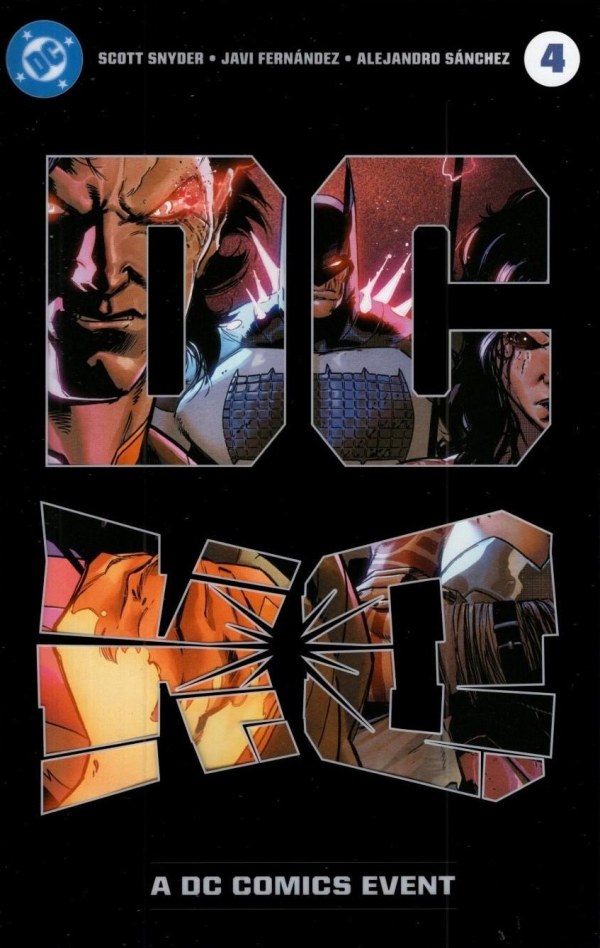
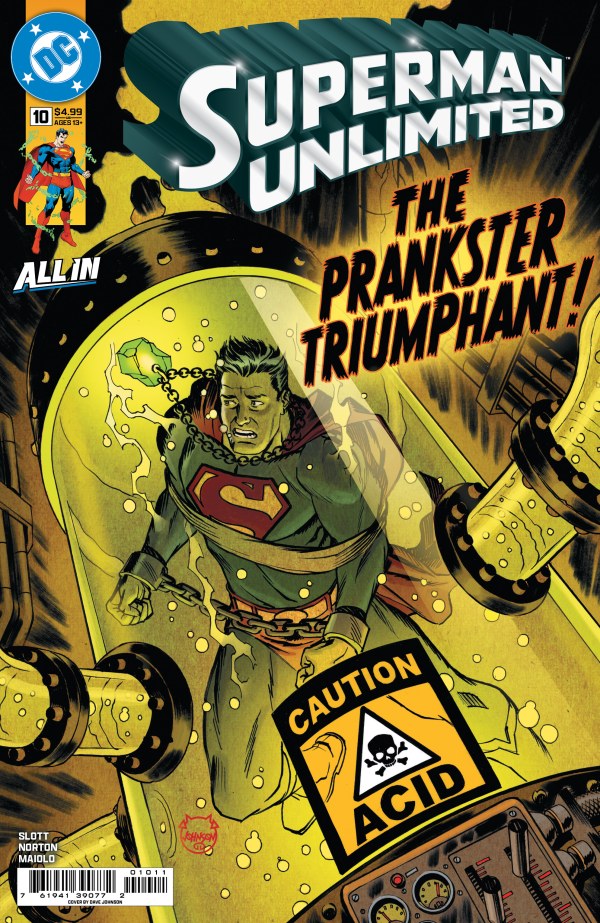
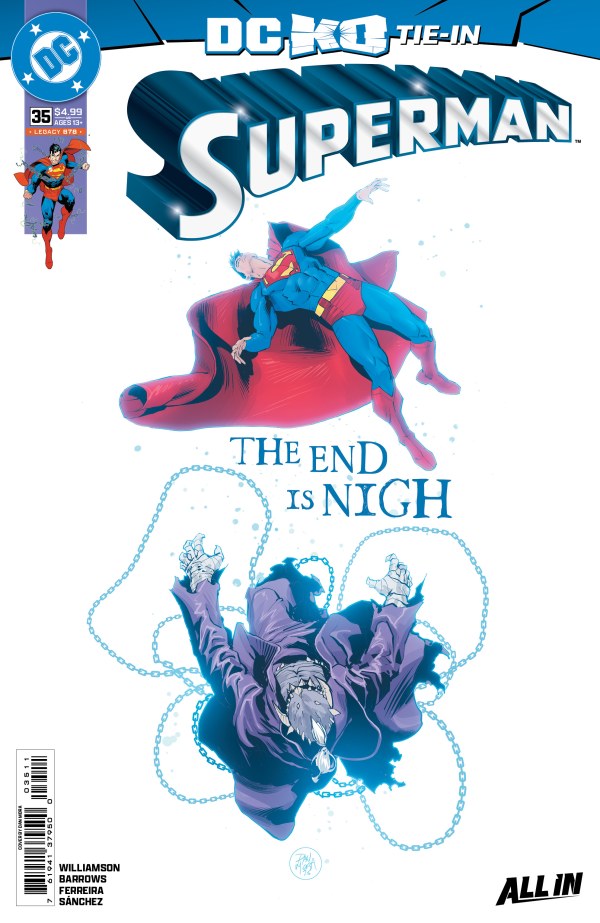
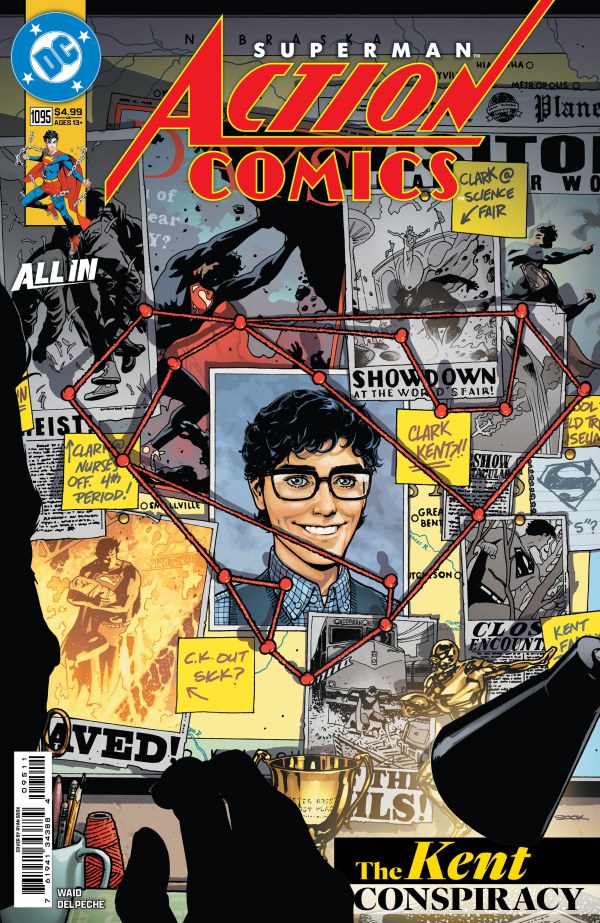
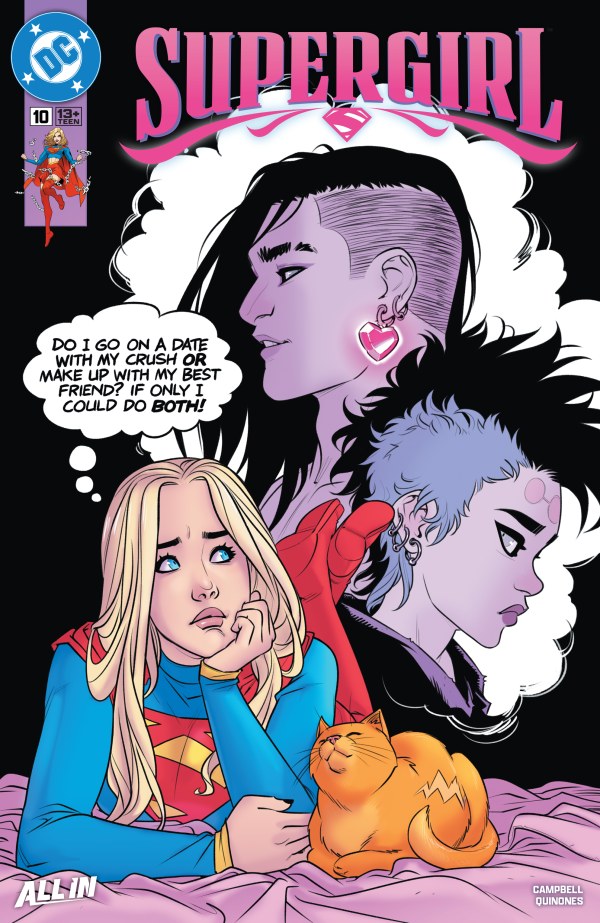
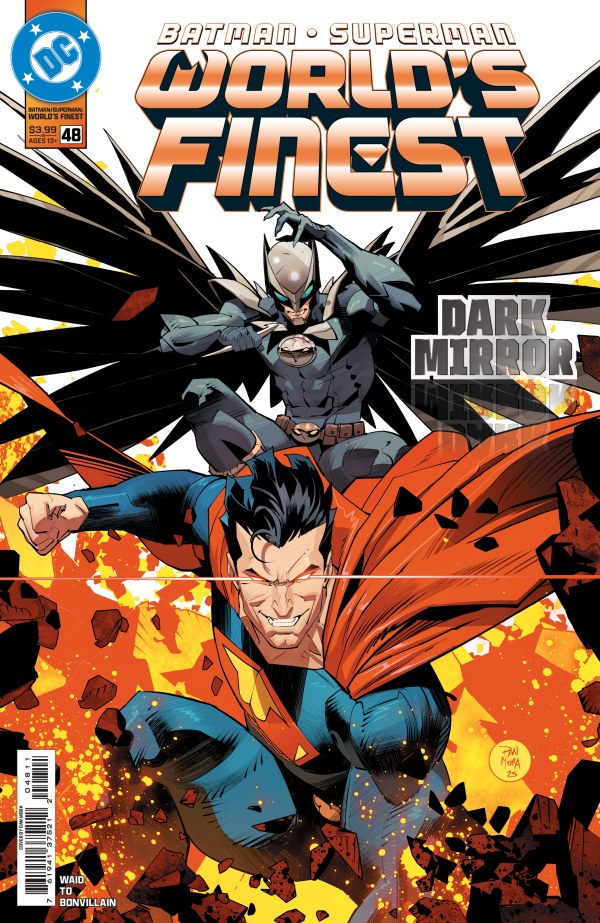
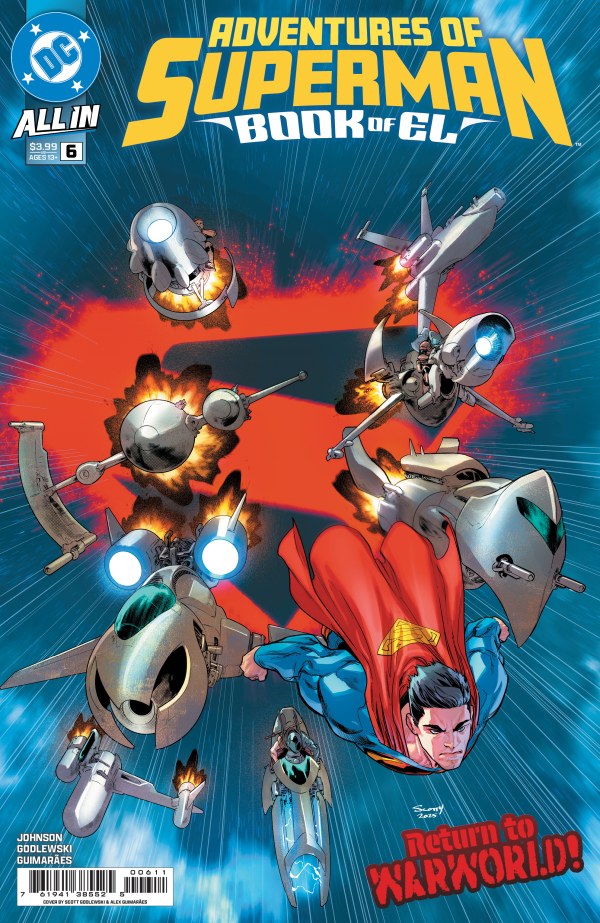
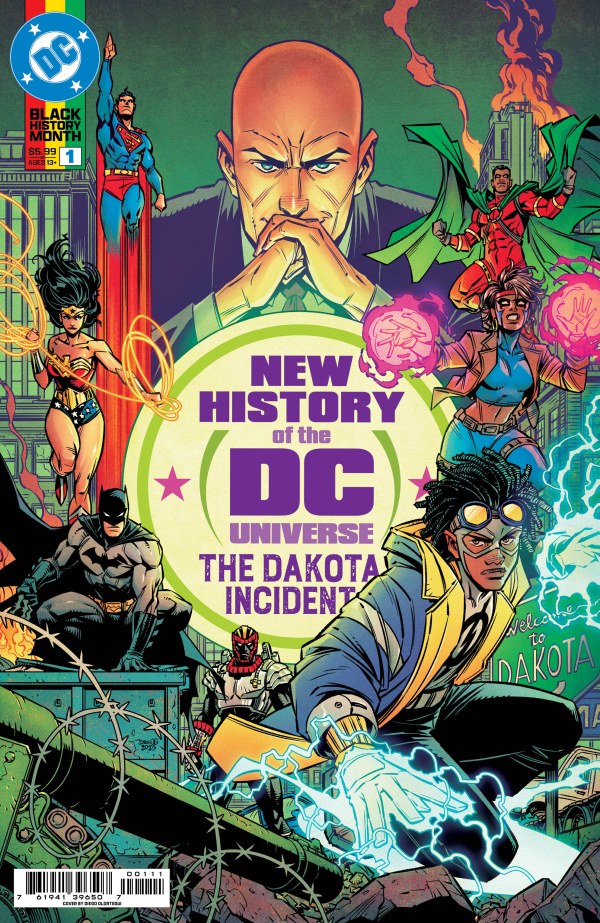
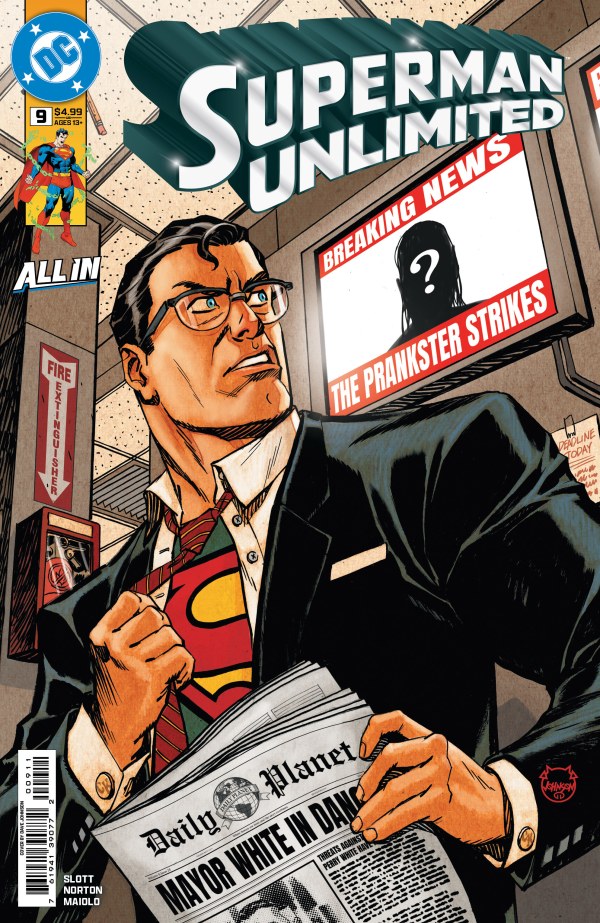
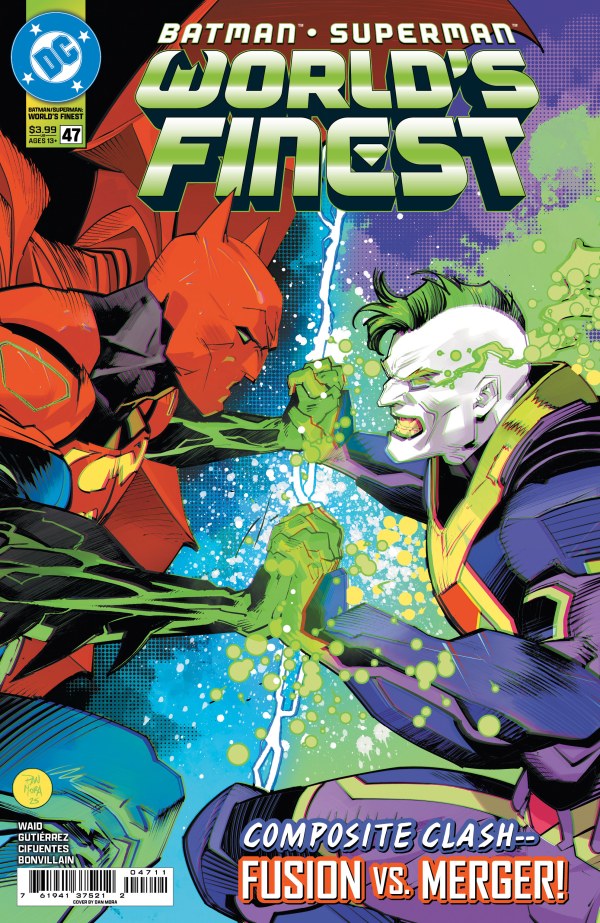
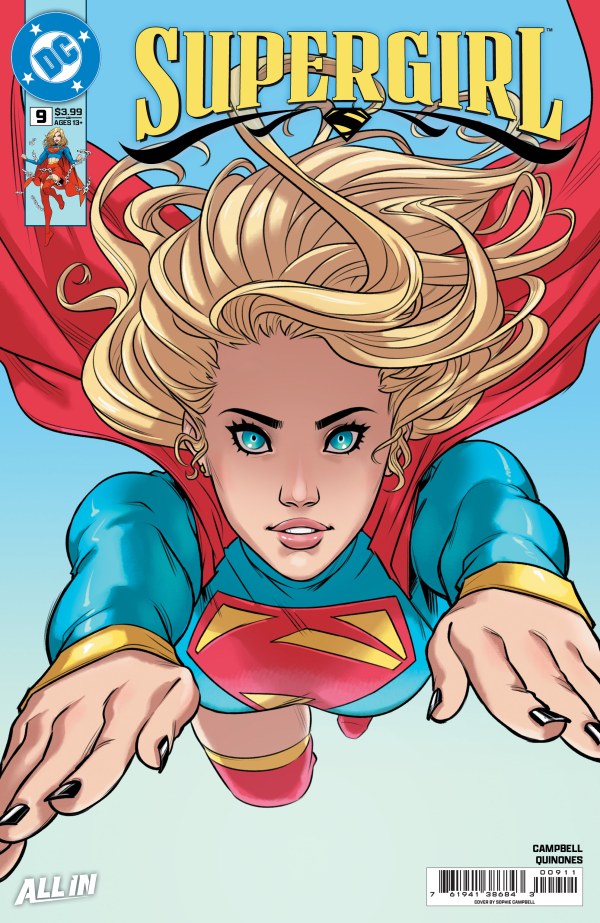
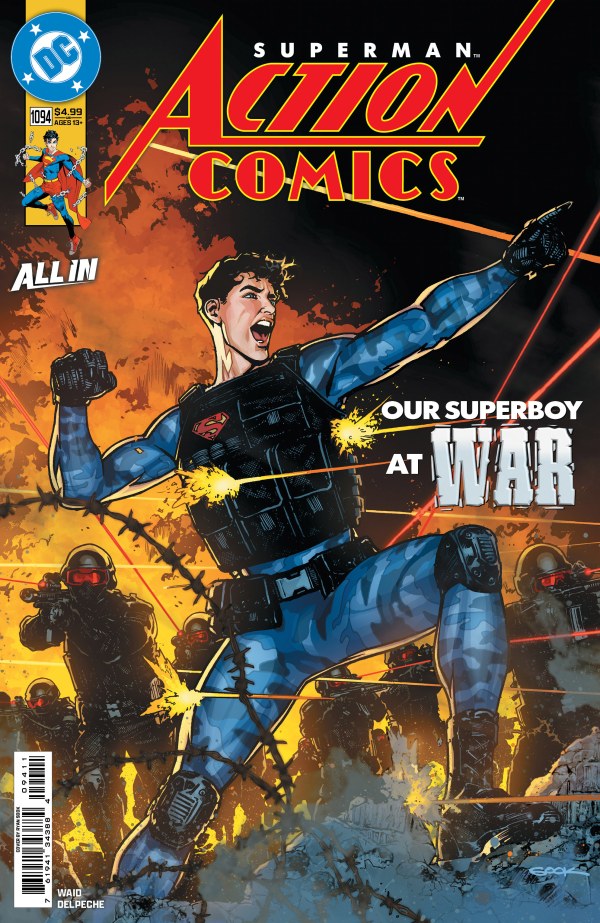
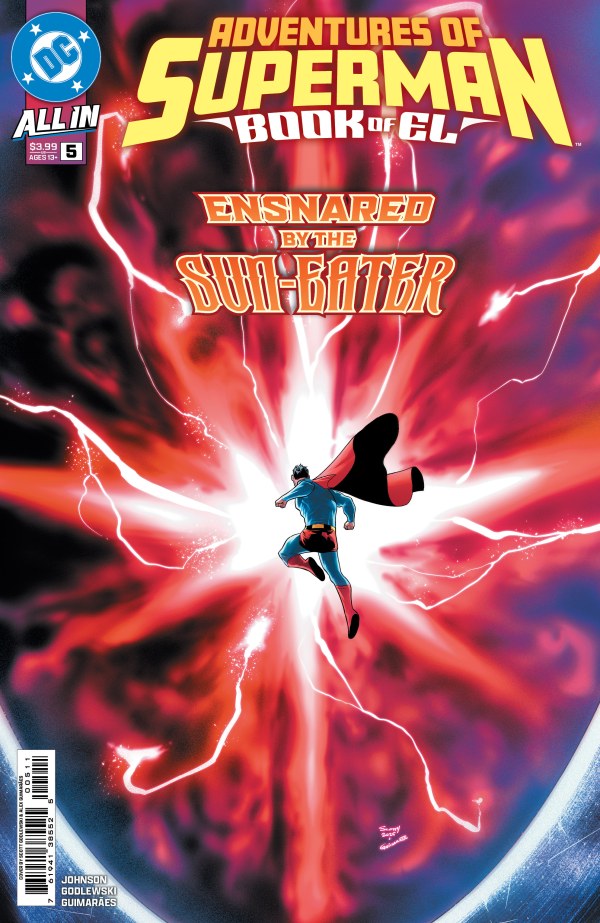
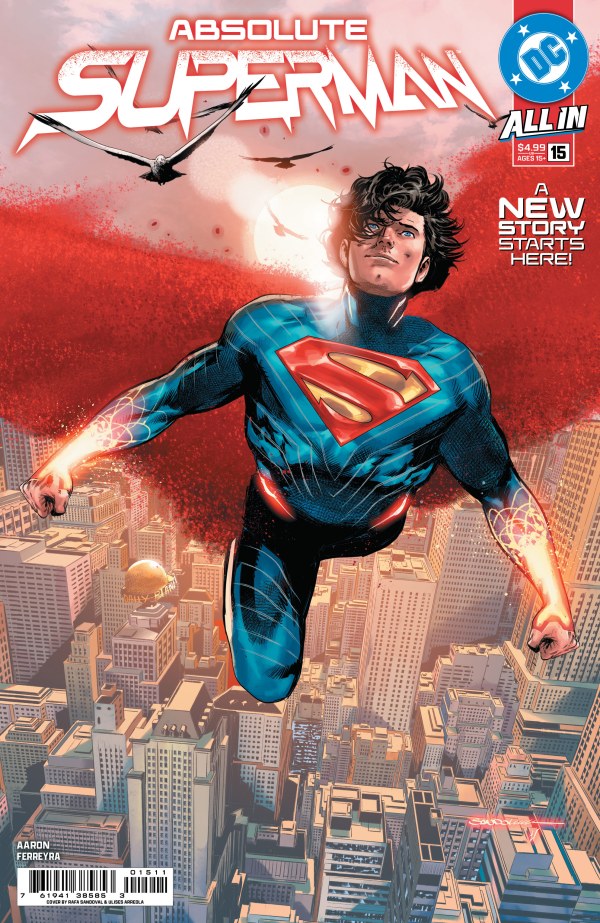
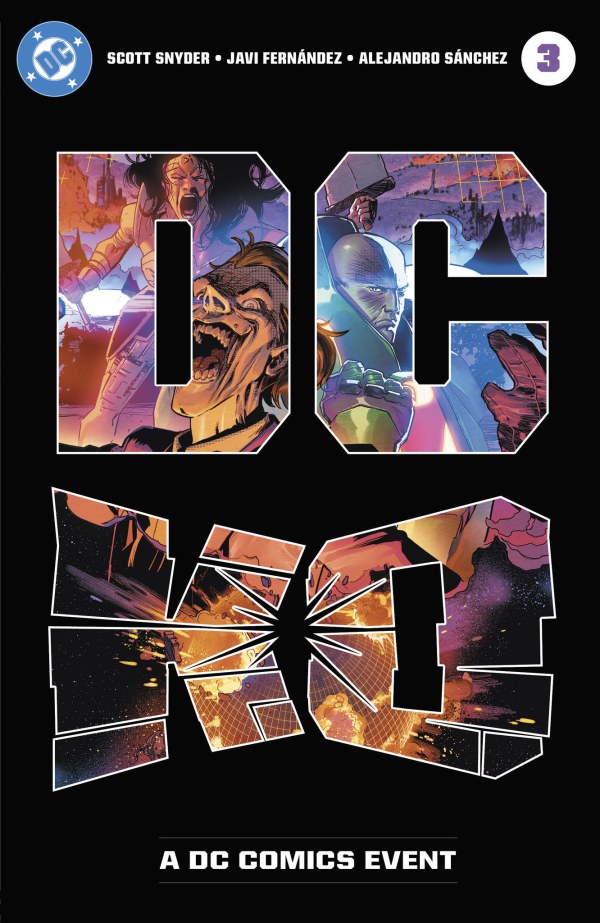

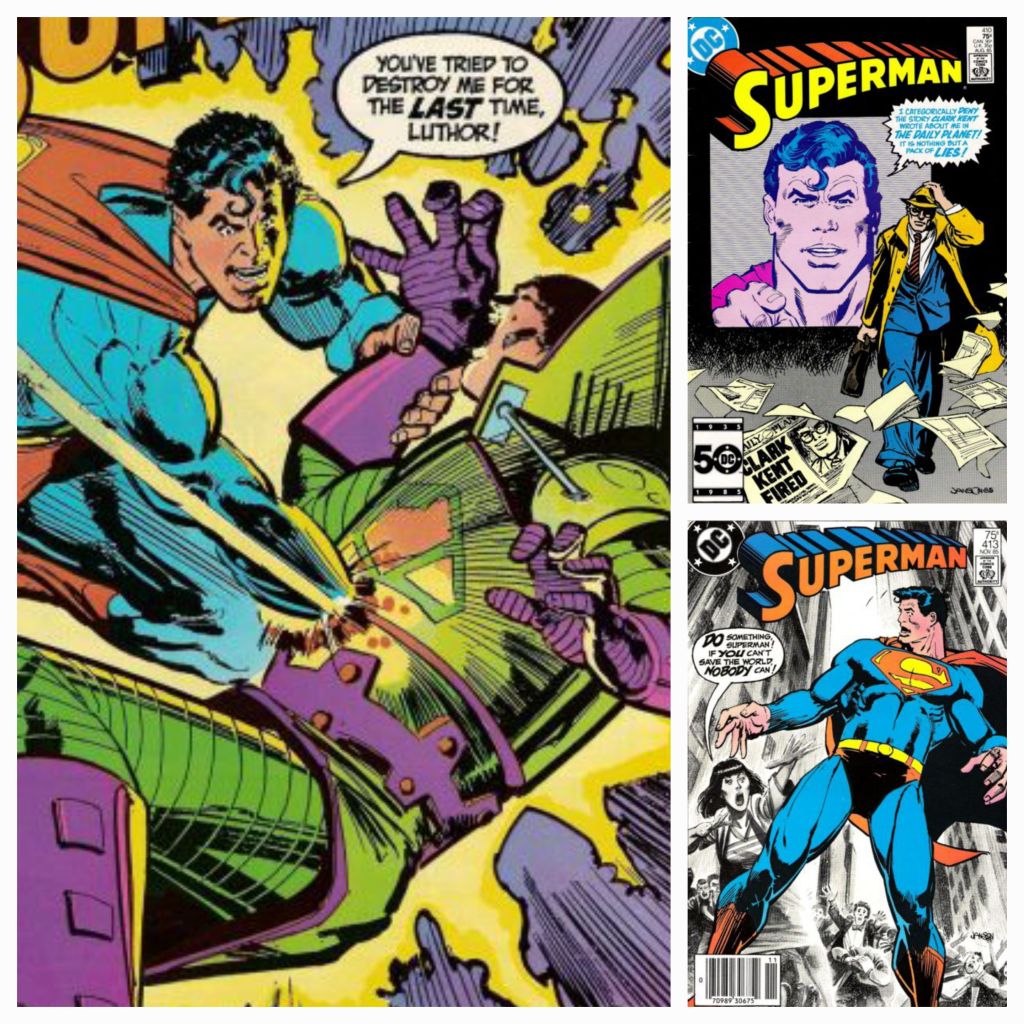

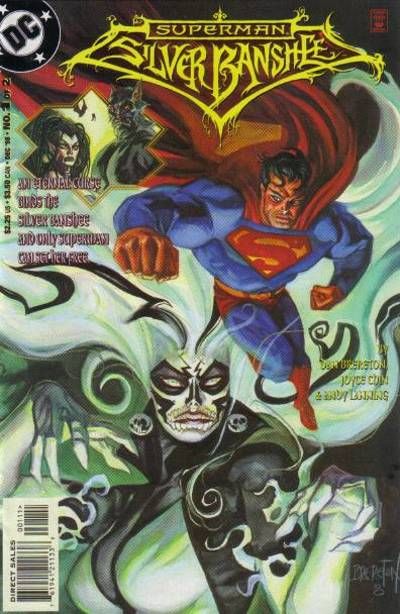

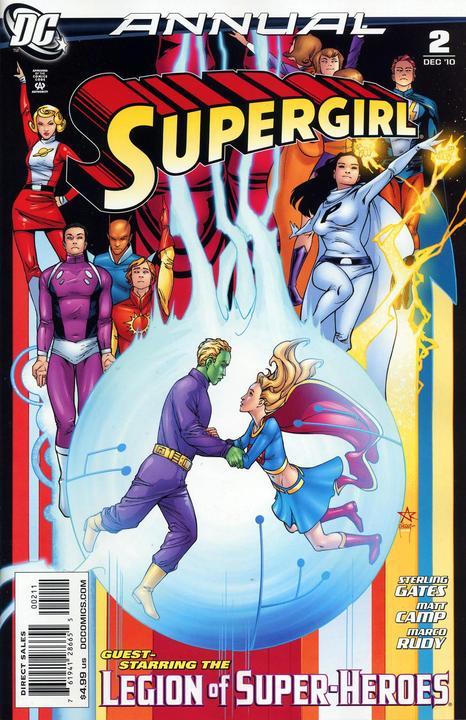

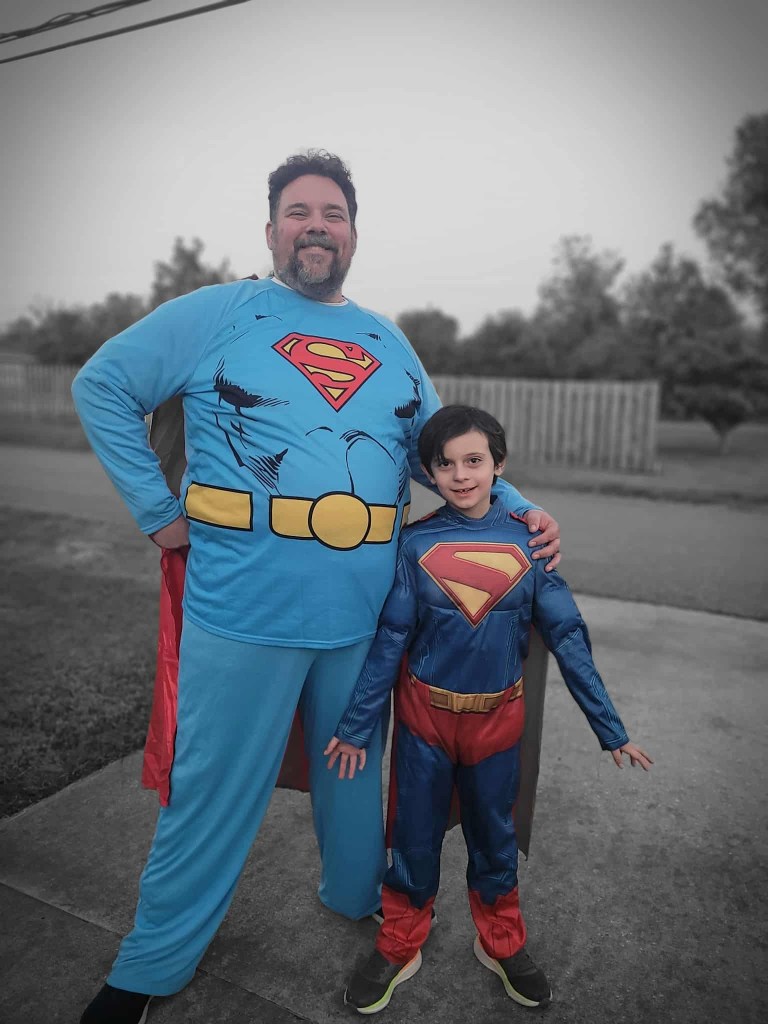


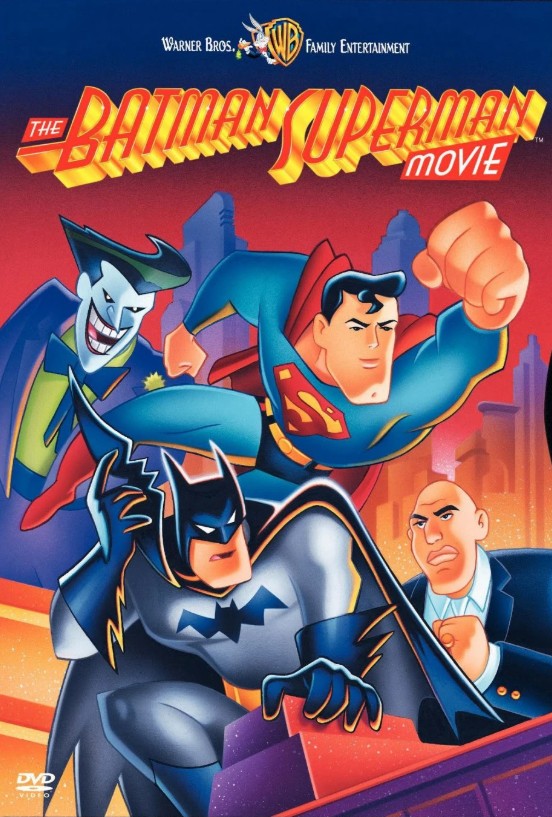

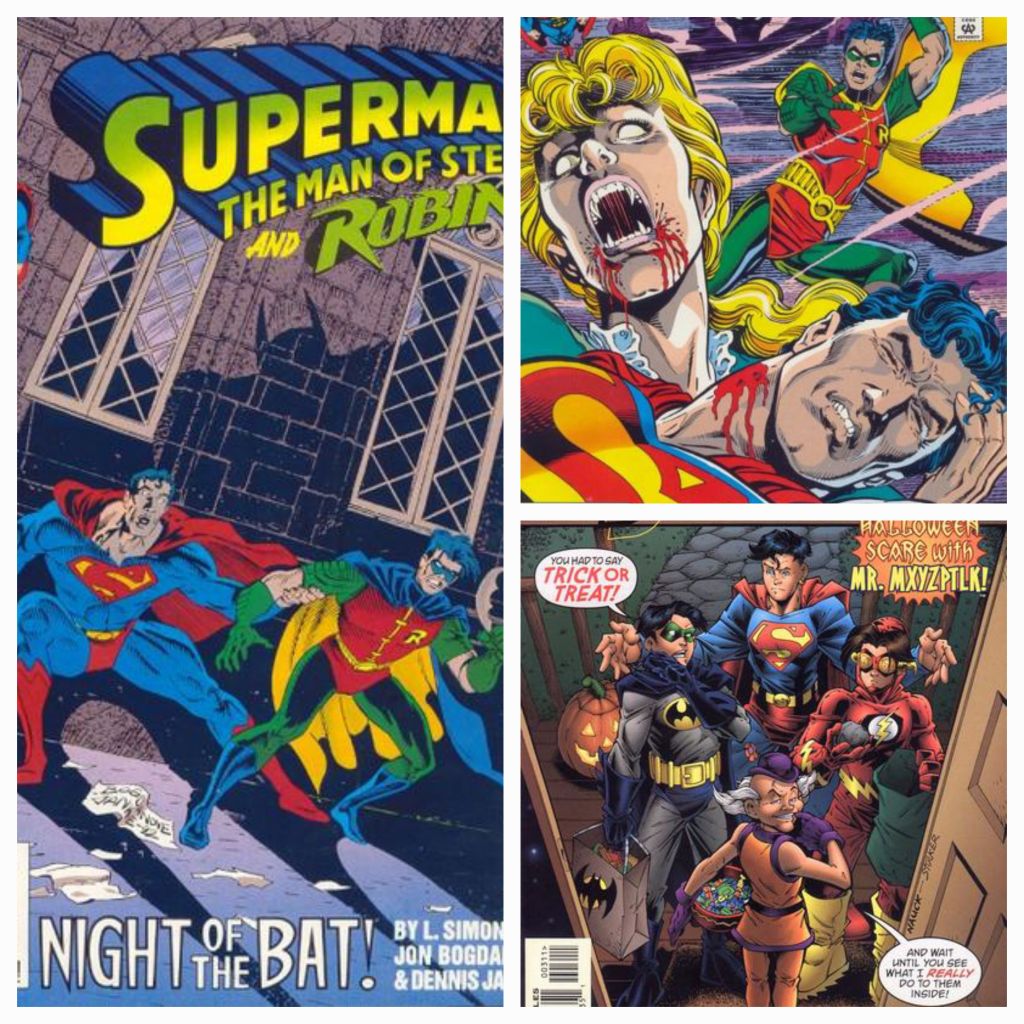
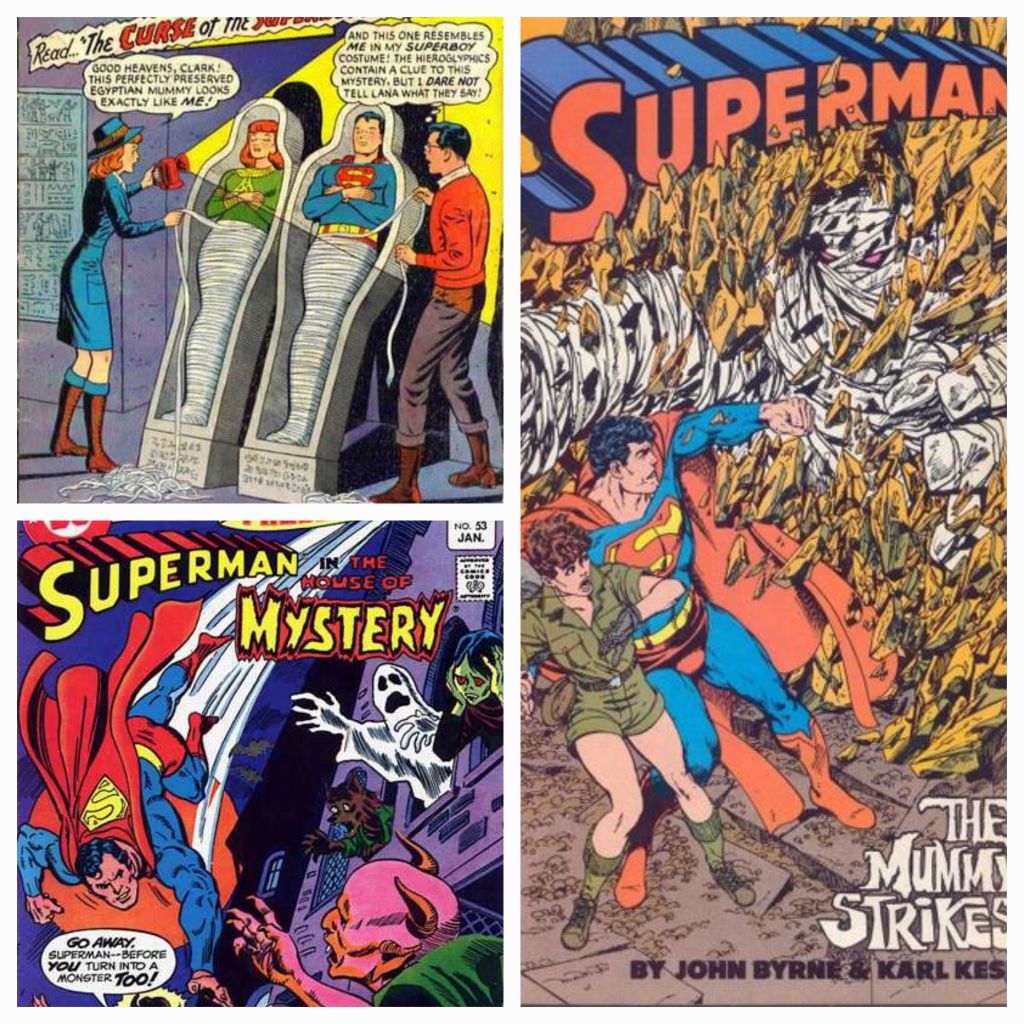




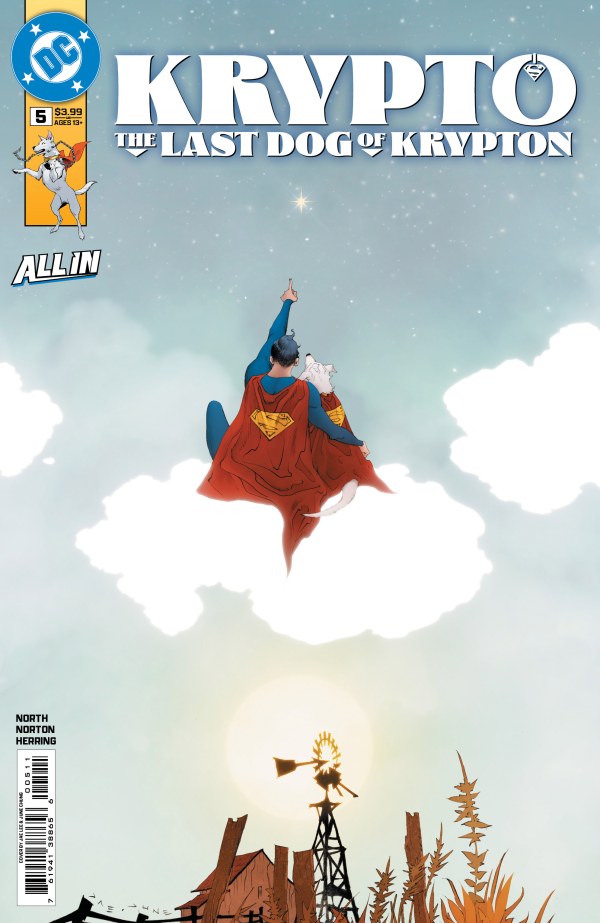

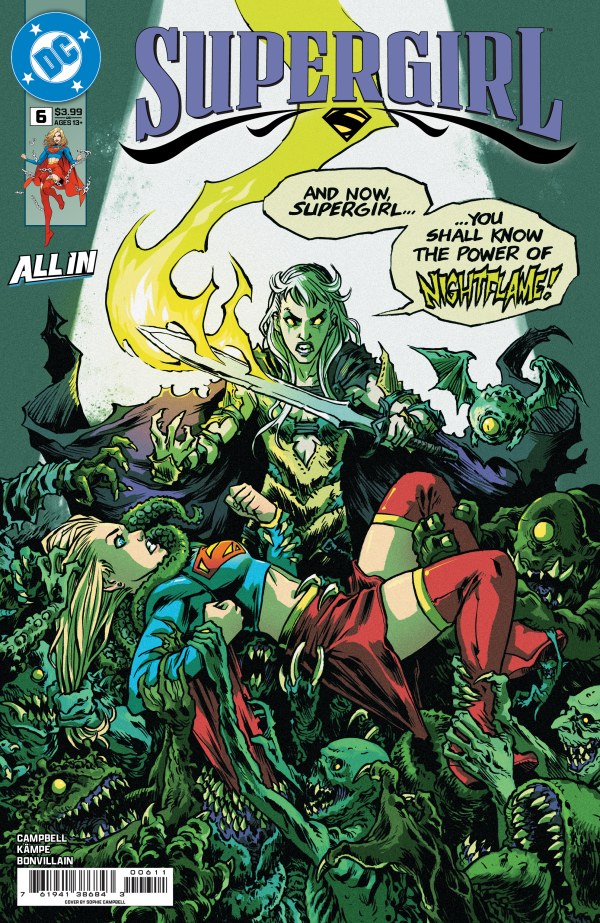

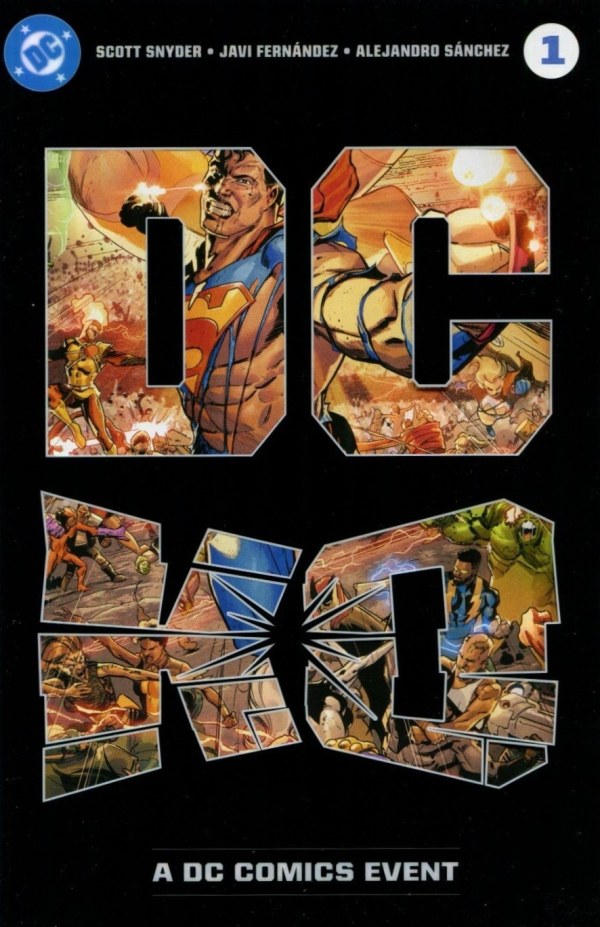

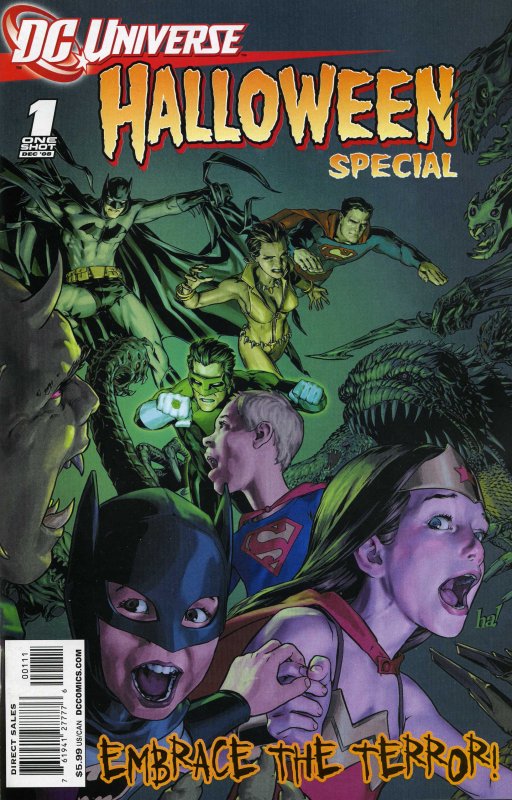


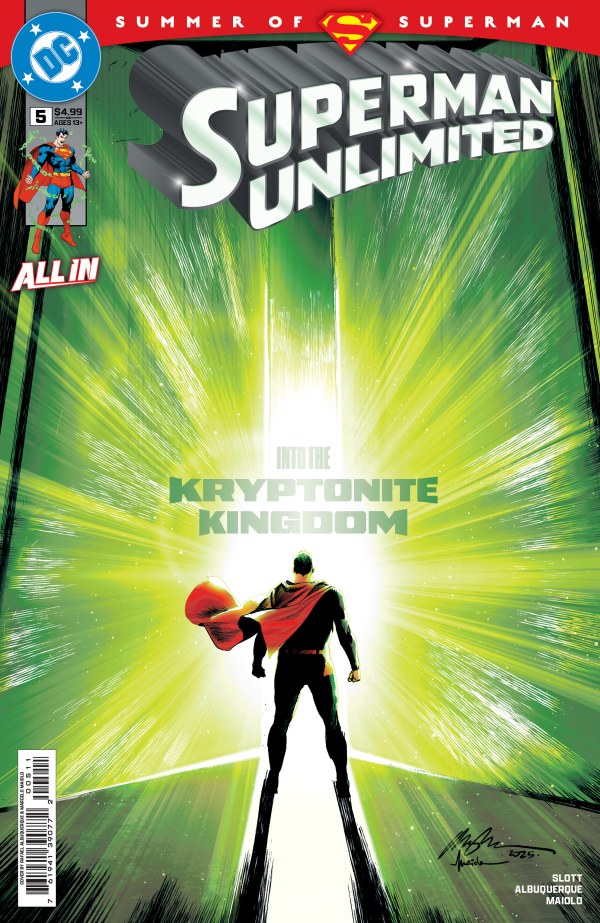

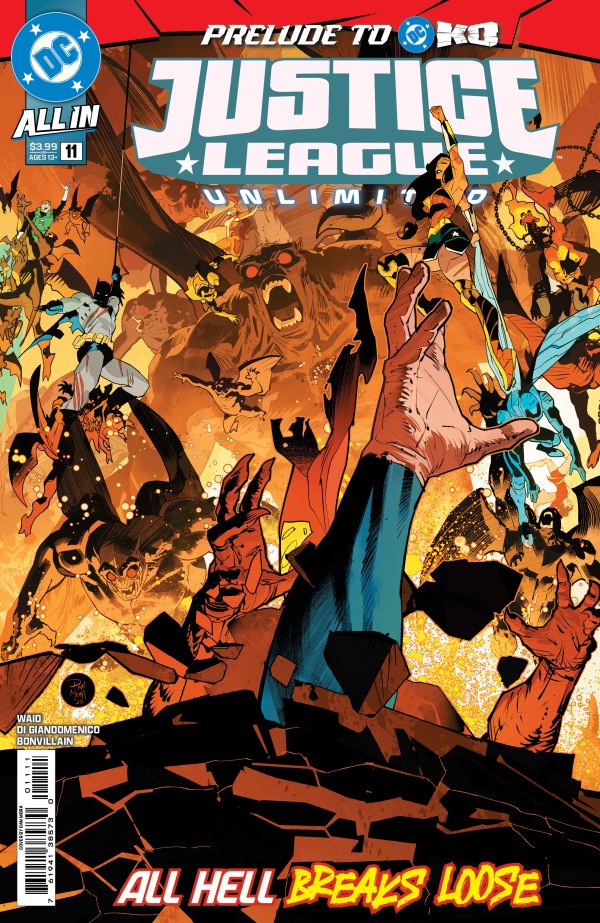

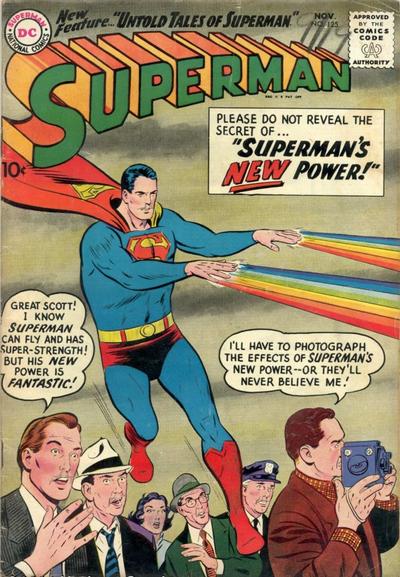
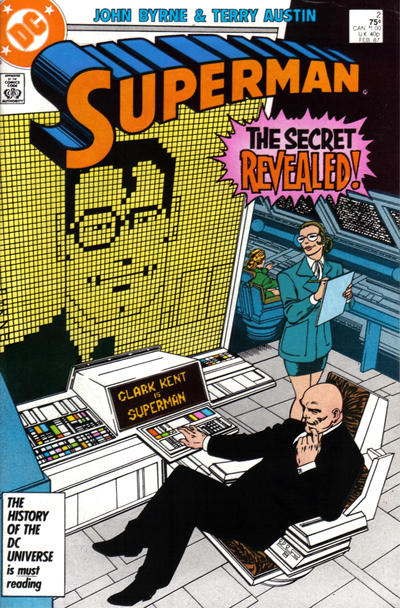




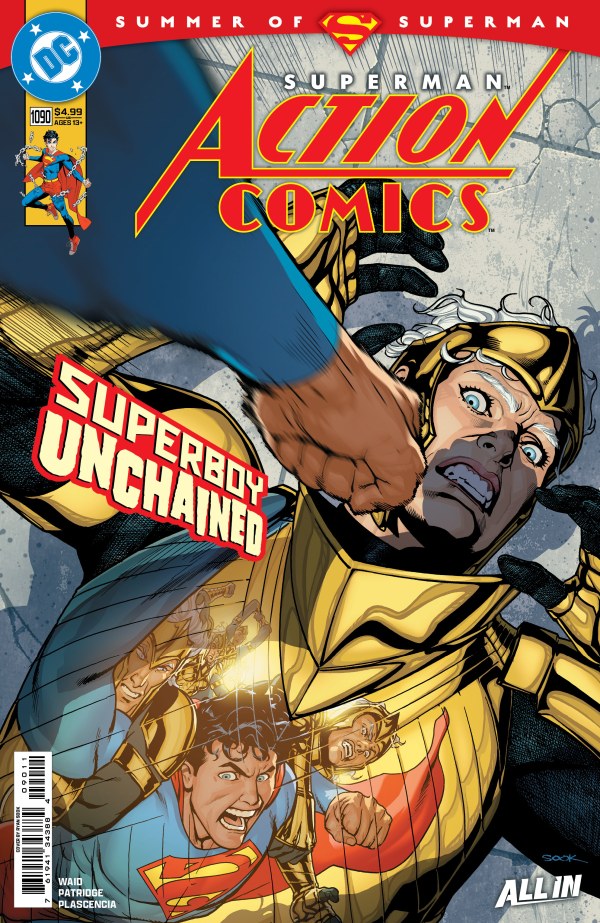
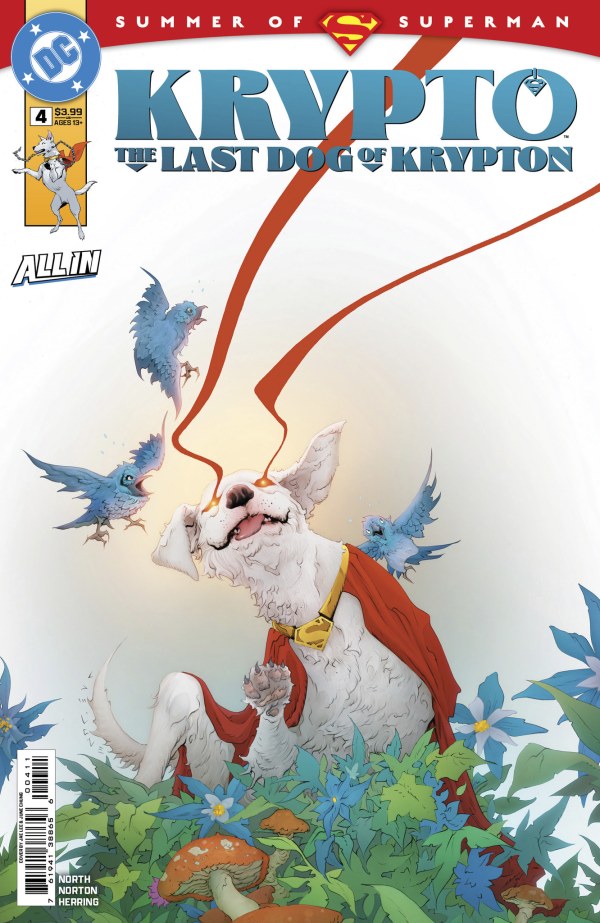

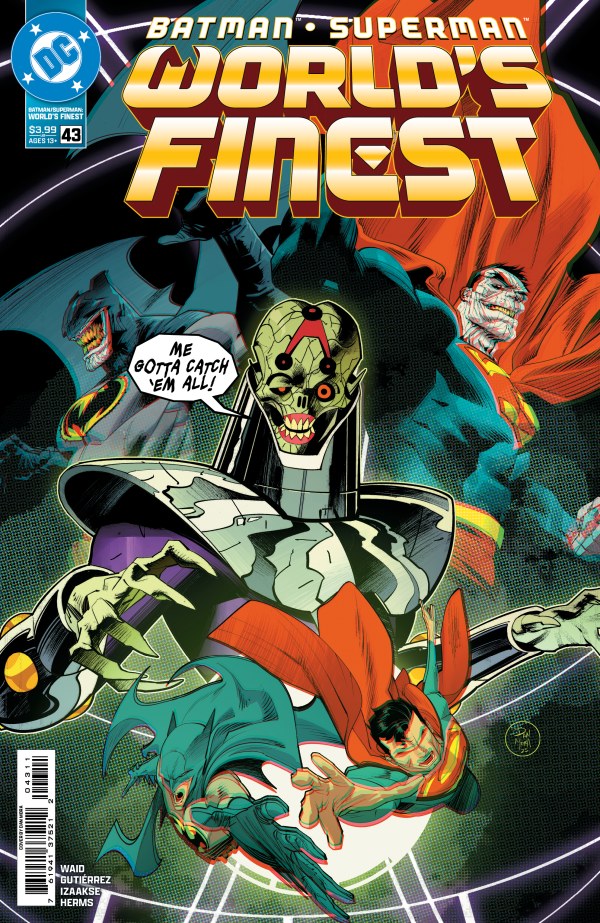



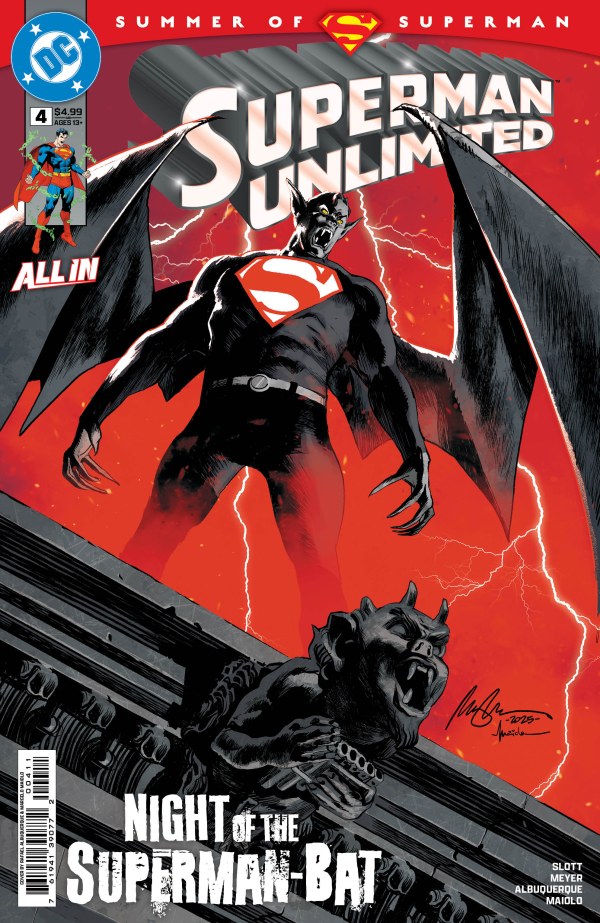
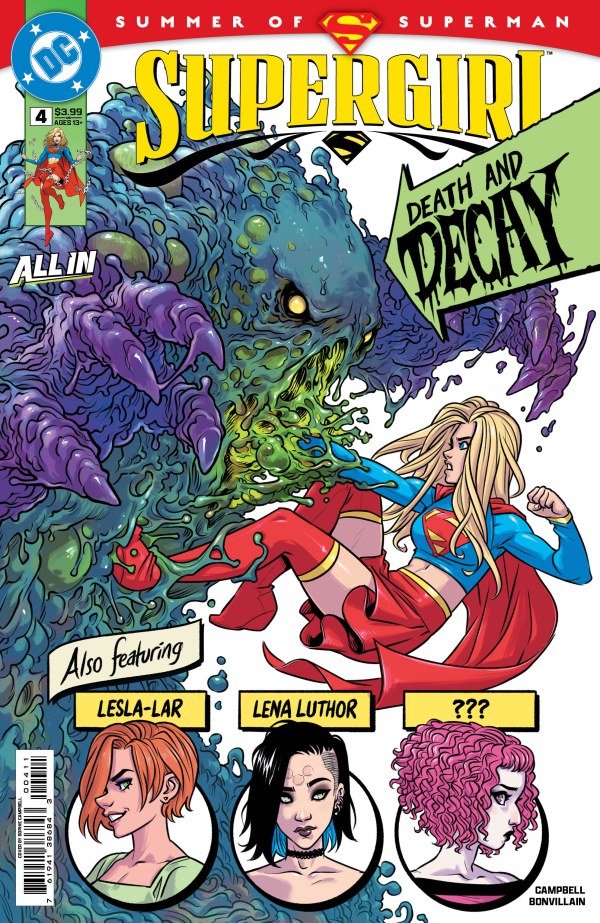


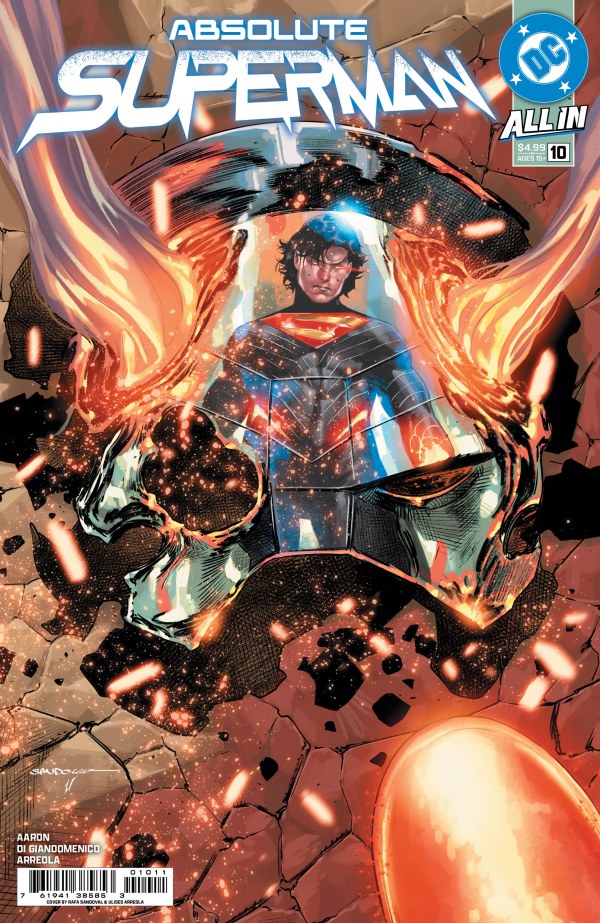


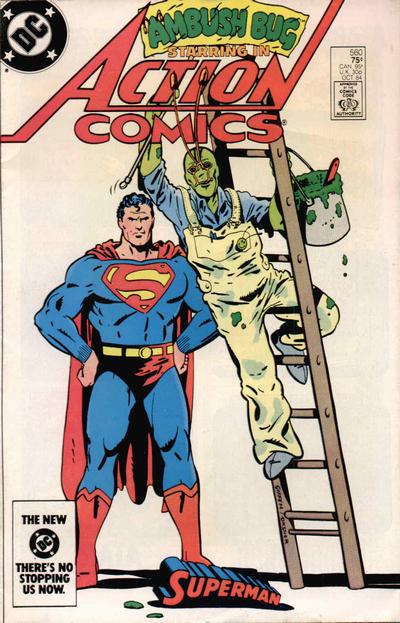
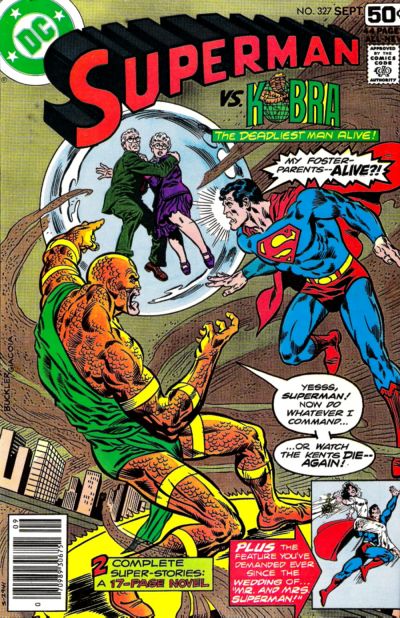

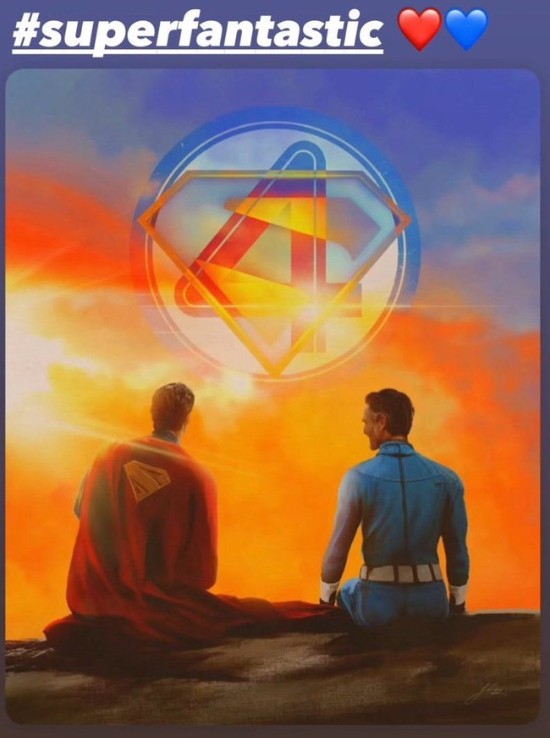


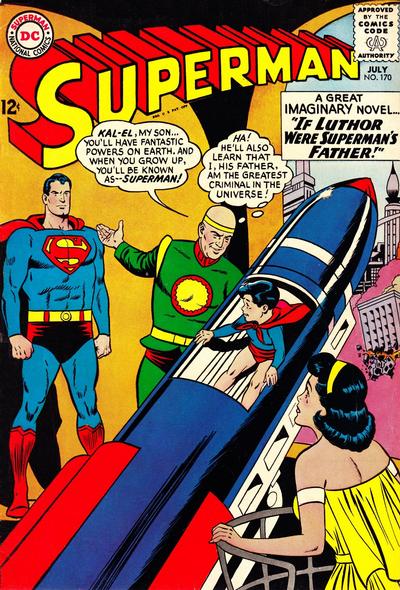


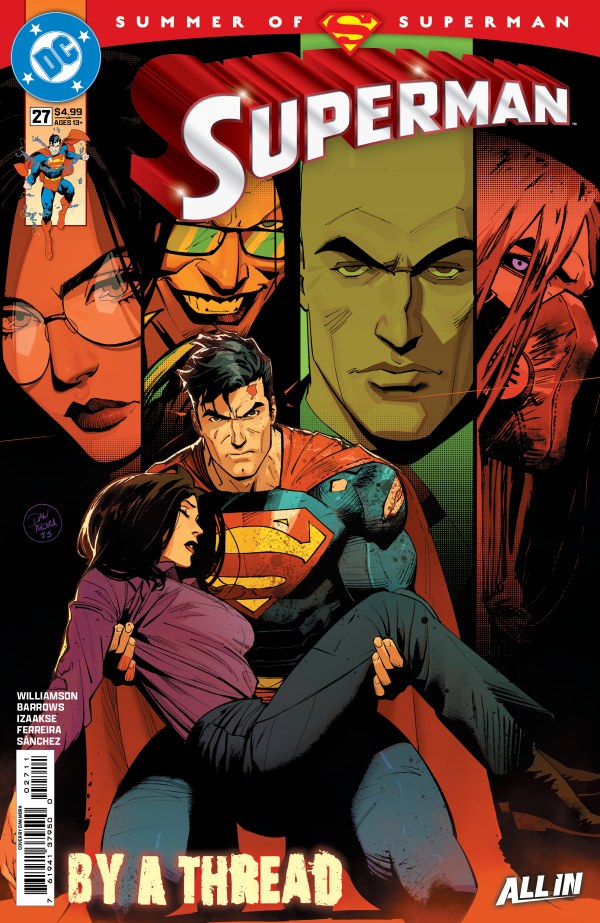






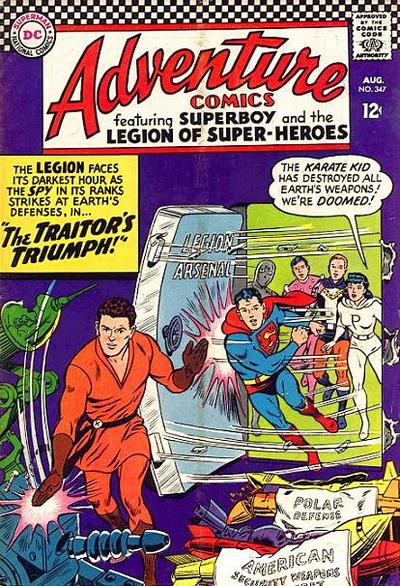
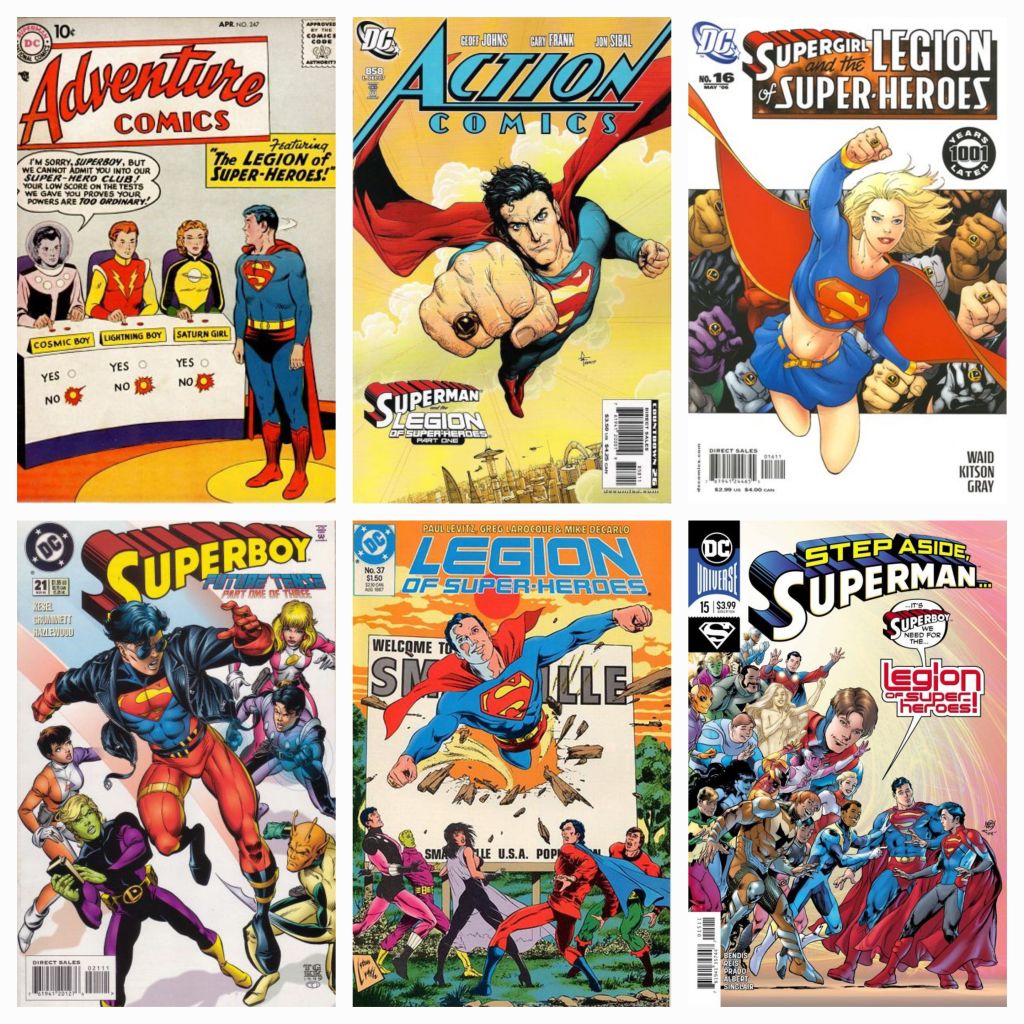
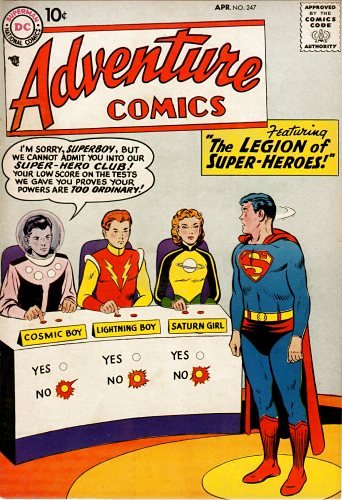
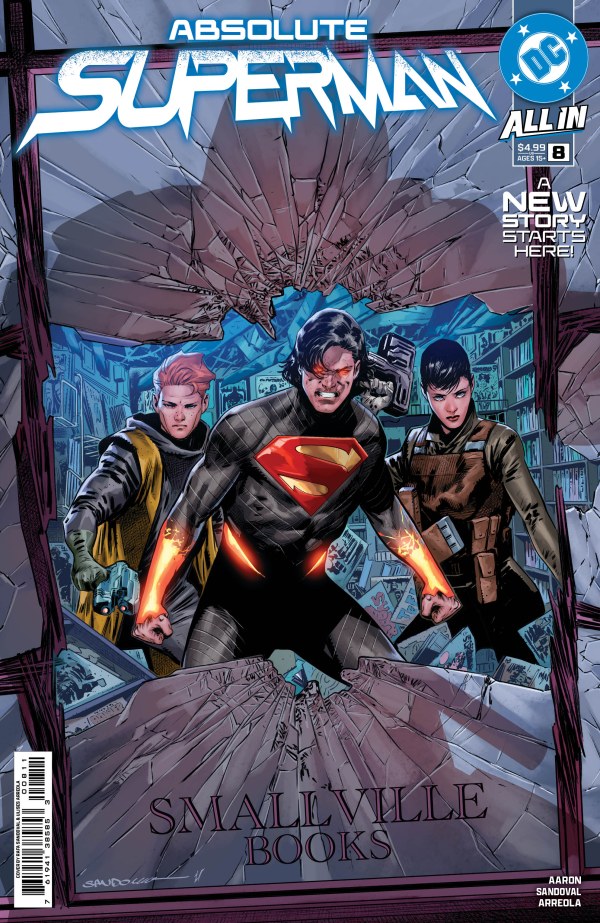


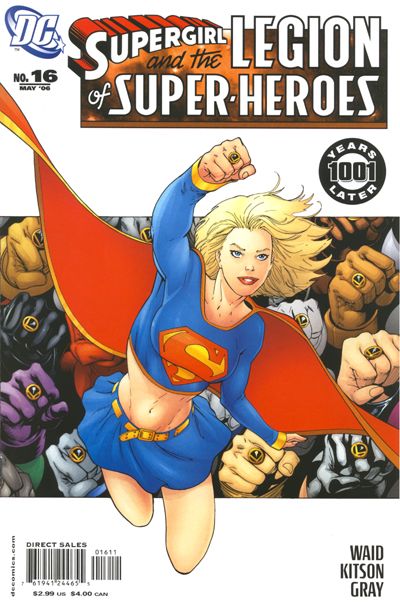


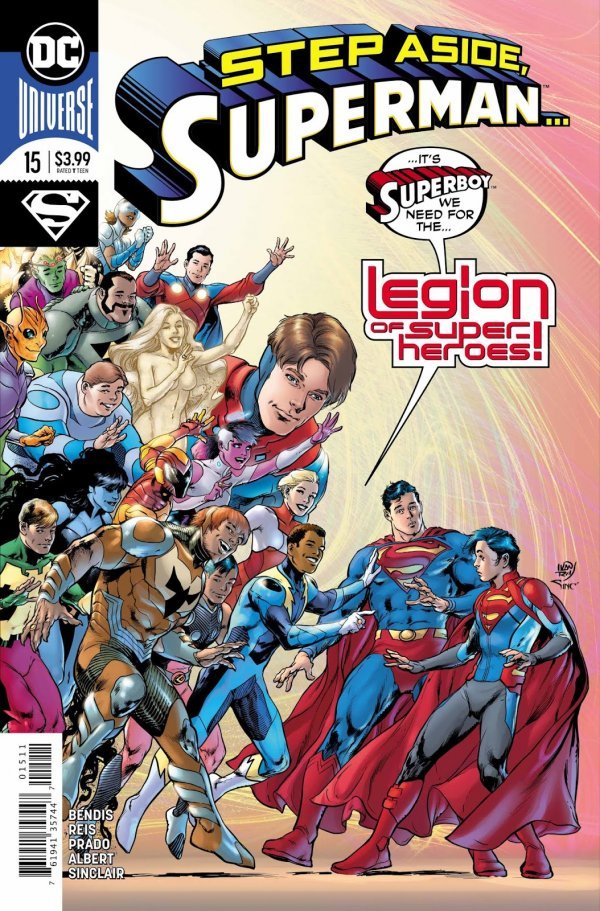


 Blake M. Petit