Year of Superman Week 27: Countdown

We’re getting down to it, friends. As I write this, on July 2nd, the new Superman movie is a mere nine days away, and in case you haven’t noticed over the last six months, I’m kind of excited about it. So how, in this Year of Superman blog, do I commemorate this upcoming momentous occasion? Here’s what I’ve done: I’ve made myself a list of the stories that James Gunn has confirmed were used as inspiration for the new film. I’ve added a few other stories that I personally think are especially significant to demonstrating what kind of man Clark Kent is. And I’ve got a couple of surprises. But from now until July 11th, there’s gonna be no filler. For the next nine days I’ll be reading and watching some of the most important building blocks in making the Man of Steel. 

Feel free to read along. 

And as always, you can check out earlier blogs in the Year of Superman Archive!

Wed., July 2

Graphic Novel: Superman For All Seasons (Collects issues #1-4)
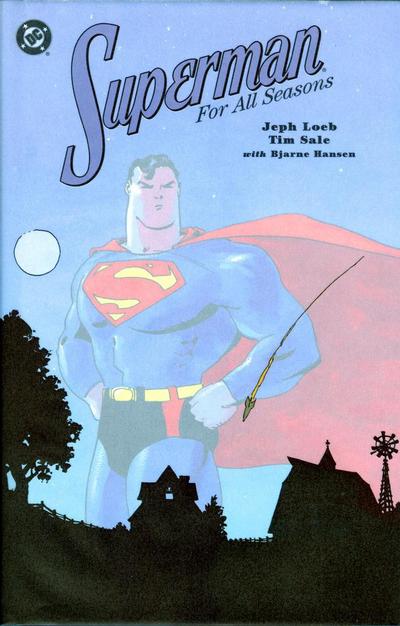
Notes: In 1998, hot off the heels of their character-defining maxi-series Batman: The Long Halloween, writer Jeph Loeb and artist Tim Sale were given four prestige format issues to tell their quintessential Superman story. For All Seasons isn’t exactly an origin story, it’s not exactly the story of Superman coming to Metropolis, it’s not exactly anything but what it is: a glimpse of the Man of Steel. Rather than crafting an intricate mystery as they did with The Long Halloween or a high-octane thrill ride like Loeb would later do on the Superman/Batman ongoing, For All Seasons is like looking through a viewfinder at scenes of Superman, each of them capturing in a perfect crystalline moment just who Earth’s greatest hero actually is.

The first issue, “Spring,” focuses on young Clark Kent in Smallville. He’s different from his friends and he knows it, and we see a sort of struggle to maintain the balance between the idyllic small-town life he lives (Loeb even cribs a moment from the movie It’s a Wonderful Life, just in case we didn’t get the message that Smallville is the perfect little town) and the amazing, world-changing things he can do. He overhears his parents discussing his powers, he confides them to Lana, and in the end, the small-town boy decides to go to Metropolis. One of the last pages in this first issue, in fact, has become an iconic Superman moment, just as much as Krypton exploding or Superman catching Lois Lane falling from a building. It’s one of the sweetest, most Superman things I’ve ever seen on a comic book page:

Issue two, “Summer,” is narrated by Lois Lane early in Superman’s career, and she asks the question that I think makes the character so compelling: “He can do anything he wants to, and he decides to do what? Be a hero? Why?” Whenever someone tells me that they think Superman is boring or unrealistic, my response boils down to this same question. What kind of person would actually choose to use this kind of power for good? It’s crazy. It’s absurd. It doesn’t make sense.

That is, until you meet Clark Kent. And when you see who he is, that’s when you get it. 

Superman saves Lois from a terrorist (in a glorious moment where Lois, rather than begging Superman to save her, instead asks him to make the obnoxious guy with a gun to her head SHUT UP because he’s getting on her nerves), but in so doing leaves Lex Luthor feeling somewhat impotent, something that Lex just can’t stomach. 

My favorite part of issue two, though, is a return to Smallville. Clark catches up with Pete Ross, is dismayed to learn that Lana Lang has left town, and spends time with his parents merely because he’s lonely. This is another reason I love Lois Lane’s character – the responsibility of being Superman seems so gargantuan…he needs – even deserves – to have someone who can help him shoulder it. We’re not there yet in this issue, but Lois’s infatuation with Superman is already clear.

Issue three is “Fall.” It begins with Lex Luthor being arrested for some unspecified crime (although if you want to try to put it in context, this issue slots neatly after issue #4 of John Byrne’s Man of Steel series). Luthor quickly uses his influence to free himself, but his ire has grown even more. The people of Metropolis – beginning with the staff of the Daily Planet – suddenly fall ill and collapse, the victims of some mysterious viral agent. Although Superman is certain Luthor is responsible, he turns to him and asks him to use his resources to help. Fortunately, Lex already has a solution – he’s taken Jenny Vaughn, a woman Superman saved in issue two, and used her biochemical expertise to create an antidote. All Superman has to do is take her into the skies to seed the clouds above the city. She does so, and the people of Metropolis begin to wake up. But Jenny suddenly collapses and dies in Superman’s arms – overexposure to the very disease she had cured. Clark, broken, returns to his parents in Smallville, uncertain if he’ll ever come back.

“Winter” ends the series beautifully. Still in Smallville, in hiding, Clark reconnects with Lana Lang. Lana and his parents can see the pain he’s carrying with him, but rather than feed it, they remind him of who he is, what kind of a man they’ve known all his life. And when a flood threatens Smallville, Clark finds himself ready to put his uniform back on again. 

There are so many amazing things about this series. It shows very clearly that the soul of Superman is not the city of Metropolis, but Smallville, Kansas. It’s where he begins, it’s where he returns in every issue. It is his home, it is the place that grounds him. When Superman needs help, he returns to the farm where he grew up and the people who know him better than anyone. Luthor, meanwhile, is never technically “defeated.” His scheme is built on his ego, his compulsion to hurt Superman, and he does it far more effectively than he ever could with Kryptonite or a red sun projector – he strikes not at his Kryptonian power but at his all-too-human heart. But in the end, Superman triumphs simply by returning to Metropolis, by deciding to move on. The best way for Superman to defeat Lex Luthor is by continuing to be Superman.

There are a lot of great Superman stories. I’ve read many of them this year, and I’ve got several more of the best lined up for the next nine days. But if you’re looking for the simplest, truest, purest expression of who Superman is at his core, I think Superman For All Seasons may just be the greatest of them all. 

Comics: Justice League Vs. Godzilla Vs. Kong 2 #2

Thur., July 3

Graphic Novel: All-Star Superman (Collects issues #1-12)
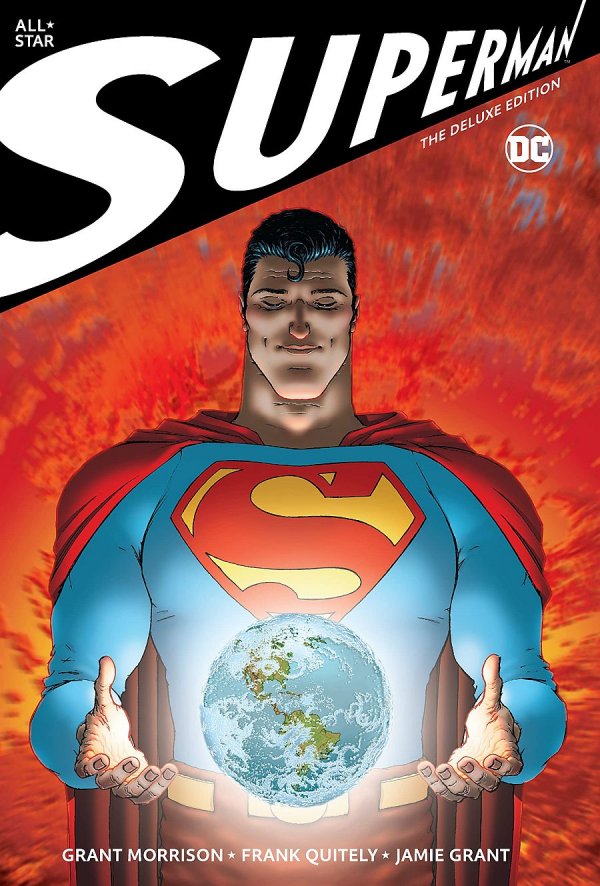
Notes: Next up on my tour of Superman’s greatest hits is this magnificent series from 2005 to 2008. DC announced their “All-Star” line as a chance for some of comics’ greatest creators to tell stories unhindered by continuity, their ideal versions of the character. To this day I don’t know what happened, really, but only two comics ever materialized from this effort, this one and All-Star Batman and Robin, the Boy Wonder by Frank Miller and Jim Lee, and that series was never even finished.

But Morrison and Quitely finished their story, and in the years since it has become acclaimed as one of the greatest Superman stories of all time. In a nutshell: while saving a scientific expedition in distress on the surface of the sun, Superman’s cells become overcharged with energy. Although he suddenly finds himself more powerful than ever, it is only a temporary boost – his cells are dying, and all the science in the world can’t save him. Knowing that his days are numbered, Superman sets out on an Odyssey to save the world as much as he possibly can before time runs out. A time-traveler tells him of 12 impossible tasks he will accomplish before his death, and he sets out to do them – while all the while being watched by a Lex Luthor who is sitting on Death Row.

What Morrison and Quitely do with this book is nothing short of miraculous. Morrison mines Superman’s entire history to pull out characters and pieces to play with: a rivalry with Samson and Hercules for the hand of Lois Lane, the mysterious “Unknown Superman” of the future, and even characters from one of Morrison’s own epics, the DC One Million crossover. Over the course of twelve issues, Superman spends time with several people of great significance to him, with spotlight stories on Lois Lane, Jimmy Olsen, Jonathan Kent, Bizarro, and Lex Luthor himself.

But the amazing thing is that none of these characters are exactly what this series is about. There are a great many good stories about what Superman means to other people. For All Seasons, for instance, had chapters narrated by Jonathan Kent, Lois Lane, Lex Luthor, and Lana Lang. We’ve seen how everyone feels about him, from Perry White to Batman to some random kid he pulled out of a school bus that was going over a bridge. But All-Star Superman is really about what SUPERMAN thinks it means to be Superman. And what that means is a relentless, unstoppable thirst to be better. Even when faced with his own certain death, Superman’s every breath is dedicated to making the world a better place, to bringing happiness to his friends, to saving as many people as he possibly can. There’s a famous single-page vignette – you likely have seen it online even if you haven’t read the comic book – of Superman talking someone out of jumping from a ledge. It’s a single page, removing it from the graphic novel would not impact the story in any way, but it is the perfect, crystalline embodiment of who Superman is.

At the end of the story (and here’s a spoiler, in case you haven’t read it), Luthor finds a way to temporarily give himself Superman’s powers. And Superman finds a way to weaponize that, manipulating Luthor’s enhanced senses to force him to perceive the fabric of the universe the way Superman does. Suddenly forced to change his perspective, Luthor has an absolute breakdown as he sees the connectedness of all things in a way that he’s never considered, making the most egotistical man on the planet realize the depths and futility of his own selfishness. 

Despite such a dark premise, this story (like Superman himself) never falls to despair. It is quietly uplifting, awe-inspiring, and full of hope. It shows us how Superman sees himself, and how he wishes for the rest of us to see him as well. And if the movie is half as capable of depicting that feeling as the graphic novel, it will be magnificent. 

Fri., July 4

Comic: Action Comics #775

Notes: It’s the Fourth of July and, of course, for those of us in the United States it’s our Independence Day. I’ll be spending most of the day at a family barbecue – it’s always been my favorite day of the summer, after all. But that doesn’t mean I can skip my Year of Superman obligations, and I can’t think of a better story to read today than Joe Kelly and Doug Mahnke’s classic “What’s So Funny About Truth, Justice, and the American Way?”

In this legendary tale, Superman is stunned by a new team of heroes who prove to be anything but. Calling themselves “The Elite,” this new squad bursts onto the scene and dispatches those they see as villains quickly, violently, and terminally. Superman is horrified when public opinion starts to tilt in favor of the Elite and their leader, the telekinetic menace called Manchester Black. Children want to be the Elite, saying that Superman is played out, others wish that the Elite would take steps like killing the Joker…and all the while, Clark finds the changing tide shocking and disturbing. 

After Black calls him out, Superman agrees to face the Elite in battle. They take the fight to the surface of Jupiter’s moon, Io, where the Elite proceeds to pound Superman seemingly into oblivion. With nothing left but his cape, they think victory is in their grasp – until they hear Superman’s voice coldly “thanking” them for showing him the way. In seconds, Superman seems to kill all of Black’s associates one by one, and when an enraged and hysterical Black tries to force a final confrontation, Superman uses his heat vision to cut out the part of his brain that gives Black his powers without the man even feeling it. Weeping in despair, Black says that Superman has proven them right, that he’s no better than they are.

Except that he is. Because he’s Superman. The Elite are alive – beaten, incapacitated, but none permanently injured. Even Black’s powers will return after he heals from the concussion Superman gave him. But Superman had to show WHY he never takes the steps the Elite have taken – that it would be too easy, too ugly, too terrifying to give in to the temptation to kill, and once that step is taken, there is no going back.

Black has spent the issue telling Superman that he’s naive, that his perspective on the world is just a dream, a worthless ideal that holds the world back from progress. On the last page, Superman gives his perfect rebuttal to that stance:

“Dreams save us,” he tells Black. “Dreams transform us. And on my soul, I swear…until my dream of a world where dignity, honor, and justice becomes the reality we all share, I’ll never stop fighting. Ever.”

How good is this comic? How many other single-issue comic book stories have been adapted into a feature-length film? And even fewer have done it well. This is the one-book response to everybody who claims that Superman should be dark, should use his powers to shape the world as he sees fit, should take care of his adversaries permanently. This is not the world that Superman sees, and thank God that it’s not. In the few pages where Superman cuts loose and makes it clear that he COULD kill the Elite with minimal effort, he becomes absolutely terrifying. So at the end, when he reverts back to type and you realize it’s all been a ruse, the relief is tangible

Kelly reportedly wrote this story as a response to the popularity of Wildstorm Comics’ The Authority, in which thinly-veiled expies of the Justice League decide to use their power in just this way, taking on threats to the world in a violent and permanent manner. (There is an irony to the fact that the Authority is now part of the DC Universe and that one of its members, the Engineer, is going to be among the antagonists of the new movie I’ll be sitting down to watch with my family exactly one week from today.) Those stories are fine for the likes of the Authority because – although obviously created to imitate the Justice League – they are NOT the Justice League. Apollo is their version of Superman, but he’s NOT Superman. These are stories that work as a deconstruction of our heroes, but don’t work as stories of the heroes themselves. In less than 40 pages, Joe Kelly and Doug Mahnke show us that the ideals that Superman stands for not only aren’t out of date, they’re more important than ever before.

What’s so funny about truth, justice, and the American way?

Nothing at all. 

Sat., July 5

Movie: To Kill a Mockingbird (1962)

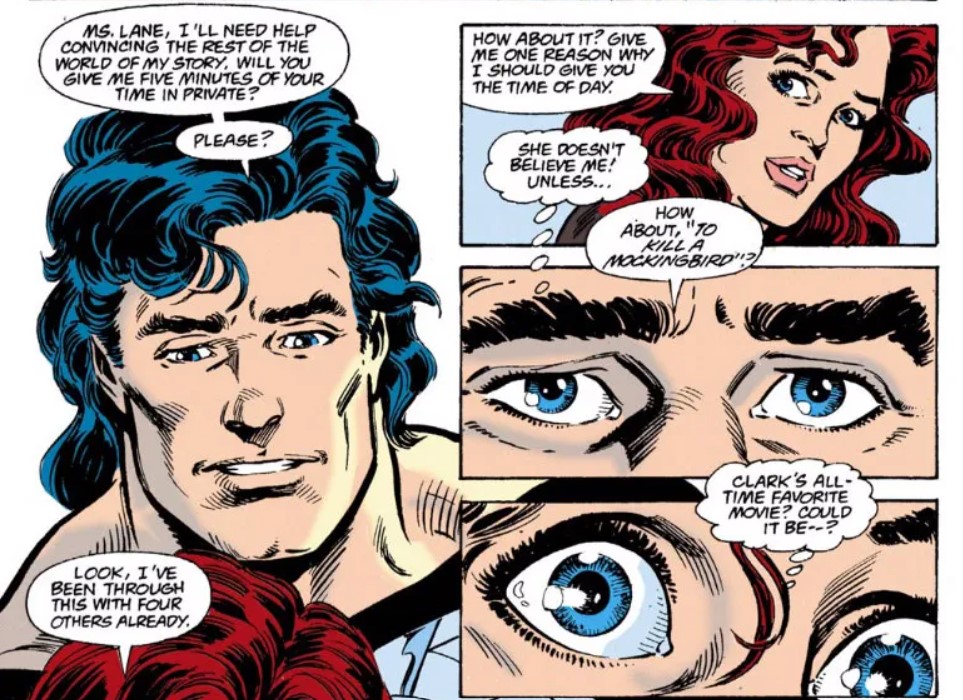
Notes: Some of you are scratching your heads right now. Some of you have no idea why I would choose To Kill a Mockingbird as an entry in the Year of Superman, especially in THIS week, which is about the stories that most make Superman who he is. But there’s actually a very simple explanation, friends: To Kill a Mockingbird is Clark Kent’s favorite movie. In fact, it was even the key phrase that Superman used when he returned from the dead to convince Lois Lane that he was the genuine article and not yet another imposter.
In and of itself, though, that wouldn’t be enough for me to include the movie. If Clark’s favorite movie was something like Caddyshack, Godzilla, or Dude, Where’s My Car?, it wouldn’t make the cut. But I believe very staunchly that the things a person loves can tell us an awful lot about a person, and in this case, that’s particularly profound. In the Marvel Cinematic Universe, Tom Holland’s Spider-Man is a big fan of what he calls “really old” movies like Aliens and Empire Strikes Back. In his case, they chose those movies for two reasons: to make a joke about what people of different generations consider “old” and to demonstrate that this Peter Parker is a geek like us. And it works for that character. But in the case of Superman, when Dan Jurgens declared To Kill a Mockingbird to be Clark’s favorite movie (or whoever – I assume that it was Dan Jurgens because he wrote the comics where I first saw it referenced), he could have picked anything. He chose a movie with a compelling and powerful message about justice, and when the film ends, it’s easy to see Atticus Finch as a cinematic mentor for Clark Kent.

In case you’ve never watched it (or, even better, read the book), To Kill a Mockingbird is the tale of a family in Alabama during the height of the Great Depression. Gregory Peck plays Atticus Finch, an attorney appointed by the court to defend a black man named Tom Robinson who has been accused of beating and raping a white woman. Although Tom maintains his innocence, in this time and this place, the mere fact of the color of the accused and the accuser is enough to make most people in town declare his guilt without even the benefit of a trial. But despite the town turning against him, Atticus stands firm in his conviction to do the right thing and defend the innocent – no matter the personal cost that he will have to pay.

Come on, people, do I have to spell it out for you? That’s who Superman is every day. Defender of the defenseless, protector of the innocent, willing to give even his own life for somebody else, and refusing to back down in the face of what he knows is right, no matter what anybody else says. 

The Tom Robinson plot is the main story, but there are also several subplots and side moments that you can easily view as contributing to the development of Clark Kent’s moral core. One of the biggest is Boo Radley, son of Atticus’s neighbor. Atticus’s children Jem and Scout (the latter of whom narrates the story) are afraid of the mysterious Boo, who never leaves the house, leading to a lesson about making assumptions about people. Another scene features Scout learning to understand how to treat the less fortunate during an awkward dinner. A few minutes later, Atticus is forced – despite having no desire to do so – to put down a rabid dog to protect his family, shocking his son Jem when he realizes his dad is a crack shot. 

The lessons permeate the story itself, too. One night, Atticus gets wind that a mob is planning to storm the jail and lynch Tom, so he sits outside the jail to wait for them. Jem, Scout, and their friend Dill sneak out of the house and arrive just as the mob is about to turn on Atticus, and although he tells them to go back home, the children refuse. Instead, as Scout asks the men in the mob – neighbors she’s known her entire life – how they’re doing, the men are shamed into retreating. It’s a beautiful moment of heroism for the little girl, and you see how Atticus has shaped his children in a time where society was working against him. 

The funny thing to me is that Superman was created in 1938. To Kill a Mockingbird came out in 1962, a full 24 years later, and the novel it was based on was released only two years earlier than that. It’s more than likely that Harper Lee (born in 1926) had read Superman comics when she was young before writing the book. In comic book time, it doesn’t matter. Even in 1992, when Jurgens first mentioned that it was Clark’s favorite movie, it would have been 30 years old and easily could have been a movie that Clark watched when it was released during his childhood. Today (and I’m just realizing that more time has passed since that comic was published than had elapsed between that comic and the movie’s release – somehow this stings more than Tom Holland calling Alien “really old”) it would be a movie he saw on cable. A few years from now he’ll mention having caught it as a kid on Netflix. But it doesn’t really matter how old the movie is or what era little Clark first would have watched it in – the meaning is timeless and has never lost its relevance. It is the perfect choice for a film that shaped a Superman. 

In 2003, the American Film Institute conducted a survey of its members where they voted for the 100 greatest heroes and villains in cinematic history. Christopher Reeve’s Superman made the heroes list at #26. Gregory Peck’s Atticus Finch? He was number ONE. 

And I doubt that Clark Kent would have any issue with that. 

Comics: Secret Six Vol. 5  #4 (Super-Son), Justice League: The Atom Project #6 (Cameo)

Sun., July 6

Graphic Novel: Superman: Up in the Sky (Collects issues #1-6)

Notes: Tom King and Andy Kubert’s Up in the Sky was not – to my knowledge – specifically listed amongst James Gunn’s inspirations for the new movie. However, King is working with Gunn – he’s one of the executive producers for the Lanterns series that’s in the works and, of course, his Supergirl: Woman of Tomorrow is the inspiration for HER upcoming movie – so it’s reasonable to assume that Gunn has read this book. And if he hasn’t, he should, because it’s one of those stories that cuts right to the heart of who Superman is.

Batman summons Superman to Gotham where he’s told of the murder of a pair of foster parents by what seems to be an alien presence, and the abduction of one of their children. The girl is named Alice, he learns, and she loves Superman. Everyone is put on alert – even the entire Green Lantern Corps is looking for Alice, but as Hal Jordan tells Superman, “it’s a big universe.” Although he is reluctant to leave Earth, worried that something will require him in his absence, Superman cannot allow this child to remain lost, waiting for him to save her, and know he’s done nothing. He takes off into space, determined to find her. 

This story was originally serialized in 12 parts, in the Superman Giant series that was released through Walmart several years ago. It was repackaged as a six-issue series through comic shops, and now the graphic novel format we enjoy today. In these 12 parts, we watch Superman go to the end of the universe to find Alice. Each chapter, although part of the quest, is relatively self-contained. Superman goes into a boxing match with an alien stronger than him, but who can give him a clue to Alice’s location. A time anomaly tosses him to meet Sgt. Rock in World War II. Another anomaly splits Superman and Clark Kent into two people on a frozen alien planet. So forth. One chapter is even a story from Alice’s perspective, as she narrates the story of the one Superman/Flash race that Superman legitimately won. Remember waaaay back in Superman Vs. the Flash week, when I mentioned there was one other race I skipped? This is the one. And the reason Superman wins that race is…well, it’s not because he’s faster than the Flash. It’s because someone needed him.

That’s what this story, this entire, amazing, incredible epic, boils down to. Everything Superman does – everything he EVER does – is because somebody needs him. Lost in time? He’s got to get back to save Alice. Stuck in a stupid, alien bureaucracy for hours trying to get a call back home to hear Lois’s voice? A brief pit stop, because Alice needs him. Making a deal with Darkseid to violate one of his own sacred vows? He has no choice – Alice is still out there. Even in the chapter where Superman and Clark are two different people, it seems at first that we’re going to get the standard dichotomy of the human Clark and the cold, stoic Superman, which we’ve seen so many times. But as the story goes on, we realize that – although Clark is, of course, the soul of Superman – even without Clark there he’s STILL Superman and, illogical as it may be, he cannot fly away when somebody needs him. And Alice needs him.

The final chapter of this story is one of the most emotional, beautiful pieces of Superman storytelling you’ll ever read. We see him backtrack, revisiting some of the dangers he faced along the way, and we get added context to certain things. Most importantly, we see how Alice sees Superman, and we see why her faith in him – her belief that he would save her – never wavered, no matter how foolish or hopeless his quest might have seemed. I can’t imagine anyone who loves Superman being capable of reading this book without feeling a stirring in their chest. Despite its galactic scale, this is one of the most deeply personal Superman stories I’ve ever read, a story about a man who is incapable of giving up when someone else needs help. It’s about a man for whom saving just one child matters just as much as saving the entire universe.

It’s about Superman in his truest, purest form. It’s about Superman. 

Mon. July 7

Graphic Novel: Luthor (originally published as Lex Luthor: Man of Steel #1-5).
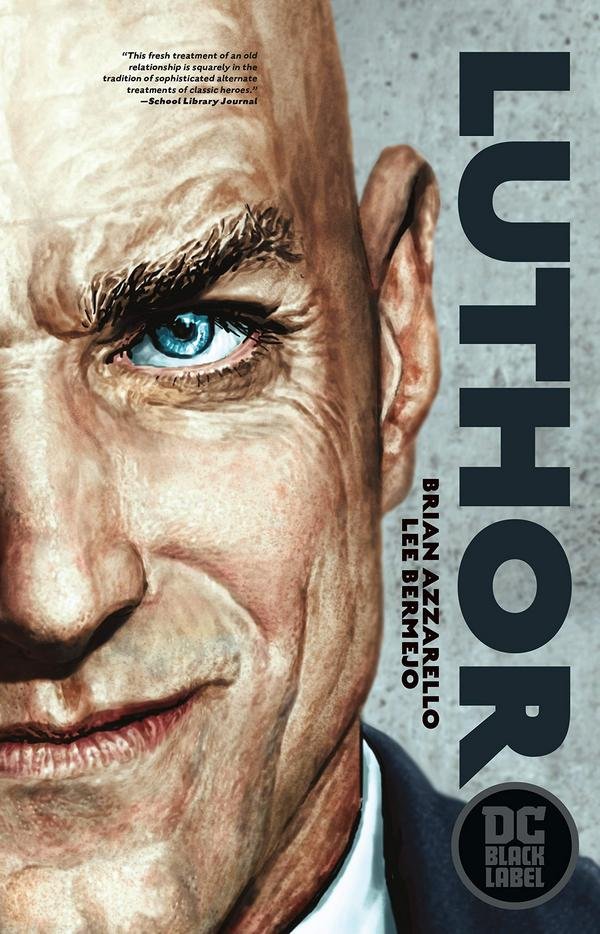
Notes: This isn’t the first time Brian Azzarello’s name has come up in the Year of Superman, but you may recall I didn’t particularly care for his collaboration with Jim Lee on For Tomorrow. However, his and Lee Bermejo’s Lex Luthor: Man of Steel miniseries from 2005 was a different matter entirely. In this story, we see a Lex Luthor who is motivated not purely by arrogance or a thirst for power, but also by fear. Luthor is afraid that Superman – an alien – will undermine humanity, and decides to fight back by creating his own superhero, a woman he dubs “Hope.” In his game of chess against Superman, though, is Hope a pawn, or a queen?

They say that, in real life, nobody thinks of themself as a villain. After all, a villain is a bad guy, and if you think something is genuinely bad, you don’t do it. So the villains in the real world have justifications, moral and ethical gymnastics that they use to convince themselves that what they’re doing isn’t bad – “I deserve what I’m taking,” “the world isn’t fair, so I don’t need to play fair,” “I have to get him before he can get me,” and maybe most sadly, “God told me to do it.” That’s why it never quite made sense that, in the early days of the X-Men, Magneto called his group the Brotherhood of Evil Mutants. In Luthor’s case, he has convinced himself that Superman is a genuine threat against humankind, therefore anything he does – including murder – is justified in that his end goal is to save the world. Azzarello isn’t the first person to posit this characterization of Luthor, but he certainly is among the best to put it on the page.

The story is told exclusively through Luthor’s point of view. Although Superman is a constant presence in the tale, his appearances are brief and sparse, and he never speaks on-panel. (His one spoken line, a slap to the face of Luthor’s moralizing, comes at the very end, and is delivered from off-panel.) Instead, we have Lee Bermejo painting a Superman the way that Luthor sees him – cold, distant, with an anger in his eyes that an objective look at the Man of Steel would never show. In the end, we have a Luthor whose distrust and hatred of Superman is so great that he’s willing to cut out his own heart (metaphorically speaking) in the hopes of gaining the upper hand. It’s a harsh portrayal of the character and, although he is still brilliant and terrifying, you can’t help but feel pity for him.

Supposedly, this version of Lex Luthor was drawn on for Nicholas Hoult’s portrayal of the character in the movie, and I honestly can’t think of a better story to use to shape a Luthor that’s both chilling and entertaining. In the end, he’s the most dangerous kind of villain of all: the one convinced he’s right.

The story has been presented a few times: both under its original title of Lex Luthor: Man of Steel, and in a collected edition called simply Luthor, making it a sort of companion piece to Azzarello and Bermejo’s highly-acclaimed Joker original graphic novel that gives a similar portrayal to the Clown Prince of Crime. Both books are worth reading. But let’s be honest – you only need to read this one before Friday. 

Special Presentation: Superman World Premiere

Notes: I’m breaking a lot of new ground here in the Year of Superman. Tonight I’m watching something I’ve never watched before: the livestream of a movie premiere. DC is streaming the world premiere of Superman on all the socials, so I’ve got it fired up on YouTube. I have also turned off the comments on YouTube, because good lord, people on the internet are morons. 

The stream starts with clips from the various fan events that they’ve been holding over the last few weeks. I’ve already seen most of the footage on social media, but Eddie hasn’t, and he (being a child who loves logos) got particularly excited when he saw a group of fans standing in the shape of the Superman S-shield. Even now, after months of hyping it up, I’m get a little nervous about taking Eddie to see what is technically going to be his first “grown-up” movie in theaters (defined as “not a cartoon”). But his anticipation has been growing. He talks about going to the movie several times a day. And as the livestream begins, he plops down in front of the TV and watches in glee as we see clips of the fans in cosplay, the drone shows, the decorations, and the crowds that have come to celebrate the Man of Steel. He actually doesn’t turn away and go back to playing games on his tablet until we return to the two guys who are hosting the show as they try to vamp until someone shows up on the carpet. I can’t really blame him. 

I can’t pretend the premiere event was particularly revelatory. Most of it was brief interviews with the cast who all said pretty much the same thing: “The movie is great, the cast is great, James Gunn is great, you’re all going to love it.” Gunn himself, I think, had the quote of the evening when he urged people to see the movie on the “biggest screen possible” so that they can catch all of the “Crazy-Clark-Kaiju-robot-flying-dog action you can get.” I mean, I was planning to do that anyway, but if I hadn’t been that would convince anyone.

I don’t begrudge them for sounding like hype men, of course – this is simply what you say and do during a red carpet event. Despite that, though, despite the repetitive nature of the conversation and the clips that we’ve already seen from the trailers 1000 times, I still had fun watching this. I guess I’m just that psyched – every little scrap of content pertaining to this movie is enough to energize me at this point. And I wouldn’t have it any other way. 

Tues., July 8

Graphic Novel: Superman: Whatever Happened to the Man of Tomorrow? (Collects Superman #423 and Action Comics #583).
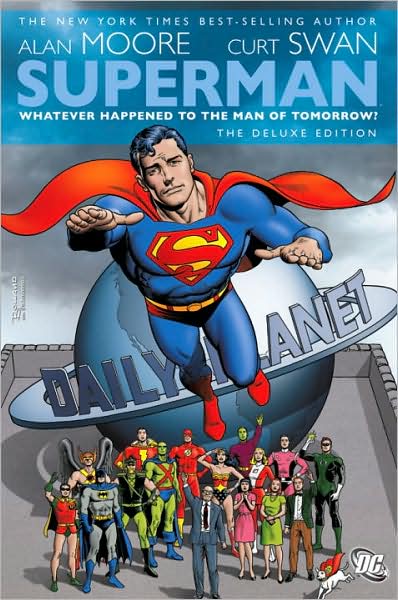
Notes: Let’s talk again about the John Byrne Man of Steel reboot. You’ve heard of it, right? Well, with the knowledge that the Superman books were about to be restarted and given a clean slate, it was decided to end the current run with one last “Imaginary Story,” the Silver Age term for comics that were out of continuity. Written by Alan Moore with art by perhaps the most iconic Superman artist of the age, Curt Swan, this two-part story is the culmination of everything Superman was in the Silver and Bronze ages of comics. It begins in the future of 1997, where a retired Lois Elliott (née Lane) is being interviewed by a reporter for the Daily Planet about her experiences in the last days of Superman’s life. Lois recounts how, a decade prior, Superman’s enemies suddenly returned, much more violent and brutal than before. Bizarro goes on a killing spree before taking his own life with Blue Kryptonite, then the Toyman and Prankster torture and murdere Pete Ross, getting from him the secret of Superman’s dual identity. They are captured by Superman, but not before revealing that he is really Clark Kent to the entire world. Scared for the rest of his friends, Superman gathers those closest to him and takes them to the Fortress of Solitude in the Arctic, unaware that Brainiac has taken the body of Lex Luthor as his own, and is marching towards the Fortress with deadly purpose.

I have a complicated relationship with the work of Alan Moore. Without question, he’s responsible for some of the greatest comic books in the history of the medium: Watchmen, Swamp Thing, this one…all masterpieces. But in recent years I feel like he’s sort of started to buy into his own hype and taken on a sort of self-absorbed attitude, showing public disdain for comics in general. And when the creator of Lost Girls has the audacity to complain about other people touching his characters, it kind of drains my respect.

But separating the art from the artist here: this book is a phenomenal capstone for the nearly 50 years of Superman continuity that existed at that point. Moore uses an intriguing blend of Silver and Bronze age elements. From the latter, Clark Kent is a TV reporter whose identity is exposed on-the air thanks to the Prankster and Toyman. Supergirl is dead in this timeline, following Crisis on Infinite Earths, so for her cameo she visits with the time-travelling Legion of Super-Heroes. Even Kristin Wells, the mostly forgotten Superwoman of the 80s, makes a brief appearance in this story. But a lot of the bits and pieces come from the Silver Age – Lana and Jimmy both evoke some of the sillier stories in which they got super powers, this time weaponizing them on Superman’s behalf. The Legion we see is drawn to resemble the earliest days of the characters – young, with their original uniforms – but they also quite clearly know that they’re in a time period in which their teammate Supergirl is already dead and in which Superman’s days are numbered. 

There’s a lot of tying off the old loose ends that Superman accumulated over the years, especially in terms of the Superman/Lois/Lana love triangle. For years, it appeared in the comics as though Superman was unable to decide which of the women he loved the most. In this issue, Moore deftly reveals that he’s known the obvious choice along, but has a suitably self-torturing reason for never acting upon it. It’s the kind of motivation that fits in perfectly with a Silver Age mindset, but it works well in the context of this “final” story, helping to bring closure to elements that had been around for decades. 

That said, there’s plenty of Alan Moore’s signature deconstruction going on in this story. The reveal of the true villain of the piece is exactly the sort of thing he’s known for – taking an element that may have seemed silly or childish when originally conceived, but finding a way to make it terrifying. Other moments are simply heartbreaking – Superman trying to avoid letting the time-travelling Supergirl know that she’s dead in this time period, for example. Then there are the three friends of Superman who try to step up and fight alongside him, each of them showing a core of courage and love that makes you want to weep. As Lana Lang tells Jimmy Olsen at one point, “We’re only second-stringers, Jimmy, but we’ll show ’em. Nobody loved him better than us.” You even feel pity for Lex Luthor in this one, as his body is manipulated by Brainiac. The implications of that, the idea of having someone else invade your physical form, using your muscles, controlling your vocal chords as you are forced to watch and do nothing…not even Lex Luthor deserves that.

Having Curt Swan illustrate this story was a perfect choice for two reasons. First, it was just a fitting tribute for one of the greatest and most influential Superman artists of all time. Second, his pencils evoke a simpler, brighter time period, which makes for a harsh juxtaposition with the extremely dark story.

But dark as it is, the story ends – as befits Superman – with a symbol of hope. Not an S-Shield this time, but rather, a wink. The story has aged somewhat. A lot of the things that Moore draws upon have been evolved or removed to the point that someone who is only familiar with the post-Crisis incarnations of Superman would feel very confused, if not terminally shut out of understanding what’s happening. But if you have a love for the Superman who existed before John Byrne’s era, this story feels like the perfect ending, the ultimate culmination of that Superman. It’s a grand farewell to this version of the character. There will never truly be a “last” Superman story – the character will live on no matter what. As an attempt to end the legend, this is a good one.

But I still think there’s one better. 

I’ll get to that today, as you read this…but I guess you’ll get my thoughts on it next week. 

Blake M. Petit is a writer, teacher, and dad from Ama, Louisiana. His most recent writing project is the superhero adventure series Other People’s Heroes: Little Stars, volume one of which is now available on Amazon. You can subscribe to his newsletter by clicking right here. You can join in the Kryptonian Konversation every day in the Year of Superman Facebook Group!
Year of Superman Week 17: Lex, Batman, Power Girl, Batman, Elseworlds, Batman, and Spam

Another week, another round of the Year of Superman! It’s going to be another random week, a week where I’m not going to be adhering to any particular theme or category, and just reading or watching whatever catches my fancy. And there’s some fancy, fancy stuff coming down the pipe this week, from the big 25th issue of Joshua Williamson’s run on Superman to the completed three-part Last Days of Lex Luthor miniseries, and…well, I don’t even know what else will come up, because I’m writing this at the beginning of the week and I’ve got no idea where the solar winds of Rao will take me. Join me and let’s find out!

Wed., April 23

I feel like Perry is kinda burying the lede here…

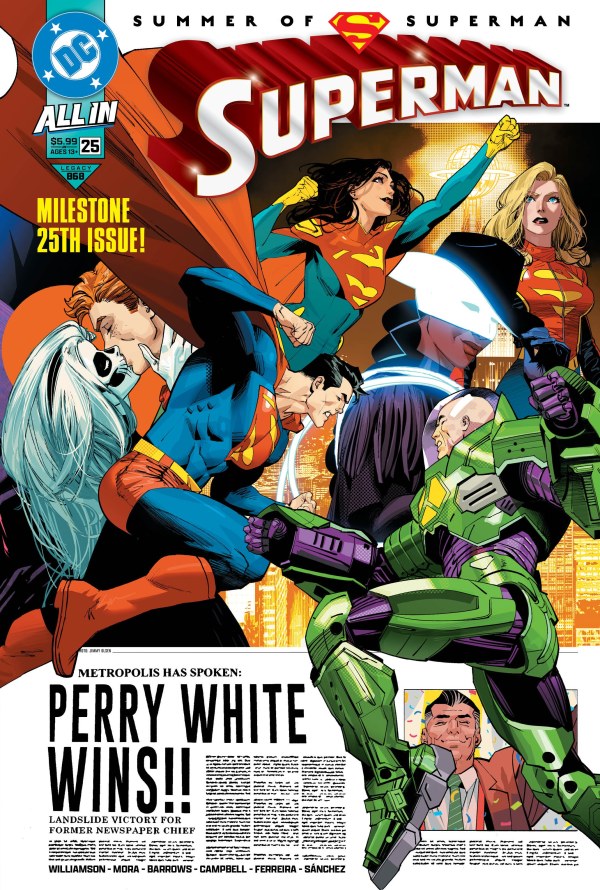
Comic: Superman Vol. 6 #25

Notes: Since Williamson kicked off his run on the main Superman comic about two years ago, he’s been building up a pretty epic storyline involving Lex Luthor. It began after Lex was taken into custody, turning over his company to Superman and making it “SuperCorp.” As one of the few people on Earth whose memory of Superman’s double identity remained (it was because of him that it was wiped out anyway), he decided that if he couldn’t destroy Superman, he would force him to work WITH him, and it was a strategy that worked pretty well for some time. Along the way, though, Lex lost his memory, leaving him a man who wasn’t quite as brilliant as before, but who had a genuine benevolence to him, seeming to want to atone for the crimes of his former self. It was a change for the better for everyone – except for Mercy Graves.

In this climactic issue, Mercy has let loose one of Lex’s failed experiments, X-El, a Luthor/Kryptonian hybrid clone, that she’s hoping to have supplant the “new” Luthor, and it’s Superman, Superwoman, and Lex vs. X-El. I loved this issue – it feels like a real culmination of the story so far, with everything that’s been happening building up to an incredible fight that lasts for most of the extra-sized issue. What’s more, the usual penciler Jamal Campbell (who has been doing a bang-up job on this series) is joined by a murderer’s row of talent, including Eddy Barrows, Eber Ferreira, and Dan Mora. Campbell and Alejandro Sanchez are credited as colorists as well, and although you don’t often discuss the colorists when you’re talking about comic books, this is one issue where it really stand out to me. Every page has at least one panel that could be turned into a poster I’d expect to see in any comic shop. 

Although the issue is, like I said, kind of a culmination of the storyline in that it has brought everything together, it would be a mistake to imply that it’s the END of the story. In fact, this issue ends in a cliffhanger that’s really got me itching for issue #26. But man, I can’t say enough good things about this run and this creative team. 

Thur., April 24

I just wish that Bryan Hitch would have the guts to put a little symbolism into his artwork.

Comics: Superman: The Last Days of Lex Luthor #1-3

Notes: About a month ago, when the long-delayed second issue of this miniseries finally came out, I decided to wait to read it until I had the third and final issue in my hands. I don’t know if the story would have been less impactful had I not chosen to wait, but I DO know that it would have driven me crazy to have to wait for the final installment, because ultimately, this is one of the finest Superman stories I have ever read.

And if you haven’t noticed, I’ve read a LOT of them.

In the first issue (which, again, came out nearly two years ago, and that’s the last time I’ll reference the delay), Superman is attacked once again by his greatest enemy…but this time, Luthor’s goal is not the death of the man of steel. No, for once, he needs his HELP. Lex Luthor, it seems, is dying. Some strange, exotic radiation is attacking his cells, and he knows that Superman is the one being in the universe who will stop at nothing to find a cure, because Superman…well…Superman is the man who saves everybody.

I don’t want to say too much more about the story, because there are some incredible twists and surprises throughout this miniseries. But that doesn’t mean there isn’t still a LOT to say. The reason Luthor turns to Superman, again, is because he knows that Superman will absolutely refuse to quit as long as there is a life in jeopardy, and the fact that the life in question belongs to his greatest enemy makes no difference whatsoever. Luthor sees this as foolishness, as a weakness on Superman’s part, but throughout this story, Mark Waid demonstrates why this is actually his greatest strength. Superman is confronted by friends who cannot fathom why he would risk so much to help Luthor. The quest to save his enemy becomes public knowledge, making some of the public turn against him. His quest takes him to Kandor, Atlantis, Themiscyra, and even the 31st Century, before the final reveal of what’s really going on turns everything on its ear and seals the fate of the two characters.

It’s an odd choice, to make this a Black Label book. Black Label is ostensibly a “mature reader’s” imprint, but there’s nothing in this book that warrants that marker. It’s out of continuity, to be certain, and I wonder if this would have been listed as Elseworlds, had that label been resurrected when the first issue appeared. But no matter what imprint this story falls under, it’s a masterpiece. It’s Mark Waid’s dissertation on who Superman is and why he has to be who he is. We learn the same things about Lex Luthor, in fact, and the relationship between these two characters has never been laid out so bare, so stark, so clean as in this story.

This story is brilliant. This is one of the best Superman stories I’ve ever read. 

Fri., April 25

Comics: Justice League Unlimited Vol. 2 #6

Notes: The second part of “We are Yesterday” in Justice League Unlimited doesn’t have a ton of Super-action, but it’s a great issue nonetheless. In this issue, we see Grodd hatching his plan to infiltrate the past and collect purer versions of his former compatriots in the Legion of Doom to act as a countermeasure to the now-larger League. We also get a glimpse of the moment when Superman recruited Air Wave – who has become a surprisingly important character in this series – to join the League. Air Wave is an interesting character – a D-lister for years, and Waid has already found a way to make him compelling and sympathetic through a comparatively small number of pages in the first six issues of this title. I really hope that we get to see more of his story after this crossover with World’s Finest reaches its conclusion. 

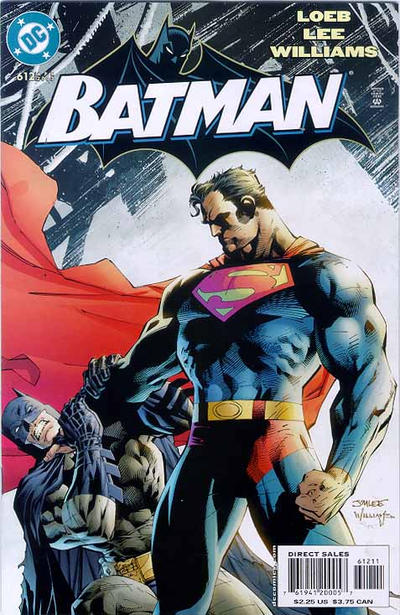
Graphic Novel: Batman: Hush (Collects Batman #608-619, Superman appears in #611, 612, and 619)

“Say it, Bruce! SAY THAT GLASSES ARE A PERFECTLY ADEQUATE DISGUISE!”

Notes: With “Hush 2” currently running in the ongoing Batman comic book, I wanted to go back and re-read the original, as it’s been a while. I’m not going to dig into it too deeply, as this ain’t the “Year of Batman,” and Superman’s appearances are brief. But brief or not, they ARE impactful, and I wanted to point out a few things. 

First comes in Chapter 4 (issue #611 of the ongoing), in which Bruce Wayne visits Metropolis and, specifically, the offices of the Daily Planet. At this time, Bruce actually OWNED the Planet. I’m not sure if he still does or not. Hey, DC, give us a ruling. But regardless, in this issue he’s been finding himself growing more and more drawn to Catwoman, with whom he’s always had a “will they/won’t they” relationship. At the Planet office, he watches Lois and Clark together and marvels at how Clark has found someone with whom he’s willing to trust his greatest secret. A few chapters later (kinda spoilers, in case you’ve never read “Hush” before), Bruce reveals his own identity to Selina for the first time. It’s one of those rare status quo changes – like Lois and Clark getting married – that has stuck, and I find it very interesting that writer Jeph Loeb decided to use the Lois and Clark relationship as a way of sort of justifying that relationship upgrade for Selina and Bruce.

Superman has a bigger presence in Chapter 5 (issue #612), in which he’s being controlled by Poison Ivy and comes to blows with Batman in the sewers of Metropolis. (Side note: it’s VERY odd to see the way Catwoman fights both Ivy and Harley Quinn in this storyline, considering the way that the three of them would become the “Gotham City Sirens” just a few years later.) It’s a pretty good fight, all things considered. Bruce has his Kryptonite ring, and he’s counting on both that and the fact that he knows Superman is actively fighting against Ivy’s mind control to keep him alive. I think the most interesting thing about this fight, though, comes from a two-page spread in the middle, where Bruce’s inner narration makes a comment that the internet has elevated to meme status: “Deep down, Clark’s essentially a good person…and deep down, I’m not.” People love to use this quote, but I think a lot of them miss the point. The way I read it, this is something that Bruce sincerely believes…but he’s wrong. Not about Clark, of course, but about himself. And Clark would be the first one to tell him that.

Also, in this issue, Poison Ivy gets captured by Krypto, and that’s just adorable.

Superman then dips out of the rest of the story until the denouement in Chapter 12 (issue #619). The mysterious Hush has been defeated and Bruce turns once again to Superman…not just because he needs a friend, but also because he needs someone with X-Ray vision to make sure that Hush didn’t do anything inside of his head…and literally, not the way the Joker does it. The three appearances of Superman in this story really speak strongly towards the bond between these two heroes and the trust that they share. At the same time as this storyline was winding down, Loeb was launching the ongoing Superman/Batman series, and I don’t believe for a second that this was a coincidence. He writes both heroes well. He writes them TOGETHER excellently. 

Sat., April 26

Comic: Power Girl Vol. 4 #20

“Meet Kara who’s never had a home
From Argo City to the Phantom Zone
But PAIGE HAS MADE FRIENDS LEFT AND RIGHT
TO GO WITH HER KRYTPONIAN MIGHT!
Whaaaat a crazy pair…”

Notes: This volume of Power Girl ends with this issue and, much as I hate to say it, I’m not really upset to see it go. It had a promising start, but the series seemed to be all about trying to figure out who Power Girl is and…frankly…I’m tired of that. A lack of identity has been Power Girl’s defining characteristic for the past 40 years, and that’s at least 39 years too long for that to be interesting in any individual character. At first, it seemed as though this series was going to lock her in to a true identity, but as evidenced by the cover of this last issue, it never really felt like it gelled. The book built up her world, built up her supporting cast, but didn’t really build up HER. I get it. It’s difficult. The elevator pitch of the character is “older Supergirl from Earth-2,” and since we’ve already got the “Prime” Supergirl, that doesn’t seem to leave room for her. But if all you do with the character is point out that she seems superfluous without redefining her in a satisfying way…well, what have you actually done? I hope somebody else gets their hands on Power Girl soon. I don’t care if it’s as a supporting player in the Superman titles or if she rejoins the Justice Society or what, but I want somebody, ANYBODY to take Kara Zor-L and finally, after all these years, say “This is who she is and this is what makes her unique, and can we please stop having the same conversation?”

Is that so much to ask? 

Sun., April 27

Comics: Batman Vol. 3 #36-37

Part one: Bromance. Part two: Romance.

Notes: When I read Hush a few days ago, I noticed a scene in the chapter where Superman is controlled by Poison Ivy where Catwoman tries to break him out of it by threatening Lois Lane’s life. She didn’t mean it, of course, she did it because Batman told her that Superman was close to the people who worked at the Daily Planet and that endangering one of them would help him break from Ivy’s control. Nor did she know specifically that Lois was Clark’s wife – Bruce also told her that Jimmy Olsen and Perry White would have been suitable for this purpose. But the scene put me in mind of a more recent meeting between these four, and I wanted to read it today.

Tom King’s run on Batman is controversial for reasons I’m not going to get into here, but the two-part “Super Friends” story from Batman Vol. 3 #36 and 37 is one of the best stories about Superman and Batman I have ever read. Batman and Catwoman have recently become engaged, and in the first issue Bruce and Clark each have conversations with their respective significant others about the fact that they haven’t spoken to one another about the engagement yet. Clark is convinced that the fact that Bruce hasn’t called him is evidence that they’re not really that close, Bruce says he shouldn’t have to call Clark because his best friend is actually Jim Gordon (who doesn’t know his real name) or Alfred (who Selina points out is on his payroll, and therefore doesn’t count). The bulk of the issue is taken up with cutting back and forth between these two conversations, and the quick realization that Lois and Selina know Clark and Bruce far better than either of the world’s two greatest heroes know themselves. At the end of the first issue, the two couples come together in one of the most charming meet-cutes I’ve ever seen. You’ve probably seen the page on the internet even if you’ve never read the issue.

Yeah, that’s the stuff.

In part two, the foursome go on a double date to an amusement park which is celebrating “Superhero Night” – you have to have on a superhero costume to get in. Under the ladies’ suggestions, Bruce and Clark wear each other’s costumes and enter the park to enjoy an extremely rare night for themselves. 

Tom King’s depiction of this relationship is spot-on. They’re best friends, even though neither one of them really wants to admit it. Their differences are what make them work together, not something that drives them apart. And the scenes of Lois and Selina bonding with one another are absolutely joyous. We fans talk quite a bit about how difficult it must be for superheroes to hide the secret of their dual lives, but we don’t talk enough about the toll it might take on those who love them. Giving Lois a new friend in Selina really feels natural. I was, I admit, disappointed when the Batman/Catwoman wedding didn’t go through, because I thought that DC would finally have the guts to push Batman’s status quo in a new direction permanently. I still think that it would have been better if they’d remained together. But mostly, I miss the chance to have more issues like this one, with Clark and Lois and Selina and (however begrudgingly) Bruce just being friends.

Don’t we all need that? 

Mon., April 28

TV Episode: Superman and Lois, Season 2, Episode 7, “Anti-Hero”

Or the “Lana’s Trauma Conga Express.”

Notes: Superman has been taken into custody by the DOD, who are holding him under a red sun lamp to negate his powers. As Lois and Sam try to figure out a way to navigate his release, Jordan is still angry at his brother for lying about the source of his newfound powers, and Lana and Sarah are dealing with the fallout of Lana’s impending separation from her husband.

Did you notice how each plot point I recapped there got progressively less superhero-y and more soap opera-ish? To be fair, there has been overlap in the kind of storytelling done by superheroes and soap operas for a very long time. Even as far back as the Golden Age you had the occasional unrequited love runner that punctuated early superheroes. Then, once Stan Lee brought in the Marvel Age of comics, the greater emphasis of serialized storytelling made it virtually inevitable that elements like Spider-Man’s disastrous love life would become an ongoing story point. But at times, Superman and Lois feels far more like a teen drama than a superhero show. It’s not fair to criticize the show on that point – for what it’s doing, it seems to do it just fine. But it isn’t exactly what I’m looking for here.

Some of the soap opera stuff is done well. For instance, there’s a nice scene where Lois and Lana are bonding over their respective family struggles – Lana with the fact that her husband cheated on her, Lois with the fact that her son got caught with a backpack full of drugs. The odd thing is that they’re treating X-Kryptonite as if it was any other drug. Jonathan’s bag had 20 vials, each of which could turn a teenager into a walking weapon of mass destruction, but the conversation they have could have been ripped straight out of a 70s After School Special about a mom who caught her son with a joint. 

That’s not to say that there’s no superhero stuff going on, of course. The story of Clark in custody, held under the red lamps with his half-brother Morgan Edge, is exactly what I’m hoping to see. The DOD even weaponizes Superman’s compassion, threatening to harm Edge if he doesn’t give them information that they want, which he does despite the fact that his brother is also his enemy. I even like the way the two of them put their differences aside and work together. The CW has a tradition of villains slowly reforming and joining the heroes that goes back to when they were the WB network and it happened every season on Buffy the Vampire Slayer, so if that turns out to be the long game with Morgan Edge’s character, I’m used to it. Once they meet up with the hologram of Lara and the Alternate-Superman (can we PLEASE just call him Bizarro?), there’s some good action stuff here. 

But none of that addresses the real problem I’ve been having with this show in season two. I love Hoechlin’s Superman, but the problem here is that they’ve isolated him. The show is stronger when he’s paired with Lois or where he’s working with his sons and their struggles with Jordan’s powers and Jonathan’s typical lack thereof. If you’re not doing that kind of thing, if you have him segregated from the rest of the main cast, you may as well be watching two entirely different shows. 

Clark, fortunately, returns to Lois at the end of the episode. But before that we get one more little scene I liked. Edge is still in custody, still the bad guy, but at the end of it Clark addresses him as “Brother.” This actually goes directly against something said earlier in the episode, when she tells Jonathan that his father would never forgive him for his involvement with X-K. But as the end of this episode shows you, Superman’s forgiveness is infinite. You mean to tell me, Lois, that you don’t think he would forgive his SON? Come on, you know him better than that.  

Then again, the episode ends with Clark tearing into Jonathan and not allowing him the opportunity to talk, so what do I know? 

Tues., April 28

Comic: Superman: Speeding Bullets #1, Action Comics #374

When the dry cleaner at the Hall of Justice mixes up the bags.

Notes: I’ve got a new writing project I’m working on today, so I needed something quick to slip in to the Year of Superman. The classic Elseworlds one-shot Superman: Speeding Bullets seemed like just the thing. Written by J.M. DeMatteis with art by Eduardo Barreto, this is about as close to the old Marvel What If? format as Elseworlds got, basically asking the question, “What if Kal-El was found by Thomas and Martha Wayne instead of Jonathan and Martha Kent?” Thomas and Martha – childless in this universe – find the rocket ship and adopt the child much like the Kents did, naming him Bruce and raising him as their own. Kal-El’s life in Gotham is pretty similar to the mainstream Bruce Wayne until the night of his parents’ murder, when – seeing the people he loved most in the world gunned down in front of him – his head vision activated and he roasted Joe Chill to death. In shock, Bruce developed a mental block about that night, forgetting his powers until – as a young adult – robbers break into Wayne Manor. His heat vision – and memories – come back, and he becomes a much more brutal version of Batman and the one in our universe.

When I say this was close to a What If?, I don’t just mean in premise, but also in execution. The classic What If? stories tended to end in one of two ways: either the universe attempts to “course correct,” resulting in a world as close to the original as possible, or things go so dark and bleak that it may as well be the apocalypse, at least for the characters involved, if not literally. Some of the ways we see that here are Bruce deciding to buy the Gotham Gazette and hiring Perry White and Lois Lane, falling in love with the latter, and Lex Luthor suffering an accident in a chemical plant, transforming him into this world’s version of the Joker. Since this is a world that can’t have both a Superman and a Batman, we watch Bruce Wayne transform from one to another. Lois’s influence cools his rage, getting him to pull back on his bloodlust, and eventually abandoning the Batman identity to become his world’s Superman. It’s an interesting book, and it works well as an Elseworlds. I have to admit, though, I’m surprised that this version of Bat/Superman hasn’t turned up the way other Elseworlds versions like Red Son or the Vampire Batman have once the Multiverse was opened up again. 

Blake M. Petit is a writer, teacher, and dad from Ama, Louisiana. His most recent writing project is the superhero adventure series Other People’s Heroes: Little Stars, volume one of which is now available on Amazon. You can subscribe to his newsletter by clicking right here. You can join in the Kryptonian Konversation every day in the Year of Superman Facebook Group!
Year of Superman Week Nine: The Beginning of the End…

As I have said many times, the golden age of Superman comics – for me at least – was the late 80s and early 90s, the period we now wax nostalgically for as the “Triangle Era.” I could honestly have just spent this year reading John Byrne’s Man of Steel miniseries (that’s still coming – at some point I’m going to do an “origins” week) and then continuing on until the triangles ended ‘round about 2000 or so. But instead, I made a list of some of the most important stories and high points of the time and, those that don’t necessarily fit into another theme I have planned, I’m trying to hit in roughly chronological order. And as of now, I’m only planning to read two of the longer storylines from the era (although I reserve the right to add more later if I feel I’ve got the room), and having moved forward appropriately in the timeline, it’s time to get into one of the defining storylines of the character. 

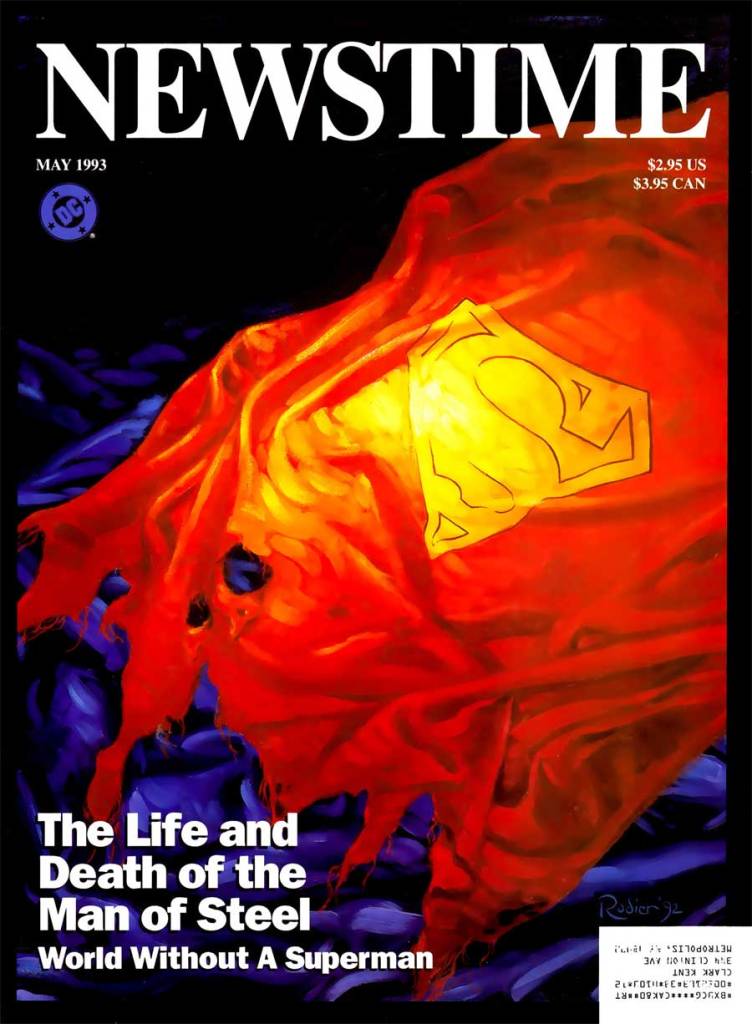
It’s October of 1992. I’m a 10th grade student with a subscription to the four Superman comics, eagerly awaiting their arrival each week and getting pretty darn mad when the US Postal service delivers them out of order (which happened, I must tell you, more than once). And even though I knew it was coming, even though it had been bandied about on TV and in newspapers for weeks prior to the beginning of the story, I didn’t know if I was really prepared for the story that — at the time – was called “Doomsday,” but that these days we typically refer to as “The Death of Superman.”

This was pretty much all I thought about for two months in the fall of 1992.

Wed., Feb. 26

Comics: Superman: The Man of Steel #18, Justice League America #69, Superman Vol. 2 #74, Adventures of Superman #497, Action Comics #684, Superman: The Man of Steel #19, Superman Vol. 2 #75

Notes: After a month of one-page prologues, the creature who would be known as Doomsday burst free from his subterranean prison in Man of Steel #18, and spends this issue stomping through the countryside, ripping up landscape and crushing animals before finding civilization. But the surprising thing, if you’re reading this for the first time, may be that Doomsday is the B-plot of this first issue. Most of the pages are used to deal with a running story from this particular series regarding a community of monsters in Metropolis’s underground. In the 90s, although the four separate Superman comics of the era continued into one another each week, each series tended to have its own subplots and stories to focus on, including the Underworlders. This issue also features Keith, an orphan who has befriended Superman and hopes to find his lost mother, and who would eventually be adopted by Perry and Alice White. 

I really love the Keith sequences in particular. The creative team on this book of Louise Simonson and Jon Bogdanove had previously done a wonderful run together on Marvel’s Power Pack, a comic book about a group of brothers and sisters who are all given powers by a benevolent alien. It was one of Marvel’s best comics of the era, and whenever Simonson writes children she brings a really authentic feel to them. Her children are inexperienced and naive at times, but never stupid or foolish. There is an inherent realism to her kids that I absolutely love. Keith was out of focus in the comics for a very long time, and with all the reboots that have happened over the years I wasn’t even sure he still existed in the DCU until recently, when Perry White was running for mayor and Keith showed up at an event with him. I hope, now that Perry is the mayor of Metropolis, we see a little more of Keith White.

Next up was what essentially was the end of Superman’s tenure with the Justice League, which had begun only nine issues before. The JLA is called in to stop Doomsday’s rampage, but Superman is on live TV doing an interview on the Cat Grant show and unaware of their battle, leaving his teammates to face the beast without their most powerful member. As Superman talks to a group of high school students, the League – if we’re being candid – gets their asses handed to them. Guy Gardner is hurt, Bloodwynd is chucked into a fire, and Blue Beetle is rendered comatose just as he was about to crack the mystery of who Bloodwynd really is. (If you remember a few weeks ago from the Justice League issues I read, that was Beetle’s primary preoccupation in this period, and if I may toot my own horn a mite, I remember solving that mystery myself when I read this issue, using the same clue that made it click for Blue Beetle. It wasn’t confirmed in the comics for several months, though.) The fight is intense, and rolls right into the next issue of Superman, #74. 

In fact, this was a running theme through the rest of this storyline. Each issue from this point on flowed seamlessly into the next and, starting with Adventures of Superman #497, each issue began to reduce the number of panels per page. Every page in that issue had four panels, the next three, then two, and in the final chapter the entire issue is told in full-page splash panels. What this does, essentially, is give the story a sense of ACCELERATION. Fewer panels means the story goes more quickly, each issue faster than the last, until we get to the final showdown on the streets of Metropolis in Superman #75. 

Superman #74: Superman joins the League to take on Doomsday. In the battle, Booster’s power suit is destroyed, Fire burns out her powers, Guy Gardner’s face is swollen so badly he can’t see, and Ice and Bloodwynd are taken down. The only one to escape unscathed is Maxima, and only because she leaves early to bring the near-death Blue Beetle to a hospital. 

Adventures of Superman #497: When Superman has to go back to rescue a family and his teammates from the house Doomsday destroyed in the previous issue, he gets a head start and starts creating havoc, taking down military helicopters and smashing into a small town before Superman can catch up to him. Supergirl (the Matrix version) sees the destruction on TV and wants to help, but her boyfriend Lex Luthor Jr. (long story, just read the Wikipedia explanation) holds her back. Maxima returns but is taken out in short order, and Superman vows to defeat the beast alone. 

Action Comics #684: The fight with Doomsday crashes into a department store, where a TV ad for an upcoming pro wrestling match at the Metropolis Area causes the beast to take notice of his destination: “Mhh-Trr-Plss…” A road sign that matches the advertisement points him towards Superman’s city as the Daily Planet helicopter – carrying Lois Lane and Jimmy Olsen – arrives to report on the carnage. The battle destroys an abandoned territory called Habitat, but the creature escapes and bounds towards Metropolis.

What it feels like being a teacher the week before a holiday.

Superman: The Man of Steel #19: Doomsday arrives in Metropolis. Cameras broadcast the battle across the world, including Smallville, where the Kents watch their son’s battle for his life on television. Supergirl finally is sent to help, but one blow from Doomsday disrupts her synthetic body and takes her out. Emil Hamilton and Bibbo (perhaps the greatest supporting character ever) bring a laser cannon to the roof to try to help, but to no avail. The Metropolis Special Crimes Unit open fire with everything they have, but they don’t even chip his hide. And in the end, Superman vows to draw the line in Metropolis.

When I read this story in high school, this issue was a great fight scene, sure, but like so many things it hits different for me now, as a parent. It seems quite telling to me that most people, like Jimmy, have the attitude that he’ll be OKAY. He’s SUPERMAN. He always comes out of it okay. But his parents, Jonathan and Martha, voice the fears of parents: “They don’t think anything bad can really happen to him.” The implication, obviously, is that the Jimmys of the world are wrong…and wrong he is.

Superman #75: The end. 

I remember distinctly the day this issue arrived in the mail. I got home from school before either of my parents got home from work, before the school bus dropped off my younger brother and sister, and I found this issue sitting in the mailbox. I brought it into the house, didn’t turn on the TV, didn’t even turn on the lights. The window in the living room gave me all the sunlight I needed as I slit open the plastic bag and opened the pages to witness the end of Earth’s greatest hero in quiet and solitude.

The story is swift, as befits an issue where every page is a single panel. Superman and Doomsday tear through Metropolis, trading blows until finally, with one last all-powerful punch, each of them collapse on the street. Lois rushes to his side and cradles him, his last words asking if Doomsday is defeated, his last thought for the city he was trying to protect, before the light fades from his eyes.

Yeah, I will admit, I cried when I read that. I still get misty today, even knowing that this was just the beginning of a much longer storyline it still hits like a kick to the gut. And even in 1992, when this was released, nobody really believed that Superman would stay dead. It was a story, and at the end of the story the status quo would be restored. That’s how these things went. 

It didn’t make it hurt any less.

This BROKE me.

And that’s what makes it one of the all-time great comic book epics, that I can read it again today and still feel that pang of loss I had when I was 15 years old. 

Man, this is a heavy way to start the week.

Thur., Feb. 27

When I woke up this morning, I went through my usual routine of showering, dressing, getting together a lunch for work, and then popping online for a few minutes until it was time to leave. Usually I want to see what the weather is going to be, if there’s any traffic snarls I should be aware of, that sort of thing.

I did not expect to begin the day with the news of the death of Gene Hackman.

1930-2025

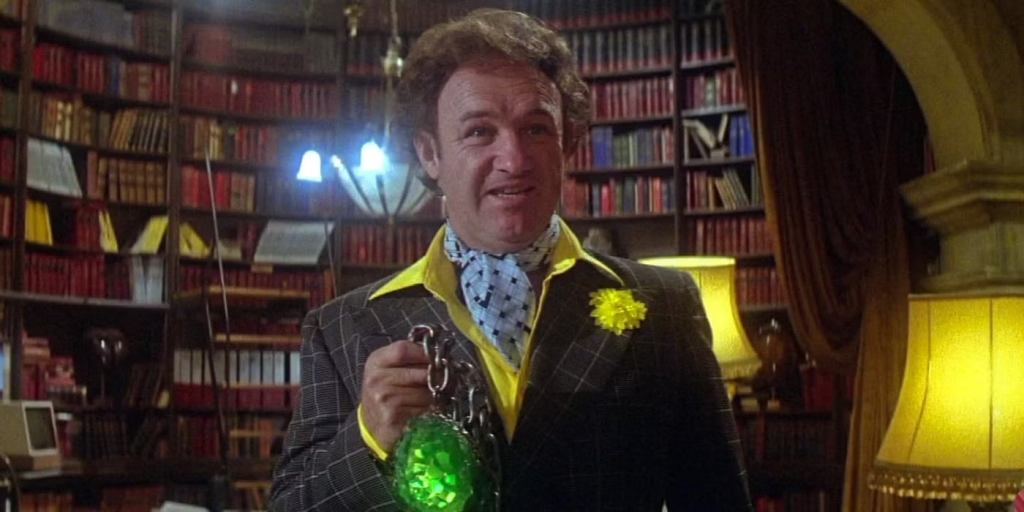
Hackman, of course, was a legendary actor, known for countless roles in dozens of classic films, but to me (and, I suspect, most people around my age) he is indelibly linked to the role of Lex Luthor. His Luthor was smooth, slimy, cheerfully manipulative and yet prone to brief outbursts of rage when faced with incompetence, which makes you wonder why he so often surrounded himself with incompetence. As much as Christopher Reeve shaped our perception of Superman and Margot Kidder our Lois Lane, so too did Gene Hackman shape our Lex Luthor.

As of when I write this, Thursday morning, the news is reporting that Hackman, his wife, and their dog were all found dead in their home in Arizona. Although foul play is not suspected, no cause of death has been determined. It goes without saying that my heart goes out to their families, those who knew and loved them personally. But also, it feels like a moment to raise a glass in tribute as another little piece of our childhood has left us forever. And at my age, it feels like we lose one of those pieces every other day. 

RIP, Mr. Hackman. See you in Otisburg. 

Comics: Death of Superman 30th Anniversary Special #1

Ah yes, “Death,” the traditional 30th anniversary theme.

Notes: Am I going a little out of order? Absolutely. But it feels more appropriate to read this now than to do so chronologically. In 2022, DC released this special with new stories by the same writers and artists behind the original Death of Superman event, followed up the next year with a special for the 30th anniversary of his return. I’ll get to that one too.

In the first story, Lois and Clark’s son Jon (still 10 years old, this is set before the Bendis aging controversy) in school when a familiar survivor of the Doomsday attack comes to talk to his class. This, as it turns out, is the first time Jon learns that his father died before Jon was born. I love this story – Lois’s talk with Jon is a nice sort of postmortem for everybody who read that story back when it was first published, encapsulating the feeling and emotion of the day while maintaining a bit of hope for the future. But as if that weren’t enough, we get a hell of a fight scene as well, as a construction worker who kept a chunk of Doomsday’s shattered bone all these years is suddenly transformed into a new version of the monster. The battle scene in the streets of Metropolis is pretty epic, and shows that Dan Jurgens hasn’t lost a step. It could have been published in 1992 and fit right in. It just makes it feel like more and more of a crime that he was bumped from Action Comics after issue #1000 when the status quo was upended. DC, I plead with you, find some way to have Jurgens writing and drawing Superman regularly again, preferably doing stories of Lois, Clark, and Jon in the past, like this one.

We also get three more stories, the first reuniting Adventures of Superman creators Jerry Ordway and Tom Grummett for a focus on Jonathan and Martha Kent. In the original “Death of Superman” we saw glimpses of the two of them watching the fight on TV. This story expands upon that, as they talk about some of the dark places and brutal battles their son had been in over the years. It’s a pretty good recap of the ‘86-’92 era of Superman through the eyes of the people who made Clark Kent the hero that he is. Martha’s Superman scrapbook is legendary, but this issue takes that concept one step further, showing the invisible impact Superman has on the world. It’s a really nice look at the character from a different angle. 

The third story brings back Roger Stern and Butch Guice, then the creative team on Action Comics, for a story starring Guardian at Project Cadmus, which was one of their ongoing subplot. The story shows the events of the day of Superman’s death from Guardian’s perspective, and although it doesn’t really offer any new insight into the story, it’s really great to see Guardian, Dubbilex, Dan Turpin, and some of the characters that were so important to the books at the time.

Finally, Man of Steel creators Louise Simonson and Jon Bogdanove return for a story about John Henry Irons, the man who will be Steel, and what happened to him during the Doomsday rampage. Having recently been saved from falling to his death by Superman, John Henry is determined to help him fight Doomsday, but as he follows the path of destruction, he find himself stopping at one disaster after another, pausing to save other people even as Superman fights for his life. This is why I love John Henry as a character so much – out of the four “new” Supermen that rose after his death, he was always the one who most embodied the spirit of Superman. With no powers, no weapons, without even the armor he would soon build, John Henry risks his life again and again to save others. And that’s what a Superman is for. 

Fri., Feb. 28

Legitimately some of the best stories of the era.

Comics: Justice League America #70, Adventures of Superman #498, Action Comics #685, Superman: The Man of Steel #20, Superman Vol. 2 #76, Adventures of Superman #499, Action Comics #686, Superman: The Man of Steel #21, Superman Vol. 2 #77

Notes: Although I can’t recall quite where, I remember reading an interview once with the creators behind the Death of Superman saga where one of them (probably Dan Jurgens) said that the stories that they were really interested in telling, the ones they found most compelling, were those from the “Funeral For a Friend” storyline. How does the world cope with the loss of Superman? How do we move on? How do we choose to honor his memory? The Doomsday story was a necessity to get them to that point, the “Reign of the Supermen” was the necessity to bring him back, but these stories are the heart of the saga.

Justice League America #70 picks up moments after the end of the battle with Doomsday, picking up the same dialogue – even the same narration – from the final pages of Superman #75. (And let’s hear it for Dan Jurgens, getting paid to write the same pages twice. Nice trick, sir!) The League is in a shambles: Blue Beetle comatose, Fire’s powers burned out and not returning, Ice injured, and Booster Gold’s future technology completely destroyed. As they try to pick up the pieces, the rest of the DCU’s heroes begin to assemble at JLA headquarters in New York to pay their respects to the fallen hero. It’s a touching book, with words of deep mourning and emotion that fit the grim day. For all intents and purposes, this was the end of Superman’s tenure with the League until it was restructured a few years later by Grant Morrison, but for what it was and when it was, this was a suitable ending.

Adventures of Superman #498 also picks up on the heels of Superman #75, showing the efforts to resuscitate the Man of Steel, and the ultimate futility of the attempt. This issue takes us everywhere: Supergirl tries to pull herself back together, Gangbuster is angry at himself for not being there, and in Smallville Jonathan and Martha Kent cling to one another and pray for a miracle. Somehow, even now, the thing that hits me hardest is the scene of Bibbo strapping on one of Professor Hamilton’s force field belts so he can withstand the jolt as he tried to hit Superman with hyper-charged defibrillator paddles. Bibbo is just one of those characters that’s too wholesome for the world – a big, gruff bruiser with the brains of a kid and the heart of a prince. The inherent goodness in him, in a man that the world would have cast aside, is what makes him such a perfect member of the Superman supporting cast. He’s another one we don’t see nearly enough nowadays. 

Action Comics #685 picks up that evening, as a Daily Planet extra edition announces the news no one wants to hear: “SUPERMAN–DEAD: METROPOLIS MARVEL KILLED IN ACTION.” Paul Westfield and Project: Cadmus get into a fight with Guardian and Supergirl over the right to claim the body, while everywhere else we see the world beginning to mourn. Meanwhile, at the Daily Planet, people are starting to worry about Lois. In the wake of the fight with Doomsday, thousands of people are missing – and one of them is her fiancé, Clark Kent. When they say that this is the section of the story the creators were most interesting in telling, this is the issue that I always come back to. The final page is one of the single most affecting pages I’ve ever read in a comic book, as Bibbo – having cleared out his bar so he can be alone – gets down on one knee, says a “Hail Mary,” and prays…not for Superman, but for the protection of the world he left behind. 

If this page doesn’t rip at your heart I’m not sure how to talk to you.

Superman: The Man of Steel #20 gives us the funeral. On a rainy day in Metropolis, millions of people line the streets to watch the processional as his body is brought to a hastily-erected monument in Centennial Park. In Kansas, meanwhile, the Kents hold a solemn, quiet ceremony of their own. Again, this issue shows us the impact of Superman on the world – people recalling the times he saved them, Batman deciding to take care of a guy with a bomb “Superman’s way,” and so on. We also get more of those Simonson-written kids that I like so much. 

In issue #76 of Superman, it’s Christmas! Doesn’t quite feel that way, though, with Superman gone. So in his memory the Justice League and a few others gather in Metropolis to carry out one of Superman’s annual traditions – reading and answering letters from people in need. This is a great issue, a sequel to an earlier story where we saw how Superman spends Christmas, and which I’ll no doubt read and write about this December. We also get a pair of subplots: Jimmy Olsen and Bibbo help out Mitch Anderson, the kid whose house Doomsday destroyed, and the Kents come to Metropolis with Lana Lang to hold a private wake with Lois, as four of the only people who knew who Superman really was. 

After this issue the stories take a turn. The immediate aftermath of his death and the period of mourning over, the story now becomes the struggle over his remains. In Adventures #499 we see that Westfield – defeated on the day Superman died – has burrowed into his tomb to steal his body for genetic experimentation. Action Comics #686 shows us that Cadmus is hoping to clone Superman, a storyline that obviously would become prominent later. Superman: The Man of Steel #21 takes us back to Smallville, where Jonathan’s memories of his lost son become overwhelming. In Metropolis, flooding helps Lois uncover the theft of Superman’s body, and takes the story to the front page. Finally, in Superman #77, after Supergirl and Lois recover Superman’s body and put it back where it belongs, Lex Luthor II (Lex pretending to be his own son) takes a moment to gloat in the tomb. In Smallville, though, Jonathan has been rushed to the hospital after collapsing in his field. After an issue of memories of his son, “Funeral For a Friend” ends with a chilling flatline.

The second half of “Funeral For a Friend” isn’t bad at all, but it’s there largely for setup. It plants a lot of seeds that would bear fruit in the upcoming “Reign” storyline. For pure emotional impact, the first half is one tearjerker after another, with a few more coming in the final two issues as Jonathan’s personal grief overtakes him. I know I say this a lot, but reading these issues as a parent makes them far, far more powerful than they were when I was a kid. As painful as it is to see Superman fall, seeing the utter devastation to the father who helped shape him into the hero he is may be the most heartbreaking part of the entire saga. 

Other Comics: Justice League of America #17, New Adventures of Superboy #32

Sat. March 1

Animated Film: The Death of Superman (2018)

Notes: Everywhere else, it’s just Saturday, but here in Louisiana it’s the weekend before Mardi Gras. And while I’m not a particularly enthusiastic paradegoer, my son is, and as such I make the effort to take him. Today was the Krewe of Lul parade, a nice little family-friendly small-town parade local to my community, and even better, I’ve got a cousin who lives on the parade route and always invites us to watch the parade there. It was a great day, and someone on one of the floats threw my son a ridiculously large stuffed snake, which my wife doesn’t yet know about as she had to work today, and I cannot WAIT to see her face when she gets home.

It’s got nothing to do with Superman, but c’mon, LOOK at this thing.

Parades are a little exhausting, though, especially when it’s hot outside, and I’m still a little too sun-dazzled to want to read anything today. So my Year of Superman continues at the moment with the 2018 The Death of Superman animated movie. This was actually the second attempt at animating the story, but as the first condensed the entire trilogy into one film rather than splitting it into two like this one, I’m waiting until after I finish reading the whole thing before I rewatch it. It’ll come soon enough.

Clearly, this is traditional carnival viewing.

This film was made during the period of DC animation where the movies were all set in a single universe largely based on the New 52 incarnations of the characters. As such, the story is tweaked appropriately to make it fit: the Justice League that faces Doomsday is that incarnation of the team rather than the Jurgens-era lineup, for example. And while Lois and Clark weren’t a couple in the New 52 era, here they’re in the early stages of a budding romance. Lois wants to keep their relationship a secret from their coworkers at the Planet, she hasn’t met his parents yet, and – probably most importantly – she does not yet know the secret of his duel identity. Other changes aren’t necessarily New 52 related, but help to condense the story: Doomsday’s coming to Earth, for example, is connected to the disaster that kills Hank Henshaw’s crew and sets him on the path of villainy he’ll occupy in the next movie. 

I’ve always been a fan of the voice cast here. It’s a little bit of stunt casting, placing real-life husband and wife Jerry O’Connell and Rebecca Romijn as Clark and Lois, but I like them both in their assigned roles. Rainn Wilson, meanwhile, is a deliciously wicked Lex Luthor, and Patrick Fabian has always sort of straddled the line between clean-cut and white collar crook, which somehow fits Hank Henshaw very well. We also get Rosario Dawson as a highly convincing Wonder Woman and Nathan Fillion as Hal Jordan, the Green Lantern that a lot of us thought he should have played in live action (although I have every confidence he’ll nail Guy Gardner). 

Pictured: First Officers Jack Ransom of the USS Cerritos and Una Chin-Riley of the USS Enterprise. (Colorized)

There’s a considerable amount of buildup here – it’s almost halfway into the movie before Doomsday’s rampage begins – but I think it’s necessary. This movie leans more heavily on the developing Lois/Clark romance, and that buildup is focused largely on that. We see Clark agonizing over whether to tell her his secret, Diana berating him for not telling Lois who he really is yet, even asking for advice from the soon-to-be-married Barry Allen about his relationship with Iris. That buildup to what should be the happiest moment of their lives, the engagement (and the reveal of the secret) is well-done, and thus when the battle with Doomsday begins and the inevitable happens, the whole thing feels even more tragic. The reveal is handled well too – I love the fact that Lois’s first reaction, once the shock wears off, is “This is so unethical! You’ve been writing stories about yourself!” The emotional resonance echoes after the battle too, as we see the Kents unable to get close to their son’s funeral, then see Bibbo’s beautiful prayer sequence recontextualized into a montage over the city in mourning. 

The animation isn’t my favorite, to be honest. The characters are a bit too blocky, and they’re using the New 52-era designs, which means excessive lines EVERYWHERE, and Superman’s suit is too dark and kind of bland. But once we finally get to the fight with Doomsday it’s brutal and pretty epic. The killing blow is actually far more graphic than I expected, with Superman actually hitting Doomsday hard enough to make his head spin around, and it doesn’t look “cartoony” at all. 

Also, Bibbo is in this movie. So, y’know, I like it. 

Sun. March 2

Comics: Superman Vol. 6 #23, Justice League Unlimited Vol. 2 #4, Power Girl Vol. 3 #18

But certainly, Doomsday must have mellowed out in the last 30 years, right?

Notes: I’m taking a quick break from the Death and Return saga to check in on this week’s new Superman-related titles. First up: Superman Vol. 6 #23, the latest in Joshua Williamson and Dan Mora’s ongoing saga. Doomsday is now the Time Trapper, and his control over the timestream is giving Lois a chance to pause while the contemporary Doomsday and Radiant battle it out in Metropolis as the Superman family tries to hold the line. I like what Williamson is doing here, using the original Death of Superman storyline (so I guess I’m not TOTALLY taking a break) as the framework for this new story, and giving us a neat focus on the characters . There’s a great speech from Lois when she talks about how she wept on the day Superman died, and how her tears may not have been for exactly the reasons one may have expected. It’s not a retcon, but rather a subtle recontextualization of the moment that I think actually works really well. And as usual, Dan Mora is killing it. I can’t say enough good things about his artwork. Over the past few years he’s become probably my favorite current artist in comics, and he’s earning his place on the Superman Mt. Rushmore with the likes of Curt Swan, John Byrne, and Dan Jurgens.

I’m not done with Mora yet, though – he also drew this week’s Justice League Unlimited Vol. 2 #4, this time teamed up with writer Mark Waid. The terrorist group called Inferno is unleashing havoc all over the world, with global fires crippling the Martian Manhunter and perhaps even killing Swamp Thing. In response, Mr. Terrific tries to recruit Alec Holland’s daughter Tefe, while Batman sees to the fallen J’onn J’onzz. Superman’s actual participation in this issue is minimal, appearing in just a few panels helping with the evacuation efforts from the wildfires while the big brains and the magic users try to solve the problem, but that’s actually one of the reasons I like this book so much. Waid has really stacked the deck by including virtually every hero in the DCU. It would be really tempting to still spend most of the time with the Big Guns, but Waid has done a great job crafting a story that allows for the lesser-known characters to rise to the front lines instead of Superman and Wonder Woman to be the A-team every single issue. It may be tangential to my “Year of Superman,” but it’s still maybe the best book DC is publishing right now.

Last but not least, Power Girl Vol. 3 18 continues Leah Williams and David Baldeon’s tale of the housewarming from hell. The grand opening celebration for the new Star building, complete with a bunch of guests from Asgard, is disrupted when a strange barrier traps everyone inside. Superman and Steel (John Henry) try to crack it open from the outside, while inside, Power Girl, Omen, and Steel (Natasha) attempt to get to the bottom of their predicament. This is an issue that feels very much like a middle chapter, incomplete and with a lot of questions. In and of itself, there’s nothing wrong with that, but I don’t know if they structure the story quite enough to get us started before the story begins. We kick it off with the barrier already in place, then after several pages, flash back to how we got there. I don’t object to in medias res, but I don’t know if it really works well for this issue. Hopefully the next chapter of this particular story will clarify things a bit. 

Mon., March 3

Comics: Legacy of Superman #1, Supergirl/Team Luthor Special #1

Notes: After the conclusion of the “Funeral For a Friend” storyline, DC took the rather bold – for the time – step of ceasing publication of the four Superman titles for a few months. They resumed in the spring with Adventures of Superman #500, and I have to give them credit for not doing what they would do today – namely, restart each series with a new first issue. Actually, in the gap they would have published four separate miniseries for the four Supermen who took his place, THEN restarted each series with a new first issue. But I digress. In the gap, they published a few specials about what was happening in Metropolis in the wake of the Death of Superman

Don’t get too attached to that kid in the upper right-hand corner.

Legacy of Superman includes five short stories about different defenders of Metropolis. First was a Guardian story, set during the time before Lois and Supergirl retrieved Superman’s body from Cadmus, about their efforts to map Kryptonian DNA. As several of the characters wrestled with the ethics of the situation, we are introduced to the hyper-advanced Guardian clone called Auron, a character who, as I recall, seemed like he was going to be more important that he eventually turned out to be. Next was a story that brought back the old character(s) Rose and Thorn. Rose Forrest is secretly the vigilante called Thorn – a secret that even she herself does not know. It’s what at the time was called Multiple Personality Disorder, or at least a comic book-level understanding of it. With Superman dead, crime in Metropolis is on the rise, and Thorn comes back to help out. It’s a perfectly fine story, but other than reintroducing Thorn, it’s not particularly significant. Of more significance is the Gangbuster story. The longtime Superman supporting cast member is trying to step up and fill his shoes, but the fight against Metropolis’s criminals is getting harder on him, wearing him down, and making him more brutal. Story number four features Sinbad, a young boy with telekinetic powers who had appeared in a three-issue storyline a few years prior. This story, like the issues that introduced him, was by the creative team of William Messner-Loeb and Curt Swan, and I’m pretty sure it’s the last time the character ever appeared. 

The last story features Waverider, and for reasons I cannot fathom, it is not included in the DC Universe Infinite edition of this comic book. I swear that app seems less and less Infinite all the time. Fortunately, I’ve got the week off work and I’ve got the issue in my collection. Waverider (from the Armageddon 2001 storyline) has at this point joined the Linear Men (from the Time and Time Again storyline) and, upon learning of Superman’s death, is determined to use their time travel powers to save him. That is until their leader, Matthew Ryder (an alternate-timeline variant of Waverider himself) starts listing people whose contributions to history could have been greater had they lived longer and asking where they drew the line. It’s a good argument, but I’ve always wondered why Dan Jurgens didn’t take it a step further to the logical conclusion – that manipulating time for your own ends is as dangerous as the enemies to the timestream you fight, and that doing so (even with good intentions) has rarely ended well.

Laugh if you want, but do YOU have hair that magnificent?

The Supergirl/Team Luthor Special has two stories. The first, by Roger Stern and June Brigman, focuses on Supergirl and “Lex Luthor II”’s private police force stepping up to help fight crime in Metropolis, similar to some of the stories in the previous volume. Louise Simonson writes the second story, where Supergirl encounters some of the Underworlders whose story has been one of the major plots in Superman: The Man of Steel. Both of these stories, while perfectly fine, seemed somewhat insignificant at the time. With the benefit of hindsight, though, I see that they were planting seeds for stories that would play out in the next Supergirl miniseries and the accompanying Superman titles featuring the collapse of Project: Cadmus, the fall of the Underworld, and the end of Luthor’s charade – stories that, I’m fairly certain, wouldn’t be published for nearly a year. They plotted things REALLY well, those Triangle Era Superman writers. 

Tues., March 4

Magazines: Newstime, Wizard Superman Tribute Edition

Did Jimmy win a Pulitzer for this photo, or am I just imagining things?

Notes: In addition to the two one-shot comics published during the Superman Gap, DC also released a one-off edition of Newstime, a fictional news magazine that Clark Kent worked for briefly in the comics. The magazine, featuring a “photograph” on the cover taken by Jimmy Olsen as Superman lay dying, is a sort of defictionalized artifact of a news magazine from the DC Universe, giving us in the real world a glimpse into how the DCU reacted to Superman’s death. There are, as expected, news articles written about the battle with Doomsday, the reaction of the world to Superman’s death, and the chaos that the Justice League was left in with Superman dead and so many of their members injured or powerless. The magazine fits really nicely in with the comics, with bits updating the status of some of the celebrities that were reported missing in the comic books after Doomsday’s rampage. Baseball player Hank “The Hammer” Halloran, you’ll be happy to note, survived the attack, but comedian and actor Morty Beckman died in a collapsing building. Daily Planet reporter and former Newstime editor-in-chief Clark Kent is still among the missing. 

Other things in the magazine are somewhat odd, like the article featuring quotes from assorted famous people about the death of Superman. Many of them are DC characters like Bruce Wayne, Lex Luthor II, Wonder Woman, and so on. Others, though, are from real-world figures, and they don’t all seem to be written from an in-universe perspective. A quote from William Shatner tells about how he used to dress as Superman when he was a child, Penn Jillette comments that Superman will have to die a few more times before he’ll be impressed, and John Goodman regales us with a bizarre story of his own personal encounter with Mr. Mxyzptlk following Superman’s death. I’m forced to wonder if some of these are legitimate comments they got from these people. After all, Superman’s death is one of the few comic book stories (especially back then) that made the major news cycles. 

The book finishes off with a few pages of fake movie and music reviews and lots of fake ads, and I have to give the DC crew credit for how well it’s all put together. Except for the fact that the “photos” are mostly panels taken from the comics, this looks and feel like a real news magazine, albeit much thinner than most of them. And just in case anyone thought that they’d let a book like this go without any foreshadowing, there’s a two-page ad early in the book that was meaningless when the magazine was originally published, but became quite jarring in hindsight just a few months later. 

😬

There’s one last thing I wanted to read from the “Death of Superman” era before we begin with the return tomorrow, and that’s this special Wizard Magazine tribute edition. I was a big fan of Wizard in its early years and was a subscriber for quite a long time. Eventually I got rid of all my old issues, a move which I now deeply regret, especially in the case of those few issues in which they published letters I wrote. But I held on to this Superman special, a nice little package released after the Death storyline but before the return really wrapped up. I haven’t read it in many years, though, and it’s interesting to go back and look at what the contents include.

Do you think anyone in comics has drawn versions of the same scene as many times as Dan Jurgens has this one?

There’s a piece by legendary Superman artist Curt Swan about his time with the character, to start. Jack Curtain provides a fairly comprehensive (although somewhat cynical) history of Superman, while Joel W. Tscherne gives us a good piece of the history of the post-Crisis Superman to date. Reading this article again, I’m jarred to realize that more time has passed for the most recent incarnation of Superman (the one we’ve had since DC Rebirth sort of merged the 90s Superman with the New 52 version) than had passed between John Byrne’s Man of Steel and the Doomsday story. Good grief, somebody get Waverider in here to make time slow down.

We get a retrospective on great Superman artists throughout history, a piece that is dying for a contemporary update to include all the greats who have worked on the character since then (including Stuart Immonen, Barry Kitson, Ron Frenz, Jim Lee, Ed McGuinness, Tim Sale, Frank Quitely, Alex Ross, Patrick Gleason, Jamal Campbell, and my current favorite Dan Mora – and that’s just off the top of my head). Next is a look ahead at the return of Superman, including interviews with the creators, especially Jerry Ordway, who ended his tenure as a Superman writer with Adventures of Superman #500. Then the writers for “Reign of the Supermen” talk about the four characters we’re going to meet very soon. Action Comics’s Roger Stern says that their Superman will be more “Kryptonian,” but cautions us that it’s not going to be someone trying to turn Earth INTO Krypton, like in the Eradicator storyline. Stern, you cheeky monkey. Ordway’s successor Karl Kesel talks about how Adventures of Superman will give us a more “modern” Superboy (he didn’t like being called that) who ties himself to WGBS, a TV station, rather than a stodgy old newspaper. Dan Jurgens talks a bit about the Cyborg Superman, although to me the part of this section that stands out is where he discusses Lois’s skepticism. Good for you, Lois. And Louise Simonson talks about John Henry Irons, even giving a lot of backstory about his family that I don’t know has ever been explored very much in the comic books, which is a shame. 

There’s a lot more in here, including a piece from Elliot S! Maggin about Superman as a pop icon, Andy Mangels talking about Superman’s history on TV and in film, and lots of other articles about various pieces of Superman’s history. I’ve gotten psyched to go back and read more of these, and I probably will in the coming weeks, but hopefully the stuff I’ve talked about will give you the impetus to dust off your copy (or find one on eBay) to go back and revisit this interesting time capsule of who and what Superman was in those months between his death and his return.

And speaking of his return…

…well, I’ll see you tomorrow. 

Blake M. Petit is a writer, teacher, and dad from Ama, Louisiana. His most recent writing project is the superhero adventure series Other People’s Heroes: Little Stars, volume one of which is now available on Amazon. You can subscribe to his newsletter by clicking right here. You can join in the Kryptonian Konversation every day in the Year of Superman Facebook Group!
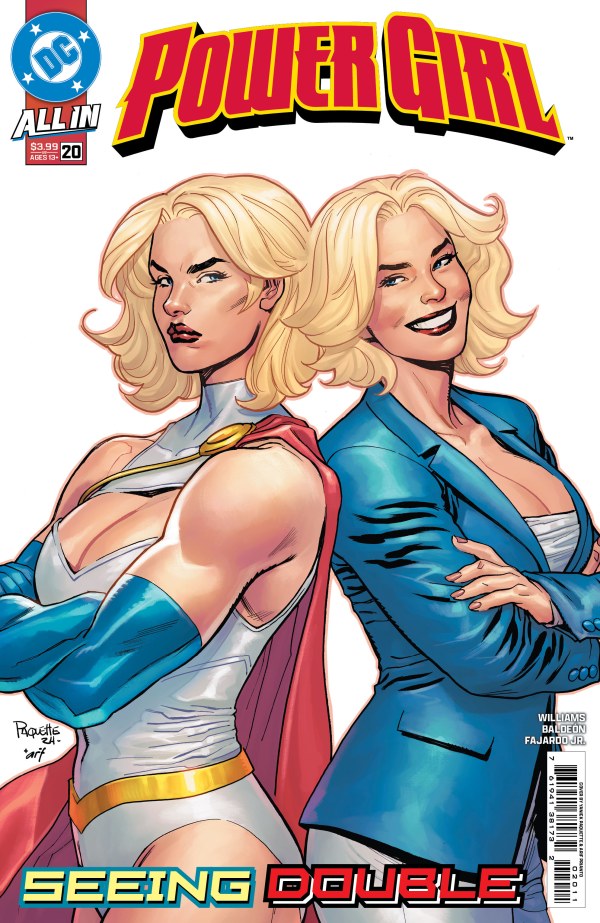
Year of Superman Week Five: Like Throwing Darts at a Board

As I approach the end of January, having finished up my first theme week, I find myself in a bit of a pickle in regards to what Superman content I want to read today. I’m not ready to kick off another theme week yet, but as I look over my (prodigious) list, I find that most of the stuff I’m particularly excited for is all suited for one of the theme weeks I’ve got planned for later in the year. So what, then, should I read on this random Wednesday? Never let it be said that I make things easy on myself. After some brief deliberation, I just scroll through the offerings on DC Universe Infinite until I settle, fairly randomly, on my first read for the week.

Wed., Jan. 29

Comics: Legends of the DC Universe #39, Superman Vs. Meshi #1

Notes: DC once published a title called Batman: Legends of the Dark Knight, which featured a different creative team on every story arc telling stories that were not necessarily constrained by any particular continuity. There were some amazing stories told in this series, and they eventually spun the idea off into Legends of the DC Universe, a series which not only switched out the creative team with every story, but also the main character. This issue, a one-off by Danny Fingeroth and Randy Green, is called “Sole Survivor of Earth.”

Which, let’s face it, sounds like a depressing idea even if you WERE that sole survivor.

The issue begins with a very familiar scene – a scientist and his wife concerned about an upcoming disaster that could mean the end of life on their planet, a fear made even more prescient due to their infant son. But we aren’t on Krypton this time – we’re in Washington state. Superman, meanwhile, is at the Fortress of Solitude, building a memorial to his Kryptonian parents, when he gets a notification of a disturbance at the Earth’s core. The scientist, Dr. Balboa, has been studying the tremors and trying to stabilize them, only to accidentally trigger a sequence that could destroy the Earth. In desperation, he and his wife drop their son into a spaceship and blast him to another inhabited system. Why not? It worked for the last guy.

Except in this case, the “last guy” manages to save the world, stopping the destruction Balboa’s experiments caused but sapping a lot of his power anyway. When he tracks down Dr. Balboa, he learns about the child in the rocket and sets off to space, despite his own power loss, to find him.

This is a good issue. It’s never going to make a boxed set of the Greatest Superman Stories Ever Told (that reminds me, I’ve got to find and read my copy of The Greatest Superman Stories Ever Told), but it’s a fun story that nicely turns the traditional Superman origin story backwards. There’s not a lot of tension, to be honest, because the outcome is never in any doubt. Nobody thinks that Balboa is actually going to blow up the Earth, and there’s no such thing as an infant in danger once Superman finds out that they need help. Their survival is pretty much guaranteed. But that doesn’t make it any less fun to look at things from a different point of view once in a while.  

I also, somewhat randomly, went back and read Superman Vs. Meshi #1. This manga series was a part of a line of books that DC co-produced with Kodansha Comics. Joker: One Operation Joker was another, and the third, Batman: Justice Buster is still running. I always considered this the most bizarre of the three, though, because…well… it’s about Superman eating at Japanese chain restaurants. 

You will believe a man can fry…rice. I’m sorry, that was terrible.

No. Really. That’s what this entire series is about. And it ran for 23 issues.

In this first issue, having been turned down by Lois for a lunch date, Clark whips over to Japan to indulge at an all-you-can eat yakitori joint. (For people, like myself, who have no idea what yakitori is, I Googled it – chicken skewers.) There’s a brief fight scene – a flashback as he remembers the villain he fought who on the day he first discovered the restaurant, but the bulk of the story is him ordering various meat skewers and gushing over how delicious they are. The writer, Satoshi Miyagawa, lovingly describes the food in a way that makes you wonder whether you’re reading a superhero comic book or a restaurant review, and at one point he’s so “overwhelmed by flavor” that the food literally activates his heat vision. He even goes on about how well the yakitori pairs with the soda he ordered. 

Perhaps the weirdest thing is that none of this ever feels out of character. Would Superman pop over to Japan just for lunch? Yeah, I think he would. Would he have a running inner monologue about how good the food is and how it all comes together? People forget that Clark Kent is a writer, and like most writers I know, he probably has an inner monologue that never shuts the hell up. The only difference is that this is a scene that they would almost never write in an American comic because it’s too important that we get to the scene where he has to beat the crap out of Terra-Man or something. 

This book is so WEIRD. But for some reason, I like it. 

Thur., Jan. 30

TV Episodes: Superman and Lois Season 2, Ep. 1, “What Lies Beneath”

The “V” season, apparently.

Notes: The second season starts off right where season one ended – the rescue of Natasha Irons from John Henry’s original universe…but in her universe, this Natasha is the daughter of Lois Lane, something that causes issues for the both of them. Meanwhile, both Jordan and Jonathan are facing issues with their respective girlfriends, and the teenagers acting like teenagers have Lois and Clark butting heads with each other.

In my notes on the season one finale, I mentioned that this show was cut from a different cloth than other CW shows. As season two begins, though, it feels a bit more CW than ever. The clash between Lois and Clark over Jonathan’s behavior feels really forced – Lois is taking her frustrations out on Clark and he’s not acting with the degree of empathy one would expect from Superman. I’m actually starting to feel a little vibe from the Lois Lane miniseries that I read last week, where Lois acted inexplicably angry towards everyone. Eventually, she explains this as anger over her own mother leaving her family when she was young, and thinking she’s like that because she doesn’t feel anything motherly for Natasha…who, we have to stress here, is NOT her daughter. It doesn’t really make that much sense.

Natasha, meanwhile, is behaving even more irrational, taking her frustrations out on her father and somehow blaming him for the fact that the people who were her friends in her home dimension don’t know her here. Huh? In her case, at least, the frustration is more understandable, but the show skips over showing us why Natasha can’t seem to fit in. There’s an undercurrent of rage to this episode that’s baffling me. 

Superheroes? Oh yeah, there’s a little of that. Superman learns that Sam Lane’s replacement at the DOD is using the X-Kryptonite recovered in season one to create his own little army, complete with his shield, which Superman isn’t happy about. I sense this is going to be the undercurrent for this season. 

Comics: Superman: Lex Luthor Special #1, DC’s Lex and the City #1

I mean, not so’s you would notice, Lex.

Notes: I also read a couple of this weeks’ new comics today, one of which is more relevant than the others. The Superman: Lex Luthor Special is continuing the ongoing storyline from the main Superman comic and, in fact, is written by regular writer Joshua Williamson. In last fall’s DC All In Special, Darkseid was (seemingly) killed, but a new, alternate universe was forged, infused by Darkseid’s negative energy, as opposed to the more hopeful environment of the main DCU. In this issue, Mr. Terrific is trying to crack the secret of this other world (which readers will know is the setting of DC’s Absolute Superman and other titles), but the inherent darkness is too much. There’s only one man brilliant enough to understand this but with a mind that won’t be corrupted by it…unfortunately, Lex Luthor has had amnesia for some time, and has been trying to live down the dark deeds of his previous self. 

This is hardly the first time we’ve seen Lex try to be a good guy, but much like we’ve seen Lois become Superwoman before, this series has been handling it well. It’s such a tight balancing act with Lex, as we see there is a goodness in him, but it’s usually overshadowed by his darker, more selfish nature. This issue seems to promise that story is moving forward now, with a final revelation that’s going to change things. I’m more interested in the flashbacks to Lex’s childhood that help paint who he really is. Good issue.

This week also gave us DC’s annual Valentine’s Day special this year titled DC’s Lex and the City. Luthor is the star of the title story in this anthology, in which a gossip columnist gets tangled in his web. It seems a little farfetched that Lex would be smitten with this woman, to be honest, but despite that It’s an okay story. It’s an okay anthology, with some stories being better than others, as is usually the case. If you’re planning to read this, the Mr. Freeze story is the prize of the bunch. Really, though, the main reason I’m even taking any notes about it is to point out that whoever is giving titles to DC’s holiday specials deserves a raise. Lex and the City is hilarious, and it goes right up there with the Christmas special Grifter Got Run Over By a Reindeer and the Halloween haunt Are You Afraid of Darkseid?, among others. I love it. 

Fri., Jan. 31st

Comics: Day of the Krypton Man from Superman Vol. 2 #41, Adventures of Superman #464, Action Comics #651, Superman Vol. 2 #42, Adventures of Superman #465, Action Comics #652; Return of the Krypton Man from Superman: The Man of Steel #1, Superman Vol. 2 #57, Adventures of Superman #480, Action Comics #667

It’s so embarrassing when they mix up your suits at the cleaners.

Notes: Today I (again, randomly) decided to read the two storylines that most contributed to the creation of the Eradicator, one of the best concepts of the late 80s before he got a little watered down (as happens to a lot of great villains, am I right Venom, Carnage, Sabretooth, the Joker, and Doomsday?) I considered starting with the storyline that where he first showed up, but the Exile arc is pretty long and I’ve already decided to restrict myself to only two long story arcs this year, lest I have no room for anything else. So here’s the short version: while exiled in space, Superman found a Kryptonian artifact called the Eradicator which he brought back to Earth, where it constructed a citadel in the antarctic, which eventually became this continuity’s version of the Fortress of Solitude. As Day of the Krypton Man begins Draaga, an alien Superman encountered during that arc, is coming to Earth to get his revenge on the big guy. At the same time, that cosmic bruiser Lobo is heading to Earth to prove how tough HE is by throwing down with Supes. Also, Maxima of Almerac is once again zipping to Metropolis to convince Superman to become her mate. And if that wasn’t enough, when they get to Earth they all find a Superman that is becoming cold and aloof, ignoring his family and friends and approaching his task as Earth’s protector with stark logic rather than his trademark compassion. He’s firing people from his new job as editor at Newstime magazine, forgetting Lana Lang’s birthday, and spurning Lois when she tries to ask him out. This is, simply, neither the Superman nor the Clark Kent any of us know. 

The Eradicator’s doing, as it turns out. The device is manipulating Superman, transforming him both mentally and physically into the “ideal” Kryptonian. His encounters with the three alien menaces all end in ways that would be out of character for Superman when he’s in his right mind, the fight with Draaga even transporting the top half of the Statue of Liberty to the moon. (Professor Hamilton’s fault – he was trying to help, but if Superman was himself he’d never have allowed the fight to happen at such a popular tourist attraction in the first place.) Eventually he makes the decision to abandon both of his identities, Superman AND Clark Kent, and live merely as Kal-El, a Kryptonian trying to bring Krypton to Earth.

I love the ending of this one. What ultimately snaps him out of it and allows him to break free of the Eradicator’s influence is concern for his parents, Jonathan and Martha Kent. When the Eradicator endangers the two of them, his reprogramming of Clark’s brain starts to break down and the real Superman comes back. Over the nearly 90 years that this character has existed, the degree to which he identifies as a Kryptonian has always varied wildly from one incarnation to another. This is the way I see him: he’s a human, a resident of the planet Earth, who happens to have a Kryptonian heritage. And when the two clash, it’s Clark Kent that wins out over Kal-El.

At the end of this story, Superman balls up the Eradicator and chucks it into the sun, thinking that’ll be the end of it, but about 15 months (and one engagement) later, he shows up again in the appropriately-titled Return of the Krypton Man storyline. The Eradicator returns, this time in a humanoid form, having used his time in the sun to begin the process of transforming it into a red dwarf to mimic the sun of Krypton. The next step in his plan is to terraform Earth itself into a replica of his dead planet. I may have mentioned a few weeks ago how tired I am of the “Kryptonian villain tries to turn Earth into Krypton” trope…well, I first read this story when it was originally published, long BEFORE I got tired of it, so it doesn’t bother me quite as much.

“And take THAT!”

Although this one is four issues instead of six, each of those four issues was giant-sized, so the page count works out about the same. Despite that, this one feels like a much quicker read. This storyline started with Superman: The Man of Steel #1, the book which gave the “Triangle Era” of Superman four titles and essentially making his adventures a weekly rather than a bunch of semi-related monthlies. With this storyline the creative teams were slightly shuffled as well. The Superman/Eradicator fight is ongoing, beginning at the end of Man of Steel #1 and continuing more or less uninterrupted throughout the other three issues, while a number of subplots are established or developed throughout the four issues. Among them we’ve got Perry White, on leave from the Daily Planet, trying to save his marriage; his temporary replacement laying off 10 percent of the newspaper staff, including Jimmy Olsen; Cat Grant finding herself the target of harassment from her boss while Jose Delgado (aka Gangbuster) looks after her son; and a terrorist group called Cerberus making attacks across Metropolis. All of these stories play out and develop as Superman and the Eradicator fight on Earth, off in space, and back to Earth again. 

Superman wins, of course, with the help of Emil Hamilton. This is a decent story that eventually turns out to be setup for the Death and Return of Superman story, which I’ll probably be getting to in just a couple of weeks. I do wonder, though, if they were already planning that when this storyline was put to press or if it was just one of those moments of serendipity.

Sat., Feb. 1

TV Episode: Superman and Lois Season 2, Ep. 2, “The Ties That Bind”, Ep. 3, “The Thing in the Mines”, Ep. 4, “The Inverse Method”

Notes: It’s been a rough 24 hours for me, and I have to confess, I wasn’t certain I’d get around to Superman today. But I’ve gone this far and I don’t want to break the streak so early in the year, so I’m jumping into the next few episodes of Superman and Lois.  

There’s a LOT going on in these few episodes. Clark is being plagued by strange visions and emotional outbursts that are making him dangerous. Trying to figure out what’s going on, he discovers that his newly-found brother has somehow regained his powers. Lois is being targeted by a podcast host who’s getting sources of hers from an old story about a cult to recant their testimonies to her. Jonathan suspects a kid at school is taking some sort of super-steroid. Jordan finds out his girlfriend had a fling at camp. Lana decides to run for mayor. John Henry and Natasha try to settle in on the Kent farm. This is the Dagwood Sandwich of CW superhero shows.

Not to say that it’s bad. There’s a lot of stuff going on, but the show doesn’t really have difficulty keeping everything straight. And it’s likely that, before the season is over, everything will come together like an episode of Seinfeld. It’s just weird to have so many different plots running at the same time, moving in and out of each other as the focus switches around the various characters involved. 

The Lois plot, involving the cult, is the one that’s bothering me at the moment, mostly because once again we see Lucy Lane turning up as a punching bag. I don’t think we’ve seen Lucy before in this continuity (someone correct me if I’m wrong) but I immediately think of all the stuff that’s happened to the character in the comics over the years. She was blind for a while, she was a villain for a while, she gets dumped by Jimmy Olsen, she marries Ron Troupe and has a baby, but if I’m being perfectly honest I haven’t got the foggiest notion if that kid even still exists in the current DC Universe. And here she is, a former cult member who seems to be disavowing the sister that tried to save her. This isn’t really a knock on the show, it’s just telling a story, but I really dislike the trope of making a character the universe’s punching bag. (I know I’ve said it before, but it’s the reason I don’t enjoy most modern Spider-Man comics anymore.) I guess I’m just saying that I wish Lucy would get a break. Everybody needs one once in a while. 

Nice little surprise towards the end of episode three, though: Superman battles the “Thing in the Mines” from the title, a powerful enemy in a suit of armor. When Superman cracks the armor open, though, he finds a distorted version of his own face staring back at him. Is this their version of Bizarro? And have they found a way to do the character that actually makes him menacing? Unlike Lucy, Bizarro is a character I can take either way, either as the ultra-powerful menace OR as the misunderstood giant who’s not actually out to HURT anyone, but is dangerous just by virtue of his power. If he’s a pure bad guy this time around, I’m okay with that.

Last thing I’ll point out is the increased focus on Natasha. I like how she’s turning around. She felt kind of whiny in that first episode this season, but she’s come back and shows a lot of wit and intelligence in these. I’m willing to chalk that first appearance to growing pains as the writers tried to figure out the character. I’m already liking her much more. 

Episode four (I’m writing this as I watch and not going back to edit, just for clarity) seems to prove that I’m right. The Mine Guy looks about as Bizarro as you could get in live-action without getting goofy.

Sun., Feb. 2

Comic: DC Speechless #3

Silent but delightful.

Notes: DC Speechless was a short digital-first series by Gustavo Duarte. Each issue placed a different character in a wordless, comedic adventure of some sort. In this issue, Superman is forced to face down a couple of giant bugs attacking not only Metropolis, but also his wardrobe. 

These silent issues are always a neat challenge for storytellers. Getting everything across through pictures only is a mark of a great artist, and Duarte is really good at telling a funny story. I enjoyed this quickie for what it is – simple, a little silly, and beautifully drawn.

Mon., Feb. 3

Comic Book: Superman #123

A psychologist could have a field day with this.

Notes: It’s time for a little more Silver Age silliness. Before the first appearance of Kara Zor-El, the Supergirl we all know and love, there was a proto “Super-Girl” that first appeared in this comic. An archeologist gives Jimmy Olsen a souvenir – an ancient totem that can ostensibly grant three wishes once a century. Jimmy, having earlier overheard Superman tell Lois that he could only ever marry a “super girl” who wouldn’t be in danger from his lifestyle, decides to wish up a prospective wife for him. This, friends, is why he’s called “Superman’s pal.”

Of course, things go wrong as the girl keeps blundering into things and screwing them up, because that’s apparently what super powered women do, until she finally sacrifices herself to save Superman from some Kryptonite. The funniest part is the panel where Jimmy uses the totem to wish her away before she dies, where he chokes and says, “We’ll never forget you,” then everbody promptly proceeded to never mention her again, not even a few months later when Superman met his cousin from Krypton who looked virtually identical to the girl that his best friend conjured up or him to marry. Wild time.

Ah, but the fun wasn’t over. Jimmy got THREE wishes from the totem, remember, so this is a full-length three-parter! In the second part of the story some crooks read the Daily Planet story outlining how Jimmy used the totem to create Super-Girl, then break into his apartment to steal the magic artifact and use it to take away Superman’s powers. That’s it. Not for powers of their own. Not to, I dunno, kill Superman. Not even just for a mountain of money so that the criminals don’t have to crime anymore. The underworld of Metropolis was really short-sighted at the time, weren’t they? Anyway, Superman and Jimmy use some stunts to mimic his powers and make the crooks think the wish didn’t worry so they’ll retrieve the totem, at which point he shows up, captures them, and has Jimmy cancel the wish.

With just one wish left, Jimmy wants to make it a great one to make up for how the first two screwed up. (Jimmy, for heaven’s sake, just wish for a winning lottery ticket like a normal person.) This time he decides it’d be swell if he could send Superman back in time to meet his parents, but since he doesn’t want Superman to hear him MAKING his wish, he types it up. And apparently he’s as bad at spelling as Lois legendarily is, because he accidentally types “I wish for Superman to MATE his parents on Krypton.” Supes is whisked back in time to an era before his parents married. One might expect him to have to play Cupid here, based on how Jimmy’s typo was phrased, but Jor-El and Lara are already a couple. They just can’t get married yet because they’re accused of being part of a terrorist plot to overthrow the government and they wind up needing their son’s help to clear their names. This includes tricking a villain into accidentally creating Kryptonite, which seems kind of counter to the whole “no killing” thing, but I digress.

It’s another case of insane Silver Age storytelling – all three parts of this “novel” (which they loved to call these stories on the cover) are predicated on wild misunderstandings, incredible cases of jumping to conclusions, and just plain bafflingly stupid choices on the parts of the heroes and villains alike. I’m a teacher, and I’m constantly telling my students that it isn’t fair to use the standards of the modern day to judge the citizens of an earlier time, but stories like this make it pretty dang tempting sometimes. 

Tues., Feb. 4

Short: The Bulleteers

Notes: After a very random and, frankly, pretty harsh week for me outside of the Superman blogosphere, I decided to close things off with another of the classic Fleischer shorts. Next up is The Bulleteers from 1942. In this one, the bad guys (you can tell they’re bad guys because they’re all wearing the same cowl with a point in the front but no mask) create a bullet-shaped rocket car they intend to use to rob the Metropolis treasury.

The very faces of evil.

I do not understand the motivations of villains like these. They want money? They have invented a flying car that turns into a giant bullet. They can afford to construct a secret base in the core of a mountain, complete with turning one side of that mountain into a hidden drawbridge-style door. I don’t know exactly what the overhead on any of this stuff is, but it seems to me that patents on this kind of technology alone have to be far more than the city of Metropolis could possibly be able to cough up.

Anyway, after the Bulleteers crash into the Treasury building, which conveniently seems to keep all of the money in the city in one enormous vault, Superman gets his hand on it and rips it apart in midair, saving the day. Good for him.

Tangent: This isn’t directly Superman-related, but I think it’s something worth addressing. Today, the trailer for the new Marvel movie Fantastic Four: First Steps was released. You may not know this, but my love for the Fantastic Four is almost – not quite, but ALMOST – up there with my love of Superman. The Thing is my second-favorite character in all of comics, and I firmly believe he’s the best thing Stan Lee and Jack Kirby ever did. I saw the trailer and I enjoyed it immensely. I even made an incredibly dorky TikTok video about it, in my own inimitable style.  

The reason I’m bringing it up here, though, is because in some of the Superman groups I follow, I saw people posting the video and saying they don’t think it will be competition for James Gunn’s Superman. And I have to ask this question, guys.

Why does it NEED to be?

Seriously, where is it written that every film has to be a direct rival of every other? Or every studio? Is it because they come out in the same month, Superman on July 11th and Fantastic Four two weeks later on the 25th? Or is it just because Marvel and DC fans have some sort of deep-seated need in their very souls to somehow prove their dominance over the other?

It makes no sense to me. I am looking forward to Superman. Hell, I decided to devote this entire YEAR to how much I’m looking forward to it. But that doesn’t mean I’m not allowed to look forward to Fantastic Four. It doesn’t mean if I like one, I am not allowed to like the other. It’s said that a rising tide raises all ships, and I sincerely believe that – a great superhero movie will make people thirst for MORE great superhero movies, and hopefully the studios will learn the right lessons from one another about what MAKES a great superhero movie. Judging by the trailers from these two films, I feel as though they have.

And if there’s no other reason to ask why they have to be opposed to one another, just ask yourself this: would Superman want it that way? Would he want to be rivals? Or would he be in the front row of the cinema on July 25th, cheering for the adventures of Marvel’s first family with the rest of us.

I rather suspect that would be the case, don’t you?

Blake M. Petit is a writer, teacher, and dad from Ama, Louisiana. His most recent writing project is the superhero adventure series Other People’s Heroes: Little Stars, volume one of which is now available on Amazon. You can subscribe to his newsletter by clicking right here. You can join in the Kryptonian Konversation every day in the Year of Superman Facebook Group!