Geek Punditry #137: Teeny Tiny Terrors

Grady Hendrix’s novel How to Sell a Haunted House has been optioned for a motion picture. This is not new information, by the way – the deal was signed with Sam Raimi’s Ghost House studio about two years ago, but today is the first time I’ve heard about it, and it’s got me very interested. I like Hendrix’s work quite a bit. I’ve only read three of his books so far (the aforementioned Haunted House, Final Girls Support Group, and the very cool nonfiction book Paperbacks From Hell, about the history of horror novels and cover art in the 70s and 80s), but every one of them has encouraged me to read more. I don’t know if it’s fair to classify myself as a “fan,” having only really dipped my toes into his work thus far, but perhaps “fan-in-training” would be accurate. Regardless, having read How to Sell a Haunted House, I am immediately struck by the cinematic possibilities of the story, while at the same time, left very curious about exactly what tone they’re going to strike with a horror movie where the villains are – drumroll please – puppets.

You don’t even want to know what going through escrow is like.

I apologize if that feels like a spoiler to anyone, but it’s part of the synopsis of the book and, when the movie is made, it most likely will be in the trailer, so I don’t feel TOO bad. It’s kinda like if you hear that there’s a new slasher movie coming out and someone tells you that the killer wears a mask. In the novel, single mom Louise Joyner has to go back to her home town after her parents are killed in a car crash. Once home, she’s forced to go about the task of closing up her childhood home for sale with the help of her estranged brother. As they go through the house, they find that there may be more to their mother’s massive collection of puppets and dolls than they ever suspected.

Once the movie is completed, How to Sell a Haunted House will join the echelon of horror flicks that I like to think of as “Teeny Tiny Terrors.” Horror, as a genre, has dozens (if not hundreds) of categories and subcategories, most of which can overlap at some intersection or another. How to Sell a Haunted House will fit into a few categories – haunted house movies, obviously, but also the narrower but quite popular category of killer toys, home of such classic films as Child’s Play, Puppet Master, and the last segment in Trilogy of Terror. The Joyner puppets will join a pretty fabulous collection of creatures.
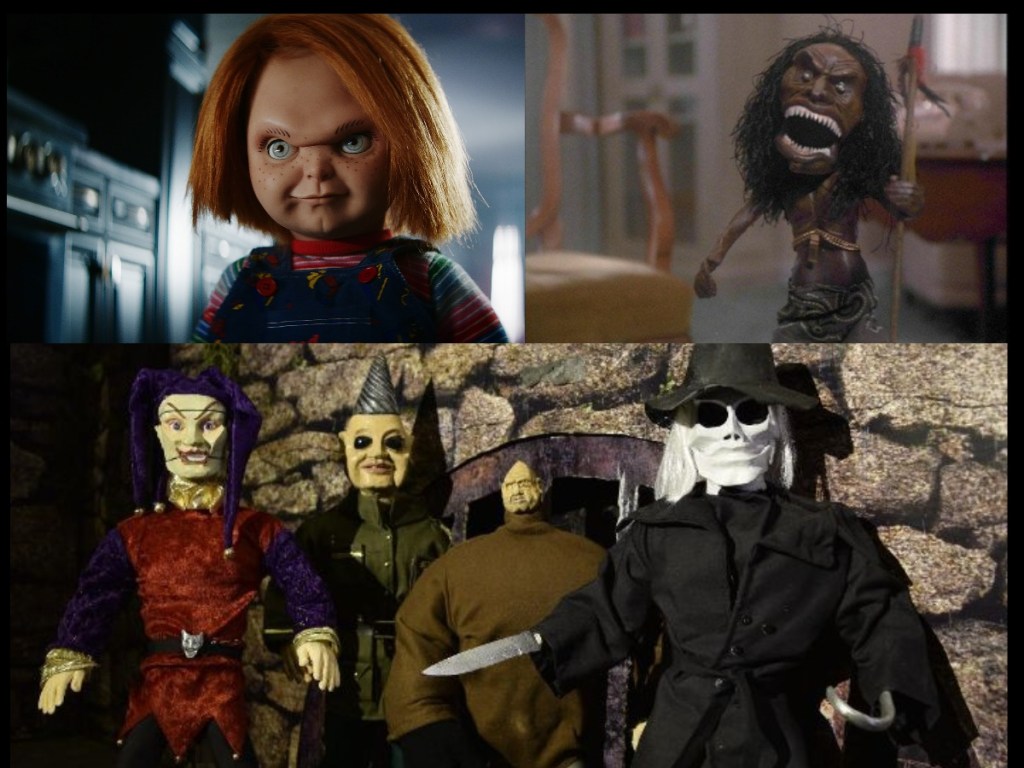
Sorry if that gives you nightmares.

Not all Teeny Tiny Terrors are toys, of course. I’d also place things like Leprechaun, Gremlins, Ghoulies, Munchies, Critters, Hobgoblins, and even Sam from Trick ‘r Treat into this category: all monsters or aliens or some sort of supernatural threat that are embodied in what is – to an adult human, of course – a package that seems small and harmless until the teeth are bared. Because of this, almost all Teeny Tiny Terrors fall into one of my OTHER favorite horror subcategories: horror comedies. I wrote about this extensively last year, specifically about how common it is for horror to have elements of comedy, and how some lean harder on the funny parts and others lean harder on the terror. I even described a spectrum with varying levels of horror/comedies depending on which side they lean towards (a Type 1 is the lightest, funniest of the group, while 5 is the scariest). Almost any Teeny Tiny Terror will land on the spectrum somewhere. The first Child’s Play movie, I think, was a solid 4, although as is often the case the series lightened up with subsequent installments to 3s and even occasionally to 2s. 

With a Teeny Tiny Terror of any type, at least part of the humor is going to come from the concept of something that’s supposed to be innocent and harmless suddenly turning psychotic. The idea of the dolls in Puppet Master turning out to be possessed by the spirits of dead Nazis, for example, is so patently absurd that it’s hard to take it too seriously even as the likes of the Tunneler doll are drilling into somebody’s skull. There’s a macabre comedy to this. It’s similar to the psychotic clown craze from a few years back, although not exactly the same. With killer toys, you’ve got something that’s supposed to be harmless turning bad. 

Teeny Tiny Terrors are nothing new. They showed up in John Christopher’s baffling 1966 novel The Little People, were used to disturbing effect in Tod Browning’s 1932 film Freaks, and have showed up in folklore about as far back as you can imagine. Today we’re even retroactively applying it to full-grown terrors. Just a few days ago I got an email from Spirit Halloween announcing their new line of Horror Movie Babies, figures and decorations starring infantilized versions of Michael Myers, Chucky, Ghostface, the Frankenstein Monster and others. And even THAT is a spinoff of their long-running Zombie Babies line. There aren’t enough Teeny Tiny Terrors already, now we’re taking full-grown terrors and giving them the Jim Henson’s Muppet Babies treatment! 

Remember that episode where Leatherface gutted Camilla like a fish?

There are other subcategories related to the Teeny Tiny Terrors in different ways, such as the aforementioned Killer Klowns. Like deadly toys, the reason clowns can be scary is that you’re taking something that’s supposed to be innocent and perverting it. Dolls are inanimate, though, and supposed to be used to fuel a child’s imagination, but have no agency of their own. They exist only as a reflection of a child’s innocence. Clowns, on the other hand, are people, and we know that (unlike a doll) a person can easily hide their true nature. They commit their atrocities beneath makeup that was originally intended to induce laughter only amplifies the terror. Whether we’re talking about Pennywise, Art the Clown, or the Joker, killer clowns can be a hell of a lot scarier than killer toys.

There’s also the related category of Creepy Kids, like we see in films such as Children of the Corn or Village of the Damned. Again, here’s something that should be innocent that’s turned bad, but in this case it’s far less likely to be funny. A demonic child is something of a perversion of innocence, it’s taking a human being in the period of their life where they are supposed to have the least darkness and transforming them into something ghastly. There are SOME Creepy Kids on the horror/comedy spectrum, but I think they’re far less likely to go there than Teeny Tiny Terror or Killer Klowns.
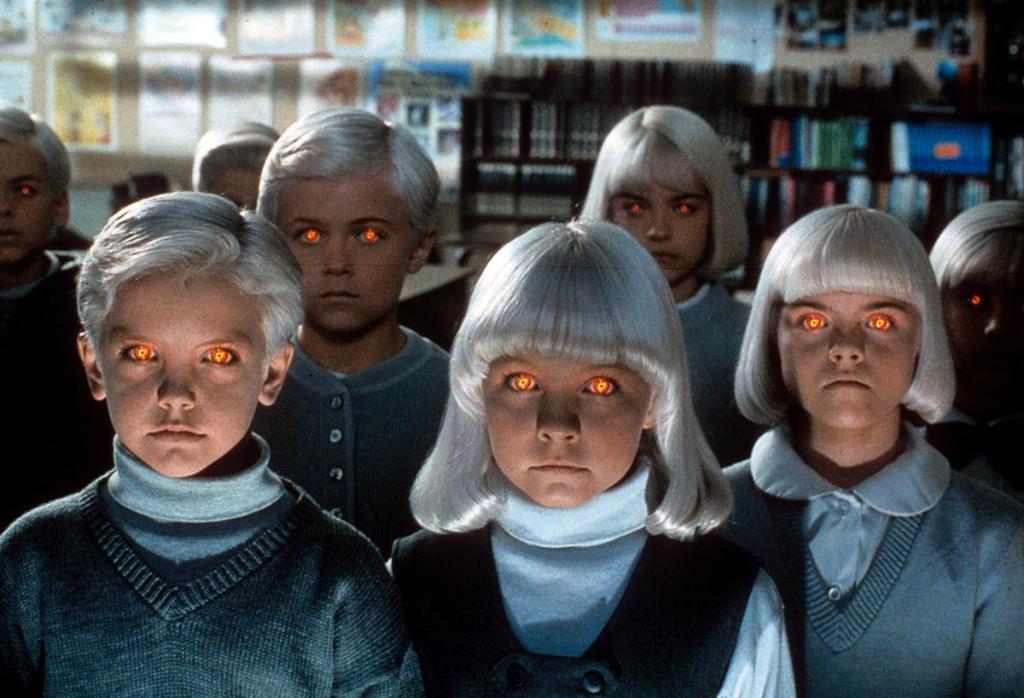
The good news is that modern cameras don’t create redeye, so there’s no chance of remaking this one.

But back to Grady Hendrix: I’m not surprised that an adaptation of his work would go into the horror/comedy territory, because pretty much everything of his that I’ve read seems tailor-made for it. Aside from Haunted House, he gave us Final Girl Support Group, a novel about women who survived attacks from slasher-type killers (most of whom are obvious copyright-friendly substitutes for the likes of Jason Voorhees and Michael Myers) and what happens when an unknown threat starts gunning for them. Hendrix plays with meta humor here, digging into the tropes and expectations of the slasher genre in a way that’s reminiscent of Wes Craven’s Scream movies (and, in fact, one of the Final Girls is a clear replacement for Sidney Prescott). Even his nonfiction book, Paperbacks From Hell, shows a deep love and understanding of all the tropes of horror fiction. Writers like that often enjoy playing with those tropes in an amusing way.

Art.

Assuming the movie adapts the tone of the book faithfully, I think it would also land in type 4. It’s not a laugh riot, and in fact, some of the stuff at the end could be downright grotesque depending on how the director chooses to film it. But as I said, the very concept of Teeny Tiny Terrors has an inherent humor to it that, even in the darkest moments, lends itself well to tongue-in-cheek references and black comedy. Hendrix is one of the modern greats in that regard. I hope that the movie does it justice. 

Blake M. Petit is a writer, teacher, and dad from Ama, Louisiana. His most recent writing project is the superhero adventure series Other People’s Heroes: Little Stars, volume one of which is now available on Amazon. You can subscribe to his newsletter by clicking right here. He’s also started putting his LitReel videos on TikTok. Despite what you may have expected, “Teeny Tiny Terrors” does not refer to what happens when your son realizes we’re out of cheese sticks. 
Geek Punditry #94: Four Color Terror

It’s October of course – glorious October, that precious time of year in which all the creepies crawl and the goblins gob and the gremlins grem. And at this time of year, many of us reach out and look for scary stories to cast to our televisions, books to fill our Kindles, and anything seasonal that might give us a little bit of a chill. A few days ago, for example, I saw someone on Facebook ask for recommendations for modern horror comics. While horror has long been a mainstay of the comic book medium – in fact, it was the biggest seller back in the 1950s, before the Comics Code strangled the life out of it – it’s not what most people think of when they think of comics these days. And that’s a shame, because like any other form of storytelling, there are plenty of scares to be had if only you know where to look.

Scary comics, of course, are different from scary movies or TV shows. Although they’re both visual mediums, comics don’t have some of the tools that filmmakers use to terrify people. There’s no creepy music, no way to rely on a jump scare, and even simple surprises can be difficult to pull off, as a shocking image can be spoiled if not carefully placed on the page to avoid allowing a major reveal before the creators are ready for it. (Robert Kirkman, who created The Walking Dead, is quite vocal about how aware he is of this sort of thing – he always tried to reserve majorly shocking moments for the first panel of a left-hand page to avoid a page-turn spoiler.) In terms of horror, comics have more in common with novels than film – they have to be reliant on mood and tone to pull off their scares. Sure, there ARE shock comics out there – even going back to the days of Tales From the Crypt and its blood-drenched contemporaries, there were plenty of comics that relied on gore. But these kinds of shock scenes are like slasher movies – good for a scare in the moment and plenty of fun, but they don’t necessarily create LASTING terror the way that a good book can. 

So here are a few comics from recent years that I think are particularly successful at delivering the scares, stories that are well worth tracking down and reading as part of your Halloween wind-up.

On that initial Facebook post that prompted this column, one of the respondents stuck his metaphorical nose in the air and replied, “WELL, you won’t find any good horror from MARVEL or DC, but…”

What a prick.

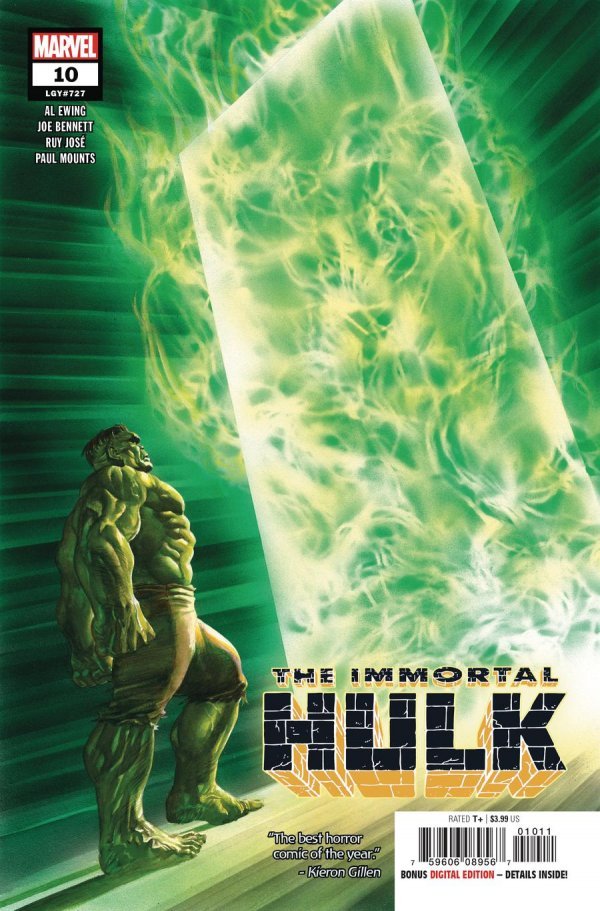
It’s true that Marvel and DC are known as superhero publishers, and that’s what most of their audience comes to the table for, but that doesn’t mean they aren’t capable of delivering in other genres, even within the confines of their existing superhero universes. The best horror comic Marvel has published in a long time is actually Immortal Hulk. This series, which ran for 50 issues from 2018 through 2021, was written by Al Ewing with art mostly by penciller Joe Bennett, and followed the “death” of the Hulk in Marvel’s Civil War II event. Comic book characters die and come back to life all the time, of course. It’s reached the point where it’s not just a cliche, it’s almost a JOKE to say you’re going to kill off a major character. But Ewing takes the old comic book concept of the “revolving door in Heaven” and turns it on its head, becoming a literal green “door” in Hell. 

“I bet this stuff never happens to Jean Grey.”

In this series, Ewing explores WHY characters like the Hulk seem to die and come back over and over again, drawing in most of the gamma-powered characters (hero and villain alike) in the Marvel Universe and telling a deeply unsettling story about Bruce Banner, the multiple personalities that co-exist inside his head, and a battle against his true greatest enemy. Despite being a part of the Marvel Universe and occasionally guest-starring characters like the Avengers and the Fantastic Four, this is a legitimately creepy story and probably one of my favorite runs of Hulk of all time, second only to Peter David’s legendary first run back in the 80s and 90s. If you don’t think there’s room in a shared universe for something truly scary and disturbing, I challenge you to check out this series right away.

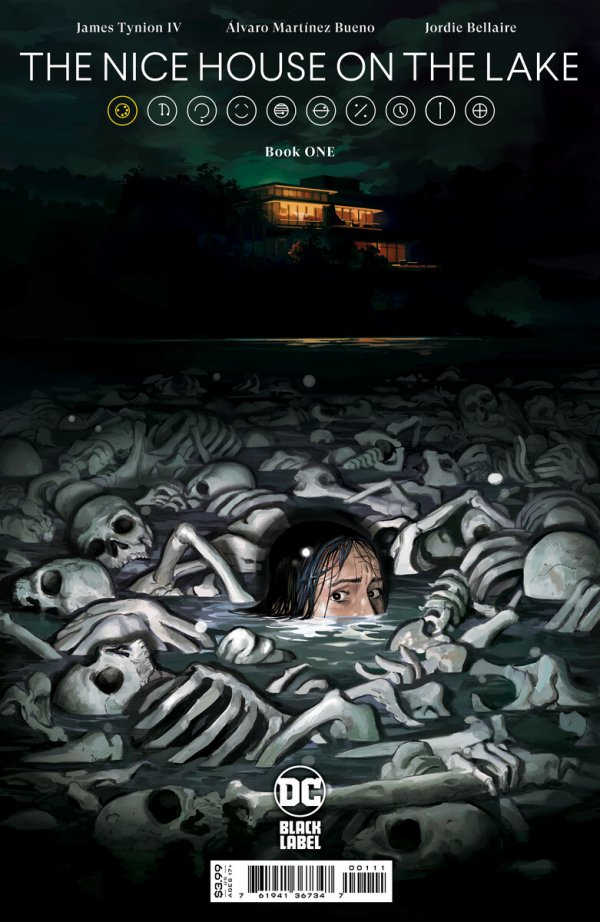
On the DC side, there isn’t an awful lot of horror to be found in the modern DC Universe itself. Even those characters that use the trappings of horror, such as Dr. Fate or the Creature Commandos (coming soon to MAX!) aren’t usually used in legitimately frightening stories. But DC’s library doesn’t stop at the outskirts of Metropolis. From DC’s Black Label line, writer James Tynion IV and artist Alvaro Martinez brought us The Nice House on the Lake in 2021, a 12-issue sci-fi saga about a group of ten people who are invited by a mutual friend for a little getaway in the titular nice house on the lake. Some of them know each other, some are nearly strangers, and the only thing they all have in common is their buddy Walter. But on their first night in the house, something utterly heart-stopping happens that I’m not about to reveal because it would ruin the beginning of one of the best and most original horror comics in years. This 12-issue series was absolutely phenomenal, full of well-drawn characters and a concept that is creepy and compelling all at the same time. The creative team has reunited for a sequel, The Nice House By the Sea, the third issue of which was recently released. Grab the collected edition of the first series and come aboard.

“That’s it, we’re firing the pool guy.”

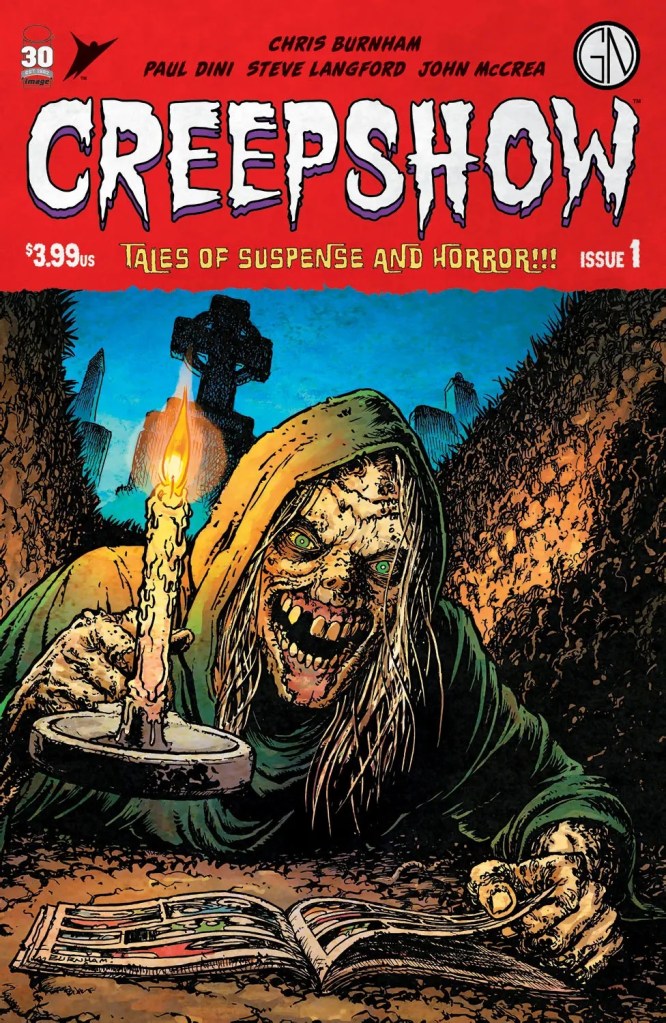
Speaking of Robert Kirkman, as I did that back in paragraph two, his Skybound Entertainment (published via Image Comics) has been giving us more horror lately as well. The house that The Walking Dead built has been branching out into licensed comics, including two pretty significant horror properties. First is Creepshow: what started as a George Romero/Stephen King movie that paid tribute to the likes of the old EC Comics has expanded into a franchise with the current anthology TV series on Shudder. Skybound has taken to publishing Creepshow comics now, with three miniseries and a few one-shots, including a Christmas special last year and another one-off adapting a story by King’s son, the prolific horror author Joe Hill. Most regular issues of the comic include two stories by assorted writers and artists, each of which includes the requisite amount of gore and most of which display the kind of twisted sense of justice that befits a tribute to the likes of Tales From the Crypt. As with any anthology, the quality of the individual stories can vary – in other words, some are better than others. But if you’re looking for the sort of tongue-in-cheek horror that we got from the Cryptkeeper back in the day, there’s no better place to look right now. 

“If you think this is safe, you’re GRAVE-ly mistaken! Hahahahahaaaaa, I’m no John Kassir.”

Kirkman has also acquired – to my shock and delight – the license to the classic Universal Monsters. While Dracula and Frankenstein may be public domain, this license includes the versions specific to the films of Bela Lugosi and Boris Karloff, as well as the original Universal creations. Even better, each of the series they’ve produced so far has been drastically different from all of the others, making for a very diverse and enjoyable reading experience. The line began last year with Universal Monsters: Dracula, a four-issue series by James Tynion IV (the Nice House on the Lake guy) and artist Martin Simmonds. Tynion and Simmonds retell the story of the movie through the perspective of a mental patient, with a heavy emphasis on the character of Renfield. Simmonds’ artwork is bizarre and scattershot, befitting the point of view of someone who is mentally unstable, and the whole thing is wonderfully creepy. 

“Look into my eyes…do you have any Kit-kats?”

The second miniseries, written by Dan Watters and Ram V with art by Matthew Roberts, is Universal Monsters: The Creature From the Black Lagoon Lives! This one is a straight-up sequel to the original film trilogy, set in the modern day as a woman decides to delve into the mystery of the swamp monster from decades ago. And like most great horror, it’s more about the humans that are wreaking havoc than the monster itself. It’s a fantastic, worthy sequel that could easily be made into a movie if Universal Pictures had any idea what it was doing with these classic creations. 

“Guillermo Del Toro was gonna do WHAT with me?”

Most recently, they’ve kicked off a series based on my favorite member of the Universal Pantheon with Michael Walsh’s Universal Monsters: Frankenstein. We all know that Henry Frankenstein (changed from the novel’s “Victor” for reasons I’ve never understood) stole the corpses of the dead to make his creature, but how often have we really thought about the people that the Karloff monster once was? This miniseries is told from the point of view of a young boy who, still in grief over his father’s death, discovers that his late father’s body is now part of Frankenstein’s monster. It’s a brilliantly original concept. As big a Frankenstein fan as I am, it’s not easy to find an angle on the story that I haven’t seen before, and Walsh nails it.

“The knee bone’s connected to the — HIP bone!
The hip bone’s connected to my — DAD’S bone…”

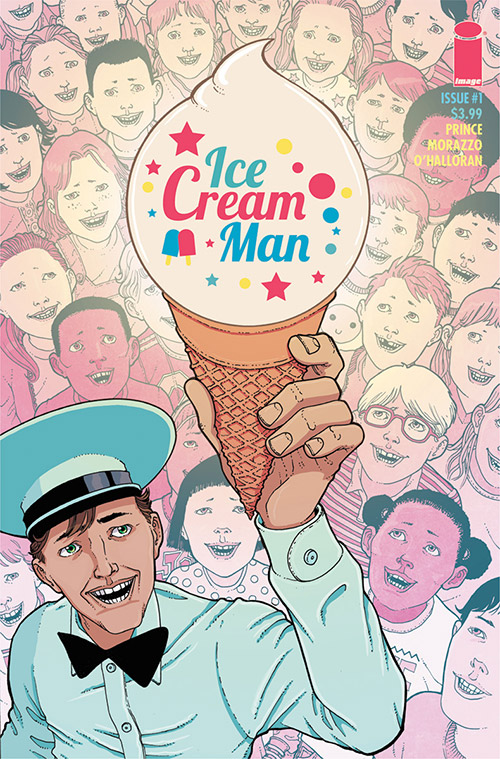
Sticking with Image Comics, let’s talk about their acclaimed ongoing series Ice Cream Man, written by W. Maxwell Prince with art by Martin Morazzo. The horror series tells a different story in each issue, with the only connective tissue at first seeming to be Rick, the titular Ice Cream Man, who rolls through each issue at some point. The series hits on all kinds of disturbing themes, dealing heavily with existential dread and frequently drifting into Kafkaesque body horror and other such things. It’s a bleak, nihilistic comic, which isn’t usually my thing, but Prince very slowly and subtly reveals that these seemingly one-off stories are, in fact, connected, and there’s a vast backstory of deep cosmic horror that Rick has spawned from. The stories delve into terrors that deal with the very nature of existence, taking very human fears and externalizing them the way that few other stories – comic books or otherwise – can do effectively. It’s remarkably disquieting horror.

If you hear the bells on THIS guy’s truck, RUN.

Rounding out our time with Image Comics, there’s a new series from Geoff Johns and Ivan Reis worth mentioning. Only one issue of Hyde Street has been published so far, but it’s already got its hooks into me. On Hyde Street, we see characters like “Mr. X-Ray” and a twisted Boy Scout going by the name of “Pranky” as they lead the unsuspecting residents and visitors of Hyde Street down dark paths of destruction. They’re in some sort of competition, reaping souls for a hidden gamemaster for purposes that have not yet been revealed. As I said, there’s only been one issue so far, but it hints at a vast and complex mythology, and there are few writers out there who do that better than Geoff Johns. I’m very excited to see where this series is going.

“You know, Clark never uses his X-Ray vision this way.”

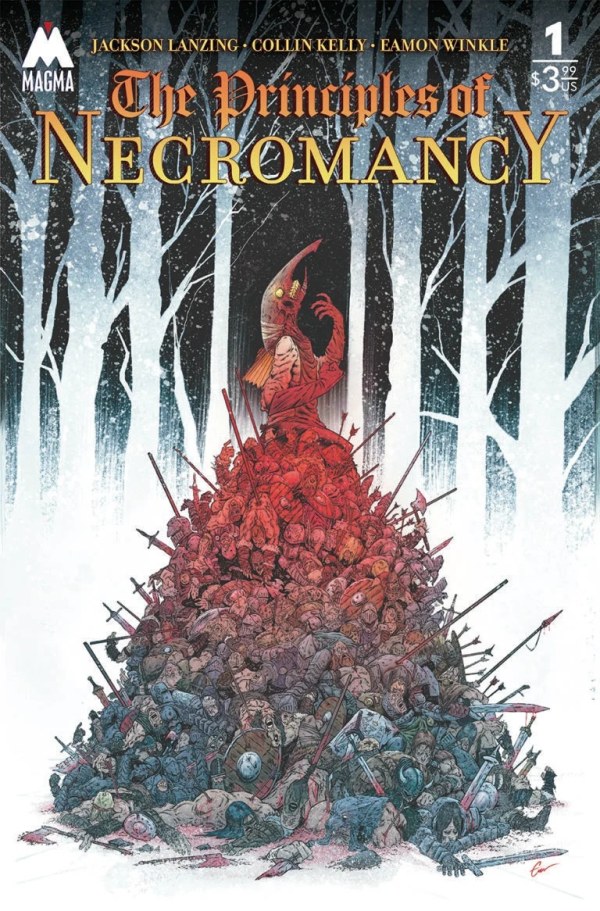
Finally, I’m going to leave you with a lesser-known miniseries from Magma Comix that just recently wrapped, The Principles of Necromancy. Written by Collin Kelly and Jackson Lanzing with art by Eamon Winkle, this tale of horror is set in a world where magic has been ostensibly driven out by the “City King,” leaving in its wake a realm of reason and science. Not everybody subscribes to these beliefs, however. The miniseries features the ghastly Dr. Jakob Eyes, the man inventing the art of necromancy in an effort to conquer death itself. If body horror is your thing, this is a book to check out, as we watch Eyes’ gruesome experiments and deliciously twisted practices over the course of four issues which ends on a note that leaves things wide open for further exploration of this dark world. Kelly and Lanzing have become favorite writers of mine in the last few years, doing great work at Marvel, DC, and IDW (particularly with their run on Star Trek), and it was on their names that I decided to pick up this series. I’m very glad that I did.

This image just demonstrates how little I actually know about interior decorating.

So my point, friends, is that horror is out there. If you’re still looking for creepy comics to fill your bookshelf before Halloween ends, here are some fine suggestions for you, and I’m sure the folks down at your local comic shop can give you even more. Dive in and get ready for a chill on every page.

Blake M. Petit is a writer, teacher, and dad from Ama, Louisiana. His most recent writing project is the superhero adventure series Other People’s Heroes: Little Stars, volume one of which is now available on Amazon. You can subscribe to his newsletter by clicking right here. He misses the days of Friday the 13th and Nightmare on Elm Street comics, though. Those need to come back. 

Geek Punditry #66: The Frankenssance

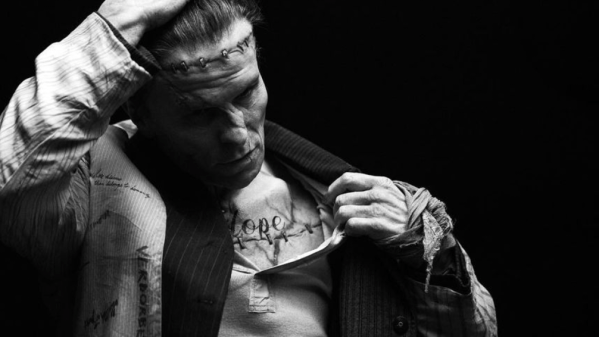
Earlier this week, the internet was abuzz with an image released from the upcoming film The Bride! (The exclamation point is part of the title – I’m interested, but not so excited as to declare it via punctuation.) Written and directed by Maggie Gyllenhaal, this movie seems to be an updated version of the Frankenstein story, moved to the 1930s and starring Bale as the monster and Jessie Buckly as the titular bride. Director James Whale’s original Bride of Frankenstein is probably the best of the old Universal Monster movies from the 30s and 40s, and ol’ Vic’s creation is hands-down my favorite classic monster, so news of this film intrigues me. But I think it intrigues me even more than it ordinarily would  because with this movie, at least the fifth Frankenstein-derived film released or announced in recent years, it seems that we are in the midst of a full-scale Frankenssance.

Of course, all anybody wants to talk about is the tattoo.

Let’s do a quick bit of literary spelunking for anyone who doesn’t know the story (both of you). In 1816, Mary Godwin was vacationing at the home of her friend Lord Byron with her soon-to-be husband Percy Shelley. This was in the era when visiting a friend could be an extended stay that lasted weeks or months at a time, as opposed to modern times when it lasts until the owner of the home claps his knees and says, “Well, I don’t let me keep you any longer” because the Pelicans game starts in a half-hour and he doesn’t want to watch it with a dirty Celtics fan like you. It was an exceptionally rainy and dreary summer, and to pass the time trapped inside, Byron proposed that they each write a “ghost story” to entertain one another. If you ever wonder which of them won that little competition, remember that it’s 200 years later and the only one that we’re still reading is the one that was written by the 19-year-old girl.

By the way, I really want to stress how amazing that is to me. Whenever somebody talks about the creation of Frankenstein, or the Modern Prometheus, they focus on how shocking it was that it was written by a woman. That shouldn’t be what surprises you. I’m a high school English teacher and I’m not shocked at all that a masterpiece of literature was written by a woman. I’m shocked that it was written by somebody the same age as a student that I had to ask to stop from pouring Pop Rocks into a bottle of Coke in the back of my classroom last week while I was trying to review gerunds. 

But I digress. The story follows Victor Frankenstein, a college dropout (nope, he’s not a doctor) who is so obsessed with conquering death following the loss of his mother that he finds a way to reanimate dead tissue. But when he does so, he’s so horrified by the hideousness of his creation that he flees in terror, leaving it to fend for itself. I always interpret his fear as being an expression of the Uncanny Valley problem, where something is so CLOSE to looking authentically human that even the smallest deviation is unacceptable to the eye, which is one of the many ways that the story of Frankenstein is a great metaphor for modern AI.

The Gold Standard. Okay, the GREEN standard.

Most people, of course, think of Boris Karloff’s version of the creature when they think of Frankenstein’s monster: the monosyllabic, hulking brute with the flattop, green skin, and bolts on his neck, whereas none of that really applies to the vision in Shelley’s novel. But that’s okay. I think that one of the things that really makes a character – any character – into a timeless one is its potential for reinvention. Compare the original Arthur Conan Doyle Sherlock Holmes stories to the Basil Rathbone movies, the Robert Downey Jr. version, or the Benedict Cumberbatch series. All are perfectly valid, but very different from one another. Think of all the different depictions there have been of Batman, Superman, Tarzan, Dorothy of Oz, Cinderella…if a character is unable to be adapted, it’s not a character likely to achieve immortality. Victor Frankenstein may not have lived forever himself, but the versatility of his creation ensures that his name will last forever.

Like I said, we all know Boris Karloff, but he wasn’t the first cinematic Frankenstein. That honor belongs to Augustus Phillips, who played the creature in a 14-minute film produced by Thomas Edison in 1910. After Karloff played the creature, the role was passed to Lon Chaney Jr., then Bela Lugosi, then Glenn Strange, who rounded out Universal’s original version of the creature in one of my favorite films of all time, Abbott and Costello Meet Frankenstein

I’m not kidding. This is maybe my favorite movie of all time. I will never get tired of it.

Since then the list of actors who have played the creature is staggering: Robert De Niro in Mary Shelley’s Frankenstein (1994), Christopher Lee in The Curse of Frankenstein (1957), Aaron Eckhart in I, Frankenstein (2014), Clancy Brown in The Bride (1985), and Tom Noonan in The Monster Squad (1987), and that just scratches the surface. There was a stage version in which Benedict Cumberbatch and Johnny Lee Miller EACH played the Creature and Victor Frankenstein, alternating nights. As of this writing, IMDB credits Mary Shelley as the writer on 115 different projects, and frankly, I think that number is low. I mentioned last week that I’ve got a little obsession with creating lists. On Letterboxd, I’ve logged 55 different movies that I tagged as adapting or being inspired by Mary Shelley’s creation, including Mel Brooks’s Young Frankenstein, The Rocky Horror Picture Show, the Hotel Transylvania series, all of the Universal films that featured the creature and several – but not all – of the Hammer Horror films that did the same. I’ve got a list of nearly 50 other Frankenstein movies that I haven’t seen yet, but I hope to get around to eventually. 

Whole lotta Frankie goin’ on.

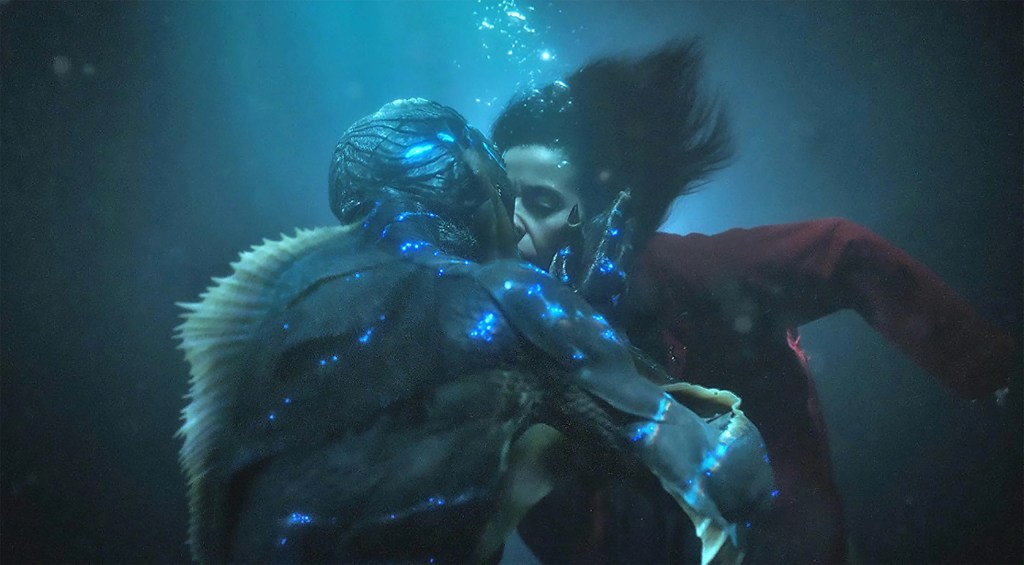
There’s a LOT of Frankenstein out there, is what I’m getting at. And while they haven’t all been great, there have been a lot of very interesting ones. We seem to have reached one of those moments in the cultural zeitgeist (there’s another English teacher word for you, folks) where the Creature is in ascendance. In addition to Gyllenaal’s The Bride!, Guillermo del Toro is working on his own version of the story for Netflix starring Oscar Isaac as Victor, Jacob Eldori as the creature, and current horror It Girl Mia Goth in a role that doesn’t seem to have been specified yet. A lot of sources seem to be reporting that she’s playing the Bride, but those same sources also reported that Isaac was playing the creature and Andrew Garfield was playing Victor Frankenstein, and those reports seem to have been wrong. It likely depends on how faithful del Toro intends to be to the original novel. (The bride existed in the original novel, by the way, but was destroyed by Victor before he could bring her to life.) It’s hard to say which of these two movies I’m more interested in. The images of Christian Bale are intriguing, but I don’t think I’ve ever been disappointed by a Guillermo del Toro film. The man won best picture for what was essentially a remake of The Creature From the Black Lagoon, and let’s hear it for the Universal executive who passed on that movie. 

The man made us root for THIS, he can make any movie he wants.

Of course, two upcoming films would not, in and of themselves, qualify as a Frankenssance. But those aren’t the only ones. In the last two years there have been at least three significant films based at least in part on the Frankenstein legend, all of which I’ve watched during my spring break, because that’s what spring break is for. First up, let’s talk about Poor Things, the movie that scored Oscar nominations for Best Picture and Best Director and a Best Actress win for Emma Stone. Based on the novel by Alasdair Gray, this film tells of a dead young woman (Stone) whose body is reanimated by a scientist (Willem Dafoe). The woman, dubbed Bella, starts with a blank slate of a mind, an infant mentality, and as she grows to learn about the world around her, finds herself rejecting many of the Victorian standards of morality and the world’s treatment of women. I haven’t read the book, but the film was an interesting statement about gender roles of the time period. I was a little disappointed that they didn’t spend as much time with Willem Dafoe’s character, though, a malformed scientist who seems to have an unusual kind of kinship with Bella. The film never quite makes it plain, but the interpretation I came away with is that Dafoe’s Godwin Baxter was actually the original Frankenstein monster, carrying on his father’s work. I don’t know if that was the intention of the film or the original novel. I suppose I could look it up, but where would the fun be in that?

Frankenstein, Frankensteiner, Frankensteinest.

Earlier this year we saw the release of the Zelda Williams-directed Lisa Frankenstein. In this film, set in 1989, Kathryn Newton (the actress getting all of the horror movie roles that aren’t going to Mia Goth) plays a teenage girl trying to begin a new life in a new town after her father remarries only six months after her mother’s violent death. Lisa doesn’t seem to fit in anywhere, not with her brutally abusive stepmother (Carla Guigno) or her well-meaning but vapid new stepsister (Liza Soberano). The closest thing she has to a friend is a bust on a tombstone she finds in an old, abandoned cemetery. A bolt of lightning reanimates the corpse underneath (Cole Sprouse) and they embark on a vendetta of revenge. The film is a horror comedy, although it’s got a darker, even meaner tone than I expected, but it’s made very well. The movie is the directorial debut for Williams (daughter of the late Robin) and I’m very interested to see what she can do next.

But the best neo-Frankenstein I’ve watched lately is probably the one you’re least likely to have heard of: The Angry Black Girl and Her Monster, written and directed by Bomani J. Story. Originally released via Shudder and now on Hulu, if you’re a Frankenstein fan, you’ve gotta check it out. Laya DeLeon Hayes plays Vicaria, a teenage girl who (like the original Victor) has been obsessed with conquering death since the early loss of her mother. Her rage is compounded when she loses her brother to violence, and she sets out to prove that death is a disease and she can cure it. The movie is set in the present-day, and Story wears his influences on his sleeve. It’s the furthest removed film from Mary Shelly’s original time, and yet, it also seems to be the one most devoted to her original vision. The idea of treating death as a disease is very much reflective of what Shelley wrote about 200 years ago, and while Story applies a contemporary lens and modern social issues to his tale, it still feels very authentically Frankenstein.

As I always say, if there’s one thing that a geek always wants, it’s more. For a fan of Shelley and Karloff and Strange like myself, this new influx of Frankenstein material can only be a good thing. I’m always anxious to see another twist or another take on the story. Keep them coming, Hollywood, and I’ll keep watching.

And once this wave passes, we’ll talk about giving the Wolfman his turn.

Blake M. Petit is a writer, teacher, and dad from Ama, Louisiana. His most recent writing project is the superhero adventure series Other People’s Heroes: Little Stars, now complete on Amazon’s Kindle Vella platform. If you didn’t know he was a devoted fan of Frankenstein, he can only imagine that you didn’t pay attention last Christmas when he was re-presenting all of his old short stories, like “Warmth.”

Geek Punditry #37: What’s Your Favorite Scary Franchise?

I’ve said it before and it’s worth repeating: what true fans want, above all else, is more. And this is especially true of horror movie fans. The concept of a “horror franchise” goes back at LEAST to 1935, when Bride of Frankenstein was the first sequel to one of the classic Universal Monster movies. (One could even argue that it goes back to the Golem films of the silent era, but only one of those has survived.) Frankie’s creature would go on to appear in eight official films, with his pals Dracula, the Wolfman, the Invisible Man, and the Creature From the Black Lagoon each appearing several times. In the 70s and 80s, the horror franchise became a cinematic staple, with the likes of The Exorcist and The Amityville Horror paving the way for the slasher icons of Halloween, Friday the 13th, and A Nightmare on Elm Street, among a sea of others. I love horror movies, and I appreciate many of the great franchises throughout history. But when I look at the vast sea of horror available, I’m surprised to see which franchise – besides the Universal classics, of course – holds the trophy as my personal favorite…the bloody good adventures of Ghostface in the Scream series. 

“I wish I knew how to quit you…”

Having recently watched the sixth and most recent film, I’ve been thinking about why I enjoy them so much. I’m not going to start a debate over which series is the best – there’s no way that you’re going to convince anybody that their personal favorite isn’t the best and it’s useless to try – I’m just saying that it’s the one that means the most to me. There are a few reasons for it. First off, there’s nostalgia. Believe it or not, Scream was the first horror franchise I ever got into. Growing up in the 80s, I already knew the characters and tropes of slasher films via cultural osmosis, but my parents weren’t into horror movies and I was never really exposed to them until college, when my friend Jason showed me the first Scream. (Jason was the manager of a video store at the time, then later the owner of the video store, then later employed in an entirely different line of work because video stores ceased to be a thing.) We watched Scream because Jason wanted to see the newly-released Scream 2 and I HAD to see the original first, and he was right. I was hooked. I loved the meta comedy, I loved the characters, and I was impressed at the structure of the mystery. Even before I considered myself a horror fan, I was a fan of Ghostface. 

This was cool in the 90s, I swear.

Over the next few years I branched out and slowly acquainted myself with the films of Freddy, Jason, Michael, and the rest, but I kept coming back to Scream. There are great films in every horror franchise, but to this day this is the only franchise where I haven’t seen anything I would classify as a “bad” movie. Even the worst Scream film (that would be Scream 3, for those of you keeping score) is watchable, with funny moments and good twists, and I would never skip over it when doing a rewatch of the series the way I would, say, Halloween: Resurrection

It’s not even close.

Even in the early years I felt somewhat protective of the franchise. While 3 was not my favorite, I accepted it as the end of the story, capping off the trilogy in a way that tied things up and left the characters I cared about in a satisfying place. When word came of the fourth installment 11 years later, I was somewhat disturbed, thinking that it would break the ending of a supposedly-completed story the way other franchises have (lookin’ at YOU, Toy Story 4), but with both director Wes Craven and original writer Kevin Williamson returning, I decided to give it a chance. To my shock, I thought it was the best film since the first and eagerly awaited part 5. I did not expect it to take another 11 years, the death of Craven, and a quasi-relaunch to get it going again…but the relaunches have worked for me as well, in ways that many other remakes, reboots, and “requels” have not. 

There’s something unique about the way the franchise has been crafted. One of the strengths, I think, is Ghostface himself. Unlike most other horror franchises, the “face” doesn’t belong to a singular villain that comes back from the dead time and again. Ghostface is merely a mask, picked up by a different character (or more than one) each time to wreak havoc all over again. This allows the franchise to maintain the mystery of who the killer is each time (something that Friday the 13th had to abandon after the first installment). It also doesn’t have to worry about how to resurrect the villain time and again, with increasingly complicated supernatural rules that can get confusing and run the risk of being contradicted by future installments (such as what happened to A Nightmare on Elm Street). And unlike most other long-running horror franchises, it has never been rebooted (just TRY to explain the Halloween timeline to someone who isn’t already a fan). That really means something to people like me.

“So in the FIRST continuity Michael had a niece named Jamie and in the SECOND continuity he had a nephew named John and in the FOURTH continuity he wasn’t related to Laurie Strode at all and in the ROB ZOMBIE continuity — hey! Why aren’t you taking notes?”

I think this also makes it easier to accept changes in the franchise, the fact that there’s a singular figure, but not a singular character propelling the plot along. Replacing the actor behind a horror icon is tricky. If you ask most fans, Robert Englund IS Freddy Krueger, Doug Bradley IS Pinhead, and efforts to recast them have at most been grudgingly tolerated, and at worst, outright rejected. Even icons who wear masks and have been portrayed by multiple actors still spark a heated debate. Ask any group of fans who the best Jason Voorhees was and you’ll find the room sharply divided between those who believe it’s Kane Hodder and those who are certifiably insane.

The closest thing Ghostface has to an icon performer is Roger L. Jackson, who has provided the voice of the killer in every movie. He would be difficult to replace, because he’s so damned good at delivering a voice that can shift between charming, snarky, and terrifying at the snap of a finger, but when the time comes that he’s unwilling or unable to keep going, it wouldn’t be a death knell for the series.  

There’s no point in arguing who the “best” Ghostface is because every Ghostface is different and brings something different to the table, and that’s by design. It would be bonkers to argue whether Billy Loomis was a “better” Ghostface than Mickey Altieri, because they’re not the same character. Sure, one could (and will) argue about which performance or story or motivation or one-liners they enjoy more, but there’s no room for arguing that one of them goes against the “spirit” of the character the way one could do with Michael Myers. (Is he supernatural? Is he not? Is it Tuesday? What was with that guy with the black boots?) 

I know it seems like I’m picking on the Halloween franchise a lot. That’s because for every masterpiece of horror in that line, there are two movies full of crap like this.

It’s this versatility in the main villain that allows the franchise to be malleable and re-started every so often without the kind of pushback you had against Jackie Earle Haley as Freddy Krueger. It also allows the tone of the series to shift slightly as sensibilities change. The original Scream was a slasher movie about people who had watched too many slasher movies. As the franchise continued, it got deeper into the metafictional aspect of the concept. Scream 2 was a sequel about horror movie sequels, and introduced the “film-within-a-film” Stab, which was based on the events of the first movie and proved to provide fuel for the rest of the franchise going forward. In Scream 3, we saw the conclusion of a trilogy about trilogies. Scream 4 was a movie about remakes (but not really). The 2022 Scream was about “requels” and included a joke at its own expense about dropping the number even though everybody knew it wasn’t an actual continuity reboot. With Scream VI they’ve finally embraced the idea of the rules of franchises, as opposed to specific installments. Where they go after this, I’m honestly not sure, but I’m along for the ride.

First the Muppets, then Jason, and now Ghostface takes Manhattan.

Some people will ask how I can stack Scream up against other horror franchises, many of which I enjoy very much, but this is without a doubt the series that I’ve rewatched more than any other. It helps that there are (for now, at least) fewer of them than most of the other really iconic series. There are currently six Screams, and until January of last year, there were only four to throw into a quick binge. When you put together every iteration of the franchise A Nightmare on Elm Street has given us nine films, Friday the 13th is at 12, and Halloween has churned out a weekend-slaughtering 14. The less said about how the Amityville name has been pimped out, the better. 

The fact that it’s never been rebooted makes it feel a bit more – and I hesitate to use this word, but I can’t think of another one – a bit more real. Freddy’s seventh film went into an entirely different continuity, although it did so brilliantly. The Friday movies never technically had a reboot until the remake came out, but it also plays fast and loose with what actually “counts,” especially the later films. The last three of them make virtually no attempt to directly follow the earlier movies at all. Get somebody who doesn’t watch horror to watch the first Friday the 13th and then Jason X and see if they can figure out how the dots connect. The upcoming Crystal Lake prequel TV series will probably not make things any clearer, for that matter. 

And then there’s Michael. You know the rest.

But every installment of Scream (save for the in-name-only TV series from a few years back) is part of the same continuity, despite playing with the rules of remakes and requels. Every film not only counts, but is recounted in the later films. There are scenes in the most recent film that are full of what film nerds like me call “continuity porn,” full of elements and items that not only recall all of the previous films, but are ripped straight from them, but it’s done in a justifiable way. I’m anxious to find the website where someone (inevitably) has cataloged all of the Easter Eggs that can be spotted by going through that scene one frame at a time, because I’m sure there’s a lot that I missed.

In a surprise crossover, Ghostface takes decorating advice from Tony Stark.

Speaking of the most recent film, the one that came out earlier this year, it’s an interesting anomaly. Without getting into spoiler territory, it’s the one where the “rules” seem to matter least, but it pulls it off without sacrificing the love of movies that is at the core of the story. Ghostface is behaving differently this time around, and the film pulls off some great red herrings that work because it plays with the expectations of horror movie fans, but at the core it still has Scream in its DNA. And this is where I think they’ve got to start figuring out how to keep the franchise going, if that is indeed the intention. (Seeing as how they’ve already done preproduction for Scream VII, it seems clear that it is.) They’ve touched on pretty much everything they can on horror movies of the last few decades. If they don’t want to wait another 10 years or so for horror to evolve again, they’ve got to find different ways to make the story work. They’ve built a solid and likable core group of characters that is sufficiently different from the original trio of Sidney, Dewey, and Gale to not just feel like a remake. At the same time, they’ve also kept the window open to bring back the legacy characters, which this film does in a mostly satisfying way. This film – being the second story with these characters – also has some echoes of Scream 2 in terms of setting and motivation, without just being a copy. And that leaves the question about the next one…eh, More on that in a minute. 

Wherever they go, I will be there to watch, and anxious to see who the next people are to don the Ghostface mask and cause a little terror and a lot of laughs. Whereas once I was satisfied to let it lie, I now feel optimistic for the future of this story, and happy to note that there is, indeed, life after Wes. 

If you’ve already watched every Scream movie to date, including VI, skip below my standard plug for a little bonus – I pontificate about the identity of the killer in Scream VII. By necessity, my theory will have spoilers.

Blake M. Petit is a writer, teacher, and dad from Ama, Louisiana. His current writing project is the superhero adventure series Other People’s Heroes: Little Stars, a new episode of which is available every Wednesday on Amazon’s Kindle Vella platform. Roger L. Jackson has got to have one of the sweetest gigs in Hollywood, right? Every few years he comes in, spends a few hours recording lines off-camera, and is one of the most recognizable horror icons of all time.

I’m about to take you for a ride.

You back? Great. Okay, so I think I’ve already figured out the killer of Scream VII, and it’s before they’ve even filmed a frame of it. Actually, I have two theories, and it really depends entirely on how dark they’re willing to get. The new series is, in essence, “requeling” the original trilogy. Scream (2022) is the requel of the original: a girl (Neve Cambpell/Melissa Barrera) is stalked by a killer indulging ties to her past (Sidney’s mother/Sam’s father). In the end the killer – or one of them, at least – turns out to be her boyfriend (Skeet Ulrich/Jack Quaid).

I made it through this whole column without a Star Trek reference, so let me just quickly say how awesome Quaid is on Lower Decks.

Scream VI requels Scream 2: the characters are now in college, and the main killer turns out to be a side character (Laurie Metcalf/Dermot Mulroney) who was secretly the parent of the previous killer and is seeking revenge for his death. 

Laurie Metcalf murders considerably fewer people on The Big Bang Theory.

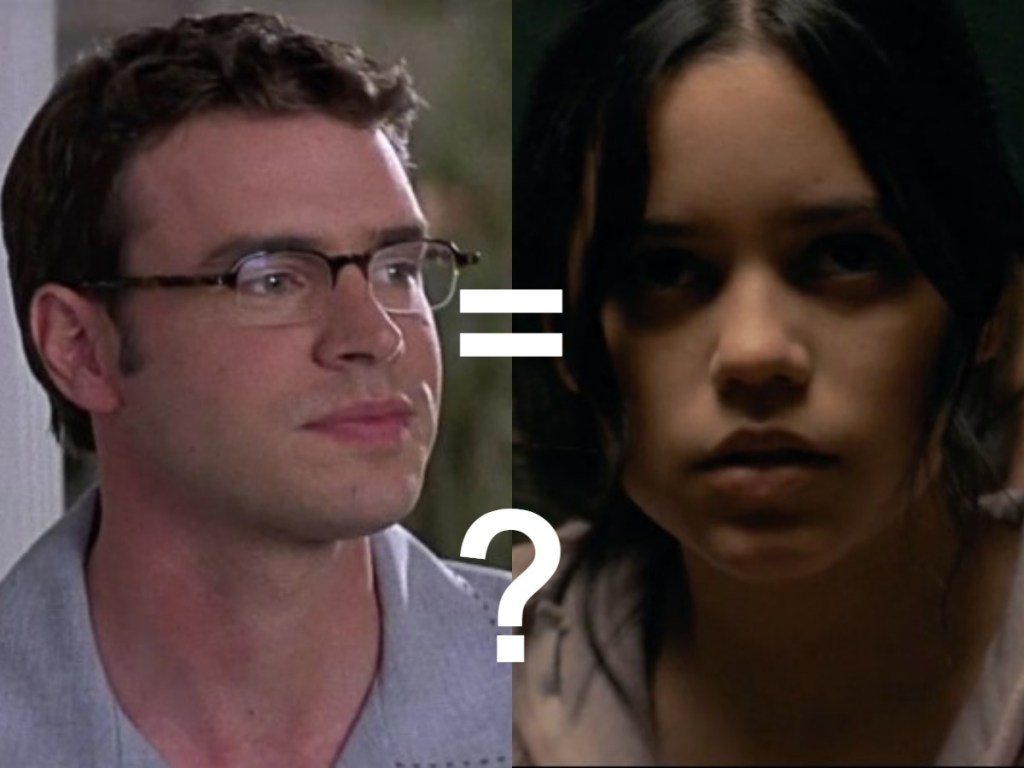
If they continue following the pattern, Scream VII would logically requel Scream 3. This was the only film in which the killer went solo (which is called out in VI), and it turned out to be Sidney’s long-lost half-brother Roman Bridger (Scott Foley). So for Scream VII, are they going to go the long-lost half-sibling route again?

Nah. I think they’re going to go for the half-sibling that’s right in front of our face. I think it’s going to be Jenna Ortega’s Tara. She’s the half-sister of the main character, so she would fit the pattern. There’s even a bit of dialogue in VI that points out how logical it would have been if, at some point, Courteney Cox’s Gale Weathers had snapped from her repeated trauma and become a Ghostface herself. That could easily be seen as teeing up the ball for it to be Tara in the next go-around.

TELL ME THIS DOESN’T MAKE SENSE.

Let’s call that Theory A. The biggest question mark is if the series would REALLY go that dark, allowing us to grow attached to a character for two movies before pulling the twist and making her the villain. They MIGHT…but if they don’t, I still think the killer would have to have a family connection. In that case, Theory B: the killer will turn out to be Tara and Sam’s absent mother. She’s never appeared on screen. Sam rejected her for lying about who her father really was, and when the truth came out it ended her marriage to Tara’s father. When Tara learned the truth in her first film, she cut off ties to her mother as well. She could be coming after Sam for “stealing” her family from her. Still dark – a mom wanting to murder her daughter – but not QUITE as dark as making Tara the killer.

Of course, these are theories and – with the Hollywood strikes continuing – who knows what’s going to happen with anything? Whatever is currently planned might wind up on the scrap heap of history. But as of right now, I’m calling it. That’s what I think is likely to happen in Scream VII, Theory A and Theory B.

Then again…A+B=C? In most Scream movies, after all, there have been two killers…