Geek Punditry #153: You Don’t Want Us Exposing Ourselves

My “Time of Death” in this year’s Mariahpocalypse came relatively early. It was Dec. 4, at 8:56 p.m., and I was taken out when her song was used in the background of a reel I scrolled across on Facebook, which – as far as I can tell – only popped up on my page at all because the person who made it was showing off a Christmas Supergirl costume and had tagged James Gunn. I am, however, still active in Whamageddon as of this writing.

Who would you rather have stalking your dreams — her or Freddy Krueger?

If none of that makes sense to you, let me explain. Whamageddon is a little game that has become popular at Christmastime over the last few years. The goal is to try to make it from December 1st until midnight on Christmas Eve without hearing the song “Last Christmas” by Wham! It’s not easy. They play the song on the radio all the time. It can pop up on the speakers in a store when you’re out shopping. The song exists in aerosol form, floating through the air, and at any moment may attack you like a swarm of angry hornets. Only the original recording counts, mind you – covers are fair game – but as soon as you recognize the song, you’ve lost. An optional rule is reporting your “Time of Death” on social media when it happens. Mariahpocalypse is, of course, the same game, but substitutes the song “All I Want For Christmas is You” by Mariah Carey, a song which is so ubiquitous at this time of year that odds are you have already heard it seven times while reading this paragraph.

Why those songs specifically? A friend of mine asked this the other day, even sharing the YouTube link to the “Last Christmas” music video. (Don’t worry – I didn’t click on it. Just seeing the link doesn’t eliminate you from the game, only hearing the song does.) His argument was that it doesn’t make sense because it’s “a great song.” And you know, it’s really not bad. It wouldn’t be on my top ten list of Christmas songs, but it’s certainly not at the bottom. That space is solely reserved for John Lennon, whose “Happy Xmas (War is Over)” is so gratingly depressing and self-absorbed that it has ironically been banned by the Geneva Conventions. As for Mariah – YOU might not like that song, but it’s clear that SOMEBODY does, because even now, 31 years after the song’s initial release, Forbes magazine estimates that she makes between $2.5 million and $3 million every year in royalties from that alone. If that doesn’t sound like a lot, keep in mind that the music industry is very different than it used to be. Sales of physical media are meager now, and to make $3 million on streaming a song would have to be played – and this is not a joke, I looked it up – approximately 687,000,000 times. That means every person in the United States would have to stream it at least TWICE, including your Great Aunt Mildred, who thinks that “streaming” is something she needs to talk to her urologist about. 

So the problem is obviously not that people don’t like it. I would argue that the reason Wham and Mariah have been targeted by this game is actually the opposite: they are TOO popular. So popular that, unless you’re really a fan of the songs or the musicians themselves, they start to get on your nerves. The songs, simply, have been overexposed.

“Guys, what are we doing here? I thought he was writing about Christmas this week.”

The truth is, any media runs the risk of an overdose if you see it too much. Last year, for example, my son discovered the Tales of the Teenage Mutant Ninja Turtles animated series on Paramount+, and he fell in love with it. The show is a spinoff of the feature film Teenage Mutant Ninja Turtles: Mutant Mayhem from 2023, picking up where the movie left off and keeping the same tone, animated style, and most of the voice cast. I’d enjoyed the movie and I was quite happy to discover that I enjoyed the show as well.

The first time.

But as anyone with children can tell you, if a kid really likes something they don’t want to watch it just once. Oh no. They cycle back to the beginning and start over again. And this is what Eddie started to do. Once he reached the end of the final episode, he’d roll right into episode 1 and start watching the show over, to the point of excluding everything else. For over a month, Tales of the Teenage Mutant Ninja Turtles was the only thing he wanted to watch AT ALL, and even though I liked the show, I got tired of it VERY fast. It was made worse by the fact that there is only one season of the show so far, only 12 episodes, so he could cycle through the entire thing VERY quickly. I would pick him up from school and when he’d get home he would immediately go back to whatever episode he was watching when he was bundled out the door that morning. When it got to the point that my wife and I were saying the jokes out loud to one another ahead of time, we knew something had to be done. We tried to convince him to try other Ninja Turtle cartoons – there are, and this is a rough estimate, 17 trillion of them — and even if it was still all mutants all the time, it would be nice to at least not have to watch the same 12 episodes over and over. These efforts were met with failure however. After an episode or two of whatever show we put in front of him, he would invariably demand that we cycle back to Tales. Adding the movie into the rotation only gave us slight relief. 

This is the point in the story where certain members of the audience are thinking, “Well YOU are the adults. Why didn’t you just TELL him to watch something else?” These are a very specific subset of audience members that I like to refer to as “people who do not have children.” The rest of the audience knows EXACTLY why we didn’t just tell him to watch something else. Regardless, this went on for some time until football season started up and he was distracted by sports, finally breaking the cycle.

For some reason, we experienced this same phenomenon again THIS year, except this time instead of the Turtles, it was reruns of the game show Supermarket Sweep. I’m already trying to find a strategy to distract him after the Super Bowl this year so we don’t get stuck again.

The point is, even the best cartoon, movie, or song will become tedious if you are exposed to it too often. The human brain craves variety. We want to be entertained, yes, but entertainment is often predicated on surprise, on the unpredictability of what we’re watching. Sure, there’s such a thing as a “comfort show.” Shows like Friends, The Office, or Bob’s Burgers have devoted, almost militant fan bases that can just keep watching those shows over and over again, watching almost nothing else. In fact, there have been studies that indicate watching a comfort show is a way of relieving anxiety, because you know what’s coming and because revisiting them fires the same chemicals in the brain as you get from spending time with family and friends. That’s right – you love going back to the Belcher family because your brain thinks it’s your OWN family. 
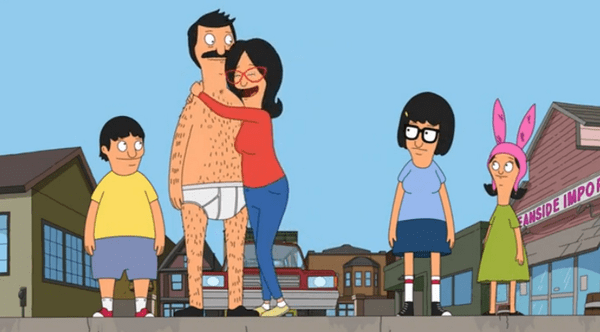
“Ya heah that, Bobby? They think we’re FAMILY!”

However, you may notice that the shows that make this list – that echelon where a devoted section of the fan base can cycle through them again and again – are almost exclusively shows that were produced for many years. Friends had 236 episodes, The Office 201, and Bob’s Burgers – which is still on the air and still in production – aired episode #305 last weekend. Even if you picked one of these shows and watched nothing else, it would take the average person with a job and normal activities weeks or even months to get through the entire thing before you would cycle back to episode one. Fans of one-season wonders like Firefly may love their show, but I don’t know any Browncoats who just watch the 14 episodes and one movie over and over again without any other entertainment in their life. 

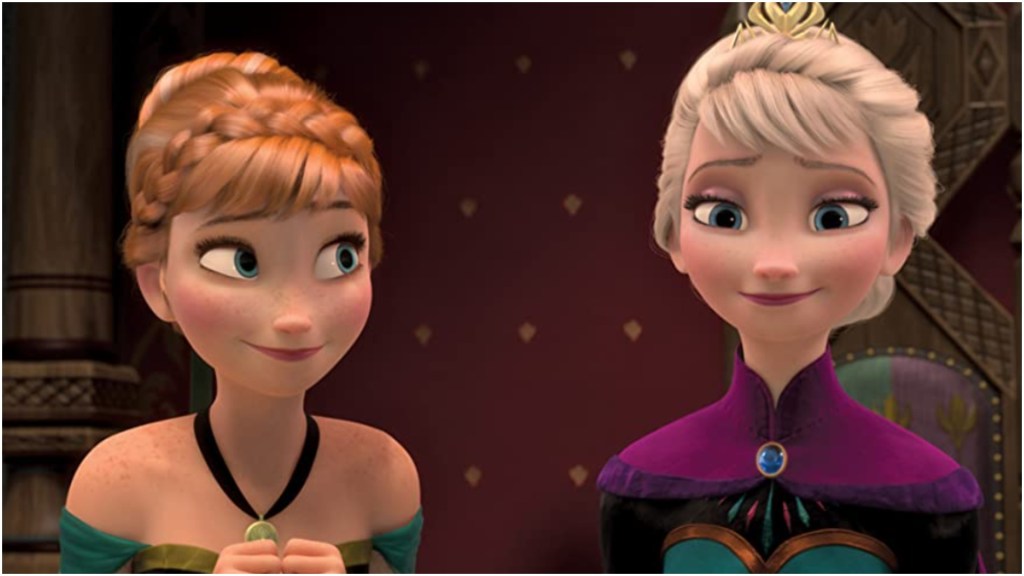
There’s also, if we’re being totally honest here, a bit of a hipsterish anti-popularity vibe when it comes to things that become true cultural icons. If you were alive at any point in the last dozen or so years, you may have heard of a little Disney movie called Frozen. It doesn’t matter if you personally have had children or were a child at any point in this time period, it was absolutely inescapable. A month before the movie came out we all had the soundtrack beamed directly into our brains telepathically. The movie won awards, it produced a mountain of merchandise, and John Travolta somehow egregiously mangling Idina Menzel’s name at the Oscars is perhaps the most entertaining thing that has happened at the award ceremony in the last three decades, or at least until they accidentally tried to give “Best Picture” to La La Land that one time. 
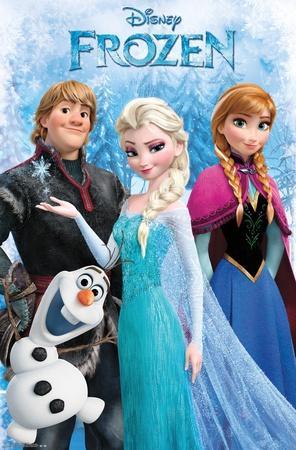
If your kids ask what 2013 looked like, just show them this.

But with the indisputable popularity of Frozen came a backlash. If you say that you like that movie in modern company, you WILL be met with a certain derision. People will tell you that THEY never thought it was THAT good. Mention how you appreciated the fact that it didn’t have a traditional “Disney Princess”-style love story and someone will appear behind you as though you’d said “Candyman” three times in order to inform you that Wreck-It Ralph and Big Hero Six didn’t have love stories either. Start humming a few bars of “Let it Go” and a coven of Disney Witches will try to trap you in a circle and summon the ghost of Lin-Manuel Miranda, which REALLY irritates him because he’s still alive. 

But the thing is, guys, Frozen is a good movie. Like, it objectively is. The animation is gorgeous, the songs are catchy and memorable, the vocal performances by Menzel and Kristen Bell are phenomenal, and the story is not only atypical of what we expected from a Disney Princess movie but at the same time was profoundly moving and had a wonderful message about love and acceptance. But you absolutely are not allowed to say that in certain circles without somebody grinding up a DVD of Tangled into powder and trying to force you to snort a line.

The point is, it’s okay to get tired of something. If you watch or listen to anything too often, odds are you’re going to want to put it aside and watch something else, and that’s perfectly fine. That’s normal. It’s even okay if you get so sick of something that you never want to watch it again. But that’s not an actual metric of QUALITY. Sure, there are some things whose popularity is inexplicable, but you’re not a better person than somebody else because you don’t like them. And while games like Whamageddon are fun, that shouldn’t be taken as a statement that the songs are bad, just that they’ve maybe gotten a little more air time than we would like.

And you know the good thing about losing Mariahpocalypse on Dec. 4? That means I’ve got three whole weeks until Christmas in which I’m safe to listen to the song as much as I want. 

Blake M. Petit is a writer, teacher, and dad from Ama, Louisiana. His most recent writing project is the superhero adventure series Other People’s Heroes: Little Stars, volume one of which is now available on Amazon. You can subscribe to his newsletter by clicking right here. He’s also started putting his LitReel videos on TikTok. He hasn’t watched the movie, but he suspects that a lot of the comments he’s made about overexposure could also be applied to the film K-Pop Demon Hunters

Geek Punditry #127: Revival Vs. Reboot

As you no doubt have heard by now, at least partially because I’ve mentioned it here two weeks in a row, Disney’s brought back its fantastic animated series Phineas and Ferb, and the first part of the new season dropped on Disney+ today. It may surprise you, then, to know that as of this writing, I haven’t watched it yet. You see, I have to wait for my wife to get home from work, because as any competent marriage therapist would tell you, holding off on watching coveted television programming until your spouse is available to watch it with you is a love language. 

But I don’t want to talk about Phineas and Ferb specifically today, I want to talk about what it represents: the TV Revival. That concept of bringing back old TV shows from the dead. It’s not a new idea, of course. The history of television is littered with shows that were cancelled and then came back after some time. Game shows like Jeopardy, Supermarket Sweep, and Let’s Make a Deal are all better remembered from their second incarnation than the original, for example. The 80s gave us resurrected versions of old sitcoms like Leave it to Beaver and The Munsters. And for a time, it was popular to continue a TV series by creating an animated version, as they did with the likes of Star Trek, Happy Days, or Gilligan’s Island. 

It’s like time stood still.

But in recent years, where studio executives are more hesitant than ever to take a chance on a new idea, it seems as though the revival has become a fundamental part of the television landscape. Is anybody going to want to watch a comedy about the goings-on at a municipal courthouse? Maybe not…unless we remind them that they already DID a few decades ago by making that show a new version of Night Court. Go ahead and look at any current network TV schedule (or spin through the offerings of a streaming service) and you’ll be astonished at just how much of the current episodic landscape is stuffed to the gills with shows that have relaunched older ones. I don’t object to revivals as a concept, but like anything else in the sphere of entertainment, I fear that we’ve reached a point of saturation where they’ve become a crutch rather than a tool.

That said, that doesn’t mean resurrecting an old show can’t be successful. But what, exactly, does it take to make a good one? The creators of Phineas and Ferb released a video to social media a few days ago, ramping up to the new season, where they very explicitly chanted “It’s not a reboot – it’s a REVIVAL!” It’s an important distinction, although I think there are a lot of people who don’t understand the difference. A reboot, to me, means starting a franchise over from scratch. You take the concepts, the tropes, the characters, but begin from square one, as though there had never been a previous iteration. Wednesday is a good example of this – there’s nothing that specifically ties it to the canon of any of the previous versions of the Addams Family – not the original TV series, the animated series, the 90s film series, the more recent animated films, the Broadway musical, or the original comic strips that the whole franchise was based on. It’s using the pieces of the older shows, but it is inherently its own thing. So yeah, reboots CAN be good.

In general, though, I prefer a revival – you’re not eliminating the previous canon. You’re not starting over. You’re just picking up where you left off. The original Phineas and Ferb took place across one epic summer. The new season – which they wisely promote as “Season Five” rather than “Season One” of a new series – starts one year later, at the beginning of the NEXT epic summer. Night Court returned to the same courtroom after an absence of many years, bringing back one returning character and one new character who was the child of an original. You get a revival more often when the old cast – or at least some of them – is still active and wants to return. We’ll be getting that with the new version of King of the Hill, coming to Hulu soon, and creator Bill Lawrence has announced a Scrubs revival where – although nobody has officially signed on yet – many original cast members have expressed interest in returning.

If this picture doesn’t make you vaguely uncomfortable, you’re too young.

Sometimes it can be difficult to tell whether a show is a revival or a reboot at first. In 2005, when the BBC brought back its defunct science fiction series Doctor Who, it wasn’t immediately clear if the old shows were in canon or not. And as part of the Doctor’s whole deal is that he occasionally regenerates into a new body, you couldn’t even make up your mind based on the fact that there were no returning cast members. Slowly, references to the old series started to appear, and eventually it was made explicit that this was a continuation – not only of the old series, but it even included the American co-produced TV movie that had tried (and failed) to revive the franchise a decade before. The show has been reinvented many times since then, and the DNA of the franchise makes it fairly easy to do so, but every version has thankfully been a revival rather than a reboot.

This straight-up wouldn’t work with a revival of The Andy Griffith Show.

The reason I prefer revivals is because a reboot has a tendency to dismiss the original. It takes place in a universe where the original didn’t happen and doesn’t matter, and that makes no sense to me. From the perspective of a studio, the only advantage a revival or reboot has over a brand-new property is the built-in audience, so why would you START by declaring that the thing the audience loved doesn’t exist anymore? Paul Feig and the cast of the 2016 Ghostbusters reboot will claim until their dying breath that their film failed at the box office because the fans were put off by the all-female cast, but any conversation with a true fan of the franchise will make it pretty clear the reason it was rejected was because fans wanted a revival. And when they got a true revival a few years later with Ghostbusters: Afterlife (with a main character that was a preteen girl), fans were delighted. 

That’s not to say that a reboot CAN’T be good. When J.J. Abrams was given the task of rebooting Star Trek for the big screen, he wisely took the track of making it an alternate universe. A villain traveled back in time and created an alternate reality in which these new films would take place. The original timeline still existed, and was still available when the TV revivals began a few years later. No matter what you think of the Abrams Star Trek films, most fans will agree that the alternate timeline was a good idea. Similarly J. Michael Straczynksi has been trying for years to get a reboot of his seminal science fiction series Babylon 5 off the ground. In 2023, he even gave us an animated film, Babylon 5: The Road Home, which ended in a way that – similar to the Star Trek example – opened up a different, alternate timeline in which the reboot could take place.

The classic sci-fi trope of “Eh, close enough.”

Of course, it’s easier to do that with a science fiction series than it would be a drama or a sitcom. If somebody wanted to do a reboot of The Golden Girls, for example, it’s unlikely that they would start with a CGI Betty White causing some sort of temporal rift that would take us to a different dimension where the girls all moved in together in 2025 rather than 1985. But that also begs the question: would you really WANT a reboot where they cast people other than Bea Arthur, Rue McClanahan, Estelle Getty, and Betty White anyway?

That’s another thing that revivals have over reboots: the continuity of keeping a cast that the fans love. One of the reasons a Babylon 5 reboot is more likely than a revival is because so many members of that cast, in the years since the show ended, have sadly passed away at a surprisingly young age. Over the course of that show’s five years, 17 actors were series regulars for at least one season. Seven of them are no longer with us, and several others have retired from acting altogether. It would be anathema to many of us to see Bruce Boxleitner’s John Sheridan return with somebody other than Mira Furlan playing his wife, Delenn. In a new timeline, though, with new actors in BOTH roles…that feels a little easier to swallow.

Some shows, however, simply should never be brought back, for many of these same reasons. Any ideas of a Friends revival, for example, went up in smoke with the sad death of Matthew Perry. Any revival, even a one-off movie – would necessitate either recasting Chandler Bing (which fans will tell you is basically impossible) or writing him out of the show by having him either die or leave his wife and children, which would be depressing as hell. As for a reboot…poll the fans. Ask if anybody would want a different cast, and I’m pretty sure you’ll hear a resounding NO.

It would be impossible to recreate this and a mistake to even try.

It’s less of a problem if the actor is still alive and has chosen not to return, or if they’ve fallen from grace in the years since the show’s airing and neither the studio nor the fans want them back. Tom Welling and Michael Rosenbaum, two of the stars of Smallville, occasionally make noise about wanting to bring back the show as an animated series or through animated movies. Many fans would welcome this, although it is unlikely that anyone will bat an eye if Chloe Sullivan is recast. (I’m not gonna get into it – if you don’t know why this would be necessary, just Google it.) In a less problematic example, former child actor Erik Per Sullivan has retired from the business, so when a revival of Malcolm in the Middle was announced, nobody was really angry that they decided to recast his character of Dewey.  

In general, though, revivals are more interesting to me – I want to see a continuation of the original series. There was chatter for years about a reboot of Buffy the Vampire Slayer, but Sarah Michelle Gellar wasn’t interested. Therefore, I wasn’t interested. Then they announced that they’d landed on a pitch that Gellar IS interested in, a pitch in which she is mentoring a new character entirely rather than trying to have somebody else play Buffy Summers… well, at this point, I’m willing to listen.

(There’s an irony here in that Gellar’s series was, in fact, a reboot of a mediocre movie starring Kristy Swanson as Buffy. But again, it just goes to prove to you that reboots CAN work sometimes.)

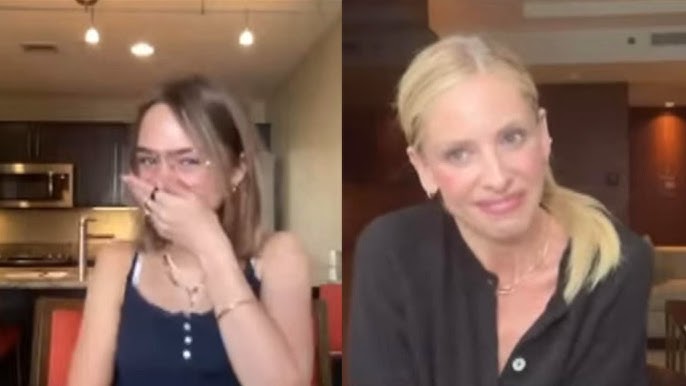
There’s an adorable video of when Gellar called Ryan Kiera Armstrong and told her that she got the part, because REAL slayers go by three names.

For some shows, the question of reboot vs revival is academic, of course. It doesn’t matter for nonscripted series like game shows, or shows that dramatize real events such as Unsolved Mysteries. You may miss Robert Stack, but that doesn’t mean the show can’t be made without him. Similarly, anthology series like The Twilight Zone are by their very nature immune to this. That show has been brought back several times over the years, and as there was never a regular cast or set of characters to follow, it’s a non-issue as long as the show has the flavor of the original – in this case, that of a sci-fi show with horror elements and, usually, some sort of twist ending. 

The biggest problem comes when a resurrected series – whether it’s a reboot or revival – lacks that taste of the original. Every so often you’ll hear about a new version of a show where they proudly announce that none of the current creators are fans of the original. This is a position so bafflingly stupid that I’m surprised it’s not mandated by federal law. While it’s true that some fans can be a bit too close to the property, a bit too reverent, if NOBODY involved in the creation of a show has any passion for it, the odds of creating something that satisfies the existing fan base drops so dramatically as to be almost nonexistent. 

“Well, we’re not making this show for the OLD fans,” some of these studio executives say. “We’re trying to appeal to NEW fans.”

Bullshit. If all that matters is acquiring a new audience, there’s no reason to bring back an old property. By bringing back a classic IP you are inherently announcing a desire to get the attention of an existing fan base, and by creating something you know will dissatisfy them, all you’re doing is trying to court controversy, as if that somehow inoculates you against the need to make a good show. Sometimes I think they’re COUNTING on that. They know their reboot is weak, so they rile up the fans against it, giving them a handy shield of claiming that these narrow-minded old fuddy-duddies just don’t want something new, thereby preventing them from having to admit that they made something that sucks.

Ultimately, I try to judge any show – revival, reboot, or brand-new idea – on its own merits. But when you’re reaching back to a classic series, you need to really think about what made that show successful in the first place before you even THINK about giving it a try.

Blake M. Petit is a writer, teacher, and dad from Ama, Louisiana. His most recent writing project is the superhero adventure series Other People’s Heroes: Little Stars, volume one of which is now available on Amazon. You can subscribe to his newsletter by clicking right here. He’s also started putting his LitReel videos on TikTok. Someday, he swears, somebody is gonna do a revival of Cop Rock, but they’re gonna do it RIGHT this time.

Geek Punditry #111: Playing Favorites With Love Stories Part Two

Ah, Valentine’s Day: the day to show your affection to the one you love, or perhaps the ones if you’re Nick Cannon or somebody. The day that we celebrate passion and romance. The day that everyone who is not, currently, in a relationship does their absolute best to ignore, because those of us who DO have cause to celebrate on this day can – admittedly – be absolutely sickening at times. And most importantly, it’s the day where we feature Part Two of “Playing Favorites With Love Stories.” Just like last week with Part One, I took to social media and asked my friends to throw out suggestions for love story categories to talk about, and this week I’m going to tackle a few more. Grab your sweetie and pull up a chair – there’s some heart-shaped excellence coming your way.

Superhero Love

Eric LeBlanc asked me for my “favorite superhero movies that are just love stories with violence.” That’s an interesting way to phrase it, particularly since a lot of traditional love stories are also “love stories with violence,” but I’m up for the challenge. I have, after all, watched a superhero movie or two in my time, and because of that I think I am uniquely qualified to declare that the best superhero love story ever to grace the silver screen is probably 1980’s Superman II.

Nothing says romance like fighting three evil prison escapees and crashing through a Coke sign.

Part of this, I concede, may be recency bias. I watched Superman II again only a few weeks ago as part of my ongoing Year of Superman project (with new posts every Wednesday – tell your friends!) so it’s still pretty fresh in my mind, but it’s perhaps my favorite depiction of the Superman/Lois Lane relationship on screen. The whole film hinges on the idea that Superman, upon having Lois finally prove his dual identity, decides that he wants to be with her and that the only way to do so is to give up his powers. As it turns out, though, super-timing was not one of his abilities. No sooner has he abdicated his super-ness than he gets his clock cleaned by a jerk in a diner and finds out – oh yeah – while he was off in the arctic circle becoming human again, General Zod and his cronies have escaped the Phantom Zone and are about to take over the world.

Much as I love the Zod stuff, the Superman and Lois relationship is the soul of this movie, and so much credit needs to go to Christopher Reeve and Margot Kidder for making it work. Kidder’s fire and verve absolutely make it believable that this is a woman a man of steel would fall in love with, would be willing to sacrifice everything to be with, and that steers us into the tragedy of it all when he is forced to conclude that the world needs Superman more than Superman needs love. Your heart breaks for the both of them, even if the film kind of chickens out at the end and he uses the heretofore-unknown “super kiss” power to make her forget the whole thing. The super kiss is really the only part of the film that bothers me, but it’s not nearly enough to knock this excellent film from its perch at the top of the mountain. 

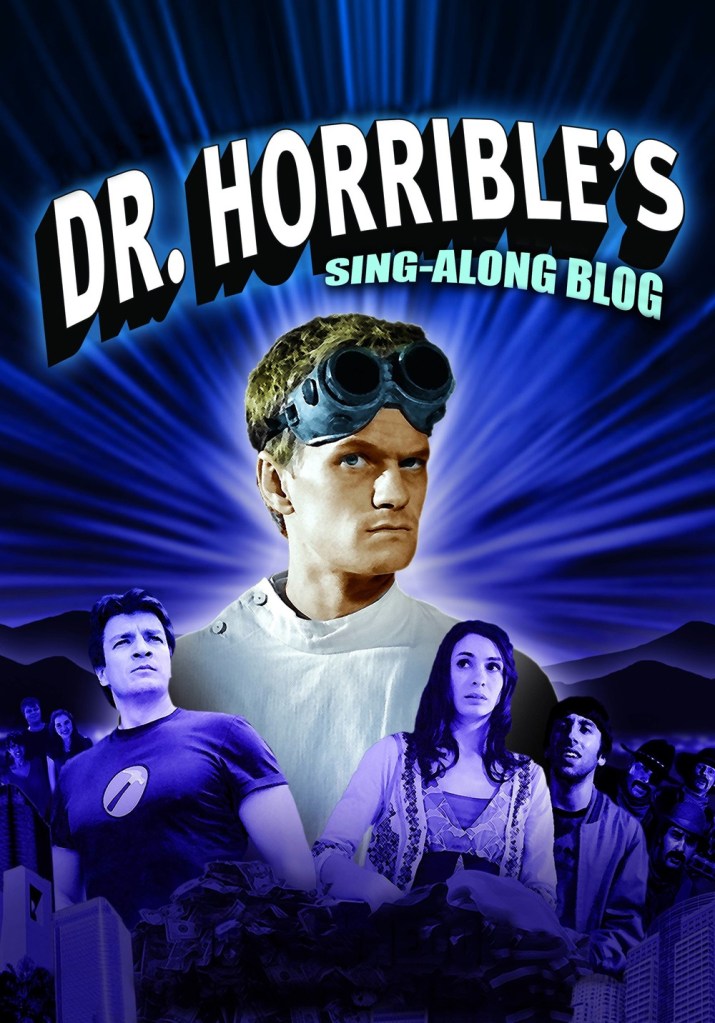
Next is perhaps an odd choice, but I’ve always been fond of Dr. Horrible’s Sing-Along Blog, the musical that came about as a result of a 2008 writer’s strike. Dr. Horrible (Neil Patrick Harris) is an aspiring supervillain trying to crack into the big leagues when he finds himself falling for a girl he meets doing laundry (played flawlessly by Felicia Day). Unfortunately for him, her life is saved by his arch-enemy, the superhero Captain Hammer (Nathan Fillion), who – as heroes go – is way less Superman and way more Guy Gardner. Apropos, I know.

The supervillain musical Joker: Folie à Deux WISHES it could be.

I absolutely love this one. The songs are catchy, the three main actors are at the top of their form, and the conclusion is suitably heartbreaking. And it nicely meets Eric’s qualification of “a love story with violence.”

Not every superhero love story has to end sadly, though, although it seems like most of the really good movies do. But I don’t want to leave you utterly bereft of happy endings, so even though Eric specifically asked for movies, I’m going to throw out a comic book recommendation, one that I’ve been a fan of for many years: Thom Zahler’s delightful series Love and Capes.

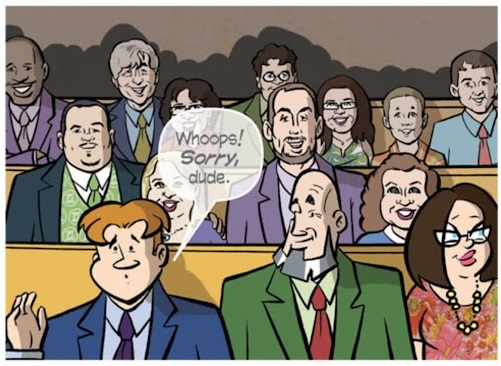
Pictured: Love. Also pictured: Capes.

This story, described by Zahler as a romantic situation comedy, focuses on Abby Tennyson, a bookshop owner who is stunned, in the first issue, when she learns that her boyfriend Mark is actually the world’s most powerful superhero, the Crusader. Abby and Mark have one of the healthiest relationships in the entirety of superhero comics, and the way we watch their relationship grow and develop over the years – through dating, marriage, and parenthood – is the absolute rebuttal to any comic book writer who argues that there are no interesting stories to tell about a couple in a happy relationship. (Lookin’ – as always – as YOU, Spider-Man editorial office.) This series is a favorite of mine not only because it’s a great story (it is) but because it enjoys the rare honor of being one of the only comic books that I’ve ever discovered upon a recommendation from Erin, my own girlfriend (at the time, now wife). In fact, she and I were even guests at Mark and Abby’s wedding. No, really.

I was mostly there to check out the venue.

Platonic Love

Chance Simoncelli suggested the best “platonic” love stories. I really like this suggestion – it seems like much of the media is focused on romantic love, which is fine, but they zero in on it to the expense of every other type of relationship. It’s like the entertainment world doesn’t seem to grasp the concept that sometimes people are just friends, with no romantic connection, but that doesn’t mean their love isn’t deep and true and sincere. This is one of the reasons I hate fanfiction, if we’re being perfectly blunt.

But on rare occasions, they do manage to get it right, and share with us a deep, committed bond between two people that never indulge in any hanky-panky, and I think those stories should be celebrated. One of my favorites comes from the TV show Parks and Recreation. Nick Offerman’s Ron Swanson and Amy Poehler’s Leslie Knope couldn’t possibly be more different. Leslie is a chipper, enthusiastic-to-a-fault government employee who sees working in public service as the highest calling there is, whereas Ron is a grouchy straw Libertarian who sees all government work as inherently useless and wants nothing more than for everybody to leave him alone. Somehow, they’re the best of friends. Their devotion to one another is so powerful that in the final season of the show, after a time jump, the two of them have a wedge driven between them and it’s as horrifying and shocking as it would have been had either of them broken up with their respective spouses. The episode where the two of them reconnect and reconcile their differences is one of the most beautiful and sweetest in the entire series, as their bonds are once again forged over a mutual affection, respect, and a love for breakfast foods.

On any given day, I am both of these people.

There’s also a great example from the show Friends. First of all, I think it’s time we all admit that, in terms of friendship, Joey Tribbiani was the MVP of that show. The whole thesis of the series is that these six people are one another’s found family, but the level of loyalty and devotion that Matt LeBlanc’s character shows to each of the other five at various points in the series is above and beyond, and I don’t know if he gets enough credit for that. The late-seasons dalliance with Rachel aside (we can all agree that was Friends’ worst plotline, right?), he is the staunchest of the group.

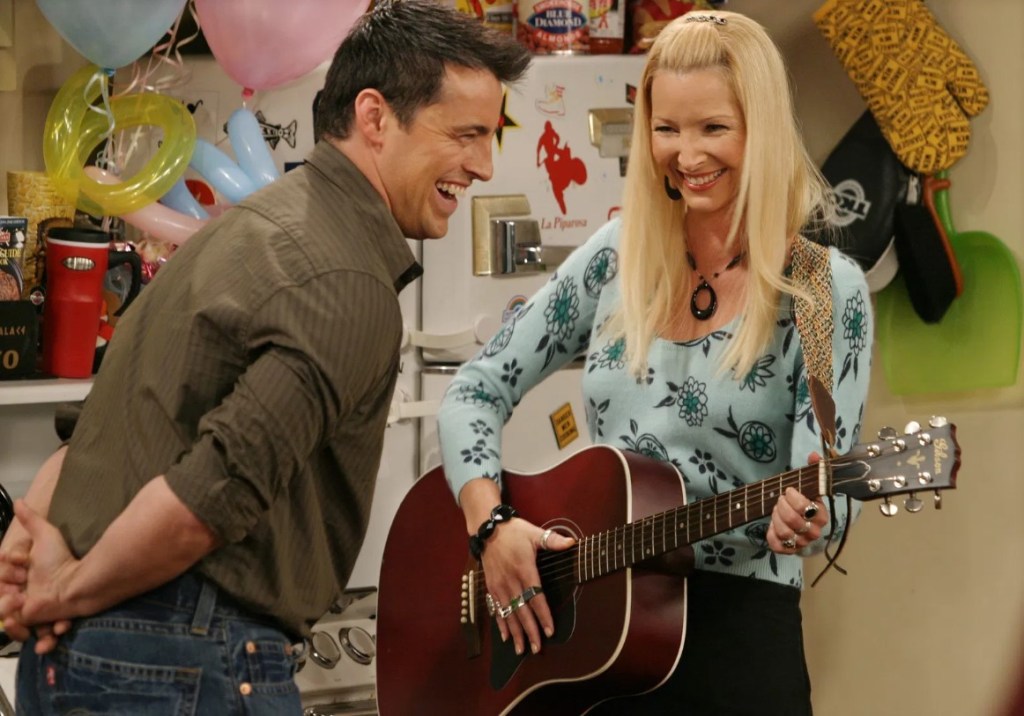
And the best such relationship, I think, is the one he has with Lisa Kudrow’s Phoebe. With the other four pairing off and going through assorted romantic shenanigans of one sort or another for the entire run of the series, these two are simply friends through thick and thin. There were occasional episodes where we saw some flirtatious banter between them, and once in a while they would allude to the notion of them hooking up somewhere down the line, but at no point does it ever come across as a serious intention. Frankly, although they both enjoy playing the game with one another, I think Joey and Phoebe love each other TOO much to ever get physical, because they already know their relationship is perfect the way it is. In fact, she may be the one woman on the entire planet that Joey feels that way about, and if that’s not special I don’t know what is.

Somehow the womanizer and the former mugger were the wholesome, beating heart of the show.

I also need to give a little credit to Disney here. True, they have done as much to push romantic love as being the apex of a relationship as any studio on the planet, but there was one time they deliberately steered away from that and they nailed it, and I of course am talking about Frozen. It’s a Disney Princess movie from the outset and, as such, people expect it to follow the usual tropes of a Disney Princess movie, including the damsel in distress and the handsome prince. And for much of the film it does use these tropes, including Anna being afflicted by an errant piece of magic that threatens to turn her into ice if the spell is not broken by an act of true love. 

I know it’s fashionable to hate on Frozen and call it overrated now, and I’ll be the first to admit that the hype train it rode for many years went a lot farther than it probably should, but that doesn’t take away from the fact that the filmmakers were brilliant in how they subverted the expectations of a Princess movie. While Anna is looking for “true love” to cure her, her handsome prince reveals himself to be an opportunistic villain who was only planning to marry her to move himself into position to become king. If she dies, all the better for him. In the end, though, Anna IS saved by an act of true love: not by her false fiance Hans, nor even from the stout-hearted Kristoff, whose love for Anna IS pure. Anna is saved by her sister Elsa, stepping in to defeat Hans at the last second and breaking her own spell. The love between the two sisters is at the heart of the film, far more than Anna’s love triangle, and that makes it a unique and special film in the Disney canon. And I don’t care HOW sick you are of hearing “Let It Go,” it gets my respect for that. 

“Are you thinking what I’m thinking?”
“Yes, those fanfiction writers are messed up.”

Finally, of course, we can’t forget the greatest platonic love story of all: a story not between man and woman, not between friends, not between family, but between the sole survivor of a dying world and his appetite.

Project ALF.

The true platonic love affair is between me and this joke.

Will They/Won’t They?

Finally, Duane Hower asks for the best “Will they/Won’t they?” in geek culture, “and why is it Buffy and Spike?” Ah yes, the “Will they/Won’t they?” It’s the trope that fuels a million stories and makes half of them frustrating. The truth is, any time they try a “Will they/Won’t they?” the storytellers are playing with fire. Setting up a WTWT is incredibly easy: get two characters, hint at a degree of attraction between them, and then make the audience shriek uncontrollably as you refuse to settle the question. But concluding that arc in a satisfying way is a lot harder than it seems on the surface. If you resolve it too quickly you give up fuel for future stories. If you play it out too long, the audience gets frustrated. If you resolve it at exactly the right time, half the audience will hate the outcome, no matter what the outcome happens to be. Duane mentions Buffy the Vampire Slayer, and I concede that it’s a pretty good example, as far as WTWT go, but mostly because of how adroitly the storytellers managed the timing.

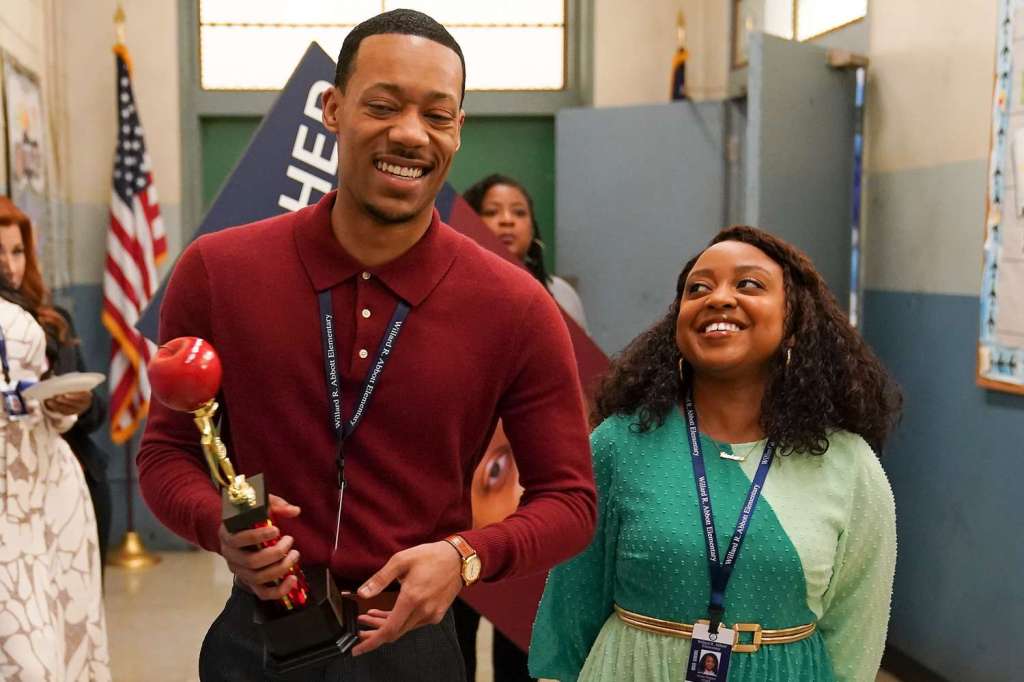
There are tons of classic examples: Pam and Jim from The Office, Sam and Diane (and later, Sam and Rebecca) from Cheers, Ted and Robin from How I Met Your Mother? and so forth, and while some of them navigated the minefield better than others, I think the relationship between Janine and Gregory in Abbott Elementary is one of the better examples. In the first episode, Gregory joins the Abbott Elementary faculty and we quickly see sparks between him and Janine, who happens to be in a long-term relationship. In truth, for the first few episodes Abbott adheres so closely to the format of The Office that it’s almost uncanny. But the relationship between the two of them changes and takes unexpected turns over the next few seasons. Relationships change, feelings change, and while the attraction between them remains undeniable, you’ve got a case here where you genuinely aren’t sure which way they’re going to take the characters. In fact, a late season three episode sets up things to put the kibosh on them once and for all just before the season finale changes everything. One of the reasons I think Abbott is the best comedy currently on television is because of its hilarious and shockingly realistic depiction of a school setting, but the Janine/Gregory relationship is a close second.

Fun fact: putting this much adorable in a single room is considered a health hazard in 29 states.

But perhaps the greatest example of a WTWT in the history of television comes from the brilliant, magnificent, legendary, and frankly underrated sitcom Newsradio. This 90s show about the staff of a New York radio station is one of the smartest and funniest television shows in the entire history of the medium, with whip-smart writing and a cast that performs their roles with such ease, grace, and humor that watching it can almost make you forget what a dumpster fire of a human being Andy Dick turned out to be. As the show was in development, though, the network (NBC) insisted that they include a WTWT among the cast. That was absurd, the writers said. That wasn’t the show they were doing! That wasn’t the story they were trying to tell! This was supposed to be a workplace comedy, not a romcom!

“Give us a WTWT,” NBC intoned deeply, whilst carefully counting their Seinfeld money.

FIIIIIIIIIINE,” the Newsradio writers replied, tweaking the first episode to set up a WTWT between Dave Foley and Maura Tierney’s characters. “Happy now?”

“Delighted,” NBC said, lighting a cigar on fire with a $100-bill with Jason Alexander’s signature on it.

And then the Newsradio writers took their mandated WTWT and resolved it in the SECOND EPISODE by hooking up the two characters officially.

“Look, we’re not Mulder and Scully, let’s just get on with it.”

Newsradio is one of the greatest sitcoms of all time, but the way they thumbed their nose at the network may be their crowning achievement.

Thus concludes PLAYING FAVORITES WITH LOVE STORIES, friends. I hope you all have a fantastic Valentine’s Day. Spend it with someone you love, fire up some of these stories we’ve mentioned, and remember that Phil Hartman was a genius

Blake M. Petit is a writer, teacher, and dad from Ama, Louisiana. His most recent writing project is the superhero adventure series Other People’s Heroes: Little Stars, volume one of which is now available on Amazon. You can subscribe to his newsletter by clicking right here. He’s also started putting his LitReel videos on TikTok. Did you know that Jon and Liz the veterinarian finally hooked up in the Garfield comic strip? No really, it’s true. Just throwing that out there to remind you that there’s hope for everybody.

Geek Punditry #46: We Need Something to be Thankful For

In January, I decided to do a soft relaunch of this blog, challenging myself to find something I was happy about in pop culture to write about once a week. And although I’ve been pretty successful with that goal so far, it hasn’t always been easy. This week, for example. This week’s post is scheduled for Nov. 17, the last Friday before Thanksgiving, and in a situation like that my normal inclination is to write something about the culture of the holiday, an exploration of some of the classic movies or specials that I always associate with the season, that I revisit every year, and that helps enrich and makes the holidays more meaningful for me. There’s only one problem. In that November, there isn’t that much to be thankful for.

I mean, it’s not even deep-fat fried.

Christmas is easy – there are thousands of Christmas-themed films, TV shows, books, and comics I can turn to, and between Hallmark and the Lifetime Channel they’ve turned out 17 more since we began reading this sentence. Halloween, similarly, isn’t difficult. There are a lot of Halloween-specific movies, and really, anything on the creepy spectrum can feel Halloween-appropriate, even if it’s not set around Samhain. Thanksgiving, though? That’s tougher. 

There are a few Thanksgiving movies, but to date there’s really only been one GREAT Thanksgiving movie, and that’s the 1987 classic Planes, Trains, and Automobiles. If you’ve never seen it, I recommend you check it out before next week: Steve Martin plays an executive trying to get home from a business trip in time for Thanksgiving, and absolutely everything goes wrong. But he’s not alone: fate seems to have linked his travel mishaps with a buffoonish shower curtain ring salesman (really) played by the late, great John Candy. Both of these comedians are at the top of their game in this movie – Steve Martin plays the straight man for most of the film, save for one memorable freak-out scene at a rental car counter, and Candy manages to pull the viewer on a roller coaster ride that makes his character at turns goofy, charming, unbearable, sympathetic, and even tragic. My wife Erin contends (and I do not disagree) that if Candy hadn’t passed away at such a young age, he would have had a late-career dramatic renaissance like John Goodman or Bryan Cranston. And while I wouldn’t change anything about the Breaking Bad/Better Call Saul universe, there’s an alternate reality out there where Candy lived long enough to play Saul Goodman, and I bet that’s really interesting. At any rate, this scene shows hints of that dramatic master that, sadly, will never be. There are several must-see movies every Christmas and Halloween for me, but out of all the Thanksgiving movies that exist, Planes, Trains, and Automobiles is the only one I go out of my way to watch every year. 

“Seriously, shower curtain rings?”

The first runner up would probably be Fun in Balloon Land, a horrific fever dream of a film where a child wanders through a fairy land made up of hideous balloon people at the behest of a creepy narrator, intercut with scenes of the world’s most boring Thanksgiving parade. This film is truly an abomination, but the good people of RiffTrax have put out a commentary track that is a favorite of mine.

But that’s it? Only two really memorable movies? One and a half, really – Balloon Land isn’t even an hour long. Thanksgiving is one of my favorite days of the year. I feel like it deserves more. 

(This is the point where someone in the comments will point out Eli Roth’s new holiday slasher flick Thanksgiving, now playing. But I haven’t seen it yet, and even if I had, I feel like a minimum of five years needs to pass before it’s fair to designate a movie as a potential “classic.” Get back to me in 2028.)

So there aren’t enough Thanksgiving movies, that’s clear. But what about holiday specials? Once again, there are some to choose from, but not as many as the other two third quarter holidays. There’s Bugs Bunny’s Thanksgiving Diet, one of the late 70s/early 80s compilation Looney Tunes specials that wraps a new framing sequence around clips from the classic cartoons. BC’s The First Thanksgiving is…weird, although thematically it at least makes a little more sense than the Christmas special. Alvin and the Chipmunks: A Chipmunk Celebration? This is baffling, as it is CLEARLY a Thanksgiving special, but they NEVER EVEN SAY THE WORD “THANKSGIVING.” They dance around it, referring to the “holiday,” which is utterly bizarre to me. Thanksgiving doesn’t even have the religious connotations that make some modern specials afraid to mention Christmas, and what’s more, this came out in 1994. Does David Seville just despise the concept of “thanks”?

“Let’s get ready for Simon’s hate crime!”

Nah, just like Christmas and Halloween, the top two specials belong to our friends from the newspaper pages: A Charlie Brown Thanksgiving and Garfield’s Thanksgiving. The former features the legendary sequence in which Charlie Brown serves a highly-ungrateful Peppermint Patty a Thanksgiving dinner of popcorn, toast, pretzels, and jellybeans. It’s a classic bit, and it really makes me wonder why Kellogg’s, who released a Great Pumpkin-themed cereal for Halloween this year, didn’t follow suit with a cereal that looks like popcorn and jellybeans.

Put that in a bowl.

As for Garfield, this special is second only to his legendary Halloween adventure, showing Jon finally get a date with Liz the Vet, who bizarrely agrees to a first date of having Thanksgiving dinner with him. Jon being Jon, though, he totally fouls up the dinner, and winds up having to call Grandma Arbuckle to save the day. The special is great, with some of the surreal humor that made Garfield back in the day so much fun. Plus, you know how sometimes they manage to make cartoon food look so good that you crave it in real life? If I could bring one cartoon character into the real world, I’d have Grandma Arbuckle show up to make dinner. 

I’m getting hungry just looking at this.

If there’s one area where Thanksgiving does have a little bit of traction in pop culture, it’s in the world of the television comedy. For decades, the sitcom has used Thanksgiving as a backdrop for some classic episodes, and there are few reasons for this. First of all, with the traditional television season running from September to May, shows (especially live-action ones) would usually keep the series more or less in real time. In other words, an episode that first aired in September was usually set during September, a show that aired in February was usually set in February, and so forth. That made it easy – and even logical – to use holidays to mark the passage of time. In this streaming era, though, that concept may be endangered – when Netflix drops an entire season of a comedy in mid-July, it makes little sense to have a holiday episode. (This was even lampshaded in the first season of their Mystery Science Theater 3000 reboot, where they had a Christmas episode, but the characters quipped that people binging the series wouldn’t be watching it anywhere near Christmas.) 

The other reason is that a large number of sitcoms, historically speaking, have been about some type of family: either a traditional nuclear family, a nontraditional family, or about the “found family” that we sometimes create with a group of friends or closely-knit co-workers. As Thanksgiving is arguably the holiday most associated with family as a concept, it only makes sense to tell stories about those families at Thanksgiving. 

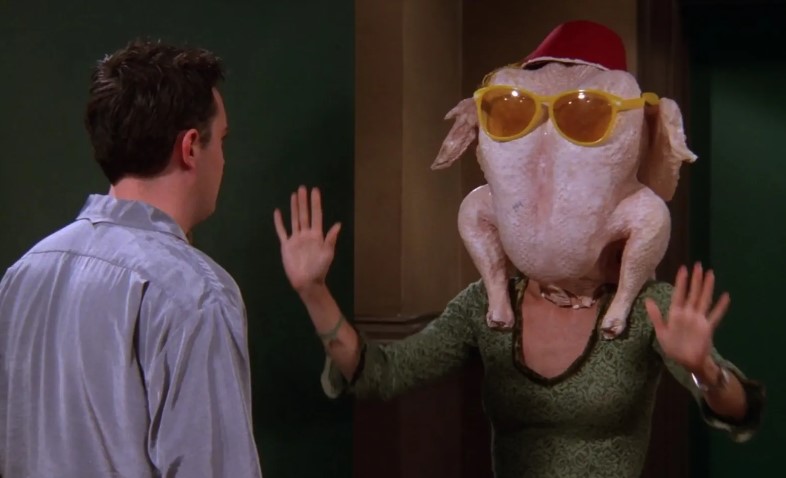
Although many sitcoms have had Thanksgiving episodes, there are two that elevated it to an artform: Friends and Bob’s Burgers. The gang at Central Perk made up what is possibly the most recognizable example of the “found family” sitcom in history, and although every one of the main six characters had at least one other biological family member they could have spent the day with, after the first season (where their respective plans all fell apart and they instead spent the holiday together), they rarely made a comment about spending Thanksgiving with anybody but each other. This resulted in some legendary episodes, including “The One With the Football” (in which a touch football game goes wildly out of hand), and “The One With All the Thanksgivings,” (where they reminisce about Thanksgivings past and, quite memorably, Chandler first tells Monica that he loves her while she has a turkey on her head). 

True love.

Bob’s Burgers, meanwhile, is a show about a family that owns a burger joint, with the titular Bob being a chef with dreams of grandeur, and who sees cooking Thanksgiving dinner as a point of personal pride and a constant challenge to outdo himself. Being an animated series, the shows often get far wilder than you would often see in live action, such as the Thanksgiving where a stampede of turkeys trapped the kids in an amusement park ride, the one where Bob has to drag his wife’s injured sister to Thanksgiving dinner in a blizzard, or the time a school Thanksgiving pageant turns into a horrific and hilarious gorefest. At the core, though, this is a show about a family that sincerely and deeply loves each other, and the Thanksgiving episodes are often some of the finest reflections of that. 

Also true love.

Both of these shows would make for fine Thanksgiving marathons. If only Max and Hulu (the streaming services that have them) would wise up and include a button that allows you to watch all the Thanksgiving episodes in order. We know the technology exists, people. Warner Bros., Disney? Are you listening? I’m putting you on notice: I want a “Play Thanksgiving” button come November 2024.

And of course, no discussion of Thanksgiving episodes would be complete without what is perhaps the most legendary one of them all: WKRP in Cincinnati’s “Turkeys Away.” In this episode, the manager of the titular radio station decides to stage a Thanksgiving publicity stunt by escalating a turkey giveaway to preposterous levels. This is the first episode anybody thinks of when they think of WKRP, and even people who’ve never watched the series may still be familiar with the episode’s final line, a killer punchline that has resonated in the annals of sitcom history, but which I will not spoil here for anybody who hasn’t watched the episode. It’s a classic piece of television, but it also has one perplexing footnote. The original air date for this piece of Thanksgiving history? October 30, 1978 – the day before Halloween.

“This is the best we could have hoped for.”

Still, even with these examples I have provided, it should be clear that Thanksgiving has gotten the short end of the stick when it comes to classic pieces of entertainment. I can binge Halloween specials and horror movies all October long. And once Santa comes down Main Street in the Macy’s Thanksgiving Day Parade, there are more than enough Christmas movies, specials, and TV shows to keep me pleasantly stuffed until Twelfth Night in January. But even with a relatively short 22 days between Halloween and Thanksgiving, like we have this year, there just isn’t enough content to fill it all up. So to all the people out there who make movies and TV shows, I implore you: give Thanksgiving a chance. With such relatively little competition, it really wouldn’t be that hard to make the next definitive piece of Thanksgiving culture. 

I’m putting you on the same timeline as the Hulu and Max people. You got one year, folks, or I may just have to do it myself.

Blake M. Petit is a writer, teacher, and dad from Ama, Louisiana. His current writing project is the superhero adventure series Other People’s Heroes: Little Stars, a new episode of which is available every Wednesday on Amazon’s Kindle Vella platform. He realizes that he neglected to mention one specific Lifetime Thanksgiving movie, the 2015 film Jim Henson’s Turkey Hollow, produced by the Jim Henson Company and based on an idea from the legendary Jim Henson before his untimely death. It was a’ight.