Geek Punditry #132: The Things We Love

I’m a teacher who is off for the summer, and although that does not (as many presume) mean that I have nothing to do, it DOES mean that my schedule is much less regimented. In other words, I enjoy the fact that for two months out of the year, I’m allowed to sleep past sunrise. Until this morning, of course, when my precious son Edward bounded upon his mother and me at 6:23 in the morning to make sure that we were going to be ready in time for the movie we’re watching at 11: 30. 

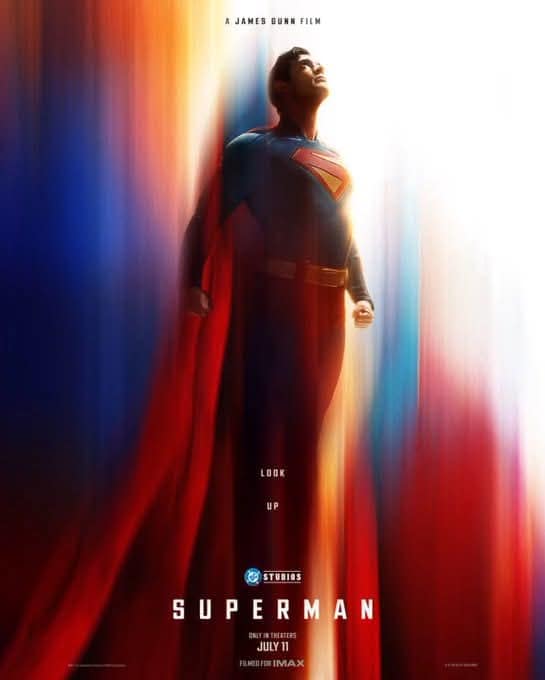
“Why are you looking at me like that?” I ask my wife, as Eddie scuttles away to inform our Google Home Mini that we’re going to see Superman today. 
Shoot, was that TODAY? Totally slipped my mind.

I know why she looked at me that way, of course. This is probably my fault. Ever since the trailer dropped back in December, I’ve been working on the kid, showing him the clips online, watching the old movies and cartoons with him, getting him some of the new toys and t-shirts and a ridiculously cute pajama set with a cape. I have, in fact, gotten him excited. And moreso, for my little ADHD wonder, this may be the first time in his life he’s ever experienced anticipation that has lasted this long. I’m writing this before we’ve seen the movie, and I kind of feel the same. Eddie has been waiting for this movie since December. In a way, I’ve been waiting for it all my life.

Not because it’s a new Superman movie and not because it’s James Gunn doing Superman and not because I hated the Zack Snyder version. I’ve been waiting for this – and I didn’t even know it before 2017 – because I’m getting to take my SON to a Superman movie for the first time. And there’s nothing better than sharing what you love with the people you love.

Like this little nerd.

I know some people who have a bizarre relationship with their fandoms. When Star Wars became mainstream, for instance, they were disappointed. And not because of the content of any specific movie or TV show, they were disappointed because, in their minds, Star Wars was always this minor, niche thing that just belonged to THEM and not the normies out there. Star Trek doesn’t quite have the mainstream penetration of its Disney counterpart, but when New Trek adopted more polished special effects and started hiring big-name actors like Jason Isaac, I know Trekkies who had the same reaction. I don’t understand this point of view. I don’t get why anybody would be upset to learn that something they love is loved by other people.

Loving a movie, a TV show, a comic book series, a video game…this is not like having a relationship with another human being. Nobody is requiring that The Last of Us be in a monogamous relationship with you, Jamie. Stories are placed out into the world with the hope of gathering as many lovers as possible. Some of them make it, some of them fail, and some of them are successful beyond anybody’s wildest dreams, but they all have the same goal: to be shared.
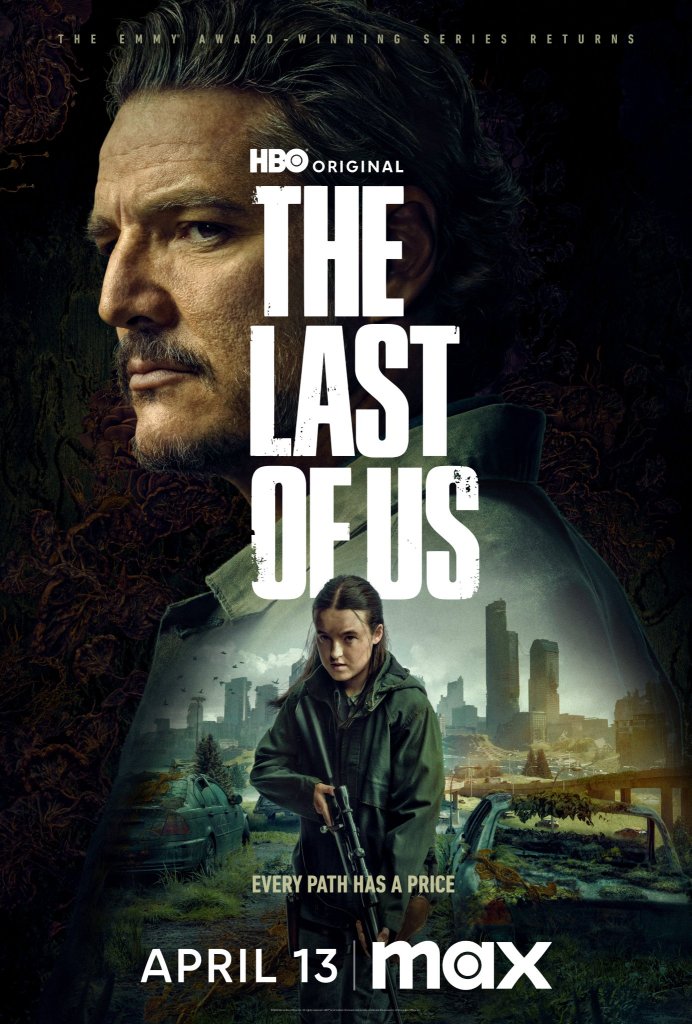
If you thought Pedro Pascal was all yours, I’ve got 17 different franchises with bad news for you.

The thesis of this column, from day one, has been to talk about the things that I love, and although that doesn’t mean I don’t occasionally lapse into criticism, I’ve done my best to abide by that. There is a percentage of any fandom – it’s a small percentage but, unfortunately, it’s usually the loudest – that exists only to fiercely express their hatred of whatever it is everyone around them is trying to enjoy. I can’t stand these people. It’s the same, to me, as listening to people talk about their significant others. When I hear a man gripe and pout and call his wife a harpy, a woman telling me how her husband is stupid and useless, I stare at them blankly, unable to relate. I actually love my wife, people, she’s my best friend. If you’re that miserable either go to counseling or end the relationship. Meanwhile, I’m gonna go sit at a table with Gomez Addams, Rick O’Connell, Bandit Heeler, and Clark Kent, and we’re all going to raise a glass and have a friendly but spirited debate over whose wife is the most awesome, all while vociferously agreeing with each other’s estimation of our respective partners.

Goals.

It’s the same with fandom. I don’t mean to say that Star Wars or anything else is beyond criticism, but how long can you listen to somebody complain about something before you come to the conclusion that they don’t actually love it, at least not anymore? And if you don’t love it anymore, that’s fine, but why don’t you just find something ELSE to talk about? I want to hear about the things you think are great and WHY you think they’re great, because love becomes better when it’s SHARED. I have seen every iteration of Star Trek and I’ve never watched a minute of, say, Outlander, but I’d rather listen to a three-hour symposium about what makes Outlander great than a 15-minute YouTube video whining about how they changed the shade of blue of the Andorians’ skin when they showed up on Strange New Worlds. 

Criticism should come from a place of optimism. The attitude should be “I want this to be  better,” not “I hate everything about this.” Even in the classic days of Siskel and Ebert, back when criticizing movies was something that could get you your own TV show if you were good enough at it, I doubt that Gene and Roger ever went into a movie theater thinking, “I hope this sucks.” Oh sure, there were plenty of times they EXPECTED a movie to suck — you watch enough of them and you start to develop a sixth sense for what’s going to be wrong just by watching the trailers – but they probably wished, somewhere in their hearts, to be proven wrong each and every time.

Oddly, also goals.

Some people revel in their hatred. They want to spread it like a virus. These are the people who harass a Star Wars actress until she has to quit social media, who shout obscenities at children on the street because they’re TOO good at playing a bad guy on Game of Thrones, who make plans to bomb a movie they haven’t seen with negative reviews because they’re bitter that the franchise was rebooted. This isn’t love, this is toxic. If you knew anyone in real life who treated their partner this way, you’d beg them to get out of that abusive relationship. And yet these False Fans just keep going and going, more emboldened than ever by the platform that social media has given everyone in the industrialized world. We’ve got a system that enables us to connect with more people than ever before and yet they choose to use it to gripe about the fact that Superman is friendly to children.

Fandom, like personal relationships, should be about love. And love should be shared. And while I wouldn’t ever try to force Eddie to like the things that I like, I expose  him to those things in the hopes that they’ll latch on and find purchase, because it makes me happy to share them with somebody I love so much. And – thank GOD – in the case of Superman, it has. So about four hours from the time I’m writing this, we’re going to sit down in that darkened theater, a bucket of popcorn between us and his Superman action figure on his lap (because Eddie has asked to bring him) and we’re going to watch the movie that so many people have already loved. And if I love it as they do (spoiler warning: I highly suspect that I will), I’m going to do my best to spread that love. 

That’s what being a fan really is. 

Blake M. Petit is a writer, teacher, and dad from Ama, Louisiana. His most recent writing project is the superhero adventure series Other People’s Heroes: Little Stars, volume one of which is now available on Amazon. You can subscribe to his newsletter by clicking right here. He’s also started putting his LitReel videos on TikTok. He does, in fact, believe a man can fly.
Geek Punditry #109: Fanufactured Outrage

Allow me to preface this by saying this column is NOT about Superman. I’m gonna do my best to restrict that to the Wednesday blogs during this Year of Superman, which you all of course should be reading and sharing with your friends and joining the Facebook group. But the thing that triggered this week’s column came from the new “Icons” trailer for James Gunn’s upcoming Superman movie, so I gotta start there.

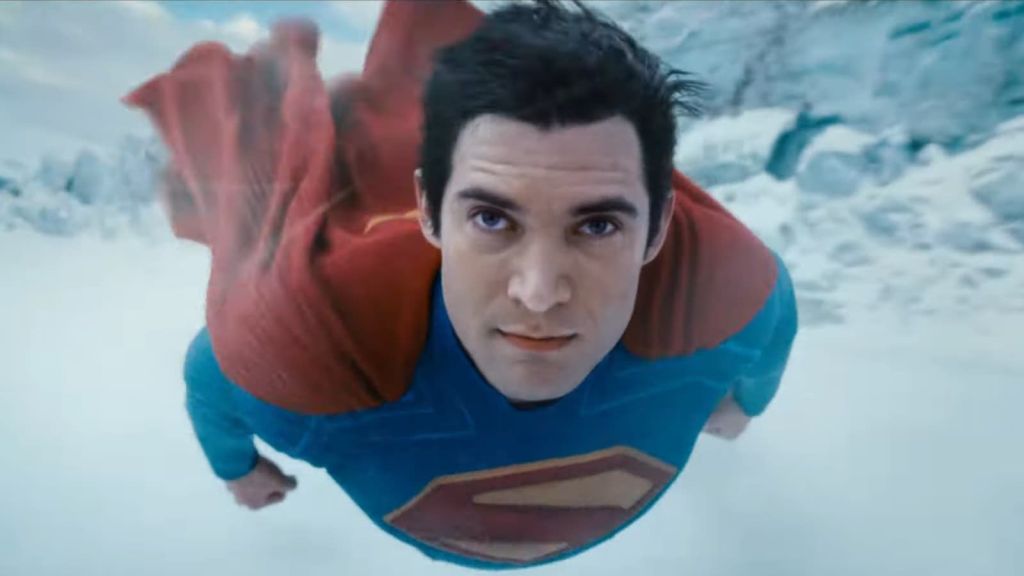
A few days ago, DC Studios released a new 30-second spot for the movie. There wasn’t a lot of new stuff in this one – most of it was footage that appeared in the first trailer, with a few new seconds of Nicholas Hoult as Lex Luthor and a final shot of David Corenswet as Superman flying directly at the camera, his full face clearly in view. I thought it was a great shot, and a lot of the Superman fans and groups I’m associated with started passing it around social media. Some people even used it as cover photos on Facebook and that sort of thing. But as is always the case there was a contingent of people – I hesitate to call them “fans” for reasons that will soon become abundantly clear – who started whining and complaining that the face had been altered via CGI. 

How could anyone hate this face?

First of all, I didn’t for a second think that it had. It looked perfectly natural to me. Second, the idea of complaining that CGI is being used in a movie where the main character is a flying alien, a woman with bird wings fights a kaiju, and there’s a character who can magically create anything he imagines with his glowing green ring is abundantly stupid. Of course there will be CGI. It’s only worth complaining if the CGI is bad, and nothing I’ve seen so far fits that pedigree. But the whining reached the point where Gunn himself on social media stated that there was no CGI altering done to Corenswet’s face, and pointed out something that anybody with a brain probably already knew – that pointing a camera directly in a person’s face might sometimes look slightly different than an angle captured from the side. 

But I have no doubt that the people who complained in the first place aren’t satisfied. Such people never are. These non-fans exist only to find things to get outraged about. These are the people who get up in arms over every casting announcement, declare a move a failure before a foot of film has been shot, and harass actors until they quit social media altogether. The word “fan” is short for “fanatic,” and these are the people who take the literal definition of the word to the extreme. They are not fans, but they are responsible for what I like to call Fanufactured Outrage.

Fanufactured Outrage is the phenomenon where people – usually, but not exclusively on social media – get angry over a problem that does not exist until they invent it in their heads. They’re the ones who hate a superhero costume that they haven’t even seen an official image of, the ones who despise any casting decision that doesn’t perfectly mirror the image they have of a character in their mind, and the ones who have decided that popular culture reached its zenith when they were approximately 13 years old and everything has been downhill ever since. 

A few days ago, for example, someone in a Svengoolie group brought up the Guillermo Del Toro Frankenstein movie that’s coming out later this year. I am on record as being very excited for this movie (not as much as Superman, but it’s probably #3 on my 2025 most-anticipated list, with Fantastic Four: First Steps coming in second). Del Toro is a phenomenal director, and I cannot think of a better choice to do a new version of Frankenstein. This is the man, remember, who won Best Picture and Best Director for what was essentially a reboot of Creature From the Black Lagoon. And while most of the fans were, indeed, excited, there were the naysayers. My favorite was the one who just whined “No more remakes, they’re never any good.”

Yeah, nothing interesting in this image at all.

So many problems with this, of course. First of all, the idea that there’s never been a good remake is patently false, and we can go back at least as far as The Maltese Falcon to prove that. Second, I don’t really consider Del Toro’s Frankenstein a remake any more than any of the 30,000 versions of A Christmas Carol are remakes of each other – it’s a new movie that draws on the same original source material, but not necessarily a remake of the Boris Karloff film or of any of the other hundreds of versions of Frankenstein that have been made. And finally, even if you do consider every version of Frankenstein since the first one a remake, this person disproved their own assertion, as the Karloff version was NOT the first film version of Frankenstein any more than the Judy Garland Wizard of Oz was the first version of that story, or the smash hit Dune films were the first adaptation of Frank Herbert’s novel. 

When that last bit was pointed out to the original complainer, though, his response was something along the lines of, “I mean nothing since 1970. It all sucks”

Write that down, folks. There hasn’t been any good movie made in the past 55 years. The only thing this guy has proven is that he’s built a little box for himself that he refuses to peek out of, and while I suppose he has the right to do so, none of the rest of us should feel any obligation to give a damn what he’s whining about from behind the cardboard flap.

Perpetrators of Fanufactured Outrage exist in every fandom and every medium, and while I do believe they are a minority group, they are also often the loudest such group, which can make them difficult to ignore no matter how hard we try. The “mute” button on most social media makes it a little easier, but it’s kind of like fighting the Hydra – you cut off one Fanatic and two more will sprout to take his place.

Their zeal to pick things apart isn’t helped by the news cycle, which runs with everything that is even remotely clickbaitable, regardless of whether they should or not. When the movie X-Men Origins: Wolverine was in post-production, for instance, a full-length cut of the movie was somehow leaked and began making its rounds on the internet. The problem was it was an unfinished work cut: rough, with no music, and without even any special effects. Of course, the fans hated it. But what did they expect? It wasn’t finished. It was still missing essential elements. It wasn’t even like reading the first draft of a book before it gets a polish, it’s like reading a book that hasn’t had any of the adjectives implanted yet, as we writers do at the Adjective Implantation Plant down on 45th and Broad. The film was excoriated before it was even given a chance. 

Somehow they didn’t see the GENIUS in this.

To be fair, the finished movie wasn’t exactly good either, but that doesn’t mean it deserved the treatment it got. 

Perhaps the worst is when they Fanufacture Outrage over something that doesn’t even exist, like the rumors that fly through the air of Hollywood at any given day. They’re impossible to escape, predicated on overheard snippets of conversation, someone wistfully explaining what they would do with a franchise, or leaked information that may have been under consideration at one point but has since been abandoned. The smog in Los Angeles, according to a recent Environmental Protection Agency survey, is estimated to be at least 76 percent Hollywood rumors, and the Fanatics will latch on to every one of them and get pissed about them.

It doesn’t help when the “news” sites run with this kind of information as if it has any weight. I find this is particularly true in terms of casting news. Sonic the Hedgehog star Ben Schwartz, for instance, recently made news when he said that he would like to play Plastic Man in a DC movie. Let me make something clear at the outset: this is an A+ casting idea. Schwartz would be absolutely perfect as Eel O’Brian. It would basically be someone with the heart of his Sonic character and the attitude of his Parks and Recreation character, plus he’s got the look.

Yeah, I can’t see this at ALL.

The only problem here is that neither James Gunn nor anybody else at DC has said anything about a Plastic Man movie, nor have they given any indication that the character is slated to appear in any of the other movies or TV shows that are in the works. This was just a case of someone asking Schwartz who he would want to play, if given the chance, and the sites running with it, and lots of stupid people getting angry about it. You see this sort of thing all the time. Just a few days after the Schwartz “news” we went through the same cycle again when Cynthia Erivo from Wicked said she would love to play Storm in the MCU X-Men reboot. Again, it would be a solid casting choice and it would sure as hell bring in a lot of fans who may otherwise not see the movie, but it’s still just her saying “I would like…” which isn’t news to me. 

If you need a third example, pick any Hollywood actor between the ages 20 and 50 and, odds are, you can find an article where they’ve said they want to play Batman. They’re everywhere.

And since these things aren’t even really news, it’s even stupider when the fanatics Fanufacture their Outrage over these. You’re getting mad over something that isn’t even happening

We can’t stop the fanatics from doing what fanatics do, sadly, but there are some things that we can do to mitigate the damage. First of all, the news sites need to actually report on news and not rumors. I know, I may as well be asking for a winning lottery ticket and a faucet in my house that dispenses hot and cold running root beer, but if it DID happen, it would keep things to a minimum. Ben Schwartz – or anybody else – wanting to play a character isn’t news unless they’ve actually had a conversation with James Gunn or somebody else associated with the studio. Stop telling us about it.

Second, we need to ignore anybody who has made up their mind about a film, TV show, book, video game, or anything else that they haven’t even seen yet. We especially need to ignore them if the content in question isn’t even finished being made. 

And finally, and most importantly friends, I implore you…don’t engage with these idiots. Don’t feed their Fanaticism. Use that mute button.

It’s there for a reason.

Blake M. Petit is a writer, teacher, and dad from Ama, Louisiana. His most recent writing project is the superhero adventure series Other People’s Heroes: Little Stars, volume one of which is now available on Amazon. You can subscribe to his newsletter by clicking right here. He’s also started putting his LitReel videos on TikTok. He’s still ticked about that leaked work print of Sausage Party that ruined the movie by being a completed and accurate depiction of the final film.

Geek Punditry #5: Fandom: Why We Can’t Have Nice Things

I set a goal for myself about a month ago, to use this new Geek Punditry column to get back to writing about the movies, books, TV shows, and comics that I love. I felt like spending time on those things that bring me joy would reignite my writing chops and, just a month in, I feel like I’ve been successful. I’m looking forward to writing this each week. I’m excited to write this each week. But as early as week 3, my focus began to shift. What started as a celebration of things I love has already evolved, with the past two installments focusing on problems that I think need to be addressed. I bring this up because I’m going to do the same thing this week. I’m going to point out a problem that I think is perhaps the most insidious in all of pop culture. I mean, of course, fandom.

The Antichrist, according to Reddit User u/DeeSeeBlows42069

Earlier this week, James Gunn released a video announcing the new plans for the reinvention of the DC Universe in movies and television, and when I heard the news, that’s what I thought I would be writing about today. I figured I’d give you my feelings on what he has in the works for Superman, for Green Lantern, for Booster Gold (Booster freakin’ Gold!) and tell you why I’m excited and optimistic about it. But within hours, the excitement I felt was already being chipped away by people who, if you asked them to their face, would claim to love the very things they had begun whining about. But for people who say they’re acting out of love, their words painted another picture – venomous, vitriolic, and sometimes just plain nasty. Fans can be great, but every time a new movie is released, a new comic book creative team is announced, a new television series premieres, it becomes more and more clear that fandom can be absolutely toxic.

I’m not saying that criticism is bad. In times past, criticism itself was a legitimate form of literary discourse. But that was reasoned criticism, informed criticism. What we get today is a knee-jerk reaction that declares everything is terrible before it even sees the light of day, souring the joy for everybody. One need only look on any social media outlet, any of hundreds of Reddit pages, and one will find post after post, meme after meme, of people railing in anger against something they have not even seen. In fact, for the most part it’s criticism of things that do not yet exist. And while it’s true that the other extreme also exists – people who are happy about things they have not seen – that other extreme is a minority, and seems to me to be far healthier and joyful (or at the very least less pessimistic) and therefore is the side I would prefer to join.

Not pictured: A film that should be used as a medieval torture device.

Social media allows for no nuance, though. Everything is either the greatest thing ever made or (far more often) the worst thing ever made, with no degrees in-between. Last year’s Morbius movie is a good example of this. The film underperformed badly at the box office, even after a meme-inspired rerelease, and it has become a punchline. But this damage was not done by people who had watched the movie. The internet declared the film a failure long before its release – online hatred of Jared Leto combined with several COVID-related delays seemed to doom it before a single frame was released to the public. When I finally watched the movie, my response was, “That was okay.” It isn’t great, mind you, but it’s okay. Jared Leto is all right, Matt Smith seems to be having fun playing the bad guy, and the vampire effects – I’ll say it – were actually pretty impressive. But if you mention the title on Facebook you’ll get an avalanche of “IT’S MORBIN’ TIME!” posts and people slandering the movie, most of whom have never even watched it.

People who delight in someone else’s failure are nothing new, of course. It’s good old-fashioned schadenfreude (and thank the Germans for having an appropriate word for this), it’s as old as civilization itself, but the internet has given it voice that it didn’t have in ages past. The insidious thing is that this voice is not simply celebrating failure, but generating it. What’s worse, as the louder voices on the internet start to pretend that volume is consensus, too many people are starting to accept consensus as fact. I’m reminded of a conversation I overheard a few months ago between two of my high school students about the most recent Halloween movie. One student was declaring, in much the same voice you or I might use to declare that the bathroom is down the hall to the left, “It sucks. He’s barely in it.”

“Have you seen it?”

“No, but everyone says so.”

You’re not allowed to shout at your high school students for their opinions about movies. I looked it up.

Full disclosure: I didn’t particularly care for Halloween Ends, but A) my issues with it had nothing to do with the number of minutes Michael Myers appeared on screen, and B) I formed that opinion after watching the movie myself. 

This phenomenon is perpetuated online thanks to sites like Rotten Tomatoes, which is a brilliant example of a good idea gone horribly wrong. Rotten Tomatoes gives a movie two scores: a percentage based on film critic scores and the percentage based on viewer scores. The site has no authority, no personal judgment inherent in its functionality, but people have begun using that algorithm-generated number as if it were some sort of benchmark of quality. I can’t say this often enough, my friends: consensus does not equal quality

How many movie trailers have you seen declaring a movie’s Rotten Tomatoes score the way they used to tell us that Siskel and Ebert gave a movie two thumbs up? The difference is that Gene and Roger were actual critics, people who watched a movie first and then gave intelligent, nuanced critiques of the film. If they gave a movie a thumbs-down, they could explain to you why they disliked it. But if a movie gets a 35 percent on Rotten Tomatoes, all that means is that only 35 percent of the trolls on the internet had something positive to say. When I hear that number, the only response that makes sense to me is, “SO WHAT?” I accept the numbers as a consensus of the people who have posted to Rotten Tomatoes, but why in the hell should I care what they have to say? I disagree with random people all the time. I disagree with professional critics even more. Why should I accept their numbers instead of forming my own opinion? When they started to tease the upcoming announcement of a film’s Rotten Tomatoes score, I thought my brain was going to explode and squirt out of my ears like a Looney Tunes character, who would then get anxiety over its own upcoming Rotten Tomatoes score. 

I’m telling you, it’s okay with me if you like this movie.

And you know, I wanted to like Halloween Ends. I’ve never understood the concept of “hate-watching.” There are so many things I want to watch that I know it’ll be impossible to get to them all – why should I waste time watching something I expect to dislike? Will it happen sometimes? Of course. But that’s not my goal. And more importantly, if I decide not to watch something because I expect to dislike it, I don’t declare it bad, I declare it unseen. For instance: I didn’t care for the first James Cameron Avatar movie. (Yes, I know, it made all the money. I don’t care. Consensus does not equal quality, remember?) Because I didn’t care for the first one, I haven’t watched the second. So here’s a pop quiz: when someone asks me about Avatar: The Way of Water, what is the correct way for me to reply?

A: It sucks, James Cameron sucks, water sucks, everyone sucks.

B: I haven’t seen it.

If you answered “A,” please disconnect all of your devices from the internet immediately and never talk to anyone again.

The other thing that stokes this particular flame is an “us vs. them” mentality that pervades the internet. It’s as though if you’re a fan of Property A, you are beholden via blood oath to despise everything associated with Property B. You must hate the movies, you must hate the books, you must hate the fans, and if an actor happens to jump from one to the other they are a traitor and must be dealt with possibly with bamboo shoots no later than Tuesday afternoon

My God, is there any attitude in fandom stupider than that one?

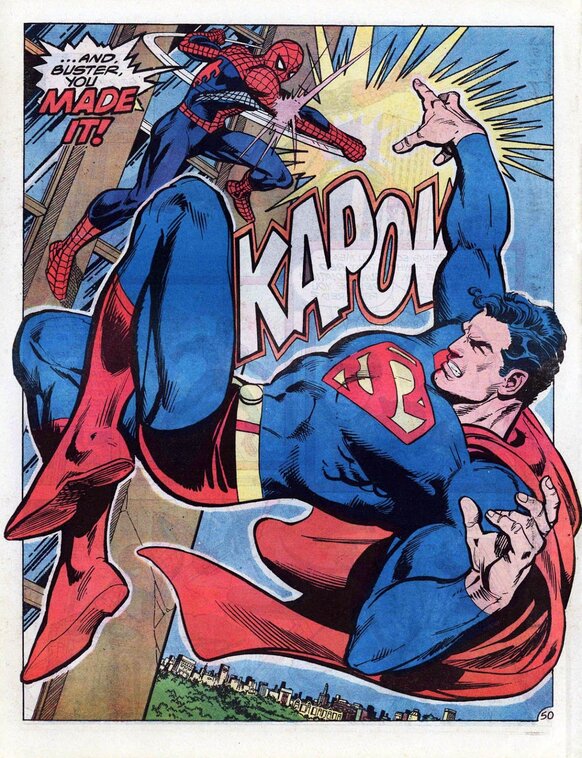
Superman is my favorite superhero. He’s a DC character. Somehow that means I’m not allowed to say how great Spider-Man: No Way Home is? If I love Star Trek, is it a betrayal to express joy for The Mandalorian? If I’m a fan of Lord of the Rings, I have to hate Wheel of Time?

Shut up.

Pictured: Fandom

Storytelling isn’t sports. When I’m watching the New Orleans Saints play the Atlanta Falcons, the nature of sports means that I want one team to win and one team to lose. This is normal. But that same rule does not apply to movies, to TV shows, to books, to comics. In sports, somebody is gonna lose, but in storytelling, everyone can win. When I say that I want James Gunn’s Superman: Legacy to be a blockbuster movie, that is not the same thing as saying I hope Captain America: New World Order is a disaster. I firmly believe that great art of any kind will inspire great art from others, and that when one franchise I love is enjoying success it’s not an obstacle to anybody else. If anything, it’s a carrot to lure them to be better themselves. I think the people who make these properties understand this. It’s very common to see actors, directors, writers, or artists jump back and forth between publishers and studios and IPs and have positive things to say about all of them. It’s only the fans that view it as a competition. (Well, the fans and the corporate executives, but that’s a whole other conversation.)

This is not to say I’m blameless in this, of course. I certainly shared my criticisms of the original Avatar online, and lord knows I posted a “Morbin’ Time” meme or two, but as fandom has grown more toxic I’ve made a deliberate effort to pull back on that sort of thing. I’ve never been the sort of person who would get on Twitter and threaten an actor because I didn’t like a movie they were in, but I realize now that in the current internet climate even well-meaning criticism may sometimes give fuel to that sort of horrific person, and I don’t want to do that. The point of Geek Punditry is to talk about things I love, not things I hate. 

I’m not saying not to criticize. I’m just asking that criticism be informed, that it be based on the work itself and not because you hate somebody’s previous movie or because you’ve chosen lines in a meaningless civil war. And most importantly, that it be respectful, both to the people you disagree with and to those whose work you are criticizing. Nobody intentionally makes a bad movie, with the possible exception of the Sharknado franchise, so even if you don’t like the work, give credit for the effort that went into it. The only people who lose when you speak respectfully are the people who refuse to speak respectfully.

And go ahead and be respectful to them, too.

Drives ‘em crazy. 

Blake M. Petit is a writer, teacher, and dad from Ama, Louisiana. His current writing project is the superhero adventure seriesOther People’s Heroes: Little Stars, a new episode of which is available every Wednesday on Amazon’s Kindle Vella platform. If, at any point during this column, you thought to yourself, “Blake is talking about THOSE people,” that probably means he’s talking about YOU.