Obviously, I decided against doing a full-on “Year of Supergirl,” because I’m smart enough not to subject myself to that kind of regimented schedule twice. That said, with Kara’s movie coming out in just a few short months, I do intend to start peppering my regular reading with more of her stories more often, and for this week’s “Superman Stuff” I decided to revisit the 2001 Elseworlds one-shot Supergirl: Wings, written by J.M. DeMatteis with art (including a lovely cover painting) by Jamie Tolagson.
This book seems to be inspired by the late, legendary Peter David’s run on Supergirl, in which the Matrix version of the character sacrifices herself to save a young woman who was seemingly beyond redemption, an act of selflessness which bonds the two of them together into a spiritual being that David calls an “Earth-Bound Angel.” Wings removes the “Earth-Bound” part of that, starting with a multitude of the Heavenly Host, the “Shining Ones,” looking down upon the poor, struggling humans. Two of those Shining Ones include Matrix and Zauriel (the angel from Grant Morrison’s JLA run).
Matrix is an Amenlee, one of the angels tasked with caring for human souls. But Matrix has become disenchanted with humanity, put off by our more negative qualities, and finds herself struggling to find herself – especially in her dealings with a woman named Linda Danvers, who has lost her own Guardian Angel and seems to be spiraling down a dark path. The story of this Elseworlds is actually pretty close to what David wrote in the mainstream Supergirl comic of the era, honestly. What sets it apart and makes it an Elseworlds is that DeMatteis leans more heavily on the spiritual side, more so than even David did. It’s odd to see a mainstream comic book that wades this heavily into matters of faith, with elements that are reflective of both Christian and pagan practices that all come together into a bizarre tapestry that includes the likes of the Spectre, the Phantom Stranger, Aquaman, and a very different Clark Kent.
DeMatteis does a lot of exploration in this book, delving not only into questions of the soul, but also about the search for self. Early in the story, Matrix bemoans the fact that – unlike humans – the angels such as herself have no free will and are only tasked with carrying out the will of the Presence (or God, as they sometimes call “hir”). But that doesn’t really track, does it? If she truly had no free will, how would she flirt with rebellion, how could she contemplate abandoning her post and abandoning humanity at all? Despite what she says, the Angels’ lot is painted less like that of people with NO free will and more like people with limited options, struggling to content themselves with the task appointed to them. The metaphor is heavy and, despite being no angels ourselves, it’s not hard to sympathize with Matrix as she explores just how trapped he has come to feel with her role in the universe.
Tolagson’s artwork is really perfect for this series, a style that evokes the likes of Mike Mignola, leaning on the fantasy elements and downplaying any trace of the superhero. Some pages call to mind the likes of Sandman or Fables, while others seem to be pulled from books like The Demon or Books of Magic.
Were this to be published today, it would probably be part of the Black Label line. It doesn’t have any overt R-rated elements (no sex, no language, relatively minor instances of violence), but the concepts and the themes brought to the page are extremely heavy and far deeper than your standard superhero book. It’s an interesting companion to David’s Supergirl, and a story that ultimately lands on a place that feels hopeful and uplifting. Matrix’s story feels familiar, not only like it’s something that we’ve seen on the page before, but like it’s something so many of us have lived through at one point or another. It’s a very different kind of story, and all the more remarkable for it.
I’m definitely going to spend more time with Supergirl this year – part of me even wants to do a whole-series read of the David run, but I don’t know if I can spare that kind of time. But for a taste of a very different look at Supergirl, this is an intriguing sample.
By the way, folks, I’m always open for requests. If there’s a specific comic book, TV episode, animated feature, or anything else regarding Superman or his extended family that you’d like me to discuss in this space, just let me know.
Blake M. Petit is a writer, teacher, and dad from Ama, Louisiana. His most recent writing project is the superhero adventure series Other People’s Heroes: Little Stars, volume one of which is now available on Amazon. Don’t forget, you can check out earlier blogs in the Year of Superman/Superman Stuff Archive! Got a request for a future “Superman Stuff”? Drop it in the comments!
With the “Big Game” coming up this weekend, I thought a sports-themed story would be fun, so this week’s Superman Stuff is going to take us back to 1999 and the Elseworlds one-shot Superman, Inc. by Steve Vance and Jose Luis Garcia-Lopez. I was pretty happy a couple of years ago when DC announced the return of their Elseworlds imprint, and for the most part, I’ve enjoyed how they’ve used it. Rather than a home for one-off stories and prestige format miniseries as we’ve had in the past, DC has been using it to actually build “worlds:” longer stories – six issues, twelve issues – and stories that serve as sequels to or spinoffs of other stories that fall under the Elseworlds aegis. When Elseworlds started, DC was still under the edict that the Multiverse didn’t exist anymore. Now that the Multiverse is back in full force, they’re using the Elseworlds imprint to populate it.
All that said, there was a charm to these one-off stories that modern Elseworlds – for all their positives – sometimes lack. Also, as is always the case, DC needs to scale back on the Batman stuff and give some other characters a chance.
So let’s see what Vance and Garcia-Lopez gave us 27 years ago.
Like many Elseworlds, there’s a single divergence point that the story starts from. Kal-El’s rocket lands in Kansas, but the baby crawls out on his own before he can be found by a kindly farming couple. He is found (run over, actually) by a drunk driver who takes him to a police station, and he’s eventually adopted by a young couple who gives him the name Dale Suderman. (It may be a trifle cutesy, but that’s how they did things in these stories.) The cutesy ends there, though – little Dale’s father dies when he’s only five years old, and a few years later when the boy discovers his ability to fly, his mother is so shocked that she falls down the stairs and is killed as well. The trauma gives Dale amnesia, blocking not only the memory of his mother’s death but also full access to his powers, and he begins bouncing from one foster home to another, finally ending up in a juvenile facility. His isolation continues until he discovers his natural talents make him a superstar on the basketball court, and he runs away from the juvenile home to find his own path.
Dale grows up and becomes an all-star not only in basketball, but every sport. Super Bowl MVP, a record-breaking home-run hitter, an Olympic Gold medalist in multiple disciplines – Dale Suderman is the world-famous Superman, sitting atop a global empire built on marketing, smiling for his fans in public and disdaining them in private. Lex Luthor, owner of the Metropolis Monarchs, tries to lure Dale to sign with his basketball team, seeing an opportunity to position the world’s most famous athlete as the crowning jewel in the new extravagant sports complex he’s building. Dale sweeps the rug out from under Lex, though, by announcing his own sports complex and a new expansion team, the Metropolis Spartans.
Dale’s empire grows with a new Saturday morning cartoon starring Superman as an all-powerful “super hero,” and the merchandise bonanza that comes with it makes him even richer. Lex, meanwhile, tries to lure Lois Lane to begin digging into Suderman to find anything less than heroic he can use against him. Reluctantly, she agrees to investigate. She is unable to dig up any dirt except for the fact that the team doctors have, for some reason, never been able to take a blood sample. Following the trail of data, Luthor uncovers a spacecraft in a Kansas field and releases the news – via the Daily Planet – that Dale Suderman is an alien. Dale goes after Luthor and the ensuing battle with Luthor’s guards winds up unlocking the true extent of his power and revealing it to the world.
Dale goes on TV to explain his side of the story, but a gunman shoots him with a bullet made of a glowing green substance. As he recovers in the hospital, Lois and detective John Jones visit him, and together decide that Luthor was behind the shooting. As Lois leaves, refusing to return to Luthor, Jones reveals himself to be an alien as well, and uses his powers to unlock the mental blocks in Dale’s mind. Dale leaves in solitude, but a lightning bolt in Kansas takes him down. He finds himself in the care of a farming couple, Jonathan and Martha Kent, who don’t follow sports and have no idea who he is. After weeks of learning from them, he leaves and releases a video to the press, vowing to leave Earth to search for his birth planet. In his absence, his “Superman Foundation” will use his fortune to benefit mankind. On the last panel, though, newly-minted journalism professor Lois Lane meets her newest student, a bespectacled behemoth calling himself Clark Kent.
There’s good and bad in this book. The bad – and really, “bad” is too strong a word, it’s more of an adherence to the tropes of the time – is the way that things all dovetail in the end to bring this world more in line with the main DC Universe. That’s how so many of these Elseworlds (and, in fact, Marvel’s What If comics) often went: if the world wasn’t all but destroyed, then circumstances were contrived to make things turn out the way they did originally. It doesn’t usually bother me that much, but this is a story where Dale Suderman was literally the most famous person ON THE PLANET. The notion that the Kents had never heard of him is ridiculous – even if they don’t own a TV, they’re seen reading the newspaper with a story about Luthor being indicted for the Superman shooting. And while I’m the first one to tell people not to worry about the glasses as a disguise, that disguise is kind of incumbent upon the idea that nobody is looking for Superman’s secret identity in the first place. Again, Dale is globally famous, and has a prior relationship with Lois Lane. It would be like Tom Brady putting on a pair of glasses and trying not to be recognized by Anderson Cooper.
What I like about this, though, are the parts of the story that diverge SIGNIFICANTLY from the standard Elseworlds of the time. The villain is still Lex Luthor, but we never get a hint of supervillainy. There’s no alien invasion, no hints about Brainiac or Mr. Mxyzptlk. Heck, there aren’t even any fight scenes in the book. It’s a story of somebody who has great potential working his way up towards unlocking that potential. It’s as though the entire issue is the first act of a standard origin story. As such, it’s very much unlike most other Elseworlds, and I enjoy that about it.
I also love the artwork. Jose Luis Garcia-Lopez is one of those truly iconic creators, having spent decades as the lead designer for DC’s merchandising department. For a large portion of the public, his depiction of the DC heroes is THE standard, and for a reason. He’s bold, he’s an excellent storyteller, and he’s CONSISTENT. You could pull out a Superman Valentine’s Day card from 1987 and put it next to this book and see the same Superman. The face, the smile, everything but the haircut is a perfect fit. There are far too few artists who can actually do that.
It’s been a long time since I’ve read this one, but I’m glad I revisited it this week. I’d forgotten what a joy it is, and I wouldn’t mind a return to this world to see what became of the former Mr. Dale Suderman.
Blake M. Petit is a writer, teacher, and dad from Ama, Louisiana. His most recent writing project is the superhero adventure series Other People’s Heroes: Little Stars, volume one of which is now available on Amazon. Don’t forget, you can check out earlier blogs in the Year of Superman/Superman Stuff Archive! Got a request for a future “Superman Stuff”? Drop it in the comments!
Last week, I wrote about some of Superman’s strangest team-ups. This week I’ve decided to focus on some of his more conventional crossovers, meetings where Superman has encountered the heroes (and villains) of other worlds. I’ve already written about a couple of them, most notably the first Superman/Aliens miniseries from Dark Horse, but this week I’ve got a list of times he met with characters from Marvel Comics, Image Comics, other Dark Horse heroes, and more. It actually may wind up being more than one week, honestly, it’s a long list. But I’m going to begin at the beginning.
Notes: This special from 1976 was the first official meeting between characters from the Marvel and DC Universes. Gerry Conway, who had written both characters, teamed up with penciller Ross Andru and inker Dick Giordano for this one, a pretty substantial endeavor at the time. 96 pages, a hefty $2 price point, and an oversized book demanded a story that was worth it…and Conway delivered. The book opens up with a pair of extended prologues where Superman and Spider-Man face off against and capture their respective arch-foes, Lex Luthor and Dr. Octopus. Either of these prologues, by the way, could have easily served as the first half of a story in the heroes’ individual comics, with a standard set-up and nothing that indicates that these two formerly separate universes had begun to bleed together. That doesn’t come until Prologue 3, when Lex is marched into his new prison cell in a maximum security facility in New Mexico, only to find that Otto Octavius is right down the hall. Luthor asks Octavius if he’d be interested in a team-up before revealing he’d hidden a set of tools beneath a layer of fake skin that allowed for a prison break.
Finally, a third of the way into this mammoth comic book, we reach “Chapter One,” in which Peter Parker and Clark Kent finally encounter one another for the first time at a science conference. Both newsmen are having a rough time – Peter finally quits the Daily Bugle in a fit of rage at ol’ J. Jonah Jameson’s frequent abuse, and Clark learns that he’s having a major story ripped out from under him at WGBS because the network wants a “bigger name” reporter. They’re each licking their respective wounds when Superman – or rather, someone who looks like him – swoops in and kidnaps Lois Lane and Mary Jane Watson by zapping them with rays that make them disappear. The heroes both duck out and change clothes, only to encounter one another on the roof. Spider-Man thinks Superman was behind the kidnapping, whereas Spidey’s reputation (thanks to the aforementioned J.J.J.) makes Superman suspect he’s involved, and we get the requisite fight scene. Luthor and Doc Ock are nearby and decide to make things more fun by zapping Spidey with a ray that temporarily enhances his powers, making him strong enough to hold his own against the Man of Steel. After throwing enough punches to satisfy the readers, they calm down, compare notes, and decide to team up to get to the bottom of things.
From there, the story goes largely as you expect – they track down the villains who are holding the girls hostage, they’re sent on a few wild goose chases, and ultimately, the day is saved. But it’s really great to see how well the two of them work together. Honestly, the fight scene is the weakest part of the book, because it requires you to believe that both of these veteran heroes are going to go in spoiling for a fight. It MAY be justifiable if they were totally unfamiliar with one another, but in this iteration where the DC and Marvel heroes co-exist, they know each other by reputation. Superman MAY think Spidey is sketchy thanks to his bad press, but there’s no way Spider-Man would go in swinging against Superman.
Once you get past that, it’s much more satisfying to see them working together, fighting the bad guys, and rescuing Lois and MJ. Conway cleverly aligns things so that each hero gets a moment at the end that gives them a win that they couldn’t have done without the other. Luthor’s schemes wind up cooking up a tsunami Spider-Man could never stop it on his own, but Superman can…only the bad guys would escape were he to do so…if not for Spider-Man. Neat little trick that allows them each to have their moment in the sun.
It took time, but this was the pebble that eventually led to an avalanche of crossovers in the 90s, to the point that it started to feel less special. The sad thing is that familiarity – plus a bit of bad blood – led to the publishers doing nothing together for close to two decades. Next month’s Deadpool/Batman is finally bringing it back, and I couldn’t be happier about that. I love a good crossover, a good combination of characters that don’t usually appear together.
Thur., Aug. 7
Comics: Superman/Madman Hullabalo #1-3
A crisis of philosophical proportions!
Notes: Next up on my tour of Superman Crossovers Past is this little gem from 1997, Mike Allred’s Superman/Madman Hullabaloo. I discovered Allred’s Madman in college (which I believe is scientifically proven to be the best way to discover the character) and I quite quickly became a fan. Madman is markedly different from most other superhero characters. He is — or was, at this point — an enigmatic creature, a corpse brought back to life with no memory of his past except for a fleeting vision he believes to be the Hand of God. Taking the name Frank Einstein (there is no reason to be subtle in comic books) he becomes a sort of science hero, having adventures in the face of the strangest things imaginable.
In this story, Frank and Superman — in their respective universes — are each working on an experiment that causes them to collide. Their bodies remain in place, but their minds swap places and universes, leaving each hero wearing a mashup of their uniforms and possessing a fragment of Superman’s powers. As Superman is found by Frank’s team, Lois Lane finds Frank and brings him to Emil Hamilton. On two different worlds the heroes look for a solution.
Superman and Frank’s team manage to snap over to Metropolis where they meet up with Lois, Hamilton, and Frank. They quickly manage to restore the heroes to their proper bodies, but fragments of Superman’s powers have been absorbed by various people in both dimensions, leading to the heroes teaming up and hunting them down to restore Superman to full power. In their search, they discover that Mr. Myzptlyk is behind their difficulties, leading Frank to challenge the imp to a contest to give up the game…the greatest contest of them all. It’s Mxy versus the Madman in a game of…(drumroll please)… TWISTER.
It’s really impressive to me just how easily Superman mixes in with Allred’s universe. He looks fantastic in Allred’s art style, and I love the two mashup designs for the blended heroes. Even more than that, though, Superman works so well with the Madman tone. Madman is perhaps the most philosophical ongoing superhero comic book of all time, after all, just as prone to quietly contemplating the meaning of existence as he is to getting into fisticuffs. In fact, one of the first things he does after he and Clark are separated and get to have a real conversation is ask the Man of Steel if he believes in God. How often does that sort of thing turn up in mainstream comics?
Allred also easily evades the trap of having the heroes fight each other for no real reason before the team up begins. As Superman himself points out, he and Frank were literally parts of one another for a while there — if he can’t trust him, who can he trust? They work together very well. If they appeared in the same world on a regular basis, in fact, I could truly believe the two of them are friends. It’s a lovely, quiet, unorthodox little crossover, and I love it.
I don’t think Superman always gets enough credit — from fans or writers — for his intelligence. I don’t mean the whole “Super scientist who builds robot duplicates of himself” either, I mean his emotional intelligence. He’s shown himself often of being so capable of connecting with people on a deep, real level. And in a way, that’s kind of what Madman is all about — connection, trying to find out how the universe is all tied together. Frank is literally a walking corpse, but he’s found love. He’s found a home. He has friends and people who care about him. I’m gonna put on my English teacher hat here for a moment and posit that the reason that Victor Frankenstein is “the monster” in Mary Shelley’s novel isn’t necessarily because he “played God.” Doctors do that every day. But where Victor failed — and where those surrounding Frank Einstein succeed — is that he didn’t give any love to the creature he willed into existence. Jo and Dr. Flem may not be the creators of our ginchy hero, but they give him what Frankenstein didn’t. Earlier in this year we examined Superman as the Frankenstein monster in an Elseworlds tale, and I think the combination of these two heroes would be an interesting place to explore that further.
Allred worked on Superman again just a couple of years ago, in the “Not an Elseworlds Because We Weren’t Using That Label At the Time” miniseries Superman: Space Age where he was teamed with writer Mark Russell. And it was good. But I would love to see Frank Einstein and Clark Kent cross paths again.
Fri., Aug. 8
Comics: Superman/Gen 13 #1-3
Nope, Kara didn’t get a dye job…
Notes: When Image Comics was founded in the early 90s, Jim Lee’s Wildstorm Studios was one of the major players, with hits like WildC.A.T.S., Stormwatch, and Gen 13. And I think all of us were pretty surprised when, in 1998, he signed on at DC Comics, selling his studio and characters to DC and becoming one of their executives. Since then he’s only risen higher in the ranks, now serving as co-publisher. But in those early days of the marriage of DC and Wildstorm, when the two universes were still separate, this crossover was a nice little event.
Written by Adam Hughes with art by later Lex Luthor: Man of Steel artist Lee Bermejo, it begins with the Gen 13 kids – super-powered fugitives running from the government project that gave them their powers – taking a trip to Metropolis. Their leader, Caitlin Fairchild, is an unabashed Superman fan, and is ecstatic when they almost immediately run across a battle between Superman and Titano. Caitlin is knocked out in the chaos, and Superman puts his cape over her for protection as he goes off to tussle with the super-ape. When Caitlin wakes up she has lost her memory. She wanders into traffic and is hit by a fire truck, but survives without a scratch, and looking down at the cape that was draped over her when she woke up she comes to the obvious conclusion: she must be Supergirl.
Superman promises the Gen 13 kids to help them track down Caitlin, and they wind up at the Daily Planet, where Lois immediately figures out that they’re super-powered, because she’s smarter than the entire team put together. Meanwhile, Caitlin has acquired a store-bought Supergirl costume and makes her “debut” thwarting a bank robbery. Trying to embark upon a superhero career, Caitlin’s natural clumsiness comes out, causing one disaster after another as Superman and her teammates are always stuck one step behind her, cleaning up the messes that she’s made. And it all gets even worse when the real Supergirl gets wind of the chaos being done in her name.
As you’ve probably noticed by now, I have a preference for crossovers that don’t do the standard “meet, fight, team-up” formula that we’ve seen so many times, and this particular series has the most clever sidestep for that I’ve ever seen. Not only do the respective heroes never get into a physical fight, there’s not really even a traditional antagonist. Oh sure, there are a couple of bad guys that need to be thwarted, but they’re all pretty incidental and interchangeable. The real story here is about Caitlin going missing and the ideological struggle between Superman and the rest of the Gen 13 kids. With the exception of Caitlin, the rest of the team is stuck in the mindset of Superman being a boring stiff, with Grunge at one point even expressing this to Clark Kent’s face, unaware of who he’s really talking to. We even get to see a nice conversation with Lois and Clark in which he does his best not to show how deeply hurt he actually is by the way the kids perceive him. As the story goes on, one by one, they slowly come around to realizing his true worth…although this kind of has the side effect of making them seem childish sometimes. From a character standpoint, it may be acceptable that a group of 90s teenagers would think of Superman as lame, but to have three of them making fun of the fourth for cooperating when Superman is actively trying to find their missing friend makes them all seem…well, not “lame,” but a much harsher word for it.
It’s a very nice workaround that tells a very different kind of crossover story. I don’t even mind the cliched depiction of amnesia here – nothing realistic about it, but you’ve got to allow for a certain suspension of disbelief. This one is just fun.
Sat., Aug 9
Comics: Superman & Savage Dragon: Chicago #1 &Superman & Savage Dragon: Metropolis #1
When you draw the whole Superman crossover but you only have time for roughs of the cover, who do you get to finish it? Alex Ross.
Notes: I’ve never been a Savage Dragon reader, but I get anything with Superman in it, so I’ve had these two books in my collection since they were first released. That was over 20 years ago, though, and I don’t think I’ve read either of them since. I had to check the League of Comic Geeks website to even remind myself which one came out first, and as it turned out, that was a mistake. I got a few pages into Metropolis when Superman and Dragon first encounter each other and start talking like old friends, which got me confused. Metropolis came out in 1999, according to the website, whereas Chicago wasn’t released until the beginning of 2002. But I picked up Chicago instead and saw that I was getting the story of Superman and the Dragon’s first meeting. I wasn’t sure why they were published this way, although I have to wonder if Erik Larsen’s Chicago book was intended to come first but wound up suffering from the kind of delays that frequently plagued Image Comics at the time. When I got to the point where Lois Lane mentions that she’s engaged – an engagement that had ended in marriage several years earlier at that point – I figured that must be the case. The point of this paragraph is that if you happen to have both of these books, read Chicago first.
In Chicago, with story and art by Larsen, some of Superman’s foes are cropping up in the Windy City, having joined forces with the Dragon’s enemies in a crime organization called the Vicious Circle. Superman is called in to help with the menace, something that doesn’t sit well with Officer Dragon of the CPD. The two of them partner up, although the Dragon deeply resents this intruder into his city. Eventually, they manage to mend fences and beat the bad guy. And hey, at least they didn’t actually come to blows with each other.
Larsen has always kind of been hit or miss with me. I like some of his work, but the few times I’ve tried Savage Dragon I haven’t really found it to be to my taste. I can say that he doesn’t mind making his own character look like the jerk in this book, something that a lot of creators would refuse to do, and I appreciate that he writes a pretty solid Superman. Perhaps the best bit, though, is when Lois gets the Dragon to admit that at least part of his animosity against Big Blue is just because of simple jealousy.
Note: this scene does not appear in this book. But isn’t Bogdanove’s artwork nifty?
I was a bigger fan of Superman & Savage Dragon: Metropolis, written by Karl Kesel with art by one of my favorite Superman artists, “Triangle Era” mainstay Jon Bogdanove. Superman and the Dragon’s second meeting (although the first published) begins with Superman crashing to Earth in a burning field in a scene highly reminiscent of how the Dragon was found in his own very first issue. When he wakes up, Superman has no memory of the last few days, and the Dragon is called in to help him piece together the mystery of what happened to him and how it’s linked to a series of strange murders in the city’s homeless population. Their investigation brings them across Killroy, son of Steppenwolf, and into battle with Darkseid and the forces of Apokalips.
As I said, I prefer this book to the other one. It’s more steeped in the Superman world, which is of course more engaging to me, and Kesel has some fun with it. When Superman and the Dragon visit the Daily Planet office to look into what Clark Kent had been working on before Superman’s disappearance, for instance, there’s a funny scene where Superman and Lois have a strained discussion over what Clark’s password is on the computer system: Superman insists that “Clark” told him that he had changed it, whereas Lois insists that “he” would have told her so. Yeah, they’re married at this point, and the scene, played out in front of Jimmy and the Dragon, is highly amusing. We also get to visit with Bibbo in Suicide Slum, who declares that the Dragon is okay because any pal of Superman’s is a pal of his too. The fun here is seeing how the Dragon responds to the way that the people of Metropolis treat their hero, as opposed to the treatment he’s used to.
The one knock on this book is that the Dragon himself is kind of secondary. The other book plays off of the differences between the two of them more, with Dragon’s animosity grinding Superman and vice versa. In this one, the hatchet has been buried and they’re friends, which means you could swap out the Dragon with pretty much any other character that has super strength and the changes to the plot would be negligible. It does end on a really cute note, though. Feeling bad about Lois being worried about him during his disappearance, Superman asks the Dragon to cover for him in Metropolis so he could have a night off from fighting crime. His buddy the Dragon agrees, which leads to a last page that is just the kind of winking-at-the-camera nonsense that a reader like me digs.
Comics: Superman/Fantastic Four #1, Jon Kent: This Internship Is My Kryptonite #2
When you draw the whole Superman crossover but you only have time for roughs of the cover, who do you get to finish it? ALEX ROSS.
Notes: For the first time since this project started, I’m going back to re-read something. At the beginning of the year, I was finishing up the mammoth DC/Marvel Omnibus that came out last fall, and I read a few books at the tail end of that, but I didn’t write about them in detail. But this week, when I’m talking about great Superman crossovers, I felt like I really should address that time Superman met the team that he’s sharing cinemas with this summer in Dan Jurgens’ oversized Superman/Fantastic Four one-shot from 1999.
In this one, Superman finds a message from his late father, Jor-El, who tells him that he wants his son to avenge the destruction of Krypton, which he now claims was destroyed by the world-devourer, Galactus. But in this book, which came out post-DC Vs. Marvel (which I’m planning to read soon), Superman is aware that Galactus is a cosmic force that has been encountered by the heroes of the “Other” Earth (aka, the Marvel Universe), and decides to seek out the world-hopping metahuman from that crossover, Access, to help him traverse the universes. (Access is name-dropped but, like “Sir Not Appearing in This Picture” from Monty Python and the Holy Grail, he is mysteriously absent.)In the Marvel Universe, meanwhile, Franklin Richards is playing with the action figure of his favorite cartoon character, Superman, who is apparently a fictional hero on Earth-616. No one is more delighted than Frank when the real deal shows up at Four Freedoms Plaza asking for their help. But Superman winds up having to fight for the Four when their defense systems turn on them, having been hijacked somehow by the Cyborg Superman. Things get worse – much worse – when Galactus shows up and decides he wants Superman for his new herald.
You know how I keep talking about how I dislike crossovers where the heroes fight each other for no reason? Well thank Rao, this story actually gives us a reason. Superman being transformed into a Herald of Galactus is a more than legit reason for him to face off against the FF, but even then, the conflict is brief and has more of a feeling of a rescue mission than actual combat. The FF know that Superman is a hero, and they’re trying to free him from Galactus’s control rather than actually take him down.
I also like the fact that this crossover – as well as a few others from this time period – recognized the fact that DC Vs. Marvel happened and used that as part of the fabric of the story. It allows this story to fit into the continuity of both sets of characters, which the early crossovers like his encounter with Spider-Man simply can’t do. Unfortunately, by the time JLA/Avengers rolled around a few years later, that angle was dropped. The heroes were still from separate universes, but there was no recognition of the fact that any of them had met in the past. I can’t help but wonder what the plans are for Deadpool/Batman and the assorted back-up crossovers that are going to come in those two books.
Finally, although this isn’t really about Superman, this issue makes me wish Dan Jurgens had done a run on Fantastic Four at some point. He has the voices for the characters down very well, and I love his rendition of the Thing (my #2 all-time favorite character), but peeking at his credits I only see a handful of FF-related comics, and none on any of their regular titles. There’s still time, Marvel. I love what Ryan North is doing these days, but how about hitting Jurgens up for a miniseries or something?
Mon., Aug. 11
Comics: Superman/Tarzan: Sons of the Jungle #1-3
And yet we still haven’t seen the John Carter/J’onn J’onzz crossover.
Notes: I love a good crossover. I love a good Elseworlds story. To the best of my knowledge, the two have only collided twice. The first was John Byrne’s excellent World War II romp, Batman and Captain America. The other was this three-issue miniseries by Chuck Dixon and artist Carlos Meglia. In this one, the mutiny that leads to the abandonment of Lord Greystoke and his wife is thwarted when a star streaks through the sky. Taking it as a sign from God, the mutineers retreat from their plan and the family makes its way back to England. That streak, however, lands in the thick of the jungle, where a familiar ape tribe finds what appears to be a human baby in the wreckage. When the child demonstrates remarkable strength, they adopt him and name him “Argo-Zan,” meaning “Fire-skin.” The Greystokes have their child, named John, and the two babies grow into very different men. In the jungle Argo-Zan finds the wreckage of the craft that brought him to the apes, along with a holographic vision of his true parents. As he learns of the legacy of Krypton and adopts his true name, Kal-El, in England John Greystoke advances through school – a brilliant scholar, but somehow lost and empty, as though there is some hole in his life he cannot account for.
After some struggles, Kal-El finds himself able to bond with a human tribe, but an enemy ape has an eye out for a mysterious glowing rock that seems to plague his rival. Greystoke, meanwhile, has been wandering the world trying to find himself, finally planning an expedition to Africa. Along with him is a correspondent for the Daily Planet, Lois Lane, as well as Lois’s aide, Jane Porter. Their dirigible is brought down by a hostile tribe but, believing the aircraft is from Krypton, Kal-El leaps to their defense. In the ensuing battle, both men find themselves and their purpose. Kal-El returns to civilization with Lois, while John Clayton chooses to remain in Africa with Jane Porter, adopting the name the friendly tribes have given him: Tarzan.
As I said, I’m a big fan of crossovers. I am not, however, particularly steeped in Tarzan lore. I’ve seen a few of the movies, read a few of the comics, but I’ve never dove into the original Edgar Rice Burroughs novels (I’m more of a John Carter of Mars fan) so I can’t really say how closely this comic traces any of the original lore. I’m not even sure which characters (aside from Lois, Clark, Tarzan, and Jane) are Burroughs characters and which are original creations of Dixon and Meglia. That said, there’s a lot I like here. We’ve got the classic Elseworlds concept of taking the hero and switching his origin with somebody else, as we saw when Kal-El became Bruce Wayne in Superman:Speeding Bullets or when Bruce Wayne became Green Lantern in Batman: In Darkest Knight. And although the book ends in the old “What If”/“Elseworlds” format of bringing the heroes as close to the “real” status quo as possible, it does so without giving us obvious analogues for Lex Luthor or any of Superman’s main villains, which is a nice change of pace.
As a crossover, it’s pretty unique. Not only do Superman and Tarzan not fight each other in this one, but Kal-El and John Clayton never even interact until the last few pages of the three-issue story. In some ways it’s more like a crossover of worlds than of characters. The book ends (as these often do) as soon as a new status quo is established, something ALMOST the same as the “real” universe, and we don’t really get to see any of the aftermath. Sometimes that can be a good thing, but in this case, I actually wish there were more. It feels like we’ve read one act of a story. I’m left wanting to see how the ape-raised Kal-El adapts to a society that he doesn’t truly understand, especially with the power at his disposal. I’m curious as to what kind of man Tarzan is when raised by his human parents instead of an ape tribe. And I really want to see the two of them interact a bit more. And you know, leaving the audience wanting more is typically considered a good thing. The problem is when that desire is because it feels as though the story is unfinished, and to a small degree, that’s kind of how I feel here.
It’s not unusual in comics for a different artist to do the covers than the interior artwork, but in this case I think you’ll forgive me for not realizing that happened until I double checked the credits to write this. Carlos Meglia’s style is reminiscent of an adventure cartoon, with the kind of big eyes and oversized feet that bring to mind Japanese manga, so you can understand that I didn’t notice Humberto Ramos ONLY did the covers for this series. Their styles are very similar at first glance, and should Mr. Meglia ever somehow read this, I hope he knows I mean that as a compliment.
This is a unique crossover, and one I enjoyed. It would be nice to see more Elseworlds crossovers. And now that DC has brought that imprint back from the dead, it doesn’t feel impossible.
Tue., Aug 12
Comics: The Darkness/Superman #1-2
Wait — why does the mobster get top billing?
Notes: I’m going to close off this week of Superman crossovers with the two-issue team-up between Top Cow and DC from 2005, The Darkness/Superman, written by Ron Marz with art by Tyler Kirkham. I know even less about The Darkness than I do Tarzan. I know it’s a Witchblade spin-off, and I believe that the main character is the son of a mafia kingpin or something, but that’s pretty much it. Did that stop me from getting the crossover when it dropped? Absolutely not. Seriously, it’s been 32 weeks, you’d think you would know me better than that by now.
Fortunately for me, the book gives me a quick rundown on who the character is – Jackie Estacado, mafia hitman who becomes the controller of a mysterious demonic power called “The Darkness” on his 21st birthday. After he killed the guy who killed his girlfriend, he became…I dunno, not a hero. He’s still a mobster – the book even starts off with him meeting up with Metallo in Metropolis to flex his muscles and show he’s the man to take over their organized crime rackets. The Daily Planet gets word that Estacado is in town and Perry sends his top people out to find out what they can, which leads to Superman stumbling on an encounter between Estacado and Metropolis’s Grasso crime family. Estacado tries to convince Superman that he’s the better crime lord for Metropolis – that he would run a smooth organization that doesn’t let innocent people get caught in the crossfire, unlike the current regime. But the meeting is interrupted when Metallo shows up again, brandishing his Kryptonite heart as usual, and takes Lois Lane hostage, because it was like already February 3rd and Lois had only been held hostage four times so far that year.
When Metallo escapes with Lois, Estacado offers to help Superman get her back, recognizing that the Kryptonite keeps the Man of Steel at bay and that Lois is, and I quote, “More than just a cute reporter to you.” Superman reluctantly takes him up on his offer and is forced to watch from a distance as Estacado invades the Grasso’s hideout in an effort to save her. Once Lois is safe, he returns to Superman and reiterates his plan to move into Metropolis…but Superman stands his ground. The two of them come to blows before Superman defeats him because…the sun comes up? That seems to be what happens. I guess Jackie Estacado’s powers go away in daylight? At any rate, once that happens he gives up and promises to stay out of Metropolis. Superman lets him go out of gratitude for saving Lois. The two part neither as allies nor as friends, but at least not as enemies.
At least this time the requisite crossover fight makes sense. This isn’t Superman teaming up with a hero, he’s forging an uneasy alliance with an anti-villain. Jackie even tells him at one point, “I’m a bad guy, but I’m not a BAD GUY.” (This was seven years before Wreck-It Ralph used almost exactly the same line, so good for you, writer Ron Marz.) And I concede, that’s the vibe I’m getting here. Jackie isn’t really a pure villain, but there’s definite Michael Corleone energy here. And to be fair, he works pretty well as that kind of character. I’ve enjoyed Marz’s work for a long time, so I’m not surprised that he made this work for me as well.
That said, there are a few things that don’t quite gel. Superman sitting on the side while someone else fights Metallo for him, first of all. Sure, Metallo has the whole Kryptonite thing going on, but when has that ever stopped Superman from going in for the fight? And although I suppose Jackie was written in-character (I assume, since Marz was the writer for The Darkness’s ongoing series at the time, that he knew how he would behave), but it still seems a little bit of a stretch to think he’d really believe Superman would turn a blind eye to his operations just because he’s the lesser of two evils. Superman isn’t going to settle for ANY evils if he’s got anything to say about it.
It was a fun week, poking around at more Superman crossovers, and there are still more that I haven’t looked at yet, including the epic DC Vs. Marvel event and its several spin-offs, such as the Amalgam Comics line. I’m looking at the big, gorgeous omnibus edition that DC published of that series last year, just waiting to be read, and I think I’ll get around to that pretty soon. Maybe even next week.
Another week, another round of the Year of Superman! It’s going to be another random week, a week where I’m not going to be adhering to any particular theme or category, and just reading or watching whatever catches my fancy. And there’s some fancy, fancy stuff coming down the pipe this week, from the big 25th issue of Joshua Williamson’s run on Superman to the completed three-part Last Days of Lex Luthor miniseries, and…well, I don’t even know what else will come up, because I’m writing this at the beginning of the week and I’ve got no idea where the solar winds of Rao will take me. Join me and let’s find out!
Wed., April 23
I feel like Perry is kinda burying the lede here…
Comic:Superman Vol. 6 #25
Notes: Since Williamson kicked off his run on the main Superman comic about two years ago, he’s been building up a pretty epic storyline involving Lex Luthor. It began after Lex was taken into custody, turning over his company to Superman and making it “SuperCorp.” As one of the few people on Earth whose memory of Superman’s double identity remained (it was because of him that it was wiped out anyway), he decided that if he couldn’t destroy Superman, he would force him to work WITH him, and it was a strategy that worked pretty well for some time. Along the way, though, Lex lost his memory, leaving him a man who wasn’t quite as brilliant as before, but who had a genuine benevolence to him, seeming to want to atone for the crimes of his former self. It was a change for the better for everyone – except for Mercy Graves.
In this climactic issue, Mercy has let loose one of Lex’s failed experiments, X-El, a Luthor/Kryptonian hybrid clone, that she’s hoping to have supplant the “new” Luthor, and it’s Superman, Superwoman, and Lex vs. X-El. I loved this issue – it feels like a real culmination of the story so far, with everything that’s been happening building up to an incredible fight that lasts for most of the extra-sized issue. What’s more, the usual penciler Jamal Campbell (who has been doing a bang-up job on this series) is joined by a murderer’s row of talent, including Eddy Barrows, Eber Ferreira, and Dan Mora. Campbell and Alejandro Sanchez are credited as colorists as well, and although you don’t often discuss the colorists when you’re talking about comic books, this is one issue where it really stand out to me. Every page has at least one panel that could be turned into a poster I’d expect to see in any comic shop.
Although the issue is, like I said, kind of a culmination of the storyline in that it has brought everything together, it would be a mistake to imply that it’s the END of the story. In fact, this issue ends in a cliffhanger that’s really got me itching for issue #26. But man, I can’t say enough good things about this run and this creative team.
Thur., April 24
I just wish that Bryan Hitch would have the guts to put a little symbolism into his artwork.
Comics: Superman: The Last Days of Lex Luthor #1-3
Notes: About a month ago, when the long-delayed second issue of this miniseries finally came out, I decided to wait to read it until I had the third and final issue in my hands. I don’t know if the story would have been less impactful had I not chosen to wait, but I DO know that it would have driven me crazy to have to wait for the final installment, because ultimately, this is one of the finest Superman stories I have ever read.
And if you haven’t noticed, I’ve read a LOT of them.
In the first issue (which, again, came out nearly two years ago, and that’s the last time I’ll reference the delay), Superman is attacked once again by his greatest enemy…but this time, Luthor’s goal is not the death of the man of steel. No, for once, he needs his HELP. Lex Luthor, it seems, is dying. Some strange, exotic radiation is attacking his cells, and he knows that Superman is the one being in the universe who will stop at nothing to find a cure, because Superman…well…Superman is the man who saves everybody.
I don’t want to say too much more about the story, because there are some incredible twists and surprises throughout this miniseries. But that doesn’t mean there isn’t still a LOT to say. The reason Luthor turns to Superman, again, is because he knows that Superman will absolutely refuse to quit as long as there is a life in jeopardy, and the fact that the life in question belongs to his greatest enemy makes no difference whatsoever. Luthor sees this as foolishness, as a weakness on Superman’s part, but throughout this story, Mark Waid demonstrates why this is actually his greatest strength. Superman is confronted by friends who cannot fathom why he would risk so much to help Luthor. The quest to save his enemy becomes public knowledge, making some of the public turn against him. His quest takes him to Kandor, Atlantis, Themiscyra, and even the 31st Century, before the final reveal of what’s really going on turns everything on its ear and seals the fate of the two characters.
It’s an odd choice, to make this a Black Label book. Black Label is ostensibly a “mature reader’s” imprint, but there’s nothing in this book that warrants that marker. It’s out of continuity, to be certain, and I wonder if this would have been listed as Elseworlds, had that label been resurrected when the first issue appeared. But no matter what imprint this story falls under, it’s a masterpiece. It’s Mark Waid’s dissertation on who Superman is and why he has to be who he is. We learn the same things about Lex Luthor, in fact, and the relationship between these two characters has never been laid out so bare, so stark, so clean as in this story.
This story is brilliant. This is one of the best Superman stories I’ve ever read.
Fri., April 25
Comics: Justice League Unlimited Vol. 2 #6
Notes: The second part of “We are Yesterday” in Justice League Unlimited doesn’t have a ton of Super-action, but it’s a great issue nonetheless. In this issue, we see Grodd hatching his plan to infiltrate the past and collect purer versions of his former compatriots in the Legion of Doom to act as a countermeasure to the now-larger League. We also get a glimpse of the moment when Superman recruited Air Wave – who has become a surprisingly important character in this series – to join the League. Air Wave is an interesting character – a D-lister for years, and Waid has already found a way to make him compelling and sympathetic through a comparatively small number of pages in the first six issues of this title. I really hope that we get to see more of his story after this crossover with World’s Finest reaches its conclusion.
Graphic Novel:Batman: Hush (Collects Batman #608-619, Superman appears in #611, 612, and 619)
“Say it, Bruce! SAY THAT GLASSES ARE A PERFECTLY ADEQUATE DISGUISE!”
Notes: With “Hush 2” currently running in the ongoing Batman comic book, I wanted to go back and re-read the original, as it’s been a while. I’m not going to dig into it too deeply, as this ain’t the “Year of Batman,” and Superman’s appearances are brief. But brief or not, they ARE impactful, and I wanted to point out a few things.
First comes in Chapter 4 (issue #611 of the ongoing), in which Bruce Wayne visits Metropolis and, specifically, the offices of the Daily Planet. At this time, Bruce actually OWNED the Planet. I’m not sure if he still does or not. Hey, DC, give us a ruling. But regardless, in this issue he’s been finding himself growing more and more drawn to Catwoman, with whom he’s always had a “will they/won’t they” relationship. At the Planet office, he watches Lois and Clark together and marvels at how Clark has found someone with whom he’s willing to trust his greatest secret. A few chapters later (kinda spoilers, in case you’ve never read “Hush” before), Bruce reveals his own identity to Selina for the first time. It’s one of those rare status quo changes – like Lois and Clark getting married – that has stuck, and I find it very interesting that writer Jeph Loeb decided to use the Lois and Clark relationship as a way of sort of justifying that relationship upgrade for Selina and Bruce.
Superman has a bigger presence in Chapter 5 (issue #612), in which he’s being controlled by Poison Ivy and comes to blows with Batman in the sewers of Metropolis. (Side note: it’s VERY odd to see the way Catwoman fights both Ivy and Harley Quinn in this storyline, considering the way that the three of them would become the “Gotham City Sirens” just a few years later.) It’s a pretty good fight, all things considered. Bruce has his Kryptonite ring, and he’s counting on both that and the fact that he knows Superman is actively fighting against Ivy’s mind control to keep him alive. I think the most interesting thing about this fight, though, comes from a two-page spread in the middle, where Bruce’s inner narration makes a comment that the internet has elevated to meme status: “Deep down, Clark’s essentially a good person…and deep down, I’m not.” People love to use this quote, but I think a lot of them miss the point. The way I read it, this is something that Bruce sincerely believes…but he’s wrong. Not about Clark, of course, but about himself. And Clark would be the first one to tell him that.
Also, in this issue, Poison Ivy gets captured by Krypto, and that’s just adorable.
Superman then dips out of the rest of the story until the denouement in Chapter 12 (issue #619). The mysterious Hush has been defeated and Bruce turns once again to Superman…not just because he needs a friend, but also because he needs someone with X-Ray vision to make sure that Hush didn’t do anything inside of his head…and literally, not the way the Joker does it. The three appearances of Superman in this story really speak strongly towards the bond between these two heroes and the trust that they share. At the same time as this storyline was winding down, Loeb was launching the ongoing Superman/Batman series, and I don’t believe for a second that this was a coincidence. He writes both heroes well. He writes them TOGETHER excellently.
Sat., April 26
Comic: Power Girl Vol. 4 #20
“Meet Kara who’s never had a home From Argo City to the Phantom Zone But PAIGE HAS MADE FRIENDS LEFT AND RIGHT TO GO WITH HER KRYTPONIAN MIGHT! Whaaaat a crazy pair…”
Notes: This volume of Power Girl ends with this issue and, much as I hate to say it, I’m not really upset to see it go. It had a promising start, but the series seemed to be all about trying to figure out who Power Girl is and…frankly…I’m tired of that. A lack of identity has been Power Girl’s defining characteristic for the past 40 years, and that’s at least 39 years too long for that to be interesting in any individual character. At first, it seemed as though this series was going to lock her in to a true identity, but as evidenced by the cover of this last issue, it never really felt like it gelled. The book built up her world, built up her supporting cast, but didn’t really build up HER. I get it. It’s difficult. The elevator pitch of the character is “older Supergirl from Earth-2,” and since we’ve already got the “Prime” Supergirl, that doesn’t seem to leave room for her. But if all you do with the character is point out that she seems superfluous without redefining her in a satisfying way…well, what have you actually done? I hope somebody else gets their hands on Power Girl soon. I don’t care if it’s as a supporting player in the Superman titles or if she rejoins the Justice Society or what, but I want somebody, ANYBODY to take Kara Zor-L and finally, after all these years, say “This is who she is and this is what makes her unique, and can we please stop having the same conversation?”
Is that so much to ask?
Sun., April 27
Comics: Batman Vol. 3 #36-37
Part one: Bromance. Part two: Romance.
Notes: When I read Hush a few days ago, I noticed a scene in the chapter where Superman is controlled by Poison Ivy where Catwoman tries to break him out of it by threatening Lois Lane’s life. She didn’t mean it, of course, she did it because Batman told her that Superman was close to the people who worked at the Daily Planet and that endangering one of them would help him break from Ivy’s control. Nor did she know specifically that Lois was Clark’s wife – Bruce also told her that Jimmy Olsen and Perry White would have been suitable for this purpose. But the scene put me in mind of a more recent meeting between these four, and I wanted to read it today.
Tom King’s run on Batman is controversial for reasons I’m not going to get into here, but the two-part “Super Friends” story from Batman Vol. 3 #36 and 37 is one of the best stories about Superman and Batman I have ever read. Batman and Catwoman have recently become engaged, and in the first issue Bruce and Clark each have conversations with their respective significant others about the fact that they haven’t spoken to one another about the engagement yet. Clark is convinced that the fact that Bruce hasn’t called him is evidence that they’re not really that close, Bruce says he shouldn’t have to call Clark because his best friend is actually Jim Gordon (who doesn’t know his real name) or Alfred (who Selina points out is on his payroll, and therefore doesn’t count). The bulk of the issue is taken up with cutting back and forth between these two conversations, and the quick realization that Lois and Selina know Clark and Bruce far better than either of the world’s two greatest heroes know themselves. At the end of the first issue, the two couples come together in one of the most charming meet-cutes I’ve ever seen. You’ve probably seen the page on the internet even if you’ve never read the issue.
Yeah, that’s the stuff.
In part two, the foursome go on a double date to an amusement park which is celebrating “Superhero Night” – you have to have on a superhero costume to get in. Under the ladies’ suggestions, Bruce and Clark wear each other’s costumes and enter the park to enjoy an extremely rare night for themselves.
Tom King’s depiction of this relationship is spot-on. They’re best friends, even though neither one of them really wants to admit it. Their differences are what make them work together, not something that drives them apart. And the scenes of Lois and Selina bonding with one another are absolutely joyous. We fans talk quite a bit about how difficult it must be for superheroes to hide the secret of their dual lives, but we don’t talk enough about the toll it might take on those who love them. Giving Lois a new friend in Selina really feels natural. I was, I admit, disappointed when the Batman/Catwoman wedding didn’t go through, because I thought that DC would finally have the guts to push Batman’s status quo in a new direction permanently. I still think that it would have been better if they’d remained together. But mostly, I miss the chance to have more issues like this one, with Clark and Lois and Selina and (however begrudgingly) Bruce just being friends.
Don’t we all need that?
Mon., April 28
TV Episode: Superman and Lois, Season 2, Episode 7, “Anti-Hero”
Or the “Lana’s Trauma Conga Express.”
Notes: Superman has been taken into custody by the DOD, who are holding him under a red sun lamp to negate his powers. As Lois and Sam try to figure out a way to navigate his release, Jordan is still angry at his brother for lying about the source of his newfound powers, and Lana and Sarah are dealing with the fallout of Lana’s impending separation from her husband.
Did you notice how each plot point I recapped there got progressively less superhero-y and more soap opera-ish? To be fair, there has been overlap in the kind of storytelling done by superheroes and soap operas for a very long time. Even as far back as the Golden Age you had the occasional unrequited love runner that punctuated early superheroes. Then, once Stan Lee brought in the Marvel Age of comics, the greater emphasis of serialized storytelling made it virtually inevitable that elements like Spider-Man’s disastrous love life would become an ongoing story point. But at times, Superman and Lois feels far more like a teen drama than a superhero show. It’s not fair to criticize the show on that point – for what it’s doing, it seems to do it just fine. But it isn’t exactly what I’m looking for here.
Some of the soap opera stuff is done well. For instance, there’s a nice scene where Lois and Lana are bonding over their respective family struggles – Lana with the fact that her husband cheated on her, Lois with the fact that her son got caught with a backpack full of drugs. The odd thing is that they’re treating X-Kryptonite as if it was any other drug. Jonathan’s bag had 20 vials, each of which could turn a teenager into a walking weapon of mass destruction, but the conversation they have could have been ripped straight out of a 70s After School Special about a mom who caught her son with a joint.
That’s not to say that there’s no superhero stuff going on, of course. The story of Clark in custody, held under the red lamps with his half-brother Morgan Edge, is exactly what I’m hoping to see. The DOD even weaponizes Superman’s compassion, threatening to harm Edge if he doesn’t give them information that they want, which he does despite the fact that his brother is also his enemy. I even like the way the two of them put their differences aside and work together. The CW has a tradition of villains slowly reforming and joining the heroes that goes back to when they were the WB network and it happened every season on Buffy the Vampire Slayer, so if that turns out to be the long game with Morgan Edge’s character, I’m used to it. Once they meet up with the hologram of Lara and the Alternate-Superman (can we PLEASE just call him Bizarro?), there’s some good action stuff here.
But none of that addresses the real problem I’ve been having with this show in season two. I love Hoechlin’s Superman, but the problem here is that they’ve isolated him. The show is stronger when he’s paired with Lois or where he’s working with his sons and their struggles with Jordan’s powers and Jonathan’s typical lack thereof. If you’re not doing that kind of thing, if you have him segregated from the rest of the main cast, you may as well be watching two entirely different shows.
Clark, fortunately, returns to Lois at the end of the episode. But before that we get one more little scene I liked. Edge is still in custody, still the bad guy, but at the end of it Clark addresses him as “Brother.” This actually goes directly against something said earlier in the episode, when she tells Jonathan that his father would never forgive him for his involvement with X-K. But as the end of this episode shows you, Superman’s forgiveness is infinite. You mean to tell me, Lois, that you don’t think he would forgive his SON? Come on, you know him better than that.
Then again, the episode ends with Clark tearing into Jonathan and not allowing him the opportunity to talk, so what do I know?
When the dry cleaner at the Hall of Justice mixes up the bags.
Notes: I’ve got a new writing project I’m working on today, so I needed something quick to slip in to the Year of Superman. The classic Elseworlds one-shot Superman: Speeding Bullets seemed like just the thing. Written by J.M. DeMatteis with art by Eduardo Barreto, this is about as close to the old Marvel What If? format as Elseworlds got, basically asking the question, “What if Kal-El was found by Thomas and Martha Wayne instead of Jonathan and Martha Kent?” Thomas and Martha – childless in this universe – find the rocket ship and adopt the child much like the Kents did, naming him Bruce and raising him as their own. Kal-El’s life in Gotham is pretty similar to the mainstream Bruce Wayne until the night of his parents’ murder, when – seeing the people he loved most in the world gunned down in front of him – his head vision activated and he roasted Joe Chill to death. In shock, Bruce developed a mental block about that night, forgetting his powers until – as a young adult – robbers break into Wayne Manor. His heat vision – and memories – come back, and he becomes a much more brutal version of Batman and the one in our universe.
When I say this was close to a What If?, I don’t just mean in premise, but also in execution. The classic What If? stories tended to end in one of two ways: either the universe attempts to “course correct,” resulting in a world as close to the original as possible, or things go so dark and bleak that it may as well be the apocalypse, at least for the characters involved, if not literally. Some of the ways we see that here are Bruce deciding to buy the Gotham Gazette and hiring Perry White and Lois Lane, falling in love with the latter, and Lex Luthor suffering an accident in a chemical plant, transforming him into this world’s version of the Joker. Since this is a world that can’t have both a Superman and a Batman, we watch Bruce Wayne transform from one to another. Lois’s influence cools his rage, getting him to pull back on his bloodlust, and eventually abandoning the Batman identity to become his world’s Superman. It’s an interesting book, and it works well as an Elseworlds. I have to admit, though, I’m surprised that this version of Bat/Superman hasn’t turned up the way other Elseworlds versions like Red Son or the Vampire Batman have once the Multiverse was opened up again.
Week eight of my Year of Superman was another one that kind of went all over the place. I revisited a few classic stories, checked in on a couple of “imaginary” tales, and looked at some of the more recent releases as well…then there’s that Christmas podcast. Don’t worry, I make it make sense.
Wed., Feb. 19
Comics:Power Girl Vol. 3 #16-17
New costume! Ish!
Notes: After a busy day without much time to read, I went to my bag of recent comics that I haven’t gotten around to reading yet to see if there was any Superman-related content to include this week. Not surprisingly, there wasn’t much, but I found that I hadn’t yet read issues #16 and 17 of the current Power Girl series. This is a Superman family book, of course, but it comes to Superman via a sort of tangent. Power Girl (for those who may not know) was the Kara Zor-L of the old Earth-2, from the pre-Crisis DC Universe. She made her way to the current DCU, after various multiversal crises and reboots, and for years they’ve struggled a little to figure out exactly where she fits in. In essence, she’s an older version of Supergirl from an alternate reality – part of the family, but with trouble finding her identity.
Issue #16, the first of the two that I read, is the end of a recent storyline where Power Girl is facing someone called Ejecta. Ejecta, as a villain, hasn’t really grabbed me, but I do like the end of the fight where Power Girl takes her to the Fortress of Solitude and makes a point of what it takes for a Kryptonian like her to fight the good fight, that it’s actually harder NOT to kill their enemies. It’s a concept that makes so much logical sense, but doesn’t really come up all that often.
I like issue #17 better. It kicks off a new storyline, beginning with Power Girl and her best friend Lilith (aka Omen of the Titans) moving into a new place along with Natasha Irons, niece of my old buddy John Henry, who happens to share his Steel identity. Also on board is Streaky the Super-Cat and Power Girl’s boyfriend, Axel, who happens to be from Asgard. That would be a really weird sentence if I was writing about anything but a superhero universe, but there you go. While I’ve found this series to be somewhat uneven at points, I’ve enjoyed the way Leah Williams has assembled a solid supporting cast for Power Girl that feels pretty organic for the most part. I know why these characters are all together, and I like it.
The one thing I’m really NOT wild about is how Power Girl has abandoned her old identity of Karen Starr in favor of a new name, Paige Stetler, but call her Peej. Get it? “Peej?” P.G.? AAAAAH? I dunno, the book has never done a good job of convincing us that the switch was necessary or based on anything other than the internet not liking the name “Karen,” and the whole “P.G.” thing is just a bit too twee for my tastes.
Thur., Feb. 20
As birthday presents go, this is way better than a necktie.
Comic: Superman #411
Notes: Another busy day and another somewhat random choice, I decided to read the classic Superman #411 today. This is an odd little issue that I’ve always found rather charming. Perry White’s old friend, the incredible editor Julius Schwartz, is in trouble, and his only salvation may come from Earth-Prime.
Julie Schwartz was, of course, one of the most prominent comic book editors of all time, with runs on various books that lasted years and even decades, including a long tenure on the Superman comics. This comic was produced as a surprise for Schwartz on the occasion of his 70th birthday, created behind his back and released as a surprise, even splitting up a three-part storyline to do it. The story in and of itself is standard for the time, even if it was not – as promised – “The Last Earth-Prime” story, but I’ve always appreciated this comic for the backstory behind it.
Fri., Feb. 21
Comic: Action Comics #314, Superman #149
The most embarrassing dry cleaner mix-up in DC history.
Notes: When I was doing my research to prepare for “Superman Vs. the Flash” week, Action Comics #314 kept turning up in my searches. And although it didn’t really fit into the criteria of what I was looking for in that project, it was such a bizarre story that I kept it on my list of books to read when I’m looking for a random Superman comic, because it’s just so strange. And I LIKE strange.
First of all, despite the cover, this is NOT an issue about Superman ONLY becoming the Flash, but rather about alternate worlds in which he became five different members of the Justice League…sort of. While swimming around the bottom of the ocean – y’know, like you do – Aquaman uncovers a message for Superman sent to Earth from his father, Jor-El. On the recorded message (it’s interesting to note that the vastly advanced civilization of Krypton still used magnetic tape to record things) Jor-El tells his son that he originally considered several different worlds to send him to before choosing Earth, and presents him with a computer simulation of what his life would have been like on each of those five worlds. I’ll save you from the suspense: on these different worlds he would have grown up to be their versions of the Atom, Aquaman, Green Arrow, Batman, and finally, the Flash.
Each of these different lives has its charm, although I think my favorite has to be the first one, where he’s an Atom expy. In this version, Jor-El sent him to a planet of giants where he lived among them as what appears to be a three-inch visitor from another world. He’s still got powers, though, and he uses them to fight crime, wearing a mask. WEARING A MASK. SO THAT NO ONE WILL SUSPECT HE’S THE ONLY OTHER THREE-INCH PERSON ON THE PLANET. It’s such a hellaciously preposterous idea that it could only have worked in the Silver Age – and make no mistake, it worked. One person actually says, “He’s as small as Kal-El…but it can’t be Kal-El, for this one has terrific powers!”
For real.
This is a silly story, but a fun one. There was a point where DC did lots of stories like this, “what if X happened?”, with the conceit usually being that the heroes were told the stories of their other lives by computer simulations or some other means. (There was a whole series of stories about Dick Grayson growing up to become Batman II and taking Bruce Wayne Jr. as his Robin, which eventually turned out to be fanfiction written by Alfred.) Later these would become “imaginary” stories, and eventually the concept evolved into Elseworlds. If this story were told today, each of these different lives would be assigned a different number and said to take place somewhere in the DC Multiverse, and while I do like a good Multiverse story, there’s a charm about the old days, where the stories were a bit simpler. It does, however, give me a thirst to read more such tales. I think it’s safe to say that more Elseworlds and Imaginary Stories will be coming to the Year of Superman in the future.
The back-up story in this issue – as was usually the case at the time – starred Supergirl. Her Kryptonian parents, Zor-El and Allura, had been revealed at this point to be alive and sent to live in the bottled city of Kandor, but Allura is growing ill with heartbreak over the separation from her daughter. You’d think Kara could visit more often. Anyway, they send word of Allura’s condition to Kara, but she’s away on a mission and it is instead received by her foster parents, the Danvers, who decide that the only thing to do is make their adopted daughter decide to leave them and go back to her original parents in Kandor by acting like jerks.
WHY DIDN’T ANYBODY IN THE SILVER AGE JUST HAVE A CONVERSATION?
If you look at other stories from this time period, it’s not really that out of place. Watch virtually any comedy (and a good number of the dramas) from the 30s to the 50s and you see one cascade of misunderstandings after another, dozens of catastrophes that could have been averted and hearts that would have been left unbroken if only people were straightforward with one another instead of coming up with ridiculously convoluted schemes to manipulate their loved ones into doing things “for their own good.” I get WHY the stories were like this – a comic book where someone tells somebody the truth and the dilemma is resolved in a page and a half would be kind of boring. But I am very glad that – for the most part – we’ve moved beyond this kind of storytelling crutch. Ridiculous misunderstandings should remain the providence of Shakespeare and Fawlty Towers reruns. For anybody else, it’s just frustrating.
The story ends with Kara’s Earth parents and her Kryptonian parents swapping places, then a cliffhanger where we the readers are forced to question if this will be a permanent change. Once again, I’ll spare you the angst of wondering: it was not. Status quo was the king in comic books of the time, and permanent changes were as rare as diamond. Supergirl had already used hers up for the entire decade when she was adopted by the Danvers, putting an end to the stories of her life in Midvale Orphanage.
The weird thing is, this was covered by his insurance.
The main story, though, got me thinking about one of the two most famous “Imaginary” stories of all time…both of which, coincidentally, became “real” stories in the 90s (albeit in very different forms). Like I’ve said, I’ve pledged to read only two of the extended 90s storylines during this year, and the first of those is actually next on my list of 90s stories to revisit. So before I move on to the “real” Death of Superman, I thought today I would look back at the ORIGINAL Death of Superman, the “Imaginary Story” from Superman #149 in 1961.
The setup for this one is simplicity itself: prison inmate Lex Luthor discovers an element from outer space that allows him to invent a cure for cancer. Providing that cure to the world, he convinces everyone that he’s gone straight, including Superman. It’s all a ruse, though, and instead he sets up a trap for the Man of Steel. And for the first time, that trap succeeds, with Luthor slaying Superman with green kryptonite.
I’ve always liked this story and, revisiting it today, I’m struck by how unique it really is for Superman stories of the time. In an era where most stories were a bit silly and often overdramatic, this takes the opposite track. It still uses all the tropes of a Silver Age story, including misdirection and secrets kept when there’s really no reason to do so (Supergirl disguising herself as Superman for all of 12 seconds at the end, for example) but they’re put together in a somewhat bleak configuration. Unlike Marvel’s What If? comics, it was pretty rare for even DC’s imaginary stories to end in so dark a place. There’s no lie, no secret hidden from the audience, no last-minute reprieve that saves Superman: when this story ends he is most assuredly dead, and even though Luthor will spend the rest of eternity in the Phantom Zone for his crime, nothing is bringing him back. It’s unlike any other such story of the time, and that makes it remarkable.
Other Comics: World’s Finest Comics #304, Legion of Super-Heroes Vol. 2 #312 (Clark as Superboy)
Notes: It’s been a few weeks since I made it into the comic shop to pick up my pulls, so today I’m hitting the new Superman comics that have come out since then. Absolute Superman #4 is more of a spotlight issue on Lois Lane, who in this new Absolute Universe is an agent of Lazarus rather than a reporter, although she’s still got her investigative skills, as in this issue we see her tracking down the elusive “Superman.” Good issue, and I’ve really enjoyed the Absolute stuff so far. Action Comics #1083 continues the Major Distaster/Atomic Skull storyline from last issue, which still isn’t a favorite of mine, but I do really like the scenes where Superman wakes up in the Batcave, where Bruce has brought him to recuperate after a fight with someone who could negate his powers knocks him for a loop. Mostly, though, I’m really looking forward to Mark Waid taking over this book full time this summer, as was recently announced.
Speaking of Waid, he also writes Batman/Superman: World’s Finest #36. It’s a grand story set in the past, including a team-up with Aquaman and Swamp Thing, plus Clark’s old girlfriend, Lori Lemaris. Lotta LL names in Superman’s life. I should go back and read her first story soon, it’s a good one.
Sun. Feb. 23
Frankly, I don’t think he looks anything like Tom Cruise.
Comic: Superman: War of the Worlds #1
Notes: Still searching for random comics to fill in the gaps before I begin the next BIG project next week, my recent reading of “The Death of Superman” gave me a taste for more Elseworlds, and that led me back to this gem from 1998. Written by Roy Thomas with art by Michael Lark, Superman: War of the Worlds is a mashup of the original Golden Age Superman with the alien invaders from H.G. Welles’s classic novel.
Roy Thomas is probably the greatest Golden Age comic book writer who didn’t actually work in the Golden Age. But through his long and illustrious career, he turned out one story after another that paid tribute to that era, including DC’s All-Star Squadron and Marvel’s Invaders, among countless other projects. This one-shot is not only a quintessential Elseworlds, it’s also quintessential Thomas. The story plays out pretty much exactly like the Golden Age Superman we all know and love right up until the day he arrives in Metropolis and tries to land himself a job at the Daily Star (where Clark Kent originally worked before the Daily Planet became the home of our favorite reporters). On that same day, though, what is believed to be a meteor strike unleashes an invasion of tripod-piloting aliens from the planet Mars, here to devastate and take over our world.
Thomas simply does a perfect job of blending the two stories. The characters feel absolutely true to their Golden Age incarnations, while reacting to the story that adheres as closely to the Welles original as is practical. Lois Lane, for instance, is introduced when Clark gets to the Star, furious that the editor is about to give this newcomer off the street a chance at a major story while she’s been stuck scribbling a “Miss Lonelyhearts” type of column just because she’s a woman. Even in the Golden Age, Lois was someone who would always stand up for herself and never tolerate that kind of nonsense, and Thomas plays her up perfectly. I also really like the way they depict Lex Luthor, initially just a scientist investigating the alien meteor strike, but then turning collaborator when it seems that the aliens’ victory is inevitable.
Thomas layers in World War II parallels that fit perfectly with both of the properties that he marries in this book, and the end – although heartbreaking – is compelling and appropriate for the story being told. When we talk about Elseworlds, everybody points to books like Kingdom Come and Superman: Red Son, and with good reason. Those books are classics. But there are a lot of other gems that were produced as a result of that line that we don’t remember nearly as well, and that’s a shame. I’m definitely going to pepper the rest of this Year of Superman with visits to some of the ones that we’ve forgotten about.
Mon., Feb. 24
He’s a guy who refuses to kill. She’s an alien queen who refuses to do anything else.
Comics: Superman Vs. Aliens #1-3
Notes: A few days ago at ComicsPro, it was announced that Marvel and DC Comics are planning two new crossover one-shots later this year, DC/Marvel and Marvel/DC. Stale naming conventions aside, I’m excited. There hasn’t been any crossover between the two publishers since JLA/Avengers twenty years ago, except for the collected omnibi that were released last year. I finished up reading the first one early in January, although I didn’t talk about them much here in the blog, and the knowledge that there’s more coming makes me want to hurry up and pencil in the second omnibus into my reading rotation soon.
But not today. Today I decided to look at a different Superman crossover, one with Dark Horse Comics, back when they had the Aliens license and were pairing them off with everybody and their cousin, like Ocean Spray finding new flavors to mix with cranberry. Superman Vs. Aliens was the first such story featuring our own Man of Steel, and written as it was by Dan Jurgens, it fit into the Superman comics of the time better than a lot of these crossovers do. This is the era when Lex Luthor isn’t running LexCorp anymore, when Lois and Clark are engaged but not married yet, and when Supergirl was not a Kryptonian, but rather the Matrix shapeshifter from an alternate Earth.
The story kicks off when an alien probe plummets to Earth, a craft with markings that Superman recognizes as being Kryptonian. The probe leads Superman to a distant city floating through space under a dome. Once there, the distance from a yellow sun causes his powers to begin to dwindle, even as he finds himself partnered with one of the city’s few remaining survivors, a girl named Kara, as they face the menace of the Xenomorphs. The story was so deliberately reminiscent of the original Supergirl that it was almost as if Dan Jurgens and DC were trolling us, and for years after this book was released there were rumors that Kara would return to the regular Superman titles, but it never happened. As it turned out in the end, this Argo wasn’t actually a Kryptonian city after all, but from another planet which suffered a similar fate as Krypton and learned about its language and culture from the Cleric, a character from the earlier Exile storyline.
Jurgens finds a few ways to really make the story an interesting character piece for Superman. First of all, they need to reduce his powers to actually make the Xenomorphs a threat. Second, he treats Kara like long-lost family, and in a time where there were no other surviving Kryptonians in the DC Universe, it’s an impactful event, even if it only lasted for three issues. We’ve also got Dr. Kimble on the LexCorp station doing a darn good impression of Paul Reiser’s character from Aliens, while Xenomorphs are running wild on the station and Lois is trying to hold them off.
But I think the best thing about this story, the thing that really shows the contrast between the two franchises, is how heavily Jurgens leans on Superman’s no-killing policy. It was a policy he broke exactly once, in the pocket universe that Matrix originally came from, and doing so nearly destroyed him. (I’ll have to look at that story before this year is over.) Having him face off against the Xenomorphs is fun – they are literally killing machines. They have no function other than death, and historically speaking, the only way to stop them is to kill them FIRST. But Superman refuses to do that. If there’s even a chance that these creatures may be sentient, he refuses to use lethal force. Some people would call that naive, but it’s a fundamental element of the character, and it’s the thing that makes this so different from so many other Aliens stories where the focus is to nuke them all from orbit. (It’s the only way to be sure.)
I remember when this story came out, how excited I was for it, and although the status quo of Superman’s universe has changed a lot over the years, I’m glad to see that it still holds up.
Notes: A few years ago, my brother introduced me to the Totally Rad Christmas podcast, a podcast that is – in the words of host Gerry D – “about all things Christmas in the 80s.” However, Gerry isn’t particularly strict about that requirement. They often have episodes about Christmas movies and specials from outside of the 80s, as well as other things that Gerry associates with Christmas and just feels like waxing nostalgic. For instance, Superman was released on Dec. 15, 1978, and that’s enough to get it on the show. This episode was released back in 2020, but I’d never listened to it before, so this seemed like a good excuse to dust it off. Gerry and his guest for the episode, Tim Babb, discuss the film itself and – as is common for this podcast – their personal memories surrounding the film from childhood. As someone who has watched this movie countless times and who lives, eats, and breathes Superman, it’s actually nice to listen to a couple of guys who are FANS, but perhaps not the fanatic that I can be in my more eager moments. I don’t know if I would hunt this episode down as a Superman fan if I weren’t already a listener of this podcast, but as someone who’s already a fan, the overlap on this particular Venn Diagram is pleasing to me.
Tues., Feb. 25
Wait, WHY is Superman in the forest with a couple of kids?
Comic: Superman #257
Notes: Sometimes you just choose by cover. You scroll through the DC app, looking at the issues available and, for one reason or another, something jumps out at you. This one, for instance – Superman in the woods with two children. He’s calming them down, assuring him that there’s nobody around to harm them, but in a cutaway view underground we see a guy in armor with green skin and what looks like some sort of science fiction bazooka about to blast the ground right out from underneath him. They say you’re not supposed to judge a book by its cover, and that’s probably true, but a good one is sure as hell more likely to get you to pick it up.
The story in question isn’t quite as engaging. An alien has come to Earth hoping to steal our nitrogen using the “bazooka” from the cover – which he calls a war-horn – to create a variety of effects. Superman fights him, as per usual, but the alien’s military code refuses to allow him to concede defeat unless killed in battle. Superman winds up tricking the war-horn into leaving the planet by attempting to strike a fatal blow, which it automatically avoids and retreats, which to me seems antithetical to the whole military code aforementioned.
The main story isn’t great, but the back-up in this issue IS. The story begins on the planet Oa, home of the Green Lantern Corps, where Lantern Tomar-Re is about to retire from active duty and join the Corps’ honor guard. Before he does so, though, the Guardians must reconcile the one failure on his record. Fans have long asked why the Green Lanterns didn’t do something to prevent the destruction of Krypton, and this issue answers that question: Krypton was in Tomar-Re’s sector, and the then-rookie GL failed to stop the planet’s doom. Tomar was tasked with collecting a rare element that would delay (but not stop) Krypton’s destruction, but a burst of yellow radiation left him blind and unable to save the world in time. His sight was restored just in time to witness Krypton’s explosion. The Guardians had been watching Krypton for some time, suspecting that the offspring of their scientist Jor-El and his wife Lara would create someone exceptional, a “titan among the stars.” Now, years later, the existence of Superman has proven their suspicion correct, and Tomar’s failure is forgiven.
Man, can you imagine being so important that they decide your existence is more important than your entire planet? That’d be a lot to live up to. Fortunately, Superman doesn’t have an ego about this sort of thing.
Okay, I’ve waited long enough. Tomorrow I’m going to start the big one, the saga that defined this character for so many. Be back next week for my thoughts on – at least the first stages of – The Death and Return of Superman.
Multiverses are big these days. What was once a relatively niche science fiction concept has become popularized by things like the Spider-Verse movies, Best Picture winner Everything Everywhere All At Once, and about seven thousand fanfics where the guy from the Avatar: The Last Airbender cartoon meets and beats up his counterpart from the live action movie. So it’s odd to think that one of the first fictional worlds to use the multiverse as a major concept once attempted to do away with it because it was deemed too confusing. DC Comics introduced its multiverse in 1961 with Flash #123, in which writer Gardner Fox had the Flash of that time period (Barry Allen) meet the Flash of the 1940s (Jay Garrick). The problem was it had been established earlier that, in Barry’s world, Jay Garrick was considered a fictional character that Barry had read about as a child. The fix was to declare Jay’s world an alternate universe, an “Earth-2,” even though he had been around first. Fox was even slick enough to write himself into the story, claiming that the writer “Gardner Fox” had some sort of telepathic link to the other world and didn’t realize the stories he was conjuring that he believed to be pure fiction were, in fact, reporting on actual events from Earth-2. It was a wild, crazy concept for the time, and it started an avalanche.
“How long do you think we can keep this up?” “Oh, I’d say at least 60 years.”
It wasn’t too long before the Silver Age Green Lantern, Hal Jordan, met his own Earth-2 counterpart, Alan Scott. Heroes who had been continuously published since the Golden Age and were not replaced by other characters (predominantly Superman, Batman, and Wonder Woman) discovered that they had almost identical doppelgangers on Earth-2, and eventually the Earth-1 Justice League of America met the Earth-2 Justice Society for an annual get-together.
And once there are two universes. why not more? Earth-3 had villainous versions of the heroes: Superman became the evil Ultraman, Batman the crafty Owlman, Green Lantern the kinda lame and poorly-named Power Ring, and so forth. Then DC started adding worlds that included the characters they’d purchased from other defunct publishers: the heroes of Charlton Comics inhabited Earth-4, the Shazam! Family of Fawcett Comics fame was from Earth-S, and the heroes of Quality Comics were shifted off into Earth-X – a world where the Nazis won World War II!
“Not gonna lie to you, Sam, this is kind of awkward.”
By the 80s, though, DC felt that things had gotten unwieldy, so writer Marv Wolfman gave us Crisis on Infinite Earths, their first mega-crossover event, in which all but one Earth was destroyed and the surviving heroes of many different worlds came to reside there. Both Green Lanterns and Flashes, otherworldly heroes like Plastic Man, the Blue Beetle, and Captain Marvel, and many more populated this “new” DC Universe. For the most part, I think this has worked to DC’s benefit over the years – it’s easier to build a cohesive world if all your main characters inhabit the same universe. Were it not for this, we never would have had the Blue Beetle/Booster Gold friendship, the Flash family wouldn’t have developed into the legacy it currently is, and people would have forgotten about Peacemaker long before John Cena showed up to actually make him interesting for a change. Despite that, though, I have always disagreed with the fundamental thesis that led to the writing of Crisis in the first place – that a multiverse storyline was too complicated for the casual reader. And if anything, the proliferation of multiverse stories in recent years, I think, has proven me to be correct.
What’s more, I think even many of the writers at DC Comics felt the same way, because it wasn’t too long before they started to branch out again and tell stories that didn’t fall into the canon of the one and only DC Universe. Just three years after Crisis ended, DC published Gotham By Gaslight, a one-shot story by Brian Augustyn and Mike Mignola, which featured a Victorian Batman doing battle with Jack the Ripper. The book was a hit, and the idea of telling stories of DC heroes in different worlds came back. Batman: Holy Terror by Alan Brennert and Norm Breyfogle, showed an alternate history in which the British Empire never fell out of favor and the colonies in North America are run by an oppressive government. In this version, Batman becomes a sort of Guy Fawkes-esque character, rebelling against British rule. This book was labeled an “Elseworlds” title, and the name became the brand under which DC stories from outside the continuity took place for the next decade and a half.
Original slogan:” Elseworlds-Because there can’t be too many different versions of Batman.”
Over the years we got some magnificent books, each casting the heroes of the DC Universe in different scenarios. In Superman: Speeding Bullets, Kal-El of Krypton crashed not in Kansas, but in Gotham City, where he was raised by Thomas and Martha Wayne. Batman: In Darkest Night showed us a world where Abin Sur crashed in Gotham City instead of Coast City (a LOT of alien spacecraft touch ground in Gotham in Elseworlds) and thus Bruce Wayne became Earth’s Green Lantern instead of Hal Jordan. Justice Riders casts the Justice League in a western yarn and The Golden Age tells a bittersweet ending to the saga of the Justice Society. Even crossovers with other companies occasionally bore the Elseworlds brand – Batman met both Marvel’s Captain America and Tarzan (published, at the time, through Dark Horse Comics) in Elseworlds stories.
Perhaps the high point of the imprint came in 1996, when Mark Waid and Alex Ross published their four-issue masterwork Kingdom Come. Set a few decades in the future, this is a DC Universe that has been disintegrating ever since Superman left humanity behind following the tragic death of his wife, Lois Lane, and the brutal murder of her killer, the Joker, before he could face justice. In his absence, the world has been overrun by a new breed of metahuman, heroes in name only, more interested in fighting each other than protecting the human race. In this story the Spectre takes a minister named Norman McCay on an Ebenezer Scrooge-type tour of this world as Superman is called back to action following a catastrophic event that pushes the entire Earth to the edge of annihilation. The story is largely a response to the sort of over-muscled, over-gunned, over-pouched heroes that were so popular in the 90s, and despite having a distinct dystopian flavor, it is ultimately one of the most beautiful and powerfully optimistic stories comics have ever produced.
You’re probably expecting some kind of joke here, but this is just straight-up one of the greatest comic book series ever made.
DC quietly pushed the Elseworlds brand aside in 2003, the argument being that it had become overused and was starting to grow stale. It’s hard to argue with that, too, especially when you start counting the number of Elseworlds that basically boiled down to “Kal-El landed somewhere other than Smallville, Kansas.” (Off the top of my head, we’ve got Superman: Red Son, Superman: The Dark Side, Superman: True Brit, JLA: The Nail, The Superman Monster, and even another Dark Horse collaboration, Superman/Tarzan: Sons of the Jungle, all of which hinge on that same basic point.) As the multiverse was slowly creeping back into the “real” DC Comics, Elseworlds was placed…well…elsewhere. It came back briefly in 2010 for a three-issue Superman miniseries, Last Family of Krypton (this time little Kal-El’s parents escaped Krypton with him), and the name was used for an Arrowverse crossover event on TV, but other than that, it’s been gone for a long time.
“Okay, so you’re kind of over Batman Elseworlds. How about 37 Superman Elseworlds that all have the same starting point?”
Or has it?
DC is not using the name anymore, no, but they certainly are using the same basic concept. There are a lot of DC books being published that feature versions of the DC heroes in different worlds. Sean Phillips’s Batman: White Knight and its various sequels and spinoffs are set in a world where the Joker goes sane. Since that series premiered in 2017, it’s built a small universe of its own. There’s also the world of DCEased, a universe in which Darkseid succeeds in gaining the Anti-Life Equation, unleashing a memetic virus that transforms its victims into a sort of techno-undead creature, but don’t you dare call them zombies. Jurassic League was a miniseries that re-cast the Justice League as anthropomorphic dinosaurs, because why the hell not? Dark Knights of Steel features a medieval world where Jor-El, Lara, and Kal-El came to Earth together and live in a sort of fantasy setting surrounded by analogues of the other DC heroes and villains. And then there’s the cleverly-named DC Versus Vampires, which is about the signing of the Magna Carta.
Pictured: Pope Innocent III and King John.
Kidding. No, it’s exactly what it says on the wrapper.
The thing about these books is that none of them are self-contained. Most Elseworlds, back in the day, ran anywhere from one to four issues, but that was typically where it ended. White Knight and DCEased both had multiple series and one-shots. Vampires and Steel each ran for 12 issues plus spin-offs. And each of these worlds has been designated a number in the new, current, DC Multiverse. They are Elseworlds in all but name – in fact, in a more literal sense than many of the older (forgotten) Elseworlds books, as they are actually other worlds in the DC Multiverse. Many of the other Elseworlds of the past have been “imported” into the new DC Multiverse as well, especially the much-loved and highly-inspirational Kingdom Come, which has crossed over and interacted with the “Main” DC Universe on many occasions, including in Waid’s current run on Batman/Superman: World’s Finest.
Since DC has once again embraced the concept, what I (and, I suspect, many of the fans who were reading comics in the 90s) would like is for them to once again embrace the brand. Bring back Elseworlds. When these books are reprinted, give them the label. When the inevitable sequels come out, give them the label. If anything, the label will only help. While it may be clear that Jurassic League isn’t the “real” DC Universe, a casual fan picking up DC Versus Vampires might be concerned about why Hal Jordan is doing his best Dracula impression in this series but it doesn’t seem to be affecting the regular monthly Green Lantern title. Having a specific brand would alleviate that problem.
The only difference between these and an Elseworlds is the label.
And since the current philosophy at DC seems to be “every story happened SOMEWHERE in the Multiverse,” I say they should run with it. Don’t just put the Elseworlds LABEL on the book, plop a NUMBER in it as well. When they print the Dark Knights of Steel omnibus, give it an Elseworlds logo with a little mark signifying that this is Earth-118. Instead of reprinting Kingdom Come under the “mature readers” Black Label imprint (where it is woefully misplaced), give it back the Elseworlds mark and label it as Earth-22. There are two more miniseries coming out this year set on Earth-789, the world shared by the Christopher Reeve Superman and Michael Keaton Batman movies – give THOSE the Elseworlds labels too!
It exists, it has fans, and it has a clear purpose now that’s more than just a grab bag of weird. It’s true that the label was overused in the 90s, but the solution to that isn’t to never use it again, it’s just to use it sparingly. There’s no fan of the books that currently exist that would be turned off by an Elseworlds label, and there are many fans who may be more inclined to pick them up if they saw that familiar, beloved brand again. If nothing else, I think, it’s worth the try. Nothing in comics ever really dies – Superman can come back from Doomsday, Barry Allen can come back from the Speed Force…let’s let the Elseworlds brand have its time back from the dead.
Blake M. Petit is a writer, teacher, and dad from Ama, Louisiana. His current writing project is the superhero adventure series Other People’s Heroes: Little Stars, a new episode of which is available every Wednesday on Amazon’s Kindle Vella platform. Fingers crossed for the Elseworlds miniseries set on Earth-26, home of Captain Carrot. By now you should know he’s not joking.

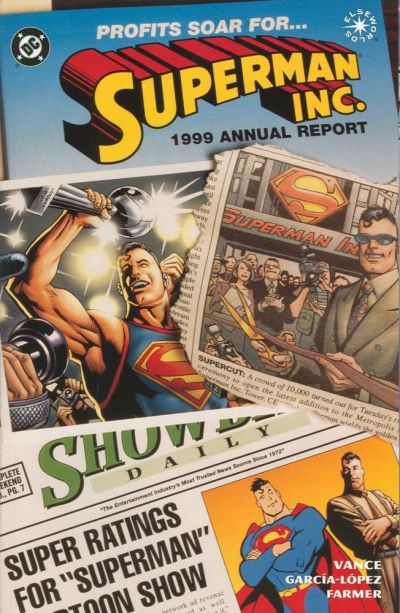

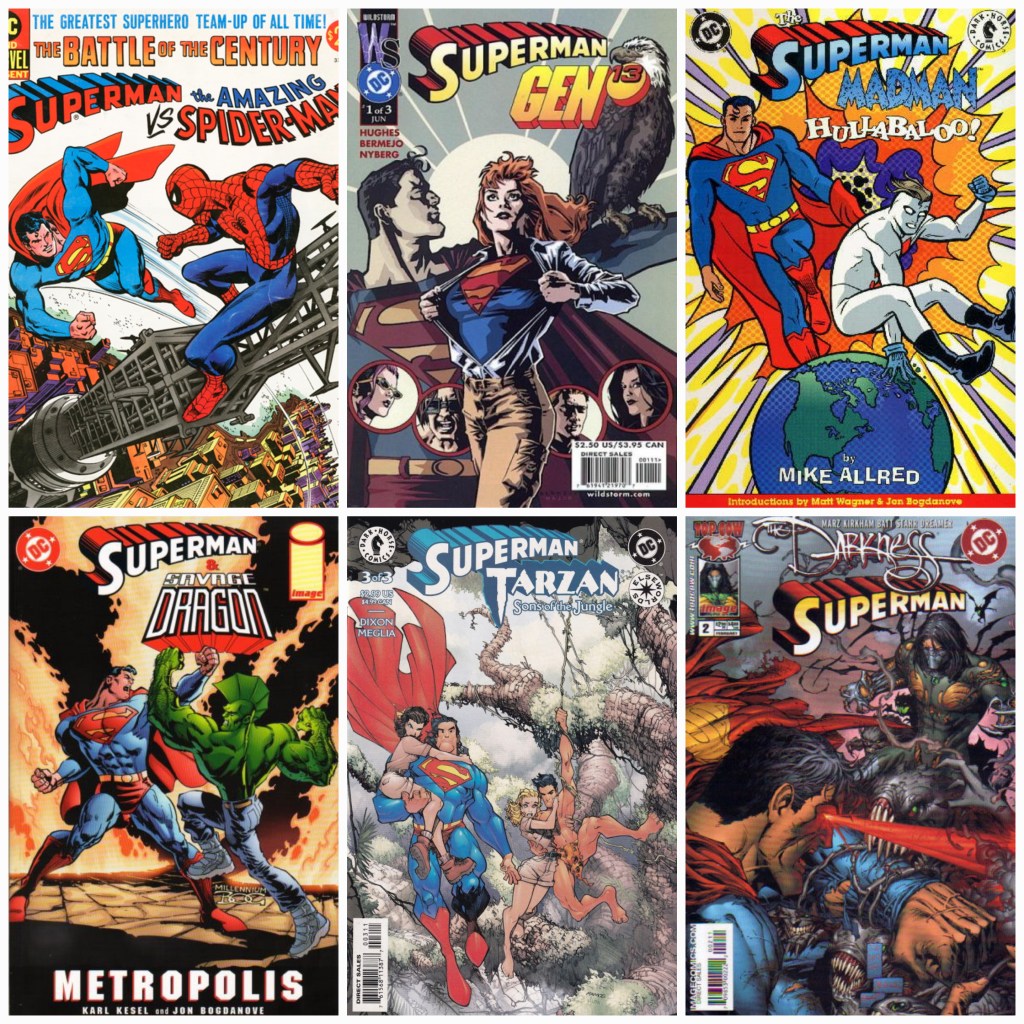


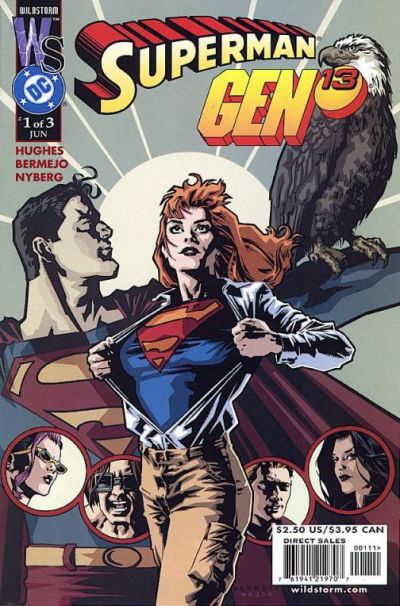
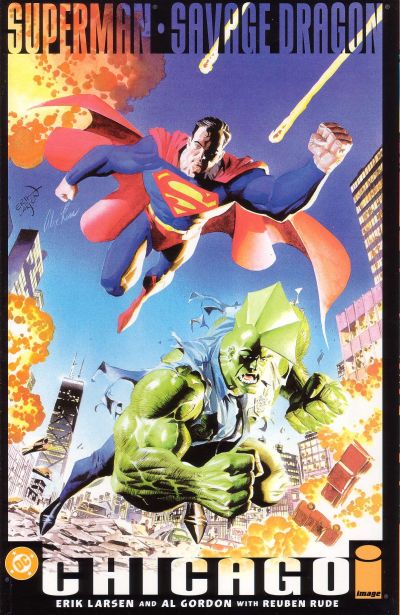

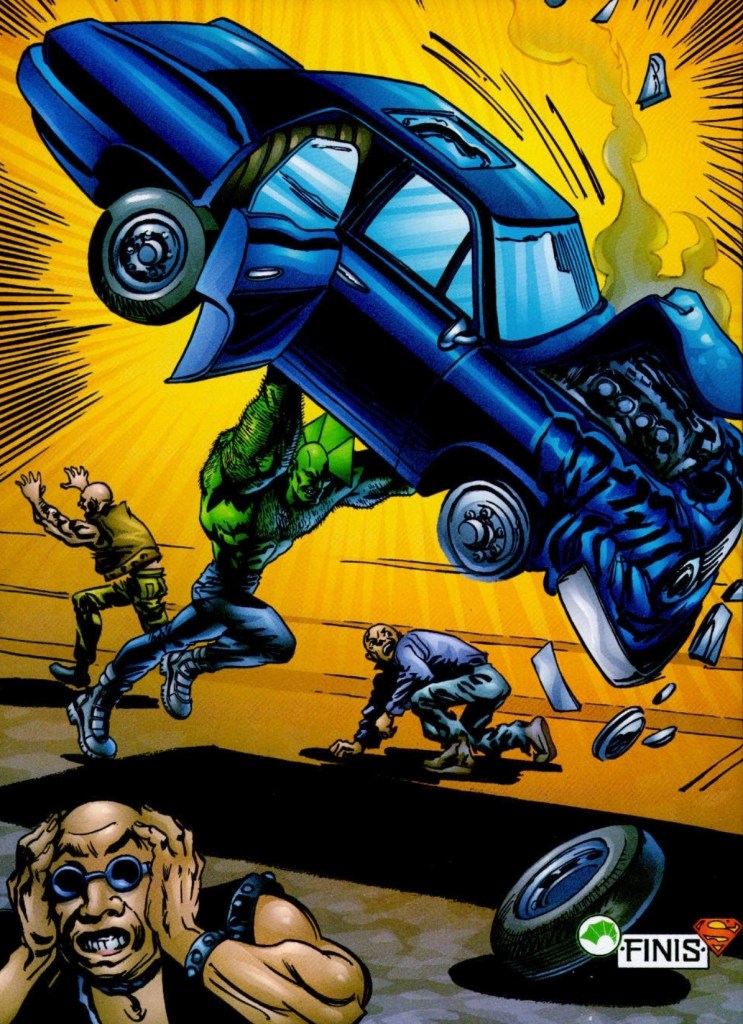

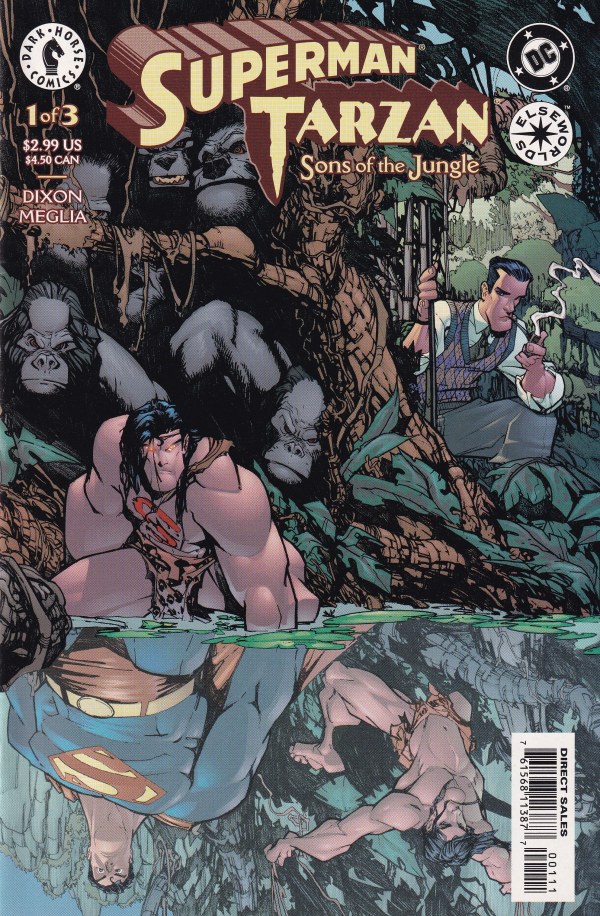

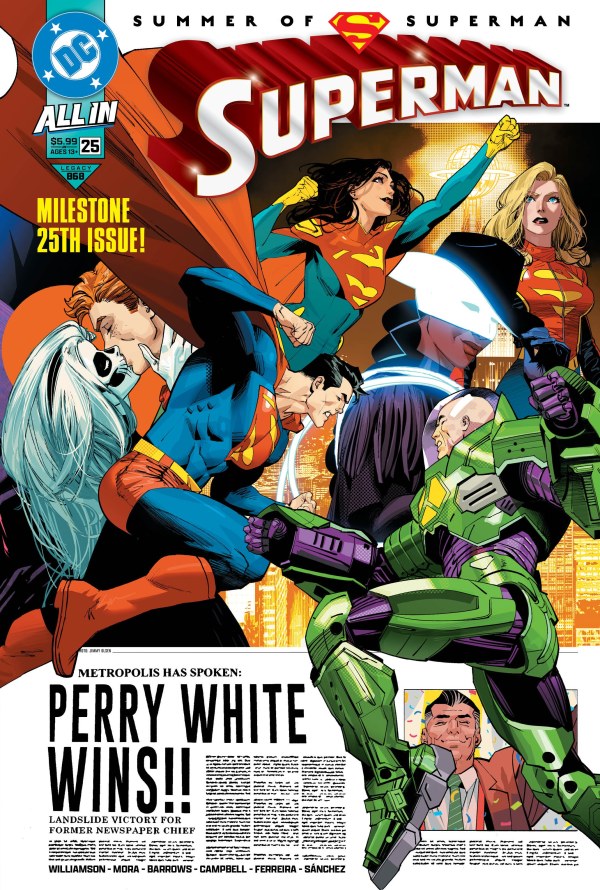

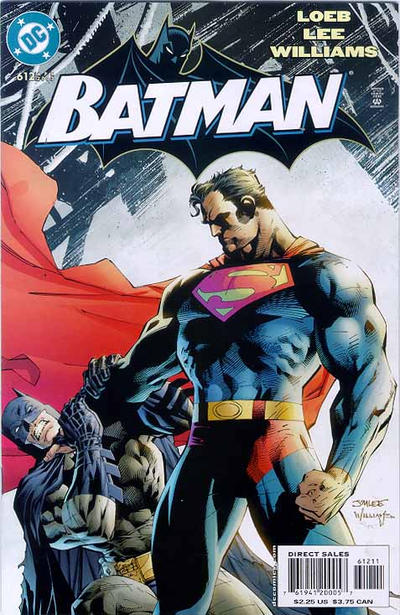
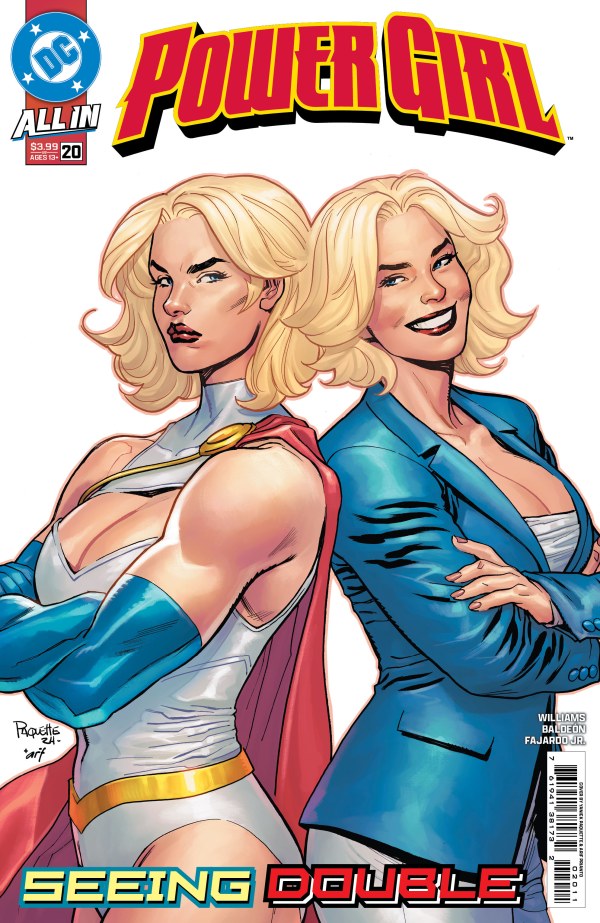


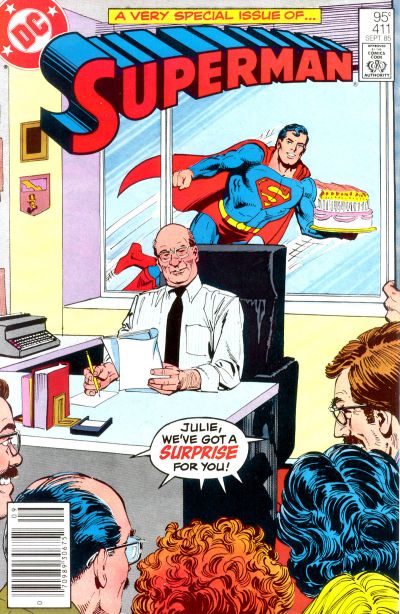


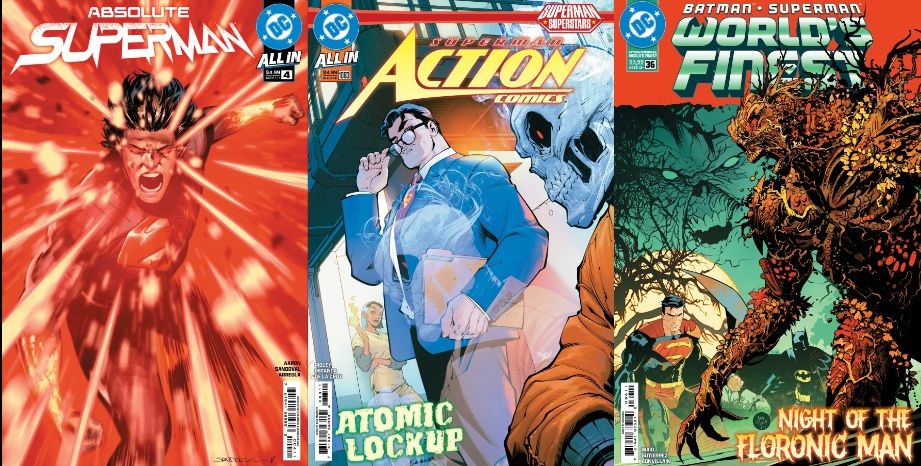
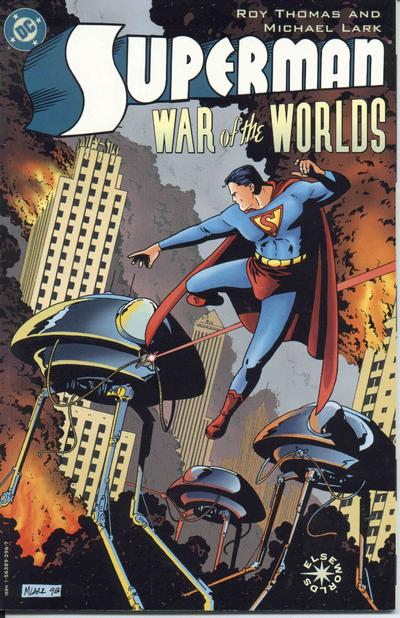


 Blake M. Petit