Early in 2024, when DC and Marvel Comics announced that they were overcoming years of – let’s be frank – hostility with one another to release a pair of omnibus editions of their various crossovers from years past, I was excited. Not only that, but I was hopeful that this would lead to further collaborations between the two of them. Earlier this year, that hope was justified when the publishers released their first new crossover in almost 20 years, a pair of books teaming up Batman and Deadpool. Not only that, but each of those books would have several back-up stories featuring other team-ups, such as Green Lantern/Rocket Raccoon, Captain America/Wonder Woman, and Krypto the Superdog/Jeff the Land Shark. And it was nice.
Nice.
And then stuff started happening.
At first, it was stuff that wasn’t too difficult to see as an expansion of this new era of cooperation. Both Marvel and DC have been in the business of publishing “facsimile editions” of classic comics for a few years now – key issues reprinted in their entirety, including the original advertisements, letter columns, and other features that we don’t usually see when a story is reprinted elsewhere. In this spirit, they announced facsimile editions of the original Spider-Boy one-shot from the classic Amalgam Comics event, with a character that mashed up Spider-Man and Superboy (the Conner Kent version) into one hero. This is going to be followed by a facsimile edition of the first-ever meeting between Marvel and DC characters, 1976’s Superman Vs. the Amazing Spider-Man. And then the big magilla – although still not technically anything shocking – they announced that the two Batman/Deadpool comics would be followed some time in 2026 with two new Superman/Spider-Man events.
Awesome sauce, right?
But it didn’t end there, either.
Last week, totally out of the blue, subscribers to the Marvel Universe app (such as myself) got an email announcing a brand-new digital-only comic book…a crossover between Thor and Shazam! Not only that, but it was written by Al Ewing, who has been helming major books for both Marvel and DC for the past few years, including Thor’s ongoing series and DC’s Absolute Green Lantern, among others. Only minutes later, subscribers to the DC Infinity app (such as myself) ALSO got an e-mail, this time announcing a surprise digital crossover starring the Flash and the Fantastic Four, written by former Flash and current Green Lantern and Aquaman writer Jeremy Adams. Both of them were fun reads, totally unexpected, and available for free even if you didn’t have a subscription to the app.
It was like Christmas in November! Or, like every store in North America calls it, “Late Christmas.”
“What a nice surprise,” I thought to myself. It’s really rare that a comic book publisher these days would even change the color of Spider-Gwen’s shoelaces without putting out a press release about it, so a pair of totally unexpected crossovers was a delightful treat.
Then it really started to get weird.
Because the day after the crossovers dropped, Marvel and DC each sent out ANOTHER email. Marvel’s was a code for their subscribers to get a free 30-day trial of DC Infinity. And DC’s email? You guessed it – a code for 30 free days of Hello Fresh.
No, just kidding. Of course, it was a code for a free trial of the Marvel app. And at this point, I started to get uneasy. You see, Marvel and DC have historically been the two biggest competitors in the comic book game. And while there have always been creators who moved freely between the companies, working for one and then the other or even (such as is the case with Ewing) working for them both at the same time, the higher-ups have had a kind of bitter antagonism for the past few decades. Both Marvel and DC have undergone regime changes since the harshest days of the feud, though, and even the Omnibus editions were evidence that the temperature between them has cooled. Even so, seeing them shamelessly promoting each other is…unsettling. Imagine, for example, that you grew up in a household where your parents were fighting all of the time, and then suddenly without warning, the fighting just STOPPED. In some ways, the quiet would be even more disturbing than the fight.
That’s where comic book fans are at the moment. We’ve gone from “Isn’t it nice that Mom and Dad are being friendly again?” all the way around to “What in the HELL is going on?”
Because maybe it’s just me and the basic state of paranoia that exists hardwired right into my brain, but it feels like there’s more happening behind the scenes than the fans are being made aware of. And sure, it could just be more crossovers like Batman/Deadpool or Superman/Spider-Man. Maybe it will become a new annual event. Maybe even more than annual.
Or maybe it’s something else.
This is the only reasonable reaction.
The good thing is that I talk to a lot of comic nerds (shout out to my homies in the best Comic Book Collecting group on Facebook) so I know I’m not the ONLY one who feels this way. A few people have speculated that one of the publishers, or their parent companies, is considering buying the other one. I don’t really think this is the case, and I sincerely HOPE it isn’t, and for a few reasons. First, I think competition is healthy – putting the two biggest brands under a single umbrella would undercut that dramatically. Also, the odds of Warner Bros purchasing Marvel from Disney – one of Disney’s major cash cows, in a time when Warner Bros itself is on the market for a new owner – is virtually nonexistent. The possibility of the WB selling DC to Disney, on the other hand, feels more plausible, but that would be bad because…I’m going to be frank here…DC is crushing it right now. The comic book line’s sales and critical response are up and the movie and TV production is firing on all cylinders, despite what that one jackass who writes for “Cosmic Book News” is desperately trying to convince people. Handing that brand over to Disney and Marvel – whose works, let’s face it, have kind of been declining the last few years – would not be optimal for anybody.
Seriously, compared to “Cosmic Book News,” this thing is the Encyclopedia Britannica.
Another possibility, one that I would be far more open to, would be some sort of distribution partnership. Much has been made about the chaos behind the scenes of the comic book world with the slow death of Diamond Distribution this year, and seeing Marvel and DC cooperate on a new distribution venture would be not be out of the question and, frankly, would probably be a net benefit for the comic shops, although smaller publishers would justifiably be concerned about the two juggernauts creating a new distribution juggernaut before we’ve even buried the ashes of the old one. There’s also the possibility of the Marvel and DC apps perhaps being offered in a subscription bundle, not unlike many TV and movie streamers these days. As someone who has subscribed to both for quite some time, I wouldn’t hate that.
But what if it’s something else? What if the big thing they’re working on isn’t anything behind-the-scenes, but in the content? DC Studios boss James Gunn – whose rise to prominence came from helming the Guardians of the Galaxy movies for Marvel – has spoken more than once about liking the idea of some sort of crossover movie between the two, and Marvel head Kevin Feige has shown effusive support for Gunn himself.
You might even call this photo the smoking GUNN. Get it? GET IT?
And with both studios embracing the multiverse concept, it wouldn’t be that difficult from a story perspective. Can you imagine David Corenswet and Tom Holland in a Superman/Spider-Man movie? They would sell so many tickets that they’d have to bring in a third crossover character, such as the Count from Sesame Street, to keep track of them all.
BUT – and I hate to put a damper on things – Gunn’s DC Universe consists of exactly one movie and two seasons of television so far. There’s more on the horizon, of course – the Lanterns TV series and the Supergirl and Clayface movies are all on the schedule for 2026 – but I feel like Gunn probably needs more time to really establish his DCU before any sort of crossover becomes a real possibility.
The comics, on the other hand, are already well established. And they’ve played the crossover game many times before. But what if this time it was more than just this guy meets that guy? There have been larger crossovers in the past. DC Vs. Marvel not only pitted their entire universes against each other, but also included the Amalgam mashups. JLA/Avengers, famously, featured every character who had ever been a member of either team (at the time – if they did that these days the ways the rosters have expanded they would need another 16 issues). But these crossovers have almost NEVER been addressed in-canon. There have been only two exceptions that I’m aware of, both from DC. First was a random issue of Green Lantern that had a cameo by Access – a character introduced in DC Vs. Marvel with the power to move between the two universes – which happened to be written by Access’s co-creator Ro Marz. Second, an “egg” holding an embryonic universe that was created in JLA/Avengers later became a McGuffin in a JLA storyline written by that crossover’s writer, Kurt Busiek. References to the “other” universe have always been oblique outside of the crossovers themselves, which is understandable due to things like copyright and reprint considerations.
But what if they could get past all that and tell a story that REALLY impacts the two worlds?
They’ve wanted to do it for some time. In the 80s and 90s, there were infrequent appearances in the Marvel universe of a guy in a suit and glasses named “Clark,” always just for a panel or two, but a definite wink at the camera. Other Marvel multiverse storylines have often made vague references to the DC characters as well. DC has also played that game. In his Hawkman series, Robert Venditti heavily explored the fact that Hawkman is a character who has been reincarnated for thousands of years, not only on Earth but on other worlds such as Krypton. But he also dropped hints that some of Hawkman’s reincarnates may have included certain Marvel characters with “Hawk” in their name, such as Starhawk of the original Guardians of the Galaxy.
This is from an issue of Thor. Can you believe he’s using GLASSES as a disguise? What a dork.
Then there’s the big enchilada, Geoff Johns and Gary Frank’s Doomsday Clock, the series which brought the world of Watchmen into direct conflict with the DC Universe. In that story Dr. Manhattan, who lives outside of linear time and can see the past, present, and future as if it’s all happening now, looked ahead to an event he called the “Secret Crisis” happening in 2030. In that crisis, he foresaw Superman fighting Thor (as a character from Norse mythology, anyone is allowed to use the name “Thor” without a copyright issue, so long as they don’t have a picture of the Marvel version of the character), as well as a “green behemoth” who would sacrifice his own life to save Superman, a clear reference to the Hulk. By the way, the Hulk’s comic book, at the moment, is written by Phillip Kennedy Johnson, who is currently writing a miniseries at DC Comics about a character bouncing around in time…dang it, who is that again? Oh yeah…it’s Superman. In fact, the book is called Adventures of Superman: House of El, and it’s tying off plot threads leftover from Johnson’s run on the main Superman comics from a few years ago.
It’s prophecy, people!
Now Dr. M told us that the Secret Crisis would happen in 2030 and I don’t know that they would be making plans today for an event that wouldn’t see publication for another five years, but one of the major reveals of Doomsday Clock was an explanation of the elastic nature of time in the DC Universe, so skirting the exact date wouldn’t really be a problem. And both Marvel and DC are currently playing with the multiverse in various stories. So…y’know.
All of this, of course, is circumstantial evidence. None of it would hold up in court. But as far as pure speculation goes, I find it all AWFULLY interesting. Would it be possible, in this new spirit of cooperation between the two publishers, for them to go forth with a story that actually brings the two universes together in a way that is indisputably canonical? To tell a story that has actual weight and impact on the heroes of two worlds going forward? Would they actually kill the Hulk to save Superman? (I know they won’t kill the Hulk PERMANENTLY, this is comic book spiritualism, where Heaven is easier to escape than a prison in New Orleans. But that’s not the point.)
Ongoing comic books, especially the “Big Two,” exist in a state of what some writers call a “perpetual second act.” What that means is that although there are ongoing stories and things can change, at some point or another there’ll be another reset, because corporate characters like Superman, Spider-Man, Batman, or the X-Men are too valuable to ever take off the table. If the characters were allowed to truly have a “third act,” that would be the END of their story, and nobody REALLY wants that. With that mindset, is there any reason that the next “second act” couldn’t be a story that involves the two largest mythologies in American culture coming together for an event that would have lasting repercussions for them both? It’s worth noting that the original plans for DC Vs. Marvel included having She-Hulk and the Martian Manhunter stranded in each other’s universe for about a year after the crossover ended, but the lawyers at the time told them not to do it. A character swap right now sounds somewhat less impossible.
Is this what Marvel and DC are planning? Are they doing it right under our noses? Is the call coming from inside the house?
Maybe not.
But it’s sure a lot of fun to think about.
Blake M. Petit is a writer, teacher, and dad from Ama, Louisiana. His most recent writing project is the superhero adventure series Other People’s Heroes: Little Stars, volume one of which is now available on Amazon. You can subscribe to his newsletter by clicking right here. He’s also started putting his LitReel videos on TikTok. His own “permanent second act” involves a constant reset of where his son hid the remote control after watching YouTube.
I spent last week dipping my toes into the DC Vs. Marvel crossover, as well as the first wave of Amalgam Comics titles. But I’m not done yet: I’ve still got over half the huge Amalgam Age Omnibus to get through, including two sequel miniseries and the second wave of Amalgam Comics. Not only that, but after a few weeks where the beginning of the school year has kept me busy, I finally get a chance to sit down and catch up on more recent Superman comics. Oh yeah – and Peacemaker season two drops this week, and while I don’t expect to see Superman to show up, James Gunn has promised that the story of this season follow on from the film, so there’s a pretty good chance I’ll have some thoughts to share about that. Let’s begin, shall we?
I had the same look on my face as Access when I read Civil War II.
Notes: I’m going to say something that may be controversial here. I actually like the follow-up miniseries, like DC/Marvel: All-Access, better than the DC Vs. Marvel event itself. DC Vs. Marvel was a fun experiment, but the plot was really just a flimsy excuse to show off fights between the characters and frame the Amalgam specials. All-Access, on the other hand, has an actual STORY to it, and I appreciate that. Written by Ron Marz with art by Butch Guice, whom you may remember passed away earlier this year, All-Access starts out with Axel Asher, the man who straddles the line between the Marvel and DC Universes as Access. A psychic flash warns him that Venom has somehow hopped universes, and if anyone from either universe stays in the other one for too long it could cause the worlds to fuse into the Amalgam Universe again, so the cosmic hall monitor has to get to work. He comes across Venom in Metropolis, where he’s throwing down with Superman, and so Access decides to get some backup by calling in someone who knows what Venom’s deal is: Peter Parker, the Amazing Spider-Man.
This is all in the first issue of the miniseries, by the way, which almost works very well as a standalone Superman/Spider-Man team-up. There’s no gratuitous hero-on-hero fighting here, just two good men teaming up to take down one bad one, and Marz plays them both perfectly. Re-reading this issue is where I started to realize that this is kind of what I had hoped DC Vs. Marvel would have been all along.
Superman doesn’t show up again until the last page of issue #3, but in the meantime, Jubilee convinces Access to take her back to the DC Universe because when she and Robin were supposed to be fighting each other, they kind of fell in love. (To this day, it’s probably the best relationship Tim Drake has ever had.) Their reunion is interrupted by an encounter with Two-Face, then again when the Scorpion appears, once again mysteriously having been pulled from the other universe. Access recruits Batman to help him solve the mystery of the “crossovers,” and Batman suggests that they track down the man who, in the combined universe, was supposed to be its defender: Dr. Stephen Strange. Batman approaches Strange, suspecting that he’s causing the crossovers somehow, and Jubilee calls in the X-Men to hold him off. Issue three ends with Access once again calling in the cavalry, bringing in the rest of the Justice League.
Issue four is X-Men vs. JLA, at least at first. Things change when Access discovers that Dr. Strangefate has been hiding in Strange’s subconscious ever since the merger and used him to cause the crossovers in an attempt to restore the Amalgam Universe. He fuses Wonder Woman and Storm once again into their Amalgam counterpart, Amazon, but when he realizes he doesn’t have the right parts to put together anyone else, he starts creating NEW Amalgams: Superman and Bishop! Iceman and Aquaman! Jean Grey and the Martian Manhunter! Things get wild!
The story ends with a nice little promise, the Amalgam Universe restored as a sort of pocket universe where Strangefate is locked away, and the Marvel and DC Universes get to remain separate. But this miniseries was so much fun, seeing the characters actually interact in ways that didn’t go straight to the fisticuffs. The Robin/Jubilee stuff in particular was fantastic, and I loved seeing Superman and Spider-Man working together again.
It’ll never happen, but I’d love to see a longer Access series, say a 12-issue event in which he’s trying to solve some sort of mystery that encompasses both worlds. And I’d love if, during this year, he appears not only in his own series, but in the ongoing comics of both companies, bringing surprise guest stars with him. But seeing as how the original plan was for DC Vs. Marvel to end with She-Hulk and Martian Manhunter swapping universes for a year until that plan was nixed by the lawyers, it’s doubtful that anything like that could happen. It’s not like the world has gotten LESS litigious since 1996, after all.
Thur., Aug 21
Comic Books: Super-Soldier: Man of War #1
The amalgamated Snyder Brothers fans get SO angry that they gave Super-Soldier his trunks back.
Notes: A year after DC Vs. Marvel, a second wave of 12 Amalgam one-shots were released, six of them continuing adventures of the characters from the first, six of them with all-new Amalgamations. What’s interesting is that even the books that carried over didn’t continue the STORIES from the original. Some of them were unrelated stories, some made brief reference to the previous, and some went REALLY wild, like Dark Claw Adventures giving us an adventure of the Amalgamated Batman/Wolverine combo in a Batman: The Animated Series style. For our first visit with the Super family, Super-Soldier: Man of War dipped back in time to give us an adventure of the character from World War II. Mark Waid and Dave Gibbons reunite for this story, which kicks off with Super-Soldier at a meeting of the All-Star Winners Squadron. But he’s only there long enough for us to notice some new Amalagams (such as the Human Torch/Green Lantern mashup Human Lantern) before it’s off to join Jimmy Olsen for a special undercover Daily Planet assignment overseas.
On the ship to Europe, Clark and Jimmy make the acquaintance of Sgt. Rock and the Howling Commandos, and Clark is later chagrined to find that Winston Churchill has fallen for the do-gooder act of his arch-nemesis, Lex Luthor, husband of Lois Lane. In a way, Luthor’s involvement actually makes this a prequel to the previous story, as the issue ends with him unveiling the plans for the Ultra-Metallo that Super-Soldier fought the first time we read one of his adventures. Kinda makes you wonder why it took Luthor 50 years to get it together.
As before, Waid and Gibbons do a great job lacing together the Superman and Captain America characters, this time bringing in the World War II-era heroes of Easy Company and the Howlers as well. Peggy Carter, for instance, shows up here as a member of the French Resistance (although I couldn’t figure out which member of Easy Company she was supposed to be mashed up with). The appearance of Major Zemo and his War Wheel pushes this over the top – silly and gleeful. These Amalgam books, when done well, are just an enormous amount of fun. Is it too much to hope that the new DC/Marvel crossover books that are about to come out will open the door for the return of this mixed-up universe?
Fri., Aug 22
No, you give YOUR dog an invisible bone!
Last night was the premiere of Peacemaker season 2. I thought that meant I would be able to watch it when I got home from work, but apparently, it dropped at 8 p.m. EST, by which time my sports fanatic son was engrossed in a preseason game between two teams that nobody in our house has any personal connection to. But that was okay, I figured that I would just watch it the next day. I guess that was pretty stupid of me, though, to assume that I could wait a whole 20 hours and not have anything spoiled for me. Before the game was even over, though, posts were appearing on social media that spoiled something that really pissed me off. You see, season one was made BEFORE James Gunn was given the job of revamping the DCU, and was intended as part of the previous iteration of the DC Extended Universe. With the new DCU that began in Creature Commandos and continued into Superman, though, there were questions as to which parts of the season were still canon. Gunn has been exploring that in the official podcast for the show, but there was a moment in the finale that they were going to have to work a little bit to reconcile.
Naturally, looking at Facebook last night, I was spammed with different pages that I don’t even follow sharing a screenshot that ruined a pretty amusing moment. How dare I assume that people wouldn’t make it into a headline? It had been an entire 180 minutes since the show dropped! What are they, made of stone?
Here’s the rule: If you’re posting spoilers about a show on the day it airs, you’re an asshole. That goes for individuals as well as all of those pages that I have since blocked.
By the time you read this it will have been nearly a week since that episode, and I STILL wouldn’t talk about it without giving you a warning. So in the next paragraph I’m going to spoil a few things about the end of Peacemaker season one and the beginning of season two. If you haven’t watched them and want to remain pure, skip ahead to Saturday.
TV Show: Peacemaker Season 2, Episode 1: “The Ties that Grind.”
Season one of Peacemaker ended with the titular hero and his team, the 11th Street Kids, saving the world from an invasion of alien butterflies. It’s more impressive than it sounds. But in the battle, Emelia Harcourt was nearly killed. Towards the end of the episode, Peacemaker is carrying her to safety when, lo and behold, the Justice League appeared – too late to do any good. The League, in this case, included silhouettes of Superman and Wonder Woman, as well as Jason Momoa as Aquaman and Ezra Miller as the Flash. It was a funny scene, but as that Justice League doesn’t exist, that scene clearly was no longer canon.
Gunn promised to explain it away and he did at the very beginning of the episode, in the “Previously on…” montage, where the League was replaced by the Justice GANG from the movie. The silhouettes of Superman, Mr. Terrific, and Supergirl all appeared, as well as a quick and the cameos have been replaced by Isabela Merced’s Hawkgirl and Nathan Fillion’s Guy Gardner. It was a funny bit. But I bet it would have been funnier if not for the asshats on the internet posting it the night before I got to watch it.
Fillion and Merced appear later in the episode as well, alongside Sean Gunn as Maxwell Lord allowing Peacemaker to audition for the Justice Gang. Watching the episode, it’s clear why DC put out the digital version of Superman last week – there are a lot of things in this show that build directly on that movie, although it’s still Peacemaker’s story of course. Rick Flagg shows up, worried about another dimensional rift like the “Luthor Incident” that happened this summer. Besides the connections to Superman, the show also starts trickling in new characters, like a surprising cameo by White Rabbit and references to the likes of the Ultra-Humanite and Captain Triumph. Rick Flagg is even working with Sasha Bordeaux, a supporting character from Greg Rucka’s Batman comics. Gunn seems to be using this season of Peacemaker to lay in chunks of the history of the DCU that Superman only hinted at, and I’m really quite excited by that.
Look, it’s not a HUGE Superman link, and it’s DEFINITELY not a show I’m gonna watch with my seven-year-old like the movie, but this show is starting to look like it’s going to be part of the fundamental fabric of the new DCU, and that would make it worth watching even if it WEREN’T really good.
Comics:Jon Kent: This Internship is My Kryptonite #5
Notes: The beginning of a new school year traditionally keeps me busy, and today was the first time I’ve made it in to pick up my new comics in a few weeks. As such, I’ve got a hefty nine Superman or Superman-related comics sitting in my stack, waiting to read and discuss, including the much-anticipated Superman: The Kryptonite Spectrum #1. This Black Label series is by W. Maxwell Prince and Martin Morazzo, the creative team behind Image Comics’ incredible existential horror series Ice Cream Man. That’s the only thing of theirs that I’ve read before, however, and while I’m a big fan, I’ve been curious ever since this was announced as to just how their sensibilities would translate over to the Man of Steel.
As it turns out, they translate wonderfully.
In this story, Superman discovers four new strains of Kryptonite beyond the usual colors we’re aware of, and recruits Batman to help him experiment with them and find out what they do. The first, a Purple K, distorts Superman’s perception of time – something that is especially concerning as Lex Luthor chooses just that minute to unleash Solomon Grundy in Metropolis.
It would be fair for someone to question whether a creative team best known for a cosmic mind-tripping horror comic would be an appropriate choice for a Superman story, but Prince and Morazzo acquit themselves right away. The Kryptonite Spectrum isn’t a horror story by any stretch, but when Superman’s concept of linear time is skewed, we get a story that drifts into the kind of psychological twists that make Ice Cream Man so compelling while skipping the actual terror. Prince uses this conceit to play with the reader’s concept of time as well, and the script even twists Superman’s interactions with his friends, with a few scenes with Lois Lane dipping into the very real anxieties that Ice Cream Man so frequently mines for pure horror. Here, though, rather than terror, Prince uses them for character drama, displaying things about the relationships between the characters that feel very true, very human. This may not have the “Elseworlds” label, but the story clearly isn’t set in the mainstream DC Universe, with Superman and Lois’s relationship framed in a way that doesn’t fit that world, but feels quite appropriate for the story that Prince and Morazzo are telling. This is a great first issue of a very different kind of Superman story, and I enjoyed it heartily.
Remember this the next time one of you wants to give me grief for putting up my Halloween decorations in September.
Dan Slott and Rafael Albuquerque are back with Superman Unlimited #4. With the Daily Planet expanding to a global operation, Jimmy Olsen has been tasked with helping set up their Gotham City office. While he’s in town, he and his ape city sidekick Tee-Nah run across Man-Bat and wind up summoning Superman for help. What they don’t know, though, is that this is a new Man-Bat, one who can transmit its curse via a bite…and a chance encounter with all the Kryptonite on Earth these days has left Superman just vulnerable enough to get nipped. Soon it’s Robin and the Birds of Prey vs. Superman-Bat!
This book is really turning out to be just what I wanted. There’s an ongoing storyline – that of the Kryptonite meteor that fell to Earth and the consequences of that – however, each issue feels like it’s telling a complete and self-contained story. The A-plot, the “Superman-Bat” thing, is done in one and it’s over. The background story of the Kryptonite and the expanded operations of the Planet continue. Although it’s a single monthly comic, in a lot of ways it feels like the structure of the glorious “Triangle Era” of the Superman comics, and I love it for that. Slott also works in some nice tidbits regarding Superman’s interaction with the Batman family, which – coming right on the heels of having read The Kryptonite Spectrum #1 – makes it feel as if DC is using the month of August to make sure everyone remembers that Superman and Batman are best buds. Which, of course, I approve of wholeheartedly.
This is what happens when you don’t use fluoride.
Supergirl #4 continues Sophie Campbell’s new(ish) take on the Woman of Tomorrow. Having defeated her doppelganger Lesla-Lar last issue, this issue Supergirl takes her back to Kandor where she does something her cousin would most certainly approve of wholeheartedly: she goes to bat for her. Supergirl argues that Lesla has the drive to become a real hero, if only given the proper guidance, and volunteers to take that task upon herself. That’s the very beginning of the issue – afterwards we see Lesla make earnest attempts to prove her worth, leading up to a strange but entertaining encounter at a Goth club where she makes a mistake in judgment that winds up having the Supergirl squad face the forces of Decay.
I just adore Campbell’s take on Supergirl. This issue in particular feels so true to the character – she comes off as someone who has demons in her past but, having largely conquered them, is sworn to help other people do the same. And following Lesla in this issue just magnifies that fact, demonstrating the effect that just being in proximity of someone like Supergirl can have on a soul that’s not truly evil, but merely lost. It’s such a good look for her and for the entire Superman family, and Campbell is nailing it in a delightful way. I also appreciate how Campbell is mining Supergirl’s past – the “new” villain, Decay, is a new version of an obscure character from Supergirl’s ‘80s series who, to the best of my knowledge, hasn’t reappeared since then. She knows this character’s history and she’s using it to her best advantage, which makes for a really rewarding read.
Sun., Aug. 24
Comics: Krypto: The Last Dog of Krypton #3, Action Comics #1089, Justice League Red #1
Notes: After a busy Sunday of groceries, shoe shopping, making my weekly LitReel and, of course, a required stop at Spirit Halloween, it’s nearly 7 pm before I have a chance to sit down and read anything. Fortunately, I’ve still got six more new Superman-related books to dig into. Let’s see how many I get to this evening.
Beware the fetch.
Krypto: The Last Dog of Krypton #3 is first. Wandering alone after abandoning Lex Luthor, Krypto is stumbling through the woods when he comes across a little girl who’s as lost as he is. Roaming through the freezing woods, Krypto takes it upon himself to take care of the child, and in the process, proves just what a good boy he really is.
The first two issues of this miniseries blew me away. This one… DAMN it, Ryan North. Three issues in a row – THREE ISSUES IN A ROW – and you’ve got me in tears reading about KRYPTO THE SUPERDOG.
Honestly, if you’re not reading this comic book I don’t know what even is wrong with you.
When a teenager loses one of his contact lenses.
Action Comics #1089 may not have me sobbing over the adventures of a dog, but that doesn’t mean it’s not good. Last issue, young Clark Kent was surprised when his history teacher showed up on his doorstep and revealed that he knew Clark was Superboy. This issue, Mr. Blake has a reveal of his own and, frankly, I’m kind of irritated with myself for not picking up on who he was in the first place. Mark Waid is being Mark Waid here, tapping on his seemingly infinite awareness of the DC Universe to bring back a character who hasn’t been seen in a while and recontextualizing him in the world of Superboy’s Smallville. I can’t get much more specific without spoiling anything here, and in case you haven’t read the issue yet, I don’t want to do that But Waid is doing really interesting stuff in this issue.
My one complaint is actually the cover by Ryan Sook. It’s a great piece of art – evocative and certainly sure to get a reader’s attention…only it doesn’t seem to actually fit anything in the story. I hate when comic book covers are dull, generic pin-ups, but it may be even worse when the cover is of a scene that doesn’t even appear in the book.
Wait, some of these costumes need more red.
The last book I squeeze in before I’m alerted by my child that he’s hungry and he has expectations of something called “dinner” is the first issue of the latest DC All-In era Justice League spinoff, Justice League Red. Ever since the Justice League re-formed, Red Tornado has been serving as the computer intelligence running the operations for the team. This issue, Power Girl and Green Lantern Simon Baz get a red alert on their League ID cards that summon them to a satellite Red Tornado built without the knowledge of the rest of the League. His computer mind has been running millions of simulations and has determined that the new League is somehow going to lead to a catastrophe on Earth, and he needs a few trusted members to handle secret tasks the rest of the League cannot learn about in order to stop it.
Writer Saladin Ahmed is taking an interesting path in this book. The story leads us to believe that Red Tornado is unstable, and that all of these predictions and algorithms he’s run are unreliable. Even as Power Girl and Simon carry out their first mission, they’re skeptical as to whether they’re doing the right thing and whether they can trust their robot teammate. But to play that hand so early, to make it seem from the very beginning that Red Tornado may be going off the rails…it feels kind of like a feint to me. I’m willing to bet that we’re going to find out along the way that things are even worse than believing Red Tornado is wrong: we’re going to find out that somehow, he’s RIGHT. Interesting set-up, and I look forward to seeing where this goes.
Mon. Aug. 25
Comics: Absolute Superman #10, Batman/Superman: World’s Finest #42, Justice League Vs. Godzilla Vs. Kong 2 #3
Confirmed: I still can’t see John Cena.
Notes: Time to wrap up my catch-up weekend (plus one day) with the final three Superman-related comics from my visit to the comic shop. I’m kicking it off with Absolute Superman #10. The battle continues between the Omega Men and Ra’s Al Ghul’s Peacemakers, with Peacemaker Smith on the front line in the hunt for Kal-El. With a Kryptonite bullet in Smith’s gun, Kal-El is faced with a decision, and a reflection onto a hard choice his father once made brings about a surprising result.
The conceit of the Absolute comics is that this is an entire universe tainted by Darkseid, where hope is the eternal underdog and the sort of values that characterize the traditional DC heroes are absent. This issue, Kal-El is faced with the kind of choice that Superman inevitably comes down to at some point in his career, and it’s a testament to Jason Aaron’s writing that, right up until the choice is made, I’m not entirely certain which way I think he’s going to go.
I like the way the Absolute world plays with characters as well. Concepts like the Omega Men, Peacemaker, and especially Ra’s Al Ghul are not traditional elements of the Superman corner of the DC Universe, but they work in the story we’re getting here. Overall, it’s a good chapter in this saga.
This am bad serious book.
In World’s Finest #42, Superman and the Dynamic Duo have been summoned to Bizarro World to help with a plague. The Bizarros (including Bizarro Superman #1 and Batzarro) who are infected find their minds realigned to a more Earth-like way of thinking. Such a danger can’t be allowed to spread, so they’ve turned to our heroes to save them…but together, they find that the danger may be greater than even the plague seemed to be.
Mark Waid is doing some really interesting things with the Bizarros here. He plays with the notion of how science and physics don’t really allow for something like a square planet and what the consequences of such a world would be. At the same time, he tackles the Bizarro philosophy of things being “backwards” as well, in a way that makes me feel slightly abashed for my criticism of the Bizarro story in the recent Kal-El-Fornia Love summer special. There’s also a great moment for Batman here – Robin (understandably) questions why it would be such a bad thing if the Bizarros all had their minds reversed to what we think of as “normal.” Batman’s response is a little unexpected, at least until he gives his reasoning, displaying a depth of compassion that Batman isn’t often given credit for. It’s a good look on Bruce.
So they’re sitting around watching Japanese movies, so what?
I finally get to the end of the new Superman titles (less than 48 hours before this week’s comics go on sale) with Justice League Vs. Godzilla Vs. Kong 2 #3. At the center of the Earth, Superman and Lex Luthor are forced into an uneasy alliance as they come across a herd of giant gorillas. (A herd? A pride? What are a group of gorillas called? I should probably look that up.) On the surface, meanwhile, Supergirl and Wonder Woman get to work liberating a Monarch base being held captive by Task Force X, and Harley Quinn gets involved in a rather…unique therapy session.
Obviously, I love crossovers, and seeing the League facing off against the Kaiju of the Legendary Monsterverse is a lot of fun. I particularly like bringing in the Suicide Squad as an alternative antagonist in this story. But it’s the sort of thing that’s a little hard to hold in your head from month to month. Waiting for the trade isn’t a practice I care for, but this is probably a situation where the story will read better in collected form than issue-to-issue. Once it’s over, I’ll have to re-read the whole thing in a lump.
Notes: We’re going to end our journey through the Amalgam Universe and the DC/Marvel Omnibus today with Spider-Boy Team-Up #1, and the subsequent Unlimited Access miniseries. The final one-shot, written by Roger Stern and Karl Kesel (cleverly Amalgamated into R.K. Sternsel) with art by Jose Ladronn, features the return of the Arach-kid with a special guest appearance by his pals in the Legion of Galactic Guardians 2099, and that in and of itself should tell you that at this point they were going WILD with the Amalgamations. At Cadmus, as preparations are made for the Kid’s upcoming nuptials to Mary Jane Watson, aka the Insect Queen, the Kid is plucked from the timestream and brought to the far-flung future, where the Legion is about to elect a new leader. Will it be Vance Cosmic? Martinex 5? Cannonfire? Multiple Mai–you know what, there’s too many, I’m not going to list them all. But it’s pretty interesting to note that there are so many Legionnaires that there aren’t enough Guardians to Amalgamate them all (or at least, there weren’t at the time) so they wind up mashing together with virtually any Marvel character that fits: Dream Girl and Destiny made up Dream Date, Matter-Eater Lad and the Trapster made Paste-Eater Pete, and my personal favorite, Bouncing Boy and Speedball mashed into Bouncing Ball. Unfortunately, Spider-Boy’s time displacement is causing stress on the time stream, and he winds up falling into different time periods, meeting different incarnations of the Legion.
The book turns out to be a real celebration and gentle parody of the Legion, poking some lighthearted fun at the various reboots the team has undergone over the years, a topic with which I have some passing familiarity. Even Ladronn’s artwork works really well, emulating the different styles of Keith Giffen’s Five Years Later era just as neatly as he does the Chris Sprouse-inspired Reboot Legion. The ending is a really nice touch, tying together the “2099” part of the melding with the only Legionnaire that it could possibly have been. Even divorced from the rest of the Amalgam comics, Spider-Boy was a glorious, joyful, wild experiment. Man, I hope the upcoming facsimile edition is just a precursor of things to come.
Something about Thor-El is kinda…compelling…
The last gasp – both for the Amalgams and for the Access concept of Marvel/DC Crossovers, came in the 1998 miniseries Unlimited Access by Karl Kesel and Pat Olliffe. The story starts with Access, the “Cosmic Hall Monitor,” popping back to his home in Marvel’s New York after sorting out a recent encounter between Spider-Man and Batman. Kesel implies here that this particular crossover had Access looking on from the background trying to keep things straight. As a concept, it actually would work to explain EVERY Marvel/DC crossover – Access, or someone like him, keeping an eye on temporary fusions between the worlds, which the respective heroes forget after the fact. If they decided to run with it that way.
Access has to untangle the appearance of Mantis – one of Darkseid’s lesser goons – in battle with Spider-Man, a fight that gets escalated when Juggernaut and Wonder Woman wind up in the mix. Things get even crazier when he takes Diana home only to find himself tangled in a fight between a still-savage Hulk and Green Lantern Hal Jordan…who is DEAD.
Superman doesn’t actually show up in the first few issues of this miniseries, so I’ll cut to the chase: as it turns out, Access doesn’t just bounce back and forth between universes, but discovers he can bounce back and forth in TIME as well, allowing him to meet the different versions of the Marvel and DC heroes from any point in the timestream (including the “Days of Future Past” X-Men from the distant year 2012). He’s also got the ability to create Amalgams, merging characters from the two worlds into one, which comes in handy when it turns out he’s being tracked by Darkseid, who wants his ability to traverse the worlds. By issue three, Amazing Grace has hypnotized the original Avengers and Justice League into battling each other, and Access decides to reach out for the only hero who stands a chance of fixing this mess: big blue himself, Superman. And I mean Superman during his electric blue era. It takes literally seconds for Superman to jolt everyone back to their senses, then he and Captain America mobilize the two teams to fight off Darkseid’s invasion of the Marvel Earth. But the crazy just keeps coming with the Brotherhood of Evil Mutants, the original X-Men, and a group of teen heroes who – just months later – would wind up getting their own title as Young Justice.
By issue four, Darkseid and Magneto are teaming up to take over the world (this is early Magneto, when he was still into that kind of thing) and the heroes decide to combine their powers – literally – into a single strikeforce of Amalgams. Black Canary and Jean Grey: Jean Black! Giant-Man and Green Lantern: Green Goliath! Captain America and Captain Marvel Jr.: Captain America Jr.! I know, I didn’t write it. And of course, Superman and Thor are fused together as Thor-El.
The fun part here is seeing these new Amalgams throw out casual references to help the reader to understand what they’re like in their own minds: Captain America Jr. possessing the “wisdom of Lincoln,” for example, or Thor-El referencing the Valhalla Zone. The series, and the history of Access, end with him accepting the truth about himself, beating Darkseid, and swearing to prevent a future he doesn’t want to experience.
Reading this story again now, there’s so much potential left in this concept, and thanks to the nature of Access’s powers, there’s no reason that Marvel and DC couldn’t pick up on it again at any time. With new crossovers (finally) on the horizon between the two of them, the chance is right there. I don’t know if they’ll take it – I certainly hope so.
But for now, at least, our journey with Superman and the heroes of other worlds has come to an end. And I think it’s time to rededicate myself to stories focused around Clark Kent himself. That in mind, next week, I’m going to embark upon my re-read of the longest Superman saga I’ll have yet tackled for the Year of Superman blog. See you then!
It happened when I got home from work on Aug. 13. I turned on my laptop, began to scroll Facebook, and saw the news I’ve been waiting for:
“Superman coming to 4K, Blu-Ray, and DVD on Sept. 23!”
Ah, a little something to take the edge off.
Rumors about a release date have been bouncing around for weeks now, but I have reached a point where I ignore anything that isn’t official from DC Studios. When I saw that the Blu-Ray was, in fact, available for pre-order, I showed it to my wife.
“Are you going to pre-order it?” she said.
“I don’t know. I know what’s gonna happen. I’m gonna pre-order it, then a week from now they’re going to announce some super ultra mega special edition that I’m going to have to get.”
“Well then wait.”
“But I want it.”
And then she gave me that Look (married guys reading this know exactly what Look I’m talking about) as I clicked pre-order and proudly announced that I saved $9.99 on shipping thanks to Amazon Prime.
Notes: For a few years now DC has been on a pretty good streak with their seasonal anthology specials, including ones for Valentine’s Day, Halloween, the December holiday smorgasbord, and then one that’s more generically “Summer.” The best thing about them are the titles. Are You Afraid of Darkseid? Grifter Got Run Overy By a Reindeer. How to Lose a Guy Gardner in 10 Days.
Awesome.
This summer’s special is Kal-El-Fornia Love and, for the first time in memory, it’s a seasonal special that is entirely focused around a single corner of the DCU, in this case, the Superman family having adventures on the West Coast. What else do you expect from the Summer of Superman? It came out a few weeks ago, but I hadn’t gotten around to reading it until now…I have to be honest, it always kinda bugs me that DC puts out their “Summer” specials right around the time that my summer vacation ENDS and I go back to work. If you can drop a Christmas special in November, DC, how about giving us the summer special in June next year?
The special kicks off with “See Spot Fly,” a Superman story by Bryan Q. Miller and Gerardo Sandoval. I know I wrote just a few weeks ago about how good Miller’s Multiversus miniseries was and how I wanted to see more from him, but…this wasn’t it. In the story, something falls from the moon and crashes into the western seaboard, prompting Superman to leap to the rescue…and somehow Lois is Loising in a way that doesn’t really solidify. It’s so weird, Lois is in danger and it’s obvious that Superman has to set out to save her, but the story jumps from the thing falling to Earth to Superman on the rescue so abruptly that I looked back three times to see if I had skipped a page. The story feels woefully incomplete and it doesn’t make a to of sense, and that makes me sad.
“The Gorilla Ex-Wife of Jimmy Olsen” is a sequel to Superman’s Pal Jimmy Olsen #98, a comic I’ve actually never read but which features Jimmy Olsen marrying a gorilla, so I don’t know why the hell I don’t have eleven slabbed copies already. Written by Christof Bogacs with art by Jacoby Salcedo, Jimmy encounters his gorilla ex-wife, Bruna, an actress, whom he has not seen since be broke her heart. But now she’s mated with (and managed by) Gorilla Grodd. Jimmy is at a Hollywood party to get photos of the new actress, but afraid of an awkward conversation, he instead challenges Grodd to a “Gorilla Games” competition, because that sounds like an amazing idea. Bogacs is channeling his inner Matt Fraction here, telling a nicely comedic story in a way that feels like it could be a lost chapter from Fraction’s Jimmy Olsen series from a few years ago. In the end, though, we actually get to see a little maturity and growth from Jimmy, which can be rare.
Joshua Hale Fialkov and Bruno Abdias give us Power Girl in “Before Sunrise,” although you wouldn’t know it at first. The story actually kicks off with Ice enjoying a basketball game by herself when some nutjob tries to shoot up the place. Ice has the situation handled, but finds an unexpected assist when Power Girl shows up. The bad guys are dispatched quickly and the rest of the story is Ice and Power Girl kind of having a girls’ night – not a party night, but a night where they just go out and engage as friends, having conversations about their lives and their place in the world. It’s an odd little story, the sort of thing that I somehow doubt will ever be referenced again, but there’s a sweetness to it that I find pretty endearing. And I love the way Abdias draws both of the heroines.
“Against the Wind” by James Reid and Jon Mikel gives us Bizarro on a journey to become a hero. At least…he TRIES, but things like saving kittens from a bridge collapse instead of the humans using the logic that the kittens (unlike the humans) would never have had swimming lessons makes it a little hard to take him seriously. When he hears that there’s an open casting call for actors who want to play Superman in a movie, though, he sees a chance. I have mixed feelings about this one. It’s funny, it’s genuinely funny, but it also doesn’t seem as though Reid quite gets Bizarro. He’s an imperfect duplicate, he does the OPPOSITE of what he’s supposed to do, but that’s not what happens in this story. Is it FUNNY when he winds up at Mardi Gras instead of Hollywood because “Louisiana” and “Los Angeles” are both abbreviated “L.A.”? Sure. But that’s not OPPOSITE, that’s just him being stupid. The whole story is full of stuff like that, stuff that works for a GOOFY character, but doesn’t make sense even for Bizarro logic.
Lois Lane stars in “Bite of the Apple” by Meghan Fitzmartin and Marcial Toldedano Vargas. Lois is invited onto a podcast hosted by a razor-tongued host who wants to take Lois to task for her coverage of a recent murder case. Turns out there’s more to the podcast that meets the eye. It’s…okay. The story has a good handle on how Lois views the responsibility of a journalist, but it doesn’t really explain why she’d agree to be on a podcast like this in the first place, let alone why Wonder Woman shows up at the last second. (She says Lois’s sister contacted her. How the hell does Lucy Lane have Wonder Woman’s phone number?)
“Across the Room” by Brandon Thomas and Juni Ba stars the Steels, John Henry and Natasha Irons, hitting the beach on a little vacation. At least, they’re trying, but stuff just keeps happening. This is another confusing story, but this time I have to feel like the art is at least partially to blame. The story is kind of about Natasha hitting it off with a girl at the resort they’re staying at (in-between scenes of her behaving like a petulant teenager for no apparent reason), but there’s a focus on a Superman “birthmark” she has on her ankle. It’s drawn in such a way, though, that at first I wasn’t even sure whose ankle I was looking at. When it turns up again, when she’s in armor, there is ZERO explanation for why it’s visible. Where did her armor GO? Why is her foot bare? There’s goo on it – is the monster she’s fighting made of acid? Comic book art has to tell a story, and this one kind of falls short on that front.
Dave Wielgosz and Joey Vazquez give us “Who Do You Belong To?” The story starts with Jon Kent in flight over the forests of northern California trying to investigate something that has been ripping up the trees. The creature turns out to be an escapee from Cadmus, though, and he’s already got another member of the family on his trail: Conner Kent. Turns out the “monster” was once his pet at Cadmus, and he’s there to save him before someone destroys him. It’s a good setup, but the execution is a major split decision. Jon feels awkward around Conner, not knowing exactly who they are to one another, which is somewhat fair. Conner feels awkward around Jon because he feels inferior, like compared to Jon he doesn’t quite deserve the name “Superboy,” and that is utterly preposterous. Conner Kent was around for two decades of real time before Jon showed up. He proved himself time and again. He died saving the entire universe in Infinite Crisis. Jon…hasn’t. There is no world in which I accept Conner feeling inferior to Jon. Awkward? Sure. Confused? I’ll take it. Intimidated since Jon is Superman’s “real” son? Fine. Inferior? Hell no. This story is SO symptomatic of the fact that DC does not know what to do with these two characters anymore, a problem exacerbated by the fact that of Jon’s two identities, neither of them fit anymore. He was Superboy when Conner was MIA. He became Superman when his father was off-world. Now they’re both back and he has no identity. Even the recent Secret Six miniseries has been calling him “Super Son,” which is better than sharing somebody else’s name, but hardly a sustainable identity.
For God’s sake, DC, can we please all recognize the fact that the name “Valor” isn’t in use at the moment? I know it doesn’t start with an “S,” but it’s got history and it would at least START to fix this ridiculous problem you created for yourselves.
Anyhoo, the last story in the book is “Something in the Water” by George Mann and Travis Mercer. Supergirl hits the beach only to wind up fighting some sort of giant Kraken-type sea monster. Turns out it’s an eldritch abomination. Fortunately she has a little help – John Constantine drops by for a visit. The story is pretty straightforward, honestly. No twists, no surprises, it’s so barebones that it almost feels like a lost plot from the Silver Age. That said, the art is great, and the wildly different personalities between Kara and Constantine makes for a fun couple of pages.
I wish I liked this book more than I did, but of the eight stories, only the Jimmy Olsen, Power Girl, and Supergirl stories left me feeling fully satisfied. Three out of eight isn’t a great score.
Thurs., Aug. 14
It’s been sitting here all year, and I think the time has finally come for me to dig into the second of the two DC Vs. Marvel omnibus editions that came out last year, the one collecting the original DC Vs. Marvel miniseries, most of the Amalgam one-shots from the two waves that were released, and the two sequel miniseries DC/Marvel: All Access and Marvel/DC: Unlimited Access. It’s gonna take me a minute to get through this whole monster because, although the Year of Superman is clearly my calling, I do still have a job and a wife and a child. And I’m not going to write about EVERY comic in the omnibus either, just the ones featuring Superman, a member of the Superman family, or one of their Amalgamated versions. If I happen to hit a day where none of the books I read for this feature a Super, I’ll have to squeeze in some other content to keep the streak alive.
It’s a thankless job, but somebody has to do it.
Comic Books: DC Vs. Marvel #1, Marvel Vs. DC #2, Batman: Gotham By Gaslight-A League For Justice #1 (Team Member), Jon Kent: This Internship is My Kryptonite #3
The shot heard ’round the nerd world.
Notes: This epic crossover, written by Ron Marz and Peter David (alternating issues) with art by Dan Jurgens and Claudio Castellini (jamming together on all four) starts simply: Spider-Man swinging through New York City and encountering a man trying to hold together a glowing cardboard box in an alley. He drops in to investigate, only to be struck by a shaft of light that transports him across universes to Gotham City, where he encounters the Joker. The box continues to send out streams of light, striking hero and villain alike and transporting them from one universe to another. As new alliances are forged, Clark Kent is paired up with the Daily Planet’s newest photographer, Peter Parker, and together they hope to solve the mystery. Meanwhile, in a place between worlds, the Spectre and the Living Tribunal are helpless to watch as two gargantuan entities, the Brothers, come into contact with one another. In the second issue, we learn that the Brothers were cosmic entities who came to blows untold eons ago, splitting into two different universes and forgetting their connection to one another. Now the awareness has returned and each brother, the embodiment of a different universe, seeks to prove his worlds’ superiority. They plan a contest, each choosing 11 champions from their respective worlds to do battle, with the world that loses vanishing forever. The first round ends with DC ahead 2-1, with Flash beating Quicksilver, Aquaman beating Namor, and Thor beating Captain Marvel. Meanwhile, a young man named Axel Asher learns the truth of his life – he is a sentient piece of the Brothers, and his powers are awakening.
I was in college when this miniseries came out, and when I say it was a big deal for comic fans, there can be no understating that. These were the fights that we’d been debating our entire lives, and now they were gonna be canon. Not only that, but fans were gonna get to VOTE on five of the eleven matches. And it was done by an all-star creative team, with only Claudio Castellini being kind of an unknown here in the States. It was a dream come true.
Looking back on it all this time later, there are things I like and things I don’t. In his introduction to the book, Ron Marz says that the decision was made to use the contemporary versions of the characters, such as the Ben Reilly Spider-Man, the long-haired Superman, and Thor wearing…whatever the hell he was wearing in the 90s. The argument was that part of the impetus for the miniseries was to pump new excitement into a comic industry that was in trouble, thus using the characters as they were currently appearing in the comics made the most sense. From a business standpoint I get it, and it worked, but you can’t deny that it dates this book badly, locking this in to a specific time period much more than many of the other crossovers I’ve read. Despite that, there are little moments that I just love: when Spider-Man meets the Joker, Joker refers to their previous encounters in the Batman/Spider-Man crossover – a crossover that Spidey doesn’t remember, but that the Fourth Wall-leaning Joker does. Peter David, in the second issue, really mines his well of comic knowledge, and do so with good humor as well: we get a scene of Rick Jones and Snapper Carr arguing over who’ll win the battle between Thor and Captain Marvel, for instance, and Aquaman’s victory comes when he wallops Namor with a killer whale, claiming that Namor’s weakness is that he’s too noble to cheat.
Superman’s part in the first two issues is somewhat minimal. We see him meet up with Juggernaut at the beginning, then it’s more of a Clark Kent/Peter Parker (but still Ben Reilly, don’t ask) team-up as they poke around fruitlessly, trying to figure out what’s happening. I like seeing those two characters together, but as their investigations ultimately go nowhere, it feels a bit like wasted space. Marz and David clearly were doing the best they could to have the characters of each world collide with one another on every page, and some of those pages feel like they could have been handled differently.
There’s a nostalgia inherent in these pages that I love, however, and even just two issues into this enormous book, I’m having fun already.
Notes: The third issue of Marvel Vs. DC is the main event, the issue where the rest of the battles are revealed, including the five matchups that the readers were allowed to vote on. It’s also, in many ways, the least satisfying part of the story, largely BECAUSE of those matches. Sure, there’s fun to be had in having the characters face off against each other. That’s kind of the point of the whole thing. But by leaving the results open to a vote, we were left with several fights that didn’t really work. I’m not the sort of reader who likes to get into the “who would in in a fight?” arguments online because the real answer is always the same: whoever the writer wants to win. But even then, it’s incumbent upon the writer to come up with a satisfying way to reach that conclusion, and that doesn’t always happen here with the fights that are nothing more than popularity contests. Storm defeats Wonder Woman by striking her with a bolt of lightning, something that a character of her power level should be able to shrug off with minimal trouble. Lobo loses to Wolverine by DUCKING BEHIND A BAR and having Wolverine as the only one who pops up, a cop-out so egregious that even writer Ron Marz recognizes it in the introduction to the Omnibus. And Batman manages to beat Captain America only because the latter is struck by a wave of storm runoff flushing through the sewer where their fight is taking place. None of these are satisfying in a narrative sense.
The two audience-decided fights with results I DO agree with, coincidentally, are the two fights involving a member of our Superman family. Superman faces off against the Hulk, and this being one of the eras in which the Hulk had Bruce Banner’s mind, getting him angrier doesn’t automatically ramp up his strength to absurd degrees as happens with some writers, so Superman’s victory is really never in question. Then Superboy faces off against Spider-Man, and although Superboy is far more powerful than Spidey, I give the tip of the hat to Spider-Man’s experience. Even this Spidey, the Ben Reilly Spidey, has had years of practice taking down opponents much more powerful than he is, so taking down a cocky Superboy isn’t a stretch.
This issue ends where the real fun begins, though, with the two Brothers deciding NOT to eliminate the losing universe after all, but instead attempting to re-form into a single being. In so doing, their universes merge as well. The Marvel Universe is gone! The DC Universe is gone! In their place stands only the AMALGAM AGE OF COMICS, a line of one-shots featuring merged version of the heroes of two worlds. The Amalgam comics had a great conceit – not only were they mashups of the Marvel and DC heroes, but they were written in such as way as though they had existed since the Golden Age, that there was a whole universe of history behind them, and that we were just seeing the first issues of a relaunched wave of titles.
“When Super-Soldier throws his mighty shieeeeeeld…”
Super-Soldier #1 is the first such issue in the volume, a comic by Mark Waid and Dave Gibbons featuring a fusion of Superman and Captain America. In 1938, an alien spacecraft crashed on Earth with no survivors, but the government used samples from the alien remains to enhance the ongoing super soldier program, giving incredible power to a new hero who could have won World War II almost singlehandedly had he not been lost in battle with the insidious Ultra-Metallo. It would be 50 years before he was found frozen in ice and thawed out by the Judgment League Avengers, returning to the world as Super-Soldier. Now, an attack on Daily Planet editor Jimmy Olsen sends the Super-Soldier into battle with his arch enemy: Lex Luthor, the Green Skull.
It’s a little hard to assign credit for this one. It’s unclear how much of the world is the result of the creative team of any individual issue and how much can be attributed to the think tank that crafted the Amalgam Universe as a whole. I’ll err on the side of caution, though, and praise Mark Waid and Dave Gibbons for just how well this comic book works. All the little bits and pieces of both Superman and Captain America lore link together seamlessly, without some of the clunky leaps in logic that plague many of the other Amalgam comics. It’s probably because this book had (in my opinion at least) the most talented creative team of the entire lot, but I loved Super-Soldier. I also love the fact that the Omnibus also includes a lot of the supplemental material, such as the fake letter pages from the original comics that drop nice tidbits about the world of Amalgam comics in the midst of inside jokes and Easter Eggs. It makes the read all the more enjoyable.
Sat. Aug 16
Short Film: Krypto Saves the Day: School Bus Scuffle
Look at that good, good, dopey-looking good boy.
Notes: I got an unexpected surprise this morning when I discovered that DC Studios has dropped the first of four Krypto animated shorts on their YouTube channel. School Bus Scuffle is first, with Coastal Catastrophe, Halloween Havoc, and Package Pandemonium all coming (presumably) soon. I love the fact that Krypto has kind of become the breakout character from the Superman movie (now available digitally!) and I’m gleeful to see what else they do with our good boy.
Written and directed by Ryan Kramer, in this short Krypto catches a glimpse of a pigeon and embarks upon an epic chase across the skies of Metropolis – a chase that quickly spirals into potential disaster for a school bus on the way to Metropolis Elementary School. Like in the movie, Kramer’s Krypto is very dog-like – easily distracted, prone to chasing things that look interesting, and with the potential to cause some real chaos with just the wag of his tail. But despite that, he shows that he really is a good boy at heart. There’s a lot of humor in this short, including running bits with the kids in the bus (including one who’s taking a nap) that are particularly amusing. I’m really looking forward to the next three shorts in this series.
Comics: Bruce Wayne: Agent of S.H.I.E.L.D. #1, Spider-Boy #1
Notes: Although Bruce Wayne: Agent of S.H.I.E.L.D. by Chuck Dixon and Cary Nord doesn’t feature Super-Soldier or any other Superman family Amalgams, I thought it was worthy of mention because it does carry over the Green Skull Lex Luthor from Super-Soldier #1. In this one, Bruce Wayne’s parents were assassinated by Hydra as a child, prompting him to join S.H.I.E.L.D. when he grew up. Now he’s risen through the ranks and turned the spy organization into his personal army with one goal: vengeance against the Green Skull. Flash forward to the present day and he’s using a rig designed by Tony Stark to lead a strike force against Hydra, including special agents Moonwing (Moon Knight/Nightwing) and Huntress (Sharon Carter/Barbara Gordon). This is an interesting one, showing that the “Amalgamations” aren’t always one-to-one. Madame Hydra, for instance, is secretly Selina Luthor. Jason Todd shows up in a Deathlok suit, although the characterization doesn’t really fit either of them, and Bane MAY be mashed up with Crossbones, but he may just be mashed with a generic Hydra mook, too. We get to see Sgt. Rock with Nick Fury, though, and that’s good times.
Alas, ‘Ringo, we hardly knew ye.
Spider-Boy #1, by Karl Kesel and the late, legendary Mike Wieringo, is still one of the favorites of this event, and in fact, it was recently announced that this will be the first Marvel/DC crossover book to get the facsimile treatment that’s so popular these days. Mashing up Spider-Man and Superboy was probably a clever little joke on the fact that, act the time at least, they were both clones, and the result is one of the highlights of the entire DC Vs. Marvel era. The book opens up in Project CADMUS, with the titular Spider-Boy defending the genetic project from the invading Bizarnage. From there we get a glimpse of his origin: part of an experiment to replicate the Super-Soldier project, it wasn’t entirely successful, killing geneticist Peter Parker in the process. The resultant specimen had a portion of Super-Soldier’s strength and the ability to alter his personal gravity, making it appear as though he could cling to walls, thus the spider-theme.
I can only imagine the fun Karl Kesel had putting all the Super and Spider Lego pieces together in new ways here. The kid is raised by his “Uncle Gen,” aka GENeral Thunderbolt Ross, who is killed by a burglar. He creates a secret identity paying tribute to his two late “fathers,” calling himself Pete Ross. And Cadmus’s staff include a murderer’s row of big brains from both universes: Reed Richards, Ray Palmer, Hank Pym, Otto Octavius. We even get to see S.H.I.E.L.D. agent Sue Storm, her brother Johnny, and Senator Ben “Rocky” Grimm. It’s the kind of absurd thing you create when you’re a kid, or wild fanfiction made semi-canon by circumstances.
All of it is wrapped up in the joyfully energetic and playful artwork of Mike Wieringo, the first face that would go on a Mt. Rushmore of great comic book artists whose careers – and lives – were tragically cut short. Under ‘Ringo’s hand the Kid looks – and behaves – far more like Superboy than Spider-Man, but that’s not a problem. Most of these Amalgams tend to lean a little harder on one “parent” than another, and the glorious mishmash of pieces in this comic book make it more than worth reading. No offense to Dan Slott or Bailey Briggs, but this is the character I’m always going to think of when somebody mentions Spider-Boy.
Sun., Aug 17
1938-2025
This is rapidly becoming my least-favorite part of the Year of Superman, but once again, we’ve lost someone who left an amazing impact on the world of the Man of Steel, and it’s only fitting that we take a moment to pay tribute. Oscar nominee and legendary actor Terence Stamp, best known as General Zod to fans of the Christopher Reeve Superman films, has passed away at the age of 87.
If you grew up watching the Reeve films, then Terrence Stamp is indelibly etched in your mind: a cold, stark face of villainy, with a voice that sends chills down your spine. Who among us can read the words “KNEEL BEFORE ZOD!” without hearing them in his voice? Stamp took a character who had been an occasional antagonist for Superman in the comics to being one of his most recognizable foes to the world at large, probably second only to Lex Luthor himself.
But beyond that, he had an incredible body of work in film and television, including another Superman connection that many of us forget. Despite being most famous as Zod, Stamp was tapped to provide the voice for Superman’s father, Jor-El, for several episodes of the Smallville TV show.
He was one of the greats, and he’ll never be forgotten.
Comics: X-Patrol #1, Assassins #1
Dreams like this are why you don’t eat burritos late at night.
Notes: Continuing my read of the Amalgam books, but there are less Super-connections in this batch. X-Patrol #1 features the titular team (a mashup of X-Force and the Doom Patrol, although like many Amalgam books, it picks up bits and pieces of other characters as well) in battle against the insidious Dr. Doomsday (Dr. Doom/Doomsday – do I really need to point some of these out?) as well as features a quick panel where we see “alternate dimensions” featuring fractured versions of the Amalgam heroes (in other words, the REAL Superman, Spider-Man, Batman, Wolverine, and Wonder Woman).
Assassins is a weird one: Catwoman and Elektra are merged into Catsai (a clever play on words), while Daredevil and Deathstroke are turned into the gender-flipped Dare the Terminator. The two of them are going after the Big Question (Kingpin/Riddler) in this book that, frankly, is kinda dull outside of giving us another half-dozen mashups. I mention it only because of the inclusion of Jimmy Urich, a combo of Jimmy Olsen and Ben Urich, naturally. The reason I’m bringing it up here is because it does kind of raise the question as to HOW tightly the Amalgam Universe was plotted out. We already saw Jimmy Olsen appear as an older version of himself in Super-Soldier, where it was somewhat implied that he filled the “Bucky” role in the Soldier’s World War II-era adventures. Having another mashup of him is curious. Not that this is the only character to appear more than once. This issue also has “Wired,” a combo of Cable and…I’m actually not sure who he’s supposed to be mashed up with. But we already saw Niles Cable over in X-Patrol, where he was mashed with the Doom Patrol’s Niles Caulder.
This is the kind of stuff that only mega nerds would care about, of course. But as an official mega nerd, I reserve the right to care.
Mon., Aug. 18
Comics: Taste of Justice #3, Fire and Ice: When Hell Freezes Over #4 (Guest Appearance)
Yeah, but you’re an easy mark, Arthur, be honest.
Notes: Today is Open House at my school for the fall semester, that night when parents are invited to come down and meet their children’ s teachers, discuss what’s going to happen in my class, and ask me vital questions like “Where’s room 121?” What that means for me, practically, is that I won’t have a chance to go home after work and read anything today. Instead, in the gap between my last class and when the parents start showing up, I’m going to squeeze in a couple of recent items from the DC Universe Infinite app, such as the DC Go! Comic Taste of Justice #3. I mentioned this comic before when I read issue #1: a clever little experiment in which the writer (Andrew Aydin) tries to work in a story surrounding a cooking demonstration. This issue is co-written by real life chefJosé Andrés, who appears in the story as a friend of reporter Clark Kent. Brainiac is doing Brainiac things that threaten the world food supply, with certain island nations being most directly affected, so Clark and Aquaman recruit Chef Andrés to help them feed an island community while the Justice League deals with Brainiac.
I have to give Aydin credit here. The concept of this book requires him to come up with a story that leaves a gap to insert a recipe in each issue, and it can’t be easy to come up with creative ways to do that. The first two issues (the first starring Lois Lane and the second starring Cyborg and Beast Boy) have taken the approach of someone trying to teach someone else how to cook. This time around he’s gotten more creative, using a crisis situation as a backdrop and making the food preparation aspart of the emergency response. We also get to see various Justice Leaguers using their powers to help out, such as Aquaman helping catch lionfish to cook and the Flash cleaning and filleting enough fish to feed the entire community in minutes.
Is the recipe itself any good? I’ve got no idea. I’ve not a chef and I’m pretty sure I’ve never eaten lionfish. But the way they handle things here makes it at least sound appetizing and not too difficult to prepare, which is pretty much what you want out of a comic book like this one.
I also worked in the recent Fire and Ice: When Hell Freezes Over #4. I got the first Fire and Ice miniseries last year because I love those two characters, and I have ever since the Giffen/DeMatteis Justice League days. I decided not to get this sequel series because…well, I love the characters, and I found the first one profoundly disappointing. But not so disappointing that I won’t read it on the app. Superman makes a guest appearance in this issue, as Fire and Ice are in Hell dealing with Neron and Grodd attacks Smallville, which is their current home. There’s a cute little interaction with Superman and Martha Kent (who is a recurring member of the cast), but beyond that, I’m afraid there’s not much to recommend this issue. The supporting cast, like Fire and Ice, have been body-swapped, and the fact that I forgot that until halfway through the book is a testament to how uninteresting those characters have turned out to be. It’s a shame, because Bea and Tora are great characters and I love the fact that they’ve got a showcase. I just wish it were a better one.
Tues., Aug. 19
Comic Books: Doctor Strangefate #1, DC Vs. Marvel #4, Wonder Woman Vol. 6 #23 (Superman guest appearance), New Gods Vol. 5 #8 (Superman guest appearance), Batman: Justice Buster #26 (Superman guest appearance), Jon Kent: This Internship is My Kryptonite #4
Notes: Today I’m finishing off the last of the Amalgam comics and the first DC Vs. Marvel crossover. The Amalgam books are mostly a little bit of silly fun, without contributing directly to the main storyline, many of them even ending on cliffhangers that were never meant to be resolved. The only exception was Doctor Strangefate #1, written by DC Vs. Marvel co-scribe Ron Marz. In this one, Access (the man with the power to step between the worlds) is being pursued by the titular Strangefate and some of his associates: the Shulk (Hulk/Solomon Grundy), Jade Nova (the Kyle Rayner Green Lantern/Frankie Raye Nova), and the White Witch (Scarlet Witch/Zatanna). Access, it seems, has two shards of the previous universes which can be used to separate them, and Strangefate is trying to stop that, knowing that if Access succeeds in restoring the previous universes, his world will be destroyed. Access escapes at the end of the issue, leading into the finale of the crossover. It’s not really a Superman-related comic, and I mention it mainly because it sets up the end. There is one small concession to the Superman mythos, though: Strangefate’s manservant is Mxy, a combination of Dr. Strange’s Wong and, of course, our old pal Mxyzptlk.
Imagine a sound like the biggest zipper in the multiverse.
Finally, DC Vs. Marvel ended the story with Access revealing that he hid the two missing shards inside of Batman and Captain America before the worlds merged, meaning that in this new universe they’re inside Dark Claw and Super-Soldier. He retrieves the shards and manages to “unzip” the universes, but the Brothers are now at each other’s throats. The worlds are on the verge of collapse, the sky itself is bleeding, even J. Jonah Jameson APOLOGIZES to Spider-Man for all the harassment over the years! And Peter Venkman thought dogs and cats living together was apocalyptic!
The destruction of the two most profitable universes in comics is prevented in an oddly fitting way: the Brothers are on the verge of destroying everything when they are confronted by the two men who briefly held pieces of their form, the men among gods called Batman and Captain America. And as each Brother examines the hero from his counterpart’s universe, they both come to the conclusion that the other world ain’t that bad after all and let the universes return to their natural state.
Makes you wish comic book FANS could learn that lesson, doesn’t it?
DC Vs. Marvel, as a whole, was a fun experiment, but it was kind of short on Superman. In this last issue we only see him briefly helping the Hulk fight the Mole Man in the Batcave, which sounds like somebody was doing “Superhero Mad Libs,” and then as Clark Kent arriving at the Daily Planet office so he can be with Lois as they face what they believe will be the end of the world. It’s to be expected, I suppose – a story of this size is bound to be heavier on plot than on character. Then again, that doesn’t mean it HAS to be this way.
I’m not done with the omnibus just yet. There was a second wave of Amalgam Comics, plus the two follow-up miniseries, so next week I’ll tap into the Superman-related issues of each of those. In the meantime, watch out for those bleeding skies.
I’ve never been much of a video gamer. Oh sure, I’ve played SOME, but the last time I owned a console was when my parents gave my brother, sister, and me a Sega Genesis for Christmas one year, to give you an idea of how long it’s been since I had regular access to any platforms. Still, I live in the year 2024, so even though I don’t PLAY video games, I get constantly bombarded with the advertising for them and have a basic knowledge of what at least the most popular ones are. Because of that basic awareness, there was a moment not that long ago where I felt a bit of an urge to get into a new game: when I heard about Multiversus. This is a video game that draws characters from dozens of properties owned by Warner Bros, including characters from Looney Tunes, Scooby-Doo, Rick and Morty, Steven Universe, Adventure Time, Game of Thrones, and of course, the DC Universe. A fighting game in and of itself doesn’t really appeal to me, but…a game where I can pit Superman against Bugs Bunny or Tom and Jerry? Where the Powerpuff Girls can take on Jason Voorhees or Beetlejuice? Where Gizmo from Gremlins can face off against Agent Smith from The Matrix?
It’s like being a kid again.
And did I mention the Iron Giant? Did I mention the Iron Freaking Giant?
I didn’t play a ton of video games as a kid, but I DID have a lot of action figures, and while some kids are meticulous about keeping the different lines of figures separate, I always mashed mine together. I saw no contradiction in having my G.I. Joes interact with the Masters of the Universe even though, relative to Duke and Snake-Eyes, He-Man and his crew were giants with a serious thyroid problem. And although there was no way Lion-O from Thundercats could actually fit inside and ride Optimus Prime, that didn’t stop me from PRETENDING he could as they rushed off to tackle Darth Vader and his army of B-level DC and Marvel villains culled from the Super Powers and Secret Wars lines. (Side note: a personal dream of mine would be to begin a collection of those superhero figures from my youth. I don’t need them in the packaging or in mint condition, but I at least need them to have all the limbs and, when appropriate, capes. There was also a short-lived line based on Archie Comics’ Mighty Crusaders that I would like to include. Christmas is coming up, people.)
In a way, I think this is even why I like certain modern toy lines. Things like Funko Pops take characters from virtually any franchise you can imagine and recreate them in the same style and the same scale, something I would have been all over as a child. Even LEGO has appeal for that same reason, although LEGO’s appeal obviously goes much further.
Anyway, Multiversus seems to run with this idea in the same way that I would have when I was a kid, and although I still haven’t (and probably will not) play the game, I AM reading the comic book miniseries based on it, Multiversus: Collision Detected, written by Bryan Q. Miller with art by Jon Sommariva and covers by Dan Mora, who is perhaps my favorite artist working in comics today. The comic is fun and wild, with the characters from the different universes all spilling into the DCU as the Justice League tries to make sense of what’s going on. It gets really crazy when the bad guys show up, including the Wicked Witch of the West from The Wizard of Oz and, wildest of all, The Nothing from The Neverending Story. Obviously there was never a “Nothing” action figure back in the day, but you better believe this is the kind of story I would weave on the living room floor with mountains of figures from every conceivable IP of the 80s battling it out with one another.
“Yeah, a collision of FUN!” “For the last time, Stuart, stop pitching taglines.”
There is a certain thrill that comes with combining characters that we don’t normally see together. Comic books do it all the time, with crossovers between different publishers and different universes. Marvel and DC just last month released the first of two giant omnibus hardcovers collecting most of their crossovers to date, a hefty volume that’s a testament to the fact that geeks like me love stuff like this. How would these characters who should never meet react to one another? Would they fight? Would they get along? Would they team up? Would they fall in love?
Considering the love lives of their respective mentors, only having an impermeable dimensional barrier between them is practically a win.
For some reason that last one is often a sticking point in crossovers. There’s a certain segment of the population that thinks that the best love story Tim Drake (the third Robin) ever had happened in the pages of the DC Vs. Marvel crossover, when he and the X-Men’s junior member Jubilee fell for each other in a tragically doomed romance that had to end when their universes were separated again. In the 90s, Valiant Comics and Image Comics based their Deathmate crossover on the fact that their nigh-omnipotent characters Solar and Void met and came together, causing their universes to merge.
Other crossovers are based on how ridiculous the idea may be. Archie Meets the Punisher is a real comic that happened because their respective publishers recognized that the two properties couldn’t be more different from one another, but somehow turned into a story that was not only entertaining, but respectful of BOTH very diverse universes. Then there was the Star Trek/X-Men crossover, a story that you will NEVER convince me wasn’t conceived entirely around the page where Nurse Chapel calls for “Dr. McCoy” and both Leonard “Bones” McCoy of the USS Enterprise and Henry “Beast” McCoy of the X-Men answer at the same time, then look at one another incredulously.
“My work here is done.” “Lobdell, we need 47 more pages.” “I already wrote the only one that matters.”
I think this mashup madness is the main reason I’m still playing one of the few mobile games I play, Disney Magic Kingdoms. It’s an idle game, where you build up your theme park by adding rides and concession stands and the like, but the real appeal to me is the ability to “collect” characters from various Disney-owned properties, including not only the classic Disney characters and the films of the Disney animated canon, but also the characters from Pixar, the Muppets, Indiana Jones, and Star Wars. Earlier this year they started adding properties from the franchises they acquired in their absorption of 20th Century Fox as well, beginning with the heroes of the Ice Age movies. While I don’t expect them to add EVERY IP in their catalog (it’s hard to imagine the Xenomorph from Aliens running around outside Dumbo’s Flying Elephants), I’m really surprised that they have not yet started including Marvel characters, but I also suspect it’s only a matter of time.
Marvel is slowly starting to take advantage of their corporate parentage as well. They’ve done crossovers where the Predator has fought Wolverine and Black Panther, and another where the Avengers deal with Aliens. Less likely but more fun, we’ve had a series of one-shots casting the Disney heroes as the Marvel superheroes. So far we’ve gotten Donald Duck as Wolverine and Thor, and upcoming specials will give us Minnie Mouse as Captain Marvel and the Fab Four (Mickey, Minnie, Donald, and Goofy) as Marvel’s Fantastic Four. They’ve also taken their popular “What If?” comic book and released an Aliens miniseries based on an alternate universe where Carter Burke, Paul Reiser’s character from Aliens, survived. And as a curious note, the comic book is co-written by Paul Reiser himself. No further miniseries have been announced yet, but I thought the Aliens comic was really entertaining, so I wouldn’t be surprised if we start seeing more “What If?”s based on Marvel’s corporate siblings like Predator, Planet of the Apes, or Star Wars either.
Got my fingers crossed for “What if Goofy Became the Punisher.”
(That joke is WAY darker when you realize it has to be Goofy because, canonically, he’s the only father in the group.)
We don’t get these sort of “everything but the kitchen sink” crossovers much on TV or in the movies, though. Oh sure, we get the occasional crossover like Godzilla Vs. Kong, Freddy Vs. Jason, or Kramer Vs. Kramer, but real multi-universe mashups are kind of rare. I think it’s part of the reason that we all loved Who Framed Roger Rabbit? so much. Yeah, it’s a great movie, but it’s also the only place, canonically, where we’ve ever seen Mickey Mouse and Bugs Bunny together, or Donald Duck face off against Daffy Duck. The film also included Droopy Dog, Betty Boop, Woody Woodpecker, and a real Who’s Who of cartoon stars of the 30s and 40s – and as those are still the greatest cartoon stars of all time, we loved it. Wreck-It Ralph would do the same thing with video game characters, and the Toy Story films did a lot of that with the classic playthings of our youth, and yeah, we love them for it.
Eat your heart out, “DeNiro and Pacino in Heat.”
And of course, let’s not forget the greatest crossover event of all time, 1990’s Cartoon All-Stars to the Rescue, which combined the forces of the Smurfs, the Muppet Babies, Alvin and the Chipmunks, Garfield, Winnie-the-Pooh, Alf, the Looney Tunes, Slimer from The Real Ghostbusters, and Huey, Dewey, and Louie from Ducktales in a half-hour anti-drug special that’s so bizarre you have to imagine that they were actually ON drugs while making it. (This is a real special, people. Don’t take my word for it, you can watch it on YouTube.)
And yet, even THAT has a certain weird charm to it.
It’s important to remember that the people who make cartoons, movies, comic books, and video games, were once children as well – at least, until they are all replaced by AI – and as such they enjoyed throwing their toys together just as much as we did. That’s why I’m digging the Multiversus comic, why I’m reading the “What If” specials in which the Disney stars become Marvel heroes. It’s not because I’m looking for something huge, something life-changing, something of great profundity.
It’s just fun.
And honestly, guys, shouldn’t that be enough?
Blake M. Petit is a writer, teacher, and dad from Ama, Louisiana. His most recent writing project is the superhero adventure series Other People’s Heroes: Little Stars, volume one of which is now available on Amazon. You can subscribe to his newsletter by clicking right here. If you’ve played Multiversus, he’s got a question for you: have they overpowered Shaggy in deference to his status as a meme? Because honestly, that would be kinda cool.
It was the kind of news that grinds the internet to a halt, sometimes for upwards of 17 seconds. After years, decades even, where some of the most sought-after comic books of all time were out of print and unavailable unless you wanted to pay crazy eBay prices, this week DC and Marvel Comics announced a pair of omnibus editions collecting most of the crossover comics that have been produced over the years featuring meetings between the two most famous superhero pantheons in the world.
This is not a drill, people!
I’m not sure if younger fans will realize exactly how big a deal this sort of thing is. From the moment that the two respective worlds solidified, there were fans who were anxious to see the Justice League meet the Avengers, the X-Men meet the Teen Titans, Brother Voodoo meet Brother Power: The Geek. It’s like when you have toys from multiple toy lines and try to play with them all together. I know that every kid my age, at some point, had their G.I. Joes face off against Darth Vader, the TransFormers clash with He-Man, and the Thundercats and Silverhawks grab a drink down at the bar. Those were the stories that spilled out of our imagination. But the idea of a “real,” “official” story in which such a thing happened was the stuff of dreams. So in 1975, when the two publishers announced their first joint venture, it was like a dream come true!
For Wizard of Oz fans, that is. Yes, because of some weird things like licensing agreements with MGM and the public domain status of the original novel, the first comic co-produced by Marvel and DC Comics was an adaptation of MGM’s The Wizard of Oz, hitting the stands a scant 36 years after the film’s debut. I was only around for the last few years of it, guys, but it really seems like the 70s were a bizarre time.
The part where Wolverine rips out the Cowardly Lion’s entrails, in retrospect, may have been a tad overboard.
But that collaboration seemed to grease the wheels between the two publishers and, in 1976, fans got Superman Vs. the Amazing Spider-Man. Like the Oz book, this was an oversized treasury edition featuring the clash of the respective publisher’s two most popular characters, and it was a hit. In 1981 there was a second Superman/Spider-Man meeting, followed by Batman Vs. the Incredible Hulk (or, as I like to call it, “Battle of the Bruces”), and in 1982 we got The Uncanny X-Men and the New Teen Titans. Then work began on an Avengers/Justice League crossover, a story that would surely be the crown jewel for the two publishers, but things kind of fell apart. Not only did that planned crossover never happen, but all crossovers between the two dried up for over a decade.
Childhoods were defined in these books.
That changed in 1994, when the era of comic book excess was in full swing, and the two collaborated again with what would be the first of two Batman/Punisher crossovers. It wasn’t Bruce Wayne, though – this story took place during the Knightfall era, and the Punisher ran across the Jean-Paul Valley version of Batman. By the time the sequel rolled around, Bruce was back and Frank Castle learned what the real Batman is like. This pair kicked off a new wave of Marvel/DC crossovers including Batman/Spider-Man, Batman/Daredevil, Batman/Captain America – look, by the 90s it was clear who DC’s top seller was. But Superman got in on the fun too, meeting both the Hulk and the Fantastic Four. Green Lantern met up with the Silver Surfer, and then there was the villain-centric Darkseid Vs. Galactus: The Hunger by John Byrne.
College years, on the other hand, were defined by THESE books.
The creme de la creme, of course, was 1996’s mega-event DC Vs. Marvel, where the two universes collided in a four-issue slugfest where the fans voted for the winners of the five top battles. This was a great gimmick from a sales standpoint but posed something of a creative challenge, as writers Peter David and Ron Marz had to figure out some way to have Lobo (an indestructible alien with Superman-level strength) lose a fight to Wolverine (a character who is considerably less powerful unless you count his mutant ability to sell a trillion copies and, in this case, garner a trillion extra votes). Their solution, hilariously, was to have the two of them duck behind a counter and only have Wolverine pop up, thereby avoiding the need to actually explain how he could possibly have won.
Nerds argued over this for almost 60 years before Marvel and DC decided to settle things. It didn’t stop nerds from arguing.
Specious battles aside (I also take issue with Storm of the X-Men beating Wonder Woman with a bolt of lightning and Batman beating Captain America because the latter got hit by a wave of water from a flooding sewer which threw off his aim), the book was a smash hit. It spawned two sequel miniseries, but the thing that fans remember most were the series of one-shots that came in-between issues three and four of the main storyline, the Amalgam Universe. Basically, the Marvel and DC Universes were merged, and we got 12 one-shots starring character mashups like Super Soldier (Superman fused with Captain America), Dark Claw (Batman and Wolverine), Speed Demon (Flash and Ghost Rider) and so forth. A year later there were another series of 12 one-shots, half of which were follow-ups to the original dozen and the other six introducing new mashups like the Lobo the Duck (Lobo and Howard the Duck) and Iron Lantern (Iron Man and Green La– look, do I have to spell out EVERYTHING?).
The next time someone tells you that drawing doofy fan mashups won’t get you anywhere, show them this.
The Marvel/DC crossover craze ended in 2003 with the long-awaited JLA/Avengers crossover, and it came about in a sort of odd way. The legendary George Perez, whom everyone agreed was the only man alive who should draw this book, joined upstart publisher CrossGen Comics, and CrossGen made all of its talent sign exclusive contracts for the term of their employment. The only loophole allowed was in Perez’s contract, which stated he would be allowed to do JLA/Avengers if it ever happened. That seemed to be enough to get Marvel and DC to figure things out, and the four-issue miniseries finally came about. But that’s the last time any Marvel or DC characters met one another.
There were other crossovers in that era, of course. Marvel’s Iron Man met Valiant’s X-O Manowar, and Daredevil encountered Shi from Crusade Comics. DC and Dark Horse comics became besties: Superman crossed over with Michael Allred’s Madman, the Joker fought the Mask, and Batman met both Grendel and Hellboy (the latter with Starman in tow). But the two biggest games in comics stopped playing together at that point, possibly because of corporate chicanery and possibly because the always friendly rivalry between the two publishers became somewhat less friendly for a while.
Marvel, in fact, seems to have quit crossovers altogether. A search on the Internet (which, as we all know, has never been wrong about anything) seems to indicate the last time Marvel characters crossed over with any other publisher was back in 2009, when the Avengers and Thunderbolts were featured with Top Cow Comics characters in a miniseries called Fusion. We’ve recently got a new crossover, though, with Wolverine fighting the Predator, but as both characters are now owned by the Walt Disney Corporation and IP Farm and Macaroni Grill, and therefore both published by Marvel, I don’t know that it technically counts.
And it’s not like other publishers haven’t gotten into the game as well. Before Disney bought Fox, Dark Horse Comics held the rights to Aliens and Predator, and they fought EVERYBODY. Superman Vs. Aliens, Batman Vs. Predator, Green Lantern Vs. Aliens, Magnus: Robot Fighter Vs. Predator, WildC.A.T.S. Vs. Aliens, Archie Vs. Predator (no, I’m not kidding), Batman and Superman Vs. Aliens and Predator…it was a cottage industry.
Fellas, when THIS many people have trouble getting along with you, maybe it’s time to admit that the problem is YOU.
And their sparring partners often met other publishers’ characters as well. Archie Comics has crossed over with – among others – the Punisher, Batman ‘66, Harley Quinn and Poison Ivy, Vampirella and Red Sonja, and the Tiny Titans. They also crossed over with the Teenage Mutant Ninja Turtles when Archie was publishing THAT book, but since the Turtles have moved to IDW Publishing they’ve encountered the Mighty Morphin Power Rangers (twice), Batman (four times), and the characters from Stranger Things, which has also crossed over with Dungeons and Dragons, which has also crossed over with Rick and Morty. The Power Rangers have also met both the Justice League and Godzilla, and the Justice League and Godzilla are currently meeting each other – along with King Kong – in a crossover with the Legendary Monsterverse.
While Marvel has pulled out of the crossover game (which is something I largely suspect is an edict from Disney, although I have nothing to back that up, it’s just a gut feeling), DC has kept it up. Besides the aforementioned TMNT, Power Rangers, and Godzilla/Kong crossovers, the Justice League has met the characters from Jeff Lemire’s Black Hammer, and enjoyed crossovers with corporate siblings the Looney Tunes and the Hanna-Barbera cartoon characters. Batman and Scooby-Doo, who have met in cartoons many times, now share an ongoing children’s comic. DC has also partnered with IDW for Star Trek/Green Lantern, Star Trek/Legion of Super-Heroes, and an inventive crossover between DC’s Sandman Universe and Joe Hill’s Locke and Key. IDW seems to love crossovers, even with different licensed properties in their own stable. While they owned the licenses to these assorted properties, they crossed over TransFormers with Ghostbusters, Back to the Future, and Star Trek: The Animated Series (making new Autobots out of the Ecto-1, the Delorean, and the Enterprise, respectively). Star Trek, by the way, also crossed over with the X-Men when Marvel owned that license, in two one-shot comics and a prose novel titled Planet X. And Valiant and Image Comics did the “universes merge” story three whole years before Amalgam Comics in a series called Deathmate, which is largely remembered today for the fact that Rob Liefeld’s issue of the series was hilariously late.
IDW is the Nick Cannon of comic book crossover events. No, not musically.
In fact, there’s only one really major franchise that has significant comic book presence that – as far as I know – has never done an official crossover, and that’s Star Wars. Even before the Disney buyout and the comics moved to Marvel, Dark Horse never made an effort to have Luke Skywalker meet Barb Wire or something. The closest they’ve come was in an out-of-continuity story in the Star Wars Tales anthology comic from 2004, in which the Millennium Falcon gets lost in a galaxy far, far away and crash-lands on a primitive planet, only for the remains to be discovered centuries later by an archeologist strongly implied to be Indiana Jones.
I know it can seem overwhelming if you’re a casual fan, trying to make all of these things work out. The good news is, you don’t have to. The vast majority of these crossovers are either considered non-canonical to the main properties or are of such little consequence to the ongoing story that they may as well be. There are rare exceptions (the WildC.A.T.S./Aliens crossover killed off several members of Wildstorm Comics’ Stormwatch team, for example), but for the most part, they can be read on their own, self-contained, without impacting the ongoing comics in any significant way.
So why do them at all?
Because they’re fun. They’re fun for the readers, who like seeing beloved characters interact, and they’re fun for the creators, who enjoy making them just as much. It’s true that there was a saturation point of crossovers in the early 2000s, but the solution to saturation is to slow down the flow, not cut it off entirely.
So the announcement of the two DC/Marvel omnibus editions is welcome. The DC Versus Marvel: The Amalgam Age omnibus will collect the DC Vs. Marvel miniseries, its two sequels, and 13 of the 24 Amalgam books. The DC Versus Marvel omnibus will collect most of their other crossovers. But the exclusion of the remaining 11 Amalgam books is surprising and a little frustrating, and the DC Versus Marvel omnibus will exclude JLA/Avengers, which was reprinted in a very limited charity run two years ago after George Perez announced that he was suffering from terminal cancer. The fact that it was once again Perez being on a deadline that got that book off to the printer is a sad sort of cosmic convergence.
No joke here. George Perez was one of the greatest comic book artists ever to pick up a pencil, and he deserves all the love and respect he gets.
I hope that there are plans to reprint the rest of the Amalgam books at some point, but even if there aren’t, the fact that they’re doing the omnibus editions at all is encouraging. It’s something fans have wanted for a very long time and we didn’t really think would ever happen. It also, of course, has everybody asking a couple of pertinent questions. First, why now? What has changed in the Marvel/DC relations that allows these books to finally see print again? A lot of the people responsible for the bad blood between the publishers are gone now, and that may indeed play a significant role. And if THAT has changed, let’s just ask the most obvious question of them all:
Could this be a precursor to more?
As I said, it’s been over 20 years since the Marvel and DC Universes connected in any official capacity and a lot has changed. I think there are a lot of fans who would be interested to see Miles Morales meet Damian Wayne or have Kamala Khan interact with Jon Kent. How would the Titans of today – now DC’s premiere super-team – react to the X-Men in the age of Krakoa? And come on, fans have been pining for a Deadpool/Harley Quinn crossover for ages. Such a book would be as good a license to print money as Wolverine was in the 90s.
I’m not saying it will happen. I’m just saying that if it DID, it would be cool.
I’m also saying that the two omnibus books are coming out in August, which also happens to be my birthday month. I’m just. Sayin’.
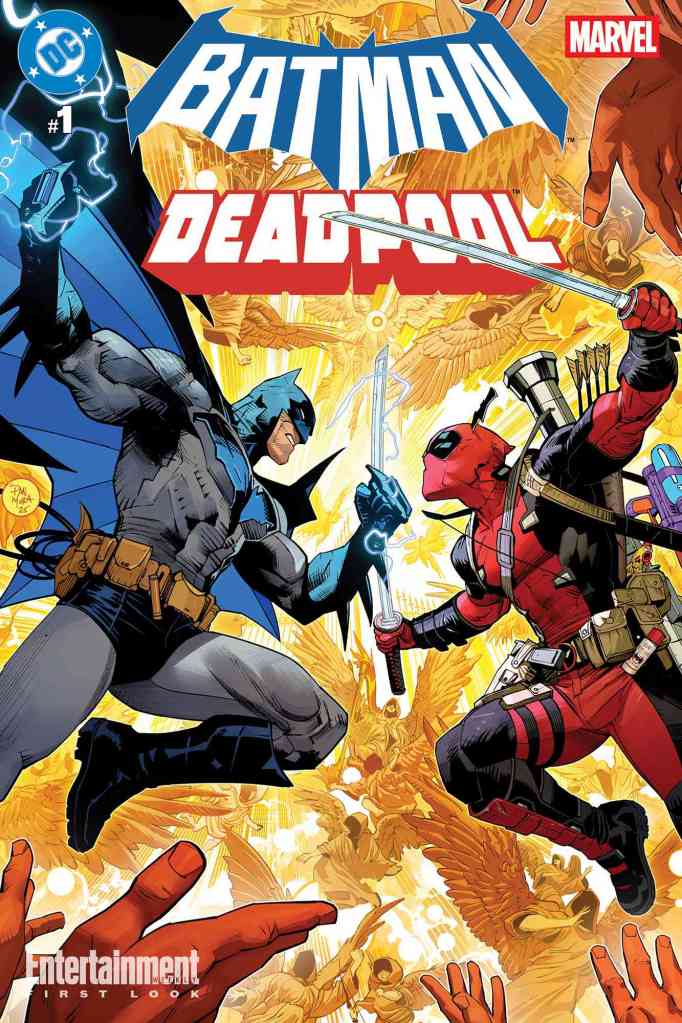


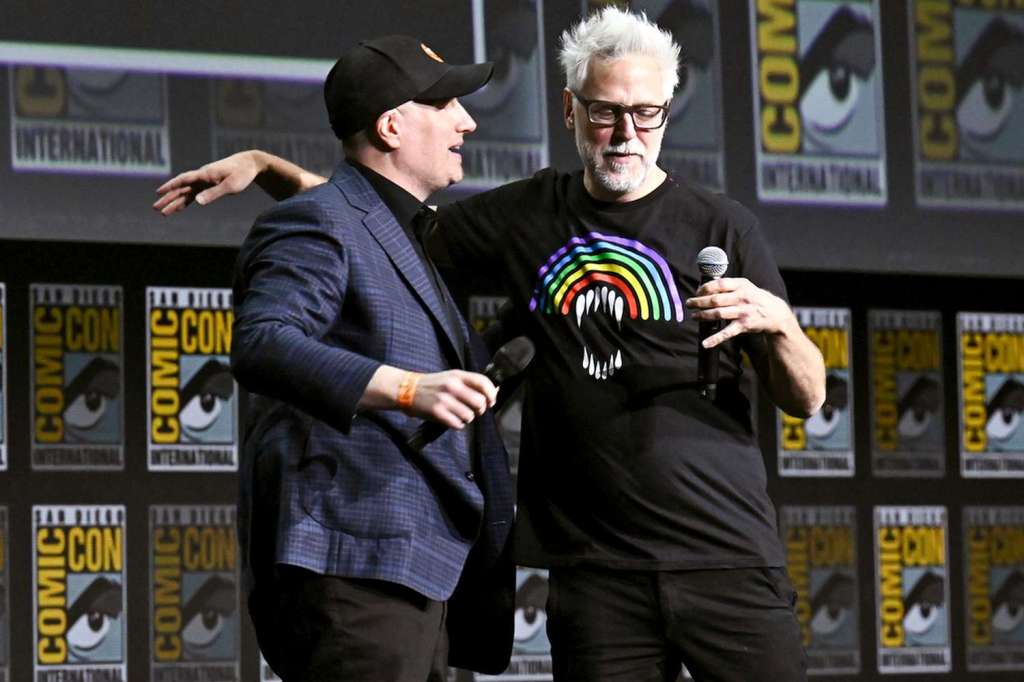


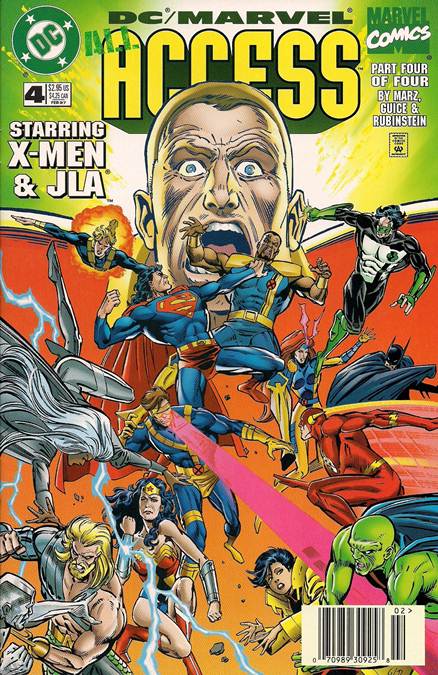


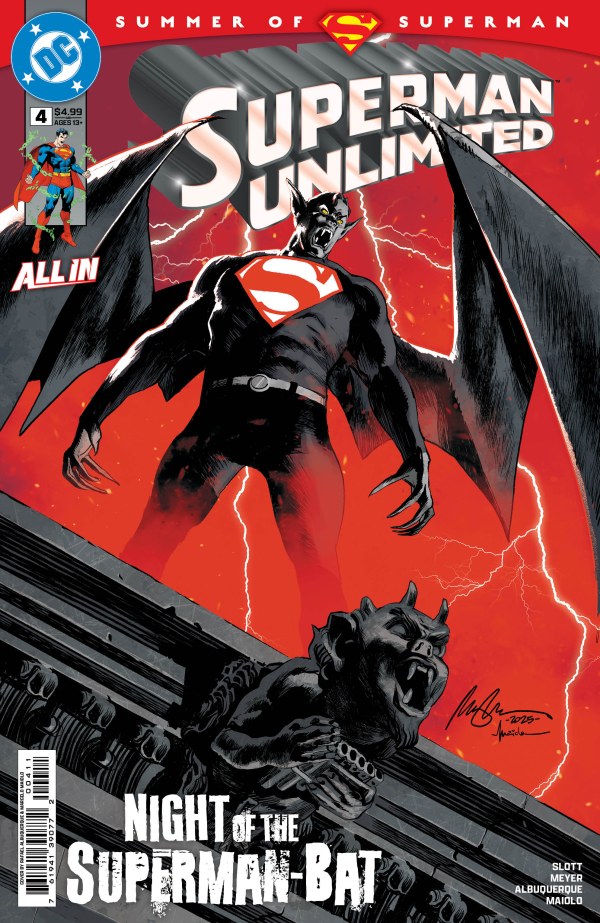
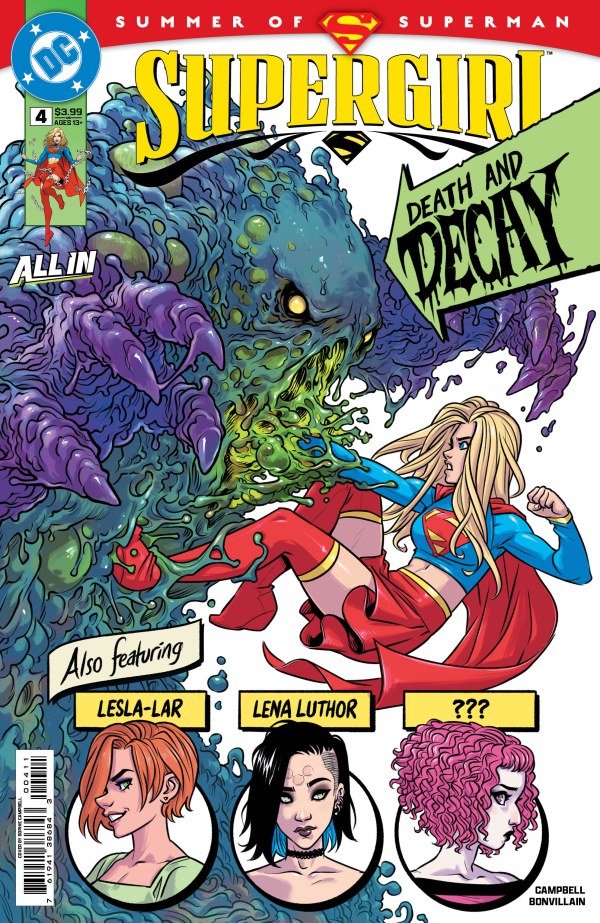


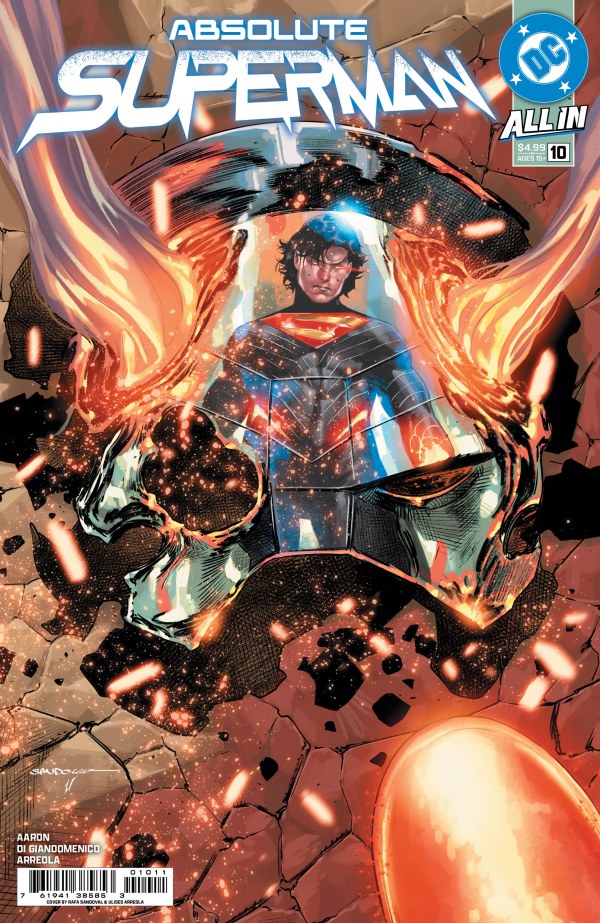


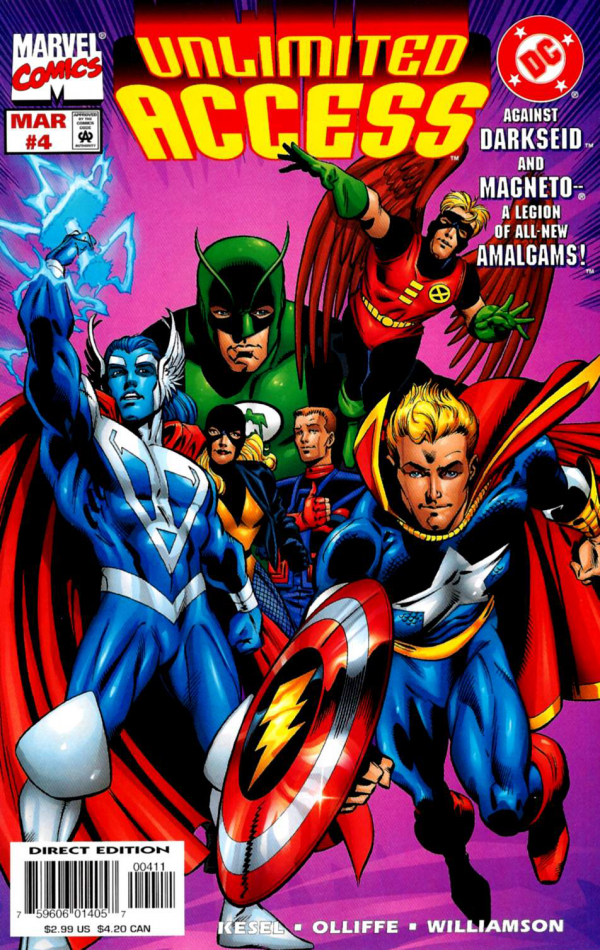


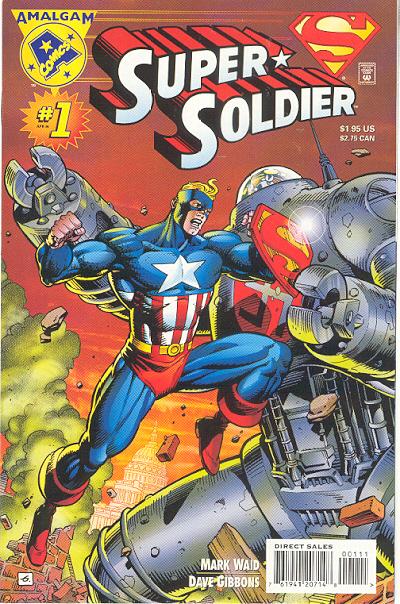


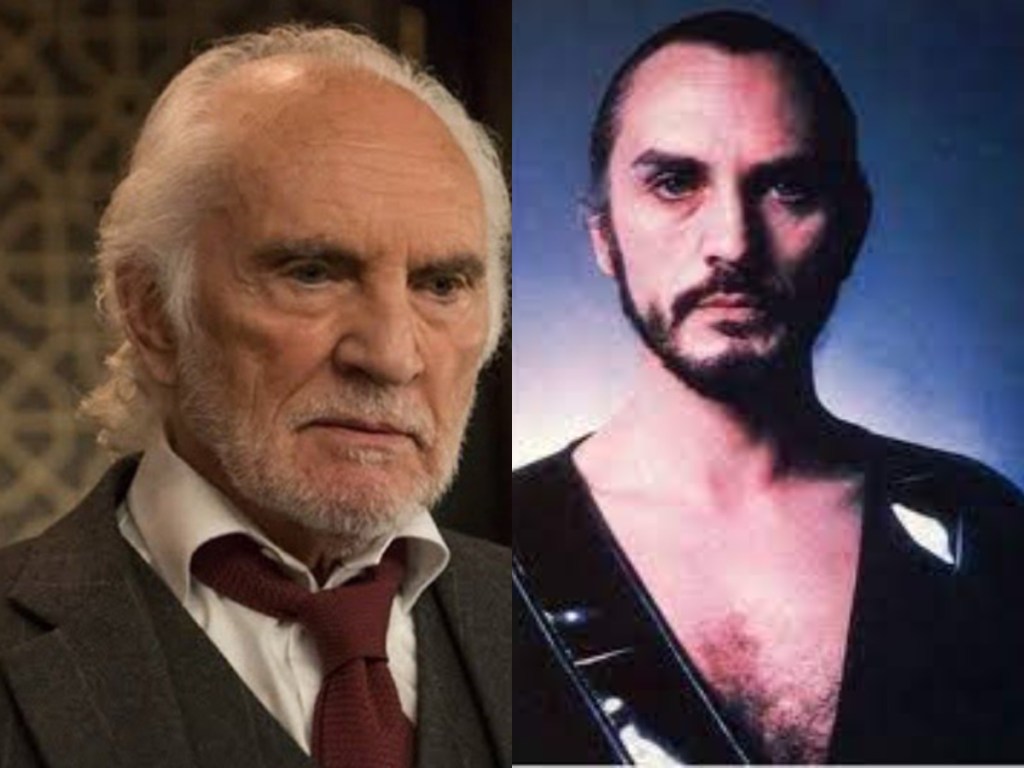
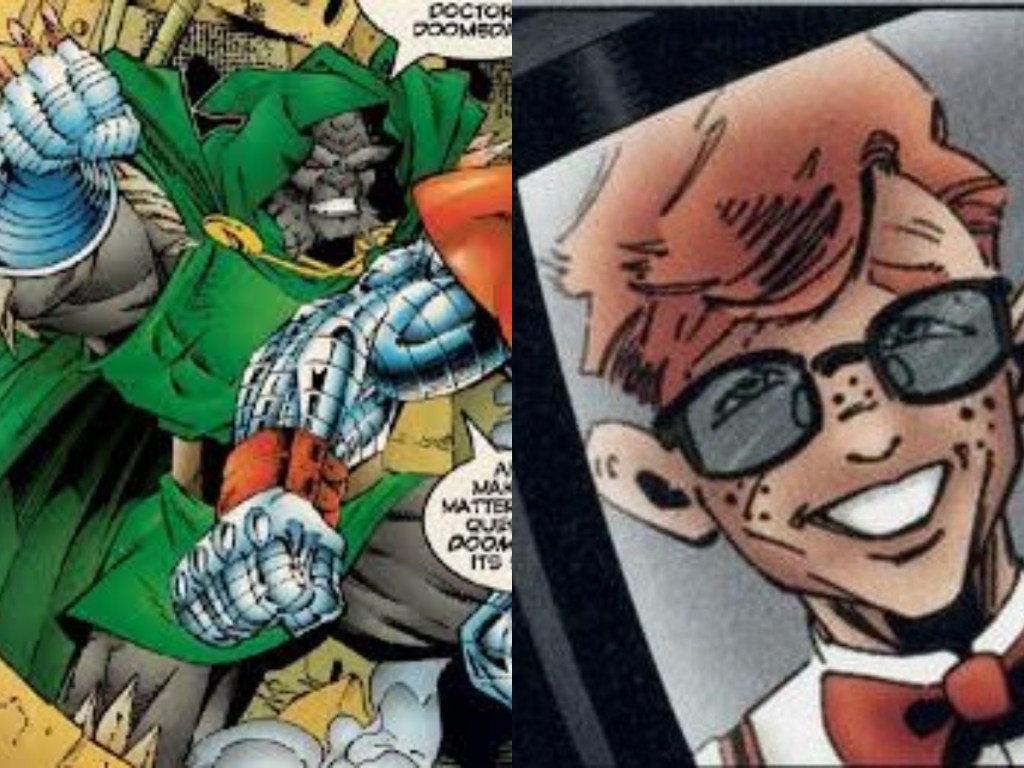


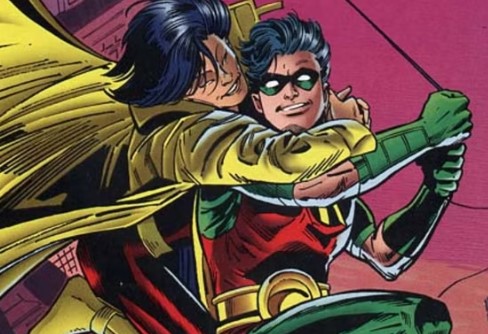

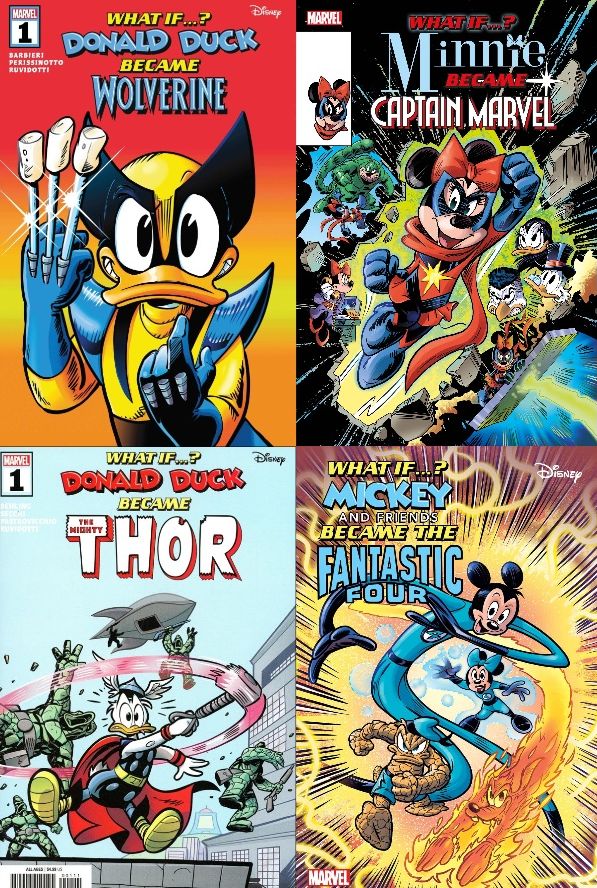
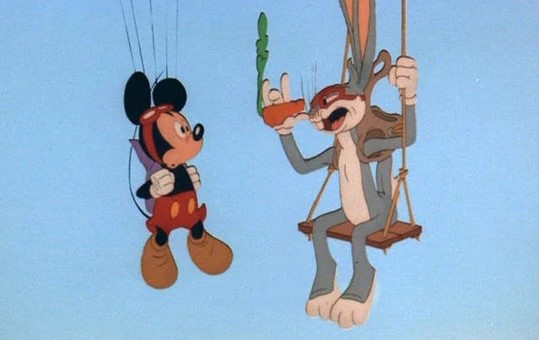


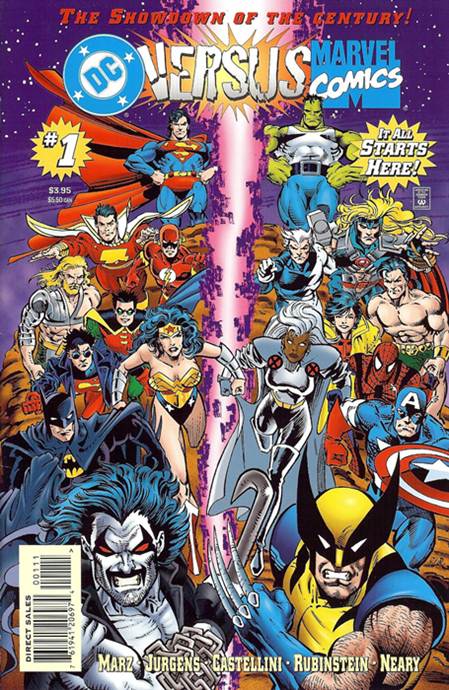
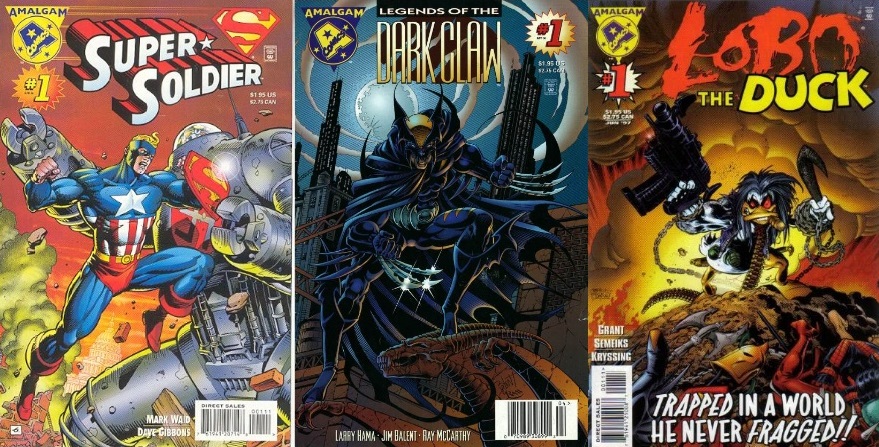

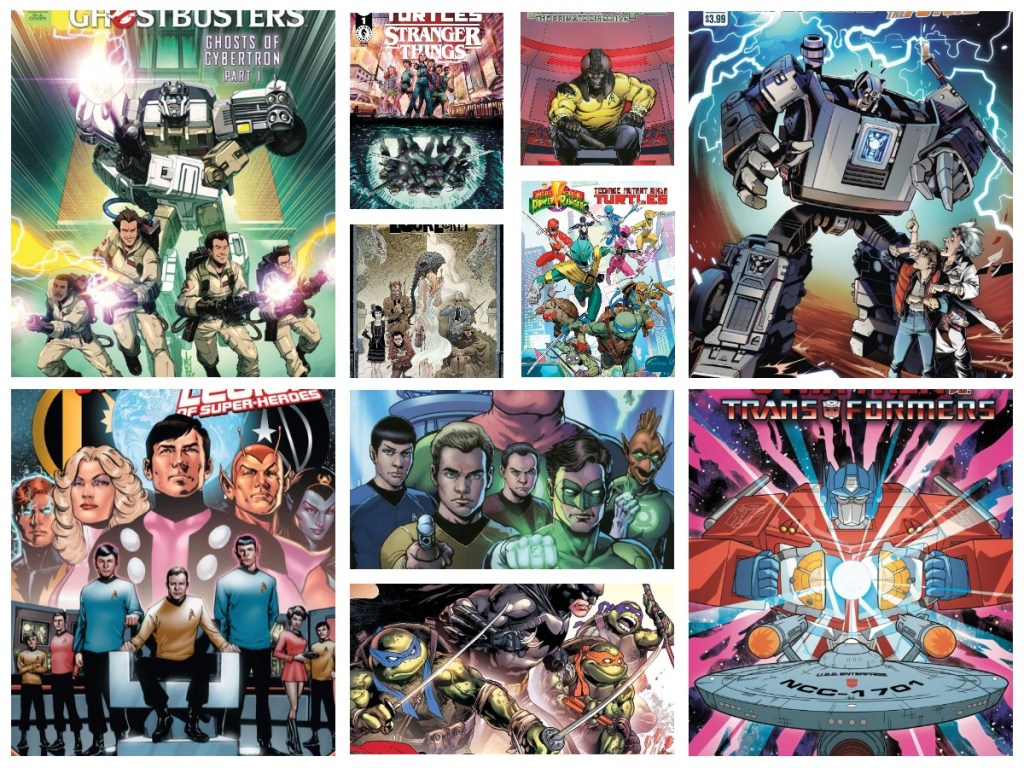

 Blake M. Petit