Geek Punditry #127: Revival Vs. Reboot

As you no doubt have heard by now, at least partially because I’ve mentioned it here two weeks in a row, Disney’s brought back its fantastic animated series Phineas and Ferb, and the first part of the new season dropped on Disney+ today. It may surprise you, then, to know that as of this writing, I haven’t watched it yet. You see, I have to wait for my wife to get home from work, because as any competent marriage therapist would tell you, holding off on watching coveted television programming until your spouse is available to watch it with you is a love language. 

But I don’t want to talk about Phineas and Ferb specifically today, I want to talk about what it represents: the TV Revival. That concept of bringing back old TV shows from the dead. It’s not a new idea, of course. The history of television is littered with shows that were cancelled and then came back after some time. Game shows like Jeopardy, Supermarket Sweep, and Let’s Make a Deal are all better remembered from their second incarnation than the original, for example. The 80s gave us resurrected versions of old sitcoms like Leave it to Beaver and The Munsters. And for a time, it was popular to continue a TV series by creating an animated version, as they did with the likes of Star Trek, Happy Days, or Gilligan’s Island. 

It’s like time stood still.

But in recent years, where studio executives are more hesitant than ever to take a chance on a new idea, it seems as though the revival has become a fundamental part of the television landscape. Is anybody going to want to watch a comedy about the goings-on at a municipal courthouse? Maybe not…unless we remind them that they already DID a few decades ago by making that show a new version of Night Court. Go ahead and look at any current network TV schedule (or spin through the offerings of a streaming service) and you’ll be astonished at just how much of the current episodic landscape is stuffed to the gills with shows that have relaunched older ones. I don’t object to revivals as a concept, but like anything else in the sphere of entertainment, I fear that we’ve reached a point of saturation where they’ve become a crutch rather than a tool.

That said, that doesn’t mean resurrecting an old show can’t be successful. But what, exactly, does it take to make a good one? The creators of Phineas and Ferb released a video to social media a few days ago, ramping up to the new season, where they very explicitly chanted “It’s not a reboot – it’s a REVIVAL!” It’s an important distinction, although I think there are a lot of people who don’t understand the difference. A reboot, to me, means starting a franchise over from scratch. You take the concepts, the tropes, the characters, but begin from square one, as though there had never been a previous iteration. Wednesday is a good example of this – there’s nothing that specifically ties it to the canon of any of the previous versions of the Addams Family – not the original TV series, the animated series, the 90s film series, the more recent animated films, the Broadway musical, or the original comic strips that the whole franchise was based on. It’s using the pieces of the older shows, but it is inherently its own thing. So yeah, reboots CAN be good.

In general, though, I prefer a revival – you’re not eliminating the previous canon. You’re not starting over. You’re just picking up where you left off. The original Phineas and Ferb took place across one epic summer. The new season – which they wisely promote as “Season Five” rather than “Season One” of a new series – starts one year later, at the beginning of the NEXT epic summer. Night Court returned to the same courtroom after an absence of many years, bringing back one returning character and one new character who was the child of an original. You get a revival more often when the old cast – or at least some of them – is still active and wants to return. We’ll be getting that with the new version of King of the Hill, coming to Hulu soon, and creator Bill Lawrence has announced a Scrubs revival where – although nobody has officially signed on yet – many original cast members have expressed interest in returning.

If this picture doesn’t make you vaguely uncomfortable, you’re too young.

Sometimes it can be difficult to tell whether a show is a revival or a reboot at first. In 2005, when the BBC brought back its defunct science fiction series Doctor Who, it wasn’t immediately clear if the old shows were in canon or not. And as part of the Doctor’s whole deal is that he occasionally regenerates into a new body, you couldn’t even make up your mind based on the fact that there were no returning cast members. Slowly, references to the old series started to appear, and eventually it was made explicit that this was a continuation – not only of the old series, but it even included the American co-produced TV movie that had tried (and failed) to revive the franchise a decade before. The show has been reinvented many times since then, and the DNA of the franchise makes it fairly easy to do so, but every version has thankfully been a revival rather than a reboot.

This straight-up wouldn’t work with a revival of The Andy Griffith Show.

The reason I prefer revivals is because a reboot has a tendency to dismiss the original. It takes place in a universe where the original didn’t happen and doesn’t matter, and that makes no sense to me. From the perspective of a studio, the only advantage a revival or reboot has over a brand-new property is the built-in audience, so why would you START by declaring that the thing the audience loved doesn’t exist anymore? Paul Feig and the cast of the 2016 Ghostbusters reboot will claim until their dying breath that their film failed at the box office because the fans were put off by the all-female cast, but any conversation with a true fan of the franchise will make it pretty clear the reason it was rejected was because fans wanted a revival. And when they got a true revival a few years later with Ghostbusters: Afterlife (with a main character that was a preteen girl), fans were delighted. 

That’s not to say that a reboot CAN’T be good. When J.J. Abrams was given the task of rebooting Star Trek for the big screen, he wisely took the track of making it an alternate universe. A villain traveled back in time and created an alternate reality in which these new films would take place. The original timeline still existed, and was still available when the TV revivals began a few years later. No matter what you think of the Abrams Star Trek films, most fans will agree that the alternate timeline was a good idea. Similarly J. Michael Straczynksi has been trying for years to get a reboot of his seminal science fiction series Babylon 5 off the ground. In 2023, he even gave us an animated film, Babylon 5: The Road Home, which ended in a way that – similar to the Star Trek example – opened up a different, alternate timeline in which the reboot could take place.

The classic sci-fi trope of “Eh, close enough.”

Of course, it’s easier to do that with a science fiction series than it would be a drama or a sitcom. If somebody wanted to do a reboot of The Golden Girls, for example, it’s unlikely that they would start with a CGI Betty White causing some sort of temporal rift that would take us to a different dimension where the girls all moved in together in 2025 rather than 1985. But that also begs the question: would you really WANT a reboot where they cast people other than Bea Arthur, Rue McClanahan, Estelle Getty, and Betty White anyway?

That’s another thing that revivals have over reboots: the continuity of keeping a cast that the fans love. One of the reasons a Babylon 5 reboot is more likely than a revival is because so many members of that cast, in the years since the show ended, have sadly passed away at a surprisingly young age. Over the course of that show’s five years, 17 actors were series regulars for at least one season. Seven of them are no longer with us, and several others have retired from acting altogether. It would be anathema to many of us to see Bruce Boxleitner’s John Sheridan return with somebody other than Mira Furlan playing his wife, Delenn. In a new timeline, though, with new actors in BOTH roles…that feels a little easier to swallow.

Some shows, however, simply should never be brought back, for many of these same reasons. Any ideas of a Friends revival, for example, went up in smoke with the sad death of Matthew Perry. Any revival, even a one-off movie – would necessitate either recasting Chandler Bing (which fans will tell you is basically impossible) or writing him out of the show by having him either die or leave his wife and children, which would be depressing as hell. As for a reboot…poll the fans. Ask if anybody would want a different cast, and I’m pretty sure you’ll hear a resounding NO.

It would be impossible to recreate this and a mistake to even try.

It’s less of a problem if the actor is still alive and has chosen not to return, or if they’ve fallen from grace in the years since the show’s airing and neither the studio nor the fans want them back. Tom Welling and Michael Rosenbaum, two of the stars of Smallville, occasionally make noise about wanting to bring back the show as an animated series or through animated movies. Many fans would welcome this, although it is unlikely that anyone will bat an eye if Chloe Sullivan is recast. (I’m not gonna get into it – if you don’t know why this would be necessary, just Google it.) In a less problematic example, former child actor Erik Per Sullivan has retired from the business, so when a revival of Malcolm in the Middle was announced, nobody was really angry that they decided to recast his character of Dewey.  

In general, though, revivals are more interesting to me – I want to see a continuation of the original series. There was chatter for years about a reboot of Buffy the Vampire Slayer, but Sarah Michelle Gellar wasn’t interested. Therefore, I wasn’t interested. Then they announced that they’d landed on a pitch that Gellar IS interested in, a pitch in which she is mentoring a new character entirely rather than trying to have somebody else play Buffy Summers… well, at this point, I’m willing to listen.

(There’s an irony here in that Gellar’s series was, in fact, a reboot of a mediocre movie starring Kristy Swanson as Buffy. But again, it just goes to prove to you that reboots CAN work sometimes.)
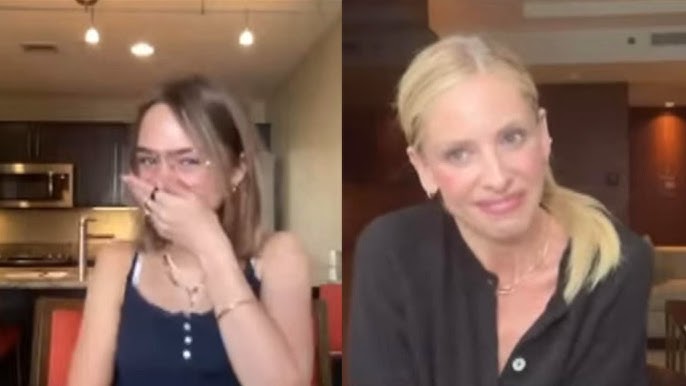
There’s an adorable video of when Gellar called Ryan Kiera Armstrong and told her that she got the part, because REAL slayers go by three names.

For some shows, the question of reboot vs revival is academic, of course. It doesn’t matter for nonscripted series like game shows, or shows that dramatize real events such as Unsolved Mysteries. You may miss Robert Stack, but that doesn’t mean the show can’t be made without him. Similarly, anthology series like The Twilight Zone are by their very nature immune to this. That show has been brought back several times over the years, and as there was never a regular cast or set of characters to follow, it’s a non-issue as long as the show has the flavor of the original – in this case, that of a sci-fi show with horror elements and, usually, some sort of twist ending. 

The biggest problem comes when a resurrected series – whether it’s a reboot or revival – lacks that taste of the original. Every so often you’ll hear about a new version of a show where they proudly announce that none of the current creators are fans of the original. This is a position so bafflingly stupid that I’m surprised it’s not mandated by federal law. While it’s true that some fans can be a bit too close to the property, a bit too reverent, if NOBODY involved in the creation of a show has any passion for it, the odds of creating something that satisfies the existing fan base drops so dramatically as to be almost nonexistent. 

“Well, we’re not making this show for the OLD fans,” some of these studio executives say. “We’re trying to appeal to NEW fans.”

Bullshit. If all that matters is acquiring a new audience, there’s no reason to bring back an old property. By bringing back a classic IP you are inherently announcing a desire to get the attention of an existing fan base, and by creating something you know will dissatisfy them, all you’re doing is trying to court controversy, as if that somehow inoculates you against the need to make a good show. Sometimes I think they’re COUNTING on that. They know their reboot is weak, so they rile up the fans against it, giving them a handy shield of claiming that these narrow-minded old fuddy-duddies just don’t want something new, thereby preventing them from having to admit that they made something that sucks.

Ultimately, I try to judge any show – revival, reboot, or brand-new idea – on its own merits. But when you’re reaching back to a classic series, you need to really think about what made that show successful in the first place before you even THINK about giving it a try.

Blake M. Petit is a writer, teacher, and dad from Ama, Louisiana. His most recent writing project is the superhero adventure series Other People’s Heroes: Little Stars, volume one of which is now available on Amazon. You can subscribe to his newsletter by clicking right here. He’s also started putting his LitReel videos on TikTok. Someday, he swears, somebody is gonna do a revival of Cop Rock, but they’re gonna do it RIGHT this time.

Geek Punditry #84: Playing Favorites With School (Part One)

It’s August, gang, and across this great fruited plain of ours, Americans are gearing up for that most turbulent of seasons: back to school. Many of us are already back in session, and the rest are getting ready to eke out those last bits of summertime fun before the doors fly open. Stores are stocked with pencils, students are picking out their first day outfits, parents are trying to get them to answer questions for their “Back to School” social media posts, and teachers are doing their best to keep the economy of Columbia solvent by buying all of the coffee. And what better way to commemorate this change of seasons than with another installment of everyone’s favorite Geek Punditry feature-within-a-feature, PLAYING FAVORITES? 

If you’re new, here’s how it works: a couple of weeks before a playing favorites column, I go out on social media and give my peeps a topic, such as SCHOOL, and ask them to suggest different categories for me to talk about. Then I select my favorite categories from your suggestions and tell you all what I think are some of the best of the best in each one of them. It’s a good time for everybody. So let’s see what kind of back to school shenanigans were on your minds this week, shall we?

Dawson Casting

Steven J. Rogers asked for some of my favorite examples of actors who are a little “long in the tooth” for their role as a high school student. The experts in this phenomenon (by which I mean the editors of TV Tropes) call it Dawson Casting, the practice of using actors in their 20s or even 30s to play high school students, named for the TV executive who invented the system, Herringbone Q. Casting.

No, seriously, it’s named for the show Dawson’s Creek, which is one of the most well-known examples of the trope, but it’s by no means the FIRST and certainly not the WORST. The trope goes back hundreds of years. Even Shakespeare is likely to have indulged in it – Hamlet, for instance, is supposed to be a college student, but there are lines in the fifth act that indicate that he used to get piggyback rides from his father’s court jester, who has explicitly been dead and buried for 23 years. Unless ol’ Yorick was playing games with Hamlet as a zygote, the math don’t math. 

There are two ways to look at this question: am I trying to figure out who did it BEST – as in, which older actors were most convincing as teens? Or am I trying to figure out who did it in the most ENTERTAINING fashion, as in making me burst out laughing when a guy who could be doing commercials for Metamucil saunters into homeroom? I’ll answer both.

Most of these kiddos are older than they look. Especially the one in the glasses.

As far as who was the most convincing, I think the crown has to go to the TV version of Buffy the Vampire Slayer. When that show launched in 1997, Sarah Michelle Gellar was 20 playing a 15-year-old – and to be fair, that’s a much smaller gap than many Dawsons have had to contend with over the years. But she was the YOUNGEST member of the main cast. Alyson Hannigan was 23 and Nicolas Brendan 26, and all of them were pretty convincing as teenagers. The only one who you couldn’t really buy was Charisma Carpenter (27 at the time). And while you aren’t really shocked to hear that these actors were in their 20s, it’s not nearly as blatant as some of the more hilarious examples of this trope. 

In general, the shows that get away with this the best are the ones that don’t try to get away with as much. The high school students in Cobra Kai were mostly in their early 20s when the show began, and not noticeably too old. On Smallville, I don’t think that Tom Welling was really successful at convincing anybody that he was 14 years old in season one (the actor was 24 at the time), but the rest of the cast was mostly in their early 20s and far more convincing. I suppose the trick with pulling a Dawson is to not press your luck.

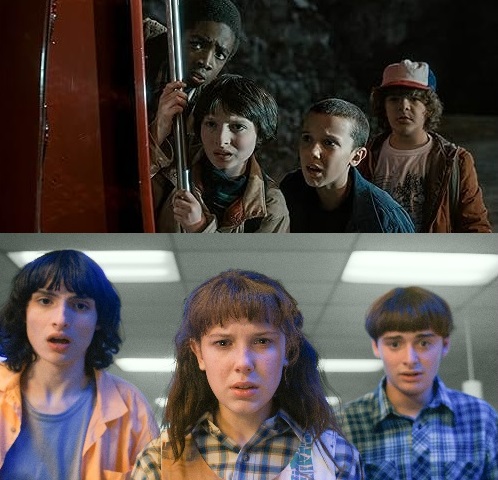
You know who DID press their luck? Stranger Things. It wasn’t a problem in the first couple of seasons – with the five main kids played by actual…y’know…KIDS. And even the teenagers were pretty convincing: Joe Keery (Steve) was 24 playing 17, Natalia Dyer (Nancy) was 21 playing 16, Charlie Heaton (Jonathan) was 22 playing 16, and all of them were believable as high school students. But the long gaps between seasons were starting to strain credulity even in season four, and Keery is going to be 32 playing 19 or 20 in the show’s upcoming final season. He may be able to pull it off, but the likes of Gaten Matarazzo (Dustin) and Finn Wolfhard (Mike) playing 15 at the age of 22 are going to be a harder sell, especially since we’re all so familiar with what they looked like AS KIDS. 

No really, it’s just two and a half years later.

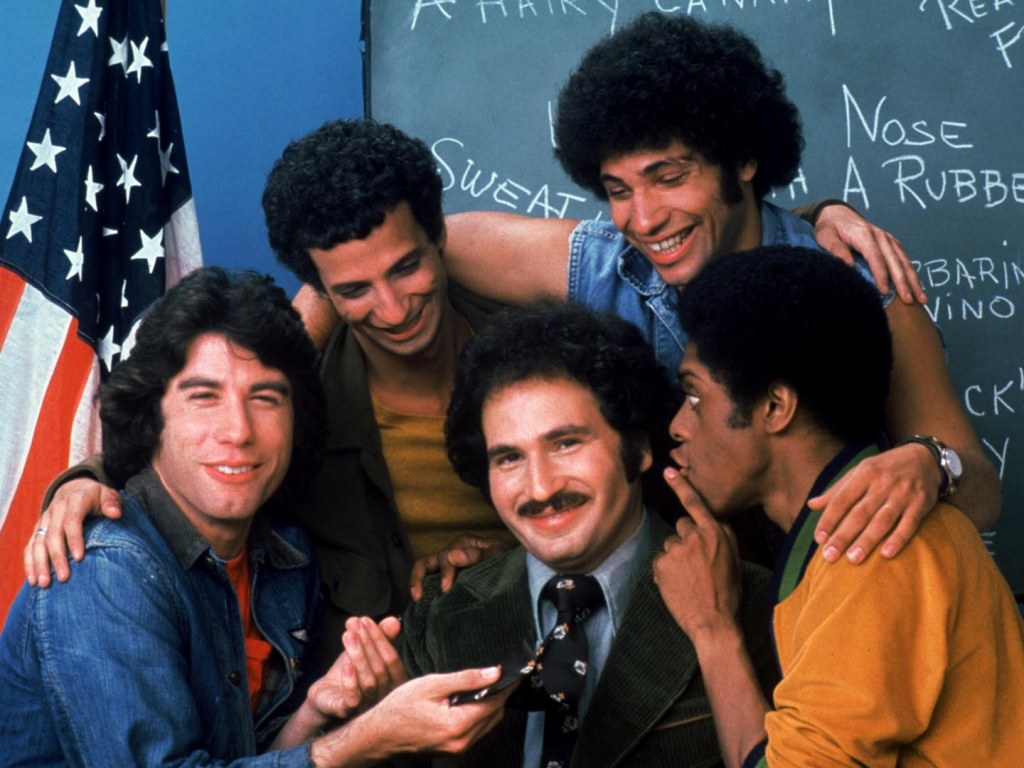
But I don’t think any show has ever been as hilariously Dawsoned as the 70s sitcom Welcome Back, Kotter. When the show began in 1975, you had high school students played by John Travolta (then 21), Lawrence Hilton-Jacobs (23), Robert Hegyes (24) and Ron Palillo (26) and frankly, I would have guessed older for each of them. While they were around the same ages as many of the other “teenage” actors we’ve already discussed, they were nowhere near as successful at hiding their age. Alyson Hannigan could pass as a high school student, whereas Ron Palillo looked more like somebody’s podiatrist. Gabe Kaplan was once quoted as saying that the reason the show’s ratings collapsed after three seasons is that the cast was getting too old to convincingly play teenagers, which made me ask the obvious question: at what point DID he think they were convincing? 

“Signed, Epstein’s chiropractor.”

School Sitcoms

Rachel Ricks asked for some of my favorite school sitcoms. This is an interesting subject for me. Like so many of us, I grew up watching shows like Saved By The Bell, and I loved it. And while I never really thought that show was a documentary on the lives of high school students (I must have tried that “Time Out” thing a hundred times before I got hit by that marching snare drummer and decided to call it quits), I at least thought that it would get the SPIRIT of being high school right.

Damn, was that off. It’s almost hard to watch that show now, especially as a teacher myself, not only because of how inaccurate that show is in regards to how a school actually works, but because it casts virtually every adult as a total blithering idiot. Seriously, go back and watch that show sometime – it’s a miracle Mr. Belding can even tie his shoes. 

New drinking game: take a shot every time someone does something that should have gotten a teacher fired.

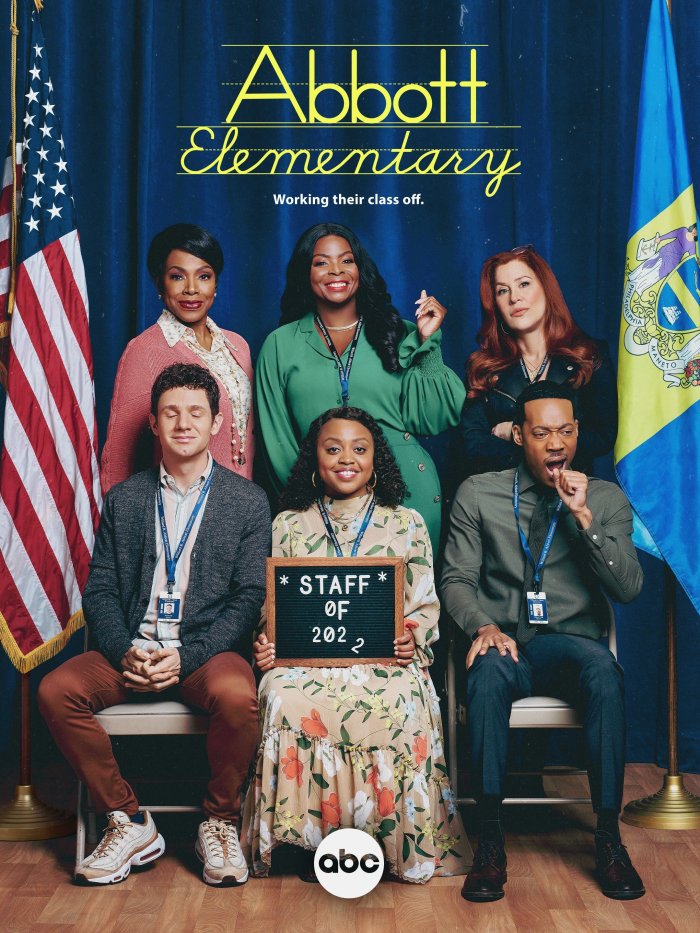
So when it comes to “school sitcoms,’ showing actual respect for teachers is a high priority for me, and that’s why I can’t stop talking about Abbott Elementary. It’s the rare school show that makes the teachers the stars rather than the students AND treats their characters with respect AND does a pretty accurate job of showing what school life is like. Granted, the teachers on that show have a bit more free time away from their students than a real elementary school teacher ever would, but I’m willing to allow that for the sake of comedy. What’s more, the characters all have real depth and charm, and most of them are very good at what they do. Plus the show deals with real issues such as government funding, parental involvement, and other issues that teachers fight against every single day, but does it in a way that’s entertaining. I can’t say enough good things about this show.

This is honestly my favorite comedy on TV right now.

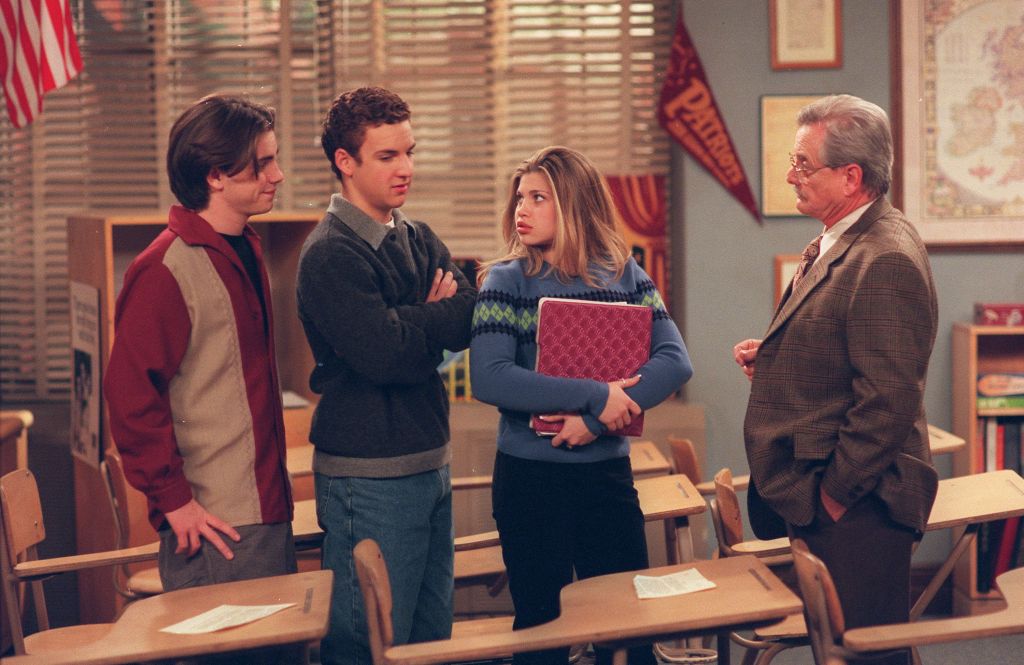
I mentioned how the adults in Saved By the Bell are all buffoons. This is true, but it’s hardly exclusive to Bayside High. If you look back on the annals of TV shows in a school setting, I would guess 90 percent of the teachers (and parents, for that matter) are portrayed as morons. And for that reason, I have to have a special place in my heart for Boy Meets World. The show traces Ben Savage’s character (Cory Matthews) from elementary school through college, and although there were goofy grownups on occasion, that was by no means the norm. In fact, the show gives us William Daniels as Mr. Feeny, probably the Gold Standard against which all TV teachers should be measured. He’s compassionate, wise, understanding, but firm when necessary. He’s almost as much a parent to Cory as he is a teacher. Is it really realistic that he taught the same group of kids from fifth grade until they’re going for their undergraduate degrees? Absolutely not. But it’s an acceptable break from reality in the name of keeping such a fantastic character front and center in the show.

What Bandit Heeler is to fathering, Mr. Feeny is to teachering.

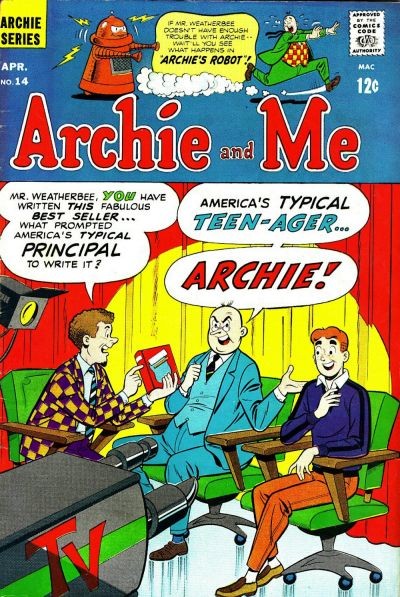
And although it’s not a television show, I love Archie Comics. I mean CLASSIC Archie Comics, their teenage sitcom romcom years, not the way they were adapted on Riverdale. I’m talking about the eight decades of comic strips about Archie Andrews struggling to choose between Betty and Veronica and going to Riverdale High. As a kid, I loved reading the stories (Jughead was kind of an icon for me) and as an adult I’ve come to appreciate the fact that the faculty of Riverdale High School – Miss Grundy, Professor Flutesnoot, Coach Clayton, Mr. Weatherbee – are usually portrayed as good, caring teachers who are doing their best for their students, even if they’re doing so while trying to avoid whatever catastrophe Archie is pulling along in his wake. 

To date, not a single one of my students has prompted me to write a bestseller. Get your act together, kids.

High School Superheroes

Lew Beitz wants to know who some of my favorite high school superheroes are. It’s an interesting question – in the early days of comic books, there weren’t a lot of teenage superheroes. The kids were relegated to the sidekick role for most of the Golden Age, and it wasn’t until the 60s – specifically with the introduction of Spider-Man – that having a teenager as the main star of a superhero series started to come into vogue. Spidey eventually went off to college and became an adult, but he remains the template for superheroes that are still in their high school years. Everyone from Firestorm to Invincible to Ms. Marvel (the current Kamala Khan version) has drawn inspiration from those early Stan Lee/Steve Ditko comics, and none of them are shy about it.

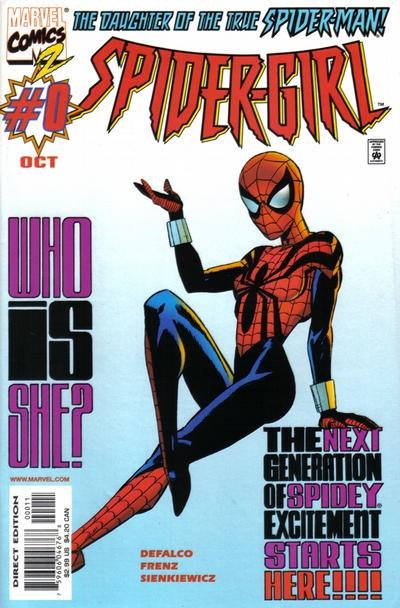
I’m going to try to limit my response to characters for whom school – or at least their classmates – are a major factor in their stories. Teen Titans, for example, isn’t going to work because the vast majority of those comics don’t include school as a setting at all, instead being the stories of kid superheroes who hang out independently of their own lives. So keeping school in mind, it’s hard to think of anybody who has done it better than Peter Parker’s DAUGHTER (in one corner of the multiverse, anyway), May Parker, the amazing Spider-Girl. Created by Tom DeFalco and Ron Frenz in 1997, this storyline comes from a world where Peter Parker aged more or less in “real time” from the 1960s and, at this point, had a teenage daughter who inherited his powers. Originally intended as a one-off character in an issue of What If?, “Mayday” Parker proved wildly popular and spun off into her own long-running series. And just like her dad, the supporting cast was largely full of her high school contemporaries – friends, rivals, potential love interests and so forth. Few comic books since those early days of Amazing Spider-Man had made such good use of the cast of teenagers, and I think it’s one of the reasons that this series remains a fan favorite, even though these days May herself only pops up once in a while during a “Spider-Verse” thing.

What I love about this cover is that it’s bold enough to ask “Who is she?” and dumb enough to answer the same question at the top.

And although Lew specified HIGH school, I have to give a special shout out to a series about ELEMENTARY school superheroes, Aaron Williams’ PS238. This comic book featured a cast of preteen titans, many of them the children of adult superheroes, who attended a special school deep beneath a “normal” elementary school where they were all ostensibly students. The book is really funny, and does a great job of picking apart many of the tropes and cliches of superhero comics. One student, for example, has the amusingly dull superhero code name “84,” because she is the 84th person registered with the standard FISS (flight, invulnerability, speed, and strength) powerset. Although the book IS very funny, it’s also a solid superhero comic book, creating a rich world with a fascinating history and a lot of secrets to uncover. The comic lasted only 51 issues, which wasn’t nearly long enough, although Williams has continued the adventures of the characters as a webcomic. 

One of the best comic books you’ve never read.

High School Horror

Finally my wife Erin – who absolutely understands her brand – wants me to talk about my favorite high school horror movies. And naturally, there is one that leaps right to the forefront of the mind, a chilling, terrifying tale that will ring out through the annals of academia from now until the end of time.

Project ALF.

Highly educational.

Actually, this might not be as easy as it sounds. Sure, there’s no shortage of horror movies about TEENAGERS, but how many of them actually have SCHOOL as a dominant setting? Friday the 13th, of course, is set at a summer camp. Some of the other stalwarts of the slasher genre like Halloween, A Nightmare on Elm Street, and Scream, may incorporate a school into the story (especially in the earlier installments), but the school is largely incidental. If the characters weren’t teenagers, you could have them all going to work and not much else would need to be changed.

So for horror that’s actually ABOUT a school, I’m going to give a shout out to a movie that I really think is underrated – Robert Rodriguez’s sci-fi/horror movie The Faculty. In what is essentially an updated version of Invasion of the Body Snatchers, Frodo Baggins and a group of high school students start to see signs that the faculty of their high school have become overcome by parasitic alien invaders, conquerors from beyond the stars who are coming to take over the Earth. Of course, it’s only this band of high school misfits that have a hope of stopping them. The Faculty came out in 1998, riding a wave of post-Scream teenage horror movies, and it somewhat got lost in the mix. But it’s a good movie, one that defies the surge of slasher knockoffs that it was swimming amongst, and has its own identity that’s pretty darn entertaining.

And this time it didn’t take Elijah Wood twelve hours of movie time to save the world.

Carrie, of course, is another classic of this particular subgenre. The movie is based on Stephen King’s first published novel, so the story of Carrie White really is what made his name in two different mediums. Sissy Spacek is Carrie – a teenage girl who has lived a sheltered life with a brutal, unforgiving fundamentalist mother. A rather late onset of physical maturation brings with it a telekinetic power of great destructive potential, and when her crueler classmates push Carrie too far, the blood flows. It’s a great movie, although I’ve always felt like Carrie was less a villain than a victim – an innocent who is beaten and berated until she actually breaks, and when someone with her kind of powers break, the consequences will be devastating. 

Finally, as someone who enjoys a good horror/comedy hybrid, I want to give a shout out to the 2020 film Freaky, directed by Christopher Landon and written by Landon and Michael Kennedy. This film is a slasher movie crossed with the body swap comedy of Freaky Friday. Millie Kessler, a bullied high school senior (Kathryn Newton), is attacked by a serial killer called the Blissfield Butcher (Vince Vaughan), who has gotten his hands on a cursed knife. The attack winds up swapping their minds, placing the Butcher’s consciousness in Millie’s body and vice versa (which is another example of a body swap comedy). A lot of the fun of this movie comes from watching Vaughn’s performance as a teenage girl, trying to get Millie’s friends on his side while Newton goes on a killing spree. It’s a really good movie, and helped Newton blow up to a point where she’s showing up in Marvel movies, while still doing indie horror like Lisa Frankenstein.

I’ve watched this trilogy seven times and it still doesn’t make a damned bit of sense.

That’s it for this week, guys. There will be more Playing Favorites next week, and if you’ve got some more suggestions, they’re welcome. In the meantime, a reminder for those parents who have yet to get their kids back-to-school supplies:

There is no excuse for Rose Art crayons. Ever. Just don’t. 

Blake M. Petit is a writer, teacher, and dad from Ama, Louisiana. His most recent writing project is the superhero adventure series Other People’s Heroes: Little Stars, volume one of which is now available on Amazon. You can subscribe to his newsletter by clicking right here. Have you ever tried to color an entire page with one of those stupid Rose Art sticks? You may as well be using a candle.