A little star falling to Earth…

I woke up to a strange world this morning. Strange to me at least. It’s a world that hasn’t existed since June of 2021. It’s a world where I did not get up and start thinking about what was going to happen next in Other People’s Heroes: Little Stars.

I guess I should back up a little bit. Several years ago, I had an idea. In and of itself, there is nothing special or unusual about this. This is what people who want to use AI to write or make art will never understand. This is what you simply can’t explain to someone who finds out you’re a writer and says, “Oh yeah? I got an idea. How about I tell it to you and you write it and we’ll split a bazillion dollars?” It doesn’t work that way. The ideas are the easy part. It’s doing something with them that counts.

And the period in which this idea came to me was, frankly, the most fallow period of my life in terms of productivity. For reasons I have gone into multiple times and don’t feel like rehashing now, I had an extended period where nothing was working, from a writing standpoint. Even in that barren era, the ideas were there. I had dozens of them that I started working on and simply abandoned because I couldn’t find any traction. Many of them clung to the themes of parents and their children – sometimes from the parents’ perspective, sometimes from that of the child, sometimes from someone in the middle generation dealing with both at the same time. I liked a lot of the ideas. It was the doing something at which I was failing.

Then an idea came to me for a new story in my Siegel City series. This one would not feature Copycat or any of the previous heroes as main characters (although Copycat would grow to more prominence in the story than I originally intended, it is still not HIS story) but a whole new generation of young heroes…plus one young woman who was desperately trying NOT to be a hero. The trouble with this particular idea was that…well…the Siegel City yarns were all novels and short stories, but this was neither. This was a longer tale, something that would be comprised of multiple mini story arcs that would build together into a larger tapestry before finally colliding in a grand finale. It was less like a novel and more like seasons of a television series or a longform comic book. I would have loved to turn it into a comic book, honestly. That’s my most fervent dream.. I even wrote most of the first issue for such an enterprise. But then it died off, as I am largely a one-man operation. It is possible, if not profitable, to write and publish novels and short stories on your own. But it is far more difficult to do so with comic books. I don’t have a publisher and I can’t draw anything so much as a stick figure, and even those look hideously malformed, so producing a comic book as a solo endeavor was out of the question. (Whenever I tell people this, someone inevitably points out how many friends I have who ARE professional comic book artists, and I reply that yes, they are PROFESSIONALS, and as such deserve to be paid for their work, which isn’t really possible for a guy on a public school teacher’s salary.) 

And so I pushed the story aside, thinking it would join a dozen others in this fallow period as a “nice idea, but didn’t go anywhere.”

In spring of 2021, though, the evil empire called Amazon actually kind of saved me. Amazon was launching a new platform called Kindle Vella, in which writers could serialize stories a chapter (or “episode,” as they called it) at a time. That…actually sounded pretty good. I would have the ability to do a longform story without having to pace it like a novel. I could do my arcs. I could take breaks in between, if necessary. And the chapters, as a constraint of the platform, could be no longer than 5000 words. Even in this awful, rudderless time, I thought, I could do 5000 words a week.

And so I did. In June of 2021, I dropped the first three episodes of what had become Other People’s Heroes: Little Stars. It was the story of Andeana Vargas, a high school senior whose mother, Carmelita, was secretly the world-famous and universally-beloved superhero called Shooting Star. Everyone who knew her mom’s secret also knew Andi, and expected her to grow up to be a hero herself, even though Andi had no intention of doing so. Then, at the end of that third chapter (this was important, because on Vella the first three chapters are free, so ya gotta have a hook), a video is leaked to the press that shows Andi’s mother removing her mask and revealing her true name to the world. Where did the video come from? Who made it? And what were they going to do now that their greatest secret was no secret at all?

This past Sunday afternoon, while the Detroit Lions were winning their way to their first NFC Championship game in three decades, I was doing something that was, frankly, much more remarkable: I finished writing Little Stars. The final two installments will both drop on Wednesday, because the final episode isn’t really a chapter in and of itself but more of an epilogue, and I didn’t think it would be fair to make people wait a week for it after the climax of the story. When I began, I thought the story would take maybe a year to get out of me. Of course, when I started writing the original Other People’s Heroes, I thought it would be a short story, too.

Shows what I know.

Two and a half years of my creative life went into this story, and while the journey isn’t quite over for me (more on that in a minute), I think this is a milestone worth sitting back and appreciating. I never thought it would take this long. I never thought it would be this long. But the final word count for all 119 episodes is a little over 400,000 words. That’s more than most people read in two and a half years, let alone write. For you non-writers who may be asking how many pages that is, it doesn’t matter. Page count is a little useless for a writer. It can change from one edition to the next, change because of page size or font size, and it’s impossible to keep track that way. It’s the number of words that matter to us, because word count is constant unless you revise. For comparison, for my own edification, I looked up the word counts of some of the most famous doorstoppers of literary history.

WAR AND PEACE: 587,287 
LORD OF THE RINGS (All three volumes combined): 579,459
LES MISERABLES: 545,925 
THE STAND (Uncut): 467,812
GONE WITH THE WIND: 418,053 
OTHER PEOPLE’S HEROES: LITTLE STARS: 409,206

I didn’t set out to write my Lord of the Rings, and of course I have no intention of comparing myself to Professor Tolkien (Little Stars, for instance, has considerably less food blogging), but just in terms of how much crap we’ve dumped on the page, I’ve actually chiseled out a spot among the giants here. And I feel like I’ve come out revitalized. I’ve done several short stories in the time since I started Little Stars. I started my weekly Geek Punditry columns right here. I feel like I can create again, and the memory of that time in which I couldn’t chases me like a wild bear I need to escape. I don’t want to go there again.

So the question is…what now?

Well, first I drop the end of the story on Wednesday, and I really hope you’ll all be there for it. This is something that clearly means a lot to me, and I hope I stick the landing. But after that, maybe a little break, and then the revision work will begin for the next iteration of Little Stars.

The thing is, guys, as grateful as I am that the Kindle Vella platform exists and allowed me to crawl out of that nonproductive pit of despair I was trapped in, it didn’t work out that well. Amazon was trying to capture the periodical audience that enjoys apps like Wattpad, but I don’t think it’s carried over like they hoped. Part of that is my own pitiful efforts at self-promotion, of course. I am the worst person on the planet in terms of promoting myself because my paralytic imposter syndrome makes me feel like a snake oil salesman if I try to tell anybody I’ve done something good. But another part is that I don’t think Amazon has done a good enough job selling people on the platform. The “token” system seems to confuse a lot of people, and for some inexplicable reason, when Vella launched it was only available on iOS devices – you couldn’t even read Amazon Kindle Vella stories on an Amazon Kindle. Thankfully they’ve fixed that problem and branched out to Kindle and Android, but the stories on Vella are STILL, last time I checked, unavailable outside of the United States. I didn’t know how many international readers I actually HAD until I started posting about Little Stars and got messages from people asking when it would be available in Australia or the UK. The answer to that, by the way, is, “Soon, I hope.”

So while I like the creative challenge of Vella, I don’t think I would do it again, at least not without some major changes to the platform. What does that mean for Little Stars? It means it’s time for me to revise and reformat. Even though the story wasn’t planned as novels, I’ve figured out what I think are the best places to break it down into three acts, three installments…a trilogy, in other words. I thought briefly about just putting out one ginormous mama-jama book with the entire thing in it, but some wise friends convinced me that the trilogy route was much better. Alexis Braud, if you’re reading this, thank you for pointing out that a 400,000 word book just doesn’t fit comfortably in a purse or bookbag. (There is, however, still just enough of a narcissist in me that I may do a custom printing of that mama-jama edition just so I can put it on my own bookshelf and admire the chunkiness of it all.) 

With this new version, there will have to be some changes to make it fit. So after a little bit of a break I’m going to start revising. I don’t intend to make any massive changes to the story itself, but I will probably tweak the details, fix any continuity snarls that I can find, tighten the story up, and hopefully improve the characters and themes that evolved as I went along. When it’s over, while the Vella version will remain, the novel version will be the “official” history of Andeana Vargas as far as Siegel City canon is concerned, and in any discrepancies between the two, the books will be triumphant.

And then?

I have other ideas, of course. I think I made it abundantly clear that ideas are easy. And two of them are fighting it out right now, both of which are stories I worked on in the past and can’t quite get rid of, which I think is a good sign that they deserve revisiting. One of them is a science fiction epic, a story about two sisters trying to hunt down an inheritance left for them on a distant planet known as Earth. This would technically be a YA novel (or series, if I’m being honest), although I currently have no plans for a love triangle involving a bland, Mary Sue protagonist and a pair of bland, interchangeable heartthrobs. No, this is a story about sisters. And their parents, to some small degree, because I really can’t escape that. But mostly the sisters.

The other story I’m considering would bring me back to Siegel City right away. It’s the story of the oft-discussed but mysteriously missing STAT. I mentioned a few weeks ago that I based STAT on an old City of Heroes character of mine and that I had a whole backstory of his that I wanted to put in a book some day. This is the book I’m talking about. I even found myself working in more frequent references to STAT and dropping some Easter Eggs in the final act of Little Stars, little story seeds that would grow in this hypothetical novel. And yes, once again, this would be a story about parents and children. It’s just THERE.

Or maybe I’ll wake up tomorrow with a totally different idea that I can’t help but get started on. I really don’t know.

But the gap between my last novel, The Pyrite War, and the beginning of Little Stars was nine years. Sure, in that time I kept producing my Christmas stories, a couple of novellas, and my humor book Everything You Need to Know to Survive English Class, but the narrative gap was simply too long. I don’t want that to ever happen again.

So on Wednesday, please enjoy the grand finale of Other People’s Heroes: Little Stars. And then keep coming back to see what I’m working on next. Hopefully you’ll be as surprised by it as I will.

One last note – a special and very sincere thank you to Lew Beitz. Lew and I are moderators on the Comic Book Collecting page on Facebook, and over the last couple of years he’s become not only a friend, but the best darn Beta reader I could ask for. And he may be the only person on Earth who loves Keriyon Hall more than I do. That’s saying something. 

Geek Punditry #55: Terry, the Turtle, and a World Full of Magic

Stephen King’s Dark Tower series, as I’ve mentioned many times, is one of my favorite stories ever written. King is often thought of as a horror novelist, and he is, but The Dark Tower is more of a fantasy series, encompassing multiple worlds, wizards, magic artifacts, and a cowboy. And it was because of my love for his series that I was interested in Robert Silverberg’s Legends anthology when it was released way back in 1998. In this anthology, several popular writers were invited to contribute a novella set in their most famous fantasy universe. King contributed The Little Sisters of Eluria, a prequel that told a story about Roland of Gilead in the early years of his quest. There were other writers involved, of course, some I was familiar with and others I wasn’t. I loved Orson Scott Card’s sci-fi novel Ender’s Game, but I hadn’t read any of his Tales of Alvin Maker before. I’d heard of The Wheel of Time, but I’d never touched on Robert Jordan. And while the name George R.R. Martin was totally unfamiliar to me, I rather liked The Hedge Knight, the prequel to something called Game of Thrones, and I thought I would have to check it out some time.

I can’t help but think that, were this published today, Raymond E. Feist would be bumped off the cover to make room for that Martin fella.

But of the new (to me) writers that I discovered via the Legends anthology, none resonated so clearly as the unique and inimitable voice of Terry Pratchett. In The Sea and Little Fishes, a group of witches tried to dissuade a force of nature named Granny Weatherwax from participating in their annual “witch trials” because everyone was tired of losing to her. The concept was far sillier than the other books in the anthology. As it turned out, it was more memorable too. 

The Sea and Little Fishes, I learned, belonged to Pratchett’s Discworld series, and over the next few years, I would find myself drawn to the Disc time and time again. The Discworld is exactly what it sounds like: a planet that’s actually flat, carried through the endless expanse of space upon the backs of four enormous elephants, which in turn stand upon the back of a gargantuan turtle, the Great A’Tuin, that drifts through the cosmos. On Discworld, magic is so plentiful as to be almost a tangible element, and is far more dangerous because of that. The Discworld is what you get when you line up every fantasy universe, mythology, and religion in existence, break them with a hammer, and don’t pay attention to what you’re doing when you’re putting the pieces back together. It is an absolute delight.

This is the world as Kyrie Irving imagines it.

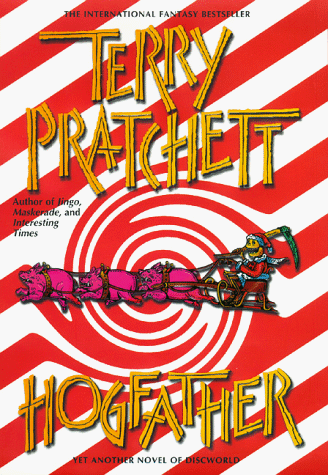
After reading the installment from Legends, Pratchett’s name stood out to me, and I kept it in mind the next time I went to the mall (kids, ask your parents) and rushed down to B. Dalton Bookseller (kids, ask your parents). When I went to the fantasy section, I was taken aback to realize that there were over a dozen Discworld novels, and I had no idea where to begin. Remember, this was 1998, and we didn’t all have a device in our pockets that we can use to access the full totality of human knowledge but instead use to watch stupid videos of morons doing a “spontaneous” dance routine in a grocery store. Unsure of where to start, I picked the book that looked most appealing. It was nearly Christmas at the time, the novel was called Hogfather, and the cover had red and white stripes and a guy in a sleigh. It was worth a shot.

HO. HO. HO.

I mentioned Hogfather here last month, calling the TV adaptation one of the best fantasy Christmas movies there is. What I had no way of knowing was that Hogfather was totally the wrong book to begin my Discworld journey. The story was about the Hogfather (Fantasy Santa Claus) getting murdered by a guy named Teatime and replaced by Death himself (HUH?), while Death’s granddaughter (DOUBLE HUH?) Susan (QUADRUPLE HUH?) tries to solve the mystery of what happened to the ol’ fat man. I would learn later that this was actually the twentieth book in the Discworld series and the fourth in which Death was one of the principal characters. It was insane. It was confusing. I had no idea what was going on.

And yet, I loved every page.

Terry Pratchett had a gift for words, a way of turning a phrase that no other writer in my experience can match. Hogfather, for instance, included the following exchange when Death tried to leave a small child a weapon as a present:

‘You can’t give her that!’ she screamed. ‘It’s not safe!’
IT’S A SWORD, said the Hogfather. THEY’RE NOT MEANT TO BE SAFE.
‘She’s a child!’ shouted Crumley.
IT’S EDUCATIONAL.
‘What if she cuts herself?’
THAT WILL BE AN IMPORTANT LESSON.

See? Genius.

Other bon mots that Pratchett provided us with over the years include “Multiple exclamation marks are a sure sign of a diseased mind,” “That just goes to show that you never know, although what it is we never know I suspect we’ll never know,” and “A good bookshop is just a genteel Black Hole that knows how to read.” The man painted with words the way Van Gogh used colors, and his paintings were no less elaborate. 

I learned, eventually, that while it was true that Hogfather was the wrong book to begin reading Discworld, it’s also true that EVERY book is the wrong book to begin reading Discworld. The entire universe – which expanded to a full 41 books by the time Pratchett died in 2015 – is an enormous, brilliant, glorious mess of time and space and trolls and vampires and witches and wizards and monsters and a set of luggage that runs behind its owner on hundreds of tiny little legs. There is absolutely no correct order to read these books in, and you’re just as well off throwing a dart in the fantasy section as you would be attempting to read the books in publication order.

This image is different every time you look at it.

When I first began to wade into the Discworld books, my immediate response was to compare them to the works of Douglas Adams, writer of the Hitchhiker’s Guide to the Galaxy series. It was a fair enough comparison – they were both British authors, they both used a sort of parody of a traditional genre universe as a setting for satire, and they seemed to have a lot of overlap in their senses of humor. It also didn’t hurt that Adams was the only other British humorist I was familiar with in those days, having devoured all of the Hitchhiker’s books time and again. In fact, in conversation it was not uncommon for me to describe Discworld as the fantasy equivalent of Hitchhiker’s Guide.

As I got older and read deeper into Pratchett’s catalog, though, that comparison felt less and less apt. The truth was – much as it would pain high school Blake to hear this – Pratchett’s work outpaces Adams in a lot of ways. And one of the biggest reasons for that, I believe, is that Pratchett branched out, whereas Adams did not. In the Hitchhiker’s series, Adams stuck pretty closely to the adventures of Arthur Dent and the assorted weirdos who came into his orbit. (The only Adams-penned Hitchhiker’s story I’m aware of in which Arthur is not the central character is the short story “Young Zaphod Plays it Safe,” although I’m sure someone will correct me if there are others.) And after a while, it became clear that Adams was getting kind of tired of it. The first two books in the series were essentially adaptations of Adams’s radio drama of the same name upon which the series was based. The third book – as I would learn many years later – was a reworking of one of his scripts for Doctor Who that had not been produced. Book four was pretty good, with a more personal story for Arthur that brought him to a kind, sweet conclusion, and then came a fifth book that undid Arthur’s happy ending in the same sense that an 18-wheeler barrelling down the highway will “undo” a tower of playing cards that someone inconveniently left out in the middle of the road. Adams was a cynical person, and a certain bitterness crept into that last book in a way that ended the series on an unsatisfying note. Even Adams himself wasn’t satisfied with it and was planning a sixth book when he passed away, which is really the only reason I accept Eoin Colfer’s follow-up, And Another Thing…, as series canon.

(This, by the way, will not happen to Pratchett. Upon his death his daughter – as per his request – took his hard drive full of his notes and unfinished stories and had it crushed by a steamroller to make sure no one else could continue his work. No, really. So that’s it for new Discworld stuff, at least until the far future when it comes face to face with our old pal Public Domain.)

Most writers only think about using one of these on the critics.

But back to Pratchett. Whereas Adams seemed to get bored with his creation, stagnating with Arthur Dent and company despite having all of time and space to play with, Pratchett realized by book three that he should take advantage of his entire sandbox. After two books about the wizard Rincewind, the third novel in the series, Equal Rites, was an adventure of Granny Weatherwax, she who would later turn up in the novella that introduced me to Pratchett in the first place. This was followed by Mort, the first story where Death was a main character, although he’d appeared in the others. Over the course of the 41 books, Pratchett developed at least seven different subsets of characters that he would follow from time to time, as well as devoting several novels to one-off characters and storylines. And while these various subsets could and did cross over and interact, there were so many of them that it would have been impossible to grow bored. Unlike the Hitchhiker’s series, there is no one single “main character” in the Discworld, and that’s all to the good. 

In fact, the only character that I think even appears in every novel is Death, and I’m not even 100 percent sure about that. You see, I haven’t read all the books yet. I’ve gotten through roughly half of them. It’s a common problem of mine – when I get into something I really like I try to read (or watch or whatever) everything that’s available, but it’s only a matter of time before I come across something ELSE I really like, and now I’ve got TWO series I’m trying to keep up with, and then I discover another author, and then there’s a new book in a series that I thought was over ten years ago, and before you know it, there’s so many things I haven’t read that I’m never going to finish before I go off to follow Pratchett to the land beyond the Disc. Regular book readers know exactly what I’m talking about, but in case anyone thinks I’m exaggerating, I actually keep a spreadsheet of what series and authors I am currently reading and what books I haven’t gotten to yet. At the moment I am alternating between going through all of the Discworld novels, all of Rick Riordan’s Percy Jackson universe, Scott Sigler’s Galactic Football League and assorted spinoffs, every official Oz novel, every UNofficial Oz novel, Orson Scott Card’s Enderverse, the Wild Card novels, the various series that connect to Isaac Asimov’s Foundation series, approximately 4000 Star Trek books, and the complete works of Stephen King. Fans of George R.R. Martin don’t realize how lucky they are. Sure, you may never finish the series, but that’s gonna be GEORGE’S fault, not because YOU were poor at managing your time. 

If I’ve got any shot at finishing my reading list this year, this is going to have to be June.

But Sir Terry (given the Order of the British Empire in 1998, the same year I discovered him, although admittedly, this was probably a coincidence) deserves all of the attention. He was a genius, he was an artist, and he’s probably the funniest British human being to never be a member of Monty Python. So it’s time I buckle down and finish my trip across the Disc.

The good news is, that just got a little bit easier. You may be familiar with Humblebundle, the online retailer that offers digital packages of books, games, and software at a massive markdown with some of the money earmarked for assorted charities. It’s a way to get a lot of content for a low price, and I’ve purchased many a selection of books and graphic novels there, which only exacerbates my problem of having entirely too many things to read and not nearly enough time to do it, although I maintain that as vices go, that one is far preferable to, say, methamphetamines. Humblebundle is currently offering a bundle of almost the entire Discworld series, $400 worth of books, for as low as $18 (although you have the option to pay less for fewer books or pay more to give more support). The money for this bundle is going towards Room to Read, a charity that promotes literacy amongst young children, and if you can name a better use for that money I’ll jump off the edge of the Disc. If you haven’t experienced the glory of Terry Pratchett before, here’s your chance to do so for pennies. And if you have, here’s a way to finish the journey, or start it all over again. But the bundle is only available until Feb. 1, so don’t get stuck like the water in the River Ankh. It’s a good cause, and it’s a great read – get to it.

Blake M. Petit is a writer, teacher, and dad from Ama, Louisiana. His current writing project is the superhero adventure series Other People’s Heroes: Little Stars, a new episode of which is available every Wednesday on Amazon’s Kindle Vella platform. He thinks maybe he’ll read Snuff next. Or maybe Unseen Academicals. Or maybe A Hat Full of Sky.Ugh, this is hard. 

Geek Punditry #36: On a Gridiron Far, Far Away

I haven’t listened to the radio in years. I know this is no longer a novel position. Most people in this digital age ignore the radio in favor of populating their own playlists on Spotify, Pandora, Amazon Music, Heimdall’s Jockstrap, or whatever app is en vogue at the moment. But even before the rise of such services, podcasts had long since become my entertainment of choice while driving. One such podcast I discovered years ago helped turn me on to “podiobooks” (audiobooks delivered in podcast form, in case you couldn’t decode the term), and that in turn directed me to the new pantheon of writers that were riding the wave that came at the time that medium was burgeoning: people like Mur Lafferty and J.C. Hutchins and, most pertinent to our discussion today, the Future Dark Overlord himself, Scott Sigler.

Clearly the creation of an evil genius.

So as not to bury the lede, the reason I’m writing about Sigler this week is because a new podcast series is launching that presents his most popular series of stories starting over from the beginning. So right now I want you to open your chosen podcasting app (yes, that includes Spotify) and subscribe to “Scott Sigler’s Galactic Football League Series.” Then, while the first three episodes are downloading, I’m going to tell you why this series is awesome and you should be giving Sigler your attention.

Sigler, as you could probably guess from the inclusion of the word “Galactic,” is a science fiction writer. He has developed a complex and fascinating universe with intriguing characters, wild and bizarre alien species, and a degree of worldbuilding that could make Tolkien and Rowling take notice. Sigler has laid out thousands of years of history (both before and after the present day) that he feeds his audience a little bit at a time. The individual novels or series stand on their own, but when read together you get a rich and textured science fiction tapestry that plays out over 2000 years.

Let’s start with the Galactic Football League stories, since that’s what the podcast is going to cover. The stories in the GFL era take place about 700 years in the future, in a universe where humanity has spread out to the stars, encountered several sentient species of alien, and bifurcated into many different worlds and governments. Football – American-style football, also known as “Gridiron” – has been adopted as a sort of de facto peacekeeping event in a galaxy in turmoil. Football, you see, is no longer played only by humans, but by the massive and powerful Ki, the swift and agile Sklorno, and the brutal Quyth, among others. By forcing these different races to work together on the field, conflicts between them have been mitigated, even as most of them are under the rule of an alien empire of small, batlike creatures that rule through sheer force of numbers. The story focuses on Quentin Barnes, a young quarterback raised in the xenophobic Purist Nation, who has to learn how to cooperate with these bizarre alien species if he wants to achieve his goal of winning a Galaxy Bowl. 

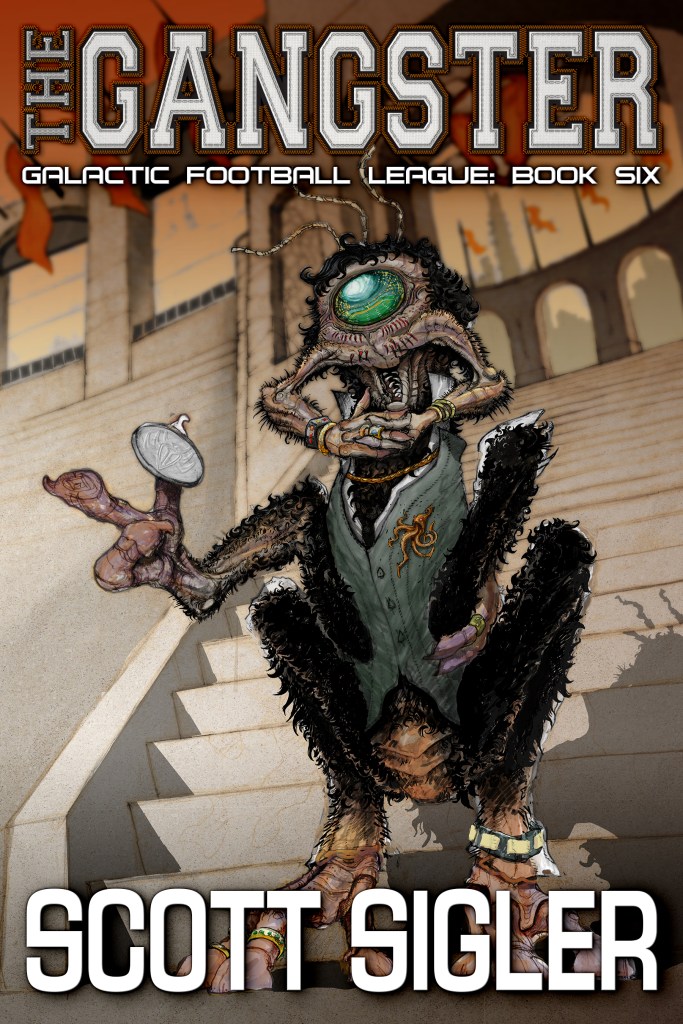
So right off the bat, the GFL series has aliens and sports, which are both a lot of fun. But that’s not all. In the time of the GFL, Gridiron Football has largely come under the control of massive organized crime syndicates, with teams owned by actual criminals, illegal substances smuggled on the team transport ships, and players doubling as strongarm enforcers for their leaders. That’s right: it’s also a gangster series. (In fact, that’s the title of the sixth book: The Gangster.) And as the story goes on, although football never leaves, it becomes increasingly clear that the story is about more than just football, that Quentin is more than just a quarterback, and that the stakes they’re really playing for are much, much higher than a championship ring. Sigler has developed an intricate and fully fleshed-out universe that is completely engrossing on multiple levels. 

One of the most impressive things about it, for me, is the degree of work he has put into crafting his various alien species. There are none of the “rubber forehead” aliens that we see in Star Trek or most TV and movie sci-fi franchises, a fact that’s made easier because these are novels and Sigler doesn’t have to worry about budgetary concerns. Every alien species in Sigler’s universe is imagined from the ground-up with their biology, life cycle, and culture carefully crafted, many of them in ways very unlike what we’re used to. The species that is most like humans, the Quyth, are really only like us in that they are bipedal and experience a similar emotional range. Unlike humans, the Quyth have a biological caste system that divides the species, which is covered in either fur or chitin depending on which caste they belong to. They also have a pair of dexterous pedipalp arms protruding under their head and their one massive eye, which changes color to indicate their mood. Quyth leaders gain their dominance by castrating their siblings while still in the womb. Quyth females are never seen by outsiders at all. This is the CLOSEST alien species to humanity in this universe, and it’s a species that in real life would be virtually unthinkable, except perhaps in southern California.  

See? Just like us.

But I digress – the GFL is probably Sigler’s most popular work amongst his fans. It’s certainly the era that is discussed the most and for which we are most eager to see new installments. But it’s not the ONLY era. 200 years before the GFL comes The Crypt, a military drama about a crew assigned to a ship with the reputation of being a deathtrap for anybody who is put on the duty roster – usually as a sentence for some crime. Then there are the modern stories, such as Ancestor, Earthcore, and the Infected trilogy. While the GFL stories are suitable for young readers, these other books are (even) more violent and brutal, and definitely not intended for kids. They are, however, part of the same universe, something that becomes clear in the second Infected book when the characters are given a glimpse of an alien race that is terrifying to them, but that readers of Sigler’s other work will quickly recognize as a familiar species in the GFL era. And then he does it again with the Generations trilogy, a series set a millennia after the GFL about a group of teenagers who wake up on a distant spacecraft with no memories of their past. I don’t want to get too spoilery, but I will reveal that eventually the series, again, starts to share familiar species with the reader.

Rated TV-KSD: Not approved for people with Kitchen Scissors or the city of Detroit.

The point I’m getting at is that Sigler has a universe that is complete, complex, intricate, and really entertaining, and is so in various time periods, which is a trick that very few writers have managed to pull off. So I respect and admire Sigler for that as much as I am a fan of the writing itself.

But that’s not all. There are lots of writers whose work I admire and respect. What sets Sigler apart, why I’m writing about him today, is the way he has masterfully crafted a community around himself. From the early days when he branded himself the Future Dark Overlord of the world to the way he has cultivated relationships with the many “Sigler Junkies” that populate the internet, I am in awe of the way he’s built out his fan base. Sure, there are highly devoted fans of Harry Potter, Lord of the Rings, Twilight, and plenty of other book series, but most of those have been built over many years or were done with the help of a major publishing empire or movie studio to enhance the brand. Sigler has done it without those things. Oh, he’s had some mainstream success: he’s published books through Crown, hit the New York Times list, and he’s even contributed licensed novels and short stories to the Alien and Predator franchises…but for the most part, his community and his fervent, devoted fanbase was cultivated by himself and his small support staff. 

You know you’ve arrived when there’s a Geiger monster holding a bloody helmet on your resume.

When I look at what he’s done and how effectively he’s done it, I know that Scott Sigler is who I want to be when I grow up. He’s the reason I did audiobook versions of Other People’s Heroes and A Long November back in the day when podcasting was still young and easy to get into if you didn’t have any resources. (Most people don’t know this, but the name “Blake” is actually from an obscure Peloponisian dialect and translates roughly to “lacks both resources and the wisdom to use them correctly.”) While the new media landscape has changed dramatically since the days when he was starting, and I don’t know if his techniques could work today, that doesn’t matter. It already worked for him, and he’s allowed to enjoy the fruits of his incredible amount of hard work and talent.

Plus, in every interaction I’ve had with the guy online, he’s seemed to be a really cool and stand-up dude. 

So I’m saying all this to give back to him just a little bit for the hours of audio entertainment he’s provided me over the years. If anything I’ve said sounds interesting to you – if you’re into sci-fi or sports, if you’re looking for your next audiobook, if you’ve got a middle-grade kid in your life that you’re trying to get into reading, check out the GFL saga. The first three episodes dropped this week, and there literally years worth of content coming down the line. Hopefully enough that the podcast won’t wrap up before the FDO finishes writing the series.

Don’t worry. I’ve got faith that he’s not going to George R.R. Martin us. If there’s one thing that I believe is true about Scott Sigler, it’s that he doesn’t know how to stop working.

Blake M. Petit is a writer, teacher, and dad from Ama, Louisiana. His current writing project is the superhero adventure series Other People’s Heroes: Little Stars, a new episode of which is available every Wednesday on Amazon’s Kindle Vella platform. Hopefully, before you get too far into the GFL series, you’ll understand why Blake is constantly looking at some fool doing something foolish and muttering, “This kid needs a Ma Tweedy in his life.” 

Geek Punditry #30: Summer Reading

Summer reading. The phrase calls up different memories, different emotions, depending on how old you are. If you’re my age (or you’ve seen the memes), it may bring you back to those halcyon days when you were tracking each book you read in the pursuit of a free personal pan pizza. Depending on what school you went to, it may cause you to recall those last few hours before a new school year began, binging A Tree Grows in Brooklyn or Of Mice and Men, even though you had two months with virtually no responsibilities in which to get it done. For a lot of people, it brings to mind the beach or the pool, where you set up on a towel or a chair and pull out a romance novel, a potboiler mystery, a spy thriller, or whatever it is that you connect to. Whatever the specifics of your personal relationship with books, it seems very curious to me that people have settled on the summer as the time to read.

Of course, if you’re just trying to SOUND smart, this sucker is available on Amazon and can tell you everything you need to know.

And we can blame teachers and Pizza Hut all we want, but there’s something that makes us all reach for that to-be-read pile during the summer months. Any book lover will tell you that we add to that pile constantly, most of us have stacks and shelves (or files bursting with digital downloads) of books that we know we have no hope of finishing in our lifetime, barring one of those Twilight Zone scenarios and minus the poor eyesight. That doesn’t stop us from piling new books on, of course, as we constantly tell ourselves and our partners that we need to be grateful it’s books and not, for example, meth. As that pile gets bigger and bigger, summertime is the only time where it seems to dip a little (or at least grow more slowly). 

Me on June 1.

This is even true for those of us who, through a terrible confluence of biology and neurochemistry, happen to love both books and our own children. In my entire life, there has never been a single event that slowed down my reading more than the birth of my son. And he’s worth it, of course. I love him to death, and I make sure to tell him that every time I look at the 17 books Stephen King has published since his last haircut that I haven’t gotten around to consuming yet.

The good news, parents, is that kids get older, and eventually they do reach a point that makes it a little easier to start reading again, and this summer seems to have finally gotten my family to that sweet spot. Of course, we did need a little help. Our local public library, as they always do, has issued a “summer reading challenge” to its patrons, both children and adults. There are prizes (no pizza, sadly), and of course, bragging rights, and the weird thing is that having this carrot dangling in front of us has really worked for my family.

Not quite as well as this, of course.

The St. Charles Parish Public Library is affiliated with a reading app called “Beanstack,” which allows you to track your reading time, track books you’ve read, even track the number of pages read (although I personally have not taken advantage of this feature, as most of the books I read these days are eBooks, and tracking the pages isn’t always easy). You can write reviews as well, and share your reading with others. You earn points and badges. I got a free umbrella. It’s kind of goofy that a grown ass adult (or whatever I am) would need to treat reading books like accumulating a high score on a video game, but by God, it worked.

My summer ends next week, when the teachers at my school report back for a few days of professional development in advance of the avalanche of students the week after, but when it comes to reading, I’ve really taken advantage of this summer. Since school let out in May, I’ve recorded 80 different reading sessions, 20 different books, and a whopping 2578 minutes of reading time, most of that at night before bed, because knowing I don’t have to wake up at 5 am makes me feel a little more free to stay up late with a book like I did when I was a kid. My wife – who is not a teacher and thus does not have the summer away from work – hasn’t quite matched my numbers, but she’s also found herself reading more thanks to the use of the app. There’s something oddly communal about the experience, knowing that other people in the system are reading as well, trying to stack up their numbers, and having fun doing it.

Um…just ignore that second stat.

The communal aspect, I think, is one of the things that makes it work. I can see how many reading minutes everybody signed up for the Library system has accumulated over the summer (currently hovering at about 2.1 million, which means some of you people have been slacking), and there’s something about knowing that other people are reaching for the same goal as you are at the same time that makes it a little bit easier and a little bit more exciting. It’s the same reason people share their steps from a Fitbit, the same reason so many of us jump into NaNoWriMo every November. You’re aiming for a goal that you always have on some level. It’s easier to go after that goal when you know you’re not doing it alone.

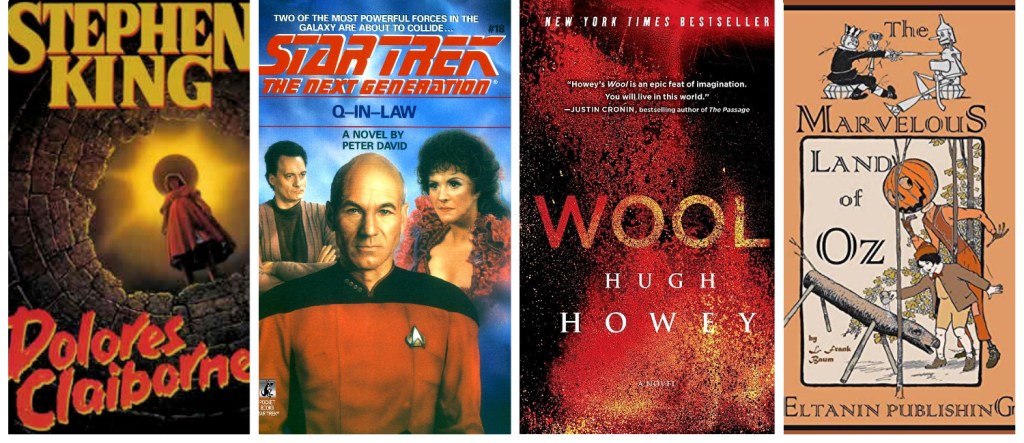
Those 20 books that I’ve dug into, by the way, are also in pursuit of various smaller goals. Most of them are in series or by authors I enjoy, but that I’ve never gotten around to finishing. I’ve started a re-read of all of L. Frank Baum’s Oz novels (in case you were wondering why I wrote about that back at the beginning of summer) with the intention of continuing on and reading the other books in the “Famous Forty” that weren’t written by him, most of which I’ve never read before. I’ve read a few Star Trek novels. I’ve read books in George R.R. Martin’s Wild Cards series and Hugh Howey’s Silo saga. I’ve even tackled two of those Stephen King books that I hadn’t gotten around to yet. He wrote four more in the time that it took me, but baby steps. 

If you can think of a better way to spend the summer, I’d love to hear what it is.

The only problem I’ve got with Beanstack is that I don’t think you can add friends from outside your own library system, so I don’t know that all of you fine folks out there could link up with me there – although if anybody knows of a similar app that’s not geographically-locked, by all means let me know. And while you’re at it, let me know how your own summer reading has gone. What have you read on the beach, what books have finally escaped your-to-read pile, and do you too feel like you read more when the heat is on?

Blake M. Petit is a writer, teacher, and dad from Ama, Louisiana. His current writing project is the superhero adventure series Other People’s Heroes: Little Stars, a new episode of which is available every Wednesday on Amazon’s Kindle Vella platform. Blake is also considering doing a total read-through of Rick Riordan’s Percy Jackson universe, but that dang Stephen King keeps adding other books he need to get to first. 

Geek Punditry #21: A Complete Trip Down the Yellow Brick Road

No matter what your particular fandom is, there are many different strains of Geekery – the Viewer just watches the movies or shows, the Shipper is obsessed with who is (or should be) hooking up with who, the Collector wants the merch, the Debater just likes to argue – and all of them are perfectly valid. One of the more difficult ones to be, though, is the Completionist. The Completionist is someone who wants to read, watch, or play every incarnation of their favorite franchise, no matter what. (When you cross this with the Collector, you wind up with someone who can open a museum.) Being a Completionist can be time-consuming or all-encompassing if you allow it to be, which is why I try to restrain myself, because I definitely have Completionist tendencies. I can refrain from reading every Star Trek novel ever written, but I definitely want to watch every movie and TV series in the franchise, even the one I don’t like. (Yes, that’s singular.)

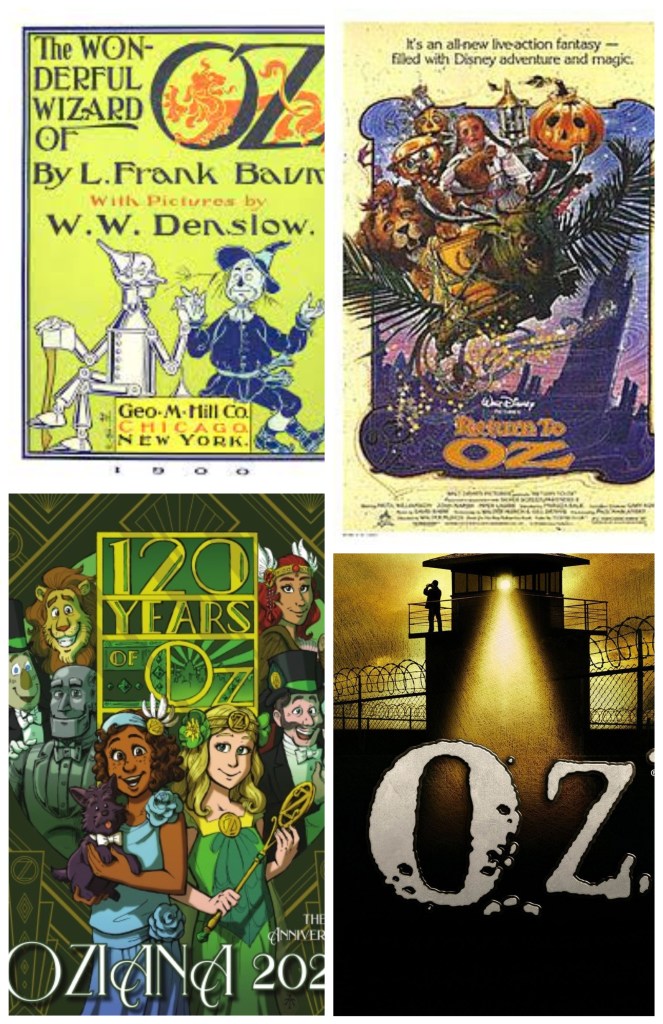
Completionism is more difficult with some properties than others, of course. Fans of modern franchises like Game of Thrones or Harry Potter have it relatively easy – the number of books, movies, and TV shows is comparatively small and all of them are easily available for anyone who wants them. A George R.R. Martin Completionist’s fear is that the series will never be finished, not that they won’t be able to find it. But it gets much more difficult if you’re a Completionist for an older property, especially one that has lapsed into the public domain. For example, I’m a big fan of L. Frank Baum’s Land of Oz, and if I really wanted to, I could spend the rest of my life trying to complete my experience in that world and never have a chance of success. When Oz is mentioned, the average person usually thinks of The Wizard of Oz, the 1939 film starring Judy Garland and absolutely zero suicidal Munchkins, no matter what Freddy Campbell told you in sixth grade. The movie is, of course, a legitimate classic, and everybody has seen it. Fewer people have read the novel it’s based on, The Wonderful Wizard of Oz, although most people are probably at least vaguely aware that it exists. What even fewer people understand, though, is just HOW MUCH Oz content exists in the wild.

Wait a second, I think Google Image Search may have screwed something up here…

Baum himself wrote 14 novels about Oz, plus assorted short stories, some stage plays, and even a couple of silent movies. After he passed away, his position of “Royal Historian of Oz” was passed on by the publisher to Ruth Plumly Thompson, who wrote even more books than Baum before the title got passed along again. All in all, the “original” Oz series consisted of FORTY different books by seven different authors before it was retired in 1963. Not that the authors retired, though. Many of them wrote other Oz books later in life, although those are not usually counted among the “Famous Forty,” as they are known to Ozites. 

But this is only the beginning. In addition to the seven official “Royal Historians,” other people started to put out their own versions of Oz, even before the earliest books started to slip into the public domain. W.W. Denslow, the illustrator of the original Wizard of Oz, tried doing his own Oz stories without Baum after the two had a falling-out, although they didn’t enjoy the staying power of his collaborator. Some of Baum’s own children wrote Oz books that wound up getting squelched when they were sued by their father’s publisher for violating their copyright. But once the Baum books went into Public Domain, things exploded.

A quick explanation of Public Domain, just in case there’s anyone who doesn’t know what that means: when someone makes a creative work, they (or their employer, if it’s a work-for-hire) automatically own the copyright to that work. Copyright can be sold, transferred, or licensed, but only the copyright owner has the legal right to profit off that specific work in any way. Eventually, some time after the creator’s death, copyright expires and these creative works lapse into what is called Public Domain, which means that nobody owns the rights any longer and anybody is free to create their own derivative work based upon it. It’s the reason why so many people do their own versions of Shakespeare’s plays and why there are ten billion different versions of Charles Dickens’s A Christmas Carol – you don’t have to pay anybody to use the story, but you still get to trade on the public opinion of the name to build your audience. Copyright laws have changed over the years, mostly due to the efforts of the lobbyists working for the major IP holders (Disney in particular) trying to get it extended over and over again, but eventually it does end. It’s going to be really interesting to see what happens when Steamboat Willie, the first Mickey Mouse cartoon, finally enters public domain next year.

Another masterpiece brought to you courtesy of Public Domain.

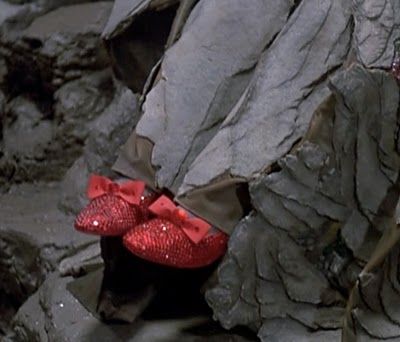
Having said that: a work can be in public domain, but the derivative works can still be copyrighted. The Baum Oz novels are in public domain, but the MGM movie is not, so you cannot use any elements specific to the film in your own work without paying up. The best example of this came with Return to Oz, the 1985 Disney film that you may remember as giving you nightmares when you were seven years old. The movie was based on the second and third Baum books, The Marvelous Land of Oz and Ozma of Oz, and they were free to use those elements, but they also wanted one of the most iconic symbols of Oz: the Ruby Slippers. The problem is that in Baum’s books, Dorothy’s magic shoes were silver. MGM changed them to Ruby to better show off their Technicolor process, and they still owned the copyright on Ruby Slippers, so Disney had to pay them for the right to use Ruby Slippers in the film. Crazy, right?

This one shot cost Disney seven times your annual income.

Anyway, once the copyright finally ended on the earliest Oz books, the ones by Baum, it became legal for anybody to tell their own versions of or use elements from that story as they wished. From SyFy’s Tin Man miniseries to the classic musical The Wiz, the public domain nature of Oz has led to hundreds if not thousands of derivative works. And here’s where it gets hard to be a completionist: not only is there simply too much stuff out there to read or watch it all, it’s almost impossible to even create a comprehensive list.

A while back, I decided to try to compile a list of Oz books and short stories, but even with the help of websites like The Royal Timeline of Oz or their sister website, Wikipedia, it became apparent that the sheer volume of what I was attempting to do made it nearly impossible. I started putting together a Google Sheet with all of the different Oz books I could find, a list that as of this writing is breezing past 400 different works and still going. That’s to say nothing of the hundreds of Oz comic books (a few of them are on my Sheet, but not nearly all) or countless movies and shorts that have been built around Baum’s universe. By the way, I invite anyone interested to take a look at my sheet and let me know what I’m missing – I may never finish the list but I’ll never stop adding to it either. It’s the Completionist in me.

You see, in addition to the “official” works, dozens of other publishers have taken it upon themselves to continue the stories, both in ways that are faithful to Baum’s original works and others in ways that Baum may never have considered or even approved of. That’s another aspect of Public Domain: the fact that anybody can make a derivative work can often draw upon people who are doing so not out of love for the original property, but in an attempt to subvert it. Earlier this year, for example, we saw the release of the film Winnie the Pooh: Blood and Honey, which takes A.A. Milne’s beloved icons of childhood joy and innocence and turns them into bloodthirsty horror movie slashers. Give me a break.

Oh, bother.

Look, I like horror movies. I like slasher movies. I like goofy slasher movies. But I don’t care for people who take a crap on precious childhood memories. Characters like Pooh and Tigger are beloved by children all over the world – do they really need to see Pooh gutting somebody with a chainsaw? Full disclaimer here: I have not seen Blood and Honey, nor do I intend to, because it’s the concept itself I dislike. (Quick note to mention that it’s the original Milne books that are in public domain, not the more well-known Disney version of Winnie the Pooh. Man, it always seems to come back to Disney, doesn’t it?)

That doesn’t mean that there’s no room for a dark derivative of an old story, of course. Let’s run down the Yellow Brick Road again to Gregory Maguire’s Wicked, a novel of Oz that tells the life story of the Wicked Witch of the West. Like the original Wizard of Oz, Wicked is a fine novel that has been somewhat overshadowed by its own musical adaptation, but no matter which version of the story of Elphaba you’re enjoying, it’s definitely a more mature version of Oz than Baum ever wrote. With Wicked, though, Gregory Maguire was using Baum’s backdrop to tell an intriguing story, something with interesting social commentary, something that had a point. I have no problem with that whatsoever. What bothers me is when someone twists an icon of childhood without a good reason to do so, when somebody creates something shocking just for the sake of being shocking. I don’t care for that. I don’t respect it. And everything I’ve seen of Blood and Honey makes me feel like that’s what the movie does. If I’m wrong, by all means, let me know.

Anyway, the point is that with all of the Oz out there, it seems impossible that I’ll ever get through it all. I’ve read all of the Oz books Baum himself wrote, but I haven’t made it through the rest of the Famous Forty yet. I’ve enjoyed Eric Shanower’s original graphic novels and I loved the adaptations of the Baum originals he did with Skottie Young for Marvel Comics, but Zenescope Comics’ Grimm Fairy Tales has a whole Oz spinoff line that I’ve barely touched upon. I’ve still got three out of four Wicked Years books to read, and I’ve only begun to scratch the surface of the series by later authors like March Laumer or Baum’s own great-grandson Roger S. Baum. And this is to say nothing of the “official” productions that are still coming out! The International Wizard of Oz club produces an annual magazine, Oziana, which always includes new short stories (and sometimes even short novels) set in Baum’s world. And as they had the utter temerity to begin publishing Oziana back in 1971, before I was even born, it seems quite unlikely that I’ll ever be able to track down every piece of Oz media that exists.

Slow down! I’ve got twelve decades of IP to catch up on!

But that isn’t going to stop me from trying, is it?

Completionism is a fool’s game, my friends, and it’s a game that most of us are doomed to lose. But even so, it can still be an awful lot of fun to play.

Blake M. Petit is a writer, teacher, and dad from Ama, Louisiana. His current writing project is the superhero adventure series Other People’s Heroes: Little Stars, a new episode of which is available every Wednesday on Amazon’s Kindle Vella platform. He is most definitely not writing this column just to give people ideas for what to get him for Father’s Day, his Birthday, Christmas, or International Oz Completionist Day. 

Geek Punditry #9: Pop Culture Comfort Food

Reportedly, there are studies that indicate people like rewatching old TV shows and movies because there is comfort to be found in familiarity. I don’t have those particular studies in front of me because I don’t feel like looking them up at the moment (this is a highly scientific approach), but I completely believe it. When the world is starting to be too much, I often find myself going back to movies, books, or comics that I have enjoyed before. There’s something about returning to old stories that makes it feel like you’re reconnecting with a friend. There’s an ease and a comfort that can be desperately needed when there’s a weight on your shoulders, when the anxiety begins sending the pins and needles across your skin, when every text or phone call makes you worry that the worst has happened. I go back to these things a lot, is what I’m saying.

And since I know I’m not alone in this, I thought that this week I would share with you some of my storytelling comfort food. I’m going to tell you one example from each of my preferred forms of media (movies, TV, books, and comics) that I can and have returned to more times than I can count, stories I know as well as the walk from my car to the front door, characters who are as close to me as family. When I’m feeling down or beat up or that nothing is going to be okay, these are the places I turn to so that I can be reminded…sometimes it can be.

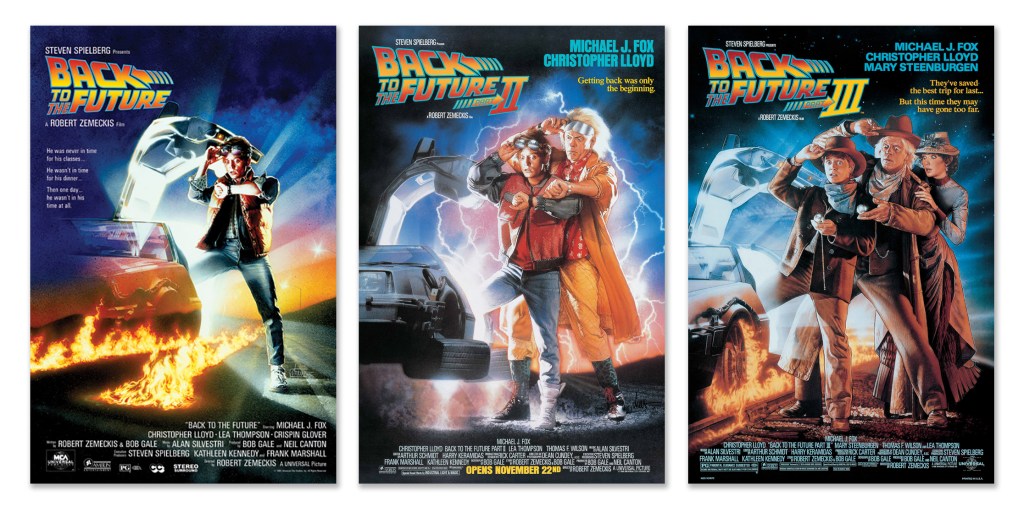
Movies: Back to the Future 

A series that never fails to take you back in time.

In the interest of clarity, I guess I should say the Back to the Future trilogy, because heaven knows I can never stop with one. The first movie came out when I was 8 years old, and I distinctly remember sitting down in front of the fireplace after my parents rented it and put the VHS tape in. I remember how quickly and deeply I fell in love with the film and how we went to the movies together to see Part II, and how we went out during a storm while out of town on a family vacation on the opening weekend of Part III to see just how the saga concluded. I even remember my father commenting on the weather and saying that anybody who went out in it to see the movie must have been a die hard fan. Which, of course, I was.

I know I don’t have to explain to anyone why these films are so great, and I’m certainly not going to waste any time on a recap, but I’m going to tell you what it is about them that makes me feel better. Part of it, like with all of the things I’m going to share with you, are the characters. There’s something about the unorthodox friendship between Doc Brown and Marty McFly that resonated with me even as a child. I had already spent years dreaming of being picked up by a tornado and thrown to Oz or finding a closet door with a passage to Narnia, but even at eight it was starting to seem like either of those would be a stretch. Finding an eccentric mentor who would bring me along on grand adventures seemed much more plausible. Even now, at a stage in life where I find myself relating more to Doc than Marty, that relationship seems pure and genuine. (Ironically, I think that’s part of the reason Rick and Morty became so popular so fast – it’s a parody of the Doc/Marty relationship, but that parody wouldn’t have worked as well if there was something foul or sordid about the original.)

Then there’s the basic fantasy of time travel, of being able to hop into a machine that can whisk you away to another place. The idea of seeing the past and the future is tantalizing, and I would be lying if I said I wouldn’t be tempted to use Gray’s Sports Almanac the same way Marty intended to. 

The other thing, which people may perhaps not think of immediately but I consider of utmost importance, is the music. The best movies often have memorable scores, but Alan Silvestri’s composition is one of the all-time greats. The sweeping tones automatically bring to mind the film, hit those triggers in your memory and pull you into the world of Hill Valley, and charge your heart with anticipation. The music moves from exciting to thrilling to, ultimately, triumphant. When you hear Alan Silvestri’s score to Back to the Future, you find yourself capable of believing that even when things are tough, like they were for Marty McFly, there is a solution that will make everything turn out okay in the end.

And c’mon. The car is really cool.

Television: Cheers 

Where people know troubles are all the same.

Bet you expected me to say Star Trek, didn’t you? Yeah, I know, Trek is my jam, but sometimes you wanna go where everybody knows your name.

Cheers, the sitcom about a little bar in Boston, has two distinct stages, and I love them both…but not equally, if I’m being honest. In the early years, the show was mostly a workplace romcom about Sam and Diane, with the rest of the characters there to add flavor. It was a fine show, it was a funny show, but I was a fairly young child at the time and, although my parents watched it, I didn’t really start paying attention to the series until I got older. This may be part of the reason that – although I would never skip the Diane years when doing a rewatch – it’s the Rebecca years that leave the most indelible mark on my memory.

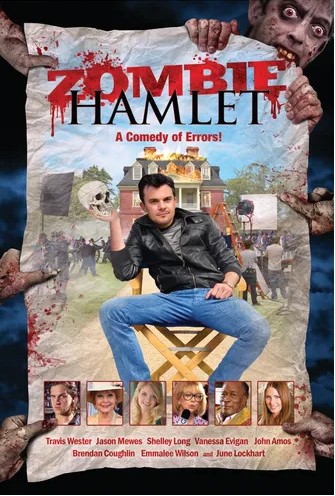
But my relative age isn’t the only reason the second life of Cheers is my preferred era. Like I said, during the Shelley Long years, the show centered around Sam and Diane’s relationship. This was good. This made for some excellent television. But after Long left to become a major movie star (I recently watched her performance in 2012’s Zombie Hamlet, and I highly recommend it), they replaced her with the recently-deceased Kirstie Alley, and although there were the occasional flirtations with making her couple off with Sam like they did with Diane, the writers wisely realized that the same chemistry wasn’t there, and shifted the focus from a romcom to more of an ensemble comedy. The other characters grew in prominence, Rebecca Howe found a different niche to fill than the one vacated by Diane Chambers, and the show blossomed yet again. 

While the likes of Woody, Cliff, Carla, and Norm all had their moments in the pre-Rebecca days, post-Diane they had far more episodes in the spotlight. Frasier Crane was a Diane castoff who stuck around, but it was in the Rebecca era that he bloomed to one of the stars of the show, eventually spinning off into his own series (also a comfort watch for me), with a revival of the latter currently in the works. I’m not saying that the early years of Cheers weren’t GOOD, please don’t misunderstand me. It was a remarkable comedy, the character of Coach was sorely missed for the rest of the series, and the episode guest-starring John Cleese is perhaps one of the funniest half-hours of television ever put to film. It’s just that the pure love I feel for the series, the way I have affection for these characters as if they were personal friends of mine, the fact that I remember that Frasier’s first wife “Nanny G”’s phone number was 555-6792…that’s all a product of the Kirstie Alley years, and I’m fine with that.

Boy, I deserve some sort of trophy for THAT deep cut. 

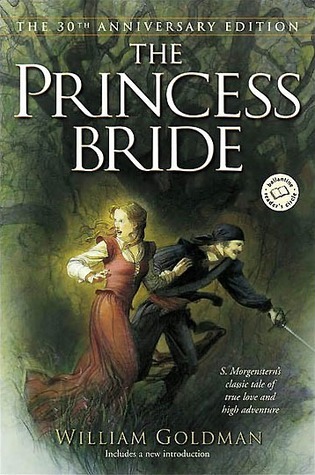
Book: The Princess Bride by William Goldman. 

Skipping this would be inconceivable.

I may be cheating a little bit here, since much of what is wonderful about this novel is also applicable to the movie, which I also love and watch as comfort on many an occasion. But this is probably the novel I have read more times than any other (a feat which I insist is more impressive than the movie you’ve watched most often). It is the book I pick up when I’m sad. It’s the story I turn to when I’m depressed. It’s the tale I want to hear again when I feel like there is nothing good and beautiful in the world. I need this story at those times, because if it were true that there is nothing good and beautiful in the world, then how could a novel such as this even exist?

I know you’ve seen the movie, so I won’t bother to retell you the story. Instead, I’ll tell you about the elements unique to the book so that you can understand why it resonates with me so deeply. 

First of all the framing sequence. In the film, the tale of Westley and Buttercup is being read by a grandfather to his sick grandson. In the book, Goldman creates a metatextual story (this was before metatextual stories) about his own family, in which his father read the story to him as a child. It was not until adulthood that he tried reading it himself to his own son (a fictional son, by the way, as the real William Goldman had only daughters) and realized his dad skipped all the boring bits and just read him “the good parts.” The book is presented as adult Goldman abridging a classic novel by getting rid of all the flowery muck and bits of Elizabethan satire that modern audiences wouldn’t give a crap about. It’s a really funny conceit, and it’s executed so perfectly that a lot of people reading the book for the first time don’t realize the framing sequence is fiction as well. (It’s me. I’m a lot of people. I didn’t get it the first time.)

Second, the writing is simply marvelous. A lot of the great bits of dialogue made it into the film, which isn’t a surprise since Goldman wrote the screenplay himself, but there simply wasn’t room for everything, and many of those pieces left on the floor are absolutely priceless. For instance, the movie largely ignores Buttercup’s parents and their unending bickering, for which they keep score. It skips over the history of Fezzik entirely and leaves out all but the most essential parts of Inigo’s backstory, which makes an already amazing character so much richer. There’s more time spent with Humperdink, more time devoted to Vizzini, and much more to Westley and Buttercup’s burgeoning romance. Because yeah, it is a kissing book.

I don’t begrudge Goldman any of the cuts, of course. The very premise of the novel is that sometimes parts of a story don’t translate from medium to medium. But if you’ve only seen the movie you haven’t experienced the whole story.

The last thing about this book is perhaps the most important: the message. In the framing sequence, Goldman discusses a conversation with an old neighborhood woman who served as something of a mentor to him. This segment concludes with the child Goldman learning that life isn’t fair. Rather than being angry or hurt at the realization, though, he is utterly jubilant to hear the news, because once you accept that life ISN’T fair, isn’t SUPPOSED to be fair, then a lot of the crap the world throws around suddenly makes a LOT more sense. This is, I think, a very important message, and the great thing about it is how it is presented in a way that is joyful and positive rather than dour and depressing.

The point I’m getting at is that if you haven’t read this book, you should, and I’m envious that you’re going to get to experience it for the first time, which I will never have the chance to do again. But hey, that’s all right, because life isn’t fair.

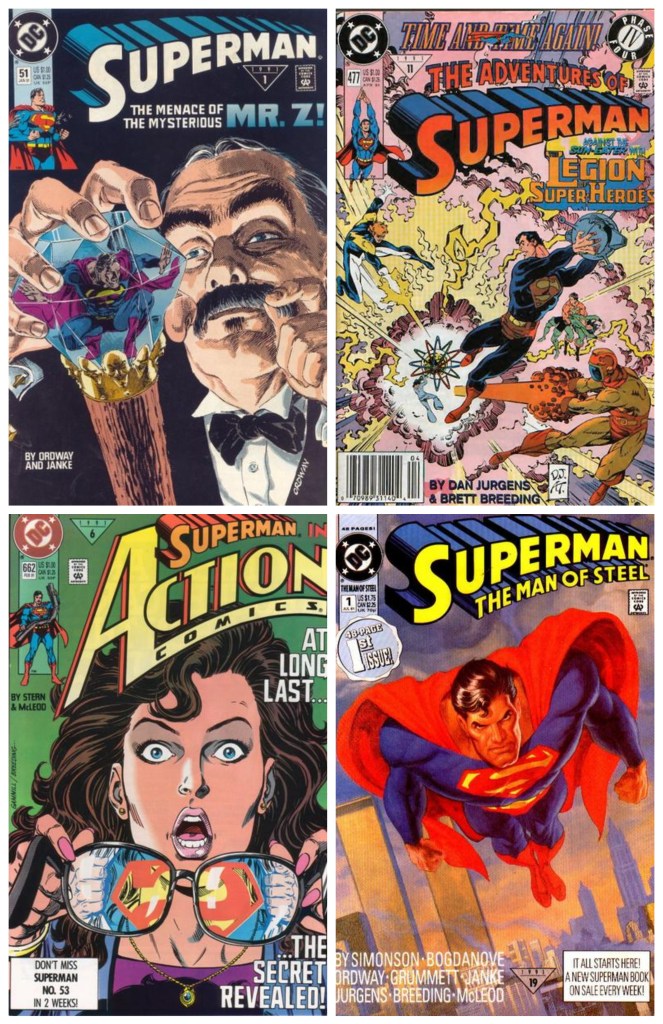
Comics: The Triangle Era Superman.

This was MY Golden Age

Okay, this paragraph is just for the uber-nerds like myself who already know all about the “Triangle Era” of Superman. The rest of you can skip to the next paragraph. Ahem. I’m about to give a super-condensed history of the era. I know I’m leaving out a bunch of stuff. Like William Goldman, I choose to focus on the good parts rather than telling everybody the intricacies of comic book numbering and whatnot. Please don’t send me corrective emails.

In 1986, DC Comics hired writer/artist John Byrne to revitalize the Superman character. He took over both Superman and Action Comics, the two titles that starred the hero, and they added a third book to the line as well, Adventures of Superman, which was usually done by other creators such as Marv Wolfman. After a while, Byrne left the character in the hands of other writers and artists, and while he had done good work in his time, it was after his departure that a certain kind of alchemy began to happen. With Superman starring in three comic books a month, the writers and artists would have to collaborate to make sure they weren’t contradicting or causing problems for each other. This collaboration began to grow more intricate, and in time, the three different titles began to function almost as one. Stories that began in Adventures of Superman one week would continue in Action Comics the week after. Before long a fourth title was added, Superman: The Man of Steel, so that there were four monthly Superman books that worked almost as a single weekly title. Then someone noticed that 4×12=48, but there were 52 weeks in a year, so a fifth title (Superman: The Man of Tomorrow) was added to fill in the extra gaps. At some point, DC started to put a triangle on the cover of each issue demonstrating which week of the year it was to help readers keep track of what order the books went in, thus the “Triangle Era” was born.

The weekly nature of the serial was a great concept. Knowing that there would be a new chapter of an ongoing storyline each and every week forged hardcore loyalty and created a devoted fanbase that still exists today. What’s more, although the main story was ongoing, each individual series had its own subplots that made it stand out. Adventures, for example, was more often going to deal with the mad scientists of Project: Cadmus, while Man of Steel devoted time to a story about an orphanage and a young child who would eventually be adopted by Perry White. The books were part of a larger whole, but still had their own flavor and identity.

The Triangle Era lasted over ten years, but those early days happened just as I started reading the books and featured many of the writers, artists, and storylines that are still most dear to me: Lois learning Clark’s double identity, their engagement and marriage, the somewhat vindicated-by-history era of Superman Blue/Superman Red, the classic “Panic in the Sky” storyline, and of course, the legendary Death and Return of Superman were all products of the Triangle Era. Like all comfort media, part of my love for these books is no doubt because these were the comics I read in my formative years. But there’s also the fact that, for a very long time, these comic books were just really good. The world of Superman, which had not-undeservedly been called stale and out of date a decade earlier, was suddenly energetic, exciting, and full of new characters, concepts, heroes, and villains. Many people have made Superman comics over the years, but Dan Jurgens, Brett Breeding, Roger Stern, Bob McCleod, Jerry Ordway, Tom Grummett, Louise Simonson, and Jon Bogdanove remain the gold standard in my mind.

As the song goes, these are a few of my favorite things. These are stories, characters, and worlds that I never grow tired of. These are the things that mean something to me, things I flat-out refuse to let go of, things that come together and help make me who I am.

So what are yours?

Blake M. Petit is a writer, teacher, and dad from Ama, Louisiana. His current writing project is the superhero adventure series Other People’s Heroes: Little Stars, a new episode of which is available every Wednesday on Amazon’s Kindle Vella platform. He bets you thought he was kidding about Zombie Hamlet, didn’t you?

Pictured: the career worth leaving Cheers for.