Geek Punditry #136: Under Suspension

A few weeks ago, San Diego Comic-Con happened once again and…well, once again, I wasn’t there. It’s kind of a little tradition of mine. Comic-Con happens and I stay at home. Like many storied, time-honored traditions, it kinda sucks. So I instead spent that weekend waiting for the news to trickle out online. There wasn’t anything major this year, nothing that knocked my socks off, no “Robert Downey Jr. is Doctor Doom” moments. There were, however, trailers. I  love a good trailer, those little short films that give us a taste of an upcoming movie or TV show. They’re becoming a dying art, really, with so many trailers either failing to give you any excitement or – much worse – giving away half the thrill and excitement of the movie itself too early. If you haven’t seen the trailer for Project Hail Mary, for example, then I beg you in the name of all that is good and holy DON’T watch it. It gives away one of the best reveals in the book.
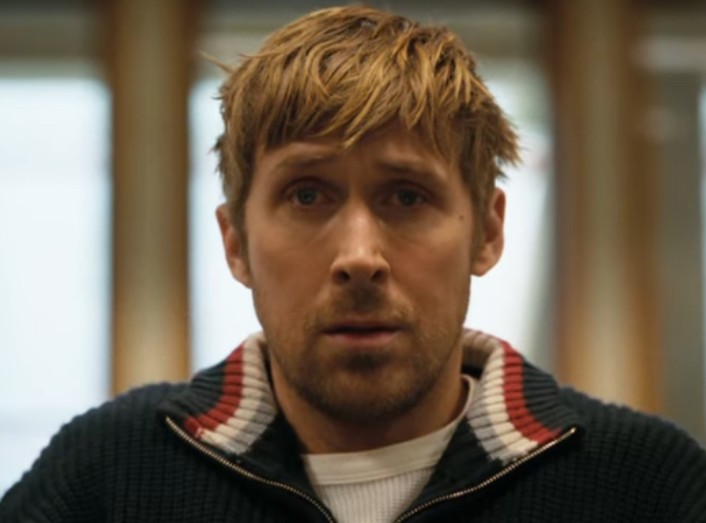
Specifically, the fact that Ryan Gosling copies Guy Gardner’s haircut.

But the trailer that I’ve seen the most online chatter about had nothing to do with plot reveals, special effects, or the performances of the actors involved. No, the most talked-about trailer this year seems to have been the teaser for the upcoming Star Trek: Starfleet Academy series on Paramount+. Here’s all you need to know: Starfleet Academy takes place further along in the timeline than most of the Trek shows and movies that we’ve grown to love over the past six decades. In this time period, the Federation almost collapsed due to certain catastrophic events and it’s now in a rebuilding stage. This series is about the rebirth of the Academy, and the scene that has everybody talking is one in which we catch a glimpse of what appears to be some sort of Wall of Honor, adorned with the names of legendary Starfleet personnel. Ambassador Spock. Admiral Jean-Luc Picard. Lieutenant Nog. There are names on this wall from virtually every iteration of Star Trek to date. This one scene has had people freeze-framing it more than any single scene since Fast Times at Ridgemont High, trying to read all the names on the board to see who amongst our favorite Star Trek characters made the cut. I seriously doubt that this wall will have any great significance to the plot of the series, but it’s a fun Easter Egg for those of us who have loved Trek for so many years.
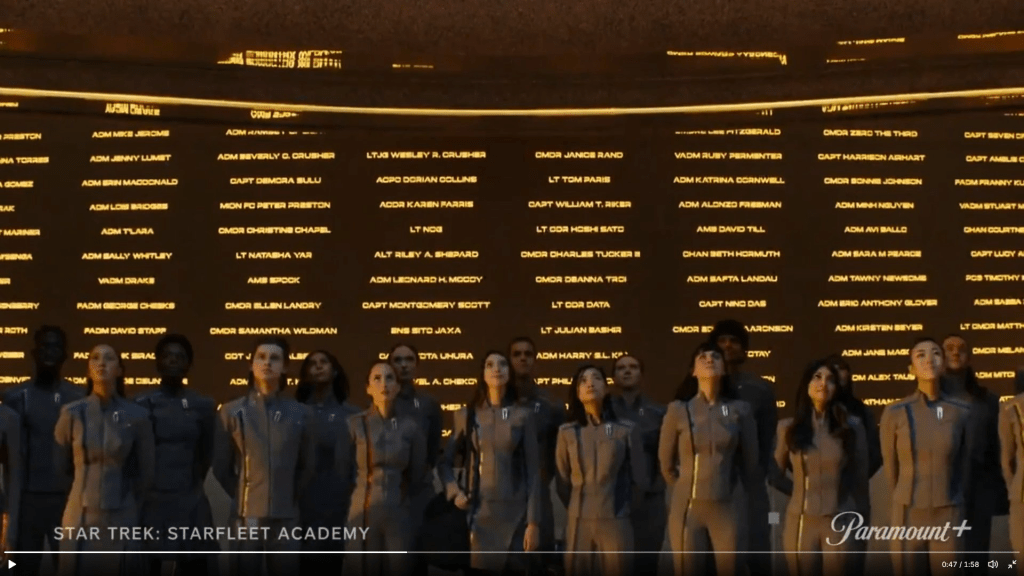
Barclay better be on that wall or we riot.

In one of the (many) online discussions I’ve seen about this scene, though, there was one dissenting voice that I found perplexing. This person, whom I am paraphrasing, basically expressed irritation that all of the characters that we’ve watched over the years turned out to be so remarkable. Statistically, they seem to think, not EVERY character should turn out to be some kind of legendary figure.

This person has got it completely backwards.

My reply was simply this: “It’s not that every character we watch has turned out to be remarkable. It’s that we are only watching them in the first place BECAUSE they are remarkable.”

This is one of those times where I engage in a discussion online over something that I always thought was blindingly obvious, only to learn that not everybody sees it my way (also known as the correct way). There are hundreds, maybe thousands of ships in Starfleet. Of course not EVERY ship and EVERY crew is going to turn out to be the one that makes it into the history books. But doesn’t it stand to reason that those boring, mundane crews are simply not the ones that we get to hear the stories about? In other words, the histories of the Enterprises, Voyager, or station Deep Space Nine aren’t remarkable because those are the crews we follow. We follow them because they ARE the remarkable crews.

This is the case with fiction across the board. We aren’t tuning in to a movie or a TV show to watch the adventures of some average, everyday schlub. There are exceptions, of course – “slice of life” dramas and comedies do just this, and sometimes they do it very well. But in the case of an adventure series like Star Trek, you’re following the exploits of the characters that make history. They even tried to subvert this expectation with the animated series Star Trek: Lower Decks. The idea behind it was that we were going to FINALLY follow the adventures of an unimportant crew on an unimportant ship. And what happened? It turned out that they weren’t all that unimportant after all, and if anything, Lower Decks winds up reading as the origin story for the next one of these legendary crews. 

Suspension of disbelief is an important aspect of enjoying fiction. There has to be a willingness, as a member of the audience, to accept certain things that you are aware may defy reality. In the case of speculative fiction – sci-fi, fantasy, and certain types of horror – that means that you have to maybe ignore certain laws of physics. Yeah, Einstein said that we can’t go faster than light, but if we didn’t find a way to do it then there would be no Star Trek, so I’m gonna let that one slide. Quantum mechanics says that the way time travel works in Back to the Future is utterly impossible, but until quantum mechanics can give me something as awesome as Alan Silvestri’s score, quantum mechanics can bite me. Is there really such a thing as a creature that can hide inside your dreams and attack you? Probably not, but A Nightmare on Elm Street wouldn’t be nearly as scary without him. 

Those are the big things, though, and when it comes to suspension of disbelief, people are oddly MORE accepting of the big things. What about the little things? There’s an old saying that in real life we expect the unexpected, but in fiction we don’t stand for it. Major, life-changing events have to be the REASON for a story, not something that simply happens IN the story. Think of it this way: if a character in a movie wins the lottery, that usually happens at the beginning of the movie, and the rest of the story is about what happens to them as a result. But if a character in a movie is in some sort of desperate situation – maybe he’s spent half the movie running from the mob because he owes them a fortune and they’re gonna break his kneecaps – and THEN he wins the lottery, the audience considers it a cheat. The suspension of disbelief breaks down here, even though the odds of a person winning the lottery are – mathematically speaking – exactly the same at the beginning of a story as they would be at any other point. I’ll accept a lottery win as the inciting incident, but if a random lottery win is what saves the day, that’s a modern deus ex machina, the “god in the machine.” It comes from those times in Greek drama where a character would be rescued by – literally – one of the gods intervening to get them out of a jam, and even back then it pissed off the ancient Greeks so much that they invented machinery just so they would have a term to use to complain about it.

It doesn’t have to just be good things either – tragedy can break your suspension of disbelief too. There are a lot of tearjerkers about somebody battling an incurable disease, and we’re okay with that, because that’s what the story is about. On the other hand, if somebody spontaneously develops such a disease in the middle of a story without any prior warning, audiences will consider it cop-out. Why? In real life, people can get sick at any time, so why NOT when it’s convenient for the plot?

Because “convenient” is enough to break the reality of the fiction.

Pictured: Convenience

The rule is basically this: major life-changing events (either good or bad) either have to happen at the beginning of the story or be the consequences of the actions in the story, but they cannot happen randomly in the middle or end of the story or the audience won’t stand for it.

The one exception here – and even this one is iffy sometimes – is when you’ve got a long-running serialized story like a television or comic book series. When you’re following characters for years at a time, eventually a random event will occur, and the audience will be a bit more accepting of it. For example, the death of Marshall’s father in the series How I Met Your Mother came out of nowhere, but that episode is considered one of the most powerful, emotionally-resonant moments of the entire series. It’s something that hits the audience hard, forcing us to process the grief and pain of the character along with him. (The story goes that actor Jason Siegel didn’t know what the end of that episode was going to be until they filmed it, so when Allyson Hannigan delivers her line, telling him that his father died, his response is entirely genuine and his final line was a perfect ad-lib: “I’m not ready for this.)
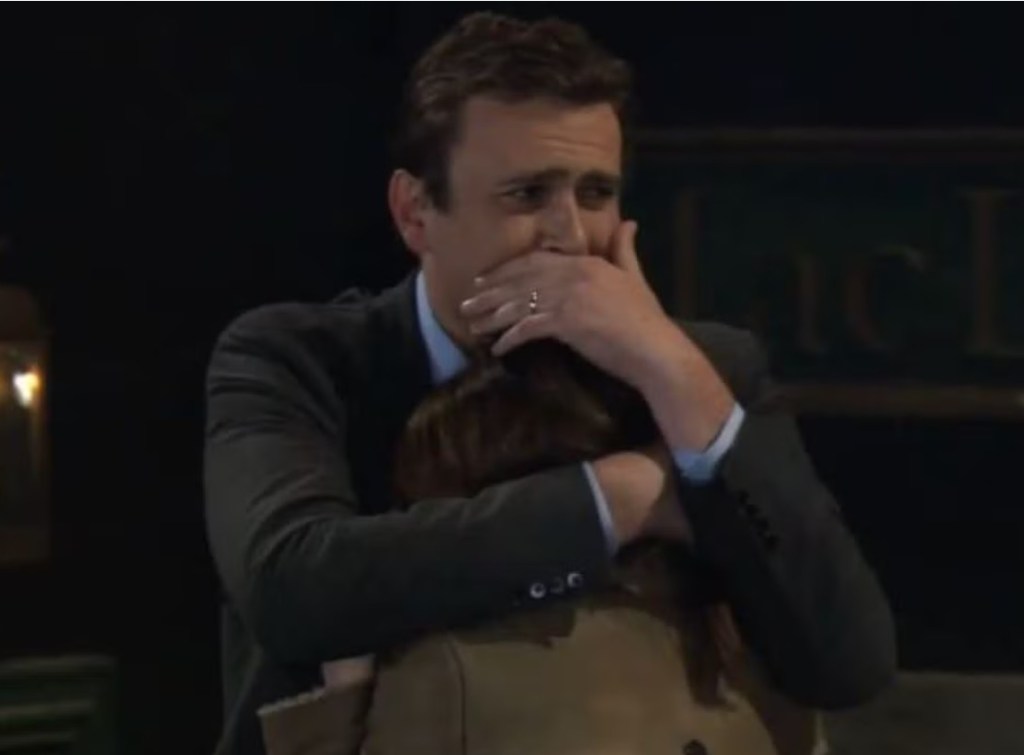
People cried just as hard for the finale, but for…different reasons.

In a comedy, suspension of disbelief is allowed to go even farther. In a farce like The Naked Gun, for example, things routinely happen that make it feel more like you’re watching a cartoon than a live-action film, and the audience is perfectly satisfied. Nobody complained in the end of Mel Brooks’s Blazing Saddles when Hedley Lamarr bought a ticket to a movie theater showing…Blazing Saddles. And Mystery Science Theater 3000 even wove the concept of Suspension of Disbelief into its THEME SONG: “If you’re wondering how he eats and breathes and other science facts, just repeat to yourself, ‘It’s just a show, I should really just relax’.”

Lalala

On the other hand, if that disbelief is suspended too long, there’s a temptation to try to work things into the story to justify the extraordinary. For instance, for decades there was a running commentary about how Clark Kent’s glasses wouldn’t fool anybody and that everyone would quickly realize he’s Superman. Eventually, the writers felt that it needed to be addressed to maintain the suspension of disbelief. Some writers said that he slouches as “Clark,” or changes his voice and mannerisms. Sometimes they actually have him attend acting classes specifically to learn how to do this. Sometimes the lenses are made out of special glass (usually from the ship that brought him from Krypton) that either changes the color of his eyes or – in the most extreme case – has a hypnotic effect on the people who look at him, making them see a different face. James Gunn even alluded to that in his movie, although a lot of people thought it was just a typical Gunnian joke, not realizing it was a legitimate piece of comic book lore. 
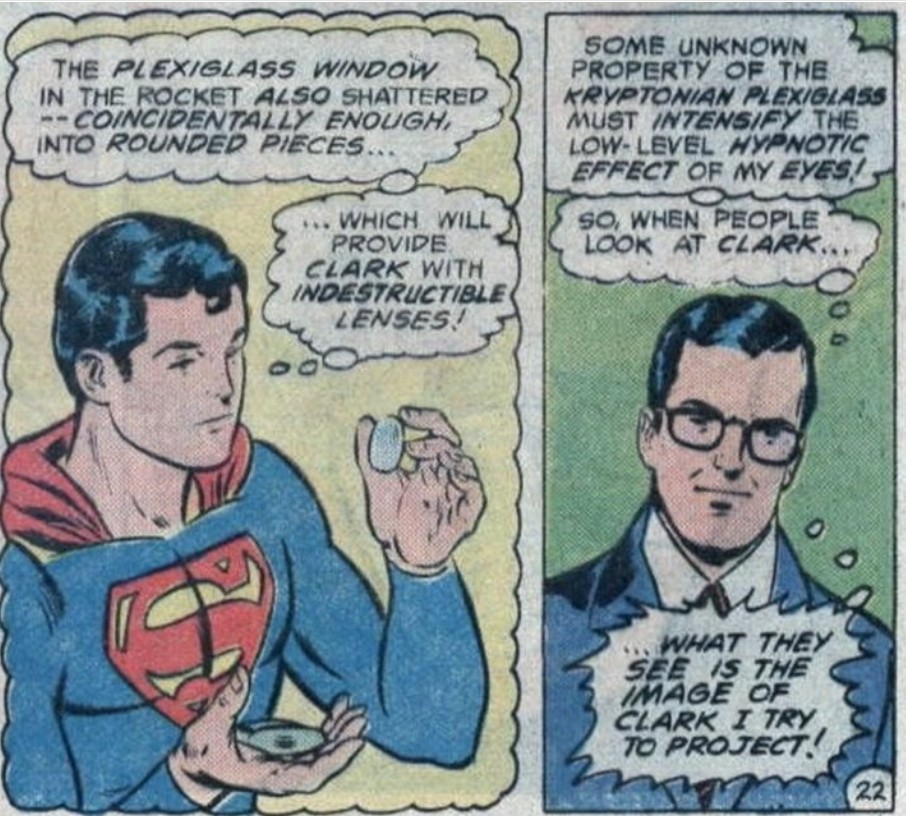
I love it when intergalactic spacecraft crashes to Earth and the shattered remains of the windshield have two pieces that perfectly correspond to my frames.

We don’t read or watch fiction – for the most part – looking for ordinary things. We want to follow the adventures of extraordinary people or, at the very least, ordinary people in extraordinary situations. Stephen King fans (this is me raising my hand in the back of the room) will tell you that’s his great strength: the ability to create a realistic character and then show how they respond to circumstances that no realistic character could possibly have prepared themself for. And to be fair, a certain amount of analysis and nit-picking is acceptable when you’re discussing great works of fiction (or even awful works of fiction). 

But eventually, when somebody online says something like, “Why don’t people in Gotham City ever realize that Bruce Wayne is the only one with the money to be Batman?” The proper response is simply, “Because the story wouldn’t work otherwise, so just get over it.”

Blake M. Petit is a writer, teacher, and dad from Ama, Louisiana. His most recent writing project is the superhero adventure series Other People’s Heroes: Little Stars, volume one of which is now available on Amazon. You can subscribe to his newsletter by clicking right here. He’s also started putting his LitReel videos on TikTok. He, too, would like to wear hypno-glasses, but in his case he would just use it to make his students see him as Yoda. 

Geek Punditry #129: Fact and Fiction

Statistics are a funny thing, and by “funny” I mean “likely to make my brain sad.” I recently read a statistic that claims only about 46 percent of American women read fiction (novels, short stories) on a regular basis. It’s a lower number than I would like, but reading rates in general seem to always be declining, so it can’t be that surprising. What WAS surprising is that the rate of MEN who read fiction, as of 2022 when this study was conducted, is about 27 percent. That’s appalling to me. That means that if I line up four guys, odds are only one of them will have read anything more inventive than the sports page in the past year. And THAT guy is just reading Brony fanfic. 

“Fluttershy slipped out of her fishnet holster…” good grief, people are deranged…

I don’t want it to sound like I’m against nonfiction, mind you. You can read any genre you want, as long as you’re reading. I constantly beg my students to find SOMETHING to read every day, be it a video game magazine or Crime and Punishment, I don’t care. But it leaves me confused, baffled, as to what exactly it is that drives so many men away from fiction. They go to movies, they watch TV shows – but when it comes to picking up a book, they’re more likely to turn to history or how-to. I guess it goes back to the old joke about men, upon reaching a certain age, having to choose whether they’re going to get really into either grilling or World War II. (I am past that certain age, by the way, and I am obsessed with many things, but not those.)

That’s not to say I don’t read nonfiction, I do, but the funny thing is that most of the nonfiction I read is nonfiction ABOUT fiction. For instance, the current book I’m finally chopping off my To Be Read pile is Teenagers From the Future, a collection of essays edited by Tim Callahan about DC Comics’ Legion of Super-Heroes. That’s the kind of nerd I am. I like to read the analysis of fiction written by other nerds. I’ve read books about the history of Universal Studios, specifically their monster movies from the 1920s to the 50s. I’ve read books about the making of Alfred Hitchcock’s Psycho and the life of Edgar Allan Poe. Not long ago, when making one of my world-famous, soon-to-be sponsored by Netflix LitReels (this part is absolutely not true), I was doing a little research about movie novelizations from the 1980s. In the course of that research I discovered that Ryan North, the writer behind the current excellent runs of Fantastic Four and Star Trek: Lower Decks comic books, has written an entire book analyzing the differences between the film Back to the Future and its movie novelization. This made me realize that I needed to read the novelization again, then read North’s book, B^F.

An all new way to go back in time.

If I’m going to read a memoir, it’s not going to be one written by a former president or supreme court justice, but an actor or a writer. Stephen King’s On Writing: A Memoir of the Craft, for example, is one of my favorite books. I go back and read it again every few years, if for no other reason than to remind myself that the best-selling writer on the planet suffers from many of the same struggles as any other schmuck who dedicates themselves to figuring out the proper order to put words in on a daily basis. I really enjoyed Growing Up With Manos: The Hands of Fate by Jackey Neyman Jones, daughter of the director of one of the worst movies ever made, about the journey to create that cinematic oddity and the strange way it has impacted her life. And actor, comedian, and talk show host Craig Ferguson’s American on Purpose is an uplifting, magnificent exploration of what my country can mean to somebody looking at it from the outside, with all the wit and humor that you would expect from Ferguson. 

That’s not to say that I stick with just feel-good stuff. I’ve read, for instance, Matthew Perry’s Friends, Lovers, and the Big Terrible Thing and Jeanette McCurdy’s I’m Glad My Mom Died, both of which dig into the lives of actors, both of which are deeply tragic in very different ways. And let’s not forget Maus, Art Spiegelman’s haunting graphic novel (yes, nonfiction graphic novels do exist) detailing his father’s experiences in Auschwitz. Spiegelman makes the interesting narrative choice of depicting the Jews as mice and the Germans as cats, with other nationalities occasionally popping up as other animals (Americans, for instance, are dogs, from the old “dogface” nickname). The result is a book that looks like a sort of hybrid of Watership Down and history’s greatest nightmare. These aren’t books that make me feel better about the world, but I’m certainly glad that I read them.

These books have one thing in common: none of them will cheer you up.

More often than that, though, I like reading books about the creation of movies, comics, television, and even other books. A few years ago, for example, I found a pair of books by Dustin McNeill and Travis Mullins called Taking Shape and Taking Shape II. The first was a deep dive into the creation of all the different movies in the Halloween horror franchise, which was cool. The sequel, however, was far more interesting: an exploration of all the scripts, pitches, and abandoned ideas for Halloween sequels and reboots that were NOT made for one reason or another. McNeil also has a solo effort, Slash of the Titans, about the long and twisted road that eventually led to the movie Freddy Vs. Jason, including discussion of some abandoned story ideas that, frankly, I think showed more potential than the final film we actually got. I’m fascinated by the creative process, and exploring the different ways these stories have been told, or even not told, is something that really compels me.

These books, paradoxically, make a delightful little romp.

If you want me to get into history (of the two I’m far more likely to get into grilling, but let’s stick with history for now), I prefer it to be couched it in the world of fiction. Do I want to read a book about life in Victorian England? No. Do I want to read Les Standiford’s The Man Who Invented Christmas, about how life in Victorian England eventually led to the creation and legacy of Charles Dickens’ A Christmas Carol? Absolutely. Am I particularly interested in investing any more time than I already have into McCarthyism and the moral crusading of the 1950s and 60s? That’s a no from me, dawg. but if you hand me David Hadju’s The Ten-Cent Plague: The Great Comic Book Scare and How it Changed America, now you have my attention.

Often, when I write these Geek Punditry pieces, I’m trying to show people the universality of what I’m writing about. The thesis of this column is to discuss things I like and urge others to share in my joy. But I have to wonder if, in this instance, I’m a little too unique for that. The real world is scary enough, friends, and I sometimes think we all spend too much time immersed in it anyway, with 24-hour news networks dedicated to showing us the worst possible angle on everything that happens and 24-hour doomscrolling on social media dedicated to making the worst even more horrific. I prefer spending my time in worlds of the imagination, and I make no apology for that. So I guess what makes me a little different is that, even if I’m exploring reality, I’m doing so out of a thirst to find the paths to fantasy. 

Blake M. Petit is a writer, teacher, and dad from Ama, Louisiana. His most recent writing project is the superhero adventure series Other People’s Heroes: Little Stars, volume one of which is now available on Amazon. You can subscribe to his newsletter by clicking right here. He’s also started putting his LitReel videos on TikTok. If you were surprised at the fact that he didn’t bring up Star Trek this week, that’s because there ARE nonfiction books about Star Trek, but frankly, not enough of them.

Geek Punditry #33: You Joke Because You Love

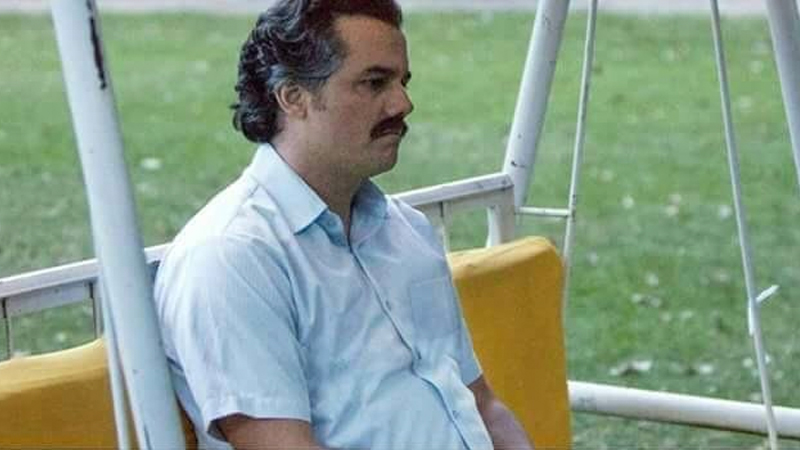
Last week was the season finale of Star Trek: Strange New Worlds, so when Thursday rolled around and I didn’t have a new installment of my favorite franchise waiting for me, I was not unlike that meme where the guy sits on a swing and pines away for something, probably football season. It was kind of pathetic to watch, actually. Just ask my wife.

“I wonder if Captain Pike’s hair misses me, too.”

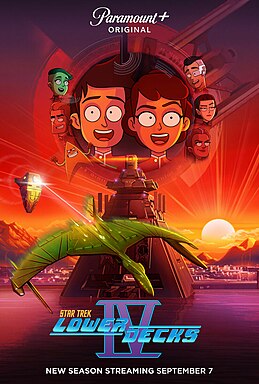
But that sadness was mitigated by the fact that in just a few short weeks, on Sept. 7, the new season of Star Trek: Lower Decks is dropping. There was a time when Star Trek went off the air and we had no idea how long it would be before it returned to television (that time was called 2005 and the answer turned out to be 12 years, by the way), but in this day and age we’ve got more to work with. There’s been a semi-regular flow of Star Trek since Discovery first hit screens six years ago, and some of it has been magnificent: Prodigy, Strange New Worlds, season three of Picard…but the truth is, of all the “NuTrek” shows, none of them have made me as consistently joyful as Lower Decks.

Boldly going to season four.

A lot of fans were dismissive when Lower Decks was announced. An animated Star Trek? A comedy? A comedy produced by someone who worked on Rick and Morty? If you’re the kind of Trekkie who wants the show to lean more on the dramatic side, it kind of sounded like a recipe for disaster. But every Trek series has had plenty of lighthearted moments, and even the occasional full-blown comedic episode (unless you’re trying to tell me we were supposed to take “Spock’s Brain” seriously), so I was happy to give it a chance.

I couldn’t be more satisfied with the results. I went in expecting to see a parody of Star Trek, but the truth is that isn’t really what Lower Decks is. It’s funny, absolutely. The characters are hilarious and the performances by the main cast are magnificent. But it’s not the comedy alone that makes Lower Decks work – what really makes it land is the fact that if you take away the jokes, you’re still left with plots that would work solidly on a more mainstream science fiction series. The season 2 finale is a great example: when a more “important” ship than the USS Cerritos is endangered on a first contact mission, our crew has to step up and save the day. Ultimately, they discover the only way to traverse a dangerous asteroid field is to strip off the outer hull of their ship and pilot through manually. (Trust me, it makes sense in context.) The scenes of the crew coming together to dismantle their own vessel and then maneuver through the field are as tense and action-packed as Trek at its best, and still funny to boot.

Many fans were won over by the first season. Not everyone, of course. There are still some who argue that Lower Decks lacks in actual comedy, and is just a rapid-fire recitation of references to other Trek series. While it’s true that the show is very reference-heavy, to say that this is the only source of comedy is untrue and reductive. So much of what makes it funny it comes from the characters, and it is the characters that make the show worth watching. The references are fun, however, and I think it’s the references that prove something that I sincerely believe to be true: the best parodies are made by people who honestly and sincerely love the thing they’re making fun of. 

Mike McMahan, the creator and showrunner of Lower Decks, was a writer on several animated shows, but he came onto the radar of the Trek producers via – of all things – a Twitter account in which he posted synopses for episodes of a fictional eighth season of Star Trek: The Next Generation. The account became a hit and he eventually rolled that into writing an officially-licensed book. Warped: An Engaging Guide to the Never-Aired 8th Season was a hilarious look at what might have been but, more importantly, the writing showed that McMahan truly understood the show, the characters, and their universe, and that was what he built the comedy on. When he got the chance to do the same with Lower Decks, it was as engaging and funny as anyone could have hoped for. 

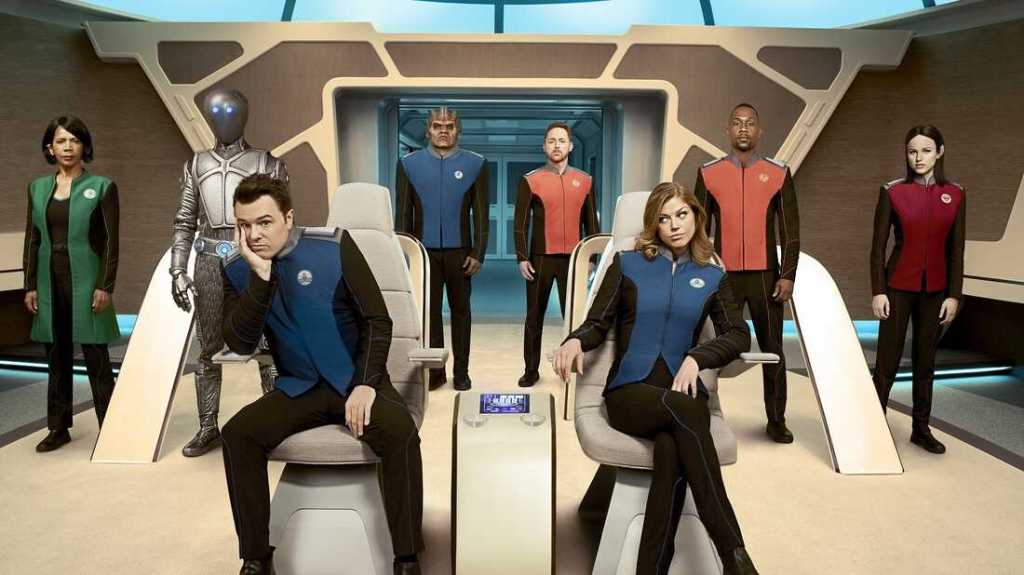
It should be noted that McMahan wasn’t the first writer to do that with Star Trek. By my count, he was at least the fourth. There are two previous projects that also take loving jabs at Trek while still working as science fiction in their own right. David Howard and Robert Gordon’s script for Galaxy Quest transports a bunch of Trek-esque actors into a Trek-stye adventure, and Seth MacFarlane’s The Orville started out as a comedic take on Trek tropes and quickly evolved into a sci-fi series as deep and powerful as Trek at its best, albeit with a few more jokes. In both cases, these were projects envisioned by creators who had a deep love of the franchise and wanted to pay tribute to it in their own way. 

“No, it’s not a Star Trek knock-off. Because our captain wears blue and our doctor wears green, that’s why.”

This is the thing that needs to be understood: something can be a great comedy and still be a great example of the kind of story that’s being told. It’s always frustrated me how the Academy Awards typically ignores comedy in most of the major categories, as if it is somehow less artful than drama. It’s only slightly better with awards shows like the Golden Globes or the Emmys, which separate comedies into their own category, with a subtle implication that they don’t deserve to compete against the “real” movies. There’s a sort of snobbish attitude that thinks of comedy as “lower” art. That’s ridiculous, of course. Comedy has existed since the birth of drama. Shakespeare’s tragedies may get more play in schools, but I’ll argue that Much Ado About Nothing is a vastly superior play to Romeo and Juliet any day of the week. And as far as the acting part goes, giving a great comedic performance is a skill set that not everyone has. All acting is about building and releasing tension, but the demands of comedy require you to land the release in a way that often far more difficult than drama. Think about how many great comedic performers have gone on to give great dramatic performances. Off the top of my head there was Jim Carrey in Man on the Moon, Robin Williams in Dead Poet’s Society, and Carol Burnett put forth a fantastic performance in the final season of Better Call Saul. Speaking of which, the “Gilliamverse” duo of Bob Odenkirk in Saul and Bryan Cranston in Breaking Bad pretty much embody this concept. On the converse, how many actors who became known as great dramatists then went on to give fantastic comedic performances? I’m sure the list exists, but the flip side is much more extensive. Go ahead, tell me Orson Welles’s best-known comedic performance. I’ll wait. 

You picked this one, right?

Great comedies are often great examples of the stories that they are supposedly parodying. Two of the most formative movies of my childhood, two of the movies that are probably responsible for shaping my sense of storytelling into what it is today, fall into this category. Ghostbusters began with Dan Aykroyd’s personal desire to tell a story about the paranormal. Although the script evolved and changed considerably from his original vision by the time it was on the screen, it was a fantastic story with some genuinely creepy moments buoyed up by some of the greatest comedic performances ever put to screen. The next year, Bob Gale and Robert Zemeckis gave us Back to the Future, a movie that’s effective as a science fiction film, but even more impressive as a relationship comedy about teenagers in love and a son rediscovering his parents. These movies are classics and are pretty much universally recognized as such. (Heck, as of this writing, Back to the Future still sits atop my personal “Perfect Movies” poll and has done so for over a year.)

Nor is this only true in film and television. Look at Douglas Adams The Hitchhiker’s Guide to the Galaxy and its assorted sequels. Begun as a radio drama before becoming part of the modern literary canon, Adams uses science fiction and humor hand-in-hand to satirize any number of targets. Terry Pratchett did the same thing with the fantasy genre in his Discworld novels – parodies of fantasy tropes, to be certain, but at the same time marvelous examples of a fully-realized fantasy world that had a lot of interesting things to say about the actual world we all live in most of the time. 

Recently I found a new member for this club of parodies that also perfectly encapsulate the thing that they’re parodying: the Hulu series Only Murders in the Building. I mentioned this show a few weeks ago when discussing shows I haven’t watched yet that I would try to get through during the (still ongoing) writer’s and actor’s strikes in Hollywood. Since then, I’ve made it through the first two seasons and begun the third, and I’m frankly angry at myself for not having watched it before. If you’re unfamiliar, the show stars Steve Martin, Martin Short, and Selena Gomez as neighbors in an enormous Manhattan apartment building. Initially strangers to one another, they bond over their mutual love of a true crime podcast. When a murder takes place in their own building, they decide to launch a podcast of their own while they try to solve it.

“That Petit guy is talking about us again. Get the murder.”

The show is a deft send-up of podcasts like Serial, with Tina Fey appearing in several episodes as an obvious stand-in for Serial’s host, Sarah Koenig. While gently mocking the format, it also occasionally says some serious things about the nature of an audience that draws entertainment from the death and suffering of real people (which, let’s face it, is what we all do when we “enjoy” the true crime genre). There are dark moments as well, as the pasts of each character are slowly opened up and revealed to the viewer throughout the course of the investigation. What’s more, the show isn’t afraid to get experimental, as we see in the format-breaking episode seven, which tells the story in a way few shows would have the guts to do. It’s also not afraid to tug at the heartstrings, as we see in season two when several episodes revolve around the concept of fatherhood and what it means, which is something that cuts into me personally pretty deeply.

In the midst of all this, though, there are two things that absolutely have to be said:

  1. The show is outrageously funny.
  2. Each season so far has been a fantastically-structured mystery in its own right.

In their mocking of the true crime culture, show creators Steve Martin and John Hoffman have managed to make one of the most engaging TV mysteries I’ve ever watched, laying out clues, unraveling threads, and sending us chasing after red herrings with the aplomb of Arthur Conan Doyle or Alfred Hitchcock. Even if it wasn’t funny, it would still be a good mystery, and that’s what really matters in regards to my grander point.

Good comedy is damned hard to do, and it deserves respect. And when that comedy lands, it’s not just funny, it’s transformative. It’s not fair to say Only Murders is a great mystery “for a comedy,” to call Lower Decks a good Trek show “for a comedy,” to say that Terry Pratchett’s Discworld novels are solid fantasy “for a comedy.” They just are. They’re great examples of their genres that also happen to be comedies.

When we can get everybody to wrap their brains around the premise, maybe the people who make us laugh will finally be able to get their due.

Blake M. Petit is a writer, teacher, and dad from Ama, Louisiana. His current writing project is the superhero adventure series Other People’s Heroes: Little Stars, a new episode of which is available every Wednesday on Amazon’s Kindle Vella platform. Hey, he hasn’t used Star Trek as a main topic in this column for six weeks now, he deserved this one.

Geek Punditry #22: Share Your Perfect Movie

A little over a year ago, in an effort to get people on Facebook to talk about something positive rather than simply despising each other as loudly as possible, I asked the following question: “What are some movies (sequels notwithstanding) that are virtually flawless in all respects, that there is no way you can imagine them possibly being improved upon, and that any discussion of remaking them would be the purest hubris?”

The goal behind this was simply to get some good-natured conversation going for a change, to get people talking about “perfect” movies that they love, but I was quickly amazed by the variety of answers I started to receive. It was also telling to me how widely spread the responses were. Plenty of classic movies got mentioned, as well as a lot of modern popular hits, but then there were the obscure movies like the Japanese drama An Autumn Afternoon or the pre-blockbuster Eddie Murphy action movie 48 Hrs. Now when I say a “perfect” movie, to me that means that there is no legitimate criticism or room for improvement, that everything about the movie is as good as it could possibly have been in the time and place in which it was made. This is, of course, inherently subjective, but that’s the point. I can give the definition to anyone, but it’s seeing what movies they think qualify that really became intriguing to me.

So I wound up doing what I usually do when I’m talking about movies and I get caught up in it: I went to Letterboxd and made a list. (Side note: I love Letterboxd. It’s one of my favorite places on the internet. It’s a social media platform where movie lovers can write reviews, share lists, and talk about movies. It’s a wonderful place for movie fans. It’s what Goodreads should be for books, if Goodreads wasn’t owned by Amazon now and every other click on the site didn’t attempt to divert you to spend money.) I listed every movie that someone suggested as being “perfect,” according to their own criteria, and I ranked them based on how many people suggested each one. I thought today it would be fun to walk through the list of suggestions I’ve collected since last year, talk about them a little, and then throw open the door for more. This list is a never-ending work in progress, so I’m always happy to hear what you think deserves a place here.

“It’s flawless.”
“But doesn’t his own mom hit on–“
“FLAWLESS.”

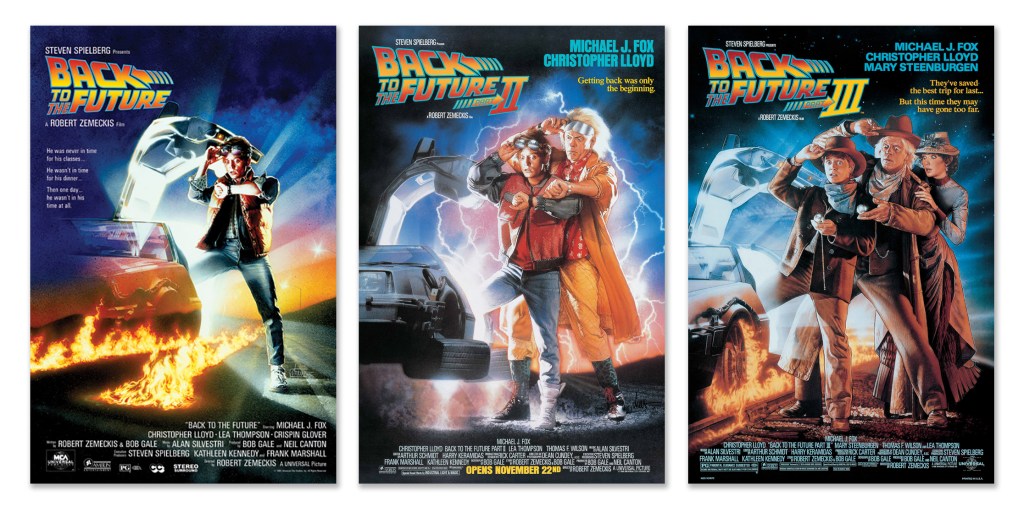
So far, 339 separate movies have been suggested by at least one person. Of those, I’ve seen 237 of them, and although I definitely don’t agree with all of them, that’s okay. The point is to see what SOMEbody thinks is perfect, not EVERYbody. The top choices, however, are pretty tough to argue with. The #1 choice, “nominated” by 12 separate people (myself included) is Back to the Future. The last time I mentioned Marty McFly and the Doc in this column, it was when I talked about Pop Culture Comfort Food – the whole trilogy is something I can throw on to make myself feel better on a bad day, but there’s something about that first movie that’s practically sorcery. Writer Bob Gale and director Robert Zemeckis found a way to weave together sci-fi time travel gobbledygook with a story that’s funny and uplifting, with a musical score by Alan Silvestri that I’d put among the top five of all time. I don’t want to get too deep into what makes this movie perfect because, let’s be honest here, you probably already know. I don’t think I’ve ever met anybody who doesn’t love the original Back to the Future, and if I did, I don’t think I could trust them.

The only reason that anyone uses the phrase “as you wish” anymore.

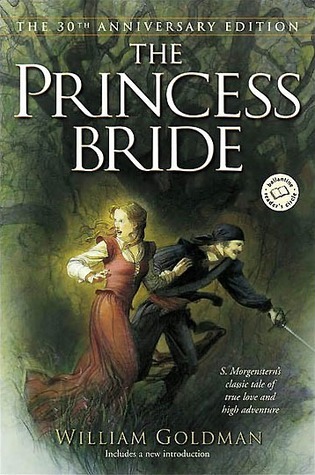
The second movie on my ranked list is also one of my comfort films (although when I wrote about it before I was talking more about the book than the film): Rob Reiner’s adaptation of William Goldman’s The Princess Bride. Eleven people suggested this one – a romantic comedy that’s full of classic quotes and unforgettable characters. It’s a fairy tale that makes everyone believe in love without making it seem like something that can only exist in fairy tales. It’s the reason people who aren’t wrestling fans know who Andre the Giant was. And sure, there are some bits about it that crack a little under scrutiny: in the fight between Westley and Inigo, for example, it’s horribly obvious when Cary Elwes is replaced by a stunt double to do flips on a bar, and the edges of the hidden mat are clearly visible when he lands a few seconds later. But I wouldn’t change those if I could – even those things are part of the film’s charm. Even the things that aren’t perfect IN The Princess Bride are perfect FOR The Princess Bride. It’s pretty telling that among the very few things that people on the internet can agree about is that NOBODY wants to see a remake of this movie.

Moving down the list from this point, a modern psychologist or anthropologist could really start to paint a portrait of the kind of people I associate with on social media, because The Shawshank Redemption and The Big Lebowski got seven votes each. These are two films that are enormously popular among people my age, movies that came out during those high school and college years in which many of us formally adopt the pop culture influences that become permanent parts of our identities. Shawshank is one of my personal favorite films, a film that takes the setting of a brutal New England prison and weaves a story about undying hope that is, in its own way, as inspiring as The Princess Bride itself. It’s a little hobby of mine to tell people who don’t already know that it’s based on a book by Stephen King, especially if they don’t like horror and they think that’s all he can write. 

Add in The Matrix and you’ve got 74 percent of college dorm walls circa 1999.

The Big Lebowski was my generation’s Rebel Without a Cause, a movie that was elevated to a lofty position based on the Rule of Cool. People saw in Jeff Bridges’s character a sort of carefree slacker god. “The Dude” became a role model, and while the lifestyle he enjoys in the film isn’t really something that works in the real world, that doesn’t particularly matter when it comes to making us fall in love with a movie, does it?

There are two kinds of people: people who love The Iron Giant and people who…I don’t know…probably murder kittens in their sleep.

The Iron Giant got six mentions, and if there’s any movie that deserves more it’s this one. The story, about an alien robot who falls to Earth and learns what it means to be human, resonated with me instantly. It’s the best Superman movie without Superman in it that you’ve ever seen, and it’s easily the most animated performance Vin Diesel has ever given. 

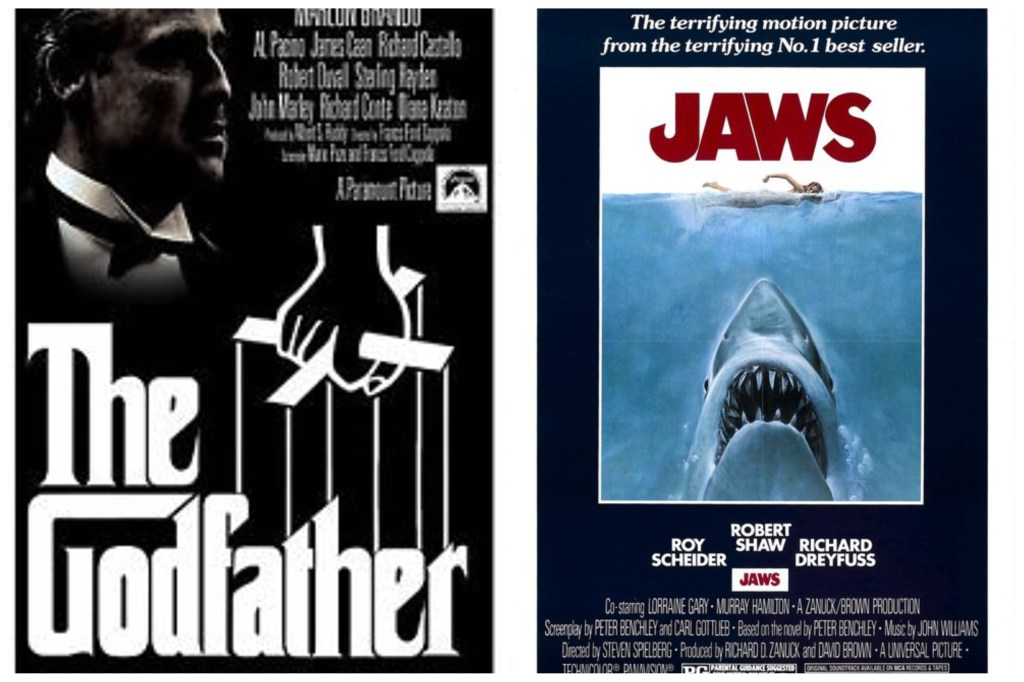
Next up, we get clumps of movies with the same number of votes. Five people each voted for Alien (the original), Clue, The Godfather, and Groundhog’s Day, and I would not argue with any of them. Four votes each go to Casablanca, Heathers, Labyrinth, The Lord of the Rings: The Fellowship of the Ring, Raiders of the Lost Ark, and my wife Erin’s favorite movie, Jaws. Again, there’s nothing here that I would really disagree with, except to say that I think some of those deserve a higher rating (which you, dear reader, are invited to provide if you’re so inclined).

Two movies made perfect by way of subtraction.

I do want to point out here that The Godfather and Jaws both occupy places on a very small but important list: movies that are better than the book they’re based on. The standard argument is that the book is better, and I agree that it’s usually true, but these two pretty darn perfect movies both got that way by jettisoning parts of the respective books that would have hurt the films. In the case of The Godfather, a long and rather uncomfortable subplot about Johnny Fontaine and his sexual conquests is reduced to little more than a cameo for the character in the film. The subplot is unpleasant to read and really has nothing to do with the story of the Corleone family, which is what the story is really about. In the case of Jaws, there’s a subplot about Ellen Brody having an affair with Matt Hooper, which is obviously the sort of shenanigans that the wife of the police chief worried about a killer shark and the marine biologist who has been called in to help capture said shark are going to get down to in between measuring the bite radius on the remains of the victims. I don’t know, maybe it had something to do with the 70s, the idea of throwing in unnecessary storylines about people gettin’ down, but thank goodness the filmmakers had the good sense to leave those parts out of the respective films. Had they gone in intact, I don’t know that I could support either of those movies being on this list.

I’m not going to go through the entire list here – there are still over 300 movies that I haven’t mentioned yet. But I invite you to read the list yourself and let me know if you agree or disagree. The list is a work in progress. I’ve added several movies myself since I first drafted it (Everything Everywhere All at Once being the most recent film that I’ve seen to make the cut) and I’ve periodically asked for more suggestions. Now I’m asking you. Are you irritated that your favorite movie didn’t get mentioned? Hey, mention it yourself! You think a movie that’s down at position #187 deserves to be higher? Give it a nomination and it’ll move up. You’re angry because you don’t think #163 deserves to be on the list at all? Well, sorry to say it, but that’s not going to change. Even if you don’t like it – even if I don’t like it – somebody called it perfect, and that’s all it takes to get on the list.

You can make suggestions here on the blog, on the Letterboxd list itself, or on whatever social media platform you used to follow the link. And remember the ground rules: first, no “joke” suggestions. Sarcasm doesn’t always translate that well on the internet, and if I think you’re suggesting something ironically, I’m just going to throw it out. Second, no BULK suggestions. Don’t just say, for instance, “all the James Bond” movies, because there are 26 of them and if you say “all of them” I’m going to question your critical thinking skills. And finally, be specific. Some stories have been told more than once, some titles have been used multiple times. Don’t just say Hamlet, tell me WHICH Hamlet – preferably the year of release, but at least tell me who the actors are so I know which version you’re voting for.

If nothing else, it’s a chance to see what movies people love, what movies matter to people, and to make your voice heard at least a little. And for the chance to talk about what people enjoy, I think that’s worth the few moments of thought.

Blake M. Petit is a writer, teacher, and dad from Ama, Louisiana. His current writing project is the superhero adventure series Other People’s Heroes: Little Stars, a new episode of which is available every Wednesday on Amazon’s Kindle Vella platform. TV shows don’t count for this experiment, unfortunately, or else his son would no doubt have forced a thousand episodes of Paw Patrol onto the list. 

Geek Punditry #9: Pop Culture Comfort Food

Reportedly, there are studies that indicate people like rewatching old TV shows and movies because there is comfort to be found in familiarity. I don’t have those particular studies in front of me because I don’t feel like looking them up at the moment (this is a highly scientific approach), but I completely believe it. When the world is starting to be too much, I often find myself going back to movies, books, or comics that I have enjoyed before. There’s something about returning to old stories that makes it feel like you’re reconnecting with a friend. There’s an ease and a comfort that can be desperately needed when there’s a weight on your shoulders, when the anxiety begins sending the pins and needles across your skin, when every text or phone call makes you worry that the worst has happened. I go back to these things a lot, is what I’m saying.

And since I know I’m not alone in this, I thought that this week I would share with you some of my storytelling comfort food. I’m going to tell you one example from each of my preferred forms of media (movies, TV, books, and comics) that I can and have returned to more times than I can count, stories I know as well as the walk from my car to the front door, characters who are as close to me as family. When I’m feeling down or beat up or that nothing is going to be okay, these are the places I turn to so that I can be reminded…sometimes it can be.

Movies: Back to the Future 

A series that never fails to take you back in time.

In the interest of clarity, I guess I should say the Back to the Future trilogy, because heaven knows I can never stop with one. The first movie came out when I was 8 years old, and I distinctly remember sitting down in front of the fireplace after my parents rented it and put the VHS tape in. I remember how quickly and deeply I fell in love with the film and how we went to the movies together to see Part II, and how we went out during a storm while out of town on a family vacation on the opening weekend of Part III to see just how the saga concluded. I even remember my father commenting on the weather and saying that anybody who went out in it to see the movie must have been a die hard fan. Which, of course, I was.

I know I don’t have to explain to anyone why these films are so great, and I’m certainly not going to waste any time on a recap, but I’m going to tell you what it is about them that makes me feel better. Part of it, like with all of the things I’m going to share with you, are the characters. There’s something about the unorthodox friendship between Doc Brown and Marty McFly that resonated with me even as a child. I had already spent years dreaming of being picked up by a tornado and thrown to Oz or finding a closet door with a passage to Narnia, but even at eight it was starting to seem like either of those would be a stretch. Finding an eccentric mentor who would bring me along on grand adventures seemed much more plausible. Even now, at a stage in life where I find myself relating more to Doc than Marty, that relationship seems pure and genuine. (Ironically, I think that’s part of the reason Rick and Morty became so popular so fast – it’s a parody of the Doc/Marty relationship, but that parody wouldn’t have worked as well if there was something foul or sordid about the original.)

Then there’s the basic fantasy of time travel, of being able to hop into a machine that can whisk you away to another place. The idea of seeing the past and the future is tantalizing, and I would be lying if I said I wouldn’t be tempted to use Gray’s Sports Almanac the same way Marty intended to. 

The other thing, which people may perhaps not think of immediately but I consider of utmost importance, is the music. The best movies often have memorable scores, but Alan Silvestri’s composition is one of the all-time greats. The sweeping tones automatically bring to mind the film, hit those triggers in your memory and pull you into the world of Hill Valley, and charge your heart with anticipation. The music moves from exciting to thrilling to, ultimately, triumphant. When you hear Alan Silvestri’s score to Back to the Future, you find yourself capable of believing that even when things are tough, like they were for Marty McFly, there is a solution that will make everything turn out okay in the end.

And c’mon. The car is really cool.

Television: Cheers 

Where people know troubles are all the same.

Bet you expected me to say Star Trek, didn’t you? Yeah, I know, Trek is my jam, but sometimes you wanna go where everybody knows your name.

Cheers, the sitcom about a little bar in Boston, has two distinct stages, and I love them both…but not equally, if I’m being honest. In the early years, the show was mostly a workplace romcom about Sam and Diane, with the rest of the characters there to add flavor. It was a fine show, it was a funny show, but I was a fairly young child at the time and, although my parents watched it, I didn’t really start paying attention to the series until I got older. This may be part of the reason that – although I would never skip the Diane years when doing a rewatch – it’s the Rebecca years that leave the most indelible mark on my memory.

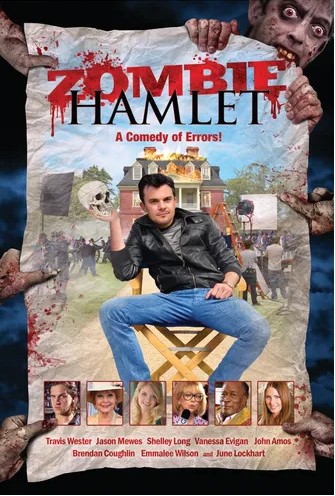
But my relative age isn’t the only reason the second life of Cheers is my preferred era. Like I said, during the Shelley Long years, the show centered around Sam and Diane’s relationship. This was good. This made for some excellent television. But after Long left to become a major movie star (I recently watched her performance in 2012’s Zombie Hamlet, and I highly recommend it), they replaced her with the recently-deceased Kirstie Alley, and although there were the occasional flirtations with making her couple off with Sam like they did with Diane, the writers wisely realized that the same chemistry wasn’t there, and shifted the focus from a romcom to more of an ensemble comedy. The other characters grew in prominence, Rebecca Howe found a different niche to fill than the one vacated by Diane Chambers, and the show blossomed yet again. 

While the likes of Woody, Cliff, Carla, and Norm all had their moments in the pre-Rebecca days, post-Diane they had far more episodes in the spotlight. Frasier Crane was a Diane castoff who stuck around, but it was in the Rebecca era that he bloomed to one of the stars of the show, eventually spinning off into his own series (also a comfort watch for me), with a revival of the latter currently in the works. I’m not saying that the early years of Cheers weren’t GOOD, please don’t misunderstand me. It was a remarkable comedy, the character of Coach was sorely missed for the rest of the series, and the episode guest-starring John Cleese is perhaps one of the funniest half-hours of television ever put to film. It’s just that the pure love I feel for the series, the way I have affection for these characters as if they were personal friends of mine, the fact that I remember that Frasier’s first wife “Nanny G”’s phone number was 555-6792…that’s all a product of the Kirstie Alley years, and I’m fine with that.

Boy, I deserve some sort of trophy for THAT deep cut. 

Book: The Princess Bride by William Goldman. 

Skipping this would be inconceivable.

I may be cheating a little bit here, since much of what is wonderful about this novel is also applicable to the movie, which I also love and watch as comfort on many an occasion. But this is probably the novel I have read more times than any other (a feat which I insist is more impressive than the movie you’ve watched most often). It is the book I pick up when I’m sad. It’s the story I turn to when I’m depressed. It’s the tale I want to hear again when I feel like there is nothing good and beautiful in the world. I need this story at those times, because if it were true that there is nothing good and beautiful in the world, then how could a novel such as this even exist?

I know you’ve seen the movie, so I won’t bother to retell you the story. Instead, I’ll tell you about the elements unique to the book so that you can understand why it resonates with me so deeply. 

First of all the framing sequence. In the film, the tale of Westley and Buttercup is being read by a grandfather to his sick grandson. In the book, Goldman creates a metatextual story (this was before metatextual stories) about his own family, in which his father read the story to him as a child. It was not until adulthood that he tried reading it himself to his own son (a fictional son, by the way, as the real William Goldman had only daughters) and realized his dad skipped all the boring bits and just read him “the good parts.” The book is presented as adult Goldman abridging a classic novel by getting rid of all the flowery muck and bits of Elizabethan satire that modern audiences wouldn’t give a crap about. It’s a really funny conceit, and it’s executed so perfectly that a lot of people reading the book for the first time don’t realize the framing sequence is fiction as well. (It’s me. I’m a lot of people. I didn’t get it the first time.)

Second, the writing is simply marvelous. A lot of the great bits of dialogue made it into the film, which isn’t a surprise since Goldman wrote the screenplay himself, but there simply wasn’t room for everything, and many of those pieces left on the floor are absolutely priceless. For instance, the movie largely ignores Buttercup’s parents and their unending bickering, for which they keep score. It skips over the history of Fezzik entirely and leaves out all but the most essential parts of Inigo’s backstory, which makes an already amazing character so much richer. There’s more time spent with Humperdink, more time devoted to Vizzini, and much more to Westley and Buttercup’s burgeoning romance. Because yeah, it is a kissing book.

I don’t begrudge Goldman any of the cuts, of course. The very premise of the novel is that sometimes parts of a story don’t translate from medium to medium. But if you’ve only seen the movie you haven’t experienced the whole story.

The last thing about this book is perhaps the most important: the message. In the framing sequence, Goldman discusses a conversation with an old neighborhood woman who served as something of a mentor to him. This segment concludes with the child Goldman learning that life isn’t fair. Rather than being angry or hurt at the realization, though, he is utterly jubilant to hear the news, because once you accept that life ISN’T fair, isn’t SUPPOSED to be fair, then a lot of the crap the world throws around suddenly makes a LOT more sense. This is, I think, a very important message, and the great thing about it is how it is presented in a way that is joyful and positive rather than dour and depressing.

The point I’m getting at is that if you haven’t read this book, you should, and I’m envious that you’re going to get to experience it for the first time, which I will never have the chance to do again. But hey, that’s all right, because life isn’t fair.

Comics: The Triangle Era Superman.

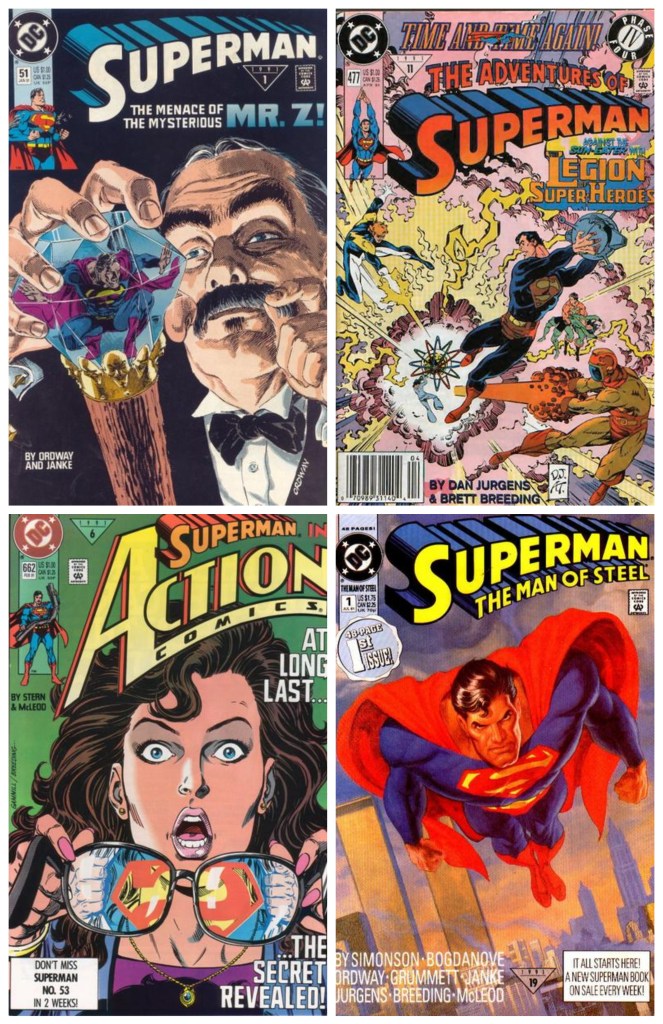
This was MY Golden Age

Okay, this paragraph is just for the uber-nerds like myself who already know all about the “Triangle Era” of Superman. The rest of you can skip to the next paragraph. Ahem. I’m about to give a super-condensed history of the era. I know I’m leaving out a bunch of stuff. Like William Goldman, I choose to focus on the good parts rather than telling everybody the intricacies of comic book numbering and whatnot. Please don’t send me corrective emails.

In 1986, DC Comics hired writer/artist John Byrne to revitalize the Superman character. He took over both Superman and Action Comics, the two titles that starred the hero, and they added a third book to the line as well, Adventures of Superman, which was usually done by other creators such as Marv Wolfman. After a while, Byrne left the character in the hands of other writers and artists, and while he had done good work in his time, it was after his departure that a certain kind of alchemy began to happen. With Superman starring in three comic books a month, the writers and artists would have to collaborate to make sure they weren’t contradicting or causing problems for each other. This collaboration began to grow more intricate, and in time, the three different titles began to function almost as one. Stories that began in Adventures of Superman one week would continue in Action Comics the week after. Before long a fourth title was added, Superman: The Man of Steel, so that there were four monthly Superman books that worked almost as a single weekly title. Then someone noticed that 4×12=48, but there were 52 weeks in a year, so a fifth title (Superman: The Man of Tomorrow) was added to fill in the extra gaps. At some point, DC started to put a triangle on the cover of each issue demonstrating which week of the year it was to help readers keep track of what order the books went in, thus the “Triangle Era” was born.

The weekly nature of the serial was a great concept. Knowing that there would be a new chapter of an ongoing storyline each and every week forged hardcore loyalty and created a devoted fanbase that still exists today. What’s more, although the main story was ongoing, each individual series had its own subplots that made it stand out. Adventures, for example, was more often going to deal with the mad scientists of Project: Cadmus, while Man of Steel devoted time to a story about an orphanage and a young child who would eventually be adopted by Perry White. The books were part of a larger whole, but still had their own flavor and identity.

The Triangle Era lasted over ten years, but those early days happened just as I started reading the books and featured many of the writers, artists, and storylines that are still most dear to me: Lois learning Clark’s double identity, their engagement and marriage, the somewhat vindicated-by-history era of Superman Blue/Superman Red, the classic “Panic in the Sky” storyline, and of course, the legendary Death and Return of Superman were all products of the Triangle Era. Like all comfort media, part of my love for these books is no doubt because these were the comics I read in my formative years. But there’s also the fact that, for a very long time, these comic books were just really good. The world of Superman, which had not-undeservedly been called stale and out of date a decade earlier, was suddenly energetic, exciting, and full of new characters, concepts, heroes, and villains. Many people have made Superman comics over the years, but Dan Jurgens, Brett Breeding, Roger Stern, Bob McCleod, Jerry Ordway, Tom Grummett, Louise Simonson, and Jon Bogdanove remain the gold standard in my mind.

As the song goes, these are a few of my favorite things. These are stories, characters, and worlds that I never grow tired of. These are the things that mean something to me, things I flat-out refuse to let go of, things that come together and help make me who I am.

So what are yours?

Blake M. Petit is a writer, teacher, and dad from Ama, Louisiana. His current writing project is the superhero adventure series Other People’s Heroes: Little Stars, a new episode of which is available every Wednesday on Amazon’s Kindle Vella platform. He bets you thought he was kidding about Zombie Hamlet, didn’t you?

Pictured: the career worth leaving Cheers for.