Geek Punditry #134: Three Wishes For the DC Universe

I’m sitting here two weeks after the debut of James Gunn’s Superman movie and I’m quite happy. As of the time I write this, it’s sitting at almost $260 million domestically and nearly $433 million worldwide, which in this post-COVID era is nothing to sneeze at. It’s already the top-grossing superhero movie of the year so far, and most importantly, it’s been embraced by the public. The critics love it, the fans love it, and people are still talking about it two weeks later, something you can’t really say for some of the other summer movies like Jurassic World: Rebirth. Lines like “Maybe being kind is the real punk rock” have achieved meme status, and not in a mocking way like that CEO at the Coldplay concert. Most importantly, it has gotten people reenergized. Sure, there are some people who don’t like it, and it’s fair to not like something, but if the REASON you don’t like something is because Superman believes in goodness, has a sense of humor, or wants to protect the life of even the smallest creature, then I’ll be frank: your opinion does not matter to me.

My face when I think about the bit with the squirrel.

With this movie doing well, eyes are now turning to the rest of James Gunn’s new DC Universe. When he and producer Peter Safran took over as co-heads of DC Studios a few years ago, they announced a slew of projects, but Gunn has also been very clear that he’s not going to move forward with anything until the script is ready, so several of those projects are on the back burner. The ones that are definitely on the schedule are – in order of release – season two of the Peacemaker TV series next month, the Lanterns series for early next year, the new Supergirl movie next summer, and a Clayface movie next fall. (Clayface, by the way, is the most indicative of the fact that Gunn is not married to a roadmap – it was not part of the initial announcement and Gunn said the character wasn’t even on the radar for a solo film, but writer Mike Flanagan pitched him a story that was so good they put it on the fast track.)

The hero we didn’t know we needed.

Movies in the works but not yet on the schedule are a Brave and the Bold movie (featuring Batman and the Damian Wayne Robin), The Authority, Swamp Thing, and Sgt. Rock. On TV, they’re working on live-action shows including Paradise Island, Waller, and Booster Gold, and in animation, they’re working on Blue Beetle, Mr. Miracle, and a second season of Creature Commandos. Other things have been tossed around, including a movie featuring Bane and Deathstroke, and Supergirl screenwriter Ana Nogueira has reportedly turned in a script for a Teen Titans movie AND has been hired to do a script for Wonder Woman. Following the success of Superman, rumors are flying about shows starring Edi Gathegi’s Mr. Terrific and Skyler Gisando as Jimmy Olsen. There are other series and films in the works as well, but the ones I haven’t mentioned thus far (such as the sequel to Matt Reeves’ The Batman or an animated Starfire series for children) are mostly intended to be part of DC Studios’ “Elseworlds” imprint and not part of the DCU proper. 

So obviously, there’s a LOT to look forward to in the next several years. But what is it I always say about fans? What do fans want above all else?

That’s right. Fans want MORE.

So today I want to talk about my Three Wishes for the new DCU. What are three projects that I would love to see? If I had a chance to sit down with James Gunn and convince him to add three of my dream projects to the schedule, what would they be? Let’s do one live-action series, one animated series, and one movie, just to cover all the bases that this DCU is touching. I’m also going to try to incorporate some themes or genres that the other projects haven’t gotten around to yet. 

Live action series: Legion of Super-Heroes
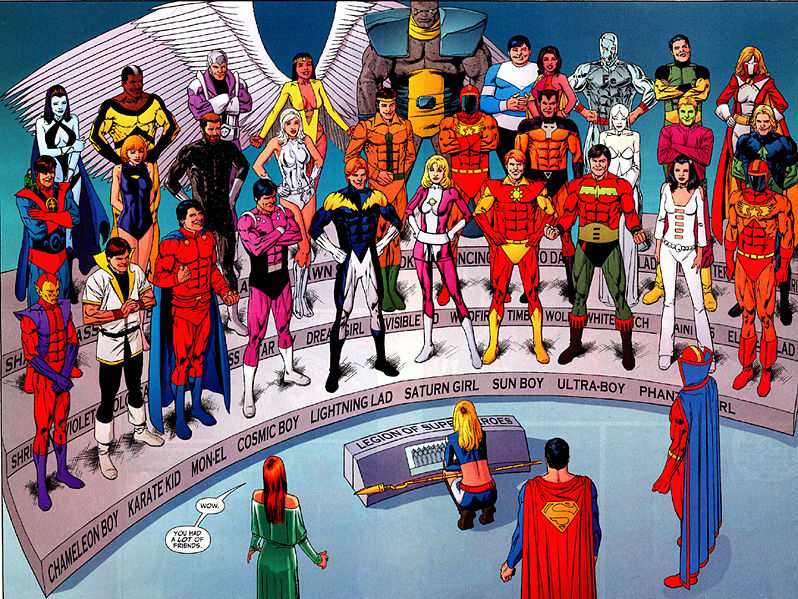
Call the casting department and tell them to put a pot of coffee on.

My love for the Legion of Super-Heroes is no secret. I think it’s one of DC’s greatest franchises: the heroes of the 31st century, who have modeled themselves after the greatest heroes of our time. Dozens of heroes from different worlds, cultures, and species, allowing for any number of different characters and character dynamics. The series presents an opportunity to do science fiction and superheroes at the same time, and as Gunn has made it clear that he wants the different DC projects to each have a different feeling, this would fill a niche that isn’t there yet. (Okay, technically I suppose the Lanterns TV series will have a science fiction element to it, but from all the descriptions it seems like that show is going to be more of a military mystery/drama. That’s great, but I want a real space opera.) 

But this would have to be a TV series. The Legion of Super-Heroes is, frankly, just too big for a movie. There are literally dozens of characters in the group, and even if you were to narrow down the focus to a core group of, say, seven or eight, you need time to explore who each of them are and how they relate to one another. You couldn’t do justice to the Legion in two hours. 

The next thing is that I believe that the Legion is strongest as a spin-off of Superman. It’s how the characters were first introduced back in 1958, as kids who loved the legend of Clark Kent and travelled back in time to recruit him to join their club when he was just a teenager. It creates something of a stable time loop: the Legion models itself after Superman, but the Legion also taught Clark Kent to be a superhero in the first place. So I would use the early 2000s Legion of Super-Heroes animated series as my inspiration, casting someone to play a teenage Clark Kent and having him as a regular member of the cast. This would also open the door to have David Corenswet do a cameo as adult Clark at some point, probably in the last episode. 

I don’t know if Corenswet is a jewelry guy, but I think this ring would look pretty good on him.

What’s more, although the Legion is set 1000 years in the future, that doesn’t mean that it can’t still be used to establish things for the contemporary stories. Alien races like the Khund or the Dominators, who could easily show up in other DC projects, could be introduced there. And the series could be used to give sneak peaks as to what will happen in the other movies and shows. (“Hey, why does the woman in this old photo have a golden lasso?” “Don’t worry, Clark, you’ll find out soon enough.”) 

Is the reason I’m suggesting this series just because I love the Legion and I want other people to love it too? I’m not gonna lie, that’s probably at least 75 percent of my reasoning here. But that doesn’t make it a bad idea. I think this show could be great. 

Animated Series: Deadman

With Clayface playing in the realm of body horror (it has been compared, tonally, to David Cronenberg’s The Fly), the supernatural corner of the DC Universe is waiting for some exploration. Deadman is the answer. If you’re unfamiliar with the character, Boston Brand was a circus performer who was murdered in the middle of his act. Rather than going to the great beyond, though, he was sent back to Earth as a ghost to solve his own murder. With the ability to possess the bodies of other people, Deadman has had a long and bizarre career as a superhero that most people (even in the DC Universe) don’t even know exists. 

And you thought YOUR Monday sucked.

By the very nature of who the character is, Deadman has been used plenty of times to delve into the world of horror stories. He is, of course, a literal ghost, so haunted houses and poltergeists and all manner of demonic foes are par for the course for him. And he also regularly runs across other DC characters who are mired in this world of magic and the supernatural, like the Spectre, the Phantom Stranger, and Zatanna, giving a series of this nature an opportunity to open up the world even further.

As for why it would be best as an animated project – there’s a certain creative freedom in animation. It allows you to do things that would stretch credulity in live action, even with the best special effects. Have you ever noticed that the animated Star Trek series are far more likely to bring in characters who are not, strictly, humanoid? Creatures with three arms or body types that you could never fit a human actor into? That’s because in animation you don’t have to pay for huge animatronics, make actors spend days in the makeup chair applying heavy or even painful prosthetics, or worry about sketchy CGI that just doesn’t mesh against the human actors standing in front of a green screen. Animation would give them the freedom to really explore the afterlife, plunge into the depths of Hell, or put Deadman through extreme transformations like the nearly-skeletal Kelley Jones version of the character without having to torture the performers. 
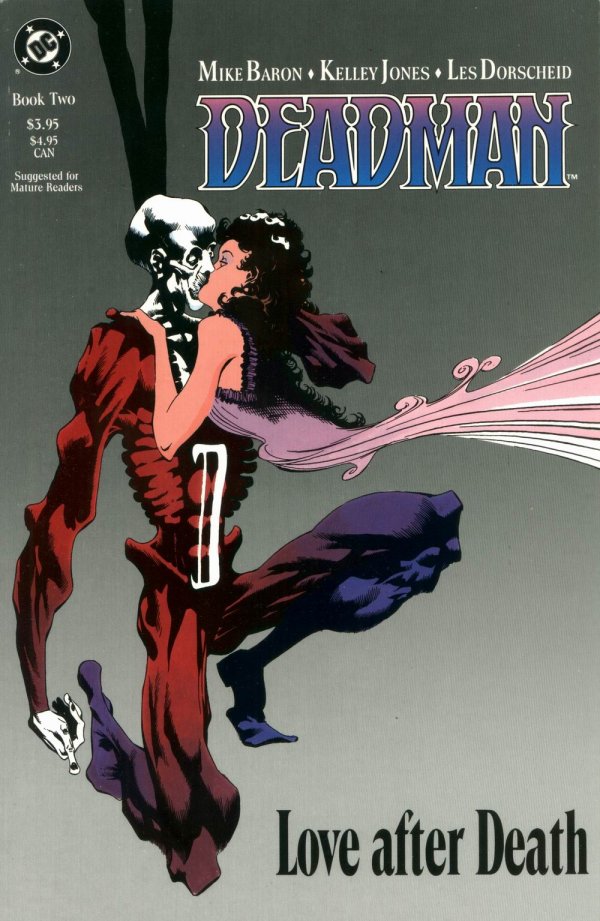
Very few actresses would be willing to have their torso removed to do this scene justice.

It could be groundbreaking in another sense as well. Animation is finally starting to crack free from the decades-old bias that it’s only intended for children, but it’s still rare to see adult-oriented animated projects that aren’t comedies. Even Creature Commandos, which was basically an action movie with monsters, leaned heavily on dark humor. Any humor in Deadman would likely come from Boston himself cracking wise, as the situations he plunges into would be deadly serious…no pun intended. 

Movie: Firestorm

With page-rippin’ power!

Firestorm is one of DC’s perennial B-listers. The character inspires incredible amounts of devotion from his fans, but the NUMBER of fans just isn’t big enough to crack him into the mainstream. This could finally be a chance to fix that. Although several characters over the years have shared the name and the powers, the crux is usually that two people (originally scientist Martin Stein and high school student Ronnie Raymond) are fused into a single super-powerful being as the result of a nuclear accident. One of the two – Stein in the original – is dormant in the fused Firestorm persona, only able to offer advice to the one who’s steering the ship. This allows for a sort of “odd couple” dynamic, putting together two characters who don’t necessarily belong together and forcing them to literally work as one for the greater good. 

Writer Gerry Conway, who co-created the character, had done a long run on Marvel’s Spider-Man and was attempting to recreate the dynamic of a younger hero, which DC didn’t really have at the time. Their heroes were all older, the younger ones were all sidekicks, so putting a teenager in the driver’s seat was different for them, and the character quickly became beloved, even becoming the youngest person to ever join the Justice League (at the time at least). But after 100 issues of his solo series, the doors were shuttered way back in 1990 and, despite several strong attempts to give him a resurgence, he’s struggled to really become big again ever since.

For the movie, I would make Martin Stein sort of the “man in the chair,” the person inadvertently responsible for Firestorm, but not part of Firestorm himself. I’d keep the part of Ronnie’s origin where he gets suckered into joining a group of “protestors” to impress a girl, only to find out that they’re actually eco-terrorists. But when the accident happens, rather than fuse with Stein, I’d have him fuse with the second Firestorm, Jason Rusch, who I would make Stein’s lab assistant. 

“Fusion Confusion” was my nickname when I worked at that restaurant making sushi burritos.

The dynamic we’d have here would be Jason believing Ronnie’s a dumb jock while Ronnie sees Jason as a stuck-up egghead, and the two would slowly and begrudgingly learn to respect each other – the old “together we are more than the sum of our parts” routine. The eco-terrorists would be linked to a bigger bad, of course, who is targeting different scientific institutions in the DCU such as S.T.A.R.Labs, and giving us an opportunity to include other science-based heroes such as Captain Atom, Hourman, Stargirl, or the Flash – who has been oddly absent from all official conversation about the current DCU. There’d even be a clear opportunity to bring in Edi Gathegi as Mr. Terrific again, because when you have a science problem, who better to call than the smartest man in the world? I kind of like the idea of Stein being one of Mr. Terrific’s former professors who now finds himself running to his old student for help. 

Okay, James Gunn, the ball is in your court now. You’re doing a great job so far, don’t get me wrong, but there’s always room to bring in even more goodness. Here are my suggestions. 

Now I’ve got to get back to finishing up season one of Peacemaker before season two drops. 

Blake M. Petit is a writer, teacher, and dad from Ama, Louisiana. His most recent writing project is the superhero adventure series Other People’s Heroes: Little Stars, volume one of which is now available on Amazon. You can subscribe to his newsletter by clicking right here. He’s also started putting his LitReel videos on TikTok. Come back to him in a month, he’ll probably have three totally different suggestions. 

Geek Punditry #120: Fighting the Easter Special Deficit

I’m just gonna come out and say it, friends: there are not enough great Easter specials. There are a billion Christmas TV specials, and a healthy number for Halloween, but other holidays often get the short end of the stick. Were it up to me, every single holiday – including Happy Honda Days– would come with at least two specials, one by Rankin and Bass and another starring the Peanuts gang. 

However, that doesn’t mean there are NO Easter Specials, and so this week’s Geek Punditry is going to take a look at some of the very few that are out there and worth your time…and believe it or not, the Christmas Kings at Rankin and Bass actually took not one, but THREE swings at Easter Specials.

“I’m Casey Kasem, here to count down America’s top five Easter specials…”

First up was Here Comes Peter Cottontail from 1971. In this special, narrated by Danny Kaye, Peter Cottontail (Casey Kasem) is tapped to become the new Easter Bunny when the incumbent is retiring. Before he takes the job, though, the Easter Bunny is approached by a bitter bunny named Irontail (Vincent FREAKING Price) who hates Easter. What’s more, he’s got a loophole to prevent Peter’s appointment to the top post – apparently the rules say that the Chief Easter Bunny will be whoever delivers the most eggs. He proposes a contest between himself and Peter, but roofies Peter’s rooster with magic bubblegum, preventing it from waking him up on the day of the big delivery competition. Ironheart has only to deliver a single egg to win the title of Chief Easter Bunny. 

As Irontail immediately sets out to ruin Easter, Peter runs into Danny Kaye’s character, an inventor named Seymour Sassafras. Seymour hooks up Peter with his time machine, piloted by a caterpillar with a French accent, and sends him back to try to win the contest. But Irontail manages to knock them off course, sending Peter on a trip through time, colliding with every major holiday in his quest to become the true Easter Bunny.

There’s a lot to unpack here.

Anybody who thought Barry Allen had a monopoly on screwing up the entire timeline because he tries to use time travel to fix his own screw-up needs to watch this special. It’s pretty bonkers, even considering this is the studio that had Rudolph similarly travel from one time island to another in order to find Baby New Year. But the best reason to watch this special is to listen to Vincent Price himself hamming it up as the villain of a kid’s Easter special. He’s deliciously evil, and somehow absolutely perfect. I wish we’d gotten more of him and a little less of the singing French caterpillar.

Let’s celebrate the holiday by DESTROYING EVERYTHING YOUR CHILD LOVES.

Rankin and Bass’s second Easter special came in 1976 with The First Easter Rabbit. This film is a loose adaptation of Margery Williams’s children’s book, The Velveteen Rabbit, which I remember reading as a child and finding remarkably depressing. This version is considerably peppier. When a little girl contracts scarlet fever, all of her clothes and toys are tossed aside to be burned, including her beloved stuffed rabbit, Stuffy. A passing sprite named Calliope sees the bunny and takes pity on it, bringing it to life and whisking it off to the North Pole, where the now-living Stuffy meets Santa Claus. Santa convinces him to take on some of the responsibility for the Easter deliveries, but Stuffy winds up in battle with a sort of snow demon named Zero, because there were a LOT of those in the Rankin and Bass universe. The special has a happier ending than the book, if I recall correctly, but it’s still probably my least-favorite of Rankin and Bass’s Easter specials.

“You’ve gotta invite me in if you want me to give you some eggs, Jimmy.”

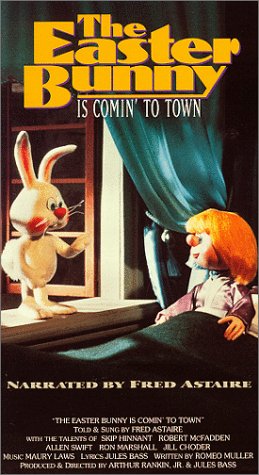
In-between the other two is the 1977 special The Easter Bunny is Comin’ to Town. In this one, Fred Astaire returns as S.D. Kluger, the mailman who told us Santa Claus’s origin story in Santa Claus is Coming’ to Town. He does it again, this time weaving the tale of an orphaned bunny rabbit named Sunny and how he grew in prominence to become THE one and only Easter Bunny, even overcoming the machinations of an evil bear named Gadzooks who hates ALL holidays. This one is almost a beat-by-beat knock-off of the earlier Santa Claus special. It’s not just the same idea, it’s almost the same PLOT. I suppose a little kid doesn’t notice, but as an adult who spends – I’m going to be honest here – entirely too much time analyzing the structure of children’s animated specials, it stands out like a fireworks display. But what I find amusing is that, despite this being the Easter special most directly copying one of the Rankin and Bass Christmas specials, it’s the ONLY one that doesn’t include an appearance by Santa Claus.

“Oh no, not THIS again…”

I’m more enamored with a non-Rankin and Bass special, one featuring the star of the recent cultural phenomenon The Day the Earth Blew Up: A Looney Tunes Movie. I refer, of course, to the 1980 TV special Daffy Duck’s Easter Egg-Citement (or sometimes just The Daffy Duck Easter Special). In this era, there were several Looney Tunes compilation specials – a new cartoon frame story wrapped around classic cartoons from the Looney Tunes catalogue. I like this one mostly because it’s a sort of take on the greatest Daffy cartoon of all time, Duck Amuck. Not unlike that earlier masterpiece, in this special Daffy finds himself at odds with the animator of the cartoon itself. This time, he’s trying to get things suitably in the season for Easter, but stuff keeps happening. As with all of these compilation shorts, the best thing about this is revisiting the classic cartoons…but this isn’t bad.

Not pictured: Lucy, being SERIOUSLY pissed off.

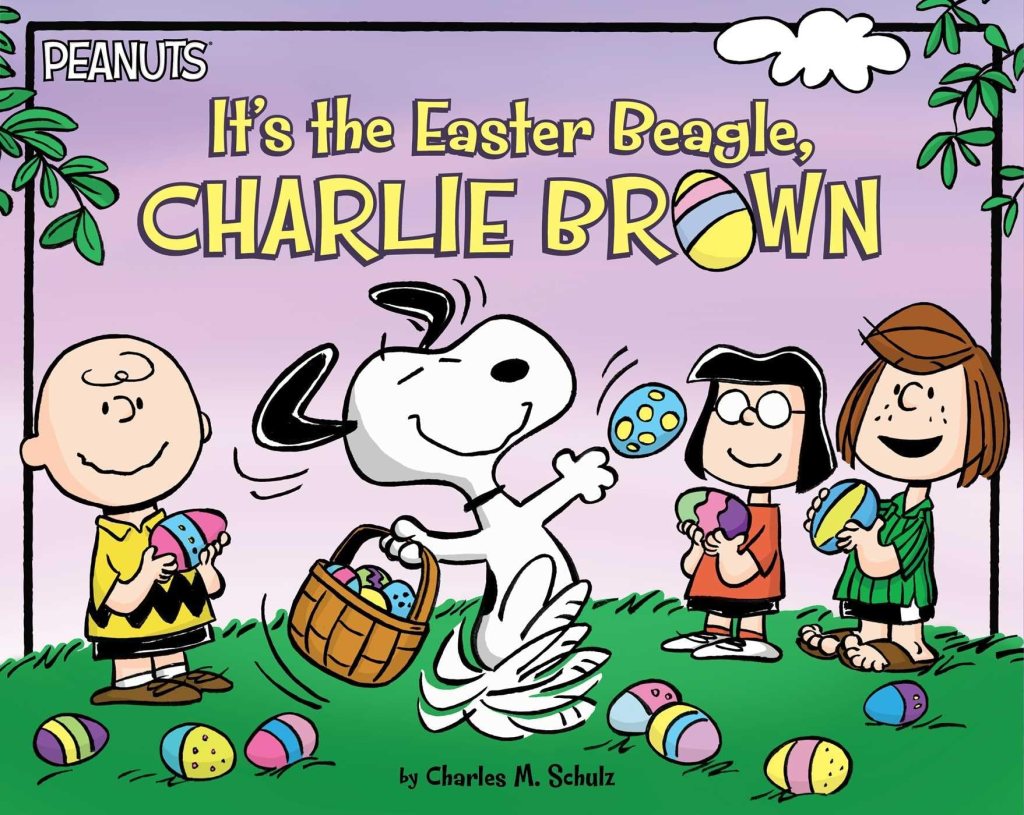
Perhaps the most famous Easter special of them all, though, is the 1974 epic It’s the Easter Beagle Charlie Brown. With Easter approaching, the Peanuts gang is caught up in a series of semi-related storylines, kind of like a Robert Altman film. Peppermint Patty is determined to teach her sidekick Marcie the proper way to dye Easter Eggs, but one misunderstanding after another keeps throwing things into chaos. Snoopy is trying to help his buddy Woodstock build a new birdhouse. Lucy, meanwhile, is planning to win the big Easter Egg hunt by hiding the eggs herself, carefully documenting the location of each. As all of this is going on, Linus constantly tells everyone that they’re wasting their time, because the Easter Beagle is going to take care of everything. As usual, everyone dismisses him except for Sally, although even she’s somewhat skeptical, still remembering the fiasco that happened at Halloween.

There are a few things about this special I find particularly interesting. I’ve always thought it was funny that Linus – the wisest and most philosophical of Charles Schulz’s characters – has such a fundamental misunderstanding of not one, but TWO major holidays. I also like the callback to the Great Pumpkin special, one of the few such callbacks in the major Peanuts specials. Similar to Linus, Marcie is usually painted as the voice of reason whenever Peppermint Patty starts going overboard, so seeing her constantly screw up their efforts to do something as simple as preparing Easter Eggs is actually really funny. But perhaps the best gag in the whole cartoon comes when the gang goes down to the store to pick up some more eggs (following Marcie’s most recent debacle) only to find the whole place already decorated for Christmas.

As you can see, if you’re looking for a truly legendary Easter special to share with your kids…well, the pickins are a little slim. We need more. And I’m not even sure where to find most of these specials these days – I own most of them on DVD, but I don’t know if those DVDs are still available. You can possibly find some of them on YouTube, and the Charlie Brown specials have been in the nefarious domain of Apple TV for a few years now, but other than that, we’re really at quite a loss. So my special message, to the animation studios of the world, is to give us a few more great Easter specials next year. Let’s have the Addams Family grappling with a holiday so dedicated to pastels, let’s see Batman chasing down the White Rabbit on the streets of Gotham City…shoot, I’d even settle for something with Minecraft. I don’t really know much about Minecraft, but I’m led to believe there’s a chicken involved, which certainly implies the presence of eggs.

Blake M. Petit is a writer, teacher, and dad from Ama, Louisiana. His most recent writing project is the superhero adventure series Other People’s Heroes: Little Stars, volume one of which is now available on Amazon. You can subscribe to his newsletter by clicking right here. He’s also started putting his LitReel videos on TikTok. Sorry to cut this short, but he’s got his own eggs to dye. 

Geek Punditry #81: Whatever the Era

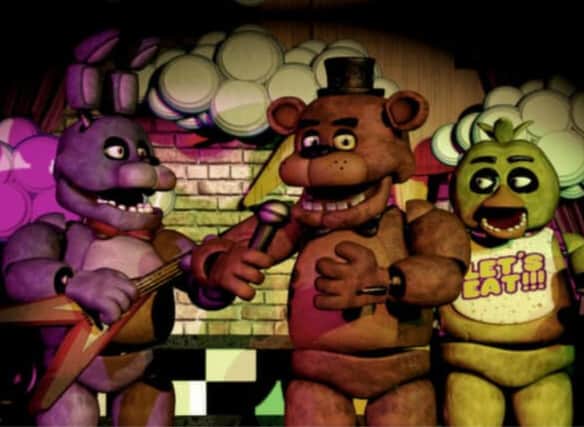
During the school year, I spend most of my time around teenagers. I teach high school English, and as such I am constantly exposed to the youth of today, with their thoughts and their ideas and their imaginations and occasionally their aromas, because some of these kids pay as much attention to the personal hygiene lessons in health class as they do when I’m trying to get them to understand 1984. But it’s July and school is not currently in session, and the only teenager in my usual orbit is my 13-year-old niece, Maggie, so the only teen ideas I am exposed to are mostly about something called Five Nights at Freddy’s.

“Thank you for bein’ a frieeeeeend…”

When I AM surrounded by the kids, though, one of the battles I fight a lot is attempting to convince them that just because something is old doesn’t mean it has no value. Shakespeare is the most frequently-cited example of this: yes, the language is old-fashioned and frequently archaic, but once you get past that the stories are pretty darn timeless. Romeo and Juliet is about a couple of kids YOUR AGE (or often younger, as I teach 11th and 12th graders) who want to date but their parents hate each other. Othello is the story of a man driven to homicidal envy because the girl he likes married someone of a different ethnicity. Hamlet is about a college kid whose father is murdered and then his mom marries his uncle, which everybody can agree is pretty messed up and will make Thanksgiving very awkward. When you boil it down, the greatest works of the past are just as relevant today, except that they’re too deep to discuss in-depth in a 15-second TikTok video.

Helping kids to see this, to understand the value in works of the past, is part of my job. In fact, in many ways, it’s my favorite part of my job. Don’t get me wrong, reading a well-written essay from a kid who struggled to put a sentence together at the beginning of the year is a badge of honor, but if that essay is explaining what they think the whole Green Light thing from The Great Gatsby is about in a way that makes sense…well, that’s like winning an Olympic medal. And most kids, I find, are pretty open to this, once you can find the right path in. It may take some trial and error, but I sincerely believe that any young scholar can find the value in the classics if you try hard enough.

I wish the opposite was true of their grandparents.

Tag someone you know in this picture.

A few weeks ago, I wrote about the creation of a new over-the-air broadcast network, MeTV Toons, dedicated to showcasing classic animation 24 hours a day. It’s a great idea and one that I truly hope to be able to watch if the New Orleans affiliate – which finally launched just TODAY – would boost their damn signal a little bit so I could pick it up from my house. But that’s not the point. In that previous column, I also talked about a few online communities that have sprung up around this new network. The communities are thriving now. The largest of them, which was at 17,000 members when I wrote the previous column a month ago, has ballooned up to almost 65,000 people. And as is expected, there’s a lot of talk about the cartoons and what people’s favorites are and how much they’re enjoying the network, which I love. There are also a minimum of 750 posts a day from somebody who doesn’t understand how to watch the network, because apparently many of these people, who I would estimate are largely in their 50s and 60s, have completely forgotten how antenna television works. But the worst part of this community are the entirely-too-frequent posts that exist not to talk about the classic cartoons, but to complain about modern ones.

“I hope they don’t start making NEW shows. That’s what ruined Cartoon Network.”

“They shouldn’t show anything from later than the 70s. All of that stuff sucks.”

“You know who’s a fan of Powerpuff Girls? Hitler.”

And so forth.

I find it incredibly frustrating to read through this stuff, for a few reasons. First of all, and most importantly, is the sheer negativity of it. The world has enough negativity in it, and I hate the fact that Social Media – an invention that SHOULD have been used to bring all the people in the world together – has instead merely given us different ways to tribalize ourselves and spit venom at anybody who’s not part of Our Group. And second, it’s just not true. I can’t fathom the mindset of somebody who can turn on an episode of Help!… It’s the Hair Bear Bunch! and then claim with a straight face that this is the apex of animated entertainment.

Where the culture of Western Civilization apparently reached its climax.

The thing is, guys, both my Bard-averse teens and their Cartoon Network-hating parents and grandparents are suffering from the same problem, and it’s a problem that most of us have to overcome in some form or another. We are exposed to certain media when we grow up, and that media fundamentally contributes to the structure of our preferences in our brains. In other words, the stuff that we like when we’re young is the blueprint for the kind of stuff we like throughout our entire lives. If one of my 11th grade students tells me how much their mom hates the music she listens to, I suggest she ask her mom what HER parents thought of New Kids on the Block, and what THEIR parents thought of the Beatles, and so forth. Every generation firmly, steadfastly, believes that music reached its absolute pinnacle during their own formative years, even though it’s obvious that the best decade for music was the 1980s.

The same is true for everything: movies, TV shows, books, fashions, food, sports, and of course, cartoons. The big difference between my kids and their parents is that by and large, I find the kids FAR more likely to expand their horizons and look at work from another time. My students were in diapers when The Office was popular or not even born when Friends was a hit, but they’ll binge those shows and come to school talking about them. But trying to get one of these Toon-haters to give a chance to a modern cartoon like Bob’s Burgers, Star Trek: Lower Decks, Gravity Falls, or the finest cartoon of them all, Bluey, is a challenge that would make Sisyphus ask if he can just go back to pushing that rock up the hill.

Sorry, guys. I’m being told by the Facebook group that none of you are as good as… *checks notes* ‘Yakky Doodle.’

I know I’m generalizing here, and that’s not really fair. There are most certainly older people willing to give more recent works a chance. I know, I’m one of ‘em. And there are a lot of people like that. My uncle Wally, who happens to be an animator, would frequently talk to me about Animaniacs in the heyday of that particular cartoon – which was after his time, obviously, but one of the favorites of my time. He obviously PREFERRED the classics of his youth like the Looney Tunes and the Hanna-Barbera all-stars, but he was (and still is) always willing to give the new stuff a CHANCE.

The problem with the MeTV Toons group – like any other group – is that the most obnoxious people also tend to be the loudest. They’re the ones that complain, the ones that whine, the ones that come in with a sense of entitlement because the network has the TEMERITY to show Captain Planet instead of a 23rd rerun of The Flintstones for half an hour. 

Is it true that there are a lot of bad cartoons these days? Sure. But that’s true of ANY field of creative endeavor in ANY era. As sci-fi author Theodore Sturgeon once observed, “Ninety percent of everything is crap.” For every Scooby-Doo that was turned out, there are a dozen Hanna-Barbera cartoons that died after one season. Looney Tunes gave us the work of Bugs Bunny, Daffy Duck, and the Road Runner and Coyote…but it also gave us Merlin Mouse and Cool Cat.

I swear, these were actual, official Looney Tunes. Google it.

Hell, even my beloved Willie Shakes is considered the greatest writer in the history of the world…but name five other writers from the late 16th century. Unless you’ve got an English degree, chances are you can’t. There’s just as much good stuff being produced now as there ever was. The reason the past seems “better” is because it’s only the good stuff that gets REMEMBERED. If you lock yourself in to the work of your own formative years, you will miss out on a wealth of great storytelling, great music, great ART. And if you’re okay with that, I can’t change your mind, but at the very least you need to RECOGNIZE that bias and not make blanket statements about everything that’s from outside of your time period, because that’s not fair to anybody. 

I have a challenge for you, my friends. Right now, I want you to identify your formative decade. Are you an 80s kid? 90s? What was the time period in which you did the majority of your growing, say from first grade through twelfth? For most of us, that is the period where these preferences and feelings are most firmly established.

Okay, have you got your decade identified? GREAT. Here’s the challenge then: this week, I want you to go out and find something from OUTSIDE that decade that you think is worth watching, reading, or listening to. I don’t care if it’s from before your time or after, but I want you to find something from a different time period that you think is worthwhile, something that you can get excited about, something you want to tell people to check out. And then I want you to come back here – or hit me on Facebook, Twitter, or Threads – and tell me WHAT you read or watched and WHY you like it. 

There’s plenty of great stuff out there, guys – from any era. The trick is just to figure out where to look.

Blake M. Petit is a writer, teacher, and dad from Ama, Louisiana. His most recent writing project is the superhero adventure series Other People’s Heroes: Little Stars, volume one of which is now available on Amazon. You can subscribe to his newsletter by clicking right here. He considers himself an 80s kid, but he has just as much love for The Honeymooners and The Good Place as he does for Mama’s Family. Wow, that’s a weird list.

Geek Punditry #77: Tooning In

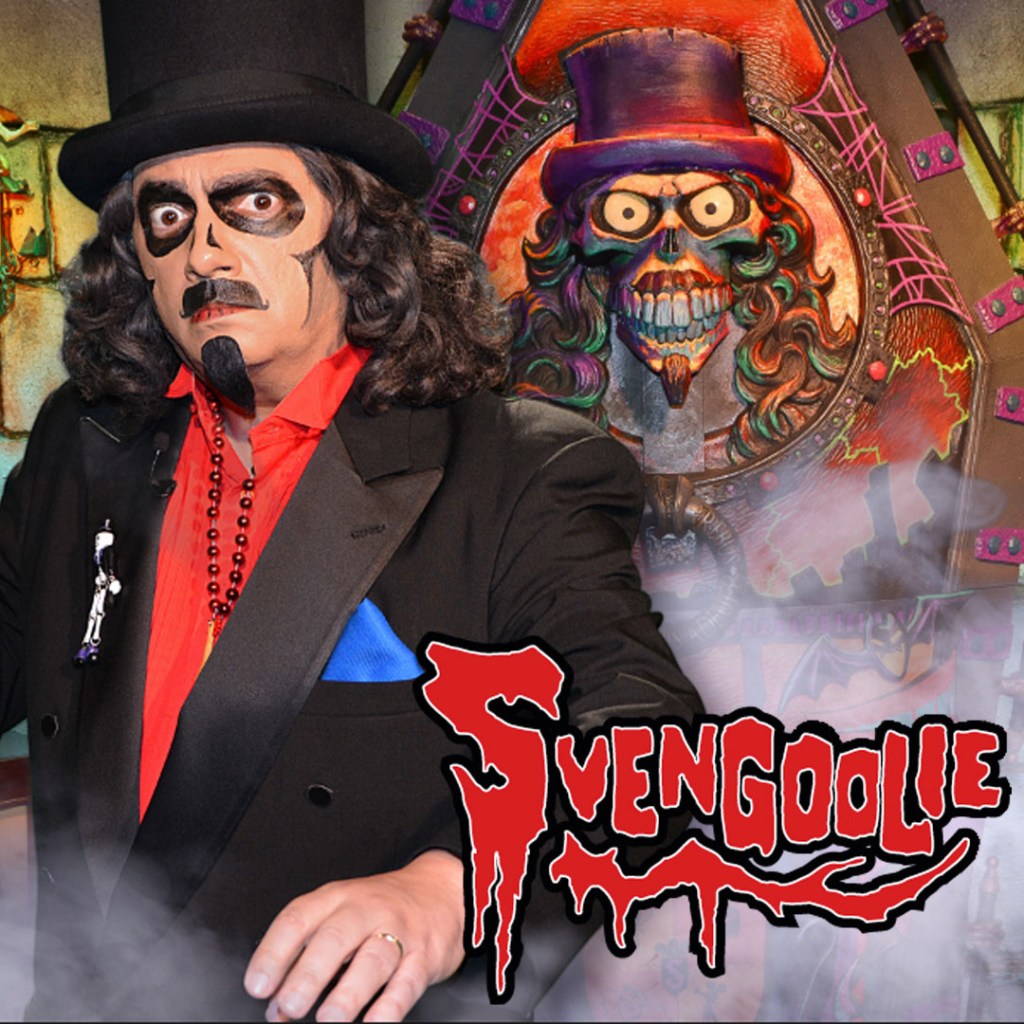
In 2024, there are an awful lot of us who don’t bother with live TV anymore. With the exception of sporting events (and increasingly even those) virtually every new show you could want to watch is available on at least one of the major streaming services, so the days of making sure that you’re home at 8 o’clock on Thursday so you don’t miss the new episode of Friends are long over. In my house, though, there is at least one exception to that rule: Saturday night. On Saturday night, unless there’s some pressing reason for us to be out of the house (or to watch a competing sporting event) the Petit TV is tuned to New Orleans’s WDSU Channel 6.2, the local MeTV affiliate, for the greatest TV event of the week: Svengoolie. Svengoolie is the last of the great horror hosts, the heir to the empires of Elvira, Chilly Billy Cardille, Vampira, and New Orleans’s own Morgus the Magnificent. Every Saturday Sven serves up a classic horror or sci-fi movie replete with his own brand of comedy and information, cracking jokes and telling us about the history of the film in a single breath. 

America’s greatest natural resource.

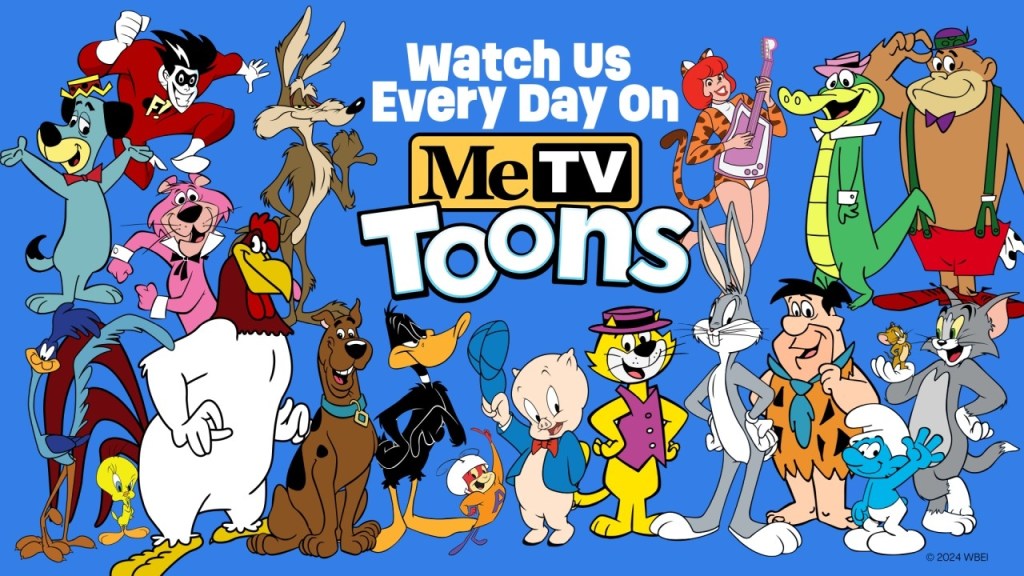
And it is because I watch Sven every time that it’s humanly possible that I knew about the announcement of another new network that hopes to lure viewers away from their streaming services and back to the antenna: MeTV Toons. Whereas the prime MeTV network serves up seven days of reruns of classic TV comedies, dramas, westerns, and the like, MeTV Toons – launching this Tuesday, June 25 – promises to do the same thing with classic animation. At launch, the network will provide a home to such luminaries as Looney Tunes, Rocky and Bullwinkle, The Flintstones, The Jetsons, Scooby-Doo, Popeye and Pals, and even later shows from the 80s and 90s like The Smurfs, The Real Ghostbusters, Beetlejuice, Captain Planet, and many, many more. 

The long nightmare days of a world without Atom Ant will soon be over.

The response was shockingly positive. The network hasn’t even launched yet and there are already at least two Facebook fan groups dedicated to the station, one of which is approaching 5,000 members and the other topping 17,000 as of this writing. There’s a neat little community appearing here, and once you filter out the 14,000 members who have joined to ask if the network will be available in their area because they don’t know what Google is, there’s a lot of conversation ABOUT classic cartoons, the ones that will be on the network at launch, and what other pieces of animation history fans hope to see make an appearance in the future.

Of course, not everyone in the group is positive. That’s nearly impossible. Of all the different Facebook groups I’m a part of, there are only two that I’ve never known to have any sort of toxic presence: the Bandit group for Bluey fans sharing their journey through fatherhood I wrote about a few weeks ago, and fans of the Movie Crypt podcast, proving once again that horror movie fans are some of the kindest and most loving people you could ever meet in the real world. Some of the toxic comments in the MeTV Toons groups are complaining about the lineup, because the fact that they spend a half-hour a week showing Police Academy: The Animated Series is evidently a cardinal sin amongst a certain sect of the populace. Others are complaining because the network is not available in their area – which is a complaint I sympathize with, as for a while it didn’t look like we would get it in New Orleans at launch. I was flailing around the internet like a Dickensian waif until it was announced that it will be on Channel 41.6, which filled me with childlike glee. But even when I thought we weren’t gonna get it, I was smart enough to know that nobody in the Facebook group had any control over that and acting like everybody there broke into my house and crapped in my Cheerios wasn’t going to solve anything. 

But the complaint that really got my attention was the one guy who asked why, in this age where “everything is available streaming,” anybody would care about launching a new pre-programed broadcast network. I’m going to address the two major flaws in his logic, starting with the more obvious and then moving on to the one that has more personal meaning to me. 

First of all, let’s talk about the notion that “everything is available streaming.” The fact is, friends, that’s simply not true. As much as we might like it to be the case, there are large swaths of our television and cinematic history that are not legally available on any streaming service, or even for purchase digitally or physically. Sometimes it’s a rights issue. The original Muppet Babies cartoon from the 80s, for example, cannot legally be found anywhere, and likely never will, because that cartoon made extensive use of movie and TV clips from a half-century of Hollywood output. At the time, there was no thought behind it except for obtaining the rights for broadcast. Nobody was considering the afterlife of these shows. Now, in order to sell or stream an episode of Muppet Babies, the Walt Disney Entertainment Conglomatorium and Tiki Lounge would have to track down the rights holders of each and every movie or television clip ever used on the show to obtain permission to use it again, and in perpetuity. Disney clearly doesn’t think the effort it would take to do such a thing would be worth the likely return on their investment, and as much as I hate to say it, I think they’re probably right.

I dare you to find one historical injustice greater than the fact that this episode is lost to the world.

But Muppet Babies wouldn’t be on MeTV Toons anyway, since Disney has their own deal. What about the shows that will? Well, a quick glance shows that the Police Academy series isn’t available to stream anywhere. Captain Planet is available to PURCHASE from sites like Amazon or AppleTV, but not as part of any streaming subscription. And although there are limited (and often out-of-print) DVDs available for the likes of Underdog, Beetlejuice, and The Adventures of Rocky and Bullwinkle, if you’re hoping to stream them on Netflix or any similar service, I’m afraid it’s a non-starter. And even for things that ARE available to stream – well, as we’ve seen in the last year, something that’s on Paramount+ today is not guaranteed to be there tomorrow. 

Obviously, some things are worth fighting for.

I’m not going to go through the entire MeTV Toons schedule, but you get the point. There are a LOT of things that aren’t available to stream, whether it’s because of rights or because the copyright owner doesn’t think it would be worth the expense to put it out there or for any of a thousand other reasons. A network like MeTV Toons will likely shift their lineup often, especially for shorter-run series (for example, Wacky Races is on the schedule, and that series ran for only 17 episodes), so this will be a chance to give a bit of life to lots of cartoons that otherwise have been forgotten. People love to be dismissive of animation because, historically, Americans have viewed it as something that’s “just for children.” The number of adults eager for MeTV Toons would seem to disagree – and even if it DIDN’T, so what? The Hobbit was written for children. So was The Wizard of Oz. The sublime Paddington movies were made for kids. That doesn’t make a creative endeavor invalid, or mean that it isn’t something worth preservation.

So let’s move on to the second assumption of this question: why a pre-programed broadcast network? Who cares? Why not put all of these shows on a streaming service? Hell, you could even make it an ad-supported service like Tubi, which reported viewer numbers recently in excess of a lot of the premiere, paid streamers like Disney+. That seems doable, doesn’t it?

Well, yeah, kinda. And were such a service to exist, I would be first in line to sign up for it. But don’t discount the allure of a pre-programmed schedule. Apps like PlutoTV and RokuTV have built up a huge following by streaming pre-programmed channels of entertainment, supported by advertising, for free. I’ve written before about how much I love PlutoTV so I won’t get in too deep, but the fact that I can just say, “I wanna watch Star Trek” without having a specific episode in mind, then have TWO PlutoTV channels to sate my hunger…well that’s damned appealing. 

“What do you want to watch? Kirk? Picard? Sisko? Janeway?”
“Yes.”

Pre-programmed TV is easy. Not mindless, mind you, but EASY. We live in a world where SOMETHING is demanding our judgment at every single moment of the day. It starts with something simple, like ordering coffee. But what kind of coffee do you want? What size? Hot or iced? Want a shot of flavoring in that? How about a shot of espresso? Whipped cream? Cherry on top? Paper straw that’s good for the environment but useless for drinking or plastic straw that actually functions as advertised but that will cause the barista to assume you murder turtles in your sleep? What name do you want on the cup? Any snacks? Okay, great, that completes your order, sir. Cash, card, or blood donation? Great. Want to leave a tip?

If we have taken something as simple as buying a cup of coffee and turned it into a process that requires a dozen decisions before the angry barista wearing a “Justice for Donatello” button gives you your order, what happens with something IMPORTANT, like buying a car or choosing a job? I’m a teacher, and there are studies that indicate the average teacher has to make 1,500 individual decisions over the course of an average day. Numerically, this is a higher number than most DOCTORS. (Although admittedly, the decisions doctors have to make are usually more intense than whether or not I’m going to let Jimmy go to the bathroom when I don’t believe he really has to go.) I cite this number any time my wife doesn’t understand why I’m begging HER to pick what we have for dinner, for God’s sake, I don’t care WHAT it is I just DON’T WANT TO DECIDE.

Ahem. Love you, baby.

The point is, apps like PlutoTV offer something that a typical streaming service does not: easy entertainment. If I don’t know exactly what I want to watch, I can spend hours scrolling through the choices on Netflix, Hulu, Disney+, Peacock, Paramount+, Max, Shudder, the Criterion Channel, ESPN+, Screambox, BET+, Prime Video, Shout Factory, Freevee, AMC+, Disney-Minus, Nick at Night Terrors, and Cap’n Willie’s Streaming Emporium-o-rama before finally giving up and putting on a rerun of Gilligan’s Island. Streaming is GREAT if you already KNOW what you want to watch, but sometimes all you really want is to stop thinking and get in some comfort viewing. PlutoTV and RokuTV are built on this premise. It’s worked so well, in fact, that bigger streamers like Shudder, Prime Video, and Freevee have all added “channels” to their streaming model, and rumor has it that Disney+ is considering the same thing. Sure, it’s kind of weird that we abandoned cable for streaming only for us to want to turn streaming back into cable, but sometimes you’ve got to let something go before you realize how much it means to you.

This is what comes on when you activate your Fire stick in Hell.

The point is, MeTV Toons is another outlet for this kind of entertainment, and it’s promising us something that none of the other sources have offered, and by that I am of course referring to Peter Potamus.

“Hello.”

But there are plenty of other things on that network that I would LOVE to see show up in rotation. KNOV 41.6 starts airing on Tuesday, I intend to park my TV on that channel and leave it there.

At least until Saturday night rolls around, anyway. Ain’t nothing gonna take me away from Svengoolie. 

Blake M. Petit is a writer, teacher, and dad from Ama, Louisiana. His most recent writing project is the superhero adventure series Other People’s Heroes: Little Stars, volume one of which is now available on Amazon. You can subscribe to his newsletter by clicking right here. He is hoping against hope that MeTV Toons will find a way to show The Racoons, because he has to find out if that show is as weird as he remembers or if he just had a fever dream that lasted for much of his childhood. 

Geek Punditry #68: The Importance of Being Bandit (or) Yes, I Am Taking Advice From a Cartoon Dog

A few weeks ago I had one of the scariest nights of my life. My son was briefly hospitalized, and my wife and I were told he would probably have to have his appendix taken out. The idea of someone cutting open my little guy terrified me, not the least because I knew he wouldn’t really understand what was happening, and I got very little sleep sitting in that hospital chair. The story had a happy ending, fortunately. In the morning the doctors reexamined him and determined that the discomfort he was feeling was not caused by his appendix after all and was most likely a particularly nasty viral infection, and we were sent home later that day. But the night before was horrifying. I want to tell you, though, about the bright spot. That actually came early on in the process: Eddie had been sick all day and in the afternoon began throwing up with alarming frequency, prompting me to take him to urgent care. There, the doctor on call examined Eddie and advised me to take him to the emergency room.

For a parent, this is way scarier than any haunted house.

Those two words, “emergency room,” sent me into a total PANIC. I started to tremble. My hands were shaking as I texted my wife, who was at work, to meet us at the hospital. I was shaking harder when I searched for the hospital with the Pediatric ER on Google Maps – this despite the fact that I myself was a patient at that same hospital some years ago, and I knew perfectly well where it was. At that moment, though, I didn’t know much of anything and I could feel myself babbling, with questions spilling out of my mouth as frequently as Eddie gives them to me on a good day. At that moment the doctor seemed to realize that – right then and there – his primary patient wasn’t the one in the most need of immediate care. He put his hand on my shoulder and said, “Hey, I have kids too. He’s going to be okay. Nobody knows the pressure on a dad, do they?”

I could have cried right then and there. If I didn’t have to get Eddie into the car to take him to the ER I probably would have. But that moment of strength and compassion from this doctor meant more to me than I could have possibly told him, because he’s absolutely right. Society has bizarre and, frankly, contradictory expectations of fathers. On the one hand, we are often seen as the “disposable” parent. Mothers are considered primary caregivers, stores and restaurants frequently neglect to put diaper changing stations in the men’s restrooms, in custody battles the final decisions overwhelmingly favor the mother, and never once has anyone seen my wife with our son and asked if SHE was “babysitting.” On the other hand, fathers are expected to be the provider, to give the family everything that is needed, to push their own needs aside up to and including their mental health, and to never, EVER allow a crack in the armor to show lest it be revealed that they are anything less than a demigod who always has it together and can do anything all by themselves and make everything turn out in the end. It’s a cocktail of unreasonable expectations and toxic disrespect.

This is not to say that it’s easy to be a mother, of course – nothing could be further from the truth. Moms are looked upon as the nurturers and the caregivers, the emotional core of a family, and there is an immense amount of pressure associated with that role. The difference, to me, is that mothers are usually (justly) celebrated for their contributions and sacrifices, whereas fathers are made the butt of jokes. Think about the difference in our respective holidays. On Mother’s Day, flower shops are emptied, restaurants are packed, and everyone reminds you to celebrate Mom. On Father’s Day, the punchline is about which crappy tie Dad will be given this year.

My wife is wonderful. My wife couldn’t be more supportive. That’s not where this pressure comes from: it’s all about the pressure that we’ve been told all of our lives to bring on ourselves. 

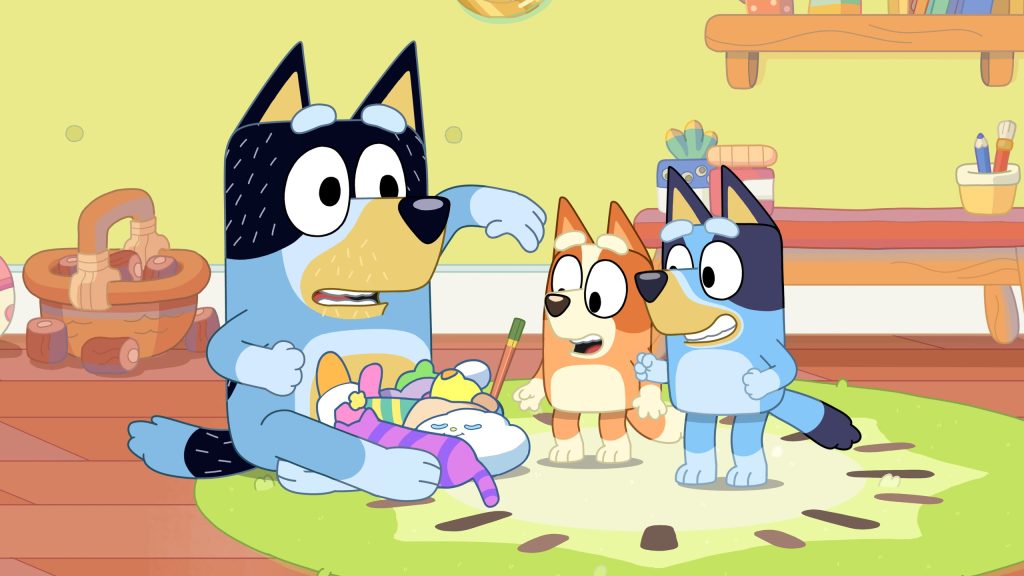
All of this is to say that Bandit Heeler is the best father on television.

Pictured: What I want to be when I grow up.

I shall try to keep my statements in praise of Ludo’s cartoon Bluey brief, but in case you don’t know, Bluey is an Australian cartoon about a family in Brisbane, Australia: six-year-old Bluey Heeler (seven after a birthday episode), her little sister Bingo, their mother Chilli, and their dad, Bandit. Creator Joe Brumm based the show on his own daughters and the way they used to play when they were little, and the majority of episodes focus on the games the children play and the way their parents (and, often, other assorted grownups) get sucked into the amazing fantasy worlds they create. The fact that the Heelers and the rest of the sentient inhabitants of this universe are all dogs is of utter irrelevance. 

Over the course of three seasons and over 150 seven-minute episodes, Bluey has become that rarest of phenomenon: a show that is loved by children, but absolutely adored by parents. Bandit and Chilli love their children completely, and what’s more, love each other just as much, and none of the Heelers are shy about showing it. In an era where so many TV families are made up of characters who seemingly can’t stand each other and remain together only because of a vague description of “family” that the thesis of the show often works to destroy, the Heelers are, to put it bluntly, Squad Goals. And Bandit in particular is the father that every father who watches it wants to grow up to be.

…usually.

TV dads, historically speaking, have largely fallen into one of two categories. In the early days of TV they were bland, plastic paragons of virtue like Ward Cleaver or Ozzie Nelson. Even by the 70s, when shows were beginning to allow a bit more of an edge, Howard Cunningham from Happy Days was a faultless (if loving) font of strength. Then a switch flipped and dads went from being carved out of marble to sculpted out of mud. TV dads in the 90s and 00s were buffoons. Either they were obnoxiously indifferent to the needs of their children like Al Bundy, or they were so stupid and vapid that they should probably, legally, not be allowed to have a child in their custody without adult supervision. Even the best dads of this era, like Home Improvement’s Tim Taylor, may have genuinely loved their kids, but were also often dangerously negligent in their actions and did incredibly boneheaded things in the name of comedy. It was good for a laugh, sure, but awful for the portraiture of dads in pop culture.

There HAS to be some sort of middle ground between these two.

(In the interest of painting a comprehensive picture I should mention that there WAS at least one great TV dad of this era, Heathcliff Huxtable, but real world circumstances have sadly made it virtually impossible to look upon him as a role model anymore.)

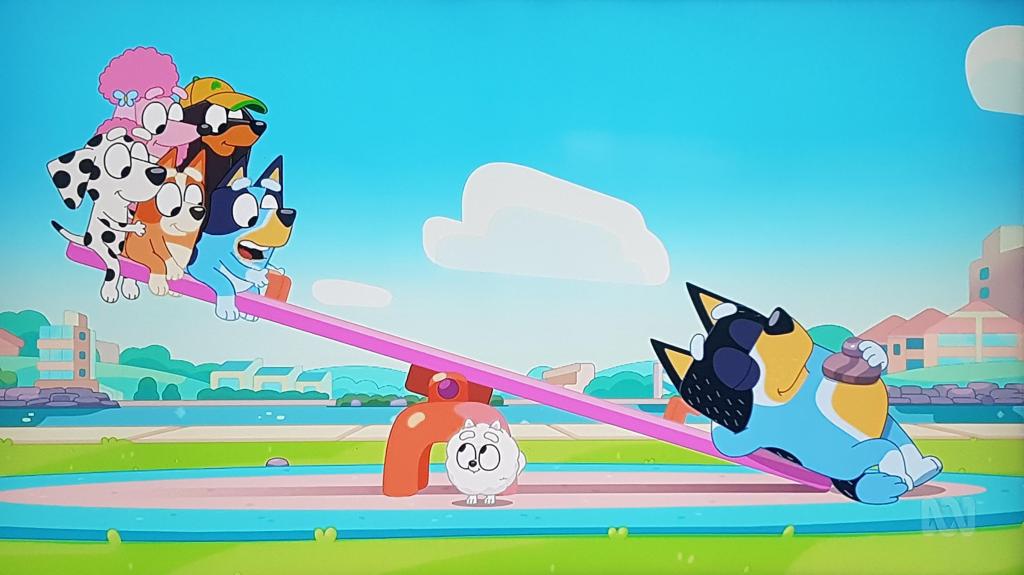
Bandit isn’t an idiot. He’s often a step ahead of his kids, playing their games but also using them to teach. In the episode “Bikes,” for example, he has Bluey observe the kids around them to learn perseverance, whereas in “Hotel” he teaches her how to compromise with her sister. Bandit is willing to become whatever is needed to keep the kids happy, and not even just his own kids. In “See-Saw,” he realizes that Bluey’s friend Pom Pom is feeling excluded because she’s so tiny (she’s a Pomeranian, you see, a small but hearty breed), so he sets himself up as the villain, sitting on the titular see-saw and refusing to budge until Pom Pom gets a chance to “save the day.” 

This is actually what I look like any time my wife says, “We may as well finish this pizza, it would be silly to just have them box up two slices.”

He’s a fantastic dad, but…and this is the most important part…he is not flawless. “Magic Claw” is about trying to teach his girls the value of hard work, only to have his efforts hilariously collapse around him as all they’re really interested in is playing the game. (There’s a great line in this episode where he says that the girls are learning a lesson AND cleaning the house at the same time, only for Chilli to snarkily reply, “Neither of those things are happening.”) In “Ice Cream” the girls each want a lick of the others’ dessert but spend so much time prevaricating over how big a lick they’re allowed to take that their ice cream melts away. Bandit hopes they’ll learn a lesson from this but, like a dad, he feels bad for them and winds up giving them his own ice cream instead.

Every Bluey parent can quote this scene with absolutely no help from my captions.
And sometimes, the world gets to Bandit. In “Stickbird,” as the family plays on the beach, Bandit is completely preoccupied. Something is quite clearly bothering him and he’s struggling so badly that he’s not entirely present for the childrens’ game. Although the show never tells us what, exactly, is eating at him, every father who watched that cartoon saw themselves that day. We don’t know why Bandit is struggling, but we DO know that he’s trying to contain himself for the sake of his family, and I don’t know if I’ve ever felt so seen by a TV show. 

The moment when every dad in the world saw themselves.

Many fans feel like the “Stickbird” mystery, the question of what was bothering Bandit, was solved in the most recent episode, the quadruple-length “The Sign.” I’m going to spoil “The Sign” now, so stop reading if you’re trying to avoid it, but I feel like pretty much everybody who cares has already seen it. And those who have seen it know that in this 28-minute blockbuster, Bandit Dadded the hardest he has ever Dadded. 

In “The Sign,” the Heelers are planning to sell their house and move because Bandit has found a new, higher-paying job in another city, which he says multiple times throughout the episode will allow him to give his children a better life. Already, every dad in the audience is nodding in understanding. The trouble is that none of the Heeler women want to move. Chilli puts on a brave face, but you can tell that she’s upset, Bluey openly campaigns against the move, and Bingo is perfectly happy with the whole thing until Chilli realizes that she doesn’t actually understand what “selling our house” means, after which she is devastated. Bandit struggles through the whole episode with this decision, believing that moving will mean a better life even though the message is clear that the rest of the family is happy with the life they have and they don’t want to chase some abstract idea of “better.”

What are you gonna do, Bandit?

In the final moments of the episode, the family that was planning to buy the house cancels the deal after finding a home they like more (it has a pool, you see). Bandit, taking this as “A” sign, rips “THE” for sale sign out of his yard and tosses it aside just before he’s tackled by his wife, who is sobbing with joy and adoration.

THIS IS A SHOW THAT IS OSTENSIBLY FOR PRESCHOOLERS.

Bluey is the most heartfelt show on television, and although there are several episodes that have left me in tears, there has never been one that left me unsatisfied. And for me, at least, it’s because in Bandit Heeler I see someone who I wish I could be, somebody I can be on my best days and someone I can turn to for strength on my worst days. And I’m not alone. Fathers all over the world have taken up Bandit as the role model we need – someone who loves his family unconditionally, is not afraid to express those emotions, and shows us that sometimes it’s okay to not be okay. We don’t have that. The world has told us for decades that we’re not allowed to be human, that feet of clay must be hidden, that we are to have no Kryptonite. Bandit tells us that’s BS, and because of that, there are a lot of dads reaching out to talk to other dads who understand that pressure the doctor told me about.

Um…not this doctor.

When Eddie was in the hospital, after the doctors told us that it wasn’t his appendix after all and that he was going to be okay, I felt awash with relief. I texted my own father and the rest of the family to let them know the news. I sent messages to concerned friends, to those English Teacher Friends I mentioned last week, and called my grandmother to let them all know that the cause for fear was over. 

And then, because I’d been holding the emotion in for nearly 24 hours at that point, I got on Facebook and went to a group I’m in called “Bandits.” And I started to type. “Fellas, everything is okay now, but it’s been a rough night…”

Blake M. Petit is a writer, teacher, and dad from Ama, Louisiana. His most recent writing project is the superhero adventure series Other People’s Heroes: Little Stars, now complete on Amazon’s Kindle Vella platform, and hitting print on May 4th! He could write a dozen columns about how great Bluey is, but right now, he’s in a Bandit place. 

Geek Punditry #18: The Animation Hole

J. Michael Straczynsi is an accomplished storyteller, a phenomenal writer, and a little bit of a troll when it comes to teasing his fans with the promise of upcoming content. Among his other achievements, Straczynski is the creator of Babylon 5, which a lot of people consider one of the finest science fiction shows ever made, and which is in many ways a precursor to the current model of long-form storytelling that we enjoy on television. But while B5 is acclaimed, it’s obviously not as well known as the likes of Star Wars and Star Trek. Aside from the series itself, the universe has only enjoyed a few TV or direct-to-DVD movies, a spinoff series that lasted a single season, and a relative handful of novels, comic books, and short stories which are all long out of print and not even available digitally. Last week I told you guys how fans always want “more.” By that metric, Babylon 5 fans have been starving for a long time.

This week's news that Babylon 5 is going to return with a new movie should be met with joy -- but some fans are put off because the film will be animated. Why, in 2023, are we still looking down on animation?
But lunchtime is coming…

This week, though, we were finally promised a meal when JMS announced an upcoming Babylon 5 animated movie. Although we don’t yet know the plot, the title, or the release date, Straczynski told us the following: the film includes the voices of most of the surviving members of the original cast, the movie is already finished and will be released “very soon,” and it is – in his opinion – the best thing they’ve done with Babylon 5 since the original series ended. And as with most news announced to a group of starving genre fans, the reaction had two phases:

1: YES! New Babylon 5 content! FINALLY! The prophecy has been fulfilled!

Followed shortly thereafter by…

2: Pfft. 

Any time a popular franchise makes an announcement, there is a “Pfft” contingent, and while that contingent is usually small, it is extraordinarily vocal. One “Pfft” is capable of raising his voice on the internet above approximately 5,000 fans who are genuinely happy and excited about the project, and he does so in such a manner to indicate that the news is nothing to get excited about, and anyone who is excited is beneath him. These people have existed since the dawn of  civilization, the first recorded practitioner expressing their displeasure with a cave painting of a pack of wildebeest made by Hector “Ugg” Gutierrez, but which was clearly inferior to the one made by his arch-rival, Andy Warhol.

But back to the Babylon 5 announcement, specifically. The “Pfft” people usually latch on to a few key elements to fuel their derision, such as the cast or writing. In this case, though, since it’s almost all the original people involved in the new project, they have focused their spite on the medium: animation.

“Pfft. It’s a cartoon?”

“Pfft. I’ll wait for the real show to come back.”

“Pfft. Look at what happened to Star Wars.”

(That last one is the most perplexing to me, actually, since many of the Star Wars animated projects have been widely acclaimed, but it does demonstrate the phenomenon of cross-fandom “Pffting,” an activity that has always existed but which has become much more prevalent in this age of the internet.)

Look, I’m not here to tell anybody what to like. I’m not telling anyone they have to enjoy something, and I’m not telling anyone their opinions are invalid. I am, however, going to say that if your argument against a project is based solely on the fact that it’s animated, an opinion formed before even a single frame of the project has been seen by the public, then you’re kind of a dink.

“Come on, you don’t think anyone actually liked this, do you?”

The idea that animation is strictly a medium for children is a stupid one, and one that’s never made much sense to me. It certainly wasn’t the intention when it was invented. Early cartoons were made for a mass audience, with references to popular culture that would often go over the heads of children and plenty of double entendre that definitely wasn’t intended for the little’uns. It’s hard to watch classic Looney Tunes shorts with a discerning eye and think that bits like Bugs Bunny’s Clark Gable imitation were intended for kids even in the 1940s, or that the leggy girls the male toons would often chase after weren’t there for a little bit of grown-up fanservice. The people who made those cartoons were really trying to entertain themselves, and the fact that their work also entertained everybody else just showed how talented they were.

After my standard “I am not a historian” disclaimer, I’m going to say that I think the (largely American) perception of animation being strictly a medium for children probably is due to television. Once TV became more prolific and turned into a fixture in most American homes, content for every member of the family became a requirement, and cartoons became the preferred delivery system for the kids. Saturday morning cartoons blossomed, and they were glorious. They eventually migrated to weekday afternoons so kids had something to watch after school. And then, even older works (like the aforementioned Looney Tunes) were repackaged and shown during these children’s blocks, cementing them as kid stuff in the tightly-closed mind of the public. It’s a stigma that was set firmly, and while I think the last few decades have started to chip away at that mindset, things like the reaction to the Babylon 5 announcement prove that it’s still real for a lot of people. 

The thing is, none of the arguments for animation being only for kids hold up to even minimal scrutiny. Let’s break them down, shall we?

“Animation is childish.”

Sure, it can be. It can be a realm of crude humor and slapstick comedy and lowbrow jokes and goofy gags, just like the Three Stooges – who (although they did have a cartoon in their later years) were decidedly human. The things that people call “childish” are elements of the way the story is written or presented, not the medium. Animation can be mature and serious, and I’m not just talking about raunchy humor like South Park. I’m talking about things like the razor-sharp satire of early seasons of The Simpsons. I mean experimental films like Batman: Death in the Family. How about Isao Takahata’s Grave of the Fireflies, a story about two Japanese children surviving an American firebombing during World War II? It’s a transcendent film, but most definitely not something that any reasonable parent would show a small child.  

To call something “childish” derisively seems to mean that the content is not worthy for consumption by adults. And to be certain, there are kids’ shows that fall under that category. But even shows that are aimed at kids don’t necessarily lock out parents altogether. Bluey is the most current example of this – this Australian show ostensibly for preschoolers is a favorite among kids, but has been embraced by parents all over the world for portraying a loving mother and father (sure, they’re dogs, but so what?) who do their best with their children, fall short sometimes, but keep on going. The characters have become inspirational, role models even. Animated dads have far too often been cast in the mold of Peter Griffin. The truth is, every dad should aim to be a Bandit Heeler. 

Bluey is an instructional video on parenting disguised as a show for preschoolers.

And there are far more examples. The original Animaniacs series came out when I was in middle school, and it was a show my father actually enjoyed as well. It was part of the Fox Kids lineup, but like the Looney Tunes shorts that were their true parents, it had layers of satire and entendre that kids never would have understood. I was in college before I realized the episode “King Yakko” (which you may just know as “the Anvilania episode”) was a full-plot reference to the 1933 Marx Brothers’ movie Duck Soup. Yeah, that was a joke for kids in the 90s. 

How you make something does not determine the proper audience. What you make does. 

If you’re anywhere close to my age you know EXACTLY which joke this is.

“It’s just a cartoon, I can’t feel anything like I do for human actors.”

That’s a failure of the viewer, not the film. Animation can be deep, powerful, meaningful, and personal, and it all depends on the story you’re telling. If somebody came up to me and said that the saddest 60 seconds of television ever made came at the end of the Futurama episode “Jurassic Bark,” I would be utterly incapable of arguing against it. After a full episode about Fry, trapped 1000 years in the future, coming to terms with losing the dog he left behind but finding comfort in the fact that he had a full life without him, the viewer learns that Seymour, the dog in question, literally spent the rest of his life waiting for his master to return before quietly passing away in front of the pizza parlor where Fry worked. Even somebody who hates dogs has to feel something for that.

97 percent of you got a lump in your throat when you saw this picture. The other three percent are assholes.

“But Futurama is adult animation,” you say. “Not all animation is like that.” I’m going to ignore the fact that you just utterly shattered your own argument that animation is all for kids and move on to examples that are for children, but which are still deeply moving for adults. How about the Pixar film Up? As a teacher, there are occasionally days where we show films because of reasons, such as having a room full of standardized testers who have finished early and I need to kill time before we return to our normal classes. On days like that I have a strict rule to never show the movie Up, because I may have to teach some of these 9th graders when they become seniors and I don’t need them remembering that time I sobbed like an infant in front of them. The beginning of Up tells the story of a boy and girl who grow up, fall in love, marry, discover they cannot have children, and grow old together before the woman, Ellie, leaves her husband Carl as a widower, and utterly alone. It’s a powerful story and it’s told, after their initial meeting as children is over, completely without words. It’s entirely visual, requiring the viewer to infer what has happened to them at each stage, and causing their souls to crumble as the reality sets in. I admit, I’m a softie. I cry at movies. At TV shows. Whenever I heard the John Williams anthem from Superman. But this was the only time in my life a movie made me cry in the first ten minutes.

I’m gonna make you people cry before the end of this column.

Emotion is an intended byproduct of art, all art. Whether it’s a film, a poem, a painting, or a concerto, art is created for the express purpose of evoking an emotional response from the audience. And great animation can nail it just as much as live action.

“Animation is just a cheap way to tell the story.”

First off, buy a calculator. The price tag on rendering animation can be pretty staggering. But I’ll give you the benefit of the doubt here – maybe you mean that animation looks cheap. Sure. Sometimes. It’s hard to imagine that anyone involved in the 2012 magnum opus Foodfight! is particularly proud of what they have loosed onto an unsuspecting world. But that’s bad animation. Bad live action sucks too. So does bad writing, bad acting, bad special effects. If your argument is that “animation is bad,” you’re choosing to ignore the mountains of good animation that exist or the mountains of bad everything else you had to wade through to get there.

If Futurama and Up didn’t get a tear out of you, the existence of this abomination should do the trick.

Let’s go back to Babylon 5 for a second. Although very few details have been released, and everything I am about to say is speculation, the fact that Warner Bros. owns the property makes it reasonable to assume that the animated film is the work of the Warner Bros. Animation studio, the company whose history goes back to those magnificent Looney Tunes I keep bringing up. For a more recent example, and one that is thematically much closer to what the B5 movie will likely be, this is also the studio that has made the collection of DC Comics animated films that have come out over the last several years, movies like All-Star Superman, Batman: Under the Red Hood, Superman Vs. the Elite and Justice League Vs. the Fatal Five. The current unit is also responsible for many films featuring the likes of Scooby Doo and other Hanna-Barbera properties, Tom and Jerry, and…you guessed it! The Looney Tunes. And while people may debate the relative quality of any of those productions – they may dislike the story, the casting, the character design – one thing they rarely complain about is the quality of the animation itself. WBA knows what it’s doing.

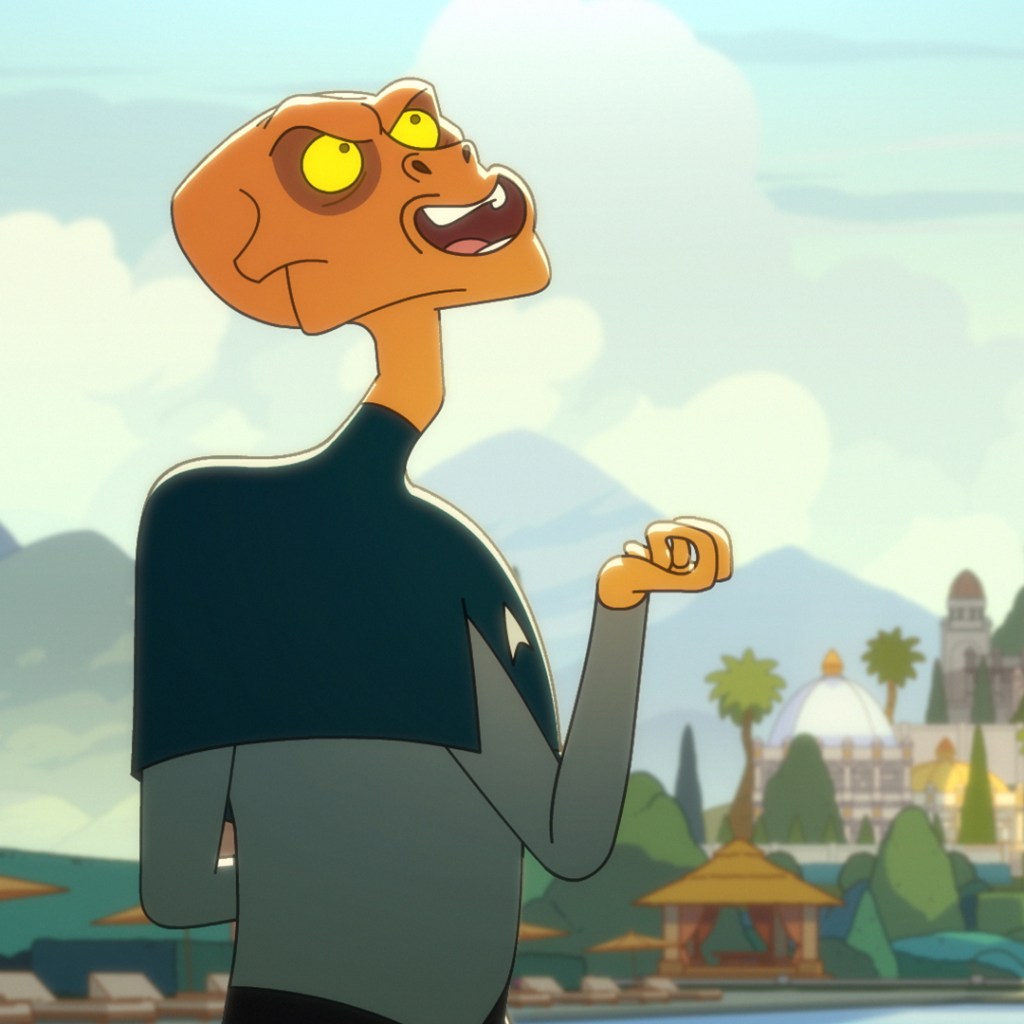
And frankly, the notion of using animation for science fiction just plain makes sense. When you’re telling a story in a world beyond our own – be it sci-fi, fantasy, horror, or superheroes – the special effects are often make-or-break. The filmmakers have to convincingly create something that does not exist in the world and put it in front of an audience in a way that it appears real. Some people are great at this. Some people are not. Animation removes that requirement. Star Trek is often derided for its reliance on “rubber forehead aliens” – in other words, alien species that are created by slapping some prosthetics on human actors. Well what else were you supposed to do, especially with the budget and technological limitations of television in the 1960s? When the Star Trek animated series was created, for the first time, there were recurring alien creatures who were not wholly humanoid, such as the tripedal Edosian officer Arex. Even in modern times, where improved effects make it easier to show things that are less human, we still see a much wider variety of alien species on the animated series Lower Decks and Prodigy than we do on any of the live-action Treks, and you never hear anyone say that they look “fake”.

I mean, in live action this guy might look silly.

What about superhero movies? Since Marvel Studios changed the way blockbusters are made, the “Pfft” crowd has come out in force to complain about the overabundance of special effects that are used. “Did you see the new Ant-Man movie?” they say, ignorantly forgetting that the Wasp receives equal billing with her partner. “It’s just a couple of people in CGI suits in front of a green screen for two and a half hours.”

You know what movie they never say that about? The Incredibles.

In fact, after The Incredibles and the largely-forgotten but highly-enjoyable TMNT (an animated feature starring the Teenage Mutant Ninja Turtles that you likely didn’t know existed) I came to the opinion that animation is the perfect medium for superhero movies. I’m not saying that animating a huge action sequence is easy, but when literally the entirety of the universe is created digitally or on a drawing board, there are fewer limitations. The live action Marvel movies recognize this, which is the reason they’re so heavily reliant on CGI these days. And while their live action features have been a mixed bag, DC’s animated superhero projects have been a hallmark of quality ever since Batman: The Animated Series. Even non-superhero, non-science fiction movies do this these days. I’ll never forget the hilarious moment when Disney’s “live action” remake of The Lion King had so little live action that the Golden Globes nominated it for Best Animated Feature. I still laugh about that.
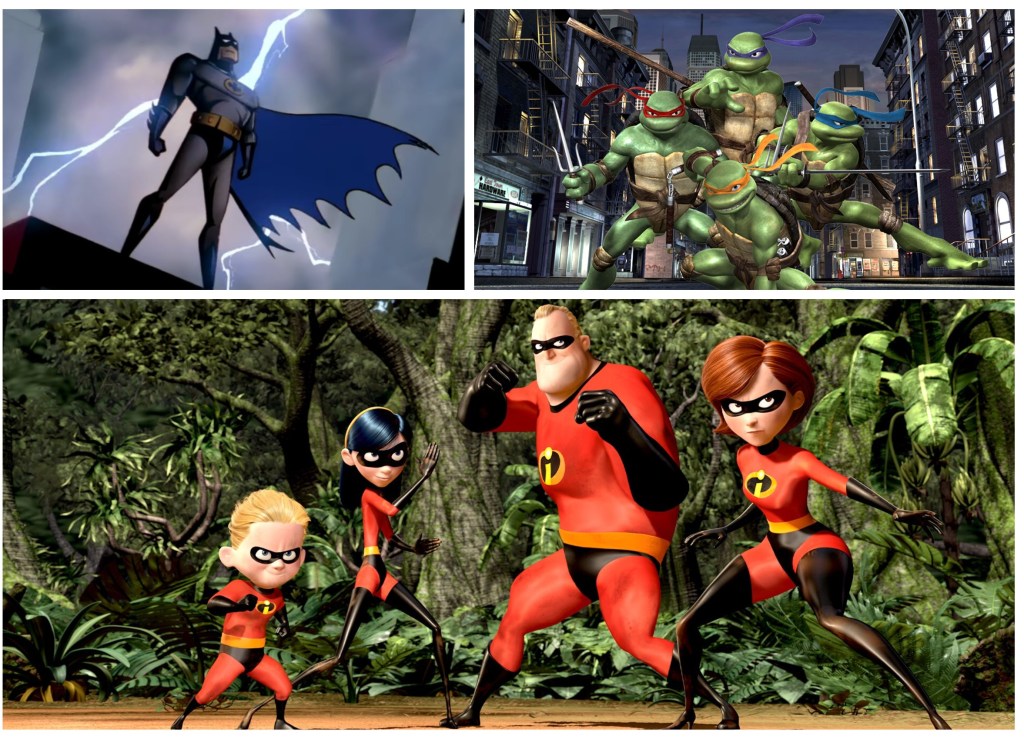
Superheroes and animation go together like ham and eggs, peanut butter and jelly, sauteed sea bass and rum raisin ice cream…

Animation is a medium. It’s a method of telling a story, and dismissing an entire medium because of what you perceive it to be is a kind of ignorance. If the Babylon 5 animated film comes out and underwhelms…well, that would suck. I love B5 and I want more stories in that universe, and I think that the success or failure of this film will impact the odds of that happening in the near future. But if it turns out to be a dud, there’s one thing I’m sure about: it won’t be because it was “just a cartoon.”

Blake M. Petit is a writer, teacher, and dad from Ama, Louisiana. His current writing project is the superhero adventure series Other People’s Heroes: Little Stars, a new episode of which is available every Wednesday on Amazon’s Kindle Vella platform. Thanks to his wife, Erin, for reminding him to include the Futurama example when he told her what this week’s column would be about. 

A sound byte for June

foray
June Foray, 1917-2017

It’s been a rough summer for genre fans. Adam West — the first Batman for so many — passed away. We lost George Romero, who made zombies what they are today. Two women who helped make Marvel Comics what it is — Joan Lee and Flo Steinberg — died within weeks of one another. Then last night, as I was going to bed, word broke of the one that — to me — is the harshest blow of all. June Foray died at the age of 99.
Most of you, I think, probably recognized the name as soon as you read it. If you don’t recognize June Foray’s name, though, you certainly know her voice. Or at least one of them, because she had so many.

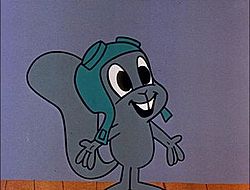
Rocky_the_flying_squirrel
Rocky the Flying Squirrel

You may know the voice she used as Rocky the Flying Squirrel in The Rocky and Bullwinkle Show, or the one she used as Moose and Squirrel’s arch-nemesis, Natasha. If you’re a child of the 80s, you may be more familiar with her as Jokey Smurf. Looney Tunes fans know she spent decades as the kindly old Granny who tolerated Sylvester and Tweety, and may also recognize her as Witch Hazel, who occasionally tormented Bugs Bunny. Drastically different from her turn as Witch Hazel, of course, was her turn as Hazel the Witch, who once tormented Donald Duck on a memorable Halloween. And while we’re on the subject of ducks, Ducktales fans may not remember that she voiced Scrooge’s secretary Mrs. Weatherby, but how could they forget that she was also the nefarious Ma Beagle, or the deliciously evil Magica DeSpell?

Granny_Mysteries
Granny

And we’ve only scratched the surface here. Her IMDB credits — all 308 of them — cover a span of 71 years and include Disney films stretching from Cinderella to Mulan, TV cartoons including Garfield and Friends, The Simpsons, The Real Ghostbusters, Mr. Magoo, Dudley Do-Right, Yogi Bear, The Flintstones, and even work on live-action television including Father Knows Best, I Love Lucy, and The Twilight Zone. The characters she voiced are countless: Martha Wilson, Betsy Ross, Grammi Gummi, May Parker, Mother Nature, Mrs. Santa Claus, Pogo Possum, Red Riding Hood, Oswald the Lucky Rabbit and, of course, Barbara Streisand.

Magica
Magica DeSpell

Like many voice actors, when you know that June Foray is the person behind the character, you can hear the similarities between her voices. They are, after all, the children of the same throat. But at the same time, listen to Rocky and listen to Magica. The acting prowess of this woman was remarkable, and it saddens me somewhat that, compared to the other performers who have recently died, reaction to her passing seems somewhat subdued. Not to cast aspersions on any of the others, but I saw so many people talking about how Adam West was a part of their childhood, and now they’re blinking at the name of the woman who was literally the voice of it.

witch hazels
(Left) Witch Hazel, (Right) Hazel the Witch. Totally different.

I think part of the reason is that June Foray, for most of her career, was what you’d call a utility player. She was always there and always great, but she was rarely the star. While Mel Blanc was Bugs Bunny, Daffy Duck, Porky Pig and a trillion others, Foray was the Granny who popped in and out of the cartoon or the Witch that Bugs had to outsmart. She wasn’t the main Smurf or the main Ghostbuster. She wasn’t the Grinch, she was Cindy Lou Who. She was Dudley Do-Right’s girlfriend. And except for Rocky her few leading turns — such as Dorothy Gale in the animated series Off to See the Wizard — are in projects that are largely forgotten.

cindy lou
Cindy Lou Who

None of this can in any way diminish her talent.

Chuck Jones (who directed so many of those cartoons in which she starred) once corrected someone who described her inadequately as “the female Mel Blanc.” Jones replied, “Mel Blanc was the male June Foray.”

The animation community, of course, already knows the scale of the giant who has fallen. The rest of the world should know it too. While there will never be a voice like hers again, we fortunately have enough of her work already to last the rest of our lives. Pop some classic cartoons on today, and listen for a while to the voice that made them whole.