Geek Punditry #7: Sharing the Love

Italian really is the language of love…and billionaire ducks.

Earlier this week, some of my students asked me what I got my wife for Valentine’s Day. They seemed to approve of my answer (tickets to a concert she wanted to go to) and then asked what Erin gave me. At that point, I paused for a moment, trying to decide how to answer the question. The answer was wonderful – my wife went on eBay and found the recently-released 3500th issue of Topolino, the Italian Disney comic book series, which came bundled with a figure of my favorite Disney character, Scrooge McDuck. The thing is, how do I explain this to a group of high school seniors without coming across as a gigantic nerd?

Then I got over myself, because…hell, just look around. On one bulletin board in my classroom is a collage of superhero and sci-fi images clipped from magazines and catalogs. There is a shelf of Superman-family Funko Pops, a set of Eaglemoss Enterprise models, several magnets from the LEGO Minifig of the Month Club, and a Star Trek: Lower Decks calendar on the wall. There is literally no denying my heritage as a geek. It is, in fact, something I have long since decided to embrace.

I challenge you to come up with an adequate definition of “Geek” that does not apply to the person in this picture.

That’s part of what being a geek is, really. Sure, the dictionary may say something about biting the heads off chickens, but in the modern context I propose the following definition for the term. “Geek (noun): One who loves a particular fandom to the extent that it becomes an element of their personality.” You should note that this definition passes no judgment, nor does it specify the type of fandom. It can be a movie, a TV series, a comic book, or a video game. It can be music or sports or science or history. You can be a geek about pretty much anything you love, so long as you love it wholeheartedly. Nor does it imply exclusivity: one is fully capable of being a geek about multiple things. In truth, I think almost everyone is a geek about something. It’s just that those of us in genre fiction have chosen to fully embrace the term.

Geekery is contagious as well, spread through casual contact. It happens when you tell your friend how much you liked a movie, when you walk around in public wearing a T-shirt for your favorite band, when you get in someone’s car and they’re listening to a podcast, or when enough of your students are carrying around the same book that you finally break down and read it to find out what all the fuss is about. And like any germ or virus, the longer you are exposed to any particular strain of Geekery, the more likely you are to begin exhibiting symptoms yourself.

Which brings me to my five-year-old son, Eddie.

Any kid of mine would, by virtue of the fact that I’m there, have grown up in a house full of comics and books and movies, watching cartoons and seeing superhero T-shirts almost any time I’m not dressed for work. And when kids are very young, before they start exhibiting their own preferences and fandoms, we as parents have a tendency to dress them in our own. From the beginning, my kid had onesies and pajamas featuring superheroes and spaceships, his plates bore the likenesses of characters from the cartoons that we liked, and he had pacifiers featuring the logos of both the New Orleans Saints and the Pittsburgh Steelers. And our friends and family just fed the monster – two of the gifts we received at Erin’s baby shower included a Batmobile walker from some of my aunts and uncles and a lovely toy chest handmade by our friends Jason and Andrea, decoupaged with panels from Superman comic books. 

What I’m getting at is that Eddie never had a chance.

Eddie’s favorite part of every episode.

In my defense, though, it’s not just my geekery that he’s been exposed to. I may be the reason he jumps up and giggles at the sweeping vistas of outer space in the beginning of every Star Trek episode, but my wife is the reason that when he started learning to identify shapes he could pick out the circle, the square, the triangle, and the Millennium Falcon. Erin is a geek too, you see, and fortunately the Venn diagrams of our respective geekeries have a lot of overlap. We both love genre movies and TV shows, we both enjoy musicals, we both like sitcoms. That concert I got her Valentine’s tickets for? It’s the music of John Williams. We blend.

Even in those places where the overlap isn’t perfect, there’s enough that we enjoy what the other is bringing to the table. She’s a little more into horror movies than I am, I’m a little more into comic books than she is, but that doesn’t mean that we don’t each appreciate the other’s fandoms as well. We just, like any two individuals on the planet, lean a little more in certain directions than the other, and that is reflected in our parenting. When Eddie was a baby the joke was that you could tell who dressed him on any given day based on whether his clothing featured the Grateful Dead or Spider-Man.

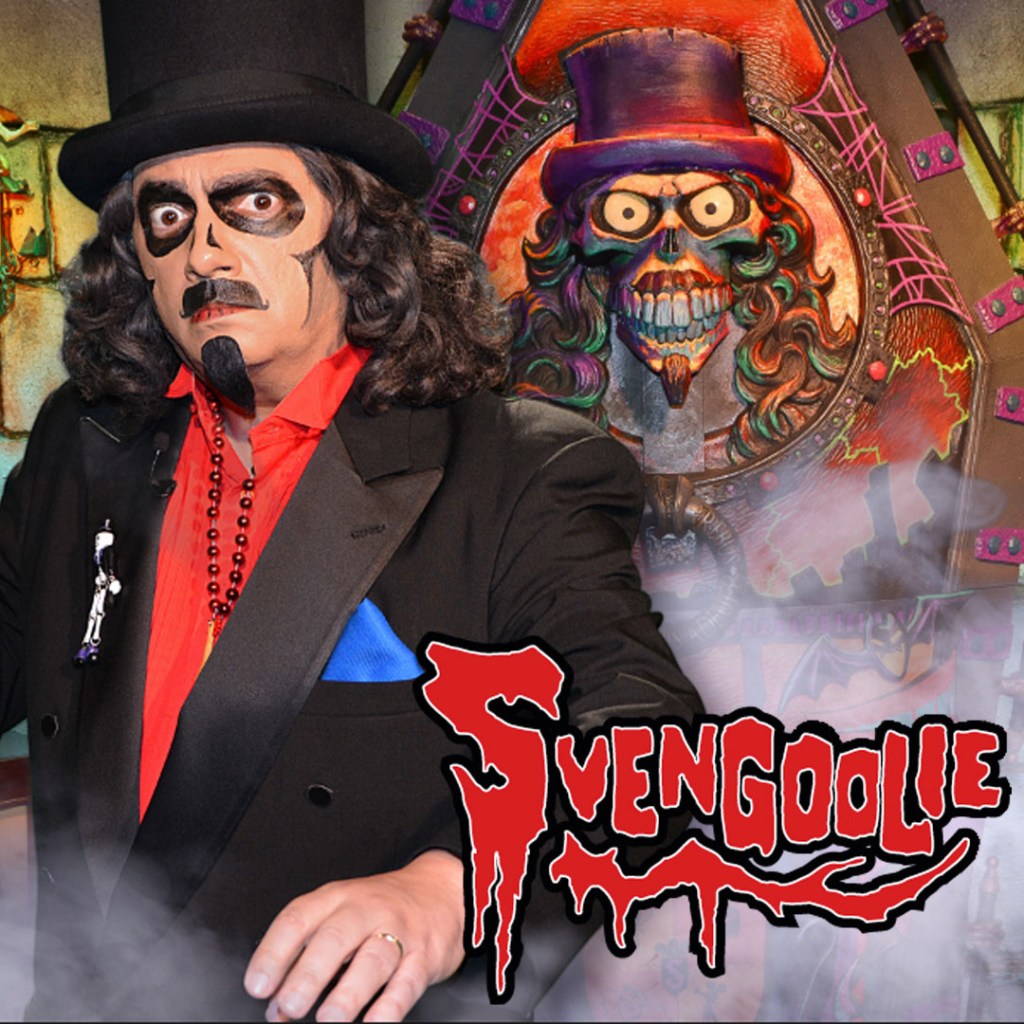
“Svengoofie!”
“No, it’s…you know what? Close enough.”

Over time, he started to express his own love for our things in various ways. For example, when I turn on the FreeVee app, he begins to sing the theme to Night Court. He’ll walk into the comic book shop with me and immediately identify the logos for Marvel Comics, DC Comics, Superman, Batman, etc. At only five years old he sings along to the opening themes for Mystery Science Theater 3000 and RiffTrax, a feat that Albert Einstein himself never accomplished in his entire lifetime! And if you ask him what we watch on Saturday night, he will proudly exclaim “Svengoolie on MeTV!” (Actually, he pronounces it “Svengoofie,” a misarticulation I believe Rich Koz himself would greatly approve of.) 

I couldn’t let the fact that this should not exist prevent me from getting one.

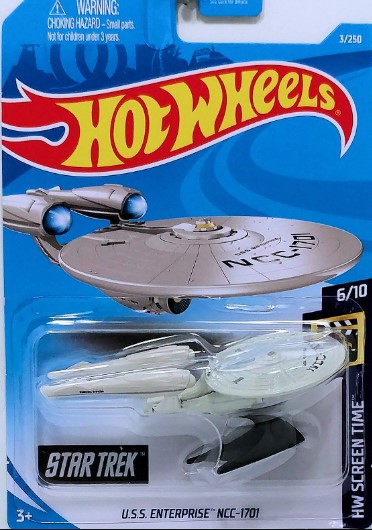
It’s not that we want to force our geekdoms on our child, it’s just an inescapable byproduct of having us as parents. Even once he got old enough to express his own preferences, ours tended to creep in. For instance, when he was two or three years old we learned that Eddie loved cars, and since then he has amassed a Hot Wheels collection that would make Jay Leno jealous. And although he is not picky about what cars he gets, with us as parents it is inevitable that assorted Batmobiles would work their way into the fleet, to say nothing of things like Scooby-Doo’s Mystery Machine, vans with Justice League murals on the side, and the occasional USS Enterprise (which is Hot Wheels brand even though it has no wheels. It doesn’t make sense to me either. I bought one for Eddie and one for myself.) If you go through his books (which he loves) you will see an extensive library dedicated to Daniel Tiger’s Neighborhood, Bluey, and trucks, but also a Little Golden Book starring the Universal Monsters and an alphabet book based on Jaws

The job of a parent is to teach their child how to be a kind and functional adult, even for those of us whose own functionality is questionable at best. Part of that, I sincerely believe, is being able to choose those things that you love, and that you love them without fear. And sure, sometimes that may result in your kid latching on to something you don’t like. This is especially true when your child is very small and they discover something like Blippi. (For those of you fortunate enough to not know what I’m talking about, “Blippi” is a guy in orange suspenders who prances around indoor playgrounds in a manner that any reasonable judge would consider grounds for a restraining order, then puts videos of it it on YouTube. Blippi is the opposite of entertainment. He is like a bad Saturday Night Live parody of a children’s show host. His videos run on an unending loop in the darkest level of Hell. My son loves him and he is now a millionaire.) 

But that’s okay. Because it’s his thing, so I suck it up and tolerate it and even read the stupid Blippi alphabet book when Eddie asks me to, because I know that once I’ve washed my hands of it he’ll come back later with something like his Ghostbusters Little Golden Book, and that makes it better.

The way I see it, if my son grows up able to demonstrate his love for a fandom in a healthy way (read: not on Reddit), I’ll have done my job.

And as long as he knows that Saturday night is for “Svengoofie,” so much the better.

Blake M. Petit is a writer, teacher, and dad from Ama, Louisiana. His current writing project is the superhero adventure series Other People’s Heroes: Little Stars, a new episode of which is available every Wednesday on Amazon’s Kindle Vella platform. In addition to the Uncle Scrooge figure, his wife also gave him the idea that led to this week’s column. If it weren’t for her you may have just read 1500 words lamenting the Ultraverse or something. Thanks, Erin!

Geek Punditry #6: Seeking Sitcoms

The show that is indirectly responsible for everyone you know that can quote an episode of Rick and Morty verbatim.

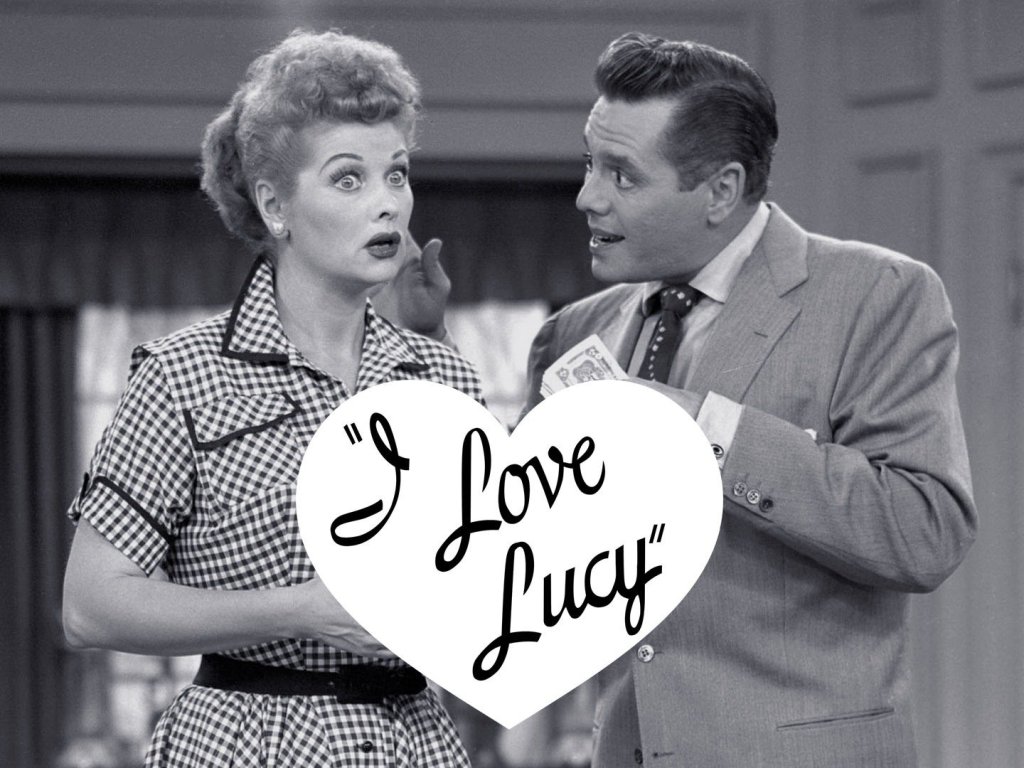
It’s Desi Arnaz’s fault. As the story goes, when Lucille Ball got pregnant during the run of their legendary sitcom I Love Lucy, it was Desi who suggested to the network that they run some older episodes again to fill in the weeks when she would be out of work. The idea was bizarre. Run episodes again? Re-run them? Who would want to watch an episode of a TV comedy that they had already seen?

The answer, as it turned out, was everyone. There’s a comfort in returning to something that made you happy the first time you watched it, like finding an old friend or reminiscing about the good old days. It’s something that we all need at some time or another. 

The rerun became a standard television feature and changed the landscape of entertainment. Not only could they run the same show for an entire year without having to make quite as many episodes or skipping a week, but this eventually led to the concept of syndicating reruns of old episodes to show outside of their original timeslot. And it is syndication, I believe, that has allowed TV shows to become iconic parts of our culture. Think about it: were it not for syndication, if the shows were not still available after their initial airing, would anyone today still know the theme to The Brady Bunch, or be able to tell you how many castaways were stranded on Gilligan’s Island? Who would remember the man named Jed, a poor mountaineer who barely kept his family fed? Could a gentle whistle  conjure up the image of Andy Griffith and Little Ronnie Howard carrying their fishin’ poles down to the fishin’ hole?

And although it isn’t a sitcom let’s not forget that Star Trek (arguably the font from which all modern fandom springs) is only remembered today because people kept watching the reruns after the series was canceled. It was in syndication that the show’s popularity truly boomed, syndication that led to things like Star Trek conventions, merchandise, novelizations, comic books, and fanfiction…and it was those things that fueled the fire and ultimately led to the revival of the franchise. That’s huge even if you’re not a Trekker, because the fandom of virtually every major franchise since then has followed that template.

I’m not saying it’s the greatest sitcom ever made, but I won’t argue if YOU say it.

When I was younger, I would get home from school and gorge myself on a diet of sitcom reruns. Shows like Cheers, Night Court, or Mama’s Family were staples for me. The 90s came and Home Improvement, Seinfeld, and Friends joined my education. And no matter how many times I watched any given episode, I faithfully watched them again, to the point where I can remember minute details of ancient TV shows better than I remember things like the current whereabouts of my social security card. Because of syndication, I can throw out an obscure joke or comment about virtually any topic, then watch my wife roll her eyes at me when I tell her it’s a classic Simpsons reference.

The streaming revolution has changed things, of course. Once, these reruns were a way to fill time on the air before new series start. Today, fewer and fewer people are using “air time” in their television viewing at all. With the exception of sports, weather, and Svengoolie on Saturday nights, I virtually never watch any live television anymore.

This does not mean the end of reruns, of course, it just means that you have to seek them out instead of turning on whatever Channel 26 was showing at 5 p.m. In fact, for many people seeking out these older shows has become a lifestyle choice. Whereas once someone would have to content themselves with the seventeen or eighteen episodes of The Big Bang Theory that TBS shows on any given weekday, now the option exists to literally watch it 24 hours a day on HBO Max, and you can choose any episode you wish. If you go to a Bob’s Burgers group on Facebook and ask what shows the fans watch when they aren’t watching Bob on Hulu, you will be greeted by several quizzical faces that fail to comprehend such a time could exist. There are people who watch The Office on constant repeat, people who never turn off Family Guy, and folks who will spend their entire lives immersed in Pawnee, Indiana with Parks and Recreation.

There are a few too many people who don’t understand this character was meant to be a cautionary example.

I’m not entirely sure this is a good thing. Oh sure, it’s great to be able to go back and revisit your favorite shows, but I think it’s making it more difficult to find new shows, especially comedies. There’s plenty of talk about “prestige” television, but most of the time this refers to genre shows like Stranger Things or dramas like Yellowstone. The conversation doesn’t really center on blockbuster comedies the way it used to. Would it even be possible, in the current TV climate, for a show with the level of cultural penetration as Friends or Seinfeld to come into being?

As much as I love the sitcoms of my youth, I’m also the sort of person who is constantly on the lookout for new characters, new stories, and new worlds to explore. Even now, I sometimes feel a strange guilt if I watch something I’ve already seen, faced with the knowledge that I could be using this time on new entertainment. I get over it, though, and since streaming really took off in force there are many classic comedies and shows of my youth that I’ve gone back and watched in their entirety: Cheers, Frasier, Wings, The Office, Head of the Class…part of it is because I like to watch new shows with my wife (hi, Erin), and I used to go back to older shows as something to watch while she’s at work. That didn’t quite work out, though, as she would get home while I was in the middle of an episode of Everybody Loves Raymond, she would get into it, and I then I had to wait to watch the old shows with her too. Now I just make her tell me explicitly which shows I am and am not allowed to watch without her to avoid confusion.

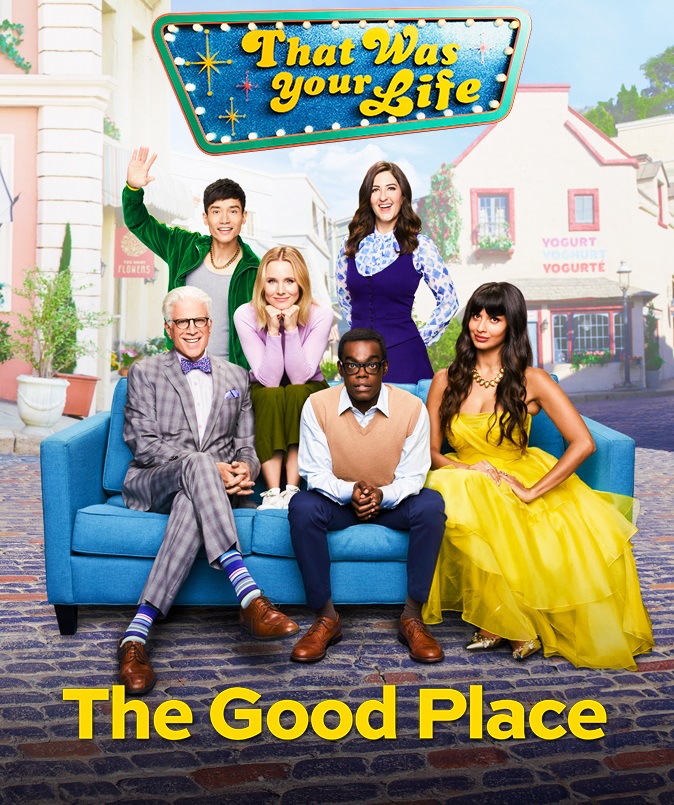
How legendary is Ted Danson? His picture is in this column twice.

Anyway few years ago, I realized it had been quite some time since I found a new comedy that I really got into, and I made it a point to start seeking them out. I began with The Good Place, which was both a wonderful choice and also completely antithetical to what I was trying to do. If you’ve never seen it, The Good Place is about a kind of scuzzy woman (played perfectly and adorably by Kristen Bell) who dies and, through a sort of cosmic clerical error, winds up in Heaven, which turns out to be run by Ted Danson.

I refuse to say any more about the story because to do so would rob new viewers of one of the most sublime television series ever made, but I will say that I never thought I would see a show that could blend together philosophy, spirituality, religion, and deep, complex contemplations on the meaning of life and the nature of existence itself with a fart joke and make it all seem utterly perfect. It is both hilarious and one of the most profoundly thoughtful and emotionally-compelling TV shows I’ve ever seen. And it’s for that reason that it’s not a show I can re-watch too often, because there are only so many times you can cry on a random Tuesday afternoon.

So The Good Place is an excellent show and I urge everyone to watch it immediately…but it wasn’t the sort of thing that made me want to put it on constant repeat the way I could Frasier. The search would continue.

The most scientifically accurate television program since SeaQuest DSV.

The next comedy that really got my attention was Abbott Elementary. Upon the suggestion of friends of mine from work (I am, in case you didn’t know, a high school English teacher), I checked out the first few episodes of the show, then I stopped and made my wife sit down and watch them with me, because it’s so good. On the surface, it feels like one of dozens of Office clones – a faux documentary set in an American workplace, this time an elementary school. There’s a wacky boss! There’s a new guy in the first episode to act as the audience surrogate! There’s a will they/won’t they couple that the audience is clearly supposed to root for! All the fingerprints are there!

What sets Abbott apart for me, at least, is the authenticity. There have been a number of TV comedies set in schools, but the majority of them have focused on the students (Saved By the Bell), or on the class of one influential teacher (Welcome Back Kotter, Head of the Class). This is the first show I’ve ever seen where the faculty are the stars of the program. What’s more, it’s the most realistic show set in a school I’ve ever seen. You’ve got the young teacher (played by show creator Quinta Brunson), eager to please and determined to be the best that she can be. You’ve got the grizzled veteran teacher (Lisa Ann Walter) who does what she wants and doesn’t care what anyone thinks of her. The awkward teacher (Chris Perfetti) who is determined to be thought of as cool despite the fact that he clearly is not. The teacher who has been at that school forever (Sheryl Lee Ralph), is perfect in everything she does, and is both intimidating and nurturing to everyone around her. I’ve taught with every one of these people. I have been many of them at some point or another.

It also shows the repercussions of events in a school in a way that most shows don’t. Budget cuts, classroom size, getting adequate parental support – all of these are issues that have turned up on the show in a realistic way. Well…semi-realistic. It is still a TV show, after all. Count the number of times in Saved By the Bell students are left in a classroom with no adult supervision, and know that every one of those offenses could (and depending on the severity of that episode’s hijinks, should) have resulted in somebody getting fired. Abbott actually shows consequences to even well-intentioned mistakes, (the Egg Drop episode is a wonderful example of this) and does so with relatable, enjoyable characters. Best of all, it doesn’t reduce every teacher to a useless buffoon. In fact, unlike most shows in a school setting, every faculty character — even Janelle James’s seemingly-useless principal — has moments where they show their worth as a teacher, as a friend, or as a mentor. It is the first school-focused TV show I’ve ever watched that didn’t make me ask if anyone involved had ever set foot in an American school in their lives. It’s really lovely.

It’s not perfect. The teachers do seem to have absurdly long lunch periods and planning times where their students are in someone else’s care, but I accept that as a necessity when you’re telling stories about the adults and not the kids. Those minor problems are easy for me to get past when I go back and put the show on repeat…which is where I stumble, since we’re only in the second season, and with modern TV the first season had a measly 13 episodes. While I eagerly await each new episode, there’s not enough Abbott for a good binge…not yet.

So I keep looking for more comedy.

There are two shows about dead people on this list, and I don’t know if that says more about me or about society.

The most recent show to get my attention, like Abbott, is only in its second season, but it has a few more episodes and I haven’t quite gotten through them all yet. I started watching CBS’s Ghosts on the advice of my brother (which I mention mainly because if he should happen to read this he will immediately jump in the comments and demand credit for it), and I’m enjoying it a lot. Ghosts, a remake of a British show of the same name, is about a young couple (Samantha and Jay, played by Rose McIver and Utkarsh Ambudkar, respectively) who inherit an old mansion from a distant relative, unaware that the ghosts of numerous people who have died on the property are trapped there. In the first episode, Sam has a near-death experience and wakes up with the ability to see and hear the ghosts, and the sudden connection between the ghosts and the “livings” changes things for all of them. 

It doesn’t sound like the premise of a wacky sitcom, but it’s really great. The ghosts cover a wide range of character types, from someone who died 1000 years ago (a Viking exploring the Americas played by Devan Chandler Long) to a dudebro businessman who died in the early 2000s without any pants on (Asher Grodman). The premise allows for characters with a variety of perspectives from different time periods, which makes for a fun blend of types: the former mistress of the house (Rebecca Wisocky) has attitudes about women’s roles stuck in the 1800s, while the hippie who got killed trying to hug a bear in the 1960s (Sheila Carrasco) tries to help her break out of them. The scout leader who was killed in an archery mishap in the 1980s (Richie Moriarity) wants to be best friends with Sam’s husband Jay, but it’s tough to be pals with someone who can’t see or hear you. 

The first season of the show is a fun one that sets up the premise very well, but the second season is even better as it starts to explore the world more fully. Sam encounters more ghosts beyond her own property, we get more information about the lives of the deceased, and an ongoing plotline begins to build around the 20s songstress Alberta (Danielle Pinnock), who always claimed she was murdered. Her insistence that she had an exciting demise was considered just a symptom of her hubris until evidence starts to accumulate that suggests she may be right. There’s even a great meta joke in the second season where the ghosts learn they cannot pass through the walls of a vault in the house and Jay quips that he appreciates the expansion of the mythology.

The only problem with Ghosts is, like Abbott, there’s just not enough of it yet. I’ve only got four more episodes until I’m caught up, and then what?

Time to watch the British original, I suppose.

The point is, I’m still on the lookout. The great sitcoms of the past aren’t going anywhere, and thank goodness for that. I know I can turn on Cheers or Everybody Loves Raymond or Night Court any time I want, and I frequently do. (In fact, I haven’t started watching the Night Court reboot yet because Erin and I have to finish our binge of the original series first.) But I still crave new entertainment. So I’m open for suggestions, friends. What are the current comedies that are worth watching? 

Blake M. Petit is a writer, teacher, and dad from Ama, Louisiana. His current writing project is the superhero adventure series Other People’s Heroes: Little Stars, a new episode of which is available every Wednesday on Amazon’s Kindle Vella platform. He’s also a big fan of Star Trek: Lower Decks, but he doesn’t consider that a sitcom so much as a way of life.

Geek Punditry #5: Fandom: Why We Can’t Have Nice Things

I set a goal for myself about a month ago, to use this new Geek Punditry column to get back to writing about the movies, books, TV shows, and comics that I love. I felt like spending time on those things that bring me joy would reignite my writing chops and, just a month in, I feel like I’ve been successful. I’m looking forward to writing this each week. I’m excited to write this each week. But as early as week 3, my focus began to shift. What started as a celebration of things I love has already evolved, with the past two installments focusing on problems that I think need to be addressed. I bring this up because I’m going to do the same thing this week. I’m going to point out a problem that I think is perhaps the most insidious in all of pop culture. I mean, of course, fandom.

The Antichrist, according to Reddit User u/DeeSeeBlows42069

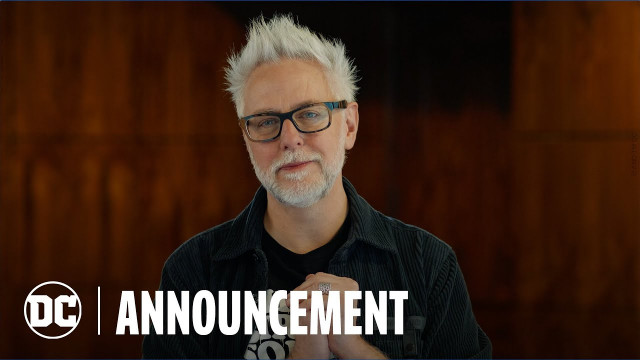
Earlier this week, James Gunn released a video announcing the new plans for the reinvention of the DC Universe in movies and television, and when I heard the news, that’s what I thought I would be writing about today. I figured I’d give you my feelings on what he has in the works for Superman, for Green Lantern, for Booster Gold (Booster freakin’ Gold!) and tell you why I’m excited and optimistic about it. But within hours, the excitement I felt was already being chipped away by people who, if you asked them to their face, would claim to love the very things they had begun whining about. But for people who say they’re acting out of love, their words painted another picture – venomous, vitriolic, and sometimes just plain nasty. Fans can be great, but every time a new movie is released, a new comic book creative team is announced, a new television series premieres, it becomes more and more clear that fandom can be absolutely toxic.

I’m not saying that criticism is bad. In times past, criticism itself was a legitimate form of literary discourse. But that was reasoned criticism, informed criticism. What we get today is a knee-jerk reaction that declares everything is terrible before it even sees the light of day, souring the joy for everybody. One need only look on any social media outlet, any of hundreds of Reddit pages, and one will find post after post, meme after meme, of people railing in anger against something they have not even seen. In fact, for the most part it’s criticism of things that do not yet exist. And while it’s true that the other extreme also exists – people who are happy about things they have not seen – that other extreme is a minority, and seems to me to be far healthier and joyful (or at the very least less pessimistic) and therefore is the side I would prefer to join.

Not pictured: A film that should be used as a medieval torture device.

Social media allows for no nuance, though. Everything is either the greatest thing ever made or (far more often) the worst thing ever made, with no degrees in-between. Last year’s Morbius movie is a good example of this. The film underperformed badly at the box office, even after a meme-inspired rerelease, and it has become a punchline. But this damage was not done by people who had watched the movie. The internet declared the film a failure long before its release – online hatred of Jared Leto combined with several COVID-related delays seemed to doom it before a single frame was released to the public. When I finally watched the movie, my response was, “That was okay.” It isn’t great, mind you, but it’s okay. Jared Leto is all right, Matt Smith seems to be having fun playing the bad guy, and the vampire effects – I’ll say it – were actually pretty impressive. But if you mention the title on Facebook you’ll get an avalanche of “IT’S MORBIN’ TIME!” posts and people slandering the movie, most of whom have never even watched it.

People who delight in someone else’s failure are nothing new, of course. It’s good old-fashioned schadenfreude (and thank the Germans for having an appropriate word for this), it’s as old as civilization itself, but the internet has given it voice that it didn’t have in ages past. The insidious thing is that this voice is not simply celebrating failure, but generating it. What’s worse, as the louder voices on the internet start to pretend that volume is consensus, too many people are starting to accept consensus as fact. I’m reminded of a conversation I overheard a few months ago between two of my high school students about the most recent Halloween movie. One student was declaring, in much the same voice you or I might use to declare that the bathroom is down the hall to the left, “It sucks. He’s barely in it.”

“Have you seen it?”

“No, but everyone says so.”

You’re not allowed to shout at your high school students for their opinions about movies. I looked it up.

Full disclosure: I didn’t particularly care for Halloween Ends, but A) my issues with it had nothing to do with the number of minutes Michael Myers appeared on screen, and B) I formed that opinion after watching the movie myself. 

This phenomenon is perpetuated online thanks to sites like Rotten Tomatoes, which is a brilliant example of a good idea gone horribly wrong. Rotten Tomatoes gives a movie two scores: a percentage based on film critic scores and the percentage based on viewer scores. The site has no authority, no personal judgment inherent in its functionality, but people have begun using that algorithm-generated number as if it were some sort of benchmark of quality. I can’t say this often enough, my friends: consensus does not equal quality

How many movie trailers have you seen declaring a movie’s Rotten Tomatoes score the way they used to tell us that Siskel and Ebert gave a movie two thumbs up? The difference is that Gene and Roger were actual critics, people who watched a movie first and then gave intelligent, nuanced critiques of the film. If they gave a movie a thumbs-down, they could explain to you why they disliked it. But if a movie gets a 35 percent on Rotten Tomatoes, all that means is that only 35 percent of the trolls on the internet had something positive to say. When I hear that number, the only response that makes sense to me is, “SO WHAT?” I accept the numbers as a consensus of the people who have posted to Rotten Tomatoes, but why in the hell should I care what they have to say? I disagree with random people all the time. I disagree with professional critics even more. Why should I accept their numbers instead of forming my own opinion? When they started to tease the upcoming announcement of a film’s Rotten Tomatoes score, I thought my brain was going to explode and squirt out of my ears like a Looney Tunes character, who would then get anxiety over its own upcoming Rotten Tomatoes score. 

I’m telling you, it’s okay with me if you like this movie.

And you know, I wanted to like Halloween Ends. I’ve never understood the concept of “hate-watching.” There are so many things I want to watch that I know it’ll be impossible to get to them all – why should I waste time watching something I expect to dislike? Will it happen sometimes? Of course. But that’s not my goal. And more importantly, if I decide not to watch something because I expect to dislike it, I don’t declare it bad, I declare it unseen. For instance: I didn’t care for the first James Cameron Avatar movie. (Yes, I know, it made all the money. I don’t care. Consensus does not equal quality, remember?) Because I didn’t care for the first one, I haven’t watched the second. So here’s a pop quiz: when someone asks me about Avatar: The Way of Water, what is the correct way for me to reply?

A: It sucks, James Cameron sucks, water sucks, everyone sucks.

B: I haven’t seen it.

If you answered “A,” please disconnect all of your devices from the internet immediately and never talk to anyone again.

The other thing that stokes this particular flame is an “us vs. them” mentality that pervades the internet. It’s as though if you’re a fan of Property A, you are beholden via blood oath to despise everything associated with Property B. You must hate the movies, you must hate the books, you must hate the fans, and if an actor happens to jump from one to the other they are a traitor and must be dealt with possibly with bamboo shoots no later than Tuesday afternoon

My God, is there any attitude in fandom stupider than that one?

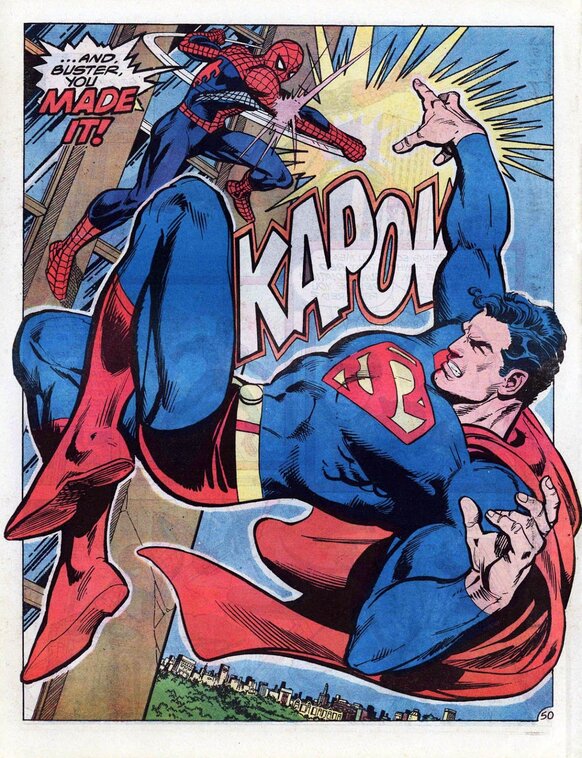
Superman is my favorite superhero. He’s a DC character. Somehow that means I’m not allowed to say how great Spider-Man: No Way Home is? If I love Star Trek, is it a betrayal to express joy for The Mandalorian? If I’m a fan of Lord of the Rings, I have to hate Wheel of Time?

Shut up.

Pictured: Fandom

Storytelling isn’t sports. When I’m watching the New Orleans Saints play the Atlanta Falcons, the nature of sports means that I want one team to win and one team to lose. This is normal. But that same rule does not apply to movies, to TV shows, to books, to comics. In sports, somebody is gonna lose, but in storytelling, everyone can win. When I say that I want James Gunn’s Superman: Legacy to be a blockbuster movie, that is not the same thing as saying I hope Captain America: New World Order is a disaster. I firmly believe that great art of any kind will inspire great art from others, and that when one franchise I love is enjoying success it’s not an obstacle to anybody else. If anything, it’s a carrot to lure them to be better themselves. I think the people who make these properties understand this. It’s very common to see actors, directors, writers, or artists jump back and forth between publishers and studios and IPs and have positive things to say about all of them. It’s only the fans that view it as a competition. (Well, the fans and the corporate executives, but that’s a whole other conversation.)

This is not to say I’m blameless in this, of course. I certainly shared my criticisms of the original Avatar online, and lord knows I posted a “Morbin’ Time” meme or two, but as fandom has grown more toxic I’ve made a deliberate effort to pull back on that sort of thing. I’ve never been the sort of person who would get on Twitter and threaten an actor because I didn’t like a movie they were in, but I realize now that in the current internet climate even well-meaning criticism may sometimes give fuel to that sort of horrific person, and I don’t want to do that. The point of Geek Punditry is to talk about things I love, not things I hate. 

I’m not saying not to criticize. I’m just asking that criticism be informed, that it be based on the work itself and not because you hate somebody’s previous movie or because you’ve chosen lines in a meaningless civil war. And most importantly, that it be respectful, both to the people you disagree with and to those whose work you are criticizing. Nobody intentionally makes a bad movie, with the possible exception of the Sharknado franchise, so even if you don’t like the work, give credit for the effort that went into it. The only people who lose when you speak respectfully are the people who refuse to speak respectfully.

And go ahead and be respectful to them, too.

Drives ‘em crazy. 

Blake M. Petit is a writer, teacher, and dad from Ama, Louisiana. His current writing project is the superhero adventure seriesOther People’s Heroes: Little Stars, a new episode of which is available every Wednesday on Amazon’s Kindle Vella platform. If, at any point during this column, you thought to yourself, “Blake is talking about THOSE people,” that probably means he’s talking about YOU.

Geek Punditry #4: Reigniting the Oscars

“Can you remember who I went home with last year?”

Earlier this week the nominees were announced for the 95th Annual Academy Awards, and the world greeted them with…well, with a collective yawn. Oh sure, people are talking a little. Everybody is happy about Brendan Fraser’s nomination for The Whale, and a lot of people are glad about the hearty showing for Everything Everywhere All At Once, but for the most part, the chatter has died down pretty quickly. This isn’t really that surprising, as Oscar viewership has plummeted in recent years. At its peak in 1998 (55.3 million viewers), the Oscars were the second-highest rated telecast in America, following only the Super Bowl. But that was a long time ago, and since 2010  viewership has taken a nose-dive, with last year’s ceremony gathering a relatively meager 16.6 million viewers. That number was touted as a win by some after 2021’s disastrous 9.85 million, although that number was no doubt influenced by the pandemic crippling viewership for movies in general the year before.

In a way, I suppose I could call myself part of the problem. I used to be a devoted viewer of the Oscars, eagerly awaiting the nominees, making every attempt I could to watch as many of the nominated films as possible before the ceremony, and vociferously arguing with the winners when I felt the Academy made the wrong call. (Lookin’ at you, Shakespeare in Love over Saving Private Ryan.) But not only do I not really care about the Oscars anymore, I don’t even really care that I don’t care. It would be easy to go on a tirade about how the Oscars have changed and left me behind, but that’s not really true. The Oscars haven’t changed that much. I’ve changed. The way we view movies has changed. The world has changed. The Oscars haven’t kept up. 

Pictured: Every “Best Picture” nominee for this year I have seen, in alphabetical order.

Out of this year’s 54 nominated movies, I have seen five. I’ve only seen one of the Best Picture nominees, and I haven’t even heard of some of the others. This is nothing new, by the way. Right now, without looking it up, how many of you remember that King Richard took home the Best Picture award at last year’s ceremony? Go ahead, raise your hand, let everyone see you. Now everybody who just raised their hand can put it down in shame: I know you’re lying because I made that part up. The winner was Coda. But you didn’t remember that either, did you?

It’s okay, neither did I. I had to Google it.

I don’t object to the concept of an awards program. I’m fine with peers (in this case, people involved in the movie industry) declaring what they consider the superior examples of their craft. And I’m not even saying they should change what movies they give the awards to in order to make them more commercial – that would be intellectually dishonest, not to mention pandering. However, if the films that get the accolades are movies the mass audience has never heard of, they don’t get to complain when the mass audience isn’t interested anymore.

But it’s not just the movies that get nominated that are causing a problem. The way people watch movies has changed dramatically in the last few years. In-theater attendance has collapsed, while streaming numbers have picked up the slack. Personally, I’m not crazy about this. I always prefer to see a movie in theaters if the option is there, but I also have a five-year-old child and I know that seeing movies in theaters is frequently difficult, if not impossible, for many people. Once upon a time I would go to the movies nearly every weekend, sometimes seeing two or three films in a single day. In 2022, I made it to the movies a grand total of once. Similarly, watching long movies isn’t easy for me either. I’m not someone who whines if a film goes beyond 87 minutes, mind you. I like long movies. I can spend an entire weekend watching the extended cuts of the Lord of the Rings trilogy and still hunger for more. But when my kid is demanding things like YouTube videos or, y’know, food, it can be difficult to set aside the three hours necessary to watch All Quiet on the Western Front. Some people are happy to break up a movie in chunks and watch it over a few days. To me, the very thought of doing such a thing makes me want to cry.

So I’ve got a few suggestions to help the Oscars win back a little of the relevance – or at least the interest – that has eroded from what was once the biggest night in Hollywood.

If you read this title and don’t want to see this movie, you and I can’t be friends anymore.

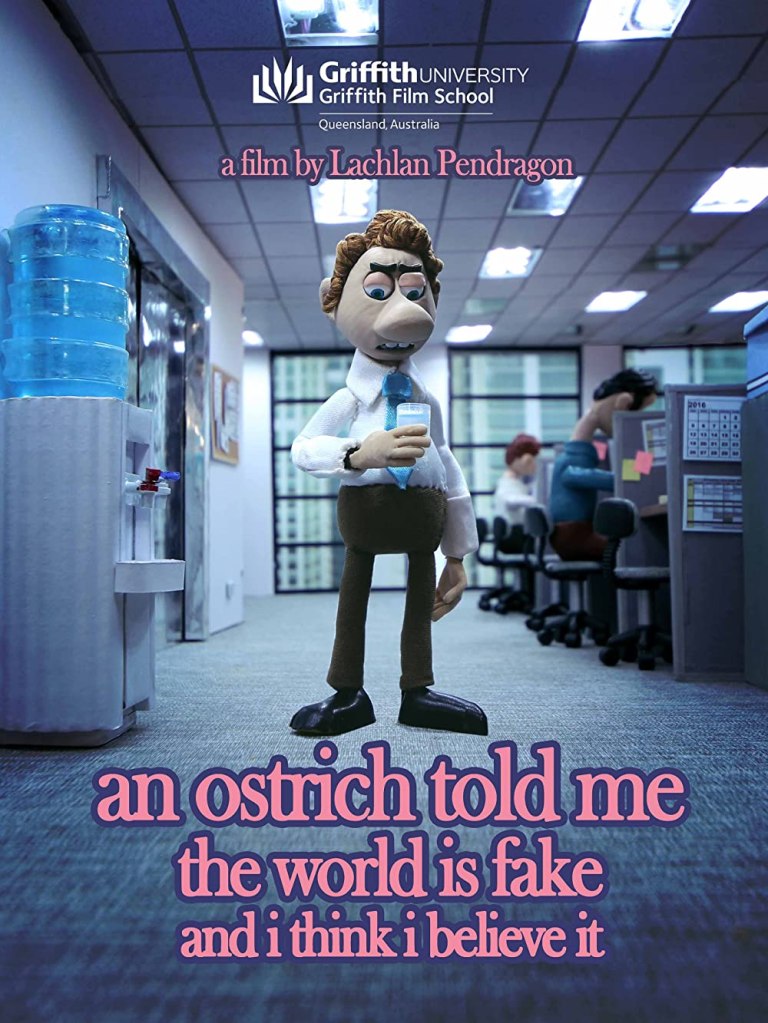
First of all, let’s address the availability issue. This is a bigger issue for categories like shorts, documentaries, and foreign films, but a lot of the lesser-known films in other categories suffer from it as well. It’s hard to make a potential awards viewer excited about nominees that they haven’t seen, but in this streaming world, why is it still a problem? Sure, if a movie is owned by Disney or Warner Bros., you know it’s going to be on a streaming service soon enough, but what about the deserving films that aren’t? One of the nominees for Best Animated Short this year is an Australian film called An Ostrich Told Me the World is Fake and I Think I Believe It. Now I’m ready to hand filmmaker Lachlan Pendragon the trophy based on the title alone, and I would love to watch this movie…but alas, it’s not available anywhere that I’ve checked.

Here’s a chance for the Academy to use some of that muscle they have for good. Cut some sort of a deal with a popular streaming service – Netflix, Hulu, HBO Max, take your dang pick – that would give nominees the option for a limited streaming window in the frame stretching from the nominations through the awards ceremony, or perhaps a few weeks or so after. Give people a chance to watch the movies, and they may start to care again. Hell, why not start their own service that exclusively carries Oscar-nominated films from the past 95 years? I know a lot of them already have their rights tied up with different companies and streaming services, but there must be plenty of orphans deserving of a chance to find an audience.

Next, let’s talk about the categories of the awards. I don’t have an issue with any of the current categories, but the films that are most popular aren’t usually the kind of things that will line up for Best Picture or the acting categories, unless they’re directed by James Cameron or have Black Panther in the title. Genre films have always been largely ignored by the Academy unless they become so immensely popular that they simply cannot pretend they don’t exist. We all remember the 2003 Oscar bloodbath when they gave Lord of the Rings: The Return of the King every award they could out of fear of the fans angry over the snubs for the first two installments marching on Hollywood and lighting New Line Cinema on fire. 

A few years ago the Oscars announced the addition of a “Best Popular Film” category in an attempt to address this problem. They quickly dropped the idea, however, when millions of angry fans on the internet pointed out that, for an organization worried about being perceived as snobbish and elitist, inventing an award specifically to placate “the little people” was probably not the best way to change that attitude. 

But there are two categories that could be added that would not only be gratefully accepted by genre fans, but also fill in two gaping voids in the production of motion pictures that are not currently addressed by the Oscars: stunt performance and performance in animation.

Stuntwork has existed since the earliest days of motion pictures, and despite the utter brilliance of people from Buster Keaton to Chad Stahelski, the Oscars have never seen fit to recognize that aspect of filmmaking. A stunt category would create more interest from fans of genre films (which would likely dominate the category for obvious reasons), as well as finally giving credit to people who literally risk their lives in the creation of our favorite motion pictures. And it should remain distinct from the “best visual effects” category. There should be a limit on how much of the film is CGI in order to qualify, so a movie where the action is 95 percent generated by a computer wouldn’t muscle out a film where there was an actual living human being strapped to a crane and they only used a computer to erase the wires. 

Look in those big, blue eyes and tell me he didn’t deserve some Oscar love.

Animated performance has also been ignored historically. I don’t know if voice performers are technically eligible in the standard acting categories, but I know that no one has ever been nominated for such a performance. And voice acting is performance. Whether it’s someone standing at a microphone, as in most animated films, or someone doing full motion capture and acting out the part, there is a unique performance element that is as impressive an art as any other. It still burns me that Andy Serkis was completely snubbed for his role as Gollum in Lord of the Rings, a performance that almost certainly would have gotten recognition if he had been wearing makeup, but was totally ignored because he was rendered digitally.

I don’t know if I would further subdivide this and make motion capture performances their own separate category from “traditional” voice acting, but having at least one category dedicated to this type of performance would be a big step. What’s more, this is not a solo award. It should be shared by the person who performs the voice and/or motion capture, as well the animator or animation team that completes the process of bringing the character to life. Guillermo Del Toro credited the people who made his Pinocchio film this way, and the Academy should do the same.

The only downside to this, of course, is that adding categories to the awards would make the show even longer, and this brings us to the final reason that people have lost interest in watching the Oscars: bloat. The show is long, tedious, and full of fluff that the average viewer couldn’t care less about, and that’s before we even get to the acceptance speeches. What’s even worse, they make room for this bloat by taking certain categories (usually the technical awards) and giving them out at an untelevised separate ceremony, essentially declaring which awards are less significant than some actor’s impassioned speech on behalf of the life cycle of the Bolivian Dung Beetle.

So the first thing that needs to be done is blow out the fluff. Get rid of the stupid sketches and weepy speeches that don’t relate directly to the awards being given out. There should be three components to the ceremony: musical performances of the nominated songs, the “In Memoriam” reel, and the awards themselves. In and of itself, this change would reduce the length of the ceremony by approximately 17 years. 

Then come the acceptance speeches, and this is the tough part. I believe 100 percent in freedom of speech, and I will never advocate curtailing a person’s right to exercise it. That said, if given a choice between seeing the award for best achievement in sound design given live or hearing an actor lecture me on politics – even when they happen to be politics I personally agree with – I will choose the award every single time, and I do not think I’m alone in this. The best solution I can think of is to impose a strict limit on the on-stage speech – 30 seconds, a minute, whatever, but enforce it, even if it means turning off the microphone. Then, allow the winner extended time backstage to make their full speeches, say whatever they want, and upload the unabridged and unedited video to the Oscar website, where people who want to will have the freedom to watch them in full. Some people would object to this policy, of course. “But people won’t get to see my speech!” they will cry. I would answer, “The ones who want to hear it can easily find it.” And they’ll say, “But what if they don’t WANT to?” And I will simply smile and shrug.

I advocate similar changes when it comes to political campaigning. 

It’s not a perfect system, I admit, but unlike several of the people who have accepted Academy Awards over the years, I’ve never tried to convince anyone I am perfect. But I do think these changes will make general audiences more receptive and more interested in watching the Oscars again.

Or at the very least, it’ll be better than the Golden Globes. 

Blake M. Petit is a writer, teacher, and dad from Ama, Louisiana. His current writing project is the superhero adventure series Other People’s Heroes: Little Stars, a new episode of which is available every Wednesday on Amazon’s Kindle Vella platform. He’s heard an awful lot of nice things about that Brendan Fraser fella, and he hopes he’s having a good time right now. 

Geek Punditry #3: Beware the Binge

“I’m not going to start watching a show on Netflix. They’re just going to cancel it anyway.”

Everyone reading this, I promise, has heard someone on social media (or maybe in real life, if you’re the sort of person who has such a thing) echo that very sentiment recently. Every time a new show hits, someone says it. Every time a show gets canceled, someone says it. Every time I go through the drive-through at Wendy’s someone says it, which is actually kind of weird and makes me wonder if they’re still having staffing issues. But the point is, I get it. In this day and age, when television has become more more serialized and most shows – even half-hour comedies – have ongoing story arcs that play out across a season or even across an entire series, there are few things more frustrating to a television fan than getting invested in a series, watching their way through the end of the first season, feeling their pulse race with the cliffhanger finale, and then learning that there will never be a season two. 

The blame for this is usually placed on Netflix itself (although they’re hardly the only culprit), and while I agree that Netflix deserves a lion’s share of the culpability, I don’t think it’s for the reason most people usually mean. 

The assumption people have is that Netflix is just impatient. They won’t give people a chance to find a show and get to enjoy it. But I don’t think that’s what’s happening, not exactly. Netflix (and most streaming services) rarely release their actual numbers, so it’s hard to say with any degree of certainty how many people are watching any given show or how quickly, but a hypothesis has been making the rounds that I think is worth examining. Some shows are getting the axe despite seemingly large numbers, while others with smaller viewership are being allowed to continue, a practice that doesn’t seem to make any sense if you consider it series-by-series. It makes a lot more sense, though, if you look at it episode-by-episode.

What seems to be happening is that Netflix is basing their decisions not on total numbers of hours watched, as people tend to assume, but by how many people finish a season. If, for example, 20 million people watch the first episode of Mind Your Manners With Simon Cowell, that sounds better than the 15 million who watched the first episode of Toenail Fungus Finds of Eastern Europe, right? 

But keep watching the numbers. How do they trend? What percentage of that original number stuck it out to the end? If, by the end of the season, Toenail Fungus has retained 11 million viewers, but Simon Cowell has dropped down to 4 million, what makes more sense to renew? People who skipped out on Simon after three episodes are far less likely to come back for a theoretical second season than the much larger number of people who stuck around to find out exactly what kind of mold was growing under Slobodan Milosevic’s left pinky toe in the pulse-pounding season finale. 

The practical result of this is that shows that don’t get binged heavily in the first couple of weeks are far less likely to get invited back, and this is where that conventional wisdom comes back into play. Shows are not being given time to find an audience, you’re right. But the solution here is not to require every damn person on the planet to binge every show the second it hits the streamer. Doing things that way makes it far, far harder for a show to get traction unless it’s based on an existing IP like Wednesday. Something like The Midnight Club may be every bit as worthy of getting a new season, but as it doesn’t have that built-in fanbase, the chances of it hitting the same way are much worse. 

There are exceptions, of course. Stranger Things and Squid Game are both shows that seemingly came out of nowhere and had no ties (other than thematic ones) to previous movies, characters or TV shows that could have carried over their audience – but they’re called exceptions for a reason. For each of those, how many series like The October Faction, Cursed or Archive 81 have suffered an ignoble death?

There is a solution to this problem, but Netflix doesn’t want to hear it. In fact, I think a lot of you reading this right now will be horrified at the suggestion. But I’m going to say it anyway.

You know how to deal with the problem of people not binging shows quickly enough to save them?

Stop making shows bingeable. 

Excuse me, I need to go wash the tomatoes people just hurled at me from my hair and clothes.

But I’m serious about this. The problem is that Netflix is basing their decisions on how many people watch an entire season of a series in X amount of days, with X being some magical number they’re not going to tell us but which was clearly too small to save Jupiter’s Legacy. And as it seems these shows are getting cut faster and faster, you cannot blame any viewer for deciding not to invest their time, which means that the new shows won’t have anyone to watch them and then they’ll get cut too, and now we’re just in a never ending loop of cancellation and misery, like being back in high school, but sandwiched between a baking show and a murder documentary. 

But let’s look at other streamers. Netflix isn’t the only game in town anymore, after all, and few of their competitors have suffered from this same cancellation outrage. So what’s the difference?

Part of the problem is that tiny little “X” number – expecting people to find a show, binge a show, talk about a show, and then expand the audience in a remarkably short period of time. It’s really hard, and considering just how many entertainment options now exist, it’s nearly impossible. But look at the Marvel or Star Wars shows on Disney+, or the assorted Star Trek series on Paramount+. Not only are people watching, but people are talking about them. And not just for the days or (in rare cases) weeks of a Netflix hit, but for months. What’s the difference?

Disney and Paramount release their series the old-fashioned way: one episode a week. And that lets the audience find the show in a way that Netflix’s “drop ’em all right now” model never will.

How many Star Wars fans, disgruntled by Disney’s cinematic output, had to be convinced to try the likes of The Mandalorian or Andor? How many Star Trek fans immediately dismissed Prodigy or Lower Decks for being animated series until other fans persuaded them to give them a chance? If they had been released the Netflix way, the conversation would have ended in a few days, and a lot of people would never have given these shows a try.

It’s not a perfect analogy, I admit, because those are shows based on existing – and, let’s be honest, massive IPs, but it still demonstrates something. I hear people talking about these shows not just on the weekend after they’re released, but for months. Love them or hate them, these series have people engaged for a very long time, posting about them on social media, writing thinkpieces, and making memes. And every week, when a new episode comes out, the cycle repeats. This doesn’t happen with a binge show. Even Wednesday, Netflix’s most recent hit, had a quick surge of popularity, a lot of people talking about a dance sequence, and that one meme with Wednesday Addams next to a girl who looks like Luna Lovegood crossed with Phoebe Buffay, and then…it kinda dried up. Sure, people liked the show. Sure, people are looking forward to season two. But nobody is talking about it anymore right now, less than two months after it dropped. 

Compare that to the third season of Star Trek: Picard, which I guarantee will have people on the internet wildly pontificating for the entire ten weeks it’s on the air. And love it or hate it, they’re going to come back every Thursday for the next episode and do it all over again. And while they’re talking, other people will hear them, and the more people who hear them, the more people are likely to watch it, and that’s where the binging comes in. 

I’m not going to pretend I don’t binge watch. Of course I do, it’s 2023, it’s how media is consumed now. But for a new series it’s just not an effective strategy. Pre-streaming shows like Lost or How I Met Your Mother built their audience because fans got invested in the story, the characters, and the mystery, and they came back to talk about them again week after week, season after season. They shared their theories, they wrote fanfiction, they drew pictures of their favorite characters and, most importantly, they told other people how much they loved their favorite shows for a very, very long time. And say what you will about how those respective shows ended, they still have devoted and passionate fan bases that will spend more time talking about them than anyone is spending on Uncoupled. The ability to binge is a great tool for new fans, to get people who are discovering a show later to catch up and to join in on the fun. But as a way of kicking a series off? It’s like Netflix is Lucy holding the football and Inside Job is Charlie Brown, running in for his chance without realizing it’s already a lost cause.

Abandoning the binge-release model won’t save every deserving show, of course. Even in the days before streaming there were lots of great shows that never got past a first season, including some that weren’t even on the Fox Network. And sure, some viewers have no patience for the weekly release anymore, but I sincerely believe that the potential audience that never gets to find these shows under the current system outnumbers the people who will refuse to watch just because they can’t do it all at once.

So there’s my challenge, Netflix. Instead of dropping full seasons in 2023, try doing an episode a week. Then look at how many viewers make it to the end. 

And then maybe give The Joel McHale Show With Joel McHale another chance, would you?

Blake M. Petit is a writer, teacher, and dad from Ama, Louisiana. His current writing project is the superhero adventure series Other People’s Heroes: Little Stars, a new episode of which is available every Wednesday on Amazon’s Kindle Vella platform. He hasn’t actually gotten around to Wednesday season one yet, if we’re being perfectly honest here. 

Geek Punditry #2: A Well-Paved Mile

If you have children, one of the best things you can do with them is read together. It teaches them early on to love books and love learning, it’s quality parent-and-child time spent together, and it is likely the only chance you’ll get to read anything longer than the directions on a bottle of Children’s Imodium for several years. Kids are a joy, but they do tend to make demands of your time. For example, I’m a big fan of Stephen King. I have been ever since my uncle first introduced me to The Stand when I was in high school. I met my wife on a message board dedicated to The Dark Tower. And by the time my son was born in 2017, there were only four or five books in his lengthy catalog that I had not yet read. However, after Eddie was born, my reading time was curtailed drastically but King’s writing time was not, so those four or five unread books have expanded to approximately eleventy trillion. 

But my son is a little older now, and it’s finally starting to become a little easier to squeeze in something longer than your average comic book for my reading pleasure. I recently looked at the vast array of new King that has been produced in the last six years, carefully weighed the options, communed with the spirits of the literary world for how to begin, and finally decided to hell with it, I’m gonna read The Green Mile again.

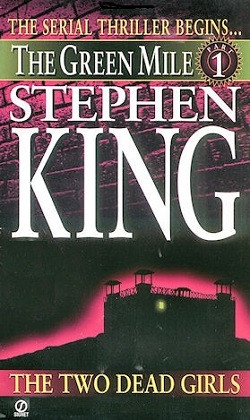
If you’re not familiar with The Green Mile, either through the novel or the top-notch film, I have to say it’s not what people usually think of when they think of Stephen King. There are no child-munching clowns, no apocalypse viruses, not even a writer from Maine. The story is told from the perspective of an old man who was a prison guard in the 1930s, and it centers on one of his death-row inmates who turns out to be harboring a fantastic secret. It’s a character drama with a little magical realism in it, and although there are certainly intense moments, there’s nothing in the book that could really classify it as horror. It is, I say without hyperbole, one of his finest works. Also, there’s a mouse.

It’s been years since I last read the book, but dipping into it again was like visiting old friends who happened to be convicted murderers. I was immediately plunged into the world of Paul Edgecombe and John Coffey (“like the drink, only not spelled the same”). I hated Percy Wetmore all over again, I sympathized with Eduard Delacroix all over again. But as I read this time, I noticed something that had not occurred to me in previous readings of this story: namely how perfectly plotted this story is.

Conventional wisdom says there are two types of fiction writers: architects and farmers. Architects meticulously plan out every scrap and detail of a story ahead of time, decide every beat and turn, and only then, once the blueprints are done, do they write. Farmers plant some seeds with only the vaguest idea of what shape the story will eventually blossom into, but pruning and cultivating that plotted plant is part of the joy of being a writer. By all accounts (including his own), Stephen King is a farmer, and sometimes it shows. As magnificent as he is at character and concept, more than a few of his books suffer from deus ex machina endings that seem to come out of nowhere. (Read The Girl That Loved Tom Gordon some time – you can pick out the exact moment where the writer decided this kid had been wandering aimlessly through the woods long enough and it was time to wrap this puppy up.)

Even King’s best books usually include long segments of backstory or subplots which, although enjoyable to read as they help flesh out the world he is creating, are ultimately unnecessary to the plot and could easily be excised if Reader’s Digest got their hands on it. But not The Green Mile. I was actively looking for the fat when I read the book this time, and I could find none. Each and every piece feels crucial to the overall puzzle. Arlen Bitterbuck’s execution? It’s there to demonstrate how executions are supposed to go, so that what happens later has the necessary context. The Brad Dolan subplot in the framing sequence? It steers Paul’s retelling of the story to its final revelation (which itself resolves a lot of the lingering questions left behind over the course of the book). The brief mention of the only woman who ever served time in E Block? Seems extraneous at first, as her sentence is commuted and she quickly leaves the story.

However, it turns out that this woman is really there to set up another device that turns out to be important: Death by Finale. After her brief appearance in the book, Paul mentions how she eventually died of natural causes several decades later. Again, it seems like a nothing detail, but it’s really there to establish a pattern: afterwards, King tells us of the final fate of almost every named character during the last scene in which they appear. It’s easy enough to miss the first few times. Her fate and that of another inmate whose sentence was commuted (murdered in the prison laundry 12 years later) are incidental. But the pattern becomes clearer as the story goes on, especially in the final chapters, where the fates of Paul’s fellow guards and the other key figures are all stacked on top of each other. It also lends weight to a scene midway through the book where Paul, as the narrator, is somewhat apologetic to the reader for not knowing the fate of the reverend who visits with the prisoners before their executions. It’s an odd moment on first reading, but you realize later that Old Paul is telling these stories to illustrate a point about what has happened to him, so the scene with Reverend Shuster is recontextualized – Paul is sorry that he’s unable to do so this time.

Even minor details come back in an essential way later. In Part One, Paul learns about the crime for which John Coffey has been convicted and throws out little tidbits such as the tracking dogs getting confused at one point and Coffey having a lunch wrapped in paper and tied up with twine. Both are details that are seemingly there just to add flavor to the scene. Both turn out to be crucial later.

“But Blake,” you’re saying, “Isn’t that just how stories are written? It’s good writing, sure, but is it that surprising from an old pro like King?” Normally I would agree with you, but it is the circumstances under which this book was written that makes all of this so impressive to me. Those of you who weren’t reading King in 1996 (or weren’t even born yet – yikes) may not know it, but The Green Mile was not originally published as a single novel. In an experiment to recreate the serialized works of folks like Charles Dickens, King wrote and released the book in six installments, published in slim paperback “chapbooks,” and by his own admission, did not yet know how the story would end when the first part was published.

I knew about the chapbook part, of course. I was there in ‘96, eagerly awaiting each installment. I still remember sitting in the lobby of the band hall at Nicholls State University gorging myself when a new part was released. But the fact that he hadn’t finished the book when Part One was released is something I only learned recently, and frankly, it blew my mind. Did he know how Melinda Moore’s illness would factor in? Did he know the awful secret of Wild Bill Wharton? King says his wife, upon reading an early draft, asked him what happened to the mouse that disappeared halfway through the book, and from my perspective as a reader, I cannot even fathom what the ending of this story would be without Mr. Jingles. This is arguably one of King’s best works, and inarguably one of the tightest, most fat-free novels in his bibliography…and he didn’t know the ending yet when I read Part One?

That’s a straight-up magic trick.

Writers always go back and edit their work to help it flow better. Even the architects don’t always finish things exactly as intended, so a certain amount of adjustment is expected, especially in the earlier chapters. Taking that tool away is like putting a writer on a tightrope and daring them not to screw it up. I’m doing something similar now on Kindle Vella, with my series Other People’s Heroes: Little Stars (gotta get that plug in), except I’m doing a chapter a week instead of a hundred pages or so a month. And I know for damn sure that I haven’t pulled it off as perfectly as King did. Early chapters of my story set things up for a character who has turned out to be far less important than I originally planned. (Blip, if you’re reading OPH and you really want to know whose part got reduced.) Meanwhile, a character who was introduced literally just to fill a desk in one scene has become my favorite in the whole story and will be crucial to the ending. (To no one’s surprise, this character is Keriyon Hall.) None of this is unusual, especially for farmers like the King and I, but that inability to go back and adjust will make for what TV Tropes calls “early installment weirdness” for people who read it later.

All of this is to say that when one is attempting art of any kind, one tends to learn from those who have done it before and done it well. And some snooty scholarial types may take issue with this, but I don’t care: damned if there are many people in the world who do what I want to do better than Stephen King.

Blake M. Petit is a writer, teacher, and dad from Ama, Louisiana. His current writing project is the superhero adventure series Other People’s Heroes: Little Stars, a new episode of which is available every Wednesday on Amazon’s Kindle Vella platform. “Attempted art” kind of sounds like a criminal charge, doesn’t it? Like The Room or Troll 2. 

Geek Punditry #1: The Next Next Generation

I’ve been a Star Trek fan for close to 40 years now. I liked the original series, the movies, the Nickelodeon reruns of the animated series, and when The Next Generation premiered, I was a steady customer. Deep Space Nine set the hook even more firmly, giving the strongest story and the greatest character arcs of any Trek to date (even now, 30 years after the series’ debut). After that, though, although my passion for the Trek universe was untarnished, my satisfaction with specific series and movies began to vary. I never particularly cared for Voyager, and although I liked Enterprise, I was too busy in those pre-DVR days to keep up with it. I liked the Abrams movies well enough, but I thirsted for a new show, and then Discovery…well it wouldn’t be until Lower Decks that a new Trek series would fully capture my heart.

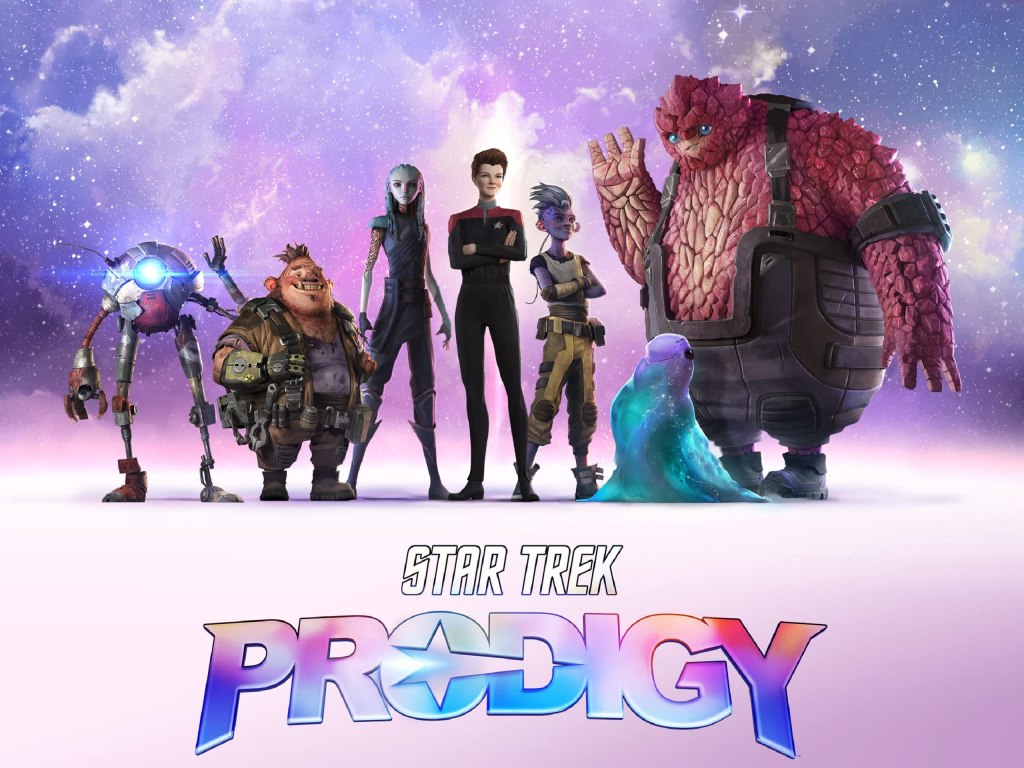
Then came Star Trek: Prodigy. Another animated series, and the first one to be specifically targeted at children. I knew I would watch it, I knew I would give it a chance, because it’s Star Trek. I ALWAYS give Star Trek a chance. But my expectations, to be honest, were not high.

At first, those low expectations seemed to be justified. We were back in the Delta Quadrant from Voyager (ugh), far away from the stories and situations I loved. The cast was made up entirely of brand-new or obscure species, which further divorced this series from the Trek saga that began in 1966. Worst of all, these characters had never even heard of Starfleet or the United Federation of Planets. If it weren’t for the prototype Starfleet vessel they found and the holographic recreation of Kathryn Janeway on board, there would be nothing about this series to designate it as Star Trek at all. It wasn’t bad. It wasn’t loaded with shoestring stories and catchphrase-spouting idiots like so many shows targeted at kids. But I finished the first episode – the first few episodes, actually – feeling like I had watched something that belonged in the world of The Clone Wars or one of the subsequent Disney Star Wars series. Not to say anything negative about those cartoons – they’re good Star Wars. But I didn’t want good Star Wars. I wanted good Star TREK.

After watching a few episodes together, my wife gave me permission to watch the rest of the season without her, as polite an indication of dissatisfaction as there can be, and I really couldn’t blame her. This wasn’t what we expected coming in. And I considered joining her in abandoning the show, because I wasn’t really satisfied, but…

Something told me to keep going. Maybe it’s my renewed devotion to Trek that has become far more passionate over the last few years. Maybe it was that each episode was only a 22-minute investment instead of an hour. Maybe I’m just pigheaded. But I kept watching.

And thank God I did, because as the season wore on, I realized I was watching the most brilliant magic trick TV has given us since someone found a hatch on Lost.

The thing I forgot in the first few episodes was that this is, first and foremost, a show for kids. It’s a show that airs on Nickelodeon, where kids can stumble upon it, and not just on Paramount+, where the existing fans seek it out. That’s important, though, because this is the first Star Trek project since 1966 that is intended specifically for an audience that has no pre-existing expectations of Star Trek. The familiar aliens, the ships, the characters, the lore – everything I love would be completely foreign and meaningless to a child watching this as their first Star Trek.

Just. Like. The. Characters. On. The. Show.

This is where the Hageman brothers, the showrunners, did something so unbelievably brilliant that I want to hug them until security has to drag me away.

As the season continued, through the holo-Janeway at first, we saw bits and pieces of familiarity. A known alien species. A recognizable name. An Easter Egg or three. And the Prodigy kids began to learn about the history and the mission of Starfleet – which is, of course, the history and mission of Star Trek.

And they loved it.

Loved it so much, in fact, that by the midseason finale (where we see the real Janeway and not just the hologram), all they wanted was to be a part of it.

And who can blame them?

I saw someone on Facebook describe Prodigy as a show about kids from Star Wars trying to run away to Star Trek, and never has a description been more apt. But the beautiful thing, the glorious thing, is that the show is constructed in such a way that the kids watching at home (like my 8-year-old nephew Grant, watching with his Trek-loving mother) who know nothing about this Trek are on this journey with them. 

In the second half of the season the curtain is pulled back further – it wasn’t just Easter Eggs anymore, but full plots and stories built on the scaffold of classic Trek and intended for the new kids, the ones still learning. And by the time we reached the magnificent two-part season finale, the trick was complete. The first half of the season taught the kids to appreciate Trek. The second half is where the Protostar crew proves they belong there, and do so in the finest tradition of Kirk, Spock, Data, and Dax.

If you, like my wife, decided to bail on this show after a few episodes, it’s totally understandable. I get it. You didn’t know. But I’m here to tell you that it’s worth revisiting. Give it another shot, at least until the midseason finale, before you pass final judgment. It’s worth it to see how they took a bunch of characters who had no business being in Star Trek and turned them into a crew as worthy as any that has ever borne the name. 

Blake M. Petit is a writer, teacher, and dad from Ama, Louisiana. His current writing project is the superhero adventure series Other People’s Heroes: Little Stars, a new episode of which is available every Wednesday on Amazon’s Kindle Vella platform. You wouldn’t believe how long it took him to type this up, what with all his fingers crossed for Picard season 3 the entire time.

The Best Superhero Books Outside of Graphic Novels

Not long ago, I was contacted by the editors of Shepherd.com and asked if I would be interested in contributing a list. It’s a cool site where authors curate short suggested reading lists in various categories, and based on my current (and best-known) works, I asked if they’d be interested in my picks for five great books that feature superheroes OUTSIDE of their typical home in the world of the graphic novel. Take a few minutes and look at my recommendations, then poke around the site to see some of the other great lists they’ve collected!

Shepherd.com: The Best Superhero Books Outside of Graphic Novels

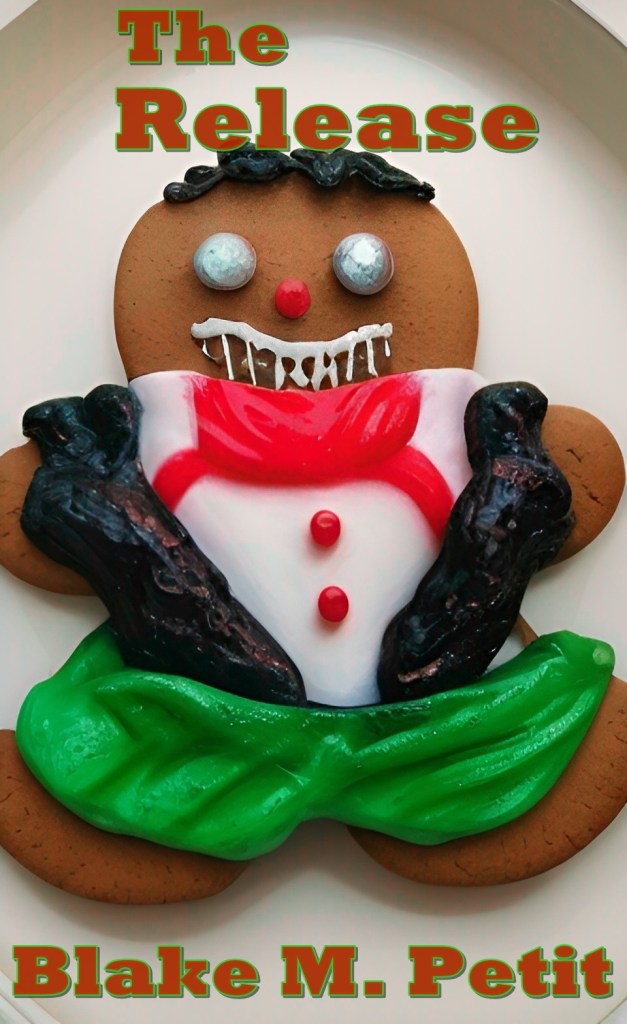
Christmas 2022: The Release

Christmas is here again, friends, and those of you who have been with me for a while knew this was coming: my annual Christmas short story! Stories aren’t always easy. You need both a WHAT and a WHY for the story to make sense, and I’ve found that a great number of weak stories nail the WHAT without giving enough time to the WHY. I came up with the WHAT for this story about three weeks ago, but I struggled with it until last week, when the WHY finally came to me and made it all make sense.

This story features the return of some friends from previous Christmas stories, but you don’t need to have read them to enjoy it. It stands on its own, with a protagonist that’s quite unlike any of my previous Yuletide yarns.

And I don’t usually do this with my Christmas stories, but I’m going to do it this year. 2022 was rough on a lot of people, and the last few months in particular have really weighed me down. Without getting into details, it’s been one thing after another that just started to feel crushing after a while, and without my wife, Erin, I don’t know how I would have made it. So “The Release” is dedicated to her.

Merry Christmas, all.

THE RELEASE

He needed to get out. It had been years of loneliness, isolation, and frustration, but he had grown accustomed to it. It was something he had learned to live with. But something was calling him this year, something was urging him, and he knew he was almost out of time. He needed to get out.  

There was not much to be said for his confinement. It was long and dark, it was solitary, and he was fed sporadically with stock that clearly was the product of livestock, cattle…not the premium nutrients he craved so deeply. From beyond the walls of his cell he could see glimpses of the light – brief glimpses, quick ones that seared his eyes and made him want to scurry back into the darkness like vermin. He resisted the urge, though – he was not vermin, he was not filth. He was the apex predator on this planet, even if his captors refused to recognize that fact. It was, he supposed, the fact that he was so far above them that had kept him here for so long. For the first few years of his captivity he had fought – attacked the jailers, tried to break free from his cell at any opportunity. But the cattle were resourceful, he had to admit that, and they were ready for any move he made. 

It took years before it finally occurred to him that the only escape may be to simply give them what they wanted…to cooperate. To be a good little boy.

A clanging came from outside his cell and he heard the guard bellow: “Suit up, inmate! We’re opening the cell door in two minutes!”

A garment bag appeared in the slot beneath the door, the suit within probably the same one he wore in September when transferred to this facility. Typically he wore it only twice a year, during the September and March transfers, but this year was different. This year he had behaved exceptionally well. This year he had been granted his work release, a chance to be allowed out of this infernal land of perpetual daylight and go somewhere his kind could flourish – into a night that extended as long as necessary. He took the suit from the bag and pulled it on: a full black bodysuit that covered him from head to toe in thick, impermeable fabric through which no light could penetrate, not even here. Across the chest, in white letters, the initials of his captors: CPC. Over his eyes were a pair of polarized lenses to filter out the deadly rays of the sun and still permit him the ability to see. Beneath the lenses, the portion of the mask that covered his mouth was reinforced with Kevlar. Not even his teeth would be able to slash their way through. The suit was one piece, but there was another item in the bag as well: his handcuffs. He knew those were coming, but was not particularly glad to see them. 

“Put it on, inmate!”

But he did. Because he had planned this too long, waited too patiently to lose his opportunity now. He picked up the handcuffs and clamped them first on his left wrist, then the right. Then, finally prepared, the door to his cell opened to the blazing white waste outside. 

Even through the polarized lenses, his eyes stung at the light. He squinted, tried to adjust. Before his capture he had gone ages without seeing sunlight directly. To see it even twice a year had been a drastic change, but the light to which he was exposed was so brilliant as to be almost blinding.

“Can you see me, Al?” the guard asked. His neck twitched at the nickname, but he had resigned himself to be cooperative. 

“I can see you.”

“Walk slowly. Follow me.”

He stepped out of the cell into the unfathomable glare of light. The facility was to his back, but his cell opened directly to the outside, another security measure. He did not feel the bitter wind the way the human guards would, were it not for their heavily insulated suits, which themselves served as further protection against him should he ever attempt escape. Not that he would, of course. Where would he go? The concept still frightened him a bit, if he was being honest with himself: a place where the sun did not set for six months, here at the bottom of the world. And in March, they would take him from his cell here in Antarctica and bring him north once more, to its equivalent facility at that pole, forever chasing the perpetual daylight. The Coalition for Paranormal Containment had finally found the perfect prison for his people, the perfect way to contain a vampire.

“Alrighty, Al,” the guard said. “You’re gonna be on your best behavior, right?” Beneath his heavy clothing he wasn’t sure which one it was – Barnes? Avery? His voice was muffled and the wind cut across his ears, making identifying his voice as impossible as his face. It didn’t matter. They were all the same, he told himself, convinced himself. All cattle. 

“Of course, guardsman,” he said. “I have fully reformed, and I embrace the opportunity to demonstrate my contrition.” 

“Whatever,” the guard said. He was led around the facility to the helipad, where the vehicle that was to take him to his work release was waiting. The pilot, he presumed, was sitting in the craft, green and red clothing draped loosely around his body in a manner that looked positively chilly. If the little man felt the biting cold, he didn’t show it. He smiled at their approach.

“Is this the lucky fella?” he said.

“Yes sir,” the guard said. Clearing his throat, he recited the necessary doctrine to officiate transfer of authority. “The Coalition for Paranormal Containment, as of zero hundred hours, December 21, officially remands Inmate #5261897 to the authority of North Pole Operations, Inc., for a period of time not to exceed five days, standard time, internally variable based on the temporal adjustments necessary to the task required.”

“On behalf of North Pole Operations, I accept custody,” the little man said. 

He looked back at the inmate. “Now be nice, Al. He knows if you have.” Clapping him on the shoulder and chuckling, the human guard turned and rushed back towards the facility, and the inmate looked down at his wrists.

“Wait! My handcuffs–”

“Don’t worry about that.” The little man grabbed the cuffs and jerked them just a little, causing them to fall onto the ice at their feet. “You’re not going to be needing them the next few days, bud.” He hopped into the craft and gestured to the seat next to him. “Hop in, Al.”

“The name is Alastair,” the inmate snarled. “Address me with the proper respect, small human.”

“First of all, not a human. The name is Binky,” said the little man. “Head of security, and the only reason you’re not in your cell right now. So unless you want to march back there, do me a favor, lighten up, and climb in.”

“In that?”

“I know she doesn’t look like much, but the boss’s model is getting its final tune-up for Christmas. And I know the engines are a little scrawny, but they’re in training. May take over the big job someday. And it’s only the two of us, not a mountain of toys, so I think they can handle the weight.”

“No, I meant–”

“Meant what?”

Alastair looked at the craft that sat on the helipad – a miniature sleigh, red paint scratched and dented, the brass runners oiled but otherwise looking like they had seen better days. As for the “engines” – the three reindeer lashed to the front of the sleigh stamped their hooves and looked back at him impatiently.” 

“Nothing,” he said. “I meant nothing.”

“Great, then. Hop aboard, Al. We’ve got to get clear to the other end of the planet, lickety-split.” 

*   *   *

Alastair had made the journey between North and South Poles seventeen times now, every six months, and he was used to the long and frustrating transit between the two of them. The Coalition’s aircraft tended to take a long, circuitous route that mostly went down over the Pacific Ocean, with stops to refuel on mid-sea platforms near the respective coasts of Japan and Australia, but that kept them out of any heavily-used trade routes or over any populated areas that could catch a glimpse of the plane. Sometimes that meant staying on the refueling platform while they waited for ships or other aircraft to make their own passage. The journey had taken anywhere from 36 hours to a full week in the past, depending on a series of factors.

The sleigh Binky piloted got him to the other side of the world in less than twelve seconds.

At first he wasn’t even certain anything had happened. Binky cracked the whip and the reindeer began to rush across the ice. He felt the sleigh lift, felt a sensation of rising in the air, and then there was a rush he couldn’t explain followed by a feeling of moving down. In that blink of an eye, the world around him swirled from dazzling sunlight to the pitch of midnight. 

As the sleigh skidded to a stop on another ice-covered field, Binky looked over at him. “You can take the mask off now. There won’t be any sunlight here for another three months.”

“I thought you had some sort of facility here,” Alastair said. “This is just empty Arctic waste.”

Binky chortled. “Trust me, Al. Take the mask off.”

He swallowed the urge to lunge at the little man, to rip his throat out and drink the sweet elixir within, both sustenance for himself and punishment for his continued insistence at diminishing his name. But he had his goals, and killing Binky the Elf would not accomplish them. He unzipped the neck of his mask and pulled it away from his head.

Again, he was blinded.

Where seconds ago there had been nothing but a dark waste of ice, the world was now brilliant and beautiful. A huge settlement appeared – homes and workshops, walking paths decorated with candy canes and gingerbread men, a gargantuan Christmas tree that towered over everything and, in the distance beyond the tree, an enormous mansion covered in garland and tinsel. He almost fell back into the sleigh, as startled as he was by the sudden appearance of the town, and he instinctively covered his face to protect himself from the light.

“It’s all artificial light,” Binky said. “Fire, electricity, stardust…it’s not sunlight. You’re fine.”

“It’s so bright,” he said. “I haven’t seen anything this bright in…”

“A long time.”

“Where did this come from? It wasn’t here a moment ago.”

“Look through your mask again.”

He was hesitant to comply with the little man’s orders, but he did so. When he raised the mask and looked through the light-killing lenses, he again saw only ice and night sky. Taking the lenses away from his eyes, the village returned.

“Our facility cannot be detected by any technological means. We put that safeguard in place because of satellites and telescopes, but it works on any device that’s used to capture an image. Guess that includes your little lenses there.”

“Remarkable.”

“My pal Duffy invented it. I’ll have to tell him you said so. Come on. I’ll take you to meet the big guy.”

Binky started walking down the path, dodging rushing elves with packages, carts of toys, rolls of wrapping paper, and other various effluvia of the holiday season. None of them seemed to pay attention to him at all – they simply had too much to do. Binky led him to the steps of the mansion, a place that looked even larger up close, and pulled open a set of twenty-foot doors with candy cane handles and a reindeer-face door knocker. As they stepped inside beneath a three-foot ball of mistletoe, Alastair saw that inside was even more chaotic than the town square. Dozens of elves rushed around with clipboards and charts, some with electronic tablets, one carrying a doll shouting that somebody better figure out why this darn thing wasn’t urinating or there would be serious trouble coming their way. Everyone had a task, a job. He supposed it made sense. This was the busy season.

Binky took him up an ornate flight of stairs to a wooden door with OFFICE carved into it beneath a wooden bas relief of holly and poinsettia. He gave the door a perfunctory knock before popping it open and looking inside.

“He’s here boss.”

“Excellent. Bring him in.”

Binky stepped aside and waved Alastair through the door. On the other side was a smaller room than he would have expected, the walls painted green and adorned with portraits and photographs of an older couple in red and white clothing. There were schematics everywhere, plans for constructing toys of all kinds. There were maps of the globe with routes marked in red, scratched out, amended, and scratched out again. There was a scroll – an absolutely gargantuan scroll – that tapered off at the end with what appeared to be a series of names. And sitting at the desk was the man from the pictures, wearing a pair of green trousers and a yellow shirt covered in polka dots, a pair of simple brown suspenders crossing his chest and holding up his pants. He had a pen in one hand, a mug of hot cocoa in the other, and a pair of reading glasses sat obediently on the end of his nose. 

“Hello, Alastair,” said Santa Claus. “I’m so glad that you’ve decided to try to get back on the nice list.”

“I don’t know if I’d go quite that far,” Alastair said. “This is a work release opportunity. I’m here to prove I’m not dangerous to humans anymore.”

“Are you now?” Santa looked down at a clipboard in front of him. “Alastair Bonaventure, born 1842. Always on the nice list until 1867, which is when…” Santa looked up at him, his eyes falling on Alastair’s neck. “Well, you know what happened, don’t you?”

He froze for a second, not knowing what to say. Born 1842, exactly what it said on his documents for the CPC. And the nice list…well, that was the history of Alastair Bonaventure. 

Honestly, he wasn’t even sure he had expected to get this far. He had his plan, but if this man was really who he said he was, he would know, wouldn’t he? Know his plan, know his desperation, know that he was biding his time in this work release situation until he saw an opportunity to escape and then–

“Hey, Al? The boss asked a question.”

He blinked back to the present. “Yes. I know what happened.”

“In custody of the CPC for the last eight and a half years, captured while attempting to devour a nun in Milan, Italy. Now Alastair, was that right?”

“I was hungry, Santa. Everyone has to eat. Even vampires.”

“Yes, I suppose so. Well, we’ve got a little more than two days before takeoff. Binky is going to acquaint you with all of our security procedures and regulations. He’s going to be your commanding officer while you’re in our custody, but since we’ll be working together on Christmas Eve, I wanted to welcome you here to the Pole in person.” He held out a chubby hand and Alastair took it for a respectable amount of time before withdrawing it again. “Any questions before you get started?”

“I…”

“Go ahead, son, spit it out.”

“I didn’t believe them at first, when they told me about this particular work release assignment. It seemed…”

“You didn’t believe in Santa Claus? Too silly? Too incomprehensible for the rational mind?”

“I’m a vampire, sir. From the day I was bitten, I realized that the world is full of things that rational people don’t believe in. No, it’s not that.”

“What then?”

“I was told you needed security for your rounds this year. Protection.”

“That’s why you’re here, yes.”

“Okay, but…why? You’re Santa Claus. Who would want to attack you?”

Santa nodded. “The world is a dangerous place, Alastair. I’m here to make it a little nicer and for some reason, there are creatures out there who just hate that idea. Binky will explain the rest.”

“All right, then. I suppose we should get to work.”

“Now that’s the attitude we want to hear in these parts. Alastair, I think we’ll get along just fine.”

*   *   *

The hours raced by, as those in the holiday season always tended to do. Alastair spent most of his time at the Pole in Binky’s company, in preparation. Some of the time was used going over routes and procedures, learning the logistics of how Claus zoomed from one spot to another, if not the actual means of propulsion. The same went for the details of his rapid activities inside the homes of the children he meant to visit and the way he would leap from one spot to another in the blink of an eye.

“It’s gonna seem like it’s going really fast and taking forever at the same time,” Binky said. “We move like lightning, you have to understand, but there are still literally millions of homes to visit all over the planet. Time is on our side, thanks to a little magical shenanigans the boss is privy to, but you’re still going to think it seems like an extraordinarily long night.”

“Will it be?”

“For you and me. For anyone who’s on the sleigh. Except for maybe the boss, I’m honestly not sure what it feels like to him. But for everyone on the outside, it’ll be the standard 24 hours a day.”

The logistics were only a small part of Alastair’s tutorial, however. The rest of it was a crash course on the various creatures that existed across the globe, and how to deal with them. 

“If we’re attacked by a golem?” Binky asked.

“Wipe the command word from its forehead or take the scroll from its mouth.”

“A mummy?”

“Their bodies are very dry – fire is the most effective deterrent.”

“Zombies?”

“Cut off the head or destroy the brain.”

“Werewolf?”

“Christmas isn’t a full moon this year so it’s unlikely we’ll encounter one, but silver weapons are best.”

“Evil Kaiju?”

“Hold it off until a good Kaiju can arrive to fight him.”

“Vampire?”

Alastair raised his eyebrow, but answered the question. “Since the night will be a long one, evading it until daylight is not an option. Stake through the heart is simplest. You can also remove the head and bury it backwards with garlic in its mouth, but if it comes to that somebody else is going to have to do it, because I won’t.”

“You don’t like Italian food, huh?”

He asked a few more times about the reason for his enlistment. After thousands of years of Santa making his Christmas rounds, why was he suddenly in need of protection? It made no sense, and Binky’s answer only raised more questions.

“A few years back, some misguided people went after the boss right when we were finishing up his rounds. They learned the error of their ways, but when word got out about what happened the legit evil types in the world decided they would try it on their own. Elves are nimble, Al, but we weren’t made for fighting. Well. Not North Pole elves, anyway, but I’ve got some cousins in–”

“Your point, Binky?”

“Point is, eventually the boss decided we needed to be ready for anything. And if there’s anything we’ve learned from the movies, it’s that the best way to fight a monster is with another monster.”

It made a kind of logical sense, Alastair had to admit. And he had certainly seen his share of battle over the decades. It was his history as much as his record of good behavior that had made his name turn up when this assignment was offered. Still…

“There are good monsters in this world, though. Benevolent ghosts. Sea creatures who rescue sailors. That fellow that Shelley wrote about.”

“So why didn’t we call on one of them?”

“It’s a fair question.”

“It’s Christmas, Al. You’re gonna be more powerful than any of them tonight.”

‘Why on Earth would Christmas make me more powerful?”

“Because on Christmas, the smart money is on somebody in need of redemption.”

Redemption? Alastair had never thought of it that way. He was a monster, of course, by human standards. He had feasted on mortals, enthralled others. He may not have relished it, but it was the way of his kind. Did humans need redemption for feasting on cows or using dogs to help them hunt? 

And what’s more, the other thing that weighed on him was far worse, something for which he didn’t believe redemption was even possible. But it was still something that had to be addressed. And addressing that very old business was going to be the crux of his journey this Christmas Eve.

*   *   *

As morning dawned on December the 24th (metaphorically, of course – the sky was still black as pitch here at the North Pole), preparations went into high gear. The flow of presents and parcels into the launch bay had reached a frenzy, and he occasionally caught himself wondering what some of the packages contained: a game, a doll, a bicycle, a baseball glove? It had been a very long time, but Alastair had been a child once, and although the sundries may have changed, the spirit of longing was no doubt the same as it had been two centuries ago. 

The one thing that did surprise him was the outfit Binky provided him with when he approached the sleigh. It was woven from a weighty black fabric that covered everything up to his neck. Instead of a mask, a helmet accompanied the suit, but other than that it was almost identical to the one that he wore during his prison transfers. “I don’t understand,” he told Binky. “I thought this trip took place exclusively during the night.”

“It does. That suit isn’t for protection against sunlight.”

“Then what is it supposed to protect me from?”

“Everything else.”

He turned the fabric over in his hands, felt its weight, and had to question Binky’s point. It was heavy, to be sure, but relatively thin. “Is this supposed to stop blades? Or bullets?”

“Rated for both, yep. Not to mention fire, claws, teeth, and unicorn horn.”

“And what?”

Binky laughed. “Just wanted to make sure you’re paying attention. Naw, the chance of a unicorn attack is…well, it’s relatively low.”

He patted the sides of the costume, pointing to a series of latches and snaps. “Cargo pouches,” he said. “Loaded up with knives, wooden stakes, and assorted other things that may come in handy if there’s an attack. Don’t worry, I left out the Holy Water. Don’t want to chance the bottle breaking and dripping on our bodyguard, do we?”

He waved Alastair into a dressing room where he pulled himself into the costume, cradling the helmet under his arm when he marched out into the frigid hangar. The sleigh was moored at the end of a long runway, and elves were strapping down an octet of reindeer to the front while another legion of them harnessed a gargantuan sack in the bed. It was enormous – he and Santa both could fit inside the thing with room for an elf or two left over – but at the same time, was it really large enough to carry the gifts of an entire world? It was not, Alastair decided, but in the last few days he had encountered enough “North Pole Magic” to chalk it up to another instance of that. The sack was larger on the inside, and that’s all there was to it. 

“Quite a sight isn’t it?” Santa stepped out onto the runway, putting a hand on Alastair’s shoulder.  “We’ve gone to quite a lot of trouble to make sure it lives up to expectations.”

“I thought everyone was supposed to be asleep when you were on duty.”

“Everyone is supposed to be asleep. How better to guarantee that a few of them stay up and spread the word every year?” Santa bellowed, a hefty “Ho! Ho! Ho!” that felt like it rolled out of a cartoon, and climbed into the sleigh. Binky bounded in after him, and indicated the empty spot on the seat next to him.

“Alrighty, Al. Time to get this show on the road.” 

Bristling, the vampire took a seat on the sleigh next to Binky, then started looking around. “Where are the seat belts?” he said. “The harness? Isn’t there some way to–”

“NOW DASHER! NOW DANCER! NOW PRANCER AND VIXEN!”

Alastair hadn’t really known fear for a very long time. Real fear, true mortal fear, was alien to his kind, and he had grown accustomed to the idea that any damage he incurred would heal in time. But as the fat man’s throat boomed with “ON COMET! ON CUPID! ON DONDER AND BLITZEN!” he suddenly felt its grip. He had known, intellectually, what was going to happen. He knew the reindeer would run, the sleigh would be pulled behind them, and that they would fly around the world at astonishing speeds. He had not known that there would be nothing to keep him on the seat except his clenched buttocks.

As soon as “BLITZEN!” escaped Santa’s lips, the sleigh lurched forward, Alastair plastered to the back of his seat. The hangar sped past him, the sconces on the walls rushing by and vanishing in seconds, replaced by the midnight black of the sky. He saw stars for a moment, then he saw streaks of light. The staggered light of distant suns was not usually intense enough to cause discomfort for his kind, but as they turned into beams in the sky he felt fear once again. Somewhere from below his throat a chilled howl escaped and he closed his eyes, shrieking.

When the shrieks ended, he realized that the quiet night was filled by another sound: Binky’s laughter.

“Open your eyes, Prince of Darkness,” he said.

Alastair did, preparing to see the stars racing past, the relief of the Earth below appearing on the horizon and evaporating just as fast behind them, the clouds parting for them and transforming into streaks in their wake.

He was not prepared to see the sleigh at a dead stop, the reindeer casually digging their hooves into the roof beneath them. There was a chimney nearby, and snow on the shingles, the rails of the sled cutting through and leaving trails behind them. 

“Are you alright there, Alastair?” Santa asked.

“I…How…”

“Wonderful. Let’s get to work.”

*   *   *

The first few stops were uneventful. They landed somewhere, the three of them whisked out of the sleigh down into a home, and Alastair watched as Santa and Binky went to work. This happened several times, in fact, before it started to dawn on him that thinking of it as a “few” stops had suddenly become relative. How many homes had they gone into already? Dozens? Hundreds? He was relatively certain they were in the same country their first stop had brought them, but he was not entirely certain what country that was.

What’s more, moving from house to house happened like lightning, but watching Santa and Binky lay out their gifts did not. He was conscious and aware the entire time, standing around like a shopping center security guard, with the closest thing to an intruder being the occasional dog that yipped at them or cat peering out from beneath the Christmas Tree. 

After a few stops, Santa held out a plate to Alastair. “Cookie?” he asked.

“Not to my taste.”

“Of course. Perhaps you’ll like the U.K. better – they leave me mincemeat pies over there.”

It was a habit of this Santa Claus, he realized, this conversation, this small talk. Santa was the sort of person who never met a silence he didn’t feel the need to fill with words, ironic considering the stealthy nature of his work. Alastair’s wife had been the same way, the sort who always needed to be talking about something, and–

He forced the thought aside as Santa signaled for him to join them by the fireplace. It was the standard procedure: he and Binky flanked Santa as the fat man put a finger aside his nose, then they were whisked up through the chimney and back onto the roof. Something else that had occurred to Alastair after a while was that not every roof had a chimney when they returned to the sleigh. What’s more, every roof they landed on was covered in snow, even if the air outside was in the 60s and there wasn’t another flake in sight. All of it: the chimney, the fireplaces, the snow…they were all manifestations of Santa’s own talents. How powerful was he?

“Tonight, I’m as powerful as I need to be,” Santa said.

“What? But–”

“You didn’t say anything, you just thought it. I know. Tonight I know everything, Alastair.” He smiled and his eye twinkled. “I know everything.”

If Alastair’s blood was still warm, the emphasis in the fat man’s voice would have cooled it. 

*   *   *

Alastair wasn’t certain how many stops it took before it happened, but he was sure the first sign of trouble came in Australia. As Santa laid out gifts for three children – a pair of swim fins for the oldest, stuffed animals that looked like blue dogs for the two younger – Alastair caught notice of a shuffling motion from the fireplace. He’d grown accustomed to small disturbances like pets or motorized vacuum cleaner, and they’d had more than one close call with children who were up late in anticipation or parents who were up late assembling toys. This was different, though. This time, the stonework on the fireplace itself seemed to be peering at them.

He nudged Binky, then tossed his head gently in the direction of the fireplace. Binky looked quickly and got the picture.

“Rock Troll,” he whispered.

It was like he’d given the assassin a cue.

The top layer of stone on the fireplace leapt up, arms appearing in the masonry, and reached out towards Santa Claus. Alastair assessed his options, but it didn’t take long. Allowing the troll to take Claus would be counter-productive. He was too far away, he still needed the fat man to get him where he was going. Besides, he had agreed to do a job, and he had never been the sort to welch on that.

As Claus continued to casually lay down the tracks for a train set around the Christmas tree, Alastair put himself in front of the troll, catching it by the wrists. The troll was strong, incredibly so, and for a moment he was afraid that he had already overstepped his capabilities…but the way the troll moved gave him his cue. The troll did not move like a normal animal, bones attached to tendons attached to flesh. With the troll, it was as if each component of his body was a separate stone, held together by nothing more than a little magic and a lot of stubbornness. As the troll tried to grab at Alastair’s throat, he kicked his leg out and, with his own vampire’s strength, dislodged the stone that made up the monster’s left knee.

“And a new football for Jamie,” Santa said, oblivious to the chaos behind him.

With his knee gone, the troll fell to his side and Alastair moved into action. He went for the joints first – elbows, wrists, the other knee – and pulled away the stones that represented those vital components of the rock troll’s anatomy. With those gone, the troll began to try to flip and flail on the ground, howling in some language that sounded eldritch and childlike at the same time. Alastair grabbed at the thing’s neck, but the troll jerked its head down and crushed his left hand. As he shouted in the surprise pain, he shot out his right hand and grabbed the monster’s jaw, yanking it off the rest of its skull. 

With that, the fight seemed to go out of the creature, but its eyes stayed open as Alastair continued disassembling its body and hurling the stones away. When finally there was nothing left but the cranium, he looked back at his companions. Santa carefully slid a candy cane into each of the three hanging stockings, while Binky gathered up the stones he’d tossed around and reassembled them in their customary places in the fireplace.

“A little help would have been nice,” he snarled.

“What for?” Binky said. “You seemed to have it covered.”

“Here.” Santa held a thermos out to Alastair, who waved it away. 

“I don’t need any of your hot chocolate.”

“It’s not chocolate,” Santa said. “It’s for your hand.”

He looked down at his left hand – crushed, the bones splintered, a thin trickle of the dark ichor that passed for vampire blood trailing down his arm…then he looked at the thermos. There was only one thing that could heal him, but…

“Just drink it,” Santa said, removing the lid from the thermos and holding it out again. Alastair took the thermos and took a deep sniff, his lungs filling with a warm smell of copper.

“A little AB negative,” Santa said. “That should get you patched together again.”

“How did you–”

“Alastair, really. Do I need to show you my resume?”

Chastened, Alastair lifted the thermos to his lips and drank. The warmth flowed into his body – it was one of the few things that made him feel warm these days, really – and he felt the bones in his hand snap back into place, the shredded fibers of his muscle knitting together, and the skin resealing itself as if being pulled by a zipper. 

“Well done,” Santa Claus said, sincerely. “Just try a little harder to keep it down next time, eh?”

*   *   *

House after house, country after country, the three of them moved through the night faster than Alastair would have believed possible – yet at the same time, the night seemed endless. How long had he been on this journey, relatively speaking? Days? Weeks? Time didn’t seem to apply anymore. By the time they arrived in England, even the battle with the rock troll in Australia felt like a distant memory, like something that had happened years ago to someone else entirely. 

His memories before the journey began, however, were as fresh and crisp as they ever were…even the ones from decades past. When Santa began laying out a plastic fashion doll for a small British girl, an image pricked at Alastair’s mind. These “fashion” dolls…what had been wrong with the baby dolls or rag dolls of days gone by? Somewhere in the depths of his mind he saw a brown-eyed little girl on Christmas morning pulling green tissue paper away from such a doll, a simple thing made of scrap fabric, but hand-sewn with greater love than these mass produced carbon copy playthings would ever know.

“Somethin’ wrong with the doll, Al?” Binky said, noticing his staring.

“I’m just thinking about how much toys have changed since…”

“Since what?”

“Since I was…young.”

“Hey, you’re talking to a guy that’s got six or seven hundred years on you. I know what you’re talking about. When I first started working for the boss we mostly delivered clay marbles and oranges. Now I don’t even know what half this stuff is.” He tucked away a video game console and looked back at Santa. “Are we done, boss?”

“Just about. I’ll just have a nip of this sherry and–”

Santa reached out for the glass of sherry, the traditional gift for Father Christmas in the UK, Alasair had learned, and lifted it to his lips. As he did so, though, Alastair saw a slender trail of thread attached to the glass. He knocked the glass from Santa’s hand, but somewhere a click announced that the glass’s trigger had already been tripped. A closet door opened up and from within stumbled a shuffling, moaning trinity of creatures with empty eyes, gray and lifeless skin, and bared teeth. They moaned as they reached their hands out and stumbled towards Father Christmas himself.

“Zombies?” Binky said. “Someone actually set up a zombie trap?”

Alastair had no hesitation at this point. In the endless night with Santa he’d already fought a troll, a banshee, a small pack of gremlins, and uncounted ghosts who seemed to take to the Christmas air the way Alastair himself took to darkness. He was beyond surprise. 

Dispatching the zombies was quick work. It always was – the only real threat a zombie brought came in numbers, and three was too small for Alastair to even flinch. He drew a knife from one of the cargo pockets in his uniform and drove it into the forehead of the first zombie, pushing it in up to the hilt. The ghoul stumbled and twitched, and Alastair gave his knife a twist to be certain the damage was done. As the zombie fell to the ground, Alastair pulled his blade free and turned to repeat the process on the next zombie.

“Doin’ good, Al,” Binky said. 

“Binky! Behind you!”

Binky turned at Alastair’s words, only barely missing the teeth of a fourth creature that had come from another room. The house was full of the beasts, Alastair said, and as he killed the third of them he realized he was in for a more substantial battle than he had experienced previously.

Binky pulled a gun from his pocket and held it up to the zombie that had stumbled out behind him. It made no sense – it was a toy gun, with orange plastic and a series of LED lights blinking along the casing. Even when he pulled the trigger, it was accompanied by a canned “ZAP!” noise that Alastair was certain thousands of toys over the years had emanated. But along with the fake sound effect, a glimmering spiral of light twirled from the barrel and into the zombie’s head. It zipped through its head, punching a hole between its eyes and bursting from the other side like a corkscrew. The creature fell back even as a crash came from upstairs.

“I’ve got this one,” Santa said, placing a finger aside of his nose. When Alastair had seen him do that previously, the three of them had all been whisked up into the fireplace. This time, only Santa vanished, but the swirl of glitter that accompanied his disappearance went not into the chimney, but down the hall and up a flight of stairs.

“What’s he doing?” Alastair asked.

“Taking care of someone who just went to the top of the naughty list.”

The ceiling cracked above them and Alastair pulled Binky back as it creaked and snapped, falling down into the room. The Christmas tree was knocked to the floor, a heavy piece of ceiling landing on it. On that piece, Santa Claus was still on his feet, holding up a tiny man with a white lab coat, wild eyes beneath a thick pair of glasses.

“If there are zombies,” Santa said, “You’ll usually find a cause. Evil sorcerer, alien invader…or this one. The good old-fashioned mad scientist.”

“Willing to ruin Christmas for the whole world just so you can have the bragging rights of saying you got Santa Claus, huh?” Binky leapt up into the man’s face. He kicked and flailed, but Santa shook him into submission. Binky grabbed the lapels of the lab coat and pulled himself up to look the man in the eye.

“Okay, Sparky, you’re going to tell me what you did with the family that lives here. And if you tell me they’re zombies, I’m shoving a holly branch so far up your you-know-what that you’re gonna convert to Judaism just so you never risk seeing me again!”

His hand shaking, the mad scientist pointed at the floor, then at a door across the room. Alastair opened the door up to reveal a flight of stairs heading downwards. “The cellar,” he said. He ran down to find five people tied up, their lips covered with duct tape, wailing. Two adults, three children…they matched the photographs in the living room upstairs. The smallest child, a little girl no more than seven years old, looked up at him with eyes turned to glass by tears. 

“Children,” he hissed. “There were children.”

He didn’t remember bolting back into the room. He didn’t recall jerking the man in the lab coat from Santa’s grasp and shoving him against the wall. He barely remembered putting his hand around the man’s throat and pulling aside his shirt, revealing a pink, pulsating stretch of neck. He did recall later, though, the way he felt his fangs extend in the front of his mouth, and how badly he felt the thirst at that moment.

“You would endanger children. Terrify children just because you hate Santa Claus?” He pulled his lips up, his fangs exposed to the air. He saw their reflection in the man’s glasses. The man saw them too.

“No! Let me go! Put me down!”

Every part of Alastair wanted to rip this man’s throat out. It went beyond the thirst – this creature was vile, was despicable, deserved none of the comforts of light or family that humans were allowed to enjoy. And he was ready to end the man’s life, as he had so many before…until a gloved hand fell on his shoulder.

“You saw what he did, Santa,” Alastair said.

Santa said nothing.

Alastair put the man down. 

“Binky?”

“Already got the CPC on the phone, boss. They’ll be here to clean up in minutes.”

Altastair felt the rage subside, pushed down the urge to rend flesh with his own teeth, and looked at Santa. “The family?”

“They’ll be all right. The CPC has certain ‘techniques’ to make sure they won’t remember this, except perhaps as the Christmas the whole family had some bad dreams.” 

“They’ll clean up the mess, too,” Binky said. “We should get going, boss. We’re behind schedule.”

“Are you certain you want to continue on, Alastair? You could stay here, rejoin the CPC now, if this has been too much.”

“I’m fine. Come on. Let’s go.”

“You did well here.”

Despite himself, Alastair felt a tiny well of pride at Santa’s praise. “You did well yourself. Makes me wonder why you even needed me.”

“Hey, the Big Guy can’t take care of everything,” Binky said. “Come on. Let’s go.”

*   *   *

There was no snow on the ground in Nebraska when Santa’s sleigh landed on the roof of the Pratt house, but as he had grown to expect, the snow appeared beneath the runners of the sled of its own accord. The house was large, but modest – not particularly ornate or fancy in and of itself. But the decorations! It was one of the most dazzling displays Alastair had seen since they left the North Pole, and they had quite literally seen them all. A thirty-foot Christmas tree made of an aluminum pole and strings of lights was the centerpiece. Surrounding it on all sides were inflatables, blow molds, wooden cutouts, animatronic figures, and every other conceivable permutation of Christmas decoration. And each and every one of them was in the shape of or paying homage to the man driving the sleigh.

“Gracious, Claus,” Alastair said. “This must be your biggest fan’s house.”

“It’s definitely in the top three. Come on.” He climbed from the sleigh and strode towards the chimney, Binky behind him. Alastair looked back at the sleigh, where Santa’s sack was still at rest.

“Wait! You forgot the presents!”

“No children at this home, Alastair,” Santa said. “I’m just here to pay a quick visit to a very old friend.”

The light of the decorations was so great that Alastair would almost have believed it was daytime, the brilliance of the sun somehow rising up from below rather than down from the sky. It was so bright, in fact, that he didn’t notice at first that a shadow had moved across the moon.

The first attack hit Alastair in the back, knocking him down to the rooftop and popping off his helmet, which rolled off the edge into a bush below. Someone grabbed at his collar, pulling it back and exposing his skin beneath. He felt a stabbing in his neck, one that felt horribly familiar, then it immediately retracted and a voice behind him began hacking and spitting. 

“You’re one of us?” the voice shouted.

Alastair shoved himself backwards, flipping the person on his back away and onto the rooftop. He rolled and leapt at the same time, landing on his feet and looking down at the vampire beneath him. It was a young man – at least, he looked young, but such things were deceiving when it came to the Nosferatu – and he looked up at Alastair with black trickles of blood at the sides of his mouth. “What are you doing with him?” the vampire asked.

As answer, Alastair pulled a wooden stake from a cargo pouch. He moved faster than even the other vampire could react, leaping forward and driving it straight into his undead heart. They locked eyes for a minute, the younger one clawed at Alastair’s face, and he toppled over. It wasn’t like the movies, where he turned to dust and evaporated. Only one thing could do that, and on Santa Claus’s endless nighttime journey, sunlight was not a commodity they could rely upon.

He looked up to see that the vampire that landed on his back was not alone. Santa grappled with one, while Binky had pulled a toy bow and arrow from his pouch and was using it to fire wooden bolts into the hearts of a trio that had assaulted him. 

“Santa, look out!” Alastair pulled another stake and jumped, driving it into the vampire that was on top of Santa Claus. As it fell away, another came from the sky, hacking at the fat man.

“We knew you’d be here, Claus,” she hissed at him. “Didn’t know that you’d have a human-lover with you. Why are you helping this old fool? You should be with us.”

Should he? They were in Nebraska now. Could they get him where he needed to go before the sun rose? It wasn’t impossible. He wasn’t sure what time it technically was here, but vampires could travel quickly. And if they couldn’t, they must have somewhere to hide during the daytime. It could work. It could–

She turned to Santa, her mouth open, and bent towards his neck. Alastair didn’t even hesitate to send his next stake right into her back. When she rolled off, shrieking at him, he pulled it out and sent it through the front of her body, right into her heart.

Santa looked at Alastair, grinning. “Nice list,” he said.

Alastair looked around – a half-dozen vampires all lay dead at their feet, but there were at least as many still crawling across the rooftop, charging towards them. In the sky, black shapes seemed to indicate even more were coming. For a moment, he felt a pang of regret. He hadn’t taken this job out of any sort of affection, but the idea of Santa Claus perishing in such a way was horrible. He wished he could do something else. He wished he had been better prepared. He wished–

A pair of massive hands jammed his helmet back on his head and shoved him into the sled. “Get down!” boomed a voice the size of a mountain, and Alastair did. He covered his head with his black-clad arms, and couldn’t see any of what happened next, but the sounds made it easy for him to imagine what was going on. There was an electrical sound, like a generator roaring to life. Afterwards, shrieks, then sizzles. Those lasted a while – probably not as long as it seemed, but like everything else this night it seemed as though it went on for a very long time. 

Then the generator died, the big hands patted him on the shoulder. “You can look up now, my friend,” said a voice that was terribly old, but somehow, still gentle and kind. He looked up to see an enormous man, one of the tallest people he’d ever seen in his interminable life, smiling down at him.

“I’m prepared for every eventuality,” he said. “Solar lights. They replicate the UV rays of the sun, which apparently is the wavelength that proves cataclysmic to your kind.”

He was right. The vampires were gone from the roof, even the ones he and Binky had staked before their new friend had turned on the UV lights. In their places were piles of dust, each of which was slowly being eroded by the wind. 

“Who are you?” Alastair asked.

“James Pratt, at your service.” He held out a hand and Alastair took it, trying very hard not to notice the intricate scars that traced his wrist, so similar to the ones across his face. They were stitches, Alastair realized. Very old stitches, but stitches indeed were what held Mr. James Pratt of Bellevue, Nebraska in one piece. His skin was a strange color, somewhere between light green and gray, with a texture that seemed to indicate death itself had long since gripped this man. There were no bolts on the side of his neck (any why would there be, Alastair knew such things were a conjuration of the movies), and the Santa hat upon his head prevented him from seeing the exact shape of his skull, but there was no mistaking just whose home they were visiting here, over two hundred years since his creation.

“You’re…you’re–”

“You’re very welcome,” Pratt said. 

Pratt ushered them into his home where he and Santa Claus each raised a glass of milk and toasted one another. In his life Alastair had seen all manner of creatures, all sorts of monsters. He had seen humans killed in brutal ways, creatures from realms undreamt of by humanity, the horrible emptiness of the void itself. Nothing compared to the sight of Santa Claus sharing a glass of milk with the kindly giant of Bellevue. 

He held his tongue until Pratt had returned to his bed and the three of them returned to the sleigh. “Santa,” Alastair said, “That was…I mean – was that who I think it was?”

“That was my friend James Pratt,” Santa Claus said. “A good man who enjoys the company of the few people in this world older than he is.”

“But he’s–”

“A man who made mistakes in his past, and wishes to leave his past behind him. You understand that, don’t you Alastair?”

The way he punctuated his name made Alastair clamp his mouth shut. What was he saying? Did he know? 

Of course he knew, he was Santa Claus, you don’t keep a secret from Santa Claus.

But if he knew, why hadn’t he said anything before now?

The question weighed on his mind as they lifted into the sky, leaving James Pratt of Bellevue, Nebraska in Alastair’s past.

*   *   *

California, at last. And northern California at that. His goal was a city called Redding, but he tried to decide if it would be wise to abandon the sleigh while they were there. It would be too obvious to look there. Perhaps he should wait – let Claus take him further south and backtrack. Would Sacramento be too far?

The sleigh landed on a rooftop and the now-familiar explosion of snow appeared beneath them. Binky and Santa exchanged a look, and Santa nodded. 

“Ready, Alastair?”

“As always, Santa.” For now. But not, he knew, for much longer. With a wave of Santa’s hand, the chimney appeared on the roof of a home that normally had none, and the three of them whipped downwards.

The room was dim, dimmer than most. Most of the homes they had visited had some form of decoration – a tree, of course, or lights, or candles. Very few had been totally dark, but this one was close. The tree was a small one, less than 18 inches, sitting atop a kitchen counter. Beneath it, dangling from the counter were a series of Christmas cards: photographs of children, greetings for the new year. Next to them, a series of what looked like get-well cards.

There were photographs as well, and even in the darkness, he could see them. There were families there – dozens of smiling people, and in one frame they stood around an elderly woman with bright eyes. 

Familiar eyes.

“Where are we?” he said.

“Your last stop,” Santa said.

“Last stop? What about the rest of the state? What about Alaska and Hawaii? What about–”

Your last stop, Al.” Santa pointed at the photos, and Alastair’s eyes traced them. They showed the same family in various permutations. Different groups of children with their spouses and their own children…even grandchildren. Many of them had the same eyes as the old woman in the first photograph.

“Whose home is this?” Alastair asked. “There aren’t any children here. I don’t see any stockings or toys or–”

He saw the picture on the mantle, a photograph of a young girl decades past. A girl with brown hair and brown eyes, those same eyes that looked out at him from the elderly woman in the other photos. In this one, she lay with her head against the chest of a man who looked to be in his thirties, smiling, beaming down at her. Alastair knew the face. Except for the smile, it was a face he carried with him every day.

“It was hard, wasn’t it, Allen?”

“What did you call me?”

“I’m not the CPC. Allen Bernard. Originally of Corpus Cristi, Texas. Married. One child. Always on the good list. Until 1956, when…well. You know what happened.” His eyes fell on Al’s neck, and the vampire felt his own hands tracing the spot where a pair of fangs had ended his mortal life decades ago.

“It was hard, wasn’t it?” Santa said again.

“What was?”

“Leaving them. Leaving your girls, leaving them behind.”

“I had to. Santa, I couldn’t control myself. I needed to drink, and they–”

“Were too convenient. You needed to learn control.” Santa smiled, a mixture of sadness and understanding. “You’ve learned, Allen.” 

“Do you mean to tell me that this…this house…”

“Her name isn’t Bernard anymore. It hasn’t been for decades. But her first name hasn’t changed.”

Vampires didn’t cry. It was something he had learned somewhat early, something about the tear ducts no longer functioning in the bodies of the dead. But Allen felt a heaving in his chest that hadn’t been there for years. “She’s sick, isn’t she?” he said. Santa nodded. “I could feel it. I knew. I had to–”

“Had to find some way out before it was too late. I know.” He looked over at Binky. “Ready?”

“But what about the CPC?”

“Oh, we’ll let them know what happened. How you valiantly gave your life in defense of the personification of Christmas. Your slate will be wiped clean.”

“Do you think they’ll believe that?”

He beamed, and this time the smile was full of nothing but light.

“They believe it every year, Allen.”

Binky put a small package wrapped in tissue paper into Allen’s hands. “Here ya go, Allen.”

Shaking, the vampire looked at the elf.

“Call me Al,” he said.

Santa raised his finger to his nose, and they were gone.

The man who was once Allen Bernard (and now was again) tore away the tissue paper to reveal a simple doll, one made of rags, lovingly stitched. It was exactly the way he remembered it, each scrap and stitch like the one his wife had put into the doll she made over 70 years ago. He was one of the undead, but as he walked down the hallway into the bedroom of a sleeping old woman, he was shaking.

“Francis?” he whispered. “Francis?”

In her sleep, the woman turned over. Her eyes fluttered and her hand reached out. He took it. It was old, liver spots along the back of it, wrinkled with the toil and memory of a lifetime she had gone through without him. He held the hand as he had so long ago and kneeled by the bed, tucking the doll under her arm and peering at her beautiful face..

Without opening her eyes, the woman in the bed whispered at him. “Is that you?” she asked.

“It’s me, baby,” he said. “It’s me. Daddy’s home.”

Blake M. Petit is a writer, teacher, and dad from Ama, Louisiana. His current writing project is the superhero adventure series Other People’s Heroes: Little Stars, a new episode of which is available every Wednesday on Amazon’s Kindle Vella platform. Special thanks to Lew Beitz and Amber Foret for help beta reading and copy editing this year’s story. That’s how you get on the nice list, folks.

The Ghost of Christmas Writing Past Presents: The Christmas Special

Some years ago, before I had a kid, I had time to do these movie studies, digging into different genres and characters and pontificating how they evolved over time. It was a fun side project and, God willing, I’ll back to them someday.

Today, though, I want to dip back into the past and share one such project, from a glorious ten years ago: The Christmas Special. One year I selected 25 of what I thought were the best, most relevant, or most interesting TV Christmas specials, broke them down, and talked about them. And today, I share those articles again with you. Happy reading, Merry Christmas, and avoid the Grinch!

Introduction

1. Rudolph the Red-Nosed Reindeer (1964)

2. A Charlie Brown Christmas (1965)

3. How the Grinch Stole Christmas (1966)

4. The Little Drummer Boy (1968)

5. Frosty the Snowman (1969)

6. Santa Claus is Comin’ to Town (1970)

7. The Year Without a Santa Claus (1974)

8. ‘Twas the Night Before Christmas (1974)

9. Emmet Otter’s Jug Band Christmas (1977)

10. The Fat Albert Christmas Special (1977)

11. A Flintstones Christmas (1977)

12. Nestor, the Long-Eared Christmas Donkey (1977)

13. Christmas Eve on Sesame Street (1978)

14. A Chipmunk Christmas (1981)

15. The Life and Adventures of Santa Claus (1985)

16. The Christmas Toy (1986)

17. A Claymation Christmas Celebration (1987)

18. A Garfield Christmas (1987)

19. A Muppet Family Christmas (1987)

20. Christmas at Pee-Wee’s Playhouse (1988)

21. A Wish For Wings That Work (1991)

22. Hooves of Fire (1999)

23. A Scooby-Doo Christmas (2004)

24. Shrek the Halls (2007)

25. Prep and Landing (2009)