Geek Punditry #112: Who Are the Thunderbolts? (And Does Even MARVEL Know?)

With Captain America: Brave New World currently in movie theaters, eyes of Marvel fans are turning to the next film from the studio, coming out in May, Thunderbolts*. Yes, that asterisk is part of the title. No, as it turns out, it isn’t actually important. But we’ll get to that later. Although they’re not exactly the Avengers (more on that later, too) the Thunderbolts have been bouncing around the Marvel Universe in one form or another for nearly 30 years, having first appeared in 1997. Despite the pedigree of having been around for such a long time, a lot of people don’t seem to quite understand who the Thunderbolts are, and honestly, you can’t blame them. If you look at their publishing history, it seems as though Marvel doesn’t really know who they are either.

Pictured: Even we don’t the hell know.

Let’s go into the history, shall we? It started in 1996, when the Marvel Universe came under attack by a villain named Onslaught. Powerful and ravenous, he started off fighting the X-Men before taking on virtually every superhero in the world and, when he was finally defeated, both the Avengers and Fantastic Four were killed in the battle. Or so it appeared, anyway – as it turned out, Franklin Richards saved them at the last second by shoving them onto an Alternate Earth, because things like that just happen in comic book universes sometimes. But the world at large BELIEVED that they were dead, and that was enough to cause serious chaos. With the Avengers and Fantastic Four gone, it was open season for villains, who saw an opportunity with the biggest, boldest heroes in the universe unavailable to thwart them.

Then the Thunderbolts appeared. 

I’m confused, which one of these guys is played by David Harbour?

A brand new team of brand new heroes, paragons of courage who had never been seen before, burst on the scene and began cleaning up the town. The gigantic Atlas! Armored hero MACH-1! The cosmic-powered Meteorite! High-flying Songbird! The scientific wizard Techno! And their sword-wielding leader, holder of a mantle of a forgotten World War II hero, Citizen V! After an appearance in Incredible Hulk, the Thunderbolts slid into their own series, written by Kurt Busiek and drawn by Mark Bagley. I was – and still am – a huge fan of both Busiek and Bagley, and so I naturally was eager to read the book, but it was a little confusing before we got there. Who were these new characters? Why should we care about them? Did they REALLY think they were worthy of replacing the Avengers?

And then, at the end of the first issue, Busiek hit us with a curveball that comic books have not been able to duplicate since. Citizen V traded his heroic mask for another one, a purple one…he was really Baron Helmut Zemo, arch-enemy of Captain America, and each of the Thunderbolts was a member of his Masters of Evil in disguise. When the Avengers and FF vanished, they decided to masquerade as heroes and win over the public trust as part of Zemo’s plan for world domination.

There will never be a reveal this awesome again, and I blame Mark Zuckerberg for that.

And we, the readers, were FLOORED.

It’s so hard to imagine, in today’s landscape, how such a reveal could have been pulled off. All of the press leading up to this issue just talked about these great new heroes and how awesome they were and how cool it was going to be to have new stars in the Marvel Universe. Honestly, it felt like standard comic book hype, and were it not for the fact that I enjoyed the creative team so much, I probably wouldn’t have read the comic at all, which would have been a huge mistake because it turned out to be phenomenal. But such a magic trick simply couldn’t happen in the current landscape. If Marvel tried to tell this story today, three days before the issue was published you would have a headline on the site formerly known as Comic Book Resources, shared on Facebook, announcing something like “Ending of Thunderbolts #1 will shock Avengers fans!” with a thumbnail image of Citizen V wearing Zemo’s mask just to make sure that everything was good and thoroughly ruined before it could be read.

The modern media is so, so stupid.

Anyway, the Avengers and Fantastic Four eventually returned to the main Marvel Earth, forcing Zemo to accelerate his plans for conquest, but in the time when they pretended to be heroes something funny happened to many of the members of the Thunderbolts. They began to realize that it wasn’t such a bad thing that they got to WIN a fight once in a while instead of getting beaten up. They started to enjoy the cheers and applause of the hero-starved citizens of New York. They actually found satisfaction in helping people instead of committing crimes. And when Zemo took action, the rest of the team rebelled against him, deciding that they’d rather remain heroes than go back to their old lives of villainy.

From there, the book underwent the first of what would be countless shifts in status quo. Instead of the adventures of villains pretending to be heroes, it was now a book about former villains seeking redemption, and this is the golden age of the franchise. They tried to make good. They even were joined by Hawkeye, who left the Avengers to help them out. Hawkeye himself had begun his career as an adversary for Iron Man, and he credited Captain America giving him a chance to join the Avengers for turning his life around. He saw leading the Thunderbolts as an opportunity to pay it forward. And so the book went on for some time – some of the members backsliding at times, new members joining, the roster shifting around, but for the entirety of Busiek’s run, then that of his successor Fabian Nicieza, it was one of my favorite books Marvel was publishing.

Then in issue #76, they inexplicably dumped the entire concept. Issue #75 ended the story of the Thunderbolts we knew and loved and the next month we got a whole new story with new characters in what could best be described as “Supervillain Fight Club.” It was baffling, it was awful, and it was Thunderbolts in name only. It also only lasted six issues before the book was cancelled. Not too long after that, they brought back the original team for a second run that lasted a few more years, and it was good, but once again they took a sharp turn. This time around the team was replaced by a new group of villains – not reformed ones this time – rounded up to do tasks for the government. It felt like a carbon copy of DC’s Suicide Squad at this point. And it didn’t get better.

Pictured: Your guess is as good as mine.

Since then, the team has been reinvented seemingly dozens of times. The Suicide Squad knock-off has been done more than once. At one point the team was re-christened “Dark Avengers” and made of villains pretending to be heroes (ESTABLISHED heroes this time, like the Scorpion pretending to be Spider-Man, Daken pretending to be Wolverine, and so forth) . One time it was made up of antiheroes like the Punisher, Deadpool, and Elektra. Another time it was villains trying to HUNT the Punisher. Once it was villains deputized by the Kingpin of Crime while he was mayor of New York, and another time it was a group of HEROES deputized by Luke Cage when HE was mayor of New York. And on occasion we’ve even got a group of super-spies like the Winter Soldier and the White Widow, which seems to be the version that the upcoming movie is based on.

Pictu–oh, whatever.

The problem, then, comes when somebody asks the question “Who are the Thunderbolts?” because you just read about 1300 words on that very subject, and we STILL don’t have a definitive answer. Ever since the original version of the Thunderbolts ended, Marvel has recycled the name over and over again but has never found any concept that STICKS. Even the super-spy incarnation of the team seems to have been willed into existence so that they have something to synergize with the movie.

And let’s talk about the movie, while we’re at it. Some time back, the title was slightly changed from Thunderbolts to Thunderbolts* with an asterisk. People asked Marvel if the asterisk was, in fact, part of the title, and they confirmed that it was. This led to mass speculation on the internet as to the significance of that asterisk. Why was it there? WHAT DID IT MEAN? It’s the kind of rabid online speculation that movie studios love because they don’t have to do very much to get the audience talking about the film. It did wonders back in the day for movies like The Blair Witch Project and The Matrix, which managed to get an enormous amount of word of mouth with relatively simple ad campaigns back in the early days of the internet. It’s a great strategy when you have a good payoff.

Spoiler alert: this time there was NOT a good payoff.

Like, not even the Great Lakes Avengers?

When the most recent round of posters for Thunderbolts* was released, we saw what the asterisk stood for, and the revelation was met with a resounding “Meh.” At the bottom of the poster, with the asterisk attached to indicate the footnote, was the tagline “The Avengers are not available.” It’s actually not a bad tagline. It seems to indicate the tone of the movie – slightly tongue-in-cheek, indicating that this is NOT a story about paladins like Captain America or knights in armor like Iron Man. If they had never made a big deal out of the asterisk and simply released that poster without comment, I would have thought it was a cute detail. But after the buildup it got, it may have been the biggest letdown in the MCU since everybody forgot there’s a giant hand sticking out of the Earth after the events of Eternals. 

I obviously haven’t seen the movie yet, and I am not here to talk trash about it. I never want there to be a bad superhero movie. I want every one of them to knock my socks off, and I really hope that this one does too. But the trailers seem to have that same feeling of a wannabe Suicide Squad with a group of characters that seem assembled not because it makes sense but because these are the pieces Marvel has on hand and they don’t know what to do with them.

Which, frankly, is a pretty good description of what it’s been like to try reading Thunderbolts comics for the last two decades or so. 

The Thunderbolts were at their best when it was a story about villains trying to make good. It was a compelling book then and it could still be one now. There are even seeds, I think, in recent comics, such as the recent Venom War tie-in miniseries Zombiotes. The old Spider-Man villain Shocker was on a quest to bring back his friend Boomerang from the dead, and wound up fighting alongside the heroes She-Hulk and Hellcat during an invasion of…let’s just say “monsters,” because I don’t want to spend another 1300 words explaining THAT one. But that story could easily be a germ for a new Thunderbolts team. And it’s a book that would allow for reinvention WITHOUT changing the concept, with characters rotating in and out – some of them succeeding in their heroic goal, others falling from grace. There’s drama to be mined there and SO MANY villains that could be used, if Marvel did it right.

No offense, Bucky, but I’d rather read this group.

Or, you know, we could spend another 20 years throwing Thunder spaghetti at the wall in the hopes that something, ANYTHING sticks.

I suppose the real test will be to see if anything sticks to the movie screen.

Blake M. Petit is a writer, teacher, and dad from Ama, Louisiana. His most recent writing project is the superhero adventure series Other People’s Heroes: Little Stars, volume one of which is now available on Amazon. You can subscribe to his newsletter by clicking right here. He’s also started putting his LitReel videos on TikTok. If Marvel is looking for a writer to try this obviously brilliant concept, they should know that Blake can be hired relatively cheap.

Year of Superman Week Seven: Superman Vs. the Flash

After the chaos of the last couple of weeks, I wanted to stabilize things a little bit, so it’s time for another theme week. He’s called the fastest man alive, but he’s often been forced to defend that title against the Man of Steel, so for the next seven days I’m going to put my attention on the competitions between Superman and the scarlet speedster himself. Yes, it’s Superman Vs. the Flash Week!

(Superman versus the) FLASH! (Bum bum bum bum bum) AAAH-AAAAAH!!!

Okay, I think I should make one thing clear here: in a straight-up foot race between Superman and the Flash, the Flash should win every time. Whether we’re talking about Barry Allen or Wally West, it doesn’t matter. The Flash’s entire job description is the fact that there’s nobody faster than him, and if you take that away it diminishes the character. Even Superman shouldn’t be allowed to do that.

That said, there have been many stories over the years that pit them against each other, and some of them are an awful lot of fun. 

Wed., Feb. 12

Comics: Superman #199, Flash #175

Literally, the starting line for this whole thing.

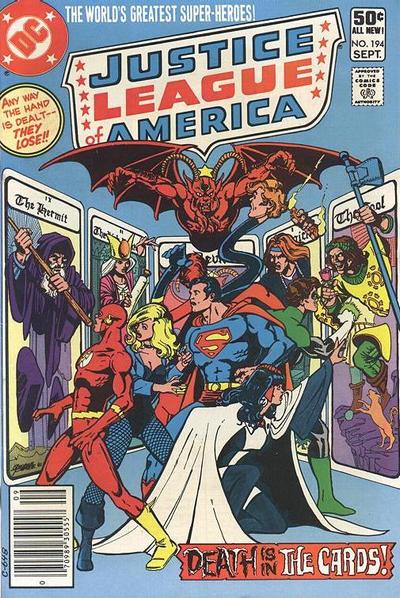
Notes: The first-ever Superman/Flash race, at least as far as I can tell, is Superman #199 from 1967. The United Nations recruit Superman and Flash to race for one another to raise funds for charity, a basic enough premise that reasonably pits the two of them against each other without some sort of contrived misunderstanding, which I greatly appreciate. Unfortunately, a pair of major crime syndicates also bet a fortune on the outcome of the race, one on Superman and one on the Flash, and so they both hatch schemes to make sure their chosen hero is the winner. After uncovering the schemes and beating the gangsters, Superman and Flash conspire to end the race in a precise tie so that neither crime syndicate can cash in on their winnings and, conveniently, so that DC Comics doesn’t have to definitively answer the question of which of the two men is the faster. 

What I find funny about this story is that, even though the story is contrived in such a way that the race ends in a tie, writer Jim Shooter almost seems to do so grudgingly. There are several times that we see the Flash doing things that seem to demonstrate that, as far as foot speed goes, he’s superior. As they race across the ocean, Flash is running on top of the water, whereas Superman has to swim at superspeed. Similarly, Supes has to burrow through sand dunes and climb over pyramids in the desert, while the Flash is simply vibrating right through them. At one point, Flash even employs a super-speed trick to rescue Superman from a random chunk of Kryptonite vomited up by a volcano without Superman even noticing. The only times Superman has an advantage is when his invulnerability or other non-speed powers give him an edge – in freezing cold, diving down a waterfall, or maintaining his balance across a frozen lake. Every task shows that the Flash’s super-speed tricks are superior, even if the story itself has to skirt the issue at the end. This would be a running theme through future competitions between Superman and Barry Allen.  

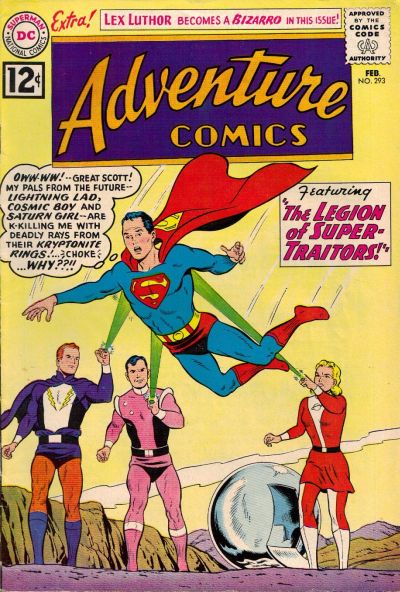
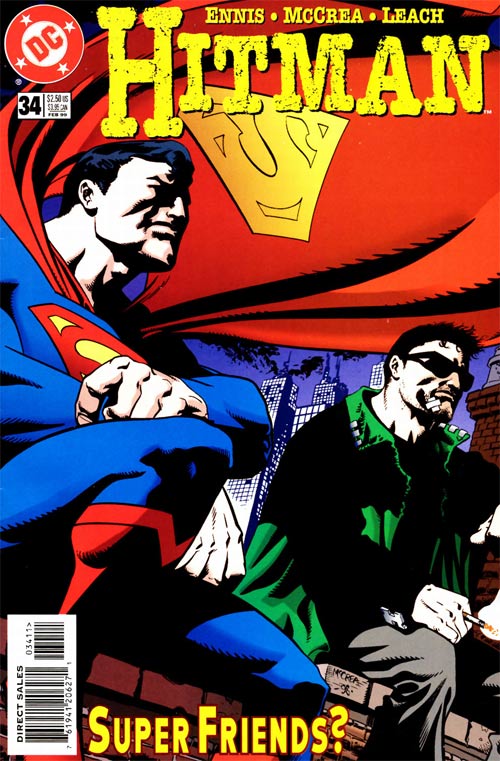
It’s covers like this, Superman. Covers like this are why some people call you a jerk.

Only a few months later, they got together for a rematch in Flash #175. It starts when the two heroes wind up muscling in on each other’s territory, each of them getting an emergency alert from the other on their Justice League signal devices that their teammate denies sending out. When the JLA assembles, it turns out the signal was sent by a pair of aliens Superman and Batman have encountered before. The aliens had placed a wager on the first race and, as it ended in a tie, insist on a rematch. Instead of lapping the Earth this time, though, they’re going to force the heroes to race across the Milky Way. Oh, and just in case they need a little added incentive, they promise to annihilate Central City if the Flash loses and Metropolis if Superman is the loser. So as sports commissioners, they’re still slightly less evil than Roger Goodell. 

The aliens throw lots of traps and obstacles in front of our heroes, each of whom independently finds evidence that the race isn’t all it’s cracked up to be. But it’s the Silver Age, so neither of them ever thinks to just TELL his teammate that the race is a fake, they make vague statements about things being “off” until they beat the aliens on the last two pages, with the race once again not having any definitive winner. 

As snarky as I sound, I actually did enjoy this issue. It was a pretty decent follow-up to the first race, and it gets bonus points for the last panel, where Flash and Superman look directly at the reader and invite them to go back to the finish line on Page 21 and decide for themselves who they think won. You can’t get away with stuff like that these days.

Thur., Feb. 13

Comics: World’s Finest Comics #198-199

“Okay, we’re ACTUALLY gonna declare a winner this time, right? No more cop-outs?

Notes: Three years after the first two races, DC decided to try it again. Although World’s Finest has, historically, been the Superman/Batman team-up book, there was a period in which it was a Superman team-up title, with Superman as the anchor and different guest-stars for each issue, so it was here that they staged the next installment in this saga. And THIS time, the cover of issue #198 proclaims, “There MUST be a winner!”

Race #3 has the wildest conceit yet – the Guardians of the Universe (the little blue guys who sponsor the Green Lantern Corps) have detected an incursion of “Arachronids,” faster-than-light lifeforms that are disrupting space and time. The only way to save the universe is for two people to race in a path opposite that of the Arachronids, and the only ones speedy enough to do the job are Superman and the Flash. (This is in the days before the “Flash Family,” of course, there was only Barry and Wally West as Kid Flash. If this were to happen today there are roughly a dozen speedsters more qualified than Superman to handle this deal.) Anyway, the Guardians provide the Flash with an amulet that will allow him to race in space and he suggests – since we never actually settled the question of who’s faster – why not make this another race? 

Things are going swimmingly until the Arachronids destroy a sun, knocking our heroes off-track on a planet where the sunlight keeps shifting from yellow to red, which negates Superman’s powers. Oh, and did I mention that the time-disruptions have chucked Jimmy Olsen back to ancient Rome, where he’s about to get executed by a firing squad of archers? 

Part two of the story reveals the truth: the Arachronids were created by General Zod and a group of Phantom Zone escapees, and they’ve got Superman and the Flash captured on a planet that straddles the line between dimensions. They wind up on a world where the red sun is draining Superman’s powers and the Flash has his swiftness curtailed when the baddies steal the amulet given to him by the Guardians, leaving them to crawl towards the device that’s causing all the chaos. WHO WILL MAKE IT FIRST?

This is the first time I’ve read this particular two-parter and, I’ve gotta say, I really enjoyed it. It’s a different angle on the Superman/Flash race, one that’s apart from the usual “racing for charity” conceit or the other various contrivances that have pit them against one another. No, this time it’s a totally original contrivance, and I appreciate that. I also appreciate the fact that they TECHNICALLY declare a winner of the race this time (it’s the Flash, spoiler alert), but they do so on a world where both heroes are virtually powerless and are literally crawling towards their destination, so the question as to who’s really faster when they’re at normal power is still left up in the air. I’m sure that was the mandate at the time. I’m glad that they eventually got over that mandate, though, as some of the later stories we’re going to get around to reading will demonstrate. 

Other Comics: Jenny Sparks #6 (Superman appearance), Black Lightning Vol. 4 #3 (Steel II appearance), The Question: All Along the Watchtower #3 (Superman Cameo), Superman’s Girl Friend, Lois Lane #10

Fri., Feb. 14

Comics: DC Comics Presents #1-2

“Barry? Clark. Hey, wanna be the first guest in my new team-up book? Noooo…not a race this time…I wouldn’t do that to you…”

Notes: Eventually, World’s Finest went back to being a Superman/Batman book, and while Batman had his own team-up series (The Brave and the Bold), Superman was given his own with DC Comics Presents. In the first two issues of this series, published in 1978, we got the next installment of the friendly rivalry between Superman and the Flash – and, in fact, I’m pretty sure this was the last such story before Barry’s death in Crisis on Infinite Earths. (If I’m wrong, by all means, correct me in the comments.) 

This time around, our heroes are captured by a pair of warring alien races, one of whom has sent an agent forward in time to go through the “cosmic curtain” that separates the end of the timeline to the beginning. (Time, you see, is evidently a giant loop, but their time machines only go FORWARD, so they have to take the long way around, as if they were flying across Europe and Asia to get to California from Florida. Flat-timers hate this issue.) Since the Flash “won” the previous race, they send him to help their agent in the future, with the consequence for failure being the destruction of Earth. The other aliens, though, force Superman’s hand by telling him that if their enemy succeeds in changing time, Krypton will explode SOONER than it was supposed to, and Superman will never exist. 

The major difference between this two-parter and the previous three races between Superman and the Flash is that the race is across time, rather than space, and it’s a significant enough change to really make this one stand out. Superman’s actions seem a bit out of character, of course – he’s risking the destruction of Earth to save his own life, a task even the VILLAINS are surprised to see him willingly take. Naturally, it turns out to all be part of the plan.

This one, unlike the other three races we’ve seen, doesn’t even really try to address the issue of who “wins.” Once Superman’s plan is unveiled, the heroes work together (as it should be) to thwart BOTH sects of warring aliens and fix all the timey-wimey chaos before anyone is killed, especially Jimmy Olsen. The conclusion, then, is satisfying, but leaves the central question essentially unanswered. In fact, the first time we get anything resembling a true answer, it would have to come from Barry’s protege, Wally West, another 12 years later.

Other Comics: Superman’s Pal, Jimmy Olsen #135, Justice League of America #16, Action Comics #372

Podcast: DC Studios Showcase Episode 1 (Discussion of documentary film Super/Man: The Christopher Reeve Story)

Valentine’s Day Stuff: Today is, in case you forgot, Valentine’s Day. (And if you DID forget, this isn’t going to be posted until February 19th, so you are SERIOUSLY out of luck.) But I couldn’t let the day pass without noting my darling wife, Erin, and how she indulged my quest for the Year of Superman today.

Pictured: Love. And personal hygiene products.

She got me the McFarlane Toys Super Powers Fleischer-style Superman, a figure I’ve been hunting for ever since I found out it existed, but have been resisting paying eBay prices. If I won the lottery, I would build an entire toy display room in my palatial mansion, and one full wall would be dedicated to a collection of Super Powers figures, Marvel Secret Wars figures, and figures from comparable toy lines like the Archie Mighty Crusaders and Defenders of the Earth series of my youth. She also got me a set of the new Superman-branded Old Spice body wash and deodorant, which I first saw in an ad a week or two ago where it was being promoted along with Batman-branded products, prompting me to ask her, “Who do you think smells better? Superman or Batman? I bet Batman sweats a lot.”

And yet, she’s been married to me for over 10 years now. Get you one who understands you like mine understands me, friends. 

Sat., Feb. 15

Comic Books: Adventures of Superman #463, Flash Vol. 2 #53

“On your marks! Get se–wait a second, haven’t we done this before?”

Notes: The next time the Man of Steel and the Scarlet Speedster would face off against one another wouldn’t come until 1990, at which point both of them had experienced some drastic changes. Superman had gone through the post-Crisis John Byrne reboot, whereas Barry Allen had died in Crisis on Infinite Earths and been replaced by his protege, former Kid Flash Wally West. Like a lot of Superman history, it’s unclear if any of the previous races with Barry were canon to Superman at this time, but the story makes it quite clear that it’s the first time he’s faced off against Wally, at least, and it’s a distinction that Superman takes pretty seriously.

This story involves our old pal from the Fifth Dimension, Mr. Mxyzptlk, who shows up on Earth this time restructuring Mount Rushmore to include his own face. The Flash happens to get there first and, when Mxy finds out that he’s supposedly the “fastest man alive,” he decides to put that claim to a test. If Superman can beat the Flash in a race around the world, he says, he’ll pop out of our dimension for the usual 90 days. Superman notes, rather dismissively, that Wally hasn’t been the Flash that long and strongly implies that beating KID Flash won’t be too difficult, and Wally does his best impression of Michael Jordan in that meme. The race is on. 

From here out, the story is actually pretty straightforward. Unlike most of the races we don’t have to deal with any shady stipulations, misdirects for the reader, or bad guys trying to fix the outcome of the race, except for your typical Mxy shenanigans. There is a nice little scene I’d forgotten about, where Mxyzptlk tries to offer Lex Luthor a hunk of red Kryptonite but Lex turns him down, which actually makes this story a stealth prequel to the Krisis of the Krimson Kryptonite story we read last month. But as far as the actual RACE goes, it’s pretty cut and dried, with both heroes putting the pedal to the metal until, in the final stretch, Wally reaches out and beats Superman by a nose. 

Totally saving the day! As it turns out, Mxy had learned about deception from Lex in a previous visit and so he was trying it out. Although he SAID he was only going to leave Earth if Superman won, he had always REALLY planned to leave if the FLASH won. It never occurs to him to simply lie again, which is actually kind of a silly, charming hat to put on this dude in his silly, charming hat.

This was the first Superman/Flash race I ever read, and as such it’s always held a place of esteem in my personal pantheon of Superman stories, but I think it’s important to note which versions of the characters we’re looking at. Superman was only a few years post-Byrne, an era in which his power had been scaled down dramatically to make him less “godlike.” Over the years his powers would slowly creep up in strength again until today he’s more powerful than ever before, but as Supermen go, the one in this story was relatively slow. However, this was also early in Wally’s tenure as the Flash, a period during which he was much slower than Barry ever was. When Mark Waid took over Wally’s series a few years later he established that Wally had a subconscious fear of overshadowing his predecessor and had a self-imposed mental block limiting his speed. Once he got over that, he became the fastest Flash there ever was. The point is that if you took the current versions of either Superman OR the Flash and popped them into the race during this era, either of them could smoke the two characters we watched race today.

This time it’s a METAPHORICAL race! The greatest kind of race there is!

I also read issue #53 of Wally’s first solo title, a story which was NOT actually a race, despite what the cover promised. In this one, Jimmy Olsen has gotten himself captured by some South American warlord (because that’s what Jimmy Olsen DOES) and Superman decides to recruit the only person alive faster than him (as established in the previous race) to help find Jimmy before he’s unalived. This is a typical superhero team-up story: good, not special, but enjoyable. I think the most interesting thing about it, the thing that gives it a spot of interest in superhero history, is that this happens to be the issue in which Wally’s pal the Pied Piper (former villain, now reformed) comes out to him as gay. I don’t know if this is the FIRST openly gay character in mainstream comics, but he’s certainly ONE of the first, and while it’s no big deal in today’s comic book landscape, for 1991 it was a pretty surprising revelation. There ya go, ya learned something today. 

Sun., Feb. 16

Comic Book: DC First: Superman/Flash #1

Big Good Vs. Big Good.

Notes: I’ve got a sick kid to take care of this afternoon and, as a parent, that has to take precedence over pretty much everything. But in-between far too frequent trips to the bathroom and a larger-than-average number of baths, I made it a point to squeeze in the next story in the Superman/Flash pantheon. This time we leap ahead to 2002 for DC First: Superman/Flash. This was a series of one-shots DC did that showed the first meetings between various characters – but as Superman’s first races between Barry Allen and Wally West were already pretty well documented, for this special they did something a little different and very cool: they showed Superman’s first race with Jay Garrick, the original Golden Age Flash. 

This issue reads more as a special issue of the then-current Flash run. It’s written by Geoff Johns, who was writing that book at the time, and it deals with subplots involving Pied Piper and Jay’s wife, Joan, with Superman’s involvement coming in coincidentally. Wally and Jay head to Metropolis to a bookshop where they’ve sourced a rare book as a gift for Joan, only to run afoul of the old Flash rogue Abra Kadabra. The faux wizard of the 64th century casts a spell that begins causing Wally to age rapidly, then tells Superman and Jay they can save him if they can catch him in a race – with the caveat that whoever touches Wally first will take the curse upon themselves. What you’ve got, then, is perhaps the greatest conceit for a Superman/Flash race of them all. They aren’t racing for charity, they aren’t racing for ego, they aren’t even racing with the fate of the world at stake. They are literally racing one another for the RIGHT TO SACRIFICE THEMSELVES TO SAVE WALLY. There is no better motivation for these two heroes.

I know I read this book when it first came out. It’s in my collection, and I was an avid reader of both the Superman comics (duh) and Flash, so I am 100 percent certain I read it. But it came out 23 years ago, and I didn’t really remember the story at all until I sat down to read it this afternoon, and it honestly blew me away. Even though it’s more of a Flash story than a Superman story, it really exemplifies the values of Superman in a way that a lot of these other races failed to do. It may be my favorite read for this week to date.  

Mon., Feb. 17

Comics: Flash: Rebirth #3, Superman #709

This issue, as far as I’m concerned, is the final word on the whole thing.

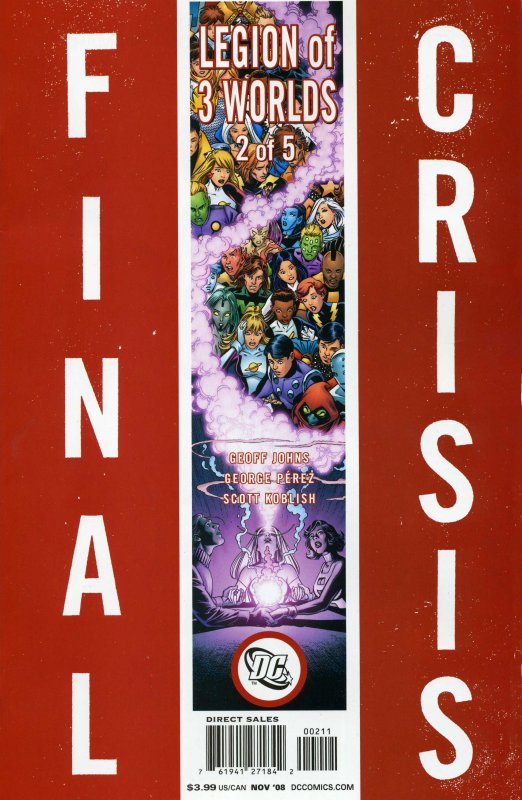
Notes: I actually struggled with whether to include this issue of Flash: Rebirth from 2009 in my Year of Superman reading. It’s the middle of a storyline, and Superman’s appearance is barely a cameo, but that one sequence in which he appears is significant enough that I felt it warranted inclusion. Barry Allen, having returned from the dead in the terribly inaccurately named Final Crisis event, is being transformed into a new Black Flash, essentially the spirit of death for speedsters such as himself. To protect Wally, his grandson Bart, and everyone else he loves, he decides he’s going to rush back into the Speed Force before the transformation can happen, and Superman takes off after him. At this point, the League had gone through its share of recent tragedies, and both Aquaman and the Martian Manhunter were dead (they got better), so Clark isn’t about to let Barry die again. 

This leads to one of my favorite pages that Geoff Johns ever wrote, as the two of them are racing each other up the Daily Planet building and Superman says, “I’ve raced you before, Barry. I even won some of those races.”*

Barry simply says, “Those were for charity, Clark.”

And then he leaves him in the dust.

Like I keep saying, the Flash SHOULD be faster than Superman. This issue is the best evidence of that ever.

(*By the way, despite what he says, I don’t actually recall Superman ever winning one of those races. There were a few ties, but every time a victor was declared it was the guy in red. I’m going to assume, from the way Clark talks, that there may have been other charity races off-panel that we didn’t get to watch. And now that I’ve said it, it’s going to manifest in the universe as a seven-part time-travel crossover event, coming this fall.) 

“You’re GROUNDED young man! That means no disrupting the time stream! Just do your homework and straight to bed!”

The final Superman/Flash face-off I could find in comics came in Superman #709 from 2011, part of J. Michael Straczynski’s “Grounded” storyline. In this arc, Superman decides he needs to reconnect with the ordinary people he is sworn to protect, so he commits himself to walk across the United States. It’s an interesting concept, to be certain, and Straczynski is an excellent writer, but the general consensus on this storyline is that it sort of fell flat. I think the problem is that it went on for far too long (who wants an entire year of Superman just…walking?) and even Straczynski himself seemed to lose interest in it, as evidenced by the fact that he bowed out before the story was over and it was completed by Chris Roberson. 

The “race” part of this issue is over fairly quickly. While walking through Boulder, Colorado, the entire town is suddenly transformed into a Kryptonian city. Superman soon figures out that the transformation is the work of the Flash, who has been overtaken by a Kryptonian artifact and he needs Superman to set him free. After he does so, they have a cup of coffee and talk about legacy. This is what I mean, by the way, when I say that the “Grounded” story went on too long. The story of this issue is perfectly fine, in and of itself, but when you read it in the context of the entire year-long storyline, it was too much of the same thing over and over: Superman walking somewhere, doubting himself, having a significant encounter with various characters (both new and previously established) and coming to a peaceful resolution. That’s great ONCE, but do you really want to read it twelve issues in a row?

The most interesting thing to me about this issue is that it happens concurrently with that month’s issue of Superboy, in which the Kid of Steel races KID Flash for the first time, and which Clark and Barry catch a glimpse of on a diner television. I’ll take a look at that issue tomorrow when I look at the few races I could find between members of the Superman and Flash families other than the patriarchs. 

TV Episode: Superman: The Animated Series, Season Two, Episode 4, “Speed Demons”

“Loved you on Wings, by the way.”

Notes: That’s all the comic book Superman/Flash races I could find, but there’s still this episode of Superman: The Animated Series, the first appearance of the Flash in the DC Animated Universe. In this episode he’s voiced by Charlie Schlatter, although Michael Rosenbaum would take over the character for the Justice League cartoons. (Tim Daly would be replaced as Superman by George Newburn too. I guess not everyone can be Kevin Conroy and Mark Hamill.) In this episode, Superman and the Flash are pitted against each other in, as per their first-ever encounter, a charity race. This time the rules are a bit more sensible for the two of them: the winner will be the first to complete 100 laps around the globe. Of course, just like many of their races in the comics, there’s a catch – the arm bands they’re wearing to track their progress are, in truth, using them to build up ionic energy to power a plot by the Weather Wizard. (Weather Wizard, by the way, was voiced by the late Miguel Ferrer in a delightfully dastardly way.)

This episode never makes it clear which Flash we’re watching, Barry or Wally. In terms of attitude and personality, it’s definitely influenced by the early days of Wally’s solo title. He’s slick, he’s cocky, and he relentlessly flirts with Lois Lane, none of which are things you could ever imagine Barry doing. It takes plenty of cues from the classic comics, though, such as the race itself being derailed halfway through when Superman and the Flash catch wind (rimshot) of the Weather Wizard’s plan and call it off to get around to some good ol’ fashioned thwartin’. It’s easy to forget that the Batman cartoon almost never had guest-stars from outside the Batman family, so this was one of the first times we really started to see an animated universe begin to form in the Paul Dini/Bruce Timm era. It was a real delight to revisit this episode again. 

There is ONE other Superman/Flash race that I haven’t covered here, but for what I consider a good reason. It’s part of Tom King’s Superman: Up in the Sky series, which is a magnificent comic in its own right, and I intend to cover it in its entirety at some point this year. Plus, looking at the issue with the race on its own wouldn’t really make a ton of sense, absent of the context. I’m bringing it up here mainly so that nobody thinks I forgot about it.

Tues., Feb. 18

Comics: Superboy Vol. 4 #5, Supergirl: The Fastest Women Alive #1

“I don’t know why Barry and Clark always make such a big deal about this.”

Notes: I had one day left in “Superman Vs. The Flash Week,” but I had run out of actual Superman/Flash races, so I decided to close it out with a pair of comics featuring other members of the respective Super- and Flash-Families strapping on their jogging shoes to see who’s swiftest. First was Superboy Vol. 4 #5 from 2011, the first ever Superboy/Kid Flash race (this Kid Flash being Bart Allen, Barry’s grandson, who previously had gone by “Impulse” and since has retaken that name). In this era, Superboy was living in Smallville, and his presence had rocked the town with a few supervillain attacks that resulted in some pretty major damage. This time around, the race is scheduled to raise money to rebuild the town. As the two old friends zip across the globe, though, Bart can tell that Conner Kent’s mind is elsewhere.

This issue is part of Jeff Lemire’s run on the title, a tenure that was cut tragically short by the New 52 reboot later that year. Lemire was doing a great job at grounding Superboy in a way that this version of the character so rarely is, giving him a home and a family in Smallville to contend with, and making his adventures a mix of the cosmic and the mundane, something Lemire is exceptionally good at. (And if you don’t believe me, check out his series Black Hammer.) Despite the race being a backdrop, the mundane part is the focus of the issue, with nary a supervillain plot or alien invader to disrupt things. Instead, in the midst of a race across the globe, Conner just confides in his friend about his pain over his recent breakup with Wonder Girl.

The ending of the race is a cop-out, which we’ve all come to expect, but this may be the biggest one yet. (Spoiler: somehow, Krypto crosses the finish line first and everyone accepts it, even though it feels as legit as Harry Potter’s name being tossed in the Goblet of Fire.) Still, if you’re thinking of reading this book, the Lemire run is extremely worthy of your time – it’s just that this issue, by itself, may not be quite so satisfying without the context of the rest of the run.

Finally, we’ve got the bizarre little one-shot Supergirl: The Fastest Women Alive, a special comic from 2019 presented by Snickers. Very, very much by Snickers. There is Snickers branding on nearly every page, and even the captions that tell you where the racers are at the moment are branded in the Snickers logo font. The message, just in case you missed it, is: Snickers.

Did we mention it’s presented by Snickers?

For the first half of the issue, though, this is actually a decent enough race between Supergirl and Jesse Quick. It uses most of the tropes of the previous races, such as it being a charity race, Supergirl not being allowed to fly, and so forth. The turn comes halfway through, though, when the racers discover that the Parasite has attacked the arena where the race began and will end, and he’s already got Superman and the Flash on the ropes. The lightning ladies rush back to save the day, but how can they possibly get the energy they need to overload and defeat the energy-sucking Parasite?

HOW CAN THEY FIND THE NECESSARY ENERGY?

SNICKERS? GOT A SUGGESTION?

This story is a full-issue equivalent of the delightfully goofy old Hostess comic book ads, only way less subtle. 

I kinda love it.

And thus, friends, concludes Superman Vs. The Flash week. My feelings haven’t really changed, I must say. In any contest of speed between a Super of any stripe and a Flash by any name, the Flashes should always be the ones to come out on top. Sorry, Superman, but it’s their whole entire deal. You can’t really compete.

But this week has proven it’s fun to watch you try anyway.

Blake M. Petit is a writer, teacher, and dad from Ama, Louisiana. His most recent writing project is the superhero adventure series Other People’s Heroes: Little Stars, volume one of which is now available on Amazon. You can subscribe to his newsletter by clicking right here. You can join in the Kryptonian Konversation every day in the Year of Superman Facebook Group!

Geek Punditry #111: Playing Favorites With Love Stories Part Two

Ah, Valentine’s Day: the day to show your affection to the one you love, or perhaps the ones if you’re Nick Cannon or somebody. The day that we celebrate passion and romance. The day that everyone who is not, currently, in a relationship does their absolute best to ignore, because those of us who DO have cause to celebrate on this day can – admittedly – be absolutely sickening at times. And most importantly, it’s the day where we feature Part Two of “Playing Favorites With Love Stories.” Just like last week with Part One, I took to social media and asked my friends to throw out suggestions for love story categories to talk about, and this week I’m going to tackle a few more. Grab your sweetie and pull up a chair – there’s some heart-shaped excellence coming your way.

Superhero Love

Eric LeBlanc asked me for my “favorite superhero movies that are just love stories with violence.” That’s an interesting way to phrase it, particularly since a lot of traditional love stories are also “love stories with violence,” but I’m up for the challenge. I have, after all, watched a superhero movie or two in my time, and because of that I think I am uniquely qualified to declare that the best superhero love story ever to grace the silver screen is probably 1980’s Superman II.

Nothing says romance like fighting three evil prison escapees and crashing through a Coke sign.

Part of this, I concede, may be recency bias. I watched Superman II again only a few weeks ago as part of my ongoing Year of Superman project (with new posts every Wednesday – tell your friends!) so it’s still pretty fresh in my mind, but it’s perhaps my favorite depiction of the Superman/Lois Lane relationship on screen. The whole film hinges on the idea that Superman, upon having Lois finally prove his dual identity, decides that he wants to be with her and that the only way to do so is to give up his powers. As it turns out, though, super-timing was not one of his abilities. No sooner has he abdicated his super-ness than he gets his clock cleaned by a jerk in a diner and finds out – oh yeah – while he was off in the arctic circle becoming human again, General Zod and his cronies have escaped the Phantom Zone and are about to take over the world.

Much as I love the Zod stuff, the Superman and Lois relationship is the soul of this movie, and so much credit needs to go to Christopher Reeve and Margot Kidder for making it work. Kidder’s fire and verve absolutely make it believable that this is a woman a man of steel would fall in love with, would be willing to sacrifice everything to be with, and that steers us into the tragedy of it all when he is forced to conclude that the world needs Superman more than Superman needs love. Your heart breaks for the both of them, even if the film kind of chickens out at the end and he uses the heretofore-unknown “super kiss” power to make her forget the whole thing. The super kiss is really the only part of the film that bothers me, but it’s not nearly enough to knock this excellent film from its perch at the top of the mountain. 

Next is perhaps an odd choice, but I’ve always been fond of Dr. Horrible’s Sing-Along Blog, the musical that came about as a result of a 2008 writer’s strike. Dr. Horrible (Neil Patrick Harris) is an aspiring supervillain trying to crack into the big leagues when he finds himself falling for a girl he meets doing laundry (played flawlessly by Felicia Day). Unfortunately for him, her life is saved by his arch-enemy, the superhero Captain Hammer (Nathan Fillion), who – as heroes go – is way less Superman and way more Guy Gardner. Apropos, I know.

The supervillain musical Joker: Folie à Deux WISHES it could be.

I absolutely love this one. The songs are catchy, the three main actors are at the top of their form, and the conclusion is suitably heartbreaking. And it nicely meets Eric’s qualification of “a love story with violence.”

Not every superhero love story has to end sadly, though, although it seems like most of the really good movies do. But I don’t want to leave you utterly bereft of happy endings, so even though Eric specifically asked for movies, I’m going to throw out a comic book recommendation, one that I’ve been a fan of for many years: Thom Zahler’s delightful series Love and Capes.

Pictured: Love. Also pictured: Capes.

This story, described by Zahler as a romantic situation comedy, focuses on Abby Tennyson, a bookshop owner who is stunned, in the first issue, when she learns that her boyfriend Mark is actually the world’s most powerful superhero, the Crusader. Abby and Mark have one of the healthiest relationships in the entirety of superhero comics, and the way we watch their relationship grow and develop over the years – through dating, marriage, and parenthood – is the absolute rebuttal to any comic book writer who argues that there are no interesting stories to tell about a couple in a happy relationship. (Lookin’ – as always – as YOU, Spider-Man editorial office.) This series is a favorite of mine not only because it’s a great story (it is) but because it enjoys the rare honor of being one of the only comic books that I’ve ever discovered upon a recommendation from Erin, my own girlfriend (at the time, now wife). In fact, she and I were even guests at Mark and Abby’s wedding. No, really.

I was mostly there to check out the venue.

Platonic Love

Chance Simoncelli suggested the best “platonic” love stories. I really like this suggestion – it seems like much of the media is focused on romantic love, which is fine, but they zero in on it to the expense of every other type of relationship. It’s like the entertainment world doesn’t seem to grasp the concept that sometimes people are just friends, with no romantic connection, but that doesn’t mean their love isn’t deep and true and sincere. This is one of the reasons I hate fanfiction, if we’re being perfectly blunt.

But on rare occasions, they do manage to get it right, and share with us a deep, committed bond between two people that never indulge in any hanky-panky, and I think those stories should be celebrated. One of my favorites comes from the TV show Parks and Recreation. Nick Offerman’s Ron Swanson and Amy Poehler’s Leslie Knope couldn’t possibly be more different. Leslie is a chipper, enthusiastic-to-a-fault government employee who sees working in public service as the highest calling there is, whereas Ron is a grouchy straw Libertarian who sees all government work as inherently useless and wants nothing more than for everybody to leave him alone. Somehow, they’re the best of friends. Their devotion to one another is so powerful that in the final season of the show, after a time jump, the two of them have a wedge driven between them and it’s as horrifying and shocking as it would have been had either of them broken up with their respective spouses. The episode where the two of them reconnect and reconcile their differences is one of the most beautiful and sweetest in the entire series, as their bonds are once again forged over a mutual affection, respect, and a love for breakfast foods.

On any given day, I am both of these people.

There’s also a great example from the show Friends. First of all, I think it’s time we all admit that, in terms of friendship, Joey Tribbiani was the MVP of that show. The whole thesis of the series is that these six people are one another’s found family, but the level of loyalty and devotion that Matt LeBlanc’s character shows to each of the other five at various points in the series is above and beyond, and I don’t know if he gets enough credit for that. The late-seasons dalliance with Rachel aside (we can all agree that was Friends’ worst plotline, right?), he is the staunchest of the group.

And the best such relationship, I think, is the one he has with Lisa Kudrow’s Phoebe. With the other four pairing off and going through assorted romantic shenanigans of one sort or another for the entire run of the series, these two are simply friends through thick and thin. There were occasional episodes where we saw some flirtatious banter between them, and once in a while they would allude to the notion of them hooking up somewhere down the line, but at no point does it ever come across as a serious intention. Frankly, although they both enjoy playing the game with one another, I think Joey and Phoebe love each other TOO much to ever get physical, because they already know their relationship is perfect the way it is. In fact, she may be the one woman on the entire planet that Joey feels that way about, and if that’s not special I don’t know what is.

Somehow the womanizer and the former mugger were the wholesome, beating heart of the show.

I also need to give a little credit to Disney here. True, they have done as much to push romantic love as being the apex of a relationship as any studio on the planet, but there was one time they deliberately steered away from that and they nailed it, and I of course am talking about Frozen. It’s a Disney Princess movie from the outset and, as such, people expect it to follow the usual tropes of a Disney Princess movie, including the damsel in distress and the handsome prince. And for much of the film it does use these tropes, including Anna being afflicted by an errant piece of magic that threatens to turn her into ice if the spell is not broken by an act of true love. 

I know it’s fashionable to hate on Frozen and call it overrated now, and I’ll be the first to admit that the hype train it rode for many years went a lot farther than it probably should, but that doesn’t take away from the fact that the filmmakers were brilliant in how they subverted the expectations of a Princess movie. While Anna is looking for “true love” to cure her, her handsome prince reveals himself to be an opportunistic villain who was only planning to marry her to move himself into position to become king. If she dies, all the better for him. In the end, though, Anna IS saved by an act of true love: not by her false fiance Hans, nor even from the stout-hearted Kristoff, whose love for Anna IS pure. Anna is saved by her sister Elsa, stepping in to defeat Hans at the last second and breaking her own spell. The love between the two sisters is at the heart of the film, far more than Anna’s love triangle, and that makes it a unique and special film in the Disney canon. And I don’t care HOW sick you are of hearing “Let It Go,” it gets my respect for that. 

“Are you thinking what I’m thinking?”
“Yes, those fanfiction writers are messed up.”

Finally, of course, we can’t forget the greatest platonic love story of all: a story not between man and woman, not between friends, not between family, but between the sole survivor of a dying world and his appetite.

Project ALF.

The true platonic love affair is between me and this joke.

Will They/Won’t They?

Finally, Duane Hower asks for the best “Will they/Won’t they?” in geek culture, “and why is it Buffy and Spike?” Ah yes, the “Will they/Won’t they?” It’s the trope that fuels a million stories and makes half of them frustrating. The truth is, any time they try a “Will they/Won’t they?” the storytellers are playing with fire. Setting up a WTWT is incredibly easy: get two characters, hint at a degree of attraction between them, and then make the audience shriek uncontrollably as you refuse to settle the question. But concluding that arc in a satisfying way is a lot harder than it seems on the surface. If you resolve it too quickly you give up fuel for future stories. If you play it out too long, the audience gets frustrated. If you resolve it at exactly the right time, half the audience will hate the outcome, no matter what the outcome happens to be. Duane mentions Buffy the Vampire Slayer, and I concede that it’s a pretty good example, as far as WTWT go, but mostly because of how adroitly the storytellers managed the timing.

There are tons of classic examples: Pam and Jim from The Office, Sam and Diane (and later, Sam and Rebecca) from Cheers, Ted and Robin from How I Met Your Mother? and so forth, and while some of them navigated the minefield better than others, I think the relationship between Janine and Gregory in Abbott Elementary is one of the better examples. In the first episode, Gregory joins the Abbott Elementary faculty and we quickly see sparks between him and Janine, who happens to be in a long-term relationship. In truth, for the first few episodes Abbott adheres so closely to the format of The Office that it’s almost uncanny. But the relationship between the two of them changes and takes unexpected turns over the next few seasons. Relationships change, feelings change, and while the attraction between them remains undeniable, you’ve got a case here where you genuinely aren’t sure which way they’re going to take the characters. In fact, a late season three episode sets up things to put the kibosh on them once and for all just before the season finale changes everything. One of the reasons I think Abbott is the best comedy currently on television is because of its hilarious and shockingly realistic depiction of a school setting, but the Janine/Gregory relationship is a close second.

Fun fact: putting this much adorable in a single room is considered a health hazard in 29 states.

But perhaps the greatest example of a WTWT in the history of television comes from the brilliant, magnificent, legendary, and frankly underrated sitcom Newsradio. This 90s show about the staff of a New York radio station is one of the smartest and funniest television shows in the entire history of the medium, with whip-smart writing and a cast that performs their roles with such ease, grace, and humor that watching it can almost make you forget what a dumpster fire of a human being Andy Dick turned out to be. As the show was in development, though, the network (NBC) insisted that they include a WTWT among the cast. That was absurd, the writers said. That wasn’t the show they were doing! That wasn’t the story they were trying to tell! This was supposed to be a workplace comedy, not a romcom!

“Give us a WTWT,” NBC intoned deeply, whilst carefully counting their Seinfeld money.

FIIIIIIIIIINE,” the Newsradio writers replied, tweaking the first episode to set up a WTWT between Dave Foley and Maura Tierney’s characters. “Happy now?”

“Delighted,” NBC said, lighting a cigar on fire with a $100-bill with Jason Alexander’s signature on it.

And then the Newsradio writers took their mandated WTWT and resolved it in the SECOND EPISODE by hooking up the two characters officially.

“Look, we’re not Mulder and Scully, let’s just get on with it.”

Newsradio is one of the greatest sitcoms of all time, but the way they thumbed their nose at the network may be their crowning achievement.

Thus concludes PLAYING FAVORITES WITH LOVE STORIES, friends. I hope you all have a fantastic Valentine’s Day. Spend it with someone you love, fire up some of these stories we’ve mentioned, and remember that Phil Hartman was a genius

Blake M. Petit is a writer, teacher, and dad from Ama, Louisiana. His most recent writing project is the superhero adventure series Other People’s Heroes: Little Stars, volume one of which is now available on Amazon. You can subscribe to his newsletter by clicking right here. He’s also started putting his LitReel videos on TikTok. Did you know that Jon and Liz the veterinarian finally hooked up in the Garfield comic strip? No really, it’s true. Just throwing that out there to remind you that there’s hope for everybody.

Year of Superman Week Six: Panic in My Soul and Panic in the Sky!

Last week, as I alluded to in that blog post, was a chaotic mess for me that left me a little bit of a wreck. I’m a little better as I write this, on the afternoon of Feb. 5, but the things that have been dragging me down since last Friday haven’t subsided entirely. As a result, I didn’t have time to really read or watch anything Superman-related today, and for a moment I was afraid my streak would end in only week six. But on the way home from work, an angel appeared in my podcatcher app in the form of good old Michael Bailey.

Wed., Feb. 5

Podcast: It All Comes Back to Superman Series 2, episode 8, “Moving Kryptonian Images Part One: Superman and the Mole Men”

Notes: Like myself, Michael’s got plans leading up to the release of the Gunn Superman movie, including an examination of 25 different feature films starring the Man of Steel, and he starts with this one. I’m not going to attempt any sort of recap when I listen to these episodes – in fact, in the future I may have no notes at all – but I really do enjoy them and I’m glad I’ve got him riding shotgun while I drive to keep my mind on the good things in this world…specifically those that come in the form of a strange visitor from another planet.

Thur., Feb. 6

I WISH they made these toys.

Comic: Super Powers Vol. 4 #1

Notes: It’s a busy week for me, so once again, I need something quick. The Super Bowl is coming to New Orleans this Sunday and my son is a ravenous football fan. While there’s no way we could possibly afford a trip to the Big Game, the NFL Fan Experience they’re hosting at the New Orleans Convention Center is considerably more affordable, and something Eddie will have fun with, so after school on Thursday we hustle him off to New Orleans for a few hours of gridiron fun. It’s a great time, but it does limit my Superman reading time to finding a quick comic on the DC Infinite app to read before bed. The winner is Super Powers #1 from 2016. This comic is by the amazing team of Art Baltazar and Franco Aureliani, and is set in the same world as some of their other kid-friendly comics Tiny Titans and Superman Family Adventures. In this first issue, Batman has mysteriously gone missing from Gotham City and it’s up to Superman and Wonder Woman to find him.

Art and Franco have a wonderful sense of humor and a delightfully free style that makes for some of the best comics for kids published in decades. And like most TRULY great works for children, it’s still fun for adults to read. The stories often have silly angles and even the occasional euphemism for some of the more adult concepts, but in a winking-at-the-camera way. This series was one of the few times they tried an extended storyline rather than a one-off or a series of shorts in a single issue, and I’m going to have to make it a point to finish the rest of the six-issue series this weekend. 

Fri., Feb. 7

Comics: Super Powers Vol. 4 #2-6

Notes: Today I decided to finish up the Art Baltazar and Franco Aurelani miniseries I started yesterday. I read this comic when it was released back in 2016, but it turned out to have far more Superman relevance to it than I remembered. For instance, I’d forgotten that in this very kid-friendly continuity, Jor-El and Lara are alive and living in Kandor. And, in fact, in this series they give Superman a baby brother, Prym-El…who, as it turns out, also has plenty of connection to one of Jor-El’s other “children,” the computer intelligence Brainiac. The Brainiac story actually works really well. It’s presented in a format that is intended for children, obviously, but if you took the bare bones of the plot and re-told it for an adult audience it would work perfectly well. On the other hand, that would cause us to lose a lot of the tongue-in-cheek humor and delightful continuity gags intended for the older people who they knew were reading the books as well. After all, there aren’t a lot of elementary school kids who read this book and would have gotten the joke about “Superboy Prym.” (If you don’t get the joke either, “Prym” is pronounced with a long “y”.)

I really do love this creative team. They’ve done some of the funniest and most welcoming comics for young readers this century, and that’s something we can always use more of. They still dip their toes back into the DC Universe occasionally, although they spend more time these days doing their own thing or working on other properties, such as some of the recent graphic novels based on the works of Dr. Seuss, but I will always welcome their return to the Superman family. 

Sat., Feb. 8

The worst part is that the Daily Planet’s health insurance defines this as a preexisting condition.

Comics: Superman #250, Superman #281.

Notes: Coming down from a stressful week, I decided to spend this afternoon finally reading the two new Superman comics I picked up at Fan Expo New Orleans back in Week Two. First up was the double-sized anniversary issue, Superman #250 from 1972. In this issue, Superman faces the Terra-Man, a villain that the narration has the audacity to refer to as “the most dangerous man in the world.” Although to be fair, he DOES almost manage to take out Superman with a device that causes the man of steel to get older every time he uses his powers. But still, Terra-Man has never quite made the upper echelon of Superman foes – the idea of a cowboy riding a flying horse and using high-tech weapons was maybe a wee bit too “high concept” to really catch on. And the end of the issue doesn’t really help. If you don’t mind spoilers for a 50 year old comic, here goes: Superman realizes that since using his powers makes him older, NOT using them will make him young again. This is an utterly ludicrous supposition and there’s no reason to assume that such a thing would be true, which makes it even more infuriating that it works. Even sillier is the notion that, once he’s young again, the mark that Terra-Man put on him to cause the aging just…vanishes. This is why you’re a D-list villain, Terra-Man. Stuff like this.

But if you really wanna talk silly, let’s look at Superman #281 from 1974. This is the first appearance of Vartox, a character who – like Terra-Man – never quite cracked the A-list, but also has had a bit of a lingering fan base, which I think is mostly attributable to his ludicrous costume,  clearly inspired by the Sean Connery movie Zardoz, which came out earlier that year. HE’s not even a villain, actually. He’s a superhero from another planet, who comes to Earth when his wife mysteriously dies. Turns out her “bionic twin” – an exact doppleganger on Earth – was murdered, which somehow triggered her death as well. He comes to Earth to catch the man who killed the twin (and, consequently, Vartox’s wife), but he knows he’ll have to reckon with Superman.

He’s got to be a villain. No hero would wear that vest.

Why the hell doesn’t it ever occur to these aliens to just ask Superman for help instead of coming up with some goofy, ludicrous, Fawlty Towers-level scheme?

Still, silly as he is, there’s something fun about Vartox, and it’s nice that he hasn’t been totally forgotten.

Sun., Feb. 9

Graphic Novel: Superman: Panic in the Sky (Reprints Action Comics #674-676, Adventures of Superman #488-490, Superman Vol. 2 #65-67, & Superman: The Man of Steel #9-11)

Comic Book: Justice League Spectacular #1

Everyone’s invited to this party!

Notes: As I mentioned a few weeks, ago I became a regular reader of the Superman comics with the Krisis of the Krimson Kryptonite storyline. That made Panic in the Sky, which came out a little more than a year later, my first “major” event story. It’s wild to look back at it now – eight issues, entirely self-contained in the Superman comics. If a story like this were attempted today, it would be its own miniseries with dozens of spinoffs and crossovers into every other DC title, but this compact little story was handled with ease. There was even room, in the most recent graphic novel edition, to add the next four issues of the weekly Superman books, which dealt with the fallout in various ways.

In this storyline, Brainiac has gained control of Warworld, as well as taken over the mind of the alternate universe refugee called Matrix, who also became this era’s Supergirl. Along with Draaga and Maxima (both of whom we last saw during the Krypton Man story), Brainiac set out to use Warworld to conquer the Earth. At the time, following the “Breakdowns” storyline, the Justice League was disbanded, so Superman put together a team of all the heroes of Earth (or at least the most popular ones they could get editorial permission to use over this two month period) to drive them off.

I have a deep affection for this story for several reasons. First of all, it was my first “big” storyline as a Superman reader, and it was also my first exposure to some of the lesser-known DC characters that would eventually grow to be favorites of mine. It was also pretty unique in that it brought Superman to the forefront of the superhero community, something that wasn’t being done much at the time. This was early 1992, and ever since John Byrne revamped Superman in 1987, he hadn’t been incorporated much into the greater DCU. He made appearances, especially in big crossover events, but he had never been a member of the Justice League and he didn’t have the close ties to Batman and Wonder Woman that are considered so fundamental to the character today. 

This was a rare story, to see him step up and take command of so many heroes. It’s also odd that the first person he recruited to defend Earth was, of all people, Deathstroke. Deathstroke had mostly been a villain in the Teen Titans’ book, but he’d become popular enough to warrant his own title and, as happened to most villains who got their own book, there was a bit of an effort being made to rehabilitate him into more of an anti-hero. It worked to some extent, but eventually he broke bad again, and frankly, it works better for him. 

Reading it again today, it feels a little off in some places. Some of the various characters don’t always sound quite like themselves, which was no doubt a consequence of the four writers playing Round Robin with them. Another such result was that it was hard to keep track of the minor characters – people like Valor, Starman, and Dr. Fate would appear in the invasion force on Warworld without having appeared previously or having been set up as part of the story at all. But damn, it was fun to see artist Jon Bogdanove do his best C.C. Beck impression whenever he got to draw Captain Marvel.

Then there’s this one…

The weirdest thing, though, is the Supergirl/Draaga relationship. In the first chapter, Draaga battles a Supergirl who is still wearing Superman’s form. As soon as she becomes herself again, Brainiac takes over her mind, and he maintains that hold for several issues. Then, once she’s free of Brainiac’s control, she’s apparently in love with Draaga. When did this happen? When did this relationship develop? And did they have to save the entire thing for the issue where Draaga makes a heroic sacrifice, giving his life to save her? I don’t mind the heroic sacrifice bit, it just feels like it comes out of nowhere. Although it does nicely set up how the naive Matrix was the sort to really fall into her emotions, which would become pretty important to her character in upcoming storylines involving Lex Luthor.

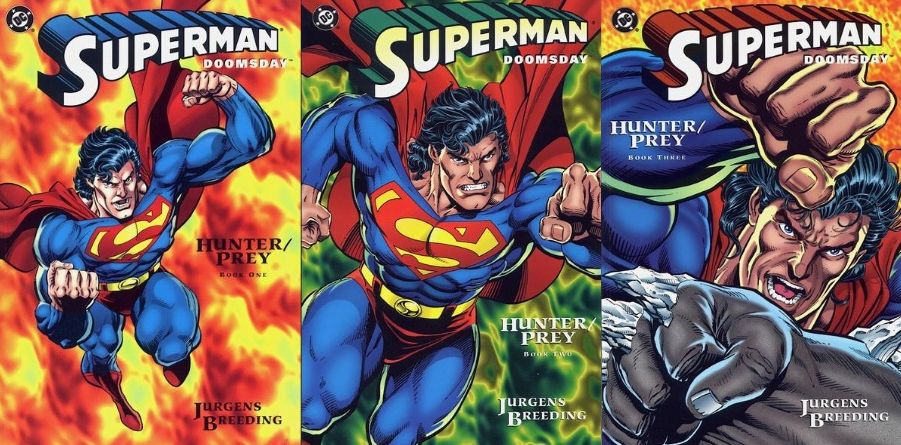
There are a few major components to this story that make it pretty significant, historically speaking. First, this was the story where Matrix/Supergirl finally came to Earth permanently and joined the Superman supporting cast, pretty much until Peter David launched her own ongoing title a few years later. Second, this is the story that broke the post-Crisis Superman of his “loner” status. Not long after this, he was part of the re-formed Justice League in the Justice League Spectacular one-shot (which I also read today, for funsies) where he’d stay until his battle with Doomsday. 

There’s one last bit that’s not so much a significant fact as an amusing footnote. In the climactic battle, just before he’s defeated in Superman #66, Brainiac launches a device of some sort into Earth’s atmosphere. Several months later, when the Death of Superman storyline was announced, that issue got a temporary spike in popularity as speculators (they’re not a new phenomenon, folks) began to theorize that the probe was the point of origin for Doomsday, which no doubt would make that a super valuable book in the future. It wasn’t a bad theory, if not for the fact that anybody who read the VERY NEXT ISSUE (Superman #67) already knew EXACTLY what the probe was, a weapon to scourge a planet if Warworld was defeated, and that probe was beaten just 30 real-world days after it launched. It’s so important to read EVERYTHING, people.

As a storyline, Panic in the Sky has a few rough edges, but it’s an adventure I still think mostly holds up.

Mon., Feb. 10

Comics: DC Power: Rise of the Power Company #1 (Steel Cameo), Justice League America #61-64

Okay, I know I’ve seen this one before.

Notes: The world in general needs more John Henry Irons. He only has one quick scene in the DC Power special, but it seems that DC is planning to bring back the Power Company in a larger way. As this scene shows he’s got a relationship with Josiah Power, I’m hoping that when that “big way” hits, Steel has a big role to play in it.

I also continued reading Superman’s time in the Justice League in the 90s. That wasn’t originally on my bingo card, but reading the Justice League Spectacular issue yesterday made me want to continue. In these first four issues, Dan Jurgens decided to get classic, bringing in some old Justice League foes in the form of Weapons Master and Starbreaker. Jurgens, who was writing and drawing both this book and Superman at the time, faced an interesting challenge with this. You see, in this Post-Byrne universe, Superman had never been a member of the Justice League before, however, Jurgens was referenced old Justice League stories in which Superman had played an active part. He sidestepped it by having Superman refer to “one of the times I helped the old Justice League.” It’s not the worst way to avoid the issue, mind you. In the early days of the comic book, despite being full members, Superman and Batman didn’t always play an active part. They would be missing for an issue or most of an issue, giving space to the less-popular members, and occasionally pop in for a finale. In at least one issue that I’ve read this year, Superman shows up on the last page and the League starts to tell him about their latest adventure. So saying that he just “helped” the League a lot in the old days doesn’t really take a ton of mental gymnastics to accept.

On the other hand, both in Panic in the Sky and in these issues, a big deal is made out of the fact that Superman has always been a loner. He’s not a team player, they say, he’s someone who is most effective flying solo (excuse the pun). So how do you explain the fact that he was “helping” the Justice League every other month in the old days?

The character stuff in these issues is better once you manage to ignore the continuity snarls. There are a couple of major sources of conflict for Superman outside of the villains, both of which help form the shape of the book. Superman does not get along with Maxwell Lord, who seems like a smug opportunist even before the later Infinite Crisis turn the character would take. As Max is the one who first assembled this version of the League, he thinks that makes him in charge, a stance that Superman staunchly opposes. Similarly, he clashes with the League’s current Green Lantern, Guy Gardner. Part of the clash is because Guy, too, thinks he should be in charge, but even moreso, Guy is angry because his on-again off-again girlfriend Ice clearly has a crush on Superman. The Guy/Ice relationship was always an odd one. It only really makes sense in an “opposites attract” context, and works best in more of a humorous book, like the Giffen/DeMatteis Justice League book was before Jurgens took over and it became more of a straight superhero series. After that, having Ice together with a boorish lout like Guy didn’t really click. 

Not to say I dislike Guy. The character is entertaining as anything – he is the living embodiment of “He’s an asshole, but he’s OUR asshole,” and the way he clashes with Superman in these issues feels perfectly in character for both of them at the time. The fact that Guy is going to be in the James Gunn movie, where he’ll be played by Nathan Fillion and, evidently, drawn by Kevin Maguire. There’s been nothing to indicate that Ice will be in the movie, of course, but I wonder if this is the dynamic Gunn is planning between the two characters. It could be a lot of fun if it is.

TV Episode: Superman and Lois, Season Two, Ep. 5, “Girl…You’ll Be a Woman, Soon.”

Notes: Lana’s daughter (and Jordan’s girlfriend) Sarah has her quinceanera, which is majorly ruined when Sarah’s dad makes a confession. Jonathan is juicing. Bizarro kills a character who got her name from the comics, but not much else. This is another episode that feels more like a CW soap opera than – as so many of my friends have told me – the best Superman ever. To be fair, when they say that they’re talking about Tyler Hoechlin’s performance and not the show itself, and this episode is a little light on Hoechlin. I still feel like the series is in a sophomore slump. I’m not giving up though, guys. Promise.

Tues., Feb. 11

Comics: Justice League America #65-68

James Gunn, take note…

Notes: I try not to pay too much attention to criticism for the upcoming Superman movie, mostly because I find that anybody who spends that much criticizing something they haven’t even watched yet is a troll, but there’s one element in particular that comes to mind as I read these issues of Justice League America: people worried that the film is introducing too many superheroes too fast. We know for certain that at least four other characters (not counting the usual Superman supporting cast) appear in the movie: Mr. Terrific, Metamorpho, Hawkgirl, and Guy Gardner. Some people seem to think that the movie will spend a lot of time on them to the detriment of Superman himself.

Let me explain why that’s not a logical argument: are you equally worried about the fact that the cast includes Perry White, Jimmy Olsen, Cat Grant, and Steve Lombard? 

The way I see it, our hero has two workplaces: as Clark Kent he works at the Daily Planet and as Superman he works with the Justice League, and while I don’t want any of those characters to be cardboard, none of them require an entire movie’s worth of development either. If Hawkgirl doesn’t have any more screen time than Jimmy, I don’t think that’s going to be a bad thing.

I bring this up because I get a similar feeling reading these issues of Justice League America. Dan Jurgens took over after the legendary Keith Giffen/J.M. DeMatteis era of the book and made it more of a traditional superhero comic. The result is that Superman himself is mostly a side character. We spend a lot of time on the returning characters (Guy, Fire, Ice, Blue Beetle, and Booster Gold). A lot of the focus also falls on two of the new members of the League: the enigmatic Bloodwynd, whom Beetle becomes obsessed with investigating, and Superman’s former foe Maxima, who is trying to rehabilitate herself on Earth after the loss of her homeworld. Superman shows up, but for the most part he’s there to clash with Guy and Max and give Ice someone to moon over. He doesn’t even appear at all in issue #67, and when #68 begins the rest of the team is stomping around Metropolis on a kaiju-sized Guy Gardner ring construct trying to hunt him down because he never bothered to pick up his JLA signal device.

All of this makes it even more baffling when you realize the ten issues collected in the Superman and the Justice League America graphic novel (the Spectacular one-shot and issues #60-68) are pretty much his entire tenure with the team, because you know what happens in issue #69? 

Doomsday happens.

I remember when these books came out. A huge deal was made of the fact that Jurgens was taking over the comic and that Superman was joining, so the fact that his tenure ended with his death about a year later is really bizarre. Jurgens himself didn’t stick with the book much longer after the Death of Superman storyline, and I have to wonder what the internal discussions were at the time. I can’t imagine the death had been mapped out at the time that the decision was made to add Superman to the JLA, so what happened when they realized he was going to be bumped from the book by virtue of not being alive? 

Reading these issues like this, collected together for the first time in many years, it really feels like Jurgens was building up a lot of story points that he never got to resolve. I love the original Death and Return of Superman storyline. I think it’s an epic story and one of the most important touchstones in the character’s history. But I really wish I could get a VPN that lets me access the DC Universe Infinite app from an alternate universe where Superman wasn’t killed, the Jurgens Justice League run lasted longer, and these stories unspooled as originally intended.

Next week, it’s another theme! It’s time for Superman Vs. the Flash! I’m going to try to read and watch as many of the races between the Man of Steel and the Scarlet Speedster as I can find, and if there’s one in particular you want me to cover – either in comics or TV – make sure you let me know in the comments or in the Year of Superman Facebook Group!

Blake M. Petit is a writer, teacher, and dad from Ama, Louisiana. His most recent writing project is the superhero adventure series Other People’s Heroes: Little Stars, volume one of which is now available on Amazon. You can subscribe to his newsletter by clicking right here. You can join in the Kryptonian Konversation every day in the Year of Superman Facebook Group!
Geek Punditry #110: Playing Favorites With Love Stories

It’s been a while, but it’s time once again for Playing Favorites! Yes, Playing Favorites, that Geek Punditry mini feature in which I throw out a category and my pals on social media suggest related topics wherein we pick some of the best of the best. With Valentine’s Day looming, this week I asked people to share ideas for love story topics. So grab that special someone and let’s get to it! 

Bad Choices 

Jeff Edwards asked for love stories where it’s clear that the people involved made the wrong choice. It’s a funny idea, because I’m sure we can all think of at least one movie where we’ve walked away saying something like, “What the hell did he SEE in her?” And as far as I’m concerned the absolute apex of this trope is from the Lord of the Rings film trilogy. 

No, I didn’t expect to be writing about Lord of the Rings this week either, but here we are. 

Now I love these movies. I think they are masterpieces, and I respect that Peter Jackson didn’t play all fast and loose with canon like SOME fantasy filmmakers I could mention. But if there’s one thing I simply will never understand, it’s why Aragorn would choose Arwen over Eowyn.

Seriously, why is this even a contest?

Sure, Liv Tyler is a classical beauty, but even 20 years ago I would have climbed over her and an entire briar patch to get to Miranda Otto. Nor is it just a matter of looks. Arwyn has that elvish grace and delicacy that makes you feel like you’re embracing a porcelain doll, and I don’t care for that. Eowyn is strong and brave, she killed the Witch King with the power of semantics, and I hear she’s doing her best to get better at making stew. She’s got it all.

In second place is a tie between every story ever written in which Archie Andrews chooses Veronica Lodge over Betty Cooper. I get it. Archie, Betty, and Veronica are the eternal love triangle, and we all know that there’s never going to be a TRUE resolution. They’ve had attempts over the years, but it never sticks. But there is a word that the French have for people who prefer Veronica over Betty: wrongo.

Frankly, they can both do better.

I don’t want this to sound like I hate Veronica, mind you. I think she gets a bit of a bad rap. There have been numerable stories that have shown that, underneath her rich girl veneer, she has a good heart. But that doesn’t change the fact that she’s spoiled and selfish, and that Archie is dazzled by her beauty. Betty, on the other hand, is entirely loyal and devoted to him, and loves him without reservation, whereas Veronica on many occasions has been known to toss him aside at a moment’s notice. In fact, that’s probably WHY Archie goes for Veronica – because she’s less attainable. 

What an incredibly stupid reason. What an incredibly realistic reason.

As if that weren’t enough, Archie ignores the very sensible advice of his friends. I’m not saying that if my friends hadn’t liked Erin when I starting dating her that I would have ended the relationship, but at the very least it would have made me question what was up. True friends, people who honestly have your back, should be listened to, and Jughead has made it ABUNDANTLY clear over the years that he’s Team Betty. Archie. Archibald. Listen to your bro.

It’s a little easier to justify when you remember that Archie and the gang are all, in fact, teenagers, and as such he is even more inclined to make incredibly stupid choices than we males of the biologically adult variety. The characters aren’t ever going to grow up, but if they DID, I would like to think that Archie’s better judgment would finally kick in and he would see that the girl next door is the way to go, hopefully before Betty finally comes to HER senses and dumps his ass for Adam Chisolm.

Yes, as a matter of fact, I DO feel ways about things. 

Finally, although this is not a hill that I personally am prepared to die on, my wife wishes me to share her sincere belief that, in West Side Story, Tony was an absolute idiot for going after Maria when Anita was, like, RIGHT THERE. This is true of both the original and the remake. This is even true of the older Rita Moreno IN the remake. I, on the other hand, just want to point out that West Side Story is a multiversal variant of Romeo and Juliet, and as such, pretty much everybody in that story makes nothing but bad choices all day and all night. 

Electric Love

My uncle Todd Petit asked for the best love story involving a robot or cyborg, which is extremely specific, but that’s cool with me! I was a little hesitant to pick this one, though, mostly because in the Facebook comments several people already went straight to what I think is probably the best robot love story of all time.

Project ALF. 

Ah, I’ve missed this stupid, stupid joke.

No, wait, I’m thinking of the best alien/feline love stories. Obviously, the best love story involving robots comes from the Pixar masterpiece WALL-E. I love this movie, and I assume pretty much everybody who has a soul also loves it, and perhaps the main reason is the deep, perfect, sincere love that is expressed in this film. WALL-E is a garbage robot; his job for centuries has been just to collect trash and compact it. There’s no emotional component to this. But after all these hundreds of years of solitude, he finds himself growing a personality – likes, dislikes, hobbies. He begins saving select items from the trash that he finds interesting and grows a little collection. He makes friends with a cockroach. He is mesmerized by the movie Hello, Dolly! 

He even gave her flowers.

And then he meets EVE, a robot that is searching the dead Earth for signs that life can return, and it’s instant sparks. It’s like watching a busted down Ford Pinto fall in love with a sleek new electric hybrid vehicle (coming this fall in Cars 4!) but it WORKS. At first, EVE isn’t particularly impressed by WALL-E, but his sweetness, kindness, and courage melt her electronic heart. And perhaps the most amazing thing about it is that their entire relationship is almost completely wordless. Neither of them have any dialogue other than occasionally saying their names, but that doesn’t matter. By the end of this movie you are crying and cheering and imagining a new Earth populated by a slendering human population and all of WALL-E and EVE’s little robot babies.

That said, good on Pixar for resisting the urge to name him ADD-M. 

As for other great robot love stories…well, the one that comes most clearly to mind is actually one of the most tragic, and it’s from Star Trek: The Next Generation. Like most Star Trek shows in the pre-modern era, this show changed and evolved considerably over its first few seasons. Perhaps the most visible change (other than Riker’s beard) was the departure of Denise Crosby, who played security chief Tasha Yar in season one. Crosby asked to be written out of the show, frustrated over the lack of attention and development her character was getting, and honestly, you can’t blame her. Go back and watch that first season again and you’ll see most of the writing did her no favors at all. But there is ONE element of her abbreviated story that stuck with the characters for all time, and that was her relationship with the android Data. The idea of Data is that he is a Pinocchio, a robot that looks almost human and that wants to be a real boy, if only he knew what emotions were.

She had an AI boyfriend BEFORE it was cool.

Data is my favorite Next Generation character, and in my top three of all Star Trek characters, and the reason is because of his emotional journey. The conceit was that, as an android, he desired the emotions he did not have, but even in that description you can see the contradiction. DESIRE is an emotion. If you HAVE no emotions, how can you DESIRE them? My read on Data, the way I feel about the character, is that he truly DID have emotions from the very beginning – he simply didn’t understand them, know how to process them, know how to define them, and therefore he BELIEVED he had none. After Tasha Yar is killed off, Data returns to her in his thoughts many times. For six seasons, then again 30 years later in the final season of Star Trek: Picard, it is Data that recalls Tasha more than anybody else, Data who brings her up, Data who reveals in that Picard episode that his memories of her are a core component of his personality matrix. The great legacy of Tasha Yar is the fact that, for the rest of his existence, poor Data has been mourning a woman he didn’t really understand he was in love with. 

Sitcom Love

Rachel Ricks asks what I think is the best romance from a sitcom. That’s such a tricky one. There are a lot of great sitcom COUPLES – Bob and Linda Belcher, Herman and Lily Munster, and so forth – but if it’s a pairing that was already together when the show begins, I don’t think I can count them. To count it as a romance, I think we need to see the relationship blossom INTO love.

I also don’t really count those stories that end poorly or where the characters don’t really belong together. Sam and Diane on Cheers may be one of the all-time legendary sitcom couples, but they were utterly toxic to one another and never belonged together. Not to say that a love story HAS to have a happy ending (see what I said about Data), but if it’s a sitcom, I want something a bit more lighthearted.

So I’m gonna stick to the Cheersiverse and say one of my favorite sitcom romances is Niles and Daphne from Frasier. And it’s odd, because it started off as a pretty poor depiction of a relationship – when they meet, Niles is already married (to an utterly reprehensible woman who browbeats and emasculates him at every turn) and pines for Daphne in secret for years. She, meanwhile, is completely oblivious to his affection and treats him with the same love and care that she does Eddie the dog. Eventually, though, his marriage to Maris ends and the two of them find one another. The arc where they’re both with other people but wind up boomeranging into each other’s arms is one of my favorites, and from that point onward the love and affection between them elevates both characters.

Pictured: Steam Heat

There’s a relatively early episode where they have to pretend to be a couple as one of the screwball schemes that happened in every other episode of Frasier, and they play the part so convincingly that Niles almost believes she shares his affection until she compliments him on how good an actor he is. The heartbreak David Hyde Pierce conveys is palpable, and you die a little for him. But it’s bought back years later, when they get together and revisit that scene again, bringing it all full circle. I just love watching those two. 

I also simply adore the relationship between Eleanor and Chidi on The Good Place. This show, about a self-proclaimed “Arizona dirtbag” (played in an adorable way that only Kristen Bell could have pulled off) who goes to Heaven due to what amounts to a clerical error, is one of the smartest and most emotionally profound sitcoms of the past decade, if not of all time. The relationship that develops between Eleanor and Chidi (William Jackson Harper) is one of the core elements of what makes it such a magnificent show. Eleanor has spent her life being self-centered and scuzzy, whereas Chidi’s life has been one of anxiety and apprehension. Eleanor acts without thinking, Chidi overthinks EVERYTHING to the point of catastrophe. The way each of them makes the other a better person is beautiful and heartwarming. 

If this screenshot doesn’t make you want to cry, you did NOT watch the last episode.

There’s a lot more to The Good Place than I revealed in that little recap, because if you’ve never seen the show I don’t want to spoil any of the incredible twists and surprises that it includes, but go and watch it and tell me you’re not rooting for Eleanor and Chidi every step of the way.

Okay, folks, I think that’s going to bring us to the end of part one of “Playing Favorites With Love Stories.” There are still several great suggestions for topics, though, so I’m not done yet. Come back next Friday, Valentine’s Day, for part two. And until then, hey, share this with someone you love. 

Blake M. Petit is a writer, teacher, and dad from Ama, Louisiana. His most recent writing project is the superhero adventure series Other People’s Heroes: Little Stars, volume one of which is now available on Amazon. You can subscribe to his newsletter by clicking right here. He’s also started putting his LitReel videos on TikTok. He maintains that the purest love story on TV is Gomez and Morticia Addams, but nobody asked about that, so he’s gonna drop it here. 

Year of Superman Week Five: Like Throwing Darts at a Board

As I approach the end of January, having finished up my first theme week, I find myself in a bit of a pickle in regards to what Superman content I want to read today. I’m not ready to kick off another theme week yet, but as I look over my (prodigious) list, I find that most of the stuff I’m particularly excited for is all suited for one of the theme weeks I’ve got planned for later in the year. So what, then, should I read on this random Wednesday? Never let it be said that I make things easy on myself. After some brief deliberation, I just scroll through the offerings on DC Universe Infinite until I settle, fairly randomly, on my first read for the week.

Wed., Jan. 29

Comics: Legends of the DC Universe #39, Superman Vs. Meshi #1

Notes: DC once published a title called Batman: Legends of the Dark Knight, which featured a different creative team on every story arc telling stories that were not necessarily constrained by any particular continuity. There were some amazing stories told in this series, and they eventually spun the idea off into Legends of the DC Universe, a series which not only switched out the creative team with every story, but also the main character. This issue, a one-off by Danny Fingeroth and Randy Green, is called “Sole Survivor of Earth.”

Which, let’s face it, sounds like a depressing idea even if you WERE that sole survivor.

The issue begins with a very familiar scene – a scientist and his wife concerned about an upcoming disaster that could mean the end of life on their planet, a fear made even more prescient due to their infant son. But we aren’t on Krypton this time – we’re in Washington state. Superman, meanwhile, is at the Fortress of Solitude, building a memorial to his Kryptonian parents, when he gets a notification of a disturbance at the Earth’s core. The scientist, Dr. Balboa, has been studying the tremors and trying to stabilize them, only to accidentally trigger a sequence that could destroy the Earth. In desperation, he and his wife drop their son into a spaceship and blast him to another inhabited system. Why not? It worked for the last guy.

Except in this case, the “last guy” manages to save the world, stopping the destruction Balboa’s experiments caused but sapping a lot of his power anyway. When he tracks down Dr. Balboa, he learns about the child in the rocket and sets off to space, despite his own power loss, to find him.

This is a good issue. It’s never going to make a boxed set of the Greatest Superman Stories Ever Told (that reminds me, I’ve got to find and read my copy of The Greatest Superman Stories Ever Told), but it’s a fun story that nicely turns the traditional Superman origin story backwards. There’s not a lot of tension, to be honest, because the outcome is never in any doubt. Nobody thinks that Balboa is actually going to blow up the Earth, and there’s no such thing as an infant in danger once Superman finds out that they need help. Their survival is pretty much guaranteed. But that doesn’t make it any less fun to look at things from a different point of view once in a while.  

I also, somewhat randomly, went back and read Superman Vs. Meshi #1. This manga series was a part of a line of books that DC co-produced with Kodansha Comics. Joker: One Operation Joker was another, and the third, Batman: Justice Buster is still running. I always considered this the most bizarre of the three, though, because…well… it’s about Superman eating at Japanese chain restaurants. 

You will believe a man can fry…rice. I’m sorry, that was terrible.

No. Really. That’s what this entire series is about. And it ran for 23 issues.

In this first issue, having been turned down by Lois for a lunch date, Clark whips over to Japan to indulge at an all-you-can eat yakitori joint. (For people, like myself, who have no idea what yakitori is, I Googled it – chicken skewers.) There’s a brief fight scene – a flashback as he remembers the villain he fought who on the day he first discovered the restaurant, but the bulk of the story is him ordering various meat skewers and gushing over how delicious they are. The writer, Satoshi Miyagawa, lovingly describes the food in a way that makes you wonder whether you’re reading a superhero comic book or a restaurant review, and at one point he’s so “overwhelmed by flavor” that the food literally activates his heat vision. He even goes on about how well the yakitori pairs with the soda he ordered. 

Perhaps the weirdest thing is that none of this ever feels out of character. Would Superman pop over to Japan just for lunch? Yeah, I think he would. Would he have a running inner monologue about how good the food is and how it all comes together? People forget that Clark Kent is a writer, and like most writers I know, he probably has an inner monologue that never shuts the hell up. The only difference is that this is a scene that they would almost never write in an American comic because it’s too important that we get to the scene where he has to beat the crap out of Terra-Man or something. 

This book is so WEIRD. But for some reason, I like it. 

Thur., Jan. 30

TV Episodes: Superman and Lois Season 2, Ep. 1, “What Lies Beneath”

The “V” season, apparently.

Notes: The second season starts off right where season one ended – the rescue of Natasha Irons from John Henry’s original universe…but in her universe, this Natasha is the daughter of Lois Lane, something that causes issues for the both of them. Meanwhile, both Jordan and Jonathan are facing issues with their respective girlfriends, and the teenagers acting like teenagers have Lois and Clark butting heads with each other.

In my notes on the season one finale, I mentioned that this show was cut from a different cloth than other CW shows. As season two begins, though, it feels a bit more CW than ever. The clash between Lois and Clark over Jonathan’s behavior feels really forced – Lois is taking her frustrations out on Clark and he’s not acting with the degree of empathy one would expect from Superman. I’m actually starting to feel a little vibe from the Lois Lane miniseries that I read last week, where Lois acted inexplicably angry towards everyone. Eventually, she explains this as anger over her own mother leaving her family when she was young, and thinking she’s like that because she doesn’t feel anything motherly for Natasha…who, we have to stress here, is NOT her daughter. It doesn’t really make that much sense.

Natasha, meanwhile, is behaving even more irrational, taking her frustrations out on her father and somehow blaming him for the fact that the people who were her friends in her home dimension don’t know her here. Huh? In her case, at least, the frustration is more understandable, but the show skips over showing us why Natasha can’t seem to fit in. There’s an undercurrent of rage to this episode that’s baffling me. 

Superheroes? Oh yeah, there’s a little of that. Superman learns that Sam Lane’s replacement at the DOD is using the X-Kryptonite recovered in season one to create his own little army, complete with his shield, which Superman isn’t happy about. I sense this is going to be the undercurrent for this season. 

Comics: Superman: Lex Luthor Special #1, DC’s Lex and the City #1

I mean, not so’s you would notice, Lex.

Notes: I also read a couple of this weeks’ new comics today, one of which is more relevant than the others. The Superman: Lex Luthor Special is continuing the ongoing storyline from the main Superman comic and, in fact, is written by regular writer Joshua Williamson. In last fall’s DC All In Special, Darkseid was (seemingly) killed, but a new, alternate universe was forged, infused by Darkseid’s negative energy, as opposed to the more hopeful environment of the main DCU. In this issue, Mr. Terrific is trying to crack the secret of this other world (which readers will know is the setting of DC’s Absolute Superman and other titles), but the inherent darkness is too much. There’s only one man brilliant enough to understand this but with a mind that won’t be corrupted by it…unfortunately, Lex Luthor has had amnesia for some time, and has been trying to live down the dark deeds of his previous self. 

This is hardly the first time we’ve seen Lex try to be a good guy, but much like we’ve seen Lois become Superwoman before, this series has been handling it well. It’s such a tight balancing act with Lex, as we see there is a goodness in him, but it’s usually overshadowed by his darker, more selfish nature. This issue seems to promise that story is moving forward now, with a final revelation that’s going to change things. I’m more interested in the flashbacks to Lex’s childhood that help paint who he really is. Good issue.

This week also gave us DC’s annual Valentine’s Day special this year titled DC’s Lex and the City. Luthor is the star of the title story in this anthology, in which a gossip columnist gets tangled in his web. It seems a little farfetched that Lex would be smitten with this woman, to be honest, but despite that It’s an okay story. It’s an okay anthology, with some stories being better than others, as is usually the case. If you’re planning to read this, the Mr. Freeze story is the prize of the bunch. Really, though, the main reason I’m even taking any notes about it is to point out that whoever is giving titles to DC’s holiday specials deserves a raise. Lex and the City is hilarious, and it goes right up there with the Christmas special Grifter Got Run Over By a Reindeer and the Halloween haunt Are You Afraid of Darkseid?, among others. I love it. 

Fri., Jan. 31st

Comics: Day of the Krypton Man from Superman Vol. 2 #41, Adventures of Superman #464, Action Comics #651, Superman Vol. 2 #42, Adventures of Superman #465, Action Comics #652; Return of the Krypton Man from Superman: The Man of Steel #1, Superman Vol. 2 #57, Adventures of Superman #480, Action Comics #667

It’s so embarrassing when they mix up your suits at the cleaners.

Notes: Today I (again, randomly) decided to read the two storylines that most contributed to the creation of the Eradicator, one of the best concepts of the late 80s before he got a little watered down (as happens to a lot of great villains, am I right Venom, Carnage, Sabretooth, the Joker, and Doomsday?) I considered starting with the storyline that where he first showed up, but the Exile arc is pretty long and I’ve already decided to restrict myself to only two long story arcs this year, lest I have no room for anything else. So here’s the short version: while exiled in space, Superman found a Kryptonian artifact called the Eradicator which he brought back to Earth, where it constructed a citadel in the antarctic, which eventually became this continuity’s version of the Fortress of Solitude. As Day of the Krypton Man begins Draaga, an alien Superman encountered during that arc, is coming to Earth to get his revenge on the big guy. At the same time, that cosmic bruiser Lobo is heading to Earth to prove how tough HE is by throwing down with Supes. Also, Maxima of Almerac is once again zipping to Metropolis to convince Superman to become her mate. And if that wasn’t enough, when they get to Earth they all find a Superman that is becoming cold and aloof, ignoring his family and friends and approaching his task as Earth’s protector with stark logic rather than his trademark compassion. He’s firing people from his new job as editor at Newstime magazine, forgetting Lana Lang’s birthday, and spurning Lois when she tries to ask him out. This is, simply, neither the Superman nor the Clark Kent any of us know. 

The Eradicator’s doing, as it turns out. The device is manipulating Superman, transforming him both mentally and physically into the “ideal” Kryptonian. His encounters with the three alien menaces all end in ways that would be out of character for Superman when he’s in his right mind, the fight with Draaga even transporting the top half of the Statue of Liberty to the moon. (Professor Hamilton’s fault – he was trying to help, but if Superman was himself he’d never have allowed the fight to happen at such a popular tourist attraction in the first place.) Eventually he makes the decision to abandon both of his identities, Superman AND Clark Kent, and live merely as Kal-El, a Kryptonian trying to bring Krypton to Earth.

I love the ending of this one. What ultimately snaps him out of it and allows him to break free of the Eradicator’s influence is concern for his parents, Jonathan and Martha Kent. When the Eradicator endangers the two of them, his reprogramming of Clark’s brain starts to break down and the real Superman comes back. Over the nearly 90 years that this character has existed, the degree to which he identifies as a Kryptonian has always varied wildly from one incarnation to another. This is the way I see him: he’s a human, a resident of the planet Earth, who happens to have a Kryptonian heritage. And when the two clash, it’s Clark Kent that wins out over Kal-El.

At the end of this story, Superman balls up the Eradicator and chucks it into the sun, thinking that’ll be the end of it, but about 15 months (and one engagement) later, he shows up again in the appropriately-titled Return of the Krypton Man storyline. The Eradicator returns, this time in a humanoid form, having used his time in the sun to begin the process of transforming it into a red dwarf to mimic the sun of Krypton. The next step in his plan is to terraform Earth itself into a replica of his dead planet. I may have mentioned a few weeks ago how tired I am of the “Kryptonian villain tries to turn Earth into Krypton” trope…well, I first read this story when it was originally published, long BEFORE I got tired of it, so it doesn’t bother me quite as much.

“And take THAT!”

Although this one is four issues instead of six, each of those four issues was giant-sized, so the page count works out about the same. Despite that, this one feels like a much quicker read. This storyline started with Superman: The Man of Steel #1, the book which gave the “Triangle Era” of Superman four titles and essentially making his adventures a weekly rather than a bunch of semi-related monthlies. With this storyline the creative teams were slightly shuffled as well. The Superman/Eradicator fight is ongoing, beginning at the end of Man of Steel #1 and continuing more or less uninterrupted throughout the other three issues, while a number of subplots are established or developed throughout the four issues. Among them we’ve got Perry White, on leave from the Daily Planet, trying to save his marriage; his temporary replacement laying off 10 percent of the newspaper staff, including Jimmy Olsen; Cat Grant finding herself the target of harassment from her boss while Jose Delgado (aka Gangbuster) looks after her son; and a terrorist group called Cerberus making attacks across Metropolis. All of these stories play out and develop as Superman and the Eradicator fight on Earth, off in space, and back to Earth again. 

Superman wins, of course, with the help of Emil Hamilton. This is a decent story that eventually turns out to be setup for the Death and Return of Superman story, which I’ll probably be getting to in just a couple of weeks. I do wonder, though, if they were already planning that when this storyline was put to press or if it was just one of those moments of serendipity.

Sat., Feb. 1

TV Episode: Superman and Lois Season 2, Ep. 2, “The Ties That Bind”, Ep. 3, “The Thing in the Mines”, Ep. 4, “The Inverse Method”

Notes: It’s been a rough 24 hours for me, and I have to confess, I wasn’t certain I’d get around to Superman today. But I’ve gone this far and I don’t want to break the streak so early in the year, so I’m jumping into the next few episodes of Superman and Lois.  

There’s a LOT going on in these few episodes. Clark is being plagued by strange visions and emotional outbursts that are making him dangerous. Trying to figure out what’s going on, he discovers that his newly-found brother has somehow regained his powers. Lois is being targeted by a podcast host who’s getting sources of hers from an old story about a cult to recant their testimonies to her. Jonathan suspects a kid at school is taking some sort of super-steroid. Jordan finds out his girlfriend had a fling at camp. Lana decides to run for mayor. John Henry and Natasha try to settle in on the Kent farm. This is the Dagwood Sandwich of CW superhero shows.

Not to say that it’s bad. There’s a lot of stuff going on, but the show doesn’t really have difficulty keeping everything straight. And it’s likely that, before the season is over, everything will come together like an episode of Seinfeld. It’s just weird to have so many different plots running at the same time, moving in and out of each other as the focus switches around the various characters involved. 

The Lois plot, involving the cult, is the one that’s bothering me at the moment, mostly because once again we see Lucy Lane turning up as a punching bag. I don’t think we’ve seen Lucy before in this continuity (someone correct me if I’m wrong) but I immediately think of all the stuff that’s happened to the character in the comics over the years. She was blind for a while, she was a villain for a while, she gets dumped by Jimmy Olsen, she marries Ron Troupe and has a baby, but if I’m being perfectly honest I haven’t got the foggiest notion if that kid even still exists in the current DC Universe. And here she is, a former cult member who seems to be disavowing the sister that tried to save her. This isn’t really a knock on the show, it’s just telling a story, but I really dislike the trope of making a character the universe’s punching bag. (I know I’ve said it before, but it’s the reason I don’t enjoy most modern Spider-Man comics anymore.) I guess I’m just saying that I wish Lucy would get a break. Everybody needs one once in a while. 

Nice little surprise towards the end of episode three, though: Superman battles the “Thing in the Mines” from the title, a powerful enemy in a suit of armor. When Superman cracks the armor open, though, he finds a distorted version of his own face staring back at him. Is this their version of Bizarro? And have they found a way to do the character that actually makes him menacing? Unlike Lucy, Bizarro is a character I can take either way, either as the ultra-powerful menace OR as the misunderstood giant who’s not actually out to HURT anyone, but is dangerous just by virtue of his power. If he’s a pure bad guy this time around, I’m okay with that.

Last thing I’ll point out is the increased focus on Natasha. I like how she’s turning around. She felt kind of whiny in that first episode this season, but she’s come back and shows a lot of wit and intelligence in these. I’m willing to chalk that first appearance to growing pains as the writers tried to figure out the character. I’m already liking her much more. 

Episode four (I’m writing this as I watch and not going back to edit, just for clarity) seems to prove that I’m right. The Mine Guy looks about as Bizarro as you could get in live-action without getting goofy.

Sun., Feb. 2

Comic: DC Speechless #3

Silent but delightful.

Notes: DC Speechless was a short digital-first series by Gustavo Duarte. Each issue placed a different character in a wordless, comedic adventure of some sort. In this issue, Superman is forced to face down a couple of giant bugs attacking not only Metropolis, but also his wardrobe. 

These silent issues are always a neat challenge for storytellers. Getting everything across through pictures only is a mark of a great artist, and Duarte is really good at telling a funny story. I enjoyed this quickie for what it is – simple, a little silly, and beautifully drawn.

Mon., Feb. 3

Comic Book: Superman #123

A psychologist could have a field day with this.

Notes: It’s time for a little more Silver Age silliness. Before the first appearance of Kara Zor-El, the Supergirl we all know and love, there was a proto “Super-Girl” that first appeared in this comic. An archeologist gives Jimmy Olsen a souvenir – an ancient totem that can ostensibly grant three wishes once a century. Jimmy, having earlier overheard Superman tell Lois that he could only ever marry a “super girl” who wouldn’t be in danger from his lifestyle, decides to wish up a prospective wife for him. This, friends, is why he’s called “Superman’s pal.”

Of course, things go wrong as the girl keeps blundering into things and screwing them up, because that’s apparently what super powered women do, until she finally sacrifices herself to save Superman from some Kryptonite. The funniest part is the panel where Jimmy uses the totem to wish her away before she dies, where he chokes and says, “We’ll never forget you,” then everbody promptly proceeded to never mention her again, not even a few months later when Superman met his cousin from Krypton who looked virtually identical to the girl that his best friend conjured up or him to marry. Wild time.

Ah, but the fun wasn’t over. Jimmy got THREE wishes from the totem, remember, so this is a full-length three-parter! In the second part of the story some crooks read the Daily Planet story outlining how Jimmy used the totem to create Super-Girl, then break into his apartment to steal the magic artifact and use it to take away Superman’s powers. That’s it. Not for powers of their own. Not to, I dunno, kill Superman. Not even just for a mountain of money so that the criminals don’t have to crime anymore. The underworld of Metropolis was really short-sighted at the time, weren’t they? Anyway, Superman and Jimmy use some stunts to mimic his powers and make the crooks think the wish didn’t worry so they’ll retrieve the totem, at which point he shows up, captures them, and has Jimmy cancel the wish.

With just one wish left, Jimmy wants to make it a great one to make up for how the first two screwed up. (Jimmy, for heaven’s sake, just wish for a winning lottery ticket like a normal person.) This time he decides it’d be swell if he could send Superman back in time to meet his parents, but since he doesn’t want Superman to hear him MAKING his wish, he types it up. And apparently he’s as bad at spelling as Lois legendarily is, because he accidentally types “I wish for Superman to MATE his parents on Krypton.” Supes is whisked back in time to an era before his parents married. One might expect him to have to play Cupid here, based on how Jimmy’s typo was phrased, but Jor-El and Lara are already a couple. They just can’t get married yet because they’re accused of being part of a terrorist plot to overthrow the government and they wind up needing their son’s help to clear their names. This includes tricking a villain into accidentally creating Kryptonite, which seems kind of counter to the whole “no killing” thing, but I digress.

It’s another case of insane Silver Age storytelling – all three parts of this “novel” (which they loved to call these stories on the cover) are predicated on wild misunderstandings, incredible cases of jumping to conclusions, and just plain bafflingly stupid choices on the parts of the heroes and villains alike. I’m a teacher, and I’m constantly telling my students that it isn’t fair to use the standards of the modern day to judge the citizens of an earlier time, but stories like this make it pretty dang tempting sometimes. 

Tues., Feb. 4

Short: The Bulleteers

Notes: After a very random and, frankly, pretty harsh week for me outside of the Superman blogosphere, I decided to close things off with another of the classic Fleischer shorts. Next up is The Bulleteers from 1942. In this one, the bad guys (you can tell they’re bad guys because they’re all wearing the same cowl with a point in the front but no mask) create a bullet-shaped rocket car they intend to use to rob the Metropolis treasury.

The very faces of evil.

I do not understand the motivations of villains like these. They want money? They have invented a flying car that turns into a giant bullet. They can afford to construct a secret base in the core of a mountain, complete with turning one side of that mountain into a hidden drawbridge-style door. I don’t know exactly what the overhead on any of this stuff is, but it seems to me that patents on this kind of technology alone have to be far more than the city of Metropolis could possibly be able to cough up.

Anyway, after the Bulleteers crash into the Treasury building, which conveniently seems to keep all of the money in the city in one enormous vault, Superman gets his hand on it and rips it apart in midair, saving the day. Good for him.

Tangent: This isn’t directly Superman-related, but I think it’s something worth addressing. Today, the trailer for the new Marvel movie Fantastic Four: First Steps was released. You may not know this, but my love for the Fantastic Four is almost – not quite, but ALMOST – up there with my love of Superman. The Thing is my second-favorite character in all of comics, and I firmly believe he’s the best thing Stan Lee and Jack Kirby ever did. I saw the trailer and I enjoyed it immensely. I even made an incredibly dorky TikTok video about it, in my own inimitable style.  

The reason I’m bringing it up here, though, is because in some of the Superman groups I follow, I saw people posting the video and saying they don’t think it will be competition for James Gunn’s Superman. And I have to ask this question, guys.

Why does it NEED to be?

Seriously, where is it written that every film has to be a direct rival of every other? Or every studio? Is it because they come out in the same month, Superman on July 11th and Fantastic Four two weeks later on the 25th? Or is it just because Marvel and DC fans have some sort of deep-seated need in their very souls to somehow prove their dominance over the other?

It makes no sense to me. I am looking forward to Superman. Hell, I decided to devote this entire YEAR to how much I’m looking forward to it. But that doesn’t mean I’m not allowed to look forward to Fantastic Four. It doesn’t mean if I like one, I am not allowed to like the other. It’s said that a rising tide raises all ships, and I sincerely believe that – a great superhero movie will make people thirst for MORE great superhero movies, and hopefully the studios will learn the right lessons from one another about what MAKES a great superhero movie. Judging by the trailers from these two films, I feel as though they have.

And if there’s no other reason to ask why they have to be opposed to one another, just ask yourself this: would Superman want it that way? Would he want to be rivals? Or would he be in the front row of the cinema on July 25th, cheering for the adventures of Marvel’s first family with the rest of us.

I rather suspect that would be the case, don’t you?

Blake M. Petit is a writer, teacher, and dad from Ama, Louisiana. His most recent writing project is the superhero adventure series Other People’s Heroes: Little Stars, volume one of which is now available on Amazon. You can subscribe to his newsletter by clicking right here. You can join in the Kryptonian Konversation every day in the Year of Superman Facebook Group!

Geek Punditry #109: Fanufactured Outrage

Allow me to preface this by saying this column is NOT about Superman. I’m gonna do my best to restrict that to the Wednesday blogs during this Year of Superman, which you all of course should be reading and sharing with your friends and joining the Facebook group. But the thing that triggered this week’s column came from the new “Icons” trailer for James Gunn’s upcoming Superman movie, so I gotta start there.

A few days ago, DC Studios released a new 30-second spot for the movie. There wasn’t a lot of new stuff in this one – most of it was footage that appeared in the first trailer, with a few new seconds of Nicholas Hoult as Lex Luthor and a final shot of David Corenswet as Superman flying directly at the camera, his full face clearly in view. I thought it was a great shot, and a lot of the Superman fans and groups I’m associated with started passing it around social media. Some people even used it as cover photos on Facebook and that sort of thing. But as is always the case there was a contingent of people – I hesitate to call them “fans” for reasons that will soon become abundantly clear – who started whining and complaining that the face had been altered via CGI. 

How could anyone hate this face?

First of all, I didn’t for a second think that it had. It looked perfectly natural to me. Second, the idea of complaining that CGI is being used in a movie where the main character is a flying alien, a woman with bird wings fights a kaiju, and there’s a character who can magically create anything he imagines with his glowing green ring is abundantly stupid. Of course there will be CGI. It’s only worth complaining if the CGI is bad, and nothing I’ve seen so far fits that pedigree. But the whining reached the point where Gunn himself on social media stated that there was no CGI altering done to Corenswet’s face, and pointed out something that anybody with a brain probably already knew – that pointing a camera directly in a person’s face might sometimes look slightly different than an angle captured from the side. 

But I have no doubt that the people who complained in the first place aren’t satisfied. Such people never are. These non-fans exist only to find things to get outraged about. These are the people who get up in arms over every casting announcement, declare a move a failure before a foot of film has been shot, and harass actors until they quit social media altogether. The word “fan” is short for “fanatic,” and these are the people who take the literal definition of the word to the extreme. They are not fans, but they are responsible for what I like to call Fanufactured Outrage.

Fanufactured Outrage is the phenomenon where people – usually, but not exclusively on social media – get angry over a problem that does not exist until they invent it in their heads. They’re the ones who hate a superhero costume that they haven’t even seen an official image of, the ones who despise any casting decision that doesn’t perfectly mirror the image they have of a character in their mind, and the ones who have decided that popular culture reached its zenith when they were approximately 13 years old and everything has been downhill ever since. 

A few days ago, for example, someone in a Svengoolie group brought up the Guillermo Del Toro Frankenstein movie that’s coming out later this year. I am on record as being very excited for this movie (not as much as Superman, but it’s probably #3 on my 2025 most-anticipated list, with Fantastic Four: First Steps coming in second). Del Toro is a phenomenal director, and I cannot think of a better choice to do a new version of Frankenstein. This is the man, remember, who won Best Picture and Best Director for what was essentially a reboot of Creature From the Black Lagoon. And while most of the fans were, indeed, excited, there were the naysayers. My favorite was the one who just whined “No more remakes, they’re never any good.”

Yeah, nothing interesting in this image at all.

So many problems with this, of course. First of all, the idea that there’s never been a good remake is patently false, and we can go back at least as far as The Maltese Falcon to prove that. Second, I don’t really consider Del Toro’s Frankenstein a remake any more than any of the 30,000 versions of A Christmas Carol are remakes of each other – it’s a new movie that draws on the same original source material, but not necessarily a remake of the Boris Karloff film or of any of the other hundreds of versions of Frankenstein that have been made. And finally, even if you do consider every version of Frankenstein since the first one a remake, this person disproved their own assertion, as the Karloff version was NOT the first film version of Frankenstein any more than the Judy Garland Wizard of Oz was the first version of that story, or the smash hit Dune films were the first adaptation of Frank Herbert’s novel. 

When that last bit was pointed out to the original complainer, though, his response was something along the lines of, “I mean nothing since 1970. It all sucks”

Write that down, folks. There hasn’t been any good movie made in the past 55 years. The only thing this guy has proven is that he’s built a little box for himself that he refuses to peek out of, and while I suppose he has the right to do so, none of the rest of us should feel any obligation to give a damn what he’s whining about from behind the cardboard flap.

Perpetrators of Fanufactured Outrage exist in every fandom and every medium, and while I do believe they are a minority group, they are also often the loudest such group, which can make them difficult to ignore no matter how hard we try. The “mute” button on most social media makes it a little easier, but it’s kind of like fighting the Hydra – you cut off one Fanatic and two more will sprout to take his place.

Their zeal to pick things apart isn’t helped by the news cycle, which runs with everything that is even remotely clickbaitable, regardless of whether they should or not. When the movie X-Men Origins: Wolverine was in post-production, for instance, a full-length cut of the movie was somehow leaked and began making its rounds on the internet. The problem was it was an unfinished work cut: rough, with no music, and without even any special effects. Of course, the fans hated it. But what did they expect? It wasn’t finished. It was still missing essential elements. It wasn’t even like reading the first draft of a book before it gets a polish, it’s like reading a book that hasn’t had any of the adjectives implanted yet, as we writers do at the Adjective Implantation Plant down on 45th and Broad. The film was excoriated before it was even given a chance. 

Somehow they didn’t see the GENIUS in this.

To be fair, the finished movie wasn’t exactly good either, but that doesn’t mean it deserved the treatment it got. 

Perhaps the worst is when they Fanufacture Outrage over something that doesn’t even exist, like the rumors that fly through the air of Hollywood at any given day. They’re impossible to escape, predicated on overheard snippets of conversation, someone wistfully explaining what they would do with a franchise, or leaked information that may have been under consideration at one point but has since been abandoned. The smog in Los Angeles, according to a recent Environmental Protection Agency survey, is estimated to be at least 76 percent Hollywood rumors, and the Fanatics will latch on to every one of them and get pissed about them.

It doesn’t help when the “news” sites run with this kind of information as if it has any weight. I find this is particularly true in terms of casting news. Sonic the Hedgehog star Ben Schwartz, for instance, recently made news when he said that he would like to play Plastic Man in a DC movie. Let me make something clear at the outset: this is an A+ casting idea. Schwartz would be absolutely perfect as Eel O’Brian. It would basically be someone with the heart of his Sonic character and the attitude of his Parks and Recreation character, plus he’s got the look.

Yeah, I can’t see this at ALL.

The only problem here is that neither James Gunn nor anybody else at DC has said anything about a Plastic Man movie, nor have they given any indication that the character is slated to appear in any of the other movies or TV shows that are in the works. This was just a case of someone asking Schwartz who he would want to play, if given the chance, and the sites running with it, and lots of stupid people getting angry about it. You see this sort of thing all the time. Just a few days after the Schwartz “news” we went through the same cycle again when Cynthia Erivo from Wicked said she would love to play Storm in the MCU X-Men reboot. Again, it would be a solid casting choice and it would sure as hell bring in a lot of fans who may otherwise not see the movie, but it’s still just her saying “I would like…” which isn’t news to me. 

If you need a third example, pick any Hollywood actor between the ages 20 and 50 and, odds are, you can find an article where they’ve said they want to play Batman. They’re everywhere.

And since these things aren’t even really news, it’s even stupider when the fanatics Fanufacture their Outrage over these. You’re getting mad over something that isn’t even happening

We can’t stop the fanatics from doing what fanatics do, sadly, but there are some things that we can do to mitigate the damage. First of all, the news sites need to actually report on news and not rumors. I know, I may as well be asking for a winning lottery ticket and a faucet in my house that dispenses hot and cold running root beer, but if it DID happen, it would keep things to a minimum. Ben Schwartz – or anybody else – wanting to play a character isn’t news unless they’ve actually had a conversation with James Gunn or somebody else associated with the studio. Stop telling us about it.

Second, we need to ignore anybody who has made up their mind about a film, TV show, book, video game, or anything else that they haven’t even seen yet. We especially need to ignore them if the content in question isn’t even finished being made. 

And finally, and most importantly friends, I implore you…don’t engage with these idiots. Don’t feed their Fanaticism. Use that mute button.

It’s there for a reason.

Blake M. Petit is a writer, teacher, and dad from Ama, Louisiana. His most recent writing project is the superhero adventure series Other People’s Heroes: Little Stars, volume one of which is now available on Amazon. You can subscribe to his newsletter by clicking right here. He’s also started putting his LitReel videos on TikTok. He’s still ticked about that leaked work print of Sausage Party that ruined the movie by being a completed and accurate depiction of the final film.

Year of Superman Week Four: Lois Lane Week

Today I’m going to start the first of the Theme Weeks I’m planning to do for this little project. It won’t be every week, nor will the content of those weeks be 100 percent dedicated to that theme. There’s still a lot of Superman and Lois to catch up on, after all. But on these theme weeks, I’m going to focus on a specific character, creator, or concept related to Superman. For this first week, I’m going to put the spotlight on the second-most important character in the entire Superman mythos, one of the best comic book characters ever created. Welcome, friends, to Lois Lane Week! Lois has been around since day one, appearing in Action Comics #1 along with Superman himself, and over the years has grown and evolved into one of the most complex and engaging characters in comics…when she’s written correctly. In the Golden Age, Lois was a tough-as-nails, courageous, crusading reporter. The modern incarnation has a lot of the same qualities. When written properly, Lois Lane is brilliant, fearless, and a force of nature. The only Lois I’m not crazy about, honestly, is the Silver Age Lois, a character who seemed more interested in marrying Superman or proving his secret identity (because somehow that would convince him to marry her). I’m going to try to look at all ages of Lois this week.

Wed., Jan. 22

Comics: Showcase #9

Notes: DC’s Showcase comic book, in the 50s, was essentially a try-out series. Every issue or two they would change the headliner, basically using the series to test the possibilities of a new character or new title, many of which eventually spun off into their own series. Most famously, this is the series that gave us the Barry Allen Flash and the Hal Jordan Green Lantern, but today we’re focusing on Showcase #9, the prototype for the series that would be called Superman’s Girl Friend, Lois Lane.

If you swapped Lois with Chili and Superman with Bandit, this is any given episode of Bluey.

This Showcase issue is pretty indistinguishable from the early years of Lois’s solo title, with three stories each dedicated to Lois’s love life with Superman, while he treated her in a way that would have pretty much everybody on Reddit telling her to dump him, and frankly, I can’t blame them. The first story is “The Girl From Superman’s Past.” Lana Lang – Superboy’s old flame from Smallville – moves to Metropolis, and she and Lois immediately wind up sparring for the affection of the now-adult Superman, up to and including placing themselves in danger to see which one he was going choose to rescue. At the end of the story, of course, Superman has refrained from making a decision, probably because both of these women are behaving like lunatics.

“The New Lois Lane” is even more bonkers. When Superman learns that a group of crooks are on the verge of unveiling his secret identity, he creates a new alter-ego, “Allen Todd,” and counts on Lois’s trademark snooping to reveal Mr. Todd as being the real Superman. Unfortunately for him, Lois recently used a Weight and Fortune Telling Machine (no, really) that told her to change her strategy to help get the man she loves – so instead of trying to reveal his secret, she starts going behind his back to “help” him HIDE it. I tell you, some of these Silver Age Lois Lane stories are positively Shakespearean, in that they’re predicated on absurd coincidences and ridiculous misunderstandings that could easily be cleared up if either of the people involved were capable of having a simple adult conversation, for God’s sake.

Finally, there’s “Mrs. Superman,” in which Lois gets a head injury and has a coma dream about her fondest wish: marrying Superman. To get her out of it, Superman sits by her bedside and feeds her “false” information to try to snap her out of the fantasy – you know, horrible things like Superman’s real identity being Clark Kent, or that he’s cheating on her with a woman named Lulu, because every woman in Metropolis is legally required to have a name beginning with the letter “L.” I guess in this one Superman is at least trying to help Lois. Technically.

The idea, I suppose, was to make a comic book that fit in with the popular romance comics of the time, although these stories were even sillier and more convoluted than a lot of those. I guess it was popular, though, as this series lasted for 16 years and 137 issues before being merged with the Jimmy Olsen title as Superman Family. But sitting from where I am, where my Loises are all strong, independent, and smart as a whip, it’s bonkers to me that this incarnation of the character lasted as long as she did. 

Articles: “A Fond Remembrance of Mort Weisinger By His Son” and “The Superman Mythos: Roots of the Superman Confluence,” both by Eddy Zeno, from The Krypton Companion

Thur., Jan. 23

Comics: DC Horror Presents… #3 (Cameo), Superman’s Girl Friend, Lois Lane #21, Action Comics #662, Superman Vol. 2 #53

Notes: Returning to the shockingly meager offerings on DC Universe Infinite for this series, I decided to check in on Lois Lane #21, featuring a pretty well-known cover with Lois and Lana somehow superpowered and slugging it out for Superman’s affections, but I don’t think I’ve ever read this one before. The first two stories in this issue, though, are a two-parter unrelated to the cover. In “Dolls of Doom” and “Trapped in Kandor,” Lois is tricked into posing for a Lois Lane doll by a gang of criminals planning to use her against Superman. This somehow winds up with her sent to the bottled city of Kandor where she falls in love with a Kandorian who is – shockingly – a dead ringer for Superman.

I’m sorry to not have a better synopsis for this story, but I refuse to take total blame for it, because the DC Universe app has the PAGES IN THE WRONG ORDER. The middle of chapter two appears in chapter one and vice-versa, and while it is theoretically possible to read the pages in the correct order by flipping back and forth in the app, by the time I realized what the problem was I was so angry about it that I stopped trying. Hey, DC Universe Infinite: FIX THIS CRAP. 

After all, with the pages scrambled, some people may find this confusing.

The last story is the one I was really interested in anyway. “The Battle Between Super-Lois and Super-Lana” features Superman’s two favorite girls, now rival reporters, who stumble upon a magic lake that conveniently gives super powers to anyone who bathes in it. Realizing they now have all of Superman’s powers, they decide that this is the perfect time to make him choose between them by doing things like cooking giant food, finding and wearing priceless jewelry that has been lost to antiquity, and carving their own faces into mountainsides. The story ends, predictably, with the magic water wearing off and Superman once again getting out of having to make up his mind. The most important part of the legacy of this issue is that the “magic water” came back into play decades later in Alan Moore’s “Whatever Happened to the Man of Tomorrow?” (which of course you can be certain I’ll read before this Year of Superman is over.) 

It’s unfathomable to me how the book lasted this long with stories that make the title character look like an obsessed stalker and make Superman look like an indecisive jackass. I think I need an palate cleanser, so I decide to read the issues I skipped between “Krisis of the Krimson Kryptonite” and “Time and Time Again” – the story of how Clark Kent finally revealed his secret identity to Lois Lane.

The face of “WHAT THE ACTUAL F@#??”

It happened in Action Comics #662, and before I get into the story, can we talk about the cover for a minute? This is a classic by Kerry Gammill and Brett Breeding, and it’s wild to me that this hasn’t made the echelon of often-homaged covers like Action Comics #1, Superman #1, or even Superman Vol. 2 #75 (the Death of Superman issue). The angle, from Clark’s point-of-view, is perfect, and the look of total amazement on Lois’s face just kills me every time I look at it. I love this cover.

As for the story itself, the issue begins with Lois and Clark having a comics code-approved romantic evening at home, with Clark about to tell Lois the big secret just as they’re interrupted by the Silver Banshee. Her magic told her that Superman was in that apartment, but all she finds there is this tall drink of water in a pair of glasses, so she dashes out. Clark goes after her, leaving Lois somewhat confused. The middle part of the issue is pretty standard for the time period – Superman fighting the Banshee (who, I should mention, has one of the coolest designs for any Superman villain ever) while in a subplot, a LexCorp employee digs into the mystery of the company CEO’s death and his potential heir. The Lois story doesn’t come back until the last couple of pages, where Clark gives the big reveal on a full-page splash panel at the very end of the issue, leading into Superman Vol. 2 #53. 

The first few pages of this issue are devoted to the Lois and Clark story, as she tells him that she thinks – on some level – she knew his secret for a long time, but had always dismissed it, then she (understandably) asks for a little time to process this major revelation. The rest of the issue deals with Superman being asked to help escort a political prisoner being brought from the Middle East back to the ol’ U.S. of A. It’s a perfectly fine issue, but it definitely illustrates the way the Superman comics were written in the 90s. Each issue had an A-plot (which may or may not continue next week) and several ongoing B-plots that were often specific to the individual titles and writers. Anything dealing with the Clark Kent side of his life was usually relegated to the B-plots, even something as monumental as this. If this story were being told today, the revelation would have been its own one-shot issue with a half-dozen miniseries spin-offs dealing with the fallout. In these two issues, it’s less than ten pages total.

All that said, I like how they dealt with Lois here. Rather than make her look or feel foolish for not having known Clark’s secret, she confesses to having had a gut feeling. In the Silver Age, that “gut feeling” was half of her reason for existence. This is a much smarter, more mature Lois Lane, and it’s a much better interpretation of the character. 

Fri., Jan. 24

TV Episode: Superman: The Animated Series, Season 2, Episode 7, “Target”

Notes: Except for Margot Kidder, I think Dana Delaney may just be my favorite Lois Lane. Her wit and sarcasm feels so completely perfect for the character – I love the way she knows she’s the smartest one in the room, but doesn’t lord it over anybody unless they’re asking for it. It’s like if Bugs Bunny were a reporter. One of the things I particularly liked about Superman: The Animated Series is that they wrote Lois the way she SHOULD have been written in an era before she and Clark were allowed to be together. This is a Lois who, like the Lois of the Golden Age, finds Superman more fascinating than Clark. However, she doesn’t spend all her time mooning over him or trying to crack the secret of his identity. She’s someone with a thirst for truth and, along with that, a hefty appreciation of justice.

And if we’re being totally honest, there’s just something about a gal with purple eyes.

In this episode, Lois is sent a death threat just seconds before receiving a prestigious journalism award. After a quick rescue by Superman (as per usual) she embarks upon a quest to find out who’s gunning for her, with more and deadlier attempts following her as she seeks out the truth. Although both Clark and Superman appear and factor heavily into the plot, we never actually see the transition from one to the other, aiding the conceit that this is an episode told from Lois’s perspective. It’s a great episode for showing how smart and, ultimately, dangerous she can be to the wrong people (the “corrupt” that she mentions in her acceptance speech), and I like the fact that she refuses sensible precautions like staying under house arrest when there are super criminals gunning for her. It’s the kind of reckless that is 100 percent indicative of Lois Lane. And it’s great that she cracks the mystery on her own, without Superman’s help or without even hearing the clue that tells him where to find her at the end. If I have any complaint, though, it’s that she doesn’t show herself quite as capable as I’d like. Every deathtrap is escaped, narrowly, by Superman’s interference. Sure, it’s part of the usual schtick for these two, but it would have been nice if just ONCE she managed to get herself out of trouble by herself. 

Comics: Superman Adventures #12, Batman/Superman: World’s Finest #35

This issue: Lois visits downtown Detroit!

Notes: Like the episodes of the cartoon, Superman Adventures #12 demonstrates ably who Lois Lane should be. Superman has been infected with a Kryptonian virus, and Lois and Professor Emil Hamilton are in the midst of a war zone trying to get an essential ingredient for an antidote. Once the cure for the man of steel is synthesized, it’s up to Lois to transport it back to Metropolis through battlefields, across oceans, and in the midst of an awful lot of criminal types who would be perfectly happy if the cure never makes it to its destination. The story, written by Scott McCloud, perfectly showcases the cartoon’s version of Lois. We see how strong and gutsy she is, every step of the way. The best thing is that she’s not doing it because she’s in LOVE with Superman, she’s doing it because the world NEEDS Superman. A+ Lois Laning in this issue, guys. 

Sat. Jan. 25

Answering the question, “What if we write Lois Lane, but for the Pretty Little Liars demographic?”

Novel: Fallout (2015) by Gwenda Bond

Notes: This is part of a larger push to put the DC characters into young adult novels, a practice that I think is a good idea. Get ‘em while they’re young, get ‘em reading, get ‘em loving the characters. In this version, Lois is a teenager in the modern day – or at least in the modern day of 2015, when this was published, which cannot possibly be 10 years ago, so this is just more proof that math is a liar. Young Lois and her family have recently moved to Metropolis, the latest in a long line of homes as befits her army brat lifestyle, but the Lanes are hoping to put down roots this time. At a new school, Lois struggles making friends until she’s recruited for a special initiative of the Daily Planet to bring in high school students with an interest in journalism. As Lois tries to acclimate to her new passion, she finds that a group of bullies at the school may be more than they seem, and the principal may be part of a larger conspiracy. 

This book, part of a trilogy by Gwenda Bond, gives me serious Nancy Drew vibes. This is not a criticism, mind you, I think that’s actually quite appropriate for a young Lois Lane. Although the story is structured to lead her towards her destiny as the world’s greatest reporter, for most of the plot she’s doing a detective’s job, trying to crack a mystery with the help of a few sometimes reluctant friends. In fact, the only one who’s totally on her side from the beginning is her online friend, who goes by the handle “SmallvilleGuy” and is shockingly hesitant to cough up details about himself. 

I liked this book a lot more than I expected to, if I’m being honest. I’ve read a lot of novels based on comic book characters and too many of them are sort of bland, lifeless retellings of a story that would be better served as a comic book. But Gwenda Bond has a fine voice for Lois, and the way she builds up the sometimes antagonistic nature of her relationship with her father works well. Bond’s Sam Lane hits all of the right beats for that character – he’s tough, he’s strict, and he wants things to be done his way. At the same time, though, he’s not an ogre. He’s a father who wants what’s best for his children, and the conflict stems from the fact that what he thinks is best is not necessarily what Lois wants, not because he’s evil. 

The interactions with “SmallvilleGuy” are fun, but maybe a little too much like the writer is winking at the camera. I don’t mind a little bit of that, but when you spin this whole mystery around a question that the audience already knows the answer to, it doesn’t necessarily hit right. It’s not like it makes Lois look stupid or anything (just because SmallvilleGuy’s in-game avatar is an alien is no reason Lois should suspect that he’s the real thing), but you do start to twirl your finger a little and say, “Okay, let’s get on with it.”

All that said, I did like this book. I did like this Lois. And while I don’t know if I’ll get around to them right away, I’m adding the other two books in this trilogy (Double Down and Triple Threat) to my massive to-be-read list. That’s not a promise that I’ll ever get to them, if I’m being 100 percent honest, but they’re definitely on the radar. 

Comics: Superman Vol. 6 #22, Justice League Unlimited Vol. 2 #3

I hate every villain has the same tailor.

Notes: The current run of the main Superman comic has been really good. Written by Joshua Williamson with art by Dan Mora – who, in case I haven’t mentioned it recently, is far and away the best Superman artist of the modern era – our heroes find themselves in a very precarious position. Doomsday, the creature who killed Superman once, is the target of an alien invading force, forcing Superman to work with the instrument of his own destruction. He’s not alone, though – Lois is currently Superwoman. I have to say “currently” because you know that, sooner or later, the status quo will reassert itself, but giving her Kryptonian powers (however temporary) is making for an interesting twist to the dynamic. The entire Superman family has sort of become a team, defending Metropolis together, and Super-Lois has essentially been made co-leader along with her husband. This isn’t the first time that Lois has gotten powers, of course, but this is a way of portraying that relationship that I’m pretty sure we’ve never seen before. With this being my “Year of Superman,” with the movie coming out in July, and with DC giving the Man of Steel a much bigger push than they have in recent years, I couldn’t be happier that this monthly comic is really good right now. 

Sun., Jan. 26

The After School Special of Lois Lore.

Comic Books: Lois Lane #1-2

Notes: The early 80s were a weird time for Lois Lane in the comics. After all those decades of chasing after him, she “broke up” with Superman, feeling as though the relationship wasn’t going anywhere (go figure). What’s more, Clark started dating Lana Lang, which was admittedly a nice change of pace, as she was now interested in Clark Kent rather than Superboy/man, and it changed things up for a while. But the problem was, then, what do you do with Lois?

The answer, it seems, is this miniseries: two double-sized issues of two chapters each which were clearly originally intended to be a four-issue miniseries, but they condensed it for some reason. Regardless, in this refreshingly Superman-free story, Lois is covering a police investigation that turns up the body of a child, a horrifying moment that sends her deep into the investigation of child abduction and trafficking. I would have been about nine years old when this miniseries was published, so I can tell you that the whole “stranger danger” scare was a big thing at the time, and this miniseries feels very much like an attempt to connect to the After School Special audience by telling a story with an important message. Not that the message isn’t important, of course – sadly, it’s possibly even more relevant today than it was almost 40 years ago. But the way they tell the story is a bit heavy-handed, as many of these “Very Special Episodes” tend to be. 

On the other hand, it’s good to see a story where Lois is being Lois – doing reporter work, digging into a story and trying to uncover the truth. The sad thing is that Lois comes off as awfully antagonistic throughout the story: she clashes with her editor, she clashes with her sister Lucy…she clashes with everybody. And there’s a point where it feels less like frustration about her serious story not being taken seriously and a bit more like Lois has some sort of chip on her shoulder. (It may have helped if the story at any point recapped just why she and Lucy were at each other’s throats at this period.) As it is, though, we get none of that. We learn nothing about why Lois is behaving the way she is, save for general sensitivity over the subject matter. It’s a pretty dark topic , but it’s hard to conceive of a seasoned reporter like Lois Lane suddenly lashing out at everybody around her over something like this. Half the characters assume she’s upset over her breakup with Superman, and while that too would be completely out of character for her, at least it would be an explanation. 

We DO get a shocking revelation about Lana Lang…a revelation that, to the best of my knowledge, was never referenced again, and certainly has been wiped out in the half dozen or so continuity reboots since then. And in the end, the story doesn’t really have a resolution. We just run out of threads to follow. That’s how stuff like this happens in reality, sadly. But this isn’t reality, it’s fiction, and as much as I enjoy seeing a spotlight on Lois Lane, this spotlight is given to a story that forever will seem incomplete. 

Mon., Jan. 27

Comics: Superman Vol. 2 #59, Superman Vol. 2 #168, Detective Comics #756, Superman: Lois Lane #1

Enjoy it now, kids. Once Jon is born, even this won’t be far enough to get some peace and quiet.

Notes: So after getting engaged, finding out her fiancé was really Superman, losing him to time-travel shenanigans, and dealing with a dozen other problems that cropped up in the course of the four Superman comics of the era, in this issue Lois FINALLY has a chance to stop and talk to Clark about what it would mean for the two of them to be married. I’ve always enjoyed this issue.

The first half is a series of events where Lois keeps getting left behind as Clark rushes off to deal with one emergency or another – a sunken submarine, a homeless man who’s gotten his hands on a super-villain’s discarded weapons stash…you know, typical stuff. But in the second half, Clark bundles Lois up and takes her off to the top of Mt. Fuji, one place where he doubts that an emergency will call him away, for a conversation. The scene itself only takes a couple of pages, but it’s powerful. Lois asks why Clark, with all his power, would choose to be Superman, and he gives the most Superman answer imaginable: “Because no one else can.” They talk about their relationship and what they mean to one another, and by the time they return to Metropolis, it feels like a hurdle has been passed. After this, the relationship in the comics was usually rock-solid (except for that brief period where they broke up, but which eventually led directly into their wedding, and for the New 52 reboot, but we can dismiss that for timey-wimey reasons). I hate when writers throw a breakup/makeup dynamic onto their characters just because they can’t think of a way to tell compelling stories about a couple without threatening their relationship (lookin’ at you, Spider-Man writers). I’m really glad that this issue ended that era for Lois and Clark in a satisfying way. 

Also of note: this issue is kind of an epilogue to the Time and Time Again storyline from last week as well. One of the Linear Men, Liri Lee, feels responsible for the months that Superman was lost in time, so she tries to make it up to him by pausing time for Lois and Clark (without their knowledge) and allowing them to discuss their relationship uninterrupted. It’s a nice little conceit and although I don’t think it was strictly necessary, it served the purpose of showing that the original Linear Man did not act alone (something that would become significant later) and perhaps gave a little more plausibility to the notion that Superman could go that long without picking up on a disaster somewhere that needed his attention. 

Geez, how many Robins does that guy NEED?

Next up is a dandy two-parter from Superman Vol. 2 #168 and Detective Comics #756. This story comes from the era in which Lex Luthor had been elected President of the United States, and things kick off when Lois learns from her father (Lex’s secretary of state) that he’s somehow regained possession of the Kryptonite ring we last mentioned back in the Dark Knight Over Metropolis storyline. Superman, being Superman, is reluctant to break into the White House to get the ring, so Lois decides to enlist the help of somebody somewhat less reluctant: Batman.

This is a great story. I love seeing Lois being proactive and using her husband’s ties to the superhero community to right a wrong. I also love how Superman winds up in conflict with his wife and best friend in a way that doesn’t seem convoluted or out of character. Of course Superman would refuse to break into the White House, no matter who’s sitting in that chair or what the provocation, and of course Lois and Bruce wouldn’t give a damn about all that when it comes to getting that sort of a weapon out of Lex Luthor’s hands. It’s a dandy little character play from writers Jeph Loeb and Greg Rucka (respectively) and it’s only slightly undermined by the ending. I don’t mind at all that Clark and Bruce hatched a scheme of their own, but I’m admittedly a tad disappointed that they didn’t let Lois in on it. That said, it’s a fine story that shows, as the best stories do, just how proactive Lois Lane can be. 

Just as grounded in reality as her ’86 miniseries.

I’ll wrap up today with Superman: Lois Lane, a one-shot from the New 52 era. I won’t get into the pros and cons of that time period at the moment – odds are at some point later this year I’ll get into it a little bit – but I will say one of my least favorite things about that period was the way DC erased pretty much every superhero marriage and returned to the old status quo of Lois not knowing Clark’s identity and, for most of the run, not having any sort of relationship with him either. In fact, Superman only makes a cameo in this issue, and Clark isn’t mentioned at all.

That said, if you just change the costume Superman wears in his cameo, this story could very easily be dropped into pretty much any continuity or any time period for Superman. It’s a self-contained story about Lois, starting with her sister Lucy showing up on her doorstep, injured, begging for help. Lucy’s roommate, Amanda, has been transformed into some sort of monster by a strange street drug, and she pleads with Lois to rescue her. Like a lot of the best Lois stories, this one showcases her detective skills, hunting down the origin of the drug that’s terrorizing Amanda and going to whatever lengths it takes to save her. It’s not a bad story, although it does showcase just how much Lucy Lane has become something of a punching bag over the years. That poor girl never seems to catch a break. 

Tues., Jan. 28

AKA Superman versus the Three Stooges

Movie: Superman II

Notes: The first Superman film, with Christopher Reeve and Margot Kidder, remains one of my favorite movies ever made, and by far my favorite superhero film. But ever since the release of the “Donner Cut” in 2006 I’ve harbored a belief that, had the film been completed as intended, Superman II would have surpassed it.

Not to say that the Superman II we have isn’t good. Quite to the contrary, it’s a great movie. Superman facing off against a trio of Kryptonian villains, Lex Luthor bouncing from enemy to ally to, at the end, a desperate attempt at becoming a frenemy before Superman deposits him with the police. And most importantly this week, this is the movie where I feel like Margot Kidder’s Lois Lane gets her best moments. In this film, Lois discovers the truth, that Clark Kent is Superman. They share a tender love story in which he decides to give up his powers, which his mother Lara (or rather, her approximation in a Kryptonian data crystal) tells him is the only way he can ever be with a human woman. But when Zod and company attack Earth, seeking the son of Jor-El, he has to find a way to restore himself and save the world. It’s a great superhero movie mixed up with a beautifully tragic love story. But there are two things about it I’ve never cared for. One is the end, where Superman erases Lois’s memory with a…well…a super-kiss. It’s a dumb power, one that we’ve never seen show up anywhere else except for a short gag in Scott Kurtz’s PVP comic strip, but the power itself isn’t the problem. It feels awfully cruel of Clark to do that to Lois, not unlike the stupid kinds of things that we saw from Superman throughout the Silver Age. Even if you couch it in the belief that Lois will be happier without knowing the truth, I don’t care for that.

The other problem is something that was much better in the Donner cut: the way that Lois discovers Clark’s secret. In the film, as completed, Lois hurls herself from Niagara Falls, expecting Superman to save her and finally prove her suspicion that he and Clark are one and the same. Clark manages to pull her out without divulging his identity, but only minutes later, he pointlessly trips and falls into a fireplace, allowing her to see that he isn’t harmed. It’s awful. Clark is way too experienced – not to mention way too smart – to give away the world’s greatest secret that way.

The Donner cut is SO. MUCH. BETTER. If you’ve never seen it, you can watch the pertinent scene on YouTube, and I urge you to do so if you haven’t. (I believe that the YouTube version was actually cobbled together from screen tests and was not intended for use in the final film, but that doesn’t matter.) If you don’t feel like watching it, allow me to explain what makes it so great.

As in the finished movie, Lois has failed in an attempt at proving Clark is Superman, and is discussing her suspicions with him. Suddenly, she pulls a gun. He goes into his usual blubbering Clark routine, trying to talk her out of doing something rash, but to his horror, she pulls the trigger. He starts for a moment, but then, realizing there’s no way out of this one, he stands up, straight as a board, glaring at her. He takes off his glasses, activating that Clark-to-Superman transformation that Christopher Reeve could pull off like nobody else, and says, “You realize, of course, if you’d been wrong Clark Kent would have been killed.”  Lois raises the gun and says, “Well, they’re blank.” Clark’s head falls to his chest, realizing just how deftly he’s been outsmarted.

A face that says, “God help me, I love this infuriating woman so, so much.”

No Lois Lane has ever Lois Laned as hard as Margot Kidder Lois Laned in this scene. 

Comics: Superwoman Special #1, DC Comics Presents #69, Supergirl Vol. 2 #21, Justice League of America #15, New Adventures of Superboy #31

She was always a woman of steel. She just has the jammies now.

Notes: I decided to close out “Lois Week” with a re-reading of Superwoman Special #1, which came out just over a month ago and is part of the current ongoing storyline in the Superman comics. A few months back, Lois suddenly started showing up in a Superwoman costume, displaying the same powers as her super-hubby and fighting alongside him, with no indication as to how this happened. This special finally gives us the skinny as Lois tells the other two super-women in Metropolis, Lana Lang and Kara, how she got her powers. In last fall’s Absolute Power crossover, Amanda Waller set out to steal the powers from the world’s heroes (and villains, but mostly the heroes). Waller was, of course, defeated, but when the powers were restored not everything went as planned. Some powers were altered and some went to the wrong people, including Lois suddenly having Kryptonian powers. An examination from Mr. Terrific and the Atom concludes that Lois does, indeed, have Kryptonian powers, but there seems to be a limit – every time she uses them, she is in danger of burning them out. Being Lois, she isn’t content to sit on the sidelines when people are in danger, hence the new Superwoman. The other thing the reader learns in this issue that the heroes don’t is where, exactly, her powers came from. She has inadvertently stolen the powers from one of Superman’s greatest enemies, General Zod, and it seems unlikely that he’s going to be happy when he finds out where his powers have gone.

This special is kind of a fill-in-the-blanks moment, revealing the backstory in the currently ongoing storyline, but there are a few moments I really like. The coffee klatch with Lois, Supergirl, and Lana Lang (who has also been a Superwoman for a few years now, if you haven’t kept up) works really well to help establish the relationship between these three women, arguably the most important ones in Clark’s life, except of course for Martha. Second, I love the scene where Lois reveals to Clark that she’s gained powers. There’s no moment of shock or disbelief – Clark has seen enough weird stuff that it doesn’t even phase him. They just decide to have a nice, romantic flight together before it’s time to get to the bottom of it all.

The last thing I really like is the one thing that I think may possibly be a permanent, or at least long-term change. Lois isn’t going to keep Zod’s powers forever, I don’t think anybody even remotely familiar with comic books thinks that’s going to happen. But her OTHER new job that is showcased in this issue MAY last for a good while. Perry White, in recent issues, stepped down as editor-in-chief of the Daily Planet to run for mayor of Metropolis, leaving Lois in charge. Once he won the election, her temporary position became less temporary. It’s actually been really fun to see Lois as the boss, particularly those moments where her journalistic integrity clashes with her knowledge as Superman’s wife. (There was a story in one of the other titles recently where she took Clark off of any Superman-related stories as they were a conflict of interest, even if the two of them are the only ones who know it.) I really love having Lois in charge, and as great a character as Perry White is, this new dynamic is one that I think has a lot of storytelling mileage in it, and I hope they don’t revert to status quo on this one any time soon. 

Blake M. Petit is a writer, teacher, and dad from Ama, Louisiana. His most recent writing project is the superhero adventure series Other People’s Heroes: Little Stars, volume one of which is now available on Amazon. You can subscribe to his newsletter by clicking right here. You can join in the Kryptonian Konversation every day in the Year of Superman Facebook Group!
Geek Punditry #108: Blake’s Five Favorite Frigid Fables

Here in Southern Louisiana, we’re known for a few things: food, music, and a general manager that none of the best potential head football coaches in the country want to work with. But this week, we got put on the map for something pretty unusual for us: snow. On Tuesday, we were hit with a snowstorm that dumped more of the white stuff than anybody alive has ever seen in the state of Louisiana before, as much as 10 inches in some areas. I know some of you in the north are scoffing at that – ten inches of snow is nothing to you if you live in North Dakota, for example, but this is insane for us. We don’t get snow like this. Every few years we get a dusting that makes us giggle until we have enough to make a snowman roughly the size of a Funko Pop and then we hope it happens again before we’re drawing social security. But this was more snow than Louisiana has had since 1895. That’s not a typo, it’s more than we’ve had in 130 years, and pretty much everything was shut down: roads, schools, businesses…everything except the Waffle House. As a result, I got three days to spend with my wife and son in a winter wonderland.

Seriously, this NEVER happens.

So naturally, I’m thinking about horror movies.

Well, not exactly. But spending so many days unable to leave the house because of ice and snow got me thinking about stories with that premise: people stranded together due to cold weather. And the fact is, most of those are scary movies. (Or Hallmark Christmas movies, but I’m not gonna write about those in January.) Pretty much every great example I could think of qualifies as a thriller, if not an outright horror film, and I guess it makes sense. Being forced in a confined space with people over a period of time can start to wear on you, the edges can be chipped off, and before long you’re staring at each other like Daffy Duck does when Porky Pig starts to look like a steamed ham. 

So in honor of this once-in-a-lifetime event, I decided to break out my Five Favorite Frigid Fables, five great movies about people stuck together in the cold. As always, these lists are highly subjective. They’re the five best movies I thought about that fit my criteria, and it’s always possible that if I made this list tomorrow I’d pick five totally different movies. I’m going to go from the most well-known movie on this list to the least, at least, according to the viewing numbers on Letterboxd. The first three are movies that will make most of you say, “Well obviously,” but I’m hoping by the end you’ll find something you may not have heard of before.

The Thing (1982), directed by John Carpenter

My family made it through the Louisiana Sneauxmageddon pretty easily, but if I hadn’t included this movie on the list my wife may have left me anyway. This is probably the defining example of a cold weather confined area horror movie, as well as being one of the best sci-fi/horror mashups ever made. In this film, if you’re one of the three people on the planet who aren’t aware of it, a group of researchers at an Antarctic base uncover an alien creature that has been buried under the ice for hundreds of thousands of years. Although it is literally never a good idea to thaw one of these out, the alien escapes and begins to prey on the men.

Making matters worse, they discover that the alien is a shapeshifter. Not only is it a murderous beast, but it has the ability to transform and look like any one of them, so they can’t even trust each other. The resultant film is a masterpiece about fear, mistrust, and paranoia, a world where even your best friend may be the thing that’s out to kill you. The ending in particular is wickedly clever and absolutely perfect for this film. The movie is a remake of the 1951 film The Thing From Another World, itself based on the novella “Who Goes There?” by John W. Campbell, thereby simultaneously proving that sometimes the remakes are better than the original and sometimes the adaptation is better than the book. On the other hand, the remake/prequel of THIS movie from 2011 is…well, it’s just okay. But of the four iterations of this story, John Carpenter is the one who did it best.

The Hateful Eight (2015) directed by Quentin Tarantino

I feel like this is kind of a “forgotten” film. It’s not so much that people don’t know about it, but it rarely seems to make the conversation when people talk about their favorite Tarantino movies, which is surprising to me, because I’d easily place it in my top three. (The others are Inglorious Basterds and Once Upon a Time in Hollywood, since you asked.) In some ways, you could almost call this a western version of The Thing. Several travellers are snowbound at a haberdashery during an intense blizzard, including some bounty hunters, a condemned murderer, a sheriff, a cowboy, and a former Confederate general. As the storm rages outside, inside the lodge we start to learn that all of these people may not be the strangers that we assumed. These are people with deep wounds, some of them caused by the others that they’re now trapped with, and there is a hunger for revenge.

Even for Tarantino, this is a dark film. There is a rage and anger brimming beneath the surface, and there really aren’t any “good guys.” The movie is about bad people, badly damaged people, and the things they do to one another. The entertainment factor comes from trying to unravel the mystery of exactly how all of these people are connected and who has a past with whom. In that way, it may be the most well-written of Tarantino’s movies, with a complex plot that rewards multiple viewings as you try to untangle the web. There’s also an extended version, released via Netflix as a four-part miniseries, which I never got around to watching, but writing about it now is making me want to do so. 

Misery (1990) directed by Rob Reiner

Do you ever stop to think about how weird the career trajectory of some people turns out to be? Rob Reiner, the guy who played Meathead on All in the Family, grows up to direct two of the best Stephen King adaptations of all time (this one and Stand By Me) along with stuff like The Princess Bride and When Harry Met Sally. Go figure. 

Anyway, in this magnificent movie based on one of King’s best stories, novelist Paul Sheldon (James Caan) gets in a car accident in the snow and is rescued by a former nurse named Annie Wilkes (Kathy Bates). Annie tells Paul that she’s his biggest fan and is delighted to help nurse him back to health, but from the very beginning things feel…off. Things get much worse when Annie discovers Paul killed off her favorite character in his newest book, and the two enter into a deranged battle of wills as Annie fights for the survival of the fictional Misery Chastain, while Paul has to fight for his life. 

The movie is incredible – taut, tense, and full of legitimate chills. This was Kathy Bates’ breakout role, and garnered her an Oscar for Best Actress back when the Academy Awards still actually meant something. Everybody involved in this movie is at the top of their game, and it’s just as engaging and exciting today as when it was released 35 years ago.

Frozen (2010) directed by Adam Green

Elsa is going to be crowned the queen of Arendelle and her sister–wait, wrong Frozen. No, this movie came out three years before that other one, and it is most definitely NOT a beloved musical about the power of familial love. This film involves a trio of young skiers (Shawn Ashmore, Emma Bell, and Kevin Zegers) who – through a series of mishaps that make Kevin McCallister getting left behind in Home Alone seem plausible – get stuck on a ski lift as the weekend mountain resort they’re visiting shuts down for the week. 

Although the circumstances necessary to get the three of them trapped up there admittedly stretch credulity a little bit, once you get past that the movie is fantastic. You’d think a movie about three people stuck on a ski lift would run out of steam quickly, but the way the situation rapidly escalates into a life-or-death battle against the elements is totally gripping. It’s the kind of movie that makes you question what you would do in that situation, forcing you to wonder if you could possibly survive such an experience, dangling from an immobile ski lift with no hope of rescue for days as the temperature keeps falling and wolves begin to prowl in hard-packed snow beneath you. This was actually the first Adam Green movie I watched, before I discovered his signature Hatchet franchise, and it’s usually the one I recommend to people first. I love this movie.

Scare Me (2020) directed by Josh Ruben

The final film on this list is the most recent and least well-known, but by god, it deserves an audience. Writer/director Josh Ruben plays Fred, a writer on a retreat in the mountains. While taking a jog one morning he encounters Fanny (Aya Cash), a fellow writer who’s also on vacation. When a storm knocks out the power to their cabins, Fred and Fanny decide to ride out the weather together, passing the time by telling chilling stories as they challenge one another to – well, as the title says – “scare me.”

This is a movie that’s so simple, but absolutely brilliant. Almost the entire film is simply these two in a cabin talking to one another, but it’s done in such a way that you get sucked right in from the very beginning. The tales they tell are inventive and entertaining, but also slowly reveal things about the two main characters that lead you to question the entire situation. As good as the writing is, though, it wouldn’t be anything without the performances by Ruben and Cash. Both of them are probably better known for their comedic work (although after this movie, Cash hit it big on The Boys), but as I’ve said many times, the line between comedy and horror is very thin and the two disciplines rely on a lot of the same skills. That is to say, a great comedic actor very often has the chops to be a great horror actor, and these two prove it with this movie. They’re both wonderfully funny, but on a dime they can turn the entire situation around and scare the pants off of you. If you haven’t watched this movie, it’s currently available on Shudder and Hoopla, as well as the usual digital rental services. This movie proves how possible it is to tell a killer scary story without relying on gore and special effects, but just great performances. In fact, it could very easily be turned into a stage play, and it would be amazing.

There you have it, guys – five stories about people trapped in the cold. If it’s your thing, I hope you check them out. And if you’ve got suggestions for other such movies beyond these five, let’s hear it! Drop your own suggestions in the comments.

Blake M. Petit is a writer, teacher, and dad from Ama, Louisiana. His most recent writing project is the superhero adventure series Other People’s Heroes: Little Stars, volume one of which is now available on Amazon. You can subscribe to his newsletter by clicking right here. He’s also started putting his LitReel videos on TikTok. He briefly considered including the 2002 Cuba Gooding Jr. terror film Snow Dogs, but he thought that might be a bit too much.

Year of Superman Week Three: Toys, Time-Travel, and a Podcast

This week, friends, I have gone out of my way to prove myself even nerdier than I already was. I’ve started a Facebook group dedicated specifically to this little Year of Superman project. These weekly blog posts aren’t going anywhere, but in the Facebook group I’m going to do a daily post (unless I forget), as well as talk about any Superman news that comes out, such as the recent announcement of the new Superman Unlimited comic book series by Dan Slott and Rafael Albuquerque. I’ll also be using the group to crowdsource ideas for upcoming theme weeks, so if you want to be part of the conversation, please join us there at the Year of Superman Facebook Group.

Wed., Jan. 15

Funko Pop: Joey Tribbiani (from Friends) as Superman

It looks great, but I keep hearing this voice behind me saying, “Hey, Lois, how YOU doiiiiiin’…?”

Notes: In my classroom, behind my desk, I have a bit of a Superman shrine. A few shelves of the bookcase immediately behind where I sit are devoted to assorted Superman toys and knick knacks, including a good collection of Funko Pops. In fact, tracking down the assorted Superman-related Funkos is a nice little side hobby. Today I’ve got a new one, a late Christmas present from my wife Erin, because it was a pre-order that didn’t come in until this week. It’s Joey from Friends wearing a Superman costume (like he did in that one episode). I’m excited to put him on the shelf next to Phoebe from Friends wearing a Supergirl costume (like she did in that one episode). I’m also slightly nervous because they’ve announced a new wave of Smallville Pops including Clark in his “Blur” jacket and Kara in the Supergirl colors, plus I have no doubt whatsoever that the James Gunn movie later this year will have a wave of Funkos to accompany it. I need to add more shelves to my classroom, is what I’m saying. 

Comics: Time and Time Again, originally printed in Adventures of Superman #467, Action Comics #663, Superman Vol. 2 #54, Adventures of Superman #468, Action Comics #664, Superman Vol. 2 #55, Adventures of Superman #469, Action Comics #665; Challengers of the Unknown Vol. 5 #1 (Superman as temporary member)

Whereas if I could time travel, I’d just go to July 11th so I could watch the movie.

Notes: I decided to try to only do one 90s storyline per week, so as to avoid overload, but it’s interesting how closely grouped together they’ve all been so far. This story, which takes place only a few months after the Krisis of the Krimson Kryptonite I read last week, picks up on many of those same threads, particularly Lois and Clark’s engagement. In the books I skipped over to get to this storyline there were a couple I maybe should have read: the issues where Clark reveals his identity to Lois. This story begins with the two of them having a frank and – refreshingly mature and adult – conversation about that revelation. Lois was planning to marry Clark Kent, and the knowledge that she’s also marrying Superman has her worried about the implications behind that. (Can you IMAGINE the Lois of the 1950s having this reaction? It’s so great.) Their conversation, though, is interrupted when a time traveler calling himself the Linear Man attacks Booster Gold in the skies above Metropolis, planning to take Booster back to his original time period in the 25th century. Superman sees the fight and jumps in to help, but damages the Linear Man’s equipment and winds up getting lost in the timestream, bouncing between the past and the future for, oh, about seven issues or so. 

I do like a time travel story, and this is a fun one, with Superman bouncing back and forth through time, encountering the Justice Society and Etrigan the Demon in the past, and the Legion of Super-Heroes at three different points in their own history. The story does sharply remind me, though, that this particular incarnation of Superman (thanks to the 1986 John Byrne reboot) was never a member of the Legion. The Legion is another of my favorite DC properties, although it’s been terribly mishandled in recent years, but I’ve always felt it works best if you keep the anchor to Superman – he’s the inspiration for the group, and what’s more, I like seeing him as a member. Seeing these brief interactions with them in their early years, again in their heyday, and once more in the “Five Years Later” era just makes me want to read more Legion stories. But this is the year of SUPERMAN…I’ll just have to give them their own theme week.

Each chapter of this story, after the first one, goes back to the “present” in Metropolis, showing various members of Superman’s supporting cast for one or two panels. We see Jimmy Olsen’s mom interrupt his date with Lucy Lane, Perry and Alice White coming together over the grief of the death of their son, LexCorp struggling with what to do in the wake of Lex Luthor’s (seeming) death, and Bibbo being Bibbo. Most of these are setting up things that will come to fruition in later issues, but all of them end up unresolved in the final chapter, where Superman bounces back to the present day, lands on the moon, and heads for home. I actually went on and read the next issue – Action Comics #665 – to see if any of this was addressed. What we got was a good scene with Lois and Clark reuniting, he having been lost in time for several months, but her only having experienced a few hours since he left her. I really like this scene – it’s a good bookend for the beginning of the story, where they were talking about their relationship. They didn’t make it explicit, but I feel like this experience of “losing” Clark for a few hours is what helped Lois come to terms with what being married to Superman would be like. And the last 34 years have pretty much proven that to be correct.  

Thur., Jan. 16

Podcast: It All Comes Back to Superman Series 2, Episode 6

Podcasting’s Michael Bailey is – to use the vernacular of my generation – a buddy of mine. Although I have not yet been fortunate enough to meet him in person, we’ve had a long and friendly association over the years as colleagues – as podcasters (before my unfortunate retirement from that arena), as columnists, as bloggers, and most importantly, as Superman fans. Whenever there’s any new Superman news coming down the pipe, I’m always interested to hear Michael’s take on it. He is one of the very few people I know who, were they to tell me to my face they were a bigger Superman fan than I am, I would not attempt to argue the point.

It’s like “Six Degress of Kevin Bacon,” but with a spit curl.

Today (and a bit of yesterday) I fired up his podcast It All Comes Back to Superman on my drive to and from work to listen to his take on the trailer for the James Gunn Superman, the same trailer that started me on this whole journey. For over an hour, Michael breaks down the trailer and talks about it, comparing the way it is made to those of the previous two theatrical Superman attempts and placing it in a bit of historical context, in addition to giving his personal feelings on it. I’m happy – but not surprised – to hear that his feelings are a virtual mirror of my own. He sounds excited, enthusiastic, and energized, not just by the trailer itself, but by the specific elements of the trailer that touched me the most (things like the use of the John Williams score, the boy raising the Superman flag, and of course, Krypto). 

There are a lot of people out there podcasting about this kind of stuff. If you’re a Superman fan and want the thoughts of a fellow Superman fan, this is really the podcast to check out. 

Comics: Wonder Woman Vol. 6 #16 (Clark Kent cameo, Jimmy Olsen appearance), Plastic Man No More! #4 (Superman appearance), Jenny Sparks #5 (Superman Appearance), Justice League of America #14 (Team Member)

Fri., Jan 17

Say what you will, but Washington has always been a weird town.

Comics: Action Comics #371, Action Comics Annual #3

Notes: By the 60s, a lot of the silliness of the Silver Age had begun to die down, but that didn’t stop this 1969 issue of Action Comics from bringing in just a hint of it for good measure. In this story, Superman gets partial amnesia from a space mission – he remembers that he’s Superman, but somehow completely loses the memory of being Clark Kent. As he sets out to discover who he really is, he decides to ask the one person he suspects he may have shared his secret with: Batman!

Ha ha! Just kidding. No, that would make sense. No, instead Superman deduces that he may have told his secret to the President of the United States. And if that assumption seems absurd, this next one is gonna knock you for a loop. When he arrives in Washington he learns that the President is missing, and obviously concludes that he IS the President. So with a little prosthetic makeup, he settles back into his presidential role of meeting dignitaries and dancing with the visiting Lois Lane from the Daily Planet. An assassin makes an attempt on his life, only for him to be saved by Lois’s fellow Planet reporter, Clark Kent. Or, actually, a spy disguising himself as Clark in an effort to get close to the president. They say that in real life we expect coincidence but in fiction we don’t stand for it. Stories like this are the reason why.

Anyway, this goofy story ends with the real President returning but Superman not getting his memory back. It’s going to be continued next issue, where we’re promised that Superman is going to think he’s a professional wrestler. I’m gonna have to read that one, but first, this story makes me think of a different story in which Superman becomes President. 

Action Comics Annual #3 was part of the Armageddon 2001 storyline, in which a time-traveler named Waverider comes back in time because, in his future, one of Earth’s superheroes has become a tyrant that has taken over the world. Waverider is trying to find the person who will one day become Monarch by using his powers to view their futures. It’s a great concept for a crossover event because it allows all of the annuals to be self-contained “Elseworlds”-type stories about possible futures for the DC heroes, such as this one, in which Superman is elected President of the United States. I remember being really excited for this series when it came out and I sought out and devoured every installment, even those for titles I didn’t usually read. This was one of the best. In this possible future, Clark’s old friend Pete Ross is running for president when Clark has to save him from an assassination attempt that winds up revealing his identity to the world. With Pete alive but injured, he implores Clark to take over and run for office himself. 

What I’ve always enjoyed about this issue is how overwhelmingly positive it is. Although there is conflict, we watch as Superman uses his power, his wisdom, and his connections with the greater superhero community to bring peace to the world. In the last few years it’s become increasingly popular to tell stories of a “Superman gone bad,” losing his mind and taking over the world. And yeah, some of those stories have been pretty good. (The comic adaptation of the video game Injustice: Gods Among Us stands out to me as being one of the better-made examples of this trope.) But it’s a trope that has become majorly overdone. This issue, published over 30 years ago, is the antidote to that. Although I doubt that the mainstream comics would never go down the route of making Superman an overtly political figure (in fact, I sincerely hope they never do), showing a world under his control that changes for the better instead of the worse feels far more in keeping with who and what Superman is. 

Other Comics: Superman #6, Action Comics #556

Notes on Superman #6: There isn’t much to say about this issue until the last page. Lois, injured, is in need of a blood transfusion, and Clark “tears open his skin” so that he can donate to her. In modern comics, this would probably result in her getting super powers and becoming Superwoman (as she currently is, as I’m writing this), but back in 1940 the only effect was her making a startlingly rapid recovery and feeling just great afterwards. The last panel is what stays with me, though, where we see Clark thinking about how he’s feeling an inclination to tell Lois the secret of his double identity. I’ve heard from different sources over the years that Siegel and Shuster had planned to have Superman reveal his identity to Lois and for the two of them to get married way back in the 1940s, but the editors wouldn’t allow them to do it. It took over 50 years before they finally got the two of them down the aisle, and I can’t help but wonder what the history of Superman would have looked like had they been allowed to get them together way back when. 

Sat., Jan. 18

TV Episodes: Superman and Lois, Season One, Ep. 13, “Fail Safe”; Ep. 14, “The Eradicator”; Ep. 15 (Season Finale), “The Last Sons of Krypton”.

TV’s second-best dad after Bandit Heeler.

Notes: In “Fail Safe,” the title comes from a conversation Superman has with Lois’s dad, General Sam Lane, who is promising to dismantle the weapons systems his people had prepared to deal with him should Superman ever go bad. Clark tells him not to, however, recognizing the possibility of him being taken over again, and knowing that a “fail safe” is a good idea. The scene has some slight echoes of Dark Knight Over Metropolis, where he gives a similar speech to Batman, but it’s really interesting to see him say it to Sam. In the comics, Sam Lane usually has a far more antagonistic relationship with Superman. This version has shades of that, but on the whole is much more level-headed and reasonable, perhaps because this is one of the few continuities in which he knows Clark’s dual identity. He’s so reasonable, in fact, that he contacts Lois and tells her about Clark’s request. The resulting conversation leads to the fail safe being taken out of Lane’s hands and given to the one other person Clark trusts with it: John Henry Irons. Much like in the comics, John Henry is quickly becoming one of my favorite side-characters on this show.

We also see Jonathan, in a low moment, hanging out with John Henry. I don’t know where this particular storyline is going, but I can see a version of this where the non-powered Jonathan, in an effort to keep up with his superpowered family, might become a sort of apprentice to Steel. I like this idea, as a concept – Jonathan feeling inferior to his dad and twin brother is a nice impetus to push him in this direction and make him a distinct, unique version of the character. 

“The Eradicator” is your standard penultimate episode of the season. There’s a lot of setup and a cliffhanger. Among other things, we see Jonathan pushing harder to become part of John Henry’s weapon-building projects, Lana’s family deciding to leave Smallville, Jordan getting upset over this because he only started dating Lana’s daughter Sarah about 20 minutes ago, and the people of Smallville getting increasingly angry over the presence of Sam Lane’s DOD troops are they try to clean the caverns near the town of X-Kryptonite and hunt down Morgan Edge, who has managed to merge himself with the deadly Kryptonian artifact called the Eradicator. If you’re not familiar with the term from the comic books, take it from me when I tell you that the Eradicator is about as friendly as the name would imply. The episode, of course, ends with a cliffhanger – the uber-powered Edge attacking Sam, Sarah, and the twins on the road and taking Jordan captive, then Jordan being taken over by the conscious of an evil Kryptonian. I hate when that happens.

“The Last Sons of Krypton,” the season finale, starts off with Clark being forced to fight his own son. The old trope of Jordan moving his mouth with an old man’s voice coming out of it is…cheesy. But at the same time, the scene hits me in my Dad bone. The idea of your child turning against you, against their will, placing you in a position where you may have to hurt them to save the world…it’s hard to imagine a more nightmarish position for a parent to be in. The scene later in the episode, where Jonathan helps his brother break free, really takes it out of me. It’s corny as hell. It’s overdone and overused and overwritten, and somehow it’s making my eyes a little blurry, because there’s something about that familial love that cuts right into me no matter how corny and overdone and overwritten the scene may be. 

At the end of this first season of the show, I think I need to look back and see how they’re doing so far. It’s a CW show, and it has a lot of the same flavor that we go with shows like Smallville, The Flash, and of course, Supergirl. At the same time, this is a different angle than those other shows. I hesitate to use the term more “mature,” because that makes it seem like it’s intended for older viewers, and I think this may be the most family-accessible out of all of them. But it’s not told from the point of view of a teenager or a young twentysomething like most of the other shows that network produced. That teen angle is still there, through the twins, but the title characters are older, are parents, and the show is reflective of this different perspective. For a superhero show, that’s really refreshing. For a Superman show, it’s practically a necessity. Overall, I would give this first season a B+. 

Sun., Jan. 19

I’ve always been fascinated at how the Kryptonian justice system was based on album covers.

Comics: Action Comics #1091, #1092

Notes: Action Comics #1091 finishes off the 12-issue “Phantoms” storyline written by Mark Waid. Waid was ascendant during my fundamental 90s reading years, with a dominant run on Flash and going on to do memorable work with the JLA, Captain America, and plenty of others. One of the greatest Superman stories of all time, Kingdom Come, was written by him. And yet he’s never had an extended run on the character. The closest he’s come is his three years (and counting) on Batman/Superman: World’s Finest, which is only half a Superman book and is set in the past. I would love to see him take over one of the regular, modern continuity Superman comics full time one of these days, but stories like “Phantoms” make for good reading until that happens. This Waid doing what Waid is good at – taking old-school concepts (in this case, the Phantom Zone) and using them as the focal point for a story with modern sensibilities. Best of all, he rescues Mon-El of the Legion of Super-Heroes from the… (oh man, how do I be kind here?) …from the controversial interpretation of the most recent Brian Michael Bendis run on the title. Actually, if there’s no space for Waid on a Superman book at the moment, how about we let him fix the Legion? They need it. 

Issue #1092 continues with the “Superman Superstars” initiative (rather than having a single creative team for Action Comics these days, they’re bringing on big-name creators for short-term arcs). In this story, part one of John Ridley’s “Force Majeure,” we saw Clark confronting Major Disaster. Disaster is an old-school villain who has tried to go straight in the past, but in this issue we see him backslide, leading to a Superman who is uncharacteristically angry and disappointed. I’m not sure how I feel about this story, frankly. Superman being disappointed by an enemy he thought had reformed is reasonable, but the anger he displays seems almost out of character. I’m also not wild about Major Disaster going bad again. It’s not unusual to see a comic book story where a villain goes straight, but those are almost always “overturned” by later writers who make them villains again. I’m never a fan of that trope. It feels like it undermines the story from the writer who reformed them in the first place (although I suppose the same argument could be made for a writer who turns a bad guy good). Moreover, it also speaks to a kind of cynicism, as though redemption is not possible. That’s not a theme that I buy into, and frankly, I don’t think Superman would buy it either. But it’s just the first part of the story. Let’s wait and see where it goes. 

Mon. Jan. 20

Short: “The Arctic Giant”

Here in southern Louisiana, we’re prepping for a winter storm the likes of which we almost never see. Seriously, they’re calling for the heaviest snowfall we’ve seen in these parts in 130 years. So when I saw that the next Fleischer short to watch was “The Arctic Giant…” well, I simply couldn’t resist. 

In this cartoon, arctic scientists find a tyrannosaurus frozen in ice, with the added discovery that the creature may still be alive, should it happen to thaw out. I don’t know why anybody would say such a thing out loud, because that pretty much guarantees that’s exactly what will happen – especially when Lois Lane is in the building. 

Pictured: Arctic

I know that I shouldn’t exactly expect scientific accuracy from these shorts, but this “tyrannosaurus” looks like Dino from the Flintstones with green skin and pointy teeth. Still, I have never and will never mind a little silliness in these cartoons. There’s a weird delight in watching this impossible creature stomp around Metropolis like a proto-Godzilla, stomping on bridges and wapping buildings with his gorgeously-animated tail. The scene where it destroys a bridge, similarly, is a sight to behold. It sounds odd to call such a thing “beautiful,” but the animation of its devastation is so well done that I can’t think of a better word to use. 

We also get one of my favorite bits of characterization from any of these shorts. After Superman saves Lois from the dinosaur he tells her to stay put, to which she bows and replies in a deliciously snarky, “Yes, m’lord.” Joan Alexander nails this line with just the perfect level of sarcasm. 

I don’t know if this is the BEST of the four Superman shorts so far, but I think it’s my favorite. 

Comic: DC Vs. Vampires: World War V #6 (Lois Lane, Supergirl appearances)

Tues. Jan. 21

Comic Read: Superman #266

Notes: Today is, to put it simply, a very unusual day here in Louisiana. I mentioned in yesterday’s entry that we were gearing up for a winter storm like we rarely see here. It’s turned out to be far beyond anyone’s expectations – higher snowfall than we’ve seen in the past 130 years has buried the region. Schools are closed, businesses are closed, ROADS are closed, and I’m cuddled with my family, nice and warm. We took Eddie out to play in the snow a little bit, but he made it quite clear that he prefers the warmth, so it didn’t last long. I did, I should note, wear my Superman beanie when I went outside – bought it a few years ago before a particularly cold Mardi Gras parade and it’s stayed in my jacket pocket ever since for just such an occasion.

This is NOT a normal Tuesday down here.

Back inside, I decided for my Superman reading today I should find something appropriately arctic. My first thought was to find a comic centering on the Fortress of Solitude, but that turned out to be harder than I thought. You see, I do love the DC Universe Infinite app, I use it every day, but there are some egregious holes in the catalog. For example, the first run of Action Comics – the one that lasted until the New 52 reboot – lasted for 904 issues. The app, as of this writing, includes 480 of them. That’s a pretty substantial lapse, and it includes issues like the classic Fortress story from issue #241, “The Super-Key to Fort Superman.” The other assorted long-running Superman titles have similar gaps, and other relevant issues like DC Special Series #26 (the Fortress of Solitude treasury edition special) are all missing. To be fair, it’s not only Superman that has this problem. If you look at most of the long runners – Batman, Wonder Woman, etc. – you’ll see similar holes in the run. So DC, if you’re reading this – and I know you are – consider this my plea to start filling in these gaps. We would greatly appreciate it.

“It was more impressive when Neal Adams did this bit with the sand guy.”

Anyway, with the Fortress idea shot down, I continued to look for something cold-themed, finally settling on Superman #266, “The Nightmare Maker.” In this issue from 1973, Superman faces off against a villain who claims to be THE Abominable Snowman, although he doesn’t look anything like that guy from the Rudolph cartoon. It’s an okay story, but it sort of falls into an early Bronze-age miasma that a lot of the Superman comics lapsed into. They had mostly outgrown the Silver Age silliness, but the character and the world was still struggling to find an identity, so there are a lot of issues like this one, the sort of thing Smallville fans would eventually dub “freak of the week” stories. Eventually, I know, the characters got richer and the world grew more complex. But this is just from an era of Superman that I don’t vibe with as well.  

Next week, guys, I’m going to do the first of what I imagine will be fairly regular “theme weeks” here. I’ve got several ideas for different characters or tropes to focus on this year, and while I won’t make EVERYTHING that week about the theme (still got a lot of episodes of Superman and Lois to catch up on), on those weeks I’ll have a specific focus. For my first theme week, I’m going to turn my attention to the most important character in the entire mythos other than Superman himself: Lois Lane. If you have suggestions for specific comic book stories or TV episodes that you think are the Best of Lois – either on her own or focusing on her relationship with Clark Kent – let me know in the comments, or at the new Year of Superman Facebook Group!
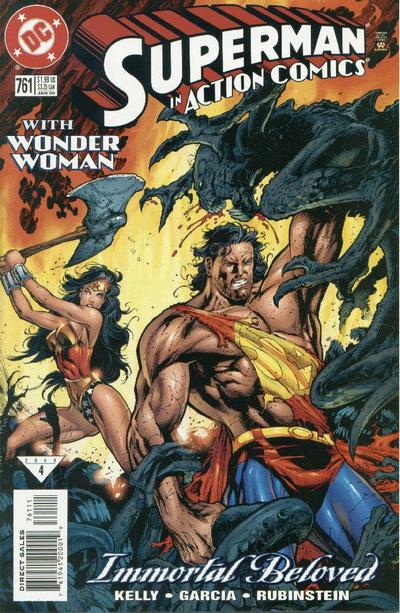
Blake M. Petit is a writer, teacher, and dad from Ama, Louisiana. His most recent writing project is the superhero adventure series Other People’s Heroes: Little Stars, volume one of which is now available on Amazon. You can subscribe to his newsletter by clicking right here. You can join in the Kryptonian Konversation every day in the Year of Superman Facebook Group!