Geek Punditry #6: Seeking Sitcoms

The show that is indirectly responsible for everyone you know that can quote an episode of Rick and Morty verbatim.

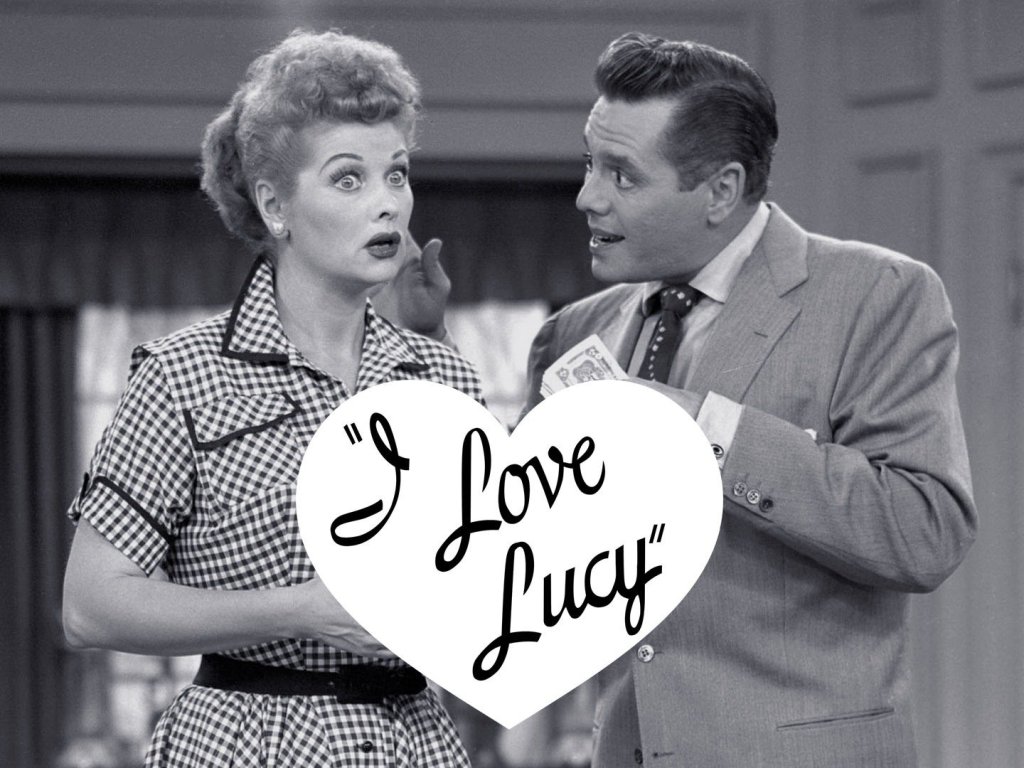
It’s Desi Arnaz’s fault. As the story goes, when Lucille Ball got pregnant during the run of their legendary sitcom I Love Lucy, it was Desi who suggested to the network that they run some older episodes again to fill in the weeks when she would be out of work. The idea was bizarre. Run episodes again? Re-run them? Who would want to watch an episode of a TV comedy that they had already seen?

The answer, as it turned out, was everyone. There’s a comfort in returning to something that made you happy the first time you watched it, like finding an old friend or reminiscing about the good old days. It’s something that we all need at some time or another. 

The rerun became a standard television feature and changed the landscape of entertainment. Not only could they run the same show for an entire year without having to make quite as many episodes or skipping a week, but this eventually led to the concept of syndicating reruns of old episodes to show outside of their original timeslot. And it is syndication, I believe, that has allowed TV shows to become iconic parts of our culture. Think about it: were it not for syndication, if the shows were not still available after their initial airing, would anyone today still know the theme to The Brady Bunch, or be able to tell you how many castaways were stranded on Gilligan’s Island? Who would remember the man named Jed, a poor mountaineer who barely kept his family fed? Could a gentle whistle  conjure up the image of Andy Griffith and Little Ronnie Howard carrying their fishin’ poles down to the fishin’ hole?

And although it isn’t a sitcom let’s not forget that Star Trek (arguably the font from which all modern fandom springs) is only remembered today because people kept watching the reruns after the series was canceled. It was in syndication that the show’s popularity truly boomed, syndication that led to things like Star Trek conventions, merchandise, novelizations, comic books, and fanfiction…and it was those things that fueled the fire and ultimately led to the revival of the franchise. That’s huge even if you’re not a Trekker, because the fandom of virtually every major franchise since then has followed that template.

I’m not saying it’s the greatest sitcom ever made, but I won’t argue if YOU say it.

When I was younger, I would get home from school and gorge myself on a diet of sitcom reruns. Shows like Cheers, Night Court, or Mama’s Family were staples for me. The 90s came and Home Improvement, Seinfeld, and Friends joined my education. And no matter how many times I watched any given episode, I faithfully watched them again, to the point where I can remember minute details of ancient TV shows better than I remember things like the current whereabouts of my social security card. Because of syndication, I can throw out an obscure joke or comment about virtually any topic, then watch my wife roll her eyes at me when I tell her it’s a classic Simpsons reference.

The streaming revolution has changed things, of course. Once, these reruns were a way to fill time on the air before new series start. Today, fewer and fewer people are using “air time” in their television viewing at all. With the exception of sports, weather, and Svengoolie on Saturday nights, I virtually never watch any live television anymore.

This does not mean the end of reruns, of course, it just means that you have to seek them out instead of turning on whatever Channel 26 was showing at 5 p.m. In fact, for many people seeking out these older shows has become a lifestyle choice. Whereas once someone would have to content themselves with the seventeen or eighteen episodes of The Big Bang Theory that TBS shows on any given weekday, now the option exists to literally watch it 24 hours a day on HBO Max, and you can choose any episode you wish. If you go to a Bob’s Burgers group on Facebook and ask what shows the fans watch when they aren’t watching Bob on Hulu, you will be greeted by several quizzical faces that fail to comprehend such a time could exist. There are people who watch The Office on constant repeat, people who never turn off Family Guy, and folks who will spend their entire lives immersed in Pawnee, Indiana with Parks and Recreation.

There are a few too many people who don’t understand this character was meant to be a cautionary example.

I’m not entirely sure this is a good thing. Oh sure, it’s great to be able to go back and revisit your favorite shows, but I think it’s making it more difficult to find new shows, especially comedies. There’s plenty of talk about “prestige” television, but most of the time this refers to genre shows like Stranger Things or dramas like Yellowstone. The conversation doesn’t really center on blockbuster comedies the way it used to. Would it even be possible, in the current TV climate, for a show with the level of cultural penetration as Friends or Seinfeld to come into being?

As much as I love the sitcoms of my youth, I’m also the sort of person who is constantly on the lookout for new characters, new stories, and new worlds to explore. Even now, I sometimes feel a strange guilt if I watch something I’ve already seen, faced with the knowledge that I could be using this time on new entertainment. I get over it, though, and since streaming really took off in force there are many classic comedies and shows of my youth that I’ve gone back and watched in their entirety: Cheers, Frasier, Wings, The Office, Head of the Class…part of it is because I like to watch new shows with my wife (hi, Erin), and I used to go back to older shows as something to watch while she’s at work. That didn’t quite work out, though, as she would get home while I was in the middle of an episode of Everybody Loves Raymond, she would get into it, and I then I had to wait to watch the old shows with her too. Now I just make her tell me explicitly which shows I am and am not allowed to watch without her to avoid confusion.
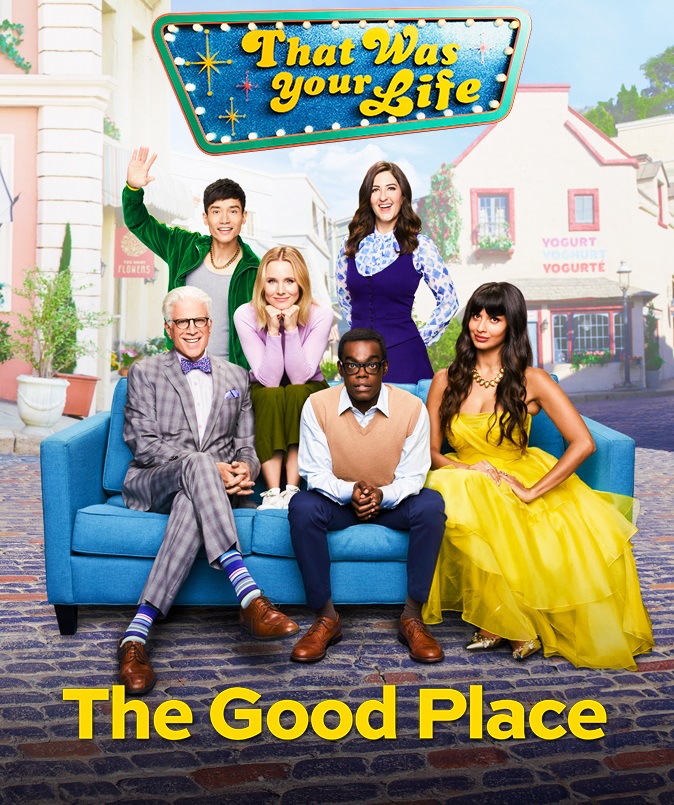
How legendary is Ted Danson? His picture is in this column twice.

Anyway few years ago, I realized it had been quite some time since I found a new comedy that I really got into, and I made it a point to start seeking them out. I began with The Good Place, which was both a wonderful choice and also completely antithetical to what I was trying to do. If you’ve never seen it, The Good Place is about a kind of scuzzy woman (played perfectly and adorably by Kristen Bell) who dies and, through a sort of cosmic clerical error, winds up in Heaven, which turns out to be run by Ted Danson.

I refuse to say any more about the story because to do so would rob new viewers of one of the most sublime television series ever made, but I will say that I never thought I would see a show that could blend together philosophy, spirituality, religion, and deep, complex contemplations on the meaning of life and the nature of existence itself with a fart joke and make it all seem utterly perfect. It is both hilarious and one of the most profoundly thoughtful and emotionally-compelling TV shows I’ve ever seen. And it’s for that reason that it’s not a show I can re-watch too often, because there are only so many times you can cry on a random Tuesday afternoon.

So The Good Place is an excellent show and I urge everyone to watch it immediately…but it wasn’t the sort of thing that made me want to put it on constant repeat the way I could Frasier. The search would continue.

The most scientifically accurate television program since SeaQuest DSV.

The next comedy that really got my attention was Abbott Elementary. Upon the suggestion of friends of mine from work (I am, in case you didn’t know, a high school English teacher), I checked out the first few episodes of the show, then I stopped and made my wife sit down and watch them with me, because it’s so good. On the surface, it feels like one of dozens of Office clones – a faux documentary set in an American workplace, this time an elementary school. There’s a wacky boss! There’s a new guy in the first episode to act as the audience surrogate! There’s a will they/won’t they couple that the audience is clearly supposed to root for! All the fingerprints are there!

What sets Abbott apart for me, at least, is the authenticity. There have been a number of TV comedies set in schools, but the majority of them have focused on the students (Saved By the Bell), or on the class of one influential teacher (Welcome Back Kotter, Head of the Class). This is the first show I’ve ever seen where the faculty are the stars of the program. What’s more, it’s the most realistic show set in a school I’ve ever seen. You’ve got the young teacher (played by show creator Quinta Brunson), eager to please and determined to be the best that she can be. You’ve got the grizzled veteran teacher (Lisa Ann Walter) who does what she wants and doesn’t care what anyone thinks of her. The awkward teacher (Chris Perfetti) who is determined to be thought of as cool despite the fact that he clearly is not. The teacher who has been at that school forever (Sheryl Lee Ralph), is perfect in everything she does, and is both intimidating and nurturing to everyone around her. I’ve taught with every one of these people. I have been many of them at some point or another.

It also shows the repercussions of events in a school in a way that most shows don’t. Budget cuts, classroom size, getting adequate parental support – all of these are issues that have turned up on the show in a realistic way. Well…semi-realistic. It is still a TV show, after all. Count the number of times in Saved By the Bell students are left in a classroom with no adult supervision, and know that every one of those offenses could (and depending on the severity of that episode’s hijinks, should) have resulted in somebody getting fired. Abbott actually shows consequences to even well-intentioned mistakes, (the Egg Drop episode is a wonderful example of this) and does so with relatable, enjoyable characters. Best of all, it doesn’t reduce every teacher to a useless buffoon. In fact, unlike most shows in a school setting, every faculty character — even Janelle James’s seemingly-useless principal — has moments where they show their worth as a teacher, as a friend, or as a mentor. It is the first school-focused TV show I’ve ever watched that didn’t make me ask if anyone involved had ever set foot in an American school in their lives. It’s really lovely.

It’s not perfect. The teachers do seem to have absurdly long lunch periods and planning times where their students are in someone else’s care, but I accept that as a necessity when you’re telling stories about the adults and not the kids. Those minor problems are easy for me to get past when I go back and put the show on repeat…which is where I stumble, since we’re only in the second season, and with modern TV the first season had a measly 13 episodes. While I eagerly await each new episode, there’s not enough Abbott for a good binge…not yet.

So I keep looking for more comedy.

There are two shows about dead people on this list, and I don’t know if that says more about me or about society.

The most recent show to get my attention, like Abbott, is only in its second season, but it has a few more episodes and I haven’t quite gotten through them all yet. I started watching CBS’s Ghosts on the advice of my brother (which I mention mainly because if he should happen to read this he will immediately jump in the comments and demand credit for it), and I’m enjoying it a lot. Ghosts, a remake of a British show of the same name, is about a young couple (Samantha and Jay, played by Rose McIver and Utkarsh Ambudkar, respectively) who inherit an old mansion from a distant relative, unaware that the ghosts of numerous people who have died on the property are trapped there. In the first episode, Sam has a near-death experience and wakes up with the ability to see and hear the ghosts, and the sudden connection between the ghosts and the “livings” changes things for all of them. 

It doesn’t sound like the premise of a wacky sitcom, but it’s really great. The ghosts cover a wide range of character types, from someone who died 1000 years ago (a Viking exploring the Americas played by Devan Chandler Long) to a dudebro businessman who died in the early 2000s without any pants on (Asher Grodman). The premise allows for characters with a variety of perspectives from different time periods, which makes for a fun blend of types: the former mistress of the house (Rebecca Wisocky) has attitudes about women’s roles stuck in the 1800s, while the hippie who got killed trying to hug a bear in the 1960s (Sheila Carrasco) tries to help her break out of them. The scout leader who was killed in an archery mishap in the 1980s (Richie Moriarity) wants to be best friends with Sam’s husband Jay, but it’s tough to be pals with someone who can’t see or hear you. 

The first season of the show is a fun one that sets up the premise very well, but the second season is even better as it starts to explore the world more fully. Sam encounters more ghosts beyond her own property, we get more information about the lives of the deceased, and an ongoing plotline begins to build around the 20s songstress Alberta (Danielle Pinnock), who always claimed she was murdered. Her insistence that she had an exciting demise was considered just a symptom of her hubris until evidence starts to accumulate that suggests she may be right. There’s even a great meta joke in the second season where the ghosts learn they cannot pass through the walls of a vault in the house and Jay quips that he appreciates the expansion of the mythology.

The only problem with Ghosts is, like Abbott, there’s just not enough of it yet. I’ve only got four more episodes until I’m caught up, and then what?

Time to watch the British original, I suppose.

The point is, I’m still on the lookout. The great sitcoms of the past aren’t going anywhere, and thank goodness for that. I know I can turn on Cheers or Everybody Loves Raymond or Night Court any time I want, and I frequently do. (In fact, I haven’t started watching the Night Court reboot yet because Erin and I have to finish our binge of the original series first.) But I still crave new entertainment. So I’m open for suggestions, friends. What are the current comedies that are worth watching? 

Blake M. Petit is a writer, teacher, and dad from Ama, Louisiana. His current writing project is the superhero adventure series Other People’s Heroes: Little Stars, a new episode of which is available every Wednesday on Amazon’s Kindle Vella platform. He’s also a big fan of Star Trek: Lower Decks, but he doesn’t consider that a sitcom so much as a way of life.
Geek Punditry #5: Fandom: Why We Can’t Have Nice Things

I set a goal for myself about a month ago, to use this new Geek Punditry column to get back to writing about the movies, books, TV shows, and comics that I love. I felt like spending time on those things that bring me joy would reignite my writing chops and, just a month in, I feel like I’ve been successful. I’m looking forward to writing this each week. I’m excited to write this each week. But as early as week 3, my focus began to shift. What started as a celebration of things I love has already evolved, with the past two installments focusing on problems that I think need to be addressed. I bring this up because I’m going to do the same thing this week. I’m going to point out a problem that I think is perhaps the most insidious in all of pop culture. I mean, of course, fandom.

The Antichrist, according to Reddit User u/DeeSeeBlows42069

Earlier this week, James Gunn released a video announcing the new plans for the reinvention of the DC Universe in movies and television, and when I heard the news, that’s what I thought I would be writing about today. I figured I’d give you my feelings on what he has in the works for Superman, for Green Lantern, for Booster Gold (Booster freakin’ Gold!) and tell you why I’m excited and optimistic about it. But within hours, the excitement I felt was already being chipped away by people who, if you asked them to their face, would claim to love the very things they had begun whining about. But for people who say they’re acting out of love, their words painted another picture – venomous, vitriolic, and sometimes just plain nasty. Fans can be great, but every time a new movie is released, a new comic book creative team is announced, a new television series premieres, it becomes more and more clear that fandom can be absolutely toxic.

I’m not saying that criticism is bad. In times past, criticism itself was a legitimate form of literary discourse. But that was reasoned criticism, informed criticism. What we get today is a knee-jerk reaction that declares everything is terrible before it even sees the light of day, souring the joy for everybody. One need only look on any social media outlet, any of hundreds of Reddit pages, and one will find post after post, meme after meme, of people railing in anger against something they have not even seen. In fact, for the most part it’s criticism of things that do not yet exist. And while it’s true that the other extreme also exists – people who are happy about things they have not seen – that other extreme is a minority, and seems to me to be far healthier and joyful (or at the very least less pessimistic) and therefore is the side I would prefer to join.

Not pictured: A film that should be used as a medieval torture device.

Social media allows for no nuance, though. Everything is either the greatest thing ever made or (far more often) the worst thing ever made, with no degrees in-between. Last year’s Morbius movie is a good example of this. The film underperformed badly at the box office, even after a meme-inspired rerelease, and it has become a punchline. But this damage was not done by people who had watched the movie. The internet declared the film a failure long before its release – online hatred of Jared Leto combined with several COVID-related delays seemed to doom it before a single frame was released to the public. When I finally watched the movie, my response was, “That was okay.” It isn’t great, mind you, but it’s okay. Jared Leto is all right, Matt Smith seems to be having fun playing the bad guy, and the vampire effects – I’ll say it – were actually pretty impressive. But if you mention the title on Facebook you’ll get an avalanche of “IT’S MORBIN’ TIME!” posts and people slandering the movie, most of whom have never even watched it.

People who delight in someone else’s failure are nothing new, of course. It’s good old-fashioned schadenfreude (and thank the Germans for having an appropriate word for this), it’s as old as civilization itself, but the internet has given it voice that it didn’t have in ages past. The insidious thing is that this voice is not simply celebrating failure, but generating it. What’s worse, as the louder voices on the internet start to pretend that volume is consensus, too many people are starting to accept consensus as fact. I’m reminded of a conversation I overheard a few months ago between two of my high school students about the most recent Halloween movie. One student was declaring, in much the same voice you or I might use to declare that the bathroom is down the hall to the left, “It sucks. He’s barely in it.”

“Have you seen it?”

“No, but everyone says so.”

You’re not allowed to shout at your high school students for their opinions about movies. I looked it up.

Full disclosure: I didn’t particularly care for Halloween Ends, but A) my issues with it had nothing to do with the number of minutes Michael Myers appeared on screen, and B) I formed that opinion after watching the movie myself. 

This phenomenon is perpetuated online thanks to sites like Rotten Tomatoes, which is a brilliant example of a good idea gone horribly wrong. Rotten Tomatoes gives a movie two scores: a percentage based on film critic scores and the percentage based on viewer scores. The site has no authority, no personal judgment inherent in its functionality, but people have begun using that algorithm-generated number as if it were some sort of benchmark of quality. I can’t say this often enough, my friends: consensus does not equal quality

How many movie trailers have you seen declaring a movie’s Rotten Tomatoes score the way they used to tell us that Siskel and Ebert gave a movie two thumbs up? The difference is that Gene and Roger were actual critics, people who watched a movie first and then gave intelligent, nuanced critiques of the film. If they gave a movie a thumbs-down, they could explain to you why they disliked it. But if a movie gets a 35 percent on Rotten Tomatoes, all that means is that only 35 percent of the trolls on the internet had something positive to say. When I hear that number, the only response that makes sense to me is, “SO WHAT?” I accept the numbers as a consensus of the people who have posted to Rotten Tomatoes, but why in the hell should I care what they have to say? I disagree with random people all the time. I disagree with professional critics even more. Why should I accept their numbers instead of forming my own opinion? When they started to tease the upcoming announcement of a film’s Rotten Tomatoes score, I thought my brain was going to explode and squirt out of my ears like a Looney Tunes character, who would then get anxiety over its own upcoming Rotten Tomatoes score. 

I’m telling you, it’s okay with me if you like this movie.

And you know, I wanted to like Halloween Ends. I’ve never understood the concept of “hate-watching.” There are so many things I want to watch that I know it’ll be impossible to get to them all – why should I waste time watching something I expect to dislike? Will it happen sometimes? Of course. But that’s not my goal. And more importantly, if I decide not to watch something because I expect to dislike it, I don’t declare it bad, I declare it unseen. For instance: I didn’t care for the first James Cameron Avatar movie. (Yes, I know, it made all the money. I don’t care. Consensus does not equal quality, remember?) Because I didn’t care for the first one, I haven’t watched the second. So here’s a pop quiz: when someone asks me about Avatar: The Way of Water, what is the correct way for me to reply?

A: It sucks, James Cameron sucks, water sucks, everyone sucks.

B: I haven’t seen it.

If you answered “A,” please disconnect all of your devices from the internet immediately and never talk to anyone again.

The other thing that stokes this particular flame is an “us vs. them” mentality that pervades the internet. It’s as though if you’re a fan of Property A, you are beholden via blood oath to despise everything associated with Property B. You must hate the movies, you must hate the books, you must hate the fans, and if an actor happens to jump from one to the other they are a traitor and must be dealt with possibly with bamboo shoots no later than Tuesday afternoon

My God, is there any attitude in fandom stupider than that one?

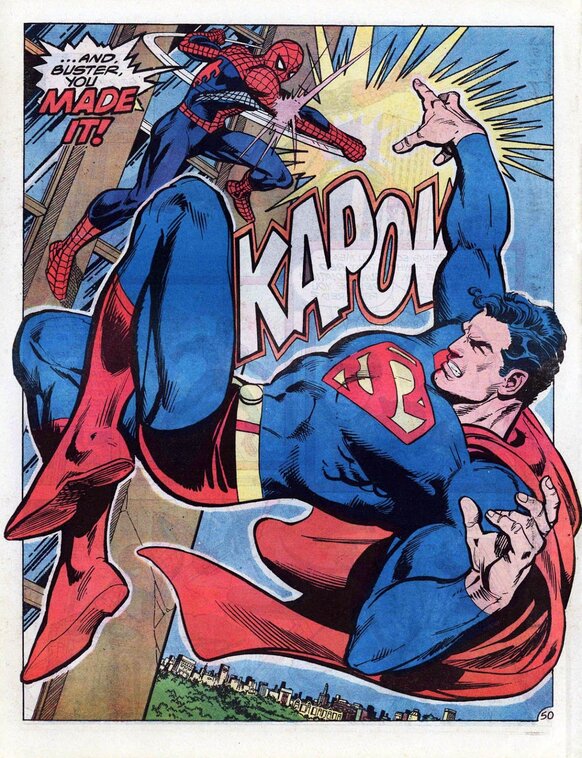
Superman is my favorite superhero. He’s a DC character. Somehow that means I’m not allowed to say how great Spider-Man: No Way Home is? If I love Star Trek, is it a betrayal to express joy for The Mandalorian? If I’m a fan of Lord of the Rings, I have to hate Wheel of Time?

Shut up.

Pictured: Fandom

Storytelling isn’t sports. When I’m watching the New Orleans Saints play the Atlanta Falcons, the nature of sports means that I want one team to win and one team to lose. This is normal. But that same rule does not apply to movies, to TV shows, to books, to comics. In sports, somebody is gonna lose, but in storytelling, everyone can win. When I say that I want James Gunn’s Superman: Legacy to be a blockbuster movie, that is not the same thing as saying I hope Captain America: New World Order is a disaster. I firmly believe that great art of any kind will inspire great art from others, and that when one franchise I love is enjoying success it’s not an obstacle to anybody else. If anything, it’s a carrot to lure them to be better themselves. I think the people who make these properties understand this. It’s very common to see actors, directors, writers, or artists jump back and forth between publishers and studios and IPs and have positive things to say about all of them. It’s only the fans that view it as a competition. (Well, the fans and the corporate executives, but that’s a whole other conversation.)

This is not to say I’m blameless in this, of course. I certainly shared my criticisms of the original Avatar online, and lord knows I posted a “Morbin’ Time” meme or two, but as fandom has grown more toxic I’ve made a deliberate effort to pull back on that sort of thing. I’ve never been the sort of person who would get on Twitter and threaten an actor because I didn’t like a movie they were in, but I realize now that in the current internet climate even well-meaning criticism may sometimes give fuel to that sort of horrific person, and I don’t want to do that. The point of Geek Punditry is to talk about things I love, not things I hate. 

I’m not saying not to criticize. I’m just asking that criticism be informed, that it be based on the work itself and not because you hate somebody’s previous movie or because you’ve chosen lines in a meaningless civil war. And most importantly, that it be respectful, both to the people you disagree with and to those whose work you are criticizing. Nobody intentionally makes a bad movie, with the possible exception of the Sharknado franchise, so even if you don’t like the work, give credit for the effort that went into it. The only people who lose when you speak respectfully are the people who refuse to speak respectfully.

And go ahead and be respectful to them, too.

Drives ‘em crazy. 

Blake M. Petit is a writer, teacher, and dad from Ama, Louisiana. His current writing project is the superhero adventure seriesOther People’s Heroes: Little Stars, a new episode of which is available every Wednesday on Amazon’s Kindle Vella platform. If, at any point during this column, you thought to yourself, “Blake is talking about THOSE people,” that probably means he’s talking about YOU.

Geek Punditry #4: Reigniting the Oscars

“Can you remember who I went home with last year?”

Earlier this week the nominees were announced for the 95th Annual Academy Awards, and the world greeted them with…well, with a collective yawn. Oh sure, people are talking a little. Everybody is happy about Brendan Fraser’s nomination for The Whale, and a lot of people are glad about the hearty showing for Everything Everywhere All At Once, but for the most part, the chatter has died down pretty quickly. This isn’t really that surprising, as Oscar viewership has plummeted in recent years. At its peak in 1998 (55.3 million viewers), the Oscars were the second-highest rated telecast in America, following only the Super Bowl. But that was a long time ago, and since 2010  viewership has taken a nose-dive, with last year’s ceremony gathering a relatively meager 16.6 million viewers. That number was touted as a win by some after 2021’s disastrous 9.85 million, although that number was no doubt influenced by the pandemic crippling viewership for movies in general the year before.

In a way, I suppose I could call myself part of the problem. I used to be a devoted viewer of the Oscars, eagerly awaiting the nominees, making every attempt I could to watch as many of the nominated films as possible before the ceremony, and vociferously arguing with the winners when I felt the Academy made the wrong call. (Lookin’ at you, Shakespeare in Love over Saving Private Ryan.) But not only do I not really care about the Oscars anymore, I don’t even really care that I don’t care. It would be easy to go on a tirade about how the Oscars have changed and left me behind, but that’s not really true. The Oscars haven’t changed that much. I’ve changed. The way we view movies has changed. The world has changed. The Oscars haven’t kept up. 

Pictured: Every “Best Picture” nominee for this year I have seen, in alphabetical order.

Out of this year’s 54 nominated movies, I have seen five. I’ve only seen one of the Best Picture nominees, and I haven’t even heard of some of the others. This is nothing new, by the way. Right now, without looking it up, how many of you remember that King Richard took home the Best Picture award at last year’s ceremony? Go ahead, raise your hand, let everyone see you. Now everybody who just raised their hand can put it down in shame: I know you’re lying because I made that part up. The winner was Coda. But you didn’t remember that either, did you?

It’s okay, neither did I. I had to Google it.

I don’t object to the concept of an awards program. I’m fine with peers (in this case, people involved in the movie industry) declaring what they consider the superior examples of their craft. And I’m not even saying they should change what movies they give the awards to in order to make them more commercial – that would be intellectually dishonest, not to mention pandering. However, if the films that get the accolades are movies the mass audience has never heard of, they don’t get to complain when the mass audience isn’t interested anymore.

But it’s not just the movies that get nominated that are causing a problem. The way people watch movies has changed dramatically in the last few years. In-theater attendance has collapsed, while streaming numbers have picked up the slack. Personally, I’m not crazy about this. I always prefer to see a movie in theaters if the option is there, but I also have a five-year-old child and I know that seeing movies in theaters is frequently difficult, if not impossible, for many people. Once upon a time I would go to the movies nearly every weekend, sometimes seeing two or three films in a single day. In 2022, I made it to the movies a grand total of once. Similarly, watching long movies isn’t easy for me either. I’m not someone who whines if a film goes beyond 87 minutes, mind you. I like long movies. I can spend an entire weekend watching the extended cuts of the Lord of the Rings trilogy and still hunger for more. But when my kid is demanding things like YouTube videos or, y’know, food, it can be difficult to set aside the three hours necessary to watch All Quiet on the Western Front. Some people are happy to break up a movie in chunks and watch it over a few days. To me, the very thought of doing such a thing makes me want to cry.

So I’ve got a few suggestions to help the Oscars win back a little of the relevance – or at least the interest – that has eroded from what was once the biggest night in Hollywood.

If you read this title and don’t want to see this movie, you and I can’t be friends anymore.

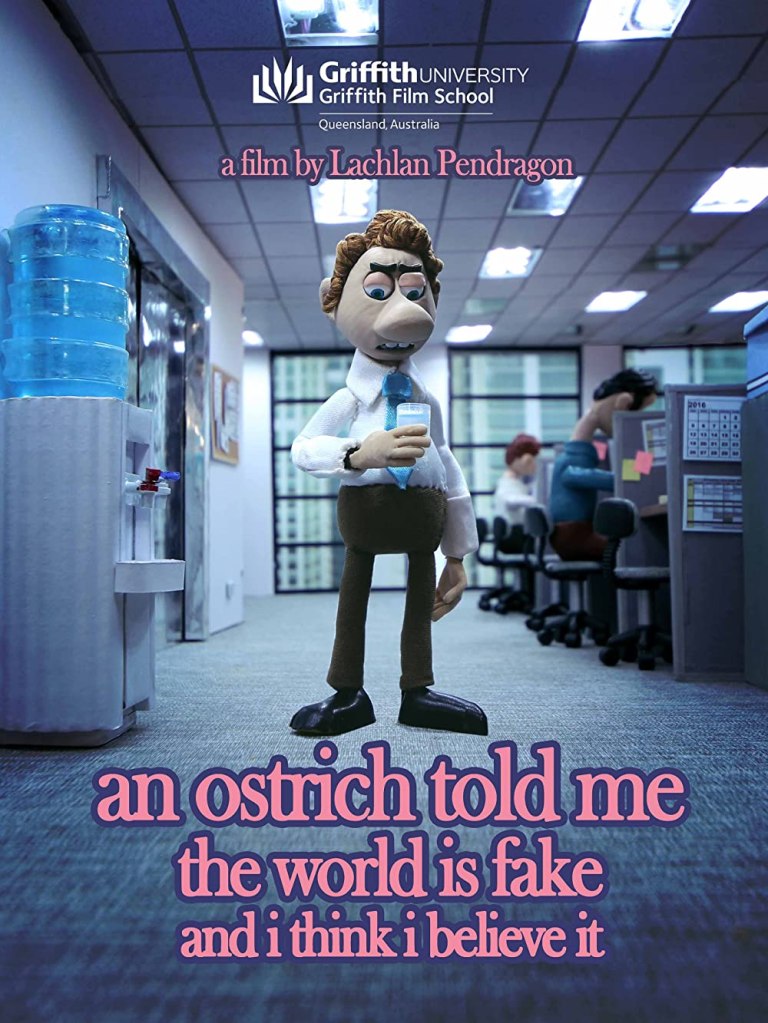
First of all, let’s address the availability issue. This is a bigger issue for categories like shorts, documentaries, and foreign films, but a lot of the lesser-known films in other categories suffer from it as well. It’s hard to make a potential awards viewer excited about nominees that they haven’t seen, but in this streaming world, why is it still a problem? Sure, if a movie is owned by Disney or Warner Bros., you know it’s going to be on a streaming service soon enough, but what about the deserving films that aren’t? One of the nominees for Best Animated Short this year is an Australian film called An Ostrich Told Me the World is Fake and I Think I Believe It. Now I’m ready to hand filmmaker Lachlan Pendragon the trophy based on the title alone, and I would love to watch this movie…but alas, it’s not available anywhere that I’ve checked.

Here’s a chance for the Academy to use some of that muscle they have for good. Cut some sort of a deal with a popular streaming service – Netflix, Hulu, HBO Max, take your dang pick – that would give nominees the option for a limited streaming window in the frame stretching from the nominations through the awards ceremony, or perhaps a few weeks or so after. Give people a chance to watch the movies, and they may start to care again. Hell, why not start their own service that exclusively carries Oscar-nominated films from the past 95 years? I know a lot of them already have their rights tied up with different companies and streaming services, but there must be plenty of orphans deserving of a chance to find an audience.

Next, let’s talk about the categories of the awards. I don’t have an issue with any of the current categories, but the films that are most popular aren’t usually the kind of things that will line up for Best Picture or the acting categories, unless they’re directed by James Cameron or have Black Panther in the title. Genre films have always been largely ignored by the Academy unless they become so immensely popular that they simply cannot pretend they don’t exist. We all remember the 2003 Oscar bloodbath when they gave Lord of the Rings: The Return of the King every award they could out of fear of the fans angry over the snubs for the first two installments marching on Hollywood and lighting New Line Cinema on fire. 

A few years ago the Oscars announced the addition of a “Best Popular Film” category in an attempt to address this problem. They quickly dropped the idea, however, when millions of angry fans on the internet pointed out that, for an organization worried about being perceived as snobbish and elitist, inventing an award specifically to placate “the little people” was probably not the best way to change that attitude. 

But there are two categories that could be added that would not only be gratefully accepted by genre fans, but also fill in two gaping voids in the production of motion pictures that are not currently addressed by the Oscars: stunt performance and performance in animation.

Stuntwork has existed since the earliest days of motion pictures, and despite the utter brilliance of people from Buster Keaton to Chad Stahelski, the Oscars have never seen fit to recognize that aspect of filmmaking. A stunt category would create more interest from fans of genre films (which would likely dominate the category for obvious reasons), as well as finally giving credit to people who literally risk their lives in the creation of our favorite motion pictures. And it should remain distinct from the “best visual effects” category. There should be a limit on how much of the film is CGI in order to qualify, so a movie where the action is 95 percent generated by a computer wouldn’t muscle out a film where there was an actual living human being strapped to a crane and they only used a computer to erase the wires. 

Look in those big, blue eyes and tell me he didn’t deserve some Oscar love.

Animated performance has also been ignored historically. I don’t know if voice performers are technically eligible in the standard acting categories, but I know that no one has ever been nominated for such a performance. And voice acting is performance. Whether it’s someone standing at a microphone, as in most animated films, or someone doing full motion capture and acting out the part, there is a unique performance element that is as impressive an art as any other. It still burns me that Andy Serkis was completely snubbed for his role as Gollum in Lord of the Rings, a performance that almost certainly would have gotten recognition if he had been wearing makeup, but was totally ignored because he was rendered digitally.

I don’t know if I would further subdivide this and make motion capture performances their own separate category from “traditional” voice acting, but having at least one category dedicated to this type of performance would be a big step. What’s more, this is not a solo award. It should be shared by the person who performs the voice and/or motion capture, as well the animator or animation team that completes the process of bringing the character to life. Guillermo Del Toro credited the people who made his Pinocchio film this way, and the Academy should do the same.

The only downside to this, of course, is that adding categories to the awards would make the show even longer, and this brings us to the final reason that people have lost interest in watching the Oscars: bloat. The show is long, tedious, and full of fluff that the average viewer couldn’t care less about, and that’s before we even get to the acceptance speeches. What’s even worse, they make room for this bloat by taking certain categories (usually the technical awards) and giving them out at an untelevised separate ceremony, essentially declaring which awards are less significant than some actor’s impassioned speech on behalf of the life cycle of the Bolivian Dung Beetle.

So the first thing that needs to be done is blow out the fluff. Get rid of the stupid sketches and weepy speeches that don’t relate directly to the awards being given out. There should be three components to the ceremony: musical performances of the nominated songs, the “In Memoriam” reel, and the awards themselves. In and of itself, this change would reduce the length of the ceremony by approximately 17 years. 

Then come the acceptance speeches, and this is the tough part. I believe 100 percent in freedom of speech, and I will never advocate curtailing a person’s right to exercise it. That said, if given a choice between seeing the award for best achievement in sound design given live or hearing an actor lecture me on politics – even when they happen to be politics I personally agree with – I will choose the award every single time, and I do not think I’m alone in this. The best solution I can think of is to impose a strict limit on the on-stage speech – 30 seconds, a minute, whatever, but enforce it, even if it means turning off the microphone. Then, allow the winner extended time backstage to make their full speeches, say whatever they want, and upload the unabridged and unedited video to the Oscar website, where people who want to will have the freedom to watch them in full. Some people would object to this policy, of course. “But people won’t get to see my speech!” they will cry. I would answer, “The ones who want to hear it can easily find it.” And they’ll say, “But what if they don’t WANT to?” And I will simply smile and shrug.

I advocate similar changes when it comes to political campaigning. 

It’s not a perfect system, I admit, but unlike several of the people who have accepted Academy Awards over the years, I’ve never tried to convince anyone I am perfect. But I do think these changes will make general audiences more receptive and more interested in watching the Oscars again.

Or at the very least, it’ll be better than the Golden Globes. 

Blake M. Petit is a writer, teacher, and dad from Ama, Louisiana. His current writing project is the superhero adventure series Other People’s Heroes: Little Stars, a new episode of which is available every Wednesday on Amazon’s Kindle Vella platform. He’s heard an awful lot of nice things about that Brendan Fraser fella, and he hopes he’s having a good time right now. 

Geek Punditry #3: Beware the Binge

“I’m not going to start watching a show on Netflix. They’re just going to cancel it anyway.”

Everyone reading this, I promise, has heard someone on social media (or maybe in real life, if you’re the sort of person who has such a thing) echo that very sentiment recently. Every time a new show hits, someone says it. Every time a show gets canceled, someone says it. Every time I go through the drive-through at Wendy’s someone says it, which is actually kind of weird and makes me wonder if they’re still having staffing issues. But the point is, I get it. In this day and age, when television has become more more serialized and most shows – even half-hour comedies – have ongoing story arcs that play out across a season or even across an entire series, there are few things more frustrating to a television fan than getting invested in a series, watching their way through the end of the first season, feeling their pulse race with the cliffhanger finale, and then learning that there will never be a season two. 

The blame for this is usually placed on Netflix itself (although they’re hardly the only culprit), and while I agree that Netflix deserves a lion’s share of the culpability, I don’t think it’s for the reason most people usually mean. 

The assumption people have is that Netflix is just impatient. They won’t give people a chance to find a show and get to enjoy it. But I don’t think that’s what’s happening, not exactly. Netflix (and most streaming services) rarely release their actual numbers, so it’s hard to say with any degree of certainty how many people are watching any given show or how quickly, but a hypothesis has been making the rounds that I think is worth examining. Some shows are getting the axe despite seemingly large numbers, while others with smaller viewership are being allowed to continue, a practice that doesn’t seem to make any sense if you consider it series-by-series. It makes a lot more sense, though, if you look at it episode-by-episode.

What seems to be happening is that Netflix is basing their decisions not on total numbers of hours watched, as people tend to assume, but by how many people finish a season. If, for example, 20 million people watch the first episode of Mind Your Manners With Simon Cowell, that sounds better than the 15 million who watched the first episode of Toenail Fungus Finds of Eastern Europe, right? 

But keep watching the numbers. How do they trend? What percentage of that original number stuck it out to the end? If, by the end of the season, Toenail Fungus has retained 11 million viewers, but Simon Cowell has dropped down to 4 million, what makes more sense to renew? People who skipped out on Simon after three episodes are far less likely to come back for a theoretical second season than the much larger number of people who stuck around to find out exactly what kind of mold was growing under Slobodan Milosevic’s left pinky toe in the pulse-pounding season finale. 

The practical result of this is that shows that don’t get binged heavily in the first couple of weeks are far less likely to get invited back, and this is where that conventional wisdom comes back into play. Shows are not being given time to find an audience, you’re right. But the solution here is not to require every damn person on the planet to binge every show the second it hits the streamer. Doing things that way makes it far, far harder for a show to get traction unless it’s based on an existing IP like Wednesday. Something like The Midnight Club may be every bit as worthy of getting a new season, but as it doesn’t have that built-in fanbase, the chances of it hitting the same way are much worse. 

There are exceptions, of course. Stranger Things and Squid Game are both shows that seemingly came out of nowhere and had no ties (other than thematic ones) to previous movies, characters or TV shows that could have carried over their audience – but they’re called exceptions for a reason. For each of those, how many series like The October Faction, Cursed or Archive 81 have suffered an ignoble death?

There is a solution to this problem, but Netflix doesn’t want to hear it. In fact, I think a lot of you reading this right now will be horrified at the suggestion. But I’m going to say it anyway.

You know how to deal with the problem of people not binging shows quickly enough to save them?

Stop making shows bingeable. 

Excuse me, I need to go wash the tomatoes people just hurled at me from my hair and clothes.

But I’m serious about this. The problem is that Netflix is basing their decisions on how many people watch an entire season of a series in X amount of days, with X being some magical number they’re not going to tell us but which was clearly too small to save Jupiter’s Legacy. And as it seems these shows are getting cut faster and faster, you cannot blame any viewer for deciding not to invest their time, which means that the new shows won’t have anyone to watch them and then they’ll get cut too, and now we’re just in a never ending loop of cancellation and misery, like being back in high school, but sandwiched between a baking show and a murder documentary. 

But let’s look at other streamers. Netflix isn’t the only game in town anymore, after all, and few of their competitors have suffered from this same cancellation outrage. So what’s the difference?

Part of the problem is that tiny little “X” number – expecting people to find a show, binge a show, talk about a show, and then expand the audience in a remarkably short period of time. It’s really hard, and considering just how many entertainment options now exist, it’s nearly impossible. But look at the Marvel or Star Wars shows on Disney+, or the assorted Star Trek series on Paramount+. Not only are people watching, but people are talking about them. And not just for the days or (in rare cases) weeks of a Netflix hit, but for months. What’s the difference?

Disney and Paramount release their series the old-fashioned way: one episode a week. And that lets the audience find the show in a way that Netflix’s “drop ’em all right now” model never will.

How many Star Wars fans, disgruntled by Disney’s cinematic output, had to be convinced to try the likes of The Mandalorian or Andor? How many Star Trek fans immediately dismissed Prodigy or Lower Decks for being animated series until other fans persuaded them to give them a chance? If they had been released the Netflix way, the conversation would have ended in a few days, and a lot of people would never have given these shows a try.

It’s not a perfect analogy, I admit, because those are shows based on existing – and, let’s be honest, massive IPs, but it still demonstrates something. I hear people talking about these shows not just on the weekend after they’re released, but for months. Love them or hate them, these series have people engaged for a very long time, posting about them on social media, writing thinkpieces, and making memes. And every week, when a new episode comes out, the cycle repeats. This doesn’t happen with a binge show. Even Wednesday, Netflix’s most recent hit, had a quick surge of popularity, a lot of people talking about a dance sequence, and that one meme with Wednesday Addams next to a girl who looks like Luna Lovegood crossed with Phoebe Buffay, and then…it kinda dried up. Sure, people liked the show. Sure, people are looking forward to season two. But nobody is talking about it anymore right now, less than two months after it dropped. 

Compare that to the third season of Star Trek: Picard, which I guarantee will have people on the internet wildly pontificating for the entire ten weeks it’s on the air. And love it or hate it, they’re going to come back every Thursday for the next episode and do it all over again. And while they’re talking, other people will hear them, and the more people who hear them, the more people are likely to watch it, and that’s where the binging comes in. 

I’m not going to pretend I don’t binge watch. Of course I do, it’s 2023, it’s how media is consumed now. But for a new series it’s just not an effective strategy. Pre-streaming shows like Lost or How I Met Your Mother built their audience because fans got invested in the story, the characters, and the mystery, and they came back to talk about them again week after week, season after season. They shared their theories, they wrote fanfiction, they drew pictures of their favorite characters and, most importantly, they told other people how much they loved their favorite shows for a very, very long time. And say what you will about how those respective shows ended, they still have devoted and passionate fan bases that will spend more time talking about them than anyone is spending on Uncoupled. The ability to binge is a great tool for new fans, to get people who are discovering a show later to catch up and to join in on the fun. But as a way of kicking a series off? It’s like Netflix is Lucy holding the football and Inside Job is Charlie Brown, running in for his chance without realizing it’s already a lost cause.

Abandoning the binge-release model won’t save every deserving show, of course. Even in the days before streaming there were lots of great shows that never got past a first season, including some that weren’t even on the Fox Network. And sure, some viewers have no patience for the weekly release anymore, but I sincerely believe that the potential audience that never gets to find these shows under the current system outnumbers the people who will refuse to watch just because they can’t do it all at once.

So there’s my challenge, Netflix. Instead of dropping full seasons in 2023, try doing an episode a week. Then look at how many viewers make it to the end. 

And then maybe give The Joel McHale Show With Joel McHale another chance, would you?

Blake M. Petit is a writer, teacher, and dad from Ama, Louisiana. His current writing project is the superhero adventure series Other People’s Heroes: Little Stars, a new episode of which is available every Wednesday on Amazon’s Kindle Vella platform. He hasn’t actually gotten around to Wednesday season one yet, if we’re being perfectly honest here. 

Geek Punditry #2: A Well-Paved Mile

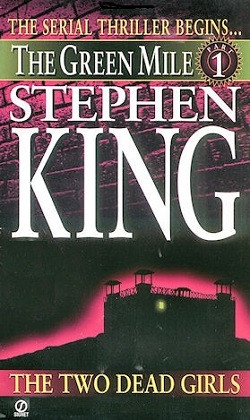
If you have children, one of the best things you can do with them is read together. It teaches them early on to love books and love learning, it’s quality parent-and-child time spent together, and it is likely the only chance you’ll get to read anything longer than the directions on a bottle of Children’s Imodium for several years. Kids are a joy, but they do tend to make demands of your time. For example, I’m a big fan of Stephen King. I have been ever since my uncle first introduced me to The Stand when I was in high school. I met my wife on a message board dedicated to The Dark Tower. And by the time my son was born in 2017, there were only four or five books in his lengthy catalog that I had not yet read. However, after Eddie was born, my reading time was curtailed drastically but King’s writing time was not, so those four or five unread books have expanded to approximately eleventy trillion. 

But my son is a little older now, and it’s finally starting to become a little easier to squeeze in something longer than your average comic book for my reading pleasure. I recently looked at the vast array of new King that has been produced in the last six years, carefully weighed the options, communed with the spirits of the literary world for how to begin, and finally decided to hell with it, I’m gonna read The Green Mile again.

If you’re not familiar with The Green Mile, either through the novel or the top-notch film, I have to say it’s not what people usually think of when they think of Stephen King. There are no child-munching clowns, no apocalypse viruses, not even a writer from Maine. The story is told from the perspective of an old man who was a prison guard in the 1930s, and it centers on one of his death-row inmates who turns out to be harboring a fantastic secret. It’s a character drama with a little magical realism in it, and although there are certainly intense moments, there’s nothing in the book that could really classify it as horror. It is, I say without hyperbole, one of his finest works. Also, there’s a mouse.

It’s been years since I last read the book, but dipping into it again was like visiting old friends who happened to be convicted murderers. I was immediately plunged into the world of Paul Edgecombe and John Coffey (“like the drink, only not spelled the same”). I hated Percy Wetmore all over again, I sympathized with Eduard Delacroix all over again. But as I read this time, I noticed something that had not occurred to me in previous readings of this story: namely how perfectly plotted this story is.

Conventional wisdom says there are two types of fiction writers: architects and farmers. Architects meticulously plan out every scrap and detail of a story ahead of time, decide every beat and turn, and only then, once the blueprints are done, do they write. Farmers plant some seeds with only the vaguest idea of what shape the story will eventually blossom into, but pruning and cultivating that plotted plant is part of the joy of being a writer. By all accounts (including his own), Stephen King is a farmer, and sometimes it shows. As magnificent as he is at character and concept, more than a few of his books suffer from deus ex machina endings that seem to come out of nowhere. (Read The Girl That Loved Tom Gordon some time – you can pick out the exact moment where the writer decided this kid had been wandering aimlessly through the woods long enough and it was time to wrap this puppy up.)

Even King’s best books usually include long segments of backstory or subplots which, although enjoyable to read as they help flesh out the world he is creating, are ultimately unnecessary to the plot and could easily be excised if Reader’s Digest got their hands on it. But not The Green Mile. I was actively looking for the fat when I read the book this time, and I could find none. Each and every piece feels crucial to the overall puzzle. Arlen Bitterbuck’s execution? It’s there to demonstrate how executions are supposed to go, so that what happens later has the necessary context. The Brad Dolan subplot in the framing sequence? It steers Paul’s retelling of the story to its final revelation (which itself resolves a lot of the lingering questions left behind over the course of the book). The brief mention of the only woman who ever served time in E Block? Seems extraneous at first, as her sentence is commuted and she quickly leaves the story.

However, it turns out that this woman is really there to set up another device that turns out to be important: Death by Finale. After her brief appearance in the book, Paul mentions how she eventually died of natural causes several decades later. Again, it seems like a nothing detail, but it’s really there to establish a pattern: afterwards, King tells us of the final fate of almost every named character during the last scene in which they appear. It’s easy enough to miss the first few times. Her fate and that of another inmate whose sentence was commuted (murdered in the prison laundry 12 years later) are incidental. But the pattern becomes clearer as the story goes on, especially in the final chapters, where the fates of Paul’s fellow guards and the other key figures are all stacked on top of each other. It also lends weight to a scene midway through the book where Paul, as the narrator, is somewhat apologetic to the reader for not knowing the fate of the reverend who visits with the prisoners before their executions. It’s an odd moment on first reading, but you realize later that Old Paul is telling these stories to illustrate a point about what has happened to him, so the scene with Reverend Shuster is recontextualized – Paul is sorry that he’s unable to do so this time.

Even minor details come back in an essential way later. In Part One, Paul learns about the crime for which John Coffey has been convicted and throws out little tidbits such as the tracking dogs getting confused at one point and Coffey having a lunch wrapped in paper and tied up with twine. Both are details that are seemingly there just to add flavor to the scene. Both turn out to be crucial later.

“But Blake,” you’re saying, “Isn’t that just how stories are written? It’s good writing, sure, but is it that surprising from an old pro like King?” Normally I would agree with you, but it is the circumstances under which this book was written that makes all of this so impressive to me. Those of you who weren’t reading King in 1996 (or weren’t even born yet – yikes) may not know it, but The Green Mile was not originally published as a single novel. In an experiment to recreate the serialized works of folks like Charles Dickens, King wrote and released the book in six installments, published in slim paperback “chapbooks,” and by his own admission, did not yet know how the story would end when the first part was published.

I knew about the chapbook part, of course. I was there in ‘96, eagerly awaiting each installment. I still remember sitting in the lobby of the band hall at Nicholls State University gorging myself when a new part was released. But the fact that he hadn’t finished the book when Part One was released is something I only learned recently, and frankly, it blew my mind. Did he know how Melinda Moore’s illness would factor in? Did he know the awful secret of Wild Bill Wharton? King says his wife, upon reading an early draft, asked him what happened to the mouse that disappeared halfway through the book, and from my perspective as a reader, I cannot even fathom what the ending of this story would be without Mr. Jingles. This is arguably one of King’s best works, and inarguably one of the tightest, most fat-free novels in his bibliography…and he didn’t know the ending yet when I read Part One?

That’s a straight-up magic trick.

Writers always go back and edit their work to help it flow better. Even the architects don’t always finish things exactly as intended, so a certain amount of adjustment is expected, especially in the earlier chapters. Taking that tool away is like putting a writer on a tightrope and daring them not to screw it up. I’m doing something similar now on Kindle Vella, with my series Other People’s Heroes: Little Stars (gotta get that plug in), except I’m doing a chapter a week instead of a hundred pages or so a month. And I know for damn sure that I haven’t pulled it off as perfectly as King did. Early chapters of my story set things up for a character who has turned out to be far less important than I originally planned. (Blip, if you’re reading OPH and you really want to know whose part got reduced.) Meanwhile, a character who was introduced literally just to fill a desk in one scene has become my favorite in the whole story and will be crucial to the ending. (To no one’s surprise, this character is Keriyon Hall.) None of this is unusual, especially for farmers like the King and I, but that inability to go back and adjust will make for what TV Tropes calls “early installment weirdness” for people who read it later.

All of this is to say that when one is attempting art of any kind, one tends to learn from those who have done it before and done it well. And some snooty scholarial types may take issue with this, but I don’t care: damned if there are many people in the world who do what I want to do better than Stephen King.

Blake M. Petit is a writer, teacher, and dad from Ama, Louisiana. His current writing project is the superhero adventure series Other People’s Heroes: Little Stars, a new episode of which is available every Wednesday on Amazon’s Kindle Vella platform. “Attempted art” kind of sounds like a criminal charge, doesn’t it? Like The Room or Troll 2. 

Geek Punditry #1: The Next Next Generation

I’ve been a Star Trek fan for close to 40 years now. I liked the original series, the movies, the Nickelodeon reruns of the animated series, and when The Next Generation premiered, I was a steady customer. Deep Space Nine set the hook even more firmly, giving the strongest story and the greatest character arcs of any Trek to date (even now, 30 years after the series’ debut). After that, though, although my passion for the Trek universe was untarnished, my satisfaction with specific series and movies began to vary. I never particularly cared for Voyager, and although I liked Enterprise, I was too busy in those pre-DVR days to keep up with it. I liked the Abrams movies well enough, but I thirsted for a new show, and then Discovery…well it wouldn’t be until Lower Decks that a new Trek series would fully capture my heart.

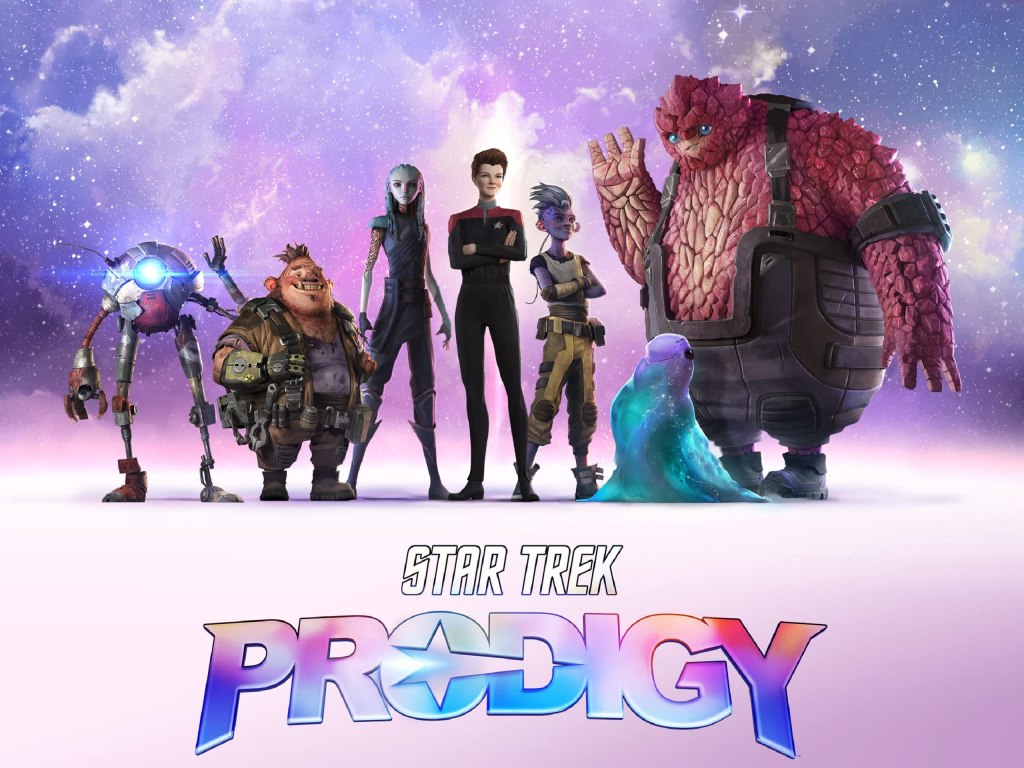
Then came Star Trek: Prodigy. Another animated series, and the first one to be specifically targeted at children. I knew I would watch it, I knew I would give it a chance, because it’s Star Trek. I ALWAYS give Star Trek a chance. But my expectations, to be honest, were not high.

At first, those low expectations seemed to be justified. We were back in the Delta Quadrant from Voyager (ugh), far away from the stories and situations I loved. The cast was made up entirely of brand-new or obscure species, which further divorced this series from the Trek saga that began in 1966. Worst of all, these characters had never even heard of Starfleet or the United Federation of Planets. If it weren’t for the prototype Starfleet vessel they found and the holographic recreation of Kathryn Janeway on board, there would be nothing about this series to designate it as Star Trek at all. It wasn’t bad. It wasn’t loaded with shoestring stories and catchphrase-spouting idiots like so many shows targeted at kids. But I finished the first episode – the first few episodes, actually – feeling like I had watched something that belonged in the world of The Clone Wars or one of the subsequent Disney Star Wars series. Not to say anything negative about those cartoons – they’re good Star Wars. But I didn’t want good Star Wars. I wanted good Star TREK.

After watching a few episodes together, my wife gave me permission to watch the rest of the season without her, as polite an indication of dissatisfaction as there can be, and I really couldn’t blame her. This wasn’t what we expected coming in. And I considered joining her in abandoning the show, because I wasn’t really satisfied, but…

Something told me to keep going. Maybe it’s my renewed devotion to Trek that has become far more passionate over the last few years. Maybe it was that each episode was only a 22-minute investment instead of an hour. Maybe I’m just pigheaded. But I kept watching.

And thank God I did, because as the season wore on, I realized I was watching the most brilliant magic trick TV has given us since someone found a hatch on Lost.

The thing I forgot in the first few episodes was that this is, first and foremost, a show for kids. It’s a show that airs on Nickelodeon, where kids can stumble upon it, and not just on Paramount+, where the existing fans seek it out. That’s important, though, because this is the first Star Trek project since 1966 that is intended specifically for an audience that has no pre-existing expectations of Star Trek. The familiar aliens, the ships, the characters, the lore – everything I love would be completely foreign and meaningless to a child watching this as their first Star Trek.

Just. Like. The. Characters. On. The. Show.

This is where the Hageman brothers, the showrunners, did something so unbelievably brilliant that I want to hug them until security has to drag me away.

As the season continued, through the holo-Janeway at first, we saw bits and pieces of familiarity. A known alien species. A recognizable name. An Easter Egg or three. And the Prodigy kids began to learn about the history and the mission of Starfleet – which is, of course, the history and mission of Star Trek.

And they loved it.

Loved it so much, in fact, that by the midseason finale (where we see the real Janeway and not just the hologram), all they wanted was to be a part of it.

And who can blame them?

I saw someone on Facebook describe Prodigy as a show about kids from Star Wars trying to run away to Star Trek, and never has a description been more apt. But the beautiful thing, the glorious thing, is that the show is constructed in such a way that the kids watching at home (like my 8-year-old nephew Grant, watching with his Trek-loving mother) who know nothing about this Trek are on this journey with them. 

In the second half of the season the curtain is pulled back further – it wasn’t just Easter Eggs anymore, but full plots and stories built on the scaffold of classic Trek and intended for the new kids, the ones still learning. And by the time we reached the magnificent two-part season finale, the trick was complete. The first half of the season taught the kids to appreciate Trek. The second half is where the Protostar crew proves they belong there, and do so in the finest tradition of Kirk, Spock, Data, and Dax.

If you, like my wife, decided to bail on this show after a few episodes, it’s totally understandable. I get it. You didn’t know. But I’m here to tell you that it’s worth revisiting. Give it another shot, at least until the midseason finale, before you pass final judgment. It’s worth it to see how they took a bunch of characters who had no business being in Star Trek and turned them into a crew as worthy as any that has ever borne the name. 

Blake M. Petit is a writer, teacher, and dad from Ama, Louisiana. His current writing project is the superhero adventure series Other People’s Heroes: Little Stars, a new episode of which is available every Wednesday on Amazon’s Kindle Vella platform. You wouldn’t believe how long it took him to type this up, what with all his fingers crossed for Picard season 3 the entire time.

The Best Superhero Books Outside of Graphic Novels

Not long ago, I was contacted by the editors of Shepherd.com and asked if I would be interested in contributing a list. It’s a cool site where authors curate short suggested reading lists in various categories, and based on my current (and best-known) works, I asked if they’d be interested in my picks for five great books that feature superheroes OUTSIDE of their typical home in the world of the graphic novel. Take a few minutes and look at my recommendations, then poke around the site to see some of the other great lists they’ve collected!

Shepherd.com: The Best Superhero Books Outside of Graphic Novels