Geek Punditry #139: Who’s to Blame?

Once August hits every year, I ramp up my viewing of scary movies in preparation for the Halloween season. The name for this event changes annually: sometimes I call it “Shocktober,” sometimes “Scream-A-Thon,” sometimes simply “Extended Spooky Season.” This time I’ve elected to call it “Toddoween,” in celebration of the late, great horror actor Tony Todd, who passed away earlier this year. I’m making a special point to watch as many of his movies as I can in the 2025 season, and as such, throughout August I’ve been sneaking in the various Final Destination movies whenever possible. The only one I’ve got left is the newest film, Final Destination: Bloodlines, which came out earlier this year and which turned out to be Todd’s last film.

And he went out swinging.

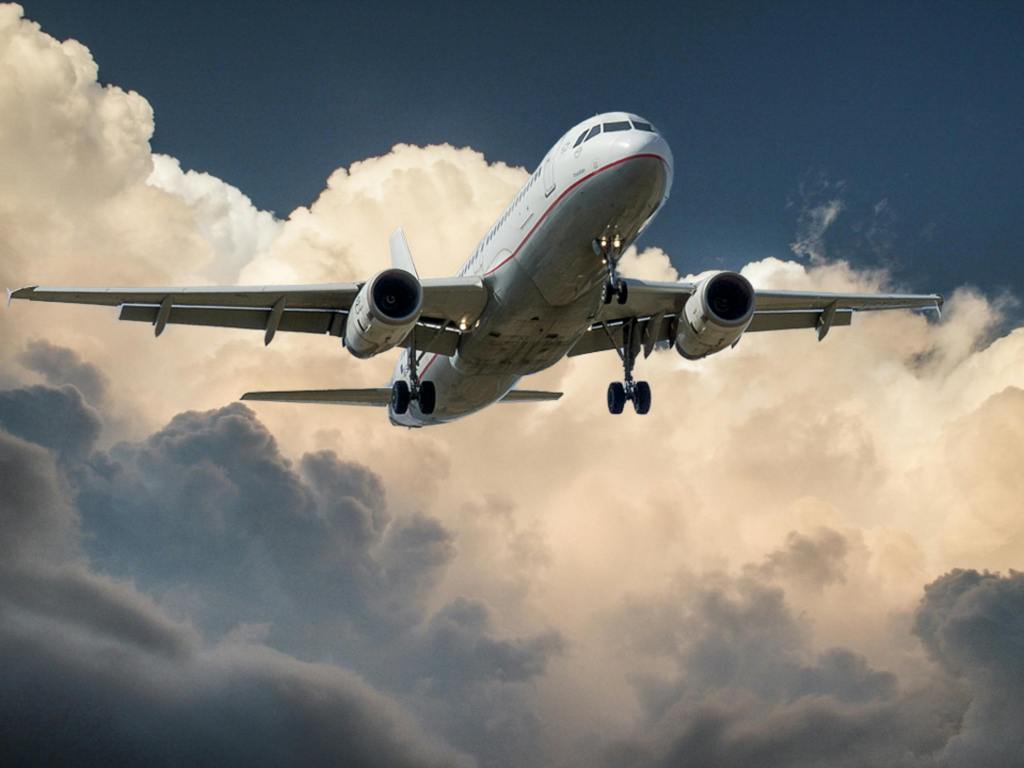
If you’re not familiar, Final Destination is kind of a unique horror franchise. Rather than having a psychotic killer chasing after the victims with a machete or something, the series has a very different formula. Each movie begins with the protagonist (a different one each time) having some sort of a psychic flash about an impending disaster, which they react to in such a way that saves them and a group of other people from whatever cataclysm is fated to occur. In the first one it’s a plane crash, the second is a huge traffic pileup caused by logs falling off a truck, in the third it’s a roller coaster disaster, and so forth. Rather than having escaped their fates safe and sound, though, the survivors inevitably start to get picked off one by one by bizarre and increasingly improbable “accidents.” The idea behind the series is that Death itself isn’t happy that they escaped its plan, and it’s coming to take what belongs to it.

The series, interestingly enough, started off as a pitch for an episode of The X-Files that didn’t get used, so writer Jeffrey Reddick spun it out into its own thing, and it’s fairly popular among horror movie fans despite the fact that it lacks a single unifying figure like Michael Myers, Jason Voorhees, or Freddy Krueger. In fact, the closest thing the franchise has to an “icon” is Tony Todd’s character of Bludworth the mortician, and even he has only appeared in four of the six films, usually in just a single scene. This makes Final Destination an extremely rare horror example of one of my favorite subcategories of film: stories without a traditional antagonist.

And, consequently, without a series of action figures.

Quick English Teacher moment: at some point you may have been taught – probably by a well-meaning middle school teacher who was trying to keep things simple – that a “protagonist” is the “good guy” in a story, whereas the “antagonist” is the “bad guy.” This is not true. I mean, USUALLY if the story has a traditional “good guy” and “bad guy,” the protagonist and antagonist fill those respective roles, but that’s not what those words MEAN. The protagonist is the character or group of characters whose actions drive the story, or simply the “main character.” They CAN be good, but they don’t have to be. Look at Breaking Bad, for example, an amazing show where Bryan Cranston shows us Walter White’s slow descent into becoming a villain protagonist. 

Antagonists, on the other hand, are the people or forces who work in opposition to the protagonist. Again, this doesn’t necessarily make them BAD. My Cousin Vinnie is a good example. The closest thing the movie has to an antagonist is the prosecuting attorney (played by Lane Smith) that Joe Pesci’s Vinnie is trying to defeat in court, but he’s a warm, friendly person who genuinely likes Vinnie and has no ill will or animosity towards him; he’s simply doing his job and attempting to prosecute two men he sincerely believes to be murderers. And when he’s confronted with evidence that proves the defendants are innocent, he IMMEDIATELY drops the charges. Not a bad guy at all. 

Villain Protagonist, Hero Antagonist. It’s like how Lincoln had a secretary named Kennedy and Kennedy had a secretary named Lincoln.

We’re so used to the protagonist/antagonist dichotomy in fiction that when we get a story that legitimately has no antagonist, it’s often a breath of fresh air. One of my favorites in this category is Andy Weir’s novel The Martian, and the Matt Damon movie based on that book. Mark Watney, astronaut, is stranded alone on Mars after a storm makes the rest of his crew mistakenly believe him to be dead. Once Mission Control back on Earth discovers that he’s alive, they do everything in their power to bring him home. By the end of the story, the entire planet is watching and rooting for him. Even traditional rivals like the Chinese space agency are cooperating in the hopes of saving one man. If there’s any antagonist in this book it’s science itself, because that’s what causes every danger to Watney’s life. It’s an incredibly uplifting, optimistic story, so hopeful and positive that even Sean Bean fails to die. I’m really looking forward to Project Hail Mary, also based on a Weir novel, and also utterly lacking in a traditional antagonist.

It’s a little more common to see stories like this in fiction aimed at younger audiences. The Winnie the Pooh stories, for instance, are utterly bereft of danger. In both the original books and the Disney cartoons everybody is friends with everybody else, and the conflicts usually arrive from misunderstanding or happenstance, at least until the character went into public domain and the sort of chuckleheads who think it’s funny to turn beloved icons of childhood into serial killers did their thing. Mary Poppins is another good example. Mary Poppins swirls into the lives of the Banks family ostensibly to act as their nanny, and although their father initially disapproves of her methods, that doesn’t really make him an antagonist. In fact, by the end of the film it has become clear that Mary Poppins didn’t really show up for the kids at all, but rather to help teach George Banks to express the love and devotion he’s always had for his children, which has been previously locked behind a facade of British propriety. 
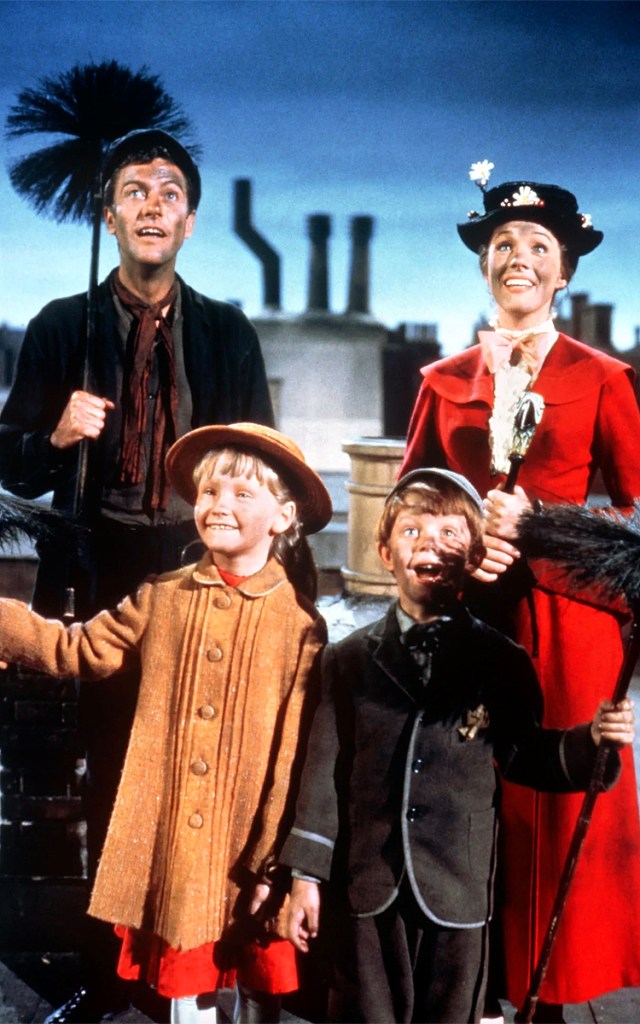
Actually, in early drafts there WAS an antagonist, but it was so hard to imagine anyone not falling in love with Julie Andrews that they had Bert stop murdering suffragettes and made him a chimney sweep instead.

Non-antagonist stories are frequently highly positive and optimistic. Those that aren’t usually fall into the category of “Man Vs. Nature,” stories where the heroes struggle against something that has no consciousness and therefore isn’t INTENTIONALLY working against them: The Perfect Storm, 127 Hours, or the Twister movies fall into this category. But Final Destination is kind of unique in this way. The question I’m asking right now is this: IS there an antagonist in Final Destination?

First of all, I have to remind myself that I haven’t seen Bloodlines yet, so I suppose it’s entirely possible that the new film has already answered my question, rendering this entire train of thought moot. If so, don’t tell me. I’m going to try to squeeze the movie in during the Labor Day weekend. But the obvious answer is no. Death is not, strictly speaking, a “character.” Nobody shows up in a hood and cowl waving a scythe through the air, nor is there some peaceful angel who arrives to usher people off to their reward or punishment as the case may be. In some of the films (but not all of them) we may see one of the survivors who breaks under the realization that Death is coming for them and turns on the others, but that’s an aberration. At most, those characters are minor antagonists, supporting the main force.

But that main force, Death itself…does it count? Is it active, is it aware? The films seem to imply that it is. Hell, even the fact that I’ve insisted on capitalizing “Death” in this column implies that it is. Not only is Death an intelligent force in this universe, but it’s a nasty and sadistic one that enjoys playing with its victims. If taken in and of itself, you could clip out any death scene from the franchise and view it simply as a dramatization of an accident. (The fact that those accidents vary wildly in tone – some of them come across as tragedy, others as comedy, some as almost insultingly absurd – is irrelevant.) But pieced together, it really does feel as though Death, despite lacking a face, is in fact a character. It’s actually kind of impressive. Not all of the Final Destination movies are great (a couple of them are downright lousy), but even the bad ones help contribute to the storytelling magic trick of making a malevolent force that has no tangible representation in the entire franchise feel very real, and even imbue it with a personality. That’s actually kind of cool.

I mean, it’s not the kind of personality you’d bring home to meet your parents, but it DOES count as personality.

So I’m going to keep that in mind when I sit down to watch Bloodlines, and I’ll be curious to see if the most recent movie in the franchise continues this particular magic trick or if they give into temptation and make Death more of a “thing.” 

In either case, I’m curious as to your thoughts on the subject. If you’ve seen these movies, do you think Death counts as an antagonist?

And I’m open to suggestions for other films to fill Toddoween. I’ve already got the Candyman and Hatchet franchises queued up, as well as the Night of the Living Dead remake, but I’ve got two more months to fill. Help me have fun with the best of one of the greats of modern horror, and join me in raising a glass to the magnificent Tony Todd.

Blake M. Petit is a writer, teacher, and dad from Ama, Louisiana. His most recent writing project is the superhero adventure series Other People’s Heroes: Little Stars, volume one of which is now available on Amazon. You can subscribe to his newsletter by clicking right here. He’s also started putting his LitReel videos on TikTok. He’s also gonna try to squeeze in Tony Todd’s episode of Holliston, if he can remember how a Blu-Ray player works. 

Geek Punditry #126: Whomsoever Holds This Hammer…

A few days ago, a meme I’ve seen several times floated across my Facebook page again. You’ve probably seen it; it asks one of the classic geek questions: “Who is a non-Marvel character that you know is worthy of lifting Thor’s hammer?” I like this a lot more than the usual “Could so-and-so beat Thor in a fight?” type of question. The question of which fictional character could win a fight with any other is pointless, because the real answer is always the same: whoever the writer wants to win.

But a question of worthiness is different. If a writer wants us to believe that a character is worthy of Thor’s power, we have to be persuaded first. And the person who created this particular iteration of the meme already gave us the perfect answer:

More like Ernest P. WORTHY, amirite?

I don’t know the person who made this meme so I can’t say if they meant this as a joke or not. I’m going to assume they didn’t, because Ernest P. Worrell is actually the perfect example of a character who demonstrates worthiness. Let’s establish, for a second, what “worthy” actually means. Neither the comics nor the movies ever give any SPECIFIC criteria, but there are a few things I think we can agree upon. The stipulations – whatever they are – were created by Thor’s father Odin, and we can assume that courage is one of them, as is a certain warrior’s instinct. The other one can be extrapolated from the first Thor movie: Thor is cast to Earth and deprived of his power because of his arrogance. He doesn’t regain his power until he learns to put it aside and think of others before himself. Therefore, we can reasonably assume that selflessness is the last criteria. 

Now let’s look at Ernest. Whether it’s when he goes to camp or jail, when he was scared stupid or when he had to save Christmas, the predicaments he winds up in are often tied up in his desire to help other people. Wayward youths, his fellow bank employees, non-wayward youths being pursued by monsters, Santa Claus – Ernest fights for other people again and again. A warrior’s instinct? Go back and watch Ernest Goes to Camp again – he lines up to fight the evil land developers (it was the 80s, 97 percent of movie villains were evil land developers) even after they beat the stuffing out of him the first time. As for courage…well, again, we turn to Ernest Goes to Camp, where he passes the Native American “Path of the Brave.”

If he had faith in The Great One, the knife would not cut him.
If he had courage; true courage, the rock would not break him.
If the brave was pure of heart, the arrow could not catch him.

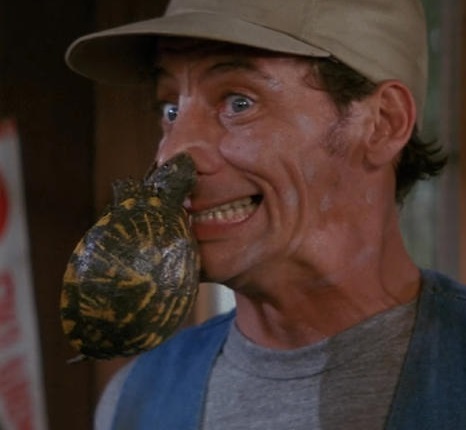
“Wait a second though, Blake,” you’re saying, “You think he’s BRAVE? Ernest freaks out all the time. Remember how he panicked when that turtle bit his nose?”

“This never happens to Beta Ray Bill, does it, Vern?”

My friends, courage is not the LACK of fear. It is the ability to OVERCOME fear. Does Ernest get scared? Sure. But he still STEPS UP, EVERY SINGLE TIME. So when Ernest tries to pick up Mjolnir, he’d do it on the first try. Then he would drop it, stumble, fumble around, accidentally summon up a cyclone, and probably set his hat on fire with an errant lightning bolt, because he’s still Ernest. But despite all of that, whatever danger he was facing, he would somehow still triumph in the end, because his heart is simply too pure to give up.

But as always, this meme gets me thinking about who else might qualify. Other than Ernest, what other fictional characters are worthy of lifting Mjolnir? I’m going to skip over anyone who has been shown, canonically, to be worthy: that would include Captain America, Vision, Storm of the X-Men, Beta Ray Bill, Superman, and Wonder Woman. (I’ve written about crossovers before, right?) I’m sure there are others who’ve lifted the hammer in some continuity or other, but I don’t have a comprehensive list. And since the meme specifies “non-Marvel,” I’m not going to go into the pages of dissertation I could write arguing that Ben Grimm or Peter Parker should be worthy. But let’s look into other fandoms, shall we?

“I’m comin’ with you, Mr. Thor!”

I’ll start with probably the least-controversial choice I’ll have on this list: Samwise Gamgee from Lord of the Rings. If you’ve never read or at least WATCHED Lord of the Rings (in which Sam was played by Sean Astin), well…what century are you from? Come on, get with the program. But lemme tell you about Sam. Sam is a gardener – simple, humble, and with no great ambitions towards adventure or danger. But when his friend Frodo is tasked with the job of carrying the Ring of Power to Mount Doom, the only hope to destroy the ring and prevent the rise of the evil Sauron, Sam joins the Fellowship accompanying him without hesitation. When the rest of the party is separated and Frodo attempts to continue the quest without them, Sam refuses to allow him to go alone. Sam has no desire for glory or power, and it is arguable whether he would even make the journey for the good of all Middle-Earth, which is at stake. But for the sake of his friend? Samwise will do anything. Cross a continent on foot. Battle an enormous spider. Climb a raging volcano with the exhausted Frodo on his back. There is no character in all of Tolkien more unflinchingly loyal and brave than Samwise Gamgee, and you can’t tell me for a second that Odin would disagree. 

Something about those eyes. Those are WORTHY eyes.

Next, I would like to nominate Marcus Cole of the epic science fiction series Babylon 5. Marcus, played by Jason Carter, was a member of the Rangers, a secret society of human and Minbari warriors tasked with maintaining peace across the galaxy. As a Ranger, Marcus is a skilled fighter and never hesitates to go into battle against any manner of otherworldly threats. He also never displays any particularly selfish qualities, but it’s the way his story ends that I believe truly marks him as worthy of Mjolnir. I’m about to spoil the end of Babylon 5 season four, so you should watch the series. It’s currently available on Tubi for free; you go watch the first four seasons – I’ll wait here until you get back. 

Done? Great. So as you just saw, Marcus quickly fell in love with Susan Ivanova, second-in-command of station Babylon 5. Ivanova, however, wasn’t interested in romance. To be fair, there were wars and stuff happening, she had a LOT on her plate, so she would rebuff Marcus’s advances. At the end of the season, though, Ivanova is mortally wounded. Marcus, however, sees a chance to save her: in an earlier episode, the characters had come into possession of an alien device that could heal virtually any wound, cure any disease, basically bring someone back from the brink of death – but to do so required the transfer of life-force from another being. In other words, you had to kill one person in order to save someone else. Marcus hooks Ivanova up to the machine and hooks himself up to the other end, sacrificing his life to save her. If his other feats throughout the series hadn’t already proven him worthy of carrying Mjolnir, his final act of courage and selflessness more than does the trick.

Let’s see him science the shit out of Mjolnir.

Staying in outer space, let’s turn our attention back to our own solar system, particularly the surface of Mars, where Mark Watney of The Martian has proven his worth. In the novel by Andy Weir and the film adaptation, where he is played by Matt Damon, Watney is an astronaut stranded on Mars when the rest of his crew escapes and heads back to Earth. The others don’t leave Watney deliberately – they think he was killed by the same storm they are attempting to flee – and by the time they realize he’s still alive, there’s no way for them to go back and get him. On Mars, alone, Watney has to figure out how to survive on limited supplies long enough for NASA to arrange a rescue. 

Both the book and the movie are a joy to me. For one thing, it’s a rare story in which there is no traditional antagonist. Literally the entire planet Earth bands together to save the main character; there’s no evil in this story. That’s so damned refreshing. The battles Watney has to fight are against Mars itself, trying to find ways to create food, provide power, and ultimately make his way to the site of another rocket that can blast him into orbit for his rescue. And although Watney (not unlike Ernest) often displays momentary panic following his many, many setbacks, he also overcomes that panic every single time, putting his brain to work and figuring out one unbelievable way to survive after another. He never backs down and keeps fighting until he finds a way to safety. 

As the entire plot of the story is Watney trying to stay alive, it’s a little harder to prove his selflessness. However, from the very instant he is stranded on Mars, Watney makes it a point to say that he doesn’t blame the rest of his crew for leaving him behind. He never shows any anger or resentment against them for his predicament, and when the rescue attempt boils down to his crew basically giving up another year and a half of their lives to turn back to Mars and save him at great risk to themselves, Watney shows willingness more than once to die on Mars if that’s what it takes to protect the rest of the crew. Could he lift Mjolnir? I posit that he could. Tragically, if he HAD the hammer, he could have prevented the storm that stranded him on Mars in the first place. 

With four characters down, I turned to my wife. “Erin, who else could lift Mjolnir?” I asked.

“D’vana Tendi,” she said without hesitation.

Go ahead, speak it into the Horn of Truth.

“Duh,” I said, berating myself for forgetting my favorite character from Star Trek: Lower Decks.

Tendi is an Orion, a member of a species who, prior to Lower Decks, were known for their pirate captains and slave girls in other Star Trek series. Not exactly an obvious choice for lifting Mjolnir, of course. But from the first time we see her, Tendi defies what we think of Orions as being. She’s not a pirate or a slave – she’s a scientist. She gleefully loves science, she dives into it with the sort of joy and excitement that Thor himself carries into battle. Tendi sees a problem as something to defeat with her brain rather than her fists, but it’s a battle nonetheless.

That should not, however, give you the impression that she COULDN’T fight. Tendi has forsaken the warrior aspect of her culture, but she was still brought up in it. She holds the title “Mistress of the Winter Constellations,” and it is a title that strikes fear in her enemies. Tendi is fierce in battle when the situation calls for it, then turns on a dime to being the sweet, good-natured Starfleet Officer she truly WANTS to be. 

As for selflessness, at the end of season four of Lower Decks (it is apparently my day for spoiling the fourth seasons of science fiction TV shows), with her ship and her crew on the line, Tendi makes a deal with her family. In exchange for their help, she will leave Starfleet and rejoin the family syndicate, taking her place as Mistress of the Winter Constellations once again. She’s willing to leave everything and everyone she loves in order to save everything and everyone she loves. Thor had to learn to let go of his arrogance – I don’t know if Tendi would even recognize it to begin with.

“Ferb, I know what we’re gonna lift today!”

“Phineas and Ferb,” Erin continued, and good grief, how did I forget THEM? I talked just last week about how much I love Disney’s Phineas and Ferb cartoon and how excited I am that it’s coming back, but somehow it passed right by me. Phineas and Ferb are stepbrothers who refuse to waste a single moment of their summer vacation, spending their time creating incredible inventions and having amazing adventures with their friends. Giant rollercoasters, life-size board games, soccer pitches that defy the laws of physics, portals to Mars (if only Watney had known they were on their way) – nothing is beyond the two of them. And despite the fact that many of their creations would be objectively terrifying to anybody else, they never show a moment of fear. Is it truly courage if you’re so pure of heart that it honestly never occurs to you what what you’re doing COULD be dangerous? I’m not sure. But at the very least they’re aware of the CONCEPT of danger – they always wear helmets and safety gear when appropriate. 

As for selflessness – the very few times Phineas displays any sort of concern over the course of the series usually come when he’s worried about other people. And more than once, the brothers put aside their plans to help someone else in need, whether it’s protecting Baljeet from a bully (this is before Buford joined the gang), getting their parents’ favorite band back together to create a romantic evening for them, or constructing an entire haunted house to scare away Isabella’s hiccups (it doesn’t work – Isabella is so thrilled that Phineas is paying attention to her that she never feels a moment of fear), even their grandiose plans will take a backseat to the needs of the people they care about. 

Unlike any of the other characters on this list, it should be noted, Phineas and Ferb actually met Thor once, in their Mission Marvel special. In that episode, though, the Marvel heroes were powerless and Mjolnir spent most of the episode stuck in the middle of Manhattan collecting parking tickets, so the question of whether the brothers could lift it never comes up. But if it had, I maintain that they could. 

“They’d probably build something to help them hold the hammer at the same time,” I tell Erin.

“Like a cupholder,” she says.

People, get you a partner who understands you the way mine understands me. 

There you go, friends – seven characters who have demonstrated the courage, fearlessness, and purity necessary to lift the mighty Mjolnir. This should not be considered a comprehensive list, mind you. It’s just the first few characters that came to mind when I thought about it (and asked my wife for her opinion), so there are certainly others. I heartily invite your own suggestions, along with a brief explanation of why you think they’re Mjolnir-worthy. There’s nothing nerdier than talking about this kind of stuff with other fans, and that’s the kind of nerdity I like. 

Blake M. Petit is a writer, teacher, and dad from Ama, Louisiana. His most recent writing project is the superhero adventure series Other People’s Heroes: Little Stars, volume one of which is now available on Amazon. You can subscribe to his newsletter by clicking right here. He’s also started putting his LitReel videos on TikTok. He would like to believe that he could lift Mjolnir himself, if given the chance, but he was nervous to take his son on the Ladybug ride at City Park, so…

Geek Punditry #123: TBR Terrors

Warning: This week’s Geek Punditry might be disturbing for people who love books, because this week I’m going to be discussing the three most terrifying letters for a bibliophile: TBR.

Almost as scary as IRS.

TBR, if you aren’t a reader, stands for “To Be Read,” and it’s something that will chill the blood of anyone who actually enjoys reading, because the TBR is the most intimidating thing in the universe. Some of us have actual, physical piles of TBR books. For others, it’s just a list. Still more have a sizeable section of our e-reader’s memory taken up with books that they’re going to read, and I quote, “someday, I swear to God.” But no matter what form your TBR takes, the existence of the TBR is a constant reminder that there are more books deserving of our time than we can possibly devote that time to.

It’s so easy to make that TBR bigger. All it takes is for you to become aware of a book that sounds good. Your favorite author has a new release? It goes into the TBR. Your friend tells you about something great they read on a recent beach trip? TBR. You’re wandering through one of those bookstores that you somehow keep stumbling into when you’re supposed to be buying groceries or perhaps extinguishing a fire, and some book catches your eye? TBR. There’s a new cover on this one? T.B.R. 

A NEW FOREWORD? By HAROLD BLOOM?

Adding a book to your TBR is easy, almost effortless, especially if you just maintain a list. But getting them electronically is easy too – after all, ebooks are usually mostly text (unless you’re talking about graphic novels, but that is a different – albeit similar – conversation). Text files don’t take up nearly as much space on a storage disc as music, videos, or photographs, so you can store a LOT more books on your phone or tablet than anything else, and you can add more…and more…and more.

Then there are the physical book readers, those who have overflowing shelves of books they’ve read and three times as many shelves of books in the TBR. For some of us, we display books the way a hunter or a fisherman will have a prize kill mounted and placed on the wall.

“Here we are, Under the Dome by Stephen King. Hardcover, 1074 pages. I brought this bad boy down back in 2011.”

“Cool. Say, what are all these books on these shelves over here?”

“We’re not gonna talk about those.”

So yes, adding a book to the TBR is effortless. But removing it is a torture the likes of which should seriously have been studied by the Geneva Convention, because it requires you to actually READ the book.

Oh, what fresh Hell is THIS?

“But Blake,” you’re saying, “I thought you said that the whole TBR thing is only relevant to people who LIKE to read.”

Oh, you silly person. Just because you LIKE to read doesn’t mean you actually get to DO it. We live in a world of chaos and terror and reality television, and although reading is a pastime that we book lovers dearly enjoy engaging in, the universe frequently colludes to deny us the time to do it. What’s more, even if you find the time, the little things that chip away at you day in and day out may sometimes leave you too emotionally exhausted to actually do the thing that you do to relax. If you just like, for example, watching baseball, then when you get home you can turn on a baseball game and the extent of your intellectual engagement will be formulating your Facebook post explaining why the umpire is an idiot. But reading is, ipso facto, a more mentally demanding pastime than many of these others, and after a long day at work or with the kids or just dealing with the avalanche of depression that social media has somehow convinced us to plug directly into our veins, the idea of picking up that novel about the vampire apocalypse may start to seem a little daunting, no matter how good the writing is.

The point is, stuff is added to the TBR much, much faster than it can feasibly be removed unless you physically drag your bookshelf into a sterile room with no connection to the outside world. The closest thing many of us get to that sort of distraction-free environment is reading on an airplane, which is actually where I achieved some of my greatest TBR accomplishments before I started traveling with a child, at which point even that avenue was largely closed to me. 

“I don’t actually want to go to Taipei, but how else am I supposed to finish reading the new Hunger Games prequel?”

To make matters worse, although you CAN eventually get a book off the TBR by reading it, a lot of us also like to…this is insane, but listen to me here…we like to read books AGAIN. 

We’re crazy, I know. But there are legitimate reasons for doing so. Perhaps the next book in the series is about to come out, but it’s been 17 years since George R.R. Martin released the last one, so you need to read it again to refresh your memory. Perhaps the last time you read To Kill a Mockingbird was in high school and you have come to recognize that your perspective as an adult is vastly different than that of the 16-year-old who previously read the book and it may be worth re-evaluating it from this new point of view. Maybe it’s just a comfort book, and you feel the need to return to it every so often to sort of ground yourself and remind yourself of the things in the world that you actually like and make you happy as opposed to…well…everything else. No matter the reason, the practical result is that even a book once removed from the TBR can be returned to the TBR at any moment and without warning, and then once again, your only shot at removing it is to read it all over. 

People who don’t read books are listening to this and assuming that I’ve lost my mind, whereas book readers are nodding at me and trying to remember if To Kill a Mockingbird is already on their TBR and, if not, adding it. 

The sheer volume of books that exist doesn’t help. No matter how old you currently are, people were writing books thousands of years before you were born, and at least seven of them are worth reading. What’s worse, there are a bunch of assholes out there right now casually writing even more great books that deserve to be read, as if you didn’t already have enough on your plate, the inconsiderate jerks. There is a point where most book readers have to face the fact that yes, they own more books than they can ever hope to finish reading in their lifetime, but they’re still reluctant to get rid of any of them, because any of these books MIGHT be called up to the major league at any given moment. 

“Well, Blake,” you continue, having this dialogue despite the fact that I wrote this several days before it was posted online and your ability to speak back through the time-space continuum is uncanny, “At least if you’ve got a massive TBR, you never have to worry about what you’re going to read next, right?” Ha ha ha! What an idiot! No, having a TBR makes it even HARDER to choose your next read. Think of it this way, if you have lunch at Raising Cane’s, you really only have one choice to make: will you substitute your cole slaw with extra fries or extra toast? But if you go to, say, the Cheesecake Factory, they hand you a menu so thick that, at first glance, you may think it should be added to your TBR. So let me ask you, my friends, at which restaurant will you have an easier time making a decision? 

Exactly.

The last book I took off my TBR was The Final Girl Support Group by Grady Hendrix. It was a great book, about a group of survivors of slasher-type murderers (the characters are very thinly veiled homages to the final girls of movies like Friday the 13th, Scream, Silent Night Deadly Night, and many others) who have an therapy group they attend together until someone starts trying to kill them. This is the third of Hendrix’s books I have read and I’ve really become a fan of the way he blends plots right out of a scary movie with a dark and sharp sense of humor. Unfortunately for me, after three hits in a row from him, I’ve pretty much decided that every book he’s ever written deserves to be on my TBR. I’m looking at Horrorstör next, billed as “a haunted house story set in a furniture store.” It sounds ridiculous and amazing, and there’s no telling how long it will be on the TBR before I get to it.

“Look at me, Song of Achilles! Take in my glory, The Redemption of Time! THE TBR CAN BE ESCAPED!”

But the point is, I FINISHED Support Group, so I got to take it off the TBR. Great! Go me! So…what next? More horror? Do I want another horror story so quickly, or do I want to mix it up a little bit? A little comedy? There was definitely humor in Support Group, but it wasn’t a laugh riot, so something a little lighter might be welcome. I’ve got a ton of Star Trek novels I haven’t gotten around to yet…but it hasn’t been THAT long since I read one. Maybe I should go back and pick up one of the Ruth Plumly Thompson Oz books I haven’t gotten around to, except that I didn’t really care for the last one I read, Grampa in Oz, and while I intend to eventually read all of the Famous Forty, I’ve put her on probation for a while. I read the first book of that trilogy by Gwenda Bond a couple of months ago and I really liked that, so perhaps I should pick up book two. Or maybe…

And my mind goes around like this for hours at a time until a friend of mine on Facebook posts that she just started reading Hail Mary by Andy Weir which, of course, makes me think that it’s time to finally go back and read The Martian for a second time.

Not even joking, this is the most scientifically-accurate book I’ve read since my second year of college.

Again, non-readers are ready to send me to an asylum. Book lovers know EXACTLY what I’m going through. 

So my friends, be kind to those of us who love to read. We have chosen a recreational activity that frequently includes as much planning and careful mental preparation as getting another job, except that instead of getting paid for it, we just get more books to put on the TBR. It’s a curse.

A lovely, wonderful-smelling curse that none of us would give up even if we could. 

Blake M. Petit is a writer, teacher, and dad from Ama, Louisiana. His most recent writing project is the superhero adventure series Other People’s Heroes: Little Stars, volume one of which is now available on Amazon. You can subscribe to his newsletter by clicking right here. He’s also started putting his LitReel videos on TikTok. He added six books to his TBR while writing this. Shut up.