Geek Punditry #121: Tune In, Drop Out

If there’s one thing I hate, it’s when advertising works. But the truth is, we all know it does. Companies wouldn’t spend money playing the same commercial 187 times per episode of The Bachelor if they didn’t have statistical evidence that doing so increases sales. So all we can do, as viewers, is suck it up, move on with our lives, and remember to be on the lookout for the all-new PB&J Reese’s Peanut Butter Cups the next time we’re at the store.

On occasion, though, advertising can hit you from somewhere totally unexpected and really do a number on you, and that’s the reason I’m now a subscriber to Dropout TV.

Fortunately, my shame is mitigated by laughter.

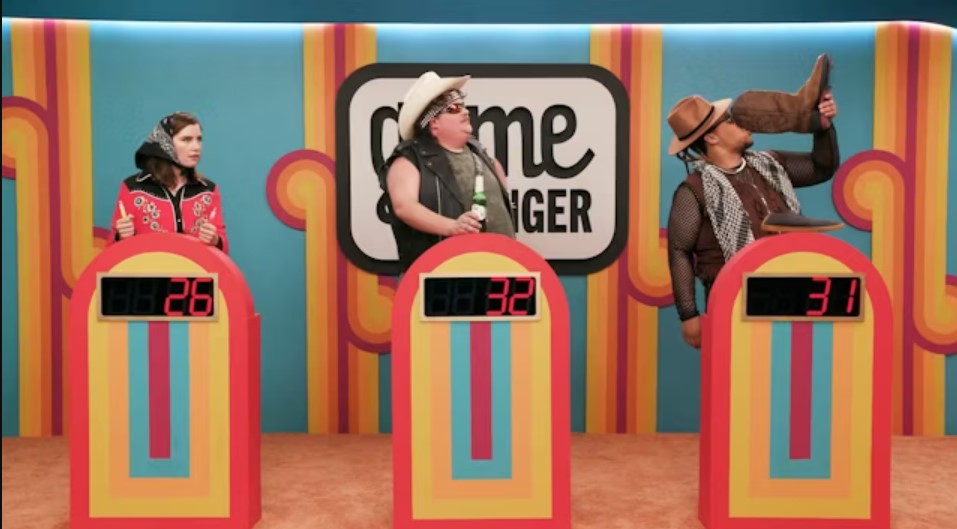
It started on Facebook Reels where, in-between videos of people making hard candy or trying to identify LEGO kits from two or three pieces that viewers still had, I started to get these clips from what appeared to be a game show. But it wasn’t a normal game show – the rules seemed kind of absurd, and they didn’t always make sense. In fact, it didn’t seem like the players were even playing the same game from one clip to another. Then I finally realized that was the whole point. The show in question is called Game Changer, and the gimmick is that the game is different in every episode, and the players have no idea what they’re going to be playing until the game begins. It’s actually a great hook for a show, and as I watched more and more, I WANTED to watch more and more. 

It’s just like that Watson episode of Jeopardy.

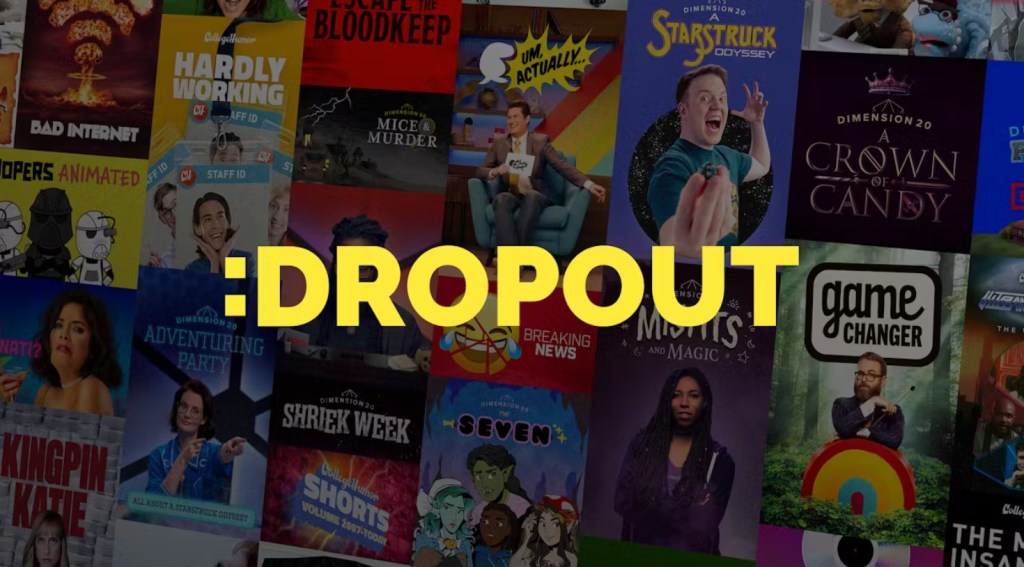
Eventually, this led me to check out the source, Dropout TV, a streaming service that’s actually been around since 2018, but that I hadn’t heard about until these reels started coming across my screen. A spinoff of what used to be the College Humor website, Dropout specializes in unscripted comedy series, although it does have a few animated shows and stand-up comedy specials as well, and as a service that has been more or less consistently putting out content that isn’t available anywhere else for seven years now, there’s a cornucopia of comedy waiting there for me to watch. I’ve barely even scratched the surface so far, but I’ve become so quickly engrossed with their stuff that I wanted to talk about some of my favorites. 

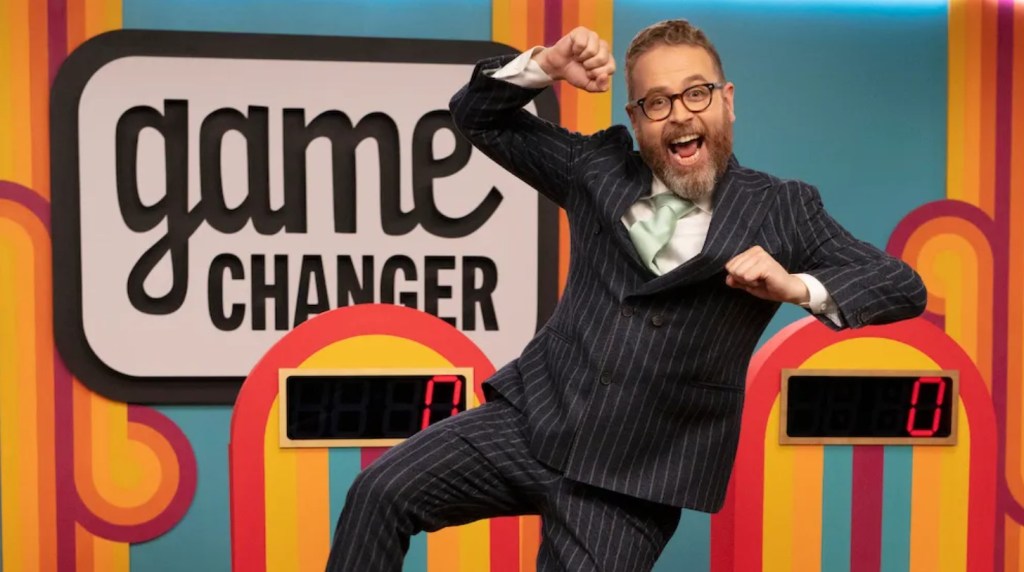
First up is the aforementioned Game Changer. Hosted by Dropout owner Sam Reich, Game Changer is a different game every time, and the contestants have to figure out what the game is AS THEY PLAY. The contestants, by the way, are usually comedians and comedy writers employed by Dropout, and so you see the same faces come back over and over. It’s not long before you get a feel for their personalities and begin to pick your favorites. The first episode had Sam asking the players personal questions, followed by a light flashing either red or green to indicate if they were telling the truth or lying. The twist – which was revealed early to the audience but not to the players – is that their respective significant others were backstage controlling the lights. As the players lost their mind trying to figure out how the “light” could know certain things, the camera would cut backstage to show their girlfriends laughing hysterically. 

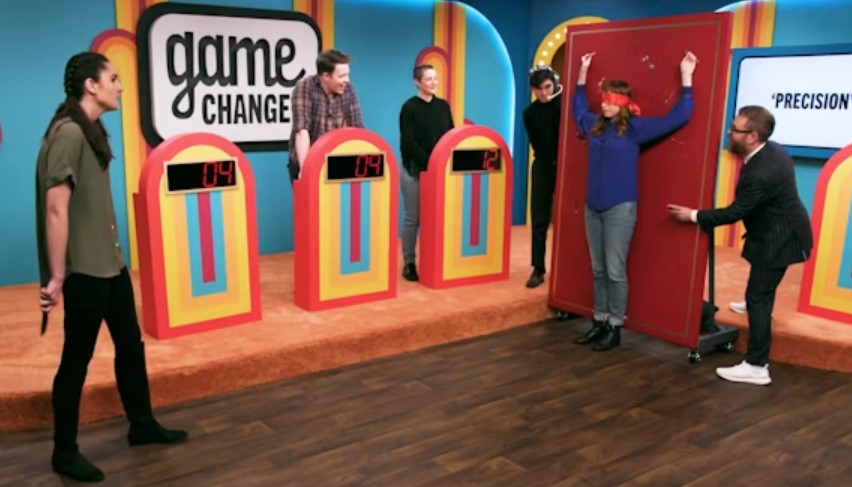
And that’s just the first episode. As I said, each episode is totally different. There’s one where the players have to hastily assemble bizarre orders from a conveyer belt, another where they have to guess what food to feed a giant mouth. My favorite episode so far, though, was the season two finale, “Yes or No.” In this one the three players are simply asked “Yes or no?” by Sam, over and over again, with points awarded seemingly at random. The method of asking the question grows more elaborate and hilarious as the game goes on, but it always boils down to “Yes or no?” As the frustration mounts on the players and they – and the audience – sloooowly come to realize what the ACTUAL rule of that episode’s game is, the whole thing builds to one of the most monumentally epic improvised comedic monologues I’ve ever seen. It’s a thing of beauty.

Although you’ll come to recognize this as the face of the Devil.

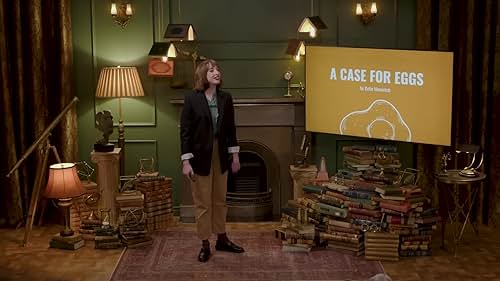
That’s just the one show, though. There are plenty more to choose from. Make Some Noise is a spinoff of one of the more popular Game Changer episodes, featuring the comedians improvising lines, reactions, and even entire sketches based on goofy prompts. (Fans of Whose Line is it Anyway? will enjoy this one.) I’ve also grown fond of Smartypants, in which the cast prepares seemingly-academic college-style lectures on such ridiculous topics as cryptids, hot dogs, the month of February, and the importance of assigning a “Food Captain” to your friend group. Um, Actually is another game show in which the contestants are given “facts” with an error in them, then have to ring in and do what people on the internet love to do more than anything: correct each other.

Although if I’m being honest, she didn’t have to work too hard to convince me.

Are you into cooking shows? You need to check out Gastronauts. This time the comedians aren’t the contestants, but the judges. Real chefs compete to comply with their outrageous prompts to invent a meal, such as making something that can be eaten from a horse’s feed bag or creating the HEAVIEST (but still tastiest) dish. And although I haven’t quite gotten there yet, there’s an entire subcategory of the site called Dimension 20, several shows that revolve – in one way or another – around the obsession certain members of the Dropout family have with Dungeons and Dragons.

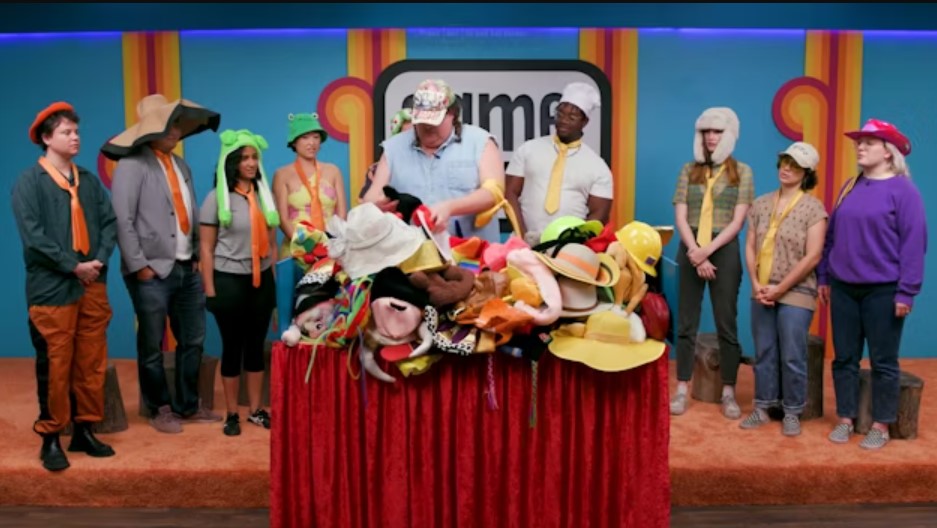
The shows are usually quick. Without adhering to a broadcast TV schedule, I’ve seen episodes as short as 16 minutes, although they usually clock in around 20-25. The longest I’ve seen so far was the 63-minute season premiere of the current Game Changer season – an epic episode because Sam gave the contestants a set of 15 tasks, then gave them a YEAR to accomplish them all on their own. Their presentations on how they accomplished the tasks were hilarious and, occasionally, oddly heartwarming. I think one of the things that makes these shows enjoyable is that you get a real sense that the people involved LIKE playing together and are actually having FUN in front of the camera, and there’s always room for more fun in the world. 

You can tell just from the body language how much every person on this stage is enjoying themselves.

Like I said, you see a lot of the same faces over and over again, making it easy to become devoted to the players. In fact, virtually everybody who is a regular appears on multiple shows, and people who host one show become contestants on the others. But there are guests as well: Wayne Brady and Ben Schwartz have both shown up on Make Some Noise, and the pandemic-era episodes of Game Changer featured surprise appearances by people as diverse as Tony Hawk and Giancarlo Esposito. There’s also Josh Ruben, one of the regulars, but whom I had already begun to follow not as a comedian, but as the writer/director of some of my favorite recent horror-comedy hybrid films, such as this year’s movie Heart Eyes, the recent Werewolves Within, and the excellent Scare Me, in which he also stars. 

It should be noted that this is NOT a service to watch with your kids. Although the comedy is usually good-natured and there hasn’t been anything I’ve come across that I’ve found particularly offensive, they lapse into blue humor frequently and have absolutely no filter when it comes to dropping language that you most certainly would not say in front of your grandmother. But if you’re okay with that sort of thing and you’re looking for some quick, crazy stuff that will make you laugh, it’s worth checking out.

I need to talk to the Geek Punditry Image Acquisitions department — I specifically asked for something WEIRD.

And hell, you don’t even have to become a subscriber to get a taste. There are tons of clips on the Facebook and TikTok pages for Dropout TV and the individual pages of the assorted shows. It took two or three months of me watching those clips before I finally decided to take the plunge and subscribe to the service, but I’m glad I did. There’s not enough humor in the world, and it’s great to find a new source with so much to choose from.

Blake M. Petit is a writer, teacher, and dad from Ama, Louisiana. His most recent writing project is the superhero adventure series Other People’s Heroes: Little Stars, volume one of which is now available on Amazon. You can subscribe to his newsletter by clicking right here. He’s also started putting his LitReel videos on TikTok. Shoot, he didn’t even get around to Very Important People. Ah well, next time. 

Geek Punditry #113: The Medium is Killing the Message

When you teach the same subject for long enough, there are certain topics and certain lessons you start to look forward to. One of my favorite things to cover with my 12th grade English students, for example, is Hamlet, and I particularly look forward to the famous “To be or not to be” scene. I always start by telling the kids that this is the big one, the grande supreme enchilada, the most famous speech that Willie Shakes ever wrote which, by proxy, also makes it one of the most famous speeches ever written in the entire history of the English language. Then I look at the kid who has already volunteered to read the speech out loud and say, “No pressure.”

Here’s a level three nerd joke. Ahem: “Took him 900 years to get this part right.”

After we read and discuss the speech together, I show them clips of several different film versions of Hamlet. We talk about how different actors play the role, how the different settings change their interpretation of the scene, and fun English class stuff like that. The most entertaining version – to me, at least – is when we watch Ethan Hawke’s depiction of the scene from 2000. In this version, director Michael Almereyda has changed the setting to the modern day (or at least, what was modern in 2000) and has Hamlet deliver this speech wandering the Action Movies section of a Blockbuster Video store. But I’m showing this to contemporary high school students. Even the oldest of them wasn’t born until 2007, and the vast majority of them have no idea what they’re looking at. Popular guesses include a gas station, a convenience store, and a bookstore. The ones that DO recognize Blockbuster Video, I assume, do so because they’ve seen Captain Marvel.

The weird thing is, after updating the setting, they kept the headgear 100 percent historically accurate.

It’s funny to me, to see the cultural disconnect between the film and the modern audience. No doubt Almereyda intended to make the movie contemporary, but in choosing that particular setting, this film feels even more dated than a traditional version of Hamlet set in the 7th century. And the percentage of my students who know where Hawke is before I explain it gets smaller with each passing year. These are kids who have never – and WILL never – browse the video section of a store.

And as entertaining as the lesson usually is, the fact that this is an artifact of times gone by makes me a little sadder each year.

I grew up in the 80s. I was in high school and college in the 90s. The peak of Video Store Culture is intertwined with the most important developmental years of my life. I remember as a kid, my parents taking us down to the video store and letting us roam the aisles looking for movies to watch. My younger brother and sister would gravitate towards the kids’ movies, and while they would pour over the shelves trying to make their own decisions, I found myself drifting to sections of the store I knew my parents would NEVER allow us to rent from, especially the horror section. Ghoulish monsters, blood dripping down faces, whatever the hell was going on with the box art for The Stuff…I was mesmerized. 

9-year-old me would have TRADED my brother to find out what was going on here.

VHS box art of the 1980s was a unique art form that has no peer in the history of pop culture, save perhaps for paperback book covers of the same era. Great box art could make even the lamest, cheesiest low-budget schlockfest seem tempting. But my folks weren’t the sort who would allow a 9-year-old kid to rent something like Creepshow no matter HOW enticing the box art was. So those movies found a home in my psyche only in poster form, which is how they remained until I was old enough to rent them and watch them myself. At which point – let’s be honest – I discovered that a great many of those movies were better as box art than they ever were as films. But that was okay.  

As I got older and went to video stores myself, I would gravitate to all kinds of movies, devouring things that I’d been curious about for years but had never been able to indulge in before. Not just horror, but classic sci-fi, old comedies, or indie darlings I’d heard good things about like Magnolia. It didn’t hurt that around the time I graduated college, my best friend Jason became the manager – and eventually owner – of the video store I most often patronized, so I got to sample an awful lot of movies for free. And as culture shifted from VHS to DVD, I went from being simply a viewer to a collector. I would go to Best Buy, Circuit City, Borders, or Barnes and Noble and spend hours walking through the shelves, examining the DVD cases, trying to find old favorites to add to my shelf or new movies I’d never heard of that were worth a watch. I could do this alone, but it was more fun to do it with Jason or our other friends. Either way, though, there was a tangibility to holding those cases in my hands, reading the description on the back, studying the list of special features to see if there was a good making-of featurette or commentary track that would be worth listening to or – of course – admiring the cover art.

This is a pleasure that has largely been lost to us. Netflix slaughtered the video store in its sleep, and of those retail stores I mentioned the only one that both still exists and has a physical media section at all is Barnes and Noble, and it’s nowhere near what it used to be. And while I know that we always lose certain cultural elements as time passes and culture evolves, this is one of those changes that has hurt not only the people who make these movies, but the consumers who watch them as well. 

It’s the streaming era I’m talking about, of course. That’s what killed the video store, that’s what has DVD and Blu-Ray sales on life support. (Thank God for horror movie fans, one of the last stalwart groups to demand physical media for their preferred art form. They’re the ones keeping the whole thing alive right now.) Sure, the convenience of streaming can’t be beat. I don’t need to go down to the video store anymore. I don’t need to HOPE that the movie I want to watch will be available. I don’t have to take the risk that I’ll get a disc with a scratch that has rendered it unplayable, and never again will I need to double-check that I’ve rewound a tape before I return it.

Was there anything worse than opening the DVD case at home and seeing THIS?

But this same convenience has made the entire movie-watching experience feel more disposable, like it doesn’t matter anymore. If I went down to Jason’s video store hoping to rent Scream 2 only to find that it had already been rented, that’s when I would look for something different and discover movies that I may otherwise have never watched, like Amelie. With streaming, you just have to hope that the movie you want is on a service you subscribe to, and if it is, there’s no need to roam.

But even if the movie you want ISN’T on your service, or even if you don’t know what you want to watch, the browsing experience isn’t the same. In a store, looking at a movie case, you had the opportunity to pick it up, read the back, gaze at that beautiful, beautiful cover art. Today, every movie is reduced not to art, but to a thumbnail. Most of the time it’s a still shot from the movie, probably a close-up of the biggest star in the film, with the title superimposed on top of it. It’s bland, lifeless. Just as the greatest box art could make me watch the worst movies, so can a cookie-cutter thumbnail cause me to scroll right past one of the best movies of the year, and I’ll never know. 

We’ve lost the community aspect as well. For people like me, TALKING about the movie after I’ve watched it is just as vital a part of the experience as actually watching it. Discussing what we liked, what we didn’t like, what did we think the sequel would be like, should there even be a sequel at all? At the video store, you can chat with other customers. “What are you getting? Oh, I’ve seen that one, that’s great. Say, I really liked From Dusk ‘Till Dawn but I’m not sure what to watch next. Any suggestions?” Sure, the streaming services TRY to do this, but I would take the suggestion of a random film geek in a video store over the Netflix algorithm every second of my life, and it wouldn’t even be a struggle.

Netflix has “We think you’ll love these.” Your local video store had “Vinnie’s picks.” Nobody ever saw Vinnie. No one knew who he was. But Vinnie introduced you to Boondock Saints and you LOVED him for it.

And with this, the respect given to a movie by the audience is being cut down. I know a lot of people who’ll stop a movie if they aren’t engaged in the first five minutes. And sure, that’s your prerogative, but there’s something to be said for a slow burn. Some movies need to be given time to get into the story, and sometimes that’s what makes it effective. In the video rental days, once we made it home with a movie we WATCHED the damn thing, no matter how bad the first five minutes were, because that was our only option. And I think we were better for it. I don’t want to tell you that you should sit around watching something you don’t like, but the disposability of entertainment has caused us to forget how to give a story a fair chance. I can spend twice as long scrolling through the options on Hulu than I ever did looking at the DVDs at Borders, but I’ll end up far less satisfied.

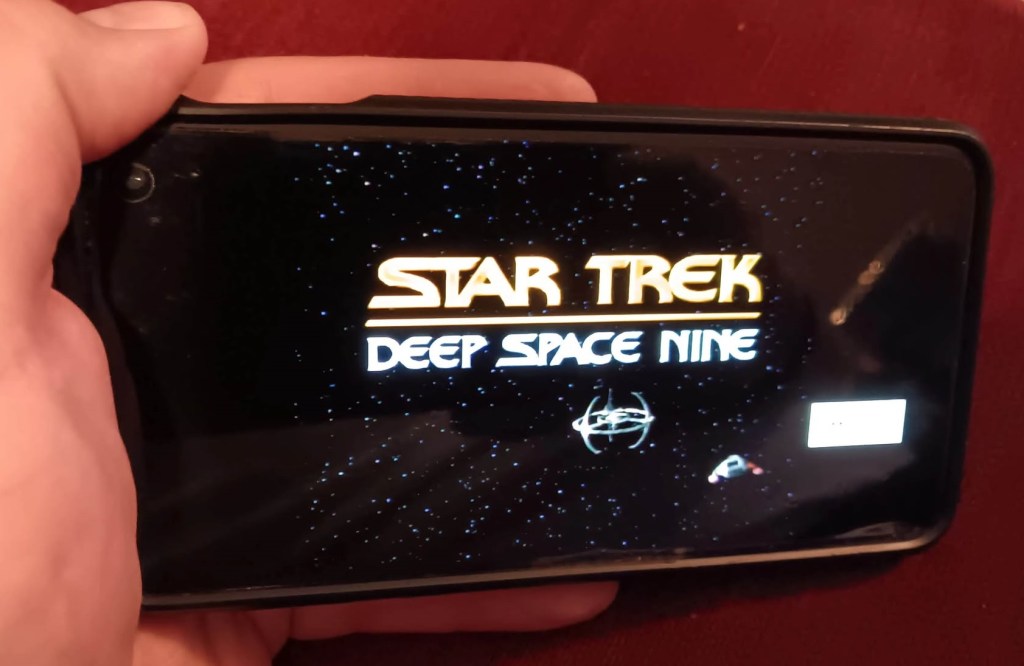
Then there’s the way movies are presented today. TVs have, for the most part, gotten substantially larger than they were when I was a kid. You would think that would make the viewing experience better, but somehow the opposite has happened. My students, my nieces and nephews, are more likely to watch a movie on their Chomebook, their tablet, or – worst of all – their PHONE. Not to say I’m not guilty of this at times – when my sports fanatic son is bound and determined to watch a lacrosse match between two colleges I’ve never heard of with an announcer who has all the life and energy of the sloth from Zootopia, minus the personality, I’m certainly not above pulling up an episode of Star Trek on my laptop. But it’s not my preferred method of watching anything, and the idea of watching an entire motion picture on a phone screen is giving me a migraine. But to kids today it’s common. I’ve had students tell me they’ve watched entire movies chopped up into two-minute segments and posted (in portrait mode for the love of God) to TikTok, a practice which I’m pretty sure is directly responsible for the sharp rise in instances of bird flu in the United States.

I took this picture myself just to illustrate my point and it STILL makes me want to punch me in the face.

The only thing that mitigates the sting for me is that I know I’m not alone. I have many friends – both in real life and on social media – who join me in bemoaning the decline of video store culture, and while there may not be enough of us to bring that culture BACK, it helps to know that other people feel the same way as you do. Coincidentally, on the same day this week my students were confused by the Blockbuster store in Hamlet, I listened to an episode of the Movie Crypt podcast in which filmmaker Alex Ross Perry discussed his new documentary Videoheaven, a “video essay” (in his own words) about the rise, influence, and fall of the video store told through clips of movies and TV shows featuring video stores. The movie is almost three hours long, he says, and frankly, it sounds amazing. I am very excited about this film and very anxious to get a chance to watch it.

I’ve never met Mr. Ross Perry, but just based on this poster, I suspect he’d be my kinda people.

Ironically, I’ll probably have to wait until it comes to streaming.

Blake M. Petit is a writer, teacher, and dad from Ama, Louisiana. His most recent writing project is the superhero adventure series Other People’s Heroes: Little Stars, volume one of which is now available on Amazon. You can subscribe to his newsletter by clicking right here. He’s also started putting his LitReel videos on TikTok. Yes, he’s old. You wanna make somethin’ of it?

Geek Punditry #77: Tooning In

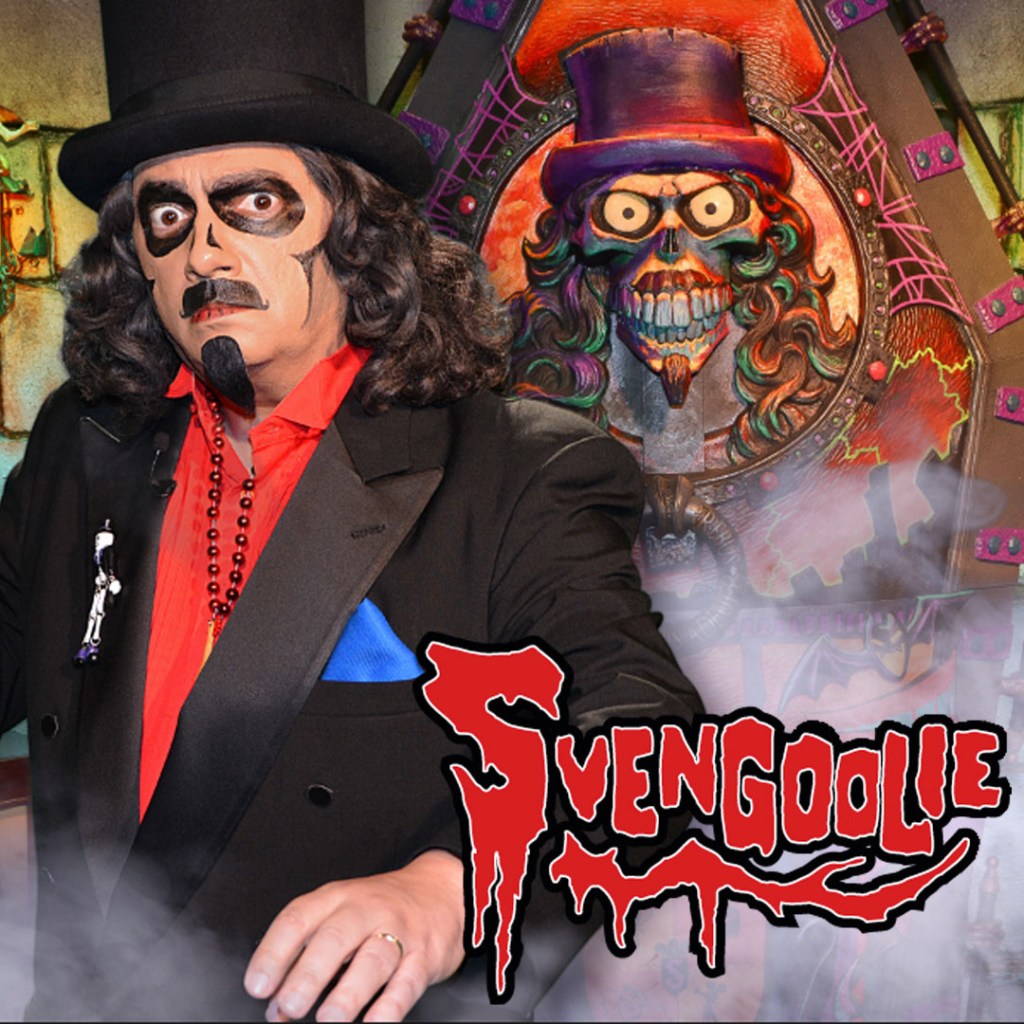
In 2024, there are an awful lot of us who don’t bother with live TV anymore. With the exception of sporting events (and increasingly even those) virtually every new show you could want to watch is available on at least one of the major streaming services, so the days of making sure that you’re home at 8 o’clock on Thursday so you don’t miss the new episode of Friends are long over. In my house, though, there is at least one exception to that rule: Saturday night. On Saturday night, unless there’s some pressing reason for us to be out of the house (or to watch a competing sporting event) the Petit TV is tuned to New Orleans’s WDSU Channel 6.2, the local MeTV affiliate, for the greatest TV event of the week: Svengoolie. Svengoolie is the last of the great horror hosts, the heir to the empires of Elvira, Chilly Billy Cardille, Vampira, and New Orleans’s own Morgus the Magnificent. Every Saturday Sven serves up a classic horror or sci-fi movie replete with his own brand of comedy and information, cracking jokes and telling us about the history of the film in a single breath. 

America’s greatest natural resource.

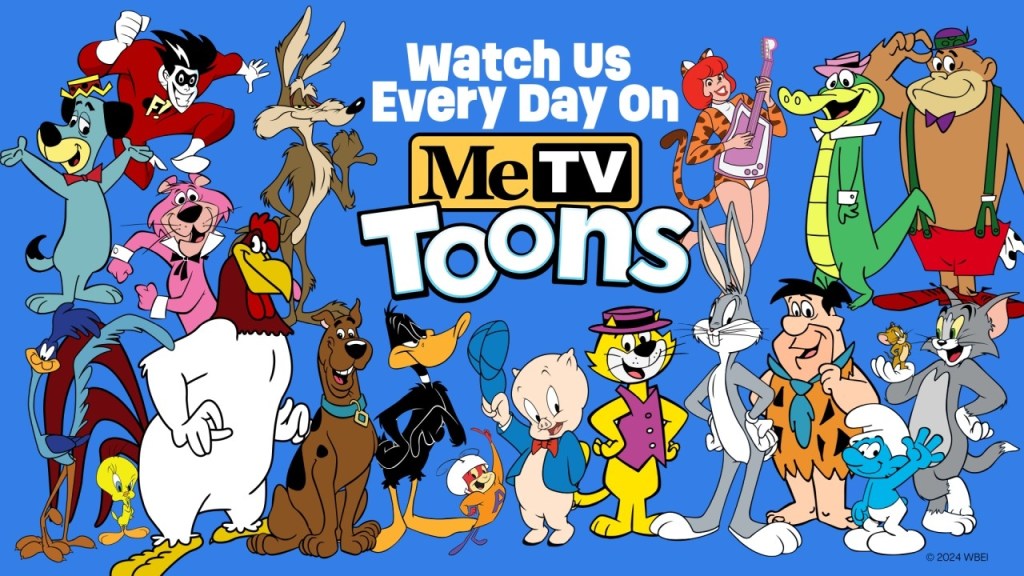
And it is because I watch Sven every time that it’s humanly possible that I knew about the announcement of another new network that hopes to lure viewers away from their streaming services and back to the antenna: MeTV Toons. Whereas the prime MeTV network serves up seven days of reruns of classic TV comedies, dramas, westerns, and the like, MeTV Toons – launching this Tuesday, June 25 – promises to do the same thing with classic animation. At launch, the network will provide a home to such luminaries as Looney Tunes, Rocky and Bullwinkle, The Flintstones, The Jetsons, Scooby-Doo, Popeye and Pals, and even later shows from the 80s and 90s like The Smurfs, The Real Ghostbusters, Beetlejuice, Captain Planet, and many, many more. 

The long nightmare days of a world without Atom Ant will soon be over.

The response was shockingly positive. The network hasn’t even launched yet and there are already at least two Facebook fan groups dedicated to the station, one of which is approaching 5,000 members and the other topping 17,000 as of this writing. There’s a neat little community appearing here, and once you filter out the 14,000 members who have joined to ask if the network will be available in their area because they don’t know what Google is, there’s a lot of conversation ABOUT classic cartoons, the ones that will be on the network at launch, and what other pieces of animation history fans hope to see make an appearance in the future.

Of course, not everyone in the group is positive. That’s nearly impossible. Of all the different Facebook groups I’m a part of, there are only two that I’ve never known to have any sort of toxic presence: the Bandit group for Bluey fans sharing their journey through fatherhood I wrote about a few weeks ago, and fans of the Movie Crypt podcast, proving once again that horror movie fans are some of the kindest and most loving people you could ever meet in the real world. Some of the toxic comments in the MeTV Toons groups are complaining about the lineup, because the fact that they spend a half-hour a week showing Police Academy: The Animated Series is evidently a cardinal sin amongst a certain sect of the populace. Others are complaining because the network is not available in their area – which is a complaint I sympathize with, as for a while it didn’t look like we would get it in New Orleans at launch. I was flailing around the internet like a Dickensian waif until it was announced that it will be on Channel 41.6, which filled me with childlike glee. But even when I thought we weren’t gonna get it, I was smart enough to know that nobody in the Facebook group had any control over that and acting like everybody there broke into my house and crapped in my Cheerios wasn’t going to solve anything. 

But the complaint that really got my attention was the one guy who asked why, in this age where “everything is available streaming,” anybody would care about launching a new pre-programed broadcast network. I’m going to address the two major flaws in his logic, starting with the more obvious and then moving on to the one that has more personal meaning to me. 

First of all, let’s talk about the notion that “everything is available streaming.” The fact is, friends, that’s simply not true. As much as we might like it to be the case, there are large swaths of our television and cinematic history that are not legally available on any streaming service, or even for purchase digitally or physically. Sometimes it’s a rights issue. The original Muppet Babies cartoon from the 80s, for example, cannot legally be found anywhere, and likely never will, because that cartoon made extensive use of movie and TV clips from a half-century of Hollywood output. At the time, there was no thought behind it except for obtaining the rights for broadcast. Nobody was considering the afterlife of these shows. Now, in order to sell or stream an episode of Muppet Babies, the Walt Disney Entertainment Conglomatorium and Tiki Lounge would have to track down the rights holders of each and every movie or television clip ever used on the show to obtain permission to use it again, and in perpetuity. Disney clearly doesn’t think the effort it would take to do such a thing would be worth the likely return on their investment, and as much as I hate to say it, I think they’re probably right.

I dare you to find one historical injustice greater than the fact that this episode is lost to the world.

But Muppet Babies wouldn’t be on MeTV Toons anyway, since Disney has their own deal. What about the shows that will? Well, a quick glance shows that the Police Academy series isn’t available to stream anywhere. Captain Planet is available to PURCHASE from sites like Amazon or AppleTV, but not as part of any streaming subscription. And although there are limited (and often out-of-print) DVDs available for the likes of Underdog, Beetlejuice, and The Adventures of Rocky and Bullwinkle, if you’re hoping to stream them on Netflix or any similar service, I’m afraid it’s a non-starter. And even for things that ARE available to stream – well, as we’ve seen in the last year, something that’s on Paramount+ today is not guaranteed to be there tomorrow. 

Obviously, some things are worth fighting for.

I’m not going to go through the entire MeTV Toons schedule, but you get the point. There are a LOT of things that aren’t available to stream, whether it’s because of rights or because the copyright owner doesn’t think it would be worth the expense to put it out there or for any of a thousand other reasons. A network like MeTV Toons will likely shift their lineup often, especially for shorter-run series (for example, Wacky Races is on the schedule, and that series ran for only 17 episodes), so this will be a chance to give a bit of life to lots of cartoons that otherwise have been forgotten. People love to be dismissive of animation because, historically, Americans have viewed it as something that’s “just for children.” The number of adults eager for MeTV Toons would seem to disagree – and even if it DIDN’T, so what? The Hobbit was written for children. So was The Wizard of Oz. The sublime Paddington movies were made for kids. That doesn’t make a creative endeavor invalid, or mean that it isn’t something worth preservation.

So let’s move on to the second assumption of this question: why a pre-programed broadcast network? Who cares? Why not put all of these shows on a streaming service? Hell, you could even make it an ad-supported service like Tubi, which reported viewer numbers recently in excess of a lot of the premiere, paid streamers like Disney+. That seems doable, doesn’t it?

Well, yeah, kinda. And were such a service to exist, I would be first in line to sign up for it. But don’t discount the allure of a pre-programmed schedule. Apps like PlutoTV and RokuTV have built up a huge following by streaming pre-programmed channels of entertainment, supported by advertising, for free. I’ve written before about how much I love PlutoTV so I won’t get in too deep, but the fact that I can just say, “I wanna watch Star Trek” without having a specific episode in mind, then have TWO PlutoTV channels to sate my hunger…well that’s damned appealing. 

“What do you want to watch? Kirk? Picard? Sisko? Janeway?”
“Yes.”

Pre-programmed TV is easy. Not mindless, mind you, but EASY. We live in a world where SOMETHING is demanding our judgment at every single moment of the day. It starts with something simple, like ordering coffee. But what kind of coffee do you want? What size? Hot or iced? Want a shot of flavoring in that? How about a shot of espresso? Whipped cream? Cherry on top? Paper straw that’s good for the environment but useless for drinking or plastic straw that actually functions as advertised but that will cause the barista to assume you murder turtles in your sleep? What name do you want on the cup? Any snacks? Okay, great, that completes your order, sir. Cash, card, or blood donation? Great. Want to leave a tip?

If we have taken something as simple as buying a cup of coffee and turned it into a process that requires a dozen decisions before the angry barista wearing a “Justice for Donatello” button gives you your order, what happens with something IMPORTANT, like buying a car or choosing a job? I’m a teacher, and there are studies that indicate the average teacher has to make 1,500 individual decisions over the course of an average day. Numerically, this is a higher number than most DOCTORS. (Although admittedly, the decisions doctors have to make are usually more intense than whether or not I’m going to let Jimmy go to the bathroom when I don’t believe he really has to go.) I cite this number any time my wife doesn’t understand why I’m begging HER to pick what we have for dinner, for God’s sake, I don’t care WHAT it is I just DON’T WANT TO DECIDE.

Ahem. Love you, baby.

The point is, apps like PlutoTV offer something that a typical streaming service does not: easy entertainment. If I don’t know exactly what I want to watch, I can spend hours scrolling through the choices on Netflix, Hulu, Disney+, Peacock, Paramount+, Max, Shudder, the Criterion Channel, ESPN+, Screambox, BET+, Prime Video, Shout Factory, Freevee, AMC+, Disney-Minus, Nick at Night Terrors, and Cap’n Willie’s Streaming Emporium-o-rama before finally giving up and putting on a rerun of Gilligan’s Island. Streaming is GREAT if you already KNOW what you want to watch, but sometimes all you really want is to stop thinking and get in some comfort viewing. PlutoTV and RokuTV are built on this premise. It’s worked so well, in fact, that bigger streamers like Shudder, Prime Video, and Freevee have all added “channels” to their streaming model, and rumor has it that Disney+ is considering the same thing. Sure, it’s kind of weird that we abandoned cable for streaming only for us to want to turn streaming back into cable, but sometimes you’ve got to let something go before you realize how much it means to you.

This is what comes on when you activate your Fire stick in Hell.

The point is, MeTV Toons is another outlet for this kind of entertainment, and it’s promising us something that none of the other sources have offered, and by that I am of course referring to Peter Potamus.

“Hello.”

But there are plenty of other things on that network that I would LOVE to see show up in rotation. KNOV 41.6 starts airing on Tuesday, I intend to park my TV on that channel and leave it there.

At least until Saturday night rolls around, anyway. Ain’t nothing gonna take me away from Svengoolie. 

Blake M. Petit is a writer, teacher, and dad from Ama, Louisiana. His most recent writing project is the superhero adventure series Other People’s Heroes: Little Stars, volume one of which is now available on Amazon. You can subscribe to his newsletter by clicking right here. He is hoping against hope that MeTV Toons will find a way to show The Racoons, because he has to find out if that show is as weird as he remembers or if he just had a fever dream that lasted for much of his childhood. 

Geek Punditry #39: In a Streaming World, Does Size Matter?

Two years ago, in a move that made pundits across the world scratch their heads and say, “Well how the hell did that happen?”, Netflix purchased the Roald Dahl Story Company. This trust, of course, is responsible for the works of the creator of such things as Charlie and the Chocolate Factory, James and the Giant Peach, Matilda, and that one short story about the snake. At the time, Netflix announced that this acquisition would lead to the development of their own shared universe, copying the Marvel Method just like everybody else has been trying to do for the last decade. So far, though, we haven’t seen a ton of stuff that feels like it’s part of that world. We’ve gotten a film version of the theatrical Matilda: The Musical, and later this year they’re going to release Wonka, an origin story for a character that Tim Burton definitively proved in his film version has absolutely no need for an origin story, but not much else.

Pictured: Much Else.

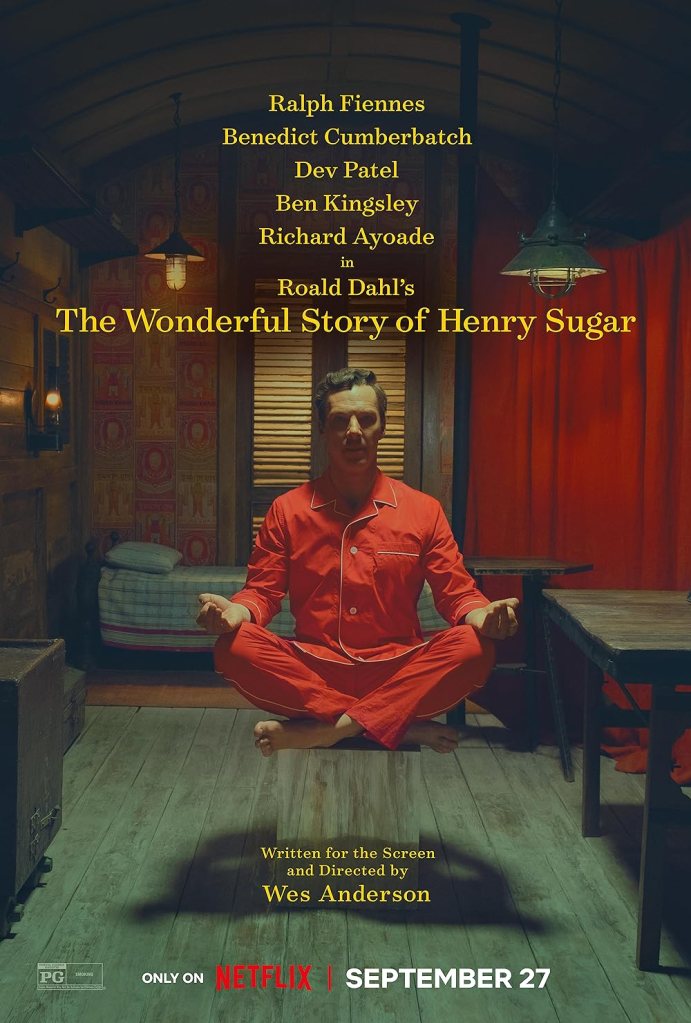
Earlier this week, though, Netflix surprised us all by dropping The Wonderful Story of Henry Sugar, a film based on one of Dahl’s short stories. The movie is directed by Wes Anderson (who also directed the Dahl adaptation The Fantastic Mr. Fox back in 2009) and stars Benedict Cumberbatch as a compulsive gambler who finds a secret to a mysterious power that could potentially make him the wealthiest man in the world. Despite a premise that could easily go very, very dark, the film (and the story it is based on) is remarkably sweet and optimistic, lacking the cynicism that so often creeps in when modern filmmakers attempt to adapt a classic piece of literature that didn’t have a lot of cynicism in the first place. It’s very much a Wes Anderson film, carrying on an odd obsession with films mimicking stage plays that we also saw in his recent feature Asteroid City. The sets of the film are flown in and out in full view of the cameras, the majority of dialogue is spoken directly to the viewer as if the actors were narrating a play, and even visual effects are done in a dime-and-nickel fashion, such as making a character “levitate” by having the actor sit on a box painted to match the set behind him. It’s weird and bizarre and utterly delightful.

It’s also only 39 minutes long.

Although originally presumed to be a feature film when announced, Anderson quickly corrected people, saying that it’s actually the first of four shorts he is making adapting various Dahl stories for Netflix. True, 39 minutes is longer than most of us think of as a “short” film (the classic Looney Tunes shorts were usually in the seven-minute range, and even the Three Stooges rarely broke 20), but it’s certainly not long enough to qualify as a feature film, which has to hit at least 80 minutes to be worthy of consideration. We’ve all seen poorly-made films that pad out their running time to hit that mark, in some extreme cases even running the credits at an excruciatingly slow pace just to cross that 80-minute finish line. The Academy of Motion Picture Arts and Sciences officially defines a short film as running no longer than 40 minutes, including credits, so Anderson got in just under the wire if he’s looking for Oscar consideration, which I’m sure Netflix would LOVE. 

“That’s 43 minutes, Wes. Ya gotta chop four more if you’re gonna party with this guy.”

The odd thing is, as recently as 10 years ago, a film of this nature would have struggled to find a home. Since the end of the era of true theatrical shorts (an era I long for, an era I would dearly love to see return), a lot of theaters never would have run one as long as Henry Sugar. The only way such a film would get any theatrical showing would be in a showcase of short films, which wouldn’t be in wide release, or as part of an anthology of shorts, which historically have not performed all that well. As far as a TV release, it could possibly be aired as a “special,” but would certainly be cut up to add commercial breaks, and possibly even cut down to make room for more commercials. At any rate, stopping a film of this nature to show an ad for Tide Pods would be absolutely gutting to the flow and pace, and make for a far less enjoyable experience than watching it all in one go, like a stage play, as Anderson intended.

Netflix is honestly the perfect home for a film of this nature, and it’s not just this one. Although I have many issues and concerns with the streaming culture that we all live in nowadays, one of the main advantages I think it has given us is the freedom to make a film as long or as short as necessary to tell the story. 

Many people get twitchy at the prospect of watching a movie that’s “too long” (these people usually define that as anything north of 90 minutes). I don’t know if it’s a short attention span or a bladder that just can’t wait, but once they see that runtime creep towards 130, 140 or higher, there are lots of people who would rather skip the whole experience. I have no problem with a long movie – most of my favorites would fall into this category, in fact – so long as the story justifies the length. I hear people complain about the length of the Peter Jackson Lord of the Rings films, for example, but I’ve never been given a satisfactory answer when I ask them what they think could be cut for time without damaging the story. This is why miniseries became so popular in the 80s and 90s, giving more time to adapt a novel that couldn’t fit into a two-hour theatrical experience. It’s why full television series are now being based on books, things like Game of Thrones or Outlander, stories that just flat-out couldn’t squeeze into a movie. And this is, for the most part, a positive thing.

A priceless moment of cinema.

The opposite is also true, however. If stretching out a movie longer than it should be is dull, padding a short movie to make it feature length is deadly. As an avid and enthusiastic moviegoer, I’ve probably seen hundreds of films in theaters over the course of my life, and one of the few times I can remember ever actually falling asleep was in the 2001 film Imposter. (Side note: pound for pound, boring movies are even worse than bad movies. A boring action movie is simply unforgivable.) The film was about an alien race using androids as hidden human bombs trying to attack Earth, and Gary Sinese’s desperate attempt to prove he was not one of these living bombs. It’s a good concept, and Sinese is a great actor, so it’s almost criminal how unbearably dull that film is. I was baffled as to how such an excruciatingly boring movie could be made…until I found out that it was originally made as a short film, part of an anthology of science fiction stories, and it was then expanded out to feature length. If you carved out the parts of the movie that were part of the original short, you may have had a good, taut sci-fi thriller, but by adding additional unnecessary scenes to essentially triple the length of the film, it’s as entertaining as watching Hollywood accountants try to lie about how much money a movie made. 

This movie, for instance, made at least twelve bucks while I took a nap.

Telling a short story is an art that requires different skills than longform stories. The tools are the same, but you wield them differently. A long story can spend time developing plot AND character AND setting AND mood AND theme, whereas shorter works often have to settle for focusing on just one or two of the elements. When it’s done well, it can be a masterpiece. But even those masterpieces can be damaged if you go back and start adding things that don’t belong. It’s like taking a VW Beetle, cutting it in half, and inserting a segment from a stretch limousine. You’ve taken two perfectly good automobiles and turned them into an abomination that doesn’t belong on the road.

It’s hard to make a feature film out of a short story, because by definition, those stories are intended to be short. It CAN be done very well, of course. Several of Stephen King’s short stories have been made into solid features – 1408, the original Children of the Corn, and by all accounts the new adaptation of The Boogeyman (I haven’t seen it yet but I hear very good things about it) each took a brief story and expanded it into features that are engaging and entertaining. On the other hand, sometimes the filmmakers can’t quite build a feature out of a short story, giving us lesser offerings like The Mangler. And sometimes they just try to trade on the name and make no effort at adapting the story at all, and here I of course am referring to Lawnmower Man.

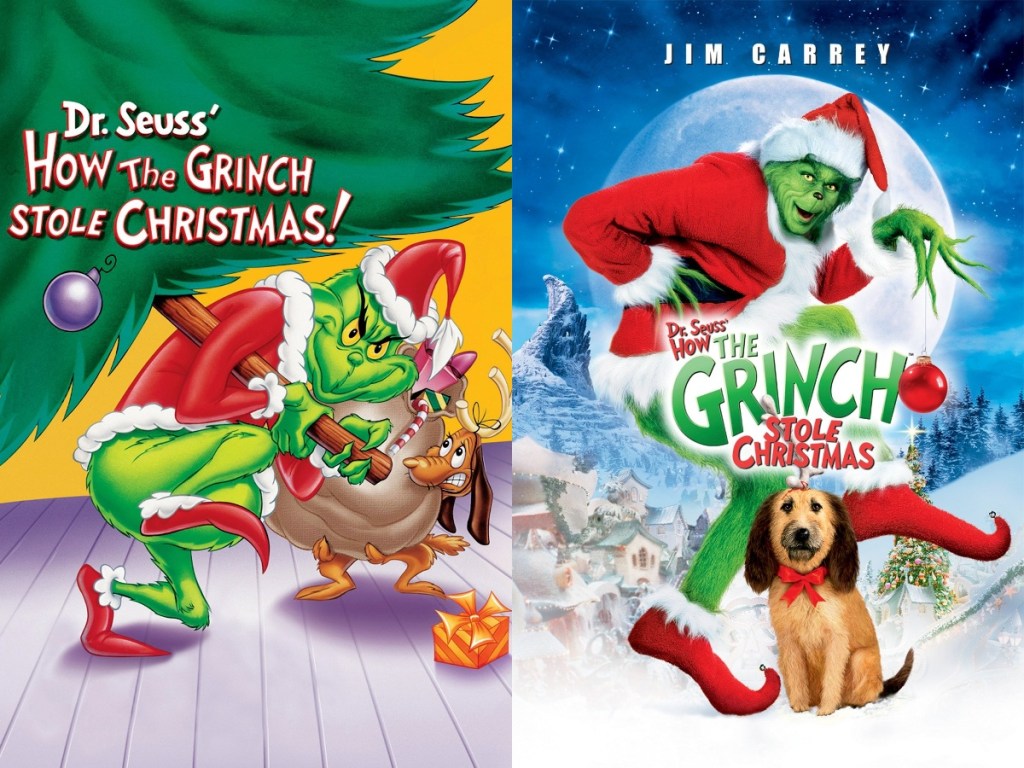
Children’s books are frequent victims of this problem. Books for kids – especially picture books for young children – may only have enough story to last 20 minutes or so. But if you want a theatrical release, that just ain’t long enough, and you have to start inventing stuff out of whole cloth. Sometimes it works. Dreamworks took two short children’s books – Shrek and How to Train Your Dragon – and turned them into flourishing franchises by using the book more as inspiration than a blueprint. On the other hand, look at the awful efforts that the late Dr. Seuss has been subjected to. There have been two separate feature films based on How the Grinch Stole Christmas, and both of them suffer from inflation and unnecessary backstory. What Chuck Jones nailed in 26 minutes, Ron Howard and Jim Carrey puffed out to a painful 104. 

The less said about The Cat in the Hat, the better.

Scientific proof that bigger isn’t always better.

The streaming world has changed this paradigm, though. Previously, there were only two “acceptable” outlets for a film: television or theatrical release. Sure, direct-to-video was a thing, but those usually tried to emulate theatrical movies in form, either to fool people or to maintain an air of respectability. But whether you were making a project for theaters or TV, either way you were chained by scheduling in one way or another. In traditional ad-supported television, almost anything you make has to fit perfectly into a strict schedule of 30 or 60-minute blocks, minus an exact amount of time for commercials. Deviation is not tolerated, because we have to fit in a very specific amount of advertising time. Even premium cable channels, which are not beholden to advertisers, often use that 30-minute grid for scheduling, then pad out the remaining time with promos for their own networks so they can start the next movie or TV show on the hour.

Theatrical movies have a little more wiggle room – there isn’t a hard and fast rule that a movie has to be EXACTLY 90 minutes – but there are still parameters that have to be adhered to. If a movie is less than 80 minutes, theater chains usually won’t run it, as filmgoers will be disappointed at spending $127 on tickets, candy, and soda to take their family out to see something that’s over in under an hour and a half. On the other hand, the longer a movie is, the fewer times a day it can be shown, meaning fewer tickets sold, which again makes theater owners hesitate unless it’s a film they feel is a guaranteed blockbuster. Marvel movies can get away with a longer runtime because they historically bring big box office. Oscar bait dramas can do so as well, particularly if they come from a major studio. But if you’ve got a no-name director, no big stars, and aren’t tied to a recognizable IP, showing up at AMC with your 3-hour long epic about the Battle of New Orleans probably isn’t going to fly.

But on Netflix, Prime Video, or any of the other bajillion streaming services, neither of these factors need to be considered. A viewer doesn’t have to be in front of their TV at 8 o’clock because that’s when their favorite show airs anymore. They don’t have to show up at the theater at 6:45 to get settled in before the previews roll at 7, and they don’t have to worry about running out in the middle of the film to feed the parking meter because Kumquat Warriors 7: The Kumquatening is a longer movie than the previous three combined. In a streaming world there is no reason to make a movie or TV show any longer or shorter than is necessary to effectively tell the story. 

By the time Avatar 4 comes out, you’re gonna need to get a hotel room for the night to finish it.

Streaming series have been running with this a lot. Although they still kinda aim for the old TV paradigm of half-hour comedies and one-hour dramas, they aren’t strict about it. If an episode takes 37 minutes instead of 30, no big deal. If it only reaches 48 minutes instead of 60, we can let it slide. The series The Orville, for its most recent season, jumped from the Fox broadcast network to the Hulu streaming service, and once they were no longer locked in to 42 minutes of show plus 18 for commercials, they delivered an entire season of episodes that went well over an hour. Several of them are long enough that they could have been released as theatrical films. And for the most part, they were very entertaining and compelling, using the freedom of the format to great effect.

And while movies can have the freedom to get longer, things like Henry Sugar are demonstrating that the real freedom is to get shorter. In 2020, in the midst of the Covid lockdowns, Rob Savage made a horror film called Host. The film used the lockdown to great effect, telling a story of a group of friends on a zoom meeting that accidentally summon a dangerous spirit. Shudder picked the movie up and it became a cult hit, despite the fact that the running time is only 57 minutes. This is a film that never could have found a theatrical release without adding a half-hour of fluff, but the streaming world allowed Savage to just tell his story as he saw fit, and that gave it wings that it wouldn’t have had with any traditional distribution model.

To be fair, though, most of us feel this way if we need to attend a Zoom meeting for work.

There are a lot of things about the streaming world that concern me – I’ve mentioned many of them before. But if there’s one thing that is definitely positive about it, it’s the fact that time constraints are largely a thing of the past. The freedom to tell a story in the most effective way without trying to adhere to largely arbitrary rules of running time has already produced some really great content. The important thing is that a filmmaker is allowed to include whatever is necessary but not forced to add things that don’t matter, and that path (in the hands of a skilled crew) will make better movies. If there’s nothing else we can learn, it’s that when it comes to telling a good story, size isn’t what matters at all.  

Blake M. Petit is a writer, teacher, and dad from Ama, Louisiana. His current writing project is the superhero adventure series Other People’s Heroes: Little Stars, a new episode of which is available every Wednesday on Amazon’s Kindle Vella platform. He‘s hoping that this season’s finale of Lego Masters has a seven-hour streaming cut.

Geek Punditry #27: Death and Taxes-A Streaming Crisis

A few days ago, between eating entirely too much barbecue and trying to figure out if there was room for apple pie, my sister and I were talking about movies and TV shows we’d recently watched with our kids. She mentioned a Disney+ original film called Crater, a science fiction adventure about a bunch of kids living on a lunar mining colony. I’d heard of the film before, and I thought it would be something that my son might have an interest in, at least the spaceship parts, and made a note to check it out soon. Unfortunately, “soon” didn’t turn out to be soon enough, because the next day word came down that Crater was being removed from the platform less than two months after its release, and would no longer be available anywhere.

Turns out the title was actually a reference to the film’s chances.

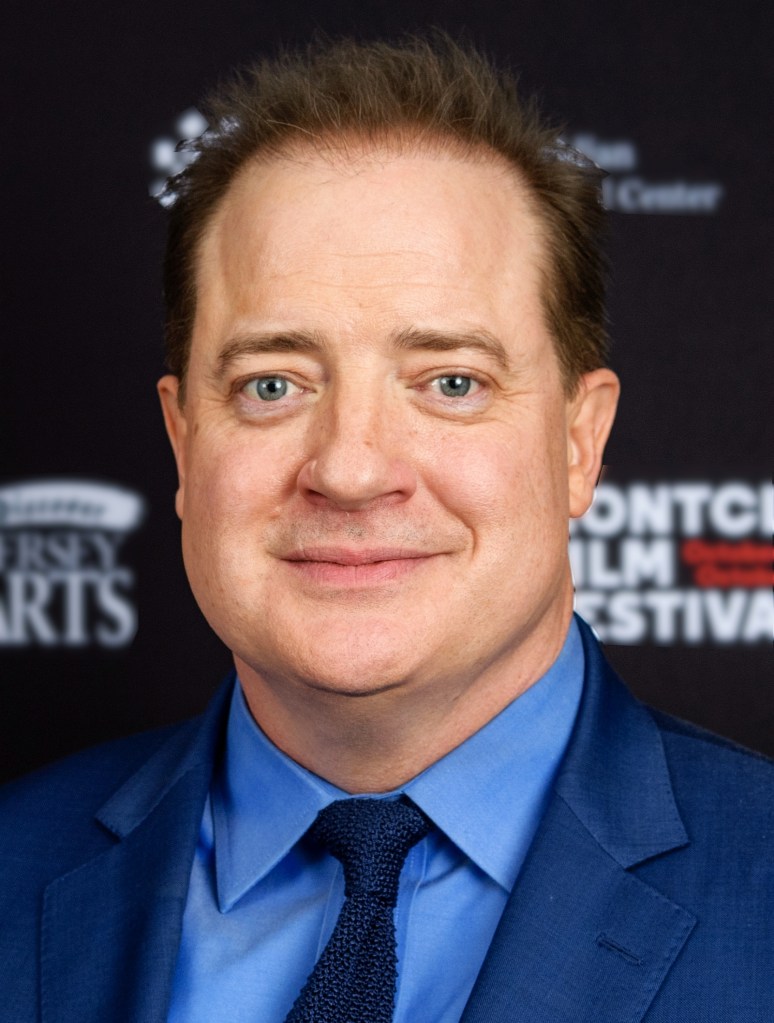
This isn’t the only Disney+ original to get this treatment. The Willow series, canceled after just one season, was also unceremoniously axed, as well as the quirky documentary The World According to Jeff Goldblum, among others. Nor is Disney+ the only streaming platform to do such a thing in recent months. Netflix has removed shows such as Hemlock Grove, Hulu quietly evaporated Y: The Last Man, and before they dropped the “HBO” from their name, HBO Max made headlines by removing a lot of content, including the almost-finished but now never-to-be-seen Batgirl movie starring Leslie Grace and the most beloved man on the Internet, Brendan Fraser. 

If the new Betty White couldn’t save that movie, nothing could.

There have been various reasons given for these cancellations: merchandising revenue losses, a lack of viewers, to avoid paying royalties or residuals to the people involved, or most egregiously, some of them were cut so that the studio could use the massive cost of production as a tax write-off to counteract losses elsewhere in the company. Whatever the specific reason, they all boil down to the same thing: the studio believes they can somehow make more money by erasing these films and TV series and pretending they never existed than they can by allowing them to remain on the streamer. 

I am not an economist. I don’t pretend to understand exactly how these things work. What I’m seeing is that we are once again seeing creative work being strangled in the name of the bottom line.

Now let me be clear about this: no, I’m not an economist, but I’m not an idiot either. I know that it’s called show business for a reason, and I accept that the people putting out the money have to make money back if they’re going to keep doing it. There are few things in the universe I find stupider than when someone says that an artist or a writer should just do their creative work “for the art” and not worry about the money, as if artists and writers are somehow immune to the need to eat. These things need to turn a profit one way or another, and I’m okay with that in principle. I just wish they would find some way to do it that doesn’t come at the expense of the people who make the damn things.

I write. I try to write every day. And I’m not doing it just because it feels good to push buttons on a keyboard, I do it because I want people (like you) to read what I have to say. When I hear about things like what happened to Crater, I’m thinking about the people who wrote the movie, the director who steered the ship, the actors who performed in it, the set designers and special effects artists and musicians and everybody else who bled for that film, believing that their work would be out there for the world to watch whenever they wanted…except now it’s not available anywhere. That has to be gut-wrenching. Even if a movie or TV show is canceled because it’s objectively terrible, I feel for the people involved. Nobody tries to make a bad movie, after all. I can’t imagine anybody who walks on to a set thinking, “Let’s make this puppy suck.” They’re doing what they can to make an entertaining product so that it will be seen. Even the infamous 1994 Fantastic Four movie isn’t immune to this principle. The movie was literally rushed out as quickly as possible so that the studio wouldn’t lose the rights to the franchise, never having any intention of actually releasing it…but none of the people making the movie knew that. They did the best they could, and honestly, crappy special effects aside, they’ve done better than anyone else with the FF in live action so far. 

That’s not even a joke. This is literally the best we’ve had so far.

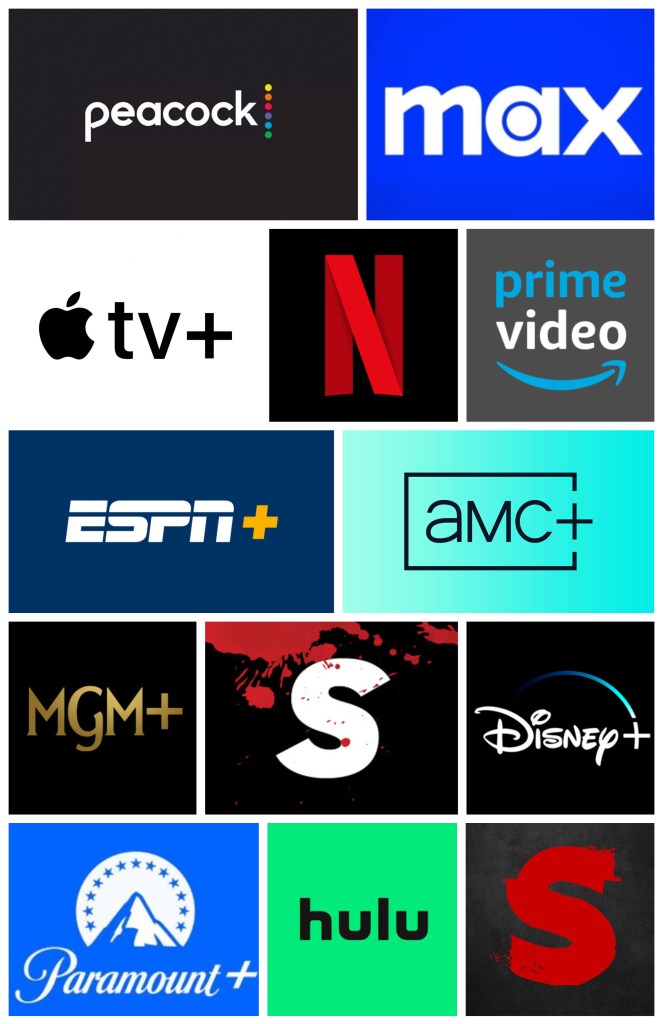
The issue here is that streaming services are bleeding money. None of them, not even the juggernauts, are making enough to cover the costs of the original content they’re creating, and that’s largely in part to the way the streaming universe has bifurcated. It wasn’t so bad when it was just Netflix, Hulu, and Prime Video, and pretty much everything you wanted to find was on one of those if it was anywhere. But then we saw the tentacles begin to reach out as nearly every studio or network decided to create its own service instead of signing with one of the existing streamers: Disney+, Max, Paramount+, Britbox, AMC+, Shudder, ESPN+, Screambox, Apple TV+, Peacock, MGM+…not only did it quickly get unwieldy, but it’s terribly frustrating how over fifty percent of them just stole the “Plus” from Disney rather than trying to come up with an original name. 

Pick one. I dare you.

There are simply too many streamers for the average person to keep up with. Even if they had the money for them all (which the average person does not), keeping track of what’s streaming where or what services have the shows and movies you actually want to watch is getting to be a full-time job. What’s more, there’s the question of signing up for a service just for one series or one movie – nobody sane would do that, right? So instead, people sign up for the free trial and binge what they want, then cancel once they’re finished. The streamers obviously don’t make money that way, and if they don’t make their money they’re not going to keep doing it. 

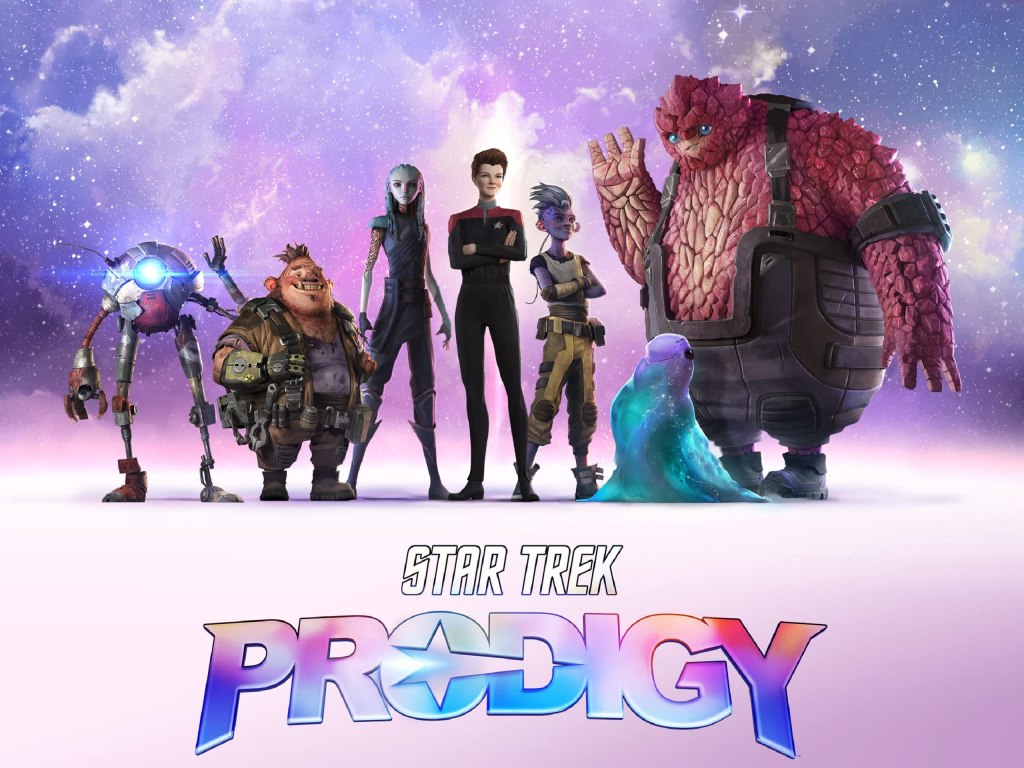
Let’s look at the biggest recent example. Paramount+ (previously CBS All-Access) was, frankly, the house that Star Trek built. The big selling point for the streamer when it launched was that it had every episode of every Star Trek series, and that furthermore, it was going to be launching several new Trek series, bringing it back to television for the first time since the cancellation of Star Trek: Enterprise twelve years prior. And for a few years, it was working out okay…until a few weeks ago when Paramount announced that the animated series Star Trek: Prodigy was being canceled, that the almost-finished second season would not be shown on the service, and that the existing first season would be removed. And before you could blink your eyes, the crew of the USS Protostar was GONE.

Cheer up, guys. They cancelled Kirk’s show too. Twice.

Now everyone who reads this column knows I’m a Trek nerd. In fact, my inaugural Geek Punditry column was all about how awesome the first season of Prodigy was. So nobody is going to be surprised to learn I’m upset about this. But I’ll bet I’m nowhere near as upset as the cast and crew of that series.

Something funny happened once Prodigy was removed, though. Within 48 hours, the Blu-Ray of the first season was sold out at Amazon, Target, Walmart, Best Buy…pretty much anywhere you can buy Blu-Rays. Sadly, the Blu-Ray only had the first half of the first season, not the second set of 10 episodes, not the cliffhanger ending that may never be resolved now. But the fans mobilized and actually spent the money, which is what Paramount wanted in the first place.

Streaming is a great thing in terms of convenience. It’s fantastic to be able to pull up any episode of Star Trek (except for those 20 episodes of Prodigy) from my remote control without worrying about changing discs or tracking down when it’s going to be broadcast. But as if we didn’t know it already, the unstable landscape of the streaming world means that no matter how much you love something, it can be taken away at the whim of some studio accountant. Supporting the things you love, while important, is only ever going to be part of the equation. What I think we’ve all learned here is that having a permanent way to keep them is more important than ever.

Blake M. Petit is a writer, teacher, and dad from Ama, Louisiana. His current writing project is the superhero adventure series Other People’s Heroes: Little Stars, a new episode of which is available every Wednesday on Amazon’s Kindle Vella platform. After he heard about Prodigy getting the ax, he added all of the Star Trek Blu-Rays he didn’t already own to his Amazon wish list. Can you blame him?