Year of Superman Week 31: Superman’s Strangest Team-Ups

After taking last week relatively easy, and after the kind of floperoo that Parody Week turned out to be, I decided I wanted to do something a little more fun this week. So I looked through my list of potential topics and decided it was time for SUPERMAN’S STRANGEST TEAM-UPS. You’re not gonna see him partnering with Batman or the Justice League here, guys. I’m not even counting inter-company crossovers like when he met the Fantastic Four or the Savage Dragon. No, this week we’re going to focus on a few team-ups Superman has had with characters (and sometimes real people, as you’ll see) that an outside observer would think is totally bizarre. And the fun part is, they would be right to think so. 

And as always, you can check out earlier blogs in the Year of Superman Archive!

Wed., July 30

Comics: The Adventures of Jerry Lewis #105

Shame he didn’t team up with SuperGIRL. I can see it now: “Hey, nice Kryptonian LAAAA-DYYYY!”

Notes: I’ll kick this off with a comic I bought on eBay a few months ago specifically to use for this week, a book I’ve wanted an excuse to get for years: The Adventures of Jerry Lewis #105. Believe it or not kids, there was a time when being a famous comedian could get you your own comic book, and sometimes those books would last for YEARS. Bob Hope had one, as did Jackie Gleason, Abbott and Costello, and sitcoms like I Love Lucy had long-running comics through publishers like Dell and Charlton. This series specifically began in 1952 as The Adventures of Dean Martin and Jerry Lewis, but dropped Deano from the book in 1957 after the comedy duo broke up. Jerry held solo reign over the title for over a decade before it finally ended in 1971.

Anyway, in this issue Jerry is watching TV with his nephew Renfrew and their friend Witch Kraft (it was the 60s, I dunno) where they see a report of Superman fighting a giant space monster – a fight that has been dragging on for THREE DAYS. Superman finally defeats the beast, which turns out to be a robot. What he doesn’t know is that the robot was built by his old pal Lex Luthor, and when it was destroyed, it saturated Superman’s costume with a low level of Kryptonite dust that immediately begins to neutralize his powers. Back at the Daily Planet, Clark gets a new assignment – a feature on the danger of certain young people, and he’s sent to investigate one Renfrew Lewis. At the Lewis house, Clark gets progressively weaker, succumbing to various pranks of Renfrew that would normally be no problem. Finally, he gets soaked with water, prompting him to borrow an ill-fitting outfit from Jerry while his own clothes dry off. Luthor, meanwhile, tracks his Kryptonite to Jerry’s house, where Jerry has just discovered Clark’s Superman costume in the laundry and puts it on because…well, I guess because that’s what happens on the cover.

The story is completely absurd, of course. Jerry Lewis was a comedy legend, but he had a very specific persona. Especially in the early part of his career, he would always play a naive young man whose good nature couldn’t overcome his dimwittedness, spiraling him into one ridiculous situation after another. His comic book persona clearly borrowed that characterization, as that’s exactly what happens to him not only in this issue, but in probably every issue of this title that lasted, in its two incarnations, nearly twenty years. And honestly the fact that Jerry (the character) is both dim and nice is probably the only reason that Superman’s secret identity is maintained in this absurd comic. Although none of that explains why Luthor – who would certainly proclaim himself to be Earth’s smartest man – isn’t smart enough to put two and two together when he encounters Clark Kent and Jerry Lewis, the latter of whom is wearing Superman’s ill-fitting costume – only minutes before the real Superman shows up to put him away.

As silly as this story is, I really did enjoy it. It’s got the same sort of bizarre brand of comedy as certain strains of Archie Comics, or some of DC’s own Silver Age titles like Stanley and His Monster. I haven’t got the slightest idea who owns the rights to books like this anymore (is it the Jerry Lewis estate? The copyright information in the indicia only indicates National Periodical Publications), but I would love it if they could put together some collections of comics like this or their Bob Hope series, or even make them available digitally. I’d love to read more without having to pay eBay prices to track them down one at a time. 

Thur., July 31

Comics: Captain Carrot and His Amazing Zoo Crew #1, DC X Sonic the Hedgehog #5

If I hadn’t included him in Super-Sponsor week, the Kwik Bunny would have followed this issue.

Notes: I’m not gonna lie, half the reason I decided to do this particular theme week was to have an easy excuse to sneak this comic book in. Captain Carrot and His Amazing Zoo Crew is one of my favorite DC Comics of all time, a comedic (but not silly) comic about superhero animals set in a world that feels like it fell out of a cartoon. At this time, DC had a “bonus book” program, where once a month a random title would include a 16-page comic in the center, often used to launch new series. Such was the case with New Teen Titans #16, which featured the first appearance of Captain Carrot. In that bonus book, by Zoo Crew co-creators Roy Thomas and Scott Shaw! (that exclamation point is part of his name, friends), Superman ran across several residents of Metropolis behaving like their primate ancestors. He tracked the disturbance to a strange meteor out near Pluto, but when he tried to stop it, both he and the meteor were punted into a different universe, designated Earth-C, in which the Earth was populated by “funny animals.” Chunks of the meteor fell to Earth, giving powers to several different animals. One of them irradiated a batch of carrots growing in a garden box belonging to cartoonist Roger Rabbit (he later began going by his middle name, Rodney, perhaps due to confusion with a certain OTHER lupine character), who gained incredible power upon munching on the carrot. 

The first issue of Captain Carrot and His Amazing Zoo Crew picks up right where the bonus book left off, with Superman and the newly-minted Captain Carrot seeking out the meteor fragments and trying to find a way to Pluto to check it out through some sort of cosmic barrier. As they do so, just as happened back in Metropolis, various people begin reverting to a primitive state, acting not like the civilized animals they are but instead like their beastly ancestors. When Superman is captured, Captain Carrot picks up other animals who were altered by the meteors: the powerful Pig-Iron, mistress of magic Alley-Kat-Abra, turtle speedster Fastback, pliable poultry Rubberduck, and the star-spangled Yankee Poodle. Together they seek out Superman, bound by Kryptonite on Pluto, in the clutches of Starro the Conqueror. Eventually, of course, Starro is conquered and the Zoo Crew decides to stay together to fight the forces of evil on Earth-C.

After striking a somewhat familiar pose.

Superman’s appearance here is almost incidental. The Zoo Crew does most of the heavy lifting, and replacing Superman with Wonder Woman, Captain Marvel, or any number of other heroes would have had negligible impact on the plot. But it’s fitting, in a way, that Superman was the first contact between the two worlds. He was still DC’s flagship character at the time (although Batman would soon overtake him, and Batman just wouldn’t have worked in this setting), and Captain Carrot was clearly his universe’s version of Superman. This would be codified years later during one of DC’s many crisis events (Final Crisis, I think) where it was revealed that EVERY world had an “official” Superman analogue, and in this world it was Captain Carrot.

I’ve written many times before about Roy Thomas and his love for comic book history, with his work on titles such as All-Star Squadron, Young All-Stars, Secret Origins, and the Elseworlds comic Superman: War of the Worlds. This one is a little off the beaten path for him, but even here, he couldn’t resist bringing in some DC lore. The first Zoo Crew recruit, Pig-Iron, is secretly Peter Porkchops, once the star of a series of DC’s funny animal comics from the 40s and 50s. Thomas and Shaw would go on to establish that Earth-C was actually the location of all of DC’s old funny animal comics, bringing in characters like the Dodo and the Frog, the Three Mousekteers, and their superhero turtle the Terrific Whatzit from the Golden Age, who turned out to be Fastback’s uncle.

The series lasted for 20 issues, with a three-issue miniseries in which the Zoo Crew travelled to Oz and Wonderland, then they went into limbo for a few decades. They’re back now, appearing periodically, and Captain Carrot specifically is a member of the multiversal Justice League Incarnate. But I’ll never stop pushing for a full-on revival of this delightfully offbeat comic.

“In yo’ heeeeead! In Darkseid’s heeeee-eee-eeaaaad!”

Speaking of strange team-ups, this week also brings us the last issue of DC X Sonic the Hedgehog. With the two teams reunited on the DC Earth, they’ve got to assemble to chaos emeralds to take the fight to Darkseid. I’m not going to claim there’s anything truly shocking in this issue. The story plays out pretty much exactly as one would expect, right up to the last page sequel hook which may or may not ever be picked up on, probably based on how well this miniseries sells. But it was still a fun little excursion. It was genuinely hopeful and upbeat, without any of the usual nonsense of the heroes of two worlds fighting each other just because that’s what’s supposed to happen in crossover events. (As much as I’m looking forward to Deadpool/Batman in a couple of months, you know that’s exactly what’s going to happen.) This was just…fun.

And it’s okay to just be fun sometimes. 

Fri., Aug. 1

TV Episode: I Love Lucy Season 6, Episode 13, “Lucy and Superman”

“Lucy, you REALLY got some ‘splainin’ to do!”

Notes: Regular readers of my blog know about my deep, abiding love for I Love Lucy. I think it’s one of the greatest sitcoms in the history of the medium and that Lucille Ball was a comedy genius the likes of which we have not seen since. And if you know I Love Lucy, then it’s probably no surprise that one of my favorite episodes was the sixth season episode in which Lucy meets Superman.

The episode begins with Lucy’s husband Ricky and their son, Little Ricky, watching The Adventures of Superman on TV. Little Ricky, with the innocence of a child who doesn’t actually have to pay for anything, asks if Superman can come to his birthday party that Saturday. Although Lucy lets him down easily, when they find out later that their frenemies the Applebys are planning to have their son’s party on the same day, the parents enter a cold war over throwing a party that will lure the childrens’ shared friend group to one party over the other. Lucy plies Ricky to try to get Superman – who he met in Hollywood – to come to Ricky’s party after all, quickly luring away all of the children, even little Stevie Appleby. As usually happens with Lucy’s schemes, though, things go awry. Ricky tells him Superman can’t make it, leading to Lucy donning a Superman costume and trying to get into the apartment from the ledge, only to get stuck outside in the rain when Superman shows up after all.

The Lucy writers played a neat little trick in this episode. Although the show frequently had celebrity guest stars appearing as themselves (everyone from John Wayne to Harpo Marx), they never ONCE refer to Superman as “George Reeves.” He’s just Superman. Although from an adult perspective, it seems a little odd that they never say his real name, even when the kids aren’t in the room, from a meta point of view it’s obvious that the entire episode is constructed in such a way to preserve the mystique of Superman for any children who happen to be watching. Reeves never appears as “himself,” only on TV as Superman and then again in the last scene in-costume, where he does his trademark leap through the window (in this case, the one that separates the Ricardos’ kitchen and living room) to make his glorious entrance. When Lucy gets stuck on the ledge, Superman is the one who climbs out to rescue her. Even the classic last line of the episode has the same sort of wit and charm that Reeves always brought to his performance: when out on the ledge, Ricky comments on the 15 years of crazy stunts Lucy has pulled. Reeves says, “You mean to say that you’ve been married to her for 15 years?” When Ricky replies in the affirmative, Reeves shoots back, “And they call me Superman!”

It’s a wonderful, charming episode of a charming show, and one that can be enjoyed on two levels. If you want, then you can consider this just your average episode of I Love Lucy with a famous guest. But if you’d prefer, you can accept the episode on face value and decide that Lucy takes place in the same universe as The Adventures of Superman TV show, and it wasn’t Reeves at all, but the real Man of Steel.

That doesn’t quite explain why he’s got his own TV show in-universe, but do I have to figure out everything myself? 

Sat. Aug. 2

Comic Books: Multiversus: Collision Detected #1-6

“Jinkies!”

Notes: While not a Superman starring vehicle like most of my other choices this week, he played a big part in this fun six-issue miniseries based on the short-lived video game, which combined characters from dozens of Warner Bros IPs including the DC Universe, Looney Tunes, Hanna-Barbera cartoons, Cartoon Network, The Matrix, The Wizard of Oz, Game of Thrones, The Neverending Story, and probably others I’m forgetting. I don’t play video games, friends. It’s not a judgment thing, I’m not trying to claim some sort of moral high ground or anything, I’d just rather spend my time with a movie, TV show, or book. I do, however, enjoy a good crossover, so when the miniseries based on the game was announced I knew I was going to read it, despite knowing absolutely nothing about the game. 

The story begins with Superman, Batman, and Wonder Woman each having dreams that culminate in the vision of strange hieroglyphs: a rabbit, a witch, and a child bearing a star. Their investigation leads them to Avia Free, daughter of Mr. Miracle and Big Barda. When they arrive, though, the find that Avia already has another visitor: Bugs Bunny. After a particularly hilarious sequence of Batman trying – and failing – to interrogate Bugs, Avia shows them a video game system she modified to investigate some strange readings from behind the Source Wall just as a portal appears, spilling inhabitants of other dimensions into our own. The Flash, for instance, encounters Scooby-Doo and Shaggy having thwarted Condiment King’s effort to rob a Big Belly Burger and taking their reward in a mountain of food. Wonder Woman is attacked by an army of Winged Gorillas under the control of Grodd who, himself, has fallen under control of the Wicked Witch of the West. Superman finds Steven Universe and Garnet fighting Livewire and the Parasite in Metropolis, just as a Skullship appears in the sky – not a Brainiac ship, but one in the spitting image of Rick Sanchez, loaded with robotic simulacrum of Finn the Human, Jake, and Tom and Jerry. 

As the Justice League begins containing the incursions from other universes – hero and villain alike – Batman manages to track down the truth. An entity called the Devoid, under duress from an even more powerful force called the Nothing, is forcing the multiversal travellers to fight in a tournament to protect their respective home universes. (I assume this is, in broad strokes, the story behind the video game.) Batman hatches a plan to return the fight to the Devoid, saving all of the endangered universes simultaneously, but there’s a little problem. To do this, he needs to find the final lost fighter – the Reindog – who is currently being coddled by Harley Quinn and targeted by her nasty ex, the Joker. They collect him from Gotham City, but Steven is wounded in battle. When Reindog heals him, it sends out a signal that leads the Devoid to Earth, where it takes over Avia and attacks. In exchange for freeing Avia, the assembled heroes agree to allow Devoid to take them to fight in the tournament. After they are swept away, though, the heroes reappear, revealing that Steven invented a device that would pluck tiny pieces of each of the heroes from throughout the multiverse and assemble them into a new version to join the tournament.

I love stories like this. It reminds me of being a kid, when you would throw all your different toys together in one box and act out some epic battle despite the fact that these characters don’t really have any business being together. I also like the way Bryan Q. Miller handles the Super-characters. It’s not his first go-round: he’s written, among other things, the Smallville sequel comics, and he has a nice handle on Lois and Clark. There’s a nice bit towards the beginning where she casually teases him for doing things the hard way when the age of technology should make it a little harder to track down the glyph from his dreams. And bonus points go to artist Jon Sommariva and colorist Matt Herms for dressing her in her signature outfit from Superman: The Animated Series, even though this isn’t “that” Lois. Miller also uses the differences in the respective universes to his advantage. For example, there’s a funny bit where Bugs, Scooby, Shaggy, and Steven Universe are shocked by the foul mouth (censored as it is) of the Rick-infected Brainiac. 

It’s interesting, by the way, that although it is very obviously Rick Sanchez who’s riding in Brainiac’s skull, he is never mentioned by name in the story, and only appears in his “true” form in a few shots on Brainiac’s monitors. I assume that was a limitation imposed by the fact that Oni Press, not DC Comics, has the rights to the Rick and Morty comics, but it’s still kind of funny.

The story ends, as comics like this one often do, with a bit of a sequel hook, but considering that the game flopped and has been discontinued, it seems unlikely that we’ll ever get to see what happens next. I content myself in the knowledge that the comic is essentially a prequel to the game and that, if you beat the Devoid and the Nothing in the game itself, you can consider it the canonical ending of the story. And I hope that we see Miller writing more comics like this. He’s got a flair for it. 

Sun. Aug. 3

Comic Book: Action Comics #421

“I yam what I yam…a legally-distinct creation that is not subject to a copyright infringement suit by King Features Syndicate!”

Notes: Today we’re going to take a look at one of my favorite lesser-known Superman team-ups, the time he met Popeye.

Kinda.

In Action Comics #421, Superman’s pal Billy Anders (a semi-recurring character from the period) tells him about his recent encounter with Captain Horatio Strong. Strong is a salty sailor who has found a mysterious seaweed that, upon consumption, gives him incredible strength. When Billy tells Superman that Strong is one of his biggest fans, he agrees to arrange a meet-up. Meanwhile, A food corporation tries to buy the rights to Strong’s seaweed, “Sauncha,” but he refuses. He willingly gives a sample over to his idol, Superman, when Billy arranges a visit, but quickly realizes his visitor is a disguised spy for the food corporation wearing one of those remarkably lifelike rubber masks that were so ubiquitous in comics at the time. Superman and Captain Strong wind up duking it out when Strong vows to destroy the crooked company that tried to cheat him, and when he runs out of Sauncha, Superman tracks him to a spot in the ocean where he harvests it. When the Sauncha power runs out, Strong is nearly killed, but Superman whisks him to the hospital. As he recovers, he is ashamed of his actions, but Superman kindly tells him that it wasn’t his fault – he was under the influence of the plant, which Superman has identified as an alien species that must have fallen to Earth. Captain Strong promises to stick to good old Earth food from now on.

I first read this story in Best of DC Digest #48, in an issue that reprinted assorted Superman team-ups, and it’s long been a favorite of mine. Even as a kid, I immediately picked up on the fact that they were trying to emulate Popeye, and when Strong’s wife and best friend (obvious dopplegangers for Olive Oyl and Wimpy) showed up in later issues, it was like confirmation. What I didn’t realize as a kid was that Cary Bates had whipped up a Popeye expy to tell a story that was a metaphor for drug addiction. I guess it did the trick – I’ve never done any drugs, nor had any desire to. So Cary Bates and Captain Strong, thanks for teaching me the important lesson that using illicit substances will cause me to throw telephone booths and people and start fights with those I admire the most.

Seriously, I always thought Captain Strong was a fun character, and it’s a shame that he made only a handful of appearances over the next decade before fading into obscurity. He came back in 2015, gently being mocked (as was everything else) in Jimmy Palmiotti and Amanda Conner’s Harley Quinn series. I guess I understand – there’s not much call in modern comics for a character whose only reason to exist is to poke a little fun at Popeye. But I still have a warm place in my heart for Captain Horatio Strong. And although the similarities are superficial, I’ve always wondered if Strong was used as a bit of inspiration for one of my favorite characters of the Triangle Era, loveable lout “Bibbo” Bibbowski.

Mon. Aug. 4

Comic Books: Superman and Bugs Bunny #1-4

“What’s up, Clark?”

Notes: When I started this little project, I didn’t expect the Looney Tunes to turn up quite as often as they have, but between this and parody week, I’ve actually seen quite a bit of them lately. But let’s look at the 2000 miniseries by Mark Evanier, Joe Staton, Tom Palmer, and Mike DeCarlo. Even though Superman’s name is in the title of this one, like Multiversus, it’s more of an ensemble piece, featuring the entire Justice League. The chaos begins when Superman gets a visit from his old pal Mr. Mxyzptlk and, as usual, has to trick him into saying his name backward to send him home. At the same time, in another world, Bugs Bunny and Elmer Fudd encounter the Do-Do, an early and mostly forgotten Looney Tunes character from another world called Wackyland. Bugs deliberately borrows a trick from the pages of his favorite comic book publisher and tricks the Do-Do into saying Od-Od, banishing him at the same time that Myxyzptlk vanishes from Earth. The two cosmic tricksters collide in the place between worlds and decide to join forces and cause a little chaos by sending the Looney Tunes to Earth.

On the moon, Green Lantern finds Marvin the Martian planning to destroy the Earth (again). Flash races Speedy Gonzales through the desert, Plastic Man disguises himself as a cat only to fall afoul of the affection of Pepe LePew, and in Gotham City, Batman finds a very different Penguin than the one he expected. Myzptylk amps up the chaos by giving Elmer Fudd Superman’s powers (and costume), and poor Green Arrow is stuck with a singing, dancing Michigan J. Frog that doesn’t seem to want to perform for anybody else. 

Mxy and the Do-Do find their relationship strained, the machine they’re using to toy with the heroes destroyed and forcing them all together. The Tunes are made honorary member of the Justice League (because why not?) just as the Do-Do turns on his partner, bringing about a – ya gotta say it – “Cwisis on Infinite Earths!” 

Mark Evanier was absolutely the best choice to write this bizarre little crossover. As a writer in both comic books (perhaps best known as co-writer of Sergio Aragones’ Groo the Wanderer) and in animation (such as the original and excellent Garfield and Friends cartoon), he had the right sensibility to bring these two worlds together. It’s interesting that he chose to have both the Justice League and the Looney Tunes be fictional characters in the others’ universe. Bugs and Foghorn Leghorn read Action Comics, and every member of the League recognizes their cartoon co-stars the second they see them. It nicely sidesteps the usual introductions, although if the Leaguers have all watched the Looney Tunes (as well they should have) it should kind of make you question their judgment when they include the likes of Yosemite Sam and Elmer Fudd into the ranks of the honorary Leaguers. 

I also give Evanier credit for diving into the archives of the Looney Tunes for this. He didn’t just bring out the A-listers like Bugs and Daffy – we get appearances by everyone from Pete Puma to the Goofy Gophers Mac and Tosh, and he keeps them all in character. He’s not quite as adept with the Justice League, writing them more like they would have been in the Silver Age than when this book was published in 2000. Things like Green Arrow’s panic over nobody believing his story about a singing frog don’t quite fit (especially since, as it should be noted, this was the less-emotive Connor Hawke version of Green Arrow rather than Oliver Queen). But you can accept these things are being part of the overlap with the land of the Looney.

Joe Staton’s layouts keep everything consistent, and using finishing team of Tom Palmer (handling the DC Universe and characters) and Mike DeCarlo (on the Looney Tunes) makes it all look nice, clean, and like these characters fit in a world together.

I’ve always liked this miniseries. It’s not a masterpiece, but it’s fun. And it helped inspire a series of DC one-shots a few years ago in which they met Looney Tunes and Hanna-Barbera characters, although those were part of a line that reimagined the cartoon characters in a more “serious” vein. Some of those specials worked better than others. I particularly liked seeing the Super-Sons meet Blue Falcon and Dynomut, and having Booster Gold encounter the Flintstones was a treat. Pretty much everyone agrees that the gem of those books was the Batman/Elmer Fudd special. But the shocking thing? No books featuring Superman.

What a waste of potential. At least we’ve got the OG. 

Tues., Aug. 5

Comic Books: All-New Collectors’ Edition #56 (aka Superman Vs. Muhammed Ali)

Float like a Kryptonian, sting like heat vision!

Notes: The year was 1978. Jimmy Carter was elected president, Christopher Reeve was wearing the Superman costume, and we were still 26 years from the birth of America’s sweetheart Justin Bieber. And this was the year that brought us one of Superman’s most legendary and unexpected crossover events: a giant-sized special that saw him face off against “the Greatest,” Muhammad Ali.

Lois, Clark, and Jimmy are walking through Metropolis when they happen to stumble upon Muhammad Ali playing pick-up basketball with a group of school kids. As Lois approaches him for an interview, they are interrupted by the sudden appearance of an alien (you know, like you do) who summarily shoves Lois aside. Ali leaps to her defense as Clark ducks off to change his clothes, then follows the alien’s trail to an orbiting armada of spacecraft that…frankly…even in 1978 it’s kind of hard to believe nobody noticed them before. The alien identifies his race as the Scrubb, a warlike society who has come to Earth to pit our greatest champion against their own. Amusingly, Superman and Ali each presume the alien is talking about himself, and after a demonstration of their power, the Scrubb declares that the role of Earth’s champion will be decided in a match between the two of them, with Superman’s powers removed to make it fair – and if they refuse, the Scrubb promise to destroy the Earth itself.

Superman takes Ali to his Fortress of Solitude, where he creates a special ring to train: a time disruptor that can stretch their 24 hours to about two months, and a red sun lamp to remove Superman’s powers, giving the Greatest of All Time the time he needs to teach Superman how to box. The Scrubb catch wise, though, and disrupt the training after only two relative weeks, taking Superman and Ali into space where their bout will be broadcast across the universe. The fight is brutal, and Superman’s unfinished training makes him no match for his opponent…but still, the Man of Steel may be beaten and bloody, but refuses to fall down until the judges call the fight for Ali. As he is returned to Earth so the yellow sun may heal him, Ali prepares for his battle against the Scrubb’s champion, a gigantic brute called Hun’ya. To everyone’s shock (maybe even the writer, it’s so random) an angelic being appears in the ring demanding to act as moderator of the contest. The being appears differently to each species – to the humans she is the Greek Goddess of Wisdom, Pallas Athene. As the match begins, Ali’s cornerman Bundini Brown infiltrates the Scrubb command center, revealing himself as Superman in disguise. Impersonating the Scrubb Emperor, Superman orders the armada away from Earth, then catches a ride back to the yellow sun system to take it out as Ali defeats Hun’ya. The Emperor plans to turn back to destroy Earth anyway, but Hun’ya himself – disgusted by his lack of honor – defeats the Emperor. 

The epic team of Dennis O’Neil and Neal Adams are the ones who put this special together, and honestly, nobody else could have done it. Adams did a note-perfect version of Ali in this book, creating a character who is immediately recognizable as the boxer while, at the same time, still looking like he belongs in this DC Universe. It helps that Adams’ natural style lends itself to more realistic visuals than a lot of other artists of the era, making the combinations seamless. The story is kind of wild, and really over the top, but what else would you want? There are some odd moments, of course – the deity that calls itself Athene lends absolutely nothing to the plot, and the book ends with Ali revealing to Superman that he’s figured out he’s really Clark Kent due to a slip of the tongue Superman had made much earlier in the story. Is there any particular reason for that? Absolutely not. But it also doesn’t hurt the story, and it feels like the kind of thing that Muhammad Ali would have insisted upon, so I can deal with it.

The funny thing about this one, I think, is that the story itself (wild as it may be) probably isn’t as well known as Adams’ incredible cover. It’s one of those covers that has become a classic, frequently targeted for swipes by other artists, and you can’t blame them. It’s so rich and detailed as to defy belief, with dozens of DC characters and real-world figures alike appearing in the audience to watch the Superman Vs. Ali fight. It’s so in-depth that the deluxe edition of the book includes a guide to help you identify everybody who appears on the cover. It’s the kind of attention to detail that the likes of Alex Ross grew up on and decided to emulate in his own career.

This is, frankly, an insane book. And it’s a classic for a reason. 

Blake M. Petit is a writer, teacher, and dad from Ama, Louisiana. His most recent writing project is the superhero adventure series Other People’s Heroes: Little Stars, volume one of which is now available on Amazon. You can subscribe to his newsletter by clicking right here. You can join in the Kryptonian Konversation every day in the Year of Superman Facebook Group!

Year of Superman Week 26: Playing Catchup, Random Choices, and a Tribute to Jim Shooter

Back home from our trip, it’s time to play catch up. I hit the local comic shop on Wednesday to grab a few weeks’ worth of comics, and I’m going to start week 26 by going over the Superman-related titles in the mix. Let’s see what we’ve got!

And as always, you can check out earlier blogs in the Year of Superman Archive!

Wed., June 25

Comics: Action Comics #1087, Supergirl Vol. 8 #2, Superman Vol. 6 #27, Superman Unlimited #2

Notes: The Mark Waid era of Action begins! I’ve been excited for this one ever since they announced he was taking over this title with a feature on Superboy. Ever since 1986, DC has gone back and forth several times over whether Clark Kent ever had a career as Superboy in-continuity. It looks like this series is going to finally settle the question once and for all…or at least until some new editor comes in and decides to change it again. But until then, I’m psyched to enjoy the ride.

Let’s hear it for the Kid of Steel!

Action Comics #1087 has Clark Kent – as an adult – reminiscing about an “Expo of Tomorrow” he attended with his parents when he was 15 years old, and how an encounter with a villain on that day would shape the rest of his life. Have we seen the story of Superman’s public debut before? Yes, dozens of times. Does that make me any less thrilled with the comic I just read? Not in the slightest.

Like I said, we’ve seen the story of SuperMAN’s debut over and over again. This is different. This is SuperBOY – a Superboy whose powers are new to him, who has never been in a fight before, and who’s wearing red converse sneakers instead of boots. He’s determined to do good, but at this embryonic stage he’s still trying to learn how. Fortunately, he’s got Jonathan and Martha Kent in his corner. Jonathan has taught him about the lost heroes of the Golden Age, drilled him relentlessly on their feats and adventures, so he could get a feeling for the heroic ideal. And when the time comes to prove himself…well, it doesn’t go as smoothly as it might go today, but it’s an authentic, entertaining, and uplifting story. Waid – who is also currently restructuring the timeline of the DC Universe in another miniseries I’ll get to shortly – is the perfect person to reintroduce the adventures of Superman when he was a boy. 

So embarrassing when someone shows up wearing your outfit.

Sophie Campbell’s Supergirl #2 picks up where the first issue left off – there’s a second Supergirl in Midvale who seems to have captured the hearts of the town. And I have to admit I was pretty tickled when I realized that the fake Supergirl was actually a new incarnation of Lesla-Lar, the Kryptonian doppelganger that we read about back in Supergirl Week. This time around, Lesla is a Kandorian with something of an obsession with Supergirl who convinces herself that she could do the job better than the genuine article. She finds a way out of Kandor, mesmerizes the Danvers, and transforms herself into a near-duplicate of Kara Zor-El (which is much better than her being just a random lookalike as in the Silver Age). Lesla also manages to tamper with Kara’s costume, causing her to turn to a friend for help: Lena Luthor.

I’m already loving this version of Supergirl. There’s a sweetness to the book, a sense of humor that more recent versions of Supergirl haven’t had. Campbell is also already doing the legwork of building up Kara’s supporting cast, and Lena makes for a fantastic addition. The two of them acknowledge that things have gone kind of sideways between Superman and Lex, but they don’t let it affect them – and in a genre where stupid misunderstandings are used to cause conflict more often than a comic gets variant covers, that’s a wonderful change of pace. Campbell’s Supergirl is already one of my most-anticipated books from DC each month. 

Oh geez, he’s got that “I’m so disappointed” look on his face. I HATE that.

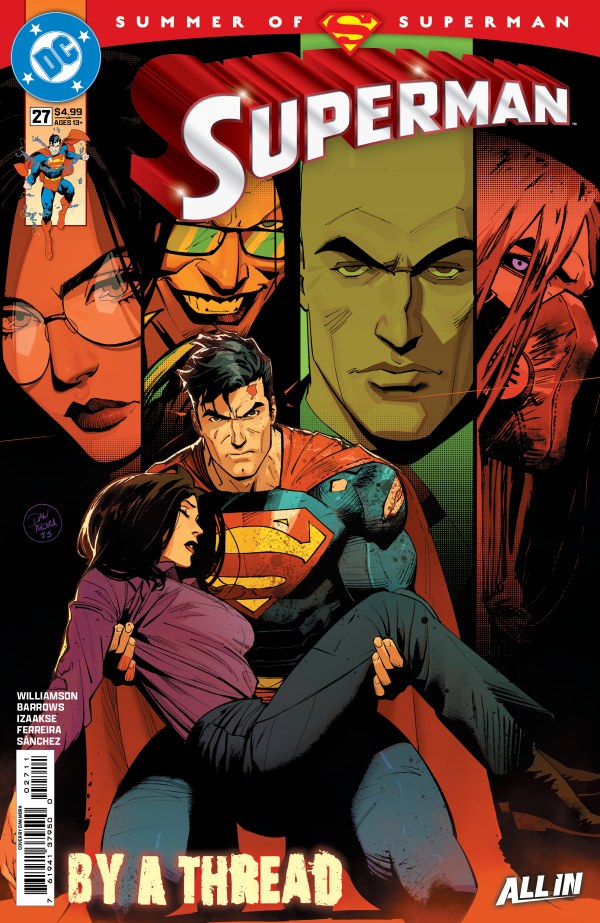
In Superman #27, Lois is still reeling from the loss of her Superwoman powers, while Superman is struggling with a sudden burst of Red Kryptonite energy. Meanwhile, Mercy and Lex have a heart-to-heart. This is kind of an odd issue – part two of “Superman Red” seems to be an epilogue of sorts. This issue, combined with the previous one, feels like it was intended to tie off some of the plotlines that have been running through this series since the first issue, clearing the table for next issue’s new storyline to dive headlong into the greater mystery of DC All In. That’s not necessarily a bad thing, but it does make the issue feel a little weak on its own. 

This is why you don’t go into bars in some of the seedier parts of Daxam.

Superman Unlimited #2 continues Dan Slott’s inaugural storyline. The enormous Kryptonite meteor that landed in the country of El Caldero has upended everything, making the tiny nation one of the most economically prosperous countries on Earth overnight. But black market Kryptonite is getting into the hands of villains everywhere, which I’m sure you can imagine causes some problems for the Man of Steel. Meanwhile, Lois is launching the new global Daily Planet initiative, and only one man seems to remember the fact that Kryptonite is NOT only harmful to Kryptonians – unfortunately that one man is Jack Ryder.

Slott is having a lot of fun with the pieces here. He finds a new angle on Superman’s little-used solar flare power, and in so doing manages to escalate the stakes of the Kryptonite storyline just a little (which is about all you want in chapter two of a storyline). I’m also glad that he hasn’t ignored the fact that Kryptonite is, in fact, radioactive. I don’t know that it’s necessarily public knowledge that it once gave Lex Luthor cancer, but that’s certainly the sort of thing that would become scuttlebutt and whispered rumors and make its way to a conspiracy theorist podcast, which seems to be how they’re casting Jack Ryder now. It’s a good fit, and it gives a good reason for the Creeper to show up at a crucial moment in the story that turns out to make things even more complicated. 

The strange thing is that, although the consequences of this storyline are obviously global, Slott manages to give us a perspective that keeps things smaller. It’s mostly about Superman and how he deals with the problem, and while all the seeds are here to make this a story that can (and, logically, should) impact the entire DC Earth, he’s building to that instead of going to planet-wide societal upheaval right from the jump. There’s a build here that I appreciate, and it makes it even more exciting to anticipate the next issue.

Thur., June 26

Comics: Justice League Unlimited Vol. 2 #8, Batman/Superman: World’s Finest #40, New History of the DC Universe #1, DC X Sonic the Hedgehog #4

No, Superman IS on this cover. Look between Aquaman and Wonder Woman. No, lower. There ya go.

Notes: Continuing today with the recent releases, I’m kicking it off with Justice League Unlimited #8, the end of Mark Waid’s “We Are Yesterday” crossover. With Grodd having absorbed the Omega Energy of the late Darkseid and scattered the Justice League throughout time, Air Wave has done his best to compensate – bringing heroes from across the time stream to the present to aid them in their battle. 

I don’t want to talk too much about what happens here – I hate spoilers, after all – but if you’re the kind of person who likes crazy superhero battles, this will be eminently satisfying to you. It’s an exciting book with gorgeous artwork and a genuinely surprising ending. I’ve got no idea where Waid is going with this, although its significance to the overall story arc that seems to be “DC All In” is abundantly clear. If you’re following what’s going on in the DC Universe, you really can’t afford not to be reading this book. 

It’s like that time King Kong interrupted Johnny Carson.

Waid is also doing his thing in Batman/Superman: World’s Finest #40. With “We Are Yesterday” over, this book settles back into its usual groove of telling stories of the World’s Finest heroes in the past. In this particular issue, Perry White and James Gordon are guests on a podcast together when a kaiju attacks, so Batman jumps into a giant robot he’s had prepared for just such an occasion and joins Superman in taking it down. And once again, friends, I would like to point out that occasionally this whole Year of Superman blog allows me to type sentences like the preceding, and that makes it all worth it.

I’ve got to be a little forgiving for the setup of this issue. The podcast in question is – like Jack Ryder’s show in Superman Unlimited – of the shock host variety. Jim Gordon is ostensibly there to defend Gotham from the hosts’s recent attacks, while Perry is there to defend print journalism, but that doesn’t really explain why they’re on the SAME episode, except to provide a (paper-thin) excuse to have Lois, Clark, and Bruce all in the same building when the giant monster shows up. But it still makes more sense than 90 percent of Silver Age contrivances, and the rest of the issue is a load of fun, so I give it a pass. 

This one is for all you Arion: Lord of Atlantis fans out there.

My Mark Waid triple feature continues with the first issue of New History of the DC Universe, a comic that is, frankly, a long time in coming. With reboots both hard and soft having plagued DC Comics for decades, I welcome an attempt at creating a definitive timeline, establishing which heroes and stories are canon to the current incarnation of the DCU. Now the pitfall of such a project is that canon only remains canon until the next person down the line decides to change it, but for now at least, I think we can accept this book as being THE history, and there’s no better person to write it than Mark Waid. 

The series is framed as a history of the universe as compiled by Barry Allen, who has a better idea than most of just how time has been monkeyed with over the years. And while the connection to Superman actually doesn’t come in until literally the last panel of the last page, I felt like it deserved mention here in the blog, if for no other reason than how impressive it is that Waid  and co-researcher Dave Wielgosz (who provides a remarkably detailed index at the end of the book) have crafted a timeline that works. There’s nothing here that doesn’t make sense, and Waid even takes the opportunity to canonize several characters whose existence in the current DCU may have been suspect, such as the original Red Tornado, the Alpha Centurion, and – strangely enough – Robin Hood. Yeah, that one. Pretty much the only thing he DIDN’T mention is Hugo Danner from Gladiator, who I mentioned a couple of weeks ago was the father of the Young All-Stars member Iron Munro (although Munro and the All-Stars DID merit inclusion). 

Most shocking of all, however, is a panel that places into the timeline the arrival of a Terminian alien who crashes to Earth and is adopted by a human couple – on a plantation in the American south in the 1800s. This baby will grow up to be Milestone Comics’ Icon, a character I’m planning to cover in a later week where I discuss characters clearly intended to be the Superman of their respective universes. This is the first I’ve heard of any plans to put the Milestone characters back in the DC Universe proper, and I’m very interested to see if Static, Blood Syndicate and the others show up when we reach their respective point in the timeline in future issues. 

At any rate, this book is essentially required reading for any fan of the DC Universe, and I can’t recommend it enough. 

Now HERE’S a race I wanna see.

Last but not least, Ian Flynn wrote DC X Sonic the Hedgehog #4 (instead of Mark Waid), but he did a great job with it. Last issue focused on Team Sonic stuck on the DC Earth, while this issue gives us the reverse of that, with the Justice League trying to keep things from falling apart during Apokalips’ attack on Sonic’s world. There’s a particularly entertaining exchange between Superman and Dr. Robotnik that I really enjoyed. As I’ve said when I wrote about this book in the past, it’s nothing groundbreaking, but darned if it isn’t fun. 

Fri., June 27

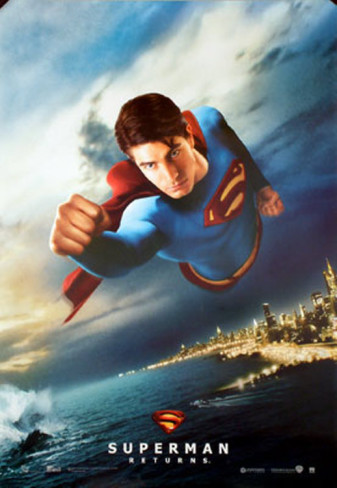
Movie: Superman Returns (2006)

Notes: After a cinematic absence of many years, Warner Bros poached a filmmaker who had success making films with Marvel Comics characters and handed him the reigns of the Man of Steel in the hopes of evoking the feel of the Richard Donner era, bridging Superman back to greatness. There’s a sentence that’s as accurate today as it was in 2006, when Brian Singer directed Superman Returns. Unlike James Gunn’s Superman or Zack Snyder’s Man of Steel, Returns was a direct sequel to the Christopher Reeve films, or at least the first two of them. The conceit here was that, some time shortly after the events of the second film, astronomers located the former location of Krypton amongst the stars, and Superman went into space in hopes of finding his heritage. He found, instead, only rubble, and returned to Earth five years later to a world that had changed greatly in his absence. 

This is one of those movies that was unfairly maligned in its day, although it’s also a movie that has grown dramatically in the estimation of the public since then. Brandon Routh did his best impression of Christopher Reeve, both as Superman and as Clark Kent, and created a character that both evoked and paid tribute to the hero so many of us had grown up with. And although Kevin Spacey has quite rightly been cancelled since the movie came out, it would be disingenuous not to admit that he did a magnificent job channeling Gene Hackman’s Lex Luthor.

Why, then, did this movie not land? There are a few reasons. I think the premise from which it begins is flawed in and of itself. It’s hard to imagine Superman abandoning Earth for such a long time, even in the name of seeking out Krypton. As much as this planet and its people mean to him, there’s no logical way he’d head out that way without some sort of concrete reason to. Looking at rubble isn’t good enough, and there’s nothing in the movie to indicate he was given ANY hope of finding something more substantial. To be fair, though, it’s possible that a more reasonable explanation was part of the story at some point but got filtered out by Hollywood’s classic “too many cooks” problem.

There are bigger problems in credulity when it comes to maintaining Clark Kent’s secret identity. There have always been jokes about how the glasses function as a disguise, but it’s even harder to imagine nobody – not even Lois Lane – would EVER question the fact that Clark went away at the same time that Superman left Earth then returned to the Planet at the same time that Superman returned to the…well… planet, with a lowercase “p.” 

But the big elephant in the room is Jason White, Lois’s little boy whom everyone believes is the child of her fiancé, Richard White, even though it’s blindingly obvious to the viewer that he’s actually the son of Superman. I don’t object to Superman being a father – I think that’s pretty clear from the stuff I’ve written about Jon Kent in the comics – but I have to draw the line at the TIMING. If Jason is Clark’s son, he obviously had to be conceived before he left Earth, and yet nobody – not even Richard – seems to question Lois when she says he’s Richard’s kid. That would mean she would have to have been involved with him at the same time as she was with Superman (presumably their dalliance in Superman II). So why does everybody in this movie act as if Richard is hands-down Jason’s father? Even if Richard knows Jason’s not his, there’s a moment where he questions if Lois was ever in love with Superman, subtly implying he wants to know IF she ever hooked up with him. So who does HE think Jason’s father is? It just doesn’t piece together. 

Of course, that leads me to the biggest problem I have with this movie: Kate Bosworth’s Lois Lane. I feel like I’ve made it profoundly clear how much I admire the character of Lois Lane when she’s written well – her intelligence, her integrity, her courage. Bosworth’s Lois doesn’t display ANY of that. There’s a softness to her that doesn’t belong to Lois Lane no matter how you slice it, and I never believe the chemistry between her and Routh.

All that said, the good in this movie outweighs the bad. Routh’s Clark Kent/Superman, Frank Langella’s Perry White, Sam Huntington’s Jimmy Olsen – all of them work. John Ottman’s score is a nice build on the classic John Williams themes. And there are some sequences in this movie that are legitimately stunning even 19 years later: the scene where Superman saves the plane (obviously inspired by John Byrne’s Man of Steel) is a total thrill ride throughout. Little moments, like when he gets shot in the eye and we see a close-up of the bullet crunching, or the scene where he holds up that famous green car from Action Comics #1 – all of that works for me, and works very, very well.

Wait, where’s the dude running away in a panic in the lower lefthand corner?

Despite its flaws, this movie and Brandon Routh deserved better than they got. A good sequel COULD have been made, even though Warner Bros. decided instead to go another way. I’m just glad that Routh got a shot at redemption during the Arrowverse’s Crisis on Infinite Earths event, where he showed off how good a Superman he was. 

Comics: Metamorpho: The Element Man #6 (Guest Appearance), Zatanna Vol. 3 #5 (Cameo)

Sat., June 28

Graphic Novels: Superman: Emperor Joker (Collects Superman Vol. 2 #160-161, Adventures of Superman #582-583, Superman: The Man of Steel #104-105, Action Comics #769-770, and Superman: Emperor Joker #1), Superman: The Last Son (Collects Action Comics #844-846, 851, Annual #11)

This is why I’d rather play Uno.

Notes: Although my Superman On-The-Go week is over, there were a few graphic novels I downloaded but didn’t get around to, so I thought I would dip into those today. First off was Emperor Joker, a two-month event from the four Superman titles in 2000. Superman wakes up in a world that has gone mad: he is imprisoned in Arkham, his powers diminished, and Bizarro is the leader of a JLA made up of amplified versions of villains. He can’t remember how the world got this way, nor does he remember what the world was like before, but it’s clear that something is wrong. Lois Lane is a corporate CEO, Superman is a fugitive on the run, and Mr. Mxyzptlyk is trying desperately to find him. 

I think it’s important to note that, although the storyline is known as “Emperor Joker” TODAY, that wasn’t the case when it first came out. The first four issues were published under the title “Superman: Arkham,” and the one-shot that comes in the middle (the fifth chapter of the story) was solicited as Superman: Emperor ?. This was back when things like the evil mastermind who has transformed the entire world were actually kept SECRET, instead of being published in Entertainment Weekly the day before the comic actually comes out. The reveal didn’t come until chapter four, when Mxyzptlk tells Superman that the world has been taken over by a godlike Joker. Turns out Mxy thought it would be fun to give the Joker a teeny bit of his own power – about 1 percent. But he didn’t reckon with the madman’s cunning, and Joker wound up taking 99 percent of Mxy’s fifth-dimensional abilities and reshaped the entire world in his own insane image. The real Justice Leaguers are pathetic creatures, hunted as villains, and only Mxy and Superman know what’s wrong. Superman manages to recruit this world’s versions of Superboy, Supergirl, and Steel to his cause, and they set out on a quest to find the one man who can defeat the Joker: Batman.

There’s good and bad in this story. It’s a nice change of pace, first of all, to put that much power in the Joker’s hands and have Superman have to deal with it. There’s also some meta-commentary in here about the power of faith and how it restores the changed heroes, as well as an interesting note about how the Joker’s obsession with Batman prevents him from eliminating his enemy entirely and, therefore, leaves the window open for his own defeat. 

But there are some moments of disconnect in here as well. This was in the waning days of the “Triangle Era,” and by this point all of the creators who had made that a golden age for Superman fans were gone. This isn’t to say that any of the creative teams of the time (Jeph Loeb and Ed McGuinness on Superman, J.M. DeMatteis and Mike S. Miller on Adventures, Mark Schulz and Doug Mahnke on Man of Steel, and Joe Kelly and Kano on Action) weren’t doing good work, but there was a disconnect and it showed. This was especially evident in the artwork: things like Lois’s hairstyle and Steel’s armor varied wildly from issue to issue. It would be easy to dismiss this as just part of the Joker’s madness manifesting itself visually, but if that’s the case, it should happen constantly and be noted in-story rather than just flip when a new penciller takes over the next chapter. 

It’s a good story, a story I remember enjoying when it was first published and I still enjoy now, but there are things that could have been better. 

“The Last Son” has a different meaning when it’s Superman than, say, the Duggars.

Next was Superman: The Last Son, a storyline from 2006. In this one, a spacecraft crashes in Metropolis and, inside, Superman finds a young boy who speaks Kryptonian. The child is initially sought out by the government (because duh), so Superman helps him escape into hiding and crafts a new identity for him – Christopher Kent, whom he tries to pass off as the child of a late cousin – and tries to convince Lois that they should adopt him. The point might become moot, however, when the child’s REAL parents arrive on Earth: General Zod and Ursa…and they want their son BACK.

Geoff Johns co-wrote this one with his former boss and mentor, a guy who’s somewhat familiar with Superman, director Richard Donner. This is probably most evident in the scenes where Superman consults the crystal with the memories of his late father, Jor-El. Artist Adam Kubert doesn’t go so far as to try to draw Jor-El to resemble Marlon Brando, but Johns and Donner absolutely write the character with Brando’s voice, with speech patterns and mannerisms that feel very on-mark for the version of Jor-El from the 1978 movie. 

This is one of those stories that I find most interesting in retrospect. It was a great story (if unforgivably delayed at the time), but there are a few things established here that are kind of hilarious in perspective of how the characters would change a decade later. When Clark tells Lois he wants to adopt the Kryptonian boy, she objects. He’s too busy being Superman, she says, whereas she’s too busy being a reporter. Neither of them, in her opinion, are meant to be parents. There are also moments where both Ursa and Jor-El insist that Lois, as a human, could not conceive a child with a Kryptonian. All of them, of course, would turn out to be wrong, as the Convergence event in 2015 gave us Jon Kent. (In fairness, Superman had no powers when Jon was conceived, so Lois’s pregnancy seemed relatively normal. But still.) 

This wasn’t the last story with Chris Kent – named, I should mention, in honor of the recently-departed Christopher Reeve. Like Jon, though, he’d turn up again later having aged and become a hero of his own. He’s back in the DCU these days, a kid again, but he now goes by his birth name of Lor-Zod and seems to be following his father in the family business (being evil), so it would seem that this story probably isn’t considered canon anymore. And that’s kind of too bad, because if you look at it from a certain angle you could see Lois’s experiences with Chris as changing her mind about motherhood, helping to shape her into the Supermom she would turn out to be. If nothing else, it’s cool to read a comic book that was shaped by Donner himself. 

Comics: Justice League of America #27, DC Vs. Vampires: World War V #9 (Supergirl, Steel appearances)

Sun., June 29

Comics: The Superman Monster #1

“Braaains…”
“That’s ZOMBIES, Klaus.”
“Oh — um — FIRE BAAAAAAD…”

Notes: On a rainy Sunday afternoon, I scroll through the DC Universe app looking for today’s Superman reading and – for no particular reason – I decide to click open The Superman Monster. This is an Elseworlds one-shot from 1999, written by Dan Abnett and Andy Lanning with art by Anthony Williams. As you may have guessed from the cover art or the title, this is a mashup of Superman with Mary Shelley’s Frankenstein. This is a fun little combo for me – my favorite superhero and my favorite monster. Two great tastes that taste great together.

In 19th century Ingolstadt, we meet Vicktor Luthor, a man of science. Vicktor is engaged to the lovely Eloise Edge, but he carries a dark hunger within him, an urge – since the untimely passing of his parents – to find a way to conquer death. That path is opened up to him when he finds a mysterious metal shell in the woods, a craft from another world. Inside are the skeletal remains of its only passenger, along with a holographic message from someone called Jor-El, father of the vessel’s deceased inhabitant, carrying with it the knowledge of an alien world. Luthor uses the alien remains and alien knowledge to bring to life a creature – a being of immense power, but who quickly spins out of Luthor’s control.

I’m a teacher (I may have mentioned that once or twice), and my honors seniors study Mary Shelley’s Frankenstein every year, so I have more than a passing knowledge with the book, which is really quite different from the Boris Karloff movie that most people think of when they think of the Frankenstein Monster. I’m surprised, then, to see just how good an adaptation of the novel this comic book actually is. Oh, obviously it’s not an exact 1-to-1 adaptation. There are no aliens or holograms in Shelley’s novel, for instance. But the comic actually brings in a lot of the little moments from the book that adaptations often leave out. The kindly family in the woods that the creature tries to find shelter with become the kindly older couple the Kants, mourning the loss of their son Klaus, who take the creature in. (It’s a happier relationship here than in the novel, but the ending is no less tragic.) Eloise becomes a substitute for the Bride of Frankenstein, who is built but never brought to life in the book.  In truth, Shelley’s themes mesh together with the Superman legend surprisingly well.

Then there are the odd moments, things that feel like a DC editorial mandate. The hologram that Luthor finds, for instance, is Jor-El wearing the clothing of the John Byrne era. Sure, that was the style of Jor-El in the comics at the time, but this is an Elseworlds – we’ve changed the inhabitants of Metropolis to German villagers in the 19th century and Superman into a walking corpse, but redesigning Jor-El was verboten for some reason. While the artwork throughout it pretty strong, little things like that take me out of it just a little bit. You don’t see stuff like that these days – look at a modern story like Dark Knights of Steel and there’s no attempt to adhere to current designs, nor should there be. 

This is the kind of thing that really sets DC’s Elseworlds apart from Marvel’s What If? series, at least back then. Whereas the What If? stories traditionally used the main Marvel Universe as a starting point and then spun out an alternate history, Elseworlds could (and usually did) posit a story that never could have happened in the comics and followed them to a conclusion. These days, the two franchises have kind of moved closer together, where either can be used for either type of story, but for 1999 this was a quintessential Elseworlds yarn. It’s not so far off the mark that you can’t recognize Superman for what he is, but at the same time, it’s a take from a different angle, a fun sort of combination with a different story, not unlike Superman’s Metropolis, Batman: Nosferatu, or Green Lantern: 1,001 Emerald Nights. It’s too bad, with all the other Elseworlds characters that have cropped up in the Multiverse, that we haven’t seen the Superman Monster again. 

I own this book, so I’m sure I’ve read it before, but it’s been long enough that I forgot most of it. I’m glad I read it again, but if I’m being honest, I kind of wish that I’d held off until October and worked it into some Super Halloween reading. Ah well, I’m sure I’ll find other seasonally appropriate stories when the time comes. 

Mon. June 30

TV Special: Superman’s 50th Anniversary: A Celebration of the Man of Steel

And he doesn’t look a day over 87.

Notes: With the movie (THE movie) coming out next week, I’ve got a list of very specific things I’m going to hit in the week preceding it…but I’m a bit aimless as to how to finish up THIS week. Not quite feeling like hitting the DC app this morning, I decided to scroll through my list of things to watch, and more or less randomly decided to go to YouTube, where I’ve found the 1988 CBS television special Superman’s 50th Anniversary: A Celebration of the Man of Steel. Sorry to all the Kate and Allie and Designing Women fans – the special makes it clear at the beginning that those shows won’t be airing tonight, but they’ll be back next week.

This special, celebrating Superman’s 50th, starts with a narrator telling us Superman’s origin overlaid on footage from the original Superman movie serial from 1948 – until the planet explodes and we shift to the 1978 Richard Donner/Christopher Reeve movie. Apparently, in the universe of this special, Krypton is in black and white, whereas Earth is in color. Then we meet Dana Carvey, “Chief Historian of the Junior Supermen of America,” who promises to explore Superman’s history and interview some of the people who know him best: “The Metropolotians.”

Oh man – this whole special is gonna be a bit, isn’t it? 

In fact, it turns out to be far more schizophrenic than that. The special is a bit of a history, using clips from pretty much every incarnation of the character at this point (Kirk Alyn, George Reeves, Christopher Reeve, and the Fleischer cartoons). And some of the narration is actually on-point – in a discussion of Superman’s powers, for instance, Dana Carvey mentions how Superman couldn’t actually fly in the early days, but instead jumped from place to place before he developed into – and I quote – “the Nijinsky of the air.”

We get interviews with people involved with Superman, like Christopher Reeve, but then it bounces to comedians in-character. Fred Willard, for instance, plays the Deputy Mayor of Metropolis desperately trying to emphasize that there are things in the city beyond JUST Superman – museums, for example. The Amazing Kreskin talks about how his powers are different than Superman’s. Hal Holbrook shows up in a (rather unimpressive) Superman costume preparing for his one-man show about Superman’s life, an apparent follow-up to his one-man show about Mark Twain. The golden moment here is Noel Neill appearing as Lois’s mother, Ella Lane, describing how she’s tried to talk her daughter out of chasing that Superman because he’s just never going to settle down. Then just seconds later, the goodwill is thrown out in a groan-inducing interview with Jan Hooks as a woman who claimed to have a fling with Superman and whose “hybrid” child is half-Superman. “He’s got X-Ray vision, but only in one eye, so he gets terrible headaches.”

I guess that’s supposed to be funny?

The special was produced by Lorne Michaels of Saturday Night Live, which is no doubt why so many SNL cast members past and present appear…but it doesn’t seem to know what it wants to BE. Is this a celebration of Superman or a parody? A sketch show or a documentary? It tries to be both, but it CAN’T.

There are some nice moments, though – a brief interview with Kirk Alyn where he talks about how much he loved playing Superman and how proud he was to be the FIRST Superman on screen. Jack Larson, the Jimmy Olsen from the George Reeves series, similarly gives a brief but sweet interview. John Byrne also gets an interview where he discusses how Siegel and Shuster pulled the character together and sold him to DC Comics – again, it’s a good moment, but far too short. 

There is, however, one moment that makes watching the entire special worthwhile for me: RALPH NADER. Remember back in “Super-Sponsor Week,” when I took to YouTube to find different Superman-related commercials, and I found a bit with Ralph Nader doing a sort of public service announcement warning people only to buy their Kryptonite from a legitimate dealer? I had no idea where that commercial came from or why it exists. So I hope you can imagine just how excited I was when it showed up as PART OF THIS SPECIAL. The mystery is solved. I can finally get a decent night’s sleep again. 

I’m not sure how I feel about this special, honestly. They tried to do a real dip into Superman’s history at some moments, which kind of undermine the in-universe comedy bits. The comedy bits, on the other hand, make the real world segments feel entirely out of place. I wish they had picked one path to take and stuck with it rather than this halfhearted attempt to have their cake and eat it too.

TV Episode: Super Mega Cakes Season 1, Episode 1: “Superman.”

Looks good enough to eat, right?

Notes: True confession time. I like TV baking shows, and when I saw the ad for this new one — Super Mega Cakes — scroll across my screen at some point, I realized I would have to watch at least the first episode. Celebrity baker Duff Goldman and his team is tasked with competing against six teams of non-celebrity bakers, baking six mega cakes in battle at the same time. And because this is a Food Network show and therefore part of the Warner Bros/Discovery umbrella, at least for the next five minutes, some of the themes are connected to specific IP. One baker’s theme is Classic Cartoons (with the Looney Tunes and Tom and Jerry specifically shown). Another gets an “ocean predators” theme, and I just BETCHA that episode will be airing during Shark Week. But for the first episode, the one that I’m talking about today, the pitch is Superman-themed cakes.  

The Superman battle pits Duff against baker Elizabeth Rowe, who decides to base her design on a scene in the trailer for the new movie (did I mention there was a new movie coming out?) in which a Kaiju attacks the Daily Planet office. Part of the requirements for the cake is that there has to be an animated element, so Rowe decides to have Clark, mid-change to Superman, turn his heat vision on the monster (although Rowe and her team constantly refer to his power as “laser eyes,” and part of me is rooting for her to lose just because of that). She’ll also have Lois brandishing a fire extinguisher, which is a cute touch. The final requirement that was mentioned is that the flavor of the cake has to be inspired by the theme, so Rowe decides to do a peanut butter filling because “Superman loves peanut butter.”

You know what? Superman used to SELL peanut butter, so I’m gonna allow that.

Team Duff, on the other hand, plans a three-foot tall Superman figure bursting out of the Fortress of Solitude made out of ice. Superman will be accompanied by Krypto, because Krypto is also in the new movie. (DID YOU KNOW THERE’S GOING TO BE A MOVIE?) But when Duff’s partner Ralph sees just how big Elizabeth’s kaiju is shaping up to be, he upscales the figures of Clark and Krypto to life-size. Duff’s tasting element is rhubarb jam, because Clark loves Martha’s rhubarb pie. (My wife: “Y’all nerds know way too much about this man.”) For his animated element, Supercake is going to use his (correctly-named) heat vision to carve an S-shield in the ice. 

I’m not going to go into a blow-by-blow of the whole episode. If you like these kinds of shows, you probably know how it goes – we watch the cake artists at work, we see them overcome unexpected obstacles, there’s a confessional segment where they tell about some sort of personal hardship that makes you want to root for them DESPITE the fact that they keep calling it “laser vision,” the music gets super-duper intense just before the timer runs out and then, BAM! There’s a ridiculously impressive cake. And I gotta tell ya, the cakes DO look amazing. 

Damn. Now I want cake. 

Comics: DC Vs. Vampires: World War Z #10 (Appearance by Supergirl, Lois Lane)

Tues., July 1

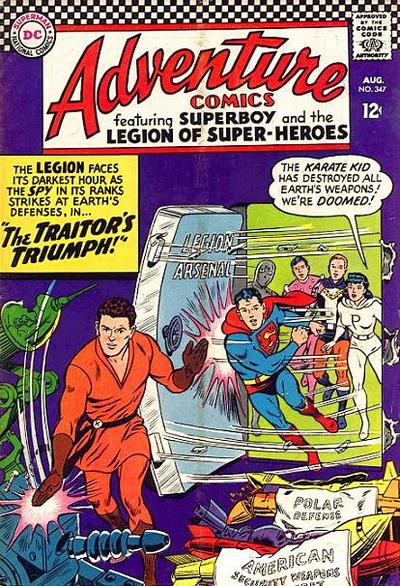
Comics: Adventure Comics #346-347

Notes: Once again, I find myself faced with the sad duty of eulogizing someone here in the Year of Superman blog, as yesterday afternoon we were told of the passing of Jim Shooter at the age of 73. Shooter was perhaps one of the most remarkable comic creators of all time – certainly possessing the most unique history. At the age of 13, he submitted a story to DC Comics featuring what he considered, at the time, one of DC’s weakest properties: the Legion of Super-Heroes. Not only did editor Mort Weisinger buy the story from Shooter, but at the age of 14 he was hired as the regular writer for the Legion’s tales in Adventure Comics. Shooter would go on to write other comics for DC, including – among many others – the very first ever race between Superman and the Flash from Superman #199. He wrote a variety of comics for DC, many of them part of the Superman family, for about a decade before he bounced over to Marvel Comics. There he eventually rose to the position of Editor-In-Chief, spearheading Marvel’s New Universe line and writing their first major crossover event, Marvel Super-Heroes Secret Wars. After leaving Marvel, Shooter founded Valiant Comics, as well as other enterprises that perhaps are not remembered as well.

Although sometimes a controversial figure (word has it that he wasn’t always the easiest editor to work with), Shooter is one of those figures whose stamp on the comic book landscape is undeniable. Both as a writer and an editor, he is responsible for some of the most significant and memorable stories and characters in comic book history.

So to commemorate him, I decided today to go back and read a story I didn’t get to back in Legion of Super-Heroes week: his first ever Legion story, a two-parter from Adventure Comics #346 and #347 – a story written by a 13-year-old boy. (Take THAT, 17-year-old Mary Shelley creating Frankenstein.) 

Hint: The traitor is the one who isn’t mentioned in any OTHER Legion stories of the past 60 years.

In the shockingly-titled “One of Us is a Traitor” Superboy, serving as interim leader, introduces four new young heroes all vying for Legion membership. Princess Projectra has the power to cast illusions! Nemesis Kid has a strange “alchemical” power that allows him to defend himself and defeat any foe! Ferro Lad can transform into living iron! And Karate Kid’s skill at Martial Arts is ALMOST enough to allow him to defeat Superboy! All four are unanimously accepted as members of the Legion. 

Before the Legion has even had a chance to welcome their newbies, though, a new threat rears its head: Garlak, warlord of the distant world of Khund, is threatening to invade Earth if the planet doesn’t surrender in one hour. And just in case Superboy gets any smart ideas, he warns them, he has a healthy supply of Kryptonite weapons. Superboy splits the Legion into three teams to protect Earth’s three defense towers, but in private, Garlak gloats that he’s already slipped a spy into the Legion ranks to guarantee his success. And in fact, when the first of the defense towers is attacked, Phantom Girl is left questioning Karate Kid’s loyalty to the team when he sends her away at a critical moment and the first of Earth’s three defense towers is destroyed.

In part two of the story, Superboy leads an air-squad to defend the second tower, but their Kryptonite weapons weaken him and the tower is lost. Checking on the Legionnaires who were supposed to defend it on the ground, they find their teammates unconscious, temporarily incapacitated by a gas attack, with one person missing – Karate Kid. Racing to Legion HQ, they find Karate Kid standing over the wreckage of the Legion’s arsenal, but when Superboy shouts out, “All right, Kid! The game’s up!” it is not Karate Kid who steps out to confess, but Nemesis Kid. He’s already signaled the Khund to attack, and plans to be richly rewarded as Earth perishes. But Superboy isn’t without his own tricks – he reveals a secret fourth defense tower that helps fend off the Khund as the Legion takes the fight to their spacecraft. Karate Kid proves his worth by singlehandedly capturing the Khund leader, but Nemesis Kid’s powers allow him to teleport away, and Superboy is left wondering if they’ll ever see him again.

He’s no Daniel LaRusso, but let’s see Jaden Smith’s Karate Kid do THAT.

First off, if you didn’t already know, there’s no way in hell you would EVER guess this story was written by a 13-year-old. Not only does it fit with the style of the other DC Comics of the 60s, it’s BETTER than most of them – a more intense story, sharper characterization, and while Karate Kid is obviously a red herring from the beginning, most red herrings at this time were obvious. The only knock I could give this story is the kind of lame way that Nemesis Kid reveals himself: “Oh, Superboy said ‘Kid.’ He must be talking to me and not the guy who’s literally standing over the destroyed arsenal, whose name also happens to have ‘Kid’ in it. Better give myself up.” But even THAT isn’t any lamer than most other stories of the time, and I can easily give it a pass.

What’s more, in his first story, Shooter has contributed SEVERAL lasting elements to the Legion of Super-Heroes: Projectra and Karate Kid would go on to have long, storied careers with the Legion (to date, Karate Kid and Mon-El, using the name Valor, are the only Legionnaires to ever get their own ongoing comic book series). Ferro Lad’s time as a Legionnaire was cut tragically short, but as the first Legionnaire to die (and stay dead) in battle, he left an indelible mark on the franchise. Kind of like Tasha Yar on Star Trek: The Next Generation, Ferro Lad turned out to be more important in death than it was in life. And even the bad guys from this story, the Khunds, would go on to be long-time alien antagonists not only for the Legion, but even in the DC comics set in the present day, although it should be noted that the Khunds would change to a more alien-like appearance, whereas in this story Shooter and artist Sheldon Moldoff (working off Shooter’s thumbnail sketches, no less!) kind of made Garlak look like Attila the Hun in space. 

Not a bad first day on the job for someone whose contemporaries made their money delivering newspapers.

Thank you, Mr. Shooter from the hearts of the fans of the Legion. And Superman. And major crossover events. And the Valiant Comics characters. Let’s face it, you had your hand in everything, and we’re all better for having your work in comics. 

Blake M. Petit is a writer, teacher, and dad from Ama, Louisiana. His most recent writing project is the superhero adventure series Other People’s Heroes: Little Stars, volume one of which is now available on Amazon. You can subscribe to his newsletter by clicking right here. You can join in the Kryptonian Konversation every day in the Year of Superman Facebook Group!
Year of Superman Week 12: After the End

Another week, and finally some good news. For those of you who follow along in the blog and know about the car troubles that have been weighing me down the last couple of weeks, the car has been fixed and it’s on the road again. So I’m recharged and ready to get back into it. Let’s get started, shall we?

Wed., March 19

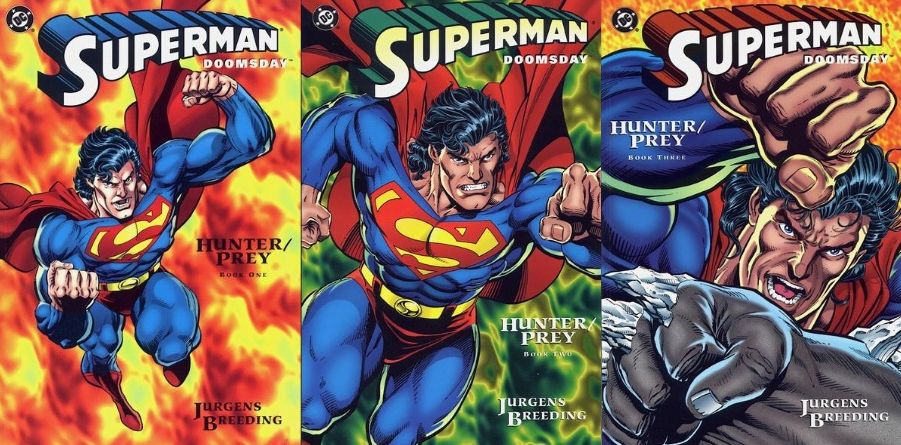
Animated Feature: Superman/Doomsday (2007)

Notes: Back in 2007, the big news was that Warner Bros. animation was starting a series of direct-to-DVD movies based on DC comics, starting with this one, the animated adaptation of the Death and Return saga. It was the first of an initiative that lasted (as far as I can tell) right up until last year, when the two-part Watchmen adaptation was released. I haven’t heard about any new films since then, though, save for a Japanese-produced sequel to Batman: Ninja. I hope that this series isn’t a casualty of the new James Gunn universe.

Anyway, when this movie first released, it was a big deal. We were psyched for it, excited to see a more adult animated version of the DC Universe. Don’t misunderstand, the Diniverse (home of Batman: The Animated Series, Superman: The Animated Series, Justice League Unlimited, Static Shock and more) was and remains a favorite…but within the constraints of a TV-PG rating. We wanted something a little more. The fact that it was a big deal that this movie was rated PG-13 is actually kind of quaint, considering we now live in a world where Wolverine drops F-bombs like Kanye West being dropped by his managers. 

In 2007, we thought this was groundbreaking.

All that said, although I remember enjoying this movie at the time, it doesn’t hold up that well. Condensing the Death and Return trilogy into a scant 77 minutes was probably the first mistake. The battle with Doomsday is actually pretty well done, but it feels too brief considering the gravity of the situation. Then, the movie jettisons most of the “Funeral” and “Reign” storylines entirely, going from Superman’s death to a new Superman popping up to take in a bizarre version of Toman that even the great John DiMaggio can’t make entertaining. The result is that it feels like Superman is “dead” for about 20 minutes. Of course, it’s not the real Superman at this point, something that soon becomes evident as Lois realizes that he has none of Superman’s memories. Nope, this is a clone – but it ain’t Superboy. It’s a clone created by Lex Luthor (a clone he gets off on abusing under red solar lamps in one particularly squicky scene), crafted to give him the chance to ruin Superman’s reputation from beyond the grave. It starts to work when he begins getting more violent with the criminals he thwarts, going to extremes that even the Eradicator wouldn’t. But no problem, the REAL Superman wakes up in the Fortress of Solitude because…he can. Really, it’s just that on Earth, he can come back from death. That’s the only explanation we get. 

The relationship between Superman and Lois is weird here too. The two of them are dating – he even takes her off at the beginning of the film for a romp at the Fortress of Solitude that, while not explicit, would certainly have strained the limits of a kid-friendly rating. But at the same time, she’s dating SUPERMAN, and still doesn’t know that he’s Clark Kent (although she has her suspicions). I guess it’s a more of a modernized take on the old Silver Age status quo, but that was a bad look then and it’s a bad look now. To be fair, they do work it into the plot, as she goes to seek out Martha Kent after Superman dies, trying to share her grief with the only person on Earth who MIGHT understand what she’s going through, but it could have been served just as well having a more traditional Lois/Clark relationship.

The casting has its ups and downs. Adam Baldwin is a decent Superman, and James Marsden is a great Lex Luthor, but Anne Heche is sorely miscast as Lois Lane. She doesn’t have the steel in her voice (excuse the pun) that Lois should have, and the way she goes after Superman to badger his secret identity out of him is an awful way to write the character. Plus, it makes HIM look bad for not trusting her with the secret. They even try to work around the fact that Clark goes missing after Superman dies because he was on assignment in Afghanistan, which is far too neat a solution. 

I get it. It was their first attempt not only at adapting this storyline, but at making an animated DC superhero movie. There was a pretty steep learning curve that needed to be addressed. But man, am I glad that they came back a few years ago and took another swing at this storyline, because the two-parter was much, much better. I watched Part One, The Death of Superman, back in Week Nine of this project. I’ll try to tackle Reign of the Supermen before week 12 ends. 

Comics: Black Lightning Vol. 4 #4 (Guest Appearances by Superman, John Henry & Natasha Irons), Jenny Sparks #7 (Guest Appearance)

Thur., March 20

I hear Spielberg used these covers as inspiration for that scene in Jaws.

Comics: Superman/Doomsday: Hunter/Prey #1-3

Notes: About a year after his return from the grave, Dan Jurgens gave us this three-issue miniseries featuring what fans were clamoring for: a rematch between Superman and Doomsday. Apparently, since he came back, Clark has been suffering from recurring nightmares about the battle with Doomsday, worried about the fact that the Cyborg threw his body into space and parts unknown. The fears are justified – a space cruiser picks up the rock the Cyborg strapped him to and Doomsday wakes up, resuming his quest of slaughter amongst the crew. The ship brings him to Apokalips, where he begins a rampage that causes even Darkseid’s minions terror, and then it gets worse – the Cyborg himself returns, having transferred his consciousness onto a device he slipped onto Doomsday, where he just bided his time until he had the opportunity to construct a new body. 

On Earth, Superman hunts down Waverider and the Linear Men, hoping they will tell him Doomsday’s secrets, but all he gets is a cryptic clue that points him to Apokalips. Oberon of the Justice League hooks him up with a Mother Box, and he sets out, just in time to see the Cyborg and Doomsday causing untold destruction, even beating down the mighty Darkseid.

This is the series that gives us the origin of Doomsday, and it turns out to be as horrific as one would expect. Millennia ago, an alien scientist strove to create a “perfect” being. And what better way to do that then by going to a planet so violent and inhospitable that virtually nothing could survive on the surface, jettison an infant to be brutally slaughtered, and then cloning him over and over again to find new ways to survive? The ultimate result of this experiment, after decades of violence and torture, was Doomsday, a creature who has the ability to evolve and recover from any injury. In short, he can never be killed the same way twice. Unfortunately for the scientists, he also evolved to consider literally any form of life a threat. He kills them all, then hitches a ride into space to begin a reign of terror. Oh yes, and the planet where all this happened? It was in the ancient past of a little world called Krypton. Eventually he was defeated by the Radiant, an energy being from another world, and was “buried” on an asteroid that, after untold centuries, crash landed on Earth.

Ah, you know the rest.

Issue three of this series is almost pure fight scene. By the end of it, Darkseid has trapped the Cyborg’s consciousness in a little ball, and Superman and Waverider throw Doomsday through time to be swallowed up by the end of the universe itself. He got better. 

Jurgens takes advantage of the “prestige format” of this miniseries, free from the constraints of the comics code. While still relatively mild compared to a “mature readers” comic book, he really amps up the violence this time around. We see Doomsday’s victims ripped in half, their heads pulled off, and all manner of gore that was pretty intense compared to the typical Superman comic of the Triangle Era. Keeping the bulk of the story on Apokalips also nicely sidesteps the consequences of fitting this story into the regular Triangle books. Had the rematch happened on Earth, there would have had to have been a whole new subplot about the destruction, the devastation, the PTSD everyone suffered from Doomsday’s return. This way, only a handful of people on Earth even know that it happened, and it’s taken care of with everybody none the wiser. It’s well-constructed.

It’s also a nice showcase of the way that Jurgens – like many creators – shows off his pet creations. There are a few characters that Jurgens created or co-created that he keeps coming back to time and time again. Booster Gold is probably the most famous of these, but he also loved to keep coming back to Waverider and the Linear Men. I’m a big fan of them as well – to this day, I think Waverider has one of the coolest designs of any character that came out of the 90s (not a single pouch or pocket, even), and I also like a good time travel story. He fits in nicely, and on those rare occasions he shows up nowadays, I always like seeing him. 

Of course, this wasn’t the end for Doomsday. Even throwing him into the heat death at the end of the universe wouldn’t be enough to take such a lucrative character off the table forever. But it would be a little while before he showed up in continuity again. In fact, the next time we saw him, it wouldn’t be set in the regular timeline at all. 

Literature.

Novel: The Death and Life of Superman by Roger Stern (finished)

Notes: I wrote about the bulk of this novel in last week’s blog recap, so I don’t have too much more to say, other than to note how Roger Stern tweaked the ending. He left out Green Lantern’s involvement in the finale, which seems like an odd choice, considering how meticulously he stuck to the story in the earlier scenes with the Justice League. There’s also a bit of a change at the end: in the comic book, Superman’s powers were restored when the Cyborg tried to hit him with Kryptonite, but the Eradicator dove in front of the beam. The mingling of the Kryptonite and the Eradicator’s energy was what it took to bring Superman back to full power. In the novel, though, the Eradicator chooses to pour his energy into Superman and recharge him. I have to say, I like the comic book version better. Either way the Eradicator gets his heroic sacrifice, but somehow it’s more satisfying if he dies trying to SAVE Superman, rather than dying just to give him back his powers. Even more than the Green Lantern omission, I’m not sure what spurred this change in the story. All that said, none of this ruins the book. It’s a fun read, especially for completists like myself, and I suggest you poke around and find yourself a copy if you’re so inclined.

Fri., March 21

Comic: Doomsday Annual #1

You know, technically, there’s no such thing as “first annual.” Something can’t be a yearly event until it happens twice. This one didn’t happen twice. Please enjoy “Doomsday Not-Really-An-Annual #1.”

Notes: By 1995, DC had stopped doing annual crossover storylines like Bloodlines and, instead, began doing annual THEMES instead. This year, the annual theme was “Year One,” with every annual telling an early story of the character in question. Not a bad way to do it, really, I wish that modern annuals had any sort of rhyme or reason to them. Over at Marvel their Annual editors don’t even know there are numbers higher than “one.” But most interesting was how they would occasionally drop an “annual” for a character who didn’t even have a regular series, such as this. On the anniversary of Superman’s death, people have made a pilgrimage to the site where the monster first broke free from his confinement. As it turns out, the gathering was arranged by our old friend Mitch Anderson, he whose home was destroyed by Doomsday during the original rampage. The crowd and a group of soldiers guarding the area nearly come to blows until Superman arrives, settling things down, and begins to regale the people with stories of Doomsday’s past. The anthology issue includes the creature’s first battle against Darkseid, an ancient encounter with the Green Lantern Corps, and an epilogue of sorts to Hunter/Prey. It’s not bad – the Darkseid story especially is good, no doubt bolstered by the writing and artwork of Dan Jurgens – but compared to most of the other appearances of Doomsday, it’s a little forgettable. 

Sat. March 22

Comics: Absolute Superman #5, Action Comics #1084, Batman/Superman: World’s Finest #37, DC X Sonic the Hedgehog #1

Notes: It’s that time again, friends. Once again, I’m going to spend a Saturday afternoon checking in on the recent Superman comics – most of them, anyway. This week we got the long-delayed release of the second issue of Superman: The Last Days of Lex Luthor, a Black Label comic by Mark Waid and Bryan Hitch. The first issue, as I recall, was magnificent…but it came out nearly two years ago. I’ve got no idea what the cause was for the gargantuan wait, but I’ve frankly sort of forgotten what happened in issue one. I could go back and read it, but the third and final issue is supposedly going to come out next month. I think, instead, I’ll just hold off on reading #2 and hit all three of them when the final issue is released. So here are the other Superman and Superman-adjacent comics from the past few weeks:

The weird thing is that this image was originally drawn for a Pepto-Bismol commercial.

Absolute Superman #5: The newest DC Universe continues to reveal its secrets, with this issue telling the story of the last days of Krypton. I’ve said many times that I don’t really need origin stories anymore – we’ve seen them a billion times and there’s not really a need for them anymore, especially in terms of the most popular characters. I never again need to see the murder of Thomas and Martha Wayne, I never need to see Peter Parker get bitten by a spider, and I never need to see Krypton explode. The exception to this rule is the rare story that does it differently. In the Absolute Universe, Kal-El wasn’t sent to Earth as a baby. Here, as a child, he is one of a group of Kryptonians that Jor-El has gathered in an effort to escape Krypton’s destruction – not even a fraction of her population, but more than the sole survivor their son usually is. I’ve really been enjoying what they’ve done with the Absolute line. I wouldn’t want this to be the “main” DC Universe, but as an alternate reality, it works, and it’s working quite well.

Action Comics #1084: John Ridley’s “Force Majeure” arc ends this issue, and it does – to be fair – address my biggest issue with the arc. I’ve said before, I hate recidivism stories. No matter how realistic they may be, once I’ve watched a former villain go through a redemption arc I don’t like seeing them backslide, and Major Disaster is no exception. As this story ends, we at least get a slightly more palatable reason for his reversion to a crook. It helps, but it’s still just not the kind of story I want to read, especially in a Superman book. There’s enough darkness in the world, Action Comics is a place where I want to see the light shine through.

Batman/Superman: World’s Finest #37: Although this title is ostensibly a Batman/Superman book, there are times where Mark Waid really uses it as his playground to touch upon the entire DC Universe. Batman and Superman are almost side characters in this issue, with the bulk of the story landing on the shoulders of Aquaman, Swamp Thing, and Lori Lemaris. Lori kissed Superman at the end of last issue, her old feelings for him resurfacing, and in this issue her husband is understandably having issues dealing with it. They work through their issues while the heroes fight to, y’know, save the world, as they do. Nobody knows the DC Universe like Mark Waid does, and it’s great to know that they’ve tapped him to write the upcoming New History of the DC Universe miniseries.

It’s another “who’s faster, the blue guy or the red guy?” situation.

DC X Sonic the Hedgehog #1: Man, do I love a ridiculous crossover event, and this most certainly qualifies. In this issue, Darkseid has invaded the world of Sonic the Hedgehog aboard his “Ragna Rock,” a mobile battlestation that can cross dimensions. The Justice League follows him, and join forces with Sonic and friends to take him down. This is surprisingly refreshing for one of these crossover events. For starters, whenever there’s a crossover between two universes that can’t mix as easily as, say, DC and Marvel, it’s usually the characters from the less-grounded world coming to the more-grounded one – the DC/Looney Tunes crossover from years back being a prime example. Here we get the reverse, which is a nice change of pace. Second, there’s never even an iota of the usual “heroes get into a misunderstanding and fight before they team up against the bad guy” nonsense that we see time and time again. The League and Team Sonic immediately recognize each other as heroes and quickly not only partner up, but pair off, with the members of each team gravitating towards their most logical counterpart on the other. Superman winds up with Knuckles, the “strongest” of the Sonic heroes, and while their personalities are very different, there’s a mutual respect from the outset. I suspect at least part of this is because the comic is written by longtime Sonic writer Ian Flynn, who probably knows those characters better than anybody alive, and finds it fairly easy to integrate them with the world-famous Justice League. It’s a silly book, to be certain, but you know what? I like silly. 

Sun., March 23

These covers, on the other hand, inspired a scene from Paddington 2.

Comics: Superman: The Doomsday Wars #1-3

Notes: The second Superman/Doomsday rematch, once again a Dan Jurgens joint, came in 1998. In another three-issue miniseries, we see Superman wrestling with his failures – specifically the death of Cat Grant’s son Adam at the hands of the Toyman. He keeps flashing back to a failure of his as a teenager, in which his family’s entire herd of cows froze to death while he was helpless to save them, and the dual failures are eating at him. Things are compounded when he learns that Lana Lang – who at this point was married to Pete Ross – has given birth, but the baby came prematurely and is near death. As Superman races to bring the child to medical attention, Doomsday returns and begins tearing through the Justice League…and this time, he’s not the mindless brute Superman faced before.

I have to say, as a sequel to the original Doomsday fight, I actually prefer this one to Hunter/Prey. The stakes are much more personal here, with Lana and Pete’s child hanging in the balance, and with Doomsday himself (spoiler) being propelled by Brainiac’s intelligence, making him far more dangerous. The story also takes place during the Grant Morrison era of the Justice League, so Doomsday is fighting a far more experienced and more powerful team than he did the first time. We don’t see the entire fight, but the stuff we see is really good, and in some instances (such as what he does to Plastic Man) downright chilling.

The one thing I’m not really down with is the characterization of Pete Ross. In the classic Superboy stories from the Silver Age, Pete was Clark’s best friend and the only one outside of the Kents who knew his secret identity, although Clark didn’t know that Pete knew it. After the Man of Steel reboot, the Superboy years never happened and the role of secret-keeper was switched to Lana, which was fine, but there are moments where Pete just doesn’t feel right. He’s outraged at Lana when she asks to speak to Clark privately (so she can ask him to have Superman save her son), and while a little insecurity about her speaking to the man Lana was in love with for so many years may be understandable, the blind rage he shows when he finds out that Superman is trying to save his child doesn’t make any sense at all. To be fair, Pete comes around by the end of the miniseries, but it’s a journey he never should have really been on in the first place.

Mon., March 24

Imagine this guy showing up on the bridge of the Cerritos.

Feature Film: Reign of the Supermen (2019)

Notes: The sequel to The Death of Superman picks up six months after the end of the first film, which in and of itself is an improvement over Superman/Doomsday, which made it seem as though the big guy was dead for about the length of an episode of Bluey. Almost simultaneously, four different people show up wearing the s-shield, and…oh, what the hell am I doing? You know how this story goes by now.

Instead of wasting time on a recap, let’s just talk about how this animated film works as an adaptation. The changes, for the most part, seem to be in service of making the story fit the animated DCU they were working with at the time. For example, in the absence of both Cadmus and WGBS, Superboy is a creation of LexCorp, although he still maintains his essentially good heart. In fact, his debut is interrupted by the Eradicator, showing up to eliminate “known criminal” Lex Luthor and winding up fighting the Kid, Steel, AND the Cyborg. It works pretty well – if there was anybody watching this who somehow didn’t know the story, it’s a good misdirect as far as hiding the Cyborg’s true nature. They also tie Superboy’s origin into the reconned version from his Teen Titans era – making him a mix of Superman and Lex’s DNA – which works better in this universe. An odd tweak has Henshaw, the Cyborg, initially working for Darkseid (deliciously voiced by the late, great Tony Todd) as part of his status as this DCU’s Big Bad. Instead of an attack on Coast City, Henshaw builds an army by offering them the same technology that “resurrected” him – really Apokalips tech. The end of the story isn’t quite as dramatic – we don’t get anything like the devastation of Coast City – but they manage to make the battle deeply personal, with the Cyborg’s rage being a bit more focused and less megalomaniacal. 

There’s really good stuff with Lois in here, such as a nice early scene where she and Wonder Woman commiserate over Superman’s absence. Later, she deduces John Henry’s secret identity, then teams up with him to uncover who the Cyborg is – funny for a character who, in her own words, is “the worst with secret identities.” But it makes Lois look smarter, more capable, and gives her an agency that she lacked even in the original story. She’s also present for the finale this time, taking an active role in the battle with the Cyborg, and I love seeing it. 

There are also nice Easter Eggs in this movie as well, such as newspaper cover photos that are based on the covers to the Reign of the Supermen comics. It’s the sort of thing that only the hardcore fans might notice but…well, if you haven’t noticed by now, I’m a hardcore fan. 

I don’t want to spend too much more time talking about the casting of this one, as there isn’t much more to say this time around than I said when I watched the first one a few weeks ago, but I do need to point out Rainn Wilson’s Lex Luthor again. While still slick and serpentine, Wilson plays him a bit funnier this time around. There’s a dismissive conversation with Superboy about how a clone is no different than a biological child that left me laughing, for instance, and he carries that same sensibility throughout the film.

This is a far superior adaptation of the story than the animated DC’s first attempt. It’s not totally faithful, but it works well for the world in which it is set, and that’s what I’m asking for here. 

Tues., March 25

I bought a bunch of these balloons once. My niece said I ruined her sixth birthday.

Comic Books: Superman: Day of Doom #1-4

Notes: To all things there must come an ending…even the saga of Superman’s death and return. I’m going to wrap up this surprisingly long dive into that storyline with the four-issue miniseries Superman: Day of Doom from 2002, published to coincide with the 10th anniversary of the story, written by Dan Jurgens with art by Jurgens and Bill Sienkiewicz. It’s the anniversary of Superman’s death in the DCU too (which anniversary isn’t really made explicit) and Daily Planet newbie Ty Duffy is tasked with writing a piece about people’s feelings about that monumental event. Despite not seeing the newsworthiness in a story that’s been told time and again, Duffy starts to dig, beginning with an interview with Blue Beetle and Booster Gold. (Remember what I said about Booster being one of Jurgens’s pet characters? This isn’t a complaint, I love seeing Booster Gold.) From there he begins an Odyssey that takes him to all walks of life in Metropolis, finding the stories that haven’t been told before.

The strength of this series, honestly, comes in those scenes where we hear new perspectives. Duffy talks to Perry White and Jimmy Olsen, but we saw them on the day. We know how they felt. It’s far more impactful when he talks to a random bystander who was left in a wheelchair thanks to Doomsday’s rampage, a priest who ministered to the suffering after the Coast City disaster, or uncovers the undisguised glee the Prankster felt when he heard that Superman was dead. 

There’s a running thread throughout the series as well, about someone causing disasters along a path that perfectly mirrors Doomsday’s trail of destruction. As the trail reaches Metropolis at the end of the third issue, the two storylines finally collide, with Duffy laying in to Superman with the truth about why he resents the hero’s return from the dead so much, just pages before he too is taken by the mystery villain. 

The story is surprisingly open-ended. Superman is forced to confront the tragedies that so many other people suffered during the battle with Doomsday and beyond, but the villain gets away and his true nature goes unrevealed. Even Duffy, who is the crux of this story’s emotional journey, doesn’t seem to really get the catharsis one would expect at the end. There’s a bitterness here that’s surprising. Don’t misunderstand – it’s pretty realistic. Even at the time of the original Doomsday storyline, the writers made it a point to refer to how many people Doomsday had killed, but they’d never really dug into those stories before. Even the most prominent Doomsday victims in the comics of the time – Mitch Anderson and his family – survived the rampage with the loss of their home, but no loss of life. And the Justice League showed up and built them a new house at Christmas, so where was the tragedy?

I have to wonder if writing this was a kind of catharsis for Jurgens himself. It feels almost like the writer is performing an act of penance, trying to atone for all the hundreds of fictional people that he killed (to say nothing of the seven million of Coast City) in the service of the story of the life and death of one man. It’s certainly the way that Duffy views the event, and it’s so odd that the comic book gives you the impression that – at least on some level – Dan Jurgens feels the same way.

The story of Superman’s death was tragic. The story of his return was triumphant. Day of Doom is a somewhat dark attempt to reconcile the two. It’s probably not something to be read in the immediate aftermath of the Death of Superman – after the upbeat ending of that story, it’s something that’ll bring you right down.

But it is most certainly a story that should be read.

Other Comics: Superman’s Girl Friend, Lois Lane #11,

And thus, finally, we reach the end of the epic saga of the Death and Life of Superman, and I am reminded why I decided not to do TOO many of these extended storylines over the course of this year. I do have one more planned, but it’s going to be a few months before I’m ready to tackle it. Starting tomorrow I’m planning to get a little more random again…but I’m also looking for some help. I’m asking you, dear readers, to suggest some of the best single-issue Superman stories ever written for me to dig into. After spending nearly a month with one story, I want shorts. So hit me in the comments with your suggestions. They can come from any era, any continuity, any Superman you want. They don’t even have to be from a Superman comic book – if you can find a really great story from an issue of Blue Devil or something, I’m down for it. Preference will be given to stories available on the DC Universe Infinite app, but that doesn’t mean I’ll automatically reject stories that aren’t. Next week, it’s gonna be SUPERMAN BY REQUEST!

Blake M. Petit is a writer, teacher, and dad from Ama, Louisiana. His most recent writing project is the superhero adventure series Other People’s Heroes: Little Stars, volume one of which is now available on Amazon. You can subscribe to his newsletter by clicking right here. You can join in the Kryptonian Konversation every day in the Year of Superman Facebook Group!