Geek Punditry #146: Scary Starters

If you read last week’s column – and obviously you should have, because it was a masterpiece – you may remember me mentioning that my 11-year-old nephew is planning to be Ghostface for Halloween this year. This is amusing to me because his mom, my sister, is very much NOT a horror movie fan, and I know for certain my nephew has never seen any of those films. It’s just evidence of how pervasive the Ghostface icon has become. But a few days later I got another nice surprise when my sister asked me if I thought her daughter, who turns 15 this weekend, was old enough to watch the Scream movies.

When I tell you I wanted to squeal with delight…

I smiled bigger than this.

I get questions like this a lot. I suppose that my multiple qualifications as a teacher, father, writer, and geek pundit all make people confident that I have a good idea of what media is appropriate for what age group, and I’m flattered by the faith they have in me. On the other hand, the question isn’t always that simple. Age-based ratings like your PG, PG-13, and R from the MPAA are a decent enough guide, but that’s all they are: a GUIDE. The truth is that every kid is different. There are 13-year-olds who can handle the same scary movies that would give their same-aged classmates nightmares for a week. So when I’m given these questions, I always give a general opinion, but I couch it in the caveat that “You know your kids better than anybody else, so use your best judgment.” 

But in this case, I know my niece really well. She’s grown up to be a fan of the morbid and macabre, she is slightly obsessed with all permutations of Five Nights at Freddy’s, and she’s smart enough to separate fiction from reality. When I got hit with this question, I had no doubt that she could handle it. The bigger question, honestly, was whether my sister would be okay with it.

“As far as the Scream movies go,” I told her, “There’s not any nudity. There IS violence, but compared to a lot of other franchises it’s relatively tame. There’s language, but she goes to a public high school, so I guarantee there’s nothing she hasn’t heard before. They’re all streaming on Paramount+, so yeah, I think it’s okay.”

Of course, it doesn’t hurt that Scream is – as I’ve stated many times – my favorite horror movie franchise, mainly because I think the writing and characterization are heads and shoulders above most of the other ones. But I still wouldn’t suggest that my niece be allowed to watch them if I didn’t think she was ready for it.

A few days later, I happened across a link to an article from Letterboxd that listed 20 PG-13 horror movies, films that were suggested as sort of “starters” for people who are just getting into the genre and didn’t want anything TOO intense. I’ve seen most of the films on that list and I agree that many of them are good choices – The Sixth Sense, for example, or Night of the Comet. And I was surprised at just how tonally diverse the list was, including things as chilling as The Ring and as family-friendly as Monster Squad.

I forwarded the link to both my niece and her mom, and my niece replied that she’s already seen Scary Stories to Tell in the Dark and now she has an excuse to watch the others on the list. I love this kid.

For the kids.

All this is to say, I’m really looking forward to helping usher her into the world of horror movie fandom, because I find that by and large horror movie fans are some of the nicest, kindest, most down-to-earth people I’ve ever met. Compared to certain other fandoms I could mention, like those from a galaxy far, far away, horror fans are usually very respectful of differing opinions and eager to listen, able to have conversations about their favorites and least favorites without devolving into name-calling or anger, and are extremely generous and supportive of the movies and creators that they enjoy. I know my niece would be positively embraced by this community, and it’s really important to find your tribe. I’m not saying that everybody in the world should be a horror fan, but I AM saying that if more people BEHAVED like horror fans, the world would be a much better place.

So if you’re into horror, or if you’ve got a teenager in your life that’s drifting in that direction, check out that Letterboxd list I linked to above. It’s a good starting place. And here are a few more suggestions for movies that didn’t quite make the Letterboxd cut, as well as other non-movie media sources that a burgeoning horror fan could start getting into this spooky season.

This is why dads mow the lawn every other morning.

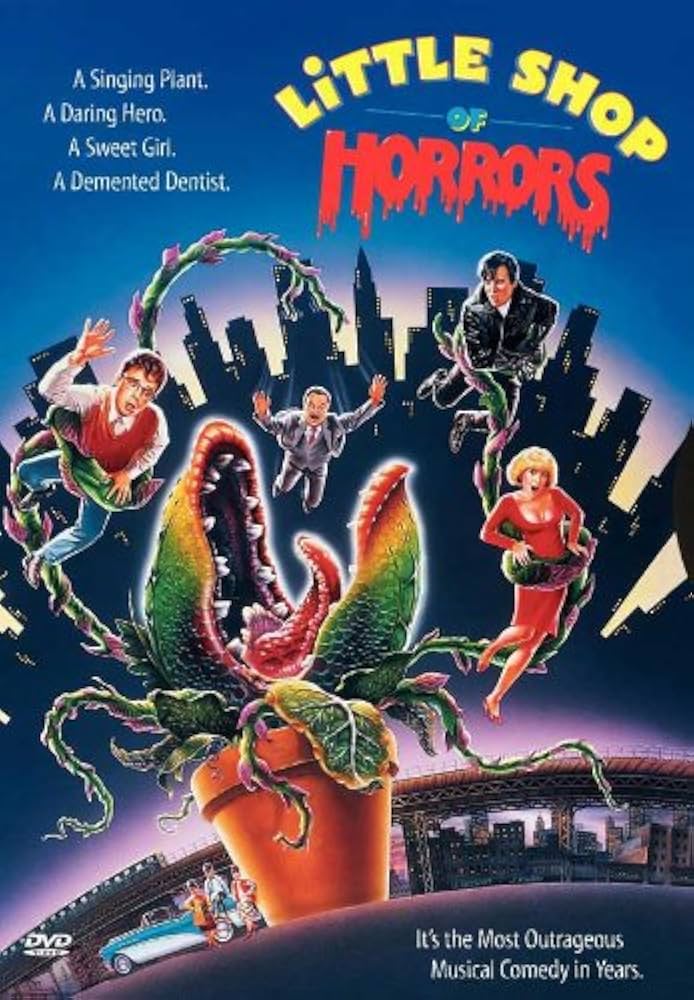
The most glaring omission from the Letterboxd list – and my wife pointed this out almost immediately – is Little Shop of Horrors. It’s the chilling tale of a little New York flower shop where a young man finds and cultivates a new breed of plant that turns out to be an alien invader that thirsts for human flesh. Fun for the whole family! The Roger Corman original from 1960 is a cheesy schlockfest – it’s fun to watch, but only if you’re really into “good bad movies.” However, the 1986 musical version directed by Frank Oz is a masterpiece. The music is phenomenal, the performances are fantastic, and it’s just one more reason to love Rick Moranis. The puppetry by Jim Henson Studios holds up brilliantly today, and it’s impossible to imagine anyone walking away from this movie without having a new favorite song. My niece is already a geek for musicals, so I know this would be right up her alley. I just hope my sister is ready for weeks and weeks of her kid casually singing “Dentist!” and “Suddenly, Seymour.”

“Do you think you’ve got the CHOPS for this one, kiddies?”

Although it’s more intense than the stuff on the Letterboxd list, I have to give a strong recommendation to the legendary HBO TV series Tales From the Crypt. Based on the classic EC Comics (which themselves are well worth reading), this anthology series presented a half-hour morality tale each week, a different story with a different twist that usually involved a bad person doing bad things and getting a karmically appropriate comeuppance. The show adapted stories from the original comic book as well as some of its sister series, The Haunt of Fear, The Vault of Horror, and others. It also gave us one of the all time great horror icons in the Cryptkeeper, the John Kassir-voiced puppet who served as the host of the show with a ghoulishly gleeful sense of humor at the beginning and end of each episode. The general content level is a step up from Scream – there was sex sometimes, and the violence was kicked up a notch. At the same time, though, the violence was often treated very nonchalantly, brought up to an almost cartoonish level and hard to take seriously, which is part of the charm. 

HBO treated this series very well, bringing in big-name guest-stars and directors like Martin Sheen, Brooke Shields, Catherine O’Hara, Christopher Reeve, Steve Buscemi, Tim Curry, and tons of others. The show gave us seven seasons with 93 episodes, as well as three theatrical films and a more kid-centric animated spinoff, Tales From the Cryptkeeper. There’s fun to be had in all of them.

“I know I look like the Cryptkeeper, but I don’t really talk. I’m animated beautifully, though.”

I also have to give a recommendation to its spiritual successor, Creepshow. In the original Creepshow movie from 1982, director George Romero (of Night of the Living Dead fame) teamed up with Stephen King for a film that was inspired by and tonally reminiscent of the original Tales From the Crypt comics years before the TV show brought it back to the public consciousness. The first Creepshow was written entirely by King, and he even starred in one of the anthology segments himself. The first sequel also adapted King stories, although both he and George Romero were absent entirely from the third installment. The legacy of the film persevered, though, and in 2019 the Shudder streaming service brought it back as an anthology TV series that lasted for four seasons and a few specials (including a Halloween special and an animated Christmas special). What’s more, the TV shows spawned a new comic book anthology series from Skybound (the company owned by Robert Kirkman, creator of The Walking Dead), bringing the whole style of tongue-in-cheek horror with a dash of dark comedy back to its original format. All of these are worth indulging and, as they’re anthologies, can be picked up one episode or installment at a time without requiring a huge binge to get through an entire story like some TV shows, comics, or film series.

The Ditko version was a lot cleaner.

Finally, if you’re looking for a horror tinged-take on characters you already know and love, there are several options available. Marvel fans may be aware of the recent Marvel Zombies animated series, but they may not know that it’s based on a line of comic books, which themselves were started by Robert Kirkman before he left Marvel and devoted himself entirely to his own company. In the original Marvel Zombies, an old-fashioned zombie virus struck the Fantastic Four, turning them into flesh-eaters. It spread out from there, and once it hit the super-speedster Quicksilver, any chance of stopping it from being a global pandemic was lost. In the Marvel Zombies universe, the undead retain their human intelligence, although their zombie hunger overtakes their former heroic morality. It’s a fun series that has had many permutations. The hard part for a newbie would likely be just keeping track of which order to read the many assorted graphic novels in and figuring out which ones are part of the main continuity or standalone.

Well, the end of everything until next issue.

DC Comics has also given us two horror-themed worlds to explore in recent years. First was DCEased, a book that I have to believe was given the greenlight primarily on the strength of the pun in the title. In the main DC Universe, Darkseid has spent 50 years or so trying to find the “Anti-Life Equation,” a formula that would give him control over all life. In DCEased, the equation is cut loose, transforming anyone it touches into a mindless killing machine. It’s not TECHNICALLY a zombie story, but it uses many zombie tropes to tell what turns out to be a generational tale of broken heroes desperate to find a way to save their world.

“Okay, but that’s just a placeholder title, right? We’re gonna come up with something more clever before it’s published, right? Right? Guys?”

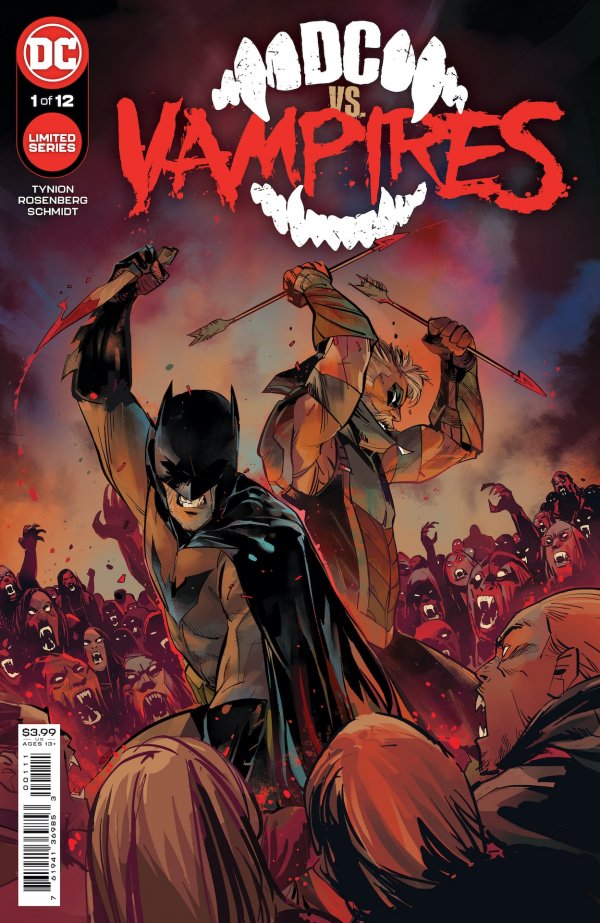
Finally, there’s DC Vs. Vampires where – once again – some of DC’s best and brightest are turned into creepy-crawlies. This time, we wind up with a world where Batgirl becomes queen of the vampires and the heroes are divided into dead and undead and are embroiled in a civil war that engulfs their entire world. The most recent (and possibly final) volume of this series just ended, and the paperback edition should be coming soon. Like Marvel Zombies and DCEased, it works as a fun horror take on some familiar characters.

So there you are, friends – a few gateways into the world of the macabre. I’m sure you have suggestions of your own, and I’d love to hear them in the comments. With two weeks left until Halloween, it’s time for the Creepy Content to completely take over.

Blake M. Petit is a writer, teacher, and dad from Ama, Louisiana. His most recent writing project is the superhero adventure series Other People’s Heroes: Little Stars, volume one of which is now available on Amazon. You can subscribe to his newsletter by clicking right here. He’s also started putting his LitReel videos on TikTok. He skipped over recommending Plants Vs. Zombies. They know what they did. 

Geek Punditry #145: What Makes an Icon?

Matt Groening, creator of The Simpsons, famously said he believes one of the keys to an iconic cartoon character design is whether the character is recognizable just from their silhouette. Think about it – if you show pretty much anybody anywhere in the world the mouse-ear shape, they’ll instantly recognize Mickey Mouse. The same can be said for characters like SpongeBob Squarepants, Phineas and Ferb, Bugs Bunny, and a lot of the other cartoon all-stars. And Groening himself is legendary for utilizing this tactic with the signature nine spikes on Bart Simpson’s head or the trademark antenna on the top of Futurama’s robot character Bender Bending Rodriguez. But as insightful as this piece of wisdom is, I don’t think it applies only to cartoons. In truth, any truly great design should have elements that make it instantly recognizable. And with Halloween only three weeks away, this week I’m going to help you all make your costuming decisions by applying this reasoning to horror movie icons.

Of course, the silhouette isn’t the only thing that makes for a horror icon. There are several factors to take into consideration. The overall design, in addition to just the silhouette, needs to be memorable. The characters themselves should be interesting and unique. A character should be popular enough that people will recognize them and you won’t have to spend the entire Halloween party explaining what your costume is. And when you’re talking about Halloween costumes, above all else, they should be fun to play. So let’s go over some of the all-time great horror movie icons and see just how they stack up to this metric before you suit up for your Halloween party. 

Every one is a winner.

We’re gonna start old-school with the Universal Monsters. The great thing about these characters is that they are all INSTANTLY recognizable, even to children who were born 90 years after the movies were released and have never seen any of them. Characters like Dracula, the Frankenstein Monster, and the Invisible Man are all based on classic literature and are not Universal originals, but when you ask somebody to picture them, they invariably envision the versions popularized by Bela Lugosi, Boris Karloff, and Claude Rains, respectively. In fact, those designs are all copyrighted (at least for the next few years). If you were to make a movie about Frankenstein, you couldn’t give your monster the flattop or neck-bolts, because those are all owned by Universal Studios even though the monster himself isn’t. So these classic horrors all meet the standard of memorability and recognizability. The only caveat comes with the Mummy and the Wolfman. Although those are, of course, classic monsters, the designs here (while still amazing for the time) aren’t as immediately attributable to the Universal designs specifically. It’s very easy to mistake Im-Ho-Tep or Larry Talbot for a generic mummy or werewolf. And of course, there’s nothing wrong with being a generic werewolf. But if you want to be the Lon Chaney Jr. Wolfman specifically, you may need something like a silver wolf-headed cane as an accessory to drive the point home. 

I don’t think even a mother could love that face.

The 70s and 80s gave us our next great wave of horror movie icons, and many of them have persevered. Leatherface, the killer from Texas Chainsaw Massacre, was probably the first great iconic character of the era. He’s got an easily-identifiable apron, a mask made of human skin, and – of course – a chainsaw to whip around his intended victims. He arguably started the trend of slasher movie icons that would explode in popularity in later years. He wouldn’t necessarily be my first choice to cosplay as, however. To be blunt, his appearance is a lot scarier than some of his successors. That’s not always a deal-breaker, of course, but you have to consider your audience. I’m a dad, and if I’m going to any sort of Halloween event there’s a 99 percent chance that there will be children in attendance. Leatherface is immediately frightening in a way that even the likes of Freddy and Jason are not. Of course, if you’re going to an adults-only event or to something like a horror convention, that’s less of a concern, but you should always keep in mind who’s going to see your costume. There’s also his signature weapon to consider. Having a prop to use as part of your costume is a plus, but you have to remember that you’re going to be keeping track of the thing all night long. Do you really want to spend the entire party looking for places to put your chainsaw? 

Eh, my money is still on the Gorn.

Michael Myers from Halloween is a really simple costume – all you need is a jumpsuit and a mask. A bladed weapon is recommended, but optional. And that’s all it will take to be a character that 99 percent of people will recognize whether they’ve ever seen one of his movies or not. The question now becomes: how dedicated are you to staying in character? Michael is a silent killer. He stalks and he tracks you like an unstoppable monolith, and he never says a word. The closest thing you get to an emotion from him is when he tilts his head quizzically to look at the victim he’s just pinned to the wall. If you’re the type of costumer who enjoys not only dressing up, but also embodying the character that you’re playing (minus the actual murder part, of course), you have to be prepared to spend the evening being very restrained, slow, and deliberate with your movements. It’s not a dealbreaker, but you should definitely check if four out of five dentists recommend Michael Myers or somebody else.

“Yeah, I slept on Mario Lemieux’s couch for like six months after I got drafted…”

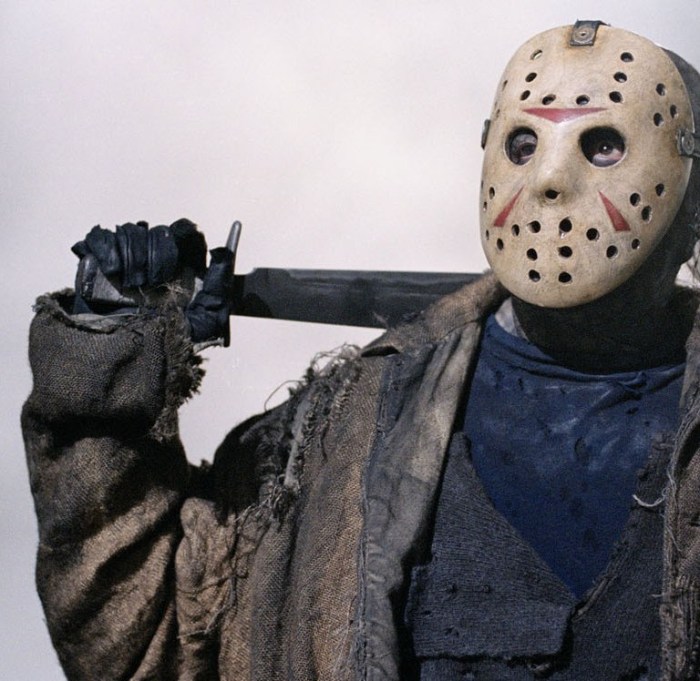
Jason Voorhees of Friday the 13th has a similar concern. Again, the costume is pretty simple – virtually any ragged, ratty slacks and shirt will be suitable as his clothing, and an easy-to-aquire mask and machete will complete the ensemble. And as far as iconic characters go, I would say that Jason is perhaps even more recognizable to the general public than Michael Myers is. Michael has a William Shatner mask that’s spray-painted white, but almost ANY hockey mask will evoke feelings of Jason. Like Michael, Jason doesn’t talk. Unlike Michael, though, he’s much faster and more brutal, expressing his emotion through his actions rather than words. It can be a fun part to play depending on how willing you are to commit.

The absolute worst dream analyst in the phone book.

The great slasher triumvirate is completed with Freddy Krueger of A Nightmare on Elm Street. Iconic, indeed. Everybody knows Freddy on sight, with his classic red-and-green sweater, fedora, and bladed glove. The tricky thing with Freddy is his face. The character is a burn victim, and although he’s so ubiquitous in pop culture that I don’t really have the same concerns about him being too scary for kids that I have with Leatherface, the burns present a different problem. You see, Freddy – unlike Jason or Michael – is a talker. His quick, dark sense of humor is integral to the character, and if you’re gonna dress up like Freddy you’re going to want to throw out bon mots all night long, with an emphasis on extra “bitch”es should you encounter anybody at the party dressed like Rick and Morty. If you wear a Freddy mask, though, that talkiness becomes more difficult and cumbersome. Wearing a rubber mask makes it more difficult for people to understand what you’re saying, and actually speaking under the mask increases the temperature beneath the rubber roughly ten degrees per “bitch.” If you live in a climate like I do in Louisiana, that ten degrees may be the difference between life or death. The alternative to a mask is makeup, which can be time-consuming, difficult to apply, and easy to mess up. Please understand, I’m not saying any of this to discourage someone from playing Freddy – I just want to point out some of the possible concerns that come with such a costume.

“Chuck, look, I’ve thought it over and… well… I’ve decided that, no, I do NOT want to play.”

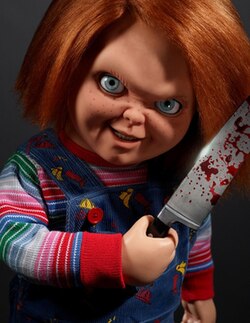
The last great slasher icon of the 80s is probably Chucky from the Child’s Play franchise. When my son was five years old, we took him to Spirit Halloween and we toured all the costumes before finally asking him which one he wanted. He jumped in delight and exclaimed “CHUCKY JUMPSUIT!” I actually took out my phone and recorded him saying it because I knew nobody would ever believe he picked it on his own.

My wife Erin and I are both horror movie fans, but we’re not idiots – our five-year-old son had never seen any of the Child’s Play movies, and the 8-year-old he is now STILL hasn’t seen any of them. But that doesn’t matter – Chucky is one of those ubiquitous characters that even kids recognize. His bright blue overalls and multicolor sweater, a shock of red hair, and freckles across his nose all give us a nice, friendly image that kids enjoy. That is, of course, the point of the character – he’s a child’s doll that is possessed by the spirit of a serial killer, so of COURSE his image is something that would be appealing to children. However, this also leads to a problem: it’s hard to wear this costume as an adult without coming across as creepy, and not in the right way. Five-year-old Eddie was the most adorable little serial killer ever, but if a 35-year-old puts on the jumpsuit, he needs to be DARN sure he’s got a receptive audience before he shows up, or he’s going to be getting strange looks all night.

Still groovy after all these years.

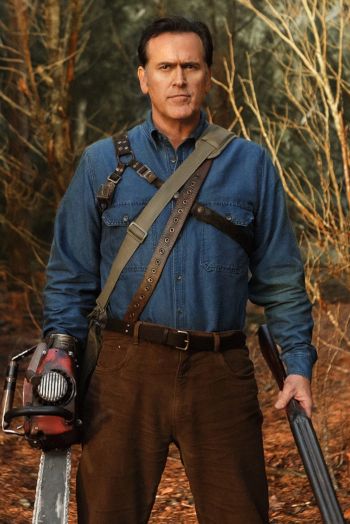
Not every horror icon is a villain, of course. Ash Williams, Bruce Campbell’s hero from the Evil Dead franchise, is another solid costume choice. Most of the costume is relatively simple too – slacks, a blue shirt, a bandolier, and some blood splattered across your face. The most iconic part of Ash’s appearance, though, is the most difficult: in Evil Dead 2, Ash’s hand becomes possessed by a Deadite and he is forced to amputate it, then top off the stump with a chainsaw. Now you’ve got all the same problems as cosplaying Leatherface with the added difficulty of finding a way to keep a chainsaw attached to your hand all night. Alternatively, you could go with Ash from the third film, Army of Darkness, in which he replaces the chainsaw with a mechanical hand. It’s certainly easier than the chainsaw, but it’s FAR less iconic and less likely to be recognized. And honestly, even WITH the chainsaw, Ash doesn’t have the cultural penetration of a Freddy or a Jason. If you’re wearing the costume to a horror convention, people will know you immediately, but for the office Halloween party, be prepared to explain your costume over and over again. 

Greenscreen backdrop of an 80s New York skyline sold separately.

Of course, as far as 80s monster movie heroes go, there’s nothing more iconic than the Ghostbusters. This has become a classic choice for a Halloween costume because it ticks all the boxes: it’s simple, it’s recognizable, and it’s fun. You need two things: a jumpsuit with a Ghostbusters patch and a name tag, and a proton pack. The jumpsuit is readily available in any costume shop and easy to make if you’re so inclined. The proton pack is more difficult, but there are inflatable ones that are lightweight and are usually included with commercial costumes, or more expensive and detailed ones that you can buy or assemble yourself. It’s also a highly adaptable costume. There are the classic khaki jumpsuits from the first movie, the gray variants from Ghostbusters II, the 2016 jumpsuits, multicolored costumes from The Real Ghostbusters cartoon, the red parkas from the Frozen Empire movie, versions from other cartoons, video games, toys…the list goes on. And fans often come up with their own original variants and designs. In fact, similar to the 501st Stormtrooper Legion (a Star Wars fan collective that has expanded far beyond just cosplay to things like public appearances and charity work), there are Ghostbusters chapters all over the world of fans who enjoy this sort of thing. I don’t have the time, talent, or money to be a really good cosplayer, but I’ve always said that if I DID have the opportunity to join such a group, it would be the Louisiana Ghostbusters.

“Stabbity-Stab-Stab-Stab!” -Ghostface in Scream 7, probably.

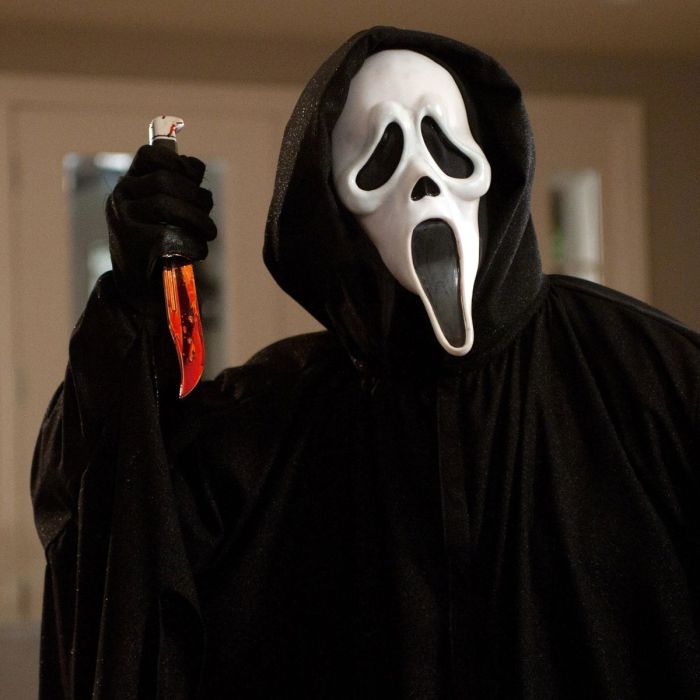
Moving on from the 80s, let’s look at the most iconic horror character of the 90s: Ghostface. The killer from the Scream movies is unique in that the costume is the only constant – a different set of villains wears it in every movie. In fact, over the six Scream movies to date, over a dozen different characters have donned the mask to engage in murderous shenanigans. But this lack of uniformity hasn’t been an obstacle for Ghostface becoming an icon – in fact, it’s probably the STRENGTH behind it. More so than any other character, anybody can wear the Ghostface mask.

It’s also unique in that the costume itself didn’t actually originate with the movies. It was part of a line of Halloween masks produced by a company called Fun World. Director Wes Craven liked the mask, put the character in black robes, and entered into a licensing deal with Fun World that has had them rolling in cash for nearly 30 years now. Not everybody may know the name “Ghostface,” of course, but we all recognize “the guy from Scream.” A few weeks ago my sister told me that my 11-year-old nephew – who is even less likely to have seen the movies than my 5-year-old was, because my sister is NOT a horror fan – has declared his intention to be Ghostface for Halloween this year. I’m very proud as an uncle and I can’t wait to see him when my sister and I take our kids trick-or-treating together. I just wish the boys had collaborated on being movie killers in the same year, because that would have been cute. (Eddie isn’t going as a murderer this year – he wants to be Superman. This is the proudest moment of my entire life.)

Since the turn of the century there have been several efforts at creating new horror icons. And while characters like Victor Crowley of the Hatchet franchise, Trick ‘r Treat’s Sam, and Leslie Vernon of the woefully underrated Behind the Mask are great and have many of the trademarks that make for a classic icon, the only recent monsters that have reached the degree of cultural penetration that the classics enjoy are a pair of clowns. 

Nope, no nightmare fuel here.

In 2017 we got a theatrical version of Stephen King’s It. The first dramatization of It, a TV miniseries from 1990, featured Tim Curry as Pennywise the Clown, and he was magnificent. Curry in general is magnificent, of course, and his makeup as Pennywise is suitably creepy when Tim Curry is wearing it. But Bill Skarsgard from the 2017 version – let’s be honest here – has broken into the mainstream in a way that Tim Curry’s never quite did. The design of the makeup is creepier, and Skarsgard’s performance is unsettling in a more insidious way. A lot of people would recognize you if you dressed as Tim Curry’s Pennywise, but EVERYBODY recognizes the Skarsgard version. Either version is relatively easy to cosplay – you need the costume and the wig, which are readily available. Skarsgard’s makeup is more complicated, though, and if you don’t want to subject yourself to the same masking problems you’d have with Freddy, make sure that you – or someone you trust – is capable of making that transformation.

Llllllllllllllllllladies.

The most recent character to break into the echelon of horror icons, though, is probably Art the Clown of the Terrifier franchise. Art was originally played by Mike Giannelli in a series of short films and anthology segments, but Giannelli retired from acting and the role was taken over by David Howard Thornton for the first full-length Terrifier film in 2016. A malevolent clown with a stark black-and-white costume and makeup that is immediately recognizable, Art has risen to iconic status faster than anybody since Ghostface. As far as horror icons go, Art is perhaps the darkest, most brutal, most sadistic character ever to crack into the public consciousness. He’s more violent, more aggressive, and while the voiceless beast DOES still have a sense of humor, it’s so dark that it makes the likes of Freddy Krueger look like an episode of Bluey by comparison. 

Naturally, he’s become a huge favorite among horror fans. 

In terms of costuming, again, Art is relatively easy. Costumes and masks are available, and since Art doesn’t talk you don’t have to worry about being muffled. On the other hand, makeup is more expressive and less restrictive than a mask, so if you’ve got the skill (or someone with the skill to help you) I would always prefer the makeup approach. Something else to consider is that Art – while huge among horror fans – is not necessarily someone that the average person on the street will recognize, at least not YET. On the other hand, even if your audience doesn’t know ART the Clown, the general appearance of the character is more than sufficient to give the idea that this is NOT a funny clown, and the mystique is preserved.

There are plenty of other characters that we didn’t quite touch on, of course, and you should always go with whatever is comfortable and fun for you. Hopefully I’ve given you a few tools you can use to evaluate your own costume choices when you’re making the decision. You’ve got three weeks left, folks – get started.

Blake M. Petit is a writer, teacher, and dad from Ama, Louisiana. His most recent writing project is the superhero adventure series Other People’s Heroes: Little Stars, volume one of which is now available on Amazon. You can subscribe to his newsletter by clicking right here. He’s also started putting his LitReel videos on TikTok. Since Eddie is Superman this year, he’ll be wearing his own Kryptonian pajamas come Halloween night. Scary can wait. 

Geek Punditry #37: What’s Your Favorite Scary Franchise?

I’ve said it before and it’s worth repeating: what true fans want, above all else, is more. And this is especially true of horror movie fans. The concept of a “horror franchise” goes back at LEAST to 1935, when Bride of Frankenstein was the first sequel to one of the classic Universal Monster movies. (One could even argue that it goes back to the Golem films of the silent era, but only one of those has survived.) Frankie’s creature would go on to appear in eight official films, with his pals Dracula, the Wolfman, the Invisible Man, and the Creature From the Black Lagoon each appearing several times. In the 70s and 80s, the horror franchise became a cinematic staple, with the likes of The Exorcist and The Amityville Horror paving the way for the slasher icons of Halloween, Friday the 13th, and A Nightmare on Elm Street, among a sea of others. I love horror movies, and I appreciate many of the great franchises throughout history. But when I look at the vast sea of horror available, I’m surprised to see which franchise – besides the Universal classics, of course – holds the trophy as my personal favorite…the bloody good adventures of Ghostface in the Scream series. 

“I wish I knew how to quit you…”

Having recently watched the sixth and most recent film, I’ve been thinking about why I enjoy them so much. I’m not going to start a debate over which series is the best – there’s no way that you’re going to convince anybody that their personal favorite isn’t the best and it’s useless to try – I’m just saying that it’s the one that means the most to me. There are a few reasons for it. First off, there’s nostalgia. Believe it or not, Scream was the first horror franchise I ever got into. Growing up in the 80s, I already knew the characters and tropes of slasher films via cultural osmosis, but my parents weren’t into horror movies and I was never really exposed to them until college, when my friend Jason showed me the first Scream. (Jason was the manager of a video store at the time, then later the owner of the video store, then later employed in an entirely different line of work because video stores ceased to be a thing.) We watched Scream because Jason wanted to see the newly-released Scream 2 and I HAD to see the original first, and he was right. I was hooked. I loved the meta comedy, I loved the characters, and I was impressed at the structure of the mystery. Even before I considered myself a horror fan, I was a fan of Ghostface. 

This was cool in the 90s, I swear.

Over the next few years I branched out and slowly acquainted myself with the films of Freddy, Jason, Michael, and the rest, but I kept coming back to Scream. There are great films in every horror franchise, but to this day this is the only franchise where I haven’t seen anything I would classify as a “bad” movie. Even the worst Scream film (that would be Scream 3, for those of you keeping score) is watchable, with funny moments and good twists, and I would never skip over it when doing a rewatch of the series the way I would, say, Halloween: Resurrection

It’s not even close.

Even in the early years I felt somewhat protective of the franchise. While 3 was not my favorite, I accepted it as the end of the story, capping off the trilogy in a way that tied things up and left the characters I cared about in a satisfying place. When word came of the fourth installment 11 years later, I was somewhat disturbed, thinking that it would break the ending of a supposedly-completed story the way other franchises have (lookin’ at YOU, Toy Story 4), but with both director Wes Craven and original writer Kevin Williamson returning, I decided to give it a chance. To my shock, I thought it was the best film since the first and eagerly awaited part 5. I did not expect it to take another 11 years, the death of Craven, and a quasi-relaunch to get it going again…but the relaunches have worked for me as well, in ways that many other remakes, reboots, and “requels” have not. 

There’s something unique about the way the franchise has been crafted. One of the strengths, I think, is Ghostface himself. Unlike most other horror franchises, the “face” doesn’t belong to a singular villain that comes back from the dead time and again. Ghostface is merely a mask, picked up by a different character (or more than one) each time to wreak havoc all over again. This allows the franchise to maintain the mystery of who the killer is each time (something that Friday the 13th had to abandon after the first installment). It also doesn’t have to worry about how to resurrect the villain time and again, with increasingly complicated supernatural rules that can get confusing and run the risk of being contradicted by future installments (such as what happened to A Nightmare on Elm Street). And unlike most other long-running horror franchises, it has never been rebooted (just TRY to explain the Halloween timeline to someone who isn’t already a fan). That really means something to people like me.

“So in the FIRST continuity Michael had a niece named Jamie and in the SECOND continuity he had a nephew named John and in the FOURTH continuity he wasn’t related to Laurie Strode at all and in the ROB ZOMBIE continuity — hey! Why aren’t you taking notes?”

I think this also makes it easier to accept changes in the franchise, the fact that there’s a singular figure, but not a singular character propelling the plot along. Replacing the actor behind a horror icon is tricky. If you ask most fans, Robert Englund IS Freddy Krueger, Doug Bradley IS Pinhead, and efforts to recast them have at most been grudgingly tolerated, and at worst, outright rejected. Even icons who wear masks and have been portrayed by multiple actors still spark a heated debate. Ask any group of fans who the best Jason Voorhees was and you’ll find the room sharply divided between those who believe it’s Kane Hodder and those who are certifiably insane.

The closest thing Ghostface has to an icon performer is Roger L. Jackson, who has provided the voice of the killer in every movie. He would be difficult to replace, because he’s so damned good at delivering a voice that can shift between charming, snarky, and terrifying at the snap of a finger, but when the time comes that he’s unwilling or unable to keep going, it wouldn’t be a death knell for the series.  

There’s no point in arguing who the “best” Ghostface is because every Ghostface is different and brings something different to the table, and that’s by design. It would be bonkers to argue whether Billy Loomis was a “better” Ghostface than Mickey Altieri, because they’re not the same character. Sure, one could (and will) argue about which performance or story or motivation or one-liners they enjoy more, but there’s no room for arguing that one of them goes against the “spirit” of the character the way one could do with Michael Myers. (Is he supernatural? Is he not? Is it Tuesday? What was with that guy with the black boots?) 

I know it seems like I’m picking on the Halloween franchise a lot. That’s because for every masterpiece of horror in that line, there are two movies full of crap like this.

It’s this versatility in the main villain that allows the franchise to be malleable and re-started every so often without the kind of pushback you had against Jackie Earle Haley as Freddy Krueger. It also allows the tone of the series to shift slightly as sensibilities change. The original Scream was a slasher movie about people who had watched too many slasher movies. As the franchise continued, it got deeper into the metafictional aspect of the concept. Scream 2 was a sequel about horror movie sequels, and introduced the “film-within-a-film” Stab, which was based on the events of the first movie and proved to provide fuel for the rest of the franchise going forward. In Scream 3, we saw the conclusion of a trilogy about trilogies. Scream 4 was a movie about remakes (but not really). The 2022 Scream was about “requels” and included a joke at its own expense about dropping the number even though everybody knew it wasn’t an actual continuity reboot. With Scream VI they’ve finally embraced the idea of the rules of franchises, as opposed to specific installments. Where they go after this, I’m honestly not sure, but I’m along for the ride.

First the Muppets, then Jason, and now Ghostface takes Manhattan.

Some people will ask how I can stack Scream up against other horror franchises, many of which I enjoy very much, but this is without a doubt the series that I’ve rewatched more than any other. It helps that there are (for now, at least) fewer of them than most of the other really iconic series. There are currently six Screams, and until January of last year, there were only four to throw into a quick binge. When you put together every iteration of the franchise A Nightmare on Elm Street has given us nine films, Friday the 13th is at 12, and Halloween has churned out a weekend-slaughtering 14. The less said about how the Amityville name has been pimped out, the better. 

The fact that it’s never been rebooted makes it feel a bit more – and I hesitate to use this word, but I can’t think of another one – a bit more real. Freddy’s seventh film went into an entirely different continuity, although it did so brilliantly. The Friday movies never technically had a reboot until the remake came out, but it also plays fast and loose with what actually “counts,” especially the later films. The last three of them make virtually no attempt to directly follow the earlier movies at all. Get somebody who doesn’t watch horror to watch the first Friday the 13th and then Jason X and see if they can figure out how the dots connect. The upcoming Crystal Lake prequel TV series will probably not make things any clearer, for that matter. 

And then there’s Michael. You know the rest.

But every installment of Scream (save for the in-name-only TV series from a few years back) is part of the same continuity, despite playing with the rules of remakes and requels. Every film not only counts, but is recounted in the later films. There are scenes in the most recent film that are full of what film nerds like me call “continuity porn,” full of elements and items that not only recall all of the previous films, but are ripped straight from them, but it’s done in a justifiable way. I’m anxious to find the website where someone (inevitably) has cataloged all of the Easter Eggs that can be spotted by going through that scene one frame at a time, because I’m sure there’s a lot that I missed.

In a surprise crossover, Ghostface takes decorating advice from Tony Stark.

Speaking of the most recent film, the one that came out earlier this year, it’s an interesting anomaly. Without getting into spoiler territory, it’s the one where the “rules” seem to matter least, but it pulls it off without sacrificing the love of movies that is at the core of the story. Ghostface is behaving differently this time around, and the film pulls off some great red herrings that work because it plays with the expectations of horror movie fans, but at the core it still has Scream in its DNA. And this is where I think they’ve got to start figuring out how to keep the franchise going, if that is indeed the intention. (Seeing as how they’ve already done preproduction for Scream VII, it seems clear that it is.) They’ve touched on pretty much everything they can on horror movies of the last few decades. If they don’t want to wait another 10 years or so for horror to evolve again, they’ve got to find different ways to make the story work. They’ve built a solid and likable core group of characters that is sufficiently different from the original trio of Sidney, Dewey, and Gale to not just feel like a remake. At the same time, they’ve also kept the window open to bring back the legacy characters, which this film does in a mostly satisfying way. This film – being the second story with these characters – also has some echoes of Scream 2 in terms of setting and motivation, without just being a copy. And that leaves the question about the next one…eh, More on that in a minute. 

Wherever they go, I will be there to watch, and anxious to see who the next people are to don the Ghostface mask and cause a little terror and a lot of laughs. Whereas once I was satisfied to let it lie, I now feel optimistic for the future of this story, and happy to note that there is, indeed, life after Wes. 

If you’ve already watched every Scream movie to date, including VI, skip below my standard plug for a little bonus – I pontificate about the identity of the killer in Scream VII. By necessity, my theory will have spoilers.

Blake M. Petit is a writer, teacher, and dad from Ama, Louisiana. His current writing project is the superhero adventure series Other People’s Heroes: Little Stars, a new episode of which is available every Wednesday on Amazon’s Kindle Vella platform. Roger L. Jackson has got to have one of the sweetest gigs in Hollywood, right? Every few years he comes in, spends a few hours recording lines off-camera, and is one of the most recognizable horror icons of all time.

I’m about to take you for a ride.

You back? Great. Okay, so I think I’ve already figured out the killer of Scream VII, and it’s before they’ve even filmed a frame of it. Actually, I have two theories, and it really depends entirely on how dark they’re willing to get. The new series is, in essence, “requeling” the original trilogy. Scream (2022) is the requel of the original: a girl (Neve Cambpell/Melissa Barrera) is stalked by a killer indulging ties to her past (Sidney’s mother/Sam’s father). In the end the killer – or one of them, at least – turns out to be her boyfriend (Skeet Ulrich/Jack Quaid).

I made it through this whole column without a Star Trek reference, so let me just quickly say how awesome Quaid is on Lower Decks.

Scream VI requels Scream 2: the characters are now in college, and the main killer turns out to be a side character (Laurie Metcalf/Dermot Mulroney) who was secretly the parent of the previous killer and is seeking revenge for his death. 

Laurie Metcalf murders considerably fewer people on The Big Bang Theory.

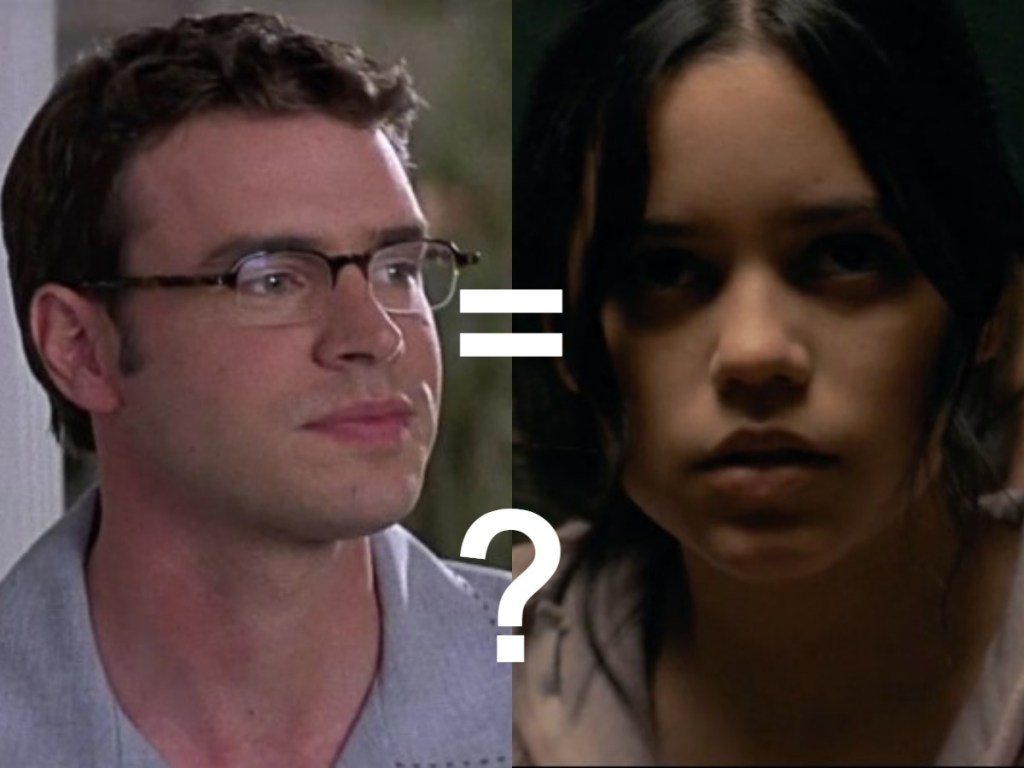
If they continue following the pattern, Scream VII would logically requel Scream 3. This was the only film in which the killer went solo (which is called out in VI), and it turned out to be Sidney’s long-lost half-brother Roman Bridger (Scott Foley). So for Scream VII, are they going to go the long-lost half-sibling route again?

Nah. I think they’re going to go for the half-sibling that’s right in front of our face. I think it’s going to be Jenna Ortega’s Tara. She’s the half-sister of the main character, so she would fit the pattern. There’s even a bit of dialogue in VI that points out how logical it would have been if, at some point, Courteney Cox’s Gale Weathers had snapped from her repeated trauma and become a Ghostface herself. That could easily be seen as teeing up the ball for it to be Tara in the next go-around.

TELL ME THIS DOESN’T MAKE SENSE.

Let’s call that Theory A. The biggest question mark is if the series would REALLY go that dark, allowing us to grow attached to a character for two movies before pulling the twist and making her the villain. They MIGHT…but if they don’t, I still think the killer would have to have a family connection. In that case, Theory B: the killer will turn out to be Tara and Sam’s absent mother. She’s never appeared on screen. Sam rejected her for lying about who her father really was, and when the truth came out it ended her marriage to Tara’s father. When Tara learned the truth in her first film, she cut off ties to her mother as well. She could be coming after Sam for “stealing” her family from her. Still dark – a mom wanting to murder her daughter – but not QUITE as dark as making Tara the killer.

Of course, these are theories and – with the Hollywood strikes continuing – who knows what’s going to happen with anything? Whatever is currently planned might wind up on the scrap heap of history. But as of right now, I’m calling it. That’s what I think is likely to happen in Scream VII, Theory A and Theory B.

Then again…A+B=C? In most Scream movies, after all, there have been two killers…