At last, the time has come! After months of waiting, DC Comics blessed us this week with the first of the two crossover books featuring Superman and Spider-Man, and as promised, there’s a bounty of back-up stories as well. As with any anthology, some of the stories are better than others, so this time out I’m going to give you my thoughts on each of them.
DC/Marvel: Superman/Spider-Man #1 Main Cover: Jorge Jimenez, although it should be noted that there are – at current count – FORTY-ONE different covers to this book, and while I’m absolutely NOT gonna shell out $8 a copy for all of them, if DC and Marvel put out a special that collected all of the various covers from this book and the Marvel book coming out in a couple of months, I would 100 percent purchase it.
Title: Truth, Justice, and Great Responsibility Writer: Mark Waid Art: Jorge Jimenez
In our main story this issue, Dr. Octopus is messing around with an AI assistant that turns out to be Superman’s old foe Brainiac, which just goes to show you that using ChatGPT is just bad news. Clark Kent and Peter Parker, meanwhile, are working together on a story about the theft of some radioactive materials…including Kryptonite.
Mark Waid does something truly unique with this story. In the universe he’s created here, he presupposes that Superman and Spider-Man – and more specifically, Clark and Peter, have a history together. And I don’t just mean the previous crossovers between the two that have happened in the past (all of which are decades old). No, reading this book you get a clear feeling that this is an incarnation of DC and Marvel’s respective flagship characters that have had a great number of adventures together that we, the reader, have not been privy to. Most crossovers start with the characters meeting each other for the first time. If we’re lucky, they’re at least aware of the others’ existence, but they’ve never encountered each other before. This book instead implies a whole shared existence between the two that feels so fresh and so RIGHT, and makes me wish there were more stories coming beyond just the Marvel book.
Like seriously. DC. Marvel. Get Waid working on a 12-issue maxiseries showing the entire history of this Multiple World’s Finest duo, like YESTERDAY.
Jorge Jimenez on the art is the icing on the cake. He’s got a great take on each of our heroes and both of our villains. The story looks as good as it reads. The lead story is a home run.
Title: Lois & Mary Jane in “The World’s Finest” Writer: Tom King Pencils: Jim Lee Inks: Scott Williams
Tom King’s Lois and Mary Jane story is next, and this is an interesting one. As Superman and Spider-Man duke it out with a rogue Sentinel (is there any other kind?), Lois and MJ go about a sort of casual conversation amongst the chaos about what it means to be them, the women in the lives of two of the world’s greatest heroes. It’s a really interesting way to frame these two, using their unique shared perspective in a way that wouldn’t really work with any other two women in comics. Using the backdrop of the Sentinel fight instead of just having them meet for lunch or something (as they do on the Terry Dodson variant cover) gives it a different flavor that makes it feel more unique. I feel like this one is intended to be in continuity with Waid’s story, and if that means this shared universe is one where Pete and Mary Jane are still together, I want more stories set in this universe even MORE.
Title: Superboy-Prime and Spider-Man in “Pages” Writer: Christopher Priest Art: Daniel Sampere
I really wasn’t sure what to expect out of this pairing. We’ve often seen Superboy-Prime using his knowledge of DC Comics (coming from a universe where those are all fictional) to navigate his world on more than one occasion. Christopher Priest here supposes that if DC Comics are fictional to Prime, it stands to reason that Marvel is too. (And I suppose every other publisher, by extension, but let’s just stick to Marvel now.) Prime uses his ability to travel the Multiverse to move back in time to a point in Marvel’s history shortly after Peter Parker got rid of his symbiote costume, when he was wearing a black suit made out of traditional fabric, and the confrontation between the two of them seems to unlock something in the boy.
Prime has been on something of a redemption arc in the comics as of late. This story actually feels like it could be the beginning of that, as if it logically should take place prior to his appearance in recent issues of DC KO. I have to admit, for a kid who modeled himself on Superman and stumbled so badly, I kind of like the idea of an encounter with Spider-Man being the thing that sets him back on the right path.
Title: Superboy and Spider-Man 2099 in “Beyond the Cobwebs of Tomorrow” Writer & Artist: Sean Murphy
Miguel O’Hara, Spider-Man 2099, is on the run. I know, what else is new? But as he flees from the authorities, we realize that he’s not in the 2099 that we’re used to, not exactly, and that idea is driven home even harder by the sudden appearance of a time-tossed Superboy and a special guest star. As our heroes compare notes, they come to realize the real threat they face and…
…and that’s it. The story ends with the team-up forged and our heroes barrelling off to take care of business. But the problem is, that isn’t really a story. This is, if anything, the first CHAPTER of a story, and an incomplete chapter at that. I get that these backups have a pretty limited number of pages, but this whole sequence comes across as a tease of something that I really want to read. Teasers are only fun, though, if what’s being teased eventually reaches you to be read. Despite a fun team-up and some well-executed pages, this is the first story in the book that I feel is a little bit of a letdown.
Title: Jimmy Olsen and Carnage in “Jimmy Con Carnage” Writer: Matt Fraction Art: Steve Lieber
Fraction and Lieber, the creative team behind the Superman’s Pal Jimmy Olsen miniseries from a few years back, reunite for the wildest pairing in this book. Jimmy’s meandering has led him to leave Metropolis for New York and get a job as the newest photographer for the Daily Bugle. And like ALL Bugle photographers learn, J. Jonah Jameson has one edict: PICTURES OF SPIDER-MAN. The only problem is that new-to-town Jimmy doesn’t even know what Spider-Man looks like. Doesn’t even know about the hyphen.
I know these stories are out of continuity, but it’s crazy what they allow Fraction to get away with in this one. It’s crazy, for instance, that Jimmy somehow has never seen one of Peter Parker’s 17 million photographs of Spider-Man. It’s crazy that he thinks Carnage matches the description. It’s crazy the significance that a hyphen plays in this story. It’s hilarious and ridiculous in all the ways that Jimmy’s solo series was, although with a bit more finality.
Title: Jonathan Kent and Ben Parker in “The Bridge” Writer: Jeff Lemire Art: Rafa Sandoval
This story (another one that feels like it belongs in this combined world) is a quick snapshot, Jeff Lemire bringing us a sweet glimpse at the adoptive fathers of our two heroes. A chance meeting, many years ago, brings Ben Parker to Smallville, Kansas just as a massive rainstorm threatens people in town, and Lemire shows us the kind of steel that forged Clark and Peter into the men that they are. Nothing particularly surprising in this one, just a good, simple encounter that feels like a minor but welcome detail in this strange world that they’re building.
Title: Bias Writer: Greg Rucka Art: Nicola Scott
This one, too, feels like a little snapshot. Jack Ryder’s program has a pair of special guests, Lois Lane and Jonah Jameson, on the air debating the concept of media bias. Lois calls Jonah out on his anti-Spider-Man stance, and Jonah responds.
There’s not much else to say about this one, honestly. Like the Lemire story, it feels like a detail added in to populate the world. I appreciate how well Rucka casts each of these characters, up to and including Jonah’s defense for his position on our friendly neighborhood wall-crawler. But it’s again just a tidbit, a nugget of something more.
Title: Power Girl and the Punisher in “Blind Date” Writer: Gail Simone Art: Belen Ortega
Of all the pairings in the book, this one may seem the most random, until you remember that both of these characters were created by Gerry Conway, and it seems that Simone thought it would be fun to pay tribute to that. She was, of course, correct about that. In this story, Karen Starr is on her way to a blind date with – well – perhaps the most hated Marvel character of the past half-decade or so. It’s just her bad luck that the restaurant where she’s meeting him happens to be full of criminals that have been targeted by Frank Castle.
As unusual as the team-up is, Simone handles it with her usual humor and charm. Somehow she structures the story in a way that brings them together organically, while still dropping in plenty of meta-commentary about the characters and playing with who they are and just how deeply different they are, while at the same time, having more than a little in common. This may be the most unexpectedly fun story in the book.
Look, I’m not going to pretend that I’m a hard sell. This is a comic book focusing on two of my favorite characters and an all-star collection of creators. It’s a load of fun and it feels oddly as though it’s being used to build towards something larger. (I’m probably wrong about that. I hope I’m not.) At any rate, it was well worth the price, and I can’t wait for Marvel’s half to come in April.
Blake M. Petit is a writer, teacher, and dad from Ama, Louisiana. His most recent writing project is the superhero adventure series Other People’s Heroes: Little Stars, volume one of which is now available on Amazon. Don’t forget, you can check out earlier blogs in the Year of Superman/Superman Stuff Archive! Got a request for a future “Superman Stuff”? Drop it in the comments!
I spent last week dipping my toes into the DC Vs. Marvel crossover, as well as the first wave of Amalgam Comics titles. But I’m not done yet: I’ve still got over half the huge Amalgam Age Omnibus to get through, including two sequel miniseries and the second wave of Amalgam Comics. Not only that, but after a few weeks where the beginning of the school year has kept me busy, I finally get a chance to sit down and catch up on more recent Superman comics. Oh yeah – and Peacemaker season two drops this week, and while I don’t expect to see Superman to show up, James Gunn has promised that the story of this season follow on from the film, so there’s a pretty good chance I’ll have some thoughts to share about that. Let’s begin, shall we?
I had the same look on my face as Access when I read Civil War II.
Notes: I’m going to say something that may be controversial here. I actually like the follow-up miniseries, like DC/Marvel: All-Access, better than the DC Vs. Marvel event itself. DC Vs. Marvel was a fun experiment, but the plot was really just a flimsy excuse to show off fights between the characters and frame the Amalgam specials. All-Access, on the other hand, has an actual STORY to it, and I appreciate that. Written by Ron Marz with art by Butch Guice, whom you may remember passed away earlier this year, All-Access starts out with Axel Asher, the man who straddles the line between the Marvel and DC Universes as Access. A psychic flash warns him that Venom has somehow hopped universes, and if anyone from either universe stays in the other one for too long it could cause the worlds to fuse into the Amalgam Universe again, so the cosmic hall monitor has to get to work. He comes across Venom in Metropolis, where he’s throwing down with Superman, and so Access decides to get some backup by calling in someone who knows what Venom’s deal is: Peter Parker, the Amazing Spider-Man.
This is all in the first issue of the miniseries, by the way, which almost works very well as a standalone Superman/Spider-Man team-up. There’s no gratuitous hero-on-hero fighting here, just two good men teaming up to take down one bad one, and Marz plays them both perfectly. Re-reading this issue is where I started to realize that this is kind of what I had hoped DC Vs. Marvel would have been all along.
Superman doesn’t show up again until the last page of issue #3, but in the meantime, Jubilee convinces Access to take her back to the DC Universe because when she and Robin were supposed to be fighting each other, they kind of fell in love. (To this day, it’s probably the best relationship Tim Drake has ever had.) Their reunion is interrupted by an encounter with Two-Face, then again when the Scorpion appears, once again mysteriously having been pulled from the other universe. Access recruits Batman to help him solve the mystery of the “crossovers,” and Batman suggests that they track down the man who, in the combined universe, was supposed to be its defender: Dr. Stephen Strange. Batman approaches Strange, suspecting that he’s causing the crossovers somehow, and Jubilee calls in the X-Men to hold him off. Issue three ends with Access once again calling in the cavalry, bringing in the rest of the Justice League.
Issue four is X-Men vs. JLA, at least at first. Things change when Access discovers that Dr. Strangefate has been hiding in Strange’s subconscious ever since the merger and used him to cause the crossovers in an attempt to restore the Amalgam Universe. He fuses Wonder Woman and Storm once again into their Amalgam counterpart, Amazon, but when he realizes he doesn’t have the right parts to put together anyone else, he starts creating NEW Amalgams: Superman and Bishop! Iceman and Aquaman! Jean Grey and the Martian Manhunter! Things get wild!
The story ends with a nice little promise, the Amalgam Universe restored as a sort of pocket universe where Strangefate is locked away, and the Marvel and DC Universes get to remain separate. But this miniseries was so much fun, seeing the characters actually interact in ways that didn’t go straight to the fisticuffs. The Robin/Jubilee stuff in particular was fantastic, and I loved seeing Superman and Spider-Man working together again.
It’ll never happen, but I’d love to see a longer Access series, say a 12-issue event in which he’s trying to solve some sort of mystery that encompasses both worlds. And I’d love if, during this year, he appears not only in his own series, but in the ongoing comics of both companies, bringing surprise guest stars with him. But seeing as how the original plan was for DC Vs. Marvel to end with She-Hulk and Martian Manhunter swapping universes for a year until that plan was nixed by the lawyers, it’s doubtful that anything like that could happen. It’s not like the world has gotten LESS litigious since 1996, after all.
Thur., Aug 21
Comic Books: Super-Soldier: Man of War #1
The amalgamated Snyder Brothers fans get SO angry that they gave Super-Soldier his trunks back.
Notes: A year after DC Vs. Marvel, a second wave of 12 Amalgam one-shots were released, six of them continuing adventures of the characters from the first, six of them with all-new Amalgamations. What’s interesting is that even the books that carried over didn’t continue the STORIES from the original. Some of them were unrelated stories, some made brief reference to the previous, and some went REALLY wild, like Dark Claw Adventures giving us an adventure of the Amalgamated Batman/Wolverine combo in a Batman: The Animated Series style. For our first visit with the Super family, Super-Soldier: Man of War dipped back in time to give us an adventure of the character from World War II. Mark Waid and Dave Gibbons reunite for this story, which kicks off with Super-Soldier at a meeting of the All-Star Winners Squadron. But he’s only there long enough for us to notice some new Amalagams (such as the Human Torch/Green Lantern mashup Human Lantern) before it’s off to join Jimmy Olsen for a special undercover Daily Planet assignment overseas.
On the ship to Europe, Clark and Jimmy make the acquaintance of Sgt. Rock and the Howling Commandos, and Clark is later chagrined to find that Winston Churchill has fallen for the do-gooder act of his arch-nemesis, Lex Luthor, husband of Lois Lane. In a way, Luthor’s involvement actually makes this a prequel to the previous story, as the issue ends with him unveiling the plans for the Ultra-Metallo that Super-Soldier fought the first time we read one of his adventures. Kinda makes you wonder why it took Luthor 50 years to get it together.
As before, Waid and Gibbons do a great job lacing together the Superman and Captain America characters, this time bringing in the World War II-era heroes of Easy Company and the Howlers as well. Peggy Carter, for instance, shows up here as a member of the French Resistance (although I couldn’t figure out which member of Easy Company she was supposed to be mashed up with). The appearance of Major Zemo and his War Wheel pushes this over the top – silly and gleeful. These Amalgam books, when done well, are just an enormous amount of fun. Is it too much to hope that the new DC/Marvel crossover books that are about to come out will open the door for the return of this mixed-up universe?
Fri., Aug 22
No, you give YOUR dog an invisible bone!
Last night was the premiere of Peacemaker season 2. I thought that meant I would be able to watch it when I got home from work, but apparently, it dropped at 8 p.m. EST, by which time my sports fanatic son was engrossed in a preseason game between two teams that nobody in our house has any personal connection to. But that was okay, I figured that I would just watch it the next day. I guess that was pretty stupid of me, though, to assume that I could wait a whole 20 hours and not have anything spoiled for me. Before the game was even over, though, posts were appearing on social media that spoiled something that really pissed me off. You see, season one was made BEFORE James Gunn was given the job of revamping the DCU, and was intended as part of the previous iteration of the DC Extended Universe. With the new DCU that began in Creature Commandos and continued into Superman, though, there were questions as to which parts of the season were still canon. Gunn has been exploring that in the official podcast for the show, but there was a moment in the finale that they were going to have to work a little bit to reconcile.
Naturally, looking at Facebook last night, I was spammed with different pages that I don’t even follow sharing a screenshot that ruined a pretty amusing moment. How dare I assume that people wouldn’t make it into a headline? It had been an entire 180 minutes since the show dropped! What are they, made of stone?
Here’s the rule: If you’re posting spoilers about a show on the day it airs, you’re an asshole. That goes for individuals as well as all of those pages that I have since blocked.
By the time you read this it will have been nearly a week since that episode, and I STILL wouldn’t talk about it without giving you a warning. So in the next paragraph I’m going to spoil a few things about the end of Peacemaker season one and the beginning of season two. If you haven’t watched them and want to remain pure, skip ahead to Saturday.
TV Show: Peacemaker Season 2, Episode 1: “The Ties that Grind.”
Season one of Peacemaker ended with the titular hero and his team, the 11th Street Kids, saving the world from an invasion of alien butterflies. It’s more impressive than it sounds. But in the battle, Emelia Harcourt was nearly killed. Towards the end of the episode, Peacemaker is carrying her to safety when, lo and behold, the Justice League appeared – too late to do any good. The League, in this case, included silhouettes of Superman and Wonder Woman, as well as Jason Momoa as Aquaman and Ezra Miller as the Flash. It was a funny scene, but as that Justice League doesn’t exist, that scene clearly was no longer canon.
Gunn promised to explain it away and he did at the very beginning of the episode, in the “Previously on…” montage, where the League was replaced by the Justice GANG from the movie. The silhouettes of Superman, Mr. Terrific, and Supergirl all appeared, as well as a quick and the cameos have been replaced by Isabela Merced’s Hawkgirl and Nathan Fillion’s Guy Gardner. It was a funny bit. But I bet it would have been funnier if not for the asshats on the internet posting it the night before I got to watch it.
Fillion and Merced appear later in the episode as well, alongside Sean Gunn as Maxwell Lord allowing Peacemaker to audition for the Justice Gang. Watching the episode, it’s clear why DC put out the digital version of Superman last week – there are a lot of things in this show that build directly on that movie, although it’s still Peacemaker’s story of course. Rick Flagg shows up, worried about another dimensional rift like the “Luthor Incident” that happened this summer. Besides the connections to Superman, the show also starts trickling in new characters, like a surprising cameo by White Rabbit and references to the likes of the Ultra-Humanite and Captain Triumph. Rick Flagg is even working with Sasha Bordeaux, a supporting character from Greg Rucka’s Batman comics. Gunn seems to be using this season of Peacemaker to lay in chunks of the history of the DCU that Superman only hinted at, and I’m really quite excited by that.
Look, it’s not a HUGE Superman link, and it’s DEFINITELY not a show I’m gonna watch with my seven-year-old like the movie, but this show is starting to look like it’s going to be part of the fundamental fabric of the new DCU, and that would make it worth watching even if it WEREN’T really good.
Comics:Jon Kent: This Internship is My Kryptonite #5
Notes: The beginning of a new school year traditionally keeps me busy, and today was the first time I’ve made it in to pick up my new comics in a few weeks. As such, I’ve got a hefty nine Superman or Superman-related comics sitting in my stack, waiting to read and discuss, including the much-anticipated Superman: The Kryptonite Spectrum #1. This Black Label series is by W. Maxwell Prince and Martin Morazzo, the creative team behind Image Comics’ incredible existential horror series Ice Cream Man. That’s the only thing of theirs that I’ve read before, however, and while I’m a big fan, I’ve been curious ever since this was announced as to just how their sensibilities would translate over to the Man of Steel.
As it turns out, they translate wonderfully.
In this story, Superman discovers four new strains of Kryptonite beyond the usual colors we’re aware of, and recruits Batman to help him experiment with them and find out what they do. The first, a Purple K, distorts Superman’s perception of time – something that is especially concerning as Lex Luthor chooses just that minute to unleash Solomon Grundy in Metropolis.
It would be fair for someone to question whether a creative team best known for a cosmic mind-tripping horror comic would be an appropriate choice for a Superman story, but Prince and Morazzo acquit themselves right away. The Kryptonite Spectrum isn’t a horror story by any stretch, but when Superman’s concept of linear time is skewed, we get a story that drifts into the kind of psychological twists that make Ice Cream Man so compelling while skipping the actual terror. Prince uses this conceit to play with the reader’s concept of time as well, and the script even twists Superman’s interactions with his friends, with a few scenes with Lois Lane dipping into the very real anxieties that Ice Cream Man so frequently mines for pure horror. Here, though, rather than terror, Prince uses them for character drama, displaying things about the relationships between the characters that feel very true, very human. This may not have the “Elseworlds” label, but the story clearly isn’t set in the mainstream DC Universe, with Superman and Lois’s relationship framed in a way that doesn’t fit that world, but feels quite appropriate for the story that Prince and Morazzo are telling. This is a great first issue of a very different kind of Superman story, and I enjoyed it heartily.
Remember this the next time one of you wants to give me grief for putting up my Halloween decorations in September.
Dan Slott and Rafael Albuquerque are back with Superman Unlimited #4. With the Daily Planet expanding to a global operation, Jimmy Olsen has been tasked with helping set up their Gotham City office. While he’s in town, he and his ape city sidekick Tee-Nah run across Man-Bat and wind up summoning Superman for help. What they don’t know, though, is that this is a new Man-Bat, one who can transmit its curse via a bite…and a chance encounter with all the Kryptonite on Earth these days has left Superman just vulnerable enough to get nipped. Soon it’s Robin and the Birds of Prey vs. Superman-Bat!
This book is really turning out to be just what I wanted. There’s an ongoing storyline – that of the Kryptonite meteor that fell to Earth and the consequences of that – however, each issue feels like it’s telling a complete and self-contained story. The A-plot, the “Superman-Bat” thing, is done in one and it’s over. The background story of the Kryptonite and the expanded operations of the Planet continue. Although it’s a single monthly comic, in a lot of ways it feels like the structure of the glorious “Triangle Era” of the Superman comics, and I love it for that. Slott also works in some nice tidbits regarding Superman’s interaction with the Batman family, which – coming right on the heels of having read The Kryptonite Spectrum #1 – makes it feel as if DC is using the month of August to make sure everyone remembers that Superman and Batman are best buds. Which, of course, I approve of wholeheartedly.
This is what happens when you don’t use fluoride.
Supergirl #4 continues Sophie Campbell’s new(ish) take on the Woman of Tomorrow. Having defeated her doppelganger Lesla-Lar last issue, this issue Supergirl takes her back to Kandor where she does something her cousin would most certainly approve of wholeheartedly: she goes to bat for her. Supergirl argues that Lesla has the drive to become a real hero, if only given the proper guidance, and volunteers to take that task upon herself. That’s the very beginning of the issue – afterwards we see Lesla make earnest attempts to prove her worth, leading up to a strange but entertaining encounter at a Goth club where she makes a mistake in judgment that winds up having the Supergirl squad face the forces of Decay.
I just adore Campbell’s take on Supergirl. This issue in particular feels so true to the character – she comes off as someone who has demons in her past but, having largely conquered them, is sworn to help other people do the same. And following Lesla in this issue just magnifies that fact, demonstrating the effect that just being in proximity of someone like Supergirl can have on a soul that’s not truly evil, but merely lost. It’s such a good look for her and for the entire Superman family, and Campbell is nailing it in a delightful way. I also appreciate how Campbell is mining Supergirl’s past – the “new” villain, Decay, is a new version of an obscure character from Supergirl’s ‘80s series who, to the best of my knowledge, hasn’t reappeared since then. She knows this character’s history and she’s using it to her best advantage, which makes for a really rewarding read.
Sun., Aug. 24
Comics: Krypto: The Last Dog of Krypton #3, Action Comics #1089, Justice League Red #1
Notes: After a busy Sunday of groceries, shoe shopping, making my weekly LitReel and, of course, a required stop at Spirit Halloween, it’s nearly 7 pm before I have a chance to sit down and read anything. Fortunately, I’ve still got six more new Superman-related books to dig into. Let’s see how many I get to this evening.
Beware the fetch.
Krypto: The Last Dog of Krypton #3 is first. Wandering alone after abandoning Lex Luthor, Krypto is stumbling through the woods when he comes across a little girl who’s as lost as he is. Roaming through the freezing woods, Krypto takes it upon himself to take care of the child, and in the process, proves just what a good boy he really is.
The first two issues of this miniseries blew me away. This one… DAMN it, Ryan North. Three issues in a row – THREE ISSUES IN A ROW – and you’ve got me in tears reading about KRYPTO THE SUPERDOG.
Honestly, if you’re not reading this comic book I don’t know what even is wrong with you.
When a teenager loses one of his contact lenses.
Action Comics #1089 may not have me sobbing over the adventures of a dog, but that doesn’t mean it’s not good. Last issue, young Clark Kent was surprised when his history teacher showed up on his doorstep and revealed that he knew Clark was Superboy. This issue, Mr. Blake has a reveal of his own and, frankly, I’m kind of irritated with myself for not picking up on who he was in the first place. Mark Waid is being Mark Waid here, tapping on his seemingly infinite awareness of the DC Universe to bring back a character who hasn’t been seen in a while and recontextualizing him in the world of Superboy’s Smallville. I can’t get much more specific without spoiling anything here, and in case you haven’t read the issue yet, I don’t want to do that But Waid is doing really interesting stuff in this issue.
My one complaint is actually the cover by Ryan Sook. It’s a great piece of art – evocative and certainly sure to get a reader’s attention…only it doesn’t seem to actually fit anything in the story. I hate when comic book covers are dull, generic pin-ups, but it may be even worse when the cover is of a scene that doesn’t even appear in the book.
Wait, some of these costumes need more red.
The last book I squeeze in before I’m alerted by my child that he’s hungry and he has expectations of something called “dinner” is the first issue of the latest DC All-In era Justice League spinoff, Justice League Red. Ever since the Justice League re-formed, Red Tornado has been serving as the computer intelligence running the operations for the team. This issue, Power Girl and Green Lantern Simon Baz get a red alert on their League ID cards that summon them to a satellite Red Tornado built without the knowledge of the rest of the League. His computer mind has been running millions of simulations and has determined that the new League is somehow going to lead to a catastrophe on Earth, and he needs a few trusted members to handle secret tasks the rest of the League cannot learn about in order to stop it.
Writer Saladin Ahmed is taking an interesting path in this book. The story leads us to believe that Red Tornado is unstable, and that all of these predictions and algorithms he’s run are unreliable. Even as Power Girl and Simon carry out their first mission, they’re skeptical as to whether they’re doing the right thing and whether they can trust their robot teammate. But to play that hand so early, to make it seem from the very beginning that Red Tornado may be going off the rails…it feels kind of like a feint to me. I’m willing to bet that we’re going to find out along the way that things are even worse than believing Red Tornado is wrong: we’re going to find out that somehow, he’s RIGHT. Interesting set-up, and I look forward to seeing where this goes.
Mon. Aug. 25
Comics: Absolute Superman #10, Batman/Superman: World’s Finest #42, Justice League Vs. Godzilla Vs. Kong 2 #3
Confirmed: I still can’t see John Cena.
Notes: Time to wrap up my catch-up weekend (plus one day) with the final three Superman-related comics from my visit to the comic shop. I’m kicking it off with Absolute Superman #10. The battle continues between the Omega Men and Ra’s Al Ghul’s Peacemakers, with Peacemaker Smith on the front line in the hunt for Kal-El. With a Kryptonite bullet in Smith’s gun, Kal-El is faced with a decision, and a reflection onto a hard choice his father once made brings about a surprising result.
The conceit of the Absolute comics is that this is an entire universe tainted by Darkseid, where hope is the eternal underdog and the sort of values that characterize the traditional DC heroes are absent. This issue, Kal-El is faced with the kind of choice that Superman inevitably comes down to at some point in his career, and it’s a testament to Jason Aaron’s writing that, right up until the choice is made, I’m not entirely certain which way I think he’s going to go.
I like the way the Absolute world plays with characters as well. Concepts like the Omega Men, Peacemaker, and especially Ra’s Al Ghul are not traditional elements of the Superman corner of the DC Universe, but they work in the story we’re getting here. Overall, it’s a good chapter in this saga.
This am bad serious book.
In World’s Finest #42, Superman and the Dynamic Duo have been summoned to Bizarro World to help with a plague. The Bizarros (including Bizarro Superman #1 and Batzarro) who are infected find their minds realigned to a more Earth-like way of thinking. Such a danger can’t be allowed to spread, so they’ve turned to our heroes to save them…but together, they find that the danger may be greater than even the plague seemed to be.
Mark Waid is doing some really interesting things with the Bizarros here. He plays with the notion of how science and physics don’t really allow for something like a square planet and what the consequences of such a world would be. At the same time, he tackles the Bizarro philosophy of things being “backwards” as well, in a way that makes me feel slightly abashed for my criticism of the Bizarro story in the recent Kal-El-Fornia Love summer special. There’s also a great moment for Batman here – Robin (understandably) questions why it would be such a bad thing if the Bizarros all had their minds reversed to what we think of as “normal.” Batman’s response is a little unexpected, at least until he gives his reasoning, displaying a depth of compassion that Batman isn’t often given credit for. It’s a good look on Bruce.
So they’re sitting around watching Japanese movies, so what?
I finally get to the end of the new Superman titles (less than 48 hours before this week’s comics go on sale) with Justice League Vs. Godzilla Vs. Kong 2 #3. At the center of the Earth, Superman and Lex Luthor are forced into an uneasy alliance as they come across a herd of giant gorillas. (A herd? A pride? What are a group of gorillas called? I should probably look that up.) On the surface, meanwhile, Supergirl and Wonder Woman get to work liberating a Monarch base being held captive by Task Force X, and Harley Quinn gets involved in a rather…unique therapy session.
Obviously, I love crossovers, and seeing the League facing off against the Kaiju of the Legendary Monsterverse is a lot of fun. I particularly like bringing in the Suicide Squad as an alternative antagonist in this story. But it’s the sort of thing that’s a little hard to hold in your head from month to month. Waiting for the trade isn’t a practice I care for, but this is probably a situation where the story will read better in collected form than issue-to-issue. Once it’s over, I’ll have to re-read the whole thing in a lump.
Notes: We’re going to end our journey through the Amalgam Universe and the DC/Marvel Omnibus today with Spider-Boy Team-Up #1, and the subsequent Unlimited Access miniseries. The final one-shot, written by Roger Stern and Karl Kesel (cleverly Amalgamated into R.K. Sternsel) with art by Jose Ladronn, features the return of the Arach-kid with a special guest appearance by his pals in the Legion of Galactic Guardians 2099, and that in and of itself should tell you that at this point they were going WILD with the Amalgamations. At Cadmus, as preparations are made for the Kid’s upcoming nuptials to Mary Jane Watson, aka the Insect Queen, the Kid is plucked from the timestream and brought to the far-flung future, where the Legion is about to elect a new leader. Will it be Vance Cosmic? Martinex 5? Cannonfire? Multiple Mai–you know what, there’s too many, I’m not going to list them all. But it’s pretty interesting to note that there are so many Legionnaires that there aren’t enough Guardians to Amalgamate them all (or at least, there weren’t at the time) so they wind up mashing together with virtually any Marvel character that fits: Dream Girl and Destiny made up Dream Date, Matter-Eater Lad and the Trapster made Paste-Eater Pete, and my personal favorite, Bouncing Boy and Speedball mashed into Bouncing Ball. Unfortunately, Spider-Boy’s time displacement is causing stress on the time stream, and he winds up falling into different time periods, meeting different incarnations of the Legion.
The book turns out to be a real celebration and gentle parody of the Legion, poking some lighthearted fun at the various reboots the team has undergone over the years, a topic with which I have some passing familiarity. Even Ladronn’s artwork works really well, emulating the different styles of Keith Giffen’s Five Years Later era just as neatly as he does the Chris Sprouse-inspired Reboot Legion. The ending is a really nice touch, tying together the “2099” part of the melding with the only Legionnaire that it could possibly have been. Even divorced from the rest of the Amalgam comics, Spider-Boy was a glorious, joyful, wild experiment. Man, I hope the upcoming facsimile edition is just a precursor of things to come.
Something about Thor-El is kinda…compelling…
The last gasp – both for the Amalgams and for the Access concept of Marvel/DC Crossovers, came in the 1998 miniseries Unlimited Access by Karl Kesel and Pat Olliffe. The story starts with Access, the “Cosmic Hall Monitor,” popping back to his home in Marvel’s New York after sorting out a recent encounter between Spider-Man and Batman. Kesel implies here that this particular crossover had Access looking on from the background trying to keep things straight. As a concept, it actually would work to explain EVERY Marvel/DC crossover – Access, or someone like him, keeping an eye on temporary fusions between the worlds, which the respective heroes forget after the fact. If they decided to run with it that way.
Access has to untangle the appearance of Mantis – one of Darkseid’s lesser goons – in battle with Spider-Man, a fight that gets escalated when Juggernaut and Wonder Woman wind up in the mix. Things get even crazier when he takes Diana home only to find himself tangled in a fight between a still-savage Hulk and Green Lantern Hal Jordan…who is DEAD.
Superman doesn’t actually show up in the first few issues of this miniseries, so I’ll cut to the chase: as it turns out, Access doesn’t just bounce back and forth between universes, but discovers he can bounce back and forth in TIME as well, allowing him to meet the different versions of the Marvel and DC heroes from any point in the timestream (including the “Days of Future Past” X-Men from the distant year 2012). He’s also got the ability to create Amalgams, merging characters from the two worlds into one, which comes in handy when it turns out he’s being tracked by Darkseid, who wants his ability to traverse the worlds. By issue three, Amazing Grace has hypnotized the original Avengers and Justice League into battling each other, and Access decides to reach out for the only hero who stands a chance of fixing this mess: big blue himself, Superman. And I mean Superman during his electric blue era. It takes literally seconds for Superman to jolt everyone back to their senses, then he and Captain America mobilize the two teams to fight off Darkseid’s invasion of the Marvel Earth. But the crazy just keeps coming with the Brotherhood of Evil Mutants, the original X-Men, and a group of teen heroes who – just months later – would wind up getting their own title as Young Justice.
By issue four, Darkseid and Magneto are teaming up to take over the world (this is early Magneto, when he was still into that kind of thing) and the heroes decide to combine their powers – literally – into a single strikeforce of Amalgams. Black Canary and Jean Grey: Jean Black! Giant-Man and Green Lantern: Green Goliath! Captain America and Captain Marvel Jr.: Captain America Jr.! I know, I didn’t write it. And of course, Superman and Thor are fused together as Thor-El.
The fun part here is seeing these new Amalgams throw out casual references to help the reader to understand what they’re like in their own minds: Captain America Jr. possessing the “wisdom of Lincoln,” for example, or Thor-El referencing the Valhalla Zone. The series, and the history of Access, end with him accepting the truth about himself, beating Darkseid, and swearing to prevent a future he doesn’t want to experience.
Reading this story again now, there’s so much potential left in this concept, and thanks to the nature of Access’s powers, there’s no reason that Marvel and DC couldn’t pick up on it again at any time. With new crossovers (finally) on the horizon between the two of them, the chance is right there. I don’t know if they’ll take it – I certainly hope so.
But for now, at least, our journey with Superman and the heroes of other worlds has come to an end. And I think it’s time to rededicate myself to stories focused around Clark Kent himself. That in mind, next week, I’m going to embark upon my re-read of the longest Superman saga I’ll have yet tackled for the Year of Superman blog. See you then!
Another week, another round of the Year of Superman! It’s going to be another random week, a week where I’m not going to be adhering to any particular theme or category, and just reading or watching whatever catches my fancy. And there’s some fancy, fancy stuff coming down the pipe this week, from the big 25th issue of Joshua Williamson’s run on Superman to the completed three-part Last Days of Lex Luthor miniseries, and…well, I don’t even know what else will come up, because I’m writing this at the beginning of the week and I’ve got no idea where the solar winds of Rao will take me. Join me and let’s find out!
Wed., April 23
I feel like Perry is kinda burying the lede here…
Comic:Superman Vol. 6 #25
Notes: Since Williamson kicked off his run on the main Superman comic about two years ago, he’s been building up a pretty epic storyline involving Lex Luthor. It began after Lex was taken into custody, turning over his company to Superman and making it “SuperCorp.” As one of the few people on Earth whose memory of Superman’s double identity remained (it was because of him that it was wiped out anyway), he decided that if he couldn’t destroy Superman, he would force him to work WITH him, and it was a strategy that worked pretty well for some time. Along the way, though, Lex lost his memory, leaving him a man who wasn’t quite as brilliant as before, but who had a genuine benevolence to him, seeming to want to atone for the crimes of his former self. It was a change for the better for everyone – except for Mercy Graves.
In this climactic issue, Mercy has let loose one of Lex’s failed experiments, X-El, a Luthor/Kryptonian hybrid clone, that she’s hoping to have supplant the “new” Luthor, and it’s Superman, Superwoman, and Lex vs. X-El. I loved this issue – it feels like a real culmination of the story so far, with everything that’s been happening building up to an incredible fight that lasts for most of the extra-sized issue. What’s more, the usual penciler Jamal Campbell (who has been doing a bang-up job on this series) is joined by a murderer’s row of talent, including Eddy Barrows, Eber Ferreira, and Dan Mora. Campbell and Alejandro Sanchez are credited as colorists as well, and although you don’t often discuss the colorists when you’re talking about comic books, this is one issue where it really stand out to me. Every page has at least one panel that could be turned into a poster I’d expect to see in any comic shop.
Although the issue is, like I said, kind of a culmination of the storyline in that it has brought everything together, it would be a mistake to imply that it’s the END of the story. In fact, this issue ends in a cliffhanger that’s really got me itching for issue #26. But man, I can’t say enough good things about this run and this creative team.
Thur., April 24
I just wish that Bryan Hitch would have the guts to put a little symbolism into his artwork.
Comics: Superman: The Last Days of Lex Luthor #1-3
Notes: About a month ago, when the long-delayed second issue of this miniseries finally came out, I decided to wait to read it until I had the third and final issue in my hands. I don’t know if the story would have been less impactful had I not chosen to wait, but I DO know that it would have driven me crazy to have to wait for the final installment, because ultimately, this is one of the finest Superman stories I have ever read.
And if you haven’t noticed, I’ve read a LOT of them.
In the first issue (which, again, came out nearly two years ago, and that’s the last time I’ll reference the delay), Superman is attacked once again by his greatest enemy…but this time, Luthor’s goal is not the death of the man of steel. No, for once, he needs his HELP. Lex Luthor, it seems, is dying. Some strange, exotic radiation is attacking his cells, and he knows that Superman is the one being in the universe who will stop at nothing to find a cure, because Superman…well…Superman is the man who saves everybody.
I don’t want to say too much more about the story, because there are some incredible twists and surprises throughout this miniseries. But that doesn’t mean there isn’t still a LOT to say. The reason Luthor turns to Superman, again, is because he knows that Superman will absolutely refuse to quit as long as there is a life in jeopardy, and the fact that the life in question belongs to his greatest enemy makes no difference whatsoever. Luthor sees this as foolishness, as a weakness on Superman’s part, but throughout this story, Mark Waid demonstrates why this is actually his greatest strength. Superman is confronted by friends who cannot fathom why he would risk so much to help Luthor. The quest to save his enemy becomes public knowledge, making some of the public turn against him. His quest takes him to Kandor, Atlantis, Themiscyra, and even the 31st Century, before the final reveal of what’s really going on turns everything on its ear and seals the fate of the two characters.
It’s an odd choice, to make this a Black Label book. Black Label is ostensibly a “mature reader’s” imprint, but there’s nothing in this book that warrants that marker. It’s out of continuity, to be certain, and I wonder if this would have been listed as Elseworlds, had that label been resurrected when the first issue appeared. But no matter what imprint this story falls under, it’s a masterpiece. It’s Mark Waid’s dissertation on who Superman is and why he has to be who he is. We learn the same things about Lex Luthor, in fact, and the relationship between these two characters has never been laid out so bare, so stark, so clean as in this story.
This story is brilliant. This is one of the best Superman stories I’ve ever read.
Fri., April 25
Comics: Justice League Unlimited Vol. 2 #6
Notes: The second part of “We are Yesterday” in Justice League Unlimited doesn’t have a ton of Super-action, but it’s a great issue nonetheless. In this issue, we see Grodd hatching his plan to infiltrate the past and collect purer versions of his former compatriots in the Legion of Doom to act as a countermeasure to the now-larger League. We also get a glimpse of the moment when Superman recruited Air Wave – who has become a surprisingly important character in this series – to join the League. Air Wave is an interesting character – a D-lister for years, and Waid has already found a way to make him compelling and sympathetic through a comparatively small number of pages in the first six issues of this title. I really hope that we get to see more of his story after this crossover with World’s Finest reaches its conclusion.
Graphic Novel:Batman: Hush (Collects Batman #608-619, Superman appears in #611, 612, and 619)
“Say it, Bruce! SAY THAT GLASSES ARE A PERFECTLY ADEQUATE DISGUISE!”
Notes: With “Hush 2” currently running in the ongoing Batman comic book, I wanted to go back and re-read the original, as it’s been a while. I’m not going to dig into it too deeply, as this ain’t the “Year of Batman,” and Superman’s appearances are brief. But brief or not, they ARE impactful, and I wanted to point out a few things.
First comes in Chapter 4 (issue #611 of the ongoing), in which Bruce Wayne visits Metropolis and, specifically, the offices of the Daily Planet. At this time, Bruce actually OWNED the Planet. I’m not sure if he still does or not. Hey, DC, give us a ruling. But regardless, in this issue he’s been finding himself growing more and more drawn to Catwoman, with whom he’s always had a “will they/won’t they” relationship. At the Planet office, he watches Lois and Clark together and marvels at how Clark has found someone with whom he’s willing to trust his greatest secret. A few chapters later (kinda spoilers, in case you’ve never read “Hush” before), Bruce reveals his own identity to Selina for the first time. It’s one of those rare status quo changes – like Lois and Clark getting married – that has stuck, and I find it very interesting that writer Jeph Loeb decided to use the Lois and Clark relationship as a way of sort of justifying that relationship upgrade for Selina and Bruce.
Superman has a bigger presence in Chapter 5 (issue #612), in which he’s being controlled by Poison Ivy and comes to blows with Batman in the sewers of Metropolis. (Side note: it’s VERY odd to see the way Catwoman fights both Ivy and Harley Quinn in this storyline, considering the way that the three of them would become the “Gotham City Sirens” just a few years later.) It’s a pretty good fight, all things considered. Bruce has his Kryptonite ring, and he’s counting on both that and the fact that he knows Superman is actively fighting against Ivy’s mind control to keep him alive. I think the most interesting thing about this fight, though, comes from a two-page spread in the middle, where Bruce’s inner narration makes a comment that the internet has elevated to meme status: “Deep down, Clark’s essentially a good person…and deep down, I’m not.” People love to use this quote, but I think a lot of them miss the point. The way I read it, this is something that Bruce sincerely believes…but he’s wrong. Not about Clark, of course, but about himself. And Clark would be the first one to tell him that.
Also, in this issue, Poison Ivy gets captured by Krypto, and that’s just adorable.
Superman then dips out of the rest of the story until the denouement in Chapter 12 (issue #619). The mysterious Hush has been defeated and Bruce turns once again to Superman…not just because he needs a friend, but also because he needs someone with X-Ray vision to make sure that Hush didn’t do anything inside of his head…and literally, not the way the Joker does it. The three appearances of Superman in this story really speak strongly towards the bond between these two heroes and the trust that they share. At the same time as this storyline was winding down, Loeb was launching the ongoing Superman/Batman series, and I don’t believe for a second that this was a coincidence. He writes both heroes well. He writes them TOGETHER excellently.
Sat., April 26
Comic: Power Girl Vol. 4 #20
“Meet Kara who’s never had a home From Argo City to the Phantom Zone But PAIGE HAS MADE FRIENDS LEFT AND RIGHT TO GO WITH HER KRYTPONIAN MIGHT! Whaaaat a crazy pair…”
Notes: This volume of Power Girl ends with this issue and, much as I hate to say it, I’m not really upset to see it go. It had a promising start, but the series seemed to be all about trying to figure out who Power Girl is and…frankly…I’m tired of that. A lack of identity has been Power Girl’s defining characteristic for the past 40 years, and that’s at least 39 years too long for that to be interesting in any individual character. At first, it seemed as though this series was going to lock her in to a true identity, but as evidenced by the cover of this last issue, it never really felt like it gelled. The book built up her world, built up her supporting cast, but didn’t really build up HER. I get it. It’s difficult. The elevator pitch of the character is “older Supergirl from Earth-2,” and since we’ve already got the “Prime” Supergirl, that doesn’t seem to leave room for her. But if all you do with the character is point out that she seems superfluous without redefining her in a satisfying way…well, what have you actually done? I hope somebody else gets their hands on Power Girl soon. I don’t care if it’s as a supporting player in the Superman titles or if she rejoins the Justice Society or what, but I want somebody, ANYBODY to take Kara Zor-L and finally, after all these years, say “This is who she is and this is what makes her unique, and can we please stop having the same conversation?”
Is that so much to ask?
Sun., April 27
Comics: Batman Vol. 3 #36-37
Part one: Bromance. Part two: Romance.
Notes: When I read Hush a few days ago, I noticed a scene in the chapter where Superman is controlled by Poison Ivy where Catwoman tries to break him out of it by threatening Lois Lane’s life. She didn’t mean it, of course, she did it because Batman told her that Superman was close to the people who worked at the Daily Planet and that endangering one of them would help him break from Ivy’s control. Nor did she know specifically that Lois was Clark’s wife – Bruce also told her that Jimmy Olsen and Perry White would have been suitable for this purpose. But the scene put me in mind of a more recent meeting between these four, and I wanted to read it today.
Tom King’s run on Batman is controversial for reasons I’m not going to get into here, but the two-part “Super Friends” story from Batman Vol. 3 #36 and 37 is one of the best stories about Superman and Batman I have ever read. Batman and Catwoman have recently become engaged, and in the first issue Bruce and Clark each have conversations with their respective significant others about the fact that they haven’t spoken to one another about the engagement yet. Clark is convinced that the fact that Bruce hasn’t called him is evidence that they’re not really that close, Bruce says he shouldn’t have to call Clark because his best friend is actually Jim Gordon (who doesn’t know his real name) or Alfred (who Selina points out is on his payroll, and therefore doesn’t count). The bulk of the issue is taken up with cutting back and forth between these two conversations, and the quick realization that Lois and Selina know Clark and Bruce far better than either of the world’s two greatest heroes know themselves. At the end of the first issue, the two couples come together in one of the most charming meet-cutes I’ve ever seen. You’ve probably seen the page on the internet even if you’ve never read the issue.
Yeah, that’s the stuff.
In part two, the foursome go on a double date to an amusement park which is celebrating “Superhero Night” – you have to have on a superhero costume to get in. Under the ladies’ suggestions, Bruce and Clark wear each other’s costumes and enter the park to enjoy an extremely rare night for themselves.
Tom King’s depiction of this relationship is spot-on. They’re best friends, even though neither one of them really wants to admit it. Their differences are what make them work together, not something that drives them apart. And the scenes of Lois and Selina bonding with one another are absolutely joyous. We fans talk quite a bit about how difficult it must be for superheroes to hide the secret of their dual lives, but we don’t talk enough about the toll it might take on those who love them. Giving Lois a new friend in Selina really feels natural. I was, I admit, disappointed when the Batman/Catwoman wedding didn’t go through, because I thought that DC would finally have the guts to push Batman’s status quo in a new direction permanently. I still think that it would have been better if they’d remained together. But mostly, I miss the chance to have more issues like this one, with Clark and Lois and Selina and (however begrudgingly) Bruce just being friends.
Don’t we all need that?
Mon., April 28
TV Episode: Superman and Lois, Season 2, Episode 7, “Anti-Hero”
Or the “Lana’s Trauma Conga Express.”
Notes: Superman has been taken into custody by the DOD, who are holding him under a red sun lamp to negate his powers. As Lois and Sam try to figure out a way to navigate his release, Jordan is still angry at his brother for lying about the source of his newfound powers, and Lana and Sarah are dealing with the fallout of Lana’s impending separation from her husband.
Did you notice how each plot point I recapped there got progressively less superhero-y and more soap opera-ish? To be fair, there has been overlap in the kind of storytelling done by superheroes and soap operas for a very long time. Even as far back as the Golden Age you had the occasional unrequited love runner that punctuated early superheroes. Then, once Stan Lee brought in the Marvel Age of comics, the greater emphasis of serialized storytelling made it virtually inevitable that elements like Spider-Man’s disastrous love life would become an ongoing story point. But at times, Superman and Lois feels far more like a teen drama than a superhero show. It’s not fair to criticize the show on that point – for what it’s doing, it seems to do it just fine. But it isn’t exactly what I’m looking for here.
Some of the soap opera stuff is done well. For instance, there’s a nice scene where Lois and Lana are bonding over their respective family struggles – Lana with the fact that her husband cheated on her, Lois with the fact that her son got caught with a backpack full of drugs. The odd thing is that they’re treating X-Kryptonite as if it was any other drug. Jonathan’s bag had 20 vials, each of which could turn a teenager into a walking weapon of mass destruction, but the conversation they have could have been ripped straight out of a 70s After School Special about a mom who caught her son with a joint.
That’s not to say that there’s no superhero stuff going on, of course. The story of Clark in custody, held under the red lamps with his half-brother Morgan Edge, is exactly what I’m hoping to see. The DOD even weaponizes Superman’s compassion, threatening to harm Edge if he doesn’t give them information that they want, which he does despite the fact that his brother is also his enemy. I even like the way the two of them put their differences aside and work together. The CW has a tradition of villains slowly reforming and joining the heroes that goes back to when they were the WB network and it happened every season on Buffy the Vampire Slayer, so if that turns out to be the long game with Morgan Edge’s character, I’m used to it. Once they meet up with the hologram of Lara and the Alternate-Superman (can we PLEASE just call him Bizarro?), there’s some good action stuff here.
But none of that addresses the real problem I’ve been having with this show in season two. I love Hoechlin’s Superman, but the problem here is that they’ve isolated him. The show is stronger when he’s paired with Lois or where he’s working with his sons and their struggles with Jordan’s powers and Jonathan’s typical lack thereof. If you’re not doing that kind of thing, if you have him segregated from the rest of the main cast, you may as well be watching two entirely different shows.
Clark, fortunately, returns to Lois at the end of the episode. But before that we get one more little scene I liked. Edge is still in custody, still the bad guy, but at the end of it Clark addresses him as “Brother.” This actually goes directly against something said earlier in the episode, when she tells Jonathan that his father would never forgive him for his involvement with X-K. But as the end of this episode shows you, Superman’s forgiveness is infinite. You mean to tell me, Lois, that you don’t think he would forgive his SON? Come on, you know him better than that.
Then again, the episode ends with Clark tearing into Jonathan and not allowing him the opportunity to talk, so what do I know?
When the dry cleaner at the Hall of Justice mixes up the bags.
Notes: I’ve got a new writing project I’m working on today, so I needed something quick to slip in to the Year of Superman. The classic Elseworlds one-shot Superman: Speeding Bullets seemed like just the thing. Written by J.M. DeMatteis with art by Eduardo Barreto, this is about as close to the old Marvel What If? format as Elseworlds got, basically asking the question, “What if Kal-El was found by Thomas and Martha Wayne instead of Jonathan and Martha Kent?” Thomas and Martha – childless in this universe – find the rocket ship and adopt the child much like the Kents did, naming him Bruce and raising him as their own. Kal-El’s life in Gotham is pretty similar to the mainstream Bruce Wayne until the night of his parents’ murder, when – seeing the people he loved most in the world gunned down in front of him – his head vision activated and he roasted Joe Chill to death. In shock, Bruce developed a mental block about that night, forgetting his powers until – as a young adult – robbers break into Wayne Manor. His heat vision – and memories – come back, and he becomes a much more brutal version of Batman and the one in our universe.
When I say this was close to a What If?, I don’t just mean in premise, but also in execution. The classic What If? stories tended to end in one of two ways: either the universe attempts to “course correct,” resulting in a world as close to the original as possible, or things go so dark and bleak that it may as well be the apocalypse, at least for the characters involved, if not literally. Some of the ways we see that here are Bruce deciding to buy the Gotham Gazette and hiring Perry White and Lois Lane, falling in love with the latter, and Lex Luthor suffering an accident in a chemical plant, transforming him into this world’s version of the Joker. Since this is a world that can’t have both a Superman and a Batman, we watch Bruce Wayne transform from one to another. Lois’s influence cools his rage, getting him to pull back on his bloodlust, and eventually abandoning the Batman identity to become his world’s Superman. It’s an interesting book, and it works well as an Elseworlds. I have to admit, though, I’m surprised that this version of Bat/Superman hasn’t turned up the way other Elseworlds versions like Red Son or the Vampire Batman have once the Multiverse was opened up again.
It’s a new week and, for the first time in a month, I’m NOT going to be spending it with the Death of Superman storyline. As much as I love that story, I’m happy to move on to something else…but I’m also not really interested in doing anything “structured” this week. I kind of want to bounce around, hit all quarters, and read lots of different things. To that end, I asked folks on Social Media to suggest their favorite single-issue Superman stories. I already have my own list of these, but I wanted to do a little crowd sourcing and maybe find some stories that I wouldn’t have thought of, or maybe have never even read before. There are some interesting choices in here, so I’m going to spend a few days sifting through them. This week, it’s SUPERMAN BY REQUEST!
Wed., March 26
Comics:Justice League of America #194, Superman Annual #11
Next time, stick to Go Fish.
Notes: I’m starting off with this suggestion, an issue of the original Justice League run I’ve never read before. This one intrigued me, because although many of those old Justice League comics are great, there are few that I’ve seen that I would specifically mark off as a great SUPERMAN story. Let’s see what it is about this one that makes it stand out.
It starts at a carnival in Metropolis, where Lois Lane is racking up prizes on the midway and forcing Clark to carry them. Clark encounters a fortune teller who reveals his double identity, then casts some sort of spell rapidly turning him into an old man. Over the course of the issue we check in on other members of the League – Flash, Elongated Man, Green Lantern, Black Canary, and Zatanna – each of whom has an encounter with a different figure ripped from a deck of tarot cards before they all converge on the Justice League Satellite and track down the source of their woes: their old foe Amos Fortune.
This is kind of perplexing. It’s a perfectly good issue, and I enjoyed reading it. Gerry Conway had a decent run on Justice League and this story, with lovely art and an eye-popping cover by George Perez, comes from the high point of the era. But I specifically asked for great single-issue Superman stories, and he only really appears in the first few pages and the last few pages. Sure, he’s the one that takes down Fortune at the end, but this isn’t so much a “great single-issue Superman story” as it is a “good single-issue Justice League story featuring Superman.” But y’know, when I decided to crowdsource, I knew that I would be seeing different people’s takes on what makes for a good Superman story. I imagine the person who recommended this one did so because of Superman’s good standing at the end.
Worst birthday since that time I didn’t get the G.I. Joe aircraft carrier.
Having gone with one of the Internet’s suggestions, I’m going to move on to one of the issues that was on my own list, a comic that is frequently cited among the greatest Superman stories ever told (and was, in fact, included in the trade paperback anthology of that name): Alan Moore and Dave Gibbons’ “For the Man Who Has Everything” from Superman Annual #11. It’s Superman’s birthday, and Wonder Woman, Batman, and Robin (Jason Todd) are meeting him at the Fortress of Solitude for a little party. When they arrive, though, they find Superman tangled in the snares of the Black Mercy, an alien parasite that traps its host in a hallucination of their own deepest desires. As they try to free him, they are attacked by Mongul, who sent the creature in the first place, and their only chance to survive is to free the Man of Steel.
There are a lot of layers here to peel apart, starting with Superman’s hallucination. The Black Mercy shows him a world where Krypton was never destroyed, where he grew up there, married, and had children…however, in the decades since, a movement has arisen protesting the use of the Phantom Zone as a punishment for criminals. And since the Phantom Zone was discovered by Jor-El, the House of El is the target of their ire. It’s an intriguing sort of political debate, and it’s kind of sad to see that in his “deepest desire,” Superman still has to watch Krypton self-destruct, even if it’s metaphorical this time. This is, however, very much a product of its time. In the early 80s, it’s easy enough to imagine that Superman’s greatest dream would be a world where Krypton never was destroyed. In the post-Byrne era, he didn’t have that nostalgic love for Krypton (which makes more sense, since he has no memories of it), and even through all the changes that the character has undergone over the years, that aspect has never really come back, at least not to the degree it was in the Silver Age. Were this story to be told today, I think it’s more likely Clark’s dream would be a perfect Earth, free of crime and disaster, where a Superman was no longer needed.
I also love the interaction of Mongul with the others. Moore gets some great little witticisms, like asking Batman to make the “yellow creature” stop shuffling, or the point where he recognizes that human society makes distinctions based on age and gender and, therefore, asks them to tell him which one of them is the polite one for him to kill first. If this story had never happened, I think Mongul would have been just one of many would-be alien conquerors that litter the DC Universe. This is what made him stand out, made him memorable.
Once Superman is released, the fight is great too. The rage that Gibbons places in his eyes is both righteous and frightening. He really cuts loose, telling Mongul to “burn” as he blasts him with his heat vision – which was rare at the time. Heat vision was almost never used as an offensive weapon then, certainly not directly against the bad guy. It’s something that became more common later, and I think this is most likely where that came from.
This is a brilliant comic book, and deservedly considered one of the greatest Superman stories ever. It’s even the source for the ONLY adaptation of Alan Moore’s work that the man himself signs off on – an episode of Justice League Unlimited. I should watch that soon.
Thur., March 27
Comics: Superman Vol. 6 #26, Justice League Unlimited Vol. 2 #5, Power Girl Vol. 3 #19, Shazam! Vol. 4 #20
Those two fronts, oddly enough, are a Nor’easter and the facade at the entrance to the Magic Kingdom at Disney World.
Notes: It’s another recent recap day for me. There were three Superman-adjacent books that his the stands this week, and I’m ready to pick into them, beginning with Superman #26, which I loved. Lex Luthor’s memory is slowly returning (since the events of the Lex Luthor Special, specifically). While this is good, in that he may be regaining the knowledge of how to deal with the stasis field holding Doomsday and the Radiant, it also opens us up to the danger of the old Luthor returning. Meanwhile, Lois “Superwoman” Lane goes on her first Justice League mission and winds up finding out something shocking about Supercorp. Everything builds up to a last scene and especially a last PAGE reveal that knocks your socks off. It’s the kind of issue that makes you want to go back and re-read the issues beforehand to admire how well the writer, Josh Williamson, has set everything up. I won’t be doing that today, exactly, but it feels like it may be in the cards before the 25th issue finale next month.
Mark Waid and Dan Mora come back for Justice League Unlimited #5, continuing the saga of the mysterious terrorist group called Inferno. The super terrorists attack globally at once, not only targeting power plants, but somehow kidnapping the attendees of the annual G20 summit, including dozens of world leaders and several members of the Justice League. And among the missing, only Supergirl has a clue where they’ve been taken. This issue kicks off the crossover event between this title and Waid’s Batman/Superman: World’s Finest, and it’s a story I’ve been looking forward to. It’s got time travel, it’s got oodles and oodles of heroes, and it’s linking two of the three best DC Universe books being published right now (the third being Superman itself).
Finally, Power Girl #19 shows us the missing heroes coming home just in time for Power Girl to get a pretty major surprise on the news. This issue, frankly, feels rushed, and I suspect that’s at least in part because next month appears to be the end of the series. There’s a sense here that Leah Williams was told the book was ending at issue #20 when she had a lot more planned, and she’s trying to race towards a satisfying conclusion. If that’s the case, I can’t really hold her accountable for that – it’s happened to a lot of good books over the years, and sometimes the first casualty of that kind of thing is coherence. That seems to be the case here.
Fri., March 28
I just have answer keys from old tests in MY file cabinet.
Comics: Action Comics #399
Notes: Action Comics #399 is an old favorite of mine. It’s one of those books that has a cover that can’t help but grab you – Superman in a morgue next to a guy in a suspiciously short skirt, with drawers containing two dead and pickled Supermen, telling him that the third empty drawer is waiting for him. This is a cover that DEMANDS answers. Why are there two other Supermen? Why is ours called “Superman III?” Why are they in jars? Where’s Richard Pryor?
Sometimes, you get a cover like this and wind up disappointed in the story inside. That happened frequently in the silver age – there was a period where the editor (usually the great Julius Schwartz) would have the cover artist whip up the wildest image he could think of, frequently involving some sort of monkey or gorilla, and then task the poor writer with coming up with some kind of story to justify that image. I don’t know that this is the case here, but where it was the script or the cover that came first, this is one where Leo Dorfman’s story lives up to the artwork.
It begins with Superman rushing off to stop a power generator explosion, something so volatile that is has the potential to ignite Earth’s atmosphere. Before he can deal with it, though, he is suddenly kidnapped, whisked away by a mysterious force and finding himself in a strange room with men who appear to be George Washington, Abraham Lincoln, and George Custer. Superman quickly realizes his fellow captives are not imposters, but that they – and he – have been transported through time. He escapes and confronts his abductors, who turn out to be historians that have taken each of them from a point in time immediately before their deaths for study. Superman is then given an even greater shock: he is, in fact, the third Superman. After Superman died battling a “space vampire,” he was cloned, with the duplicate having no memory of his death. The clone, then, met a similar fate, making our Superman, in fact, Superman III – but the cloning will no longer be stable if another copy is needed, thus Superman III will be the last, and he is destined to die stopping the power generator from destroying the world.
At first, Superman is reluctant to take the trip back, but concedes when he realizes that staying in the future would result in the destruction of the timeline and the deaths of billions…but he somehow survives the explosion. It is then that he discovers the truth – he was taken not only through time, but to an alternate universe, where his fate and those of his fellow captors was different than in our own world. He lives on, but somewhere in the multiverse, Superman III is lying in state.
Man, I still can’t get away from the death of Superman, can I?
Anyway, I read this story in Superman From the 30s to the 70s, a book that I used to check out from the library religiously as a child. A few years ago, I was lucky enough to find a copy at a used bookstore, and it’s a treasure to me now. It’s full of great stories like this one and, in fact, is probably responsible for the bulk of my exposure to Superman before I became a full-time reader in those nascent days just before the Triangle Era began. I haven’t read this story in years, but I find it just as entertaining now as I did back then – a great sci-fi concept with the expected twist (Superman wasn’t REALLY going to die, even as a child I knew that), but the twist is done in such a way that it still carries weight. A Superman died, just not our Superman.
Hmm. I wonder if that universe still exists out there somewhere in the oft-rebooted and rebuilt DC Multiverse? That would be a fun project – a story that looks in on some of these one-shot alternate worlds from the Silver and Bronze Ages. Who at DC do I pitch that idea to?
Sat., March 29
Comic: Hitman #34
They say you should never meet your heroes, but when your hero is Superman, I think it’s okay.
Notes: This is such an odd book, on the outside, to include in this project. Hitman is by far the most successful alumni of DC’s Bloodlines crossover, and he had an ongoing series that lasted quite a while and still has a large fan base. The thing is, Hitman was created – and his series was written – by Garth Ennis, creator of The Boys, who you may know has a pretty vocal and heated distaste for superheroes. He doesn’t like ‘em. He created The Boys specifically to tear them down. But the one exception to that rule seems to be Superman. And it’s obvious when you read this comic, because it’s as tender and effusive a love letter to the Man of Steel as any comic book I’ve ever read.
In this issue, Tommy Monaghan – the titular Hitman – is on a rooftop in Gotham City when suddenly, inexplicably, he comes across Superman, brooding into the night sky. Monaghan turns into a stumbling fanboy for a moment until he realizes that something is bothering Superman. He convinces the hero to open up and he tells a story about a mission in space, a tragic failure, and how it’s eating away at him.
And then the most improbable thing in comic book history happens: Tommy Monaghan helps Superman.
The vast majority of this issue is simply a conversation between the two men on the rooftop. Superman tells the story of a doomed space flight and he confesses how he struggles sometimes with living up to what people expect him to be. Then Monaghan turns it all around, explaining what the idea of Superman means to people and framing him as a metaphor for America itself. “You’re everything that’s great about this country an’ you don’t even know it,” he says, and then goes on to explain a pretty singular philosophy that is just as true today as it was when this issue came out in 1998. In the end, he’s shared what he thinks Superman – and America itself – is really about, and Earth’s greatest hero returns to the sky, his failure no longer weighing on him quite as heavily as it did a few moments before.
Then, because it’s still an issue of Hitman, Tommy murders somebody, but you don’t really mind so much.
People talk often about Superman For All Seasons and All Star Superman (specifically the issue where Superman talks the girl off the ledge) as some of the stories that most perfectly exemplify who and what Superman is, and they’re right. Those are amazing stories, brilliant stories, stories I fully intend to revisit before the movie hits screens this July. But if someone wants to know what there is to love about Superman, I can’t think of any single issue of any comic book more suited to the task than this one.
And the fact that the guy who understands Superman so incredibly well has such a deep hatred of every other superhero still makes me chuckle.
Sun., March 30
“I’m sorry…I can’t do that, Clark…” (It’s a 2001 joke. Get some culture, people.)
Comic: Superman #300
Notes: Ah, another beloved classic. Once again it’s an “imaginary story,” as one can probably tell by the cover, and one that is particularly indicative of its time. In this alternate world, the destruction of Krypton happened much later, and baby Kal-El’s rocket came to Earth in the “present” of 1976. And rather than landing in a Kansas cornfield, it made a splashdown in the ocean as both American and Soviet vessels raced to snag it. The rocket – and the baby inside – was claimed by the Americans, and thus did the Cold War enter a new stage on this planet.
The story takes us through two more “acts.” In 1990, the teenage Kal-El (called “Skyboy” by the US military) is revealed to the world and tensions between nations almost precipitate World War III, sparking the young man to flee and go into hiding. Then in 2001, an imposter makes a move, claiming to be the star-child, and the boy – now a man – has to come out of hiding to save the world.
Whether you call them Elseworlds or Imaginary Stories or something else entirely, it’s always interesting to me how often these DC stories tweak things, then twist them around to make them fit the original universe. For instance, the “Skyboy” costume the military gives Kal-El is, of course, identical to the traditional “Superman” uniform, right down to the S-shield, even though in these days the symbol wasn’t a Kryptonian glyph that came to Earth with him like it’s usually portrayed these days. Nope, just a crazy coincidence. Second, when Kal-El goes into hiding, he decides to borrow the names of two of his father-figures, one Thomas Clark and Kent Garrett, making him…oh, come on, you can guess, right? And as this Clark Kent grows up…well whaddaya know…he becomes a reporter. It’s almost like the philosophy of these stories is that there are just some constants in the multiverse, and no matter what details are changed, the end result will be kind of the same. When you consider the thesis of more recent stories like Doomsday Clock (I’ll probably read that again at some point this year) it actually makes sense. Superman is, not only metaphorically, but literally, the center of the DC Universe. Everything revolves around him in one way or another, and it seems kind of fitting that the universe itself will take pains to make that path consistent.
Mon., March 31
Comics: DC Comics Presents #83, Superman #127
Seriously, you’re never gonna guess who they’re all grimacing at.
Notes: Let’s kick off Monday with another recommended comic, DC Comics Presents #83. I think I’ve mentioned it before, but DC Comics Presents was, essentially, the Superman team-up book of the era. Every issue had Superman pair off with a different guest star, and in this one, he’s joining up with Batman and the Outsiders. That team has an interesting pedigree as well – Batman has quit the Justice League over its refusal to get involved in an international incident, and winds up leading a new team of offbeat characters: Black Lightning, Geo-Force, Katana, Metamorpho, and Halo. As a result of his actions, tensions between Batman and Superman were rather high at this period, with the two best friends finding themselves at odds. This issue kicks off with the return of the ORIGINAL Outsider – Alfred Pennyworth. The Outsider was an evil and powerful alter-ego of his that apparently can be unleashed to wreak havoc on the world due to a simple bump on the head. Ah, it was a simpler time.
When the Outsider turns himself into a tornado (seriously, he was freakishly powerful) and attacks a farming community, Superman joins in the hunt. He winds up joining the OutsiderS to battle the OutsideR in the Batcave, while Batman himself chases down the issue’s real villain, his foe Ira “I.Q.” Quimby.
I’d have to check the timeline, but this issue appears to take place after Superman and Batman have buried the hatchet. There’s no trace of that earlier animosity over Batman quitting the League, and I recall that they specifically addressed it and came to terms in the book that starred both of them, World’s Finest Comics. So what you have here is a simple team-up. In fact, considering that it’s written by Batman and the Outsiders creator Mike W. Barr, it really feels more like an issue of that comic that guest-stars Superman than the other way around. It’s a good issue, and I find it interesting that someone out there declared it their favorite.
Jack Black played Superman in the 2005 version.
Let’s dive further back in time to Superman #127 from 1959. This issue kicks off with “When There Was NO Clark Kent!” In this one, Superman recalls a time when an accident led Lois to believe that Clark Kent had been killed in an explosion. Superman decides that his life will be less complicated if he just does away with being Clark and remains Superman full-time… then he asks Jimmy Olsen if he can be his roommate.
What the hell was going on in 1959?
Anyway, Superman’s new address gets leaked to the public by means of Jimmy Olsen being stupid enough to put Superman’s name on the buzzer in the apartment building, and he’s soon inundated with the demands of his adoring public 24/7, to say nothing of the demands of his Kryptonite-bearing enemies. By the end of the story, he finds a convoluted way to bring Clark back to life. This is a really funny story from a modern perspective, from years of reading a Superman who understands and even CRAVES the normality of Clark Kent’s life and who will do anything to preserve it. It’s so bizarre that back then he would have considered Clark so disposable.
“The Make-Believe Superman” is story #2 in this issue. In this one, a suburban dad – embarrassed at his pedestrian life – decides to tell his son’s class at school that he’s really Superman, because there is absolutely no flaw in this plan. Except, of course, when he gets caught up in a scheme by some robbers who have taken Clark Kent hostage and threaten to kill him unless “Superman” goes along with their scheme.
Hilarity ensues.
It’s really the third story in this issue that’s most significant, the first appearance of Titano the Super-Ape. A gentle ape named Toto is sent into outer space, where a burst of strange radiation turns him into a giant and gives him the power to shoot Kryptonite rays from his eyes. In true King Kong fashion, he falls in love with Lois Lane, who somehow has the presence of mind to re-named him “Titano” even as she’s afraid she’s going to get killed. That Lois, she gives new meaning to the term “clear-headed.” Titano would become a recurring foil for Superman, although most of the time he’s portrayed in much the way that his obvious cinematic inspiration is – a force of nature, an animal acting out his own nature, and not specifically evil. As far as the story itself goes, it’s cute.
Tues., April 1
Comic: Superman #145, DC Comics Presents #70
Remember that time Superman fought a Robert Frost poem?
Notes: It seemed appropriate to read this particular issue today, although the pertinent reason doesn’t turn up until three stories deep. The first story, “The Secret Identity of Superman,” deals once again with Lois’s turmoil over the fact that Superman won’t marry her. (Really, they did Lois SO dirty in these stories.) This time, she thinks it’s because he’s afraid she couldn’t keep his secret identity a secret if she ever knew about it, so Jimmy Olsen decides to “help” by telling her Superman’s secret: he’s really science fiction writer Rock Stirling! Actually, Jimmy is just testing Lois to see if she CAN keep the secret, thinking that knowing the answer one way or another will be a favor to both of them. People who were alive in the 1950s – did you really pull this kind of crap on your friends back then?
Anyway, Lois turns out to be so hilariously bad at keeping the secret that four pages later, she’s inadvertently announced that Stirling is Superman on national television, prompting the real Superman to race to his rescue when some crooks come after the writer with Kryptonite. Stirling actually saves Superman by throwing his lead typewriter over the meteor, allowing Superman to melt it and get his strength back long enough to stop the crooks. In the end, Jimmy tells Lois to cheer up – “Superman thinks a lot of you! Maybe he’ll marry you some day even if you CAN’T keep a secret.”
There’s a reason the comic wasn’t called Superman’s Girl Friend Lois Lane’s Pal Jimmy Olsen.
Story #2 features Superman in “The Interplanetary Circus.” An alien circus comes to Earth to put on a show, and Lois and Clark head out to the big top. Lois – and virtually everyone else – thinks that the “alien” bit is just a gimmick and the fabulous creatures they see are all robots (which raises the question of just how good they thought robots could be at the time, because this is WAY beyond Pirates of the Caribbean), but Clark’s super-senses indicate that it’s all real. In fact, when Superman has to prevent a disaster at the circus, the ringmaster offers him a job. When he declines, he tries to take Superman by force, which of course works out about as well as you expect.
The Silver Age was such an odd time for Superman. After spending the Golden Age beating dangerous criminals, going into war zones, and stopping domestic violence, we got about a 20-year period where his major concerns seemed to be things like convincing aliens to leave Earth and preventing Lois Lane from marrying him. Different sensibilities, I suppose. These stories do have charm, but there’s a limit.
It’s the final story in this issue that made me decide to read it today. In “The Night of March 31st,” Clark Kent writers in his diary that “Nothing exciting happened today – will patrol Metropolis, as usual, tomorrow. Supergirl isn’t ready yet to have her existence revealed to the world.” Then, after writing all this stuff in a paper diary in plain English where anybody could read it, Clark goes to sleep. In the morning, he’s awakened by an urgent call from Perry White asking him to get Superman to meet him at the Daily Planet, only to find that Perry has somehow been transformed to a Bizarro. From there things only get wilder – he rushes to an oceanic observatory only to find his old girlfriend Lori Lemaris, the mermaid, with legs and drowning. Then Supergirl — at the time still acting as Superman’s “secret weapon” — shows up to put out a fire in broad daylight, revealing her existence to the world. Krypto and Streaky burst in at the Planet offices to play with Jimmy and Lois, Mr. Mxyzptlk shows up to take Lois out to lunch…every panel is full of strange occurrences and even stranger sight gags. We see Superman with no cape, wearing slacks over his costume, wearing Clark’s glasses, with a backwards S-shield, and dozens of other little visual oddities. Nothing about the story seems to make any sense whatsoever, even up to the point where Lex Luthor, Bizarro, and Brainiac team up to save him from a Kryptonite-wielding Lana Lang.
Why is all of this crazy stuff happening, you ask? It’s simple – we began with Clark writing his March 31st entry, then going to sleep, so then what day is it when he wakes up?
I personally hate April Fool’s Day, at least the way it exists today. It should be a day for gentle, harmless jokes and pranks, but far too many people use it as an excuse to pull mean-spirited gags and then brush it off with “Can’t you take a joke?” Social media has made it even worse – it’s hard enough these days to sort the truth from the nonsense online, and April Fool’s Day annually bombards us with an avalanche of garbage that gullible people panic over because they think it’s real. It’s gotten so bad that when Marvel Studios announced Spider-Man: Brand New Day as the title for the next movie, I went to Google and started looking for other sources to corroborate that it wasn’t just a joke.
All that said, though, this is actually a fun story. It’s completely ridiculous, and there’s a lot of fun to be had in going through it a panel at a time and picking out all of the ridiculous things that the writers and artists work in – things like the Leaning Tower of Pisa being in Metropolis, Lois’s hair changing from panel to panel, and Clark changing to Superman in front of a pair of onlookers that give off a kind of vibe that…well, see for yourself, I guess.
I honestly can’t decide which joke to go with here, friends, write one yourself.
Anyway, the story is utterly ridiculous, but it’s harmless fun, and that’s what April Fool’s Day SHOULD be.
The only kind of AI I’ll allow on this blog.
DC Comics Presents #70 has no seasonal contribution to make but it does have a personal connection for me. The Metal Men are some of my favorite B-list (or, even C-list, if we’re being honest here) DC characters, and this is the first story featuring them I ever read. I always just loved the concept – a team of robots, each of which is comprised of a single metal (Gold, Tin, Mercury, Lead, Steel, and Platinum), with personalities and powers associated with that metal. I suppose it was that I was also a huge Isaac Asimov fan, and as such anything with robots was really entertaining to me.
In this story, the robot heroes are abducted by a mysterious enemy and put through a series of trials, some of them being “eliminated” and removed along the way. Mercury and Tin, for example, can’t make the cut in severe cold, and Lead is bounced when he starts to melt in great heat. As their trials go on, an image flashes on Clark Kent’s computer at the Daily Planet, alerting him to their plight, and it’s Superman to the rescue…but the heat melting Lead is being powered by red solar energy, reducing Superman’s powers and making it a real fight.
I haven’t read this issue in quite a while, but I’ve always enjoyed this sort of “And Then There Were None” tale, where characters get picked off one by one. The only real strike against it comes when the villain finally stands revealed – a sort of standard mad scientist who is doing these trials out of fear of some ill-defined apocalypse that would eliminate the human race, hoping to find a way to preserve life. Superman himself points out how stupid his plan is, and that’s gotta smart.
And thus ends the first “Superman By Request” week. I may do more later in the year, especially if I need another break from longer storylines or themes as I did this week. But you know, I think I’m ready for a new theme next week…so in honor of the goodest boy in the universe and the REAL star of James Gunn’s first Superman trailer, I hereby declare April 2-April 8 to be KRYPTO WEEK. See you next Wednesday!
As I have said many times, the golden age of Superman comics – for me at least – was the late 80s and early 90s, the period we now wax nostalgically for as the “Triangle Era.” I could honestly have just spent this year reading John Byrne’s Man of Steel miniseries (that’s still coming – at some point I’m going to do an “origins” week) and then continuing on until the triangles ended ‘round about 2000 or so. But instead, I made a list of some of the most important stories and high points of the time and, those that don’t necessarily fit into another theme I have planned, I’m trying to hit in roughly chronological order. And as of now, I’m only planning to read two of the longer storylines from the era (although I reserve the right to add more later if I feel I’ve got the room), and having moved forward appropriately in the timeline, it’s time to get into one of the defining storylines of the character.
It’s October of 1992. I’m a 10th grade student with a subscription to the four Superman comics, eagerly awaiting their arrival each week and getting pretty darn mad when the US Postal service delivers them out of order (which happened, I must tell you, more than once). And even though I knew it was coming, even though it had been bandied about on TV and in newspapers for weeks prior to the beginning of the story, I didn’t know if I was really prepared for the story that — at the time – was called “Doomsday,” but that these days we typically refer to as “The Death of Superman.”
This was pretty much all I thought about for two months in the fall of 1992.
Wed., Feb. 26
Comics:Superman: The Man of Steel #18, Justice League America #69, Superman Vol. 2 #74, Adventures of Superman #497, Action Comics #684, Superman: The Man of Steel #19, Superman Vol. 2 #75
Notes: After a month of one-page prologues, the creature who would be known as Doomsday burst free from his subterranean prison in Man of Steel #18, and spends this issue stomping through the countryside, ripping up landscape and crushing animals before finding civilization. But the surprising thing, if you’re reading this for the first time, may be that Doomsday is the B-plot of this first issue. Most of the pages are used to deal with a running story from this particular series regarding a community of monsters in Metropolis’s underground. In the 90s, although the four separate Superman comics of the era continued into one another each week, each series tended to have its own subplots and stories to focus on, including the Underworlders. This issue also features Keith, an orphan who has befriended Superman and hopes to find his lost mother, and who would eventually be adopted by Perry and Alice White.
I really love the Keith sequences in particular. The creative team on this book of Louise Simonson and Jon Bogdanove had previously done a wonderful run together on Marvel’s Power Pack, a comic book about a group of brothers and sisters who are all given powers by a benevolent alien. It was one of Marvel’s best comics of the era, and whenever Simonson writes children she brings a really authentic feel to them. Her children are inexperienced and naive at times, but never stupid or foolish. There is an inherent realism to her kids that I absolutely love. Keith was out of focus in the comics for a very long time, and with all the reboots that have happened over the years I wasn’t even sure he still existed in the DCU until recently, when Perry White was running for mayor and Keith showed up at an event with him. I hope, now that Perry is the mayor of Metropolis, we see a little more of Keith White.
Next up was what essentially was the end of Superman’s tenure with the Justice League, which had begun only nine issues before. The JLA is called in to stop Doomsday’s rampage, but Superman is on live TV doing an interview on the Cat Grant show and unaware of their battle, leaving his teammates to face the beast without their most powerful member. As Superman talks to a group of high school students, the League – if we’re being candid – gets their asses handed to them. Guy Gardner is hurt, Bloodwynd is chucked into a fire, and Blue Beetle is rendered comatose just as he was about to crack the mystery of who Bloodwynd really is. (If you remember a few weeks ago from the Justice League issues I read, that was Beetle’s primary preoccupation in this period, and if I may toot my own horn a mite, I remember solving that mystery myself when I read this issue, using the same clue that made it click for Blue Beetle. It wasn’t confirmed in the comics for several months, though.) The fight is intense, and rolls right into the next issue of Superman, #74.
In fact, this was a running theme through the rest of this storyline. Each issue from this point on flowed seamlessly into the next and, starting with Adventures of Superman #497, each issue began to reduce the number of panels per page. Every page in that issue had four panels, the next three, then two, and in the final chapter the entire issue is told in full-page splash panels. What this does, essentially, is give the story a sense of ACCELERATION. Fewer panels means the story goes more quickly, each issue faster than the last, until we get to the final showdown on the streets of Metropolis in Superman #75.
Superman #74: Superman joins the League to take on Doomsday. In the battle, Booster’s power suit is destroyed, Fire burns out her powers, Guy Gardner’s face is swollen so badly he can’t see, and Ice and Bloodwynd are taken down. The only one to escape unscathed is Maxima, and only because she leaves early to bring the near-death Blue Beetle to a hospital.
Adventures of Superman #497: When Superman has to go back to rescue a family and his teammates from the house Doomsday destroyed in the previous issue, he gets a head start and starts creating havoc, taking down military helicopters and smashing into a small town before Superman can catch up to him. Supergirl (the Matrix version) sees the destruction on TV and wants to help, but her boyfriend Lex Luthor Jr. (long story, just read the Wikipedia explanation) holds her back. Maxima returns but is taken out in short order, and Superman vows to defeat the beast alone.
Action Comics #684: The fight with Doomsday crashes into a department store, where a TV ad for an upcoming pro wrestling match at the Metropolis Area causes the beast to take notice of his destination: “Mhh-Trr-Plss…” A road sign that matches the advertisement points him towards Superman’s city as the Daily Planet helicopter – carrying Lois Lane and Jimmy Olsen – arrives to report on the carnage. The battle destroys an abandoned territory called Habitat, but the creature escapes and bounds towards Metropolis.
What it feels like being a teacher the week before a holiday.
Superman: The Man of Steel #19: Doomsday arrives in Metropolis. Cameras broadcast the battle across the world, including Smallville, where the Kents watch their son’s battle for his life on television. Supergirl finally is sent to help, but one blow from Doomsday disrupts her synthetic body and takes her out. Emil Hamilton and Bibbo (perhaps the greatest supporting character ever) bring a laser cannon to the roof to try to help, but to no avail. The Metropolis Special Crimes Unit open fire with everything they have, but they don’t even chip his hide. And in the end, Superman vows to draw the line in Metropolis.
When I read this story in high school, this issue was a great fight scene, sure, but like so many things it hits different for me now, as a parent. It seems quite telling to me that most people, like Jimmy, have the attitude that he’ll be OKAY. He’s SUPERMAN. He always comes out of it okay. But his parents, Jonathan and Martha, voice the fears of parents: “They don’t think anything bad can really happen to him.” The implication, obviously, is that the Jimmys of the world are wrong…and wrong he is.
Superman #75: The end.
I remember distinctly the day this issue arrived in the mail. I got home from school before either of my parents got home from work, before the school bus dropped off my younger brother and sister, and I found this issue sitting in the mailbox. I brought it into the house, didn’t turn on the TV, didn’t even turn on the lights. The window in the living room gave me all the sunlight I needed as I slit open the plastic bag and opened the pages to witness the end of Earth’s greatest hero in quiet and solitude.
The story is swift, as befits an issue where every page is a single panel. Superman and Doomsday tear through Metropolis, trading blows until finally, with one last all-powerful punch, each of them collapse on the street. Lois rushes to his side and cradles him, his last words asking if Doomsday is defeated, his last thought for the city he was trying to protect, before the light fades from his eyes.
Yeah, I will admit, I cried when I read that. I still get misty today, even knowing that this was just the beginning of a much longer storyline it still hits like a kick to the gut. And even in 1992, when this was released, nobody really believed that Superman would stay dead. It was a story, and at the end of the story the status quo would be restored. That’s how these things went.
It didn’t make it hurt any less.
This BROKE me.
And that’s what makes it one of the all-time great comic book epics, that I can read it again today and still feel that pang of loss I had when I was 15 years old.
Man, this is a heavy way to start the week.
Thur., Feb. 27
When I woke up this morning, I went through my usual routine of showering, dressing, getting together a lunch for work, and then popping online for a few minutes until it was time to leave. Usually I want to see what the weather is going to be, if there’s any traffic snarls I should be aware of, that sort of thing.
I did not expect to begin the day with the news of the death of Gene Hackman.
1930-2025
Hackman, of course, was a legendary actor, known for countless roles in dozens of classic films, but to me (and, I suspect, most people around my age) he is indelibly linked to the role of Lex Luthor. His Luthor was smooth, slimy, cheerfully manipulative and yet prone to brief outbursts of rage when faced with incompetence, which makes you wonder why he so often surrounded himself with incompetence. As much as Christopher Reeve shaped our perception of Superman and Margot Kidder our Lois Lane, so too did Gene Hackman shape our Lex Luthor.
As of when I write this, Thursday morning, the news is reporting that Hackman, his wife, and their dog were all found dead in their home in Arizona. Although foul play is not suspected, no cause of death has been determined. It goes without saying that my heart goes out to their families, those who knew and loved them personally. But also, it feels like a moment to raise a glass in tribute as another little piece of our childhood has left us forever. And at my age, it feels like we lose one of those pieces every other day.
RIP, Mr. Hackman. See you in Otisburg.
Comics: Death of Superman 30th Anniversary Special #1
Ah yes, “Death,” the traditional 30th anniversary theme.
Notes: Am I going a little out of order? Absolutely. But it feels more appropriate to read this now than to do so chronologically. In 2022, DC released this special with new stories by the same writers and artists behind the original Death of Superman event, followed up the next year with a special for the 30th anniversary of his return. I’ll get to that one too.
In the first story, Lois and Clark’s son Jon (still 10 years old, this is set before the Bendis aging controversy) in school when a familiar survivor of the Doomsday attack comes to talk to his class. This, as it turns out, is the first time Jon learns that his father died before Jon was born. I love this story – Lois’s talk with Jon is a nice sort of postmortem for everybody who read that story back when it was first published, encapsulating the feeling and emotion of the day while maintaining a bit of hope for the future. But as if that weren’t enough, we get a hell of a fight scene as well, as a construction worker who kept a chunk of Doomsday’s shattered bone all these years is suddenly transformed into a new version of the monster. The battle scene in the streets of Metropolis is pretty epic, and shows that Dan Jurgens hasn’t lost a step. It could have been published in 1992 and fit right in. It just makes it feel like more and more of a crime that he was bumped from Action Comics after issue #1000 when the status quo was upended. DC, I plead with you, find some way to have Jurgens writing and drawing Superman regularly again, preferably doing stories of Lois, Clark, and Jon in the past, like this one.
We also get three more stories, the first reuniting Adventures of Superman creators Jerry Ordway and Tom Grummett for a focus on Jonathan and Martha Kent. In the original “Death of Superman” we saw glimpses of the two of them watching the fight on TV. This story expands upon that, as they talk about some of the dark places and brutal battles their son had been in over the years. It’s a pretty good recap of the ‘86-’92 era of Superman through the eyes of the people who made Clark Kent the hero that he is. Martha’s Superman scrapbook is legendary, but this issue takes that concept one step further, showing the invisible impact Superman has on the world. It’s a really nice look at the character from a different angle.
The third story brings back Roger Stern and Butch Guice, then the creative team on Action Comics, for a story starring Guardian at Project Cadmus, which was one of their ongoing subplot. The story shows the events of the day of Superman’s death from Guardian’s perspective, and although it doesn’t really offer any new insight into the story, it’s really great to see Guardian, Dubbilex, Dan Turpin, and some of the characters that were so important to the books at the time.
Finally, Man of Steel creators Louise Simonson and Jon Bogdanove return for a story about John Henry Irons, the man who will be Steel, and what happened to him during the Doomsday rampage. Having recently been saved from falling to his death by Superman, John Henry is determined to help him fight Doomsday, but as he follows the path of destruction, he find himself stopping at one disaster after another, pausing to save other people even as Superman fights for his life. This is why I love John Henry as a character so much – out of the four “new” Supermen that rose after his death, he was always the one who most embodied the spirit of Superman. With no powers, no weapons, without even the armor he would soon build, John Henry risks his life again and again to save others. And that’s what a Superman is for.
Fri., Feb. 28
Legitimately some of the best stories of the era.
Comics:Justice League America #70, Adventures of Superman #498, Action Comics #685, Superman: The Man of Steel #20, Superman Vol. 2 #76, Adventures of Superman #499, Action Comics #686, Superman: The Man of Steel #21, Superman Vol. 2 #77
Notes: Although I can’t recall quite where, I remember reading an interview once with the creators behind the Death of Superman saga where one of them (probably Dan Jurgens) said that the stories that they were really interested in telling, the ones they found most compelling, were those from the “Funeral For a Friend” storyline. How does the world cope with the loss of Superman? How do we move on? How do we choose to honor his memory? The Doomsday story was a necessity to get them to that point, the “Reign of the Supermen” was the necessity to bring him back, but these stories are the heart of the saga.
Justice League America #70 picks up moments after the end of the battle with Doomsday, picking up the same dialogue – even the same narration – from the final pages of Superman #75. (And let’s hear it for Dan Jurgens, getting paid to write the same pages twice. Nice trick, sir!) The League is in a shambles: Blue Beetle comatose, Fire’s powers burned out and not returning, Ice injured, and Booster Gold’s future technology completely destroyed. As they try to pick up the pieces, the rest of the DCU’s heroes begin to assemble at JLA headquarters in New York to pay their respects to the fallen hero. It’s a touching book, with words of deep mourning and emotion that fit the grim day. For all intents and purposes, this was the end of Superman’s tenure with the League until it was restructured a few years later by Grant Morrison, but for what it was and when it was, this was a suitable ending.
Adventures of Superman #498 also picks up on the heels of Superman #75, showing the efforts to resuscitate the Man of Steel, and the ultimate futility of the attempt. This issue takes us everywhere: Supergirl tries to pull herself back together, Gangbuster is angry at himself for not being there, and in Smallville Jonathan and Martha Kent cling to one another and pray for a miracle. Somehow, even now, the thing that hits me hardest is the scene of Bibbo strapping on one of Professor Hamilton’s force field belts so he can withstand the jolt as he tried to hit Superman with hyper-charged defibrillator paddles. Bibbo is just one of those characters that’s too wholesome for the world – a big, gruff bruiser with the brains of a kid and the heart of a prince. The inherent goodness in him, in a man that the world would have cast aside, is what makes him such a perfect member of the Superman supporting cast. He’s another one we don’t see nearly enough nowadays.
Action Comics #685 picks up that evening, as a Daily Planet extra edition announces the news no one wants to hear: “SUPERMAN–DEAD: METROPOLIS MARVEL KILLED IN ACTION.” Paul Westfield and Project: Cadmus get into a fight with Guardian and Supergirl over the right to claim the body, while everywhere else we see the world beginning to mourn. Meanwhile, at the Daily Planet, people are starting to worry about Lois. In the wake of the fight with Doomsday, thousands of people are missing – and one of them is her fiancé, Clark Kent. When they say that this is the section of the story the creators were most interesting in telling, this is the issue that I always come back to. The final page is one of the single most affecting pages I’ve ever read in a comic book, as Bibbo – having cleared out his bar so he can be alone – gets down on one knee, says a “Hail Mary,” and prays…not for Superman, but for the protection of the world he left behind.
If this page doesn’t rip at your heart I’m not sure how to talk to you.
Superman: The Man of Steel #20 gives us the funeral. On a rainy day in Metropolis, millions of people line the streets to watch the processional as his body is brought to a hastily-erected monument in Centennial Park. In Kansas, meanwhile, the Kents hold a solemn, quiet ceremony of their own. Again, this issue shows us the impact of Superman on the world – people recalling the times he saved them, Batman deciding to take care of a guy with a bomb “Superman’s way,” and so on. We also get more of those Simonson-written kids that I like so much.
In issue #76 of Superman, it’s Christmas! Doesn’t quite feel that way, though, with Superman gone. So in his memory the Justice League and a few others gather in Metropolis to carry out one of Superman’s annual traditions – reading and answering letters from people in need. This is a great issue, a sequel to an earlier story where we saw how Superman spends Christmas, and which I’ll no doubt read and write about this December. We also get a pair of subplots: Jimmy Olsen and Bibbo help out Mitch Anderson, the kid whose house Doomsday destroyed, and the Kents come to Metropolis with Lana Lang to hold a private wake with Lois, as four of the only people who knew who Superman really was.
After this issue the stories take a turn. The immediate aftermath of his death and the period of mourning over, the story now becomes the struggle over his remains. In Adventures #499 we see that Westfield – defeated on the day Superman died – has burrowed into his tomb to steal his body for genetic experimentation. Action Comics #686 shows us that Cadmus is hoping to clone Superman, a storyline that obviously would become prominent later. Superman: The Man of Steel #21 takes us back to Smallville, where Jonathan’s memories of his lost son become overwhelming. In Metropolis, flooding helps Lois uncover the theft of Superman’s body, and takes the story to the front page. Finally, in Superman #77, after Supergirl and Lois recover Superman’s body and put it back where it belongs, Lex Luthor II (Lex pretending to be his own son) takes a moment to gloat in the tomb. In Smallville, though, Jonathan has been rushed to the hospital after collapsing in his field. After an issue of memories of his son, “Funeral For a Friend” ends with a chilling flatline.
The second half of “Funeral For a Friend” isn’t bad at all, but it’s there largely for setup. It plants a lot of seeds that would bear fruit in the upcoming “Reign” storyline. For pure emotional impact, the first half is one tearjerker after another, with a few more coming in the final two issues as Jonathan’s personal grief overtakes him. I know I say this a lot, but reading these issues as a parent makes them far, far more powerful than they were when I was a kid. As painful as it is to see Superman fall, seeing the utter devastation to the father who helped shape him into the hero he is may be the most heartbreaking part of the entire saga.
Other Comics: Justice League of America #17, New Adventures of Superboy #32
Sat. March 1
Animated Film: The Death of Superman (2018)
Notes: Everywhere else, it’s just Saturday, but here in Louisiana it’s the weekend before Mardi Gras. And while I’m not a particularly enthusiastic paradegoer, my son is, and as such I make the effort to take him. Today was the Krewe of Lul parade, a nice little family-friendly small-town parade local to my community, and even better, I’ve got a cousin who lives on the parade route and always invites us to watch the parade there. It was a great day, and someone on one of the floats threw my son a ridiculously large stuffed snake, which my wife doesn’t yet know about as she had to work today, and I cannot WAIT to see her face when she gets home.
It’s got nothing to do with Superman, but c’mon, LOOK at this thing.
Parades are a little exhausting, though, especially when it’s hot outside, and I’m still a little too sun-dazzled to want to read anything today. So my Year of Superman continues at the moment with the 2018 The Death of Superman animated movie. This was actually the second attempt at animating the story, but as the first condensed the entire trilogy into one film rather than splitting it into two like this one, I’m waiting until after I finish reading the whole thing before I rewatch it. It’ll come soon enough.
Clearly, this is traditional carnival viewing.
This film was made during the period of DC animation where the movies were all set in a single universe largely based on the New 52 incarnations of the characters. As such, the story is tweaked appropriately to make it fit: the Justice League that faces Doomsday is that incarnation of the team rather than the Jurgens-era lineup, for example. And while Lois and Clark weren’t a couple in the New 52 era, here they’re in the early stages of a budding romance. Lois wants to keep their relationship a secret from their coworkers at the Planet, she hasn’t met his parents yet, and – probably most importantly – she does not yet know the secret of his duel identity. Other changes aren’t necessarily New 52 related, but help to condense the story: Doomsday’s coming to Earth, for example, is connected to the disaster that kills Hank Henshaw’s crew and sets him on the path of villainy he’ll occupy in the next movie.
I’ve always been a fan of the voice cast here. It’s a little bit of stunt casting, placing real-life husband and wife Jerry O’Connell and Rebecca Romijn as Clark and Lois, but I like them both in their assigned roles. Rainn Wilson, meanwhile, is a deliciously wicked Lex Luthor, and Patrick Fabian has always sort of straddled the line between clean-cut and white collar crook, which somehow fits Hank Henshaw very well. We also get Rosario Dawson as a highly convincing Wonder Woman and Nathan Fillion as Hal Jordan, the Green Lantern that a lot of us thought he should have played in live action (although I have every confidence he’ll nail Guy Gardner).
Pictured: First Officers Jack Ransom of the USS Cerritos and Una Chin-Riley of the USS Enterprise. (Colorized)
There’s a considerable amount of buildup here – it’s almost halfway into the movie before Doomsday’s rampage begins – but I think it’s necessary. This movie leans more heavily on the developing Lois/Clark romance, and that buildup is focused largely on that. We see Clark agonizing over whether to tell her his secret, Diana berating him for not telling Lois who he really is yet, even asking for advice from the soon-to-be-married Barry Allen about his relationship with Iris. That buildup to what should be the happiest moment of their lives, the engagement (and the reveal of the secret) is well-done, and thus when the battle with Doomsday begins and the inevitable happens, the whole thing feels even more tragic. The reveal is handled well too – I love the fact that Lois’s first reaction, once the shock wears off, is “This is so unethical! You’ve been writing stories about yourself!” The emotional resonance echoes after the battle too, as we see the Kents unable to get close to their son’s funeral, then see Bibbo’s beautiful prayer sequence recontextualized into a montage over the city in mourning.
The animation isn’t my favorite, to be honest. The characters are a bit too blocky, and they’re using the New 52-era designs, which means excessive lines EVERYWHERE, and Superman’s suit is too dark and kind of bland. But once we finally get to the fight with Doomsday it’s brutal and pretty epic. The killing blow is actually far more graphic than I expected, with Superman actually hitting Doomsday hard enough to make his head spin around, and it doesn’t look “cartoony” at all.
Also, Bibbo is in this movie. So, y’know, I like it.
Sun. March 2
Comics: Superman Vol. 6 #23, Justice League Unlimited Vol. 2 #4, Power Girl Vol. 3 #18
But certainly, Doomsday must have mellowed out in the last 30 years, right?
Notes: I’m taking a quick break from the Death and Return saga to check in on this week’s new Superman-related titles. First up: Superman Vol. 6 #23, the latest in Joshua Williamson and Dan Mora’s ongoing saga. Doomsday is now the Time Trapper, and his control over the timestream is giving Lois a chance to pause while the contemporary Doomsday and Radiant battle it out in Metropolis as the Superman family tries to hold the line. I like what Williamson is doing here, using the original Death of Superman storyline (so I guess I’m not TOTALLY taking a break) as the framework for this new story, and giving us a neat focus on the characters . There’s a great speech from Lois when she talks about how she wept on the day Superman died, and how her tears may not have been for exactly the reasons one may have expected. It’s not a retcon, but rather a subtle recontextualization of the moment that I think actually works really well. And as usual, Dan Mora is killing it. I can’t say enough good things about his artwork. Over the past few years he’s become probably my favorite current artist in comics, and he’s earning his place on the Superman Mt. Rushmore with the likes of Curt Swan, John Byrne, and Dan Jurgens.
I’m not done with Mora yet, though – he also drew this week’s Justice League Unlimited Vol. 2 #4, this time teamed up with writer Mark Waid. The terrorist group called Inferno is unleashing havoc all over the world, with global fires crippling the Martian Manhunter and perhaps even killing Swamp Thing. In response, Mr. Terrific tries to recruit Alec Holland’s daughter Tefe, while Batman sees to the fallen J’onn J’onzz. Superman’s actual participation in this issue is minimal, appearing in just a few panels helping with the evacuation efforts from the wildfires while the big brains and the magic users try to solve the problem, but that’s actually one of the reasons I like this book so much. Waid has really stacked the deck by including virtually every hero in the DCU. It would be really tempting to still spend most of the time with the Big Guns, but Waid has done a great job crafting a story that allows for the lesser-known characters to rise to the front lines instead of Superman and Wonder Woman to be the A-team every single issue. It may be tangential to my “Year of Superman,” but it’s still maybe the best book DC is publishing right now.
Last but not least, Power Girl Vol. 3 18 continues Leah Williams and David Baldeon’s tale of the housewarming from hell. The grand opening celebration for the new Star building, complete with a bunch of guests from Asgard, is disrupted when a strange barrier traps everyone inside. Superman and Steel (John Henry) try to crack it open from the outside, while inside, Power Girl, Omen, and Steel (Natasha) attempt to get to the bottom of their predicament. This is an issue that feels very much like a middle chapter, incomplete and with a lot of questions. In and of itself, there’s nothing wrong with that, but I don’t know if they structure the story quite enough to get us started before the story begins. We kick it off with the barrier already in place, then after several pages, flash back to how we got there. I don’t object to in medias res, but I don’t know if it really works well for this issue. Hopefully the next chapter of this particular story will clarify things a bit.
Mon., March 3
Comics: Legacy of Superman #1, Supergirl/Team Luthor Special #1
Notes: After the conclusion of the “Funeral For a Friend” storyline, DC took the rather bold – for the time – step of ceasing publication of the four Superman titles for a few months. They resumed in the spring with Adventures of Superman #500, and I have to give them credit for not doing what they would do today – namely, restart each series with a new first issue. Actually, in the gap they would have published four separate miniseries for the four Supermen who took his place, THEN restarted each series with a new first issue. But I digress. In the gap, they published a few specials about what was happening in Metropolis in the wake of the Death of Superman
Don’t get too attached to that kid in the upper right-hand corner.
Legacy of Superman includes five short stories about different defenders of Metropolis. First was a Guardian story, set during the time before Lois and Supergirl retrieved Superman’s body from Cadmus, about their efforts to map Kryptonian DNA. As several of the characters wrestled with the ethics of the situation, we are introduced to the hyper-advanced Guardian clone called Auron, a character who, as I recall, seemed like he was going to be more important that he eventually turned out to be. Next was a story that brought back the old character(s) Rose and Thorn. Rose Forrest is secretly the vigilante called Thorn – a secret that even she herself does not know. It’s what at the time was called Multiple Personality Disorder, or at least a comic book-level understanding of it. With Superman dead, crime in Metropolis is on the rise, and Thorn comes back to help out. It’s a perfectly fine story, but other than reintroducing Thorn, it’s not particularly significant. Of more significance is the Gangbuster story. The longtime Superman supporting cast member is trying to step up and fill his shoes, but the fight against Metropolis’s criminals is getting harder on him, wearing him down, and making him more brutal. Story number four features Sinbad, a young boy with telekinetic powers who had appeared in a three-issue storyline a few years prior. This story, like the issues that introduced him, was by the creative team of William Messner-Loeb and Curt Swan, and I’m pretty sure it’s the last time the character ever appeared.
The last story features Waverider, and for reasons I cannot fathom, it is not included in the DC Universe Infinite edition of this comic book. I swear that app seems less and less Infinite all the time. Fortunately, I’ve got the week off work and I’ve got the issue in my collection. Waverider (from the Armageddon 2001 storyline) has at this point joined the Linear Men (from the Time and Time Again storyline) and, upon learning of Superman’s death, is determined to use their time travel powers to save him. That is until their leader, Matthew Ryder (an alternate-timeline variant of Waverider himself) starts listing people whose contributions to history could have been greater had they lived longer and asking where they drew the line. It’s a good argument, but I’ve always wondered why Dan Jurgens didn’t take it a step further to the logical conclusion – that manipulating time for your own ends is as dangerous as the enemies to the timestream you fight, and that doing so (even with good intentions) has rarely ended well.
Laugh if you want, but do YOU have hair that magnificent?
The Supergirl/Team Luthor Special has two stories. The first, by Roger Stern and June Brigman, focuses on Supergirl and “Lex Luthor II”’s private police force stepping up to help fight crime in Metropolis, similar to some of the stories in the previous volume. Louise Simonson writes the second story, where Supergirl encounters some of the Underworlders whose story has been one of the major plots in Superman: The Man of Steel. Both of these stories, while perfectly fine, seemed somewhat insignificant at the time. With the benefit of hindsight, though, I see that they were planting seeds for stories that would play out in the next Supergirl miniseries and the accompanying Superman titles featuring the collapse of Project: Cadmus, the fall of the Underworld, and the end of Luthor’s charade – stories that, I’m fairly certain, wouldn’t be published for nearly a year. They plotted things REALLY well, those Triangle Era Superman writers.
Did Jimmy win a Pulitzer for this photo, or am I just imagining things?
Notes: In addition to the two one-shot comics published during the Superman Gap, DC also released a one-off edition of Newstime, a fictional news magazine that Clark Kent worked for briefly in the comics. The magazine, featuring a “photograph” on the cover taken by Jimmy Olsen as Superman lay dying, is a sort of defictionalized artifact of a news magazine from the DC Universe, giving us in the real world a glimpse into how the DCU reacted to Superman’s death. There are, as expected, news articles written about the battle with Doomsday, the reaction of the world to Superman’s death, and the chaos that the Justice League was left in with Superman dead and so many of their members injured or powerless. The magazine fits really nicely in with the comics, with bits updating the status of some of the celebrities that were reported missing in the comic books after Doomsday’s rampage. Baseball player Hank “The Hammer” Halloran, you’ll be happy to note, survived the attack, but comedian and actor Morty Beckman died in a collapsing building. Daily Planet reporter and former Newstime editor-in-chief Clark Kent is still among the missing.
Other things in the magazine are somewhat odd, like the article featuring quotes from assorted famous people about the death of Superman. Many of them are DC characters like Bruce Wayne, Lex Luthor II, Wonder Woman, and so on. Others, though, are from real-world figures, and they don’t all seem to be written from an in-universe perspective. A quote from William Shatner tells about how he used to dress as Superman when he was a child, Penn Jillette comments that Superman will have to die a few more times before he’ll be impressed, and John Goodman regales us with a bizarre story of his own personal encounter with Mr. Mxyzptlk following Superman’s death. I’m forced to wonder if some of these are legitimate comments they got from these people. After all, Superman’s death is one of the few comic book stories (especially back then) that made the major news cycles.
The book finishes off with a few pages of fake movie and music reviews and lots of fake ads, and I have to give the DC crew credit for how well it’s all put together. Except for the fact that the “photos” are mostly panels taken from the comics, this looks and feel like a real news magazine, albeit much thinner than most of them. And just in case anyone thought that they’d let a book like this go without any foreshadowing, there’s a two-page ad early in the book that was meaningless when the magazine was originally published, but became quite jarring in hindsight just a few months later.
😬
There’s one last thing I wanted to read from the “Death of Superman” era before we begin with the return tomorrow, and that’s this special Wizard Magazine tribute edition. I was a big fan of Wizard in its early years and was a subscriber for quite a long time. Eventually I got rid of all my old issues, a move which I now deeply regret, especially in the case of those few issues in which they published letters I wrote. But I held on to this Superman special, a nice little package released after the Death storyline but before the return really wrapped up. I haven’t read it in many years, though, and it’s interesting to go back and look at what the contents include.
Do you think anyone in comics has drawn versions of the same scene as many times as Dan Jurgens has this one?
There’s a piece by legendary Superman artist Curt Swan about his time with the character, to start. Jack Curtain provides a fairly comprehensive (although somewhat cynical) history of Superman, while Joel W. Tscherne gives us a good piece of the history of the post-Crisis Superman to date. Reading this article again, I’m jarred to realize that more time has passed for the most recent incarnation of Superman (the one we’ve had since DC Rebirth sort of merged the 90s Superman with the New 52 version) than had passed between John Byrne’s Man of Steel and the Doomsday story. Good grief, somebody get Waverider in here to make time slow down.
We get a retrospective on great Superman artists throughout history, a piece that is dying for a contemporary update to include all the greats who have worked on the character since then (including Stuart Immonen, Barry Kitson, Ron Frenz, Jim Lee, Ed McGuinness, Tim Sale, Frank Quitely, Alex Ross, Patrick Gleason, Jamal Campbell, and my current favorite Dan Mora – and that’s just off the top of my head). Next is a look ahead at the return of Superman, including interviews with the creators, especially Jerry Ordway, who ended his tenure as a Superman writer with Adventures of Superman #500. Then the writers for “Reign of the Supermen” talk about the four characters we’re going to meet very soon. Action Comics’s Roger Stern says that their Superman will be more “Kryptonian,” but cautions us that it’s not going to be someone trying to turn Earth INTO Krypton, like in the Eradicator storyline. Stern, you cheeky monkey. Ordway’s successor Karl Kesel talks about how Adventures of Superman will give us a more “modern” Superboy (he didn’t like being called that) who ties himself to WGBS, a TV station, rather than a stodgy old newspaper. Dan Jurgens talks a bit about the Cyborg Superman, although to me the part of this section that stands out is where he discusses Lois’s skepticism. Good for you, Lois. And Louise Simonson talks about John Henry Irons, even giving a lot of backstory about his family that I don’t know has ever been explored very much in the comic books, which is a shame.
There’s a lot more in here, including a piece from Elliot S! Maggin about Superman as a pop icon, Andy Mangels talking about Superman’s history on TV and in film, and lots of other articles about various pieces of Superman’s history. I’ve gotten psyched to go back and read more of these, and I probably will in the coming weeks, but hopefully the stuff I’ve talked about will give you the impetus to dust off your copy (or find one on eBay) to go back and revisit this interesting time capsule of who and what Superman was in those months between his death and his return.
Week eight of my Year of Superman was another one that kind of went all over the place. I revisited a few classic stories, checked in on a couple of “imaginary” tales, and looked at some of the more recent releases as well…then there’s that Christmas podcast. Don’t worry, I make it make sense.
Wed., Feb. 19
Comics:Power Girl Vol. 3 #16-17
New costume! Ish!
Notes: After a busy day without much time to read, I went to my bag of recent comics that I haven’t gotten around to reading yet to see if there was any Superman-related content to include this week. Not surprisingly, there wasn’t much, but I found that I hadn’t yet read issues #16 and 17 of the current Power Girl series. This is a Superman family book, of course, but it comes to Superman via a sort of tangent. Power Girl (for those who may not know) was the Kara Zor-L of the old Earth-2, from the pre-Crisis DC Universe. She made her way to the current DCU, after various multiversal crises and reboots, and for years they’ve struggled a little to figure out exactly where she fits in. In essence, she’s an older version of Supergirl from an alternate reality – part of the family, but with trouble finding her identity.
Issue #16, the first of the two that I read, is the end of a recent storyline where Power Girl is facing someone called Ejecta. Ejecta, as a villain, hasn’t really grabbed me, but I do like the end of the fight where Power Girl takes her to the Fortress of Solitude and makes a point of what it takes for a Kryptonian like her to fight the good fight, that it’s actually harder NOT to kill their enemies. It’s a concept that makes so much logical sense, but doesn’t really come up all that often.
I like issue #17 better. It kicks off a new storyline, beginning with Power Girl and her best friend Lilith (aka Omen of the Titans) moving into a new place along with Natasha Irons, niece of my old buddy John Henry, who happens to share his Steel identity. Also on board is Streaky the Super-Cat and Power Girl’s boyfriend, Axel, who happens to be from Asgard. That would be a really weird sentence if I was writing about anything but a superhero universe, but there you go. While I’ve found this series to be somewhat uneven at points, I’ve enjoyed the way Leah Williams has assembled a solid supporting cast for Power Girl that feels pretty organic for the most part. I know why these characters are all together, and I like it.
The one thing I’m really NOT wild about is how Power Girl has abandoned her old identity of Karen Starr in favor of a new name, Paige Stetler, but call her Peej. Get it? “Peej?” P.G.? AAAAAH? I dunno, the book has never done a good job of convincing us that the switch was necessary or based on anything other than the internet not liking the name “Karen,” and the whole “P.G.” thing is just a bit too twee for my tastes.
Thur., Feb. 20
As birthday presents go, this is way better than a necktie.
Comic: Superman #411
Notes: Another busy day and another somewhat random choice, I decided to read the classic Superman #411 today. This is an odd little issue that I’ve always found rather charming. Perry White’s old friend, the incredible editor Julius Schwartz, is in trouble, and his only salvation may come from Earth-Prime.
Julie Schwartz was, of course, one of the most prominent comic book editors of all time, with runs on various books that lasted years and even decades, including a long tenure on the Superman comics. This comic was produced as a surprise for Schwartz on the occasion of his 70th birthday, created behind his back and released as a surprise, even splitting up a three-part storyline to do it. The story in and of itself is standard for the time, even if it was not – as promised – “The Last Earth-Prime” story, but I’ve always appreciated this comic for the backstory behind it.
Fri., Feb. 21
Comic: Action Comics #314, Superman #149
The most embarrassing dry cleaner mix-up in DC history.
Notes: When I was doing my research to prepare for “Superman Vs. the Flash” week, Action Comics #314 kept turning up in my searches. And although it didn’t really fit into the criteria of what I was looking for in that project, it was such a bizarre story that I kept it on my list of books to read when I’m looking for a random Superman comic, because it’s just so strange. And I LIKE strange.
First of all, despite the cover, this is NOT an issue about Superman ONLY becoming the Flash, but rather about alternate worlds in which he became five different members of the Justice League…sort of. While swimming around the bottom of the ocean – y’know, like you do – Aquaman uncovers a message for Superman sent to Earth from his father, Jor-El. On the recorded message (it’s interesting to note that the vastly advanced civilization of Krypton still used magnetic tape to record things) Jor-El tells his son that he originally considered several different worlds to send him to before choosing Earth, and presents him with a computer simulation of what his life would have been like on each of those five worlds. I’ll save you from the suspense: on these different worlds he would have grown up to be their versions of the Atom, Aquaman, Green Arrow, Batman, and finally, the Flash.
Each of these different lives has its charm, although I think my favorite has to be the first one, where he’s an Atom expy. In this version, Jor-El sent him to a planet of giants where he lived among them as what appears to be a three-inch visitor from another world. He’s still got powers, though, and he uses them to fight crime, wearing a mask. WEARING A MASK. SO THAT NO ONE WILL SUSPECT HE’S THE ONLY OTHER THREE-INCH PERSON ON THE PLANET. It’s such a hellaciously preposterous idea that it could only have worked in the Silver Age – and make no mistake, it worked. One person actually says, “He’s as small as Kal-El…but it can’t be Kal-El, for this one has terrific powers!”
For real.
This is a silly story, but a fun one. There was a point where DC did lots of stories like this, “what if X happened?”, with the conceit usually being that the heroes were told the stories of their other lives by computer simulations or some other means. (There was a whole series of stories about Dick Grayson growing up to become Batman II and taking Bruce Wayne Jr. as his Robin, which eventually turned out to be fanfiction written by Alfred.) Later these would become “imaginary” stories, and eventually the concept evolved into Elseworlds. If this story were told today, each of these different lives would be assigned a different number and said to take place somewhere in the DC Multiverse, and while I do like a good Multiverse story, there’s a charm about the old days, where the stories were a bit simpler. It does, however, give me a thirst to read more such tales. I think it’s safe to say that more Elseworlds and Imaginary Stories will be coming to the Year of Superman in the future.
The back-up story in this issue – as was usually the case at the time – starred Supergirl. Her Kryptonian parents, Zor-El and Allura, had been revealed at this point to be alive and sent to live in the bottled city of Kandor, but Allura is growing ill with heartbreak over the separation from her daughter. You’d think Kara could visit more often. Anyway, they send word of Allura’s condition to Kara, but she’s away on a mission and it is instead received by her foster parents, the Danvers, who decide that the only thing to do is make their adopted daughter decide to leave them and go back to her original parents in Kandor by acting like jerks.
WHY DIDN’T ANYBODY IN THE SILVER AGE JUST HAVE A CONVERSATION?
If you look at other stories from this time period, it’s not really that out of place. Watch virtually any comedy (and a good number of the dramas) from the 30s to the 50s and you see one cascade of misunderstandings after another, dozens of catastrophes that could have been averted and hearts that would have been left unbroken if only people were straightforward with one another instead of coming up with ridiculously convoluted schemes to manipulate their loved ones into doing things “for their own good.” I get WHY the stories were like this – a comic book where someone tells somebody the truth and the dilemma is resolved in a page and a half would be kind of boring. But I am very glad that – for the most part – we’ve moved beyond this kind of storytelling crutch. Ridiculous misunderstandings should remain the providence of Shakespeare and Fawlty Towers reruns. For anybody else, it’s just frustrating.
The story ends with Kara’s Earth parents and her Kryptonian parents swapping places, then a cliffhanger where we the readers are forced to question if this will be a permanent change. Once again, I’ll spare you the angst of wondering: it was not. Status quo was the king in comic books of the time, and permanent changes were as rare as diamond. Supergirl had already used hers up for the entire decade when she was adopted by the Danvers, putting an end to the stories of her life in Midvale Orphanage.
The weird thing is, this was covered by his insurance.
The main story, though, got me thinking about one of the two most famous “Imaginary” stories of all time…both of which, coincidentally, became “real” stories in the 90s (albeit in very different forms). Like I’ve said, I’ve pledged to read only two of the extended 90s storylines during this year, and the first of those is actually next on my list of 90s stories to revisit. So before I move on to the “real” Death of Superman, I thought today I would look back at the ORIGINAL Death of Superman, the “Imaginary Story” from Superman #149 in 1961.
The setup for this one is simplicity itself: prison inmate Lex Luthor discovers an element from outer space that allows him to invent a cure for cancer. Providing that cure to the world, he convinces everyone that he’s gone straight, including Superman. It’s all a ruse, though, and instead he sets up a trap for the Man of Steel. And for the first time, that trap succeeds, with Luthor slaying Superman with green kryptonite.
I’ve always liked this story and, revisiting it today, I’m struck by how unique it really is for Superman stories of the time. In an era where most stories were a bit silly and often overdramatic, this takes the opposite track. It still uses all the tropes of a Silver Age story, including misdirection and secrets kept when there’s really no reason to do so (Supergirl disguising herself as Superman for all of 12 seconds at the end, for example) but they’re put together in a somewhat bleak configuration. Unlike Marvel’s What If? comics, it was pretty rare for even DC’s imaginary stories to end in so dark a place. There’s no lie, no secret hidden from the audience, no last-minute reprieve that saves Superman: when this story ends he is most assuredly dead, and even though Luthor will spend the rest of eternity in the Phantom Zone for his crime, nothing is bringing him back. It’s unlike any other such story of the time, and that makes it remarkable.
Other Comics: World’s Finest Comics #304, Legion of Super-Heroes Vol. 2 #312 (Clark as Superboy)
Notes: It’s been a few weeks since I made it into the comic shop to pick up my pulls, so today I’m hitting the new Superman comics that have come out since then. Absolute Superman #4 is more of a spotlight issue on Lois Lane, who in this new Absolute Universe is an agent of Lazarus rather than a reporter, although she’s still got her investigative skills, as in this issue we see her tracking down the elusive “Superman.” Good issue, and I’ve really enjoyed the Absolute stuff so far. Action Comics #1083 continues the Major Distaster/Atomic Skull storyline from last issue, which still isn’t a favorite of mine, but I do really like the scenes where Superman wakes up in the Batcave, where Bruce has brought him to recuperate after a fight with someone who could negate his powers knocks him for a loop. Mostly, though, I’m really looking forward to Mark Waid taking over this book full time this summer, as was recently announced.
Speaking of Waid, he also writes Batman/Superman: World’s Finest #36. It’s a grand story set in the past, including a team-up with Aquaman and Swamp Thing, plus Clark’s old girlfriend, Lori Lemaris. Lotta LL names in Superman’s life. I should go back and read her first story soon, it’s a good one.
Sun. Feb. 23
Frankly, I don’t think he looks anything like Tom Cruise.
Comic: Superman: War of the Worlds #1
Notes: Still searching for random comics to fill in the gaps before I begin the next BIG project next week, my recent reading of “The Death of Superman” gave me a taste for more Elseworlds, and that led me back to this gem from 1998. Written by Roy Thomas with art by Michael Lark, Superman: War of the Worlds is a mashup of the original Golden Age Superman with the alien invaders from H.G. Welles’s classic novel.
Roy Thomas is probably the greatest Golden Age comic book writer who didn’t actually work in the Golden Age. But through his long and illustrious career, he turned out one story after another that paid tribute to that era, including DC’s All-Star Squadron and Marvel’s Invaders, among countless other projects. This one-shot is not only a quintessential Elseworlds, it’s also quintessential Thomas. The story plays out pretty much exactly like the Golden Age Superman we all know and love right up until the day he arrives in Metropolis and tries to land himself a job at the Daily Star (where Clark Kent originally worked before the Daily Planet became the home of our favorite reporters). On that same day, though, what is believed to be a meteor strike unleashes an invasion of tripod-piloting aliens from the planet Mars, here to devastate and take over our world.
Thomas simply does a perfect job of blending the two stories. The characters feel absolutely true to their Golden Age incarnations, while reacting to the story that adheres as closely to the Welles original as is practical. Lois Lane, for instance, is introduced when Clark gets to the Star, furious that the editor is about to give this newcomer off the street a chance at a major story while she’s been stuck scribbling a “Miss Lonelyhearts” type of column just because she’s a woman. Even in the Golden Age, Lois was someone who would always stand up for herself and never tolerate that kind of nonsense, and Thomas plays her up perfectly. I also really like the way they depict Lex Luthor, initially just a scientist investigating the alien meteor strike, but then turning collaborator when it seems that the aliens’ victory is inevitable.
Thomas layers in World War II parallels that fit perfectly with both of the properties that he marries in this book, and the end – although heartbreaking – is compelling and appropriate for the story being told. When we talk about Elseworlds, everybody points to books like Kingdom Come and Superman: Red Son, and with good reason. Those books are classics. But there are a lot of other gems that were produced as a result of that line that we don’t remember nearly as well, and that’s a shame. I’m definitely going to pepper the rest of this Year of Superman with visits to some of the ones that we’ve forgotten about.
Mon., Feb. 24
He’s a guy who refuses to kill. She’s an alien queen who refuses to do anything else.
Comics: Superman Vs. Aliens #1-3
Notes: A few days ago at ComicsPro, it was announced that Marvel and DC Comics are planning two new crossover one-shots later this year, DC/Marvel and Marvel/DC. Stale naming conventions aside, I’m excited. There hasn’t been any crossover between the two publishers since JLA/Avengers twenty years ago, except for the collected omnibi that were released last year. I finished up reading the first one early in January, although I didn’t talk about them much here in the blog, and the knowledge that there’s more coming makes me want to hurry up and pencil in the second omnibus into my reading rotation soon.
But not today. Today I decided to look at a different Superman crossover, one with Dark Horse Comics, back when they had the Aliens license and were pairing them off with everybody and their cousin, like Ocean Spray finding new flavors to mix with cranberry. Superman Vs. Aliens was the first such story featuring our own Man of Steel, and written as it was by Dan Jurgens, it fit into the Superman comics of the time better than a lot of these crossovers do. This is the era when Lex Luthor isn’t running LexCorp anymore, when Lois and Clark are engaged but not married yet, and when Supergirl was not a Kryptonian, but rather the Matrix shapeshifter from an alternate Earth.
The story kicks off when an alien probe plummets to Earth, a craft with markings that Superman recognizes as being Kryptonian. The probe leads Superman to a distant city floating through space under a dome. Once there, the distance from a yellow sun causes his powers to begin to dwindle, even as he finds himself partnered with one of the city’s few remaining survivors, a girl named Kara, as they face the menace of the Xenomorphs. The story was so deliberately reminiscent of the original Supergirl that it was almost as if Dan Jurgens and DC were trolling us, and for years after this book was released there were rumors that Kara would return to the regular Superman titles, but it never happened. As it turned out in the end, this Argo wasn’t actually a Kryptonian city after all, but from another planet which suffered a similar fate as Krypton and learned about its language and culture from the Cleric, a character from the earlier Exile storyline.
Jurgens finds a few ways to really make the story an interesting character piece for Superman. First of all, they need to reduce his powers to actually make the Xenomorphs a threat. Second, he treats Kara like long-lost family, and in a time where there were no other surviving Kryptonians in the DC Universe, it’s an impactful event, even if it only lasted for three issues. We’ve also got Dr. Kimble on the LexCorp station doing a darn good impression of Paul Reiser’s character from Aliens, while Xenomorphs are running wild on the station and Lois is trying to hold them off.
But I think the best thing about this story, the thing that really shows the contrast between the two franchises, is how heavily Jurgens leans on Superman’s no-killing policy. It was a policy he broke exactly once, in the pocket universe that Matrix originally came from, and doing so nearly destroyed him. (I’ll have to look at that story before this year is over.) Having him face off against the Xenomorphs is fun – they are literally killing machines. They have no function other than death, and historically speaking, the only way to stop them is to kill them FIRST. But Superman refuses to do that. If there’s even a chance that these creatures may be sentient, he refuses to use lethal force. Some people would call that naive, but it’s a fundamental element of the character, and it’s the thing that makes this so different from so many other Aliens stories where the focus is to nuke them all from orbit. (It’s the only way to be sure.)
I remember when this story came out, how excited I was for it, and although the status quo of Superman’s universe has changed a lot over the years, I’m glad to see that it still holds up.
Notes: A few years ago, my brother introduced me to the Totally Rad Christmas podcast, a podcast that is – in the words of host Gerry D – “about all things Christmas in the 80s.” However, Gerry isn’t particularly strict about that requirement. They often have episodes about Christmas movies and specials from outside of the 80s, as well as other things that Gerry associates with Christmas and just feels like waxing nostalgic. For instance, Superman was released on Dec. 15, 1978, and that’s enough to get it on the show. This episode was released back in 2020, but I’d never listened to it before, so this seemed like a good excuse to dust it off. Gerry and his guest for the episode, Tim Babb, discuss the film itself and – as is common for this podcast – their personal memories surrounding the film from childhood. As someone who has watched this movie countless times and who lives, eats, and breathes Superman, it’s actually nice to listen to a couple of guys who are FANS, but perhaps not the fanatic that I can be in my more eager moments. I don’t know if I would hunt this episode down as a Superman fan if I weren’t already a listener of this podcast, but as someone who’s already a fan, the overlap on this particular Venn Diagram is pleasing to me.
Tues., Feb. 25
Wait, WHY is Superman in the forest with a couple of kids?
Comic: Superman #257
Notes: Sometimes you just choose by cover. You scroll through the DC app, looking at the issues available and, for one reason or another, something jumps out at you. This one, for instance – Superman in the woods with two children. He’s calming them down, assuring him that there’s nobody around to harm them, but in a cutaway view underground we see a guy in armor with green skin and what looks like some sort of science fiction bazooka about to blast the ground right out from underneath him. They say you’re not supposed to judge a book by its cover, and that’s probably true, but a good one is sure as hell more likely to get you to pick it up.
The story in question isn’t quite as engaging. An alien has come to Earth hoping to steal our nitrogen using the “bazooka” from the cover – which he calls a war-horn – to create a variety of effects. Superman fights him, as per usual, but the alien’s military code refuses to allow him to concede defeat unless killed in battle. Superman winds up tricking the war-horn into leaving the planet by attempting to strike a fatal blow, which it automatically avoids and retreats, which to me seems antithetical to the whole military code aforementioned.
The main story isn’t great, but the back-up in this issue IS. The story begins on the planet Oa, home of the Green Lantern Corps, where Lantern Tomar-Re is about to retire from active duty and join the Corps’ honor guard. Before he does so, though, the Guardians must reconcile the one failure on his record. Fans have long asked why the Green Lanterns didn’t do something to prevent the destruction of Krypton, and this issue answers that question: Krypton was in Tomar-Re’s sector, and the then-rookie GL failed to stop the planet’s doom. Tomar was tasked with collecting a rare element that would delay (but not stop) Krypton’s destruction, but a burst of yellow radiation left him blind and unable to save the world in time. His sight was restored just in time to witness Krypton’s explosion. The Guardians had been watching Krypton for some time, suspecting that the offspring of their scientist Jor-El and his wife Lara would create someone exceptional, a “titan among the stars.” Now, years later, the existence of Superman has proven their suspicion correct, and Tomar’s failure is forgiven.
Man, can you imagine being so important that they decide your existence is more important than your entire planet? That’d be a lot to live up to. Fortunately, Superman doesn’t have an ego about this sort of thing.
Okay, I’ve waited long enough. Tomorrow I’m going to start the big one, the saga that defined this character for so many. Be back next week for my thoughts on – at least the first stages of – The Death and Return of Superman.
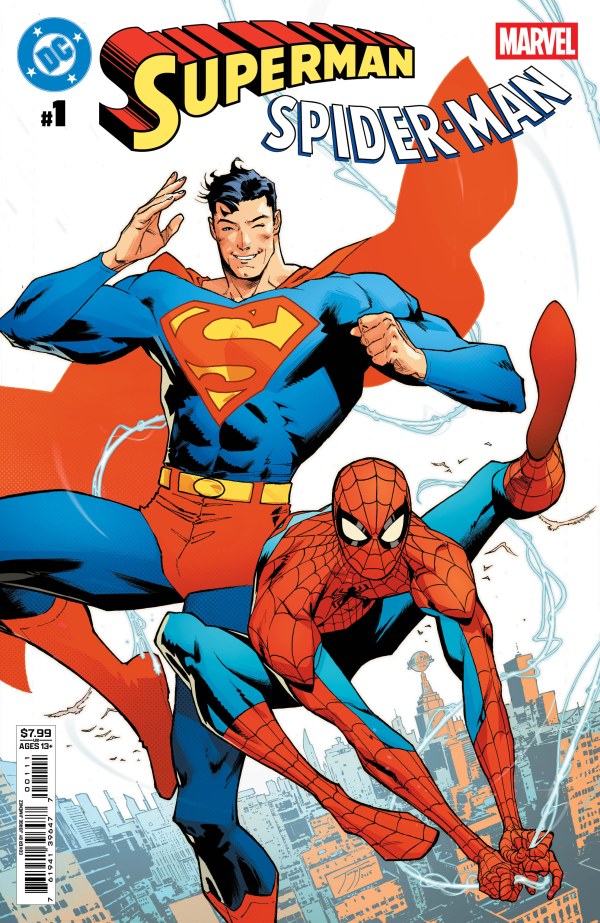
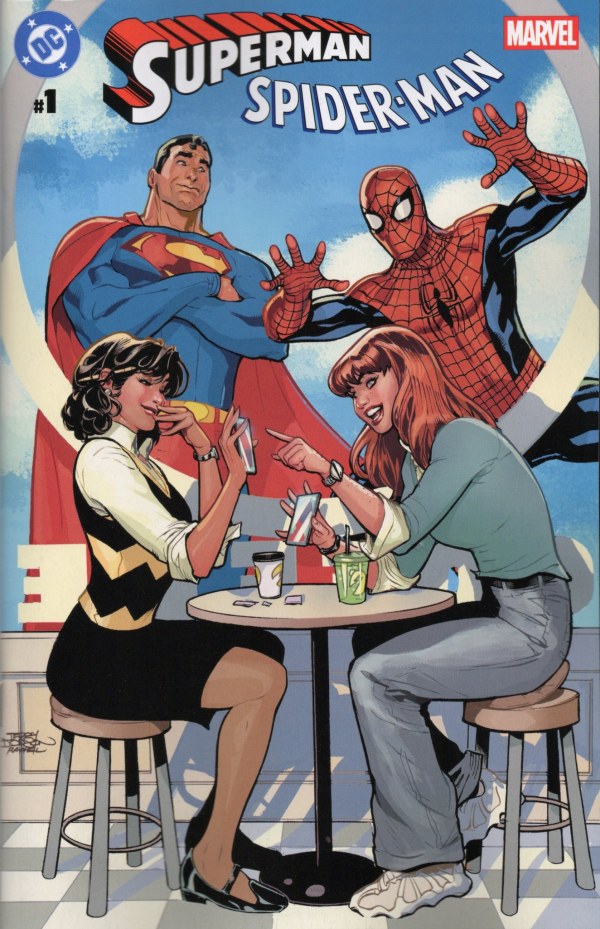
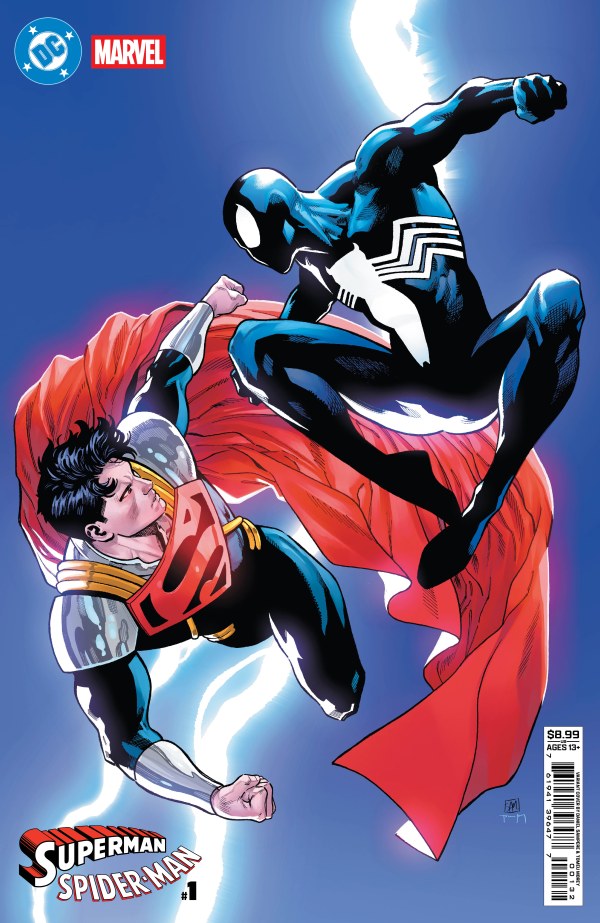
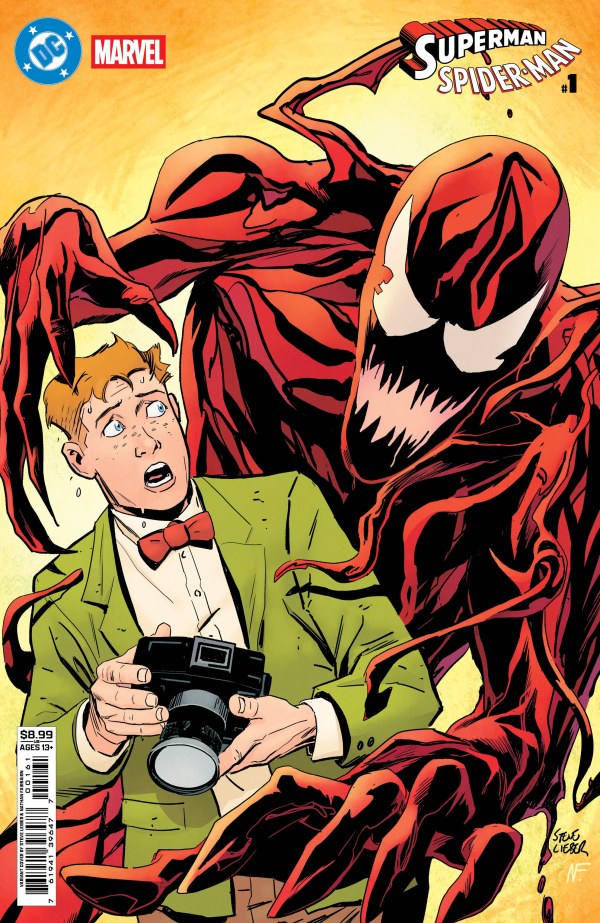
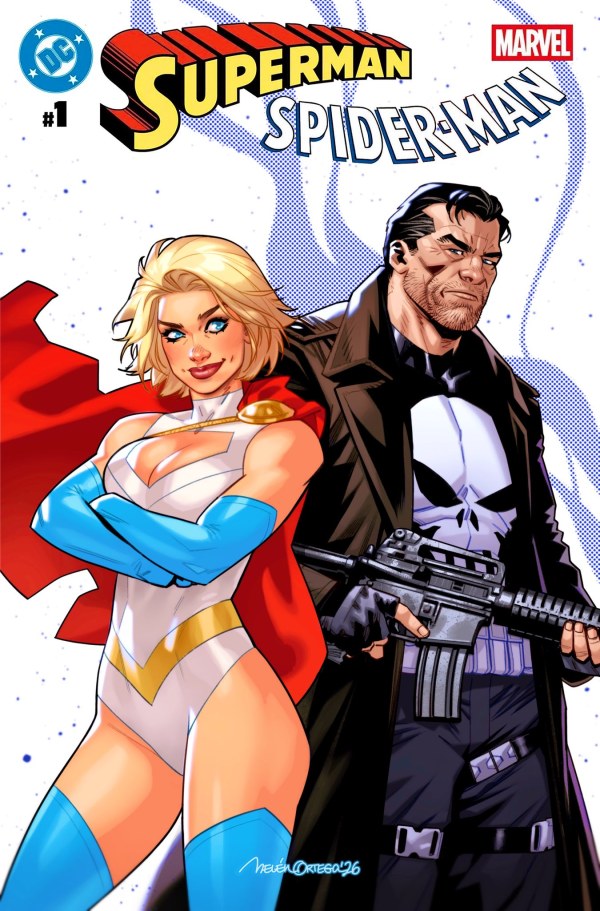

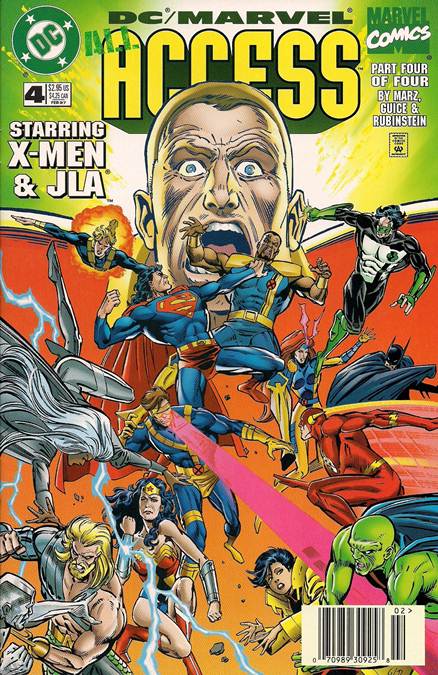


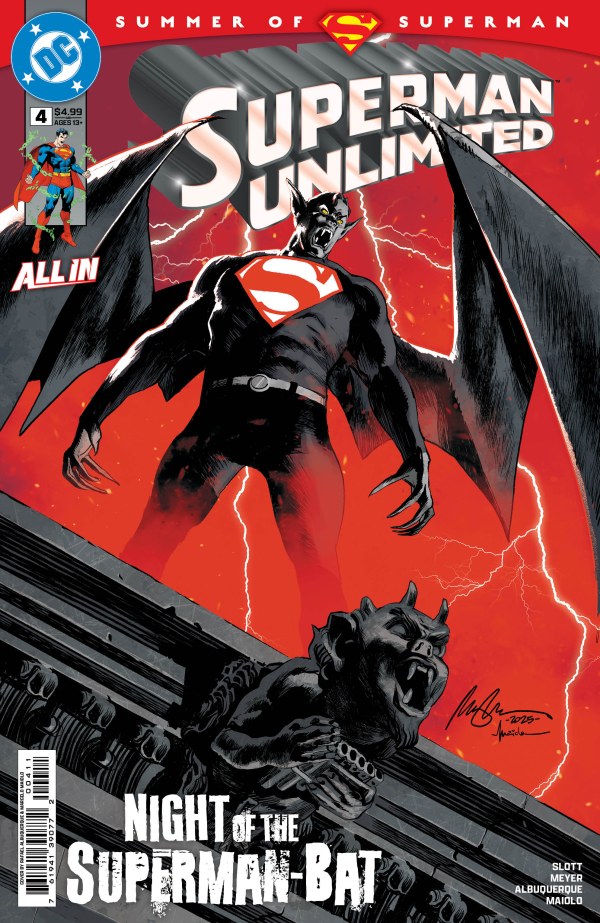
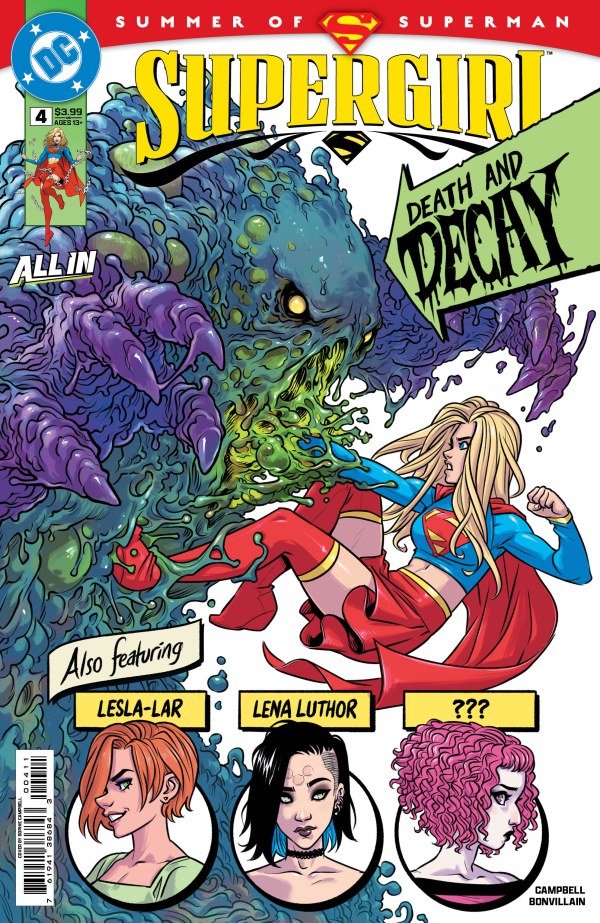


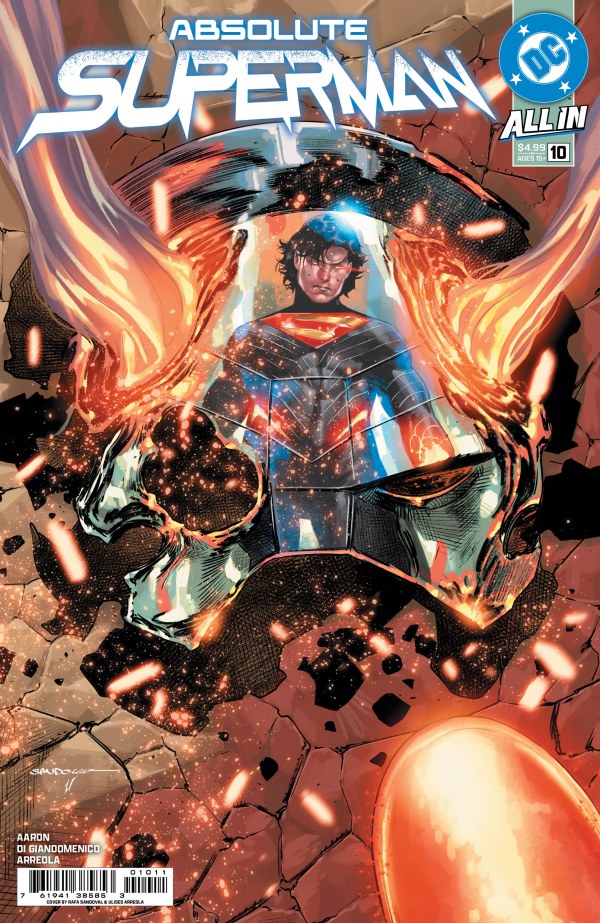


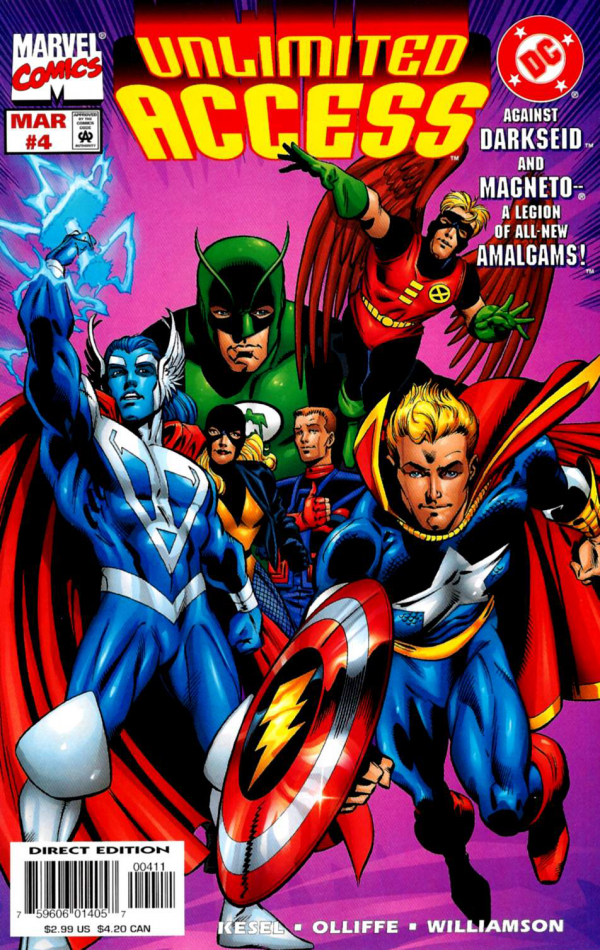
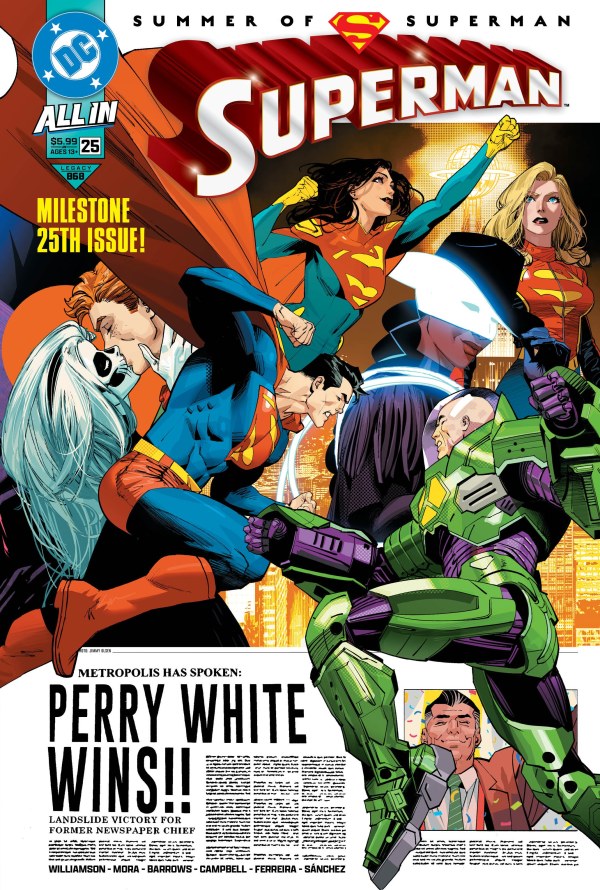

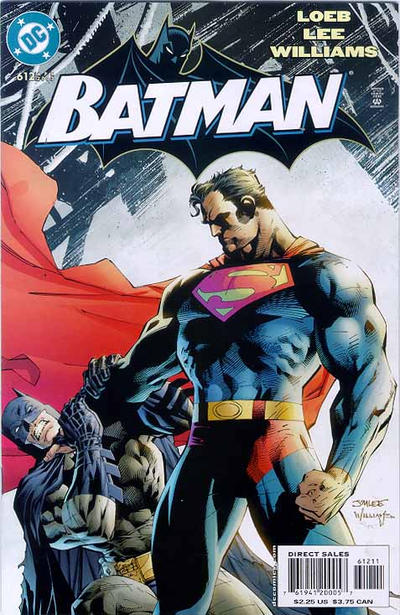
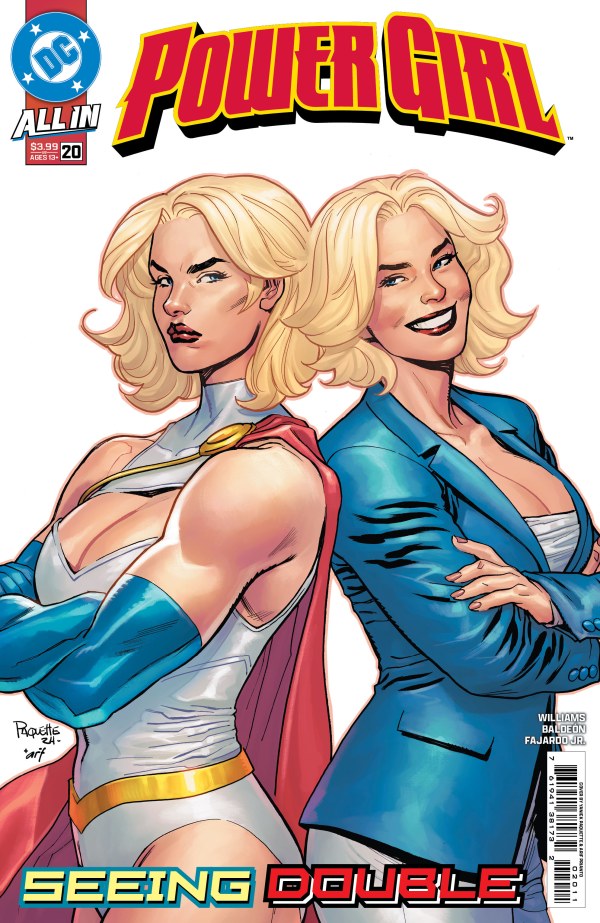


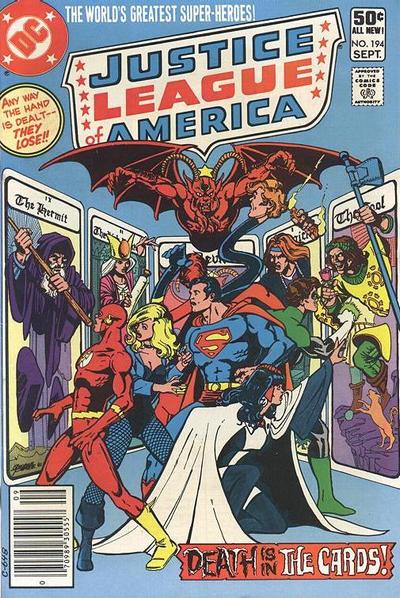

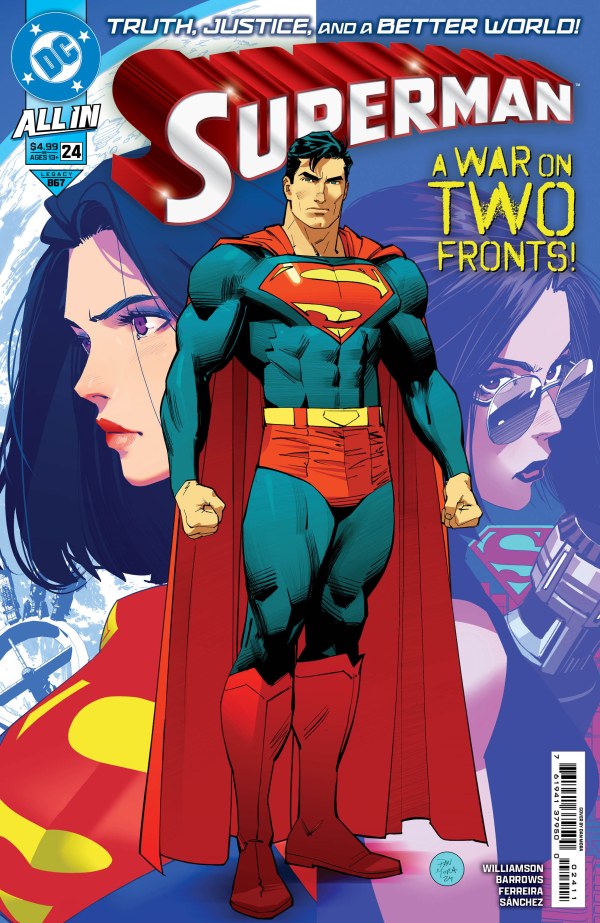
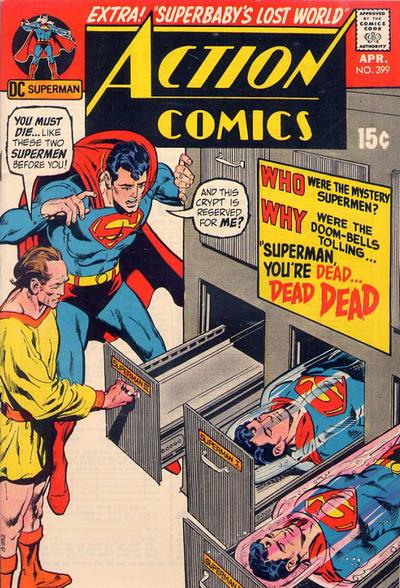
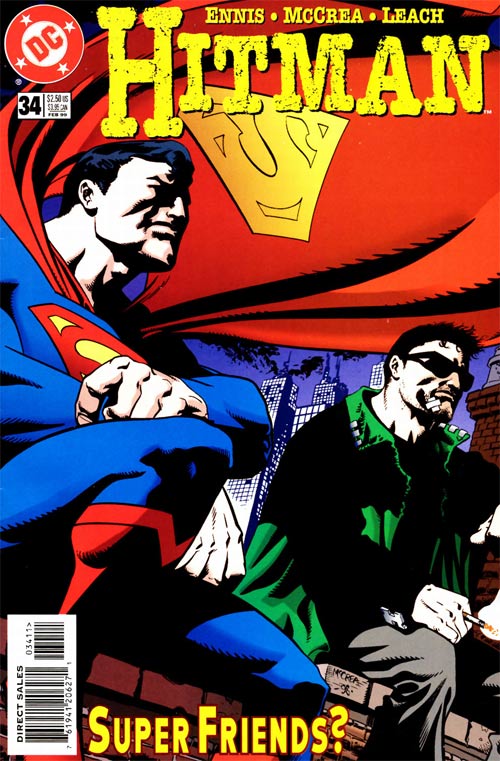
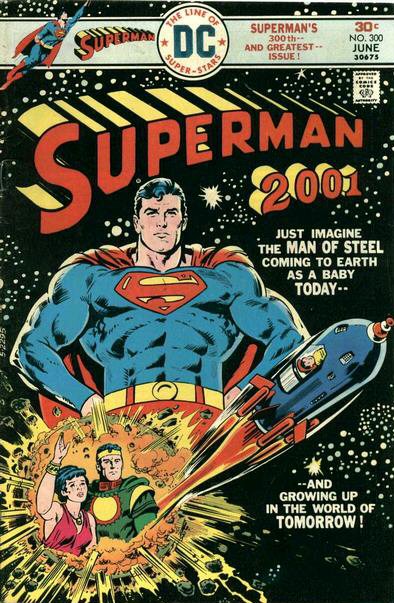


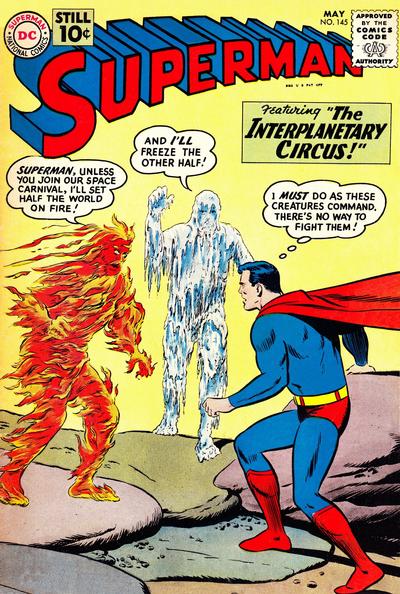
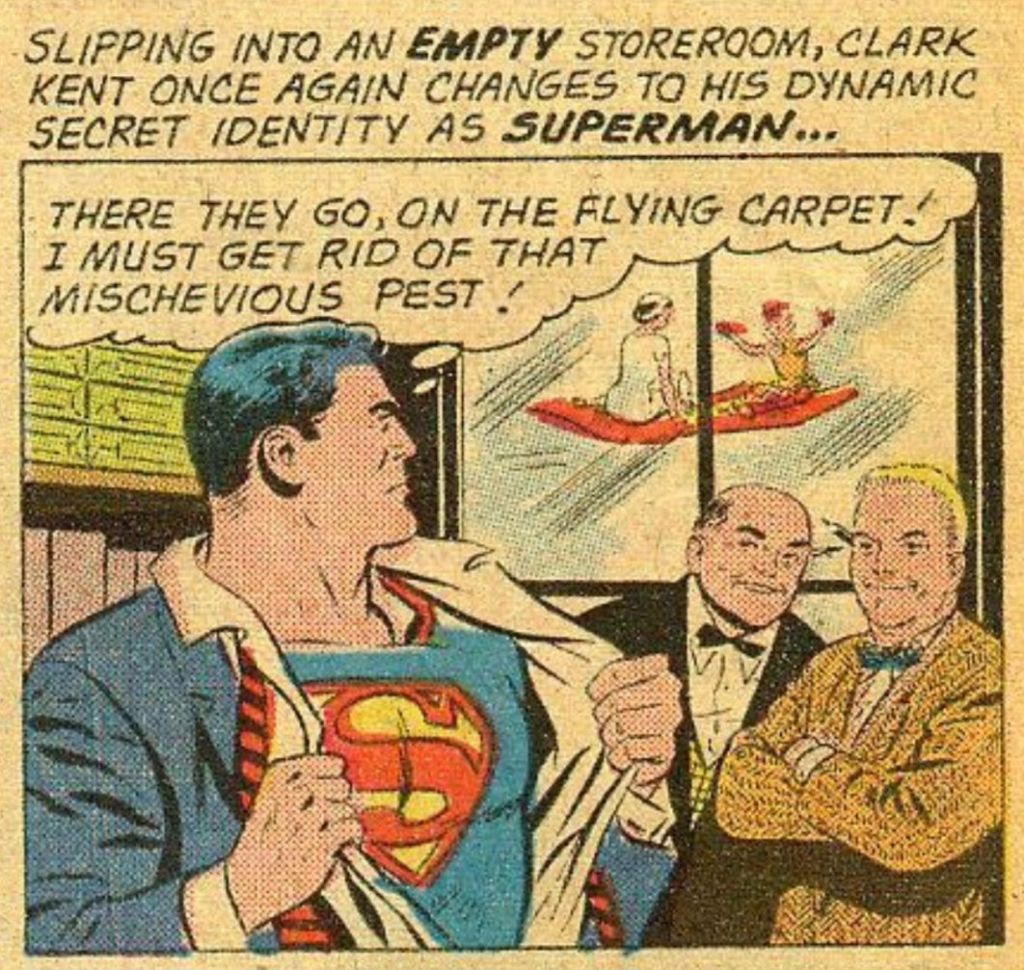




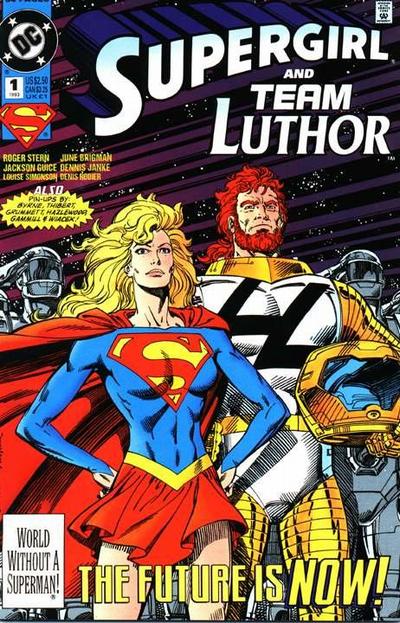
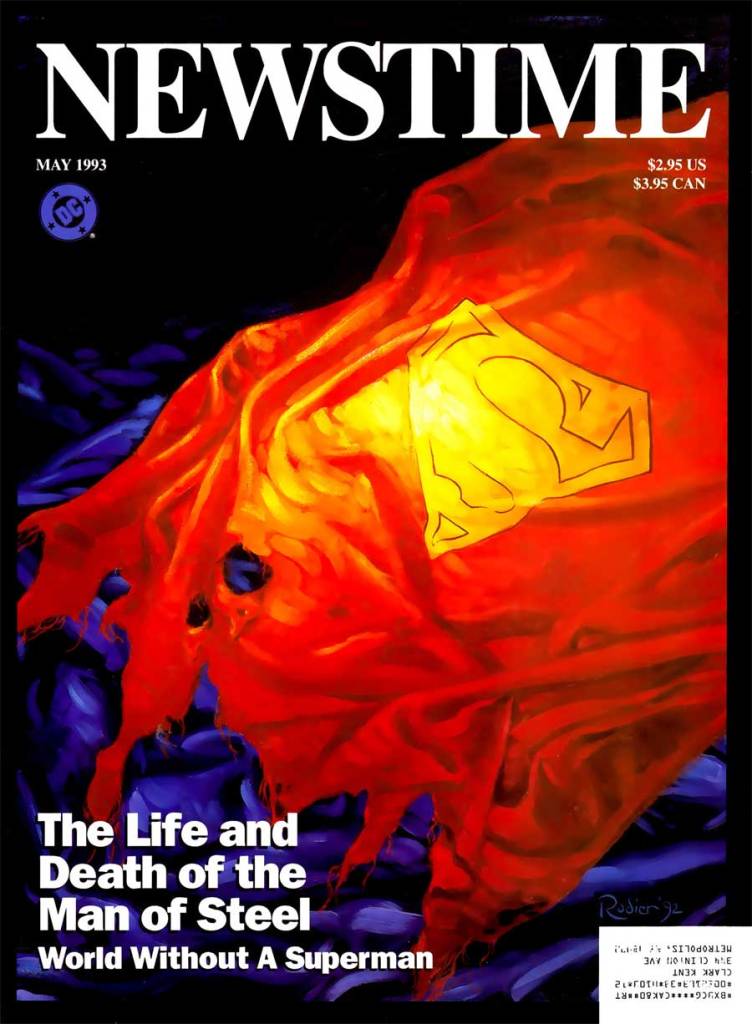


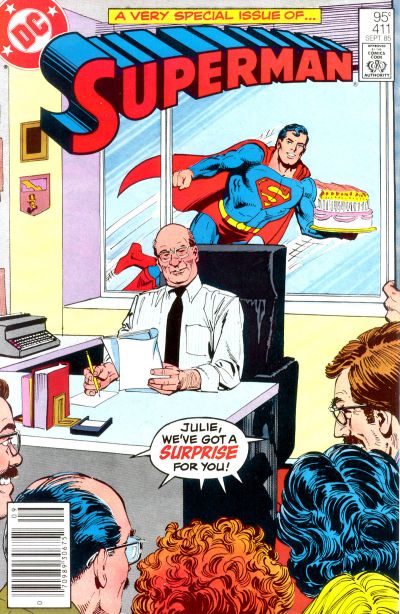


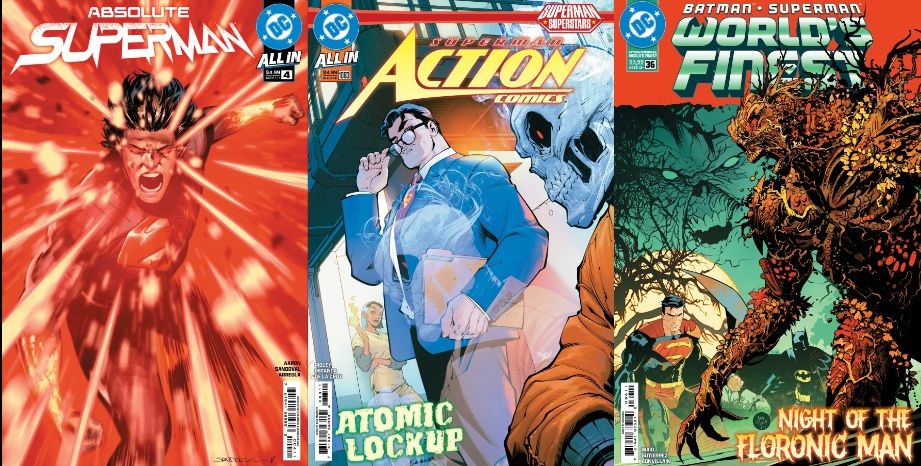
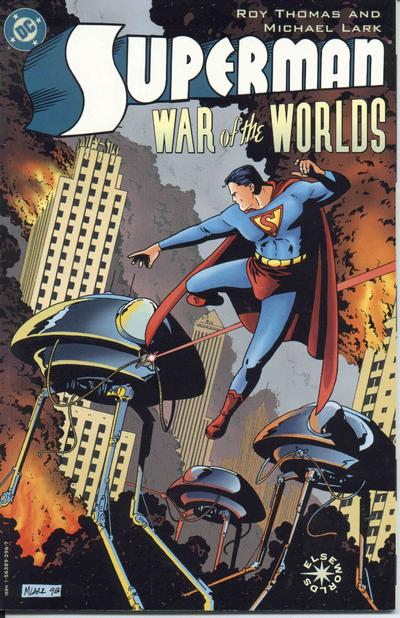


 Blake M. Petit