Grady Hendrix’s novel How to Sell a Haunted House has been optioned for a motion picture. This is not new information, by the way – the deal was signed with Sam Raimi’s Ghost House studio about two years ago, but today is the first time I’ve heard about it, and it’s got me very interested. I like Hendrix’s work quite a bit. I’ve only read three of his books so far (the aforementioned Haunted House, Final Girls Support Group, and the very cool nonfiction book Paperbacks From Hell, about the history of horror novels and cover art in the 70s and 80s), but every one of them has encouraged me to read more. I don’t know if it’s fair to classify myself as a “fan,” having only really dipped my toes into his work thus far, but perhaps “fan-in-training” would be accurate. Regardless, having read How to Sell a Haunted House, I am immediately struck by the cinematic possibilities of the story, while at the same time, left very curious about exactly what tone they’re going to strike with a horror movie where the villains are – drumroll please – puppets.

I apologize if that feels like a spoiler to anyone, but it’s part of the synopsis of the book and, when the movie is made, it most likely will be in the trailer, so I don’t feel TOO bad. It’s kinda like if you hear that there’s a new slasher movie coming out and someone tells you that the killer wears a mask. In the novel, single mom Louise Joyner has to go back to her home town after her parents are killed in a car crash. Once home, she’s forced to go about the task of closing up her childhood home for sale with the help of her estranged brother. As they go through the house, they find that there may be more to their mother’s massive collection of puppets and dolls than they ever suspected.
Once the movie is completed, How to Sell a Haunted House will join the echelon of horror flicks that I like to think of as “Teeny Tiny Terrors.” Horror, as a genre, has dozens (if not hundreds) of categories and subcategories, most of which can overlap at some intersection or another. How to Sell a Haunted House will fit into a few categories – haunted house movies, obviously, but also the narrower but quite popular category of killer toys, home of such classic films as Child’s Play, Puppet Master, and the last segment in Trilogy of Terror. The Joyner puppets will join a pretty fabulous collection of creatures.
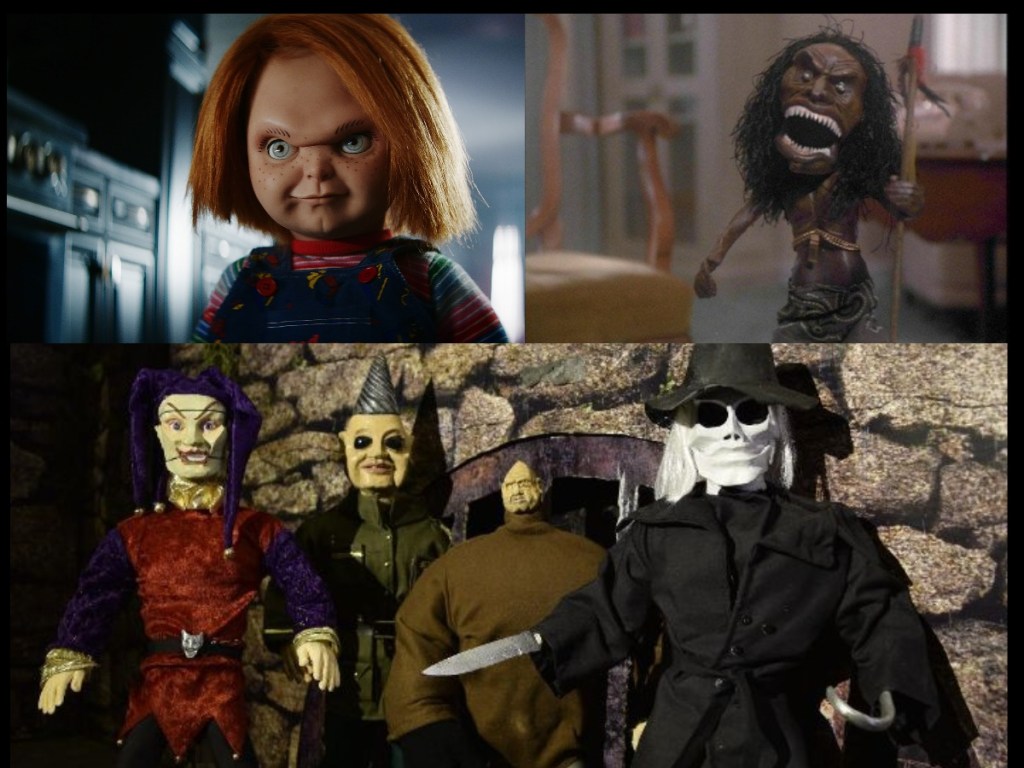
Not all Teeny Tiny Terrors are toys, of course. I’d also place things like Leprechaun, Gremlins, Ghoulies, Munchies, Critters, Hobgoblins, and even Sam from Trick ‘r Treat into this category: all monsters or aliens or some sort of supernatural threat that are embodied in what is – to an adult human, of course – a package that seems small and harmless until the teeth are bared. Because of this, almost all Teeny Tiny Terrors fall into one of my OTHER favorite horror subcategories: horror comedies. I wrote about this extensively last year, specifically about how common it is for horror to have elements of comedy, and how some lean harder on the funny parts and others lean harder on the terror. I even described a spectrum with varying levels of horror/comedies depending on which side they lean towards (a Type 1 is the lightest, funniest of the group, while 5 is the scariest). Almost any Teeny Tiny Terror will land on the spectrum somewhere. The first Child’s Play movie, I think, was a solid 4, although as is often the case the series lightened up with subsequent installments to 3s and even occasionally to 2s.
With a Teeny Tiny Terror of any type, at least part of the humor is going to come from the concept of something that’s supposed to be innocent and harmless suddenly turning psychotic. The idea of the dolls in Puppet Master turning out to be possessed by the spirits of dead Nazis, for example, is so patently absurd that it’s hard to take it too seriously even as the likes of the Tunneler doll are drilling into somebody’s skull. There’s a macabre comedy to this. It’s similar to the psychotic clown craze from a few years back, although not exactly the same. With killer toys, you’ve got something that’s supposed to be harmless turning bad.
Teeny Tiny Terrors are nothing new. They showed up in John Christopher’s baffling 1966 novel The Little People, were used to disturbing effect in Tod Browning’s 1932 film Freaks, and have showed up in folklore about as far back as you can imagine. Today we’re even retroactively applying it to full-grown terrors. Just a few days ago I got an email from Spirit Halloween announcing their new line of Horror Movie Babies, figures and decorations starring infantilized versions of Michael Myers, Chucky, Ghostface, the Frankenstein Monster and others. And even THAT is a spinoff of their long-running Zombie Babies line. There aren’t enough Teeny Tiny Terrors already, now we’re taking full-grown terrors and giving them the Jim Henson’s Muppet Babies treatment!

There are other subcategories related to the Teeny Tiny Terrors in different ways, such as the aforementioned Killer Klowns. Like deadly toys, the reason clowns can be scary is that you’re taking something that’s supposed to be innocent and perverting it. Dolls are inanimate, though, and supposed to be used to fuel a child’s imagination, but have no agency of their own. They exist only as a reflection of a child’s innocence. Clowns, on the other hand, are people, and we know that (unlike a doll) a person can easily hide their true nature. They commit their atrocities beneath makeup that was originally intended to induce laughter only amplifies the terror. Whether we’re talking about Pennywise, Art the Clown, or the Joker, killer clowns can be a hell of a lot scarier than killer toys.
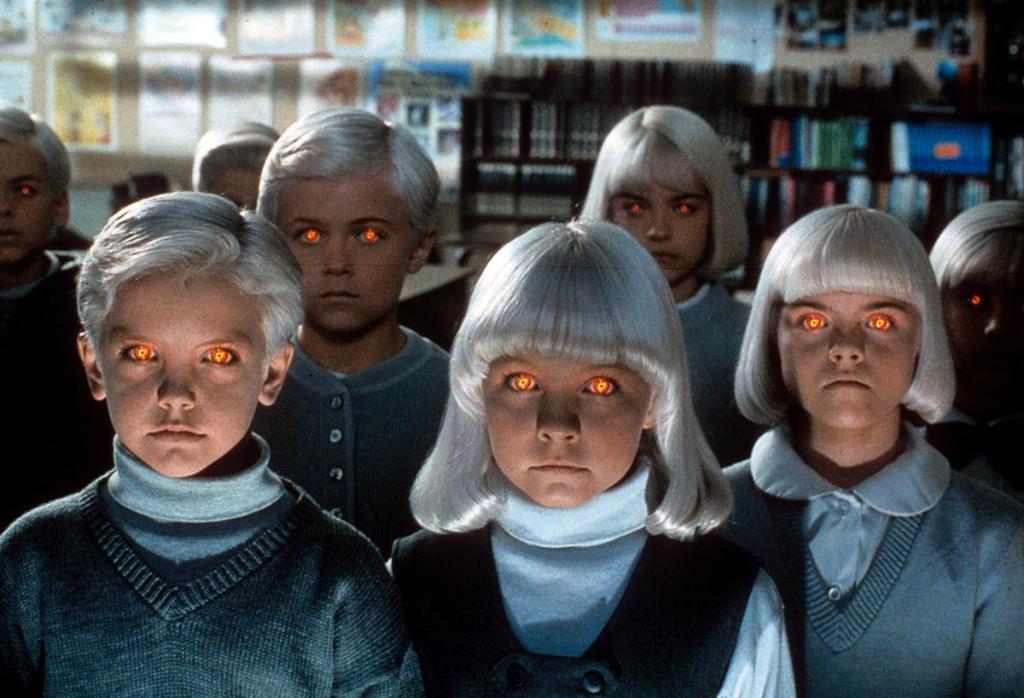
There’s also the related category of Creepy Kids, like we see in films such as Children of the Corn or Village of the Damned. Again, here’s something that should be innocent that’s turned bad, but in this case it’s far less likely to be funny. A demonic child is something of a perversion of innocence, it’s taking a human being in the period of their life where they are supposed to have the least darkness and transforming them into something ghastly. There are SOME Creepy Kids on the horror/comedy spectrum, but I think they’re far less likely to go there than Teeny Tiny Terror or Killer Klowns.
But back to Grady Hendrix: I’m not surprised that an adaptation of his work would go into the horror/comedy territory, because pretty much everything of his that I’ve read seems tailor-made for it. Aside from Haunted House, he gave us Final Girl Support Group, a novel about women who survived attacks from slasher-type killers (most of whom are obvious copyright-friendly substitutes for the likes of Jason Voorhees and Michael Myers) and what happens when an unknown threat starts gunning for them. Hendrix plays with meta humor here, digging into the tropes and expectations of the slasher genre in a way that’s reminiscent of Wes Craven’s Scream movies (and, in fact, one of the Final Girls is a clear replacement for Sidney Prescott). Even his nonfiction book, Paperbacks From Hell, shows a deep love and understanding of all the tropes of horror fiction. Writers like that often enjoy playing with those tropes in an amusing way.

Assuming the movie adapts the tone of the book faithfully, I think it would also land in type 4. It’s not a laugh riot, and in fact, some of the stuff at the end could be downright grotesque depending on how the director chooses to film it. But as I said, the very concept of Teeny Tiny Terrors has an inherent humor to it that, even in the darkest moments, lends itself well to tongue-in-cheek references and black comedy. Hendrix is one of the modern greats in that regard. I hope that the movie does it justice.
Blake M. Petit is a writer, teacher, and dad from Ama, Louisiana. His most recent writing project is the superhero adventure series Other People’s Heroes: Little Stars, volume one of which is now available on Amazon. You can subscribe to his newsletter by clicking right here. He’s also started putting his LitReel videos on TikTok. Despite what you may have expected, “Teeny Tiny Terrors” does not refer to what happens when your son realizes we’re out of cheese sticks.


 Blake M. Petit