Geek Punditry #136: Under Suspension

A few weeks ago, San Diego Comic-Con happened once again and…well, once again, I wasn’t there. It’s kind of a little tradition of mine. Comic-Con happens and I stay at home. Like many storied, time-honored traditions, it kinda sucks. So I instead spent that weekend waiting for the news to trickle out online. There wasn’t anything major this year, nothing that knocked my socks off, no “Robert Downey Jr. is Doctor Doom” moments. There were, however, trailers. I  love a good trailer, those little short films that give us a taste of an upcoming movie or TV show. They’re becoming a dying art, really, with so many trailers either failing to give you any excitement or – much worse – giving away half the thrill and excitement of the movie itself too early. If you haven’t seen the trailer for Project Hail Mary, for example, then I beg you in the name of all that is good and holy DON’T watch it. It gives away one of the best reveals in the book.

Specifically, the fact that Ryan Gosling copies Guy Gardner’s haircut.

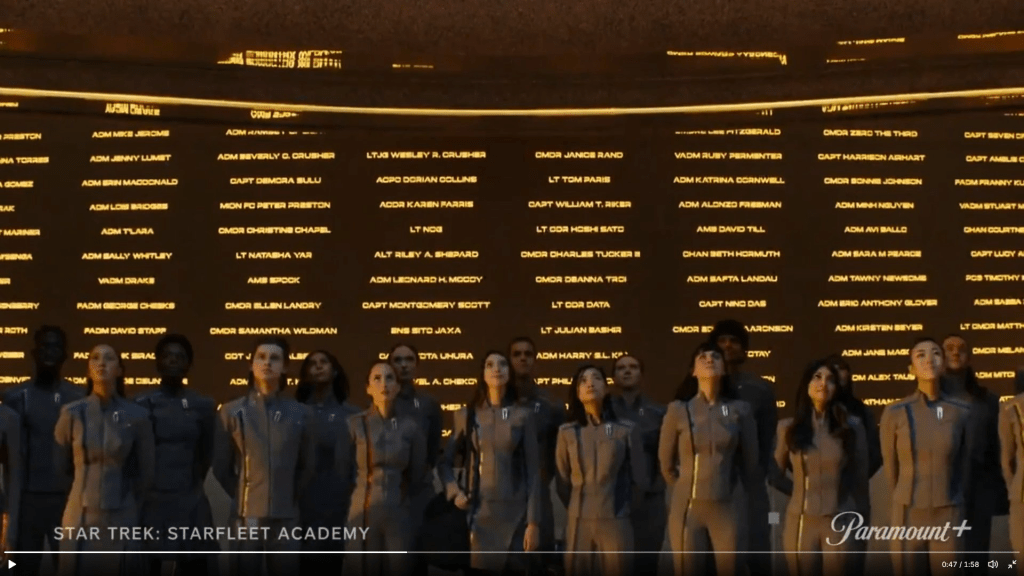
But the trailer that I’ve seen the most online chatter about had nothing to do with plot reveals, special effects, or the performances of the actors involved. No, the most talked-about trailer this year seems to have been the teaser for the upcoming Star Trek: Starfleet Academy series on Paramount+. Here’s all you need to know: Starfleet Academy takes place further along in the timeline than most of the Trek shows and movies that we’ve grown to love over the past six decades. In this time period, the Federation almost collapsed due to certain catastrophic events and it’s now in a rebuilding stage. This series is about the rebirth of the Academy, and the scene that has everybody talking is one in which we catch a glimpse of what appears to be some sort of Wall of Honor, adorned with the names of legendary Starfleet personnel. Ambassador Spock. Admiral Jean-Luc Picard. Lieutenant Nog. There are names on this wall from virtually every iteration of Star Trek to date. This one scene has had people freeze-framing it more than any single scene since Fast Times at Ridgemont High, trying to read all the names on the board to see who amongst our favorite Star Trek characters made the cut. I seriously doubt that this wall will have any great significance to the plot of the series, but it’s a fun Easter Egg for those of us who have loved Trek for so many years.

Barclay better be on that wall or we riot.

In one of the (many) online discussions I’ve seen about this scene, though, there was one dissenting voice that I found perplexing. This person, whom I am paraphrasing, basically expressed irritation that all of the characters that we’ve watched over the years turned out to be so remarkable. Statistically, they seem to think, not EVERY character should turn out to be some kind of legendary figure.

This person has got it completely backwards.

My reply was simply this: “It’s not that every character we watch has turned out to be remarkable. It’s that we are only watching them in the first place BECAUSE they are remarkable.”

This is one of those times where I engage in a discussion online over something that I always thought was blindingly obvious, only to learn that not everybody sees it my way (also known as the correct way). There are hundreds, maybe thousands of ships in Starfleet. Of course not EVERY ship and EVERY crew is going to turn out to be the one that makes it into the history books. But doesn’t it stand to reason that those boring, mundane crews are simply not the ones that we get to hear the stories about? In other words, the histories of the Enterprises, Voyager, or station Deep Space Nine aren’t remarkable because those are the crews we follow. We follow them because they ARE the remarkable crews.

This is the case with fiction across the board. We aren’t tuning in to a movie or a TV show to watch the adventures of some average, everyday schlub. There are exceptions, of course – “slice of life” dramas and comedies do just this, and sometimes they do it very well. But in the case of an adventure series like Star Trek, you’re following the exploits of the characters that make history. They even tried to subvert this expectation with the animated series Star Trek: Lower Decks. The idea behind it was that we were going to FINALLY follow the adventures of an unimportant crew on an unimportant ship. And what happened? It turned out that they weren’t all that unimportant after all, and if anything, Lower Decks winds up reading as the origin story for the next one of these legendary crews. 

Suspension of disbelief is an important aspect of enjoying fiction. There has to be a willingness, as a member of the audience, to accept certain things that you are aware may defy reality. In the case of speculative fiction – sci-fi, fantasy, and certain types of horror – that means that you have to maybe ignore certain laws of physics. Yeah, Einstein said that we can’t go faster than light, but if we didn’t find a way to do it then there would be no Star Trek, so I’m gonna let that one slide. Quantum mechanics says that the way time travel works in Back to the Future is utterly impossible, but until quantum mechanics can give me something as awesome as Alan Silvestri’s score, quantum mechanics can bite me. Is there really such a thing as a creature that can hide inside your dreams and attack you? Probably not, but A Nightmare on Elm Street wouldn’t be nearly as scary without him. 

Those are the big things, though, and when it comes to suspension of disbelief, people are oddly MORE accepting of the big things. What about the little things? There’s an old saying that in real life we expect the unexpected, but in fiction we don’t stand for it. Major, life-changing events have to be the REASON for a story, not something that simply happens IN the story. Think of it this way: if a character in a movie wins the lottery, that usually happens at the beginning of the movie, and the rest of the story is about what happens to them as a result. But if a character in a movie is in some sort of desperate situation – maybe he’s spent half the movie running from the mob because he owes them a fortune and they’re gonna break his kneecaps – and THEN he wins the lottery, the audience considers it a cheat. The suspension of disbelief breaks down here, even though the odds of a person winning the lottery are – mathematically speaking – exactly the same at the beginning of a story as they would be at any other point. I’ll accept a lottery win as the inciting incident, but if a random lottery win is what saves the day, that’s a modern deus ex machina, the “god in the machine.” It comes from those times in Greek drama where a character would be rescued by – literally – one of the gods intervening to get them out of a jam, and even back then it pissed off the ancient Greeks so much that they invented machinery just so they would have a term to use to complain about it.

It doesn’t have to just be good things either – tragedy can break your suspension of disbelief too. There are a lot of tearjerkers about somebody battling an incurable disease, and we’re okay with that, because that’s what the story is about. On the other hand, if somebody spontaneously develops such a disease in the middle of a story without any prior warning, audiences will consider it cop-out. Why? In real life, people can get sick at any time, so why NOT when it’s convenient for the plot?

Because “convenient” is enough to break the reality of the fiction.

Pictured: Convenience

The rule is basically this: major life-changing events (either good or bad) either have to happen at the beginning of the story or be the consequences of the actions in the story, but they cannot happen randomly in the middle or end of the story or the audience won’t stand for it.

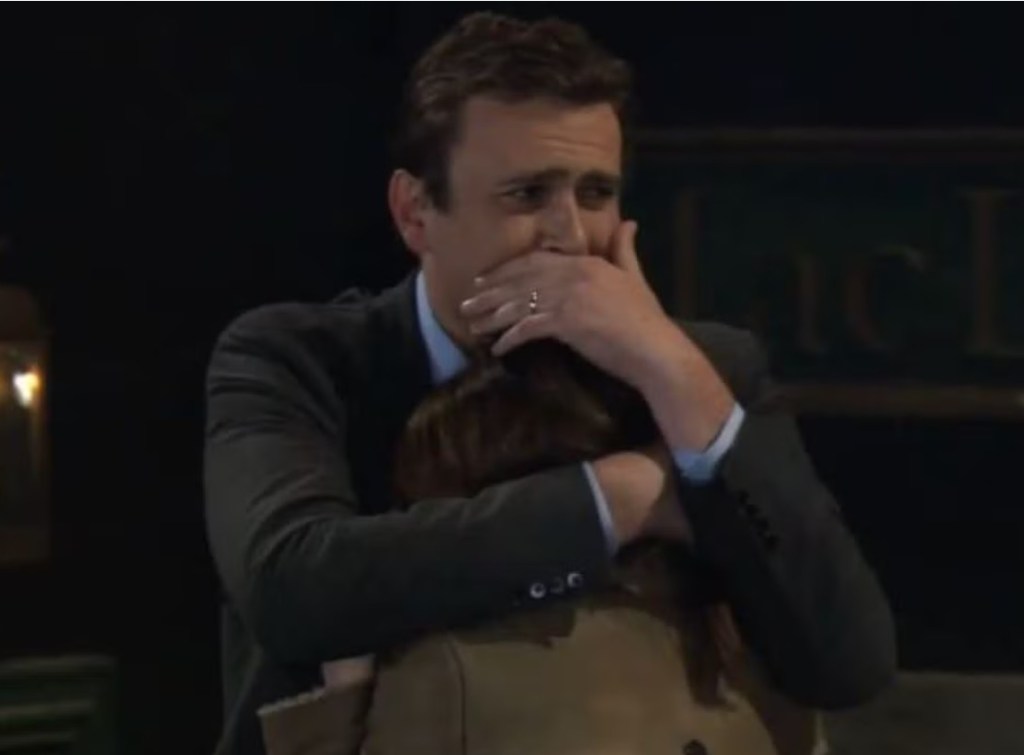
The one exception here – and even this one is iffy sometimes – is when you’ve got a long-running serialized story like a television or comic book series. When you’re following characters for years at a time, eventually a random event will occur, and the audience will be a bit more accepting of it. For example, the death of Marshall’s father in the series How I Met Your Mother came out of nowhere, but that episode is considered one of the most powerful, emotionally-resonant moments of the entire series. It’s something that hits the audience hard, forcing us to process the grief and pain of the character along with him. (The story goes that actor Jason Siegel didn’t know what the end of that episode was going to be until they filmed it, so when Allyson Hannigan delivers her line, telling him that his father died, his response is entirely genuine and his final line was a perfect ad-lib: “I’m not ready for this.)

People cried just as hard for the finale, but for…different reasons.

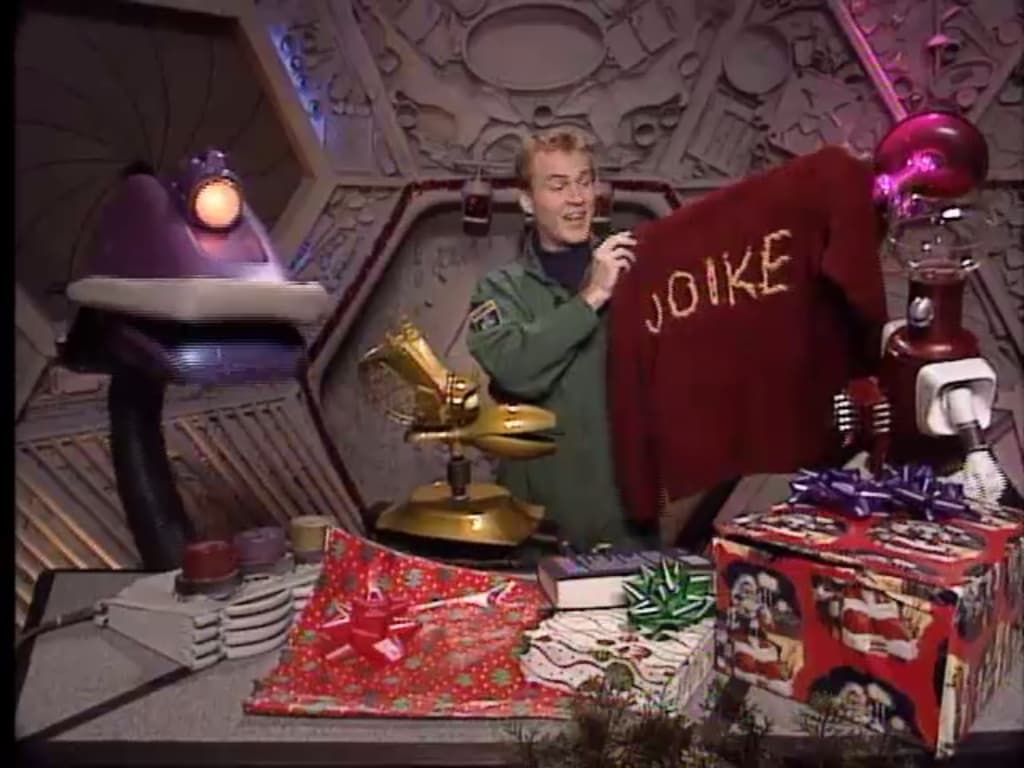
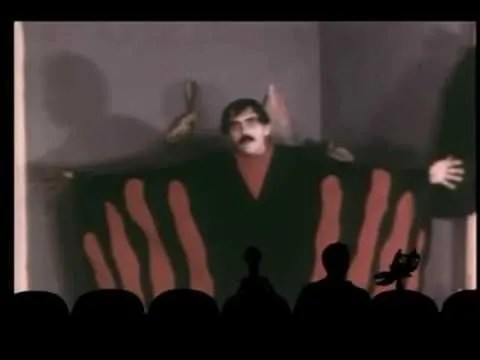
In a comedy, suspension of disbelief is allowed to go even farther. In a farce like The Naked Gun, for example, things routinely happen that make it feel more like you’re watching a cartoon than a live-action film, and the audience is perfectly satisfied. Nobody complained in the end of Mel Brooks’s Blazing Saddles when Hedley Lamarr bought a ticket to a movie theater showing…Blazing Saddles. And Mystery Science Theater 3000 even wove the concept of Suspension of Disbelief into its THEME SONG: “If you’re wondering how he eats and breathes and other science facts, just repeat to yourself, ‘It’s just a show, I should really just relax’.”

Lalala

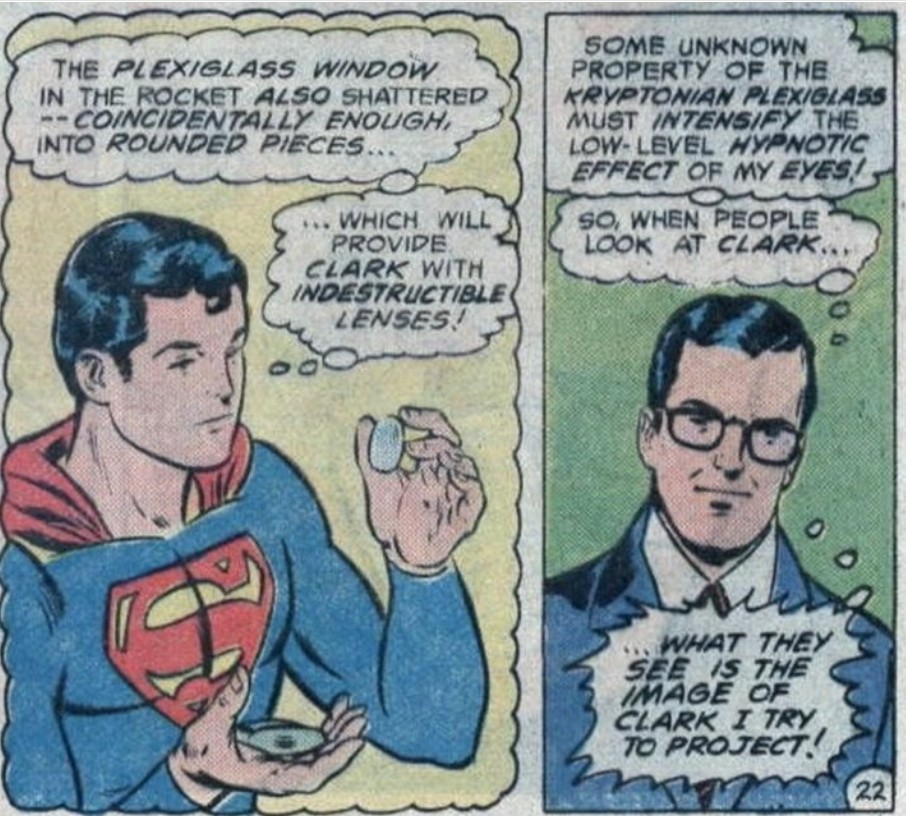
On the other hand, if that disbelief is suspended too long, there’s a temptation to try to work things into the story to justify the extraordinary. For instance, for decades there was a running commentary about how Clark Kent’s glasses wouldn’t fool anybody and that everyone would quickly realize he’s Superman. Eventually, the writers felt that it needed to be addressed to maintain the suspension of disbelief. Some writers said that he slouches as “Clark,” or changes his voice and mannerisms. Sometimes they actually have him attend acting classes specifically to learn how to do this. Sometimes the lenses are made out of special glass (usually from the ship that brought him from Krypton) that either changes the color of his eyes or – in the most extreme case – has a hypnotic effect on the people who look at him, making them see a different face. James Gunn even alluded to that in his movie, although a lot of people thought it was just a typical Gunnian joke, not realizing it was a legitimate piece of comic book lore. 

I love it when intergalactic spacecraft crashes to Earth and the shattered remains of the windshield have two pieces that perfectly correspond to my frames.

We don’t read or watch fiction – for the most part – looking for ordinary things. We want to follow the adventures of extraordinary people or, at the very least, ordinary people in extraordinary situations. Stephen King fans (this is me raising my hand in the back of the room) will tell you that’s his great strength: the ability to create a realistic character and then show how they respond to circumstances that no realistic character could possibly have prepared themself for. And to be fair, a certain amount of analysis and nit-picking is acceptable when you’re discussing great works of fiction (or even awful works of fiction). 

But eventually, when somebody online says something like, “Why don’t people in Gotham City ever realize that Bruce Wayne is the only one with the money to be Batman?” The proper response is simply, “Because the story wouldn’t work otherwise, so just get over it.”

Blake M. Petit is a writer, teacher, and dad from Ama, Louisiana. His most recent writing project is the superhero adventure series Other People’s Heroes: Little Stars, volume one of which is now available on Amazon. You can subscribe to his newsletter by clicking right here. He’s also started putting his LitReel videos on TikTok. He, too, would like to wear hypno-glasses, but in his case he would just use it to make his students see him as Yoda. 

Geek Punditry #114: Blake’s Five Favorite RiffTrax Movies

It’s time once again, my friends, for “Blake’s Five Favorites,” that Geek Punditry mini-feature where I talk about five of my personal favorite examples of whatever tickles my fancy on that particular week. These lists are neither objective nor comprehensive – they are based purely on what gives me the most joy to talk about on the day that I write the list. The list may be different if you ask me again tomorrow. This is the way my brain works. But for today, I want to tell you guys all about five of my favorite movies that have been tackled by the good people at RiffTrax.

Oh yes, my friends. We are, indeed, talkin’ RiffTrax.

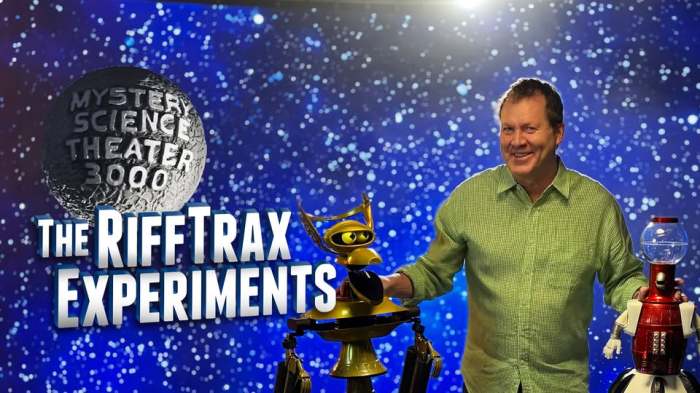
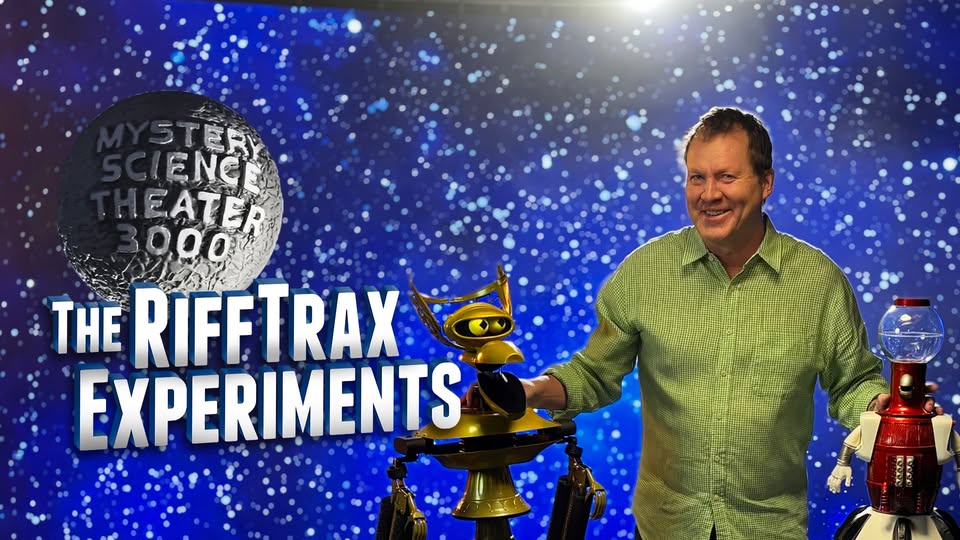
A quick history, in case you don’t know what RiffTrax is. Back in the late 1980s, a group of comedians from Minnesota brought the world the gem that is Mystery Science Theater 3000, a series that showcased classically bad movies while the performers (some in puppet form) cracked jokes about them. This wasn’t a new idea, of course. People have been making fun of bad movies for probably as long as movies have existed. But these guys were really good at it, really funny, and MST3K lasted for many years across many networks and even their own feature film before fading away in the late 90s. In 2007, MST3K alumni Michael Nelson started RiffTrax, a new platform where he and various guests would continue the movie-riffing treatment. Originally, RiffTrax focused mostly on commentary tracks that viewers could synch to major motion pictures like Iron Man, but over time the focus on big movies dwindled as they gravitated more towards the older, low-budget fare that had been the lifeblood of MST3K. They still do the occasional big movie, but most of their output these days are on older films they can buy the rights to. Nelson was joined by fellow MST3K performers Bill Corbett and Kevin Murphy, and the three of them have been the lifeblood of the company ever since.

What I love about RiffTrax, and MST3K as well, is not just that it’s funny. It is, of course, there would be no point to the exercise if they weren’t funny. But I’m impressed in the way they can recontextualize movies, turn them into time capsules of the era in which they were made, or wring gold out of the most baffling creative choices. And not for nothing, when you’ve been hearing these three guys cracking wise for upwards of 30 years now, there’s a comfort to it. It really is – as the old MST3K commercials used to claim – “like watching cheesy movies with three of your funniest friends.” So here are my five favorite RiffTrax features. This does not include the many, many shorts that they’ve riffed, nor any of the “RiffTrax Presents” films, which feature other riffers than the main three (although I’ve grown to be a huge fan of the Bridget Nelson/Mary Jo Pehl riffs, and I could easily do a Five Favorites just for them). When I’m looking for a laugh and I want a classic riff, these are five that I turn to time and again, in no particular order.

The Apple

Somewhere, Jason Biggs is salivating…

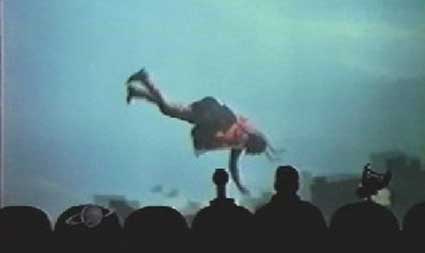
This amazingly ill-conceived musical from 1980, released by the legendary Cannon Films, was a sort of science fiction take on the Garden of Eden story. The movie is set in the distant future of 1994, and just to make sure you don’t forget it, they remind you about 20,000 times in the opening number. It’s almost as persistent a message as the fact that Bim – whoever the hell Bim is – is in fact “on the way.” The plot, such as it is, follows a young woman who sacrifices her true love for a musical career that seems to spiral her downwards into a world of sin and debauchery. The greatest sin, though, is probably the costume choices.

A great Rifftrax movie is one where you can tell the guys are having fun making fun of it – on occasion they’ll even include them laughing at one another’s jokes in the track. This is one of those movies where you get a sense early on that they’re enjoying the cheese in front of them, and The Apple serves up a veritable buffet of dairy products. It’s the kind of movie that makes you not only question the filmmaker’s choices, but makes you wonder what ever made anybody think it was a good idea in the first place. It is, in short, a gold mine of riffing.

Cool As Ice

It’s like having your eyeballs violently assaulted by 1991.

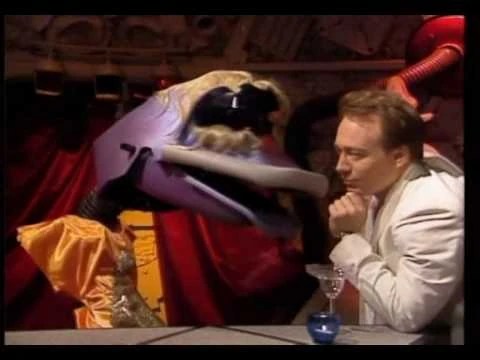
Remember the 90s? Don’t worry, this movie will make damn sure that you do. In 1991 Vanilla Ice – kids, he was actually a musical performer of some sort – released this film that is to motion pictures what New Coke was to soda. Ice “plays” a…honestly, I’m not really sure who the hell he’s supposed to be, but he rides with his buddies into a small town where they have to rent rooms while one of them gets their motorcycle fixed. He ends up getting involved with a local honors student whose dad was in the witness protection program and who winds up on TV during the slowest news day in a century. 

Cool As Ice is what you would get if Mad Libs were a movie. There are a few plot points that seem to have been pulled randomly out of a hat, with a script hastily assembled by some intern desperate to find a way to link these various points into something resembling a narrative while, at the same time, providing several excuses to showcase a Vanilla Ice song somewhere along the path. Nobody in the movie behaves in a way that is recognizable as a sane human being, and the Rifftrax guys are eager to point that out, as well as spend several moments trying to reconcile the fact that this movie has the same cinematographer as Schindler’s List

Super Mario Bros.

This is literally the most game-accurate shot in the entire movie.

No, not the recent The Super Mario Bros. Movie that came out in 2023. We’re going back to the first Super Mario Bros. movie, the live-action film from 1993 that Bob Hoskins referred to as the greatest regret of his entire career. Hoskins and John Leguizamo are Mario and Luigi, transported to another universe that in virtually no way resembles the colorful, exciting world that fans of the video games have loved for decades. Instead we get a sort of bland, cliched dystopia where Dennis Hopper (of all people) as King Koopa is ruling with an iron fist. If you have ever wondered what would happen if somebody did a lot of cocaine and tried to make a version of 1984 with video game characters, the result might be something like this. 

This is the kind of movie that you watch and wonder how anybody involved actually agreed to be in this thing. Hoskins, remember, had recently had his star blown up by Who Framed Roger Rabbit? Dennis Hopper was already a legend. Leguizamo was a popular up-and-comer, and yet for some reason they all agreed to be in this film. Much of the meat of the riffing here comes from the incomprehensible disparity between the film and the video game that it was ostensibly adapting, and the utter confusion we get from these guys is what makes it so much fun.

Birdemic: Shock and Terror

Can you imagine how humiliating it must be to get killed by something with such few JPEGs?

There are actually TWO versions of Birdemic available on the RiffTrax site, the studio edition and the RiffTrax Live version, performed on stage in front of an audience and then broadcast to theaters all over the continent via Fathom Events. I love the RiffTrax Live films, and on those rare occasions when I get to go to one these days, there’s nothing like being in a theater full of RiffTrax fans enjoying the show together. There’s a certain energy that comes with the live shows that the studio versions – enjoyable as they are – just don’t have. If you’ve never had a chance to go to a RiffTrax Live screening, the next one is going to be Timecop, scheduled for this August, so try to pencil it into your calendar now. In the meantime, several of the previous ones are available on RiffTrax.com.

Anyway, Birdemic is director James Nguyen’s 2010 “thriller” about an invasion of birds. Killer birds. Just attacking people for no reason. Nguyen is an unrepentant copier of Alfred Hitchcock (his earlier film Replica is an attempted sci-fi ripoff of Vertigo) and he calls this a “tribute” to The Birds, minus any degree of tension, quality, believable effects, or anything resembling entertainment. In fact, the birds themselves (which look like they were lifted from a mid-90s Windows screensaver) don’t even show up until the halfway point of the movie. The first half of the film is a weak attempt at a love story between a woman whose face betrays the fact that she signed the contract to make this movie before reading a script and what appears to be a mannequin being controlled by some sort of inner mechanism, perhaps powered by rodents on a wheel. Watching this movie without Mike, Bill, and Kevin cracking wise about it is difficult. I tried it only once, with a group of my own funny friends, and it was only our own relentless mockery that made it survivable. Watch it twice.

Fun in Balloon Land

For the kids.

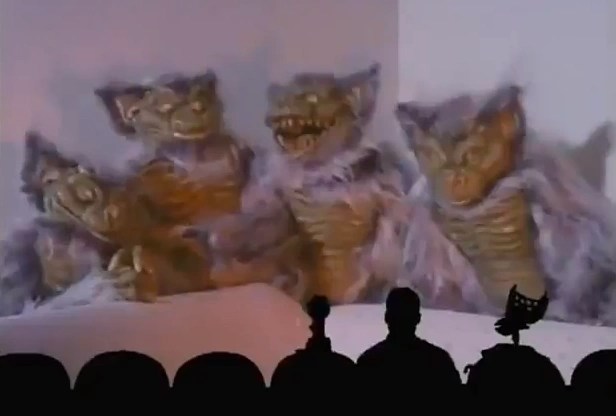
The last thing I want to point out about RiffTrax is how they will find movies that you never would have known existed were it not for them, and then bring you along as they descend into madness trying to make sense of them. Fun in Balloon Land is such a feature. Released to two theaters in Davenport, Iowa in 1965 (that sounds like a joke but it’s the truth), this “film” features a child being read a bedtime story and then having a dream, probably heavily influenced by mushrooms, about a huge empty warehouse full of hideous balloon figures and people in disturbing costumes, intercut with scenes of more balloons in what appears to be a Thanksgiving parade.

There are other RiffTrax movies that appear to have been made mostly for advertising purposes. Santa and the Ice Cream Bunny was somehow supposed to entice people to visit a now-defunct Florida theme park, while the Jim Carrey-starring Copper Mountain was an unapologetic plug for the Club Med resort. But making and releasing a feature film to promote a giant balloon company, something that the average human being will never have any reason to patronize, is one of the strangest decisions in all of cinematic history. The film itself is disjointed and bizarre, with a narrator that sounds as if she’s describing all the events on screen under duress. Listening to the riffs, you hear the guys get increasingly more confused as the film goes on, until the end when they, too, sound as though they’ve been driven to the brink of insanity. This movie has become a Thanksgiving staple for me.

There are many, many other RiffTrax movies I could have mentioned, of course. They’ve done classics like Night of the Living Dead and House on Haunted Hill, obscure superhero flicks like Supersonic Man, holiday clunkers like I Believe in Santa Claus and literally hundreds more. If you’re new to RiffTrax, though, these five are great movies to get you started. Check them out and join in the fun.

Blake M. Petit is a writer, teacher, and dad from Ama, Louisiana. His most recent writing project is the superhero adventure series Other People’s Heroes: Little Stars, volume one of which is now available on Amazon. You can subscribe to his newsletter by clicking right here. He’s also started putting his LitReel videos on TikTok. Dammit, he forgot all about Rollergator! And Santa’s Summer House! And To Catch a Yeti! And…

Geek Punditry #58: Finding Movies at the Bookstore

Not too long ago, I remember seeing a statistic that said among adults who read frequently, men are more likely to be nonfiction readers, whereas women are more likely to read fiction. When you consider just how prodigious the romance section of a bookstore can be, the idea that women read fiction makes perfect sense. (I’m not trying to indulge in gender stereotypes here, but let’s be honest, ain’t nobody marketing a Harlequin bodice-ripper to a male audience.) I’m a bit more confused about the men reading nonfiction, though. Sure, I suppose men are more likely to be into things like military history and other such subjects, but if I were single and looking to meet a woman in a bookstore, I would probably start hanging around the true crime section. And subsequently get arrested, now that I think about it. Dear God, I’m glad I’m married. Anyway, I suppose I’m a bit of an odd duck in that I very rarely read nonfiction. My shelves are stacked with novels and comic books, for the most part. And when I DO read nonfiction, it’s usually nonfiction that, in one way or another, is ABOUT fiction. In fact, my favorite nonfiction books are all about the movies.

It’s like if The Godfather were written by a sarcastic robot.

Back in 2002, Mystery Science Theater 3000 alumni Kevin Murphy (a few years before the birth of RiffTrax) released his book A Year at the Movies. I bought it, mostly, because it was written by Tom Servo and I thought that was cool, but I was amazed at how utterly engrossed I was when I opened up the book and started reading. In the years after MST3K ended its initial run, Murphy had become – understandably – a bit disenchanted with the movies. For this book, he embarked upon a quest to rediscover them. His goal was to attend a public screening of a movie every day for an entire calendar year, and this book is a memoir of his experience.

And it’s great.

First of all, it’s funny. This should come as absolutely no surprise to anybody, that a book written by Kevin Murphy has plenty of knee-slapping moments. But it’s a lot more than that. Murphy doesn’t just go down to the local megaplex 365 times. He explores the world, going to film festivals and special events. He travels to the smallest movie theater in America, visits a theater built inside an ice hotel where the movie is projected onto a wall of snow, experiences a film festival in a country where the sun doesn’t set for months at a time. He takes Mike Nelson with him to watch Corky Romano. Reading about these adventures makes me want to go and join in.

In Kevin Murphy’s Odyssey, this is Scylla AND Charybdis.

And he talks about the movies, of course. The good ones, the bad ones, the ones in-between. The book is part film critique and part travelogue. And it should be mentioned that the year mentioned in the title happens to be 2001 – so fair warning, when you get to September, something happens that obviously is of far greater significance than Kevin’s little movie watching project, but nonetheless impacts his quest.

It’s a magnificent book and I’ve often wished Murphy would write a sequel. In this age of streaming and the massive changes that have undergone the movie theater business in the last decade, I’m wondering what his findings would be if he tried to do this again. Mr. Murphy, if you’re reading this, I know you’re pretty dang busy with RiffTrax, but I read this book probably every other year and I would LOVE to intercut it with a Part II.

The fact that I do re-read this book, on average, every two years or so, brings me to my next point. Obviously, this is the kind of writing that appeals to me. So I need more. I need more books ABOUT movies. Not just the making of movies (although there are obviously some excellent books written about that very subject matter), but books by people who love movies, about WHY they love movies, about HOW they love movies. So let me tell you some of my favorites that I’ve found in the years since Kevin Murphy inadvertently set me off on my own quest, then I’ll open the floor for recommendations from the audience.

Not THAT Showgirls. Except for the one part where he talks about Showgirls.

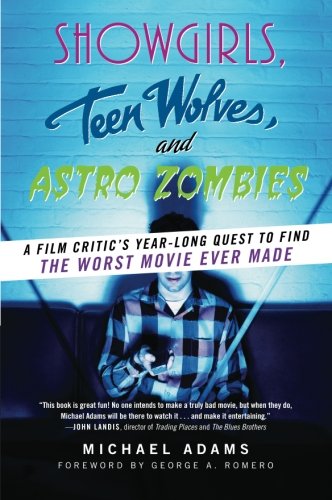
In terms of matching the flavor that Kevin Murphy brought to his project, the next best thing I’ve found is Showgirls, Teen Wolves, and Astro Zombies: A Film Critic’s Year-Long Quest to Find the Worst Movie Ever Made. Written by Michael Adams, this is a book whose subtitle lays out its premise exactly. Adams, at the time a writer for Empire magazine, was struck by the idea of trying to find the worst movie of all time. The book chronicles his journey of hunting down DVDs and old VHS tapes, categorizing them, brushing with fame, and the conclusions he has reached at the end. The amazing thing about this book – like most of the books I’m talking about here – is that even when he’s telling me how awful the movies are, Adams describes them in such a fun and charming way that I find myself adding many of them to my watchlist on Letterboxd.

Brian W. Collins had a similar project, his Horror Movie a Day blog, where he watched and reviewed a different horror movie every single day for a few years. Eventually he gave up on the “daily” aspect of the project, but he still publishes new reviews relatively often, and he put the best of them into Horror Movie a Day: The Book. In this one, Collins simply chooses some of his favorite reviews (not necessarily his favorite MOVIES) and divides them up into several categories. For horror movie fans, this is a fun way to find lots of movies you may never have heard of and get opinions on movies that you already have your own thoughts on. Collins is also a strong writer, and his style is entertaining to read in and of itself.

Of course, I don’t want to discount books about MAKING movies. There are three books by Dustin McNeill worth mentioning here, the first two co-written with Travis Mullins, all of which are about some of our favorite slasher flicks. In Taking Shape: Developing Halloween From Script to Scream, McNeill and Mullins do meticulous research and conduct lots of interviews with the principal writers, directors, actors, and other people involved in the production of the various movies in the Halloween franchise, beginning with the original in 1978 and going up to the most recent film at the time of publication, which was 2019. What I love about this book is that even though I’ve seen all of these movies time and again, there are a lot of things that went on behind the scenes that I never knew about. It’s not like some lame clickbait article with a headline like “20 things you never knew about Halloween III that turns out to be 17 things everybody knows and three things that are bullshit. This book gives serious, entertaining insight into the production of one of the most iconic horror franchises of all time.

It’s the Lord of the Rings of books about slasher movies, some of which were never actually made.

The sequel, Taking Shape II: The Lost Halloween Sequels, gives the same treatment to all the Halloween movies that were NOT made over the decades – the rejected pitches, the movies that started production but died on the vine and so forth. I liked this book even more than the first one, because it not only gives great insight into the way the movie business works, but it lands with a wealth of ideas for movies that never existed but that, in a few cases, really sounded a hell of a lot better than the movies that were actually made. 

Before either of those two, though, McNeill published Slash of the Titans: The Road to Freddy Vs. Jason. It’s the same conceit as the Halloween books, but focused solely on the project that ultimately became Freddy Vs. Jason. The movie was in development for many, many years, and McNeill breaks down all of the various iterations that it went through before finally landing on the one that made it to the screen. It, too, is a fascinating read. McNeill has several other similar books on his bibliography that I haven’t gotten around to reading yet, but I want to, including another Mullins collaboration, Reign of Chucky, and a book co-written with J. Michael Roddy called Adventures in Amity: Tales From the Jaws Ride that sounds pretty darn interesting.

All of these books are well worth reading if you’re a fan of the movies in question or even just a fan of movies in general. I am, however, always in search of more. My question for you, guys, is simple: what are your favorite books ABOUT movies? Books that are similar to the ones I listed above, books that aren’t at all like any of them, I am open to all suggestions. Movies are one of the greatest forms of storytelling, and stories about that form of storytelling – be it from the perspective of an insider or an outsider – absolutely fascinate me. Hit me up with your favorite picks, and maybe in a few months I’ll come back and do a follow-up to this column evaluating what you guys recommend.

Blake M. Petit is a writer, teacher, and dad from Ama, Louisiana. His most recent writing project is the superhero adventure series Other People’s Heroes: Little Stars, now complete on Amazon’s Kindle Vella platform. Has anyone ever written anything about that Star Wars movie? Seems like that would have been chronicled somewhere by now, right?